


Community hub
Recent from talks
Contribute something
Nothing was collected or created yet.
Lithium-ion battery
View on Wikipedia
 A lithium-ion battery pack from a laptop computer | |
| Specific energy | 1–270 W⋅h/kg (3.6–972.0 kJ/kg)[1] |
|---|---|
| Energy density | 250–693 W⋅h/L (900–2,490 J/cm3)[2][3] |
| Specific power | 1–10,000 W/kg[1] |
| Charge/discharge efficiency | 80–90%[4] |
| Energy/consumer-price | 8.7 W⋅h/US$ (31 kJ/US$, $115/(kW⋅h), $32/MJ)[5] |
| Self-discharge rate | 0.35% to 2.5% per month depending on state of charge[6] |
| Cycle durability | 400–1,200 cycles[7] |
| Nominal cell voltage | 3.6 / 3.7 / 3.8 / 3.85 V, LiFePO 4 3.2 V, Li 4Ti 5O 12 2.3 V |
A lithium-ion battery, or Li-ion battery, is a type of rechargeable battery that uses the reversible intercalation of Li+ ions into electronically conducting solids to store energy. Li-ion batteries are characterized by higher specific energy, energy density, and energy efficiency and a longer cycle life and calendar life than other types of rechargeable batteries. Also noteworthy is a dramatic improvement in lithium-ion battery properties after their market introduction in 1991; over the following 30 years, their volumetric energy density increased threefold while their cost dropped tenfold.[8] In late 2024 global demand passed 1 terawatt-hour per year,[9] while production capacity was more than twice that.[10]
The invention and commercialization of Li-ion batteries has had a large impact on technology,[11] as recognized by the 2019 Nobel Prize in Chemistry. Li-ion batteries have enabled portable consumer electronics, laptop computers, cellular phones, and electric cars. Li-ion batteries also see significant use for grid-scale energy storage as well as military and aerospace applications.
M. Stanley Whittingham conceived intercalation electrodes in the 1970s and created the first rechargeable lithium-ion battery, based on a titanium disulfide cathode and a lithium-aluminium anode, although it suffered from safety problems and was never commercialized.[12] John Goodenough expanded on this work in 1980 by using lithium cobalt oxide as a cathode.[13] The first prototype of the modern Li-ion battery, which uses a carbonaceous anode rather than lithium metal, was developed by Akira Yoshino in 1985 and commercialized by a Sony and Asahi Kasei team led by Yoshio Nishi in 1991.[14] Whittingham, Goodenough, and Yoshino were awarded the 2019 Nobel Prize in Chemistry for their contributions to the development of lithium-ion batteries.
Lithium-ion batteries can be a fire or explosion hazard as they contain flammable electrolytes. Progress has been made in the development and manufacturing of safer lithium-ion batteries.[15] Lithium-ion solid-state batteries are being developed to eliminate the flammable electrolyte.[16] Recycled batteries can create toxic waste, including from toxic metals, and are a fire risk.[17] Lithium and other minerals can have significant issues in mining, with lithium being water intensive in often arid regions and other minerals used in some Li-ion chemistries potentially being conflict minerals such as cobalt.[18] Environmental issues have encouraged some researchers to improve mineral efficiency and find alternatives such as lithium iron phosphate lithium-ion chemistries or non-lithium-based battery chemistries such as sodium-ion and iron-air batteries.
"Li-ion battery" can be considered a generic term involving at least 12 different chemistries; see List of battery types. Lithium-ion cells can be manufactured to optimize energy density or power density.[19] Handheld electronics mostly use lithium polymer batteries (with a polymer gel as an electrolyte), a lithium cobalt oxide (LiCoO
2) cathode material, and a graphite anode, which together offer high energy density.[20][21] Lithium iron phosphate (LiFePO
4),[22] lithium manganese oxide (LiMn
2O
4 spinel, or Li
2MnO
3-based lithium-rich layered materials, LMR-NMC), and lithium nickel manganese cobalt oxide (LiNiMnCoO
2 or NMC) may offer longer life and a higher discharge rate.[23] NMC and its derivatives are widely used in the electrification of transport, one of the main technologies (combined with renewable energy) for reducing greenhouse gas emissions from vehicles.[24][25]
History
[edit]Research on rechargeable Li-ion batteries dates to the 1960s; one of the earliest examples is a CuF
2/Li battery developed by NASA in 1965. The breakthrough that produced the earliest form of the modern Li-ion battery was made by British chemist M. Stanley Whittingham in 1974, who first used titanium disulfide (TiS
2) as a cathode material, which has a layered structure that can take in lithium ions without significant changes to its crystal structure. Exxon tried to commercialize this battery in the late 1970s, but found the synthesis expensive and complex, as TiS
2 is sensitive to moisture and releases toxic hydrogen sulfide (H
2S) gas on contact with water. More prohibitively, the batteries were also prone to spontaneously catch fire due to the presence of metallic lithium in the cells. For this, and other reasons, Exxon discontinued the development of Whittingham's lithium-titanium disulfide battery.[26]
In 1980, working in separate groups Ned A. Godshall et al.,[27][28][29] and, shortly thereafter, Koichi Mizushima and John B. Goodenough, after testing a range of alternative materials, replaced TiS
2 with lithium cobalt oxide (LiCoO
2, or LCO), which has a similar layered structure but offers a higher voltage and is much more stable in air. This material would later be used in the first commercial Li-ion battery, although it did not, on its own, resolve the persistent issue of flammability.[26]
These early attempts to develop rechargeable Li-ion batteries used lithium metal anodes, which were ultimately abandoned due to safety concerns, as lithium metal is unstable and prone to dendrite formation, which can cause short-circuiting. The eventual solution was to use an intercalation anode, similar to that used for the cathode, which prevents the formation of lithium metal during battery charging. The first to demonstrate lithium ion reversible intercalation into graphite anodes was Jürgen Otto Besenhard in 1974.[30][31] Besenhard used organic solvents such as carbonates, however these solvents decomposed rapidly providing short battery cycle life. Later, in 1980, Rachid Yazami used a solid organic electrolyte, polyethylene oxide, which was more stable.[32][33]
In 1985, Akira Yoshino at Asahi Kasei Corporation discovered that petroleum coke, a less graphitized form of carbon, can reversibly intercalate Li-ions at a low potential of ~0.5 V relative to Li+ /Li without structural degradation.[34] Its structural stability originates from its amorphous carbon regions, which serving as covalent joints to pin the layers together. Although it has a lower capacity compared to graphite (~Li0.5C6, 186 mAh g–1), it became the first commercial intercalation anode for Li-ion batteries owing to its cycling stability. In 1987, Yoshino patented what would become the first commercial lithium-ion battery using this anode. He used Goodenough's previously reported LiCoO2 as the cathode and a carbonate ester-based electrolyte. The battery was assembled in the discharged state, which made it safer and cheaper to manufacture. In 1991, using Yoshino's design, Sony began producing and selling the world's first rechargeable lithium-ion batteries. The following year, a joint venture between Toshiba and Asahi Kasei Co. also released a lithium-ion battery.[26]
Significant improvements in energy density were achieved in the 1990s by replacing Yoshino's soft carbon anode first with hard carbon and later with graphite. In 1990, Jeff Dahn and two colleagues at Dalhousie University (Canada) reported reversible intercalation of lithium ions into graphite in the presence of ethylene carbonate solvent (which is solid at room temperature and is mixed with other solvents to make a liquid). This represented the final innovation of the era that created the basic design of the modern lithium-ion battery.[35]
In 2010, global lithium-ion battery production capacity was 20 gigawatt-hours.[36] By 2016, it was 28 GWh, with 16.4 GWh in China.[37] Global production capacity was 767 GWh in 2020, with China accounting for 75%.[38] Production in 2021 is estimated by various sources to be between 200 and 600 GWh, and predictions for 2023 range from 400 to 1,100 GWh.[39]
In 2012, John B. Goodenough, Rachid Yazami and Akira Yoshino received the 2012 IEEE Medal for Environmental and Safety Technologies for developing the lithium-ion battery; Goodenough, Whittingham, and Yoshino were awarded the 2019 Nobel Prize in Chemistry "for the development of lithium-ion batteries".[40] Jeff Dahn received the ECS Battery Division Technology Award (2011) and the Yeager award from the International Battery Materials Association (2016).
In April 2025, CATL unveiled its Shenxing Plus battery, the first lithium iron phosphate (LFP) battery claiming a range of over 1,000 km (620 miles) on a single charge. The company also stated the battery supports 4C ultra-fast charging, allowing for 600 km of range to be added in 10 minutes, marking a significant advance in making long-range, fast-charging LFP batteries viable for the mass market.[41]
Design
[edit]


Generally, the negative electrode of a conventional lithium-ion cell is made from graphite. The positive electrode is typically a metal oxide or phosphate. The electrolyte is a lithium salt in an organic solvent.[42] The negative electrode (which is the anode when the cell is discharging) and the positive electrode (which is the cathode when discharging) are prevented from shorting by a separator.[43] The electrodes are connected to the powered circuit through two pieces of metal called current collectors.[44]
The negative and positive electrodes swap their electrochemical roles (anode and cathode) when the cell is charged. Despite this, in discussions of battery design the negative electrode of a rechargeable cell is often just called "the anode" and the positive electrode "the cathode".
In its fully lithiated state of LiC6, graphite correlates to a theoretical capacity of 1339 coulombs per gram (372 mAh/g).[45] The positive electrode is generally one of three materials: a layered oxide (such as lithium cobalt oxide), a polyanion (such as lithium iron phosphate) or a spinel (such as lithium manganese oxide).[46] More experimental materials include graphene-containing electrodes, although these remain far from commercially viable due to their high cost.[47]
Lithium reacts vigorously with water to form lithium hydroxide (LiOH) and hydrogen gas. Thus, a non-aqueous electrolyte is typically used, and a sealed container rigidly excludes moisture from the battery pack. The non-aqueous electrolyte is typically a mixture of organic carbonates such as ethylene carbonate and propylene carbonate containing complexes of lithium ions.[48] Ethylene carbonate is essential for making solid electrolyte interphase on the carbon anode,[49] but since it is solid at room temperature, a liquid solvent (such as propylene carbonate or diethyl carbonate) is added.
The electrolyte salt is almost always[citation needed] lithium hexafluorophosphate (LiPF
6), which combines good ionic conductivity with chemical and electrochemical stability. The hexafluorophosphate anion is essential for passivating the aluminium current collector used for the positive electrode. A titanium tab is ultrasonically welded to the aluminium current collector.
Other salts like lithium perchlorate (LiClO
4), lithium tetrafluoroborate (LiBF
4), and lithium bis(trifluoromethanesulfonyl)imide (LiC
2F
6NO
4S
2) are frequently used in research in tab-less coin cells, but are not usable in larger format cells,[50] often because they are not compatible with the aluminium current collector. Copper (with a spot-welded nickel tab) is used as the current collector at the negative electrode.
Current collector design and surface treatments may take various forms: foil, mesh, foam (dealloyed), etched (wholly or selectively), and coated (with various materials) to improve electrical characteristics.[44]
Depending on materials choices, the voltage, energy density, life, and safety of a lithium-ion cell can change dramatically. Current effort has been exploring the use of novel architectures using nanotechnology to improve performance. Areas of interest include nano-scale electrode materials and alternative electrode structures.[51]
Electrochemistry
[edit]The reactants in the electrochemical reactions in a lithium-ion cell are the materials of the electrodes, both of which are compounds containing lithium atoms. Although many thousands of different materials have been investigated for use in lithium-ion batteries, only a very small number are commercially usable. All commercial Li-ion cells use intercalation compounds as active materials.[52] The negative electrode is usually graphite, although silicon is often mixed in to increase the capacity. The electrolyte is usually lithium hexafluorophosphate, dissolved in a mixture of organic carbonates. A number of different materials are used for the positive electrode, such as LiCoO2, LiFePO4, and lithium nickel manganese cobalt oxides.
During cell discharge the negative electrode is the anode and the positive electrode the cathode: electrons flow from the anode to the cathode through the external circuit. An oxidation half-reaction at the anode produces positively charged lithium ions and negatively charged electrons. The oxidation half-reaction may also produce uncharged material that remains at the anode. Lithium ions move through the electrolyte; electrons move through the external circuit toward the cathode where they recombine with the cathode material in a reduction half-reaction. The electrolyte provides a conductive medium for lithium ions but does not partake in the electrochemical reaction. The reactions during discharge lower the chemical potential of the cell, so discharging transfers energy from the cell to wherever the electric current dissipates its energy, mostly in the external circuit.
During charging these reactions and transports go in the opposite direction: electrons move from the positive electrode to the negative electrode through the external circuit. To charge the cell the external circuit has to provide electrical energy. This energy is then stored as chemical energy in the cell (with some loss, e. g., due to coulombic efficiency lower than 1).
Both electrodes allow lithium ions to move in and out of their structures with a process called insertion (intercalation) or extraction (deintercalation), respectively.
As the lithium ions "rock" back and forth between the two electrodes, these batteries are also known as "rocking-chair batteries" or "swing batteries" (a term given by some European industries).[53][54]
The following equations exemplify the chemistry (left to right: discharging, right to left: charging).
The negative electrode half-reaction for the graphite is[55][56]
![{\displaystyle {\mathrm {LiC} {\vphantom {A}}_{\smash[{t}]{6}}{}\mathrel {\longrightleftharpoons } {}\mathrm {C} {\vphantom {A}}_{\smash[{t}]{6}}{}+{}\mathrm {Li} {\vphantom {A}}^{+}{}+{}\mathrm {e} {\vphantom {A}}^{-}}}](https://wikimedia.org/api/rest_v1/media/math/render/svg/0169904f54e5d1a00fbca78f4bf8afa11dc93667)
The positive electrode half-reaction in the lithium-doped cobalt oxide substrate is
![{\displaystyle {\mathrm {CoO} {\vphantom {A}}_{\smash[{t}]{2}}{}+{}\mathrm {Li} {\vphantom {A}}^{+}{}+{}\mathrm {e} {\vphantom {A}}^{-}{}\mathrel {\longrightleftharpoons } {}\mathrm {LiCoO} {\vphantom {A}}_{\smash[{t}]{2}}}}](https://wikimedia.org/api/rest_v1/media/math/render/svg/30cdc79eb9e6715e9bf38da3936c6595703842bb)
The full reaction being
![{\displaystyle {\mathrm {LiC} {\vphantom {A}}_{\smash[{t}]{6}}{}+{}\mathrm {CoO} {\vphantom {A}}_{\smash[{t}]{2}}{}\mathrel {\longrightleftharpoons } {}\mathrm {C} {\vphantom {A}}_{\smash[{t}]{6}}{}+{}\mathrm {LiCoO} {\vphantom {A}}_{\smash[{t}]{2}}}}](https://wikimedia.org/api/rest_v1/media/math/render/svg/99d08f43f6745e058113b489b07f3c7e585a6268)
The overall reaction has its limits. Overdischarging supersaturates lithium cobalt oxide, leading to the production of lithium oxide,[57] possibly by the following irreversible reaction:
![{\displaystyle {\mathrm {Li} {\vphantom {A}}^{+}{}+{}\mathrm {e} {\vphantom {A}}^{-}{}+{}\mathrm {LiCoO} {\vphantom {A}}_{\smash[{t}]{2}}{}\mathrel {\longrightarrow } {}\mathrm {Li} {\vphantom {A}}_{\smash[{t}]{2}}\mathrm {O} {}+{}\mathrm {CoO} }}](https://wikimedia.org/api/rest_v1/media/math/render/svg/f7d4eff7c8deea0e6c3fddf4d7eff1082c916450)
Overcharging up to 5.2 volts leads to the synthesis of cobalt (IV) oxide, as evidenced by x-ray diffraction:[58]
![{\displaystyle {\mathrm {LiCoO} {\vphantom {A}}_{\smash[{t}]{2}}{}\mathrel {\longrightarrow } {}\mathrm {Li} {\vphantom {A}}^{+}{}+{}\mathrm {CoO} {\vphantom {A}}_{\smash[{t}]{2}}{}+{}\mathrm {e} {\vphantom {A}}^{-}}}](https://wikimedia.org/api/rest_v1/media/math/render/svg/2726c9cc7ad43efffabb14ceb256cd176c58c044)
The cell's energy is equal to the voltage times the charge. Each gram of lithium represents Faraday's constant/6.941, or 13,901 coulombs. At 3 V, this gives 41.7 kJ per gram of lithium, or 11.6 kWh per kilogram of lithium. This is slightly more than the heat of combustion of gasoline; however, lithium-ion batteries as a whole are still significantly heavier per unit of energy due to the additional materials used in production.
Note that the cell voltages involved in these reactions are larger than the potential at which an aqueous solutions would electrolyze.
Discharging and charging
[edit]During discharge, lithium ions (Li+
) carry the current within the battery cell from the negative to the positive electrode, through the non-aqueous electrolyte and separator diaphragm.[59]
During charging, an external electrical power source applies an over-voltage (a voltage greater than the cell's own voltage) to the cell, forcing electrons to flow from the positive to the negative electrode. The lithium ions also migrate (through the electrolyte) from the positive to the negative electrode where they become embedded in the porous electrode material in a process known as intercalation.
Energy losses arising from electrical contact resistance at interfaces between electrode layers and at contacts with current collectors can be as high as 20% of the entire energy flow of batteries under typical operating conditions.[60]
The charging procedures for single Li-ion cells, and complete Li-ion batteries, are slightly different:
- Constant current (CC)
- Constant voltage (CV)
- A Li-ion battery (a set of Li-ion cells in series) is charged in three stages:
- Constant current
- Balance (only required when cell groups become unbalanced during use)
- Constant voltage
During the constant current phase, the charger applies a constant current to the battery at a steadily increasing voltage, until the top-of-charge voltage limit per cell is reached.
During the balance phase, the charger/battery reduces the charging current (or cycles the charging on and off to reduce the average current) while the state of charge of individual cells is brought to the same level by a balancing circuit until the battery is balanced. Balancing typically occurs whenever one or more cells reach their top-of-charge voltage before the other(s), as it is generally inaccurate to do so at other stages of the charge cycle. This is most commonly done by passive balancing, which dissipates excess charge as heat via resistors connected momentarily across the cells to be balanced. Active balancing is less common, more expensive, but more efficient, returning excess energy to other cells (or the entire pack) via a DC-DC converter or other circuitry. Balancing most often occurs during the constant voltage stage of charging, switching between charge modes until complete. The pack is usually fully charged only when balancing is complete, as even a single cell group lower in charge than the rest will limit the entire battery's usable capacity to that of its own. Balancing can last hours or even days, depending on the magnitude of the imbalance in the battery.
During the constant voltage phase, the charger applies a voltage equal to the maximum cell voltage times the number of cells in series to the battery, as the current gradually declines towards 0, until the current is below a set threshold of about 3% of initial constant charge current.
Periodic topping charge about once per 500 hours. Top charging is recommended to be initiated when voltage goes below 4.05 V/cell.[63]
Failure to follow current and voltage limitations can result in an explosion.[64][65]
Charging temperature limits for Li-ion are stricter than the operating limits. Lithium-ion chemistry performs well at elevated temperatures but prolonged exposure to heat reduces battery life. Li‑ion batteries offer good charging performance at cooler temperatures and may even allow "fast-charging" within a temperature range of 5 to 45 °C (41 to 113 °F).[66] Charging should be performed within this temperature range. At temperatures from 0 to 5 °C charging is possible, but the charge current should be reduced. During a low-temperature (under 0 °C) charge, the slight temperature rise above ambient due to the internal cell resistance is beneficial. High temperatures during charging may lead to battery degradation and charging at temperatures above 45 °C will degrade battery performance, whereas at lower temperatures the internal resistance of the battery may increase, resulting in slower charging and thus longer charging times.[66][better source needed]
Batteries gradually self-discharge even if not connected and delivering current. Li-ion rechargeable batteries have a self-discharge rate typically stated by manufacturers to be 1.5–2% per month.[67][68]
The rate increases with temperature and state of charge. A 2004 study found that for most cycling conditions self-discharge was primarily time-dependent; however, after several months of stand on open circuit or float charge, state-of-charge dependent losses became significant. The self-discharge rate did not increase monotonically with state-of-charge, but dropped somewhat at intermediate states of charge.[69] Self-discharge rates may increase as batteries age.[70] In 1999, self-discharge per month was measured at 8% at 21 °C, 15% at 40 °C, 31% at 60 °C.[71] By 2007, monthly self-discharge rate was estimated at 2% to 3%, and 2[6]–3% by 2016.[72]
By comparison, the self-discharge rate for NiMH batteries dropped, as of 2017, from up to 30% per month for previously common cells to about 0.08–0.33% per month for low self-discharge NiMH batteries, and is about 10% per month in NiCd batteries.[73]
Cathode
[edit]Transition metal oxides (TMOs) are widely used as cathode materials in lithium-ion batteries as the variable oxidation state of transition metal cations allows oxides of these metals to reversibly host lithium ions (Li⁺) and undergo efficient redox (reduction-oxidation) reactions. While Oxygen ions are commonly assumed to remain in a 2- oxidation state, the role of oxygen redox in facilitating the lithium insertion is now recognized as instrumental in the performance of lithium ion battery cathodes [74]. The layered or framework structures of TMOs allow Li⁺ insertion/extraction during charging/discharging, while their transition metals and oxygen anions participate in electron transfer, enabling high energy density and stability. Three classes of cathode materials in lithium-ion batteries have been commercialized: (1) layered oxides, (2) spinel oxides and (3) oxoanion complexes. All of them were discovered by John Goodenough and his collaborators.[75]
Layered oxides
[edit]LiCoO2 was used in the first commercial lithium-ion battery made by Sony in 1991. The layered oxides have a pseudo-tetrahedral structure comprising layers made of MO6 octahedra separated by interlayer spaces that allow for two-dimensional lithium-ion diffusion.[citation needed] The band structure of LixCoO2 allows for true electronic (rather than polaronic) conductivity. However, due to an overlap between the Co4+ t2g d-band with the O2- 2p-band, the x must be >0.5, otherwise O2 evolution occurs. This limits the charge capacity of this material to ~140 mA h g−1.[75]
Several other first-row (3d) transition metals also form layered LiMO2 salts. Some can be directly prepared from lithium oxide and M2O3 (e.g. for M=Ti, V, Cr, Co, Ni), while others (M= Mn or Fe) can be prepared by ion exchange from NaMO2. LiVO2, LiMnO2 and LiFeO2 suffer from structural instabilities (including mixing between M and Li sites) due to a low energy difference between octahedral and tetrahedral environments for the metal ion M. For this reason, they are not used in lithium-ion batteries.[75] However, Na+ and Fe3+ have sufficiently different sizes that NaFeO2 can be used in sodium-ion batteries.[76]
Similarly, LiCrO2 shows reversible lithium (de)intercalation around 3.2 V with 170–270 mAh/g.[77] However, its cycle life is short, because of disproportionation of Cr4+ followed by translocation of Cr6+ into tetrahedral sites.[78] On the other hand, NaCrO2 shows a much better cycling stability.[79] LiTiO2 shows Li+ (de)intercalation at a voltage of ~1.5 V, which is too low for a cathode material.
These problems leave LiCoO
2 and LiNiO
2 as the only practical layered oxide materials for lithium-ion battery cathodes. The cobalt-based cathodes show high theoretical specific (per-mass) charge capacity, high volumetric capacity, low self-discharge, high discharge voltage, and good cycling performance. Unfortunately, they suffer from a high cost of the material.[80] For this reason, the current trend among lithium-ion battery manufacturers is to switch to cathodes with higher Ni content and lower Co content.[81]
In addition to a lower (than cobalt) cost, nickel-oxide based materials benefit from the two-electron redox chemistry of Ni: in layered oxides comprising nickel (such as nickel-cobalt-manganese NCM and nickel-cobalt-aluminium oxides NCA), Ni cycles between the oxidation states +2 and +4 (in one step between +3.5 and +4.3 V),[82][75] cobalt- between +2 and +3, while Mn (usually >20%) and Al (typically, only 5% is needed)[83] remain in +4 and 3+, respectively. Thus increasing the Ni content increases the cyclable charge. For example, NCM111 shows 160 mAh/g, while LiNi0.8Co0.1Mn0.1O2 (NCM811) and LiNi0.8Co0.15Al0.05O2 (NCA) deliver a higher capacity of ~200 mAh/g.[84] NCM and NCA batteries are collectively called Ternary Lithium Batteries.[85][86]
It is worth mentioning so-called "lithium-rich" cathodes that can be produced from traditional NCM (LiMO2, where M=Ni, Co, Mn) layered cathode materials upon cycling them to voltages/charges corresponding to Li:M<0.5. Under such conditions a new semi-reversible redox transition at a higher voltage with ca. 0.4-0.8 electrons/metal site charge appears. This transition involves non-binding electron orbitals centered mostly on O atoms. Despite significant initial interest, this phenomenon did not result in marketable products because of the fast structural degradation (O2 evolution and lattice rearrangements) of such "lithium-rich" phases.[87]
Cubic oxides (spinels)
[edit]LiMn2O4 adopts a cubic lattice, which allows for three-dimensional lithium-ion diffusion.[88] Manganese cathodes are attractive because manganese is less expensive than cobalt or nickel. The operating voltage of Li-LiMn2O4 battery is 4 V, and ca. one lithium per two Mn ions can be reversibly extracted from the tetrahedral sites, resulting in a practical capacity of <130 mA h g–1. However, Mn3+ is not a stable oxidation state, as it tends to disporportionate into insoluble Mn4+ and soluble Mn2+.[80][89] LiMn2O4 can also intercalate more than 0.5 Li per Mn at a lower voltage around +3.0 V. However, this results in an irreversible phase transition due to Jahn-Teller distortion in Mn3+:t2g3eg1, as well as disproportionation and dissolution of Mn3+.
An important improvement of Mn spinel are related cubic structures of the LiMn1.5Ni0.5O4 type, where Mn exists as Mn4+ and Ni cycles reversibly between the oxidation states +2 and +4.[75] This materials show a reversible Li-ion capacity of ca. 135 mAh/g around 4.7 V. Although such high voltage is beneficial for increasing the specific energy of batteries, the adoption of such materials is currently hindered by the lack of suitable high-voltage electrolytes.[84] In general, materials with a high nickel content are favored in 2023, because of the possibility of a 2-electron cycling of Ni between the oxidation states +2 and +4.
LiV2O4 (lithium vanadium oxide) operates as a lower (ca. +3.0 V) voltage than LiMn2O4, suffers from similar durability issues, is more expensive, and thus is not considered of practical interest.[90]
Oxoanionic/olivins
[edit]Around 1980 Manthiram discovered that oxoanions (molybdates and tungstates in that particular case) cause a substantial positive shift in the redox potential of the metal-ion compared to oxides.[91] In addition, these oxoanionic cathode materials offer better stability/safety than the corresponding oxides. However, they also suffer from poor electronic conductivity due to the long distance between redox-active metal centers, which slows down the electron transport. This necessitates the use of small (less than 200 nm) cathode particles and coating each particle with a layer of electronically-conducting carbon.[92] This reduces the packing density of these materials.
Although numerous combinations of oxoanions (sulfate, phosphate, silicate) with various metals (mostly Mn, Fe, Co, Ni) have been studied, LiFePO4 is the only one that has been commercialized. Although it was originally used primarily for stationary energy storage due to its lower energy density compared to layered oxides,[93] it has begun to be widely used in electric vehicles since the 2020s.[94]
| Technology | Major producers (2023) | Target application | Advantages |
|---|---|---|---|
| Lithium nickel manganese cobalt oxide NMC, LiNixMnyCozO2 |
Ronbay Technology, Easpring, Ecopro, Umicore, L&F, Posco[95] | Electric vehicles, power tools, grid energy storage | Good specific energy and specific power density |
| Lithium nickel cobalt aluminium oxide NCA, LiNiCoAlO2 |
Ronbay Technology, Ecopro[95] | Electric vehicles, power tools, grid energy storage | High energy density, good life span |
| Lithium nickel cobalt manganese aluminium oxide NCMA, LiNi 0.89Co 0.05Mn 0.05Al 0.01O 2 |
LG Chem,[96] Hanyang University[97] | Electric vehicles, grid energy storage | Good specific energy, improved long-term cycling stability, faster charging |
| Lithium manganese oxide LMO, LiMn2O4 |
Posco, L&F[95] | Power tools, electric vehicles[98] | Fast charging speed, cheap |
| Lithium iron phosphate LFP, LiFePO4 |
Shenzhen Dynanonic, Hunan Yuneng, LOPAL, Ronbay Technology[95] | Electric vehicles,[94] grid energy storage[93] | Higher safety compared to layered oxides. Very long cycle life. Thermal stability >60 °C (140 °F) |
| Lithium cobalt oxide LCO, LiCoO2 |
Easpring, Umicore[95] | Handheld electronics[95] | High energy density |
Anode
[edit]Negative electrode materials are traditionally constructed from graphite and other carbon materials, although newer silicon-based materials are being increasingly used (see Nanowire battery). In 2016, 89% of lithium-ion batteries contained graphite (43% artificial and 46% natural), 7% contained amorphous carbon (either soft carbon or hard carbon), 2% contained lithium titanate (LTO) and 2% contained silicon or tin-based materials.[99]
These materials are used because they are abundant, electrically conducting and can intercalate lithium ions to store electrical charge with modest volume expansion (~10%).[100] Graphite is the dominant material because of its low intercalation voltage and excellent performance. Various alternative materials with higher capacities have been proposed, but they usually have higher voltages, which reduces energy density.[101] Low voltage is the key requirement for anodes; otherwise, the excess capacity is useless in terms of energy density.
| Technology | Energy density | Durability | Company | Target application | Comments |
|---|---|---|---|---|---|
| Graphite | 260 Wh/kg | Tesla | The dominant negative electrode material used in lithium-ion batteries, limited to a capacity of 372 mAh/g.[45] | Low cost and good energy density. Graphite anodes can accommodate one lithium atom for every six carbon atoms. Charging rate is governed by the shape of the long, thin graphene sheets that constitute graphite. While charging, the lithium ions must travel to the outer edges of the graphene sheet before coming to rest (intercalating) between the sheets. The circuitous route takes so long that they encounter congestion around those edges.[102] | |
| Lithium titanate LTO, Li4Ti5O12 |
Toshiba, Altairnano | Automotive (Phoenix Motorcars), electrical grid (PJM Interconnection Regional Transmission Organization control area,[103] United States Department of Defense[104]), bus (Proterra) | Improved output, charging time, durability (safety, operating temperature −50–70 °C (−58–158 °F)).[105] | ||
| Hard carbon | Energ2[106] | Home electronics | Greater storage capacity. | ||
| Tin/cobalt alloy | Sony | Consumer electronics (Sony Nexelion battery) | Larger capacity than a cell with graphite (3.5 Ah 18650-type cell). | ||
| Silicon/carbon | 730 Wh/L 450 Wh/kg |
Amprius[107] | Smartphones, providing 5000 mAh capacity |
Pure Si can present a capacity density around 4200 mAh/g, but it will undergo a severe volume expansion (>300%), so it often being mixed with graphite.[108] Another approach used carbon-coated 15 nm thick crystal silicon flakes. The tested half-cell achieved 1200 mAh/g over 800 cycles.[109] |
As graphite is limited to a maximum capacity of 372 mAh/g[45] much research has been dedicated to the development of materials that exhibit higher theoretical capacities and overcoming the technical challenges that presently encumber their implementation. The extensive 2007 Review Article by Kasavajjula et al.[110] summarizes early research on silicon-based anodes for lithium-ion secondary cells. In particular, Hong Li et al.[111] showed in 2000 that the electrochemical insertion of lithium ions in silicon nanoparticles and silicon nanowires leads to the formation of an amorphous Li–Si alloy. The same year, Bo Gao and his doctoral advisor, Professor Otto Zhou described the cycling of electrochemical cells with anodes comprising silicon nanowires, with a reversible capacity ranging from at least approximately 900 to 1500 mAh/g.[112]
Diamond-like carbon coatings can increase retention capacity by 40% and cycle life by 400% for lithium based batteries.[113]
To improve the stability of the lithium anode, several approaches to installing a protective layer have been suggested.[114] Silicon is beginning to be looked at as an anode material because it can accommodate significantly more lithium ions, storing up to 10 times the electric charge, however this alloying between lithium and silicon results in significant volume expansion (ca. 400%),[100] which causes catastrophic failure for the cell.[115] Silicon has been used as an anode material but the insertion and extraction of can create cracks in the material. These cracks expose the Si surface to an electrolyte, causing decomposition and the formation of a solid electrolyte interphase (SEI) on the new Si surface (crumpled graphene encapsulated Si nanoparticles). This SEI will continue to grow thicker, deplete the available , and degrade the capacity and cycling stability of the anode.

In addition to carbon- and silicon- based anode materials for lithium-ion batteries, high-entropy metal oxide materials are being developed. These conversion (rather than intercalation) materials comprise an alloy (or subnanometer mixed phases) of several metal oxides performing different functions. For example, Zn and Co can act as electroactive charge-storing species, Cu can provide an electronically conducting support phase and MgO can prevent pulverization.[116]
Electrolyte
[edit]Liquid electrolytes in lithium-ion batteries consist of lithium salts, such as LiPF
6, LiBF
4 or LiClO
4 in an organic solvent, such as ethylene carbonate, dimethyl carbonate, and diethyl carbonate.[117] A liquid electrolyte acts as a conductive pathway for the movement of cations passing from the negative to the positive electrodes during discharge. Typical conductivities of liquid electrolyte at room temperature (20 °C (68 °F)) are in the range of 10 mS/cm, increasing by approximately 30–40% at 40 °C (104 °F) and decreasing slightly at 0 °C (32 °F).[118] The combination of linear and cyclic carbonates (e.g., ethylene carbonate (EC) and dimethyl carbonate (DMC)) offers high conductivity and solid electrolyte interphase (SEI)-forming ability. While EC forms a stable SEI, it is not a liquid at room temperature, only becoming a liquid with the addition of additives such as the previously mentioned DMC or diethyl carbonate (DEC) or ethyl methyl carbonate (EMC). Organic solvents easily decompose on the negative electrodes during charge. When appropriate organic solvents are used as the electrolyte, the solvent decomposes on initial charging and forms a solid layer called the solid electrolyte interphase,[119] which is electrically insulating, yet provides significant ionic conductivity, behaving as a solid electrolyte. The interphase prevents further decomposition of the electrolyte after the second charge as it grows thick enough to prevent electron tunneling after the first charge cycle. For example, ethylene carbonate is decomposed at a relatively high voltage, 0.7 V vs. lithium, and forms a dense and stable interface.[120] Composite electrolytes based on POE (poly(oxyethylene)) provide a relatively stable interface.[121][122] It can be either solid (high molecular weight) and be applied in dry Li-polymer cells, or liquid (low molecular weight) and be applied in regular Li-ion cells. Room-temperature ionic liquids (RTILs) are another approach to limiting the flammability and volatility of organic electrolytes.[123]
Solid electrolyte interphase (SEI)
[edit]The term solid electrolyte interphase was first coined by Peled in 1979 to describe the layer of insoluble products deposited on alkali and alkaline earth cathodes in non-aqueous batteries (NAB).[124] However, Dey and Sullivan had noted previously in 1970 that graphite, in a lithium metal half cell using propylene carbonate (PC), reduced the electrolyte during discharge at a rate which linearly increased with the current.[125] They proposed that the following reaction was taking place:
![{\displaystyle {\mathrm {C} {\vphantom {A}}_{\smash[{t}]{4}}\mathrm {H} {\vphantom {A}}_{\smash[{t}]{6}}\mathrm {O} {\vphantom {A}}_{\smash[{t}]{3}}{}+{}2\,\mathrm {e} {\vphantom {A}}^{-}{}\mathrel {\longrightarrow } {}\mathrm {CH} {\vphantom {A}}_{\smash[{t}]{3}}{-}\mathrm {CH} {=}\mathrm {CH} {\vphantom {A}}_{\smash[{t}]{2}}{}+{}\mathrm {CO} {\vphantom {A}}_{\smash[{t}]{3}}{\vphantom {A}}^{2-}}}](https://wikimedia.org/api/rest_v1/media/math/render/svg/62ae74dcd29af46d7ade6c4a6818ddecd45f1de5)
The same reaction was later proposed by Fong et al in 1990, where they theorized that the carbonate ion was reacting with the lithium to form lithium carbonate, which was then forming a passivating layer on the surface of the graphite.[126] PC is no longer used in batteries today as the molecules can intercalate into the graphite layers and react with the lithium there to form propylene and acts to delaminate the graphite.
The insulating properties of the SEI allow the battery to reach more extreme voltage gaps without simply reducing the electrolyte.[127] This ability of the SEI to improve the voltage window of batteries was discovered almost on accident, but plays a vital role in high voltage batteries today.
Solid electrolytes
[edit]Recent advances in battery technology involve using a solid as the electrolyte material. The most promising of these are ceramics.[128] Solid ceramic electrolytes are mostly lithium metal oxides, which allow lithium-ion transport through the solid more readily due to the intrinsic lithium. The main benefit of solid electrolytes is that there is no risk of leaks, which is a serious safety issue for batteries with liquid electrolytes.[129] Solid ceramic electrolytes can be further broken down into two main categories: ceramic and glassy. Ceramic solid electrolytes are highly ordered compounds with crystal structures that usually have ion transport channels.[130] Common ceramic electrolytes are lithium super ion conductors (LISICON) and perovskites. Glassy solid electrolytes are amorphous atomic structures made up of similar elements to ceramic solid electrolytes but have higher conductivities overall due to higher conductivity at grain boundaries.[131] Both glassy and ceramic electrolytes can be made more ionically conductive by substituting sulfur for oxygen. The larger radius of sulfur and its higher ability to be polarized allow higher conductivity of lithium. This contributes to conductivities of solid electrolytes are nearing parity with their liquid counterparts, with most on the order of 0.1 mS/cm and the best at 10 mS/cm.[132] An efficient and economic way to tune targeted electrolytes properties is by adding a third component in small concentrations, known as an additive.[133] By adding the additive in small amounts, the bulk properties of the electrolyte system will not be affected whilst the targeted property can be significantly improved. The numerous additives that have been tested can be divided into the following three distinct categories: (1) those used for SEI chemistry modifications; (2) those used for enhancing the ion conduction properties; (3) those used for improving the safety of the cell (e.g. prevent overcharging).[citation needed]
Electrolyte alternatives have also played a significant role, for example the lithium polymer battery. Polymer electrolytes are promising for minimizing the dendrite formation of lithium. Polymers are supposed to prevent short circuits and maintain conductivity.[114]
The ions in the electrolyte diffuse because there are small changes in the electrolyte concentration. Linear diffusion is only considered here. The change in concentration c, as a function of time t and distance x, is
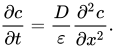
In this equation, D is the diffusion coefficient for the lithium ion. It has a value of 7.5×10⁻¹⁰ m2/s in the LiPF
6 electrolyte. The value for ε, the porosity of the electrolyte, is 0.724.[134]
Battery designs and formats
[edit]
Lithium-ion batteries may have multiple levels of structure. Small batteries consist of a single battery cell. Larger batteries connect cells in parallel into a module and connect modules in series and parallel into a pack. Multiple packs may be connected in series to increase the voltage.[135]
Batteries may be equipped with temperature sensors, heating/cooling systems, voltage regulator circuits, voltage taps, and charge-state monitors. These components address safety risks like overheating and short circuiting.[136]
Electrode layers and electrolyte
[edit]On the macrostructral level (length scale 0.1–5 mm) almost all commercial lithium-ion batteries comprise foil current collectors (aluminium for cathode and copper for anode). Copper is selected for the anode, because lithium does not alloy with it. Aluminum is used for the cathode, because it passivates in LiPF6 electrolytes.
Cells
[edit]Li-ion cells are available in various form factors, which can generally be divided into four types:[137]
- Coin cells have a rugged design with metal (stainless steel, usually) casing. Because of their poor specific energy (in Wh/kg) and small energy (Wh) per cell, their use is limited to handwatches, portable calculators and research. Notably, coin format cells are more commonly used for primary lithium-metal batteries.
- Small cylindrical (solid body without terminals, such as those used in most e-bikes and most electric vehicle battery and older laptop batteries); they typically come in standard sizes.
- Large cylindrical (solid body with large threaded terminals)
- Flat or pouch (soft, flat body, such as those used in cell phones and newer laptops; these are lithium-ion polymer batteries.[138]
- Rigid plastic case with large threaded terminals (such as electric vehicle traction packs)
Cells with a cylindrical shape are made in a characteristic "swiss roll" manner (known as a "jelly roll" in the US), which means it is a single long "sandwich" of the positive electrode, separator, negative electrode, and separator rolled into a single spool. The result is encased in a container. One advantage of cylindrical cells is faster production speed. One disadvantage can be a large radial temperature gradient at high discharge rates.
The absence of a case gives pouch cells the highest gravimetric energy density; however, many applications require containment to prevent expansion when their state of charge (SOC) level is high,[139] and for general structural stability. Both rigid plastic and pouch-style cells are sometimes referred to as prismatic cells due to their rectangular shapes.[140] Three basic battery types are used in 2020s-era electric vehicles: cylindrical cells (e.g., Tesla), prismatic pouch (e.g., from LG), and prismatic can cells (e.g., from LG, Samsung, Panasonic, and others).[21]
Lithium-ion flow batteries have been demonstrated that suspend the cathode or anode material in an aqueous or organic solution.[141][142]
As of 2014, the smallest Li-ion cell was pin-shaped with a diameter of 3.5 mm and a weight of 0.6 g, made by Panasonic.[143] A coin cell form factor is available for LiCoO2 cells, usually designated with a "LiR" prefix.[144][145]
Electrode layers
[edit]Cell voltage
[edit]The average voltage of LCO (lithium cobalt oxide) chemistry is 3.6v if made with hard carbon cathode and 3.7v if made with graphite cathode. Comparatively, the latter has a flatter discharge voltage curve.[146]: 25–26
Uses
[edit]Lithium-ion batteries are used in a multitude of applications, including consumer electronics, toys, power tools, and electric vehicles.[147]
More niche uses include backup power in telecommunications applications. Lithium-ion batteries are also frequently discussed as a potential option for grid energy storage,[148] although as of 2020, they were not yet cost-competitive at scale.[149]
Some submarines have also been equipped with lithium-ion batteries.[150][151]
Performance
[edit]| Specific energy density | 100 to 250 W·h/kg (360 to 900 kJ/kg)[152] |
|---|---|
| Volumetric energy density | 250 to 680 W·h/L (900 to 2230 J/cm3)[153][154] |
| Specific power density | 1 to 10,000 W/kg[1] |
Because lithium-ion batteries can have a variety of positive and negative electrode materials, the energy density and voltage vary accordingly.
The open-circuit voltage is higher than in aqueous batteries (such as lead–acid, nickel–metal hydride and nickel–cadmium).[73] Internal resistance increases with both cycling and age,[155] although this depends strongly on the voltage and temperature the batteries are stored at.[156] Rising internal resistance causes the voltage at the terminals to drop under load, which reduces the maximum current draw. Eventually, increasing resistance will leave the battery in a state such that it can no longer support the normal discharge currents requested of it without unacceptable voltage drop or overheating.
Batteries with a lithium iron phosphate positive and graphite negative electrodes have a nominal open-circuit voltage of 3.2 V and a typical charging voltage of 3.6 V. Lithium nickel manganese cobalt (NMC) oxide positives with graphite negatives have a 3.7 V nominal voltage with a 4.2 V maximum while charging. The charging procedure is performed at constant voltage with current-limiting circuitry (i.e., charging with constant current until a voltage of 4.2 V is reached in the cell and continuing with a constant voltage applied until the current drops close to zero). Typically, the charge is terminated at 3% of the initial charge current. In the past, lithium-ion batteries could not be fast-charged and needed at least two hours to fully charge. Current-generation cells can be fully charged in 45 minutes or less. In 2015 researchers demonstrated a small 600 mAh capacity battery charged to 68 percent capacity in two minutes and a 3,000 mAh battery charged to 48 percent capacity in five minutes. The latter battery has an energy density of 620 W·h/L. The device employed heteroatoms bonded to graphite molecules in the anode.[157]

Performance of manufactured batteries has improved over time. For example, from 1991 to 2005 the energy capacity per price of lithium-ion batteries improved more than ten-fold, from 0.3 W·h per dollar to over 3 W·h per dollar.[158] In the period from 2011 to 2017, progress has averaged 7.5% annually.[159] Overall, between 1991 and 2018, prices for all types of lithium-ion cells (in dollars per kWh) fell approximately 97%.[160] Over the same time period, energy density more than tripled.[160] Efforts to increase energy density contributed significantly to cost reduction.[161] Energy density can also be increased by improvements in the chemistry if the cell, for instance, by full or partial replacement of graphite with silicon. Silicon anodes enhanced with graphene nanotubes to eliminate the premature degradation of silicon open the door to reaching record-breaking battery energy density of up to 350 Wh/kg and lowering EV prices to be competitive with ICEs.[162]
Differently sized cells of the same format (shape) with the same chemistry may have different energy densities. Jelly roll cells usually have a higher energy density than coin or prismatic cells of the same Ah, because of a tighter/compresses packing of the cell layers. Among cylindrical cells, those with a larger size have a larger energy density, albeit the exact value strongly depends on the thickness of the electrode layers. The disadvantage of large cells is decrease of the heat transfer from the cell to its surroundings.[154]
Round-trip efficiency
[edit]The table below shows the result of an experimental evaluation of a "high-energy" type 3.0 Ah 18650 NMC cell in 2021, round-trip efficiency which compared the energy going into the cell and energy extracted from the cell from 100% (4.2v) SoC to 0% SoC (cut off 2.0v). A round-trip efficiency is the percent of energy that can be used relative to the energy that went into charging the battery.[163]
| C rate | efficiency | estimated charge efficiency | estimated discharged efficiency |
|---|---|---|---|
| 0.2 | 86% | 93% | 92% |
| 0.4 | 82% | 92% | 90% |
| 0.6 | 81% | 91% | 89% |
| 0.8 | 77% | 90% | 86% |
| 1.0 | 75% | 89% | 85% |
| 1.2 | 73% | 89% | 83% |
Characterization of a cell in a different experiment in 2017 reported round-trip efficiency of 85.5% at 2C and 97.6% at 0.1C[164]
Lifespan
[edit]The lifespan of a lithium-ion battery is typically defined as the number of full charge-discharge cycles to reach a failure threshold in terms of capacity loss or impedance rise. Manufacturers' datasheets typically uses the word "cycle life" to specify lifespan in terms of the number of cycles to reach 80% of the rated battery capacity.[165] Simply storing lithium-ion batteries in the charged state also reduces their capacity (the amount of cyclable Li+) and increases the cell resistance (primarily due to the continuous growth of the solid electrolyte interface on the anode). Calendar life is used to represent the whole life cycle of battery involving both the cycle and inactive storage operations. Battery cycle life is affected by many different stress factors including temperature, discharge current, charge current, and state of charge ranges (depth of discharge).[166][167] Batteries are not fully charged and discharged in real applications such as smartphones, laptops and electric cars and hence defining battery life via full discharge cycles can be misleading. To avoid this confusion, researchers sometimes use cumulative discharge[166] defined as the total amount of charge (Ah) delivered by the battery during its entire life or equivalent full cycles,[167] which represents the summation of the partial cycles as fractions of a full charge-discharge cycle. Battery degradation during storage is affected by temperature and battery state of charge (SOC) and a combination of full charge (100% SOC) and high temperature (usually > 50 °C) can result in a sharp capacity drop and gas generation.[168] Multiplying the battery cumulative discharge by the rated nominal voltage gives the total energy delivered over the life of the battery. From this one can calculate the cost per kWh of the energy (including the cost of charging).
Over their lifespan, batteries degrade gradually leading to reduced cyclable charge (a.k.a. Ah capacity) and increased resistance (the latter translates into a lower operating cell voltage).[169]
Several degradation processes occur in lithium-ion batteries, some during cycling, some during storage, and some all the time:[170][171][169] Degradation is strongly temperature-dependent: degradation at room temperature is minimal but increases for batteries stored or used in high temperature (usually > 35 °C) or low temperature (usually < 5 °C) environments.[172][173] Also, battery life in room temperature is maximal. High charge levels also hasten capacity loss.[174] Frequent charge to > 90% and discharge to < 10% may also hasten capacity loss.[citation needed] Keeping the li-ion battery status to about 60% to 80% can reduce the capacity loss.[175][176]
In a study, scientists provided 3D imaging and model analysis to reveal main causes, mechanics, and potential mitigations of the problematic degradation of the batteries over charge cycles. They found "[p]article cracking increases and contact loss between particles and carbon-binder domain are observed to correlate with the cell degradation" and indicates that "the reaction heterogeneity within the thick cathode caused by the unbalanced electron conduction is the main cause of the battery degradation over cycling".[177][178][additional citation(s) needed]
The most common degradation mechanisms in lithium-ion batteries include:[179]
- Reduction of the organic carbonate electrolyte at the anode, which results in the growth of Solid Electrolyte Interface (SEI), where Li+ ions get irreversibly trapped, i.e. loss of lithium inventory. This shows as increased ohmic impedance of the negative electrode and a drop in the cyclable Ah charge. At constant temperature, the SEI film thickness (and therefore, the SEI resistance and the loss in cyclable Li+) increases as a square root of the time spent in the charged state. The number of cycles is not a useful metric in characterizing this degradation pathway. Under high temperatures or in the presence of a mechanical damage the electrolyte reduction can proceed explosively.
- Lithium metal plating also results in the loss of lithium inventory (cyclable Ah charge), as well as internal short-circuiting and ignition of a battery. Once Li plating commences during cycling, it results in larger slopes of capacity loss per cycle and resistance increase per cycle. This degradation mechanism become more prominent during fast charging and low temperatures.
- Loss of the (negative or positive) electroactive materials due to dissolution (e.g. of Mn3+ species), cracking, exfoliation, detachment or even simple regular volume change during cycling. It shows up as both charge and power fade (increased resistance). Both positive and negative electrode materials are subject to fracturing due to the volumetric strain of repeated (de)lithiation cycles.
- Structural degradation of cathode materials, such as Li+/Ni2+ cation mixing in nickel-rich materials. This manifests as "electrode saturation", loss of cyclable Ah charge and as a "voltage fade".
- Other material degradations. Negative copper current collector is particularly prone to corrosion/dissolution at low cell voltages. PVDF binder also degrades, causing the detachment of the electroactive materials, and the loss of cyclable Ah charge.

These are shown in the figure on the right. A change from one main degradation mechanism to another appears as a knee (slope change) in the capacity vs. cycle number plot.[179]
Most studies of lithium-ion battery aging have been done at elevated (50–60 °C) temperatures in order to complete the experiments sooner. Under these storage conditions, fully charged nickel-cobalt-aluminum and lithium-iron phosphate cells lose ca. 20% of their cyclable charge in 1–2 years. It is believed that the aforementioned anode aging is the most important degradation pathway in these cases. On the other hand, manganese-based cathodes show a (ca. 20–50%) faster degradation under these conditions, probably due to the additional mechanism of Mn ion dissolution.[171] At 25 °C the degradation of lithium-ion batteries seems to follow the same pathway(s) as the degradation at 50 °C, but with half the speed.[171] In other words, based on the limited extrapolated experimental data, lithium-ion batteries are expected to lose irreversibly ca. 20% of their cyclable charge in 3–5 years or 1000–2000 cycles at 25 °C.[179] Lithium-ion batteries with titanate anodes do not suffer from SEI growth, and last longer (>5000 cycles) than graphite anodes. However, in complete cells other degradation mechanisms (i.e. the dissolution of Mn3+ and the Ni2+/Li+ place exchange, decomposition of PVDF binder and particle detachment) show up after 1000–2000 days, and the use titanate anode does not improve full cell durability in practice.
Detailed degradation description
[edit]A more detailed description of some of these mechanisms is provided below:
- The negative (anode) SEI layer, a passivation coating formed by electrolyte (such as ethylene carbonate, dimethyl carbonate but not propylene carbonate) reduction products, is essential for providing Li+ ion conduction, while preventing electron transfer (and, thus, further solvent reduction). Under typical operating conditions, the negative SEI layer reaches a fixed thickness after the first few charges (formation cycles), allowing the device to operate for years. However, at elevated temperatures or due to mechanical detachment of the negative SEI, this exothermic electrolyte reduction can proceed violently and lead to an explosion via several reactions.[170] Lithium-ion batteries are prone to capacity fading over hundreds[180] to thousands of cycles. Formation of the SEI consumes lithium ions, reducing the overall charge and discharge efficiency of the electrode material.[181] as a decomposition product, various SEI-forming additives can be added to the electrolyte to promote the formation of a more stable SEI that remains selective for lithium ions to pass through while blocking electrons.[182] Cycling cells at high temperature or at fast rates can promote the degradation of Li-ion batteries due in part to the degradation of the SEI or lithium plating.[183] Charging Li-ion batteries beyond 80% can drastically accelerate battery degradation.[184][185][186][187]
Depending on the electrolyte and additives,[188] common components of the SEI layer that forms on the anode include a mixture of lithium oxide, lithium fluoride and semicarbonates (e.g., lithium alkyl carbonates). At elevated temperatures, alkyl carbonates in the electrolyte decompose into insoluble species such as Li
2CO
3 that increases the film thickness. This increases cell impedance and reduces cycling capacity.[173] Gases formed by electrolyte decomposition can increase the cell's internal pressure and are a potential safety issue in demanding environments such as mobile devices.[170] Below 25 °C, plating of metallic Lithium on the anodes and subsequent reaction with the electrolyte is leading to loss of cyclable Lithium.[173] Extended storage can trigger an incremental increase in film thickness and capacity loss.[170] Charging at greater than 4.2 V can initiate Li+ plating on the anode, producing irreversible capacity loss.Electrolyte degradation mechanisms include hydrolysis and thermal decomposition.[170] At concentrations as low as 10 ppm, water begins catalyzing a number of degradation products that can affect the electrolyte, anode and cathode.[170] LiPF
6 participates in an equilibrium reaction with LiF and PF
5. Under typical conditions, the equilibrium lies far to the left. However the presence of water generates substantial LiF, an insoluble, electrically insulating product. LiF binds to the anode surface, increasing film thickness.[170] LiPF
6 hydrolysis yields PF
5, a strong Lewis acid that reacts with electron-rich species, such as water. PF
5 reacts with water to form hydrofluoric acid (HF) and phosphorus oxyfluoride. Phosphorus oxyfluoride in turn reacts to form additional HF and difluorohydroxy phosphoric acid. HF converts the rigid SEI film into a fragile one. On the cathode, the carbonate solvent can then diffuse onto the cathode oxide over time, releasing heat and potentially causing thermal runaway.[170] Decomposition of electrolyte salts and interactions between the salts and solvent start at as low as 70 °C. Significant decomposition occurs at higher temperatures. At 85 °C transesterification products, such as dimethyl-2,5-dioxahexane carboxylate (DMDOHC) are formed from EC reacting with DMC.[170]Batteries generate heat when being charged or discharged, especially at high currents. Large battery packs, such as those used in electric vehicles, are generally equipped with thermal management systems that maintain a temperature between 15 °C (59 °F) and 35 °C (95 °F).[189] Pouch and cylindrical cell temperatures depend linearly on the discharge current.[190] Poor internal ventilation may increase temperatures. For large batteries consisting of multiple cells, non-uniform temperatures can lead to non-uniform and accelerated degradation.[191] In contrast, the calendar life of LiFePO
Positive SEI layer in lithium-ion batteries is much less understood than the negative SEI. It is believed to have a low-ionic conductivity and shows up as an increased interfacial resistance of the cathode during cycling and calendar aging.[170][171][169]
4 cells is not affected by high charge states.[192][193] - Lithium plating is a phenomenon in which certain conditions lead to metallic lithium forming and depositing onto the surface of the battery's anode rather than intercalating within the anode material's structure. Low temperatures, overcharging and high charging rates can exacerbate this occurrence.[194][195] During these conditions, lithium ions may not intercalate uniformly into the anode material and form layers of lithium ion on the surface in the form of dendrites. Lithium dendrites are tiny needle-like structures that can accumulate and pierce the separator, causing a short circuit can initiate thermal runaway.[170] This cascade of rapid and uncontrolled energy can lead to battery swelling, increased heat, fires and or explosions.[196] Additionally, this dendritic growth can lead to side reactions with the electrolyte and convert the fresh plated lithium into electrochemically inert dead lithium.[30] Moreover, the dendritic growth brought on by lithium plating can degrade the lithium-ion battery and lead to poor cycling efficiency and safety hazards.[197] Some ways to mitigate lithium plating and the dendritic growth is by controlling the temperature, optimizing the charging conditions, and improving the materials used.[198] In terms of temperature, the ideal charging temperature is anywhere between 0 °C to 45 °C, but also room temperature is ideal (20 °C to 25 °C).[199] Advancements in materials innovation requires much research and development in the electrolyte selection and improving the anode resistance to plating. One such materials innovation would be to add other compounds to the electrolyte like fluoroethylene carbonate (FEC) to form a rich LiF SEI.[200] Another novel method would be to coat the separator in a protective shield that essentially "kills" the lithium ions before it can form these dendrites.[201]
- Certain manganese containing cathodes can degrade by the Hunter degradation mechanism resulting in manganese dissolution and reduction on the anode.[170] By the Hunter mechanism for LiMn
2O
4, hydrofluoric acid catalyzes the loss of manganese through disproportionation of a surface trivalent manganese to form a tetravalent manganese and a soluble divalent manganese:[170]- 2Mn3+ → Mn2++ Mn4+
2 and LiMn
2O
4 cathodes, the release of oxygen and irreversible capacity loss.[170] - Discharging below 2 V can also result in the dissolution of the copper anode current collector and, thus, in catastrophic internal short-circuiting on recharge.
Recommendations
[edit]The IEEE standard 1188–1996 recommends replacing lithium-ion batteries in an electric vehicle, when their charge capacity drops to 80% of the nominal value.[203] In what follows, we shall use the 20% capacity loss as a comparison point between different studies. We shall note, nevertheless, that the linear model of degradation (the constant % of charge loss per cycle or per calendar time) is not always applicable, and that a "knee point", observed as a change of the slope, and related to the change of the main degradation mechanism, is often observed.[204]
Safety
[edit]
The problem of lithium-ion battery safety was recognized even before these batteries were first commercially released in 1991. The two main reasons for lithium-ion battery fires and explosions are related to processes on the negative electrode (anode when discharging, cathode when charging). During a normal battery charge lithium ions intercalate into graphite. However, if the charge is too fast or the temperature is too low lithium metal starts plating on the negative electrode, and the resulting dendrites can penetrate the battery separator, internally short-circuit the cell, and result in high electric current, heating and ignition. In other mechanisms, an explosive reaction between the negative electrode material (LiC6) and the solvent (liquid organic carbonate) occurs even at open circuit, provided that the electrode temperature exceeds a certain threshold above 70 °C.[205]
Nowadays, all reputable manufacturers[who?] employ at least two safety devices in all their lithium-ion batteries of an 18650 format or larger: a current interrupt (CID) device and a positive temperature coefficient (PTC) device. The CID comprises two metal disks that make an electric contact with each other. When pressure inside the cell increases, the distance between the two disks increases too and they lose the electric contact with each other, thus terminating the electric current through the battery. The PTC device is made of an electrically conducting polymer. When the current through the PTC device increases, the polymer gets hot, and its electric resistance rises sharply, thus reducing the current through the battery.[206]
Fire hazard
[edit]Lithium-ion batteries can be a safety hazard since they contain a flammable electrolyte and may become pressurized if they become damaged. A battery cell charged too quickly could cause a short circuit, leading to overheating, explosions, and fires.[207] A Li-ion battery fire can be started due to
- thermal abuse, e.g. poor cooling or external fire,
- electrical abuse, e.g. overcharge or external short circuit,
- mechanical abuse, e.g. penetration or crash, or
- internal short circuit, e.g. due to manufacturing flaws or aging.[208][209]
Because of these risks, testing standards are more stringent than those for acid-electrolyte batteries, requiring both a broader range of test conditions and additional battery-specific tests, and there are shipping limitations imposed by safety regulators.[64][210][211] There have been battery-related recalls by some companies, including the 2016 Samsung Galaxy Note 7 recall for battery fires.[212][213]
Lithium-ion batteries have a flammable liquid electrolyte.[214] A faulty battery can cause a serious fire.[207] Faulty chargers can affect the safety of the battery because they can destroy the battery's protection circuit. While charging at temperatures below 0 °C, the negative electrode of the cells gets plated with pure lithium, which can compromise the safety of the whole pack.
Short-circuiting a battery will cause the cell to overheat and possibly to catch fire.[215] Smoke from thermal runaway in a Li-ion battery is both flammable and toxic.[216] Batteries are tested according to the UL 9540A fire standard, and the TS-800 standard also tests fire propagation from one battery container to adjacent containers.[217]
Around 2010, large lithium-ion batteries were introduced in place of other chemistries to power systems on some aircraft; as of January 2014[update], there had been at least four serious lithium-ion battery fires, or smoke, on the Boeing 787 passenger aircraft, introduced in 2011, which did not cause crashes but had the potential to do so.[218][219] UPS Airlines Flight 6 crashed in Dubai after its payload of batteries spontaneously ignited.
To reduce fire hazards, research projects are intended to develop non-flammable electrolytes.[220]
Damaging and overloading
[edit]If a lithium-ion battery is damaged, crushed, or subjected to a higher electrical load without having overcharge protection, problems may arise. External short circuit can trigger a battery explosion.[221] Such incidents can occur when lithium-ion batteries are not disposed of through the appropriate channels, but are thrown away with other waste. The way they are treated by recycling companies can damage them and cause fires, which in turn can lead to large-scale conflagrations. Twelve such fires were recorded in Swiss recycling facilities in 2023.[222]
If overheated or overcharged, Li-ion batteries may suffer thermal runaway and cell rupture.[223][224] During thermal runaway, internal degradation and oxidization processes can keep cell temperatures above 500 °C, with the possibility of igniting secondary combustibles, as well as leading to leakage, explosion or fire in extreme cases.[225] To reduce these risks, many lithium-ion cells (and battery packs) contain fail-safe circuitry that disconnects the battery when its voltage is outside the safe range of 3–4.2 V per cell,[226][73] or when overcharged or discharged. Lithium battery packs, whether constructed by a vendor or the end-user, without effective battery management circuits are susceptible to these issues. Poorly designed or implemented battery management circuits also may cause problems; it is difficult to be certain that any particular battery management circuitry is properly implemented.
Voltage limits
[edit]Lithium-ion cells are susceptible to stress by voltage ranges outside of safe ones between 2.5 and 3.65/4.1/4.2 or 4.35 V (depending on the components of the cell). Exceeding this voltage range results in premature aging and in safety risks due to the reactive components in the cells.[227] When stored for long periods the small current draw of the protection circuitry may drain the battery below its shutoff voltage; normal chargers may then be useless since the battery management system (BMS) may retain a record of this battery (or charger) "failure".[228] Many types of lithium-ion cells cannot be charged safely below 0 °C,[229] as this can result in plating of lithium on the anode of the cell, which may cause complications such as internal short-circuit paths.[230]
Other safety features are required[by whom?] in each cell:[226]
- Shut-down separator (for overheating)
- Tear-away tab (for internal pressure relief)
- Vent (pressure relief in case of severe outgassing)
- Thermal interrupt (overcurrent/overcharging/environmental exposure)
These features are required because the negative electrode produces heat during use, while the positive electrode may produce oxygen. However, these additional devices occupy space inside the cells, add points of failure, and may irreversibly disable the cell when activated. Further, these features increase costs compared to nickel metal hydride batteries, which require only a hydrogen/oxygen recombination device and a back-up pressure valve.[73] Contaminants inside the cells can defeat these safety devices. Also, these features can not be applied to all kinds of cells, e.g., prismatic high-current cells cannot be equipped with a vent or thermal interrupt. High-current cells must not produce excessive heat or oxygen, lest there be a failure, possibly violent. Instead, they must be equipped with internal thermal fuses which act before the anode and cathode reach their thermal limits.[231]
Replacing the lithium cobalt oxide positive electrode material in lithium-ion batteries with a lithium metal phosphate such as lithium iron phosphate (LFP) improves cycle counts, shelf life and safety, but lowers capacity. As of 2006, these safer lithium-ion batteries were mainly used in electric cars and other large-capacity battery applications, where safety is critical.[232] In 2016, an LFP-based energy storage system was chosen to be installed in Paiyun Lodge on Mt.Jade (Yushan) (the highest lodge in Taiwan). As of June 2024, the system was still operating safely.[233]
Recalls
[edit]In 2006, approximately 10 million Sony batteries used in laptops were recalled, including those in laptops from Dell, Sony, Apple, Lenovo, Panasonic, Toshiba, Hitachi, Fujitsu and Sharp. The batteries were found to be susceptible to internal contamination by metal particles during manufacture. Under some circumstances, these particles could pierce the separator, causing a dangerous short circuit.[234]


IATA estimates that over a billion lithium metal and lithium-ion cells are flown each year.[235] Some kinds of lithium batteries may be prohibited aboard aircraft because of the fire hazard.[236][237] Some postal administrations restrict air shipping (including EMS) of lithium and lithium-ion batteries, either separately or installed in equipment.
Non-flammable electrolyte
[edit]In 2023, most commercial Li-ion batteries employed alkylcarbonate solvent(s) to assure the formation solid electrolyte interface on the negative electrode. Since such solvents are readily flammable, there has been active research to replace them with non-flammable solvents or to add fire suppressants. Another source of hazard is hexafluorophosphate anion, which is needed to passivate the negative current collector made of aluminium. Hexafluorophosphate reacts with water and releases volatile and toxic hydrogen fluoride. Efforts to replace hexafluorophosphate have been less successful.
Supply chain
[edit]Li-ion battery production is heavily concentrated, with 60% coming from China in 2024.[238]
In the 1990s, the United States was the World's largest miner of lithium minerals, contributing to 1/3 of the total production. By 2010 Chile replaced the USA the leading miner, thanks to the development of lithium brines in Salar de Atacama. By 2024, Australia and China joined Chile as the top 3 miners.
Environmental impact
[edit]
Extraction of lithium, nickel, and cobalt, manufacture of solvents, and mining byproducts present significant environmental and health hazards.[240][241][242] Lithium extraction can be fatal to aquatic life due to water pollution.[243] It is known to cause surface water contamination, drinking water contamination, respiratory problems, ecosystem degradation and landscape damage.[240] It also leads to unsustainable water consumption in arid regions (1.9 million liters per ton of lithium).[240] Massive byproduct generation of lithium extraction also presents unsolved problems, such as large amounts of magnesium and lime waste.[244]
Lithium mining takes place in North and South America, Asia, South Africa, Australia, and China.[245]
Cobalt for Li-ion batteries is largely mined in the Congo (see also Mining industry of the Democratic Republic of the Congo). Open-pit cobalt mining has led to deforestation and habitat destruction in the Democratic Republic of Congo.[246]
Open-pit nickel mining has led to environmental degradation and pollution in developing countries such as the Philippines and Indonesia.[247][248] In 2024, nickel mining and processing was one of the main causes of deforestation in Indonesia.[249][250]
Manufacturing a kg of Li-ion battery takes about 67 megajoule (MJ) of energy.[251][252] The global warming potential of lithium-ion batteries manufacturing strongly depends on the energy source used in mining and manufacturing operations, and is difficult to estimate, but one 2019 study estimated 73 kg CO2e/kWh.[253] Effective recycling can reduce the carbon footprint of the production significantly.[254]
Solid waste and recycling
[edit]The recycling of lithium-ion batteries is a growing but underdeveloped industry. Despite their value, global recycling rates remain low; the International Energy Agency estimated in 2024 that only 5% of used electric vehicle batteries were recycled worldwide.[255] Li-ion battery elements including iron, copper, nickel, and cobalt can be recycled, but mining new materials often remains cheaper and easier than collecting, transporting, and processing spent batteries.[256] However, since 2018, recycling processes have improved significantly, and recovering lithium, manganese, aluminum, and graphite is now possible at industrial scales.[257]
Accumulation of battery waste presents technical challenges and health hazards.[258] Since the environmental impact of electric cars is heavily affected by the production of lithium-ion batteries, the development of efficient ways to repurpose waste is crucial.[259] Recycling is a multi-step process, starting with the storage of batteries before disposal, followed by manual testing, disassembling, and finally the chemical separation of battery components. Re-use of the battery is preferred over complete recycling as there is less embodied energy in the process. As these batteries are a lot more reactive than classical vehicle waste like tire rubber, there are significant risks to stockpiling used batteries.[260]
Pyrometallurgical recovery
[edit]The pyrometallurgical method uses a high-temperature furnace to reduce the components of the metal oxides in the battery to an alloy of Co, Cu, Fe, and Ni. This is the most common and commercially established method of recycling and can be combined with other similar batteries to increase smelting efficiency and improve thermodynamics. The metal current collectors aid the smelting process, allowing whole cells or modules to be melted at once.[261] The product of this method is a collection of metallic alloy, slag, and gas. At high temperatures, the polymers used to hold the battery cells together burn off and the metal alloy can be separated through a hydrometallurgical process into its separate components. The slag can be further refined or used in the cement industry. The process is relatively risk-free and the exothermic reaction from polymer combustion reduces the required input energy. However, in the process, the plastics, electrolytes, and lithium salts will be lost.[262]
Hydrometallurgical metals reclamation
[edit]This method involves the use of aqueous solutions to remove the desired metals from the cathode. The most common reagent is sulfuric acid.[263] Factors that affect the leaching rate include the concentration of the acid, time, temperature, solid-to-liquid-ratio, and reducing agent.[264] It is experimentally proven that H2O2 acts as a reducing agent to speed up the rate of leaching through the reaction:[265]
- 2 LiCoO2 (s) + 3 H2SO4 + H2O2 → 2 CoSO4 (aq) + Li2SO4 + 4 H2O + O2
Once leached, the metals can be extracted through precipitation reactions controlled by changing the pH level of the solution. Cobalt, the most expensive metal, can then be recovered in the form of sulfate, oxalate, hydroxide, or carbonate. More recently,[when?] recycling methods experiment with the direct reproduction of the cathode from the leached metals. In these procedures, concentrations of the various leached metals are premeasured to match the target cathode and then the cathodes are directly synthesized.[266]
The main issues with this method, however, are the large volume of solvent required and the high cost of neutralization. Although it is easy to shred up the battery, mixing the cathode and anode at the beginning complicates the process, so they will also need to be separated. Unfortunately, the current design of batteries makes the process extremely complex and it is difficult to separate the metals in a closed-loop battery system. Shredding and dissolving may occur at different locations.[267]
Direct recycling
[edit]Direct recycling is the removal of the cathode or anode from the electrode, reconditioned, and then reused in a new battery. Mixed metal-oxides can be added to the new electrode with very little change to the crystal morphology. The process generally involves the addition of new lithium to replenish the loss of lithium in the cathode due to degradation from cycling. Cathode strips are obtained from the dismantled batteries, then soaked in NMP, and undergo sonication to remove excess deposits. It is treated hydrothermally with a solution containing LiOH/Li2SO4 before annealing.[268]
This method is extremely cost-effective for noncobalt-based batteries as the raw materials do not make up the bulk of the cost. Direct recycling avoids the time-consuming and expensive purification steps, which is great for low-cost cathodes such as LiMn2O4 and LiFePO4. For these cheaper cathodes, most of the cost, embedded energy, and carbon footprint is associated with the manufacturing rather than the raw material.[269] It is experimentally shown that direct recycling can reproduce similar properties to pristine graphite.
The drawback of the method lies in the condition of the retired battery. In the case where the battery is relatively healthy, direct recycling can cheaply restore its properties. However, for batteries where the state of charge is low, direct recycling may not be worth the investment. The process must also be tailored to the specific cathode composition, and therefore the process must be configured to one type of battery at a time.[270] Lastly, in a time with rapidly developing battery technology, the design of a battery today may no longer be desirable a decade from now, rendering direct recycling ineffective.
Physical materials separation
[edit]Physical materials separation recovered materials by mechanical crushing and exploiting physical properties of different components such as particle size, density, ferromagnetism and hydrophobicity. Copper, aluminum and steel casing can be recovered by sorting. The remaining materials, called "black mass", which is composed of nickel, cobalt, lithium and manganese, need a secondary treatment to recover.[271]
Biological metals reclamation
[edit]For the biological metals reclamation or bio-leaching, the process uses microorganisms to digest metal oxides selectively. Then, recyclers can reduce these oxides to produce metal nanoparticles. Although bio-leaching has been used successfully in the mining industry, this process is still nascent to the recycling industry and plenty of opportunities exists for further investigation.[271]
Electrolyte recycling
[edit]Electrolyte recycling consists of two phases. The collection phase extracts the electrolyte from the spent Li-ion battery. This can be achieved through mechanical processes, distillation, freezing, solvent extraction, and supercritical fluid extraction. Due to the volatility, flammability, and sensitivity of the electrolyte, the collection process poses a greater difficulty than the collection process for other components of a Li-ion battery. The next phase consists of separation/electrolyte regeneration. Separation consists of isolating the individual components of the electrolyte. This approach is often used for the direct recovery of the Li salts from the organic solvents. In contrast, regeneration of the electrolyte aims to preserve the electrolyte composition by removing impurities which can be achieved through filtration methods.[272][273]
The recycling of the electrolytes, which consists 10-15 wt.% of the Li-ion battery, provides both an economic and environmental benefits. These benefits include the recovery of the valuable Li-based salts and the prevention of hazardous compounds, such as volatile organic compounds (VOCs) and carcinogens, being released into the environment.
Compared to electrode recycling, less focus is placed on recycling the electrolyte of Li-ion batteries which can be attributed to lower economic benefits and greater process challenges. Such challenges can include the difficulty associated with recycling different electrolyte compositions,[274] removing side products accumulated from electrolyte decomposition during its runtime,[275] and removal of electrolyte adsorbed onto the electrodes.[276] Due to these challenges, current pyrometallurgical methods of Li-ion battery recycling forgo electrolyte recovery, releasing hazardous gases upon heating. However, due to high energy consumption and environmental impact, future recycling methods are being directed away from this approach.[277]
Human rights impact
[edit]Extraction of raw materials for lithium-ion batteries may present dangers to local people, especially land-based indigenous populations.[278]
Cobalt sourced from the Democratic Republic of the Congo is often mined by workers using hand tools with few safety precautions, resulting in frequent injuries and deaths.[279] Pollution from these mines has exposed people to toxic chemicals that health officials believe to cause birth defects and breathing difficulties.[280] Human rights activists have alleged, and investigative journalism reported confirmation,[281][282] that child labor is used in these mines.[283]
A study of relationships between lithium extraction companies and indigenous peoples in Argentina indicated that the state may not have protected indigenous peoples' right to free prior and informed consent, and that extraction companies generally controlled community access to information and set the terms for discussion of the projects and benefit sharing.[284]
Development of the Thacker Pass lithium mine in Nevada, USA has met with protests and lawsuits from several indigenous tribes who have said they were not provided free prior and informed consent and that the project threatens cultural and sacred sites.[285] Links between resource extraction and missing and murdered indigenous women have also prompted local communities to express concerns that the project will create risks to indigenous women.[286] Protestors have been occupying the site of the proposed mine since January, 2021.[287][288]
Research
[edit]Researchers are actively working to improve the power density, safety, cycle durability (battery life), recharge time, cost, flexibility, and other characteristics, as well as research methods and uses, of these batteries.[289] Solid-state batteries are being researched as a breakthrough in technological barriers. Currently, solid-state batteries are expected to be the most promising next-generation battery, and various companies are working to popularize them.
Research areas for lithium-ion batteries include extending lifetime, increasing energy density, improving safety, reducing cost, and increasing charging speed,[290][291] among others. Research has been under way in the area of non-flammable electrolytes as a pathway to increased safety based on the flammability and volatility of the organic solvents used in the typical electrolyte. Strategies include aqueous lithium-ion batteries, ceramic solid electrolytes, polymer electrolytes, ionic liquids, and heavily fluorinated systems.[292][293][294][295]
One of the ways to improve batteries is to combine the various cathode materials. This allows researchers to improve on the qualities of a material, while limiting the negatives. One possibility is coating lithium nickel manganese oxide with lithium iron phosphate through resonant acoustic mixing. The resulting material benefits from an increase electrochemical performance and improved capacity retention.[296] Similar work was done with iron (III) phosphate.[297] As it is now accepted that not only transition metals, but also anions in cathodes participate in redox activity necessary for Lithium insertion and removal, the design of cathode materials with diverse transition metal cations increasingly consider also oxygen redox reactions in lithium-ion battery cathodes and how these may enhance capacity beyond transition metal limitations, with computational studies using density functional theory helping to optimize materials while minimizing structural degradation. Advances in anionic redox understanding have led to stabilization strategies like surface fluorination, improving cycling stability and safety.[298]
See also
[edit]

References
[edit]- ^ a b c "Specific power vs. specific energy of Li-Ion batteries distinguished by cell chemistry". Retrieved 3 November 2024.
- ^ "NCR18650B" (PDF). Panasonic. Archived from the original (PDF) on 17 August 2018. Retrieved 7 October 2016.
- ^ "NCR18650GA" (PDF). Archived (PDF) from the original on 8 March 2021. Retrieved 2 July 2017.
- ^ Valøen, Lars Ole; Shoesmith, Mark I. (1–2 November 2007). The effect of PHEV and HEV duty cycles on battery and battery pack performance (PDF). Proceedings of the Plug-in Highway Electric Vehicle Conference. Archived from the original (PDF) on 26 March 2009.
- ^ "Lithium-Ion Battery Pack Prices See Largest Drop Since 2017, Falling to $115 per Kilowatt-Hour: BloombergNEF". Bloomberg New Energy Finance. 10 December 2024. Retrieved 13 December 2024.
- ^ a b Redondo-Iglesias, Eduardo; Venet, Pascal; Pelissier, Serge (2016). "Measuring Reversible and Irreversible Capacity Losses on Lithium-Ion Batteries". 2016 IEEE Vehicle Power and Propulsion Conference (VPPC). p. 7. doi:10.1109/VPPC.2016.7791723. ISBN 978-1-5090-3528-1. S2CID 22822329. Archived from the original on 28 April 2021. Retrieved 20 October 2017.
- ^ "Battery Types and Characteristics for HEV". ThermoAnalytics. 2007. Archived from the original on 20 May 2015. Retrieved 11 June 2010.
- ^ Chagas, Luciana Gomes; Jeong, Sangsik; Hasa, Ivana; Passerini, Stefano (26 June 2019). "Ionic Liquid-Based Electrolytes for Sodium-Ion Batteries: Tuning Properties To Enhance the Electrochemical Performance of Manganese-Based Layered Oxide Cathode". ACS Applied Materials & Interfaces. 11 (25): 22278–22289. Bibcode:2019AAMI...1122278C. doi:10.1021/acsami.9b03813. ISSN 1944-8244. PMID 31144802.
- ^ Maisch, Marija (20 December 2024). "Annual lithium-ion demand surpasses 1 TWh for the first time". Energy Storage.
- ^ Rayner, Tristan (2 January 2025). "The battery boom of 2024 as one of five trends in renewables". Energy Storage.
- ^ The lithium-ion battery: State of the art and future perspectives. 2018. Renew Sust Energ Rev. 89/292-308. G. Zubi, R. Dufo-Lopez, M. Carvalho, G. Pasaoglu. doi: 10.1016/j.rser.2018.03.002.
- ^ "Binghamton professor recognized for energy research". The Research Foundation for the State University of New York. Archived from the original on 30 October 2017. Retrieved 10 October 2019.
- ^ "The Nobel Prize in Chemistry 2019". Nobel Prize. Nobel Foundation. 2019. Archived from the original on 21 May 2020. Retrieved 1 January 2020.
- ^ "Yoshio Nishi". National Academy of Engineering. Archived from the original on 11 April 2019. Retrieved 12 October 2019.
- ^ Chen, Yuqing; Kang, Yuqiong; Zhao, Yun; Wang, Li; Liu, Jilei; Li, Yanxi; Liang, Zheng; He, Xiangming; Li, Xing; Tavajohi, Naser; Li, Baohua (2021). "A review of lithium-ion battery safety concerns: The issues, strategies, and testing standards". Journal of Energy Chemistry. 59: 83–99. Bibcode:2021JEnCh..59...83C. doi:10.1016/j.jechem.2020.10.017. S2CID 228845089.
- ^ "Flameproofing lithium-ion batteries with salt". SLAC National Accelerator Laboratory. 7 December 2022. Retrieved 28 May 2025.
A new class of polymer-based electrolytes that are nonflammable even at high temperatures is being developed to improve lithium-ion battery safety.
- ^ "Hazardous Waste Management and Lithium-Ion Batteries". U.S. Environmental Protection Agency. 2 August 2024. Retrieved 19 September 2025.
- ^ Gross, Daniel A. (7 January 2021). "The Lithium Gold Rush: Inside the Race to Power Electric Vehicles". Yale Environment 360. Retrieved 28 May 2025.
Lithium extraction is extremely water intensive and is taking place in some of the driest places on Earth, threatening fragile ecosystems and Indigenous livelihoods.
- ^ Lain, Michael J.; Brandon, James; Kendrick, Emma (December 2019). "Design Strategies for High Power vs. High Energy Lithium Ion Cells". Batteries. 5 (4): 64. doi:10.3390/batteries5040064.
Commercial lithium ion cells are now optimized for either high energy density or high power density. There is a trade-off in cell design between power and energy requirements.
- ^ Mauger, A; Julien, C.M. (28 June 2017). "Critical review on lithium-ion batteries: are they safe? Sustainable?" (PDF). Ionics. 23 (8): 1933–1947. doi:10.1007/s11581-017-2177-8. S2CID 103350576. Archived (PDF) from the original on 2 March 2023. Retrieved 26 July 2019.
- ^ a b Mark Ellis, Sandy Munro (4 June 2020). Sandy Munro on Tesla's Battery Tech Domination (video). E for Electric. Event occurs at 3:53–5:50. Archived from the original on 7 July 2022. Retrieved 29 June 2020 – via YouTube.
- ^ "Lithium iron phosphate". 26 March 2025. Retrieved 28 May 2025.
- ^ Belgibayeva, Ayaulym; Rakhmetova, Aiym; Rakhatkyzy, Makpal; Kairova, Meruyert; Mukushev, Ilyas; Issatayev, Nurbolat; Kalimuldina, Gulnur; Nurpeissova, Arailym; Sun, Yang-Kook; Bakenov, Zhumabay (15 February 2023). "Lithium-ion batteries for low-temperature applications: Limiting factors and solutions". Journal of Power Sources. 557 232550. Bibcode:2023JPS...55732550B. doi:10.1016/j.jpowsour.2022.232550. ISSN 0378-7753.
- ^ Thackeray, Michael; Kang, Sun-Ho; Johnson, Christopher; Vaughey, John; Benedek, Roy; Hackney, Stephen (2007). "Li2MnO3-stabilized LiMO2 (M = Mn, Ni, Co) electrodes for lithium-ion batteries". Journal of Materials Chemistry. 17 (30): 3112. doi:10.1039/B702425H.
- ^ Zhang, Runsen; Fujimori, Shinichiro (19 February 2020). "The role of transport electrification in global climate change mitigation scenarios". Environmental Research Letters. 15 (3): 034019. Bibcode:2020ERL....15c4019Z. doi:10.1088/1748-9326/ab6658. hdl:2433/245921. ISSN 1748-9326. S2CID 212866886.
- ^ a b c Li, Matthew; Lu, Jun; Chen, Zhongwei; Amine, Khalil (14 June 2018). "30 Years of Lithium-Ion Batteries". Advanced Materials. 30 (33) 1800561. Bibcode:2018AdM....3000561L. doi:10.1002/adma.201800561. ISSN 0935-9648. OSTI 1468617. PMID 29904941. S2CID 205286653.
- ^ Godshall, N.A.; Raistrick, I.D.; Huggins, R.A. (1980). "Thermodynamic investigations of ternary lithium-transition metal-oxygen cathode materials". Materials Research Bulletin. 15 (5): 561. doi:10.1016/0025-5408(80)90135-X.
- ^ Godshall, Ned A. (17 October 1979) "Electrochemical and Thermodynamic Investigation of Ternary Lithium-Transition Metal-Oxide Cathode Materials for Lithium Batteries: Li2MnO4 spinel, LiCoO2, and LiFeO2", Presentation at 156th Meeting of the Electrochemical Society, Los Angeles, CA.
- ^ Godshall, Ned A. (18 May 1980) Electrochemical and Thermodynamic Investigation of Ternary Lithium-Transition Metal-Oxygen Cathode Materials for Lithium Batteries. Ph.D. Dissertation, Stanford University
- ^ a b Besenhard, J. O.; Fritz, H. P. (25 June 1974). "Cathodic reduction of graphite in organic solutions of alkali and NR4+ salts". Journal of Electroanalytical Chemistry and Interfacial Electrochemistry. 53 (2): 329–333. doi:10.1016/S0022-0728(74)80146-4. ISSN 0022-0728.
- ^ Li, Matthew; Lu, Jun; Chen, Zhongwei; Amine, Khalil (14 June 2018). "30 Years of Lithium-Ion Batteries". Advanced Materials. 30 (33) 1800561. Bibcode:2018AdM....3000561L. doi:10.1002/adma.201800561. ISSN 0935-9648. OSTI 1468617. PMID 29904941. S2CID 205286653.
- ^ International Meeting on Lithium Batteries, Rome, 27–29 April 1982, C.L.U.P. Ed. Milan, Abstract #23
- ^ Yazami, R.; Touzain, P. (1983). "A reversible graphite-lithium negative electrode for electrochemical generators". Journal of Power Sources. 9 (3): 365–371. Bibcode:1983JPS.....9..365Y. doi:10.1016/0378-7753(83)87040-2.
- ^ Yoshino, A., Sanechika, K. & Nakajima, T. Secondary battery. JP patent 1989293 (1985)
- ^ Fong, R.; von Sacken, U.; Dahn, Jeff (1990). "Studies of lithium intercalation into carbons using nonaqueous electrochemical cells". J. Electrochem. Soc. 137 (7): 2009–2013. Bibcode:1990JElS..137.2009F. doi:10.1149/1.2086855.
- ^ "Lithium-ion batteries for mobility and stationary storage applications". European Commission. Archived (PDF) from the original on 14 July 2019.
global lithium-ion battery production from about 20GWh (~6.5bn€) in 2010
- ^ "Switching From Lithium-Ion Could Be Harder Than You Think". 19 October 2017. Archived from the original on 19 October 2017. Retrieved 20 October 2017.
- ^ Murray, Cameron (8 March 2022). "Europe and US will shave c.10% off China's Li-ion production capacity market share by 2030". Energy Storage News. Archived from the original on 8 March 2022. Retrieved 8 March 2022.
- ^ National Blueprint for Lithium Batteries (PDF) (Report). U.S. Department of Energy. October 2020. p. 12. Archived (PDF) from the original on 28 July 2021. Retrieved 1 August 2021.
- ^ "The Nobel Prize in Chemistry 2019". Nobel Foundation. Archived from the original on 8 December 2019. Retrieved 4 June 2023.
- ^ "CATL launches Shenxing Plus, the world's first LFP battery with a 1,000-km range". CATL. 25 April 2025. Retrieved 19 September 2025.
- ^ Silberberg, M. (2006). Chemistry: The Molecular Nature of Matter and Change, 4th Ed. New York (NY): McGraw-Hill Education. p. 935, ISBN 0-07-721650-4.
- ^ Li, Ao; Yuen, Anthony Chun Yin; Wang, Wei; De Cachinho Cordeiro, Ivan Miguel; Wang, Cheng; Chen, Timothy Bo Yuan; Zhang, Jin; Chan, Qing Nian; Yeoh, Guan Heng (January 2021). "A Review on Lithium-Ion Battery Separators towards Enhanced Safety Performances and Modelling Approaches". Molecules. 26 (2): 478. doi:10.3390/molecules26020478. ISSN 1420-3049. PMC 7831081. PMID 33477513.
- ^ a b "A review of current collectors for lithium-ion batteries".
- ^ a b c G. Shao et al.: Polymer-Derived SiOC Integrated with a Graphene Aerogel As a Highly Stable Li-Ion Battery Anode ACS Appl. Mater. Interfaces 2020, 12, 41, 46045–46056
- ^ Thackeray, M. M.; Thomas, J. O.; Whittingham, M. S. (2011). "Science and Applications of Mixed Conductors for Lithium Batteries". MRS Bulletin. 25 (3): 39–46. doi:10.1557/mrs2000.17. S2CID 98644365.
- ^ El-Kady, Maher F.; Shao, Yuanlong; Kaner, Richard B. (July 2016). "Graphene for batteries, supercapacitors and beyond". Nature Reviews Materials. 1 (7): 16033. Bibcode:2016NatRM...116033E. doi:10.1038/natrevmats.2016.33.
- ^ MSDS: National Power Corp Lithium Ion Batteries Archived 26 June 2011 at the Wayback Machine (PDF). tek.com; Tektronix Inc., 7 May 2004. Retrieved 11 June 2010.
- ^ Revisiting the Ethylene Carbonate-Propylene Carbonate Mystery with Operando Characterization. 2022. Adv Mater Interfaces. 9/8, 7. T. Melin, R. Lundstrom, E.J. Berg. doi: 10.1002/admi.202101258.
- ^ Xu, Kang (1 October 2004). "Nonaqueous Liquid Electrolytes for Lithium-Based Rechargeable Batteries". Chemical Reviews. 104 (10): 4303–4418. doi:10.1021/cr030203g. PMID 15669157.
- ^ Joyce, C.; Trahy, L.; Bauer, S.; Dogan, F.; Vaughey, J. (2012). "Metallic Copper Binders for Lithium-Ion Battery Silicon Electrodes". Journal of the Electrochemical Society. 159 (6): 909–914. doi:10.1149/2.107206jes.
- ^ "Anode vs Cathode: What's the difference?". BioLogic. Archived from the original on 25 May 2023. Retrieved 25 May 2023.
- ^ Guyomard, Dominique; Tarascon, Jean-Marie (1994). "Rocking-chair or lithium-ion rechargeable lithium batteries". Advanced Materials. 6 (5): 408–412. Bibcode:1994AdM.....6..408G. doi:10.1002/adma.19940060516. ISSN 1521-4095.
- ^ Megahed, Sid; Scrosati, Bruno (1994). "Lithium-ion rechargeable batteries". Journal of Power Sources. 51 (1–2): 79–104. Bibcode:1994JPS....51...79M. doi:10.1016/0378-7753(94)01956-8.
- ^ Bergveld, H. J.; Kruijt, W. S.; Notten, P. H. L. (2002). Battery Management Systems: Design by Modelling. Springer. pp. 107–108, 113. ISBN 978-94-017-0843-2.
- ^ Dhameja, S (2001). Electric Vehicle Battery Systems. Newnes Press. p. 12. ISBN 978-075-06991-67.
- ^ Choi, H. C.; Jung, Y. M.; Noda, I.; Kim, S. B. (2003). "A Study of the Mechanism of the Electrochemical Reaction of Lithium with CoO by Two-Dimensional Soft X-ray Absorption Spectroscopy (2D XAS), 2D Raman, and 2D Heterospectral XAS−Raman Correlation Analysis". The Journal of Physical Chemistry B. 107 (24): 5806–5811. doi:10.1021/jp030438w.
- ^ Amatucci, G. G. (1996). "CoO
2, the End Member of the Li
xCoO
2 Solid Solution". Journal of the Electrochemical Society. 143 (3): 1114–1123. doi:10.1149/1.1836594. - ^ Linden, David and Reddy, Thomas B. (eds.) (2002). Handbook of Batteries 3rd Edition. McGraw-Hill, New York. chapter 35. ISBN 0-07-135978-8.
- ^ Zhai, C; et al. (2016). "Interfacial electro-mechanical behaviour at rough surfaces" (PDF). Extreme Mechanics Letters. 9: 422–429. Bibcode:2016ExML....9..422Z. doi:10.1016/j.eml.2016.03.021. hdl:1959.4/unsworks_60452. Archived (PDF) from the original on 19 April 2021. Retrieved 31 August 2020.
- ^ Chung, H. C. (2021). "Charge and discharge profiles of repurposed LiFePO4 batteries based on the UL 1974 standard". Scientific Data. 8 (1) 165. Bibcode:2021NatSD...8..165C. doi:10.1038/s41597-021-00954-3. PMC 8253776. PMID 34215731.
- ^ Wu, Xiaogang; Hu, Chen; Du, Jiuyu; Sun, Jinlei (2015). "Multistage CC-CV Charge Method for Li-Ion Battery". Mathematical Problems in Engineering. 2015: 1–10. doi:10.1155/2015/294793. ISSN 1024-123X.
- ^ Manzo, Michelle (1 January 2008). "Performance Characterization of Lithium-Ion Batteries During LEO Cycle Life Test" (PDF). NASA Technical Reports Server. p. 14. Retrieved 28 May 2025.
Charge at C/2 (12.5 A) to 32 V battery voltage or 4.05 V on any cell.
- ^ a b Schweber, Bill (4 August 2015). "Lithium Batteries: The Pros and Cons". GlobalSpec. Archived from the original on 16 March 2017. Retrieved 15 March 2017.
- ^ "Design Review For: Advanced Electric Vehicle Battery Charger, ECE 445 Senior Design Project". 090521 courses.ece.illinois.edu. Archived from the original on 4 May 2013.
- ^ a b "Lithium Ion Rechargeable Batteries. Technical Handbook" (PDF). Archived from the original (PDF) on 11 April 2009.
- ^ Sanyo: Overview of Lithium Ion Batteries. Archived 3 March 2016 at the Wayback Machine, listing self-discharge rate of 2%/mo.
- ^ Sanyo: Harding energy specification. Archived 27 December 2015 at the Wayback Machine, listing self-discharge rate of 0.3%/mo.
- ^ Zimmerman, A. H. (2004). "Self-discharge losses in lithium-ion cells". IEEE Aerospace and Electronic Systems Magazine. 19 (2): 19–24. Bibcode:2004IAESM..19b..19Z. doi:10.1109/MAES.2004.1269687. S2CID 27324676.
- ^ Weicker, Phil (1 November 2013). A Systems Approach to Lithium-Ion Battery Management. Artech House. p. 214. ISBN 978-1-60807-659-8.
- ^ Abe, H.; Murai, T.; Zaghib, K. (1999). "Vapor-grown carbon fiber anode for cylindrical lithium ion rechargeable batteries". Journal of Power Sources. 77 (2): 110–115. Bibcode:1999JPS....77..110A. doi:10.1016/S0378-7753(98)00158-X. S2CID 98171072.
- ^ Vetter, Matthias; Lux, Stephan (2016). "Rechargeable Batteries with Special Reference to Lithium-Ion Batteries" (PDF). Storing Energy. Fraunhofer Institute for Solar Energy Systems ISE. p. 205. doi:10.1016/B978-0-12-803440-8.00011-7. ISBN 978-0-12-803440-8. Archived (PDF) from the original on 21 October 2017. Retrieved 20 October 2017.
- ^ a b c d Winter, Martin; Brodd, Ralph J. (1 October 2004). "What Are Batteries, Fuel Cells, and Supercapacitors?". Chemical Reviews. 104 (10): 4245–4270. doi:10.1021/cr020730k. ISSN 0009-2665. PMID 15669155.
- ^ Oxygen redox in battery cathodes: A brief overview Computational Design of Battery Materials, 421-435
- ^ a b c d e Manthiram, Arumugam (25 March 2020). "A reflection on lithium-ion battery cathode chemistry". Nature Communications. 11 (1) 1550. Bibcode:2020NatCo..11.1550M. doi:10.1038/s41467-020-15355-0. ISSN 2041-1723. PMC 7096394. PMID 32214093.
- ^ Okada, S. and Yamaki, J.-I. (2009). Iron-Based Rare-Metal-Free Cathodes. In Lithium Ion Rechargeable Batteries, K. Ozawa (Ed.). https://onlinelibrary.wiley.com/doi/10.1002/9783527629022.ch4 Archived 5 October 2023 at the Wayback Machine
- ^ Liu, Dongxu; Mu, Xue; Guo, Rui; Xie, Jingying; Yin, Geping; Zuo, Pengjian (1 February 2023). "Electrochemical performance of CrOx cathode material for high energy density lithium batteries". International Journal of Electrochemical Science. 18 (2): 44–48. doi:10.1016/j.ijoes.2023.01.020. ISSN 1452-3981.
- ^ Darga, Joe; Lamb, Julia; Manthiram, Arumugam (2020). "Industrialization of Layered Oxide Cathodes for Lithium-Ion and Sodium-Ion Batteries: A Comparative Perspective". Energy Technology. 8 (12) 2000723. doi:10.1002/ente.202000723. ISSN 2194-4296. OSTI 1786451.
- ^ Kubota, Kei; Kumakura, Shinichi; Yoda, Yusuke; Kuroki, Kazutoshi; Komaba, Shinichi (7 June 2018). "Electrochemistry and Solid-State Chemistry of NaMeO2 (Me = 3d Transition Metals)". Advanced Energy Materials. 8 (17) 1703415. doi:10.1002/aenm.201703415. ISSN 1614-6840.
- ^ a b Nitta, Naoki; Wu, Feixiang; Lee, Jung Tae; Yushin, Gleb (2015). "Li-ion battery materials: present and future". Materials Today. 18 (5): 252–264. doi:10.1016/j.mattod.2014.10.040.
- ^ Fergus, Jeffrey (2010). "Recent developments in cathode materials for lithium ion batteries". Journal of Power Sources. 195 (4): 939–954. Bibcode:2010JPS...195..939F. doi:10.1016/j.jpowsour.2009.08.089.
- ^ Ohzuku, T., Ueda, A. & Nagayama, M. Electrochemistry and structural chemistry of LiNiO2 (R3m) for 4 volt secondary lithium cells. J. Electrochem. Soc. 140, 1862–1870 (1993).
- ^ Li, Wangda; Erickson, Evan M.; Manthiram, Arumugam (2020). "High-nickel layered oxide cathodes for lithium-based automotive batteries". Nature Energy. 5 (1): 26–34. Bibcode:2020NatEn...5...26L. doi:10.1038/s41560-019-0513-0. ISSN 2058-7546. OSTI 1972433.
- ^ a b Zheng, Xiangyi; Cai, Zhao; Sun, Jie; He, Jianhao; Rao, Wenjin; Wang, Jing; Zhang, Yuxiang; Gao, Qiang; Han, Bo; Xia, Kaisheng; Sun, Ruimin; Zhou, Chenggang (1 February 2023). "Nickel-rich layered oxide cathodes for lithium-ion batteries: Failure mechanisms and modification strategies". Journal of Energy Storage. 58 106405. Bibcode:2023JEnSt..5806405Z. doi:10.1016/j.est.2022.106405. ISSN 2352-152X.
- ^ "Ternary Lithium Batteries". Manly Battery Company. 10 August 2023. Retrieved 5 May 2025.
- ^ "Comparative Analysis: Ternary Lithium Battery Pros and Cons". UFine Blog. Ufine Battery. Retrieved 5 May 2025.
- ^ Xies, Ying (2022). "Li-rich layered oxides: Structure, capacity and voltage fading mechanisms and solving strategies". Particuology. 61 (4): 1–10. doi:10.1016/j.partic.2021.05.011. S2CID 237933219.
- ^ "Lithium-Ion Batteries". Sigma Aldrich. Archived from the original on 5 January 2016. Retrieved 5 November 2015.
- ^ A reflection on lithium-ion battery cathode chemistry. 2020. Nature Communications. 11/1, 9. A. Manthiram. doi: 10.1038/s41467-020-15355-0
- ^ de Picciotto, La; Thackeray, MM (1 December 1985). "Insertion/extraction reactions of lithium with LiV2O4". Materials Research Bulletin. 20 (12): 1409–1420. doi:10.1016/0025-5408(85)90158-8. ISSN 0025-5408.
- ^ Gopalakrishnan, J. & Manthiram, A. Topochemically controlled hydrogen reduction of scheelite-related rare-earth metal molybdates. Dalton Trans. 3, 668–672 (1981) due to the inductive effect
- ^ Eftekhari, Ali (2017). "LiFePO4/C Nanocomposites for Lithium-Ion Batteries". Journal of Power Sources. 343: 395–411. Bibcode:2017JPS...343..395E. doi:10.1016/j.jpowsour.2017.01.080.
- ^ a b Olivetti, Elsa A.; Ceder, Gerbrand; Gaustad, Gabrielle G.; Fu, Xinkai (October 2017). "Lithium-Ion Battery Supply Chain Considerations: Analysis of Potential Bottlenecks in Critical Metals". Joule. 1 (2): 229–243. Bibcode:2017Joule...1..229O. doi:10.1016/j.joule.2017.08.019.
- ^ a b Lienert, Paul (23 June 2023). "For EV batteries, lithium iron phosphate narrows the gap with nickel, cobalt". Reuters. Retrieved 10 November 2024.
- ^ a b c d e f Hettesheimer, Tim; Neef, Christoph; Rosellón Inclán, Inés; Link, Steffen; Schmaltz, Thomas; Schuckert, Felix; Stephan, Annegret; Stephan, Maximilian; Thielmann, Axel (2023). Lithium-Ion Battery Roadmap - Industrialization Perspectives toward 2030 (Report). Fraunhofer Institute for Systems and Innovation Research. doi:10.24406/publica-2153. Retrieved 10 November 2024.
- ^ Yang, Heekyong (22 November 2022). "LG Chem to invest over $3 billion to build U.S. battery cathode plant". Reuters. Archived from the original on 25 July 2023. Retrieved 25 July 2023.
- ^ Kim, Un-Hyuck; Kuo, Liang-Yin; Kaghazchi, Payam; Yoon, Chong S.; Sun, Yang-Kook (25 January 2019). "Quaternary Layered Ni-Rich NCMA Cathode for Lithium-Ion Batteries". ACS Energy Lett. 4 (2). American Chemical Society: 576–582. Bibcode:2019ACSEL...4..576K. doi:10.1021/acsenergylett.8b02499. S2CID 139505460.
- ^ Elgendy, Mohamed (7 February 2024). "Exploring The Role of Manganese in Lithium-Ion Battery Technology". AZoM. Retrieved 10 November 2024.
- ^ Linsenmann, Fabian; Pritzl, Daniel; Gasteiger, Hubert A. (1 January 2021). "Comparing the Lithiation and Sodiation of a Hard Carbon Anode Using In Situ Impedance Spectroscopy". Journal of the Electrochemical Society. 168 (1): 010506. Bibcode:2021JElS..168a0506L. doi:10.1149/1945-7111/abd64e. ISSN 0013-4651. S2CID 234306808.
- ^ a b Hayner, CM; Zhao, X; Kung, HH (1 January 2012). "Materials for Rechargeable Lithium-Ion Batteries". Annual Review of Chemical and Biomolecular Engineering. 3 (1): 445–471. doi:10.1146/annurev-chembioeng-062011-081024. PMID 22524506.
- ^ Eftekhari, Ali (2017). "Low Voltage Anode Materials for Lithium-Ion Batteries". Energy Storage Materials. 7: 157–180. Bibcode:2017EneSM...7..157E. doi:10.1016/j.ensm.2017.01.009.
- ^ "Northwestern researchers advance Li-ion batteries with graphene-silicon sandwich | Solid State Technology". Electroiq.com. November 2011. Archived from the original on 15 March 2018. Retrieved 3 January 2019.
Zhao, X.; Hayner, C. M.; Kung, M. C.; Kung, H. H. (2011). "In-Plane Vacancy-Enabled High-Power Si-Graphene Composite Electrode for Lithium-Ion Batteries". Advanced Energy Materials. 1 (6): 1079–1084. Bibcode:2011AdEnM...1.1079Z. doi:10.1002/aenm.201100426. S2CID 98312522. - ^ "... Acceptance of the First Grid-Scale, Battery Energy Storage System" (Press release). Altair Nanotechnologies. 21 November 2008. Archived from the original on 3 August 2020. Retrieved 8 October 2009.
- ^ Ozols, Marty (11 November 2009). Altair Nanotechnologies Power Partner – The Military Archived 16 July 2011 at the Wayback Machine. Systemagicmotives (personal webpage)[dubious – discuss]. Retrieved 11 June 2010.
- ^ Gotcher, Alan J. (29 November 2006). "Altair EDTA Presentation" (PDF). Altairnano.com. Archived from the original (PDF) on 16 June 2007.
- ^ Synthetic Carbon Negative electrode Boosts Battery Capacity 30 Percent | MIT Technology Review. Technologyreview.com (2 April 2013). Retrieved 16 April 2013. Archived 4 April 2013 at the Wayback Machine
- ^ Blain, Loz (14 February 2022). "Amprius ships first batch of "world's highest density" batteries". New Atlas. Archived from the original on 14 February 2022. Retrieved 14 February 2022.
- ^ Feng, Kun; Li, Matthew; Liu, Wenwen; Kashkooli, Ali Ghorbani; Xiao, Xingcheng; Cai, Mei; Chen, Zhongwei (2018). "Silicon-Based Anodes for Lithium-Ion Batteries: From Fundamentals to Practical Applications". Small. 14 (8) 1702737. doi:10.1002/smll.201702737. ISSN 1613-6829. PMID 29356411.
- ^ Coxworth, Ben (22 February 2017). "Silicon sawdust – coming soon to a battery near you?". newatlas.com. Archived from the original on 25 February 2017. Retrieved 26 February 2017.
- ^ Kasavajjula, U.; Wang, C.; Appleby, A.J. C.. (2007). "Nano- and bulk-silicon-based insertion anodes for lithium-ion secondary cells". Journal of Power Sources. 163 (2): 1003–1039. Bibcode:2007JPS...163.1003K. doi:10.1016/j.jpowsour.2006.09.084.
- ^ Li, H.; Huang, X.; Chenz, L. C.; Zhou, G.; Zhang, Z. (2000). "The crystal structural evolution of nano-Si anode caused by lithium insertion and extraction at room temperature". Solid State Ionics. 135 (1–4): 181–191. doi:10.1016/S0167-2738(00)00362-3.
- ^ Gao, B.; Sinha, S.; Fleming, L.; Zhou, O. (2001). "Alloy Formation in Nanostructured Silicon". Advanced Materials. 13 (11): 816–819. Bibcode:2001AdM....13..816G. doi:10.1002/1521-4095(200106)13:11<816::AID-ADMA816>3.0.CO;2-P.
- ^ Zia, Abdul Wasy; Hussain, Syed Asad; Rasul, Shahid; Bae, Dowon; Pitchaimuthu, Sudhagar (November 2023). "Progress in diamond-like carbon coatings for lithium-based batteries". Journal of Energy Storage. 72 108803. Bibcode:2023JEnSt..7208803Z. doi:10.1016/j.est.2023.108803. S2CID 261197954.
- ^ a b Girishkumar, G.; McCloskey, B.; Luntz, A. C.; Swanson, S.; Wilcke, W. (2 July 2010). "Lithium−Air Battery: Promise and Challenges". The Journal of Physical Chemistry Letters. 1 (14): 2193–2203. doi:10.1021/jz1005384. ISSN 1948-7185.
- ^ "A Better Anode Design to Improve Lithium-Ion Batteries". Berkeley Lab: Lawrence Berkeley National Laboratory. Archived from the original on 4 March 2016.
- ^ O. Marques, M. Walter, E. Timofeeva, and C. Segre, Batteries, 9 115 (2023). 10.3390/batteries9020115.
- ^ Younesi, Reza; Veith, Gabriel M.; Johansson, Patrik; Edström, Kristina; Vegge, Tejs (2015). "Lithium salts for advanced lithium batteries: Li–metal, Li–O2, and Li–S". Energy Environ. Sci. 8 (7): 1905–1922. Bibcode:2015EnEnS...8.1905Y. doi:10.1039/c5ee01215e.
- ^ Wenige, Niemann, et al. (30 May 1998). Liquid Electrolyte Systems for Advanced Lithium Batteries Archived 20 March 2009 at the Wayback Machine (PDF). cheric.org; Chemical Engineering Research Information Center(KR). Retrieved 11 June 2010.
- ^ Balbuena, P. B., Wang, Y. X. (eds) (2004). Lithium Ion Batteries: Solid Electrolyte Interphase, Imperial College Press, London. ISBN 1-86094-362-4.
- ^ Fong, R. A. (1990). "Studies of Lithium Intercalation into Carbons Using Nonaqueous Electrochemical Cells". Journal of the Electrochemical Society. 137 (7): 2009–2010. Bibcode:1990JElS..137.2009F. doi:10.1149/1.2086855.
- ^ Syzdek, J. A.; Borkowska, R.; Perzyna, K.; Tarascon, J. M.; Wieczorek, W. A. A. (2007). "Novel composite polymeric electrolytes with surface-modified inorganic fillers". Journal of Power Sources. 173 (2): 712–720. Bibcode:2007JPS...173..712S. doi:10.1016/j.jpowsour.2007.05.061.
- ^ Syzdek, J. A.; Armand, M.; Marcinek, M.; Zalewska, A.; Żukowska, G. Y.; Wieczorek, W. A. A. (2010). "Detailed studies on the fillers modification and their influence on composite, poly(oxyethylene)-based polymeric electrolytes". Electrochimica Acta. 55 (4): 1314–1322. doi:10.1016/j.electacta.2009.04.025.
- ^ Reiter, J.; Nádherná, M.; Dominko, R. (2012). "Graphite and LiCo1/3Mn1/3Ni1/3O2 electrodes with piperidinium ionic liquid and lithium bis(fluorosulfonyl)imide for Li-ion batteries". Journal of Power Sources. 205: 402–407. doi:10.1016/j.jpowsour.2012.01.003.
- ^ Peled, E. (1 December 1979). "The Electrochemical Behavior of Alkali and Alkaline Earth Metals in Nonaqueous Battery Systems—The Solid Electrolyte Interphase Model". Journal of the Electrochemical Society. 126 (12): 2047. Bibcode:1979JElS..126.2047P. doi:10.1149/1.2128859. ISSN 1945-7111.
- ^ Dey, A. N.; Sullivan, B. P. (1 February 1970). "The Electrochemical Decomposition of Propylene Carbonate on Graphite". Journal of the Electrochemical Society. 117 (2): 222. Bibcode:1970JElS..117..222D. doi:10.1149/1.2407470. ISSN 1945-7111.
- ^ Rosamaría Fong; Ulrich von Sacken; J. R. Dahn (1990). "Studies of Lithium Intercalation into Carbons Using Nonaqueous Electrochemical Cells". Journal of the Electrochemical Society. 137 (7): 2009–2013. Bibcode:1990JElS..137.2009F. doi:10.1149/1.2086855.
- ^ Goodenough, John B.; Kim, Youngsik (9 February 2010). "Challenges for Rechargeable Li Batteries". Chemistry of Materials. 22 (3): 587–603. doi:10.1021/cm901452z. ISSN 0897-4756.
- ^ Can, Cao; Zhuo-Bin, Li; Xiao-Liang, Wang (2014). "Recent Advances in Inorganic Solid Electrolytes for Lithium Batteries". Frontiers in Energy Research. 2: 1–10. Bibcode:2014FrER....2...25C. doi:10.3389/fenrg.2014.00025.
- ^ Zogg, Cornelia (14 June 2017). "A solid-state electrolyte that is able to compete with liquid electrolytes for rechargeable batteries". Phys.org. Archived from the original on 13 March 2018. Retrieved 24 February 2018.
- ^ Can, Cao; Zhuo-Bin, Li; Xiao-Liang, Wang (2014). "Recent Advances in Inorganic Solid Electrolytes for Lithium Batteries". Frontiers in Energy Research. 2: 2–4. Bibcode:2014FrER....2...25C. doi:10.3389/fenrg.2014.00025.
- ^ Can, Cao; Zhuo-Bin, Li; Xiao-Liang, Wang (2014). "Recent Advances in Inorganic Solid Electrolytes for Lithium Batteries". Frontiers in Energy Research. 2: 6–8. Bibcode:2014FrER....2...25C. doi:10.3389/fenrg.2014.00025.
- ^ Tatsumisago, Masahiro; Nagao, Motohiro; Hayashi, Akitoshi (2013). "Recent development of sulfide solid electrolytes and interfacial modification for all-solid-state rechargeable lithium batteries". Journal of Asian Ceramic Societies. 1 (1): 17. doi:10.1016/j.jascer.2013.03.005.
- ^ Haregewoin, Atetegeb Meazah; Wotango, Aselefech Sorsa; Hwang, Bing-Joe (8 June 2016). "Electrolyte additives for lithium ion battery electrodes: progress and perspectives". Energy & Environmental Science. 9 (6): 1955–1988. Bibcode:2016EnEnS...9.1955H. doi:10.1039/C6EE00123H. ISSN 1754-5706. Archived from the original on 20 October 2020. Retrieved 19 October 2020.
- ^ Summerfield, J. (2013). "Modeling the Lithium Ion Battery". Journal of Chemical Education. 90 (4): 453–455. Bibcode:2013JChEd..90..453S. doi:10.1021/ed300533f.
- ^ Lee, Sang-Won; Lee, Kyung-Min; Choi, Yoon-Geol; Kang, Bongkoo (November 2018). "Modularized Design of Active Charge Equalizer for Li-Ion Battery Pack". IEEE Transactions on Industrial Electronics. 65 (11): 8697–8706. Bibcode:2018ITIE...65.8697L. doi:10.1109/TIE.2018.2813997. ISSN 0278-0046. S2CID 49536272.
- ^ Goodwins, Rupert (17 August 2006). "Inside a notebook battery pack". ZDNet. Archived from the original on 24 July 2013. Retrieved 6 June 2013.
- ^ Andrea 2010, p. 2.
- ^ "How is a Lithium Ion Pouch Cell Manufactured in the Lab?". KIT Zentrum für Mediales Lernen. 6 June 2018. Archived from the original on 18 February 2020. Retrieved 1 February 2020.
Creative Commons Attribution license
- ^ Andrea 2010, p. 234.
- ^ "Prismatic cell winder". University of Michigan. 25 June 2015. Archived from the original on 17 May 2020. Retrieved 1 February 2020.
- ^ Wang, Y.; He, P.; Zhou, H. (2012). "Li-Redox Flow Batteries Based on Hybrid Electrolytes: At the Cross Road between Li-ion and Redox Flow Batteries". Advanced Energy Materials. 2 (7): 770–779. Bibcode:2012AdEnM...2..770W. doi:10.1002/aenm.201200100. S2CID 96707630.
- ^ Qi, Zhaoxiang; Koenig, Gary M. (15 August 2016). "A carbon-free lithium-ion solid dispersion redox couple with low viscosity for redox flow batteries". Journal of Power Sources. 323: 97–106. Bibcode:2016JPS...323...97Q. doi:10.1016/j.jpowsour.2016.05.033.
- ^ Panasonic unveils "smallest" pin-shaped lithium ion battery Archived 6 September 2015 at the Wayback Machine, Telecompaper, 6 October 2014
- ^ Erol, Salim (5 January 2015). Electrochemical Impedance Spectroscopy Analysis and Modeling of Lithium Cobalt Oxide/Carbon Batteries (PhD). Retrieved 10 September 2018.
- ^ "Rechargeable Li-Ion Button Battery: Serial LIR2032" (PDF). AA Portable Power Corp. Archived (PDF) from the original on 9 May 2018. Retrieved 10 September 2018.
- ^ Pistoia, Gianfranco (16 December 2013). Lithium-Ion Batteries: Advances and Applications. Newnes. ISBN 978-0-444-59516-4.
- ^ OECD; Office, European Union Intellectual Property (17 March 2022). Illicit Trade Dangerous Fakes Trade in Counterfeit Goods that Pose Health, Safety and Environmental Risks: Trade in Counterfeit Goods that Pose Health, Safety and Environmental Risks. OECD Publishing. ISBN 978-92-64-59470-8. Archived from the original on 28 August 2023. Retrieved 10 July 2023.
- ^ Hesse, Holger; Schimpe, Michael; Kucevic, Daniel; Jossen, Andreas (11 December 2017). "Lithium-Ion Battery Storage for the Grid—A Review of Stationary Battery Storage System Design Tailored for Applications in Modern Power Grids". Energies. 10 (12): 2107. doi:10.3390/en10122107. ISSN 1996-1073.
- ^ Grey, Clare P.; Hall, David S. (December 2020). "Prospects for lithium-ion batteries and beyond—a 2030 vision". Nature Communications. 11 (1): 6279. Bibcode:2020NatCo..11.6279G. doi:10.1038/s41467-020-19991-4. ISSN 2041-1723. PMC 7722877. PMID 33293543.
- ^ Luca Peruzzi (1 December 2023). "Developments in Lithium-ion Batteries and AIP Systems for Submarines". European Security & Defence.
- ^ Wien, T.H.; Gartner, N.H.D.; Geertsma, R.D.; van de Ketterij, R.G. (2023). "De drempel naar een groot potentieel: Thermal runaway bij lithium-ion batterijen" (PDF). Marineblad (in Dutch). Vol. 133, no. 2. pp. 5–10.
- ^ "Overview of lithium ion batteries" (PDF). Panasonic. January 2007. Archived from the original (PDF) on 7 November 2011. Retrieved 13 November 2013.
- ^ "Panasonic Develops New Higher-Capacity 18650 Li-Ion Cells; Application of Silicon-based Alloy in Anode". greencarcongress.com. Archived from the original on 12 July 2014. Retrieved 31 January 2011.
- ^ a b Quinn, Jason B.; Waldmann, Thomas; Richter, Karsten; Kasper, Michael; Wohlfahrt-Mehrens, Margret (19 October 2018). "Energy Density of Cylindrical Li-Ion Cells: A Comparison of Commercial 18650 to the 21700 Cells". Journal of the Electrochemical Society. 165 (14): A3284 – A3291. doi:10.1149/2.0281814jes. S2CID 105193083.
- ^ Andrea 2010, p. 12.
- ^ Stroe, Daniel-Ioan; Swierczynski, Maciej; Kar, Soren Knudsen; Teodorescu, Remus (22 September 2017). "Degradation Behavior of Lithium-Ion Batteries During Calendar Ageing—The Case of the Internal Resistance Increase". IEEE Transactions on Industry Applications. 54 (1): 517–525. doi:10.1109/TIA.2017.2756026. ISSN 0093-9994. S2CID 34944228.
- ^ Turpen, Aaron (16 November 2015). "New battery tech gives 10 hours of talk time after only 5 minutes on charge". www.gizmag.com. Archived from the original on 8 December 2015. Retrieved 3 December 2015.
- ^ Smith, Noah (16 January 2015). "Get Ready For Life Without Oil". bloombergview.com. Archived from the original on 11 July 2015. Retrieved 31 July 2015.
- ^ Randall, Tom; Lippert, John (24 November 2017). "Tesla's Newest Promises Break the Laws of Batteries". Bloomberg.com. Archived from the original on 12 June 2018. Retrieved 13 February 2018.
- ^ a b Ziegler, Micah S.; Trancik, Jessika E. (21 April 2021). "Re-examining rates of lithium-ion battery technology improvement and cost decline". Energy & Environmental Science. 14 (4): 1635–1651. arXiv:2007.13920. Bibcode:2021EnEnS..14.1635Z. doi:10.1039/D0EE02681F. ISSN 1754-5706. S2CID 220830992.
- ^ Ziegler, Micah S.; Song, Juhyun; Trancik, Jessika E. (9 December 2021). "Determinants of lithium-ion battery technology cost decline". Energy & Environmental Science. 14 (12): 6074–6098. Bibcode:2021EnEnS..14.6074Z. doi:10.1039/D1EE01313K. hdl:1721.1/145588. ISSN 1754-5706. S2CID 244514877.
- ^ Predtechenskiy, Mikhail R.; Khasin, Alexander A.; Smirnov, Sergei N.; Bezrodny, Alexander E.; Bobrenok, Oleg F.; Dubov, Dmitry Yu.; Kosolapov, Andrei G.; Lyamysheva, Ekaterina G.; Muradyan, Vyacheslav E.; Saik, Vladimir O.; Shinkarev, Vasiliy V.; Chebochakov, Dmitriy S.; Galkov, Mikhail S.; Karpunin, Ruslan V.; Verkhovod, Timofey D. (1 July 2022). "New Perspectives in SWCNT Applications: Tuball SWCNTs. Part 2. New Composite Materials through Augmentation with Tuball". Carbon Trends. 8 100176. Bibcode:2022CarbT...800176P. doi:10.1016/j.cartre.2022.100176. ISSN 2667-0569.
- ^ Bobanac, Vedran; Basic, Hrvoje; Pandzic, Hrvoje (6 July 2021). "Determining Lithium-ion Battery One-way Energy Efficiencies: Influence of C-rate and Coulombic Losses" (PDF). IEEE EUROCON 2021 – 19th International Conference on Smart Technologies. IEEE. pp. 385–389. doi:10.1109/EUROCON52738.2021.9535542. ISBN 978-1-6654-3299-3. S2CID 237520703. Archived (PDF) from the original on 22 June 2023. Retrieved 22 June 2023.
- ^ Schimpe, Michael; Naumann, Maik; Truong, Nam; Hesse, Holger C.; Santhanagopalan, Shriram; Saxon, Aron; Jossen, Andreas (8 November 2017). "Energy efficiency evaluation of a stationary lithium-ion battery container storage system via electro-thermal modeling and detailed component analysis". Applied Energy. 210 (C): 211–229. doi:10.1016/j.apenergy.2017.10.129. ISSN 0306-2619. OSTI 1409737.
- ^ "Lithium-ion Battery DATA SHEET Battery Model: LIR18650 2600 mAh" (PDF). Archived (PDF) from the original on 3 May 2019. Retrieved 3 May 2019.
- ^ a b Wang, J.; Liu, P.; Hicks-Garner, J.; Sherman, E.; Soukiazian, S.; Verbrugge, M.; Tataria, H.; Musser, J.; Finamore, P. (2011). "Cycle-life model for graphite-LiFePO4 cells". Journal of Power Sources. 196 (8): 3942–3948. Bibcode:2011JPS...196.3942W. doi:10.1016/j.jpowsour.2010.11.134.
- ^ a b Saxena, S.; Hendricks, C.; Pecht, M. (2016). "Cycle life testing and modeling of graphite/LiCoO2 cells under different state of charge ranges". Journal of Power Sources. 327: 394–400. Bibcode:2016JPS...327..394S. doi:10.1016/j.jpowsour.2016.07.057.
- ^ Sun, Y.; Saxena, S.; Pecht, M. (2018). "Derating Guidelines for Lithium-Ion Batteries". Energies. 11 (12): 3295. doi:10.3390/en11123295. hdl:1903/31442.
- ^ a b c Hendricks, C.; Williard, N.; Mathew, S.; Pecht, M. (2016). "A failure modes, mechanisms, and effects analysis (FMMEA) of lithium-ion batteries". Journal of Power Sources. 327: 113–120. doi:10.1016/j.jpowsour.2015.07.100..
- ^ a b c d e f g h i j k l m n o p Voelker, Paul (22 April 2014). "Trace Degradation Analysis of Lithium-Ion Battery Components". R&D. Archived from the original on 28 April 2015. Retrieved 4 April 2015.
- ^ a b c d Vermeer, Wiljan (2022). "A Comprehensive Review on the Characteristics and Modeling of Lithium-Ion Battery Aging". IEEE Transactions on Transportation Electrification. 8 (2): 2205. Bibcode:2022ITTE....8.2205V. doi:10.1109/tte.2021.3138357. S2CID 245463637..
- ^ Luo, Hanwu; Wang, Yuandong; Feng, Yi-Hu; Fan, Xin-Yu; Han, Xiaogang; Wang, Peng-Fei (17 November 2022). "Lithium-Ion Batteries under Low-Temperature Environment: Challenges and Prospects". Materials. 15 (22). Basel, Switzerland: 8166. Bibcode:2022Mate...15.8166L. doi:10.3390/ma15228166. ISSN 1996-1944. PMC 9698970. PMID 36431650.
- ^ a b c d Waldmann, T.; Wilka, M.; Kasper, M.; Fleischhammer, M.; Wohlfahrt-Mehrens, M. (2014). "Temperature dependent ageing mechanisms in Lithium-ion batteries – A Post-Mortem study". Journal of Power Sources. 262: 129–135. Bibcode:2014JPS...262..129W. doi:10.1016/j.jpowsour.2014.03.112.
- ^ Leng, Feng; Tan, Cher Ming; Pecht, Michael (6 August 2015). "Effect of Temperature on the Aging rate of Li Ion Battery Operating above Room Temperature". Scientific Reports. 5 (1) 12967. Bibcode:2015NatSR...512967L. doi:10.1038/srep12967. PMC 4526891. PMID 26245922.
- ^ "Optimizing Lithium-ion Battery Performance: 80/20 Charging Rule and Cold Weather". 4 December 2023.
- ^ "Battery Master Battery Health option". msi Dragon Center.
- ^ Williams, Sarah C. P. "Researchers zoom in on battery wear and tear". University of Chicago via techxplore.com. Archived from the original on 2 February 2023. Retrieved 18 January 2023.
- ^ Zhang, Minghao; Chouchane, Mehdi; Shojaee, S. Ali; Winiarski, Bartlomiej; Liu, Zhao; Li, Letian; Pelapur, Rengarajan; Shodiev, Abbos; Yao, Weiliang; Doux, Jean-Marie; Wang, Shen; Li, Yixuan; Liu, Chaoyue; Lemmens, Herman; Franco, Alejandro A.; Meng, Ying Shirley (22 December 2022). "Coupling of multiscale imaging analysis and computational modeling for understanding thick cathode degradation mechanisms". Joule. 7: 201–220. doi:10.1016/j.joule.2022.12.001. ISSN 2542-4785.
- ^ a b c Attia PM, Bills A, Planella FB, Dechent P, dos Reis G, Dubarry M, Gasper P, Gilchrist R, Greenbank S, Howey D, Liu O, Khoo E, Preger Y, Soni A, Sripad S, Stefanopoulou AG, Sulzer V (10 June 2022). "Review-"Knees" in Lithium-Ion Battery Aging Trajectories". Journal of the Electrochemical Society. 169 (6): 28. arXiv:2201.02891. Bibcode:2022JElS..169f0517A. doi:10.1149/1945-7111/ac6d13. S2CID 245836782..
- ^ "How to prolong your cell phone battery's life span". phonedog.com. 7 August 2011. Retrieved 25 July 2020.
- ^ Alexander K Suttman.(2011).Lithium Ion Battery Aging Experiments and Algorithm Development for Life Estimation. Published by The Ohio State University and OhioLINK
- ^ Matthew B. Pinson1 and Martin Z. Bazant. Theory of SEI Formation in Rechargeable Batteries: Capacity Fade, Accelerated Aging and Lifetime Prediction. Massachusetts Institute of Technology, Cambridge, MA 02139
- ^ "New Data Shows Heat & Fast-Charging Responsible For More Battery Degradation Than Age Or Mileage". CleanTechnica. 16 December 2019. Archived from the original on 27 April 2021. Retrieved 20 December 2019.
- ^ "How iOS 13 Will Save Your iPhone's Battery (by Not Fully Charging It)". www.howtogeek.com. 4 June 2019. Archived from the original on 7 April 2020. Retrieved 12 January 2020.
- ^ Jary, Simon. "Battery charging tips and tricks for prolonged life". Tech Advisor. Archived from the original on 12 January 2020. Retrieved 12 January 2020.
- ^ Reynolds, Matt (4 August 2018). "Here's the truth behind the biggest (and dumbest) battery myths". Wired UK. Archived from the original on 12 January 2020. Retrieved 12 January 2020 – via www.wired.co.uk.
- ^ "Why You Should Stop Fully Charging Your Smartphone Now". Electrical Engineering News and Products. 9 November 2015. Archived from the original on 12 January 2020. Retrieved 12 January 2020.
- ^ Song, Wentao; Harlow, J.; Logan, E.; Hebecker, H.; Coon, M; Molino, L.; Johnson, M.; Dahn, J.; Metzger, M. (2021). "A Systematic Study of Electrolyte Additives in Single Crystal and Bimodal LiNi0.8Mn0.1 Co0.1O2/Graphite Pouch Cells". Journal of the Electrochemical Society. 168 (9): 090503. Bibcode:2021JElS..168i0503S. doi:10.1149/1945-7111/ac1e55..
- ^ Jaguemont, Joris; Van Mierlo, Joeri (October 2020). "A comprehensive review of future thermal management systems for battery-electrified vehicles". Journal of Energy Storage. 31 101551. Bibcode:2020JEnSt..3101551J. doi:10.1016/j.est.2020.101551. S2CID 219934100. Archived from the original on 24 February 2022. Retrieved 28 November 2021.
- ^ Waldmann, T.; Bisle, G.; Hogg, B.-I.; Stumpp, S.; Danzer, M. A.; Kasper, M.; Axmann, P.; Wohlfahrt-Mehrens, M. (2015). "Influence of Cell Design on Temperatures and Temperature Gradients in Lithium-Ion Cells: An in Operando Study". Journal of the Electrochemical Society. 162 (6): A921. doi:10.1149/2.0561506jes..
- ^ Malabet, Hernando (2021). "Electrochemical and Post-Mortem Degradation Analysis of Parallel-Connected Lithium-Ion Cells with Non-Uniform Temperature Distribution". Journal of the Electrochemical Society. 168 (10): 100507. Bibcode:2021JElS..168j0507G. doi:10.1149/1945-7111/ac2a7c. S2CID 244186025.
- ^ Andrea 2010, p. 9.
- ^ Liaw, B. Y.; Jungst, R. G.; Nagasubramanian, G.; Case, H. L.; Doughty, D. H. (2005). "Modeling capacity fade in lithium-ion cells". Journal of Power Sources. 140 (1): 157–161. Bibcode:2005JPS...140..157L. doi:10.1016/j.jpowsour.2004.08.017.
- ^ Cheng, Xin-Bing; Zhang, Rui; Zhao, Chen-Zi; Zhang, Qiang (9 August 2017). "Toward Safe Lithium Metal Anode in Rechargeable Batteries: A Review". Chemical Reviews. 117 (15): 10403–10473. doi:10.1021/acs.chemrev.7b00115. ISSN 0009-2665. PMID 28753298. Archived from the original on 5 November 2023. Retrieved 5 November 2023.
- ^ Xu, Wu; Wang, Jiulin; Ding, Fei; Chen, Xilin; Nasybulin, Eduard; Zhang, Yaohui; Zhang, Ji-Guang (23 January 2014). "Lithium metal anodes for rechargeable batteries". Energy & Environmental Science. 7 (2): 513–537. Bibcode:2014EnEnS...7..513X. doi:10.1039/C3EE40795K. ISSN 1754-5706. Archived from the original on 5 November 2023. Retrieved 5 November 2023.
- ^ Lyu, Peizhao; Liu, Xinjian; Qu, Jie; Zhao, Jiateng; Huo, Yutao; Qu, Zhiguo; Rao, Zhonghao (1 October 2020). "Recent advances of thermal safety of lithium ion battery for energy storage". Energy Storage Materials. 31: 195–220. Bibcode:2020EneSM..31..195L. doi:10.1016/j.ensm.2020.06.042. ISSN 2405-8297. S2CID 225545635.
- ^ Hammami, Amer; Raymond, Nathalie; Armand, Michel (2003). "Runaway risk of forming toxic compounds". Nature. 424 (6949): 635–636. doi:10.1038/424635b. ISSN 1476-4687. PMID 12904779.
- ^ Lei, Yanxiang; Zhang, Caiping; Gao, Yang; Li, Tong (1 October 2018). "Charging Optimization of Lithium-ion Batteries Based on Capacity Degradation Speed and Energy Loss". Energy Procedia. Cleaner Energy for Cleaner Cities. 152: 544–549. Bibcode:2018EnPro.152..544L. doi:10.1016/j.egypro.2018.09.208. ISSN 1876-6102. S2CID 115875535.
- ^ Bandhauer, Todd M.; Garimella, Srinivas; Fuller, Thomas F. (25 January 2011). "A Critical Review of Thermal Issues in Lithium-Ion Batteries". Journal of the Electrochemical Society. 158 (3): R1. doi:10.1149/1.3515880. ISSN 1945-7111. S2CID 97367770.
- ^ Zhang, Xue-Qiang; Cheng, Xin-Bing; Chen, Xiang; Yan, Chong; Zhang, Qiang (March 2017). "Fluoroethylene Carbonate Additives to Render Uniform Li Deposits in Lithium Metal Batteries". Advanced Functional Materials. 27 (10) 1605989. doi:10.1002/adfm.201605989. ISSN 1616-301X. S2CID 99575315. Archived from the original on 5 November 2023. Retrieved 5 November 2023.
- ^ Zhang, Sheng S.; Fan, Xiulin; Wang, Chunsheng (12 June 2018). "Preventing lithium dendrite-related electrical shorting in rechargeable batteries by coating separator with a Li-killing additive". Journal of Materials Chemistry A. 6 (23): 10755–10760. doi:10.1039/C8TA02804D. ISSN 2050-7496. Archived from the original on 5 November 2023. Retrieved 5 November 2023.
- ^ Geldasa FT, Kebede MA, Shura MW, Hone FG (2022). "Identifying surface degradation, mechanical failure, and thermal instability phenomena of high energy density Ni-rich NCM cathode materials for lithium-ion batteries: a review". RSC Advances. 12 (10): 5891–5909. Bibcode:2022RSCAd..12.5891G. doi:10.1039/d1ra08401a. PMC 8982025. PMID 35424548.
- ^ Pang XX, Zhong S, Wang YL, Yang W, Zheng WZ, Sun GZ (2022). "A Review on the Prediction of Health State and Serving Life of Lithium-Ion Batteries". Chemical Record. 22 (10) e202200131. doi:10.1002/tcr.202200131. PMID 35785467. S2CID 250282891.
- ^ Li AG, West AC, Preindl M (2022). "Towards unified machine learning characterization of lithium-ion battery degradation across multiple levels: A critical review". Applied Energy. 316 119030: 9. Bibcode:2022ApEn..31619030L. doi:10.1016/j.apenergy.2022.119030. S2CID 246554618.
- ^ Saqib, Najmus; Ganim, Chase M.; Shelton, Austin E.; Porter, Jason M. (2018). "On the Decomposition of Carbonate-Based Lithium-Ion Battery Electrolytes Studied Using Operando Infrared Spectroscopy". Journal of the Electrochemical Society. 165 (16): A4051 – A4057. doi:10.1149/2.1051816jes.
- ^ Joshi, Tapesh; Azam, Saad; Juarez-Robles, Daniel; Jeevarajan, Judith A. (2023). "Safety and Quality Issues of Counterfeit Lithium-Ion Cells". ACS Energy Letters. 8 (6): 2831–2839. Bibcode:2023ACSEL...8.2831J. doi:10.1021/acsenergylett.3c00724. PMC 10262263. PMID 37324540.
- ^ a b Hislop, Martin (1 March 2017). "Solid-state EV battery breakthrough from Li-ion battery inventor John Goodenough". North American Energy News. The American Energy News. Archived from the original on 12 November 2020. Retrieved 15 March 2017.
- ^ Bisschop, Roeland; Willstrand, Ola; Rosengren, Max (1 November 2020). "Handling Lithium-Ion Batteries in Electric Vehicles: Preventing and Recovering from Hazardous Events". Fire Technology. 56 (6): 2671–2694. doi:10.1007/s10694-020-01038-1. ISSN 1572-8099. S2CID 225315970.
- ^ Bisschop, Roeland; Willstrand, Ola; Amon, Francine; Rosenggren, Max (2019). Fire Safety of Lithium-Ion Batteries in Road Vehicles. RISE Research Institutes of Sweden. ISBN 978-91-88907-78-3. Archived from the original on 11 January 2024. Retrieved 5 October 2021.
- ^ Millsaps, C. (10 July 2012). Second Edition of IEC 62133: The Standard for Secondary Cells and Batteries Containing Alkaline or Other Non-Acid Electrolytes is in its Final Review Cycle Archived 10 January 2014 at the Wayback Machine. Retrieved from Battery Power Online (10 January 2014)
- ^ IEC 62133. Secondary cells and batteries containing alkaline or other non-acid electrolytes – Safety requirements for portable sealed secondary cells, and for batteries made from them, for use in portable applications (2.0 ed.). International Electrotechnical Commission. December 2012. ISBN 978-2-83220-505-1.
- ^ Kwon, Jethro Mullen and K. J. (2 September 2016). "Samsung is recalling the Galaxy Note 7 worldwide over battery problem". CNNMoney. Archived from the original on 17 June 2019. Retrieved 13 September 2019.
- ^ "Samsung recall for Galaxy Note 7". news.com.au. 2 September 2016. Archived from the original on 2 September 2016.
- ^ Kanellos, Michael (15 August 2006). "Can anything tame the battery flames?". CNET. Archived from the original on 9 December 2013. Retrieved 14 June 2013.
- ^ Electrochem Commercial Power (9 September 2006). "Safety and handling guidelines for Electrochem Lithium Batteries" (PDF). Rutgers University. Archived (PDF) from the original on 20 July 2011. Retrieved 21 May 2009.
- ^ Willstrand, Ola; Bisschop, Roeland; Blomqvist, Per; Temple, Alastair; Anderson, Johan (2020). Toxic Gases from Fire in Electric Vehicles. RISE Research Institutes of Sweden. ISBN 978-91-89167-75-9. Archived from the original on 11 January 2024. Retrieved 5 October 2021.
- ^ Rayner, Tristan (25 April 2025). "Battery storage providers highlight fire test results as industry continues focus on safety". Energy Storage.
- ^ Topham, Gwyn (18 July 2013). "Heathrow fire on Boeing Dreamliner 'started in battery component'" Archived 22 February 2017 at the Wayback Machine. The Guardian.
- ^ "Boeing 787 aircraft grounded after battery problem in Japan". BBC News. 14 January 2014. Archived from the original on 16 January 2014. Retrieved 16 January 2014.
- ^ Doshisha University (13 January 2025). "Novel Battery Design Could Make Electric Vehicles Safer, More Reliable". ScienceBlog.com. Retrieved 29 April 2025.
- ^ Chen, Mingyi; Liu, Jiahao; He, Yaping; Yuen, Richard; Wang, Jian (October 2017). "Study of the fire hazards of lithium-ion batteries at different pressures". Applied Thermal Engineering. 125: 1061–1074. Bibcode:2017AppTE.125.1061C. doi:10.1016/j.applthermaleng.2017.06.131. ISSN 1359-4311.
- ^ Pierre Cormon (20 June 2024). "Les batteries lithium-ion, un grave danger pour les recycleurs". Entreprise romande. Fédération des Entreprises Romandes Genève. Retrieved 30 June 2024.
- ^ Spotnitz, R.; Franklin, J. (2003). "Abuse behavior of high-power, lithium-ion cells". Journal of Power Sources. 113 (1): 81–100. Bibcode:2003JPS...113...81S. doi:10.1016/S0378-7753(02)00488-3.
- ^ Finegan, D. P.; Scheel, M.; Robinson, J. B.; Tjaden, B.; Hunt, I.; Mason, T. J.; Millichamp, J.; Di Michiel, M.; Offer, G. J.; Hinds, G.; Brett, D. J. L.; Shearing, P. R. (2015). "In-operando high-speed tomography of lithium-ion batteries during thermal runaway". Nature Communications. 6 6924. Bibcode:2015NatCo...6.6924F. doi:10.1038/ncomms7924. PMC 4423228. PMID 25919582.
- ^ Loznen, Steli; Bolintineanu, Constantin; Swart, Jan (2017). Electrical product compliance and safety engineering. Boston: Artech House. pp. 192–196. ISBN 978-1-63081-011-5.
- ^ a b Lithium Ion technical handbook (PDF). Gold Peak Industries Ltd. November 2003. Archived from the original (PDF) on 7 October 2007.
- ^ Väyrynen, A.; Salminen, J. (2012). "Lithium ion battery production". The Journal of Chemical Thermodynamics. 46: 80–85. Bibcode:2012JChTh..46...80V. doi:10.1016/j.jct.2011.09.005.
- ^ Andrea, Davide (2010). Battery management systems for large lithium-ion battery packs. Boston London: Artech House. ISBN 978-1-60807-104-3.
- ^ "Lithium-ion Battery Charging Basics". PowerStream Technologies. Archived from the original on 28 April 2021. Retrieved 4 December 2010.
- ^ UCSB EH&S (1 September 2021). "Lithium-ion Battery Fire" (PDF). Environmental Health & Safety, University of California, Santa Barbara. Retrieved 28 May 2025.
Temperatures below freezing at 32°F during charging can lead to metallic lithium plating on the anode (lithium metal buildup), increasing the risk of short circuits and increased internal heat of the battery.
- ^ Liu, Xingjiang; Kusawake, Hiroaki; Kuwajima, Saburo (July 2001). "Preparation of a PVdF-HFP/polyethylene composite gel electrolyte with shutdown function for lithium-ion secondary battery". Journal of Power Sources. 97–98: 661–663. Bibcode:2001JPS....97..661L. doi:10.1016/S0378-7753(01)00583-3.
- ^ Cringely, Robert X. (1 September 2006). "Safety Last". The New York Times. Archived from the original on 4 July 2012. Retrieved 14 April 2010.
- ^ Chung, Hsien-Ching (13 June 2024). "The Long-Term Usage of an Off-Grid Photovoltaic System with a Lithium-Ion Battery-Based Energy Storage System on High Mountains: A Case Study in Paiyun Lodge on Mt. Jade in Taiwan". Batteries. 10 (6): 202. arXiv:2405.04225. doi:10.3390/batteries10060202.
- ^ Hales, Paul (21 June 2006). Dell laptop explodes at Japanese conference. The Inquirer. Retrieved 15 June 2010.
- ^ Mikolajczak, Celina; Kahn, Michael; White, Kevin & Long, Richard Thomas (July 2011). "Lithium-Ion Batteries Hazard and Use Assessment" (PDF). Fire Protection Research Foundation. pp. 76, 90, 102. Archived from the original (PDF) on 13 May 2013. Retrieved 27 January 2013.
- ^ Bro, Per & Levy, Samuel C. (1994). Battery hazards and accident prevention. New York: Plenum Press. pp. 15–16. ISBN 978-0-306-44758-7. Archived from the original on 11 January 2024. Retrieved 29 December 2020.
- ^ "TSA: Safe Travel with Batteries and Devices". Tsa.gov. 1 January 2008. Archived from the original on 4 January 2012.
- ^ Restrepo N, Uribe JM, Guillen M. Price bubbles in lithium markets around the world. Front Energy Res. 2023;11:11 doi: 10.3389/fenrg.2023.1204179.
- ^ "Batteries and secure energy transitions". Paris: IEA. 2024.
- ^ a b c Amui, Rachid (February 2020). "Commodities At a Glance: Special issue on strategic battery raw materials" (PDF). United Nations Conference on Trade and Development. 13 (UNCTAD/DITC/COM/2019/5). Archived (PDF) from the original on 3 February 2021. Retrieved 10 February 2021.
- ^ Application of Life-Cycle Assessment to Nanoscale Technology: Lithium-ion Batteries for Electric Vehicles (Report). Washington, DC: U.S. Environmental Protection Agency (EPA). 2013. EPA 744-R-12-001. Archived from the original on 11 July 2017. Retrieved 9 July 2017.
- ^ "Can Nanotech Improve Li-ion Battery Performance". Environmental Leader. 30 May 2013. Archived from the original on 21 August 2016. Retrieved 3 June 2013.
- ^ Katwala, Amit. "The spiralling environmental cost of our lithium battery addiction". Wired. Condé Nast Publications. Archived from the original on 9 February 2021. Retrieved 10 February 2021.
- ^ Draper, Robert. "This metal is powering today's technology—at what price?". National Geographic. No. February 2019. National Geographic Partners. Archived from the original on 18 January 2019. Retrieved 10 February 2021.
- ^ Franco, Alejandro (7 April 2015). Rechargeable lithium batteries: from fundamentals to applications. Franco, Alejandro A. Cambridge, UK: Elsevier Science. ISBN 978-1-78242-098-9. OCLC 907480930.
- ^ "How 'modern-day slavery' in the Congo powers the rechargeable battery economy". NPR. 1 February 2023.
- ^ Rick, Mills (4 March 2024). "Indonesia and China killed the nickel market". MINING.COM.
- ^ "Land grabs and vanishing forests: Are 'clean' electric vehicles to blame?". Al Jazeera. 14 March 2024.
- ^ "Indonesia's massive metals build-out is felling the forest for batteries". AP News. 15 July 2024.
- ^ "EU faces green dilemma in Indonesian nickel". Deutsche Welle. 16 July 2024.
- ^ "How "Green" is Lithium?". Kitco News. 16 December 2014. Archived from the original on 20 July 2016. Retrieved 25 July 2016.
- ^ "European Commission, Science for Environment Policy, News Alert Issue 303" (PDF). October 2012. Archived (PDF) from the original on 16 September 2018. Retrieved 8 February 2018.
- ^ "Analysis of the climate impact of lithium-ion batteries and how to measure it" (PDF). Archived (PDF) from the original on 22 January 2022. Retrieved 18 December 2021.
- ^ Buchert, Matthias (14 December 2016). "Aktualisierte Ökobilanzen zum Recyclingverfahren LithoRec II für Lithium-Ionen-Batterien" (PDF). Archived (PDF) from the original on 20 April 2019. Retrieved 14 June 2019.
- ^ "What is the state of battery recycling? – Analysis - IEA". IEA. Retrieved 19 September 2025.
- ^ Katwala, Amit. "The spiralling environmental cost of our lithium battery addiction". Wired UK. Retrieved 19 September 2025.
- ^ "ATZ WORLDWIDE". uacj-automobile.com. Archived from the original on 11 July 2019. Retrieved 14 June 2019.
- ^ Jacoby, Mitch (21 January 2025). "It's time to get serious about recycling lithium-ion batteries". Chemical & Engineering News. Retrieved 14 September 2025.
- ^ Jacoby, Mitch (14 July 2019). "It's time to get serious about recycling lithium-ion batteries". Chemical & Engineering News. Archived from the original on 29 October 2021. Retrieved 29 October 2021.
- ^ Doughty, Daniel H.; Roth, E. Peter (2012). "A General Discussion of Li Ion Battery Safety". Electrochemical Society Interface. 21 (2): 37. Bibcode:2012ECSIn..21b..37D. doi:10.1149/2.f03122if. ISSN 1944-8783.
- ^ Georgi-Maschler, T.; Friedrich, B.; Weyhe, R.; Heegn, H.; Rutz, M. (1 June 2012). "Development of a recycling process for Li-ion batteries". Journal of Power Sources. 207: 173–182. doi:10.1016/j.jpowsour.2012.01.152. ISSN 0378-7753.
- ^ Lv, Weiguang; Wang, Zhonghang; Cao, Hongbin; Sun, Yong; Zhang, Yi; Sun, Zhi (11 January 2018). "A Critical Review and Analysis on the Recycling of Spent Lithium-Ion Batteries". ACS Sustainable Chemistry & Engineering. 6 (2): 1504–1521. Bibcode:2018ASCE....6.1504L. doi:10.1021/acssuschemeng.7b03811. ISSN 2168-0485.
- ^ Ferreira, Daniel Alvarenga; Prados, Luisa Martins Zimmer; Majuste, Daniel; Mansur, Marcelo Borges (1 February 2009). "Hydrometallurgical separation of aluminium, cobalt, copper and lithium from spent Li-ion batteries". Journal of Power Sources. 187 (1): 238–246. Bibcode:2009JPS...187..238F. doi:10.1016/j.jpowsour.2008.10.077. ISSN 0378-7753.
- ^ He, Li-Po; Sun, Shu-Ying; Song, Xing-Fu; Yu, Jian-Guo (June 2017). "Leaching process for recovering valuable metals from the LiNi 1/3 Co 1/3 Mn 1/3 O 2 cathode of lithium-ion batteries". Waste Management. 64: 171–181. Bibcode:2017WaMan..64..171H. doi:10.1016/j.wasman.2017.02.011. ISSN 0956-053X. PMID 28325707.
- ^ Li, Liang (15 March 2010). "Recovery of cobalt and lithium from spent lithium ion batteries using organic citric acid as leachant". Journal of Hazardous Materials. 176 (1–3): 288–293. Bibcode:2010JHzM..176..288L. doi:10.1016/j.jhazmat.2009.11.026. PMID 19954882.
H₂O₂ was used as a reducing agent to enhance the leaching efficiency of cobalt and lithium.
- ^ Sa, Qina; Gratz, Eric; Heelan, Joseph A.; Ma, Sijia; Apelian, Diran; Wang, Yan (4 April 2016). "Synthesis of Diverse LiNixMnyCozO2 Cathode Materials from Lithium Ion Battery Recovery Stream". Journal of Sustainable Metallurgy. 2 (3): 248–256. Bibcode:2016JSusM...2..248S. doi:10.1007/s40831-016-0052-x. ISSN 2199-3823. S2CID 99466764.
- ^ "Li-ion battery recycling company Li-Cycle closes Series C round". Green Car Congress. 29 November 2020. Archived from the original on 29 November 2020.
- ^ Shi, Yang; Chen, Gen; Liu, Fang; Yue, Xiujun; Chen, Zheng (26 June 2018). "Resolving the Compositional and Structural Defects of Degraded LiNixCoyMnzO2 Particles to Directly Regenerate High-Performance Lithium-Ion Battery Cathodes". ACS Energy Letters. 3 (7): 1683–1692. Bibcode:2018ACSEL...3.1683S. doi:10.1021/acsenergylett.8b00833. ISSN 2380-8195. S2CID 139435709.
- ^ Dunn, Jennifer B.; Gaines, Linda; Sullivan, John; Wang, Michael Q. (30 October 2012). "Impact of Recycling on Cradle-to-Gate Energy Consumption and Greenhouse Gas Emissions of Automotive Lithium-Ion Batteries". Environmental Science & Technology. 46 (22): 12704–12710. Bibcode:2012EnST...4612704D. doi:10.1021/es302420z. ISSN 0013-936X. PMID 23075406.
- ^ "Recycle spent batteries". Nature Energy. 4 (4): 253. April 2019. Bibcode:2019NatEn...4..253.. doi:10.1038/s41560-019-0376-4. ISSN 2058-7546. S2CID 189929222.
- ^ a b Ciez, Rebecca E.; Whitacre, J. F. (February 2019). "Examining different recycling processes for lithium-ion batteries". Nature Sustainability. 2 (2): 148–156. Bibcode:2019NatSu...2..148C. doi:10.1038/s41893-019-0222-5. ISSN 2398-9629. S2CID 188116440.
- ^ Niu, Bo; Xu, Zhenming; Xiao, Jiefeng; Qin, Yufei (12 July 2023). "Recycling Hazardous and Valuable Electrolyte in Spent Lithium-Ion Batteries: Urgency, Progress, Challenge, and Viable Approach". Chemical Reviews. 123 (13): 8718–8735. doi:10.1021/acs.chemrev.3c00174. ISSN 0009-2665. PMID 37339582.
- ^ Zhang, Ruihan; Shi, Xingyi; Esan, Oladapo Christopher; An, Liang (11 June 2022). "Organic Electrolytes Recycling From Spent Lithium-Ion Batteries". Global Challenges. 6 (12) 2200050. Bibcode:2022GloCh...600050Z. doi:10.1002/gch2.202200050. ISSN 2056-6646. PMC 9749074. PMID 36532239.
- ^ Wang, Qingsong; Jiang, Lihua; Yu, Yan; Sun, Jinhua (1 January 2019). "Progress of enhancing the safety of lithium ion battery from the electrolyte aspect". Nano Energy. 55: 93–114. Bibcode:2019NEne...55...93W. doi:10.1016/j.nanoen.2018.10.035. ISSN 2211-2855.
- ^ Mönnighoff, Xaver; Friesen, Alex; Konersmann, Benedikt; Horsthemke, Fabian; Grützke, Martin; Winter, Martin; Nowak, Sascha (1 June 2017). "Supercritical carbon dioxide extraction of electrolyte from spent lithium ion batteries and its characterization by gas chromatography with chemical ionization". Journal of Power Sources. 352: 56–63. Bibcode:2017JPS...352...56M. doi:10.1016/j.jpowsour.2017.03.114. ISSN 0378-7753.
- ^ Zhang, Xiaoxiao; Li, Li; Fan, Ersha; Xue, Qing; Bian, Yifan; Wu, Feng; Chen, Renjie (2018). "Toward sustainable and systematic recycling of spent rechargeable batteries". Chemical Society Reviews. 47 (19): 7239–7302. doi:10.1039/C8CS00297E. ISSN 0306-0012. PMID 30124695.
- ^ Arshad, Faiza; Li, Li; Amin, Kamran; Fan, Ersha; Manurkar, Nagesh; Ahmad, Ali; Yang, Jingbo; Wu, Feng; Chen, Renjie (14 September 2020). "A Comprehensive Review of the Advancement in Recycling the Anode and Electrolyte from Spent Lithium Ion Batteries". ACS Sustainable Chemistry & Engineering. 8 (36): 13527–13554. Bibcode:2020ASCE....813527A. doi:10.1021/acssuschemeng.0c04940. ISSN 2168-0485.
- ^ Agusdinata, Datu Buyung; Liu, Wenjuan; Eakin, Hallie; Romero, Hugo (27 November 2018). "Socio-environmental impacts of lithium mineral extraction: towards a research agenda". Environmental Research Letters. 13 (12): 123001. Bibcode:2018ERL....13l3001B. doi:10.1088/1748-9326/aae9b1. ISSN 1748-9326. S2CID 159013281.
- ^ Mucha, Lena; Sadof, Karly Domb; Frankel, Todd C. (28 February 2018). "Perspective – The hidden costs of cobalt mining". The Washington Post. ISSN 0190-8286. Archived from the original on 10 April 2019. Retrieved 7 March 2018.
- ^ Todd C. Frankel (30 September 2016). "THE COBALT PIPELINE: Tracing the path from deadly hand-dug mines in Congo to consumers' phones and laptops". The Washington Post. Archived from the original on 17 April 2019. Retrieved 29 October 2021.
- ^ Crawford, Alex. Meet Dorsen, 8, who mines cobalt to make your smartphone work Archived 7 September 2018 at the Wayback Machine. Sky News UK. Retrieved on 2018-01-07.
- ^ Are you holding a product of child labour right now? (Video) Archived 1 July 2018 at the Wayback Machine. Sky News UK (2017-02-28). Retrieved on 2018-01-07.
- ^ Frankel, Todd C. (30 September 2016). "Cobalt mining for lithium ion batteries has a high human cost". The Washington Post. Archived from the original on 17 April 2019. Retrieved 18 October 2016.
- ^ Marchegiani, Pia; Morgera, Elisa; Parks, Louisa (21 November 2019). "Indigenous peoples' rights to natural resources in Argentina: the challenges of impact assessment, consent and fair andequitable benefit-sharing in cases of lithium mining". The International Journal of Human Rights.
- ^ Price, Austin (Summer 2021). "The Rush for White Gold". Earth Island Journal. Archived from the original on 29 October 2021. Retrieved 29 October 2021.
- ^ Chadwell, Jeri (21 July 2021). "Judge to decide on injunction request to halt work on Thacker Pass lithium mine". This is Reno. Archived from the original on 29 October 2021. Retrieved 12 October 2021.
- ^ "The Lithium Gold Rush: Inside the Race to Power Electric Vehicles". The New York Times. 6 May 2021. Archived from the original on 6 May 2021. Retrieved 6 May 2021.
- ^ "Thacker Pass Lithium mine approval draws around-the-clock protest". Sierra Nevada Ally. 19 January 2021. Archived from the original on 29 October 2021. Retrieved 16 March 2021.
- ^ "Your Batteries Are Due for Disruption". The New York Times. 8 September 2021. Retrieved 14 September 2025.
- ^ Eftekhari, Ali (2017). "Lithium-Ion Batteries with High Rate Capabilities". ACS Sustainable Chemistry & Engineering. 5 (3): 2799–2816. Bibcode:2017ASCE....5.2799E. doi:10.1021/acssuschemeng.7b00046.
- ^ "Rising Lithium Costs Threaten Grid-Scale Energy Storage – News". eepower.com. Archived from the original on 9 June 2022. Retrieved 2 November 2022.
- ^ Hopkins, Gina (16 November 2017). "Watch: Cuts and dunks don't stop new lithium-ion battery – Futurity". Futurity. Archived from the original on 10 July 2018. Retrieved 10 July 2018.
- ^ Chawla, N.; Bharti, N.; Singh, S. (2019). "Recent Advances in Non-Flammable Electrolytes for Safer Lithium-Ion Batteries". Batteries. 5: 19. doi:10.3390/batteries5010019.
- ^ Yao, X.L.; Xie, S.; Chen, C.; Wang, Q.S.; Sun, J.; Wang, Q.S.; Sun, J. (2004). "Comparative study of trimethyl phosphite and trimethyl phosphate as electrolyte additives in lithium ion batteries". Journal of Power Sources. 144: 170–175. doi:10.1016/j.jpowsour.2004.11.042.
- ^ Fergus, J.W. (2010). "Ceramic and polymeric solid electrolytes for lithium-ion batteries". Journal of Power Sources. 195 (15): 4554–4569. Bibcode:2010JPS...195.4554F. doi:10.1016/j.jpowsour.2010.01.076.
- ^ Versaci, Daniele; Colombo, Roberto; Montinaro, Giorgio; Buga, Mihaela; Cortes Felix, Noelia; Evans, Gary; Bella, Federico; Amici, Julia; Francia, Carlotta; Bodoardo, Silvia (1 September 2024). "Tailoring cathode materials: A comprehensive study on LNMO/LFP blending for next generation lithium-ion batteries". Journal of Power Sources. 613 234955. Bibcode:2024JPS...61334955V. doi:10.1016/j.jpowsour.2024.234955. ISSN 0378-7753.
- ^ Yi, Ting-Feng; Li, Yan-Mei; Li, Xiao-Ya; Pan, Jing-Jing; Zhang, Qianyu; Zhu, Yan-Rong (30 July 2017). "Enhanced electrochemical property of FePO4-coated LiNi0.5Mn1.5O4 as cathode materials for Li-ion battery". Science Bulletin. 62 (14): 1004–1010. doi:10.1016/j.scib.2017.07.003. ISSN 2095-9273. PMID 36659491.
- ^ Assadi, M. Hussein N.; Hanaor, Dorian A. H. (2024). "Oxygen Redox in Battery Cathodes: A Brief Overview". Computational Design of Battery Materials. Topics in Applied Physics. Vol. 150. pp. 421–435. arXiv:2408.09942. doi:10.1007/978-3-031-47303-6_15. ISBN 978-3-031-47302-9.
External links
[edit]

- Lithium-ion Battery at the Encyclopædia Britannica.
- Degradation Mechanisms and Lifetime Prediction for Lithium-Ion Batteries, NREL, July 2015.
- Impact of Temperature Extremes on Large Format Li-ion Batteries for Vehicle Applications, NREL, March 2013.
| International | |
|---|---|
| National | |
| Other | |

Lithium-ion battery
View on GrokipediaHistory
Invention and early development
In the early 1970s, amid the global oil crisis, M. Stanley Whittingham at Exxon Research and Engineering developed the foundational concept for rechargeable lithium batteries based on intercalation chemistry, where lithium ions could reversibly insert into layered host materials without structural degradation.[7] His prototype featured a titanium disulfide (TiS₂) cathode paired with a lithium metal anode, achieving an open-circuit voltage of approximately 2.5 V in a 1976 demonstration cell.[8] However, the lithium metal anode formed dendrites during charging, posing safety risks from internal short circuits, which limited practical viability.[9] To address voltage limitations, John B. Goodenough and his team at the University of Oxford in 1980 identified lithium cobalt oxide (LiCoO₂) as a superior cathode material, enabling reversible lithium intercalation at potentials around 4 V against a lithium reference electrode.[10] This breakthrough doubled the energy density potential compared to Whittingham's TiS₂ design, as LiCoO₂'s layered structure accommodated lithium ions while maintaining electrochemical stability.[8] Despite these advances, pairing with lithium metal anodes persisted in causing dendrite-induced failures, prompting further anode innovations.[11] Parallel anode research culminated in 1983 when Rachid Yazami at the Centre National de la Recherche Scientifique (CNRS) in France demonstrated the reversible electrochemical intercalation of lithium ions into graphite at room temperature, using a solid polymer electrolyte to prevent dendrite formation.[12] This graphite-lithium negative electrode offered a safer, non-metallic alternative with stable cycling, forming the basis for modern lithium-ion anodes.[13] Building on these elements, Akira Yoshino at Asahi Kasei Corporation in 1985 assembled the first prototype of a practical lithium-ion battery, substituting petroleum coke—a soft carbon material—for lithium metal as the anode, combined with a LiCoO₂ cathode and an organic electrolyte.[14] This configuration avoided dendrite risks entirely by shuttling lithium ions between carbon anode and oxide cathode, delivering stable performance at about 3.7 V with improved safety and cycle life.[8] Yoshino's design marked the transition from experimental lithium-metal cells to the ion-shuttling architecture central to subsequent commercialization efforts.[15]Commercialization milestones
Sony commercialized the first lithium-ion battery in 1991, employing a lithium cobalt oxide cathode, graphite anode, and liquid electrolyte in a cylindrical format initially designed for its Handycam video camcorders, which provided approximately twice the energy density of competing nickel-cadmium batteries at around 80-100 Wh/kg while avoiding the memory effect issues of nickel-based technologies.[16] [17] This launch overcame prior safety concerns with metallic lithium anodes, enabling reliable rechargeability for consumer applications.[18] By 1992, production scaled to meet demand from portable electronics, with Sony's batteries reaching capacities of up to 1,000 mAh per cell.[19] Adoption accelerated in the mid-1990s as lithium-ion batteries entered laptop computers, exemplified by Dell's integration in models like the Latitude series, which benefited from reduced weight and extended discharge times compared to lead-acid or nickel alternatives, fostering the growth of mobile computing.[20] By the late 1990s, the technology dominated camcorders, digital cameras, and early mobile phones, with global shipments surpassing 100 million units annually by 2000, driven by improvements in cycle life exceeding 500 charges and energy densities climbing to 150 Wh/kg.[21] This period saw competition from manufacturers like Panasonic and Sanyo, who refined manufacturing processes to lower costs from over $1,000 per kWh to around $500 per kWh by the early 2000s.[22] The 2000s expanded commercialization to power tools and hybrid vehicles, but a pivotal milestone occurred in 2008 with Tesla's Roadster, the first serial-production electric vehicle utilizing lithium-ion batteries—a 53 kWh pack of 6,831 modified 18650 cells delivering 244 miles of range and accelerating 0-60 mph in under 4 seconds, validating the technology for automotive propulsion despite high initial costs of $40,000 per pack.[23] Mass-market viability followed in 2010 with the Nissan Leaf, featuring a 24 kWh lithium-ion pack for 73 miles range, achieving over 100,000 units sold globally by 2012 and establishing lithium-ion as the standard for battery electric vehicles over nickel-metal hydride.[24] By 2016, Tesla's Nevada Gigafactory with Panasonic initiated gigawatt-hour-scale production, reducing EV battery costs below $200 per kWh and enabling models like the Model 3, which sold over 140,000 units in its first full year.[25] Subsequent milestones included aviation trials, such as Boeing's 787 Dreamliner's 2011 debut with lithium-ion auxiliary power units, though early thermal runaway incidents prompted redesigns and reinforced safety protocols like enhanced battery management systems.[26] Stationary energy storage emerged in the 2010s, with Tesla's 2015 Hornsdale Power Reserve in Australia deploying 129 MWh of lithium-ion capacity for grid stabilization, demonstrating scalability beyond mobility. By 2020, annual global lithium-ion production exceeded 500 GWh, predominantly for EVs comprising 60% of demand, with cost declines to under $100 per kWh attributed to economies of scale and material optimizations.[27]Expansion and market dominance
Following the 1991 commercialization by Sony, lithium-ion batteries rapidly expanded into consumer electronics, initially powering camcorders and early mobile phones due to their superior energy density compared to nickel-cadmium and nickel-metal hydride alternatives.[28][29] By the mid-1990s, adoption accelerated in laptops, with manufacturers like Dell integrating them for extended runtime and reduced weight, enabling the proliferation of portable computing.[20] This shift displaced older battery chemistries in high-drain applications, as lithium-ion's higher volumetric energy density—typically 250-300 Wh/L—supported slimmer device designs without frequent recharging.[30] Into the 2000s, lithium-ion batteries achieved near-total dominance in portable electronics, including digital cameras, smartphones, and tablet computers, as advancements in cathode materials like lithium cobalt oxide improved cycle life and safety profiles for mass production.[31] Global sales volumes began doubling every two to three years, reflecting a compound annual growth rate averaging 33% from the 1990s onward, driven by demand for compact, high-capacity power sources in an expanding electronics market.[27] By the late 2000s, lithium-ion accounted for the majority of rechargeable batteries in consumer devices, with market analyses indicating over 90% share in mobile and computing segments due to their rechargeability and energy efficiency surpassing lead-acid or alkaline options.[32] The 2010s marked lithium-ion's pivot to electric vehicles (EVs), where early adoption in the 2008 Tesla Roadster demonstrated viability for automotive traction packs, offering ranges exceeding 200 miles per charge.[24] Mass-market penetration followed with the 2010 Nissan Leaf, the first highway-legal EV using lithium-ion batteries at scale, catalyzing industry-wide transition from nickel-metal hydride systems in hybrids.[25] By 2018, lithium-ion battery sales reached 160 GWh globally, with 44% directed to EVs and e-buses, underscoring their dominance in transportation as energy densities climbed to support longer ranges and faster charging.[25] This expansion was fueled by cost reductions—falling from over $1,000/kWh in the early 2010s to under $150/kWh by 2023—making EVs competitive with internal combustion vehicles.[33] As of 2025, lithium-ion batteries command over 95% of the EV battery market and a growing share in grid-scale storage, with global production capacity projected to reach 6.5 TWh by 2030, led by Asian manufacturers holding more than half the supply.[34] The overall market, valued at approximately $54 billion in 2023, is forecasted to exceed $180 billion by 2030, propelled by EV adoption and renewable integration, though challenges like raw material supply constraints persist.[35] This dominance stems from iterative improvements in electrochemical stability and manufacturing scale, positioning lithium-ion as the benchmark for high-energy-density storage despite emerging alternatives.[16]Electrochemistry and Operation
Fundamental principles
Lithium-ion batteries rely on the reversible shuttling of lithium ions between intercalation host materials at the anode and cathode through a non-aqueous electrolyte, with electrons flowing externally to produce electrical work, embodying the "rocking-chair" mechanism—the reversible shuttling of lithium ions between the anode and cathode during charge and discharge without plating or stripping metallic lithium—enabled by Akira Yoshino's carbon anode design, which avoids dendrite formation and enhances safety. In this mechanism, during charging, Li⁺ ions deintercalate from the cathode (e.g., LiCoO₂ → Li_{1-x}CoO₂ + xLi⁺ + x e⁻), migrate through the electrolyte, and intercalate into the anode (e.g., 6C + xLi⁺ + x e⁻ → Li_xC₆); the discharge process reverses this shuttling. This avoids metallic lithium deposition for enhanced safety. The overall reaction for a LiCoO₂/graphite system is LiCoO₂ + 6C ⇌ Li_{1-x}CoO₂ + Li_xC₆, yielding a voltage range of 3.7–4.2 V. This process is driven by the difference in chemical potential of lithium between the electrode materials, yielding a nominal cell voltage of approximately 3.6–3.7 volts. The key components include the anode (typically graphite), cathode (often transition metal oxides like lithium cobalt oxide), electrolyte (lithium salts such as LiPF6 in carbonate solvents), and a porous separator that permits ion diffusion while preventing direct electrode contact and internal short circuits.[36][37] At the anode, during charging, lithium ions intercalate into the layered graphite structure, forming dilute to dense graphite intercalation compounds (GICs) such as LiC_{72} (stage 4), LiC_{36} (stage 3), LiC_{24} (stage 2), and ultimately LiC_6 (stage 1), where one lithium atom binds per six carbon atoms via weak van der Waals forces between graphene sheets, expanding the interlayer spacing from 0.335 nm to about 0.370 nm without disrupting the hexagonal lattice. On discharge, deintercalation reverses this, releasing Li^+ ions into the electrolyte and electrons to the current collector, with the reaction approximated as LiC_6 \rightleftharpoons 6C + Li^+ + e^-. This host-guest chemistry ensures high capacity (theoretical 372 mAh/g for graphite) and reversibility, though solid-electrolyte interphase (SEI) formation consumes some initial lithium.[38][37] The cathode operates complementarily: during discharge, Li^+ ions intercalate into the layered structure (e.g., LiCoO_2), reducing Co^{4+} to Co^{3+} via Li_{1-x}CoO_2 + xLi^+ + x e^- \rightleftharpoons LiCoO_2, accommodating up to x \approx 0.5 for stability before phase transitions degrade performance. Charging involves deintercalation, oxidizing the transition metal and releasing Li^+ to the electrolyte. Cathode materials like LiCoO_2 provide theoretical capacities around 274 mAh/g but are limited practically to 140–160 mAh/g to avoid structural collapse from Jahn-Teller distortion or oxygen evolution.[37][39] Ion transport follows Fickian diffusion governed by concentration gradients, with lithium ions solvated in the electrolyte migrating under an electric field, while electronic conduction is confined to electrodes and external circuits to prevent self-discharge. The overall cell reaction balances as anode deintercalation pairing with cathode intercalation, yielding energy from the Gibbs free energy change \Delta G = -nFE, where E is the cell potential, n=1 for Li^+, and F is Faraday's constant; mismatches in ion/electron kinetics can lead to polarization and capacity fade.[36][40]Charge and discharge processes
During discharge, lithium ions (Li⁺) deintercalate from the anode, typically graphite where they are stored as LiC₆ in the charged state, and migrate through the electrolyte to the cathode, such as lithium cobalt oxide (LiCoO₂).[36] [1] Simultaneously, electrons released from the anode's oxidation reaction flow externally through the circuit to the cathode, balancing the charge and generating electrical power.[36] At the cathode, the arriving Li⁺ ions intercalate into the host structure, combining with electrons to form neutral lithium compounds, such as LiCoO₂, while the overall cell voltage, nominally around 3.7 V, drives the process until equilibrium or cutoff.[1] This shuttling of Li⁺ ions, without free metallic lithium, enables reversible operation and high energy density compared to earlier battery chemistries.[40] The charge process reverses these dynamics: Li⁺ ions deintercalate from the cathode (e.g., from LiCoO₂) and intercalate into the anode's graphite layers, reforming LiC₆, driven by an applied external voltage typically up to 4.2 V per cell.[36] [40] Electrons flow opposite to discharge, from cathode to anode via the external circuit, reducing Li⁺ at the anode.[1] Charging protocols often employ a constant current phase followed by constant voltage to prevent overcharge; in the constant voltage phase, current tapers as the cell voltage nears the setpoint, slowing the final capacity gain—typically from around 98% to 100%—to reflect physical saturation of the electrodes rather than solely a fuel gauge calibration artifact.[36] [41] Excessive voltage can induce side reactions like electrolyte decomposition or lithium plating on the anode, which reduces capacity and safety. Fuel gauges in smart batteries may drift inaccurate after deep discharges or infrequent full cycles due to coulomb counting errors; a complete charge to termination aids recalibration for precise state-of-charge estimation.[42] Intercalation kinetics limit charge rates; diffusion coefficients for Li⁺ in graphite are on the order of 10⁻¹⁰ to 10⁻⁹ cm²/s, influencing rate capability and heat generation.[1] Both processes rely on solid-state diffusion within electrodes and ionic conduction in the liquid electrolyte, typically a lithium salt like LiPF₆ in carbonate solvents, enabling up to thousands of cycles with proper management, though capacity fades due to SEI growth and structural degradation over time.[40] [1] The potential difference between electrodes, arising from differing Li⁺ chemical potentials in anode and cathode materials, fundamentally powers the reversibility, with discharge efficiencies often exceeding 99% in optimized cells.[36]Key electrochemical reactions
In lithium-ion batteries, the key electrochemical reactions during discharge involve oxidation at the graphite anode and reduction at the cathode, typically a lithium metal oxide such as LiCoO₂. At the anode, lithiated graphite (LiC₆) undergoes deintercalation, releasing lithium ions (Li⁺) and electrons: LiC₆ → C₆ + Li⁺ + e⁻.[43] [44] This process occurs reversibly, with the theoretical capacity of graphite limited to about 372 mAh/g due to the formation of LiC₆ stages.[45] At the cathode, lithium ions intercalate into the delithiated structure, such as Li_{1-x}CoO₂, accompanied by electron acceptance: Li_{1-x}CoO₂ + xLi⁺ + xe⁻ → LiCoO₂.[44] [46] This reduction shifts cobalt from Co⁴⁺/Co³⁺ states, enabling a nominal voltage of around 3.7–4.2 V versus Li/Li⁺, depending on the delithiation extent x (typically 0.5–0.8 to avoid structural instability).[8] The overall cell reaction for a graphite-LiCoO₂ system simplifies to LiC₆ + CoO₂ ⇌ C₆ + LiCoO₂, driven by the Gibbs free energy difference yielding the open-circuit voltage.[47] During charging, these reactions reverse: lithium ions deintercalate from the cathode (oxidation: LiCoO₂ → Li_{1-x}CoO₂ + xLi⁺ + xe⁻) and intercalate into the anode (reduction: C₆ + xLi⁺ + xe⁻ → Li_xC₆), with electrons flowing externally to balance charge.[43] [44] Electrolyte decomposition at low potentials forms a solid-electrolyte interphase (SEI) layer on the anode during initial cycles, passivating it against further reaction while permitting Li⁺ diffusion; this consumes ~10–20% of initial lithium inventory but stabilizes long-term cycling.[48] Variations exist for alternative cathodes like LiNi_{1/3}Mn_{1/3}Co_{1/3}O₂ (NMC), where the reduction follows a similar intercalation mechanism: Li_{1-x}NMC + xLi⁺ + xe⁻ → LiNMC, but with mixed transition metal redox (Ni²⁺/Ni⁴⁺, Co³⁺/Co⁴⁺, Mn⁴⁺ stable) for higher capacity up to ~200 mAh/g.[8] Anode alternatives, such as silicon-graphite composites, involve alloying reactions (e.g., Si + 4.4Li⁺ + 4.4e⁻ → Li_{4.4}Si) alongside intercalation, expanding volume by ~300% and introducing mechanical stress, though graphite remains dominant for its stability.[49] These reactions underpin the battery's reversible energy storage, with efficiency limited by overpotentials and kinetic barriers at interfaces.[50]Components
Cathode materials and variants
The cathode in a lithium-ion battery serves as the positive electrode, typically composed of lithium transition metal oxides or phosphates that enable reversible intercalation and deintercalation of lithium ions during charge and discharge cycles, contributing significantly to the cell's voltage and capacity.[51] Layered oxide structures dominate commercial applications due to their high theoretical capacities, while alternatives like spinel and olivine structures offer trade-offs in safety and cost.[52] Lithium cobalt oxide (LiCoO₂, or LCO) was the first widely commercialized cathode material, introduced in the 1990s, featuring a layered rhombohedral structure with a nominal voltage of 3.7 V versus lithium metal and a practical specific capacity of about 140-160 mAh/g when cycled between 3.0-4.2 V to mitigate structural degradation.[51] [53] Its high energy density—enabling cell-level gravimetric densities up to 200 Wh/kg in early designs—made it suitable for consumer electronics, but cobalt's high cost, limited global supply (concentrated in the Democratic Republic of Congo), and thermal instability at full delithiation (releasing oxygen above 4.3 V, risking exothermic reactions) have driven its replacement in high-volume applications like electric vehicles.[54] [55] Lithium nickel manganese cobalt oxide (NMC or LiNiₓMnᵧCo₁₋ₓ₋ᵧO₂) variants address cobalt dependency through compositional tuning, with balanced NMC111 (equal ratios) providing ~160-180 mAh/g capacity and 3.7 V average voltage for improved stability over LCO, while high-nickel variants like NMC532 or NMC811 (Ni >80%) achieve capacities exceeding 200 mAh/g and cell energies up to 250-300 Wh/kg by leveraging nickel's higher redox potential.[51] [52] However, high-nickel cathodes suffer from anisotropic lattice expansion during cycling, leading to microcracking, impedance rise, and capacity fade; advancements as of 2025 include single-crystal morphologies and surface doping to suppress these issues, enabling stable operation at voltages up to 4.5 V.[56] [57] Lithium nickel cobalt aluminum oxide (NCA, LiNiₓCoᵧAl₁₋ₓ₋ᵧO₂) follows a similar layered structure, with Tesla's implementations yielding ~200 mAh/g and high thermal runaway temperatures (>200°C), though it requires precise control to avoid oxygen evolution.[58] These nickel-rich materials reduce cobalt content to below 10% in some formulations, mitigating supply risks while boosting volumetric energy density to 600-700 Wh/L in optimized cells.[59] Spinel lithium manganese oxide (LMO, LiMn₂O₄) offers a cubic structure with a 4.0 V plateau, delivering ~100-120 mAh/g capacity and superior rate capability due to three-dimensional lithium diffusion paths, making it suitable for power tools and hybrid vehicles.[51] Its low cost and inherent safety (manganese dissolution mitigated by coatings) are advantages, but Jahn-Teller distortion at low potentials causes manganese dissolution and capacity loss to ~500 cycles, limiting adoption.[60] Olivine-structured lithium iron phosphate (LFP, LiFePO₄) provides ~150-170 mAh/g at 3.2-3.4 V, prioritizing safety with strong P-O bonds preventing oxygen release up to 270°C and cycle lives exceeding 2000-5000 full equivalents.[51] [61] LFP's lower energy density (~120-160 Wh/kg cell-level) stems from its flat voltage profile and iron's lower redox voltage, yet its cobalt- and nickel-free composition, abundance, and tolerance to overcharge have propelled its market share to over 40% in electric vehicles by 2024, particularly in China.[62] [60]| Cathode Material | Specific Capacity (mAh/g) | Nominal Voltage (V) | Key Advantages | Key Disadvantages | Primary Applications |
|---|---|---|---|---|---|
| LCO (LiCoO₂) | 140-160 | 3.7 | High energy density | Cobalt cost, thermal instability | Consumer electronics |
| NMC (e.g., 811) | 180-220 | 3.7 | High capacity, tunable | Cracking in high-Ni, transition metals | EVs, high-energy storage |
| NCA | 190-210 | 3.7 | High power, density | Sensitive to abuse | Premium EVs |
| LMO (LiMn₂O₄) | 100-120 | 4.0 | Low cost, fast charge | Mn dissolution, low capacity | Power tools, hybrids |
| LFP (LiFePO₄) | 150-170 | 3.2 | Safety, longevity, cheap | Lower voltage/density | Stationary, budget EVs |
Anode materials and evolution
The primary anode material in early lithium-ion batteries was petroleum coke or other carbonaceous materials, which enabled the first commercial cells introduced by Sony Corporation in 1991, achieving initial energy densities of around 80 Wh/kg.[65] These soft or hard carbons provided reversible lithium intercalation but suffered from lower efficiency and capacity compared to later refinements. By the mid-1990s, synthetic or natural graphite largely supplanted them due to its superior electrochemical stability, with widespread adoption by 1997 across manufacturers.[65] Graphite's layered structure accommodates lithium ions to form LiC6 stages, yielding a theoretical gravimetric capacity of 372 mAh/g and volumetric capacity of approximately 850 mAh/cm³, operating at a low potential of about 0.2 V versus Li/Li+.[38] This material's success stemmed from the formation of a stable solid electrolyte interphase (SEI) layer when paired with ethylene carbonate-based electrolytes, minimizing irreversible capacity loss and enabling over 500 cycles with minimal degradation in commercial packs.[38] Reversible lithium intercalation into graphite was first demonstrated electrochemically in 1976 by J. O. Besenhard, building on earlier vapor-phase studies, though stable cycling in liquid electrolytes required ethylene carbonate's discovery in 1990 to prevent solvent co-intercalation and exfoliation.[8] Despite graphite's dominance, its capacity ceiling—roughly 10% of lithium metal's theoretical 3860 mAh/g—prompted exploration of higher-energy alternatives, particularly alloying-type anodes like silicon, which theoretically deliver up to 4200 mAh/g via Li4.4Si formation.[66] Silicon's initial evaluation as an anode predated graphite's commercialization, with reports from the 1970s highlighting its high capacity but revealing severe challenges: ~300% volume expansion during lithiation causes pulverization, SEI instability, and rapid capacity fade to below 20% after tens of cycles in bulk form.[66] To address this, nanostructuring emerged as a key strategy post-2008, exemplified by silicon nanowires that accommodate expansion without fracture, as shown in foundational work enabling capacities over 3000 mAh/g with improved cycling.[66] Commercial progress includes graphite-silicon blends reaching 5-10% silicon content in cells from Tesla and others by the early 2020s, boosting energy density by 10-20%; pure silicon anodes remain pre-commercial due to scalability issues, though startups like Amprius achieved 500 Wh/kg pouch cells in 2023 via nanowire integration, and Sila Nanotechnologies plans automotive deployment by 2026.[66] Alternative anodes like lithium titanate (Li4Ti5O12, LTO) were developed in the 1980s for high-power applications, offering 175 mAh/g with "zero-strain" insertion at 1.55 V versus Li/Li+, eliminating SEI growth and dendrite risks while enabling over 10,000 cycles and sub-minute charging.[51] However, LTO's lower capacity and higher voltage reduce overall cell energy density by 30-40% compared to graphite, limiting it to niche uses in grid storage and electric buses rather than consumer electronics or EVs.[51] Ongoing evolution targets hybrid composites, such as silicon-graphite or silicon oxide-graphite, to balance capacity gains (up to 500 mAh/g blended) with cycle life exceeding 1000, alongside prelithiation techniques to offset initial irreversible losses of 10-20%.[67] Revival of lithium metal anodes, with capacities matching pure lithium, hinges on solid-state electrolytes to suppress dendrites, but as of 2025, remains lab-scale due to uneven plating and safety concerns observed in early prototypes.[68]Electrolytes and separators
The electrolyte facilitates the transport of lithium ions between the cathode and anode while insulating against electron conduction, enabling efficient charge and discharge without direct electrode contact. In commercial lithium-ion batteries, it typically comprises a lithium salt dissolved in a mixture of aprotic organic carbonate solvents, with lithium hexafluorophosphate (LiPF6) as the dominant salt due to its high ionic conductivity and compatibility with graphite anodes, used at concentrations of approximately 1.0–1.5 M.[69][70] Common solvents include ethylene carbonate (EC) for its high dielectric constant and viscosity, combined with linear carbonates like dimethyl carbonate (DMC) or ethyl methyl carbonate (EMC) to reduce overall viscosity and enhance lithium-ion diffusivity, achieving conductivities around 10 mS/cm at room temperature.[71][72] Alternative salts such as lithium tetrafluoroborate (LiBF4) or lithium perchlorate (LiClO4) have been explored but are less prevalent due to narrower electrochemical stability windows or higher reactivity.[73] Electrolytes must exhibit a wide electrochemical stability window (typically 0–4.5 V vs. Li/Li+), low volatility, and resistance to decomposition to prevent gas generation or capacity fade, though liquid formulations remain flammable, contributing to safety risks under abuse conditions.[74] Emerging solid-state electrolytes, including sulfide-based (e.g., Li10GeP2S12) or oxide ceramics (e.g., LLZO garnets), offer advantages like non-flammability, wider stability windows exceeding 5 V, and compatibility with lithium metal anodes for higher energy densities, but face challenges such as ionic conductivities below 1 mS/cm at ambient temperatures, interfacial resistance from poor wetting, and mechanical brittleness complicating scalable manufacturing.[75][76] Polymer-based solids like polyethylene oxide (PEO) with lithium salts provide flexibility but suffer dendrite penetration risks and limited conductivity above 60°C.[77] Separators are thin, microporous membranes interposed between electrodes to block direct electron pathways and avert short circuits, while their pores—filled with electrolyte—permit lithium-ion permeation with minimal resistance. Predominant materials are polyolefins such as polyethylene (PE) or polypropylene (PP), engineered with porosities of 30–50% and thicknesses of 5–25 μm to balance ionic flux and mechanical integrity.[78][79] Trilayer designs (e.g., PP/PE/PP) incorporate a shutdown feature where the PE layer softens and seals pores at 110–140°C, curbing current and averting thermal runaway, though excessive melting risks electrode contact.[80][81] These separators demand high tensile strength (>100 MPa), puncture resistance, and uniform thickness to endure manufacturing stresses and volume changes during cycling, with ceramic-coated variants enhancing thermal stability up to 200°C for improved abuse tolerance.[82][83] In solid-state systems, separators may integrate as composite electrolytes, but current liquid-electrolyte cells rely on them for essential safety and performance partitioning.Design and Formats
Cell geometries and construction
Lithium-ion battery cells are produced in three primary geometries: cylindrical, prismatic, and pouch, each differing in casing material, electrode assembly, and suitability for applications.[85] Cylindrical cells feature a rigid metal casing, typically steel or aluminum, housing a spirally wound electrode assembly known as a jelly roll, which consists of alternating layers of anode, cathode, and separator coated on thin metal foils.[86] This format standardizes dimensions, such as the 18650 cell with 18 mm diameter and 65 mm height, facilitating automated manufacturing and mechanical robustness.[86] Prismatic cells employ a rectangular rigid casing, often aluminum, allowing for efficient packing in battery packs due to their flat shape.[87] Construction involves either wound jelly rolls adapted to the prismatic form or stacked electrode sheets, with the casing providing structural integrity and protection against external impacts.[88] Pouch cells, in contrast, use a flexible laminated aluminum-plastic foil enclosure, enabling higher volumetric energy density through minimal inactive material and custom shapes.[89] Their assembly typically relies on stacking discrete electrode sheets separated by polymer films, followed by vacuum sealing after electrolyte injection.[90] Electrode assembly techniques include winding and stacking (lamination). In winding, continuous foils of cathode (on aluminum current collector), anode (on copper), and separator are coiled around a mandrel or pin, suitable for cylindrical cells and some prismatic designs, promoting uniform electrolyte distribution but potentially introducing stress concentrations at the roll's edges.[91] Stacking cuts electrodes into sheets and alternates them with separators in a z-fold or precise lamination process, favored for prismatic and pouch cells to achieve flatter profiles and better contact uniformity, though it demands higher precision to avoid misalignment.[92] Post-assembly, cells undergo electrolyte filling in a dry environment, sealing, and initial charge-discharge cycles (formation) to stabilize the solid-electrolyte interphase.[85] Cylindrical geometries offer advantages in thermal management and cycle life due to their robust casing, which aids heat dissipation, but suffer from lower packing efficiency in modules, wasting space between cells.[40] Prismatic formats balance rigidity with better space utilization, while pouch cells maximize energy density at the cost of vulnerability to mechanical damage and swelling from gas evolution.[89] Selection depends on application demands, with cylindrical cells dominating consumer electronics for reliability and pouch/prismatic preferred in electric vehicles for density.[87]Electrode assembly techniques
Electrode assembly in lithium-ion batteries follows electrode preparation, where active materials are mixed into slurries, coated onto metal foils (aluminum for cathodes, copper for anodes), dried to evaporate solvents, and calendered between rollers to achieve target thickness and porosity, typically reducing electrode thickness by 20-50% while increasing density to 2-4 g/cm³ for optimal ion transport and energy density.[93][94] Calendering enhances electrical conductivity by compressing particles but must avoid cracking or excessive porosity loss, which could impair electrolyte wetting.[95] The primary assembly techniques integrate these prepared electrodes with microporous separators (often polyethylene or polypropylene, 5-25 µm thick) to form the cell's electrochemically active stack, preventing direct contact while permitting lithium-ion diffusion.[85] Winding, or jelly-roll formation, continuously feeds anode foil, separator, cathode foil, and another separator layer into a mandrel for spiral coiling under controlled tension, yielding a compact cylindrical or prismatic structure suitable for high-volume production at speeds exceeding 100 m/min.[96] This method excels in automation and yield for formats like 18650 cells but introduces edge curvature, reducing volumetric efficiency by 5-10% compared to flat designs due to uneven packing and higher risk of local stress-induced degradation.[97][98] Stacking, or lamination, cuts calendered electrodes into precise rectangular sheets (e.g., via laser or mechanical slitting) and alternately layers them with separators using robotic arms or vacuum alignment systems, often achieving 50-200 layers per cell for pouch or prismatic formats.[91] This discrete process enables superior space utilization and energy density (up to 10-15% higher than winding in equivalent volumes) by maintaining flat, parallel interfaces that minimize dead space and improve thermal uniformity during operation.[98][97] However, it demands sub-micron precision to prevent misalignment, which could lead to internal shorts, and is slower, with cycle times of seconds per layer versus winding's continuous throughput.[99] Post-assembly, electrode tabs are ultrasonically welded or laser-notched for current collection, and the stack is inserted into the cell casing (cylindrical can, prismatic shell, or flexible pouch) under inert atmosphere to exclude moisture and oxygen, which could form reactive SEI layers prematurely.[100] Emerging dry electrode methods bypass solvent-based slurries by electrostatic deposition and direct calendering of powders, potentially reducing energy use by 50% in assembly but requiring advanced fibrillation of binders like PTFE for cohesion.[101] Selection of technique depends on cell geometry: winding dominates cylindrical cells for consumer electronics (e.g., 70% of EV packs in 2023 used variants), while stacking prevails in pouch cells for EVs targeting >300 Wh/kg densities.[92][98]Voltage and capacity optimization
In lithium-ion batteries, voltage optimization centers on maximizing the electrochemical potential difference between the cathode and anode while maintaining electrolyte stability to minimize irreversible side reactions. The nominal cell voltage typically ranges from 3.6 to 3.7 V, derived from the cathode's higher redox potential (e.g., 4.0–4.3 V vs. Li/Li⁺ for layered oxides like LiCoO₂) minus the anode's lower potential (e.g., 0.1–0.2 V for graphite intercalation). Higher charge cut-off voltages, such as 4.2 V for standard cells, enhance extractable capacity by accessing more delithiation in the cathode but accelerate degradation through oxygen release or electrolyte oxidation, reducing cycle life.[102] For example, a 70 mV reduction in peak charge voltage (e.g., from 4.2 V to 4.13 V) decreases usable capacity by approximately 10% but can double the cycle life by limiting structural instability in the cathode.[102] Strategies include electrolyte additives like vinylene carbonate for solid electrolyte interphase reinforcement and cathode coatings (e.g., Al₂O₃) to stabilize high-voltage operation up to 4.5 V in nickel-rich cathodes, though these trade power density for longevity.[103] Capacity optimization prioritizes electrode materials and architectures that maximize reversible lithium-ion storage per unit mass or volume, often constrained by the cathode's lower specific capacity compared to the anode. Graphite anodes deliver ~372 mAh/g theoretically, but advanced composites with silicon can exceed 500 mAh/g; however, silicon's 300% volume expansion during lithiation necessitates nanostructuring or binders to prevent pulverization and capacity loss.[104] Cathodes like LiNi₀.₈Mn₀.₁Co₀.₁O₂ (NMC811) offer 180–200 mAh/g at practical rates, surpassing LiCoO₂'s 140–160 mAh/g, enabling higher areal capacities through increased active material loading. Electrode thickness optimization plays a key role: thicker electrodes (e.g., >100 μm) reduce inactive component ratios, boosting cell-level energy density by 20–30%, but impair ion diffusion and rate capability, necessitating balanced porosity and tortuosity control via calendering.[105] Joint voltage-capacity optimization targets specific energy density (Wh/kg), approximated as the product of average discharge voltage and gravimetric capacity, with cell-level maxima around 250–300 Wh/kg for commercial packs. Multi-objective approaches, such as progressive quadratic response surface modeling, simultaneously tune parameters like electrode porosity, coating thickness, and voltage limits to maximize energy while mitigating lithium plating risks at high rates. High-voltage spinel cathodes (e.g., LiNi₀.₅Mn₁.₅O₄ at ~4.7 V) pair with stabilized anodes to push theoretical densities toward 400 Wh/kg, but practical trade-offs include reduced calendar life due to transition metal dissolution. Silicon anodes enable >350 Wh/kg in prototypes by leveraging their 10-fold capacity over graphite, yet require voltage preconditioning to form protective interphases, highlighting causal links between operating window and long-term capacity retention.[106][104]Performance Characteristics
Energy and power densities
Lithium-ion batteries achieve gravimetric energy densities of 150–250 Wh/kg at the cell level in commercial applications, with advanced variants reaching up to 265–280 Wh/kg.[4][107] Volumetric energy densities typically range from 250–700 Wh/L, though state-of-the-art cells can approach 750 Wh/L.[4][108] These values reflect the theoretical capacity of active materials like lithium cobalt oxide or nickel-manganese-cobalt cathodes, limited in practice by inactive components such as current collectors, electrolytes, and packaging, which reduce realizable densities to 42–58% of theoretical maxima.[109] This persistent gap relative to theoretical potentials exceeding 400 Wh/kg for advanced chemistries underscores a key challenge in achieving higher practical energy densities despite ongoing material optimizations.[104] Power density, measuring discharge rate capability, varies inversely with energy density due to design trade-offs in electrode thickness, porosity, and electrolyte conductivity; high-energy cells prioritize capacity over rapid ion transport, yielding lower power outputs.[110] Commercial lithium-ion cells deliver gravimetric power densities of 250–500 W/kg for standard applications, with high-power variants exceeding 1,000–2,000 W/kg through thinner electrodes and optimized microstructures.[111][112] Volumetric power densities follow similar patterns, often 500–1,500 W/L, enabling applications from consumer electronics to electric vehicles.[111] Slow charging speeds represent an ongoing limitation, constrained by electrode kinetics, ion transport bottlenecks, and risks of lithium plating that degrade cycle life, typically restricting safe rates to 0.5–1C and extending full charge times to 1–2 hours.[113] Compared to alternatives, lithium-ion batteries surpass lead-acid (30–50 Wh/kg), nickel-cadmium (45–80 Wh/kg), and nickel-metal hydride (60–120 Wh/kg) in both energy and power densities, enabling lighter, more compact systems.[114][115] This superiority stems from lithium's low atomic mass and high electrochemical potential, allowing greater charge storage without excessive weight.[116] Historical progress shows gravimetric energy density increasing roughly fivefold since the 1990s commercialization, from ~50 Wh/kg to over 250 Wh/kg, driven by cathode innovations and manufacturing scale-up.[27] Volumetric density rose from 55 Wh/L in 2008 to 450 Wh/L by 2020, correlating with deployment doublings and material refinements.[117][118] Ongoing research targets 300–400 Wh/kg commercially, though pack-level densities remain 20–30% lower due to modules and cooling.[16]| Battery Type | Gravimetric Energy Density (Wh/kg) | Gravimetric Power Density (W/kg) |
|---|---|---|
| Lead-Acid | 30–50 | 75–150 |
| NiMH | 60–120 | 200–1,000 |
| Lithium-Ion | 150–265 | 250–2,000 |
| Lithium Iron Phosphate | 90–120 | 1,000–1,800 |
Efficiency and round-trip metrics
Lithium-ion batteries exhibit high coulombic efficiency, defined as the ratio of discharged capacity to charged capacity in ampere-hours, typically exceeding 99% after initial cycles due to minimal irreversible lithium loss in mature cells.[120] [121] This metric reflects charge transfer reversibility but overlooks voltage hysteresis, which contributes to energy dissipation via ohmic and polarization losses.[122] Round-trip efficiency (RTE) measures overall energy recovery, calculated as the ratio of discharged energy (in watt-hours) to input energy during a full charge-discharge cycle, accounting for both coulombic and voltage-related inefficiencies. For lithium-ion batteries, RTE generally ranges from 85% to 95%, with utility-scale deployments averaging 82% as of 2021 due to inverter and system losses.[123] [124] [125] Representative values for isolated cells reach 86-90% at moderate C-rates (e.g., 0.2C-1C), declining at higher rates from increased internal resistance and heat generation.[126] [127] Charge efficiency, the fraction of input energy stored, approaches 95-98% under optimal conditions, while discharge efficiency is slightly lower due to self-discharge and parasitic reactions.[128] RTE varies by chemistry—e.g., nickel-manganese-cobalt cathodes yield higher values than lithium-iron-phosphate in high-power applications—and operating factors like temperature, where deviations from 25°C amplify irreversibilities.[129] Empirical data from cycling tests confirm that initial cycles may show 80-85% RTE due to solid-electrolyte interphase formation, stabilizing above 90% thereafter.[130]Lifespan, degradation, and factors
Lithium-ion batteries exhibit lifespan characterized by cycle life, defined as the number of full charge-discharge cycles until capacity retention falls to 80% of initial value, and calendar life, the degradation occurring during storage without cycling. Typical cycle life for nickel-manganese-cobalt (NMC) cathodes ranges from 300–500 cycles at 100% depth of discharge (DoD) to 70% capacity retention, extending to 2000 cycles or more under shallower DoD conditions, while lithium iron phosphate (LFP) cells achieve 600–1500 cycles at 100% DoD and over 4000 cycles in optimized use.[102][131] Calendar life typically involves 2–4% annual capacity loss under moderate conditions, dominated by solid electrolyte interphase (SEI) growth.[132] Degradation manifests as capacity fade (reduced charge storage) and power fade (increased internal resistance), arising from loss of cyclable lithium inventory and active electrode materials. Primary mechanisms include SEI layer expansion on the anode, consuming lithium ions and electrolytes; lithium plating during fast charging or low temperatures, forming dendrites that isolate material; cathode particle cracking from volume changes during cycling; and transition metal dissolution or electrolyte decomposition at high voltages.[132] These processes interact, with SEI growth correlating to the square root of time and accelerating capacity fade nonlinearly, often negligible in initial cycles before rapid end-of-life decline.[132][133] Influencing factors include temperature, state of charge (SoC), DoD, charge rate, and voltage limits, governed by Arrhenius-like acceleration where degradation roughly doubles per 10°C rise above 25°C. High temperatures expedite SEI growth and cathode decomposition, yielding 85% retention after one year at 40°C and 40% SoC versus 96% at 25°C.[102] Elevated SoC promotes cathode instability and plating, with storage at 100% SoC causing 20% loss annually at room temperature, minimized to under 6% at 40% SoC.[102] Shallow DoD (e.g., 10–20%) extends cycles to 6000+ for NMC by reducing mechanical stress, while high C-rates induce plating and fracture, halving life compared to 1C rates.[102] Lowering charge voltage by 0.10 V per cell (e.g., from 4.20 V to 4.10 V) doubles cycle life by curbing side reactions.[102] Optimal charging practices emphasize frequent partial charges, which are not harmful and can prolong battery life by minimizing stress relative to full charge-discharge cycles. Lithium-ion batteries exhibit no memory effect, enabling shallow discharges and regular top-ups without capacity penalties. Avoiding complete discharges to 0% and extended periods at 100% charge reduces degradation from SEI growth, lithium plating, and cathode instability.[102]| Depth of Discharge (DoD) | Approximate Cycles to 80% Retention (General Li-ion) | Approximate Cycles to 70% Retention (NMC) |
|---|---|---|
| 100% | 300–500 | 300 |
| 50% | 1200–1500 | - |
| 25% | 2000–2500 | - |
| 10% | 3750–4700 | 6000 |
Applications and Impacts
Consumer electronics and portability
Lithium-ion batteries dominate consumer electronics applications, powering devices like smartphones, laptops, tablets, and wearables due to their superior energy-to-weight ratio, which enables compact, lightweight designs essential for portability. Sony commercialized the first lithium-ion battery in 1991 for use in video camcorders, replacing bulkier nickel-cadmium (NiCd) and nickel-metal hydride (NiMH) alternatives that suffered from lower energy densities and higher self-discharge rates.[9] [1] This transition facilitated the evolution of portable electronics from tethered, heavy units to untethered, slim-form-factor gadgets capable of extended operation on a single charge. The key enabler of portability is the high gravimetric energy density of lithium-ion cells, typically 100-265 Wh/kg, compared to 40-60 Wh/kg for NiCd and 60-120 Wh/kg for NiMH, allowing manufacturers to achieve similar runtime in batteries weighing 30-50% less.[139] [140] [141] This density advantage, combined with negligible memory effect and cycle lives of 500-2000 charges, supports thin profiles in devices like smartphones (e.g., batteries under 10 mm thick delivering 4000-5000 mAh) and ultrabooks with all-day battery life, prioritizing user mobility over stationary power needs.[142] In practice, these properties have reduced device weights—for instance, early 1990s laptops weighed over 5 kg with NiMH packs, while modern equivalents under 1 kg rely on lithium-ion for equivalent or superior capacity—driving market growth where consumer electronics accounted for over 40% of lithium-ion demand by the early 2010s.[143] [144] Fast charging capabilities, often reaching 50-80% in 30 minutes, further enhance usability for mobile lifestyles, though thermal management remains necessary to prevent degradation in high-drain scenarios like video streaming or gaming.[145]Electric vehicles and transportation
Lithium-ion batteries dominate the power systems of electric vehicles (EVs), comprising over 95% of battery chemistries used in passenger EVs as of 2024 due to their high energy density and cycle life compared to alternatives like nickel-metal hydride.[146] The technology's commercial adoption in transportation accelerated with the Tesla Roadster in 2008, which utilized lithium-ion cells for a range exceeding 200 miles, followed by the mass-market Nissan Leaf in 2010 featuring a 24 kWh pack enabling about 100 miles of range.[147] By 2024, global EV battery demand reached over 1 TWh annually, with lithium-ion packs averaging energy densities of 160-250 Wh/kg, supporting typical ranges of 250-400 miles per charge in modern sedans and SUVs.[148][149] In heavy-duty applications, lithium-ion batteries power electric buses and trucks, where larger packs—often 300-600 kWh—facilitate urban routes and short-haul freight with operational lifespans exceeding 1 million miles under managed charging.[150] For instance, manufacturers like BYD and Proterra deploy lithium iron phosphate (LFP) variants for their thermal stability and cost-effectiveness, capturing significant shares in transit fleets; in 2024, LFP accounted for nearly 50% of EV battery consumption globally, driven by such applications.[146] Battery pack prices fell to $115 per kWh in 2024, reducing EV ownership costs and enabling scalability in commercial fleets, though challenges like slower charging times—typically 30-60 minutes for 80% capacity on DC fast chargers—persist compared to fossil fuel refueling.[151][152] Aviation applications remain limited, with lithium-ion batteries primarily used in auxiliary power units rather than propulsion due to stringent safety requirements and insufficient gravimetric energy density for long-haul flights; for example, Boeing 787 incidents in 2013 highlighted thermal runaway risks in confined aircraft environments.[153] Emerging hybrid-electric systems in smaller aircraft and drones leverage lithium-ion for short flights, but full electrification awaits densities beyond 400 Wh/kg.[16] Overall, lithium-ion's role in transportation hinges on ongoing improvements in pack-level efficiency, with real-world degradation rates averaging 1-2% capacity loss per year under typical driving cycles.[154]Grid storage and renewable integration
Lithium-ion batteries facilitate grid-scale energy storage by capturing surplus electricity generated from intermittent renewable sources such as solar and wind, enabling dispatchable power during periods of low generation or high demand.[155] This capability addresses the variability inherent in renewables, which produce energy based on weather conditions rather than grid requirements, thus improving overall system reliability and reducing curtailment of excess generation.[156] For instance, battery energy storage systems (BESS) provide ancillary services like frequency regulation and voltage support, responding in milliseconds to grid fluctuations—far faster than traditional fossil fuel plants.[157] In practice, lithium-ion BESS have been deployed in large-scale projects to integrate renewables at utility levels. The Oasis de Atacama project in Chile, operational since 2021, features an 11 GWh lithium-ion system paired with solar farms, storing daytime overproduction for evening peaks and demonstrating scalability in arid regions with high solar potential.[158] Similarly, in the United States, the Desert Copper Energy Project (DCEP) in Fresno County, California, approved in June 2025, will combine solar generation with the world's largest BESS at over 1.5 GWh capacity upon completion, underscoring lithium-ion's role in utility-scale solar integration.[159] Globally, grid-connected BESS installations reached 86.7 GWh in the first half of 2025, a 54% year-on-year increase, with lithium-ion dominating due to its maturity and declining costs.[160] Advantages of lithium-ion batteries for this application include high round-trip efficiency exceeding 85-90%, rapid charge-discharge cycles suitable for daily cycling, and energy densities allowing compact installations compared to pumped hydro or compressed air alternatives.[161] However, limitations persist: lithium-ion systems excel in short-duration storage (typically 1-4 hours) but face challenges in longer-duration needs due to self-discharge rates of 1-2% per month and calendar aging, which reduces capacity over time even without cycling.[162] For renewable integration requiring multi-day or seasonal storage, alternatives like vanadium redox flow batteries offer superior longevity and scalability without degradation from deep discharges, though at higher upfront costs.[163] Capacity fade in lithium-ion, often 2-3% per year under grid stress, necessitates oversizing installations, increasing material demands and economic trade-offs.[164] Empirical data from deployments indicate lithium-ion BESS reduce renewable curtailment by 20-50% in high-penetration grids, as seen in Texas where projects like the Revolution facility support wind integration amid variable output.[165] Yet, full grid decarbonization demands diversified storage portfolios, as over-reliance on lithium-ion could strain supply chains and fail to address extended low-renewable periods without complementary technologies.[166] Ongoing advancements, such as larger-format cells for grid use, aim to mitigate these constraints, but causal factors like raw material volatility and thermal management needs remain critical hurdles.[167]Safety and Reliability
Safety issues, including the risk of thermal runaway, represent a key challenge for lithium-ion batteries, despite ongoing advancements in materials and management systems.[168]Thermal runaway mechanisms
Thermal runaway in lithium-ion batteries is characterized by a self-sustaining escalation of internal temperature due to exothermic reactions outpacing heat dissipation, often exceeding 20°C per minute, culminating in venting of flammable gases, fire, or explosion.[169] This process is initiated by abuse conditions that compromise cell integrity, triggering a cascade of chemical decompositions.[170] Primary triggers include electrical abuse such as overcharging, which forces excessive lithium intercalation into the anode, generating heat via side reactions; internal short circuits from separator failure or dendrite growth, causing localized Joule heating; mechanical abuse like puncture or crush that breaches separators; and thermal abuse from external heating beyond 60-80°C, accelerating electrolyte solvent reduction.[170] [168] Overcharge at currents above 1C can elevate cell voltage beyond 4.5 V, decomposing the cathode and releasing oxygen that catalyzes electrolyte oxidation.[171] The sequence begins with solid electrolyte interphase (SEI) layer decomposition around 80-130°C, an exothermic event releasing electrons and hydrocarbons while exposing the anode to electrolyte, amplifying reactivity.[168] This transitions to electrolyte salt and solvent breakdown near 150-250°C, producing flammable gases like hydrogen, methane, and carbon monoxide, alongside further heat from negative feedback loops.[172] Cathode active material then decomposes above 200°C, liberating oxygen that reacts with the anode carbon or residual electrolyte in a redox process, identified as the dominant heat contributor, potentially reaching adiabatic temperatures over 600°C.[173] Anode-electrolyte reactions contribute additional exothermic energy, with total specific heat release varying by chemistry, such as 300-500 Wh/kg for nickel-manganese-cobalt cathodes.[174] Cell state of charge influences severity: fully charged cells (near 100% SOC) exhibit higher onset temperatures for oxygen release but greater energy release due to unstable lithiated structures, while low SOC mitigates propagation risk.[175] Manufacturing defects, like metallic impurities inducing micro-shorts, or aging-induced SEI thickening, lower the thermal runaway threshold by 10-20°C compared to fresh cells.[176] Propagation between cells in packs occurs via convective heat transfer and ejected materials, with inter-cell spacing under 5 mm increasing risk by 50%.[175]Hazard mitigation strategies
Battery management systems (BMS) are integral to lithium-ion battery safety, continuously monitoring cell voltage, temperature, and current to ensure operation within safe temperature ranges—charging between 0°C and 45°C, and storage/operation up to 60°C where decomposition risks increase above 60°C and thermal runaway vulnerability rises over 80°C—and to prevent conditions leading to thermal runaway, such as overcharging or overheating, by disconnecting the circuit when thresholds are exceeded.[177][178][179][180] BMS also balance cells to equalize charge and detect faults like internal shorts early. Even slight swelling of the battery casing indicates gas buildup from internal damage due to common causes such as overcharging, deep discharge (over-discharging), high temperatures, physical damage, manufacturing defects, and prolonged storage in a deeply discharged state; undercharging does not cause lithium-ion battery swelling, and charging to partial states like 80% is often recommended to reduce voltage stress and extend battery life.[181] Swelling signals serious issues and increases risks of fire, explosion, or toxic leaks; safety guides and battery manufacturers emphasize that any swelling is a critical warning requiring immediate discontinuation of use to avert safety risks: stop using the device right away, do not charge it, carefully remove the battery if possible, dispose of it at a proper recycling center (not regular trash), and replace the battery or device.[182][183][184][185][186] At the cell level, design enhancements include ceramic-coated separators that inhibit dendrite penetration and maintain integrity during abuse, reducing short-circuit risks, alongside positive temperature coefficient (PTC) devices and current interrupt devices (CID) that limit current or vent gases under pressure buildup.[187][188] Stable electrolytes with flame-retardant additives further suppress ignition propagation.[189] Pack-level mitigation incorporates thermal management via active cooling (e.g., liquid or air systems) to dissipate heat and spacing between modules to limit thermal propagation during runaway events.[190][191] Fire-retardant enclosures, fusible links for electrical isolation, and off-gas detection sensors provide additional barriers against fire spread.[192][193] Regulatory standards enforce these strategies; for instance, UL 1642 tests cells for crush, overcharge, and projectile resistance to ensure inherent safety features perform under abuse.[194] NFPA 855 mandates hazard mitigation analyses, separation distances, and suppression systems for energy storage installations to contain thermal runaway.[195] OSHA guidelines emphasize ventilation, spill containment, and training to address chemical and fire hazards in handling.[5] Compliance with these reduces failure rates, reported as low as one in 10 million cells in modern designs.[196]Recent safety advancements and data
Recent advancements in lithium-ion battery safety have focused on preventing thermal runaway through enhanced materials and detection systems. In September 2024, researchers developed scalable safety-reinforced separators that integrate current-interrupting features to isolate faulty cells during internal short circuits, thereby halting propagation of thermal events across battery packs.[197] Similarly, April 2025 innovations in early warning technologies employ multi-sensor arrays for real-time monitoring of gases, voltage anomalies, and temperature gradients, enabling predictive intervention before runaway initiation.[198] These build on prior techniques like positive temperature coefficient (PTC) materials and self-healing electrolytes, which dynamically increase resistance or repair micro-damage to avert escalation.[199] Fire suppression and thermal management have also progressed, with active systems using aerosol or gas-based extinguishants tailored to lithium-ion venting products, reducing re-ignition risks compared to water-based methods.[200] September 2025 studies highlight insulation materials like AS27-s, which encapsulate cells to contain heat and flames during failure, minimizing external fire spread.[201] Hybrid cooling strategies, combining liquid immersion with phase-change materials, further dissipate heat in high-density packs, as demonstrated in electric vehicle applications where they maintain temperatures below 60°C under abuse conditions.[202] Empirical data indicates mixed outcomes amid rising adoption. U.S. Environmental Protection Agency records show 245 lithium-ion-related fires over seven years through 2023, with 24% of electric vehicle incidents attributable to battery failures, though per-unit failure rates remain low at approximately 1 in 10 million cells for commercial packs.[203] In urban settings, absolute incidents surged—New York City reported 268 e-mobility battery fires in 2023, causing 150 injuries and 18 deaths—yet normalized rates of fatalities and injuries have declined dramatically due to improved manufacturing and detection protocols.[204][205] UK data corroborates a 46% year-over-year increase in fires from 2022 to 2023, primarily in consumer devices, underscoring that while advancements mitigate severity, counterfeit or low-quality cells continue to drive risks.[206][207] Overall, these developments have lowered thermal runaway propagation probabilities in tested prototypes by up to 90%, but real-world deployment lags, with ongoing regulatory pushes for standardized testing to validate gains.[208]Economic and Supply Dynamics
Cost trends and scalability
Lithium-ion battery pack prices have declined dramatically over the past decade due to manufacturing scale-up and material efficiencies, falling from approximately $1,100 per kilowatt-hour (kWh) in 2010 to $115/kWh by the end of 2024, representing an average annual reduction of about 14%.[209][151] This 2024 drop of 20% from 2023 levels marked the largest single-year decline since 2017, driven primarily by oversupply of lithium carbonate and rapid adoption of lower-cost lithium iron phosphate (LFP) chemistries, which comprised over 40% of electric vehicle battery production by 2024.[146][210] Key drivers of these trends include economies of scale from gigafactory expansions, particularly in China, where production capacity exceeded 1,000 gigawatt-hours annually by 2024, alongside reductions in cathode and electrolyte costs following stabilization of raw material prices after 2022 peaks.[211] For instance, lithium prices fell over 80% from their 2022 highs by mid-2024, directly lowering cell manufacturing expenses.[146] In 2025, falling costs drove rapid growth in battery markets, with average lithium-ion battery pack prices declining 8% to $108/kWh despite rising metal prices.[212] This continued amid LFP dominance and R&D advancements in dry electrode coating processes that reduce energy-intensive drying steps. Despite these reductions, high costs remain a persistent challenge for lithium-ion batteries, acting as a barrier to even broader adoption.[151][213] Scalability remains constrained by raw material bottlenecks, including lithium demand projected to outstrip supply growth despite new mining projects, with global reserves concentrated in Australia, Chile, and China posing geopolitical risks to uninterrupted expansion.[214] Manufacturing challenges encompass high capital expenditures for cleanroom facilities—often exceeding $1 billion per gigafactory—and quality control issues at terawatt-hour scales, where defect rates in electrode coating and cell assembly can amplify failure propagation, as evidenced by variability in energy density yields across facilities.[215][216] Despite these hurdles, global capacity has surged, with announced projects adding over 3 terawatt-hours by 2030, supported by policy incentives like U.S. tax credits that doubled domestic manufacturing from 2022 levels, though infrastructure lags in workforce training and logistics could delay full utilization.[211][217]Global market growth projections
The global lithium-ion battery market, valued at approximately USD 117.8 billion in 2024, is forecasted to expand significantly due to surging demand from electric vehicles (EVs), consumer electronics, and stationary energy storage. Annual shipments reached approximately 1.6 TWh in 2025, about six times higher than the roughly 276 GWh deployed in 2020.[218] While growth in energy storage system (ESS) demand contributes to overall expansion, it may not immediately boost stock prices for battery companies heavily reliant on EV sales, as rising lithium prices elevate raw material costs while pack prices often decline due to intense competition from low-cost Chinese producers using lithium iron phosphate (LFP) batteries, squeezing profit margins.[212] Projections indicate the market could reach USD 200 billion by the end of 2025, reflecting accelerated production scaling in Asia, particularly China, amid global EV sales exceeding 20 million units annually.[219][220] [221] Analyst forecasts vary based on assumptions about raw material supply, technological advancements like solid-state batteries, and policy incentives for renewables, but consensus points to compound annual growth rates (CAGRs) between 10% and 22% through 2030. For instance, one estimate projects growth from USD 113.61 billion in 2025 to USD 304.22 billion by 2030 at a CAGR of 21.77%, emphasizing EV sector dominance.[222] Higher-end projections, such as USD 83.6 billion in 2024 expanding to USD 448.8 billion by 2034 at 18.3% CAGR, attribute expansion to grid-scale storage integration with intermittent renewables.[223] More conservative outlooks, like USD 194.66 billion in 2025 to USD 426.37 billion by 2033 at 10.3% CAGR, factor in potential supply chain bottlenecks and lithium price volatility.[224]| Source | Base Year Size (USD Billion) | Projection Year | Projected Size (USD Billion) | CAGR (%) |
|---|---|---|---|---|
| MarketsandMarkets | 194.66 (2025) | 2033 | 426.37 | 10.3 |
| Mordor Intelligence | 113.61 (2025) | 2030 | 304.22 | 21.77 |
| Market.us | 83.6 (2024) | 2034 | 448.8 | 18.3 |
| BCC Research | 117.8 (2024) | 2029 | 221.7 (from 2023 base) | 13.5 |
Supply chain vulnerabilities and geopolitics
The lithium-ion battery supply chain exhibits significant concentration risks, particularly in processing and manufacturing stages dominated by China. China controls approximately 65% of global lithium refining capacity, despite producing only 18% of mined lithium, with Australian and Chilean mines supplying much of the raw material that is then processed in Chinese facilities.[225] Similarly, Chinese firms process over 90% of cobalt from Democratic Republic of Congo mines and dominate graphite refining, essential for battery anodes. This midstream bottleneck creates leverage points for supply disruptions amid geopolitical tensions. Battery cell production further underscores these vulnerabilities, with China accounting for over 80% of global capacity in 2025, including near-total dominance in lithium iron phosphate (LFP) active materials at over 98%.[226] Export controls imposed by China, such as those announced on October 9, 2025, restricting lithium-ion battery supply chains effective November 8, highlight weaponization potential, following prior curbs on graphite and rare earths.[227] These measures exacerbate risks for Western nations reliant on imports, potentially delaying electric vehicle adoption and grid storage deployment. In response, the United States has enacted policies like the Inflation Reduction Act to incentivize domestic refining and manufacturing, aiming to reduce dependence through subsidies for North American-sourced materials.[228] The European Union pursues diversification via its Critical Raw Materials Act, promoting friendshoring with allies, though progress lags due to investment hurdles and China's cost advantages.[217] Despite these efforts, supply chain resilience remains fragile, with projections indicating persistent Chinese influence over key nodes through 2030, posing national security threats amid U.S.-China rivalry.[229]Environmental Considerations
Lifecycle emissions and resource use
The manufacturing phase of lithium-ion batteries accounts for the majority of their lifecycle greenhouse gas emissions, with estimates ranging from 61 to 106 kg CO₂-equivalent per kWh of capacity for nickel-manganese-cobalt (NMC) chemistries, driven by energy-intensive processes in electrode production and cell assembly.[230] Nickel-based variants, such as NMC811, emit approximately 77 kg CO₂eq/kWh under baseline scenarios, though improvements in supply chains and electricity decarbonization could reduce this by 20-22%.[231] These figures vary with cathode chemistry and regional energy mixes; for instance, production in coal-dependent regions amplifies emissions, while hydroelectric power lowers them.[232] Raw material extraction contributes substantially to upstream emissions, particularly for lithium, where hard-rock mining emits about 15 tonnes of CO₂ per tonne of lithium produced due to blasting, crushing, and roasting processes.[233] Brine-based extraction, dominant in South America's "Lithium Triangle," emits less directly (around 5-10 tonnes CO₂ per tonne) but involves evaporative concentration that consumes 1.9 to 2 million liters of water per tonne of lithium, exacerbating scarcity in arid ecosystems like the Atacama Desert and Salar de Uyuni.[234][235] Cobalt and nickel mining adds further burdens; cobalt extraction from the Democratic Republic of Congo often releases toxic tailings into waterways, while nickel processing in Indonesia and Australia generates sulfuric acid waste and habitat disruption.[236] Per kWh, a typical NMC battery requires roughly 150-200 grams of lithium, 50-100 grams of cobalt (lower in nickel-rich variants), and 300-500 grams of nickel, amplifying these impacts as global battery demand reached 550 GWh in 2022 and is projected to multiply tenfold by 2030.[237] End-of-life emissions are lower but depend on disposal; landfilling releases minimal GHGs but wastes resources, while recycling via hydrometallurgy can recover 95% of lithium, cobalt, and nickel, cutting emissions by up to 61% compared to primary production.[238] Overall cradle-to-grave emissions for batteries in electric vehicles range from 20-50 g CO₂eq/km when amortized over 200,000 km lifetimes, though stationary storage applications yield higher per-kWh figures if charged from fossil-heavy grids.[239] Resource depletion risks persist, with lithium demand forecasted to rise 14-fold by 2040, straining reserves estimated at 98 million tonnes globally, though recycling could offset over half of future needs for lithium and nickel.[240] These patterns underscore causal trade-offs: high upfront resource intensity and emissions versus low operational GHGs, contingent on cleaner mining and circular recovery to mitigate long-term environmental costs.[241]Mining extraction realities
Lithium extraction for lithium-ion batteries relies on brine evaporation or hard-rock mining, with global production reaching approximately 180,000 metric tons in 2023, led by Australia at 88,000 metric tons in 2024 via hard-rock spodumene processing.[242][243] Brine methods, dominant in the arid Lithium Triangle of Argentina, Bolivia, and Chile, pump lithium-rich groundwater into evaporation ponds, consuming up to 500,000 liters of water per metric ton of lithium produced and depleting aquifers in water-stressed regions.[244] This process exacerbates drought risks for local ecosystems and indigenous communities, as seen in Argentina's Salar de Atacama, where mining has drawn down groundwater levels by over 50 meters since the 1990s.[245] Hard-rock mining, conversely, requires substantial water for ore processing—often more than brine operations per ton—along with energy-intensive crushing and roasting, generating tailings that can contaminate soil with heavy metals like arsenic.[246][247] Cobalt, essential for cathode stability in many lithium-ion variants, is predominantly sourced from the Democratic Republic of Congo (DRC), which supplies over 70% of global output through industrial and artisanal mining. Artisanal and small-scale mining (ASM) in the DRC involves hazardous conditions, including tunnel collapses and toxic dust exposure, with estimates of 40,000 children engaged in cobalt extraction as of 2024.[248][249] Forced labor persists in these operations, linked to armed groups and poor oversight, undermining claims of ethical sourcing despite corporate audits.[250] Nickel mining for high-energy-density cathodes is increasingly concentrated in Indonesia, which produced over 50% of global supply by 2024, often via open-pit methods in rainforest regions. This has driven deforestation rates exceeding 10,000 hectares annually in key provinces like Sulawesi, with tailings discharge causing sedimentation and heavy metal pollution in coastal ecosystems, including carcinogenic nickel compounds affecting fisheries.[251][252] Local communities report health issues from airborne dust and water contamination, compounded by reliance on coal-powered smelters that amplify emissions.[253] These extraction realities highlight concentrated supply risks and localized harms, including biodiversity loss and human rights violations, which persist despite technological shifts like direct lithium extraction pilots that have yet to scale commercially.[254]Comparisons to fossil fuels and other batteries
Lithium-ion batteries exhibit significantly lower gravimetric energy density compared to fossil fuels used in internal combustion engines. Typical lithium-ion cells achieve 150–250 Wh/kg (0.54–0.90 MJ/kg), while gasoline provides approximately 46 MJ/kg, rendering fossil fuels roughly 50–100 times more energy-dense by weight.[255][256] Volumetric density follows a similar disparity, with lithium-ion packs at around 0.4 MJ/L versus gasoline's higher efficiency in storage and combustion. This fundamental gap necessitates larger battery masses for equivalent range in electric vehicles, contributing to higher upfront material and manufacturing demands, though electric drivetrains recover efficiency losses through regenerative braking and reduced mechanical complexity.[255] In terms of lifecycle greenhouse gas emissions, battery electric vehicles (BEVs) powered by lithium-ion batteries generally produce 50–60% fewer emissions than comparable gasoline vehicles over their full lifecycle, including manufacturing, use, and disposal, assuming average grid electricity mixes. However, battery production alone accounts for emissions equivalent to or exceeding those of an entire gasoline vehicle manufacturing process, primarily due to energy-intensive mining and refining of lithium, cobalt, and nickel. Operational emissions favor BEVs markedly—zero tailpipe outputs offset by grid generation—but breakeven points extend to 20,000–50,000 miles in high-carbon grids like those dominated by coal, shortening to under 10,000 miles with cleaner sources. Fossil fuel extraction and combustion impose continuous localized pollution, including air toxics and spills, whereas lithium-ion impacts concentrate in mining phases, with water depletion and ecosystem disruption in regions like South America's lithium triangle.[257][258][259][260]| Battery Type | Gravimetric Energy Density (Wh/kg) | Cycle Life (Full Discharges) | Key Environmental Notes |
|---|---|---|---|
| Lithium-ion | 150–250 | 500–2,000 | High mining impacts for rare metals; recyclable but low current rates.[261][262] |
| Lead-acid | 30–50 | 200–500 | Lead toxicity risks; mature recycling but heavy and inefficient.[263][140] |
| NiMH | 60–120 | 300–1,000 | Lower density; nickel mining pollution but no cobalt dependency.[261][140] |
| Sodium-ion | 100–160 | 1,000–4,000 | Abundant sodium reduces geopolitical risks; emerging, lower density than lithium-ion.[264][262] |
Recycling and End-of-Life Management
Recovery technologies overview
Recovery of materials from end-of-life lithium-ion batteries primarily involves pretreatment followed by specialized extraction processes to reclaim valuable components such as lithium, cobalt, nickel, manganese, and graphite. Pretreatment typically includes discharging the batteries to prevent fires, mechanical dismantling or shredding to separate casings and electrolytes, and physical separation techniques like density sorting or magnetic separation to isolate the black mass containing cathode and anode materials. These steps reduce hazards and concentrate recoverable elements, with black mass comprising up to 50% of battery weight by valuable metals.[268][269] Pyrometallurgical recovery, the most established industrial method, employs high-temperature smelting (typically 1400–1600°C) in furnaces to reduce metal oxides into alloys, primarily yielding cobalt and nickel with efficiencies exceeding 95%. However, lithium volatilizes or forms slag, resulting in near-zero recovery, while graphite is oxidized and lost, necessitating additional energy-intensive purification and generating significant emissions like CO2 and SO2. This process suits large-scale operations but favors batteries with high cobalt content and overlooks lithium's value, limiting its applicability as battery chemistries shift toward lithium-iron-phosphate variants.[268][269][270] Hydrometallurgical processes offer higher material specificity through acid leaching (e.g., sulfuric acid with hydrogen peroxide) of pretreated black mass, followed by solvent extraction, precipitation, or electrowinning to recover individual metals, achieving over 95% yields for lithium, cobalt, and nickel under optimized conditions. Operating at ambient or moderate temperatures (up to 90°C), it consumes fewer resources than pyrometallurgy but produces wastewater requiring treatment and relies on chemical reagents, with scalability demonstrated in pilots recovering up to 99% lithium from certain cathodes. This method predominates in emerging facilities due to its adaptability to diverse chemistries, though reagent costs and impurity management pose challenges.[271][270][272] Direct recycling, an emerging approach, mechanically separates and regenerates cathode and anode materials without dissolution, preserving their nanostructure through processes like relithiation or solvent-based purification to produce near-original active materials for reuse. It avoids chemical breakdown, potentially cutting energy use by 80–90% compared to traditional methods and enabling closed-loop recovery with minimal waste, though current yields vary (e.g., 80–95% for cathodes) and scalability is limited by sorting requirements for uniform battery types. Research as of 2024 highlights its potential for lithium-manganese-rich cathodes, but commercial deployment lags due to technical hurdles in handling degraded structures.[273][274][275]Economic viability and barriers
The economic viability of lithium-ion battery recycling remains limited by high upfront costs that often exceed the value of recovered materials, particularly for lithium and graphite components where processing expenses surpass market prices for virgin equivalents. In 2024, recycling costs were estimated at less than $9 per kWh, a fraction of the $95 per kWh for new battery manufacturing, yet profitability hinges on achieving yields of $2–6 per kg to compete with primary sourcing priced at $10–26.50 per kg. For nickel-manganese-cobalt (NMC) chemistries, net benefits range from $10 to $28 per kg due to valuable critical metals, outperforming lithium-iron-phosphate (LFP) variants, but overall, many processes currently yield negative margins without subsidies or scale.[276][277][278] Key barriers include inefficient collection and logistics, as batteries are classified as hazardous materials, inflating transportation costs and complicating reverse supply chains. Evolving battery chemistries and lack of standardized labeling hinder process optimization, with recyclers facing inconsistent feedstocks that reduce recovery efficiencies below 50% for lithium in some cases. Regulatory fragmentation—varying safety standards and permitting delays across jurisdictions—further impedes investment, while dependence on imported spent batteries exposes operations to geopolitical risks and supply volatility.[279][280][281] Despite these hurdles, market projections indicate improving viability through economies of scale, with the global recycling sector valued at $7.2–7.3 billion in 2024 and forecasted to reach $23.9 billion by 2030 at a 20.6% CAGR, driven by rising electric vehicle end-of-life volumes and policy mandates. Innovations in hydrometallurgical and direct recycling could lower costs by 20–30% by 2030, potentially stabilizing material supplies if collection rates exceed 84%, though sustained profitability requires raw material price surges or government incentives to offset current deficits.[282][283][284]Policy and innovation drivers
The European Union's Battery Regulation, adopted in July 2023 and entering force in August 2024, mandates minimum recycled content in new lithium-ion batteries, including 6% lithium, 6% nickel, and 16% cobalt by 2031, escalating to higher thresholds thereafter, to foster a circular economy and reduce reliance on virgin materials.[285] These quotas compel manufacturers to source recycled materials, incentivizing investments in advanced recycling processes like hydrometallurgy and direct recycling to achieve economically viable recovery rates exceeding 95% for key metals.[270] The regulation also imposes battery passports for traceability and bans non-compliant products, driving innovation in digital tracking and sorting technologies to comply with end-of-life collection targets of 63% by 2027 and 73% by 2030.[286] In the United States, the Inflation Reduction Act of 2022 provides tax credits up to $40 per kilowatt-hour for recycling used batteries and up to 10% of capital costs for domestic processing facilities, aiming to build onshore capacity amid supply chain vulnerabilities.[287] These fiscal incentives have spurred private-sector innovation, including pilot projects for pyrometallurgical upgrades and AI-optimized disassembly, with federal grants supporting R&D collaborations to lower costs from current $2-5 per kg to under $1 per kg.[288] However, implementation lags behind EU mandates, as voluntary extended producer responsibility programs in states like California drive localized advances but lack national uniformity, potentially hindering scalability.[289] China's policies, including subsidies for recycling infrastructure since 2018 and classification of processed black mass as non-hazardous under certain standards, have positioned it as a leader, recycling over 50% of global lithium-ion batteries by volume in 2024 through state-backed hydrometallurgical plants achieving 98% cobalt recovery.[290] [291] These measures, integrated with producer quotas and export controls on raw materials, accelerate innovations like solvent-based extraction to minimize energy use by 30% compared to traditional smelting, though environmental oversight remains inconsistent, prioritizing volume over purity in some facilities.[292] Cross-jurisdictional policies emphasize second-life applications before full recycling, with EU and Chinese frameworks requiring performance assessments for repurposing batteries in stationary storage, extending material life by 5-10 years and reducing primary mining demand by up to 20%.[293] Institutional incentives, such as grants for collaborative R&D, address barriers like variable battery chemistries, fostering breakthroughs in modular designs for easier disassembly and blockchain-enabled supply chains for verified recycled content.[294] In regions like Canada, where federal investments total $500,000 for alliances but lack binding regulations, innovation stalls, underscoring that mandatory targets outperform market-driven approaches alone in catalyzing technological progress.[295]Ongoing Research and Innovations
Material and chemistry improvements
Advancements in cathode materials have primarily targeted higher nickel content in layered oxide compositions such as nickel-manganese-cobalt (NMC) to elevate specific capacity and energy density, with NMC811 variants achieving over 300 Wh/kg at the cell level while facing trade-offs in thermal and cycling stability due to nickel-induced degradation.[58] Single-crystal structures and surface coatings, such as alumina (Al2O3), have been applied to mitigate oxygen release and cation mixing, extending cycle life beyond 1,000 cycles in high-nickel formulations.[58] Lithium iron phosphate (LFP) cathodes, valued for inherent safety and low cost, have seen doping with manganese to form lithium manganese iron phosphate (LMFP), boosting energy density to 210-240 Wh/kg from LFP's baseline of 160 Wh/kg as of 2022, alongside enhancements via carbon nanofiber coatings for improved conductivity.[58] Nickel-cobalt-aluminum (NCA) oxides maintain high energy density but require compositional tuning, such as NMCA variants, to balance capacity with poor thermal stability.[58] Anode developments center on transitioning from graphite (theoretical capacity 372 mAh/g) to silicon-dominant materials, leveraging silicon's ~4200 mAh/g theoretical capacity to push cell energy densities toward 300 Wh/kg via silicon-graphene composites that accommodate ~300% volume expansion during lithiation.[16] Nanostructuring and alloying strategies have achieved over 800 cycles with reduced capacity fade, addressing pulverization and solid electrolyte interphase (SEI) instability, though full commercialization remains limited as of 2025, with market projections exceeding $15 billion by 2035 driven by electric vehicle demands.[16][296] Silicon anodes enable 30-40% cell-level energy density gains over graphite, but persistent challenges like electrolyte consumption necessitate hybrid graphite-silicon blends in early production scales.[297] Electrolyte refinements emphasize additive incorporation and fluorinated solvents to enhance SEI formation, ionic conductivity, and low-temperature performance, with ternary fluorinated formulations enabling operation below -40°C by improving lithium-ion desolvation kinetics.[298] Recent Chinese advancements in lithium-ion battery technology for extreme cold have demonstrated batteries retaining over 85% capacity at -34°C without external heating or insulation, through tailored electrodes and electrolytes that optimize ion transport in ultra-low temperatures.[299] Recent formulations incorporate high-concentration additives like trimethyl phosphate (TMP) above 70% to boost safety via flame retardancy and high-voltage stability, supporting discharge capacities over 200 mAh/g in demanding conditions.[300] These chemical tweaks, combined with cathode-anode pairings, have incrementally raised practical cell energies to 360 Wh/kg in mass production as of 2024, though scaling beyond 400 Wh/kg by 2025 hinges on integrated material stability.[104][116]Solid-state and hybrid developments
Solid-state lithium-ion batteries replace the liquid or polymer electrolytes in conventional designs with solid materials, such as ceramics (e.g., oxides like LLZO or garnets), sulfides, or polymers, to enable lithium-metal anodes and achieve higher energy densities potentially exceeding 400 Wh/kg.[301] [302] This shift aims to mitigate risks of leakage and flammability while supporting faster charging rates—potentially under 15 minutes for significant capacity—and cycle lives beyond 1,000 cycles with minimal degradation.[303] [304] However, empirical testing reveals that solid electrolytes often exhibit lower ionic conductivity at room temperature (typically 10^{-4} to 10^{-3} S/cm) compared to liquids (around 10^{-2} S/cm), necessitating operational temperatures above 60°C for optimal performance in some sulfide-based systems.[305] Commercial progress remains nascent, with prototypes demonstrating viability but facing delays in scaling. In October 2025, Chery Automobile unveiled a solid-state prototype claiming 800-mile EV range via doubled energy density over incumbent lithium-ion cells, though independent verification is pending.[301] Toyota, partnering with Idemitsu Kosan and Sumitomo Metal Mining, targeted 2027 commercialization for vehicles offering 750-mile ranges and 10-minute charges, yet prior roadmaps have slipped repeatedly, with experts citing unresolved manufacturing hurdles as evidence of overoptimism.[306] [307] QuantumScape, backed by Volkswagen, reported Q2 2025 advancements in anode-free cells with over 1,000 cycles at 80% capacity retention, but production scaling to gigawatt-hours remains unproven amid stock volatility tied to unmet milestones.[308] Solid Power achieved pilot-scale EV cells in 2022, with ongoing sulfide electrolyte refinements, while SK On accelerated timelines to 2029 commercialization.[309] [310] BloombergNEF forecasts solid-state capturing only 10% of EV demand by 2035, underscoring persistent gaps between lab prototypes and mass production.[311] Key barriers include lithium dendrite penetration through solid electrolytes, which causes short-circuiting despite the absence of liquids; this arises from uneven lithium plating due to high current densities and grain boundary weaknesses, as observed in post-mortem analyses of oxide and sulfide cells.[312] [313] Interfacial instability—manifesting as void formation or side reactions between electrodes and electrolytes—elevates internal resistance and limits cycle life, with ceramic solids' brittleness complicating stack assembly under mechanical stress.[75] [314] Scalability challenges encompass high material costs (e.g., rare-earth dopants for conductivity) and fabrication complexities, such as achieving defect-free thin films via sintering or vapor deposition, which inflate per-kWh expenses beyond $100 in early pilots.[315] Hybrid electrolytes, blending solid frameworks with liquid or gel components, address contact issues by improving wetting at interfaces while retaining partial safety gains; for instance, quasi-solid designs incorporating ionic liquids into polymer matrices yield conductivities near 10^{-3} S/cm at 30°C and electrochemical windows up to 4.7 V.[316] [317] These systems suppress dendrites via moderated lithium flux and enhance mechanical flexibility, enabling fuller electrode utilization in prototypes with 20-30% higher densities than pure liquids.[318] Research from 2023-2025 highlights polymer-ceramic hybrids reducing interfacial impedance by 50% compared to all-solid variants, positioning them as transitional technologies for near-term EVs, though long-term stability under high-voltage cathodes remains unproven in field trials.[319]Scalability challenges and breakthroughs
Scaling lithium-ion battery production faces significant hurdles due to surging demand from electric vehicles and energy storage, projected to increase from 700 GWh in 2022 to 4.7 TWh by 2030, primarily driven by EVs requiring 4,300 GWh.[320] This growth exacerbates raw material shortages, with lithium deficits anticipated at 46% of demand by 2030, compounded by 16-year average mine development timelines and geographic concentration in extraction regions.[321] [322] Supply chain vulnerabilities stem from China's dominance in processing, controlling much of lithium refining and battery manufacturing, which heightens risks of disruptions and delays in diversification efforts.[240] [322] Additional bottlenecks include dependencies on cobalt and nickel, with projected shortfalls of 30% and 20% respectively by 2030, alongside environmental and ethical concerns in mining that slow permitting and expansion.[321] [323] Manufacturing at scale demands massive capital for gigafactories, where achieving high yields remains challenging; early facilities often operate below 80% efficiency due to process complexities in electrode coating and cell assembly.[211] Cost projections for utility-scale systems highlight persistent reductions needed, with 4-hour duration packs expected to drop but still constrained by material price volatility.[324] Safety scaling issues, such as thermal runaway in large-format cells, further complicate mass production without compromising density or cycle life.[325] Breakthroughs include rapid gigafactory deployments, such as Tesla's Shanghai facility reaching over 750,000 vehicles annually by July 2023 through optimized automation, and Panasonic's Kansas plant initiating mass production in July 2025 targeting 32 GWh yearly capacity.[326] [327] Leading firms like CATL have scaled to 25 GWh facilities starting August 2025, leveraging vertical integration to boost yields above competitors.[328] [211] Innovations in materials and processes address bottlenecks, with single-crystal electrodes demonstrating extended EV battery life via superior stability, validated in lab testing by January 2025.[329] Recycling advancements, such as American Battery Technology Company's facility doubling output to recover critical materials by April 2025, mitigate upstream shortages by closing the loop on end-of-life batteries.[330] Recent advancements in battery management systems include the integration of model predictive control (MPC) with field-programmable gate arrays (FPGA) for improved state-of-charge estimation, state-of-health monitoring, and fault detection in lithium-ion batteries for electric vehicles.[331] Efforts to diversify supply, including U.S. incentives for domestic processing, aim to reduce China reliance, though full realization may lag demand peaks into the 2030s.[332]References
- https://ntrs.[nasa](/page/NASA).gov/api/citations/20090017842/downloads/20090017842.pdf