Respect all members: no insults, harassment, or hate speech.
Be tolerant of different viewpoints, cultures, and beliefs. If you do not agree with others, just create separate note, article or collection.
Clearly distinguish between personal opinion and fact.
Verify facts before posting, especially when writing about history, science, or statistics.
Promotional content must be published on the “Related Services and Products” page—no more than one paragraph per service. You can also create subpages under the “Related Services and Products” page and publish longer promotional text there.
Do not post materials that infringe on copyright without permission.
Always credit sources when sharing information, quotes, or media.
Be respectful of the work of others when making changes.
Discuss major edits instead of removing others' contributions without reason.
If you notice rule-breaking, notify community about it in talks.
Do not share personal data of others without their consent.
Palestinian Christians (Arabic: مَسِيحِيُّون فِلَسْطِينِيُّون, romanized: Masīḥiyyūn Filasṭīniyyūn) are a religious community of the Palestinian people consisting of those who identify as Christians, including those who are cultural Christians in addition to those who actively adhere to Christianity. They are a religious minority within Palestine and Israel, as well as within the Palestinian diaspora. Applying the broader definition, which groups together individuals with full or partial Palestinian Christian ancestry, the term was applied to an estimated 500,000 people globally in the year 2000.[1] As most Palestinians are Arabs, the overwhelming majority of Palestinian Christians also identify as Arab Christians.
Palestinian Christians of different denominations are united by a common ethnic and Christian identity, as well as the experience of a connection to the birthplace of Christianity and a role in caring for its holy sites.[9] Many Palestinian Christians are descended from early Christians, and they have sometimes called themselves "living stones". Although religion is perceived as a partly divisive factor, the common Palestinian and Arab identity of Palestinian Christians is also shared with Palestinian Muslims.[10]
That Christian Arabs in Palestine see themselves as Arab reflects also the fact that, as of the beginning of the twentieth century, they shared many of the same customs as their Muslim neighbors. In some respects, this was a consequence of Christians adopting what were essentially Islamic practices, many of which were derived of sharî'ah. In others, it was more the case that the customs shared by both Muslims and Christians derived from neither faith, but rather were a result of a process of syncretization, whereby what had once been pagan practices were later redefined as Christian and subsequently adopted by Muslims. This was especially evident in the fact that Palestine's Muslims and Christians shared many of the same feast days, in honor of the same saints, even if they referred to them by different names. "Shrines dedicated to St. George, for instance, were transformed into shrines honoring Khidr-Ilyas, a conflation of the Prophet Elijah and the mythical sprite Khidr". Added to this, many Muslims viewed local Christian churches as saints' shrines. Thus, for instance, "Muslim women having difficulties conceiving, for instance, might travel to Bethlehem to pray for a child before the Virgin Mary".[11] It was even not uncommon for a Muslim to have his child baptized in a Christian church, in the name of Khaḍr.[12]
In 2009, there were an estimated 50,000 Christians in the Palestinian territories, mostly in the West Bank, with about 3,000 in the Gaza Strip.[13] In 2022, about 1,100 Christians lived in the Gaza Strip – down from over 1300 in 2014.[14] About 80% of the Christian Palestinians live in an urban environment. In the West Bank, they are concentrated mostly in Jerusalem and its vicinity: Bethlehem, Beit Jala, Beit Sahour, Ramallah, Bir Zayt, Jifna, Ein Arik, Taybeh.[15]
Of the total Christian population of 185,000 in Israel, about 80% are designated as Arabs, many of whom self-identify as Palestinian.[16][13][17]
The majority (56%) of Palestinian Christians live in the Palestinian diaspora.[18]
Patriarch Theophilos III is the leader of the Greek Orthodox Church of Jerusalem since 2005. He replaced Irenaios (in office from 2001), who was deposed by the church synod after a term surrounded by controversy and scandal over a sale of property owned by the Greek Orthodox Church to Jewish investors.[21] The Israel government initially refused to recognize Theophilos's appointment[22] but finally granted full recognition in December 2007, despite a legal challenge by his predecessor Irenaios.[23] Archbishop Theodosios (Hanna) of Sebastia[when?] the highest ranking Palestinian clergyman in the Greek Orthodox Patriarchate of Jerusalem.
A study showed $416 million annual spending of Christian institutions on Palestinian society, in sectors such as health care, education, social services, vocational training and development assistance interventions in all Palestinian governorates.[26]
In the fourth century, the monk Hilarion introduced monasticism in the area around Gaza which became a flourishing monastic center (including the Saint Hilarion Monastery and the monastery of Seridus), second only to the cluster of monasteries in the Judaean desert (which include the Mar Saba monastery).[29]
The eleventh century Melkite bishop of GazaSulayman al-Ghazzi holds a unique place in the history of Arab Christian literature as author of the first diwan of Christian religious poetry in Arabic. His poems give insights into the life of Palestinian Christians and the persecution they suffered under Fatimid caliphal-Hakim.[32]
In the late sixteenth century, Christianity in southern Bilad ash-Sham was primarily rural, with a significant portion of the population living in villages and tribes. Christians were dispersed among numerous towns and villages in the vicinity of Jerusalem, some had been inhabited by Christians since Byzantine and Frankish rule. Villages with Christian population included Taybeh, Beit Rima, Jifna an-Nasara, Ramallah, Yabrud, Aboud, Suba, Tuqu, Nahalin, and Artas. The Christians living in these villages were mainly of Greek Orthodox denomination, although exceptions existed, such as the Syrian Christian community in Aboud.[33]
Palestinian Christian Scouts on Christmas Eve in front of the Nativity Church in Bethlehem (2006)
During the Ottoman Empire, foreign powers enjoyed positions of guardianship towards minorities, including the French for the Christians of Syria, Lebanon and Palestine. Orthodox Christians more specifically came under the protections of the Russian Empire. This placed Palestinian Christians with protection privileges, and access to missionary schools, which enabled them to engage in commerce with European traders. In addition, Christian merchants had lower rates of duty to pay than their Muslim counterparts, and thus they established themselves as bankers and moneylenders for Muslim landowners, artisans and peasants. This growing middle class produced several newspaper owners and editors and played leading roles in Palestinian political life.[34]
The category of 'Palestinian Arab Christian' came to assume a political dimension in the 19th century as international interest grew and foreign institutions were developed there. The urban elite began to undertake the construction of a modern multi-religious Arab civil society. When the British received from the League of Nations a mandate to administer Palestine after World War I, many British dignitaries in London were surprised to discover so many Christian leaders in the Palestinian Arab political movements. The British authorities in the Mandate of Palestine had difficulty understanding the commitment of the Palestinian Christians to Palestinian nationalism.[35]
Four Bethlehemi Christian women, 1911
Palestinian Christian-owned Falastin was founded in 1911 in the then Arab-majority city of Jaffa. The newspaper is often described as one of the most influential newspapers in historic Palestine, and probably the nation's fiercest and most consistent critic of the Zionist movement. It helped shape Palestinian identity and nationalism and was shut down several times by the Ottoman and British authorities, most of the time due to complaints made by Zionists.[36] Following the British takeover of Palestine in 1918 during the final stages of the First World War, groups called "Muslim-Christian Associations" were formed across the new Mandatory Palestine in order to oppose the Zionist movement and implementation of the Balfour Declaration.[37] In the 1920s, it was noted that the inhabitants of Beit Kahil, Dayr Aban and Taffuh were originally Christian.[38]
The 1948 Palestinian expulsion and flight– the foundational events of the Nakba– left the multi-denominational Christian Arab communities in disarray. They had little background in theology, their work being predominantly pastoral, and their immediate task was to assist the thousands of homeless refugees. But it also sowed the seeds for the development of a Liberation Theology among Palestinian Arab Christians.[39]
There was a differential policy of expulsion. More lenience was applied to the Christians of the Galilee where expulsion mostly affected Muslims: at Tarshiha, Me'eliya, Dayr al-Qassi, and Salaban, Christians were allowed to remain while Muslims were driven out.[citation needed] At Iqrit and Bir'im the Israel Defense Forces (IDF) ordered Christians to evacuate for a brief spell, an order that was then confirmed as a permanent expulsion. Sometimes in a mixed Druze-Christian village like al-Rama, only the Christians were initially expelled towards Lebanon, but, thanks to the intervention of the local Druze, they were permitted to return. The IDF carried out massacres of Christians at the villages of Eilabun and Al-Bassa. Nazareth, at that time a town with a Christian majority,[40] was spared devastation after agreeing to halt resistance and surrender, and because Israel did not want to visibly provoke an outcry in the Christian world.[41] Important Christian figures were sometimes allowed to return, on condition they help Israel among their communities. Archbishop Hakim, with many hundreds of Christians, was allowed reentry on expressing a willingness to campaign against Communists in Israel and among his flock.[42]
After the war of 1948, the Christian population in the West Bank, under Jordanian control, dropped slightly, largely due to economic problems. This contrasts with the process occurring in Israel where Christians left en masse after 1948. Constituting 21% of Israel's Arab population in 1950, they now make up just 9% of that group. These trends accelerated after the 1967 war in the aftermath of Israel's takeover of the West Bank and Gaza.[43]
Christians within the Palestinian Authority constituted around one in seventy-five residents.[44] In 2009, Reuters reported that 47,000–50,000 Christians remained in the West Bank, with around 17,000 following the various Catholic traditions and most of the rest following the Orthodox church and other eastern denominations.[13] Both Bethlehem and Nazareth, which were once overwhelmingly Christian, now have Muslim majorities. Today about three-quarters of all Bethlehem Christians live abroad, and more Jerusalem Christians live in Sydney, Australia, than in Jerusalem. Christians now comprise 2.5 percent of the population of Jerusalem. Those remaining include a few born in the Old City when Christians there constituted a majority.[45]
In a 2007 letter from Congressman Henry Hyde to President George W. Bush, Hyde stated that "the Christian community is being crushed in the mill of the bitter Israeli-Palestinian conflict" and that expanding Jewish settlements in the West Bank, including East Jerusalem, were "irreversibly damaging the dwindling Christian community".[46][47]
In November 2009, Berlanty Azzam, a Palestinian Christian student from Gaza, was expelled from Bethlehem and was not allowed to continue her studying. She had two months left for the completion of her degree. Berlanty Azzam said the Israeli military handcuffed her, blindfolded her, and left her waiting for hours at a checkpoint on her way back from a job interview in Ramallah. She described the incident as "frightening" and claimed Israeli official treated her like a criminal and denied her an education because she is a Palestinian Christian from Gaza.[48]
In July 2014, during operation Protective Edge an Israeli-Arab Christian demonstration was held in Haifa in a protest against Muslim extremism in the Middle East (concerning the rise of the Islamic State) and in support of Israel and the IDF.[49]
Christian Arabs are one of the most educated groups in Israel.[50][51] Statistically, Christian Arabs in Israel have the highest rates of educational attainment among all religious communities, according to a data by Israel Central Bureau of Statistics in 2010, 63% of Israeli Christian Arabs have had college or postgraduate education, the highest of any religious and ethno-religious group.[52] Despite the fact that Arab Christians only represent 2.1% of the total Israeli population, in 2014 they accounted for 17.0% of the country's university students, and for 14.4% of its college students.[53]Christians are proportionally more likely to have attained a bachelor's or higher academic degrees than the Israeli national average. Christian Arabs additionally have one of the highest rates of success in the matriculation examinations, (73.9%) in 2017[54][55] both in comparison to the Muslims and the Druze and in comparison to all students in the Jewish education system as a group.[56] Arab Christians were also the vanguard in terms of eligibility for higher education,[56] and they have attained a bachelor's degree and academic degree more than the median Israeli population.[56] Christians schools in Israel went on strike in 2015 at the beginning of the 2015 academic year in protest at budget cuts aimed at them. The strike affected 33,000 pupils, 40 percent of them Muslim. In 2013, Israel covered 65% of the budget of Palestinian Christian schools in Israel, a figure cut that year to 34%. Christians say they now received a third of what Jewish schools receive, with a shortfall of $53 million.[57]
The rate of students studying in the field of medicine was also higher among the Christian Arab students, compared with all the students from other sectors. The percentage of Arab Christian women who are higher education students is higher than other sectors.[58]
In September 2014, Israel's interior minister signed an order that the self-identified ''Aramean Christian'' minority in Israel could register as Arameans rather than Arabs.[59] The order will affect about 200 families.[59]
The first local woman cleric ordained in the Holy Land was Palestinian Sally Azar of the Lutheran church in 2023.[60]
Meanwhile, in the West Bank, there is an ongoing struggle between the Christian Kisiya family and Israeli settlers attempting to confiscate their land in Beit Jala since July 2024.[63] Another flashpoint was the June 2025 Israeli settler attack on the Christian village of Taybeh.[64] In July 2025, Israeli forces once again targeted the Holy Family Church in Gaza City which resulted in two deaths.[65]
The mayors of Ramallah, Birzeit, Bethlehem, Zababdeh, Jifna, Ein 'Arik, Aboud, Taybeh, Beit Jala and Beit Sahour are Christians. The Governor of Tubas, Marwan Tubassi, is a Christian. The former Palestinian representative to the United States, Afif Saffieh, is a Christian, as is the ambassador of the Palestinian Authority in France, Hind Khoury. The Palestinian women's football team has a majority of Muslim girls, but the captain, Honey Thaljieh, is a Christian from Bethlehem. Many of the Palestinian officials such as ministers, advisers, ambassadors, consulates, heads of missions, PLC, PNA, PLO, Fateh leaders and others are Christians. Some Christians were part of the affluent segments of Palestinian society that left the country during the 1948 Arab–Israeli War. In West Jerusalem, over 50% of Christian Palestinians lost their homes to the Israelis, according to the historian Sami Hadawi.[66]
Palestinian rebels during the 1936-1939 revolt carrying a flag with a cross and crescent
Palestinian Christians have played a role in the anti-Zionist movement and related political violence, both before and after the establishment of Israel in 1948.
Four out of the 282 Palestinian Arab rebel leaders that participated in the 1936-1939 revolt in British Palestine were Christians. The rebels bore flags with a cross and crescent, symbolizing Christianity and Islam, respectively.[67]
The Popular Front for the Liberation of Palestine (PFLP) was founded in 1967 by George Habash, a Christian.[68][69][70] Habash once stated that he believed there was perfect harmony between his Christian religion, his Arab nationalism, his Islamic culture, and his Marxist politics.[71]Wadie Haddad, the leader of the military wing of the PFLP, was also Christian.[72][73] Reportedly, Eastern Orthodox priests would bless PFLP hijacking teams before they set out on attacks.[74]
There have been at least two known Christian militants from the Al-Aqsa Martyrs' Brigades, Chris Bandak and Daniel Saba George, both from Bethlehem. Bandak was imprisoned by Israel for shooting at Israeli motorists during the Second Intifada,[96][97] and at that time was described as the only Christian in the entire Al-Aqsa Martyrs' Brigades.[98][99][100] However, during a meeting with Bandak's family in 2009, Palestinian Authority official Issa Qaraqe hinted that there were other imprisoned Christian militants as well.[96] Bandak was later released in 2011 as part of an exchange for the release of Israeli soldier Gilad Shalit.[101] Daniel Saba George ("Abu Hamama"), who was also a senior Tanzim operative, was killed by Israel in 2006.[102] An image was later taken of George's Christian funeral in Bethlehem,[103] and a poster of him with Christian imagery was seen put up in the city that same year.[104]
The Second Arab Orthodox Conference held in Jaffa, Mandatory Palestine, on 28 October 1931, with delegates from various Palestinian and Transjordanian cities.
Within the context of rising Arab nationalism in the 19th century, the movement was inspired by the successful precedent of the Arabization of Syria and Lebanon's Antioch Patriarchate in 1899. The movement seeks the appointment of an Arab patriarch, Arab laity control over Jerusalem patriarchate's properties for social and educational purposes, and the use of Arabic as a liturgical language.[106] Initially a church movement among Palestine and Transjordan's Orthodox Arab Christians in the late 19th century, it was later supported as a Palestinian and Arab nationalist cause and championed by some Arab Muslims, owing to the Greek-dominated patriarchate's early support to Zionism.[106]
The Orthodox laity, which is mostly Arab, maintains that the patriarchate was forcibly Hellenized in 1543, while the Greek clergy says that the patriarchate was historically Greek.[106] Opposition to the Greek clergy turned violent in the late 19th century, when they came under physical attack by the Arab laity in the streets. The movement was subsequently focused on holding Arab Orthodox conferences, the first of which was held in Jaffa in 1923, and most recently in Amman in 2014. One outcome of the 1923 conference was the laity's establishment of tens of Orthodox churches, clubs and schools in Palestine and Jordan over the decades.[107] There were historically also several interventions to solve the conflict by the Ottoman, British (1920–1948), and Jordanian (1948–1967) authorities, owing to the patriarchate's headquarters being located in East Jerusalem.[108]
Though numbering only a few hundred, there is a community of Christians who have converted from Islam. They are not centered in one particular city and mostly belong to various evangelical and charismatic communities. These individuals tend to keep a low profile out of fear of persecution and intense stigma.[109] The legality of conversion from Islam to Christianity under the Palestinian Authority is unclear.[109][110]
The Sabeel Ecumenical Liberation Theology Center is a Christian non-governmental organization based in Jerusalem; was founded in 1990 as an outgrowth of a conference regarding "Palestinian Liberation Theology."[111] According to its web site, "Sabeel is an ecumenical grassroots liberation theology movement among Palestinian Christians. Inspired by the life and teaching of Jesus Christ, this liberation theology seeks to deepen the faith of Palestinian Christians, to promote unity among them toward social action. Sabeel strives to develop a spirituality based on love, justice, peace, nonviolence, liberation and reconciliation for the different national and faith communities. The word "Sabeel" is Arabic for 'the way' and also a 'channel' or 'spring' of life-giving water."[112]
Sabeel has been criticized for its belief that "Israel is solely culpable for the origin and continuation of the Israeli–Palestinian conflict,"[113] and for using "anti-Semitic deicide imagery against Israel, and of disparaging Judaism as 'tribal,' 'primitive,' and 'exclusionary,' in contrast to Christianity’s 'universalism' and 'inclusiveness.'"[113][114] In addition, Daniel Fink, writing on behalf of NGO Monitor, shows that Sabeel leader Naim Ateek has described Zionism as a "step backward in the development of Judaism", and Zionists as "oppressors and war makers".[115][116][117]
The document declares the Israeli occupation of Palestine a "sin against God" and against humanity. It calls on churches and Christians all over the world to consider it and adopt it and to call for the boycott of Israel. Section 7 calls for "the beginning of a system of economic sanctions and boycott to be applied against Israel." It states that isolation of Israel will cause pressure on Israel to abolish all of what it labels as "apartheid laws" that discriminate against Palestinians and non-Jews.[119]
The Holy Land Christian Ecumenical Foundation (HCEF) was founded in 1999 by an ecumenical group of American Christians, including Rateb Y. Rabie, to preserve the Christian presence in the Holy Land. HCEF stated goal is to attempt to continue the presence and well-being of Arab Christians in the Holy Land and to develop the bonds of solidarity between them and Christians elsewhere. HCEF offers material assistance to Palestinian Christians and to churches in the area. HCEF advocates for solidarity on the part of Western Christians with Christians in the Holy Land.[120][121][122]
In 2022, there were approximately 1,100 Christians in the Gaza Strip, down from 1,300 in 2013,[14] and from 5,000 in the mid-1990s.[123] Gaza's Christian community mostly lives within the city, especially in areas neighbouring the three main churches: Church of Saint Porphyrius, The Holy Family Catholic Parish in Zeitoun Street, and the Gaza Baptist Church, in addition to an Anglican chapel in the Al-Ahli Al-Arabi Arab Evangelical Hospital. Saint Porphyrius is an Orthodox Church that dates back to the 12th century. Gaza Baptist Church is the city's only Evangelical Church; it lies close to the Legislative Council (parliamentary building). While some reports claim that Christians in Gaza freely practice their religion and may observe all the religious holidays in accordance with the Christian calendars followed by their churches.[124] other reports claim forceful conversion to Islam, public insults, kidnapping, fear of radical Islamist groups,[125] and vandalism.[123]
Those among them working as civil servants in the government and in the private sector are given an official holiday during the week, which some devote to communal prayer in churches. Christians are permitted to obtain any job, in addition to having their full rights and duties as their Muslim counterparts in accordance with the Palestinian Declaration of Independence, the regime, and all the systems prevailing over the territories. Moreover, seats have been allocated to Christian citizens in the Palestinian Legislative Council (PLC) in accordance with a quota system that allocates based on a significant Christian presence.
A census revealed that 40 percent of the Christian community worked in the medical, educational, engineering and law sectors. Additionally, the churches in Gaza are renowned for the relief and educational services that they offer, and Muslim citizens participate in these services. Palestinian citizens as a whole benefit from these services. The Latin Patriarchate School, for example, offers relief in the form of medication and social and educational services. The school has been offering services for nearly 150 years.
In 1974, the idea of establishing a new school was proposed by Father Jalil Awad, a former parish priest in Gaza who recognized the need to expand the Latin Patriarchate School and build a new complex. In 2011, the Holy family school had 1,250 students and the Roman Catholic primary school, which is an extension of the Latin Patriarchate School, continues to enroll a rising number of young students. The primary school was established approximately 20 years ago. Aside from education, other services are offered to Muslims and Christians alike with no discrimination. Services include women's groups, students' groups and youth groups, such as those offered at the Baptist Church on weekdays.[citation needed] As of 2013, only 113 out of 968 of these Christian schools’ students were in fact Christians.[126]
In October 2007, Rami Ayyad, the Baptist manager of The Teacher's Bookshop, the only Christian bookstore in the Gaza Strip, was murdered, following the firebombing of his bookstore and the receipt of death threats from Muslim extremists.[127][128]
In 2008, the gate of the Rosary Sisters School was blown up, and the library of a Christian organization for youth was blown up with the guard being kidnapped.[123]
From the 3,000 Christians in 2007 when Israel intensified its siege and drove them out of the poor area, estimates indicate that the number of Christians in Gaza has decreased since.
With a history stretching back to the first century, the 800–1,000 Christians who are thought to still be in Gaza represent the oldest Christian community in the world. At least eighteen people were killed when Israel bombed the Church of Saint Porphyrius, which is the oldest in Gaza, on 19 October 2023.[129]
In addition to neighboring countries, such as Lebanon and Jordan, many Palestinian Christians emigrated to countries in Latin America (notably Argentina and Chile), as well as to Australia, the United States and Canada. The Palestinian Authority is unable to keep exact tallies.[13] The share of Christians in the population has also decreased due to the fact that Muslim Palestinians generally have much higher birth rates than the Christians.[21][130]
The causes of this Christian exodus are hotly debated, with various possibilities put forth.[44] Many of the Palestinian Christians in the diaspora are those who fled or were expelled during the 1948 war and their descendants.[18] After discussion between Yosef Weitz and Moshe Sharett, Ben-Gurion authorized a project for the transference of the Christian communities of the Galilee to Argentina, but the proposal failed in the face of Christian opposition.[131][132][133]Reuters has reported that the emigrants since then have left in pursuit of better living standards.[13]
The BBC has also blamed the economic decline in the Palestinian Authority as well as pressure from the Israeli-Palestinian conflict for the exodus.[130] A report on Bethlehem residents stated both Christians and Muslims wished to leave but the Christians possessed better contacts with people abroad and higher levels of education.[134] The Vatican and the Catholic Church blamed the Israeli occupation and the conflict in the Holy Land for the Christian exodus from the Holy Land and the Middle East in general.[135]
The Jerusalem Post (an Israeli newspaper) has stated that the "shrinking of the Palestinian Christian community in the Holy Land came as a direct result of its middle-class standards" and that Muslim pressure has not played a major role according to Christian residents themselves. It reported that the Christians have a public image of elitism and of class privilege as well as of non-violence and of open personalities, which leaves them more vulnerable to criminals than Muslims. Hanna Siniora, a prominent Christian Palestinian human rights activist, has attributed harassment against Christians to "little groups" of "hoodlums" rather than to the Hamas and Fatah governments.[44] In his last novel, the Palestinian Christian writer Emile Habibi has a character affirm that: "There is no difference between Christian and Muslim: we are all Palestinian in our predicament."[136]
According to a report in The Independent, thousands of Christian Palestinians "emigrated to Latin America in the 1920s, when Mandatory Palestine was hit by drought and a severe economic depression."[137]
Today, Chile houses the largest Palestinian Christian community in the world outside of the Levant. As many as 350,000 Palestinian Christians reside in Chile, most of whom came from Beit Jala, Bethlehem, and Beit Sahur.[138] Also, El Salvador, Honduras, Brazil, Colombia, Argentina, Venezuela, and other Latin American countries have significant Palestinian Christian communities, some of whom immigrated almost a century ago during the time of Ottoman Palestine.[139]
In a 2006 poll of Christians in Bethlehem by the Palestinian Centre for Research and Cultural Dialogue, 90% reported having Muslim friends, 73% agreed that the Palestinian Authority treats Christian heritage in the city with respect, and 78% attributed the ongoing exodus of Christians from Bethlehem to the Israeli occupation and travel restrictions on the area.[140] Daniel Rossing, the Israeli Ministry of Religious Affairs' chief liaison to Christians in the 1970s and 1980s, has stated that the situations for them in Gaza became much worse after the election of Hamas. He also stated that the Palestinian Authority, which counts on Christian westerners for financial support, treats the minority fairly. He blamed the Israeli West Bank barrier as the primary problem for the Christians.[44]
The United States State Department's 2006 report on religious freedom criticized both Israel for its restrictions on travel to Christian holy sites and the Palestinian Authority for its failure to stamp out anti-Christian crime. It also reported that the former gives preferential treatment in basic civic services to Jews and the latter does so to Muslims. The report stated that, generally, ordinary Muslim and Christian citizens enjoy good relations in contrast to the "strained" Jewish and Arab relations.[21] A 2005 BBC report also described Muslim and Christian relations as "peaceful".[130]
The Arab Human Rights Association, an Arab NGO in Israel, has stated that Israeli authorities have denied Palestinian Christians in Israel access to holy places, prevented repairs needed to preserve historic holy sites, and carried out physical attacks on religious leaders.[141]
Multiple factors, the internal dislocation of Palestinians in wars; the creation of three contiguous refugee camps for those displaced; emigration of Muslims from Hebron; hindrances to development under Israeli military occupation with its land confiscations, and a lax and corrupt judicial system under the PNA that is often incapable of enforcing laws, have all contributed to Christian emigration, which has been a tradition since the British Mandate period.
This has been contested,[who?] as the main cause of Christian emigration from Bethlehem, Kairos Palestine—an independent coalition Christian organisation, set up to help communicate to the Christian world what is happening in Palestine—sent a letter to The Wall Street Journal to explain that "In the case of Bethlehem, for instance, it is in fact the rampant construction of Israeli settlements, the chokehold imposed by the separation wall and the Israeli government's confiscation of Palestinian land that has driven many Christians to leave," the unprinted letter, quoted in Haaretz, states. "At present, a mere 13 percent of Bethlehem-area land is left to its Palestinian inhabitants".[142]
Most of the Gaza Strip's Christian population lived in Gaza City, in the north.[143] In 2023 the Israeli militarily attempted to force them out by the Israeli invasion of the Gaza Strip.[144] As of October 2024, most of Gaza's Christians had refused to leave, our not felt safe to traverse the war zone.[145] In November 2024, Israel announced that no Palestinians would be allowed to "return" to North Gaza.[146][147][148]
Majority of Palestinian Christians are leaving the territories due to the Arab-Israeli conflict.[149] There have been reports of attacks on Palestinian Christians in Gaza from Muslim extremist groups. Gaza Pastor Manuel Musallam has voiced doubts that those attacks were religiously motivated.[150]
Fr Pierbattista Pizzaballa, the Custodian of the Holy Land, a senior Catholic spokesman, has stated that police inaction and an educational culture that encourages Jewish children to treat Christians with "contempt" has made life increasingly "intolerable" for many Christians. Fr Pizzaballa's statement came after pro-settler extremists attacked a Trappist monastery in the town of Latroun, setting fire to its door, and covering walls with anti-Christian graffiti. The incident followed a series of acts of arson and vandalism, in 2012, targeting places of Christian worship, including Jerusalem's 11th century Monastery of the Cross, where slogans such as "Death to Christians" and other offensive graffiti were daubed on its walls. According to an article in the Telegraph, Christian leaders feel that the most important issue that Israel has failed to address is the practice of some ultra-Orthodox Jewish schools to teach children that it is a religious obligation to abuse anyone in Holy Orders they encounter in public, such that Ultra-Orthodox Jews, including children as young as eight, spit at members of the clergy on a daily basis.[151]
After Pope Benedict XVI's comments on Islam in September 2006, five churches of various denominations were firebombed and shot at in the West Bank and Gaza. A Muslim extremist group called "Lions of Monotheism" claimed responsibility.[152] Former Palestinian Prime Minister and Hamas leader Ismail Haniyeh condemned the attacks, and police presence was elevated in Bethlehem, which has a sizable Christian community.[153]
Armenians in Jerusalem, identified as Palestinian Christians or Israeli-Armenians, have also been attacked and received threats from Jewish extremists; Christians and clergy have been spat at, and one Armenian Archbishop was beaten and his centuries-old cross broken. In September 2009, two Armenian Christian clergy were expelled after a brawl erupted with a Jewish extremist for spitting on holy Christian objects.[154]
In February 2009, a group of Christian activists within the West Bank wrote an open letter asking Pope Benedict XVI to postpone his scheduled trip to Israel unless the government changed its treatment.[155] They highlighted improved access to places of worship and ending the taxation of church properties as key concerns.[155] The Pope began his five-day visit to Israel and the Palestinian Authority on Sunday, 10 May, planning to express support for the region's Christians.[13] In response to Palestinian public statements, Israeli Foreign Ministry spokesman Yigal Palmor criticized the political polarization of the papal visit, remarking that "[i]t will serve the cause of peace much better if this visit is taken for what it is, a pilgrimage, a visit for the cause of peace and unity".[156]
Christian families are the largest landowners in Bethlehem and have often been subject to theft of property. Bethlehem's core of traditional Christian and Muslim families speak of the rise of a 'foreign', more conservative, Islamic Hebronite class as changing the traditional regional identity of the town, as are the villages dominated by the Ta'amre Bedouin clans close to Bethlehem. Rising Muslim land purchase, said at times to be Saudi-financed, and incidents of land theft with forged documents, except in Beit Sahour where Christian and Muslims share a strong sense of local identity, are seen by Christians as making their demographic presence vulnerable. Christians are often described as of Yamani descent (as are some Muslim clans), vs the al-Qaysi Muslim clans, respectively from southern and northern Arabia. Christians are wary of the international media and of discussing these issues publicly, which involve criticism of fellow Palestinians, since there is a risk that their remarks may be manipulated by outsiders to undermine Palestinian claims to nationhood, distract attention from the crippling impact of Israel's occupation, and conjure up an image of a Muslim drive to oust Christians from Bethlehem.[157]
The Christian Broadcasting Network (an American Protestant organization) claimed that Palestinian Christians suffer systematic discrimination and persecution at the hands of the predominantly Muslim population and Palestinian government aimed at driving their population out of their homeland.[158] However, Palestinian Christians in Bethlehem and Beit Jala have claimed otherwise that it is the loss of agricultural land and expropriation from the Israeli military, the persecution of 1948 and violence from the military occupation that has led to a flight and major exodus of Christians.[159]
On 26 September 2015, the Mar Charbel monastery in Bethlehem was set on fire, resulting in the burning of many rooms and damaging various parts of the building.[160]
^Freas, Erik (2016). Muslim-Christian Relations in Late Ottoman Palestine, Where Nationalism and Religion Intersect. New York: Palgrave Macmillan. pp. 70–71. ISBN978-1-137-57041-3.
^Lance D.Laird,'Boundaries and Baraka: Christians, Muslims, and a Palestinian Saint,' in Margaret Cormack (ed.), Muslims and Others in Sacred Space,Archived 1 November 2022 at the Wayback Machine Oxford University Press, 2013 pp. 40–73, p. 61.
^Cohen, Hillel (2008). Army of shadows: Palestinian collaboration with Zionism, 1917 - 1948. Berkeley, Calif.: Univ. of California Press. ISBN978-0-520-25989-8.
^Black, Ian; Morris, Benny (1991). Israel's secret wars: a history of Israel's intelligence services. New York: Grove Weidenfeld. ISBN978-0-8021-1159-3.
^Benveniśtî, Mêrôn (2000). Sacred landscape: the buried history of the Holy Land since 1948. University of California Press. ISBN978-0-520-23422-2. pp. 325–326.
^Elias Chacour with David Hazard: Blood Brothers: A Palestinian Struggles for Reconciliation in the Middle East. ISBN978-0-8007-9321-0. Foreword by Secretary James A. Baker III. 2nd Expanded ed. 2003. pp. 44–61.
^Neveu, Norig (2021). "Orthodox Clubs and Associations: Cultural, Educational and Religious Networks Between Palestine and Transjordan, 1925–1950". In Sanchez Summerer, Karène; Zananiri, Sary (eds.). European Cultural Diplomacy and Arab Christians in Palestine, 1918–1948: Between Contention and Connection. Palgrave Macmillan Cham. pp. 37–62. doi:10.1007/978-3-030-55540-5_3. ISBN978-3-030-55539-9. S2CID229454185.
^Qumsiyeh, Mazin (25 December 2009). "16 Christian Leaders Call for an End to the Israeli Occupation of Palestine". Al-Jazeerah: Cross-Cultural Understanding. ccun.orgArchived 7 April 2016 at the Wayback Machine
^Masalha, Nur (1996). "An Israeli Plan to Transfer Galilee's Christians to South America: Yosef Weitz and "Operation Yohanan," 1949–53". CMEIS Occasional Paper. Centre for Middle Eastern and Islamic Studies, University of Durham. ISSN1357-7522.
^Hagopian, Arthur (9 September 2009). "Armenian Patriarchate protests deportation of seminarians". uruknet.deArchived 19 July 2011 at the Wayback Machine
Morris, Benny, 1948: A History of the First Arab-Israeli War, (2009) Yale University Press. ISBN978-0-300-15112-1
Reiter, Yitzhak, National Minority, Regional Majority: Palestinian Arabs Versus Jews in Israel (Syracuse Studies on Peace and Conflict Resolution), (2009) Syracuse Univ Press (Sd). ISBN978-0-8156-3230-6
Palestinian Christians are the Christian members of the Arab Palestinian ethnic group, whose communities originated in the 1st-century establishments of early Christianity in the Holy Land following the life of Jesus Christ.[1] Predominantly affiliated with the Greek Orthodox Church, alongside significant Roman Catholic, Armenian Orthodox, and smaller Protestant denominations, they constitute a small minority within the overwhelmingly Muslim Palestinian population.[2] As of 2023, approximately 50,000 Palestinian Christians reside in the West Bank and Gaza Strip, representing less than 2% of the local population, while an additional estimated 180,000 Arab Christians live in Israel, many identifying with Palestinian heritage.[3] Their numbers have plummeted from around 10% of Mandatory Palestine's population in the mid-20th century to current levels, driven primarily by emigration due to economic pressures, political instability, and targeted harassment and violence under Palestinian Authority and Hamas governance in Muslim-majority areas.[4][5] This decline reflects broader patterns of religious minority attrition in regions where Islamist influences have intensified, with empirical data indicating up to a 90% reduction in Christian populations in territories controlled by these entities since their establishment.[4]Historically integral to Palestinian society, including participation in nationalist movements, Palestinian Christians have maintained cultural and institutional presence through churches in key sites like Bethlehem and Jerusalem, yet face ongoing challenges including property disputes, coerced conversions, and restrictions on religious practice that exacerbate emigration rates exceeding those of Muslim counterparts.[6] Despite comprising a highly educated demographic with lower birth rates contributing to relative decline, causal factors rooted in governance failures and sectarian pressures predominate, as evidenced by surveys showing economic motivations intertwined with political and social discrimination.[7][8] These dynamics underscore a precarious existence for one of the world's oldest continuous Christian communities, prompting calls for targeted protections amid broader regional conflicts.[1]
Identity and Origins
Ethnic and Religious Identity
Palestinian Christians form an ethnoreligious minority descended from early Christian inhabitants of the Levant, who adopted the Arabic language and cultural elements during the Arab conquests and subsequent periods of Muslim rule beginning in the 7th century CE. They self-identify as Arabs and Palestinians, aligning linguistically and nationally with the broader Arab Palestinian population, as reflected in shared participation in Palestinian nationalism and cultural expressions.[9] This Arab identity is primarily cultural and linguistic rather than strictly ancestral, given evidence from genetic studies showing Palestinian Christians maintain greater continuity with ancient Levantine populations, including Bronze and Iron Age inhabitants of the region, due to practices of religious endogamy that reduced intermarriage with incoming Arabian tribes and later migrants.[10]Genetic research, such as a 2013 genome-wide analysis of Levantine populations, indicates that Christian communities exhibit less admixture from peninsular Arabian sources compared to Muslim Palestinians, with Christians displaying haplotypes more akin to pre-Islamic Levantine profiles and ancient Judean samples.[10] Palestinian Christians thus represent a preserved substrate of indigenous Levantine ancestry, overlaid with Arabization, distinguishing them genetically from Muslim Palestinians who show higher levels of recent East Arabian and African gene flow. This divergence underscores how religious affiliation has structured genetic stratification in the region over centuries, with Christians preserving older demographic layers through communal isolation.[10]In terms of religious identity, Palestinian Christians adhere to a variety of ancient Eastern Christian traditions, with the majority—around 51%—belonging to the Greek Orthodox Church of Jerusalem, which traces its apostolic origins to the early Christian era and maintains jurisdiction over key holy sites.[2] Significant minorities include Melkite Greek Catholics (about 26%), Latin Rite Catholics (18%), and smaller groups such as Armenian Orthodox, Syrian Orthodox, Coptic Orthodox, and Protestant denominations like Anglicans and Lutherans.[2][11] These affiliations emphasize liturgical rites in Arabic and Greek, veneration of local saints, and a historical role as custodians of Christianity's birthplace, fostering a distinct religious ethos intertwined with their Palestinian ethnic self-conception.
Historical Roots in the Holy Land
Christianity originated in the Holy Land during the 1st century AD, with the ministry, crucifixion, and resurrection of Jesus Christ occurring primarily in Jerusalem, Bethlehem, and Galilee around 27–33 AD. The first Christian community formed in Jerusalem following the Pentecost event in 33 AD, as described in the Acts of the Apostles, where approximately 3,000 individuals converted after the descent of the Holy Spirit on the apostles. This community, initially composed largely of Jewish converts, was led by figures such as Peter and James the Just, who served as the first bishop of Jerusalem until his martyrdom in 62 AD.[12]Early Christian growth in Palestine faced Roman persecutions and internal tensions between Jewish and Hellenistic Christians, prompting the community to flee Jerusalem for Pella in Transjordan during the First Jewish-Roman War (66–73 AD). Despite these challenges, the church persisted under subsequent bishops, including Symeon (70–107 AD), maintaining apostolic succession with at least 13 bishops recorded by 134 AD. By the 3rd century, Christianity had spread to key centers such as Caesarea (episcopal see established around 190 AD), Scythopolis, Sebaste, and Gaza, supported by theologians like Origen, who was active in Caesarea from 231 AD.[12][13]The 4th century marked a turning point with the Edict of Milan in 313 AD, legalizing Christianity, followed by Emperor Constantine's construction of the Church of the Holy Sepulchre in Jerusalem. Under Byzantine rule, Palestine became a central hub of Christendom, with 54 bishoprics established by the 5th–7th centuries and extensive church and monastery networks in sites like Nazareth, Capernaum, and Umm er-Ras, evidenced by archaeological finds such as mosaics and inscriptions dating from 586 to 785 AD. These early communities, blending Judaeo-Christian elements with local populations, laid the foundation for the continuous Christian presence in the region, from which modern Palestinian Christians descend as indigenous adherents maintaining ties to these apostolic origins amid subsequent cultural and linguistic shifts.[14][13]
Demographics and Distribution
Population Trends and Decline
The Christian population in Mandatory Palestine accounted for approximately 9.5% of the total inhabitants in 1922, equating to roughly 70,000 individuals according to British Mandate census figures. This proportion declined to about 7.9% by 1946 amid broader demographic shifts. Post-1948, in the West Bank under Jordanian administration, the Christian count stood at 51,053 in 1949, dropping to 45,855 by the 1961 census, reflecting early emigration trends.[6]In the territories comprising the modern West Bank and Gaza Strip, Christians represented around 10% of the population in 1948, but this figure had fallen to approximately 1-2% by the early 21st century, with estimates of 47,000-50,000 Christians in the West Bank and fewer than 3,000 in Gaza as of 2015. The absolute number in Bethlehem, a key Christian center, decreased from a majority (84% in 1922) to 28% by 2007, driven by sustained outflows. Gaza's Christian population, once numbering over 3,000 prior to the 2007 Hamas takeover, has since plummeted to around 1,000 or less, exacerbated by the October 2023 conflict and preceding Islamist governance.[6][1][11]This decline stems from multiple causal factors, including higher Muslim fertility rates outpacing Christian birth rates (typically below replacement levels among Christians due to urbanization and education), and significant emigration. Economic hardships, restricted mobility under Palestinian Authority (PA) control, and violence have prompted outflows, with up to 90% reduction in some areas under PA or Hamas rule attributed to coercion, harassment, and discrimination against Christians. Reports document systemic pressures such as land expropriation, clerical intimidation, and Islamist enforcement of sharia-like norms, contrasting with relative stability for Arab Christians in Israel, where numbers have increased since 1995.[15][4]
Emigration is further fueled by perceptions of favorable immigration policies in Western countries for Christians and the lack of security guarantees under PA or Hamas, where empirical accounts highlight incidents of forced conversions, property seizures, and vigilante actions against Christian sites. While some analyses emphasize Israeli security measures as a barrier, primary drivers in PA-controlled areas include internal governance failures and rising Islamist dominance, as evidenced by stalled population recovery post-Oslo Accords despite economic aid inflows.[4][15]
Geographic Concentrations
Palestinian Christians are primarily concentrated in the West Bank, where estimates place their population at around 45,000 to 50,000 as of recent years, representing 1-2% of the local Palestinian population.[1][16] The largest communities are found in Bethlehem and its adjacent villages of Beit Jala and Beit Sahour, which together form a historic Christian enclave near the Church of the Nativity; Ramallah, a growing urban center with a relatively stable Christian presence; East Jerusalem, including neighborhoods around the Old City; and smaller pockets in Nablus and the village of Taybeh, the only remaining entirely Christian municipality in the West Bank.[17][18]In the Gaza Strip, the Christian population is markedly smaller, numbering approximately 1,000 individuals as of late 2023, mostly residing in Gaza City near key sites such as the Greek Orthodox Church of Saint Porphyrius and the Holy Family Church.[1][15]Beyond the Palestinian territories, a significant portion of Christians of Palestinian Arab descent live within Israel, totaling about 180,000 Arab Christians nationwide as of 2024, with major concentrations in the northern Galilee region. Nazareth hosts the largest such community, with roughly 19,800 to 21,400 Christians; other key areas include Haifa (around 18,700), Jerusalem (13,100), and Nof HaGalil (10,500).[19][20] These groups maintain cultural and familial ties to broader Palestinian Christian identity despite Israeli citizenship.[21]
Denominational Composition
The majority of Palestinian Christians in the West Bank and Gaza belong to the Greek Orthodox Church of Jerusalem, an autocephalous Eastern Orthodox patriarchate that traces its jurisdiction to the early Christian communities of the region.[11] This denomination predominates due to its historical continuity and deep roots in cities like Bethlehem, Ramallah, and Jerusalem, where Orthodox adherents form the core of local Christian populations.[2]Catholic communities represent the next largest groups, primarily the Melkite Greek Catholic Church (an Eastern Catholic church in full communion with Rome) and the Latin Catholic Church under the Latin Patriarchate of Jerusalem, which maintains parishes emphasizing Roman Rite liturgy adapted to Arabic-speaking faithful.[11] Smaller Oriental Orthodox denominations include the Armenian Apostolic Church, concentrated in Jerusalem's Old City, along with Coptic Orthodox and Syriac Orthodox adherents. Protestant denominations, such as Lutheran, Anglican, and Baptist churches, constitute a minority, often resulting from 19th- and 20th-century missionary activities, while groups like Jehovah's Witnesses operate marginally without formal recognition.[11] In Gaza specifically, a 2014 survey indicated 89% Greek Orthodox affiliation, with Roman Catholics at 9.3% and others minimal, reflecting even greater Orthodox dominance in isolated enclaves.[22] Precise contemporary proportions across the territories remain approximate, as the Palestinian Central Bureau of Statistics' 2017 census reports total Christians at 46,850 without sectarian breakdown, though estimates consistently affirm Greek Orthodox as exceeding 50% in many locales.[23]
Historical Development
Early Christianity and Arabization
Christianity originated in the Roman province of Judea during the 1st century CE, with the public ministry of Jesus of Nazareth in Galilee and Judea circa 27–30 CE, followed by the crucifixion in Jerusalem and the subsequent spread of the faith by apostles such as Peter and Paul from the city after Pentecost around 30 CE.[24] The religion initially appealed to Jewish populations before expanding to Gentiles, amid persecutions under Roman emperors like Nero (64 CE) and Domitian (81–96 CE). By the early 4th century CE, Emperor Constantine's Edict of Milan in 313 CE legalized Christianity, and the Council of Nicaea in 325 CE addressed doctrinal issues, solidifying its institutional growth. Under Byzantine rule, Palestine—divided into provinces like Palaestina Prima—saw extensive church construction, including the Church of the Holy Sepulchre (dedicated 335 CE), reflecting Christianity's ascent as the state religion after Theodosius I's edicts in 380–392 CE.[25]Archaeological evidence from rural sites, including monasteries and baptismal fonts, indicates a gradual Christianization of the countryside during late antiquity, with Christianity achieving majority status across Palestine by the fifth century CE, encompassing urban centers like Jerusalem and Caesarea as well as villages previously holding pagan, Jewish, or Samaritan majorities.[26][27] This demographic shift was bolstered by imperial patronage, missionary efforts, and conversions, though Jewish and Samaritan communities persisted in areas like Galilee and Samaria. The Byzantine era's Christian dominance, estimated at over 50% of the population by the sixth century, positioned Palestine as a theological hub, producing figures like Origen (d. 253 CE) in Caesarea and Eusebius (d. 339 CE), whose ecclesiastical histories documented the faith's entrenchment.The Arab Muslim conquest disrupted Byzantine control, beginning with raids in 634 CE and culminating in the decisive Battle of Yarmouk from August 15–20, 636 CE, where Rashidun forces under Khalid ibn al-Walid routed a larger Byzantine army, paving the way for the capture of Damascus and Jerusalem's surrender in 638 CE to Caliph Umar ibn al-Khattab.[28][29] The predominantly Christian population, numbering perhaps 500,000–1 million in the region, transitioned to dhimmi status under Islamic governance, retaining autonomy in religious affairs but subject to the jizya poll tax and restrictions on proselytism, church construction, and public worship.[30] Early Umayyad rule (661–750 CE) from Damascus imposed Arabic as the administrative language by the late seventh century, replacing Greek and Aramaic in official documents, which accelerated cultural exposure among urban Christians.[31]Arabization among Palestinian Christians unfolded over centuries through linguistic assimilation rather than population replacement, with Arabic—already spoken by some pre-Islamic Christian tribes in the Negev and Transjordan—gaining traction as a vernacular via trade, intermarriage, and governance from the eighth century onward.[32] By the ninth century, Palestinian Christians produced Arabic theological works, exemplified by Stephen of Ramlah's apologetic texts defending Christianity against Islam, signaling vernacular adoption for apologetics and liturgy. Full linguistic shift occurred variably, with rural Aramaic holdouts diminishing by the tenth–twelfth centuries, as Arabic supplanted Syriac and Greek in monasteries and homes; this process, driven by socioeconomic incentives like tax relief for converts and elite Arabization, preserved Christian demographics as the regional majority until the eleventh century while forging an Arab Christian identity.[31][30] Unlike rapid Islamization elsewhere, Arabization emphasized cultural adaptation, enabling Christians to thrive as administrators, scholars, and artisans under Abbasid rule (post-750 CE), though it eroded distinct Byzantine-era ethnic markers over generations.[32]
Medieval to Ottoman Periods
Following the Muslim conquest of Palestine between 634 and 638 CE, local Christians, who constituted the demographic majority, were accorded dhimmi status, entailing payment of the jizyapoll tax for protection and permission to practice their faith under restrictions prohibiting new church construction, public proselytism, and displays of religious symbols.[30] The Pact of Umar, attributed to Caliph Umar II (r. 717–720 CE), formalized these limitations, including distinctive clothing and bans on riding horses, reinforcing subordinate social positioning that incentivized conversions through tax exemptions for Muslims.[33] Under Umayyad (661–750 CE) and Abbasid (750–1258 CE) rule, Christians retained administrative roles in taxation and scholarship due to their literacy and expertise, yet economic pressures from jizya and land confiscations contributed to gradual Islamization, with archaeological evidence showing repurposed churches and reduced Christian settlement density by the 8th century.[34][30] Fatimid (969–1099 CE) governance in parts of Palestine introduced periodic tolerance, such as under Caliph al-Hakim (r. 996–1021 CE), who oscillated between church destructions and restorations, but overall dhimmi obligations perpetuated demographic erosion as Muslim majorities emerged by the 11th century.[35]The First Crusade's capture of Jerusalem in 1099 CE established Latin Christian kingdoms until 1291, offering indigenous Eastern Christians—primarily Greek Orthodox, Syrian Orthodox, and Melkite—temporary relief from jizya but introducing new frictions, as Western Crusaders massacred or marginalized local sects deemed heretical, viewing them as complicit with Muslim rulers.[36] Some Eastern communities allied with Crusaders for mutual defense, yet post-conquest Latin dominance suppressed Orthodox patriarchates and imposed tithes, exacerbating intra-Christian divisions without halting underlying decline.[36]Mamluk forces ended Crusader rule by conquering Acre in 1291, reinstating dhimmi status with heightened scrutiny: SultanBaybars (r. 1260–1277 CE) banned church repairs and pilgrim access, while al-Ashraf Khalil's campaigns demolished coastal fortifications, confining Christian populations to inland enclaves like Jerusalem and Bethlehem amid policies favoring Muslim settlement.[37]Ottoman conquest in 1516 CE integrated Palestine into the empire's millet system, designating the Greek Orthodox as the primary Christian millet under the Ecumenical Patriarch, granting internal autonomy in education, courts, and clergy selection while upholding dhimmi taxes until the 1856 Tanzimat reforms abolished jizya.[38] This framework enabled community persistence in urban centers—Jerusalem's Christian quarter housed Orthodox, Catholic, and Armenian groups—but systemic inequalities, including blood libel accusations and unequal testimony in courts, drove conversions and emigration, reducing Christians to roughly 10-15% of Palestine's population by the 19th century per Ottoman censuses.[39] European capitulations from the 16th century onward provided consular protections, particularly for Catholic minorities under French influence, mitigating some abuses but highlighting the fragility of dhimmi reliance on foreign intervention amid local Muslim-majority dominance.[40]
Modern Era up to 1948
The Tanzimat reforms of 1839–1876 in the Ottoman Empire abolished the dhimmi system, granting Christians formal legal equality with Muslims and access to state offices, military service (with exemptions purchasable), and modern education.[41][42] This elevated the socioeconomic status of Palestinian Christians, fostering a professional class concentrated in urban areas such as Jerusalem, Bethlehem, Nazareth, and Jaffa, where they dominated trade, journalism, and schooling.[43] However, these gains provoked Muslim resentment, manifesting in occasional communal violence, such as the 1920 Nebi Musa riots, amid broader Arab opposition to Zionist immigration post-Balfour Declaration.[44]Under the British Mandate established in 1920, the Christian population stood at 73,024 in the 1922 census, comprising 9.6% of the total 757,182 residents, with Greek Orthodox forming the largest denomination (approximately 46%), followed by Greek Catholics and Roman Catholics.[45][46] By the 1931 census, their numbers grew to 91,398, yet their proportion declined to 8.8% of 1,035,821 due to disproportionate Jewish influx and natural increase among Muslims.[47][48] Christians exhibited higher literacy and urbanization rates, often serving in British administration and missionary-linked institutions, which positioned them as intermediaries but also exposed them to accusations of collaboration.[49] Emigration accelerated, particularly from southern villages like Bethlehem, with 90% of pre-1945 Palestinian migrants to the United States being Christians driven by economic stagnation and land scarcity rather than religious persecution.[50]Politically, Palestinian Christians increasingly embraced Arab nationalism, forming Christian-Muslim committees in the 1920s to oppose Zionist land acquisition and Mandate policies perceived as favoring Jewish state-building.[44][51] Figures like Orthodox clergy and intellectuals participated in anti-Zionist petitions and strikes, though communal divisions persisted, with some Protestant converts and urban elites maintaining pro-British leanings.[52] During the 1936–1939 Arab Revolt, Christian involvement included logistical support, fundraising, and public advocacy, albeit less in direct combat compared to Muslim peasants, reflecting their urban base and economic vulnerabilities to British reprisals.[53][54] By 1947, escalating violence preceding the UN partition plan further strained communities, with Christians caught between Arab rejectionism and fears of marginalization in a potential Jewish state.[51]
Post-1948 Divisions and Conflicts
The 1948 Arab-Israeli War, referred to as the Nakba by Palestinians, displaced an estimated 50,000 to 90,000 Palestinian Christians, who fled or were expelled alongside Muslim Arabs, primarily to the West Bank, Gaza Strip, neighboring countries like Jordan and Lebanon, or refugee camps.[55][56] This catastrophe depopulated Christian-majority or significant villages such as Iqrit and Kafr Bir'im in Galilee, where residents were initially allowed to return but later prevented, leading to their effective destruction or abandonment.[57] Pre-war, Christians comprised about 10% of Mandatory Palestine's population (roughly 135,000 out of 1.35 million); post-war, the proportion plummeted region-wide due to deaths, displacement, and early emigration, fragmenting communities across new political boundaries.[1][58]These borders created geopolitical divisions: approximately 34,000 Christians remained within Israel's 1949 armistice lines as Arab citizens, while others fell under Jordanian administration in the West Bank (annexed in 1950, granting citizenship to most Palestinians there) or Egyptian control in Gaza.[59][60] In Israel, this group—predominantly Arab—experienced martial law until 1966 but maintained access to holy sites and saw absolute population growth to about 180,000 by 2023, though their share of Israel's Arab population declined from 21% in 1949 to under 10% by 1990 due to differential birth rates rather than mass exodus.[20][58] West Bank Christians under Jordanian rule (1948–1967) faced restrictions on church repairs and pilgrimage access but avoided the wholesale expulsions seen elsewhere; however, socioeconomic disparities and political instability spurred emigration, with Jordanian policies favoring Muslim integration over minority protections.[60]The 1967 Six-Day War intensified divisions by placing West Bank, Gaza, and East Jerusalem Christians under Israeli military occupation, unifying the community administratively under one authority but exposing them to new conflict dynamics distinct from Israeli Arab Christians.[57] This shift halved the Christian population in affected areas through accelerated emigration amid economic disruption and security threats, contrasting with the relative stability of Israel's Christian Arabs.[61] Subsequent events, including the 1973 Yom Kippur War's indirect effects and the rise of the PLO, drew some Christians into Palestinian nationalism—exemplified by figures like George Habash, founder of the Marxist-Leninist Popular Front for the Liberation of Palestine—while others remained aloof, prioritizing ecclesiastical ties over militancy.[58]The First Intifada (1987–1993) and Second Intifada (2000–2005) further strained communities, with violence, closures, and terrorism disrupting Christian livelihoods in the territories; Palestinian Christians reported disproportionate economic impacts and occasional targeting by Islamist factions, accelerating emigration from Bethlehem and other enclaves.[62] These uprisings highlighted internal rifts, as Israeli Arab Christians largely abstained from participation, benefiting from citizenship and integration, while West Bank and Gaza kin faced dual pressures from occupation and intra-Palestinian radicalization.[58] Overall, post-1948 conflicts contributed to the emigration of over 230,000 Arab Christians from the broader region, driven by war-induced instability, economic hardship, and security fears, resulting in divergent trajectories: growth and socioeconomic advancement for those in Israel versus sharp decline in the territories.[63]
Status Under Palestinian Authority and Hamas
Conditions in the West Bank
The Christian population in the West Bank, estimated at approximately 45,000 as of recent pre-war assessments, constitutes about 1.5% of the total population of 2.7 million, reflecting a sharp decline from historical levels under Palestinian Authority (PA) governance since the 1990s.[1] In Bethlehem, a key Christian center under full PA control, the proportion of Christian residents fell from around 86% in 1950 to roughly 10% by the 2017 census, with further emigration accelerating due to socioeconomic pressures and insecurity.[4] This demographic shift has been attributed to a combination of economic hardship, restricted opportunities, and targeted violence, with up to a 90% overall reduction in Christian numbers in PA-controlled areas linked to coercion and instability.[4]Under PA rule, Christians encounter systemic discrimination, including barriers in employment and education influenced by Sharia-based legal frameworks, where converts from Islam face severe family and clanostracism without legal recourse to change religious identification on official documents.[64] PA authorities nominally recognize major churches but have failed to effectively prosecute intra-Palestinian violence against Christians, such as the April 2019 gunmen attack on Jifna village demanding jizya tax, the repeated desecrations of Bethlehem's Maronite church including a May 2019 theft, and vandalism at Aboud's Anglican church, none of which resulted in arrests.[65] Reports indicate ongoing harassment of clergy, social exclusion, and unreported incidents due to fear of retribution, exacerbating emigration driven primarily by economic factors intertwined with religious tensions.[4]Post-October 2023, conditions worsened with tightened travel restrictions, a collapse in tourism-dependent livelihoods, and heightened economic unemployment, prompting many Christian families to relocate abroad despite PA claims of protection.[64] While PA policies prohibit overt religious discrimination in law, enforcement is inconsistent, and dictatorial elements limit free expression, contributing to a climate where Islamic antagonism and clan pressures disproportionately affect the minority community.[64] In areas like Ramallah, relative stability persists due to higher Christian concentrations and PA security presence, but broader PA inaction against radical elements has fueled perceptions of vulnerability.[4]
Situation in Gaza
The Christian community in Gaza consists primarily of Greek Orthodox and Roman Catholic adherents, numbering approximately 1,000 individuals prior to the escalation of conflict in October 2023, representing less than 0.05% of the Strip's population.[4] This figure reflects a sharp decline from around 3,000-5,000 before Hamas assumed control in 2007, driven by emigration amid economic pressures, social restrictions, and sporadic violence.[4][22] Under Hamas governance, Christians have faced informal pressures including land seizures by Islamist groups and judicial biases favoring Muslim litigants, contributing to heightened emigration rates compared to the Muslim population.[66]Hamas has imposed constraints on Christian practices, such as demands for adherence to Islamic norms in public life, while occasionally offering nominal protections to maintain international optics; however, incidents of targeted violence underscore underlying tensions. In 2007, Hamas militants murdered Rami Ayyad, manager of the only Christian bookstore in Gaza, for distributing Bibles, an act emblematic of Islamist intolerance toward proselytism.[67] Surveys indicate that 89% of Gaza's Christians desire to emigrate, citing persecution dynamics intensified by Hamas's Islamist ideology, which prioritizes sharia over minority rights.[22][66]The Israel-Hamas war beginning October 7, 2023, has devastated the community, with at least several dozen Christians killed and many displaced to church compounds serving as shelters. On October 19, 2023, an Israeli airstrike on a building adjacent to the Greek Orthodox Church of Saint Porphyrius killed 18 people, including 17 Christians, marking one of the deadliest incidents for the group.[68] The Holy FamilyCatholic Church, Gaza's sole Catholic parish, endured multiple strikes, including a July 17, 2025, Israeli shelling that killed three Christians and wounded ten others, including the parish priest.[69][70] By late 2024, only about 600 Christians remained in Gaza, with most sheltered in the battered Saint Porphyrius complex amid ongoing bombardment and humanitarian collapse.[71] This dual burden of Islamist governance and protracted conflict has accelerated the community's near-extinction, with estimates suggesting up to half fled during the war.[72]
Primary Causes of Emigration and Persecution
The Christian population in Palestinian territories under the Palestinian Authority (PA) in the West Bank and Hamas in Gaza has declined sharply since 1948, when it comprised approximately 10% of the total, to less than 3% by 2021, with reductions up to 90% in specific communities like Bethlehem, where Christians fell from 84% of the population in 1922 to 28% by 2007.[4][6] This exodus is driven primarily by economic hardship, cited by 59% of surveyed Palestinian Christians as the leading factor for considering emigration, compounded by limited job opportunities, high unemployment, and political instability that exacerbates poverty.[73][63] Secondary motivations include family reunification abroad and pursuit of better education, with only 7% explicitly naming security conditions, though underlying religious discrimination contributes to these pressures by restricting socioeconomic mobility for minorities.[7]Persecution manifests through Islamist oppression, which affects Christians across both territories but intensifies under Hamas rule in Gaza since 2007, including harassment, coercion to convert to Islam, and violence against women pressuring them to adopt Islamic dress or face honor-based threats.[64][22] In the West Bank, PA governance has enabled land seizures by Muslim criminal networks, judicial bias favoring Muslim claimants, and sporadic attacks on Christian properties, contributing to emigration as families lose economic viability.[4] Converts from Islam to Christianity encounter severe risks, including family disownment, societal ostracism, and threats from authorities or militants, with Hamas and PA security forces often failing to intervene or actively participating in suppression.[66][74]Specific incidents underscore these dynamics: In Gaza, post-2007 Hamas consolidation led to repeated assaults on Christians, including church vandalism and forced conversions, with no effective recourse as Islamist groups dominate enforcement.[75] Testimonies document harassment of Christian girls and violence since PA control began, eroding community safety and prompting flight to areas like Israel or abroad where religious freedom is more assured.[4][76] Overall, these factors—rooted in governance failures under Islamist-influenced regimes—create a causal chain where economic desperation intersects with targeted religious hostility, accelerating demographic collapse without equivalent protections for minorities.[64][66]
Palestinian Christians in Israel
Demographic Growth and Stability
The Arab Christian population in Israel, which constitutes the majority of the country's Christian community, stood at approximately 35,000 individuals according to the 1950 census conducted shortly after Israel's establishment.[77] This figure represented those who remained within Israel's borders following the 1948 Arab-Israeli War, primarily in urban centers such as Nazareth, Haifa, and Jerusalem. By 2023, the Arab Christian population had grown to around 142,000, reflecting steady numerical expansion over seven decades driven largely by natural increase, though at a moderated pace in recent years.[78][20]Recent Israeli Central Bureau of Statistics data indicate that the overall Christian population in Israel reached 187,900 in 2023, with Arab Christians accounting for 79% of this total and comprising about 7% of Israel's Arab citizenry.[79][20] The community's growth rate stood at 0.6% in 2023, lower than the national average but sufficient to sustain numerical gains amid Israel's overall population expansion of approximately 1.8-2% annually.[79][80] This contrasts sharply with the precipitous decline observed among Christians in the Palestinian territories, where emigration and low retention have reduced their share from around 10% of the population in 1948 to under 2% by the 2020s.[81]Fertility rates among Arab Christians remain below replacement level, at approximately 1.52 children per woman in 2023, compared to higher rates among Muslim Arabs (around 2.9-3.0) and Jews (about 3.0).[82] This contributes to a gradual erosion of their proportional share within Israel's Arab population, from 7.9% in 2021 to a stable but slightly declining 7% recently.[80][20] However, demographic stability is bolstered by relatively low net emigration; while some outflow occurs due to economic opportunities abroad, high educational attainment— with over 70% of Arab Christian women pursuing higher education— and socioeconomic mobility within Israel mitigate large-scale exodus, fostering retention rates higher than those in comparable minority groups elsewhere in the region.[81][80]
Year
Arab Christian Population
Share of Israeli Arabs
Annual Growth Rate (Christians Overall)
1950
~35,000
~10-12%
N/A
2021
~130,000
7.9%
~1.0%
2023
~142,000-148,000
~7%
0.6%
This table summarizes key metrics from official Israeli demographic records, highlighting numerical growth despite proportional shifts.[20][80][79]
Socioeconomic Integration and Achievements
Arab Christians in Israel, comprising approximately 7% of the Arabpopulation and 1.8% of the total population as of 2024, demonstrate notably high levels of educational attainment relative to other demographic groups.[19] In 2019, 70.9% of Christian high school students achieved matriculation scores sufficient for university entry, surpassing the Jewish rate of 70.6% and the Muslim Arab rate of around 50%.[83] This pattern persists in higher education, where Christian Arabs attend universities at rates exceeding those of Jews; for instance, in 2014, they constituted 2.1% of Israel's population but accounted for about 17% of university students.[84] Such outcomes stem from cultural emphases on education within Christian communities, including private schooling and family prioritization of academic success, rather than systemic favoritism.[85]In professional spheres, Arab Christians exhibit strong integration, with 25% employed in academic or scientific roles, matching Jewish proportions.[86] They are overrepresented in white-collar professions, including medicine, engineering, and law, reflecting their educational advantages and urban concentrations in cities like Nazareth and Haifa. Half of non-Jewish recipients of the Israel Prize, the state's highest civilian honor, have been Christians, underscoring individual achievements in fields such as arts, sciences, and public service.[87] These metrics indicate socioeconomic mobility, with Christian households generally experiencing lower poverty rates and higher incomes than Muslim Arab counterparts, attributed to smaller family sizes, dual-income households, and reduced cultural barriers to women's workforce participation.[88]Despite these successes, disparities persist compared to the Jewish majority, including gaps in access to elite institutions and employment discrimination in certain sectors. Nonetheless, Arab Christians' emphasis on individual merit and skill acquisition has fostered resilience and upward mobility within Israel's merit-based economy.[89]
Security and Relations with the State
Palestinian Christians in Israel, comprising approximately 180,000 individuals or about 1.8% of the population as of 2025, hold full Israeli citizenship with legal rights including voting, access to education, and freedom of worship, enabling greater security and stability compared to their counterparts under Palestinian Authority (PA) control.[90][91] Unlike in the West Bank, where around 50,000 Christians face unchecked Islamist pressures and violence leading to emigration, Israeli state institutions provide enforceable protections against religious persecution, with law enforcement responding to threats from non-state actors.[92][93]Sporadic incidents of harassment and violence by fringe Jewish extremists, often young nationalists, have increased, with 111 documented cases in 2024 including 46 physical assaults primarily targeting identifiable clergy and 35 attacks on church properties, concentrated in Jerusalem.[94][90] These acts, while concerning, represent a small fraction relative to the Christian population and differ from systemic PA neglect, as Israeli authorities have condemned such violence—Prime Minister Netanyahu publicly denounced attacks in October 2023—and pursued prosecutions, demonstrating institutional willingness to address them.[95][94]Relations with the state have strengthened through targeted policies, such as the 2020 Knesset law granting Arab Christians distinct legal recognition separate from Muslim Arabs to foster integration and encourage voluntary IDF service, where enlistment among Christians rose from negligible levels pre-2010s to several hundred annually by 2024.[96][97] This framework contrasts with PA areas, where Christians report dependency on informal clan protections amid dysfunctional governance, contributing to population decline from 10% in 1948 to under 1% today.[93] Overall, these dynamics support low emigration rates among Israeli Palestinian Christians, who maintain higher socioeconomic outcomes and civic participation.[98]
Political Engagement
Involvement in Palestinian Nationalism and Militancy
![Palestinian rebels during the 1936-1939 Arab Revolt][float-right]
Palestinian Christians engaged in nationalist activities during the British Mandate period, particularly in the 1936–1939 Arab Revolt against colonial rule and Jewish immigration. Despite comprising about 10% of the Arab population, they exerted disproportionate influence in leadership structures, such as holding three of the nine seats on the Arab Higher Committee, the revolt's coordinating body.[99] Educators and intellectuals like Khalil al-Sakakini, an Orthodox Christian, actively promoted Arab nationalism, emphasizing unity and resistance to Zionism through writings and public advocacy.[100]Following the 1948 Arab-Israeli War and the establishment of the Palestine Liberation Organization (PLO) in 1964, Christians played notable roles in its secular, leftist factions, aligning with Marxist ideologies that transcended religious divides. George Habash, a Greek Orthodox Christian born in Lydda in 1925, founded the Arab Nationalist Movement in 1951 and later the Popular Front for the Liberation of Palestine (PFLP) in 1967 as a PLO splinter group.[101] The PFLP, under Habash's leadership, conducted militant operations including aircraft hijackings and bombings targeting Israeli and Western interests, reflecting a commitment to armed struggle for Palestinian liberation.[101]Other Christians, such as Wadie Haddad, a PFLP operative responsible for external operations, contributed to the group's tactical innovations in guerrilla warfare. However, Christian involvement in militancy remained limited overall, concentrated in secular organizations rather than Islamist groups, and declined with the rise of religious factions like Hamas in the 1980s, as demographic shifts and ideological divergences reduced their proportional representation in armed resistance.[101] Early overrepresentation in PLO bodies—up to 31% in some councils—highlighted their intellectual and organizational contributions to nationalism, though this waned amid broader Islamist ascendancy.[102]
Ecumenical and Liberation Theology Initiatives
Palestinian liberation theology emerged in the late 20th century as an adaptation of Latin American liberation theology, applying its emphasis on God's preferential option for the oppressed to the Palestinian experience under Israeli occupation, with a focus on hermeneutical critique of biblical interpretations supporting Zionism.[103] This theological framework seeks to reframe scriptural narratives to affirm Palestinian rights to land and self-determination, often portraying Jesus as a liberator from imperial powers analogous to contemporary structures.[104]The Sabeel Ecumenical Liberation Theology Center, founded in Jerusalem in 1989 by Anglican priest Naim Ateek, serves as the primary institutional embodiment of this movement among Palestinian Christians.[105] As an ecumenical grassroots organization drawing from multiple denominations including Anglican, Orthodox, and Catholic traditions, Sabeel aims to deepen the faith of Palestinian Christians, foster inter-denominational unity, and mobilize advocacy for justice and nonviolent resistance against perceived injustices.[106] Its programs include theological education, international conferences, and publications that interpret the Bible through the lens of Palestinian suffering, encouraging global Christian solidarity while critiquing theological justifications for Israel's policies.[107]A landmark ecumenical initiative was the 2009 Kairos Palestine document, titled "A Moment of Truth," drafted by Palestinian Christian theologians and leaders from diverse churches such as the Greek Orthodox, Latin, and Anglican patriarchates.[108] This confessional statement, inspired by South African Kairos theology, condemns the Israeli occupation as a sin, rejects violence from all sides, and calls for economic boycotts, divestment, and sanctions against Israel to achieve a just peace, framing the conflict in terms of theological hope amid despair.[109] Endorsed by over 20 Palestinian church heads, it spurred the formation of the Kairos Palestine movement, which continues to produce resources linking biblical faith to advocacy for ending the occupation and affirming Palestinian statehood.[110]These initiatives have promoted ecumenical cooperation by transcending denominational divides, as seen in joint Sabeel-Kairos events and shared publications that integrate Orthodox liturgical traditions with Protestant social activism.[111] However, their heavy emphasis on political liberation has drawn internal critiques from some Palestinian Christians for potentially subordinating gospel imperatives to nationalist agendas, though proponents argue it revives indigenous Christianity against assimilation pressures.[112] By 2023, Sabeel maintained chapters in Europe and North America to amplify these voices, hosting annual conferences with attendance exceeding 100 participants focused on theological reflection and solidarity actions.[113]
Critiques of Ideological Alignments
Critiques of Palestinian Christians' ideological alignments with nationalist and militant movements center on the argument that such affiliations have exacerbated their vulnerabilities rather than providing protection. Despite historical involvement in secular Palestinian nationalism through organizations like the PLO, where Christians held prominent roles—such as in the Marxist-oriented Popular Front for the Liberation of Palestine—critics contend that this alignment failed to prevent the rise of Islamist dominance within these groups, leading to marginalization and persecution. For instance, under Hamas rule in Gaza since 2007, the Christian population plummeted from approximately 5,000 to 1,000 by October 2023, attributed to violence, coercion, and social pressures including forced conversions and extortion, rather than solely external conflicts.[4][15] Similarly, in Palestinian Authority-controlled areas of the West Bank, Christian numbers have declined by up to 90% in certain communities since the 1990s Oslo Accords, coinciding with increased Islamist influence and incidents of harassment by PA security forces and Muslim extremists.[4][66]Palestinian Christians themselves have articulated internal critiques of these alignments, highlighting ideological incompatibilities with Islamist elements. A Gaza-based Palestinian Christian described Hamas as a "poisonous plant" exploiting youth amid pervasive hatred and offering false promises without hope, arguing that such militancy perpetuates cycles of violence detrimental to all Palestinians, including minorities.[114] This perspective underscores how support for armed resistance, often framed as nationalist duty, has not shielded Christians from targeted attacks, such as the 2007 kidnapping, torture, and murder of Rami Ayyad, a Gaza bookstore manager affiliated with the Palestinian Bible Society, by Hamas militants who accused him of proselytizing.[67] Critics, including some exilic Palestinian Christian voices, argue that uncritical endorsement of PLO or Hamas narratives ignores these intra-community threats, prioritizing anti-Israel solidarity over addressing dhimmi-like subjugation under Muslim-majority governance.[115]Regarding ecumenical and liberation theology initiatives, detractors maintain that these frameworks, influenced by Latin American models emphasizing political liberation, distort biblical priorities by subsuming spiritual witness under nationalist agendas. Palestinian liberation theology, as articulated by figures like Naim Ateek, critiques Christian Zionism while advocating resistance to "occupation," but opponents classify it as a politicized reinterpretation that aligns Christianity with Marxist oppressor-oppressed binaries, sidelining evangelism and universal salvation in favor of land-centric claims.[116] This ideological shift, critics assert, has contributed to assimilation pressures, where Christians adopt secular or Islamist-infused rhetoric to survive, eroding distinct faith identity amid declining demographics—from 11% of Mandatory Palestine's population in 1922 to under 1% in PA/Hamas areas today.[15] Such alignments, while fostering short-term communal solidarity, are seen as causally linked to emigration and institutional erosion, as evidenced by church properties seized or damaged without recourse under PA rule.[64]
Challenges and Controversies
Islamist Pressures and Violence
In the Gaza Strip, following Hamas's seizure of control in June 2007, Palestinian Christians have encountered heightened Islamist pressures, including targeted violence, harassment, and coerced conformity to Islamic norms.[3][64] Hamas-affiliated militants murdered Rami Ayyad, manager of the only Christian bookstore in Gaza City, on October 7, 2007, shooting him 14 times after interrogating him about his faith-based activities.[67] Between 2007 and 2011, documented acts against Christians included vandalism of churches, bomb threats, murders, and desecration of religious sites, often linked to Islamist enforcement of sharia-like restrictions.[75] Converts from Islam face family reprisals, including beatings and death threats, while non-converts endure social ostracism and demands to veil or avoid public Christian symbols.[22]These pressures have contributed to a drastic demographic contraction, with Gaza's Christian population falling from approximately 3,000 in 2007 to fewer than 1,000 by 2023, representing a decline of over 60 percent amid ongoing discrimination and fear of reprisal.[66][4] Islamist groups like Hamas and Palestinian Islamic Jihad impose ideological conformity, viewing Christian institutions as potential conduits for foreign influence, which manifests in surveillance of church activities and restrictions on proselytism.[64]In the West Bank under Palestinian Authority (PA) governance, Islamist pressures arise more from societal and clan dynamics than centralized policy, yet include intimidation, property disputes, and sporadic violence against Christians perceived as vulnerable minorities.[3] In Bethlehem, Muslim clans have engaged in land encroachments and coercive dispute resolutions, leaving Christian families without recourse and prompting emigration; the city's Christian share plummeted from 86 percent in 1950 to 12 percent by 2016, accelerating under PA rule post-1995.[15][117] Reports document harassment such as stone-throwing at Christian homes during Muslim holidays and forced participation in Islamist events, fostering a climate of insecurity that has halved the overall Christian population in PA areas since the Oslo Accords.[4][118]Across both regions, these dynamics reflect broader Islamization trends, where Islamist dominance correlates with elevated risks for Christians, including honor-based violence against those challenging religious hierarchies, though PA officials occasionally intervene without addressing root causes.[64][3] The U.S. State Department's annual religious freedom reports note religiously motivated civilian violence, underscoring how Islamist extremism exacerbates vulnerabilities in territories lacking robust protections for minorities.[3]
Converts from Islam and Intra-Faith Tensions
Conversions from Islam to Christianity in Palestinian territories are rare, driven by the high risks of familial disownment, social ostracism, and violence from Muslim communities, authorities, and militant groups. In the West Bank and Gaza, converts from Muslim backgrounds face the most intense persecution among all Christian groups, including arbitrary arrests by Palestinian security forces, forced recantations, and death threats, often compelling them to conceal their faith or emigrate.[64][76][93]Hamas in Gaza enforces sharia-influenced norms that exacerbate these pressures, with converts typically practicing in underground house churches to avoid detection.[64] Exact numbers remain undocumented due to secrecy, but reports indicate isolated cases, such as a Gazan who converted only after fleeing abroad, underscoring the improbability of open adherence within Palestinian society.[119]Once converted, individuals seldom integrate fully into established Palestinian Christian communities, which are dominated by ancient denominations wary of the security liabilities posed by converts' former Muslim ties. Many join smaller evangelical or Protestant fellowships, which prioritize personal faith over institutional ties but operate marginally amid broader Christian decline.[76] This separation can foster intra-community suspicion, as traditional churches prioritize communal survival over outreach to high-risk converts, contributing to fragmentation rather than replenishing numbers amid overall emigration.[64]Intra-faith tensions among Palestinian Christians stem primarily from denominational divisions and governance disputes, with the Greek Orthodox Church—comprising about half of the population—historically dominated by non-Palestinian (often Greek) clergy, sparking Arab nationalist pushes for localized leadership since the early 20th century.[100] These frictions, intertwined with regional politics, have led to schisms and competing alliances between Orthodox, Melkite Greek Catholic, Roman Catholic, Armenian Apostolic, and smaller Protestant groups, particularly over church properties and patriarchal elections.[100] For instance, 20th-century denominationalism fueled internal rivalries that weakened unified political action, though shared existential threats from Islamist pressures and territorial constraints have since promoted ecumenical bodies like the Heads of Churches in Jerusalem for coordination on holy sites and advocacy.[100] Evangelical minorities, often linked to Western missions, occasionally face traditionalist critique for perceived cultural divergence, but such divides remain secondary to external perils.[2]
Misattributions of Decline and International Narratives
The decline in the Palestinian Christian population, from approximately 10% of the total in Mandatory Palestine in 1922 to less than 2% in the West Bank and Gaza by 2023, has frequently been attributed by international observers and media outlets to Israeli occupation policies, such as checkpoints, settlement expansion, and economic restrictions.[15][4] However, empirical data indicate that the sharpest drops occurred in areas under Palestinian Authority (PA) or Hamas control following the 1993 Oslo Accords, with Christian numbers in Bethlehem falling from over 80% of the population in the early 1950s to about 10% by 2020, and in Gaza from roughly 3,000 in 2007 to around 1,000 by 2023.[5][15] This pattern suggests internal factors, including Islamist violence, discrimination, and coercion, as primary drivers rather than external occupation alone, as Christian emigration rates were comparatively lower in Israeli-administered areas prior to PA autonomy.[4]Surveys of Palestinian Christians reveal heightened perceptions of threat from Muslim-majority environments, with 40% reporting in 2025 that they believe Muslims do not want them to remain in Palestine, and 44% citing religious discrimination as a key emigration factor.[5] Incidents such as the 2002 Church of the Nativity siege by PA security forces, ongoing harassment by Islamist groups in Hebron and Nablus, and Hamas-imposed restrictions in Gaza—including forced conversions and property seizures—corroborate these pressures, leading to a reported up to 90% decline in Christian populations in PA- and Hamas-governed territories since the 1990s.[4][15] In contrast, Arab Christians within Israel's pre-1967 borders have seen their numbers grow from 34,000 in 1949 to over 180,000 by 2020, with higher socioeconomic mobility and lower emigration rates, undermining claims that Israeli policies are the dominant causal force.[5]International narratives, particularly in outlets sympathetic to Palestinian causes, often amplify occupation-centric explanations while downplaying Islamist dynamics, as seen in a 2017 Birzeit University study cited by Al Jazeera attributing the "Christian exodus" primarily to Israeli stresses, without addressing parallel declines in fully PA-controlled enclaves like Gaza post-2007.[120] Such accounts, echoed in reports from organizations like the World Council of Churches, tend to frame emigration through a lens of unified Palestinian victimhood, sidelining evidence of intra-Palestinian religious tensions and PA governance failures, including corruption and failure to protect minorities.[5] This selective emphasis aligns with broader advocacy efforts, such as those by pro-Palestinian NGOs, which prioritize anti-occupation rhetoric over documentation of Christian-specific vulnerabilities under Islamist governance, potentially reflecting institutional biases toward secular or leftist interpretations that minimize religious extremism's role.[15] Polls like the 2020 Palestinian Center for Policy and Survey Research findings show Christian emigration desires outpacing Muslims' by significant margins, driven by both occupation-related and domestic insecurities, yet narratives rarely disaggregate these to highlight disproportionate Islamist impacts.[6]
Cultural and Institutional Roles
Contributions to Education and Society
Palestinian Christians established and managed some of the earliest modern schools in the region during the Ottoman Tanzimat period in the mid-19th century, introducing structured curricula that included literacy, arithmetic, sciences, and foreign languages to both Christian and Muslim students.[121] These initiatives by local denominations such as the Greek Orthodox, Catholics, and Protestants laid foundational infrastructure for education in Palestine, predating widespread state systems and emphasizing empirical knowledge over traditional rote learning.[121]In Gaza, five Christian-operated schools—three Catholic, one Greek Orthodox, and one Protestant—currently educate around 3,000 students, over 90% of whom are Muslim, providing access to higher-quality instruction amid resource constraints and contributing to local human development despite comprising less than 1% of the population.[1][122] Similarly, in the West Bank, church-affiliated institutions like those under the Episcopal Diocese of Jerusalem maintain high enrollment rates, with 95.4% of eligible Palestinian children attending basic education, bolstered by Christian emphasis on schooling as a pathway to socioeconomic stability.[123]Bethlehem University, opened in 1973 as the West Bank's first degree-granting institution under Catholic auspices, has graduated thousands of Palestinians in fields like engineering, business, and education, with Palestinian Christian faculty and administrators playing key roles in its operations and expansion to address local leadership needs.[124] Palestinian Christians demonstrate elevated educational outcomes, with disproportionate representation at university levels (e.g., higher diploma and degree attainment relative to population share), which translates to outsized societal impacts in professional domains such as healthcare, legal services, and civil administration.[89] This pattern stems from generational investment in church schools, yielding a skilled cadre that supports broader Palestinian institutional capacity despite demographic decline.[125]
Church Leadership and International Ties
The Greek Orthodox Patriarchate of Jerusalem, the largest Christian institution serving Palestinian Christians, is led by Patriarch Theophilos III, who was enthroned on November 22, 2005, following a contentious election amid disputes over land sales and administrative control.[126] This patriarchate oversees approximately half of the roughly 50,000 Palestinian Christians in the territories, but its leadership remains predominantly Greek, with bishops and the patriarch typically non-Arab, fostering longstanding grievances among Arab Orthodox laity and clergy who seek arabization of the hierarchy.[127] The Arab Orthodox Movement, originating in the late Ottoman era and intensifying during the British Mandate, demands an Arab patriarch, lay control over church properties for educational and social purposes, and replacement of Greek officials with Arabs, viewing the Greek establishment as an external oppressor akin to colonial powers.[128] Protests against the patriarchate erupted notably on January 6, 2018, when Palestinian Christians attacked Theophilos III's convoy in Bethlehem over alleged secret land deals with Israeli entities, highlighting persistent internal divisions despite shared liturgical and communal ties.[129]The Latin Catholic Patriarchate of Jerusalem, established in its modern form in 1987 but tracing roots to earlier Franciscan custodians, is headed by Cardinal Pierbattista Pizzaballa, appointed on November 6, 2020, and elevated to cardinal in 2023, administering to a smaller but active Palestinian Catholic population concentrated in Bethlehem and Ramallah.[130] Unlike the Orthodox structure, the Latin Patriarchate integrates more local Arabclergy in parish roles, though ultimate authority resides with the Italian-born Pizzaballa, who maintains diplomatic engagement with Palestinian authorities while navigating Vatican directives on neutrality in the Israeli-Palestinian conflict.[131] Smaller denominations, such as the Armenian Orthodox and Protestant groups, operate under their respective global hierarchies but feature Palestinian bishops and pastors, like those in Gaza's tiny community, who coordinate locally amid restrictions.[64] The Heads of Local Churches in Jerusalem, comprising these patriarchs and Anglican bishops, convene periodically to provide unified guidance to Palestinian Christian communities on pastoral and advocacy matters.[126]Internationally, Palestinian Christian leadership maintains ties to the Ecumenical Patriarchate of Constantinople for Orthodox matters, the Vatican for Catholics, and bodies like the World Council of Churches (WCC), which has issued statements supporting Palestinian Christian resilience since at least 2025 while critiqued by some locals for insufficient condemnation of violence post-October 7, 2023.[132] The Latin Patriarchate receives Vatican-backed aid, including diplomatic interventions and funding from organizations like Aid to the Church in Need, which allocated 190,000 EUR in November 2023 for Holy Land Christians facing displacement.[133] Joint appeals, such as the August 26, 2025, statement by the Greek and Latin patriarchates, underscore collaborative international advocacy for ceasefires and protection of church properties amid conflicts.[134] U.S.-based groups like Churches for Middle East Peace provide advocacy and resources, mobilizing Western Christians for justice initiatives, though Palestinian leaders note inconsistent global support relative to the scale of emigration and threats.[135] These ties facilitate funding for schools and hospitals but are strained by geopolitical alignments, with Orthodox leaders occasionally protesting perceived Western bias toward Israel.[136]

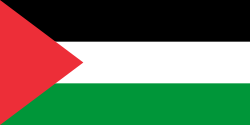


 Palestinian diaspora (~56%)
 Israel (~148,000)


