


Community hub
Recent from talks
Contribute something
Nothing was collected or created yet.
Comfort food
View on Wikipedia

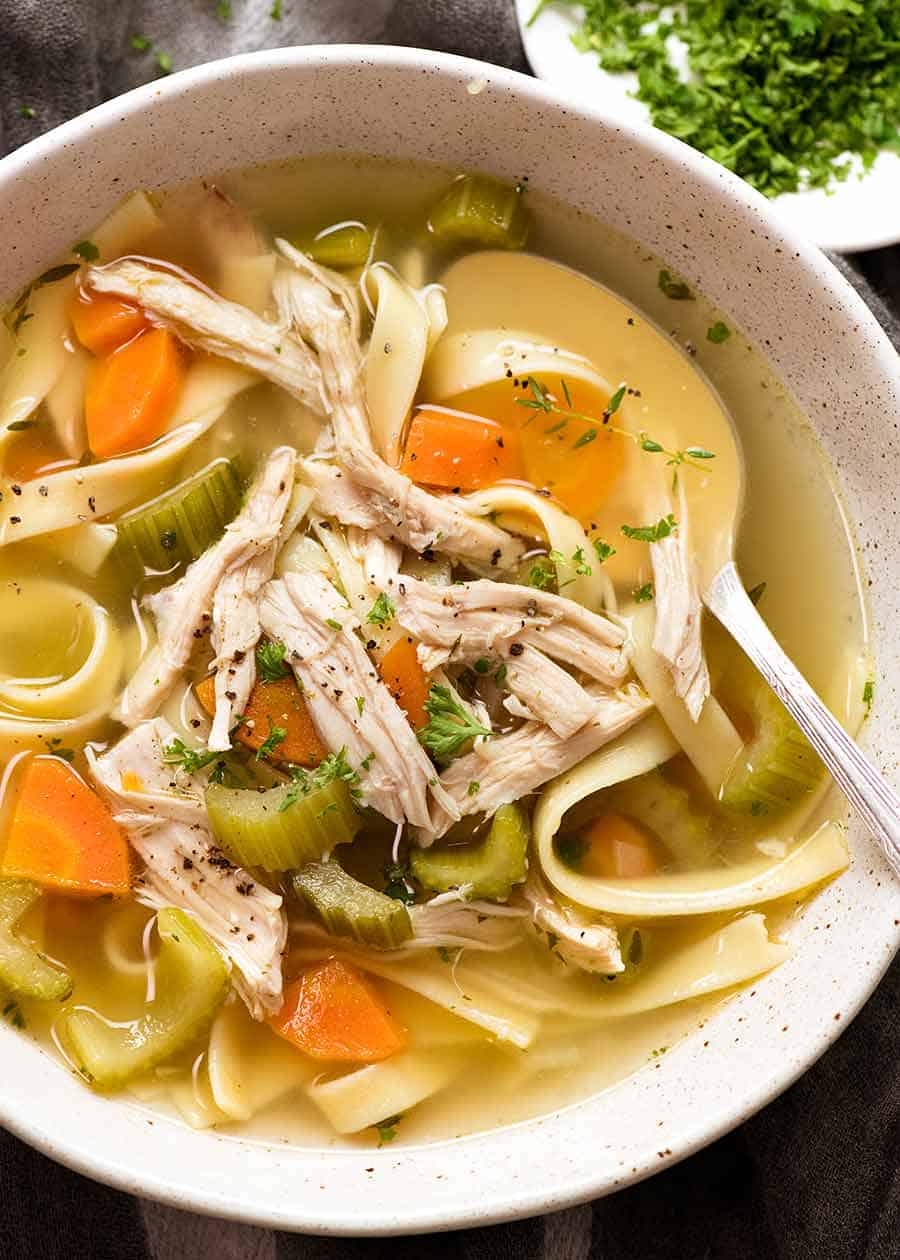
Comfort food is food that provides the eater a nostalgic or sentimental value[1] and may be characterized by its satisfying heartiness and association with childhood or home cooking.[2] The nostalgia may be specific to an individual or it may apply to a specific culture.[3]
Definition and history
[edit]The term comfort food can be traced back at least to 1615, where in the beginning of the second part of Don Quixote, at the beginning of chapter one, Quixote's niece and her nurse (governess, housekeeper?, "ama") are told to pamper him, "to give him things to eat which are comforting and appropriate for the heart and the brain... ." Others trace it back to 1966, when the Palm Beach Post used it in a story: "Adults, when under severe emotional stress, turn to what could be called 'comfort food'—food associated with the security of childhood, like mother's poached egg or famous chicken soup."[4] According to research by April White at JSTOR, it might have been Liza Minnelli who used the term for the first time in its modern meaning in an interview, admitting to craving a hamburger.[5]
When the term first appeared, newspapers used it in quotation marks. In the 1970s, the most popular comfort food in the United States were various potato dishes and chicken soup, but even at the time, the definition varied from person to person. During the next decades, the nature of comfort food changed in the US, shifting from savory dishes to sweet ones, while comfort food themed cookbooks started to spread and restaurants started to offer items labelled as such, when originally the term was used for food items consumed "home alone". Worldwide diet trends, emerging in the 1990s, like the low fat or the low-carb diet were unable to end the cravings for comfort food. Also in the 1990s the emergence of mass-produced food emerged which reshaped the idea of comfort food. The ability to produce and preserve food, such as canned goods, meant that comfort food became more available to those needed an extra reminder of home. For example those who were far away or under difficult conditions particularly war. According to White, the COVID-19 pandemic that hit the world in 2020 further strengthened people's need for comfort food that evokes nostalgia and the feeling of belonging.[5]
Psychological studies
[edit]Consuming energy-dense, high calorie, high fat, salt or sugar foods, such as ice cream or french fries, may trigger the reward system in the human brain, which gives a distinctive pleasure or temporary sense of emotional elevation and relaxation.[6][7] These feelings can also be induced by psychoactive ingredients found in other foods, such as coffee and chocolate.[8] When psychological conditions are present, people often use comfort food to treat themselves. Those with negative emotions tend to eat unhealthy food in an effort to experience the instant gratification that comes with it, even if only short-lived.[9]
One study divided college-students' comfort-food identifications into four categories (nostalgic foods, indulgence foods, convenience foods, and physical comfort foods) with a special emphasis on the deliberate selection of particular foods to modify mood or affect, and indications that the medical-therapeutic use of particular foods may ultimately be a matter of mood-alteration.[10]
The identification of particular items as comfort food may be idiosyncratic, though patterns are detectable. In one study of American preferences, "males preferred warm, hearty, meal-related comfort foods (such as steak, casseroles, and soup) while females instead preferred comfort foods that were more snack related (such as chocolate and ice cream). In addition, younger people preferred more snack-related comfort foods compared to those over 55 years of age." The study also revealed strong connections between consumption of comfort foods and feelings of guilt.[11]
Comfort food consumption is seen as a response to emotional stress and, consequently, as a key contributor to the epidemic of obesity in the United States.[12] The provocation of specific hormonal responses leading selectively to increases in abdominal fat is seen as a form of self-medication.[13]
Further studies suggest that consumption of comfort food is triggered in men by positive emotions, and by negative ones in women.[14] The stress effect is particularly pronounced among college-aged women, with only 33% reporting healthy eating choices during times of emotional stress.[15] For women specifically, these psychological patterns may be maladaptive.[16]
A therapeutic use of these findings includes offering comfort foods or "happy hour" beverages to anorectic geriatric patients whose health and quality of life otherwise decreases with reduced oral intake.[17]
Comfort foods provide emotional nutrition in the form of familiar tastes and a sense of security in stressful situations, but when taken in large quantities these foods become addictive and impair a person from engaging in new experiences or meeting challenges head-on. A reliance on comfort foods can stifle growth and transition, since the comfort foods are overused during times of transition and distress. The foods that people over-consume during stress periods leads to a state of emotional inertia where people may become resistant to necessary change or adaptation. This reliance on experience rather than interaction with present or upcoming situations eventually stifles the ability to thrive in fluid situations and inhibits the potential for personal growth.[18]
By region
[edit]A partial list by region of comfort foods around the world.
Afghanistan
[edit]Comfort foods in Afghanistan are:
- Aushak – stuffed dumplings and sauce
- Bolani – filled flatbread[19]
- Borani Banjan or Borani-e-Banjan – baked eggplant with yogurt sauce
- Borani Kadoo or Borani-e-Kado – sweet and savory braised pumpkin with yogurt sauce[20]
- Chainaki – lamb stew, traditionally served in a bowl lined with naan, and cooked in a clay vessel known as a chainak[21]
- Chalaw or Challow – steamed rice with spices
- Kabuli palaw or Qabuli Pulao – steamed rice with raisins, carrots, and lamb[20]
- Karahai – meat cooked in a traditional karahi pot
- Kebab – grilled skewered meat[19]
- Korma Gosht or Qorma-e-Gosht – braised meat[22]
- Mantu – meat-stuffed dumpling[19][22]
- Naan – flatbread[20]
- Sabzi Palu – spinach (sabzi) with spices
- Sher Berinj – rice pudding[23]
Australia, New Zealand and South Africa
[edit]
Comfort foods in Australia, New Zealand and South Africa may include:
- Braised lamb shanks[24][25]
- Bread and butter pudding[24][25]
- Butterscotch apple dumplings[25]
- Casserole (beef or chicken)[25]
- Chicken soup[25]
- Fish and Chips
- Golden syrup pikelets[25]
- Honey and oat slices[25]
- Hot chips[24]
- Lamingtons[26]
- Mashed potatoes[24][25]
- Meat pie[24][25]
- Pea and ham soup[25]
- Pie floater[27]
- Porridge, topped with brown sugar or honey, yogurt, nuts, and fruit[25]
- Potato wedges[24]
- Pumpkin soup[25]
- Rice custard[25]
- Roast meat (beef, chicken, or pork with crackling)[24][25]
- Roast potatoes[25]
- Sausage and mash[25]
- Sausage roll[24]
- Shepherd's pie[25]
- Spaghetti[25]
- Steak and kidney pie[25]
- Sticky date pudding[24][25]
- Vegemite or Marmite on toast[28]
Austria
[edit]
Austrian (and especially Viennese) comfort foods may include the following foods:
Brazil
[edit]
- Açaí na tigela[29]
- Arroz e feijão
- Baião de dois, a variation of the traditional rice and beans prepared with green beans
- Bobó de camarão
- Brigadeiro, a dessert common in children birthday parties
- Carne-de-sol[30]
- Canjica
- Coxinha, a very popular chicken dumpling
- Churrasco
- Cuscuz
- Feijoada[31]
- Flan
- Galinhada
- Moqueca[32]
- Pão de queijo
- Virado
Canada
[edit]
- Butter tart / Tarte au sucre – small sweet tart-shaped pastries[33][34][35]
- Cake[36]
- Cheesecake[37]
- Chili and beans[38]
- Chocolate bars[35]
- Cookies[34]
- Fish and chips[39]
- Fried chicken[36]
- Fried rice[40]
- Ginger beef[41]
- Grilled cheese sandwich[34][39][40][42]
- Hamburger[42][34]
- Ice cream[35][36]
- Lasagna[36][43]
- Macaroni and cheese[34][35][36][39][40][42][44]
- Nanaimo bar[35][39]
- Pancakes with maple syrup[34][42]
- Pea soup[40]
- Pierogies[40]
- Pizza[40][34][42]
- Potatoes such as French fries, Hash browns, Mashed potatoes,[36] Potato chips,[35] and Potato salad
- Poutine[28][33][34][35][39][40][42]
- Roast meat (beef, chicken, turkey or pork with crackling)[24][25]
- Roast potatoes[25]
- Rhubarb pie[43]
- Sausage and mash[25]
- Sausage roll[24]
- Scrambled eggs on toast[40]
- Shepherd's pie[25]
- Spaghetti[25]
- Steak and kidney pie[25]
- Tourtière – meat pie with pork and lard[33]
Egypt
[edit].jpg)
- Basbousa – sweet unleavened cake
- Falafel – fried bean ball[45]
- Fatteh – meat soup on cooked rice with crisp flatbread with garlic sauce[46]
- Ful medames – bean stew[47][48]
- Hawawshi – pita bread stuffed with flavored meat[49]
- Kushari – casserole of rice, macaroni, and vegetables[50]
- Macarona béchamel – baked pasta dish with ground meat and béchamel sauce[51]
- Sahlab – winter beverage from Orchis flour[52]
- Mulukhiyah – soup or stew made with jute mallow leaves[53][54]
- Om Ali – Pastry mixed with milk, nuts and sometimes coconut flakes topped with cream or butter and baked[55]
France
[edit]
- Crème caramel – custard dessert[56]
- French onion soup – onion soup with cheese and bread[56]
- Gratin dauphinois – potato slices baked with cream[28]
- Pâté – cold meat paste[56]
- Pot-au-feu – beef stew[57]
Germany
[edit]
German comfort foods may include the following foods:
- Arme Ritter
- Auszogne
- Bouletten, Frikadellen, Fleischpflanzerl etc.
- Bratkartoffeln[58]
- Currywurst[58]
- Flädlesuppe[59]
- Fleischsalat
- Frankfurter
- Franzbrötchen
- Gaisburger Marsch
- Hamburger Aalsuppe
- Hamburger Labskaus
- Kartoffelpuffer[59]
- Käsespätzle[59][58]
- Klöße[59][58]
- Kohlrouladen[59]
- Leberkäse
- Laugenbrezn, Laugengebäck
- Maultaschen[59]
- Mett
- Münchner Weißwürscht
- Nürnberger Lebkuchen
- Nürnberger Rostbratwurst
- Obazda
- Pichlstoana
- Regensburger
- Rote Grütze
- Rindsrouladen[59]
- Sauerbraten[59]
- Saumagen
- Schwäbische Spätzle
- Schlachtplatte
- Schnitzel[58]
- Schweinshaxn
- Spanferkel
- Steckerlfisch
- Schweinsbraten
Greece
[edit]- Gemista – stuffed vegetables[60]
- Gyros – sliced rotisserie meat wrapped in flatbread[61]
- Keftedakia – meatballs[60]
- Koulourakia – butter cookies[60]
- Moussaka – baked eggplant or potato dish[61]
- Pastitsio – baked pasta dish with minced meat and béchamel sauce[62]
- Dolmadakia – stuffed leaves
- Souvlaki – meat on a skewer[61]
Hong Kong
[edit]- Baked pork chop rice– a type of Hong Kong-style western cuisine[63]
- Cart noodle – an à la carte noodle dish traditionally sold using carts[64]
- Cha Chaan Teng – a Hong Kong style place to eat comfort food[65]
- Dim Sum – small bite-sized portions of food served in small steamer baskets during yum cha[66]
- Egg Tart[67]
- Hotpot[68]
- Macaroni in broth – a type of Hong Kong-style western cuisine[69]
- Pineapple Bun – a type of pastry that resembles a pineapple[69]
- Put chai ko – a palm-sized pudding cake snack
- Siu Mei (including char siu) – meats roasted on spits over an open fire or in a large rotisserie oven[69]
Hungary
[edit]
- Aranygaluska – dough balls rolled in a mixture of sugar and crushed nuts[70][71]
- Goulash soup[71]
- Chicken soup[70][71]
- Lángos – yeast dough deep fried in oil with various toppings[72]
- Madártej – meringue floating on crème anglaise[70]
- Chicken paprikash[70][71]
- Paprikás krumpli – potato stew with paprika[72]
- Pörkölt – meat stew with paprika[71]
- Puliszka – polenta with toppings[70]
- Rántott hús – a type of Snitzel; but also fried chicken is called the same way[71]
- Tejbegríz – Semolina pudding[70]
- Tojásos nokedli – small, plump soft noodles with eggs[70]
India
[edit]India's cuisine is diverse. Some Indian comfort foods – regional and subcontinent-wide – are listed below.
- Biryani – mutton, chicken, beef or lamb[73]
- Chaat – savoury snacks[74]
- Curd rice – rice mixed with yogurt[74][75]
- Curry
- Cutlet – deep-fried fritter of meat or vegetables[76]
- Dal chawal – spiced lentils and rice, particularly in North India
- Fish fry
- Kachori – spicy stuffed pastry from Rajasthan[77]
- Kadhi chawal – curd curry with rice[75]
- Kati roll – meat wrapped in flatbread, street food from West Bengal
- Maach-bhaat – fish with rice, from Bengal
- Momo – steamed filled dumpling
- Sambar – lentil-based vegetable stew
- Samosa – triangular pastry with a savory filling[78]
- Puri – fried flatbread[79]
- Masala Dosa – rice crepes, with or without a filling of potatoes and onion[80]
- Khichdi – stew made with rice and legumes (lentils, mung beans)[74]
- Pav bhaji – curry served with buttered buns
- Radhaballavi – deep-fried flatbread with a filling
- Rajma chawal – rice with beans[74]
- Rasam and Curd rice – particularly in South India
- Vada pav – potato dumpling inside a bread bun, especially in Maharashtra
Indonesia
[edit]
Some popular Indonesian foods are considered to be comfort food, usually served hot or warm, and either soupy or with a soft texture. Most of them are high in carbs or fat, such as congee, fried rice, and noodles which are high in carbs; while meatballs and grilled skewered meats contain fair amounts of fat and salt. Comfort foods often are the kind of food that provides nostalgic sentiments, as they often called masakan rumahan (home cooking) or masakan ibu (mother's dishes). In Indonesia, the warm and soft texture of bubur ayam is believed to help people to recover during convalescence.[81] Sayur sop or sup ayam is Indonesian chicken soup that often sought during flu. The warm soup contains chunk of chicken, bits of potato, carrot, and common green bean served in chicken stock.[82]
Some are traditional Indonesian food and some are derived from Chinese influences. Indonesian comfort foods include:
- Bakmi or mie ayam – noodles (mi) with pork (bak) or chicken (ayam)[83]
- Bakso – meatball soup[81][84][85]
- Bubur ayam – chicken congee[81]
- Gado-gado – salad containing vegetables, tempeh and egg in peanut sauce[86]
- Mie goreng – fried noodle;[81][87] for some Indonesians, especially those who are abroad, this may include a favourite brand or type of Indonesian instant noodles such as Indomie's "Mi goreng" line[87]
- Nasi goreng – fried rice[85]
- Nasi tim – steamed chicken rice[88][89]
- Sayur sop or sup ayam – Indonesian chicken and vegetables soup[82]
- Sate – skewered barbecue with peanut sauce[85]
- Soto ayam – spicy chicken soup[81][90]
Ireland
[edit]Irish comfort food can include:
- Bangers and mash – sausages and mashed potatoes[91]
- Coddle – meat and vegetable stew[92]
- Colcannon – mashed potatoes with cabbage[91]
- Fish and chips[91]
- Full Irish breakfast[91]
- Irish stew[91][92]
- Shepherd's pie – casserole of minced meat topped with mashed potatoes[91][92]
- Soda bread[91]
- Spice bag – chipped potatoes with spices[91]
- 3-in-1 – egg-fried rice, chips, and curry sauce[92]
Italy
[edit]
- Bruschetta[93]
- Cacciucco – fish stew[93]
- Crostini – small toasted bread slices with toppings[93]
- Gnocchi – small soft dough dumplings[94][93]
- Lasagne – flat noodles (pasta) layered with meat, cheese and tomato sauce[95][96]
- Pasta all'amatriciana – pasta with guanciale, tomato sauce and pecorino cheese[97][93]
- Pasta alla carbonara – pasta with egg, guanciale, and pecorino cheese[93]
- Nutella – sweet spread of cocoa and hazelnuts[98]
- Panna cotta – sweetened cream thickened with gelatin[93]
- Pizza – baked flatbread with toppings[93]
- Porchetta – boneless pork roast[93]
- Risotto[93]
Japan
[edit]In Japan, there is an expression called "Taste of Mom(おふくろの味)".
- Curry Rice/Kare Raisu – Stewed vegetables - most commonly potato, onion, and carrot - in a mild curry sauce, sometimes with meat[99]
- Chazuke/ochazuke – rice with green tea[100][101][102]
- Miso soup – soybean-flavored clear soup[100]
- Mochi – rice cake[102]
- Onigiri – rice ball[100][102]
- Ramen – soup with thin noodles[102][103]
- Takoyaki – octopus balls[102]
- Tempura – battered, deep-fried pieces of meat or vegetables[100][102]
- Udon – soup with thick noodles[100][102]
- Tamago kake gohan - cooked rice topped with raw egg[104]
Lithuania
[edit]
- Balandėliai – cabbage rolls[105]
- Bulviniai blynai
- Cepelinai – potato dumplings
- Curd doughnuts[106]
- Honey cake
- Kepta duona – fried garlic rye bread
- Koldūnai – flour-based dumplings
- Kugelis – potato casserole[107]
- Kūčiukai – Christmas Eve poppy seed biscuits[108]
- Mushroom cookies[109]
- Napoleon cake
- Tinginys – chocolate salami
- Varškėčiai – curd pancakes or dumplings
- White salad – boiled vegetable and mayonnaise salad
Philippines
[edit]
- Adobo – A salt and vinegar marinated meat stew, with a large amount of local and regional variations.[110][111]
- Arroz Caldo / Lugaw – A thick, savory rice porridge, often served as breakfast, on rainy days, or when sick.[112][113]
- Batchoy – A noodle soup with a variety of meats.[114]
- Filipino spaghetti - Sweet and savory spaghetti[115]
- Ginataan – A coconut cream-based dessert soup with candied banana, sticky rice balls, sagó (tapioca balls), taro, and langkâ (jackfruit).[116]
- Bulalo – A beef bone marrow soup.[113]
- Champorado – Chocolate rice porridge, sometimes served savory (as with tuyô)[28][117][113]
- Dinuguan - A pork blood and offal stew.[117]
- Halo-halo – A cold, crushed ice dessert dish of mixed sweets in fruits, with milk and topped with ice cream and leche flan.[110][114]
- Kare-kare – A stew of ox tripe and oxtail in a peanut sauce. It is regarded as a local variant of Indian curry.[111]
- Lumpia – Fried or fresh spring rolls with vegetable or meat filling.[111]
- Lomi – A hot noodle soup with distinctly thick egg noodles.[113]
- Pancit – A class of noodles, almost always fried or stir-fried, and often served during birthday celebrations.[111][118]
- Puto – Steamed rice cakes[117]
- Sinampalukan - Sour, tamarind-based chicken soup[119][120]
- Sinigang – A classification of sour soups with different configurations of meats, vegetables, and souring agents.[110][113][114]
- Sopas - A creamy soup (usually made with chicken) with elbow macaroni.[113][121][122]
- Suman – Another type of glutinous rice cake[114]
- Tsokolate – Hot chocolate drink made with cacao, served with or without milk.[113]
Poland
[edit]
Some Polish comfort food include:
- Soups and stews
- Bigos – "hunters' stew"[123]
- Barszcz z uszkami – a variant of borscht, a clear beetroot soup with forest mushrooms dumplings[124]
- Gulasz – goulash / meat and vegetable stew[125]
- Kapuśniak – sour cabbage soup (sauerkraut soup)
- Rosół – chicken soup with fine noodles[126][125]
- Zupa grzybowa – wild mushroom soup
- Zupa ogórkowa – sour cucumber soup[126]
- Zupa pomidorowa – clear tomato soup with rice or noodles[126]
- Zupa szczawiowa – sorrel soup served with boiled egg[126]
- Żurek – sour rye soup[123][124]
- Budyń waniliowy z malinami – vanilla pudding with raspberries[citation needed]
- Kotlet schabowy – pork schnitzel[124]
- Golonka – stewed or roasted ham hock[124]
- Kopytka – small potato dumpling[124]
- Łazanki – large flat noodles with fried sauerkraut
- Makaron ze śmietaną i truskawkami – pasta with cream and strawberries[127]
- Naleśniki z twarogiem – pancakes with milk curd[124]
- Pierogi – filled dumplings[28][128][123]
- Placki ziemniaczane – potato pancakes[127]
- Sernik – baked cheesecake
- Śledź w oleju – pickled herring[citation needed]
- Zasmażana kapusta - braised sauerkraut
- Zapiekanka – toasted open-face sandwich[124]
Puerto Rico
[edit]
Some Puerto Rican comfort foods include:
- Arroz con gandules – rice with pigeon peas[129][130]
- Arroz con pollo – rice with chicken[129]
- Bistec encebollado – steak and onions[131]
- Carne Guisada – stewed beef[130]
- Carne mechada – Puerto Rican style meatloaf
- Churrasco – grilled flank or skirt steak[131]
- Cuchifritos and Fritanga – assortments of fried appetizers (alcapurrias, bacalaitos, pastelitos/pastelillos, piononos, sorullos/sorullitos)[131][129][130]
- Habichuelas guisadas con calabaza – beans stewed with pumpkin[131]
- Lechón asado – roast pork[131]
- Mixta – white rice, stewed beans with pumpkin and stewed meat with potatoes and carrots
- Mofongo and trifongo – fried mashed green plantains[131][132]
- Mofongo relleno de mariscos, carne o pollo – Fried mashed green plantains stuffed with seafood, meat or chicken[129]
- Pasteles – Puerto Rican tamales[130]
- Pastelón de plátano maduro – ripe banana casserole with ground beef and cheddar cheese[130]
- Pinchos – Puerto Rican skewers[132]
- Tostones – fried plantain slices[131][132]
Romania
[edit]
Romanian comfort foods may include:
- Brânzoaică – soft cake filled with sweet cheese[133]
- Chocolate salami – dessert made from cocoa, broken biscuits and butter[134]
- Ciorbă de perișoare – sour soup with meatballs[135]
- Cozonac – sweet yeast dough[136]
- Greta Garbo cake – sheets of dough, filled with fruit jam and glazed with chocolate[137]
- Mititei – grilled ground meat rolls[138]
- Papanași – traditional fried or boiled pastry[138]
- Roasted eggplant salad – chopped roasted eggplants[138]
- Salată de boeuf – chopped beef and root vegetables[136]
- Sarmale – stuffed cabbage leaves[136]
- Stuffed peppers – hollowed peppers filled with meat and rice[139]
Russia
[edit]
Russian comfort foods may include:
- Bliny – pancakes or crepes[140]
- Borscht[140]
- Dressed herring – layered herring salad[141]
- Golubtsy – cabbage rolls[28][140]
- Kasha – porridge[140]
- Kotlety – meatballs[140]
- Kholodets – savory gelatin
- Kulebyaka - a fish pie
- Kvass – fermented drink made with bread
- Napoleon – layered cake with layers of pastry and cream
- Okroshka – cold vegetable soup
- Oladyi – small thick pancakes or fritters[142]
- Olivier salad – mayo, sausage and vegetable salad[140]
- Pelmeni – meat-filled dumpling[140]
- Pirozhki – buns with various fillings[140]
- Rassolnik – soup with pickles
- Shashlik – skewered and grilled cubes of meat
- Shchi – predominantly cabbage soup
- Solyanka – spicy and sour soup[143]
- Syrniki – cottage cheese pancakes[142]
- Ukha – fish-based clear soup
- Vareniki – filled dumplings (see pierogi for Poland)
- Vinegret – a salad made of diced vegetables, normally sour
- Zakuski – an array of dishes to supplement main courses
Singapore
- Kaya toast—toast with sweet coconut jam and cold butter, commonly served with coffee and soft-boiled eggs
- Milo—chocolate flavoured malt drink
- Hainanese chicken rice
- Bak kut teh—pork ribs dish cooked in broth
South Korea
[edit]
- Tteokbokki – rice cakes in spicy chili stew[144]
- Kimbap – cooked rice rolled in seaweed and stuffed with vegetables or meat[144]
- Samgyeopsal – roasted pork belly[145]
- Mandu – dumplings with various fillings[145]
- Soups and stews
- Kimchi jjigae – spicy stew made with kimchi[144]
- Haejang-guk – vegetables and meat in beef broth[144]
- Sundubu-jjigae – soft tofu stew[144]
- Seolleongtang – ox bone soup[144]
- Budae-jjigae – "army stew" with noodles, Spam, vegetables and other ingredients[146][145]
- Kalguksu – soup with handmade noodles[145]
Spain
[edit]
- Castañas asadas – roasted chestnuts[147]
- Chocolate con churros – hot chocolate drink with fried dough[148]
- Savoury coca
- Mar y montaña ("Sea and Mountain") dishes, which combine meat and seafood
- Embutido, a generic name for different kinds of cured pork meat, including fuet (a characteristic type of dried sausage), salchichón or longaniza (salami) and different kinds of cold cut botifarra.
- Cordero asado – grilled lamb[citation needed]
- Fried seafood, such as boquerones fritos (fried anchovies) and calamares fritos (fried squid)
- Gazpacho – cold vegetable soup[citation needed]
- Jamón serrano – Serrano ham[147]
- Pan tumaca (bread smeared with tomato and olive oil, and sometimes garlic)
- Aioli (sauce which is an emulsion of garlic and olive oil. The name literally means "garlic and oil" in Catalan)
- Catalan-style cod (with raisins and pine nuts)
- Escalivada (various grilled vegetables)
- Escudella y carne de la olla (a broth, it may be served as soup with pasta and minced meats and vegetables, or as the soup first and then the rest)
- Canelones (Cannelloni with a bechamel sauce)
- Fricandó
- Esqueixada (salted cod salad with tomato and onion)
- Judías con botifarra (beans and pork sausage)
- Suquet (a seafood casserole)
- Calçot (specially cultivated onion, grilled and served as a "Calçotada")
- Paella – rice with saffron, cooked in a shallow pan[149]
- Sausage, such as chorizo, morcilla, and salchichón[citation needed]
- Sobao – sweet bread[147]
- Stew, such as cocido madrileño (Madrid stew)[150]
- Tarta de Santiago – almond cake or tart[149]
- Caragols a la llauna (cooked snails)
- Sonsos and many other Mediterranean fresh fish
- Crema catalana (custard made from egg yolks, milk, sugar, lemon zest and cinnamon)
- Panellets (bite-sized cakes in different shapes, mostly round, made mainly of marzipan)
- Torreznos – bacon[147]
- Tortilla española or tortilla de patata – potato omelet[149][151]
Switzerland
[edit]
Traditional Swiss cuisine is characterized by its simplicity and extensive use of dairy products like cheese, cream and butter. Fruits (often apple compote) are also used in many (main) dishes,[153] notably Älplermagronen and Maluns.
- Älplermagronen – pasta, potatoes, cream, cheese, and onions
- Capuns – stuffed leaves
- Cholera – filled pastry
- Fondue – melted cheese sauce for dipping
- Maluns – potato pieces slow-fried in butter
- Pizzoccheri – buckwheat-and-wheat pasta with cheese
- Raclette – melted cheese
- Rösti – grated potato pancake with various accompaniments
- Wähe – pastry shell with custard and various ingredients
Taiwan
[edit]
- Beef noodle soup[154]
- Dan zai noodles – noodles and prawn with broth[155]
- Minced pork rice[155]
- Oyster omelette[156]
- Red bean soup[157]
- Small sausage in large sausage – grilled sausage in a rice casing[156]
- Tangyuan – filled rice dumplings in sweet syrup[157]
Turkey
[edit]
Some Turkish comfort foods are:
- Mantı – spicy meat dumpling[158][159][160]
- Kuru fasulye – bean and tomato stew[28][160][161]
- Pilav – rice dish[162]
- Mercimek Çorbası – a soup based on lentils[163]
- Börek – baked filled pastries, a wide variety of regional variations of börek exists
- Menemen - commonly eaten for breakfast[164]
- Yaprak Sarma - stuffed grape leaves[160]
- Gözleme - a stuffed flatbread, commonly stuffed with spinach, minced meat and potato mash[160]
- Lahmacun[161]
- Pide[161]
- Tarhana soup[163]
Ukraine
[edit]Ukrainian comfort foods include, but aren't limitied to:
- Borscht — beetroots soup, also there are few variants:
- Green borscht
- White borscht
- Cabbage borscht
- Deruny — potato pancakes with sour cream
- Holubtsi — small, medium or large rolls with prepared rice
- Kasha — kind of porridge
- Kolach — sweet, round shaped pastry
- Mlynci — pancakes.
- Nalysnyky — pancakes with fillings
- Pampushky — small savory or sweet yeast-raised bun
- Pyrizhky — baked or fried small donuts with different (mostly fruits or meat) fillings. (Not to be confused with Polish PiErogi or Russian PirogI)
- Syrnyky — fried quark pancakes, garnished with sour cream
- Varennia — jam
- Varenyky — Filled dumplings cooked at boiling water
- Vinegret — Beans and potato salad colored with beetroots
United Kingdom
[edit]
United Kingdom comfort foods include:
- Bacon butty (bacon sandwich)[166][167][168]
- Bangers and mash – sausages and mashed potatoes[165][167][168][169]
- Biscuit
- Beef stew
- Cauliflower cheese[167][169][170][171]
- Chicken tikka masala[169][170][171]
- Chips
- Cornish pasty[167][169]
- Cottage pie (Shepherd's pie)[167][168][169][170]
- Custard[170]
- Curry – India-inspired stew over rice[168]
- Egg and chips[168][172]
- Egg and soldiers – toast sliced into approximately six to eight pieces lengthwise, to dip into soft-boiled egg yolk[168][173]
- Fish and chips[167][168][174]
- Fish finger sandwich
- Fried chicken
- French fries
- Fruit crumble – stewed fruit with crumbly topping[28][167][169][170]
- Full English breakfast[167][168]
- Lancashire hotpot[170]
- Macaroni and cheese
- Pies
- Cheese and onion pie[169][170]
- Potatoes
- Puddings
- Bread and butter pudding[170]
- Jam roly-poly – suet pudding rolled in a spiral with jam[176]
- Rice pudding[169][170]
- Spotted dick – steamed pudding with dried fruit[167]
- Sticky toffee pudding[169]
- Treacle pudding[167][170]
- Roasted meat, such as Beef[28][167][168][169] or chicken[167][169]
- Scotch egg – hard-boiled egg baked in sausage[167][169]
- Soups and stews
- Stottie cake – heavy, round bread[177]
- Toad in the hole – sausages baked in Yorkshire pudding[168][169][170]
- Toast
- Baked beans on toast[168]
- Welsh rarebit – hot cheese sauce on toast[169][170]
- Toastie – grilled sandwich[170]
- Tea
- Yorkshire pudding[167][169][178]
United States
[edit]
American comfort foods may include the following foods:
- Beef stew
- Biscuits and gravy[180][181]
- Breakfast cereal[182]
- Burritos[181]
- Casseroles[183][184] such as Green bean casserole,[183] Hotdish, Tamale pie,[185] and Tuna casserole[186]
- Cheeseburgers
- Chicken and dumplings[183]
- Chicken fried steak[183]
- Chicken soup[180][181]
- Chili[179][180][183]
- Chili mac[187]
- Chocolate[188]
- Chowders: Clam chowder, Shrimp chowder, Corn chowder, etc.[180][183]
- Cornbread[183]
- Corned beef and cabbage
- Creamed chipped beef
- Desserts such as Apple pie,[189] Cake,[180][183] Chocolate chip cookies,[180][183] Cupcakes,[180][183] and Tapioca pudding
- Fluffernutter – peanut butter and marshmallow fluff sandwich
- French fries[180][181]
- Fried chicken[28][180][181][183]
- Green chile stew
- Grilled cheese sandwich[180][181] and tomato soup[183]
- Grits[4][183]
- Ice cream[180][183]
- Lasagna[183]
- Macaroni and cheese[179][180][181][183]
- Mashed potatoes[28][180][181][183]
- Meatloaf[180][183]
- Peanut butter and jelly sandwich[190][191]
- Pepperoni rolls[192]
- Pizza[28][181]
- Popcorn[188]
- Potato chips[188]
- Pot roast[183][193][194]
- Red beans and rice[183][195]
See also
[edit]
References
[edit]- ^ "Definition of COMFORT FOOD". Merriam-Webster. 12 December 2023. Archived from the original on 20 January 2014. Retrieved 16 December 2023.
- ^ "Comfort food". WordNet 3.1. Archived from the original on 4 June 2016. Retrieved 10 January 2016.
- ^ Rufus, Anneli (23 June 2011). "How comfort foods work like Prozac". Gilt Taste. Archived from the original on 16 April 2015. Retrieved 8 April 2015. ()
- ^ a b Romm, Cari (3 April 2015). "Why Comfort Food Comforts". The Atlantic. Archived from the original on 29 April 2019. Retrieved 21 July 2015.
- ^ a b "A Brief History of Comfort Food". JSTOR daily. 30 May 2020. Archived from the original on 17 May 2022. Retrieved 14 February 2022.
- ^ Heshmat, Shahram (28 September 2016). "5 Reasons Why We Crave Comfort Foods". Psychology Today. Retrieved 5 September 2018.
- ^ Wansink, Brian; Sangerman, Cynthia (July 2000). "Engineering comfort foods". American Demographics: 66–7.
- ^ Preedy, Victor R.; Watson, Ronald Ross; Martin, Colin R. Martin (2011). Handbook of Behavior, Food and Nutrition. Springer Science & Business Media. p. 618. ISBN 9780387922713.
Chocolate is a recognized comfort food, i.e. eating chocolate can alleviate stress, reduce negative emotional states, and even increase tolerance to pain. These effects may be the result of activation of brain pathways known to combat stress, process pain, and to regulate emotions.
- ^ "The Science behind Comfort Food - Desert Hope". Desert Hope. Archived from the original on 6 September 2018. Retrieved 6 September 2018.
- ^ Locher, Julie L.; Yoels, William C.; Maurer, Donna; Van Ells, Jillian (2005). "Comfort Foods: An Exploratory Journey into the Social and Emotional Significance of Food". Food and Foodways. 13 (4): 273–97. doi:10.1080/07409710500334509. S2CID 145287055.
- ^ Wansink, B; Cheney, M; Chan, N (2003). "Exploring comfort food preferences across age and gender". Physiology & Behavior. 79 (4–5): 739–47. doi:10.1016/S0031-9384(03)00203-8. PMID 12954417. S2CID 14248350.
- ^ Dallman, Mary F.; Pecoraro, Norman; Akana, Susan F.; La Fleur, Susanne E.; Gomez, Francisca; Houshyar, Hani; Bell, M. E.; Bhatnagar, Seema; Laugero, Kevin D.; Manalo, Sotara (2003). "Chronic stress and obesity: A new view of 'comfort food'". Proceedings of the National Academy of Sciences. 100 (20): 11696–701. Bibcode:2003PNAS..10011696D. doi:10.1073/pnas.1934666100. JSTOR 3147854. PMC 208820. PMID 12975524.
- ^ Dallman, Mary F.; Pecoraro, Norman C.; La Fleur, Susanne E. (2005). "Chronic stress and comfort foods: Self-medication and abdominal obesity". Brain, Behavior, and Immunity. 19 (4): 275–80. doi:10.1016/j.bbi.2004.11.004. PMID 15944067. S2CID 13915063.
- ^ Dube, L; Lebel, J; Lu, J (2005). "Affect asymmetry and comfort food consumption". Physiology & Behavior. 86 (4): 559–67. CiteSeerX 10.1.1.424.1134. doi:10.1016/j.physbeh.2005.08.023. PMID 16209880. S2CID 1345114.
- ^ Kandiah, Jayanthi; Yake, Melissa; Jones, James; Meyer, Michaela (2006). "Stress influences appetite and comfort food preferences in college women". Nutrition Research. 26 (3): 118–23. doi:10.1016/j.nutres.2005.11.010.
- ^ Lebel, J; Lu, J; Dube, L (2008). "Weakened biological signals: Highly-developed eating schemas amongst women are associated with maladaptive patterns of comfort food consumption". Physiology & Behavior. 94 (3): 384–92. doi:10.1016/j.physbeh.2008.02.005. PMID 18325547. S2CID 13301823.
- ^ Wood, Paulette; Vogen, Barbra D (1998). "Feeding the anorectic client: Comfort foods and happy hour". Geriatric Nursing. 19 (4): 192–4. doi:10.1016/S0197-4572(98)90153-7. PMID 9866509.
- ^ Wood, Stacy; article., John Deighton served as editor and Mary Frances Luce served as associate editor for this (2010). "The Comfort Food Fallacy: Avoiding Old Favorites in Times of Change". Journal of Consumer Research. 36 (6): 950–963. doi:10.1086/644749. ISSN 0093-5301. Archived from the original on 27 September 2024. Retrieved 26 November 2024.
{{cite journal}}:|first2=has generic name (help) - ^ a b c Ibrahim, Mariam (4 July 2013). "Dining Out: Afghan Chopan Kebab House offers comfort food". Edmonton.
- ^ a b c Baer, Adam (13 September 2012). "Afghan Comfort Cuisine". Men's Journal. American Media Inc.
- ^ Bulos, Nabih (18 October 2022). "Afghanistan's traditional delicacy chainaki and a master chef endure in Kabul". Los Angeles Times. Retrieved 11 July 2023.
- ^ a b Mishan, Ligaya (29 November 2018). "At Nansense, Afghan Comfort Comes From an Unlikely Place: a Former Mail Truck". The New York Times. Archived from the original on 28 April 2019. Retrieved 28 April 2019.
- ^ Darlene (30 April 2014). "Sheer Birinj – Afghan Rice Pudding". International Cuisine.
- ^ a b c d e f g h i j k "Australian Comfort Food Recipes". Food.com. Archived from the original on 18 January 2013. Retrieved 29 June 2013.
- ^ a b c d e f g h i j k l m n o p q r s t u v w x y z "Ultimate Comfort Food". ninemsn Food. ninemsn. Archived from the original on 4 April 2013.
- ^ Romero, Jo (27 September 2012). "Comfort foods from around the world". Yahoo! Lifestyle UK. Yahoo!. Archived from the original on 26 October 2013.
- ^ Marks, Kathy (6 December 2003). "Adelaide's 'pie floater' fights losing battle in fast food war". The Independent. Archived from the original on 12 November 2019. Retrieved 19 September 2017.
- ^ a b c d e f g h i j k l "33 comfort foods from around the world". MSN. Microsoft Corporation. Archived from the original on 12 September 2017. Retrieved 12 September 2017.
- ^ "Traditional Brazilian Food: 12 Famous Dishes You Must Try". Rainforest Cruises. Retrieved 22 April 2025.
- ^ "Carne de Sol". Taste Atlas. 25 October 2016. Archived from the original on 21 March 2025. Retrieved 22 April 2025.
- ^ "Cuisine in South America: What you can't miss". CNN. 1 October 2018. Retrieved 22 April 2025.
- ^ "Brazilian Fish Stew (Moqueca!)". Feasting at Home. 28 December 2019. Retrieved 22 April 2025.
- ^ a b c "Canadian Comfort Food: A collection of uniquely Canadian Cuisine". Historica Canada (The Canadian Encyclopedia ). Archived from the original on 13 May 2018. Retrieved 10 May 2016.
- ^ a b c d e f g h Kelsey, Sarah (20 October 2011). "Canadian Comfort Food: The Bad-For-Us Foods We Can't Resist". HuffPost Canada. The Huffington Post Canada. Retrieved 6 January 2018.
- ^ a b c d e f g Duncan, Lindsay (14 June 2017). "22 Foods You Can Only Get In Canada". Forkly. Concourse Media. Archived from the original on 6 January 2018. Retrieved 6 January 2018.
- ^ a b c d e f The Canadian Living Test Kitchen. "15 recipes for the ultimate comfort food". Canadian Living. Archived from the original on 2 May 2016. Retrieved 10 May 2016.
- ^ "Cashew and tofu merge for creamy vegan cheesecake: Cookbook author and food blogger Sam Turnbull says recipe tastes just like traditional cheesecake". CBC News Ottawa. Canadian Broadcasting Corporation/Radio-Canada. 25 October 2017. Retrieved 6 January 2018.
- ^ Abraham, Lois (13 March 2016). "'Homegrown' cookbook a labour of love and salute to Canada's producers". Ottawa Citizen. Toronto: Postmedia Network Inc. Archived from the original on 10 June 2016. Retrieved 10 May 2016.
- ^ a b c d e Wilson-Smith, Meghan. "Top Spots for 14 Wintry Canadian Comfort Food Favourites". WHERE Canada. St. Joseph Media Inc. Archived from the original on 5 January 2012. Retrieved 10 May 2016.
- ^ a b c d e f g h McLean, Dorothy Cummings (14 January 2016). "Anglo-Canadian Comfort Food". The Historical House. Retrieved 10 May 2016.
- ^ Rose, Nick (24 April 2017). "How Chop Suey and Ginger Beef Helped Canada Discover Itself". Munchies. VICE Media LLC. Archived from the original on 6 November 2024. Retrieved 6 January 2018.
- ^ a b c d e f Kelsey, Sarah (20 October 2011). "Canadian Comfort Food: The Bad-For-Us Foods We Can't Resist". HuffPost Living. The Huffington Post Canada. Archived from the original on 5 June 2016. Retrieved 11 May 2016.
- ^ a b Ruiz Leotaud, Valentina (28 April 2016). "Comfort food now caters to Canadian locavores". National Observer. Archived from the original on 10 May 2016. Retrieved 10 May 2016.
- ^ "Top 10 Things to Add to Your Mac 'n' Cheese". Food Network Canada. Corus Entertainment Inc. 30 September 2015. Archived from the original on 13 May 2016. Retrieved 10 May 2016.
- ^ "Baladi Chic: Cairo's New Comfort Food". CNN Travel. 26 April 2012. Archived from the original on 14 February 2022. Retrieved 14 February 2022.
- ^ "Egypt Travel Guide". Afar. Archived from the original on 17 February 2022. Retrieved 17 February 2022.
- ^ "Ramadan recipe: a healthy and hearty foul medames". The National News. 10 May 2021. Retrieved 17 February 2022.
- ^ One-Hour Comfort: Quick, Cozy, Modern Dishes for All Your Cravings. America's Test Kitchen. 2021. p. 30. ISBN 9781948703833.
- ^ "Beef Hawawshi sandwiches from the Eat, Habibi, Eat! cookbook". Eat North. 26 November 2021. Retrieved 14 February 2022.
- ^ "Koshari, the comfort food from Egypt". Tribune India. Archived from the original on 14 February 2022. Retrieved 14 February 2022.
- ^ Mark McWilliams (2016). Food and Communication: Proceedings of the Oxford Symposium on Food and Cookery 2015. Oxford Symposium. p. 15. ISBN 9781909248496.
- ^ "7 Egyptian Comfort Foods Perfect For Winter". localguidetoegypt.com. 14 January 2020. Archived from the original on 14 February 2022. Retrieved 14 February 2022.
- ^ Fabricant, Florence (3 August 2020). "A Digital School Cookbook to Aid Families". The New York Times. Archived from the original on 17 February 2022. Retrieved 17 February 2022.
- ^ Rochlin, Margy (5 December 2018). "Why you should be eating molokhia and how to make this delicious superfood soup". Los Angeles Times. Los Angeles. Archived from the original on 8 November 2020. Retrieved 17 February 2019.
- ^ "Celebrating Om Ali on Eat an Extra Dessert Day". Egyptian Streets. 4 September 2021. Archived from the original on 17 February 2022. Retrieved 17 February 2022.
- ^ a b c Davis, Hilary (1 August 2014). French Comfort Food. Gibbs Smith. p. Table of Contents. ISBN 978-1423636984.
- ^ Walhout, Hannah (22 March 2017). "Pot-au-Feu: The Ultimate French Comfort Food". Food & Wine. Archived from the original on 31 January 2018. Retrieved 30 January 2018.
- ^ a b c d e "10 German comfort foods to try this fall". Stars and Stripes Europe. 25 October 2021. Archived from the original on 22 February 2022. Retrieved 22 February 2022.
- ^ a b c d e f g h "10 German comfort foods for the winter". Deutsche Welle. Retrieved 22 February 2022.
- ^ a b c "What is Comfort Food? Which Greek dishes are considered comfort foods?". Little Cooking Tips. 5 November 2015. Archived from the original on 21 February 2022. Retrieved 21 February 2022.
- ^ a b c "Bell Greek serving up Greek comfort food in Midlothian and Chester". WTVR. 29 December 2020. Retrieved 21 February 2022.
- ^ "Traditional Greek Pastitsio recipe: the ultimate comfort food". Greek City Times. 13 December 2020. Archived from the original on 21 February 2022. Retrieved 21 February 2022.
- ^ "Hong Kong's top 10 best pork chop rice dishes". TimeOut Hong Kong. 11 March 2020. Retrieved 23 February 2022.
- ^ "Hong Kong's 'cart noodles' are irresistible to many, but certainly not worth dying for amid the Covid-19 pandemic". South China Morning Post. 28 March 2020. Retrieved 23 February 2022.
- ^ "Comfort Food in Hong Kong". The New York Times. 30 January 2008. Archived from the original on 7 April 2012.
- ^ "How culinary icon dim sum connects Hong Kong people and reflects city's dynamic ability for reinvention". South China Morning Post. 20 January 2021. Retrieved 23 February 2022.
- ^ "Comfort food from Hong Kong's best". Asia One. 15 December 2016. Retrieved 23 February 2022.
- ^ "Hong Kong's hot pot obsession". BBC. Archived from the original on 23 February 2022. Retrieved 23 February 2022.
- ^ a b c "13 best cha chaan teng in Hong Kong". TimeOut Hong Kong. 6 August 2020. Retrieved 23 February 2022.
- ^ a b c d e f g "Pontosan mi is az a comfort food? A fogalom, ami mindenkinek egy kicsit mást jelent" (in Hungarian). Dining Guide. 10 August 2018. Archived from the original on 13 February 2022. Retrieved 12 February 2022.
- ^ a b c d e f "Top 5 magyar COMFORT FOOD - amiktől újra az anyaméhben érzed magad" (in Hungarian). Nosalty. Retrieved 12 February 2022.
- ^ a b "Íme az az 5 magyar comfort food, amelyre érdemes lenne a világ" (in Hungarian). Ízes Élet. Archived from the original on 27 October 2021. Retrieved 18 March 2022.
- ^ "Chicken biryani is hot stuff in India as it tops the takeaway charts". The Times. Retrieved 8 March 2022.
- ^ a b c d "11 Comfort Foods Every Indian Loves in Times of Stress". india.com. Archived from the original on 8 March 2022. Retrieved 8 March 2022.
- ^ a b "From Curd Rice to Kadhi Chawal: 5 Classic Indian Curd-Based Comfort Foods Of All Times". NDTV. Retrieved 8 March 2022.
- ^ "Monsoon special: Enjoy crispy bread patties today". The Indian Express. 30 July 2020. Retrieved 8 March 2022.
- ^ "Make Your Snacktime Delicious With 5 Classic Kachori Recipes". NDTV. Archived from the original on 8 March 2022. Retrieved 8 March 2022.
- ^ "Egypt's gift to India: the samosa, popular fried pastry snack named after the pyramids". South China Morning Post. 21 January 2021. Archived from the original on 9 March 2022. Retrieved 9 March 2022.
- ^ "Puri Bhaji Recipe: The Ultimate Desi Comfort Food For A Quick And Easy Dinner". NDTV. Archived from the original on 15 February 2022. Retrieved 9 March 2022.
- ^ "Dosa: India's wholesome fast food obsession". BBC. Archived from the original on 9 March 2022. Retrieved 9 March 2022.
- ^ a b c d e Fitria Rahmadianti (26 September 2012). "Comfort Food, Makanan Yang Bikin Nyaman dan Kangen" (in Indonesian). Detik Food. Retrieved 2 September 2014.
- ^ a b Christina Andhika Setyanti (13 November 2015). "Alasan Sup Ayam Jadi Makanan Paling Dicari Saat Flu". CNN Indonesia (in Indonesian). Archived from the original on 14 April 2017. Retrieved 13 April 2017.
- ^ "My Comfort Food – Mie Jamur Pangsit Bakso". Indonesia Eats. 8 August 2007. Archived from the original on 2 March 2022. Retrieved 12 September 2015.
- ^ Kinanti Pinta Karana (18 November 2010). "Comfort Food Helps Indonesian Maid Recover". Jakarta Globe. Globe Media Group. Archived from the original on 21 November 2010.
- ^ a b c De Launey, Guy (10 November 2010). "Barack Obama's Indonesia charm offensive". BBC News. Jakarta. Retrieved 12 September 2015.
- ^ Olivier, Jamie (2014). "Gorgeous gado-gado: An Indonesian mega salad". Jamie's Comfort Food. Michael Joseph. ISBN 978-0718159535. Archived from the original on 13 April 2017. Retrieved 13 April 2017.
- ^ a b nava-k. "Maggi goreng mamak". Petitchef. Archived from the original on 5 June 2012. Retrieved 31 October 2017.
- ^ VL. "Nasi Tim Warisan" (in Indonesian). Femina. Retrieved 2 September 2014.
- ^ "Indonesian Steamed Rice with Chicken/Nasi Tim Ayam". What to Cook Today?. Retrieved 2 September 2014.
- ^ "Indonesia - Soto Ayam at Malioboro Country". Chowhound. 29 October 2011. Archived from the original on 5 February 2015. Retrieved 12 September 2015.
- ^ a b c d e f g h Devlin, Emma (30 June 2024). "Got a craving? These Irish comfort foods will hit the spot". IrishCentral. Irish Studio LLC. Archived from the original on 12 May 2025. Retrieved 17 March 2025.
- ^ a b c d "11 delicious Irish comfort foods that hit the spot, every time". The Daily Edge. Journal Media Ltd. 5 June 2015. Archived from the original on 24 May 2025. Retrieved 17 March 2025.
- ^ a b c d e f g h i j The Editors of Saveur (2015). Saveur: Italian Comfort Food. Weldon Owen International. ISBN 9781681880785.
- ^ Lempert, Phil (2 December 2008). "Italian comfort food: Ricotta gnocchi". TODAY. Archived from the original on 3 August 2017. Retrieved 2 August 2017.
- ^ Carlos, Angela (27 October 2015). "This is the Ultimate Italian Comfort Food Recipe". The Daily Meal. tronc, Inc. Archived from the original on 2 August 2017. Retrieved 2 August 2017.
- ^ Brassinga, Angela (9 June 2015). "7 Favorite Lasagna Recipes: These layered pasta dishes will satisfy your comfort food craving". Sunset. Time Inc. Affluent Travel Group. Retrieved 2 August 2017.
- ^ "Chefs want you to eat pasta all'amatriciana. It's comfort food for quake victims". Toronto Star. 26 August 2016. Archived from the original on 4 March 2022. Retrieved 4 March 2022.
- ^ Sandoval, Eva (14 August 2012). "The world's greatest comfort foods". CNN. Retrieved 21 July 2015.
- ^ Gritzer, Daniel. "Homemade Japanese Curry Rice (Kare Raisu) Recipe". Serious Eats. Retrieved 11 November 2021.
- ^ a b c d e Chavez, Amy (10 March 2015). "10 distinctly Japanese comfort foods". SoraNews24. Socio Corporation. Retrieved 12 December 2017.
- ^ Joe, Melinda; Marx, W. David; Wee, Darryl; Janette, Misha (12 July 2017). "40 Japanese foods we can't live without". CNN. Cable News Network. Archived from the original on 13 December 2017. Retrieved 12 December 2017.
- ^ a b c d e f g "Japanese Comfort Food". Japan Deluxe Tours. Japan Deluxe Tours, Inc. 30 August 2017. Archived from the original on 13 December 2017. Retrieved 12 December 2017.
- ^ "9 Japanese Comfort Foods to Make Right Now". Food & Wine. Time Inc. 11 January 2016. Retrieved 12 December 2017.
- ^ Suzuki, Mami (4 June 2014). "A Raw Egg On Rice Is A Japanese Feast". tofugu.com. Archived from the original on 28 February 2016. Retrieved 28 November 2023.
- ^ "Stuffed Cabbage Leaves". food52.com.
- ^ "Varškės spurgos". sezoninevirtuve.lt.
- ^ "Cooking Lithuanian for the ultimate comfort food". illinoistimes.com.
- ^ "Namuose keptų kūčiukų tradicijos atgimsta: jų gali išsikepti kiekvienas". delfi.lt.
- ^ "Kepame gardžiausius grybukus! Dalinamės gudrybėmis ir autentiškais receptais". lamaistas.lt.
- ^ a b c Valentini, Marinel (17 October 2016). "Best Comfort Food Dishes From The Philippines". The Culture Trip. The Culture Trip Ltd. Archived from the original on 13 October 2017. Retrieved 13 October 2017.
- ^ a b c d Kryza, Andy (20 January 2014). "Filipino Food for Beginners: The 7 Dishes You Need to Know". ThrillList. Group Nine Media Inc. Archived from the original on 14 October 2017. Retrieved 13 October 2017.
- ^ Harrison, Melissa (11 May 2014). "24 Delicious Filipino Foods You Need In Your Life". BuzzFeed. Archived from the original on 13 October 2017. Retrieved 13 October 2017.
- ^ a b c d e f g Galvez, Jane (30 July 2016). "12 Best Filipino Comfort Food For The Rainy Days". Philihappy. Archived from the original on 2 April 2019. Retrieved 13 October 2017.
- ^ a b c d Ang Pinaka Staff; Ces Vitan (23 August 2012). "Top 10 Best Rainy Day Comfort Foods on 'Ang Pinaka'". GMA News Online. GMA Network. Archived from the original on 13 October 2017. Retrieved 13 October 2017.
- ^ Estrella, Serna (30 July 2014). "The Origins of Sweet Spaghetti: A Closer Look at the Filipino Sweet Tooth". Pepper.ph. Archived from the original on 7 March 2022. Retrieved 16 December 2018.
- ^ "Foods for the soul". The Philippine Star. Archived from the original on 7 March 2022. Retrieved 7 March 2022.
- ^ a b c Pineda, Maida; Lopez-Quimpo, Candice (24 May 2016). "50 dishes that define the Philippines". CNN Travel. CNN. Retrieved 13 October 2017.
- ^ Tayag, Claude (29 July 2012). "26 top Filipino iconic dishes". The Philippine Star. Archived from the original on 24 July 2013. Retrieved 13 October 2017.
- ^ "Sinampalukang Manok Recipe". Panlasang Pinoy. 7 June 2011. Retrieved 13 April 2019.
- ^ "Sinampalukan: Filipino Chicken Soup". Serve With Rice. Archived from the original on 13 April 2019. Retrieved 13 April 2019.
- ^ "Creamy Chicken Sopas (Filipino Chicken Macaroni Soup)". Manila Spoon. 12 November 2013. Archived from the original on 16 December 2018. Retrieved 16 December 2018.
- ^ "Chicken Noodle Soup (Sopas) – Filipino version". Foxy Folksy. 5 June 2017. Archived from the original on 16 December 2018. Retrieved 16 December 2018.
- ^ a b c "Best foods to try in Poland". CNN. 11 November 2020. Archived from the original on 3 January 2022. Retrieved 10 March 2022.
- ^ a b c d e f g "Schabowy i pierogi ze wspomnień. Gdzie zjeść dania zapamiętane z dzieciństwa" (in Polish). wyborcza.pl. Archived from the original on 23 May 2022. Retrieved 10 March 2022.
- ^ a b "From 'Duck Blood Soup' to Pierogi dumplings, 10 unique dishes from Poland". The Times of India. 5 March 2022. Retrieved 10 March 2022.
- ^ a b c d From a Polish Country House Kitchen: 90 Recipes for the Ultimate Comfort Food. Anne Applebaum, Danielle Crittenden. 2012. ISBN 9781452110554.
- ^ a b "Najlepsze dania z dzieciństwa? Tych nie popijaliśmy łzami. "Grzeszne absolutnie, ale niebo w gębie"" (in Polish). MSN. Archived from the original on 10 March 2022. Retrieved 10 March 2022.
- ^ Ardis, Susan (7 November 2012). "Pierogies: Comfort food, Polish style". The State. Archived from the original on 28 February 2014. Retrieved 29 June 2013.
- ^ a b c d Russell, Michael (12 March 2015). "Boriken brings Puerto Rican comfort food to Beaverton (and beyond)". The Oregonian. Archived from the original on 16 April 2015. Retrieved 8 April 2015.
- ^ a b c d e Edwards, Melanie (29 May 2012). "5 Traditional Puerto Rican Foods I Wish My Daughter Ate". Fox News Latino. Archived from the original on 12 November 2019. Retrieved 8 April 2015.
- ^ a b c d e f g Olmsted, Larry (18 October 2012). "Great American Bites: Classic Puerto Rican comfort food at El Jibarito". USA Today. Archived from the original on 10 February 2017. Retrieved 8 April 2015.
- ^ a b c Speakerman, Meghan Ruth (17 September 2012). "Puerto Rican Inspiration". Austin Chronicle. Archived from the original on 15 April 2015. Retrieved 8 April 2015.
- ^ ""Poale-n brâu" history and recipe". 2 May 2023. Archived from the original on 27 October 2023. Retrieved 18 November 2023.
- ^ "Salam de biscuiti". Archived from the original on 18 November 2023. Retrieved 18 November 2023.
- ^ Oana Igretiu (31 January 2016). "Ciorba de perisoare - reteta mamei mele". Archived from the original on 18 November 2023. Retrieved 18 November 2023.
- ^ a b c Cory Varga (15 November 2023). "16 Traditional Romanian Foods - Most Delicious Romanian Dishes". Retrieved 18 November 2023.
- ^ "Prăjitura Greta Garbo. Rețetă de colecție". 23 December 2022. Retrieved 18 November 2023.
- ^ a b c "Romanian comfort food (part II, the dishes)". 11 December 2017. Archived from the original on 29 March 2025. Retrieved 18 November 2023.
- ^ "Ardei umpluti - reteta strabunicii mele". 23 June 2015. Retrieved 18 November 2023.
- ^ a b c d e f g h "10 Russian Comfort Foods You Never Knew Existed". Yahoo!. 17 February 2016. Retrieved 11 March 2022.
- ^ "Селедка под шубой: 10 версий новогоднего салата в ресторанах Москвы" (in Russian). afisha.ru. Retrieved 11 March 2022.
- ^ a b "10 comfort foods that Russians really love". Russia Beyond. 5 January 2021. Archived from the original on 11 March 2022. Retrieved 11 March 2022.
- ^ "How to make the hearty solyanka - the perfect comfort soup (VIDEO)". Russia Beyond. 3 April 2019. Archived from the original on 11 March 2022. Retrieved 11 March 2022.
- ^ a b c d e f "The Best Korean Comfort Foods". CIEE. 5 November 2021. Archived from the original on 3 December 2021. Retrieved 17 March 2022.
- ^ a b c d "Korean Comfort Foods That Will Warm You From The Inside-Out". Sejong. 14 September 2020. Archived from the original on 30 June 2022. Retrieved 17 March 2022.
- ^ "How a South Korean comfort food went global". BBC. Archived from the original on 2 February 2023. Retrieved 17 March 2022.
- ^ a b c d "Los cocidos nos generan nostalgia, según la guía del 'Comfort Food'" (in Spanish). El Diario Montañés. 17 February 2022. Archived from the original on 17 February 2022. Retrieved 16 March 2022.
- ^ Lonely Planet Experience Spain. Lonely Planet. 2019. p. 78. ISBN 9781788685276.
- ^ a b c Acker, Kerry (24 January 2013). "Spanish Comfort Food Favorites". Epicurious. Condé Nast. Archived from the original on 3 April 2019. Retrieved 3 April 2019.
- ^ "Traditional Spanish Comfort Food at Home: Cocido Madrileño Recipe". Devour Madrid. Devour Tours. 8 November 2018. Archived from the original on 3 April 2019. Retrieved 3 April 2019.
- ^ "Behind the Bite: Tortilla de Patatas". Devour Madrid. Devour Tours. 19 November 2018. Archived from the original on 3 April 2019. Retrieved 3 April 2019.
- ^ Percival, Bronwen (2017). Reinventing the Wheel: Milk, Microbes and the Fight for Real Cheese. Bloomsbury Publishing. ISBN 9781472955500. Archived from the original on 6 April 2023. Retrieved 29 January 2023.
Few dishes are more inviting than fondue, the ultimate comfort food.
- ^ Baroni, Oliver (19 October 2018). "Schweizer Gerichte, die die Welt nicht versteht 428" [Swiss dishes that the world does not understand]. Watson. Archived from the original on 9 January 2023. Retrieved 9 January 2023.
- ^ "10 Classic Taiwanese Dishes". LA Weekly. 2012. Archived from the original on 29 July 2014. Retrieved 21 July 2014.
- ^ a b "45 Taiwanese foods we can't live without". CNN. 2014. Archived from the original on 8 July 2014. Retrieved 21 July 2014.
- ^ a b "Tasty snacks go well with TaiwanFest fun". The Georgia Straight. 2008. Archived from the original on 28 July 2014. Retrieved 21 July 2014.
- ^ a b "Taiwan's Top Winter Comfort Foods". The Wall Street Journal. 2013. Retrieved 21 July 2014.
- ^ "The ultimate comfort food: manti, or turkish dumplings". LA Weekly. 2011. Retrieved 9 February 2014.
- ^ "Manti: A Food Without Borders". The Atlantic. 2009. Archived from the original on 9 February 2015. Retrieved 9 February 2014.
- ^ a b c d "Yemekten asla bıkmayacağımız 10 lezzetli anne yemeği". Hürriyet Daily News. 2020. Archived from the original on 24 July 2021. Retrieved 18 March 2021.
- ^ a b c "Life at home: What Turks eat for lunch and high tea". Daily Sabah. 29 June 2021. Archived from the original on 23 April 2022. Retrieved 10 March 2022.
- ^ "Türk Mutfağında Pilav Geleneği". turkish-cuisine.org. 2012. Retrieved 18 March 2021.
- ^ a b "Serve the soup!". Hürriyet Daily News. 24 January 2022. Retrieved 10 March 2022.
- ^ "Menemen (Turkish Scrambled Eggs With Tomato)". The New York Times. Retrieved 10 March 2022.
- ^ a b "Bangers and mash most popular comfort food as Britons eat more during credit crunch". Telegraph. London. 22 June 2009. Archived from the original on 12 January 2022. Retrieved 8 May 2013.
- ^ Barnett, Louise (6 October 2009). "Bacon butty is our favourite naughty snack". Sunday Express. Archived from the original on 13 August 2017. Retrieved 13 August 2017.
- ^ a b c d e f g h i j k l m n o p "British comfort food to make your mouth water". The Daily Telegraph. London. 22 March 2013. Archived from the original on 12 January 2022.
- ^ a b c d e f g h i j k l m Avis-Riordan, Katie (27 October 2017). "The 20 most comforting foods, according to Brits: Many of the choices remind people of their childhoods". Country Living. Hearst Magazines UK. Retrieved 11 April 2018.
- ^ a b c d e f g h i j k l m n o p "Best ever British comfort food recipes". Olive Magazine.
- ^ a b c d e f g h i j k l m n o "Comfort food recipes". BBC Good Food. BBC. Archived from the original on 15 October 2013. Retrieved 29 June 2013.
- ^ a b c Jaffrey, Madhur; Tom Kitchin, Nigel Slater, Tomos Parry, and Clare Smyth (6 October 2015). "20 best comfort food recipes: part 2". The Guardian. Retrieved 12 September 2017.
{{cite news}}: CS1 maint: multiple names: authors list (link) - ^ Higgins, Lilly (26 September 2014). "Give Me Five: Who can resist the comfort of egg and chips?". The Irish Times. The Irish Times DAC. Retrieved 11 April 2018.
- ^ Carrier, Rhonda (2009). Frommer's London with Kids. John Wiley & Sons. p. 101. ISBN 978-0470593097.
- ^ Symon, Michael. "Beer Battered Fish 'n' Chips with Mushy Peas". The Chew. American Broadcasting Company (ABC). Archived from the original on 12 September 2017. Retrieved 12 September 2017.
- ^ Kerridge, Tom; April Bloomfield, Simon Hopkinson, Tim Hughes, Sam and Sam Clark (24 February 2014). "20 best comfort food recipes: part 1". The Guardian. Retrieved 21 July 2015.
{{cite news}}: CS1 maint: multiple names: authors list (link) - ^ "Nigella's jam roly-poly". BBC Food. Archived from the original on 17 February 2022. Retrieved 17 February 2022.
- ^ "Stottie cake - the taste of home". Shields Gazette. 2017 Johnston Publishing Ltd. 12 January 2011. Archived from the original on 15 August 2016. Retrieved 12 September 2017.
- ^ (Journalist), Dent, Karen (2016). The North Yorkshire Cook Book : a celebration of the amazing food & drink on our doorstep, featuring over 40 stunning recipes. Green, Tim (Photographer). Sheffield. ISBN 978-1910863121. OCLC 964356602.
{{cite book}}: CS1 maint: location missing publisher (link) CS1 maint: multiple names: authors list (link) - ^ a b c Joseph, Dana (10 May 2012). "American food: the 50 greatest dishes". CNN Travel. Archived from the original on 21 May 2013. Retrieved 29 June 2013.
- ^ a b c d e f g h i j k l m n Stoley, Emma (20 January 2012). "America's Best Comfort Foods". Travel+Leisure (Time Inc.). Archived from the original on 2 August 2015. Retrieved 21 July 2015.
- ^ a b c d e f g h i Brown, Alton. "America's Best: Top 10 Comfort Foods". Food Network. Archived from the original on 23 July 2015. Retrieved 21 July 2015.
- ^ Castrodale, Jelisa. "Americans Are Turning to Comfort Foods Like Cereal, Snacks, and Ice Cream, Sales Show". Food & Wine. Archived from the original on 19 October 2023. Retrieved 29 September 2023.
- ^ a b c d e f g h i j k l m n o p q r s t "101 Best Comfort Food Classics". Southern Living. Time Inc. Lifestyle Group. Archived from the original on 29 October 2022. Retrieved 5 April 2016.
- ^ Slotnik, Daniel E. (26 May 2012). "What's Your Comfort Food?". The New York Times. Archived from the original on 13 September 2017. Retrieved 29 June 2013.
- ^ Gardens, B.H. (2011). The Ultimate Casseroles Book: More than 400 Heartwarming Dishes from Dips to Desserts. Better Homes and Gardens Ultimate. Houghton Mifflin Harcourt. p. 83. ISBN 978-0-544-18850-1. Retrieved 3 July 2016.
- ^ "Ultimate Comfort Food". cookingchanneltv.com.
- ^ Fiduccia, K.; Rowinski, K. (2013). The Ultimate Guide to Making Chili: Easy and Delicious Recipes to Spice Up Your Diet. Skyhorse Pub. p. 118. ISBN 978-1-62087-189-8.
- ^ a b c Hansen, Alina (30 January 2018). "Comfort Foods: Popcorn, Chocolate and Potato chips". The Daily Utah Chronicle. Retrieved 29 September 2023.
- ^ Bretherton, C. (2013). Pies: Sweet and Savory. DK Publishing. p. 218. ISBN 978-1-4654-1243-0. Retrieved 1 October 2015.
- ^ Karina Martinez-Carter (14 February 2014). "As American as peanut butter". Pacific Standard. Archived from the original on 7 December 2017. Retrieved 6 December 2017.
- ^ Mark, Jorie (3 June 2020). "The Secret To Making The Perfect Peanut Butter And Jelly Sandwich". Mashed. Archived from the original on 30 September 2023. Retrieved 29 September 2023.
- ^ Hillibish, Jim (6 March 2008). "Boiling Point: Pepperoni rolls a classic comfort food". The State Journal Register. Archived from the original on 27 July 2024. Retrieved 27 July 2024.
- ^ Joseph, Scott (3 September 1993). "Pot Roast, Comfort Food Great, Goes With Comfortable Wine". Orlando Sentinel. Archived from the original on 4 March 2016. Retrieved 21 July 2015. ()
- ^ "Comfort and Company". Food Network. Archived from the original on 23 July 2015. Retrieved 21 July 2015.
- ^ "Chefs' Comfort Food Cook-Off". Southern Living. Time Inc. Lifestyle Group. Archived from the original on 14 July 2017. Retrieved 5 August 2015.
Further reading
[edit]- Hoffman, Jan (15 December 2014). "The Myth of Comfort Food". Well. Retrieved 21 April 2016.
- "Women like sugar, men like meat". USA Today. Retrieved 21 April 2016.
External links
[edit]
 Media related to Comfort food at Wikimedia Commons

| Dishes by origin |
| ||||||||||||||||||||
|---|---|---|---|---|---|---|---|---|---|---|---|---|---|---|---|---|---|---|---|---|---|
| By type and origin |
| ||||||||||||||||||||
| By type |
| ||||||||||||||||||||
