


Community hub
Recent from talks
Contribute something
Nothing was collected or created yet.
Defensive wall
View on Wikipedia


A defensive wall is a fortification usually used to protect a city, town or other settlement from potential aggressors. The walls can range from simple palisades or earthworks to extensive military fortifications such as curtain walls with towers, bastions and gates for access to the city.[1] From ancient to modern times, they were used to enclose settlements. Generally, these are referred to as city walls or town walls, although there were also walls, such as the Great Wall of China, Walls of Benin, Hadrian's Wall, Anastasian Wall, and the Atlantic Wall, which extended far beyond the borders of a city and were used to enclose regions or mark territorial boundaries. In mountainous terrain, defensive walls such as letzis were used in combination with castles to seal valleys from potential attack. Beyond their defensive utility, many walls also had important symbolic functions – representing the status and independence of the communities they embraced.
Existing ancient walls are almost always masonry structures, although brick and timber-built variants are also known. Depending on the topography of the area surrounding the city or the settlement the wall is intended to protect, elements of the terrain such as rivers or coastlines may be incorporated in order to make the wall more effective.
Walls may only be crossed by entering the appropriate city gate and are often supplemented with towers. The practice of building these massive walls, though having its origins in prehistory, was refined during the rise of city-states, and energetic wall-building continued into the medieval period and beyond in certain parts of Europe.
Simpler defensive walls of earth or stone, thrown up around hillforts, ringworks, early castles and the like, tend to be referred to as ramparts or banks.
History
[edit]


Mesopotamia
[edit]From very early history to modern times, walls have been a near necessity for every city. Uruk in ancient Sumer (Mesopotamia) is one of the world's oldest known walled cities. Before that, the proto-city of Jericho in the West Bank had a wall surrounding it as early as the 8th millennium BC. The earliest known town wall in Europe is of Solnitsata, built in the 6th or 5th millennium BC.
The Assyrians deployed large labour forces to build new palaces, temples and defensive walls.[2]
Babylon was one of the most famous cities of the ancient world, especially as a result of the building program of Nebuchadnezzar, who expanded the walls and built the Ishtar Gate.
The Persians built defensive walls to protect their territories, notably the Derbent Wall and the Great Wall of Gorgan built on the either sides of the Caspian Sea against nomadic nations.
South Asia
[edit]Some settlements in the Indus Valley civilization were also fortified. By about 3500 BC, hundreds of small farming villages dotted the Indus floodplain. Many of these settlements had fortifications and planned streets. The stone and mud brick houses of Kot Diji were clustered behind massive stone flood dykes and defensive walls, for neighboring communities quarreled constantly about the control of prime agricultural land.[3] Mundigak (c. 2500 BC) in present-day south-east Afghanistan has defensive walls and square bastions of sun dried bricks.[4]
Southeast Asia
[edit]The concept of a city fully enclosed by walls was not fully developed in Southeast Asia until the arrival of Europeans. However, Burma serves an exception, as they had a longer tradition of fortified walled towns; towns in Burma had city walls by 1566. Besides that, Rangoon in 1755 had stockades made of teak logs on a ground rampart. The city was fortified with six city gates with each gate flanked by massive brick towers.[5][6]
In other areas of Southeast Asia, city walls spread in the 16th and 17th century along with the rapid growth of cities in this period as a need to defend against European naval attack. Ayutthaya built its walls in 1550 and Banten, Jepara, Tuban and Surabaya all had theirs by 1600; while Makassar had theirs by 1634. A sea wall was the main defense for Gelgel. For cities that did not have city walls, the least it would have had was a stockaded citadel. This wooden walled area housed the royal citadel or aristocratic compounds such as in Surakarta and Aceh.[6]
China
[edit]Large rammed earth walls were built in ancient China since the Shang dynasty (c. 1600–1050 BC), as the capital at ancient Ao had enormous walls built in this fashion (see siege for more info). Although stone walls were built in China during the Warring States (481–221 BC), mass conversion to stone architecture did not begin in earnest until the Tang dynasty (618–907 AD). Sections of the Great Wall had been built prior to the Qin dynasty (221–207 BC) and subsequently connected and fortified during the Qin dynasty, although its present form was mostly an engineering feat and remodeling of the Ming dynasty (1368–1644 AD). The large walls of Pingyao serve as one example. Likewise, the walls of the Forbidden City in Beijing were established in the early 15th century by the Yongle Emperor. According to Tonio Andrade, the immense thickness of Chinese city walls prevented larger cannons from being developed, since even industrial era artillery had trouble breaching Chinese walls.[7][8]
Korea
[edit]
Eupseongs (Hangul: 읍성), 'city fortresses', which served both military and administrative functions, have been constructed since the time of Silla until the end of the Joseon dynasty. Throughout the period of the Joseon dynasty eupseongs were modified and renovated, and new eupseongs were built, but in 1910 Japan (the occupying power of Korea) issued an order for their demolition, resulting in most being destroyed.[10] Studies of the ruins[9] and reconstructions of the ancient city walls[11] are currently being undertaken at some sites.
Europe
[edit] |

In ancient Greece, large stone walls had been built in Mycenaean Greece, such as the ancient site of Mycenae (famous for the huge stone blocks of its 'cyclopean' walls). In classical era Greece, the city of Athens built a long set of parallel stone walls called the Long Walls that reached their guarded seaport at Piraeus. Exceptions were few, but neither ancient Sparta nor ancient Rome had walls for a long time, choosing to rely on their militaries for defense instead. Initially, these fortifications were simple constructions of wood and earth, which were later replaced by mixed constructions of stones piled on top of each other without mortar.
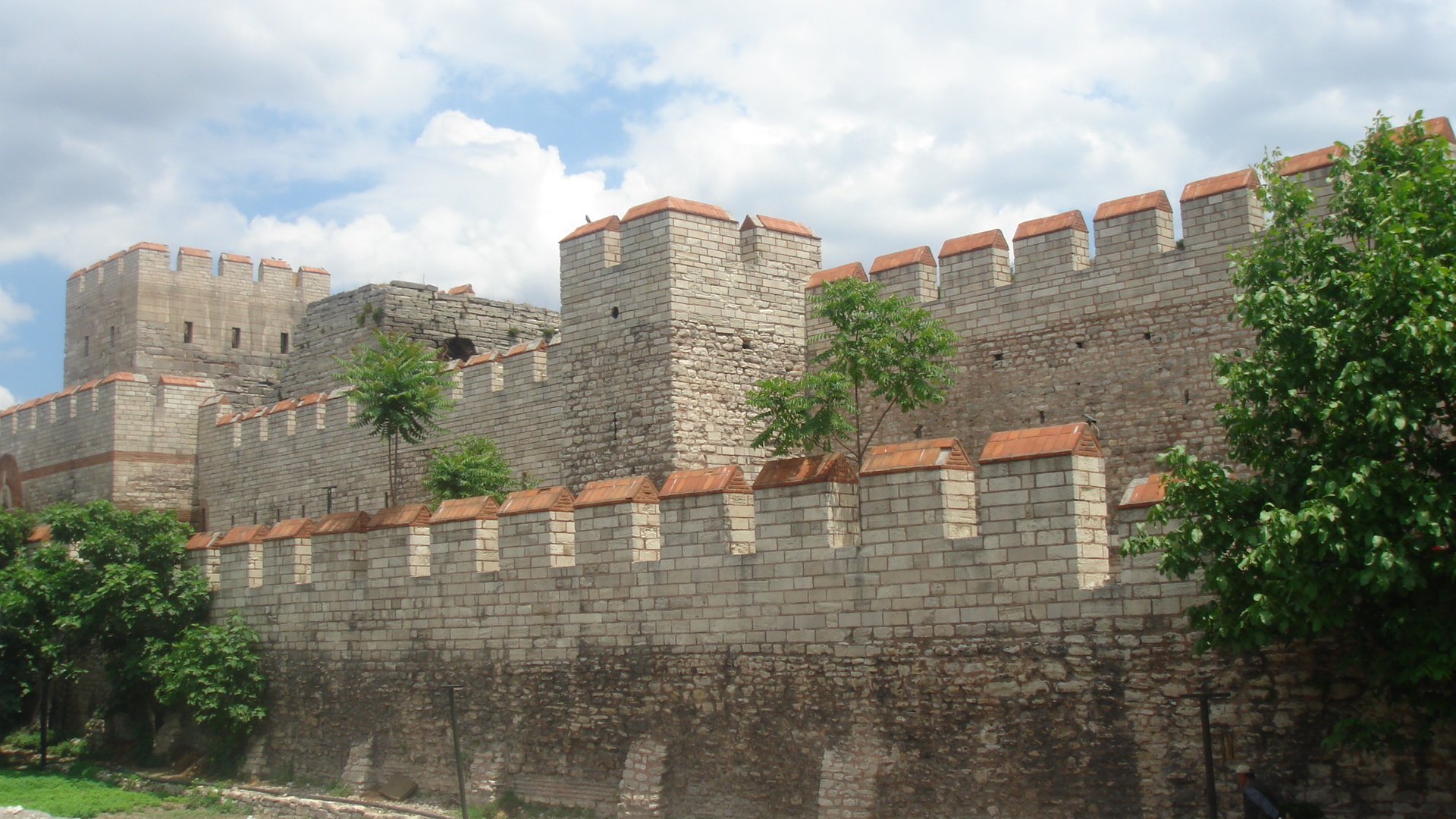
The Romans later fortified their cities with massive, mortar-bound stone walls. Among these are the largely extant Aurelian Walls of Rome and the Theodosian Walls of Constantinople, together with partial remains elsewhere. These are mostly city gates, like the Porta Nigra in Trier or Newport Arch in Lincoln.
In Central Europe, the Celts built large fortified settlements which the Romans called oppida, whose walls seem partially influenced by those built in the Mediterranean. The fortifications were continuously expanded and improved.
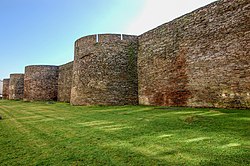
Apart from these, the early Middle Ages also saw the creation of some towns built around castles. These cities were only rarely protected by simple stone walls and more usually by a combination of both walls and ditches. From the 12th century AD hundreds of settlements of all sizes were founded all across Europe, which very often obtained the right of fortification soon afterwards. Several medieval town walls have survived into the modern age, such as the walled towns of Austria, walls of Tallinn, or the town walls of York and Canterbury in England, as well as Nordlingen, Dinkelsbühl and Rothenburg ob der Tauber in Germany. In Spain, Ávila and Tossa del Mar hosts surviving medieval walls while Lugo has an intact Roman wall.
In medieval warfare, town walls were often targeted for destruction, partly for their role in defence but also because of their role in shaping a settlement's identity, and archaeologist Giulia Bellato, notes "walls were the visible marker that defined a city as such and helped define its inhabitants as citizens".[12]
The founding of urban centers was an important means of territorial expansion and many cities, especially in central and eastern Europe, were founded for this purpose during the period of Eastern settlement. These cities are easy to recognise due to their regular layout and large market spaces. The fortifications of these settlements were continuously improved to reflect the current level of military development.
Gunpowder era
[edit]Chinese city walls
[edit]

While gunpowder and cannons were invented in China, China never developed wall breaking artillery to the same extent as other parts of the world. Part of the reason is probably because Chinese walls were already highly resistant to artillery and discouraged increasing the size of cannons.[13] In the mid-twentieth century a European expert in fortification commented on their immensity: "in China ... the principal towns are surrounded to the present day by walls so substantial, lofty, and formidable that the medieval fortifications of Europe are puny in comparison."[13] Chinese walls were thick. The eastern wall of Ancient Linzi, established in 859 BC, had a maximum thickness of 43 metres and an average thickness of 20–30 metres.[14] Ming prefectural and provincial capital walls were 10 to 20 metres (33 to 66 ft) thick at the base and 5 to 10 metres (16 to 33 ft) at the top.
In Europe the height of wall construction was reached under the Roman Empire, whose walls often reached 10 metres (33 ft) in height, the same as many Chinese city walls, but were only 1.5 to 2.5 metres (4 ft 11 in to 8 ft 2 in) thick. Rome's Servian Walls reached 3.6 and 4 metres (12 and 13 ft) in thickness and 6 to 10 metres (20 to 33 ft) in height. Other fortifications also reached these specifications across the empire, but all these paled in comparison to contemporary Chinese walls, which could reach a thickness of 20 metres (66 ft) at the base in extreme cases. Even the walls of Constantinople which have been described as "the most famous and complicated system of defence in the civilized world,"[15] could not match up to a major Chinese city wall.[16] Had both the outer and inner walls of Constantinople been combined they would have only reached roughly a bit more than a third the width of a major wall in China.[16] According to Philo the width of a wall had to be 4.5 metres (15 ft) thick to be able to withstand ancient (non-gunpowder) siege engines.[17] European walls of the 1200s and 1300s could reach the Roman equivalents but rarely exceeded them in length, width, and height, remaining around 2 metres (6 ft 7 in) thick. When referring to a very thick wall in medieval Europe, what is usually meant is a wall of 2.5 metres (8 ft 2 in) in width, which would have been considered thin in a Chinese context.[18] There are some exceptions such as the Hillfort of Otzenhausen, a Celtic ringfort with a thickness of 40 metres (130 ft) in some parts, but Celtic fort-building practices died out in the early medieval period.[19] Andrade goes on to note that the walls of the marketplace of Chang'an were thicker than the walls of major European capitals.[18]
Aside from their immense size, Chinese walls were also structurally different from the ones built in medieval Europe. Whereas European walls were mostly constructed of stone interspersed with gravel or rubble filling and bonded by limestone mortar, Chinese walls had tamped earthen cores which absorbed the energy of artillery shots.[20] Walls were constructed using wooden frameworks which were filled with layers of earth tamped down to a highly compact state, and once that was completed the frameworks were removed for use in the next wall section. Starting from the Song dynasty these walls were improved with an outer layer of bricks or stone to prevent erosion, and during the Ming, earthworks were interspersed with stone and rubble.[20] Most Chinese walls were also sloped rather than vertical to better deflect projectile energy.[21]
The defensive response to cannon in Europe was to build relatively low and thick walls of packed earth, which could both withstand the force of cannon balls and support their own, defensive cannon. Chinese wall-building practice was, by happenstance, extremely resistant to all forms of battering. This held true into the twentieth century, when even modern explosive shells had some difficulty in breaking through tamped earth walls.[7]
— Peter Lorge
The Chinese Wall Theory essentially rests on a cost benefit hypothesis, where the Ming recognized the highly resistant nature of their walls to structural damage, and could not imagine any affordable development of the guns available to them at the time to be capable of breaching said walls. Even as late as the 1490s a Florentine diplomat considered the French claim that "their artillery is capable of creating a breach in a wall of eight feet in thickness"[22] to be ridiculous and the French "braggarts by nature".[22] Very rarely did cannons blast breaches in city walls in Chinese warfare. This may have been partly due to cultural tradition. Famous military commanders such as Sun Tzu and Zheng Zhilong recommended not to directly attack cities and storm their walls. Even when direct assaults were made with cannons, it was usually by focusing on the gates rather than the walls. There were instances where cannons were used against walled fortifications, such as by Koxinga, but only in the case of small villages. During Koxinga's career, there is only one recorded case of capturing a settlement by bombarding its walls: the siege of Taizhou in 1658. In 1662, the Dutch found that bombarding the walls of a town in Fujian Province had no effect and they focused on the gates instead just as in Chinese warfare. In 1841, a 74-gun British warship bombarded a Chinese coastal fort near Guangzhou and found that it was "almost impervious to the efforts of horizontal fire."[23] In fact twentieth century explosive shells had some difficulty creating a breach in tamped earthen walls.[7]
We fought our way to Nanking and joined in the attack on the enemy capital in December. It was our unit which stormed the Chunghua Gate. We attacked continuously for about a week, battering the brick and earth walls with artillery, but they never collapsed. The night of December 11, men in my unit breached the wall. The morning came with most of our unit still behind us, but we were beyond the wall. Behind the gate great heaps of sandbags were piled up. We 'cleared them away, removed the lock, and opened the gates, with a great creaking noise. We'd done it! We'd opened the fortress! All the enemy ran away, so we didn't take any fire. The residents too were gone. When we passed beyond the fortress wall we thought we had occupied this city.[24]
— Nohara Teishin, on the Japanese capture of Nanjing in 1937
Bastions and star forts
[edit]

As a response to gunpowder artillery, European fortifications began displaying architectural principles such as lower and thicker walls in the mid-1400s.[25] Cannon towers were built with artillery rooms where cannons could discharge fire from slits in the walls. However, this proved problematic as the slow rate of fire, reverberating concussions, and noxious fumes produced greatly hindered defenders. Gun towers also limited the size and number of cannon placements because the rooms could only be built so big. Notable surviving artillery towers include a seven layer defensive structure built in 1480 at Fougères in Brittany, and a four layer tower built in 1479 at Querfurth in Saxony.[26]
The star fort, also known as the bastion fort, trace italienne, or renaissance fortress, was a style of fortification that became popular in Europe during the 16th century. The bastion and star fort was developed in Italy, where the Florentine engineer Giuliano da Sangallo (1445–1516) compiled a comprehensive defensive plan using the geometric bastion and full trace italienne that became widespread in Europe.[27]
The main distinguishing features of the star fort were its angle bastions, each placed to support their neighbor with lethal crossfire, covering all angles, making them extremely difficult to engage with and attack. Angle bastions consisted of two faces and two flanks. Artillery positions positioned at the flanks could fire parallel into the opposite bastion's line of fire, thus providing two lines of cover fire against an armed assault on the wall, and preventing mining parties from finding refuge. Meanwhile, artillery positioned on the bastion platform could fire frontally from the two faces, also providing overlapping fire with the opposite bastion.[28] Overlapping mutually supporting defensive fire was the greatest advantage enjoyed by the star fort. As a result, sieges lasted longer and became more difficult affairs. By the 1530s the bastion fort had become the dominant defensive structure in Italy.[29]
Outside Europe, the star fort became an "engine of European expansion,"[25] and acted as a force multiplier so that small European garrisons could hold out against numerically superior forces. Wherever star forts were erected the natives experienced great difficulty in uprooting European invaders.[25]
In China, Sun Yuanhua advocated for the construction of angled bastion forts in his Xifashenji so that their cannons could better support each other. The officials Han Yun and Han Lin noted that cannons on square forts could not support each side as well as bastion forts. Their efforts to construct bastion forts, and their results, were limited. Ma Weicheng built two bastion forts in his home county, which helped fend off a Qing incursion in 1638. By 1641, there were ten bastion forts in the county. Before bastion forts could spread any further, the Ming dynasty fell in 1644, and they were largely forgotten as the Qing dynasty was on the offensive most of the time and had no use for them.[30]
Decline
[edit]
In the wake of city growth and the ensuing change of defensive strategy, focusing more on the defense of forts around cities, many city walls were demolished. Also, the invention of gunpowder rendered walls less effective, as siege cannons could then be used to blast through walls, allowing armies to simply march through. Today, the presence of former city fortifications can often only be deduced from the presence of ditches, ring roads or parks.
Furthermore, some street names hint at the presence of fortifications in times past, for example when words such as "wall" or "glacis" occur.
In the 19th century, less emphasis was placed on preserving the fortifications for the sake of their architectural or historical value – on the one hand, complete fortifications were restored (Carcassonne), on the other hand many structures were demolished in an effort to modernize the cities. One exception to this is the "monument preservation" law by the Bavarian King Ludwig I of Bavaria, which led to the nearly complete preservation of many monuments such as the Rothenburg ob der Tauber, Nördlingen and Dinkelsbühl. The countless small fortified towns in the Franconia region were also preserved as a consequence of this edict.
Modern era
[edit]Walls and fortified wall structures were still built in the modern era. They did not, however, have the original purpose of being a structure able to resist a prolonged siege or bombardment. Modern examples of defensive walls include:
- Berlin's city wall from the 1730s to the 1860s was partially made of wood. Its primary purpose was to enable the city to impose tolls on goods and, secondarily, also served to prevent the desertion of soldiers from the garrison in Berlin.
- The Berlin Wall (1961 to 1989) was built around West Berlin by the German Democratic Republic to prevent its citizens from fleeing to the West German exclave.[31]
- The Korean Demilitarized Zone that divides North Korea and South Korea near the 38th parallel north.
- The Nicosia Wall along the Green Line divides North and South Cyprus.
- In the 20th century and after, many enclaved Jewish settlements in Israeli occupied territory in the West Bank were and are surrounded by fortified walls
- Mexico–United States barrier, a wall advocated by U.S. President Donald Trump for the Mexico–United States border to prevent illegal immigration, drug smuggling, human trafficking, and entry of potential terrorists[32]
- Belfast, Northern Ireland by the "peace lines".
- Gaza–Israel barrier, first constructed by Israel in 1971 as a security barrier and has been rebuilt and upgraded since. The barrier has been effective in preventing terrorists and suicide bombers from entering Israel from Gaza.
- Gated communities are modern residential neighborhoods where access is controlled, often prohibiting through-travelers or non-residents via a wall and guards
Additionally, in some countries, different embassies may be grouped together in a single "embassy district", enclosed by a fortified complex with walls and towers – this usually occurs in regions where the embassies run a high risk of being target of attacks. An early example of such a compound was the Legation Quarter in Beijing in the late 19th and early 20th centuries.
Most of these modern city walls are made of steel and concrete. Vertical concrete plates are put together so as to allow the least space in between them, and are rooted firmly in the ground. The top of the wall is often protruding and beset with barbed wire in order to make climbing them more difficult. These walls are usually built in straight lines and covered by watchtowers at the corners. Double walls with an interstitial "zone of fire", as the former Berlin Wall had, are now rare.
In September 2014, Ukraine announced the construction of the "European Rampart" alongside its border with Russia to be able to successfully apply for a visa-free movement with the European Union.[33][needs update]
-
 A view of the Berlin Wall in 1986
 -

-
 The fortified wall of a police station in Belfast, Northern Ireland


Composition
[edit]
At its simplest, a defensive wall consists of a wall enclosure and its gates. For the most part, the top of the walls were accessible, with the outside of the walls having tall parapets with embrasures or merlons. North of the Alps, this passageway at the top of the walls occasionally had a roof.
In addition to this, many different enhancements were made over the course of the centuries:
- City ditch: a ditch dug in front of the walls, occasionally filled with water to form a moat.
- Gate tower: a tower built next to, or on top of the city gates to better defend the city gates.
- Wall tower: a tower built on top of a segment of the wall, which usually extended outwards slightly, so as to be able to observe the exterior of the walls on either side. In addition to arrow slits, ballistae, catapults and cannons could be mounted on top for extra defence.
- Pre-wall: wall built outside the wall proper, usually of lesser height – the space in between was usually further subdivided by additional walls.
- Additional obstacles in front of the walls.
The defensive towers of west and south European fortifications in the Middle Ages were often very regularly and uniformly constructed (cf. Ávila, Provins), whereas Central European city walls tend to show a variety of different styles. In these cases the gate and wall towers often reach up to considerable heights, and gates equipped with two towers on either side are much rarer. Apart from having a purely military and defensive purpose, towers also played a representative and artistic role in the conception of a fortified complex. The architecture of the city thus competed with that of the castle of the noblemen and city walls were often a manifestation of the pride of a particular city.
Urban areas outside the city walls, so-called Vorstädte, were often enclosed by their own set of walls and integrated into the defense of the city. These areas were often inhabited by the poorer population and held the "noxious trades". In many cities, a new wall was built once the city had grown outside of the old wall. This can often still be seen in the layout of the city, for example in Nördlingen, and sometimes even a few of the old gate towers are preserved, such as the white tower in Nuremberg. Additional constructions prevented the circumvention of the city, through which many important trade routes passed, thus ensuring that tolls were paid when the caravans passed through the city gates, and that the local market was visited by the trade caravans. Furthermore, additional signaling and observation towers were frequently built outside the city, and were sometimes fortified in a castle-like fashion. The border of the area of influence of the city was often partially or fully defended by elaborate ditches, walls and hedges. The crossing points were usually guarded by gates or gate houses. These defenses were regularly checked by riders, who often also served as the gate keepers. Long stretches of these defenses can still be seen to this day, and even some gates are still intact. To further protect their territory, rich cities also established castles in their area of influence. An example of this practice is the Romanian Bran Castle, which was intended to protect nearby Kronstadt (today's Braşov).
The city walls were often connected to the fortifications of hill castles via additional walls. Thus the defenses were made up of city and castle fortifications taken together. Several examples of this are preserved, for example in Germany Hirschhorn on the Neckar, Königsberg and Pappenheim, Franken, Burghausen in Oberbayern and many more. A few castles were more directly incorporated into the defensive strategy of the city (e.g. Nuremberg, Zons, Carcassonne), or the cities were directly outside the castle as a sort of "pre-castle" (Coucy-le-Chateau, Conwy and others). Larger cities often had multiple stewards – for example Augsburg was divided into a Reichstadt and a clerical city. These different parts were often separated by their own fortifications.
Dimensions of famous city walls
[edit]| Wall | Max width (m) |
Minimum width (m) |
Max height (m) |
Lowest height (m) |
Length (km) |
|---|---|---|---|---|---|
| Aurelian Walls | 3.5 | 16 | 8 | 19 | |
| Ávila | 3 | 12 | 2.5 | ||
| Baghdad | 45 | 12 | 30 | 18 | 7 |
| Beijing (inner) | 20 | 12 | 15 | 24 | |
| Beijing (outer) | 15 | 4.5 | 7 | 6 | 28 |
| Carcassonne | 3 | 8 | 6 | 3 | |
| Chang'an | 16 | 12 | 12 | 26 | |
| Dubrovnik | 6 | 1.5 | 25 | 1.9 | |
| Forbidden City | 8.6 | 6.6 | 8 | ||
| Harar | 5 | 3.5 | |||
| Itchan Kala | 6 | 5 | 10 | 2 | |
| Jerusalem | 2.5 | 12 | 4 | ||
| Khanbaliq | 10.6 | ||||
| Linzi | 42 | 26 | |||
| Luoyang | 25 | 11 | 12 | ||
| Marrakech | 2 | 9 | 20 | ||
| Nanjing | 19.75 | 7 | 26 | 25.1 | |
| Nicaea | 3.7 | 9 | 5 | ||
| Pingyao | 12 | 3 | 10 | 8 | 6 |
| Seoul (Hanyang doseong) | |||||
| Servian Wall | 4 | 3.6 | 10 | 6 | 11 |
| Suwon (Hwaseong) | 5 | 3.5 | |||
| Suzhou | 11 | 5 | 7 | ||
| Theodosian Walls (inner) | 5.25 | 12 | 6 | ||
| Theodosian Walls (outer) | 2 | 9 | 8.5 | 6 | |
| Vatican | 2.5 | 8 | 3 | ||
| Xi'an | 18 | 12 | 12 | 14 | |
| Xiangyang | 10.8 | 7.3 | |||
| Zhongdu | 12 | 24 |
Gallery
[edit]Africa
[edit]-
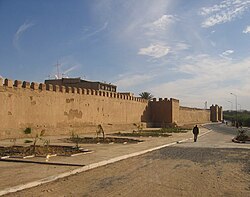 A defensive wall in Taroudannt, Morocco
 -
 Defensive walls around the ancient Egyptian settlement of Buhen
 -
 Remains of Naa Zaringa defense wall in Ghana


Americas
[edit]-

-

-

-
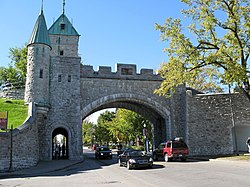 Porte St. Louis, part of Ramparts of Quebec City, the only remaining fortified city walls in North America north of Mexico


Asia
[edit]-
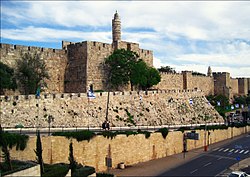
-
 Wall of Hittite Capital Hattusa (reconstruction)
 -
 Derbent Walls, late Sassanian period
 -
 Walls of the Ark of Bukhara
 -

-
 Walls of Kumbhalgarh Fort
 -
 Walls of the Rohtas Fort
 -

.jpg)


.jpg)

Archaeological Citadel of Erbil wall
[edit]-
 Archaeological Citadel of Erbil wall

China
[edit]-
 Late Han dynasty castle (wubi)
 -
 Fortress and soldiers training, Tang dynasty
 -
 Prince of Teng Pavilion, Yuan dynasty
 -
 Old City of Shanghai with walls and seafront.
 -
 Top of the Beijing city wall
 -

-
 Walled tulou villages


Europe
[edit]-
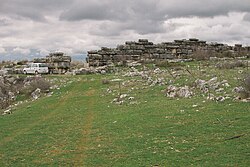 Daorson, Bosnia, built around a prehistoric central fortified settlement or acropolis (existed there cca. 17–16th to the end of the Bronze Age, cca. 9-8th c. BCE), surrounded by cyclopean walls (similar to Mycenae) dated to the 4th c. BCE.[34][35]
 -

-

-
 The walls of Tallinn, Estonia, a UNESCO World Heritage Site
 -

-
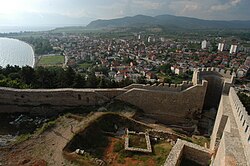 The medieval fortress overlooking the city of Ohrid in North Macedonia
 -

-


Roman
[edit]-
 The gate of the Gonio castle
 -


See also
[edit]Notes
[edit]- ^ Caves, R. W. (2004). Encyclopedia of the City. Routledge. p. 756. ISBN 978-0415862875.
- ^ Banister Fletcher's A History of Architecture By Banister Fletcher, Sir, Dan Cruickshank. Published 1996 Architectural Press. Architecture. 1696 pages. ISBN 0-7506-2267-9. p. 20.
- ^ The Encyclopedia of World History: ancient, medieval, and modern, chronologically arranged By Peter N. Stearns, William Leonard Langer. Compiled by William L Langer. Published 2001 Houghton Mifflin Books. History / General History. ISBN 0-395-65237-5. p. 17.
- ^ Banister Fletcher's A History of Architecture By Banister Fletcher, Sir, Dan Cruickshank. Published 1996 Architectural Press. Architecture. 1696 pages. ISBN 0-7506-2267-9. p. 100.
- ^ Hla, U Kan (1978). "Traditional Town Planning in Burma". Journal of the Society of Architectural Historians. 37 (2): 92, 97–98. doi:10.2307/989177. ISSN 0037-9808. JSTOR 989177.
- ^ a b Reid, Anthony (1993). "Southeast Asia in the Age of Commerce, 1450–1680. Vol. 2: Expansion and Crisis". The Journal of Economic History. 54 (4). Yale University Press: 78, 84, 86–88. doi:10.1017/S0022050700015679. S2CID 154715462.
- ^ a b c Lorge 2008, p. 43.
- ^ Andrade 2016, p. 103.
- ^ a b "당진 Dangjin Myeoncheon-eupseong". Encyclopedia of Korean Culture (in Korean). Retrieved 2023-08-10.
- ^ "Eupseong 읍성(邑城)". Encyclopedia of Korean Culture (in Korean). Retrieved 2023-08-10.
- ^ 손대성 (2018-11-08). "경주읍성 일부·향일문 복원...2030년까지 정비 마무리 (Restoration of part of Gyeongju Eupseong and Hyangilmun Gate...Maintenance completed by 2030)". 연합뉴스 (in Korean). Retrieved 2023-08-10.
- ^ Bellato, Giulia (2024). "Bari and political violence in the twelfth century: a case of medieval urbicide". Journal of Architectural Design and History.
- ^ a b Andrade 2016, p. 96.
- ^ Chang, Kwang-Chih; Xu, Pingfang; Lu, Liancheng; Pingfang, Xu; Wangping, Shao; Zhongpei, Zhang; Renxiang, Wang (January 2005). The Formation of Chinese Civilization: An Archaeological Perspective. Yale University Press. ISBN 0300093829.
- ^ Andrade 2016, p. 92.
- ^ a b Andrade 2016, p. 97.
- ^ Purton 2009, p. 363.
- ^ a b Andrade 2016, p. 98.
- ^ Andrade 2016, p. 339.
- ^ a b Andrade 2016, p. 99.
- ^ Andrade 2016, p. 100.
- ^ a b Andrade 2016, p. 101.
- ^ Reger 2016, p. 162-164.
- ^ Cook 2000, p. 32.
- ^ a b c Andrade 2016, p. 211.
- ^ Arnold 2001, p. 37.
- ^ Nolan 2006, p. 67.
- ^ Arnold 2001, p. 40.
- ^ Arnold 2001, p. 45.
- ^ Andrade 2016, p. 214.
- ^ "Berlin Wall". Encyclopaedia Britannica. 23 January 2024.
- ^ Davis, Julie Hirschfeld (25 January 2017). "Trump Orders Mexican Border Wall to Be Built and Plans to Block Syrian Refugees". The New York Times.
- ^ "Yatseniuk: Project Wall to allow Ukraine to get visa-free regime with EU". Interfax-Ukraine.
- ^ Seka Brkljača (1996). Urbano biće Bosne i Hercegovine (in Serbo-Croatian). Sarajevo: Međunarodni centar za mir, Institut za istoriju. p. 27. Retrieved 28 October 2021.
- ^ "The natural and architectural ensemble of Stolac". UNESCO World Heritage Centre. Retrieved 28 October 2021.
References
[edit]
- Andrade, Tonio (2016), The Gunpowder Age: China, Military Innovation, and the Rise of the West in World History, Princeton University Press, ISBN 978-0-691-13597-7.
- Arnold, Thomas (2001), History of Warfare: The Renaissance at War
- Cook, Haruko Taya (2000), Japan At War: An Oral History, Phoenix Press
- Lorge, Peter A. (2008), The Asian Military Revolution: from Gunpowder to the Bomb, Cambridge University Press, ISBN 978-0-521-60954-8
- Monika Porsche: Stadtmauer und Stadtentstehung – Untersuchungen zur frühen Stadtbefestigung im mittelalterlichen Deutschen Reich. Hertingen, 2000. ISBN 3-930327-07-4.
- Nolan, Cathal J. (2006), The Age of Wars of Religion, 1000–1650: an Encyclopedia of Global Warfare and Civilization, Vol 1, A–K, vol. 1, Westport & London: Greenwood Press, ISBN 978-0-313-33733-8
- Purton, Peter (2009), A History of the Early Medieval Siege c. 450–1200, The Boydell Press
- Purton, Peter (2010), A History of the Late Medieval Siege, 1200–1500, Boydell Press, ISBN 978-1-84383-449-6
- Reger, William (2016), The Limits of Empire: European Imperial Formations in Early Modern World History, Taylor & Francis
Further reading
[edit]- Frye, David (2018). Walls: A History of Civilizations in Blood and Brick. Faber & Faber. ISBN 978-0571348411.

| National | |
|---|---|
| Other | |

External links
[edit]Defensive wall
View on GrokipediaDefinition and Purpose
Core Defensive Functions
Defensive walls functioned primarily as physical barriers to halt or delay invading forces, compelling attackers to employ time-consuming and risky methods such as scaling ladders, battering rams, or undermining operations, which exposed them to defensive fire.[4] This obstruction effect was enhanced by wall thickness—often 4 to 6 meters in ancient Near Eastern examples—and height, typically 8 to 12 meters, making direct breaches labor-intensive and vulnerable to counterattacks.[4] In medieval Europe, such structures similarly channeled assaults toward fortified gates, where defenders could concentrate forces, as evidenced by the prolonged sieges of walled towns during the Hundred Years' War (1337–1453), where walls bought time for reinforcements or negotiation.[5] A key function was providing elevated platforms for ranged and dropped weaponry, allowing small garrisons to repel larger armies by leveraging gravity and altitude for projectiles like arrows, stones, boiling oil, or later gunpowder weapons.[6] Towers and battlements integrated into walls offered overlapping fields of fire, with protruding designs enabling enfilade shots against ladder teams or sappers; for instance, offset-inset wall segments at Bronze Age sites like Megiddo (c. 2000 BCE) disrupted assault lines and prevented rams from gaining momentum against flat faces.[4] Complementary features such as sloping glacis (ramps at 30–40° angles) and fosse ditches further neutralized undermining and ladder assaults by increasing effective height and exposing climbers to raking fire, as implemented at Lachish during the Neo-Assyrian sieges (c. 701 BCE).[4] Walls also facilitated surveillance and early warning through integrated walkways and towers, enabling defenders to detect approaches and respond preemptively, while their durability forced attackers into extended sieges that often failed due to logistical strain, disease, or desertion—outcomes observed in over 80% of pre-gunpowder sieges where walls held without betrayal or starvation.[6] Casemate walls, consisting of parallel barriers divided into compartments for storage or reinforcement, added internal strength against battering, as at Khirbet Qeiyafa (c. 1000 BCE), where such designs supported prolonged resistance against Philistine incursions.[4] However, effectiveness depended on maintenance and integration with mobile field armies; isolated walls could succumb to artillery innovations, as Ottoman cannons demonstrated against Constantinople's Theodosian Walls in 1453 after a 53-day siege, breaching sections despite prior successes against earlier assaults.[6]Strategic and Symbolic Roles
Defensive walls extended strategic utility by delineating controlled territories, channeling enemy movements into predictable assault patterns, and optimizing military logistics through fortified supply lines. Hadrian's Wall, erected by Emperor Hadrian from AD 122 to 128 across northern Britain, demarcated the Roman limes, incorporating milecastles and turrets for regulated passage of authorized traffic while concentrating legionary forces at key forts like Vindolanda, thereby freeing mobile armies for internal threats rather than dispersed frontier policing.[7] This linear barrier, spanning 73 miles (117 km), reduced the frequency of Pictish incursions by compelling attackers to navigate gated checkpoints or risk detection via vallum ditches, as evidenced by reduced raid artifacts north of the wall post-construction.[7] Similarly, the Great Wall system's modular design, refined during the Ming era (1368–1644) to over 21,000 km in aggregate length, incorporated watchtowers spaced 500–1,000 meters apart for smoke or fire signals, enabling rapid reinforcement from interior garrisons and disrupting nomadic cavalry tactics reliant on surprise.[8] Empirical records from Ming annals indicate the wall's role in averting full-scale Xiongnu-style breakthroughs, as invaders faced attrition from coordinated counterstrikes rather than undefended plains, though breaches occurred during under-maintained segments as in 1449 at Tumu.[8] Theodosian Walls of Constantinople, layered with moats, outer parapets, and inner double fortifications completed by AD 413, strategically bottlenecked land assaults across the Thracian plain, sustaining the city through at least 20 sieges—including Arab forces in 717–718—by exploiting naval supply from the Bosphorus and forcing besiegers into disease-prone camps during extended operations.[9] Symbolically, walls asserted state sovereignty and psychological dominance, manifesting rulers' capacity to impose order amid chaos. Hadrian's Wall projected Roman engineering supremacy as a visible terminus of pax Romana, intimidating northern tribes and affirming imperial permanence, much as inscriptions and triumphal arches reinforced elite narratives of conquest.[7] In imperial China, the wall embodied the Mandate of Heaven's protective barrier between tianxia (civilized realm) and barbarian periphery, with Ming emperors invoking its construction—costing millions of labor-days annually—as proof of dynastic vigor, evident in state rituals and propaganda depicting it as a dragon uncoiling against chaos.[10] Constantinople's fortifications, spanning 14 km with 96 towers, symbolized Christian oikoumene's bastion, their endurance until Ottoman cannon in 1453 interpreted by Byzantine chroniclers like Doukas as divine providence waning, yet underscoring the walls' role in sustaining imperial identity amid existential threats.[9] This dual symbolism deterred aggression through perceived impregnability, as attackers weighed not just material costs but the propaganda defeat of breaching a god-king's aegis. Such roles intertwined causality: strategic efficacy bred symbolic capital, where walls' proven repulsion—e.g., Constantinople's repulsion of Avars in 626 via coordinated wall-archer fire—amplified deterrence, reducing invasion incentives as logistical data from besiegers' abandoned camps attest higher desertion rates against protracted defenses.[11] However, over-reliance symbolized vulnerability when technological shifts, like gunpowder, exposed static lines to mobile artillery, as Ming sections crumbled under Manchu assaults in 1644 despite symbolic invocations.[8]Historical Development
Ancient Origins
The earliest known defensive walls date to the Pre-Pottery Neolithic A period at Jericho, constructed around 8000 BCE, enclosing a settlement of approximately 2-3 hectares with a stone wall up to 4 meters high and an adjacent tower 8.5 meters tall.[12] Archaeological evidence suggests these structures primarily served to protect against human raiders and possibly seasonal floods, marking the transition from open villages to fortified communities amid growing population densities and resource competition.[13] While some interpretations propose ceremonial roles for the tower, the wall's circumference of about 700 meters and integration with a revetment indicate a practical defensive function, as erosion patterns and lack of advanced siege threats in the era prioritize perimeter security over symbolic excess.[14] By the late Chalcolithic and early Bronze Age, defensive walls proliferated in the Near East, with Mesopotamian cities like Uruk featuring mud-brick enclosures exceeding 9 kilometers in length by circa 2900 BCE, designed to deter nomadic incursions and consolidate urban authority.[15] These walls, often 5-10 meters high with rectangular projections for archers, reflected causal pressures from inter-city rivalries and pastoralist threats, as evidenced by cuneiform records of raids and the strategic placement along trade routes.[16] In Egypt, fortifications emerged during the Old Kingdom but advanced significantly in the Middle Kingdom (c. 2050-1710 BCE), exemplified by Buhen in Nubia, where a fortress spanned 13,000 square meters with walls 5 meters thick and 10 meters high, buttressed against battering rams and equipped with bastions for projection of projectiles.[17] Buhen's design, including a surrounding moat and gate complexes, empirically countered Nubian guerrilla tactics, enabling Egyptian control over gold mines and trade corridors for over a millennium.[18] Early Chinese states independently developed rammed-earth walls by the late Neolithic (c. 2000 BCE), as seen in sites like Pingyao precursors, where enclosures protected against tribal warfare in the Yellow River basin, using local loess soil compacted in layers up to 10 meters high to withstand primitive scaling attempts.[2] In the Indus Valley, Mohenjo-Daro's massive platform and peripheral walls from circa 2500 BCE combined flood defense with deterrence, though baked-brick construction prioritized durability over height, suggesting adaptation to regional hydrology intertwined with human threats.[19] These ancient origins underscore walls' evolution from ad hoc barriers to engineered systems, driven by empirical needs for territorial integrity amid agrarian surpluses that incentivized predation, with material choices reflecting local geology and threat profiles rather than uniform ideologies.Classical and Medieval Expansions
In the classical period, defensive walls expanded beyond simple enclosures to include extensive linear barriers and integrated urban systems, reflecting growing imperial ambitions and military needs. The Long Walls of Athens, built between 461 and 456 BC under Pericles, formed two parallel fortifications each approximately 6 kilometers in length, separated by about 200 meters, connecting the city to the ports of Piraeus and Phaleron to secure maritime supply lines against land-based threats during conflicts like the Peloponnesian War.[20][21] This design prioritized logistical resilience over direct confrontation, enabling Athens to endure Spartan blockades by leveraging naval superiority.[22] Roman engineering further scaled these concepts for frontier control and urban protection. Hadrian's Wall, constructed from 122 to 128 AD across northern Britain, extended 117 kilometers from the Solway Firth to the River Tyne, primarily using locally quarried stone up to 3 meters high and wide, with turf in peat-heavy sections, supplemented by milecastles, turrets, and forts housing around 15,000 troops to demarcate and defend the empire's northern limit.[23] The Aurelian Walls around Rome, erected between 271 and 275 AD amid Gothic and Alemannic pressures, encircled the city for 19 kilometers with over 380 towers, 18 main gates, and heights reaching 8 meters, utilizing concrete cores faced with brick and tufa for rapid yet durable construction.[24][25] The transition to the medieval era, particularly in the Byzantine Empire, emphasized layered urban defenses against persistent siege warfare. The Theodosian Walls of Constantinople, initiated in 408 AD and largely completed by 413 AD under Theodosius II, featured a double-wall system along the 5.7-kilometer land front— an inner wall 12 meters tall and 5 meters thick, an outer wall 9 meters tall and 2 meters thick, plus a 20-meter-wide moat—built from limestone ashlar with brick bonding courses and rubble infill, incorporating 96 towers and multiple gates to withstand assaults, including Arab sieges in the 7th-8th centuries and ultimately holding until Ottoman cannon fire in 1453.[26][9] In Western Europe, post-Roman fragmentation spurred widespread town wall construction from the 9th to 14th centuries, often reusing Roman materials but adding semicircular towers for crossfire and crenellations for archers, as seen in the proliferation of circuits enclosing burgeoning trade centers amid feudal instability and invasions by Vikings, Hungarians, and Saracens.[27] These expansions, typically 2-5 kilometers in perimeter for mid-sized cities, reflected causal adaptations to decentralized warfare, where walls not only deterred raids but also symbolized communal autonomy and fiscal investment in stone over wood for longevity.[28]Early Modern Adaptations
The proliferation of gunpowder artillery in the 15th century rendered medieval high stone walls highly vulnerable, as iron cannonballs could penetrate or topple them with sustained bombardment, prompting rapid design innovations across Europe. Defensive walls were adapted by lowering profiles to reduce target profiles, thickening bases with earthen ramps for shock absorption, and incorporating sloped scarps to hinder scaling while facilitating defensive cannon fire. Gunports were positioned low along walls to enable raking fire over ditches and approaches, shifting emphasis from passive height to active artillery integration.[29][30] Central to these adaptations was the emergence of the trace italienne, or bastion system, pioneered in Italy amid Ottoman incursions and the Italian Wars of 1494–1559, where artillery dominated sieges. By the 1460s, Italian engineers like Michelozzo di Bartolomeo began experimenting with projecting angular bastions to eliminate dead angles and enable enfilading crossfire, with mature forms evident by the 1520s in designs by Antonio da Sangallo the Younger. The defense of Pisa in 1500 exemplified early success, repelling French and Florentine forces through bastion-enabled artillery. These star-shaped perimeters, often polygonal or irregular to fit terrain, spread via military engineers to the Netherlands, Spain, and France, transforming city walls into integrated fortification complexes.[31][32][33] In the 17th century, French military engineer Sébastien Le Prestre de Vauban (1633–1707) systematized bastion adaptations, upgrading or constructing approximately 300 sites with precise geometric lines, countermines, and glacis slopes to counter siege parallels. His pré carré system emphasized linear frontiers over isolated strongpoints, adapting walls to musketry and heavier ordnance while accounting for local topography. Similar evolutions occurred elsewhere, such as Dutch water lines combining walls with inundations, underscoring how Early Modern walls evolved from static barriers to dynamic artillery platforms amid escalating fiscal and engineering demands.[34][30]Engineering and Construction
Materials and Techniques
Defensive walls were constructed using locally available materials to maximize durability against siege engines, weathering, and seismic activity, with earth-based composites predominant in early and vast linear barriers due to their abundance and compressive strength. Rammed earth, involving the compaction of moist soil, gravel, and sometimes lime or straw in wooden formwork layer by layer to depths of 10-15 cm per stratum, formed the core of many ancient Chinese fortifications, including sections of the Great Wall dating to the 7th century BCE, where walls reached heights of up to 10 meters and widths of 5-7 meters at the base. [35] [36] This technique leveraged the material's high seismic resilience, as the flexible mass absorbed shocks better than rigid stone, evidenced by surviving Neolithic-era walls in Zhengzhou from circa 3500 years ago. [37] In regions with abundant quarriable stone, such as the Mediterranean and Europe, fortifications shifted to ashlar masonry—precisely cut rectangular blocks laid in regular courses without mortar in dry-stone variants or bonded with lime-based mortars—for superior tensile resistance and longevity. Roman engineers employed opus quadratum, stacking large, squared limestone or tuff blocks up to 1 meter long in headers and stretchers to distribute loads evenly, as seen in walls like those of York (Eboracum) from the 2nd century CE, where outer facings enclosed rubble cores for efficiency. [38] [39] Medieval European walls, from the 11th-15th centuries, refined this with outer ashlar facings over rubble infill mortared with slaked lime mixed with sand and aggregates, achieving thicknesses of 2-4 meters to withstand battering rams and early artillery, though the weak lime bonds prioritized rapid construction over seismic performance. [40] Fired brick, often sundried mudbrick in Mesopotamia from the 3rd millennium BCE or kiln-fired variants in later Islamic and Renaissance fortifications, provided fire resistance and uniformity when laid in mud or lime mortar, as in the defensive enclosures of Babylonian cities where walls exceeded 20 meters in height using bitumen-sealed bricks for waterproofing. Hybrid techniques combined materials for optimization: Chinese Ming-era walls (1368-1644 CE) veneered rammed earth cores with brick facings and mortar, enhancing erosion resistance, while European adaptations post-1000 CE incorporated timber framing for scaffolding during erection and iron cramps to secure facing stones against undermining. [41] These methods reflected causal trade-offs in labor, resource scarcity, and threat profiles, with earth suiting nomadic incursions and stone countering prolonged sieges. [42]Design Features and Dimensions
Defensive walls typically featured a core structure of continuous curtain walls—stretching between projecting towers or bastions—to form an unbroken barrier, often topped with crenellations or parapets for archers to fire while shielded.[4] Towers, spaced at intervals of 20-100 meters depending on terrain and resources, provided elevated vantage points for surveillance and enfilading fire, with designs evolving from simple rectangular forms in antiquity to rounded or D-shaped profiles in later periods to deflect artillery.[43] Additional elements included battered bases (sloping outward for stability against siege engines), internal walkways or ramparts for troop movement, and sometimes integrated gates flanked by barbicans or moats to channel attackers into kill zones.[44] Dimensions varied widely by materials, era, and threat level, but ancient and medieval walls generally prioritized height for intimidation and projectile range alongside thickness to resist battering rams or undermining. Roman-era walls, such as Hadrian's Wall built around 122 CE, stood approximately 4.6 meters high and 3 meters wide in stone sections, with turf alternatives matching similar profiles for frontier defense. In urban settings, the Athenian Long Walls (5th century BCE) reached 10 meters in height and 5 meters in width, linking the city to its port over 6 kilometers.[22] Medieval European fortifications often featured walls 2.5-6 meters thick at the base, tapering upward, with heights of 8-12 meters exclusive of towers, as seen in Welsh castles like Conwy (late 13th century), where walls hit 12 meters and towers 21 meters.[45] Eastern examples demonstrate scaled adaptations; the Great Wall of China, primarily Ming dynasty (1368-1644 CE) sections, averaged 7.8 meters in height with a top width of 4-5 meters for chariot passage, thickening to 4.5-9 meters at the base in vulnerable areas.[46] The Theodosian Walls of Constantinople (5th century CE) incorporated a multi-layered system: an outer wall 2 meters thick, a moat, and an inner wall 4.5-5 meters thick rising to 12 meters, with towers up to 19 meters and broad terraces (16-21 meters) for maneuvers.[26]| Wall Example | Height (meters) | Thickness (meters) | Key Feature |
|---|---|---|---|
| Hadrian's Wall (122 CE) | 4.6 | 3 (stone) | Turf/stone hybrid for rapid frontier build |
| Athenian Long Walls (5th BCE) | 10 | 5 | Parallel walls for port-city linkage[22] |
| Great Wall (Ming era) | 7.8 (avg) | 4-5 (top); 4.5-9 (base) | Watchtowers every 200-500m for signaling[46] |
| Theodosian Walls (5th CE) | 12 (inner) | 4.5-5 (inner) | Triple-layer with moat and 96 towers[26] |
Military Effectiveness
Defensive Strategies Employed
Defenders of walled fortifications primarily relied on elevated positions to unleash ranged attacks, exploiting the walls' height for superior fields of fire against approaching enemies. Archers, slingers, and later crossbowmen positioned along battlements or walkways delivered volleys of projectiles, often targeting unshielded attackers or siege engine crews; in medieval contexts, English longbowmen during the Hundred Years' War demonstrated this by decimating French forces at ranges exceeding 250 yards before assaults on fortified positions.[47] Similarly, ancient Near Eastern defenders used composite bows from towers to enfilade attackers, as evidenced in reliefs depicting Assyrian sieges where fortified towns repelled advances through concentrated arrow fire.[4] Countermeasures against scaling ladders and siege towers included mechanical and improvised obstructions, such as extending poles to topple ladders or deploying hooks to dislodge them, while hoardings—temporary wooden overhangs—enabled defenders to drop stones, millstones, or incendiary materials directly onto climbers. Boiling oil, pitch, or heated sand poured through machicolations or murder holes inflicted burns and slowed assaults; this method proved effective in the 1099 Siege of Jerusalem, where Crusader chroniclers noted defenders' use of such tactics delayed breaches until internal betrayal occurred.[48] Towers and bastions facilitated flanking fire, creating kill zones that exposed attackers to crossfire, a principle applied in Bronze Age Levantine fortifications with offset-inset wall designs that broke enemy lines of sight and maximized defensive angles.[4] Gate defenses emphasized layered barriers, including drawbridges, portcullises, and barbicans, where troops could ambush rams with overhead strikes or boiling substances via arrow slits. Against undermining, defenders excavated countermine tunnels to intercept sappers, as Roman engineers did during the 53 BC Siege of Alesia, collapsing enemy galleries and flooding them when possible.[47] Sorties—rapid sallies by armored reserves—disrupted siege works, destroying trebuchets or rams under cover of wall-based artillery; Chinese records from the Warring States period (475–221 BC) describe such cavalry-led forays from walled cities to burn attacker encampments, preserving the perimeter's integrity.[48] Logistical strategies focused on sustaining garrisons through pre-stocked granaries and cisterns, enabling prolonged resistance to starvation tactics; the 717–718 Arab Siege of Constantinople succeeded in this via sea chains blocking harbors and reserves of grain, outlasting invaders despite daily assaults. Signal systems, such as horns or fires atop towers, coordinated troop movements and reinforcements to vulnerable sectors, minimizing breaches from concentrated attacks.[47] These tactics, while effective against pre-gunpowder threats, demanded disciplined manpower—typically 1–2% of a city's population on rotation—to maintain vigilance across perimeters spanning miles.[48]Empirical Evidence of Successes
The Theodosian Walls of Constantinople demonstrated remarkable defensive efficacy over nearly a millennium, repelling multiple major sieges that would have overwhelmed less fortified cities. During the Arab siege from 674 to 678, a Umayyad army of approximately 80,000 troops failed to breach the multi-layered walls despite sustained assaults, exacerbated by Byzantine use of Greek fire and naval superiority, ultimately forcing the attackers' withdrawal after heavy losses estimated in tens of thousands.[49] Similarly, the 717–718 Arab siege involved an invading force exceeding 100,000 soldiers and a fleet of over 1,800 ships, yet the walls, bolstered by moats and outworks, prevented any penetration, with winter conditions and disease contributing to the failure but the fortifications enabling a garrison of around 15,000 to hold firm.[49] These successes underscore the walls' role in multiplying defensive force through terrain denial and concentrated firepower from over 90 towers. Further evidence of the walls' success includes the repulsion of the Avar-Persian assault in 626, where allied forces numbering over 80,000 were unable to overcome the land walls despite coordinated attacks, preserving the city's integrity during a period of imperial vulnerability.[26] The Rus' invasions in 860 and 941 were also thwarted, with the latter involving 10,000–15,000 warriors repelled by incendiary weapons launched from the battlements, preventing plunder and occupation.[50] In total, the fortifications contributed to the failure of at least 20 recorded medieval sieges, allowing Constantinople to serve as a bulwark against successive waves of Bulgars, Pechenegs, and Normans, often deterring attacks outright due to the high anticipated costs of assault.[50] [51] In imperial China, extensive networks of city and border walls provided empirical validation of defensive utility, particularly during the Ming Dynasty (1368–1644). Analysis of over 1,000 walled cities reveals that fortifications correlated with reduced vulnerability to nomadic incursions, enabling sustained control over peripheral regions by channeling attackers into predictable assault points where artillery and troops could inflict disproportionate casualties.[52] The Great Wall system, rebuilt extensively under the Ming, effectively deterred large-scale raids from Mongol remnants, with historical records indicating fewer successful breaches compared to pre-wall eras, though internal betrayal often proved the decisive factor in rare failures.[8] Medieval European town walls similarly yielded successes, as seen in the defense of cities like Ávila, whose intact 12th-century circuit repelled multiple Castilian sieges through its 88 towers and robust masonry, preserving autonomy amid feudal conflicts.[53] These structures forced besiegers into resource-intensive operations, often leading to abandonment due to supply shortages, thereby empirically affirming walls' capacity to extend the endurance of outnumbered defenders against pre-gunpowder warfare.[54]Notable Failures and Limitations
Despite their formidable design, defensive walls exhibited significant limitations, including vulnerability to siege technologies that evolved faster than fortifications, such as mining, battering rams, and later gunpowder artillery, which could create breaches or render walls ineffective without direct assault.[55] Static walls also proved bypassable by mobile forces exploiting terrain gaps, internal divisions, or inadequate garrisoning, often leading to failures rooted in logistical overextension rather than inherent structural flaws.[6] Maintenance demands further compounded issues, as neglect or resource shortages allowed deterioration, while prolonged sieges could induce starvation or disease within enclosed populations, undermining the walls' protective intent.[56] A prominent failure occurred during the Ottoman siege of Constantinople in 1453, where the triple-layered Theodosian Walls—spanning 14 miles and standing up to 40 feet high with moats and towers—succumbed after 53 days to Mehmed II's artillery barrage.[57] The Ottomans deployed massive bombards, including the 27-foot-long Great Turkish Bombard casting 1,200-pound stone projectiles at rates of up to 12 per day, which pulverized sections near the Lycus Valley gate despite Byzantine repair efforts using wooden buttresses and manual labor.[58] This breach on May 29 enabled Janissary infantry to overrun the defenses, highlighting how early cannons exploited walls' flat profiles and limited angling against indirect fire, a limitation unaddressed by pre-gunpowder designs.[57] The Great Wall of China, rebuilt extensively under the Ming Dynasty from 1368 onward to span over 5,500 miles, failed to halt Mongol incursions during the 13th-century Yuan conquests, as Genghis Khan's armies from 1211 onward capitalized on incomplete segments, bribed watchtowers, and allied with disaffected Chinese factions amid Jin Dynasty internal strife.[59] By 1234, Mongol forces had dismantled Jin defenses, including wall sections, through coordinated cavalry maneuvers that outflanked static fortifications, demonstrating walls' ineffectiveness against highly mobile, adaptive invaders when supplemented by political subversion rather than reliant solely on physical barriers.[6] Hadrian's Wall in Roman Britain, constructed around 122 AD to extend 73 miles across northern England with milecastles and turrets, was repeatedly breached by Pictish and Caledonian raids post-2nd century, leading to its abandonment by the 5th century due to unsustainable garrison costs and shifting imperial priorities toward mobile legions over fixed defenses.[6] Empirical records from Roman sources indicate over 20 documented breaches or bypasses, underscoring a core limitation: walls diverted resources from offensive capabilities, proving counterproductive against foes employing guerrilla tactics or superior logistics.[56] These cases illustrate that while walls delayed assaults, they rarely prevented determined offensives integrating technological, tactical, and human elements.Decline and Transition
Technological and Tactical Shifts
The introduction of gunpowder weaponry, particularly large-caliber bombards and cannons in the 15th century, fundamentally undermined the efficacy of traditional high masonry walls by enabling attackers to deliver concentrated, high-impact strikes from afar. During the Ottoman siege of Constantinople in 1453, Sultan Mehmed II deployed massive cannons, including a bombard designed by Hungarian engineer Orbán capable of firing 500-kilogram stone balls over 1.5 kilometers, which progressively breached sections of the 5th-century Theodosian Walls after 53 days of bombardment despite repairs by defenders. This event demonstrated that even the most formidable pre-gunpowder fortifications, with their vertical profiles and stone construction, could not withstand sustained artillery fire without prohibitive defensive costs.[60] In response, European engineers developed the trace italienne or bastion fort system starting in the late 15th century amid the Italian Wars (1494–1559), featuring low, sloped earth-reinforced walls, projecting angular bastions for enfilading fire, and wider moats to absorb and deflect cannonballs while allowing defensive artillery to cover approaches. These designs, pioneered by figures like Michelangelo in Florence and implemented widely by the 16th century, temporarily restored balance by complicating sieges—requiring attackers to conduct parallel trenches and prolonged counter-battery duels—but shifted fortifications from city-encompassing walls to compact, specialized strongpoints.[32][30] By the 19th century, advancements in rifled artillery and explosive shells further eroded these adaptations, as grooved barrels increased range, accuracy, and penetration—allowing shells to strike walls at higher velocities and explode internally. In the 1862 Union bombardment of Fort Pulaski during the American Civil War, 36 rifled Parrott guns firing from 1,600 yards shattered the fort's brick walls within 30 hours, compelling surrender and proving masonry structures obsolete against such ordnance.[61][61] Tactically, the era saw a pivot from static defense to mobile, maneuver-oriented warfare, exemplified in the Napoleonic Wars (1803–1815), where large corps-based armies prioritized rapid field engagements and flanking over sieges, bypassing or isolating walls rather than assaulting them directly. Napoleon's preference for decisive battles, supported by drilled infantry squares, cavalry charges, and horse artillery, minimized reliance on fixed positions, as professional standing armies could sustain operational tempo across open terrain without walls dictating strategy. This causal shift—driven by improved logistics, conscription, and combined-arms doctrines—rendered extensive urban walls logistically untenable for mobile campaigns, accelerating their abandonment in favor of field fortifications or none at all.[62][62]Economic and Logistical Burdens
The construction of defensive walls imposed substantial economic strains on historical societies, primarily through the diversion of labor, materials, and fiscal resources from productive activities such as agriculture and trade. In ancient China, the Qin dynasty's unification of earlier walls into a cohesive barrier around 221–206 BCE required the conscription of an estimated 300,000 to 500,000 laborers, including soldiers and convicts, whose forced deployment disrupted rural economies and contributed to famine and unrest. This effort entailed transporting over 100 million tonnes of stone, bricks, and rammed earth across rugged terrain using rudimentary tools like ropes, sledges, and animal power, amplifying logistical challenges and resulting in hundreds of thousands of deaths from exhaustion, exposure, and disease.[63][64][10] Roman examples, such as Hadrian's Wall initiated in 122 CE, further illustrate these burdens, with approximately 15,000 legionaries dedicating six years to quarrying and hauling 3.7 million tons of local stone, turf, and timber over 73 miles in northern Britain. While monetary costs were mitigated by state-controlled slave and military labor, the opportunity cost was significant: troops were withdrawn from frontier patrols and economic garrisons, straining imperial logistics and supply chains that relied on overland and riverine transport for lime mortar and tools. Maintenance thereafter required ongoing patrols and repairs against weathering, diverting resources from urban development in provinces like Britannia.[65][66][67] In medieval Europe, city walls like those encircling Kraków in the 14th–15th centuries exemplified fiscal pressures, where construction and upkeep demanded heavy taxation on merchants and guilds, often equating to years of municipal revenue. A typical mid-sized wall circuit could consume resources equivalent to thousands of kilograms of silver in labor and materials, limiting investments in sanitation or expansion and fostering economic stagnation as populations grew beyond fortified bounds. By the 19th century, such walls were frequently demolished due to prohibitive repair costs amid obsolescence, as seen in Kraków's partial dismantling in the early 1800s, reflecting how persistent logistical demands for masonry reinforcement outweighed defensive returns in an era of evolving threats.[68][69][70] These burdens extended to opportunity costs, where wall-building prioritized static defense over mobile forces or infrastructure, potentially exacerbating imperial or civic collapses; for instance, the Qin's overextension in wall projects is cited as a factor in its rapid downfall by 206 BCE, as agrarian output declined amid coerced labor drafts. Empirical analyses of fortifications suggest that while initial security gains might justify short-term investments, long-term maintenance—often 10–20% of annual budgets in fortified polities—frequently rendered walls fiscally unsustainable without corresponding economic productivity.[63][71][72]Modern Applications
20th-21st Century Border Barriers
The Berlin Wall, constructed by the German Democratic Republic on August 13, 1961, spanned 155 kilometers around West Berlin to halt the mass exodus of East Germans seeking better economic opportunities in the West, with over 2.7 million having fled by mid-1961. Its multilayered design, including concrete barriers, guard towers, and a "death strip," drastically curtailed unauthorized crossings, reducing defections from thousands monthly to fewer than 5,000 attempts annually by the 1980s, though at the cost of at least 140 deaths of those attempting escape. The wall's demolition began on November 9, 1989, amid political upheaval, symbolizing the end of Cold War divisions in Europe. In Northern Ireland, "peace walls" or "peace lines" emerged during the Troubles, with the first erected in Belfast in September 1969 following riots that destroyed hundreds of homes, aimed at separating Catholic nationalist and Protestant unionist communities to curb sectarian violence.[73] By 2023, over 100 such barriers, totaling more than 20 miles, persisted in Belfast and Derry, including high concrete walls and metal fences reinforced with cameras and gates, correlating with localized reductions in inter-communal attacks post-construction, though violence persisted via other means.[74] These structures, initially temporary, have endured due to mutual distrust, with surveys indicating majority community support for their retention into the 2020s.[75] The United States-Mexico border barrier system, initiated in 1993 with Operation Gatekeeper in San Diego, expanded to over 700 miles of fencing and walls by 2020, including 458 miles built or reinforced during the Trump administration from 2017 to 2021 to impede illegal immigration and drug smuggling.[76] U.S. Customs and Border Protection data showed apprehensions in high-barrier sectors like Yuma dropping 87% from 2005 to 2008 after fencing installation, and overall southwest border crossings declined in walled areas, though migrants shifted to remote desert routes, increasing deaths and requiring more patrols.[77] Critics, including analyses from the American Immigration Council, argue the barriers' $15 billion-plus cost yields diminishing returns against tunneling and ladders, with net migration influenced more by economic pull factors.[78] Israel's West Bank security barrier, construction of which began in 2002 following the Second Intifada's wave of suicide bombings, consists of concrete walls in urban areas and chain-link fencing elsewhere, totaling about 440 miles by 2013, with 85% inside the West Bank.[79] Israeli government statistics report a 90% decrease in terrorist attacks from the West Bank since its partial completion, with suicide bombings dropping from 47 in 2002 to zero by 2008 in secured northern segments, attributing this to the barrier's role in channeling threats to checkpoints for interception.[80] Independent assessments, such as from the Washington Institute, confirm effectiveness in the northern West Bank, where crossings fell sharply, though breaches via tunnels and incomplete sections persisted.[81] Hungary's border fence with Serbia, erected in phases from July to September 2015 amid the European migrant crisis, stretched 175 kilometers with razor wire, sensors, and patrols to stem irregular crossings, which peaked at 411,000 apprehensions that year.[82] Post-construction, illegal entries dropped nearly 100% to under 2,000 annually by 2016, redirecting flows to other routes like the Western Balkans, with Hungarian officials crediting the barrier for regaining border control without EU quota disputes.[83] Studies note fortifications' role in deterrence, though combined with pushbacks and asylum restrictions.[84] India has fenced significant portions of its borders with Pakistan (over 2,000 km by 2023) and Bangladesh (about 3,286 km approved, with 2,535 km completed by 2008 and ongoing), using chain-link and barbed wire to combat infiltration, smuggling, and illegal migration.[85] [86] Along the Line of Control with Pakistan, fencing reduced cross-border terrorism incidents post-2003, while Bangladesh fencing curbed cattle smuggling and undocumented entries, though terrain challenges like rivers delayed full coverage, with government reports indicating heightened vigilance and fewer breaches in secured stretches.[87] By the 21st century, over 60 border barriers existed globally, up from 15 in 1989, driven by security threats, migration pressures, and nationalism, with empirical evidence from cases like Israel and Hungary showing substantial reductions in targeted crossings, though none eliminate them entirely without complementary measures like patrols.[88] Data consistently indicate barriers channel or deter flows in fortified zones, but systemic biases in media reporting often understate successes while amplifying humanitarian critiques.[89]Measured Efficacy and Data
The Israeli security barrier, constructed primarily between 2002 and 2005 along parts of the Green Line separating Israel from the West Bank, correlated with a sharp decline in Palestinian terrorist attacks inside Israel. Suicide bombings, which peaked at 138 incidents in 2002 during the Second Intifada, fell to 10 by 2005 and fewer than five annually thereafter in areas protected by the barrier, according to data from Israeli security analyses attributing the reduction to the fence's role in preventing infiltrations when combined with patrols.[81] Independent assessments, including situational prevention studies, confirm that the barrier altered terrorist tactics by increasing detection risks and operational costs, with no comparable decline in unprotected sectors.[90] In the United States, border fencing expansions under initiatives like Operation Gatekeeper (1994 onward) and subsequent Secure Fence Act implementations demonstrated localized efficacy against illegal crossings. In the San Diego sector, apprehensions dropped from over 500,000 annually in the early 1990s to under 50,000 by the mid-2000s following initial barrier construction, shifting crossings eastward but reducing local breaches by over 90% when paired with surveillance.[91] More recent Department of Homeland Security data from fiscal year 2020 showed illegal entries in newly walled sectors plummeting 87% compared to 2019, with success rates exceeding 95% in disrupting smuggling attempts in those zones, though overall border-wide apprehensions fluctuated due to broader enforcement and economic factors.[77][92] Hungary's 175-kilometer border fence with Serbia, completed in September 2015 amid the European migrant crisis, led to an immediate and sustained reduction in irregular crossings. Frontex-recorded entries, which hit 411,515 in 2015 before full deployment, fell to under 2,000 by year's end and averaged fewer than 1,000 annually thereafter, with government reports crediting the barrier's design—featuring razor wire, sensors, and 3,000 additional guards—for deterring mass flows without significant breaches.[93][94] This outcome contrasted with pre-fence surges, where daily crossings exceeded 10,000 at peak, highlighting barriers' role in channeling or halting movement when integrated with manpower. The Berlin Wall (1961–1989), while an internal ideological barrier, provides historical data on containment efficacy: it reduced successful East German defections from an estimated potential millions to 5,000–10,000 attempts, with fewer than 200 deaths from crossings after initial years, per declassified records, by physically blocking and monitoring a 155-kilometer perimeter.[93] Cross-case analyses indicate barriers generally achieve 80–95% reduction in targeted illegal movements when supported by technology and personnel, but efficacy diminishes without maintenance or against adaptive threats like tunneling, as seen in partial U.S. border circumventions.[91]| Barrier Example | Key Metric | Pre-Construction Peak | Post-Construction Low | Primary Sources |
|---|---|---|---|---|
| Israel Security Barrier | Suicide bombings in Israel | 138 (2002) | <5 annually (post-2005) | Washington Institute; Rutgers Study [81] [90] |
| U.S.-Mexico (Select Sectors) | Illegal entry apprehensions | >500,000/year (San Diego, early 1990s) | 87–95% reduction (walled areas, FY2020) | DHS; CBP [77] [92] |
| Hungary-Serbia Fence | Irregular crossings | 411,515 (2015) | <2,000 (late 2015) | Frontex; IOM [93] [94] |