


Community hub
Recent from talks
Contribute something
Nothing was collected or created yet.
Mössbauer spectroscopy
View on Wikipedia
Mössbauer spectroscopy is a spectroscopic technique based on the Mössbauer effect. This effect, discovered by Rudolf Mössbauer (sometimes written "Moessbauer", German: "Mößbauer") in 1958, consists of the nearly recoil-free emission and absorption of nuclear gamma rays in solids. The consequent nuclear spectroscopy method is exquisitely sensitive to small changes in the chemical environment of certain nuclei.[citation needed]
Typically, three types of nuclear interactions may be observed: the isomer shift due to differences in nearby electron densities (also called the chemical shift in older literature), quadrupole splitting due to atomic-scale electric field gradients; and magnetic splitting due to non-nuclear magnetic fields. Due to the high energy and extremely narrow line widths of nuclear gamma rays, Mössbauer spectroscopy is a highly sensitive technique in terms of energy (and hence frequency) resolution, capable of detecting changes of just a few parts in 1011. It is a method completely unrelated to nuclear magnetic resonance spectroscopy.[citation needed]
Basic principle
[edit]Just as a gun recoils when a bullet is fired, conservation of momentum requires a nucleus (such as in a gas) to recoil during the emission or absorption of a gamma ray. If a nucleus at rest emits a gamma ray, the energy of the gamma ray is slightly less than the natural energy of the transition, but in order for a nucleus at rest to absorb a gamma ray, the gamma ray's energy must be slightly greater than the natural energy because in both cases energy is lost to recoil. This means that nuclear resonance (emission and absorption of the same gamma ray by identical nuclei) is unobservable with free nuclei because the shift in energy is too great, and the emission and absorption spectra have no significant overlap.[citation needed]
Nuclei in a solid crystal, however, are not free to recoil because they are bound in place in the crystal lattice. When a nucleus in a solid emits or absorbs a gamma ray, some energy can still be lost as recoil energy, but in this case, it always occurs in discrete packets called phonons (quantized vibrations of the crystal lattice). Any whole number of phonons can be emitted, including zero, which is known as a "recoil-free" event. In this case, the conservation of momentum is satisfied by the momentum of the crystal as a whole, so practically no energy is lost.[1]
Mössbauer found that a significant fraction of emission and absorption events will be recoil-free, which is quantified using the Lamb–Mössbauer factor.[2] This fact is what makes Mössbauer spectroscopy possible, because it means that gamma rays emitted by one nucleus can be resonantly absorbed by a sample containing nuclei of the same isotope, and this absorption can be measured.
The recoil fraction of the Mössbauer absorption is analyzed by nuclear resonance vibrational spectroscopy.
Typical method
[edit]In its most common form, Mössbauer absorption spectroscopy, a solid sample is exposed to a beam of gamma radiation, and a detector measures the intensity of the beam transmitted through the sample. The atoms in the source emitting the gamma rays must be of the same isotope as the atoms in the sample absorbing them.
If the emitting and absorbing nuclei were in identical chemical environments, the nuclear transition energies would be exactly equal and resonant absorption would be observed with both materials at rest. The difference in chemical environments, however, causes the nuclear energy levels to shift in a few different ways, as described below. Although these energy shifts are tiny (often less than a micro-electronvolt), the extremely narrow spectral linewidths of gamma rays for some radionuclides make the small energy shifts correspond to large changes in absorbance. To bring the two nuclei back into resonance, it is necessary to change the energy of the gamma ray slightly, and in practice, this is always done using the Doppler shift.
During Mössbauer absorption spectroscopy, the source is accelerated through a range of velocities using a linear motor to produce a Doppler effect and scan the gamma-ray energy through a given range. A typical range of velocities for 57Fe, for example, can be ±11 mm/s (1 mm/s = 48.075 neV).[2][3]
In the resulting spectra, gamma ray intensity is plotted as a function of the source velocity. At velocities corresponding to the resonant energy levels of the sample, a fraction of the gamma rays are absorbed, resulting in a drop in the measured intensity and a corresponding dip in the spectrum. The number, positions, and intensities of the dips (also called peaks; dips in transmittance are peaks in absorbance) provide information about the chemical environment of the absorbing nuclei and can be used to characterize the sample.
Selecting a suitable source
[edit]Suitable gamma-ray sources consist of a radioactive parent that decays to the desired isotope. For example, the source for 57Fe consists of 57Co, which decays by electron capture to an excited state of 57Fe, which in turn decays to a ground state via a series of gamma-ray emissions that include the one exhibiting the Mössbauer effect. The radioactive cobalt is prepared on a foil, often of rhodium.[4] Ideally the parent isotope will have a convenient half-life. Also, the gamma-ray energy should be relatively low, otherwise the system will have a low recoil-free fraction resulting in a poor signal-to-noise ratio and requiring long collection times. The periodic table below indicates those elements having an isotope suitable for Mössbauer spectroscopy. Of these, 57Fe is by far the most common element studied using the technique, although 129I, 119Sn, and 121Sb are also frequently studied.
Periodic table of Mössbauer-active elements
| ||||||||||||||||||||||||||||||||||
|---|---|---|---|---|---|---|---|---|---|---|---|---|---|---|---|---|---|---|---|---|---|---|---|---|---|---|---|---|---|---|---|---|---|---|
| H | He | |||||||||||||||||||||||||||||||||
| Li | Be | B | C | N | O | F | Ne | |||||||||||||||||||||||||||
| Na | Mg | Al | Si | P | S | Cl | Ar | |||||||||||||||||||||||||||
| K | Ca | Sc | Ti | V | Cr | Mn | Fe | Co | Ni | Cu | Zn | Ga | Ge | As | Se | Br | Kr | |||||||||||||||||
| Rb | Sr | Y | Zr | Nb | Mo | Tc | Ru | Rh | Pd | Ag | Cd | In | Sn | Sb | Te | I | Xe | |||||||||||||||||
| Cs | Ba | La | Hf | Ta | W | Re | Os | Ir | Pt | Au | Hg | Tl | Pb | Bi | Po | At | Rn | |||||||||||||||||
| Fr | Ra | Ac | Rf | Db | Sg | Bh | Hs | Mt | Ds | Rg | Cn | Nh | Fl | Mc | Lv | Ts | Og | |||||||||||||||||
| Ce | Pr | Nd | Pm | Sm | Eu | Gd | Tb | Dy | Ho | Er | Tm | Yb | Lu | |||||||||||||||||||||
| Th | Pa | U | Np | Pu | Am | Cm | Bk | Cf | Es | Fm | Md | No | Lr | |||||||||||||||||||||
| ||||||||||||||||||||||||||||||||||
Analysis of Mössbauer spectra
[edit]As described above, Mössbauer spectroscopy has an extremely fine energy resolution and can detect even subtle changes in the nuclear environment of the relevant atoms. Typically, there are three types of nuclear interactions that are observed: isomeric shift, quadrupole splitting, and hyperfine magnetic splitting.[5][6]
Isomer shift
[edit]
Isomer shift (δ) (also sometimes called chemical shift, especially in the older literature) is a relative measure describing a shift in the resonance energy of a nucleus (see Fig. 2) due to the transition of electrons within its s orbitals. The whole spectrum is shifted in either a positive or negative direction depending upon the s electron charge density in the nucleus. This change arises due to alterations in the electrostatic response between the non-zero probability s orbital electrons and the non-zero volume nucleus they orbit.
Only electrons in s orbitals have a non-zero probability of being found in the nucleus (see atomic orbitals). However, p, d, and f electrons may influence the s electron density through a screening effect.
Isomer shift can be expressed using the formula below, where K is a nuclear constant, the difference between Re2 and Rg2 is the effective nuclear charge radius difference between excited state and the ground state, and the difference between [Ψs2(0)]a and [Ψs2(0)]b is the electron density difference in the nucleus (a = source, b = sample). The Chemical Isomer shift as described here does not change with temperature, however, Mössbauer spectra do have a temperature sensitivity due to a relativistic effect known as the second-order Doppler effect. Generally, the impact of this effect is small, and the IUPAC standard allows the Isomer Shift to be reported without correcting for it.[7]
![{\displaystyle {\text{CS}}=K\left(\langle R_{e}^{2}\rangle -\langle R_{g}^{2}\rangle \right)\left([\Psi _{s}^{2}(0)]_{b}-[\Psi _{s}^{2}(0)]_{a}\right).}](https://wikimedia.org/api/rest_v1/media/math/render/svg/54e90effea0505c685e1c1f4a8729b290cfed68d)
The physical meaning of this equation can be clarified using examples:
- While an increase in s-electron density in 57Fe spectrum gives a negative shift because the change in the effective nuclear charge is negative (owing to Re < Rg), an increase in s-electron density in 119Sn gives a positive shift due to a positive change in overall nuclear charge (owing to Re > Rg).
- Oxidised ferric ions (Fe3+) have lower isomer shifts than ferrous ions (Fe2+) because s-electron density at the nucleus of ferric ions is greater due to a weaker screening effect by d electrons.[8]
The isomer shift is useful for determining oxidation state, valency states, electron shielding and the electron-drawing power of electronegative groups.[5]
Quadrupole splitting
[edit]
Quadrupole splitting reflects the interaction between the nuclear energy levels and the surrounding electric field gradient (EFG). Nuclei in states with non-spherical charge distributions, i.e. all those with a spin quantum number (I) greater than 1/2, may have a nuclear quadrupole moment. In this case, an asymmetrical electric field (produced by an asymmetric electronic charge distribution or ligand arrangement) splits the nuclear energy levels.[5]
In the case of an isotope with a I = 3/2 excited state, such as 57Fe or 119Sn, the excited state is split into two substates mI = ±1/2 and mI = ±3/2. The ground-to-excited state transitions appear as two specific peaks in a spectrum, sometimes referred to as a "doublet". Quadrupole splitting is measured as the separation between these two peaks and reflects the character of the electric field at the nucleus.
The quadrupole splitting can be used for determining the oxidation state, spin state, site symmetry, and the arrangement of ligands.[5]

Magnetic hyperfine splitting
[edit]Magnetic hyperfine splitting is a result of the interaction between the nucleus and a surrounding magnetic field (similar to the Zeeman effect in atomic spectra). A nucleus with spin I splits into 2I + 1 sub-energy levels in the presence of a magnetic field. For example, the first excited state of the 57Fe nucleus with spin state I = 3/2 will split into 4 non-degenerate sub-states with mI values of +3/2, +1/2, −1/2 and −3/2. The equally-spaced splits are said to be hyperfine, being on the order of 10−7 eV. The selection rule for magnetic dipole transitions means that transitions between the excited state and ground state can only occur where mI changes by 0 or 1 or −1. This gives 6 possible for a 3/2 to 1/2 transition.[5]
The extent of splitting is proportional to the magnetic field strength at the nucleus, which in turn depends on the electron distribution ("chemical environment") of the nucleus. The splitting can be measured, for instance, with a sample foil placed between an oscillating source and a photon detector (see Fig. 5), resulting in an absorption spectrum, as illustrated in Fig. 4. The magnetic field can be determined from the spacing between the peaks if the quantum "g-factors" of the nuclear states are known. In ferromagnetic materials, including many iron compounds, the natural internal magnetic fields are quite strong and their effects dominate the spectra.
Combination of all
[edit]The three Mössbauer parameters, isomer shift, quadrupole splitting, and hyperfine splitting, can often be used to identify a particular compound by comparison to spectra for standards.[9] In some cases, a compound may have more than one possible position for the Mössbauer active atom. For example, the crystal structure of magnetite (Fe3O4) supports two different sites for the iron atoms. Its spectrum has 12 peaks, a sextet for each potential atomic site, corresponding to two sets of Mössbauer parameters.
Many times all effects are observed: isomer shift, quadrupole splitting, and magnetic splitting. In such cases the isomer shift is given by the average of all lines. The quadrupole splitting when all the four excited sub-states are equally shifted (two sub-states are lifted and the other two are lowered) is given by the shift of the outer two lines relative to the inner four lines (all inner four lines shift in opposition to the outermost two lines). Usually fitting software is used for accurate values.
In addition, the relative intensities of the various peaks reflect the relative concentrations of compounds in a sample and can be used for semi-quantitative analysis. Also, since ferromagnetic phenomena are size-dependent, in some cases, spectra can provide insight into the crystallite size and grain structure of a material.
Mössbauer emission spectroscopy
[edit]Mössbauer emission spectroscopy is a specialized variant of Mössbauer spectroscopy where the emitting element is in the probed sample, and the absorbing element is in the reference. Most commonly, the technique is applied to the 57Co/57Fe pair. A typical application is the characterization of the cobalt sites in amorphous Co-Mo catalysts used in hydrodesulfurization. In such a case, the sample is doped with 57Co.[10]
Applications
[edit]Among the technique's drawbacks are the limited number of gamma-ray sources and the requirement that samples be solid to eliminate the nucleus's recoil. Mössbauer spectroscopy is unique in its sensitivity to subtle changes in the nucleus's chemical environment, including changes in oxidation state, the effect of different ligands on a particular atom, and the magnetic environment of the sample.
As an analytical tool, Mössbauer spectroscopy has been especially useful in the field of geology for identifying the composition of iron-containing specimens, including meteorites and Moon rocks. In situ data collection of Mössbauer spectra has also been carried out on iron-rich rocks on Mars.[11][12]
In another application, Mössbauer spectroscopy is used to characterize phase transformations in iron catalysts, e.g., those used for Fischer–Tropsch synthesis. While initially consisting of hematite (Fe2O3), these catalysts transform into a mixture of magnetite (Fe3O4) and several iron carbides. The formation of carbides appears to improve catalytic activity, but it can also lead to the mechanical break-up and attrition of the catalyst particles, which can cause difficulties in the final separation of the catalyst from reaction products.[13]
Mössbauer spectroscopy has also been used to determine the relative concentration change in the oxidation state of antimony (Sb) during the selective oxidation of olefins. During calcination, all the Sb ions in an antimony-containing tin dioxide catalyst transform into the +5 oxidation state. Following the catalytic reaction, almost all Sb ions revert from the +5 to the +3 oxidation state. A significant change in the chemical environment surrounding the antimony nucleus occurs during the oxidation state change which can easily be monitored as an isomer shift in the Mössbauer spectrum.[14]
This technique has also been used to observe the second-order transverse Doppler effect predicted by the theory of relativity, because of very high energy resolution.[15]
Bioinorganic chemistry
[edit]Mössbauer spectroscopy has been widely applied to bioinorganic chemistry, especially for the study of iron-containing proteins and enzymes. Often the technique is used to determine the oxidation state of iron. Examples of prominent iron-containing biomolecules are iron-sulfur proteins, ferritin, and hemes including the cytochromes. These studies are often supplemented by analysis of related model complexes.[16][17] An area of particular interest is the characterization of intermediates involved in oxygen activation by iron proteins.[18]
Vibrational spectra of 57Fe-enriched biomolecules can be acquired using nuclear resonance vibrational spectroscopy (NRVS), in which the sample is scanned through a range of synchrotron-generated X-rays, centered at the Mössbauer absorbance frequency. Stokes and anti-Stokes peaks in the spectrum correspond to low-frequency vibrations, many below 600 cm−1 with some below 100 cm−1.
Gravitational astronomy
[edit]The precision of measurement of the Mössbauer effect is such that a modified Mössbauer experiment has been considered as a way of detecting gravitational waves.[19]
Mössbauer spectrometers
[edit]
A Mössbauer spectrometer is a device that performs Mössbauer spectroscopy, or a device that uses the Mössbauer effect to determine the chemical environment of Mössbauer nuclei present in the sample. It is formed by three main parts; a source that moves back and forth to generate a Doppler effect, a collimator that filters out non-parallel gamma rays and a detector.
A miniature Mössbauer Spectrometer, named (MB) MIMOS II, was used by the two rovers in NASA's Mars Exploration Rover missions.[20]
57Fe Mössbauer spectroscopy
[edit]The chemical isomer shift and quadrupole splitting are generally evaluated with respect to a reference material. For example, in iron compounds, the Mössbauer parameters were evaluated using iron foil (of a thickness less than 40 micrometers). The centroid of the six-line spectrum from metallic iron foil is −0.1 mm/s (for a Co/Rh source). All shifts in other iron compounds are computed relative to this −0.10 mm/s (at room temperature), i.e., in this case, isomer shifts are relative to the Co/Rh source. In other words, the centre point of the Mössbauer spectrum is zero. The shift values may also be reported relative to 0.0 mm/s; here, shifts are relative to the iron foil.
To calculate the outer line distance from the six-line iron spectrum:
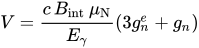
where c is the speed of light, Bint is the internal magnetic field of the metallic iron (33 T), μN is the nuclear magneton (3.1524512605×10⁻⁸ eV/T), Eγ is the excitation energy (14.412497(3) keV[21]), gn is the ground state nuclear splitting factor (0.090604/(I), where Isospin I = 1⁄2) and ge
n is the excited state splitting factor of 57Fe (-0.15532/(I), where I = 3⁄2).
By substituting the above values one would get V = 10.6258 mm/s.
Other values are sometimes used to reflect different qualities of iron foils. In all cases, any change in V only affects the isomer shift and not the quadrupole splitting. As the IBAME, the authority for Mössbauer spectroscopy, does not specify a particular value, anything between 10.60 mm/s to 10.67 mm/s can be used. For this reason it is highly recommended to provide the isomer shift values relative to the source used, not to the iron foil, mentioning the details of the source (centre of gravity of the folded spectrum).
See also
[edit]References
[edit]- ^ International Board on the Applications of the Mössbauer Effect (IBAME) and Mössbauer Effect Data Center (MEDC), Mössbauer Effect website Archived 2021-12-02 at the Wayback Machine Accessed June 3, 2010.
- ^ a b Gütlich, J. M.; The Principle of the Mössbauer Effect and Basic Concepts of Mössbauer Spectrometry Archived 2011-11-29 at the Wayback Machine.
- ^ Mössbauer Spectroscopy Group, Royal Society of Chemistry (RSC) website, Introduction to Mössbauer Spectroscopy Part 1 Archived 2017-10-12 at the Wayback Machine Accessed June 3, 2010
- ^ Longworth, G; Window, B (1 June 1971). "The preparation of narrow-line Mössbauer sources of 57Co in metallic matrices". Journal of Physics D. 4 (6): 835–839. Bibcode:1971JPhD....4..835L. doi:10.1088/0022-3727/4/6/316. ISSN 0022-3727. S2CID 122392089. Wikidata Q56601097.
- ^ a b c d e Mössbauer Spectroscopy Group, Royal Society of Chemistry (RSC) website, Introduction to Mössbauer Spectroscopy Part 2 Archived 2011-06-08 at the Wayback Machine Accessed June 3, 2010.
- ^ P. Gütlich, J. M. Greneche, F. J. Berry; Mössbauer Spectroscopy: A Powerful Tool in Scientific Research Archived 2011-11-29 at the Wayback Machine Accessed June 3, 2010.
- ^ International Board on the Applications of the Mössbauer Effect (IBAME) and Mössbauer Effect Data Center (MEDC), Mössbauer Effect website Archived 2021-09-27 at the Wayback Machine Accessed December 20, 2017
- ^ Walker, L.; Wertheim, G.; Jaccarino, V. (1961). "Interpretation of the Fe57 Isomer Shift". Physical Review Letters. 6 (3): 98. Bibcode:1961PhRvL...6...98W. doi:10.1103/PhysRevLett.6.98.
- ^ Mössbauer Effect Data Center Archived 2014-05-20 at the Wayback Machine.
- ^ Nagy, D. L. (1994). "Trends in Mössbauer emission spectroscopy of 57Co/57Fe". Hyperfine Interactions. 83 (1): 1–19. Bibcode:1994HyInt..83....1N. doi:10.1007/BF02074255. S2CID 95685404.
- ^ Klingelhöfer, G. (November 2004). "Mössbauer In Situ Studies of the Surface of Mars". Hyperfine Interactions. 158 (1–4): 117–124. Bibcode:2004HyInt.158..117K. doi:10.1007/S10751-005-9019-1. ISSN 0304-3843. S2CID 97528576. Wikidata Q29042404.
- ^ Schröder, Christian (2015). "Mössbauer spectroscopy in astrobiology". Spectroscopy Europe. 27 (2): 10. Archived from the original on 2018-01-08. Retrieved 2018-01-08.
- ^ Sarkar, A.; et al. (2007). "Fischer–Tropsch Synthesis: Characterization Rb Promoted Iron Catalyst". Catalysis Letters. 121 (1–2): 1–11. doi:10.1007/s10562-007-9288-1. S2CID 94596943.
- ^ Burger, K.; Nemes-Vetéssy, Zs.; Vértes, A.; Afanasov, M. I. (April 1986). "Mössbauer spectroscopic study of the oxidation state of antimony in antimony sulfides of different composition". Journal of Chemical Crystallography. 16 (2): 295–299. doi:10.1007/BF01161115. ISSN 1074-1542. S2CID 95821984. Wikidata Q30054185.
- ^ Chen, Y.-L.; Yang, D.-P. (2007). "Recoilless Fraction and Second-Order Doppler Effect". Mössbauer Effect in Lattice Dynamics. John Wiley & Sons. doi:10.1002/9783527611423.ch5. ISBN 978-3-527-61142-3.
- ^ Martinho, Marlène; Münck, Eckard (2010). "57Fe Mössbauer Spectroscopy in Chemistry and Biology". Physical Inorganic Chemistry. pp. 39–67. doi:10.1002/9780470602539.ch2. ISBN 9780470602539.
- ^ Schuenemann, V.; Paulsen, H. (2007-12-10). "Mössbauer spectroscopy". In Scott, Robert A.; Lukehart, Charles M. (eds.). Applications of Physical Methods to Inorganic and Bioinorganic Chemistry. ISBN 978-0-470-03217-6.
- ^ Costas, Miquel; Mehn, Mark P.; Jensen, Michael P.; Que, Lawrence (1 February 2004). "Dioxygen activation at mononuclear nonheme iron active sites: enzymes, models, and intermediates". Chemical Reviews. 104 (2): 939–986. doi:10.1021/CR020628N. ISSN 0009-2665. PMID 14871146. S2CID 33300052. Wikidata Q35660894.
- ^ "Novel Mössbauer scheme proposed for gravitation wave detection". phys.org. Retrieved 11 September 2024.
- ^ Klingelhöfer, G.; et al. (2002). "The miniaturized Mössbauer spectrometer MIMOS II for extraterrestrial and outdoor terrestrial applications: A status report". Hyperfine Interactions. 144 (1–4): 371–379. Bibcode:2002HyInt.144..371K. doi:10.1023/A:1025444209059. S2CID 94640811.
- ^ Mössbauer Effect Data Center Archived 2015-02-27 at the Wayback Machine 20.08.2013
External links
[edit]- Mössbauer Effect Data Center page, including periodic table of Mössbauer isotopes
- Introduction to Mössbauer Spectroscopy — RSC site
- Mössbauer Spectroscopy: A Powerful Tool in Scientific Research
- "Mossbauer Spectroscopy – A Rewarding Probe of Morphological Structure of Semiconducting Glasses ", P. Boolchand in Physical Properties of Amorphous Materials (Institute for Amorphous Studies Series), Springer US, Eds.: David Adler, Brian B. Schwartz, Martin C. Steele
- The program MossA provides a straightforward approach to the fitting of 57Fe conventional and synchrotron energy-domain Mössbauer spectra
- MossA is written in the MATLAB programming language. The source code can be obtained from its github repository
- Mössbauer Spectroscopy – Principles and Applications – Prof. Dr. Philipp Gütlich Emeritus Professor Mainz University – Institut für Anorganische Chemie und Analytische Chemie Johannes Gutenberg-Universität Mainz
| Vibrational (IR) | |||||||
|---|---|---|---|---|---|---|---|
| UV–Vis–NIR "Optical" | |||||||
| X-ray and Gamma ray | |||||||
| Electron | |||||||
| Nucleon | |||||||
| Radiowave | |||||||
| Others |
| ||||||


| International | |
|---|---|
| National | |
| Other | |

Mössbauer spectroscopy
View on GrokipediaHistory and Background
Discovery and Early Experiments
In 1958, Rudolf Mössbauer, during his doctoral research at the Max Planck Institute for Medical Research in Heidelberg under Professor Heinz Maier-Leibnitz of the Technical University of Munich, conducted pioneering experiments that revealed the recoilless emission and absorption of gamma rays by atomic nuclei embedded in a solid lattice.[7] Using a source based on the decay of ^{191}Os to excited ^{191}Ir, which emits 129 keV gamma rays, and an absorber of ^{191}Ir (with ^{191}Pt used as a non-resonant comparison absorber), Mössbauer observed narrow gamma-ray lines with linewidths much smaller than expected from Doppler broadening due to thermal motion.[8] These experiments demonstrated resonant absorption peaks, indicating that a fraction of the gamma rays were emitted and absorbed without the typical recoil energy loss predicted for free nuclei.[7] The experimental setup involved cooling both the source and absorber to liquid nitrogen temperature (approximately 77 K) using a simple cryostat to reduce thermal vibrations and minimize line broadening.[8] This cooling was crucial, as it enhanced the resonant absorption signal, contrary to initial expectations that lower temperatures would suppress resonance due to reduced atomic motion.[1] Mössbauer employed a mechanical velocity modulator, such as a rotating disk inspired by earlier Doppler-shift attempts, to scan for resonance by shifting the gamma-ray energy.[8] The observations showed clear absorption dips in the transmitted intensity when the source and absorber were at rest relative to each other, confirming the feasibility of nuclear resonance without significant recoil.[7] A key challenge in these early experiments was reconciling the observed narrow lines with quantum mechanical predictions of recoil energy, which for free nuclei would shift the gamma-ray energy by E_r = (E_\gamma)^2 / (2 M c^2), where M is the nuclear mass, rendering resonance impossible without compensation.[1] Mössbauer's results verified that in a crystal lattice, a recoil-free fraction f of emissions and absorptions occurs, quantified by the Debye-Waller-like factor , where k is the gamma-ray wavevector and \langle x^2 \rangle is the mean-square displacement of the nucleus due to lattice vibrations.[7] This fraction increases at lower temperatures, as seen in the enhanced absorption under liquid nitrogen cooling, providing direct evidence against classical recoil models.[1] Mössbauer's findings were first reported in a brief note in Die Naturwissenschaften in August 1958, followed by a detailed publication in Zeitschrift für Physik later that year.[8][7] The work initially met with skepticism but quickly garnered attention, with independent confirmations in 1959 by groups such as that of Robert Pound and Glen Rebka using different isotopes, such as ^{57}Fe, which validated the effect's generality and spurred further spectroscopic applications.[9]Theoretical Foundations and Nobel Recognition
The theoretical foundations of the Mössbauer effect rest on the quantum mechanical description of gamma-ray emission and absorption by atomic nuclei embedded in a crystal lattice. For a free nucleus, recoil from the emission or absorption of a gamma photon with energy imparts a kinetic energy to the nucleus, where is the nuclear mass and is the speed of light; this recoil shifts the energy, preventing resonant absorption without velocity compensation. However, in a solid, the nucleus is coupled to the lattice, and the recoil momentum can be transferred collectively to the entire crystal via quantized lattice vibrations known as phonons. If the recoil energy is accommodated by phonon excitations, a fraction of the transitions occur without individual nuclear recoil, preserving the exact transition energy and enabling narrow-linewidth resonance at zero relative velocity between source and absorber. This recoil-free process was theoretically framed by adapting earlier concepts from resonance scattering in crystals to nuclear gamma transitions.[1] The recoil-free fraction is governed by the Debye-Waller factor , which represents the probability of no net phonon excitation during the transition and is derived from the thermal average of the nuclear displacement in the lattice. In the high-temperature approximation (), where is the Debye temperature, it takes the form , reflecting the exponential suppression due to increasing vibrational amplitudes with temperature. Early theoretical contributions, such as those by William M. Visscher and Hans-Joachim Lipkin in 1960, rigorously modeled this using multiphonon expansion and sum rules for lattice dynamics, confirming the observed zero-velocity resonance and the effect's insensitivity to small lattice mismatches between source and absorber. These interpretations clarified the quantum coherence underlying the phenomenon and predicted its linewidth would approach the natural nuclear width under suitable conditions.[10][11] The Mössbauer effect's implications for nuclear physics were swiftly acknowledged with the 1961 Nobel Prize in Physics, awarded to Rudolf L. Mössbauer for his investigations of resonant gamma absorption and the discovery of the namesake effect; the prize was shared equally with Robert Hofstadter for independent work on electron scattering from nuclei. This recognition underscored the effect's transformative role in revealing nuclear energy levels and hyperfine splittings with sub-Doppler precision, previously inaccessible due to recoil broadening. By enabling precise measurements of nuclear moments and environmental interactions, it advanced understanding of nuclear structure and condensed matter properties.[3] Theoretical developments by 1960 had foreseen the effect's potential as a spectroscopic tool, predicting that the recoil-free gamma lines would resolve hyperfine structure arising from nuclear quadrupole and magnetic interactions with lattice electric and magnetic fields in solids. These predictions, rooted in the narrow linewidths (on the order of to eV for typical transitions), anticipated multiple discrete lines in spectra from magnetically ordered materials, as confirmed in early iron-57 experiments. This evolution positioned Mössbauer spectroscopy as a probe for nuclear and electronic environments, with applications emerging rapidly in nuclear physics and beyond.[1]Principles of the Mössbauer Effect
Recoil-Free Gamma Emission and Absorption
The Mössbauer effect refers to the coherent, recoil-free emission and absorption of gamma rays by atomic nuclei embedded in a solid crystal lattice, where the recoil momentum is transferred to the entire lattice rather than to the individual nucleus. This phenomenon enables resonant nuclear transitions with extremely narrow linewidths, on the order of the natural nuclear linewidth, without significant energy loss due to atomic recoil. In contrast, for a free atom, the emission or absorption of a gamma ray of energy imparts a recoil energy to the nucleus, where is the nuclear mass and is the speed of light; for the common isotope Fe with keV, this recoil energy is approximately eV, which exceeds the natural linewidth eV by several orders of magnitude, broadening the spectral line and preventing precise resonance.[7][12][13] In a solid lattice, the recoil-free process occurs when the emitting or absorbing nucleus remains in the ground vibrational state of the lattice, with no phonons excited, allowing the gamma ray energy to match the nuclear transition energy exactly. The probability of such recoil-free events is given by the recoil-free fraction , also known as the Lamb-Mössbauer factor, which approximates , where is the Lamb-Mössbauer factor related to the mean-square displacement of the nucleus via for isotropic vibrations, with and the gamma-ray wavelength. This fraction is greater than zero under conditions of low temperatures (to minimize thermal vibrations) and heavy lattice atoms (high Debye temperature ), as increases with decreasing temperature and ; for Fe in metallic iron at room temperature, .[12][13][14] The recoil-free nature allows for exact energy conservation in resonance at zero relative velocity () between source and absorber, unlike the free-atom case where Doppler broadening from thermal motion (typically eV) would be required to overlap emission and absorption lines. In the Mössbauer setup, a small Doppler shift is applied to scan for resonance, but the intrinsic linewidth remains the natural nuclear width, achieving resolutions better than 1 part in . This effect is prerequisite to solid-state binding, as it does not occur in gases or liquids where atoms lack rigid lattice constraints and recoil is not distributed over the entire system.[7][12][13]Hyperfine Interactions in Nuclei
Hyperfine interactions in nuclei refer to the subtle perturbations of nuclear energy levels caused by the electromagnetic fields generated by surrounding electrons and external influences. These interactions manifest as shifts and splittings in the nuclear transitions, which are resolvable in Mössbauer spectroscopy due to the extremely narrow linewidths enabled by the recoil-free emission and absorption of gamma rays. The isomer shift originates from the difference in s-electron density at the nucleus between the absorbing and source states, arising from the finite size of the nucleus and its interaction with the electronic charge distribution. This effect is quantified by where is a constant, is the atomic number, is the difference in mean-square nuclear charge radius between excited and ground states, and and are the s-electron densities at the absorber and source nuclei, respectively.[15][16] For nuclei with spin , the electric quadrupole interaction arises from the coupling between the nuclear electric quadrupole moment and the electric field gradient (EFG) produced by the non-spherical distribution of surrounding electrons. This interaction shifts and splits the degenerate nuclear sublevels, with the EFG reflecting the local asymmetry in the electronic charge density around the nucleus.[10][15] The magnetic hyperfine interaction, also known as the nuclear Zeeman effect, occurs through the coupling of the nuclear magnetic dipole moment with a magnetic field at the nuclear site, producing an energy shift given by . This field can originate from unpaired electrons, neighboring magnetic moments, or applied external fields.[10][16] The overall hyperfine structure is described by the Hamiltonian , where accounts for the monopole (isomer shift) contribution, for the quadrupole term, and for the magnetic dipole term. In solid-state environments, these interactions probe the chemical and structural details, as the s-electron density, EFG, and internal magnetic fields are directly influenced by the oxidation state, coordination geometry, and bonding characteristics of the Mössbauer nucleus.[15][10]Experimental Techniques
Transmission Spectroscopy Setup
In transmission Mössbauer spectroscopy, the standard experimental configuration aligns a gamma-ray source, the absorber sample, and a detector in a linear geometry to measure the transmission of resonant gamma radiation through the sample. The source, typically radioactive 57Co embedded in a rhodium matrix, emits 14.4 keV gamma rays suitable for 57Fe studies, while the absorber consists of a thin sample containing the Mössbauer-active isotope, such as 57Fe-enriched material. The detector, often a gas-filled proportional counter or scintillation counter, records the transmitted gamma rays after interaction with the sample. To compensate for the narrow energy width of the Mössbauer resonance (on the order of 10^{-9} eV), the source is mounted on a velocity transducer that imparts a Doppler shift by moving it relative to the stationary absorber, typically scanning velocities in the range of ±10 mm/s for 57Fe spectra.[12][17] Velocity calibration ensures accurate energy scaling of the spectrum and is commonly performed using a standard absorber like metallic iron foil, which produces a characteristic six-line magnetic hyperfine splitting pattern with well-known peak positions. The transducer drive can employ sinusoidal or triangular waveforms to generate the velocity modulation, with frequencies around 10-20 Hz to optimize data acquisition rates. Sample preparation emphasizes thin absorbers to minimize thickness effects that broaden spectral lines; for 57Fe, thicknesses of approximately 1 mg/cm² are typical to achieve optimal signal-to-noise without significant distortion. Cryogenic setups, such as cryostats using liquid helium or nitrogen, are frequently integrated to lower the sample temperature (e.g., to 4.2 K), enhancing the recoilless fraction (f-factor) and improving spectral intensity, particularly for materials with low Debye temperatures.[10][18][12] Data collection involves synchronizing the detector counts with the velocity position via a multichannel analyzer, producing a spectrum of count rate versus Doppler velocity. The instrumental resolution is typically around 0.1 mm/s, limited by the natural linewidth of the 57Fe transition (equivalent to 0.097 mm/s). Handling radioactive sources like 57Co requires strict safety protocols due to its half-life of 271.8 days and emission of gamma rays and positrons; sources are encased in shielding, and experiments are conducted in controlled environments to minimize exposure.[12][10][19]Source Selection and Preparation
In Mössbauer spectroscopy, the selection of suitable isotopes for gamma-ray sources is governed by specific nuclear properties that ensure recoil-free emission and high spectral resolution. The excited nuclear states must have lifetimes in the range of approximately to seconds, resulting in narrow natural linewidths on the order of to eV, which allow for the detection of subtle hyperfine interactions.[1] Additionally, the recoil-free fraction, or Debye-Waller factor , should exceed 0.5 at typical operating temperatures to provide sufficient intensity for measurable absorption, as lower values lead to excessive recoil and reduced signal-to-noise ratios; this factor is enhanced in stiff lattices with high Debye temperatures.[10][12] The most common source for routine experiments, particularly those probing Fe, is Co embedded in a rhodium (Rh) or palladium (Pd) matrix, which undergoes electron capture decay to populate the 14.4 keV excited state of Fe, emitting the desired gamma radiation.[10] Preparation typically involves diffusing Co atoms into the metal host at elevated temperatures to form a dilute, substitutional alloy, ensuring uniform emission, or electrodepositing carrier-free Co onto a thin metal backing followed by controlled annealing to integrate it into the lattice.[10] Co is produced via neutron activation of Fe or cyclotron irradiation, after which the purified isotope is incorporated into the matrix.[12] Matrix selection plays a critical role in minimizing environmental effects on the emission line. Inert hosts like Rh reduce isomer shifts caused by electron density variations at the nucleus, yielding a sharp, single-line spectrum essential for accurate velocity calibration in transmission setups.[10] Source activity is calibrated to 10–100 mCi to optimize count rates without excessive self-absorption or radiation hazards, with linewidths typically below 0.3 mm/s confirming quality.[20][10] For specialized applications avoiding radioactive handling, synchrotron radiation serves as an alternative source, enabling isomer-specific excitation through energy-tunable beams that bypass traditional chemical matrices while offering superior brilliance for time-domain studies. Practical deployment requires considering the Co half-life of 271.8 days, which dictates storage under controlled conditions and timely replacement to maintain activity; for less abundant isotopes like Sn or Eu, enrichment of the parent nuclide during production enhances yield and purity.[10][12]Instrumentation
Spectrometer Components
The transducer serves as the central electromechanical component of a Mössbauer spectrometer, providing controlled motion to the gamma-ray source via Doppler shifting to scan the energy range for absorption lines.[17] Common implementations utilize voice coil motors or piezoelectric actuators, delivering sinusoidal or triangular waveforms with velocity precision typically better than ±0.01 mm/s to ensure high-resolution spectra.[17] These drives are often paired with servo amplifiers and feedback systems to maintain constant velocity, minimizing distortions from acceleration variations. Historically, Mössbauer spectrometers evolved from constant-acceleration mechanisms prevalent in the 1960s, which relied on simple mechanical linkages for basic scanning, to modern digital servo-controlled systems that offer enhanced linearity, repeatability, and integration with computer interfaces for automated operation.[21] This progression, beginning with early designs like those using loudspeaker coils for velocities up to 100 cm/s, has improved overall instrumental stability and data quality.[22] Collimation and shielding are essential for optimizing beam quality and safety, with collimators employing apertures of a few millimeters to focus the gamma rays onto the sample while restricting scatter.[23] Shielding typically consists of dense materials such as lead or tungsten to attenuate background radiation and protect sensitive detectors, often configured as cylindrical enclosures around the source and beam path.[24] These components reduce Compton scattering and electronic noise, enabling count rates suitable for weak absorbers. Low-temperature operation requires specialized environments to suppress thermal broadening of spectral lines, achieved through vacuum-insulated cryostats filled with liquid helium for cooling to 4.2 K or pumped helium for 1.5 K.[25] Advanced setups incorporate dilution refrigerators to reach millikelvin temperatures, maintaining ultra-high vacuum to prevent frost formation and ensure thermal stability during velocity scanning.[26] Multi-sample holders facilitate systematic studies, such as temperature-dependent series or in-situ reaction monitoring, by allowing interchangeable sample positions within a single cryostat or furnace assembly.[27] These holders, often constructed from non-magnetic materials like Delrin or quartz, support powdered or thin-film samples and integrate with automated positioning for efficient data collection across conditions.[28]Detection and Data Acquisition
In Mössbauer spectroscopy, detection of the transmitted or scattered gamma rays relies on specialized detectors optimized for the low-energy recoilless emissions typical of the technique. For the commonly studied 57Fe isotope, which emits gamma rays at 14.4 keV, gas-filled proportional counters are preferred due to their high efficiency and suitable energy resolution for such low energies. These counters, often filled with gases like argon or xenon mixed with quenchers such as methane, achieve energy resolutions of 10-12% full width at half maximum (FWHM) at 14.4 keV, enabling clear discrimination of the Mössbauer signal from background radiation.[29] For isotopes involving higher-energy gamma rays, such as 119Sn at 23.88 keV or 121Sb at 37.15 keV, sodium iodide (NaI) scintillation detectors are more commonly employed, offering higher counting efficiencies despite their comparatively poorer energy resolution of around 20-30% FWHM at these energies, which supports faster data collection in high-background environments.[30] The electronic chain processes detector signals to isolate the Mössbauer events while synchronizing them with the Doppler velocity of the source or absorber. Preamplifiers convert the initial detector pulses into amplified signals with minimal noise, followed by main amplifiers that shape the pulses for optimal energy discrimination. Single-channel analyzers (SCAs) then apply a voltage window to select pulses within the energy range of the Mössbauer gamma ray, rejecting off-peak events like those from Compton scattering. Synchronization with the velocity waveform is achieved through feedback from the transducer drive, often using an optical encoder attached to the velocity servo motor to provide precise position and speed feedback, ensuring that count rates are accurately mapped to velocity positions with resolutions better than 0.1 mm/s.[31][32][33] Data acquisition in Mössbauer spectroscopy typically employs a multichannel analyzer (MCA) that bins photon counts into 512-1024 channels, each corresponding to a specific velocity interval in the Doppler scan. The MCA operates in multiscaling mode, where channel advances are triggered by the velocity transducer's feedback signal, allowing the spectrum to be built as the source reciprocates through its velocity range, often ±10 mm/s for standard setups. Custom software, such as LabVIEW-based systems, controls the MCA, handles real-time data logging, and interfaces with the velocity driver for automated scans, enabling unattended operation over extended periods. Recent developments include advanced portable velocity modulators and dual spectrometers for versatile transmission, emission, and coincidence experiments (as of 2023).[31][34][17][35] To ensure data quality, corrections are applied for systematic errors during acquisition. Dead-time corrections account for losses at high count rates by modeling the detector's paralysis time, typically using non-paralyzable dead-time formulas to adjust observed counts, which is crucial when rates exceed 10^4 counts per second. Baseline subtraction removes contributions from Compton-scattered photons, which form a broad continuum under the Mössbauer peaks; this is performed by fitting and subtracting a linear or polynomial background derived from non-resonant regions of the spectrum.[36] Modern upgrades incorporate digital signal processing (DSP) to enhance acquisition speed and precision. DSP modules replace analog components with field-programmable gate arrays (FPGAs) for pulse shaping and analysis, reducing dead time to below 1 μs and enabling count rates up to 10^6 s^{-1} without significant losses, which shortens typical spectrum acquisition times from days to a few hours for samples with low iron content.[37]Spectral Analysis
Isomer Shift
The isomer shift, denoted as δ, is a fundamental parameter in Mössbauer spectroscopy that quantifies the difference in nuclear energy levels between the absorber and the source due to variations in the s-electron density at the nucleus. It arises from the electric monopole interaction between the nucleus and its surrounding s-electrons, which penetrate the nucleus and modify its charge radius. The shift is expressed as δ = \frac{E_{abs} - E_{source}}{E_\gamma} c, where E_{abs} and E_{source} are the transition energies in the absorber and source, respectively, E_\gamma is the gamma-ray energy, and c is the speed of light; this yields δ in units of velocity (typically mm/s) corresponding to the Doppler velocity needed to compensate for the energy difference.[12][10] Fundamentally, δ is proportional to the difference in s-electron density |ψ(0)|^2 at the nucleus: δ ∝ (|ψ(0)|^2_{abs} - |ψ(0)|^2_{source}) (R_e^2 - R_g^2), where R_e and R_g are the nuclear radii in the excited and ground states, respectively; for isotopes like ^{57}Fe, (R_e^2 - R_g^2) < 0, leading to the observed sign convention.[12] Calibration of the isomer shift is conventionally performed relative to α-iron (body-centered cubic Fe) as the standard, where δ = 0 mm/s for ^{57}Fe at room temperature. This reference ensures consistency across measurements, as the absolute scale depends on the nuclear parameter (R_e^2 - R_g^2), which is isotope-specific and determined theoretically or via high-precision experiments. The absolute interpretation links δ directly to |ψ(0)|^2, allowing quantitative assessment of electronic structure changes.[10][12] In terms of interpretation, the isomer shift provides insight into the chemical environment, particularly oxidation states and coordination geometry, through its sensitivity to s-electron density modulated by shielding effects from inner orbitals. A positive δ indicates increased shielding (lower |ψ(0)|^2 in the absorber relative to the source), often observed when d-electrons populate more fully, as in lower oxidation states; for example, in iron compounds, Fe^{2+} (high-spin) typically exhibits δ ≈ 1.0–1.5 mm/s, while Fe^{3+} shows δ ≈ 0.0–0.5 mm/s relative to α-Fe, reflecting greater 3d electron shielding in Fe^{2+}. Trends also depend on coordination: octahedral sites may yield slightly different shifts compared to tetrahedral ones due to ligand field effects on s-electron penetration.[12][10] Experimentally, the isomer shift is determined as the center of gravity (centroid) of the absorption lines in the Mössbauer spectrum, obtained by fitting the peaks (often Lorentzians) and averaging their positions relative to zero velocity. Typical measurement errors are around 0.01 mm/s, achieved with high-resolution spectrometers and stable velocity drives, though thicker samples can broaden lines and increase uncertainty to ~0.02–0.03 mm/s.[38][10][12] Despite its utility, the isomer shift has limitations: it is primarily sensitive to s-electrons and largely insensitive to d- or f-electron configurations, which do not penetrate the nucleus, necessitating combination with other hyperfine parameters for a complete valence analysis. Additionally, small changes in coordination or subtle electronic effects may not produce resolvable shifts within experimental error.[12][10]Quadrupole Splitting
Quadrupole splitting in Mössbauer spectroscopy arises from the interaction between the nuclear electric quadrupole moment and the electric field gradient (EFG) at the nucleus, which occurs in transitions between nuclear states with spin I = 1/2 (ground state, unsplit) and I = 3/2 (excited state, split into two degenerate doublets: |m_I| = 3/2 and |m_I| = 1/2).[12] This interaction is prominent when the surrounding electronic environment lacks cubic symmetry, leading to a non-zero EFG.[12] The energy splitting ΔE_Q is given by where e is the elementary charge, Q is the nuclear quadrupole moment (isotope-specific, e.g., for ^{57}Fe), V_{zz} is the principal component of the EFG tensor along the z-axis, and η = (V_{xx} - V_{yy}) / V_{zz} (0 ≤ η ≤ 1) is the asymmetry parameter measuring deviations from axial symmetry (for axial symmetry, η = 0, simplifying to ΔE_Q = e Q V_{zz} / 2).[12] The quadrupole moment Q is a fixed nuclear property, while the EFG components reflect the local electronic and lattice structure around the nucleus.[12] In the spectrum, this manifests as a symmetric doublet with separation Δ in Doppler velocity units, given by Δ = \frac{ΔE_Q}{E_γ} c, where E_γ is the gamma-ray energy and c is the speed of light; for randomly oriented powder samples, the intensity ratio of the two lines is 3:1 due to Clebsch-Gordan coefficients favoring transitions to the |m_I| = 1/2 state.[39] The isomer shift shifts the center of this doublet without affecting the splitting.[12] The asymmetry parameter η provides insight into non-cubic environments, as η > 0 indicates rhombic distortions in the EFG, which is useful for probing site symmetries in materials like clays where iron ions experience asymmetric coordination from lattice distortions or neighboring ions.[40][12] Determination of quadrupole parameters involves measuring the doublet separation in the spectrum and fitting to extract ΔE_Q, with simulations of powder patterns accounting for orientation averaging to refine V_{zz} and η when needed.[12]Magnetic Hyperfine Splitting
Magnetic hyperfine splitting in Mössbauer spectroscopy arises from the interaction between the nuclear magnetic dipole moment and the hyperfine magnetic field at the nucleus, generated by surrounding electrons and, in some cases, neighboring atoms. This field originates from three primary contributions: the Fermi contact term, which stems from the spin polarization of s-electrons at the nucleus and is often dominant in transition metals; the dipolar term, arising from the magnetic dipole moments of p- and d-electrons; and the orbital term, due to the time-averaged orbital angular momentum of electrons.[12][41] The energy levels of the nuclear states are split by this field according to the Zeeman-like Hamiltonian, where the energy shift for a nuclear substate with magnetic quantum number is given by , with as the nuclear g-factor and the nuclear magneton. For strong hyperfine fields typical in solids (much larger than the hyperfine coupling energy), the positions of the spectral lines can be approximated using the Breit-Rabi formula, which accounts for the exact diagonalization of the combined hyperfine and Zeeman interactions.[12][42] In the case of , the ground state has nuclear spin (splitting into two levels) and the excited state has (splitting into four levels), resulting in a characteristic six-line Zeeman pattern in the Mössbauer spectrum due to the six allowed transitions between these states. The relative intensities of these lines in a polycrystalline sample are 3:2:1:1:2:3, determined by the squares of the Clebsch-Gordan coefficients for the vector coupling of nuclear spins in the gamma-ray transition.[12][43] Internal hyperfine fields in ferromagnetic materials typically reach magnitudes of around 500 kOe, as seen in many metallic and oxide systems; for example, in -Fe, the field at the nucleus is approximately 330 kOe at room temperature. The temperature dependence of these fields mirrors the macroscopic magnetization, decreasing gradually and following the Bloch law at low temperatures before vanishing at the Curie temperature, where magnetic order is lost.[12][44][45] Applied external magnetic fields are used to probe nuclear properties, such as determining the g-factor through shifts in line positions, or to influence domain alignment in ferromagnets, often revealing hysteresis effects in the spectral patterns as the field direction or strength is varied. Quadrupole interactions, if present, can slightly perturb these magnetic patterns by mixing angular momentum states.[12][10]Combined Hyperfine Effects and Fitting
In Mössbauer spectroscopy, spectra often exhibit overlapping hyperfine interactions, complicating interpretation. For paramagnetic systems, the isomer shift (IS) and quadrupole splitting (QS) combine to produce symmetric doublets, where the electric field gradient at the nucleus causes splitting without magnetic contributions.[46] In ferromagnetic or ferrimagnetic materials, these effects overlap with magnetic hyperfine splitting, resulting in complex sextets influenced by the internal hyperfine magnetic field , leading to asymmetric line intensities and positions that reflect both electric and magnetic interactions.[47] Relaxation dynamics further broaden or collapse these patterns when electronic spin fluctuations occur on timescales comparable to the nuclear Larmor precession, such as in superparamagnetic nanoparticles, where dynamic effects average the hyperfine field and produce intermediate relaxation spectra.[48] Spectral fitting addresses these overlaps through nonlinear least-squares minimization, modeling the observed transmission as a sum of subspectra convolved with the instrument response. Lorentzian profiles are commonly used for ideal recoil-free lines, assuming natural linewidth , while Voigt profiles account for Gaussian broadening from thickness or instrumental effects, improving accuracy for thicker absorbers.[49] Key fitted parameters include IS (relative to a standard), QS (quadrupole interaction strength), (magnitude and direction of the hyperfine field), (linewidth), and relative areas (proportional to site populations). Constraints such as sum rules for line intensities—e.g., 3:2:1:1:2:3 ratios in powder-averaged magnetic sextets for thin, isotropic absorbers—reduce parameter correlations and ensure physical consistency.[50] Dedicated software facilitates these analyses. MOSSWINN employs transmission integral solutions for thick absorbers and handles mixed hyperfine Hamiltonians, incorporating relaxation models via stochastic parameters.[51] Similarly, MossA supports Lorentzian-squared and pseudo-Voigt lineshapes for energy-domain data, with options for subspectra like doublets, sextets, and distributions in hyperfine parameters.[49] These tools apply χ² statistics for goodness-of-fit assessment, where reduced χ² values near 1 indicate reliable models, and error propagation via covariance matrices quantifies parameter uncertainties. Advanced fitting extends to temperature-dependent studies, revealing phase transitions like Néel ordering in antiferromagnets, where sequential fits track parameter evolution (e.g., increasing below T_N).[52] In relaxation scenarios, Blume-Tjon or motional narrowing models parameterize correlation times, distinguishing static from dynamic regimes. A representative example is the low-temperature spectrum of hematite (α-Fe₂O₃), which displays a canted antiferromagnetic structure with T and small canting-induced asymmetry; fitting constrains the weak ferromagnetic component via area ratios deviating from ideal antiferromagnetic patterns, confirming Dzyaloshinskii-Moriya interactions.[53]Variants and Advanced Methods
Emission Spectroscopy
In Mössbauer emission spectroscopy, the radioactive sample itself acts as the gamma-ray source, reversing the roles compared to standard transmission spectroscopy where the sample is the absorber. The sample is typically doped with a parent isotope such as Co, which undergoes electron capture decay to populate the 14.4 keV excited state of Fe; recoilless emission of gamma rays from this excited state then interacts with a single-line reference absorber, enabling measurement of the hyperfine interactions in the emitter (the sample). This configuration allows probing of the chemical and structural environment of the iron atoms immediately following the nuclear decay, including after-effects like valence state changes, bond ruptures, or local structural rearrangements induced by the sudden transmutation.[54] The experimental setup mirrors that of transmission spectroscopy but with the doped sample positioned as the source and a thin, single-line absorber—such as K[Fe(CN)]—placed downstream. A Doppler velocity drive scans the relative motion between source and absorber (typically 10 mm/s for Fe) to compensate for hyperfine shifts, while a gamma detector captures resonant absorption events; the source's half-life (e.g., 271 days for Co) necessitates periodic replacement to maintain activity. Time-differential variants incorporate timing electronics to resolve events within a 10–500 ns window after decay, distinguishing transient states from equilibrium ones.[54] This mode offers key advantages for investigating short-lived intermediates inaccessible in absorption spectroscopy, as the nuclear decay perturbs the local environment, potentially causing rapid relaxation or "temperature jumps" that trap metastable configurations like high-spin states in spin-crossover materials. For instance, in Co(phen), emission spectra reveal high-spin Fe(II) doublets with lifetimes of 100–390 ns at 80 K, contrasting with low-spin signals in absorption due to light-induced excited spin state trapping (LIESST). Time-resolved measurements further constrain half-lives of excited nuclear or electronic states, as demonstrated in online emission studies during implantation of short-lived isotopes like Mn (half-life 85 s).[54][55] Spectral features often include additional lines from daughter nuclei in non-equilibrium states post-decay, such as distinct quadrupole doublets for altered charge environments, alongside the standard isomer shift reflecting s-electron density at the emitter nucleus. In applications, emission spectroscopy excels in defect analysis within catalysts; for example, Co-doped Fischer-Tropsch catalysts show oxidation to CoO phases via emission lines, elucidating deactivation mechanisms under operational conditions. Such studies highlight dynamic processes in heterogeneous catalysis without requiring synchrotron sources.[54][56]Time-Domain and Synchrotron-Based Techniques
Time-domain Mössbauer spectroscopy represents a significant extension of traditional methods, leveraging the pulsed nature of synchrotron radiation to probe nuclear resonances in the temporal domain rather than through energy scanning. This approach, pioneered in the mid-1980s, utilizes coherent nuclear resonant scattering (NRS) of synchrotron x-rays to achieve time-resolved measurements of hyperfine interactions with unprecedented precision. In NRS, a short synchrotron pulse (~100 ps) excites Mössbauer nuclei, and the subsequent delayed forward-scattered radiation is detected, allowing separation of nuclear events from prompt electronic scattering via time-of-flight analysis. This enables the extraction of parameters such as isomer shifts and quadrupole splittings from the oscillatory time spectra, offering energy resolutions below 1 neV—far surpassing the ~neV linewidths of conventional sources—due to the Fourier transform relationship between time and energy domains. Synchrotron-based techniques benefit from the radiation's high brilliance, linear polarization, and tunability, which facilitate selective excitation of specific nuclear isomers and enable studies under extreme conditions like high pressure or in dilute samples. Facilities such as the European Synchrotron Radiation Facility (ESRF) beamline ID18 and the Advanced Photon Source (APS) sector 3-ID are equipped with high-resolution monochromators, undulators, and avalanche photodiode detectors to capture the weak resonant signals. Time resolution is enhanced to ~100 ps using mechanical choppers or fast shutters, which further suppress non-resonant background and allow dynamic processes to be resolved on picosecond scales. For instance, forward NRS in transmission geometry reveals collective nuclear excitations, while the polarization selectivity aids in distinguishing magnetic hyperfine fields. A key variant is nuclear inelastic scattering (NIS), also known as nuclear resonant inelastic x-ray scattering (NRIXS), which probes vibrational dynamics by analyzing the energy loss of scattered synchrotron photons following nuclear resonance. NIS provides the partial phonon density of states (PDOS) for the resonant isotope, revealing element-specific lattice vibrations without the need for single crystals. This technique has been instrumental in determining sound velocities and elastic properties in materials under high pressure, with typical energy resolutions of ~1-10 meV achieved through advanced monochromators. Unlike elastic NRS, NIS involves incoherent processes, making it suitable for disordered systems where diffuse scattering contributions highlight anharmonic or diffusive dynamics, such as in nanoparticles or thin films. Post-2000 developments have expanded NRS applications to nanostructured materials, particularly thin films and multilayers, where the technique probes depth-dependent hyperfine fields and spin dynamics non-destructively. For example, nuclear resonant reflectivity and forward scattering have been used to study magnetic interfaces in Fe/Cr multilayers, leveraging the synchrotron's coherence to map oscillations in time spectra that reflect layer thicknesses on the nanometer scale. These advances, supported by improved beamline optics and faster detectors, have enabled real-time monitoring of ultrafast demagnetization and lattice dynamics in femtosecond-pulsed experiments, bridging Mössbauer spectroscopy with time-resolved pump-probe methods.Applications
Solid-State and Materials Science
Mössbauer spectroscopy plays a pivotal role in solid-state and materials science by providing atomic-level insights into the electronic, magnetic, and structural properties of crystalline materials, particularly those containing iron or other Mössbauer-active nuclei. It excels in characterizing phase compositions, defect structures, and dynamic transformations under various conditions, enabling precise identification of material behaviors that are challenging to resolve with diffraction techniques alone. This non-destructive method probes local environments through hyperfine interactions, revealing details about oxidation states, coordination geometries, and magnetic ordering in solids.[57] In phase identification, Mössbauer spectroscopy distinguishes between closely related iron oxide phases, such as magnetite (Fe₃O₄) and maghemite (γ-Fe₂O₃), by analyzing quadrupole splitting (QS) and magnetic hyperfine patterns. For Fe₃O₄, room-temperature spectra typically show two Zeeman-split sextets corresponding to tetrahedral (A-site) and octahedral (B-site) iron ions, with QS values around 0.04 mm/s for the A-site and hyperfine fields of approximately 49 T and 46 T, respectively. In contrast, γ-Fe₂O₃ exhibits broader sextets due to cation vacancies, often requiring low-temperature measurements to resolve the magnetic patterns and confirm the inverse spinel structure with Fe³⁺ occupancy. These spectral signatures allow unambiguous differentiation, as demonstrated in studies of iron oxide nanoparticles where phase purity impacts magnetic and catalytic properties.[58][59] For nanomaterials, Mössbauer spectroscopy elucidates superparamagnetic behavior by tracking spectral evolution with temperature, particularly through linewidth broadening and the transition from sextets to doublets. In ensembles of monodomain iron oxide nanoparticles, the blocking temperature—marking the onset of thermal relaxation—is determined by fitting the temperature-dependent linewidths or relaxation rates in Mössbauer spectra, often aligning closely with magnetometry results but offering site-specific resolution. This approach has been applied to core-shell structures, such as Fe/Fe oxide nanoparticles, where inner ferromagnetic cores exhibit higher blocking temperatures (e.g., above 300 K) compared to oxide shells, revealing interface effects on magnetic anisotropy. Defects in solids, including vacancies and radiation-induced damage, are probed via changes in the electric field gradient (EFG) at the nucleus, which manifests as shifts in quadrupole splitting. Vacancies around iron sites distort the local symmetry, increasing QS values (e.g., from 0.5 to 1.0 mm/s in defective spinels), as observed in cation-deficient oxides where EFG asymmetry correlates with vacancy concentration. In alloys, such as niobium-based systems, radiation damage from ion implantation creates vacancy clusters that alter hyperfine parameters, with Mössbauer revealing recovery stages during annealing through narrowing of spectral lines. Similarly, neutron irradiation in amorphous metallic alloys induces microstructural changes detectable as broadened doublets, quantifying defect densities up to 1-2% atomic.[60][61] In-situ studies extend these capabilities to dynamic processes. High-pressure transformations are investigated using diamond anvil cells, where Mössbauer spectra track spin transitions and phase changes, such as the high-spin to low-spin shift in Fe²⁺-bearing minerals like wüstite (FeO) above 10 GPa, evidenced by collapsing magnetic sextets. For battery materials, operando electrochemical cells enable real-time monitoring of redox reactions; in Li-ion cathodes like LiFePO₄, spectra show reversible Fe³⁺ to Fe²⁺ conversion during charge-discharge cycles, with isomer shifts shifting by ~0.4 mm/s. These setups, often with beryllium windows for γ-ray transmission, provide quantitative phase evolution under operational conditions.[62][63][64][65] Quantitative analysis via Mössbauer relies on relative spectral areas to determine site populations, assuming comparable Debye-Waller factors, which yields Fe occupancy ratios in mixed-valence systems. In recent applications to perovskite catalysts (2020s), such as LaCo_{1-x}Fe_xO₃ for chlorobenzene combustion, area ratios from fitted sextets and doublets quantify Fe³⁺/Fe⁴⁺ distributions at B-sites, correlating with enhanced oxygen vacancy formation and catalytic activity under reductive conditions. This has informed doping strategies, showing optimal x = 0.25 for improved selectivity and stability.[66][67]Bioinorganic and Biological Systems
Mössbauer spectroscopy has proven invaluable in bioinorganic chemistry for probing the electronic and structural environments of iron centers in proteins and enzymes, providing insights into oxidation states, spin configurations, and coordination geometries that are critical for biological function.[68] In heme proteins, such as hemoglobin, the technique distinguishes between paramagnetic high-spin Fe(II) states in deoxyhemoglobin and diamagnetic low-spin Fe(II) states in oxyhemoglobin through differences in quadrupole splitting (QS), where deoxyhemoglobin exhibits a larger QS of approximately 2.2 mm/s indicative of a five-coordinate high-spin configuration, while oxyhemoglobin shows a smaller QS around 0.3 mm/s for the six-coordinate low-spin form.[69] These spectral parameters, measured at low temperatures to enhance the recoil-free fraction, reveal how ligand binding alters the iron-porphyrin interaction and spin state, aiding understanding of oxygen transport mechanisms.[70] Iron-sulfur clusters, ubiquitous in electron transfer and catalytic processes, are readily characterized by Mössbauer spectroscopy due to their multiple iron sites, allowing differentiation between cluster types based on isomer shift (IS) and QS values. For instance, [2Fe-2S] clusters in oxidized form display IS values around 0.27 mm/s and QS of 0.60 mm/s, reflecting antiferromagnetically coupled Fe(III)-Fe(III) pairs, whereas [4Fe-4S] clusters in the 2+/1+ redox couple show IS of 0.45 mm/s for the oxidized state and lower values upon reduction, enabling estimation of redox potentials from spectral shifts.[68] In multi-center proteins like ferredoxins, the technique quantifies the distribution of oxidation states across clusters, such as identifying mixed-valence [4Fe-4S]^{1+} states with delocalized electrons via temperature-dependent spectra.[71] This capability has been essential for mapping electron flow in respiratory complexes and photosynthetic reaction centers.[72] To capture transient intermediates in enzymatic reactions, biological samples are often studied in frozen solutions at cryogenic temperatures (typically 4-77 K), where the Mössbauer effect is optimized by minimizing thermal motion and increasing the Debye-Waller factor.[73] Rapid freeze-quench methods trap short-lived species, such as reduced intermediates in aconitase, revealing distinct IS and QS signatures for [4Fe-4S]^{1+} clusters formed during catalysis.[74] Hydration levels in these frozen states influence the recoil-free fraction (f), with higher water content reducing f due to increased lattice vibrations, as observed in hemoglobin where dehydrated samples show f values up to 0.8 compared to 0.4 in fully hydrated forms at 77 K.[75] Recent advances since the 2010s have integrated Mössbauer spectroscopy with protein crystallography to elucidate structures of metalloenzymes under turnover conditions. In nitrogenase, a key enzyme for biological nitrogen fixation, Mössbauer studies of the FeMo-cofactor in the E1 intermediate reveal a reduced [8Fe-7S] cluster with IS values indicating formal Fe(II) and Fe(III) distributions, complemented by cryo-EM structures showing substrate binding perturbations.[76] These combined approaches have quantified oxidation state heterogeneity in multi-center systems, such as in yeast iron proteomes, where Mössbauer deconvolution assigns up to 70% of cellular iron to mitochondrial [4Fe-4S] clusters in specific oxidation states, highlighting dynamic redox distributions during cellular stress.[77] Such quantitative analyses underscore the technique's role in linking spectroscopic data to functional biology.[78]Nuclear Physics and Astrophysics
In nuclear physics, Mössbauer spectroscopy enables precise measurements of excited-state lifetimes through the natural linewidth of the emitted gamma rays, governed by the uncertainty principle as Γ = ħ / τ, where Γ is the full width at half maximum and τ is the mean lifetime.[1] For the 14.4 keV transition in ^{57}Fe, this linewidth is approximately 4.7 × 10^{-9} eV, corresponding to a lifetime of about 141 ns, allowing validation of nuclear level lifetimes that are too short for direct timing methods.[1] Similarly, quadrupole splitting in Mössbauer spectra arises from the interaction between the nuclear quadrupole moment Q and the electric field gradient (EFG) at the nucleus, quantified by ΔE_Q = [e Q V_{zz} / (4 I (2I - 1))] [3 m_I^2 - I (I + 1)], where I is the nuclear spin and m_I its projection; when the EFG is known from theory or experiment, this splitting determines Q for non-spherical nuclear charge distributions in states with I > 1/2.[79] Such measurements have provided spectroscopic quadrupole moments for over 50 isotopes, including precise values for ^{57}Fe (Q = -0.16 barn) and ^{119}Sn (Q = 0.08 barn), contributing to models of nuclear structure.[79] A landmark application in astrophysics is the verification of general relativity via gravitational redshift, demonstrated in the 1960 Pound-Rebka experiment, which used ^{57}Fe Mössbauer spectroscopy to observe the frequency shift of 14.4 keV gamma rays propagated upward over 22.6 m at Harvard University. The measured shift matched the predicted fractional energy change ΔE/E = gh/c^2 (where g is gravitational acceleration, h is height, and c is the speed of light) to within 10%, confirming the equivalence principle with unprecedented precision at the time. This experiment highlighted the technique's sensitivity to tiny energy shifts, on the order of 10^{-15}, far beyond conventional spectroscopy. In extraterrestrial exploration, Mössbauer spectroscopy has been instrumental in analyzing extraterrestrial materials. The Soviet Luna 16 mission in 1970 returned 101 g of lunar regolith from the Sea of Fertility, whose Mössbauer spectra revealed dominant Fe^{2+} in pyroxenes and olivines, with minor metallic iron and ilmenite, indicating basaltic composition and oxidation states reflective of lunar volcanism. More extensively, the miniaturized MIMOS II spectrometers aboard NASA's Mars Exploration Rovers Spirit and Opportunity, operational from 2004 to 2010 and 2018 respectively, acquired over 2,000 in-situ backscattering spectra, identifying Fe mineralogy in soils and rocks such as basaltic glasses, jarosite, and magnetite, which informed models of aqueous alteration and habitability.[80] As of 2025, with the Mars Sample Return campaign advancing, laboratory Mössbauer analysis of Perseverance rover samples is anticipated to provide high-resolution insights into Martian Fe speciation and geological history, complementing rover data. Proposed Mössbauer telescopes leverage total external reflection of gamma rays to detect recoilless nuclear emissions from astrophysical sources, potentially enabling spectroscopy of gamma-ray bursts by resolving narrow lines amid broad continua, though no operational instruments exist yet.Specific Isotopes
57Fe Mössbauer Spectroscopy
57Fe Mössbauer spectroscopy utilizes the nuclear transition from the first excited state (I = 3/2) to the ground state (I = 1/2) of the 57Fe nucleus at 14.4 keV, with a mean life of the excited state of 141 ns, corresponding to a natural linewidth of 0.097 mm/s.[81][10] This transition enables high-resolution spectroscopy due to the low energy, which facilitates detection with standard proportional counters or scintillation detectors.[10] In metallic α-Fe, the standard reference material, the isomer shift (IS) is defined as 0 mm/s, the quadrupole splitting (QS) is 0 mm/s, and the hyperfine magnetic field (B_hf) is 33 T at room temperature.[82] For iron compounds, IS values typically range from -0.5 to +1.5 mm/s relative to α-Fe, reflecting variations in s-electron density due to oxidation state and coordination; for example, Fe^{2+} sites often show IS around 1.0–1.3 mm/s, while Fe^{3+} sites exhibit 0.2–0.5 mm/s.[41] The technique benefits from the 2.12% natural abundance of 57Fe, allowing studies without isotopic enrichment in many Fe-containing samples, and a high recoil-free fraction f ≈ 0.8 at room temperature for typical solids, which ensures strong signals.[83][10] Additionally, the low transition energy simplifies detector requirements compared to higher-energy isotopes.[10] Representative examples include magnetite (Fe_3O_4), where the room-temperature spectrum features two magnetic sextets: one for tetrahedral Fe^{3+} (IS ≈ 0.3 mm/s, B_hf ≈ 49 T) and one for octahedral Fe^{2.5+} mixed-valence sites (IS ≈ 0.7 mm/s, B_hf ≈ 46 T), with an intensity ratio of 1:2 reflecting site occupancies.[84] In spin-crossover complexes, such as [Fe(phen)_2(NCS)_2], temperature-dependent spectra reveal changes in QS and IS as the iron switches between low-spin (S=0, QS ≈ 0.5 mm/s, IS ≈ 0.4 mm/s) and high-spin (S=2, QS ≈ 2.5 mm/s, IS ≈ 1.1 mm/s) states, enabling quantification of the transition.[41] Limitations arise from parameter overlap in mixed-valence systems, where closely similar IS and QS for Fe^{2+} and Fe^{3+} can complicate spectral deconvolution without additional constraints like applied fields.[84] Furthermore, in non-Fe matrices with low iron dilution (e.g., <1 wt% Fe), weak absorption signals necessitate enriched samples or longer acquisition times, reducing practicality for trace analysis.[38]Other Key Isotopes (e.g., 119Sn, 121Sb)
Besides the extensively studied ⁵⁷Fe isotope, several other nuclei exhibit suitable Mössbauer transitions, enabling the technique's application to a wider array of elements in materials and chemical systems. Key examples include ¹¹⁹Sn, ¹²¹Sb, ¹⁵¹Eu, ¹²⁵Te, ¹⁹⁷Au, and ¹²⁹I, selected for their low-energy gamma transitions (typically 20–40 keV), reasonable excited-state lifetimes (nanoseconds), and parent nuclides with practical half-lives for source preparation. These isotopes provide probes into hyperfine interactions, oxidation states, and local symmetries, particularly for p-block and f-block elements where ⁵⁷Fe is inapplicable. The recoil-free fraction (f-factor) for these transitions is enhanced in rigid lattices at low temperatures, often requiring cryogenic setups for optimal signal intensity.[85][10] ¹¹⁹Sn Mössbauer spectroscopy is the second most common variant, utilizing the 23.875 keV transition from the decay of ¹¹⁹ᵐSn (half-life 245 days) as the source, with a natural linewidth of 0.323 mm/s for high-resolution measurements. The isomer shift in ¹¹⁹Sn spectra is highly sensitive to s-electron density, correlating linearly with ligand electronegativity via the relation δ (mm/s) ≈ -1.27 χ, where χ is Pauling electronegativity; this allows precise valence determination, distinguishing Sn(II) states (isomer shifts +2.2 to +4.2 mm/s relative to SnO₂) from Sn(IV) (-0.5 to +1.5 mm/s). Quadrupole splitting further reveals coordination geometry, such as octahedral vs. tetrahedral sites. Applications span catalyst characterization, where it identifies Sn oxidation states in Pd-SnO/Al₂O₃ systems for nitrate reduction in water treatment, and materials science, including stress analysis in Sn-based shape memory alloys and hyperfine field mapping in non-magnetic intermetallics like HoRhSn to infer magnetic ordering. In archaeology, it elucidates tin speciation in lead-rich white glazes, tracking evolution from cassiterite nanoparticles during firing. Seminal work established these parameters in early studies of tin compounds.[10][86][87][88] ¹²¹Sb Mössbauer spectroscopy targets antimony environments, leveraging the transition from ¹²¹ᵐTe parent (half-life 165 days), though it demands specialized low-temperature operation due to modest f-factors at ambient conditions. Isomer shifts reflect Sb valence and coordination, with distinct ranges for Sb(III) and Sb(V) states, often combined with quadrupole parameters to assess lone-pair effects in distorted structures. This is particularly useful for pnictide materials, such as in (pseudo)binary antimonides (e.g., EuSb₂), where it quantifies local charge configurations and hyperfine fields (e.g., 361 kOe at 77 K in MnSb), complementing NMR for site occupancy and bonding insights. In photocatalysis, it characterizes Sb-modified TiO₂, revealing electronic distortions from lone-pair cations that enhance visible-light activity. Applications extend to battery materials, probing Sb sodiation mechanisms via operando studies of phase changes. Its limited use stems from source availability, but it provides unique data on heavy p-elements.[89][90][91][92]| Isotope | Gamma Energy (keV) | Parent Half-Life | Key Application Example | Typical Isomer Shift Range (mm/s, rel. to standard) |
|---|---|---|---|---|
| ¹¹⁹Sn | 23.875 | 245 days (¹¹⁹ᵐSn) | Valence in Sn catalysts | Sn(II): +2.2 to +4.2; Sn(IV): -0.5 to +1.5 (vs. SnO₂) |
| ¹²¹Sb | ~37 | 165 days (¹²¹ᵐTe) | Local ordering in antimonides | Sb(III)/Sb(V) distinct, sensitive to lone-pair effects (vs. InSb) |
| ¹⁵¹Eu | 21.64 | 93 years (¹⁵¹Sm) | Electronic structure in Eu compounds | Eu(II)/Eu(III) separation (vs. EuF₂) |