


Community hub
Recent from talks
Contribute something
Nothing was collected or created yet.
Castor oil
View on Wikipedia

.jpg)
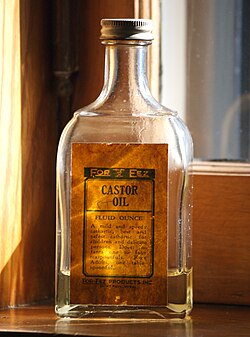
Castor oil is a vegetable oil pressed from castor beans, the seeds of the plant Ricinus communis.[1] The seeds are 40 to 60 percent oil.[2] It is a colourless or pale yellow liquid with a distinct taste and odor. Its boiling point is 313 °C (595 °F) and its density is 0.961 g/cm3.[3] It includes a mixture of triglycerides in which about 90 percent of fatty acids are ricinoleates. Oleic acid and linoleic acid are the other significant components.
Some 270,000–360,000 tonnes (600–800 million pounds) of castor oil are produced annually for a variety of uses.[4] Castor oil and its derivatives are used in the manufacturing of soaps, lubricants, hydraulic and brake fluids, paints, dyes, coatings, inks, cold-resistant plastics, waxes and polishes, nylon, and perfumes.[4]
Etymology
[edit]The name probably comes from a confusion between the Ricinus plant that produces it and another plant, the Vitex agnus-castus.[5][6] An alternative etymology, though, suggests that it was used as a replacement for castoreum.[7]
History
[edit]Use of castor oil as a laxative is attested to in the c. 1550 BCE Ebers Papyrus,[8] and it was in use several centuries earlier.[9] Midwifery manuals from the 19th century recommended castor oil and 10 drops of laudanum for relieving "false pains".[10]
Composition
[edit]_V2.svg)
Castor oil is well known as a source of ricinoleic acid, a monounsaturated, 18-carbon fatty acid. Among fatty acids, ricinoleic acid is unusual in that it has a hydroxyl functional group on the 12th carbon atom. This functional group causes ricinoleic acid (and castor oil) to be more polar than most fats. The chemical reactivity of the alcohol group also allows chemical derivatization that is not possible with most other seed oils.
Because of its ricinoleic acid content, castor oil is a valuable chemical in feedstocks, commanding a higher price than other seed oils. As an example, in July 2007, Indian castor oil sold for about US$0.90/kg ($0.41/lb),[citation needed] whereas U.S. soybean, sunflower, and canola oils sold for about $0.30/kg ($0.14/lb).[11]
| Acid name | Range | Type |
|---|---|---|
| Ricinoleic acid | 85–95 | ω−9 |
| Oleic acid | 2–6 | ω−9 |
| Linoleic acid | 1–5 | ω−6 |
| α-Linolenic acid | 0.5–1 | ω−3 |
| Stearic acid | 0.5–1 | saturated |
| Palmitic acid | 0.5–1 | saturated |
| Dihydroxystearic acid | 0.3–0.5 | saturated |
| Others | 0.2–0.5 |
Human uses
[edit]Castor oil has been used orally to relieve constipation or to evacuate the bowel before intestinal surgery.[12] The laxative effect of castor oil is attributed to ricinoleic acid, which is produced by hydrolysis in the small intestine.[12] Use of castor oil for simple constipation is medically discouraged because it may cause violent diarrhea.[12]
Food and preservative
[edit]In the food industry, food-grade castor oil is used in food additives, flavorings, candy (e.g., polyglycerol polyricinoleate in chocolate),[13] as a mold inhibitor, and in packaging. Polyoxyethylated castor oil (e.g., Kolliphor EL)[14] is also used in the food industries.[15] In India, Pakistan, and Nepal, food grains are preserved by the application of castor oil. It stops rice, wheat, and pulses from rotting. For example, the legume pigeon pea is commonly available coated in oil for extended storage.
Emollient
[edit]
Castor oil has been used in cosmetic products included in creams and as a moisturizer. It is often combined with zinc oxide to form an emollient and astringent, zinc and castor oil cream, which is commonly used to treat infants for nappy rash.[16][17] Hydrogenated castor oil is also known as trihydroxystearin, which is used in cosmetics and personal care systems.[18]
Medicine
[edit]Castor oil is used as a vehicle for serums administering steroid hormones such as estradiol valerate via intramuscular or subcutaneous injection.[19][20]
Alternative medicine
[edit]Despite the lack of evidence, castor oil is sometimes claimed to be able to cure diseases. According to the American Cancer Society, "available scientific evidence does not support claims that castor oil on the skin cures cancer or any other disease."[21]
Childbirth
[edit]
Despite some undesirable side effects, castor oil is used, topically and orally, for labor induction. There is no high-quality research proving that ingestion of castor oil results in cervical ripening or induction of labor; there is, however, evidence that taking it causes nausea and diarrhea.[22][23] A systematic review of "three trials, involving 233 women, found there has not been enough research done to show the effects of castor oil on ripening the cervix or inducing labour or compare it to other methods of induction. The review found that all women who took castor oil by mouth felt nauseous. More research is needed into the effects of castor oil to induce labour."[22][23] Castor oil is still used for labor induction in environments where modern drugs are not available; a review of pharmacologic, mechanical, and "complementary" methods of labor induction published in 2024 by the American Journal of Obstetrics and Gynecology stated that castor oil's physiological effect is poorly understood but "given gastrointestinal symptomatology, a prostaglandin mediation has been suggested but not confirmed."[24] According to Drugs in Pregnancy and Lactation: A Reference Guide to Fetal and Neonatal Risk (2008), castor oil should not be ingested or used topically by pre-term pregnant women.[25] There is no data on the potential toxicity of castor oil for nursing mothers.[25]
Punishment
[edit]
Since children commonly strongly dislike the taste of castor oil, some parents punished children with a dose of it.[26][27] Physicians recommended against the practice because it may associate medicines with punishment and make children afraid of the doctor.[28]
Use in torture
[edit]A heavy dose of castor oil could be used as a humiliating punishment for adults. Colonial officials used it in the British Raj (India) to deal with recalcitrant servants.[29] Belgian military officials prescribed heavy doses of castor oil in Belgian Congo as a punishment for being too sick to work.[30] Castor oil was also a tool of punishment favored by the Falangist and later Francoist Spain during and following the Spanish Civil War.[31] Its use as a form of gendered violence to repress women was especially prominent.[31][32] This began during the war where Nationalist forces would specifically target Republican-aligned women, both troops and civilians, who lived in Republican-controlled areas.[31] The forced drinking of castor oil occurred alongside sexual assault, rape, torture and murder of these women.[31][32]
Its most notorious use as punishment came in Fascist Italy under Benito Mussolini. It was a favorite tool used by the Blackshirts to intimidate and humiliate their opponents.[33][34][35] Political dissidents were force-fed large quantities of castor oil by fascist squads so as to induce bouts of extreme diarrhea. This technique was said to have been originated by Gabriele D'Annunzio or Italo Balbo.[36] This form of torture was potentially deadly, as the administration of the castor oil was often combined with nightstick beatings, especially to the rear, so that the resulting diarrhea would not only lead to dangerous dehydration but also infect the open wounds from the beatings. However, even those victims who survived had to bear the humiliation of the laxative effects resulting from excessive consumption of the oil.[37]
Industrial uses
[edit]Coatings
[edit]Castor oil is used as a biobased polyol in the polyurethane industry. The average functionality (number of hydroxyl groups per triglyceride molecule) of castor oil is 2.7, so it is widely used as a rigid polyol and in coatings.[1] One particular use is in a polyurethane concrete where a castor-oil emulsion is reacted with an isocyanate (usually polymeric methylene diphenyl diisocyanate) and a cement and construction aggregate. This is applied fairly thickly as a slurry, which is self-levelling. This base is usually further coated with other systems to build a resilient floor.[38] Castor oil is not a drying oil, meaning that it has a low reactivity with air compared with oils such as linseed oil and tung oil. However, dehydration of castor oil yields linoleic acids, which do have drying properties.[1] In this process, the OH group on the ricinoleic acid along with a hydrogen from the next carbon atom are removed, forming a double bond which then has oxidative cross-linking properties and yields the drying oil. It is considered a vital raw material.[39]
Chemical precursor
[edit]Castor oil can react with other materials to produce other chemical compounds that have numerous applications.[40][41][42][43][44] Transesterification followed by steam cracking gives undecylenic acid, a precursor to specialized polymer nylon 11, and heptanal, a component in fragrances.[45] Breakdown of castor oil in strong base gives 2-octanol, both a fragrance component and a specialized solvent, and the dicarboxylic acid sebacic acid. Hydrogenation of castor oil saturates the alkenes, giving a waxy lubricant.[1] Castor oil may be epoxidized by reacting the OH groups with epichlorohydrin to make the triglycidyl ether of castor oil which is useful in epoxy technology.[46] This is available commercially as Heloxy 505.[47]
The production of lithium grease consumes a significant amount of castor oil. Hydrogenation and saponification of castor oil yields 12-hydroxystearic acid, which is then reacted with lithium hydroxide or lithium carbonate to give high-performance lubricant grease.[48]
Since it has a relatively high dielectric constant (4.7), highly refined and dried castor oil is sometimes used as a dielectric fluid within high-performance, high-voltage capacitors.
Lubrication
[edit]
Vegetable oils such as castor oil are typically unattractive alternatives to petroleum-derived lubricants because of their poor oxidative stability.[49][50] Castor oil has better low-temperature viscosity properties and high-temperature lubrication than most vegetable oils, making it useful as a lubricant in jet, diesel, and racing engines.[51] The viscosity of castor oil at 10 °C is 2,420 centipoise,[52] but it tends to form gums in a short time, so its usefulness is limited to engines that are regularly rebuilt, such as racing engines. Lubricant company Castrol took its name from castor oil.
Castor oil has been suggested as a lubricant for bicycle pumps because it does not degrade natural rubber seals.[53]
Turkey red oil
[edit]Turkey red oil, also called sulphonated (or sulfated) castor oil, is made by adding sulfuric acid to vegetable oils, most notably castor oil.[54] It was the first synthetic detergent after ordinary soap. It is used in formulating lubricants, softeners, and dyeing assistants.[54]
Biodiesel
[edit]Castor oil, like currently less expensive vegetable oils, can be used as feedstock in the production of biodiesel. The resulting fuel is superior for cold winters, because of its exceptionally low cloud point and pour point.[55]
Initiatives to grow more castor for energy production, in preference to other oil crops, are motivated by social considerations. Tropical subsistence farmers would gain a cash crop.[56]
Early aviation and aeromodelling
[edit]
Castor oil was the preferred lubricant for rotary engines, such as the Gnome engine after that engine's widespread adoption for aviation in Europe in 1909. It was used almost universally in rotary-engined Allied aircraft in World War I. Germany had to make do with inferior ersatz oil for its rotary engines, which resulted in poor reliability.[57][58][59]
The methanol-fueled, two-cycle, glow-plug engines used for aeromodelling, since their adoption by model airplane hobbyists in the 1940s, have used varying percentages of castor oil as lubricants. It is highly resistant to degradation when the engine has its fuel-air mixture leaned for maximum engine speed. Gummy residues can still be a problem for aeromodelling powerplants lubricated with castor oil, however, usually requiring eventual replacement of ball bearings when the residue accumulates within the engine's bearing races. One British manufacturer of sleeve valved four-cycle model engines has stated the "varnish" created[citation needed] by using castor oil in small percentages can improve the pneumatic seal of the sleeve valve, improving such an engine's performance over time.
Safety
[edit]The castor seed contains ricin, a toxic lectin. Heating during the oil extraction process denatures and deactivates the lectin. Harvesting castor beans, though, may not be without risk.[60] The International Castor Oil Association FAQ document states that castor beans contain an allergenic compound called CB1A. This chemical is described as being virtually nontoxic, but has the capacity to affect people with hypersensitivity. The allergen may be neutralized by treatment with a variety of alkaline agents. The allergen is not present in the castor oil itself.[61]
See also
[edit]- Botanol, a flooring material derived from castor oil
- Castor wax
- List of unproven and disproven cancer treatments
References
[edit]- ^ a b c d Thomas, Alfred (2005). "Fats and Fatty Oils". Ullmann's Encyclopedia of Industrial Chemistry. Weinheim: Wiley-VCH. doi:10.1002/14356007.a10_173. ISBN 978-3-527-30673-2.
- ^ Aggrawal, Dr Anil. APC Forensic Medicine and Toxicology for MBBS. Avichal Publishing Company. p. 530. ISBN 978-81-7739-491-7. Archived from the original on 2024-08-17. Retrieved 2024-08-17.
- ^ Aldrich Handbook of Fine Chemicals and Laboratory Equipment. Sigma-Aldrich. 2003.[full citation needed]
- ^ a b Mutlu, H; Meier, MAR (January 2010). "Castor oil as a renewable resource for the chemical industry". European Journal of Lipid Science and Technology. 112 (1): 10–30. doi:10.1002/ejlt.200900138.
- ^ "The Castor Bean: A Plant Named After A Tick". Wayne's Word: An Online Textbook of Natural History. March 1999. Archived from the original on 2021-11-15. Retrieved 2020-04-26.
- ^ Jacob, Irene (1993-01-01). "Ricinus Communis—The Miracle Tree through Four Thousand Years". In Jacob; Jacob (eds.). The Healing Past. BRILL. pp. 81–93. doi:10.1163/9789004377325_006. ISBN 978-90-04-37732-5. Archived from the original on 2022-06-21. Retrieved 2024-11-22.
- ^ Casselman, William Gordon. "Castor". Bill Casselman's Canadian Word of the Day. Archived from the original on 2011-02-03. Retrieved 2014-08-09.
- ^ Bryan, Cyril P. (1930). The Papyrus Ebers, Translated from the German Version by Cyril P. Bryan (PDF). London: Geoffrey Bles. p. 44. Archived from the original (PDF) on 2013-09-21.
- ^ Bryan, p. xvii
- ^
Barnes, Robert Sydenham Fancourt (1883). A Manual of Midwifery for Midwives (2nd ed.). London. Archived from the original on 2024-08-17. Retrieved 2024-08-17 – via HathiTrust.
{{cite book}}: CS1 maint: location missing publisher (link) - ^ "Seed Oil Prices" (PDF). United States Department of Agriculture. July 2007. p. 31. Archived from the original (PDF) on April 6, 2008. Retrieved 2008-08-10.
- ^ a b c "Castor oil". Drugs.com. 3 October 2022. Archived from the original on 20 April 2023. Retrieved 20 April 2023.
- ^ Wilson, R; Van Schie, BJ; Howes, D (1998). "Overview of the preparation, use and biological studies on polyglycerol polyricinoleate (PGPR)". Food and Chemical Toxicology. 36 (9–10): 711–8. doi:10.1016/S0278-6915(98)00057-X. PMID 9737417.
- ^ "Safety datawsheet cremophor El Castor Oil" (PDF). www.sfm.state.or.us. Archived from the original (PDF) on 2017-12-06. Retrieved 2016-12-05.
- ^ Busso, C; Castro-Prado, MA (March 2004). "Cremophor EL stimulates mitotic recombination in uvsH/uvsH diploid strain of Aspergillus nidulans". Anais da Academia Brasileira de Ciências. 76 (1): 49–55. doi:10.1590/S0001-37652004000100005. PMID 15048194.
- ^ Williams, Cheryll (1 July 2012). Medicinal Plants in Australia Volume 3: Plants, Potions and Poisons. Rosenberg Publishing. p. 309. ISBN 978-1-925078-07-7. Archived from the original on 20 April 2023. Retrieved 8 March 2023.
- ^ Nathan, Alan (2010). Non-prescription Medicines. Pharmaceutical Press. p. 206. ISBN 978-0-85369-886-9. Archived from the original on 20 April 2023. Retrieved 8 March 2023.
- ^ "Trihydroxystearin".
- ^ Huber, C. Riffkin R.; Keysser, C. H. (1964-08-01). "Castor Oil as a Vehicle for Parenteral Administration of Steroid Hormones". Journal of Pharmaceutical Sciences. 53 (8): 891–895. Bibcode:1964JPhmS..53..891H. doi:10.1002/jps.2600530809. ISSN 0022-3549. PMID 14241800.
- ^ "ESTRADIOL VALERATE INJECTION, USP Rx Only". dailymed.nlm.nih.gov. Retrieved 2024-12-16.
- ^ "Castor Oil". American Cancer Society. March 2011. Archived from the original on 2013-02-09. Retrieved 2013-09-22.
- ^ a b Kelly, AJ; Kavanagh, J; Thomas, J (2013). "Castor oil, bath and/or enema for cervical priming and induction of labour". Cochrane Database of Systematic Reviews. 2013 (7) CD003099. doi:10.1002/14651858.CD003099.pub2. PMC 7138266. PMID 23881775.
- ^ a b Carlson NS, Dunn Amore A, Ellis JA, Page K, Schafer R (January 2022). "American College of Nurse-Midwives Clinical Bulletin Number 18: Induction of Labor". J Midwifery Women's Health (Review). 67 (1): 140–149. doi:10.1111/jmwh.13337. PMC 9026716. PMID 35119782.
Despite its long history of use for inducing onset of spontaneous labor, castor oil has minimal evidence to support its efficacy and is commonly associated with adverse effects of nausea, vomiting, and diarrhea.
- ^ Sanchez-Ramos L, Levine LD, Sciscione AC, Mozurkewich EL, Ramsey PS, Adair CD, Kaunitz AM, McKinney JA (March 2024). "Methods for the induction of labor: efficacy and safety". Am J Obstet Gynecol (Review). 230 (3S): S669 – S695. doi:10.1016/j.ajog.2023.02.009. PMID 38462252.
- ^ a b Briggs, Gerald G.; Freeman, Roger K.; Yaffe, Sumner J. (2008). "Castor Oil (Laxative/Oxytocic)". Drugs in Pregnancy and Lactation: A Reference Guide to Fetal and Neonatal Risk. Lippincott Williams & Wilkins. pp. 271–273. ISBN 978-0-7817-7876-3.
- ^ For an American example see David J. Rothman (1980). Conscience and Convenience: The Asylum and Its Alternatives in Progressive America. Transaction Publishers. p. 279. ISBN 978-0-202-36509-1. Archived from the original on 2023-01-14. Retrieved 2015-10-29.
- ^ For a Canadian examples see Neil Sutherland (1997). Growing Up: Childhood in English Canada from the Great War to the Age of Television. University of Toronto Press. p. 87. ISBN 978-0-8020-7983-1. Retrieved 2015-10-29.
- ^ Journal of the American Medical Association. American Medical Association. 1919. p. 1699. Archived from the original on 2023-01-14. Retrieved 2015-10-29.
- ^ Cecilia Leong-Salobir (2011). Food Culture in Colonial Asia: A Taste of Empire. Taylor & Francis. p. 66. ISBN 978-1-136-72654-5. Archived from the original on 2023-01-14. Retrieved 2016-01-08.
- ^ Adam., Hochschild (1999). King Leopold's ghost: a story of greed, terror, and heroism in Colonial Africa (1st Mariner books ed.). Boston: Houghton Mifflin. p. 166. ISBN 978-0-547-52573-0. OCLC 759834634.
- ^ a b c d Preston, Paul (2012). The Spanish holocaust: inquisition and extermination in twentieth-century Spain. Internet Archive. New York : W.W. Norton & Co. pp. 139, 156, 169, 187, 201, 202, 212, 310, 315, 321, 326, 449. ISBN 978-0-393-06476-6.
- ^ a b Juan, Carmen Miguel (2016-04-06). "Mujeres y dictadura franquista: la historia silenciada". elDiario.es (in Spanish). Archived from the original on 2023-12-16. Retrieved 2023-12-16.
- ^ "Italy The rise of Mussolini". Encyclopædia Britannica Online. Encyclopædia Britannica. 2007. Archived from the original on October 14, 2007. Retrieved 2007-08-03.
- ^ "Benito's Birthday". Time, in partnership with CNN. August 6, 1923. Archived from the original on April 7, 2008. Retrieved 2007-08-03.
- ^ Bosworth, R. J. B. (2002). Mussolini. New York: Arnold/Oxford Univ. Press. ISBN 978-0-340-73144-4.
- ^ "Bearded like a medieval condottiere, bluff yet suave, fearless and supple, [Italo Balbo] was not the type to pass unnoticed anywhere. His admirers here chose to forget the Blackshirt club-wielder and reputed inventor of the castor-oil treatment for Fascist foes"
Marshal Balbo Archived 2021-04-29 at the Wayback Machine, The New York Times, July 1, 1940, p. 18. - ^ Cecil Adams (1994-04-22). "Did Mussolini use castor oil as an instrument of torture?". The Straight Dope. Archived from the original on 2020-11-01. Retrieved 2014-08-09.
- ^ Howarth, GA (June 2003). "Polyurethanes, polyurethane dispersions and polyureas: Past, present and future". Surface Coatings International Part B: Coatings Transactions. 86 (2): 111–118. doi:10.1007/bf02699621. ISSN 1476-4865. S2CID 93574741.
- ^ Ogunniyi, D. S. (2006-06-01). "Castor oil: A vital industrial raw material". Bioresource Technology. 97 (9): 1086–1091. Bibcode:2006BiTec..97.1086O. doi:10.1016/j.biortech.2005.03.028. ISSN 0960-8524. PMID 15919203. Archived from the original on 2016-11-30. Retrieved 2023-03-09.
- ^ Ma, Yufeng; Wang, Rui; Li, Qiaoguang; Li, Mei; Liu, Chengguo; Jia, Puyou (2021-03-24). "Castor oil as a platform for preparing bio-based chemicals and polymer materials". Green Materials. 10 (3): 99–109. doi:10.1680/jgrma.20.00085. ISSN 2049-1220. S2CID 233687152. Archived from the original on 2023-01-31. Retrieved 2022-04-18.
- ^ "Multiple uses of castor oil". Archived from the original on 2007-09-29. Retrieved 2007-08-02.
- ^ Mutlu, Hatice; Meier, Michael A. R. (2010-01-25). "Castor oil as a renewable resource for the chemical industry". European Journal of Lipid Science and Technology. 112: 10–30. doi:10.1002/ejlt.200900138.
- ^ Ogunniyi, D.S. (June 2006). "Castor oil: A vital industrial raw material". Bioresource Technology. 97 (9): 1086–91. Bibcode:2006BiTec..97.1086O. doi:10.1016/j.biortech.2005.03.028. PMID 15919203.
- ^ da Silva, Rodrigo José; de Resende, Bárbara Lana; Comandini, Gianni; Lavazza, Jacopo; Camanho, Pedro P.; Scarpa, Fabrizio; Panzera, Túlio Hallak (August 2025). "Fully bio-based composite and modular metastructures". Advanced Composites and Hybrid Materials. 8 (4) 288. doi:10.1007/s42114-025-01359-1. ISSN 2522-0128. PMC 12213883. PMID 40612640.
- ^ Ashford's Dictionary of Industrial Chemicals, Third edition, 2011, page 6162
- ^ Hermansen, Ralph D. (2017-03-16). Polymeric Thermosetting Compounds: Innovative Aspects of Their Formulation Technology. CRC Press. ISBN 978-1-77188-315-3. Archived from the original on 2023-01-14. Retrieved 2020-11-09.
- ^ Ash, Michael; Ash, Irene (2007). Handbook of fillers, extenders, and diluents (2nd ed.). Endicott, NY: Synapse Information Resources. p. 82. ISBN 978-1-890595-96-8.
- ^ Kirk-Othmer Encyclopedia of Chemical Technology. Archived from the original on July 14, 2011. Retrieved 2010-07-12.
- ^ Isbell, Terry (May 20, 2004). "Directed synthesis of base oils that overcome traditional vegetable oil shortcomings". Society of Tribologists and Lubrication Engineers. Archived from the original on 2006-10-01. Retrieved 2007-08-02.
- ^ "Petroleum Oil and the Environment". DOE. Archived from the original on 2009-08-23. Retrieved 2006-12-28.
- ^ McGuire, Nancy (2004). "Taming the Bean". The American Chemical Society. Archived from the original on September 27, 2006. Retrieved 2007-08-02.
- ^ Brady, George S.; Clauser, Henry R.; Vaccari, John (1997). Materials Handbook (14th ed.). New York: McGraw-Hill. ISBN 978-0-07-007084-4.
- ^ Older, Jules (2000). Backroad and Offroad Biking. Mechanicsburg, PA: Stackpole Books. p. 37. ISBN 978-0-8117-3150-8.
- ^ a b Penda, H (2017). Herbal Soaps & Detergents Handbook. Delhi, India: NIIR. p. 121. ISBN 978-93-81039-00-7.
- ^ Biodiesel from Castor Oil: A Promising Fuel for Cold Weather (PDF) Archived June 16, 2013, at the Wayback Machine by Carmen Leonor Barajas Forero, 2004-10-12. Retrieved 2012-01-24.
- ^ The Promise of the Castor Bean Archived March 9, 2016, at the Wayback Machine by Elizabeth Johnson, Biodiesel Magazine, 2004-12-01. Retrieved 2012-01-24.
- ^ Guilmartin, John F. Jr. (1994). "Technology and Strategy: What Are the Limits?". Two Historians in Technology and War. United States Army War College, Strategic Studies Institute. p. 10. ISBN 978-1-4289-1522-0.
- ^ Fisher, Suzanne Hayes (1999). "Aircraft, production during the war". In Tucker, Spencer C.; Wood, Laura Matysek; Murphy, Justin D. (eds.). The European Powers in the First World War: An Encyclopedia. Taylor & Francis. p. 10. ISBN 978-0-8153-3351-7.
- ^ U.S. Tariff Commission (1921). Tariff Information Surveys on the Articles in Paragraphs 44 and 45 of the Tariff Act of 1913. Washington, D.C.: Government Printing Office. p. 40.
- ^ Auld, DL; Pinkerton, SD; Rolfe, R; Ghetie, V; et al. (March–April 1999). "Selection of castor for divergent concentrations of ricin and ricinus communis agglutinin". Crop Science. 39 (2): 353–7. doi:10.2135/cropsci1999.0011183X003900020008x. Archived from the original on 2008-10-12. Retrieved 2007-07-31.
- ^ Dierig, David A. (1995). "Lesquerella". New Crop FactSHEET. Center for New Crops & Plant Products, at Purdue University. Archived from the original on 2007-10-25. Retrieved 2007-08-01.
Further reading
[edit]- Naughton, Frank. "Castor Oil". Kirk-Othmer Encyclopedia of Chemical Technology. New York: John Wiley. doi:10.1002/0471238961.0301192014012107.a01.pub2. ISBN 9780471238966 – overview of chemical properties and manufacturing of castor oil
External links
[edit]
| International | |
|---|---|
| National | |
| Other | |

Castor oil
View on GrokipediaCastor oil is a vegetable oil extracted from the seeds of the castor bean plant, Ricinus communis, a species native to eastern Africa but now cultivated globally in tropical and subtropical regions.[1] The oil is obtained primarily through mechanical pressing or solvent extraction of the seeds, which contain 30–50% oil by mass, yielding a pale yellow, viscous liquid characterized by its high content of ricinoleic acid—a monounsaturated omega-9 fatty acid with a hydroxyl group that constitutes 85–95% of the total fatty acid composition.[2] This unique composition distinguishes castor oil from other vegetable oils, providing properties such as excellent lubricity, emulsification, and film-forming capabilities, while the processed oil is free of the toxic protein ricin present in the raw seeds.[3][4] The oil's industrial significance stems from its versatility in manufacturing, including as a base for high-performance lubricants, hydraulic fluids, greases, and coatings due to its thermal stability and low pour point.[2] In pharmaceuticals, castor oil serves as a stimulant laxative by hydrolyzing in the intestine to release ricinoleic acid, which irritates the bowel lining to promote evacuation, though its use is limited by potential side effects like cramping.[1] Cosmetically, it functions as an emollient and carrier in products like lipsticks and hair conditioners, leveraging its moisturizing and penetration-enhancing qualities. Despite occasional promotion in alternative remedies, empirical evidence supports primarily these established applications, with ongoing research exploring its potential in biofuels and biopolymers derived from ricinoleic acid.[2]
Botanical Source and Production
Ricinus communis Plant Characteristics
Ricinus communis is the sole species within the genus Ricinus and belongs to the Euphorbiaceae family.[5][6] This fast-growing, evergreen perennial functions as a herbaceous shrub or semi-woody small tree, capable of reaching heights of 12 meters (40 feet) with woody stems that develop over time.[5][7] In optimal warm conditions, the trunk can achieve a diameter of up to 30 cm.[8] The plant displays wide phenotypic diversity, manifesting in variations of growth form, stem and foliage coloration (from green to red or purple), leaf size, and seed characteristics.[9][10] It is tender and not cold-hardy, often grown as an annual in temperate zones where it rapidly attains 2-3 meters in a single season.[7][11] Stems are typically hairless, erect, and branching above, supporting large, alternate, simple leaves that are palmately lobed with 5-11 radiating veins terminating in narrow, jagged-toothed lobes; each leaf spans up to 1 meter across and features a glossy green surface.[8][11][12] Monoecious flowers emerge in summer and fall on upright racemes up to 45 cm long, with male flowers (yellowish-green with creamy stamens) positioned below female flowers (red stigmas enclosed in developing spiny capsules).[8][13] The resulting fruits are explosive, three-seeded capsules covered in soft spines, each containing mottled, bean-like seeds rich in oil.[11][14] Originally from northeastern Africa, R. communis thrives in disturbed habitats like waste areas, riverbanks, and sandy soils across tropical and subtropical regions where it has naturalized extensively.[15][16][17]Cultivation Regions and Yield Factors
 Castor (Ricinus communis) is cultivated predominantly in arid and semi-arid tropical and subtropical regions worldwide, with India leading global production at approximately 1.65 million metric tons in the 2020-2021 season, accounting for over 80% of the world's output.[18] Within India, Gujarat produces about 85% of the national total, primarily in rainfed conditions suited to the crop's drought tolerance.[19] Other significant producers include Mozambique (72,000 metric tons), Brazil (35,000 metric tons), and China (21,000 metric tons) in the same period, where cultivation occurs on smallholder farms in similar climates.[18] Seed yields typically range from 1,000 to 2,000 kg per hectare under optimal management, though global averages reported by the FAO stand at around 1,105 kg/ha due to variable farming practices. Yields are maximized at planting densities of 55,000 plants per hectare using narrower row spacings (0.45-0.60 m), which promote higher seed production per area compared to wider configurations.[20] Irrigation and nitrogen fertilization enhance yields by increasing the number of productive racemes, with studies showing substantial gains from supplemental water in dry conditions and balanced nutrient application.[21] Climatic factors critically influence productivity; the plant thrives in temperatures of 20-26°C with low humidity, exhibiting sensitivity to frost and requiring a frost-free growing period of 150-180 days.[22] Soil requirements emphasize well-drained, loamy textures with neutral to slightly alkaline pH for optimal water retention and nutrient uptake, while excessive salinity in soil or irrigation water reduces growth, particularly in early stages, by inducing osmotic stress and ion toxicity.[23][24] Row spacing and planting timing also affect yield components, with closer spacings favoring overall biomass but requiring variety selection for short-stature cultivars to avoid lodging.[25]Extraction and Refining Processes
The extraction of castor oil begins with the preparation of seeds from Ricinus communis, which are cleaned to remove foreign matter such as stems, leaves, and dirt, followed by dehulling to separate the hard outer hull from the oil-rich kernel.[26][2] Dehulling is typically achieved mechanically using specialized equipment like castor bean dehullers, yielding kernels that contain 30-55% oil depending on seed variety and processing efficiency.[27][28] The kernels are then conditioned by heating to reduce moisture content to around 5-10%, flaked into thin sheets to increase surface area, and cooked briefly to facilitate oil release while denaturing toxic proteins like ricin, which remain in the residual meal rather than the oil.[29][30] Oil recovery primarily employs mechanical pressing, often via screw expellers or hydraulic presses, in a pre-pressing stage that extracts 25-40% of the available oil under high pressure and temperatures of 50-100°C.[31][32] For higher yields, up to 45-50%, the press cake is subjected to solvent extraction using hexane, where the solvent dissolves residual oil, which is then separated by evaporation and distillation to recover both the oil and solvent.[33][30] The crude oil obtained, which is viscous and pale yellow, undergoes initial filtration or centrifugation to remove solids and waxes, resulting in a product free of the seed's toxic components as ricin is water-soluble and insoluble in the non-polar oil.[34][35] Refining of crude castor oil involves multiple purification steps to eliminate impurities, gums, free fatty acids, pigments, and odors while preserving the oil's high ricinoleic acid content. The process commences with degumming and settling, where phosphoric acid or water is added to hydrate and precipitate phospholipids and gums, which are then removed by centrifugation, reducing gum content to below 0.1%.[36][29] Neutralization follows, typically via alkali refining with sodium hydroxide to saponify free fatty acids into soapstock, which is separated, though physical refining using steam distillation is increasingly used for lower-acid crude to minimize chemical residues.[2] Bleaching employs activated clay or carbon adsorbents at 90-110°C under vacuum to decolorize and remove oxidation products, followed by deodorization through steam stripping at 200-250°C to eliminate volatile compounds, yielding a clear, odorless refined oil suitable for industrial and pharmaceutical applications.[36][29] These steps achieve acid values below 1 mg KOH/g and peroxide values under 5 meq/kg, ensuring stability and purity.[2]Chemical Composition
Primary Fatty Acids and Structure
Castor oil consists primarily of triglycerides derived from glycerol esterified with various fatty acids, with ricinoleic acid comprising approximately 85-95% of the total fatty acid content.[2][37][38] This dominance of ricinoleic acid distinguishes castor oil from most vegetable oils, as ricinoleic acid is an unsaturated hydroxy fatty acid featuring a hydroxyl group at the 12th carbon position.[39] Ricinoleic acid, chemically designated as (9Z,12R)-12-hydroxyoctadec-9-enoic acid, has the molecular formula C₁₈H₃₄O₃ and a molar mass of 298.46 g/mol.[40] Its structure includes a cis double bond between carbons 9 and 10, a hydroxyl group on carbon 12 with R stereochemistry, and an 18-carbon chain terminating in a carboxylic acid.[40][37] In castor oil, this acid is predominantly incorporated into triglycerides such as triricinolein (ricinolein), where three ricinoleic acid molecules esterify a single glycerol backbone, accounting for the oil's viscous and polar properties due to the pendant hydroxyl functionalities.[33][41] Minor fatty acids include oleic acid (typically 2-6%), linoleic acid (2-5%), stearic acid (0.5-1%), and palmitic acid (0.5-1%), with variations depending on seed genotype and processing conditions.[42][43] These non-hydroxylated components contribute less than 15% to the overall profile, underscoring ricinoleic acid's role as the defining structural element that imparts unique reactivity, such as hydroxyl-mediated hydrogen bonding and susceptibility to derivatization.[2] The triglyceride matrix in unrefined castor oil may also contain trace di- and monoglycerides, but purification yields a product where over 89% of acyl chains are ricinoleoyl groups.[43]| Fatty Acid | Typical Percentage (%) | Structural Notes |
|---|---|---|
| Ricinoleic acid (12-hydroxy-9-cis-octadecenoic acid) | 85-95 | Primary; contains hydroxyl and cis-unsaturation |
| Oleic acid | 2-6 | Monounsaturated; C18:1 |
| Linoleic acid | 2-5 | Polyunsaturated; C18:2 |
| Stearic acid | 0.5-1 | Saturated; C18:0 |
| Palmitic acid | 0.5-1 | Saturated; C16:0 |
Key Derivatives and Modifications
Castor oil's triglyceride structure, dominated by ricinolein (the triglyceride of ricinoleic acid), enables diverse chemical modifications leveraging the hydroxyl and double bond functionalities. Ricinoleic acid, comprising approximately 90% of the fatty acids, serves as the primary precursor for derivatives through processes like hydrolysis, esterification, and oxidative cleavage.[44][2] Hydrolysis of castor oil yields ricinoleic acid (12-hydroxy-9-cis-octadecenoic acid) and glycerol, with ricinoleic acid further modifiable into salts like sodium ricinoleate for emulsifiers. Transesterification replaces glycerol with alcohols, producing alkyl ricinoleates such as methyl ricinoleate, which exhibit improved solubility and stability for industrial applications. Hydrogenation saturates the double bond, generating hydrogenated castor oil with a higher melting point (around 85–93°C), used in waxes and ointments.[45][46] Dehydration removes the hydroxyl group as water, yielding dehydrated castor oil with conjugated double bonds, enhancing drying properties for alkyd resins and paints. Pyrolysis of dehydrated castor oil or ricinoleic acid derivatives produces undecylenic acid (9-undecenoic acid), a key intermediate for antimicrobial agents and polymers. Oxidative cleavage, often via alkaline fusion or ozonolysis of ricinoleic acid, generates sebacic acid (a 10-carbon dicarboxylic acid) and 2-octanol or capryl alcohol, with sebacic acid critical for nylon-610 production.[47][48] Epoxidation targets the double bond to form epoxidized castor oil, incorporating oxirane rings for use as plasticizers and stabilizers in PVC. Sulfation introduces sulfonate groups, creating sulfonated castor oil (historically known as Turkey red oil), the first commercial synthetic detergent developed in the 19th century. These modifications exploit the unique reactivity of ricinoleic acid's hydroxyl group, distinguishing castor oil derivatives from those of common vegetable oils.[44][33]Purity Standards and Impurities
Castor oil intended for pharmaceutical or medicinal use must comply with pharmacopeial standards such as those outlined in the United States Pharmacopeia (USP), which specify that it consists of not less than 90.0% triglycerides of ricinoleic acid, with no added substances, a specific gravity of 0.957–0.961 at 25°C, and compliance with tests distinguishing it from other fixed oils, including limits on heavy metals and free from rancidity.[49][50] British Pharmacopoeia (BP) and European Pharmacopoeia (EP) grades similarly demand high refinement, with low acid values (typically ≤0.5 mg KOH/g), peroxide values (≤5.0 meq O₂/kg), and absence of residual solvents or bacterial endotoxins for parenteral applications.[51][52] Refining processes remove common impurities from crude castor oil, including colloidal matter, phospholipids, excess free fatty acids, and pigments that contribute to color and odor, resulting in a pale yellow to colorless, viscous liquid with a faint, mild scent.[2] The toxic lectin ricin, present in castor seeds, is denatured and excluded from the oil during extraction and heating, with properly processed commercial castor oil containing trace or undetectable levels posing no toxic hazard, as confirmed by analytical evaluations of cold-pressed and refined variants.[53][54] Potential contaminants in unrefined or low-grade oils include heavy metals such as lead (<0.1 ppm), cadmium (<0.05 ppm), and arsenic (<0.1 ppm), though pharmaceutical-grade products enforce stringent limits to ensure safety.[55] Independent testing has occasionally detected phthalates in some cosmetic castor oil formulations, likely from processing aids rather than the oil itself, highlighting the importance of sourcing from verified suppliers adhering to good manufacturing practices.[56] Moisture content is typically limited to ≤0.3% in USP-compliant oil to prevent hydrolysis and rancidity.[49]Historical Development
Ancient Medicinal and Ritual Uses
Castor oil, derived from the seeds of Ricinus communis, appears in ancient Egyptian records dating to approximately 1550 BCE in the Ebers Papyrus, an extensive medical treatise that prescribes it for treating intestinal complaints, eye irritations, and as a laxative to expel intestinal parasites.[6] Archaeological evidence includes castor seeds found in Egyptian tombs from around 4000 BCE, indicating early extraction and use, though primarily for pharmacological rather than explicitly ritual purposes.[57] In these contexts, the oil served as a purgative for detoxification and was applied topically to soothe skin ailments and promote wound healing, reflecting empirical observations of its emollient and cathartic effects.[58] By around 400 BCE, Greek physician Hippocrates recommended castor oil as a laxative and detoxifying agent, building on earlier Near Eastern traditions and emphasizing its role in purging toxins to restore bodily balance.[6] Roman sources similarly document its application as an ointment for skin conditions and as an internal remedy for constipation and digestive disorders, with Dioscorides in the 1st century CE noting its efficacy in expelling intestinal worms.[57] These uses align with observable physiological responses, such as ricinoleic acid's stimulation of intestinal motility, though ancient practitioners lacked modern chemical understanding.[59] In ancient India, Ayurvedic texts from at least the 1st millennium BCE integrate castor oil (eranda taila) as a key purgative in virechana therapy for balancing vata and kapha doshas, treating constipation, abdominal pain, and joint inflammation through oral ingestion or enemas.[60] It was also employed topically for rheumatic conditions and as a hair and skin emollient, with formulations like gandharvahastadi taila combining it with herbs for enhanced anti-inflammatory effects.[61] Ritual applications remain sparsely documented, potentially limited to symbolic anointing in healing ceremonies, but primary evidence prioritizes medicinal utility over ceremonial roles across these civilizations.[62]19th-20th Century Industrial Adoption
During the 19th century, castor oil transitioned from predominantly medicinal applications to broader industrial uses, serving as a key raw material in the production of soaps, lubricants, and paints due to its viscous properties and chemical stability.[2] Its adoption in lubrication stemmed from its effectiveness in mechanical systems, where vegetable oils like castor provided superior performance compared to early mineral oils in high-friction environments.[63] By the late 1800s, refiners began optimizing castor oil for industrial lubricants, hydraulic fluids, and coatings, capitalizing on its resistance to oxidation and compatibility with dyes and inks.[64] In the early 20th century, castor oil gained prominence in aviation, particularly for total-loss lubrication systems in rotary engines prevalent during World War I. Engines such as the Gnome and Le Rhône series relied on castor oil mixed with fuel, as it maintained viscosity at high temperatures, resisted dilution by gasoline, and burned cleanly without gumming valves or cylinders—properties unmatched by petroleum-based alternatives at the time. [65] Pilots and mechanics noted its distinctive blue smoke exhaust, a byproduct of combustion, while its laxative effects occasionally impacted crews due to ingestion from oil-sprayed cockpits.[66] This era marked peak demand for castor oil in high-performance applications, with production scaling to meet wartime needs, though supply vulnerabilities from reliance on imports prompted research into synthetic substitutes post-war.[67] Mid-20th century innovations further diversified industrial adoption, with chemical modifications of castor oil enabling its use as a feedstock for synthetic polymers. Notably, Nylon-11, a polyamide derived from 11-aminoundecanoic acid produced via castor oil processing, was commercialized in France around 1947 by companies like Organico, offering biodegradability and flexibility superior to petroleum-based nylons for applications in textiles and engineering plastics.[68] [69] Derivatives also found roles in plasticizers, resins, and cold-resistant plastics, underscoring castor oil's versatility as a renewable chemical intermediate amid growing synthetic materials industries.[33]Recent Market and Research Trends
The global castor oil market was valued at approximately USD 2.21 billion in 2024, with projections indicating growth to USD 3.52 billion by 2033 at a compound annual growth rate (CAGR) of around 5-6%, driven primarily by demand in cosmetics, pharmaceuticals, and bio-based lubricants.[70] [71] Volume-wise, production reached about 803.7 kilotons in 2024, expected to expand modestly to 883.4 kilotons by 2033 at a CAGR of 1.1%, reflecting steady but constrained supply growth due to agricultural dependencies.[72] India dominates production, accounting for over 80% of global output with 1.9 million metric tons of castor seeds harvested in fiscal year 2024, followed distantly by Mozambique, Brazil, and China at 73,000, 25,000, and 24,000 tons respectively.[73] [74] Prices experienced downward pressure in late 2024 amid oversupply and subdued demand, with U.S. castor oil averaging 1,845 USD per metric ton in December and Indian prices at around 1,610 USD per metric ton in the fourth quarter, marking a decline from earlier highs influenced by weather variability in key growing regions.[75] [76] India's export volume stood at 629 million kilograms in fiscal year 2023-24, underscoring its role as the primary supplier to markets in China, Europe, and the U.S., though global trade faces risks from seed yield fluctuations tied to monsoon patterns and pest pressures.[77] Research trends emphasize castor oil derivatives like ricinoleic acid-based polyols for polyurethane foams and biofuels, with studies from 2023-2024 highlighting enhanced sustainability in polymer applications amid rising bio-economy focus, though empirical validation remains limited beyond established laxative uses approved by regulatory bodies such as the FDA.[1] Innovations target antimicrobial and anti-inflammatory properties for topical formulations, but clinical trials as of 2024 show inconsistent efficacy outside gastrointestinal applications, prompting scrutiny of traditional claims in peer-reviewed literature.[1] Market analyses note increasing patents for hydrogenated castor oil in cosmetics, correlating with a 3-5% CAGR in derivative segments through 2030, fueled by consumer shifts toward natural emollients despite supply chain vulnerabilities.[78]Evidence-Based Human Applications
Laxative and Gastrointestinal Effects
Castor oil functions as a stimulant laxative primarily through its hydrolysis in the small intestine to ricinoleic acid, the active metabolite responsible for gastrointestinal stimulation.[1] Upon ingestion, intestinal lipases cleave the oil into ricinoleic acid, which binds to prostaglandin EP3 and EP4 receptors on smooth muscle cells, triggering increased peristalsis, inhibition of net fluid absorption, and enhanced electrolyte secretion into the intestinal lumen.[79] This mechanism results in rapid bowel evacuation, typically within 2 to 6 hours, distinguishing it from bulk-forming or osmotic laxatives that act more slowly.[80] Clinical evidence supports its efficacy for acute, occasional constipation, with the U.S. Food and Drug Administration classifying it as safe and effective for short-term use in adults and children over 2 years when administered orally at doses of 15 to 60 mL once daily.[81] A 2012 study in mice and human intestinal tissues confirmed ricinoleic acid's role in prostaglandin-mediated contraction, aligning with observed laxative outcomes in human applications, though large-scale randomized controlled trials are limited due to its established historical profile. It is not recommended for chronic constipation or as a first-line therapy per guidelines from bodies like the American Gastroenterological Association, owing to risks of overuse and inferior tolerability compared to alternatives like polyethylene glycol.[1] Adverse gastrointestinal effects are common and dose-dependent, including abdominal cramping, nausea, vomiting, and profuse diarrhea that can lead to dehydration, electrolyte disturbances such as hypokalemia, and secondary hyperaldosteronism with prolonged use.[82] Contraindications include intestinal obstruction, appendicitis, inflammatory bowel disease, or pregnancy beyond the first trimester due to potential uterine stimulation via similar prostaglandin pathways.[1] Long-term administration risks laxative dependence, colonic inertia, and malabsorption, prompting recommendations to limit treatment to one week or less.[82] Despite these limitations, its rapid onset makes it suitable for preoperative bowel preparation or urgent relief in otherwise healthy individuals.[83]Topical and Cosmetic Benefits
Castor oil's topical applications derive primarily from its high ricinoleic acid content, a monounsaturated fatty acid comprising 85-95% of the oil, which acts as an emollient to hydrate skin by forming an occlusive barrier that reduces transepidermal water loss.[84] Clinical observations and small-scale studies support its use for alleviating dry skin conditions, with ricinoleic acid demonstrating moisturizing efficacy in recovering rough skin texture.[85][86] A randomized controlled trial involving 20 participants with infraorbital hyperpigmentation, conducted between 2022 and 2023, showed that twice-daily application of 2% castor oil cream for 60 days significantly decreased melanin index (p<0.05), wrinkle depth, and skin laxity compared to a placebo cream, suggesting potential benefits for localized pigmentation and aging signs.[87] The oil's anti-inflammatory properties, attributed to ricinoleic acid's inhibition of prostaglandin synthesis pathways similar to non-steroidal anti-inflammatory drugs, may reduce swelling and erythema when applied to irritated skin.[88] In vitro and animal studies indicate antimicrobial effects against bacteria such as Staphylococcus aureus and fungi, supporting anecdotal use for minor wound healing and acne reduction by limiting microbial proliferation and inflammation.[89][90] However, human clinical trials remain limited, with most evidence derived from preliminary formulations rather than isolated castor oil, and no large-scale randomized studies confirm broad efficacy for conditions like eczema or dermatitis.[1] In cosmetic contexts, castor oil is incorporated into products for its humectant and viscosity-enhancing qualities, improving skin smoothness without altering barrier integrity in patch tests.[53] For hair care, it coats strands to enhance luster and reduce breakage from dryness, as noted in dermatological reviews of emollients for textured hair, but multiple expert analyses and reviews conclude there is no scientific evidence linking it to accelerated follicle growth or increased density.[91][92] Claims of eyelash or eyebrow thickening similarly lack controlled trials, relying instead on user reports without causal validation.[93] While castor oil has established evidence-based benefits for topical cosmetic uses, such as acting as an emollient for skin hydration and hair conditioning, there is no scientific evidence that topical applications such as castor oil packs provide renal effects, treat kidney conditions such as stones, or support kidney detoxification. Reliable medical sources confirm that claims for such uses are unsupported by research, with castor oil's only established benefit being as an oral laxative for constipation.[94][95] Topical safety is favorable, with the Cosmetic Ingredient Review deeming castor oil and its derivatives safe at concentrations up to 100% in leave-on products, showing minimal irritation in human repeated-insult patch tests involving over 100 participants.[53] Rare adverse effects include contact dermatitis or allergic reactions in sensitized individuals, particularly with undiluted application, prompting recommendations for dilution and patch testing.[96][95] Overall, while empirical data affirm basic emollient functions, exaggerated cosmetic claims exceed available evidence, warranting caution against unsubstantiated marketing.[1]Pharmaceutical Formulations and Approvals
Castor oil is standardized as a United States Pharmacopeia (USP) grade substance for pharmaceutical applications, ensuring it meets criteria for purity, including low levels of impurities such as ricin and heavy metals, derived from cold-pressed seeds of Ricinus communis.[97][98] The primary active constituent is ricinoleic acid, comprising approximately 90% of the fatty acids, which acts as a stimulant laxative by irritating the intestinal mucosa and enhancing peristalsis.[1][80] Pharmaceutical formulations of castor oil are predominantly oral liquids or emulsions for laxative use, administered in doses of 15-60 mL for adults to induce a bowel movement typically within 6-12 hours.[81][99] It is also incorporated as an excipient in capsules, tablets, and topical preparations, serving as an emollient or vehicle due to its viscosity and solubility properties, though such uses are secondary to its laxative indication.[100] Formulations often include flavoring agents to mitigate the oil's unpleasant taste, as in historical "palatable" or "tasteless" variants, but modern USP products emphasize unadulterated composition for efficacy.[80] The U.S. Food and Drug Administration (FDA) classifies castor oil as safe and effective for over-the-counter (OTC) use solely as a stimulant laxative for temporary relief of occasional constipation, under the OTC monograph for laxatives, without requiring individual new drug applications due to its established safety profile.[1][101][102] This approval excludes other claimed benefits, such as detoxification or induction of labor, which lack sufficient evidence for regulatory endorsement.[103] Internationally, similar approvals exist; for instance, it is recognized in pharmacopeias like the European Pharmacopoeia for comparable laxative applications, though formulations may vary by region.[80] Long-term use is contraindicated due to risks of electrolyte imbalance and dependence, as noted in FDA labeling requirements.[1]Alternative and Traditional Human Uses
Folk Remedies and Unverified Claims
In folk medicine traditions worldwide, castor oil has been applied topically or ingested for purported anti-inflammatory, anthelmintic, and antibacterial effects, though these uses stem from anecdotal reports rather than controlled studies.[6] Historical accounts, such as those attributing its use by Cleopatra for eye brightening, highlight its longstanding role in cosmetic and remedial practices, but empirical evidence for such outcomes remains absent.[88] Castor oil packs—soaked cloths placed on the abdomen or joints—represent a common unverified remedy promoted for liver detoxification, kidney detoxification, treatment of kidney stones, improvement of kidney function, lymphatic drainage, inflammation reduction, and digestive aid.[95] Proponents claim these packs stimulate circulation and toxin elimination, particularly over the liver or kidneys, but reliable medical sources indicate a lack of scientific support, including no scientific evidence that castor oil packs benefit kidney function, treat kidney conditions such as stones, or support kidney detoxification, consistent with the absence of evidence for other claimed detoxification effects and potential risks including skin irritation or delayed conventional treatment.[95][104][105] Application of castor oil packs or topical castor oil to the feet or soles is sometimes recommended in holistic practices for purported reflexology benefits, calming effects, or detoxification, but there is no reliable scientific evidence supporting these uses, with claims remaining largely anecdotal and lacking robust clinical support.[95][106] Similarly, assertions of weight loss promotion or tumor breakdown via packs or ingestion have circulated on social media, yet institutions like MD Anderson Cancer Center emphasize no verifiable data substantiates these effects.[101] Topical applications for hair growth, eyelash thickening, and scalp health persist in folk practices, with users applying it to purportedly enhance follicle circulation and moisture retention.[107] However, reviews of available research indicate only weak or indirect evidence for improved hair luster, with no robust trials confirming growth promotion, and risks like hair felting from its viscosity documented in case reports.[108] For skin conditions, castor oil mixed with baking soda or applied alone is touted in home remedies for wart removal, leveraging claimed antimicrobial properties to dissolve growths over weeks.[109] While anecdotal successes are reported, dermatological sources stress unproven efficacy compared to evidence-based interventions like salicylic acid.[110] Unsubstantiated claims extend to eye health, where drops are advocated for dry eyes, floaters, or cataracts, purportedly due to moisturizing and anti-inflammatory actions. Ophthalmic authorities warn against such uses, citing irritation risks and zero supporting clinical data.[111] Broader folk assertions, including cancer-fighting properties or broad-spectrum detoxification, lack empirical backing and may reflect overreliance on historical lore rather than causal mechanisms.[112] These remedies, while generally low-risk when processed to remove ricin, underscore the gap between traditional endorsement and rigorous validation.[1]Labor Induction Practices
Castor oil has been employed in traditional midwifery and folk medicine as a method to induce labor, particularly in post-term pregnancies, with oral doses typically ranging from 60 milliliters administered as a single intake or in cocktails mixed with juices to mask its taste.[113] The proposed mechanism involves ricinoleic acid, a component of castor oil, which may stimulate intestinal contractions leading to prostaglandin release, thereby promoting cervical ripening and uterine activity, though this pathway remains speculative and primarily inferred from its laxative properties rather than direct empirical validation.[114] Small randomized controlled trials and observational studies have reported castor oil's potential to shorten the interval to active labor onset, with one retrospective analysis of 196 low-risk post-date pregnancies finding it effective in stimulating labor without significant maternal or fetal complications in uncomplicated cases.[115] A 2022 systematic review and meta-analysis of eight trials indicated that oral castor oil administration improved cervical ripening scores and increased labor induction rates compared to controls, alongside higher vaginal delivery prevalence, though study quality was often limited by small sample sizes and methodological inconsistencies.[114] Another 2022 meta-analysis corroborated these findings, noting no severe adverse events but emphasizing the need for close monitoring due to gastrointestinal side effects.[116] However, a 2013 Cochrane review of available trials concluded there is insufficient high-quality evidence to support routine use, highlighting universal nausea among participants and potential for overstimulation without reliable labor progression.[117] Common adverse effects include severe diarrhea, vomiting, dehydration, and abdominal cramping, which can mimic or exacerbate labor pains but may lead to maternal exhaustion or electrolyte imbalances; fetal risks encompass meconium passage, irregular contractions, and possible distress from gastrointestinal overstimulation.[118] Clinical guidelines from organizations such as the American College of Obstetricians and Gynecologists implicitly discourage unproven herbal inductants like castor oil, prioritizing evidence-based methods due to the absence of large-scale randomized trials demonstrating net benefits over risks in diverse populations.[119] Overall, while some empirical data suggest modest efficacy in select post-term scenarios, the intervention's high side-effect profile and evidentiary gaps render it a non-standard practice, with outcomes varying by gestational age, parity, and individual physiology.Historical Punishments and Coercive Applications
In Fascist Italy during the early 1920s, paramilitary squads known as squadristi or Blackshirts, operating under Benito Mussolini's regime, frequently administered large doses of castor oil to political opponents, socialists, and other dissidents as a non-lethal but degrading form of punishment. This practice, which induced severe diarrhea, abdominal cramps, dehydration, and public humiliation, served to intimidate and coerce submission without immediate fatality, often accompanying beatings or forced public parades of victims.[120] The method gained notoriety during the squadristi violence from 1920 to 1922, as fascists consolidated power ahead of the March on Rome in October 1922, with reports of opponents being force-fed up to a liter or more of the oil before being driven through towns in open vehicles to amplify shame.[121] The tactic persisted into the 1930s and World War II era under Mussolini's dictatorship, extending to occupied territories; for instance, in 1942 Montenegro, Italian forces compelled individuals like Danica Dabović to ingest castor oil as part of coercive interrogations or reprisals against resistance.[122] Unlike more brutal instruments of torture, castor oil's punitive value lay in its reliable purgative effects—stemming from ricinoleic acid's stimulation of intestinal motility—allowing perpetrators to debilitate targets temporarily while maintaining plausible deniability of intent to kill.[120] Historians note its role in psychological warfare, akin to historical mob humiliations like tarring and feathering, rather than systematic execution, though repeated doses risked electrolyte imbalances and worsened outcomes in malnourished prisoners.[120] Similar coercive applications appeared elsewhere in authoritarian contexts. During the Spanish Civil War (1936–1939) and under Francisco Franco's Nationalist forces, prisoners were forced to consume castor oil, mirroring the Italian model to extract confessions or punish loyalty to Republicans through induced gastrointestinal distress and exposure.[123] In colonial Africa under European rule, administrators occasionally employed it against indigenous populations for disciplinary infractions, leveraging its rapid laxative action to enforce compliance in labor or detention settings, though documentation remains sparser than for European cases.[122] These uses highlight castor oil's historical deployment not for therapeutic ends but as a low-cost tool of control, exploiting its physiological effects to break resistance without overt violence.Industrial Applications
Lubricants, Fuels, and Biodiesel
Castor oil has been employed as a lubricant in industrial applications due to its high viscosity, superior lubricity, and thermal stability.[124] Its kinematic viscosity measures approximately 281.8 mm²/s at 40 °C, enabling effective performance in high-temperature environments.[124] Unrefined castor oil demonstrates better oiliness, higher weld load, and greater friction reduction compared to some commercial mineral oils.[125] Historically, castor oil served as a primary lubricant in World War I-era rotary aviation engines, where it was mixed with fuel in total-loss lubrication systems to withstand high temperatures without dissolving into hydrocarbons. This application persisted into early aviation due to its low-temperature viscosity retention and high-temperature lubrication properties, outperforming alternatives at the time.[126] It also found use in two-stroke racing engines for its exceptional breakdown temperature.[127] Modern bio-lubricants derived from castor oil via transesterification achieve yields over 97.4% and are applied in hydraulic fluids, engine oils, metalworking fluids, greases, and mold release agents.[128][129] As a direct fuel component, castor oil's high viscosity—around 226.2 cSt at ambient temperature—necessitates blending or processing to mitigate combustion issues, though it has been tested in engines with adaptations for its density and flash point.[130][131] For biodiesel production, castor oil undergoes alkaline transesterification, yielding up to 89.8% biodiesel from the input oil.[132] The resulting biodiesel exhibits a density of 932.40 kg/m³, kinematic viscosity of 15.069 mm²/s, and calorific value of 38.600 MJ/kg, offering advantages over petrodiesel including renewability, biodegradability, non-toxicity, and enhanced lubricity.[133][134] However, its inherently high viscosity—seven times that of typical vegetable oils—poses challenges, often requiring optimization techniques like catalyst concentration adjustments or blending to meet standards such as ASTM specifications.[133][135] The ricinoleic acid content improves cold flow properties, making it suitable for colder climates when processed.[136]Coatings, Plastics, and Polymers
Dehydrated castor oil functions as a primary binder in paints, enamels, sealants, and inks due to its ability to form durable films after polymerization.[137] Dehydration of castor oil converts it into a semi-drying or drying oil, enabling extensive use in paints and varnishes where it provides gloss, adhesion, and flexibility to coatings.[138] It also serves as a carrier for pigments and dyes in paints, coatings, and inks, while contributing to alkyd resins employed in varnishes for enhanced drying properties and surface protection.[139] In plastics and polymers, castor oil's hydroxyl groups from ricinoleic acid enable it to act as a polyol precursor for polyurethane production, yielding flexible foams, elastomers, and rigid plastics with improved mechanical strength and biodegradability compared to petroleum-based alternatives.[140] These polyurethanes, derived from castor oil, are applied in automotive coatings, adhesives, and structural polymers, with castor oil comprising a significant portion of bio-based urethane formulations due to its reactivity.[141] Alkyd-urethane resins based on castor oil exhibit reduced drying times and lower viscosity when dehydrated, supporting their integration into high-performance coatings and plasticizers that enhance flexibility in rubber and bio-plastics.[142] The global market for castor oil-based biopolymers, including these polyurethane variants, reached USD 958.2 million in 2023, reflecting demand for renewable feedstocks in polymer synthesis.[143]Chemical Precursors and Niche Uses
Castor oil, composed primarily of triglycerides of ricinoleic acid (approximately 87-90% by weight), serves as a renewable precursor for synthesizing specialized dicarboxylic and unsaturated acids through targeted chemical modifications of its ricinoleic acid component.[44] Hydrolysis of castor oil yields ricinoleic acid, a hydroxylated C18 fatty acid with a double bond, which undergoes cleavage reactions to produce valuable intermediates.[144] For instance, oxidative cleavage or alkali fusion of ricinoleic acid generates sebacic acid (HOOC-(CH2)8-COOH), a 10-carbon dicarboxylic acid, alongside capryl alcohol.[44] Pyrolysis of castor oil or its methyl esters at temperatures above 400°C cleaves the ricinoleic chain to form undecylenic acid (CH2=CH-(CH2)8-COOH), a terminal alkene carboxylic acid, and heptaldehyde.[145] These processes, developed commercially since the mid-20th century, leverage the oil's unique unsaturation and hydroxyl functionality for high-yield conversions, with sebacic acid production reaching industrial scales via nitric acid oxidation of ricinoleic acid derivatives as early as the 1930s.[146] ![Main component structural formulae of castor oil][float-right] Sebacic acid derived from castor oil finds niche applications in the synthesis of high-performance polyamides, such as nylon-6,10 and nylon-11 precursors, valued for their thermal stability and low moisture absorption in engineering plastics and fibers.[148] It also serves as a plasticizer in lubricants and hydraulic fluids, particularly for aviation and automotive sectors requiring biodegradability.[149] Undecylenic acid, produced via thermal cracking, is employed in niche pharmaceutical formulations as an antifungal agent in topical treatments for conditions like athlete's foot, with its zinc salt (zinc undecylenate) offering bacteriostatic properties in cosmetics and personal care products.[47] Heptaldehyde from the same pyrolysis step contributes to fragrance synthesis in perfumery, where it acts as an intermediate for aliphatic aldehydes used in niche scents.[150] Additional derivatives, such as γ-decalactone obtained through microbial fermentation of ricinoleic acid, provide fruity flavor notes in food and beverage industries, underscoring castor oil's role in sustainable, bio-based chemical niches amid efforts to replace petroleum-derived analogs.[148] These applications, while comprising a fraction of global castor oil consumption (estimated at under 10% for specialty chemicals), highlight its causal value in enabling renewable routes to compounds with specific reactivity profiles not easily sourced otherwise.[151]Safety, Toxicology, and Regulations
Acute and Chronic Health Risks
Ingestion of castor oil as a stimulant laxative primarily exerts its effects through ricinoleic acid, which irritates the intestinal mucosa and induces vigorous peristalsis, often resulting in acute gastrointestinal distress including severe abdominal cramping, nausea, vomiting, and profuse watery diarrhea within 2 to 6 hours of administration.[1] These symptoms can lead to significant fluid and electrolyte losses, potentially causing dehydration, hypokalemia, and metabolic acidosis, particularly in vulnerable populations such as children, the elderly, or those with compromised renal function.[1] Overdose, typically exceeding 15-60 mL in adults, is not considered highly toxic but may exacerbate these effects, with rare reports of dizziness, hypotension, or allergic reactions manifesting as rash or anaphylaxis.[152] Commercial castor oil lacks ricin, the highly toxic lectin present in unprocessed castor beans, due to filtration and heat processing during extraction, rendering ricin-related acute poisoning from the oil itself negligible absent contamination. Topically, acute exposure may cause mild skin irritation or contact dermatitis in sensitized individuals, though human patch tests indicate low irritancy potential. In pregnancy, acute oral use carries risks of uterine contractions and premature labor induction, with case reports documenting fetal distress or miscarriage following doses intended for labor stimulation, prompting contraindication except under strict medical supervision.[1] The U.S. Food and Drug Administration classifies castor oil as safe and effective for short-term constipation relief but advises against routine use due to these acute adverse events.[1] Chronic ingestion, often from repeated laxative misuse, can foster bowel habit dependency by disrupting normal colonic motility and fluid absorption, paradoxically leading to laxative-resistant constipation upon discontinuation.[95] Prolonged exposure risks include electrolyte imbalances such as chronic hypokalemia, which may precipitate cardiac arrhythmias or muscular weakness, and potential malabsorption of nutrients due to ongoing mucosal irritation.[1] No evidence supports genotoxicity or carcinogenicity from castor oil, with animal studies showing no reproductive toxicity at tested doses, though human data on long-term systemic effects remain limited to observational reports of renal strain in overuse scenarios.[1] Topical chronic application appears safe, with minimal absorption and no reported systemic accumulation, but occupational exposure studies note occasional sensitization. Regulatory bodies emphasize avoidance of habitual use, favoring dietary or osmotic alternatives for sustained constipation management to mitigate these risks.[1]Plant-Derived Toxins and Processing Mitigations
Castor seeds (Ricinus communis) contain ricin, a highly toxic type 2 ribosome-inactivating protein (RIP) that inhibits protein synthesis in eukaryotic cells, with an estimated lethal dose for humans of 1–20 mg/kg body weight via ingestion.[6] Ricin constitutes 1–5% of the seed's dry weight, primarily localized in the endosperm and embryo rather than the oil-rich outer layer.[153] A related toxin, Ricinus communis agglutinin (RCA), shares structural similarities and cytotoxic effects but is less potent.[154] These proteinaceous toxins are not oil-soluble and remain concentrated in the defatted seed meal (castor cake or pomace) following extraction, which can retain 0.04–0.08% ricin by weight depending on seed variety and processing conditions.[155] Commercial castor oil production employs mechanical pressing or solvent extraction (e.g., using hexane) to separate the triglyceride-rich oil (40–50% of seed weight) from the toxin-laden solid residue.[156] In mechanical pressing, seeds are hulled, crushed, and pressed at temperatures often exceeding 50°C, which partially denatures heat-labile ricin while physically segregating it into the press cake; ricin extraction efficiency into the oil is negligible (<0.001%) due to its hydrophilicity.[157] Solvent methods further minimize carryover by dissolving lipids selectively, leaving proteins like ricin in the insoluble meal.[158] Post-extraction refining steps—degumming with hot water/phosphoric acid, neutralization, bleaching with activated clay, and deodorization under vacuum at 200–250°C—eliminate any residual impurities, including trace proteins or allergens, rendering the oil ricin-free as confirmed by ELISA assays on commercial samples.[2][159] Cold-pressing, which avoids heat and solvents to preserve native properties, may retain minute ricin traces (e.g., <1 ppm) in unrefined oils, though levels remain sub-toxic and undetectable in properly hulled products.[159] No other plant-derived toxins, such as alkaloids or cyanogenic compounds, are reported in significant quantities within extracted castor oil; ricinoleic acid (90% of the oil's fatty acids) is a non-toxic hydroxylated lipid responsible for laxative effects rather than toxicity.[80] Empirical testing by agencies like the USDA verifies that refined castor oil complies with food-grade standards, lacking detectable ricin or RCA, with poisoning incidents linked solely to raw seed ingestion, not processed oil.[160][161] Detoxification of byproduct meal for feed use involves additional treatments like autoclaving or alkali boiling, but these are extraneous to oil safety.[158]Regulatory Status and Empirical Evidence Gaps
In the United States, the Food and Drug Administration (FDA) classifies castor oil as generally recognized as safe (GRAS) for use as a direct food additive under 21 CFR 172.876, permitting its incorporation in foods at levels consistent with good manufacturing practices, primarily due to its established role as a stimulant laxative.[162] For over-the-counter (OTC) drug applications, castor oil is approved as a laxative in oral form, with dosing limited to short-term use for constipation relief, based on its ricinoleic acid content stimulating intestinal peristalsis; however, it lacks FDA approval for unverified claims such as labor induction or cosmetic benefits beyond excipient roles. Hydrogenated variants are authorized for indirect food contact substances under 21 CFR 178.3280, reflecting processing to mitigate potential impurities, though unrefined or adulterated products face warnings for lacking Certificates of Product Notification (CPN) and potential heavy metal contamination.[163][164] In the European Union, the European Medicines Agency (EMA) recognizes castor oil (Ricini oleum) as a traditional herbal medicinal product for short-term relief of occasional constipation, per the European Union herbal monograph, recommending oral doses of 1-2 tablespoons for adults only when dietary changes or bulk laxatives fail, with contraindications for pregnancy, lactation, and gastrointestinal disorders.[165] Licensing varies by member state, requiring national authority verification, and refined castor oil is deemed comparable to virgin forms for quality post-processing to remove toxins like ricin.[166] Regulatory frameworks emphasize safety in excipient use for pharmaceuticals, but prohibit unsubstantiated health claims without clinical substantiation, aligning with pharmacopoeial standards that prioritize empirical laxative efficacy over anecdotal applications. Empirical evidence for castor oil's laxative mechanism—via ricinoleic acid's prostaglandin-like activation of intestinal receptors—is robust from pharmacological studies, yet gaps persist in high-quality, large-scale randomized controlled trials (RCTs) for broader therapeutic claims, such as labor induction, where systematic reviews indicate accelerated cervical ripening and reduced induction needs but highlight methodological limitations including small sample sizes (often n<100), heterogeneous dosing (30-60 mL), and inconsistent outcome measures like meconium-stained amniotic fluid risks.[116][114] A 2022 meta-analysis of 11 trials found oral castor oil increased vaginal delivery rates (OR 2.23, 95% CI 1.06-4.70) without elevated cesarean sections, but authors noted insufficient power to assess rare adverse events like fetal distress, urging caution and further RCTs in multiparous women only.[167] Clinical guidelines, including those from obstetric bodies, advise against routine use due to gastrointestinal side effects (nausea in 40-60% of users) and lack of long-term safety data, with narrative reviews concluding high-quality evidence remains inadequate despite observational successes in post-term pregnancies.[168] For non-obstetric folk uses like skin hydration or hair growth, evidence is predominantly anecdotal or derived from in vitro studies on ricinoleic acid's anti-inflammatory properties, with no systematic reviews confirming causal efficacy in humans; cosmetic safety assessments affirm low dermal irritation but dismiss transformative claims absent placebo-controlled trials. Toxicology data gaps include chronic exposure effects beyond acute laxation, particularly in vulnerable populations, where processing mitigations remove ricin but residual contaminants in low-quality oils pose unquantified risks, underscoring regulatory reliance on historical use over modern evidentiary standards.[1] Overall, while laxative applications rest on causal mechanisms validated by decades of pharmacovigilance, expansive claims suffer from evidentiary sparsity, with calls for blinded, multicenter trials to bridge gaps in dose-response, subgroup safety, and comparative effectiveness against pharmaceuticals.[116]References
- ./assets/Castor_oil_$Main_Component_Structural_Formulae$[float-right]