


Community hub
Recent from talks
Contribute something
Nothing was collected or created yet.
Guantanamo Bay detention camp
View on Wikipedia
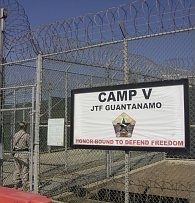
The Guantanamo Bay detention camp,[note 1] also known as GTMO (/ˈɡɪtmoʊ/ GIT-moh), GITMO (/ˈɡɪtmoʊ/ GIT-moh), or simply Guantanamo Bay, is a United States military prison within Naval Station Guantanamo Bay (NSGB), on the coast of Guantánamo Bay, Cuba. It was established in 2002 by President George W. Bush to hold terrorism suspects and "illegal enemy combatants" during the "war on terror" following the September 11 attacks. As of January 2025[update], at least 780 people from 48 countries have been detained at the camp since its creation, of whom 756 had been released or transferred to other detention facilities, 9 died in custody, and 15 remain.[1]
Key Information


.svg)

Following the September 11 attacks, the U.S. led a multinational military operation against Taliban-ruled Afghanistan to dismantle al-Qaeda and capture its leader, Osama bin Laden. During the invasion, in November 2001, Bush issued a military order allowing the indefinite detention of foreign nationals without charge and preventing them from legally challenging their detention. The U.S. Department of Justice claimed that habeas corpus—a legal recourse against unlawful detention—did not apply to Guantanamo because it was outside U.S. territory. In January 2002, a temporary detention facility dubbed "Camp X-Ray" was created to house suspected Al-Qaeda members and Taliban fighters.[2] By May 2003, the Guantanamo Bay detention camp had grown into a larger and permanent facility that housed over 680 prisoners, most without formal charges.[3][2][4] The Bush administration maintained it was not obliged to grant prisoners protections under the U.S. Constitution or the Geneva Conventions, since the former did not extend to foreign soil and the latter did not apply to "unlawful enemy combatants". Humanitarian and legal advocacy groups claimed these policies were unconstitutional and violated international human rights law;[5][6] several landmark U.S. Supreme Court decisions found that detainees had rights to due process and habeas corpus but were still subject to military tribunals.[7][8]
Detainees are reported to have been housed in unfit conditions, abused and tortured, often in the form of "enhanced interrogation techniques".[9][10] As early as 2003, the International Committee of the Red Cross warned of "deterioration in the psychological health of a large number of detainees".[11] Reports by Amnesty International and Human Rights Watch, as well as intergovernmental institutions such as the Organization of American States and the United Nations, concluded that detainees had been systematically mistreated in violation of their human rights.[11][12] The detention camp has faced legal, political, and international scrutiny, along with criticism regarding its operations and treatment of detainees. In 2005, Bush acknowledged the facility's necessity but expressed a desire for its eventual closure.[13] His administration began winding down the detainee population, releasing or transferring around 540 detainees by the end of the administration.[2] In 2009, Bush's successor, President Barack Obama, ordered closure of the facility within a year and to identify lawful alternatives for detainees; however, bipartisan opposition from the U.S. Congress, on the grounds of national security, prevented closure.[14] During the Obama Administration, the number of inmates was reduced from 250 to 41, but controversial policies such as use of military courts remained.[15][16] In 2018, President Donald Trump signed an order to keep the detention camp open indefinitely,[17] and only one prisoner was repatriated during his administration.[18] After taking office in 2021, President Joe Biden vowed to close the camp before his term ended,[19][20] though his administration continued expansions to courtrooms and other facilities.[21][22][23] Following the release of 25 detainees,[24][25][26][27] 15 detainees remain as of January 2025;[28] of these, three await transfer, nine have been charged or convicted of war crimes, and three are held in indefinite law-of-war detention, without facing tribunal charges nor being recommended for release.[1]
In January 2025, Trump signed a memorandum to begin expansion of the Guantanamo Migrant Operations Center to house up to 30,000 migrants under detention, separate from the military prison. The migrant facility will be run by U.S. Immigration and Customs Enforcement (ICE).[29] He signed a memorandum for an unnumbered "additional detention space".[30] In March, the U.S. government transferred an undisclosed number of immigrants from the Guantanamo detention facility to Louisiana.[31] The transfer came as a court reviews the legality of their detention and relocation. The move follows increased scrutiny of U.S. immigration policies and use of Guantanamo for detaining non-citizens outside of traditional immigration processes.
History
[edit]


During the 1898 Spanish–American War, U.S. forces invaded and occupied Cuba amid its war of independence against Spain. In 1901, an American-drafted amendment to the Cuban constitution nominally recognized Cuba's sovereignty while allowing the U.S. to intervene in local affairs and establish naval bases on land leased or purchased from the Cuban government. The Cuban–American Treaty of Relations of 1903 reaffirmed these provisions, and that same year, the Guantánamo Bay Naval Base was established pursuant to a lease agreement with no expiration date. The 1934 Cuban–American Treaty of Relations superseded much of the 1903 treaty but reaffirmed the Guantánamo Bay lease, under which Cuba retains ultimate sovereignty but the U.S. exercises sole jurisdiction. Since coming to power in 1959, Cuba's communist government considers the U.S. military presence at Guantánamo Bay illegal and has repeatedly called for its return.[32]
The Guantanamo Bay Naval Base, including the detention camp, is operated by the Joint Task Force Guantanamo (JTF-GTMO) of the Southern Command of the Department of Defense (DoD).[33] The main detention compound is Camp Delta, which replaced the temporary Camp X-Ray in April 2002, with other compounds including Camp Echo, Camp Iguana, and the Guantanamo psychiatric ward.[34] The base occupies 45 square miles of land and water.[35]
After political appointees at the U.S. Office of Legal Counsel, Department of Justice advised the George W. Bush administration that "a federal district court could not properly exercise habeas jurisdiction over an alien detained at GBC (Guantanamo Bay, Cuba)",[36] military guards took the first twenty detainees to Camp X-Ray on 11 January 2002. At the time, Secretary of Defense Donald Rumsfeld said the detention camp was established to detain extraordinarily dangerous people, to interrogate detainees in an optimal setting, and to prosecute detainees for war crimes.[37] In practice, the site has long been used for alleged "enemy combatants".
The DoD at first kept secret the identity of the individuals held in Guantanamo, but after losing attempts to defy a Freedom of Information Act request from the Associated Press, the U.S. military officially acknowledged holding 779 prisoners in the camp.[38]
The Bush administration asserted that detainees were not entitled to any of the protections of the Geneva Conventions, while also claiming it was treating "all detainees consistently with the principles of the Geneva Convention."[37] Ensuing U.S. Supreme Court decisions since 2004 have determined otherwise and that U.S. courts do have jurisdiction: it ruled in Hamdan v. Rumsfeld on 29 June 2006, that detainees were entitled to the minimal protections listed under Common Article 3 of the Geneva Conventions.[39] Following this, on 7 July 2006, the Department of Defense issued an internal memo stating that detainees would, in the future, be entitled to protection under Common Article 3.[40][41]
Current and former detainees have reported abuse and torture, which the Bush administration denied. In a 2005 Amnesty International report, the facility was called the "Gulag of our times."[42] In 2006, the United Nations unsuccessfully demanded that Guantanamo Bay detention camp be closed.[43] On 13 January 2009, Susan J. Crawford, appointed by Bush to review DoD practices used at Guantanamo Bay and oversee the military trials, became the first Bush administration official to concede that torture occurred at Guantanamo Bay on one detainee (Mohammed al-Qahtani), saying "We tortured Qahtani."[44]
On 22 January 2009, President Obama issued a request to suspend proceedings at Guantanamo military commission for 120 days and to shut down the detention facility that year.[45][46] On 29 January 2009, a military judge at Guantanamo rejected the White House request in the case of Abd al-Rahim al-Nashiri, creating an unexpected challenge for the administration as it reviewed how the United States brings Guantanamo detainees to trial.[47] On 20 May 2009, the United States Senate passed an amendment to the Supplemental Appropriations Act of 2009 (H.R. 2346) by a 90–6 vote to block funds needed for the transfer or release of prisoners held at the Guantanamo Bay detention camp.[48] President Obama issued a presidential memorandum dated 15 December 2009, ordering Thomson Correctional Center, Thomson, Illinois, to be prepared to accept transferred Guantanamo prisoners.[49]
The Final Report of the Guantanamo Review Task Force, dated 22 January 2010, published the results for the 240 detainees subject to the review: 36 were the subject of active cases or investigations; 30 detainees from Yemen were designated for "conditional detention" due to the poor security environment in Yemen; 126 detainees were approved for transfer; 48 detainees were determined "too dangerous to transfer but not feasible for prosecution".[50]
On 6 January 2011, President Obama signed the 2011 Defense Authorization Bill, which, in part, placed restrictions on the transfer of Guantanamo prisoners to the mainland or to foreign countries, thus impeding the closure of the facility.[51] In February 2011, U.S. Secretary of Defense Robert Gates said that Guantanamo Bay was unlikely to be closed, due to opposition in the Congress.[52] Congress particularly opposed moving prisoners to facilities in the United States for detention or trial.[52] In April 2011, WikiLeaks began publishing 779 secret files relating to prisoners in the Guantanamo Bay detention camp.[53]
On 4 November 2015, President Barack Obama stated that he was preparing to unveil a plan to close the facility and move some of the terrorism suspects held there to U.S. soil. The plan would propose one or more prisons from a working list that includes facilities in Kansas, Colorado and South Carolina. Two others that were on the list, in California and Washington State, do not appear to have made the preliminary cut, according to a senior administration official familiar with the proposal.[54] By the end of the Obama Administration on 19 January 2017, however, the detention center remained open, with 41 detainees remaining.[15]
In June 2022, The New York Times publicly released photographs of the first camp detainees following a Freedom of Information Act (FOIA) request.[55]
Post-Bush statements
[edit]In 2010, Colonel Lawrence Wilkerson, a former aide to Secretary of State Colin Powell, stated in an affidavit that top U.S. officials, including President George W. Bush, Vice President Dick Cheney, and Secretary of Defense Donald Rumsfeld, had known that the majority of the detainees initially sent to Guantánamo were innocent, but that the detainees had been kept there for reasons of political expedience.[56][57] Wilkerson's statement was submitted in connection with a lawsuit filed in federal district court by former detainee Adel Hassan Hamad against the United States government and several individual officials.[58] This supported numerous claims made by former detainees such as Moazzam Begg, a British citizen who had been held for three years in detention camps in Afghanistan and Guantanamo as an enemy combatant, under the claim that he was an al-Qaeda member who recruited for, and provided money for, al-Qaeda training camps and himself trained there to fight US or allied troops.[59]
Camp facilities
[edit]
Camp Delta was a 612-unit detention center finished in April 2002. It included detention camps 1 through 4, as well as Camp Echo, where detainees not facing military commissions are held.[60]
Camp X-Ray was a temporary detention facility, which was closed in April 2002. Its prisoners were transferred to Camp Delta.
In 2008, the Associated Press reported Camp 7, a separate facility on the naval base that was considered the highest security jail on the base.[61] That facility held detainees previously imprisoned in a global, clandestine network of CIA prisons.[62] An attorney first visited a detainee at Camp 7 in 2013.[63] The precise location of Camp 7 has never been confirmed. In early April 2021, Camp 7 was shut down due to deteriorating conditions of the facilities.[64][65] The remaining prisoners at Camp 7 were transferred to Camp 5.[66]
Camp 5, as well as Camp 6, were built in 2003–04. They are modeled after a high-security facility in Indiana.[67] In September 2016, Camp 5 was closed and a portion of it dedicated to use as a medical facility for detainees.[68] A portion of Camp 5 was again re-dedicated in early April 2021, when Camp 7 so-called "high value" former CIA detainees were moved there.[69] In Camp 6, the U.S. government detains those who are not convicted in military commissions.[citation needed]
In January 2010, Scott Horton published an article in Harper's Magazine describing "Camp No", a black site about 1 mile (1.6 km) outside the main camp perimeter, which included an interrogation center. His description was based on accounts by four guards who had served at Guantanamo. They said prisoners were taken one at a time to the camp, where they were believed to be interrogated. He believes that the three detainees that DoD announced as having committed suicide were questioned under torture the night of their deaths.[70]
From 2003 to 2006, the CIA operated a small site, known informally as "Penny Lane," to house prisoners whom the agency attempted to recruit as spies against Al-Qaeda. The housing at Penny Lane was less sparse by the standards of Guantanamo Bay, with private kitchens, showers, televisions, and beds with mattresses. The camp was divided into eight units. Its existence was revealed to the Associated Press in 2013.[71]
Camp conditions and testimonies of abuse and torture
[edit]A 2013 Institute on Medicine as a Profession (IMAP) report concluded that health professionals working with the military and intelligence services "designed and participated in cruel, inhumane and degrading treatment and torture of detainees." Medical professionals were ordered to ignore ethical standards during involvement in abusive interrogation, including monitoring of vital signs under stress-inducing procedures. They used medical information for interrogation purposes and participated in force-feeding of hunger strikers, in violation of World Medical Association and American Medical Association prohibitions.[72]
Supporters of controversial techniques have declared that certain protections of the Third Geneva Convention do not apply to Al-Qaeda or Taliban fighters, claiming that the Convention applies to only military personnel and guerrillas who are part of a chain of command, wear distinctive insignia, bear arms openly, and abide by the rules of war. Jim Phillips of The Heritage Foundation said that "some of these terrorists who are not recognized as soldiers don't deserve to be treated as soldiers."[73] Critics of U.S. policy, such as George Monbiot, claimed the government had violated the Conventions in attempting to create a distinction between "prisoners of war" and "illegal combatants."[74][75] Amnesty International called the situation "a human rights scandal" in a series of reports.[76]
One of the allegations of abuse at the camp is the abuse of the religion of the detainees.[77][78][79][80][81][82] Prisoners released from the camp have alleged incidents of abuse of religion including flushing the Quran down the toilet, defacing the Quran, writing comments and remarks on the Quran, tearing pages out of the Quran, and denying detainees a copy of the Quran. One of the justifications offered for the continued detention of Mesut Sen, during his Administrative Review Board hearing, was:[83]
Emerging as a leader, the detainee has been leading the detainees around him in prayer. The detainees listen to him speak and follow his actions during prayer.
Red Cross inspectors and released detainees have alleged acts of torture,[84][85] including sleep deprivation, beatings and locking in confined and cold cells.
The use of Guantánamo Bay as a military prison has been the subject of significant criticism, particularly from human rights organizations, which cite reports of torture[86] and poor treatment of detainees. Supporters of the facility argue that enemy combatants can be lawfully detained until hostilities cease and that providing trial review for such detentions has not been a historical practice for prisoners of war.
Testimonies of treatment
[edit]Three British Muslim prisoners, known in the media at the time as the "Tipton Three", were repatriated to the United Kingdom in March 2004, where officials immediately released them without charge. The three alleged ongoing torture, sexual degradation, forced drugging, and religious persecution being committed by U.S. forces at Guantánamo Bay.[87][88] The former Guantanamo detainee Mehdi Ghezali was freed without charge on 9 July 2004, after two and a half years internment. Ghezali claimed that he was the victim of repeated torture. Omar Deghayes alleged he was blinded after his right eye was gouged by an officer.[89] Juma Al Dossary claimed he was interrogated hundreds of times, beaten, tortured with broken glass, barbed wire, burning cigarettes, and suffered sexual assaults.[90] David Hicks also made allegations of torture[91][92] and mistreatment in Guantanamo Bay, including sensory deprivation, stress positions,[93] having his head slammed into concrete, repeated anal penetration, routine sleep deprivation[91] and forced drug injections.[94]
An Associated Press report claimed that some detainees were turned over to the U.S. by Afghan tribesmen in return for cash bounties.[95] The first Denbeaux study, published by Seton Hall University Law School, reproduced copies of several leaflets, flyers, and posters the U.S. government distributed to advertise the bounty program; some of which offered bounties of "millions of dollars."[96]
Hunger-striking detainees claimed that guards were force feeding them in the fall of 2005: "Detainees said large feeding tubes were forcibly shoved up their noses and down into their stomachs, with guards using the same tubes from one patient to another. The detainees say no sedatives were provided during these procedures, which they allege took place in front of U.S. physicians, including the head of the prison hospital.[97] "A hunger striking detainee at Guantánamo Bay wants a judge to order the removal of his feeding tube so he can be allowed to die", one of his lawyers has said.[98] Within a few weeks, the Department of Defense "extended an invitation to United Nations Special Rapporteurs to visit detention facilities at Guantanamo Bay Naval Station."[99][100] This was rejected by the U.N. because of DoD restrictions, stating that "[the] three human rights officials invited to Guantánamo Bay wouldn't be allowed to conduct private interviews" with prisoners.[101] Simultaneously, media reports began related to the question of prisoner treatment.[102] District Court Judge Gladys Kessler also ordered the U.S. government to release medical records going back a week before such feedings took place.[103] In early November 2005, the U.S. suddenly accelerated, for unknown reasons, the rate of prisoner release, but this was not sustained.[104] Detainee Mansur Ahmad Saad al-Dayfi has alleged that during his time as a JAG officer in Guantanamo, Ron DeSantis oversaw force-feedings of detainees.[105][106][107]
In May 2013, detainees undertook a widespread hunger strike; they were subsequently being force fed until the U.S. Government stopped releasing hunger strike information, due to it having "no operational purpose".[108] During the month of Ramadan that year, the US military claimed that the amount of detainees on hunger strike had dropped from 106 to 81. However, according to defense attorney Clive Stafford Smith, "The military are cheating on the numbers as usual. Some detainees are taking a token amount of food as part of the traditional breaking of the fast at the end of each day in Ramadan, so that is now conveniently allowing them to be counted as not striking."[109] In 2014, the Obama administration undertook a "rebranding effort" by referring to the hunger strikes as "long term non-religious fasting."[110]
Attorney Alka Pradhan petitioned a military judge to order the release of art made in her client, Ammar al-Baluchi's cell. She complained that painting and drawing was made difficult, and he was not permitted to give artwork to his counsel.[111]
It has been reported that prisoners cooperating with interrogations have been rewarded with Happy Meals from the McDonald's on base.[112]
Reported suicides
[edit]By May 2011, there had been at least six reported suicides in Guantánamo.[113][114]
During August 2003, there were 23 suicide attempts. The U.S. officials did not say why they had not previously reported the incident.[115] After this event, the Pentagon reclassified alleged suicide attempts as "manipulative self-injurious behaviors". Camp physicians alleged that detainees do not genuinely wish to end their lives, rather, the prisoners supposedly feel that they may be able to get better treatment or release with suicide attempts. Daryl Matthews, a professor of forensic psychiatry at the University of Hawaii who examined the prisoners, stated that given the cultural differences between interrogators and prisoners, "intent" was difficult if not impossible to ascertain. Clinical depression is common in Guantánamo, with 1/5 of all prisoners being prescribed antidepressants such as Prozac.[116] Guantanamo Bay officials have reported 41 suicide attempts by 25 detainees since the U.S. began taking prisoners to the base in January 2002.[117] Defense lawyers contend the number of suicide attempts is higher.[117]
On 10 June 2006 three detainees were found dead, who, according to the DoD, "killed themselves in an apparent suicide pact."[118] Prison commander Rear Admiral Harry Harris claimed this was not an act of desperation, despite prisoners' pleas to the contrary, but rather "an act of asymmetric warfare committed against us."[117][119] The three detainees were said to have hanged themselves with nooses made of sheets and clothes. According to military officials, the suicides were coordinated acts of protests.
Human rights activists and defense attorneys said the deaths signaled the desperation of many of the detainees. Barbara Olshansky of the Center for Constitutional Rights, which represented about 300 Guantánamo detainees, said that detainees "have this incredible level of despair that they will never get justice." At the time, human rights groups called for an independent public inquiry into the deaths.[120] Amnesty International said the apparent suicides "are the tragic results of years of arbitrary and indefinite detention" and called the prison "an indictment" of the George W. Bush administration's human rights record.[117] Saudi Arabia's state-sponsored Saudi Human Rights group blamed the U.S. for the deaths. "There are no independent monitors at the detention camp so it is easy to pin the crime on the prisoners... it's possible they were tortured," said Mufleh al-Qahtani, the group's deputy director, in a statement to the local Al-Riyadh newspaper.[117]
Highly disturbed about the deaths of its citizens under U.S. custody, the Saudi government pressed the United States to release its citizens into its custody. From June 2006 through 2007, the U.S. released 93 detainees (of an original 133 Saudis detained) to the Saudi Arabian government. The Saudi government developed a re-integration program including religious education, helping to arrange marriages and jobs, to bring detainees back into society.[121]
The Center for Policy and Research published Death in Camp Delta (2009), its analysis of the NCIS report, noting many inconsistencies in the government account and said the conclusion of suicide by hanging in their cells was not supported.[122][123] It suggested that camp administration officials had either been grossly negligent or were participating in a cover-up of the deaths.[124]
In January 2010 Scott Horton published an article in Harper's Magazine disputing the government's findings and suggesting the three died of accidental manslaughter following torture. His account was based on the testimony of four members of the Military Intelligence unit assigned to guard Camp Delta, including a decorated non-commissioned Army officer who was on duty as sergeant of the guard the night of 9–10 June 2006. Their account contradicts the report published by the Naval Criminal Investigative Service (NCIS). Horton said the deaths had occurred at a black site, known as "Camp No", outside the perimeter of the camp.[70][125][126][127][128] According to its spokeswoman Laura Sweeney, the Department of Justice has disputed certain facts contained in the article about the soldiers' account.[120]
Torture
[edit]The International Committee of the Red Cross (ICRC) inspected some of the prison facilities in June 2004. In a confidential report issued in July 2004 and leaked to the New York Times in November 2004, Red Cross inspectors accused the U.S. military of using "humiliating acts, solitary confinement, temperature extremes, and use of forced positions" against prisoners. The inspectors concluded that "the construction of such a system, whose stated purpose is the production of intelligence, cannot be considered other than an intentional system of cruel, unusual and degrading treatment and a form of torture." The United States government reportedly rejected the Red Cross findings at the time.[129][130][131]

On 30 November 2004, the New York Times published excerpts from an internal memo leaked from the U.S. administration,[129] referring to a report from the ICRC. The ICRC reports of several activities that, it said, were "tantamount to torture": exposure to loud noise or music, prolonged extreme temperatures, or beatings. It also reported that a Behavioral Science Consultation Team (BSCT), also called 'Biscuit,' and military physicians communicated confidential medical information to the interrogation teams (weaknesses, phobias, etc.), resulting in the prisoners losing confidence in their medical care.
The ICRC's access to the base was conditioned, as is normal for ICRC humanitarian operations, on the confidentiality of their report. Following leaking of the U.S. memo, some in the ICRC wanted to make their report public or confront the U.S. administration. The newspaper said the administration and the Pentagon had seen the ICRC report in July 2004 but rejected its findings.[132][130] The story was originally reported in several newspapers, including The Guardian,[133] and the ICRC reacted to the article when the report was leaked in May.[131]
According to a 21 June 2005 New York Times opinion article,[134] on 29 July 2004, an FBI agent was quoted as saying, "On a couple of occasions, I entered interview rooms to find a detainee chained hand and foot in a fetal position to the floor, with no chair, food or water. Most times, they had urinated or defecated on themselves and had been left there for 18, 24 hours or more." Air Force Lt. Gen. Randall Schmidt, who headed the probe into FBI accounts of abuse of Guantánamo prisoners by Defense Department personnel, concluded the man (Mohammed al-Qahtani, a Saudi, described as the "20th hijacker") was subjected to "abusive and degrading treatment" by "the cumulative effect of creative, persistent and lengthy interrogations."[135] The techniques used were authorized by the Pentagon, he said.[135]
Many of the released prisoners have complained of enduring beatings, sleep deprivation, prolonged constraint in uncomfortable positions, prolonged hooding, cultural and sexual humiliation, enemas[136] as well as other forced injections, and other physical and psychological mistreatment during their detention in Camp Delta.
During the Mubarak era, it's been alleged that Egyptian State Security officers and agents travelled to Cuba and tortured detainees.[citation needed] They also allegedly trained U.S. soldiers on torture techniques.[citation needed]
In 2004, Army Specialist Sean Baker, a soldier posing as a prisoner during training exercises at the camp, was beaten so severely that he suffered a brain injury and seizures.[137] In June 2004, The New York Times reported that of the nearly 600 detainees, not more than two dozen were closely linked to al-Qaeda and that only very limited information could have been received from questionings. In 2006, the only top terrorist was reportedly Mohammed al Qahtani from Saudi Arabia, who is believed to have planned to participate in the September 11 attacks in 2001.[138]
Mohammed al-Qahtani was refused entry at Orlando International Airport, which stopped him from his plan to take part in the 9/11 attacks. During his Guantánamo interrogations, he was given 3+1⁄2 bags of intravenous fluid, and then forbidden to use the toilet, forcing him to soil himself. Accounts of the type of treatment he received include: having water poured over him, interrogations starting at midnight and lasting 12 hours, psychological torture methods such as sleep deprivation via repeatedly being woken up by loud, raucous music whenever he would fall asleep, and military dogs being used to intimidate him. Soldiers would play the American national anthem and force him to salute, he had images of victims of the September 11 attacks affixed to his body, he was forced to bark like a dog, and his beard and hair were shaved, an insult to Muslim men. He would be humiliated and upset by female personnel, was forced to wear a bra, and was stripped nude and had fake menstrual blood smeared on him, while being made to believe it was real. Some of the abuses were documented in 2005, when the Interrogation Log of al-Qathani "Detainee 063" was partially published.[139][140][141]
The Washington Post, in an 8 May 2004 article, described a set of interrogation techniques approved for use in interrogating alleged terrorists at Guantánamo Bay. Kenneth Roth, executive director of Human Rights Watch, characterized them as cruel and inhumane treatment illegal under the U.S. Constitution.[142] On 15 June, Brigadier General Janis Karpinski, commander at Abu Ghraib prison in Iraq during the prisoner abuse scandal, said she was told from the top to treat detainees like dogs "as it is done in Guantánamo [Camp Delta]." The former commander of Camp X-Ray, Geoffrey Miller, had led the inquiry into the alleged abuses at Abu Ghraib during the Allied occupation. Ex-detainees of the Guantanamo Camp have made serious allegations, including alleging Geoffrey Miller's complicity in abuse at Camp X-Ray.
In "Whose God Rules?" David McColgin, a defense attorney for Guantanamo detainees, recounts how a female government interrogator told Muslim detainees she was menstruating, "slipped her hand into her pants and pulled it out with a red liquid smeared on it meant to look like menstrual blood. The detainee screamed at the top of his lungs, began shaking, sobbing, and yanked his arms against his handcuffs. The interrogator explained to [the detainee] that he would now feel too dirty to pray and that she would have the guards turn off the water in his cell so he would not be able to wash the red substance off. 'What do you think your brothers will think of you in the morning when they see an American woman's menstrual blood on your face?' she said as she left the cell." These acts, as well as interrogators desecrating the Quran, led the detainees to riots and mass suicide attempts.[141][143]
The BBC published a leaked FBI email from December 2003, which said that the Defense Department interrogators at Guantánamo had impersonated FBI agents while using "torture techniques" on a detainee.[144]
In an interview with CNN's Wolf Blitzer in June 2005, Vice President Dick Cheney defended the treatment of prisoners at Guantánamo:
There isn't any other nation in the world that would treat people who were determined to kill Americans the way we're treating these people. They're living in the tropics. They're well fed. They've got everything they could possibly want.[145]
The United States government, through the State Department, makes Periodic Reports to the United Nations Committee Against Torture as part of its treaty obligations under the U.N. Convention Against Torture. In October 2005, the U.S. report covered pretrial detention of suspects in the "War on Terrorism", including those held in Guantánamo Bay. This Periodic Report is significant as the first official response of the U.S. government to allegations that prisoners are mistreated in Guantánamo Bay. While the 2005 report denies allegations of "serious abuse," it does detail 10 "substantiated incidents of misconduct," and the training and punishments given to the perpetrators.[146]
Writing in the New York Times on 24 June 2012, former President Jimmy Carter criticized the methods used to obtain confessions: "Some of the few being tried (only in military courts) have been tortured by waterboarding more than 100 times or intimidated with semiautomatic weapons, power drills or threats to sexually assault their mothers. These facts cannot be used as a defense by the accused, because the government claims they occurred under the cover of 'national security'".[147]
Sexual abuse
[edit]In 2005, it was reported that sexual methods were allegedly used by interrogators to break Muslim prisoners.[148] In a 2015 article from The Guardian, it was claimed that the CIA used sexual abuse along with a wider array of other forms of torture. Detainee Majid Khan testified that interrogators "poured ice water on his genitals, twice videotaped him naked and repeatedly touched his private parts", according to the same article.[149]
Operating procedures
[edit]
A manual called "Camp Delta Standard Operating Procedure" (SOP), dated 28 February 2003, and designated "Unclassified//For Official Use Only", was published on WikiLeaks. This is the main document for the operation of Guantánamo Bay, including the securing and treatment of detainees. The 238-page document includes procedures for identity cards and 'Muslim burial'. It is signed by Major General Geoffrey D. Miller. The document is the subject of an ongoing legal action by the American Civil Liberties Union (ACLU), which has been trying to obtain it from the Department of Defense.[150][151]
On 2 July 2008, the New York Times revealed that the U.S. military trainers who came to Guantánamo Bay in December 2002 had based an interrogation class on a chart copied directly from a 1957 Air Force study of Chinese Communist interrogation methodology (subsequently referred to as "brainwashing") that the United States alleged were used during the Korean War to obtain confessions. The chart showed the effects of "coercive management techniques" for possible use on prisoners, including "sleep deprivation", "prolonged constraint" (also known as "stress positions") and "exposure". The chart was copied from a 1957 article (entitled "Communist Attempts to Elicit False Confessions From Air Force Prisoners of War") written by Albert D. Biderman, a sociologist working for the Air Force. Biderman had interviewed American prisoners of war returning from Korea who had confessed to having taken part in biological warfare or involvement in other atrocities. His article sets out that the most common interrogation method used by the Chinese was to indirectly subject a prisoner to extended periods of what would initially be minor discomfort. As an example, prisoners would be required to stand for extended periods, sometimes in a cold environment. Prolonged standing and exposure to cold are an accepted technique used by the American military and the CIA to interrogate prisoners whom the United States classifies as "unlawful combatants" (spies and saboteurs in wartime; "terrorists" in unconventional conflicts) although it is classified as torture under the Geneva Conventions. The chart reflects an "extreme model" created by Biderman to help in "understanding what occurred apart from the extent to which it was realized in actuality". His chart sets out in summary bullet points the techniques allegedly used by the Chinese in Korea, the most extreme of which include "Semi-Starvation", "Exploitation of Wounds", and use of "Filthy, Infested Surroundings" to make the prisoner "Dependent on Interrogator", to weaken "Mental and Physical Ability to Resist", and to reduce the "Prisoner to 'Animal Level'".[152]
It should be understood that only a few of the Air Force personnel who encountered efforts to elicit false confessions in Korea were subjected to really full dress, all-out attempts to make them behave in the manner I have sketched. The time between capture and repatriation for many was too short, and, presumably, the trained interrogators available to the Communists too few, to permit this. Of the few Air Force prisoners who did get the full treatment, none could be made to behave in complete accordance with the Chinese Communists' ideal of the "repentant criminal".[153]
The article was motivated by the need for the United States to deal with prominent confessions of war crimes obtained by Chinese interrogators during the Korean War. The report led the American military to develop a training program to counter the use of such methods used by an enemy interrogator. Almost all U.S. military personnel now receive Survival, Evasion, Resistance and Escape (SERE) training to resist interrogation. Central to this training program are the interrogation methods presented by Biderman. In 2002, this training program was adopted as a source of interrogation techniques to be used in the newly declared "war on terror".[152] When it was adopted for use at the Guantánamo detention and interrogation facility the only change that was made to Biderman's Chart was to change the title (originally called "Communist Coercive Methods for Eliciting Individual Compliance"). The training document was made public at a United States Senate Armed Services Committee hearing (17 June 2008) investigating how such tactics came to be employed. Col. Steven Kleinman, who was head of a team of SERE trainers, testified that his team had been put under pressure to demonstrate the techniques on Iraqi prisoners and that they had been sent home after Kleinman had observed that the techniques were intended to be used as a "form of punishment for those who wouldn't cooperate", and put a stop to it.[154] Sen. Carl Levin (chairman of the Senate Armed Services Committee) was quoted after reviewing the evidence as saying:
What makes this document doubly stunning is that these were techniques to get false confessions. People say we need intelligence, and we do. But we don't need false intelligence.[155][156]
Camp detainees
[edit]Since January 2002, 779 men have been brought to Guantanamo.[157][158] Nearly 200 were released by mid-2004, before there had been any CSRTs (Combatant Status Review Tribunal) to review whether individuals were rightfully held as enemy combatants.[clarification needed][113] Of all detainees at Guantanamo, Afghans were the largest group (29 percent), followed by Saudi Arabians (17 percent), Yemenis (15 percent), Pakistanis (9 percent), and Algerians (3 percent). Overall, 50 nationalities were present at Guantanamo.[159]
Although the Bush administration said most of the men had been captured fighting in Afghanistan, a 2006 report prepared by the Center for Policy and Research at Seton Hall University Law School reviewed DoD data for the remaining 517 men in 2005 and "established that over 80% of the prisoners were captured not by Americans on the battlefield but by Pakistanis and Afghans, often in exchange for bounty payments."[124] The U.S. widely distributed leaflets in the region and offered $5,000 per prisoner. One example is Adel Noori, a Chinese Uyghur and dissident who had been sold to the US by Pakistani bounty hunters.[160]
Top DoD officials often referred to these prisoners as the "worst of the worst", but a 2003 memo by then-Secretary of Defense Donald Rumsfeld said "We need to stop populating Guantanamo Bay (GTMO) with low-level enemy combatants... GTMO needs to serve as an [redacted] not a prison for Afghanistan."[161] The Center for Policy and Research's 2006 report, based on DoD released data, found that most detainees were low-level offenders who were not affiliated with organizations on U.S. terrorist lists.
Eight men have died in the prison camp; DoD has said that six were suicides. DoD reported three men, two Saudis and a Yemeni, had committed suicide on 10 June 2006. Government accounts, including an NCIS report released with redactions in August 2008, have been questioned by the press, the detainees' families, the Saudi government, former detainees, and human rights groups.[citation needed]

An estimated 17 to 22 minors under the age of 18 were detained at Guantánamo Bay, and it has been claimed that this is in violation of international law. According to Chaplain Kent Svendsen who served as chaplain for the detention centers from 2004 to 2005 there were no minor detainees at the site upon starting his assignment in early 2004. He said: "I was given a tour of the camp and it was explained to me that minors were segregated from the general public and processed to be returned to their families. The camp had long been emptied and closed when I arrived at my duty station".[162][163]
In July 2005, 242 detainees were moved out of Guantanamo, including 173 who were released without charge. Sixty-nine prisoners were transferred to the custody of governments of other countries, according to the DoD.[164]
The Center for Constitutional Rights has prepared biographies of some of the prisoners currently being held in Guantanamo Prison.[165]
By May 2011, 600 detainees had been released.[113] Most of the men were released without charges or transferred to facilities in their home countries. According to former U.S. president Jimmy Carter, about half were cleared for release, yet had little prospect of ever obtaining their freedom.[147]
As of June 2013, 46 detainees (in addition to two who were deceased) were designated to be detained indefinitely, because the government said the prisoners were too dangerous to transfer and there was insufficient admissible evidence to try them.[166]
After the release of Saifullah Paracha in October 2022, 35 prisoners remained, 20 of which had been cleared for release, pending identification of a suitable country.[167]
As of 20 April 2023, 30 detainees remained at Guantanamo Bay.[168]
The fates of former detainees after their release from Guantanamo are mixed. Many have attempted to reintegrate into normal life in their home countries. Some have sought and won refugee status away from their home country, such as Maasoum Abdah Mouhammad and Ahmed Abdul Qader. Some re-engaged in "terror-related activities" since their release, such as Ibrahim al Qosi. Others were incarcerated in their home countries after having been returned, such as Yunis Abdurrahman Shokuri and Aziz Abdul Naji.[169]
High-value prisoners
[edit]In September 2006, President Bush announced that 14 "high-value detainees" were to be transferred to military custody of the Guantánamo Bay detention camp from civilian custody by the CIA. He admitted that these suspects had been held in CIA secret prisons overseas, known as black sites. These people include Khalid Sheikh Mohammed, believed to be the No. 3 Al-Qaeda leader before he was captured in Pakistan in 2003; Ramzi bin al-Shibh, an alleged would-be 9/11 hijacker; and Abu Zubaydah, who was believed to be a link between Osama bin Laden and many Al-Qaeda cells, who were captured in Pakistan in March 2002.[170]
-
 Khalid Shaikh Mohammed
 -

-


.jpg)


.png)
.jpg)
In 2011, human rights groups and journalists found that some of these prisoners had been taken to other locations, including in Europe, and interrogated under torture in the U.S. extraordinary rendition program before arriving at Guantanamo.[171][172]
On 11 February 2008, the U.S. military charged Khalid Sheikh Mohammed, Ramzi bin al-Shibh, Mustafa Ahmad al-Hawsawi, Ali Abd Al-Aziz Ali and Walid bin Attash with committing the September 11 attacks, under the military commission system, as established under the Military Commissions Act of 2006 (MCA).[173] In Boumediene v. Bush (2008), the U.S. Supreme Court ruled that the MCA was unconstitutional.
On 5 February 2009, charges against Abd al-Rahim al-Nashiri were dropped without prejudice after an order by Obama to suspend trials for 120 days.[174] Abd Al-Rahim Al-Nashiri was accused of renting a small boat connected with the USS Cole bombing.
On 31 July 2024, Mohammed, Attash, and al-Hawsawi all agreed to plead guilty to avoid the death penalty. In exchange, they will be given life sentences and be transferred from Guantanamo Bay to ADX Florence.[175][176] The plea deal was revoked by Secretary of Defense Lloyd Austin two days later.[177][178] The plea deals were reinstated in November 2024, since the defense secretary did not have the required authority to revoke them and furthermore acted too late according to a military judge.[179] Once the three inmates are transferred, this will reduce the remaining number of detainees to 27, slowly edging towards closing the base.
However, in July 2025 the plea deals were voided by a D.C. appeals court in a 2–1 ruling.[180]
Government and military inquiries
[edit]
Senior law enforcement agents with the Criminal Investigation Task Force told msnbc.com in 2006 that they began to complain inside the Defense Department in 2002 that the interrogation tactics used by a separate team of intelligence investigators were unproductive, not likely to produce reliable information and probably illegal. Unable to get satisfaction from the Army commanders running the detainee camp, they took their concerns to David Brant, director of the NCIS, who alerted Navy General Counsel Alberto J. Mora.[181]
General Counsel Mora and Navy Judge Advocate General Michael Lohr believed the detainee treatment to be unlawful and campaigned among other top lawyers and officials in the Defense Department to investigate, and to provide clear standards prohibiting coercive interrogation tactics.[182]
In response, on 15 January 2003, Donald Rumsfeld suspended the approved interrogation tactics at Guantánamo until a new set of guidelines could be produced by a working group headed by General Counsel of the Air Force Mary Walker. The working group based its new guidelines on a legal memo from the Department of Justice Office of Legal Counsel written by John Yoo and signed by Jay S. Bybee, which would later become widely known as the "Torture Memo."[183]
General Counsel Mora led a faction of the Working Group in arguing against these standards, and argued the issues with Yoo in person. The working group's final report, was signed and delivered to Guantánamo without the knowledge of Mora and the others who had opposed its content. Nonetheless, Mora has maintained that detainee treatment has been consistent with the law since 15 January 2003 suspension of previously approved interrogation tactics.[183]
On 1 May 2005, the New York Times reported on a high-level military investigation into accusations of detainee abuse at Guantánamo, conducted by Lt. Gen. Randall M. Schmidt of the Air Force, and dealing with:
accounts by agents for the Federal Bureau of Investigation who complained after witnessing detainees subjected to several forms of harsh treatment. The F.B.I. agents wrote in memorandums that were never meant to be disclosed publicly that they had seen female interrogators forcibly squeeze male prisoners' genitals, and that they had witnessed other detainees stripped and shackled low to the floor for many hours.[184][185]
In June 2005, the United States House Committee on Armed Services visited the camp and described it as a "resort" and complimented the quality of the food. Democratic members of the committee complained that Republicans had blocked the testimony of attorneys representing the prisoners.[186] On 12 July 2005, members of a military panel told the committee that they proposed disciplining prison commander Army Major General Geoffrey Miller over the interrogation of Mohamed al-Kahtani, who was regularly beaten, humiliated, and psychologically assaulted. They said the recommendation was overruled by General Bantz J. Craddock, commander of U.S. Southern Command, who referred the matter to the Army's inspector general.[citation needed]
The Senate Armed Services Committee Report on Detainee Treatment was declassified and released in 2009. It stated,
The abuse of detainees in U.S. custody cannot simply be attributed to the actions of "a few bad apples" acting on their own. The fact is that senior officials in the United States government solicited information on how to use aggressive techniques, redefined the law to create the appearance of their legality, and authorized their use against detainees. Those efforts damaged our ability to collect accurate intelligence that could save lives, strengthened the hand of our enemies, and compromised our moral authority.[187]
Legal issues
[edit] | This section needs to be updated. (January 2025) |
President Bush's military order
[edit]On 14 September 2001, Congress passed the Authorization for Use of Military Force Against Terrorists, giving the President of the United States broad powers to prosecute a War on Terror in response to the September 11 attacks.[188] Secretary of State Colin Powell and State Department Legal Advisor William Howard Taft IV advised that the President must observe the Geneva Conventions.[189] Colonel Lawrence Morris proposed holding public hearings modeled on the Nuremberg trials.[190] Major General Thomas Romig, the Judge Advocate General of the United States Army, recommended any new military tribunals be modeled on existing courts-martial.[189]
However, Assistant Attorney General for the Office of Legal Counsel Jay Bybee, relying on the unitary executive theory developed by Deputy Assistant Attorney General John Yoo, advised the president in a series of memos that he could hold enemy combatants abroad, indefinitely, without congressional oversight, and free from judicial review.[189] On 13 November 2001, President George W. Bush signed a military order titled the Detention, Treatment, and Trial of Certain Non-Citizens in the War Against Terrorism, which sought to detain and try enemy combatants by military commissions under presidential authority alone.[189]
Rasul v. Bush (2004)
[edit]On 19 February 2002, Guantanamo detainees petitioned in federal court for a writ of habeas corpus to review the legality of their detention. U.S. District Judge Colleen Kollar-Kotelly denied the detainees' petitions on 30 July 2002, finding that aliens in Cuba had no access to U.S. courts.[191]
In Al Odah v. United States, a panel of the United States Court of Appeals for the District of Columbia Circuit including Judge Merrick Garland affirmed on 11 March 2003.[192]
On 28 June 2004, the Supreme Court of the United States decided against the Government in Rasul v. Bush.[193] Justice John Paul Stevens, writing for a five-justice majority, held that the detainees had a statutory right to petition federal courts for habeas review.[194]
That same day, the Supreme Court ruled against the Government in Hamdi v. Rumsfeld.[195] Justice Sandra Day O'Connor wrote the four-justice plurality opinion finding that an American citizen detained in Guantanamo had a constitutional right to petition federal courts for habeas review under the Due Process Clause.[194]
Hamdan v. Rumsfeld (2006)
[edit]Deputy Defense Secretary Paul Wolfowitz responded by creating "Combatant Status Review Tribunals" (CSRTs) to determine if detainees were unlawful combatants.[196][197] Detainees' habeas petitions to the United States District Court for the District of Columbia were consolidated into two cases.[198] In one, Judge Richard J. Leon rejected the detainees' petition because they "have no cognizable Constitutional rights" on 19 January 2005.[199] In the other, Judge Joyce Hens Green granted the detainees' petition, finding the CSRTs violated the detainees' constitutional rights on 31 January 2005.[200] Separately, on 8 November 2004, Judge James Robertson had granted Salim Hamdan's petition challenging that the military commission trying the detainee for war crimes was not a competent tribunal, prompting commentary by European law professors.[201][202]
The Combatant Status Reviews were completed in March 2005. Thirty-eight of the detainees were found not to be enemy combatants. After the dossier of determined enemy combatant Murat Kurnaz was accidentally declassified Judge Green wrote it "fails to provide significant details to support its conclusory allegations, does not reveal the sources for its information and is contradicted by other evidence in the record."[203] Eugene R. Fidell, said that, the Kurnaz' dossier, "suggests the [CSRT] procedure is a sham; if a case like that can get through, then the merest scintilla of evidence against someone would carry the day for the government, even if there's a mountain of evidence on the other side."[203]
The Washington Post included the following cases as among those showing the problems with the CSRT process: Mustafa Ait Idir, Moazzam Begg, Murat Kurnaz, Feroz Abbasi, and Martin Mubanga.[204][203]
On 15 July 2005, a panel of the D.C. Circuit including then-Circuit Judge John Roberts vacated all those lower rulings and threw out the detainees' petitions.[205] On 7 November 2005, the Supreme Court agreed to review that judgment. On 30 December 2005, Congress responded by passing the Detainee Treatment Act, which changed the statute to explicitly strip detainees of any right to petition courts for habeas review.[189]
On 29 June 2006, the Supreme Court decided against the Government in Hamdan v. Rumsfeld.[206] Justice Stevens, writing for a five-justice majority, found that courts had jurisdiction to hear those detainees' petitions which had been filed before Congress enacted the DTA and that the CSRTs violated the Geneva Conventions standards enacted in the Uniform Code of Military Justice.[207]
Boumediene v. Bush (2008)
[edit]Congress responded by passing the Military Commissions Act of 2006, which gave statutory authorization to the CSRTs and was explicit in retroactively stripping detainees of any right to petition courts for habeas review.[208] On 20 February 2007, D.C. Circuit Judge A. Raymond Randolph, joined by Judge David B. Sentelle upheld the Act and dismissed the detainees' petitions, over the dissent of Judge Judith W. Rogers.[209]
On 12 June 2008, the U.S. Supreme Court decided against the government in Boumediene v. Bush.[210] Justice Anthony Kennedy, writing for a five-justice majority, held that the detainees had a right to petition federal courts for writs of habeas corpus under the United States Constitution.[188] Justice Antonin Scalia strongly dissented, writing that the Court's decision, "will almost certainly cause more Americans to be killed".[188]
Other court rulings
[edit]After being ordered to do so by U.S. District Judge Jed S. Rakoff, on 3 March 2006, the Department of Defense released the names of 317 out of approximately 500 alleged enemy combatants being held in Guantánamo Bay, citing again privacy concerns as reason to withhold some names.[211][212]
French judge Jean-Claude Kross, on 27 September 2006, postponed a verdict in the trial of six former Guantánamo Bay detainees accused of attending combat training at an al Qaeda camp in Afghanistan, saying the court needs more information on French intelligence missions to Guantánamo. Defense lawyers for the six men, all French nationals, accused the French government of colluding with U.S. authorities over their detentions; they said the government sought to use inadmissible evidence, as it was obtained through secret service interviews with the detainees without their lawyers present. Kross scheduled new hearings for 2 May 2007, calling the former head of counterterrorism at the French Direction de la surveillance du territoire intelligence agency to testify.[213]
On 21 October 2008, United States district court Judge Richard J. Leon ordered the release of the five Algerians held at Guantánamo Bay, Cuba, and the continued detention of a sixth, Bensayah Belkacem.[214]
Access to counsel
[edit]In the summer of 2012, the government instituted a new protocol for civilian attorneys representing Guantanamo prisoners. It required lawyers to sign a memorandum of understanding, in which they agreed to certain restrictions, in order to continue to see their clients.[215] A federal court order had governed lawyers' access to their detainee clients and classified information related to their capture and confinement. Government lawyers sought court approval to replace the court's protective order with the MOU, to enable military officials to establish and enforce their own rules about when and how detainees could have access to legal counsel.[citation needed]
Under the rules of the MOU, lawyers' access was restricted for those detainees who no longer have legal challenges pending. The new government rules tightened access to classified information and gave the commander of the Joint Task Force Guantanamo complete discretion over lawyers' access to the detainees, including visits to the base and letters. The Justice Department took the position that Guantanamo Bay detainees whose legal challenges have been dismissed do not need the same level of access to counsel as detainees who are still fighting in court.[215]
On 6 September 2012, U.S. District Chief Judge Royce C. Lamberth rejected the government's arguments. Writing that the government was confusing "the roles of the jailer and the judiciary," Judge Lamberth rejected the military's assertion that it could veto meetings between lawyers and detainees.[216] Judge Lamberth ruled that access by lawyers to their detainee-clients at Guantánamo must continue under the terms of a long-standing protective order issued by federal judges in Washington.[215]
International law
[edit]In April 2004, Cuban diplomats tabled a United Nations resolution calling for a UN investigation of Guantánamo Bay.[217]
In May 2007, Martin Scheinin, a United Nations rapporteur on rights in countering terrorism, released a preliminary report for the United Nations Human Rights Council. The report stated the United States violated international law, particularly the International Covenant on Civil and Political Rights, that the Bush Administration could not try such prisoners as enemy combatants in a military tribunal and could not deny them access to the evidence used against them.[218] Prisoners have been labeled "illegal" or "unlawful enemy combatants," but several observers such as the Center for Constitutional Rights and Human Rights Watch maintain that the United States has not held the Article 5 tribunals required by the Geneva Conventions.[219] The International Committee of the Red Cross has stated that, "Every person in enemy hands must have some status under international law: he is either a prisoner of war and, as such, covered by the Third Convention, a civilian covered by the Fourth Convention, [or] a member of the medical personnel of the armed forces who is covered by the First Convention. There is no intermediate status; nobody in enemy hands can fall outside the law." Thus, if the detainees are not classified as prisoners of war, this would still grant them the rights of the Fourth Geneva Convention, as opposed to the more common Third Geneva Convention, which deals exclusively with prisoners of war. A U.S. court has rejected this argument as it applies to detainees from al Qaeda.[75] Henry T. King, Jr., a prosecutor for the Nuremberg Trials, has argued that the type of tribunals at Guantánamo Bay "violates the Nuremberg principles" and that they are against "the spirit of the Geneva Conventions of 1949."[220]
Some have argued in favor of a summary execution of all unlawful combatants, using Ex parte Quirin as the precedent, a case during World War II that upheld the use of military tribunals for eight German saboteurs caught on U.S. soil while wearing civilian clothes. The Germans were deemed to be unlawful combatants and thus not entitled to POW status. Six of the eight were executed as spies in the electric chair on the request of the U.S. President Franklin D. Roosevelt. The validity of this case, as basis for denying prisoners in the war on terrorism protection by the Geneva Conventions, has been disputed.[221][222][223] A report by the American Bar Association commenting on this case, states that the Quirin case "does not stand for the proposition that detainees may be held incommunicado and denied access to counsel." The report notes that the Quirin defendants could seek review and were represented by counsel.[224]
A report published in April 2011 in the PLoS Medicine journal looked at the cases of nine individuals for evidence of torture and ill treatment and documentation by medical personnel at the base by reviewing medical records and relevant legal case files (client affidavits, attorney–client notes and summaries, and legal affidavits of medical experts). The findings in these nine cases from the base indicate that medical doctors and mental health personnel assigned to the DoD neglected or concealed medical evidence of intentional harm, and the detainees complained of "abusive interrogation methods that are consistent with torture as defined by the UN Convention Against Torture as well as the more restrictive US definition of torture that was operational at the time".[225] The group Physicians for Human Rights has claimed that health professionals were active participants in the development and implementation of the interrogation sessions, and monitored prisoners to determine the effectiveness of the methods used, a possible violation of the Nuremberg Code, which bans human experimentation on prisoners.[226]
Lease agreement for Guantanamo
[edit]The base, which is considered legally to be leased by the Cuban government to the United States, is on territory that is recognized by both governments to be sovereign Cuban territory. The naval base at Guantanamo Bay was leased by Cuba to the American government through the "Agreement Between the United States and Cuba for the Lease of Lands for Coaling and Naval stations", signed by the President of Cuba and the President of the United States on 23 February 1903. The lease agreement from 1903 says in Article 2:
The grant of the foregoing Article shall include the right to use and occupy the waters adjacent to said areas of land and water, and to improve and deepen the entrances thereto and the anchorages therein, and generally to do any and all things necessary to fit the premises for use as coaling or naval stations only, and for no other purpose.
— Agreement Between the United States and Cuba for the Lease of Lands for Coaling and Naval stations; February 23, 1903[227]
In 1934, the newly revised Cuban–American Treaty of Relations reaffirmed Article 2's provision of the previous treaty of leasing Guantánamo Bay Naval Base to the United States. Article 3 of the treaty states:
Until the two contracting parties agree to the modification or abrogation of the stipulations of the agreement in regard to the lease to the United States of America of lands in Cuba for coaling and naval stations signed by the President of the Republic of Cuba on February 16, 1903, and by the President of the United States of America on the 23d day of the same month and year, the stipulations of that agreement with regard to the naval station of Guantanamo shall continue in effect. The supplementary agreement in regard to naval or coaling stations signed between the two Governments on July 2, 1903, also shall continue in effect in the same form and on the same conditions with respect to the naval station at Guantanamo. So long as the United States of America shall not abandon the said naval station of Guantanamo or the two Governments shall not agree to a modification of its present limits, the station shall continue to have the territorial area that it now has, with the limits that it has on the date of the signature of the present Treaty.
— Treaty Between the United States of America and Cuba; May 29, 1934[228]
The post-1959 Cuban government claimed the treaty was forced upon them by the United States and therefore was a not valid legal agreement. However, Article 4 of the Vienna Convention on the Law of Treaties says its provisions shall not be applied retroactively.
Guantanamo military commission
[edit]The American Bar Association announced that: "In response to the unprecedented attacks of September 11, on 13 November 2001, the President announced that certain non-citizens [of the US] would be subject to detention and trial by military authorities. The order provides that non-citizens whom the government deems to be, or to have been, members of the al Qaida organization or to have engaged in, aided or abetted, or conspired to commit acts of international terrorism that have caused, threaten to cause, or have as their aim to cause, injury to or adverse effects on the United States or its citizens, or to have knowingly harbored such individuals, are subject to detention by military authorities and trial before a military commission."[229]
On 28 and 29 September 2006, the U.S. Senate and House of Representatives, respectively, passed the Military Commissions Act of 2006, a controversial bill that allows the President to designate certain people with the status of "unlawful enemy combatants" thus making them subject to military commissions, where they have fewer civil rights than in regular trials.
"Camp Justice"
[edit]
In 2007, Camp Justice was the informal name granted to the complex where Guantánamo detainees would face charges before the Guantanamo military commissions, as authorized by the Military Commissions Act of 2006. It was named by Sgt Neil Felver of the 122 Civil Engineering Squadron in a contest.[230][231][232] Initially the complex was to be a permanent facility, costing over $100 million. The U.S. Congress overruled the Bush Administration's plans. The camp was redesigned as a portable, temporary facility, costing approximately $10 million.
On 2 January 2008, the Toronto Star reporter Michelle Shephard offered an account of the security precautions that reporters go through before they can attend the hearings:[233]
- Reporters were not allowed to bring in more than one pen;
- Female reporters were frisked if they wore underwire bras;
- Reporters were not allowed to bring in their traditional coil-ring notepads;
- The bus bringing reporters to the hearing room is checked for explosives before it leaves;
- 200 meters from the hearing room, reporters dismount, pass through metal detectors, and are sniffed by chemical detectors for signs of exposure to explosives;
- Eight reporters are allowed into the hearing room—the remainder watch over closed circuit television.
Reporters are not supposed to hear the sound from the court directly. A 20-second delay is inserted. If a classified document is read, a red light starts and the sound is turned off immediately.[234]
On 1 November 2008, David McFadden of the Associated Press stated the 100 tents erected to hold lawyers, reporters and observers were practically deserted when he and two other reporters covered the military commission for Ali Hamza al-Bahlul in late October 2008.[235]
Two detainees have been convicted by military court of various charges:
- David Hicks, an Australian citizen, was found guilty in a plea bargain, of providing material support for terrorism in 2001, according to his military lawyer under retrospective legislation introduced in 2006.[236][237] On 18 February 2015, David Hicks' appeal against his conviction was upheld by the United States Military Commission Review and his conviction was overturned.[238]
- Salim Hamdan was convicted of being Osama bin Laden's driver.[239] After his release, he appealed his case. On 16 October 2012, the United States Court of Appeals for the District of Columbia Circuit vacated Hamdan's conviction, on the grounds that the acts he was charged with under the Military Commissions Act of 2006 were not, in fact, crimes at the time he committed them, rendering it an ex post facto prosecution.[240]
Release of prisoners
[edit]Two hundred detainees were released in 2004 before any Combatant Status Review Tribunals were held, including the Tipton Three, all British citizens.
On 27 July 2004, four French detainees were repatriated and remanded in custody by the French intelligence agency Direction de la Surveillance du Territoire.[241] The remaining three French detainees were released in March 2005.[242]
On 4 August 2004, the Tipton Three, ex-detainees who had been returned to the UK in March of that year (and freed by the British authorities within 24 hours of their return) filed a report in the US claiming persistent severe abuse at the camp, of themselves and others.[243]
Administrative Review Board
[edit]The detainees at Guantanamo Bay prison underwent a series of CSRTs with the purpose of confirming or vacating their statuses as enemy combatants. In these reviews, the prisoners were interviewed thoroughly on the details of their crimes and roles in Taliban and al Qaeda activities, including the extent of their relationship and correspondence with Osama Bin Laden. In these interviews, the detainees also extensively detailed the alleged abuse and neglect that they faced while in detention at Guantanamo Bay Prison.[244] The events described by these prisoners violated the Geneva Conventions standards of conduct with prisoners of war, yet the conventions were previously claimed to not protect members of the Taliban or al Qaeda militias in correspondence between the Department of Defense, the Assistant Attorney General, and U.S. Department of Justice in 2002.[245] The full versions of these Combatant Status Reviews were released in 2016 in response to an ACLU lawsuit.[246]
Besides convening CSRTs, the Department of Defence initiated a similar, annual review. Like the CSRTs, the Board did not have a mandate to review whether detainees qualified for POW (Prisoner Of War) status under the Geneva Conventions. The Board's mandate was to consider the factors for and against the continued detention of detainees, and make a recommendation either for their retention, release, or transfer to the custody of their country of origin, and the first set of annual reviews considered the dossiers of 463 detainees. The first board met between 14 December 2004, and 23 December 2005. The Board recommended the release of 14 detainees, and repatriation of 120 detainees to the custody of their country of origin.
By November 2005, 358 of the then-505 detainees held at Guantanamo Bay had Administrative Review Board hearings.[247] Of these, 3% were granted and were awaiting release, 20% were to be transferred, 37% were to be further detained at Guantanamo, and no decision had been made in 40% of the cases.
Of two dozen Uyghur detainees at Guantanamo Bay, The Washington Post reported on 25 August 2005, fifteen were found not to be "enemy combatants."[248] Although cleared of terrorism, these Uyghurs remained in detention at Guantanamo because the United States refused to return them to China, fearing that China would "imprison, persecute or torture them" because of internal political issues. US officials said that their overtures to approximately 20 countries to grant the individuals asylum had been declined, leaving the men with no destination for release.[248] On 5 May 2006, five Uyghurs were transported to refugee camps in Albania and the Department of Justice filed an "Emergency Motion to Dismiss as Moot" on the same day.[249] One of the Uyghurs' lawyers characterized the sudden transfer as an attempt "to avoid having to answer in court for keeping innocent men in jail."[250][251]
In August 2006, Murat Kurnaz, a legal resident of Germany, was released from Guantánamo with no charges after having been held for five years.[252]
President Obama
[edit]As of 15 June 2009, Guantánamo held more than 220 detainees.[253]
The United States was negotiating with Palau to accept a group of innocent Chinese Uyghur Muslims who have been held at Guantánamo Bay.[254] The Department of Justice announced on 12 June 2009, that Saudi Arabia had accepted three Uyghurs.[253] The same week, one detainee was released to Iraq, and one to Chad.[253]
Also that week, four Uyghur detainees were resettled in Bermuda, where they were released.[253] On 11 June 2009, the US Government negotiated a deal in secret with the Bermudian Premier, Ewart Brown, to release four Uyghur detainees to Bermuda, an overseas territory of the UK. The detainees were flown into Bermuda under the cover of darkness. The US purposely kept the information of this transfer secret from the UK, which handles all foreign affairs and security issues for Bermuda, as it was feared that the deal would collapse. After the story was leaked by the US media, Premier Brown gave a national address to inform the people of Bermuda. Many Bermuda residents objected, as did the UK Government. It undertook an informal review of the actions; the Bermuda opposition, UBP, made a tabled vote of no confidence in Brown.
Italy agreed on 15 June 2009, to accept three prisoners.[253] Ireland agreed on 29 July 2009, to accept two prisoners. The same day, the European Union said that its member states would accept some detainees.[253] In January 2011, WikiLeaks revealed that Switzerland accepted several Guantanamo detainees as a quid pro quo with the U.S. to limit a multibillion tax probe against Swiss banking group UBS.[255]
In December 2009, the U.S. reported that, since 2002, more than 550 detainees had departed Guantánamo Bay for other destinations, including Albania, Algeria, Afghanistan, Australia, Bangladesh, Bahrain, Belgium, Bermuda, Chad, Denmark, Egypt, France, Hungary, Iran, Iraq, Ireland, Italy, Jordan, Kuwait, Libya, Maldives, Mauritania, Morocco, Pakistan, Palau, Portugal, Russia, Saudi Arabia, Spain, Sweden, Sudan, Tajikistan, Turkey, Uganda, United Kingdom, Canada, and Yemen.
The Guantanamo Review Task Force issued a Final Report 22 January 2010,[256] but did not publicly release it until 28 May of that year.[257] The report recommended releasing 126 then-current detainees to their homes or to a third country, prosecuting 36 in either federal court or by a military commission, and holding 48 indefinitely under the laws of war.[258] In addition, 30 Yemenis were approved for release if security conditions in their home country improve.[257] Since the release of the report, over 60 detainees have been transferred to other countries, while two detainees have died in custody.[259]
In March 2011, President Obama issued Executive Order 13567, which created the Periodic Review Board.[260] Senior Civil Service officials from six agencies sit on the Board and consider detainee transfers.[260] Each member has a veto over any recommendation.[260]
Under the Obama administration, the Board examined 63 detainees, recommending 37 of those to be transferred.
Of the 693 total former detainees transferred out of Guantanamo, 30% are suspected or confirmed to have engaged in terrorist activity after transfer.[260] Of those detainees who were transferred out under Obama, 5.6% are confirmed and 6.8% are suspected of engaging in terrorist activity after transfer.[260]
President Biden
[edit]On 19 July 2021, The U.S. Department of State under the Biden Administration released Moroccan national Abdul Latif Nasir into the custody of his home country. Nasir was the first Guantanamo detainee released since 2016 and after his departure 39 detainees still remained imprisoned.[261] Nasir was originally cleared for release by the Obama Administration in 2016 but remained in custody initially due to bureaucratic delays and later due to President Trump's policy changes restricting Guantanamo prisoner releases.[262] A State Department spokesman stated, "The Biden Administration remains dedicated to a deliberate and thorough process focused on responsibly reducing the detainee population and ultimately closing of the Guantanamo facility."[261] Critics have contended that the Biden administration may not be prepared or able to fully close the prison on the basis that, "In order to close the prison, Biden would need to move all 39 detainees to other prisons or locations", and that there have not been enough concrete steps taken in order to ensure existing detainees are successfully relocated and the closing steps are carried out.[19]
Over the course of spring 2022, the American government released three more detainees; Mohammed al-Qahtani, Sufyian Barhoumi, and Asadullah Haroon Gul. In fall 2022, the government released Saifullah Paracha, the oldest prisoner.[263]
In January 2025, the United States transferred 11 Yemeni prisoners from Guantánamo Bay to a detention facility in Oman, citing the reduced occupancy at the Guantanamo Bay facility.[264] The Omani government agreed to host the detainees as part of a broader international effort to further reduce the detainee population at Guantanamo.[265]
Subsequent actions of some released detainees
[edit]On 8 March 2016, Reuters reported that "111 of 532 prisoners released by the administration of President George W. Bush are confirmed to have returned to the battlefield, with 74 others suspected of doing so". It further reported that "seven out of 144 Guantanamo prisoners who were freed since Obama took office in January 2009 have returned to fighting," with "number of former Guantanamo Bay prison inmates who are suspected of having returned to fighting for militants doubled to 12 in the six months through January".[266] In summary, 118 of 676, or 17%, are confirmed to have returned to terrorism, with a further 86 (13%) suspected, totaling 30% known or suspected of having returned to terrorism. The government numbers are disputed, with Guantánamo defense lawyer Michel Paradis, complaining the definition of "terrorism" includes giving speeches or interviews or writing books critical of the United States and their treatment at Guantanamo Bay.[267] In comparison, one 2018 study found of domestic U.S. prisoners released after serving a sentence, 43.4% were arrested for another violent offense within 9 years.[268]
On 13 January 2009, the Pentagon said that it had evidence that 18 former detainees have had direct involvement in terrorist activities, but declined to provide their identities to the media.[269]
Airat Vakhitov (a Tajikistan national) and Rustam Akhmyarov (a Russian national) were captured in Afghanistan in December 2001 and released from Guantánamo in 2004. They were arrested on 27 August 2005 by Russian authorities in Moscow, for allegedly preparing a series of attacks in Russia. According to authorities, Vakhitov was using a local human rights group as cover for his activities.[270] The men were released on 2 September 2005, and no charges were pressed.[271]
Abdallah Salih al-Ajmi, a Kuwaiti former detainee, committed a suicide attack in Mosul, on 25 March 2008. Al-Ajmi had been repatriated from Guantánamo in 2005, and transferred to Kuwaiti custody. A Kuwaiti court later acquitted him of terrorism charges.[272][273][274]
On 24 July 2015, Belgium detained two people that had been released from Guantánamo Bay. They were arrested by Belgian authorities on charges of terrorism: "Moussa Zemmouri, a 37-year-old Belgian of Moroccan origin, and an Algerian whom the prosecutor's office identified as Soufiane A".[275] Both were cleared of the criminal conspiracy charges.
In December 2015, the Miami Herald reported that "Guardians of Shariah," an "offshoot of Osama bin Laden's organisation," put out a video featuring Ibrahim al Qosi as a "religious leader" in a "key position in Al-Qaida of the Arabian Peninsula" (AQAP). Al Qosi was imprisoned in Guantanamo from 2002 to 2012. At the time of his release from Guantánamo, his wife was "the daughter of a former chief bodyguard to bin Laden." Al Quosi was bin Laden's accountant in the early 90s and moved to Afghanistan with bin Laden in 1996. In 2010, Al Qosi pleaded guilty to being bin Laden's chauffeur. The AQAP video stated "he participated in the famous battle of Tora Bora" with bin Laden.[276][check quotation syntax]
Paul Lewis, a Pentagon employee charged with Guantánamo closure, told lawmakers that Americans had been killed by prisoners released from Guantanamo Bay. He declined to provide details, including whether the incidents occurred before or after Obama took office in 2009. According to the Associated Press, an anonymous Obama administration official said that Lewis was referring to an incident involving an Afghan prisoner released while George W. Bush was president.[277]
At least two former Guantánamo Bay prisoners participated in the overthrow of the government of Afghanistan in August 2021.[267]
Criticism and condemnation
[edit]

European Union members and the Organization of American States, as well as non-governmental organizations such as Amnesty International and Human Rights Watch, have protested the legal status and physical condition of detainees at Guantánamo. The human rights organization Human Rights Watch has criticized the Bush administration over this designation in its 2003 world report, stating: "Washington has ignored human rights standards in its own treatment of terrorism suspects. It has refused to apply the Geneva Conventions to prisoners of war from Afghanistan, and has misused the designation of 'illegal combatant' to apply to criminal suspects on U.S. soil." On 25 May 2005, Amnesty International released its annual report calling the facility the "gulag of our times."[42][278] Lord Steyn called it "a monstrous failure of justice," because "... The military will act as interrogators, prosecutors and defense counsel, judges, and when death sentences are imposed, as executioners. The trials will be held in private. None of the guarantees of a fair trial need be observed."[279]
Another senior British Judge, Mr Justice Collins, said of the detention center: "America's idea of what is torture is not the same as the United Kingdom's."[280] At the beginning of December 2003, there were media reports that military lawyers appointed to defend alleged terrorists being held by the United States at Guantánamo Bay had expressed concern about the legal process for military commissions. The Guardian newspaper from the United Kingdom[281] reported that a team of lawyers was dismissed after complaining that the rules for the forthcoming military commissions prohibited them from properly representing their clients. New York's Vanity Fair reported that some of the lawyers felt their ethical obligations were being violated by the process.[282] The Pentagon strongly denied the claims in these media reports. It was reported on 5 May 2007, that many lawyers were sent back and some detainees refuse to see their lawyers, while others decline mail from their lawyers or refuse to provide information on their cases (see also Mail privileges of Guantanamo Bay detainees).[283]
The New York Times and other newspapers are critical of the camp; columnist Thomas Friedman urged George W. Bush to "just shut it down", calling Camp Delta "... worse than an embarrassment."[284] Another New York Times editorial supported Friedman's proposal, arguing that Guantánamo is part of "... a chain of shadowy detention camps that includes Abu Ghraib in Iraq, the military prison at Bagram Air Base in Afghanistan and other secret locations run by the intelligence agencies" that are "part of a tightly linked global detention system with no accountability in law."[285]
In November 2005, a group of experts from the United Nations Commission on Human Rights called off their visit to Camp Delta, originally scheduled for 6 December, saying that the United States was not allowing them to conduct private interviews with the prisoners. "Since the Americans have not accepted the minimum requirements for such a visit, we must cancel [it]," Manfred Nowak, the UN envoy in charge of investigating torture allegations around the world, told AFP. The group, nevertheless, stated its intention to write a report on conditions at the prison based on eyewitness accounts from released detainees, meetings with lawyers and information from human rights groups.[286][287]

In February 2006, the UN group released its report, which called on the U.S. either to try or release all suspected terrorists. The report, issued by the Working Group on Arbitrary Detention, has the subtitle Situation of detainees at Guantánamo Bay. This includes, as an appendix, the U.S. ambassador's reply to the draft versions of the report in which he restates the U.S. government's position on the detainees.[288]
European leaders have also voiced their opposition to the internment center. On 13 January 2006, German Chancellor Angela Merkel criticized the U.S. detention of prisoners at Guantánamo Bay: "An institution like Guantánamo, in its present form, cannot and must not exist in the long term. We must find different ways of dealing with prisoners. As far as I'm concerned, there's no question about that," she declared in a 9 January interview to Der Spiegel.[289][290] Meanwhile, in the UK, Peter Hain, the Secretary of State for Northern Ireland, stated during a live broadcast of Question Time (16 February 2006) that: "I would prefer that it wasn't there and I would prefer it was closed." His cabinet colleague and Former Prime Minister of the United Kingdom, Tony Blair, declared the following day that the center was "an anomaly and sooner or later it's got to be dealt with."[291]
On 10 March 2006, a letter in The Lancet was published, signed by more than 250 medical experts urging the United States to stop force-feeding of detainees and close down the prison. Force-feeding is specifically prohibited by the World Medical Association force-feeding declarations of Tokyo and Malta, to which the American Medical Association is a signatory. Dr David Nicholl who had initiated the letter stated that the definition of torture as only actions that cause "death or major organ failure" was "not a definition anyone on the planet is using."[292][293]
There has also been significant criticism from Arab leaders: on 6 May 2005, prominent Kuwaiti parliamentarian Waleed Al Tabtabaie demanded that U.S. President Bush "uncover what is going on inside Guantánamo," allow family visits to the hundreds of Muslim detainees there, and allow an independent investigation of detention conditions.[294]
In May 2006, the Attorney General for England and Wales Lord Goldsmith said the camp's existence was "unacceptable" and tarnished the U.S. traditions of liberty and justice. "The historic tradition of the United States as a beacon of freedom, liberty and of justice deserves the removal of this symbol," he said.[295] Also in May 2006, the UN Committee Against Torture condemned prisoners' treatment at Guantánamo Bay, noted that indefinite detention constitutes per se a violation of the UN Convention Against Torture, and called on the U.S. to shut down the Guantánamo facility.[296][297] In June 2006, the European Parliament voted overwhelmingly in support of a motion urging the United States to close the camp.[298]
In June 2006, U.S. Senator Arlen Specter stated that the arrests of most of the roughly 500 prisoners held there were based on "the flimsiest sort of hearsay."[299] In September 2006, the UK's Lord Chancellor, Lord Falconer, who heads the UK's legal system, went further than previous British government statements, condemning the existence of the camp as a "shocking affront to democracy." Lord Falconer, who said he was expressing Government policy, made the comments in a lecture at the Supreme Court of New South Wales.[300] According to former U.S. Secretary of State Colin Powell: "Essentially, we have shaken the belief the world had in America's justice system by keeping a place like Guantánamo open and creating things like the military commission. We don't need it and it is causing us far more damage than any good we get for it."[301]

In March 2007, a group of British Parliamentarians formed an All-party parliamentary group to campaign against Guantánamo Bay.[302] The group is made up of members of parliament and peers from each of the main British political parties, and is chaired by Sarah Teather with Des Turner and Richard Shepherd acting as Vice Chairs. The Group was launched with an Ambassadors' Reception in the House of Commons, bringing together a large group of lawyers, non-governmental organizations and governments with an interest in seeing the camp closed. On 26 April 2007, there was a debate in the United States Senate over the detainees at Guantánamo Bay that ended in a draw, with Democrats urging action on the prisoners' behalf but running into stiff opposition from Republicans.[303]
Some visitors to Guantánamo have expressed more positive views on the camp. Alain Grignard, who visited Gitmo in 2006, objected to the detainees' legal status but declared that "it is a model prison, where people are better treated than in Belgian prisons."[304] Grignard, then deputy head of Brussels' federal police anti-terrorism unit, served as expert on a trip by a group of lawmakers from the assembly of the Organization for Security and Co-operation in Europe (OSCE). "I know no Belgian prison where each inmate receives its Muslim kit," Mr. Grignard said.
According to polls conducted by the Program on International Policy (PIP) attitudes, "Large majorities in Germany and Great Britain, and pluralities in Poland and India, believe the United States has committed violations of international law at its prison on Guantánamo Bay in Cuba, including the use of torture in interrogations." PIP found a marked decrease in the perception of the U.S. as a leader of human rights as a result of the international community's opposition to the Guantánamo prison.[305] A 2006 poll conducted by the BBC World Service together with GlobeScan in 26 countries found that 69% of respondents disapprove of the Guantánamo prison and the U.S. treatment of detainees.[306] American actions in Guantánamo, coupled with the Abu Ghraib scandal, are considered major factors in the decline of the U.S.'s image abroad.[307]
Michael Lehnert, who as a U.S. Marine Brigadier General helped establish the center and was its first commander for 90 days, has stated that was dismayed at what happened after he was replaced by a U.S. Army commander. Lehnert stated that he had ensured that the detainees would be treated humanely and was disappointed that his successors allowed harsh interrogations to take place. Said Lehnert, "I think we lost the moral high ground. For those who do not think much of the moral high ground, that is not that significant. But for those who think our standing in the international community is important, we need to stand for American values. You have to walk the walk, talk the talk."[308]
In a foreword[309] to Amnesty International's International Report 2005,[310] the Secretary General, Irene Khan, made a passing reference to the Guantánamo Bay prison as "the gulag of our times," breaking an internal policy on not comparing different human rights abuses. The report reflected ongoing claims of prisoner abuse at Guantánamo and other military prisons.[311] Former Soviet-era "gulag" prisoner, Pavel Litvinov, criticized the analogy saying, "By any standard, Guantanamo and similar American-run prisons elsewhere do not resemble, in their conditions of detention or their scale, the concentration camp system that was at the core of a totalitarian communist system."[312] The comparison has been supported by some including Edmund McWilliams,[313] and William F. Schulz.
In 2011 an article was published in Australian Folklore: A Yearly Journal of Folklore Studies that in part explored the way that the international image of the American government was shifting due to Guantánamo prison,[314] yet in February 2012 poll 70% of Americans (including 53% of self-described liberal Democrats and 67% of moderate or conservative Democrats) replied they approve the continued operation of Guantanamo.[315]
Morris "Moe" Davis, the former chief prosecutor for the terrorism trials at Guantanamo Bay, resigned in 2007 over objections regarding evidence obtained from waterboarding, which he viewed as a form of torture. Davis's 2013 Change.org e-petition to close Guantanamo has garnered over 220,000 signatures, and mentions the hunger strikes that "involves more than 100 prisoners, including some 21 who are being force-fed to keep them from starving to death."[316][317]


On 12 December 2013, retired U.S. Marine Major General Michael R. Lehnert, who oversaw the construction of the Guantánamo detention facility, published an op-ed piece in the Detroit Free Press. He characterized the Guantanamo as "our nation's most notorious prison – a prison that should never have been opened", and provided a brief summary of its history and significance:
Our nation created Guantánamo because we were legitimately angry and frightened by an unprovoked attack on our soil on Sept. 11, 2001. We thought that the detainees would provide a treasure trove of information and intelligence.
I was ordered to construct the first 100 cells at Guantánamo within 96 hours. The first group of 20 prisoners arrived seven days after the order was given. We were told that the prisoners were the "worst of the worst," a common refrain for every set of detainees sent to Guantánamo. The U.S. has held 779 men at the detention facility over the past 12 years. There are currently 162 men there, most of them cleared for transfer, but stuck by politics.
Even in the earliest days of Guantánamo, I became more and more convinced that many of the detainees should never have been sent in the first place. They had little intelligence value, and there was insufficient evidence linking them to war crimes. That remains the case today for many, if not most, of the detainees.[318]


In September 2016, Alberto Mora, who served as General Counsel of the Department of the Navy from 2001 to 2006, wrote that his team's research on the torture policy's broader implications revealed that "it greatly damaged national security. It incited extremism in the Middle East, hindered cooperation with U.S. allies, exposed American officials to legal repercussions, undermined U.S. diplomacy, and offered a convenient justification for other governments to commit human rights abuses."[319]
In 2022, lawyer and constitutional scholar Baher Azmy wrote that the legal and rhetorical justifications for the authoritarian turn in Donald Trump's presidential administrations have their roots in the precedents set by Guantanamo Bay, saying "The American exceptionalism Bush deployed—to invade Muslim countries, create lawless prison sites, target an entire class of domestic residents on the basis of ethnicity and religious affiliation, and authorize torture—seamlessly morphed into the vulgar and explicit ethnonationalism of the Trump administration, which expanded executive claims to justify innumerable norm transgressions of its own."[320]
In June 2023, United Nations Special Rapporteur on Human Rights and Counter-Terrorism, Fionnuala Ní Aoláin released her final report on the detention center. The report concludes that prisoners endure "ongoing cruel, inhuman, and degrading treatment" and that the detention center should be closed.[321][322][323]
Plans for closing of camp
[edit]President Obama's attempt
[edit]During his 2008 presidential campaign, Barack Obama described Guantánamo as a "sad chapter in American history" and promised to close down the prison in 2009. After being elected, Obama reiterated his campaign promise on 60 Minutes and the ABC program This Week.[324] However, his attempts were largely stymied by Republican opposition in Congress.[325]
On 22 January 2009, Obama stated that he had ordered the government to suspend prosecutions of Guantánamo Bay detainees for 120 days to review all the detainees' cases to determine whether and how each detainee should be prosecuted. A day later, Obama signed an executive order stating that Guantánamo Detention Camp would be closed within the year.[49] His plan encountered a setback when incoming officials of his administration discovered that there were no comprehensive files concerning many of the detainees, so that merely assembling the available evidence about them could take weeks or months.[326] In May, Obama announced that the prosecutions would be revived.[327] On 20 May 2009, the United States Senate passed an amendment to the Supplemental Appropriations Act, 2009 (H.R. 2346) by a 90–6 vote to block funds needed for the transfer or release of prisoners held at the Guantanamo Bay detention camp.[48] In November 2009, Obama admitted that the "specific deadline" he had set for closure of the Guantanamo Bay camp would be "missed." He said the camp would probably be closed later in 2010, but did not set a specific deadline.[328][329]
In May 2009, Carol Rosenberg, writing in The Miami Herald, reported that the camps would not be immediately dismantled when the detainees are released or transferred, due to ongoing cases alleging abuse of detainees.[330]
In August 2009, the U.S. Disciplinary Barracks at Fort Leavenworth, Kansas, and the Standish Maximum Correctional Facility in Standish, Michigan were considered potential sites for transfers of over 220 prisoners. Kansas public officials, including both of its senators and governor, objected to transferring prisoners to the former.[331] Many in Standish, however, welcomed the move to the latter.[332]
Obama issued a presidential memorandum dated 15 December 2009, formally closing the detention center and ordering the transfer of prisoners to the Thomson Correctional Center in Thomson, Illinois (now United States Penitentiary, Thomson).[49] Attorney Marc Falkoff, who represents some of the Yemeni detainees, said that his clients might prefer to remain in Guantanamo rather than move into the more stark conditions at Thomson.[333] Illinois Senator Dick Durbin's office announced on 2 October 2012 that the Obama administration and Federal Bureau of Prisons would buy the Thomson Correctional Center from Illinois for $165 million.[334][335][336] An administration official said the deal was to address overcrowding issues, and Thomson would not be used to house any Guantánamo detainees, which the official noted was prohibited by law. "The entire facility will house only [Bureau of Prison] inmates (up to 2,800) and be operated solely by BOP. Specifically, it will be used for administrative maximum security inmates and others who have proven difficult to manage in high-security institutions," said the official, who asked not to be named.[337] This statement was echoed in letter from U.S. Attorney General Eric Holder. "I have committed that no Guantanamo detainees will be transferred to Thomson. As you know, any such transfer would violate express legal statutory prohibitions," Holder said in a letter to Representative Frank Wolf, who fought the proposal.[338]
The Guantanamo Review Task Force issued a final report on 22 January 2010,[256] released on 28 May 2010.[257] The report recommended releasing 126 current detainees to their homes or to a third country, 36 be prosecuted in either federal court or a military commission, and 48 be held indefinitely under the laws of war.[258] In addition, 30 Yemenis were approved for release if security conditions in their home country improve.[257]
On 7 January 2011, President Obama signed the 2011 Defense Authorization Bill which contains provisions that place restrictions on the transfer of Guantánamo prisoners to the mainland or to other foreign countries, thus impeding the closure of the detention facility. The bill prohibits the use of funds to "modify or construct facilities in the United States to house detainees transferred from" Guantánamo Bay.[339][340] He strongly objected to the clauses and stated that he would work with Congress to oppose the measures.[51] Regarding the provisions preventing the transfer of Guantánamo prisoners to the mainland, Obama wrote in a statement that the "prosecution of terrorists in Federal court is a powerful tool in our efforts to protect the Nation and must be among the options available to us. Any attempt to deprive the executive branch of that tool undermines our Nation's counterterrorism efforts and has the potential to harm our national security."[341] Obama's order included provisions preventing the transfer of Guantánamo prisoners to other foreign countries, writing that requiring the executive branch to "certify to additional conditions would hinder the conduct of delicate negotiations with foreign countries and therefore the effort to conclude detainee transfers in accord with our national security."[341] Obama signed the 2011 Defense Authorization Bill, but nevertheless the Obama administration "will work with the Congress to seek repeal of these restrictions, will seek to mitigate their effects, and will oppose any attempt to extend or expand them in the future," the president's statement said.[342][343]
On 7 March 2011, Obama gave the green light to resume military trials, conducted by military officers, with a military judge presiding, of terror suspects detained at Guantánamo Bay.[344] He also signed an executive order that requires a review of detainees' status "within a year and every four years after that to determine whether they remain a threat... [and] scheduled for a military trial or should be released."[345][346] The order required compliance with the Geneva Conventions and the international treaty banning torture and inhumane treatment.[345][346][347][348][349][350]
The delay of Guantánamo Bay's closing resulted in some controversy among the public. On 12 December 2011, The New York Times published an op-ed written by retired United States Marine Corps Generals Charles C. Krulak and Joseph P. Hoar. The two criticized how a provision of the National Defense Authorization Act for Fiscal Year 2012 (NDAA) would extend a ban on transfers from Guantánamo, "ensuring that this morally and financially expensive symbol of detainee abuse [would] remain open well into the future." Both argued the move would bolster Al Qaeda's recruiting efforts and make it "nearly impossible" to transfer 88 men (of the 171 held there) who had been cleared for release.[351]
On 31 December, after signing NDAA, Obama voiced his concerns regarding certain provisions of the act including Section 1027, which "renews the bar against using appropriated funds for fiscal year 2012 to transfer Guantánamo detainees into the United States for any purpose." He continued to state opposition to the provision, which he argued "intrudes upon critical executive branch authority to determine when and where to prosecute Guantánamo detainees, based on the facts and the circumstances of each case and our national security interests. [...] Moreover, this intrusion would, under certain circumstances, violate constitutional separation of powers principles."[352] Obama closed his concerns by stating his administration would "aggressively seek to mitigate those concerns through the design of implementation procedures and other authorities available to me as chief executive and Commander in Chief, will oppose any attempt to extend or expand them in the future, and will seek the repeal of any provisions that undermine the policies and values that have guided my Administration throughout my time in office."[352]
In early July 2012, reports surfaced saying Guantánamo Bay was getting an estimated $40 million communications upgrade because the outdated satellite communications system was overburdened with the military court hearing the cases of war-on-terrorism suspects, as well as by the ongoing detention operations. These reports therefore indicated the US military was preparing for long-term operations at Guantánamo,[353] but they were denied by Army Lt. Col. Todd Breasseale, a spokesman for the Guantánamo military commissions. He said the communications upgrade project is meant to serve the Guantanamo naval station rather than the detention camp, which Washington still "has plans" to close.[citation needed] On 3 July 2012, ABC News reported setbacks in Congress, as well as a need to focus on a stagnant economy in the United States, had made the issue of closing the detention camp a lesser priority. The channel also asked Obama if he planned on ever closing Guantanamo Bay, to which he replied he did.
Some blamed Congress for the delay in closing the detention camp, while others blamed the president. National Security Council spokesman Tommy Vietor said in a statement, "Obviously Congress has taken a number of steps to prevent the closure of the prison at Guantánamo Bay, but the President still believes it's in our national security interest and will keep trying". In the same interview, however, senior ACLU attorney Zachary Katznelson argued Obama had "enough control and power that he [could have gotten those] men out today if he [had] the political will to do so."[354]
On 21 September 2012, the US government disclosed the names of 55 of the 86 prisoners cleared for transfer from Guantánamo Bay prison. All of the names publicized were those of prisoners that Obama's inter-agency Guantanamo Bay Review Task Force had approved for release from the prison. Previously, the government had maintained the names of prisoners cleared could not be made public because it would interfere with diplomatic efforts to repatriate or resettle prisoners in their home country or other countries.[355]
In November 2012, the Senate voted 54–41 to prevent detainees from being transferred to the US.[356] At the end of December 2013, President Obama stated he has not given up the idea of trying terror suspects housed at Guantanamo Bay in United States courts. "The executive branch must have the authority to determine when and where to prosecute Guantanamo detainees, based on the facts and circumstances of each case and our national security interests," Obama wrote in a signing statement attached to a new defense authorization bill[357] called the National Defense Authorization Act for fiscal 2014 which relaxed restrictions on transferring detainees from the U.S. prison at Guantanamo Bay, Cuba, to the custody of foreign governments.[358]
On 20 January 2015, during the 2015 State of the Union address, Obama stated Guantánamo Bay "is not who we are" and that it was "time to close Gitmo". A little less than a week later, The Huffington Post published an article by Tom Hayden arguing Guantánamo Bay would be best closed by returning the base to Cuban sovereignty, arguing it is "where [Guantánamo Bay] belongs historically."[359]
On 4 November 2015, Obama stated that he was preparing to unveil a plan to close the camp and move some prisoners to US soil. The plan proposed one or more prisons from a working list that included facilities in Kansas, Colorado and South Carolina. Two others that were on the list, in California and Washington state, didn't appear to have made the preliminary cut.[54][360][needs update]
On 23 February 2016, Obama stated that years after Congress disagreed to[vague] close the camp, it has come to a conclusion of closing the camp. The exact time frame of the camp closing was not revealed.[361] At 23 February 2016, there were 91 prisoners in Guantánamo. From these 35 were recommended for transfer if security conditions could be met. The remaining prisoners were expected to be brought to U.S. facilities in the United States.[362][363][364][365] If brought to the United States, some of those detainees would continue through military commissions; others might face trial in civilian courts.[363] 13 potential facilities in the United States that might be used to house detainees were reviewed by the Obama administration, but their names were not revealed.[363] This information was published because Congress had asked the administration to provide information about where and how the administration intended to hold existing and future detainees, if Guantanamo was closed.[366] Obama's plan was rejected by several Republicans in Congress.[367]
On 15 August 2016, 15 prisoners were transferred from the prison.[368] Twelve Yemeni nationals and 3 Afghans were transferred to the United Arab Emirates, bringing the total number of prisoners to 61 with 20 more cleared for transfer. Obama did not close the prison before leaving office but had reduced the number of prisoners to 41.[15]
In December 2024 The US. transferred two Malaysian detainees from Guantanamo Bay to Malaysia after they pleaded guilty to charges related to the 2002 Bali bombings and agreed to testify against the alleged ringleader. Additionally, a Kenyan detainee held for 17 years without charge was repatriated. These transfers come amid calls to end the detention of remaining Guantanamo prisoners and uncertainty over future policies.[369]
President Trump's statements
[edit]President Donald Trump vowed to keep the prison open and to use it to detain terrorists, potentially including American supporters of ISIS.[370] On 30 January 2018, just before delivering his State of the Union address, Trump signed an executive order to keep the prison open indefinitely.[17]
President Biden's review
[edit]On 11 February 2021, US President Joe Biden announced a formal review of the camp, with a stated goal of closing it by the end of his term.[325] At the time, there were 40 prisoners at the camp, most of whom had been held for nearly two decades without being charged or tried.[325] As of March 2022, one prisoner, Mohammed al-Qahtani, was expatriated to Saudi Arabia, bringing the total number of prisoners at Guantanamo Bay to 38.[371][inconsistent]
Media representations
[edit]| External videos | |
|---|---|
 | |
 Forever Prison, 14:25, 2017, Retro Report[372] Forever Prison, 14:25, 2017, Retro Report[372] |
- NCIS: "Minimum Security" (2003),[373] NCIS is an American police procedural drama television series featuring agents from the Naval Criminal Investigative Service. The agents are investigating a case that involved in a possible terrorist plot concerning a prisoner at the camp and also a member of the family of Osama Bin Laden.
- Frontline: "The Torture Question" (2005),[374] a PBS documentary that traces the history of how decisions made in Washington, D.C. in the immediate aftermath of September 11, 2001 led to a robust interrogation policy that laid the groundwork for prisoner abuse in Afghanistan, Guantánamo Bay, Cuba, and Iraq's Abu Ghraib prison.[375]
- Gitmo – The New Rules of War (2006), a Swedish documentary by Erik Gandini and Tarik Saleh/ATMO that raises some of the issues concerning the nature of the interrogation processes, through interviews with previous Guantánamo and Abu Ghraib personnel; it has won several awards including 1st prize at the 2006 Seattle International Film Festival.
- Guantanamo – American Officer Tortures Prisoners and Murders Investigator in an Iranian TV Drama (2006), Iranian drama shown on Al-Kawthar TV and noted by the Middle East Media Research Institute[376]
- Prisoner 345 (2006) details the case of Al Jazeera cameraman Sami Al Hajj, detained at the camp from 2001 to 2008.
- Guantanamo – unplugged (2006), a first-hand view of the prison facilities by Stephan Bachenheimer, winner of the International Video Journalism Award 2006, English/German[377]
- The Road to Guantánamo (2006), a film about the Tipton Three
- Taxi to the Dark Side (2007), an in-depth look at the torture practices, focusing on Dilwar, an innocent taxi driver in Afghanistan who was tortured and killed in 2002
- Harold & Kumar Escape from Guantanamo Bay (2008), comedy film
- Witness to Guantanamo (2009), an ongoing project filming in-depth interviews with former detainees and other voices of Guantanamo, and creating a free archive of these stories for future generations[378]
- Inside Guantanamo (2009), a National Geographic film of what it is like inside Guantanamo Bay
- New York (2009), an Indian movie about an Indian American Muslim being detained at the prison
- Outside the Law: Stories From Guantanamo (2009), a British documentary, featuring interviews with previous Guantánamo detainees, a former U.S. military chaplain at Guantánamo Bay and human rights organisations such as Cageprisoners Ltd.[379]
- The Real News: "Protest Against Obama Guantanamo Policy" (16 January 2011)[380]
- Shaker Aamer: A Decade of Injustice (2012), a short film by Spectacle to mark the 10th anniversary of the detention of Shaker Aamer at Guantanamo Bay.[381]
- 5 Years (2013), Germany. Directed by: Stefan Schaller; screenplay: Stefan Schaller, David Finck; cinematography: Armin Franzen; cast: Sascha Alexander Gersak, Ben Miles, and others; 96 minutes; color; genre: thriller. The film is based on the autobiography of Murat Kurnaz, a German-Turkish man who was held unjustly in Guantanamo for five years.
- Camp X-Ray (2014), a film starring Kristen Stewart and Peyman Moaadi
- The Last Ship (2014) shows a naval ship USS Nathan James and her crew landing at Guantanamo Bay to retrieve medical supplies, fuel, and food. During the mission they are ambushed by prisoners who broke out after the virus began spreading.
- The animated series Ben 10: Ultimate Alien portrayed Area 51 as a prison for aliens. The episode that features this prison ("Prisoner Number 775 is Missing") was co-written by Dwayne McDuffie as an intentional reference to Guantanamo Bay, a subject that made him furious.[382]
- The Mauritanian (2021), a film starring Jodie Foster, Tahar Rahim, Shailene Woodley, and Benedict Cumberbatch
- We Are Not Ghouls (2022), a documentary about Lieutenant-Colonel Yvonne Bradley's work to free Guantanamo Bay detainee Binyam Mohamed.[383]
- Rabiye Kurnaz vs. George W. Bush (2022), Germany. Directed by Andreas Dresen; screenplay by Laila Stieler; cinematography by Andreas Höfer; starring Meltem Kaptan, Alexander Scheer among others; 118 minutes; color; genre: Drama. The film tells the story of Murat Kurnaz's mother and her fight against the American justice system to free her son from Guantanamo Bay.
Games
[edit]- In Tom Clancy's Splinter Cell: Blacklist (2013), the player is tasked with infiltrating and escaping from Guantanamo Bay
- In Metal Gear Solid V: Ground Zeroes (2014), overall gameplay includes one mission requiring the player to extract two prisoners from the fictional "Camp Omega," a stand-in for Guantanamo Bay, in early 1975
- In Devil's Third (2015), the protagonist is held in an underground section of Guantanamo Bay, later escaping during a riot
Literature
[edit]- Five Years of My Life: An Innocent Man in Guantanamo (2008), a memoir by Murat Kurnaz
- Prisonnier à Guantanamo (2008), by Mollah Abdul Salam Zaeef and Jean-Michel Caradec'h, memoirs of the ex-ambassador of Taliban government in Pakistan[384]
- Guantanamo Diary: Mohamedou Ould Slahi edited by (Larry Siems) (2015), a memoir by a Guantanamo detainee
- American Poets Against the War (2008), an anthology edited by Christian Narkiewicz-Laine
- Guantanamo Naval Base by Alfred de Zayas in Max Planck Encyclopedia of Public International Law, edited by (Rüdiger Wolfrum) (2012), Oxford, pp. 632–637, ISBN 978-0-19-929168-7.
- Human Rights and Indefinite Detention (2005), by Alfred de Zayas in International Review of the Red Cross, ISSN: 1816-3831
Music
[edit]- "Ball and Chain," the debut song from The Who's album Who (2019)
- "A Base de Guantanamo (The Guantánamo Bay)," the sixth song of Caetano Veloso's album Zii e Zie (2009)
- The name of Jello Biafra and the Guantanamo School of Medicine, a punk rock band founded in 2008, refers to Guantanamo Bay.
- "Pame (Guantanamo)" (Let's go (Guantanamo)) is a song from Active Member, a hip hop group based in Greece.
Radio
[edit]- Camp Delta, Guantanamo (30 April 2006), a radio feature by Frank Smith[385]
- "Habeas Schmabeas", an episode of the radio program This American Life produced by Chicago Public Radio, which discusses the conditions at the facility, the legal justifications and arguments surrounding the detention of prisoners there, and the history of the principle of habeas corpus; it also features interviews with two former detainees and won a 2006 Peabody Award[386]
- On the Shore Dimly Seen (2015), a performance documentary based on the interrogation log of Guantanamo Bay detainee 063, by Gregory Whitehead[387]
- Radiolab: "The Other Latif", a six-episode miniseries from Radiolab exploring the story of Abdul Latif Nasir, detainee 244 at Guantanamo who shares his name with Radiolab's Latif Nasser[388]
- Serial Season 4: Guantánamo (2024) covers the history of the Guantanamo Bay detention camp through interviews with former guards, prisoners, translators and more.[389]
Theater
[edit]- Good Morning Gitmo (2014), a one-act comedy play written by Mishu Hilmy and Eric Simon and originally produced by The Annoyance Theatre in Chicago
- Guantanamo 'Honor Bound to Defend Freedom', (2004) was first produced at the Tricycle Theatre in London in 2004.
Artistic responses
[edit]- Banksy's Guantanamo Sculpture (2006), the graffiti artist Banksy placed a life-size replica of one of Guantanamo's detainees in a Disneyland attraction.[390]
- Gone Gitmo (2009), a virtual reproduction of the Guantanamo Bay Prison built in Second Life by the artists Nonny de la Peña and Peggy Weil[391]
- Guantanamo Bay Museum of Art and History (2012), a fictional museum created by the artist Ian Alan Paul that is premised on the idea that the museum has replaced the shuttered prison facility[392][393]
- Guantanamo Bay Illustrations (2013), in 2013 the artist Molly Crabapple visited the Guantanamo Bay Detention Facilities and did a series of portraits and sketches of the detainees and the prison complex.[394]
See also
[edit]
- Abu Ghraib prison – 2003
- Bagram Theater Internment Facility
- Bagram torture and prisoner abuse
- Belmarsh (HM Prison)—One of the UK's maximum security prisons, which was used to hold prisoners without charge or trial in the UK (many are wanted or convicted of terrorism in other countries) as recently as 2006; leading it to be referred to as the "British version of Guantánamo Bay"
- Camp 1391 – referred to as "the Israeli Guantanamo"
- Camp Delta Standard Operating Procedures (.pdf file) protocol of the U.S. Army at the Guantánamo Bay detention camp that was released by WikiLeaks
- Cellular Jail – A prison owned by the UK that was set up in 1906 for similar purposes as Guantánamo Bay; imprisoning Indian fighters in the Indian independence movement at that time
- Civilian internee
- Communication Management Unit so called "little Guantánamos"
- Custody and the Stammheim trial (Red Army Faction)
- Disarmed Enemy Forces
- Does 1-570 v. Bush
- Gitmo playlist, a loose collection of music used during interrogations in Guantanamo Bay
- Guantanamo detainees' medical care
- Guantanamo Bay detainee documents
- List of Guantanamo Bay detainees cleared for release in 2009
- Guantánamo Bay files leak
- Lists of former Guantanamo Bay detainees alleged to have returned to terrorism
- Meshal v. Higgenbotham, a U.S. federal lawsuit filed by the American Civil Liberties Union
- Military Police: Enemy Prisoners of War, Retained Personnel, Civilian Internees and Other Detainees
- Taxi to the Dark Side, a 2007 film about the 2002 killing of an Afghan taxi driver by American soldiers while being held in extrajudicial detention
- The Constitution is not a suicide pact
Notes
[edit]References
[edit]- ^ a b "The Guantánamo Docket". The New York Times. 18 May 2021. ISSN 0362-4331. Archived from the original on 1 November 2022. Retrieved 3 July 2024.
- ^ a b c "Timeline: 20 years of Guantanamo Bay prison". Al Jazeera. Retrieved 3 July 2024.
- ^ "Locked Up Alone: Detention Conditions and Mental Health at Guantanamo: II. The Range of Prison Facilities at Guantanamo". www.hrw.org. Archived from the original on 5 March 2016. Retrieved 3 July 2024.
- ^ Haddad, Mohammed. "Guantanamo Bay explained in maps and charts". Al Jazeera. Retrieved 3 July 2024.
- ^ Guantanamo and Illegal Detention (Archived 15 October 2016 at the Wayback Machine), Amnesty International. Retrieved 3 November 2016.
- ^ "Guantanamo". Center for Constitutional Rights. Archived from the original on 1 March 2021. Retrieved 7 May 2019.
- ^ Hebron, Leah (4 May 2022). "The high cost of Guantanamo's 'forever prisoners'". Human Rights Watch. Archived from the original on 25 June 2024. Retrieved 3 July 2024.
- ^ Rosenberg, Carol (2 July 2024). "The Many Challenges at Guantánamo Bay, Encapsulated in One Case". The New York Times. ISSN 0362-4331. Retrieved 3 July 2024.
- ^ "Guantanamo Bay: 'Ugly chapter of unrelenting human rights violations' – UN experts". OHCHR. Archived from the original on 2 July 2023. Retrieved 25 June 2023.
- ^ Shamsi, Hina (11 January 2022). "20 Years Later, Guantánamo Remains a Disgraceful Stain on Our Nation. It Needs to End. | ACLU". American Civil Liberties Union. Archived from the original on 25 June 2023. Retrieved 25 June 2023.
- ^ a b Rights, IACHR: Inter-American Commission on Human (6 March 2015). "IACHR: Towards the Closure of Guantanamo". IACHR: Inter-American Commission on Human Rights. Retrieved 3 July 2024.
- ^ "UN report criticizes treatment of inmates at Guantanamo Bay as 'cruel' and 'inhuman'". PBS Newshour. PBS News. 28 June 2023. Archived from the original on 30 May 2024. Retrieved 3 July 2024.
- ^ "Pentagon review clears 38 of 'enemy combatant' status". The Seattle Times. 30 March 2005. Retrieved 3 July 2024.
- ^ Herszenhorn, David (5 November 2015). "Senate Passes Military Bill that Bans Transfers of Guantanamo Detainees". The New York Times. Archived from the original on 10 February 2023. Retrieved 10 February 2023.
- ^ a b c Rosenberg, Carol (19 January 2017). "Obama to leave with 41 captives still at Guantánamo, blames politics". The Miami Herald. Archived from the original on 4 May 2019. Retrieved 26 January 2017.
- ^ Wittes, Benjamin; Wyne, Zaahira (30 November 2001). "The Current Detainee Population of Guantanamo: An Empirical Study". Brookings Institution. Archived from the original on 12 June 2018. Retrieved 10 February 2023.
- ^ a b Trump signs executive order to keep Guantanamo Bay military prison open for business, The Week, 31 January 2018.
- ^ Rosenberg, Carol (17 June 2021). "Two More Guantánamo Detainees Are Cleared for Transfer to Other Nations". The New York Times. Archived from the original on 24 October 2021. Retrieved 9 August 2021.
- ^ a b Kaufman, Ellie (19 September 2021). "Biden administration has made little progress towards goal of closing notorious Guantanamo Bay prison". www.cnn.com. CNN. Archived from the original on 23 May 2022. Retrieved 23 May 2022.
- ^ Ellie Kaufman (12 February 2021). "Biden administration says it intends to close Guantanamo prison". CNN. Archived from the original on 26 October 2021. Retrieved 12 February 2021.
- ^ "How Many Inmates Are There at Guantanamo Bay?". WorldAtlas. 23 May 2018. Archived from the original on 22 September 2022. Retrieved 18 September 2022.
- ^ "Biden Promised to Close Gitmo. Instead, He's Upgrading It". Yahoo! News. 5 January 2022. Archived from the original on 21 September 2022. Retrieved 18 September 2022.
- ^ Rosenberg, Carol (30 December 2021). "Pentagon Building New Secret Courtroom at Guantánamo Bay". The New York Times. Archived from the original on 5 January 2022. Retrieved 7 January 2022.
- ^ Rosenberg, Carol; Savage, Charlie (19 July 2021). "Biden Administration Transfers Its First Detainee from Guantánamo Bay". The New York Times. ISSN 0362-4331. Archived from the original on 12 February 2022. Retrieved 26 August 2021.
- ^ Kim, Juliana (29 October 2022). "The U.S. releases the oldest prisoner in Guantanamo Bay". National Public Radio. Archived from the original on 10 February 2023. Retrieved 10 February 2023.
- ^ Rosenberg, Carol (2 February 2023). "Tortured Guantanamo Detainee Is Freed in Belize". The New York Times. Archived from the original on 2 February 2023. Retrieved 10 February 2023.
- ^ Rosenberg, Carol (8 March 2023). "U.S. Military Repatriates Saudi Engineer from Guantánamo Bay". The New York Times. Archived from the original on 11 March 2023. Retrieved 8 March 2023.
- ^ Lee, Carol E.; Kube, Courtney (20 April 2023). "Guantanamo population drops to 30; Biden admin wants to cut it more". NBC News. Archived from the original on 29 May 2024. Retrieved 13 February 2024.
- ^ Debusmann, Bernd (29 January 2025). "Trump says US will send some migrants to Guantanamo Bay". BBC News. Archived from the original on 30 January 2025. Retrieved 29 January 2025.
- ^ Mason, Jeff; Ali, Idrees; Hesson, Ted (29 January 2025). "Trump to prepare facility at Guantanamo for 30,000 migrants". Reuters. Retrieved 29 January 2025.
- ^ Lee, Morgan; Copp, Tara (13 March 2025). "US transfers immigrants out of Guantanamo Bay to Louisiana as court weighs legality". AP News. Retrieved 20 March 2025.
- ^ "Panoramas, Scholarly Platform". 6 February 2020. Archived from the original on 23 July 2021. Retrieved 23 July 2021.
- ^ Vogel, Steve (9 January 2002). "Afghan Prisoners Going to Gray Area; Military Unsure What Follows Transfer to U.S. Base in Cuba". The Washington Post. Archived from the original on 15 January 2016. Retrieved 23 December 2015.
- ^ Mora, Alberto J. (7 July 2004). "Statement for the record: Office of General Counsel involvement in interrogation issues". United States Navy. Archived from the original on 10 October 2009. Retrieved 27 May 2007.
- ^ "History". Welcome to Naval Station Guantanamo Bay. Archived from the original on 9 November 2024. Retrieved 29 January 2025.
- ^ Yoo, John. "Memo from John Yoo to Jim Haynes" (PDF). Archived (PDF) from the original on 4 December 2023. Retrieved 14 October 2023.
- ^ a b "Defense.gov Transcript: DoD News Briefing – Secretary Rumsfeld and Gen. Pace". Department of Defense. Archived from the original on 2 June 2016. Retrieved 16 May 2016.
- ^ "Judge Orders U.S. to Supply Prisoner Names". The New York Times. 24 January 2006.
- ^ "Hamdan v. Rumsfeld" (PDF). 29 June 2006. Archived (PDF) from the original on 7 December 2020. Retrieved 10 May 2007.
- ^ "US detainees to get Geneva rights". BBC. 11 July 2006. Archived from the original on 24 July 2018. Retrieved 5 January 2010.
- ^ "White House Changes Gitmo Policy". CBS News. 11 July 2006. Archived from the original on 8 May 2013. Retrieved 16 April 2020.
- ^ a b Kahn, Irene (25 May 2005). "Amnesty International Report 2005 Speech by Irene Khan at Foreign Press Association". AI Index: POL 10/014/2005 (Public). Archived from the original on 10 November 2021. Retrieved 15 March 2006.
- ^ Norton-Taylor, Richard; Goldenberg, Suzanne (17 February 2006). "Judge's anger at US torture". The Guardian. London. Archived from the original on 26 April 2020. Retrieved 26 January 2011.
- ^ Bob Woodward (14 January 2009). "Guantanamo Detainee Was Tortured, Says Official Overseeing Military Trials". The Washington Post. Archived from the original on 9 October 2010. Retrieved 29 August 2017.
- ^ Mazzetti, Mark; Glaberson, William (21 January 2009). "Obama Issues Directive to Shut Down Guantánamo". The New York Times. Archived from the original on 10 April 2009. Retrieved 4 May 2010.
- ^ "Closure of Guantanamo Detention Facilities". White House. 22 January 2009. Archived from the original on 30 January 2009. Retrieved 27 January 2009.
- ^ "Judge rejects Obama bid to stall Gitmo trial". USA Today. Associated Press. 29 January 2009. Archived from the original on 12 January 2021. Retrieved 23 December 2015.
- ^ a b Taylor, Andrew (20 May 2009). "Senate overwhelmingly votes against Obama's plan to move Guantanamo detainees, close prison". Associated Press. Archived from the original on 16 April 2021. Retrieved 22 February 2017.
- ^ a b c "Presidential Memorandum-Closure of Dentention Facilities at the Guantanamo Bay Naval Base". whitehouse.gov. 15 December 2009. Archived from the original on 4 February 2017. Retrieved 20 December 2011 – via National Archives.
- ^ "Final Report of the Guantanamo Review Task Force (vid. p.ii.)" (PDF). United States Department of Justice. Archived (PDF) from the original on 27 March 2014. Retrieved 13 January 2011.
- ^ a b "Obama signs Defense authorization bill". Federal News Radio. 7 January 2011. Archived from the original on 10 May 2011. Retrieved 10 January 2011.
- ^ a b Stewart, Phil (17 February 2011). "Chances of closing Guantanamo jail very low". Reuters. Archived from the original on 4 February 2021. Retrieved 11 January 2021.
- ^ Leigh, David; Ball, James; Burke, Jason (25 April 2011). "Guantánamo files lift lid on world's most controversial prison". The Guardian. UK. Archived from the original on 26 June 2011. Retrieved 25 April 2011.
- ^ a b Christi Parsons; Lisa Mascaro (5 November 2015). "Obama to launch new effort to close Guantanamo Bay prison in Cuba". Los Angeles Times. Archived from the original on 8 March 2021. Retrieved 21 February 2020.
- ^ Rosenberg, Carol (12 June 2022). "The Secret Pentagon Photos of the First Prisoners at Guantánamo Bay". The New York Times. ISSN 0362-4331. Archived from the original on 14 June 2022. Retrieved 14 June 2022.
- ^ Reid, Tim (9 April 2010). "George W. Bush 'knew Guantánamo prisoners were innocent'". The Times. London. Archived from the original on 10 April 2010. Retrieved 11 April 2010.
- ^ Wilkerson, Lawrence (24 March 2010). "DECLARATION OF COLONEL LAWRENCE B. WILKERSON (RET.)" (PDF). Truthout. Archived from the original (PDF) on 10 April 2010. Retrieved 11 April 2010.
- ^ Wilkerson, Lawrence (24 March 2010). "DECLARATION OF COLONEL LAWRENCE B. WILKERSON (RET.)". Truthout. Archived from the original on 18 July 2021. Retrieved 13 May 2012.
- ^ "The Prisoner". pbs.org. Archived from the original on 2 March 2018. Retrieved 29 August 2017.
- ^ Stafford Smith, Clive (2008). Bad Men. United Kingdom: Phoenix. ISBN 978-0-7538-2352-1.
- ^ Selsky, Andrew O. (6 February 2008). "AP Confirms Secret Camp Inside Gitmo". HuffPost. Associated Press. Archived from the original on 9 December 2013. Retrieved 26 November 2013.
- ^ "US shuts once-secret Guantanamo prison units, moves prisoners". ABC News. 5 April 2021. Archived from the original on 11 October 2021. Retrieved 26 August 2021.
- ^ McKelvey, Tara (20 August 2013). "A visit to Guantanamo's secretive Camp 7". BBC News. Retrieved 10 February 2023.
- ^ Rosenberg, Carol (4 April 2021). "Military Closes Failing Facility at Guantánamo Bay to Consolidate Prisoners". The New York Times. Archived from the original on 14 September 2021. Retrieved 6 July 2023 – via NYTimes.com.
- ^ "American military closes secretive Guantanamo prison unit, transfers prisoners | Montreal Gazette". Archived from the original on 25 January 2022. Retrieved 6 July 2023.
- ^ "U.S. Southern Command Announces the Transfer of Detainees from Camp VII to Camp V". U.S. Southern Command. Retrieved 6 July 2023.[permanent dead link]
- ^ Rosenberg, Carol (4 April 2021). "Military Closes Failing Facility at Guantanamo to Consolidate Prisoners". The New York Times. Archived from the original on 14 September 2021. Retrieved 26 August 2021.
- ^ Rath, Arun (8 September 2016). "Guantanamo's Camp 5 Closes as Detainee Population Shrinks". National Public Radio. Archived from the original on 4 November 2021. Retrieved 26 August 2021.
- ^ Rosenberg, Carol (4 April 2021). "MIlitary Closes Failing Facility at Guantanamo to Consolidate Prisoners". The New York Times. Archived from the original on 14 September 2021. Retrieved 5 April 2021.
- ^ a b Horton, Scott (18 January 2010). "The Guantánamo "Suicides": A Camp Delta sergeant blows the whistle". Harper's. Archived from the original on 20 January 2010. Retrieved 18 January 2010.
- ^ Goldman, Adam; Apuzzo, Matt (26 November 2013). "Penny Lane: Gitmo's other secret CIA facility". Yahoo News. Associated Press. Archived from the original on 8 March 2021. Retrieved 23 December 2015.
- ^ Multiple sources:
- CIA made doctors torture suspected terrorists after 9/11, taskforce finds| World news Archived 21 December 2016 at the Wayback Machine. The Guardian. Retrieved 24 May 2014.
- Sutton, Jane. (26 June 2013) U.S. military doctors abetted prisoner abuse, study says – Guantánamo Archived 12 July 2014 at the Wayback Machine. MiamiHerald.com. Retrieved 24 May 2014.
- Williams, Carol J. (4 November 2013). "Military, CIA compelled medics to abuse detainees, report says". Los Angeles Times. Archived from the original on 12 November 2013. Retrieved 21 February 2020.
- Ohlheiser, Abby. (4 November 2013) Report Outlines How the C.I.A. and Department of Defense Sidestep Medical Ethics – The Wire Archived 10 November 2013 at the Wayback Machine. The Atlantic. Retrieved 24 May 2014.
- ^ Tully, Andrew (8 April 2008). "U.S.: Washington Debates Application Of Geneva Conventions". Radio Free Europe/Radio Liberty. Archived from the original on 11 April 2021. Retrieved 26 December 2019.
- ^ Monbiot, George (24 March 2003). "One rule for them". The Guardian. London. Archived from the original on 16 September 2021. Retrieved 11 December 2016.
- ^ a b In re Guantanamo Detainee Cases, 355 F.Supp.2d 443 (D.D.C. 2005).
- ^ "Guantánamo Bay – a human rights scandal". Amnesty International. Archived from the original on 6 February 2006. Retrieved 15 March 2006.
- ^ Dan Eggen, Josh White (26 May 2005). "Inmates Alleged Koran Abuse: FBI Papers Cite Complaints as Early as 2002". The Washington Post. Archived from the original on 2 May 2021. Retrieved 16 April 2007.
- ^ Dan Eggen (3 January 2007). "FBI Reports Duct-Taping, 'Baptizing' at Guantanamo". The Washington Post. Archived from the original on 15 August 2014. Retrieved 16 April 2007.
- ^ Betty Ann Bowser (3 June 2005). "Allegations of abuse". PBS Newshour. Archived from the original on 12 December 2006. Retrieved 16 April 2007.
- ^ "'Religious abuse' at Guantanamo". BBC. 10 February 2005. Archived from the original on 19 August 2021. Retrieved 16 April 2007.
- ^ "US Guantanamo guard kicked Koran". BBC. 4 June 2005. Archived from the original on 4 July 2021. Retrieved 16 April 2007.
- ^ "RECENT NEWS: "guantanamo bay detainees abuse"". The Jurist. Archived from the original on 14 October 2007. Retrieved 16 April 2007.
- ^ "Factors for and against the continued detention" (PDF). Administrative Review Board. 25 January 2005. p. 1. Archived from the original (PDF) on 3 December 2007.
- ^ In court filings made public in January 2007, Federal Bureau of Investigation (FBI) agents reported that they observed a few detainees at Guantanamo Bay who were: chained in a fetal position on the floor; subjected to extremes of temperature; one was gagged with duct tape; one was rubbing his legs a possible result of being held in a stress position while shackled; one was shackled in a baseball catcher's position; and subjected to loud music and flashing floodlights for more than twenty four hours in a bare six-by-eight-foot (1.8 by 2.4 m) cell. One Boston agent reported that she observed two incidents that she described as, "personally very upsetting to me," of two detainees chained in a fetal position between 18 and 24 hours who had urinated and defecated on themselves. Former Turkish-German Guantanamo bay prisoner Murat Kurnaz reported about systematic torture there in his book "Five years of my life." (available in German language).
- ^ "Detainees Positive Responses" (PDF). FBI. Archived from the original (PDF) on 6 January 2007.
- ^ "Folter in Guantánamo?". Frankfurter Allgemeine Zeitung. 17 October 2004. Archived from the original on 8 March 2021. Retrieved 2 June 2020.
- ^ "Tipton three complain of beatings". BBC News. 14 March 2004. Archived from the original on 19 April 2009. Retrieved 16 March 2006.
- ^ Hyland, Julie (6 August 2004). "Britons release devastating account of torture and abuse by U.S. forces at Guantanamo". World Socialist Web Site. Archived from the original on 22 May 2012. Retrieved 18 March 2006.
- ^ Barkham, Patrick (20 January 2010). "How I fought to survive Guantánamo". The Guardian. Archived from the original on 26 July 2013. Retrieved 17 January 2023.
- ^ "Days of adverse hardship in U.S. detention camps – Testimony of Guantánamo detainee Jumah Al Dossari". Amnesty International. 6 December 2005. Archived from the original on 10 November 2021. Retrieved 5 June 2006.
- ^ a b "Asia-Pacific | Australia's Hicks alleges torture". BBC News. 10 December 2004. Archived from the original on 26 February 2021. Retrieved 10 February 2013.
- ^ Multiple sources:
- "Hicks' torture allegations corroborated – War on Terror". The Age. Melbourne. 1 February 2005. Archived from the original on 1 August 2013. Retrieved 10 February 2013.
- Mark Dunn (21 March 2007). "Hicks in fresh torture claims". Herald Sun. Retrieved 10 February 2013.
- ^ "David Hicks: The 'Aussie Taliban'". BBC. 3 August 2011. Archived from the original on 8 June 2013. Retrieved 10 February 2013.
- ^ Multiple sources:
- Natalie O'Brien (16 September 2012). "Witnesses back Hicks on chemical torture". The Sydney Morning Herald. Archived from the original on 8 March 2021. Retrieved 10 February 2013.
- Sutton, Jane (27 March 2007). "Critics say Guantanamo illegal despite guilty plea". Reuters. Archived from the original on 15 March 2020. Retrieved 10 February 2013.
- "The David Hicks affidavit – World". The Sydney Morning Herald. 10 December 2004. Archived from the original on 18 February 2017. Retrieved 10 February 2013.
- "First Statement of David Hicks". The Center for the Study of Human Rights in the Americas (CSHRA). Archived from the original on 16 July 2021. Retrieved 10 February 2013.
- ^ "AP: Gitmo Detainees Say They Were Sold". The Guardian. London. Archived from the original on 3 June 2005. Retrieved 18 March 2006.
Bounties ranged from $3,000 to $25,000, the detainees testified during military tribunals, according to transcripts the U.S. government gave The Associated Press to comply with a Freedom of Information lawsuit.
- ^ Mark Denbeaux et al., "Report on Guantanamo detainees: A Profile of 517 Detainees" (PDF). Archived from the original (PDF) on 3 March 2007. Retrieved 27 November 2006. (467 KB), Seton Hall University, 8 February 2006
- ^ "Headlines for October 20, 2005". Democracy Now!. Archived from the original on 18 March 2006. Retrieved 18 March 2006.
- ^ "Guantanamo detainee pleads to die". Aljazeera.net. 26 October 2005. Archived from the original on 27 October 2005. Retrieved 18 March 2006.
- ^ "Invitation to UN Special Rapporteurs to Visit Guantanamo Bay Detention Facilities". United States Department of State. 28 October 2005. Archived from the original on 29 April 2021. Retrieved 18 March 2006.
- ^ "U.S. invites U.N. experts to Guantanamo camp". St. Petersburg Times. 29 October 2005. Archived from the original on 4 March 2016. Retrieved 18 March 2006.
- ^ "Guantanamo Visit Rules Set by U.S. Called Unacceptable by UN". Bloomberg. 31 October 2005. Archived from the original on 29 September 2005. Retrieved 19 March 2006.
- ^ Multiple sources:
- Colgan, Jill (30 October 2005). "Former army chaplain breaks silence over Guantanamo". Australian Broadcasting Corporation. Archived from the original on 26 September 2021. Retrieved 19 March 2006.
- Preston, Julia (30 October 2005). "Prisoner Says Abuse of His Islamic Books Preceded Beating in '01". The New York Times. Archived from the original on 13 April 2015. Retrieved 19 March 2006.
- ^ "Judge rules on Guantanamo strike". BBC News. 27 October 2005. Archived from the original on 8 September 2021. Retrieved 19 March 2006.
- ^ Multiple sources:
- Akeel, Maha. "40 Saudis Likely to Be Freed From Guantanamo Soon". Arab News. Archived from the original on 10 November 2021. Retrieved 19 March 2006.
- "Five Kuwaitis return from Guantanamo Bay". People's Daily. Archived from the original on 6 March 2012. Retrieved 19 March 2006.
- "Three Bahrainees released from Guantanamo prison". Arabic News. Archived from the original on 30 September 2007. Retrieved 19 March 2006.
- "Four More Detainees Released from Guantanamo Detention Center". United States International Information Programs. Archived from the original on 14 January 2009. Retrieved 19 March 2006.
- ^ "See No Evil: The business of books and the merger that wasn't". Harper's Magazine. Vol. March 2023. 17 February 2023. ISSN 0017-789X. Archived from the original on 8 March 2023. Retrieved 8 March 2023.
- ^ Wilner, Michael (7 March 2023). "'Very Intimate Knowledge': What Ron DeSantis saw while serving at Guantanamo". Miami Herald. Archived from the original on 8 March 2023. Retrieved 9 March 2023.
- ^ Andrew Stanton (7 March 2023). "Ron DeSantis' superior speaks out amid Guantanamo torture accusations". Newsweek. Archived from the original on 9 March 2023. Retrieved 8 March 2023.
- ^ "Guantanamo detainees' hunger strikes will no longer be disclosed by U.S. military". Associated Press. 4 December 2013. Archived from the original on 16 December 2017. Retrieved 5 October 2017 – via The Washington Post.
- ^ Matt Williams (14 July 2013). "Guantánamo officials accused of 'cheating' over hunger strike numbers". The Guardian. Archived from the original on 8 June 2021. Retrieved 23 September 2013.
- ^ Rosenberg, Carol (11 March 2014). "U.S. now calls Guantánamo hunger strike 'long term non-religious fasting'". The Miami Herald. Archived from the original on 2 August 2018. Retrieved 14 March 2014.
- ^ "Guantánamo Detainee Seeks Right to Make, Share Artwork". www.artforum.com. 5 April 2018. Archived from the original on 10 November 2021. Retrieved 7 April 2018.
- ^ Corera, Gordon (16 January 2006). "Guantanamo Bay's unhappy anniversary". The New Nation. Archived from the original on 29 January 2008. Retrieved 15 March 2006.
- ^ a b c Gray, Kevin (19 May 2011). "Afghan prisoner at Guantanamo dies in apparent suicide". Reuters. Archived from the original on 3 September 2021. Retrieved 5 July 2021.
- ^ "'Fingernail slash' at Guantanamo". BBC News. 5 December 2007. Archived from the original on 10 November 2021. Retrieved 6 March 2008.
- ^ "Mass Guantanamo suicide protest". BBC News. 25 January 2005. Archived from the original on 10 December 2008. Retrieved 15 March 2006.
- ^ Rose, David (January 2004). "Operation Take Away My Freedom: Inside Guantanamo Bay On Trial". Vanity Fair. p. 88. Archived from the original on 17 February 2006. Retrieved 16 March 2006.
- ^ a b c d e "Guantanamo commander says three detainees hang themselves with makeshift nooses". USA Today. 10 June 2006. Archived from the original on 25 October 2011. Retrieved 17 August 2007.
- ^ Triple suicide at Guantanamo camp Archived 10 March 2007 at the Wayback Machine, BBC, 11 June 2006
- ^ Three die in Guantanamo suicide pact, The Times, 11 June 2006
- ^ a b Maclean, William (19 January 2010). "Obama failed to probe Gitmo deaths, charity says". Reuters. Archived from the original on 21 January 2010. Retrieved 20 January 2010.
- ^ Andy Worthington, "Forgotten: The Second Anniversary Of A Guantánamo Suicide" Archived 5 April 2016 at the Wayback Machine, 30 May 2009, Andy Worthington website. Retrieved 8 February 2013
- ^ "Seton Hall | Law – Press Release". Law.shu.edu. Archived from the original on 15 November 2013. Retrieved 20 December 2011.
- ^ "Archived copy - DOD Contradicts DOD: An Analysis of the Response to Death in Camp Delta" (PDF). Archived (PDF) from the original on 12 April 2016. Retrieved 20 August 2009.
- ^ a b Horton, Scott (7 December 2009). "Law School Study Finds Evidence Of Cover-Up After Three Alleged Suicides At Guantanamo in 2006". HuffPost. Archived from the original on 7 August 2020. Retrieved 18 January 2013.
- ^ Sullivan, Andrew (18 January 2010). "Three Corpses in Gitmo: The Very Worst Seems True". The Atlantic. Archived from the original on 29 January 2011. Retrieved 18 January 2010.
- ^ Cobain, Ian (18 January 2010). "US magazine claims Guantánamo inmates were killed during questioning". The Guardian. London. Archived from the original on 21 January 2010. Retrieved 18 January 2010.
- ^ "Questions raised over Gitmo Deaths". CBS News. Associated Press. 18 January 2010. Archived from the original on 10 November 2021. Retrieved 23 December 2015.
- ^ "Countdown". MSNBC. 18 January 2010. Archived from the original on 4 December 2009. Retrieved 20 January 2010.
- ^ a b Lewis, Neil A. (30 November 2004). "Red Cross Finds Detainee Abuse in Guantánamo". The New York Times. Archived from the original on 13 April 2015. Retrieved 15 March 2006.
- ^ a b "Guantanamo Tactics 'Tantamount to Torture' -NY Times". Reuters. Archived from the original on 8 December 2004. Retrieved 5 July 2007.
- ^ a b "Press Release 04/70: The ICRC's work at Guantanamo Bay". International Committee of the Red Cross. 30 November 2004. Archived from the original on 2 August 2009. Retrieved 15 March 2006.
- ^ Higgins, Alexander G. "Red Cross Sees Problems at Guantanamo". The Guardian. London. Archived from the original on 7 March 2005. Retrieved 16 March 2006.
- ^ "Red Cross report details alleged Iraq abuses". The Guardian. London. 10 May 2004. Archived from the original on 10 November 2021. Retrieved 16 March 2006.
- ^ Lewis, Anthony (21 June 2005). "Guantánamo's Long Shadow". Opinion. The New York Times. Archived from the original on 24 October 2021. Retrieved 19 March 2006.
- ^ a b "this story is not currently available". Archived from the original on 11 September 2005. Retrieved 19 March 2006.
- ^ Lewis, Neil A. (1 January 2005). "Fresh Details Emerge on Harsh Methods at Guantánamo". The New York Times. Archived from the original on 24 May 2020. Retrieved 22 April 2019.
- ^ "Army Now Says G.I. Was Beaten in Role". The New York Times. AP. 9 June 2004. Archived from the original on 26 June 2008. Retrieved 27 August 2020.
- ^ Golden, Tim; van Natta, Don Jr. (21 June 2004). "U.S. Said to Overstate Value of Guantánamo Detainees". The New York Times. Archived from the original on 23 March 2020. Retrieved 15 March 2006.
- ^ Rosenberg, Carol (12 October 2005). "Detainee Who Was Forced to Bark Like a Dog Sues for His Freedom" (PDF). Kuwaiti Freedom. Archived (PDF) from the original on 6 May 2013. Retrieved 20 May 2013.
- ^ Zagorin, Adam; Duffy, Michael (20 June 2005). "Inside the Interrogation of Detainee 063". Time. Archived from the original on 18 July 2013. Retrieved 20 May 2013.
- ^ a b David L. McColgin, "The Theotorture of Guantánamo Archived 10 November 2021 at the Wayback Machine" in Nathan C. Walker and Edwin J. Greenlee, eds, "Whose God Rules? Is the United States a Secular Nation or a Theolegal Democracy?" (Palgrave MacMillan 2011, Chapter 12, pp. 202–203).
- ^ Priest, Dana; Stephens, Joe (9 May 2004). "Pentagon Approved Tougher Interrogations". The Washington Post. Archived from the original on 4 February 2021. Retrieved 29 August 2017.
- ^ Walker, Nathan C. "Theotorture". Grieboski Global Strategies Blog. Alexandria, VA. Archived from the original on 6 September 2015. Retrieved 18 December 2014.
- ^ "Fwd: Impersonating FBI at GTMO" (PDF). BBC News. Archived (PDF) from the original on 10 December 2008. Retrieved 19 March 2006.
- ^ "Cheney:'Iraq will be enormous success story'". CNN. Archived from the original on 10 October 2007. Retrieved 3 June 2007.
- ^ Report of the U.S. to the UN Committee Against Torture (6 May 2005). "Second Periodic Report of the United States of America to the Committee Against Torture (May 6, 2005)". University of Minnesota Human Rights Library. Archived from the original on 4 November 2021. Retrieved 26 August 2021.
- ^ a b Carter, Jimmy (24 June 2012). "America's Shameful Human Rights Record". Opinion. The New York Times. Archived from the original on 11 October 2021. Retrieved 8 February 2017.
- ^ "Sex used to break Muslim prisoners, book says". NBC News. 27 January 2005. Archived from the original on 4 May 2013. Retrieved 13 June 2008. (AP report published by NBC)
- ^ "CIA sex abuse and torture went beyond Senate report disclosures, detainee says". The Guardian. 2 June 2015. Archived from the original on 30 October 2021. Retrieved 1 February 2021.
- ^ Wikileaks – Camp Delta Standard Operating Procedure Archived 30 July 2012 at the Wayback Machine
- ^ "WikiLeaks" (PDF). Archived (PDF) from the original on 30 July 2012. Retrieved 27 March 2008.
- ^ a b Shane, Scott (2 July 2008). "China inspired interrogations at Guantánamo". The New York Times. Archived from the original on 12 September 2021. Retrieved 6 August 2013.
- ^ Biderman, Albert D. (September 1957). "Communist Attempts to Elicit False Confessions from Air Force Prisoners of War". Bulletin of the New York Academy of Medicine. 33 (9): 616–625. PMC 1806204. PMID 13460564.
- ^ "Officer: Military Demanded Torture Lessons". CBS News. Associated Press. 11 February 2009. Archived from the original on 9 May 2013. Retrieved 7 November 2011.
- ^ Hammond, Jeremy R. (21 April 2009). "Obama, American Ideals, and Torture as 'a useful tool'". Foreign Policy Journal. Archived from the original on 10 November 2021. Retrieved 7 August 2013.
- ^ "Quotes of the Day". Time. 2 July 2008. Archived from the original on 7 July 2008. Retrieved 7 August 2013.
- ^ Doctorow, Cory (14 December 2011). "Memoir of a Child Kidnapped to Guantanamo Bay, Tortured for Six Years, and Released". BoingBoing. Archived from the original on 22 May 2013. Retrieved 12 May 2012.
- ^ "About – The Guantánamo Docket". The New York Times. 18 May 2021. Archived from the original on 17 February 2017. Retrieved 8 February 2012.
- ^ Deutschmann, Emanuel (14 August 2014). "Between Collaboration and Disobedience The Behavior of the Guantánamo Detainees and its Consequences". Journal of Conflict Resolution. 60 (3): 555. doi:10.1177/0022002714545331. ISSN 0022-0027. S2CID 146751964.
- ^ Willett, P. Sabin (9 March 2006). Hibbitts, Bernard (ed.). "Adel's Anniversary: A Guantanamo Tale". JURIST Legal News & Research. University of Pittsburgh School of Law. Archived from the original on 21 March 2014. Retrieved 25 January 2014.
- ^ Stein, Jeff (3 March 2011). "Rumsfeld complained of 'low level' GTMO prisoners, memo reveals". The Washington Post. Archived from the original on 27 August 2021. Retrieved 5 March 2011.
- ^ [I am Chaplain Kent L. Svendsen and I served as chaplain to the Joint Detention Center see Esquire Magazine July edition 2004 The Gospel Of GTMO]
- ^ Jo Becker, "The war on teen terror: The Bush administration's treatment of juvenile prisoners shipped to Guantánamo Bay defies logic as well as international law" Archived 13 February 2011 at the Wayback Machine, Human Rights Watch, Salon, 24 June 2008
- ^ "Eight More Guantánamo Detainees Released or Transferred". International Information Programs. 20 July 2005. Archived from the original on 14 January 2009. Retrieved 15 March 2006.
- ^ Center for Constitutional Rights (April 2007). "Faces of Guantánamo: Guantánamo's Many Wrongly Imprisoned" (PDF). Archived (PDF) from the original on 26 February 2011. Retrieved 30 October 2008.
- ^ Rosenberg, Carol (17 June 2013). "FOIA suit reveals Guantanamo's 'indefinite detainees'". The Miami Herald. Archived from the original on 18 June 2013. Retrieved 18 June 2013.
- ^ "The oldest inmate at the U.S. military prison in Guantánamo Bay, Cuba was released". NPR. Archived from the original on 1 November 2022. Retrieved 1 November 2022.
- ^ "Guantanamo Bay Detainee Transfer Announced". defense.gov. 20 April 2023. Archived from the original on 30 July 2023. Retrieved 25 August 2023.
- ^ Fenton, Jenifer. "Freed Guantanamo detainees: Where are they now?". Al Jazeera. Archived from the original on 2 April 2019. Retrieved 30 July 2024.
- ^ "Bush admits to CIA secret prisons". BBC News. 7 September 2006. Archived from the original on 4 June 2019. Retrieved 17 August 2007.
- ^ "Open Secret: Mounting Evidence of Europe's complicity in Rendition and secret detention" (PDF). Amnesty International. Archived from the original (PDF) on 2 June 2011. Retrieved 19 January 2011.
- ^ Tran, Mark (17 January 2011). "WikiLeaks cables: Turkey let US use airbase for rendition flights". The Guardian. London. Archived from the original on 12 November 2020. Retrieved 19 January 2011.
- ^ "Guantánamo 9/11 suspects on trial". BBC News. 8 June 2008. Archived from the original on 4 April 2015. Retrieved 14 December 2008.
- ^ "U.S. drops Guantanamo charges per Obama order". Reuters. 6 February 2009. Archived from the original on 8 March 2021. Retrieved 1 July 2017.
- ^ Rosenberg, Carol (31 July 2024). "Accused Sept. 11 Plotters Agree to Plead Guilty at Guantánamo Bay". The New York Times. Archived from the original on 31 July 2024. Retrieved 31 July 2024.
- ^ Nakashima, Ellen; Somasundaram, Praveena (31 July 2024). "Accused 9/11 plotters reach plea deals with U.S. to avoid death penalty". The Washington Post. Archived from the original on 1 August 2024. Retrieved 1 August 2024.
- ^ Rosenberg, Carol (2 August 2024). "Defense Secretary Revokes Plea Deal for Accused Sept. 11 Plotters". The New York Times. Archived from the original on 3 August 2024. Retrieved 2 August 2024.
- ^ Paúl, María Luisa; Lamothe, Dan; Ferguson, Amber (2 August 2024). "Defense secretary revokes plea deals with accused 9/11 plotters". The Washington Post. Archived from the original on 3 August 2024. Retrieved 3 August 2024.
- ^ "US Military Judge Rules 9/11 Mastermind Plea Deal is Valid". Archived from the original on 8 November 2024. Retrieved 7 November 2024.
- ^ Raymond, Nate; Raymond, Nate (11 July 2025). "Divided US appeals court rejects plea deal for accused September 11 attacks mastermind". Reuters. Archived from the original on 11 July 2025. Retrieved 27 August 2025.
- ^ Dedman, Bill (23 October 2006). "Gitmo interrogations spark battle over tactics". NBC News. Archived from the original on 12 August 2021. Retrieved 5 November 2006.
- ^ "Memorandum for Inspector General, Department of the Navy. Statement for the record: Office of General Counsel involvement in interrogation issues" (PDF). The New Yorker. 7 July 2005. Archived from the original (PDF) on 17 April 2016. Retrieved 19 March 2006.
- ^ a b "Tribunals Didn't Rely on Torture". The Washington Post. 13 December 2004. p. A20. Archived from the original on 4 February 2021. Retrieved 4 May 2010.
- ^ Schmitt, Eric; Lewis, Neil (1 May 2005). "Inquiry finds abuses at Guantanamo Bay". The New York Times. Archived from the original on 16 July 2014. Retrieved 23 December 2015.
- ^ "'Inquiry Finds Abuses at Guantánamo Bay' By (reprinted at Truthout)". The New York Times. 5 May 2005. Archived from the original on 18 February 2006. Retrieved 5 June 2006.
- ^ "At hearing, Guantanamo wins praise and criticism". The Boston Globe. Reuters. 30 June 2005. Archived from the original on 5 March 2016. Retrieved 19 March 2006.
- ^ Knowlton, Brian (22 April 2009). "Report Gives New Detail on Approval of Brutal Techniques". The New York Times. Archived from the original on 27 June 2018. Retrieved 8 February 2017.
- ^ a b c Ronald Dworkin (14 August 2008). "Why It Was a Great Victory". The New York Review of Books. Archived from the original on 22 February 2017. Retrieved 23 February 2017.
- ^ a b c d e Neal Katyal (2006). "The Supreme Court, 2005 Term – Comment: Hamdan v. Rumsfeld: The Legal Academy Goes to Practice" (PDF). Harvard Law Review. 120: 65. Archived from the original (PDF) on 29 September 2015. Retrieved 25 February 2017.
- ^ Raymond Bonner (17 April 2008). "Forever Guantánamo". The New York Review of Books. Archived from the original on 24 February 2021. Retrieved 25 February 2017.
- ^ Rasul v. Bush Archived 25 March 2021 at the Wayback Machine, 215 F. Supp. 2d 55 (D.C. 2002).
- ^ Al Odah v. United States Archived 25 February 2021 at the Wayback Machine, 321 F.3d 1134 (D.C. Cir. 2003).
- ^ "Rasul v. Bush". Oyez Project. Archived from the original on 20 September 2016. Retrieved 23 February 2017.
- ^ a b Ronald Dworkin (12 August 2004). "What the Court Really Said". The New York Review of Books. Archived from the original on 10 June 2021. Retrieved 23 February 2017.
- ^ "Hamdi v. Rumsfeld". Oyez Project. Archived from the original on 6 October 2021. Retrieved 23 February 2017.
- ^ Daniel Meltzer; Richard Fallon (2007). "Habeas Corpus Jurisdiction, Substantive Rights, and the War on Terror" (PDF). Harvard Law Review. 120: 2029. Archived from the original (PDF) on 27 February 2021. Retrieved 25 February 2017.
- ^ "Defense Department Background Briefing on the Combatant Status Review Tribunal". United States Department of Defense. Archived from the original on 11 July 2004.
- ^ Freeman, Daniel (2006). "One Case, Two Decisions: Khalid v. Bush, In re Guantanamo Detainee Cases, and the Neutral Decisionmaker". Note. Yale Law & Policy Review. 24: 241. Archived from the original on 14 December 2019. Retrieved 25 February 2017.
- ^ Khalid v. Bush Archived 4 February 2021 at the Wayback Machine, 355 F. Supp. 2d 311 (D.C. 2005).
- ^ In re Guantanamo Detainee Cases Archived 5 March 2021 at the Wayback Machine, 355 F. Supp. 2d 443 (D.D.C. 2005).
- ^ Hamdan v. Rumsfeld Archived 4 February 2021 at the Wayback Machine, 344 F. Supp. 2d 152 (2004).
- ^ Terry Gill; Elies van Sliedregt (September 2005). "Guantánamo Bay: A Reflection On The Legal Status And Rights Of 'Unlawful Enemy Combatants'" (PDF). Utrecht Law Review. 1 (1): 28–54. doi:10.18352/ulr.2. S2CID 154766000. Archived from the original (PDF) on 18 February 2006. Retrieved 16 March 2006.
- ^ a b c Leonnig, Carol D. (27 March 2005). "Panel Ignored Evidence on Detainee". The Washington Post. p. A01. Archived from the original on 10 August 2018. Retrieved 4 May 2010.
- ^ Leonnig, Carol D. (1 February 2005). "Judge Rules Detainee Tribunals Illegal". The Washington Post. pp. A01. Archived from the original on 9 December 2012. Retrieved 4 May 2010.
- ^ Hamdan v. Rumsfeld Archived 21 July 2021 at the Wayback Machine, 415 F.3d 33 (D.C. Cir. 2005).
- ^ "Hamdan v. Rumsfeld". Oyez Project. Archived from the original on 30 October 2023. Retrieved 23 February 2017.
- ^ David D. Cole (10 August 2006). "Why the Court Said No". The New York Review of Books. Archived from the original on 10 November 2021. Retrieved 23 February 2017.
- ^ "The Supreme Court, 2007 Term – Leading Cases" (PDF). Harvard Law Review. 122: 395. 2008. Archived from the original (PDF) on 24 February 2021. Retrieved 25 February 2017.
- ^ Boumediene v. Bush Archived 4 February 2021 at the Wayback Machine, 476 F.3d 981 (D.C. Cir. 2007).
- ^ "Boumediene v. Bush". Oyez Project. Archived from the original on 13 October 2021. Retrieved 23 February 2017.
- ^ "Pentagon reveals Guantanamo names". BBC News. 4 March 2006. Archived from the original on 13 March 2007. Retrieved 23 December 2015.
- ^ List of Individuals Detained by the Department of Defense at Guantanamo Bay, Cuba from January 2002 through 15 May 2006 Archived 29 September 2007 at the Wayback Machine, US Department of Defense, 15 May 2006
- ^ "France judge postpones terrorism verdict for former Guantanamo detainees". Jurist. 28 September 2006. Archived from the original on 17 October 2006. Retrieved 28 September 2006.
- ^ Glaberson, William (20 November 2008). "Judge Declares Five Detainees Held Illegally". The New York Times. p. A1. Archived from the original on 10 October 2021. Retrieved 20 December 2011.
- ^ a b c Richey, Warren (6 September 2012). "Guantánamo: Judge rejects US bid to limit lawyers' access to detainees". The Christian Science Monitor. Archived from the original on 10 November 2021. Retrieved 30 September 2012.
- ^ In re Guantanamo Bay Detainees Continued Access to Counsel Archived 3 February 2021 at the Wayback Machine, 892 F. Supp. 2d 8 (2012).
- ^ "Castro blasts Guantanamo 'concentration camp'". Australian Broadcasting Corporation. Archived from the original on 18 June 2008.
- ^ Leonnig, Carol D.; John Mintz (9 November 2004). "Judge Says Detainees' Trials Are Unlawful". The Washington Post. pp. Page A01. Archived from the original on 4 February 2021. Retrieved 4 May 2010.
- ^ "U.S. Officials Misstate Geneva Convention Requirements". Human Rights News. 28 January 2002. Archived from the original on 9 November 2010. Retrieved 17 March 2006.
- ^ "Nuremberg prosecutor says Guantanamo trials unfair". Reuters. 11 June 2007. Archived from the original on 6 May 2021. Retrieved 1 July 2017.
- ^ Fletcher, George P. (1 January 2002). "War and the Constitution". The American Prospect. 13 (1). Archived from the original on 17 November 2018. Retrieved 30 May 2024.
- ^ Edgar, Timothy H. (23 June 2004). "Revised ACLU Interested Person's Memo Urging Congress to Reject Power to Detain Suspected Terrorists Indefinitely Without Charge, Trial or a Right to Counsel". ACLU. Archived from the original on 16 March 2006. Retrieved 17 March 2006.
- ^ Cowdery, Nicholas (10–14 August 2003). "TERRORISM AND THE RULE OF LAW". International Association of Prosecutors, 8th Annual Conference. Archived from the original on 10 April 2013.
- ^ "American Bar Association Task Force on Treatment of Enemy Combatants Criminal Justice Section, Section of Individual Rights And Responsibilities – Report to the House of Delegates" (PDF). Findlaw.com. Archived (PDF) from the original on 27 May 2016. Retrieved 17 March 2006.
- ^ Iacopino, Vincent; Xenakis, Stephen N. (2011). "Neglect of Medical Evidence of Torture in Guantánamo Bay: A Case Series". PLOS Medicine. 8 (4) e1001027. doi:10.1371/journal.pmed.1001027. PMC 3084605. PMID 21559073.
- ^ Ed Pilkington (2 September 2009). "CIA doctors face human experimentation claims". The Guardian. London. Archived from the original on 6 September 2021. Retrieved 11 December 2016.
- ^ Agreement Between the United States and Cuba for the Lease of Lands for Coaling and Naval stations; February 23, 1903 Archived 29 March 2020 at the Wayback Machine. Retrieved 20 July 2017.
- ^ Treaty Between the United States of America and Cuba; May 29, 1934 Archived 6 August 2023 at the Wayback Machine. Retrieved 20 June 16, 2023.
- ^ "American Bar Association Task Force on Terrorism and the law report and recommendations on Military Commissions" (PDF). American Bar Association. 4 January 2002. Archived (PDF) from the original on 24 December 2010. Retrieved 16 December 2007.
- ^ Army Sergeant Sarah E. Stannard (4 October 2007). "Prime BEEF stamps hoof prints on Gitmo". JTF-Guantanamo Public Affairs. Archived from the original on 5 September 2009. Retrieved 14 October 2007.
- ^ Glaberson, William (14 October 2007). "Portable Halls of Justice Rise in Guantánamo". The New York Times. Archived from the original on 13 May 2021. Retrieved 14 October 2007.
- ^ Williams, Carol J. (14 October 2007). "Tent city built for terror trials". The Baltimore Sun. Archived from the original on 30 January 2015. Retrieved 14 October 2007.
- ^ Michelle Shephard (2 January 2008). "Guantanamo hearings try patience: Underwire bra, extra pen among items unpopular with military overseers at terrorist suspects' trials". Toronto Star. Archived from the original on 14 April 2021. Retrieved 4 January 2008.
- ^ "Reportage exclusif à Guantánamo, au cœur du tribunal le plus sécurisé du monde". 16 June 2022. Archived from the original on 7 July 2022. Retrieved 13 September 2022.
- ^ David McFadden (1 November 2008). "With US election, sun setting on Guantanamo trials". Associated Press. Archived from the original on 1 November 2008. Retrieved 1 November 2008.
- ^ Sutton, Jane (2 August 2008). "U.S. mulls what to do with any Guantánamo convict". Reuters. Archived from the original on 4 December 2020. Retrieved 20 December 2011.
- ^ "Guilty plea deal could allow David Hicks to come straight home – National". The Sydney Morning Herald. 3 March 2007. Archived from the original on 3 March 2018. Retrieved 27 January 2009.
- ^ Griffiths, Emma (19 February 2015). "David Hicks welcomes victory in appeal against terrorism conviction, says he won't seek official apology". ABC News. Archived from the original on 23 August 2016. Retrieved 19 February 2015.
- ^ Glaberson, William (6 August 2008). "Bin Laden's Former Driver Is Convicted in Split Verdict". The New York Times. Archived from the original on 22 April 2021. Retrieved 5 June 2020.
- ^ Cushman, John H. Jr. (16 October 2012). "Appeals Court Overturns Terrorism Conviction of Bin Laden's Driver". The New York Times. Archived from the original on 24 January 2018. Retrieved 16 October 2012.
- ^ "Guantanamo inmates back in France". BBC News. 27 July 2004. Archived from the original on 27 April 2016.
- ^ "Last Guantanamo Frenchmen go home". BBC News. 8 March 2005. Archived from the original on 27 April 2016.
- ^ Branigan, Tania; Dodd, Vikram (4 August 2004). "Afghanistan to Guantánamo Bay – the story of three British detainees". The Guardian. London. Archived from the original on 10 November 2021. Retrieved 4 May 2010.
- ^ "Verbatim Transcript of Combatant Status Review Tribunal Hearing for ISN 10016" (PDF). aclu.org. Archived (PDF) from the original on 31 March 2021. Retrieved 23 February 2020.
- ^ "Re: Application of Treaties and Laws to al Qaeda and Taliban Detainees" (PDF). nsarchive2.gwu.edu. Archived (PDF) from the original on 1 November 2021. Retrieved 23 February 2020.
- ^ "CSRT Foia". Archived from the original on 10 November 2021. Retrieved 23 February 2020.
- ^ Report, The Wall Street Journal, 12 November 2005
- ^ a b Wright, Robin (24 August 2005). "Chinese Detainees Are Men Without a Country". The Washington Post. Archived from the original on 15 June 2019.
- ^ "Emergency Motion to Dismiss as Moot" (PDF). Archived from the original (PDF) on 14 May 2012. Retrieved 4 July 2006. (161 KB), Department of Justice, 5 May 2006
- ^ "Albania takes Guantanamo Uyghurs". BBC News. 6 May 2006. Archived from the original on 10 June 2016.
- ^ "Guantanamo Uyghurs Try to Settle in Albania" Archived 3 October 2006 at the Wayback Machine, Radio Free Asia, 10 May 2006
- ^ "German Turk freed from Guantanamo". BBC News. 25 August 2006. Archived from the original on 16 December 2018. Retrieved 27 August 2020.
- ^ a b c d e f "Obama: Italy agrees to take 3 Guantanamo inmates". Reuters. 15 June 2009. Archived from the original on 8 March 2021. Retrieved 27 June 2009.
- ^ Pleming (9 June 2009). "U.S. talks to Palau over Chinese held in Guantanamo". Reuters. Archived from the original on 8 March 2021. Retrieved 9 June 2009.
- ^ "Leaked cables suggest Swiss-US deal on bank, detainees". India Time. 20 January 2011. Archived from the original on 26 January 2011. Retrieved 21 January 2011.
- ^ a b Finn, Peter (22 January 2010). "Justice task force recommends about 50 Guantanamo detainees be held indefinitely". The Washington Post. Archived from the original on 4 May 2015. Retrieved 21 July 2010.
- ^ a b c d Finn, Peter (29 May 2010). "Most Guantanamo detainees low-level fighters, task force report says". The Washington Post. Archived from the original on 4 May 2015. Retrieved 21 July 2010.
- ^ a b Worthington, Andy (11 June 2010). "Does Obama Really Know or Care About Who Is at Guantánamo?". Archived from the original on 16 June 2010. Retrieved 21 July 2010.
- ^ "The Guantanamo Docket: Timeline". The New York Times. 18 May 2021. Archived from the original on 14 February 2017. Retrieved 30 October 2015.
- ^ a b c d e Savage, Charlie (17 February 2017). "The Fight Over Guantánamo's Parole Board, Explained". The New York Times. Archived from the original on 23 April 2021. Retrieved 20 February 2017.
- ^ a b Davies, Guy (24 July 2021). "After Biden administration releases 1st Guantanamo prisoner, remaining detainees hope for swift action". ABC News. Archived from the original on 24 July 2021. Retrieved 24 July 2021.
- ^ Davies, Guy (19 August 2019). "'May never leave Guantanamo alive': Abdul Latif Nasser's struggle for freedom 3 years after he was cleared for release". ABC News. Archived from the original on 10 November 2021. Retrieved 24 July 2021.
- ^ "Guantanamo Bay Detainee Transfer Announced". Archived from the original on 4 February 2023. Retrieved 4 February 2023.
- ^ "U.S. transfers 11 Yemeni prisoners from Guantánamo to Oman". www.npr.org. 6 January 2025. Archived from the original on 6 January 2025. Retrieved 7 January 2025.
- ^ "US transfers 11 Yemeni prisoners from Guantánamo to Oman". 7 January 2025. Archived from the original on 6 January 2025. Retrieved 8 January 2025.
- ^ Mark Hosenball (8 March 2016). "Ex-Guantanamo prisoners suspected of rejoining militants increases: U.S." Reuters. Archived from the original on 29 October 2021. Retrieved 1 July 2017.
- ^ a b "The Taliban's Rise Is Complicating Biden's Efforts To Close Guantánamo's Prison". NPR.org. Archived from the original on 7 November 2021. Retrieved 1 September 2021.
- ^ Mariel Alper; Matthew R. Durose; Joshua Markman. "2018 Update on Prisoner Recidivism: A 9-Year Follow-up Period (2005-2014)" (PDF). United States Department of Justice, Office of Justice Programs, Bureau of Justice Statistics. Archived (PDF) from the original on 30 August 2021. Retrieved 1 September 2021.
- ^ Morgan, David (13 January 2009). "Pentagon: 61 ex-Guantanamo inmates return to terrorism". Reuters. Archived from the original on 14 January 2009. Retrieved 1 July 2017.
- ^ "Released Russian Guantanamo Prisoners Seized in Moscow". Moscow News. 30 August 2005. Archived from the original on 21 November 2005. Retrieved 15 March 2006.
- ^ "Russian Federation: Further information on: Fear for safety/fear of torture or ill-treatment/"disappearance"". AI. 2 September 2005. Archived from the original on 10 November 2021. Retrieved 20 July 2006.
- ^ Ersan, Inal (1 May 2008). "Ex-Guantanamo inmate in Iraq suicide bombing: TV". Reuters. Archived from the original on 2 May 2008. Retrieved 1 May 2008.
- ^ "Report: Former Guantanamo detainee carried out Iraq suicide attack". International Herald Tribune. 2 May 2008. Archived from the original on 5 May 2008. Retrieved 1 May 2008.
- ^ "Ex-Gitmo prisoner carries out suicide attack". NBC News. 7 May 2008. Archived from the original on 11 February 2020. Retrieved 7 May 2008.
- ^ "Belgium arrests two ex-Guantanamo inmates on terrorism charges". Reuters. 24 July 2015. Archived from the original on 17 June 2017. Retrieved 5 July 2021.
- ^ "Freed Guantánamo convict returns to the fight". The Miami Herald. Archived from the original on 22 December 2015. Retrieved 11 December 2015.
- ^ "News from The Associated Press". Archived from the original on 25 March 2016.
- ^ This comparison of Guantánamo Bay to the Gulag system was met by criticism of Amnesty International."American Gulag". The Washington Post. 26 May 2005. Archived from the original on 14 May 2019. Retrieved 4 May 2010.
- ^ A prominent judge in the United Kingdom, was quoted in The Independent on 26 November 2003, regarding the planned trial of some prisoners by military tribunal
- ^ Dodd, Vikram (12 January 2007). "This is a US Torture Camp". The Guardian. London. Archived from the original on 10 November 2021. Retrieved 4 May 2010.
- ^ Meek, James (3 December 2003). "US fires Guantánamo defense team". The Guardian. London. Archived from the original on 10 November 2021. Retrieved 4 May 2010.
- ^ "Taking on Guantánamo". Vanity Fair. March 2007. Archived from the original on 21 December 2014. Retrieved 21 February 2020.
- ^ Glaberson, William (5 May 2007). "Many lawyers rebuffed at Guantanamo Bay". The Boston Globe. Archived from the original on 4 March 2016. Retrieved 21 February 2020.
- ^ Friedman, Thomas L. (27 May 2005). "Just Shut It Down". Opinion. The New York Times. Archived from the original on 20 October 2014. Retrieved 4 May 2010.
- ^ "Un-American by Any Name". Opinion. The New York Times. 5 June 2005. Archived from the original on 13 April 2015. Retrieved 4 May 2010.
- ^ "UN experts cancel Guantanamo visit, citing U.S. block". 18 November 2005. Archived from the original on 8 January 2009. Retrieved 15 March 2006.
- ^ "Annan: Shut Guantanamo prison camp". CNN. 17 February 2006. Archived from the original on 8 March 2008. Retrieved 15 March 2006.
- ^ Zerrougui, Leila; Leandro Despouy; Manfred Nowak; Asma Jahangir; Paul Hunt (15 February 2006). "Situation of detainees at Guantánamo Bay" (PDF). United Nations Economic and Social Council. E/CN.4/2006/120. Archived from the original (PDF) on 12 March 2006. Retrieved 15 March 2006.
- ^ "Merkel criticism taints U.S. visit". The Washington Times. 10 January 2006. Archived from the original on 8 March 2016. Retrieved 23 December 2015.
- ^ "Merkel: Guantánamo Mustn't Exist in Long Term". Der Spiegel. 9 January 2006. Archived from the original on 2 June 2012. Retrieved 15 March 2006.
- ^ "Close Guantánamo camp, Hain says". BBC News. 17 February 2006. Archived from the original on 9 December 2008. Retrieved 15 March 2006.
- ^ "Doctors attack U.S. over Guantanamo". BBC News. 10 March 2006. Archived from the original on 21 January 2010. Retrieved 15 March 2006.
- ^ "Doctors demand end to Guantánamo force-feeding". The Guardian. London. 10 March 2006. Archived from the original on 10 November 2021. Retrieved 15 March 2006.
- ^ "Arabs say condemnation by Bush too little, too late". Houston Chronicle. Reuters. 6 May 2004. Archived from the original on 3 February 2021. Retrieved 27 August 2020.
- ^ "UK told U.S. won't shut Guantánamo". BBC News. 11 May 2006. Archived from the original on 7 December 2008.
- ^ US 'must end secret detentions' Archived 7 December 2008 at the Wayback Machine, BBC, 19 May,] 2006
- ^ UN Committee Against Torture, "CAT/C/USA/CO/2" (PDF). Archived (PDF) from the original on 19 October 2006. Retrieved 4 January 2007. (130 KB), 18 May 2006
- ^ "Euro MPs urge Guantánamo closure". BBC. 13 June 2006. Archived from the original on 25 December 2018. Retrieved 5 January 2010.
- ^ "Suicides spur Guantanamo criticism". CNN. 12 June 2006. Archived from the original on 5 November 2007. Retrieved 7 April 2013.
But the arrests of most of the roughly 500 prisoners held there were based on "the flimsiest sort of hearsay," Specter said. The Pennsylvania Republican said the administration faces "a tough situation" because some of those held might return to their homelands to carry out attacks on Americans. "But too many have been detained for too long," he said. "There is the overtone that quite a number of them will be tried, that there is tangible evidence," he said. "As to a great many others, there is not evidence which could be brought into a court of law."
- ^ "Toplevel plea for detainees". Argus Newspapers. 14 September 2006. Archived from the original on 26 September 2007.
- ^ "Colin Powell says Guantánamo should be closed". Reuters. 10 June 2007. Archived from the original on 8 March 2021. Retrieved 10 June 2007.
- ^ House of Commons. "House of Commons – Register of All-Party Groups". Parliament of the United Kingdom. Archived from the original on 1 March 2021. Retrieved 20 December 2011.
- ^ "Senators Skirmish Over Gitmo Detentions". San Francisco Chronicle. 26 April 2007. Archived from the original on 10 August 2007.
- ^ "Guantanamo better than Belgian prisons: OSCE expert". ABC News. 7 March 2006. Archived from the original on 28 April 2007.
- ^ "Publics in Europe and India See U.S. as Violating International Law at Guantánamo". World Public Opinion. 17 July 2006. Archived from the original on 14 October 2007. Retrieved 17 August 2007.
- ^ "Global polling date on opinion of American policies, values and people" (PDF). United States Congress. 6 March 2007. Archived from the original (PDF) on 25 April 2007. Retrieved 17 August 2007.
- ^ Jonathan Marcus (28 February 2006). "US faces sceptical world over Iraq". BBC. Archived from the original on 10 November 2021. Retrieved 17 August 2007.
- ^ Perry, Tony, "Marine Officer Who Set Up Guantanamo Prison Dismayed By What It Has Become", Los Angeles Times, 25 September 2009.
- ^ Khan, Irene. "Amnesty International Report 2005 Foreword". Amnesty International. Archived from the original on 17 June 2005. Retrieved 16 March 2006.
- ^ "Amnesty International Report 2005". Archived from the original on 29 September 2006. Retrieved 6 January 2006.
- ^ Rice, Ned (14 June 2005). "Amnesty Irrational". National Review. Archived from the original on 22 February 2006. Retrieved 16 March 2006.
- ^ No American 'Gulag' The Washington Post, 18 June 2005
- ^ A U.S. Gulag by Any Name The Washington Post, 2 June 2005
- ^ Jøn, A. Asbjørn (2011). "Contemporary Soldier Stories, Propaganda, Folklore and the War on Terror in Iraq". Australian Folklore: A Yearly Journal of Folklore Studies (26). University of New England.
- ^ Wilson, Scott; Cohen, Jon (8 February 2012). "Poll finds broad support for Obama's counterterrorism policies". The Washington Post. Archived from the original on 9 February 2012. Retrieved 8 February 2012.
- ^ Harris, Paul (1 May 2013). "Former Guantánamo chief prosecutor petitions Obama to close prison camp". The Guardian. London. Archived from the original on 19 August 2021. Retrieved 11 December 2016.
- ^ "Petition by former prosecutor to close Guantanamo Bay tops 75,000 signatures". Daily News. New York. 1 May 2013. Archived from the original on 10 November 2021. Retrieved 26 June 2013.
- ^ Lehnert, Michael. Here's why it's long past time that we close Guantánamo Archived 12 December 2013 at the Wayback Machine. The Detroit Free Press, 12 December 2013.
- ^ Johnson, Douglas A.; Mora, Alberto; Schmidt, Averell (26 January 2017). "The Strategic Costs of Torture". Foreign Affairs. ISSN 0015-7120. Archived from the original on 12 August 2021. Retrieved 19 August 2021.
- ^ Azmy, Baher (11 January 2022). "Twenty Years Later, Guantánamo Is Everywhere". Boston Review. Retrieved 31 January 2025.
- ^ Hernandez, Joe (27 June 2023). "Guantánamo Bay detainees continue to face 'inhuman' treatment, U.N. investigator finds". National Public Radio. Archived from the original on 30 June 2023. Retrieved 30 June 2023.
- ^ "UN report criticizes treatment of inmates at Guantanamo Bay as 'cruel' and 'inhuman'". PBS NewsHour. 28 June 2023. Archived from the original on 30 May 2024. Retrieved 30 June 2023.
- ^ "Technical Visit to the United States and Guantánamo Detention Facility by the Special Rapporteur on the Promotion and Protection of Human Rights and Fundamental Freedoms while Countering Terrorism" (PDF). United Nations Human Rights--Office of the High Commissioner. 14 June 2023. Archived (PDF) from the original on 26 June 2023. Retrieved 30 June 2023.
- ^ Bruce, Mary (11 January 2009). "Obama: Gitmo Likely Won't Close in First 100 Days". ABC News. Archived from the original on 10 November 2021. Retrieved 16 April 2020.
- ^ a b c "Biden launches review of Guantanamo prison, aims to close it before leaving office". Reuters. 12 February 2021 – via www.reuters.com.
- ^ DeYoung, Karen; Finn, Peter (25 January 2009). "Guantanamo Case Files in Disarray". The Washington Post. p. A05.
- ^ "Anger at Obama Guantanamo ruling". BBC News. 15 May 2009.
- ^ BBC News "Obama admits delay on Guantanamo Archived 15 November 2016 at the Wayback Machine" 18 November 2009
- ^ "Obama's broken promise on Guantanamo Archived 25 April 2012 at the Wayback Machine" BlogLeft 18 November 2009
- ^ Carol Rosenberg (10 May 2009). "Gitmo prison gets makeover". The Miami Herald. Archived from the original on 24 May 2024.
- ^ "Kansas senators threaten action over moving Guantanamo detainees to Leavenworth – Lawrence Journal-World – August 6, 2009". .ljworld.com. 6 August 2009. Retrieved 20 December 2011.
- ^ Associated, The (4 August 2009). "Michigan's Standish Maximum Correctional Facility wants prisoners from Guantanamo Bay – Associated Press – New York Daily News – August 4, 2009". Daily News. New York. Archived from the original on 7 August 2009. Retrieved 20 December 2011.
- ^ Michael Isikoff (6 January 2010). "'Gitmo Forever'?". Newsweek. Archived from the original on 13 April 2010. Retrieved 8 January 2010.
- ^ Cratty, Carol (2 October 2012). "Obama administration proceeds with controversial prison purchase". CNN. Retrieved 3 October 2012.
- ^ Tareen, Sophia (2 October 2012). "Thomson Prison in Illinois To Be Purchased By Federal Government For $165 Million". HuffPost. Associated Press. Archived from the original on 5 October 2012. Retrieved 3 October 2012.
- ^ Straw, Joseph (2 October 2012). "Obama administration moves to purchase empty Illinois prison that was once at the center of Guantanamo military prison controversy". Daily News. New York. Retrieved 3 October 2012.
- ^ Kopan, Tal (2 October 2012). "Obama administration buying Illinois prison over Hill objections". Politico. Retrieved 3 October 2012.
- ^ Ingram, David (2 October 2012). "U.S. to buy prison once viewed as a Guantanamo successor". The Chicago Tribune. Reuters. Archived from the original on 10 November 2021. Retrieved 3 October 2012.
- ^ "Ike Skelton National Defense Authorization Act for Fiscal Year 2011" (PDF). United States Government Printing Office. 5 January 2011. Retrieved 16 February 2011.
- ^ "Bill Summary & Status – 111th Congress (2009–2010) – H.R.6523 – All Information". THOMAS (Library of Congress). 7 January 2011. Archived from the original on 15 January 2016. Retrieved 17 February 2011.
- ^ a b "Barack Obama Statement on Signing the Ike Skelton National Defense Authorization Act for Fiscal Year 2011". John T. Woolley and Gerhard Peters, The American Presidency Project [online]. 7 January 2011. Retrieved 16 February 2011.
- ^ "Obama signs Defense authorization bill". Federal News Radio. 7 January 2011. Archived from the original on 10 May 2011. Retrieved 16 February 2011.
- ^ "Barack Obama statement on Signing the "Department of Defense and Full-Year Continuing Appropriations Act, 2011"". John T. Woolley and Gerhard Peters, The American Presidency Project [online]. 15 April 2011. Retrieved 18 April 2011.
- ^ "Fact Sheet: New Actions on Guantánamo and Detainee Policy". us.nykom.com. 7 March 2011. Retrieved 9 March 2011.
- ^ a b Pilkington, Ed (7 March 2011). "Obama lifts suspension on military terror trials at Guantánamo Bay. Move marks departure from election promise to close camp and use civilian law to fight terrorism". The Guardian. London. Retrieved 9 March 2011.
- ^ a b Shane, Scott; Landler, Mark (7 March 2011). "Obama Clears Way for Guantánamo Trials". The New York Times. Retrieved 9 March 2011.
- ^ Greenberg, Karen (8 March 2011). "Guantánamo: no closure for Obama. The White House insists it's making the best of a bad lot. But technocratic tinkering fails to address the basic moral anomaly". The Guardian. London. Retrieved 9 March 2011.
- ^ Gude, Ken (7 March 2011). "A welcome new initiative on Guantánamo. Congress, not President Obama, has blocked civilian court justice for Guantánamo detainees. This order marks progress". The Guardian. London. Retrieved 9 March 2011.
- ^ "Re-engaging on Guantanamo. Obama Administration Releases Executive Order Outlining Changes to Detention Policy". 8 March 2011. Retrieved 9 March 2011.
- ^ "The Prison That Won't Go Away". Opinion. The New York Times. 8 March 2011. Retrieved 9 March 2011.
- ^ Krulak, Charles C.; Hoar, Joseph P. (12 December 2011). "Guantánamo Forever?". Opinion. The New York Times. Retrieved 23 December 2011.
- ^ a b "Barack Obama: Statement on Signing the National Defense Authorization Act for Fiscal Year 2012". John T. Woolley and Gerhard Peters, The American Presidency Project [online]. 31 December 2011. Retrieved 1 January 2012.
- ^ Mount, Mike (5 July 2012). "U.S. base housing terror suspects to get $40 million upgrade". CNN. Archived from the original on 25 March 2021. Retrieved 9 July 2012.
- ^ Negrin, Mike (3 July 2012). "Guantanamo Bay: Still Open, Despite Promises". ABC News. Retrieved 9 July 2012.
- ^ Gosztola, Kevin (21 September 2012). "Veil of Secrecy Partially Lifted as US Discloses Names of Guantanamo Prisoners Cleared for Transfer". dissenter.firedoglake.com. Archived from the original on 18 October 2014. Retrieved 22 September 2012.
- ^ "Senate approves measure to prevent transfer of terrorist detainees to US". Fox News Channel. 30 November 2012. Retrieved 30 April 2013.
- ^ Jackson, David (27 December 2013). "Obama wants to try Gitmo prisoners in U.S." USA Today. Retrieved 28 December 2013.
- ^ Krasny, Ros; Felsenthal, Mark; Reese, Chris; Oatis, Jonathan (26 December 2013). "Obama calls on Congress to do more on Guantanamo Bay". Reuters. Retrieved 28 December 2013.
- ^ Hayden, Tom (26 January 2015). "How to Close Guantanamo". HuffPost. Retrieved 7 March 2015.
- ^ Eric Bradner (11 January 2016). "Obama goes it alone in his last State of the Union". CNN.
- ^ President Obama Delivers Remarks on Closing of Guantanamo Bay. 23 February 2016. Archived from the original on 12 March 2016 – via YouTube.
- ^ Savage, Charlie; Hirschfeld Davis, Julie (23 February 2016). "Obama Sends Plan to Close Guantánamo to Congress". The New York Times. Retrieved 22 March 2016.
- ^ a b c Ryan, Missy; Goldman, Adam (23 February 2016). "Obama asks lawmakers to lift obstacles to closing prison at Guantanamo Bay". The Washington Post. Retrieved 22 March 2016.
- ^ Fairfield, Hannah; Almukhtar, Sarah; White, Jeremy (23 February 2016). "How Will Obama's Plan to Close Guantánamo Work?". The New York Times. Retrieved 22 March 2016.
- ^ "The Plan for Closing Guantánamo Bay Prison". The New York Times. 23 February 2016. Retrieved 22 March 2016.
- ^ Demirjian, Karoun (23 February 2016). "White House plan to close Guantanamo Bay prison won't change much in Congress". The Washington Post. Retrieved 22 March 2016.
- ^ Demirjian, Karoun (23 February 2016). "Top Republicans slam Obama's plan to close Guantanamo". The Washington Post. Retrieved 22 March 2016.
- ^ Obama administration approves its largest single release of Guantanamo detainees ever Archived 26 November 2016 at the Wayback Machine, The Washington Post, 15 August 2016. Retrieved 17 October 2016
- ^ Britzky, Haley; Liebermann, Oren; Rego, Max (17 December 2024). "US transfers Guantanamo Bay detainees to Kenya and Malaysia". CNN. Retrieved 19 December 2024.
- ^ Why Obama Has Failed to Close Guantánamo, The New Yorker, 1 August 2016.
- ^ "US sends home suspected '20th hijacker' from Guantanamo". AP NEWS. 7 March 2022. Retrieved 25 March 2022.
- ^ "Forever Prison". Retro Report. 22 February 2017. Retrieved 23 February 2017.
- ^ "NCIS Minimum Security". IMDB.
- ^ "The Torture Question". PBS Frontline. 2005.
- ^ "Introduction to The Torture Question". PBS Frontline.
- ^ Middle East Media Research Institute (2006). "Guantanamo – American Officer Tortures Prisoners and Murders Investigator in an Iranian TV Drama". Iran: Al-Kawthar TV.
- ^ Bachenheimer, Stephan. "Guantanamo – unplugged". Center for Constitutional Rights, New York (video, with German subtitles).
- ^ Witness to Guantanamo. 2009.
- ^ Outside the Law: Stories From Guantanamo. 2009.
- ^ "Protest Against Obama Guantanamo Policy". The Real News (video). 16 January 2011. Archived from the original on 14 July 2017. Retrieved 16 January 2011.
- ^ Shaker Aamer: A Decade of Injustice. Spectacle. 2012.
- ^ David, Peter. "Background on 'Prisoner Number 775 is Missing'". Retrieved 28 June 2025.
- ^ "We Are Not Ghouls (2022)". The A.V. Club.
- ^ Mollah Abdul Salam Zaeef; Jean-Michel Caradec'h (2008). Prisonnier à Guantanamo. Paris, France: EDGV/Documents. ISBN 978-2-84267-945-3. ASIN 2842679458 .
- ^ Smith, Frank (30 April 2006). "Camp Delta, Guantanamo". France culture.com. Archived from the original on 10 September 2006.
- ^ "Habeas Schmabeas". This American Life. Chicago Public Radio.
- ^ "On the shore dimly seen". Radio National. 23 March 2015.
- ^ "Radiolab | The Other Latif". WNYC Studios. Retrieved 12 July 2021.
- ^ "'Serial' Season 4: Guantánamo". The New York Times. 21 March 2024. ISSN 0362-4331. Retrieved 27 April 2024.
- ^ "Artist Banksy targets Disneyland". BBC.
- ^ "What Is It Like to Be Transported to GITMO?". Gitmo Memory.
- ^ "The Imaginary Art Museum at Gitmo". The Atlantic. August 2012.
- ^ Paul, Alan. "Guantanamo Bay Museum of Art and History". guantanamobaymuseum.org.
- ^ Crabapple, Molly (2013). "It Don't Gitmo Better Than This". Vice.
Further reading/viewing
[edit]- David Glenn (2010). "The Record Keeper: Carol Rosenberg owns the Guantánamo beat". Columbia Journalism Review. 49 (4). Archived from the original on 24 June 2021. Retrieved 5 April 2017.
- "THE GUANTANAMO GAP: CAN FOREIGN NATIONALS OBTAIN REDRESS FOR PROLONGED ARBITRARY DETENTION AND TORTURE SUFFERED OUTSIDE THE UNITED STATES?". California Western International Law Journal: 303–352. 2006.
- "Yasiin Bey (aka Mos Def) force fed under standard Guantánamo Bay procedure." The Guardian. Monday 8 July 2013. via YouTube—Video created by human rights organization Reprieve & directed by Asif Kapadia, shows Mos Def force fed according to procedure at Guantanamo Bay detention camp.
Declassified documents
[edit]- Office of the Secretary of Defense & Joint Staff FOIA Requester Service Center
- DOJ Office of Legal Counsel
- FBI
- DoD Inspector General
- DIA FOIA
- FOIA.gov
External links
[edit]

 Media related to Guantanamo Bay detainment camp at Wikimedia Commons


| |||||||
| Presidency (timeline) |
| 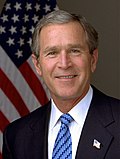  | |||||
| Life and legacy | |||||||
| Speeches | |||||||
| Elections |
| ||||||
| Public image | |||||||
| Books |
| ||||||
| Popular culture | |||||||
| Family |
| ||||||
| |||||||||||||||||||
| |||||||||||||||||||
| |||||||||||||||||||
First presidency of Donald Trump (2017–2021) | |||||||||||
|---|---|---|---|---|---|---|---|---|---|---|---|
| |||||||||||
| General |
| ||||||||||
| Events |
| ||||||||||
| Policies |
| ||||||||||
| Protests |
| ||||||||||
| Related |
| ||||||||||
| |||||||||||||||||||||
| Senator | |||||||||||||||||||||
| Vice presidency | |||||||||||||||||||||
| Presidency |
| ||||||||||||||||||||
| Elections |
| ||||||||||||||||||||
| Family |
| ||||||||||||||||||||
| Writings | |||||||||||||||||||||
| Speeches |
| ||||||||||||||||||||
| Media depictions | |||||||||||||||||||||
| Related |
| ||||||||||||||||||||
| International | |
|---|---|
| National | |
| Other | |

Guantanamo Bay detention camp
View on GrokipediaEstablishment and Rationale
Post-9/11 Context and Initial Authorization
The September 11, 2001, terrorist attacks, orchestrated by al-Qaeda under Osama bin Laden, involved 19 hijackers who seized four commercial airliners, crashing two into the World Trade Center towers in New York City, one into the Pentagon, and the fourth in a field in Shanksville, Pennsylvania after passengers intervened, resulting in 2,977 deaths excluding the hijackers. In response, President George W. Bush addressed Congress on September 20, 2001, declaring a "war on terror" and identifying al-Qaeda and its Taliban hosts in Afghanistan as primary threats. Congress passed the Authorization for Use of Military Force (AUMF) on September 18, 2001, granting the president authority to use "all necessary and appropriate force" against those nations, organizations, or persons who planned, authorized, committed, or aided the attacks.[7] U.S. military operations commenced with the invasion of Afghanistan on October 7, 2001, aimed at dismantling al-Qaeda and ousting the Taliban regime that harbored them, leading to the capture of hundreds of suspected Taliban fighters and al-Qaeda members during battles such as Tora Bora and subsequent operations. On November 13, 2001, President Bush issued a Military Order titled "Detention, Treatment, and Trial of Certain Non-Citizens in the War Declared Against... the Terrorist Attacks That Occurred on September 11, 2001," which authorized the indefinite detention of non-U.S. citizens suspected of involvement in international terrorism, classifying them as "enemy combatants" eligible for military custody rather than civilian criminal proceedings, with provisions for potential trial by military commission.[8] This order emphasized intelligence gathering from detainees to prevent future attacks, reflecting a strategic shift toward long-term holding of high-value captives outside standard legal frameworks.[8] Secretary of Defense Donald Rumsfeld announced on December 27, 2001, the selection of the U.S. Naval Station at Guantanamo Bay, Cuba—a leased facility under perpetual U.S. control since 1903 but not sovereign U.S. territory—as the primary detention site for these enemy combatants, citing its isolation, existing infrastructure, and jurisdictional status to facilitate interrogation without immediate habeas corpus challenges in U.S. federal courts. The first group of 20 detainees, captured in Afghanistan and transported via military aircraft, arrived at Camp X-Ray on January 11, 2002, marking the operational start of the facility under Joint Task Force 160, with initial cells hastily constructed from wire mesh enclosures.Strategic and Legal Foundations
The Guantánamo Bay detention camp was strategically established at the U.S. Naval Station Guantánamo Bay, Cuba, under a perpetual lease agreement signed on February 23, 1903, which granted the United States "complete jurisdiction and control" over approximately 45 square miles of land and water while acknowledging Cuban ultimate sovereignty.[9] This location was selected post-9/11 for its isolation, robust existing military infrastructure, and security advantages, including distance from potential domestic threats and natural barriers like surrounding waters, which minimized escape risks for high-threat detainees captured in Afghanistan and elsewhere.[10] The Bush administration viewed the site's extraterritorial status as enabling detention operations insulated from routine U.S. civilian court interference, treating it as a practical extension of U.S. authority without full constitutional applicability.[11] Legally, the camp's foundations rested on the Authorization for Use of Military Force (AUMF), a joint congressional resolution enacted September 18, 2001, authorizing the President to employ "all necessary and appropriate force" against nations, organizations, or persons planning, authorizing, committing, or aiding the 9/11 attacks or harboring such actors, thereby providing statutory basis for capturing and detaining al-Qaeda and Taliban affiliates as enemy belligerents.[7] President George W. Bush's Military Order of November 13, 2001—"Detention, Treatment, and Trial of Certain Non-Citizens in the War Against Terrorism"—further implemented this by directing U.S. agencies to apprehend and detain non-citizen individuals who were members of al-Qaeda, had engaged in terrorism against the U.S., or harbored terrorists, permitting indefinite holding at sites like Guantánamo without immediate criminal prosecution.[8][12] Detainees were designated "unlawful enemy combatants" rather than lawful prisoners of war, a classification rooted in the administration's interpretation that al-Qaeda and associated forces operated outside international laws of war by failing to wear uniforms, respect civilian distinctions, or adhere to command structures, thus forfeiting full Geneva Convention protections while still warranting basic humane treatment.[13] This status justified detention for the duration of active hostilities to prevent return to the battlefield, prioritizing intelligence gathering on terrorist networks over speedy trials, as traditional POW or criminal frameworks were deemed inadequate for non-state actors in an asymmetric conflict.[14] The approach emphasized executive discretion under wartime powers, with military reviews to assess ongoing threat levels rather than reliance on Article III courts.[15]Historical Operations
Early Detention Phases (2002–2004)
The Guantanamo Bay detention camp initiated its operations for terrorism suspects with the arrival of the initial group of 20 detainees on January 11, 2002, via military aircraft from detention sites in Afghanistan.[16] [4] These individuals, captured during U.S. military actions against Taliban and al-Qaeda forces, were housed in Camp X-Ray, a rudimentary temporary facility featuring open-air cells made of chain-link fencing and concrete floors, designed for rapid setup and high security.[17] Initial procedures prioritized intelligence collection through interrogations aimed at disrupting ongoing terrorist threats, with detainees provided basic sustenance, medical evaluations, and religious accommodations under military oversight.[18] By late April 2002, as the detainee population approached 300, all were relocated to Camp Delta, a purpose-built permanent complex completed by Navy Seabees and contractors, boasting an initial capacity of 612 cells in modular units with improved infrastructure for long-term holding.[19] Camp X-Ray ceased operations on April 29, 2002, following the transfer, addressing concerns over its austere conditions while maintaining stringent isolation protocols to prevent communication among high-risk captives.[17] Interrogations continued systematically in Camp Delta, focusing on actionable intelligence about al-Qaeda networks, with techniques including prolonged questioning sessions approved under Joint Task Force guidelines issued in October 2002 to counter detainee resistance.[20] The facility's population surged through 2002–2004, with 632 detainees transferred by year's end in 2002, additional arrivals of 117 in 2003, and 10 more in 2004, culminating in a peak of approximately 680 by May 2003.[21] Operations during this phase emphasized detainee processing, including biometric identification and status assessments, alongside logistical expansions to accommodate the influx primarily from Afghanistan and Pakistan battlefields.[18] While yielding intelligence on terrorist plots, early interrogation approaches, such as sensory deprivation and stress positions later authorized at higher levels, sparked internal military debates over efficacy and compliance with doctrinal standards.[22] Security remained paramount, with layered perimeters and minimal external access to mitigate escape risks posed by combatants trained in asymmetric warfare.Facility Expansions and Policy Shifts (2004–2008)
In response to Supreme Court rulings affirming detainees' access to federal courts, the U.S. government expanded Guantanamo's infrastructure to accommodate a growing and more diverse detainee population, peaking at approximately 550 individuals in 2004. Camp 5, a $16 million maximum-security facility modeled after U.S. supermax prisons, became operational in May 2004 to house non-compliant detainees in single-occupancy cells with limited privileges, marking a shift toward more permanent, isolation-oriented containment.[23] This expansion followed the closure of temporary Camp X-Ray and aimed to enhance security amid heightened scrutiny of detention conditions. Further developments included Camp 6, which opened in December 2006 at a cost of $38 million, initially designed for medium-security communal housing to reward compliant behavior but later adapted for stricter isolation protocols.[24] These facilities supplemented Camp Delta's earlier blocks, increasing overall capacity and segregating detainees by compliance levels—Camp 4 for low-risk group housing, Camps 5 and 6 for higher-risk isolation—reflecting operational adaptations to manage behavioral challenges and logistical demands without repatriating large numbers. Policy shifts during this period intertwined with these physical upgrades, driven by legal challenges. On June 28, 2004, the Supreme Court in Rasul v. Bush ruled that Guantanamo detainees could petition U.S. courts for habeas corpus review of their detention, prompting the administration to implement Combatant Status Review Tribunals (CSRTs) for periodic status determinations while resisting broader judicial interference. The Detainee Treatment Act of 2005, signed December 30, 2005, codified prohibitions on "cruel, inhuman, or degrading treatment" aligned with the U.S. Army Field Manual, established CSRTs and Administrative Review Boards for annual reviews, but stripped federal habeas jurisdiction for Guantanamo cases in favor of limited D.C. Circuit appeals, aiming to streamline processes and limit external oversight.[25] The Military Commissions Act of 2006, enacted October 17, 2006, authorized trials by military commission for "unlawful enemy combatants," permitting evidence obtained through coercion (short of torture) and suspending habeas rights for non-citizen detainees, directly addressing Hamdan v. Rumsfeld (2006) criticisms of prior commission structures.[26] These measures sought to balance security imperatives with formalized procedures, though critics argued they prioritized executive control over due process. The Supreme Court's June 12, 2008, decision in Boumediene v. Bush invalidated the habeas suspension as unconstitutional, restoring detainees' rights to challenge indefinite detention, which underscored ongoing tensions between policy adaptations and constitutional limits.[27] By 2008, these shifts had resulted in over 100 CSRT clearances for release, though implementation delays persisted due to diplomatic and security concerns.Operations Under Subsequent Administrations (2009–Present)
Upon taking office in January 2009, President Barack Obama issued Executive Order 13492 on January 22, directing the closure of the Guantanamo Bay detention facility within one year and suspending military commission proceedings pending review.[28] The administration inherited 242 detainees and prioritized transfers to foreign countries for those deemed not to pose a continued threat, resettling or repatriating 197 individuals by the end of Obama's term through diplomatic negotiations and security assurances from receiving nations.[29] In March 2011, Executive Order 13567 established Periodic Review Boards (PRBs) to assess whether remaining detainees continued to represent a significant threat to U.S. national security, involving interagency panels that recommended transfers for 17 of the first 20 reviewed cases by 2016.[30] Despite these efforts, congressional restrictions on transfers to the U.S. mainland and challenges in securing foreign acceptances left 41 detainees as of January 19, 2017.[31] The Donald Trump administration, upon assuming office in January 2017, imposed a 90-day moratorium on detainee transfers and, in January 2018, issued an executive order affirming the facility's ongoing operation as essential for detaining high-risk individuals, reversing prior closure attempts. Transfers were limited, with only one repatriation occurring during this period—an elderly Saudi detainee returned in 2018 after PRB clearance—maintaining the population at around 40 while emphasizing military commissions for prosecuting high-value detainees involved in terrorism plots.[29] Operations focused on sustaining secure detention without expansions or significant policy shifts toward closure, amid stalled trials due to evidentiary and jurisdictional disputes in the military commission system. Under the Joe Biden administration from January 2021, efforts resumed to reduce the detainee population through PRB recommendations and diplomatic repatriations or resettlements, transferring several individuals to countries like Saudi Arabia and Oman, which brought the number down to 29 by December 2024, including 15 eligible for transfer, three under active PRB review, and seven in military commission proceedings.[6] The administration reiterated commitments to responsible closure in annual reports, prioritizing threat assessments over indefinite detention, though high-profile cases like the 9/11 conspirators' trials remained delayed.[32] As of October 2025, following the transition back to a Trump administration, the core operations for law-of-war detainees persist with 15 remaining, alongside PRB hearings such as the June 2025 review for Muhammad Rahim, while separate migrant detention initiatives have utilized portions of the naval station without altering the terrorism-related facility's protocols.[4] Throughout these periods, logistical operations have emphasized enhanced interrogation cessation post-2009, compliance with Geneva Conventions interpretations, and ongoing infrastructure maintenance for long-term holding.[33]Facilities and Infrastructure
Camp Layout and Security Features
The Guantanamo Bay detention camp facilities, primarily comprising Camp Delta, feature a modular layout with multiple sub-camps tailored to detainee compliance levels and security requirements. Camp Delta includes Camps 1 through 6, plus Camp Echo for specific uses, with initial construction expanding from 612 to 816 cells by October 2002. Camps 1, 2, and 3 consist of maximum-security blocks housing detainees in solitary confinement within standard cells measuring approximately 6 feet 8 inches by 8 feet, constructed with metal mesh walls, steel frames, integrated toilets, sinks, and beds.[19] Camp 1 specifically encompasses 10 cellblocks, each with 48 individual cells equipped with toilets and sinks, connected via sally ports featuring double gates for controlled access.[34] Camp 4 operates as a medium-security dormitory-style facility with bays accommodating up to 10 detainees each, including private toilets, sinks, recreational areas such as exercise yards, picnic tables, and sports equipment, alongside amenities like electric fans and personal storage.[34] [19] Camp 5, a two-story maximum-security structure completed in May 2004, holds up to 100 detainees in four wings with 12-14 cells each, featuring larger 10-by-20-foot concrete and steel cells with two food and handcuff ports per door, 24/7 camera monitoring, and a centralized control center using touchscreen interfaces for oversight.[34] [19] Camp 6, designed for 200 detainees and completed in 2006, provides communal arrangements similar to Camp 5 but with enhanced space and privacy, connected to adjacent facilities for operational efficiency.[19] Camp Echo serves isolated functions, such as pre-commission holding, with steel cage enclosures and dedicated interview spaces.[19] Supporting infrastructure includes a 20-bed detention hospital with outpatient, operating, and dental capabilities.[19] Security features emphasize layered defenses and constant vigilance, with U.S. Army Military Police forming the primary guard force responsible for 24-hour operations across all facilities. Perimeters incorporate razor wire, barbed fencing, and planned high-technology barriers, reinforced by guard towers, searchlights, and patrol gunboats in surrounding waters.[35] [19] Internal controls include airlock-style steel doors, mechanical overrides on key-operated cell doors, and comprehensive surveillance systems feeding into control centers for real-time monitoring of cellblocks, exercise areas, and access points.[34] Detainee movement is restricted through sally ports and protocol-driven escorts, prioritizing prevention of escapes, assaults, or disruptions as the core mission of personnel.[36] These measures ensure segregation by security classification, with non-compliant or high-risk detainees isolated in maximum-security environments like Camps 1, 3, and 5.[34]Logistical and Operational Protocols
The Joint Task Force Guantanamo (JTF-GTMO) manages detention operations at the Guantanamo Bay camp, encompassing protocols for detainee custody, security enforcement, intelligence support, and logistical sustainment, with approximately 4,200 personnel dedicated to logistics and contingency support alongside core detention staff.[37][38] Operational protocols emphasize continuous guard presence, randomized patrols, and headcounts at shift starts plus three additional times per shift (no more than three hours apart), ensuring detainee visibility and accountability through visual confirmation of skin and movement, even at night.[39] Security measures include mandatory searches: modified pat-downs each time a detainee exits a cell, cell searches upon exit and return, and at least three random block searches per day or swing shift, excluding areas used for showers or exercise.[39] Body cavity searches require command approval, a medical provider's involvement, and documentation, with same-gender personnel preferred absent exigent circumstances.[39] Detainee movements mandate two-guard escorts maintaining four-point contact, using three-piece restraints (handcuffs, leg irons, belly chain) for high-risk transfers limited to two hours unless authorized, or two-piece restraints for lower-risk intra-camp movements; weapons are secured during medical escorts per naval base procedures.[39] Religious items like the Koran receive careful handling during searches to avoid direct contact by non-Muslims.[39] Daily detainee routines vary by behavioral classification (five tiers, with Level 1 granting most privileges and Level 5 reserved for high-value intelligence sources), incorporating three meals served via controlled delivery (e.g., 0630, 1200, 1930 in Camps 1-3, with 30-minute consumption limits), hygiene services like scheduled showers (two to three times weekly, 5 minutes each), exercise (20-30 minutes, 2-3 times weekly adjusted for medical needs), laundry, barber access, and library issuance.[39] Religious accommodations include public address announcements for five daily prayers and adjusted meal timing during Ramadan.[39] Guard shifts follow 12-hour rotations (e.g., days, swings, mids), with non-commissioned officers (NCOs) conducting hourly radio checks, equipment inventories, and briefings on detainee status, visitors, and incidents; rotations occur every two hours for 10-15 minute breaks to maintain alertness.[39] Logistical protocols rely on naval station infrastructure and contractors for supply chain management, including material warehousing, distribution, and base operations support such as facility maintenance and information technology.[40] Escort control centers maintain minimum staffing (two personnel, increasing to three during peak hours 0700-1800) with 30-minute status checks, coordinating off-site transports requiring E-5 supervision.[39] Interrogation support involves securing detainees to floor eyebolts in rooms inspected pre- and post-use, with unshackling only at interrogator request under guard observation.[39] Emergency responses, including contraband sweeps, deploy immediate reaction forces (IRF teams) alongside escort teams, moving detainees to secure areas while preserving evidence.[39] Specialized blocks, such as behavioral health units, allocate additional personnel (e.g., 27 military police on 12-hour shifts plus medical technicians) trained in restraint and seclusion, with on-call providers and self-harm mitigations like plastic utensils.[39] Force protection integrates with joint task force directives, including shift-specific tasks like mail screening and significant activity reporting to sustain operational continuity.[39]Detainee Population
Demographic Profile and Total Numbers
Approximately 779 individuals, all Muslim males captured in connection with counterterrorism operations, have been held at the Guantanamo Bay detention camp since its opening for such detainees on January 11, 2002.[41] The facility reached a peak population of around 680 detainees in May 2003.[42] As of October 2025, only 15 detainees remain, with nine facing charges in military commissions and the others held without trial.[4][43] Demographically, the detainees spanned a wide age range at intake, including boys as young as 13 and men up to their 50s, though the median age was in the mid-20s based on available records.[4] All were male, reflecting the focus on suspected combatants in asymmetric warfare contexts post-9/11.[43] By nationality, the population was heavily concentrated in a few countries: Afghan, Saudi Arabian, and Yemeni nationals constituted more than 60% of the total.[44] The leading five origins—Afghanistan, Saudi Arabia, Yemen, Pakistan, and Algeria—represented nearly 75% of all detainees, with Afghans alone numbering over 200.[45] Detainees hailed from approximately 50 countries overall, predominantly in the Middle East, South Asia, and North Africa, underscoring the global scope of al-Qaeda-linked networks targeted.[4][44]High-Value Detainees and Notable Cases
High-value detainees at Guantanamo Bay refer to senior al-Qaeda members and affiliates transferred from Central Intelligence Agency custody to the facility following a September 6, 2006, announcement by President George W. Bush. These 14 individuals were held in secret CIA sites where enhanced interrogation techniques were applied to extract intelligence on terrorist networks and plots.[46] The transfers enabled Combatant Status Review Tribunals and eventual military commission proceedings, though many cases remain unresolved due to legal challenges over interrogation methods and evidence admissibility.[47] Among the most prominent high-value detainees are the five charged with conspiracy and murder in furtherance of the September 11, 2001, attacks: Khalid Sheikh Mohammed (ISN 10024), captured March 1, 2003, in Rawalpindi, Pakistan, and identified as the operation's principal architect who proposed the plot to Osama bin Laden in 1996; Walid bin Attash (ISN 10014), a key facilitator involved in the 1998 U.S. embassy bombings and the USS Cole attack; Ramzi bin al-Shibh (ISN 10013), who coordinated logistics and finances for the hijackers; Ammar al-Baluchi (ISN 10017), Mohammed's nephew and a courier for the plot; and Mustafa al-Hawsawi (ISN 10011), the primary financial coordinator who wired funds to hijackers.[48] [49] Their joint military commission trial, initiated in 2008, has faced repeated delays from pretrial litigation, including disputes over torture-derived confessions and plea agreements reached in July 2022 but vacated by Defense Secretary Lloyd Austin in August 2023; as of January 2025, federal appeals addressed the government's opposition to guilty pleas avoiding the death penalty.[50] [51] All five remain detained at Guantanamo pending resolution.[52] Another notable high-value detainee is Abd al-Rahim al-Nashiri (ISN 10015), accused of masterminding the October 12, 2000, USS Cole bombing that killed 17 U.S. sailors. Captured November 8, 2002, in Dubai, he faces capital charges in a separate military commission, with proceedings stalled since 2008 over similar evidentiary issues from CIA interrogations, including waterboarding.[53] Al-Nashiri's case highlights ongoing jurisdictional debates, as his defense argues the attack constituted peacetime piracy under international law rather than a war crime. He remains at Guantanamo without conviction.[54] Other high-value detainees include Riduan Isamuddin (Hambali, ISN 10019), arrested August 12, 2003, in Thailand for orchestrating the 2002 Bali bombings that killed 202 people, and Abd al-Hadi al-Iraqi (ISN 10026), captured January 2007 in Iraq as a senior military commander linked to attacks on coalition forces. Hambali's tribunal determined him an enemy combatant, but no trial has proceeded; al-Iraqi pleaded guilty in 2018 to war crimes, receiving a sentence later reduced. Ahmed Khalfan Ghailani (ISN 10012), involved in the 1998 embassy bombings, was transferred to U.S. federal court in 2009, convicted on one count in 2010, and sentenced to life.[55] These cases illustrate varied outcomes, from indefinite detention to transfers and convictions, amid persistent criticisms from human rights groups—often aligned with institutional biases—regarding due process, though U.S. assessments affirm their roles based on multiple intelligence streams.[56][57]Treatment and Conditions
Standard Procedures and Welfare Measures
Detainees at the Guantanamo Bay detention camp are subject to a classification system based on behavior and compliance, ranging from Level 1 (highest privileges, such as extra recreation time and communal activities) to Level 5 (restrictive measures including segregation and limited meals for initial periods).[39] This system, outlined in the Camp Delta Standard Operating Procedures (SOP) effective March 1, 2004, determines housing assignments, movement privileges, and access to amenities, with levels reviewed daily for higher restrictions and requiring sustained compliant behavior for advancement.[39] Initial processing includes searches, medical screening, and assignment to temporary segregation before behavioral assessment.[39] Procedures emphasize minimal use of force, with Immediate Reaction Forces deployed only for non-compliant extractions followed by mandatory medical evaluations.[39] Daily routines follow a structured schedule to balance security and basic needs, typically beginning with wake-up and breakfast around 0600 hours, followed by lunch at 1200 and dinner at 1930, with lights-out and quiet hours enforced after 2300.[39] Headcounts occur multiple times daily, including random checks, and guards maintain constant observation, with searches of cells and religious texts conducted respectfully using gloved hands and Muslim interpreters where required.[39] In higher-compliance camps like Camp 4 or 6, routines include communal dining in common areas and extended recreation access up to 15 hours daily for eligible detainees. Hygiene protocols mandate showers two to three times weekly depending on classification, with restraints used during escorted movements but adjusted for medical needs.[39] Welfare measures include provision of three daily meals meeting nutritional standards, with hot food served in compliant blocks and meals-only-ready-to-eat rations used in restrictive cases or emergencies; portions are culturally sensitive, including halal options, and detainees are weighed monthly to monitor health, with weight management programs for those exceeding body mass index thresholds.[39] [58] Medical care encompasses daily sick calls, emergency response triage, and access to a detention hospital for inpatient and outpatient services, governed by Department of Defense Instruction 2310.08, which mandates treatment equivalent to U.S. military standards without participation in interrogation-related harm.[59] Recreation consists of escorted exercise periods—20 to 30 minutes, two to four times weekly based on level—in supervised yards, prohibiting contact sports, alongside library access limited to one book per week for lower levels and English language classes in communal settings.[39] [60] Religious accommodations permit five daily prayer calls with uninterrupted observance where feasible, possession of the Quran handled per protocols to prevent damage, and fasting supported by alternative meal provisions on designated days.[39] [61] These measures align with directives for humane treatment under military necessity, providing shelter, clothing, and sanitation while prohibiting corporal punishment or abuse.[39]Allegations of Abuse, Torture Claims, and Official Responses
Allegations of detainee mistreatment at Guantanamo Bay emerged shortly after the facility's establishment in 2002, primarily from reports by international observers, U.S. agency personnel, and former detainees. The International Committee of the Red Cross (ICRC), following a visit in June 2004, documented interrogation techniques including prolonged stress positions, hooding, exposure to loud music and extreme temperatures, and sleep deprivation, which it described as "tantamount to torture" in a confidential report leaked to media outlets.[62] FBI agents stationed at the camp between 2002 and 2004 reported observing or hearing accounts of similar methods, such as detainees being placed in short-shackling positions for extended periods, threats of rendition to foreign countries for further abuse, and the use of dogs during interrogations, prompting internal FBI inquiries into potential violations of Bureau guidelines.[63] These claims were corroborated in declassified FBI documents released via Freedom of Information Act requests, detailing over 500 agent interviews where mistreatment was noted, though the FBI emphasized that its personnel did not participate.[64] Detainee testimonies added specifics, with individuals like Moazzam Begg alleging physical beatings, forced stripping, and threats during interrogations in 2002–2003, as recounted in post-release accounts and legal filings.[65] However, official U.S. military investigations, such as the 2005 Schmidt-Furlow report commissioned by the Department of Defense, examined these allegations and concluded that while isolated instances of detainee abuse occurred—primarily involving improper shackling or verbal harassment—no evidence supported systemic torture or inhumane treatment rising to prohibited levels under military rules of engagement.[66] The report attributed some excesses to deviations from standard procedures but cleared commanders of orchestrating abuse, noting that many claims lacked corroboration beyond detainee statements, which investigators viewed skeptically given incentives for exaggeration in release proceedings.[67] The Bush administration responded by defending authorized interrogation methods as lawful countermeasures against al-Qaeda operatives, with legal opinions from the Office of Legal Counsel in 2002–2003 classifying techniques like waterboarding—used on at least one detainee transferred to Guantanamo—as not constituting torture under U.S. law, provided they avoided severe pain equivalent to organ failure.[68] Chairman of the Joint Chiefs of Staff Richard Myers in 2004 dismissed broader media reports of torture as "absolutely irresponsible," asserting that procedures complied with the Geneva Conventions' Common Article 3 protections for unlawful combatants.[69] Under the Obama administration, Executive Order 13491 in January 2009 prohibited enhanced interrogation techniques and mandated adherence to Army Field Manual standards, while pledging investigations into past abuses; however, a 2009 DoD review found insufficient evidence for criminal prosecutions in most cases, leading to administrative actions against a small number of personnel rather than widespread accountability.[70] Critics from human rights organizations argued these responses minimized empirical evidence of harm, but official probes consistently emphasized operational necessities in a post-9/11 context over unverified detainee narratives.[71]Health, Suicides, and Medical Interventions
Detainees at the Guantanamo Bay detention camp receive medical care from active-duty U.S. Navy personnel operating from a dedicated facility at Camp Delta, providing both inpatient and outpatient services.[72] Department of Defense policy mandates oversight to ensure physical and mental health care meets applicable standards, including for those at Guantanamo.[59] Officials have described this care as first-rate, with specialized support for detainee operations.[72] Suicide attempts have been recurrent since the camp's opening in 2002, with the Department of Defense reporting 41 attempts among 25 detainees prior to June 2006.[73] The first confirmed suicides occurred on June 10, 2006, when three detainees—two Saudis and one Yemeni—died by hanging; Joint Task Force commander Rear Adm. Harry Harris characterized these as a coordinated "act of asymmetric warfare" rather than acts of desperation.[74][75] Overall, seven detainee deaths have been classified as apparent suicides amid a total of nine fatalities at the facility.[76] Hunger strikes have posed significant health challenges, particularly the 2013 protest that escalated from a small number of participants to 84 of 166 detainees refusing meals by April, with a peak of 106 individuals declining food.[77][78] Military medical teams responded with enteral feeding—commonly termed force-feeding—for those at risk of severe malnutrition, reaching up to 41 detainees by June 2013 to avert life-threatening conditions.[79] This intervention, involving nasogastric tubes and restraint chairs, has drawn criticism from some medical professionals as ethically problematic and potentially harmful, though U.S. authorities maintain it is necessary to preserve life and aligns with detainee welfare protocols.[80][81] Prolonged detention has been associated with mental health deterioration among detainees, contributing to self-harm behaviors and psychiatric interventions, though empirical data on long-term outcomes remains limited by restricted access to records.[82] Official responses emphasize comprehensive monitoring and treatment to mitigate such risks, consistent with military directives for humane care.[59]Legal Framework
Bush-Era Military Orders and Detainee Status
On November 13, 2001, President George W. Bush issued a military order titled "Detention, Treatment, and Trial of Certain Non-Citizens in the War Against Terrorism," which authorized the apprehension, detention, and potential trial by military commission of non-U.S. citizens determined to have been members of al-Qaida, engaged in acts of international terrorism against the United States, or harbored such individuals.[8] The order specified that such individuals could be detained at an appropriate location designated by the Secretary of Defense, with treatment including humane conditions such as adequate food, shelter, clothing, medical care, and opportunity for religious exercise, while allowing the Secretary flexibility to prescribe further regulations.[8] This framework provided the initial legal basis for holding terrorism suspects captured in Afghanistan and elsewhere, bypassing federal courts and relying on executive authority derived from the September 18, 2001, Authorization for Use of Military Force.[8] The Bush administration classified Guantanamo detainees primarily as "enemy combatants," a category encompassing members of al-Qaida and the Taliban engaged in hostilities against the United States, rather than prisoners of war entitled to full protections under the Third Geneva Convention.[83] Specifically, on January 11, 2002, Secretary of Defense Donald Rumsfeld publicly described the first arrivals at Guantanamo as "unlawful combatants," emphasizing their failure to adhere to the laws of war by not wearing distinctive insignia or uniforms, which disqualified them from lawful combatant status.[84] This classification justified indefinite detention without criminal charges during active hostilities, as enemy combatants could be held until the cessation of conflict, distinct from the temporary detention of lawful combatants who comply with international humanitarian law.[83] On February 7, 2002, President Bush issued a memorandum determining that the Geneva Conventions applied to the conflict with the Taliban but that Taliban detainees did not qualify for prisoner-of-war status due to their non-compliance with convention requirements, such as operating as organized forces under responsible command; al-Qaida members, by contrast, were deemed entirely outside Geneva protections as unlawful combatants in a non-state terrorist network.[85] The memorandum directed humane treatment consistent with customary international law and U.S. policy, rejecting full Geneva application to avoid granting terrorist fighters combatant immunity for violations like targeting civilians.[85] This approach, articulated in accompanying legal opinions from White House Counsel Alberto Gonzales, prioritized operational necessities in an asymmetric war against non-state actors over traditional POW entitlements, arguing that al-Qaida's deliberate disregard for the laws of war forfeited such protections.[86] Critics, including human rights organizations, contended this created a legal category enabling prolonged detention without due process, though the administration maintained it aligned with historical precedents for detaining irregular fighters.[84]Key U.S. Supreme Court Rulings
In Rasul v. Bush (June 28, 2004), the Supreme Court ruled 5-4 that federal courts possess statutory jurisdiction under 28 U.S.C. § 2241 to hear habeas corpus petitions from foreign nationals detained at Guantanamo Bay, rejecting the government's argument that the base's location outside U.S. sovereign territory barred such access.[87] [88] The decision overturned prior D.C. Circuit rulings and emphasized that the habeas statute's scope extends to challenges against executive detention, enabling detainees captured abroad during counterterrorism operations to contest the factual and legal basis of their indefinite holding.[89] Hamdi v. Rumsfeld (June 28, 2004), decided concurrently with Rasul, addressed the detention of U.S. citizen Yaser Esam Hamdi, captured in Afghanistan in 2001 and designated an enemy combatant under the Authorization for Use of Military Force (AUMF).[90] In a plurality opinion by Justice O'Connor, the Court held 8-1 that the executive's authority to detain citizens as combatants during active hostilities is constitutional but must afford due process, including notice of charges and a meaningful opportunity—via neutral decision-maker—to rebut evidence of enemy status, balancing national security with Fifth Amendment protections.[91] Hamdi was subsequently released and transferred to Saudi Arabia in October 2004 after agreeing to renounce militant activities.[92] Hamdan v. Rumsfeld (June 29, 2006) invalidated the Bush administration's military commissions for trying Guantanamo detainees, ruling 5-3 that they violated the Uniform Code of Military Justice (UCMJ) by denying defendants access to evidence and failing to ensure trials conformed to the laws of war.[93] Justice Stevens's majority opinion further held that Common Article 3 of the Geneva Conventions—prohibiting trials by irregular tribunals—applied to al-Qaeda captives as a baseline for U.S. obligations, absent formal prisoner-of-war status, and that the commissions required explicit congressional authorization beyond the AUMF.[94] The ruling prompted the Military Commissions Act of 2006, which Congress passed to authorize revised commissions while stripping habeas jurisdiction.[95] Boumediene v. Bush (June 12, 2008) marked the Court's strongest intervention, holding 5-4 that alien detainees at Guantanamo retain constitutional habeas corpus privileges under the Suspension Clause, and that the 2006 Act's suspension of the writ for non-citizens was unconstitutional without adequate substitute procedures.[96] Justice Kennedy's opinion rejected the government's extraterritoriality argument, reasoning that the U.S.'s complete control and practical sovereignty over the leased base extended constitutional protections despite formal Cuban title, and critiqued Combatant Status Review Tribunals as insufficiently independent to test detention lawfulness.[97] This enabled federal courts to adjudicate hundreds of petitions, leading to releases or transfers for many detainees lacking sufficient evidence of combatant ties, though it did not mandate immediate hearings or dictate outcomes.[98] These rulings collectively constrained executive unilateralism in indefinite detentions, affirming judicial oversight while upholding wartime capture authority under the AUMF, but left unresolved tensions in implementing due process amid intelligence-based evidence challenges. No subsequent Supreme Court decisions have fundamentally altered these core holdings on detainee rights at Guantanamo.[99]International Law Applications and Disputes
The United States government classified detainees at Guantanamo Bay as "unlawful enemy combatants" rather than prisoners of war under the Third Geneva Convention of 1949, arguing that members of al-Qaeda and the Taliban failed to meet criteria such as wearing distinctive insignia, carrying arms openly, and operating under responsible command, as these groups were non-state actors not affiliated with a High Contracting Party.[100] This determination, outlined in a February 7, 2002, memorandum from President George W. Bush, asserted that the full protections of the Geneva Conventions did not apply to the conflict with al-Qaeda, though some basic standards would be observed as a matter of policy.[100] The International Committee of the Red Cross (ICRC) contested this, maintaining that Common Article 3 of the Geneva Conventions—prohibiting violence to life, torture, and humiliating treatment in non-international armed conflicts—remained applicable regardless of the conflict's characterization.[100] In Hamdan v. Rumsfeld (2006), the U.S. Supreme Court ruled 5-3 that the military commissions established for Guantanamo trials violated both the Uniform Code of Military Justice and Common Article 3 of the Geneva Conventions, as the proceedings failed to provide minimum due process protections such as the right to attend one's trial and access to evidence. This decision marked a key application of international humanitarian law (IHL), affirming that even in conflicts against non-state actors, the U.S. was bound by treaty obligations incorporated into domestic law via the Authorization for Use of Military Force. Disputes persisted, however, as the Bush administration contended that Common Article 3's application undermined operational necessities in asymmetric warfare, leading to the subsequent Military Commissions Act of 2006, which attempted to limit such judicial interference but was later partially invalidated.[101] Critics, including the Inter-American Commission on Human Rights (IACHR), alleged violations of international human rights law, such as the International Covenant on Civil and Political Rights (ICCPR), which the U.S. ratified in 1992 with reservations limiting extraterritorial application; the IACHR requested precautionary measures in 2002 for detainees' rights to humane treatment and judicial review, arguing Guantanamo's location did not exempt U.S. obligations under the American Declaration of the Rights and Duties of Man.[102] The U.S. rejected these claims, maintaining that human rights treaties like the ICCPR apply only within sovereign territory and that IHL, not peacetime human rights law, governs armed conflict detentions.[103] United Nations experts, in a January 10, 2022, statement marking the facility's 20th anniversary, described indefinite detention without charge as arbitrary and contrary to ICCPR Article 9, urging compliance with the UN Convention Against Torture, to which the U.S. is a party since 1994, amid reports of coercive interrogations.[104] Further disputes arose over the U.S. interpretation of sovereignty at Guantanamo, leased indefinitely from Cuba since 1903 under the Platt Amendment, with the U.S. asserting "complete jurisdiction and control" but denying full territorial sovereignty, a stance used to argue against habeas corpus extensions until Boumediene v. Bush (2008) affirmed detainees' rights to challenge detention.[105] Internationally, bodies like the UN Working Group on Arbitrary Detention have deemed the legal framework a "legal black hole," violating customary international law principles against prolonged incommunicado detention, though U.S. officials countered that periodic Administrative Review Boards and combatant status tribunals provided sufficient process under IHL.[106] These tensions highlight ongoing debates over the extraterritorial reach of treaties and the balance between security imperatives and baseline protections in counterterrorism operations.[107]Lease Agreement and Sovereignty Issues
The United States obtained rights to Guantánamo Bay through two agreements signed on February 16 and February 23, 1903, under the framework of the Platt Amendment, which conditioned Cuban independence on granting the U.S. naval base leases. These pacts leased approximately 45 square miles of land and water along the southeastern Cuban coast for coaling and naval stations, with the U.S. securing "complete jurisdiction and control" while recognizing Cuba's "ultimate sovereignty."[108][109] The initial annual rent was set at $2,000 in U.S. gold coin, increasing to $4,085 per year following a 1934 treaty that reaffirmed the lease amid rising tensions before the Cuban Revolution.[110] The lease is perpetual, terminable only by mutual consent of both governments or by U.S. abandonment of the premises, a provision Cuba has invoked without success in demanding repatriation since 1959.[2] The U.S. has continued issuing rent checks annually—totaling over $200,000 uncashed since Fidel Castro's rise—but Cuban officials refuse endorsement as a symbolic rejection of the arrangement, viewing it as an illegitimate remnant of post-Spanish-American War imperialism rather than a valid contract.[111] Cuba maintains that the base constitutes an illegal occupation violating its territorial integrity, a stance reiterated in diplomatic protests and UN resolutions, though unsupported by formal treaty abrogation.[112] Sovereignty disputes center on the lease's dual recognition of Cuban titular ownership and U.S. de facto authority, creating a unique extraterritorial status that has fueled legal debates over applicable law.[2] The U.S. exercises exclusive executive, legislative, and judicial powers within the base, excluding Cuban intervention, which underpins its use for military purposes without domestic territorial concessions. Cuban assertions of sovereignty, however, lack enforcement mechanisms absent U.S. acquiescence, rendering the arrangement stable despite ideological opposition from Havana's post-revolutionary government.[11] This framework has persisted through embargo-era hostilities, with no bilateral resolution as of 2025, as U.S. strategic interests prioritize naval projection in the Caribbean over repatriation demands.[2]Military Commissions and Prosecutions
Establishment and Structure
The military commissions for prosecuting detainees at Guantanamo Bay were first authorized by President George W. Bush's Military Order of November 13, 2001, titled "Detention, Treatment, and Trial of Certain Non-Citizens in the War Against Terrorism," which empowered the use of military tribunals to try non-U.S. citizen suspects of terrorism-related offenses as unlawful enemy combatants, bypassing traditional federal courts to protect national security interests such as classified intelligence.[8] The order specified that such commissions would consist of military officers appointed by the Secretary of Defense, with procedures to be determined by the secretary, emphasizing trials for violations of the law of war or other applicable statutes.[8] On March 21, 2002, the Department of Defense issued Military Commission Order No. 1, outlining initial rules including the use of a military judge and panel members for fact-finding, exclusion of the accused from hearings involving protected information, and allowance for conviction by a two-thirds majority vote.[113] The Supreme Court's 2006 decision in Hamdan v. Rumsfeld invalidated these commissions for lacking explicit congressional authorization, prompting Congress to pass the Military Commissions Act of 2006 (Pub. L. 109-366), signed by President Bush on October 17, 2006, which retroactively authorized trials of alien unlawful enemy combatants for law-of-war violations and defined offenses such as conspiracy, attacking civilians, and material support for terrorism.[114] [115] The Act stipulated that commissions operate under the Uniform Code of Military Justice where consistent with its provisions, but permitted deviations like hearsay evidence and coerced statements if deemed reliable and necessary for security.[26] Subsequent amendments in the Military Commissions Act of 2009 expanded definitions of unprivileged enemy belligerents and refined procedural safeguards, including limits on evidence obtained through torture.[116] Administrative structure falls under the Department of Defense's Office of Military Commissions, which coordinates five key entities: the Office of the Convening Authority (responsible for charging and referring cases); the Office of the Chief Prosecutor; the Office of the Chief Defense Counsel; the Military Commissions Trial Judiciary (providing independent military judges); and appellate bodies including the Court of Military Commission Review.[117] Proceedings occur at Expeditionary Legal Complexes on the Guantanamo Bay Naval Base, featuring secure courtrooms equipped for handling classified materials, public observation via closed-circuit video for non-sensitive portions, and accommodations for victims' input through the Office of Chiefs of Victim and Witness Assistance Programs.[118] A typical commission includes a military judge (often a colonel or higher) presiding over pre-trial matters and a panel of 5–12 commissioned officers (minimum five for capital cases) acting as the jury, selected to exclude conflicts of interest, with verdicts requiring a two-thirds supermajority and sentences needing approval by the convening authority.[117] Appeals proceed first to the Court of Military Commission Review, then potentially to the U.S. Court of Appeals for the D.C. Circuit and Supreme Court review on legal questions.[117] As of 2025, 80 detainees remain at Guantanamo, with commissions handling cases against high-value targets like the 9/11 plotters, though proceedings have faced delays due to evidentiary challenges from enhanced interrogation techniques.[119]Major Trials and Convictions
The military commissions at Guantanamo Bay have yielded a small number of convictions among the approximately 33 detainees charged since 2004, with most resulting from pretrial agreements rather than full trials.[120] As of October 2025, only two detainees remain imprisoned following upheld convictions, reflecting frequent appeals success, particularly against charges like providing material support to terrorism, which federal courts have ruled do not qualify as violations of the international law of war when the underlying conduct predates relevant U.S. statutes.[121] [122] These legal hurdles stem from requirements that commissions prosecute only traditional law-of-war offenses, excluding domestic crimes like material support enacted after the alleged acts.[123] Key early convictions included those of David Hicks, an Australian captured in Afghanistan in 2001, who pleaded guilty on March 26, 2007, to providing material support for terrorism; he received a nine-month sentence, accounting for time served, and was transferred to Australia in December 2007.[124] His conviction was vacated in February 2015 by the U.S. Court of Military Commission Review, as the charged offense was not recognized as a law-of-war violation at the time of his 2001 conduct.[125] Similarly, Yemeni detainee Salim Ahmed Hamdan, formerly a driver for Osama bin Laden, underwent the first full military commission trial starting in July 2007; convicted on August 6, 2007, of one count of conspiracy, he was acquitted of material support but sentenced to five and a half years, with release in November 2008 after time served.[126] A 2012 federal appeals court ruling quashed aspects of his material support-related proceedings, though the conspiracy conviction had already been served.[121]| Detainee | Primary Charges | Conviction Method and Date | Sentence | Outcome and Status |
|---|---|---|---|---|
| Ibrahim Ahmed Mahmoud al Qosi (Sudanese) | Conspiracy; providing material support | Plea agreement; July 7, 2010 | 14 years (reduced via pretrial agreement) | Served approximately five years; released to Sudan in July 2012; conviction upheld without major reversal.[127] |
| Ali Hamza Ahmad al Bahlul (Yemeni) | Conspiracy; solicitation to commit war crimes; propaganda supporting terrorism | Trial; November 2008 | Life imprisonment | Partial appeals success vacated non-conspiracy counts in 2011 and 2014, but conspiracy conviction and life sentence upheld by federal courts in 2016; remains detained as of 2025.[128] |
| Noor Uthman Muhammed (Sudanese) | Conspiracy; providing material support | Trial; July 10, 2012 | 14 years | Released to Sudan in December 2013 after serving most of sentence; aspects appealed but not fully vacated.[127] |
Ongoing Proceedings and 2025 Updates
As of October 2025, pretrial proceedings in the military commissions at Guantanamo Bay continue without scheduled trial dates for high-profile cases, marked by repeated legal challenges over evidence admissibility, torture-derived confessions, and procedural disputes. In the case of United States v. Khalid Sheikh Mohammed et al., involving the accused 9/11 plotters including Khalid Sheikh Mohammed, Walid bin Attash, and Mustafa al-Hawsawi, a proposed plea agreement reached in July 2024—under which the defendants would plead guilty to avoid the death penalty in exchange for life imprisonment—was revoked by Secretary of Defense Lloyd Austin in August 2024 and subsequently rejected by a federal appeals court in July 2025, citing authority over such deals and reinstating capital charges.[130][132] This ruling, upheld amid arguments from the Justice Department to halt proceedings, has prolonged pretrial hearings, with media invitations issued for sessions in July 2025 but no resolution on core evidentiary motions related to enhanced interrogation techniques.[52][133] In United States v. Abd al-Rahim al-Nashiri, charged in connection with the 2000 USS Cole bombing, pretrial activity advanced with media invitations for hearings scheduled from November 10 to 21, 2025, focusing on motions for protective orders and witness protections.[134] The Office of Military Commissions reported filings as recent as October 1, 2025, including unauthenticated transcripts from prior sessions, alongside revised rules of practice effective March 31, 2025, aimed at streamlining procedures but not resolving underlying delays from classified evidence disputes.[131] No convictions or acquittals occurred in 2025, with the commissions handling approximately eight active capital cases amid ongoing reviews of detainee competency and venue logistics at Guantanamo.[135] These proceedings reflect persistent jurisdictional tensions, as defense teams challenge commission legitimacy under Supreme Court precedents while prosecutors affirm their role in handling law-of-war violations ineligible for federal courts.[54]Release Mechanisms and Recidivism
Review Boards and Transfer Criteria
The Combatant Status Review Tribunals (CSRTs) were established in July 2004 by order of the U.S. Deputy Secretary of Defense to assess whether Guantanamo Bay detainees qualified as enemy combatants under the laws of war, thereby justifying their continued detention. Each tribunal consisted of three military officers who reviewed classified and unclassified evidence, including a government summary of intelligence; detainees received assistance from a personal representative but no formal legal counsel, and they could rebut allegations or submit limited evidence.[136] Between 2004 and 2005, 558 CSRTs were conducted, with the vast majority—approximately 514—confirming enemy combatant status, leading to recommendations for retention; the remaining cases resulted in non-confirmation or subsequent release.[43] For detainees confirmed as enemy combatants, the Administrative Review Boards (ARBs) provided annual assessments starting in 2005 to evaluate ongoing threat levels and potential for transfer or release.[47] ARBs, also comprising three Department of Defense officials, examined updated intelligence, detainee behavior in custody, and any mitigating factors, recommending one of three outcomes: continued detention due to persistent threat, transfer to foreign custody for continued handling, or release if no longer deemed dangerous.[137] Over multiple rounds, ARBs facilitated the transfer of over 500 detainees during the Bush administration by identifying those whose risk had diminished based on empirical indicators such as lack of ongoing operational ties or cooperative conduct.[138] The Periodic Review Boards (PRBs), instituted via Executive Order 13567 on March 7, 2011, targeted a subset of detainees previously designated for indefinite detention by the 2009 Guantanamo Review Task Force—those not prosecutable but assessed as continuing threats.[30][139] Administered by an interagency panel including senior officials from the Departments of Defense, Homeland Security, Justice, and State, plus the Director of National Intelligence and Joint Chiefs, PRBs conduct file reviews every six months for new intelligence and full hearings every three years.[140] Detainees receive unclassified evidence summaries (with full access for representatives), assistance from a military personal representative, and optional private counsel; determinations exclude statements obtained through torture.[139] PRB criteria center on whether continued detention remains necessary to mitigate a significant threat to U.S. or allied security, weighing factors such as current intelligence on affiliations, in-custody conduct, potential post-release behavior, health considerations, and diplomatic feasibility for transfer.[140] Recommendations favor transfer if the detainee no longer poses such a threat, potentially with conditions like monitoring; otherwise, detention continues.[139] As of decisions on 36 cases, 24 resulted in transfer clearances, reflecting assessments that reduced risk profiles justified release from U.S. custody.[141] Transfers from any board require compliance with statutory safeguards under the National Defense Authorization Acts, including presidential certification that the move poses no substantial risk to U.S. security, that the receiving nation commits to preventing reengagement in hostilities, and adherence to non-refoulement principles barring return to torture.[29] By January 2025, these mechanisms had reduced the detainee population to 15, with three eligible for PRBs and others cleared for transfer pending suitable arrangements.[142]Presidential Actions on Releases
Under President George W. Bush, who authorized the camp's establishment in January 2002 following the September 11 attacks, over 500 detainees were released or transferred between 2002 and January 2009 after initial assessments deemed them low-threat or erroneous captures.[138] These actions prioritized repatriation for those not posing ongoing security risks, reducing the population from a peak of approximately 780 to 242 by the end of his term.[143] President Barack Obama, upon taking office in January 2009, issued Executive Order 13492 on January 22, directing the closure of the detention facility within one year and establishing an inter-agency task force to review detainee statuses for potential transfers.[144] His administration subsequently transferred, repatriated, or resettled 197 detainees, often to third countries like Oman and the United Arab Emirates, bringing the population down to 41 by January 2017.[138] Notable large-scale actions included the transfer of 15 detainees to the UAE in August 2016, the largest single release under Obama, following Periodic Review Board approvals under Executive Order 13567 signed in March 2011.[145] [44] President Donald Trump reversed Obama's closure efforts with Executive Order 13823 on January 30, 2018, which revoked prior orders promoting transfers and mandated keeping the facility open indefinitely for lawful detention of terrorism suspects, effectively halting most releases.[146] Despite this policy, a small number of transfers occurred, including the first under Trump—a convicted al-Qaida operative to Saudi Arabia—in May 2018, typically after congressional notifications and security assurances.[147] Overall, Trump's tenure saw minimal releases, prioritizing retention of high-value detainees and blocking transfers for those cleared under prior reviews.[148] Under President Joe Biden, who inherited 40 detainees in January 2021, the administration resumed selective transfers approved by review processes, releasing or transferring 25 individuals by early 2025, including the first—a Moroccan detainee to Morocco—in July 2021. [149] Key late-term actions included transferring 11 Yemeni detainees to Oman on January 6, 2025, reducing the population to a historic low of 15, with recipients subjected to ongoing monitoring.[150] These moves aligned with Biden's stated intent to close the facility but were constrained by congressional restrictions and security vetting, leaving several "forever prisoners" untransferred due to prosecutorial or risk assessments.[151]Post-Release Reengagement and Security Assessments
As of October 1, 2024, the U.S. Director of National Intelligence (DNI), in coordination with agencies including the CIA, DIA, and DoD, assessed that of the 739 detainees transferred from Guantanamo Bay since 2002, 137 (18.5%) have been confirmed to have reengaged in terrorist activities post-release.[152] Confirmed reengagement requires a preponderance of biometric evidence or reliable intelligence indicating direct involvement, such as planning attacks, providing financing, or operational support for terrorist groups.[152] Additionally, 97 former detainees (13.1%) are suspected of reengagement based on plausible but unverified or single-source reporting of similar activities, yielding a combined confirmed and suspected rate of approximately 31.6%.[152]| Period of Transfer | Total Transferred | Confirmed Reengagement (Rate) | Suspected Reengagement (Rate) |
|---|---|---|---|
| Pre-January 22, 2009 | 532 | 122 (22.9%) | 79 (14.8%) |
| Post-January 22, 2009 | 207 | 15 (7.2%) | 18 (8.7%) |
| Total | 739 | 137 (18.5%) | 97 (13.1%) |