Respect all members: no insults, harassment, or hate speech.
Be tolerant of different viewpoints, cultures, and beliefs. If you do not agree with others, just create separate note, article or collection.
Clearly distinguish between personal opinion and fact.
Verify facts before posting, especially when writing about history, science, or statistics.
Promotional content must be published on the “Related Services and Products” page—no more than one paragraph per service. You can also create subpages under the “Related Services and Products” page and publish longer promotional text there.
Do not post materials that infringe on copyright without permission.
Always credit sources when sharing information, quotes, or media.
Be respectful of the work of others when making changes.
Discuss major edits instead of removing others' contributions without reason.
If you notice rule-breaking, notify community about it in talks.
Do not share personal data of others without their consent.
2024 Turkish local elections: CHP wins 37.8% of the vote, marking its first victory in a popular vote since 1977 and the first nationwide defeat for the AKP.[87]
Julian Assange was freed from prison on June 242024 Hajj disaster: More than 1,300 people are reported to have died due to extreme heat during the annual Hajj pilgrimage in Mecca, Saudi Arabia.[151]
September 2 – The Brazilian Supreme Court upholds a decision to block the social media platform X (also known as Twitter) over what the Brazilian government determined to be rampant disinformation and Elon Musk's failure to name a legal representative to the country.[204]
September 20 – Israel assassinates Hezbollah leader Ibrahim Aqil and ten other senior leaders in Beirut following an intensification of fighting between Israel and Hezbollah in the wake of the pager explosions that occurred earlier in the week.[211]
2024 Japanese general election: The governing LDP loses its parliamentary majority for the first time since 2009, but still wins the most seats. The CDP wins its best result in party history.[242]
2024 Spanish floods: Spain experiences its worst flooding in half a century, with over 200 killed and many more missing, as a year's worth of rain falls in eight hours.[245][246]
November 15 – The spotted hyena (Crocuta crocuta) Is rediscovered in the Elba Protected Area of Southeast Egypt, 5,000 years after the species was believed to have been extirpated from the region.[258]French-Algerian writer Boualem Sansal is put in custody by Algerian authorities after his landing in Algiers on November 16.
December 11 – FIFA announces that Morocco, Portugal and Spain will jointly host the 2030 World Cup, with anniversary matches to be held in Argentina, Paraguay and Uruguay, while Saudi Arabia is confirmed as the host for 2034.[280]
Mazan rapes trial: The Judicial Court in Avignon, France, finds Dominique Pelicot guilty of the aggravated rape of his ex-wife Gisèle Pelicot and imposes the maximum sentence of 20 years in prison. The 50 other defendants in the case are also convicted of crimes ranging from attempted rape to aggravated rape, and receive prison sentences ranging from three to 15 years.[288]
The Parker Solar Probe breaks the previous record set in 2018 for the closest artificial object to the Sun by 6.1 million kilometers (3.8 million miles), becoming the closest and first man-made object to approach and "touch" the Sun.[292]
Literature – Han Kang, for her intense poetic prose that confronts historical traumas and exposes the fragility of human life.[301]
Peace – Nihon Hidankyo, for its efforts to achieve a world free of nuclear weapons and for demonstrating through witness testimony that nuclear weapons must never be used again.[302]
^Petersen, Shelleygan (February 4, 2024). "President Hage Geingob is dead". The Namibian. Archived from the original on February 4, 2024. Retrieved February 4, 2024.
^Pasch, Richard (October 7, 2024). "Hurricane Milton Discussion Number 12". Miami, Florida: National Hurricane Center. Archived from the original on October 9, 2024. Retrieved October 8, 2024.
2024 was a leap year starting on a Monday in the Gregorian calendar, distinguished by an extraordinary volume of national elections across more than 70 countries representing over half the global population, alongside profound geopolitical shifts, the hottest temperatures on record, and major disruptions in technology and infrastructure.[1]
The year witnessed a marked anti-incumbent trend in elections, with voters in numerous nations ousting established governments amid economic pressures and geopolitical tensions.[2][3] In the United States, Donald Trump prevailed in the presidential contest on November 5, capturing key battleground states and securing 312 electoral votes to return as the 47th president.[4][5] Geopolitically, Syrian rebels led by Hay'at Tahrir al-Sham overthrew Bashar al-Assad's regime in a swift offensive culminating on December 8, ending over five decades of Assad family rule.[6][7] The Paris Summer Olympics, held from July 26 to August 11, featured 10,500 athletes across 32 sports with full gender parity for the first time in Olympic history.[8] A total solar eclipse on April 8 traversed Mexico, the United States, and Canada, drawing millions to witness up to 4 minutes and 27 seconds of totality.[9] Technologically, a defective update to CrowdStrike's Falcon Sensor software on July 19 triggered a cascading failure affecting over 8.5 million Windows systems worldwide, disrupting airlines, hospitals, and financial services.[10][11] Climatically, 2024 exceeded 1.5°C above pre-industrial averages, fueling extreme weather including heatwaves, floods, and wildfires that caused thousands of deaths and billions in damages.[12][13]
Politics and Elections
United States Presidential Election
The 2024 United States presidential election occurred on November 5, 2024, determining the 47th president and vice president for a term beginning January 20, 2025.[14] The Republican ticket of former President Donald Trump and Senator JD Vance of Ohio secured victory, defeating the Democratic ticket of incumbent Vice President Kamala Harris and Minnesota Governor Tim Walz.[5] Trump won 312 electoral votes to Harris's 226, surpassing the 270 needed, while also capturing the national popular vote with approximately 77.3 million votes (49.9 percent) against Harris's 74.2 million (48.0 percent).[15][4] This marked the first time a Republican won the popular vote since 2004 and Trump's second non-consecutive term.[16]The Republican primaries, held from January to June 2024 across states and territories, saw Trump dominate with victories in nearly all contests, clinching the nomination early after Super Tuesday on March 5. Challenges from candidates like Florida Governor Ron DeSantis and entrepreneur Vivek Ramaswamy ended quickly, with DeSantis suspending his campaign on January 21 after a second-place finish in Iowa.[17] Trump formally accepted the nomination at the Republican National Convention in Milwaukee, Wisconsin, from July 15–18, announcing Vance as his running mate on July 15.[18]On the Democratic side, President Joe Biden initially sought re-election but withdrew on July 21, 2024, amid concerns over his age and a poor performance in the June 27 presidential debate against Trump.[19] Harris, endorsed by Biden, quickly consolidated support and selected Walz as her running mate.[20] The Democratic National Convention in Chicago, August 19–22, ratified the ticket, though virtual roll call voting had occurred earlier to meet Ohio ballot deadlines.[18]The general campaign featured heightened tensions, including two apparent assassination attempts on Trump. On July 13, 2024, at a rally in Butler, Pennsylvania, shooter Thomas Matthew Crooks fired from a rooftop, grazing Trump's ear, killing attendee Corey Comperatore, and injuring two others before being killed by Secret Service. A second incident occurred on September 15 at Trump's Floridagolf course, where Ryan Wesley Routh was arrested after allegedly aiming a rifle; he faced federal charges including attempted assassination.[21] One televised debate between Trump and Harris took place on September 10, hosted by ABC News, focusing on economy, immigration, and foreign policy.[14]Trump's campaign emphasized economic recovery, border security, and opposition to Biden-Harris policies on inflation and crime, resonating with working-class voters across demographics.[22] Harris highlighted abortion rights, democracy, and Trump's legal issues, but struggled with voter concerns over inflation and immigration.[16] Trump flipped all seven swing states—Arizona, Georgia, Michigan, Nevada, North Carolina, Pennsylvania, and Wisconsin—securing wins through gains among Hispanic, Black, and young male voters.[23] Voter turnout reached about 64 percent of eligible voters, with Republicans gaining House control and a Senate majority.[24]Results were certified by states and Congress on January 6, 2025, with Trump inaugurated on January 20.[25] The election saw record fundraising, over $2 billion combined, and third-party candidates like Jill Stein and Chase Oliver on ballots in multiple states, though they garnered under 2 percent nationally. Post-election litigation was minimal compared to 2020, affirming the outcome's integrity.[26]
Worldwide Elections and Political Realignments
In 2024, over 60 countries representing nearly half the world's population held national elections, marking a "super-cycle" of voting that tested democratic institutions amid economic pressures and geopolitical tensions.[2] Incumbent governments faced widespread rejection, with voters prioritizing change over continuity in regions from Europe to Africa and Asia.[27] This pattern reflected dissatisfaction with inflation, migration, and policy failures, leading to gains for opposition parties and increased political fragmentation.[3]European elections highlighted a surge in support for nationalist and Euroskeptic parties, though centrist groups retained a parliamentary majority. The European Parliament elections on June 6-9 saw the Identity and Democracy group and European Conservatives and Reformists expand, driven by anti-immigration sentiment in France, where Marine Le Pen's National Rally secured 31% of votes, and Germany, where the Alternative for Germany outperformed Chancellor Scholz's Social Democrats.[28][29] In the UK, the July 4 general election delivered a Labour landslide, with Keir Starmer's party winning 412 seats and 33.7% of the vote, ousting the Conservatives—who took 121 seats—after 14 years in power, amid backlash over economic stagnation and internal divisions.[30][31]In Asia, India's April 19 to June 1 general election saw Prime Minister Narendra Modi's Bharatiya Janata Party secure 240 seats, falling short of a majority and requiring coalition support within the National Democratic Alliance, which totaled 293 seats in the 543-member Lok Sabha; this outcome tempered Modi's dominance despite his personal victory in Varanasi.[32][33] Taiwan's January 13 presidential vote resulted in a win for Lai Ching-te of the Democratic Progressive Party with 40% of the vote, maintaining the party's hold amid tensions with China.[34] Indonesia elected Prabowo Subianto as president on February 14 with 58.6% in a first-round victory, signaling continuity in military-influenced politics.[34]Africa's May 29 South African general election ended the African National Congress's unchallenged rule, as the party garnered 40.2% of votes and 159 seats, forcing Cyril Ramaphosa into a coalition with the Democratic Alliance and others for the first time since 1994.[35][36] In Latin America, Mexico's June 2 presidential election produced a landslide for Claudia Sheinbaum of the Morena party, who won 59.7% and became the country's first female president, extending the leftist agenda of outgoing leader Andrés Manuel López Obrador while her coalition gained supermajorities in Congress.[37][38]Beyond ballot boxes, political realignments emerged from protests and disputes, such as Bangladesh's August 5 ouster of Prime Minister Sheikh Hasina amid student-led unrest over quotas, leading to an interim government under Muhammad Yunus.[34] Venezuela's July 28 presidential vote, where Nicolás Maduro claimed 51% against Edmundo González's 44% per official tallies, sparked opposition allegations of fraud backed by independent polls showing González's lead, fueling mass demonstrations.[34] These events underscored a global trend toward multipolar politics, with populist and opposition forces challenging established powers, though outcomes varied by institutional resilience and electoral integrity.[39]
International Conflicts and Geopolitics
Developments in the Russia-Ukraine War
Russian forces captured the Donetsk city of Avdiivka on February 17, 2024, after months of intense fighting, marking a significant territorial gain in the eastern theater and prompting Ukrainian withdrawals to prepared defenses west of the city.[40] This followed Russian advances that encircled the logistical hub, with Ukrainian commander Oleksandr Syrskyi citing ammunition shortages and fortified Russian positions as factors in the retreat.[41] By year's end, Russian troops had seized approximately 4,168 square kilometers of Ukrainian territory, primarily in Donetsk and Kharkiv oblasts, through attritional assaults emphasizing infantry and glide bombs despite high losses.[42][43]In May 2024, Russia launched an offensive in Kharkiv Oblast, advancing up to 10 kilometers into Ukrainian-held areas near Vovchansk and Lyptsi before stalling due to Ukrainian reinforcements and counterattacks.[44] Further progress toward Pokrovsk in Donetsk followed, with Russian forces capturing villages like Ocheretyne and progressing along multiple axes, though at a cost of over 1,000 casualties daily in peak months like September.[45] Ukrainian defenses relied on Western-supplied artillery and drones, but manpower shortages—exacerbated by delayed mobilization—limited counteroffensives, allowing Russia to maintain momentum through superior numbers and domestic recruitment.[46]Ukraine initiated a cross-border incursion into Russia's Kursk Oblast on August 6, 2024, seizing up to 1,000 square kilometers initially and capturing over 600 Russian prisoners to use as leverage in exchanges.[47] The operation aimed to divert Russian reserves from Donbas and demonstrate offensive capability, but Russian counteroffensives, bolstered by up to 70,000 troops including North Korean auxiliaries by early 2025, reclaimed most territory by March, forcing Ukrainian withdrawals amid logistical strains and heavy attrition.[48] Analysts noted the incursion's temporary relief for eastern fronts but questioned its strategic value given the resources committed—estimated at 50,000 Ukrainian troops—against minimal long-term disruption to Russian operations.[49]Western F-16 fighters began arriving in Ukraine in August 2024, with initial sorties focused on air defense rather than deep strikes due to limited numbers (around 20-30 operational by year-end) and U.S. restrictions on long-range munitions.[50] Their impact remained marginal, downing some Russian missiles and drones but failing to shift air superiority, as Russia adapted with electronic warfare and concentrated air defenses; Ukrainian pilots reported challenges from insufficient training and maintenance amid ongoing attrition.[51]Russia responded by escalating strikes on Ukrainian energy infrastructure, destroying over 50% of generation capacity by late 2024.[44]Casualty estimates for 2024 highlighted the war's grinding nature, with Russian losses exceeding 500,000 total killed or wounded since 2022, including peaks of 1,271 daily in September from intensified assaults.[45] Ukrainian figures were lower but unsustainable without full mobilization, estimated at 400,000+ casualties overall, straining recruitment and leading to reliance on older conscripts and foreign volunteers.[43] Both sides prioritized drones and artillery over maneuver, with Russia's economy adapting to wartime production while Ukraine faced aid fluctuations, culminating in President Putin's November doctrinal update lowering the nuclear threshold for response to conventional threats.[44]
Middle East Conflicts and Regime Changes
The Gaza war persisted into 2024, marked by Israeli ground operations to dismantle Hamas's military capabilities following the group's October 7, 2023, invasion of Israel that killed over 1,200 people. Israeli forces conducted targeted strikes eliminating Hamas leaders, including Yahya Sinwar in October 2024.[52] Gaza's Health Ministry, operated under Hamas control, reported 23,842 Palestinian deaths and 51,925 injuries in 2024 alone, figures that do not distinguish between civilians and combatants and have been contested by Israeli assessments claiming a significant proportion of militants killed.[53]Cross-border exchanges with Hezbollah in Lebanon escalated, prompting Israel to launch a limited ground invasion of southern Lebanon on October 1, 2024, after nearly a year of rocket attacks from the Iran-backed group in support of Hamas. Israel assassinated Hezbollah Secretary-General Hassan Nasrallah on September 27, 2024, in an airstrike on Beirut, severely degrading the organization's command structure.[54] A U.S.-brokered ceasefire in late November 2024 halted major hostilities, though violations persisted.[55]Yemen's Houthis, aligned with the Iran-supported "Axis of Resistance," launched over 130 drone and missile attacks on commercial shipping in the Red Sea starting late 2023 and continuing into 2024, disrupting global trade routes and prompting retaliatory U.S. and UK airstrikes on Houthi targets beginning January 2024.[56] These actions, justified by the Houthis as solidarity with Palestinians, led to over 2,000 ships rerouting around Africa by March 2024, increasing shipping costs.Tensions between Israel and Iran intensified with direct strikes: Iran fired over 300 projectiles at Israel in April 2024 following an Israeli airstrike on its consulate in Damascus, and launched approximately 200 ballistic missiles on October 1, 2024, after the killings of Hamas and Hezbollah leaders. Israel responded with airstrikes on Iranian military sites, including missile production facilities, on October 26, 2024, avoiding nuclear or oil infrastructure.[57][58]In Iran, President Ebrahim Raisi and Foreign Minister Hossein Amir-Abdollahian died on May 19, 2024, in a helicopter crash near the Azerbaijan border, officially attributed to adverse weather conditions including dense fog.[59][60] The incident, which killed all nine aboard, led to Masoud Pezeshkian assuming the presidency after snap elections, but did not alter the supreme leadership under Ayatollah Khamenei.[61]The year's most dramatic regime change unfolded in Syria, where a rebel offensive launched by Hay'at Tahrir al-Sham (HTS) on November 27, 2024, rapidly overran regime defenses, capturing Aleppo, Hama, Homs, and Damascus by December 8. President Bashar al-Assad fled to Russia, ending the Assad family's 54-year rule amid the collapse of Syrian Arab Army cohesion and limited intervention by allies Russia and Iran, who were preoccupied elsewhere.[62][6] HTS, formerly al-Qaeda affiliated but reoriented under leader Abu Mohammad al-Jolani, declared the establishment of a transitional government, prompting celebrations in Damascus while raising concerns over its Islamist governance and potential for renewed instability.[7]
Other Global Security Events
On March 22, 2024, gunmen carried out a terrorist attack at Crocus City Hall near Moscow, killing 145 people and injuring over 550 in a shooting and arson incident during a concert.[63] The Islamic State Khorasan Province (ISIS-K) claimed responsibility, releasing video evidence of the assault, which involved automatic weapons and incendiary devices.[63] Russian authorities arrested four Tajik nationals as direct perpetrators and others linked to the plot, charging them with terrorism; ISIS-K's involvement was corroborated by U.S. intelligence and independent analyses, despite initial Russian suggestions of Ukrainian orchestration, which lacked supporting evidence and were rejected by Kyiv.[64][65]In Sudan, the civil war between the Sudanese Armed Forces (SAF) and Rapid Support Forces (RSF) intensified throughout 2024, resulting in over 150,000 deaths and displacing nearly 13 million people by year's end.[66] The conflict, rooted in power struggles post-2019 transition, saw SAF regain control of parts of Khartoum in late 2024 offensives, but RSF atrocities including ethnic cleansing in Darfur prompted famine declarations affecting millions.[67] Humanitarian access remained severely restricted, with reports of systematic sexual violence and infrastructure destruction exacerbating the crisis, as verified by UN and independent monitors.[68]Haiti faced escalating gang dominance in 2024, with over 5,600 killed and 2,200 injured in gang-related violence, marking a sharp rise from prior years.[69] Gangs controlled approximately 85% of Port-au-Prince, leading to the displacement of 1.3 million internally and widespread extortion, kidnappings, and assaults that crippled state authority.[70] International interventions, including a Kenyan-led multinational force, struggled amid logistical and political challenges, while UN-verified data highlighted failures in accountability for abuses.[71]Cybersecurity incidents underscored global vulnerabilities, with state actors conducting disruptive operations; for instance, Russian-linked hackers launched over 85,000 attacks on Romanian election infrastructure in December 2024, alongside credential leaks.[72] Ransomware campaigns, such as those targeting U.S. healthcare provider Change Healthcare in February, disrupted services for weeks and exposed millions of records, amplifying risks to critical infrastructure.[73] These events, tracked by cybersecurity firms and governments, revealed persistent threats from non-state and nation-state actors exploiting software flaws and supply chains.[72]
Economy and Financial Markets
Global Economic Indicators and Trends
Global economic growth in 2024 stabilized at 3.2 percent, reflecting resilience amid geopolitical tensions, supply chain disruptions, and policy tightening, as projected by the International Monetary Fund (IMF) in its October update.[74] This marked a slight moderation from pre-pandemic averages but avoided recession in most advanced economies, driven by robust U.S. performance offsetting weaker European and Chinese outputs. Emerging markets contributed significantly, with Asia maintaining momentum through export-led expansion, though vulnerabilities from debt burdens and commodity price volatility persisted.[75]Inflation rates declined globally to an average of 5.9 percent, down from 6.8 percent in 2023, as energy prices stabilized and monetary policies took effect.[76] Advanced economies saw sharper disinflation, with rates approaching 2.5 percent targets in many cases, enabling central banks like the Federal Reserve and European Central Bank to initiate rate cuts— the Fed reducing its federal funds rate multiple times by year-end to around 4.25-4.50 percent range.[77] In contrast, emerging economies faced stickier inflation around 5.3 percent due to currency pressures and food price swings, limiting aggressive easing.Unemployment remained near historic lows at 5.0 percent worldwide, the lowest since 1991 per International Labour Organization data, supported by labor market tightness in services sectors despite manufacturing slowdowns.[78] Financial markets reflected optimism, with global equities posting double-digit gains; the MSCI World Index advanced amid AI-driven productivity narratives, though U.S. indices like the S&P 500 outperformed international peers by over 20 percentage points.[79] Key risks included escalating trade barriers and fiscal strains, with public debt levels rising in low-income countries, constraining future growth potential.[80]
Indicator
2024 Estimate
Change from 2023
Global GDP Growth
3.2%
-0.1 pp
Global Inflation
5.9%
-0.9 pp
Global Unemployment
5.0%
-0.1 pp
Data compiled from IMF World Economic Outlook and ILO reports.[76][78]
United States Economic Performance
The United States economy expanded by 2.8 percent in real gross domestic product (GDP) terms in 2024, reflecting resilience amid elevated interest rates and prior inflationary pressures.[81] This growth was driven primarily by increases in consumer spending, which rose 2.8 percent, nonresidential fixed investment up 3.7 percent, and government spending up 3.2 percent, partially offset by a decline in residential investment.[81] Quarterly real GDP growth rates varied, with annualized rates of 1.4 percent in Q1, 3.0 percent in Q2, 3.1 percent in Q3, and 2.4 percent in Q4, surpassing expectations of a slowdown and confirming a "soft landing" without recession.[81][82]Labor market conditions remained robust, with the unemployment rate averaging 4.0 percent for the year, an increase of 0.4 percentage points from 2023 but still indicative of a tight market by historical standards.[83] Nonfarm payroll employment grew steadily, adding approximately 2.4 million jobs over the year, supported by gains in sectors such as health care, leisure and hospitality, and professional services. Labor force participation held relatively steady at around 62.7 percent, while wage growth moderated to about 4.1 percent year-over-year, aligning closer with productivity gains and helping to ease inflationary pressures without significant dislocations.[84]Inflation cooled substantially from 2023 peaks, with the Consumer Price Index for All Urban Consumers (CPI-U) rising 2.9 percent annually, down from 4.1 percent the prior year.[85] Core CPI, excluding food and energy, similarly decelerated to around 3.2 percent, reflecting diminished supply-chain disruptions and moderated energy prices, though shelter costs remained a persistent drag.[86] The Federal Reserve responded by initiating monetary easing in September 2024, cutting the federal funds rate by 50 basis points to a target range of 4.75–5.00 percent, followed by a 25 basis point reduction in December to 4.50–4.75 percent, signaling confidence in sustained progress toward the 2 percent inflation target.[87]Financial markets reflected optimism, with the S&P 500 index delivering a total return of 25.02 percent for the year, fueled by strong corporate earnings in technology and communications sectors, alongside expectations of policy continuity post-election.[88] Broader equity gains and narrowing credit spreads underscored investor confidence in economic durability, though regional banking stresses from prior years had largely dissipated. Overall, 2024 marked a year of above-trend growth without overheating, attributable to fiscal support from pandemic-era savings drawdowns and adaptive business investment rather than loose monetary conditions.[89]
OpenAI released the o1 series of models on September 12, 2024, as a preview, introducing advanced reasoning capabilities through extended internal deliberation processes before generating responses, aimed at improving performance on complex tasks like mathematics and coding.[90] The full o1 model followed on December 5, 2024, with a 34% reduction in error rates on certain benchmarks compared to prior previews, alongside support for image uploads and analysis.[91] These models marked a shift toward "thinking" architectures, where the AI simulates chain-of-thought reasoning internally to enhance accuracy on PhD-level science problems and multi-step puzzles.[90]Google unveiled Gemini 1.5 Pro on February 15, 2024, featuring a context window of up to 1 million tokens, enabling processing of extensive inputs such as hours of video or large codebases without significant performance degradation.[92] A lighter variant, Gemini 1.5 Flash, launched on May 14, 2024, prioritizing speed for real-time applications while maintaining multimodal understanding across text, audio, and video.[93] These updates improved long-context retrieval and reduced hallucinations in extended interactions, with experimental expansions to 10 million tokens demonstrated for specialized tasks.[94]xAI introduced Grok-2 in beta on August 13, 2024, achieving frontier-level performance in chat, coding, and reasoning, surpassing prior Grok-1.5 benchmarks on metrics like HumanEval for code generation.[95] A refined version rolled out on December 12, 2024, offering three times the speed and higher accuracy, with expanded real-time search integration via the X platform.[96] The model emphasized uncensored responses and tool-use for practical applications, including document creation and data analysis.[97]Other notable releases included Anthropic's Claude 3 family in March 2024, which excelled in vision tasks and graduate-level reasoning, and Meta's Llama 3.1 in July 2024, an open-weight model with 405 billion parameters competitive against closed counterparts on multilingual benchmarks.[98] Stability AI's Stable Diffusion 3, announced in February 2024, advanced text-to-image generation with improved prompt adherence and reduced artifacts.[98]In computing hardware, NVIDIA announced the Blackwell GPU architecture on March 18, 2024, incorporating dual-die designs with 208 billion transistors per GPU, delivering up to 30 times the performance of prior generations for AI training and inference workloads.[99] The platform targeted exascale AI factories, with initial shipments of GB200 superchips projected for late 2024, enabling trillion-parameter model scaling through enhanced tensor cores and NVLink interconnects.[100] Production ramped to an estimated 750,000–800,000 units by Q1 2025, despite early delays from packaging challenges at TSMC.[101]These developments coincided with escalating computational demands, as training costs for state-of-the-art models reached unprecedented levels, often exceeding hundreds of millions of dollars, driven by larger datasets and parameter counts.[102] Open-weight models like Llama 3.1 facilitated broader scrutiny and customization, mitigating risks of proprietary biases in closed systems, though benchmarks across providers showed persistent gaps in real-world generalization.[103]
Space Exploration and Scientific Breakthroughs
SpaceX conducted multiple test flights of its Starship megarocket in 2024, marking significant progress toward reusable orbital launch systems. On June 6, Flight 4 achieved a soft splashdown of the Super Heavy booster in the Gulf of Mexico and a controlled reentry of the upper stage, demonstrating heat shield improvements.[104] Flight 5 on October 13 featured the first successful catch of the Super Heavy booster by the launch tower's mechanical arms, a milestone in rapid reusability validated through real-time telemetry and structural integrity tests.[104]NASA's Boeing Starliner completed its first crewed mission to the International Space Station on June 5, carrying astronauts Butch Wilmore and Suni Williams, though helium leaks and thruster malfunctions extended their stay until February 2025 via a SpaceX Crew Dragon return.[105] This highlighted ongoing challenges in commercial crew certification compared to SpaceX's established reliability. Meanwhile, Intuitive Machines' Odysseus lander achieved the first U.S. lunar soft landing by a private company on February 22, operating for seven days and transmitting data on lunar regolith properties despite tipping over on touchdown.[106]China's Chang'e-6 mission returned 1,935 grams of samples from the Moon's far side on June 25, the first such retrieval from that hemisphere, yielding insights into basaltic volcanism differing from near-side compositions through isotopic analysis.[107] NASA's Europa Clipper launched on October 14 aboard a SpaceXFalcon Heavy, embarking on a 1.8 billion-mile trajectory to arrive at Jupiter in 2030 for subsurface ocean mapping via ice-penetrating radar and magnetic field measurements.[104] The European Space Agency's Ariane 6 rocket debuted successfully on July 9, restoring independent heavy-lift capability post-Ariane 5 retirement with a payload of 11 tons to low Earth orbit.[108]The James Webb Space Telescope (JWST) delivered transformative observations in 2024, confirming the Hubble tension with precise Cepheid variable measurements indicating a Hubble constant of 70.4 km/s/Mpc, exacerbating discrepancies with cosmic microwave background predictions by over 5 sigma.[109] JWST imaged unexpectedly massive early galaxies, such as those at redshift z>10 forming within 300 million years post-Big Bang, challenging hierarchical merger models and suggesting accelerated star formation driven by pristine gas collapse.[110] Discoveries included carbon dioxide detection in exoplanet atmospheres and chaotic merger histories in high-redshift systems, refining galaxy evolution timelines based on spectroscopic data.[110]A total solar eclipse traversed North America on April 8, visible from Mexico through 15 U.S. states to Canada, with corona observations revealing plasma dynamics consistent with solar maximum activity.[111] Geomagnetic storms in May, peaking at G5 level from coronal mass ejections, produced widespread aurorae visible at low latitudes, correlated with solar cycle 25's ascent via satellite magnetometer readings.[111] NASA's Perseverance rover confirmed ancient lake sediments in Jezero Crater via drilled core samples, supporting persistent water evidence through mineralogy, while Ingenuity's final flight on January 18 ended after rotor damage from Martian terrain.[112]In broader science, researchers engineered chimeric antigen receptor T-cells to deplete autoreactive immune cells, achieving remission in refractory lupus patients in phase 1 trials with sustained B-cell reduction over 17 months.[113]Brookhaven National Laboratory produced the largest antimatter samples via particle accelerators, enabling precision spectroscopy that matched matter counterparts within 0.1 parts per million, testing CPT symmetry.[114] RNA interference pesticides targeting specific crop pests entered field trials, demonstrating 90% efficacy against Colorado potato beetles with minimal non-target effects, validated in greenhouse and plot experiments.[113] These advances underscore empirical validation over theoretical priors, with JWST data prompting revisions to cosmological parameters from first-principles simulations.
Environment, Disasters, and Climate Events
Major Natural Disasters
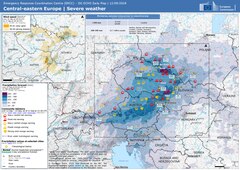
In 2024, natural disasters worldwide resulted in 16,753 fatalities across 393 recorded events, according to the Emergency Events Database (EM-DAT), with floods, storms, and earthquakes causing the majority of deaths and extensive economic losses estimated at over $320 billion globally.[115][116] Flooding and tropical cyclones dominated, exacerbated by extreme weather patterns, while seismic and fire events highlighted regional vulnerabilities.The Noto Peninsula earthquake struck Japan on January 1 with a magnitude of 7.6, killing nearly 500 people primarily in Ishikawa Prefecture through structural collapses, tsunamis, and fires; it ranked among the year's top 10 costliest disasters with damages exceeding tens of billions of dollars.[117][115] In February, wildfires ravaged central Chile, particularly Viña del Mar, claiming 131 lives—the deadliest such event in national history—and burning over 160,000 acres amid dry conditions and strong winds.[118][119]Super Typhoon Yagi made landfall in Vietnam on September 7 as a Category 4 equivalent, triggering floods and landslides that killed 321 in Vietnam alone, with an additional 226 deaths in Myanmar from subsequent inundation; total regional fatalities exceeded 600, alongside widespread infrastructure destruction.[120][121] Heavy monsoon rains from September 26–28 in Nepal caused flash floods and landslides, resulting in at least 250 deaths, including many children, and displacing thousands in the capital Kathmandu and surrounding areas.[122]Hurricane Helene intensified to Category 4 before landfall near Perry, Florida, on September 26, producing catastrophic inland flooding across the southeastern United States that claimed 248 lives—mostly from drowning—and inflicted damages surpassing $50 billion, with North Carolina alone reporting $59.6 billion in losses.[123][124][125] Tropical Storm Trami (known locally as Kristine) hit the Philippines on October 24, unleashing floods and landslides that killed 141 people and affected over 7 million, marking one of the season's most destructive events in Southeast Asia.[126][127]Flash floods overwhelmed Valencia, Spain, on October 29 following extreme rainfall of over 490 mm in hours, drowning 224 people—Europe's deadliest flooding incident of the year—and causing billions in damages to homes, vehicles, and agriculture.[128] In the United States, 27 separate billion-dollar weather disasters occurred, including five tropical cyclones like Helene and Hurricane Milton, one major wildfire, and severe storms, underscoring a record pace of costly events.[129]
Climate Policy Debates and Environmental Data
In 2024, global surface temperatures reached a record high, averaging approximately 1.29°C above the 20th-century baseline of 13.9°C, surpassing the previous record set in 2023.[130] Independent analyses confirmed this anomaly, with Berkeley Earth reporting 2024 as the warmest year since 1850 by a definitive margin, while NASA's data indicated 1.28°C above the 1951-1980 baseline.[131][132] The World Meteorological Organization attributed the year's warmth to about 1.55°C above pre-industrial levels, marking the first calendar year likely exceeding the 1.5°C Paris Agreement threshold, though with noted variability in datasets.[133] The decade 2015-2024 comprised the ten warmest years on record, amid ongoing greenhouse gas emissions and influences like El Niño.[133]Environmental monitoring highlighted persistent atmospheric trends, including elevated CO2 concentrations and extreme weather patterns. Global sea surface temperatures remained anomalously high through mid-year, contributing to intensified marine heatwaves, while Arctic sea ice extent hit near-record lows in summer.[134] These data points fueled debates over attribution, with empirical analyses emphasizing human-induced forcings as dominant but acknowledging natural variability's role in short-term spikes.[130] Critics of prevailing narratives, including some climate scientists, argued that policy-driven emission reductions had minimal detectable impact on 2024's temperatures, given cumulative historical emissions and lagged system responses.[135]The 29th Conference of the Parties (COP29) in Baku, Azerbaijan, from November 11-24, centered on climate finance, culminating in a pledge to mobilize at least $300 billion annually by 2035 for developing nations, tripling the prior $100 billion goal.[136] Negotiators finalized rules for international carbon markets under Article 6 of the Paris Agreement, enabling tradable credits to offset emissions, though implementation details drew scrutiny for potential loopholes in additionality and permanence.[137] Developing countries criticized the finance deal as insufficient relative to estimated needs exceeding $1 trillion yearly, while developed nations highlighted private sector mobilization challenges.[138] No binding emission reduction targets advanced, underscoring divides between ambition rhetoric and verifiable commitments.[139]In the United States, the November presidential election victory of Donald Trump intensified policy debates, with pledges to dismantle Biden-era measures like the Inflation Reduction Act's clean energy subsidies and reorient toward fossil fuel expansion.[140] Trump administration plans included executive actions to restrict renewable tax credits and exit international accords, potentially halting federal emission cuts projected at 11% below 2005 levels under prior policies.[141][142] Proponents argued such shifts prioritize energy security and economic growth, citing public surveys where 56% of Republicans viewed climate policies as economically harmful.[143] Opponents, including environmental groups, contended rollbacks risk stranded assets in renewables, though market-driven adoption in states like Texas persisted.[144]Global assessments of policy efficacy revealed mixed results, with a study of 1,500 instruments identifying 63 cases of major emission reductions, often via targeted carbon pricing or efficiency standards rather than broad mandates.[135]Effectiveness varied by context, with no universal approach succeeding; subsidies for renewables showed inconsistent impacts amid rebound effects, while regulatory caps proved more reliable in industrial sectors.[145] Debates persisted on causal links, as global emissions rose 1.1% in 2023 despite policy proliferation, questioning net benefits against adaptation costs.[146] Sources from academic and governmental bodies, often aligned with international frameworks, emphasized urgency, but empirical reviews highlighted overreliance on models versus observed data in policy justification.[147]
Sports and Major Competitions
Paris Summer Olympics
The 2024 Summer Olympics took place in Paris, France, from 26 July to 11 August, encompassing 329 events across 32 sports and featuring approximately 10,500 athletes from 206 National Olympic Committees.[8] The United States led the medal table with 40 gold, 44 silver, and 42 bronze medals, totaling 126, narrowly edging out China, which secured 40 golds but fewer overall medals at 91.[148] Host nation France achieved its best Olympic performance in over a century, winning 64 medals including 16 golds, nearly doubling its previous totals.[149] Notable records included three world records in athletics: Armand Duplantis's 6.25 meters in pole vault, Sydney McLaughlin-Levrone's 50.37 seconds in women's 400m hurdles, and the U.S. women's 4x400m relay's 3:07.41.[150]The opening ceremony along the Seine River drew widespread criticism for a tableau featuring drag performers and a blue-painted figure resembling Dionysus, interpreted by many religious leaders and conservative commentators as a parody of Leonardo da Vinci's The Last Supper, prompting accusations of blasphemy and calls for boycotts from regions including the Middle East and Latin America.[151][152] Olympic organizers and artistic director Thomas Jolly denied intent to mock Christianity, claiming inspiration from a pagan feast scene in a 17th-century painting, while the International Olympic Committee issued an apology for unintended offense.[153] Other controversies included a French policy banning hijabs for national team athletes, cited as enforcement of secularism but criticized for religious discrimination, and incidents such as drug-related arrests among athletes, including a Brazilian surfer purchasing cocaine and a Portuguese judoka removed from the village for inappropriate behavior.[154][155]Security measures, involving 45,000 personnel, proved largely effective amid terrorism threats linked to the Israel-Hamas conflict, though arson attacks disrupted high-speed rail lines on the opening day, affecting hundreds of thousands of travelers.[156] The Games' costs exceeded initial projections by 115% in real terms, reaching approximately €6.6 billion borne primarily by the French state, including €1.44 billion for security, contradicting promises of fiscal restraint.[157][158] Post-event reports highlighted poor medal quality, with athletes reporting rapid tarnishing, prompting investigations into manufacturing standards.[159] Four nations—Botswana, Dominica, Guatemala, and Saint Lucia—secured their first Olympic golds, underscoring expanded global participation.[160]
Football and Other International Tournaments
The UEFA European Championship, commonly known as Euro 2024, was held across 10 cities in Germany from 14 June to 14 July, featuring 24 national teams in a format expanded since 2016.[161]Spain emerged as champions, defeating England 2–1 in the final at Berlin's Olympiastadion on 14 July, securing a record fourth title with goals from Nico Williams in the 47th minute and Mikel Oyarzabal in the 86th, after Cole Palmer equalized for England in the 73rd.[162][163] Host Germany exited in the quarter-finals against Spain, while notable upsets included Georgia's round-of-16 advancement as a debutant and Portugal's penalty shootout loss to France.[163]Concurrently, the Copa América 2024 took place in the United States from 20 June to 14 July, involving 16 teams including six CONCACAF invitees, marking the tournament's first hosting outside South America since 2016.[164] Defending champions Argentina won their record 16th title, beating Colombia 1–0 after extra time in the final at Hard Rock Stadium in Miami on 14 July, with Lautaro Martínez scoring the decisive goal in the 112th minute despite Lionel Messi's earlier injury exit.[165][166] The event drew criticism for organizational issues, including fan injuries from overcrowding outside the final venue due to counterfeit tickets.[167]The Africa Cup of Nations (AFCON) 2023, delayed from 2023 due to weather concerns, occurred in Ivory Coast from 13 January to 11 February 2024 with 24 teams.[168] Hosts Ivory Coast claimed their third title, overcoming Nigeria 2–1 in the final at the Alassane Ouattara Stadium in Abidjan on 11 February, with Sébastien Haller scoring the winner in the 62nd after a first-half own goal by their goalkeeper and Nigeria's equalizing penalty.[169][170] Earlier, Morocco's semi-final run as 2022 World Cup semi-finalists ended in a 1–0 penalty shootout loss to South Africa following a 0–0 draw.[169]The AFC Asian Cup 2023, also postponed, was hosted by Qatar from 12 January to 10 February 2024, expanding to 24 teams for the first time.[171] Defending champions Qatar retained the trophy, defeating Jordan 3–1 in the final at Lusail Stadium on 10 February, with Akram Afif scoring twice including a stoppage-time penalty.[172]Jordan reached their first final via dramatic late goals and penalties, notably eliminating South Korea in the quarter-finals.[173]Beyond football, the ICC Men's T20 World Cup 2024, co-hosted by the United States and West Indies from 1 June to 29 June, featured 20 teams in the shortest international cricket format.[174]India won their second title, chasing down South Africa's 176–7 to finish at 177–7 in the final at Kensington Oval in Barbados on 29 June, with Virat Kohli's 76 anchoring the victory.[174] The tournament marked the U.S. as co-hosts, with their upset win over Pakistan in the group stage drawing record crowds.[174]
Culture, Entertainment, and Society
Film, Music, and Media Highlights
In film, animated features dominated the box office, with Pixar's Inside Out 2, released on June 14, 2024, grossing $1.698 billion worldwide and surpassing Frozen II as the highest-earning animated film of all time.[175]Marvel Studios' Deadpool & Wolverine, premiering July 26, 2024, earned $1.338 billion globally, marking the highest-grossing R-rated film ever and revitalizing superhero cinema amid franchise fatigue.[175] Other major releases included Universal's Despicable Me 4 ($970 million) and Disney's Moana 2 ($1.059 billion by late 2024), underscoring family-oriented animation's resilience post-pandemic.[176] Critically, Denis Villeneuve's Dune: Part Two (March 1, 2024) garnered widespread praise for its scale and performances, contributing to Warner Bros.' strong year despite broader industry strikes' aftermath.[177]In music, Charli XCX's Brat, released June 7, 2024, emerged as a defining pop album, blending hyperpop with club aesthetics and topping multiple year-end lists for its cultural impact on fashion and memes.[178] Taylor Swift's The Tortured Poets Department debuted April 19, 2024, selling over 2.6 million equivalent units in its first week in the U.S., extending her dominance in streaming and vinyl sales.[179] Billie Eilish's Hit Me Hard and Soft (May 17, 2024) received acclaim for its introspective production, while Beyoncé's Cowboy Carter (March 29, 2024) challenged genre boundaries in country music, peaking at number one on the Billboard 200 despite limited radio play.[179] Live events highlighted Swift's Eras Tour, which concluded December 8, 2024, in Vancouver after grossing over $2 billion cumulatively since 2023, with 2024 legs boosting economies in host cities.[180]Television and media saw streaming consolidation amid cord-cutting, with FX's Shōgun adaptation winning 18 Primetime Emmys on September 15, 2024, including Outstanding Drama Series for its historical accuracy and ensemble cast.[181] Hulu's The Bear Season 3 (June 26, 2024) drew 1.2 billion minutes viewed in its premiere week, praised for intensifying kitchen drama realism but criticized for unresolved arcs.[182] Apple's Slow Horses Season 4 and BBC's Industry Season 3 highlighted prestige spy and finance genres, while Netflix's live events like the Mike Tyson vs. Jake Paul boxing match on November 15, 2024, tested new formats amid technical glitches.[183] Broader media trends included ABC News' debate hosting between Biden and Trump on June 27, 2024, which averaged 51 million viewers and influenced political discourse.[184]
Social Movements and Cultural Shifts
In 2024, student-led protests in Bangladesh against a reinstated 30% quota for government jobs reserved for descendants of independence war veterans escalated into a nationwide uprising, culminating in Prime MinisterSheikh Hasina's resignation on August 5 after weeks of clashes that resulted in over 1,400 deaths according to UN estimates.[185][186] The movement, initially focused on quota reform, broadened into demands for government accountability amid allegations of corruption and authoritarianism, marking a rare successful youth-driven regime change in the region.[187]Similarly, in Kenya, Generation Z-led demonstrations against the Finance Bill 2024, which proposed tax hikes to address debt amid IMF pressures, began in June and forced President William Ruto to withdraw the bill on June 26, though protests continued into August over governance failures and resulted in dozens of deaths from security force responses.[188][189] European farmers' protests, ongoing since late 2023, intensified in 2024 across countries like Germany, France, and Poland, targeting EU Green Deal regulations, low producer prices, and competition from Ukrainian imports; these actions prompted concessions such as exemptions from fallow land rules and pesticide reduction delays.[190][191]Pro-Palestinian demonstrations on U.S. university campuses peaked in April 2024, with over 100 institutions hosting encampments calling for divestment from Israel-linked firms and ceasefire in the Gaza conflict; approximately 8% of students participated, amid nearly 12,400 such events recorded from October 2023 to June 2024, leading to thousands of arrests and administrative responses prioritizing campus order.[192][193] In Venezuela, post-July 28 presidential election protests erupted over disputed results favoring Nicolás Maduro despite opposition claims of victory backed by partial tallies; authorities cracked down with arrests of over 2,000 and reports of extrajudicial killings, highlighting regime entrenchment.[194][195]Culturally, 2024 saw a pronounced gender divergence in political alignments, with young men increasingly favoring conservative positions on immigration, economics, and traditional values, while young women leaned progressive on social issues; this gap, twice as wide among under-30s as overall, influenced election outcomes globally and in the U.S., where Trump gained among young male voters.[196][197] Such shifts reflected broader disillusionment with institutional trust, amplified by social media and economic pressures, contributing to populist surges and policy backpedaling on climate mandates perceived as burdensome.[198] Over 160 significant anti-government protests worldwide underscored this citizen rebellion against elite-driven agendas, per global trackers.[199]
Health, Demographics, and Public Policy
Public Health Challenges
In 2024, a resurgence of measles cases highlighted vulnerabilities in vaccination coverage worldwide, with the United States recording 285 confirmed cases—the highest annual total since the disease was declared eliminated in 2000—primarily among unvaccinated individuals and linked to 16 outbreaks. [200][201] These incidents were driven by declining immunization rates in certain communities, often tied to hesitancy following public distrust in health authorities during the COVID-19 era, as well as imported cases from regions with lower coverage. [202] Globally, the European Region reported 127,350 cases, the highest in over 25 years, doubling from 2023 and reflecting similar gaps in routine childhood vaccinations. [203]The mpox (formerly monkeypox) epidemic persisted and intensified in 2024, particularly clade Ib strains in Africa, where 45,652 cases were reported across 12 countries by August 18, surpassing prior outbreaks with over 800 fatalities and a case fatality rate approaching 3%. [204] Transmission occurred mainly through close contact in endemic areas like the Democratic Republic of the Congo, with limited spread to other continents via travel, prompting WHO alerts for enhanced surveillance and vaccination efforts targeted at high-risk groups. [205] Concurrently, avian influenza A(H5N1) posed spillover risks, with 61 human cases confirmed in the United States since April among dairy and poultry workers exposed to infected animals, including the first severe instance reported in December requiring intensive care. [206] No sustained human-to-human transmission occurred, but genetic analyses indicated adaptations potentially increasing zoonotic potential. [207]Drug overdose deaths, predominantly from synthetic opioids like fentanyl, remained a leading cause of mortality in the United States, though provisional data indicated a modest decline to around 80,000-100,000 annually from 2023 peaks, reflecting expanded naloxone distribution and treatment access amid ongoing supply chain disruptions. [208][209]Mental health challenges compounded these issues, with 23.4% of U.S. adults—over 60 million people—experiencing any mental illness in the past year, and 43% reporting heightened anxiety compared to prior years, exacerbated by social isolation, economic pressures, and lingering pandemic effects. [210][211] Youth were particularly affected, with persistent high rates of depression and suicidality underscoring gaps in early intervention and access to care. [212] These trends, tracked by institutions like the CDC and WHO, emphasized the need for evidence-based responses prioritizing prevention over reactive measures, amid critiques of underfunding in public health infrastructure. [213]
Demographic and Migration Trends
The global population reached approximately 8.2 billion in 2024, with an annual growth rate of 0.87%, reflecting a continued slowdown from prior decades due to declining fertility rates.[214] The total fertility rate (TFR) stood at around 2.2 births per woman worldwide, below the replacement level of 2.1 needed for long-term population stability without immigration.[215] This marked a further erosion from the 1950s average of nearly 5 births per woman, driven by factors including urbanization, rising education levels among women, and economic pressures in developed and emerging economies.[216]Fertility declines were pronounced in high-income countries, exacerbating aging populations and shrinking working-age cohorts. South Korea recorded the world's lowest TFR at approximately 0.7, followed by Taiwan and several Eastern European nations like Poland and Lithuania below 1.3.[217] In contrast, sub-Saharan African countries such as Niger and Angola maintained TFRs above 5, though even these showed gradual declines from historical highs.[218]United Nations projections indicated that 17% of countries with above-replacement fertility in 2024 would fall below 2.1 within 30 years, signaling a potential global peak population of 10.3 billion in the mid-2080s followed by decline.[215][219] By 2024, 10% of the global population was aged 65 or older, up from prior years, increasing dependency ratios and straining pension systems in regions like Europe and East Asia.[220]International migration reached 304 million people in 2024, nearly double the 1990 figure, with Europe and North America hosting 51% of migrants.[221][222] In the United States, U.S. Customs and Border Protection recorded nearly 2.9 million nationwide encounters of inadmissible aliens in fiscal year 2024 (ending September 30), a 50% rise from fiscal 2021 but with sharp drops in later months due to policy enforcement.[223] Net international migration added 2.8 million to the U.S. population between 2023 and 2024, the highest recent estimate, primarily offsetting low native birth rates.[224]Europe experienced a 38% decline in irregular border crossings in 2024, totaling the lowest levels since 2021, attributed to enhanced frontier controls and bilateral agreements with origin countries.[225] Despite this, over 120,000 pushbacks of irregular migrants were documented at EU external borders, highlighting ongoing enforcement challenges.[226] Globally, 2024 was the deadliest year for migrants on record, with at least 8,938 fatalities on routes, driven by conflicts and perilous sea crossings in the Mediterranean and elsewhere.[227] The United Nations High Commissioner for Refugees reported 123.2 million forcibly displaced persons by year's end, including refugees and internally displaced due to wars in Ukraine, Sudan, and Gaza.[228] These flows contributed to demographic shifts, with migration bolstering populations in low-fertility destinations but fueling debates over integration and resource allocation.[229]
Awards and Recognitions
Nobel Prizes
The Nobel Prizes for 2024 were awarded in six categories, with announcements made by the respective awarding bodies in early October. The prizes recognize contributions in physics, chemistry, physiology or medicine, literature, peace, and economic sciences, each carrying a monetary award of 11 million Swedish kronor (approximately $1 million USD at the time). Laureates were honored for advancements in artificial intelligence, protein science, gene regulation, literary confrontation of trauma, nuclear disarmament advocacy, and institutional economics.In physics, the prize was shared by John J. Hopfield, professor emeritus at Princeton University, and Geoffrey E. Hinton, emeritus professor at the University of Toronto, for foundational discoveries enabling machine learning with artificial neural networks. Hopfield developed the Hopfield network in the 1980s, a recurrent neural network model inspired by associative memory that stores and retrieves patterns. Hinton advanced this through the Boltzmann machine and backpropagation techniques, laying groundwork for modern deep learning systems despite his later concerns about AI's existential risks. The award was announced on October 8 by the Royal Swedish Academy of Sciences.[230]The chemistry prize went to David Baker of the University of Washington for computational protein design, and jointly to Demis Hassabis and John M. Jumper of Google DeepMind for protein structure prediction. Baker's work enabled the creation of novel proteins with functions not found in nature, using computational methods to fold amino acid sequences into desired shapes. Hassabis and Jumper's AlphaFold2 system, released in 2021, accurately predicted structures for nearly all known proteins, revolutionizing drug discovery and biology. Announced on October 9, the prize highlights AI's integration into molecular sciences.[231]Victor Ambros of the University of Massachusetts Medical School and Gary Ruvkun of Harvard Medical School received the physiology or medicine prize for discovering microRNA and its role in post-transcriptional gene regulation. Their 1993 identification of lin-4 microRNA in C. elegans revealed small non-coding RNAs that fine-tune gene expression, influencing development, disease, and evolution; over 60% of human genes are now known to be regulated this way. The Nobel Assembly at Karolinska Institutet announced the award on October 7.[232]Han Kang, a South Korean author born in 1970, won the literature prize for her intense poetic prose confronting historical traumas and human fragility, notably in works like The Vegetarian (2007) and Human Acts (2014), which address the 1980 Gwangju Uprising. The Swedish Academy announced the award on October 10, marking the first Nobel for a South Korean writer.Nihon Hidankyo, a Japanese organization of atomic bomb survivors (hibakusha), was awarded the peace prize for efforts toward a nuclear-free world through survivor testimonies and advocacy against nuclear proliferation. Founded in 1981, it has influenced UN resolutions and treaty negotiations, emphasizing firsthand accounts of Hiroshima and Nagasaki's 1945 devastation. The Norwegian Nobel Committee announced the prize on October 11 amid global nuclear tensions.In economic sciences, Daron Acemoglu and Simon Johnson of MIT, and James A. Robinson of the University of Chicago, shared the Sveriges Riksbank Prize for studies on how institutions form and affect prosperity. Their research, including analyses of colonial legacies and political reforms, demonstrates that inclusive institutions foster growth while extractive ones perpetuate inequality, challenging deterministic views of geography or culture. The Royal Swedish Academy of Sciences announced it on October 14.[233]
In mathematics, the Abel Prize was awarded on March 20, 2024, to French mathematician Michel Talagrand for his profound contributions to probability theory and the interactions between probability theory and analysis, including major advances in concentration of measure and stochastic processes that enable better understanding of random phenomena in complex systems.[234][235]In computing, the 2024 ACM A.M. Turing Award was given to Andrew G. Barto of the University of Massachusetts Amherst and Richard S. Sutton of the University of Alberta for developing the conceptual and algorithmic foundations of reinforcement learning, a machine learning paradigm that has driven advancements in AI applications from robotics to game playing.[236][237]In literature, the Booker Prize was awarded on November 12, 2024, to British author Samantha Harvey for her novel Orbital, a 136-page work depicting a day aboard the International Space Station, marking the first space-set novel to win and the shortest since 1972.[238][239] The Pulitzer Prize for Fiction, announced on May 6, 2024, went to American writer Jayne Anne Phillips for Night Watch, a novel exploring trauma and survival in post-Civil War West Virginia.[240][241]
Vital Events
Notable Births
January 7: Balthasar Felix Karl, third child of Prince Felix and Princess Claire of Luxembourg, marking the first royal birth of the year in a European monarchy.[242][243]
February: Cardinal, second son of actress Cameron Diaz and musician Benji Madden, announced as part of the family's expansion amid Diaz's return to acting.[244]
May 26: Caius Chai, fourth child of actress Ayesha Curry and basketball player Stephen Curry, adding to the NBA star's family known for its public philanthropy.[245]
August 23: Jack Blues Bieber, first child of singer Justin Bieber and model Hailey Bieber, drawing widespread media attention due to the couple's global fame in music and fashion.[246][247]
Other births to prominent figures included a daughter to singer Maluma and a son to actors Chris Pratt and Katherine Schwarzenegger, reflecting continued family growth among Hollywood elites.[247][248]
Notable Deaths
In politics, former U.S. President Jimmy Carter, the 39th president who served from 1977 to 1981 and later received the Nobel Peace Prize for his humanitarian work, died on December 29 at age 100 in Plains, Georgia.[249][250] Russian opposition leader Alexei Navalny, a prominent critic of President Vladimir Putin imprisoned on charges critics deemed politically motivated, died on February 16 at age 47 in an Arctic penal colony; Russian officials cited natural causes, while Western governments and Navalny's allies alleged foul play.[249][251][252] Iranian President Ebrahim Raisi, who oversaw a crackdown on protests following Mahsa Amini's death and advanced Iran's nuclear program, perished on May 19 at age 63 in a helicopter crash amid poor weather in northwestern Iran.[251][253] Former Chilean President Sebastián Piñera, who led the country during economic growth and social unrest in two terms (2010–2014 and 2018–2022), died on February 6 at age 74 when his helicopter crashed into Lake Ranco due to bad weather.[254][255][256] Former Canadian Prime Minister Brian Mulroney, who negotiated free trade with the U.S. and opposed apartheid, died on February 29 at age 85.[251]In entertainment and media, British actress Dame Maggie Smith, acclaimed for portraying Professor McGonagall in the Harry Potter series and the Dowager Countess in Downton Abbey, died on September 27 at age 89.[252] American actor James Earl Jones, renowned as the voice of Darth Vader in Star Wars and Mufasa in The Lion King, died on September 9 at age 93.[252][257] Music producer Quincy Jones, who won 28 Grammy Awards and collaborated with Michael Jackson on Thriller, died on November 3 at age 91.[258]Sports figures included German footballer Franz Beckenbauer, who captained West Germany to the 1974 World Cup and coached the team to victory in 1990, dying on January 7 at age 78 from Parkinson's disease.[252] Baseball legend Willie Mays, known for 660 home runs and 24 All-Star selections, died on June 18 at age 93.[259]In business, Indian industrialist Ratan Tata, former chairman of the Tata Group conglomerate spanning steel to software, died on October 9 at age 86.[260] Vietnamese Communist Party General Secretary Nguyen Phu Trong, who consolidated power and pursued anti-corruption drives, died on July 19 at age 80.[261]

.jpg/250px-Olympic_rings_on_the_Eiffel_Tower_2024_(10).jpg)


.jpg/2000px-Olympic_rings_on_the_Eiffel_Tower_2024_(10).jpg)
.jpg)
,_pow%C3%B3d%C5%BA.jpg)


.jpg)

.jpg)


_(cropped).jpg)
_(cropped)_(higher_res).jpg)
.jpg)

.jpg)
.jpg)

.jpg)


.jpg)
.jpg)


.jpg)
_(1).jpg)


.jpg)
.jpg)




.jpg)


.jpg)


.jpg)
.jpg)
.jpg)


_02_(cropped).jpg)
_4K-AZ65_Antalya_Airport_June_18,_2016_(cropped).jpg)


_Dec_2024.jpg)
