Hubbry Logo
Mary Tyler MooreMary Tyler MooreMain
Open search
Mary Tyler Moore
Community hub
Mary Tyler Moore
logo
8 pages, 0 posts
0 subscribers
Be the first to start a discussion here.
Mary Tyler Moore
Mary Tyler Moore
from Wikipedia

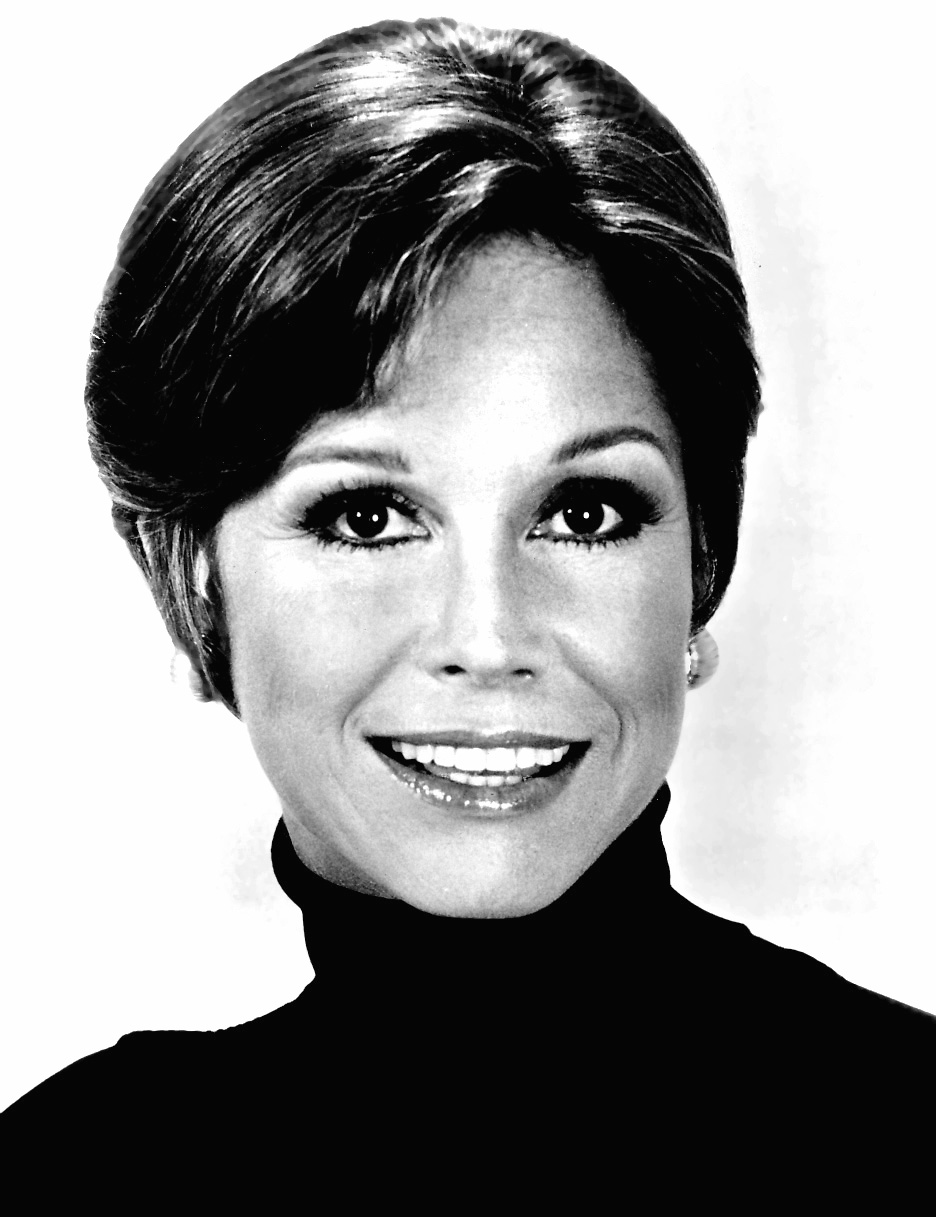
Mary Tyler Moore (December 29, 1936 – January 25, 2017) was an American actress, producer, and social advocate. She is best known for her roles on The Dick Van Dyke Show (1961–1966) and The Mary Tyler Moore Show (1970–1977), which "helped define a new vision of American womanhood"[1] and "appealed to an audience facing the new trials of modern-day existence".[2][3][4][5] Moore won six Primetime Emmy Awards and three Golden Globe Awards.[6][7] She was nominated for the Academy Award for Best Actress for her performance in Ordinary People.[8][9][10] Moore had major supporting roles in the musical film Thoroughly Modern Millie and the dark comedy film Flirting with Disaster. Moore also received praise for her performance in the television film Heartsounds. Moore was an advocate for animal rights, vegetarianism[11] and diabetes awareness and research.[12]

Key Information

Early life

[edit]

Moore was born in the Brooklyn Heights neighborhood in New York City, in 1936 to Marjorie (née Hackett) and George Tyler Moore. Her father was a clerk. The family was of Irish Catholic descent.[13][14][15] They lived in Flatbush for a time and later moved to Flushing, Queens.

Moore was the oldest of three children, with a younger brother John and a younger sister Elizabeth. Moore's paternal great-grandfather, Confederate Lieutenant Colonel Lewis Tilghman Moore, owned the house that is now the Stonewall Jackson's Headquarters Museum in Winchester, Virginia.[16]

When Moore was eight years old, the family relocated to Los Angeles, California in 1945, at the recommendation of her uncle, an employee of MCA.[17] She was raised Catholic[18] and attended St. Rose of Lima Parochial School in Brooklyn until the third grade. In Los Angeles, Moore attended Saint Ambrose School and Immaculate Heart High School in the Los Feliz neighborhood.[19][20]

Moore's sister Elizabeth died at age 21 "from a combination of ... painkillers and alcohol." Her brother died at the age of 47 from kidney cancer.[21]

Career

[edit]

Television

[edit]

Early appearances

[edit]
Moore in Johnny Staccato (1960)

Moore's television career began in 1955 with a job as "Happy Hotpoint", a tiny elf dancing on Hotpoint home appliances in TV commercials that ran during breaks on The Adventures of Ozzie and Harriet.[22] After appearing in 39 Hotpoint commercials in five days, she received approximately $6,000 (equivalent to $57,000 in 2024).[23][24] She became pregnant while still working as "Happy", and Hotpoint ended her work when it became too difficult to conceal her pregnancy with the elf costume.[22]

Moore was an uncredited[25] photographic model for record album covers,[26][27] many for the Tops Records label,[28] and auditioned for the role of the elder daughter of Danny Thomas for his long-running TV show, but was turned down.[29][30] Much later, Thomas explained that "she missed it by a nose ... no daughter of mine could ever have a nose that small".[30]

Moore with Dick Van Dyke in 1964

Moore's first regular television role was as 'Sam' a mysterious and glamorous telephone switchboard operator/receptionist in the series Richard Diamond, Private Detective with David Janssen. Sam's sultry voice was heard talking to Richard Diamond from her switchboard; however, only her legs and occasionally her hands appeared on camera—never her face, adding to the character's mystique.[31] After creating a minor sensation by appearing as Sam in 12 episodes of Richard Diamond as an uncredited player, Moore asked for a raise—and was promptly fired by the show's producers and replaced by Roxane Brooks in the role. However, Moore was able to parlay the publicity from 'revealing' Sam's identity to the press into several flattering articles and profiles, giving her career a boost.

About this time, she guest-starred in John Cassavetes' NBC detective series Johnny Staccato, and also in the series premiere of The Tab Hunter Show in September 1960 and the Bachelor Father episode "Bentley and the Big Board" in December 1960. In 1961, Moore appeared in several big parts in movies and on television, including Bourbon Street Beat; 77 Sunset Strip; Surfside 6; Wanted: Dead or Alive with Steve McQueen; Steve Canyon; Hawaiian Eye; Thriller and Lock-Up. She also appeared in a February 1962 episode of Straightaway.

The Dick Van Dyke Show (1961–1966)

[edit]
Dick Van Dyke Show cast: Morey Amsterdam, Richard Deacon, Moore, Dick Van Dyke and Rose Marie, 1962

In 1961, Carl Reiner cast Moore in The Dick Van Dyke Show, a weekly series based on Reiner's own life and career as a writer for Sid Caesar's television variety show Your Show of Shows, telling the cast from the outset that it would run for no more than five years. The show was produced by Danny Thomas's company, and Thomas himself recommended her. He remembered Moore as "the girl with three names" whom he had turned down earlier.[32]

Moore's energetic comic performances as Van Dyke's character's wife, begun at age 24 (eleven years Van Dyke's junior), made both the actress and her signature fitted capri pants popular, and she became internationally known. When she won her first Emmy Award for her portrayal of Laura Petrie,[33] she said, "I know this will never happen again."[34] As Laura Petrie, Moore often wore styles that recalled the fashion of Jackie Kennedy, such as capri pants, echoing an ideal of the Kennedy administration's Camelot.[35]

The Mary Tyler Moore Show (1970–1977)

[edit]

In 1970, after performing in the one-hour musical special Dick Van Dyke and the Other Woman, Moore and husband Grant Tinker successfully pitched a sitcom that centered on Moore to CBS. The Mary Tyler Moore Show was a half-hour newsroom sitcom featuring Ed Asner as her gruff boss Lou Grant. The Mary Tyler Moore Show bridged aspects of the Women's Movement with mainstream culture by portraying an independent woman whose life focused on her professional career rather than marriage and family.[36][1]

The original cast of The Mary Tyler Moore Show (1970)
Top: Valerie Harper (Rhoda), Ed Asner (Lou Grant), Cloris Leachman (Phyllis). Bottom: Gavin MacLeod (Murray), Moore, Ted Knight (Ted)

The show marked the first big hit for film and television producer James L. Brooks, who would also do more work for Moore and Tinker's production company.[37] Moore's show proved so popular that three regular characters, Valerie Harper as Rhoda Morgenstern, Cloris Leachman as Phyllis Lindstrom, and Ed Asner as Lou Grant spun off into their own three separate series playing the same characters, albeit with Lou Grant being an hour-long drama instead of a half-hour sitcom.

The premise of the single working woman's life, alternating during the program between work and home, became a television staple.[32][38]

After six years of ratings in the top 20,[39] the show slipped to number 39 in season seven.[40] Producers decided that the show should end, afraid that the show's legacy might be damaged if it were renewed for another season.[40] Despite the decline in ratings, the 1977 season won its third straight Emmy Award for Outstanding Comedy.[41] Over seven seasons, the program won 29 Emmys and Moore won three awards for Best Lead Actress in a Comedy.[42] The record was unbroken until 2002, when the NBC sitcom Frasier won its 30th Emmy.[42]

Later projects

[edit]

On January 22, 1976, while season six of The Mary Tyler Moore Show was in progress, Moore appeared in Mary's Incredible Dream, an experimental musical/variety special for CBS,[43] and which also featured Ben Vereen. She described it as "a totally different concept from anything ever attempted on television... We go from song to dance to song and back again, telling a story of the eternal cycle of man. If viewers don't want to follow the story, they can just enjoy the music and dancing."[44] In 1978, she starred in a second CBS special, How to Survive the '70s and Maybe Even Bump Into Happiness, where she received significant support from a strong lineup of guest stars: Bill Bixby, John Ritter, Harvey Korman and Dick Van Dyke. In the 1978–79 season, Moore also starred in two unsuccessful CBS variety series. The first, Mary, featured David Letterman, Michael Keaton, Swoosie Kurtz and Dick Shawn in the supporting cast. After CBS canceled that series, it brought Moore back in March 1979 in a new, retooled show, The Mary Tyler Moore Hour. Described as a "sit-var" (part situation comedy/part variety series), it had Moore portraying a TV star putting on a variety show.[39] The program lasted just 11 episodes.[45]

In the 1985–86 season, Moore returned to CBS in a sitcom titled Mary, which suffered from poor reviews, sagging ratings, and strife within the production crew. Moore said she asked network to pull the show because she was unhappy with the direction and production.[46] Moore also starred in the short-lived Annie McGuire in 1988.[47] In 1995, after another lengthy break from TV series work, Moore was cast as tough, unsympathetic newspaper owner Louise "the Dragon" Felcott on the CBS drama New York News, the third series in which her character was involved in the news media.[48] Moore was disappointed with the writing of her character and was negotiating with producers to get out of her contract for the series when it was canceled.[49]

In the mid-1990s, Moore appeared as herself on two episodes of Ellen. She guest-starred on Ellen DeGeneres's The Ellen Show, in 2001. In 2004, Moore reunited with her Dick Van Dyke Show castmates for a reunion special, The Dick Van Dyke Show Revisited.[50]

In 2006, Moore guest-starred as Christine St. George, the high-strung host of a fictional TV show, in three episodes of the Fox sitcom That '70s Show.[51] Moore's scenes were shot on the same sound stage where The Mary Tyler Moore Show was filmed in the 1970s.[51] She made a guest appearance on the season two premiere of Hot in Cleveland, which starred her former co-star Betty White.[52] It marked the first time that White and Moore had worked together since The Mary Tyler Moore Show ended in 1977.[53] In the fall of 2013, Moore reprised her role on Hot in Cleveland in a season four episode that reunited Moore and White with former Mary Tyler Moore Show cast members Cloris Leachman, Valerie Harper and Georgia Engel. The reunion coincided with Harper's public announcement that she had been diagnosed with terminal brain cancer and was given only a few months to live.[54]

Theater

[edit]

Moore appeared in several Broadway plays. She was the star of a new musical version of Breakfast at Tiffany's in December 1966, but the show, titled Holly Golightly, was a flop that closed in previews before opening on Broadway. In reviews of performances in Philadelphia and Boston, critics "murdered" the play in which Moore claimed to be singing with bronchial pneumonia.[55]

She starred in a gender-reversed revival of Whose Life Is It Anyway? with James Naughton, which opened on Broadway at the Royale Theatre on February 24, 1980, and ran for 96 performances, and in Sweet Sue, which opened at the Music Box Theatre on January 8, 1987, later transferred to the Royale Theatre, and ran for 164 performances.

During the 1980s, Moore and her production company produced five plays: Noises Off, The Octette Bridge Club, A Day in the Death of Joe Egg, Benefactors, and Safe Sex.[56]

Moore at the 40th Primetime Emmy Awards in 1988

Moore appeared in previews of the Neil Simon play Rose's Dilemma at the off-Broadway Manhattan Theatre Club in December 2003 but quit the production after receiving a critical letter from Simon instructing her to "learn your lines or get out of my play".[57] Moore had been using an earpiece on stage to feed her lines to the repeatedly rewritten play.[58]

Films

[edit]

Moore made her film debut as a nurse in the Jack Lemmon comedy Operation Mad Ball (1957).[59][60] Her first speaking part came in X-15 (1961).[61] Following her success on The Dick Van Dyke Show, she appeared in a string of films in the late 1960s (after signing an exclusive contract with Universal Pictures), including Thoroughly Modern Millie (1967), as a would-be actress in 1920s New York who is taken under the wing of Julie Andrews' title character, and two comedic films released in 1968, What's So Bad About Feeling Good? with George Peppard, and Don't Just Stand There! with Robert Wagner. She starred opposite Elvis Presley as a nun in Change of Habit (1969).[62] Moore's future television castmate Ed Asner appeared in the film as a police officer.[63]

Moore returned to the big screen in the coming-of-age drama Ordinary People (1980). She received an Oscar nomination for her portrayal of a grieving mother trying to cope with the drowning death of a son and the suicide attempt of another son (played by Timothy Hutton who won the Academy Award for Best Supporting Actor for his performance).[8][64] Moore appeared in only two more films during the next fifteen years: Six Weeks (1982)[65] and Just Between Friends (1986).[66] She appeared in the independent hit Flirting with Disaster (1996).[67]

Moore was in the television movie Run a Crooked Mile (1969) and starred in several television movies including First, You Cry (1978), which brought her an Emmy nomination for portraying NBC correspondent Betty Rollin's struggle with breast cancer. Her later TV movies included the medical drama Heartsounds (1984) with James Garner, which brought her another Emmy nomination, Finnegan Begin Again (1985) with Robert Preston, which earned her a CableACE Award nomination, the 1988 mini-series Lincoln, which brought her another Emmy nomination for playing Mary Todd Lincoln, and Stolen Babies, for which she won an Emmy Award for Outstanding Supporting Actress in 1993.[68] Later she reunited with former co-stars in Mary and Rhoda (2000) with Valerie Harper, and The Gin Game (2003) (based on the Broadway play), with Dick Van Dyke. Moore starred in Like Mother, Like Son (2001), playing convicted murderer Sante Kimes.

Memoirs

[edit]

Moore wrote two memoirs. In the first, After All, published in 1995, she acknowledged being a recovering alcoholic,[69] while in Growing Up Again: Life, Loves, and Oh Yeah, Diabetes (2009), she focuses on living with type 1 diabetes.[70]

MTM Enterprises

[edit]

In 1969, Moore and her husband Grant Tinker founded MTM Enterprises, Inc.,[71] which produced The Mary Tyler Moore Show and other successful television shows and films. It also included a record label, MTM Records.[72] MTM Enterprises produced American sitcoms and drama television series such as Rhoda, Lou Grant and Phyllis (all spin-offs from The Mary Tyler Moore Show), The Bob Newhart Show, The Texas Wheelers, The Bob Crane Show, Three for the Road, The Tony Randall Show, WKRP in Cincinnati, The White Shadow, Friends and Lovers, St. Elsewhere, Newhart, and Hill Street Blues, and was later sold to Television South, an ITV Franchise holder in 1988.[73][71] The MTM logo resembles the Metro Goldwyn Mayer logo, but includes a cat named Mimsie instead of a lion.[74] Currently, the shows of MTM Enterprises are distributed by 20th Century-Fox, which is owned by The Walt Disney Company.

Personal life

[edit]

At age 18 in 1955, Moore married her next-door neighbor, 28-year-old cranberry juice salesman Richard Meeker,[75] and within six weeks she was pregnant with her only child, Richard Carleton Meeker Jr., born on July 3, 1956.[76] Meeker and Moore divorced in 1962.[77] Later that year, Moore married Grant Tinker, a CBS executive and later chairman of NBC, and in 1969 they formed the television production company MTM Enterprises,[78] which created and produced the company's first television series, The Mary Tyler Moore Show. After a 1973 breakup and patch-up, Moore and Tinker announced a permanent separation in 1979[79] and divorced two years later.[80][81] In the early 1980s, Moore dated Steve Martin[82] and Warren Beatty.[83] Another relationship, with Michael Lindsay-Hogg,[84] ended when she wanted to be exclusive and he did not.[85]

On October 14, 1980, Moore's son Richard died of an accidental gunshot to the head while handling a small .410 shotgun. He was 24 years old.[86][87] The same model was later taken off the market because of its "hair trigger".[88] Three and a half weeks earlier, Ordinary People had been released where she played a mother who was grieving over the accidental death of her son.

A 47-year-old Moore married 29-year-old cardiologist Robert Levine on November 23, 1983, at the Pierre Hotel in New York City.[89][90] They met in 1982 when he treated Moore's mother in New York City on a weekend house call, after Moore and her mother returned from a visit to the Vatican where they had a personal audience with Pope John Paul II.[91] Moore and Levine remained married for 34 years until her death in 2017.[92]

Moore was an alcoholic much of her life but quit drinking in 1984 when she admitted herself into the Betty Ford Center.[93][94][87] One year after getting sober, she quit her three-pack-a-day cigarette habit.[95]

Health issues and death

[edit]
Moore presents the JDRF's Heroes Award to the U.S. Speaker of the House Dennis Hastert for his role in securing federal funding for type 1 diabetes research in 2003

Moore was diagnosed with type 1 diabetes in 1969.[96] In 2011, she had surgery to remove a meningioma, a benign brain tumor.[97] In 2014, friends reported that Moore had heart and kidney problems and was nearly blind from complications related to diabetes.[98]

Moore died at the age of 80 on January 25, 2017, at Greenwich Hospital in Greenwich, Connecticut, from cardiopulmonary arrest complicated by pneumonia after having been placed on a ventilator the week before.[99][100] She was interred in Oak Lawn Cemetery in Fairfield, Connecticut, in a private ceremony.[101]

Philanthropy

[edit]
Moore in 2011

In addition to her acting work, Moore was the International Chairperson of JDRF (the Juvenile Diabetes Research Foundation).[102] In this role, she used her celebrity status to help raise funds and awareness of diabetes mellitus type 1.

In 2007, in honor of Moore's dedication to the Foundation, JDRF created the "Forever Moore" research initiative which will support JDRF's Academic Research and Development and JDRF's Clinical Development Program. The program works on translating basic research advances into new treatments and technologies for those living with type 1 diabetes.[103]

Moore advocated for animal rights for years and supported charities like the ASPCA and Farm Sanctuary.[104] She helped raise awareness about factory farming methods and promoted more compassionate treatment of farm animals.[105]

Moore appeared as herself in 1996 on an episode of the Ellen DeGeneres sitcom Ellen. The storyline of the episode includes Moore honoring Ellen for trying to save a 65-year-old lobster from being eaten at a seafood restaurant.[106] She was also a co-founder of Broadway Barks, an annual animal adopt-a-thon held in New York City. Moore and friend Bernadette Peters worked to make it a no-kill city and to encourage adopting animals from shelters.[107]

In honor of her father, George Tyler Moore, a lifelong American Civil War enthusiast, in 1995 Moore donated funds to acquire a historic structure in Shepherdstown, West Virginia, for Shepherd College (now Shepherd University) to be used as a center for Civil War studies. The center, named the George Tyler Moore Center for the Study of the Civil War, is housed in the historic Conrad Shindler House (c. 1795), which is named in honor of her great-great-great-grandfather, who owned the structure from 1815 to 1852.[108]

Moore also contributed to the renovation of a historic house in Winchester, Virginia, that had been used as headquarters by Confederate Major General Thomas J. "Stonewall" Jackson during his Shenandoah Valley campaign in 1861–62. The house, now known as the Stonewall Jackson's Headquarters Museum, had been owned by Moore's great-grandfather, Lieutenant Colonel Lewis Tilghman Moore, commander of the 4th Virginia Infantry in Jackson's Stonewall Brigade.[16]

Politics

[edit]

During the 1960s and 1970s, Moore had a reputation as a liberal or moderate, although she endorsed President Richard Nixon for re-election in 1972.[109] She endorsed President Jimmy Carter for re-election in a 1980 campaign television ad.[110] In 2011, her friend and former co-star Ed Asner said during an interview on The O'Reilly Factor that Moore "has become much more conservative of late"; Bill O'Reilly, host of that program, stated that Moore had been a viewer of his show and that her political views had leaned conservative in recent years.[111] In a Parade magazine article from March 22, 2009, Moore identified herself as a libertarian centrist who watched Fox News. She stated: "when one looks at what's happened to television, there are so few shows that interest me. I do watch a lot of Fox News. I like Charles Krauthammer and Bill O'Reilly... If McCain had asked me to campaign for him, I would have."[112]

In an interview for the 2013 PBS series Pioneers of Television, Moore said that she was recruited to join the feminist movement of the 1970s by Gloria Steinem, but did not agree with Steinem's views. Moore said she believed that women have an important role in raising children and that she did not believe in Steinem's view that all women owe it to themselves to have a career.[113]

Acting credits and accolades

[edit]
A statue, designed by Gwen Gillen, at Nicollet Mall in Minneapolis replicates the tam o' shanter-tossing image that opened The Mary Tyler Moore Show.[114]

In February 1981, Moore was nominated for the Academy Award for Best Actress for her role in the drama film Ordinary People but lost to Sissy Spacek for her role in Coal Miner's Daughter.[115] In 1981, she won the Golden Globe Award for Best Actress in a Drama for that role.[116]

Moore received a total of six Emmy Awards, including two for her portrayal of Laura Petrie on The Dick Van Dyke Show and three for portraying Mary Richards on The Mary Tyler Moore Show. In 1993 she won an Emmy for her portrayal of Georgia Tann in the Lifetime made-for-TV film Stolen Babies.[117]

On Broadway, Moore received a Special Tony Award for her performance in Whose Life Is It Anyway? in 1980,[118] and was nominated for a Drama Desk Award as well. In addition, as a producer, she received nominations for Tony Awards and Drama Desk Awards for MTM's productions of Noises Off in 1984 and Benefactors in 1986, and won a Tony Award for Best Revival of a Play or Musical in 1985 for Joe Egg.[119] In 1986, she was inducted into the Television Hall of Fame.[120] In 1987, she received a Lifetime Achievement Award in Comedy from the American Comedy Awards.[121]

Moore's contributions to the television industry were recognized in 1992 with a star on the Hollywood Walk of Fame.[122] The star is located at 7021 Hollywood Boulevard.[123]

On May 8, 2002, Moore was present when cable network TV Land and the City of Minneapolis dedicated a statue in downtown Minneapolis of Mary Richards, her character in The Mary Tyler Moore Show. The statue, by artist Gwendolyn Gillen, was chosen from designs submitted by 21 sculptors.[124] The bronze sculpture was located in front of the Dayton's department store, later Macy's, near the corner of 7th Street South and Nicollet Mall. It depicts the iconic moment in the show's opening credits where Moore tosses her tam o' shanter in the air, in a freeze-frame at the end of the montage.[125][126] While Dayton's is clearly seen in the opening sequence, the store in the background of the hat toss is actually Donaldson's, which was, like Dayton's, a locally based department store with a long history at 7th and Nicollet. In late 2015, the statue was relocated to the city's visitor center during renovations, and was reinstalled in its original location in 2017.[127]

Moore was awarded the 2011 Screen Actors Guild's lifetime achievement award.[128][129] In New York City in 2012, Moore and Bernadette Peters were honored by the Ride of Fame and a double-decker bus was dedicated to them and their charity work on behalf of "Broadway Barks", which the duo co-founded.[130][131]

References

[edit]
[edit]
Revisions and contributorsEdit on WikipediaRead on Wikipedia
from Grokipedia

Mary Tyler Moore (December 29, 1936 – January 25, 2017) was an American actress and recognized for her groundbreaking roles in situation comedies that depicted women in professional and personal independence. She first gained prominence as Laura Petrie, the supportive yet spirited wife of a television writer, on from 1961 to 1966, a role that showcased her comedic timing and physical comedy skills, earning her two for Outstanding Lead Actress in a Series. Moore later starred as , an unmarried news producer navigating career ambitions and friendships in from 1970 to 1977, which she co-produced through her company ; the series won multiple Emmys, including three for Moore's performance, and influenced subsequent portrayals of working women by emphasizing competence over domesticity. Diagnosed with at age 33, she channeled personal experience into advocacy, serving as international chair of the Juvenile Diabetes Research Foundation and raising funds for research into the disease's complications, such as vision loss.

Early Life and Education

Birth and Family Background

Mary Tyler Moore was born on December 29, 1936, in the neighborhood of , New York. She was the eldest child of George Tyler Moore (1913–2006), who worked as a , and Marjorie Hackett Moore (1916–1992), a homemaker. The family adhered to Irish Catholic traditions, with Moore's paternal ancestry including English, Irish, and German roots, while her maternal grandparents were English immigrants. This middle-class household emphasized Catholic upbringing, though Moore later described a somewhat detached parental dynamic, with her father focused on work and her mother managing the home. She had two younger siblings: a brother, John, and a , Elizabeth. In 1945, when Moore was eight years old, the family relocated from New York to , , seeking better opportunities amid economic shifts. This move marked a transition from urban life to suburban , influencing her early exposure to hubs.

Childhood and Early Challenges

Moore's family relocated from to in 1945, when she was eight years old, following the recommendation of an uncle employed by the talent agency MCA, which exposed her to the industry milieu. There, she was raised in a strict Roman Catholic household that emphasized discipline and restraint, fostering an environment she later described as stifling for her creative inclinations toward and performance. Her father, George Tyler Moore, an auditor and later a utility company executive, maintained a rigid, unaffectionate demeanor as a disciplinarian, contributing to emotional distance within the family. Her mother, Hackett Moore, a homemaker, struggled with , manifesting in periods of heavy drinking that disrupted household stability and modeled addictive patterns Moore would confront in her own adulthood. These parental dynamics, amid the middle-class Irish-Catholic ethos, imposed conformity on Moore, who channeled early frustrations into pursuits like and tap dancing as outlets for self-expression despite familial reservations. Such challenges extended to reported incidents of childhood by a neighbor, an experience Moore detailed in her 1995 memoir After All, highlighting vulnerabilities in her formative years that compounded the familial strains. By her teenage years, these pressures prompted Moore to seek independence prematurely, including brief moves away from home with parental consent, foreshadowing her determination to break from restrictive origins.

Professional Career

Initial Modeling and Television Roles

Mary Tyler Moore entered the entertainment industry in the mid-1950s as a professional dancer after forgoing college to pursue performance opportunities in Los Angeles. Her breakthrough came in 1955 with a series of commercials for Hotpoint appliances, where she portrayed "Happy Hotpoint," a diminutive elf silently dancing atop refrigerators and stoves to promote the products; this uncredited role, which continued until 1959, earned her about $10,000 annually and marked her initial visibility on television. Expanding her dance work, Moore performed in chorus lines on variety programs including The George Gobel Show and The Eddie Fisher Show, gaining experience in live television performance. Transitioning toward acting around 1959, she initially contributed through voice work and brief on-screen appearances, reflecting the limited opportunities for women in early network programming. Moore's first recurring television role was as "Sam," the alluring but unseen receptionist on the crime series Richard Diamond, Private Detective (1959), delivering sultry voiceovers with her legs occasionally visible but her face concealed to heighten mystery. She followed with guest spots, such as a Spanish girl in an episode of Steve Canyon (1959) and a role on Bachelor Father (1960), alongside appearances in westerns like Wanted: Dead or Alive and detective shows like Surfside 6. These minor parts, often emphasizing her physical appeal or vocal delivery, built her resume amid a competitive field dominated by established performers.

Breakthrough on The Dick Van Dyke Show (1961–1966)

Mary Tyler Moore secured her breakthrough role as Laura Petrie, the wife of television writer Rob Petrie (played by Dick Van Dyke), on The Dick Van Dyke Show, which aired on CBS from October 3, 1961, to September 7, 1966, spanning five seasons and 158 episodes. The series, created by Carl Reiner and inspired by his own experiences as a comedy writer, depicted the professional and domestic life of Rob and Laura in suburban New York. Moore, then 23 years old, auditioned after Reiner spotted her in a TV commercial and insisted on her despite initial reservations from Van Dyke about her youth relative to his character. Originally envisioned as a peripheral figure, Laura's character evolved into a central ensemble role due to Moore's compelling performance, which blended poise, wit, and vulnerability, portraying a ballet-trained homemaker who occasionally revealed a spirited independence. Moore's portrayal challenged television norms by featuring Laura in form-fitting —a stylistic choice that drew sponsor backlash for being too revealing, prompting to defend it as reflective of modern fashion. In a notable second-season aired January 9, 1963, titled "It May Look Like a ," Laura confesses to briefly modeling in to fund their home down payment, highlighting the couple's realistic marital dynamics and earning praise for its candid humor. Moore's work on the show garnered critical acclaim and propelled her from obscurity—having appeared in bit parts like the recurring "Sam" character on —to stardom, with her natural chemistry alongside and the writers' room ensemble ( as Buddy Sorrell and as ) contributing to the series' enduring appeal. She received multiple Emmy nominations for Outstanding Lead Actress in a Comedy Series, winning in 1966 for her performance, while the show itself secured 15 Emmys overall, including for writing and directing. This role established Moore as a trailblazing comedic actress, emphasizing relatable domesticity over exaggeration, and laid the foundation for her later independent producer ventures.

The Mary Tyler Moore Show (1970–1977)

The Mary Tyler Moore Show premiered on CBS on September 19, 1970, and concluded on March 19, 1977, after seven seasons comprising 168 episodes. The series was created by James L. Brooks and Allan Burns, who developed it as a starring vehicle for Mary Tyler Moore under her production company MTM Enterprises, co-founded with her husband Grant Tinker. Moore portrayed Mary Richards, a single woman in her thirties who relocates to Minneapolis following a breakup and secures a position as associate producer at the struggling fictional news station WJM-TV. The character's focus on career advancement, friendships, and personal growth without reliance on marriage or family marked a departure from prior television depictions of women. The ensemble cast included Edward Asner as the gruff news director , Ted Knight as the pompous anchor , Gavin MacLeod as head writer Murray Slaughter, as Mary's outspoken neighbor and friend , and as her self-centered landlord Phyllis Lindstrom. joined in season five as the manipulative host Sue Ann Nivens. Produced by MTM, the show emphasized realistic ensemble dynamics and workplace humor over traditional formulas, contributing to its critical acclaim. During its run, the series maintained strong viewership, never ranking below fifteenth in the Nielsen ratings and securing high placements in its early seasons. It garnered 29 , including three consecutive wins for Outstanding Comedy Series from 1975 to 1977, with Moore receiving the Outstanding Lead Actress in a Comedy Series award on three occasions. Other cast members, such as Asner, Harper, , Leachman, and , also won Emmys for their performances. The show's success spawned three spin-offs: (1974–1978), (1975–1977), and (1977–1982), extending the universe of interconnected characters. The series finale, "The Last Show," depicted the station's closure due to low ratings, resulting in mass firings, though the staff presented Mary with a symbolizing their enduring camaraderie. This conclusion underscored themes of resilience and collective bonds amid professional upheaval, resonating with audiences and cementing the show's influence on situational comedy formats.

Later Television and Variety Projects

Following the end of The Mary Tyler Moore Show in March 1977, Moore ventured into a comedy-variety format with Mary, which premiered on on September 24, 1978. The series featured Moore as host, delivering sketches and musical performances alongside guest stars and regulars including and . Despite high expectations, it struggled with ratings and was canceled after three episodes, concluding on October 8, 1978. Moore followed with The Mary Tyler Moore Hour in 1979, a hybrid sitcom-variety program on where she played Mary McKinnon, a variety show performer contending with eccentric producer Harry Sinclair (). The cast included as Kenny Christy and as Ruby Bell, with episodes blending scripted comedy, sketches, and musical segments. It aired from March 4 to June 10, 1979, for 11 episodes before cancellation due to low viewership. In December 1985, Moore returned to scripted television in the sitcom Mary, portraying divorced fashion writer Mary Brenner who takes a job as a consumer advice columnist for a sensationalist tabloid. Co-starring as her ex-husband Frank DeMarco and , the series emphasized workplace humor and personal recovery themes. It ran from December 11, 1985, to April 8, 1986, producing 13 episodes but failing to attract sufficient audiences for renewal. Moore's final starring series role came in Annie McGuire on in 1988, where she depicted a navigating remarriage and blended family dynamics with her new husband (Dennis Arndt). Notable for its single-camera format and lack of , the show premiered on October 26, 1988, and aired until December 28, 1988, with only six episodes produced amid poor ratings.

Film Appearances and Theater Work

Moore's earliest film roles were minor, beginning with an uncredited appearance in the military comedy (1957), directed by , where she played a nurse alongside . She followed with another small part in the aviation drama X-15 (1961), a about experimental rocket planes featuring and . These early credits reflected her transition from modeling and television bit parts, though they garnered limited attention amid her rising TV profile. Her breakthrough in feature films came with (1967), a musical directed by , in which she portrayed Miss Dorothy Brown, a naive secretary entangled in a ring plot; the film starred and earned Moore praise for her supporting performance amid seven Academy Award nominations for the production. Subsequent 1960s releases included What's So Bad About Feeling Good? (1968), where she played Liz, a woman exposed to a happiness-inducing , opposite ; and Don't Just Stand There! (1968), as Martine Randall in a spy with . In 1969, she appeared as Sister Michelle in , a pairing her with as a confronting urban social issues in a . Moore's most critically acclaimed film role arrived in (1980), directed by in his feature debut, where she depicted Beth Jarrett, a detached mother grappling with family grief after her son's death; her portrayal of emotional repression earned an Academy Award nomination for , though some critics noted its departure from her comedic persona drew mixed reception for its intensity. Later films included (1982), as a terminally ill mother bonding with a politician played by ; (1986), portraying a woman discovering her husband's affair amid personal loss, co-starring ; and a cameo in the comedy Flirting with Disaster (1996) as the adoptive mother of Ben Stiller's character. These roles often explored dramatic themes of loss and relational strain, contrasting her television image, but her film output remained sporadic, totaling fewer than a dozen theatrical features over four decades.
YearTitleRoleDirector
1957Nurse (uncredited)
1961X-15Air Force Nurse
1967Miss Dorothy Brown
1968What's So Bad About Feeling Good?Liz
1968Don't Just Stand There!Martine RandallRon Winston
1969Sister MichelleWilliam A. Graham
1980Beth Jarrett
1982Charlotte Iverson
1986Holly Davis
1996Flirting with DisasterLola Koppelman
In theater, Moore's Broadway credits were limited but significant. She starred as Holly Golightly in a musical adaptation of Breakfast at Tiffany's in December 1966, opposite , but the production closed during previews after 16 performances due to poor reviews and creative issues, marking an early stage setback. Her most successful stage role came in the 1980 Broadway production of Whose Life Is It Anyway? by Brian Clark, where she originated the part of Claire Harrison, the resilient girlfriend advocating for the paralyzed protagonist's ; the play ran for 293 performances and earned her a Tony Award nomination for Best Actress in a Play. Moore also appeared in limited engagements, such as the 1987 one-act by , but focused more on producing theater through , including hits like (1983). Her stage work highlighted dramatic range, though she returned infrequently to live performance after the 1980s.

MTM Enterprises and Production Legacy

In 1969, Mary Tyler Moore and her husband established , Inc., an independent television production company named after Moore's initials, with Tinker serving as president and Moore as chairman. The company initially focused on developing a starring vehicle for Moore, emphasizing high-quality scripted content over formulaic syndication deals, a strategy that contrasted with prevailing industry norms where producers often ceded rerun rights to networks. MTM's flagship production, (1970–1977), aired on and became a critical and commercial success, generating spin-offs such as (1974–1978) and (1975–1977), both also on . The company expanded to other series, including (, 1972–1978), (, 1977–1982), (, 1981–1987), and (, 1982–1988), producing nearly 30 programs between 1970 and the late 1990s. These shows often featured ensemble casts, character-driven narratives, and innovative storytelling, such as serialized drama in , which earned the company multiple for outstanding drama series. MTM's innovated by negotiating to retain syndication rights, allowing the company to profit from reruns independently, which generated substantial revenue—estimated at over $100 million from alone—and influenced the rise of independent production houses. This approach prioritized creative control and long-term financial independence, enabling MTM to foster talent like producers and , though it faced challenges from network dependencies and eventual corporate sales in the 1990s. The production legacy of lies in elevating television's artistic standards during the 1970s and 1980s, producing workplace comedies that depicted professional women as competent and multifaceted, as seen in Moore's portrayal of , and dramas that tackled social issues with realism. This shifted industry practices toward sophisticated ensemble formats, paving the way for modern prestige TV, though some critics argue the company's influence waned as conglomerates absorbed independents, diluting its original ethos of quality over quantity.

Personal Life

Marriages and Relationships

Mary Tyler Moore married her first husband, Richard Carleton Meeker, in 1955 at the age of 18; he was a 28-year-old salesman and her next-door neighbor. The couple welcomed their son, Richard Jr., on July 3, 1956, but the marriage deteriorated amid Moore's rising career demands, leading to their divorce in 1961. In 1962, Moore wed television executive Grant Tinker, with whom she co-founded MTM Enterprises, the production company behind The Mary Tyler Moore Show and other hits. Their 19-year marriage, which ended in divorce in 1981, was strained by professional pressures and mutual infidelities; Moore later reflected in her memoir that business ties had prolonged a personally unfulfilling union. Moore's third marriage, to cardiologist S. Robert , began on November 23, 1983, at Hotel in ; Levine, 18 years her junior, became her enduring partner until her death in 2017, spanning over 33 years. The couple met through professional connections related to Moore's health advocacy, and she described Levine as her in interviews, crediting him with providing stability absent in prior relationships. Beyond her marriages, Moore maintained professional boundaries with co-stars, notably denying rumors of an affair with Dick Van Dyke despite their on-screen chemistry during The Dick Van Dyke Show, which she attributed to mutual respect rather than romance. Post-divorce from Tinker, brief romantic links were reported with figures like Steve Martin in 1982, though these did not lead to long-term commitments and remain sparsely documented in primary accounts.

Family Tragedies and Losses

Mary Tyler Moore's younger sister, Elizabeth Ann Moore, died on February 15, 1978, in , at the age of 21, from an overdose involving painkillers and alcohol. The County officially ruled the death a , though Moore disputed this assessment, insisting it was accidental. Elizabeth, born in 1956 and 19 years Moore's junior, had struggled with substance issues prior to her death. Two years later, on October 14, 1980, Moore's only child, son Richard Carleton "Richie" Meeker Jr.—born July 14, 1956, from her first marriage to Richard Meeker—died at age 24 in from a self-inflicted shotgun wound to the head, ruled accidental by authorities. Richie, an avid firearms enthusiast, had been handling a .410-gauge "Snake Charmer" while watching television in his apartment, which he shared with roommates; the gun discharged unexpectedly during manipulation. Moore later expressed profound guilt over the incident, reflecting in her on her perceived shortcomings as a mother amid her rising career demands, though no evidence indicated negligence on her part. Moore's brother, John Hackett Moore, faced terminal kidney cancer and died on September 29, 1991, at age 47. Earlier that year, in an attempt to alleviate his suffering, Moore and her husband, Dr. Robert Levine, assisted John in a failed suicide effort by feeding him ice cream laced with a lethal overdose of drugs, which he regurgitated; John survived the attempt but succumbed to the disease months later. Moore publicly detailed the incident in 1995, framing it as an act of mercy amid her brother's excruciating pain from the cancer, which had metastasized extensively. These familial losses, spanning substance-related overdose, accidental firearm discharge, and terminal illness compounded by euthanasia considerations, marked a series of profound personal bereavements for Moore, outliving all three siblings and her sole child.

Struggles with Alcoholism

Mary Tyler Moore's struggles with alcoholism were influenced by a family history of substance abuse, including her mother Marjorie's chronic drinking, which manifested in prolonged binges interspersed with periods of forced sobriety. Moore herself later acknowledged that her own alcoholism echoed this pattern, though she described it as taking a different form, often tied to emotional stressors such as her deteriorating marriage to producer Grant Tinker in the late 1970s and early 1980s. In her 1995 memoir After All, excerpted in People magazine, she detailed how alcohol consumption escalated during this period, serving as a coping mechanism amid personal losses, including the 1978 death of her sister Elizabeth from an overdose involving alcohol and prescription drugs, and the 1980 accidental shooting death of her son Richie. By 1984, Moore's drinking had intensified to the point where medical professionals intervened, leading her to enter the Betty Ford Center in , for inpatient treatment starting in early September. She underwent a week-long program focused on addressing her alcohol dependency, which her doctors had deemed necessary due to its impact on her health, including exacerbating her longstanding . Following this intervention, Moore achieved and maintained sobriety for the remainder of her life, abstaining completely after discharge and publicly discussing her recovery to destigmatize addiction among high-achieving individuals. Her husband, Dr. Robert Levine, later confirmed that she never relapsed, crediting the experience with providing the structure and resolve needed for long-term abstinence. Moore's candor about her alcoholism extended to interviews and writings, where she emphasized its non-discriminatory nature, affecting even those with outwardly successful lives, and advocated for treatment as a path to reclamation. While the addiction strained her professional commitments in the early 1980s—coinciding with projects like the short-lived Mary sitcom (1985–1986)—her recovery enabled a return to stability, underscoring the causal role of targeted intervention in breaking familial cycles of dependency. No evidence suggests ongoing relapses or public incidents post-1984, aligning with accounts of her disciplined post-treatment lifestyle.

Health Issues and Death

Battle with Diabetes

Mary Tyler Moore was diagnosed with mellitus in 1969 at the age of 33, following a that revealed severely elevated blood glucose levels exceeding 700 mg/dL. This adult-onset required lifelong insulin therapy, rigorous , and , which she maintained amid a demanding acting career. Moore described the condition as a "living time bomb," highlighting its potential for acute episodes like hypoglycemic shocks and long-term risks including organ damage from sustained . Over decades, Moore experienced progressive complications from poorly controlled glucose levels, most notably leading to significant vision impairment. By her later years, she suffered from diabetic retinal disease that eroded central vision, forcing her to conceal the extent of her blindness during public appearances, such as relying on memorized scripts and assistance to navigate sets. Despite aggressive treatments including and injections, which studies showed could stabilize mild vision loss but often failed to reverse advanced damage, her retinopathy advanced, underscoring the causal link between chronic and microvascular injury in retinal blood vessels. Moore's battle extended to psychological burdens, including the constant vigilance against fluctuations that could impair performance or trigger emergencies, yet she refused to let it define her publicly until demanded candor. She testified before multiple times, emphasizing empirical needs for research into beta-cell preservation and complication prevention, and served as international chair of the Juvenile Diabetes Research Foundation, channeling funds toward studies on insulin production and vascular protection. Her efforts humanized , countering stigma by sharing personal data on adherence challenges and outcomes, though she acknowledged limitations in pre-CGM era monitoring technologies available during much of her illness.

Final Years and Passing (2017)

In her later years, Mary Tyler Moore grappled with advanced complications from her , diagnosed at age 33 in the late , including progressive vision loss that nearly resulted in blindness. These effects compounded her vulnerability to infections, a common risk for long-term diabetics, as her body's resilience diminished with age. By early 2017, Moore's health had deteriorated significantly; she was admitted to Greenwich Hospital in with and placed on a amid her weakened state. She died there on January 25, 2017, at age 80, from cardiopulmonary arrest triggered by , hypoxia, and -related factors. Her listed these as the precipitating conditions, underscoring how chronic elevates risks of acute in the elderly.

Philanthropy and Advocacy

Diabetes Research Efforts

Mary Tyler Moore was diagnosed with in 1970 at the age of 33, following a that revealed her condition through elevated blood glucose levels. This personal experience prompted her to become a prominent , leveraging her celebrity status to advance research into cures and treatments for the disease. In 1984, Moore assumed the role of International Chairman of the Juvenile Diabetes Research Foundation (JDRF, now Breakthrough T1D), a position she held until her death in 2017, during which she spearheaded global fundraising campaigns that collectively raised billions of dollars for type 1 diabetes research. As one of JDRF's earliest donors contributing over $1 million personally, she also helped establish the organization's Stem Cell Research Fund to explore regenerative therapies. Her efforts emphasized practical management challenges, such as insulin affordability and complication prevention, while prioritizing empirical research toward a cure over symptomatic palliation. Moore's advocacy extended to legislative lobbying, including leading a 1995 summit with U.S. members and affected families to secure increased (NIH) funding for , culminating in the Special Diabetes Program that allocated $2.46 billion from 1998 to 2017—matched by equivalent funds for Native American diabetes initiatives. She testified before multiple times, notably in 2003 and 2005 during JDRF's Children's events, where she participated as the "senior child delegate" to amplify youth perspectives on living with the disease. These efforts contributed to breakthroughs, including the identification of over 50 genes linked to by the early and advancements in treatments like anti-VEGF therapies for complications. A key initiative under her influence was the inaugural Children's Congress in 1999, which mobilized young patients to petition lawmakers with personal stories under the slogan "Promise to Remember Me," fostering sustained bipartisan support for research appropriations. Moore also championed awareness of diabetes-related vision loss, inspiring the Mary Tyler Moore Vision Initiative focused on preventing and restoring sight through targeted research. Her announcements and participation in events like annual walks further destigmatized the condition, encouraging rigorous self-management and empirical study over anecdotal remedies.

Animal Rights Activism

Moore maintained a lifelong commitment to , adopting numerous dogs and cats from shelters and advocating for humane treatment across species, including companion animals, farm animals, and . She was a vegetarian who campaigned against factory farming practices, such as the confinement of calves and the of geese for production, emphasizing the ethical imperative to minimize animal suffering based on observable cruelties in . In 1999, Moore co-founded Broadway Barks with actress , an annual adoption event held in New York City's Shubert Alley that promotes shelter pets and has resulted in thousands of adoptions while benefiting animal shelters through Broadway Cares/Equity Fights AIDS. She supported by chairing its Sentient Being Committee and lobbying at state and federal levels to curb factory farming abuses, including downer cow transport and confinement, drawing on evidence of physical distress and injury in such systems. Moore aligned with People for the Ethical Treatment of Animals (PETA) on several initiatives, including donating her $112,000 sable fur coat in the 1980s—the first such celebrity contribution—for use in anti-fur demonstrations, and assisting in 2000 with the release of a 65-year-old lobster from a Chicago restaurant tank into the ocean to prevent its slaughter. In 2001, she sponsored the Great American Meatout event to promote meat-free diets, citing health and ethical benefits supported by dietary studies. She also endorsed PETA's opposition to Premarin, a hormone replacement therapy derived from pregnant mare urine, highlighting confinement conditions on horse farms. Her advocacy extended to wildlife protection, as in 2004 when she publicly protested the removal of a nest—home to Pale Male—from her co-op building's facade, arguing against human interference in natural avian behavior and contributing to the birds' reinstatement after media attention. In 2005, Moore joined in backing federal legislation to restrict the sale of wild horses captured under the Wild Free-Roaming Horses and Burros Act to slaughterhouses, addressing documented over-slaughter rates exceeding adoption programs.

Political Views

Early Liberal Endorsements

In the and , Mary Tyler Moore cultivated a public image aligned with liberal causes, reflecting the era's progressive shifts in Hollywood and broader American culture, particularly on issues like and . Her support for Democratic initiatives manifested in visible advocacy, though specific candidate endorsements were selective. A prominent example occurred in 1980, when Moore endorsed incumbent Democratic President for re-election amid his campaign's emphasis on gender equity. She featured in a Carter-Mondale advertisement that praised the administration's advancements for women, including expanded opportunities in education and employment under policies like enforcement. This endorsement underscored her alignment with Carter's moderate liberal platform, which prioritized and domestic reforms despite economic challenges like and the .

Evolution to Centrism and Libertarian Leanings

In the 1960s and 1970s, Moore maintained a reputation as a liberal, including her endorsement of Democratic President Jimmy Carter's re-election campaign in 1980. By the 2000s, however, her views had shifted toward , as evidenced by her expressed dissatisfaction with and entertainment trends, which she contrasted with her preference for programming. This evolution culminated in a March 22, 2009, Parade magazine interview where Moore explicitly described herself as a "libertarian centrist." She cited admiration for conservative commentators Charles Krauthammer and Bill O'Reilly, stating that the decline in television quality left little appealing content outside Fox News. When pressed on whether this positioned her as a "right-winger," she affirmed the libertarian centrist label and indicated she might have supported Republican John McCain had he secured the nomination without what she viewed as suboptimal influences. Moore's later leanings extended to positive remarks about Republican figures, including calling "a great lady" in a conversation recalled by co-star around 2011, prompting Asner to criticize her as having "changed" and aligned with Republicans. This reflected a broader departure from earlier liberal associations, including her rejection of feminist imperatives like those promoted by , whom she countered by arguing women did not "owe it to themselves" to prioritize careers over family. Her self-described centrism emphasized individual liberty over ideological extremes, consistent with libertarian principles of intervention, though she did not publicly detail positions on specific areas like taxation or .

Public Controversies and Criticisms

Moore's evolution toward and libertarian-leaning views in her later years elicited criticism from ideological opponents, particularly those on the political left. In 2011, her longtime co-star , a vocal left-wing activist known for his opposition to U.S. and support for progressive causes, publicly remarked that Moore had "changed" politically, labeling her a Republican who admired , whom she called a "great lady" during their last meeting. Asner, whose own activism contributed to the cancellation of his spin-off series Lou Grant due to its perceived liberal bias, expressed disappointment in Moore's shift away from early Democratic endorsements, framing it as a of shared Hollywood progressive norms. This criticism highlighted tensions arising from Moore's issue-based activism over strict partisanship; she made snarky comments about Democrats during the 2012 presidential election and indicated comfort among conservatives, diverging from her initial support for figures like . Such views, expressed in interviews, drew ire from those who viewed her as emblematic of , despite her consistent rejection of ideological labels. Moore also faced scrutiny for distancing herself from organized feminism, despite The Mary Tyler Moore Show's reputation for advancing women's independence. In the 1970s, she declined to join Gloria Steinem's movement, stating her belief that women have a "very major role to play as mothers" and that it is "very necessary for them to be with their children." This stance, prioritizing traditional family roles alongside career ambitions, positioned her as a "reluctant feminist icon" and sparked debates among critics who argued it undermined the era's push for unrestricted professional equality, even as her character's single, career-focused life challenged sitcom conventions. Her emphasis on motherhood reflected a personal philosophy rooted in her childless marriage and regrets over not having children, which some feminist interpreters saw as reinforcing patriarchal expectations rather than fully endorsing second-wave ideals.

Cultural Impact and Legacy

Influence on Television and Gender Roles

The , which premiered on on September 19, 1970, and ran for seven seasons until March 19, 1977, featured Moore as , a single woman in her thirties working as an associate producer at the fictional WJM-TV news station in . This portrayal marked a departure from prior television norms, where female leads were predominantly depicted as housewives or family-centric figures, such as Moore's earlier character Laura Petrie on from 1961 to 1966. Richards was defined by her professional competence, personal independence, and fulfillment derived from career and friendships rather than romantic or , reflecting emerging societal shifts toward women's workforce participation amid . The series influenced subsequent programming by establishing a template for single, career-oriented female protagonists, paving the way for shows like Rhoda (1974–1978) and Phyllis (1975–1977), both spin-offs produced by Moore's MTM Enterprises, as well as later series featuring ambitious women in media environments. It highlighted workplace dynamics, including gender-based pay disparities—Richards earned approximately 64% of male colleagues' salaries in line with 1970 U.S. newswomen's realities—and subtle sexism, such as being undervalued by boss Lou Grant, without resolving them through radical confrontation. Producers originally conceived Richards as divorced, but CBS executives rejected this amid fears of audience rejection, opting instead for an unmarried status that underscored voluntary singledom over relational failure. Regarding gender roles, the show advanced depictions of women as self-sufficient and emotionally resilient—"spunk" became a signature trait—yet retained traditional elements like Richards' deference to male and aversion to overt promiscuity, prompting debates over its feminist credentials. Feminist critic reportedly challenged co-creator for portraying Richards in a subordinate role, arguing it reinforced rather than dismantled patriarchal structures. Analyses contend it offered a "feminine" emphasizing and relational harmony over ideological confrontation, inadvertently aligning with by normalizing women's ambition within male-dominated spheres without fully equalizing power dynamics. Nonetheless, by humanizing professional women's challenges and joys, it contributed to broader acceptance of non-traditional roles, boosting female representation both on-screen and in production, where MTM's model increased women in creative positions.

Awards, Honors, and Professional Recognition

Mary Tyler Moore received numerous accolades for her television and film work, including seven for acting. Her Emmy wins spanned her iconic roles in sitcoms and later dramatic , with specific victories for in 1966 (Outstanding Lead Actress in a Series) and twice for her portrayal of Laura Petrie, as well as three for in 1973, 1974, and 1976 (Outstanding Lead Actress in a Series). Additional Emmy wins included Outstanding Supporting Actress in a or Special for Stolen Babies in 1993. She also secured three Golden Globe Awards: Best TV Actress – Musical or Comedy for The Mary Tyler Moore Show in 1971 and 1976, and Best Actress in a Motion Picture – Drama for her role in Ordinary People in 1981. Moore earned an Academy Award nomination for Best Actress for Ordinary People in 1980, recognizing her shift to dramatic roles, though she did not win. In recognition of her broader career contributions, Moore was awarded the Screen Actors Guild Life Achievement Award in 2012, honoring her influence on television performance and industry standards. She received the Lifetime Achievement Award in Comedy from the American Comedy Awards in 1987. Moore was honored with a star on the on September 8, 1992, at 7007 , commemorating her television legacy.

Debates Over Feminist Interpretations and Criticisms

The Mary Tyler Moore Show, which aired from 1970 to 1977, has been interpreted by some as a pioneering depiction of female independence, with embodying a single, career-oriented woman in her thirties who prioritizes professional growth over marriage. This portrayal included episodes addressing equal pay demands, workplace discrimination, and personal autonomy, elements that aligned with second-wave feminist concerns amid public backlash against the movement. acknowledged such progress, noting Mary's agitation for salary equity as a cultural milestone, though she critiqued it as a "pop cultural compromise" where Mary received only partial redress. Feminist scholars have debated the show's radical credentials, with J. Dow arguing in her analysis that its apparent feminist premise—centered on a woman's self-sufficiency—was contradicted by underlying patriarchal dynamics, including Richards' deference to male authority figures like and her reinforcement of traditional relational hierarchies. Critics contended that Mary's "girl-next-door" demeanor and reluctance to confront systemic aggressively rendered her superficial, positioning the series as a hegemonic of feminist challenges rather than a transformative of norms. For instance, despite her intelligence, Richards remained an associate producer without advancing to reporting roles held by less capable men, perpetuating subordinate female positioning in the narrative. Further contention arose over the program's avoidance of overt political engagement; Moore herself expressed ambivalence toward , supporting women's opportunities but eschewing militancy, as when she stated, "I think women are okay. I mean, I don't have any complaints." Conservative-leaning interpretations, such as those distinguishing Richards as a "feminine" rather than feminist icon, highlighted her demure style, conflict aversion, and service-oriented traits—evident in episodes like "Thoroughly Unmilitant Mary"—as evidence against claims of ideological disruption. Groups like NARAL attempted to retroactively frame her as a trailblazer, but detractors noted the show's sidestepping of 1970s-era debates on or , focusing instead on palatable personal anecdotes. The series finale, where Richards accepts a marriage proposal after seven seasons of singledom, intensified debates, with some viewing it as a narrative capitulation to conventional expectations, undermining the independence arc despite network resistance to earlier romantic resolutions. Others emphasized behind-the-scenes advancements, such as the employment of female writers like Treva Silverman—who became the first woman executive producer on a network sitcom in 1973—as the true feminist legacy, enabling authentic female perspectives over on-screen equality. These interpretations reflect broader tensions in evaluating 1970s media: whether subtle cultural shifts suffice for progress or require explicit confrontation with power structures, a divide often amplified by academic lenses prioritizing ideological purity.

References

Add your contribution
Related Hubs
User Avatar
No comments yet.