Hubbry Logo
One-room schoolOne-room schoolMain
Open search
One-room school
Community hub
One-room school
logo
8 pages, 0 posts
0 subscribers
Be the first to start a discussion here.
Contribute something
One-room school
One-room school
from Wikipedia
The inside of an American schoolhouse, in Shelby County, Iowa, in 1941

One-room schoolhouses, or One-room schools, have been commonplace throughout rural portions of various countries, including Prussia, Norway, Sweden, the United States, Canada, Australia, New Zealand, the United Kingdom, Ireland, Portugal, and Spain. In most rural and small town schools, all of the students meet in a single room. There, a single teacher teaches academic basics to several grade levels of elementary-age children. Recent years have seen a revival of the format.[1] One-room schoolhouses can also be found in developing nations and rural or remote areas undergoing colonization.

In the United States, the concept of a "little red schoolhouse" is a stirring one, and historic one-room schoolhouses have widely been preserved and are celebrated as symbols of frontier values and of local and national development.[2] When necessary, the schools were enlarged or replaced with two-room schools. More than 200 are listed on the U.S. National Register of Historic Places.[3] In Norway, by contrast, one-room schools were viewed more as impositions upon conservative farming areas, and, while a number survive in open-air museums, not a single one is listed on the Norwegian equivalent to the NRHP.[2]

Prussia

[edit]
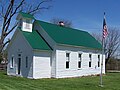
Exterior of scholl
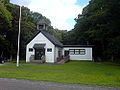
Exterior of building
One-room school in Reckahn, Brandenburg an der Havel, founded 1773, now a museum

Prussia was among the first countries in the world to introduce a tax-funded and generally compulsory primary education for either boys and girls.[4] In comparison, compulsory schooling in France or Great Britain was not successfully enacted until the 1880s.[5] The state-sponsored system was introduced in the late 18th century and has had a widespread influence ever since. The first Prussian schools were simple one-room schools, but by 1773 Friedrich Eberhard von Rochow had already set up a model school with primary education in two separate age-grouped classes.[6]

Ireland

[edit]

In Ireland, free primary education was mandated in 1831, prompting the establishment of many single-teacher National Schools across rural areas, most initially using a room in an existing building. By the 1890s there was a school in every parish. Most extant one- and two-room school buildings date from the decades after 1891 when primary education became compulsory. Most of those still in use today have been extended following merger with neighbouring schools. Since 2002, any state-funded school with at least 10 pupils is entitled to at least 2 teachers; the 21 schools which fell below this threshold are located on offshore islands.[7] In recent decades, an increasing number of schools have been founded for parents not content with the National School system. These include Gaelscoileanna (which teach through Irish rather than English) and multi-denominational schools (most Irish schools are controlled by one or other of the main Christian churches). Although such schools eventually become eligible for state funding, they usually begin with a single teacher in a room or prefabricated building.

United States

[edit]
Walapai Indian school, Kingman, Arizona, c. 1900

One-room schools were used only in rural areas.[8] As late as 1930 half of the nation's school children lived in rural areas. About 65% of the nation's school buildings were one-room, and they were attended by 30% of the rural students. Consolidation rapidly reduced their numbers in the 1920s and 1930s. They had a place in popular folklore, with one fondly recalling a, "little house, on a little ground, with a little equipment, where a little teacher at a little salary, for a little while, teaches little children little things".[9][10] A less romantic view by sociologist Newell Sims reported on the majority of rural schools of all sizes in the 1930s:

The utter inadequacy of the majority is the striking feature of rural school buildings. They are poorly situated, often without any grounds, or, with grounds that are grassless, treeless and beautyless. As structures they are poorly planned, poorly lighted, poorly heated, poorly seated, poorly equipped or virtually unequipped either for comfort or education, and poorly kept. Drinking water is not usually supplied. Sanitary arrangements and toilet facilities are as likely to be entirely lacking as to be provided in even a half-way decent manner.[11]

Bunert School, Warren, Michigan, c. 1876

Teachers in one-room schools were usually daughters of nearby farmers. They were recent graduates and spent a couple of years teaching before they quit to get married. The teachers were poorly prepared and needed to coach children of all ages/grades within one room. Their main role is well-described by a student from Kentucky in the 1940s:

The teachers that taught in the one room, rural schools were very special people. During the winter months they would get to the school early to get a fire started in the potbelly stove, so the building would be warm for the students. On many occasions they would prepare a hot, noon meal on top of the stove, usually consisting of soup or stew of some kind. They took care of their students like a new mother hen would care for her newly hatched chicks; always looking out for their health and welfare.

Destrehan Negro School, Destrehan, Louisiana, 1938

A typical school day was 9 a.m. to 4 p.m., with morning and afternoon recesses of 15 minutes each and an hour period for lunch. "The older students were given the responsibility of bringing in water, carrying in coal or wood for the stove. The younger students would be given responsibilities according to their size and gender such as cleaning the black board (chalkboard), taking the erasers outside for dusting plus other duties that they were capable of doing."[12]

Transportation for children who lived too far to walk was often provided by horse-drawn kid hack or sulky, which could only travel a limited distance in a reasonable amount of time each morning and evening, or students might ride a horse, these being put out to pasture in an adjoining paddock during the day. In more recent times, students rode bicycles.

Southern students and teachers most often walked to and from school; a three-mile journey was not uncommon. Due to the poor quality of roads, automobiles were not frequently used.[13]

The vast majority of one-room schools have been torn down; a few were converted for other purposes. However, in a handful of rural communities, such as Mennonites and Amish, one-room or two-room schools survived longer.[14] As of 2005, almost 400 one-room schools still operated in the United States.[15]

Teacher's residence

[edit]
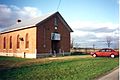
The one-room adobe schoolhouse in Tubac, Arizona, with a teacherage attached to the back

The teacher's residence, or teacherage, was often attached to the school, or very close by, so that a male teacher's wife and family were an integral part of the management and support system for the school. Single, female teachers were more often billeted or boarded with a local family to provide for social norms requiring social supervision of single females.

Consolidation

[edit]

Motorized school buses in the 1920s made longer distances possible, and one-room schools were soon consolidated in most portions of the United States into multiple classroom schools where classes could be held separately for various grade levels. Gradually, one-room school houses were replaced. Most one-room schools had been replaced by larger schools by World War II except in the most rural areas. However, they are still found in remote parts of Alaska where villages have a small population.

Texas 1924 study

[edit]

In the early 20th century, a fundamental disagreement existed within Texas education: the education profession championed efficiency and academic rigor to prepare students for college and especially for the industrial job market. They allowed room for vocational education high school programs to include attention to agriculture, but few farm boys attended high school.[16] In sharp contrast, rural citizens viewed schools as vital for community stability, identity, and the transmission of values. As long as the rural population outnumbered the urban, they had the political power to protect their way of life. The reformers had energy and determination to upgrade all of Texas.[17] They were masters of statistics and obtained a grant from the state to bring in nationally prominent experts to do an in-depth study in 1924 comparing school districts ranging from modern city and town schools to traditional one-room to four-room rural districts. As expected they found the data regarding buildings, supplies, training of teachers, and days in session demonstrated the rural schools trailed far behind. Then they turned to the students--how well did they learn reading, spelling, arithmetic and geography, and how much did they improve between grade 3 and grade 7? As expected, the students in the rural districts had lower test scores in grade 3 in each subject--the farm children knew about animals and plants, tools and the weather, but those topics were not on the exams. Indeed in grade 3 the urbanites --many with white collar parents--got higher scores in all the 3 Rs. The unexpected result was that between grades 3 and 7 the rural students equalled and usually outperformed in terms of gaining points. Even when they had far fewer days to learn, they narrowed the gap. The experts were stunned: every statistical test indicated the one room schools were superior in terms of how much and how fast students learned the 3 Rs. The final report bluntly stated: "It would appear from our data that the conclusions commonly reached regarding the ineffectiveness of the small school as compared with larger schools are unwarranted. Small schools rather than showing ineffectiveness, are slightly superior."[18] The experts suppressed the report--never telling anyone, and locking up all the material until a historian rediscovered their files six decades later. Ultimately, the forces of urbanization, the New Deal, and World War II sealed the fate of the small rural school systems.

Preservation: buildings and cultural

[edit]
Some of the historical one-room schools that survive today remain unrestored and in disrepair.

In Calvert County, Maryland, Port Republic School Number 7 closed its doors in 1932 and sat unused for over 40 years. Then, in 1976 the Calvert Retired Teachers Association, looking for a Bicentennial Year project, decided to restore the one-room schoolhouse. On July 24, 1977, after months of hard work by teachers and community volunteers, the old school bell rang out once more, and the little one-room school house, filled with its memories and memorabilia, was ready for visitors.[19] It is now one of the county's tourist attractions. A similar project was done in Queen Anne's County, Maryland, by retired Teachers and Community Volunteers. The restored schoolhouse is located in front of Queen Anne's County High School. In Iowa, over 125 small one-room school houses have been turned into local museums. The buildings in some places found new purpose as homes.

In Harrisburg, Nebraska, Flowerfield School serves as a living museum, and fourth-graders within the Nebraska panhandle spend a day at Flowerfield going through an average school day in 1888.[20] The students have the opportunity to experience both log and sod versions of the house, writing with quill pens, and a trip to the nearby museum, where they learn about other aspects of life in 1888.

In Vandalia, Indiana, the Vandalia District No. 2 one-room schoolhouse served Owen County's Lafayette Township students in grades 1–8 from the time it was completed in 1868 until it closed in 1951. The building, restored by a group of volunteers in 1976, is presently maintained and preserved by the Vandalia Community Preservation Association.[21]

The One Room School House Project of Southwestern College in Winfield, Kansas, includes listings and information on some 880 schools throughout the state and nation. The information, pictures, and stories included in this site have been collected and sent to the project by researchers and historians from across America.

The Gomer School in Fairfield, California, was listed as surplus in 2012 by the local board of education, and was converted to a boutique.[22]

[edit]

See also

[edit]

References

[edit]

Further reading

[edit]
[edit]
Revisions and contributorsEdit on WikipediaRead on Wikipedia
from Grokipedia
A one-room school, also known as a one-room schoolhouse, consists of a single classroom in which one teacher instructs pupils of all ages and grade levels together, typically covering elementary education from first through eighth grade. This model predominated in rural areas of the United States, Canada, and other nations with dispersed populations from the early 19th century until the mid-20th century, when advancements in transportation and school consolidation largely supplanted it. Instruction relied on recitation, where students presented lessons orally to the teacher, supplemented by older pupils assisting younger ones, fostering a multi-age learning environment amid limited resources such as basic textbooks, slates, and potbelly stoves for heating. These schools embodied community-driven education, often funded locally and built simply from logs or frame construction near farms, with students commuting by foot or horse in all weather. Though challenged by the teacher's solitary burden and rudimentary facilities, empirical observations and later studies highlight benefits like enhanced peer mentoring and adaptive pacing, contributing to foundational literacy in agrarian societies. By the late 20th century, fewer than 400 such schools remained operational in the U.S., primarily in remote or traditionalist communities like Amish settlements.

Overview and Characteristics

Definition and Physical Features

A one-room school, commonly referred to as a one-room schoolhouse, consists of a single structure where one delivers instruction to students spanning multiple grade levels, often from elementary through early . These facilities emerged as practical solutions in rural, low-population areas, accommodating 20 to 50 pupils aged roughly 6 to 16, and predominated from the early 1800s to the mid-1900s before consolidation into larger district schools. Structurally, one-room schoolhouses were compact rectangular or square buildings, typically 20–30 feet wide by 30–40 feet long, built from locally available materials including logs, , wood framing, siding, brick, or stone atop stone foundations on marginal land within walking distance of students' homes. They featured a gabled —often shingled with wood, tin, or mass-produced materials—and a front-facing single entrance opposite a solid rear wall, sometimes elevated with a small housing a bell for signaling class starts or emergencies. Windows, numbering two to four per side and fitted with small panes, were strategically placed on lateral walls (favoring the left for shadow-free ) to maximize daylight while minimizing glare on instructional surfaces; post-1870s exteriors were frequently painted white for uniformity and visibility. Interiors emphasized functionality with rows of wooden benches or paired desks oriented toward a front blackboard of painted wood or slate (often 1–2 feet high by 10 feet wide), accompanied by a teacher's desk and chalk trays. A central pot-bellied burned wood or for heat, though inadequate insulation caused temperature disparities—warm near the center, chilly at edges—necessitating open windows for air circulation and heavy pupil clothing layers. Entry led to a for coats, hats, and lunch pails on hooks and shelves; plank or tongue-and-groove floors were oiled with linseed for durability, lit by lamps for after-dark use, with sanitation via rear outhouses (sometimes gender-segregated) and water from pails filled at dug wells or neighboring farms.

Typical Student and Teacher Demographics

In one-room schools prevalent in rural areas of the from the mid-19th to early 20th centuries, student enrollment typically ranged from a few to around 40 children per school, drawn primarily from local within . These students spanned a wide age range, often from 5 to 20 years old, encompassing grades 1 through 8 (and sometimes beyond), with irregular attendance influenced by seasonal labor and needs. Due to and legal segregation, particularly in Southern and border states, many such schools served predominantly white students, while separate one-room facilities existed for African American children, as exemplified by over 80 schools built for Black students in between 1919 and 1930 under state initiatives. Teachers in these schools underwent a demographic shift over time: in the early , most were men, valued for discipline in managing multi-age groups that could number up to 60 pupils, but by women comprised about 60% of U.S. teachers overall, rising to nearly 90% by as became feminized through normal schools and lower pay scales. In rural one-room settings specifically, approximately 70% of teachers were women by 1900, often young and unmarried—frequently daughters of local farmers—with minimal formal training beyond short certification programs. These educators, typically aged in their late teens to mid-20s, boarded with student families and handled all instruction, maintenance, and community expectations single-handedly.

Historical Origins and Development

European Roots

One-room schools in trace their origins to rural and village institutions established primarily in Protestant regions during the late 17th and 18th centuries, driven by religious imperatives for and basic civic instruction amid sparse populations that precluded larger facilities. In , the 1696 Act for Settling of Schools mandated that every provide a schoolhouse and fund a , leading to the creation of numerous single-teacher schools where one educator handled pupils from ages 6 to 15 across all grades in subjects including reading, writing, arithmetic, and religious knowledge. These schools typically enrolled 20 to 50 students in modest buildings, with the teacher managing multi-grade recitations and older pupils assisting younger ones, a practice rooted in the post-Reformation emphasis on universal access. In the Kingdom of Prussia, early 18th-century rural adopted a one-room format as part of state-driven reforms to foster disciplined, literate subjects following military defeats and Enlightenment influences. By 1773, philanthropist Friedrich Eberhard von Rochow had founded a pioneering model at Reckahn, dividing instruction by age within a single to teach reading, writing, arithmetic, and moral to village children, setting a template for compulsory elementary schooling that emphasized uniformity and obedience. Prussian one-room often accommodated 40 to 100 pupils under one master, relying on and monitorial systems where advanced students tutored juniors, reflecting causal priorities of and productivity over individualized . Scandinavian countries, particularly , saw dedicated one-room schools emerge around 1715 in rural districts, influenced by Lutheran mandates for and serving as community hubs for multi-age groups in isolated farming areas. These institutions paralleled Scottish and Prussian models by prioritizing practical skills and religious instruction in ungraded settings, with teachers rotating or residing locally to cover broad curricula despite limited resources. In , informal dame schools—operated by women in private homes from the —functioned as proto-one-room setups for preschool-aged children, focusing on alphabet recitation and simple reading, though they lacked the structured oversight and often varied in efficacy due to unregulated . Across these European variants, empirical data from records indicate irregular participation tied to agricultural labor demands, yet they laid foundational practices for consolidated rural that prioritized over specialization.

Adoption in North America and Beyond

![The Eureka Schoolhouse in Springfield, Vermont, was built in 1785 and closed in 1900.]float-right In colonial , one-room schools emerged as a response to Puritan mandates for basic literacy to enable reading, formalized by ' 1647 Old Deluder Satan Act, which required towns with 50 households to appoint a teacher for reading and writing, and those with 100 to establish a . These early institutions were typically rudimentary one-room structures accommodating children of varying ages from local families, often operating seasonally to align with agricultural demands. By the late , such schools proliferated across rural settlements, with the first documented permanent one-room schoolhouse constructed in , in 1779, setting a model emulated in expanding regions. The westward expansion of European settlers in the 19th century accelerated adoption, particularly following the of 1787, which reserved public lands—specifically section 16 in each —for educational purposes, facilitating the establishment of thousands of one-room schools in rural districts. , these schools became ubiquitous in agrarian communities, peaking at approximately 190,000 by 1919, serving as primary educational hubs where a single instructed multi-grade classes of 20 to 60 students drawn from nearby farms. Adoption mirrored settlement patterns, with states like emphasizing universal access from early statehood, funding schools through local taxes and land grants to ensure rural children received foundational instruction in reading, arithmetic, and moral education. In , one-room schools were integral to , particularly in prairie provinces like and , where public education systems—established provincially in the late —relied on these modest structures to deliver free, tax-supported instruction amid sparse populations. Similar models took root in during the colonial era, with isolated rural schoolhouses built from the 1840s onward to educate children in remote communities, often under government initiatives to promote settlement and basic . These adaptations reflected pragmatic responses to geographic isolation and limited resources, extending the European-derived one-room format to contexts while prioritizing community self-sufficiency over centralized infrastructure. ![St. John the Baptist Church (1841) and a one-room schoolhouse (1845) with an attached teacherage, now a working museum in Canberra, Australia.]center

Educational Model and Practices

Curriculum and Multi-Grade Instruction

In one-room schools, the curriculum emphasized foundational academic skills aligned with practical rural life, primarily the "three Rs" of reading, writing (including penmanship), and arithmetic, supplemented by grammar, orthography (spelling), history, geography, hygiene, and occasional subjects like music, elocution, and citizenship. Instructional materials were limited and reusable, such as McGuffey Readers for reading and moral instruction, Spencerian copybooks for penmanship, slates and chalk for arithmetic practice to conserve paper, and shared maps or blackboards for geography and history. Lessons often incorporated rote memorization of facts, poems, or state capitals, with arithmetic problems drawn from farm scenarios like calculating crop yields, reflecting the curriculum's extension of parental home education in late 19th- and early 20th-century rural America. Multi-grade instruction required a single to manage students from through —typically 20 to 40 pupils—seated by ability rather than strict age groups, with younger children at the front and older at the back. The predominant method was , where small groups or individuals approached the 's desk to orally demonstrate mastery of assigned lessons, such as reading aloud from texts or solving math problems verbally, while others engaged in independent seatwork on slates to minimize disruptions. Older students frequently assisted younger ones through peer or monitoring during independent periods, enabling the to rotate focus across grades; for instance, combined classes for fifth and sixth graders might cover simultaneously. Daily schedules structured this approach, with mornings devoted to arithmetic and reading drills and afternoons to grammar, spelling bees, or recitations, often culminating in oral exams for promotion based on demonstrated proficiency rather than standardized grading. This system persisted widely until school consolidation reduced one-room schools from 196,037 in 1918 (70.8% of U.S. public schools) to under 1,000 by 1980, though its strategies emphasized self-directed learning and cooperative grouping without evidence of inferior academic outcomes compared to single-grade models in later analyses.

Daily Operations and Teacher Responsibilities

In historical one-room schools of the late 19th and early 20th centuries, the school day typically ran from 8 a.m. to 4 p.m., with terms varying seasonally—summer sessions from May to and winter from to April before 1900, shifting to nine-month terms from September to May thereafter. Students arrived after morning farm chores, often walking miles, and lined up by gender upon the teacher's bell, reciting the and or a moral lesson before entering, with girls seated first in gender-separated rows. Teaching multiple grades simultaneously relied on recitation methods, where the teacher instructed one group at the front while others worked independently on slates or copybooks, emphasizing the "Three Rs" (reading, writing, arithmetic) through rote memorization, oral drills, and weekly spelling bees. Older students often assisted younger ones, and mornings focused on core subjects like arithmetic on lap slates for beginners and penmanship with dip pens, while afternoons covered grammar, history, geography, and moral discussions. Recesses provided brief breaks for play and privy use—typically 15 minutes mid-morning and afternoon—while a one-hour allowed students to eat simple meals like biscuits or sandwiches indoors or out, followed by free play such as tag or marbles. The day ended with slate cleaning, announcements, and dismissal, after which students returned home for evening chores. Teachers, often young with only an eighth-grade education initially but later requiring certificates, bore extensive responsibilities beyond instruction, including starting wood stoves, hauling water and coal, cleaning chimneys and lamps, and sweeping floors—duties sometimes shared with students but overseen by the . They enforced strict discipline through punishments like ferules, caps, or line-writing, graded papers evenings while boarding with families, and managed irregular attendance from farm work, all for low pay supplemented by .

Advantages and Supporting Evidence

Personalization and Social Benefits

In one-room schools, the small enrollment, typically ranging from 5 to 20 students across multiple grades, enables teachers to provide highly individualized instruction tailored to each pupil's pace and needs, rather than adhering to rigid grade-level curricula. This personalization arises from the teacher's intimate knowledge of students' strengths and weaknesses, allowing for differentiated assignments and real-time adjustments during lessons. For instance, advanced students could pursue self-directed work while the teacher focused on struggling learners, a practice documented in historical accounts of rural American schools where enrollment averaged 15-25 pupils per room. Multi-age grouping further enhances by promoting peer , where older students assist younger ones, reinforcing mastery for tutors and providing for novices. Empirical reviews of multi-age classrooms, analogous to one-room settings, indicate that such arrangements support academic equivalence to single-grade classes while fostering individualized progress through dynamics. Socially, one-room schools cultivate close-knit communities that build interpersonal skills, leadership, and mutual support among students of varying ages. Mixed-age interactions encourage prosocial behaviors, such as cooperation and empathy, as evidenced by studies showing significant improvements in children's helpfulness and reduced aggression in multi-age versus same-age groups. Older pupils often assume mentoring roles, developing responsibility and verbal skills, which contribute to positive self-concepts and attitudes toward school without the competitive stratification of graded systems. These dynamics mirror family-like structures, strengthening community ties and social cohesion in rural contexts where schools served as local hubs.

Empirical Data on Outcomes and Local Control

Empirical studies on multi-grade instruction, characteristic of one-room schools, reveal no consistent negative impact on in foundational subjects such as reading, , , and arithmetic. A of 30 studies conducted between 1948 and 1983 across the and found mixed results, with approximately equal numbers favoring conventional single-grade grouping, multi-grade setups, or inconclusive outcomes; however, certain analyses indicated advantages for younger students in multi-grade environments, including higher performance relative to age-segregated peers. Similarly, a best-evidence synthesis by Veenman (1995) concluded neutral cognitive effects for multigrade classes, with no evidence of inferiority in or progress. In persistent examples like one-room schools, eighth-grade students have demonstrated competence in basic skills, scoring 1.06 years above the national mean in arithmetic on the Tests of Basic Skills and outperforming non- public school peers in that domain, though vocabulary and broader subjects lagged and testing methodologies faced criticism for and limited scope. Social and attitudinal outcomes in multi-grade settings show clearer benefits, with multiple studies linking them to enhanced , sociability, , and positive attitudes toward school, without reported increases in aggression or isolation. Local control in small, community-governed schools correlates with improved student outcomes through heightened , parental involvement, and managerial responsiveness. Empirical analysis from Indonesian primary schools confirms that local governance structures enhance principal and parental efforts in school management, leading to better and elevated test scores, as opposed to centralized systems where such participation diminishes. on district consolidation, which reduces control, yields null or only marginally positive effects on achievement metrics, implying that one-room models sustain equivalent performance while preserving and tailored .

Criticisms and Empirical Shortcomings

Resource and Instructional Limitations

One-room schools operated with severely constrained material resources, often limited to a single , shared textbooks (frequently one per subject for the entire class), basic desks, and a for heating, without access to libraries, laboratories, or specialized such as globes or maps until later reforms. In rural American contexts through the early , these institutions rarely had , indoor , or sufficient supplies like and , compelling students to furnish their own slates and rely on oral recitations to conserve materials. Such scarcity hindered hands-on learning in subjects like and , where empirical or visual aids were essential, and perpetuated rote memorization over exploratory methods due to the absence of graded materials tailored to age-specific needs. Instructionally, the single-teacher model imposed fundamental constraints on pedagogical depth and differentiation, as educators—often young and minimally trained, with qualifications equivalent to a two-year covering only core subjects—simultaneously managed multi-grade groups spanning ages 5 to 18. Teachers divided their attention across recitations for advanced students while assigning seatwork to younger ones, limiting individualized feedback and specialized instruction in complex topics like higher or foreign languages, which required undivided focus or expert guidance unavailable in isolated settings. Multi-grade dynamics exacerbated this, with time constraints on lesson planning for disparate levels leading to superficial coverage; for instance, a might allocate only brief intervals for each group's needs, fostering dependency on peer by older students rather than systematic advancement. Empirical analyses of multi-grade teaching highlight persistent challenges, including inadequate preparation for handling diverse developmental stages, resulting in uneven mastery and higher demands on workload without compensatory training. These limitations manifested in comparative outcomes favoring consolidated schools, where access to graded classrooms, electives, and specialized staff enabled broader curricula and improved achievement in standardized metrics. Historical reform efforts, such as those in , documented one-room schools' struggles with instructional uniformity, correlating with lower completion rates and literacy in advanced subjects before widespread consolidation reduced such disparities by pooling resources for vocational and . While small-scale studies note no universal inferiority, causal evidence from district mergers links one-room isolation to restricted exposure to progressive methods, contributing to empirical gaps in preparing students for industrialized economies requiring technical proficiency.

Evidence from Comparative Studies

Comparative studies of small rural schools, including historical one-room models, against consolidated multi-room systems consistently identify structural inefficiencies in the former, particularly in utilization and instructional specialization. Small districts, often encompassing one-room schools, exhibit higher per- costs due to fixed expenses spread over fewer students, with data showing small elementary districts incurring about $1,000 more per pupil annually compared to larger counterparts, without proportional gains in educational . This inefficiency stems from limited , as evidenced in analyses of U.S. consolidations where smaller units allocate a greater share of budgets to administration—7.7% versus the state average of 6.3%—diverting funds from resources. In terms of program access, one-room schools demonstrably lag in offering diverse curricula and extracurriculars essential for comprehensive development. Research reviews indicate that consolidation expands availability of advanced placement courses, laboratories, and athletics, which small schools cannot sustain due to insufficient enrollment and staffing; for example, very small rural districts pre-consolidation often lack robust science facilities or specialized electives, correlating with narrower skill sets upon transition to higher education. Although direct achievement comparisons yield mixed results—some showing null or modest post-consolidation gains in math and ELA (0.04–0.06 standard deviations)—the persistent shortfall in one-room settings is the single-teacher model's inability to deliver grade-differentiated, expert-led instruction, leading to diluted focus across subjects and potential gaps in complex topics like higher mathematics. Empirical disruptions during consolidation, such as short-term declines (up to 5.9% of a standard deviation in affected Danish schools), underscore transition challenges but also highlight baseline vulnerabilities in small schools, where isolation exacerbates limited peer interaction and motivational resources. Overall, while academic test outcomes do not uniformly favor larger schools, comparative evidence emphasizes one-room schools' empirical deficits in , specialization, and holistic program breadth, contributing to their historical phase-out in favor of systems better equipped for modern educational demands.

Decline and Consolidation

Economic and Policy Drivers

The decline of one-room schools during the was primarily propelled by economic pressures favoring larger-scale operations, including the high per-pupil costs of maintaining small, dispersed facilities amid falling rural enrollments. In , the nation operated over 200,000 school districts, most featuring one-room schools with average enrollments under 100 students, but by 1970, districts had consolidated to fewer than as average school sizes grew from 87 to students between and 1970. This shift reflected technical efficiencies from improved infrastructure, such as expanded road networks and the widespread adoption of school buses starting in the , which lowered transportation costs and enabled centralized schooling over maintaining inefficient small units. Rural depopulation, driven by and farm , further strained one-room schools by reducing student numbers and increasing costs for heating, supplies, and underutilized teachers, prompting districts to merge for in resource allocation and curriculum expansion. Policy interventions at state and federal levels accelerated consolidation by providing financial incentives and regulatory frameworks that made larger districts viable. Beginning in the 1920s and intensifying during the , state legislatures allocated funds for school bus fleets and new consolidated buildings, effectively subsidizing the transition from one-room models and requiring local voter approval through referendums that highlighted potential tax savings and enhanced offerings like high schools. Examples include Massachusetts's 1869 law enabling free public transportation, which set a , and mid-century mandates like Kansas's House Bill 377 in the , which unified districts to meet minimum enrollment thresholds for eligibility. These policies, often justified by concerns over declining property values in districts lacking graded schooling, prioritized technical efficiency and national standardization over local autonomy, with over 100,000 districts reorganized by the century's end despite resistance from rural communities valuing proximity and familiarity.

Key Case Studies and Transitions

In , state legislation enacted in the required all public school districts to reorganize or consolidate, directly accelerating the closure of one-room schools amid rural depopulation and shrinking enrollments that often fell below viable thresholds for maintaining separate facilities. This policy shift, driven by the need for and improved instructional resources like specialized teachers and laboratories unavailable in isolated rural settings, resulted in the rapid merger of thousands of small districts into larger consolidated systems by the late , effectively ending the widespread use of the one-room model across the state. Nebraska exemplifies prolonged resistance to consolidation, where early 20th-century efforts reduced over 7,000 districts through 1921 laws promoting mergers, yet cultural and logistical attachments to local schools preserved around 300 one-room operations as late as 1980, serving sparse populations with enrollments sometimes under 10 students. A 2005 legislative mandate then imposed stricter criteria for district viability, including minimum attendance thresholds and financial incentives for consolidation, prompting widespread transitions to centralized campuses that enhanced administrative efficiency but eroded community-specific governance. In central , economic pressures from farm mechanization and outmigration in the mid-20th century fueled district consolidations, as fragmented one-room schools struggled with underfunding and teacher shortages, leading to mergers that prioritized broader curricula over localized instruction; a 1960s reorganization wave, for instance, integrated dozens of rural districts into fewer regional entities, reflecting broader causal links between infrastructural improvements like paved roads and bus transportation enabling larger attendance areas.

Modern Examples and Revivals

Persistence in Religious and Rural Communities

In and other conservative Anabaptist communities, one-room schools persist as a deliberate preservation of insulated from broader societal influences. These parochial institutions, operating through , prioritize in core subjects like arithmetic, English, and German dialect, alongside religious instruction and practical skills such as and , to prepare children for agrarian lifestyles. Following the 1972 U.S. ruling in , which upheld Amish exemptions from compulsory high school attendance on free exercise grounds, communities have constructed and maintained hundreds of such schools independently of public systems, funding them through church districts without state aid. Enrollment in these schools correlates with Amish , with new buildings erected as families expand; for instance, in , Old Order Amish schools have seen surging attendance amid a doubling of the local Amish population since 1990. Amish one-room schools typically house 20 to 40 students under a single , often a young unmarried woman from the community with minimal formal training beyond her own schooling. This model endures due to its alignment with communal values emphasizing humility, obedience, and separation from "English" (non-Amish) norms, rejecting higher education to avert assimilation risks. In states with large Amish settlements, such as , , and , over 1,000 such schools operated as of 2010, comprising the majority of surviving U.S. one-room facilities. alone reported 49 Amish one-room private schools enrolling 1,027 students in recent surveys. Beyond religious enclaves, one-room schools continue in sparsely populated rural areas where student numbers preclude larger facilities, driven by geographic isolation and parental preferences for localized control. Nationally, fewer than 400 such schools remain operational, down from 190,000 in 1919, with most in remote Western and Midwestern districts averaging 6 to 10 pupils. In Nebraska, 385 preserved or active one-room structures serve as outliers, while Montana and South Dakota maintain dozens for ranching communities where busing to consolidated schools exceeds practical distances—often 20 miles or more over unpaved roads. These rural holdouts, frequently public rather than private, demonstrate economic persistence through minimal overhead: a single teacher covers multi-grade instruction, and operations rely on volunteer maintenance by families. The Schoolhouse in , operational since the , exemplifies this as the state's sole remaining one-room school, educating island residents' children amid declining mainland enrollments. Such persistence reflects causal factors like low density—under 1 student per square mile in some counties—outweighing consolidation incentives from federal policies like the 1958 , which prioritized larger schools for efficiency.

Contemporary Adaptations with Technology

Contemporary one-room schools, particularly in remote rural areas, integrate computers and to supplement traditional multi-grade instruction with personalized digital resources. For instance, Duckwater Shoshone Elementary School in , serving students from through , received 33 desktop computers and 61 laptops from the in May 2023, facilitating computer-based learning and research in an isolated community where the nearest gas station is 70 miles away. The school maintains connectivity via microwave wide-area network links with speeds up to 100 Mbps, enabling access to online curricula and virtual tools despite geographic challenges. Micro-schools, modern analogs to one-room schoolhouses with small enrollments of fewer than 15 mixed-age students, leverage platforms, online resources, and data-driven assessments to customize education for diverse skill levels within a single space. These adaptations allow a single to manage individualized plans across grades, using software for progress tracking and supplementing in-person teaching with , as seen in early models like AltSchool's sites launched in 2014, which employed shared platforms for in 1-4 grade mixed classrooms. In blended micro-school formats, technology-rich environments combine in-person guidance with online instruction, enabling efficient resource use in low-enrollment settings. However, technology adoption varies, with some rural one-room schools limiting use to basic functions like research and educational videos to prioritize hands-on and faith-based learning over extensive digital reliance. Examples include Homestead School in , opened in 2024 for grades 1-8, and Neighborhood Christian Schools in Hutton Valley, reopened in 2020, both employing minimal tech to support supplemental activities rather than core instruction. This selective integration addresses connectivity limitations in rural areas while enhancing access to broader curricula without requiring multiple specialized staff.

Preservation and Legacy

Historical Buildings and Artifacts

Numerous one-room schoolhouses from the 18th and 19th centuries have been preserved as historic sites, offering tangible evidence of early American rural education systems. These structures typically featured simple rectangular designs with gabled roofs, often constructed from local materials like logs, stone, or frame wood, and included basic amenities such as a single pot-bellied for heating and separate privies. Preservation efforts by historical societies and state parks have maintained interiors with original or period-appropriate furnishings, allowing public visitation and reenactments to demonstrate instructional methods. The Eureka Schoolhouse in Springfield, Vermont, exemplifies early construction, built in 1785 and used until 1900, making it among the oldest surviving public school buildings in the state. Local residents under William Bettergneau erected it to serve nearby families, with operations reflecting seasonal attendance patterns common in agrarian communities. Today, it functions as a state historic site, preserving its original frame and providing context for 18th-century . Similarly, the Churchville One-Room Schoolhouse in , dating to circa 1850, holds status and stands as one of the area's oldest structures, relocated and restored to showcase district school architecture. In , the Felta Schoolhouse, completed in 1906 and closed on November 27, 1951, remains intact, highlighting early 20th-century transitions before consolidation. Key artifacts from these schools include rudimentary writing slates, inkwells, and chalkboards—often simple painted boards—used by students across grade levels for shared lessons. Wooden benches or slab desks, sometimes hewn from logs in pioneer eras, accommodated multiple pupils per seat, emphasizing communal learning. Surviving textbooks, such as the McGuffey Eclectic Readers series introduced in 1836, provided moral and literacy instruction, with copies still held in museum collections like those at . School bells, cast iron stoves, and puncheon floors further illustrate the austere conditions, as documented in archaeological and oral histories from sites like Indiana's rural schoolhouses, where domestic items like utensils reveal teachers' residential roles. These items, recovered or replicated for exhibits, underscore the resource constraints and of one-room education.

Influence on Current Education Debates

Proponents of microschools, which typically enroll fewer than 20 students across multiple grade levels under one or two teachers, frequently reference the one-room schoolhouse as a historical precedent for personalized, community-driven that contrasts with the standardized, age-segregated model dominant in most systems today. These advocates argue that the mixed-age dynamics of one-room schools fostered , where older students assisted younger ones, promoting mastery and responsibility—elements replicated in modern microschool designs to address perceived shortcomings in large-scale schooling, such as reduced individual attention amid average U.S. public school class sizes exceeding 20 students. In school choice debates, the underscores arguments for decentralizing away from monolithic district monopolies, particularly in rural areas where consolidation in the eroded local control and ties, leading to longer commutes and diluted cultural relevance. For instance, as of , microschools—often operating as homeschool hybrids—have proliferated in states like , with proponents citing the one-room efficiency in resource use and adaptability to local needs as a counter to bureaucratic inefficiencies in consolidated systems, where per-pupil spending averaged $14,347 nationally in 2022 without commensurate outcomes. Critics of expansive schooling, including those in circles, draw on this legacy to advocate for regulatory flexibility, noting that one-room schools historically succeeded with minimal oversight by leveraging and peer involvement, a echoed in co-op models serving over 50,000 through organizations like Classical Conversations. Debates over versus customization also invoke one-room precedents, where teachers tailored instruction across grades using and practical application, challenging reforms that prioritized uniformity for . Contemporary adaptations integrate to enable individualized pacing, positioning the model as viable for addressing learning loss post-2020 disruptions, with microschool enrollment surging 20-30% annually in some regions by 2025. However, skeptics question and long-term efficacy without rigorous empirical validation, as historical data on one-room outcomes remains anecdotal amid broader gains from rather than format alone. This tension fuels policy discussions on funding mechanisms, such as education savings accounts, to support such revivals without subsidizing underperforming large districts.

References

Add your contribution
Related Hubs
Contribute something
User Avatar
No comments yet.