



Community hub
 | This article includes a list of references, related reading, or external links, but its sources remain unclear because it lacks inline citations. (February 2025) |
| Rose Temporal range:
| |
|---|---|

| |
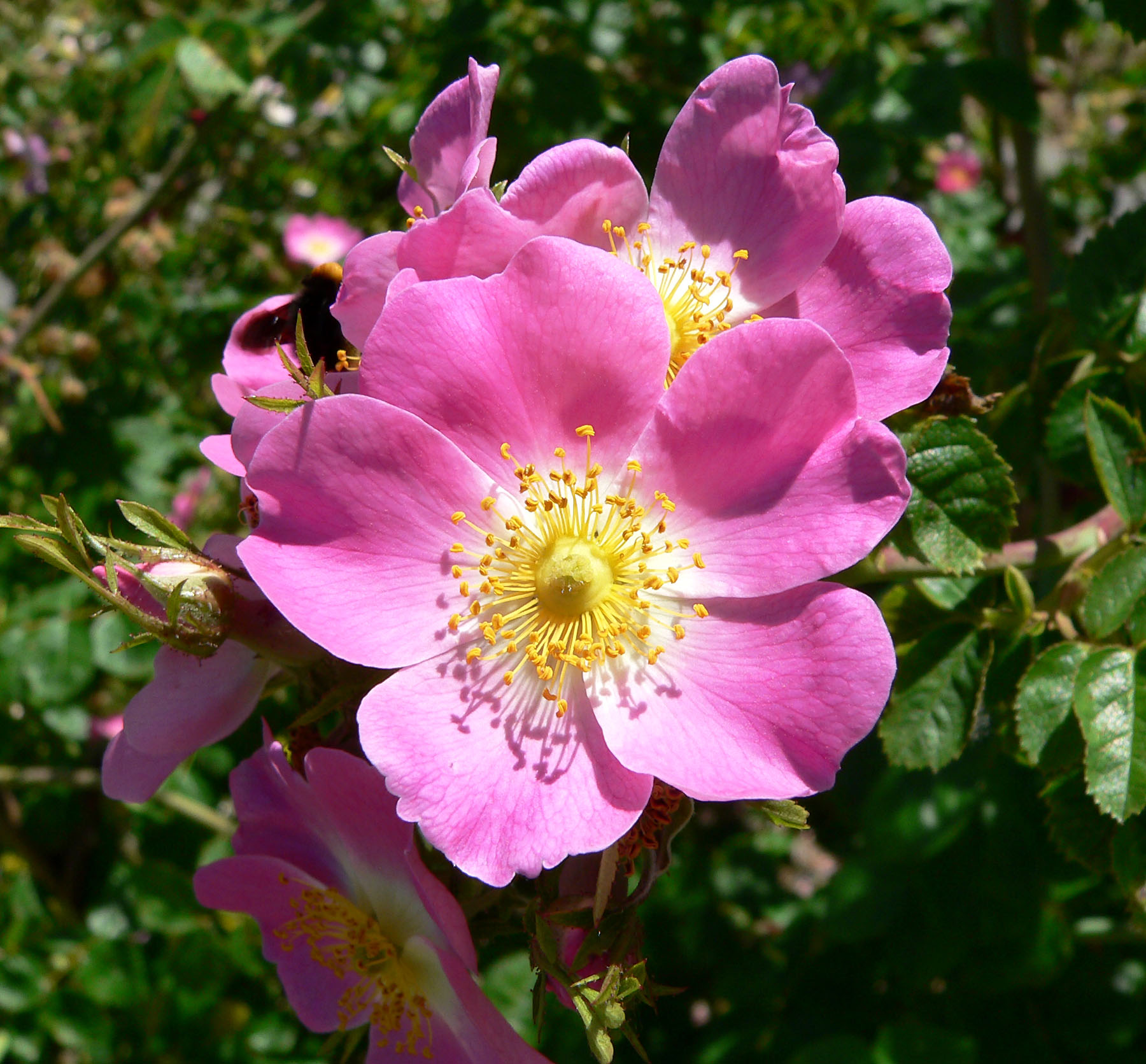
| Rosa rubiginosa, a wild rose native to Europe and West Asia | |

| |
| Rosa 'Precious Platinum', a hybrid tea garden cultivar | |
Scientific classification 
| |
| Kingdom: | Plantae |
| Clade: | Tracheophytes |
| Clade: | Angiosperms |
| Clade: | Eudicots |
| Clade: | Rosids |
| Order: | Rosales |
| Family: | Rosaceae |
| Subfamily: | Rosoideae |
| Tribe: | Roseae |
| Genus: | Rosa L.[1] |
| Type species | |
| Rosa cinnamomea L.[2]
| |
| Species | |
| Synonyms[3] | |
| |
A rose is either a woody perennial flowering plant of the genus Rosa (/ˈroʊzə/),[4] in the family Rosaceae (/roʊˈzeɪsiːˌiː/),[4] or the flower it bears. There are over three hundred species and tens of thousands of cultivars.[5] They form a group of plants that can be erect shrubs, climbing, or trailing, with stems that are often armed with sharp prickles.[6] Their flowers vary in size and shape and are usually large and showy, in colours ranging from white through pinks, reds, oranges and yellows. Most species are native to Asia, with smaller numbers native to Europe, North America, and Northwest Africa.[6] Species, cultivars and hybrids are all widely grown for their beauty and often are fragrant. Roses have acquired cultural significance in many societies. Rose plants range in size from compact, miniature roses to climbers that can reach seven meters in height.[6] Different species hybridize easily, and this has been used in the development of the wide range of garden roses.
Etymology
[edit]The name rose comes from Latin rosa, which was perhaps borrowed from Oscan, from Greek ῥόδον rhódon (Aeolic βρόδον wródon), itself borrowed from Old Persian wrd- (wurdi), related to Avestan varəδa, Sogdian ward, Parthian wâr.[7][8]
Botany
[edit]The leaves are borne alternately on the stem. In most species, they are 5 to 15 centimetres (2.0 to 5.9 in) long, pinnate, with (3–) 5–9 (−13) leaflets and basal stipules; the leaflets usually have a serrated margin, and often a few small prickles on the underside of the stem. Most roses are deciduous but a few (particularly from Southeast Asia) are evergreen or nearly so.
Thorns
[edit]The sharp growths along a rose stem, though commonly called "thorns", are technically prickles, outgrowths of the epidermis (the outer layer of tissue of the stem), unlike true thorns, which are modified stems. Rose prickles are typically sickle-shaped hooks, which aid the rose in hanging onto other vegetation when growing over it. Some species such as Rosa rugosa and R. pimpinellifolia have densely packed straight prickles, probably an adaptation to reduce browsing by animals, but also possibly an adaptation to trap wind-blown sand and so reduce erosion and protect their roots (both of these species grow naturally on coastal sand dunes). Despite the presence of prickles, roses are frequently browsed by deer. A few species of roses have only vestigial prickles that have no points.[citation needed]
Plant geneticist Zachary Lippman of Cold Spring Harbor Laboratory found that prickles are controlled by the LOG gene.[9][10] Blocking the LOG gene in roses reduced the thorns (large prickles) into tiny buds.
-
 Rose thorns
 -
 Rose leaflets


Flower
[edit]The flowers of most species have five petals, with the exception of Rosa omeiensis and Rosa sericea, which usually have only four. Each petal is divided into two distinct lobes and is usually white or pink, though in a few species yellow or red. Beneath the petals are five sepals (or in the case of some Rosa omeiensis and Rosa sericea, four). These may be long enough to be visible when viewed from above and appear as green points alternating with the rounded petals. The coloured petals are fused on the axis and arranged in five bundles forming a circle, the petal bundles expand further from each other;[11]: 458–459 the petals form a cup or disc surrounding the gynoecium.[11]: 453 There are multiple superior ovaries that develop into achenes.[12]
-
 Longitudinal section of a developing rose hip
 -
 Exterior view of rose buds
 -
 A close-up of a climbing rose


Reproduction
[edit] |
Roses are insect-pollinated in nature. A fertilized ovary forms a berry-like aggregate fruit called a "hip". The hips of most species are red, but a few (e.g. Rosa pimpinellifolia) have dark purple to black hips. Each hip comprises an outer fleshy layer, the hypanthium, which contains 5–160 "seeds" (technically dry single-seeded fruits called achenes) embedded in a matrix of fine, but stiff, hairs. Rose hips of some species, especially the dog rose (Rosa canina) and rugosa rose (R. rugosa), are very rich in vitamin C, among the richest sources of any plant. The hips are eaten by fruit-eating birds such as thrushes and waxwings, which then disperse the seeds in their droppings.
Many of the domestic cultivars do not produce hips, as the flowers are too tightly petalled to provide access for pollination and the plants can only propagate through human-made cuttings.[verification needed]
Evolution
[edit]The oldest remains of roses are from the Late Eocene Florissant Formation of Colorado.[13] Roses were present in Europe by the early Oligocene.[14]
Today's garden roses come from 18th-century China.[15] Among the old Chinese garden roses, the Old Blush group is the most primitive, while newer groups are the most diverse.[16]
Genome
[edit]A study of the patterns of natural selection in the genome of roses indicated that genes related to DNA damage repair and stress adaptation have been positively selected, likely during their domestication.[17] This rapid evolution may reflect an adaptation to genome confliction resulting from frequent intra- and inter-species hybridization and switching environmental conditions of growth.[17]
Species
[edit]
The genus Rosa is composed of 140–180 species and divided into four subgenera:[18]
- Hulthemia (formerly Simplicifoliae, meaning "with single leaves") containing two species from Southwest Asia, Rosa persica and Rosa berberifolia, which are the only roses without compound leaves or stipules.[19]
- Hesperrhodos (from the Greek for "western rose") contains Rosa minutifolia and Rosa stellata, from North America.
- Platyrhodon (from the Greek for "flaky rose", referring to flaky bark) with one species from east Asia, Rosa roxburghii (also known as the chestnut rose).
- Rosa (the type subgenus, sometimes incorrectly called Eurosa) containing all the other roses. This subgenus is subdivided into 11 sections.
- Banksianae – white and yellow flowered roses from China.
- Bracteatae – three species, two from China and one from India.
- Caninae – pink and white flowered species from Asia, Europe and North Africa.
- Carolinae – white, pink, and bright pink flowered species all from North America.
- Chinensis – white, pink, yellow, red and mixed-colour roses from China and Burma.
- Gallicanae – pink to crimson and striped flowered roses from western Asia and Europe.
- Gymnocarpae – one species in western North America (Rosa gymnocarpa), others in east Asia.
- Laevigatae – a single white flowered species from China.
- Pimpinellifoliae – white, pink, bright yellow, mauve and striped roses from Asia and Europe.
- Rosa (syn. sect. Cinnamomeae) – white, pink, lilac, mulberry and red roses from everywhere but North Africa.
- Synstylae – white, pink, and crimson flowered roses from all areas.
Ecology
[edit]Some birds, particularly finches, eat the seeds.
Pests and diseases
[edit]Wild roses are host plants for a number of pests and diseases. Many of these affect other plants, including other genera of the Rosaceae.
Cultivated roses are often subject to severe damage from insect, arachnid and fungal pests and diseases. In many cases they cannot be usefully grown without regular treatment to control these problems.
Uses
[edit]Roses are best known as ornamental plants grown for their flowers in the garden and sometimes indoors. They have also been used for commercial perfumery and commercial cut flower crops. Some are used as landscape plants, for hedging and for other utilitarian purposes such as game cover and slope stabilization.
Ornamental plants
[edit]The majority of ornamental roses are hybrids that were bred for their flowers. A few, mostly species roses are grown for attractive or scented foliage (such as Rosa glauca and R. rubiginosa), ornamental thorns (such as R. sericea) or for their showy fruit (such as R. moyesii).
Ornamental roses have been cultivated for millennia, with the earliest known cultivation known to date from at least 500 BC in Mediterranean countries, Persia, and China.[20] It is estimated that 30 to 35 thousand rose hybrids and cultivars have been bred and selected for garden use as flowering plants.[21] Most are double-flowered with many or all of the stamens having morphed into additional petals.
In the early 19th century the Empress Josephine of France patronized the development of rose breeding at her gardens at Malmaison. As long ago as 1840 a collection numbering over one thousand different cultivars, varieties and species was possible when a rosarium was planted by Loddiges nursery for Abney Park Cemetery, an early Victorian garden cemetery and arboretum in England.
Cut flowers
[edit]
Roses are a popular crop for both domestic and commercial cut flowers. Generally they are harvested and cut when in bud, and held in refrigerated conditions until ready for display at their point of sale. The price of the roses depends partly on the characteristics of the rose itself, such as how long the stem is and how big the bloom is, and partly on factors about how it was grown, such as which country it was grown in.[22]
In temperate climates, cut roses are often grown in greenhouses, and in warmer countries they may also be grown under cover in order to ensure that the flowers are not damaged by weather and that pest and disease control can be carried out effectively. Significant quantities are grown in some tropical countries, and these are shipped by air to markets across the world.[23]
Some kind of roses are artificially coloured using dyed water, like rainbow roses.
Perfume
[edit]
10H
18O)
Rose perfumes are made from rose oil (also called attar of roses), which is a mixture of volatile essential oils obtained by steam distilling the crushed petals of roses. An associated product is rose water which is used for cooking, cosmetics, medicine and religious practices. The production technique originated in Persia[24] and then spread through Arabia and India, and more recently into eastern Europe. In Bulgaria, Iran and Germany, damask roses (Rosa × damascena 'Trigintipetala') are used. In other parts of the world Rosa × centifolia is commonly used. The oil is transparent pale yellow or yellow-grey in colour. 'Rose Absolute' is solvent-extracted with hexane and produces a darker oil, dark yellow to orange in colour. The weight of oil extracted is about one three-thousandth to one six-thousandth of the weight of the flowers; for example, about two thousand flowers are required to produce one gram of oil.
The main constituents of attar of roses are the fragrant alcohols geraniol and L-citronellol and rose camphor, an odorless solid composed of alkanes, which separates from rose oil.[25] β-Damascenone is also a significant contributor to the scent.
Food and drink
[edit]

Rose hips, usually from R. canina, are high in vitamin C, and are edible raw after the removal of the irritant hairs.[26][27] Hips can be made into jam, jelly, marmalade, and soup, or brewed for tea. They are also pressed and filtered to make rose hip syrup. Rose hips are also used to produce rose hip seed oil, which is used in skin products and some makeup products.[28]Diarrhodon (Gr διάρροδον, "compound of roses", from ῥόδων, "of roses"[29]) is the historic name for various compounds in which red roses are an ingredient.
_bright.jpg)
Rose water has a very distinctive flavour and is used in Middle Eastern, Persian, and South Asian cuisine—especially in sweets such as Turkish delight,[30] barfi, baklava, halva, gulab jamun, knafeh, and nougat. Rose petals or flower buds are sometimes used to flavour ordinary tea, or combined with other herbs to make herbal teas. A sweet preserve of rose petals called gulkand is common in the Indian subcontinent. The leaves and washed roots are also sometimes used to make tea.[26]
In France, there is much use of rose syrup, most commonly made from an extract of rose petals. In the Indian subcontinent, Rooh Afza, a concentrated squash made with roses, is popular, as are rose-flavoured frozen desserts such as ice cream and kulfi.[31][32]
The flower stems and young shoots are edible, as are the petals (sans the white or green bases).[26] The latter are usually used as flavouring or to add their scent to food.[33] Other minor uses include candied rose petals.[34]
Rose creams (rose-flavoured fondant covered in chocolate, often topped with a crystallised rose petal) are a traditional English confectionery widely available from numerous producers in the UK.
Under the American Federal Food, Drug, and Cosmetic Act,[35] there are only certain Rosa species, varieties, and parts are listed as generally recognized as safe (GRAS).
- Rose absolute: Rosa alba L., Rosa centifolia L., Rosa damascena Mill., Rosa gallica L., and vars. of these spp.
- Rose (otto of roses, attar of roses): Ditto
- Rose buds
- Rose flowers
- Rose fruit (hips)
- Rose leaves: Rosa spp.[36]
Art and symbolism
[edit]
The long cultural history of the rose has led to it being used often as a symbol. In ancient Greece, the rose was closely associated with the goddess Aphrodite.[37][38] In the Iliad, Aphrodite protects the body of Hector using the "immortal oil of the rose"[39][37] and the archaic Greek lyric poet Ibycus praises a beautiful youth saying that Aphrodite nursed him "among rose blossoms".[40][37] The second-century AD Greek travel writer Pausanias associates the rose with the story of Adonis and states that the rose is red because Aphrodite wounded herself on one of its thorns and stained the flower red with her blood.[41][37] Book Eleven of the ancient Roman novel The Golden Ass by Apuleius contains a scene in which the goddess Isis, who is identified with Venus, instructs the main character, Lucius, who has been transformed into a donkey, to eat rose petals from a crown of roses worn by a priest as part of a religious procession in order to regain his humanity.[38] French writer René Rapin invented a myth in which a beautiful Corinthian queen named Rhodanthe ("she with rose flowers") was besieged inside a temple of Artemis by three ardent suitors who wished to worship her as a goddess; the god Apollo then transformed her into a rosebush.[42]
Following the Christianization of the Roman Empire, the rose became identified with the Virgin Mary. The colour of the rose and the number of roses received has symbolic representation.[43][44][38] The rose symbol eventually led to the creation of the rosary and other devotional prayers in Christianity.[45][38] The Rose Cross incorporates the flower directly into the Christian cross, and is the namesake of the esoteric religious order of Rosicrucianism.

Ever since the 1400s, the Franciscans have had a Crown Rosary of the Seven Joys of the Blessed Virgin Mary.[38] In the 1400s and 1500s, the Carthusians promoted the idea of sacred mysteries associated with the rose symbol and rose gardens.[38] Albrecht Dürer's painting The Feast of the Rosary (1506) depicts the Virgin Mary distributing garlands of roses to her devotees.[38]
Roses symbolised the Houses of York and Lancaster in a conflict known as the Wars of the Roses. Subsequently roses of the corresponding colours have been used a emblems for the English counties of Yorkshire and Lancashire.
The Tudor rose combines the colours of the roses of York and Lancaster, and is an emblem of then Tudor dynasty and of England.
Roses are a favored subject in art and appear in portraits, illustrations, on stamps, as ornaments or as architectural elements. The Luxembourg-born Belgian artist and botanist Pierre-Joseph Redouté is known for his detailed watercolours of flowers, particularly roses.
Henri Fantin-Latour was also a prolific painter of still life, particularly flowers including roses. The rose 'Fantin-Latour' was named after the artist.
Other impressionists including Claude Monet, Paul Cézanne and Pierre-Auguste Renoir have paintings of roses among their works. In the 19th century, for example, artists associated the city of Trieste with a certain rare white rose, and this rose developed as the city's symbol. It was not until 2021 that the rose, which was believed to be extinct, was rediscovered there.[46]
In 1986 President Ronald Reagan signed legislation to make the rose[47] the floral emblem of the United States.[48]
The rose is often exchanged on St. Valentines Day and is used often as a symbol of such.[49]
The term bara (薔薇), "rose" in Japanese, has historically been used in Japan as a pejorative for men who love men, roughly equivalent to the English language term "pansy".[50][51]: 40 Beginning in the 1960s, the term was reappropriated by Japanese gay media: notably with the 1961 anthology Ba-ra-kei: Ordeal by Roses, a collection of semi-nude photographs of homosexual writer Yukio Mishima by photographer Eikoh Hosoe,[51]: 34 and later with Barazoku (薔薇族; lit. "rose tribe") in 1971, the first commercially produced gay magazine in Asia.[52] The use of the rose as a prominent symbol of love between males is supposedly derived from the Greek myth of King Laius having affairs with boys under rose trees.[53] Since the 2000s, bara has been used by non-Japanese audience as an umbrella term to describe a wide variety of Japanese and non-Japanese gay media featuring love and sex between masculine men.[54] The rose is also the sacred flower of Eros,[55] the Greek god of love and sex, and patron of love between men.[56] Eros was responsible for the first rose to sprout on Earth, followed by every flower and herb.[57] Roses are a symbol of pederasty in ancient Greece: handsome boys were metaphorically called roses by their male admirers in homoerotic poems such as those by Solon, Straton, Meleager, Rhianus, and Philostratos.[58]
As opposed to the red rose and its association with romantic affection, giving someone a yellow rose is symbolic of platonic love. Because of this, yellow roses have also become popular as symbols of aromantic people.[59]
-
![Avalokiteśvara as Guide of Souls [zh] (late 9th c.) with a rose twig on the left](//upload.wikimedia.org/wikipedia/commons/thumb/c/c3/Tang-4.jpg/250px-Tang-4.jpg) Avalokiteśvara as Guide of Souls (late 9th c.) with a rose twig on the left
Avalokiteśvara as Guide of Souls (late 9th c.) with a rose twig on the left -
 13th-century Chinese painting of Rosa chinensis 'Old Blush'
 -
 Illustration of roses from a 14th-century edition of Tacuinum Sanitatis
 -
 Codex Manesse illuminated with roses, illustrated between 1305 and 1340 in Zürich. It contains love songs in Middle High German
 -
 Madonna of the Quail (c. 1420) with roses in the background
 -
 Princess Maria Amélia of Brazil with a rose in her hair (1849)
 -
 The Roses of Heliogabalus by Alma-Tadema (1888)
 -
 White rose pictured in the coat of arms of Viljandi
 -

-
 Insignia of the Brazilian Order of the Rose
![Avalokiteśvara as Guide of Souls [zh] (late 9th c.) with a rose twig on the left](https://en.wikipedia.org/wiki/File:Tang-4.jpg)


_-_Fram_Museum.jpg)
See also
[edit]References
[edit]- ^ "Rosa L." International Plant Names Index (IPNI). Royal Botanic Gardens, Kew; Harvard University Herbaria & Libraries; Australian National Botanic Gardens. Retrieved 2025-01-07.
- ^ "Rosa cinnamomea L." International Plant Names Index (IPNI). Royal Botanic Gardens, Kew; Harvard University Herbaria & Libraries; Australian National Botanic Gardens. Retrieved 2025-01-07.
- ^ "Rosa L." Plants of the World Online. Royal Botanic Gardens, Kew. Retrieved 2024-01-20.
- ^ a b Gove, Philip B., ed. (1961). Webster's Third New International Dictionary. G. & C. Merriam.
- ^ "Roses - Rosa | Plants | Kew". www.kew.org. Retrieved 2024-05-03.
- ^ a b c "Rose | Description, Species, Images, & Facts". Britannica. Retrieved 2023-02-24.
- ^ The Free Dictionary, "rose".
- ^ "GOL". Encyclopaedia Iranica. February 9, 2012 [December 15, 2001]. Retrieved 13 March 2013.
- ^ Satterlee, J.W.; Alonso, D.; Gramazio, P. (2024). "Convergent evolution of plant prickles by repeated gene co-option over deep time". Science. 385 (6708): 1663. Bibcode:2024Sci...385o1663S. doi:10.1126/science.ado1663. PMC 11305333. PMID 39088611.
- ^ Zimmer, Carl (August 1, 2024). "How Did Roses Get Their Thorns?". The New York Times. Retrieved 1 September 2024.
- ^ a b Jackson, Gemma (October 1934). "The morphology of the flowers of Rosa and certain cloesly related genera". American Journal of Botany. 21 (8): 453–466. Bibcode:1934AmJB...21..453J. doi:10.1002/j.1537-2197.1934.tb04973.x.
- ^ Mabberley, D. J. (1997). The Plant-Book: A Portable Dictionary of the Vascular Plants. Cambridge: Cambridge University Press. ISBN 978-0-521-41421-0.
- ^ DeVore, M. L.; Pigg, K. B. (July 2007). "A brief review of the fossil history of the family Rosaceae with a focus on the Eocene Okanogan Highlands of eastern Washington State, USA, and British Columbia, Canada". Plant Systematics and Evolution. 266 (1–2): 45–57. Bibcode:2007PSyEv.266...45D. doi:10.1007/s00606-007-0540-3. ISSN 0378-2697. S2CID 10169419.
- ^ Kellner, A.; Benner, M.; Walther, H.; Kunzmann, L.; Wissemann, V.; Ritz, C. M. (March 2012). "Leaf Architecture of Extant Species of Rosa L. and the Paleogene Species Rosa lignitum Heer (Rosaceae)". International Journal of Plant Sciences. 173 (3): 239–250. Bibcode:2012IJPlS.173..239K. doi:10.1086/663965. ISSN 1058-5893. S2CID 83909271.
- ^ "The History of Roses — Our Rose Garden". University of Illinois Extension. Retrieved 2021-02-26.
- ^ Tan, Jiongrui; Wang, Jing; Luo, Le; Yu, Chao; Xu, Tingliang; Wu, Yuying; Cheng, Tangren; Wang, Jia; Pan, Huitang; Zhang, Qixiang (2017). "Genetic relationships and evolution of old Chinese garden roses based on SSRs and chromosome diversity – Scientific Reports". Scientific Reports. 7 (1): 15437. doi:10.1038/s41598-017-15815-6. PMC 5684293. PMID 29133839.
- ^ a b Li S, Zhong M, Dong X, Jiang X, Xu Y, Sun Y, Cheng F, Li DZ, Tang K, Wang S, Dai S, Hu JY (December 2018). "Comparative transcriptomics identifies patterns of selection in roses". BMC Plant Biol. 18 (1): 371. Bibcode:2018BMCPB..18..371L. doi:10.1186/s12870-018-1585-x. PMC 6303930. PMID 30579326.
- ^ Leus, Leen; Van Laere, Katrijn; De Riek, Jan; Van Huylenbroeck, Johan (2018). "Rose". In Van Huylenbroeck, Johan (ed.). Ornamental Crops. Handbook of Plant Breeding. Vol. 11. Springer. pp. 719–767 See p. 720. doi:10.1007/978-3-319-90698-0_27. ISBN 978-3-319-90697-3.
- ^ "Rosa persica - Trees and Shrubs Online". www.treesandshrubsonline.org. Retrieved 2024-05-19.
- ^ Goody, Jack (1993). The Culture of Flowers. Cambridge University Press. ISBN 0-521-41441-5. OCLC 1148849511.
- ^ Bendahmane, Mohammed; Dubois, Annick; Raymond, Olivier; Bris, Manuel Le (2013). "Genetics and genomics of flower initiation and development in roses". Journal of Experimental Botany. 64 (4): 847–857. doi:10.1093/jxb/ers387. PMC 3594942. PMID 23364936.
- ^ Chen, Stefanos; Grunwald, Adrienne (2024-04-15). "Roses Are Red, Love Is True. Here's Why This Bouquet Costs $72". The New York Times. ISSN 0362-4331. Retrieved 2025-01-30.
- ^ "ADC Commercialisation bulletin #4: Fresh cut roses" (PDF). FOODNET Uganda 2009. May 14, 2001. Archived from the original (PDF) on 2012-06-30. Retrieved 13 March 2013.
- ^ Nikbakht, Ali; Kafi, M.A. (January 2004). "A study on the relationships between Iranian people and Damask rose (Rosa damascena) and its therapeutic and healing properties". Acta Horticulturae. 790 (790): 251–4. doi:10.17660/ActaHortic.2008.790.36.
The origin of Damask rose is the Middle East and it is the national flower of Iran. Rose oil usage dates back to ancient civilization of Persia. Avicenna, the 10th century Persian physician, distilled its petals for medical purposes and commercial distillery existed in 1612 in Shiraz, Persia.
- ^ Stewart, D. (2005). The Chemistry Of Essential Oils Made Simple: God's Love Manifest In Molecules. Care. ISBN 978-0-934426-99-2.
- ^ a b c Angier, Bradford (1974). Field Guide to Edible Wild Plants. Harrisburg, PA: Stackpole Books. p. 186. ISBN 0-8117-0616-8. OCLC 799792.
- ^ "Rosa chinensis China Rose PFAF Plant Database". Pfaf.org. Retrieved 13 March 2013.
- ^ "Rose Hip Benefits". Herbwisdom.com. Retrieved 17 January 2017.
- ^ "dia-". Oxford English Dictionary (Online ed.). Oxford University Press. (Subscription or participating institution membership required.)
- ^ "Rosewater recipes – BBC Food". Bbc.co.uk. Retrieved 2021-02-26.
- ^ "Rose Flavored Ice Cream with Rose Petals". eCurry.
- ^ Samanth Subramanian (27 April 2012). "Rooh Afza, the syrup that sweetens the subcontinent's summers". The National.
- ^ "St. Petersburg Times – Google News Archive Search". google.com.
- ^ "rosepetal candy – Google Search". google.co.uk.
- ^ "Generally Recognized as Safe (GRAS)". Food and Drug Administration. 6 September 2019. Archived from the original on March 23, 2013.
- ^ "Electronic Code of Federal Regulations (eCFR)". Electronic Code of Federal Regulations (eCFR).
- ^ a b c d Cyrino, Monica S. (2010). Aphrodite. Gods and Heroes of the Ancient World. Routledge. pp. 63, 96. ISBN 978-0-415-77523-6.
- ^ a b c d e f g Clark, Nora (2015). Aphrodite and Venus in Myth and Mimesis. Cambridge, England: Cambridge Scholars Publishing. pp. 209–210. ISBN 978-1-4438-7127-3.
- ^ Iliad 23.185–187
- ^ Ibycus, fragment 288.4
- ^ Pausanias, Description of Greece 6.24.7 Archived 2018-09-28 at the Wayback Machine
- ^ Watts, Donald C. (May 2, 2007). Dictionary of Plant Lore. Bath, United Kingdom: Elsevier. p. 322. ISBN 978-0-12-374086-1.
- ^ "Rose Flower Meaning and Symbolism". 20 July 2016.
- ^ Cucciniello, Lisa (2008). "Rose to Rosary: The Flower of Venus in Catholicism". In Hutton, Frankie (ed.). Rose Lore: Essays in Semiotics and Cultural History. Lexington Books. pp. 64–65. ISBN 978-0-7391-3015-5. OCLC 248733215.
- ^ Cucciniello 2008, pp. 65–67
- ^ Ugo Salvini "La rarissima Rosa di Trieste spezza l’oblio e rispunta a sorpresa sulle colline di Muggia" In: Il Piccolo 27.01.2021, La Rosa.
- ^ "National Flower | The Rose". statesymbolsusa.org. 6 May 2014.
- ^ "National Flower of United States – Fresh from the Grower". Growerflowers.com. Retrieved 2021-02-26.
- ^ "Giving Roses for Valentine's Day? Here's How the Flower Came to Symbolize Love". TIME. 2019-02-13. Retrieved 2024-02-14.
- ^ Kolbeins, Graham (November 8, 2014). "Is 'Bara' Problematic?". Gay Manga!. Archived from the original on December 4, 2018. Retrieved October 8, 2018.
- ^ a b Ishii, Anne; Kidd, Chip; Kolbeins, Graham, eds. (2014). Massive: Gay Erotic Manga and the Men who Make it. Fantagraphics. ISBN 9781606997857.
- ^ Lewis, Leo; Teeman, Tim (October 12, 2004). "Voice of gay Japan falls silent after 30 years in the pink". The Times. Archived from the original on April 20, 2019. Retrieved September 1, 2009.
- ^ Ito, Bungaku (2006). 『薔薇族』編集長 [The Chief of Barazoku]. Gentosha Outlaw Bunko. pp. 35–37. ISBN 978-4-344-40864-7.
- ^ Kolbeins, Graham (May 20, 2014). "The History of the Term 'Bara' (via Archive)". Gay Manga!. Archived from the original on July 18, 2014. Retrieved October 8, 2018.
- ^ Smith, William (1873). "Eros". Dictionary of Greek and Roman Biography and Mythology. London, UK. Archived from the original on 2022-08-26. Retrieved 2022-08-26.
{{cite book}}: CS1 maint: location missing publisher (link) - ^ Conner, Randy P.; Sparks, David Hatfield; Sparks, Mariya (1998). Cassell's Encyclopedia of Queer Myth, Symbol and Spirit. UK: Cassell. p. 133. ISBN 0-304-70423-7.
- ^ Robinson, James M. (2007) [1st publ. 1978]. "On the Origin of the World". The Nag Hammadi Scriptures. HarperCollins. ISBN 9780060523787. Archived from the original on 2022-08-21. Retrieved 2022-08-26.
- ^ Géczi, János (2006). "The roses of pederasty – trend toward desanctification" (PDF). The rose in ancient Greek culture. Practice and Theory in Systems of Education. Archived (PDF) from the original on 2022-08-27. Retrieved 2022-08-27.
- ^ "Aromantic flag and symbols explained". asexuals.net. Archived from the original on 2023-03-25. Retrieved 2023-03-25.
External links
[edit]


- World Federation of Rose Societies
- Chisholm, Hugh, ed. (1911). . Encyclopædia Britannica (11th ed.). Cambridge University Press.

|  | |


Taxonomy and Classification
Etymology
The English word rose, denoting the flower and plant of the genus Rosa, derives from Old English rōse, which was borrowed from Latin rosa.[11] This Latin term, in turn, traces to Ancient Greek rhodon (ῥόδον), referring to a fragrant, thorny flowering shrub.[11] [12] The Greek rhodon is widely regarded as a borrowing from an Eastern Indo-Iranian language, likely Proto-Iranian *wr̥dah or Old Persian varda-, signifying "flower" or specifically "rose," reflecting the plant's origins in regions like Persia and Central Asia.[13] [14] Alternative etymological proposals include a possible link to an Indo-European root *wréh₁dʰ- associated with growth or *wer-/wrdho- connoting "thorn" or "to grow," aligning with the plant's morphological traits, though these remain speculative and lack direct attestation.[15] [16] Less supported theories suggest derivation from Greek Rhodia, implying an origin tied to the island of Rhodes, potentially via Etruscan intermediaries, but linguistic evidence favors the Iranian pathway due to phonetic and cultural correspondences.[12] The term's evolution underscores the rose's ancient dispersal along trade routes, with consistent forms appearing in Sanskrit svādú- (sweet-smelling) cognates or Aramaic wurda, reinforcing non-native Indo-European adoption.[17]Species Diversity
The genus Rosa comprises approximately 150 to 200 accepted wild species, though taxonomic estimates vary due to extensive natural hybridization and polyploidy complicating delineation.[18][19] These species are primarily native to the Northern Hemisphere, spanning temperate and subtropical regions from Europe and North America to Asia, with the highest diversity concentrated in East Asia, particularly China.[18][19] Taxonomically, Rosa is divided into four subgenera: Hesperrhodos (2 species, characterized by simple leaves), Platyrhodon (1 species, R. woodsii with distinctive yellow-green foliage), Hulthemia (1 species, R. persica with a unique bladder-like structure on petals), and Eurosa (the largest, encompassing the majority of species and further subdivided into about 11 sections such as Caninae, Synstylae, Chinenses, and Gallicae).[20] Section Caninae (dog roses) includes many European species noted for odd-ploidy levels (e.g., pentaploid) and single-nucleotide polymorphism in meiosis, leading to clonal seed production via apomixis.[18] Section Chinenses, originating from China, features species like R. chinensis with recurrent blooming, a trait pivotal for modern cultivars.[21] Classification challenges arise from interspecific hybridization, which blurs species boundaries; for instance, many taxa exhibit intermediate morphologies, and ploidy levels range from diploid (2n=14) to decaploid (2n=70), with polyploids predominant.[18] Molecular phylogenies, based on chloroplast and nuclear markers, reveal reticulate evolution, particularly in Eurasian lineages, supporting a biogeographic origin in Asia followed by westward dispersal.[18] Despite these complexities, Kew's Plants of the World Online recognizes over 280 taxa, reflecting ongoing revisions incorporating genetic data.[22] Wild species diversity underpins cultivated roses, with 8 to 20 ancestral species contributing to over 35,000 hybrids, though wild forms remain ecologically significant for habitat restoration and as hosts for pollinators and pests.[21][23]Genome and Genetics
The genus Rosa has a base chromosome number of x=7, with ploidy levels ranging from diploid (2n=14) to octoploid (2n=56), and aneuploidy occurring rarely across species.[24] Most modern hybrid cultivars are tetraploid (2n=28), comprising approximately 45% of commercial varieties, followed by triploids (25%) and diploids (30%).[25] Polyploidy arises from both autopolyploidy and allopolyploidy, complicating inheritance patterns and breeding due to irregular meiosis in odd-ploidy levels like triploids.[20] Genome sizes correlate with ploidy, with diploid species exhibiting 1Cx values of 0.46–0.64 pg and 2C values of 0.96–1.28 pg, while mean relative 2C sizes are 1.10 pg for diploids, 1.59 pg for triploids, and 2.20 pg for tetraploids.[26] High-quality reference genomes have been assembled for several species; for instance, a doubled-haploid Rosa chinensis genome spans 512 Mb, representing 90.1–96.1% of the estimated haploid size, with 95% in 196 contigs anchored to a genetic map.[27] Other assemblies include 382.64 Mb for Rosa rugosa and haplotype-resolved diploid genomes for R. chinensis 'Chilong Hanzhu' (2n=14).[28][29] Sequencing efforts have revealed evolutionary insights, such as whole-genome resequencing of domestication-related genotypes showing selective sweeps in fragrance and flower traits.[30] Repetitive sequences comprise 74–99% of assemblies, contributing to genome complexity, while de novo-originated genes, like those driving scent diversification in Rosa banksiae, highlight adaptive evolution.[31] Tetraploid genome assembly remains challenging due to heterozygosity, but long-read technologies enable haplotype separation and facilitate breeding for traits like disease resistance.[32]Evolutionary History
Fossil Origins
The genus Rosa first appears in the fossil record during the early Eocene epoch of the Paleogene period, with the oldest confirmed specimens attributed to Rosa germerensis from the Germer Tuffaceous Member of the Challis Volcanic Formation in Idaho, dated between 55.8 and 48.6 million years ago.[18] These fossils consist of foliage and associated structures consistent with modern Rosa species, indicating the genus had diverged from other Rosaceae lineages by this time.[33] No pre-Tertiary (Rosa) fossils have been identified, limiting the genus's documented history to the Cenozoic era and underscoring a post-Cretaceous origin distinct from the family's deeper roots in the Late Cretaceous.[33][34] Subsequent Eocene deposits yield additional Rosa remains, notably from the Florissant Fossil Beds National Monument in Colorado, where well-preserved leaves and flowers from around 34 million years ago provide detailed morphological evidence of early diversification within the genus.[35] These late Eocene fossils, including serrated leaflets and stipules akin to extant species, suggest Rosa occupied temperate forested environments in western North America during a period of global warming following the Paleocene-Eocene Thermal Maximum.[36] By the Oligocene (approximately 33–23 million years ago), Rosa fossils appear in Europe, Asia, and western North America, reflecting initial intercontinental dispersal likely facilitated by Beringian land bridges and cooling climates that favored shrubby growth habits.[37][38] Miocene records further document Rosa's expansion into subtropical regions, as evidenced by Rosa fortuita n. sp., a leaf fossil from late Miocene sediments (around 10–5 million years ago) in Yunnan Province, southwestern China, which exhibits venation and margin features aligning with modern East Asian species.[39] Pliocene fruits from the Rosoideae subfamily, including potential Rosa affinities, in northwestern China indicate ongoing adaptation to aridifying conditions in Eurasia.[40] Overall, the sparse but geographically widespread Tertiary fossil record supports an origin in North American highlands, with subsequent radiation tied to tectonic uplift, climatic shifts, and ecological niches in understory vegetation.[38][36]Phylogenetic Development
The genus Rosa, comprising approximately 150 species, exhibits a monophyletic origin within the family Rosaceae, as confirmed by plastid genome sequencing and phylogenetic analyses of protein-coding genes across multiple taxa.[41] Recent comparative studies of complete plastomes from diverse Rosa species reveal seven major clades (A–G), with clade A encompassing section Pimpinellifoliae as the most basal lineage, followed by clade B (subgenus Hulthemia) sister to the remaining species.[41] Clade C includes subgenus Hesperhodos alongside sections Carolinae and Rosa, while clades D–G incorporate sections such as Platyrhodon, Banksianae, Bracteatae, Laevigatae, Caninae, Gallicanae, Chinenses, and Synstylae, highlighting frequent paraphyly or polyphyly among traditional sections.[41] Earlier molecular phylogenies based on chloroplast intergenic spacers (e.g., psbA-trnH, trnL, trnG) and the nuclear GAPDH gene support a division into two primary clades: Cinnamomeae (including sections Cinnamomeae and Carolinae) and Synstylae (encompassing sections Synstylae, Indicae, Caninae, and Rosa, with Caninae further splitting into sub-clades Caninae and Rubigineae).[18] Subgenus Rosa is not monophyletic, and section Caninae shows internal paraphyly, reflecting reticulate evolution driven by interspecific hybridization.[18] Subgenus Platyrhodon is polyphyletic, with species like R. roxburghii forming an independent lineage basal to Cinnamomeae, while R. praelucens aligns with the latter clade.[18] Hybridization and polyploidy have profoundly shaped Rosa's phylogenetic structure, stabilizing intersectional hybrids and generating taxonomic complexity, as evidenced by low-resolution nodes in maximum likelihood trees and networks from combined plastid-nuclear datasets.[18] Allopolyploid events, particularly in odd-ploidy lineages, suggest ancient gene flow across continents, with Asia serving as the primary diversification center and source for North American recolonization via the Bering Land Bridge around 30–50 million years ago, calibrated using fossil constraints.[18] Comprehensive phylogenomic analyses of 707 genes across 215 wild and cultivated samples further hypothesize recurrent introgression in modern hybrids, underscoring polyploidy as a key driver of adaptive radiation rather than strict cladogenesis.[19] These patterns challenge traditional morphology-based classifications (e.g., Rehder's four subgenera) and emphasize molecular data for resolving evolutionary relationships.[18]Domestication and Hybridization Origins
Roses were first domesticated approximately 5,000 years ago in China, where they were cultivated in imperial gardens during the Chou dynasty, as referenced in texts from the era of Confucius (551–479 BCE).[5] Archaeological and textual evidence indicates early uses for ornamental purposes, rosewater production, and medicinal applications, with species such as Rosa chinensis playing a foundational role in subsequent breeding.[37] Cultivation centers also emerged in Persia, Greece, and Rome, where wild roses were initially propagated as hedges before selective breeding for flowers began.[6] Hybridization origins trace to natural interspecific crosses among wild Rosa species, facilitated by their biological compatibility, with human-directed efforts evident in ancient Eurasian civilizations. In Persia and the Middle East, Rosa damascena arose from ancient hybrids, likely involving Rosa gallica and other diploids, and was cultivated for attar production by at least 500 BCE.[42] European domestication focused on R. gallica, with evidence of cultivation dating to the 12th century BCE, enabling early ornamental selections.[42] Systematic hybridization intensified in the 15th–16th centuries among Dutch horticulturists, who crossed wild species to produce novel forms, laying groundwork for polyploid garden roses.[43] The genetic foundation of modern tetraploid hybrid roses (R. hybrida) derives from domestication of East Asian (R. chinensis) and Eurasian species, with genomic analyses confirming contributions from these ancient cultivars through repeated introgression.[44] Pre-1867 "old roses" represent early hybrid classes, such as gallicas and damasks, selected for repeat flowering and fragrance, distinct from once-blooming wild progenitors.[45] This evolutionary breeding history underscores causal selection pressures for traits like perpetual bloom, driven by ornamental demand rather than wild survival adaptations.Morphology and Physiology
Stems and Thorns
The stems of plants in the genus Rosa are perennial, woody structures that arise from subterranean buds and exhibit secondary thickening through vascular cambium activity, enabling girth increase over multiple seasons.[46] These stems vary in habit, ranging from upright and self-supporting in species like Rosa gallica to scandent or climbing forms in Rosa multiflora, where they can extend several meters via adventitious rooting or support attachment.[47] Prickles, often misidentified as thorns, emerge irregularly along internodes and at nodes, with density influenced by genetics, environment, and developmental cues such as auxin gradients.[48] Unlike true thorns—modified axillary shoots with vascular continuity—rose prickles derive exclusively from epidermal and subepidermal tissues, lacking internal phloem or xylem, which allows them to detach more readily when damaged.[49] [50] Prickles typically form as sickle-shaped hooks, 2–10 mm long, with a broad base tapering to a sharp apex; they develop through localized cell proliferation and lignification, often coupled with phenolic compound accumulation for rigidity.[51] Two primary types exist: non-glandular prickles, which provide mechanical deterrence, and glandular variants tipped with secretory trichomes that exude sticky, irritant resins potentially containing antimicrobial phenolics.[52] [53] These structures serve defensive functions against herbivory, with empirical tests demonstrating reduced browsing by mammals on prickled stems compared to unarmed mutants.[54] In climbing species, prickles facilitate anchorage to hosts, aiding ascent via hook-and-grab mechanics without tendril specialization.[55] Prickle density varies phylogenetically; wild Rosa species average 20–50 per 10 cm stem segment, while selective breeding has produced low- or thornless cultivars like Rosa 'Zéphirine Drouhin' by suppressing prickle initiation genes.[56] Excessive prickling complicates commercial harvesting, prompting genetic studies for reduced expression without compromising fitness.[51]Foliage and Growth Habit
The foliage of roses consists of alternate, pinnately compound leaves typically bearing an odd number of leaflets, ranging from 3 to 11 per leaf, though 5 to 7 is most common.[1][46] Each leaflet is generally ovate to elliptical, with serrated margins that may be simply toothed or doubly serrate, and the terminal leaflet is often the largest.[57][58] Leaflets measure 1 to 3 cm in length, with entire leaves spanning 5 to 15 cm, and surfaces are usually glossy dark green above, paler beneath, though variations occur; for instance, Rosa rugosa exhibits wrinkled leaflets with downy undersides and pronounced venation.[59][46] Petioles and rachises frequently bear small prickles, glands, or hairs, contributing to defensive adaptations against herbivores.[60] Leaf morphology varies across Rosa species, reflecting adaptations to diverse environments; for example, leaflets in arid-adapted species may show reduced size or increased sclerophylly, while those in shaded understories tend toward larger, thinner blades.[61] Stipules at the leaf base are often large, adnate to the petiole, and may feature fringed or glandular margins, aiding in water regulation or protection.[62] These traits influence photosynthetic efficiency and susceptibility to fungal pathogens, with serrations potentially enhancing boundary layer disruption for better gas exchange.[61] Roses exhibit diverse growth habits as woody perennial shrubs or scandent forms, ranging from compact, upright bushes under 1 meter to vigorous climbers exceeding 10 meters.[63] Erect shrubby species, such as Rosa gallica, form dense mounds with stiff canes, while scandent types like Rosa multiflora produce long, flexible stems suited for sprawling or climbing via adventitious roots or prickles.[62] Climbers feature relatively rigid canes that can be trained vertically, often repeat-flowering, whereas ramblers generate lax, whip-like growth with basal shoots, typically blooming once profusely in early summer.[64][65] This variability stems from genetic differences in cane architecture and vigor, with ramblers achieving greater height through rapid extension but requiring support to prevent ground-layering.[66] Pruning influences habit, as basal cuts promote branching in shrubs, while selective tying directs climbers.[67]Flowers
The flowers of Rosa species are characteristically borne singly or in clusters at the ends of stems, exhibiting radial symmetry and hermaphroditism, with parts arranged in multiples of five.[1] They feature a fleshy hypanthium—a cup-like receptacle—that supports five sepals forming the calyx, five petals in wild forms comprising the corolla, numerous spirally arranged stamens, and many free pistils embedded within the hypanthium's base, which develops into the fruit.[68] The sepals are typically green and persistent, often reflexing after anthesis, while the petals vary in shape from rounded to pointed, contributing to the flower's visual appeal.[69] In wild Rosa species, flowers generally display five distinct petals, reflecting their primitive floral structure adapted for efficient pollination by insects.[70] Cultivated varieties, resulting from selective breeding and hybridization, frequently exhibit "double" or semi-double forms with petal counts exceeding 20 or even 100, achieved through petaloid transformation of stamens, which enhances ornamental value but can reduce fertility.[71] Flower diameter ranges from under 2 cm in some species to over 15 cm in modern hybrids, with blooms opening over several days under favorable conditions.[72] Petals derive their coloration primarily from anthocyanin pigments for reds, pinks, and purples, and carotenoids for yellows and oranges, yielding shades from white through deep crimson, though true blue remains absent due to the lack of delphinidin-producing genes in Rosa genomes.[6] Genetic analyses indicate that ancestral roses likely bore yellow petals from a single whorl, with diversification arising via mutations in regulatory genes like RcMYB114 for red hues.[73] Fragrance, prominent in many cultivars, arises from over 400 volatile organic compounds emitted from petals and receptacles, including monoterpenes such as geraniol and citronellol (comprising up to 40% and 30% of rose oil, respectively), synthesized in chloroplasts via mevalonate pathways.[74] These emissions peak at midday, aiding pollinator attraction, though some modern hybrids prioritize form over scent due to breeding emphases.[75]Reproduction
Roses primarily reproduce sexually through pollination of their hermaphroditic flowers, which contain both stamens and pistils, enabling potential self-pollination in many species, though breeding systems vary widely across the genus from self-compatibility to obligate outcrossing and rare instances of agamospermy (asexual seed formation without fertilization).[76] Pollination is predominantly entomophilous, facilitated by insects such as bees that transfer pollen from anthers to stigmas, with some species showing self-incompatibility mechanisms that promote genetic diversity through cross-pollination.[77][78] Following successful pollination and fertilization, the inferior ovary of the flower develops into a pseudocarp known as a rose hip, which encloses numerous achenes—each a single-seeded fruitlet serving as the dispersal unit.[78] Rose hips typically mature 4–6 months post-pollination, varying by species and environmental conditions, and contain 20–200 achenes depending on the flower's fertility and pollinator efficiency; the seeds within require physiological dormancy, often broken by 60–120 days of cold stratification at 0–5°C to mimic winter conditions before germination can occur in spring.[79][80] Asexual reproduction occurs naturally in certain wild Rosa species through vegetative means, such as rhizomatous growth, sucker production from roots, or natural layering where flexible stems root upon contact with soil, allowing clonal spread without seed production.[81] For instance, species like Rosa rugosa propagate via underground rhizomes that produce adventitious shoots, enabling rapid colonization of disturbed habitats, while others like Rosa arvensis form stolons for horizontal spread.[78] These methods preserve genetic uniformity but are less common than sexual reproduction in maintaining species diversity, with polyploidy and hybridization further complicating reproductive outcomes in the genus.[81]Fruits and Seeds
The fruit of the rose, termed the rose hip, constitutes an accessory fruit derived from the swollen hypanthium that envelops numerous true fruits known as achenes, each housing a single seed.[82] [83] Rose hips develop post-fertilization from the floral receptacle, maturing over several months into structures typically ranging from 1 to 5 centimeters in length, with shapes varying from ovoid to globular across species.[83] The outer layer, or pericarp, consists of fleshy, vitamin C-rich tissue that aids in seed protection and dispersal, while the interior achenes feature a hard, lignified endocarp surrounding the embryo.[84] Rose seeds exhibit pronounced dormancy, characterized by a impermeable seed coat and physiological barriers requiring specific after-ripening processes for germination.[85] This dormancy, often double-layered involving both embryo immaturity and coat-imposed inhibition, necessitates extended cold stratification—typically 90 to 120 days at 4–5°C followed by warm periods—to break, mimicking natural winter conditions.[86] Germination rates remain low, frequently 20–30% even under optimized conditions, due to genetic variability and environmental sensitivities, with seedlings emerging after 4–8 weeks at 20–25°C soil temperature.[87] Seed viability can persist for years in hips, but mechanical scarification or chemical treatments like gibberellic acid may enhance success in cultivation.[86] In ecological contexts, rose hips facilitate seed dispersal primarily through endozoochory, where birds consume the nutritious pericarp and excrete intact achenes, leveraging the seeds' resistance to digestion.[88] This mechanism supports population spread in wild Rosa species, though human propagation favors cuttings over seeds to preserve hybrid traits, as seedlings often revert to wild characteristics.[79] Achenes contain potential toxins like amygdalin in some species, rendering uncooked seeds hazardous if ingested in quantity.[89]Ecology and Distribution
Natural Habitats
Species of the genus Rosa are native to temperate regions across the Northern Hemisphere, encompassing Asia, Europe, North America, and northwest Africa, with the highest diversity concentrated in Asia.[90][91] These shrubs occupy diverse ecological niches, predominantly in open or semi-open areas such as forest edges, scrublands, grasslands, prairies, meadows, and riparian zones, often favoring well-drained soils and full sun exposure.[92][93] In North America, native species like Rosa californica thrive in moist habitats including valleys, foothills, coastal scrub, and along streams throughout much of California, excluding high mountain ranges.[94] Similarly, Rosa nutkana inhabits coniferous forests, thickets, and streambanks from southern Alaska southward to northern California and eastward to Montana and northern New Mexico.[95] Prairie species such as Rosa arkansana are adapted to open fields, roadsides, and woodland margins in the central United States, tolerating part shade to full sun.[93] European and Asian wild roses, including those in North Africa and West Asia, frequently colonize disturbed sites like hedges, old fields, and rocky slopes, demonstrating resilience in varied soil types from sandy to clayey.[96] In Mediterranean regions like Sicily, species exhibit varied growth habits across maquis shrublands, coastal dunes, and inland woodlands, reflecting local climatic adaptations.[97] Overall, wild roses exhibit broad ecological tolerance, often forming dense thickets in successional habitats where they contribute to soil stabilization and wildlife cover.[98]Pollinators and Symbiotic Interactions
Wild roses in the genus Rosa are primarily pollinated by bees, including honeybees (Apis mellifera) and bumblebees such as Bombus vosnesenskii, which collect pollen from exposed anthers and nectar from floral nectaries.[99] [100] Butterflies and select moth species secondarily visit open-flowered wild species, aiding pollen transfer where floral structures permit access to reproductive parts.[101] [102] In contrast to densely petaled hybrids, wild Rosa exhibit floral traits—such as single or semi-double blooms—that enhance visitation efficiency, with pollinators drawn by volatile scents and ultraviolet patterns on petals.[103] [104] These insect-plant interactions constitute mutualism, as pollinators obtain carbohydrates and proteins essential for reproduction and brood rearing, while Rosa achieves outcrossing to promote genetic variability and seed set in approximately 70-80% of wild species capable of both self- and cross-pollination.[105] [76] Empirical observations confirm that pollinator exclusion reduces fruit and seed production by up to 50% in insect-dependent Rosa taxa, underscoring the causal role of these symbiosis in reproductive success.[106] Beyond aboveground mutualisms, Rosa species form symbiotic associations with arbuscular mycorrhizal fungi (AMF), including Glomus intraradices, which penetrate root cortices to extend hyphal networks for enhanced phosphorus mobilization from soil—critical in oligotrophic habitats where available phosphate averages below 10 mg/kg.[107] [108] This endotrophic relationship reciprocates via plant-supplied carbohydrates, yielding up to 30% greater biomass and drought tolerance in colonized individuals, as AMF improve water uptake and suppress root pathogens through competition and induced defenses.[109] [110] Tissue-colonizing fungal endophytes in wild Rosa varieties further exemplify symbiosis, with communities dominated by Ascomycota taxa that correlate with reduced herbivore damage and pathogen incidence via bioactive compound production, though benefits vary by host genotype and environmental context.[111] Such interactions, verified through metagenomic sequencing of over 4,000 operational taxonomic units, highlight multifaceted microbial contributions to Rosa resilience absent in sterile cultivation.[111]Pests and Diseases
Roses are susceptible to a variety of insect pests and fungal, bacterial, and viral diseases, which can reduce vigor, defoliate plants, and in severe cases lead to plant death.[112] Pests primarily cause direct feeding damage, while diseases often exploit environmental conditions such as high humidity or poor air circulation.[113] Common insect pests include aphids, which are soft-bodied, pear-shaped insects (Macrosiphum rosae and related species) measuring about 1/8 inch long, often appearing in clusters on tender buds and new shoots where they pierce tissues to extract sap, leading to distorted growth and honeydew excretion that promotes sooty mold.[114] Spider mites, such as the two-spotted spider mite (Tetranychus urticae), are microscopic arachnids that rasp leaf undersides, causing stippling, bronzing, and webbing, with populations exploding in hot, dry conditions.[115] Japanese beetles (Popillia japonica) adults skeletonize foliage by chewing between veins, feeding voraciously in mid-summer and capable of defoliating plants rapidly.[116] Other notable pests are thrips, which scrape flower buds causing deformation and silvery scarring; rose sawfly larvae (rose slugs), which rasp epidermis from leaves creating windowpane-like damage; and fuller rose beetles, which notch leaves and girdle stems.[115][117] Fungal diseases predominate among pathogens, with black spot (Diplocarpon rosae) manifesting as circular black lesions with fringed edges on upper leaf surfaces, accompanied by yellowing and premature defoliation, thriving in wet conditions above 65°F (18°C).[118] Powdery mildew (Podosphaera pannosa) produces white, powdery fungal growth on upper leaf surfaces and stems, distorting young tissues and favored by moderate temperatures (60-70°F or 15-21°C) with high humidity but no free water.[113] Rose rust, caused by Phragmidium species, displays yellow spots on leaf uppersides and orange pustules on undersides releasing powdery spores, leading to leaf drop and weakening, with alternate hosts like hollyhock in some cycles.[119] Additional threats include downy mildew (Peronospora sparsa), with angular purple-brown spots and grayish sporulation on leaf undersides; stem cankers causing dieback; and viral issues like rose rosette disease, induced by a lethal virus vectored by eriophyid mites, resulting in witches' brooms, excessive thorniness, and distorted flowers.[120][118] Management relies on cultural practices like sanitation, spacing for airflow, and resistant cultivars, supplemented by targeted fungicides or insecticides when thresholds are met, as over-reliance on chemicals can disrupt beneficial predators.[121]Cultivation Practices
Historical Development
Roses were first cultivated around 5,000 years ago in China, with records from the Chou dynasty (c. 1046–256 BCE) describing their presence in imperial gardens, as noted by Confucius (551–479 BCE).[5] Cultivation also occurred in ancient Persia and the Middle East, where roses were grown extensively during the Roman period for ornamental and practical uses.[2] [37] By approximately 500 BCE, Greeks and Romans had established systematic cultivation, including species like Rosa gallica, which archaeological evidence suggests was domesticated as early as the 12th century BCE.[122] [42] Early practices in China included grafting techniques during the Han dynasty (206 BCE–220 CE), enabling the propagation of desirable traits and the development of diverse varieties.[123] In Persia, rose cultivation supported the production of rosewater and oils, with trade routes facilitating spread to Europe and the Mediterranean by the 8th century CE.[124] Medieval European monasteries preserved and propagated old garden roses, such as Rosa damascena, introduced via the Crusades, maintaining cultivation amid limited hybridization. The late 18th and early 19th centuries marked a pivotal shift with the introduction of repeat-blooming Chinese roses (Rosa chinensis) to Europe, which possessed genes for continuous flowering absent in European species.[5] This enabled breeders to create hybrid perpetuals by crossing with European types like Rosa gallica and Rosa damascena, culminating in the first hybrid tea rose, 'La France', in 1867 by French breeder Henri Lacharme.[125] [45] The 19th century's "golden age" of rose breeding in France involved extensive hybridization, incorporating species from Asia and the Americas, leading to increased diversity in color, form, and vigor through controlled cross-pollination and selection.[126][127]Propagation and Agronomic Techniques
Roses are primarily propagated vegetatively to maintain desirable traits in hybrid cultivars, as seed propagation often results in genetic variation that deviates from the parent plant.[128] Common methods include stem cuttings, where semi-hardwood stems of 6 inches are taken after flowering, treated with rooting hormone, and inserted into a moist perlite-vermiculite mix or potting soil under high humidity conditions to promote root development within 4-8 weeks.[129] [130] Layering involves bending a low stem to the ground, wounding it, and covering with soil to encourage adventitious roots while still attached to the parent, suitable for climbers and ramblers.[128] In commercial production, budding or grafting onto hardy rootstocks such as Rosa multiflora or Dr. Huey is the standard technique, particularly for hybrid teas, to confer vigor, disease resistance, and adaptability to soil conditions.[131] Chip budding entails inserting a single bud from the scion variety into a T-shaped incision on the rootstock during late summer, securing with tape, and allowing union formation over weeks, followed by pruning above the bud in spring.[132] [133] This method dominates because own-rooted plants from cuttings may lack the robustness provided by grafted root systems in field conditions.[134] Agronomic practices begin with site selection requiring full sun exposure of at least 6-8 hours daily and well-drained, loamy soil with a pH of 6.0-7.0 enriched with organic matter to support root health and prevent waterlogging-induced root rot.[135] [136] Bare-root roses are planted in early spring or fall, with grafts positioned 2-3 inches below soil level to encourage rooting from the scion, spaced 3-6 feet apart depending on variety growth habit.[137] [138] Ongoing management includes balanced fertilization with nitrogen-phosphorus-potassium formulations, often rose-specific or balanced like 10-10-10. Water roses deeply before applying fertilizer to moisten the soil and prevent root burn from concentrated nutrients. For granular or powder fertilizers, sprinkle the recommended amount evenly in a circle around the base of the plant, keeping it away from the canes and graft union to avoid damage. Lightly scratch or rake the fertilizer into the top 2-3 inches of soil using a trowel or cultivator, taking care not to disturb the roots. Water thoroughly afterward to dissolve the fertilizer and carry nutrients to the root zone. Begin fertilizing in early to mid-spring when new leaves emerge and growth begins. Repeat applications every 2-4 weeks throughout the growing season, following product label instructions for amounts and frequency based on fertilizer type (e.g., slow-release vs. water-soluble). Cease fertilizing 6-8 weeks before the average first frost date to prevent tender new growth vulnerable to cold damage. This promotes healthy foliage, strong canes, and abundant blooming while minimizing risks like fertilizer burn or excessive late-season growth. These practices are supplemented by mulching to retain moisture and suppress weeds.[139] Pruning in late winter or early spring removes dead, damaged, or crossing canes, thinning to 3-5 strong stems per plant cut to outward-facing buds at 8-12 inches to promote airflow, shape, and prolific blooming.[137] [140] Consistent irrigation providing 1-2 inches weekly, adjusted for rainfall, sustains growth without excess that fosters fungal issues.[141]Breeding Programs and Modern Varieties
Rose breeding programs intensified in the 19th century, particularly in France, where horticulturists like Jean-Baptiste Guillot and Joseph Pernet-Ducher pioneered systematic hybridization to combine traits from hybrid perpetuals and tea roses.[125] The landmark introduction of 'La France' in 1867 by Guillot is recognized as the first hybrid tea rose, resulting from a cross that produced large, fragrant blooms on repeat-flowering plants, establishing the foundation for modern cut-flower and garden varieties.[142] Earlier efforts in the 15th and 16th centuries by Dutch breeders involved initial systematic crosses of wild species, but these were limited compared to the prolific developments post-1800.[43] Breeding techniques primarily rely on manual cross-pollination, where pollen from a selected male parent is transferred to the emasculated stigma of a female parent to produce hybrid seeds, followed by rigorous selection over multiple generations for desirable traits such as bloom form, color, fragrance, disease resistance, and vigor.[43] [143] Breeders evaluate thousands of seedlings annually; for instance, programs like David Austin Roses conduct crosses emphasizing shrubby growth and old-rose fragrance in English varieties, yielding over 110 such cultivars from parent selections focused on genetic compatibility.[144] Government initiatives, such as Canada's program started by William Saunders in 1900, targeted cold-hardiness, producing explorer roses suited to harsh climates through recurrent mass selection.[145] Modern varieties, defined as those developed after 1867 and registered with organizations like the American Rose Society, encompass over 37,000 cultivars including hybrid teas for exhibition-quality blooms, floribundas for clustered flowers, grandifloras for tall stems with hybrid tea form, and shrub roses for landscape use.[146] [147] Contemporary breeding prioritizes blackspot and powdery mildew resistance, continuous blooming, and novel colors, with recent introductions like Sunbelt® Garden Flame™ (fiery orange-red, 2025) reflecting advances in heat tolerance and vase life for commercial markets.[148] [149] Commercial breeders such as Meilland and Tantau continue to dominate, releasing varieties like 'Peace' (1945) that shaped global trade, though challenges persist in maintaining genetic diversity amid polyploid complexity.[150]Home Gardening Care: Watering and Blooming
For home gardeners, proper watering is essential for healthy roses. Established roses (in-ground for 1+ years) typically require 1–2 inches of water per week from rainfall or irrigation. This equates to deep watering once a week in most conditions, or every 5–7 days in hot, dry weather. Newly planted roses need more frequent watering (every 2–3 days initially) to establish roots, tapering off over time. Check soil moisture by inserting a finger 1–2 inches into the soil near the base; water when it feels dry at that depth. Apply water slowly at the base of the plant (using soaker hoses or drip irrigation) to soak the root zone thoroughly (about 4–5 gallons per mature bush), avoiding overhead watering to prevent fungal diseases. Water in the morning to allow foliage to dry and reduce evaporation. In hot, humid climates (e.g., regions like Texas), adjust frequency if soil dries quickly, but avoid overwatering, which leads to root rot and stress. Sparse blooming (only one or few buds/flowers) often results from environmental stress diverting energy from reproduction:- Inconsistent or improper watering: Too much or too little causes bud drop or reduced flushes.
- Insufficient sunlight: Roses need 6–8+ hours of direct sun daily for abundant blooms; shade leads to leggy growth and fewer flowers.
- Nutrient issues: Heavy feeders benefit from balanced or bloom-boosting fertilizers (higher phosphorus/potassium); excess nitrogen promotes foliage over flowers.
- Lack of deadheading: Removing spent blooms (cutting back to a healthy outward-facing 5-leaflet node) redirects energy to new buds.
- Heat stress or other factors: High temperatures can slow blooming; poor pruning, young plants, pests, or diseases may also contribute.