Hubbry Logo
GastropodaGastropodaMain
Open search
Gastropoda
Community hub
Gastropoda
logo
8 pages, 0 posts
0 subscribers
Be the first to start a discussion here.
Gastropoda
Gastropoda
from Wikipedia

Gastropoda
Temporal range: Late Cambrian–Present[1]
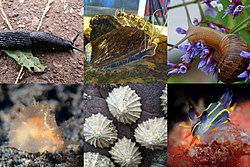
Various gastropods from different types: black slug (a slug), Haliotis asinina (an abalone), Cornu aspersum (a land snail), Notarchus indicus (a seahare), Patella vulgata (a limpet), and Polycera aurantiomarginata (a nudibranch).
Scientific classification Edit this classification
Kingdom: Animalia
Phylum: Mollusca
Class: Gastropoda
Cuvier, 1795[2]
Subclasses
Diversity[3][4]
65,000 to 80,000 species
Synonyms[5]
  • Angiogastropoda - represented as Gastropoda
  • Apogastropoda - alternate representation of Gastropoda
  • Psilogastropoda - represented as Gastropoda

Gastropods (/ˈɡæstrəpɒdz/; previously known as Univalves; class Gastropoda /ɡæsˈtrɒpədə/) are a vast and diverse group of invertebrates within the phylum Mollusca, comprising the animals commonly known as snails and slugs.[5] With an estimated 65,000 to 80,000 living species, they form the second-largest animal class after the insects.[6] The fossil record of gastropods extends back to the Late Cambrian. As of 2017, 721 families are recognized—476 extant (some with fossil representatives) and 245 extinct known only from fossils.[6]

Gastropods inhabit an extraordinary range of environments, including marine, freshwater, and terrestrial ecosystems. They occur in gardens, woodlands, deserts, mountains, rivers, lakes, estuaries, mudflats, intertidal zones, the deep sea, hydrothermal vents, and even in parasitic niches.

The term snail generally refers to gastropods with a large external shell into which the body can fully retract, while slugs have no shell or a small internal one, and semislugs can only partially withdraw into their reduced shell. Marine gastropods include familiar forms such as abalones, conches, periwinkles, whelks, and cowries, whose shells are usually coiled in adulthood. In contrast, limpets and related groups coil their shells only in the larval stage, retaining a simple conical form as adults.

Because of their vast diversity, gastropods exhibit remarkable variation in anatomy, behavior, feeding, and reproduction, making broad generalizations difficult. Gastropods remain one of evolution’s most successful and adaptable animal lineages.

Etymology

[edit]

In the scientific literature, gastropods were described as "gasteropodes" by Georges Cuvier in 1795.[2] The word gastropod comes from Greek γαστήρ (gastḗr 'stomach') and πούς (poús 'foot'), a reference to the fact that the animal's "foot" is positioned below its guts.[7]

The earlier name "univalve" means one valve (or shell), in contrast to bivalves, such as clams, which have two valves or shells.

Diversity

[edit]

At all taxonomic levels, gastropods are second only to insects in terms of their diversity.[8]

Gastropods have the greatest numbers of named mollusk species. However, estimates of the total number of gastropod species vary widely, depending on cited sources. The number of gastropod species can be ascertained from estimates of the number of described species of Mollusca with accepted names: about 85,000 (minimum 50,000, maximum 120,000).[9] But an estimate of the total number of Mollusca, including undescribed species, is about 240,000 species.[10] The estimate of 85,000 mollusks includes 24,000 described species of terrestrial gastropods.[9]

Different estimates for aquatic gastropods (based on different sources) give about 30,000 species of marine gastropods, and about 5,000 species of freshwater and brackish gastropods. Many deep-sea species remain to be discovered, as only 0.0001% of the deep-sea floor has been studied biologically.[11][12] The total number of living species of freshwater snails is about 4,000.[13]

Recently extinct species of gastropods (extinct since 1500) number 444, 18 species are now extinct in the wild (but still exist in captivity), and 69 species are "possibly extinct".[14]

The number of prehistoric (fossil) species of gastropods is at least 15,000 species.[15]

In marine habitats, the continental slope and the continental rise are home to the highest diversity, while the continental shelf and abyssal depths have a low diversity of marine gastropods.[16]

Habitat

[edit]
Cepaea nemoralis: a European pulmonate land snail, which has been introduced to many other countries

Gastropods are found in a wide range of aquatic and terrestrial habitats, from deep ocean trenches to deserts.[citation needed]

Some of the more familiar and better-known gastropods are terrestrial gastropods (the land snails and slugs). Some live in fresh water, but most named species of gastropods live in a marine environment. [citation needed]

Gastropods have a worldwide distribution, from the near Arctic and Antarctic zones to the tropics. They have become adapted to almost every kind of existence on earth, having colonized nearly every available medium.[citation needed]

In habitats where not enough calcium carbonate is available to build a really solid shell, such as on some acidic soils on land, various species of slugs occur, and also some snails with thin, translucent shells, mostly or entirely composed of the protein conchiolin.[citation needed]

Snails such as Sphincterochila boissieri and Xerocrassa seetzeni have adapted to desert conditions. Other snails have adapted to an existence in ditches, near deepwater hydrothermal vents, in oceanic trenches 10,000 meters (6 miles) below the surface,[17] the pounding surf of rocky shores, caves, and many other diverse areas.

Gastropods can be accidentally transferred from one habitat to another by other animals, e.g. by birds.[18]

Anatomy

[edit]
The anatomy of a common air-breathing land snail: much of this anatomy does not apply to gastropods in other clades or groups.

Snails are distinguished by an anatomical process known as torsion, where the visceral mass of the animal rotates 180° to one side during development, such that the anus is situated more or less above the head. This process is unrelated to the coiling of the shell, which is a separate phenomenon. Torsion is present in all gastropods, but the opisthobranch gastropods are secondarily untorted to various degrees.[19][20]

Torsion occurs in two stages. The first, mechanistic stage is muscular, and the second is mutagenetic. The effects of torsion are primarily physiological. The organism develops by asymmetrical growth, with the majority of growth occurring on the left side. This leads to the loss of right-side anatomy that in most bilaterians is a duplicate of the left side anatomy. The essential feature of this asymmetry is that the anus generally lies to one side of the median plane. The gill-combs, the olfactory organs, the foot slime-gland, nephridia, and the auricle of the heart are single or at least are more developed on one side of the body than the other. Furthermore, there is only one genital orifice, which lies on the same side of the body as the anus.[21] Furthermore, the anus becomes redirected to the same space as the head. This is speculated to have some evolutionary function, as prior to torsion, when retracting into the shell, first the posterior end would get pulled in, and then the anterior. Now, the front can be retracted more easily, perhaps suggesting a defensive purpose.[citation needed]

Gastropods typically have a well-defined head with two or four sensory tentacles with eyes, and a ventral foot. The foremost division of the foot is called the propodium. Its function is to push away sediment as the snail crawls. The larval shell of a gastropod is called a protoconch.[citation needed]

Shell

[edit]
The shell of Zonitoides nitidus, a small land snail, has dextral coiling, which is typical (but not universal) of gastropod shells.
The shell of Physella acuta, a freshwater snail, which is left-coiling (sinistral).

Most shelled gastropods have a one piece shell (with exceptional bivalved gastropods), typically coiled or spiraled, at least in the larval stage. This coiled shell usually opens on the right-hand side (as viewed with the shell apex pointing upward). Numerous species have an operculum, which in many species acts as a trapdoor to close the shell. This is usually made of a horn-like material, but in some molluscs it is calcareous. In the land slugs, the shell is reduced or absent, and the body is streamlined.[citation needed]

Some gastropods have adult shells which are bottom heavy due to the presence of a thick, often broad, convex ventral callus deposit on the inner lip and adapical to the aperture which may be important for gravitational stability.[22]

Body wall

[edit]

Some sea slugs are very brightly colored. This serves either as a warning, when they are poisonous or contain stinging cells, or to camouflage them on the brightly colored hydroids, sponges, and seaweeds on which many of the species are found.[citation needed]

Lateral outgrowths on the body of nudibranchs are called cerata. These contain an outpocketing of digestive glands called the diverticula.[23]

Sensory organs and nervous system

[edit]
The upper pair of tentacles on the head of Helix pomatia have eye spots, but the main sensory organs of the snail are sensory receptors for olfaction, situated in the epithelium of the tentacles.

The sensory organs of gastropods include olfactory organs, eyes, statocysts and mechanoreceptors.[24] Gastropods have no hearing.[24]

In terrestrial gastropods (land snails and slugs), the olfactory organs, located on the tips of the four tentacles, are the most important sensory organ.[24] The chemosensory organs of opisthobranch marine gastropods are called rhinophores.

The majority of gastropods have simple visual organs, eye spots either at the tip or base of the tentacles. However, "eyes" in gastropods range from simple ocelli that only distinguish light and dark, to more complex pit eyes, and even to lens eyes.[25] In land snails and slugs, vision is not the most important sense, because they are mainly nocturnal animals.[24]

The nervous system of gastropods includes the peripheral nervous system and the central nervous system. The central nervous system consists of ganglia connected by nerve cells. It includes paired ganglia: the cerebral ganglia, pedal ganglia, osphradial ganglia, pleural ganglia, parietal ganglia and the visceral ganglia. There are sometimes also buccal ganglia.[24]

Digestive system

[edit]

The radula of a gastropod is usually adapted to the food that a species eats. The simplest gastropods are the limpets and abalone, herbivores that use their hard radula to rasp at seaweeds on rocks.[citation needed]

Many marine gastropods are burrowers, and have a siphon that extends out from the mantle edge. Sometimes the shell has a siphonal canal to accommodate this structure. A siphon enables the animal to draw water into their mantle cavity and over the gill. They use the siphon primarily to "taste" the water to detect prey from a distance. Gastropods with siphons tend to be either predators or scavengers.[citation needed]

Respiratory system

[edit]

Almost all marine gastropods breathe with a gill, but many freshwater species, and the majority of terrestrial species, have a pallial lung. The respiratory protein in almost all gastropods is hemocyanin, but one freshwater pulmonate family, the Planorbidae, have hemoglobin as the respiratory protein.[citation needed]

In one large group of sea slugs, the gills are arranged as a rosette of feathery plumes on their backs, which gives rise to their other name, nudibranchs. Some nudibranchs have smooth or warty backs with no visible gill mechanism, such that respiration may likely take place directly through the skin.

Circulatory system

[edit]

Gastropods have open circulatory system and the transport fluid is hemolymph. Hemocyanin is present in the hemolymph as the respiratory pigment.[citation needed]

Excretory system

[edit]

The primary organs of excretion in gastropods are nephridia, which produce either ammonia or uric acid as a waste product. The nephridium also plays an important role in maintaining water balance in freshwater and terrestrial species. Additional organs of excretion, at least in some species, include pericardial glands in the body cavity, and digestive glands opening into the stomach.[citation needed]

Reproductive system

[edit]
Mating behaviour of Elysia timida

Courtship is a part of mating behavior in some gastropods, including some of the Helicidae. Again, in some land snails, an unusual feature of the reproductive system of gastropods is the presence and utilization of love darts.[citation needed]

In many marine gastropods other than the opisthobranchs, there are separate sexes (dioecious/gonochoric); most land gastropods, however, are hermaphrodites.[citation needed]

Life cycle

[edit]
Egg strings of an Aplysia species.

Courtship is a part of the behavior of mating gastropods with some pulmonate families of land snails creating and utilizing love darts, the throwing of which have been identified as a form of sexual selection.[26]

The main aspects of the life cycle of gastropods include:

  • Egg laying and the eggs of gastropods
  • The embryonic development of gastropods
  • The larvae or larval stadium: some gastropods may be trochophore and/or veliger
  • Estivation and hibernation (each of these are present in some gastropods only)
  • The growth of gastropods
  • Courtship and mating in gastropods: fertilization is internal or external according to the species. External fertilization is common in marine gastropods.

Feeding behavior

[edit]
An apple snail, Pomacea maculata, floating and eating a piece of carrot

The diet of gastropods differs according to the group considered. Marine gastropods include some that are herbivores, detritus feeders, predatory carnivores, scavengers, parasites, and also a few ciliary feeders, in which the radula is reduced or absent. Land-dwelling species can chew up leaves, bark, fruit, fungi, and decomposing animals while marine species can scrape algae off the rocks on the seafloor. Certain species such as the Archaeogastropoda maintain horizontal rows of slender marginal teeth. In some species that have evolved into endoparasites, such as the eulimid Thyonicola doglieli, many of the standard gastropod features are strongly reduced or absent.[citation needed]

A few sea slugs are herbivores and some are carnivores. The carnivorous habit is due to specialisation. Many gastropods have distinct dietary preferences and regularly occur in close association with their food species.[citation needed]

Some predatory carnivorous gastropods include: cone shells, Testacella, Daudebardia, turrids, ghost slugs and others.[citation needed]

Terrestrial gastropods

[edit]

Studies based on direct observations, fecal and gut analyses, as well as food-choice experiments, have revealed that snails and slugs consume a wide variety of food resources.[27] Their diet spans from living plants at various developmental stages such as pollen, seeds, seedlings, and wood, to decaying plant material like leaf litter. Additionally, they feed on fungi, lichens, algae, soil, and even other animals, both living and dead, including their feces. Given this diverse diet, terrestrial gastropods can be classified as herbivores, omnivores, carnivores, and detritivores.[27] However, the majority are microbivores, primarily consuming microbes associated with decaying organic material.[28] Despite their ecological importance, there is a notable lack of research exploring the specific roles that terrestrial gastropods play within soil food webs.[27]

Fungivory

[edit]
A banana slug, Ariolimax, feeding on an Amanita mushroom

Many terrestrial gastropod mollusks are known to consume fungi, a behavior observed in various species of snails and slugs across distinct families.[29][30] Notable examples of fungivore slugs include members of the family Philomycidae, which feed on slime molds (myxomycetes), and the Ariolimacidae, which primarily consume mushrooms (basidiomycetes).[30] Snail families that contain fungivore species include Clausiliidae,[31] Macrocyclidae,[32] and Polygyridae.[33]

Mushroom-producing fungi used as a food source by snails and slugs include species from several genera. Some examples are milk-caps (Lactarius spp.), the oyster mushroom (Pleurotus ostreatus), and the penny bun. Additionally, slugs feed on fungi from other genera, such as Agaricus, Pleurocybella, and Russula.[30] Snails have also been reported to feed on penny buns as well as Coprinellus,[34] Aleurodiscus, Armillaria, Grifola , Marasmiellus, Mycena, Pholiota, and Ramaria.[32] As for slime molds, commonly consumed species include Stemonitis axifera and Symphytocarpus flaccidus.[30]

Feeding behaviors in slugs exhibit considerable variation. Some species display selectivity, consuming specific parts or developmental stages of fungi. For instance, certain slugs may target fungi only at particular stages of maturity, such as immature fruiting bodies or spore-producing structures.[30] Conversely, other species show little to no selectivity, consuming entire mushrooms regardless of developmental stage. This variability stresses the diverse dietary adaptations among slug species and their ecological roles in fungal consumption.[30] Moreover, by consuming fungi, snails and slugs can also indirectly help in their dispersal by carrying along some of their spores[30][35] or the fungi themselves.[36]

Genetics

[edit]

Gastropods exhibit an important degree of variation in mitochondrial gene organization when compared to other animals.[37] Main events of gene rearrangement occurred at the origin of Patellogastropoda and Heterobranchia, whereas fewer changes occurred between the ancestors of Vetigastropoda (only tRNAs D, C and N) and Caenogastropoda (a large single inversion, and translocations of the tRNAs D and N).[37] Within Heterobranchia, gene order seems relatively conserved, and gene rearrangements are mostly related with transposition of tRNA genes.[37]

Geological history and evolution

[edit]
Trochonema sp., an early gastropod from the Middle Ordovician of the Galena Group of Minnesota.
Fossil gastropod and attached mytilid bivalves on a Jurassic limestone bedding plane of the Matmor Formation in southern Israel.

The first gastropods were exclusively marine, with the earliest known representatives appearing in the Late Cambrian (e.g., Chippewaella, Strepsodiscus).[38] However, their only definitive gastropod feature is a coiled shell, which raises the possibility that they may belong to the stem lineage of gastropods, or might not be gastropods at all.[39] Early Cambrian species such as Helcionella, Barskovia, and Scenella are no longer considered gastropods, and the small coiled Aldanella from the same period is probably not even a mollusk.[citation needed]

It is not until the Ordovician that true crown-group gastropods appear.[40] By this time, gastropods had diversified into a variety of forms and inhabited a range of aquatic environments. Fossil gastropods from the early Paleozoic are often poorly preserved, making identification difficult. However, the Silurian genus Poleumita contains at least 15 identified species. Overall, gastropods were less common in the Paleozoic than bivalves.[40]

Most Paleozoic gastropods belong to primitive groups, some of which still exist today. By the Carboniferous period, many gastropod shell shapes found in fossils resemble those of modern species, though most of these early forms are not directly related to living gastropods. It was during the Mesozoic era that the ancestors of many extant gastropods evolved.[40] One of the earliest known terrestrial gastropods is Anthracopupa (or Maturipupa), found in the Carboniferous Coal Measures of Europe.[41] However, land snails and their relatives were rare before the Cretaceous period.[40]

In Mesozoic rocks, gastropods become more common in the fossil record, with well-preserved shells. Fossils are found in ancient beds from both freshwater and marine environments. Notable examples include the Purbeck Marble of the Jurassic and the Sussex Marble of the early Cretaceous, both from southern England. These limestones contain abundant remains of the pond snail Viviparus.[40] Cenozoic rocks yield vast numbers of gastropod fossils, many of which are closely related to modern species. The diversity of gastropods increased significantly at the start of this era, alongside that of bivalves.[40]

Certain trail-like markings preserved in ancient sedimentary rocks are thought to have been made by gastropods crawling over the soft mud and sand. Although these trace fossils are of debatable origin, some of them do resemble the trails made by living gastropods today.[40]

Gastropod fossils may sometimes be confused with ammonites or other shelled cephalopods. An example of this is Bellerophon from the limestones of the Carboniferous period in Europe, the shell of which is planispirally coiled and can be mistaken for the shell of a cephalopod.[citation needed]

Gastropods also provide important evidence of faunal changes during the Pleistocene epoch, reflecting the impacts of advancing and retreating ice sheets.[citation needed]

Cretaceous_Gastropod_Fossils_Lebanon

Phylogeny

[edit]

A cladogram showing the phylogenic relationships of Gastropoda with example species:[42]

Gastropoda

Neomphaliones and Lower Heterobranchia are not included in the above cladogram.

Taxonomy

[edit]

Current classification

[edit]

The present backbone classification of gastropods relies on the results of phylogenomic analyses. Consensus has not been reached yet considering the relationships at the very base of the gastropod tree of life, but otherwise the major groups are known with confidence.[43][44][45]

A group of fossil shells of Turritella cingulifera from the Pliocene of Cyprus
Five views of a shell of a Fulguropsis species
Microphoto (35x) of Gastropoda sp. from Holocene sediments of Amuq Plain SSE Turkey

History

[edit]

Since Darwin, biological taxonomy has attempted to reflect the phylogeny of organisms, i.e., the tree of life. The classifications used in taxonomy attempt to represent the precise interrelatedness of the various taxa. However, the taxonomy of the Gastropoda is constantly being revised and so the versions shown in various texts can differ in major ways.[citation needed]

In the older classification of the gastropods, there were four subclasses:[46]

The taxonomy of the Gastropoda is still under revision, and more and more of the old taxonomy is being abandoned, as the results of DNA studies slowly become clearer. Nevertheless, a few of the older terms such as "opisthobranch" and "prosobranch" are still sometimes used in a descriptive way.[citation needed]

New insights based on DNA sequencing of gastropods have produced some revolutionary new taxonomic insights. In the case of the Gastropoda, the taxonomy is now gradually being rewritten to embody strictly monophyletic groups (only one lineage of gastropods in each group). Integrating new findings into a working taxonomy remain challenging. Consistent ranks within the taxonomy at the level of subclass, superorder, order, and suborder have already been abandoned as unworkable. Ongoing revisions of the higher taxonomic levels are expected in the near future.[when?]

Convergent evolution, which appears to exist at especially high frequency in gastropods, may account for the observed differences between the older phylogenies, which were based on morphological data, and more recent gene-sequencing studies.[citation needed]

In 2004, Brian Simison and David R. Lindberg showed possible diphyletic origins of the Gastropoda based on mitochondrial gene order and amino acid sequence analyses of complete genes.[47]

In 2005, Philippe Bouchet and Jean-Pierre Rocroi made sweeping changes in the systematics, resulting in the Bouchet & Rocroi taxonomy, which is a step closer to the evolutionary history of the phylum.[3][48] The Bouchet & Rocroi classification system is based partly on the older systems of classification, and partly on new cladistic research. In the past, the taxonomy of gastropods was largely based on phenetic morphological characters of the taxa. The recent advances are more based on molecular characters from DNA[49] and RNA research. This has made the taxonomical ranks and their hierarchy controversial.

In 2017, Bouchet, Rocroi, and other collaborators published a significantly updated version of the 2005 taxonomy.[50] In the Bouchet et al. taxonomy, the authors used unranked clades for taxa above the rank of superfamily (replacing the ranks suborder, order, superorder and subclass), while using the traditional Linnaean approach for all taxa below the rank of superfamily. Whenever monophyly has not been tested, or is known to be paraphyletic or polyphyletic, the term "group" or "informal group" has been used. The classification of families into subfamilies is often not well resolved.[citation needed]

Fixed ranks like family, genus, and species however remain useful for practical classification and remain used in the World Register of Marine Species (WoRMS). Also many researchers continue to use traditional ranks because they are entrenched in the literature and familiar to specialists and non-specialists alike.

Ecology and conservation

[edit]

Many gastropod species face threats from habitat destruction, pollution, and climate change. Some species are endangered or have become extinct due to these factors. Conservation efforts often focus on protecting their habitats, especially in freshwater and terrestrial ecosystems.

Predators

[edit]

Gastropods are prey to a wide range of organisms depending on the environment. In marine habitats, gastropods are preyed upon by fish, marine birds, marine mammals, crustaceans, and other mollusks such as cephalopods. In terrestrial environments, gastropod predators include insects, arachnids (spiders, harvestmen),[51] birds, and mammals, among others.

References

[edit]

Sources

[edit]
  • This article incorporates CC-BY-2.0 text from the following source: Cunha, R. L.; Grande, C.; Zardoya, R. (2009). "Neogastropod phylogenetic relationships based on entire mitochondrial genomes". BMC Evolutionary Biology. 9: 210. doi:10.1186/1471-2148-9-210. PMC 2741453. PMID 19698157.
  • Abbott, R. T. (1989): Compendium of Landshells. A color guide to more than 2,000 of the World's Terrestrial Shells. 240 S., American Malacologists. Melbourne, Fl, Burlington, Ma. ISBN 0-915826-23-2
  • Abbott, R. T. & Dance, S. P. (1998): Compendium of Seashells. A full-color guide to more than 4,200 of the world's marine shells. 413 S., Odyssey Publishing. El Cajon, Calif. ISBN 0-9661720-0-0
  • Parkinson, B., Hemmen, J. & Groh, K. (1987): Tropical Landshells of the World. 279 S., Verlag Christa Hemmen. Wiesbaden. ISBN 3-925919-00-7
  • Ponder, W. F. & Lindberg, D. R. (1997): Towards a phylogeny of gastropod molluscs: an analysis using morphological characters. Zoological Journal of the Linnean Society, 119 83–265.
  • Robin, A. (2008): Encyclopedia of Marine Gastropods. 480 S., Verlag ConchBooks. Hackenheim. ISBN 978-3-939767-09-1
[edit]
Revisions and contributorsEdit on WikipediaRead on Wikipedia
from Grokipedia
The name Gastropoda comes from the Greek words γαστήρ (gastḗr), meaning 'stomach', and πούς (poús), meaning 'foot', referring to the position of the stomach above the foot. Gastropoda is the largest and most diverse class within the phylum Mollusca, comprising over 80% of all living molluscan species, with an estimated 60,000 to 80,000 extant species including snails, slugs, limpets, and nudibranchs. These organisms are characterized by a single, often spirally coiled shell (univalve) that provides protection, though the shell is reduced or absent in slugs and certain marine groups such as nudibranchs. A defining developmental feature is torsion, a process during the larval stage that twists the body 180 degrees counterclockwise, repositioning the mantle cavity and visceral mass anteriorly and creating an asymmetrical internal organization despite external bilateral symmetry. Gastropods exhibit a wide range of habitats, from deep-sea hydrothermal vents and ocean floors to freshwater streams, damp terrestrial soils, and even arid deserts, demonstrating remarkable adaptability across marine, freshwater, and environments. Their body plan typically includes a well-developed head with paired tentacles (often bearing eyes at the tips) for sensory functions, a muscular foot used for creeping locomotion—sometimes modified for burrowing, swimming, or climbing—and a mantle that secretes the shell and houses respiratory structures like gills or a lung-like cavity in terrestrial species. Many species possess an operculum, a horny or plate that seals the shell for defense against predators. Feeding strategies among gastropods are highly varied, facilitated by the , a ribbon-like structure armed with chitinous teeth for scraping , browsing , drilling into prey, or even harpooning with specialized darts in some carnivorous forms. While most are herbivorous or detritivorous, notable carnivorous groups include cone snails (which deploy venomous harpoons) and certain sea slugs that prey on other mollusks or cnidarians. Reproduction is diverse, with many species being simultaneous or sequential hermaphrodites that exchange sperm via complex courtship behaviors, such as the use of "love darts" in some land snails; occurs in aquatic forms, while is common on land. Gastropods play crucial ecological roles as decomposers, herbivores, predators, and intermediate hosts for parasites, and some species, like the , have become invasive pests impacting and .

Introduction

Definition and characteristics

Gastropoda is the largest and most diverse class within the phylum , encompassing a wide array of organisms commonly known as snails, slugs, and limpets. This class includes approximately 85,000–90,000 extant as of 2024, representing more than 80% of all living mollusks and exhibiting remarkable adaptability across marine, freshwater, and terrestrial environments. Gastropods are characterized by their soft-bodied structure, which is typically protected by a single, often coiled shell, though some , such as slugs, have secondarily lost this feature. A defining morphological trait of gastropods is their asymmetrical , resulting from a developmental process called torsion, in which the visceral mass and associated organs rotate up to 180 degrees counterclockwise relative to the head and foot during the larval stage. This torsion leads to a distinctive arrangement where the and mantle cavity are positioned anteriorly, above the head. Locomotion is facilitated by a broad, muscular foot that enables creeping movement, while feeding is accomplished using a —a chitinous, tongue-like structure equipped with rows of microscopic teeth for scraping or cutting food. Many also possess an operculum, a horny or plate that seals the shell aperture for protection against predators and . Gastropods are distinguished from other molluscan classes, such as bivalves and cephalopods, by their univalved shell (when present), lack of a hinged shell or arms, and the evolutionary emphasis on terrestrial and freshwater colonization, which has driven diverse respiratory adaptations including gills, lungs, or cutaneous breathing. In slugs and certain other shelled forms, the shell may be reduced or internalized, reflecting adaptations to specific lifestyles. Traditionally, Gastropoda has been classified into three subclasses: Prosobranchia (primarily marine snails with gills in the anterior mantle cavity), (often shell-less or reduced-shell marine forms like sea slugs), and (lung-bearing snails and slugs, mostly terrestrial and freshwater). However, modern phylogenetic revisions based on molecular data have restructured this system, elevating groups like and (which encompasses former and ) and recognizing the paraphyletic nature of Prosobranchia.

Etymology

The term "Gastropoda" derives from the Greek words gaster (γαστήρ), meaning "" or "belly," and pous (πούς), meaning "foot," reflecting the characteristic ventral position of the muscular foot used for locomotion in these mollusks. This nomenclature was coined by the French naturalist in 1795, who introduced it as the French vernacular "les Gastéropodes" to describe a group of mollusks distinguished by their free head, sensory tentacles, and broad ventral foot attached near the visceral mass. Cuvier proposed this within his innovative classification of invertebrates, grouping them as one of three orders under the class Mollusques in his "Second Mémoire sur l’organisation et les rapports des animaux à sang blanc." The name gained wider scientific traction through subsequent refinements in malacological taxonomy. Lamarck adopted Cuvier's "gastéropodes" in his 1804 and 1809 works on , integrating it into a more detailed subdivision of the while emphasizing anatomical and ecological traits. By 1805, had Latinized it as "Gastropoda," facilitating its use in , and by the early 19th century, English translations of Cuvier's lectures formalized "Gasteropoda" (later standardized as Gastropoda). These developments marked the term's evolution from a descriptive French phrase to a foundational binomial class name in . Common vernacular names for gastropods also carry ancient linguistic roots. The English word "snail" originates from Old English snægl, derived from Proto-Germanic *snagilaz, evoking the creature's creeping motion and likely linked to similar terms in Old Norse and Old High German for slow-moving invertebrates. Similarly, "slug," referring to shell-less gastropods, stems from late Middle English slugge, probably of Scandinavian origin akin to Norwegian dialect slugg or Old Norse forms implying sluggishness or a heavy, slow crawler, initially denoting a lazy person before extending to the animal by the early 18th century.

Diversity and distribution

Species diversity

Gastropods exhibit remarkable , with estimates indicating between 70,000 and 85,000 described living (as of 2024), accounting for approximately 80% of all known . This vast array surpasses other classes in both number and ecological breadth, spanning marine, freshwater, and terrestrial realms. The highest diversity occurs in marine environments, with roughly 45,000 adapted to oceanic habitats, followed by terrestrial settings hosting about 24,000 and freshwater ecosystems supporting around 4,000 . Within this diversity, major clades dominate the taxonomic landscape. represents the largest group, encompassing over 60% of all gastropod species—approximately 40,000 to 50,000 taxa—including numerous marine families like cone snails and periwinkles, as well as freshwater and terrestrial forms. , another expansive , includes diverse subgroups such as pulmonates (land and freshwater snails and slugs) and nudibranchs (colorful sea slugs), totaling around 25,000 to 30,000 species that highlight adaptations to varied lifestyles from herbivory to predation. , comprising more primitive forms like abalones and top shells, contains about 3,700 species, primarily marine and often featuring pearly internal shell layers valued in human cultures. Morphological variety further underscores gastropod diversity, ranging from minute forms to substantial sizes and an array of shell configurations. The smallest species, such as Acmella nana, measure just 0.5 mm in shell width, enabling life in confined subterranean spaces. At the opposite extreme, giant sea hares like Aplysia vaccaria can reach lengths of 99 cm, with soft, shell-reduced bodies suited to herbivorous grazing in coastal waters. Shell morphology varies widely, from conical shapes in limpets that facilitate to rocks, to sinistral (left-handed) coiling in certain freshwater and terrestrial snails, reflecting evolutionary responses to environmental pressures. Endemism is pronounced among gastropods, particularly in isolated habitats that promote . In oceanic islands like , over 99% of native species are endemic to the , with more than 750 described taxa confined to specific islands due to limited dispersal and habitat specialization. Similarly, systems exhibit high rates, where troglobitic gastropods—blind and depigmented—evolve in darkness, with many restricted to single regions or lava tubes, contributing to localized hotspots.

Global distribution

Gastropods exhibit a ubiquitous global distribution, occurring on all continents and across all major oceanic basins, from polar to equatorial regions. In marine environments, they range from intertidal zones to extreme depths, with records extending to over 9,600 meters in the of the Kuril-Kamchatka Trench. Terrestrial are similarly widespread, inhabiting elevations up to approximately 5,000 meters in high-altitude regions such as the . Biogeographic patterns reveal pronounced variation in diversity across realms. The Indo-Pacific region, particularly coral reef ecosystems in the Coral Triangle, hosts the highest marine gastropod diversity, driven by historical geological stability and habitat complexity. Terrestrial gastropod richness peaks in temperate forest zones of the Northern Hemisphere, with lower overall diversity in polar areas; for instance, Antarctic waters support fewer than 1% of global gastropod species, many of which are endemic. Dispersal mechanisms contribute significantly to this broad distribution. Marine gastropods primarily rely on passive larval transport via ocean currents, enabling long-distance colonization. Terrestrial species employ active migration through crawling, supplemented by passive vectors such as wind, birds, and human activities; notable examples include the human-mediated spread of the invasive apple snail Pomacea canaliculata from South America to Asia and Africa via aquaculture trade. Historical biogeographic expansions trace back to the breakup of the supercontinent , which facilitated vicariance and subsequent diversification. Gondwanan relict taxa, such as certain terrestrial molluscs shared between and , reflect these ancient continental connections predating the full separation around 100 million years ago.

Habitats and adaptations

Aquatic environments

Gastropods occupy a wide array of marine habitats, from intertidal zones to deep-sea environments. In intertidal zones, species such as periwinkles (Littorina spp.) cling to rocky shores, where they endure wave action and periodic through thick, sculptured shells that provide protection and grip. Subtidal reefs host predatory cone snails (Conus spp.), which exhibit smooth, nacreous shells and extended proboscides adapted for venomous prey capture among structures. At deep-sea hydrothermal vents, the (Chrysomallon squamiferum) thrives in extreme conditions, featuring iron-sulfide sclerites in its dermal armor for defense and harboring endosymbiotic chemosynthetic in its gills that oxidize compounds for nutrition. In freshwater environments, gastropods like pond snails (Lymnaea spp.) have evolved modifications to cope with low oxygen and dilute conditions, including a pulmonary cavity enabling air-breathing at the surface during hypoxia. These adaptations allow persistence in rivers, lakes, and ponds, where the mantle cavity facilitates both respiration and active ion uptake to counter osmotic loss. Aquatic gastropods demonstrate notable environmental tolerances, particularly in and physical stress resistance. The mantle cavity serves as a key site for , enabling hypoosmotic urine production and free adjustments to maintain cellular volume during fluctuations. species, such as the periwinkle Littorina littorea, tolerate salinities from near 0 to over 100% through rapid passive adjustments in composition, conserving and non-protein solutes. Shell morphology further aids tolerance to currents, with globular shapes and larger apertures in flow-exposed species reducing drag forces, though behavioral adhesion via the foot often supplements structural protection. Zonation patterns among aquatic gastropods span littoral to pelagic realms, with most species confined to benthic intertidal and subtidal zones but rare holoplanktonic forms extending into open water. Intertidal species like periwinkles occupy high- to mid-shore levels, transitioning to subtidal cone snails in deeper habitats. Pelagic outliers, such as violet snails (Janthina spp.), represent fewer than 1% of marine gastropods and float via mucus-trapped air bubble rafts, enabling a fully planktonic lifestyle in surface waters while preying on floating hydrozoans.

Terrestrial environments

Terrestrial gastropods primarily inhabit moist environments such as forests and grasslands, where supports their moisture-dependent , but some species have adapted to arid deserts through specialized behavioral and physiological mechanisms. In forests, they often occupy layers, while in grasslands, they seek in soil crevices; desert-adapted species, like those in arid , endure extreme dryness by retreating into rock fissures or burrows during the day. Nocturnal activity is a common strategy across these habitats to minimize risk from solar radiation and high temperatures. Key adaptations for terrestrial life include the evolution of a lung-like pulmonate respiratory system, where the pallial cavity functions as a vascularized air-breathing organ, enabling efficient oxygen uptake in low-humidity air while conserving water through a closable pneumostome. Mucus secretion plays a vital role in hydration, forming a protective barrier that reduces evaporative water loss and facilitates locomotion on dry surfaces; pedal mucus, comprising 97-99% water, helps maintain internal moisture balance. During prolonged dry periods, many species enter estivation (aestivation), a state of dormancy where metabolic rates drop dramatically, and they seal themselves in shells or burrows with an epiphragm made of dried mucus to prevent dehydration—Sphincterochila boissieri, for instance, can survive up to four years in this state in desert conditions. Burrowing into soil provides additional refuge from heat and aridity, with depths varying from 1-5 cm in species like S. boissieri. Microhabitat preferences further enhance survival, with many gastropods favoring sheltered sites like leaf litter in forests or on trunks for arboreal species such as Partula, which cling to vegetation in humid Pacific island forests to access moisture and avoid ground predators. Along altitudinal gradients, distribution and traits like body size exhibit clines, with smaller sizes often at higher elevations due to cooler, drier conditions influencing growth—observed in species like Cepaea sylvatica where shell size decreases with altitude. Human-mediated invasions have enabled non-native species, such as garden slugs (e.g., Deroceras spp.), to thrive in urban areas worldwide, exploiting disturbed habitats with artificial moisture from irrigation and gardens.

Anatomy

Shell and mantle

The shell of gastropods is a protective primarily composed of in the polymorphs and/or , forming the bulk of the mineralized structure, while an outermost organic periostracum provides a protective coating. These layers typically include microstructures such as prismatic, crossed-lamellar, and nacreous arrangements, with predominant in most and appearing in select . Gastropod shells are usually in a spiral pattern, predominantly dextral (right-handed), though sinistral (left-handed) occurs in certain or individuals, even within the same . The , or shell opening, varies in shape from oval to elongated, often influenced by the organism's , and the exterior may feature ornamentation such as , spines, or concentric growth lines for enhanced protection or . The , a thin epithelial tissue enveloping the visceral mass, plays a central role in shell formation by secreting successive layers of material from its outer edge, including the organic periostracum and mineralized components. Additionally, the mantle creates and maintains the mantle cavity, which functions as a respiratory chamber housing gills (ctenidia) in aquatic species for , or a vascularized in terrestrial forms. In certain prosobranch gastropods, the mantle edge extends to form a , facilitating directed water flow for both respiration and filter-feeding by drawing in oxygen and particulate food. Shell morphology exhibits significant variation across gastropods; for instance, terrestrial slugs and marine nudibranchs (sea slugs) have secondarily lost the external shell entirely, relying instead on other defenses like or chemical secretions. Some planktonic groups, such as sea butterflies (pteropods in the order Thecosomata), possess thin, fragile internal or reduced shells that have lost traditional spiral coiling, adapting to a floating lifestyle. Prosobranch gastropods often include an operculum, a or chitinous plate secreted by the posterior of the foot, serving as a to seal the aperture against predators and when the animal withdraws. Shell growth occurs through incremental accretion at the mantle edge, where new material is continuously deposited in concentric layers, allowing the shell to expand proportionally with the animal's body. Following damage, such as cracks from predation attempts, gastropods employ repair mechanisms involving localized secretion of repair tissue by the mantle, often restoring structural integrity through deposition of callus-like calcium carbonate layers, as observed in species like the archaeogastropod Tegula.

Body structure

Gastropods exhibit a distinctive characterized by resulting from torsion, a developmental process that rotates the visceral mass 180 degrees counterclockwise relative to the head-foot region, twisting the body over the head and producing a coiled arrangement in shelled species. This torsion positions the visceral mass dorsally above the head and foot, altering the bilateral typical of ancestral mollusks and facilitating adaptations for diverse locomotion and habitats. The soft body is organized into three primary regions: the head, the foot, and the visceral mass, with the head bearing for sensory , a equipped for feeding, and often eyes at the tentacle bases, integrating sensory functions with overall mobility. The foot, a ventral muscular hydrostat, serves as the primary organ for locomotion, enabling crawling, climbing, and burrowing through coordinated contractions that propagate as waves along its length. This structure secretes from its , creating a lubricated that reduces and enhances to substrates, allowing efficient movement across varied surfaces. The visceral mass, positioned above the foot due to torsion, houses key internal components including the gonads and digestive glands, and is permeated by a hemocoel—an open circulatory space filled with that bathes the organs and supports nutrient distribution without a closed vascular system. Many gastropods are hermaphroditic, featuring dual reproductive organs within the visceral mass that produce both eggs and , a trait particularly prevalent in groups like the . Body size in gastropods varies dramatically, ranging from minute species under 1 mm in length to giants reaching up to about 90 cm in shell length, exemplified by the giant African snail (Lissachatina fulica), which can reach up to 20 cm in shell length and represents one of the largest extant terrestrial forms. This range underscores the class's adaptability, with the foot and visceral mass scaling accordingly to support locomotion and organ function across scales.

Sensory and nervous systems

The of gastropods is characterized by a circumesophageal nerve ring composed of several paired ganglia, including the cerebral, pedal, and pleural ganglia, which collectively form a fused mass often referred to as the "." This arrangement innervates the head, foot, and mantle regions, with additional ganglia such as the buccal (for feeding) and visceral loop (for internal organs) contributing to decentralized processing. The system exhibits varying degrees of concentration across gastropod groups, from relatively dispersed in basal forms to more centralized in advanced lineages, enabling coordinated responses to environmental stimuli. Gastropods possess a suite of sensory organs adapted for in diverse habitats, with chemoreception playing a dominant role. Statocysts, paired gravity-sensing structures filled with statoliths, provide balance and orientation information, particularly during locomotion. The , a chemosensory organ in cavity of aquatic , monitors by detecting particles, sediments, and chemical cues. Eyes range from simple cup-shaped structures in many terrestrial forms, which detect light intensity and shadows, to more complex lens-equipped versions in some marine prosobranchs for basic . Tentacles, often in pairs (rhinophores and optic tentacles), are lined with chemoreceptors and mechanoreceptors for tactile exploration and odor detection. Chemoreception is the primary sensory modality in gastropods, facilitating food location, mate detection via pheromones, and habitat assessment through sensitivity to , sugars, and other dissolved compounds. Tentacular and oral chemosensory cells integrate these signals to elicit behaviors like trail-following or feeding initiation. The nervous system demonstrates plasticity, with capabilities for simple learning such as , where repeated stimuli lead to diminished responses, as observed in the siphon-withdrawal reflex of the sea hare Aplysia californica. Aplysia serves as a key in , revealing cellular mechanisms of formation, including synaptic strengthening during and long-term lasting over 24 hours. These studies highlight how gastropod neural circuits underpin adaptive behaviors essential for survival.

Digestive system

The serves as the primary feeding apparatus in gastropods, comprising a chitinous embedded with rows of microscopic that facilitate acquisition and initial processing. In many species, the radula contains numerous teeth arranged in hundreds of transverse rows, enabling efficient scraping or grasping. The structure varies by and diet; for instance, the docoglossan radula, typical of vetigastropods like limpets, features a simple configuration with a central rachidian tooth flanked by one lateral and one marginal tooth per side, adapted for rasping from substrates. In contrast, the rhipidoglossan , found in trochids and turbinids, includes a broad array of 4–5 lateral teeth and numerous marginal teeth per row, suited for grazing on diatoms and filamentous due to its wider scraping surface. Specialized forms, such as the toxoglossan in cone snails (Conidae), modify a single into a hollow, harpoon-like structure propelled hydraulically to spear prey and inject , reflecting carnivorous adaptations. The buccal mass, housing the and odontophore, supports these movements through muscular action. The alimentary canal follows a generalized pathway from the through the buccal mass to the , which connects to the ; from there, the intestine leads to the , with torsion in most gastropods looping the tract around the visceral mass. In deposit-feeding species, the includes a crystalline style—a gelatinous, enzyme-rich rod that rotates via ciliary action to mix and abrade food particles, aiding in the sorting and initial of . Associated glands enhance : paired salivary glands secrete for lubricating the oral cavity and , along with enzymes that initiate extracellular breakdown in some predatory forms. The , a voluminous of the , functions analogously to a combined and , producing hydrolytic enzymes for protein, , and while absorbing nutrients through its epithelial cells lined with microvilli. Dietary specializations correlate with these anatomical features; herbivorous gastropods rely on rasping radulae to harvest , while carnivores like cone snails employ harpooning for immobilizing mollusks or , and detritivores utilize the crystalline style to process organic sediments.

Respiratory system

Gastropods exhibit diverse respiratory adaptations suited to their aquatic, terrestrial, or amphibious lifestyles, primarily involving through specialized structures derived from cavity. In aquatic species, respiration occurs via ctenidia, or bipectinate s, located within the cavity, where is drawn in and oxygenated blood is extracted through across thin gill lamellae. Cilia on the surfaces generate a unidirectional current, facilitating efficient oxygen uptake while expelling . Some aquatic gastropods, particularly in oxygen-poor environments, possess secondary s or accessory respiratory structures to supplement primary ctenidial function. Terrestrial pulmonate gastropods have evolved a vascularized from a highly modified mantle cavity, serving as the primary site for aerial . Air enters this through the , a contractile on the mantle surface regulated by muscles to control ventilation and prevent . , involving oxygen diffusion across the moist skin, provides supplemental , particularly during periods of inactivity or in humid conditions. Amphibious gastropods often possess dual respiratory systems to exploit both aquatic and aerial environments, such as air-breathing gills combined with a pulmonary sac. For instance, the Pila globosa utilizes ctenidia for underwater respiration and a lung-like sac for air during emersion. These transitional forms enable survival in fluctuating habitats like intertidal zones or temporary ponds. Respiratory efficiency in gastropods is enhanced by adaptations like countercurrent flow in the gills, where blood circulation opposes water movement to maximize oxygen gradients and extraction rates. In some deep-sea species, such as the vent gastropod Alviniconcha hessleri, hemoglobin-like pigments in the blood improve oxygen transport under low-oxygen, high-pressure conditions.

Circulatory and excretory systems

Gastropods possess an open circulatory system in which , the oxygen-carrying fluid analogous to , is pumped by a muscular heart into a hemocoel—a network of sinuses and lacunae that bathe the tissues directly, allowing nutrient and via rather than through capillaries. The heart typically consists of a single ventricle enclosed in a pericardial cavity, along with one or two auricles that receive from the gills or lungs, resulting in a two- or three-chambered configuration; primitive forms with paired gills may have two auricles. In active species, such as certain prosobranchs, accessory pumps in the pedal sinus or coupling with ventilatory movements enhance flow to support locomotion and respiration. Hemolymph in gastropods is copper-based, containing as the primary , which imparts a color when oxygenated and facilitates oxygen in a manner adapted to varying environmental oxygen levels. It also includes amebocytes, or hemocytes, which circulate freely and play key roles in immunity through , encapsulation of pathogens, and wound repair. This open system balances efficiency with hydraulic functions, such as aiding foot movement, though muscular hydrostats often supplement in mobile species. The of gastropods relies on one or two metanephridial s (nephridia) that filter to remove nitrogenous s and maintain osmotic balance. occurs primarily through s in the pericardial , featuring slit diaphragms that selectively permit passage of small molecules into a primary , which is then modified in the tubules via and by ciliated and microvillous cells. The processed exits via a nephridiopore into cavity. Aquatic gastropods primarily excrete , a soluble that diffuses readily in , while terrestrial species, such as pulmonates, produce or to minimize loss, with forming crystalline concretions in the lumen during dormancy. Variations exist across groups; for instance, opisthobranchs like nudibranchs may have dual sites for enhanced filtration, and some cephalaspideans rely on rhogocytes—extracellular accessory cells—for additional processing.

Reproductive system

Gastropods exhibit diverse reproductive strategies, with hermaphroditism being predominant across the class. Most species are simultaneous hermaphrodites, possessing both male and female reproductive organs that function concurrently, as seen in pulmonates like those in the order Stylommatophora. , where individuals change sex during their lifetime, occurs in some groups such as certain caenogastropods, though it is less common. Self-fertilization is rare in simultaneous hermaphrodites, with cross-fertilization strongly preferred to promote , as documented in stylommatophoran species where predominates. The includes specialized structures for production and transfer. are produced in the , a combined that generates both eggs and . The spermiduct () transports from the to the , while the channels eggs toward the exterior; both ducts connect to accessory that aid in maturation. The albumen secretes nutritive coatings, such as galactogen-rich albumen, around eggs to support early development. In many species, particularly terrestrial pulmonates, is packaged into a —a protective capsule—for transfer during copulation, enhancing viability during exchange. Mating behaviors vary but often involve reciprocal insemination to ensure mutual fertilization. In helicids, such as Helix pomatia, partners exchange love darts—calcareous structures shot hypodermically into the partner's body—to stimulate mucus production and increase receptivity, thereby facilitating spermatophore transfer. Courtship typically includes mounting and circling, leading to unilateral or reciprocal copulation via penis intromission. Reproduction is predominantly oviparous, with eggs laid in clutches; however, viviparity or ovoviviparity occurs in select lineages, such as certain veronicellid slugs (Pseudoveronicella zootoca), where embryos develop internally. Sea hares (Aplysia spp.), as heterobranchs, exemplify oviparity through large, gelatinous egg strings. Fecundity differs by and strategy, with clutches typically ranging from 1 to 200 eggs in many species, though totals can accumulate over multiple layings (e.g., 240–540 eggs lifetime in Arion vulgaris). Marine forms often produce planktonic veliger larvae that disperse before settling, while terrestrial and some benthic species show direct development, hatching as miniature adults to bypass a free larval stage.

Life history

Development and life cycle

Gastropod embryonic development typically occurs within protective egg capsules deposited externally by the parent, where fertilized eggs undergo spiralian cleavage characteristic of lophotrochozoan mollusks. This cleavage pattern is determinate and holoblastic in with minimal , resulting in equal-sized blastomeres, though unequal division occurs in yolkier eggs via polar lobe formation. Many incorporate nurse eggs or embryos within the capsules to support adelphophagy, where viable embryos consume non-viable or less-developed siblings—known as nutritive embryos—for nourishment during development. For instance, in the calyptraeid Crepidula navicella, nutritive embryos arrest at gastrula or post-gastrula stages, enabling asynchronous development among clutch siblings without early morphological differences. Early embryogenesis progresses through via , emboly, or ingression, forming a trochophore-like with an apical tuft of cilia and a prototroch band for locomotion. The shell gland, derived from dorsal of the 2d blastomere, appears as an during formation and secretes the initial prodissoconch shell. In many marine prosobranch gastropods, the trochophore transforms into a veliger , a planktonic stage equipped with a ciliated velum for swimming and feeding, often lasting from hours to months depending on species and environmental conditions. Metamorphosis in veliger-stage gastropods involves profound reorganization, including torsion—a 180° counterclockwise of the visceral mass relative to the head and foot—driven by asymmetric in the epithelium, particularly on the right side, regulated by TGF-β/Nodal signaling. This process, completing within hours (e.g., 23–27 hours post-fertilization in Nipponacmea fuscoviridis), positions the mantle cavity anteriorly and twists the digestive tract, though inhibition of Nodal signaling halts proliferation without affecting retractor . Concurrently, the velum is resorbed, the foot elongates and develops locomotor muscles, and the shell coils further as the juvenile form emerges, marking the transition from pelagic to benthic life in many species. Post-metamorphosis, juvenile gastropods exhibit rapid growth to , followed by adult stages characterized by in most shelled forms, where individuals continue adding to the shell throughout life without a fixed size limit, influenced by environmental factors like food availability. However, some lineages, particularly siphonate caenogastropods, show determinate growth with cessation at maturity. Reproductive strategies vary; while most are iteroparous with multiple breeding cycles, semelparity—reproducing once before death—occurs in certain pulmonate species, such as sibling Helicid snails where synchronized or staggered reproduction leads to post-reproductive mortality. Gastropod longevity typically spans 1–15 years, varying by and , with shorter lifespans in tropical (several months to 3 years) and longer in temperate or northern populations, where some lake-dwelling freshwater exceed 10–15 years. Factors like predation, resource scarcity, and temperature influence these durations, with indeterminate growers potentially achieving greater ages under favorable conditions.

Growth and metamorphosis

Gastropods exhibit continuous growth throughout their lives, primarily through the accretion of to the shell in shelled , facilitated by specialized mantle tissue that secretes the shell material. Calcium uptake occurs via saturation-type kinetics, where the rate increases with ambient calcium concentration until reaching a maximum, supporting shell formation and repair post-. This process is energy-intensive and influenced by environmental calcium availability, with rates varying among such as the California endemic Tegula regina, where shell growth correlates with seawater chemistry. Allometric scaling characterizes shell development, where proportional changes occur with age; for instance, the often widens relative to overall shell width, as observed in Monodonta dama, enhancing mobility and defense in adults. These morphological shifts arise from differential growth rates in the mantle edge, generating the typical of gastropod shells. Metamorphosis in larval gastropods marks the transition from planktonic to benthic life, triggered by environmental settlement cues and internal hormonal signals. Chemical cues from substrates, such as biofilms or conspecific adults, induce larval settlement; for example, in , larvae respond to surface-associated and algal films by initiating metamorphic competence. Hormonal control involves thyroid-like signaling pathways, conserved across , where (T3) analogs promote tissue remodeling, as demonstrated in (Haliotis spp.) where exogenous accelerate veliger-to-juvenile transformation. Developmental variations exist among gastropods, particularly in terrestrial lineages. Many pulmonate species, including slugs, undergo direct development without a free-living larval stage, hatching as miniature adults from egg masses, which reduces dispersal but suits stable terrestrial habitats. Slugs exemplify paedomorphosis, retaining juvenile traits like reduced or absent shells into adulthood, a heterochronic shift that simplifies the body plan while maintaining reproductive maturity, as seen in land snails under environmental stress. Environmental factors significantly modulate growth and metamorphic outcomes. Lower temperatures often result in larger size at due to extended larval periods allowing more feeding, as in Bursa corrugata where cool conditions yield bigger juveniles. Nutrient-rich conditions enhance post-larval growth rates and final size; conversely, food limitation in larvae like Crepidula fornicata prompts earlier at smaller sizes but supports survival in resource-scarce environments. These influences underscore the plasticity of gastropod in response to variability.

Feeding and behavior

Feeding mechanisms

Gastropods employ a diverse array of feeding mechanisms centered on the , a chitinous ribbon bearing rows of microscopic teeth that serves as the primary tool for food acquisition and manipulation. In herbivorous and detritivorous species, which constitute the majority of gastropods, the is used to scrape and organic films from substrates such as rocks and . For instance, many prosobranch gastropods, like those in the family Trochidae, protract the to microalgae, with the teeth abrading the surface to dislodge cells for ingestion. This scraping action is facilitated by the 's docoglossan or rhipidoglossan structure, where multiple lateral teeth engage the substrate simultaneously for efficient collection of microscopic food particles. Predatory gastropods exhibit specialized radular adaptations for capturing and processing animal prey. Muricid gastropods, such as those in the genus Nucella, use their radula to drill through bivalve shells after softening the periostracum with accessory boring organs that secrete enzymes like carbonic anhydrase and sulfated polysaccharides, enabling enzymatic dissolution of shell material. Once breached, the radula rasps and extracts soft tissues. In contrast, some prosobranchs, including vermetid species, employ mucus nets extended from the mouth to filter suspended particles or small plankton, trapping food in a sticky matrix that the radula then conveys inward. Carnivorous taxa often evert a muscular proboscis to envelop prey, as seen in neogastropods where the proboscis inverts to swallow whole or partially digested items, with the radula aiding in tearing. Certain gastropods have evolved unique strategies that integrate r function with symbiotic relationships. In sacoglossan sea slugs, such as , the pierces algal cell walls to extract chloroplasts, which are then retained in the slug's digestive cells as functional kleptoplasts, effectively "farming" symbiotic for photosynthetic energy production over months. Predators like moon snails () forgo extensive drilling for smaller bivalves by enveloping them with the expanded foot and , using the to rasp exposed tissues after partial suffocation. These mechanisms reflect adaptations to specific environmental contexts, from intertidal zones to deep-sea habitats. The efficiency of these feeding strategies is enhanced by the radula's continuous regeneration, with tooth replacement rates of approximately 0.3 rows per day (or about 25-30 teeth per row) in some species like , and higher rates reported in others. Gastropod energy budgets prioritize low-metabolism feeding, where scraping or filtering incurs minimal energetic cost relative to assimilated energy, with shell production often accounting for less than 10% of the total energy budget. This conservative approach supports survival in nutrient-limited environments, with the anatomical basis for radular deployment detailed in the digestive system.

Behavioral adaptations

Gastropods exhibit diverse locomotion behaviors adapted to their varied habitats, enabling effective and . In many shelled , a righting reflex allows overturned individuals to restore their upright position, crucial for avoiding predation or ; for instance, in the marine gastropod Aporrhais occidentalis, juveniles achieve this by pulling with the propodium, while adults use kicking motions stabilized by the shell's outer lip to facilitate rapid recovery. Terrestrial and intertidal gastropods often climb vertical surfaces using pedal , which provides and lubrication, allowing ascent to escape flooding or reach humid refuges; this adaptation is evident across over 30 genera, where reduces friction and enhances grip on diverse substrates. Trail-following further aids locomotion, particularly for , as individuals detect and follow pheromones left by conspecifics to locate partners efficiently. Defensive behaviors in gastropods are highly specialized, often involving rapid responses to threats. Sea hares (Aplysia spp.), for example, eject ink and opaline secretions that physically block predators' chemosensors, such as the antennules of spiny lobsters (), thereby disrupting odor detection and motor responses to facilitate escape; this multi-mechanism defense significantly reduces predation risk (P < 0.05). Shelled gastropods commonly withdraw into their shells, sealing with an operculum to deter attackers, a passive yet effective strategy observed in prosobranchs. Nudibranchs employ by incorporating prey pigments into their tissues, blending with substrates to avoid detection, as seen in species like Peltodoris nobilis. Additionally, some nudibranchs, such as the aeolid Phidiana crassicornis, perform ceratal —self-amputation of gill-like —to distract predators like crabs, with rapid regeneration minimizing long-term costs. Social and mating behaviors in gastropods promote reproduction while minimizing energy expenditure. Courtship often involves elaborate dances, such as circling and tentacle touching in terrestrial snails like , which can last hours and synchronize gamete release for successful insemination. Aggregation is common in humid microhabitats, where clustering reduces evaporative water loss by creating a moist , as demonstrated in intertidal species like Littorina littorea, enhancing resistance during emersion. Parental care is rare but occurs in some freshwater forms, such as hydrobiid snails (Pyrgulopsis spp.), where brooding eggs under the mantle or in a brood pouch protects juveniles from environmental stressors until hatching. Circadian and tidal rhythms govern activity patterns, optimizing survival in dynamic environments. Terrestrial gastropods are predominantly nocturnal, emerging at night to forage and mate while avoiding and predation during daylight, as evidenced by endogenous clocks in species like . In intertidal s, many exhibit circatidal rhythms, with activity peaking during low tide to minimize submersion risks; for example, Littorina obtusata synchronizes emergence with tidal cycles, adapting to oscillatory cues for efficient habitat use.

Genetics and molecular biology

Genome structure

The genomes of gastropods vary significantly in size, typically ranging from approximately 0.4 Gb to 3.5 Gb, reflecting differences in repetitive content and levels across species. Haploid chromosome numbers generally fall between 12 and 36, with notable variation among clades; for instance, nudibranchs often exhibit n=12–15, while some caenogastropods have up to 35 . occurs in certain lineages, such as neogastropods, where whole- duplications contribute to larger genome sizes and may underlie adaptive traits like production in cone snails. A major milestone in gastropod was the sequencing of the first complete from the owl limpet Lottia gigantea in 2009 by the Joint Genome Institute, yielding a 460 Mb assembly that revealed conserved clusters essential for axial patterning and formation in spiralian animals. This highlighted the ancestral lophotrochozoan organization of developmental genes, with two intact Hox clusters influencing torsion and shell formation unique to gastropods. Subsequent assemblies, such as those of Biomphalaria glabrata (918 Mb) and Aplysia californica (927 Mb), have built on this foundation, enabling comparative analyses of molluscan evolution. As of 2025, over 50 gastropod genomes have been sequenced, including recent assemblies like that of the dogwhelk Nucella lapillus, facilitating advanced studies in and phylogeny. Key structural features include elevated levels of transposable elements in many genomes, which can comprise up to 70% of the sequence and drive genomic rearrangements; for example, the freshwater snail Radix auricularia has a 1.6 Gb genome dominated by DNA transposons and retroelements. Sex determination in some groups involves heteromorphic chromosomes, with ZW systems reported in pulmonates and certain caenogastropods, contrasting with the environmental or hermaphroditic strategies prevalent in other gastropods. Gastropods provide valuable model species for genomic studies. The sea hare Aplysia californica serves as a premier model for , owing to its sequenced and giant neurons that facilitate investigations into learning, memory, and . Similarly, the planorbid Biomphalaria glabrata is a critical model for , with its enabling research on host-pathogen interactions in transmission.

Genetic diversity

Gastropods exhibit considerable intraspecific genetic variation, influenced by their reproductive strategies and habitat types. In marine broadcast spawners, such as abalones (Haliotis spp.) and littorinids, high levels of heterozygosity are commonly observed due to large effective population sizes and extensive during planktonic larval stages, which promote and maintain allelic diversity. Conversely, island endemic gastropods often experience genetic bottlenecks, resulting in reduced heterozygosity and elevated coefficients; for instance, populations of Monodonta sp. on peripheral oceanic islands show restricted and low nucleotide diversity, attributed to isolation and small population sizes. Hybridization is prevalent among certain gastropod groups, particularly freshwater species, where it can generate novel adaptive traits. In genera like (closely related to ), hybrid swarms form in secondary contact zones, leading to mosaic patterns of that enhance tolerance to environmental stressors such as and extremes. These hybrids often outperform parental lineages in heterogeneous habitats, illustrating how interspecific gene exchange contributes to population resilience in dynamic freshwater systems. Molecular markers have been instrumental in elucidating population-level in gastropods. Microsatellites, with their high polymorphism, are widely used to assess fine-scale population structure and systems; studies on like aspersa reveal significant differentiation among fragmented terrestrial populations, highlighting limited dispersal. (mtDNA), particularly the cytochrome oxidase I gene, effectively traces matrilineal dispersal patterns, showing low in deep-sea gastropods such as Alviniconcha spp., where isolation fosters distinct lineages despite occasional interspecific exchange. Threats to gastropod genetic diversity are exacerbated by anthropogenic pressures, including and . Inbreeding depression arises in fragmented terrestrial and freshwater habitats, reducing heterozygosity and fitness in species like land snails (e.g., Succinea spp.) confined to isolated patches, where is curtailed by barriers like . Additionally, invasive gastropods, such as apple snails (), introduce through hybridization, diluting local genetic diversity via ; in regions like , up to 30% of populations exhibit hybrid genotypes, potentially eroding adaptive variation in native taxa.

Evolutionary history

Fossil record

The fossil record of Gastropoda extends back to the period, with the earliest known representatives appearing in the late Early , approximately 530 million years ago (Ma), including Helcionella-like helcionelloid mollusks that exhibit coiled shells indicative of early gastropod morphology. These forms, such as Helcionella and Aldanella, represent basal gastropods with simple, limpet-like or coiled shells, marking the initial diversification of shelled mollusks during the . By the Late , around 500 Ma, more definitive gastropod-like fossils become evident, transitioning from monoplacophoran ancestors to true gastropods with asymmetrical coiling. Gastropod diversity underwent significant expansion during the period (485–443 Ma), as part of the , when they evolved from small, rare forms into a diverse group with larger body sizes and varied shell morphologies, including genera like Euomphalus and Loxonema. This radiation saw the emergence of planktotrophic larvae, facilitating wider dispersal and ecological roles such as grazing on algal mats in shallow marine environments. rocks yield abundant gastropod fossils, contributing to their utility in for correlating strata across continents. The Permian-Triassic mass extinction event (252 Ma) severely impacted gastropod diversity, resulting in the extinction of approximately 56% of genera and reshaping surviving lineages by favoring smaller, more adaptable forms. Recovery was protracted through the , with low diversity persisting until the . In the era, particularly from the onward, neogastropods underwent a major radiation, with stem-group forms appearing in the and rapid diversification by the (around 140–100 Ma), leading to the dominance of modern predatory and scavenging clades like the . This expansion coincided with the , where increased predation pressures drove evolutionary innovations in shell structure and feeding mechanisms. Gastropod fossils are primarily preserved as shell impressions, external molds, internal casts (steinkerns), or rarely mineral-replaced originals, with aragonitic shells often dissolving to leave voids filled by sediment. Exceptional preservation occurs in lagerstätten like the (Middle , ~508 Ma), where Scenella amii, a disc-shaped initially classified as a primitive gastropod, is found in dense clusters with three-dimensional shell details but no soft tissues. Over 15,000 gastropod have been described, spanning from the to the present, providing a robust record for stratigraphic correlation, especially in Paleozoic marine deposits where genera like serve as index fossils.

Phylogenetic relationships

Gastropoda constitutes a diverse class within the , positioned as part of the subclade alongside , Scaphopoda, and , with serving as the to Gastropoda plus Diasoma (Scaphopoda + ). This placement is supported by phylogenomic analyses incorporating hundreds of genes, highlighting shared developmental features such as the trochophore , a planktonic stage common to most molluscan classes and indicative of their lophotrochozoan ancestry. dating, calibrated with constraints, estimates the origin of stem-group Gastropoda from other conchiferans around 540 million years ago in the early , with crown-group diversification occurring from the to . Phylogenetic reconstructions of Gastropoda, integrating molecular data from transcriptomes and mitochondrial genomes with morphological traits, reveal a basal between Psilogastropoda (Patellogastropoda sister to ) and Angiogastropoda (Neritimorpha sister to + ). This topology, recovered across multiple analyses using over 1,000 orthologous genes, contrasts with earlier hypotheses positing alone as the basal lineage (often termed archaeogastropods) versus a of + . Among the principal clades, Patellogastropoda—encompassing true limpets—emerges as , bolstered by evidence from 18S rRNA sequences and complete mitochondrial genomes that resolve internal relationships and affirm its distinction from other gastropods. Neritimorpha similarly forms a robust group, with monophyly corroborated by the same molecular datasets, including shared genomic signatures in mitochondrial gene arrangements. A significant point of contention in gastropod systematics involves the traditional subclass , which encompasses various marine slugs and snails; phylogenomic and multigene studies from the 2010s demonstrate its , prompting its dissolution and integration into the expanded clade alongside pulmonates and other euthyneuran lineages. This revision, driven by analyses of nuclear and mitochondrial markers, underscores the polyphyletic nature of detorsion-based groupings and emphasizes 's as a key higher-level structure within Gastropoda.

Taxonomy

Classification systems

The modern classification of Gastropoda, as revised by Bouchet et al. in 2017, adopts a hierarchical framework that incorporates phylogenetic insights from molecular and morphological data, recognizing six primary subclasses for extant taxa: , Neomphaliones, Patellogastropoda, Neritimorpha, , and . This system recognizes 476 extant families, encompassing a diverse array of marine, freshwater, and terrestrial species, with the total number of valid gastropod families (including fossils) reaching 721. Within this structure, represents the most speciose subclass, comprising over 60% of living gastropod diversity and including key orders such as (encompassing toxoglossan snails like cone snails, known for their venomous harpoons) and Littorinimorpha (featuring periwinkles and relatives adapted to intertidal zones). , another major subclass, includes the infraclass Euthyneura, which unites pulmonate land and freshwater snails (such as those in the order Hygrophila, including pond snails like ) with opisthobranch sea slugs, reflecting shared anatomical features like detorsion and hermaphroditism. The integration of molecular data has significantly refined this classification, particularly by dismantling the traditional subclass Prosobranchia, which was found to be paraphyletic. Prosobranchia previously lumped , , and Neritimorpha based on gill position and shell characteristics, but genomic analyses revealed distinct evolutionary lineages, leading to their separation into the current subclasses. For instance, retains primitive traits like multiple gill leaflets and is exemplified by trochids and abalones, Neomphaliones comprises deep-sea gastropods adapted to extreme chemosynthetic habitats, such as those in the orders Cocculinida and Neomphalida, while Patellogastropoda includes true limpets with docoglossan radulae. Neritimorpha, often overlooked in older schemes, comprises operculate snails with opercula and is primarily marine or brackish. These updates, maintained in databases like the , ensure the taxonomy aligns with ongoing phylogenetic revisions. Historical shifts in , such as the elevation of informal clades to ranked categories, underscore the dynamic nature of gastropod , with further refinements expected from advancing .

Taxonomic history

The taxonomic history of Gastropoda began with Carl Linnaeus's in 1758, where mollusks, including what are now recognized as gastropods, were classified under the class in the order Testacea, emphasizing their shelled nature without distinguishing them as a separate group. This broad categorization treated shelled collectively, based primarily on external morphology like the presence of a shell, rather than internal . In 1795, advanced the classification by introducing the term "Gastéropodes" (Latinized as Gastropoda) in his work on invertebrate anatomy, establishing it as a distinct class within and highlighting the group's characteristic ventral foot and often asymmetrical body plan. Cuvier's system shifted focus toward anatomical features, such as the position of the gills and , laying the foundation for more refined categorizations. During the 19th century, further developed gastropod taxonomy in his 1818 Histoire naturelle des animaux sans vertèbres, dividing them into orders including Pectinibranchia (for gill-bearing forms with gills on the right side), Nudibranchia, and , relying on shell shape, operculum presence, and respiratory structures. These classifications emphasized external shell morphology and basic anatomical traits but often led to artificial groupings due to in shell forms. A significant milestone came in the early 20th century with Johannes Thiele's comprehensive Handbuch der systematischen Weichtierkunde (1929–1935), which organized Gastropoda into three subclasses—Prosobranchia, , and —based on gill position, nerve arrangement, and shell characteristics, becoming a standard reference for decades. Thiele's system integrated both shell and anatomical data but retained some traditional divisions that later proved polyphyletic. Key debates in gastropod taxonomy throughout the centered on the reliability of shell-based versus anatomical criteria, as shell morphology often reflected environmental adaptations rather than phylogeny, while anatomical features like structure and mantle cavity provided more consistent phylogenetic signals but were harder to observe in fossils or preserved specimens. For instance, reliance on shell coiling and led to misclassifications of convergent forms, prompting calls for integrated approaches combining soft-part with skeletal data. The advent of in the late 20th and early 21st centuries revolutionized gastropod , with 2000s studies using 18S rRNA and other markers overturning the of traditional groups like Prosobranchia and revealing deep divergences, such as the basal position of . These analyses demonstrated that and formed a (Euthyneura) within a paraphyletic Prosobranchia, necessitating major revisions to reflect evolutionary relationships over morphological similarity. In the 2020s, genomic approaches have further refined gastropod , incorporating whole mitogenomes and nuclear genes to resolve longstanding ambiguities, such as the precise boundaries of and confirming for subgroups like through large-scale phylogenomic datasets. The (), established as a collaborative since 2008, now serves as the primary reference for gastropod , integrating molecular, anatomical, and data to maintain an up-to-date, consensus-based classification.

Ecology and interactions

Ecological roles

Gastropods play pivotal roles in nutrient cycling as herbivores and decomposers across diverse ecosystems. In marine environments, herbivorous gastropods such as species in the genus Turbo graze on macroalgae, preventing overgrowth that could outcompete corals and thereby facilitating coral recruitment and reef resilience. Terrestrial gastropods contribute to forest floor decomposition by consuming leaf litter, accelerating the breakdown of organic matter and enhancing nutrient release, with studies in tropical regions showing that molluscs can increase litter decomposition rates by up to 20%. Additionally, the calcium carbonate shells of deceased gastropods dissolve over time, enriching soil calcium levels in calcium-limited forest ecosystems, supporting plant growth and microbial activity. Symbiotic relationships further underscore gastropods' ecological significance. In deep-sea hydrothermal vents, gastropods like Alviniconcha spp. host endosymbiotic chemosynthetic in their gills, which oxidize compounds to produce , forming the base of vent food webs independent of sunlight. Among shallow-water species, sacoglossan gastropods such as Elysia spp. sequester functional algal chloroplasts () from their diet, enabling that supplements their nutrition and extends starvation survival for months, influencing energy transfer in coastal algal beds. Gastropods serve as sensitive bioindicators of environmental stressors due to their physiological responses and tendencies. They accumulate like and lead from waters, with species such as Melanoides tuberculata exhibiting elevated tissue concentrations that reflect local contamination levels, aiding in pollution monitoring. In response to , gastropod shells dissolve more readily under lowered , as observed in intertidal species where exposure to pH below 7.5 inhibits growth and increases mortality, signaling broader impacts on calcifying organisms. As primary consumers, gastropods form a foundational trophic link in food webs, supporting higher predators. Pelagic pteropod gastropods like Limacina helicina are key prey for , seabirds, and whales in polar and temperate oceans, channeling energy upward and comprising up to 50% of the diet for some species in high-latitude systems. While rare, certain tropical land gastropods indirectly aid by dispersing on their bodies during , though this role is minor compared to their detrital contributions.

Predators and threats

Gastropods face predation from a diverse array of animals across terrestrial, freshwater, and marine environments. In terrestrial habitats, birds such as thrushes (Turdus spp.) are prominent predators that crack open snail shells using stones as anvils, targeting species like Cepaea nemoralis. Mammals including hedgehogs (Erinaceus europaeus) consume slugs and small snails, with dietary analyses showing gastropods comprising a notable portion of their intake in dryland habitats. In marine settings, whitespotted eagle rays (Aetobatus narinari) prey on whelks such as the lightning whelk (Sinistrofulgur perversum), using their crushing jaws to access shelled prey. Invertebrate predators include centipedes (Chilopoda), which actively hunt and consume terrestrial snails and slugs, contributing to natural population control. To counter these threats, gastropods have evolved various defensive adaptations. Thick, heavy shells provide architectural protection against shell-crushing predators like crabs (Brachyura), with studies demonstrating that denser shells reduce vulnerability to crushing forces compared to lighter ones. In shell-less species such as nudibranchs, chemical defenses are prevalent; for instance, dorid nudibranchs like Anisodoris stellifera secrete acids from mantle glands to deter fish and crustacean predators. Human activities pose significant anthropogenic threats to gastropod populations. Habitat loss due to fragments terrestrial ecosystems, severely impacting land snails in tropical montane rainforests, where conversion for reduces available moist refugia. Pollution from agricultural pesticides causes direct mortality in farmland gastropod communities, with exposure leading to organ damage and population declines in species like . Climate change exacerbates risks through , which lowers seawater pH and reduces carbonate availability, dissolving or weakening shells in marine gastropods such as pteropods (Limacina helicina). Invasive species further compound these pressures by outcompeting natives for resources. The mudsnail (Potamopyrgus antipodarum), introduced to North American waterways, achieves high densities and competes with native freshwater gastropods for , reducing their growth rates and altering community structure.

Conservation status

Gastropods face significant conservation challenges globally, with over 1,000 species assessed as threatened on the , encompassing categories of vulnerable, endangered, and critically endangered. For instance, in , around 25% of extant species are endangered, reflecting severe declines due to habitat loss and , with over half of the original 759 native species already extinct. Marine gastropods are particularly underassessed, with few species evaluated and a high proportion (around 90%) of those assessed listed as or least concern, limiting comprehensive risk evaluations. Conservation hotspots highlight vulnerabilities among island endemics and specialized habitats. Island species, such as Partula snails in the , have suffered high rates, with introduced rats contributing to the loss of multiple populations alongside other predators. Cave-dwelling gastropods, or stygobionts, are especially susceptible to from agricultural runoff and , exacerbating their already high imperilment rates under IUCN criteria. Protection efforts include international trade regulations and targeted recovery programs. The queen conch () has been listed under Appendix II since 1992 to curb overexploitation, with recent U.S. Endangered Species Act listing as threatened in 2024 reinforcing these measures. Habitat reserves protect key populations, while has been pivotal for Partula species, enabling reintroductions of over 11 extinct-in-the-wild taxa across Pacific islands. In the 2020s, assessments have intensified focus on climate change impacts, with a January 2025 IUCN update on freshwater indicating that 24% of assessed freshwater animals, including gastropods, are threatened due to factors such as warming temperatures altering habitats and .

References

Add your contribution
Related Hubs
User Avatar
No comments yet.