


Community hub
 |
| Yarn | |
|---|---|
 Balls of yarn |
Yarn is a long continuous length of interlocked fibres, used in sewing, crocheting, knitting, weaving, embroidery, ropemaking, and the production of textiles.[1] Thread is a type of yarn intended for sewing by hand or machine. Modern manufactured sewing threads may be finished with wax or other lubricants to withstand the stresses involved in sewing.[2] Embroidery threads are yarns specifically designed for needlework. Yarn can be made of a number of natural or synthetic materials, and comes in a variety of colors and thicknesses (referred to as "weights"). Although yarn may be dyed different colours, most yarns are solid coloured with a uniform hue.
Etymology
[edit]The word "yarn" comes from Middle English, from the Old English gearn, akin to Old High German garn, "yarn", Dutch garen, Ancient Greek χορδή (chordē, "string"), and Sanskrit hira, "band".[1] It originally referred to entrails.[3]
History
[edit]
The human production of yarn is known to have existed since the Stone Age and earlier prehistory, with ancient fiber materials developing from animal hides, to reeds, to early fabrics. Cotton, wool, and silk were the first materials for yarn, and textile trade contributed immensely to the ancient global economy.[4]
Materials
[edit]Yarn can be made from a number of natural or synthetic fibers, or a blend of natural and synthetic fibers.
Natural fibers
[edit]Cotton
[edit]
The most common plant fiber is cotton, which is typically spun into fine yarn for mechanical weaving or knitting into cloth.[5]
Silk
[edit]Silk is a natural protein fiber, some forms of which can be woven into textiles. The protein fiber of silk is composed mainly of fibroin and is produced by the larvae of the moth Bombyx mori. Silk production is thought to have begun in China and silk thread and cloth manufacture was well-established by the Shang dynasty (1600–1050 BCE).[6][7]
Linen
[edit]Linen is another natural fiber with a long history of use for yarn and textiles. Linen fibers are derived from the flax plant.[8][9]
Other plant fibers
[edit]
Other plant fibers which can be spun include bamboo, hemp, maize, nettle, and soy fiber.[10]
Animal fibers
[edit]The most common spun animal fiber is wool harvested from sheep. As long fibers make better yarn, sheep have been bred over time to produce longer fibers. This increases the need for shearing to prevent pests and overheating.[11]
Other animal fibers used include alpaca, angora, mohair, llama, cashmere, and silk.[10] More rarely, yarn may be spun from camel, yak, possum, musk ox, vicuña, cat, dog, wolf, rabbit, bison, or chinchilla hair, as well as turkey or ostrich feathers.
Synthetic fibers
[edit]Some examples of synthetic fibers that are used as yarn are nylon, acrylic fiber, rayon,[12] and polyester. Synthetic fibers are generally extruded in continuous strands of gel-state materials. These strands are drawn (stretched), annealed (hardened), and cured to obtain properties desirable for later processing.
Synthetic fibers come in three basic forms: staple, tow, and filament. Staple is cut fibers, generally sold in lengths up to 120 mm. Tow is a continuous "rope" of fibers consisting of many filaments loosely joined side-to-side. Filament is a continuous strand consisting of anything from one filament to many. Synthetic fiber is most often measured in a weight per linear measurement basis, along with cut length. Denier and Dtex are the most common weight to length measures. Cut-length only applies to staple fiber.
Filament extrusion is sometimes referred to as "spinning," but most people equate spinning with spun yarn production.
Yarn from recycled materials
[edit]T-shirt yarn is a recycled yarn made from the same fabric as is used in T-shirts and other clothes. It is often made from the remainder fabric of clothing manufacture, and therefore is considered a recycled and eco-friendly product. It can also be made at home out of used clothing.[13][14] The resulting yarn can be used in knitted or crocheted items.[15]
Comparison of material properties
[edit]
In general, natural fibers tend to require more careful handling than synthetics because they can shrink, felt, stain, shed, fade, stretch, wrinkle, or be eaten by moths more readily, unless special treatments such as mercerization or super washing are performed to strengthen, fix color, or otherwise enhance the fiber's own properties.
Some types of protein yarns (i.e., hair, silk, feathers) may feel irritating to some people, causing contact dermatitis, hives, or wheezing. These reactions are likely a sensitivity to thicker and coarser fiber diameter or fiber ends.[16] In fact, contrary to popular belief, wool allergies are practically unknown. According to a study reviewing the evidence of wool as an allergen conducted by Acta Dermato-Venereologica,[17] contemporary superfine or ultrafine Merino wool with their reduced fibre diameters do not provoke itch, are well tolerated and in fact benefit eczema management.[17] Further studies suggest that known allergens applied during textile processing are minimally present in wool garments today given current industry practices and are unlikely to lead to allergic reactions.[18]
When natural hair-type fibers are burned, they tend to singe and have a smell of burnt hair; this is because many, like human hair, are protein-derived. Cotton and viscose (rayon) yarns burn as a wick. Synthetic yarns generally tend to melt, though some synthetics are inherently flame-retardant. Noting how an unidentified fiber strand burns and smells can assist in determining if it is natural or synthetic, and what the fiber content is.
Both synthetic and natural yarns can pill. Pilling is a function of fiber content, spinning method, twist, contiguous staple length, and fabric construction. Single ply yarns or using fibers like merino wool are known to pill more due to the fact that in the former, the single ply is not tight enough to securely retain all the fibers under abrasion, and the merino wool's short staple length allows the ends of the fibers to pop out of the twist more easily.
Yarns combining synthetic and natural fibers inherit the properties of each parent, according to the proportional composition. Synthetics are added to lower cost, increase durability, add unusual color or visual effects, provide machine washability and stain resistance, reduce heat retention, or lighten garment weight.
Structure
[edit]

Spun yarn
[edit]Spun yarn is made by twisting staple fibres together to make a cohesive thread, or "single".[19] Twisting fibres into yarn in the process called spinning can be dated back to the Upper Paleolithic,[20] and yarn spinning was one of the first processes to be industrialized. Spun yarns are produced by placing a series of individual fibres or filaments together to form a continuous assembly of overlapping fibres, usually bound together by twist. Spun yarns may contain a single type of fibre, or be a blend of various types. Combining synthetic fibres (which can have high strength, lustre, and fire retardant qualities) with natural fibres (which have good water absorbency and skin comforting qualities) is very common. The most widely used blends are cotton-polyester and wool-acrylic fibre blends. Blends of different natural fibres are common too, especially with more expensive fibres such as alpaca, angora and cashmere.
Yarn is selected for different textiles based on the characteristics of the yarn fibres, such as warmth (wool), light weight (cotton or rayon), durability (nylon is added to sock yarn, for example), or softness (cashmere, alpaca).
Yarn is composed of twisted strands of fiber, which are known as plies when grouped together.[21] These strands of yarn are twisted together (plied) in the opposite direction to make a thicker yarn. Depending on the direction of this final twist, the yarn will have either s-twist (the threads appear to go "up" to the left) or z-twist (to the right). For a single ply yarn, the direction of the final twist is the same as its original twist. The twist direction of yarn can affect the final properties of the fabric, and combined use of the two twist directions can nullify skewing in knitted fabric.[22]
The mechanical integrity of yarn is derived from frictional contacts between its composing fibers. The science behind this was first studied by Galileo.[23]
Carded and combed yarn
[edit]Combed yarns are produced by adding another step of yarn spinning, namely combing, which aligns the fibres and removes the short fibres carried over from the previous step of carding. Combed yarn results in superior-quality fabrics. In comparison to carded yarns, this particular yarn is slightly more expensive, because the weaving is a long, consuming process. Combing separates small fibres from elongated fibres, in which this procedure makes the yarn softer and smoother.[24]
Hosiery yarn
[edit]Hosiery yarns are used in the manufacturing of knitted fabrics. Since the knitted materials are more delicate than woven materials; hence hosiery yarns are made 'softer' with fewer twists per inch than their woven counterparts. Hosiery yarn comes from a separate spinning process (melt spinning), and is used with circular knitting machines to form fabric.[25][26]
Open-end yarn
[edit]Open-end yarn is produced by open-end spinning without a spindle. The method of spinning is different from ring spinning. In open-end yarn, there is no roving frame stage. Sliver from the card goes into the rotor, is spun into yarn directly. Open-end yarn can be produced from short fibers. Open-end yarns are different from ring yarns. Open-end yarns are limited to coarser counts.[27][28]
Novelty yarn
[edit]Novelty yarns or complex yarns are yarns with special (fancy) effects introduced during spinning or plying. One example is slub yarns, yarn with thick or thin sections alternating regularly or irregularly. In a similar manner, creating deliberate unevenness, additions or injections of neps or metallic or synthetic fibers (along with natural fibers) in spinning creates novelty yarns.
Filament yarn
[edit]Filament yarn consists of filament fibres (very long continuous fibres) either twisted together or only grouped together. Thicker monofilaments are typically used for industrial purposes rather than fabric production or decoration. Silk is a natural filament, and synthetic filament yarns are used to produce silk-like effects.
Texturized yarn
[edit]Texturized yarns are made by a process of air texturizing filament yarns (sometimes referred to as taslanizing), which combines multiple filament yarns into a yarn with some of the characteristics of spun yarns. They are synthetic continuous filaments that are modified to impart special texture and appearance. It was originally applied to synthetic fibers to reduce transparency, slipperiness and increase warmth, absorbency and makes the yarn more opaque. It was used to manufacture a variety of textile products: knitted underwear and outer wear, shape-retaining knitted suits, overcoats. They also were used in the production of artificial fur, carpets, blankets, etc.[29][30]
Colour
[edit]
Yarn may be used undyed, or may be coloured with natural or artificial dyes. Most yarns have a single uniform hue, but there is also a wide selection of variegated yarns:
- Heathered or tweed: yarn with flecks of different coloured fibre
- Ombré: variegated yarn with light and dark shades of a single hue
- Multicoloured: variegated yarn with two or more distinct hues (a "parrot colourway" might have green, yellow and red)
- Self-striping: yarn dyed with lengths of colour that will automatically create stripes in a knitted or crocheted object
- Marled: yarn made from strands of different-coloured yarn twisted together, sometimes in closely related hues
Each of these different colours and styles are achieved through a process called yarn dyeing. There are many different methods of yarn dyeing: package dyeing, skein dyeing, space dyeing, warp beam dyeing, and more.[31]
- Package Dyeing: This is the most commonly used method. This is when yarn is already spun up in bulk and then lowered into a chamber filled with dye. When the yarn is done absorbing the dye, it is removed from the cylindrical chamber to dry.
- Skein Dyeing: This is the process of when yarn is laid loosely in skeins or hanks. They are then laid on top of a bar and submerged into what is called a dyebath.
- Space Dyeing: This method is used to achieve the multi-colored effect. This method is achieved by taking sections of yarn and dipping them into different colours. After dipping one section into a colour, a chemical called mordant is used to permanently keep that color on the yarn so that the next color will not bleed into the prior color.
- Warp Beam Dyeing: This is a larger version of package dyeing; however, it is only used in the manufacture of woven fabrics.[32]


Weight
[edit]Yarn quantities for handcrafts are usually measured and sold by weight in ounces (oz) or grams (g). Common sizes include 25g, 50g, and 100g skeins. Some companies also primarily measure in ounces with common sizes being three-ounce, four-ounce, six-ounce, and eight-ounce skeins. Textile measurements are taken at a standard temperature and humidity because variations in heat and humidity can cause fibers to absorb different amounts of moisture from the air, thus increasing the measured weight of the yarn without adding any fiber material. The actual length of the yarn contained in a ball or skein can vary due to the inherent heaviness of the fibre and the thickness of the strand; for instance, a 50 g skein of lace weight mohair may contain several hundred metres, while a 50 g skein of bulky wool may contain only 60 metres.
Craft yarn comes in several thicknesses or weights. This is not to be confused with the measurement and weight listed above. The Craft Yarn Council of America promotes a standardized industry system for measuring yarn weight, where weights are numbered from 0 (finest) to 7 (thickest).[33] Each weight can be described by a number and name: Size 0 yarn is called Lace, size 1 is Super Fine, size 2 is Fine, size 3 is Light, size 4 is Medium, size 5 is Bulky, size 6 is Super Bulky, and size 7 is Jumbo.[34]
Each weight also has several commonly used but unregulated terms associated with it. However, this naming convention is more descriptive than precise; fibre artists disagree about where on the continuum each lies, and the precise relationships between the sizes. These terms include: fingering, sport, double-knit (or DK), worsted, aran (or heavy worsted), bulky, super-bulky, and roving.[34]
Another measurement of yarn weight, often used by weavers, is wraps per inch (WPI). The yarn is wrapped snugly around a ruler and the number of wraps that fit in an inch are counted.
Labels on yarn for handicrafts often include information on gauge, which can also help determine yarn weight. Gauge, known in the UK as tension, is a measurement of how many stitches and rows are produced per inch or per cm on a specified size of knitting needle or crochet hook. The proposed standardization uses a four-by-four inch/ten-by-ten cm knitted stockinette or single crocheted square, with the resultant number of stitches across and rows high made by the suggested tools on the label to determine the gauge.
In Europe, textile engineers often use the unit tex, which is the weight in grams of a kilometre of yarn, or decitex, which is a finer measurement corresponding to the weight in grams of 10 km of yarn. Many other units have been used over time by different industries.
Yarn skeins
[edit]There are many different ways in which yarn is wound, including hanks, skeins, donut balls, cakes, and cones.
Hank
[edit]A hank[35] of yarn is a looped bundle of yarn,[36] similar to how wire is typically sold. The yarn is usually tied in two places directly opposite each other to keep the loops together and to keep them from tangling. Hanks are a preferred method of fastening yarn for many yarn sellers and yarn-dyers due to its ability to more widely display the qualities of the fiber.[36] It is often wound using a swift, a standing contraption that holds a yarn hank without obstruction and spins on a central axis to facilitate yarn ball winding[37] There are two subtypes of hanks: twisted and folded. A twisted hank is a hank that has been twisted into a rope braid. A folded hank is a hank that has been folded in half and wrapped in a label for retail purposes.[36]
Skein
[edit]Skeins are one of the most common types of yarn ball. Although skeins are technically described as yarn that has been wound into an oblong shape, the word "skein" is used generically to describe any ball of yarn.[36] Many large-scale yarn retailers like Lion brand and parent companies like Yarnspirations sell their yarn in skeins. Unlike other types of yarn balls, a skein allows you to access both ends of the yarn.[36] The yarn end in the inside of the skein is called a center pull.[36] One major complaint of center pull bullet skeins is that the inside yarn end is not easily found, and often is pulled out of the skein in a jumble of tangled yarn called "yarn barf". There are two types of skeins: a pull skein, which is more rectangular in shape, and a bullet skein, which is rounder.[36]
British standard yarn measures
[edit] |
- 1 thread = 55 in or 140 cm
- 1 skein or rap = 80 threads (120 yd or 110 m)
- 1 hank = 7 skeins (840 yd or 770 m)
- 1 spindle = 18 hanks (15,120 yd or 13.83 km)
Microscopic aspect of selected yarns
[edit]Below are the images taken by a digital USB microscope. These show how the yarn looks in different kinds of clothes when magnified.
-
 Woolen shawl
 -
 Woolen shawl under microscope
 -
 Cloth pencil box
 -
 Cloth pencil box under microscope
 -
 Jeans
Jeans -
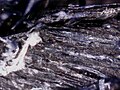 Jeans under microscope
 -
 Sweatshirt
 -
 Sweatshirt under microscope

.jpg)

.jpg)

.jpg)

.jpg)
See also
[edit]References
[edit]- ^ a b "Yarn". Merriam-Webster. Archived from the original on 2012-05-07. Retrieved 2012-05-25.
- ^ Kadolph, Sara J., ed. (2007) Textiles, 10th edition, Pearson/Prentice-Hall. p. 203. ISBN 0-13-118769-4
- ^ "Yarn - Etymology, Origin & Meaning".
- ^ Bay, Ann (September 1980). "Spinning Yarns, Telling Tales about Textiles" (PDF). Art to Zoo. Office of Elementary and Secondary Education, Smithsonian Institution – via Smithsonian Learning Lab.
- ^ "How yarn is made". Advameg. Archived from the original on 2007-06-16. Retrieved 2007-06-21.
- ^ Postrel, Virginia (2020). The Fabric of Civilization: How Textiles Made the World. New York: Basic Books. p. 58. ISBN 9781541617629.
- ^ Vainker, Shelagh (2004). Chinese Silk: A Cultural History. Rutgers University Press. pp. 20, 17. ISBN 978-0813534466.
- ^ Johnson, Ingrid; Cohen, Allen C.; Sarkar, Ajoy K. (2015-09-24). J.J. Pizzuto's Fabric Science: Studio Access Card. Bloomsbury Publishing USA. ISBN 9781628926583.
- ^ Juracek, Judy A. (2000). Soft Surfaces: Visual Research for Artists, Architects, and Designers. W. W. Norton & Company. ISBN 9780393730333.
- ^ a b Haffenden, Vikki; Patmore, Frederica (2019). The Knitting Book: Over 250 Step-by-Step Techniques. New York: DK Publishing. ISBN 9781465482402. Retrieved 6 November 2024.
- ^ Doyle, EK; Preston, JWV; McGregor, BA; Hynd, PI (May 17, 2021). "The science behind the wool industry. The importance and value of wool production from sheep". Anim Front. 11 (2): 15–23. doi:10.1093/af/vfab005. PMC 8127695. PMID 34026311.
- ^ "Rayon". Time Magazine. 5 (26): 24–25. 1925.
- ^ Coburn, Robyn (September 1, 2010). "Crafting for a Greener World: T-shirt yarns". Natural Life Magazine (135): 10–13. Archived from the original on 2015-06-12. Retrieved 19 December 2021.[permanent dead link]
- ^ Miliani, Andrea (2022-04-21). "Inside a Chilean Factory Turning Old Clothes Into High-Quality Eco-Yarn". Vogue. Archived from the original on 2025-08-28. Retrieved 2025-10-22.
- ^ Holli, Friedland (April 5, 2010). "Knitting with recycled t-shirts". Baltimore Examiner.
- ^ Shakespeare, Margaret (September 30, 2015). "20 Things You Didn't Know About...Wool". Discover Magazine. Retrieved 2021-11-25.
- ^ a b Zallmann, M; Smith, P; Tang, M; Spelman, L; Cahill, J; Wortmann, G; Katelaris, C; Allen, K; Su, J (2017). "Debunking the Myth of Wool Allergy: Reviewing the Evidence for Immune and Non-immune Cutaneous Reactions". Acta Dermato Venereologica. 97 (8): 906–915. doi:10.2340/00015555-2655. hdl:10072/355515. PMID 28350041.
- ^ "Are you allergic to wool?". www.woolmark.com. Retrieved 2021-11-25.
- ^ Kadolph, Sara J., ed. (2007) Textiles, 10th edition, Pearson/Prentice-Hall. p. 197. ISBN 0-13-118769-4
- ^ Barber, Elizabeth Wayland (1994) Women's Work:The First 20,000 Years, W. W. Norton. p. 44. ISBN 0393313484
- ^ Doran, David; Cather, Bob (2013-07-24). Construction Materials Reference Book. Routledge. ISBN 9781135139216.
- ^ "How to Ply Yarn the Simple Way with this Expert Guide | Interweave". Interweave. 2016-11-18. Archived from the original on 2016-12-14. Retrieved 2017-12-05.
- ^ Warren, Patrick B.; et al. (13 April 2018). "Why Clothes Don't Fall Apart: Tension Transmission in Staple Yarns". Physical Review Letters. 120 (15) 158001. arXiv:1804.07606. Bibcode:2018PhRvL.120o8001W. doi:10.1103/PhysRevLett.120.158001. PMID 29756870. S2CID 21727156.
- ^ American Home Economics Association. Textiles and Clothing Section (1970). Textile handbook. Internet Archive. Washington, American Home Economics Association. p. 30.
- ^ Wingate, Isabel Barnum (1979). Fairchild's dictionary of textiles. Internet Archive. New York : Fairchild Publications. p. 298. ISBN 978-0-87005-198-2.
{{cite book}}: CS1 maint: publisher location (link) - ^ "Hosiery Yarns and the Knitted Fabric". Journal of the Textile Institute Proceedings. 18 (3): P74 – P75. 1927-03-01. doi:10.1080/19447012708665800.
- ^ Wingate, Isabel Barnum (1979). Fairchild's dictionary of textiles. Internet Archive. New York : Fairchild Publications. p. 425. ISBN 978-0-87005-198-2.
{{cite book}}: CS1 maint: publisher location (link) - ^ Lawrence, Alexander (2010). Advances in yarn spinning technology. Cambridge: Woodhead Publishing Ltd. pp. 81–261–273–365. ISBN 978-0-85709-021-8. OCLC 798340806.
- ^ "textile – Types of yarn". Encyclopaedia Britannica. Retrieved 2021-10-22.
- ^ "Moisture mobility in textured yarns and fabrics". Textile News, Apparel News, RMG News, Fashion Trends. 2013-12-12. Retrieved 2021-10-22.
- ^ Kiron, Mazharul Islam (2013-01-28). "Flow Chart of Yarn Dyeing | Methods of Yarn Dyeing". Textile Learner. Retrieved 2024-11-24.
- ^ Kiron, Mazharul Islam (2013-01-28). "Flow Chart of Yarn Dyeing | Methods of Yarn Dyeing". Textile Learner. Retrieved 2024-11-24.
- ^ "Standards and Guidelines for Crochet and Knitting – Welcome to the Craft Yarn Council". www.yarnstandards.com. Archived from the original on 2007-04-18.
- ^ a b "Standard Yarn Weight System | Welcome to the Craft Yarn Council". www.craftyarncouncil.com. Retrieved 2021-10-03.
- ^ "Definition of HANK". www.merriam-webster.com. Retrieved 2021-10-03.
- ^ a b c d e f g "Lisa's List: 12 Yarn Ball Types and How to Knit with Them". Interweave. 2017-02-23. Archived from the original on 2021-10-03. Retrieved 2021-10-03.
- ^ "Hand Weaving Supplies from Weaving Today" (PDF). Handwoven. January–February 1985.
External links
[edit]
- . Encyclopædia Britannica (11th ed.). 1911.
| Tools |  | |
|---|---|---|
| Techniques and motifs | ||
| Items | ||
| Crocheted lace | ||
| Companies | ||
| Related | ||


| Tools and materials |  | |
|---|---|---|
| Yarn styles | ||
| Yarn brands | ||
| Styles | ||
| Stitches | ||
| Techniques |
| |
| Patterns | ||
| Machine knitting | ||
| Knitters and designers | ||
| Organizations | ||
| Related | ||
| Techniques | |||||
|---|---|---|---|---|---|
| Stitches (list) | |||||
| Seams | |||||
| Closures | |||||
| Materials | |||||
| Tools |
| ||||
| |||||
| Manufacturers |
| ||||
| |||||

| Fundamentals |  | |
|---|---|---|
| History of ... | ||
| Regional and ethnic | ||
| Related | ||
| Glossaries | ||
| Weaves |  | |
|---|---|---|
| Components | ||
| Tools and techniques | ||
| Types of looms | ||
| Weavers |
| |
| Employment practices | ||
| Mills | ||
| International | |
|---|---|
| National | |
| Other | |

Etymology and Terminology
Etymology
The word "yarn" originates from Old English gearn, referring to a thread or strand of spun fiber, derived from Proto-Germanic *garną, which itself traces back to the Proto-Indo-European root *ghere-, denoting "intestine" or "gut," reflecting early uses of animal entrails as raw material for threading.[10] This etymological link underscores the practical origins of yarn production from natural, fibrous materials. Through Middle English, the term evolved into "yarn," retaining its core meaning of spun thread while gradually specifying a twisted strand suitable for weaving or knitting, distinguishing it from looser fibers or unprocessed threads in textile contexts.[10] By the modern era, "yarn" had solidified as a term for continuous strands of intertwined fibers, primarily in crafting and industry, though its broader sense of any filament persisted in some dialects. A secondary historical meaning of "yarn" emerged in the early 19th century as a colloquial term for a tale or story, particularly a lengthy or embellished one, arising from the nautical slang phrase "to spin a yarn," where sailors would twist short rope fibers into usable lengths while sharing narratives during downtime.[10] This figurative extension drew from the imagery of elongating a thread, symbolizing the drawing out of a narrative, and later permeated folklore to evoke storytelling during traditional spinning activities.[11] Cognates in related languages highlight the word's Germanic roots, such as Dutch garen and German Garn, both denoting yarn or thread and sharing the Proto-Germanic ancestor *garną.[10] These parallels extend to Old Norse garn and Old High German garn, illustrating a shared linguistic heritage across Northern European textile traditions.Key Terminology
In the context of yarn production and use, several core terms describe the structure, composition, and measurement of yarns, facilitating precise communication within the textile industry. These terms encompass the twisting of strands, fiber preparation methods, units of measurement, and textural variations, distinguishing yarn from related materials like thread. Ply refers to the number of single strands (singles) that are twisted together to form a composite yarn, with ply yarns typically offering greater strength and uniformity for applications requiring durability, such as weaving.[12] Singles, in contrast, denote a basic yarn composed of a single continuous strand of fibers twisted together without additional plying, often resulting in a softer, more irregular texture suitable for knitting but prone to greater variability in strength.[12] Worsted describes a smooth, strong yarn produced from wool fibers that have been combed to align them parallel, removing short fibers and impurities to create a sleek, even surface ideal for fine suiting fabrics.[13] Woolen, on the other hand, refers to a fuzzier, bulkier yarn made from wool fibers that are carded but not combed, preserving shorter fibers and air pockets for warmth and loft in garments like sweaters.[13] Industry standards employ specific units for quantifying yarn dimensions. A hank serves as a unit of length for measuring yarn in skein form, varying by fiber type—for instance, 840 yards for cotton yarns or 560 yards for worsted wool yarns—used in indirect counting systems to indicate fineness relative to weight.[14] Denier measures linear density as the weight in grams of 9,000 meters of yarn, commonly applied to continuous filament yarns where lower values indicate finer yarns.[14] Tex, the SI unit for yarn thickness, represents the weight in grams of 1,000 meters of yarn, providing a universal metric adaptable to both staple and filament types with prefixes like decitex for finer scales.[14] Yarn differs from thread, which is a finer, tightly twisted variant typically intended for sewing and less suited to structural fabric formation like knitting or weaving due to its reduced bulk and specialized construction.[15] Specialized terms capture textural effects in novelty yarns. Slub denotes an intentional irregularity in yarn where thicker, elongated sections (slubs) alternate with thinner areas, achieved by varying twist or draft during spinning to impart a rustic, tactile quality to fabrics.[16] Bouclé describes a looped or curled yarn texture created by twisting multiple strands together such that one or more form protruding loops, yielding a nubby, decorative surface often used in upholstery or apparel for visual and tactile interest.[16]History
Ancient and Pre-Industrial Yarn Production
The earliest known evidence of yarn production dates to the Upper Paleolithic period, approximately 30,000 years ago, when hunter-gatherers in Dzudzuana Cave, located in the Republic of Georgia, processed wild flax fibers into twisted cords for practical uses such as binding or netting. These fibers, discovered in multiple layers of the cave, demonstrate early manual twisting techniques applied to plant materials, marking the beginnings of fiber manipulation without specialized tools. During the Neolithic era, around 8000 BCE, the development of more efficient spinning tools revolutionized yarn production in the Near East, with stone spindle whorls appearing at sites like Jericho in modern-day Palestine, enabling the consistent twisting of fibers into stronger yarns.[17] These whorls, often made from limestone or clay, were attached to wooden spindles to add weight and momentum, while distaffs—staffs for holding unspun fibers—emerged alongside them to streamline the process for spinners. In the Americas, similar spindle technologies developed independently during the Neolithic period, with evidence of drop spindles used for cotton and other fibers appearing in Andean sites by around 2500 BCE, reflecting parallel innovations in fiber processing.[18] Cultural variations in pre-industrial yarn production highlighted regional adaptations to available resources and social structures. In ancient Egypt, linen yarns derived from flax were produced as early as 5000 BCE, with archaeological remains of fine, twisted threads indicating meticulous hand-spinning for elite textiles and mummy wrappings.[19] Among the Inca in South America, cotton spinning with lightweight drop spindles was a communal activity from at least 2000 BCE, where women drafted and twisted fibers while walking or sitting, producing yarns essential for intricate weaving in Andean societies.[20] In medieval Europe, wool processing became organized through craft guilds starting in the 12th century, where hand-spinners prepared fleeces via carding and combing before twisting them on supported or drop spindles, supporting a burgeoning trade in woolen yarns across the continent.[21] Hand-spinning techniques, such as the drop spindle method—a precursor to later mechanized systems like ring spinning—dominated pre-industrial production, involving the spinner's manual drafting of fibers and imparting twist through the spindle's rotation under gravity. These methods facilitated the exchange of yarns along ancient trade routes, notably the Silk Road, where Chinese silk filaments were thrown into yarns and traded westward from the 2nd century BCE, influencing textile practices across Eurasia.[22]Industrial Revolution and Modern Advancements
The Industrial Revolution marked a pivotal shift in yarn production from labor-intensive manual methods to mechanized processes, enabling unprecedented scale and efficiency. In 1764, James Hargreaves invented the spinning jenny, a multi-spindle machine that allowed a single operator to spin multiple threads simultaneously, revolutionizing cotton yarn output and laying the groundwork for factory-based textile manufacturing. This device, initially hand-powered, addressed the limitations of traditional spinning wheels by producing finer yarns at higher volumes. Shortly after, in 1769, Richard Arkwright patented the water frame, a water-powered spinning machine that used rollers to draw out and twist cotton fibers into strong, consistent yarn suitable for warp threads. Powered by water mills, it facilitated the first large-scale mills, such as Arkwright's Cromford Mill, transforming yarn production into an industrial enterprise that reduced reliance on skilled labor and boosted productivity dramatically. Building on these innovations, 19th-century advancements further streamlined spinning. Samuel Crompton's spinning mule, developed in 1779, combined elements of the jenny and water frame to produce finer, stronger yarns through a hybrid process of stretching and twisting, enabling the creation of high-quality cotton thread for weaving. This machine, initially hand-operated but later mechanized, significantly cut production times and labor costs. By the 1830s, ring spinning emerged as a key development, with American inventor John Thorp patenting a ring frame in 1828 that used a rotating traveler to impart twist, offering greater speed and uniformity compared to mule spinning. Ring frames became dominant due to their efficiency in producing consistent yarns at rates up to three times faster than earlier methods, solidifying mechanized spinning as the backbone of the textile industry. In the 20th century, yarn production evolved toward even greater automation and speed. Open-end spinning, also known as rotor spinning, was commercialized in the 1960s, particularly with machines like the Czech KS200 introduced in 1965 and Schlafhorst's Autocoro in 1967, which used air vortices to open and reassemble fiber ends into yarn without traditional twisting, achieving production speeds over 10 times that of ring spinning while reducing energy use. By the 1980s, computer integration automated spinning processes, with systems in Japan and elsewhere incorporating sensors and controls for real-time monitoring, doffing, and piecing, minimizing downtime and labor to as little as one operator per 1,000 spindles. Recent advancements since 2000 emphasize sustainability and customization in spinning technologies. Sustainable methods like dry-jet wet spinning for synthetics and supercritical CO2 processing for dyeing have reduced water consumption in textile processing by up to 95% compared to traditional wet methods, aligning with global environmental regulations and enabling eco-friendly production of synthetic and blended yarns.[23] Additionally, integration with 3D printing has enabled the creation of custom yarns, where continuous fiber reinforcement is extruded during additive manufacturing, producing tailored structures for applications like smart textiles and composites with enhanced strength and flexibility. As of 2025, AI-driven automation in ring spinning has further improved efficiency, with systems incorporating machine learning for predictive maintenance and quality control.Materials
Natural Fibers
Natural fibers for yarn production are derived from plant and animal sources, offering unique properties shaped by their biological origins. These fibers exhibit natural variability in texture, strength, and performance, making them suitable for a range of textiles from everyday apparel to durable fabrics. Plant-based fibers, such as cotton, linen, and hemp, are extracted from various parts of the plant, while animal-based fibers like wool, silk, cashmere, alpaca, and mohair come from hair, fur, or secretions of animals. Harvesting and preparation methods are tailored to each fiber type to preserve quality and remove impurities before spinning into yarn. Plant-based natural fibers include cotton, obtained from the seed hairs of the Gossypium plant species, which is highly absorbent—capable of holding up to 27 times its weight in water—and versatile for blending with other materials in yarn production.[24] Linen fibers are sourced from the bast of flax plant stems (Linum usitatissimum), renowned for their exceptional strength—up to three times that of cotton—and crisp, cool hand feel that provides breathability in fabrics.[25] Hemp fibers, derived from the stalks of Cannabis sativa, are notably durable, with tensile strength exceeding that of many other natural fibers, and eco-friendly due to the plant's rapid growth, low water requirements (about half that of cotton), and minimal need for pesticides.[26][27] Animal-based fibers encompass wool, harvested from sheep via shearing and subsequent scouring to remove lanolin and dirt, yielding insulating properties through air-trapping crimped structure and high elasticity with up to 25-30% elongation and excellent recovery.[28] Silk originates from the cocoons of the silkworm (Bombyx mori), where the continuous filament provides a smooth surface and lustrous sheen due to its triangular cross-section that reflects light effectively.[29] Cashmere is the fine undercoat of cashmere goats (Capra hircus), collected by combing during spring molt, offering superior softness (diameter under 19 microns) and warmth from its insulating down fibers that trap body heat efficiently.[30] Other notable animal-derived fibers include alpaca, sheared from the South American alpaca (Vicugna pacos), which shares wool's warmth and durability but is hypoallergenic owing to the absence of lanolin and smoother scales that reduce skin irritation.[31] Mohair, from the Angora goat (Capra aegagrus hircus), is sheared annually and features a shiny, lustrous appearance from its high luster scales alongside resilient properties that resist abrasion and maintain shape in yarns.[32] Preparation for these fibers often involves cleaning and sorting; for instance, cotton undergoes ginning to separate lint from seeds and remove trash, while linen requires retting—typically dew or water-based—to degrade pectins binding fibers to the stem, and wool scouring uses detergents to eliminate grease for clean, spinnable stock.[33][25]Synthetic and Artificial Fibers
Synthetic and artificial fibers, also known as man-made fibers, are produced through chemical processes to create materials suitable for yarn spinning, offering engineered properties that complement or surpass those of natural fibers like cotton or wool. These fibers are broadly categorized into regenerated types, derived from natural polymers such as cellulose, and fully synthetic types, created entirely from petrochemicals via polymerization. Regenerated fibers maintain some biodegradability and comfort akin to natural ones, while synthetics provide enhanced durability and versatility for industrial and apparel yarns.[34] Regenerated fibers include rayon, commonly produced as viscose rayon, which is made from cellulose sourced from wood pulp or cotton linters. The production process begins with steeping the cellulose in caustic soda to form alkali cellulose, treating it with carbon disulfide to create cellulose xanthate, dissolving it in dilute caustic soda to form viscose solution, and extruding the solution through spinnerets into an acid bath for regeneration into filaments. Viscose rayon is valued for its breathability and excellent draping qualities, making it suitable for lightweight yarns in clothing and home textiles.[35][36] Another regenerated fiber is acetate, derived from wood pulp cellulose that undergoes acetylation with acetic anhydride and sulfuric acid to form cellulose acetate, which is then dissolved in acetone and extruded into filaments via dry spinning. Acetate imparts a silky sheen to yarns, enhancing their aesthetic appeal in items like linings and evening wear, though it is less absorbent than viscose.[37][36] Fully synthetic fibers are created through polymerization of monomers derived from petroleum. Nylon, a polyamide, is typically nylon 6,6, produced by the condensation polymerization of adipic acid and hexamethylenediamine, followed by melt spinning and extrusion into strong, elastic filaments ideal for durable yarns in hosiery and upholstery. Its high tensile strength and abrasion resistance make it superior for load-bearing applications compared to many natural fibers.[38][36] Polyester, primarily polyethylene terephthalate (PET), results from the polycondensation of terephthalic acid (or dimethyl terephthalate) with ethylene glycol, yielding a polymer that is melt-spun into filaments for wrinkle-resistant, cost-effective yarns widely used in blends for apparel and upholstery. Its low moisture absorption and quick-drying properties enhance performance in activewear.[39][36] Acrylic fibers, including modacrylic variants, are formed by free-radical polymerization of acrylonitrile with water and initiators, then wet- or dry-spun into filaments that mimic wool's warmth and bulk, providing soft, insulating yarns for sweaters and blankets. Modacrylics offer improved flame resistance, suitable for protective textiles.[40][36] In general, synthetic fibers are extruded from polymer melts or solutions through spinnerets to form continuous filaments, which can be drawn to align molecules for improved strength before being cut into staples for yarn spinning. Compared to natural fibers, synthetics excel in durability, elasticity, and resistance to shrinking or wrinkling, enabling versatile, low-maintenance yarns at lower production costs. However, they often lack breathability, leading to discomfort in humid conditions, and contribute to environmental concerns such as microplastic shedding during washing, which pollutes waterways and harms marine life.[41][42][43]Recycled and Blended Materials
Recycled yarns are produced from post-consumer and pre-consumer waste materials, offering a sustainable alternative to virgin fibers by diverting textiles from landfills and reducing the demand for new resources. One prominent example is recycled polyethylene terephthalate (rPET) yarn, derived from plastic bottles, which saw increased adoption starting in the 1990s as recycling technologies advanced and environmental concerns grew.[44] This process involves collecting used PET bottles, cleaning and shredding them into flakes, melting the flakes into pellets, and then spinning them into yarn, enabling applications in apparel and upholstery.[45] Similarly, upcycled cotton yarn is made by respinning fibers from cotton waste, such as garment scraps or discarded textiles, which are sorted, shredded, and carded to form new staple fibers suitable for yarn production.[46] Blended yarns combine recycled or natural fibers with synthetics to enhance performance while promoting sustainability. Cotton-polyester blends, often incorporating recycled polyester, provide improved strength, wrinkle resistance, and durability compared to pure cotton, while maintaining breathability and comfort for everyday garments.[47] Wool-acrylic blends, where acrylic serves as a cost-effective substitute for some wool content, deliver warmth and insulation at a lower price point, with the acrylic component adding lightness and reducing shrinkage in knitted items like sweaters.[48] The production of recycled yarns primarily relies on mechanical and chemical recycling processes to break down waste into usable fibers. Mechanical recycling involves shredding old textiles into small pieces using machines like garnetting equipment, followed by cleaning and spinning the resulting fibers into yarn; this method is energy-efficient but can shorten fiber length, potentially affecting yarn quality.[49] Chemical recycling, in contrast, depolymerizes materials—such as breaking PET into its monomer components through hydrolysis or glycolysis—allowing for the creation of high-quality fibers nearly identical to virgin ones, though it requires more energy.[50] These approaches contribute significantly to sustainability, with recycled cotton yarn using approximately 70% less water than virgin cotton production due to the elimination of irrigation and cultivation needs.[51] Certifications like the Global Organic Textile Standard (GOTS) verify eco-friendly blended yarns, ensuring that blends with recycled content meet strict environmental and social criteria, including limits on chemical use and fiber sourcing traceability.[52]Production Processes
Spinning Staple Fibers
Spinning staple fibers into yarn involves a series of mechanical processes that transform short, discontinuous fibers—typically 1 to 6 inches in length—from natural or synthetic sources into cohesive, twisted strands suitable for weaving or knitting. The process begins with carding, where fibers are passed through a series of rollers covered in fine wire teeth to disentangle, clean, and align them parallel to one another, producing a thin, untwisted strand called a sliver.[53] This step removes impurities like dirt and short fibers while creating a uniform web that is then condensed into a sliver for further processing.[54] Following carding, the slivers undergo drawing, a blending and attenuating process on drawing frames that combines multiple slivers to improve uniformity, reduce thickness, and enhance fiber parallelism through controlled drafting and slight twisting.[53] For higher-quality yarns, an optional combing step is inserted after initial drawing: fibers are drawn through fine-toothed combs that remove short fibers (noils) and further align the longer ones, resulting in smoother, stronger slivers ideal for fine fabrics.[54] The prepared slivers are then converted into roving—a lightly twisted, attenuated strand—before the final spinning stage, where twist is imparted to bind the fibers together. Spinning can employ ring spinning, which uses a traveler on a rotating ring to insert twist as the roving is drafted and wound onto a bobbin, or rotor (open-end) methods, which separate fibers and reinsert them into a rotating collector for rapid twisting.[3] Yarn types produced from staple fibers vary based on preparation and spinning method. Carded yarns, made without combing, retain a fuzzy surface due to protruding short fibers, making them suitable for woolen fabrics like tweeds where bulk and insulation are desired; they are coarser and less uniform but economical for medium-count yarns.[3] In contrast, combed yarns undergo the additional fiber-lengthening process, yielding smoother, finer strands with fewer ends and greater strength, commonly used in worsted suiting and shirting for their evenness and luster.[3] Open-end spinning, often incorporating air vortex technology, accelerates production by using high-speed rotors or compressed air jets to twist fibers without traditional drafting zones, producing bulkier, less hairy yarns at speeds up to five times faster than ring spinning, though with slightly lower tensile strength; these are favored for denim, towels, and casual apparel.[55] The direction of twist imparted during spinning significantly affects yarn behavior and fabric properties. Z-twist, created by clockwise rotation, results in fibers slanting upward to the right like the middle of a "Z," providing tighter, more stable yarns commonly used for warp threads in weaving due to their resistance to abrasion.[56] S-twist, from counterclockwise rotation, features fibers slanting upward to the left like an "S," yielding softer, more pliable yarns typically employed for weft threads where flexibility is key.[56] Balancing these directions in plied yarns—such as Z-twisted singles plied with S-twist—prevents biasing in the final fabric.[57] Historically, staple fiber spinning relied on manual tools like the spinning wheel, which originated in India between 500 and 1000 AD and used a foot-treadled flywheel to draft and twist fibers at rates of mere meters per hour, enabling household production but limiting output to skilled artisans.[58] Modern equipment has evolved dramatically: the spinning mule, developed in the late 18th century, combined intermittent drafting and twisting on a reciprocating carriage to produce fine counts at spindle speeds up to 1,700 rpm, though with lower overall efficiency.[59] Today, ring frames dominate, featuring high-speed spindles (up to 20,000 rpm) and travelers that deliver yarn at 10-20 meters per minute, while rotor systems achieve 100-400 meters per minute for coarser staples, vastly increasing industrial throughput.[59]Producing Filament Yarns
Synthetic filament yarns are produced through a melt extrusion process where polymers, such as polyester or nylon, are heated to a molten state and forced through a spinneret—a plate with precisely engineered tiny holes—to form continuous strands.[60] The number and size of holes in the spinneret determine the filament count and diameter, with the emerging molten filaments then cooled rapidly in air or a quenching medium to solidify them into a stable form, followed by winding onto bobbins for further processing.[61] This method creates seamless, continuous lengths without mechanical twisting.[62] Filament yarns encompass various types beyond melt-spun synthetics. Regenerated filament yarns, such as viscose rayon, are produced via wet spinning, where cellulose from natural sources is dissolved in chemicals (e.g., sodium hydroxide and carbon disulfide), extruded through a spinneret into a coagulating bath to form and solidify the filaments.[63] Dry spinning is used for other regenerated fibers like acetate, involving dissolution in a solvent, extrusion into warm air for evaporation, and solidification. Natural filament yarns, such as silk, are obtained by reeling continuous filaments from silkworm cocoons, followed by twisting into yarn without chemical extrusion.[63] There are two primary types of filament yarns: monofilament, consisting of a single continuous strand, and multifilament, made from multiple fine filaments bundled together. Monofilament yarns are often used in applications requiring high strength and abrasion resistance, such as fishing lines, where a thick, uniform single filament provides durability under tension.[64] Multifilament yarns, by contrast, offer greater flexibility and smoothness due to their composite structure, making them ideal for woven or knitted fabrics in apparel and upholstery.[65] Following extrusion, the filaments undergo drawing, a stretching process where they are pulled to several times their original length—typically up to five times—to align polymer molecules along the fiber axis, enhancing tensile strength and crystallinity.[61] This orientation step, often performed using heated godets or rollers, improves mechanical properties like elasticity and resistance to breakage, with draw ratios adjusted based on the polymer type to optimize performance.[66] The development of filament yarn production traces back to the invention of nylon in the 1930s by Wallace Carothers at DuPont, marking the first commercial synthetic continuous filament and revolutionizing textile manufacturing.[67] By the 2000s, nylon and polyester filament yarns had become dominant in sportswear due to their durability, moisture-wicking properties, and versatility in performance fabrics.[68]Specialty and Textured Yarns
Specialty and textured yarns are advanced variants produced through modifications to standard spinning and filament processes, enhancing aesthetic appeal, bulk, and functionality for specific applications. These yarns introduce deliberate irregularities or structural changes to create unique textures and effects, often building on staple fiber spinning or filament production techniques.[69] Texturing methods are key to developing bulk and elasticity in synthetic continuous filament yarns. False-twist texturing involves heating the yarn and applying temporary twist via friction discs, which sets crimps, coils, and loops upon cooling, resulting in increased volume and stretch suitable for apparel. This process is widely used for polyesters and nylons, where the twist is inserted and then removed, leaving permanent distortions that mimic staple yarn appearance.[70] Air-jet texturing, alternatively, employs high-speed compressed air in a nozzle to entangle filaments, forming random loops and entanglements that provide a spun-like texture with enhanced bulk and softness, particularly effective for modifying flat multifilament yarns.[71] Novelty yarns further emphasize decorative irregularities, such as slub yarns featuring intentional thick-thin sections achieved by varying draft or twist during ring spinning, creating a rustic, uneven surface for visual interest. Bouclé yarns are formed through irregular plying where effect yarns are overfed relative to a core and binder, producing looped or knotted protrusions that add dimensional texture. Metallic yarns, like lamé variants, incorporate thin metallic strips—often aluminum foil laminated between plastic films—plied or wrapped with base fibers to achieve shimmering effects without tarnishing.[69][72] Additional production techniques include core-spun yarns, where an elastic core such as spandex is wrapped by staple fibers during spinning to combine stretch with durability and a natural feel, ideal for form-fitting garments. Plied constructions for multi-strand effects involve twisting multiple singles together, often with varying tensions or compositions, to generate complex patterns like marls or cables that enhance strength and aesthetic variety. These specialty yarns find primary use in fashion for decorative elements, such as trims and upholstery, where texture elevates design without compromising basic functionality.[73][74]Physical Properties
Yarn Structure and Twist
Yarn structure fundamentally consists of fibers arranged in a generally parallel alignment within a continuous strand, bound together by twist to provide cohesion and mechanical integrity. Twist refers to the helical disposition imparted to the fibers, measured as the number of turns per unit length, commonly expressed in turns per meter (TPM) or turns per inch (TPI). This twisting process consolidates the fibers, enhancing the yarn's overall stability and performance characteristics.[75][76] Yarns are classified by their construction methods involving twist, with single-ply yarns serving as the basic form, where individual fibers are directly twisted together into a single strand. Plied yarns, in contrast, are created by twisting two or more single-ply yarns together, typically in the direction opposite to the initial twist of the singles, which increases thickness and uniformity. Cable yarns represent a more complex structure, formed by further twisting two or more plied yarns in the opposite direction, resulting in a robust, balanced configuration suitable for demanding applications.[77][74][78] The degree of twist profoundly influences yarn properties, with higher twist levels producing a more compact structure that aligns fibers tightly, thereby increasing tensile strength and smoothness while reducing elongation and hairiness. For instance, as twist rises from low to moderate levels, breaking strength and abrasion resistance improve due to enhanced inter-fiber friction, making high-twist yarns ideal for weaving where durability and a sleek surface are required. Conversely, low-twist yarns exhibit a looser, bulkier architecture that promotes air entrapment for better insulation and flexibility, though at the cost of reduced strength, rendering them preferable for knitting applications that prioritize softness and drape. Optimal twist balances these trade-offs, as excessive twist can lead to over-compaction and diminished strength.[79][80][81] Yarn balance pertains to the equilibrium of twist directions within its construction, where balanced yarns achieve neutrality through counter-twisting of plies in opposite directions, minimizing torque and preventing curling or bias in the final fabric. This results in evenness, higher tenacity, and reduced hairiness, contributing to consistent performance in textile processing. Unbalanced yarns, characterized by twist in the same direction across components, generate residual torque that causes the yarn to curl or live, which can be intentionally used in specialized crafts for textured effects but may distort fabrics if unintended.[74][82]Color Application and Dyeing
Color application to yarn occurs at various stages of production, primarily the fiber stage, yarn stage, and piece stage, each influencing the uniformity and effects of the coloration. Stock dyeing, performed on loose fibers before spinning, ensures uniform color penetration throughout the resulting yarn, making it ideal for blended materials where consistent hue is essential.[83] Yarn dyeing, conducted after spinning, allows for targeted effects such as variegation; common methods include skein (hank) dyeing, where loosely wound yarn hanks are immersed in dye baths for multi-color patterns, and package dyeing, where yarn is wound onto perforated spools for even, high-pressure dye application suitable for large-scale production.[84] Piece dyeing, applied to woven or knitted fabric post-construction, is less specific to yarn properties and often used for bulk coloration rather than intricate yarn effects.[85] Dyeing techniques vary by yarn fiber type, with specific classes designed for optimal affinity and bonding. Direct dyes, water-soluble anionic compounds, are applied to natural cellulosic fibers like cotton in neutral or slightly alkaline baths with added salt to promote exhaustion onto the fiber surface, though they offer moderate wash fastness.[86] Reactive dyes, used primarily for cotton and other cellulosics, form covalent bonds with hydroxyl groups on the fiber under alkaline conditions, providing excellent colorfastness to washing and light but requiring careful control to minimize hydrolysis and effluent load.[87] For protein-based natural fibers such as wool and silk, acid dyes are employed in acidic baths where ionic interactions with amino groups ensure strong attachment and vibrant shades with good light fastness.[88] Synthetic yarns like polyester require disperse dyes, non-ionic powders that are finely dispersed in hot water and absorbed into the hydrophobic polymer matrix via heat activation, typically at temperatures above 100°C, to achieve deep penetration without chemical bonding.[89] Historically, natural dyes dominated yarn coloration, with indigo extracted from plants and applied via vat reduction processes—where the insoluble pigment is chemically reduced to a soluble leuco form in alkaline vats for fiber uptake, then oxidized to blue upon exposure to air—offering durable blues but labor-intensive preparation.[90] The advent of synthetic dyes in the mid-19th century revolutionized the industry; azo dyes, first synthesized from diazo compounds discovered by Peter Griess in 1858, provided a broad spectrum of bright, fast colors through diazotization and coupling reactions, largely replacing natural sources by 1900 due to their reproducibility and cost-effectiveness.[91] Key challenges in yarn dyeing include achieving colorfastness, defined as resistance to fading or bleeding under washing, light exposure, or rubbing, which varies by dye class—reactive and vat dyes excel in wet fastness, while direct dyes may require after-treatments like diazotization for improvement.[92] Environmental concerns arise from dye effluents, which contain high biochemical oxygen demand, heavy metals, and non-biodegradable azo compounds that increase water turbidity, inhibit aquatic photosynthesis, and contaminate soil, necessitating treatments like coagulation, biological degradation, or advanced oxidation processes to mitigate ecosystem damage.[93] Yarn twist and structure can briefly influence dye uptake, with looser twists allowing deeper penetration in stock-dyed fibers.[94]Weight, Thickness, and Measurement
Yarn weight and thickness are quantified using standardized systems that measure linear density, typically expressed as mass per unit length. The tex system, the International System of Units (SI) standard, defines yarn thickness as the weight in grams of 1,000 meters of yarn; a higher tex value indicates a thicker yarn.[14] For filament yarns, particularly synthetics, the denier system is commonly used, where 1 denier equals the weight in grams of 9,000 meters of yarn; like tex, higher denier values denote coarser yarns.[14] These direct measurement systems provide consistent, absolute metrics across yarn types, facilitating international trade and quality control in the textile industry.[95] In contrast, indirect yarn count systems, prevalent in traditional textile sectors, inversely relate to thickness by measuring length per unit mass, where higher counts signify finer yarns. The English cotton count (Ne) expresses the number of 840-yard hanks per pound, while the metric count (Nm) uses kilometers per kilogram; for example, a 20 Ne yarn means 20 such hanks weigh one pound.[14] These systems originated for staple fibers like cotton and wool but are adapted for other materials, often requiring conversions for precision.[96] Yarn weights are also categorized by approximate meters per 100 grams, aiding crafters in selecting yarns for specific projects based on gauge and drape. Fingering weight, a light category, typically yields 400-500 meters per 100 grams, suitable for delicate fabrics like socks or lace.[97] Worsted weight, a medium thickness, provides 200-250 meters per 100 grams, commonly used for sweaters and blankets due to its balanced structure.[97] Bulky weight, being thick and lofty, offers less than 100 meters per 100 grams, ideal for quick-knit items like hats or afghans that require warmth and volume.[97] To determine these metrics, yarn length is measured using a wrap reel, a device that winds yarn into a standardized skein (often 1 meter or 1 yard in circumference) at a controlled tension, ensuring uniform length for density calculations.[98] The skein's weight is then assessed with a precision balance, allowing computation of linear density by dividing mass by length.[98] This method adheres to standards like ASTM D1059 for accuracy in laboratory settings.[99] Conversions between systems enable practical applications, such as for crafters switching yarn types. For instance, 1 Ne approximates 590 divided by tex (or tex ≈ 590 / Ne), so a 20 Ne cotton yarn equates to roughly 29.5 tex, helping knitters match a fine worsted substitute to a specified count.[14] Similarly, 1 denier equals about 0.111 tex, allowing filament yarn specs to align with staple fiber measurements in blended projects.[96] These equivalences, while approximate due to factors like twist and fiber density, provide essential guidance for consistent results in handcrafting and manufacturing.[100]Forms and Handling
Traditional Packaging Methods
Traditional packaging methods for yarn emphasize manual winding techniques suited to artisanal crafting, dyeing, and small-scale storage, preserving the yarn's flexibility and preventing damage during handling. These methods, rooted in historical textile practices, include hanks, skeins, and balls, each designed to balance ease of use with protection against tangling.[101] A hank consists of a continuous loop of yarn formed into a large circle and secured with ties at multiple points to maintain its shape and avoid knots. This structure is particularly advantageous for dyeing processes, as it allows dyes to circulate evenly around the fibers without restricting access. For cotton yarn, a standard hank measures 840 yards, while worsted yarns typically comprise 560 yards per hank, aligning with established textile measurement conventions.[14][102] Skeins are created by twisting a hank into a compact, elongated coil, often with figure-eight folds for stability, and are commonly labeled by total yardage to guide crafters. This loosely wound form keeps the yarn untensioned, reducing the risk of stretching or biasing during storage and making it a preferred option for hand-knitting where consistent tension is essential.[101][102] Balls represent a more portable packaging variant, where yarn is densely wound into a spherical shape for convenient carrying by individual artisans. Center-pull balls, featuring an inner starting point, enable seamless unwinding without disrupting the outer layers, enhancing usability in mobile crafting scenarios.[101] In the Scottish wool trade, hanks served as a fundamental unit for measuring, bundling, and exchanging yarn, integral to the region's historical economy centered on wool production and export. These methods often conformed to weight standards, such as one-pound units, to standardize trade and processing.[103]Modern and Industrial Forms
In modern textile manufacturing, yarn is commonly packaged on cones, which consist of tapered cardboard or plastic cores designed specifically for use in weaving machines. These cones facilitate machine-unwinding by allowing yarn to be released progressively from the outside, minimizing surface entanglements and ensuring smooth operation at high speeds.[104] Standard industrial cones have a load capacity of 1 to 5 kg, making them suitable for efficient handling in automated production lines.[105] Manufacturers like Sonoco produce these paper-based cones to enhance productivity on fully automatic winders.[106] For larger-scale operations, beams serve as parallel-wound packages essential for warpers, where multiple yarns are transferred from creels onto a single beam for subsequent use in looms. This parallel winding ensures even tension and alignment of warp yarns, critical for high-quality fabric production.[107] Industrial warp beams can accommodate capacities up to 1000 kg or more, depending on the loom size and yarn density, enabling the preparation of extensive warp sheets for efficient weaving.[108] In retail settings, yarn is often wound on tubes with cylindrical plastic or paper cores, optimized for handcraft activities such as crochet and knitting, providing stability and ease of use for consumers. These tubes allow for straightforward unwinding without specialized equipment and have become a staple in craft stores.[109] Since the 2010s, recyclable options made from recycled paper or biodegradable plastics have gained prominence, driven by sustainability initiatives in the textile sector to reduce environmental impact.[110] Recent innovations in yarn packaging include vacuum-sealed packs, which protect yarn from moisture, pests, and dust to maintain freshness during storage and shipping, particularly beneficial for natural fibers like wool.[111] Additionally, RFID-tagged packages enable real-time tracking throughout supply chains in the textile industry, improving inventory management, reducing losses, and enhancing traceability from mill to retailer.[112] These advancements build on traditional methods by prioritizing efficiency and sustainability in high-volume distribution.[113]Analysis and Applications
Microscopic Examination
Microscopic examination of yarn reveals the internal structure and surface characteristics of individual fibers, providing insights into their composition, quality, and performance. Light microscopy, typically employing magnifications of 100x or higher, is used to assess fiber alignment, longitudinal views, and cross-sections, allowing identification of natural versus synthetic fibers based on distinctive morphological features.[114] Scanning electron microscopy (SEM) complements this by offering high-resolution imaging of surface topography, highlighting fine details such as texture and irregularities at magnifications up to 10,000x or more.[115] Under light microscopy, cotton fibers appear as flat, twisted ribbons in longitudinal view, with convolutions resulting from their natural flattened structure, while their cross-sections are often kidney-shaped or elliptical with a central lumen.[116] Wool fibers exhibit a cylindrical longitudinal profile covered in overlapping scales, which contribute to felting properties by interlocking during processing.[114] In contrast, polyester fibers present smooth, uniform rods longitudinally and circular cross-sections, reflecting their synthetic, extruded nature.[116] Silk fibers show a smooth, triangular rod-like longitudinal appearance, with cross-sections forming a triangular prism shape with rounded corners, distinguishing them from other natural proteins.[114] SEM enhances these observations by revealing surface details invisible under light microscopy; for instance, the scaly topography of wool becomes prominently visible, aiding in understanding friction and adhesion behaviors, while cotton's twisted surface shows fibrillar convolutions, and polyester remains featureless and rod-like. Cross-sectional SEM views further illustrate silk's angular prism geometry, which influences light reflection and luster in yarns.[114] These techniques are essential for quality control in yarn production, where microscopic analysis detects defects such as fiber breaks, uneven alignment, or contaminants like foreign particles that could compromise yarn strength and uniformity.[117] In forensic applications, microscopic examination enables precise fiber identification from yarn traces at crime scenes, comparing morphological traits like scale patterns or cross-sectional shapes to link evidence to sources.[118]Comparative Properties Across Types
Different yarn types exhibit varying physical properties that influence their suitability for specific applications, such as apparel, upholstery, or technical textiles. Key attributes include tensile strength, elasticity, moisture absorption, abrasion resistance, and thermal regulation, which arise from the inherent characteristics of natural fibers (e.g., cotton, wool, linen) versus synthetics (e.g., nylon, polyester, spandex). These differences guide material selection by balancing performance needs like durability against comfort factors like breathability.[119][120]| Property | Example Yarns/Fibers | Typical Values/Characteristics | Source |
|---|---|---|---|
| Tensile Strength (g/denier) | Nylon | 4.6–8.8 (high, exceeds wool and cotton but comparable to linen) | [121] |
| Wool | 1.0–1.7 (low to moderate) | [122] | |
| Linen | 5.5–6.5 (high among natural fibers) | [123] | |
| Cotton | 3–5 (moderate) | [124] | |
| Elasticity (Elongation at Break %) | Spandex Blends | 500–700 (exceptional stretch and recovery) | [125] |
| Wool | 25–35 (good recovery, higher than cotton) | [126] | |
| Cotton | 4–8 (low, limited stretch) | [126] | |
| Moisture Absorption (Regain %) | Linen | 12 (high, promotes breathability) | [119] |
| Wool | 13–18 (excellent, regulates humidity) | [119] | |
| Cotton | 7–11 (moderate to high) | [119] | |
| Polyester, Nylon | 0.4–0.8 (polyester), 2.8–5 (nylon) (low, resists wetting) | [120] [119] | |
| Abrasion Resistance | Nylon, Polyester | High (nylon withstands >10,000 cycles in tests; superior to naturals) | [127] [128] |
| Wool, Cotton | Moderate (wool ~5,000 cycles; prone to pilling under friction) | [127] [36] |