Hubbry Logo
MandibleMandibleMain
Open search
Mandible
Community hub
Mandible
logo
8 pages, 0 posts
0 subscribers
Be the first to start a discussion here.
Mandible
Mandible
from Wikipedia

Mandible
Position of the mandible
Animation of the mandible
Details
PrecursorFirst pharyngeal arch[1]
Identifiers
Latinmandibula
MeSHD008334
Anatomical terms of bone

In jawed vertebrates, the mandible (from the Latin mandibula, 'for chewing'), lower jaw, or jawbone is a bone that makes up the lower – and typically more mobile – component of the mouth (the upper jaw being known as the maxilla).

The jawbone is the skull's only movable, posable bone, sharing joints with the cranium's temporal bones. The mandible hosts the lower teeth (their depth delineated by the alveolar process). Many muscles attach to the bone, which also hosts nerves (some connecting to the teeth) and blood vessels. Amongst other functions, the jawbone is essential for chewing food.

Owing to the Neolithic advent of agriculture (c. 10,000 BCE), human jaws evolved to be smaller. Although it is the strongest bone of the facial skeleton, the mandible tends to deform in old age; it is also subject to fracturing. Surgery allows for the removal of jawbone fragments (or its entirety) as well as regenerative methods. Additionally, the bone is of great forensic significance.

Structure

[edit]

In humans, the mandible is the largest and lowest bone in the facial skeleton.[2] It is the only movable bone of the skull (discounting the vibrating ossicles of the middle ear).[3] It is connected to the skull's temporal bones by the temporomandibular joints. In addition to simply opening and closing, the jawbone can articulate side to side as well as forward and back.[4]

Components

[edit]

The mandible consists of:

Body

[edit]
Front view
Left side

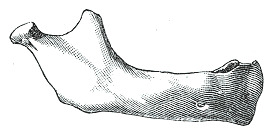
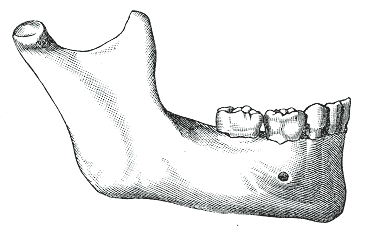
The body of the mandible is curved, and the front part gives structure to the chin. It has two surfaces and two borders. From the outside, the mandible is marked in the midline by a faint ridge, indicating the mandibular symphysis, the line of junction of the two halves of the mandible.[6] This ridge divides below and encloses a triangular eminence, the mental protuberance (the chin), the base of which is depressed in the center but raised on both sides to form the mental tubercle. Just above this, on both sides, the mentalis muscles attach to a depression called the incisive foramen.[6] Vertically midway on either side of the body, below the second premolar tooth, is the mental foramen, through which the mental nerve and blood vessels pass.[6] Running backward and upward from each mental tubercle is a faint ridge, the oblique line, which is continuous with the anterior border of the ramus.[6] Attached to this ridge is the masseter muscle (which covers most of the ramus[7] and is a muscle of mastication), the depressor labii inferioris and depressor anguli oris (which support the mouth), and the platysma (extending down over much of the neck).[6]

From the inside, the mandible appears concave. On either side of the lower symphysis is the mental spine (which can be faint or fused into one), to which the genioglossus (the inferior muscle of the tongue) attaches; the geniohyoid muscle attaches to the lower mental spine. Above the mental spine, a median foramen and furrow can line the symphysis. Below the mental spine is an oval depression (the digastric fossa of the mandible) where the digastric muscle attaches.[8] Extending backward and upward on either side from the lower symphysis is a ridge called the mylohyoid line, where the mylohyoid muscle attaches; a small part of the superior pharyngeal constrictor muscle attaches to the posterior ridge, near the alveolar margin. Above the anterior ridge, the sublingual gland rests against a smooth triangular area, and below the posterior ridge, the submandibular gland rests in an oval depression.

Medial surface of the right body and ramus, the latter penetrated by the mandibular foramen (right)
Borders
[edit]
  • The superior or alveolar border is narrower at the curved front than behind. It is hollowed into 16 dental alveoli (tooth sockets) of varying depth and size. To the outer lip of the superior border, on either side, the bucinator muscle is attached as far forward as the first molar.
  • The inferior border is rounded, longer than the superior, and thicker in front than behind; at the point where it joins the lower border of the ramus is the antegonial notch, where the mylohyoid branch of the inferior alveolar artery exits.[9]

Ramus

[edit]
The medial and lateral pterygoid muscles attach to the ramus (partly cut away, along with the cheekbone).

The ramus of the human mandible has four sides, two surfaces, four borders, and two processes. On the outside, the ramus is flat and marked by oblique ridges at its lower part. It gives attachment throughout nearly the whole of its extent to the masseter muscle.[7]

On the inside at the center there is an oblique mandibular foramen, for the entrance of the inferior alveolar nerve and vessels.[6] The margin of this opening is irregular; it presents in front a prominent ridge, surmounted by a sharp spine, the lingula of the mandible, which gives attachment to the sphenomandibular ligament; at its lower and back part is a notch from which the mylohyoid groove runs obliquely downward and forward, and lodges the mylohyoid vessels and nerve.[6] Behind this groove is a rough surface, for the insertion of the medial pterygoid muscle. The mandibular canal runs obliquely downward and forward in the ramus, and then horizontally forward in the body, where it is placed under the alveoli, with small openings for nerves.[6] On arriving at the incisor teeth, it turns back to communicate with the mental foramen, giving off two small canals which run to the cavities containing the incisor teeth. In the posterior two-thirds of the bone the canal is situated nearer the internal surface of the mandible; and in the anterior third, nearer its external surface. It contains the inferior alveolar vessels and nerve, from which branches are distributed to the teeth.

Borders
[edit]
  • The lower border of the ramus is thick, straight, and continuous with the inferior border of the body of the bone. At its junction with the posterior border is the angle of the mandible, which may be either inverted or everted and is marked by rough, oblique ridges on each side, for the attachment of the masseter laterally, and the medial pterygoid muscle medially; the stylomandibular ligament is attached to the angle between these muscles. The anterior border is thin above, thicker below, and continuous with the oblique line.[5]
  • The region where the lower border meets the posterior border is the angle of the mandible.
  • The posterior border is thick, smooth, rounded, and covered by the parotid gland. The upper border is thin, and is surmounted by two processes, the coronoid in front and the condyloid behind, separated by a deep concavity, the mandibular notch.[5]
Processes
[edit]
  • The coronoid process is a thin, triangular eminence, which is flattened from side to side and varies in shape and size.
  • The condyloid process is thicker than the coronoid, and consists of two portions: the mandibular condyle, and the constricted portion which supports it, the neck. The condyle is the most superior part of the mandible and is part of the temporomandibular joint.[6]
  • The mandibular notch, separating the two processes, is a deep semilunar depression and is crossed by the masseteric vessels and nerve.
German illustration with jawbones cut away to show the inferior alveolar nerve branching to the mandible's dental alveoli and passing through the mental foramen

Foramina

[edit]

The mandible has two main holes (foramina), found on both its left and right sides:

  • The mandibular foramen, is above the mandibular angle in the middle of each ramus.
  • The mental foramen sits on either side of the mental protuberance (chin) on the body of mandible, usually inferior to the apices of the mandibular first and second premolars. As mandibular growth proceeds in young children, the mental foramen alters in direction of its opening from anterior to posterosuperior. The mental foramen allows the entrance of the mental nerve and blood vessels into the mandibular canal.[10]

Nerves

[edit]

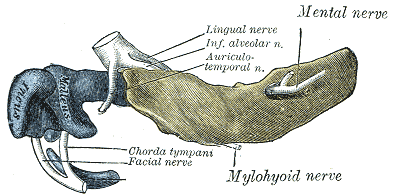
The inferior alveolar nerve (IAN), a branch of the mandibular nerve (itself a major division of the cranium's trigeminal nerve), enters the mandibular foramen and runs forward in the mandibular canal, supplying sensation to the gums and teeth.[11][12] Before passing through the mental foramen, the nerve divides into two terminal branches: incisive and mental nerves. The incisive nerve runs forward in the mandible and supplies the anterior teeth. The mental nerve exits the mental foramen and supplies sensation to the chin and lower lip.[11]

Variation

[edit]

Males generally have squarer, stronger, and larger mandibles than females. The mental protuberance is more pronounced in males but can be visualized and palpated in females.[citation needed]

Rarely, a bifid IAN may be present, resulting in a second and more inferiorly placed mandibular foramen. This can be detected by noting a doubled mandibular canal via radiograph.[10]

Illustration showing jaw's basic range of motion

Function

[edit]

The mandible forms the lower jaw and holds the lower teeth in place. It articulates with the left and right temporal bones at the temporomandibular joints.

The condyloid process, the superior (upper) and posterior projection from the ramus, makes the temporomandibular joint with the temporal bone. The coronoid process, superior and anterior projection from the ramus. This provides attachment to the temporal muscle.

Teeth sit in the upper part of the body of the mandible. The frontmost part of teeth is more narrow and holds front teeth. The back part holds wider and flatter (albeit grooved) teeth primarily for chewing food.[13] The word mandible derives from the Latin word mandibula 'jawbone' (literally, 'used for chewing'), from mandere 'to chew' and -bula (instrumental suffix).

In addition to mastication, the joint of the jawbone enables actions such speech and yawning,[14] while playing a more subtle role in activities such as kissing and breathing.[15]

Phylogeny

[edit]

The mandible of vertebrates evolved from Meckel's cartilage, left and right segments of cartilage which supported the anterior branchial arch in early fish.[16] Fish jaws surface in species of the large arthrodire genus Dunkleosteus (fl. 382–358 million years ago), which crushed prey with their quickly articulating mouths.[17] The lower jaw of cartilaginous fish, such as sharks, is composed of a cartilagenous structure homologous with Meckel's cartilage. This also remains a significant element of the jaw in some primitive bony fish, such as sturgeons.[18] In reptiles, Meckel's cartilage ossifies into the (multiple) bones of the lower jaw, while mammals of the Cretaceous (145–66 Mya) had both Meckel's cartilage and a mandible.[19]

Sperm whale mandible

In lobe-finned fishes and the early fossil tetrapods, the bone homologous to the mandible of mammals is merely the largest of several bones in the lower jaw. In such animals, it is referred to as the dentary bone or os dentale, and forms the body of the outer surface of the jaw. It is bordered below by a number of splenial bones, while the angle of the jaw is formed by a lower angular bone and a suprangular bone just above it. The inner surface of the jaw is lined by a prearticular bone, while the articular bone forms the articulation with the skull proper. A set of three narrow coronoid bones lie above the prearticular bone. As the name implies, the majority of the teeth are attached to the dentary, but there are commonly also teeth on the coronoid bones, and sometimes on the prearticular.[18]

Most vertebrates exhibit a simpler scheme, as bones have either fused or vanished. In teleosts, only the dentary, articular, and angular bones remain, while in living amphibians, the dentary is accompanied only by the prearticular, and, in salamanders, one of the coronoids. The lower jaw of reptiles has only a single coronoid and splenial, but retains all the other primitive bones except the prearticular and the periosteum.[18] In birds, the various bones have fused into a single structure. In mammals, most have disappeared, leaving only the mandible. As a result, there is only articulation between the mandible and temporal bones, as opposed to articulation between articular and quadrate bones. An intermediate stage can be seen in some therapsids, in which both points of articulation are present. Aside from the dentary, only few other bones of the lower jaw remain in mammals; the former articular and quadrate bones survive as the malleus and the incus of the middle ear.[18]

In paleontology, domestic dog bones can be identified via a generally smaller mandible compared to that of the wolf.[20] In recent human evolution, both the oral cavity and jaws have shrunk in correspondence with the Neolithic-era shift from hunter-gatherer lifestyles towards agriculture and settlement, dated to c. 10,000 BCE.[21][22][23][24] This has led to orthodontic malocclusions.[21]

Development

[edit]

The mandible forms as a bone (ossifies) from Meckel's cartilage, which forms the cartilaginous bar of the mandibular arch and, dorsally, parts of the middle ear.[16] The two sides of the jawbone are inferiorly fused at the mandibular symphysis (the chin) during the first year of life.[6] The cartilage of the ramus is replaced by fibrous tissue, which persists to form the sphenomandibular ligament.[5] Between the lingula and the canine tooth the cartilage disappears, while the portion of it below and behind the incisor teeth becomes ossified and incorporated with this part of the mandible.[5]

About the sixth week of fetal life, intramembranous ossification takes place in the membrane covering the outer surface of the ventral end of Meckel's cartilage, and each half of the bone is formed from a single center which appears, near the mental foramen.[5] By the tenth week, the portion of Meckel's cartilage which lies below and behind the incisor teeth is surrounded and invaded by the dermal bone (also known as the membrane bone). Somewhat later, accessory nuclei of cartilage make their appearance, as

  • a wedge-shaped nucleus in the condyloid process and extending downward through the ramus;
  • a small strip along the anterior border of the coronoid process;
  • smaller nuclei in the front part of both alveolar walls and along the front of the lower border of the bone.[5]

These accessory nuclei possess no separate ossific centers but are invaded by the surrounding dermal bone and undergo absorption. The inner alveolar border, usually described as arising from a separate ossific center (splenial center), is formed in the human mandible by an ingrowth from the main mass of the bone.[5]

Embryonic development, right side

Aging

[edit]

At birth, the body of the bone is a mere shell, containing the sockets of the two incisor, the canine, and the two deciduous molar teeth, imperfectly partitioned off from one another. The mandibular canal is of large size and runs near the lower border of the bone; the mental foramen opens beneath the socket of the first deciduous molar tooth. The angle is obtuse (175°), and the condyloid portion is nearly in line with the body. The coronoid process is of comparatively large size, and projects above the level of the condyle.[5]

After birth, the two segments of the bone become joined at the symphysis, from below upward, in the first year; but a trace of separation may be visible in the beginning of the second year, near the alveolar margin. The body becomes elongated in its whole length, but more especially behind the mental foramen, to provide space for the three additional teeth developed in this part. The depth of the body increases owing to increased growth of the alveolar part, to afford room for the roots of the teeth, and by thickening of the subdental portion which enables the jaw to withstand the powerful action of the masticatory muscles; but, the alveolar portion is the deeper of the two, and, consequently, the chief part of the body lies above the oblique line. The mandibular canal, after the second dentition, is situated just above the level of the mylohyoid line; and the mental foramen occupies the position usual to it in the adult. The angle becomes less obtuse, owing to the separation of the jaws by the teeth; about the fourth year it is 140°.[5] The fibrocartilage of the mandibular symphysis fuses together in early childhood.[10]

In the adult, the alveolar and subdental portions of the body are usually of equal depth. The mental foramen opens midway between the upper and lower borders of the bone, and the mandibular canal runs nearly parallel with the mylohyoid line. The ramus is almost vertical in direction, the angle measuring from 110° to 120°, also the adult condyle is higher than the coronoid process and the sigmoid notch becomes deeper.[5] The adult mandible is the skull's largest and strongest bone.[2]

In old age, the bone can become greatly reduced in volume where there is a loss of teeth, and consequent resorption of the alveolar process and interalveolar septa. Consequently, the chief part of the bone is below the oblique line. The mandibular canal, with the mental foramen opening from it, is closer to the alveolar border. The ramus is oblique in direction, the angle measures about 140°, and the neck of the condyle is more or less bent backward.[5]

Clinical significance

[edit]

In recent centuries, the mandible was sometimes exposed to harmful elements resulting in phossy jaw and radium jaw, until the causes were understood.[25][26]

The mandible is generally difficult to anesthetize due to the depth of soft tissue in the posterior and anatomical variance. American surgeon William Stewart Halsted developed a nerve block technique using a syringe and cocaine to block the IAN, as well as the incisive, mental and lingual nerves. Although some nerve branches were left unblocked, the procedure was performed successfully by 1885 and could be applied in 3–5 minutes with perhaps 80–85% success.[12] Two other, more effective techniques were established by the 1970s.[12]

Fracture

[edit]
Fracture frequency by location[27]

One fifth of facial injuries involve a mandibular fracture.[28] Mandibular fractures are often accompanied by a 'twin fracture' on the opposite side. There is no universally accepted treatment protocol, as there is no consensus on the choice of techniques in a particular anatomical shape of mandibular fracture clinic. A common treatment involves attachment of metal plates to the fracture to assist in healing.[citation needed]

Causes of mandibular fractures[27]
Cause Percentage
Motor vehicle accident 40%
Assault 10%
Fall 10%
Sport 5%
Other 5%

Dislocation and displacement

[edit]

The mandible may be dislocated anteriorly (to the front) and inferiorly (downwards) but very rarely posteriorly (backwards). The articular disk of the temporomandibular joint prevents the mandible from moving posteriorly, making the condylar neck particularly vulnerable to fractures.[6] Further, various jawbone damage can cause temporomandibular joint dysfunction, with symptoms including pain and inflammation.[14]

The jawbone can also become deviated in mandibular lateral displacement, a condition which can offset facial symmetry and cause posterior crossbite.[29]

Resorption

[edit]

The mandibular alveolar process can become resorbed when completely edentulous in the mandibular arch (occasionally noted also in partially edentulous cases). This resorption can occur to such an extent that the mental foramen is virtually on the superior border of the mandible, instead of opening on the anterior surface, changing its relative position. However, the more inferior body of the mandible is not affected and remains thick and rounded. With age and tooth loss, the alveolar process is absorbed so that the mandibular canal becomes nearer the superior border. Sometimes with excessive alveolar process absorption, the mandibular canal disappears entirely and deprives the IAN of its bony protection, although soft tissue continues to guard the nerve.[10]

Illustrations of surgical removal of portions of the lower jawbone
Mandibulectomy procedures as illustrated in the 19th century

Mandibulectomy

[edit]

The surgical removal (resection) of all or part of the jawbone is known as a mandibulectomy.[30] The removal of a portion comprising the mandible's full height is called segmental mandibulectomy and the removal of a shallower portion is known as partial or marginal mandibulectomy.[31] This can be invoked as a response to cancer (i.e. tumor removal), infection, injury, or osteonecrosis.[32] In the First World, the procedure is performed under general anesthesia, but it can be done awake in tandem with a tracheotomy to ensure respiration.[32][33] The removed jawbone fragment can be replaced with metal plating or bone from elsewhere in the body. Oral muscles tend to work differently after the procedure, requiring therapy to relearn operations such as eating and speaking. During recovery, a feeding tube is utilized, and sometimes also a tracheotomy in case of swollen muscles.[34] In a technique illustrated in the 19th century, the flesh of the face is incised along the inferior of the mandible and peeled upward for the bone's removal.[35]

Complications can involve difficulties with free flap transfer and airway management.[36][37] Additional side effects include pain, infection, numbness, and (rarely, fatal) bleeding.[38] Even successful surgeries can result in deformity, with an extreme version being referred to as the Andy Gump deformity after the comic book character, whose design apparently lacks a jaw; proposed reconstruction methods include implanting synthetic material, potentially involving 3D printing.[39]

Dental implants supporting false teeth

Regeneration

[edit]

Bone loss (as in osteoporosis) can be mitigated in the jawbone via bone grafting, which is sometimes performed to support dental implants (replacing teeth individually or in groups).[40]

Mandibular prosthetics date back to ancient Egypt and China, but significant advancements were made in the late 19th century with new techniques for attaching prosthetics to a depreciated jawbone as well as bone grafting.[41]

In 2010, the first successful face transplant was conducted on a Spanish farmer after a self-inflicted gun accident; this included the replacement of the entire mandible.[42]

Forensic medicine

[edit]

The mandible can provide forensic evidence because its form changes over a person's life, and this can be used to determine a deceased person's age.[6]

Dental remains of Nazi leader Adolf Hitler, including part of a mandible with teeth, were the solitary physical evidence used to confirm his death in 1945.[43]

In culture

[edit]

In the Hebrew Bible and Christian Old Testament Book of Judges, Samson used a donkey's jawbone to kill a thousand Philistines.[44]

As early as 1900, the phrase jaw-dropping was used as an adjective to describe a condition of shock in humans, e.g. when someone's mouth suddenly hangs agape in response to something. The exaggerated visual gag of a jaw dropping to the floor was a trademark of American animation director Tex Avery, who would often employ it when the Big Bad Wolf spies a sexually attractive woman.[45]

Gobstoppers, a type of hard candy, are known in North America as jawbreakers due to the fracturing risk they impose on teeth.[46]

Owing in part to the forensic evidence of Hitler's death being limited to his dental remains, a common fringe narrative is that the dictator faked his death,[43] suggesting marginal mandibulectomy as the jawbone fragment was ruptured along the alveolar process.[47]

In later decades, American real-estate businessman Fred Trump had a mandibulectomy of the right ramus, causing a conspicuous deformity.[48][49] In his fight against cancer, American film critic Roger Ebert had part of his jawbone removed in 2006,[50] in addition to later surgeries.[42]

Additional images

[edit]

See also

[edit]

References

[edit]
[edit]
Revisions and contributorsEdit on WikipediaRead on Wikipedia
from Grokipedia
The mandible, commonly known as the lower , is the largest and strongest in the human , forming the inferior boundary of the and providing structural support for the lower teeth while shaping the contour of the lower face and . It is a single, U-shaped or horseshoe-shaped bone composed of a horizontal body that houses the mandibular teeth and two ascending rami that project superiorly to articulate with the temporal bones of the skull at the temporomandibular joints, enabling pivotal movements. The mandible's primary functions include facilitating (), speech articulation, and through its attachment to key muscles such as the masseter, temporalis, and pterygoids, as well as serving as a critical component in the overall architecture and occlusion with the . Unlike other cranial bones, it is the only mobile element of the in adults, developing from the first via , and it is prone to fractures due to its exposed position and role in trauma absorption.

Anatomy

Components

The mandible, the largest of the , consists of a horizontal body and two vertical rami that converge posteriorly to form the mandibular angles. The body is U-shaped, curving gently to accommodate the lower teeth, with its superior border forming the that houses sockets for the mandibular teeth. On the anterior surface of the body lies the mental protuberance, a prominent triangular projection that forms the in humans. The rami extend superiorly from the posterior ends of the body, each presenting an anterior coronoid process for muscle attachment and a posterior condylar process that articulates with the at the . The mandibular angles, located at the junctions between the body and rami, exhibit roughened surfaces suitable for muscle attachments. In average adults, the mandibular body measures approximately 12 cm in length, while each ramus has a height of about 6 cm. The bone's structure features a dense layer of compact cortical bone on the outer surfaces, enclosing an internal network of spongy trabecular bone.

Foramina and Landmarks

The mandibular foramen is an opening located on the medial surface of the ramus of the mandible, approximately at the midpoint between the superior and inferior borders, serving as the primary entry point for the inferior alveolar nerve and associated vessels into the mandibular canal. This foramen is positioned posterior to the third molar tooth socket and is often associated with the lingula, a small bony projection that helps guide the neurovascular bundle. The represents a key opening on the anterolateral aspect of the mandibular body, typically positioned below the apex of the second premolar tooth, through which the terminal branches of the and vessels emerge as the mental nerve and artery. Its location varies slightly but is generally aligned with the longitudinal axis of the mandibular body, providing an anatomical landmark for identifying the anterior extent of the . Additional surface markings on the mandible include the mylohyoid groove, a shallow depression extending along the medial surface of the mandibular body from near the third molar region toward the midline, which accommodates the and vessels en route to the submandibular region. The digastric fossa appears as a small, roughened depression on the posterior surface of the , immediately inferior to the midline, marking the origin of the anterior belly of the . Superior to this, the genial tubercles consist of paired or multiple small bony eminences on the lingual surface of the mandible near the midline, approximately 1-2 cm above the inferior border, serving as attachment points for the and geniohyoid muscles. The follows a consistent intraosseous path, beginning at the on the medial ramus, proceeding anteriorly within the ramus parallel to its posterior border, and then curving gently downward and forward through the body of the mandible to reach the . In many individuals, the canal exhibits an S-shaped trajectory, with its superior border often positioned close to of the mandibular molars. Anterior extensions beyond the , known as the incisive canal, may continue toward the midline in some mandibles, potentially bifurcating to supply the . Advancements in imaging modalities such as cone-beam computed tomography (CBCT) and magnetic resonance imaging (MRI) have enhanced the delineation of these foramina and the mandibular canal's course, with CBCT particularly effective in identifying bifid mandibular canals—where the canal splits into two branches—in approximately 18% of cases, informing precise surgical planning for procedures like third molar extractions or implants. These foramina primarily serve as conduits for neurovascular structures, with their associated innervations elaborated in sections on attachments.

Attachments and Innervation

The mandible serves as the primary site of attachment for several key muscles involved in jaw movement. The originates from the and inserts onto the lateral surface of the mandibular ramus and angle, providing powerful elevation of the mandible. The arises from the and , inserting into the coronoid process and anterior border of the ramus via its . The originates from the medial surface of the lateral pterygoid plate and inserts onto the medial surface of the mandibular angle and ramus, while the lateral pterygoid originates from the greater wing of the sphenoid and lateral pterygoid plate, attaching to the condylar neck and articular disc of the (TMJ). , such as the digastric, mylohyoid, and geniohyoid, attach to the mandibular body; for instance, the anterior belly of the digastric inserts at the lower border near the midline, and the mylohyoid attaches along the . Ligaments provide structural support to the mandible, particularly at the TMJ. The temporomandibular ligament, the primary intrinsic , strengthens the lateral aspect of the TMJ capsule, extending from the articular of the to the posterior of the mandibular ramus. The arises from the sphenoid spine and attaches to the lingula of the mandible, limiting excessive protrusion and depression of the . The , a of cervical fascia, connects the styloid process of the to the angle and posterior of the mandibular ramus, restricting forward movement of the mandible. Innervation of the mandible primarily involves branches of the mandibular division (V3) of the trigeminal nerve (CN V). Sensory innervation to the mandibular teeth, gingiva, and lower lip is supplied by the inferior alveolar nerve, which originates from V3 in the infratemporal fossa, descends medial to the lateral pterygoid, and enters the mandibular foramen at the medial ramus. Within the mandibular canal, it gives off dental branches (incisive, mental, and inferior dental plexus) to supply the lower teeth and associated gingiva before exiting as the mental nerve through the mental foramen to innervate the chin and lower lip skin. Motor innervation to the mylohyoid and anterior digastric muscles arises from the nerve to mylohyoid, a branch of the inferior alveolar nerve just before it enters the mandibular foramen. Proprioception from the mandibular periodontal ligaments is mediated via sensory fibers in the inferior alveolar and lingual nerves. Blood supply to the mandible is predominantly through the inferior alveolar artery, a branch of the , which accompanies the . It enters the via the , providing endosteal branches to the bone and dental branches to the teeth and pulp, before terminating as the mental artery at the . Periosteal vessels from branches of the and maxillary arteries supplement the cortical blood supply.

Anatomical Variations

The human mandible displays notable , with male specimens typically exhibiting larger overall dimensions and more robust features than females. Male mandibles are characterized by greater mandibular length, wider bicondylar breadth, a higher ramus (with size approximately 11.8% larger), and a more prominent, posteriorly inclined resulting in a squarer projection at the . These differences arise during and persist into adulthood, aiding in forensic sex determination with accuracies up to 91% based on geometric morphometric analysis. Ethnic variations in mandibular morphology are evident across global populations, often reflecting adaptations to dietary and subsistence patterns rather than purely . For instance, some Asian populations, such as those of descent, show relatively broader mandibular bodies compared to Caucasoids, while African () populations tend to exhibit more pronounced gonial angles and increased corpus robusticity. These differences in form, size, and angular measurements, including variations in ramus position and placement, underscore the importance of population-specific references in anthropological and clinical assessments. Common anatomical variants in the mandible include and the retromolar , both of which represent benign bony adaptations without pathological implications. appears as a nontender, bony protuberance on the lingual surface of the mandibular body, typically near the premolars above the , with prevalence rates varying widely from 0.5% to 63.4% across populations and higher incidence in individuals with . The retromolar , an accessory opening in the retromolar fossa distal to the third molar, occurs in up to 25% of mandibles and transmits neurovascular branches from the , potentially affecting during dental procedures. The bifid mandibular canal, a duplication of the inferior alveolar canal, is another frequent variant with a prevalence ranging from 10% to 40% in human populations, showing higher rates in certain groups such as those examined via cone-beam computed tomography (CBCT) where it reaches 22.6% overall. This variation, often classified into types like retromolar or dental branches, is more readily detected using advanced imaging modalities like CBCT compared to traditional radiography, with no significant differences by sex or side but elevated detection in modern studies emphasizing its clinical relevance for implant and surgical planning. Mandibular asymmetry is a normal variation observed in approximately 18% of non-syndromic, non-pathological adults, includes deviations in condyle position that can influence occlusal alignment and jaw function. In asymptomatic populations, condylar positional differences between sides typically range from minor offsets in height and anteroposterior placement, with volumetric asymmetries noted in relation to age and dental status but generally not exceeding functional thresholds. Such asymmetries, often quantified via asymmetry indices in three-dimensional imaging, highlight the mandible's inherent bilateral variability despite its role in symmetric mastication.

Functions

Mastication and Movement

The mandible plays a central role in mastication by enabling precise jaw movements through the (TMJ), which functions as a ginglymoarthrodial joint combining (rotation) and (translation) mechanisms. Elevation of the mandible for biting and involves rotation of the condyle within the inferior joint compartment, while depression for mouth opening incorporates both rotation and anterior of the condyle along the mandibular fossa. Protrusion and retraction occur via motions that shift the condyle forward or backward relative to the , and lateral excursions allow for side-to-side grinding through contralateral condylar and ipsilateral rotation. These movements ensure efficient breakdown of food particles during the chewing cycle. Biomechanically, mastication imposes substantial forces on the mandible, with peak bite forces reaching up to 700 N during molar occlusion, distributed across the body and rami to the condyles for load-bearing stability. The condyle's rotation within the during hinge phases and its translation onto the articular eminence during gliding optimize force vectors, minimizing shear while transmitting occlusal loads posteriorly. Muscle coordination drives these actions, with primary elevators—the masseter and temporalis—generating closing forces through contraction, counterbalanced by depressors such as the digastric and geniohyoid, which elevate the to facilitate depression against elastic recoil. The anatomical attachments of these muscles to the mandibular ramus and body underpin this coordinated dynamics. Occlusally, the mandible aligns with the to facilitate incising by the and grinding by the posterior , with the U-shaped guiding contact points and paths for effective food . Recent finite element analyses of human mandibles under masticatory loads reveal pronounced stress concentrations at the mandibular angles during intense , highlighting this region's biomechanical vulnerability due to its thin cortical bone and muscle insertion points.

Speech and Deglutition

The mandible plays a pivotal in by establishing the primary framework for and positioning required for articulation. Developmental research demonstrates that mandibular movements develop earlier than those of the and , providing rhythmic oscillations that underpin early formation and support the precise placement of articulators for sounds like bilabials and stops. This foundational control allows the to lower and advance, facilitating elevation against the and closure or rounding essential for and production. Mandibular advancement specifically enhances the production of sibilant and fricative phonemes, such as /s/, /z/, /ʃ/, and /ʒ/, by adjusting the oral cavity's dimensions to direct airflow through narrow channels formed by the tongue and teeth. Studies on jaw kinematics during sibilant articulation reveal that a more protruded mandibular posture reduces the interocclusal distance, promoting a stable tongue-alveolar contact and minimizing distortions like lisping. This positioning is critical for phonetic contrast, as deviations in jaw height or protrusion can alter spectral characteristics and intelligibility. In deglutition, the mandible supports by anchoring —such as the digastric, mylohyoid, geniohyoid, and stylohyoid—which contract to elevate the and , opening the upper esophageal sphincter and propelling the bolus into the . This elevation, typically 13–15 mm in healthy adults, is coordinated with mandibular stabilization to prevent and ensure safe passage. Additionally, the mandible contributes to sealing the oral cavity during the oral phase, where slight depression allows tongue propulsion while maintaining closure against the to contain the bolus. Mandibular actions are tightly coordinated with tongue propulsion and soft palate elevation in both speech and swallowing; for example, jaw opening synchronizes with lingual retraction and velar closure to separate oral and nasal cavities, preventing hypernasality or aspiration. Physiological jaw opening of 40-50 mm accommodates bolus formation and transit, enabling efficient passage through the oral cavity. Structural disruptions like micrognathia impair this coordination, leading to through reduced oral space and imprecise articulator control, as observed in cases of .

Sensory and Structural Roles

The mandible provides essential within the oral cavity, bearing the weight of the and forming the muscular of the through attachments such as the , where the mylohyoid muscles originate to create a sling-like structure that elevates and supports these soft tissues during various functions. As the largest in the , it also defines the lower facial contour by shaping the inferior third of the face, contributing to the overall jawline and structural integrity of the . In terms of sensory roles, the mandible facilitates sensation in the lower teeth primarily through the , a branch of the mandibular division of the , which enters the and provides sensory innervation to the mandibular teeth, gingiva, and adjacent mucosa. Additionally, proprioceptive feedback from periodontal ligaments around the lower teeth, mediated by these nerves, enables awareness of bite force and occlusal positioning, allowing for precise control during oral activities. The mandible plays a critical role in load distribution by absorbing and dissipating masticatory forces, thereby protecting the skull base from excessive stress through its robust cortical and trabecular , which together form a biomechanical framework optimized for vertical and lateral loading. Finite element analyses have demonstrated that this distribution prevents strain concentrations at the and cranial base during biting. Aesthetically, the mandible defines the jawline and chin projection, influencing profile harmony; variations in its shape, such as mandibular prominence or , can significantly alter perceived balance and . Recent biomechanical studies, including those from 2024, underscore the mandible's pivotal role in maintaining craniofacial stability following , with finite element models showing improved long-term skeletal alignment and reduced relapse when mandibular advancements are supported by optimized fixation techniques.

Development

Embryonic and Fetal Development

The mandible develops from the of the first , derived primarily from cells that migrate ventrally during the fourth week of embryonic life to form the core structure known as Meckel's cartilage. This cartilage, a rod-like structure, appears as a mesenchymal condensation around 32 days post-fertilization (embryonic stage 13) and elongates by weeks 5-6 to outline the future mandibular . The surrounding , influenced by interactions with the overlying , begins to differentiate into the foundational tissues of the . Ossification of the mandible commences intramembranously in the body and ramus regions during weeks 6-7, originating from ossification centers lateral to near the future , without direct involvement of the cartilage itself in bone formation for these areas. In contrast, the condylar region undergoes later, with secondary cartilage formation initiating around week 10 and progressing through proliferation and . By week 7, the embryonic mandible emerges as distinct bony structures on each side, with midline fusion of the bilateral components occurring postnatally by 9-12 months to form a single unit; concurrently, buds arise within the developing alveolar processes from the dental lamina starting in weeks 6-8. Genetic regulation of mandibular development involves (, such as Hoxa2, which pattern the proximal-distal axis of the first , alongside (FGF) signaling pathways that promote mesenchymal proliferation and odontogenic fate specification. Disruptions in these pathways, including FGF receptor mutations, can lead to conditions like micrognathia, as seen in , where reduced mandibular growth results from impaired arch expansion. During the fetal period, the mandible undergoes rapid elongation, particularly in the body length, with condylar differentiation accelerating by months 3-4 (weeks 12-16) through endochondral growth that establishes the articulation.

Postnatal Growth

The postnatal growth of the mandible involves continuous remodeling and displacement from infancy through , primarily driven by at the condylar , which facilitates downward and forward mandibular positioning relative to the cranial base. This process ensures the mandible adapts to increasing facial dimensions and accommodates emerging , with overall growth decelerating progressively after . Significant growth spurts occur during the first 3-4 years of life, when the maxillofacial complex expands rapidly, and again during , marked by accelerated condylar activity. In girls, the pubertal peak typically aligns with ages 10-12 years, while in boys it emerges around 13-14 years, reflecting sex-specific trajectories influenced by hormonal surges. These spurts contribute to mandibular lengthening and ramus heightening, with the condylar serving as the primary growth center for posterior and vertical expansion. Mandibular remodeling during this period features bone apposition along the posterior border of the ramus and corpus, coupled with resorption at the anterior region, which repositions the mandible forward while increasing its overall length. From birth to adulthood, mandibular length approximately doubles, from about 50-60 mm in newborns to 100-120 mm in mature individuals, supporting the transition to adult occlusion. Hormonal factors, such as and testosterone, stimulate condylar proliferation and deposition, enhancing growth velocity during spurts. , particularly diet consistency, influences alveolar and ramus development, with softer diets potentially reducing masticatory and limiting transverse growth. Non-nutritional habits like prolonged thumb-sucking can alter gonial angles by exerting uneven pressure, leading to retrognathic shifts or open bites if persistent beyond . The eruption of teeth plays a key role in vertical mandibular expansion, as the alveolar process heightens to integrate primary and permanent dentition, particularly during the mixed dentition phase (ages 6-12 years). This dentoalveolar growth compensates for condylar displacements, maintaining occlusal harmony as posterior teeth emerge and push the mandible downward. Recent longitudinal studies using MRI have highlighted mandibular growth trajectories, often correlating with temporomandibular joint cartilage activity visible as bright signals on imaging. These findings underscore subtle dimorphisms in condylar remodeling, aiding in personalized orthodontic assessments. As individuals age, the mandible undergoes progressive degenerative changes influenced by hormonal shifts, reduced mechanical loading, and systemic conditions like . These alterations primarily involve , remodeling, and loss of structural integrity, beginning in adulthood and accelerating after in women. Such changes contribute to diminished mandibular robustness and altered facial aesthetics, impacting oral function and overall quality of life. Bone density loss is a hallmark of mandibular aging, particularly affecting cortical thickness due to . In postmenopausal women, deficiency accelerates this process, leading to a reduced of cortical in the mandible compared to premenopausal counterparts. Studies indicate significant cortical thinning with advancing age, correlating with systemic skeletal (BMD) reductions; for instance, mandibular BMD shows positive correlations with lumbar spine, , and total BMD, underscoring the mandible's reflection of generalized . This resorption is more pronounced in women over 50, with cortical width decreasing notably by age 70, contributing to overall mandibular fragility. Tooth loss exacerbates age-related mandibular changes through alveolar bone resorption, which diminishes the height of the mandibular body. Following edentulism, the undergoes progressive vertical reduction at an average rate of approximately 0.2 mm per year, or 1-2 mm per , driven by the absence of periodontal stimulation and occlusal forces. This resorption is most rapid in the initial years post-extraction but continues steadily, leading to a shortened mandibular body and challenges in prosthetic fitting for older adults. The mandibular condyle exhibits adaptive remodeling in the elderly, often manifesting as flattening and surface erosion, closely associated with osteoarthritis. These degenerative features become more prevalent with age, with condylar flattening observed in about 28% of older individuals and erosions in up to 41%, reflecting breakdown and subchondral bone alterations. Such changes impair condylar mobility and contribute to TMJ dysfunction, with higher incidence in those over 60. These skeletal shifts culminate in visible facial changes, including a sagging jawline resulting from combined mandibular bone loss and . Resorption of the and body reduces structural support, while age-related atrophy of masticatory muscles like the masseter and pterygoids diminishes tone, allowing soft tissues to droop and form jowls. This alters the lower contour, accentuating an aged appearance. Recent advancements in geriatric diagnostics, as of 2024-2025, leverage (DEXA) scans to correlate mandibular bone density with systemic health markers. These scans reveal strong associations between mandibular BMD and overall skeletal integrity, enabling non-invasive screening for risk in elderly patients via dental imaging modalities. Such correlations support mandibular assessments as proxies for broader bone health evaluation, guiding preventive interventions.

Evolutionary History

In Vertebrates

The mandible, or lower jaw, first evolved in early gnathostomes, the jawed vertebrates, during the -Devonian boundary approximately 420 million years ago (mya), marking a pivotal that enabled efficient prey capture and processing compared to the jawless feeding mechanisms of agnathans. Fossil evidence from sites like the Late of reveals these primitive jaws as hinged structures derived from modified branchial () arches, with the upper jaw (palatoquadrate) and lower jaw (Meckelian) cartilages forming the primary articulation. This transition facilitated the diversification of aquatic vertebrates, as jaws allowed for biting, tearing, and manipulating food, contrasting with the suction-based feeding of earlier forms. In fish and amphibians, the mandible originates from the first , developing as a cartilaginous structure around Meckel's cartilage, which serves as the foundational scaffold for dermal bones like the dentary and articular. In chondrichthyans () and osteichthyans (), the jaw remains largely cartilaginous or is reinforced by multiple dermal ossifications, enabling kinetic movements for suction feeding or prey seizure; Meckel's cartilage persists throughout life in many species, providing flexibility. Amphibians retain a similar configuration, with the mandible comprising elements like the dentary, angular, and prearticular bones overlaying Meckel's cartilage, which supports from larval gill-arch derivatives to adult jaw structures adapted for terrestrial biting and swallowing. Reptiles exhibit a more ossified mandible, typically composed of multiple bones including the dentary, surangular, angular, and articular, articulating with the of the to form a robust, hinge-like suited for and feeding. In birds, an edentulous (toothless) adaptation, the mandible has fused into a single, lightweight bone called the mandible or lower , functioning as a keratin-covered analog to toothed jaws for cracking seeds or grasping prey, with mobility enhanced by a flexible . This reduction reflects evolutionary pressures for flight efficiency, diverging from reptilian multi-bone configurations; birds retain the quadrate-articular joint characteristic of non-mammalian amniotes. The mammalian mandible represents a key evolutionary novelty, reduced to a single dentulous bone (the dentary) that articulates with the squamosal via the (TMJ), resulting from a functional shift where the ancestral quadrate-articular joint migrated to form middle ear ( and ). This transformation occurred in therapsid synapsids around 250 mya during the Late Permian, with cynodont s showing progressive enlargement of the dentary and secondary jaw contacts leading to the modern TMJ, enhancing precise occlusion and mastication. Across mammals, mandibular adaptations correlate with diet: carnivores feature robust rami and tall coronoid processes to amplify bite forces exceeding 1,000 N for shearing flesh, as in felids, while herbivores display elongated, horizontally oriented mandibles with low-angle TMJs for lateral grinding motions, supporting extended mastication cycles in species like bovids. These variations underscore the mandible's role in dietary diversification, with therapsids illustrating intermediate forms bridging reptilian rigidity to mammalian versatility.

In Primates and Humans

In prosimians, the earliest diverging lineage, the mandible retains primitive features adapted to a reliance on olfaction and insectivory, including an elongated that houses a long and accommodates procumbent upper central incisors for grooming and food manipulation. This configuration reflects the basal mammalian condition, with the mandibular corpus extended forward to support a projecting , facilitating a wet-nosed and enhanced scent detection. The transition to anthropoids, encompassing New and Old World monkeys and apes, involved significant mandibular refinements, resulting in shorter, broader jaws that supported more efficient mastication and reduced dependence on olfaction. These changes included a compacted facial profile with a deeper corpus and the reduction or modification of the , as larger canines in many species assumed roles in display and defense rather than solely dietary processing. This broader mandibular architecture enhanced bite efficiency for frugivory and folivory, marking a shift toward higher metabolic rates and larger sizes in the lineage. Within hominids, mandibular evolution accelerated, particularly in the genus Homo around 2 million years ago, where gracilization became prominent through smaller teeth arranged in a parabolic arch, contrasting the U-shaped dental arcade of earlier australopiths. This reduction in robusticity, including a thinner corpus and decreased molar size, coincided with the emergence of symphyseal buttressing—an inverted-T shaped reinforcement at the mandibular midline—to counter torsional stresses from chewing tougher foods without the need for extreme robusticity. The modern human chin, evolving as a posterior projection of this buttressed symphysis, provided additional structural support, though its precise adaptive role remains debated beyond biomechanical stabilization. Functional adaptations in the hominid mandible paralleled these morphological shifts, with a decline in large projecting canines—once used for displays—replaced by tool use for preparation, thereby reducing reliance on high bite forces. Early Homo species exhibited lower occlusal stresses and bite magnitudes compared to australopiths, enabling energy reallocation toward encephalization and bipedal efficiency, as evidenced by biomechanical models of mandibular loading. This transition underscores a broader ecological pivot from arboreal to savanna-based scavenging and , where cultural innovations like stone tools diminished selective pressures on dental weaponry. Genetic investigations of variants indicate this transcription factor's role in regulating craniofacial , including development, alongside neural circuits for vocalization. FOXP2 targets influence aspects of jaw formation and anatomical features relevant to vocal behaviors, with human-specific regulatory elements suggesting contributions to orofacial control underlying speech.

Clinical Relevance

Trauma and Fractures

Mandibular fractures represent a significant portion of injuries, primarily resulting from high-impact trauma such as interpersonal assaults, which account for up to 50% of cases, and falls, particularly in older adults or those with reduced . These fractures occur due to the mandible's exposed position and its role in absorbing force during impacts to the or side of the face. The bone's U-shaped structure and varying thickness across regions contribute to predictable patterns of breakage, with the condylar neck being the most vulnerable due to its narrow anatomy and attachment to the . Common fracture sites include the condyle, affecting about 30% of cases, the body at around 25%, and at approximately 20%, with these proportions derived from large cohort studies of trauma patients. Symphyseal and parasymphyseal regions are also frequent, especially in direct blows, while subcondylar and ramus fractures are less common but can complicate function. The distribution varies by ; for instance, assaults more often involve body and fractures, whereas motor vehicle accidents favor condylar injuries. These sites are prone to displacement because of the pull from masticatory muscles like the masseter and pterygoids. Fractures are classified as simple (closed, without mucosal laceration) or compound (open, communicating with the oral cavity or skin), which influences risk and treatment approach. Additionally, they are categorized as favorable or unfavorable based on the fracture line's orientation relative to muscle attachments; favorable patterns resist displacement, while unfavorable ones, such as those at where medial pterygoid forces promote overlap, increase the likelihood of malreduction. This , originally proposed by and Williams, guides surgical planning by predicting stability post-reduction. Multiple fractures often coexist, with bilateral involvement in up to 50% of cases, complicating airway and occlusion management. Patients typically present with acute symptoms including localized pain exacerbated by movement, facial swelling, ecchymosis or (often forming sublingual ecchymosis, a bluish discoloration in the floor of the mouth), and limiting mouth opening. is a hallmark, manifesting as anterior open bite or premature contacts, due to disrupted dental alignment. Sensory deficits from involvement may occur, particularly in body or angle fractures. relies on clinical examination, including and bite assessment, supplemented by : panoramic radiographs (orthopantomograms) provide an overview of bilateral views in 90% of cases, while computed (CT) scans offer three-dimensional detail for complex or displaced fractures, detecting occult injuries missed on plain films. Immediate management prioritizes airway protection, hemorrhage control, and immobilization to prevent further displacement. Closed reduction involves maxillomandibular fixation (MMF) using arch bars or interdental wiring for 4-6 weeks, suitable for nondisplaced or condylar fractures in compliant patients. Open reduction and internal fixation (ORIF) with miniplates, following Champy principles for load-sharing along tension and compression zones, is standard for displaced or unfavorable fractures, achieving union rates over 90%. As of 2025, bioresorbable plating systems, composed of or similar polymers, have gained traction for reducing long-term hardware complications like palpability and artifacts, with studies showing comparable stability to metallic plates in low-load mandibular sites. Complications arise in 10-25% of cases, with damage occurring in 10-20% of body and angle fractures, leading to temporary or permanent neurosensory deficits like numbness. Non-union, affecting 2-4% and more common in edentulous patients or those with , results from poor vascularity or motion at the site. Other risks include requiring , (up to 7% in compound fractures), and hardware failure, emphasizing the need for prophylaxis and meticulous handling. Early intervention within 72 hours minimizes these issues, with multidisciplinary care involving oral surgeons and maxillofacial specialists.

Dislocations and Disorders

Mandibular dislocations primarily involve the (TMJ), with anterior dislocation being the most common type, often resulting from excessive opening such as during yawning, laughing, or dental procedures. These dislocations can occur unilaterally or bilaterally, with bilateral cases more frequently associated with non-traumatic hyperextension, leading to the condyle displacing forward out of the and causing inability to close the , , and . Reduction is typically achieved through manual manipulation techniques, such as applying downward and posterior pressure on the posterior mandible while supporting the chin, often under or to relax the muscles. Temporomandibular disorders (TMD) encompass a range of conditions affecting the TMJ and surrounding musculature, including myofascial pain characterized by tenderness in the muscles and disc displacement where the articular disc shifts from its normal position relative to the condyle. Prevalence of TMD is estimated at 5-12% in the general population, with higher rates among women, and it is frequently linked to psychosocial factors like stress as well as parafunctional habits such as , which involves involuntary grinding or clenching of teeth. Symptoms often include pain, limited mouth opening, and headaches, with disc displacement classified as with or without reduction based on whether the disc repositions during movement. Other non-traumatic disorders impacting mandibular function include TMJ ankylosis, a condition involving fibrous or bony fusion of the joint that restricts movement and is often a of prior , trauma, or , leading to facial asymmetry and functional impairment if untreated. Hypermobility of the TMJ, conversely, allows excessive translation of the condyle beyond the articular eminence, predisposing individuals to recurrent dislocations and subluxations, particularly in those with disorders like Ehlers-Danlos syndrome. These disorders can significantly alter mandibular mobility and require differentiation from acute trauma to guide appropriate intervention. Diagnosis of dislocations and TMD relies on clinical examination, including assessment of jaw range of motion and , supplemented by such as (MRI), which serves as the gold standard for evaluating disc position and soft tissue integrity in TMD. Recent advances as of 2025 include AI-assisted analysis of cone-beam computed tomography (CBCT) images, enabling automated prediction of TMJ disc displacement with high accuracy, facilitating early detection and personalized management of TMD. Management of these conditions emphasizes conservative approaches, starting with occlusal splints to reduce joint loading and alleviate myofascial in TMD, which have demonstrated in increasing maximal mouth opening and decreasing intensity in patients with limited mobility. Physiotherapy, including exercises and , is commonly integrated to improve muscle function and , often yielding symptomatic in 70-80% of cases when combined with on . For refractory muscle spasms in TMD or recurrent dislocations, injections into the masseter or temporalis muscles provide targeted relaxation, with studies reporting reduction in approximately 70-85% of patients, though long-term varies and requires monitoring for side effects like temporary .

Surgical Procedures

Surgical procedures involving the mandible encompass a range of elective and therapeutic interventions aimed at correcting deformities, treating pathologies, and reconstructing defects, often requiring precise osteotomies and flap reconstructions to restore function and . Mandibulectomy, the surgical removal of part or all of the mandible, is primarily performed for oncologic indications such as tumors including , a benign but locally aggressive odontogenic . Partial mandibulectomy involves resecting the affected segment while preserving viable , followed by immediate reconstruction using vascularized free flaps, with the fibula osteocutaneous free flap being the gold standard due to its bone stock compatibility and ability to support dental implants. Total mandibulectomy is reserved for extensive malignancies, necessitating comprehensive reconstruction to rehabilitate mastication, speech, and swallowing. Orthognathic surgery addresses skeletal discrepancies causing , employing techniques like the bilateral sagittal split (BSSO) to advance or set back the mandible in cases of (mandibular excess) or retrognathia (mandibular deficiency). This procedure involves splitting the mandible along the ramus-body junction, repositioning the distal segment, and rigid fixation with plates and screws, often combined with maxillary surgery for optimal occlusal harmony and facial balance. Genioplasty, or mentoplasty, focuses on the to enhance chin projection through , where a horizontal cut is made below the , the segment is advanced or repositioned, and secured with fixation hardware. This isolated procedure is commonly used for cosmetic augmentation in patients with microgenia or as an adjunct to . As of 2025, innovations in mandibular surgery include patient-specific 3D-printed custom implants derived from preoperative CT scans, enabling precise fitting for reconstruction after tumor resection and reducing operative time by up to 25%. Robotic-assisted systems, such as those using haptic feedback for , enhance accuracy in , with studies reporting a 20-30% reduction in postoperative recovery time compared to traditional methods. Common risks across these procedures include surgical site , occurring in approximately 5% of cases, often managed with prophylactic antibiotics and meticulous wound care. , particularly of the , affects up to 50% of patients transiently, with permanent deficits in less than 10%, underscoring the need for intraoperative monitoring.31234-5/fulltext)

Pathological Resorption and Regeneration

Pathological resorption of the mandible involves the accelerated loss of tissue due to various processes, distinct from physiological aging. Periodontitis, a chronic inflammatory condition, leads to alveolar loss primarily through bacterial-induced , with typical vertical ranging from 1 to 3 mm in mild to moderate cases. Bisphosphonate-related (BRONJ) arises from the antiresorptive effects of these drugs, which inhibit function and impair , resulting in exposed necrotic that fails to heal. Similarly, post-radiation following head and neck radiotherapy causes hypovascularity and in the mandibular , leading to progressive resorption and non-healing defects. The underlying mechanisms of mandibular resorption center on dysregulated osteoclast activity. In periodontitis and edentulous states, inflammatory cytokines activate via the RANKL signaling pathway, where binds to receptors on osteoclast precursors, promoting differentiation and bone matrix degradation. This process is exacerbated in edentulism, where the absence of functional stimuli results in continuous alveolar ridge resorption, with height loss reaching up to 40% within the first few years post-extraction due to unbalanced remodeling. Regenerative approaches aim to counteract this bone loss by promoting osteogenesis through biological scaffolds and growth factors. Bone marrow-derived mesenchymal stem cells (BMSCs) integrated into biomaterial scaffolds enhance mandibular reconstruction by differentiating into osteoblasts and secreting components in defect sites. Recombinant human (BMP-2), a key osteoinductive factor, is widely used in procedures to stimulate local bone formation, often combined with carriers like sponges to achieve targeted delivery and minimize ectopic effects. Recent advances as of 2025 incorporate gene-editing technologies to optimize regenerative outcomes. CRISPR-Cas9 edited cells, such as those targeting PRRX1 in mesenchymal stem cells, have demonstrated enhanced osteogenesis in mandibular models by improving and consolidation. Preclinical studies, including animal models of critical-sized mandibular defects, report approximately 80% defect fill rates with CRISPR-modified constructs, highlighting their potential for clinical translation in regenerative . Distraction osteogenesis remains a cornerstone for regenerating mandibular in congenital defects, such as micrognathia associated with . This technique involves gradual lengthening via controlled traction, yielding success rates of 70-90% in alleviating airway obstruction and achieving functional volume, though outcomes vary with age and severity.

Forensic and Diagnostic Applications

The mandible plays a crucial role in forensic identification through comparisons of antemortem and postmortem dental records, particularly via radiographs, which achieve identification accuracies of up to 93% in controlled studies. This method relies on matching unique dental features such as restorations, caries, and tooth morphology preserved in the robust mandibular structure, providing reliable evidence even in decomposed remains. Age estimation in forensic contexts utilizes mandibular eruption patterns, with third molar development serving as a key indicator for individuals aged 15.7 to 23.3 years, typically erupting around 18 years to assess adulthood. Symphyseal fusion of the mandible, which occurs gradually during childhood and , offers additional markers for estimating age in subadults by evaluating the degree of union. Sex determination leverages mandibular robusticity metrics and the gonial angle, where males exhibit an average of approximately 124° and females around 128°, reflecting in structure. These features, including ramus breadth and overall mandibular , enable classification accuracies exceeding 80% in diverse populations when analyzed via morphometric techniques. Ancestry estimation employs geometric to analyze mandibular variations, distinguishing population-specific morphologies with statistical models that capture subtle differences in form and size. This approach integrates landmark-based analyses to quantify ancestry-related traits, enhancing biological profiling in unidentified remains. As of 2025, AI-enhanced 3D scans facilitate virtual reconstruction of mandibular fragments, significantly improving identification efficiency in mass disasters by automating comparisons and reducing processing time by up to 93%. These tools integrate with computed data to match fragmented remains against databases, boosting overall victim identification rates in large-scale incidents.

Cultural Significance

In Art and Symbolism

The mandible has been depicted in prehistoric art through exaggerated representations of animal and human jaws, symbolizing power or ferocity, as seen in cave paintings where prominent jawlines appear in therianthrope figures or animal motifs dating back approximately 17,000 years. In the , anatomical accuracy elevated the mandible's portrayal in scientific illustrations, notably in Vesalius's De Humani Corporis Fabrica (1543), where detailed engravings of the and lower jaw emphasized its structural role in human anatomy, influencing subsequent artistic studies of the human form. Symbolically, the mandible often represents strength and divine intervention, as exemplified by the biblical account of wielding a donkey's jawbone as a weapon to defeat a thousand , underscoring themes of improbable victory and raw power in Judeo-Christian . In Mexican celebrations, skeletal motifs incorporating exposed jawbones evoke mortality and the , blending indigenous and Catholic traditions to portray as a familiar, non-threatening presence through calaveras and bone structures in altars and parades. In modern media, the mandible features in science fiction films through prosthetic enhancements, such as the robotic jaw of the character Trap-Jaw in and the adaptations, which dramatizes cybernetic reconstruction of the lower face for villainous effect. Dental forensics involving mandibular analysis appears prominently in crime television shows like and , where episodes such as "Deadly Smile" highlight bite mark evidence from the jaw to identify victims or perpetrators, popularizing odontological techniques in . Cultural variations in mandibular aesthetics include practices among African groups like the Mursi and Surma, where lip plates inserted into the lower lip gradually stretch the tissue, creating an elongated appearance of the lower lip and jaw region that signifies beauty, maturity, and among women. In contemporary global beauty standards, particularly in East Asian contexts, a defined, V-shaped jawline with enhanced chin projection is idealized, often achieved through cosmetic procedures like genioplasty, reflecting preferences for a tapered mandibular contour associated with youth and attractiveness.

Historical and Anthropological Contexts

The study of the mandible has deep historical roots in anatomical science, dating back to ancient times. The Greek physician (c. 129–200 CE) described the mandible as two separate bones based on animal dissections, an inaccuracy that influenced medical thought for centuries despite his foundational contributions to . This perspective persisted until the , when revolutionized osteological understanding in his 1543 work De humani corporis fabrica, accurately depicting the mandible as two hemimandibles united at the symphysis menti through detailed human cadaver illustrations and observations, correcting earlier errors. These foundational contributions shifted the mandible from a subject of humoral to a key element in empirical anatomy, paving the way for later surgical and prosthetic advancements. In , the mandible serves as a critical artifact for reconstructing evolutionary , particularly through paleoanthropological discoveries of fossil specimens. For instance, the Ledi-Geraru mandible from , dated to approximately 2.8 million years ago, represents one of the earliest known members of the genus , bridging the morphological gap between and later hominins with its reduced postcanine teeth and long, narrow dental arcade. Similarly, the Peninj mandible from (c. 1.2 million years ago), attributed to , exhibits robusticity adapted for heavy mastication, highlighting dietary shifts in early ancestors. These fossils underscore the mandible's role in taxonomic classification, as its shape, size, and features like the (mental eminence) distinguish Homo sapiens from earlier hominins, emerging prominently around 300,000 years ago as a derived trait linked to facial reduction. Anthropological analyses of the mandible also reveal adaptive changes tied to subsistence patterns across prehistoric periods. During the transition (c. 10,000 BCE), mandibles in Levantine populations underwent significant shape reductions, particularly in corpus height and ramus breadth, reflecting softer diets from and reduced masticatory stress compared to hunter-gatherer forebears. In Iberian Mesolithic-Neolithic samples, similar morphological shifts indicate a decrease in overall robusticity, with implications for understanding how cultural innovations like farming influenced craniofacial . Beyond , mandibles are indispensable in and forensics for determining , age, and population affinity; for example, mandibular and ramus height vary significantly across racial groups, enabling identification in archaeological contexts like medieval Kurdish remains. Additionally, elevated cortical mass in modern human mandibles compared to other hominoids suggests biomechanical adaptations potentially linked to speech origins, as detected in analyses.

References

Add your contribution
Related Hubs
User Avatar
No comments yet.