Hubbry Logo
FallibilismFallibilismMain
Open search
Fallibilism
Community hub
Fallibilism
logo
8 pages, 0 posts
0 subscribers
Be the first to start a discussion here.
Fallibilism
Fallibilism
from Wikipedia
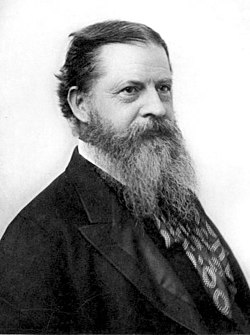
Charles Sanders Peirce around 1900. Peirce is said to have initiated fallibilism.

Originally, fallibilism (from Medieval Latin: fallibilis, "liable to error") is the philosophical principle that propositions can be accepted even though they cannot be conclusively proven or justified,[1][2] or that neither knowledge nor belief is certain.[3] The term was coined in the late nineteenth century by the American philosopher Charles Sanders Peirce, as a response to foundationalism. Theorists, following Austrian-British philosopher Karl Popper, may also refer to fallibilism as the notion that knowledge might turn out to be false.[4] Furthermore, fallibilism is said to imply corrigibilism, the principle that propositions are open to revision.[5] Fallibilism is often juxtaposed with infallibilism.

Infinite regress and infinite progress

[edit]

According to philosopher Scott F. Aikin, fallibilism cannot properly function in the absence of infinite regress.[6] The term, usually attributed to Pyrrhonist philosopher Agrippa, is argued to be the inevitable outcome of all human inquiry, since every proposition requires justification.[7] Infinite regress, also represented within the regress argument, is closely related to the problem of the criterion and is a constituent of the Münchhausen trilemma. Illustrious examples regarding infinite regress are the cosmological argument, turtles all the way down, and the simulation hypothesis. Many philosophers struggle with the metaphysical implications that come along with infinite regress. For this reason, philosophers have gotten creative in their quest to circumvent it.

Somewhere along the seventeenth century, English philosopher Thomas Hobbes set forth the concept of "infinite progress". With this term, Hobbes had captured the human proclivity to strive for perfection.[8] Philosophers like Gottfried Wilhelm Leibniz, Christian Wolff, and Immanuel Kant, would elaborate further on the concept. Kant even went on to speculate that immortal species should hypothetically be able to develop their capacities to perfection.[9]

Already in 350 B.C.E, Greek philosopher Aristotle made a distinction between potential and actual infinities. Based on his discourse, it can be said that actual infinities do not exist, because they are paradoxical. Aristotle deemed it impossible for humans to keep on adding members to finite sets indefinitely. It eventually led him to refute some of Zeno's paradoxes.[10] Other relevant examples of potential infinities include Galileo's paradox and the paradox of Hilbert's hotel. The notion that infinite regress and infinite progress only manifest themselves potentially pertains to fallibilism. According to philosophy professor Elizabeth F. Cooke, fallibilism embraces uncertainty, and infinite regress and infinite progress are not unfortunate limitations on human cognition, but rather necessary antecedents for knowledge acquisition. They allow us to live functional and meaningful lives.[11]

Critical rationalism

[edit]
The founder of critical rationalism: Karl Popper

In the mid-twentieth century, several important philosophers began to critique the foundations of logical positivism. In his work The Logic of Scientific Discovery (1934), Karl Popper, the founder of critical rationalism, argued that scientific knowledge grows from falsifying conjectures rather than any inductive principle and that falsifiability is the criterion of a scientific proposition. The claim that all assertions are provisional and thus open to revision in light of new evidence is widely taken for granted in the natural sciences.[12]

Furthermore, Popper defended his critical rationalism as a normative and methodological theory, that explains how objective, and thus mind-independent, knowledge ought to work.[13] Hungarian philosopher Imre Lakatos built upon the theory by rephrasing the problem of demarcation as the problem of normative appraisal. Lakatos' and Popper's aims were alike, that is finding rules that could justify falsifications. However, Lakatos pointed out that critical rationalism only shows how theories can be falsified, but it omits how our belief in critical rationalism can itself be justified. The belief would require an inductively verified principle.[14] When Lakatos urged Popper to admit that the falsification principle cannot be justified without embracing induction, Popper did not succumb.[15] Lakatos' critical attitude towards rationalism has become emblematic for his so called critical fallibilism.[16][17] While critical fallibilism strictly opposes dogmatism, critical rationalism is said to require a limited amount of dogmatism.[18][19] Though, even Lakatos himself had been a critical rationalist in the past, when he took it upon himself to argue against the inductivist illusion that axioms can be justified by the truth of their consequences.[16] In summary, despite Lakatos and Popper picking one stance over the other, both have oscillated between holding a critical attitude towards rationalism as well as fallibilism.[15][17][18][20]

Fallibilism has also been employed by philosopher Willard V. O. Quine to attack, among other things, the distinction between analytic and synthetic statements.[21] British philosopher Susan Haack, following Quine, has argued that the nature of fallibilism is often misunderstood, because people tend to confuse fallible propositions with fallible agents. She claims that logic is revisable, which means that analyticity does not exist and necessity (or a priority) does not extend to logical truths. She hereby opposes the conviction that propositions in logic are infallible, while agents can be fallible.[22] Critical rationalist Hans Albert argues that it is impossible to prove any truth with certainty, not only in logic, but also in mathematics.[23]

Mathematical fallibilism

[edit]
Imre Lakatos, in the 1960s, known for his contributions to mathematical fallibilism

In Proofs and Refutations: The Logic of Mathematical Discovery (1976), philosopher Imre Lakatos implemented mathematical proofs into what he called Popperian "critical fallibilism".[24] Lakatos's mathematical fallibilism is the general view that all mathematical theorems are falsifiable.[25] Mathematical fallibilism deviates from traditional views held by philosophers like Hegel, Peirce, and Popper.[16][25] Although Peirce introduced fallibilism, he seems to preclude the possibility of our being mistaken in our mathematical beliefs.[2] Mathematical fallibilism appears to uphold that even though a mathematical conjecture cannot be proven true, we may consider some to be good approximations or estimations of the truth. This so called verisimilitude may provide us with consistency amidst an inherent incompleteness in mathematics.[26] Mathematical fallibilism differs from quasi-empiricism, to the extent that the latter does not incorporate inductivism, a feature considered to be of vital importance to the foundations of set theory.[27]

In the philosophy of mathematics, a central tenet of fallibilism is undecidability (which bears resemblance to the notion of isostheneia, or "equal veracity").[25] Two distinct types of the word "undecidable" are currently being applied. The first one relates, most notably, to the continuum hypothesis, which was proposed by mathematician Georg Cantor in 1873.[28][29] The continuum hypothesis represents a tendency for infinite sets to allow for undecidable solutions — solutions which are true in one constructible universe and false in another. Both solutions are independent from the axioms in Zermelo–Fraenkel set theory combined with the axiom of choice (also called ZFC). This phenomenon has been labeled the independence of the continuum hypothesis.[30] Both the hypothesis and its negation are thought to be consistent with the axioms of ZFC.[31] Many noteworthy discoveries have preceded the establishment of the continuum hypothesis.

In 1877, Cantor introduced the diagonal argument to prove that the cardinality of two finite sets is equal, by putting them into a one-to-one correspondence.[32] Diagonalization reappeared in Cantors theorem, in 1891, to show that the power set of any countable set must have strictly higher cardinality.[33] The existence of the power set was postulated in the axiom of power set; a vital part of Zermelo–Fraenkel set theory. Moreover, in 1899, Cantor's paradox was discovered. It postulates that there is no set of all cardinalities.[33] Two years later, polymath Bertrand Russell would invalidate the existence of the universal set by pointing towards Russell's paradox, which implies that no set can contain itself as an element (or member). The universal set can be confuted by utilizing either the axiom schema of separation or the axiom of regularity.[34] In contrast to the universal set, a power set does not contain itself. It was only after 1940 that mathematician Kurt Gödel showed, by applying inter alia the diagonal lemma, that the continuum hypothesis cannot be refuted,[28] and after 1963, that fellow mathematician Paul Cohen revealed, through the method of forcing, that the continuum hypothesis cannot be proved either.[30] In spite of the undecidability, both Gödel and Cohen suspected dependence of the continuum hypothesis to be false. This sense of suspicion, in conjunction with a firm belief in the consistency of ZFC, is in line with mathematical fallibilism.[35] Mathematical fallibilists suppose that new axioms, for example the axiom of projective determinacy, might improve ZFC, but that these axioms will not allow for dependence of the continuum hypothesis.[36]

The second type of undecidability is used in relation to computability theory (or recursion theory) and applies not solely to statements but specifically to decision problems; mathematical questions of decidability. An undecidable problem is a type of computational problem in which there are countably infinite sets of questions, each requiring an effective method to determine whether an output is either "yes or no" (or whether a statement is either "true or false"), but where there cannot be any computer program or Turing machine that will always provide the correct answer. Any program would occasionally give a wrong answer or run forever without giving any answer.[37] Famous examples of undecidable problems are the halting problem, the Entscheidungsproblem, and the unsolvability of the Diophantine equation. Conventionally, an undecidable problem is derived from a recursive set, formulated in undecidable language, and measured by the Turing degree.[38][39] Undecidability, with respect to computer science and mathematical logic, is also called unsolvability or non-computability.

Undecidability and uncertainty are not one and the same phenomenon. Mathematical theorems which can be formally proved, will, according to mathematical fallibilists, nevertheless remain inconclusive.[40] Take for example proof of the independence of the continuum hypothesis or, even more fundamentally, proof of the diagonal argument. In the end, both types of undecidability add further nuance to fallibilism, by providing these fundamental thought-experiments.[41]

Philosophical skepticism

[edit]

Fallibilism should not be confused with local or global skepticism, which is the view that some or all types of knowledge are unattainable.

But the fallibility of our knowledge — or the thesis that all knowledge is guesswork, though some consists of guesses which have been most severely tested — must not be cited in support of scepticism or relativism. From the fact that we can err, and that a criterion of truth which might save us from error does not exist, it does not follow that the choice between theories is arbitrary, or non-rational: that we cannot learn, or get nearer to the truth: that our knowledge cannot grow.

— Karl Popper

Fallibilism claims that legitimate epistemic justifications can lead to false beliefs, whereas academic skepticism claims that no legitimate epistemic justifications exist (acatalepsy). Fallibilism is also different to epoché, a suspension of judgement, often accredited to Pyrrhonian skepticism.

Criticism

[edit]

Nearly all philosophers today are fallibilists in some sense of the term.[3] Few would claim that knowledge requires absolute certainty, or deny that scientific claims are revisable, though in the 21st century some philosophers have argued for some version of infallibilist knowledge.[42][43][44] Historically, many Western philosophers from Plato to Saint Augustine to René Descartes have argued that some human beliefs are infallibly known. John Calvin espoused a theological fallibilism towards others' beliefs.[45][46] Plausible candidates for infallible beliefs include logical truths ("Either Jones is a Democrat or Jones is not a Democrat"), immediate appearances ("It seems that I see a patch of blue"), and incorrigible beliefs (i.e., beliefs that are true in virtue of being believed, such as Descartes' "I think, therefore I am"). Many others, however, have taken even these types of beliefs to be fallible.[22]

See also

[edit]

References

[edit]

Further reading

[edit]
[edit]
Revisions and contributorsEdit on WikipediaRead on Wikipedia
from Grokipedia
Fallibilism is the epistemological doctrine that human knowledge is inherently uncertain and provisional, never achieving absolute certainty, as all beliefs remain open to potential revision or falsification through further inquiry. Coined by the American philosopher in the late 19th century, it posits that "our knowledge is never absolute but always swims, as it were, in a continuum of and of indeterminacy." This view emerged as a of Cartesian , which seeks infallible foundations for knowledge, and , which doubts the possibility of knowledge altogether, instead advocating a middle path that balances intellectual confidence with humility. At its core, fallibilism maintains that while conclusive justification is impossible, knowledge can still be attained on the basis of strong but defeasible , allowing agents to justifiably believe propositions even if they could turn out false. Peirce emphasized the self-corrective nature of scientific , where initiates investigation and communal effort gradually refines beliefs toward truth, sustained by an epistemic virtue of amid . In this framework, no source of —whether reason, , , or —is infallible, yet progress occurs through openness to error and rigorous testing. Fallibilism thus underpins , promoting practical action on tentative beliefs while rejecting dogmatism. Contemporary defenses of fallibilism address challenges like the value of , arguing that it serves to identify reliable informants in epistemic communities, thereby preserving its instrumental worth without demanding inconclusiveness-proof justification. It contrasts with infallibilism, which requires for knowledge attributions, and has influenced fields beyond , including scientific methodology, by endorsing iterative error correction over static truths. Key figures extending Peirce's ideas include philosophers like and , while critics such as Laurence BonJour have highlighted tensions with commonsense intuitions regarding justification.

Definition and Historical Development

Core Definition

Fallibilism is the philosophical doctrine that human is always provisional and subject to potential , with no or ever conclusively justified or immune to revision. This view posits that all claims to , whether in science, everyday reasoning, or abstract thought, remain tentative due to inherent limitations in human cognition, such as sensory perception, , and logical inference. The core tenets of fallibilism include the rejection of absolute in any , the emphasis on ongoing as a means of error correction, and the acceptance of beliefs as provisionally justified rather than definitively true. Unlike infallibilism, which holds that certain beliefs can be indubitably known and conclusively justified, fallibilism denies the possibility of such rational , asserting instead that justification is always fallible and open to doubt. It also differs from , as fallibilism maintains the potential for objective progress toward truth through critical investigation, without implying that all beliefs are equally valid or that truth is merely subjective. Fallibilism originated in the pragmatism of , who formulated its ideal as "the opinion which is fated to be ultimately agreed to by all who investigate," enabling convergence on truth despite the provisional nature of individual beliefs. In this framework, fallibilism supports a realistic where advances through relentless scrutiny and revision, acknowledging human fallibility while affirming the pursuit of reliable understanding.

Origins and Key Figures

The roots of fallibilism can be traced to ancient philosophical traditions, where ideas resembling the recognition of human knowledge's inherent limitations emerged as precursors. , through his famous admission of ignorance articulated in Plato's dialogues, exemplified a proto-fallibilist stance by emphasizing that true wisdom lies in acknowledging one's lack of certain knowledge, thereby challenging dogmatic claims to absolute truth. Similarly, , leader of the Middle Academy in the 3rd century BCE, advanced by arguing that no belief could achieve indubitable certainty, advocating instead for a fallibilistic approach where judgments are provisional and subject to suspension based on equipollence of arguments. Fallibilism as a distinct epistemological doctrine gained formal articulation in the 19th century through the work of American philosopher . In his essays from the and later developments, such as the 1892 article "The Doctrine of Necessity Examined," Peirce introduced fallibilism as the view that all human knowledge is inherently uncertain and revisable, linking it intrinsically to and the iterative nature of scientific inquiry. Peirce's formulation emphasized that even the most well-established beliefs remain open to potential refutation through future evidence, positioning fallibilism as a corrective to Cartesian . The 20th century saw significant expansion of fallibilist ideas, particularly through Karl Popper's . In his 1934 book Logik der Forschung (published in English as in 1959), Popper integrated fallibilism by prioritizing over verifiability, asserting that scientific theories are conjectures that can never be conclusively proven but only corroborated or refuted, thus underscoring the provisional status of all empirical knowledge. This approach profoundly influenced post-World War II philosophy, promoting a where error elimination drives progress. Other influential figures further developed fallibilism within pragmatist and scientific contexts. , in his 1907 lectures compiled as , provided pragmatic support by portraying truth as a of verification through experience, inherently fallible and adaptable to new contexts, thereby extending Peirce's ideas to emphasize practical consequences over absolute certainty. , in the 1976 edition of , applied fallibilism to , demonstrating through historical case studies like that mathematical knowledge evolves through a quasi-empirical of proof, , and revision rather than infallible deduction. In , Bas van Fraassen's constructive , outlined in his 1980 book The Scientific Image, incorporates fallibilist elements by advocating that scientific acceptance aims at empirical adequacy rather than truth, acknowledging the limits of unobservable theoretical commitments. This timeline—from Peirce's late-19th-century foundations through his lectures on the subject, to Popper's mid-20th-century synthesis and its widespread adoption in —illustrates fallibilism's from ancient skeptical intuitions to a cornerstone of modern .

Epistemological Aspects

Infinite Regress and Justification

The problem of arises in foundationalist , where attempts to justify a lead to a chain of reasons that either loops circularly, halts at unjustified axioms assumed to be certain, or extends infinitely without providing ultimate certainty for any . In such views, foundational beliefs are posited as self-evident or indubitable to terminate the regress, but critics argue this undermines genuine justification by relying on unproven starting points. Fallibilism addresses this challenge by rejecting the need for infallible foundations, instead endorsing approaches like or that permit holistic or progressive justification without requiring absolute certainty. In , beliefs gain justification through mutual support within a web of interconnected propositions, allowing circularity as a feature rather than a flaw, while accepts an infinite chain of reasons as non-vicious, providing ever-increasing evidential support. These strategies align with fallibilism's core tenet that all justifications are provisional and open to error, enabling epistemic progress without foundational anchors. A key aspect of fallibilist justification is the notion of infinite progress, where knowledge advances through ongoing correction and refinement, converging toward truth over time without ever achieving finality. , a foundational figure in fallibilism, described this as the "long run" convergence of , in which iterative self-correction by a community of inquirers approximates asymptotically. Unlike pure , which might stabilize at a static equilibrium of mutual consistency, fallibilism emphasizes the inherent error-proneness of all beliefs, mandating perpetual to revision and ensuring that coherence remains dynamic and testable.

Relation to Skepticism

Fallibilism engages with by offering a moderate epistemological stance that acknowledges the possibility of error in all beliefs while still permitting the rational acceptance of claims on a provisional basis. Unlike radical forms of that undermine the pursuit of truth, fallibilism treats doubt as a constructive element in inquiry rather than a paralyzing force. This positioning distinguishes it from both Pyrrhonian , which advocates for the complete () to achieve mental tranquility, and , which permits probable beliefs based on the weight of but stops short of . Fallibilism aligns more closely with the latter , as seen in the work of Philo of Larissa, the last head of Plato's , who in the late 1st century BCE developed a fallibilist view that allowed for as true impressions appropriately caused, without requiring , thereby evolving into a framework for fallible yet justifiable beliefs. A key distinction between fallibilism and skepticism lies in their attitudes toward doubt and inquiry. , particularly in its Pyrrhonian form, often halts intellectual progress by inducing equipollence—equal arguments on both sides of any issue—leading to the suspension of belief and avoidance of dogmatic commitments. In contrast, fallibilism harnesses doubt as a tool for ongoing error-correction and advancement, enabling provisional acceptance of beliefs that best withstand critical scrutiny while remaining open to revision. This approach echoes the historical interplay with ' method of hyperbolic doubt, outlined in his 1641 , where extreme skeptical scenarios are employed not to endorse global unbelief but to identify indubitable foundations; fallibilists extend this by rejecting the quest for absolute certainty and instead emphasizing iterative testing and refinement of knowledge claims. In modern , fallibilism critiques global —such as scenarios like the brain-in-a-vat , where one's experiences might be simulated by a deceptive entity—by prioritizing actionable, contextually justified beliefs over unattainable indubitability. While global skeptics argue that such possibilities render all empirical uncertain to the point of unknowability, fallibilists maintain that we can possess if our beliefs are reliably formed and defeaters are absent, even if error remains theoretically possible; this allows for practical engagement with the world without succumbing to paralyzing doubt.

Applications in Science and Rationalism

Critical Rationalism

, as developed by , represents a key application of fallibilism in the , where knowledge is advanced not through but through the critical and potential falsification of conjectural theories. Popper's framework posits that scientific theories are bold guesses or conjectures that must withstand rigorous testing to eliminate errors, acknowledging the inherent fallibility of human cognition and the provisional nature of all claims to truth. This approach underscores that no theory can be conclusively verified, but it can be corroborated by surviving attempts at refutation, thereby approximating truth more closely over time. Central to Popper's is the rejection of inductive logic, which fallibilism deems unreliable for establishing secure since past observations cannot guarantee future outcomes. Instead, progress arises from inventing imaginative hypotheses and subjecting them to severe, potentially refuting tests, with scientific merit lying in a theory's exposure to criticism rather than its accumulation of supportive . Popper elaborated this in Conjectures and Refutations: The Growth of Scientific Knowledge (), asserting that "the growth of is a process of learning from our mistakes" through error elimination. He further formalized the emphasis on falsification in (1934/1959), where deductive testing replaces induction as the engine of scientific . Popper's demarcation criterion delineates from by requiring theories to be falsifiable—capable of being contradicted by —thus aligning with fallibilist principles of error-prone inquiry and iterative improvement. Scientific advancement occurs as theories survive refutations, weeding out falsehoods and enhancing , the degree of closeness to truth. This criterion has shaped of by prioritizing testable predictions over unfalsifiable dogmas. The influence of critical rationalism extends beyond methodology to broader philosophical and social domains, rejecting historicism's deterministic view of history and advocating for an "open society" sustained by critical rational debate and institutional checks against authoritarianism. In The Open Society and Its Enemies (1945), Popper defended liberal democracy as a fallibilist framework where policies are treated as experiments open to revision through criticism, countering totalitarian ideologies that claim infallible knowledge. An illustrative example is Einstein's general , which exemplifies a highly falsifiable : its prediction of gravitational light deflection during a in 1919 offered a clear empirical test that could have refuted it, contrasting sharply with the unfalsifiable assertions of pseudosciences like or , which evade decisive refutation.

Fallibilism in Scientific Method

Fallibilism integrates with by viewing as an inherently fallible enterprise, where theories function as provisional hypotheses open to continuous empirical revision rather than absolute truths. This perspective underscores that scientific knowledge advances through the tentative acceptance of ideas that withstand scrutiny, acknowledging the limitations of human observation and inference. Thomas Kuhn's analysis in (1962) exemplifies this by describing scientific progress as occurring through shifts, where dominant frameworks are replaced when anomalies accumulate, tempering empiricist optimism with fallibilist realism that no paradigm is immune to future overthrow. Charles Sanders Peirce's influence on fallibilism in the emphasizes abduction as a fallible form of for formation, complementing deduction and induction in the inquiry process. Peirce argued that involves generating conjectures through abduction, which are inherently uncertain and subject to testing, thereby embedding fallibilism as a core principle that all conclusions remain provisional and revisable based on new evidence. This triadic logic promotes an iterative approach where errors are anticipated and corrected, fostering scientific self-correction over dogmatic certainty. Error-correction mechanisms in science embody fallibilist principles through practices like , which scrutinizes claims for potential flaws, and responses to replication crises, such as the post-2010 reforms in that prioritized preregistration and to mitigate biases and enhance reliability. These reforms arose from large-scale replication efforts revealing low rates, prompting a cultural shift toward viewing non-replications not as failures but as opportunities for refinement, aligning with fallibilism's emphasis on error detection. Bayesian updating serves as another fallibilist tool, allowing scientists to revise probabilities of hypotheses incrementally as new data emerges, treating beliefs as degrees of confidence rather than certainties. In contemporary applications, fallibilism manifests in climate science, where models project future scenarios amid substantial uncertainties from internal variability, incomplete data, and scenario assumptions, necessitating provisional interpretations and ongoing validation. Similarly, in , ethical frameworks for alignment are treated as fallible and provisional, subject to revision through iterative testing and interdisciplinary input to address biases and in systems. These fields highlight fallibilism's role in managing by promoting adaptive, evidence-based adjustments rather than fixed doctrines. A representative example is Darwinian evolution, proposed as a fallible theory in (1859), which has been strengthened by accumulating genetic, fossil, and observational evidence without ever being conclusively proven, remaining open to refinement or falsification through future discoveries.

Fallibilism in Mathematics

Mathematical Foundations

Fallibilism in mathematics challenges the traditional view of proofs and axioms as providing absolute certainty, positing instead that mathematical knowledge is provisional and subject to revision. Kurt Gödel's incompleteness theorems, published in 1931, demonstrate that in any consistent capable of expressing basic arithmetic, there are true statements that cannot be proved within the system, and the system's consistency cannot be proved internally. These results undermine the Euclidean ideal of as a complete and infallible deductive structure, supporting a fallibilist perspective where formal systems are inherently limited and require ongoing extension or modification to encompass more truths. Imre Lakatos further developed this fallibilist approach in his 1976 book Proofs and Refutations: The Logic of Mathematical Discovery, portraying mathematical progress as a dialectical process akin to scientific inquiry. Through historical analysis, such as the evolution of Euler's polyhedral formula, Lakatos illustrates how theorems emerge via "quasi-rigid" proofs that are tested against counterexamples, leading to refinements like "monster-barring" (excluding anomalous cases) or concept-stretching (adjusting definitions). This methodology rejects formalist notions of timeless proofs, emphasizing instead that mathematical theorems are conjectural and fallible, evolving through criticism and refutation rather than achieving finality. In axiomatic systems, fallibilism manifests as the recognition that foundational frameworks like Zermelo-Fraenkel set theory (ZF), often augmented with the (ZFC), serve as provisional bases rather than absolute truths. While ZFC provides a consistent foundation for most mathematics, Gödel's theorems imply its incompleteness, necessitating potential additions such as axioms for large cardinals to resolve undecidable propositions like the . Moreover, alternatives like intuitionistic mathematics, which rejects the , highlight the revisability of axioms, as no single system commands unquestioned authority. Fallibilism aligns with quasi-empiricism, a view advanced by Lakatos, treating proofs and axioms as hypotheses testable through logical exploration and counterexamples, much like empirical conjectures in science. This perspective underscores as a human endeavor prone to error and improvement, where certainty is illusory and progress depends on fallible intuition and communal scrutiny. A historical exemplar is the 19th-century revision of Euclidean geometry's , which posits a unique parallel line through a point not on a given line; its replacement yielded consistent non-Euclidean geometries by Lobachevsky and Bolyai, demonstrating that even core axioms can be altered without contradiction, thus exemplifying mathematical revisability.

Examples and Implications

One prominent historical example of fallibilism in mathematics is the prolonged development of Fermat's Last Theorem, conjectured by Pierre de Fermat around 1637 in a marginal note in Diophantus's Arithmetica, stating that no positive integers aa, bb, and cc satisfy an+bn=cna^n + b^n = c^n for integer n>2n > 2. The theorem remained unproven for 358 years until Andrew Wiles presented a correct proof in 1995, after his initial 1993 attempt contained a subtle error in the Euler system that required collaborative correction. This journey involved numerous fallible intermediate results, such as Gabriel Lamé's 1847 announcement of a general proof using unique factorization in complex integers, which Joseph Liouville swiftly refuted due to the failure of unique factorization in those rings. Similarly, Ernst Kummer's 19th-century partial proofs for "regular" primes relied on idealized number theory that later proved incomplete, highlighting how even rigorous-seeming advancements can harbor undetected flaws. A modern illustration arises in the , proved in 1976 by Kenneth Appel and Wolfgang Haken, which asserts that any planar map can be colored with at most four colors such that no adjacent regions share the same color. Their proof reduced the problem to checking 1,936 configurations via computer assistance, a process that took over 1,200 hours of computation on an 370. This reliance on computational verification sparked fallibilist concerns, as the sheer volume of cases made independent human checking infeasible, raising questions about potential software errors or overlooked assumptions in the reduction process. Subsequent efforts, such as Georges Gonthier's 2005 formalization in Coq, addressed these issues but underscored the provisional nature of computer-aided results until fully mechanized. Fallibilism also manifests in inherently undecided problems like the (CH), which posits that there is no set whose cardinality strictly exceeds that of the natural numbers but is less than that of the real numbers. demonstrated in 1940 that CH is consistent with the Zermelo-Fraenkel set theory with the (ZFC), meaning its adoption leads to no contradictions. then proved in 1963, using his forcing technique, that the negation of CH is also consistent with ZFC, establishing its independence and thus its undecidability within standard foundations. This independence exemplifies fallibilism by showing that core mathematical questions may resist definitive resolution, depending instead on axiomatic choices. These examples carry significant implications for mathematical practice. Fallibilism encourages pluralism in foundations, accommodating multiple logics and set theories—such as ZFC versus —without privileging one as absolutely true, as seen in responses to CH's independence. In , it promotes viewing as an evolving discipline, where students engage with historical errors like Lamé's to develop critical evaluation skills, aligning with constructivist pedagogies that emphasize argument refinement over rote certainty. In , it influences , where tools like Lean or Coq produce fallible outputs susceptible to bugs, prompting hybrid human-machine verification to mitigate risks in proofs like the . Overall, fallibilism transforms from a pursuit of dogmatic certainty into a creative, error-correcting enterprise, as briefly captured in Imre Lakatos's method of , which treats theorems as provisional amid counterexamples and revisions.

Criticisms and Contemporary Debates

Primary Criticisms

One major objection to fallibilism arises from foundationalist perspectives, which maintain that certain possess infallible justification immune to rational revision. Proponents of , such as in his 1980s works, contend that fallibilism's denial of conclusive warrant for any belief erodes the reliability of these foundational elements, thereby opening the door to by implying that no claim can be securely held. Fallibilism also faces the charge of fostering , particularly in its association with pragmatist thinkers like , who emphasize inquiry's contingency and reject absolute representational truth. Critics argue that this approach, while Rorty denies outright , effectively relativizes truth to communal practices and historical contexts, undermining any universal standard of objectivity and allowing beliefs to be equally valid based on their utility rather than correspondence to reality. On practical grounds, fallibilism is criticized for complicating decision-making under uncertainty, as the perpetual possibility of error in all judgments may induce hesitation or paralysis in situations requiring prompt action. For instance, in Blaise Pascal's Wager, where belief in God is framed as a rational bet due to infinite stakes, fallibilism's provisional epistemology could deter commitment by perpetually questioning the reliability of evidence about divine existence, thus hindering decisive ethical or existential choices. In , traditionalists adhering to programs like David Hilbert's formalist initiative sought to establish the discipline's claim to through absolute demonstrability. Hilbert's 1920s effort to prove the consistency of axiomatic systems through finitistic means aimed to secure against doubt. This contrasts with later fallibilist approaches, such as those developed by , which portray theorems as provisional and subject to revision.

Modern Responses and Developments

In response to criticisms of foundationalism, which posits indubitable basic beliefs as the bedrock of knowledge, Susan Haack developed foundherentism as a hybrid theory that integrates elements of and while embracing fallibilist principles of ongoing revision and error correction. Haack's approach, articulated in her 1993 book Evidence and Inquiry: Towards Reconstruction in Epistemology, treats justification as a "double-aspect" process where experiential evidence provides a foundational anchor but is evaluated through coherent interconnections among beliefs, allowing for the fallible nature of all epistemic claims without rigid hierarchies. This framework counters foundationalist dogmatism by permitting beliefs to be strengthened or weakened dynamically based on emerging evidence, thus aligning with fallibilism's rejection of . Bayesian epistemology offers another modern defense of fallibilism by modeling as probabilistic updates to prior degrees of confidence in light of new , thereby avoiding the relativism charged against some coherentist views. Colin Howson and Peter Urbach's 1989 work Scientific Reasoning: The Bayesian Approach exemplifies this by formalizing confirmation through , where hypotheses are never conclusively verified but gain or lose support incrementally, embodying fallibilist humility in the face of incomplete information. This method promotes rational inquiry without absolute foundations, as subjective priors converge toward objective posteriors over time through repeated testing, providing a tool to refute charges of epistemic by grounding updates in evidential probability rather than arbitrary coherence. In recent developments within , fallibilism has been extended to emphasize situated knowledges that acknowledge the partial and error-prone nature of perspectives shaped by social position, fostering inclusive mechanisms for collective error correction. Donna Haraway's 1988 essay "Situated Knowledges: The Science Question in Feminism and the Privilege of Partial Perspective" argues for an objectivity rooted in fallible, embodied viewpoints that challenge god-trick illusions of transcendence, enabling marginalized voices to contribute to knowledge revision through dialogic accountability. Similarly, in decolonial thought, fallibilism supports epistemic pluriversality by promoting the ongoing critique and integration of diverse knowledge systems, countering colonial epistemologies' claims to universality and encouraging error-correction across cultural boundaries to build more equitable inquiry processes. Twenty-first-century applications of fallibilism have emerged in debates over AI reliability, particularly post-2020 discussions framing models as inherently fallible systems that align with the Peircean-Popperian tradition of conjectural knowledge subject to refutation. In contexts like generative AI, fallibilism underscores the provisionality of algorithmic outputs, which depend on biased training data and can propagate errors unless subjected to rigorous, iterative falsification akin to scientific hypotheses. This perspective, as explored in philosophical analyses of AI rationality, treats machine intelligence not as infallible but as a tool for fallible cognition, emphasizing the need for transparent error-detection protocols to mitigate risks in high-stakes applications. Ongoing debates, such as those surrounding denialism, increasingly invoke fallibilist principles in communication to highlight the self-correcting nature of empirical while countering demands for unattainable . A fallibilist approach, as applied to amid campaigns, stresses that consensus on anthropogenic warming emerges from provisional accumulation and potential revision, not dogmatic proof, thereby inoculating public against that exploits 's inherent tentativeness. This strategy reframes denialist tactics—like impossible expectations of perfection—as misunderstandings of fallibilism's strength in enabling robust, adaptive responses to global challenges.

References

Add your contribution
Related Hubs
User Avatar
No comments yet.