


Community hub
Salou
View on WikipediaSalou (Catalan pronunciation: [səˈlɔw]) is a municipality of the comarca of Tarragonès, in the province of Tarragona, in Catalonia, Spain. It has a population of 30,810 (register office, 2024)  . The city is approximately 10 km from Tarragona and Reus on the Costa Daurada and 112 km from Barcelona.
Key Information


Founded by the Greeks in the 6th century B.C., the coastal town was a notable commercial port during medieval and modern ages. Throughout the 20th century, Salou became an important European tourist attraction.
Aside from its string of beaches interrupted by rocky coves, and its landscaped promenade, one of its main attractions is the PortAventura World resort. The Dutch movie Costa! and the television series with the same title were both filmed in Salou.
History
[edit]Used as a port by Greeks (who named it Salanrio) and Romans (who named it after Salauris), it appeared again in an important historic event, when in 1229 the fleet of James I of Aragon departed from the port of Salou to conquer the Balearic Islands, thus creating the Kingdom of Majorca.
In 1286 Alfons III of Aragon also departed from this port to conquer Menorca, the last Moorish territory of the Balearic Islands.
Later, Salou became a nest of pirates. After that it was considered an unsafe place, so in 1530 Archbishop of Tarragona decided to erect a new defence tower, now called Torre Vella.
In 1865 the railway station began to operate, opening a new development time, that led one hundred years later to a tourist boom that has brought prosperity to the town. Salou was separated from the adjacent municipality of Vila-seca on 30 October 1989 by a decision of the Supreme Court of Spain.[4]
In the summer of 2001, Salou suffered a terrorist attack by ETA, through a car bomb near a hotel. 13 people were injured, including two civil guards.
Main sights
[edit]Historic buildings and monuments
[edit]- Church of Santa Maria del Mar, built in 18th-century and enlarged after 1950.
- Torre Vella, a tower built in the 16th century
- Harbour-master's Office
- Jaume I monument
- Font lluminosa fountain
- Monument to Fishermen
- Old Carrilet Railway Station
PortAventura World
[edit]PortAventura World is a growing theme park resort on the Costa Daurada. The resort includes luxury four-star accommodation, two theme parks (PortAventura Park and Ferrari Land), PortAventura Caribe Aquatic Park, a convention centre and a RV park. The PortAventura Park's main attractions are the Dragon Khan, a massive B&M mega-looper; Furius Baco, which is one of the fastest roller coasters in Europe; and Hurakan Condor, a tall falling-tower ride which is 100 metres tall. In 2012 a new roller coaster called Shambhala opened adjacent to the Dragon Khan. The park also has a grand multi-media show, called the FiestaAventura, every night between the end of June and the end of August which features fireworks, fountains and parade floats. Ferrari Land, with the highest and fastest vertical accelerator in Europe, opened in 2017, and will also include the world's first Ferrari hotel.
Lumine Mediterranea Beach & Golf Community
[edit]Salou is also home to the Lumine Golf Club (formerly known as PortAventura golf). There are three courses, labeled as north, south, and central. North and central were designed by Greg Norman and the south course was designed by "Green Project".[1] The facilities consist of two clubhouses, a beach club, Lumine restaurant, Hoyo 19 restaurant, a pro shop, rental services and a golf school. In the future[when?] the area surrounding the golf course will be developed into a community with six residential areas and services that include two five-star hotels, a sports area and the International School of Salou that will cater for up to 1200 students as part of the Lumine community.[5]
Auditorium Theatre of Salou
[edit]The Auditorium Theatre of Salou (Teatre Auditori de Salou or TAS to shorten) is an important part of the local community in terms of cultural and leisure in the municipality. The theatre plays local events such as political, school and cultural events and has also welcomed famous musicians to the area such as Sergio Dalma.
Beaches
[edit]Salou's main promenade is the Passeig Jaume I, which runs along the coast adjacent to the Llevant Beach, the longest beach in the town. Other beaches include Platja de Ponent, Platja dels Capellans, Platja Llarga and Platja Cala Crancs. Salou has 34 Blue Flag beaches. Water-sports, rentals and trips can be arranged on the Llevant Beach.
Sport tourism
[edit]Salou has been used since 2005 as the base for Rally Catalunya, part of the World Rally Championship.[6] Salou has also held volleyball championships, football tournaments, a triathlon [7] and many other competitive sports.
Saloufest is the University sports festival which takes place on two separate occasions in April on an annual basis. The festival includes DJs and parties at the neighbouring resort's nightclub called Pacha.
In the future, the local government is expected to position Salou as a sport tourism destination and therefore will promote different projects that include first class facilities to provide the city with the necessary resources to become a tourist destination that attracts visitors of reference[clarification needed], especially in low season. They have announced a project that will feature swimming pools, football fields and tennis courts.[8] In April 2012 the Mayor of Salou inaugurated the facilities that have been built, which are six football fields (four artificial and 2 natural) including changing rooms, bar, waiting rooms and rooms for training sessions the second phase includes a further 6 more open fields, billiards room and shop selling merchandise.[9][10]
Salou is the sub-site for the 2018 Mediterranean Games for sports such as sailing.[11]
Climate
[edit]Salou has a Mediterranean climate (Köppen climate classification: Csa) characterized by mild winters and hot summers. The rainiest season is autumn, and the driest season is the summer. Salou receives above 2,500 hours of sunshine annually.
| Climate data for Salou | |||||||||||||
|---|---|---|---|---|---|---|---|---|---|---|---|---|---|
| Month | Jan | Feb | Mar | Apr | May | Jun | Jul | Aug | Sep | Oct | Nov | Dec | Year |
| Mean daily maximum °C (°F) | 14.1 (57.4) |
15.2 (59.4) |
16.7 (62.1) |
19.1 (66.4) |
23.2 (73.8) |
26.3 (79.3) |
29.0 (84.2) |
29.3 (84.7) |
26.2 (79.2) |
23.1 (73.6) |
18.1 (64.6) |
15.2 (59.4) |
21.3 (70.3) |
| Daily mean °C (°F) | 9.8 (49.6) |
10.5 (50.9) |
12.1 (53.8) |
15.1 (59.2) |
18.7 (65.7) |
22.4 (72.3) |
24.6 (76.3) |
24.8 (76.6) |
22.2 (72.0) |
19.1 (66.4) |
14.1 (57.4) |
10.2 (50.4) |
17.1 (62.8) |
| Mean daily minimum °C (°F) | 5.9 (42.6) |
6.2 (43.2) |
8.1 (46.6) |
11.1 (52.0) |
14.2 (57.6) |
18.5 (65.3) |
20.1 (68.2) |
20.3 (68.5) |
18.4 (65.1) |
15.0 (59.0) |
10.1 (50.2) |
5.8 (42.4) |
12.9 (55.2) |
| Average precipitation mm (inches) | 38 (1.5) |
23 (0.9) |
35 (1.4) |
40 (1.6) |
60 (2.4) |
38 (1.5) |
15 (0.6) |
51 (2.0) |
77 (3.0) |
65 (2.6) |
49 (1.9) |
40 (1.6) |
504 (19.8) |
| Average precipitation days (≥ 1 mm) | 4 | 3 | 4 | 6 | 6 | 4 | 2 | 4 | 5 | 5 | 4 | 4 | 51 |
| Mean monthly sunshine hours | 160 | 164 | 199 | 223 | 243 | 264 | 308 | 264 | 201 | 184 | 160 | 138 | 2,509 |
| Source: Agencia Estatal de Meteorología[12] | |||||||||||||
Local Festivals
[edit]
- Cavalcade of the Three Kings (January)
- Cós Blanc (Winter festival; first weekend of February)
- International draughts tournament "Salou Open" (May)
- Children's Festival (June)
- St. John's Eve (Late June)
- Nits Daurades (Summer festival, week of 15 August)
- King Jaume I Festival (7 September)
- National Day of Catalonia (11 September)
- Festa de la Segregació (30 October)
Transport
[edit]Airport
[edit]Salou's closest airport is Reus (which it is connected to by a regular bus service) followed by Barcelona. Reus Airport is mainly served by the low cost airline Ryanair. The major charter airlines from Britain use Reus throughout the summer as a gateway to the Costa Daurada. The airport mainly serves British and Irish destinations, but domestic and other European destinations are also served.
Railway
[edit]
The former Salou Station, located in downtown Salou near Plaça del Carrilet, once served destinations such as Tarragona and Barcelona in Catalonia, as well as Valencia to the south of Salou. The station and the section of the rail line it served were closed in January 2020 after a new line between Tarragona and Amposta was built. The station building was opened in 1865, closed in 2019 and demolished in 2024.[13]
Some regional trains now terminate at the station Salou - Port Aventura to the north east of the city centre, which opened in 1996 soon after the inauguration of PortAventura. The station is served by line R17 (connecting to Tarragona and Barcelona) and RT2. By 2025, a new station building was built after 3 years of construction. The new station building has 1,000 square metres of area containing washrooms, a waiting area, a café and rooms for railway operators. There is also a technical building with 225 square metres of area. There are 210 parking spaces, including 10 for people with reduced mobility and some spots with electric charging. The platforms were extended to 240 metres in length to handle trains up to 200 metres long. The platforms allow access to both sides of a train. TramCamp, a future regional tram line, is planned to have a stop at the station.[14]
Taxi
[edit]There are plenty of taxi services throughout the area including taxi ranks in locations such as opposite the Font lluminosa, Cap Salou and Reus Airport.
Bus
[edit]The bus company that serves the area is called Plana Bus, the destinations include Cambrils, La Pineda, PortAventura, Reus and Tarragona.
Gallery
[edit].jpg)
-
 Llevant Beach
 -
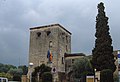 The Torre Vella defence tower
 -
 Font lluminosa
 -
 Passeig Jaume I


Sources
[edit]- The Book of Deeds of James I of Aragon (available in PDF format)
- Ramon Muntaner, Chronicle, tr. Lady Goodenough (available in PDF format).
References
[edit]- ^ "Ajuntament de Salou". Generalitat of Catalonia. Retrieved 2015-11-13.
- ^ "El municipi en xifres: Salou". Statistical Institute of Catalonia. Retrieved 2015-11-23.
- ^ National Statistics Institute (13 December 2024). "Municipal Register of Spain of 2024".
- ^ Salou, Ajuntament de. "Ajuntament de Salou - La nostra ciutat - Història". salou.cat. Archived from the original on 2013-01-15. Retrieved 2012-11-10.
- ^ http://en.lumine.com/leisure-business/major-services[permanent dead link]
- ^ "2012 WRC Rally Spain to include stage through centre of host town Salou". www.autosport.com. 16 May 2012.
- ^ "Documento sin título". Archived from the original on 2011-06-12. Retrieved 2011-06-15.
- ^ Salou, Ajuntament de. "Salou presenta dos complexes esportius per reforçar l'aposta turística amb una inversió de 20 milions d'euros". www.salou.org. Archived from the original on 2013-04-16. Retrieved 2011-06-11.
- ^ Salou, Ajuntament de. "La capital de la Costa Daurada es posiciona en la marca de turisme esportiu amb les instal·lacions del complex esportiu Futbol Salou". www.salou.cat.
- ^ "Complex Esportiu Futbol Salou". www.futbolsalou.com.
- ^ "Ajuntament de Salou - Notícies - Salou promociona els Jocs del Mediterrani al Saló Nàutic de Barcelona". Archived from the original on 2013-04-15. Retrieved 2011-11-09.
- ^ "Valores Climatológicos Normales. Salou - Reús / Aeropuerto". Archived from the original on 2011-07-20.
- ^ "Adif derribará la antigua estación de tren de Salou". Diari de Tarragona. 2024-06-18. Archived from the original on 2025-08-31.
- ^ "La nueva estación de tren de Salou-PortAventura abre a los pasajeros" (in Spanish). Diari de Terragona. 2025-06-19. Archived from the original on 2025-06-19.
External links
[edit]
 Media related to Salou at Wikimedia Commons
- Salou Tourist Board
- Government data pages (in Catalan)
Places adjacent to Salou | ||||||||||||||||
|---|---|---|---|---|---|---|---|---|---|---|---|---|---|---|---|---|
| ||||||||||||||||


Municipalities of Tarragonès | ||
|---|---|---|
 | ||
.svg)


| International | |
|---|---|
| National | |
| Geographic | |
Salou
View on GrokipediaWith a population of 30,442 as of 2024, the town spans 15.07 square kilometers and features a density of over 2,000 inhabitants per square kilometer, though its resident numbers swell significantly during peak tourist seasons.[3][2]
Salou's economy centers on tourism, leveraging its sandy beaches like Llevant and Ponent, mild Mediterranean climate, and attractions including the PortAventura World theme park complex, which draws families and adventure seekers from across Europe.[1][4]
Historically, the area benefited from its natural harbor, receiving a municipal charter in 1194 that established markets and fostered trade, building on earlier Iberian and Roman settlements.[5][6][4]
Notable landmarks include the 16th-century Torre Vella defense tower and the Passeig Jaume I promenade, underscoring Salou's blend of maritime heritage and modern resort infrastructure.[7]
Geography
Location and Topography
Salou is a coastal municipality in the comarca of Tarragonès, within the province of Tarragona and the autonomous community of Catalonia, in northeastern Spain. It lies along the Mediterranean Sea, approximately 10 kilometers east of Tarragona city and 110 kilometers southwest of Barcelona. The town's geographic coordinates are approximately 41.077°N latitude and 1.142°E longitude.[8][9] The topography of Salou features predominantly flat coastal terrain, with extensive sandy beaches such as Platja de Ponent and Platja de Llevant forming the shoreline, interspersed with smaller rocky coves like Cala Crancs and Cala Font. Elevations in the town center average around 6 to 7 meters above sea level, while the broader municipal area exhibits gentle rises to low hills inland, reaching average elevations of about 15 meters across its terrain.[10][11][12] These elevated areas, including viewpoints like Mar i Pins, provide overlooks of the coastline and surrounding landscape, with some trails incorporating ascents up to 300 meters over longer distances.[13][14] The overall landscape reflects a Mediterranean coastal plain, with minimal topographic variation within 2 kilometers of the center but increasing relief toward inland ridges.[9]Climate and Environmental Features
Salou has a hot-summer Mediterranean climate classified as Csa under the Köppen-Geiger system, marked by mild winters, hot and dry summers, and precipitation concentrated in autumn.[15] The annual average temperature stands at 16.1 °C, with approximately 551 mm of rainfall occurring yearly.[15] Summer highs typically reach 28–30 °C in July and August, while winter daytime temperatures average 14–16 °C, with lows seldom falling below 5 °C.[16] Autumn storms, driven by easterly Levante and westerly Garbí winds, contribute most of the precipitation and exacerbate coastal erosion.[17] The local environment centers on a 14 km coastline of fine golden sand beaches and coves, including Llevant, Ponent, and smaller inlets like Cala Crancs, shaped by Mediterranean Sea dynamics.[17] The Cap Salou promontory provides natural shielding against wave action, supporting dune systems and endemic flora such as Phoenician junipers (Juniperus phoenicea) and sea lilies, adapted to the arid summers and saline conditions.[18] Submarine Posidonia oceanica meadows form banquettes that stabilize sediments and mitigate erosion, while fostering marine biodiversity as habitat for fish and invertebrates.[18][19] Tourism-driven pressures, including high seasonal visitor numbers, have led to environmental challenges such as microplastic accumulation in beach sands, with hotspots detected along the Catalan coast encompassing Salou.[20] Coastal dune regression and seashell depletion on beaches like Llarga have been linked to human activity and storm intensification potentially tied to climate change.[21][22] In response, the Salou City Council implements adaptive strategies, including biannual beach assessments, sand dredging, and native vegetation planting to enhance resilience without hard infrastructure like dikes.[17] These efforts prioritize sustainability amid ongoing sea-level fluctuations and intensified weather events.[17]Demographics
Population Trends
As of 1 January 2024, Salou's registered resident population stood at 30,810 inhabitants, according to Spain's Instituto Nacional de Estadística (INE) Padrón Municipal data.[23] This marks a continuation of long-term growth, with the municipality's population more than quadrupling since 1991, when it numbered 7,264.[23] The expansion correlates with intensified tourism infrastructure development, including the opening of PortAventura theme park in 1995, which drew migrant labor and secondary residents such as retirees and service workers.[23] Population growth accelerated in the 1990s and 2000s amid Spain's economic boom and EU enlargement, peaking at 27,016 in 2010 before a temporary stagnation linked to the 2008 financial crisis and reduced construction activity.[23] A modest decline to 26,233 by 2017 reflected broader emigration trends in tourism-dependent areas, but numbers rebounded post-2018, driven by renewed foreign investment and recovery in hospitality sectors.[23] By 2023, the figure reached 30,224, underscoring resilience tied to Salou's role as a Costa Daurada hub.[23] Immigration has been a key driver, with foreign-born residents comprising 37.95% of the population (10,426 individuals) as of 2019, primarily from Latin America, Morocco, and Eastern Europe, filling seasonal and permanent jobs in tourism and real estate.[24] Official figures capture de jure residents, excluding the influx of millions of annual tourists that temporarily multiplies effective population density in summer months, straining infrastructure but bolstering economic metrics not reflected in demographic counts.[23] Key historical milestones from INE Padrón Municipal data illustrate the trajectory:| Year | Population |
|---|---|
| 1991 | 7,264 |
| 2000 | 13,059 |
| 2010 | 27,016 |
| 2020 | 28,526 |
| 2024 | 30,810 |
Socioeconomic Composition
Salou's resident population, numbering approximately 30,442 as of 2024, features a socioeconomic profile influenced heavily by its tourism-driven economy. The municipality's territorial socioeconomic index (IST) was 86.1 in 2021 (Catalonia = 100), signaling levels below the regional average in metrics encompassing income, education, and employment quality. Per capita income reached 28,992 euros in 2022, reflecting moderate prosperity amid seasonal fluctuations.[25][26] Educational attainment among those aged 15 and older stands at 35.6% with higher education qualifications in 2023, aligning with broader Catalan trends but tempered by the demand for vocational skills in hospitality. The workforce is characterized by high foreign participation, with 32.8% of residents holding non-Spanish nationality in recent estimates, many in low- to mid-skilled roles supporting tourism operations.[27][28] Employment is overwhelmingly concentrated in the services sector, with tourism accounting for a relative specialization of 77.2%, the highest in Spain per Exceltur analysis. This results in a composition dominated by hospitality, retail, and recreation occupations, prone to seasonality and temporary contracts, fostering a mix of local business owners and migrant laborers rather than a broad industrial or professional base.[29]History
Origins and Medieval Period
Archaeological findings at the La Cella site in Salou indicate protohistoric occupation, characterized by a mixed community blending local Iberian elements with Mediterranean influences, likely from Phoenician or other early traders, dating to the late Bronze Age or early Iron Age. During the Roman period, the settlement functioned as a significant port known as Salauris, serving as a maritime outpost supporting trade and logistics for the nearby provincial capital of Tarraco (modern Tarragona), with evidence of villas and infrastructure in the surrounding Costa Daurada region.[4][30] In the medieval era, following the Reconquista's advance into the Tarragona area by the late 12th century, Salou emerged as a strategic coastal site under the Crown of Aragon. Its sheltered harbor, protected from prevailing winds and offering direct sea access, was selected by King James I for military preparations. On September 5, 1229, James I departed from Salou's port—referred to historically as the military port of Salou Corria—with a fleet of over 150 vessels carrying approximately 15,000 troops, launching the conquest of Majorca against Almohad Muslim forces.[31][32] This expedition, culminating in the island's capture by 1231, elevated Salou's role in Catalan-Aragonese expansion, though the town itself remained a modest fishing and trading locale amid feudal structures.[33] The period also saw the establishment of early religious infrastructure, exemplified by the Santa Maria del Mar church, Salou's oldest surviving building, which originated in medieval times with maritime-dedicated features and preserved murals underscoring its historical ties to the sea.[34] Defensive elements, such as remnants of walls and towers in the vicinity, reflect the era's vulnerabilities to piracy and conflict, integrating Salou into broader Catalan medieval networks centered on Tarragona.[33]19th to 20th Century Development
During the early 19th century, Salou functioned primarily as a modest fishing village with a natural harbor that supported local maritime activities, including the transport of agricultural produce such as nuts, fruits, and vegetables from inland areas like Reus.[35] The construction of a wharf and breakwater around 1820 provided protection for fishermen's boats, marking an initial infrastructural improvement amid the port's general decline following earlier commercial setbacks.[36] By mid-century, however, official prohibitions curtailed port operations, limiting economic activity to subsistence fishing and small-scale trade.[37] The arrival of the railway in 1865 transformed connectivity, as the Tarragona-Barcelona line established a station in Salou, facilitating easier access for goods and passengers from industrial centers like Reus.[38] This development spurred modest urban expansion, with the subsequent inauguration of the narrow-gauge Carrilet Reus-Salou railway in 1887 further linking the town to regional commerce and encouraging initial seasonal visits by the emerging industrial bourgeoisie seeking coastal retreats.[39] Influenced by Reus's economic growth, affluent families constructed modernist summer villas along the waterfront, blending architectural styles like noucentisme with functional seaside residences, as seen in structures such as the Bonet House completed in 1918.[40][35] Into the early 20th century, Salou's population remained small, numbering around 350 residents by the 1930s, reflecting limited industrialization and reliance on fishing, agriculture, and nascent leisure activities.[41] Economic stagnation persisted through the Spanish Civil War and early Franco era, with the port and railways supporting basic logistics rather than driving significant growth, though the influx of holidaymakers from nearby Tarragona province laid groundwork for later expansion.[42] Urban planning remained constrained, focused on harbor maintenance and villa developments catering to local elites, without broader industrialization or mass infrastructure projects until the mid-century.[43]Post-Franco Tourism Boom
Following Francisco Franco's death on November 20, 1975, Spain's transition to democracy facilitated greater international openness, EU accession in 1986, and increased foreign investment, which sustained and amplified the tourism momentum in coastal resorts like Salou on the Costa Daurada. Salou, already emerging as a beach destination in the preceding decades through state-backed hotel construction and infrastructure under the Franco regime, experienced accelerated growth in the late 1970s and 1980s as package tourism from Northern Europe expanded amid Spain's political liberalization and improved air connectivity. By the early 1980s, Salou's resident population had risen to approximately 11,900, reflecting influxes of workers and retirees tied to tourism-related services, up from around 5,000 in the mid-1970s.[44][45] The 1990s marked a pivotal phase in Salou's post-Franco evolution with the opening of PortAventura theme park on May 6, 1995, a €1.3 billion joint venture involving Anheuser-Busch, Universal Studios, and Fuji Television, aimed at diversifying beyond sun-and-beach offerings to attract families and extend the tourist season. This development, supported by regional policies for destination rejuvenation amid maturing mass tourism markets, generated over 3,000 direct jobs initially and contributed to broader economic multipliers, including 24,000 direct, indirect, and induced positions across the region by the 2020s. Visitor numbers at PortAventura surpassed 3 million annually from its inception, cumulatively exceeding 100 million by 2025, transforming Salou into a year-round leisure hub and boosting overnight stays in Tarragona province by an estimated 50% attributable to park-related travel in its early years.[46][47][48] This era solidified Salou's role as the Costa Daurada's tourism epicenter, with hotel capacity expanding to over 20,000 beds by 2000 and municipal revenues increasingly reliant on visitor taxes and services, though it also introduced challenges like seasonal population swells—multiplying residents by up to six times in summer—and pressures on urban planning. Democratic governance enabled targeted investments in promenades, such as the Passeig Jaume I, and public-private partnerships that enhanced accessibility via high-speed rail links to Barcelona, further embedding Salou in Spain's national tourism strategy post-dictatorship.[49][50]Economy
Tourism as Primary Driver
Tourism forms the backbone of Salou's economy, accounting for the majority of local revenue and employment through visitor spending on accommodations, attractions, and services. The town, spanning just 15.1 km² with a resident population of approximately 26,775, hosts over 2 million tourists annually, generating more than 8 million overnight stays as recorded in 2019 by the Salou Tourist Board.[51] This influx supports around 52 hotels and numerous other establishments offering 30,000 to 37,000 beds, underscoring the sector's scale relative to the municipality's size.[52] Key attractions like PortAventura World, located adjacent to Salou, amplify this economic reliance, drawing millions of visitors and contributing an estimated 12% to Tarragona province's GDP and 0.5% to Catalonia's as of 2025.[53] The theme park's operations, including hotels and entertainment complexes, directly fuel demand for local hospitality, dining, and transport, with Salou serving as the primary gateway and accommodation hub for park-goers. Domestic Spanish tourism plays a substantial role, comprising about 40% of visitors in peak months like June, reflecting resilience even amid fluctuations in international arrivals.[54] This tourism dominance manifests in high seasonal occupancy rates, with the sector driving public space investments and infrastructure tailored to leisure, such as promenades and beaches that attract sun-and-sea seekers year-round. While broader Catalan coastal tourism contributes around 11% to regional GDP, Salou's concentration of facilities positions it as a standout, ranking among Spain's top destinations for overnight stays.[55] Economic data highlight vulnerability to external shocks like pandemics, yet recovery patterns affirm tourism's enduring primacy, with visitor numbers rebounding to pre-2020 levels by 2023.[2]Employment and Seasonal Dynamics
Salou's workforce is overwhelmingly concentrated in the services sector, with approximately 80% of residents employed directly or indirectly in tourism-related activities, including hospitality, restaurants, and attractions.[56] This dominance stems from the town's role as a coastal resort destination, where hotels, beach services, and theme parks like PortAventura World generate the bulk of jobs. Permanent positions exist in core operations, but temporary contracts prevail, reflecting the sector's vulnerability to visitor volumes. Employment exhibits pronounced seasonal dynamics tied to tourism peaks from June to September, when influxes of international visitors—primarily from Europe—drive hiring surges in accommodations and leisure services. The unemployment rate stood at 5.51% in September 2025 (809 unemployed out of a population of 30,442), lower than the annual average of 7.32% in 2024, illustrating post-peak retention of some jobs.[57] Historical trends show higher annual unemployment in prior years (e.g., 15.76% in 2020 amid pandemic effects), with off-season rises typical as contracts end in autumn and winter, exacerbating local economic strain.[57] Municipal and national initiatives aim to mitigate seasonality through pilot programs promoting year-round employment and longer contracts in tourism. Salou leads a state-backed project to reduce temporary hiring, targeting sustainable job stability by diversifying offerings like wellness tourism and events beyond summer.[58][59] These efforts align with broader Spanish trends toward extended hiring periods, though tourism's inherent cycles persist, with winter unemployment often climbing as visitor numbers drop sharply.[60]Diversification Efforts
In response to its heavy reliance on seasonal sun-and-beach tourism, Salou has pursued strategies to diversify its economic base primarily within the tourism sector, emphasizing year-round activities such as sports events, congresses, and wellness offerings to mitigate employment volatility and enhance sustainability.[61][62] A key initiative includes participation in a national pilot project launched by Spain's Secretariat of State for Tourism via Segittur in February 2025, aimed at desestacionalizing tourism by promoting off-peak attractions and reducing temporary labor contracts, which affect over 70% of the local workforce during high season.[63][58] Sports tourism has emerged as a cornerstone of these efforts, with events like the Surf Cup International (SCI) Salou 2024 generating an estimated €2.5 million in direct economic impact and sustaining hotel occupancy during low seasons by attracting international participants.[64] Similarly, Salou secured a commitment in September 2025 to host the Festa al Cel air show permanently, positioning the town as a hub for aeronautical and experiential events beyond traditional beach tourism.[65] These initiatives complement heritage promotion and triathlon competitions, which integrate cultural elements to extend visitor stays and foster local economic multipliers.[66][67] Public investments underscore the push for diversified, sustainable growth, including €11 million from EU Next Generation funds allocated in July 2025 for infrastructure improvements enhancing year-round livability and environmental resilience, such as green spaces and efficient urban mobility.[68] Post-pandemic wellness tourism development, explored by the Salou Tourist Board, focuses on health-oriented offerings to attract higher-spending demographics, though challenges like infrastructure adaptation persist.[62] Despite these measures, diversification remains tourism-centric, with limited evidence of non-tourism industrial or technological sectors, reflecting the town's coastal constraints and historical path dependence.[61]Government and Politics
Municipal Administration
The municipal administration of Salou operates under the framework of Spanish local government law, with the Ajuntament de Salou serving as the primary executive and legislative body. The council, known as the Pleno, comprises 21 elected councilors who serve four-year terms, determining the mayor through absolute majority vote or investiture process following municipal elections.[69] Pere Granados Carrillo, affiliated with the Sumem per Salou-PSC coalition, has held the position of alcalde (mayor) since 2009, securing his fifth consecutive term after the May 2023 elections. Granados was invested on June 17, 2023, leading a coalition government supported by Esquerra Republicana de Catalunya (ERC) and the local Siempre Salou group to achieve a working majority.[70][71][72] In the 2023 municipal elections, held on May 28, voter turnout reached approximately 60%, with Sumem per Salou-PSC obtaining the largest share at 29.54% of votes, translating to 8 seats. The seat distribution is as follows:| Party/Group | Seats | Votes | Percentage |
|---|---|---|---|
| Sumem per Salou-PSC | 8 | 2,350 | 29.54% |
| ERC - Acord Municipal | 4 | 1,289 | 16.20% |
| VOX | 3 | 931 | 11.70% |
| PP | 3 | 787 | 9.89% |
| Ara pel Canvi (ARA PL) | 2 | 726 | 9.12% |
| Unitat per Salou (USAP) | 1 | 416 | 5.23% |