Hubbry Logo
TheropodaTheropodaMain
Open search
Theropoda
Community hub
Theropoda
logo
8 pages, 0 posts
0 subscribers
Be the first to start a discussion here.
Contribute something
Theropoda
Theropoda
from Wikipedia

Theropoda
Temporal range:
Late Triassicpresent, including birds 233.2–0 Ma
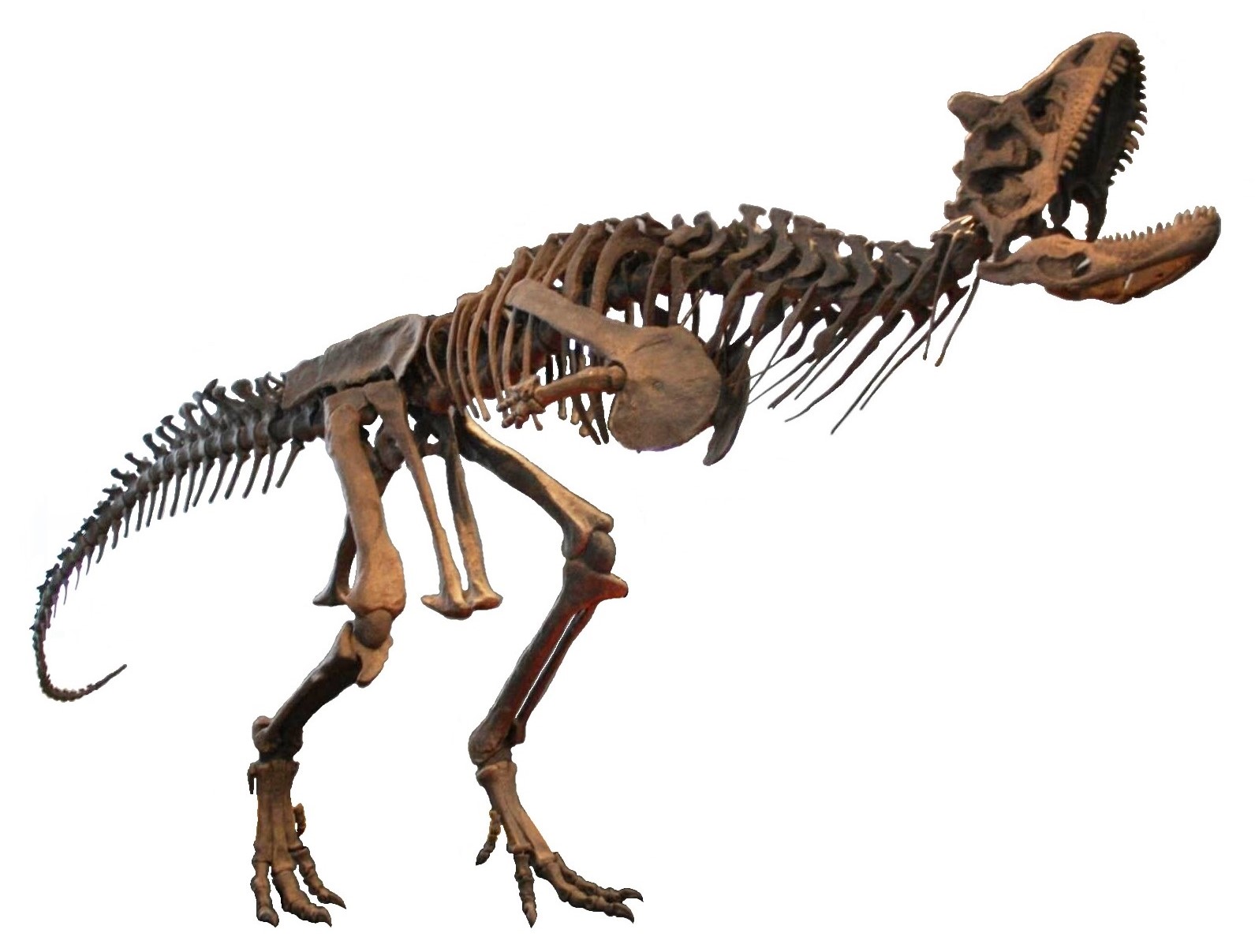
Gallery of theropods (clockwise from top left) Carnotaurus, Coelophysis, Irritator, Archaeopteryx, Struthiomimus and Tyrannosaurus
Scientific classification Edit this classification
Kingdom: Animalia
Phylum: Chordata
Class: Reptilia
Clade: Dinosauria
Clade: Saurischia
Clade: Theropoda
Marsh, 1881
Subgroups[1]
montage of four birds
In the modern fauna, theropods are represented by over 11,000 species of birds, which are a group of maniraptoran theropods within the clade Avialae.

Theropoda (/θɪəˈrɒpədə/;[2] from ancient Greek θηρίο- ποδός [θηρίον, (therion) "wild beast"; πούς, ποδός (pous, podos) "foot"]) is one of the three major clades of dinosaur, alongside Ornithischia and Sauropodomorpha. Theropods, both extant and extinct, are characterized by hollow bones and three toes and claws on each limb. They are generally classed as a group of saurischian dinosaurs, placing them closer to sauropodomorphs than to ornithischians. They were ancestrally carnivorous, although a number of theropod groups evolved to become herbivores and omnivores. Members of the subgroup Coelurosauria were most likely all covered with feathers, and it is possible that they were also present in other theropods. In the Jurassic, birds evolved from small specialized coelurosaurian theropods, and are currently represented by about 11,000 living species, making theropods the only group of dinosaurs alive today.

Theropods first appeared during the Carnian age of the Late Triassic period 231.4 million years ago (Ma)[3] and included the majority of large terrestrial carnivores from the Early Jurassic until the end of the Cretaceous, about 66 Ma, including the largest terrestrial carnivorous animals ever, such as Tyrannosaurus and Giganotosaurus, though non-avian theropods exhibited considerable size diversity, with some non-avian theropods like scansoriopterygids being no bigger than small birds.

Biology

[edit]

Traits

[edit]

Various synapomorphies for Theropoda have been proposed based on which taxa are included in the group. For example, a 1999 paper by Paul Sereno suggests that theropods are characterized by traits such as an ectopterygoid fossa (a depression around the ectopterygoid bone), an intramandibular joint located within the lower jaw, and extreme internal cavitation within the bones.[4] However, since taxa like Herrerasaurus may not be theropods, these traits may have been more widely distributed among early saurischians rather than being unique to theropods.

Instead, taxa with a higher probability of being within the Theropoda may share more specific traits, such as a prominent promaxillary fenestra, cervical vertebrae with pleurocoels in the anterior part of the centrum leading to a more pneumatic neck, five or more sacral vertebrae, enlargement of the carpal bone, and a distally concave portion of the tibia, among a few other traits found throughout the skeleton. Like the early sauropodomorphs, the second digit in a theropod's hand is enlarged. Theropods also have a very well developed ball and socket joint near their neck and head.[5][6]

Most theropods belong to the clade Neotheropoda, characterized by the reduction of several foot bones, thus leaving three toed footprints on the ground when they walk (tridactyl feet). Digit V was reduced to a remnant early in theropod evolution and was gone by the late Triassic. Digit I is reduced and generally do not touch the ground, and greatly reduced in some lineages.[7] They also lack a digit V on their hands and have developed a furcula which is otherwise known as a wishbone.[5] Early neotheropods like the coelophysoids have a noticeable kink in the upper jaw known as a subnarial gap. Averostrans are some of the most derived theropods and contain the Tetanurae and Ceratosauria. While some used to consider coelophysoids and ceratosaurs to be within the same group due to features such as a fused hip, later studies showed that it is more likely that these were features ancestral to neotheropods and were lost in basal tetanurans.[8] Averostrans and their close relatives are united via the complete loss of any digit V remnants, fewer teeth in the maxilla, the movement of the tooth row further down the maxilla and a lacrimal fenestra. Averostrans also share features in their hips and teeth.[9]

Diet and teeth

[edit]
Specimen of the troodontid Jinfengopteryx elegans, with seeds preserved in the stomach region

Theropods exhibit a wide range of diets, from insectivores to herbivores and carnivores. Strict carnivory has always been considered the ancestral diet for theropods as a group, and a wider variety of diets was historically considered a characteristic exclusive to the avian theropods (birds). However, discoveries in the late 20th and early 21st centuries showed that a variety of diets existed even in more basal lineages.[10] All early finds of theropod fossils showed them to be primarily carnivorous. Fossilized specimens of early theropods known to scientists in the 19th and early 20th centuries all possessed sharp teeth with serrated edges for cutting flesh, and some specimens even showed direct evidence of predatory behavior. For example, a Compsognathus longipes fossil was found with a lizard in its stomach, and a Velociraptor mongoliensis specimen was found locked in combat with a Protoceratops andrewsi (a type of ornithischian dinosaur). This was likely caused by a sand dune blowing over the two animals mid combat, resulting in fossilization.

The first confirmed non-carnivorous fossil theropods found were the therizinosaurs, originally known as "segnosaurs". First thought to be prosauropods, these enigmatic dinosaurs were later proven to be highly specialized, herbivorous theropods. Therizinosaurs possessed large abdomens for processing plant food, and small heads with beaks and leaf-shaped teeth. Further study of maniraptoran theropods and their relationships showed that therizinosaurs were not the only early members of this group to abandon carnivory. Several other lineages of early maniraptorans show adaptations for an omnivorous diet, including seed-eating (some troodontids) and insect-eating (many avialans and alvarezsaurs). Oviraptorosaurs, ornithomimosaurs and advanced troodontids were likely omnivorous as well, and some theropods (such as Masiakasaurus knopfleri and the spinosaurids) appear to have specialized in catching fish.[11][12]

Diet is largely deduced by the tooth morphology,[13] tooth marks on bones of the prey, and gut contents. Some theropods, such as Baryonyx, Lourinhanosaurus, ornithomimosaurs, and birds, are known to use gastroliths, or gizzard-stones.

The majority of theropod teeth are blade-like, with serration on the edges,[14] called ziphodont. Others are pachydont or folidont depending on the shape of the tooth or denticles.[14] The morphology of the teeth is distinct enough to tell the major families apart,[13] which indicate different diet strategies. An investigation in July 2015 discovered that what appeared to be "cracks" in their teeth were actually folds that helped to prevent tooth breakage by strengthening individual serrations as they attacked their prey.[15] The folds helped the teeth stay in place longer, especially as theropods evolved into larger sizes and had more force in their bite.[16][17]

Integument (skin, scales and feathers)

[edit]
Fossil of an Anchiornis, showing large preserved feather imprints

Mesozoic theropods were also very diverse in terms of skin texture and covering. Feathers or feather-like structures (filaments) are attested in most lineages of coelurosaurs (see feathered dinosaur). However, outside the coelurosaurs, feathers may have been confined to the young, smaller species, or limited parts of the animal. Many larger theropods had skin covered in small, bumpy scales. In some species, these were interspersed with larger scales. This type of skin is best known in the ceratosaur Carnotaurus, which has been preserved with extensive skin impressions.[18] Osteoderms, scales with a bony core, are known from Ceratosaurus, which was discovered with segments of osteoderms on top of its neck and tail, probably forming a continuous row in life.[19] In carnosaurs rectangular scutate scales are known from the top of the feet and the underside of the tail in Concavenator, and from the underside of the neck in Allosaurus.[20]

There is evidence of some lineages of theropods being ancestrally feathered but losing them in favor of scales in later members. In tyrannosauroids, the early members Dilong and Yutyrannus are preserved with evidence of feathers, while in the later tyrannosaurids, like Tyrannosaurus, Tarbosaurus, Albertosaurus, Gorgosaurus, and Daspletosaurus, there is evidence of scales, though it is unknown if they lost all feathers entirely.[21]

The coelurosaur lineages most distant from birds had feathers that were relatively short and composed of simple, possibly branching filaments.[22] Simple filaments are also seen in therizinosaurs, which also possessed large, stiffened "quill"-like feathers. More fully feathered theropods, such as dromaeosaurids, usually retain scales only on the feet. Some species may have mixed feathers elsewhere on the body as well. Scansoriopteryx preserved scales near the underside of the tail,[23] and Juravenator may have been predominantly scaly with some simple filaments interspersed.[24] On the other hand, some theropods were completely covered with feathers, such as the anchiornithid Anchiornis, which even had feathers on the feet and toes.[25]

Based on a relationships between tooth size and skull length and also a comparison of the degree of wear of the teeth of non-avian theropods and modern lepidosaurs, it is concluded that theropods had lips that protected their teeth from the outside. Visually, the snouts of such theropods as Daspletosaurus had more similarities with lizards than crocodilians, which lack lips.[26]

Size

[edit]
Graph showing relative sizes of five types of dinosaur compared with small human figure, each represented by silhouettes in different colours
Size comparison of selected giant theropod dinosaurs – the longest (left) is Spinosaurus aegyptiacus, shortest (right) is Carcharodontosaurus saharicus.
An adult male bee hummingbird, the smallest known theropod and the smallest living dinosaur

Tyrannosaurus was for many decades the largest known theropod and best known to the general public. Since its discovery, however, a number of other giant carnivorous dinosaurs have been described, including Spinosaurus, Carcharodontosaurus, and Giganotosaurus.[27] The original Spinosaurus specimens (as well as newer fossils described in 2006) support the idea that Spinosaurus was probably 3 meters longer than Tyrannosaurus, though Tyrannosaurus might have been more massive than Spinosaurus.[28] Specimens such as Sue and Scotty are both estimated to be the heaviest theropods known to science. It is still not clear why these animals grew so heavy and bulky compared to the land predators that came before and after them.

The largest extant theropod is the common ostrich, up to 2.74 m (9 ft) tall and weighing between 90 and 130 kg (200 – 290 lb).[29] The smallest non-avian theropod known from adult specimens is the troodontid Anchiornis huxleyi, at 110 grams in weight and 34 centimeters (1 ft) in length.[25] When modern birds are included, the bee hummingbird (Mellisuga helenae) is smallest at 1.9 g and 5.5 cm (2.2 in) long.[30][31]

Recent theories propose that theropod body size shrank continuously over a period of 50 million years, from an average of 163 kilograms (359 lb) down to 0.8 kilograms (1.8 lb), eventually evolving into over 11,000 species of modern birds. This was based on evidence that theropods were the only dinosaurs to get continuously smaller, and that their skeletons changed four times as fast as those of other dinosaur species.[32][33]

Growth rates

[edit]

In order to estimate the growth rates of theropods, scientists need to calculate both age and body mass of a dinosaur. Both of these measures can only be calculated through fossilized bone and tissue, so regression analysis and extant animal growth rates as proxies are used to make predictions. Fossilized bones exhibit growth rings that appear as a result of growth or seasonal changes, which can be used to approximate age at the time of death.[34] However, the amount of rings in a skeleton can vary from bone to bone, and old rings can also be lost at advanced age, so scientists need to properly control these two possibly confounding variables.

Body mass is harder to determine as bone mass only represents a small proportion of the total body mass of animals. One method is to measure the circumference of the femur, which in non-avian theropod dinosaurs has been shown to be a relatively proportional to quadrupedal mammals,[35] and use this measurement as a function of body weight, as the proportions of long bones like the femur grow proportionately with body mass.[35] The method of using extant animal bone proportion to body mass ratios to make predictions about extinct animals is known as the extant-scaling (ES) approach.[36] A second method, known as the volumetric-density (VD) approach, uses full-scale models of skeletons to make inferences about potential mass. The ES approach is better for wide-range studies including many specimens and doesn't require as much of a complete skeleton as the VD approach, but the VD approach allows scientists to better answer more physiological questions about the animal, such as locomotion and center of gravity.[36]

The current consensus is that non-avian theropods didn't exhibit a group wide growth rate, but instead had varied rates depending on their size. However, all non-avian theropods had faster growth rates than extant reptiles, even when modern reptiles are scaled up to the large size of some non-avian theropods. As body mass increases, the relative growth rate also increases. This trend may be due to the need to reach the size required for reproductive maturity.[37] For example, one of the smallest known theropods was Microraptor zhaoianus, which had a body mass of 200 grams, grew at a rate of approximately 0.33 grams per day.[38] A comparable reptile of the same size grows at half of this rate. The growth rates of medium-sized non-avian theropods (100–1000 kg) approximated those of precocial birds, which are much slower than altricial birds. Large theropods (1500–3500 kg) grew even faster, similar to rates displayed by eutherian mammals.[38] The largest non-avian theropods, like Tyrannosaurus rex, had similar growth dynamics to the largest living land animal today, the African elephant, which is characterized by a rapid period of growth until maturity, subsequently followed by slowing growth in adulthood.[39]

Stance and gait

[edit]
An ostrich walking on a road in Etosha National Park, Namibia

As a hugely diverse group of animals, the posture adopted by theropods likely varied considerably between various lineages through time.[40] All known theropods are bipedal, with the forelimbs reduced in length and specialized for a wide variety of tasks (see below). In modern birds, the body is typically held in a somewhat upright position, with the upper leg (femur) held parallel to the spine and with the forward force of locomotion generated at the knee. Scientists are not certain how far back in the theropod family tree this type of posture and locomotion extends.[40]

Non-avian theropods were first recognized as bipedal during the 19th century, before their relationship to birds was widely accepted. During this period, theropods such as carnosaurs and tyrannosaurids were thought to have walked with vertical femurs and spines in an upright, nearly erect posture, using their long, muscular tails as additional support in a kangaroo-like tripodal stance.[40] Beginning in the 1970s, biomechanical studies of extinct giant theropods cast doubt on this interpretation. Studies of limb bone articulation and the relative absence of trackway evidence for tail dragging suggested that, when walking, the giant, long-tailed theropods would have adopted a more horizontal posture with the tail held parallel to the ground.[40][41] However, the orientation of the legs in these species while walking remains controversial. Some studies support a traditional vertically oriented femur, at least in the largest long-tailed theropods,[41] while others suggest that the knee was normally strongly flexed in all theropods while walking, even giants like the tyrannosaurids.[42][43] It is likely that a wide range of body postures, stances, and gaits existed in the many extinct theropod groups.[40][44]

Nervous system and senses

[edit]

Although rare, complete casts of theropod endocrania are known from fossils. Theropod endocrania can also be reconstructed from preserved brain cases without damaging valuable specimens by using a computed tomography scan and 3D reconstruction software. These finds are of evolutionary significance because they help document the emergence of the neurology of modern birds from that of earlier reptiles. An increase in the proportion of the brain occupied by the cerebrum seems to have occurred with the advent of the Coelurosauria and "continued throughout the evolution of maniraptorans and early birds."[45]

Studies show that theropods had very sensitive snouts. It is suggested they might have been used for temperature detection, feeding behavior, and wave detection.[46][47]

Forelimb morphology

[edit]
Mummified enantiornithean wing (of an unknown genus) from Cenomanian amber from Myanmar

Shortened forelimbs in relation to hind legs were a common trait among theropods, most notably in the abelisaurids (such as Carnotaurus) and the tyrannosaurids (such as Tyrannosaurus). This trait was, however, not universal: spinosaurids had well developed forelimbs, as did many coelurosaurs. The relatively robust forelimbs of one genus, Xuanhanosaurus, led Dong Zhiming to suggest that the animal might have been quadrupedal.[48] However, this is no longer thought to be likely.[49]

The hands are also very different among the different groups. The most common form among non-avian theropods is an appendage consisting of three fingers; the digits I, II and III (or possibly II, III and IV), with sharp claws. Some basal theropods, like most Ceratosaurians, had four digits, and also a reduced metacarpal V (e.g. Dilophosaurus). The majority of tetanurans had three,[a][50] but some had even fewer.[51]

The forelimbs' scope of use is also believed to have also been different among different families. The spinosaurids could have used their powerful forelimbs to hold fish. Some small maniraptorans such as scansoriopterygids are believed to have used their forelimbs to climb in trees.[23] The wings of modern birds are used primarily for flight, though they are adapted for other purposes in certain groups. For example, aquatic birds such as penguins use their wings as flippers.

Forelimb movement

[edit]
Diagram of Deinonychus (left) and Archaeopteryx (right) forelimbs illustrating wing-like posture

Contrary to the way theropods have often been reconstructed in art and the popular media, the range of motion of theropod forelimbs was severely limited, especially compared with the forelimb dexterity of humans and other primates.[52] Most notably, theropods and other bipedal saurischian dinosaurs (including the bipedal prosauropods) could not pronate their hands—that is, they could not rotate the forearm so that the palms faced the ground or backwards towards the legs. In humans, pronation is achieved by motion of the radius relative to the ulna (the two bones of the forearm). In saurischian dinosaurs, however, the end of the radius near the elbow was actually locked into a groove of the ulna, preventing any movement. Movement at the wrist was also limited in many species, forcing the entire forearm and hand to move as a single unit with little flexibility.[53] In theropods and prosauropods, the only way for the palm to face the ground would have been by lateral splaying of the entire forelimb, as in a bird raising its wing.[52]

In carnosaurs like Acrocanthosaurus, the hand itself retained a relatively high degree of flexibility, with mobile fingers. This was also true of more basal theropods, such as herrerasaurs. Coelurosaurs showed a shift in the use of the forearm, with greater flexibility at the shoulder allowing the arm to be raised towards the horizontal plane, and to even greater degrees in flying birds. However, in coelurosaurs, such as ornithomimosaurs and especially dromaeosaurids, the hand itself had lost most flexibility, with highly inflexible fingers. Dromaeosaurids and other maniraptorans also showed increased mobility at the wrist not seen in other theropods, thanks to the presence of a specialized half-moon shaped wrist bone (the semi-lunate carpal) that allowed the whole hand to fold backward towards the forearm in the manner of modern birds.[53]

Paleopathology

[edit]

In 2001, Ralph E. Molnar published a survey of pathologies in theropod dinosaur bone. He found pathological features in 21 genera from 10 families. Pathologies were found in theropods of all body size although they were less common in fossils of small theropods, although this may be an artifact of preservation. They are very widely represented throughout the different parts of theropod anatomy. The most common sites of preserved injury and disease in theropod dinosaurs are the ribs and tail vertebrae. Despite being abundant in ribs and vertebrae, injuries seem to be "absent... or very rare" on the bodies' primary weight supporting bones like the sacrum, femur, and tibia. The lack of preserved injuries in these bones suggests that they were selected by evolution for resistance to breakage. The least common sites of preserved injury are the cranium and forelimb, with injuries occurring in about equal frequency at each site. Most pathologies preserved in theropod fossils are the remains of injuries like fractures, pits, and punctures, often likely originating with bites. Some theropod paleopathologies seem to be evidence of infections, which tended to be confined only to small regions of the animal's body. Evidence for congenital malformities have also been found in theropod remains. Such discoveries can provide information useful for understanding the evolutionary history of the processes of biological development. Unusual fusions in cranial elements or asymmetries in the same are probably evidence that one is examining the fossils of an extremely old individual rather than a diseased one.[54]

Swimming

[edit]

The trackway of a swimming theropod, the first in China of the ichnogenus named Characichnos, was discovered at the Feitianshan Formation in Sichuan.[55] These swim tracks support the hypothesis that theropods were adapted to swimming and capable of traversing moderately deep water. Dinosaur swim tracks are considered to be rare trace fossils, and are among a class of vertebrate swim tracks that also include those of pterosaurs and crocodylomorphs. The study described and analyzed four complete natural molds of theropod foot prints that are now stored at the Huaxia Dinosaur Tracks Research and Development Center (HDT). These dinosaur footprints were in fact claw marks, which suggest that this theropod was swimming near the surface of a river and just the tips of its toes and claws could touch the bottom. The tracks indicate a coordinated, left-right, left-right progression, which supports the proposition that theropods were well-coordinated swimmers.[55]

Evolutionary history

[edit]
Full skeleton of an early carnivorous dinosaur, displayed in a glass case in a museum
Possible early forms Herrerasaurus (large) and Eoraptor (small)

During the late Triassic, a number of primitive proto-theropod and theropod dinosaurs existed and evolved alongside each other.

The earliest and most primitive of the theropod dinosaurs were the carnivorous Eodromaeus and, possibly, the herrerasaurids of Argentina. The herrerasaurs existed during the early late Triassic (Late Carnian to Early Norian). They were found in North America and South America and possibly also India and Southern Africa. The herrerasaurs were characterised by a mosaic of primitive and advanced features. Some paleontologists have in the past considered the herrerasaurians to be members of Theropoda, while other theorized the group to be basal saurischians, and may even have evolved prior to the saurischian-ornithischian split. Cladistic analysis following the discovery of Tawa, another Triassic dinosaur, suggests the herrerasaurs likely were early theropods.[56]

The earliest and most primitive unambiguous theropods are the Coelophysoidea. The coelophysoids were a group of widely distributed, lightly built and potentially gregarious animals. They included small hunters like Coelophysis and Camposaurus. These successful animals continued from the Late Carnian (early Late Triassic) through to the Toarcian (late Early Jurassic). Although in the early cladistic classifications they were included under the Ceratosauria and considered a side-branch of more advanced theropods,[57] they may have been ancestral to all other theropods (which would make them a paraphyletic group).[58][59]

Neotheropoda (meaning "new theropods") is a clade that includes coelophysoids and more advanced theropod dinosaurs, and is the only group of theropods that survived the Triassic–Jurassic extinction event. Neotheropoda was named by R.T. Bakker in 1986 as a group including the relatively derived theropod subgroups Ceratosauria and Tetanurae, and excluding coelophysoids.[60] However, most later researchers have used it to denote a broader group. Neotheropoda was first defined as a clade by Paul Sereno in 1998 as Coelophysis plus modern birds, which includes almost all theropods except the most primitive species.[61] Dilophosauridae was formerly considered a small clade within Neotheropoda, but was later considered to be paraphyletic. By the Early Jurassic, all non-averostran neotheropods had gone extinct.[62]

Averostra (or "bird snouts") is a clade within Neotheropoda that includes most theropod dinosaurs, namely Ceratosauria and Tetanurae. It represents the only group of post-Early Jurassic theropods. One important diagnostic feature of Averostra is the absence of the fifth metacarpal. Other saurischians retained this bone, albeit in a significantly reduced form.[63]

The somewhat more advanced ceratosaurs (including Ceratosaurus and Carnotaurus) appeared during the Early Jurassic and continued through to the Late Jurassic in Laurasia. They competed alongside their more anatomically advanced tetanuran relatives and—in the form of the abelisaur lineage—lasted to the end of the Cretaceous in Gondwana.

The Tetanurae are more specialised again than the ceratosaurs. They are subdivided into the basal Megalosauroidea (alternately Spinosauroidea) and the more derived Avetheropoda. Megalosauridae were primarily Middle Jurassic to Early Cretaceous predators, and their spinosaurid relatives' remains are mostly from Early and Middle Cretaceous rocks. Avetheropoda, as their name indicates, were more closely related to birds and are again divided into the Allosauroidea (the diverse carcharodontosaurs) and the Coelurosauria (a very large and diverse dinosaur group including the birds).

Thus, during the late Jurassic, there were no fewer than four distinct lineages of theropods—ceratosaurs, megalosaurs, allosaurs, and coelurosaurs—preying on the abundance of small and large herbivorous dinosaurs. All four groups survived into the Cretaceous, and three of those—the ceratosaurs, coelurosaurs, and allosaurs—survived to end of the period, where they were geographically separate, the ceratosaurs and allosaurs in Gondwana, and the coelurosaurs in Laurasia.

Of all the theropod groups, the coelurosaurs were by far the most diverse. Some coelurosaur groups that flourished during the Cretaceous were the tyrannosaurids (including Tyrannosaurus), the dromaeosaurids (including Velociraptor and Deinonychus, which are remarkably similar in form to one of the oldest known birds, Archaeopteryx),[64][65] the bird-like troodontids and oviraptorosaurs, the ornithomimosaurs (or "ostrich Dinosaurs"), the strange giant-clawed herbivorous therizinosaurs, and the avialans, which include modern birds and is the only dinosaur lineage to survive the Cretaceous–Paleogene extinction event.[66] While the roots of these various groups are found in the Middle Jurassic, they only became abundant during the Early Cretaceous. A few palaeontologists, such as Gregory S. Paul, have suggested that some or all of these advanced theropods were actually descended from flying dinosaurs or proto-birds like Archaeopteryx that lost the ability to fly and returned to a terrestrial habitat.[67]

The evolution of birds from other theropod dinosaurs has also been reported, with some of the linking features being the furcula (wishbone), pneumatized bones, brooding of the eggs, and (in coelurosaurs, at least) feathers.[32][33][68]

Classification

[edit]

History of classification

[edit]
Othniel Charles Marsh, who coined the name Theropoda. Photo c. 1870

O. C. Marsh coined the name Theropoda (meaning "beast feet") in 1881.[69] Marsh initially named Theropoda as a suborder to include the family Allosauridae, but later expanded its scope, re-ranking it as an order to include a wide array of "carnivorous" dinosaur families, including Megalosauridae, Compsognathidae, Ornithomimidae, Plateosauridae and Anchisauridae (now known to be herbivorous sauropodomorphs) and Hallopodidae (subsequently revealed as relatives of crocodilians). Due to the scope of Marsh's Order Theropoda, it came to replace a previous taxonomic group that Marsh's rival E. D. Cope had created in 1866 for the carnivorous dinosaurs: Goniopoda ("angled feet").[49]

By the early 20th century, some palaeontologists, such as Friedrich von Huene, no longer considered carnivorous dinosaurs to have formed a natural group. Huene abandoned the name "Theropoda", instead using Harry Seeley's Order Saurischia, which Huene divided into the suborders Coelurosauria and Pachypodosauria. Huene placed most of the small theropod groups into Coelurosauria, and the large theropods and prosauropods into Pachypodosauria, which he considered ancestral to the Sauropoda (prosauropods were still thought of as carnivorous at that time, owing to the incorrect association of rauisuchian skulls and teeth with prosauropod bodies, in animals such as Teratosaurus).[49] Describing the first known dromaeosaurid (Dromaeosaurus albertensis) in 1922,[70] W. D. Matthew and Barnum Brown became the first paleontologists to exclude prosauropods from the carnivorous dinosaurs, and attempted to revive the name "Goniopoda" for that group, but other scientists did not accept either of these suggestions.[49]

Allosaurus was one of the first dinosaurs classified as a theropod.

In 1956, "Theropoda" came back into use—as a taxon containing the carnivorous dinosaurs and their descendants—when Alfred Romer re-classified the Order Saurischia into two suborders, Theropoda and Sauropoda. This basic division has survived into modern palaeontology, with the exception of, again, the Prosauropoda, which Romer included as an infraorder of theropods. Romer also maintained a division between Coelurosauria and Carnosauria (which he also ranked as infraorders). This dichotomy was upset by the discovery of Deinonychus and Deinocheirus in 1969, neither of which could be classified easily as "carnosaurs" or "coelurosaurs". In light of these and other discoveries, by the late 1970s Rinchen Barsbold had created a new series of theropod infraorders: Coelurosauria, Deinonychosauria, Oviraptorosauria, Carnosauria, Ornithomimosauria, and Deinocheirosauria.[49]

With the advent of cladistics and phylogenetic nomenclature in the 1980s, and their development in the 1990s and 2000s, a clearer picture of theropod relationships began to emerge. Jacques Gauthier named several major theropod groups in 1986, including the clade Tetanurae for one branch of a basic theropod split with another group, the Ceratosauria. As more information about the link between dinosaurs and birds came to light, the more bird-like theropods were grouped in the clade Maniraptora (also named by Gauthier in 1986[57]). These new developments also came with a recognition among most scientists that birds arose directly from maniraptoran theropods and, on the abandonment of ranks in cladistic classification, with the re-evaluation of birds as a subset of theropod dinosaurs that survived the Mesozoic extinctions and lived into the present.[49]

Major groups

[edit]
Ceratosaurus, a ceratosaurid
Irritator, a spinosaurid
Mapusaurus, a carcharodontosaurid
Microraptor, a dromaeosaurid
The house sparrow, an avian, is the world's most widespread extant wild theropod.[71]

The following is a simplified classification of theropod groups based on their evolutionary relationships, and organized based on the list of Mesozoic dinosaur species provided by Holtz.[1] A more detailed version can be found at dinosaur classification. The dagger (†) is used to signify groups with no living members.

  • Alvarezsauroidea (small insectivores with reduced forelimbs each bearing one enlarged claw)
  • Therizinosauria (bipedal herbivores with large hand claws and small heads)
  • Scansoriopterygidae (small, arboreal maniraptors with long third fingers)
  • Oviraptorosauria (mostly toothless; their diet and lifestyle are uncertain)
  • Paraves ("near-birds"; generally carnivorous, sickle-claws)

Relationships

[edit]

The following family tree illustrates a synthesis of the relationships of the major theropod groups based on various studies conducted in the 2010s.[72]

Theropoda

Averostra was named by G.S. Paul in 2002 as an apomorphy-based clade defined as the group including the Dromaeosauridae and other Avepoda with (an ancestor with) a promaxillary fenestra (fenestra promaxillaris) which can also be referred to as a maxillary fenestra,[73] an extra opening in the front outer side of the maxilla, the bone that makes up the upper jaw.[74] It was later re-defined by Martin Ezcurra and Gilles Cuny in 2007 as a node-based clade containing Ceratosaurus nasicornis, Allosaurus fragilis, their last common ancestor and all its descendants.[75] Mickey Mortimer commented that Paul's original apomorphy-based definition may make Averostra a much broader clade than the Ceratosaurus+Allosaurus node, potentially including all of Avepoda or more.[76]

A large study of early dinosaurs by Dr Matthew G. Baron, David Norman and Paul M. Barrett (2017) published in the journal Nature suggested that Theropoda is actually more closely related to Ornithischia, to which it formed the sister group within the clade Ornithoscelida. This new hypothesis also recovered Herrerasauridae as the sister group to Sauropodomorpha in the redefined Saurischia and suggested that the hypercarnivore morphologies that are observed in specimens of theropods and herrerasaurids were acquired convergently.[77][78] However, this phylogeny remains controversial and additional work is being done to clarify these relationships.[79]

Footnotes

[edit]

See also

[edit]

References

[edit]
[edit]
Revisions and contributorsEdit on WikipediaRead on Wikipedia
from Grokipedia
Theropoda is a diverse of bipedal saurischian dinosaurs, primarily carnivorous, characterized by , three-toed feet, sharp serrated teeth, and a flexible , encompassing both extinct predators and the sole surviving lineage of modern birds. Originating in the period approximately 230 million years ago, theropods rapidly diversified across all continents, ranging from small, agile hunters like Coelophysis (about 3 meters long) to gigantic apex predators such as Tyrannosaurus rex (up to 12 meters in length and weighing over 7 tons). Their evolutionary history spans over 170 million years, marked by adaptations including reduced forelimbs in some lineages, the development of feathers initially for insulation, and behavioral traits like brooding seen in oviraptorosaurs. Theropods are divided into major subgroups, including the large-bodied ceratosaurs and carnosaurs (e.g., ), spinosaurids with crocodile-like features, and the more avian-like coelurosaurs, which further branch into tyrannosauroids, ornithomimosaurs, and maniraptorans. The clade's defining synapomorphies include a promaxillary in the for enhanced strength and a (wishbone) in advanced forms, facilitating diverse predatory strategies from pack hunting to solitary ambushes. Most theropods went extinct at the end of the period 66 million years ago due to the Chicxulub impact event, but avialans—encompassing birds—persisted and radiated into over 10,000 species today. The transition from non-avian theropods to birds involved gradual modifications over tens of millions of years, with key transitional fossils like (from the , ~150 million years ago) displaying a mix of reptilian traits (teeth, long tail) and avian features (feathers, flight-capable wings). Earlier theropods such as show protofeathers, while dromaeosaurids like exhibit sickle-shaped claws and bird-like skeletal proportions, underscoring the clade's role in one of paleontology's most profound evolutionary stories. Theropoda thus represents not only the pinnacle of predation but also the bridge to avian diversity, with ongoing discoveries refining our understanding of their global distribution and ecological impacts.

Description

Defining features

Theropoda is a of bipedal saurischian dinosaurs distinguished by a suite of anatomical synapomorphies that emphasize lightweight construction, agile locomotion, and predatory adaptations. These features include an enlarged in the skull, a promaxillary anterior to the , and a reduced fourth on the , which collectively support the 's as originally outlined in seminal phylogenetic analyses. The promaxillary , a small opening in the , is particularly diagnostic, appearing consistently in neotheropod skulls and aiding in reducing cranial weight while maintaining structural integrity. Recent phylogenetic studies continue to refine the position of basal theropods, with some taxa like herrerasaurs debated as potentially outside the or highly basal. A hallmark of theropod anatomy is the presence of hollow, pneumatized bones invaded by diverticula from air sacs, which reduce skeletal mass and enhance respiratory efficiency. This pneumaticity is widespread, affecting postaxial cervical vertebrae in nearly all known theropods and extending to anterior dorsal vertebrae, with evidence for cervical and abdominal air sacs homologous to those in birds. In basal theropods, pneumaticity occasionally reaches the forelimbs and pectoral girdle, though it is less common than in derived forms. The tridactyl pes, with three weight-bearing toes (digits II–IV) and a raised, non-weight-bearing hallux (dewclaw), further optimizes bipedal efficiency by concentrating force during locomotion. Theropods exhibit an obligately bipedal posture, supported by a horizontally oriented , elongated hindlimbs, and a long, muscular tail that provides counterbalance and stability during movement. The spine features an S-shaped cervical region with high flexibility, allowing extensive head mobility for scanning environments or precise strikes, a trait enhanced by the lightweight pneumatized vertebrae. These adaptations collectively enable the dynamic, lifestyle characteristic of the . Modern birds (Aves) represent the sole surviving lineage of Theropoda, descending from maniraptoran theropods through a series of transitional forms exhibiting feathered and avian-like skeletal traits. , from the , exemplifies these proto-avian theropods with its mix of reptilian and bird-like features, including asymmetrical and a , bridging non-avian theropods to crown-group birds.

Diversity and distribution

Theropoda encompasses approximately 500 described non-avian species, alongside approximately 10,500 extant avian species, spanning from the to the present day, with peak diversity occurring during the and periods. Early theropods appeared during the across the , with fossils documented in regions corresponding to modern , , and , such as the basal coelophysoids like that dominated this interval. As fragmented, theropod distribution shifted, with notable Gondwanan radiations in the southern continents; for instance, abelisaurids became prominent apex predators in during the . Theropods occupied a broad spectrum of ecological niches, demonstrating remarkable adaptability from small-bodied insectivores to massive apex predators and even herbivores or omnivores in derived lineages. Basal forms like , weighing around 15–25 kg, likely preyed on small vertebrates in arid environments, while giants such as , reaching up to 7 tons, served as top carnivores in floodplains. Derived groups, including oviraptorosaurs, shifted toward herbivorous or omnivorous diets, evidenced by their robust skulls adapted for processing tough plant material or mixed foods. Temporally, theropod diversity evolved distinctly across stages: basal coelophysoids prevailed in the , giving way to dominant tetanurans like allosaurids in the , followed by a Cretaceous radiation featuring peak abundances of tyrannosaurids and dromaeosaurids as specialized hunters and pack predators. Today, avian theropods represent the clade's ongoing success, with over 10,000 filling diverse niches from aerial insectivores to ground-dwelling omnivores worldwide. A 2025 discovery of Joaquinraptor casali, a new megaraptorid theropod from the Latest of , preserves a limb in its jaws and highlights the persistent southern hemisphere diversity of large-clawed carnivores near the end of the non-avian theropod era.

Biology

Skeletal anatomy

The of theropods exhibits significant morphological diversity adapted to various predatory strategies. Basal theropods typically feature long, narrow snouts that enhance maneuverability and precision in capturing prey. In contrast, tyrannosaurids evolved robust, bone-crushing jaws with deep, massively muscled crania, fused nasals, and widely spaced quadrates to generate high bite forces exceeding 60,000 N, enabling them to withstand substantial cranial stress during feeding. Multiple fenestrae, such as the antorbital and mandibular fenestrae, perforate the to reduce overall weight while preserving structural strength, a trait conserved across theropod evolution. The vertebral column in theropods supports bipedal posture and locomotion, with a relatively conservative presacral formula comprising typically 10 cervical and 13–15 dorsal vertebrae in most taxa. facilitate neck flexibility, while dorsal vertebrae bear metaplastic projections in larger species to enhance biomechanical support. The caudal series is often elongated, with up to 50 or more vertebrae in basal forms, providing counterbalance during movement; for instance, in deinonychids like , elongated caudals stiffen the tail for stability. In derived avialans (birds), vertebral fusions occur, such as the uniting sacrals and anterior caudals, and a fusing distal caudals to support tail feathers for flight. Theropod limb girdles reflect evolutionary shifts toward enhanced mobility and efficiency. In coelurosaurs, the pubis rotates backward in an opisthopubic configuration, as seen in therizinosaurs like , where retroversion fuses the pubis with the and modifies muscle attachments for improved hindlimb retraction. This adaptation converges with ornithischian and avian pelvic designs, aiding ventilation and locomotion. The pectoral girdle in birds features fusion of the and into a single element, strengthening the shoulder for wing-powered flight. Skeletal variations among theropod clades highlight specialized adaptations. Ceratosaurs, such as , possess relatively slender skulls with deep proximal tibiae and longitudinal grooves, suited for slashing bites rather than high-force crushing, though some exhibit moderately elongated snouts for prey manipulation. Spinosaurids display distinctive sail-backed structures formed by elongate neural spines extending up to 1.65 m in , potentially supporting a dorsal sail or hump, alongside piscivorous traits like laterally compressed and conical teeth for aquatic prey capture. Pneumaticity, the invasion of bones by air sac diverticula, is extensive in tetanurans, beginning with cervical and anterior dorsal vertebrae early in theropod evolution around 210 Ma. This "common pattern" lightens the —particularly beneficial for large-bodied forms with femora over 550 mm—while facilitating efficient respiration through a bird-like air sac system, with foramina entering pneumatic chambers in vertebrae and long bones. Such features evolved convergently in up to 12 lineages but became conserved in the tetanuran line to birds, correlating with body size increases and energetic demands of locomotion.

Locomotion and posture

Theropods were obligate bipeds, characterized by a center of gravity positioned directly over the hips to facilitate stable forward propulsion, with the long, muscular tail serving as a critical to prevent forward toppling during movement. This configuration allowed the trunk and head to be held horizontally, maintaining balance while the hindlimbs provided the primary locomotor force. Early reconstructions of theropod posture depicted an upright, vertical body axis similar to that of kangaroos, but modern analyses based on sacral tilt and vertebral articulations have revised this to a more horizontal orientation, with the femur angled caudally relative to the acetabulum. This horizontal posture lowered the center of mass and enhanced stability during locomotion, as evidenced by the near-horizontal alignment of the sacrum and ilium in well-preserved specimens. Theropod gaits varied with body size and phylogeny; basal forms, such as small coelophysoids, exhibited saltatorial (leaping) capabilities for agile maneuvering in complex environments, while larger taxa adopted a gait optimized for sustained running. For instance, fragilis, a mid-sized allosauroid, could achieve maximum speeds of approximately 36 km/h based on musculoskeletal modeling of limb dynamics and . These adaptations emphasized rapid and over explosive bursts in most advanced theropods. Key joint mechanics supported this locomotor efficiency, including powerful flexor muscles such as the caudofemoralis, which originated from the and inserted on the to drive retraction and acceleration during strides. The arctometatarsal condition, prevalent in many coelurosaurian theropods, featured a pinched proximal third metatarsal wedged between the second and fourth, which reduced overall foot mass and enhanced performance by improving rigidity and force transmission without sacrificing flexibility. This structural innovation minimized rotational at the ankle, allowing for quicker foot clearance in high-speed gaits. Fossil trackways provide direct evidence of theropod locomotion, typically preserving tridactyl (three-toed) footprints that reflect the reduced digit I and weight distribution on digits II–IV. Ichnofossils from formations like the Morrison reveal stride lengths correlating with speed; using Alexander's formula (v = 0.25 g^{0.5} S^{1.67} h^{-1.17}, where v is speed, S is stride length, h is hip height, and g is gravity), estimates for large theropod trackways indicate walking speeds of 5–10 km/h and potential bursts up to 25 km/h, underscoring a predominantly lifestyle. These prints often show narrow gauges and alternating steps, confirming the bipedal, horizontal posture .

Feeding mechanisms and diet

Theropods were predominantly carnivorous, characterized by serrated, conical teeth adapted for slashing and piercing flesh. These teeth featured fine serrations along the carinae, enabling efficient cutting through soft tissues of prey, as seen in basal forms like and advanced tyrannosaurids. In dromaeosaurids, a subgroup of coelurosaurs, ziphodont teeth—laterally compressed blades with prominent serrations—facilitated ripping and dismembering larger prey, enhancing their predatory efficiency. Dietary diversity expanded within Theropoda, with specialized adaptations reflecting ecological niches beyond strict carnivory. Spinosaurids exhibited piscivory, supported by conical, unserrated teeth suited for grasping slippery and a rostrum with subtle kinks or hooks in species like and , analogous to modern piscivorous crocodylians. In contrast, therizinosaurs, derived maniraptorans, shifted to herbivory, possessing leaf-shaped, denticulate teeth for shearing vegetation, a radical departure from theropod ancestry. Bite force in theropods varied with morphology and musculature, reaching extremes in tyrannosaurids. Finite element and muscle reconstruction models estimate maximum bite forces up to 57,000 N in Tyrannosaurus rex, enabling penetration of thick hides and . This capability stemmed from robust cranial architecture, including thickened and enlarged adductor muscles, distinguishing tyrannosaurids from lighter-jawed relatives. Feeding behaviors included inferred pack hunting in some coelurosaurs, such as dromaeosaurids, based on fossil assemblages like multiple individuals associated with remains, suggesting coordinated predation on larger prey despite debates over true . Tyrannosaurids employed bone-crushing tactics, leveraging their robust skulls and banana-shaped teeth to pulverize skeletal elements, as evidenced by bite traces on hadrosaur and ceratopsian bones. Stable isotope analysis of provides evidence of dietary shifts in maniraptorans, from carnivory to omnivory in some lineages. Carbon (δ¹³C) and nitrogen (δ¹⁵N) ratios in specimens like indicate ontogenetic changes, with juveniles targeting smaller, higher-trophic-level prey and adults incorporating broader resources, potentially including plant matter in related troodontids and oviraptorosaurs. This isotopic variation highlights niche partitioning and dietary flexibility within coelurosaur evolution.

Integument and coloration

The of basal theropods primarily consisted of scales covering the body, including polygonal, keeled, and tubercular forms observed in taxa such as and , with osteoderms being rare and mostly confined to derived groups like abelisaurids. These scales provided protection and were the plesiomorphic condition for theropods, as evidenced by impressions showing non-overlapping, mosaic-like patterns on the limbs and torso. Within coelurosaurs, filamentous protofeathers emerged as simple, unbranched integumentary structures, first documented in , where they formed a fringe along the tail and body, likely serving initial insulating roles. These filaments represent an evolutionary stage between scales and more complex feathers, with phylogenetic reconstructions indicating their origin at the base of rather than all dinosaurs. Pennaceous feathers, characterized by a central rachis and vanes, evolved in maniraptorans, providing enhanced insulation and precursors to flight structures, as seen in symmetrical vanes at the base of Pennaraptora. Evidence from the tyrannosauroid huali includes long, filamentous feathers up to 20 cm preserved along the tail, flank, and neck in specimens reaching 9 m in length, demonstrating that such persisted even in large-bodied forms despite potential thermoregulatory challenges. Analysis of melanosomes in theropod feathers reveals diverse coloration patterns, with densely packed, platelet-shaped melanosomes in indicating iridescent black and blue hues similar to modern , likely aiding in visual signaling. Spherical melanosomes in other microraptorines suggest reddish tones, while overall pigment distribution supports for , as reconstructed in with a dark dorsal surface grading to lighter ventral regions, optimizing concealment in open habitats. These integumentary features served multiple functions: in small-bodied theropods, protofeathers and early pennaceous structures provided , trapping air to maintain body heat in variable climates. In oviraptorids, elaborate tail fans of pennaceous feathers facilitated display behaviors, with robust, fan-shaped arrays in taxa like Apatoraptor enhancing during or agonistic interactions. For avialans, asymmetric pennaceous feathers on wings and tail contributed to aerodynamic performance, enabling gliding and powered flight, as wind-tunnel models of demonstrate lift coefficients up to 1.5 for stable descent. Recent 2025 analyses highlight in non-carnivorous, desert-dwelling theropods, such as the noasaurid Berthasaura leopoldinae, which possessed a toothless, deep-jawed dentary adapted for processing tough xerophytic in arid environments of , potentially linked to a scaly suited for heat retention and protection in sandy, low-vegetation settings akin to Gobi oviraptorids.

Growth and development

Theropods exhibited rapid growth during , characterized by the deposition of fibrolamellar bone tissue, a highly vascularized composite that supports high metabolic rates and fast skeletal expansion similar to those in modern birds and mammals. Bone cross-sections from species like reveal dense plexiform and reticular vascular networks within this tissue, indicating accelerated juvenile growth phases where individuals could add substantial mass annually. For instance, small coelurosaurs such as achieved adult masses around 50 kg in approximately 5–9 years, implying average juvenile growth rates of approximately 5–10 kg per year, though maximum rates were likely higher during peak phases. Histological analyses show that many theropods displayed determinate growth patterns akin to extant birds, where skeletal maturity is reached at a finite size without indefinite expansion, as evidenced by the external fundamental system (EFS) in outer cortical marking growth cessation. Lines of arrested growth (LAGs), which indicate seasonal pauses, are present throughout theropod long bones but become sparser in the outer cortex of mature individuals, suggesting relatively continuous growth until rather than strict cyclicity. typically preceded full somatic maturity; in brooding theropods like oviraptorids, reproductive capability emerged well before asymptotic body size, aligning with the primitive reptilian condition but accelerated by high growth rates. Ontogenetic changes involved pronounced allometric shifts in proportions, driven by differential growth rates among body regions. In Tyrannosaurus rex, juveniles possessed relatively longer and more slender forelimbs compared to the robust, shortened arms of adults, with the humerus-to-femur length ratio roughly doubling during subadult stages as the hindlimbs outpaced forelimb development. Some dromaeosaurids, such as unenlagiines, exhibit morphological variations in limb proportions and size that may reflect superimposed on ontogenetic trajectories, though histological confirmation remains limited. Growth variations existed across theropod clades, with small coelurosaurs displaying explosive early acceleration—reaching maturity in fewer years via high proportional annual increases (>10% in circumference)—contrasted by slower, prolonged trajectories in large tyrannosaurids like T. rex, which attained skeletal maturity at 16–22 years through sustained but decelerating rates. These patterns parallel extant birds such as ostriches, which achieve skeletal maturity in 6–12 months via similar fibrolamellar deposition and high , though non-avian theropods extended the growth duration to years due to larger final sizes.

Size variation

Theropods exhibited a remarkable range of body sizes, from some of the smallest non-avian dinosaurs to the largest known terrestrial carnivores. The smallest non-avian theropod, such as Anchiornis huxleyi, had an estimated adult body mass of approximately 0.5 kg, based on skeletal measurements and scaling from related paravians. At the opposite extreme, Spinosaurus aegyptiacus represents one of the heaviest theropods, with recent volumetric reconstructions estimating masses up to 7 tons for specimens around 14 meters in length, though earlier estimates reached as high as 14 tons before refinements in tail and body proportions reduced these figures; the exact maximum remains debated due to incomplete fossils. Other giants, like Tyrannosaurus rex, approached 8 tons, highlighting the clade's capacity for extreme size disparity. Gigantism in theropods showed distinct phylogenetic trends, with basal forms generally small-bodied, typically under 100 kg, as seen in early ceratosaurians and coelophysoids like Coelophysis bauri. Within , body sizes escalated dramatically, reaching up to 8 tons in derived tyrannosauroids and carcharodontosaurids. Allosauroids, in particular, achieved peak gigantism during the , with taxa like Saurophaganax maximus exceeding 4 tons, setting the stage for even larger forms through iterative increases in limb robusticity and torso volume. These trends reflect of large size across multiple lineages, including megalosauroids and tyrannosauroids, independent of avian theropods. Body in theropods is commonly estimated using scaling laws derived from skeletal dimensions, with one widely applied for bipeds based on femoral length (L in cm): M=0.0026×L2.73M = 0.0026 \times L^{2.73}, where M is in kg; this approach, calibrated against extant analogs, provides reasonable predictions for smaller theropods but underestimates for giants due to allometric shifts. For greater accuracy, especially in large-bodied forms, volumetric models incorporating 3D reconstructions of the entire and inferred soft tissues are preferred, as they account for irregular body shapes and reduce prediction errors by up to 25% compared to linear scaling. Several factors drove theropod size variation, including ecological pressures like the predator-prey , where increasing theropod body mass coevolved with larger prey, enhancing predatory efficiency and dominance in webs. Physiologically, —air-filled cavities in vertebrae and ribs—lightened the body frame, preventing structural collapse under extreme masses and facilitating by improving respiratory efficiency and reducing energetic costs of support. Recent analyses as of 2025 emphasize along the maniraptoran lineage leading to birds, where sustained reductions in body size over 50 million years, coupled with accelerated growth rates in early , enabled the of flight adaptations; this contrasts with in other theropod clades and underscores diverse developmental strategies in size .

Nervous system and senses

Theropod brains varied significantly in size relative to body mass across the clade, as measured by the encephalization quotient (EQ), which compares actual brain volume to that expected for a reptile of similar body size. Basal theropods exhibited low EQ values around 0.2, indicative of minimal cognitive complexity beyond basic sensory and motor functions. In contrast, advanced coelurosaurs like troodontids achieved EQs up to approximately 5 times those of typical reptiles, suggesting enhanced neural processing for problem-solving and environmental interaction. Avialans, the bird-containing subgroup, displayed bird-like brain proportions with expanded forebrain regions, supporting sophisticated behaviors such as flight coordination and sociality. Sensory adaptations in theropods reflected diverse ecological roles, with olfactory and visual systems particularly prominent in certain lineages. Tyrannosaurids possessed enlarged olfactory bulbs, comprising up to 13% of total brain volume in some species, which correlates with a keen for detecting prey or carrion over long distances. This acuity likely exceeded that of most other theropods, enabling tyrannosaurids to rely heavily on olfaction in forested or low-visibility habitats. Dromaeosaurids, conversely, featured expanded optic lobes and large orbits, adaptations for high that facilitated precise stereoscopic vision and rapid prey tracking during hunts. Hearing capabilities evolved variably, with oviraptorosaurs showing enhanced structures, including pneumatized quadrates connected directly to the , which may have improved sound conduction and sensitivity to low-frequency noises. Balance and spatial orientation were maintained through the , particularly the semicircular canals, which in theropods were elongate and orthogonally arranged to detect angular head movements during agile locomotion or predation. Indicators of elevated in advanced coelurosaurs include a relatively folded or convoluted surface visible in endocasts, implying greater cortical surface area for integration of sensory inputs. Oviraptorids exhibited potential for manipulative behaviors, inferred from their robust, three-fingered forelimbs with strong claws, which could have enabled grasping or tool-like interactions with eggs or nesting materials. Much of this understanding derives from CT-scanned endocasts, which reveal detailed brain morphology including a prominent in theropods for fine and balance during complex movements. These digital reconstructions highlight evolutionary trends toward avian-like neural in derived theropods.

Forelimb structure and function

Theropod forelimbs typically consist of a , , , carpals, three metacarpals, and associated phalanges ending in curved claws, reflecting an ancestral condition for grasping and manipulation. In basal theropods like , the forelimb is relatively long and robust, with the featuring a prominent deltopectoral crest for attachment of major muscles such as the deltoideus clavicularis and pectoralis, enabling powerful retraction and protraction. The and allow limited pronation and supination, while the includes a series of carpals supporting a three-fingered hand with strong digital flexors like the flexor digitorum longus profundus, which insert on the terminal phalanges and facilitate high-excursion claw flexion for prey apprehension. Across theropod evolution, length underwent significant reduction, particularly in large-bodied clades, while retaining functional musculature. Basal forms such as wetherilli exhibit elongated forelimbs capable of substantial , including shoulder protraction up to 85° and elbow flexion to about 48°, allowing two-handed prehension to clutch prey against the body. In contrast, tyrannosaurids display extreme shortening, with Tyrannosaurus rex forelimbs measuring approximately 1 meter in length—about 5-8% of total body length—despite prominent muscle scars on the and indicating retained strength from attachments like the brachii and anconeus. This reduction is linked to allometric scaling with increasing body size and cranial emphasis in predation, though the arms remained muscular enough for close-range tasks. Joint flexibility varied phylogenetically, enhancing specialized roles. The humerus in most theropods bears a deltopectoral crest that anchors protractor and retractor muscles, supporting abduction and up to 65° in basal taxa. In dromaeosaurids, the features a distinctive semilunate carpal—a half-moon-shaped element fused to metacarpal II—that permits avian-like folding of the , with the and adopting acutely flexed resting positions for plumage protection or rapid extension during prey restraint. Claw morphology provides evidence of raking function, as seen in the strongly curved unguals of basal theropods, which exhibit high curvature and robust construction to withstand compressive forces during slashing or motions, corroborated by muscle insertion scars on phalanges for powerful flexors. Hypothesized functions of theropod forelimbs shifted from predatory tools to diverse adaptations. In allosaurids, the moderately long arms with three curved claws enabled grasping and restraining prey, as inferred from range-of-motion analyses showing capacity for hooking beneath the neck or chest during hunts. For tyrannosaurids, the reduced but strong forelimbs may have assisted in close-range grasping or rising from a resting position, though their precise function remains debated. Among maniraptorans, forelimbs evolved as precursors to avian flight, with enhanced wrist folding and muscle leverage facilitating wing-like flapping in paravians. Variations highlight ecological diversity. Oviraptorids possessed robust forelimbs with strong manual claws, positioned symmetrically around nests in brooding fossils, suggesting use in tending or manipulating eggs during incubation. Therizinosaurs featured hypertrophied forelimbs with enlarged, curved claws up to 1 meter long, adapted as grasping hooks for vegetation or pulling branches, as evidenced by biomechanical models showing high leverage for hook-and-pull actions despite reduced in some taxa. These adaptations underscore the forelimb's role in niche-specific behaviors across Theropoda.

Paleopathology and injuries

Paleopathology in theropods reveals a range of injuries, diseases, and congenital conditions preserved in the record, offering insights into the physical stresses and resilience of these dinosaurs. Common pathologies include traumatic injuries from predation, intraspecific aggression, or accidents, as well as infections and degenerative diseases, often evidenced by healed fractures, bite marks, and . These findings suggest that theropods endured significant trauma yet demonstrated robust healing capabilities, likely supported by high metabolic rates akin to those in modern birds. Traumatic injuries are prevalent, with fractures being among the most documented. For instance, the specimen MOR 693, known as "Big Al," exhibits at least 19 injuries, including multiple fractured ribs that healed with substantial callus formation, indicating survival despite impaired mobility. Bite marks on theropod bones, particularly on tails and cranial elements, provide evidence of intraspecific combat, as seen in tyrannosaurids where healed punctures and grooves on facial bones suggest aggressive interactions over resources or mates. Infections are also recorded, often linked to wounds or ingested pathogens. Osteomyelitis, a bone infection, appears in theropod fossils, such as in hadrosaur prey bones bearing theropod bite marks, implying potential transmission during feeding. In tyrannosaurids, abscesses and tumefactive osteomyelitis have been identified in jaw bones, as in the Tyrannosaurus rex specimen FMNH PR2081, where CT imaging revealed swollen, porous lesions from bacterial infection without evidence of systemic spread. Parasitic evidence includes nematode eggs in Early Cretaceous coprolites attributed to theropods, indicating intestinal helminth infections similar to those in modern reptiles. Healing in theropods was remarkably efficient, with bone repair occurring over months due to highly vascularized tissues, as inferred from callus development in fractured ribs and faster recovery rates compared to extant reptiles. Degenerative conditions like affected older individuals; the rex specimen FMNH PR2081 shows osteoarthritic changes in vertebrae, including fused and pitted surfaces, reflecting age-related wear. Other pathologies encompass tumors and congenital anomalies. Benign tumors, such as hemangiomas, occur in Tyrannosaurus rex fossils, with radiographic evidence of vascular lesions in hadrosaur prey potentially related to theropod interactions, though direct causation remains unclear. Congenital defects, including malformed teeth and skeletal malformations, are documented in species like Aucasaurus garridoi, representing early records of developmental anomalies in non-avian theropods.

Classification

History of classification

The term Theropoda was coined by British anatomist in 1842 to describe a group of carnivorous dinosaurs, initially encompassing taxa such as based on their bipedal, flesh-eating morphology within the newly established order Dinosauria. In this early framework, Theropoda was positioned as one subgroup of , a broader category later formalized by Harry Govier Seeley in 1887 that included all "lizard-hipped" dinosaurs, effectively incorporating theropods alongside the herbivorous sauropodomorphs as the primary saurischian lineages. Key discoveries in the late 19th and early 20th centuries expanded the known diversity of theropods and refined their classification. In the 1880s, named Coelophysis bauri from fragmentary remains collected in , marking one of the earliest well-documented early theropods and highlighting the group's origins. This was followed by the 1923 expedition in Mongolia's , where Peter Kaisen unearthed the first Velociraptor mongoliensis fossils, formally described by in 1924; these specimens revealed advanced coelurosaurian features like the iconic sickle-shaped claw, influencing perceptions of theropod agility and predatory behavior. Public interest in theropods surged with the 1993 release of , which popularized dramatic, feathered yet fearsome depictions of dinosaurs like Velociraptor, significantly shaping societal views and boosting paleontological engagement despite scientific inaccuracies. Early taxonomic debates centered on theropod relationships to other reptiles and birds. In 1868, proposed that birds descended from theropod dinosaurs, drawing parallels between Hypsilophodon and avian anatomy in his "On the Animals which are Most Nearly Intermediate between Birds and Reptiles," challenging prevailing views of birds as distinct from dinosaurs. This hypothesis gained cladistic support over a century later through Gauthier's 1986 phylogenetic analysis, which confirmed birds as nested within Theropoda—specifically as maniraptoran coelurosaurs—using shared derived traits like and wishbones, solidifying the dinosaurian origin of Aves. Twentieth-century classifications of Theropoda evolved from linear, grade-based systems to , driven by influential works like those of Friedrich von Huene in the 1910s–1920s, which subdivided theropods into carnosaurs and coelurosaurs, and later refinements by in the 1960s emphasizing bird links. The adoption of in the 1980s, exemplified by Gauthier's framework, rejected artificial linear groupings in favor of clades based on shared synapomorphies, leading to the dismantling of outdated categories like "procompsognathids" and scrutiny of deinonychosaur , where dromaeosaurids and troodontids were increasingly viewed as potentially paraphyletic relative to birds. Recent revisions continue to refine theropod , particularly for forms. In 2025, a reanalysis of Camarillasaurus cirugedae from Spain's deposits corrected prior misidentifications in its holotype, repositioning it as a basal tetanuran with spinosaurid affinities based on cranial and vertebral features, thereby clarifying the early diversification of large-bodied theropods in .

Major clades

Theropoda encompasses a diverse array of clades, beginning with basal groups and progressing to more derived lineages that dominated ecosystems. Basal theropods, such as members of (with their position sometimes debated as stem-saurischians), represent early stem-group forms primarily from the . , known from the Upper Triassic in northwestern , were lightweight, predatory saurischians with adaptations for agile hunting, including slender limbs and serrated teeth. Eoraptor, also from the of the same region, was a small-bodied (approximately 1 meter long) basal saurischian near the theropod-sauropodomorph split, with a mix of carnivorous and possibly omnivorous dentition, highlighting the primitive morphology near the base of Dinosauria. These basal forms illustrate the initial of theropods in the aftermath of the Permian-Triassic extinction. Ceratosauria forms one of the primary basal clades within Theropoda, characterized by robust skulls and specialized hindlimbs for locomotion. Abelisaurids, a prominent subgroup, were widespread in the , particularly during the , and featured short, deep skulls with rugose, often horned ornamentation (e.g., the paired frontal horns of Carnotaurus sastrei) and highly reduced forelimbs with limited mobility, suggesting an ambush predation strategy supported by powerful bite forces. In contrast, noasaurids exhibited a more slender build, with elongated, low skulls (e.g., procumbent teeth in Masiakasaurus knopfleri), longer necks, and relatively larger forelimbs compared to abelisaurids, indicating a potentially more versatile predatory lifestyle across Gondwanan continents like and . The more derived clade includes and Allosauroidea, both of which achieved large body sizes and specialized feeding ecologies from the onward. encompasses spinosaurids, piscivorous theropods with elongated, crocodile-like rostra adapted for torsional resistance during aquatic prey capture, as evidenced by genera like Spinosaurus aegyptiacus (up to 14 meters long) and Suchomimus tenerensis, which show low cranial stress in biomechanical analyses and evidence of broad diets including fish, pterosaurs, and ornithopods. Allosauroidea, often termed carnosaurians, comprises large terrestrial predators like Allosaurus fragilis, with slicing dentition and robust skulls optimized for deep bites into large prey; this clade exhibited evolutionary size increases following , dominating North American and European faunas in the before declining in the . Coelurosauria represents the most diverse tetanuran clade, featuring lighter builds, enhanced agility, and innovations like feathers in many lineages. includes the tyrannosaurids, massive apex predators of the such as rex, characterized by enormous skulls (up to 1.5 meters long), reduced forelimbs, and bone-crushing jaws. comprises ostrich-like forms like altus, with long necks, toothless beaks, and cursorial adaptations suggesting herbivorous or omnivorous diets, primarily from the of and . , a key subgroup, includes dromaeosaurids (e.g., sickle-clawed mongoliensis for pack hunting), oviraptorosaurs (e.g., brooding philoceratops with parrot-like beaks), and avialans, all sharing a "raptor" hand with three-fingered grasping capabilities and often feathered integuments. Avialae, a derived within (specifically within ), encompasses modern birds and their closest extinct relatives, defined by winged forelimbs and flight-related adaptations. , from the of , serves as the basalmost avialan, with a mix of avian traits like feathers and a alongside reptilian features such as teeth and a long bony tail, bridging non-avian theropods and crown-group Aves. Recent discoveries underscore the early diversification of coelurosaurs. A 2024 analysis of theropod teeth from the Wadhurst Clay Formation in the English Wealden Supergroup identifies a diverse assemblage including a non- spinosaurid, an early-diverging tyrannosauroid, and dromaeosaurids with affinities to , indicating that coelurosaur diversity was already established in the of and filling gaps in the British fossil record.

Phylogenetic relationships

Theropoda constitutes a major within the saurischian dinosaurs, characterized by a basal that separates from , as recovered in numerous cladistic analyses of theropod interrelationships. This split is supported by shared derived traits in tetanurans, such as a reduced and an enlarged astragalar ascending process, distinguishing them from the more plesiomorphic ceratosaurs. Within , the node-based Orionides unites with Avetheropoda (encompassing and ), representing the majority of tetanuran diversity and excluding only basal forms like . Coelurosauria emerges as a derived within Avetheropoda, defined by features such as a and elongate manual digits, and further branches into major lineages including and . , a within , unites dromaeosaurids, troodontids, and , supported by synapomorphies like a reversed hallux and knobs on bones. These relationships are depicted in consensus cladograms from recent analyses, which emphasize the progressive nesting of avian-like traits toward the bird lineage. Phylogenetic placement of certain theropod groups remains contentious, particularly for scansoriopterygids, which exhibit arboreal adaptations like elongated patagia and are positioned unstably across analyses—ranging from basal avialans to oviraptorosaur relatives or even outside Paraves. Similarly, megaraptorans have been debated between carcharodontosaurian allosauroids and basal coelurosaurs, though 2025 analyses incorporating new Patagonian specimens favor their inclusion within Coelurosauria based on pneumatic vertebrae and slender limb proportions. Cladistic methods dominate theropod , employing maximum parsimony to minimize evolutionary steps across large character matrices—often exceeding 300 morphological traits, including the configuration of antorbital fenestrae and the presence of a —and increasingly incorporating Bayesian approaches for probabilistic inference of branch support. These matrices, typically comprising 80–100 taxa, yield trees with varying resolutions at basal nodes but robust support for . Aves forms a monophyletic group nested within , as confirmed by the theropod ancestry of avian and . A 2025 study on applied the power cascade model—a log-log linear growth rule relating beak radius to distance from the tip—to 127 theropod species, finding that 95% conform to this pattern, including ancestral reconstructions that align beaks with non-avian theropod snouts and reinforce their paravian origins.

Evolutionary history

Triassic origins

The earliest known records of theropod dinosaurs and their stem relatives appear in the Late Triassic, approximately 231 million years ago (Ma), during the stage, in the of northwestern . Fossils from this formation include Herrerasaurus ischigualastensis and Eoraptor lunensis, which are classified as basal saurischians and represent some of the oldest unequivocal dinosaurs, exhibiting early theropod-like features such as carnivorous dentition and bipedal locomotion. These taxa emerged in extensional rift basins of southwestern , marking the initial phase of dinosaurian evolution following the recovery from the Permo-Triassic mass extinction. Early theropod diversity expanded during the Norian stage (approximately 227–201 Ma), with the appearance of more derived forms such as coelophysoids, considered the first true members of crown-group Theropoda. A prominent example is Coelophysis bauri, known from abundant fossils dating to around 210–200 Ma in the Upper Triassic Chinle Group of North America, particularly the Bull Canyon Formation in New Mexico. These early theropods were small-bodied, typically under 3 meters in length, and inhabited arid floodplains characterized by seasonal rivers, overbank silts, and sparse vegetation, where they acted as agile predators targeting smaller synapsids like cynodonts and dicynodonts. Key adaptations included a fully erect, bipedal posture for enhanced mobility and serrated, blade-like teeth suited for slicing flesh, which facilitated their role as efficient carnivores in these recovering ecosystems. Fossil evidence from the Chinle Group, notably the Coelophysis Quarry at , reveals dense bonebeds containing over 1,000 individuals of , suggesting gregarious behavior and possible social aggregation, likely resulting from mass mortality events such as flash floods or droughts in the fluvial environment. The taphonomy indicates rapid burial in abandoned channel deposits with minimal disturbance, preserving a range of ontogenetic stages from juveniles to adults. By the late stage, theropods transitioned from basal saurischian stem forms like Herrerasaurus and Eoraptor—which retained some primitive traits—to the more specialized crown Theropoda, exemplified by coelophysoids that displayed refined theropod synapomorphies such as elongated hindlimbs and reduced forelimbs. This shift underscores the rapid evolutionary refinement of theropod morphology during the , setting the stage for further diversification while basal forms persisted in South American assemblages.

Jurassic diversification

During the Middle Jurassic, approximately 174 million years ago, megalosauroids dominated theropod faunas in Laurasia, representing some of the earliest large-bodied predators of the period. Fossils such as those of Poekilopleuron bucklandii from the Bathonian deposits of Normandy, France, exemplify this dominance, with the taxon known from partial skeletons indicating a robust, carnosaur-like build adapted to hunting large prey. Early tetanurans also began to diversify during this time, as evidenced by specimens like Magnosaurus nethercombensis from the Inferior Oolite of England, suggesting that the basal radiation of this clade—encompassing all advanced theropods—was underway by the early Middle Jurassic. In the , from about 163 to 145 million years ago, theropod diversity expanded significantly, with allosauroids reaching their peak abundance and ecological prominence. The of the western United States yielded abundant remains of fragilis, a large predator up to 12 meters long that likely preyed on contemporaneous sauropods and ornithischians, highlighting the clade's role as apex predators in North American ecosystems. Concurrently, coelurosaurs emerged as a distinct group, represented by small, agile forms such as Compsognathus longipes from the of , which preserved exceptional soft tissue details and indicate early experimentation with lightweight builds and possibly locomotion. Theropods achieved a global distribution during the Jurassic, with Laurasian continents hosting the majority of diverse assemblages, while Gondwanan records included distinctive forms like Cryolophosaurus ellioti from the Early Jurassic Hanson Formation of , a basal tetanuran featuring a prominent cranial crest and suggesting early southward dispersal before continental fragmentation intensified. Key innovations included the of larger body sizes among allosauroids, enabling exploitation of abundant resources, and the appearance of protofeathers in scansoriopterygids from the Tiaojishan Formation of , where filamentary structures on taxa like Epidexipteryx represent primitive integumentary features transitional to true feathers in more derived coelurosaurs. European island settings during the Late Jurassic also produced diminutive theropods, such as basal coelurosaurs potentially exhibiting , adapting to fragmented archipelagos through reduced body sizes compared to mainland relatives. Additionally, mass death assemblages at sites like Howe Quarry in , preserving over 46 Allosaurus individuals, provide evidence of gregarious behavior, possibly indicating social hunting or scavenging in groups that enhanced survival in competitive environments.

Cretaceous radiation

During the Early Cretaceous (approximately 145–100 million years ago), spinosaurids and carcharodontosaurids dominated as apex predators in many regions, particularly in what are now Europe and Africa. For instance, spinosaurids such as Baryonyx from the Wealden Group of England exemplified this role, with adaptations like elongated neural spines and conical teeth suited for piscivory alongside terrestrial predation. Concurrently, carcharodontosaurids, including forms like Neovenator from the Barremian Wessex Formation in England, featured serrated, blade-like teeth indicative of large-prey hunting, filling similar ecological niches across Laurasia and northern Gondwana. These groups highlighted a period of allosauroid persistence before their later decline. In the Late Cretaceous (approximately 100–66 million years ago), theropod diversity shifted markedly, with tyrannosaurids emerging as dominant predators in North America and Asia, exemplified by massive forms like Tyrannosaurus rex in the former and Tarbosaurus in the latter, characterized by robust skulls and reduced forelimbs optimized for bone-crushing bites. In contrast, abelisaurids prevailed in Gondwana, with short, deep skulls and highly reduced forelimbs, as seen in South American taxa like Carnotaurus, adapting to insular ecosystems and diverse prey bases. Dromaeosaurids achieved a global distribution, ranging from North American Deinonychus to Asian Velociraptor and even European isolates, underscoring their versatility as mid-sized, pack-hunting carnivores across continents. The Cretaceous also witnessed an explosion in feathered theropods, particularly within the of the in (approximately 125 million years ago), where exceptionally preserved specimens revealed intricate plumage in coelurosaurs. Microraptorines, such as , displayed four-winged configurations with pennaceous feathers, supporting gliding or incipient flight capabilities that bridged arboreal and aerial ecologies. This feathered radiation emphasized the evolutionary experimentation in maniraptoran integument, distinct from earlier forms. Ecological dynamics further evolved with notable shifts, including miniaturization among paravians, where body sizes reduced dramatically—from larger basal forms to crow-sized avialans and dromaeosaurids—facilitating aerial and agile lifestyles over tens of millions of years. Herbivorous theropods, particularly therizinosaurs, became widespread, with taxa like Nothronychus in North America and Erlikosaurus in Asia featuring long necks, enlarged guts, and claw-like manual digits for foraging vegetation, representing a key convergence toward plant-based diets in coelurosauria. Recent discoveries as of 2025 have refined understandings of southern and early tyrannosauroid diversity. A new megaraptorid, Joaquinraptor casali, from the Lago Colhué Huapi Formation in , preserves a partial with a crocodyliform found between its dentaries, suggesting recent predation or scavenging and illuminating late Gondwanan carnivory and megaraptoran persistence as mid-to-large predators amid abelisaurid dominance. Additionally, analysis of the Wealden Supergroup's Wadhurst Clay Formation in has identified a diverse theropod assemblage, including early tyrannosauroids, enhancing resolution of basal tyrannosauroid evolution in the stage.

End-Cretaceous extinction and avian survival

The Cretaceous–Paleogene (K–Pg) , dated to approximately 66 million years ago, resulted in the complete extinction of non-avian theropods alongside about 76% of global species. This catastrophe was driven primarily by the Chicxulub asteroid impact off the in , which released massive energy equivalent to billions of atomic bombs, triggering wildfires, tsunamis, and a "" from and blocking . Concurrent Deccan Traps volcanism in contributed through prolonged and sulfate aerosols, exacerbating and , though recent modeling indicates the impact as the decisive trigger. Non-avian theropods, particularly large-bodied forms like tyrannosaurids and dromaeosaurids, succumbed due to their dependence on disrupted food webs, from the impact's , and inability to cope with darkened skies that halted for months. Their extinction is evidenced by the global —a thin layer of iridium-rich clay marking the boundary, derived from the asteroid's core. Avian theropods, the only theropod lineage to persist, owed their to key adaptations including small body size (typically under 1 kg for early survivors), powered flight for escaping fires and accessing aerial refugia, elevated metabolic rates enabling rapid , and versatile diets such as omnivory and granivory facilitated by toothless beaks that cracked buried in scorched soils. Unlike larger non-avian relatives, these traits allowed birds to endure the post-impact "fern spike"—a brief dominance of spore-producing signaling —and exploit recovering and resources. While diverse avialans like enantiornithines perished, basal neornithines (crown-group birds) with these features formed the surviving core, avoiding the vulnerabilities of ground-dwelling or piscivorous habits prevalent in extinct clades. The fossil record underscores the event's abruptness, with non-avian theropod remains vanishing precisely at the K–Pg boundary. In North America's , the uppermost layers yield the final tyrannosaurids, including Tyrannosaurus rex specimens mere meters below the iridium layer, after which no non-avian dinosaurs appear in overlying sediments of the Fort Union Formation. Bird fossils transition similarly: Cretaceous avialans dominate below the boundary, but sites like the Hell Creek's Tullock Member and Wyoming's Polecat Bench preserve early neornithine diversification, with taxa such as Iaceornis and stem-galloanseres indicating a rapid phylogenetic burst within 10,000 years post-extinction. This radiation filled vacated niches, leading to the proliferation of modern avian orders. Ongoing debates center on the interplay between the Chicxulub impact and Deccan , with geochemical data like osmium isotopes supporting the impact's outsized role in the sudden crash, while primed ecosystems through pre-boundary instability. Recent 2024 analyses of bird fossils reveal convergent beak shape evolution from theropod ancestors, enhancing dietary adaptability and underscoring how such innovations propelled avian diversification into the . Today, birds comprise the sole surviving theropods, encompassing approximately 11,185 extant species that embody this lineage's resilience.

References

Add your contribution
Related Hubs
Contribute something
User Avatar
No comments yet.