Hubbry Logo
Folk danceFolk danceMain
Open search
Folk dance
Community hub
Folk dance
logo
8 pages, 0 posts
0 subscribers
Be the first to start a discussion here.
Folk dance
Folk dance
from Wikipedia
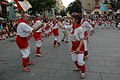
Traditional Valencian dances.

A folk dance is a dance that reflects the life of the people of a certain country or region. Not all ethnic dances are folk dances. For example, ritual dances or dances of ritual origin are not considered to be folk dances. Ritual dances are usually called "religious dances" because of their purpose.

The terms "ethnic" and "traditional" are used when it is required to emphasize the cultural roots of the dance. In this sense, nearly all folk dances are ethnic ones. If some dances, such as polka, cross ethnic boundaries and even cross the boundary between "folk" and "ballroom dance", ethnic differences are often considerable enough to mention.[1]

Background

[edit]
Traditional dancers and performance during the Pulljay festivities in Tarabuco.

Folk dances share several commonly recognized characteristics:

  • They are typically performed at social gatherings or community events by people with little or no professional training, often accompanied by traditional or folk music.[2]
  • Folk dances generally originate as participatory social activities rather than as staged performances, although some may later be adapted or stylized for theatrical presentation.[3]
  • Their form and execution are primarily guided by inherited traditions transmitted across generations, reflecting local or regional identities, though gradual adaptation and change are common.[4]
  • New dancers typically learn through informal means—by observing, imitating, and receiving assistance from more experienced participants—rather than through formal instruction.[4][3]

Modern social dances such as hip hop and other street styles have often evolved spontaneously within communities, but the term folk dance is generally not applied to them. Instead, they are more commonly referred to as street dances or vernacular dances.[5][6] The term folk dance is typically reserved for dance forms that are significantly bound by tradition and that originated during periods when a clear distinction existed between the dances of the “common folk” and those of the social elite, many of which later evolved into modern ballroom and theatrical dance forms.[7]

Europe

[edit]
Italians dancing the tarantella.
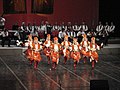
Serbian folk group dancing at a festival.
Rapper Sword Dancers - Sheffield Steel.
Turkey folk dance.

Sword dances include traditional forms such as long sword dances and rapper dancing.[8] Some choreographed social dances, such as contra dance, Scottish highland dance, Scottish country dance, and modern Western square dance, are sometimes described as folk dances, though this usage is not accurate in the strictest ethnological sense.[6][9]

Country dance shares historical and stylistic features with both contemporary folk dance and ballroom dance. Many country and ballroom dances trace their origins to earlier folk traditions, having undergone gradual refinement and formalization over time.[10][7]

Folk dances often developed long before the establishment of modern national or political boundaries, resulting in certain dance forms being shared across multiple countries and cultures. For example, several Serbian, Bulgarian, and Croatian dances exhibit closely related steps, styles, and musical structures, and in some cases even share the same names and melodies.[11][12][13]

International folk dance groups exist in many cities and on college campuses around the world, where participants learn and perform traditional dances from a wide variety of cultures for recreation and social connection.[14][15][6]

Balfolk refers to social dance events featuring live folk-inspired music, popular primarily in Western and Central Europe. The movement originated during the folk revival of the 1970s and has grown in popularity since around 2000. Balfolk events typically include partner dances that were fashionable across Europe in the late 19th century—such as the schottische, polka, mazurka, and waltz—along with a variety of regional and traditional dances, mainly from France, but also from Sweden, Spain, and other European countries.[16][17][6]

Varieties of European folk dances include:

Middle East, Central Asia and South Asia

[edit]

The regions of the Middle East, Central Asia, and South Asia are home to a vast array of folk dance traditions that reflect centuries of cultural exchange, migration, and shared heritage across ancient trade routes such as the Silk Road. Folk dances in these areas often feature rhythmic footwork, expressive gestures, and distinctive regional music, serving as integral parts of weddings, festivals, and communal celebrations. In the Middle East, circle and line dances such as the Dabke are performed across Lebanon, Syria, Palestine, and Jordan. Central Asian traditions include energetic group dances such as the Attan of Afghanistan and the Lezginka found across the Caucasus and Central Asia. In South Asia, folk dances such as Bhangra and Giddha from Punjab, Garba and Dandiya Raas from Gujarat, and the Kummi and Kolattam dances of southern India express agricultural, seasonal, and social themes through movement and music.[18][19][20][21]

India

[edit]

India has a rich and diverse tradition of folk dances, reflecting its regional, linguistic, and cultural variety. Nearly every state and community maintains distinctive dance forms associated with agricultural cycles, festivals, rituals, and social gatherings. In northern India, dances such as Bhangra and Giddha from Punjab and Rouf from Jammu and Kashmir celebrate seasonal and festive occasions, while in western India, Garba and Dandiya Raas from Gujarat, and Lavani from Maharashtra, blend rhythm and storytelling. Eastern India features dances such as Chhau of Odisha, Jharkhand, and West Bengal, and Bihu from Assam, whereas in southern India, forms such as Kummi, Kolattam, and Oppana are performed during festivals and community events. These dances often emphasize collective participation, traditional costume, and regionally distinct music and instruments.[19][23][24][6]

East and Southeast Asia

[edit]

East and Southeast Asia encompass a wide range of folk dance traditions that reflect the region’s diverse ethnic groups, religious influences, and historical interactions. In East Asia, dance forms such as Bon Odori in Japan, Yangge and Lion dances in China, and Talchum in Korea are performed during festivals and community celebrations, often combining music, costume, and symbolism. In Southeast Asia, folk and social dances like the Tinikling of the Philippines, Ramwong of Thailand, Apsara dance of Cambodia, Zapin of Malaysia, and Legong of Bali, Indonesia, express local legends, agricultural traditions, and ceremonial customs. Across the region, folk dances frequently serve as living expressions of cultural identity and communal harmony.[19][6][25][26]

China

[edit]

Cambodia

[edit]
Cambodian Peacock dance.

Indonesia

[edit]
Javanese dancer performing Srimpi dance in Java, Indonesia.

Japan

[edit]

Korea

[edit]

Malaysia

[edit]

Nepal

[edit]

Philippines

[edit]
Singkil, traditional folk dance of the Maranao people of the Philippines depicting parts of the epic poem, Darangen.
Members from the Philippine Cultural Dancers group perform tinikling during the 2007 Asian Pacific Heritage Month celebration at the Kadena Air Base, Japan.

Taiwan

[edit]

South America

[edit]

Argentina

[edit]

Bolivia

[edit]

Brazil

[edit]

Chile

[edit]

Colombia

[edit]

Peru

[edit]

Venezuela

[edit]

Africa

[edit]

Angola

[edit]

Cameroon

[edit]

Ghana

[edit]

Niger

[edit]

North America

[edit]

Oceania

[edit]

Notable people

[edit]
[edit]

See also

[edit]

References

[edit]

Sources

[edit]
[edit]
Revisions and contributorsEdit on WikipediaRead on Wikipedia
from Grokipedia
Folk dance is a traditional form of expressive movement that emerges from the , social practices, and communal life of specific ethnic groups or regions, typically performed by non-professional participants as a recreational or ritualistic activity passed down through generations via oral transmission and direct observation. Unlike formalized stage dances, folk dances emphasize collectivity, , and vitality, often featuring simple steps synchronized to regional music and accompanied by elaborate costumes that symbolize local traditions and identities. Originating primarily in rural or pre-literate communities from ancient times, folk dances have historically served multiple functions, including fostering social cohesion, reinforcing , and marking life events such as weddings, harvests, or religious ceremonies. Their evolution reflects broader societal changes, such as and , which have led to staged performances and educational adaptations while preserving core elements of communal participation and cultural expression. As a vital component of , folk dances continue to promote emotional , creative expression, and intergenerational connections across diverse global traditions.

Fundamentals

Definition

Folk dance is a traditional form of cultural expression that emerges from the practices of often rural or traditional communities, embodying their social values, histories, and environments through structured yet adaptable movements. It is characterized by oral and kinetic transmission across generations, without reliance on written notation or formal codification, allowing for regional variations while maintaining core patterns tied to communal identity. As a living tradition, folk dance reflects the daily rhythms of life, evolving organically through participation rather than deliberate artistic design. Central attributes of folk dance include its participatory and community-oriented nature, where individuals engage collectively to foster social bonds, celebrate events, or mark rituals, rather than performing for an external . This contrasts sharply with staged or professional dances, which emphasize , precision, and individual , often in theatrical settings; folk dance, by comparison, prioritizes inclusive interaction and cultural continuity over aesthetic perfection or commercialization. Its ties to —such as agricultural cycles, festivals, or rites of passage—underscore its role as an accessible, non-elite practice that reinforces group cohesion and transmits intangible heritage. The term "folk dance" gained prominence in the amid European , a movement that idealized rural authenticity and locality as antidotes to industrialization and , drawing on ideas from thinkers like who championed the preservation of peasant traditions as national essence. This conceptualization framed folk dance as an unadulterated expression of the "" or common people, collected and archived to safeguard cultural purity against modernity's encroachments, thereby linking it to emerging nationalist ideologies. Common general types of folk dance include circle dances, where participants form a ring to symbolize unity and shared motion; line dances, involving sequential formations that facilitate group progression; and partner dances, which pair individuals in close coordination to highlight interpersonal dynamics. These forms exemplify the participatory essence of folk dance, adaptable to various social contexts while preserving communal participation.

Origins

The earliest evidence of dance practices in societies dates back to the period, approximately 40,000 years before present, as indicated by archaeological findings in European caves such as Geissenklösterle in Germany's . Artifacts like an engraved ivory figurine depicting a with bent limbs in dynamic poses, alongside flutes and body ornaments, suggest ritualistic movements possibly involving dance for ceremonial purposes. Cave art from this era, including depictions of figures in motion, further implies that dance was integrated into early spiritual or communal rituals among modern s. With the transition to agrarian societies during the period around 10,000–4,000 BCE in regions like southeastern Europe and the , dance assumed a central role in , harvest celebrations, and marking seasonal cycles. Archaeological evidence from over 40 sites, including vessels adorned with dancing figures such as the 12 figurines on a vessel from Dumesti, (late 5th millennium BCE), points to dances performed to invoke agricultural abundance and community cohesion. These practices, often linked to female deities or "dancing goddesses" in ethnographic parallels, facilitated rituals that ensured crop fertility and synchronized labor during planting and harvesting. Elizabeth Wayland Barber's analysis of and traces these dances to core elements of early farming communities, where movements mimicked natural cycles to promote prosperity. Migration and trade routes significantly influenced the fusion of early dance forms, spreading motifs and step patterns across regions as populations moved. For instance, the dissemination of the Neolithic cultural package from the Near East to Europe around 6,000 BCE carried dancing iconography on pottery and figurines, blending local traditions with imported ritual elements. These interactions resulted in hybrid forms that adapted to new environments while retaining ancestral motifs. Folk dance origins relied heavily on oral transmission as the primary method of preservation and dissemination, fostering regional variations from shared ancestral bases. In pre-literate societies, dances were passed down through generations via communal performance and imitation, without written notation, allowing for creative adaptations influenced by local customs and geography. This process, as detailed in ethnomusicological studies, explains the diversity in step sequences and formations across , where a common core diverged into distinct variants like the line dances of the or ring dances of .

Characteristics

Musical Aspects

Folk dance music is characterized by rhythmic patterns that often originate from practical and communal activities such as work songs, chants, or the natural cycles of human locomotion, providing a foundational that synchronizes group movement. These rhythms typically employ simple, repetitive structures in duple meter (such as 2/4 or 4/4, reflecting bipedal walking) or triple meter (like 3/4, evoking swaying or circular motions), which facilitate collective participation and endurance during performances. Common instruments in folk dance accompaniment include stringed devices like the for melodic lines, free-reed instruments such as the for harmonic support, percussion like frame drums for steady beats, and aerophones including for sustained drones, all of which emphasize portability and acoustic projection in informal settings. These selections prioritize timbres that blend with rhythmic drive, allowing musicians to adapt to varying group sizes and venues without amplification. Accompaniment structures frequently incorporate call-and-response formats, where a lead performer initiates a and the or dancers reply, fostering and reinforcing social cohesion during dances. plays a key role in these accompaniments, enabling musicians to vary melodies or rhythms spontaneously within established patterns, which keeps performances dynamic and responsive to the dancers' energy. The interplay between music and movement is evident in techniques like , where accents on off-beats create tension that propels footwork and gestures, enhancing the visceral urge to by aligning rhythmic surprises with bodily momentum. This sonic-motor underscores how folk dance music not only supports but actively shapes choreographic elements, such as steps that echo percussive hits or leaps timed to melodic peaks.

Choreographic Elements

Folk dance choreography emphasizes collective participation and rhythmic coordination, prioritizing group over individual display. Dancers typically engage in structured patterns that facilitate social interaction, with movements designed to be accessible and adaptable across communities. These elements foster a of unity, as synchronized actions reinforce communal bonds during performances. Common formations in folk dance include , lines, and couples, which enable inclusive group involvement regardless of participant numbers. In formations, dancers often join hands facing inward or outward, creating a closed or open loop that promotes equal participation and fluid progression around the group; examples encompass single, double, or broken . Line formations arrange dancers in rows, either facing the same direction with a leader at the front or in for interactive exchanges, allowing for progression and partner changes. Couple formations position pairs side by side, facing each other, or in sets like longways or squares, facilitating direct interaction while maintaining overall group cohesion. These arrangements underscore , where auditory cues from , visual alignment with neighbors, and haptic connections like hand-holding ensure coordinated timing and spatial awareness, as demonstrated in studies of Greek folk dances where removing any sensory channel significantly diminished group synchrony. Basic steps in folk dance revolve around simple, repetitive actions such as skips, hops, turns, and specific hand-holds, which align with musical rhythms to create accessible patterns. Skips involve a step followed by a light hop, often used for forward or circular progression, while hops feature a brief elevation on one foot, commonly integrated into sequences like step-hop for rhythmic emphasis. Turns range from quarter to full rotations, executed individually or in pairs to navigate formations, and hand-holds include maneuvers like the —where partners pass back-to-back without touching—or the grapevine, a side-to-side crossing step that weaves dancers together. These elements are taught progressively, starting with basic locomotor patterns to build coordination before advancing to more complex combinations. Improvisational aspects in folk dance occur within established structures, allowing flexibility to accommodate varying group sizes or participant skill levels while preserving core patterns. Leaders may signal variations, such as repeating sections or altering step sequences, enabling spontaneous adaptations during performances; for instance, in circle dances, individuals can improvise flourishes around foundational steps like the grapevine. This balance of structure and spontaneity ensures dances remain dynamic yet inclusive, with group synchronization guiding improvisations to maintain overall flow. In partner dances, gender roles often reflect prevailing social norms, with men typically leading through assertive movements and women following in responsive, graceful actions, thereby embodying cultural expectations of and . Such dynamics mirror societal hierarchies, as seen in traditional ensembles where male dancers perform vigorous jumps and women execute delicate steps, reinforcing ideals of strength and nurturance; these roles are perpetuated through repeated performative acts that congeal into normalized behaviors. While modern interpretations may relax these conventions, traditional choreographies continue to highlight distinct gendered expressions to preserve .

Costumes and Props

Folk dance costumes typically derive from everyday or festive attire, adapted to facilitate movement while preserving traditional . These garments often include embroidered skirts, vests, and hats that showcase local craftsmanship, such as intricate or techniques passed down through generations. Materials are sourced from regional resources, like in cooler climates or lightweight cottons in warmer areas, ensuring practicality alongside visual appeal. Symbolism plays a central role in these costumes, with colors often denoting concepts such as (through vibrant reds evoking life and vitality), seasons (via tones representing or renewal), or (with elaborate trims indicating roles). Local materials further reinforce this, embedding environmental connections into the fabric—such as natural dyes from plants symbolizing harmony with nature. These elements not only enhance the visual spectacle but also convey deeper narratives during performances. Props in folk dance, including handkerchiefs, sticks, and bells, serve practical and expressive functions by accentuating rhythms or advancing . Handkerchiefs may be waved to mimic natural flows or emotional gestures, while sticks provide percussive clashes that synchronize with music, and bells add auditory layers through jangling sounds on attire or held objects. These items integrate seamlessly with , extending dancers' movements to emphasize thematic motifs without overpowering the core steps. Over time, folk dance costumes and props have evolved from primarily utilitarian forms—suited for communal gatherings—to more stylized versions in staged performances, incorporating heightened decoration for broader audiences while retaining symbolic integrity. This shift allows for artistic elaboration, such as amplified or synchronized use, adapting to contemporary contexts without diluting traditional essence.

Historical Development

Ancient and Medieval Periods

In , communal circle dances known as choros were integral to religious festivals and rituals, often performed in circular formations on paved threshing floors or temporary spaces to honor deities and mark communal celebrations, with evidence dating back to around 800 BCE. These dances emphasized collective movement and harmony, reflecting social and spiritual bonds, as seen in depictions and descriptions from Homeric epics and later vase paintings that illustrate groups holding hands in rings during events like the . In the Roman era, saltatio—a form of gestural and rhythmic —featured prominently in rural rites and agricultural festivals, where performers mimicked natural cycles and invoked gods through improvised steps accompanied by music, preserving folk traditions amid imperial expansion. During the medieval period, the actively suppressed many pagan-derived folk dances, viewing them as remnants of that encouraged and disrupted spiritual focus, leading to bans and condemnations in councils from the onward. However, adaptations emerged, such as the integration of dance elements into mummers' plays—disguised performances by rural troupes that combined rudimentary drama, music, and movement to reenact seasonal myths, often during Yuletide to evade outright while retaining festive communal energy. Feudal fairs further sustained these practices, serving as sanctioned gatherings where peasants and travelers engaged in ring dances and processions that subtly preserved pre-Christian motifs of renewal and , blending them with Christian feast days to maintain cultural continuity. Manuscript evidence from the provides vivid illustrations of these evolving traditions, particularly the carole, a popular European round dance performed in interlocking circles or lines to vocal or instrumental music, as depicted in illuminated codices showing nobles and commoners alike participating in harmonious, hand-linked formations during courtly and village events. These visuals, found in works like the manuscripts, highlight the carole's role in social bonding, with steps involving simple steps and turns that emphasized equality in movement, though often stylized to align with chivalric ideals. The spread of folk dances across during this era was facilitated by trade routes like the and military conquests, which enabled the blending of traditions—such as Central Asian circular processions influencing Byzantine and early Islamic variants—evident in archaeological finds of figurines depicting hybrid dance poses from mingled cultures along these paths. Conquests by entities like the further disseminated rhythmic footwork and group formations, integrating local rites with imported elements to create resilient, syncretic practices that endured despite religious shifts.

Renaissance to 19th Century

During the , European courts developed a keen interest in popular and rural dances, adapting them for aristocratic entertainment and leading to pioneering efforts in . These manuals often bridged courtly and folk traditions, preserving steps from everyday social gatherings. A seminal example is Thoinot Arbeau's Orchésographie (1589), which documented French dance practices from the 1550s to the 1580s, including over 20 variants of the —a simple circle or with peasant origins that accommodated large groups and mimicked rural activities, such as the "Washerwomen's Branle." Arbeau employed an innovative notation system, aligning step descriptions vertically with musical notes to facilitate learning and analysis, while emphasizing dancing's role in social etiquette and physical exercise for young people of both sexes. This work, alongside Italian treatises like Fabritio Caroso's Il ballarino (1581), highlighted the fusion of folk elements like the with more formal dances such as the pavan and , reflecting courts' fascination with forms. In the 18th and 19th centuries, spurred widespread collection and documentation of folk dances across as emblems of and ethnic identity, countering the perceived erosion of traditional practices. Influenced by figures like , who in the late championed the preservation of folk songs and customs to foster national spirit, enthusiasts formed societies and published compilations that elevated rural dances to symbols of . For instance, in , the Sokol movement from the integrated folk dances like the —originally a Bohemian peasant form—into gymnastic and cultural programs to promote Czech unity. In , 19th-century collectors such as Antal Herrmann recorded Transylvanian dances, emphasizing their rhythmic vitality as core to Magyar identity. These efforts laid the groundwork for early 20th-century initiatives, such as Cecil Sharp's systematic gathering of English country dances in the 1900s, which drew directly from 19th-century antiquarian traditions to revive morris and dances amid fears of their disappearance. Enclosure movements and urbanization profoundly diluted folk dance traditions in rural Europe, particularly in England, by dismantling communal spaces and social structures essential for their performance. Parliamentary Enclosure Acts, peaking between 1760 and 1820, privatized over 6.8 million acres of common lands, displacing smallholders and fragmenting village festivals where dances like the maypole or morris were central to agrarian cycles and community bonding. This upheaval reduced opportunities for collective gatherings, as evicted peasants migrated to urban areas, weakening the oral transmission of steps and rhythms tied to seasonal labors. Industrialization in the 19th century accelerated this decline, with rapid urbanization—England's urban population rising from 20% in 1801 to 50% by 1851—shifting workers to factories and cities, where space constraints and new social norms marginalized rural dances in favor of formalized social balls. Folk forms persisted in isolated pockets but lost vitality, as urban migrants adapted traditions into hybrid urban recreations, contributing to a broader erosion of pre-industrial cultural practices. Colonial exchanges from the 16th to 19th centuries fostered hybrid folk dances in the Americas and Asia, merging European imports with indigenous and enslaved African elements to create syncretic forms reflective of power dynamics and cultural resistance. In the Americas, Spanish and Portuguese colonizers introduced contradanzas and fandangos, which blended with Native American and African rhythms; for example, the cakewalk emerged on 19th-century U.S. plantations as an exaggerated parody of European minuets by enslaved people, incorporating syncopated steps and later influencing ragtime. In the Caribbean, Haitian influences fused with French court dances to produce the contredanse, a precursor to merengue. In Asia, Portuguese traders in the 16th century influenced Goan Corridinho, combining Indian folk steps with European couple dancing, while Dutch colonials in Indonesia inspired the dolalak—a 19th-century Javanese trance dance mimicking soldiers' waltzes and polkas during social events. These fusions not only preserved local motifs but also encoded subversion, as colonized communities repurposed foreign steps for communal expression.

20th Century and Modern Era

In the early 20th century, folk dance experienced a significant revival through the establishment of dedicated societies and clubs that emphasized cultural exchange and social recreation. In the United States, organizations such as settlement houses and YWCA International Institutes promoted international folk dances among immigrants post-World War I, fostering intercultural understanding and mitigating ethnic tensions. Similarly, in the United Kingdom, the English Folk Dance Society, founded in 1911 by Cecil Sharp, aimed to standardize and popularize traditional dances as a means to counteract the social impacts of industrialization, with early festivals like the 1910 Shakespeare Memorial Festival in Stratford-upon-Avon introducing folk dancing to broader audiences. By the 1920s, recreational international folk dance groups emerged, exemplified by the Cosmopolitan Club of Montclair, New Jersey, which became the first dedicated international folk dance club under Stella Marek Cushing's direction, influencing the growth of community-based dance practices. These initiatives laid the foundation for folk dance as a tool for community building and heritage preservation. Following , international efforts to safeguard folk dances gained momentum through global organizations, culminating in UNESCO's 2003 Convention for the Safeguarding of the , which explicitly includes like traditional dances as living expressions of cultural identity. The convention, adopted without dissent at UNESCO's 32nd General Conference, entered into force in 2006 and has led to the inscription of numerous folk dances on its Representative List of the Intangible Cultural Heritage of Humanity, such as the Kolo traditional folk dance from (inscribed 2011) and the from (inscribed 2010), recognizing their role in community cohesion and transmission across generations. By 2024, over 20 folk dances had been added, including Hungary's tradition and India's Garba of , along with recent inscriptions such as Zambia's Mangwengwe Dance (2024), highlighting the convention's impact on global preservation efforts amid modernization pressures. The digital era has transformed folk dance dissemination and practice, with platforms like enabling widespread access to tutorials that democratize learning and sustain traditions among communities. Studies on Greek traditional dances demonstrate that videos facilitate self-directed learning for beginners with minimal prior exposure, enhancing motivation and sensory engagement while compensating for limited in-person instruction. During the from to 2022, virtual festivals proliferated to maintain cultural continuity, such as the National Folk Festival's online celebration in , which featured streamed performances and workshops to connect global audiences despite lockdowns. Similarly, the North Georgia Folk Festival adapted to a fully virtual format in , delivering multi-episode programs with music, , and demonstrations via video, ensuring accessibility and community bonding in isolation. These digital adaptations not only preserved practices but also expanded participation, with ongoing resources like weekly online folk parties continuing to support global engagement. In the 2020s, folk dance has increasingly fused with contemporary forms to address pressing global issues, particularly climate change, through eco-themed performances that blend traditional movements with modern choreography. For instance, the 2025 production "Dancing with the Environment" by the University of Kentucky featured five contemporary pieces inspired by natural elements—earth, water, air, fire, and space—incorporating folk-inspired motifs to homage sustainability and environmental awareness. Similarly, Gonzaga University's "Sea Change Within Us" in 2025 integrated traditional dance elements with narrative projections to depict climate impacts on Washington's waters and endangered species, using fusion techniques to evoke urgency and collective action. Projects like "Climate Folk – Dance of the Carbon Cycles," an interdisciplinary initiative exploring sound, music, and dance for environmental conservation, further exemplify how these hybrids leverage folk roots to promote climate action in the modern era.

Cultural and Social Dimensions

Community and Social Bonding

Folk dances play a pivotal role in communal events such as weddings, harvest celebrations, and festivals, where they serve to build among participants by facilitating shared expressions of joy, gratitude, and collective effort. In weddings, these dances often symbolize unity and emotional ties, reinforcing ethics and as groups move together in ritualistic patterns that emphasize mutual support. Harvest festivals, like the Punjabi Bhangra, celebrate agricultural abundance through exuberant group movements that embody communal gratitude and strengthen interpersonal bonds within rural societies. Similarly, during village festivals, folk dances transform public spaces into arenas of social interaction, allowing participants to set aside daily concerns and engage in synchronized rituals that promote harmony and group cohesion. These dances also contribute to by providing non-verbal platforms for and , particularly in contexts where synchronized movements encourage participants to explore relationships and foster mutual understanding. In post-conflict communities, traditional dances integrate rhythmic participation to promote unity and emotional regulation, helping groups rebuild social bonds strained by . The inclusive nature of folk dancing further enhances equality, as formations often accommodate participants of , genders, and skill levels, with simple steps and group circles ensuring and a sense of shared participation regardless of expertise. This is evident in adapted folk practices that emphasize equality across diverse groups, promoting social awareness and without hierarchical barriers. Psychologically, folk dancing offers stress relief through endorphin release and mood enhancement, with group sessions reducing anxiety and depression while improving overall emotional . Synchronized movements in these dances build by releasing oxytocin, which strengthens trust and interpersonal connections, as participants mirror each other's actions to create feelings of closeness and . In immigrant communities, folk dances act as social icebreakers, helping newcomers forge bonds and alleviate isolation; for instance, among Karen refugees, traditional dances facilitate and emotional support, enabling participants to connect across cultural divides in resettlement settings.

Identity and Heritage

Folk dance serves as a profound medium for expressing through symbolic motifs that evoke connections to and ancestry, thereby preserving across generations. These symbols often manifest in choreographic elements such as gestures mimicking natural landscapes, harvest cycles, or ancestral labors, which encapsulate a community's historical relationship with its territory and reinforce a shared ethnic . For example, in various traditions, dances incorporate formations or steps representing migration paths or familial lineages, transforming physical movement into a visual and embodied assertion of origins. This symbolic layering not only distinguishes ethnic groups but also sustains against external influences. UNESCO's recognition of specific folk dances on its Representative List of the Intangible Cultural Heritage of Humanity highlights their global importance in heritage preservation. The Kalbelia folk songs and dances of , , inscribed in 2010, illustrate this by safeguarding the Sapera community's nomadic heritage through performances that blend dance, song, and poetry to depict mythological tales and environmental motifs central to their ethnic identity. Likewise, the Kolo, a traditional collective folk dance from added in 2017, embodies communal heritage by linking participants in circular chains that symbolize unity and historical continuity. Such listings underscore folk dance's role in protecting diverse cultural expressions from homogenization. In diaspora settings, folk dances function as acts of resistance to , enabling communities to maintain their heritage amid displacement. Performances often integrate songs in native languages, which serve as linguistic anchors that transmit oral histories and resist linguistic erosion in host societies. This practice not only revives ancestral ties but also counters identity dilution, allowing diasporic groups to assert autonomy and continuity. For instance, among Latino communities , dances paired with indigenous or regional songs preserve multilingual expressions of heritage. The intergenerational and gendered transmission of folk dances further solidifies their role in heritage reinforcement by embedding practices within family structures. Typically, men and women learn distinct roles—such as leading versus supportive movements—that reflect traditional social norms, while elders pass knowledge through familial apprenticeships or communal gatherings. This process fosters deep family bonds, as younger members internalize cultural values alongside kin, ensuring heritage's vitality. In traditions like Mongol Biyelgee, family-based tutoring has sustained the dance's transmission, intertwining gender dynamics with generational continuity.

Education and Performance

Folk dance education primarily relies on oral transmission and , where movements are demonstrated and imitated through direct bodily engagement rather than written notation. This approach fosters an intuitive understanding of rhythms, formations, and cultural nuances, as practitioners learn by observing and repeating steps in group settings, emphasizing and sensory feedback over theoretical instruction. Workshops and festivals play a central role in contemporary folk dance education, providing immersive environments for participants to engage with traditions from diverse cultures. The Smithsonian Folklife Festival, established in 1967 and held annually on the in , exemplifies this by featuring live demonstrations, interactive workshops, and performances that allow visitors to learn dances through guided participation, drawing hundreds of thousands each year to experience authentic expressions while promoting cultural exchange. In formal educational settings, folk dance serves as a tool for cultural preservation and physical development, often integrated into school curricula to instill heritage awareness. In , for instance, folk dancing is recommended as part of daily programs, particularly for grades 1-4 with activities focusing on basic steps and group formations, supported by accredited teacher training courses offered by institutions like Hagyományok Háza. Performance contexts for folk dance range from authentic village gatherings, where dances emerge spontaneously during community events, to staged adaptations in theaters or tourist venues that condense and choreograph routines for broader audiences. While stage versions enhance visibility and economic viability, they risk altering original improvisational elements, prompting efforts to balance tourism appeal with cultural integrity through collaborations between performers and cultural organizations that prioritize respectful representations. Contemporary folk dance performances often feature energetic presentations by young boys wearing colorful traditional costumes. These include Mexican folkloric dances such as the Jarabe Tapatío and zapateado, characterized by fast footwork and vibrant outfits, as well as Central European polkas from Czech, Polish, or German traditions, often performed in embroidered shirts or lederhosen-style attire. Such performances are common in cultural festivals, talent shows, and folk ensembles, contributing to the preservation of cultural heritage through youth participation and enthusiasm. These presentations are widely documented and accessible on video platforms, enabling global audiences to view and appreciate them. By 2025, poses significant challenges to folk dance traditions, as tourism-driven adaptations often lead to the dilution of authentic practices through simplified, spectator-oriented versions that prioritize entertainment over communal participation. This can erode cultural depth, with studies highlighting how increased visitor demand in heritage sites results in performative shortcuts and loss of traditional contexts, underscoring the need for sustainable models that safeguard intangible heritage.

Regional Traditions in Europe

Western and Northern Europe

Folk dances in Western and Northern reflect a blend of Celtic and Germanic influences, characterized by partner-oriented forms that emphasize rhythmic steps, communal participation, and ties to rural traditions. These dances often feature intricate footwork and group formations, evolving from ancient communal rituals to structured social practices preserved through cultural organizations. In Ireland, céilí dancing emerged as a social group dance in the , codified by the Gaelic League to promote Irish cultural identity amid colonial pressures. This form involves sets of eight or more dancers performing figures like jigs and reels in a square or circular pattern, fostering community bonds during gatherings. Tied to emigration waves, particularly the post-World War II influx of over 70,000 Irish to the between 1945 and 1961, céilí provided essential social venues in urban centers like New York, where immigrants organized house parties and dance halls to maintain heritage. Complementing céilí, Irish step dancing features precise, non-partnered footwork in dances such as the and , with roots in Ireland tracing back over 200 years and formalized through competitive feiseanna in the late , with traditions established in American cities like and New York from the 1890s onward via Irish immigrants. The , danced in 6/8 time with light, bouncy steps, and the , in 4/4 time with flowing patterns, were integral to social ceili events, as documented in early 20th-century collections. These steps spread through emigration, with organizations like the Irish Dancing Teachers Association of North America, founded in 1964, standardizing instruction to preserve authenticity amid diaspora communities. English morris dancing, a vigorous group performance rooted in rural customs, incorporates bells strapped to dancers' legs and short sticks clashed in rhythmic patterns to produce sound and visual flair. Traditionally performed by teams of six men in colorful costumes, it symbolizes and renewal, often featuring choreographed figures like weaving lines and jumps. This dance holds strong associations with rituals, marking the arrival of spring through processions and communal festivities that date back centuries in English villages. In , the stands as one of the oldest solo dances, likely originating as a warrior's celebration performed atop an upturned with a central spike to test balance and agility. Danced to strathspey or from , it consists of four to six intricate steps executed in place, with arms raised to mimic a deer's antlers, emphasizing precision and endurance. This form encapsulates Celtic martial heritage, perpetuated through and competitions that highlight physical prowess. Scandinavian polska, prevalent in and , is a lively couple in 3/4 time, derived from Polish courtly influences that adapted into regional folk traditions over centuries. Partners maintain close holds, executing smooth swings and circular turns that weave dancers together in fluid patterns, often accompanied by or music to evoke communal joy. The emphasis on synchronized partner swings underscores Germanic social bonding, with variations like the Swedish svängpolska featuring energetic rotations. Across these regions, folk dances commonly align with seasonal cycles, such as spring and gatherings, reinforcing agricultural and communal rhythms through performances that invoke renewal and prosperity. The 19th-century revival, led by collectors like , played a pivotal role in documenting and revitalizing these traditions; Sharp gathered numerous Morris tunes and dances from English rural sources starting in 1900, establishing schools and societies that influenced preservation efforts throughout Western and .

Central and Eastern Europe

Central and Eastern European folk dances are characterized by expansive group formations, including large circles and lines that emphasize communal participation, alongside virtuosic solos showcasing individual athleticism, such as energetic performances by young boys in colorful traditional attire (including embroidered shirts or lederhosen-style clothing) performing Central European polka in lively solo or partner displays during cultural festivals, folk ensembles, and stage shows. These dances often feature inland styles accompanied by , , and , reflecting the region's diverse Slavic and Magyar traditions. Unlike more structured couple dances in other areas, they incorporate dynamic group movements and improvisational elements, fostering social cohesion during celebrations. The Hungarian , a , originated around 1835 from the recruiting dance and evolved into a favorite among the upper classes. It features a distinctive structure with a slow introductory section (lassú) transitioning to a fast, energetic part (friss), marked by quick-slow tempo changes that highlight complex footwork, leaps, and spur-clicking steps performed in pairs. Dancers often improvise within versions, accompanied by Gypsy bands using violin, clarinet, and , emphasizing emotional depth and athletic display. In , the serves as a stately processional group dance, performed by pairs marching in formation with a basic step involving knee-bends while stepping forward, often raising joined hands to form arches. Originating as a folk accessible to all ages and skill levels, it maintains a moderate 3/4 and symbolizes cooperation and equality, commonly leading celebrations like weddings and proms. Its trajectory follows the lead pair, allowing for figures that unite participants in a joyful , reinforcing bonds. The Ukrainian , rooted in Zaporozhian Cossack warrior traditions, is a lively sectional that alternates between groups, incorporating high-energy knee-bends, jumps, sit-ups, and rapid turns. It begins slowly before accelerating, typically starting with men's solos to display prowess, then integrating women symbolizing familial roles, and culminating in a presto coda of collective fervor. Accompanied by folk ensembles, the hopak's rhythmic vitality and improvisational variations make it a staple at festivals and rituals. Romanian hora exemplifies circle dances central to social events, forming closed chains where participants hold hands at shoulder height and progress to the right with walking and stamping steps in 2/4 or 4/4 meter. Particularly prominent at weddings, it serves as an introductory uniting guests in inclusive, adaptable formations that accommodate any number of dancers, from intimate groups to large village gatherings. The hora's simple motifs promote equality and joy, often spiraling or opening in regional variants like those in . These dances bear hybrid influences from the Ottoman and Austro-Hungarian empires, which shaped Central and Eastern European traditions through centuries of rule and cultural exchange. Ottoman elements introduced intricate rhythms and instruments like the woodwind to Hungarian styles, enriching the with ornamental complexity. Meanwhile, Austro-Hungarian exposure blended Western couple forms into verbunkos-derived dances, adding dramatic energy and regional melancholy to Transdanubian variations, while fostering cross-cultural fusions in Polish and Ukrainian repertoires.

Southern Europe

Southern European folk dances are characterized by their passionate expressions, intricate percussive footwork, and influences from Mediterranean trade routes, distinguishing them from the more restrained forms in northern regions. These dances often feature solo improvisations and line formations that emphasize community bonds during festivals, with rhythmic structures drawing from guitar-driven accompaniments and hand percussion. In the , stands as a seminal example, while in the , line dances like the Greek and Italian incorporate fluid movements and props for dynamic spins. Further east, Balkan oro traditions in Macedonia and integrate Orthodox Christian celebrations, reflecting layered cultural exchanges. Flamenco originated in , southern , among Gitano (Roma) communities in the 15th century, evolving from a blend of their migratory traditions with local Andalusian, Moorish, Jewish, and Byzantine elements during periods of social marginalization. By the , it had crystallized into a professional art form during the café cantante era (1842–1910), where it shifted from private family rituals to public performances in urban centers like and Cádiz. Central to flamenco dance is zapateado, a percussive technique involving rhythmic heel stomps (taconeo) and flat-footed strikes that mimic guitar strums and evoke emotional intensity, often performed by solo dancers to assert personal expression within the compás rhythm. This footwork, historically male-dominated but now inclusive, underscores flamenco's roots in Gitano resilience and cultural fusion. In , the represents a foundational performed across islands and coastal regions, involving slow, dragging steps in an open circle or line formation with hands linked at shoulder height in a "W" hold. Dancers move to the right with a pattern of one long step followed by two short ones in 2/4 or 4/4 time, allowing the lead dancer to improvise turns, leaps, or pauses that guide the group's flow, fostering communal harmony during social gatherings. Often accompanied by , , or , variants like the from the add whirls and embellishments, emphasizing emotional depth over speed. To the west, the Italian from southern regions like and Puglia shares this improvisational spirit, featuring rapid spins and leaps in 6/8 to or guitar, historically linked to ritualistic "cures" for in the 16th–17th centuries. Dancers, typically in pairs, use colorful scarves or handkerchiefs waved overhead to accentuate spins and create visual flair, transforming the dance into a vibrant courtship or celebratory ritual. Balkan oro (or horo) line dances in Macedonia and exemplify group precision with percussive elements, formed in open lines or circles where participants clasp hands and step to asymmetric rhythms like 7/8 or 9/8, often accelerating to build energy. In Macedonia, oro serves as a social connector at weddings and holidays, with leaders initiating figures like crosses or turns, while Bulgarian variants, such as paidushko horo, incorporate knee bends and hops tied to rural life. These dances are prominently featured in Orthodox festivals, including (Koleda) processions, where they reinforce communal identity and seasonal rites, blending Slavic roots with external influences. Moorish legacies from the 8th–15th-century Al-Andalus period infuse Southern European dances with percussive stamping and modal scales, evident in flamenco's zapateado, which echoes Arabic-derived foot rhythms adapted by Gitano performers. Similarly, Ottoman rule (14th–19th centuries) left imprints on Balkan oro through asymmetric meters and handheld percussion like the daire drum, influencing Macedonian and Bulgarian line dances with Eastern melodic contours that persist in festival contexts. These historical layers highlight how trade and conquest shaped the region's dances into expressive vehicles for .

Regional Traditions in Asia

South Asia

Folk dances in , particularly in , , and , are deeply embedded in rural life and celebrations, serving as expressions of agricultural cycles, community joy, and social rituals. These dances often feature energetic group formations, rhythmic percussion, and vibrant costumes, reflecting the region's diverse ethnic and linguistic landscapes. In , they are tied to harvest seasons and religious festivals, while in and , similar traditions emphasize weddings and communal gatherings, fostering social cohesion among villagers. Variations across castes and regions highlight local adaptations, such as those influenced by agrarian practices or devotional themes. In , Bhangra exemplifies the harvest celebration dance, originating from rural Sikh communities during the festival in spring, where farmers express gratitude for the crop through vigorous movements. Performers execute shoulder shrugs, high kicks, and bounces synchronized to the beat of the , a large double-headed drum that drives the energetic rhythm. Traditionally performed by men in colorful turbans and kurtas, Bhangra has evolved but retains its roots in communal rejoicing post-harvest. Gujarat's Garba and Dandiya dances are iconic circle formations performed during the Navratri , honoring the goddess over nine nights. Garba involves women circling a lamp or idol with clapping and swaying steps to folk songs, symbolizing devotion and fertility, while Dandiya adds pairs striking decorated sticks in rhythmic patterns, creating a percussive symphony that invites men and women alike. These dances, rooted in rural temple rituals, showcase intricate footwork and have regional caste-specific styles, such as those among communities. In , the Luddi is a lively line or akin to Bhangra, predominantly performed by women at weddings to convey blessings and celebration. Dancers clap hands, spin, and form human chains while singing folk verses, often accompanied by hand drums, emphasizing familial bonds in Punjabi villages. Regional and caste variations appear in execution, with more subdued forms among conservative groups. Further south in India's , Kolattam illustrates diverse adaptations, where women perform a stick-clapping during festivals like Pongal, sometimes incorporating pots balanced on heads to symbolize rural labor, highlighting caste-based performative roles in Dravidian communities.

East Asia

Folk dances in , particularly in , , and Korea, often embody ceremonial and seasonal rituals that emphasize communal harmony and spiritual reverence, reflecting deep-rooted philosophical traditions. These dances serve as vital expressions of , performed during festivals to invoke prosperity, honor , or critique societal norms through symbolic movements and group coordination. Unlike more individualistic forms elsewhere, East Asian folk dances prioritize synchronized formations that symbolize order and collective well-being. In , the is a prominent ceremonial performance associated with the , where teams enact acrobatic tumbling and dynamic leaps to portray a mythical bringing good fortune to households and businesses. Typically involving a team of nine performers—including two inside the lion costume for head and tail movements, a lead drummer, gong and players—the dance features synchronized routines accompanied by vigorous drum beats, , and cymbals that drive the and heighten the festive energy. Originating from ancient rituals to ward off evil spirits, the lion "eats" or greens symbolizing wealth, often staggering in mock drunkenness before bowing to deities like for blessings. Japan's bon odori represents a seasonal honoring ancestors during the Obon festival, held around August 13-16 to welcome returning spirits. Participants form large circles around a central yagura stage, executing simple arm waves and repetitive steps in unison to folk songs played on drums and other instruments, fostering a sense of communal mourning and joy. This inclusive dance, accessible to all ages and abilities, varies regionally but universally promotes spiritual connection through its circular formations, which symbolize the cyclical return of ancestral souls. In Korea, talchum mask dances are satirical folk performances that critique social hierarchies, particularly through exaggerated portrayals of corrupt officials and aristocrats using colorful masks, fans, and sticks as props. Regional variants, such as those from or Gyeonggi, involve rhythmic stepping, acrobatic flips, and improvised skits where performers wield fans to mimic haughty gestures or sticks for comedic confrontations, all set to lively percussion and wind instruments. Rooted in shamanistic rituals and village festivals, talchum uses humor to voice commoners' grievances against authority, reinforcing community bonds through shared laughter and collective participation. Confucian philosophy profoundly shapes these dances through its emphasis on harmonious group formations, promoting rituals that cultivate social order and ethical balance across . In , Confucian ideals of moderation and unity manifest in the coordinated lines and flows of dances like the performance, reflecting the "group self relationship" where individual actions support collective harmony. Similarly, in and Korea, bon odori circles and ensembles embody Confucian values of propriety (li) and relational ethics, using synchronized movements to mirror societal interdependence and moral cultivation.

Southeast Asia and Central Asia

Folk dances in and embody a vibrant synthesis of nomadic steppe traditions and island influences, featuring energetic improvisations, communal participation, and rhythmic synchronization that highlight cultural exchanges along ancient trade routes. Unlike the harmonious, ritualistic forms prevalent in , these dances emphasize fluid, dynamic expressions tied to daily life, migration, and social bonds, often performed in open spaces or temporary structures like yurts to foster community unity. In Indonesia's Aceh province, the Saman dance of the Gayo people exemplifies Southeast Asian precision and collectivity through its seated format, where performers kneel in tight rows and execute rapid, synchronized sequences of hand-clapping, arm gestures, and torso undulations to the beat of verbal chants. Originating as a ritual to honor guests, mark life events like weddings or circumcisions, and invoke spiritual protection, Saman has evolved into competitive displays that test dancers' speed and harmony, with groups forming intricate patterns that symbolize unity and resilience. Inscribed on UNESCO's Urgent Safeguarding List in 2011 due to risks from modernization, the dance underscores Acehnese identity amid the region's diverse island cultures. Central Asian nomadic heritage shines in Mongolian performances, where traditional folk dances like Biyelgee feature subtle gestural movements inspired by nomadic life, accompanied by the expansive urtyn duu—traditional long songs that narrate pastoral epics and can extend up to 10 minutes, evoking the vast steppes and equine bonds central to Mongol life. These dances integrate khoomei throat-singing, a polyphonic technique producing drone and overtone harmonies to imitate natural sounds like wind or animal calls, performed during festivals, rituals, and athletic events such as competitions. Recognized by in 2003 for urtyn duu and 2010 for khoomei, these elements preserve the improvisational spirit of mobile herding communities, blending vocal artistry with physical storytelling. The Ramwong, a lively Thai folk dance form, captures and social interplay through graceful, narrative movements set to percussion including ching finger cymbals, which punctuate rhythms to evoke flirtatious exchanges and communal joy in rural settings. Performed in circles or lines during harvest festivals and village gatherings, it features fluid arm extensions and footwork that symbolize romantic pursuits, drawing from Thailand's tropical landscapes and historical influences to promote harmony and celebration. In , interactions fostered yurt-based circle dances, where participants link arms in expansive rounds inside portable dwellings, rotating to lute melodies that reflect migratory histories and intertribal alliances, often during weddings or seasonal rites to reinforce kinship ties. These formations, adaptable to nomadic lifestyles, highlight the region's enduring legacy of cross-cultural fusion.

Regional Traditions in West Asia and the Middle East

Arabian Peninsula and Levant

Folk dances in the and embody a rich tapestry of tribal and urban social traditions, deeply influenced by nomadic heritage, where performances are often gender-segregated to uphold cultural norms of modesty and separation between men and women. These dances serve as communal expressions during celebrations, reinforcing social bonds and tribal identity in desert and highland contexts. The Saudi Ardah, a ceremonial , exemplifies Peninsular tribal forms and is performed exclusively by men to commemorate joyous occasions such as weddings, religious holidays, and national events. Dancers arrange in two facing rows, standing shoulder to shoulder while holding light swords, and execute rhythmic movements including rocking back and forth, swaying side to side, and synchronized up-and-down sword gestures aligned with rapid drumbeats and antiphonal poetry chants. This performance, inscribed on UNESCO's Representative List of the of Humanity in 2015, symbolizes unity, valor, and cultural pride, with women contributing through costume preparation but not participating directly due to segregation practices. In the , particularly , the represents an urban and rural social tradition, widely performed at weddings to foster community joy and solidarity. Participants, typically mixed but sometimes segregated by gender in conservative settings, form a line with hands clasped—often palm-to-palm or by pinkies—and move to the right, led by a raas who improvises steps while the group follows basic patterns like crossing the left foot over the right, lifting, and stomping, accompanied by shoulder shimmies for rhythmic emphasis. The dance's origins trace to communal labor practices, such as stomping roofs, and its lively energy, driven by instruments like the tabla and mijwiz, underscores themes of unity and heritage preservation among Levantine communities. Yemen's Bara'a, a highland tribal dance rooted in Bedouin-influenced warrior customs, features men in circular formations waving bamboo sticks or daggers to mimic battle maneuvers, performed during weddings and festivals to evoke tribal cohesion and historical valor. Dancers, often four to seven in number, synchronize swift steps and strikes on instruments like the tassah using small sticks, evolving into competitive segments such as retrieving a cloth from another's mouth without hands, all set to intense rhythms that heighten the ritualistic intensity. This male-only tradition, varying by region in beat and style, highlights gender segregation while channeling communal energy into displays of and mock combat.

Anatolia and Persia

Folk dances in and Persia reflect a rich tapestry of cultural, historical, and spiritual influences, drawing from Ottoman communal traditions in and ancient Zoroastrian roots in . These dances often emphasize unity, , and ritualistic expression, shaped by the rugged plateaus and mountainous terrains of the region. In , dances frequently involve group formations symbolizing cooperation, while Persian variants incorporate fluid, expressive movements tied to coastal and festive life. The Ottoman era further blended these with Islamic mysticism, and Zoroastrian elements persist in fire-related celebrations like Newroz, underscoring themes of renewal and community resilience. The Turkish is a prominent originating from Central and Eastern , where participants clasp hands or shoulders to form a chain, stepping in unison to lively rhythms played on (a shrill pipe) and (drum). This formation evokes themes of unity and cooperation, with the name "halay" derived from "alay," meaning a or group assembly. Historically performed at festivals, weddings, and communal gatherings, the dance's synchronized steps and occasional jumps mimic agricultural labor and celebratory abundance, reinforcing social bonds in rural Ottoman society. Regional variations, such as the faster-paced eastern styles, highlight the dance's adaptability across ethnic groups including Turks and . In , the bandari dance emerges from the ports, embodying a spirited folk tradition among coastal communities with influences from and African rhythms. Dancers, often women in vibrant, flowing attire, perform in lines or individually with characteristic hip sways, circles, and shoulder shimmies, accompanied by energetic percussion like the drum and lively melodies. The name "bandari," meaning "of the port," reflects its origins in harbor life and trade, where movements imitate daily chores or joyful interactions, sometimes incorporating hair tossing for dramatic flair. Though veils are not central to the core form, performers may use lightweight scarves in contemporary stagings to accentuate fluid arm gestures and enhance visual expressiveness. This dance fosters communal joy during festivals and social events, bridging ethnic diversity in Iran's southern provinces. Kurdish govend, a circular practiced across and Persia by Kurdish communities, symbolizes collective strength and is integral to Newroz celebrations, the ancient Zoroastrian marking spring's arrival around 21. Participants form interlocking circles or semi-circles, holding hands or linking fingers, and move in rhythmic steps to the beat of frame drums (def) and songs invoking unity and resistance. During Newroz, dancers gather around bonfires—sacred symbols of renewal and purification—leaping over flames or circling them in govend formations to honor the triumph of light over darkness, a motif rooted in Zoroastrian lore. This participatory , known variably as dilan or halparke, transcends borders and is performed at weddings, , and protests, embodying Kurdish cultural amid historical challenges. The whirling dervishes, or semazen, represent a semi-folk Sufi ritual with profound influence on Anatolian and Persian dance expressions, originating from the 13th-century founded by followers of the poet Jalaluddin in , . In the sema ceremony, dervishes don white skirts (tenure) symbolizing shrouds and whirl counterclockwise to flute () and reed music, arms extended—one palm up to receive divine energy, the other down to impart it—achieving ecstatic union with the divine. Though primarily a spiritual meditation rather than secular folk dance, its rotational motifs and trance-like quality have permeated regional folk traditions, inspiring circular patterns in and govend while blending Ottoman with everyday communal rituals. Zoroastrian fire symbolism indirectly echoes in sema's emphasis on inner light, influencing broader West Asian performative arts.

Regional Traditions in Africa

North Africa

North African folk dances blend Berber indigenous traditions, influences, and Mediterranean coastal elements, often performed in communal settings to foster social bonds and cultural continuity across , , , and surrounding regions. These dances typically feature rhythmic group formations, percussion-driven music, and expressive movements that reflect the region's diverse ethnic heritage, including Amazigh (Berber) and communities. Unlike more isolated rural forms elsewhere, North African variants emphasize urban and festival integrations, adapting to both secular celebrations and spiritual rituals. In , the ahwash dance exemplifies Berber communal expression, particularly among Amazigh groups in the southeast, such as in the Tata region, where participants form large circles and perform synchronized rhythmic steps accompanied by tambourines (talount) and (ganga). This group dance promotes solidarity and , with improvised enhancing its depth during phases of heightened and interaction. Often tied to village gatherings, ahwash underscores geographical and linguistic affiliations, serving as a vital medium for joy and preservation of oral traditions. Complementing this, performances incorporate trance-inducing bends and dances rooted in sub-Saharan African spiritual practices brought by enslaved ancestors, using repetitive rhythms to facilitate healing ceremonies that address physical and emotional afflictions. These rituals, led by a maalem (master musician), mediate between human and spirit worlds, restoring communal harmony through music and movement. Algerian folk dances frequently infuse raï music—a genre originating in with themes of migration and rebellion—into energetic group forms, including line dances that echo Levantine debka styles through stomping steps and shoulder shimmies. Performed at weddings and social events, these raï-accompanied routines feature hip swivels and marching footwork, blending coastal urban vitality with Berber roots to create hybrid expressions of joy and resistance. In eastern , variants like the chaouie dance add belly movements tied to seasonal Berber festivals, emphasizing fluid group synchronization. Egypt's tahteeb stands out as a dynamic folk evolved into a celebratory stick , originating over 5,000 years ago in ancient for soldier training, as depicted in tombs from . Practitioners wield a wooden stick (asaya, about 130 cm long) in ritualized duels within a circle of musicians and onlookers, incorporating spins, strikes, and defensive flourishes to upbeat drum and mizmar melodies; today, it enlivens weddings, pilgrim returns, and Mulid feasts in regions like and . Traditionally male-dominated, modern adaptations include female performers, influencing styles while preserving its communal, rhythmic essence. Many North African folk dances intersect with Islamic festivals, particularly al-Nabi celebrations honoring the Prophet Muhammad's birthday, where processions in and feature Sufi-inspired hadra dances with whirling and choral singing to evoke spiritual ecstasy. In Moroccan Mawlid events, such as Sale's candle convoy, participants integrate Gnawa-like bends and rhythmic steps into nighttime marches, blending devotion with communal performance for healing and unity. These ties highlight how dances serve as conduits for religious expression, adapting Berber and Arab motifs to festival contexts without overshadowing their secular roles.

West Africa

Folk dances in are distinguished by their polyrhythmic drumming ensembles and frequent incorporation of masquerade figures, which embody ancestral spirits and facilitate communal rituals, social bonding, and life-cycle events across diverse ethnic groups. These dances emphasize , call-and-response interactions between performers and musicians, and expressive body isolations that reflect cultural philosophies of between humans, , and the . The , performed by the of , particularly the Asante, serves as a prime example of gestural storytelling integrated with rhythmic accompaniment. Dancers employ precise hand gestures, facial expressions, and postures—such as placing hands on the head to signify or extending arms upward for —to narrate emotions, proverbs, and historical anecdotes during performances. Originally a funeral rite, Adowa has expanded to festivals and ceremonies, where it is supported by a suite of high-pitched drums including the Adowa ensemble, featuring the atumpan talking drums that mimic speech patterns and cue dancer responses. The master drummer's signals guide the , ensuring synchronization between the dancers' intricate footwork and the polyrhythmic patterns, which underscore themes of communal resilience and . In , the Bata dance holds ritual significance among the Yoruba, primarily as a devotional form honoring Sango, the of thunder and warfare. Performed by trained devotees in sacred groves or during festivals, it involves high kicks, rapid spins, and explosive leg extensions that symbolize Sango's fiery temperament and martial prowess. The dance is propelled by the bata drum set—comprising hourglass-shaped instruments with varying tones—that produces thunderous, interlocking rhythms to induce trance states and facilitate spiritual communication. These movements, executed with precise shoulder shimmies and arm flourishes, blend with symbolic gestures, reinforcing Yoruba cosmological beliefs in divine-human reciprocity. Among the Wolof of , the Sabar dance exemplifies acrobatic vitality in social and ceremonial contexts, characterized by powerful stomps, hip isolations, and high-flying jumps that engage audiences through competitive . Often led by female dancers in private gatherings, Sabar features explosive leaps and pelvic thrusts synchronized to the sabar drum family's rapid, layered beats, creating a dynamic interplay between performers and musicians. It plays a central role in ceremonies (jongo), where rhythms accompany the event to celebrate male initiation and foster community solidarity among women participants. These West African traditions contributed to diasporic dance forms through the Atlantic slave trade, as enslaved Akan, Yoruba, and Wolof peoples carried polyrhythmic sensibilities and gestural motifs to the , influencing genres like Afro-Cuban and African American vernacular dances.

East and Southern Africa

Folk dances in East and often emphasize physical endurance, communal rhythm, and rites of passage, particularly those tied to warrior traditions and initiation ceremonies among and Bantu-speaking communities. The rhythmic stomping patterns prevalent in these dances trace their roots to the Bantu migrations that spread across the region from around 1000 BCE, carrying cultural elements like percussive footwork that symbolize strength and unity in and highland environments. These migrations influenced the development of high-energy movements in tribal performances, distinguishing them through vertical leaps and grounded stomps that evoke historical mobility and territorial defense. The Maasai adumu, known as the jumping dance, is a central ritual among the Maasai people of Kenya and Tanzania, performed by young men during the Eunoto ceremony to mark their transition to manhood. In this rite of passage, which includes circumcision and can last up to ten days, warriors-in-training form a circle and take turns leaping vertically as high as possible while maintaining a straight posture, their red shukas (cloaks) billowing to showcase agility and vitality. The jumps symbolize power, bravery, and readiness for adult responsibilities, accompanied by deep guttural chants from elders and women that encourage the performers. Adumu not only tests physical prowess but also reinforces social bonds within the community during these initiations. Among the Zulu of South Africa, the indlamu serves as a warrior dance that highlights combat readiness through dramatic high kicks and shield maneuvers, often performed in lines or teams during ceremonies honoring ancestors or preparing for conflict. Dancers, clad in traditional regalia including head ornaments, belts, and ankle rattles, execute powerful overhead kicks, rhythmic stomps, and jumps while clutching cowhide shields and mock weapons like assegai spears, demonstrating precise control and muscular strength. Historically linked to the amabutho regiments of the 19th century, such as those in the Anglo-Zulu War, indlamu inspires young men for battle or initiation by emphasizing posture, timing, and endurance, with ingungu drums providing a pulsating beat. This dance preserves Zulu martial heritage while adapting to modern cultural events. The , or isicathulo, emerged in the late among migrant mine workers in South Africa's and mines, evolving from percussive stomps on rubber boots as a covert form of protest and communication under apartheid restrictions. Prohibited from speaking or using drums to coordinate tasks in the dark, flooded tunnels, laborers slapped and stamped their heavy gumboots to send coded messages about supervisors or escapes, transforming hardship into rhythmic defiance. By the mid-20th century, it became a symbol of during labor strikes and anti-apartheid struggles, with forceful slaps, claps, and synchronized stomps mimicking mine sounds while asserting cultural resilience. Today, gumboot performances continue to highlight worker endurance, often in troupes that blend traditional elements with contemporary choreography.

Regional Traditions in the Americas

North America

North American folk dances represent a rich fusion of Indigenous, European settler, and African diasporic traditions, evolving in diverse cultural landscapes from the to the bayous. These dances often serve as communal expressions, accompanying social gatherings, celebrations, and storytelling rituals, with rhythms driven by fiddles, accordions, and percussion. While rooted in colonial migrations and Indigenous practices, they adapted to local environments, emphasizing partner work, group formations, and percussive footwork that reflect the continent's multicultural heritage. Appalachian clogging emerged among British and Irish settlers in the mountainous regions of the during the 18th and 19th centuries, incorporating percussive heel strikes and slides to create rhythmic patterns on wooden floors. This style blends English with African American buck dancing and Scots-Irish step traditions, featuring a distinctive "backstep" technique with bent knees and drag slides performed to lively tunes. Evolving as a in rural communities, it preserves cultural exchanges among European immigrants and enslaved Africans, often danced in informal parties without formal partners. Native American hoop dance, a dynamic form, involves agile manipulations of multiple lightweight hoops—typically 20 to 40—to form shapes representing animals, elements, or narratives, performed with swift jumps, spins, and tosses. Originating in the 1930s as a modern pan-Indigenous innovation by Jemez performer Tony White Cloud, it draws from ceremonial dances of tribes like the Tiwa and Lakota, using the hoop as a sacred circle symbolizing unity and the cycle of life. Today, it is a staple at powwows and competitions, showcasing physical prowess and cultural revitalization across North American Indigenous communities. In Louisiana's Cajun and traditions, the two-step dance thrives as a lively partner form, characterized by smooth gliding steps and turns to upbeat and music, fostering close social bonds at fais-do-dos (community dances). Cajun two-step, derived from settlers' 18th-century arrivals, features a simple box-step pattern adapted from European waltzes but quickened for rural gatherings, while zydeco two-step, from African-descended Creoles, adds syncopated hip sways and call-and-response elements influenced by and rhythms. These dances, prominent since the early , highlight the Acadian exile's legacy and Creole resilience in southwest Louisiana's multicultural . Square dancing, codified as a structured group form in the across rural , arranges four couples in a square for interlocking patterns called by a leader, blending English country dances with adaptations. Emerging from 17th- and 18th-century European quadrilles, it gained popularity in the United States through shows and barn dances, with figures like do-si-do and promenades formalized in dance manuals by the mid-1800s. Recognized as a national folk dance by President in 1982 for its role in community building, it embodies settler ingenuity and has been designated the official folk dance in over 20 states, promoting intergenerational participation.

Central America and the Caribbean

Folk dances in Central America and the Caribbean embody a dynamic fusion of Afro-Indigenous mestizo traditions, characterized by tropical percussion-driven rhythms, hip isolations, and communal partner sways that evoke the region's history of cultural syncretism. Emerging from colonial-era interactions among African enslaved peoples, indigenous communities, and European settlers, these dances often serve as expressions of resistance, courtship, and celebration, performed in vibrant street processions or intimate gatherings. Unlike the fiddle-led set dances of northern regions, they emphasize polyrhythmic beats from drums and congas, fostering collective energy in coastal and island settings. The Jarabe Tapatío, commonly known as the Mexican Hat Dance, represents a quintessential ritual originating in Guadalajara, , during the 19th century. This folk dance enacts a flirtatious between a (gentleman cowboy) and (indigenous-inspired woman), progressing through stages of pursuit, evasion, and reconciliation, culminating in the charro placing his on the floor for the couple to dance around it. Designated as Mexico's national dance in 1920 by the post-Revolutionary government under Secretary of Education , it was promoted in public schools to foster national unity and identity amid diverse ethnic groups. Typically accompanied by ensembles featuring trumpets, violins, and guitarrón, the dance's lively zapateado footwork and graceful turns highlight romantic themes central to Mexican folk traditions. The Jarabe Tapatío continues to be widely performed by children and youth in educational programs, cultural festivals, and folkloric ensembles. Energetic stage performances by young boys, featuring fast-paced zapateado footwork and vibrant, colorful traditional costumes such as the charro suit, are common in these settings, showcasing enthusiastic child participation and preserving the dance's dynamic spirit. In , stands as a foundational Afro-Cuban folk dance that arose in the among enslaved Africans in the working-class solar () neighborhoods and rural solares of and provinces. Rooted in African rituals and improvisational expressions from slave quarters, it evolved as a secular outlet for storytelling through movement and percussion, blending Bantu and Yoruba influences with Spanish colonial elements. The dance is defined by its signature hip isolations—subtle, controlled side-to-side undulations with an erect torso—executed in a basic pattern of quick-quick-slow steps, often in partner or solo variations like the slower yambú, acrobatic columbia, or flirtatious guaguancó. Accompanied by conga drums (quinto, tumbadora, salidor) and clave rhythms, rumba's improvisational call-and-response vocals and gestures symbolize everyday triumphs and , preserving African diasporic heritage in performance. Haitian rara exemplifies a processional folk dance and music deeply intertwined with , originating from West and Central African practices brought by enslaved people during the colonial era. Performed by itinerant bands that parade through rural and urban areas, rara features energetic group dances with queens (rèn) and fans executing circular steps, hip shakes, and whip-cracking formations to rhythmic hocketing from bamboo vaksin trumpets, goatskin drums (tanbou), and metal konèt horns. The commences during on Epiphany (January 6) and extends through to , serving as a subversive to Catholic observances while commemorating the Haitian Revolution's legacy of resistance. These hierarchical bands, led by a (colonel) and structured like a micro-society with elected leaders, collect through provocative songs and dances, reinforcing community bonds and Vodou power dynamics in Haiti's Afro-Creole culture. Conga lines, a hallmark of carnival processions, trace their roots to the syncretic blend of African communal rituals and indigenous circle dances, evolving in colonial and spreading across the islands as a collective expression of joy and . Derived from Afro-Cuban groups in Havana's street celebrations, the involves participants forming a single-file line, stepping in unison to conga drum beats with a signature "one-two-three-kick" pattern, hips swaying in rhythmic propulsion. This form reflects African diasporic influences from Congo and Yoruba traditions, adapted through with areíto processions—communal song-dance gatherings in open bateyes that emphasized circular formations and spiritual invocation. Performed during festivals, conga lines foster participatory energy, underscoring the enduring Afro-Indigenous fabric of folk traditions.

South America

South American folk dances embody the continent's rich tapestry of Indigenous, African, and European influences, shaped by vast landscapes ranging from Andean highlands to Amazonian rainforests and the expansive . These traditions often feature rhythmic couple dances and communal processions that celebrate , community, and cultural resilience, evolving through colonial encounters and modern festivals. The emerged in the late 19th century in the working-class neighborhoods of , particularly within immigrant milongas—informal dance halls frequented by European, African, and local communities. Drawing from musical forms like the milonga and habanera, tango developed as an intimate characterized by close embrace, dramatic pauses, and improvisational steps that reflect urban migration and social tension. By the early , it had spread from portside academias to global stages, symbolizing Argentina's cosmopolitan identity. In , samba originated in the early 20th century among Afro- communities in , evolving from African rhythms brought by enslaved people to the sugar plantations and urban centers of Salvador. It gained prominence during Bahia's celebrations, where participants form lively processions with syncopated steps, polyrhythmic percussion, and elaborate costumes featuring feathered headdresses that evoke African tribal aesthetics and rebirth symbolism. Transplanted to Rio de Janeiro's samba schools, it became a of festivity and resistance, performed in massive parades that blend communal energy with theatrical flair. Peru's marinera, a coastal courtship dance, traces its roots to the 19th-century zamacueca, fusing Spanish, African, and Indigenous elements in the northern regions around Trujillo. Dancers—a man in a white shirt and pants, a woman in an embroidered skirt—perform flirtatious advances and retreats, wielding white handkerchiefs to tease and entice, mimicking a playful romantic pursuit with zapateo footwork and graceful spins. This elegant yet spirited tradition culminates annually in Trujillo's Marinera Festival, where competitors showcase its emotional depth and technical precision. The , an enduring Andean folk dance from the Peruvian and Bolivian highlands, predates the and persists as a festive circle formation where couples link arms or hands, executing rapid steps and turns to lively and accompaniment. Rooted in pre-Columbian rituals, including possible funeral practices, it fosters communal joy through zigzag patterns and stomps that echo the rugged terrain, often performed at harvest festivals to honor agricultural cycles and cultural continuity. In central highland areas like the Jauja Valley, traditional variants maintain the encircling structure, preserving Indigenous Quechua and Aymara expressions amid colonial influences.

Regional Traditions in Oceania

Australia and New Zealand

Folk dances in and blend Indigenous traditions with European settler influences, reflecting the regions' colonial histories and cultural exchanges. In , dances introduced by British settlers evolved into distinct forms adapted to rural life, while Indigenous practices like maintain deep spiritual significance. 's Māori , a powerful performative tradition, embodies communal strength and . These dances often serve social, ceremonial, and narrative purposes, preserved through community events and cultural organizations. Australian bush dance emerged from the folk traditions brought by British settlers in the , particularly Celtic and English country dances that were adapted for rural "" settings. These dances, such as the Virginia Reel and Galopede, feature barn-style reels with lively steps, partner changes, and circle formations, performed to or music in informal gatherings like barn raisings or community halls. Influenced by publications from the English Folk Dance and Song Society, bush dances emphasize accessibility and fun, with over half of documented variants tracing to British origins. The 19th-century gold rushes significantly shaped Australian social dancing, introducing to diverse immigrant communities in mining towns. , square-set dances with five figures performed by four couples, arrived via in the and gained popularity during the rushes, blending with local adaptations like the Lancers Quadrille for balls and gatherings. This influx of miners from , , and augmented styles, turning quadrilles into a staple of colonial despite their formal European roots. Indigenous Australian corroboree represents a ceremonial folk dance tradition central to Aboriginal culture, enacting Dreamtime stories through rhythmic movements, song, and instrumentation. Performers, often adorned in symbolic body paint depicting ancestral figures and totems, gather around fires to recount creation myths and spiritual narratives passed down orally. The provides a resonant drone accompaniment, evoking the landscape and connecting participants to the eternal Dreamtime. In , the is a dynamic folk performance classified as a posture dance, characterized by vigorous stomping, chanting, and synchronized gestures to assert tribal pride and unity. Originating as a war chant (peruperu) to intimidate enemies, it involves foot-stamping (waewae takahia) for rhythmic emphasis, chest-slapping, and facial expressions like tongue protrusion to convey ferocity. While poi balls—swung flax attachments—are integral to broader group performances, the core focuses on collective vocal and postural intensity, as seen in the famous composed by Chief around 1820. Preservation efforts in both countries, through festivals and cultural groups, sustain these traditions amid modernization.

Pacific Islands

Folk dances in the Pacific Islands, encompassing regions like , , and , serve as vital expressions of , often intertwining themes of navigation, mythology, and communal storytelling. These dances reflect the islands' oceanic heritage, where movements mimic the rhythms of waves and voyages that connected ancient across vast seas. Performed during ceremonies and gatherings, they preserve oral histories of migration, deities, and tribal lore, fostering a sense of continuity amid environmental and social challenges. In Hawaii, hula stands as a profound narrative form, with dancers using undulating hand gestures to depict stories from mythology and history, including epic voyages of Polynesian ancestors who navigated to the islands over a millennium ago. Traditional hula kahiko, accompanied by rhythmic chants (oli) and percussion like the ipu gourd, honors deities such as Laka, the goddess of hula, and recounts tales like the journey of Pele, the fire goddess, symbolizing both spiritual and seafaring legacies. Modern hula auana incorporates instruments like the ukulele, yet retains the core function of embodying ancestral migrations and natural elements, such as ocean swells, through graceful, wave-like motions. Fijian meke performances highlight traditions, where men simulate battles with spears (moto) in vigorous, synchronized steps, accompanied by powerful chants and the resonant beats of the . These dances, rooted in pre-colonial rituals, narrate mythological legends of gods and ancestral heroes, often invoking spiritual during intertribal conflicts or celebrations. Women contribute with fan dances that complement the warriors' intensity, collectively preserving Fijian cosmology and the valor of ancient navigators who traversed the Pacific. Among the diverse tribes of , sing-sing gatherings feature elaborate feathered headdresses crafted from bird plumes, symbolizing clan prestige and worn during dynamic dances that reenact mythological origins and territorial claims. Participants, adorned in bilas (traditional ), perform with chants and spear thrusts to invoke ancestral spirits, uniting over 800 languages and cultures in displays of harmony and rivalry. These events, evolving from peace initiatives, echo the navigational prowess of Melanesian seafarers while emphasizing communal bonds forged through shared lore. Polynesian dances across the islands incorporate hip sways as motifs evoking the undulating ocean waves central to voyaging narratives, where rhythmic isolations in forms like Tahitian ori tahiti convey tales of by stars and currents. These movements, integrated into broader performances, symbolize the fluidity of life at and the mythological journeys of demigods who populated the Pacific, reinforcing cultural resilience through embodied .

Notable Figures

Traditional Practitioners

Cecil Sharp (1859–1924) was a pivotal English folklorist whose extensive fieldwork in rural England preserved morris dancing and country dances on the verge of extinction. Traveling by bicycle and on foot through counties such as , , and before , Sharp documented performances from traditional dancers, notating steps, formations, and music in detailed manuscripts that captured regional variations. His publications, including The Country Dance Book (1909–1922) and The Morris Book (1907–1913), provided instructional notations that standardized these dances for revival, while his leadership in community teaching sessions laid the groundwork for organized folk dance groups. In 1911, Sharp co-founded the English Folk Dance Society, fostering nationwide workshops that emphasized authentic transmission from source communities. Amalia Hernández (1917–2000) emerged as a leading figure in preservation through her pre-1950 travels and choreography that elevated indigenous traditions to national prominence. Beginning in the 1940s, Hernández conducted fieldwork across rural Mexico, studying regional dances such as the and yaqui deer dance in villages, notating movements and costumes to adapt them for stage performance while honoring their communal roots. As a dancer trained in , she led community workshops in during the 1940s, training local performers and integrating folk elements into educational programs sponsored by the National Institute of Fine Arts. Her efforts culminated in the 1952 founding of the , but her earlier notations and leadership established a model for folkloric companies that blended tradition with theatrical presentation.

Modern Revivers and Scholars

Vytautas Beliajus (1907–1994), a Lithuanian-American folk dance enthusiast and organizer, played a pivotal role in reviving and internationalizing folk dance traditions in the United States during the mid-20th century. In 1933, he founded the world's first Lithuanian folk dance group, the Lithuanian Youth Society, in , which helped preserve Lithuanian cultural practices amid and pressures. Beliajus also established the influential magazine Viltis ("Hope" in Lithuanian) in 1944, which became a key resource for documenting and disseminating international folk dances, running for over 50 years and fostering a global community of practitioners. His efforts extended to organizing folk dance camps and exhibitions, including Lithuanian, Jewish, Hindu, and Mexican presentations derived from his European experiences, which promoted cross-cultural exchange through participatory workshops. In 1986, Beliajus co-founded the National Folk Organization (NFO), a nonprofit dedicated to preserving, promoting, and providing opportunities in folk arts, including annual conferences, workshops, and a to connect recreational groups, performers, and educators across the U.S. and internationally. Gertrude P. Kurath (1903–1992), a pioneering ethnochoreologist, advanced the scholarly study of folk dance by integrating dance analysis with , particularly through her documentation of Native American traditions from the 1940s to the 1980s. Her fieldwork among the (Haudenosaunee) in New York and , Central Algonquian groups around the (such as , , , and others), communities in , and indigenous groups in emphasized the and social roles of dance, establishing ethnochoreology as a rigorous academic field. Kurath's seminal 1960 article, "Panorama of Dance Ethnology," published in Current Anthropology, provided a foundational overview of global dance studies, influencing subsequent by blending ethnographic with choreographic notation. Key contributions include her 1956 recording Songs and Dances of the Great Lakes Indians, which captured authentic performances with native musicians, and her 1967 book Michigan Indian Festivals, featuring photographs, diagrams, and musical transcriptions to preserve cultural practices for both scholars and indigenous communities. Later works, such as the co-authored The Art of Tradition: Sacred Music, Dance & Myth of Michigan's , 1946–1955 (2009), utilized her extensive archives of field notes, audio tapes, films, and translations to highlight dance's role in cultural continuity. In the 21st century, Ukrainian ensemble , formed in in 2002, has revitalized folk traditions by fusing Ukrainian ethnic music and performative elements with global genres like , and , creating an "ethno-chaos" style that reinterprets ancient rituals for contemporary audiences. Their performances, which have reached over 300 stages worldwide including major festivals, incorporate theatrical movement and vocal techniques drawn from Cossack and Hutsul folk practices, blending them with modern instrumentation to challenge cultural isolation and promote Ukrainian heritage amid geopolitical tensions. This innovative approach has earned them awards like the International Award and collaborations with international artists, emphasizing folk dance's rhythmic and communal roots in live, immersive shows. Indian artist , director of the since the 1980s, has contributed to folk dance revival through choreography and preservation efforts that integrate traditional forms with in the 2020s. At , founded in 1949 by her parents, Sarabhai has overseen the documentation and performance of Indian folk dances, such as in her 1980s production Javanak, which explores regional folk traditions through Bharatanatyam-infused choreography. In recent years, she has advanced digital archiving via Darpana's initiatives, including online workshops and video productions that capture folk elements from and beyond, training over 25,000 graduates and reaching global audiences through 15,000+ performances in 120 countries. Her 2025 projects, like residencies at the National Centre for the Performing Arts, emphasize for cultural transmission, using digital platforms to revive and adapt folk dances for social activism on issues like gender and environment. These efforts align with broader 21st-century trends in folk dance scholarship, where academic studies by ethnochoreologists and global festivals like those supported by the International Council of Organizations of Folklore Festivals and (CIOFF) facilitate tech integrations such as archives and online camps, ensuring traditions evolve while maintaining authenticity.

References

Add your contribution
Related Hubs
User Avatar
No comments yet.