Hubbry Logo
logo
Ciliate
Community hub

Ciliate

logo
0 subscribers
Read side by side
from Wikipedia

Ciliate
Temporal range: EdiacaranRecent
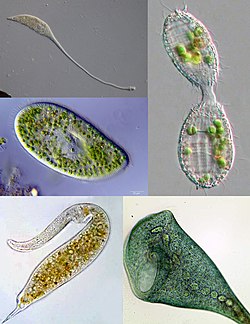
Some examples of ciliate diversity. Clockwise from top left: Lacrymaria, Coleps, Stentor, Dileptus, Paramecium
Scientific classification Edit this classification
Domain: Eukaryota
Clade: Sar
Clade: Alveolata
Phylum: Ciliophora
Doflein, 1901 emend.
Subphyla and classes[1]

See text for subclasses.

Synonyms
  • Ciliata Perty, 1852

The ciliates are a group of alveolates characterized by the presence of hair-like organelles called cilia, which are identical in structure to eukaryotic flagella, but are in general shorter and present in much larger numbers, with a different undulating pattern than flagella. Cilia occur in all members of the group (although the peculiar Suctoria only have them for part of their life cycle) and are variously used in swimming, crawling, attachment, feeding, and sensation.

Ciliates are an important group of protists, common almost anywhere there is water—in lakes, ponds, oceans, rivers, and soils, including anoxic and oxygen-depleted habitats.[2] About 4,500 unique free-living species have been described, and the potential number of extant species is estimated at 27,000–40,000.[3] Included in this number are many ectosymbiotic and endosymbiotic species, as well as some obligate and opportunistic parasites. Ciliate species range in size from as little as 10 μm in some colpodeans to as much as 4 mm in length in some geleiids, and include some of the most morphologically complex protozoans.[4][5]

In most systems of taxonomy, "Ciliophora" is ranked as a phylum[6] under any of several kingdoms, including Chromista,[7] Protista[8] or Protozoa.[9] In some older systems of classification, such as the influential taxonomic works of Alfred Kahl, ciliated protozoa are placed within the class "Ciliata"[10][11] (a term which can also refer to a genus of fish). In the taxonomic scheme endorsed by the International Society of Protistologists, which eliminates formal rank designations such as "phylum" and "class", "Ciliophora" is an unranked taxon within Alveolata.[12][13]

Cell structure

[edit]

Nuclei

[edit]

Unlike most other eukaryotes, ciliates have two different sorts of nuclei: a tiny, diploid micronucleus (the "generative nucleus", which carries the germline of the cell), and a large, ampliploid macronucleus (the "vegetative nucleus", which takes care of general cell regulation, expressing the phenotype of the organism).[14][15] The latter is generated from the micronucleus by amplification of the genome and heavy editing. The micronucleus passes its genetic material to offspring, but does not express its genes. The macronucleus provides the small nuclear RNA for vegetative growth.[16][15]

Division of the macronucleus occurs in most ciliate species, apart from those in class Karyorelictea, whose macronuclei are replaced every time the cell divides.[17] Macronuclear division is accomplished by amitosis, and the segregation of the chromosomes occurs by a process whose mechanism is unknown.[15] After a certain number of generations (200–350, in Paramecium aurelia, and as many as 1,500 in Tetrahymena[17]) the cell shows signs of aging, and the macronuclei must be regenerated from the micronuclei. Usually, this occurs following conjugation, after which a new macronucleus is generated from the post-conjugal micronucleus.[15]

Representation of a ciliate
  1. Cilia
  2. Trichocyst
  3. Alveoli, surface cavities or pits
  4. Contractile vacuole, regulates the quantity of water inside a cell
  5. Contractile vacuole pore
  6. Radial canal
  7. Food vacuoles
  8. Lysosome, holds enzymes
  9. Golgi apparatus; modifies proteins and sends them out of the cell
  10. Micronucleus
  11. Macronucleus, controls non-reproductive cell functions
  12. Vestibulum
  13. Buccal cavity
  14. Quadrulus
  15. Cytostome, cell mouth
  16. Nascent food vacuole
  17. Acidosome, vesicle involved in the acidification of phagocytes
  18. Waste vacuole
  19. Cytoproct, anal pore for waste ejection
  20. Endoplasmic reticulum, the transport network for molecules going to specific parts of the cell
  21. Mitochondrion, creates ATP (energy) for the cell (tubularcristae)
  22. Endosymbionts

Cytoplasm

[edit]

Food vacuoles are formed through phagocytosis and typically follow a particular path through the cell as their contents are digested and broken down by lysosomes so the substances the vacuole contains are then small enough to diffuse through the membrane of the food vacuole into the cell. Anything left in the food vacuole by the time it reaches the cytoproct (anal pore) is discharged by exocytosis. Most ciliates also have one or more prominent contractile vacuoles, which collect water and expel it from the cell to maintain osmotic pressure, or in some function to maintain ionic balance. In some genera, such as Paramecium, these have a distinctive star shape, with each point being a collecting tube.

Specialized structures in ciliates

[edit]

Mostly, body cilia are arranged in mono- and dikinetids, which respectively include one and two kinetosomes (basal bodies), each of which may support a cilium. These are arranged into rows called kineties, which run from the anterior to posterior of the cell. The body and oral kinetids make up the infraciliature, an organization unique to the ciliates and important in their classification, and include various fibrils and microtubules involved in coordinating the cilia. In some forms there are also body polykinetids, for instance, among the spirotrichs where they generally form bristles called cirri.

The infraciliature is one of the main components of the cell cortex. Others are the alveoli, small vesicles under the cell membrane that are packed against it to form a pellicle maintaining the cell's shape, which varies from flexible and contractile to rigid. Numerous mitochondria and extrusomes are also generally present. The presence of alveoli, the structure of the cilia, the form of mitosis and various other details indicate a close relationship between the ciliates, Apicomplexa, and dinoflagellates. These superficially dissimilar groups make up the alveolates.

Feeding

[edit]

Most ciliates are heterotrophs, feeding on smaller organisms, such as bacteria and algae, and detritus swept into the oral groove (mouth) by modified oral cilia. This usually includes a series of membranelles to the left of the mouth and a paroral membrane to its right, both of which arise from polykinetids, groups of many cilia together with associated structures. The food is moved by the cilia through the mouth pore into the gullet, which forms food vacuoles.

Many species are also mixotrophic, combining phagotrophy and phototrophy through kleptoplasty or symbiosis with photosynthetic microbes.[18][19]

The ciliate Halteria has been observed to feed on chloroviruses.[20]

Feeding techniques vary considerably, however. Some ciliates are mouthless and feed by absorption (osmotrophy), while others are predatory and feed on other protozoa and in particular on other ciliates. Some ciliates parasitize animals, although only one species, Balantidium coli, is known to cause disease in humans.[21]

Reproduction and sexual phenomena

[edit]
Most ciliates divide transversally, but other kinds of binary fission occur in some species.

Reproduction

[edit]

Ciliates reproduce asexually, by various kinds of fission.[17] During fission, the micronucleus undergoes mitosis and the macronucleus elongates and undergoes amitosis (except among the Karyorelictean ciliates, whose macronuclei do not divide). The cell then divides in two, and each new cell obtains a copy of the micronucleus and the macronucleus.

Ciliate undergoing the last processes of binary fission
Division of ciliate Colpidium

Typically, the cell is divided transversally, with the anterior half of the ciliate (the proter) forming one new organism, and the posterior half (the opisthe) forming another. However, other types of fission occur in some ciliate groups. These include budding (the emergence of small ciliated offspring, or "swarmers", from the body of a mature parent); strobilation (multiple divisions along the cell body, producing a chain of new organisms); and palintomy (multiple fissions, usually within a cyst).[22]

Fission may occur spontaneously, as part of the vegetative cell cycle. Alternatively, it may proceed as a result of self-fertilization (autogamy),[23] or it may follow conjugation, a sexual phenomenon in which ciliates of compatible mating types exchange genetic material. While conjugation is sometimes described as a form of reproduction, it is not directly connected with reproductive processes, and does not directly result in an increase in the number of individual ciliates or their progeny.[24]

Conjugation

[edit]
Overview

Ciliate conjugation is a sexual phenomenon that results in genetic recombination and nuclear reorganization within the cell.[24][22] During conjugation, two ciliates of a compatible mating type form a bridge between their cytoplasms. The micronuclei undergo meiosis, the macronuclei disappear, and haploid micronuclei are exchanged over the bridge. In some ciliates (peritrichs, chonotrichs and some suctorians), conjugating cells become permanently fused, and one conjugant is absorbed by the other.[21][25] In most ciliate groups, however, the cells separate after conjugation, and both form new macronuclei from their micronuclei.[26] Conjugation and autogamy are always followed by fission.[22]

In many ciliates, such as Paramecium, conjugating partners (gamonts) are similar or indistinguishable in size and shape. This is referred to as "isogamontic" conjugation. In some groups, partners are different in size and shape. This is referred to as "anisogamontic" conjugation. In sessile peritrichs, for instance, one sexual partner (the microconjugant) is small and mobile, while the other (macroconjugant) is large and sessile.[24]

Stages of conjugation
Stages of conjugation in Paramecium caudatum

In Paramecium caudatum, the stages of conjugation are as follows (see diagram at right):

  1. Compatible mating strains meet and partly fuse
  2. The micronuclei undergo meiosis, producing four haploid micronuclei per cell.
  3. Three of these micronuclei disintegrate. The fourth undergoes mitosis.
  4. The two cells exchange a micronucleus.
  5. The cells then separate.
  6. The micronuclei in each cell fuse, forming a diploid micronucleus.
  7. Mitosis occurs three times, giving rise to eight micronuclei.
  8. Four of the new micronuclei transform into macronuclei, and the old macronucleus disintegrates.
  9. Binary fission occurs twice, yielding four identical daughter cells.

DNA rearrangements (gene scrambling)

[edit]

Ciliates contain two types of nuclei: somatic "macronucleus" and the germline "micronucleus". Only the DNA in the micronucleus is passed on during sexual reproduction (conjugation). On the other hand, only the DNA in the macronucleus is actively expressed and results in the phenotype of the organism. Macronuclear DNA is derived from micronuclear DNA by extensive DNA rearrangement and amplification.

Development of the Oxytricha macronuclear genome from micronuclear genome

The macronucleus begins as a copy of the micronucleus. The micronuclear chromosomes are fragmented into many smaller pieces and amplified to give many copies. The resulting macronuclear chromosomes often contain only a single gene. In Tetrahymena, the micronucleus has 10 chromosomes (five per haploid genome), while the macronucleus has over 20,000 chromosomes.[27]

In addition, the micronuclear genes are interrupted by numerous "internal eliminated sequences" (IESs). During development of the macronucleus, IESs are deleted and the remaining gene segments, macronuclear destined sequences (MDSs), are spliced together to give the operational gene. Tetrahymena has about 6,000 IESs and about 15% of micronuclear DNA is eliminated during this process. The process is guided by small RNAs and epigenetic chromatin marks.[27]

In spirotrich ciliates (such as Oxytricha), the process is even more complex due to "gene scrambling": the MDSs in the micronucleus are often in different order and orientation from that in the macronuclear gene, and so in addition to deletion, DNA inversion and translocation are required for "unscrambling". This process is guided by long RNAs derived from the parental macronucleus. More than 95% of micronuclear DNA is eliminated during spirotrich macronuclear development.[27]

Aging

[edit]

ln clonal populations of Paramecium, aging occurs over successive generations leading to a gradual loss of vitality, unless the cell line is revitalized by conjugation or autogamy. In Paramecium tetraurelia, the clonally aging line loses vitality and expires after about 200 fissions, if the cell line is not rejuvenated by conjugation or self-fertilization. The basis for clonal aging was clarified by the transplantation experiments of Aufderheide in 1986[28] who demonstrated that the macronucleus, rather than the cytoplasm, is responsible for clonal aging. Additional experiments by Smith-Sonneborn,[29] Holmes and Holmes,[30] and Gilley and Blackburn[31] demonstrated that, during clonal aging, DNA damage increases dramatically. Thus, DNA damage appears to be the cause of aging in P. tetraurelia.

Fossil record

[edit]

Until recently, the oldest ciliate fossils known were tintinnids from the Ordovician period. In 2007, Li et al. published a description of fossil ciliates from the Doushantuo Formation, about 580 million years ago, in the Ediacaran period. These included two types of tintinnids and a possible ancestral suctorian.[32] A fossil Vorticella has been discovered inside a leech cocoon from the Triassic period, about 200 million years ago.[33]

Phylogeny

[edit]

According to the 2016 phylogenetic analysis,[1] Mesodiniea is consistently found as the sister group to all other ciliates. Additionally, two big sub-groups are distinguished inside subphylum Intramacronucleata: SAL (Spirotrichea+Armophorea+Litostomatea) and CONthreeP or Ventrata (Colpodea+Oligohymenophorea+Nassophorea+Phyllopharyngea+Plagiopylea+Prostomatea).[1] The class Protocruziea is found as the sister group to Ventrata/CONthreeP. The class Cariacotrichea was excluded from the analysis, but it was originally established as part of Intramacronucleata[1].
The odontostomatids were identified in 2018[34] as its own class Odontostomatea, related to Armophorea.

Ciliophora

Classification

[edit]
Stentor roeselii

Several different classification schemes have been proposed for the ciliates. The following scheme is based on a molecular phylogenetic analysis of up to four genes from 152 species representing 110 families:[1]

Subphylum Postciliodesmatophora

[edit]

Subphylum Intramacronucleata

[edit]
Oxytricha trifallax

Other

[edit]

Some old classifications included Opalinidae in the ciliates. The fundamental difference between multiciliate flagellates (e.g., hemimastigids, Stephanopogon, Multicilia, opalines) and ciliates is the presence of macronuclei in ciliates alone.[35]

Pathogenicity

[edit]

The only member of the ciliate phylum known to be pathogenic to humans is Balantidium coli,[36] which causes the disease balantidiasis. It is not pathogenic to the domestic pig, the primary reservoir of this pathogen.[37]

References

[edit]

Further reading

[edit]
[edit]
Revisions and contributorsEdit on WikipediaRead on Wikipedia
from Grokipedia
Ciliates, formally known as the phylum Ciliophora, are a diverse group of unicellular eukaryotic protists distinguished by the presence of cilia—short, hair-like appendages that cover their cell surface and function in locomotion, feeding, and sensory perception.[1] These organisms, numbering approximately 8,000 described species, range in size from microscopic forms to larger free-living cells up to 2 millimeters in length, such as the trumpet-shaped Stentor.[2][1] A hallmark of ciliates is their nuclear dimorphism, featuring a large, polyploid macronucleus that governs vegetative metabolism and gene expression, alongside one or more smaller, diploid micronuclei responsible for sexual reproduction and genetic diversity.[3][4] Ciliates exhibit complex cellular organization, lacking cell walls but possessing a tough, elastic pellicle reinforced by microtubules and alveolar sacs beneath the plasma membrane, which provides structural support.[2] Locomotion occurs through coordinated metachronal waves of ciliary beating, enabling spiral or straight-line swimming, often at speeds influenced by environmental flows, and specialized behaviors like rheotaxis (orientation against currents) for survival near surfaces.[5] Feeding is primarily heterotrophic, with many species using an oral groove and cytostome (mouth) to draw in bacteria, algae, or smaller protists via ciliary currents, followed by digestion in circulating food vacuoles and waste expulsion through a cytoproct.[1] Reproduction is versatile: asexual binary fission divides the cell transversely, while sexual conjugation involves temporary nuclear exchanges between compatible mating types, promoting genetic recombination without gamete fusion.[3] Contractile vacuoles are common, regulating osmotic balance in hypotonic freshwater habitats.[4] Ecologically, ciliates are ubiquitous in aquatic ecosystems, predominantly freshwater but also marine and soil environments, serving as key intermediaries in microbial food webs by grazing on bacteria and serving as prey for larger organisms, thus facilitating energy transfer and nutrient recycling.[6] Most are free-living and commensal, but a minority are parasitic, including Balantidium coli, the only ciliate known to infect humans, causing balantidiasis in the intestines, and Ichthyophthirius multifiliis, a significant pathogen in fish aquaculture.[4] Classified into diverse groups such as the class Oligohymenophorea (including model organisms like Paramecium and Tetrahymena) and the spirotrichs, ciliates display remarkable morphological diversity, from slipper-shaped to colonial stalked forms, underscoring their evolutionary success as one of the most complex groups of single-celled eukaryotes.[4][2]

Cell structure

Nuclei

Ciliates exhibit a distinctive form of nuclear dimorphism, characterized by the presence of two types of nuclei within the same cell: a large, polyploid macronucleus (MAC) responsible for vegetative functions and a small, diploid micronucleus (MIC) dedicated to reproductive processes. This dual nuclear system allows ciliates to separate somatic and germline functions, enabling efficient gene expression during daily activities while preserving genetic integrity for reproduction. The macronucleus is the somatic nucleus, containing an amplified genome with high ploidy levels, often reaching up to 8000n in some species, which supports robust transcription of housekeeping genes essential for cellular metabolism and maintenance. Its structure features multiple copies of expressed genes, organized into somatic chromosomes that undergo extensive remodeling to eliminate non-coding DNA sequences, resulting in a streamlined genome optimized for vegetative gene expression. In contrast, the micronucleus serves as the germline nucleus, maintaining a standard diploid (2n) genome that remains transcriptionally inactive during the organism's vegetative growth phase, thereby protecting the full genetic repertoire from somatic modifications. Following sexual processes such as conjugation or autogamy, new MAC and MIC develop from a zygotic nucleus through postzygotic reorganization, a process that involves the fragmentation of the parental genome and selective elimination of non-coding regions to form the mature somatic MAC. During this development, the MAC undergoes multiple rounds of DNA amplification and precise excision of internal eliminated sequences (IES), ensuring the production of a functional somatic nucleus tailored for transcription. Meanwhile, the MIC's role in maintaining genetic diversity is preserved by its involvement in generating gametic nuclei during reproduction, allowing for recombination and inheritance of unaltered germline DNA across generations.

Cytoplasm and organelles

The cytoplasm of ciliates is differentiated into an outer ectoplasm, a gel-like cortical layer that provides structural support, and an inner endoplasm, a more fluid sol region that houses most organelles and facilitates intracellular transport.[7] This organization is bounded externally by the pellicle, a complex structure comprising the plasma membrane, underlying epiplasm, and a series of alveoli that contribute to cell rigidity and shape maintenance.[8] The two nuclei characteristic of ciliates are embedded within the endoplasm, surrounded by this dynamic cytoplasmic matrix. Key organelles in the ciliate cytoplasm include mitochondria, which typically exhibit tubular cristae adapted for efficient energy production in these highly active protists; for instance, in species like Tetrahymena thermophila and Paramecium tetraurelia, these cristae form helical arrays that enhance respiratory complex organization.[9][10] The Golgi apparatus, composed of stacked cisternae, processes and packages secretory products, as observed in ciliates such as Ichthyophthirius multifiliis, where it features prominent terminal compartments equivalent to the trans-Golgi network.[11] The endoplasmic reticulum (ER) forms an interconnected network of flattened cisternae in the cortical region, parallel to the cell surface, and vertical tubules near basal bodies, supporting protein synthesis and lipid metabolism.[12] Food vacuoles are membrane-bound structures that form in the endoplasm through phagocytosis, where their internal pH rapidly acidifies from approximately 7 to 3 within minutes of formation to facilitate enzymatic breakdown of engulfed material.[13] Contractile vacuoles, prominent in freshwater ciliates, serve as osmoregulatory organelles that collect and expel excess water to counteract hypotonic environments; their size and contraction frequency vary with medium osmolarity, often featuring associated radial canals for fluid gathering.[14][15] Specialized cytoplasmic structures include extrusive organelles such as trichocysts in Paramecium species, which are spindle-shaped vesicles filled with crystalline protein cores that discharge explosively for defense against predators.[16] Mucocysts, found across various ciliates, are elongated vesicles that release amorphous mucus-like material to the cell surface, aiding in protection or cyst wall formation during encystment.[17] The cytoskeleton incorporates microtubules as key elements, forming networks that maintain cell shape and support organelle positioning beyond the cortical arrays.[18] In anaerobic ciliates like Nyctotherus ovalis, mitochondria are modified into hydrogenosomes, organelles that generate ATP and hydrogen gas via fermentation while retaining a rudimentary genome and tubular cristae-like features.[19][20]

Cilia and cortical structures

Cilia in ciliates are motile, hair-like appendages that typically measure 5–10 μm in length and 0.25 μm in diameter.[21] These structures arise from basal bodies embedded in the cortical layer beneath the plasma membrane and exhibit a canonical 9+2 axoneme ultrastructure, comprising nine peripheral doublet microtubules surrounding two central singlet microtubules.[22] The axoneme is powered by dynein motor proteins attached to the doublet microtubules, which generate inter-doublet sliding to facilitate bending.[23] Basal bodies, the modified centrioles that template ciliogenesis, consist of nine triplet microtubules arranged in a cylindrical array approximately 200 nm in diameter and 550 nm long.[24] The ciliate cortex features organized patterns of these basal bodies into longitudinal rows known as kineties, which span the cell surface and ensure uniform ciliary distribution.[24] Specialized cortical ciliary complexes include cirri, bundles of 40–120 tightly packed cilia in hexagonal arrays; membranelles, compound structures formed by 3–4 rows of 10–40 adherent cilia; and undulating membranes, paired ciliary rows that undulate along the oral region.[25] The oral apparatus, which incorporates these elements, varies across ciliate groups; for instance, oligotrichs possess a prominent cytostome (cell mouth) flanked by reduced somatic kineties and specialized oral polykinetids that direct particles inward.[26] These arrangements provide structural rigidity and functional specialization to the pellicle, the outermost cell layer. Associated with basal bodies are accessory structures that stabilize the cortex and link kinetids (basal body units). Kinetodesmal fibers, striated proteinaceous rootlets, extend anteriorly from the proximal end of basal bodies to the plasma membrane, coordinating row alignment and resisting mechanical stress.[27] Postciliary microtubules radiate posteriorly from each basal body, forming ribbons that interconnect adjacent kinetids within a kinety, while transverse microtubules project anteriorly and laterally, bridging kineties across the cortex.[27] These microtubular systems, nucleated directly from basal body triplets, maintain polarity and spacing in the ciliary array.[28] Cilia regenerate efficiently from mature basal bodies, which serve as scaffolds for sequential axoneme assembly, including microtubule doublet formation and dynein arm attachment.[24] In feeding-adapted membranelles, compound cilia adhere via specialized membrane linkages, enabling collective motion to capture prey without individual detachment.[25] Postciliary microtubular ribbons are particularly elaborated in subclasses like Hymenostomatia (e.g., Tetrahymena), where they extend up to several micrometers to reinforce oral and somatic regions.[27] Ciliary diversity manifests in reduced or absent somatic cilia during specific life stages or in parasitic groups; for example, apostome ciliates (subclass Apostomatia) often lose body ciliature in endoparasitic phases, retaining only oral remnants for host attachment.[29] Such variations highlight adaptations to ecological niches while preserving core ultrastructural motifs.

Locomotion and behavior

Ciliary movement

Ciliates propel themselves through the coordinated beating of thousands of cilia covering their cell surface. The ciliary beat cycle consists of an effective stroke, during which the cilium extends rigidly to push fluid backward and generate forward thrust, followed by a recovery stroke where the cilium bends and returns to its starting position with minimal drag.[30] This asymmetric cycle breaks the time-reversal symmetry of low-Reynolds-number flows, enabling net propulsion.[31] The beating of individual cilia is synchronized across the cell via metachronal waves, where adjacent cilia maintain a constant phase difference, creating propagating waves that coordinate the motion of up to 10,000 cilia in species like Paramecium.[32] These waves, classified as symplectic or antiplectic based on their direction relative to the effective stroke, enhance efficiency by reducing hydrodynamic interference between neighboring cilia.[30] At the molecular level, ciliary movement is powered by dynein ATPases, which hydrolyze ATP to drive the sliding of adjacent microtubule doublets within the cilium's axoneme, converting chemical energy into mechanical force.[33] Outer dynein arms primarily generate the propulsive force, while inner arms modulate the beat waveform.[33] This sliding mechanism, first elucidated in Tetrahymena cilia, underpins the rhythmic oscillations essential for locomotion.[34] Hydrodynamically, the metachronal waves produce thrust through viscous forces, with the effective strokes displacing fluid to overcome drag on the cell body.[35] In Paramecium, this results in swimming speeds of approximately 1 mm/s, varying with environmental conditions and ciliary frequency.[36] The propulsion efficiency arises from the collective action of ciliary arrays, where thrust balances viscous resistance at low Reynolds numbers.[37] Ciliary movement patterns include direct forward swimming, often in helical paths due to the oblique orientation of ciliary rows; creeping along substrates via localized ciliary action; and reversal, achieved by reorienting the effective stroke anteriorly to propel the cell backward.[31] In species like Tetrahymena, three-dimensional tracking reveals semicircular tip motions that contribute to these trajectories.[38] Many heterotrich and hypotrich ciliates exhibit crawling on debris or sediments as a primary mode.[39] Variations in ciliary coordination occur across ciliate groups; for instance, spirotrichs often feature reduced somatic ciliature arranged in frontal or marginal rows, leading to planar or localized wave patterns rather than full-body metachrony. In oligotrich spirotrichs, the sparse cilia form compact bands that support modified propulsion suited to planktonic lifestyles.[40] Parasitic ciliates exhibit adaptations with reduced locomotion, such as sessile attachment via specialized cilia or cirri, minimizing free-swimming capabilities in endoparasitic forms like those infecting fish or vertebrates.[41] This contrasts with free-living species, where robust ciliary coverage enables agile movement.[42]

Sensory and avoidance behaviors

Ciliates detect environmental stimuli through specialized sensory structures, primarily their cilia, which serve as mechanoreceptors sensitive to mechanical disturbances, water currents, and physical barriers. In species like Paramecium tetraurelia, trichocysts act as mechanoreceptive elements by discharging explosively upon contact with predators or obstacles, anchoring the cell and facilitating escape. Calcium-based signaling is central to stimulus detection, with voltage-gated calcium channels in the ciliary membrane responding to changes in pH, chemical gradients, and mechanical stress to initiate intracellular cascades. These channels enable rapid ion fluxes that propagate signals across the cell, underscoring the role of calcium as a key second messenger in sensory transduction. Ciliates also exhibit rheotaxis, orienting their swimming direction against water currents to maintain position near surfaces or in flows, which aids survival in dynamic aquatic environments.[5] The avoidance reaction represents a hallmark sensory behavior in ciliates, particularly in free-living forms such as Paramecium caudatum, where mechanical or thermal stimuli trigger ciliary reversal and backward swimming to evade threats. This response is mediated by depolarization of the excitable membrane, generating action potentials via activation of ciliary calcium channels, which reverse the effective stroke of cilia and alter swimming direction. This neuron-like excitability in ciliates allows for coordinated, propagating signals that mimic aspects of multicellular nervous systems, with calcium influx directly linking sensory input to motor output. In Paramecium, anterior and posterior cilia do not reverse synchronously during avoidance, enabling a pivoting maneuver that enhances escape efficiency. Ciliates display oriented movements known as taxis, including phototaxis toward light sources, geotaxis in response to gravity, and chemotaxis guided by chemical attractants or repellents, which optimize foraging and habitat selection in aquatic environments. For example, Paramecium exhibits negative geotaxis, swimming upward against gravity to reach oxygen-rich surface layers. Laboratory studies have revealed habituation, a learning-like non-associative response, where repeated exposure to stimuli like electric shocks diminishes avoidance reactions over time, with memory persisting for hours under spaced training conditions. These behaviors integrate sensory detection with ciliary propulsion, allowing adaptive navigation without a centralized nervous system. In symbiotic and parasitic ciliates, such as peritrichs attached to host surfaces or endoparasites like Ichthyophthirius multifiliis, sensory and avoidance behaviors are simplified, featuring reduced motility and host-specific chemosensory adaptations that prioritize attachment over active evasion. These modifications reflect evolutionary trade-offs, where reliance on the host diminishes the need for complex free-swimming responses observed in planktonic species.

Nutrition and feeding

Feeding mechanisms

Ciliates acquire nutrients primarily through specialized oral structures that facilitate the capture and ingestion of food particles. The cytostome serves as the mouth-like opening, leading into the buccal cavity, a ciliated region that directs particles toward the cytopharynx, an elongated tube-like structure that forms the initial part of the digestive pathway.[43] These structures vary widely among ciliate groups; for instance, certain predatory forms like cyrtophorids possess a cyrtos, a funnel-shaped oral basket reinforced by microtubular nematodesmata for grasping larger prey, while hypotrichs typically possess an adoral zone of membranelles, a ciliated structure suited for particle capture.[44] In filter-feeding ciliates, such as those in the oligohymenophorean lineage, ciliary membranelles within the buccal cavity generate water currents that propel bacteria and algae toward the cytostome for selective retention.[45] Feeding modes in ciliates encompass a spectrum from raptorial predation to passive filtration and absorption. Raptorial feeders, exemplified by litostomateans like Didinium, actively engulf larger prey such as other protozoa by extending the cytopharynx to form a temporary invagination that captures and internalizes the organism whole.[46] In contrast, many free-living ciliates, including paramecia and tetrahymenas, employ filter-feeding, where coordinated ciliary beating creates upstream currents that sieve micron-sized particles like bacteria and unicellular algae, transporting them into food vacuoles at rates sufficient for rapid nutrient uptake.[47] Osmotrophy, the absorption of dissolved organic compounds across the cell membrane, occurs in some mouthless ciliates, such as astomatids, supplementing or replacing phagotrophy in nutrient-rich environments.[48] Mixotrophic ciliates, like Paramecium bursaria, combine phagotrophy with symbiotic feeding, harboring endosymbiotic algae that provide photosynthates while the host ingests particulate matter.[49] Once captured, food particles undergo phagocytosis, where the cytopharynx membrane pinches off to form a food vacuole that detaches into the cytoplasm. The vacuole then matures through fusion with lysosome-like vesicles, acidifying its contents to an optimal pH for enzymatic activity and delivering hydrolytic enzymes such as proteases for protein degradation and lipases for lipid breakdown.[50] This intracellular digestion process efficiently solubilizes nutrients, with undigested residues condensing into a compact mass. In Tetrahymena species, phagocytosis rates can reach hundreds of bacteria per minute under optimal conditions, enabling high turnover in bacterial-rich habitats.[51] Parasitic ciliates, such as Ichthyophthirius multifiliis, adapt this mechanism for host invasion, burrowing into epithelial tissues of fish gills and skin to phagocytose cellular debris, mucus, and tissue fragments directly.[52] Completed digestion culminates in egestion, where residual waste is expelled through the cytopyge, a specialized anal pore at the cell's posterior, preventing accumulation of indigestible material.[53] This cyclic process, integrated with osmoregulatory structures like contractile vacuoles, maintains cellular homeostasis during active feeding.[54]

Trophic roles in ecosystems

Ciliates occupy diverse trophic positions within microbial food webs, primarily functioning as bacterivores that prey on bacteria and thereby transfer energy and nutrients from primary decomposers to higher trophic levels such as zooplankton and fish.[55] They also act as herbivores by grazing on phytoplankton and algae, consuming a significant portion of primary production—estimated at 60–70% daily in oceanic systems through microzooplankton activity dominated by ciliates—and as predators on smaller protists like flagellates, influencing community structure across aquatic environments.[56] This omnivorous feeding strategy positions ciliates as key intermediaries, linking picoplankton and nanoplankton to macrozooplankton in both freshwater and marine ecosystems.[57] In nutrient cycling, ciliates play a pivotal role in carbon and nitrogen turnover by mineralizing organic matter through predation and excretion, thereby regenerating bioavailable nutrients like ammonium and phosphate that support primary production.[57] Heterotrophic and mixotrophic ciliates enhance the cycling of nitrogen, phosphorus, and sulfur, with their grazing activities promoting rapid nutrient recycling in microbial loops during events like cyanobacterial blooms.[58] Additionally, ciliates serve as bioindicators of water quality, with community composition and diversity used in saprobic indices to assess organic pollution levels in streams and rivers, where shifts in ciliate assemblages signal changes in trophic status.[59] Planktonic ciliates exhibit high abundances in aquatic systems, reaching up to 10^5 cells per liter in oceanic and coastal waters during seasonal peaks, contributing substantially to overall planktonic biomass—often 5–10% in oligotrophic lakes.[60] Their grazing on primary producers regulates algal blooms and channels energy upward, while recent studies from 2020–2025 highlight seasonal dynamics, showing stronger top-down control by zooplankton in spring compared to summer, which modulates ciliate community structure and biomass in freshwater systems.[61] For instance, experimental manipulations reveal that zooplankton predation intensifies ciliate suppression during vernal periods, influencing energy transfer efficiency in microbial food webs. Ciliates engage in competitive interactions with other protists, such as heterotrophic flagellates, for shared bacterial prey, with mixotrophic forms gaining advantages under nutrient-limited conditions that favor photoautotrophy over strict heterotrophy.[62] Symbiotic associations, including endosymbioses with algae like Chlorella in species such as Paramecium bursaria, enable mixotrophy and enhance ciliate fitness in oligotrophic habitats by providing supplementary carbon fixation.[63] Although less common, some ciliates form ectosymbiotic relationships akin to those in Mixotricha-like systems, where algal partners contribute to nutrient exchange.[64] Globally, ciliates contribute significant biomass to aquatic ecosystems, comprising a major component of heterotrophic protist standing stocks and facilitating energy flow in marine and freshwater food webs.[65] In applied contexts, their predatory role on bacteria makes them valuable in wastewater treatment, where ciliate communities regulate microbial biomass, improve effluent quality, and serve as indicators of process efficiency in activated sludge systems.[66]

Reproduction and life cycle

Asexual reproduction

Asexual reproduction in ciliates primarily occurs through binary fission, a process that allows clonal propagation under favorable conditions. In most free-living ciliates, such as those in the orders Hymenostomatida and Euplotida, binary fission is transverse, meaning the cell divides perpendicular to its longitudinal axis, resulting in an anterior proter and posterior opisthe daughter cell. The process begins with cell growth during the G1 phase of the cell cycle, followed by DNA replication in the S phase within both the macronucleus (MAC) and micronucleus (MIC). In the G2 phase, an oral primordium—anlagen for new feeding structures—forms de novo near the posterior end of the cell, specifically for the opisthe, while the proter retains the parental oral apparatus. During the M phase, the MIC undergoes standard mitosis to produce identical diploid copies, whereas the MAC divides amitotically through elongation and random chromosome segregation without a mitotic spindle, ensuring distribution of somatic genetic material. Cytokinesis then separates the daughters across a transverse constriction, with each inheriting a portion of the parental cytoplasm and cortical structures.[67][68] A well-studied example is Tetrahymena thermophila, where binary fission completes in approximately 2–3 hours at optimal temperatures (around 30°C), enabling rapid population growth. Post-division, daughter cells are initially smaller and must undergo growth to regulate size before the next cycle, a process influenced by nutrient uptake and environmental stability. The MIC's mitotic division during fission maintains the germline genome, which can later support sexual processes if conditions deteriorate.[67][69] Variations in asexual reproduction occur across ciliate groups. In suctorian ciliates, such as those in the subclass Suctoria, reproduction involves budding rather than equal fission; the sessile adult produces motile, ciliated swarmer cells externally or internally, which disperse and metamorphose into new adults. Colpodid ciliates, like Colpoda cucullus, exhibit multiple fission within reproductive cysts formed during encystment, where a single cell divides repeatedly (up to several times) to yield numerous tomites that excyst upon favorable conditions. Thigmotrich ciliates, which attach to substrates, often reproduce by budding, generating smaller offspring that detach as swarmers. Encystment also serves as a dormancy mechanism in many ciliates, allowing survival of desiccation or starvation by halting the cell cycle until rehydration or nutrient replenishment triggers excystment and resumption of fission.[70][71][72][73] Cell cycle progression and division rates are tightly regulated by environmental cues, particularly nutrient availability; abundant food promotes frequent fission, while scarcity induces encystment or shifts toward sexual reproduction. In Tetrahymena, for instance, the cycle's duration adjusts based on temperature and media composition, with molecular checkpoints ensuring coordinated nuclear and cortical reorganization.[67][73]

Sexual processes and conjugation

Ciliates exhibit sexual reproduction primarily through conjugation, a process involving the temporary pairing of two compatible individuals for genetic exchange. During conjugation, cells of different mating types align and fuse at their cortical regions, forming a stable pair. The micronucleus (MIC) in each cell then undergoes meiosis, producing haploid gametic nuclei that are exchanged reciprocally between partners. These migratory nuclei fuse with stationary nuclei in each cell to form diploid zygote nuclei, which subsequently divide mitotically to develop into new macronuclei (MAC) and MICs.[74][75] Mating type determination in ciliates varies by species, with some like Paramecium tetraurelia having two types (O and E) controlled by a single locus with alternative determination modes across related species, while others like Tetrahymena thermophila possess up to seven mating types determined by programmed DNA rearrangements at a multi-allelic mat locus during development. Compatibility requires distinct mating types, ensuring outcrossing, though some species can exhibit multiple types within clonal lineages. Conjugation is typically triggered by environmental cues such as starvation or high population density, which induce cell cycle arrest and expression of meiosis-associated genes, including those involved in pheromone signaling in species like Euplotes.[76][77][78] Following nuclear exchange, post-conjugal reorganization involves the resorption of the old MAC, which fragments and is degraded, while the new zygotic derivatives amplify to regenerate functional somatic nuclei. This process restores genetic variability through meiotic recombination, including crossing over during MIC meiosis, which generates novel allelic combinations in the progeny. In contrast to asexual binary fission, which propagates clonal lineages without recombination, sexual processes like conjugation rejuvenate the genome and prevent clonal senescence.[79][74][80] Autogamy represents a form of self-fertilization in certain ciliates, such as Paramecium, where a single cell undergoes meiotic division of the MIC, followed by fusion of two gametic nuclei to form a homozygous zygote nucleus, bypassing the need for a partner. Cytogamy, observed in species like Tetrahymena thermophila and Paramecium, is an intermediate variant where paired cells perform nuclear divisions similar to conjugation but without pronuclear exchange, resulting in self-fertilization within each cell and homozygous outcomes. These processes, also induced by starvation, maintain genetic exchange in isolated or low-density populations while achieving similar nuclear reorganization to conjugation.[81][82][83]

Genetics and nuclear dimorphism

Macronucleus function

The macronucleus (MAC) serves as the somatic nucleus in ciliates, directing all transcriptional activity and phenotypic expression during vegetative growth. Unlike the transcriptionally silent micronucleus (MIC), the MAC contains a highly processed genome optimized for rapid and efficient gene expression, enabling the cell to perform essential metabolic and structural functions. This nuclear dimorphism allows ciliates to maintain a stable somatic genome while preserving germline integrity in the MIC.[84] Gene expression in the MAC is characterized by the amplification of key genomic elements to support high-level transcription. In species like Tetrahymena thermophila, the MAC genome comprises approximately 181 to 225 nanochromosomes, each typically 20–50 kb in length and amplified to around 45 copies per cell, ensuring robust expression of housekeeping and adaptive genes. This amplification targets protein-coding regions, with over 27,000 predicted genes identified, many of which are essential for cellular processes such as metabolism and signaling. Somatic restriction further refines the MAC genome by eliminating internal eliminated sequences (IESs) and transposons, which constitute 30–35% of the MIC genome, thereby purging potentially deleterious elements and streamlining the somatic repertoire for vegetative needs.[84][85][86] Maintenance of the MAC occurs through amitotic division, a non-mitotic process that elongates and fragments the nucleus without precise chromosome segregation, leading to variable copy numbers across generations. This amitosis is tolerated due to the MAC's polyploidy (often 45n or higher), which buffers against imbalances and supports aneuploidy tolerance, preventing lethal disruptions in gene dosage during vegetative proliferation. Telomeres are added to the ends of MAC chromosomes by telomerase during development, stabilizing these linear nanochromosomes and preventing degradation, a process critical for long-term nuclear integrity. Recent genome mapping efforts from 2020 to 2025, including assemblies of compact MACs in species like Halteria grandinella and Fabrea salina, have revealed highly fragmented architectures with gene-dense nanochromosomes, sometimes retaining scrambled arrangements derived from MIC processing, highlighting evolutionary adaptations for efficient somatic function.[87][88][89] The MAC contributes to phenotypic plasticity by enabling somatic genetic variations through amitotic segregation and environmental responses, allowing a single clonal genotype to produce diverse phenotypes without altering the germline. This disposable adaptation mechanism facilitates rapid evolutionary experimentation in the soma, as seen in experimental evolution studies where MAC variants confer fitness advantages under stress. Bidirectional signaling between the MAC and MIC, mediated by small RNAs and trans-nuclear proteins during sexual development, coordinates gene expression and ensures proper MAC regeneration from the zygotic nucleus.[90] Dysfunction or loss of the MAC, such as failure in regeneration during conjugation, results in cessation of gene expression and rapid cell death, underscoring its indispensable role in sustaining vegetative life. In Tetrahymena thermophila, programmed resorption of the old MAC involves caspase-like activity, but incomplete development of a new MAC triggers apoptotic pathways, leading to organismal demise.[91]

Micronucleus and genome rearrangements

The micronucleus (MIC) in ciliates serves as the germline nucleus, harboring a diploid genome that remains transcriptionally silent during vegetative growth and preserves the complete genetic information for heredity. This genome is characterized by its richness in repetitive elements, including transposons and internal eliminated sequences (IES), which constitute non-coding DNA interspersed throughout the chromosomes. IES are short, AT-rich segments (typically 70–100% AT content) bounded by short direct repeats, numbering around 12,000 in Tetrahymena thermophila and up to 45,000 in Paramecium tetraurelia.[92] These elements, often derived from transposon fossils, occupy a significant portion of the MIC genome, enabling extensive programmed rearrangements during nuclear development.[92] During macronuclear development following sexual reproduction, the MIC genome undergoes profound reorganization to generate the somatic macronucleus (MAC), involving the precise excision of IES and, in some lineages, the unscrambling of genes. This process eliminates approximately 30–45% of the MIC DNA in oligohymenophoreans like Tetrahymena and Paramecium, where roughly 46 Mb of the ~157 Mb MIC genome is removed, including ~12,000 IES in Tetrahymena.[92][93] In contrast, spirotrichs such as Oxytricha trifallax exhibit more extreme rearrangements, excising over 95% of the germline DNA, including more than 200,000 IES. These deletions are mediated by domesticated transposases, such as the PiggyBac-like proteins Pgm in Paramecium and Tpb2 in Tetrahymena, which recognize the repeat boundaries and catalyze precise double-strand breaks for IES excision.[92][92][92] Gene unscrambling represents a sophisticated aspect of these rearrangements, where coding regions are fragmented into macronuclear destined segments (MDS) separated by IES and must be reordered and joined accurately to form functional genes in the MAC. In oligohymenophoreans, scrambling is limited; for instance, Tetrahymena thermophila features only a few loci with reordered MDS, such as one well-studied example involving segment rearrangement. Spirotrichs display far greater complexity, with genes like DNA polymerase α in Oxytricha split into over 40 MDS across distant loci, requiring template-guided reassembly via non-coding RNAs derived from the MIC. This process highlights the role of pointer sequences—short motifs at MDS junctions—that dictate the correct joining order, ensuring faithful gene reconstruction despite the encrypted germline configuration.[92][92] The MIC's role in inheritance underscores its stability: during asexual reproduction, the MIC divides mitotically and is passed intact to daughter cells, maintaining germline continuity without rearrangement. In sexual processes like conjugation, the MIC undergoes meiosis, and a copy is used to develop new nuclei, triggering the full repertoire of genome editing. Recent studies on early-branching ciliates, such as those in 2025 analyses of Karyorelictea and Heterotrichea, reveal diverse MAC architectures stemming from varied rearrangement strategies, including reduced IES elimination compared to model oligohymenophoreans, further illustrating evolutionary flexibility in germline processing.[92][94]

Evolutionary history

Fossil record

The fossil record of ciliates is limited primarily to tintinnids and certain cyst-forming taxa, as most species lack durable hard parts and their soft bodies rarely preserve.[95] Putative ciliate-like microfossils from the Ediacaran Doushantuo Formation (~580–635 million years ago) in South China were initially described as early tintinnid-like forms with loricae and suctorian-like protozoans bearing cilia and cytostomes, suggesting ciliate diversification coincided with the Ediacaran biota. However, detailed reassessments indicate these specimens, including Eotintinnopsis, Wujiangella, and Yonyangella, represent diagenetically altered acritarchs rather than true ciliates, due to mismatched ciliary patterns, excessive sizes, and taphonomic distortions like mineral encrustations and vesicle folding.[96] Similarly, Proterozoic claims for tintinnids (~750 million years ago) lack confirmatory evidence and are classified as incertae sedis eukaryotes or possibly inorganic structures.[97] The earliest unambiguous ciliate fossils date to the Cambrian (~508 million years ago), preserved as direct evidence in the gut contents of euarthropods, representing the first record of a ciliate in the fossil record.[98] Ordovician records include vase- or barrel-shaped loricae attributed to tintinnids, though identifications remain tentative owing to morphological similarities with non-ciliate microfossils like chitinozoans.[95] Cambrian records are even sparser, with additional potential cysts inferred from acritarchs with pylome-like openings, which may represent resting stages of early ciliates adapted to environmental stresses.[99] By the Jurassic, tintinnid loricae become abundant and well-preserved in marine deposits, often agglutinated with siliceous particles or resembling radiolaria in form, marking a clear radiation of these planktonic forms.[100] These structures, composed of proteinaceous material or mineral aggregates, provide the bulk of the ciliate fossil record, highlighting the challenges of identifying non-tintinnid groups without such tests.[101] Ciliate fossils offer insights into post-Paleozoic marine recovery, with tintinnid diversification in the Mesozoic reflecting planktonic ecosystem rebuilding after the Permian-Triassic extinction.[100] In paleoecology, tintinnid loricae serve as proxies for past ocean productivity and water column structure, while cysts indicate survival strategies during low-oxygen intervals.[102] Recent analyses of ciliate cysts in sediments have linked increases in anaerobic forms, such as Metopus species, to deoxygenation at oxic-anoxic boundaries, underscoring their role in tracking historical anoxic events.[103] A 2022 study using sedimentary ancient DNA from lake cysts further demonstrated ciliates as effective paleoindicators, revealing biotic homogenization and shifts toward mixotrophic and benthic anaerobes in response to nutrient enrichment and stratification over the past ~170 years.[103]

Phylogeny and diversification

Ciliates, encompassing the phylum Ciliophora, constitute a monophyletic clade within the Alveolata supergroup, positioned as the sister group to the monophylum comprising Apicomplexa and Dinoflagellata.[104] This relationship is robustly supported by phylogenomic analyses integrating small subunit (SSU) and large subunit (LSU) rRNA genes alongside protein-coding sequences from over 150 ciliate species across 110 families.[104] The monophyly of Ciliophora is further affirmed by the shared presence of cortical alveoli and nuclear dimorphism, distinguishing them from their alveolate relatives.[104] The initial divergence of Ciliophora from other alveolates is estimated at approximately 1.14 to 1.18 billion years ago, during the Mesoproterozoic era of the Proterozoic Eon.[105][106] Major radiations followed, with class-level splits predominantly occurring in the latter half of the Proterozoic, leading to the emergence of key lineages such as Oligohymenophorea and Spirotrichea.[106] A 2024 phylogenomic investigation, drawing on transcriptome assemblies from 40 species across seven classes and 247 orthologous genes from 105 taxa, dated these diversification events and revealed a global net speciation rate of about 0.005 species per million years, with elevated rates in subclades like CONTHREEP (including Colpodea, Oligohymenophorea, and Phyllopharyngea) and SAP (Spirotrichea, Armophorea, and Plagiopylea).[106] This study also highlighted that species richness variations stem primarily from differential diversification rates rather than clade age alone.[106] Ciliate diversification has been propelled by ciliary innovations, including expansions in axonemal dynein gene families and modifications to the canonical 9+2 microtubule axoneme, which facilitated specialized motility, feeding apparatuses, and sensory functions across diverse habitats.[107] Alternating asexual and sexual cycles, dominated by conjugation for genetic exchange, have enhanced adaptability by generating variability independent of reproduction.[105] Programmed genome rearrangements during macronuclear development, which eliminate 30–95% of micronuclear DNA including transposons and non-coding elements, have further driven evolution by enabling genome streamlining, precise excision via domesticated transposases, and the formation of functional somatic chromosomes.[92] In parasitic lineages, such as those in Apostomatida, reductive losses of somatic cilia and associated structures reflect host-specific adaptations, contrasting with the ciliary complexity in free-living forms.[108] Advancements in 2025 have provided an integrated comparative genomics framework for ciliate evolution, analyzing macronuclear genomes from 16 species across four major classes (Heterotrichea, Spirotrichea, Litostomatea, and Oligohymenophorea).[94] This work documents profound genome diversity, with assembly sizes spanning 18.4 Mb to 117.1 Mb, widespread stop codon reassignments, and the prevalence of tens of thousands of nanochromosomes in Spirotrichea and Litostomatea, underscoring the phylum's dynamic architecture as a key to protist diversification.[94] Gene family expansions, such as those in signal transduction for Spirotrichea and cell division for Heterotrichea, further illustrate adaptive evolutionary trajectories within Ciliophora.[94]

Classification

Major subclasses and orders

The classification of ciliates (phylum Ciliophora) is primarily based on molecular phylogenies derived from small subunit ribosomal RNA (SSU rRNA) gene sequences, which have refined earlier morphology-based schemes and recognized approximately 11 major classes encompassing around 45 orders.[109][104] This system highlights the phylum's deep divisions into subphyla, with classes defined by combinations of somatic ciliature patterns, oral apparatus structure, nuclear dimorphism, and ecological adaptations.[110] Approximately 8,000 ciliate species have been described, though estimates suggest a total diversity of up to 30,000, reflecting the group's understudied richness in diverse habitats from marine to soil environments.[111] Key classes include Heterotrichea, characterized by large, often free-living forms with extensive somatic ciliature and a prominent adoral zone of membranelles for feeding on bacteria or algae; Spirotrichea, distinguished by spiral or reduced ciliature arrangements in subclasses like Choreotrichia and Oligotrichia, enabling efficient capture of particulate food in planktonic niches; and Litostomatea, typically predatory with colorless, raptorial oral structures adapted for engulfing prey such as other protists.[4][110] These groups exemplify the phylum's morphological diversity, where classification also relies on nuclear apparatus features—like the presence of multiple micronuclei in some heterotrichs—and habitat preferences, such as the anaerobic adaptations in certain litostomateans.[112] Recent taxonomic updates, particularly for Prostomatea (a class of predatory ciliates with apical cytostomes), have incorporated SSU rRNA data to revise family-level boundaries and describe new genera, as seen in 2023 studies on pleurostomatid diversity from Chinese freshwater systems.[113] However, challenges persist due to convergent evolution in ciliature, where similar somatic and oral ciliary patterns have arisen independently across lineages, complicating delineation based solely on ultrastructure and necessitating integrated molecular-morphological approaches.[114][115]

Subphylum Postciliodesmatophora

The subphylum Postciliodesmatophora represents a basal lineage within the phylum Ciliophora, characterized by the presence of postciliary microtubules (postciliodesmata) associated with somatic kinetids and relatively simple oral apparatuses lacking complex membranelles or undulating membranes typical of more derived ciliates.[116] These features are considered plesiomorphic, reflecting early evolutionary stages in ciliate diversification, with postciliodesmata providing structural support for ciliary coordination in locomotion and feeding.[117] The subphylum encompasses primitive forms that branch early in ciliate phylogeny, often exhibiting less specialized nuclear dimorphism compared to advanced groups.[104] Postciliodesmatophora includes two major classes: Karyorelictea and Heterotrichea. The class Karyorelictea comprises approximately 170 described species, primarily marine and benthic, inhabiting interstitial environments in sediments where they exhibit low diversity but high ecological specialization as microbenthos.[118] Karyorelicts lack a true dividing macronucleus; instead, they possess multiple non-dividing somatic nuclei derived from micronuclei, with all nuclei undergoing mitosis during cell division, a trait indicative of their primitive status.[119] A representative example is Loxodes, a genus of karyorelicts featuring scattered chromatin within numerous small nuclei, enabling efficient gene expression without somatic genome reorganization. In contrast, the class Heterotrichea includes around 250-300 species, many free-living in freshwater and marine habitats, with more varied morphologies such as the large, trumpet-shaped Stentor species that demonstrate contractile behavior and pigmentation for photoprotection.[116] Ecologically, Postciliodesmatophora species are predominantly benthic or psammophilous, contributing to microfaunal communities in coastal and intertidal zones, though Heterotrichea extend into planktonic and lotic freshwater systems. Their overall diversity remains modest, with roughly 400-500 total described species, underscoring their role as early-branching groups in ciliate evolution. Recent genomic studies, including a 2025 analysis of Stentor coeruleus, have revealed ancient whole-genome duplication events in Heterotrichea, providing insights into the retention of duplicated genes that facilitated adaptations in regeneration and morphogenesis without the extensive genome scrambling seen in dimorphic ciliates.[120] These findings highlight the subphylum's importance in understanding the foundational steps of ciliate nuclear and genomic evolution.[121]

Subphylum Intramacronucleata

The subphylum Intramacronucleata encompasses the majority of ciliate diversity within the phylum Ciliophora, characterized by the presence of a macronucleus (MAC) that develops from the micronucleus (MIC) through a process involving genome reorganization and amplification, resulting in nuclear dimorphism essential for somatic functions.[122] This subphylum is distinguished by the mode of MAC division during binary fission, where intra-macronuclear microtubules facilitate equitable distribution to daughter cells, a feature uniting its diverse lineages.[122] Intramacronucleata represents a derived clade that evolved nuclear dimorphism from a common ancestor shared with the more primitive subphylum Postciliodesmatophora.[121] Comprising approximately nine classes, including Oligohymenophorea, Spirotrichea, Colpodea, Intramacronucleata accounts for around 7,000 described species, spanning free-living, commensal, and parasitic lifestyles.[104] These ciliates exhibit high morphological and ecological diversity, predominantly inhabiting freshwater and marine environments, with notable examples such as Paramecium species in the class Oligohymenophorea, which are model organisms for studies of conjugation and behavior, and Euplotes in Spirotrichea, known for their hypotrichous ciliature and marine adaptations.[122] Recent molecular phylogenies have refined classifications within this subphylum, revealing superclades like SAL (Spirotrichs-Analogous Lineage, including Colpodea, Oligohymenophorea, Nassophorea, and Phyllopharyngea) and confirming the monophyly of Spirotrichea.[104] Ongoing taxonomic revisions highlight the subphylum's dynamism; for instance, in 2023, two new species of Pleuronema (Pleuronematida, within Oligohymenophorea) were described from subtropical Chinese coastal waters based on morphological and molecular data, underscoring continued discoveries in marine pleuronematids.[123] These updates, driven by integrative approaches combining SSU rDNA sequencing and protargol staining, have led to reclassifications that better resolve relationships among orders, enhancing understanding of Intramacronucleata's evolutionary diversification.[121]

Ecology and interactions

Habitats and distribution

Ciliates (phylum Ciliophora) are ubiquitous protists that inhabit diverse environments worldwide, ranging from aquatic systems to terrestrial soils and sediments.[111] Primary habitats include freshwater bodies such as ponds, rivers, and floodplains; marine ecosystems like coastal waters and open oceans; and brackish zones in estuaries.[111] Many described ciliate species inhabit marine environments, with the remainder distributed across freshwater and soil habitats, though undescribed diversity is substantial in all realms.[124] They also thrive in extreme conditions, including hot springs in Yellowstone National Park, anoxic sediments and hypolimnetic layers of stratified lakes, and arid desert soils.[125][126][127] Global distribution patterns reveal ciliates as cosmopolitan, with many species capable of forming resistant cysts that facilitate dispersal and reduce endemism.[111] Highest diversity occurs in tropical regions, particularly in photic and shelf waters of nutrient-rich systems, where species richness can exceed 170 taxa per sample.[128] Planktonic forms dominate open waters, while benthic species prevail in sediments and soils; for instance, soil ciliates are abundant in leaf litter and floodplain litter layers, with an estimated 1,928 free-living species globally.[111][127] Biodiversity peaks in eutrophic waters, such as productive reservoirs, where communities can be functionally simplified yet dominated by specialized bacterivores like scuticociliates in hypolimnetic zones.[129] Recent studies highlight shifts in hypolimnetic communities under stable low-oxygen conditions, with a 2025 investigation in a freshwater reservoir showing one undescribed scuticociliate lineage comprising 82% of ciliates and driving over 98% of bacterivory.[129] Pollution poses threats to sensitive species, altering community structure in urban streams and eutrophic systems through heavy metals, microplastics, and organic inputs that favor tolerant taxa while reducing overall diversity.[130][131] These impacts underscore ciliates' role as bioindicators in monitoring environmental degradation across habitats.[127]

Pathogenicity and symbiosis

Ciliates exhibit a range of interactions with other organisms, including pathogenicity and symbiosis, while only a minority adopt parasitic lifestyles and the majority remain free-living.[111] Pathogenic ciliates often invade host tissues through specialized life cycle stages, such as motile theronts or trophozoites, which penetrate epithelial layers, and can produce toxins that exacerbate tissue damage and immune evasion.[132] These parasites typically alternate between free-living infectious forms (e.g., cysts or swarmers) and host-associated stages (e.g., feeding trophonts), enabling transmission in aquatic environments.[133] A prominent example of ciliate pathogenicity is Ichthyophthirius multifiliis, which causes white spot disease in freshwater fish by embedding in the skin and gills, leading to osmotic stress, secondary infections, and high mortality rates in aquaculture settings.[134] This parasite's life cycle involves tomonts that release theronts to infect new hosts, resulting in significant economic losses estimated in millions annually due to treatment costs and reduced fish yields in global mariculture.[135] Similarly, scuticociliates such as those in the genus Miamiensis have been implicated in systemic infections of marine fish like olive flounder, with recent 2023 studies highlighting their role in mass mortalities of Caribbean sea urchins (Diadema antillarum), where the parasite proliferates in coelomic fluid, causing rapid die-offs and ecosystem disruptions. By 2024, the parasite had spread to the Red Sea, threatening additional coral reef ecosystems.[136][137] In human health, Balantidium coli stands out as the sole ciliate known to infect humans, causing balantidiasis—a rare zoonotic dysentery transmitted via contaminated water or food from swine reservoirs—manifesting as ulcerative colitis in immunocompromised individuals.[138] Beyond parasitism, ciliates engage in symbiotic relationships, including mutualism and commensalism. In mutualistic associations, the giant colonial ciliate Zoothamnium niveum harbors ectosymbiotic sulfur-oxidizing bacteria (Candidatus Thiobius zoothamnicola), which fix carbon chemosynthetically to provide nutrients to the host in sulfide-rich marine sediments, enabling rapid colony growth and survival in anoxic conditions.[139] Commensal ciliates, such as those in the rumen of herbivores like cattle and horses, reside in the gut without apparent harm or benefit to the host, aiding in minor digestive processes while relying on fermentative byproducts for their nutrition.[140] These interactions underscore the diverse ecological roles of ciliates, from detrimental pathogens to integral symbionts in host microbiomes.

References

User Avatar
No comments yet.