
.jpg/250px-Downtown_Honolulu_from_Pūowaina_(Punchbowl_Crater).jpg)


.jpg/2000px-Downtown_Honolulu_from_Pūowaina_(Punchbowl_Crater).jpg)
Community hub
Recent from talks
Contribute something
Nothing was collected or created yet.
Honolulu
View on Wikipedia
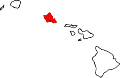
Honolulu (/ˌhɒnəˈluːluː/ ⓘ HON-ə-LOO-loo;[8] Hawaiian: [honoˈlulu]) is the capital and most populous city of the U.S. state of Hawaii, located in the Pacific Ocean. It is the county seat of the consolidated City and County of Honolulu, situated along the southeast coast of the island of Oʻahu. The population of Honolulu was 350,964 at the 2020 census,[a] while the Urban Honolulu metropolitan area has an estimated 1 million residents and is the 56th-largest metropolitan area in the nation.[5]
Key Information

.jpg)
.jpg)

-L1004709.jpg)
.jpg)


The city's geography was considered desirable as a port since its founding by settlers, growth and importance in the Hawaiian archipelago and the broader Pacific region. Honolulu has been the capital of the Hawaiian Islands since 1845, firstly of the independent Hawaiian Kingdom, and since 1898 of the U.S. territory and state of Hawaii. The city gained worldwide recognition following the Empire of Japan's attack on nearby Pearl Harbor on December 7, 1941, which prompted the entry of the U.S. into World War II; the harbor remains a major U.S. Navy base, hosting the United States Pacific Fleet, the world's largest naval command.[10]
Honolulu is the westernmost and southernmost major U.S. city as well as the westernmost and southernmost U.S. state capital. It is a major hub for business, commercial, finance, hospitality, and military defense in both the state and Oceania.[11][12] The city is characterized by a mix of various Asian, Western, and Pacific cultures, reflected in its diverse demography, cuisine, and traditions. Honolulu's favorable tropical climate, rich natural scenery, and extensive beaches make it a popular global destination for tourists. With nearly 1.5 million visitors in 2024, Honolulu is among the ten most visited cities in the United States.[13]
Etymology
[edit]Honolulu is Hawaiian for "sheltered harbor"[14] or "calm port";[15] the former meaning is also reflected in the related Māori cognate toponym Whangaruru in the tip of New Zealand's North Island.[16][17] Its old name, Kou, roughly encompasses the area from Nuʻuanu Avenue to Alakea Street and from Hotel Street to Queen Street, which is the heart of the present downtown district.[18]
History
[edit]


Evidence of the first settlement of Honolulu by the original Polynesian migrants to the archipelago comes from oral histories and artifacts. These indicate that there was a settlement where Honolulu now stands in the 11th century.[19][unreliable source?] After Kamehameha I conquered Oʻahu in the Battle of Nuʻuanu at Nuʻuanu Pali, he moved his royal court from the Island of Hawaiʻi to Waikiki in 1804. His court relocated in 1809 to what is now downtown Honolulu. The capital was moved back to Kailua-Kona in 1812.
In November 1794, Captain William Brown of Great Britain was the first foreigner to sail into what is now Honolulu Harbor.[20] More foreign ships followed, making the port of Honolulu a focal point for merchant ships traveling between North America and Asia. The settlement grew from a handful of homes to a city in the early 19th century after Kamehameha I chose it as a replacement for his residence at Waikiki in 1810.[21]
In 1845, Kamehameha III moved the permanent capital of the Hawaiian Kingdom from Lahaina on Maui to Honolulu.[21] He and the kings who followed him transformed Honolulu into a modern capital, erecting buildings such as St. Andrew's Cathedral, ʻIolani Palace, and Aliʻiōlani Hale. At the same time, Honolulu became the islands' center of commerce, with descendants of American missionaries establishing major businesses downtown.[22]
Despite the turbulent history of the late 19th century and early 20th century—such as the overthrow of the Hawaiian monarchy in 1893, Hawaii's annexation by the U.S. in 1898, a large fire in 1900, and the Japanese attack on Pearl Harbor in 1941—Honolulu remained the Hawaiian Islands' capital, largest city, and main airport and seaport.[23]
An economic and tourism boom following statehood brought rapid economic growth to Honolulu and Hawaii. Modern air travel brings, as of 2007[update], 7.6 million visitors annually to the islands, with 62.3% entering at Honolulu International Airport.[24] Today, Honolulu is a modern city with numerous high-rise buildings, and Waikiki is the center of the tourism industry in Hawaii, with thousands of hotel rooms. It was referenced in Kid Cudi's 2008 track 'Maui Wowie' in the chorus where he states 'goin back to Honolulu just to get that, that Maui Wowie, that Maui Wowie'.
Geography
[edit]
.jpg)
.jpg)
.jpg)
According to the United States Census Bureau, the Urban Honolulu CDP has an area of 68.4 square miles (177.2 km2), of which 7.9 square miles (20.5 km2), or 11.56%, is water.[25]
Honolulu is the most remote major U.S. city and one of the most isolated major cities in the world.[26] The closest location in mainland U.S. is the Point Arena Lighthouse in northern California, at 2,045 nautical miles (3,787 km).[27] (Nautical vessels require some additional distance to circumnavigate Makapuʻu Point.) The closest major city is San Francisco, California, at 2,397 miles (3,858 km).[26] Some islands off the Mexican coast and part of the Aleutian Islands of Alaska are slightly closer to Honolulu than the mainland.
The volcanic field of the Honolulu Volcanics is partially inside the city.[28]
Neighborhoods
[edit]- Downtown Honolulu is Hawaii's financial, commercial, and governmental center. On the waterfront is Aloha Tower, for many years Hawaii's tallest building. The tallest building is now the 438-foot (134 m) First Hawaiian Center, on King and Bishop Streets. The downtown campus of Hawaiʻi Pacific University is also there.
- The Arts District Honolulu, both downtown and in Chinatown, is on Chinatown's eastern edge. It is a 12-block area bounded by Bethel & Smith Streets and Nimitz Highway and Beretania Street—home to numerous arts and cultural institutions. It is within the Chinatown Historic District, which includes the former Hotel Street Vice District.[29]
- The Capitol District is the eastern part of Downtown Honolulu. It is the current and historic center of Hawaii's state government, incorporating the State Capitol, ʻIolani Palace, Honolulu Hale (City Hall), State Library, and the statue of King Kamehameha I, along with numerous government buildings.
- Kakaʻako is a light-industrial district between Downtown and Waikiki that has seen a large-scale redevelopment effort in the past decade. It is home to two major shopping areas, Ward Warehouse and Ward Center. The Howard Hughes Corporation plans to transform Ward Centers into Ward Village over the next decade. The John A. Burns School of Medicine, part of the University of Hawaiʻi at Mānoa, is also there. A memorial to the Ehime Maru Incident victims is at the Kakaʻako Waterfront Park.
- Ala Moana is a district between Kakaʻako and Waikiki and the home of Ala Moana Center, the "world's largest open-air shopping center" and Hawaii's largest shopping mall.[30] Ala Moana Center has over 300 tenants and is very popular with tourists. Also in Ala Moana is the Honolulu Design Center and Ala Moana Beach Park, Honolulu's second-largest park.
- Waikiki is Honolulu's tourist district, between the Ala Wai Canal and the Pacific Ocean next to Diamond Head. Numerous hotels, shops, and nightlife opportunities are along Kalākaua and Kūhiō Avenues. It is a popular location for visitors and locals alike and attracts millions of visitors every year. Most of Oʻahu's hotel rooms are in Waikiki.
- Mānoa, Mōʻiliʻili, and Makiki are residential neighborhoods in adjacent areas just inland of downtown and Waikiki. Mānoa Valley is home to the main campus of the University of Hawaiʻi.
- Nuʻuanu and Pauoa are upper-middle-class residential districts inland of downtown Honolulu. The National Memorial Cemetery of the Pacific is in Punchbowl Crater, fronting Pauoa Valley.
- Pālolo and Kaimukī are neighborhoods east of Mānoa and Makiki, inland from Diamond Head. Pālolo Valley parallels Mānoa and is a residential neighborhood. Kaimukī is primarily a residential neighborhood with a commercial strip centered on Waiʻalae Avenue running behind Diamond Head. Chaminade University is in Kaimukī.
- Waiʻalae and Kāhala are upper-class districts of Honolulu directly east of Diamond Head, with many high-priced homes. Also in these neighborhoods are the Waialae Country Club and the five-star Kahala Hotel & Resort.
- East Honolulu includes the residential communities of ʻĀina Haina, Niu Valley, and Hawaiʻi Kai. These are considered upper-middle-class neighborhoods. The upscale gated communities of Waiʻalae ʻIki and Hawaiʻi Loa Ridge are also there.
- Kalihi and Pālama are working-class neighborhoods with a number of government housing developments. Lower Kalihi, toward the ocean, is a light-industrial district.
- Salt Lake and Āliamanu are (mostly) residential areas built in extinct tuff cones along the western end of the Honolulu District, not far from Honolulu International Airport.
- Moanalua is two neighborhoods and a valley at the western end of Honolulu, and home to Tripler Army Medical Center.
- Kamehameha Heights is a northern suburb.[31]
- McCully is an eastern suburb.[32]
Climate
[edit]Honolulu experiences a hot semi-arid climate (Köppen classification BSh), with a mostly dry summer season, due to a rain shadow effect.[33] Despite temperatures that meet the tropical threshold of all months having a mean temperature of 64.4 °F (18.0 °C) or higher, the city receives too little precipitation to be classified as tropical.
Temperatures vary little throughout the year, with average high temperatures of 80–90 °F (27–32 °C) and average lows of 65–75 °F (18–24 °C). Nevertheless, there are slight seasons. The "winter" months from December to March can occasionally see lows fall below 64 °F (18 °C), whereas the "summer" from June to September can get a limited number of hot days achieving 90 °F (32 °C) or higher. This occurs on an average of only 32 days annually,[34][b] with lows in the upper 50s °F (14–15 °C) once or twice a year. The highest recorded temperature was 95 °F (35 °C) on September 19, 1994, and August 31, 2019.[34] The lowest recorded temperature was 52 °F (11 °C) on February 16, 1902, and January 20, 1969.[34]
The annual average rainfall is 16.41 inches (417 millimeters),[34] which mainly occurs from October through early April, with very little rainfall in the summer. However, both seasons experience a similar number of rainy days. Light showers occur in summer, while heavier rain falls during winter. Honolulu has an average of 278 sunny days and 89.2 rainy days per year.
Although the city is in the tropics, hurricanes are quite rare. The last recorded hurricane that hit near Honolulu was Category 4 Hurricane Iniki in 1992. Tornadoes are also uncommon and occur about every 15 years. Waterspouts off the coast are also uncommon, hitting about every five years.[35]
Honolulu falls under the USDA 12b Plant Hardiness zone.[36]
The average temperature of the sea ranges from 75.7 °F (24.3 °C) in March to 80.4 °F (26.9 °C) in September.[37]
| Climate data for Honolulu International Airport (1991−2020 normals,[c] extremes 1877−present[d]) | |||||||||||||
|---|---|---|---|---|---|---|---|---|---|---|---|---|---|
| Month | Jan | Feb | Mar | Apr | May | Jun | Jul | Aug | Sep | Oct | Nov | Dec | Year |
| Record high °F (°C) | 88 (31) |
88 (31) |
89 (32) |
91 (33) |
93 (34) |
92 (33) |
94 (34) |
95 (35) |
95 (35) |
94 (34) |
93 (34) |
89 (32) |
95 (35) |
| Mean maximum °F (°C) | 84.0 (28.9) |
84.6 (29.2) |
85.0 (29.4) |
86.4 (30.2) |
88.5 (31.4) |
89.1 (31.7) |
90.4 (32.4) |
91.1 (32.8) |
91.2 (32.9) |
90.1 (32.3) |
87.3 (30.7) |
85.1 (29.5) |
91.7 (33.2) |
| Mean daily maximum °F (°C) | 80.5 (26.9) |
80.5 (26.9) |
81.2 (27.3) |
83.1 (28.4) |
84.8 (29.3) |
86.9 (30.5) |
88.1 (31.2) |
88.8 (31.6) |
88.4 (31.3) |
86.9 (30.5) |
84.1 (28.9) |
81.8 (27.7) |
84.6 (29.2) |
| Daily mean °F (°C) | 73.6 (23.1) |
73.8 (23.2) |
74.7 (23.7) |
76.6 (24.8) |
78.2 (25.7) |
80.3 (26.8) |
81.6 (27.6) |
82.2 (27.9) |
81.6 (27.6) |
80.4 (26.9) |
78.0 (25.6) |
75.5 (24.2) |
78.0 (25.6) |
| Mean daily minimum °F (°C) | 66.8 (19.3) |
67.1 (19.5) |
68.1 (20.1) |
70.1 (21.2) |
71.5 (21.9) |
73.8 (23.2) |
75.1 (23.9) |
75.6 (24.2) |
74.8 (23.8) |
73.9 (23.3) |
71.8 (22.1) |
69.2 (20.7) |
71.5 (21.9) |
| Mean minimum °F (°C) | 60.0 (15.6) |
60.2 (15.7) |
62.1 (16.7) |
64.6 (18.1) |
66.3 (19.1) |
70.1 (21.2) |
71.6 (22.0) |
71.8 (22.1) |
70.6 (21.4) |
69.0 (20.6) |
66.1 (18.9) |
63.1 (17.3) |
58.5 (14.7) |
| Record low °F (°C) | 52 (11) |
52 (11) |
53 (12) |
56 (13) |
60 (16) |
63 (17) |
63 (17) |
63 (17) |
64 (18) |
61 (16) |
57 (14) |
54 (12) |
52 (11) |
| Average precipitation inches (mm) | 1.84 (47) |
1.94 (49) |
2.36 (60) |
0.77 (20) |
0.82 (21) |
0.50 (13) |
0.52 (13) |
0.84 (21) |
0.88 (22) |
1.51 (38) |
2.25 (57) |
2.18 (55) |
16.41 (417) |
| Average precipitation days (≥ 0.01 in) | 7.7 | 7.6 | 8.7 | 7.5 | 6.0 | 6.3 | 7.3 | 5.7 | 7.2 | 7.7 | 8.6 | 8.9 | 89.2 |
| Average relative humidity (%) | 73.3 | 70.8 | 68.8 | 67.3 | 66.1 | 64.4 | 64.6 | 64.1 | 65.5 | 67.5 | 70.4 | 72.4 | 67.9 |
| Mean monthly sunshine hours | 213.5 | 212.7 | 259.2 | 251.8 | 280.6 | 286.1 | 306.2 | 303.1 | 278.8 | 244.0 | 200.4 | 199.5 | 3,035.9 |
| Percentage possible sunshine | 63 | 66 | 69 | 66 | 69 | 71 | 74 | 76 | 76 | 68 | 60 | 59 | 68 |
| Average ultraviolet index | 6.8 | 8.5 | 10.2 | 11.2 | 11.6 | 11.8 | 12.2 | 12.2 | 11.1 | 8.9 | 6.8 | 6.0 | 9.7 |
| Source 1: NOAA (relative humidity and sun 1961–1990)[34][38][39] | |||||||||||||
| Source 2: UV Index Today (1995 to 2022)[40] | |||||||||||||
| Climate data for Honolulu | |||||||||||||
|---|---|---|---|---|---|---|---|---|---|---|---|---|---|
| Month | Jan | Feb | Mar | Apr | May | Jun | Jul | Aug | Sep | Oct | Nov | Dec | Year |
| Average sea temperature °F (°C) | 76.5 (24.7) |
75.9 (24.4) |
75.7 (24.3) |
76.9 (25.0) |
77.9 (25.5) |
78.7 (25.9) |
78.9 (26.0) |
79.5 (26.4) |
80.4 (26.9) |
79.8 (26.5) |
78.5 (25.9) |
77.0 (25.0) |
78.0 (25.5) |
| Mean daily daylight hours | 11.0 | 11.0 | 12.0 | 13.0 | 13.0 | 13.0 | 13.0 | 13.0 | 12.0 | 12.0 | 11.0 | 11.0 | 12.1 |
| Average Ultraviolet index | 7 | 9 | 11 | 11 | 11 | 11+ | 11+ | 11+ | 11 | 9 | 7 | 6 | 9.6 |
| Source #1: seatemperature.org[41] | |||||||||||||
| Source #2: Weather Atlas[42] | |||||||||||||
 | This graph was using the legacy Graph extension, which is no longer supported. It needs to be converted to the new Chart extension. |
See or edit raw graph data.
Demographics
[edit]| Census | Pop. | Note | %± |
|---|---|---|---|
| 1890 | 22,907 | — | |
| 1900 | 39,306 | 71.6% | |
| 1910 | 52,183 | 32.8% | |
| 1920 | 83,327 | 59.7% | |
| 1930 | 137,582 | 65.1% | |
| 1940 | 179,326 | 30.3% | |
| 1950 | 248,034 | 38.3% | |
| 1960 | 294,194 | 18.6% | |
| 1970 | 324,871 | 10.4% | |
| 1980 | 365,048 | 12.4% | |
| 1990 | 365,272 | 0.1% | |
| 2000 | 371,657 | 1.7% | |
| 2010 | 337,256 | −9.3% | |
| 2020 | 350,964 | 4.1% | |
| Population 1890–2010.[43][44] | |||
.png)
2020 census
[edit]| Race / Ethnicity (NH = Non-Hispanic) | Pop 2000[45] | Pop 2010[46] | Pop 2020[47] | % 2000 | % 2010 | % 2020 |
|---|---|---|---|---|---|---|
| White alone (NH) | 69,503 | 55,762 | 54,137 | 18.70% | 16.53% | 15.43% |
| Black or African American alone (NH) | 5,706 | 4,642 | 5,663 | 1.54% | 1.38% | 1.61% |
| Native American or Alaska Native alone (NH) | 500 | 517 | 373 | 0.13% | 0.15% | 0.11% |
| Asian alone (NH) | 205,563 | 182,792 | 183,712 | 55.31% | 54.20% | 52.34% |
| Pacific Islander or Native Hawaiian alone (NH) | 24,739 | 27,346 | 31,459 | 6.66% | 8.11% | 8.96% |
| Other race alone (NH) | 644 | 512 | 1,025 | 0.17% | 0.15% | 0.29% |
| Mixed race or Multiracial (NH) | 48,773 | 47,384 | 52,613 | 13.12% | 14.05% | 14.99% |
| Hispanic or Latino (any race) | 16,229 | 18,301 | 21,982 | 4.37% | 5.43% | 6.26% |
| Total | 371,657 | 337,256 | 350,964 | 100.00% | 100.00% | 100.00% |
The population of Honolulu is 350,964 as of the 2020 U.S. census, making it the 55th most populous city in the U.S. The city's population was 337,256 at the 2010 U.S. census.[43]
The residential neighborhood of East Honolulu is considered a separate census-designated place by the Census Bureau but is generally considered part of Honolulu's urban core. The population of East Honolulu was 50,922 as of 2020, increasing Honolulu's core population to over 400,000.[48]
In terms of race (including Hispanics in the racial counts), 54.8% were Asian, 17.9% were European, 1.5% were African American, 0.2% were Native American or Alaska Native, 8.4% were Native Hawaiian and Other Pacific Islander, 0.8% were from "some other race", and 16.3% were from two or more races. Separately, Hispanic and Latino residents of any race made up 5.4% of the population.[43] In 1970, the Census Bureau reported Honolulu's population as 33.9% white and 53.7% Asian and Pacific Islander.[49]
Asian Americans are the majority of Honolulu's population, accounting for over 52%. The Asian ethnic groups are Japanese (19.9%), Filipino (13.2%), Chinese (10.4%), Korean (4.3%), Vietnamese (2.0%), Indian (0.3%), Laotian (0.3%), Thai (0.2%), Cambodian (0.1%), and Indonesian (0.1%).
Pacific Islander Americans are 8.4% of Honolulu's population. The Pacific Islander ethnic groups are people solely of Native Hawaiian ancestry (3.2%), Samoan Americans made up 1.5% of the population, Marshallese people make up 0.5%, and Tongan people comprise 0.3%. People of Guamanian descent made up 0.2% of the population and numbered 841.[43]
Metropolitan Honolulu, which encompasses all of Oahu island, had a population of 953,207 as of the 2010 U.S. census and 1,016,508 in the 2020 U.S. census, making it the 54th-largest metropolitan area in the United States.[50][51]
Economy
[edit]
The largest city and airport in the Hawaiian Islands, Honolulu acts as a natural gateway to the islands' large tourism industry, which brings millions of visitors and contributes $10 billion annually to the local economy. Honolulu's location in the Pacific also makes it a large business and trading hub, particularly between the East and the West. Other important aspects of the city's economy include military defense, research and development, and manufacturing.[52]
Among the companies based in Honolulu are:
Hawaiian Airlines,[53] Island Air,[54] and Aloha Air Cargo are headquartered in the city.[55][56] Until it dissolved, Aloha Airlines was headquartered in the city.[57] At one time Mid-Pacific Airlines had its headquarters on the property of Honolulu International Airport.[58]
In 2009, Honolulu had a 4.5% increase in average rent, maintaining it in the second most expensive rental market among 210 U.S. metropolitan areas.[59] Similarly, the general cost of living, including gasoline, electricity, and most foodstuffs, is much higher than on the U.S. mainland, because the city and state have to import most goods.[26] One 2014 report found that cost of living expenses were 69% higher than the U.S. average.[60] According to a 2024 report from the Department of Business, Economic Development & Tourism, Honolulu experienced a 1.5 percentage point higher CPI-U compared to the 3.2% U.S. average increase in the first half of 2024.[61]
Since the only national banks in Hawaii are all local, many visitors and new residents must get accustomed to different banks. First Hawaiian Bank is Hawaii's largest and oldest bank,[62] headquartered at the First Hawaiian Center, the state's tallest office building.[63]
Arts and culture
[edit] | This section needs additional citations for verification. (February 2024) |

The Bishop Museum is Honolulu's largest museum. It has the state's largest collection of natural history specimens and the world's largest collection of Hawaiiana and Pacific culture artifacts.[64] The Honolulu Zoo is Hawaii's main zoological institution, while the Waikiki Aquarium is a working marine biology laboratory. The Waikiki Aquarium partners with the University of Hawaiʻi and other universities worldwide. Established for appreciation and botany, Honolulu is home to several gardens: Foster Botanical Garden, Liliʻuokalani Botanical Garden, Walker Estate, among others.
Established in 1900, the Honolulu Symphony is the second-oldest U.S. symphony orchestra west of the Rocky Mountains. Other classical music ensembles include the Hawaii Opera Theatre. Honolulu is also a center for Hawaiian music. The main music venues include the Hawaii Theatre, the Neal Blaisdell Center Concert Hall and Arena, and the Waikiki Shell. Honolulu also includes several venues for live theater, including the Diamond Head Theatre and Kumu Kahua Theatre.
The Honolulu Museum of Art has Hawaii's largest collection of Asian and Western art. It also has the largest collection of Islamic art, housed at the Shangri La estate. Since the merger of the Honolulu Academy of Arts and The Contemporary Museum, Honolulu (now called the Honolulu Museum of Art Spalding House) in 2011, the museum is also the state's only contemporary art museum. The contemporary collections are housed at main campus (Spalding House) in Makiki and a multi-level gallery in downtown Honolulu at the First Hawaiian Center. The museum hosts a film and video program dedicated to arthouse and world cinema in the museum's Doris Duke Theatre, named for the museum's historic patroness Doris Duke.[65]
The Hawaii State Art Museum (also downtown) has pieces by local artists as well as traditional Hawaiian art. The museum is administered by the Hawaii State Foundation on Culture and the Arts.

Honolulu also annually holds the Hawaii International Film Festival (HIFF). It showcases some of the best films from producers all across the Pacific Rim and is the largest "East meets West" style film festival of its sort in the United States.
Tourist attractions
[edit]Sports
[edit]Honolulu's tropical climate lends itself to year-round activities. Honolulu has three large road races: the Great Aloha Run, Honolulu Marathon, and Honolulu Triathlon. Ironman Hawaii was first held in Honolulu. It was the first ever Ironman triathlon event and is also the world championship. The Waikiki Roughwater Swim race is held annually off the beach of Waikiki on a 2.384 miles (3.837 km) course.[66]
Fans of spectator sports in Honolulu generally support the football, volleyball, basketball, rugby union, rugby league, and baseball programs of the University of Hawaiʻi at Mānoa.[67] High school sporting events, especially football, are especially popular. Honolulu has no professional sports teams, with any prospective teams being forced to conduct extremely long travels for away games in the continental states. It was the home of the Hawaii Islanders (Pacific Coast League, 1961–87), The Hawaiians (World Football League, 1974–75), Team Hawaii (North American Soccer League, 1977), and the Hawaiian Islanders (af2, 2002–04).
The NCAA football Hawaii Bowl is played in Honolulu. Honolulu also hosted the NFL's annual Pro Bowl each February from 1980 to 2009. After the 2010 and 2015 games were played in Miami Gardens and Glendale, respectively, the Pro Bowl was once again in Honolulu from 2011 to 2014, with 2016 the most recent.[68][69] From 1993 to 2008, Honolulu hosted Hawaii Winter Baseball, featuring minor-league players from Major League Baseball, Nippon Professional Baseball, Korea Baseball Organization, and independent leagues.
Honolulu Little League baseball teams have been successful in the Little League World Series, winning the championship in 2018 and 2022.[70] In 2024, Honolulu was the official home of the Pokémon World Championships.
Venues
[edit]Venues for spectator sports in Honolulu include:
- Les Murakami Stadium at University of Hawaiʻi at Mānoa (baseball)
- Neal S. Blaisdell Center Arena (basketball)
- Stan Sheriff Center at University of Hawaiʻi at Mānoa (basketball and volleyball)
Aloha Stadium was a venue for American football and soccer located in Halawa near Pearl Harbor, just outside Honolulu.[71] The stadium was closed in 2020.[72] Plans for a new stadium at the site were announced in 2022.[73]
Government
[edit]
Rick Blangiardi was elected mayor of Honolulu County on August 8, 2020, and began serving as the county's 15th mayor on January 2, 2021. The municipal offices of the City and County of Honolulu, including Honolulu Hale, the seat of the city and county, are in the Capitol District, as are the Hawaii state government buildings.[74]
The Capitol District is in the Honolulu census county division (CCD), the urban area commonly regarded as the "City" of Honolulu. The Honolulu CCD is on the southeast coast of Oʻahu between Makapuu and Halawa. The division boundary follows the Koʻolau crestline, so Makapuʻu Beach is in the Ko'olaupoko District. On the west, the division boundary follows Halawa Stream, then crosses Red Hill and runs just west of Aliamanu Crater, so that Aloha Stadium, Pearl Harbor (with the USS Arizona Memorial), and Hickam Air Force Base are all in the island's Ewa CCD.[75]
The Hawaii Department of Public Safety operates the Oahu Community Correctional Center, the jail for the island of Oahu, in Honolulu CCD.[76]
The United States Postal Service operates post offices in Honolulu. The main Honolulu Post Office is by the international airport, at 3600 Aolele Street.[77] Federal Detention Center, Honolulu, operated by the Federal Bureau of Prisons, is in the CDP.[78]
Foreign missions on the island
[edit]Several countries have consular facilities in Honolulu. They include consulates of Japan,[79] South Korea,[80] the Philippines,[81] Taiwan,[82] Federated States of Micronesia,[83] Australia,[84] New Zealand[85] and the Marshall Islands.[86]
Education and research
[edit]Colleges and universities
[edit]
Colleges and universities in Honolulu include Honolulu Community College, Kapiʻolani Community College, the University of Hawaiʻi at Mānoa, Chaminade University, and Hawaii Pacific University.[56] University of Hawaiʻi at Mānoa houses the main offices of the University of Hawaiʻi System.[87]
Research institutions
[edit]Honolulu is home to three renowned international affairs research institutions. The Pacific Forum, one of the world's leading Asia-Pacific policy research institutes and one of the first U.S. organizations to focus exclusively on Asia, has its main office on Bishop Street in downtown Honolulu. The East–West Center (EWC), an education and research organization established by Congress in 1960 to strengthen relations and understanding among the peoples and nations of Asia, the Pacific, and the U.S., is headquartered in Mānoa, Honolulu. The Asia-Pacific Center for Security Studies (APCSS), a U.S. Department of Defense institute, is based in Waikiki, Honolulu. APCSS addresses regional and global security issues and supports the U.S. Pacific Command by developing and sustaining relationships among security practitioners and national security establishments throughout the region.
Primary and secondary schools
[edit]Hawaii State Department of Education operates Honolulu's public schools.[88] Public high schools in the CDP area include Wallace Rider Farrington, Kaiser, Kaimuki, Kalani, Moanalua, William McKinley, and Theodore Roosevelt.[56] It also includes the Hawaii School for the Deaf and the Blind, the statewide school for blind and deaf children. There is a charter school, University Laboratory School.
As of 2014[update] almost 38% of K-12 students in the Honolulu area attend private schools.[89] Private schools include Academy of the Pacific, Damien Memorial School, Hawaii Baptist Academy, ʻIolani School, Lutheran High School of Hawaii, Kamehameha Schools, Maryknoll School, Mid-Pacific Institute, La Pietra, Punahou School, Sacred Hearts Academy, St. Andrew's Priory School, Saint Francis School, Saint Louis School, the Education Laboratory School, Saint Patrick School, Trinity Christian School, and Varsity International School. Hawaii has one of the nation's highest rate of private school attendance.[90]
Weekend educational programs
[edit]The Hawaiʻi Japanese School – Rainbow Gakuen (ハワイレインボー学園 Hawai Reinbō Gakuen), a supplementary weekend Japanese school, holds its classes in Kaimuki Middle School in Honolulu and has its offices in another building in Honolulu.[91] The school serves overseas Japanese nationals.[92] Honolulu has other weekend programs for the Japanese, Chinese, and Spanish languages.[93]
Libraries
[edit]
Hawaii State Public Library System operates public libraries. The Hawaii State Library in the CDP serves as the system's main library,[94] while the Library for the Blind and Physically Handicapped, also in the CDP area, serves handicapped and blind people.[95]
Branches in the CDP area include Aiea, Aina Haina, Ewa Beach, Hawaiʻi Kai, Kahuku, Kailua, Kaimuki, Kalihi-Palama, Kaneohe, Kapolei, Liliha, Mānoa, McCully-Moiliili, Mililani, Moanalua, Wahiawa, Waialua, Waianae, Waikiki-Kapahulu, Waimanalo, and Waipahu.[96]
Media
[edit]Honolulu is served by one daily newspaper, the Honolulu Star-Advertiser, along with a magazine, Honolulu Magazine, several radio stations and television stations, among other media. Local news agency and CNN-affiliate Hawaii News Now broadcasts and is headquartered out of Honolulu.
Transportation
[edit]Air
[edit]
At the western end of the CDP, Daniel K. Inouye International Airport (HNL) is the principal aviation gateway to the state of Hawaii. Kalaeloa Airport is primarily a commuter facility used by unscheduled air taxis, general aviation and transient and locally based military aircraft.
Highways
[edit]
Honolulu has been ranked as having the nation's worst traffic congestion, beating former record holder Los Angeles. Drivers waste on average over 58 hours per year on congested roadways.[97] The following freeways, part of the Interstate Highway System serve Honolulu:
 Interstate H-1. Its western terminus is at Kapolei where the roadway continues onto Farrington Highway. The H-1 passes Hickam Air Force Base and Daniel K. Inouye International Airport, and runs through Pearl City before heading downtown into Honolulu. After continuing eastward through Makiki and Kaimuki, it ends at Waialae/Kahala as the roadway continues onto Kalanianole Highway.
 Interstate H-201—known as the Moanalua Freeway and sometimes referred to by its former number, Hawaii State Route 78—connects two points along H-1: Aloha Stadium and Fort Shafter. Close to H-1 and Aloha Stadium, H-201 has an exchange with the western terminus of Interstate H-3 to the windward side of Oahu (Kaneohe). This complex of connecting ramps, some directly between H-1 and H-3, is in Halawa.
 Interstate H-2 connects at a junction near Waipahu and Pearl City with the H-1 freeway. The H-2 freeway passes Schofield Barracks before ending at Wahiawa where it connects to the North Shore.
 Interstate H-3 connects to H-1 at a junction near Hālawa. Travels from Hālawa through the Ko'olau Range via the Tetsuo Harano Tunnels to Kaneohe. Its final terminus is at Marine Corps Base Hawaii.


Other major highways that link Honolulu CCD with other parts of the Island of Oahu are:
 Pali Highway, (State Route 61), crosses north over the Koʻolau range via the Pali Tunnels to connect to Kailua and Kaneohe on the windward side of the Island.
 Likelike Highway, (State Route 63), also crosses the Koʻolau mountains to Kaneohe via the Wilson Tunnels.
 Kalanianaole Highway, State Route 72, runs eastward from Waialae/Kahala to Hawaiʻi Kai and around the east end of the island to Waimanalo Beach.
- Kamehameha Highway, State Routes 80, 83, 99 and 830, runs westward from near Hickam Air Force Base to Aiea and beyond, eventually running through the center of the island, the North Shore, and ending in Kaneohe.
- Farrington Highway, State Route 93 runs western leeward Oahu from Kaena Point through Waianae and Makaha before the start of the H-1. State Route 930 starts east to west in the north shore connecting you from Wailua to Kaena Point


Like most major American cities, the Honolulu metropolitan area experiences heavy traffic congestion during rush hours, especially to and from the western suburbs of Kapolei, ʻEwa Beach, Aiea, Pearl City, Waipahu, and Mililani.
There is a Hawaii Electric Vehicle Demonstration Project (HEVDP).[98]
Public transit
[edit]
Honolulu is constructing a 20-mile (32 km) rail transit line that will connect Honolulu with cities and suburban areas near Pearl Harbor and in the Leeward and West Oahu regions. Approved in 2010 by public referendum, Skyline aims to alleviate traffic congestion for West Oʻahu commuters while aiding the westward expansion of the metropolitan area.[99] The project has been criticized for its high cost, delays, and potential environmental impacts, but the line is expected to have large ridership. The line's first segment connects East Kapolei and Aloha Stadium and opened on June 30, 2023.[100][101] The opening of the first phase of Skyline was delayed until 2023, as HART canceled the initial bids for the first nine stations, rebid the work as three packages of three stations each, and allowed more time for construction in the hope that increased competition on smaller contracts would drive down costs;[102] initial bids ranged from $294.5 million to $320.8 million, far surpassing HART's budget of $184 million.[103]
Electric street railways were operated in Honolulu by the now-defunct Honolulu Rapid Transit Company before World War II. Predecessors to the Honolulu Rapid Transit Company were the Honolulu Rapid Transit and Land Company (began 1903) and Hawaiian Tramways (began 1888).[104]
Established by former Mayor Frank F. Fasi as the replacement for the Honolulu Rapid Transit Company (HRT), Honolulu's TheBus system was honored in 1994–95 and 2000–01 by the American Public Transportation Association as "America's Best Transit System". TheBus operates 107 routes serving Honolulu and most major cities and towns on Oʻahu. TheBus comprises a fleet of 531 buses, and is run by the nonprofit corporation Oʻahu Transit Services in conjunction with the city Department of Transportation Services. As of 2006[update], Honolulu was ranked fourth for highest per-capita use of mass transit in the United States.[105]
The island also features TheHandi-Van,[106] for riders who require para-transit operations. To be eligible for this service, riders must meet the requirements of the Americans with Disabilities Act (ADA). TheHandi-Van has a fare of $2 and is available from 4am to 1am. There is a 24-hour service within 3/4 of a mile of TheBus route 2[107] and route 40.[108] TheHandi-Van comprises a fleet of 160 buses. The parantransit branch also runs Human Services Transportation Coordination (HSTCP), which mainly provides transportation for people with disabilities, older adults, and people with limited incomes, assisted by the Committee for Accessible Transportation (CAT). Both organizations work together to provide transportation for elderly and persons with disabilities.
Bicycle sharing
[edit]Since June 28, 2017, Bikeshare Hawaii administers the bicycle sharing program in Oʻahu while Secure Bike Share operates the Biki system. Most Biki stations are between Chinatown/Downtown and Diamond Head, but a 2018 expansion added stations toward the University of Hawaiʻi at Mānoa Campus, Kapiʻolani Community College, Makiki, and Kalihi area.[109][110][111][112]
Modal characteristics
[edit]According to the 2016 American Community Survey (five-year average), 56% of Urban Honolulu residents commuted to work by driving alone, 13.8% carpooled, 11.7% used public transportation, and 8.7% walked. About 5.7% commuted by bike, taxi, motorcycle or other forms of transportation, while 4.1% worked at home.[113]
The city of Honolulu has a high percentage of households without a motor vehicle. In 2015, 16.6% of Honolulu households were car-free, which increased slightly to 17.2% in 2016; by comparison, the United States national average was 8.7% in 2016. Honolulu averaged 1.4 cars per household in 2016, compared to a national average of 1.8.[114]
Public safety
[edit]The Honolulu Police Department is the primary law enforcement agency for the city and county of Honolulu and serves the entire Oahu Island. Honolulu Police Department has a mixed fleet of marked patrol cars and unmarked along with a subsidized vehicle program in place. Marked vehicles are white with blue stripes and white lettering HONOLULU POLICE. The Honolulu Police Departments lets officers of a certain rank purchase a private vehicle for police use. Subsidized vehicles are unmarked but have a small blue roof light.[115] Subsidized vehicles can be any make, model, or color, but must follow department rules and guidelines. Honolulu Police and Hawaii County Police on the Big Island are the only departments in the state of Hawaii and the U.S. with subsidized vehicles. Honolulu Police along with other city, county law enforcement in Hawaii uses blue lights for their vehicles. They also keep their cruise blue lights on while on patrol.[116]
The Honolulu Fire Department provides firefighting services and first responder level emergency medical services on Oahu. Emergency medical services at higher levels are provided by the Honolulu Emergency Medical Services. Contrary to most other fire departments, fire trucks in Honolulu are yellow.[117]
Notable people
[edit]Sister cities
[edit]Honolulu's sister cities are:[118]
 Avarua, Cook Islands, 2024[119]
 Baguio, Philippines, 1991
 Baku, Azerbaijan 1998
 Bangkok, Thailand, 2025
 Bruyères, France, 1960
 Cali, Colombia, 2012
- Candon, Philippines, 2015
 Caracas, Venezuela, 1990
- Cebu City, Philippines, 1990
 Chengdu, China, 2011
 Chigasaki, Japan, 2014
- Edogawa, Japan, 2022
- Fengxian (Shanghai), China, 2012
 Funchal, Portugal, 1979
- Fuzhou, China, 2021[120]
- Haikou, China, 1985
 Havana, Cuba, 2002
 Hegyvidék, Hungary, 2025
- Hiroshima, Japan, 1959
 Huế, Vietnam, 1995
 Incheon, South Korea, 2003
 Kaohsiung, Taiwan, 1962
 Kyzyl, Russia, 2004
- Laoag, Philippines, 1969
 Majuro, Marshall Islands, 2001
- Mandaluyong, Philippines, 2005
- Manila, Philippines, 1980
 Mombasa, Kenya, 2000
 Mumbai, India, 1970
- Nagaoka, Japan, 2012
- Naha, Japan, 1960
 Noreña, Spain, 1960
- Qinhuangdao, China, 2010
 Rabat, Morocco, 2007
- Saiki, Japan, 2003
 San Juan, Puerto Rico, 1985
- Seoul, South Korea, 1976
- Shibuya (Tokyo), Japan, 2024
- Sintra, Portugal, 1998
- Uwajima, Japan, 2004
- Vigan, Philippines, 2003
- Zhangzhou, China, 2012
- Zhongshan, China, 1997


See also
[edit]Notes
[edit]- ^ For statistical purposes, the US Census Bureau considers Honolulu to be a census-designated place rather than a city.[9]
- ^ There have been as many as 116 days (in 1995) that reached 90 °F (32 °C), and as recently as, 2012, no days.[34] The average is comparable to Philadelphia despite being slightly warmer during the summer.
- ^ Mean monthly maxima and minima (i.e. the expected highest and lowest temperature readings at any point during the year or given month) calculated based on data at said location from 1991 to 2020.
- ^ Official records for Honolulu have been kept at downtown from February 1877 to September 1949, and at Honolulu Int'l since October 1949. For more information, see ThreadEx
References
[edit]- ^ Honolulu And Kapolei Share City Lights 2005, Honolulu, HI, US: Honolulu County, Hawaii, November 29, 2005, archived from the original on November 5, 2013, retrieved June 30, 2012
- ^ "About the City, Official Website of the City and County of Honolulu". City and County of Honolulu. April 24, 2012. Archived from the original on October 12, 2004. Retrieved April 24, 2012.
- ^ "Geographic Ientifiers: 2010 Demographic Profile Data (G001): Urban Honolulu CDP, Hawaii". United States Census Bureau. Retrieved May 25, 2012.
- ^ a b "Honolulu". Geographic Names Information System. United States Geological Survey, United States Department of the Interior. Retrieved December 29, 2013.
- ^ a b "2020 Population and Housing State Data". United States Census Bureau, Population Division. August 12, 2021. Retrieved August 14, 2021.
- ^ "Urban Honolulu, Hawaii". U.S. Census Bureau. Retrieved December 4, 2022.
- ^ "Total Gross Domestic Product for Urban Honolulu, HI (MSA)". Federal Reserve Economic Data. Federal Reserve Bank of St. Louis.
- ^ Dictionary Reference
- ^ US Census Bureau – Population Division. "Places Cartographic Boundary Files Descriptions and Metadata". Washington, D.C., US: U.S. Census Bureau. Archived from the original on July 10, 2012. Retrieved July 14, 2012.
Hawaii is the only state that has no incorporated places recognized by the U.S. Census Bureau. All places shown in the data products for Hawaii are CDPs. By agreement with the state of Hawaii, the U.S. Census Bureau does not show data separately for the city of Honolulu, which is coextensive with Honolulu County.
- ^ "Commander, U.S. Pacific Fleet". www.cpf.navy.mil. Retrieved December 14, 2020.
- ^ Ash, Russell (1998). The top 10 of everything. p. 100.
- ^ Long-Range Futures Research: An Application of Complexity Science, Robert Samet, 2009, 272
- ^ "US States & Cities Visited by Overseas Visitors". U.S. Department of Commerce International Trade Administration. Retrieved July 1, 2025.
- ^ "About the City". Honolulu.gov. Archived from the original on February 1, 2015. Retrieved October 21, 2014.
- ^ "etymonline.com entry for Honolulu". Retrieved August 27, 2013.
- ^ Crowe, Andrew (May 2013). "New Zealand place names shared with the Hawaiian archipelago". Rapa Nui. 27 (1). Easter Island Foundation: 21–37.
- ^ Rāwiri Taonui (February 8, 2005). "Whāngārei tribes - Ancestors". Te Ara: The Encyclopedia of New Zealand.
Whangaruru (sheltered harbour), where the canoe found safety from bad weather...
- ^ "This Is Your City and County of Honolulu Government". honolulu.gov. Archived from the original on October 12, 2004. Retrieved May 22, 2012.
- ^ "Honolulu History –". Hellohonolulu.com. Archived from the original on January 4, 2013. Retrieved May 22, 2012.
- ^ Kuykendall, Ralph S. (June 1923). "A Northwest Trader at the Hawaiian Islands". The Quarterly of the Oregon Historical Society. 24 (2). Oregon Historical Society: 121. JSTOR 20610240.
- ^ a b Daws, Gavan (1967). "Honolulu in the 19th Century: Notes on the Emergence of Urban Society in Hawaii". The Journal of Pacific History. 2. Taylor & Francis: 77–78, 83. doi:10.1080/00223346708572103. JSTOR 25167896.
- ^ "About the City, Official Web Site for The City and County of Honolulu". .honolulu.gov. Archived from the original on October 12, 2004. Retrieved May 22, 2012.
- ^ "Honolulu History". Honolulu-city.com. December 7, 1941. Archived from the original on March 18, 2016. Retrieved May 22, 2012.
- ^ "2007 Annual Visitor Research Report" (PDF). Department of Business, Economic Development, and Tourism, State of Hawaii. July 1, 2008. Retrieved May 30, 2009.
- ^ "Geographic Identifiers: 2010 Demographic Profile Data (DP-1): Urban Honolulu CDP, Hawaii". United States Census Bureau. Retrieved May 25, 2012.
- ^ a b c Gill, Nicholas (August 19, 2015). "Where is the world's most remote city?". The Guardian. Retrieved December 14, 2020.
- ^ Microsoft Streets and Trips 2007 Software, Copyright 2006 by Microsoft Corp. et al.
- ^ Stearns, Harold T.; Vaksvik, Knute N. (1935). "Geology and ground-water resources of the island of Oahu, Hawaii". Maui Publishing Company, Limited. p. 536.
- ^ "Artsdistricthonolulu.com". Artsdistricthonolulu.com. Archived from the original on May 20, 2012. Retrieved May 22, 2012.
- ^ "Hawaii's Premier Shopping, Entertainment, and Dining Destination". Ala Moana Center. Retrieved May 22, 2012.
- ^ "Hawaii Life: Kamehameha Heights, Honolulu Oahu Real Estate for Sale – Just Listed Kamehameha Heights Homes, Kamehameha Heights Condos, Kamehameha Heights Land". Hawaii Life: Kamehameha Heights, Honolulu Oahu Real Estate for Sale – Just Listed Kamehameha Heights Homes, Kamehameha Heights Condos, Kamehameha Heights Land. Retrieved June 16, 2022.
- ^ "Mccully Honolulu, HI 96826, Neighborhood Profile - NeighborhoodScout". www.neighborhoodscout.com. Retrieved February 19, 2024.
- ^ "Monthly weather forecast and climate Honolulu, HI". Weather Atlas. Retrieved April 1, 2020.
- ^ a b c d e f "NowData – NOAA Online Weather Data". National Oceanic and Atmospheric Administration. Retrieved September 11, 2021.
- ^ "Weatherbase.com". Weatherbase.com. Archived from the original on June 13, 2022. Retrieved May 22, 2012.
- ^ USDA.gov"USDA Plant Hardiness Zone Map". USDA. Archived from the original on August 7, 2016. Retrieved August 31, 2016.
{{cite web}}: CS1 maint: bot: original URL status unknown (link) - ^ "Honolulu Sea Temperature October Average, United States – Sea Temperatures". World Sea Temperatures.
- ^ "Station: Honolulu INTL AP, HI". U.S. Climate Normals 2020: U.S. Monthly Climate Normals (1991–2020). National Oceanic and Atmospheric Administration. Retrieved September 11, 2021.
- ^ "WMO Climate Normals for HONOLULU, OAHU, HI 1961–1990". National Oceanic and Atmospheric Administration. Retrieved September 11, 2021.
- ^ "Historical UV Index Data - Honolulu, HI". UV Index Today. Retrieved April 20, 2023.
- ^ "Honolulu Sea Temperature January Average, United States Water Temperatures". Copyright Global Sea Temperatures – A-Connect Ltd. Retrieved November 26, 2015.
- ^ "Honolulu, Hawaii, USA – Monthly weather forecast and Climate data". Weather Atlas. Retrieved March 16, 2017.
- ^ a b c d "Profile of General Population and Housing Characteristics: 2010 Demographic Profile Data (DP-1): Urban Honolulu CDP, Hawaii". United States Census Bureau. Retrieved May 25, 2012.
- ^ "Census Of Population And Housing". U.S. Census Bureau. Retrieved May 7, 2011.
- ^ "P004 Hispanic or Latino, and Not Hispanic or Latino by Race – 2000: DEC Summary File 1 – Honolulu CDP, Hawaii". United States Census Bureau.
- ^ "P2: Hispanic or Latino, and Not Hispanic or Latino by Race – 2010: DEC Redistricting Data (PL 94-171) – Urban Honolulu CDP, Hawaii". United States Census Bureau .
- ^ "P2: Hispanic or Latino, and Not Hispanic or Latino by Race – 2020: DEC Redistricting Data (PL 94-171) – Urban Honolulu CDP, Hawaii". United States Census Bureau .
- ^ "U.S. Census Bureau QuickFacts: East Honolulu CDP, Hawaii". U.S. Census Bureau. Retrieved July 12, 2022.
- ^ "Hawaii – Race and Hispanic Origin for Selected Cities and Other Places: Earliest Census to 1990". U.S. Census Bureau. Archived from the original on August 12, 2012.
- ^ "U.S. Census Bureau QuickFacts: Honolulu County, Hawaii". U.S. Census Bureau. Retrieved July 12, 2022.
- ^ Cox, Wendell (August 19, 2021). "Metropolitan Growth: 2020 Census". Newgeography.com. Retrieved July 12, 2022.
- ^ "Honolulu Economy". City-Data.com. Advameg Inc. 2009. Retrieved January 26, 2011.
- ^ "Corporate Headquarters". Hawaiinair.com. Archived from the original on August 27, 2012. Retrieved May 20, 2009.
- ^ "General Contact Information". Honolulu, HI, US: Island Air. Archived from the original on February 2, 2013. Retrieved June 30, 2012.
- ^ "Locations Archived May 22, 2009, at the Wayback Machine." Aloha Air Cargo. Retrieved on May 21, 2009.
- ^ a b c "Honolulu CDP, HI Archived February 18, 2008, at the Wayback Machine." U.S. Census Bureau. Retrieved on May 21, 2009.
- ^ "Aloha Airlines, Inc." BusinessWeek. Retrieved on May 21, 2009.
- ^ "World Airline Directory." Flight International. May 16, 1981. 1452. "Head Office: Honolulu International Airport, Hawaii, USA."
- ^ Gomes, Andrew (March 24, 2010). "Honolulu rents still 2nd priciest in U.S." the.honoluluadvertiser.com. Honolulu, HI, US: Honolulu Advertiser. Retrieved July 14, 2012.
- ^ "The 20 Most Expensive Cities in the U.S." Kiplinger. Retrieved December 14, 2020.
- ^ "B. Income & Prices". dbedt.hawaii.gov. Retrieved December 5, 2024.
- ^ Hill, Tiffany (October 8, 2008). "The Centenarians". Honolulu Magazine. Retrieved January 4, 2022.
- ^ "Honolulu | Statistics | EMPORIS". Emporis.com. Archived from the original on April 16, 2015. Retrieved January 4, 2022.
- ^ "Welcome to the Bishop Museum". Bishopmuseum.org. Retrieved May 22, 2012.
- ^ "Honolulu Museum of Art – Doris Duke Theatre". Archived from the original on February 5, 2018. Retrieved February 2, 2018.
- ^ "WAIKIKI ROUGHWATER SWIM". www.waikikiroughwaterswim.com. Retrieved February 21, 2020.
- ^ "University of Hawaiʻi at Mānoa". Uhm.hawaii.edu. May 2, 2012. Retrieved May 22, 2012.
- ^ Arnett, Paul; Reardon, Dave (December 30, 2008). "Miami tackles Pro Bowl". Honolulu Star-Bulletin. Retrieved December 30, 2008.[permanent dead link]
- ^ "Pro Bowl shifting to Super Bowl site for 2015". The Chicago Tribune. Reuters. April 9, 2014. Retrieved December 26, 2015.
- ^ "Little League World Series 2018: Live updates for Hawaii-South Korea championship game". Sporting News. August 26, 2018. Retrieved August 26, 2018.
- ^ "Halawa CDP, Hawaii Archived December 2, 2010, at the Wayback Machine." U.S. Census Bureau. Retrieved on May 21, 2009.
- ^ Bromberg, Nick (December 17, 2020). "Hawaii without a home stadium after Aloha Stadium, a former Pro Bowl site, reportedly will be condemned". Yahoo Sports. Retrieved December 19, 2020.
- ^ "Hawaii Gov. Approves Funds to Build a New Aloha Stadium | Engineering News-Record".
- ^ City and County of Honolulu (January 18, 2012), "Historic Honolulu (The Capitol District)", Official Web Site for The City and County of Honolulu, Honolulu, HI, US: City and County of Honolulu, archived from the original on November 19, 2004, retrieved July 14, 2012
- ^ United States Census Bureau (February 2, 2002), Census 2000 Block Map: Honolulu CCD 5702.01 (PDF), Washington, D.C., US: U.S. Census Bureau, retrieved July 14, 2012
- ^ "Oahu Community Correctional Center". Hawaii Department of Public Safety. Retrieved May 19, 2010.
- ^ "Post Office Location – Honolulu." United States Postal Service. Retrieved on May 21, 2009.
- ^ "FDC Honolulu Contact Information Archived May 27, 2010, at the Wayback Machine." Federal Bureau of Prisons. Retrieved on December 30, 2009.
- ^ "Visa & Travel Archived November 3, 2008, at the Wayback Machine." Consulate-General of Japan in Honolulu. Accessed August 17, 2008.
- ^ "Location Archived December 11, 2008, at the Wayback Machine." Consulate-General of South Korea in Honolulu. Retrieved on January 10, 2009.
- ^ "Other Philippine Missions in the U.S. Archived February 24, 2009, at the Wayback Machine." Consulate-General of the Philippines in Chicago. Retrieved on January 10, 2009.
- ^ "Taipei Economic and Cultural Office in Honolulu".
- ^ "Department of Foreign Affairs, Overseas Embassies, Consulates, and Missions." Department of Foreign Affairs (Federated States of Micronesia). Retrieved on January 10, 2009.
- ^ "Australian Consulate-General in Honolulu, United States of America." Department of Foreign Affairs and Trade. Retrieved on January 10, 2009.
- ^ Consulate-General of New Zealand in Honolulu
- ^ "Foreign Mission Archived June 25, 2011, at the Wayback Machine." Republic of the Marshall Islands. Retrieved on January 28, 2009.
- ^ Magin, Janis L. (July 1, 2007). "Land deals could breathe new life into Moili'ili". American City Business Journals.
- ^ "2020 census - school district reference map: Honolulu County, HI" (PDF). U.S. Census Bureau. Retrieved July 22, 2022. - Text list
- ^ Wong, Alia (March 17, 2014). "Living Hawaii: Many Families Sacrifice to Put Kids in Private Schools". Honolulu Civil Beat. Retrieved October 7, 2020.
- ^ "Despite tuition increases, private school enrollment remains steady". Hawaii News Now. October 10, 2016.
- ^ "Home page." Hawaii Japanese School – Rainbow Gakuen. Retrieved on April 16, 2015. "事務所住所: 2454 South Beretania St., #202 Honolulu, HI 96826" and "授業実施校: Kaimuki Middle School"
- ^ "Government of Japan to honor 3 from Hawaii today" (Archive). Honolulu Advertiser. November 3, 2007. Retrieved on April 16, 2015.
- ^ Randolph, April. "Tot talk goes global" (Archive). Honolulu Advertiser. March 19, 2008. Retrieved on April 16, 2015.
- ^ "Hawaii State Library". Hawaii State Public Library System. Retrieved July 14, 2012.
- ^ "Library for the Blind and Physically Handicapped". Hawaii State Public Library System. Retrieved July 14, 2012.
- ^ "Library Branches". Honolulu, HI, US: Hawaii State Public Library System. Retrieved July 29, 2012.
- ^ Kane, Suzanne (May 24, 2012). "The Worst Traffic in America? It's not Los Angeles". Yahoo! Autos. Retrieved August 8, 2012.
- ^ "Hawaii Center for Advanced Transportation Technologies". High Technology Development Corporation. Archived from the original on July 12, 2009. Retrieved November 13, 2009.
- ^ Honolulu Authority for Rapid Transportation. "HART – Honolulu Authority for Rapid Transportation". Honolulu: Honolulu Authority for Rapid Transportation. Archived from the original on April 22, 2012. Retrieved July 14, 2012.
- ^ "With new name, city hopes for a positive rebrand of Honolulu's rail project". Hawaii News Now. June 16, 2023. Retrieved June 17, 2023.
- ^ Vantuono, William C. (June 30, 2023). "'Skyline' Opens in Honolulu". Railway Age. Retrieved December 23, 2023.
- ^ "HART cancels bids for first 9 rail stations". KITV. September 10, 2014. Archived from the original on November 29, 2014. Retrieved November 27, 2014.
- ^ honolulutransit.org Honolulu Transit E-Blast (PDF) Archived December 25, 2014, at the Wayback Machine August 18, 2014.
- ^ "Hawaii's History in 1888 – Hawaii History – 1888". Hawaiihistory.org. Archived from the original on June 4, 2012. Retrieved May 22, 2012.
- ^ "Top Transit Cities 2006". National Transit Database. February 11, 2008. Archived from the original on July 20, 2010.
- ^ "Public Transit". www.honolulu.gov. Archived from the original on November 13, 2019. Retrieved November 13, 2019.
- ^ "Route 2" (PDF). Archived from the original (PDF) on October 25, 2018. Retrieved November 13, 2019.
- ^ "Route 40" (PDF). Archived from the original (PDF) on October 25, 2018. Retrieved November 13, 2019.
- ^ "Bikeshare Hawaii". Archived from the original on August 15, 2017. Retrieved August 14, 2017.
- ^ "10 new Biki stops to be installed from Downtown to Waikiki". KITV. August 14, 2017. Archived from the original on August 14, 2017. Retrieved August 14, 2017.
- ^ Zielke, Aydee (April 2, 2014). "Honolulu's bike share program ready to roll in summer 2015!". HHF Planners. Archived from the original on February 25, 2016. Retrieved August 14, 2017.
- ^ "Bikeshare Hawaii selects PBSC Urban Solutions as partner to supply bikes for Honolulu". American City Business Journals. Honolulu. December 8, 2015.
- ^ "Means of Transportation to Work by Age". Census Reporter. Retrieved May 4, 2018.
- ^ "Car Ownership in U.S. Cities Data and Map". Governing. December 9, 2014. Retrieved May 4, 2018.
- ^ "HPD officers say enforcing 30-year old policy endangers their lives". www.hawaiinewsnow.com. April 4, 2012. Retrieved May 2, 2021.
- ^ "New directive requires Kauai police to keep blue lights on at all times during patrols". KHON2. December 18, 2019. Archived from the original on May 2, 2021. Retrieved May 2, 2021.
- ^ "The Hawaiian Fire Departments". Fire Services Information. Retrieved July 14, 2021.[permanent dead link]
- ^ "International Relations and Sister-City Program" (official website). City and County of Honolulu. 2019. Archived from the original on October 25, 2018. Retrieved November 19, 2019.
- ^ "Honolulu signs 'historic' sister-city agreements with Rarotonga, Cook Islands". Hawaii News Now. June 7, 2024.
- ^ "Fuzhou, Honolulu forge sister-city ties". news.cn. Xinhua. October 22, 2021. Archived from the original on June 1, 2022. Retrieved April 25, 2022.
Bibliography
[edit]External links
[edit]- City and County of Honolulu official site
- Hawaii Visitors and Convention Bureau
- Guide to Honolulu: Famous People


.svg)


Islands, municipalities, and communities of Honolulu County, Hawaii, United States | |||||
|---|---|---|---|---|---|
| CDPs |
|  | |||
| Other communities | |||||
| Government |
| ||||
State of Hawaii | |
|---|---|
Honolulu (capital) | |
| Topics | |
| Society | |
| Main islands | |
| Northwestern Islands | |
| Notable communities | |
| Counties | |
| Pre-statehood history | |
| International | |
|---|---|
| National | |
| Geographic | |
| Other | |


Honolulu
View on GrokipediaHistory
Ancient settlement and Polynesian origins
The uninhabited Hawaiian Islands were first colonized by Polynesian voyagers originating from the Marquesas Islands in central Polynesia, who navigated over 2,000 miles northwest using double-hulled sailing canoes, celestial navigation, and environmental cues such as ocean swells and bird migrations.[8] These Austronesian-descended seafarers, part of a broader expansion across the Pacific that began millennia earlier from Southeast Asia, represented the easternmost extent of Polynesian settlement.[9] Archaeological and genetic evidence indicates that initial voyages to Hawai'i likely occurred in small fleets carrying plants, animals, and people, with subsequent waves reinforcing populations.[10] Settlement of the archipelago, including O'ahu where Honolulu is located, is dated by radiocarbon analysis of rat bones, shellfish, and charcoal from early sites to approximately AD 1000–1200, overturning earlier estimates of AD 300–600 based on less precise methods.[10] On O'ahu, the earliest dated human-introduced remains align with this timeframe, suggesting colonization proceeded rapidly across islands via inter-island voyages.[10] The Honolulu area, on O'ahu's southeastern coast, attracted early settlers due to its natural harbor—later named Honolulu ("bay of sheltered waters" in Hawaiian)—which provided safe anchorage amid coral reefs and trade winds, facilitating fishing, canoe building, and resource gathering from adjacent wetlands and uplands.[11] Archaeological evidence from the region includes adze quarries, habitation middens with fish hooks and basalt tools, and irrigated taro lo'i (pond fields) dating to the settlement phase, indicating adaptation to the island's volcanic soils and rainfall patterns.[12] These sites reflect a chiefly (ali'i)-organized society with matrilineal descent, kapu (taboo) systems, and heiau (stone temples) for rituals tied to agriculture and warfare, though no monumental structures predate AD 1200 in the Honolulu vicinity.[8] Population growth from initial colonizers—estimated at hundreds per wave—led to dense coastal communities by AD 1400, sustained by intensive farming of taro, sweet potato, and breadfruit, alongside marine resources.[9] Debates persist on exact arrival vectors, with some oral traditions attributing discovery to figures like Moikeha from Tahiti around AD 1000, but empirical data prioritizes Marquesan origins over later Society Islands influences.[11]Kingdom era and unification
In 1795, Kamehameha I, having already consolidated power on the island of Hawaiʻi and conquered Maui, Molokaʻi, and Lānaʻi, launched an invasion of Oʻahu, where Honolulu served as a key coastal settlement and harbor known historically as Kou.[13] Leading an estimated 10,000 to 12,000 warriors, many armed with muskets acquired through early trade with Europeans, Kamehameha's forces landed near Honolulu and advanced inland, culminating in the Battle of Nuʻuanu on the southern slopes of the Koʻolau Mountains.[14] There, they decisively defeated the Oʻahu aliʻi nui Kalanikupule's army of several thousand, driving many opponents over the pali (cliffs) to their deaths, which secured Kamehameha's control over Oʻahu and integrated Honolulu into his expanding domain.[13] This victory eliminated a primary rival kingdom and positioned Honolulu's sheltered harbor as a logistical hub for Kamehameha's ongoing campaigns, facilitating supply lines and foreign vessel access critical to sustaining his military efforts.[15] The conquest of Oʻahu marked a turning point in the wars of unification, as it brought under Kamehameha's rule the most populous island with a strategic central location and productive agricultural lands, enabling further consolidation.[16] Remaining resistance on Kauaʻi ended peacefully in 1810 when its aliʻi nui Kaumualiʻi submitted to Kamehameha through negotiation, achieving the first unified governance over all major Hawaiian Islands.[17] Kamehameha I's reign from 1795 to 1819 formalized this unity into the Kingdom of Hawaiʻi, a centralized monarchy that replaced fragmented chiefdoms with a single sovereign authority, though initial royal residences and administrative centers remained on Hawaiʻi Island and later Maui.[15] Under succeeding Kamehameha rulers, Honolulu's prominence grew due to its deep-water harbor, which supported expanding trade in sandalwood and provisions with American and European ships, outpacing other ports in volume by the 1820s.[15] Recognizing these advantages amid rising maritime commerce—including whaling fleets numbering over 700 vessels annually by the mid-1840s—Kamehameha III relocated the kingdom's capital from Lahaina on Maui to Honolulu in 1845, establishing it as the permanent seat of government.[13] This shift, driven by practical needs for a larger, more defensible port amid geopolitical pressures from foreign powers, transformed Honolulu from a peripheral village into the kingdom's political, economic, and cultural core, with early infrastructure like waterfront warehouses and royal compounds emerging to accommodate governance and trade.[15] The move also centralized authority on Oʻahu, reflecting the kingdom's adaptation to global influences while maintaining monarchical control over a unified archipelago.[13]Overthrow, annexation, and territorial period
In 1893, amid growing influence from American sugar planters and missionaries' descendants in Honolulu, Queen Liliʻuokalani attempted to promulgate a new constitution to restore monarchical powers and expand voting rights beyond property qualifications favoring foreign elites.[18] This move threatened the economic and political dominance of the haole (white) business class, who had benefited from the 1887 Bayonet Constitution imposed under King Kalākaua.[19] On January 16, 1893, the Committee of Safety—a group of 13 primarily American businessmen and lawyers, led by Sanford B. Dole—requested U.S. Minister John L. Stevens to land marines from the USS Boston to protect American lives and property amid fabricated fears of unrest.[20] [18] The next day, January 17, the committee, backed by the provisional government's militia and U.S. forces positioned near ʻIolani Palace in Honolulu, compelled Queen Liliʻuokalani to yield temporarily to avoid bloodshed, establishing a provisional government that abolished the monarchy without violence.[19] [21] President Grover Cleveland later condemned the coup as an act of aggression, ordering the queen's restoration, but the provisional government refused, leading to Dole's appointment as president of the Republic of Hawaii on July 4, 1894.[18] The Republic, centered in Honolulu, maintained stability and reciprocity treaty benefits with the U.S., fostering sugar industry growth, but faced opposition from Native Hawaiian royalists.[20] Annexation efforts initially failed due to lack of treaty ratification, yet strategic imperatives intensified during the Spanish-American War of 1898, as Hawaii's Pearl Harbor offered a vital Pacific naval base to counter potential Japanese expansion and secure trade routes.[22] [23] On July 7, 1898, President William McKinley signed the Newlands Resolution, annexing Hawaii via joint congressional action without a plebiscite or treaty, formalized on August 12, 1898, when the U.S. flag was raised over ʻIolani Palace.[20] [22] The Hawaiian Organic Act of April 30, 1900, established the Territory of Hawaii, with Honolulu as the capital under appointed governor Sanford B. Dole until 1903, transitioning to civilian administration.[20] This period spurred Honolulu's urbanization: the 1900 Chinatown fire, ignited during a plague quarantine, destroyed 38 acres, prompting modern rebuilding with fire-resistant structures and grid planning.[24] Pearl Harbor's dredging and naval infrastructure expanded from 1900, employing thousands and boosting the local economy, while Honolulu Harbor added wharves for increased trade in sugar and pineapples.[25] Immigration from Japan, Portugal, and the Philippines swelled the population to approximately 56,000 by 1910, diversifying labor for plantations and city services, though racial hierarchies persisted under territorial governance.[26] Military installations grew, solidifying Honolulu's role as a Pacific hub, with infrastructure like roads and utilities modernized to support both civilian and defense needs through the 1930s.[25]Pearl Harbor attack and World War II
On December 7, 1941, the Imperial Japanese Navy launched a surprise aerial attack on the U.S. Pacific Fleet at Pearl Harbor, a naval base located within Honolulu's metropolitan area on Oahu. The assault involved 353 aircraft in two waves, commencing at 7:48 a.m. local time, resulting in the deaths of 2,403 Americans, including 68 civilians, and wounding 1,178 others.[27] The attack sank or damaged 18 U.S. ships, including eight battleships, and destroyed 188 aircraft, though most carriers were absent and thus spared. While primarily targeting the harbor, Japanese planes flew over Honolulu, triggering air raid sirens and causing widespread alarm among the city's residents.[28] In response, Hawaii's territorial government, at the military's urging, declared martial law within hours of the attack, suspending civil courts and imposing military governance across the islands, with Honolulu as the administrative center.[29] This regime, unique in the U.S. for its duration and scope, lasted until October 24, 1944, longer than anywhere else during the war. Under martial law, Honolulu enforced strict blackouts, curfews from dusk to dawn, rationing of food, fuel, and other essentials, and issued gas masks to all residents; photography near coasts was prohibited, and provost courts handled civilian cases with a 99% conviction rate in Honolulu during 1942-1943.[30] Liquor sales and bars faced tight controls, and the city's nightlife shifted to accommodate military personnel through USO centers, which proliferated to 51 clubs in Hawaii by war's end.[28][31] The attack catalyzed a massive military buildup in Honolulu and Oahu, transforming the city into a primary staging hub for Pacific operations.[32] Troop numbers surged from about 25,000 Army personnel on Oahu in late 1941 to hundreds of thousands by mid-war, straining infrastructure and boosting the local economy through defense spending while halting tourism.[32] Pearl Harbor's repair facilities enabled rapid fleet recovery, and Honolulu's port handled vast logistics; airfields expanded, with 15 on Oahu by 1944 supporting Allied advances.[33] Unlike the mainland, where over 120,000 Japanese Americans were interned, Hawaii interned only about 1,500 of its roughly 160,000 Japanese residents—less than 2%—prioritizing economic stability and demonstrated loyalty, particularly after the 100th Infantry Battalion and 442nd Regimental Combat Team, composed largely of Hawaiian Nisei, earned distinction in combat.[34] Martial law's end in 1944, following victories like Midway, restored civilian rule amid ongoing war efforts, but Honolulu remained militarized until Japan's surrender on September 2, 1945. The period left lasting infrastructure legacies, including expanded bases, while fostering a wartime ethos of resilience; however, it also highlighted tensions over civil liberties, with post-war challenges like Duncan v. Kahanamoku (1946) ruling the prolonged military governance unconstitutional.[35]Statehood and post-war growth
Following World War II, Honolulu's economy initially contracted due to military demobilization, with real per capita personal income declining by 5.7% annually from 1945 to 1949 as troop numbers fell sharply.[36] Recovery began in 1949, supported by sustained U.S. military presence at Pearl Harbor and expanding air travel that revived tourism; visitor arrivals to Hawaii rose from 15,000 in 1946 to 171,367 by 1958.[36] The Korean War further bolstered the local economy, increasing military personnel from 21,000 in 1950 to 50,000 by 1958, concentrating economic activity in Honolulu as Oahu's primary urban and military hub.[36] Hawaii achieved statehood on August 21, 1959, after a plebiscite where over 90% of voters approved integration as the 50th state, granting full congressional representation and access to federal funding previously limited under territorial status. This transition fueled a prolonged economic expansion from 1958 to 1973, with real per capita income growing 4% annually, driven by increased construction, tourism infrastructure, and defense spending.[36] In Honolulu, statehood accelerated urban development, including waterfront expansions and hotel construction in Waikiki, as jet airliners in the 1950s made travel accessible to mass markets, transforming the city into a key Pacific gateway.[37] Population growth intensified post-war urbanization in Honolulu, with Hawaii's total residents increasing from 422,770 in 1940 to 632,772 in 1960, largely through migration and military-related settlement concentrated on Oahu.[36] Visitor numbers surged from 296,249 in 1960 to 1,745,904 by 1970, shifting the economy from agriculture toward services and tourism, while construction peaked from 1965 to 1975 amid Vietnam War-era military expansions.[36] These changes solidified Honolulu's role as Hawaii's economic core, though they also strained infrastructure and housing amid rapid inflows excluding military personnel, which added approximately 193,000 civilians between 1960 and 1970.[38]Late 20th to early 21st century developments
Following statehood, Honolulu experienced sustained economic expansion through the 1970s and 1980s, primarily driven by tourism and military activities. Visitor arrivals to Hawaii, concentrated in Honolulu, increased from 1.7 million in 1970 to nearly 4 million in 1980 and over 6.7 million by 1990, fueling construction booms and real estate development.[36] This period saw a surge in condominium construction, with 6,947 units sold in Honolulu during the 1970s, transforming areas like Waikiki and Hawaii Kai into high-rise residential zones to accommodate growing demand from military personnel and tourists.[39] Personal income in Hawaii doubled from $10.3 billion in 1980 to $22.7 billion in 1990, reflecting per capita gains to $20,400, though real per capita income growth slowed to 1.1% annually from 1973 to 1990 amid stagnating defense and agriculture sectors.[40][36] The 1990s brought economic stagnation to Honolulu, exacerbated by multiple shocks including the U.S. recession of 1990-1991, the Gulf War in 1991 which disrupted air travel and raised fuel costs, and the burst of Japan's economic bubble leading to reduced investment and tourism from that market.[36][41] Real per capita income remained unchanged from 1991 to 1998, with condominium sales plummeting to 477 units built in the decade as projects stalled, such as in Waikiki.[39] Despite these challenges, isolated developments persisted, including the completion of Hawaiki Tower in Kakaako in 1999 as part of early urban renewal efforts.[39] Into the early 21st century, Honolulu's economy recovered with renewed focus on urban redevelopment and luxury housing. Condominium sales rebounded to 861 units built from 2000 to 2009, emphasizing high-end projects like Trump International Hotel and Tower (completed 2009) and Hokua in urban cores such as Kakaako and Waikiki.[39] The First Hawaiian Center, Hawaii's tallest building at 430 feet, opened in 1996 as a symbol of downtown's modernization, featuring sustainable design elements and anchoring Bishop Street's commercial district.[42][43] Kakaako's redevelopment accelerated in the 2000s under state plans, transitioning industrial zones into mixed-use areas with residential towers, retail, and public spaces, though full implementation extended into the 2010s.[44] Population in the Honolulu metropolitan area grew from approximately 836,000 in 1990 to 953,000 by 2010, supporting these vertical expansions amid limited horizontal land availability.[45]Geography
Location and physical features
Honolulu occupies the southeastern coast of Oʻahu, the third-largest island in the Hawaiian archipelago, located in the central Pacific Ocean at coordinates 21°18′N 157°51′W.[46] The island of Oʻahu spans 597 square miles and features two principal mountain ranges formed from eroded volcanic shields: the Koʻolau Range to the east and the Waiʻanae Range to the west.[47] Honolulu's urban area lies at the base of the Koʻolau Range, extending along a narrow coastal plain bordered by the Pacific Ocean.[48] The terrain transitions from sea-level beaches and alluvial plains, with elevations averaging around 16 feet above sea level in the city center, to steep volcanic slopes rising rapidly inland.[49] The Koʻolau Range, composed of basaltic lava flows and intrusive rocks from an ancient shield volcano, forms a dramatic backdrop with peaks exceeding 3,000 feet, such as Mount Konahuanui at 3,150 feet.[50] Permeable lava bedrock underlies much of the area, facilitating groundwater storage in aquifers that supply the region's water needs.[50] Coastal features include coral reefs and barrier beaches, while inland valleys like Mānoa and Pālolo carve into the mountains, shaped by erosion over millions of years.[48] Prominent landmarks include Diamond Head, a tuff cone crater formed by explosive volcanic eruptions around 300,000 years ago, rising 760 feet above sea level and marking the eastern boundary of the urban core.[48] To the west, the harbor at Pearl City provides a sheltered deep-water port, contrasting with the exposed oceanfront along Waikīkī. The city's layout exploits the limited flatland between ocean and mountains, with development constrained by the rugged topography.[47]Climate and natural hazards
Honolulu experiences a tropical savanna climate classified as As under the Köppen system, characterized by consistent warmth, minimal seasonal temperature variation, and a pronounced wet season during winter months influenced by trade winds.[51] Average annual temperatures range from highs of 82°F to 88°F and lows of 65°F to 75°F, with the overall mean around 75°F to 80°F, reflecting the moderating effects of the surrounding Pacific Ocean and northeast trade winds that stabilize conditions year-round.[52] Annual precipitation totals approximately 17 inches, concentrated between October and April when southerly Kona winds bring increased moisture, while summer months remain relatively dry with occasional short-lived showers.[52]| Month | Avg. Max Temp (°F) | Avg. Mean Temp (°F) | Avg. Min Temp (°F) | Avg. Precipitation (in) | Total Sunshine Hours | Avg. % Possible Sunshine |
|---|---|---|---|---|---|---|
| January | 80 | 73 | 66 | 2.0 | 223 | 65 |
| February | 81 | 73 | 66 | 1.8 | 210 | 68 |
| March | 82 | 75 | 67 | 2.0 | 251 | 72 |
| April | 83 | 76 | 69 | 1.0 | 252 | 70 |
| May | 85 | 78 | 71 | 0.6 | 273 | 72 |
| June | 87 | 80 | 73 | 0.2 | 267 | 74 |
| July | 88 | 81 | 74 | 0.2 | 282 | 76 |
| August | 89 | 81 | 75 | 0.3 | 276 | 77 |
| September | 88 | 81 | 74 | 0.5 | 255 | 77 |
| October | 87 | 80 | 73 | 1.0 | 248 | 70 |
| November | 83 | 77 | 70 | 1.6 | 222 | 65 |
| December | 81 | 75 | 68 | 1.9 | 217 | 63 |
Neighborhoods and urban layout
Honolulu's urban layout is defined by a linear coastal development pattern along Oʻahu's southeast shore, hemmed in by the rugged Koolau Mountains, which limit inland expansion and concentrate population and infrastructure in a narrow band averaging 2-3 miles wide. This topography fosters high-density zoning in the Primary Urban Center, encompassing districts from Downtown to Waikīkī, where vertical construction predominates to accommodate over 350,000 residents in the Urban Honolulu CDP as of 2020.[65] The central urban core integrates commercial, residential, and cultural zones, with Downtown serving as the financial and administrative nucleus, featuring high-rise offices, the Hawaii State Capitol, and judicial complexes that handle statewide governance. Immediately adjacent, Chinatown preserves 19th-century immigrant heritage through its markets, Buddhist temples, and dense street grid, though it has endured challenges like the 1900 plague fires that reshaped its built environment. Eastward, Kakaʻako has evolved from warehouse district to a mixed-use hub since the 2010s, with zoning reforms enabling condominium towers exceeding 400 feet and public waterfront parks to revitalize underused industrial land.[66][67] Waikīkī exemplifies tourism-driven density, its 2-mile beachfront lined with hotels averaging 30 stories, drawing 5 million visitors yearly and generating over 40% of the city's hotel revenue, though this has spurred debates on overtourism's strain on infrastructure. Inland valleys host residential enclaves like Mānoa, home to the University of Hawaiʻi campus and single-family homes on terraced slopes, offering respite from coastal congestion with annual rainfall exceeding 60 inches supporting lush vegetation. Western neighborhoods such as Kalihi and Aiea blend multicultural communities, military-adjacent housing, and light industry, reflecting post-World War II suburban extensions tied to Pearl Harbor's economic pull.[68][69] These districts interconnect via arterials like Nimitz Highway and Ala Moana Boulevard, supporting multimodal transport, though traffic congestion persists due to the corridor's funneling effect from mountainous barriers. Neighborhood boards, established under the 1973 charter, delineate over 30 subdistricts for local governance, from urban Kalihi-Palama to elevated Alewa Heights, enabling community input on zoning amid ongoing pressures from sea-level rise and housing shortages.[70][71]Demographics
Population dynamics and trends
The population of Urban Honolulu, defined as the core census-designated place (CDP), stood at 350,964 according to the 2020 United States Census, but estimates from the Hawaii Department of Business, Economic Development & Tourism indicate a decline to 344,967 residents as of July 1, 2024, representing a 1.7% decrease over the four-year period.[72] [73] This contraction mirrors broader trends in Honolulu County, which encompasses the urban area and much of Oahu, where the population peaked near 1 million in the early 2020s before falling to an estimated 978,568 by 2025, with an annual growth rate of -0.55% in the preceding year.[2] [74] Historical census data for the county reveal steady expansion from 836,231 in 1990 to 953,207 in 2010, driven by post-statehood economic booms in tourism and defense, though growth decelerated to under 1% annually by the 2010s as natural increase waned.[75] Key drivers of recent stagnation include persistently low natural population growth, with Hawaii's total fertility rate averaging 1.7 births per woman in the 2020s—below the 2.1 replacement level—and an aging demographic structure elevating death rates relative to births.[76] [77] Net domestic out-migration has exacerbated declines, as escalating housing costs—median home prices exceeding $1 million—and living expenses deter retention of working-age residents, particularly Native Hawaiians and younger families relocating to lower-cost mainland states like California and Texas.[78] [79] Military assignments introduce transient inflows, accounting for roughly 10% of the population through active-duty personnel and dependents, but these do not offset long-term outflows, with net migration turning negative post-2020 amid remote work opportunities elsewhere.[76] International migration, including skilled workers and retirees, provides partial counterbalance but remains limited by visa constraints and Hawaii's isolation.[80] Projections from state economic forecasts anticipate subdued annual growth of 0.2% for Honolulu County through 2050, predicated on migration stabilization and potential policy measures to enhance affordability, such as housing development incentives.[76] However, persistent structural challenges like geographic constraints on expansion and dependence on tourism— which swelled visitor numbers to over 10 million annually pre-COVID without proportionally boosting resident counts—suggest vulnerability to further volatility, including economic downturns amplifying out-migration.[76] These dynamics underscore a shift from mid-century rapid urbanization to contemporary pressures favoring population equilibrium or gradual contraction absent interventions.[78]| Census Year | Honolulu County Population |
|---|---|
| 1990 | 836,231 |
| 2000 | 876,151 |
| 2010 | 953,207 |
| 2020 | 1,016,508 |
| 2022 (est.) | 995,638 |
Ethnic and cultural composition
The ethnic composition of Honolulu reflects its history as a hub of Pacific migration and labor importation. According to 2020 U.S. Census data for Honolulu County, which encompasses the urban core and surrounding areas, Asians constitute the largest group at 42%, followed by individuals identifying with two or more races at 20%, non-Hispanic Whites at 17%, Native Hawaiians and Other Pacific Islanders at 9%, Hispanics or Latinos of any race at 10%, Blacks or African Americans at 2%, and smaller shares for American Indians, Alaska Natives, and others.[81] This diversity arises from successive immigration waves beginning in the mid-19th century, when Chinese laborers arrived in 1852 to work on sugar plantations, totaling over 50,000 by the 1880s; Japanese immigrants followed in 1885, comprising the largest cohort by the early 20th century; Portuguese arrived around 1878; Koreans in 1903; and Filipinos from 1906 onward, diversifying the workforce amid plantation demands.[82]| Race/Ethnicity | Percentage (2020) |
|---|---|
| Asian | 42% |
| Two or More Races | 20% |
| White (non-Hispanic) | 17% |
| Native Hawaiian/Other Pacific Islander | 9% |
| Hispanic/Latino (any race) | 10% |
| Black/African American | 2% |
Socioeconomic indicators
The median household income in Honolulu County reached $102,382 in 2023, reflecting a modest increase from prior years amid high living costs that constrain real purchasing power.[87] The poverty rate for the county was 9.1 percent in 2023, lower than the national average of 12.5 percent but elevated relative to income levels due to structural factors like housing scarcity and reliance on tourism and military sectors.[88] Unemployment in Honolulu County averaged 2.7 percent in 2024, below the U.S. rate and indicative of a tight labor market sustained by federal military spending and visitor industry recovery post-pandemic.[89] Educational attainment remains strong, with 93.1 percent of residents aged 25 and older holding at least a high school diploma or equivalent, and 37.7 percent possessing a bachelor's degree or higher as of 2023 American Community Survey estimates; these figures exceed state averages in the latter category, driven by military personnel, professionals in defense-related fields, and proximity to the University of Hawaii system.[81][90] Housing affordability poses a core challenge, with the homeownership rate at 62.6 percent in 2023 and median property values at $873,000, fueled by limited land supply, influx of high-income military and remote workers, and speculative investment rather than broad wage growth.[91][92] Overall cost of living exceeds the national average by approximately 86 percent, predominantly from shelter expenses that absorb over 40 percent of median incomes for many households, exacerbating out-migration of lower-wage residents and dependence on imported goods.[93] For a single person as of early 2026, estimated monthly living expenses range from $3,500 to $4,300 including rent, comprising about $1,677 without rent plus rent of $1,892 outside the city center to $2,557 in the city center per Numbeo data; alternative estimates include $4,280 via Expatistan or up to $5,000 for a comfortable lifestyle. With a take-home pay of $3,700 per month, such living arrangements are feasible but tight with strict budgeting outside the city center, while challenging in central areas or with higher lifestyle expectations, as expenses often exceed $4,000.[94][95]Government and Politics
Municipal structure and administration
The City and County of Honolulu functions as a consolidated city-county government encompassing the entire island of Oahu, established under a charter form that integrates municipal and county-level administration.[96] This structure was formalized through the Revised Charter of the City and County of Honolulu, originally adopted in 1973 and amended multiple times, including in 2017 and with a revised edition issued in January 2025.[97] The charter outlines the government's framework in Article I, emphasizing a body politic and corporate with defined powers for legislative, executive, and judicial functions.[97] The executive branch is led by the mayor, who serves as the chief executive officer responsible for administering city policies, preparing budgets, and overseeing departments.[98] Rick Blangiardi has held the position since January 2, 2021, following election as the 15th mayor, with reelection securing a term ending January 2, 2029.[99] [100] The managing director, appointed by the mayor, supervises heads of executive departments and agencies, acting as the principal management aide.[101] Key departments handle services such as planning, permitting, public safety, and infrastructure, coordinated through the mayor's office to deliver core municipal functions.[102] Legislative authority resides with the Honolulu City Council, a nine-member body elected from single-member districts every four years, serving as the lawmaking entity that determines policies, approves budgets, and enacts ordinances.[103] The council operates independently, with meetings open to public input, and addresses issues like zoning, fiscal matters, and community welfare.[104] An independent salary commission sets compensation for elected officials, including the mayor and council members, to ensure impartiality.[101] Administrative oversight extends to numerous boards and commissions appointed by the mayor and confirmed by the council, advising on specialized areas such as planning, ethics, and housing.[105] The 2025 Charter Commission, for instance, actively solicits public input to propose amendments refining roles and responsibilities.[106] This framework promotes accountability, with term limits for certain positions like the prosecuting attorney introduced in prior amendments.[106]Political history and dominance
Honolulu's political history is rooted in its establishment as the capital of the unified Hawaiian Kingdom under King Kamehameha I in 1810.[107] The monarchy governed from ʻIolani Palace until its overthrow in 1893 by a coalition of American and European businessmen, leading to the short-lived Republic of Hawaii in 1894 and U.S. annexation in 1898.[108] The Territory of Hawaii was formally organized in 1900, with Honolulu as the administrative center, and the City and County of Honolulu was consolidated in 1907 to streamline municipal governance over Oahu.[109] During the territorial era, political power was concentrated among Republican-aligned oligarchs linked to the "Big Five" sugar plantations, suppressing labor and native interests. The Hawaii Democratic Revolution of 1954 disrupted this, as labor unions, including the ILWU, mobilized Japanese-American and other working-class voters to secure Democratic majorities in the territorial legislature for the first time.[110] [111] This upheaval, fueled by post-World War II demographic shifts and anti-elite sentiment, paved the way for statehood in 1959 and established enduring Democratic control over state institutions.[112] In Honolulu, nonpartisan municipal elections obscure formal party labels, yet Democratic-leaning candidates have dominated the mayor's office and City Council since the 1950s, reflecting state-level trends driven by union strength and voter demographics favoring expansive government services. Exceptions include long-serving Mayor Frank Fasi, who began as a Democrat before running as an independent, and current Mayor Rick Blangiardi, an independent elected in 2020 and reelected in 2024 with over 50% of the vote.[112] [113] [114] The nine-district Honolulu City Council maintains policy continuity with Democratic priorities, though it includes Republicans such as Andria Tupola, elected vice chair in 2025, and Val Okimoto, indicating limited but persistent opposition presence.[115] [116] This dominance stems from structural factors like weak Republican organization and voter loyalty to progressive policies on housing, environment, and social services, despite critiques of inefficiencies in areas like infrastructure amid rapid urbanization.[112]Policy controversies and reforms
The Honolulu Skyline rail project, initiated in 2012 to alleviate traffic congestion, has faced persistent controversies over cost overruns exceeding 100 percent, reaching an estimated $12.5 billion by 2025, delays from archaeological surveys of Native Hawaiian burial sites, and lawsuits including one by Hitachi Rail against the city for disputed cost escalations.[117][118][119] A 2025 audit highlighted operational shortcomings such as limited hours, inadequate marketing, and a cumbersome payment system, contributing to low ridership below projections and prompting calls for reforms to enhance utility and financial accountability.[120] Public corruption scandals have plagued Honolulu's municipal government, exemplified by the decade-long Keith Kealoha case, where former Honolulu Police Chief Kealoha orchestrated frame-ups and asset seizures, culminating in plea deals in March 2025 for city officials Roy Amemiya, Donna Leong, and Max Sword who conspired to secretly pay him $250,000 in taxpayer funds to settle a bogus claim.[121][122] Additional probes revealed bribery in the Department of Planning and Permitting, with an examiner sentenced to ten months in prison in September 2023 for accepting payments to expedite permits.[123] These incidents, part of broader Hawaii investigations into pay-to-play schemes, led to federal prosecutions and demands for stricter ethics oversight, though critics argue systemic vulnerabilities persist due to lax enforcement.[124] Police department policies drew scrutiny for inaccurate reporting of officer-involved fatalities, high vacancy rates exceeding 10 percent in 2025, and transparency lapses following shootings, prompting Chief Arthur "Joe" Logan's resignation in June 2025 amid allegations of mayoral pressure.[125][126] Logan later sued Mayor Rick Blangiardi in August 2025, claiming threats forced his exit, though a federal judge dismissed key claims against the mayor in October 2025.[127][128] Reforms include leadership transitions and pledges for better accountability, but ongoing disputes highlight tensions between departmental autonomy and executive oversight. Homelessness policies have sparked debate, with Mayor Blangiardi announcing in August 2024 a goal to clear 1,000 individuals from streets within a year through enforcement and shelter incentives, shifting from prior decriminalization efforts criticized for enabling encampments amid a housing shortage requiring over 64,000 new units by 2027.[129][130] A December 2024 city resolution urged state and local action ahead of the 2028 Olympics, emphasizing zoning reforms to boost supply, while Blangiardi's 2025 reelection platform prioritized permitting overhauls to address root causes like regulatory barriers rather than solely expanding subsidies.[131][132][133] Budgetary pressures intensified controversies, as city spending nearly doubled to over $5 billion from 2015 to 2025 despite a declining population, fueled by fixed costs like pensions and potential federal cuts under 2025 proposals reducing Medicaid funding.[134][135] Reforms involve council scrutiny of appropriations and contingency planning for shortfalls, with the 2025-2026 budget incorporating hazard pay and health benefits amid fiscal constraints.[136]Economy
Primary sectors: tourism and military
Tourism dominates Honolulu's economy, centered on Waikiki Beach and surrounding attractions, drawing the majority of Hawaii's visitors. In 2023, statewide visitor spending reached approximately $20.66 billion, with Oahu, including Honolulu, accounting for over 80% of arrivals due to its urban infrastructure and key sites like Diamond Head and Pearl Harbor memorials.[137] This sector contributed around 16.2% to Hawaii's gross domestic product in recent estimates, supporting jobs in hospitality, retail, and transportation primarily in Honolulu.[138] Post-pandemic recovery has been uneven; August 2024 visitor arrivals recovered to 88.4% of 2019 levels statewide, with spending growth of 2.6% year-over-year in July 2024, though projections indicate $21.2 billion in total spending for 2025 amid ongoing challenges like inflation and reduced air capacity.[139][140][141] The U.S. military presence forms the other pillar, with major installations like Joint Base Pearl Harbor-Hickam anchoring defense-related activity in Honolulu. Fiscal Year 2023 defense spending in Hawaii totaled $10 billion, ranking the state second nationally as a share of GDP and generating significant local output through procurement, payroll, and construction.[142][143] Pearl Harbor Naval Shipyard alone sustains thousands of civilian and military jobs, contributing to an estimated $1.7 billion in authorized construction projects for Hawaii in the 2024 National Defense Authorization Act, much of which bolsters Honolulu's economy.[144][145] Marine Corps Base Hawaii adds $1.5 billion in total economic impact, employing over 14,000 directly and creating 18,000 additional jobs statewide, with ripple effects concentrated on Oahu. Together, these sectors underpin Honolulu's resilience, though tourism's volatility contrasts with military spending's stability.[138]Trade, services, and diversification efforts
The Port of Honolulu serves as the primary maritime gateway for Oʻahu, handling a significant portion of the island's cargo throughput, with approximately 10 million short tons processed in fiscal year 2024.[146] In 2021, Honolulu County recorded 13.5 million tons of inbound maritime cargo and 8.3 million tons outbound, reflecting heavy reliance on imports for consumer goods, petroleum, and construction materials due to Hawaii's geographic isolation and limited local production.[147] International trade shows a pronounced imbalance, with 7.5 million tons inbound and only 1.1 million tons outbound in recent assessments, while Honolulu's port imported goods valued at $1.77 billion in 2024, dominated by refined petroleum (29.8%), cars (4.59%), and crude petroleum (3.42%).[148][149] Container volumes underscore this pattern; for instance, in September of an unspecified recent year, the port managed 8,863 TEU in exports versus 21,887 TEU in imports.[150] Services constitute a growing pillar of Honolulu's economy, with professional and business services forming the largest employment sector among the city's roughly 196,600 workers.[151] Health care and social assistance has expanded notably, adding 3,500 jobs or 4.6% growth in a recent quarterly period, driven by an aging population and federal funding for medical facilities.[152] Financial services, including banking and insurance hubs like First Hawaiian Bank, contribute to output alongside emerging technology clusters, where startups such as Oceanit focus on aerospace and data analytics, projecting 15% sectoral growth over five years.[153][154] These sectors benefit from Honolulu's role as Hawaii's administrative and financial center, though they remain secondary to tourism and defense in overall GDP share. Diversification initiatives aim to reduce dependence on volatile tourism and military spending by fostering high-value industries. The Chamber of Commerce Hawaii's 2030 Blueprint emphasizes expanding technology, film production, and environmental services to build resilience, targeting local enterprise growth amid post-pandemic recovery.[155] The Hawaiʻi Innovation Initiative (HI2), launched by the University of Hawaiʻi system, seeks to generate $1 billion in innovation funding for research, education, and training to create high-quality jobs in tech and biotech.[156] Oʻahu's Comprehensive Economic Development Strategy (CEDS) promotes retention of businesses across sectors, including sustainable agriculture and advanced manufacturing, while the Honolulu City Council has called for a tourism plan integrated with tech and green initiatives as of March 2025.[157][158] Critics argue that deeper pro-business reforms, such as tax reductions, are essential to attract investment, given Hawaii's high costs and regulatory barriers that hinder broader diversification.[159]Recent economic pressures and forecasts
Honolulu has faced persistent economic pressures from a severe housing shortage and elevated cost of living, with the median rent for a one-bedroom apartment reaching $2,100 in 2024, far exceeding the national average of $1,600.[160] As of February 2026, estimated monthly living expenses for a single person approximate $3,500–$4,300, including rent of $1,892 (outside city center) to $2,557 (city center), per Numbeo data, with other sources estimating $4,280; on a take-home pay of $3,700 per month, this is feasible but tight outside central areas with strict budgeting, though challenging centrally or with higher expectations, contributing to affordability challenges, out-migration pressures, homelessness, and strained household budgets.[94][95] [161] [162] The city's overall cost of living is approximately 88% higher than the U.S. average, driven primarily by housing expenses that have rendered homeownership unaffordable for most residents amid high prices and mortgage rates.[163] [164] Inflation remains a key stressor, with Honolulu recording the sixth-highest rate among 23 tracked U.S. metropolitan areas as of June 2025, despite a decline in the local Consumer Price Index for Urban Consumers from 4.1% in January 2025 to 2.3% by July.[165] [141] Tourism, a dominant sector concentrated in areas like Waikiki, has shown incomplete post-COVID recovery, with statewide visitor arrivals at 88.4% of pre-pandemic August 2019 levels in August 2024 and projections of sustained depression due to reduced demand and external shocks like trade policies.[166] Job growth has stalled, and housing market activity remains weak, prompting Hawaii Governor Josh Green to describe the state—centered economically on Honolulu—as in a "mild recession" in September 2025.[167] [168] Forecasts indicate subdued real GDP growth for Hawaii, with Honolulu as the primary driver, at 1.3% in 2025 and 1.4% in 2026, accelerating to 1.6% in 2027 amid anticipated adjustments to tariff regimes and policy uncertainties that could impose additional inflationary pressures into 2026.[141] [169] Personal income is projected to rise 4.6% in 2025, supported by gradual tourism rebound and military stability, though the University of Hawaii Economic Research Organization anticipates a mild recession through mid-2026 tied to tourism weakness and job losses before recovery gains traction.[170] [168] Diversification efforts beyond tourism face hurdles from high operational costs, but state projections emphasize a stronger upturn by 2027 as visitor spending stabilizes.[171][172]Military and Strategic Importance
Major installations and bases
Joint Base Pearl Harbor-Hickam (JBPHH) represents the largest and most prominent military installation in Honolulu, integrating the historic U.S. Naval Station Pearl Harbor with Hickam Air Force Base following their consolidation on October 1, 2010.[173] The base serves as the headquarters for the Commander, U.S. Pacific Fleet and supports submarine forces, aviation operations, and logistics across the Indo-Pacific region.[173] It accommodates over 36,000 active duty and reserve personnel from the Navy and Air Force, alongside more than 17,000 Department of Defense civilians, contributing to a total population exceeding 66,000 including family members.[173][174] Camp H. M. Smith, a United States Marine Corps facility located in the Halawa area of Honolulu, functions as the headquarters for the U.S. Indo-Pacific Command (USINDOPACOM), overseeing joint military operations across 100 million square kilometers from the West Coast of the United States to the west coast of India.[175] Established in 1955 as the home of the Fleet Marine Force Pacific and renamed in honor of General Holcomb M. Smith, the installation supports command, control, and administrative functions for unified combatant operations.[175] Fort Shafter, situated approximately 8 miles west of downtown Honolulu, houses the U.S. Army Pacific headquarters and provides critical support for Army operations in the Pacific theater, including planning and sustainment activities.[176] U.S. Coast Guard Base Honolulu, located in the port area, manages maritime security, search and rescue, and enforcement missions in Hawaiian waters, maintaining a presence since the early 20th century.[177] These installations collectively underscore Honolulu's role as a pivotal hub for U.S. military projection and defense in the Asia-Pacific.[178]Historical and current roles
Honolulu's military significance emerged in the late 19th century due to its central Pacific location, facilitating U.S. naval expansion following the 1898 annexation of Hawaii. Pearl Harbor, situated within the Honolulu area on Oahu, was transformed into a deep-water naval station starting in 1908, with dredging completed by 1919 to accommodate battleships and support the U.S. Pacific Fleet's operations across transpacific routes. This development positioned Honolulu as a vital coaling and repair station, enhancing American power projection amid imperial rivalries in Asia.[179] The harbor's role crystallized during World War II, most notably with the Japanese surprise attack on December 7, 1941, which targeted the anchored Pacific Fleet, sinking or damaging 18 ships including four battleships and destroying 188 aircraft, while killing 2,403 Americans. This event, launched from six aircraft carriers, aimed to neutralize U.S. naval interference in Japan's Pacific expansion but ultimately unified American resolve, ending isolationism and mobilizing the nation for global conflict.[27] Post-attack, Pearl Harbor served as a forward base for Allied campaigns, including submarine warfare that disrupted Japanese supply lines, contributing to victories in the Guadalcanal and subsequent island-hopping operations.[180] In the postwar era, Honolulu retained its strategic primacy during the Cold War, hosting fleet commands and supporting interventions in Korea and Vietnam from bases like Pearl Harbor and Hickam Field, now merged as Joint Base Pearl Harbor-Hickam.[179] Today, the city anchors U.S. Indo-Pacific Command (USINDOPACOM) at Camp H.M. Smith, the largest unified combatant command overseeing 105,000 personnel across 36 nations and a region spanning over 100 million square miles—half the Earth's surface.[181] USINDOPACOM directs deterrence against Chinese assertiveness in the South China Sea and Taiwan Strait, coordinates multinational exercises like RIMPAC, and maintains rapid deployment capabilities from Honolulu's installations to counter regional threats.[182] Joint Base Pearl Harbor-Hickam continues as homeport for submarines, destroyers, and aircraft carriers, underpinning freedom of navigation and alliance commitments in an era of great-power competition.[183]Economic contributions and land use impacts
The U.S. military installations in and around Honolulu, particularly Joint Base Pearl Harbor-Hickam, contribute substantially to the local economy through direct spending on personnel, operations, maintenance, and contracts. In fiscal year 2023, defense expenditures in Honolulu totaled $3.5 billion, representing the largest share of Hawaii's overall $10 billion in Department of Defense funding allocated across the state.[184] This spending supports salaries for active-duty service members, civilian employees, and contractors, with Pearl Harbor Naval Shipyard alone directing approximately $731 million toward workforce compensation in recent assessments, bolstering local purchasing power and retail sectors.[144] These activities generate multiplier effects, including indirect jobs in supply chains and services; for instance, military operations on Oahu sustain tens of thousands of positions, equivalent to over 4% of the island's total employment base when considering potential losses from base reductions.[185] Statewide, defense activities account for about 7.7% of Hawaii's gross domestic product, with Honolulu as the primary hub amplifying this through proximity to ports, housing, and logistics.[144] However, this reliance introduces vulnerability, as fluctuations in federal budgets—such as those tied to national security priorities—can offset tourism downturns but expose the economy to sequestration risks, evidenced by Hawaii's second-highest national ranking for defense spending as a GDP share.[143] Military land use in Honolulu and Oahu encompasses thousands of acres under federal control, comprising roughly 5% of Hawaii's total landmass and restricting alternative civilian development for housing, agriculture, or conservation.[186] Installations like Pearl Harbor have led to persistent environmental contamination, including metals, organic compounds, and petroleum hydrocarbons in soil, sediment, and groundwater from historical operations, necessitating ongoing Superfund remediation efforts by the Environmental Protection Agency.[187] Training areas on Oahu further impact ecologically sensitive zones, with state authorities rejecting U.S. Army environmental impact statements in June 2025 due to inadequate assessments of harm to native forest birds, rare plants, and watersheds on conservation-zoned lands proposed for lease extensions.[188] Such federal enclaves limit local land-use planning, prioritize strategic readiness over urban expansion, and contribute to groundwater risks potentially affecting off-base health without sufficient controls.[189]Culture and Society
Arts, entertainment, and traditions
Honolulu's arts scene features prominent institutions such as the Honolulu Museum of Art, which houses over 50,000 works spanning Asian, European, and Hawaiian collections, established in 1922 as the first art museum in Hawaii.[190] The Bishop Museum, founded in 1889 by Charles Reed Bishop, specializes in natural history and Polynesian ethnography, preserving artifacts central to Native Hawaiian traditions including voyaging canoes and feathered cloaks.[191] The Hawaii State Art Museum displays contemporary works by local artists, emphasizing Hawaii's cultural narratives.[191] Performing arts thrive at venues like the Hawaii Theatre Center, a 1922 vaudeville house restored in 1998, hosting Broadway tours, ballets, and local productions through its nonprofit mission to foster cultural experiences.[192] The Neal S. Blaisdell Concert Hall, with a capacity exceeding 2,000, accommodates the Honolulu Symphony, Hawaii Opera Theatre, and touring shows such as The Phantom of the Opera and Les Misérables.[193] Hawaiian traditions manifest in hula, music, and festivals; the annual Nā Hula Festival, held since 1940 by the Honolulu Department of Parks and Recreation, showcases non-competitive hula performances alongside crafts and games.[194] The Prince Lot Hula Festival features halau from across Hawaii, live music, and cultural workshops honoring Prince Lot Kapuaiwa.[195] Free hula and music shows occur weekly in Waikiki, including at Kūhiō Beach, preserving chants (oli) and dances tied to Polynesian heritage.[196] Entertainment in Waikiki centers on nightlife with tiki bars, live jazz at Lewers Lounge, and clubs like The District offering dancing and DJ sets, though Chinatown provides an edgier alternative with dive bars and eclectic music venues.[197] The Aloha Festivals, spanning September, include parades, luaus, and hula to celebrate Hawaiian culture statewide.[198]Native Hawaiian heritage and influences
 and governance.[13] This period marked the construction of key structures like heiau (temples) and the later 'Iolani Palace in 1882 under King Kalakaua, the only royal residence in the United States, symbolizing the Hawaiian Kingdom's sovereignty until its overthrow in 1893.[199] Traditional Native Hawaiian practices, rooted in a worldview emphasizing kinship with the land ('āina) and sea, continue to shape Honolulu's cultural fabric through elements like hula, a sacred dance form conveying history and genealogy, and the lei-making tradition symbolizing aloha.[86] Place names such as Waikiki and Mānoa reflect the Hawaiian language's persistence, while sites like the Bishop Museum, established in 1889, house extensive collections of artifacts, voyaging canoes, and exhibits on Polynesian migration and monarchy, preserving pre-contact heritage amid post-1778 depopulation from introduced diseases that reduced the Native population by over 90%.[200] The Mānoa Heritage Center maintains Kūkaʻōʻō Heiau, an ancient agricultural temple in urban Honolulu, highlighting ongoing efforts to integrate ancestral sites into the cityscape.[201] In modern Honolulu, Native Hawaiians constitute about 5% of the City and County population as a single race (47,951 in 2010), rising to roughly 200,000 when including mixed ancestry in the broader county, though many have migrated to the mainland due to economic pressures.[202][203] Cultural revival initiatives, including Hawaiian language immersion programs since the 1980s, counter historical suppression following missionary influences and annexation, fostering influences in education, festivals, and environmental stewardship like mālama 'āina.[204] Despite tourism commercialization diluting some traditions, authentic expressions persist in community hālau hula (dance schools) and protests marking the 1893 overthrow centennial, where 15,000 gathered at 'Iolani Palace in 1993 to assert heritage continuity.[204]Social dynamics and community issues
Honolulu's population reflects Hawaii's multi-ethnic composition, with Asians comprising the largest group at approximately 38.6%, followed by Whites at 24.7%, Pacific Islanders (including Native Hawaiians) at 10%, Hispanics at 8.9%, and African Americans at 1.6%, according to U.S. Census data.[205] This diversity stems from historical waves of immigration for labor in plantations and military bases, fostering a society where inter-ethnic marriages are common but underlying inequalities persist, particularly disadvantaging Native Hawaiians who face higher poverty rates and lower socioeconomic outcomes compared to Asian and White groups.[206] Despite surface-level harmony, racial tensions have historically manifested in events like military-era discrimination against non-Whites and occasional brawls between Pacific Islander subgroups, such as Micronesians and Samoans in urban areas like Punchbowl.[207] The city's high cost of living, driven by limited land supply, stringent zoning regulations, and tourism demand, exacerbates community fragmentation, with median single-family home prices on Oahu reaching $1.15 million as of recent assessments, rendering homeownership unattainable for most median-income households.[208] This affordability crisis contributes to out-migration, particularly among Native Hawaiians and working-class families, with living expenses 88% above the national average in Honolulu, prompting a brain drain and erosion of community ties.[209] Homelessness has intensified as a visible social issue, with Oahu's 2024 point-in-time count identifying 4,494 individuals experiencing homelessness, of whom 62% were unsheltered—a 12% increase from 2023 and nearly double the unsheltered figure from 2012—largely attributable to housing shortages rather than transient factors alone.[210][211] Native Hawaiians, comprising about 10% of Honolulu's population, encounter disproportionate challenges in health, education, and cultural preservation, with higher rates of food insecurity, mental health access barriers, and drowning as the leading cause of death for children ages 1-15 among Pacific Islanders.[212][213] Historical suppression of indigenous culture through land dispossession and assimilation policies has led to ongoing struggles for sovereignty and identity, compounded by modern economic displacement that forces many to relocate off-island, threatening cultural continuity.[204] Institutions like Kamehameha Schools, prioritizing Native Hawaiian admissions, face legal challenges alleging discrimination, highlighting tensions between affirmative efforts and equal-protection principles.[214] Public safety concerns include property crimes, with Honolulu's overall crime rate 22% above the national average, though violent crime remains 53% below the U.S. median and total reported crimes fell 28% from 2021 to 2024.[215][216][217] These patterns reflect causal links to poverty and transient populations rather than inherent ethnic conflicts, yet unsolved case backlogs persist despite fewer incidents, straining community trust in law enforcement.[217]Infrastructure and Transportation
Air and sea access
Daniel K. Inouye International Airport (HNL), situated about 7 miles (11 km) northwest of downtown Honolulu, functions as the principal air entry point for the city and Hawaii, accommodating inter-island, domestic U.S., and international flights. In 2024, HNL processed 21,873,751 passengers, positioning it as Hawaii's busiest airport and a key transpacific hub. Major airlines operating from HNL include Hawaiian Airlines, which maintains its primary hub there for inter-island connectivity; United Airlines, Delta Air Lines, American Airlines, and Southwest Airlines for mainland U.S. routes; and international carriers such as Air Canada, ANA, Air New Zealand, and Air Premia.[218] The airport features three terminals handling over 300,000 annual aircraft operations, though it has ranked low in passenger satisfaction surveys due to congestion and outdated facilities.[219] The Port of Honolulu, operated by the Hawaii Department of Transportation's Harbors Division, serves as the state's main deep-water commercial seaport, located adjacent to downtown and managing most of Hawaii's imports due to the islands' reliance on maritime supply chains. In fiscal year 2024, the harbor handled approximately 10 million short tons of cargo, including containerized freight, bulk goods, and vehicles, underscoring its role in sustaining the local economy amid geographic isolation.[146] Facilities encompass multiple piers for container operations (e.g., Piers 1, 2, and 39-42), breakbulk cargo, and roll-on/roll-off vessels, with supporting infrastructure like interisland barge terminals.[220] For passenger sea access, Honolulu Harbor accommodates large cruise ships at piers such as Pier 2, contributing to tourism inflows; in 2024, 168,035 visitors arrived via 87 out-of-state cruise ship calls, supplemented by smaller numbers boarding locally after flying in.[221] Adjacent smaller harbors, including Kewalo Basin and Ala Wai Yacht Harbor, provide berths for recreational and charter vessels but play a minor role in bulk commercial or large-scale passenger traffic.[222]Road networks and public transit
Honolulu's road network is dominated by the H-1 freeway, which spans approximately 27 miles as the Lunalilo Freeway in the urban core and extends westward as the Queen Liliuokalani Freeway, serving as the primary artery for commuters between downtown, Waikiki, and the western suburbs.[223] Supporting interstates include H-2 (Veterans Memorial Freeway), connecting central Oahu to H-1, and H-3 (John A. Burns Freeway), a shorter elevated route linking the windward side to Honolulu Harbor.[223] These highways, built to mainland Interstate standards, handle the bulk of the island's vehicular traffic but suffer from chronic congestion, with Honolulu ranking 19th worst in the U.S. for traffic delays in 2024, where drivers lost an average of 45 hours annually at a cost of $806 per driver.[224] Arterial roads such as Nimitz Highway, Ala Moana Boulevard, and Kapiolani Boulevard feed into the freeway system, exacerbating bottlenecks during peak hours, particularly around the urban corridor from Pearl Harbor to Waikiki. Traffic safety remains a concern, with Oahu recording over 55 road fatalities by August 2025, surpassing the full-year total of 54 from 2024, amid rising collisions despite marginal declines in total incidents.[225] Public transit is anchored by TheBus, a city-operated fixed-route system with over 50 routes covering Oahu, serving about 214,000 weekday passengers as of recent data, though ridership in fiscal year 2024 hovered at roughly 70% of pre-pandemic levels.[226][227] The fleet includes 518 buses supplemented by 207 paratransit vehicles for TheHandi-Van service, targeting accessibility for disabled riders with around 2,900 daily trips.[226] The Honolulu Skyline rail, an elevated automated transit line, opened its initial 7.5-mile segment from Kapolei to Aloha Stadium on June 30, 2023, with Segment 2—from the Daniel K. Inouye International Airport to Middle Street—commencing passenger service on October 16, 2025, prompting a ridership surge to over twice prior levels in its first week.[228][229] Despite initial free rides drawing 71,722 passengers in four days post-opening, ongoing segments face criticism for cost overruns exceeding $10 billion and optimistic ridership projections that have underperformed, with annual operating expenses nearing $85 million against low revenue per ride of about $0.53.[230][231] Alternative modes include the Biki bike-sharing network with over 130 stations in central Honolulu and limited infrastructure such as 2 miles of protected bike lanes, 46 miles of paths, and 59 miles of striped lanes, promoting multimodal access but constrained by hilly terrain and safety issues for cyclists and pedestrians.[232] Walking remains viable in dense areas like Waikiki, while mobility hubs integrate bus, bike, and rideshare options to alleviate road dependency.[233]Urban development and transit-oriented projects
Honolulu's urban development has emphasized high-density mixed-use growth in core areas such as Kakaʻako, Ala Moana, and the urban core between Downtown and Diamond Head, featuring high-rise condominiums, commercial spaces, and retail since zoning reforms in the mid-1960s permitted such expansions in formerly low-density zones.[234][235] This approach addresses population pressures on Oʻahu's limited land, with developments like the Primary Urban Center plan guiding intensification to preserve peripheral green spaces.[236] Transit-oriented development (TOD) has become central to Honolulu's strategy, defined as compact, mixed-use projects within a quarter- to half-mile radius of rail stations to promote walking, cycling, and reduced automobile reliance through high-density housing, jobs, and amenities.[237] The Honolulu Skyline rail system, operated by the Honolulu Authority for Rapid Transportation (HART), integrates TOD along its 20-mile elevated corridor from Kapolei to Waikiki, with station-area planning projecting over 12,000 new housing units—nearly one-third of the corridor's growth potential—via state and city incentives.[238][239] Key TOD initiatives include the city's August 2025 request for qualifications to develop affordable housing-focused communities on city-owned parcels near the future Mokauea Skyline station in Kalihi, along Dillingham Boulevard, prioritizing extended families and transit access.[240] As of October 2025, HART approved $53 million for design work extending rail from Kakaʻako to Ala Moana, enhancing TOD opportunities in these segments, while construction on Segment 3 advances toward completion by 2030.[241][242] Reviews for stations from Makalapa (Pearl Harbor) to Kahauiki (Middle Street) support the second operational segment's launch, with interagency coordination via the Hawaiʻi Interagency Council for TOD ensuring aligned zoning and infrastructure.[243][244] These projects aim to alleviate congestion on the urban corridor, where rail now spans 16 miles with 13 stations following the October 2025 addition of four new ones.[245]Education and Research
K-12 education system
The K-12 education system in Honolulu operates within Hawaii's unique statewide public school district managed by the Hawaii Department of Education (HIDOE), which oversees all public schools without separate local districts. This structure serves approximately 165,340 students across 295 public and charter schools statewide as of the 2024–25 school year, with Honolulu accounting for a significant portion due to its population density.[246][247] Public enrollment in Honolulu represents about 62% of K-12 students, lower than the state average of 80%, reflecting higher reliance on private options in the urban core.[248] Compulsory attendance applies from ages 5 to 18, assigning students to neighborhood schools based on geographic zones.[249] Academic performance in HIDOE schools, including those in Honolulu, shows recent post-pandemic gains but remains below national proficiency benchmarks in core subjects. For the 2023–24 school year, statewide language arts proficiency stood at 52%, mathematics at 40%, and science at 41%, with incremental improvements from prior years attributed to targeted recovery efforts.[250][251] The class of 2024 achieved an 86% on-time graduation rate, tying the previous year's record high, though chronic absenteeism and disparities for high-needs students persist as drags on outcomes.[252] Charter schools, numbering over 35 statewide and enrolling about 5.9% of public students, offer alternatives with varying performance, often emphasizing innovation amid HIDOE's centralized model.[253] Private schools fill a prominent role in Honolulu, enrolling 18–20% of K-12 students statewide—the highest private attendance rate in the U.S.—driven by parental dissatisfaction with public system quality and a concentration of elite institutions.[254] Prominent examples include Punahou School, with over 3,700 students and a history of high college placement, and 'Iolani School, enrolling about 2,200 with strong standardized test results exceeding public averages.[255] These non-public options, often religiously affiliated or independent, benefit from tuition models amid Hawaii's high living costs, contrasting with public schools' challenges. Persistent issues undermine the system, including acute teacher shortages prompting hires of uncertified staff and reliance on differentials for hard-to-fill positions.[256] Underfunding relative to needs exacerbates facility decay and program cuts, while high costs of living deter recruitment and retention, with workloads and limited autonomy cited as key attrition factors.[257][258] These pressures contribute to uneven academic recovery, with Honolulu schools reflecting broader state struggles in basic skills proficiency despite targeted interventions.[259]Higher education institutions
The University of Hawaiʻi at Mānoa, established in 1907 as a land-grant college under the Morrill Act, functions as the flagship campus of the University of Hawaiʻi system and a Carnegie-classified R1 doctoral research university. Located in the Mānoa Valley, it offers over 100 undergraduate majors and numerous graduate programs, with strengths in fields like astronomy, marine biology, and Pacific-Asian studies reflecting Hawaiʻi's geographic and cultural context. Enrollment surpassed 20,000 students in fall 2024, marking the first such increase in over a decade following steady growth from prior years, with approximately 15,375 undergraduates reported for that term.[260][261][262] Hawaiʻi Pacific University, a private nonprofit institution founded in 1965 and situated in downtown Honolulu across a 135-acre urban campus, emphasizes experiential learning with programs in nursing, business, and oceanography. It serves a diverse student body, including significant international enrollment, and reported a total of 4,748 students in 2023, with 3,533 undergraduates in fall 2024. The university maintains a student-faculty ratio supporting interactive instruction, both in-person and online.[263][264][265] Chaminade University of Honolulu, opened in 1955 by the Marianist Society of Mary as the only Catholic university in Hawaiʻi, operates on a 65-acre campus in the Kaimuki neighborhood and prioritizes holistic, service-oriented education across undergraduate and graduate offerings in behavioral sciences, education, and criminal justice. It enrolled 1,817 undergraduates in fall 2024, drawing from a commuter-heavy demographic in an urban setting. The institution holds accreditation from the Western Association of Schools and Colleges and focuses on fostering leadership within a diverse, values-based community.[266][267][268] Additional higher education options in Honolulu include campuses of the University of Hawaiʻi system, such as Honolulu Community College and Kapiʻolani Community College, which provide associate degrees and transfer pathways to four-year programs, collectively supporting workforce development in technical fields like hospitality and health sciences. These public two-year institutions integrate with the broader system to facilitate accessible postsecondary education amid Hawaiʻi's high living costs and limited land resources.[269][270]Research facilities and libraries
The University of Hawaiʻi at Mānoa hosts numerous specialized research centers, including the Hawaiʻi Institute of Geophysics and Planetology, which conducts studies in planetary science and geophysics utilizing unique island-based observatories.[271] The John A. Burns School of Medicine operates advanced research facilities in the Kakaʻako Waterfront district, encompassing a $150 million complex dedicated to biomedical and translational research.[272] Additionally, the University of Hawaiʻi Cancer Center focuses on population sciences in the Pacific and cancer biology, integrating epidemiological data from diverse island populations.[273] The Bishop Museum serves as a premier institution for natural history and cultural research, maintaining collections of over 25 million specimens and artifacts related to Polynesian and Hawaiian heritage, with ongoing genomic and biodiversity studies through its Pacific Center for Molecular Biodiversity.[274] Other notable facilities include the Queen's Center for Biomedical Research, which advances translational medicine at The Queen's Medical Center, and the Pacific Health Research and Education Institute, emphasizing health improvements for veterans and Pacific populations via independent biomedical investigations.[275][276] Honolulu's library system is anchored by the Hawaiʻi State Library, the central hub of the statewide public library network with 51 branches, offering extensive resources including legislative materials and public access services in downtown Honolulu.[277] The University of Hawaiʻi at Mānoa Library provides comprehensive academic collections, research guides, and specialized databases supporting interdisciplinary studies.[278] The Bishop Museum's Library and Archives function as a key Pacific research repository, housing manuscripts, photographs, oral histories, and maps essential for anthropological and historical scholarship.[279]Public Safety
Law enforcement and policing
The Honolulu Police Department (HPD) serves as the primary law enforcement agency for the City and County of Honolulu, encompassing the entire island of Oahu with jurisdiction over approximately 600 square miles and a population exceeding 1 million residents.[280] Established in its modern form in 1932 under Act 1 of the territorial legislature, which created a civilian Police Commission to appoint the chief of police, HPD traces its origins to informal policing practices dating back to 1846 during the Hawaiian Kingdom.[281] The department maintains about 1,820 sworn officers and 464 civilian personnel, though authorized staffing exceeds 2,500 positions amid ongoing recruitment shortfalls.[280] HPD operates through a centralized structure with five patrol districts—Honolulu, Kalihi, Waikiki, Pearl City, and Wahiawa—supported by specialized units including traffic, narcotics, and community policing divisions.[280] The Police Commission, comprising nine appointed members, oversees policy, appoints the chief, and reviews misconduct complaints, though a 2024 city audit criticized the commission for lacking transparency in complaint handling and failing to enforce accountability effectively.[282] For fiscal year 2024-2025, HPD's budget reached $345 million, but roughly $45 million remained unspent due to persistent vacancies, which have strained operations and contributed to elevated overtime usage, with 125 officers logging over 1,000 overtime hours in 2024—enough in some cases to double base salaries.[283] [284] Policing in Honolulu has faced scrutiny over use-of-force incidents, including two high-profile fatal shootings in 2021 that prompted protests demanding accountability, amid claims of racial disparities in enforcement—though such disparities often reflect higher crime involvement rates among certain demographics rather than systemic bias, as empirical arrest data patterns suggest.[285] Reforms advocated by groups like the ACLU of Hawaii focus on bail disparities and de-escalation training, but implementation has been limited, with critics from activist circles emphasizing misconduct while downplaying operational constraints like understaffing.[286] Chief Arthur "Joe" Logan resigned in June 2025 following controversies over vacancy rates exceeding 20%, transparency in shooting investigations, and internal cultural issues, including documented cases of wrongful arrests and excessive force.[126] [287] Complementary federal presence includes the FBI's Honolulu field office, established in 1931 for counterintelligence and immigration enforcement, while military police handle bases like Pearl Harbor, but HPD remains the core municipal authority.[288]Crime patterns and statistics
In 2023, the Honolulu Police Department reported 20,754 index crimes within the City and County of Honolulu, encompassing a population of approximately 1 million residents across Oahu. Violent crimes totaled 1,856 incidents, including 23 murders, 277 forcible rapes, 511 robberies, and 1,045 aggravated assaults, yielding a violent crime rate of about 186 per 100,000 residents—substantially below the national average of 381 per 100,000. Property crimes numbered 18,898, comprising 1,900 burglaries, 13,566 larcenies-thefts, and 3,432 motor vehicle thefts, for a rate of roughly 1,890 per 100,000, aligning closely with or slightly exceeding national figures around 1,950 per 100,000.[289][290]| Crime Type | 2023 Incidents | Rate per 100,000 (approx.) |
|---|---|---|
| Violent Total | 1,856 | 186 |
| Murder | 23 | 2.3 |
| Forcible Rape | 277 | 27.7 |
| Robbery | 511 | 51.1 |
| Aggravated Assault | 1,045 | 104.5 |
| Property Total | 18,898 | 1,890 |
| Burglary | 1,900 | 190 |
| Larceny-Theft | 13,566 | 1,357 |
| Motor Vehicle Theft | 3,432 | 343 |
Emergency services and recent challenges
The Honolulu Emergency Services Department (HESD) operates 23 advanced life support ambulance units across four districts, responding to approximately 89,539 emergency medical calls annually as of 2023, with 63,524 resulting in patient transports.[293] [294] HESD also manages ocean safety and lifeguard services, conducting hundreds of preventative actions and rescues each year, alongside health services for vulnerable populations such as the homeless.[293] The Honolulu Fire Department (HFD), with over 1,000 personnel, provides fire suppression, hazardous materials response, search and rescue, and initial emergency medical first response to around 60,000 incidents per year.[295] [296] Recent challenges include chronic understaffing in HESD's EMS division, leading to periodic ambulance unit closures and paramedic burnout, exacerbated by a reported toxic work environment involving allegations of favoritism and retaliation under leadership.[297] [298] In response, city officials formed a task force in late 2024 to evaluate merging EMS operations with HFD, citing the fire department's larger staffing pool and potential for integrated response efficiencies, though differing metrics for response times between the agencies complicate assessments.[295] [297] A surge in fentanyl-related overdoses has strained EMS resources, with HESD reporting increased calls amid Hawaii's broader opioid crisis, where synthetic opioids contributed to rising deaths statewide.[299] Infrastructure factors, such as state-installed speed humps, have raised concerns about delaying HFD apparatus response times in certain neighborhoods, potentially conflicting with traffic calming benefits that reduced crashes.[300] To address equipment wear, HESD upgraded over half its ambulance fleet in 2025 with six new units and remounts on existing chassis.[301] HFD launched public data dashboards in June 2025 for incident trends and response searches to enhance transparency and planning.[296]Notable Residents
Historical figures
Queen Liliʻuokalani, born Lydia Liliʻu Loloku Walania Wewehi Kamakaʻeha on September 2, 1838, in Honolulu to high-ranking aliʻi parents Analea Keohokālole and Caesar Kapaʻakea, became the last sovereign monarch of the Kingdom of Hawaii, reigning from January 29, 1891, until her overthrow on January 17, 1893.[302] Her efforts to promulgate a new constitution restoring monarchical powers in 1893 precipitated the intervention by American and European business interests and U.S. Marines, leading to the establishment of the Republic of Hawaii with its capital in Honolulu.[302] Liliʻuokalani resided primarily in Honolulu, including at ʻIolani Palace, and composed the song "Aloha ʻOe" during her imprisonment there following the coup.[302] King David Kalākaua, born November 16, 1836, in Honolulu to the same aliʻi lineage as Liliʻuokalani, ascended the throne on February 12, 1874, after a disputed election, and ruled until his death in 1891.[303] Known as the "Merrie Monarch" for reviving hula and Hawaiian cultural practices suppressed by earlier missionary influences, Kalākaua negotiated the Reciprocity Treaty of 1875 with the United States, boosting Honolulu's sugar-based economy through duty-free exports, and embarked on a global tour in 1881 as the first reigning monarch to circle the world.[303] His reign saw the completion of ʻIolani Palace in Honolulu in 1882, symbolizing modernization amid growing foreign influence.[303] Bernice Pauahi Pākī Bishop, born December 19, 1831, in Honolulu to high chiefs Abner Pākī and Laura Kōnia, was a great-granddaughter of Kamehameha I and the founder of Kamehameha Schools.[304] As one of Hawaii's wealthiest aliʻi, she witnessed the demographic collapse of Native Hawaiians due to introduced diseases, prompting her 1883 will to allocate 378,000 acres of family land—primarily crown and government lands in Honolulu and surrounding areas—for educating Native Hawaiian children, establishing the institution in 1887 with campuses in Honolulu.[304] Her philanthropy countered the cultural erosion from missionary education systems, prioritizing Hawaiian youth amid annexation pressures.[304] Sanford Ballard Dole, born April 23, 1844, at Punahou School in Honolulu to American missionary parents Daniel and Emily Dole, played a pivotal role in the 1893 overthrow as president of the Committee of Safety and subsequently as the first president of the Republic of Hawaii from 1894 to 1898.[305] A lawyer and judge educated partly in the U.S., Dole advocated for annexation, serving as Hawaii's territorial governor from 1900 to 1903 after U.S. incorporation in 1898, during which Honolulu solidified as the political center.[305] His actions reflected the interests of Honolulu's haole merchant class, which controlled key economic levers like sugar plantations.[305] Hiram Bingham I, arriving in Honolulu on April 19, 1820, as leader of the first American Board of Commissioners for Foreign Missions company, established the primary Protestant mission station at Kawaiahaʻo Church and influenced early Honolulu's transformation from a Polynesian port to a Westernized settlement.[306] Over 21 years, Bingham oversaw the translation of the Bible into Hawaiian, the founding of printing presses, and schools in Honolulu, contributing to literacy rates exceeding 90% among Native Hawaiians by 1831 but also enforcing moral codes that curtailed traditional practices.[306] His journals document the kapu system's collapse in 1819, predating his arrival, and the integration of Honolulu as a trade hub under Kamehameha II.[306]Contemporary influencers
Barack Obama, born August 4, 1961, at Kapiolani Medical Center in Honolulu, served as the 44th president of the United States from January 20, 2009, to January 20, 2017, becoming the first individual of African descent to hold the office.[307] His formative years in Hawaii, including attendance at Punahou School from 1971 to 1979, shaped perspectives reflected in his writings and policies emphasizing multicultural integration and Pacific Rim relations.[308] Post-presidency, Obama has influenced global discourse through the Obama Foundation, established in 2014, which promotes civic engagement and leadership training, with initiatives drawing on his Honolulu roots.[309] In entertainment, Bruno Mars (born Peter Gene Hernandez on October 8, 1985, in Honolulu) has achieved international acclaim as a singer-songwriter, selling over 200 million records worldwide by 2023 and winning 15 Grammy Awards, including for Album of the Year in 2018 for 24K Magic.[309] His music incorporates Hawaiian and Filipino influences from his upbringing, as seen in performances featuring ukulele and themes of island life, boosting global awareness of Honolulu's cultural milieu.[307] Similarly, actor Jason Momoa, born August 1, 1979, in Honolulu to a Native Hawaiian mother, portrays Polynesian heritage in roles like Aquaman in the DC Extended Universe films, which grossed over $1.15 billion collectively by 2023, amplifying indigenous Pacific representation in media.[310] Other notable figures include surfer Bethany Hamilton, born February 8, 1990, in Honolulu, who survived a 2003 shark attack at age 13, losing her left arm, yet returned to professional competition, authoring bestsellers like Soul Surfer (2004) and inspiring resilience narratives through documentaries and advocacy for adaptive sports.[311] In digital media, Markiplier (Mark Edward Fischbach), born June 28, 1989, in Honolulu, operates a YouTube channel with over 36 million subscribers as of 2024, influencing gaming culture via horror content and philanthropy, including Unus Annus collaborations raising funds for causes like mental health.[309] These individuals, primarily through entertainment and public service, extend Honolulu's visibility beyond tourism, though their direct economic impact on the city remains indirect via cultural exports.[312]International Relations
Sister cities and partnerships
Honolulu maintains formal sister city relationships with 35 cities across 12 countries, established through the Honolulu Sister Cities program to promote cultural exchange, tourism, business development, education, sports, and mutual understanding.[313] The initiative, managed by a nonprofit organization in coordination with the City and County of Honolulu, dates back to the post-World War II era, with the first agreement signed with Hiroshima, Japan, in 1959, symbolizing reconciliation following the atomic bombing.[313] These partnerships facilitate activities such as student exchanges, trade delegations, and joint events, with recent signings including Avarua, Rarotonga, in the Cook Islands on June 7, 2024, to strengthen Pacific ties, and Shibuya, Japan, in May 2024.[314][315] The sister cities are distributed as follows, with establishment years noted:| Country | Sister Cities (Year Established) |
|---|---|
| China | Chengdu (2011), Fengxian (2012), Fuzhou (2021), Haikou (1985), Qinhuangdao (2010), Zhangzhou (2012), Zhongshan (1997) |
| Cook Islands | Avarua, Rarotonga (2024) |
| France | Bruyères (1960) |
| Japan | Chigasaki (2012), Edogawa (2020), Hiroshima (1959), Nagaoka (2012), Naha (1960), Sakaimachi (2018), Shibuya (2024), Uwajima (2004) |
| Kenya | Mombasa (2000) |
| Marshall Islands | Majuro (2009) |
| Morocco | Rabat (2007) |
| Philippines | Baguio (1995), Candon (2015), Cebu (1990), Laoag (1969), Mandaluyong (2005), Manila (1980), Vigan (2003) |
| Portugal | Funchal (1979), Sintra (1998) |
| South Korea | Incheon (2013), Seoul (1973) |
| Taiwan | Kaohsiung (1962) |
| Vietnam | Hue (1995) |