


Community hub
Recent from talks
Contribute something
Nothing was collected or created yet.
Otter
View on Wikipedia
| Otter Temporal range: Middle Miocene to present[1]
| |
|---|---|

| |
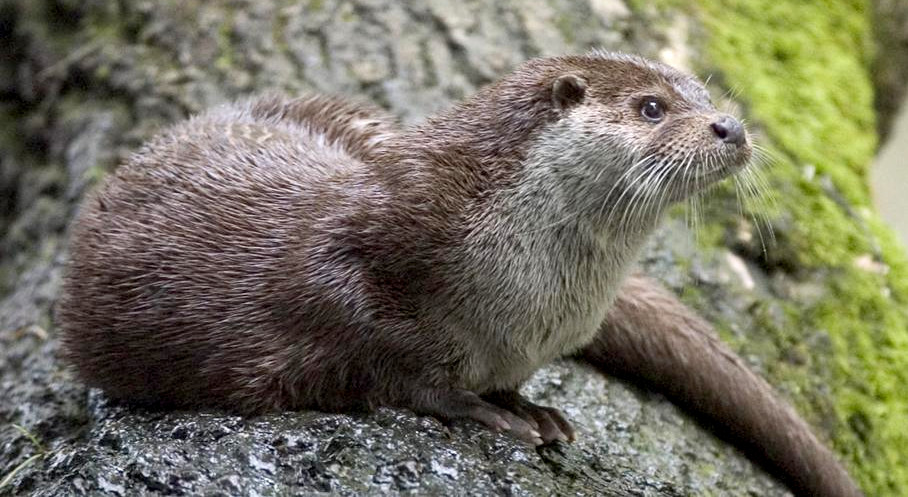
| Eurasian otter (Lutra lutra) | |
Scientific classification 
| |
| Kingdom: | Animalia |
| Phylum: | Chordata |
| Class: | Mammalia |
| Order: | Carnivora |
| Family: | Mustelidae |
| Subfamily: | Lutrinae Bonaparte, 1838 |
| Type genus | |
| Lutra Brünnich, 1771
| |
| Genera | |
Otters are carnivorous mammals in the subfamily Lutrinae. The 14 extant otter species are all semiaquatic, both freshwater and marine. Lutrinae is a branch of the Mustelidae family, which includes weasels, badgers, mink, and wolverines, among other animals.
Otters are distinguished by their long, slim bodies, powerful webbed feet for swimming, and their dense fur, which keeps them warm and buoyant in water. They are playful animals, engaging in activities like sliding into water on natural slides and playing with stones.
Otters exhibit a varied life cycle with a gestation period of about 60–86 days, and offspring typically stay with their family for a year. They can live up to 16 years, with their diet mainly consisting of fish and sometimes frogs, birds, or shellfish, depending on the species.
There are 14 known species of otters, ranging in size and habitat preferences, with some species adapted to cold waters requiring a high metabolic rate for warmth. Otter-human interactions have varied over time, with otters being hunted for their pelts, used in fishing practices in southern Bangladesh, and occasionally attacking humans, though such incidents are rare and often a result of provocation. Otters hold a place in various cultures' mythology and religion, symbolizing different attributes and stories, from Norse mythology to Native American totems and Asian folklore, where they are sometimes believed to possess shapeshifting abilities.
Etymology
[edit]The word otter derives from the Old English word otor or oter. This and cognate words in other Indo-European languages ultimately stem from the Proto-Indo-European word *wódr̥, which also gave rise to the English word "water".[2][3]
Terminology
[edit]An otter's den is called a holt, or couch. Male otters are called dogs or boars; females are called bitches or sows; and their offspring are called pups or cubs.[4][5] The collective nouns for otters are bevy, family, lodge, romp (being descriptive of their often playful nature), or, when in water, raft.[6][7]
The feces of otters are typically identified by their distinctive aroma, the smell of which has been described as ranging from freshly mown hay to putrefied fish;[8] these are known as spraints.[9]
Life cycle
[edit]The gestation period in otters is about 60 to 86 days. The newborn pup is cared for by the bitch, dog, and older offspring. Female otters reach sexual maturity at approximately two years of age and males at approximately three years. The holt is built under tree roots or a rocky cairn, more common in Scotland. It is lined with moss and grass.
After one month, the pup can leave the holt and after two months, it is able to swim. The pup lives with its family for approximately one year. Otters live up to 16 years; they are by nature playful, and frolic in the water with their pups. Its usual source of food is fish, and further downriver, eels, but it may sample frogs and birds.
Description
[edit]Otters have long, slim bodies and relatively short limbs. Their most striking anatomical features are the powerful webbed feet used to swim, and their seal-like abilities for holding breath underwater. Most have sharp claws on their feet and all except the sea otter have long, muscular tails. The 13 species range in adult size from 0.6 to 1.8 m (2.0 to 5.9 ft) in length and 1 to 45 kg (2.2 to 99.2 lb) in weight. The Asian small-clawed otter is the smallest otter species and the giant otter and sea otter are the largest. They have very soft, insulated underfur, which is protected by an outer layer of long guard hairs. This traps a layer of air which keeps them dry, warm, and somewhat buoyant under water.
Several otter species live in cold waters and have high metabolic rates to help keep them warm. Eurasian otters must eat 15% of their body weight each day, and sea otters 20 to 25%, depending on the temperature. In water as warm as 10 °C (50 °F), an otter needs to catch 100 g (3.5 oz) of fish per hour to survive. Most species hunt for three to five hours each day and nursing mothers up to eight hours each day.
Feeding
[edit]For most otters, fish is the staple of their diet. This is often supplemented by frogs, crayfish and crabs.[10] Some otters are experts at opening shellfish, and others will feed on available small mammals or birds. Prey-dependence leaves otters very vulnerable to prey depletion. Sea otters are hunters of clams, sea urchins and other shelled creatures. They are notable for their ability to use stones to break open shellfish on their bellies. This skill must be learned by the young.[11]
Otters are active hunters, chasing prey in the water or searching the beds of rivers, lakes or the seas. Most species live beside water, but river otters usually enter it only to hunt or travel, otherwise spending much of their time on land to prevent their fur becoming waterlogged. Sea otters are considerably more aquatic and live in the ocean for most of their lives.
Otters are playful animals and appear to engage in various behaviors for sheer enjoyment, such as making waterslides and sliding on them into the water. They may also find and play with small stones. Different species vary in their social structure, some being largely solitary, while others live in groups – in a few species these groups may be fairly large.
Species
[edit]
|
Extant species
[edit]| Image | Genus | Species |
|---|---|---|

|
Lutra Brisson, 1762 |
|

|
Hydrictis Pocock, 1921 |
|
.jpg)
|
Lutrogale (Gray, 1865) |
|

|
Lontra Gray, 1843 |
|

|
Pteronura Gray, 1837 |
|

|
Aonyx Lesson, 1827 |
|
.jpg)
|
Enhydra Fleming, 1828 |
|
Extinct species
[edit]Subfamily Lutrinae
- Genus Lutra
- †Lutra castiglionis – Corsica, Pleistocene[15]
- †Lutra euxena – Malta, Pleistocene
- †Japanese otter (Lutra nippon) – Japan, extinct c. 1979
- Genus Lutrogale
- Genus Enhydra
- Genus †Algarolutra – Corsica and Sardinia, Pleistocene[16]
- Genus †Cyrnaonyx – Europe, Pleistocene[17]
- Genus †Enhydriodon – Ethiopia, Late Miocene to Pliocene[18]
- Genus †Enhydritherium – North America, Late Miocene to Early Pliocene[19]
- Genus †Lutraeximia – Italy, Pleistocene[20]
- Genus †Limnonyx – Germany, Late Miocene[21]
- Genus †Megalenhydris – Sardinia, Pleistocene[22]
- Genus †Paludolutra – Italy, Late Miocene[23]
- Genus †Sardolutra – Sardinia, Pleistocene[16]
- Genus †Siamogale – eastern Asia, Late Miocene to Early Pliocene[23]
- Genus †Sivaonyx – Asia and Africa, Late Miocene to Early Pliocene[24]
- Genus †Teruelictis – Spain, Late Miocene[25]
- Genus †Torolutra – Africa, Pliocene[24]
- Genus †Tyrrhenolutra – Italy, Late Miocene[23]
- Genus †Vishnuonyx – Europe, Asia and Africa, Late Miocene to Early Pliocene[24]
Relation with humans
[edit]
Hunting
[edit]Otters have been hunted for their pelts from at least the 1700s, although it may have begun well before then. Early hunting methods included darts, arrows, nets and snares but later, traps were set on land and guns used.
There has been a long history of otter pelts being worn around the world. In China it was standard for the royalty to wear robes made from them. People that were financially high in status also wore them. The tails of otters were often made into items for men to wear. These included hats and belts. Even some types of mittens for children have been made from the fur of otters.[26]
Otters have also been hunted using dogs, especially the otterhound.[27] From 1958 to 1963, the 11 otter hunts in England and Wales killed 1,065 otters between them. In such hunts, the hunters notched their poles after every kill. The prized trophy that hunters would take from the otters was the baculum, which would be worn as a tie-pin.[28]
Traffic (the wildlife trade monitoring network) reported that otters are at serious risk in Southeast Asia and have disappeared from parts of their former range. This decline in populations is due to hunting to supply the demand for skins.[29]
Fishing for humans
[edit]For many generations, fishermen in southern Bangladesh have bred smooth-coated otters and used them to chase fish into their nets. Once a widespread practice, passed down from father to son throughout many communities in Asia, this traditional use of domesticated wild animals is still in practice in the district of Narail, Bangladesh.[30][31]
Attacks on humans
[edit]A 2011 review by the IUCN/SSC Otter Specialist Group showed that otter attacks reported between 1875 and 2010 occurred most often in Florida, where human and otter populations have substantially increased since 2000, with the majority involving the North American river otter. At least 42 instances of attack were found, including one resulting in death and another case of serious injury. Attacking otters had rabies in 36% of anecdotal reports.[32] 80% of otter bite victims do not seek medical treatment.[33]
Animal welfare groups say that, unless threatened, otters rarely attack humans.[34] In November 2021, about 20 river otters ambushed a British man in his 60s during an early morning walk in Singapore Botanic Gardens. Despite weighing over 200 pounds, he was trampled and bitten and could not stand up without help from a nearby rescuer. The man speculated that another runner might have stepped on one of the animals earlier, and wished that there could be more lighting installed at that location.[34]
Religion and mythology
[edit]Norse mythology tells of the dwarf Ótr habitually taking the form of an otter. The myth of "Otter's Ransom"[35] is the starting point of the Volsunga saga.
In Irish mythology, the character Lí Ban was turned from a woman into a mermaid, half human and half salmon, and given three hundred years of life to roam the oceans. Her lapdog assumed the form of an otter and shared her prolonged lifetime and her extensive wanderings.
In some Native American cultures, otters are considered totem animals.[36]
The otter is held to be a clean animal belonging to Ahura Mazda in Zoroastrian belief, and taboo to kill.[37]
In popular Korean mythology, it is told that people who see an otter (soodal) will attract 'rain clouds' for the rest of their lives.[38]
In the Buddhist Jataka tales, The Otters and The Wolf, two otters agreed to let a wolf settle their dispute in dividing their caught fish but it was taken away by the cunning wolf.[39]
Japanese folklore
[edit]
In Japanese, otters are called "kawauso" (獺、川獺). In Japanese folklore, they fool humans in the same way as foxes (kitsune) and tanuki.
In the Noto region, Ishikawa Prefecture, there are stories where they shapeshift into beautiful women or children wearing checker-patterned clothing. If a human attempts to speak to one, they will answer "oraya" and then answer "araya," and if anybody asks them anything, they say cryptic things like "kawai."[40][41] There are darker stories, such as one from Kaga Province (now Ishikawa Prefecture) in which an otter that lives in the castle's moat shapeshifts into a woman, invites males, and then kills and eats them.[42]
In the kaidan, essays, and legends of the Edo period like the "Urami Kanawa" (裏見寒話),[43] "Taihei Hyaku Monogatari" (太平百物語), and the "Shifu Goroku" (四不語録), there are tales about strange occurrences like otters that shapeshift into beautiful women and kill men.[41]
In the town of Numatachi, Asa District, Hiroshima Prefecture (now Hiroshima), they are called "tomo no kawauso" (伴のカワウソ) and "ato no kawauso" (阿戸のカワウソ). It is said that they shapeshift into bōzu (a kind of monk) and appear before passers-by, and if the passer-by tries to get close and look up, its height steadily increases until it becomes a large bōzu.[44]
In the Tsugaru region, Aomori Prefecture, they are said to possess humans. It is said that those possessed by otters lose their stamina as if their soul has been extracted.[45] They are also said to shapeshift into severed heads and get caught in fishing nets.[45]
In the Kashima District and the Hakui District in Ishikawa Prefecture, they are seen as a yōkai under the name kabuso or kawaso. They perform pranks like extinguishing the fire of the paper lanterns of people who walk on roads at night, shapeshifting into a beautiful woman of 18 or 19 years of age and fooling people, or tricking people and making them try to engage in sumo against a rock or a tree stump.[41] It is said that they speak human words, and sometimes people are called and stopped while walking on roads.[46]
In the Ishikawa and Kochi Prefectures, they are said to be a type of kappa, and there are stories told about how they engage in sumo with otters.[41] In places like the Hokuriku region, Kii, and Shikoku, the otters are seen as a type of kappa.[47] In the Kagakushū, a dictionary from the Muromachi period, an otter that grew old becomes a kappa.[48]
In an Ainu folktale, in Urashibetsu (in Abashiri, Hokkaido), there are stories where monster otters shapeshift into humans, go into homes where there are beautiful girls, and try to kill the girl and make her its wife.[49]
In China, like in Japan, there are stories where otters shapeshift into beautiful women in old books like In Search of the Supernatural and the Zhenyizhi (甄異志).[43]
See also
[edit]
References
[edit]- ^ a b Koepfli KP, Deere KA, Slater GJ, et al. (2008). "Multigene phylogeny of the Mustelidae: Resolving relationships, tempo and biogeographic history of a mammalian adaptive radiation". BMC Biol. 6 10: 4–5. doi:10.1186/1741-7007-6-10. PMC 2276185. PMID 18275614.
- ^ "Otter". Merriam Webster's online dictionary. Archived from the original on 24 April 2009. Retrieved 16 September 2009.
- ^ Harper, Douglas. "otter". Online Etymology Dictionary.
- ^ Kruuk H (2007). Otters: ecology, behaviour and conservation. Oxford Biology. p. 7. ISBN 978-0-19-856587-1.
- ^ "Species: Otter". The Mammal Society. Archived from the original on 25 May 2022. Retrieved 27 June 2022.
- ^ M & P Briggs, The Natural History of British Isles, pp. 334–35[ISBN missing]
- ^ "Facts about otters". Otter World. 5 March 2014. Archived from the original on 2 March 2016. Retrieved 1 January 2016.
- ^ "Spraint Analysis". archive.today. Archived from the original on 8 September 2012. Retrieved 28 September 2017.
- ^ Pagett, Matt (2007). What Shat That?: A Pocket Guide to Poop Identity. Ten Speed Press. ISBN 978-1-58008-885-5.
- ^ Kruuk H (2007). Otters: ecology, behavior and conservation. Oxford Biology. pp. 99–116. ISBN 978-0-19-856587-1.
- ^ "Tool use in otters". OneKind. Archived from the original on 4 November 2016. Retrieved 1 January 2016.
- ^ Bininda-Emonds OR, Gittleman JL, Purvis A (1999). "Building large trees by combining phylogenetic information: a complete phylogeny of the extant Carnivora (Mammalia)" (PDF). Biol Rev Camb Philos Soc. 74 (2) S0006323199005307: 143–75. CiteSeerX 10.1.1.328.7194. doi:10.1017/S0006323199005307 (inactive 18 October 2025). PMID 10396181. Archived (PDF) from the original on 9 August 2017.
{{cite journal}}: CS1 maint: DOI inactive as of October 2025 (link) - ^ de Ferren, V.; Vieira Figueiró, H.; et al. (June 2024). "Genome-wide data support recognition of an additional species of Neotropical river otter (Mammalia, Mustelidae, Lutrinae)". Journal of Mammalogy. 105 (3): 534–542. doi:10.1093/jmammal/gyae009.
- ^ "Lontra annectens". Mammal Diversity Database. American Society of Mammalogy. Retrieved 29 July 2025.
- ^ Pereira, E.; Salotti, M. (2000). "Cyrnolutra castiglionis, une nouvelle forme de loutre (Mustelidae, Lutrinae), dans un dépôt du Pléistocène moyen " Castiglione 3CG "(Oletta, Haute-Corse)". Comptes Rendus de l'Académie des Sciences, Série IIA. 331 (1): 45–52. Bibcode:2000CRASE.331...45P. doi:10.1016/S1251-8050(00)00212-3.
- ^ a b c Masseti, M. (1995). "Quaternary biogeography of the Mustelidae family on the Mediterranean islands". Hystrix. 7 (1–2): 17–34. CiteSeerX 10.1.1.536.8847.
- ^ Mecozzi, B.; Iannucci, A.; et al. (2021). "Rediscovering Lutra lutra from Grotta Romanelli (southern Italy) in the framework of the puzzling evolutionary history of Eurasian otter". PalZ. 96: 161–174. doi:10.1007/s12542-021-00553-y. hdl:2434/891052. S2CID 232224971.
- ^ Geraads, D.; Alemseged, Z.; et al. (2011). "Enhydriodon dikikae, sp. nov. (Carnivora: Mammalia), a gigantic otter from the Pliocene of Dikika, Lower Awash, Ethiopia". Journal of Vertebrate Paleontology. 31 (2): 447–453. Bibcode:2011JVPal..31..447G. doi:10.1080/02724634.2011.550356. S2CID 84797296.
- ^ A. Berta and G. S. Morgan (1985). "A new sea otter (Carnivora: Mustelidae) from the late Miocene and early Pliocene (Hemphillian) of North America". Journal of Paleontology. 59 (4): 809–819. JSTOR 1304931.
- ^ Cherin, M.; Iurino, D. A.; Willemsen, G.; Carnevale, G. (2016). "A new otter from the Early Pleistocene of Pantalla (Italy), with remarks on the evolutionary history of Mediterranean Quaternary Lutrinae (Carnivora, Mustelidae)". Quaternary Science Reviews. 135: 92–102. Bibcode:2016QSRv..135...92C. doi:10.1016/j.quascirev.2016.01.008.
- ^ Morlo, M.; Nagel, D.; Bastl, K. (2020). "Evolution of the carnivoran (Carnivora, Mammalia) guild structure across the Middle/Upper Miocene boundary in Germany". Palaeogeography, Palaeoclimatology, Palaeoecology. 553 109801. Bibcode:2020PPP...55309801M. doi:10.1016/j.palaeo.2020.109801. S2CID 219451746.
- ^ Gerard F. Willemsen (2006). "Megalenhydris and its relationship to Lutra reconsidered" (PDF). Hellenic Journal of Geosciences. 41: 83–87. Archived (PDF) from the original on 6 March 2010.
- ^ a b c Xiaoming Wang; et al. (2018). "A new otter of giant size, Siamogale melilutra sp. nov. (Lutrinae: Mustelidae: Carnivora), from the latest Miocene Shuitangba site in north-eastern Yunnan, south-western China, and a total-evidence phylogeny of lutrines". Journal of Systematic Palaeontology. 16: 39–65. Bibcode:2018JSPal..16...39W. doi:10.1080/14772019.2016.1267666. S2CID 58892181. Archived from the original on 4 December 2021. Retrieved 13 March 2022.
- ^ a b c Kargopoulos, N.; Valenciano, A.; et al. (2021). "New early Late Miocene species of Vishnuonyx (Carnivora, Lutrinae) from the hominid locality of Hammerschmeide, Bavaria, Germany". Journal of Vertebrate Paleontology. 41 (3) e1948858. Bibcode:2021JVPal..41E8858K. doi:10.1080/02724634.2021.1948858. S2CID 240538139.
- ^ Salesa (2014). "A non-aquatic otter from the Late Miocene". Zoological Journal of the Linnean Society. 169 (2): 448–482. doi:10.1111/zoj.12063.
- ^ "Otter hunting". Otter-World.com. 2009. Archived from the original on 21 September 2013. Retrieved 19 September 2013.
- ^ "Otter Hunting AKA Otter Hunting Begins – British Pathé". britishpathe.com. Archived from the original on 2 July 2017. Retrieved 28 September 2017.
- ^ "Otterhunting". Animal Cruelty Investigation Group/Animal Welfare Information Service. Archived from the original on 21 September 2013. Retrieved 19 September 2013.
- ^ "Otters feel the heat in Southeast Asia". Traffic (conservation programme). 9 December 2009. Archived from the original on 30 October 2013. Retrieved 17 January 2014.
- ^ de Trey-White, Simon (2007). "Fisherman's friend". Geographical. 79 (5).
- ^ Feeroz, M.M.; Begum, S.; Hasan, M. K. (2011). "Fishing with Otters: a Traditional Conservation Practice in Bangladesh". Proceedings of XIth International Otter Colloquium, IUCN Otter Spec. Group Bull. 28A: 14–21. Archived from the original on 30 June 2017. Retrieved 20 June 2012.
- ^ Belanger, M (2011). "A review of violent or fatal otter attacks". IUCN Otter Spec. Group Bull. 28 (1): 11–16.[dead link]
- ^ Goldstein, Ellie J. C. (1 March 1992). "Bite Wounds and Infection". Clinical Infectious Diseases. 14 (3): 633–640. doi:10.1093/clinids/14.3.633. ISSN 1058-4838. PMID 1562653.
- ^ a b Lin, Chen (11 December 2021). "British man recounts attack by otters in Singapore gardens". Reuters. Archived from the original on 8 June 2022. Retrieved 8 June 2022.
- ^ "The Otter's Ransom". faculty.mcla.edu. Archived from the original on 9 September 2006. Retrieved 5 July 2007.
- ^ "Native American Indian Otter Legends, Meaning and Symbolism from the Myths of Many Tribes". native-languages.org. Archived from the original on 18 May 2015. Retrieved 6 May 2015.
- ^ Cooper, JC (1992). Symbolic and Mythological Animals. London: Aquarian Press. pp. 171–72. ISBN 978-1-85538-118-6.
- ^ "Otter Symbolism (6 Meanings) - As Spirit Animals & in Dreams". 12 December 2020. Retrieved 25 September 2023.
- ^ Jataka Tales: The Otters and The Wolf https://mocomi.com/jataka-tales-the-otters-and-the-wolf/ Archived 30 September 2020 at the Wayback Machine
- ^ 柳田國男 (1977) [1956]. 妖怪談義. 講談社学術文庫. 講談社. p. 19. ISBN 978-4-06-158135-7.
- ^ a b c d 村上健司編著 (2000). 妖怪事典. 毎日新聞社. p. 114. ISBN 978-4-620-31428-0.
- ^ 水木しげる (1994). 妖怪大図鑑. 講談社まんが百科. 講談社. p. 59. ISBN 978-4-06-259008-2.
- ^ a b 柴田宵曲 (1991) [1963]. "続妖異博物館". In 木村新他編 (ed.). 柴田宵曲文集. Vol. 6. 小沢書店. p. 477.
- ^ 藤井昭編著 (1976). 安芸の伝説. 第一法規出版. p. 166.
- ^ a b 内田邦彦 (1979) [1929]. 津軽口碑集. 歴史図書社. p. 126.
- ^ 多田克己 (1990). 幻想世界の住人たち. Truth in Fantasy. Vol. IV. 新紀元社. p. 124. ISBN 978-4-915146-44-2.
- ^ 村上健司 (2007). "河童と水辺の妖怪たち". In 講談社コミッククリエイト編 (ed.). DISCOVER 妖怪 日本妖怪大百科. KODANSHA Official File Magazine. Vol. 1. 講談社. p. 19. ISBN 978-4-06-370031-2.
- ^ 香川雅信 (2012). "カッパは緑色か?". In 吉良浩一編 (ed.). 怪 (ムック). カドカワムック. Vol. 37. 角川書店. p. 34. ISBN 978-4-04-130038-1.
- ^ 知里真志保 (1981) [1937]. "えぞおばけ列伝". アイヌ民譚集. 岩波文庫. 岩波書店. pp. 198–200. ISBN 978-4-00-320811-3.
External links
[edit]


- IUCN SSC Otter Specialist Group
- ARKive—Photographs and videos of Eurasian otters. On the same site are photos and videos of the marine otter (Lontra felina), sea otter (Enhydra lutris), smooth-coated otter (Lutrogale perspicillata) and giant otter (Pteronura brasiliensis).
- International Otter Survival Fund
| International | |
|---|---|
| National | |
| Other | |

Otter
View on GrokipediaTaxonomy
Etymology and nomenclature
The English word otter derives from Old English otor or oter, which traces back to Proto-Germanic *otraz and ultimately to Proto-Indo-European *udros, signifying a "water-creature" in reference to the animal's semiaquatic lifestyle.[4] [5] This root also appears in cognates across Indo-European languages, such as Dutch otter, German Otter, Swedish utter, and Sanskrit udrá, reflecting a shared ancient recognition of the mammal's affinity for aquatic environments.[6] Related terms include Ancient Greek énudris (combining en- "in" and húdōr "water") and the mythological hydra, both evoking water-dwelling serpentine or aquatic forms.[7] In scientific nomenclature, otters belong to the subfamily Lutrinae within the family Mustelidae, with genera named using Latin and Greek roots that echo the common etymology. The genus Lutra (encompassing species like the Eurasian otter, Lutra lutra) originates from Latin lutra, an variant form meaning "otter" derived from the same Proto-Indo-European *udrós root, emphasizing continuity in naming conventions from classical antiquity.[8] [9] Other genera include Enhydra for the sea otter (Enhydra lutris), from Greek en- "in" + húdra "water" combined with Latin lutris "otter-like," highlighting the fully marine adaptation; Pteronura for the giant otter, incorporating Greek pterón "wing" or "fin" and ourá "tail" to denote its paddle-like appendage; and Aonyx for clawless otters, blending Greek a- "without" + ónux "claw/nail."[10] These binomial names, formalized under the Linnaean system since the 18th century, prioritize descriptive precision over vernacular terms, though tautonyms like Lutra lutra (coined by Carl Linnaeus in 1758) directly repurpose the Latin vernacular for taxonomic stability.[1]Classification and phylogeny
Otters belong to the subfamily Lutrinae within the family Mustelidae, order Carnivora, class Mammalia, phylum Chordata, and kingdom Animalia.[11] The subfamily name Lutrinae was established by Charles Lucien Bonaparte in 1838 to encompass semiaquatic mustelids distinguished by traits such as webbed feet, dense fur for insulation, and streamlined bodies adapted for aquatic foraging.[11] Lutrinae includes 13 to 14 extant species across seven to eight genera, including Aonyx, Lontra, Lutra, Lutrogale, Pteronura, Hydrictis, Enhydra, and sometimes Amblonyx as distinct from Aonyx; recent taxonomic revisions, such as the recognition of the Congo clawless otter (Aonyx congicus) as separate from the Cape clawless otter (A. capensis), account for the variation in species counts.[1][12] Phylogenetically, Lutrinae forms a monophyletic group within Mustelidae, evolving from terrestrial weasel-like ancestors through selective pressures favoring aquatic adaptations, such as enhanced swimming efficiency and fish-based diets, which emerged as mustelids diversified in the Miocene.[13] Molecular and morphological analyses indicate that the crown group of Lutrinae diverged approximately 12–15 million years ago, with early splits separating lineages leading to fully marine forms like the sea otter (Enhydra lutris) from freshwater specialists.[14] Whole-genome phylogenomics of all extant species has resolved the tree topology, showing basal divergences between Old World (e.g., Eurasian otter Lutra lutra) and New World clades (e.g., Neotropical river otter Lontra longicaudis), followed by radiations influenced by continental drift and habitat availability, with no evidence of extensive hybridization except in localized contact zones.[15] These studies, calibrated against fossil constraints, refute earlier morphology-based trees that placed clawless otters (Aonyx spp.) as basal, instead positioning them within derived freshwater clades based on genomic concordance across thousands of loci.[14][16] The evolutionary history of Lutrinae reflects mustelid biogeography, originating in Eurasia before dispersing to Africa, Asia, and the Americas via land bridges, with adaptive radiations tied to post-Eocene cooling and wetland expansion that favored semiaquatic niches over terrestrial competition.[17] Demographic reconstructions from genomic data reveal fluctuating effective population sizes, with bottlenecks in some species linked to Pleistocene climate shifts rather than uniform trends, underscoring species-specific responses to environmental causality over broad clade-level patterns.[14] This phylogeny provides a framework for understanding conserved traits like vocal communication and sociality, which likely evolved once in the common ancestor before clade-specific elaborations.[15]Extant species
The subfamily Lutrinae includes 13 extant otter species, all semiaquatic or marine carnivores within the family Mustelidae.[12] These species inhabit freshwater rivers, lakes, coastal marine environments, and wetlands across Africa, Asia, Europe, and the Americas, with adaptations varying by habitat, such as dense fur in marine forms for insulation.[18] Population declines across most species stem from habitat degradation, water pollution, overfishing of prey, and direct persecution, leading to heightened conservation concerns.[19] The table below enumerates the species with their scientific names and IUCN Red List conservation statuses as assessed in recent evaluations. Only the North American river otter maintains a Least Concern status, while the remaining 12 face varying levels of threat.[19]
| Common name | Scientific name | IUCN status |
|---|---|---|
| African clawless otter | Aonyx capensis | Near Threatened |
| Asian small-clawed otter | Aonyx cinereus | Vulnerable |
| Congo clawless otter | Aonyx congicus | Data Deficient |
| Sea otter | Enhydra lutris | Endangered |
| Spotted-necked otter | Hydrictis maculicollis | Vulnerable |
| Eurasian otter | Lutra lutra | Near Threatened |
| Hairy-nosed otter | Lutra sumatrana | Endangered |
| Smooth-coated otter | Lutrogale perspicillata | Vulnerable |
| Giant otter | Pteronura brasiliensis | Endangered |
| North American river otter | Lontra canadensis | Least Concern |
| Marine otter | Lontra felina | Endangered |
| Neotropical otter | Lontra longicaudis | Near Threatened |
| Southern river otter | Lontra provocax | Endangered |
Fossil record and extinct species
The subfamily Lutrinae, encompassing otters, first appears in the fossil record during the Miocene epoch, approximately 23 to 5.3 million years ago, with early bunodont forms documented in Asia, such as Sivaonyx, indicating an initial diversification tied to aquatic adaptations in freshwater systems.[21] North American records include Enhydritherium terraenovae from the late Miocene, a species capable of inhabiting both freshwater and coastal marine environments, evidenced by dental and postcranial fossils from Florida and California that suggest overland dispersal capabilities.[22] By the Pliocene (5.3 to 2.6 million years ago), otters had spread widely, coexisting in multispecies assemblages; in the Hagerman Fossil Beds of Idaho, two sympatric species— the large Satherium piscinarium and smaller Lontra weiri—occupied Pliocene lake systems, challenging prior views of otters as solely recent Asian immigrants.[23] Several extinct otter lineages exhibit gigantism, diverging from the typical body sizes of modern species (under 30 kg). Siamogale melilutra, from the Miocene of southwestern China, reached an estimated 50 kg with robust jaws adapted for durophagous feeding on hard-shelled prey, as inferred from cranial fossils including a complete skull.[24] Larger still was an unnamed Enhydriodon species from the Miocene of Ethiopia, weighing approximately 200 kg—comparable to a lion—with limb bones and skull fragments indicating a bear-like build suited for preying on large vertebrates in African riverine habitats.[25] The genus Enhydriodon, prevalent from the late Miocene to early Pleistocene across Africa, Pakistan, and India, produced multiple species with specialized mollusk-crushing dentition, reflecting ecological specialization in tropical waterways before regional extinctions linked to climatic shifts and faunal turnover.[26] Notable extinct species include:- Lutra simplicidens: Early Pleistocene, Italy; known from mandibular fossils indicating a Eurasian lutrine with simplified dentition for piscivory.[27]
- Lutra euxena: Pleistocene, Malta; insular form adapted to Mediterranean island ecosystems, represented by fragmentary remains.[26]
- Japanese river otter (Lutra nippon): Extinct circa 1979, with subfossil bones from Japanese islands confirming phylogenetic ties to continental Lutra, driven to extinction by habitat loss and persecution rather than ancient geological events.[28]
Physical characteristics
Morphology and adaptations
Otters exhibit a streamlined, elongated body form optimized for semi-aquatic locomotion, with total lengths ranging from approximately 60 cm in small species like the Asian small-clawed otter to over 180 cm in the giant otter, excluding the tail.[31] Their torsos are cylindrical and flexible, minimizing hydrodynamic drag during swimming, while short limbs with partial webbing between digits enhance propulsion efficiency.[32] The hind feet, often more webbed than the forepaws, provide primary thrust, complemented by dexterous front paws used for steering and prey manipulation.[2] A defining adaptation is their pelage, consisting of dense underfur and coarser guard hairs that trap air for insulation and buoyancy, with sea otters possessing up to one million hairs per square inch—far exceeding the roughly 250,000 in river otters—enabling thermoregulation without significant blubber reliance.[33] This fur is rendered waterproof by natural oils, preventing water penetration and supporting extended submersion, though it requires frequent grooming to maintain functionality.[34] The muscular, tapered tail, comprising up to one-third of body length in many species, acts as a rudder for maneuverability and contributes to undulating propulsion alongside hindlimb kicks.[35] Head morphology features a broad, flattened skull with forward-facing eyes for binocular vision and small, valved ears and nostrils that seal during dives to exclude water, facilitating dives up to 100 meters in some species despite limited lung capacity adaptations.[31] Claws on all feet are sharp and retractile in varying degrees, aiding grip on slippery substrates and prey capture, while sea otters uniquely exhibit loose forearm skin pockets for tool storage during foraging.[36] These traits collectively underscore otters' evolutionary convergence on aquatic efficiency within the Mustelidae, though marine specialists like sea otters display amplified fur density and reduced terrestrial agility compared to freshwater counterparts.[37]Sensory and physiological traits
Otters possess acute tactile senses, primarily through their mystacial vibrissae (whiskers), which are richly innervated and highly sensitive to underwater vibrations and water movements, enabling prey detection during foraging dives.[38][39] These whiskers function as mechanoreceptors, allowing otters to sense the swish of fish tails or other disturbances in murky waters where vision is limited.[40] Hearing is also well-developed across otter species, aiding in danger detection and communication, often considered more critical than olfaction for threat avoidance.[41][42] Vision is relatively poor in air but potentially enhanced underwater due to adaptations like a nictitating membrane, though otters rely less on eyesight for hunting compared to tactile cues.[42] Olfactory capabilities vary; while river otters exhibit strong smell for tracking and communication, semi-aquatic species like sea and giant otters show pseudogenization of many olfactory receptor genes, suggesting reduced reliance on scent in aquatic environments.[42][43] Physiologically, otters maintain elevated metabolic rates—up to three times the expected basal level in sea otters—to support thermoregulation in cold water, necessitating daily food intake equivalent to 25% of body mass, primarily through constant foraging.[44][45] Lacking blubber, they depend on dense fur for insulation, with sea otters possessing the thickest mammalian pelage (up to 1 million hairs per square inch), which traps air to minimize heat loss and comprises about 70% of their thermal protection.[3][46] This fur-air layer compresses during dives but reforms upon surfacing through grooming behaviors.[47] Additional adaptations include skeletal muscle thermogenesis via proton leak in mitochondria, enhancing heat production without shivering, and efficient oxygen storage for dives lasting several minutes.[44][48] These traits enable sustained aquatic activity but render otters vulnerable to fur contamination, as oil disrupts insulation and exacerbates metabolic demands.[49]Distribution and habitats
Global range
Otters are semiaquatic mammals found on every continent except Australia and Antarctica, with distributions tied to freshwater rivers, lakes, wetlands, coastal marine environments, and estuaries across temperate, tropical, and subtropical zones.[50] The 13 extant species exhibit varied ranges, often fragmented due to habitat loss and historical exploitation, as documented in assessments by the International Union for Conservation of Nature (IUCN).[51] In Africa, otters are represented by three species primarily in sub-Saharan regions: the spotted-necked otter (Hydrictus maculicollis) inhabits eastern, central, and southern freshwater systems; the African clawless otter (Aonyx capensis) occupies a broad range from Senegal to South Africa, favoring slower-moving waters; and the Congo clawless otter (Aonyx congicus), a more restricted Congo River basin endemic, relies on forested riverine habitats.[51] Eurasia hosts the Eurasian otter (Lutra lutra), the most widely distributed species, spanning from the British Isles across Europe, through temperate and boreal Asia to Japan, with isolated populations in northern Africa including Morocco and Algeria; Asian diversity includes the Asian small-clawed otter (Aonyx cinereus) in Southeast Asia and southern China, the smooth-coated otter (Lutrogale perspicillata) from India to Southeast Asia and parts of Iraq, and the hairy-nosed otter (Lutra sumatrana) in Southeast Asian peat swamps and mangroves.[51] In North America, the North American river otter (Lontra canadensis) ranges from Mexico northward through the United States and Canada, utilizing diverse freshwater and coastal ecosystems; the sea otter (Enhydra lutris) persists in nearshore Pacific waters, with populations along Alaska's coast, the [Aleutian Islands](/page/Aleutian Islands), Washington, California, and British Columbia, alongside remnant groups in Russia.[51][36] South America features high otter diversity, including the giant otter (Pteronura brasiliensis) in northern Amazonian and Orinoco basin rivers, the neotropical otter (Lontra longicaudis) across Central and South America to Trinidad, the southern river otter (Lontra provocax) in Andean Patagonia of Chile and Argentina, and the marine otter (Lontra felina) along the Pacific coast from Peru to Chile.[51]| Species | Primary Range Regions |
|---|---|
| Spotted-necked otter | Sub-Saharan Africa (eastern/central/southern) |
| African clawless otter | Sub-Saharan Africa (west to south) |
| Congo clawless otter | Congo River basin |
| Eurasian otter | Europe, Asia, northern Africa |
| Asian small-clawed otter | Southeast Asia, southern China |
| Smooth-coated otter | Indian subcontinent, Southeast Asia |
| North American river otter | North America (Mexico to Canada) |
| Sea otter | North Pacific coasts (Alaska to Russia) |
| Giant otter | Northern South America (Amazon/Orinoco) |
| Neotropical otter | Central/South America, Trinidad |
| Southern river otter | Southern Andes (Chile/Argentina) |
| Marine otter | Pacific coast (Peru to Chile) |
Habitat preferences and requirements
Otters, as semi-aquatic mustelids, universally require access to water bodies supporting high densities of prey such as fish, crustaceans, and invertebrates, alongside suitable sites for dens or holts typically excavated in riverbanks, under tree roots, or in abandoned burrows.[52] Water quality is critical, with preferences for clear, oxygen-rich, unpolluted waters that sustain prey populations and minimize health risks from contaminants.[2] Riparian vegetation and structural complexity, including undercut banks and woody debris, provide essential cover from predators and resting opportunities.[53] Freshwater species like the North American river otter (Lontra canadensis) favor diverse aquatic systems including rivers, streams, lakes, ponds, and marshes, particularly those modified by beavers that concentrate fish in shallow pools and dams.[54] [55] They select habitats with permanent open water, high flow volumes, low turbidity, and ample food resources, while avoiding heavily disturbed or polluted areas.[56] The Eurasian otter (Lutra lutra) exhibits site-specific selection influenced by seasonal factors and river reach characteristics, prioritizing healthy freshwater ecosystems with minimal human infrastructure to support foraging efficiency.[57] [58] In tropical regions, the giant otter (Pteronura brasiliensis) inhabits slow-moving rivers, creeks, lakes, and seasonally flooded wetlands of the Amazon and Orinoco basins, preferring non-floodable banks with dense vegetation cover and shallow hunting grounds for fish.[59] These clans require extensive linear territories along clear-water streams to accommodate group foraging and pup-rearing needs.[60] The Asian small-clawed otter (Aonyx cinereus), the smallest species, adapts to varied freshwater and brackish environments such as hill streams, mangroves, swamps, and even rice fields, often favoring areas with dense canopy, shrub cover, and abundant crabs in shallow waters.[61] [62] Marine-adapted sea otters (Enhydra lutris) diverge by occupying nearshore coastal zones, typically within 1-2 km of shore in waters up to 40 meters deep, with strong associations to kelp beds, rocky substrates, and estuaries that harbor dense invertebrate prey like urchins and clams.[63] [64] Across species, habitat suitability hinges on balancing prey availability with low disturbance, as excessive human activity or habitat fragmentation reduces occupancy.[65] Empirical studies confirm otters' sensitivity to pollution and alteration, positioning them as indicators of ecosystem integrity.[57]Behavior and ecology
Reproduction and life cycle
Otters exhibit diverse reproductive strategies across species, typically characterized by seasonal breeding influenced by photoperiod, with mating systems ranging from polygyny to promiscuity.[66] In many species, such as the North American river otter (Lontra canadensis), breeding occurs in late winter or early spring, often March to April, shortly after the female's previous litter emerges.[67] Delayed implantation is common in river otters, where fertilized eggs remain unattached in the uterus for several months, extending the effective gestation to 9–13 months despite actual embryonic development lasting 61–63 days.[68] [69] Births typically occur in spring, March to May, in concealed dens.[42] Litter sizes vary by species: river otters produce 1–6 pups per litter, averaging 2–3, while sea otters (Enhydra lutris) usually bear a single pup after a 4–5 month gestation without delayed implantation.[69] [70] Giant otters (Pteronura brasiliensis) have litters of 1–5, typically 2–3, following a 65–70 day gestation, with births peaking in late dry season (August–October in the Southern Hemisphere).[71] [72] Pups are born altricial—furred but blind and toothless—remaining in dens for 2–3 weeks before emerging.[2] Eyes open at about 1 month, and weaning occurs between 2–4 months, depending on species; sea otter pups nurse for up to 6–12 months.[73] [60] Parental care is primarily maternal, though family groups in social species like giant otters involve extended kin assisting in rearing, including older siblings providing alloparental care.[60] River otter families stay cohesive for 7–8 months post-birth, until the next litter arrives, after which juveniles disperse.[2] Sea otter mothers carry pups on their chests, grooming and teaching foraging skills, but males offer no care.[73] Sexual maturity is reached at 2–3 years in river otters and 3–4 years in females of sea and giant otters, with full reproductive success often delayed until 5–7 years due to social or nutritional factors.[74] [75] Lifespan in the wild averages 8–15 years for most otters, limited by predation, disease, and habitat stressors, though sea otters may reach 20 years and captive individuals exceed 20–25 years.[2] Annual reproductive rates peak in prime-age females (e.g., 75–88% in sea otters aged 5–15) but decline with senescence or environmental pressures.[75]Diet and foraging strategies
Otters exhibit carnivorous diets centered on aquatic prey, with composition varying by species, habitat, and prey availability. Freshwater species like the Eurasian otter (Lutra lutra) primarily consume fish, which comprise 60-90% of their diet in riverine environments, dominated by cyprinids such as roach and perch in European studies.[76] [77] Amphibians, particularly frogs from the Ranidae family, contribute significantly in some regions, reaching up to 40% in winter diets, while crustaceans, birds, and small mammals serve as supplements, reflecting dietary plasticity in response to fish scarcity or seasonal changes.[78] [79] Habitat influences intake; coastal populations incorporate more marine fish and invertebrates compared to inland ones.[80] Sea otters (Enhydra lutris) diverge markedly, favoring benthic invertebrates including clams (up to 75% in some areas), crabs, sea urchins, mussels, and abalones, with fish as secondary prey.[81] [82] Their elevated metabolic rate necessitates consuming 20-25% of body weight daily, prompting frequent foraging dives averaging 1-2 minutes in depth up to 60 meters.[83] [84] Prey selection follows optimal foraging principles, shifting from high-energy items like large urchins and crabs to smaller alternatives such as mussels as populations expand and preferred stocks deplete.[85] [86] Foraging strategies emphasize efficiency and adaptation. River otters hunt solitarily or in pairs, employing headfirst dives in shallow waters, relying on sensitive vibrissae to detect prey in low-visibility conditions, and consuming catches on site or carrying them to shore.[87] Sea otters use tools—often rocks held on their chests—to dislodge and crack hard-shelled prey during surface feeding bouts, a behavior more prevalent among females to access larger items without excessive tooth wear.[88] Giant otters (Pteronura brasiliensis) forage diurnally in family groups, cooperatively pursuing fish schools in clear Amazonian waters to maximize capture rates, though evidence for true cooperative hunting remains inconclusive.[89] Across species, otters switch prey based on abundance, prioritizing energetically profitable options while minimizing search and handling costs.[85]Social behavior and predation dynamics
Otter social structures vary markedly by species, reflecting adaptations to habitat and predation pressures. North American river otters (Lontra canadensis) typically form family groups comprising a female, her pups, and sometimes an unrelated adult male, with interactions including play-wrestling and scent-marking at communal latrines to reinforce territorial boundaries and social bonds.[42] [90] Giant otters (Pteronura brasiliensis) maintain extended family clans of 5–20 individuals that forage, rest, and vocalize cohesively, using loud calls to coordinate activities and defend territories against intruders.[91] In contrast, Eurasian otters (Lutra lutra) are largely solitary outside breeding seasons, with overlapping ranges marked by sprainting to minimize direct encounters.[92] Sociality influences predation dynamics, enhancing both hunting efficacy and defense. Group-living species like giant otters employ cooperative tactics, such as encircling fish schools to concentrate prey for collective capture, which boosts per capita success rates compared to solitary efforts.[91] Smooth-coated otters (Lutrogale perspicillata) demonstrate social learning in foraging, with juveniles adopting novel prey-handling techniques observed from adults, following a "copy-when-young" heuristic that accelerates skill acquisition.[93] Sea otters (Enhydra lutris) form sex-segregated rafts of up to hundreds, where sentinel vigilance—scanning for threats while others forage—reduces individual predation risk from sharks or orcas, though such groups do not directly cooperate in hunts.[94] [95] As predators, otters exert top-down control on aquatic ecosystems, with sea otters functioning as keystone species by preferentially consuming high-biomass prey like urchins, preventing kelp overgrazing and promoting biodiversity.[96] River otters opportunistically target fish, amphibians, and crustaceans via ambush pursuits in streams, switching prey based on seasonal availability to optimize energy intake per optimal foraging principles.[97] Predators of otters include raptors, large carnivores like wolves, and marine apex species such as great white sharks, with juveniles facing higher mortality; social grouping mitigates this through early detection and mobbing responses.[98] [99] In regions with recovering otter populations, such as Pacific Canada, their predation reshapes prey communities, shifting diets from depleted high-value items to alternatives like mussels as local abundances decline.[86]Conservation and threats
Population status and trends
The population status of otters varies widely by species, with historical declines from fur hunting, pollution, and habitat loss affecting most, though recovery has occurred in some regions due to legal protections and reduced chemical contaminants. Globally, 12 of 13 otter species are listed as threatened or near-threatened by the IUCN Red List, reflecting ongoing habitat fragmentation and human encroachment despite conservation measures.[100] The Eurasian otter (Lutra lutra), classified as Near Threatened, experienced severe declines in Europe from the 1950s to 1980s due to organochlorine pesticides, but populations have since recovered in many areas without fully regaining historical ranges.[101] [102] In Central Asia, however, it remains rare with evidence of ongoing declines toward potential local extinctions, listed as Endangered in countries like China and Uzbekistan.[103] East Asian subpopulations have also sharply decreased since the 1950s, with low genetic diversity indicating vulnerability.[104] North American river otters (Lontra canadensis) are designated Least Concern, with populations stable or expanding across their range following reintroductions into 21 U.S. states and successful recovery from 19th- and 20th-century trapping.[105] No widespread declines are reported, and they now occupy most historical habitats.[106] Sea otters (Enhydra lutris) total around 3,000 in California, with annual growth rates of about 5% since the 1970s but persistent low numbers due to limited range and historical overhunting.[36] [107] In Alaska, the population exceeds 70,000, but southwest stocks collapsed by nearly 90% between 1990 and 2015 from unidentified causes, while others remain stable or increasing. [109] The giant otter (Pteronura brasiliensis), Endangered with no reliable global estimate, suffered drastic reductions from 20th-century fur trade, now persisting at low densities in the Amazon and Pantanal (estimated at around 4,000 in the latter).[110] [111] Recovery potential exists in protected areas, but trends are unknown overall, hampered by slow maturation and threats like fishing conflicts.[112]Major threats from human activities
Human activities pose significant risks to otter populations across species, primarily through habitat alteration, pollution, and direct exploitation. Dams, river channelization, and urban development fragment riparian and coastal habitats essential for otters' foraging and denning, leading to population declines in affected regions. For instance, Eurasian otter (Lutra lutra) populations in Europe suffered from habitat deterioration due to river engineering and agricultural intensification, exacerbating declines already initiated by hunting and contaminants.[113][114] Pollution from industrial effluents, agricultural runoff, and oil spills severely impacts otters' fur insulation and health. Sea otters (Enhydra lutris) are particularly vulnerable, as oil coats their dense fur, impairing thermoregulation and causing ingestion of toxins during grooming; the 1989 Exxon Valdez spill alone killed over 1,000 sea otters in Alaska. Chemical pollutants like polychlorinated biphenyls (PCBs) bioaccumulate in prey, contributing to reproductive failures and immune suppression in river otters and Eurasian otters, with historical peaks in the mid-20th century correlating to sharp population drops.[115][116] Ocean toxins such as domoic acid from algal blooms elevate heart disease mortality risk by 1.7 to 2.5 times in sea otters.[117] Direct human exploitation, including historical fur hunting and ongoing bycatch, has decimated numbers. Intensive trapping in the 19th and 20th centuries reduced North American river otter (Lontra canadensis) populations drastically due to demand for pelts. Giant otters (Pteronura brasiliensis) in South America face intensified threats from illegal trade and habitat encroachment, with human river traffic disrupting their social foraging and reducing activity in occupied reaches. Fishery interactions, such as entanglement in gillnets, further contribute to mortality, particularly for sea otters off California.[118][119][120] Vehicle collisions and boat strikes add to cumulative pressures, especially for semi-aquatic species crossing roads near waterways, though quantitative data remains limited compared to pollution impacts. Diseases transmitted from domestic animals, including rabies and brucellosis, pose emerging risks where human encroachment brings pets into contact with wild otters.[121]Management and recovery efforts
Management and recovery efforts for otters have primarily focused on habitat restoration, pollution mitigation, legal protections, and targeted reintroductions, with varying success across species driven by reductions in historical threats like pesticide use and overharvesting. For the southern sea otter (Enhydra lutris nereis) in California, the U.S. Fish and Wildlife Service established a recovery team in 1982 and issued the first recovery plan, emphasizing oil spill prevention and habitat protection as core strategies to counter ongoing risks.[122] The California Sea Otter Fund, created in 2006 via an income tax check-off program, has supported these initiatives by funding research and rehabilitation, contributing to a slow population increase observed in annual USGS surveys, with more pups surviving to weaning.[123][124] Rehabilitation programs, such as those at the Monterey Bay Aquarium and Marine Mammal Center, rescue stranded individuals—often pups—and prepare them for release, achieving release success rates around 75% through surrogate rearing techniques that mimic natural behaviors.[125][126] North American river otters (Lontra canadensis) represent a conservation success, with reintroduction programs restoring populations depleted by fur trapping and habitat loss; over 4,100 individuals were translocated across U.S. states from the 1970s to 1990s, supported by regulatory bans on hunting and wetland protections under frameworks like the Clean Water Act.[127] In Colorado, 122 otters were released into the Gunnison, Upper Colorado, and Dolores Rivers between 1976 and 1991, leading to self-sustaining populations that expanded naturally.[128] Similar efforts in Pennsylvania during the 1980s, combined with improved water quality from pollution controls, resulted in otters recolonizing major river systems by the early 2000s, demonstrating how regulatory enforcement and habitat connectivity enable rapid recovery in responsive species.[129] The Eurasian otter (Lutra lutra) has recovered across much of Europe following 20th-century declines from bioaccumulative pesticides, with bans on substances like DDT in the 1970s-1980s enabling natural recolonization; populations expanded in the UK and continental Europe, prompting a IUCN status downgrade from Vulnerable to Near Threatened by 2008 due to improved riverine habitats and reduced chemical runoff.[130] Reintroduction projects, such as those in Britain emphasizing buffer zones along waterways, have bolstered fragmented populations, though ongoing monitoring highlights persistent local threats from roads and agricultural intensification.[131] For the endangered giant otter (Pteronura brasiliensis) in South America, efforts center on protecting Amazonian wetlands from deforestation and gold mining; in 2025, experts from 12 countries identified 22 priority conservation areas spanning Brazil, Peru, and Bolivia to focus anti-poaching patrols and habitat safeguards.[132] Rewilding initiatives, including a 2025 release of a family group in Argentina's Iberá National Park—the first breeding population there in 40 years—have produced wild-born cubs, supported by community education to reduce fisher conflicts and illegal trade.[133] Projects like Peru's Giant Otter Project integrate monitoring with local enforcement, though population estimates remain low at under 5,000 mature individuals, underscoring the need for transboundary cooperation amid habitat fragmentation.[134]Human interactions
Historical exploitation and hunting
Otters have been hunted for their dense, waterproof pelts since prehistoric times, with archaeological evidence from Egypt dating to around 2300 BC depicting otters in bas-relief alongside hunting scenes.[135] In Europe, Eurasian otters (Lutra lutra) were exploited for skins from the late Iron Age, often as a byproduct of river management or sport hunting, where packs of hounds pursued them along waterways.[136] Mesolithic to medieval records from Romania indicate systematic trapping and killing for fur, reflecting a sustained continental practice tied to local economies rather than large-scale trade.[137] The most intensive exploitation occurred during the 18th- and 19th-century maritime fur trade, primarily targeting sea otters (Enhydra lutris) in the North Pacific. Russian explorers initiated commercial hunting in the mid-1700s, enlisting Aleut hunters to harvest pelts as tribute, which were traded to China for tea, silk, and other goods.[138] American and British traders joined by the late 1700s, with U.S. vessels alone exporting an average of 12,000 sea otter pelts annually to Canton (Guangzhou) between 1790 and 1812.[139] Methods included shooting from shorelines, spearing from small boats, netting, and snaring, often involving indigenous labor under coercive arrangements.[140] This trade decimated sea otter populations, reducing an estimated pre-exploitation range-wide total of several hundred thousand to fewer than 2,000 individuals by the early 20th century.[141] From 1740 to 1911, approximately 500,000 sea otters were killed across the Pacific, leading to local extirpations, such as in Oregon by the mid-1800s and near-total absence from California waters until rediscovery in the 1930s.[142][143] Eurasian and North American river otters (Lontra canadensis) faced parallel pressures from inland trapping for the European and Asian luxury fur markets, though on a smaller scale, contributing to population bottlenecks evident in genetic studies of historical specimens.[144] Hunting persisted into the 20th century in regions like Scandinavia, where up to 1,500 Eurasian otters were taken annually in the late 1940s for pelts.[145] International protections, such as the 1911 treaty limiting Pacific fur harvests, marked the decline of organized exploitation, though illegal poaching continued sporadically.[139]Conflicts with fisheries and aquaculture
Otters, particularly species like the Eurasian otter (Lutra lutra) and North American river otter (Lontra canadensis), frequently prey on stocked fish in aquaculture facilities and fisheries ponds, resulting in documented economic losses for operators. In southeastern Poland, surveys of 114 farmed fisheries revealed otters present at 91% of sites, with 62% of operators reporting increased predation pressure over the prior decade; 57% described losses as serious, primarily involving the killing or injuring of high-value brood fish and surplus mortality among cultured carp through excess predation.[146] Similar patterns occur in the Czech Republic, where otter predation on fish farms escalated post-1989 due to population recovery and policy shifts protecting the species; estimated losses reached 7.28 million Czech koruna (approximately $300,000 USD at the time) in 1999 alone for pond-based aquaculture.[147][148] In Western Europe and North America, otters damage netted or penned fish by tearing gear and consuming or scattering stock, often targeting larger individuals valued by aquaculturists despite a general preference for smaller prey averaging 10 grams. For instance, in Austrian fish ponds under a compensation scheme, operators claimed verifiable losses from otter visits, though some analyses suggest overall impact remains limited relative to other mortality factors like disease or poor water quality; however, individual farms report substantial depletion, with North American cases citing rapid eradication of quality bass populations in small impoundments (e.g., 10-acre ponds) within months.[149][150][151] In recreational carp fisheries in the UK, a single otter might remove 20 fish weighing 20 pounds each, equating to £10,000 in lost stock value, exacerbating tensions as otters are legally protected under conservation laws prohibiting lethal control.[152] Tropical species contribute to conflicts as well: giant otters (Pteronura brasiliensis) in the Brazilian Amazon compete with artisanal fishermen for fish stocks, with heightened antagonism during high-water seasons when natural prey disperses and fishery yields drop; spotted-necked otters (Hydrictis maculicollis) in Benin's Hlan River similarly raid gillnets, damaging equipment and reducing catches for local fishers.[153][154] For marine systems, recovering sea otter (Enhydra lutris) populations off California pose risks to the Dungeness crab fishery, as otters consume juvenile crabs, potentially reducing harvestable biomass in a commercially vital industry valued at millions annually.[155] Mitigation efforts, such as reinforced fencing or exclusion devices, often prove only partially effective due to otters' adaptability, leaving compensation payments—where available—as a primary recourse, though these schemes strain public resources and fuel debates over prioritizing predator recovery versus human economic interests.[156][157]Rare attacks and safety considerations
Otter attacks on humans are exceedingly rare, with only 44 cases documented worldwide in peer-reviewed literature since 1875, primarily involving North American river otters (Lontra canadensis).[158] Between 2011 and 2021, 20 attacks were reported globally, with 53% occurring during water-based recreational activities such as swimming or tubing, and the majority in North America.[159] Over a longer span of 148 years, approximately 67 incidents have been recorded, underscoring a low overall risk when humans avoid direct intrusion into otter habitats.[160] Specific incidents highlight the potential for injury, though fatalities remain undocumented in modern records. In September 2024, a river otter attacked and briefly dragged a young child underwater at Bremerton Marina in Washington state, resulting in scratches but no severe harm; the child was treated prophylactically for rabies due to the bite wound.[161] Earlier, in August 2023, a river otter mauled three women floating on inner tubes along the Jefferson River in Montana, inflicting bites and scratches that required hospitalization for one victim via airlift; the attack was unprovoked but occurred in prime otter territory during pup-rearing season.[162] In November 2023, a swimmer in northern California sustained about 40 puncture wounds from two river otters while in the water near his family cabin.[163] Sea otters (Enhydra lutris) have shown occasional aggression, as in July 2023 when an unusually bold individual in Santa Cruz, California, prompted wildlife officials to attempt capture due to public safety concerns, though no direct attacks ensued.[164] Attacks by other species, such as smooth-coated otters in Southeast Asia, are even less common but can involve groups defending territory, as in a December 2024 incident in Malaysia where 10 otters severely bit a jogger.[165] Causal factors typically stem from territorial defense or protection of offspring rather than predatory intent, as otters perceive humans as threats when encroaching on aquatic dens or foraging areas; rabies has been implicated in a subset of historical cases, with confirmation rates of 24-66% in anecdotal reports.[166] Bites carry risks of bacterial infection due to the animals' oral flora, necessitating prompt medical evaluation, wound cleaning, and antibiotics; deeper punctures from sharp canines increase complication potential compared to superficial scratches.[158] Safety considerations emphasize avoidance and deterrence: maintain a distance of at least 50 meters from otters, particularly near water bodies during breeding seasons (typically spring-summer in temperate regions), and avoid handling pups, which may provoke parental aggression.[161] In encounters, back away slowly without turning, make noise to appear larger, and refrain from feeding or approaching; for sea otters, kayakers should paddle away while splashing water if approached.[167] Dogs should be leashed to prevent provoking otters, as unleashed pets have triggered defensive responses in documented cases.[160] Human expansion into riparian zones heightens encounter risks, but proactive habitat respect minimizes threats without necessitating broad population control.[168]Cultural and symbolic roles
Otters frequently symbolize playfulness, adaptability, and strong family bonds in various cultural traditions, reflecting observed behaviors such as communal play and cooperative parenting among species like the North American river otter.[169] In Native American lore, otters are regarded as lucky creatures embodying loyalty and honesty, particularly among West Coast tribes, where they serve as totems representing resilience, agility, and community ties.[170] [171] A Cree legend recounts an otter heroically chewing through a leather thong to reposition the sun, earning new fur and a tail as reward despite enduring burns, highlighting themes of sacrifice and transformation.[172] In Japanese folklore, otters manifest as kawauso, mischievous yokai capable of shape-shifting into human forms, often beautiful women, to deceive villagers or demand sake; they inhabit rivers and wetlands, preying on fish while exhibiting a fondness for alcohol that leads to revelry or trickery.[173] These entities parallel other transformative animals like kitsune foxes, underscoring otters' dual nature as both playful and cunning in East Asian narratives.[174] Celtic traditions portray otters variably: as benevolent "water dogs" aiding saints or fishermen in Scottish and Irish tales, yet also as the fearsome dobhar-chú, a massive king otter hybrid of dog and fish, known for lethal attacks, as evidenced by a 1722 gravestone at Lough Glenade depicting a slain specimen.[175] [176] In Norse mythology, the god Loki slays a dwarf disguised as an otter, whose skin becomes a magical pouch, linking otters to themes of deception and craftsmanship.[175] In European heraldry, otters denote perseverance, industry, and a zest for life, appearing in Scottish arms like those of the Balfour family, where paired otters symbolize acquired lands and noble pursuits.[177] [178] This emblematic use extends to modern contexts, such as family crests evoking familial warmth and resourcefulness.[179]References
- https://en.wiktionary.org/wiki/otter
- https://en.wiktionary.org/wiki/Lutra
- https://news.[mongabay](/page/Mongabay).com/2025/10/booming-sea-otters-and-fading-shellfish-spark-values-clash-in-alaska/
- https://commons.wikimedia.org/wiki/Category:Otters_in_heraldry