


_-_Rui_Costa_e_Dino_Baggio.jpg)

Community Hub0 Subscribers
Community hub
November 1993
View on Wikipediafrom Wikipedia
| << | November 1993 | >> | ||||
|---|---|---|---|---|---|---|
| Su | Mo | Tu | We | Th | Fr | Sa |
| 1 | 2 | 3 | 4 | 5 | 6 | |
| 7 | 8 | 9 | 10 | 11 | 12 | 13 |
| 14 | 15 | 16 | 17 | 18 | 19 | 20 |
| 21 | 22 | 23 | 24 | 25 | 26 | 27 |
| 28 | 29 | 30 | ||||
_-_Rui_Costa_e_Dino_Baggio.jpg)
The following events occurred in November 1993. For a more complete listing of notable deaths this month, see Deaths in November 1993.
Monday, November 1, 1993
[edit]- The Maastricht Treaty took effect, formally establishing the European Union.[1]
- The British Women's Royal Naval Service was absorbed into the Royal Navy.[2]
- The trial began of the two alleged killers in the February 12 abduction and murder of James Bulger, a two-year-old British boy.[3]

- Space Shuttle Columbia landed at Edwards Air Force Base, California, at 7:05 a.m. PST, completing the STS-58 mission.[4]
- Born:
- Saleh Al-Shehri, Saudi Arabian footballer; in Jeddah, Saudi Arabia[5]
- Chizuru Arai, Japanese Olympic champion judoka; in Yorii, Saitama, Japan[6]
- Marko Bakić, Montenegrin footballer; in Budva, Federal Republic of Yugoslavia[7]
- Krystyna Freda, American-born Cypriot footballer[8]
- Marvin Gakpa, French footballer; in Dunkirk, France[9]
- Afa Ismail, Maldivian Olympic sprinter; in Malé, Maldives[10]
- Sean Kelly, Scottish footballer; in Glasgow, Scotland[11]
- Pat O'Connor, National Football League defensive end; in Evergreen Park, Illinois[12]
- Richard Ofori, Ghanaian footballer[13]
- Laura Pugh, Australian rules footballer[14]
- Iván Rossi, Argentine footballer; in Castelar, Buenos Aires Province, Argentina[15]
- Daniel Wilson, Guyana footballer; in Georgetown, Guyana[16]
- Died: Severo Ochoa, 88, Spanish physician and biochemist, recipient of the Nobel Prize in Physiology or Medicine[17]
Tuesday, November 2, 1993
[edit]- 30-year-old Protestant Brian Woods, a member of the Royal Ulster Constabulary, died two days after being shot by an Irish Republican Army sniper at a vehicle checkpoint in Newry, County Down.[18]
- In the 1993 New York City mayoral election, Republican Rudy Giuliani defeated incumbent Democrat David Dinkins for the position of Mayor of New York City.[19]
- Two U.S. states voted to elect governors. In the 1993 New Jersey gubernatorial election, Republican Christine Todd Whitman defeated incumbent Democrat James Florio for the position of Governor of New Jersey.[19][20] In the 1993 Virginia gubernatorial election, Republican U.S. Representative George Allen defeated Democrat Mary Sue Terry, the former Attorney General of Virginia, for the position of Governor.[21]
- Born:
- Katsyaryna Andreeva, Belarusian journalist; in Minsk, Belarus[22]
- Tobias Borg, Swedish professional basketball player; in Södertälje, Sweden[23]
- Ignacio Caroca, Chilean footballer; in Curicó, Chile[24]
- Harvey Dixon, Gibraltarian middle-distance runner; in Nice, France[25]
- Marianne Fortier, Canadian actress; in Val-Bélair, Quebec, Canada[26]
- Edoardo Goldaniga, Italian footballer; in Milan, Italy[27]
- Ryan Ingraham, Bahamian high jumper[28]
- Dimitrios Kourbelis, Greek footballer; in Korakovouni, Arcadia, Greece[29]
- Dražen Luburić, Serbian volleyball player; in Novi Sad, Republic of Serbia, Federal Republic of Yugoslavia[30]
- Nico Müller, German Olympic weightlifter; in Mosbach, Baden-Württemberg, Germany[31]
- Víctor Ruiz, Spanish footballer; in Valencia, Spain[32]
Wednesday, November 3, 1993
[edit]- In Chicago, Illinois, the partial collapse of a post office building under construction killed two construction workers and injured five.[33]
- Born:
- Ezgi Dağdelenler, Turkish volleyball player; in Ankara, Turkey[34]
- Rodrigo Ely, Brazilian footballer; in Lajeado, Rio Grande do Sul, Brazil[35]
- Kenny Golladay, National Football League wide receiver; in Chicago, Illinois[36]
- Josh Griffiths, Welsh marathon runner[37]
- Kaleena Mosqueda-Lewis (born Kaleena Jordan Lewis), American professional basketball player; in Pomona, California[38]
- George Odum, National Football League safety; in Millington, Tennessee[39]
- Martina Trevisan, Italian tennis player; in Florence, Italy[40]
- Died: Leon Theremin (born Lev Sergeyevich Termen), 97, Russian and Soviet inventor of the theremin[41]
Thursday, November 4, 1993
[edit]
- China Airlines Flight 605, a brand-new 747-400, overran the runway at Kai Tak Airport in Hong Kong; there were no fatalities.[42]
- Jean Chrétien became the 20th Prime Minister of Canada.[43]
- The National Basketball Association awarded its 28th franchise to Toronto. The new team would be named the Toronto Raptors in May 1994.[44]
- Born:
- Michael Gogl, Austrian cyclist; in Gmunden, Upper Austria, Austria[45]
- Julien Laporte, French footballer; in Clermont-Ferrand, France[46]
- Moira Dela Torre, Filipino singer-songwriter
- Luo Jing, Chinese footballer; in Guiyang, Guizhou, China[47]
- Obinna Oleka, American professional basketball player; in Washington, D.C.[48]
- Andrus Peat, National Football League guard; in Mesa, Arizona[49]
- Alejandro Peñaranda, Colombian footballer; in Jamundí, Colombia (d. 2018, shot)[50][51]
- Elisabeth Seitz, German Olympic artistic gymnast; in Heidelberg, Baden-Württemberg, Germany[52]
- Jordan Smith, American singer and songwriter; in Whitley County, Kentucky[53]
- Drew Starkey, American actor; in Hickory, North Carolina[54]
Friday, November 5, 1993
[edit]- The Parliament of the United Kingdom passed the Railways Act 1993, setting out the procedures for privatisation of British Rail.[55]
- Born:
- Ignacio González (born Juan Ignacio González Brazeiro), Uruguayan footballer; in Paysandú, Uruguay[56]
- Jesús Jiménez, Spanish footballer; in Leganés, Spain[57]
- Shy Martin (born Sara Hjellström), Swedish singer and songwriter; in Lerdala, Sweden[58]
- Leila Mimmack, English actress; in Leamington Spa, Warwickshire, England[59]
- Mbagnick Ndiaye, Senegalese Olympic judoka[60]
- Stoichkov (born Juan Diego Molina Martínez), Spanish footballer; in Los Barrios, Spain[61]
- Hideya Tawada, Japanese actor and model; in Osaka Prefecture, Japan[62]
Saturday, November 6, 1993
[edit]- The 1993 New Zealand general election was held.[63]
- The Riddick Bowe vs. Evander Holyfield II boxing match was held at Caesars Palace in Paradise, Nevada. Holyfield won by majority decision. During Round 7 of the fight, parachutist James Miller crashed his paraglider into the side of the ring; he was knocked unconscious by fans and security and taken to a local hospital.[64][65]
- Born:
- Rebeka Abramovič, Slovenian basketball player; in Ljubljana, Slovenia[66]
- Toni Datković, Croatian footballer; in Zagreb, Croatia[67]
- Thalita de Jong, Dutch cyclist; in Bergen op Zoom, North Brabant, Netherlands[68]
- Carina Doyle, Australian-born New Zealand Olympic swimmer; in Darwin, Northern Territory, Australia[69]
- Dearica Hamby, American professional basketball player[70]
- Ryuji Izumi, Japanese footballer; in Yokkaichi, Mie Prefecture, Japan[71]
- Ante Majstorović, Croatian footballer; in Zagreb, Croatia[72]
- Fausto Masnada, Italian cyclist; in Bergamo, Italy[73]
- Emmanuel Ogbah, Nigerian-American National Football League defensive end; in Lagos, Nigeria[74]
- Héctor Sáez, Spanish cyclist; in Caudete, Castilla–La Mancha, Spain[75]
- Joe Schobert, National Football League linebacker; in Waukesha, Wisconsin[76]
- Dominik Starkl, Austrian footballer; in Sankt Pölten, Austria[77]
- Isaac Viñales, Spanish motorcycle racer; in Llançà, Spain[78]
- Josh Wakefield, English footballer; in Frimley, Surrey, England[79]
- Erdoğan Yeşilyurt, Turkish-German footballer; in Euskirchen, Germany[80]
Sunday, November 7, 1993
[edit]
- Ayrton Senna won the 1993 Australian Grand Prix at Adelaide Street Circuit.[81] This would prove to be the last race Senna finished before his death on May 1, 1994.[82] It was also Alain Prost's final Formula One Grand Prix before his retirement; Senna embraced his longtime rival on the award podium.[83]
- Born:
- Charity Adule, Nigerian footballer; in Warri, Delta State, Nigeria[84]
- Claudiu Belu, Romanian footballer; in Timișoara, Romania[85]
- Dóra Bodonyi, Hungarian Olympic champion sprint canoeist; in Szarvas, Hungary[86]
- Jürgen Locadia, Dutch footballer; in Emmen, Netherlands[87]
- Arthur Masuaku (born Fuka-Arthur Masuaku Kawela), French footballer; in Lille, France[88]
- Ronen Rubinstein, Israeli-American actor, writer, director and singer; in Rehovot, Israel[89]
- Tan Ya-ting, Taiwanese Olympic archer; in Hsinchu, Taiwan[90]
- Stefano Tonut, Italian professional basketball player; in Cantù, Italy[91]
- Died:
- Adelaide Hall, 92, American jazz singer and entertainer, old age[92]
- Terris Moore, 85, American explorer and mountaineer, president of the University of Alaska, heart attack[93]
Monday, November 8, 1993
[edit]- In the early morning hours, burglars lowered themselves through the roof of the Moderna Museet in Stockholm, Sweden, to commit a $52 million robbery, stealing five paintings and a sculpture by Pablo Picasso and two paintings by Georges Braque.[94] After negotiating with the thieves for a year, the museum would recover all of the Picasso paintings and one of the Braque paintings.[95]
- Born:
- Cody Arens, American actor; in Richmond, Vermont[96]
- Bence Batik, Hungarian footballer; in Szeged, Hungary[97]
- Felipe Campos, Chilean footballer; in Santiago, Chile[98]
- Kevin Giovesi, Italian racing driver; in Rho, Lombardy, Italy[99]
- Maryna Ivashchanka, Belarusian basketball player; in Rechytsa, Belarus[100]
- Sinead Jack, Trinidad and Tobago volleyball player; in Mount Hope, Trinidad and Tobago[101]
- Livio Jean-Charles, French professional basketball player; in Cayenne, French Guiana, France[102]
- Przemek Karnowski, Polish professional basketball player; in Bydgoszcz, Poland[103]
- Fraser Mullen, Scottish footballer; in Glasgow, Scotland[104]
- Emil Nielsen, Danish footballer; in Store Merløse, Denmark[105]
- Santeri Paloniemi, Finnish Olympic alpine skier; in Kuusamo, Finland[106]
- Song Ui-young, South Korean-born Singaporean footballer; in Incheon, South Korea[107]
- Lauren Young, Filipino-American actress; in Alexandria, Virginia[108]
Tuesday, November 9, 1993
[edit]- The Special Tactics and Rescue Unit of the Singapore Police Force was commissioned.[109]
- Bosnian Croat forces destroyed the Stari Most, or Old Bridge of Mostar, Bosnia and Herzegovina, by tank fire.[110][111]
- Born:
- Semi Ajayi (born Oluwasemilogo Adesewo Ibidapo Ajayi), English footballer; in Crayford, England[112]
- Halil Akbunar, Turkish footballer; in Konak, İzmir, Turkey[113]
- Ultan Dillane, Irish rugby union player; in Paris, France[114]
- Pete Dunne (born Peter Thomas England), English professional wrestler and promoter; in Birmingham, England[115]
- Satyawart Kadian, Indian wrestler; in Rohtak, Haryana, India[116]
- Bantu Mzwakali, South African footballer; in Cape Town, South Africa[117]
- Died: Stanley Myers, 63, British film composer, cancer[118]
Wednesday, November 10, 1993
[edit]- The Parliament of Singapore passed the Fire Safety Act to ensure safety of buildings in the event of fires.[119]
- A bus carrying tourists to Canterbury Cathedral crashed on the M2 motorway in Kent, England, killing the driver and 9 passengers and injuring more than 30.[120]
- Seven climbers and three guides were lost in an avalanche on Chimborazo in Ecuador.[121]
- Born:
- Simon Adjei, Swedish footballer[122]
- Mamadama Bangoura, Guinean Olympic judoka[123]
- Céline Boutier, French professional golfer; in Clamart, France[124]
- Daieishō Hayato (born Hayato Takanishi), Japanese sumo wrestler; in Asaka, Saitama, Japan[125]
- Jobby Justin, Indian footballer; in Thiruvananthapuram, Kerala, India[126]
- Rogen Ladon, Filipino Olympic boxer; in Bago, Negros Occidental, Philippines[127]
- Ben Malango, Congolese footballer; in Kinshasa, Zaire[128]
- Srđan Mijailović, Serbian footballer; in Požega, Republic of Serbia, Federal Republic of Yugoslavia[129]
- Matej Mitrović, Croatian footballer; in Požega, Croatia[130]
- Ibrahim Moro, Ghanaian footballer; in Accra, Ghana[131]
- Maodo Nguirane, Senegalese basketball player; in Yeumbeul, Senegal[132]
- Azusa Tadokoro, Japanese voice actress and singer; in Mito, Ibaraki, Japan[133]
- Died: Alberto Breccia, 74, Argentine comics artist and writer[134]
Thursday, November 11, 1993
[edit]- In Queensland, Australia, a group of people illicitly entered Cape Melville National Park, parking their Toyota Land Cruiser near a stand of foxtail palms, the seeds of which were a valuable commodity at this time. One of the intruders, Paul Barbagallo, was the brother of David Barbagallo, the Principal Private Secretary to Wayne Goss, the Premier of Queensland. Department of Environment and Heritage ranger Pat Shears, suspecting the vehicle's occupants to be smugglers, drove their vehicle to the ranger station at Rinyirru National Park and informed his superior, Peter Stanton. These events would lead to a political scandal known as the "Cape Melville affair".[135]
- The Vietnam Women's Memorial, a sculpture honoring women who served in the Vietnam War, was dedicated at the Vietnam Veterans Memorial in Washington, D.C.[136][137]
- American actress Teri Garr married John O'Neil; their adopted daughter, Molly O'Neil, was born on the same day. Garr and O'Neil would divorce in 1996.[138]
- Born:
- Juan Acosta, Uruguayan footballer; in Rocha, Uruguay[139]
- Simonas Bilis, Lithuanian Olympic swimmer; in Panevėžys, Lithuania[140]
- Christian Fassnacht, Swiss footballer; in Zürich, Switzerland[141]
- Giovanni Hiwat, Dutch-Surinamese footballer; in Zwolle, Netherlands[142]
- Jamaal Lascelles, English footballer; in Derby, England[143]
- Juan Leiva, Chilean footballer; in Chillán, Chile[144]
- Federico Morlacchi, Italian Paralympic champion swimmer; in Luino, Italy[145]
- Connor Pain, Australian footballer; in Sha Tin, Hong Kong[146]
- Matan Peleg, Guatemalan-Israeli footballer[147]
- Vicky Piria (born Vittoria Piria), Italian-British racing driver; in Milan, Italy[148]
- Aleksandar Radovanović, Serbian footballer; in Šabac, Republic of Serbia, Federal Republic of Yugoslavia[149]
- David Vrankovic, Australian-Serbian footballer; in Sydney[150]
Friday, November 12, 1993
[edit]- London Convention on the Prevention of Marine Pollution by Dumping of Wastes and Other Matter: Marine dumping of radioactive waste was outlawed.[citation needed]
- Born:
- Musab Al-Battat, Palestinian footballer; in Dhahiriya, Palestine[151]
- Mackensie Alexander, National Football League cornerback; in Immokalee, Florida[152]
- Lovro Bizjak, Slovenian footballer; in Šmartno ob Paki, Slovenia[153]
- Adán Gurdiel, Spanish footballer; in Fabero, Spain[154]
- Limbikani Mzava, Malawian footballer; in Blantyre, Malawi[155]
- Kurtis Rowe, New Zealand rugby league player; in Taranaki, New Zealand[156]
- Monday Samuel (born Samuel Monday Ayinoko Abu), Nigerian-Swedish footballer; in Nigeria[157]
- James Wilby, British Olympic swimmer; in Glasgow, Glasgow City Region, Scotland[158]
- Tim Williams, National Football League defensive end; in Baton Rouge, Louisiana[159]
- Died:
- Bill Dickey, 86, American baseball player[160]
- H. R. Haldeman, 67, American political aide and businessman, abdominal cancer[161][162]
- Vincenzo Li Causi, 40, Italian soldier and secret agent, killed during United Nations Operation in Somalia II[163]
- Anna Sten, 84, Ukrainian-born American actress[164]
Saturday, November 13, 1993
[edit]- The day after arriving in Cooktown, Queensland, ostensibly in order to visit a cattle station in advance of a visit by Wayne Goss, David Barbagallo and Dennis Atkins, Goss' chief media adviser, accompanied Paul Barbagallo and another of the Cape Melville trespassers, Gordon Uechtritz, to a meeting at the Cooktown police station with a police sergeant and Pat Shears.[135] Shears, who would later claim that Atkins and David Barbagallo "grilled" him at the meeting about his actions on November 11, would be fired two weeks later by the Department of Environment and Heritage.[135][165]
- China Northern Airlines Flight 6901, a McDonnell Douglas MD-82, crashed on approach to Ürümqi Diwopu International Airport in Xinjiang, China, killing four crewmembers and eight passengers.[166]
- In a regular season college football game between two undefeated teams at Notre Dame Stadium in Indiana, the Notre Dame Fighting Irish defeated the Florida State Seminoles by a score of 31–24. The game was among those named as "Games of the Century".[167]

- A partial solar eclipse was visible on November 13 and 14 in parts of Australia and South America.[168]
- Born:
- Roger Assalé, Ivorian footballer; in Abengourou, Ivory Coast[169]
- Maria dela Cruz, Filipino-American footballer; in Cagayan de Oro, Philippines[170]
- Lautaro Gianetti, Argentine footballer; in San Nicolás, Buenos Aires, Argentina[171]
- Javontae Hawkins, American professional basketball player; in Flint, Michigan[172]
- Julia Michaels (born Julia Carin Cavazos), American singer and songwriter; in Davenport, Iowa[173]
- Georgios Pamlidis, Greek footballer; in Katerini, Greece[174]
- Giuseppe Prestia, Italian footballer; in Palermo, Italy[175]
- Nicolas Šumský, Czech footballer; in Hradec Králové, Czech Republic[176]
- Maud Welzen, Dutch model; in Beek, Netherlands[177]
Sunday, November 14, 1993
[edit]- In a status referendum, residents of Puerto Rico voted by a slim margin to maintain Commonwealth status.[178]
- Andrés Espinosa and Uta Pippig won the men's and women's races of the 1993 New York City Marathon.[179]
- At the Alamodome in San Antonio, Texas, 49-year-old stuntman Randy Hill was killed in front of 16,000 people when "Skycrash", a stunt involving a mid-air collision between two automobiles, went wrong.[180]
- Born:
- Tabata Amaral, Brazilian political scientist, education activist and politician; in São Paulo, Brazil[181]
- Marwan Elkamash, Egyptian Olympic swimmer[182]
- Luis Gil, American soccer player; in Garden Grove, California[183]
- Eddy Gnahoré, French footballer; in Villeneuve-la-Garenne, Hauts-de-Seine, France[184]
- Guo Ailun, Chinese professional and Olympic basketball player; in Anshan, Liaoning, China[185]
- Mats Haakenstad, Norwegian footballer; in Horten, Norway[186]
- Jackson Hemopo, New Zealand rugby union player; in Whanganui, New Zealand[187]
- Hymel Hunt, Samoa international rugby league player; in Auckland, Auckland Region, New Zealand[188]
- Francisco Lindor, Puerto Rican Major League Baseball shortstop; in Caguas, Puerto Rico[189]
- Shūhei Nomura, Japanese actor; in Kobe, Hyōgo Prefecture, Japan[190]
- Chris Obekpa, Nigerian professional basketball player; in Makurdi, Nigeria[191]
- Janieve Russell, Jamaican Olympic track and field athlete; in Manchester Parish, Jamaica[192]
- Faïz Selemani, French-Comorian footballer; in Marseille, France (some sources give birthdate as November 17, 1993)[193][194]
- Mery Spolsky (born Maria Ewa Żak), Polish singer, songwriter and fashion designer; in Warsaw, Poland[195][unreliable source?]
- Samuel Umtiti (born Samuel Yves Um Titi), Cameroonian-French footballer; in Yaoundé, Cameroon[196]
- Mudo Valdez (born Diego Gabriel Váldez Samudio), Paraguayan footballer; in Asunción, Paraguay[197]
- Leo Vendrame, Japanese professional and Olympic basketball player; in Chikushino, Fukuoka, Japan[198]
- Young Chop (born Tyree Lamar Pittman), American record producer, rapper and songwriter; in Chicago, Illinois[199][200]
- Died: Sanzō Nosaka, 101, Japanese Communist politician, old age[162][201]
Monday, November 15, 1993
[edit]- In Arizona, a collision between a tractor-trailer and an inmate transfer bus killed the truck driver and Correctional Officer Robert K. Barchey of the Arizona Department of Corrections, who was transporting a prisoner on the bus. All 22 prisoners on the bus were injured, and the bus driver, also a correctional officer, sustained severe injuries that necessitated the amputation of a leg.[202]
- Born:
- Arik Armstead, National Football League defensive end; in Sacramento, California[203]
- Abhishek Das, Indian footballer; in Calcutta, West Bengal, India[204]
- Paulo Dybala, Argentine footballer; in Laguna Larga, Córdoba Province, Argentina[205]
- Allan Fa'alava'au, New Zealand professional and Olympic rugby union player; in Auckland, New Zealand[206]
- Saaya Irie, Japanese actress, gravure idol and singer (Sweet Kiss); in Kitakyushu, Fukuoka Prefecture, Japan[207]
- Mory Konaté, Guinean footballer; in Conakry, Guinea[208]
- Zvonimir Kožulj, Bosnian footballer; in Ljubuški, Bosnia and Herzegovina[209]
- Valentina Margaglio, Italian Olympic skeleton racer; in Casale Monferrato, Province of Alessandria, Italy[210]
- Malkolm Moënza, Swedish footballer; in Gothenburg, Sweden[211]
- Patrik Poór, Hungarian footballer; in Győr, Hungary[212]
- Sidney Rivera, Puerto Rican footballer; in Staten Island, New York City[213]
- Connor Ruane, English footballer; in Manchester, England[214]
- Melitina Staniouta, Belarusian Olympic individual rhythmic gymnast; in Minsk, Belarus[215]
- Died: Luciano Leggio, 68, Italian mobster, heart attack[216]
Tuesday, November 16, 1993
[edit]- 38-year-old Ian Ashpole set a new altitude record for tightrope walking, crossing a 30-foot (9.1 m) steel bar suspended between two hot air balloons at a height of 11,420 feet (3,480 m). Ashpole fell while crossing the bar in the opposite direction, but survived because he was wearing a parachute.[217]

- U.S. President Bill Clinton signed the Religious Freedom Restoration Act. The U.S. Supreme Court would later find it to be unconstitutional as applied to the states.[218]
- Born:
- Josh Adams, American professional basketball player; in Phoenix, Arizona[219]
- Bahrudin Atajić, Bosnian-Swedish footballer; in Västervik, Sweden[220]
- C. J. Beathard, National Football League quarterback; in Franklin, Tennessee[221]
- Gerry Blakes, American professional basketball player; in Inglewood, California[222]
- Pete Davidson, American comedian and actor; in Staten Island, New York City[223]
- Haris Duljević, Bosnian footballer; in Sarajevo, Bosnia and Herzegovina[224]
- Dakota Earnest, American gymnast; in Lubbock, Texas[225]
- Anthony Forde, Irish footballer; in Ballingarry, County Limerick, Ireland[226]
- David Juncà, Spanish footballer; in Riumors, Spain[227]
- Vaidas Kariniauskas, Lithuanian professional and Olympic basketball player; in Alytus, Lithuania[228]
- Stefan Küng, Swiss-Liechtensteiner cyclist; in Wil, Canton of St. Gallen, Switzerland[229]
- Anrich Nortje, South African cricketer; in Uitenhage, Cape Province, South Africa[230]
- Valentin Onfroy, French Olympic rower; in Verdun, Meuse, France[231]
- Alexey Rybalkin, Russian cyclist; in Taganrog, Russia[232]
- Nélson Semedo, Portuguese footballer; in Lisbon, Portugal[233]
- Ousseynou Thioune, Senegalese footballer; in Kolda, Senegal[234]
- Denzel Valentine, American professional basketball player; in Lansing, Michigan[235]
- Died:
- Lucia Popp (born Lucia Poppová), 54, Slovak soprano, brain cancer[236]
- Evelyn Venable, 80, American actress, cancer[237][238]
Wednesday, November 17, 1993
[edit]- Final night of the 1994 FIFA World Cup qualification process:
- Portugal were eliminated in a match against Italy in Milan.[239][240]
- Davide Gualtieri scored for San Marino 8.3 seconds into a match against England in Bologna, the fastest goal in World Cup competition up to that time. England won the match by a score of 7–1, but still failed to qualify for the World Cup for the first time since the 1970s.[239][240][241]
- Republic of Ireland qualified with a 1–1 draw in an emotionally fraught match with Northern Ireland in Belfast, still in the grip of the Troubles.[239][240][241]
- Wales were eliminated in a heartbreaking 2–1 loss to Romania at Cardiff Arms Park, their first loss there since 1910. At the end of the match spectator John Hill, a retired postal carrier, was struck in the neck and killed by a flare. The BBC switched their coverage from the England match to the Wales match partway through, prompting numerous telephone calls of complaint. For the first time since 1938, no British side qualified for the World Cup.[239][240][241]
- France were eliminated in a 2–1 home loss to Bulgaria. Bulgaria's Emil Kostadinov scored the winning goal after France's David Ginola attempted to score rather than keeping the ball under control; this sparked a decades-long feud between Ginola and France manager Gérard Houllier, whom Ginola had previously accused of giving other players preferential treatment. Houllier said after the match, "He [Ginola] sent an Exocet missile through the heart of the team."[239][240]
- Argentina qualified for the World Cup in the second leg of the OFC–CONMEBOL play-off, played against Australia at Estadio Monumental Antonio Vespucio Liberti in Buenos Aires.[242]
- In Nigeria, General Sani Abacha ousted the government of Ernest Shonekan in a military coup.[243]
_Vote_in_the_Private_Residence_at_the_White_House_-_NARA_-_5709856.jpg)
- Between November 17 and November 22, the North American Free Trade Agreement (NAFTA) passed the legislative houses in the United States, Canada and Mexico.[citation needed]
- The first meeting of the Asia-Pacific Economic Cooperation summit opened in Seattle, Washington.[244]
- Born:
- Yohan Boli, French-born Ivorian footballer; in Arras, France[245]
- Ryan Edwards, Australian footballer; in Singapore[246]
- Chris Feauai-Sautia, New Zealand rugby union player; in Auckland, New Zealand[247]
- Taylor Gold, American Olympic half-pipe snowboarder; in Steamboat Springs, Colorado[248]
- Filip Mitrović, Montenegrin footballer; in Podgorica, Federal Republic of Yugoslavia[249]
- Gomo Onduku, Nigerian footballer; in Ekeremor, Nigeria[250]
- CJ Perez (born Christian Jaymar Perez), Filipino professional basketball player; in Kowloon, Hong Kong[251]
- Dyshawn Pierre, Canadian professional basketball player; in Whitby, Ontario[252]
- Byron Pringle, National Football League wide receiver; in Tampa, Florida[253]
Thursday, November 18, 1993
[edit]- Shortly after midnight, a minibus carrying students home to Worcestershire, England, from a school trip to London crashed into the rear of a maintenance lorry on the M40 motorway, killing 12 children and their teacher.[254] The BBC stirred controversy by placing the story as the third item on that evening's Nine O'Clock News, with a report on the Queen's Speech to Parliament running first.[255]
- The Grand Prix Museum was inaugurated in Sé, Macau, prior to the 40th Macau Grand Prix.[256][257][better source needed]
- Members of the Association of Professional Flight Attendants began a planned 11-day strike against American Airlines, disrupting air travel in the week before Thanksgiving. The strike would end on November 22 after U.S. President Clinton helped negotiate an agreement by the parties to submit to binding arbitration.[258][259]
- Born:
- Andreea Aanei, Romanian Olympic weightlifter; in Botoșani, Romania[260]
- Kyle Adnam, Australian professional basketball player; in Melbourne, Australia[261]
- Gerald Beverly, American professional basketball player; in Rochester, New York[262]
- Cody Hollister, National Football League wide receiver; in Bend, Oregon[263]
- Jacob Hollister, National Football League tight end, twin brother of Cody Hollister; in Bend, Oregon[264]
- Luuk Koopmans, Dutch footballer; in Oss, North Brabant, Netherlands[265]
- Cory Littleton, National Football League linebacker; in Spring Valley, San Diego County, California[266]
- Emma Nilsson, Swedish biathlete; in Grasmark, Sweden[267]
- Maximiliane Rall, German footballer; in Rottweil, Germany[268]
- Taiberson (born Taiberson Ruan Menezes Nunes), Brazilian footballer; in Alegrete, Brazil[269]
- Gianna Woodruff, Panamanian Olympic track and field athlete; in Santa Monica, California[270]
- Died: Fritz Feld, 93, German actor[271]
Friday, November 19, 1993
[edit]- A toy factory fire in Shenzhen, China, killed 87 workers and injures 47.[272]
- In the 1993 Curaçao status referendum, voters favored the option of restructuring the Netherlands Antilles.[273]
- Born:
- Justin Anderson, American professional basketball player; in Montross, Virginia[274]
- Marco Chiosa, Italian footballer; in Cirié, Italy[275][276]
- Spyros Fourlanos, Greek footballer; in Athens, Greece[277]
- Kerim Frei, Austrian footballer; in Feldkirch, Vorarlberg, Austria[278]
- Joey Gallo (born Joseph Nicholas Gallo), American Major League Baseball left fielder; in Henderson, Nevada[279]
- Lloyd Glasspool, British tennis player; in Redditch, England[280][281]
- Amal Knight, Jamaican footballer; in Kingston, Jamaica[282]
- Alexei Koșelev, Moldovan footballer; in Chișinău, Moldova[283]
- Cleo Massey, Australian actress; in Launceston, Tasmania, Australia[284]
- Ooi Tze Liang, Malaysian Olympic diver; in George Town, Penang, Malaysia[285]
- Justin Simmons, National Football League free safety; in Manassas, Virginia[286]
- Suso, Spanish footballer; in Algeciras, Province of Cádiz, Spain[287]
- Cordrea Tankersley, National Football League cornerback; in Beech Island, South Carolina[288]
- Kelly Zeeman, Dutch footballer; in Amsterdam, Netherlands[289]
- Died: Leonid Gaidai, 70, Soviet comedy director[290]
Saturday, November 20, 1993
[edit]- Comoros joined the Arab League.[291]

- Avioimpex Flight 110, a Yakovlev Yak-42D, crashed near Trojani near Ohrid, Macedonia, killing all 116 people on board.[292]
- At the 29th Vanier Cup, the 1993 CIAU football championship game, held at the SkyDome in Toronto, the Toronto Varsity Blues defeated the Calgary Dinosaurs by a score of 37–34.[293]
- Born:
- Man Asaad, Syrian Olympic weightlifter; in Hama, Syria[294]
- Viviane Asseyi, French footballer; in Mont-Saint-Aignan, Seine-Maritime, France[295]
- Scott Barrett, New Zealand rugby union player; in New Plymouth, New Zealand[296]
- Arinze Stanley Egbengwu, Nigerian hyperrealist artist and activist; in Lagos, Nigeria[297]
- Ella Van Kerkhoven, Belgian footballer; in Leuven, Belgium[298][299]
- Junior Paulo, New Zealand rugby league player; in Auckland, Auckland Region, New Zealand[300]
- Sanjin Prcić, Bosnian footballer; in Belfort, France[301]
- Anna Prugova, Russian Olympic ice hockey player; in Khabarovsk, Khabarovsk Krai, Russia[302]
- Sumire Satō, Japanese idol and actress[303]
- Miloš Stanojević, Serbian footballer; in Valjevo, Republic of Serbia, Federal Republic of Yugoslavia[304]
- Died: Emile Ardolino, 50, American film director, complications from AIDS[305][306]
Sunday, November 21, 1993
[edit]- A tiger shark attacked and killed pearl diver Richard Bisley off Roebuck Bay, Broome, Western Australia.[307]
- Near Northampton Airport in Massachusetts, a Cherokee Piper Warrior II aircraft crashed, killing all four people aboard, after colliding with skydiver Alfred Peters at an altitude of about 7,500 feet (2,300 m). Peters survived with a broken ankle.[308]
- Born:
- Georgi Dzhikiya, Russian footballer; in Moscow, Russia[309]
- Mikhail Markin, Russian footballer; in Kovylkino, Russia[310]
- Elena Myers, American motorcycle racer; in Mountain View, California[311]
- Cooper Rush, National Football League quarterback; in Charlotte, Michigan[312]
- Bojan Sanković, Montenegrin footballer; in Knin, Croatia[313]
- Patrik Šorm, Czech Olympic sprinter; in Prague, Czech Republic[314]
- Died: Bill Bixby, 59, American actor, cancer[315]
Monday, November 22, 1993
[edit]- Jörg Müller won the 1993 Macau Grand Prix on the Guia Circuit in Macau.[316]
- Americans commemorated the 30th anniversary of the assassination of John F. Kennedy, the 35th President of the United States.[317]
- Born:
- Saturnin Allagbé (born Owolabi Franck Saturnin Allagbé Kassifa), Beninese footballer; in Assaba Region, Mauritania[318]
- Thomas Dreßen, German Olympic alpine skier; in Garmisch-Partenkirchen, Bavaria, Germany[319]
- Adèle Exarchopoulos, French actress; in Paris, France[320]
- Gettomasa (born Aleksi Lehikoinen), Finnish rapper; in Montreal, Quebec, Canada[321]
- Isabella Isaksen, American Olympic modern pentathlete; in Fayetteville, Arkansas[322]
- Mattias Rönngren, Swedish Olympic alpine skier; in Åre, Sweden[323]
- Marc Soler, Spanish cyclist; in Vilanova i la Geltrú, Spain[324]
- Dennis Szczęsny, Polish-German handball player; in Dinslaken, North Rhine-Westphalia, Germany[325]
- Lauren Wade, Northern Irish footballer; in Coleraine, Northern Ireland (some sources give birthdate as November 21, 1993)[326][327]
- Zuchu (born Zuhura Othman Soud), Tanzanian singer and songwriter[328]
- Died:
- Anthony Burgess, 76, English author, lung cancer[329]
- Joseph Yodoyman, 42–43, Chadian politician, 4th Prime Minister of Chad[162][330]
Tuesday, November 23, 1993
[edit]- Death Row Records and Interscope Records released Doggystyle, the debut studio album by American rapper Snoop Doggy Dogg.[331]
- Born:
- Haji Ahmadov, Azerbaijani footballer; in Zaqatala, Azerbaijan[332]
- Cheikhou Dieng, Senegalese footballer[333]
- Kevin Londoño, Colombian footballer; in Bello, Antioquia, Colombia[334]
- Jean-Baptiste Maille, French professional basketball player; in Le Mans, France[335]
- Jamiro Monteiro, Cabo Verdean footballer; in Rotterdam, Netherlands (some sources give birthdate as November 28, 1993)[336][337]
- Faye Njie, Finnish-born Gambian Olympic judoka; in Helsinki, Finland[338]
- Tim Patrick, National Football League wide receiver; in San Diego, California[339]
- Julia Sebastián, Argentinean Olympic breaststroke swimmer; in Santa Fe, Argentina[340]
- Christian Tabó, Uruguayan footballer; in Montevideo, Uruguay[341]
Wednesday, November 24, 1993
[edit]- A jury found 11-year-olds Robert Thompson and Jon Venables guilty of the murder of James Bulger, making them the youngest convicted murderers of the 20th century in the United Kingdom.[342]
- 33-year-old operating engineer Anthony Oddo was killed while working on a water tunnel in Maspeth, Queens, New York City. He was the twentieth man to die working on the same project, which began in 1970. Seven other workers were injured.[343]
- Born:
- Bryan Acosta, Honduran footballer; in La Ceiba, Honduras[344]
- Ivi Adamou, Greek Cypriot singer; in Ayia Napa, Cyprus[345]
- Tayler Adams, New Zealand rugby union player; in Auckland, New Zealand[346]
- Donervon Daniels, Montserratian footballer; in Plymouth, Montserrat[347]
- Jasper De Buyst, Belgian professional and Olympic cyclist; in Asse, Belgium[348]
- Hande Erçel, Turkish actress and model; in Bandırma, Balıkesir Province, Turkey[349][350]
- Saoirse-Monica Jackson, Irish actress; in Derry, Northern Ireland[351][352]
- Savanah Leaf, British Olympic volleyball player, film director and photographer; in London, Greater London, England[353]
- Zoe Levin, American actress; in Chicago, Illinois[354][355]
- Chelsea Lewis, Welsh netball player; in Merthyr Tydfil, Wales[356]
- Rauno Nurger, Estonian basketball player; in Keila, Estonia[357]
- Joe Pigott, English footballer; in Maidstone, Kent, England[358]
- Fridolina Rolfö, Swedish footballer; in Kungsbacka, Sweden[359]
- Madison de Rozario, Australian Paralympic champion athlete and wheelchair racer; in Perth, Western Australia[360]
- Olena Shkhumova, Ukrainian Olympic luger; in Lviv, Lviv Oblast, Ukraine[361]
- Brandon Starc, Australian Olympic high jumper; in Baulkham Hills, New South Wales, Australia[362]
- David Walker, American professional basketball player; in Stow, Ohio[363]
- Died: Albert Collins (born Albert Gene Drewery), 61, American blues guitarist and singer, lung cancer[364]
Thursday, November 25, 1993
[edit]- Yemeni kidnappers abducted American diplomat Haynes Mahoney; they would free him on December 1.[365]
- Born:
- Salum Ageze Kashafali, Norwegian Paralympic champion sprinter; in Goma, Zaire[366]
- Danny Kent, English motorcycle racer; in Chippenham, Wiltshire, England[367]
- David Kiki, Beninese footballer; in Vakon, Akpro-Missérété, Benin[368]
- Yuki Kobori, Japanese Olympic swimmer; in Ishikawa, Fukushima, Japan[369]
- İsmail Ege Şaşmaz, Turkish actor; in Manisa, Turkey[370]
- Emily Sonnett, American Olympic and professional soccer player; in Marietta, Georgia[371]
Friday, November 26, 1993
[edit]
- In Auckland, New Zealand, a mid-air collision between an Aérospatiale TwinStar police helicopter and a Piper Archer airplane killed four people.[372][373]
- The BBC aired the first part of Dimensions in Time, the 30th-anniversary Doctor Who special, as part of the Children in Need telethon. The second part would air the following night as part of Noel's House Party.[374]
- The crash of a Marchetti M260 single-engine aircraft in Santa Monica, California, killed student pilots Steven Pollack, the 34-year-old son of film director Sydney Pollack, and 35-year-old David Lyon, and seriously injured their flight instructor.[375]
- Born:
- Terry Antonis, Australian footballer; in Bankstown, Sydney, Australia[376]
- Gian Clavell, Puerto Rican professional basketball player; in Caguas, Puerto Rico[377]
- Georgia Guy, New Zealand cricketer; in Auckland, New Zealand[378]
- Eron Harris, American professional basketball player; in Indianapolis, Indiana[379]
- Rhodri Hughes, Welsh rugby union player; in Swansea, Wales[380]
- Brandie Jay, American artistic gymnast; in Fort Collins, Colorado[381]
- Marin Jurina, Bosnian footballer; in Livno, Bosnia and Herzegovina[382]
- Kim Min-tae, South Korean professional and Olympic footballer; in Incheon, South Korea[383]
- Kuo Hsing-chun, Taiwanese Olympic champion weightlifter; in Yilan City, Taiwan[384]
- Jordan Loveridge, American professional basketball player; in West Jordan, Utah[385]
- Kelsey Mitchell, Canadian professional and Olympic champion track cyclist; in Brandon, Manitoba, Canada[386]
- Erena Ono, Japanese singer (AKB48); in Tokyo, Japan[387]
- Elizabeth Pelton, American swimmer; in Fairfield, Connecticut[388]
- Eliana Stábile, Argentine footballer; in Buenos Aires, Argentina[389]
Saturday, November 27, 1993
[edit]- Born:
- Sion Bennett, New Zealand-born Welsh rugby union player[390]
- Qëndrim Guri, Kosovan Olympic cyclist; in Ferizaj, Federal Republic of Yugoslavia[391]
- Toa Halafihi, New Zealand-born Italian rugby union player; in Gisborne, New Zealand[392]
- Omar Jimenez, American college basketball player, journalist and correspondent; in Worcester, Massachusetts[393][394]
- Maor Kandil, Israeli footballer; in Tel Aviv, Israel[395]
- Joan Kipkemoi, Kenyan long-distance runner; in Kericho, Kenya[396]
- Ivan Marinković, Serbian professional basketball player; in Belgrade, Republic of Serbia, Federal Republic of Yugoslavia[397]
- Gonzalo Najar, Argentine cyclist[398]
- Arne Naudts, Belgian footballer; in Ghent, Belgium[399]
- Antonio Panfili, Italian figure skater; in Venice, Italy[400]
- Aubrey Peeples, American actress and singer; in Lake Mary, Florida[401]
- Feras Shelbaieh, Jordanian footballer; in Amman, Jordan[402]
- Tutizama Tanito, Solomon Islands footballer[403]
- Um Vichet, Cambodian footballer; in Phnom Penh, Cambodia[404]
- Benjamin Verbič, Slovenian footballer; in Celje, Slovenia[405]
Sunday, November 28, 1993
[edit]- The Observer revealed that a channel of communications had existed between the Provisional Irish Republican Army and the British government, despite the government's persistent denials.[406]
- At the 81st Grey Cup, the 1993 Canadian Football League championship game, held at McMahon Stadium in Calgary, Alberta, the West Division champion Edmonton Eskimos defeated the East Division champion Winnipeg Blue Bombers by a score of 33–23.[407]
- Born:
- Lukhanyo Am, South African rugby union player; in King William's Town, South Africa[408]
- Samuel Dupratt, American alpine skier[409]
- Gabriel Graciani, Argentine footballer; in Bovril, Argentina[410]
- Bryshere Y. Gray, American actor and rapper; in Philadelphia, Pennsylvania[411]
- David Nofoaluma, Australian-Samoan rugby league player; in Newcastle, New South Wales, Australia[412]
- Stephanie Park, Canadian paralympic wheelchair basketball player; in Vancouver, British Columbia[413]
- Died: Kenneth Connor, MBE, 75, English comedian, cancer[414]
Monday, November 29, 1993
[edit]
- A total lunar eclipse took place.[415]
- In Canberra, Australia, 47-year-old Felipe Ruizdiaz shot and wounded swimming pool manager Geoff McGibbon. He then drove his utility vehicle, rigged with petrol and gas canisters, through the front glass wall of the Jolimont Centre, his estranged wife's workplace. After a two-hour siege during which Ruizdiaz threw Molotov cocktails and fired his shotgun at police and rescue workers, he set fire to the building and killed himself.[416][417]
- The internet ccTLD .ml is designated.
- Born:
- Stefon Diggs, National Football League wide receiver; in Gaithersburg, Maryland[418]
- Ernia (born Matteo Professione), Italian rapper (Troupe D'Elite); in Milan, Italy[419]
- Mina El Hammani, Spanish actress; in Madrid, Spain[420]
- Jacqueline Janzen, German Olympic ice hockey player; in Villingen-Schwenningen, Baden-Württemberg, Germany[421]
- Cyrus Jones, National Football League cornerback and return specialist; in Baltimore, Maryland[422]
- Manuel Lazzari, Italian footballer; in Valdagno, Italy[423]
- Marcus Martin, National Football League guard; in Los Angeles, California[424]
- Zoran Marušić, Serbian footballer; in Kraljevo, Republic of Serbia, Federal Republic of Yugoslavia[425]
- Okomayin Segun Onimisi, Nigerian footballer; in Enugu, Nigeria[426]
- Giulian Pedone, Swiss motorcycle racer (some sources give birthdate as November 30, 1993); in Neuchâtel, Switzerland[427][428][429]
- Rene Renner, Austrian footballer; in Wels, Austria[430]
- Yuki Takahashi, Japanese Olympic freestyle wrestler; in Kuwana, Mie, Japan[431]
- Died:
- Sir Jack Longland, 88, English broadcaster, educator and mountain climber[432]
- J. R. D. Tata, 89, Indian aviator and businessman, kidney infection[433]
Tuesday, November 30, 1993
[edit]- In Kampala, Uganda, East African heads of state signed an agreement establishing the Permanent Tripartite Commission for East African Co-operation.[434]
- 47-year-old Catholic civilian John Hagan was shot and killed by the Ulster Freedom Fighters as he left his workplace in Dundonald, County Down.[18]

- U.S. President Bill Clinton signed the Brady Handgun Violence Prevention Act[435] and legislation permitting women to serve aboard combat vessels in the United States Navy.[436]
- The historical drama film Schindler's List, produced and directed by Steven Spielberg, received its world premiere in Washington, D.C. It would receive the Best Picture and Best Director prizes at the 66th Academy Awards in March 1994.[437]
- Born:
- Tom Blomqvist, British-born Swedish-New Zealand racing driver; in Cambridge, England[438]
- Stevie Browning, American professional basketball player[439]
- Yuri Chinen, Japanese idol[440]
- Kehri Jones, American bobsledder; in Fort Hood, Texas[441]
- Tim Leibold, German footballer; in Böblingen, Baden-Württemberg, Germany[442]
- Lost Frequencies (born Felix De Laet), Belgian DJ and record producer; in the City of Brussels, Belgium[443]
- Julián Navas, Argentine footballer; in Mendoza, Argentina[444]
- Seidu Salifu, Ghanaian footballer; in Tamale, Ghana[445]
- Kevon Seymour, National Football League cornerback; in Pasadena, California[446]
- Charlie Stemp, English actor; in Peckham, London, England[447]
References
[edit]- ^ "Founding agreements". Principles and values. European Union. Retrieved 10 April 2022.
- ^ Gordon, Peter; Doughan, David (2001). "Women's Royal Naval Service". Dictionary of British Women's Organisations, 1825—1960. The Woburn education series. London, Portland, Oregon: Woburn Press. p. 181. ISBN 0-7130-0223-9. ISSN 1462-2076. Retrieved 3 May 2022 – via Google Books.
- ^ Sharratt, Tom (2 November 1993). "James Bulger 'battered with bricks'". James Bulger murder. The Guardian. Retrieved 2 May 2022.
- ^ Dumoulin, Jim (29 June 2001). "STS-58 (58)". NASA. Retrieved 10 April 2022.
- ^ "Saleh Al-Shehri". National Football Teams. Benjamin Strack-Zimmermann. Retrieved 4 May 2022.
- ^ "Chizuru Arai". Olympedia. OlyMADMen. Retrieved 4 May 2022.
- ^ "Marko Bakić". National Football Teams. Benjamin Strack-Zimmermann. Retrieved 4 May 2022.
- ^ K. Freda at Soccerway. Retrieved 4 May 2022.
- ^ M. Gakpa at Soccerway. Retrieved 4 May 2022.
- ^ "Afa Ismail". Olympedia. OlyMADMen. Retrieved 4 May 2022.
- ^ "Sean Kelly | Football Stats | Livingston | Age 28". Players. Soccerbase. Centurycomm Limited. Retrieved 4 May 2022.
- ^ "Pat O'Connor NFL Stats". Pro Football Archives. Retrieved 4 May 2022.
- ^ "Richard Ofori". National Football Teams. Benjamin Strack-Zimmermann. Retrieved 4 May 2022.
- ^ "Laura Pugh - Player Bio". Australian Football. Retrieved 1 May 2022.
- ^ I. Rossi at Soccerway. Retrieved 4 May 2022.
- ^ "Daniel Wilson". National Football Teams. Benjamin Strack-Zimmermann. Retrieved 4 May 2022.
- ^ "Severo Ochoa – Facts". NobelPrize.org. Nobel Prize Outreach AB. 2022. Retrieved 10 April 2022.
- ^ a b Sutton, Malcolm. "An Index of Deaths from the Conflict in Ireland". CAIN Web Service. Retrieved April 25, 2022.
- ^ a b Purdum, Todd S. (3 November 1993). "THE 1993 ELECTIONS: Mayor; GIULIANI OUSTS DINKINS BY A THIN MARGIN; WHITMAN IS AN UPSET WINNER OVER FLORIO". The New York Times. p. A1. Retrieved 4 May 2022.
- ^ Jackson, Herb (3 November 1993). "Whitman Rips Pollsters Who Failed To Predict Her Victory With AM-Elections Rdp, Bjt". The Associated Press. Retrieved 1 May 2022.
- ^ "1993 Governor General Election". Historical Elections Database. Virginia Department of Elections. 2019. Retrieved 1 May 2022.
- ^ "Katsiaryna Andreyeva (Bakhvalava) ― Political prisoners in Belarus". Viasna Human Rights Center. Retrieved 5 May 2022.
- ^ "Tobias Borg Player Profile, Lenovo Tenerife, News, Stats". Eurobasket Inc. Retrieved 5 May 2022.
- ^ I. Caroca at Soccerway. Retrieved 5 May 2022.
- ^ "Harvey DIXON | Profile". World Athletics. Retrieved 5 May 2022.
- ^ "Marianne Fortier | Biography, Movie Highlights and Photos". AllMovie, Netaktion LLC. Retrieved 4 May 2022.
- ^ E. Goldaniga at Soccerway. Retrieved 5 May 2022.
- ^ "Ryan INGRAHAM | Profile". World Athletics. Retrieved 5 May 2022.
- ^ "Dimitris Kourbelis". National Football Teams. Benjamin Strack-Zimmermann. Retrieved 5 May 2022.
- ^ "Luburic Drazen" (in Italian). Lega Pallavolo Serie A. Retrieved 5 May 2022.
- ^ "Nico Müller". Olympedia. OlyMADMen. Retrieved 3 May 2022.
- ^ Víctor Ruiz at Soccerway. Retrieved 5 May 2022.
- ^ "Construction accident kills two". United Press International, Inc. 3 November 1993. Retrieved 7 May 2022.
- ^ "PLAYER'S BIOGRAPHY". FIVB Volleyball World Grand Prix 2012. Retrieved 5 May 2022.
- ^ Rodrigo Ely at Soccerway. Retrieved 5 May 2022.
- ^ "Kenny Golladay Stats". Sports Reference LLC. Retrieved 29 April 2022.
- ^ "Joshua GRIFFITHS | Profile". World Athletics. Retrieved 2 May 2022.
- ^ "Kaleena Mosqueda-Lewis Bio". UCONNHUSKIES.COM. CBS Interactive. Archived from the original on 15 April 2015. Retrieved 5 May 2022.
- ^ "George Odum Stats". Sports Reference LLC. Retrieved 5 May 2022.
- ^ "Martina Trevisan | Player Stats & More". Players. WTA Tour, Inc. Retrieved 5 May 2022.
- ^ "Leon Theremin, Musical Inventor, Is Dead at 97". The New York Times. 9 November 1993. p. B10. Retrieved 10 April 2022.
- ^ "ASN Aircraft accident Boeing 747-409 B-165 Hong Kong-Kai Tak International Airport (HKG)". Aviation Safety Network. Flight Safety Foundation. Retrieved 29 April 2022.
- ^ "Profile - Chrétien, Joseph Jacques Jean". People. Parliament of Canada. Library of Parliament. Retrieved 10 April 2022.
- ^ "Raptors' long, twisting path to the NBA Finals". CBC Sports. CBC/Radio-Canada. The Canadian Press. 27 May 2019. Retrieved 1 May 2022.
- ^ "Michael Gogl". Cycling Archives. de Wielersite. Archived from the original on March 12, 2016. Retrieved 3 May 2022.
- ^ J. Laporte at Soccerway. Retrieved 5 May 2022.
- ^ Luo Jing at Soccerway. Retrieved 5 May 2022.
- ^ "Obinna Oleka Player Profile, Arizona State, NCAA Stats, International Stats, Events Stats, Game Logs, Bests, Awards". RealGM, L.L.C. Retrieved 5 May 2022.
- ^ "Andrus Peat". New Orleans Saints. 2021. Retrieved 5 May 2022.
- ^ A. Peñaranda at Soccerway. Retrieved 5 May 2022.
- ^ "Alejandro Peñaranda, asesinado a tiros en Cali en un posible crimen pasional" [Alejandro Peñaranda, shot dead in Cali in a possible crime of passion]. Liga Águila 2018. MARCA Claro Colombia (in Spanish). 1 June 2018. Retrieved 5 May 2022.
- ^ "Elisabeth Seitz". Olympedia. OlyMADMen. Retrieved 10 April 2022.
- ^ Elliot, Kevin (2 February 2016). "Meet Jordan Smith: Harlan Kid and Winner of The Voice". News. Hamburg Journal. Archived from the original on 4 April 2016. Retrieved 5 May 2022.
- ^ "Drew Starkey | Biography, Movies & News". Fandango. Retrieved 15 November 2023.
- ^ "Railways Act 1993". legislation.gov.uk. Crown and database right. Retrieved 10 April 2022 – via The National Archives.
- ^ I. González at Soccerway. Retrieved 6 May 2022.
- ^ Jesús Jiménez at Soccerway. Retrieved 6 May 2022.
- ^ Erlewine, Stephen Thomas. "Shy Martin Biography, Songs, & Albums". AllMusic, Netaktion LLC. Retrieved 6 May 2022.
- ^ "Leila Mimmack | Movies and Filmography". AllMovie, Netaktion LLC. Retrieved 3 May 2022.
- ^ "Mbagnick N'Diaye". Olympedia. OlyMADMen. Retrieved 6 May 2022.
- ^ Stoichkov at Soccerway. Retrieved 6 May 2022.
- ^ "Profile". gv-actors.com (in Japanese). GVjp inc. Retrieved 29 April 2022.
- ^ "A Hung Parliament Seems Likely For New Zealand". Orlando Sentinel. 8 November 1993. Archived from the original on 4 March 2016. Retrieved 25 October 2011.
- ^ "Fan Man says ring landing was accidental". Sports Scene. Spartanburg Herald-Journal. 11 November 1993. p. D2. Retrieved 30 April 2022 – via Google News.
- ^ Jackson, Jamie; et al. (31 October 2004). "The 30 most outrageous sporting moments". Observer Sport Monthly. Retrieved 30 April 2022 – via The Guardian.
- ^ "Rebeka ABRAMOVIC (SLO)'s profile". FIBA EuroBasket Women 2017. FIBA.basketball. FIBA. Retrieved 7 May 2022.
- ^ T. Datković at Soccerway. Retrieved 7 May 2022.
- ^ "Thalita De Jong". Cycling Archives. de Wielersite. Archived from the original on October 8, 2013. Retrieved 7 May 2022.
- ^ "Carina Doyle". Olympedia. OlyMADMen. Retrieved 2 May 2022.
- ^ "Dearica Hamby Bio". Wake Forest Women's Basketball. WakeForestSports.com. CBS Interactive. Archived from the original on 2 January 2018. Retrieved 7 May 2022.
- ^ R. Izumi at Soccerway. Retrieved 7 May 2022.
- ^ A. Majstorović at Soccerway. Retrieved 7 May 2022.
- ^ "Fausto Masnada". ProCyclingStats. Retrieved 3 May 2022.
- ^ "Emmanuel Ogbah Stats". Sports Reference LLC. Retrieved 7 May 2022.
- ^ "Héctor Sáez Benito". Cycling Archives. de Wielersite. Archived from the original on March 4, 2016. Retrieved 7 May 2022.
- ^ "Joe Schobert Stats". Sports Reference LLC. Retrieved 7 May 2022.
- ^ D. Starkl at Soccerway. Retrieved 7 May 2022.
- ^ "Isaac Viñales". Riders. motogp.com. Dorna Sports SL. Retrieved 3 May 2022.
- ^ "Josh Wakefield | Football Stats | Salisbury City | Age 28". Players. Soccerbase. Centurycomm Limited. Retrieved 29 April 2022.
- ^ E. Yeşilyurt at Soccerway. Retrieved 7 May 2022.
- ^ "1993 Australian Grand Prix". Formula One. Archived from the original on 2 December 2014. Retrieved 1 May 2022.
- ^ "Ayrton's Greatest Moments". Remembering Ayrton Senna. McLaren. 30 April 2014. Retrieved 1 May 2022.
- ^ Roebuck, Nigel (October 1998). "Ayrton Senna by Alain Prost". Motor Sport. Retrieved 4 May 2022.
- ^ C. Adule at Soccerway. Retrieved 8 May 2022.
- ^ C. Belu-Iordache at Soccerway. Retrieved 8 May 2022.
- ^ "Dóra Bodonyi". Olympedia. OlyMADMen. Retrieved 4 May 2022.
- ^ J. Locadia at Soccerway. Retrieved 8 May 2022.
- ^ A. Masuaku at Soccerway. Retrieved 8 May 2022.
- ^ "Ronen Rubinstein". Rotten Tomatoes. Fandango. Retrieved 8 May 2022.
- ^ "Tan Ya-Ting". Olympedia. OlyMADMen. Retrieved 8 May 2022.
- ^ "Stefano Tonut Player Profile, Umana Reyer Venezia, News, Stats". Eurobasket Inc. Retrieved 8 May 2022.
- ^ Voce, Steve (8 November 1993). "Obituary: Adelaide Hall". People. The Independent. Retrieved 10 April 2022.
- ^ Bates, Robert H. (1994). "Terris Moore, 1908-1993". The American Alpine Club. Retrieved 16 April 2022.
- ^ "Picasso, Braque Paintings Stolen from Sweden's Museum of Modern Art". The Associated Press. 8 November 1993. Retrieved 15 May 2022.
- ^ "Spektakulära konststölder genom tiderna" [Spectacular art thefts through the ages] (in Swedish). Barnebys Group AB. 29 June 2016. Archived from the original on 14 November 2018. Retrieved 15 May 2022.
- ^ "Cody Arens". Rotten Tomatoes. Fandango. Retrieved 14 May 2022.
- ^ B. Batik at Soccerway. Retrieved 8 May 2022.
- ^ F. Campos at Soccerway. Retrieved 8 May 2022.
- ^ "Kevin Giovesi | Racing career profile". Driver Database. DriverDB AB. Retrieved 3 May 2022.
- ^ "Maryna IVASHCHANKA (BLR)'s profile". FIBA EuroBasket Women 2017. FIBA.basketball. FIBA. Retrieved 8 May 2022.
- ^ "Jack-Kisal Sinead". Lega Pallavolo Serie A Femminile (in Italian). Retrieved 8 May 2022.
- ^ "Livio Jean-Charles Stats". Sports Reference LLC. Retrieved 8 May 2022.
- ^ "Przemek Karnowski - players". Gonzaga Basketball. The Spokesman-Review. Retrieved 30 April 2022.
- ^ F. Mullen at Soccerway. Retrieved 4 May 2022.
- ^ E. Nielsen at Soccerway. Retrieved 8 May 2022.
- ^ "Santeri Paloniemi". Olympedia. OlyMADMen. Retrieved 8 May 2022.
- ^ "Ui-Young Song". National Football Teams. Benjamin Strack-Zimmermann. Retrieved 8 May 2022.
- ^ "Lauren Young | Biography, Movie Highlights and Photos". AllMovie, Netaktion LLC. Retrieved 3 May 2022.
- ^ "Commissioning of the Special Tactics and Rescue (STAR) Unit at the Police Training Camp" (PDF). NAS. 9 November 1993. Retrieved 9 September 2019.
- ^ Buric, Nada (11 November 1993). "Croats blamed for destroying bridge". Spartanburg Herald-Journal. Associated Press. p. A9. Retrieved 1 May 2022 – via Google News.
- ^ Nuhefendić, Azra (8 November 2013). "Mostar: the Old One, twenty years later". Bosnia Herzegovina. Osservatorio Balcani e Caucaso Transeuropa. Retrieved 16 April 2022.
- ^ "Semi Ajayi". National Football Teams. Benjamin Strack-Zimmermann. Retrieved 8 May 2022.
- ^ "Halil Akbunar". National Football Teams. Benjamin Strack-Zimmermann. Retrieved 8 May 2022.
- ^ "Ultan Dillane | Rugby Union | Players and Officials". ESPN Scrum. Retrieved 8 May 2022.
- ^ "Pete Dunne: Profile & Match Listing". Internet Wrestling Database (IWD). Retrieved 30 April 2022.
- ^ "Satyawart Kadian". Olympedia. OlyMADMen. Retrieved 8 May 2022.
- ^ B. Mzwakali at Soccerway. Retrieved 8 May 2022.
- ^ Roeg, Nicolas (13 November 1993). "Obituary: Stanley Myers". People. The Independent. Retrieved 11 April 2022.
- ^ "Fire Safety Act 1993". Singapore Statutes Online. Attorney-General's Chambers, Government of Singapore. Retrieved 3 May 2022.
- ^ Beveridge, Dirk (11 November 1993). "BRITAIN: Tourists from U.S. killed in bus crash". Spartanburg Herald-Journal. p. A8. Retrieved 2 May 2022 – via Google News.
- ^ "3 Climbers Missing Since 1993 Found On Ecuador's Chimborazo Volcano". News. A Mountain Journey. Retrieved 16 April 2022.
- ^ S. Karlsson Adjei at Soccerway. Retrieved 9 May 2022.
- ^ "Mamadama Bangoura". Olympedia. OlyMADMen. Retrieved 9 May 2022.
- ^ "Celine Boutier". Player Profiles. Ladies European Tour. Retrieved 9 May 2022.
- ^ "Daieisho Hayato - Rikishi Profile". Official Grand Sumo Homepage. Nihon Sumo Kyokai. Retrieved 30 April 2022.
- ^ J. Justin at Soccerway. Retrieved 9 May 2022.
- ^ "Rogen Ladon". Olympedia. OlyMADMen. Retrieved 9 May 2022.
- ^ "Ben Malango". National Football Teams. Benjamin Strack-Zimmermann. Retrieved 9 May 2022.
- ^ "Srdjan Mijailović". National Football Teams. Benjamin Strack-Zimmermann. Retrieved 9 May 2022.
- ^ "Matej Mitrović". National Football Teams. Benjamin Strack-Zimmermann. Retrieved 9 May 2022.
- ^ I. Moro at Soccerway. Retrieved 9 May 2022.
- ^ "Maodo Nguirane Player Profile, Rueil Athletic Club Basket, News, Stats". Eurobasket Inc. Retrieved 9 May 2022.
- ^ "田所 あずさ Azusa Tadokoro". Artists (in Japanese). HoriPro International. Retrieved 1 May 2022.
- ^ "Alberto Breccia". Lambiek Comiclopedia. Lambiek. 1 October 2018. Retrieved 11 April 2022.
- ^ a b c O'Regan, Robert; et al. (1994). A report of an investigation into the Cape Melville incident (PDF). Brisbane: Criminal Justice Commission. Retrieved 1 October 2021.
- ^ Barfield, Deborah (11 November 1993). "Women Vietnam veterans reunite to dedicate statue". Spartanburg Herald-Journal. Knight Ridder Newspapers. p. A6. Retrieved 1 May 2022 – via Google News.
- ^ "Dedication of the Memorial". Vietnam Women's Memorial Foundation. 2021. Retrieved 30 April 2022.
- ^ "ACTRESS WANTS A DIVORCE - ALONG WITH ALL EARNINGS". Deseret News. 8 February 1996. Retrieved 15 May 2022.
- ^ J. Acosta at Soccerway. Retrieved 9 May 2022.
- ^ "Simonas Bilis". Olympedia. OlyMADMen. Retrieved 9 May 2022.
- ^ "Christian Fassnacht". National Football Teams. Benjamin Strack-Zimmermann. Retrieved 3 May 2022.
- ^ G. Hiwat at Soccerway. Retrieved 9 May 2022.
- ^ "MK Dons: Karl Robinson 'furious' over Jamaal Lascalles leak". Milton Keynes Dons. BBC Sport. BBC. 11 October 2013. Retrieved 30 April 2022.
- ^ "Juan Leiva". worldfootball.net (in Italian). HEIM:SPIEL. Retrieved 9 May 2022.
- ^ "Federico Morlacchi". Zimbio. Livingly Media, Inc. Retrieved 9 May 2022.
- ^ C. Pain at Soccerway. Retrieved 9 May 2022.
- ^ M. Peleg at Soccerway. Retrieved 9 May 2022.
- ^ "Vicky Piria | Racing career profile". Driver Database. DriverDB AB. Retrieved 1 May 2022.
- ^ A. Radovanović at Soccerway. Retrieved 9 May 2022.
- ^ "David Vranković". worldfootball.net. HEIM:SPIEL. 29 January 2015. Retrieved 9 May 2022.
- ^ "Musab Al-Battat". National Football Teams. Benjamin Strack-Zimmermann. Retrieved 9 May 2022.
- ^ "Mackensie Alexander Stats". Sports Reference LLC. Retrieved 9 May 2022.
- ^ L. Bizjak at Soccerway. Retrieved 9 May 2022.
- ^ Adán Gurdiel at Soccerway. Retrieved 9 May 2022.
- ^ "Limbikani Mzava". National Football Teams. Benjamin Strack-Zimmermann. Retrieved 9 May 2022.
- ^ "Kurtis Rowe - Tigers". Wests Tigers. Archived from the original on 29 September 2015. Retrieved 2 May 2022.
- ^ Monday Samuel at Soccerway. Retrieved 9 May 2022.
- ^ "James Wilby". Olympedia. OlyMADMen. Retrieved 9 May 2022.
- ^ "Tim Williams Stats". Sports Reference LLC. Retrieved 9 May 2022.
- ^ "Dickey, Bill". National Baseball Hall of Fame. Retrieved 16 April 2022.
- ^ Smith, J.Y. (13 November 1993). "H.R. Haldeman Dies Was Nixon Chief of Staff; Watergate Role Led to 18 Months in Prison". The Washington Post. p. A12. Retrieved 16 April 2022.
- ^ a b c "Political Obituary, 1990-2007" (in Spanish). ZPC, Roberto Ortiz de Zárate. Archived from the original on 6 July 2007. Retrieved 29 April 2022.
- ^ "Li Causi Vincenzo". Le onorificenze della Repubblica Italiana. Presidenza della Repubblica (in Italian). Retrieved 8 June 2022.
- ^ Shipman, David (19 November 1993). "Obituary: Anna Sten". People. The Independent. Retrieved 16 April 2022.
- ^ Conley, David; Turner, Geoff. "Cape Melville affair coverage: what is news?" (PDF). Australian Studies in Journalism: 139–141. Retrieved 25 July 2019.
- ^ "ASN Aircraft accident McDonnell Douglas DC-9-82 (MD-82) B-2141 Urumqi Airport (URC)". Aviation Safety Network. Flight Safety Foundation. Retrieved 30 April 2022.
- ^ Duffy, Mike; Heitner, Andrew (19 November 1993). "Fighting Irish Win Game of the Century". Let's Argue. The Tech. Vol. 113, no. 59. Retrieved 30 April 2022.
- ^ Espenak, F. (7 July 2004). "Partial Solar Eclipse of 1993 Nov 13". NASA, Goddard Space Flight Center. Retrieved 1 May 2022.
- ^ "Roger Assalé". National Football Teams. Benjamin Strack-Zimmermann. Retrieved 9 May 2022.
- ^ "Malditas Pilipinas: 2013 in Review". Women's Soccer United. 3 January 2014. Retrieved 3 May 2022.
- ^ L. Gianetti at Soccerway. Retrieved 9 May 2022.
- ^ "Javontae Hawkins Player Profile, Telekom Baskets Bonn, News, Stats". Eurobasket Inc. Retrieved 12 May 2022.
- ^ Billboard Staff (4 December 2015). "Women In Music: Hitmakers from Behind the Scenes". Awards. Billboard. Retrieved 16 April 2022.
- ^ G. Pamlidis at Soccerway. Retrieved 9 May 2022.
- ^ G. Prestia at Soccerway. Retrieved 9 May 2022.
- ^ N. Šumský at Soccerway. Retrieved 9 May 2022.
- ^ "Maud Welzen - Fashion Model". Models. FMD - The Fashion Model Directory. Retrieved 9 May 2022.
- ^ Díaz, José O. (1995). "Puerto Rico, the United States, and the 1993 Referendum on Political Status". Latin American Research Review. 30 (1): 203–11. doi:10.1017/S0023879100017258. JSTOR 2504095.
- ^ "New York City Marathon". Association of Road Racing Statisticians. 29 January 2019. Retrieved 30 April 2022.
- ^ "Stunt Cars Collide At Wrong Angle; Driver Killed". The Associated Press. 15 November 1993. Retrieved 7 May 2022.
- ^ "Biografia do(a) Deputado(a) Federal Tabata Amaral" [Biography of Federal Deputy Tabata Amaral]. Portal da Câmara dos Deputados (in Portuguese). Retrieved 29 April 2022.
- ^ "Marwan El-Kamash". Olympedia. OlyMADMen. Retrieved 11 May 2022.
- ^ L. Gil at Soccerway. Retrieved 4 May 2022.
- ^ "Eddy Gnahoré". Fédération Française de Football (in French). Retrieved 11 May 2022.
- ^ "Guo Ailun". Olympedia. OlyMADMen. Retrieved 11 May 2022.
- ^ M. Haakenstad at Soccerway. Retrieved 11 May 2022.
- ^ "Jackson HEMOPO - Player statistics". SARL IT'S RUGBY. Retrieved 2 May 2022.
- ^ "Hymel Hunt - Career Stats & Summary". Rugby League Project. Shawn Dollin, Andrew Ferguson and Bill Bates. 29 April 2022. Retrieved 2 May 2022.
- ^ "Francisco Lindor Stats". Sports Reference LLC. Retrieved 30 April 2022.
- ^ 野村 周平 [Shuhei Nomura] (in Japanese). AMUSE INC. Retrieved 30 April 2022.
- ^ "Chris Obekpa Stats". Sports Reference LLC. Retrieved 11 May 2022.
- ^ "Janieve Russell". Olympedia. OlyMADMen. Retrieved 11 May 2022.
- ^ "Faïz SELEMANI (FC LORIENT)". Ligue 2 BKT. LFP. 2020. Retrieved 11 May 2022.
- ^ F. Selemani at Soccerway. Retrieved 11 May 2022.
- ^ Łukasz (2 April 2020). "Mery Spolsky - biografia, ciekawotski, cytaty" [Mery Spolsky - biography, curiosities, quotes] (in Polish). Zyciorysy.info. Retrieved 11 May 2022.
- ^ "Umtiti, Samuel Yves Umtiti - Footballer". BDFutbol. Historical Soccer Database. Retrieved 29 April 2022.
- ^ "Diego Váldez". National Football Teams. Benjamin Strack-Zimmermann. Retrieved 11 May 2022.
- ^ "Leo Vendrame". Olympedia. OlyMADMen. Retrieved 11 May 2022.
- ^ Thomas, Fred. "Young Chop Biography, Songs, & Albums". AllMusic, Netaktion LLC. Retrieved 11 May 2022.
- ^ "ACE Repertory". ASCAP. Retrieved 11 May 2022.
- ^ Kirkup, James (16 November 1993). "Obituary: Sanzo Nosaka". People. The Independent. Retrieved 29 April 2022.
- ^ "Correctional Officer Robert K. Barchey, Arizona Department of Corrections, Arizona". The Officer Down Memorial Page, Inc. Retrieved 10 April 2022.
- ^ "Arik Armstead Stats". Sports Reference LLC. Retrieved 11 May 2022.
- ^ A. Das at Soccerway. Retrieved 11 May 2022.
- ^ "Paulo Dybala". National Football Teams. Benjamin Strack-Zimmermann. Retrieved 30 April 2022.
- ^ "Allan Fa'alava'au". Olympedia. OlyMADMen. Retrieved 2 May 2022.
- ^ "PROFILE 紗綾(さあや)プロフィール" [PROFILE Saaya Profile]. SAAYA Official WebSite (in Japanese). Ace Crew Entertainment inc. Archived from the original on 13 May 2009. Retrieved 11 May 2022.
- ^ "Mory Konaté". National Football Teams. Benjamin Strack-Zimmermann. Retrieved 11 May 2022.
- ^ "Zvonimir Kožulj". National Football Teams. Benjamin Strack-Zimmermann. Retrieved 11 May 2022.
- ^ "Valentina Margaglio". Olympedia. OlyMADMen. Retrieved 4 May 2022.
- ^ M. Moënza at Soccerway. Retrieved 11 May 2022.
- ^ P. Poór at Soccerway. Retrieved 11 May 2022.
- ^ "Sidney Rivera". National Football Teams. Benjamin Strack-Zimmermann. Retrieved 11 May 2022.
- ^ C. Ruane at Soccerway. Retrieved 11 May 2022.
- ^ "Melitina Staniouta". Olympedia. OlyMADMen. Retrieved 10 April 2022.
- ^ Achtner, Wolfgang (17 November 1993). "Obituary: Luciano Liggio". People. The Independent. Retrieved 29 April 2022.
- ^ Staff (17 November 1993). "STUNT EARNS TIGHTROPE WALKER RECORD". The Buffalo News. Retrieved 7 May 2022.
- ^ "The Religious Freedom Restoration Act". BJC. Retrieved 11 May 2022.
- ^ "Josh Adams Player Profile, Tasmania JackJumpers, News, Stats". australiabasket. Eurobasket Inc. Retrieved 11 May 2022.
- ^ B. Atajić at Soccerway. Retrieved 4 May 2022.
- ^ "C.J. Beathard Stats". Sports Reference LLC. Retrieved 11 May 2022.
- ^ "Gerry Blakes Player Profile, Limoges CSP Elite, News, Stats". Eurobasket Inc. Retrieved 11 May 2022.
- ^ "Pete Davidson Biography". TVGuide.com. CBS Interactive Inc. Archived from the original on 30 September 2015. Retrieved 29 April 2022.
- ^ "Haris Duljević". National Football Teams. Benjamin Strack-Zimmermann. Retrieved 11 May 2022.
- ^ "Dakota Earnest". Athletes. USA Gymnastics. Retrieved 29 April 2022.
- ^ "Anthony Forde | Football Stats | Oxford United | Age 28". Players. Soccerbase. Centurycomm Limited. Retrieved 11 May 2022.
- ^ Juncà at Soccerway. Retrieved 11 May 2022.
- ^ "Vaidas Kariniauskas". Olympedia. OlyMADMen. Retrieved 11 May 2022.
- ^ "Stefan Küng". ProCyclingStats. Retrieved 4 May 2022.
- ^ "Anrich Nortje profile and biography, stats, records, averages, photos and videos". ESPNcricinfo. ESPN Sports Media Ltd. Retrieved 3 May 2022.
- ^ "Valentin Onfroy". Olympedia. OlyMADMen. Retrieved 11 May 2022.
- ^ "Aleksey Rybalkin". ProCyclingStats. Retrieved 11 May 2022.
- ^ "Nélson Semedo". National Football Teams. Benjamin Strack-Zimmermann. Retrieved 11 May 2022.
- ^ "Ousseynou Thioune". National Football Teams. Benjamin Strack-Zimmermann. Retrieved 11 May 2022.
- ^ "Denzel Valentine Stats". Sports Reference LLC. Retrieved 11 May 2022.
- ^ Forbes, Elizabeth (18 November 1993). "Obituary: Lucia Popp". People. The Independent. Retrieved 29 April 2022.
- ^ "Evelyn Venable, 80, Film Actress in '30s". Obituaries. The New York Times. 30 November 1993. p. B11. Retrieved 29 April 2022.
- ^ Erickson, Hal. "Evelyn Venable | Biography, Movie Highlights and Photos". AllMovie, Netaktion LLC. Retrieved 29 April 2022.
- ^ a b c d e Smyth, Rob (15 February 2012). "The forgotten story of ... 17 November 1993". Sportsblog Soccer. The Guardian. Retrieved 11 May 2022.
- ^ a b c d e Delaney, Miguel (17 November 2020). "Feuds, tragedy, heartbreak and glory: Reliving one of football's most extraordinary nights". Football > International. The Independent. Retrieved 11 May 2022.
- ^ a b c "Flare kills football fan at World Cup qualifying match". UK. The Independent. 18 November 1993. Retrieved 15 May 2022.
- ^ Boero, Germán (6 September 2017). "La única vez que Argentina jugó un repechage" [The only time Argentina played a repechage] (in Spanish). Goal. Retrieved 11 May 2022.
- ^ "Nigerian Military Leader Ousts Interim President". The New York Times. The Associated Press. 18 November 2022. p. A15. Retrieved 29 April 2022.
- ^ "1993 APEC Ministerial Meeting". APEC Secretariat. Retrieved 12 May 2022.
- ^ Y. Boli at Soccerway. Retrieved 11 May 2022.
- ^ "Ten things you didn't know about Ryan Edwards". Partick Thistle Football Club Ltd. 24 September 2015. Archived from the original on 19 November 2015. Retrieved 11 May 2022.
- ^ "Reds Player Profile". Reds Squad. QLD Reds. Archived from the original on 9 August 2013. Retrieved 2 May 2022.
- ^ "Ty Gold". Olympedia. OlyMADMen. Retrieved 10 April 2022.
- ^ F. Mitrović at Soccerway. Retrieved 11 May 2022.
- ^ "Gomo Onduku". National Football Teams. Benjamin Strack-Zimmermann. Retrieved 11 May 2022.
- ^ "Jaymar Perez Player Profile, San Miguel Beermen, News, Stats". Asia-Basket. Eurobasket Inc.
- ^ "Dyshawn Pierre International Stats". Sports Reference LLC. Retrieved 11 May 2022.
- ^ "Byron Pringle Stats". Sports Reference LLC. Retrieved 11 May 2022.
- ^ Mackinnon, Ian (27 June 1994). "Crash driver 'had glasses in hand': Pathologist and survivors give evidence on last moments of victims in school minibus accident. Ian MacKinnon reports". UK. The Independent. Retrieved 30 April 2022.
- ^ Davis, Stephen (28 November 1993). "How bad is the Nine O'Clock News?: Reporting the M40 minibus crash as only third item on the corporation's flagship news has sparked an angry row among staff". UK. The Independent. Retrieved 30 April 2022.
- ^ "The Grand Prix Museum Macau - Macau tourist & travel guide for The Grand Prix Museum, Macau". Oriental Travel. Archived from the original on 28 February 2011. Retrieved 2 May 2022.
- ^ "Grand Prix Museum - Macau Attractions". Macau Kiosk. 2009. Archived from the original on 4 July 2011. Retrieved 2 May 2022.
- ^ "Clinton Helps End Flight Attendants' Strike". Deseret News. Associated Press. 23 November 1993. Retrieved 12 May 2022.
- ^ "FAA HISTORICAL CHRONOLOGY, 1926-1996" (PDF). History. Federal Aviation Administration. p. 285. Retrieved June 16, 2022.
- ^ "Andreea Aanei". Olympedia. OlyMADMen. Retrieved 29 April 2022.
- ^ "Kyle Adnam Player Profile, South East Melbourne Phoenix, News, Stats". Eurobasket Inc. Retrieved 1 May 2022.
- ^ "Gerald Beverly Player Profile, Fukuoka Rizing, News, Stats". Eurobasket Inc. Retrieved 12 May 2022.
- ^ "Cody Hollister". Tennessee Titans. Retrieved 12 May 2022.
- ^ "Jacob Hollister Stats". Sports Reference LLC. Retrieved 12 May 2022.
- ^ L. Koopmans at Soccerway. Retrieved 12 May 2022.
- ^ "Cory Littleton Stats". Sports Reference LLC. Retrieved 12 May 2022.
- ^ "Emma Nilsson". biathlonresults.com. Retrieved 12 May 2022.
- ^ M. Rall at Soccerway. Retrieved 12 May 2022.
- ^ Taiberson at Soccerway. Retrieved 12 May 2022.
- ^ "Gianna Woodruff". Olympedia. OlyMADMen. Retrieved 12 May 2022.
- ^ "Fritz Feld - Broadway Cast & Staff". Internet Broadway Database. The Broadway League. Retrieved 29 April 2022.
- ^ SCMP Reporter (15 December 1999). "The tragic Chinese toy story". South China Morning Post. Retrieved 2 May 2022.
- ^ "Curaçao (Niederländische Antillen), 19. November 1993 : Status". Direct Democracy (in German). Beat Müller. 20 January 2019. Retrieved 1 May 2022.
- ^ "Justin Anderson G-League Stats". Sports Reference LLC. Retrieved 12 May 2022.
- ^ M. Chiosa at Soccerway. Retrieved 12 May 2022.
- ^ "Marco Chiosa - Carriera - stagioni, presenze, goal" [Marco Chiosa - Career - seasons, appearances, goals]. TuttoCalciatori.Net (in Italian). Retrieved 12 May 2022.
- ^ S. Fourlanos at Soccerway. Retrieved 12 May 2022.
- ^ "Kerim Frei". National Football Teams. Benjamin Strack-Zimmermann. Retrieved 30 April 2022.
- ^ "Joey Gallo Stats, Fantasy & News | New York Yankees". MLB.com. MLB Advanced Media. Retrieved 12 May 2022.
- ^ "Lloyd Glasspool | Overview | ATP Tour | Tennis". ATP Tour, Inc. Retrieved 12 May 2022.
- ^ "Lloyd Glasspool". TennisTemple.com. Retrieved 12 May 2022.
- ^ "Amal Knight". National Football Teams. Benjamin Strack-Zimmermann. Retrieved 12 May 2022.
- ^ "Alexei Koșelev". National Football Teams. Benjamin Strack-Zimmermann. Retrieved 12 May 2022.
- ^ "Cleo Massey". Rotten Tomatoes. Fandango. Retrieved 1 May 2022.
- ^ "Ooi Tze Liang". Olympedia. OlyMADMen. Retrieved 2 May 2022.
- ^ "Justin Simmons Stats". Sports Reference LLC. Retrieved 12 May 2022.
- ^ "Suso | Football Stats | AC Milan | Age 28". Players. Soccerbase. Centurycomm Limited. Retrieved 29 April 2022.
- ^ "Cordrea Tankersley Stats". Sports Reference LLC. Retrieved 12 May 2022.
- ^ K. Zeeman at Soccerway. Retrieved 12 May 2022.
- ^ Notice de personne "Gaidai, Leonid (1923-1993)" [Person notice "Gaidai, Leonid (1923-1993)"] (in French). Bibliothèque nationale de France. 30 April 2009. Retrieved 4 May 2022.
- ^ "Arab League - The League of Arab States". Continents. Nations Online Project. nationsonline.org. 2021. Retrieved 4 May 2022.
- ^ "ASN Aircraft accident Yakovlev Yak-42D RA-42390 Ohrid Airport (OHD)". Aviation Safety Network. Flight Safety Foundation. Retrieved 10 April 2022.
- ^ "The Vanier Cup Champions". magma.ca. Archived from the original on 23 September 2006. Retrieved 1 May 2022.
- ^ "Man Asaad". Olympedia. OlyMADMen. Retrieved 4 May 2022.
- ^ "Joueuse - Viviane ASSEYI" [Player - Viviane ASSEYI]. Fédération Française de Football (in French). Archived from the original on 9 December 2020. Retrieved 4 May 2022.
- ^ "Scott Barrett | Rugby Union | Players and Officials". ESPN Scrum. Retrieved 2 May 2022.
- ^ Tech Team (18 January 2017). "Meet 23-year-old Nigerian artist who makes unbelievable realistic pencil drawings (photos)". Lifestyle. theDivest. Retrieved 12 May 2022.
- ^ E. Van Kerkhoven at Soccerway. Retrieved 12 May 2022.
- ^ "Ella Van Kerkhoven". worldfootball.net (in Italian). HEIM:SPIEL. Retrieved 12 May 2022.
- ^ "Junior Paulo - Career Stats & Summary". Rugby League Project. Shawn Dollin, Andrew Ferguson and Bill Bates. 2 May 2022. Retrieved 2 May 2022.
- ^ "Sanjin Prcić". National Football Teams. Benjamin Strack-Zimmermann. Retrieved 30 April 2022.
- ^ "Anna Prugova". Olympedia. OlyMADMen. Retrieved 30 April 2022.
- ^ 佐藤 すみれ - すみれだより [sumire sato - from sumire] (in Japanese). DMM.com. Retrieved 1 May 2022.
- ^ "Miloš Stanojević". National Football Teams. Benjamin Strack-Zimmermann. Retrieved 12 May 2022.
- ^ Dunning, Jennifer (22 November 1993). "Emile Ardolino, Director, Is Dead; Specialist in Dance Films Was 50". The New York Times. p. B12. Retrieved 29 April 2022.
- ^ Sloman, Tony (4 December 1993). "Obituary: Emile Ardolino". People. The Independent. Retrieved 29 April 2022.
- ^ Phillips, Yasmine; Mullany, Ashlee; Spagnolo, Joe (1 April 2012). "Diver killed by shark off South-West beach". Ipad. The Courier-Mail. Retrieved 7 May 2022.
- ^ "4 Die After Their Plane Collides With a Sky Diver". The New York Times. The Associated Press. 23 November 1993. p. B9. Retrieved 7 May 2022.
- ^ "Georgi Dzhikia". National Football Teams. Benjamin Strack-Zimmermann. Retrieved 12 May 2022.
- ^ M. Markin at Soccerway. Retrieved 12 May 2022.
- ^ Myers, Elena. "About Me". ElenaMyers.com. Archived from the original on 15 June 2006. Retrieved 29 April 2022.
- ^ "Cooper Rush Stats". Sports Reference LLC. Retrieved 12 May 2022.
- ^ "Sankovic Bojan". MLSZ.hu (in Hungarian). Magyar Labdarúgó Szövetség. 2012. Archived from the original on 14 August 2013. Retrieved 12 May 2022.
- ^ "Patrik Šorm". Olympedia. OlyMADMen. Retrieved 12 May 2022.
- ^ Hayward, Anthony (24 November 1993). "Obituary: Bill Bixby". People. The Independent. Archived from the original on 11 January 2018. Retrieved 10 April 2022.
- ^ Archivist, GP (22 November 1993). "1993 Macau Grand Prix - Race Results & History". GP Archive. Retrieved 2 May 2022.
- ^ Rosenbaum, David E. (23 November 1993). "30-Year Commemoration In Dallas and Arlington". The New York Times. p. A16. Retrieved 14 May 2022.
- ^ S. Allagbé at Soccerway. Retrieved 14 May 2022.
- ^ "Thomas Dreßen". Olympedia. OlyMADMen. Retrieved 4 May 2022.
- ^ "Adèle Exarchopoulos | Biography, Movie Highlights and Photos". AllMovie, Netaktion LLC. Retrieved 29 April 2022.
- ^ Koivunen, Tommi (23 April 2016). "Gettomasa kerää kehuja – "Suomen paras"" [Gettomasa collects praise – "Finland's best"]. Ilta-Sanomat (in Finnish). Retrieved 14 May 2022.
- ^ "Isabella Isaksen". Olympedia. OlyMADMen. Retrieved 14 May 2022.
- ^ "Mattias Rönngren". Olympedia. OlyMADMen. Retrieved 3 May 2022.
- ^ "Marc Soler". ProCyclingStats. Retrieved 4 May 2022.
- ^ "Dennis Szczesny - Player Profile". Eurosport. Retrieved 4 May 2022.
- ^ L. Wade at Soccerway. Retrieved 14 May 2022.
- ^ "Lauren Wade". worldfootball.net. HEIM:SPIEL. Retrieved 14 May 2022.
- ^ "Zuchu". WCB Wasafi. Retrieved 22 August 2022.
- ^ "Anthony Burgess - Broadway Cast & Staff". Internet Broadway Database. The Broadway League. Retrieved 29 April 2022.
- ^ "Countries Ch". Rulers.org. B. Schemmel. Retrieved 8 June 2022. [self-published source]
- ^ Erlewine, Stephen Thomas. "Doggystyle - Snoop Dogg | Songs, Reviews, Credits". AllMusic, Netaktion LLC. Retrieved 14 May 2022.
- ^ "Haci Əhmədov". National Football Teams. Benjamin Strack-Zimmermann. Retrieved 14 May 2022.
- ^ C. Dieng at Soccerway. Retrieved 14 May 2022.
- ^ K. Londoño at Soccerway. Retrieved 14 May 2022.
- ^ "Jean-Baptiste Maille Player Profile, SIG Strasbourg, News, Stats". Eurobasket Inc. Retrieved 14 May 2022.
- ^ Jamiro Monteiro at Soccerway. Retrieved 14 May 2022.
- ^ "Jamiro Monteiro". National Football Teams. Benjamin Strack-Zimmermann. Retrieved 14 May 2022.
- ^ "Faye Njie". Olympedia. OlyMADMen. Retrieved 14 May 2022.
- ^ "Tim Patrick Stats". Sports Reference LLC. Retrieved 14 May 2022.
- ^ "Julia Sebastián". Olympedia. OlyMADMen. Retrieved 14 May 2022.
- ^ C. Tabó at Soccerway. Retrieved 14 May 2022.
- ^ Pilkington, Edward (25 November 1993). "Boys guilty of Bulger murder - Detention without limit for 'unparalleled evil'". James Bulger murder. The Guardian. Retrieved 2 May 2022.
- ^ Fisher, Ian (28 November 1993). "Tunneling Into a World of Danger; Fatal Accident Puts Spotlight on Sandhogs' Perilous Job". The New York Times. p. 45. Retrieved 7 May 2022.
- ^ "Bryan Acosta". National Football Teams. Benjamin Strack-Zimmermann. Retrieved 14 May 2022.
- ^ "Ivi Amadou Songs, Albums, Reviews, Bio & More". AllMusic, Netaktion LLC. Retrieved 14 May 2022.
- ^ "Tayler ADAMS - Player statistics". SARL IT'S RUGBY. Retrieved 2 May 2022.
- ^ "Donervon Daniels". National Football Teams. Benjamin Strack-Zimmermann. Retrieved 14 May 2022.
- ^ "Jasper De Buyst". Olympedia. OlyMADMen. Retrieved 4 May 2022.
- ^ "Hande Erçel kimdir?" [Who is Hande Erçel?]. Hürriyet (in Turkish). 24 March 2016. Retrieved 14 May 2022.
- ^ "A very special birthday message from Hande Erçel to her deceased mother!". Artists News. seriesturkish.com. Retrieved 14 May 2022.
- ^ Howarth, Alice (19 June 2020). "The Derry Girls cast in real life: See what they look like out of character". Make Up. Hello!. hellomagazine.com. Retrieved 2 May 2022.
- ^ "Saoirse-Monica Jackson". Rotten Tomatoes. Fandango. Retrieved 2 May 2022.
- ^ "Savanah Leaf". Olympedia. OlyMADMen. Retrieved 14 May 2022.
- ^ Farrell, Paul (24 April 2019). "Zoe Levin: 5 Fast Facts You Need to Know". Breaking News. Heavy.com. Retrieved 14 May 2022.
- ^ "Zoe Levin | Movies and Filmography". AllMovie, Netaktion LLC. Retrieved 14 May 2022.
- ^ "Netball | Athlete Profile: Chelsea LEWIS". Gold Coast 2018 Commonwealth Games Corporation. 2018. Retrieved 2 May 2022.
- ^ "Rauno Nurger Player Profile, BC Kalev/Cramo Tallinn, News, Stats". Eurobasket Inc. Retrieved 14 May 2022.
- ^ "Joe Pigott | Football Stats | Ipswich Town | Age 28". Players. Soccerbase. Centurycomm Limited. Retrieved 30 April 2022.
- ^ F. Rolfö at Soccerway. Retrieved 14 May 2022.
- ^ "Madison de Rozario". Athletes. Paralympics Australia. Retrieved 4 May 2022.
- ^ "Olena Shkhumova". Olympedia. OlyMADMen. Retrieved 4 May 2022.
- ^ "Brandon Starc". Olympedia. OlyMADMen. Retrieved 14 May 2022.
- ^ "David Walker Player Profile, Surne Bilbao Basket, News, Stats". Eurobasket Inc. Retrieved 14 May 2022.
- ^ Watrous, Peter (25 November 1993). "Albert Collins, Guitarist, Dies; Influential Blues Stylist Was 61". The New York Times. p. D 19. Retrieved 22 April 2022.
- ^ "Captors free kidnapped diplomat". World Digest. The Spokesman-Review. 2 December 1993. p. A8. Retrieved 24 October 2021 – via Google News.
- ^ "Salum Ageze KASHAFALI | Profile". World Athletics. Retrieved 14 May 2022.
- ^ "Danny Kent". Riders. motogp.com. Dorna Sports SL. Retrieved 29 April 2022.
- ^ "David Kiki". National Football Teams. Benjamin Strack-Zimmermann. Retrieved 14 May 2022.
- ^ "Yuki Kobori". Olympedia. OlyMADMen. Retrieved 14 May 2022.
- ^ "İsmail Ege Şaşmaz kimdir kaç yaşında kiminle evleniyor?" [Who is İsmail Ege Şaşmaz and at what age does he marry whom?]. İnternethaber (in Turkish). İnternethaber Yayın Grubu. 7 July 2021. Retrieved 14 May 2022.
- ^ "Emily Sonnett". Olympedia. OlyMADMen. Retrieved 14 May 2022.
- ^ "Occurrence Report Details". Aviation Reports. Transport Accident Investigation Commission. 2007. Archived from the original on 3 October 2011. Retrieved 30 April 2022.
- ^ "Our History | Responses". Auckland Operational Support. Retrieved 30 April 2022.
- ^ Howe, David J.; Stammers, Mark; Walker, Stephen James (1994). Doctor Who: The Handbook - The First Doctor. London: Doctor Who Books. pp. 142–143. ISBN 0-426-20430-1.
- ^ Brown, Scott Shibuya (27 November 1993). "Crash of Private Plane Kills 2 in Santa Monica : Accident: The son of filmmaker Sidney [sic] Pollack is one of the fatalities. A third man aboard is critically injured after the aircraft dived and hit an apartment building carport". Los Angeles Times. Retrieved 15 May 2022.
- ^ "Terry Antonis". National Football Teams. Benjamin Strack-Zimmermann. Retrieved 15 May 2022.
- ^ "Gian Clavell Stats". Sports Reference LLC. Retrieved 15 May 2022.
- ^ "Georgia Guy profile and biography, stats, records, averages, photos and videos". ESPNcricinfo. ESPN Sports Media Ltd. Retrieved 2 May 2022.
- ^ "Eron Harris Player Profile, BK Barsy Atyrau, News, Stats". Asia-Basket. Eurobasket Inc. Retrieved 15 May 2022.
- ^ "Rhodri Hughes". Ospreys Rugby. Archived from the original on 30 August 2016. Retrieved 2 May 2022.
- ^ "Brandie Jay". Athletes. USA Gymnastics. Retrieved 15 May 2022.
- ^ M. Jurina at Soccerway. Retrieved 15 May 2022.
- ^ "Kim Min-Tae". Olympedia. OlyMADMen. Retrieved 15 May 2022.
- ^ "Kuo Hsing-Chun". Olympedia. OlyMADMen. Retrieved 15 May 2022.
- ^ "Jordan Loveridge Player Profile, Astros de Jalisco, News, Stats". LatinBasket.com. Eurobasket Inc. Retrieved 15 May 2022.
- ^ "Kelsey Mitchell". Olympedia. OlyMADMen. Retrieved 15 May 2022.
- ^ 小野恵令奈 [Erena Ono]. AKB48 (in Japanese). Archived from the original on 29 October 2007. Retrieved 1 May 2022.
- ^ "Bio". USA Swimming. Retrieved 15 May 2022.
- ^ "Eliana Stábile". worldfootball.net (in Italian). HEIM:SPIEL. Retrieved 15 May 2022.
- ^ "Wales U20 Squad : Squad Profiles". Welsh Rugby Union. Archived from the original on 11 April 2016. Retrieved 2 May 2022.
- ^ "Qendrim Guri". Olympedia. OlyMADMen. Retrieved 4 May 2022.
- ^ "Toa HALAFIHI - Player statistics". SARL IT'S RUGBY. Retrieved 2 May 2022.
- ^ "Omar Jimenez Player Profile, Northwestern, NCAA Stats, Game". RealGM, L.L.C. Retrieved 14 May 2022.
- ^ "Omar Jimenez". WBAL-TV. Hearst Television Inc. Retrieved 14 May 2022.
- ^ "Maor Kandil". National Football Teams. Benjamin Strack-Zimmermann. Retrieved 15 May 2022.
- ^ "Joan Kipkemoi Profile". Glasgow 2014 Ltd. Archived from the original on August 2, 2014. Retrieved 4 May 2022.
- ^ "Ivan Marinkovic Player Profile, KK Borac Mozzart Cacak, News, Stats". Eurobasket Inc. Retrieved 15 May 2022.
- ^ "Gonzalo Najar". ProCyclingStats. Retrieved 15 May 2022.
- ^ A. Naudts at Soccerway. Retrieved 15 May 2022.
- ^ "Biography". International Skating Union. 27 July 2014. Retrieved 15 May 2022.
- ^ Notice de personne "Peeples, Aubrey (1993-....)" [Person notice "Peeples, Aubrey (1993-....)"] (in French). Bibliothèque nationale de France. 17 January 2017. Retrieved 4 May 2022.
- ^ "Feras Shelbaieh". National Football Teams. Benjamin Strack-Zimmermann. Retrieved 15 May 2022.
- ^ "Tutizama Tanito". National Football Teams. Benjamin Strack-Zimmermann. Retrieved 15 May 2022.
- ^ "Vichet Um". National Football Teams. Benjamin Strack-Zimmermann. Retrieved 15 May 2022.
- ^ B. Verbič at Soccerway. Retrieved 4 May 2022.
- ^ Darnton, John (29 November 1993). "BRITAIN CONCEDES IT SECRETLY MADE CONTACT WITH I.R.A." The New York Times. p. A1. Retrieved 15 May 2022.
- ^ "1993 – Edmonton Eskimos 33, Winnipeg Blue Bombers 23". Grey Cup. CFL.ca. Canadian Football League. Archived from the original on 23 August 2010. Retrieved 1 May 2022.
- ^ "Lukhanyo Am | Rugby Union | Players and Officials". ESPN Scrum. Retrieved 3 May 2022.
- ^ "DUPRATT Samuel - Athlete Information". FIS. Retrieved 15 May 2022.
- ^ G. Graciani at Soccerway. Retrieved 15 May 2022.
- ^ "Bryshere Y. Gray". Rotten Tomatoes. Fandango. Retrieved 15 May 2022.
- ^ "David Nofoaluma - Career Stats & Summary". Rugby League Project. Shawn Dollin, Andrew Ferguson and Bill Bates. 28 April 2022. Retrieved 30 April 2022.
- ^ "No 5 - Stephanie Park". Team Canada. Wheelchair Basketball Canada. Archived from the original on 20 July 2014. Retrieved 29 April 2022.
- ^ Notice de personne "Connor, Kenneth (1918-1993)" [Person notice "Connor, Kenneth (1918-1993)"] (in French). Bibliothèque nationale de France. 7 July 2015. Retrieved 4 May 2022.
- ^ 1993 Nov 29 chart Eclipse Predictions by Fred Espenak, NASA/GSFC
- ^ Mostyn, Suzanne (1 December 1993). "Siege Man Sent Note, Flowers". Sydney Morning Herald., cited in "Siege Man Sent Note, Flowers". SendingFlowers.com.au. 2012. Archived from the original on 4 February 2014. Retrieved 30 April 2022.
- ^ "Event - Canberra, ACT: Office Block Fire following Explosion". Australian Government, Attorney-General's Department. Archived from the original on 6 July 2011. Retrieved 30 April 2022.
- ^ "Stefon Diggs Stats". Sports Reference LLC. Retrieved 30 April 2022.
- ^ Sbaffi, Giulia (26 July 2020). "Ernia, alias Matteo Professione: tutto sul rapper "colto"" [Ernia, alias Matteo Professione: all about the "cultured" rapper]. Donna Glamour (in Italian). Delta Pictures S.r.l. Retrieved 15 May 2022.
- ^ "Mina El Hammani". Rotten Tomatoes. Fandango. Retrieved 15 May 2022.
- ^ "Jacqueline Janzen". Olympedia. OlyMADMen. Retrieved 4 May 2022.
- ^ "Cyrus Jones Stats". Sports Reference LLC. Retrieved 15 May 2022.
- ^ M. Lazzari at Soccerway. Retrieved 4 May 2022.
- ^ "Marcus Martin Stats". Sports Reference LLC. Retrieved 15 May 2022.
- ^ Z. Marušić at Soccerway. Retrieved 4 May 2022.
- ^ "Nigeria - Segun - Profile with news, career statistics and history". Soccerway. Retrieved 12 April 2025.
- ^ "Giulian Pedone: Le Pilote" (in French). www.pedone.ch. 2007. Archived from the original on 21 April 2009. Retrieved 16 May 2022.
- ^ "Giulian Pedone - Player Profile - Motorcycling". MotoGP. Eurosport. Retrieved 16 May 2022.
- ^ "Giulian Pedone". Riders. motogp.com. Dorna Sports SL. Retrieved 16 May 2022.
- ^ R. Renner at Soccerway. Retrieved 4 May 2022.
- ^ "Yuki Takahashi". Olympedia. OlyMADMen. Retrieved 15 May 2022.
- ^ Westmacott, Michael (4 December 1993). "Obituary: Sir Jack Longland". People. The Independent. Retrieved 16 April 2022.
- ^ Biswas, Ashit (28 November 2003). "For JRD, service was religion - Industry icon died 10 years ago, but legacy lives on". Jharkhand. The Telegraph. Retrieved 29 April 2022.
- ^ "History of the EAC". About EAC. East African Community. Retrieved 15 May 2022.
- ^ "Sarah Brady". Biographies. Brady Campaign to Prevent Gun Violence. Archived from the original on 19 December 2012. Retrieved 10 April 2022.
- ^ "Women will serve on warships". National Digest. The Spokesman-Review. 2 December 1993. p. A3. Retrieved 12 October 2022 – via Google News.
- ^ "Schindler's List". AFI Catalog of Feature Films. American Film Institute. Retrieved 28 May 2022.
- ^ "Tom Blomqvist | Racing career profile". Driver Database. DriverDB AB. Retrieved 4 May 2022.
- ^ "Stevie Browning Player Profile, Ovarense Gavex, News, Stats". Eurobasket Inc. Retrieved 16 May 2022.
- ^ 知念侑李のプロフィール [Profile of Yuri Chinen]. Oricon News (in Japanese). oricon ME inc. 24 March 2009. Retrieved 10 April 2022.
- ^ "Kehri Jones". Team USA. United States Olympic & Paralympic Committee. Archived from the original on December 24, 2015. Retrieved 16 May 2022.
- ^ "Tim Leibold - Hamburger SV" (in German). fussballdaten.de. Retrieved 4 May 2022.
- ^ "Lost Frequencies | Top 40-artiesten". Top 40 (in Dutch). Retrieved 4 May 2022.
- ^ J. Navas at Soccerway. Retrieved 16 May 2022.
- ^ S. Salifu at Soccerway. Retrieved 16 May 2022.
- ^ "Kevon Seymour Stats". Sports Reference LLC. Retrieved 16 May 2022.
- ^ "Charlie Stemp - Broadway Cast & Staff". Internet Broadway Database. The Broadway League. Retrieved 16 May 2022.
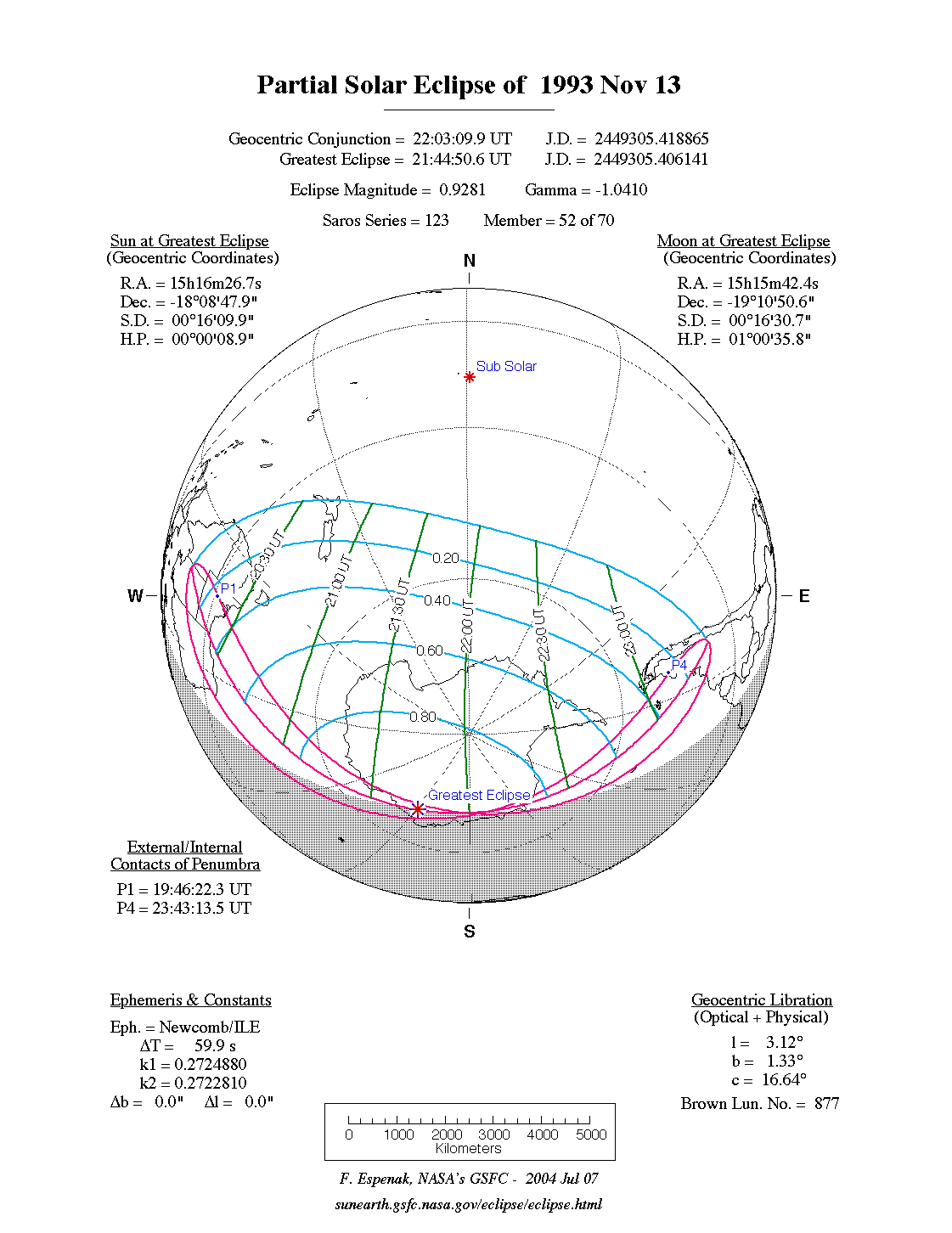
November 1993
View on Grokipediafrom Grokipedia
Events
November 1, 1993
![STS-58 Columbia landing at Edwards Air Force Base][float-right] The Maastricht Treaty, formally known as the Treaty on European Union, entered into force on November 1, 1993, marking the establishment of the European Union (EU) from the existing European Communities.[5] [6] Signed on February 7, 1992, by representatives of the 12 member states—Belgium, Denmark, France, Germany, Greece, Ireland, Italy, Luxembourg, the Netherlands, Portugal, Spain, and the United Kingdom—the treaty required ratification by all signatories, a process completed by October 1993 with Germany's final approval.[5] It introduced a three-pillar structure: the European Community pillar for economic integration, including plans for a single currency (the euro); the Common Foreign and Security Policy pillar; and the Justice and Home Affairs pillar, aiming to enhance cooperation on internal security and justice matters.[5] [6] The treaty also established European citizenship, granting rights such as freedom of movement and residence across member states, and set the foundation for deeper political and monetary union.[5] In the United States, the Space Shuttle Columbia completed its STS-58 mission with a landing at Edwards Air Force Base, California, at 7:05 a.m. PST, after a 14-day flight dedicated to life sciences research.[2] Launched on October 18, 1993, from Kennedy Space Center, the mission—also known as Spacelab Life Sciences 2—conducted experiments on the physiological effects of microgravity on humans and animals, including studies on cardiovascular changes, neurovestibular adaptation, and bone density loss, involving a crew of seven astronauts led by Commander John E. Blaha.[2] The orbiter touched down on runway 22 after a rollout of 9,640 feet, with a landing weight of 229,753 pounds, concluding the longest Space Shuttle mission to date at over 336 hours.[2] This flight advanced NASA's understanding of long-duration spaceflight challenges, informing future missions like those to the International Space Station.[2]November 2, 1993
In the United States, Rudy Giuliani, a Republican, won the New York City mayoral election, defeating incumbent Democrat David Dinkins with 51% of the vote to become the first Republican mayor since John Lindsay in 1965.[7] The victory marked a shift in the city's politics amid concerns over crime rates, which had risen significantly in the early 1990s.[8] Christie Todd Whitman, also a Republican, was elected governor of New Jersey, defeating incumbent Jim Florio in an upset victory by a margin of 1.1 percentage points, making her the first female governor in the state's history and the second Republican woman to win a gubernatorial election that year nationwide.[8] Her campaign emphasized opposition to a proposed state income tax increase and fiscal conservatism.[7] In Israel, Ehud Olmert was elected mayor of Jerusalem, succeeding Teddy Kollek after a contentious campaign focused on urban development and security issues.[9] The Old Topanga Fire ignited around 10:46 a.m. Pacific Time near Old Topanga Canyon Road in the Santa Monica Mountains, northwest of Malibu, California, driven by Santa Ana winds gusting up to 50 mph and low humidity.[10] Sparked possibly by power lines or human activity, the blaze rapidly grew into a major wildfire, scorching over 17,000 acres, destroying 47 homes, and threatening thousands more before being contained on November 11 after mobilizing over 2,000 firefighters and multiple aircraft.[11] It was one of several fires in the 1993 Southern California wildfires, exacerbating regional drought conditions.[10] The Dow Jones Industrial Average closed at a record high of 3,697.64 points, reflecting investor optimism amid economic recovery signals post-recession.[9] In baseball, the first commemorative bricks were laid at the Bob Feller Memorial in Van Meter, Iowa, honoring the Hall of Fame pitcher's career with the Cleveland Indians.[8]November 3, 1993
In Chicago, Illinois, three floors of a new U.S. Postal Service building under construction at the corner of Polk and Canal streets partially collapsed during the afternoon, killing two ironworkers and injuring six others.[12][13] The failure originated from an improperly welded beam connection installed approximately 36 hours prior, which broke under load and triggered a progressive collapse of over 60 tons of steel superstructure.[14] Investigations by the Occupational Safety and Health Administration and subsequent federal indictments attributed the incident to negligence by the steel erector subcontractor, including failure to follow welding procedures and inadequate supervision.[14][15] In Major League Baseball, pitcher Greg Maddux of the Atlanta Braves was named the winner of the National League Cy Young Award for the second consecutive season, the first such repeat since Sandy Koufax in 1965-1966.[16] Maddux received 24 of 28 first-place votes from the Baseball Writers' Association of America, reflecting his league-leading performance with 16 wins, a 2.36 earned run average, and 197 strikeouts over 267 innings pitched during the 1993 season.[16] This accolade underscored his dominance in pitch control and efficiency, contributing to the Braves' status as perennial contenders.[17]November 4, 1993
Jean Chrétien was sworn in as the 20th Prime Minister of Canada at Rideau Hall in Ottawa, following the Liberal Party's victory in the October 25 federal election, which saw the Progressive Conservatives reduced to just two seats in the House of Commons.[18] Chrétien, a longtime Liberal MP from Quebec, formed a majority government committed to deficit reduction and constitutional reform, marking the end of nine years of Conservative rule under Brian Mulroney.[19] China Airlines Flight 605, a Boeing 747-409 registered B-165 operating from Taipei to Hong Kong, overran the runway at Kai Tak International Airport during landing amid Typhoon Ira's gusting winds exceeding 60 knots.[3] The aircraft, carrying 374 passengers and 22 crew, slid off the runway, broke through a concrete barrier, and partially submerged in Victoria Harbour, resulting in 23 injuries but no fatalities; it was the first hull loss of a 747-400 model.[20] The incident was attributed primarily to pilot error in attempting landing in unsafe weather conditions, as determined by subsequent investigations.[3] Bolivia acceded to the Berne Convention for the Protection of Literary and Artistic Works, joining 114 other nations in the international copyright treaty administered by the World Intellectual Property Organization.[9]November 5, 1993
The Railways Act 1993 received royal assent on November 5, 1993, establishing the legal framework for the privatisation of British Rail by separating track infrastructure from train operations, creating Railtrack as the private owner of the network, and enabling the franchising of passenger services to private operators under oversight by a Rail Regulator and a Director of Passenger Rail Franchising.[21] This legislation, introduced under Prime Minister John Major's Conservative government, aimed to introduce market competition to improve efficiency in a state-owned system long criticised for underperformance and subsidies exceeding £1 billion annually.[22] In sports, the San Antonio Spurs defeated the Golden State Warriors 91–85 in the first National Basketball Association game held at the newly opened Alamodome in San Antonio, Texas, marking the arena's debut as a professional sports venue with a capacity of over 17,000 for basketball.[23] Separately, the Victory Team, driven by Hamed Buheleeba and Randy Seism, won the Emirates Grand Prix in the World Powerboat Championship series held in Dubai, securing the overall title with a dominant performance.[24] British political philosopher Maurice Cranston died of a heart attack at age 73 while recording a television program in London; known for biographies of John Locke and Jean-Jacques Rousseau, as well as works on human rights and liberalism, Cranston had taught at the London School of Economics for over two decades.[25]November 6, 1993
Evander Holyfield defeated Riddick Bowe by majority decision in their heavyweight boxing rematch at The Spectrum arena in Philadelphia, Pennsylvania, reclaiming the WBA, IBF, and IBO titles after 12 rounds.[26][27] The judges' scorecards read 115–113 and 115–113 for Holyfield, with one scoring it a 114–114 draw; Holyfield landed more effective punches despite Bowe's aggression and size advantage, marking his second victory over Bowe following their first fight in 1992.[26] In the seventh round, the bout was paused for several minutes when spectator Daniel Ray Huffman paraglided into the ring from the arena roof, an unauthorized stunt that led to his immediate arrest on charges including reckless endangerment; broadcaster HBO's Larry Merchant quipped, "We're on HBO, we can say anything," highlighting the chaos.[28][26] The 10th Breeders' Cup World Thoroughbred Championships took place at Santa Anita Park in Arcadia, California, featuring seven races with total purses exceeding $10 million.[26] French import Arcangues, a 133–1 longshot trained by André Fabre, won the $3 million Breeders' Cup Classic by 2¼ lengths over favored Favorite Trick and Fraise, upsetting expectations in one of the event's most improbable victories; Arcangues had finished a distant 71st in the Prix de l'Arc de Triomphe weeks earlier.[26] Other results included Hollywood Wildcat's win in the Distaff and Stokes' victory in the Juvenile Fillies, underscoring the day's emphasis on American and international turf competition.[26] Actor Howard Rollins, known for his role as Virgil Tibbs in In the Heat of the Night, was arrested in Maryland for driving under the influence, his third such incident in recent years amid ongoing substance abuse issues that had previously led to his dismissal from the series.[26][29]November 7, 1993
The 1993 Australian Grand Prix, the final race of the Formula One season, took place on November 7 at the Adelaide Street Circuit in Australia.[30] Brazilian driver Ayrton Senna won the 79-lap race for the McLaren team, marking his last victory with the constructor before moving to Williams the following year.[31] French driver Alain Prost finished second in a Williams-Renault, securing his fourth World Drivers' Championship title with 99 points, ahead of Senna's 73.[30] This achievement made Prost the first driver to win four championships since Juan Manuel Fangio in the 1950s.[32] Prost's title win came after a dominant season start with Williams, where he claimed seven victories, though he had announced his retirement prior to the race.[33] Senna's pole position and race win highlighted the ongoing rivalry between the two drivers, intensified by Prost's sabbatical year in 1992.[31] The podium was completed by Prost's teammate Damon Hill in third, with Jean Alesi fourth for Ferrari.[30] In golf, American Betsy King won the LPGA Toray Japan Queens Cup Tournament.[34] Several NFL regular-season games occurred, including matchups like the Buffalo Bills versus the Indianapolis Colts, but none resulted in milestone records.[35]November 8, 1993
In the early morning of November 8, 1993, thieves executed a sophisticated robbery at the Moderna Museet, Stockholm's Museum of Modern Art, by cutting a hole through the building's roof without triggering any alarms.[36][37] The intruders descended into the exhibition space and stole eight major works, including several by Pablo Picasso and Georges Braque, with an estimated value of $52 million; the collection was uninsured, exacerbating the museum's loss.[38][36] The heist targeted the museum's core holdings of modern art, described by officials as ripping "the heart out" of its Picasso collection, and represented Sweden's largest art theft to date.[38][39] Despite extensive investigations, the perpetrators remained at large initially, though three of the Picassos were recovered undamaged in Stockholm by mid-December 1993.[40] The incident highlighted vulnerabilities in museum security systems reliant on physical barriers and sensors, prompting subsequent reviews of alarm and access protocols in European cultural institutions.[37]November 9, 1993
The Stari Most, an iconic Ottoman-era bridge in Mostar, Bosnia and Herzegovina, collapsed into the Neretva River on November 9, 1993, after sustained shelling by Croatian Defence Council (HVO) artillery. Built between 1557 and 1566 under orders from Sultan Suleiman the Magnificent, the 29-meter-high single-span stone arch had endured for 427 years, serving as a vital link between the city's Muslim and Christian districts and a symbol of multicultural heritage. The deliberate bombardment, part of the intra-Bosnian Croat-Bosniak fighting that erupted in 1993 amid the larger Bosnian War, targeted the structure repeatedly from early November, with a final HVO tank assault on November 8-9 causing its disintegration; eyewitness accounts and investigations confirmed no military use justified the attack, framing it as an act of cultural erasure in the ethnic conflict.[41][42][43] Concurrently, in Sarajevo, Bosnian Serb Army of Republika Srpska (VRS) mortar shells struck a makeshift elementary school in the Otoka neighborhood on November 9, killing at least seven civilians—including four children and one teacher—and wounding dozens more in one of the siege's deadliest single incidents against non-combatants. The assault occurred amid the VRS's prolonged encirclement of the Bosnian capital, initiated in April 1992, where indiscriminate shelling from surrounding hills aimed to demoralize and displace the Muslim-majority population; initial reports cited three to nine child fatalities, with the variance reflecting chaotic wartime documentation, but all accounts underscored the targeting of civilian infrastructure during classes.[44][45][46] These events exemplified the escalating fratricidal violence within the Bosnian War, where Bosnian Croat forces under HVO control sought territorial partition in Herzegovina, while VRS units enforced a siege responsible for over 10,000 civilian deaths in Sarajevo alone by war's end; both sides' actions drew international condemnation for war crimes, though prosecutions focused on patterns of ethnic cleansing rather than isolated strikes.[41][47]November 10, 1993
The government of Vladimír Mečiar was formally established in Slovakia on November 10, 1993, consolidating political power under the Movement for a Democratic Slovakia (HZDS) following the nation's independence from Czechoslovakia on January 1 of that year.[48] Mečiar, who had served as prime minister intermittently since 1990, led a coalition emphasizing national sovereignty and economic stabilization amid post-split challenges, including privatization disputes and regional tensions.[49] This administration's formation came after parliamentary elections in June 1992, where HZDS secured a plurality, enabling Mečiar's return to power after a brief ouster in 1991; it governed until March 1994, when a no-confidence vote led to its replacement.[50] In New York City, a revival production of the Andrew Lloyd Webber and Tim Rice musical Joseph and the Amazing Technicolor Dreamcoat premiered at the Minskoff Theatre on Broadway, directed by Robert Brian and featuring Donny Osmond in the title role.[9] The show, originally debuted in 1968 as a 15-minute pop cantata, had previously enjoyed London runs but marked its first full Broadway staging; it ran for 223 performances, grossing over $10 million and appealing to family audiences with its biblical story retold through diverse musical styles.[51] World Championship Wrestling (WCW) hosted its Clash of the Champions XXV event at the Bayfront Arena in St. Petersburg, Florida, attended by approximately 6,000 spectators.[52] Key matches included Ric Flair defending the WCW World Heavyweight Championship against Vader in a steel cage bout, which Flair won by escaping after 15 minutes and 58 seconds, and the crowning of Rick Rude as the inaugural WCW International World Heavyweight Champion via submission victory over Hawk.[52] The event, broadcast live on pay-per-view, highlighted WCW's expansion of title divisions amid competition with WWF.[52]November 11, 1993
The Vietnam Women's Memorial, a bronze sculpture honoring the approximately 11,000 American women who served in the Vietnam War—predominantly as nurses and in support roles—was dedicated on November 11, 1993, at the Vietnam Veterans Memorial site in Washington, D.C.[53] Designed by artist Glenna Goodacre, the monument depicts three uniformed servicewomen attending to a wounded soldier amid wartime foliage, symbolizing service, sacrifice, and camaraderie without weapons or combat imagery to reflect the non-combat roles of most women involved.[54] The dedication coincided with Veterans Day observances, culminating a decade-long campaign led by former U.S. Army nurse Diane Carlson Evans, who argued that existing memorials overlooked women's contributions despite their exposure to combat zones, Agent Orange, and post-traumatic stress.[55] Congress authorized the memorial in 1988 via Public Law 100-390, with funding raised privately after initial National Park Service concerns about site overcrowding and thematic fit; Goodacre's design was selected from 392 submissions in 1989. The ceremony drew thousands, including veterans and officials, and featured speeches emphasizing recognition of women's overlooked roles, with Evans highlighting how 90% of female Vietnam veterans suffered PTSD at rates comparable to male combatants, based on Department of Veterans Affairs data.[56] President Bill Clinton participated in broader Veterans Day events that day, laying a wreath at the Tomb of the Unknown Soldier during a national ceremony honoring all U.S. military veterans, though he did not speak at the women's memorial dedication.[57] The memorial's placement near the Vietnam Veterans Memorial underscored debates over gender-specific honors in public commemoration, with supporters citing archival evidence of women's essential medical and logistical support—saving thousands of lives—while critics questioned additive memorials amid fiscal and spatial constraints on the National Mall.[58] In cultural events, Polish composer Krzysztof Penderecki conducted the premiere of his revised Polish Requiem—a large-scale choral-orchestral work incorporating sections dedicated to Polish historical tragedies like the Warsaw Uprising and Solidarity movement—in Stockholm, Sweden, performed by the Royal Stockholm Philharmonic Orchestra and Chorus with soloists including soprano Katarina Dalayman.[59] Originally composed piecemeal from 1980 onward, the full revised version with added Sanctus reflected Penderecki's evolution from avant-garde techniques to tonal, requiem-style lamentations, premiered at the Penderecki Festival.[60] Business developments included Paramount Communications' agreement to acquire Macmillan Inc. for $553 million in cash, forming the second-largest U.S. book publisher by revenue and expanding Paramount's educational and trade divisions amid industry consolidation.[61] This transaction, announced that day, involved no stock swap and aimed to leverage Macmillan's college textbook portfolio, though it later faced antitrust scrutiny.[62]November 12, 1993
The inaugural event of the Ultimate Fighting Championship (UFC), titled UFC 1: The Beginning, took place at McNichols Sports Arena in Denver, Colorado, featuring a single-elimination tournament with no weight classes, minimal rules, and fighters from various martial arts disciplines to determine the most effective fighting style.[63] Brazilian jiu-jitsu practitioner Royce Gracie won the tournament, defeating Art Jimmerson by submission in the quarterfinals, Ken Shamrock by rear-naked choke in the semifinals, and Gerard Gordeau via rear-naked choke in the final after 1:49, demonstrating the efficacy of ground fighting and grappling against striking-based arts.[64] The event, broadcast on pay-per-view to approximately 86,000 households, marked the mainstream introduction of mixed martial arts (MMA) in the United States and highlighted Brazilian jiu-jitsu's dominance in no-holds-barred combat.[65] William Malcolm "Bill" Dickey, a Baseball Hall of Fame catcher who played 17 seasons primarily with the New York Yankees from 1928 to 1946, died at age 86 in Little Rock, Arkansas, following a prolonged illness.[66] Dickey batted .313 lifetime with 202 home runs, earned 11 All-Star selections, and contributed to seven World Series championships, including as a player-manager in 1946; he later coached for the Yankees until 1960.[67] Kazakh President Nursultan Nazarbayev signed a decree on this date authorizing the introduction of the tenge as the Republic of Kazakhstan's national currency, set to replace the Russian ruble at an exchange rate of 1 tenge to 500 rubles, with banknotes entering circulation three days later on November 15.[68] This step asserted economic sovereignty following the Soviet Union's dissolution, though initial hyperinflation and supply shortages challenged stability.[69]November 13, 1993
A partial solar eclipse occurred on November 13–14, 1993, visible primarily in Antarctica, southern Australia, and parts of South America, with a maximum eclipse magnitude of 0.928 at 21:45 UTC near 69° S, 58° E in the South Atlantic Ocean.[70] The event was a deep partial eclipse, with the Moon's shadow path limited to high southern latitudes, and no totality observed.[71] A magnitude 7.0 earthquake struck off the east coast of Russia's Kamchatka Peninsula in the North Pacific Ocean at approximately 13:18 UTC, at a depth of about 33 km, with its epicenter roughly 126 km south of Petropavlovsk-Kamchatsky.[72] The offshore event generated no significant tsunami or reported casualties, though it was part of ongoing seismic activity in the subduction zone.[73] China Northern Airlines Flight 6901, a McDonnell Douglas MD-82 (registration B-2141) en route from Beijing to Ürümqi, crashed short of the runway during approach to Ürümqi Diwopu International Airport amid poor visibility and pilot error, killing 12 of the 102 people on board; the aircraft was destroyed by post-impact fire.[74] In Pakistan, Farooq Leghari, the foreign minister and candidate backed by Prime Minister Benazir Bhutto's Pakistan People's Party, was elected president by the electoral college with 274 votes against 168 for rival Waseem Sajjad, ending a power struggle between the presidency and premiership; he was sworn in the following day for a five-year term.[75]November 14, 1993
In American football, Miami Dolphins head coach Don Shula achieved his 325th career victory with a 19-14 win over the Philadelphia Eagles at Veterans Stadium, surpassing George Halas for the NFL record in regular-season and postseason wins combined.[76][77] The victory, marked by defensive stands and field goals from Pete Stoyanovich, elevated Shula's career mark to 325-147-6 entering the game.[78] Mexican athlete Andrés Espinosa won the men's division of the New York City Marathon, completing the 26.2-mile course in 2 hours, 10 minutes, and 4 seconds despite warm conditions that slowed the field.[79][80] Espinosa, aged 32, outpaced American Bob Kempainen by 59 seconds, marking his second career victory in the event after 1992.[81] The Pulitzer Prize-winning play The Kentucky Cycle by Robert Schenkkan premiered on Broadway at the Royale Theatre (now Bernard B. Jacobs Theatre), presenting nine interconnected one-acts spanning two centuries of Kentucky history through themes of land, violence, and family lineage.[82][83] Directed by David Esbjornson and starring Billy Crudup and Richard Thomas, the production ran for 34 performances until December 12, earning Tony nominations for Best Play and featured acting.[84] The drama Twilight of the Golds by Robert Schenkkan closed at the Booth Theatre after 29 performances, following its off-Broadway run earlier in the year.[85]November 15, 1993
A group of 13 Cuban defectors, consisting of nine adults (including one pregnant woman) and five children, stole a Soviet-era Antonov An-2 biplane crop duster from a rural airfield in Cuba and piloted it approximately 200 miles across the Straits of Florida, landing near Homestead, Florida, after navigating through heavy thunderstorms and with nonfunctional navigational instruments.[86][87] The pilot, identified as a 32-year-old agricultural worker, had limited flying experience but managed the unauthorized takeoff without alerting Cuban authorities; upon arrival, U.S. immigration officials processed the group for political asylum, noting their dehydration and exhaustion from the roughly three-hour flight.[88] This incident highlighted ongoing desperation among Cubans seeking to escape the Castro regime's restrictions, amid a pattern of makeshift defections by sea and air during the early 1990s.[86] In New York, Joseph Buttafuoco, a 37-year-old auto body shop owner from Massapequa, Long Island, was sentenced to six months in jail after pleading guilty to one count of third-degree statutory rape for engaging in sexual relations with 16-year-old Amy Fisher in May 1991; the case had gained national notoriety due to Fisher's subsequent attempted murder of Buttafuoco's wife, Mary Jo, in 1992, for which Fisher served seven years in prison.[89][90] Buttafuoco, who initially denied the affair but later admitted it under a plea deal avoiding a felony charge, expressed remorse in court, attributing his actions to "lust," while facing boos from spectators; the sentencing marked the resolution of his criminal liability in the scandal, though civil suits from Mary Jo Buttafuoco followed.[91][89] In Arizona, a head-on collision on Interstate 17 near Black Canyon City between an Arizona Department of Corrections inmate transfer bus and a tractor-trailer killed the truck driver and correctional officer Robert K. Barchey, aged 42, who was transporting 28 inmates from a work detail; several inmates sustained injuries, but the cause was attributed to the truck crossing into oncoming traffic, with no evidence of inmate involvement.[92] Barchey, a 12-year veteran of the department, was credited with helping secure the inmates post-crash before succumbing to his injuries.[92]November 16, 1993
President Bill Clinton signed the Religious Freedom Restoration Act (RFRA) into law on November 16, 1993, during a ceremony on the South Lawn of the White House.[93] The legislation, passed by the 103rd United States Congress, aimed to restore the standard of review for free exercise of religion claims to that applied prior to the Supreme Court's decision in Employment Division v. Smith (1990), which had held that neutral, generally applicable laws do not violate the Free Exercise Clause of the First Amendment even if they incidentally burden religious practices.[94] RFRA requires the government to demonstrate a compelling interest and use the least restrictive means when substantially burdening religious exercise.[95] The Act passed the House of Representatives on May 11, 1993, by a vote of 372-98, and an amended version passed the Senate on October 27, 1993, by unanimous consent before returning to the House for approval on November 16, 1993, also by unanimous consent.[93] Sponsored by Representatives Chuck Schumer and Christopher Cox in the House and Senator Orrin Hatch in the Senate, RFRA received broad bipartisan support, reflecting concerns over the Smith ruling's implications for religious liberty.[96] The law applies to both federal and state actions, though its application to states was later limited by the Supreme Court in City of Boerne v. Flores (1997).[97] In Russia, President Boris Yeltsin ordered the closure of the Lenin Museum in Moscow, a move symbolizing the rejection of Soviet-era ideology amid post-communist reforms.[9] The museum, dedicated to the life and works of Vladimir Lenin, had been a key institution of Soviet propaganda.[98] This action aligned with Yeltsin's broader efforts to dismantle communist symbols following the Soviet Union's dissolution in 1991. On Broadway, the play Any Given Day by David Wiltse opened at the Longacre Theatre, running for 32 performances.[99] The production explored themes of urban life and personal struggle in New York City.[100]November 17, 1993
The United States House of Representatives approved the North American Free Trade Agreement (NAFTA) by a vote of 234 to 200, marking a key step toward implementing the trade pact between the US, Canada, and Mexico.[101] The legislation aimed to eliminate tariffs and trade barriers, though it faced opposition from labor unions and environmental groups concerned about job losses and regulatory standards.[102] President Bill Clinton and Vice President Al Gore monitored the vote closely, with passage reflecting a narrow bipartisan coalition despite Democratic majorities in Congress.[103] In Nigeria, General Sani Abacha staged a bloodless military coup, ousting interim President Ernest Shonekan and assuming control as head of state, thereby suspending democratic institutions and returning the country to military rule.[104] Abacha, previously defense minister, justified the takeover citing political instability following the annulment of 1993 elections, initiating a period of authoritarian governance that lasted until his death in 1998.[9] The United Nations established the International Criminal Tribunal for the former Yugoslavia (ICTY) in The Hague, the first such body since the Nuremberg and Tokyo trials after World War II, with judges from 11 nations tasked with prosecuting war crimes committed during the Yugoslav conflicts.[101] This tribunal represented an effort to address atrocities in Bosnia and Croatia through international law, though its effectiveness and biases in prosecution have been debated by observers noting selective focus on certain parties.[105] The inaugural Asia-Pacific Economic Cooperation (APEC) leaders' meeting convened in Seattle, Washington, bringing together heads of state from 12 Pacific Rim economies to discuss trade liberalization and economic cooperation amid post-Cold War globalization.[106] An Antonov An-124 cargo plane crashed into a mountain in southern Iran near Isfahan, killing all 17 people on board in one of the largest aircraft types' early fatal incidents.[9] In European football qualification for the 1994 FIFA World Cup, England defeated San Marino 7–1 but failed to advance due to goal difference, eliminated alongside the Netherlands in a dramatic final matchday.[107] This outcome highlighted the high stakes of the group stage format, with the Dutch controversially advancing over Portugal.[108] A referendum in Puerto Rico on its political status resulted in 48.6% favoring continuation as a commonwealth, rejecting statehood (46.3%) and independence (4.4%), reflecting ongoing debates over US territorial relations.[106]November 18, 1993
On November 18, 1993, negotiators from South Africa's Multi-Party Negotiation Forum, including representatives from the African National Congress and the National Party government, finalized and endorsed an interim constitution after months of talks aimed at dismantling apartheid structures. This document established a framework for non-racial elections in April 1994, universal adult suffrage, and protections for fundamental rights such as equality before the law and freedom of expression, while retaining some powers for the existing parliament during a transitional period.[109][110] The approval, reached in the early hours, represented a compromise that balanced demands for immediate power-sharing with safeguards against perceived radical changes, averting potential violence from hardline factions on both sides.[109] In the United States, Vince McMahon, founder and chairman of the World Wrestling Federation (WWF), was indicted by a federal grand jury in New York on charges of conspiracy to distribute anabolic steroids, stemming from an investigation into the promotion's use of performance-enhancing drugs among wrestlers. McMahon faced allegations of personally supplying steroids to at least a dozen employees over several years, with the case highlighting broader scrutiny of drug practices in professional wrestling. The indictment, unsealed that day, led to a high-profile trial in 1994 where McMahon was ultimately acquitted on most counts, though it damaged the WWF's public image and prompted internal reforms. The grunge band Nirvana taped its acoustic set for MTV's Unplugged series at Sony Music Studios in Manhattan, performing stripped-down versions of tracks from albums like Nevermind and In Utero, along with covers such as David Bowie's "The Man Who Sold the World." Recorded amid Kurt Cobain's ongoing struggles with addiction and fame, the session featured guest musicians like cellist Lori Goldston and included rarely played songs, capturing the band's raw intensity in an intimate format.[111] The performance, aired on December 14, 1993, became a posthumous cultural milestone after Cobain's death five months later, with the resulting album topping charts upon its 1994 release.[111] In the United Kingdom, a minibus carrying 14 students from Davenant Foundation School in Loughton crashed into a parked highway maintenance truck on the M40 motorway near Warwick shortly after midnight, killing 12 children and injuring the survivors and driver. The accident, attributed to the minibus driver falling asleep at the wheel during a return trip from London, prompted investigations into road safety and vehicle maintenance standards.November 19, 1993
On November 19, 1993, a status referendum was held in Curaçao, where voters opted to maintain the island's status within the Netherlands Antilles, rejecting independence or direct ties to the Netherlands.[112] With a turnout of approximately 62%, around 73% of participants favored remaining part of the Antilles federation, reflecting preferences for economic stability and shared governance over separation amid ongoing discussions about the future of the Dutch Caribbean territories.[113] In Algeria, an uprising by Islamist fundamentalists resulted in at least 27 deaths, intensifying the ongoing civil conflict between government forces and armed groups seeking to establish an Islamic state.[112] This incident occurred amid a broader wave of violence following the 1991 military intervention that halted elections poised to favor the Islamic Salvation Front (FIS), with fundamentalists targeting security personnel and civilians in coordinated attacks.[114] A fire at a toy factory in Shenzhen, China, claimed 87 lives and injured 47 others, highlighting hazardous working conditions in rapidly industrializing facilities. The blaze, which started in a locked workshop producing plastic toys, spread quickly due to flammable materials and inadequate fire escapes, prompting local investigations into safety violations common in export-oriented factories during China's economic boom.[115] U.S. President Bill Clinton hosted the inaugural Asia-Pacific Economic Cooperation (APEC) leaders' summit in Seattle, Washington, aiming to foster trade liberalization among Pacific Rim nations.[115] Attended by heads of state from 15 economies, the meeting addressed market access barriers, with Clinton advocating for open markets despite resistance from Asian leaders citing their developmental needs, marking a key step in regional economic integration.[116] An agreement ended a prolonged strike by the United Mine Workers against major U.S. coal operators, averting further disruptions in the energy sector.[116] The contract, ratified after months of negotiations, included wage adjustments and health benefits, resolving disputes over job security in a declining industry facing competition from alternative fuels.[116]November 20, 1993
On November 20, 1993, the United States Senate passed the Brady Handgun Violence Prevention Act (H.R. 1025), legislation establishing a five-day waiting period and background checks for handgun purchases from licensed dealers to reduce gun violence.[117] The bill passed by a yea-nay vote of 63-36, substituting for a companion Senate measure (S. 414) and advancing toward conference reconciliation with the House version approved earlier that month.[118] Named for James Brady, who was severely wounded in the 1981 assassination attempt on President Ronald Reagan, the act aimed to close loopholes in prior federal firearms regulations while mandating the creation of a national instant criminal background check system, though the waiting period was a temporary measure pending its implementation.[117] In aviation news, Avioimpex Flight 110, a Yakovlev Yak-42D operating as a charter from Geneva, Switzerland, to Skopje, Macedonia, diverted to Ohrid Airport due to poor weather at its destination.[119] During a second instrument approach amid low visibility and mountainous terrain, the aircraft struck Mount Trojani in a controlled flight into terrain (CFIT) accident approximately 8 kilometers from the runway threshold at 23:30 local time, killing 115 of the 116 people on board (108 passengers and 8 crew); the sole initial survivor succumbed to injuries shortly thereafter.[120][121] The crash, attributed to pilot error in navigation and failure to maintain proper altitude during the approach, marked one of Macedonia's deadliest aviation disasters and highlighted risks in post-Yugoslav regional operations.[119] In American college football, Auburn University defeated the University of Alabama 22-14 in the 58th Iron Bowl rivalry game held in Auburn, securing a significant victory in the longstanding series marred by NCAA sanctions on Alabama.[122] Separately, Boston College edged Notre Dame 41-39 in the annual Holy War matchup, a high-scoring affair that underscored the competitive intensity of the Catholic institutions' football tradition.[122] These outcomes contributed to end-of-season narratives amid broader discussions on athletic eligibility and program integrity.November 21, 1993
The United States Senate ratified the North American Free Trade Agreement (NAFTA) on November 21, 1993, approving the implementing legislation by a 61-38 vote.[123] This followed the House of Representatives' passage on November 17, advancing the pact negotiated under Presidents George H. W. Bush and [Bill Clinton](/page/Bill Clinton) to reduce tariffs and trade barriers among the United States, Canada, and Mexico.[124] The agreement took effect on January 1, 1994, creating a trilateral economic bloc with a combined GDP exceeding $6 trillion at the time.[125] In tennis, German player Michael Stich won the ATP Tour World Championships in Frankfurt, defeating American Pete Sampras 7–6, 2–6, 7–6, 6–2 in the final.[126] Stich, ranked world No. 2, secured his first and only title at the year-end event, which featured eight top players and served as a precursor to the modern ATP Finals.[127] The match highlighted dominant serving, with both competitors firing over 20 aces amid indoor carpet conditions. A fatal shark attack occurred off Roebuck Bay near Broome, Western Australia, where 27-year-old pearl diver Richard Peter Bisley was killed by a tiger shark while hookah diving at a pearl farm.[128] The incident, reported at approximately 3:15 p.m., marked one of the rare documented fatalities in the region, with the shark captured days later.[129]November 22, 1993
The Mexican Senate approved the North American Free Trade Agreement (NAFTA) on November 22, 1993, granting final legislative ratification after the agreement had passed the U.S. House of Representatives on November 17 and the U.S. Senate on November 20, as well as receiving Canadian approval earlier.[130] This vote, by a margin of 63-5, cleared the path for President Carlos Salinas de Gortari to sign the implementing legislation, advancing economic integration among the three nations despite domestic opposition from labor unions and environmental groups concerned about job displacement and regulatory standards.[130] In theater, Neil Simon's comedy Laughter on the 23rd Floor, a semi-autobiographical depiction of writers on the Your Show of Shows staff during the 1950s, opened at Broadway's Richard Rodgers Theatre, directed by Jack O'Brien and starring Nathan Lane; the production ran for 320 performances until August 1994.[131] British novelist and critic Anthony Burgess died of lung cancer in London at age 76; known for works including A Clockwork Orange (1962), which explored themes of free will and state control through dystopian narrative, Burgess had published over 50 books and composed music, with his later years marked by essays on language and Catholicism.[132]November 23, 1993
United States President Bill Clinton signed Public Law 103-150, known as the Apology Resolution, which acknowledged the 100th anniversary of the 1893 overthrow of the Kingdom of Hawaii and expressed the United States' regret for the role played by American citizens and officials in the illegal deposition of Queen Liliuokalani.[133] The joint resolution, passed by Congress earlier that month, detailed how the overthrow involved agents and citizens of the United States, leading to the provisional government's reliance on U.S. military support and eventual annexation in 1898 without a treaty or popular vote.[134] It explicitly stated that the resolution did not authorize claims against the United States, create new rights, or affect the legal status of Hawaii as a state, serving primarily as a symbolic gesture toward Native Hawaiians.[134] In theater, the second installment of Tony Kushner's Pulitzer Prize-winning epic Angels in America, subtitled Perestroika, opened on Broadway at the Walter Kerr Theatre, directed by George C. Wolfe and starring performers including Marion Seldes and Kathleen Chalfant.[135] The production, running in repertory with the first part Millennium Approaches, completed the seven-hour cycle exploring themes of AIDS, politics, and religion in 1980s America, ultimately achieving 216 performances for Perestroika and earning multiple Tony Awards.[136] Rapper Snoop Doggy Dogg (Calvin Broadus) released his debut studio album Doggystyle via Death Row Records and Interscope, produced primarily by Dr. Dre and featuring G-funk tracks like "Gin and Juice" and "Who Am I (What's My Name)?". The album debuted at number one on the Billboard 200, selling over 800,000 copies in its first week and eventually achieving quadruple platinum certification, marking a commercial peak for West Coast gangsta rap amid the label's dominance following Dr. Dre's The Chronic.November 24, 1993
On November 24, 1993, Robert Thompson and Jon Venables, both aged 11, were convicted at Preston Crown Court of the murder of two-year-old James Bulger, marking one of the most notorious child-on-child killings in British history.[137] The boys had abducted Bulger from the New Strand Shopping Centre in Bootle, Merseyside, on February 12, 1993, leading him nearly three kilometers to a railway line where they subjected him to prolonged abuse, including battery with bricks, stones, and an iron bar, before leaving his body on the tracks.[138] Evidence included over 20 injuries documented in the autopsy, with the cause of death determined as massive head trauma; the pair were tried as adults due to the premeditated nature of the crime and sentenced to detention at Her Majesty's pleasure, with minimum terms later set at eight years before parole eligibility.[138] The case drew widespread media attention and public outrage, highlighting failures in early intervention for at-risk youth and prompting debates on juvenile justice and media influence on children. In the United States, the Senate cleared the conference report on H.R. 1025, the Brady Handgun Violence Prevention Act, by a vote effectively finalizing congressional passage of the measure requiring a mandatory five-day waiting period and background checks for handgun purchases from federally licensed dealers.[139] Named after James Brady, who was severely wounded in the 1981 assassination attempt on President Ronald Reagan, the bill aimed to close gaps in the 1968 Gun Control Act by delaying immediate access to firearms for potential prohibited buyers, such as felons or those adjudicated mentally defective.[140] President Bill Clinton signed it into law on November 30, 1993, implementing interim provisions until a national instant check system could be established by 1998.[117] The film Mrs. Doubtfire, directed by Chris Columbus and starring Robin Williams as a divorced father disguising himself as a female housekeeper to spend time with his children, premiered in the United States, grossing over $441 million worldwide and earning Williams an Academy Award for Best Actor in a Leading Role.[138]November 25, 1993
A car bomb detonated near the home of Egyptian Prime Minister Atef Sedki in Cairo as his motorcade passed, in an assassination attempt attributed to Islamist militants of the Egyptian Islamic Group (al-Gama'a al-Islamiyya).[141][142] Sedki escaped unharmed in his armored vehicle, but the explosion killed a 12-year-old schoolgirl and wounded at least 21 others, including bystanders and security personnel.[143] Egyptian authorities later arrested and convicted several suspects linked to the plot, amid a broader campaign of violence by Islamist groups opposing the government's secular policies and economic reforms.[144][145] In Yemen, tribesmen abducted Haynes R. Mahoney III, the U.S. Information Service director in Sanaa, as he exited a hotel, marking one of several kidnappings of foreigners used to press demands on the government.[146][147] The kidnappers, from a northern tribe, sought improvements in local services and detained Mahoney for several days before his release on December 1 following negotiations.[148][149] This incident highlighted ongoing tribal unrest in Yemen, where such abductions served as leverage against central authorities in the unified republic formed after 1990.[150]November 26, 1993
In the Gaza Strip, violent protests erupted following the killing of Emad Aqel, a 23-year-old commander of Hamas's military wing, Izz ad-Din al-Qassam Brigades, by Israeli forces on November 24 during a standoff in the Shaja'iya neighborhood. Aqel, who had been wanted since 1991 for orchestrating attacks that killed at least 11 Israeli soldiers, a settler, and Palestinian collaborators, exchanged fire with soldiers before being shot dead, prompting immediate clashes that injured several Palestinians. By November 26, riots intensified with stone-throwing, road blockades, and confrontations resulting in 34 Palestinians reported hurt, as demonstrators expressed fury over the operation amid ongoing Israeli-Palestinian tensions. Israeli officials described Aqel as a key terrorist figure responsible for multiple ambushes, including one in September 1993 that killed soldiers.[151][152][153] The previous day's Thanksgiving wedding of Democratic strategist James Carville and Republican consultant Mary Matalin drew media attention as a rare bipartisan union, held in New Orleans with Carville's family roots influencing the event's style. The couple, who met during the 1992 presidential campaign as opposing operatives, symbolized political divide yet personal compatibility, with the ceremony consummated amid festive noise on November 25 evening. Their marriage, enduring despite ideological differences, later produced two daughters and co-authored books on their dynamic.[154] Brazilian composer César Guerra-Peixe died at age 79 in Rio de Janeiro, known for blending classical forms with Brazilian folk elements in works like the Brasília Symphony and violin compositions. His career spanned violin performance, orchestration for films, and advocacy for national musical identity post-World War II.[155] In U.S. politics, the congressional session concluded amid passage of key Clinton administration priorities, including the Brady Handgun Violence Prevention Act cleared by both chambers earlier in the week, requiring background checks for handgun purchases. Discussions also highlighted President Clinton's role in averting a prolonged American Airlines flight attendants' strike on November 23 through mediated talks, restoring service after disruptions from November 18.[156][139][157]November 27, 1993
Lisa Hanna, an 18-year-old from Jamaica, was crowned Miss World 1993 at the 43rd edition of the pageant held at the Sun City Entertainment Centre in Sun City, South Africa.[158] She succeeded previous titleholder Julia Kourotchkina of Russia and became the third Jamaican woman to win the crown, following Carole Crawford in 1963 and Cindy Breakspeare in 1976. The event featured 80 contestants and was hosted amid South Africa's post-apartheid transition, marking a notable international gathering.[159] In cricket, India defeated West Indies by 102 runs in the final of the C.A.B. Jubilee Tournament (Hero Cup), a limited-overs match at Eden Gardens in Kolkata to commemorate the Cricket Association of Bengal's diamond jubilee.[160] India scored 225 for 7 in 50 overs, with key contributions from batsmen including Sachin Tendulkar; West Indies were bowled out for 123, as leg-spinner Anil Kumble claimed career-best figures of 6 wickets for 12 runs in 7.1 overs.[160] This victory echoed India's 1983 World Cup triumph over the same opponent.[9] In Test cricket, Australian opener David Boon completed his 18th century, scoring 106 runs against New Zealand during the first Test at Bellerive Oval in Hobart, contributing to Australia's first-innings total of 307.[159] The match, part of a three-Test series, ended in a draw, with Boon reaching the milestone on the third day.[161]November 28, 1993
In Canadian football, the Edmonton Eskimos defeated the Winnipeg Blue Bombers 33–23 to win the 81st Grey Cup at McMahon Stadium in Calgary, Alberta.[162] The Eskimos' victory was powered by kicker Sean Fleming's six field goals and capitalized on seven Winnipeg turnovers, securing Edmonton's 11th Grey Cup title in franchise history.[162] In Honduras, Liberal Party candidate Carlos Roberto Reina won the presidential election with approximately 50% of the vote, defeating National Party incumbent Oswaldo Ramos Soto.[163] Reina, a human rights advocate and former diplomat, pledged to curb military influence and combat corruption during his upcoming term starting January 27, 1994.[163] The play Gray's Anatomy, a monologue by Spalding Gray recounting his fear of flying and subsequent medical ordeal, premiered at the Beaumont Theatre in New York City, running for 13 performances.[164]November 29, 1993
A total lunar eclipse occurred on November 29, 1993, as the Moon passed through the Earth's shadow at its descending node. The event featured an umbral magnitude of 1.0876, meaning the Moon was fully immersed in the umbra with a small portion of its disk extending beyond the shadow's edge at maximum eclipse.[165] The penumbral magnitude reached 2.1633.[165] The eclipse was visible across the Americas, Europe, western Africa, and the Pacific regions.[166] Totality lasted 48 minutes, from 06:02 UTC to 06:50 UTC (1:02 a.m. to 1:50 a.m. EST).[167] Greatest eclipse occurred at 06:26 UTC (1:26 a.m. EST), when the Moon was positioned at 4° latitude and 25' longitude in the constellation Taurus.[4] Observers in the eastern United States noted a dark umbra overall, though the Moon's southern limb appeared unusually bright, creating a striking contrast sometimes described as a "diamond-ring" effect.[168] The full eclipse sequence spanned from penumbral contact at 03:40 UTC on November 29 (10:40 p.m. EST November 28) to penumbral exit at 09:24 UTC (4:24 a.m. EST).[169] No significant atmospheric or meteorological interference was widely reported, allowing clear viewing under favorable weather conditions in visible regions.[4] This eclipse was part of Saros cycle 135, which includes 71 events spanning from 1591 to 2771.[166]November 30, 1993
On November 30, 1993, U.S. President Bill Clinton signed the Brady Handgun Violence Prevention Act into law, establishing a mandatory five-day waiting period for handgun purchases from federally licensed dealers to facilitate background checks aimed at preventing sales to prohibited individuals.[170] The legislation, named after James Brady who was severely wounded in the 1981 assassination attempt on President Ronald Reagan, required checks for felony convictions, fugitive status, domestic violence misdemeanors, and other disqualifying factors.[140] James and Sarah Brady attended the signing ceremony as honored guests.[171] The act amended the Gun Control Act of 1968 and represented a compromise after years of legislative battles, with the waiting period serving as an interim measure until a national instant check system could be implemented.[170] Critics, including the National Rifle Association, argued it infringed on Second Amendment rights without effectively reducing crime, while proponents cited it as a step toward curbing gun violence.[140] The law took effect immediately for handgun sales, marking a significant expansion of federal oversight in firearms transactions.[172] In film, Steven Spielberg's Schindler's List premiered in Washington, D.C., receiving critical acclaim for its depiction of Oskar Schindler's efforts to save over 1,100 Jews during the Holocaust.[140] The black-and-white drama, based on Thomas Keneally's novel, went on to win seven Academy Awards, including Best Picture and Best Director.Births
Notable births
- November 4 – Drew Starkey, American actor known for his role in the Netflix series Outer Banks.[173]
- November 10 – Céline Boutier, French professional golfer who won the 2023 Evian Championship.[173]
- November 13 – Julia Michaels, American singer-songwriter noted for hits like "Issues" and collaborations with artists including Justin Bieber.[174]
- November 15 – Paulo Dybala, Argentine professional footballer playing as a forward for Roma and the Argentina national team.[173]
- November 16 – Pete Davidson, American comedian and actor, cast member of Saturday Night Live from 2014 to 2022.[175]
- November 24 – Saoirse-Monica Jackson, Northern Irish actress recognized for her role as Erin Quinn in Derry Girls.[173]
- November 29 – Stefon Diggs, American NFL wide receiver for the Buffalo Bills, with over 6,000 receiving yards in his career.[173]