


Community hub
Recent from talks
Contribute something
Nothing was collected or created yet.
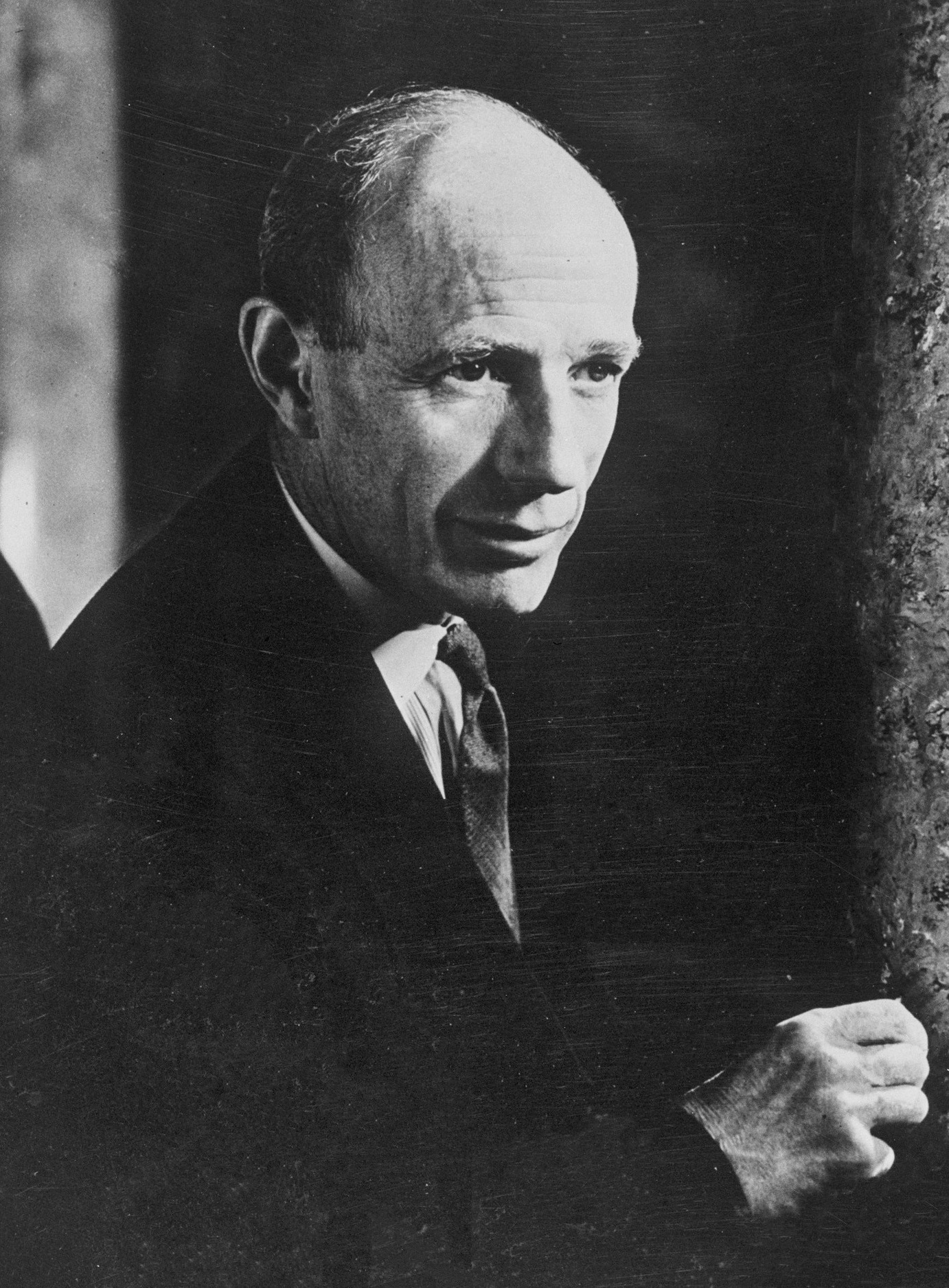
Edward Wood, 1st Earl of Halifax
View on Wikipedia
Edward Frederick Lindley Wood, 1st Earl of Halifax (16 April 1881 – 23 December 1959), known as the 1st Baron Irwin from 1925 until 1934 and the 3rd Viscount Halifax from 1934 until 1944, was a British Conservative politician of the 1930s. He held several senior ministerial posts during this time, most notably those of Viceroy of India from 1926 to 1931 and of Foreign Secretary between 1938 and 1940. He was one of the architects of the policy of appeasement of Adolf Hitler in 1936–1938, working closely with Prime Minister Neville Chamberlain. After Kristallnacht on 9–10 November 1938 and the German occupation of Czechoslovakia in March 1939, he was one of those who pushed for a new policy of attempting to deter further German aggression by promising to go to war to defend Poland.
Key Information


Halifax was the leading candidate to succeed Chamberlain as prime minister early in May 1940, but effectively declined the position as he felt he would be little more than a figurehead with Winston Churchill running the war (Halifax's membership in the House of Lords was given as the official reason). A few weeks later, with the Allies nearing catastrophic defeat and British forces falling back to Dunkirk, Halifax favoured approaching Italy to see if acceptable peace terms could be negotiated. He was overruled by Churchill after a series of stormy meetings of the War cabinet. From 1941 to 1946, he served as British Ambassador to the United States.
Early life and education
[edit]Wood was born on 16 April 1881 at Powderham Castle in Devon at the home of his maternal grandfather, William Courtenay, 11th Earl of Devon. He was born into a Yorkshire family, the sixth child and fourth son of Charles Wood, 2nd Viscount Halifax (1839–1934), and Lady Agnes Elizabeth Courtenay (1838–1919). His father was President of the English Church Union, which pushed for ecumenical reunion, in 1868, 1919, and 1927–1934. His great-grandfather was Charles Grey, 2nd Earl Grey, of tea fame, also the prime minister who introduced the Reform Act 1832.[1]
Between 1886 and 1890, Wood's three older brothers died young, leaving him, at the age of nine, heir to his father's fortune and seat in the House of Lords.[2] He was brought up in a world of religion and hunting. His religiosity as a devout Anglo-Catholic like his father earned him the nickname, possibly coined by Churchill, of the "Holy Fox". He was born with an atrophied left arm and no left hand, which did not stop him from enjoying riding, hunting and shooting.[1] He had an artificial left hand with a spring-operated thumb, with which he could hold reins or open gates.[3]
Wood's childhood was divided mainly between two houses in Yorkshire: Hickleton Hall, near Doncaster, and Garrowby. He attended St David's Prep School from September 1892 and Eton College from September 1894. He was not happy at school as he was not talented either at sport or classics. He went up to Christ Church, Oxford, in October 1899. He took no part in student politics but blossomed academically, graduating with a first class degree in Modern History.[1] Whilst at Oxford he was a member of the private all-male dining society the Bullingdon Club, known for its wealthy members, grand banquets, and bad behaviour.[4]
From November 1903 until 1910, he was a Fellow of All Souls College, Oxford.[1] After a year at All Souls, he went on a Grand Tour of South Africa, India, Australia and New Zealand with Ludovic Heathcoat-Amory. In 1905, he returned to England for two years of study at All Souls.[5] He visited Canada in 1907.[6] He wrote a short biography of the Victorian cleric John Keble (1909).[5]
Early political career and war service
[edit]Wood had not stood in the 1906 UK general election, at which the Liberals won a landslide victory, choosing to devote his energies to his All Souls Fellowship. By 1909, the political tides had turned enough for Wood to put himself forward for the Conservative candidacy at Ripon in Yorkshire, and he was easily selected through local influence.[7] Ripon had gone Liberal in 1906; Wood won it with a 1,000 vote majority in January 1910 and held it with a reduced majority in December 1910. He remained Member of Parliament for Ripon until his elevation to the Lords in 1925.[5] He was a Ditcher (i.e. opposed to the bitter end and ready to "die in the last ditch" to defend the House of Lords' right to veto legislation) in the disputes over the Parliament Act 1911 but really made little impact on politics before 1914. He was vigorously opposed to Welsh Disestablishment.[5]
Before the First World War, Wood was already a captain in the Queen's Own Yorkshire Dragoons, a West Riding yeomanry regiment. He made a rare intervention in debate, urging that conscription be introduced immediately. He was sent to the front line in 1916. In January 1917 he was mentioned in despatches ("Heaven Knows What For" he wrote). He rose to the rank of major. He was then deputy director of Labour Supply at the Ministry of National Service from November 1917 to the end of 1918. He was initially sympathetic to Lord Lansdowne's proposal for a compromise peace, but ultimately demanded all-out victory and a punitive peace.[5]
Wood was unopposed in the UK general elections of 1918, 1922, 1923, and 1924. He was a signatory to the April 1919 Lowther Petition calling for harsher peace terms against Germany in the Treaty of Versailles then being negotiated. In the 1918–1922 Parliament, Wood was an ally of Samuel Hoare, Philip Lloyd-Greame and Walter Elliot, all ambitious younger MPs in favour of progressive reform.[5]
In 1918, Wood and George Lloyd (later Lord Lloyd) wrote "The Great Opportunity", a tract aiming to set an agenda for a revived Conservative and Unionist Party following the end of the Lloyd George coalition. They urged the Conservative Party to concentrate on the welfare of the community rather than the good of the individual. With the Irish War of Independence then in progress Wood urged a federal solution. At this time he concentrated on housing and agriculture and Ireland.[8]
Early ministerial career
[edit]In May 1920, Wood accepted the Governor-Generalship of South Africa; the offer was withdrawn after the South African government announced that it wanted a cabinet minister or a member of the royal family.[8] In April 1921, he was appointed Under-Secretary of State for the Colonies, under Churchill who was initially reluctant to meet him (on one occasion he stormed into Churchill's office and told him that he "expected to be treated like a gentleman"). In the winter of 1921–1922, Wood visited the British West Indies and wrote a report for Churchill.[8]
On 16 October 1922, Wood attended the meeting of the junior ministers who expressed disquiet at the Lloyd George Coalition. On 19 October 1922, he voted at the Carlton Club meeting for the Conservatives to fight the next election as an independent force. The Coalition ended and Bonar Law formed a purely Conservative government. Wood was promoted to the Cabinet on 24 October 1922 as President of the Board of Education. Some saw this as an improvement in the moral character of the government. Austerity policies left no room for constructive policies. Wood, who spent two days hunting each week, was neither interested nor particularly effective in the job but saw it as a stepping stone to greater things. He was not happy about Stanley Baldwin's adoption of tariffs in December 1923, which saw the Conservatives lose their majority and give way to a minority Labour government.[8]
When the Conservatives were returned to power on 6 November 1924, Wood was appointed Minister for Agriculture, a more onerous job than Education had been. He took an Agriculture and Tithes Bill through the Commons.[8]
Viceroy of India
[edit],_Viceroy_of_India_(1926-1931).JPG)
In October 1925, Lord Birkenhead, Secretary of State for India, offered Wood the job of Viceroy of India at the suggestion of King George V. His grandfather Sir Charles Wood had been Secretary of State for India in 1859–1865. He almost declined, as he had two sons of school age and his aged father seemed unlikely to live until 1931 when his term was due to end. He accepted on the advice of his father (who lived to see him return). He was created Baron Irwin, of Kirby Underdale in the County of York, in December 1925.[9] He left for India on 17 March 1926,[8] and arrived in Bombay on 1 April 1926. Irwin was honoured with the GCSI and GCIE in 1926.[10]
Irwin relished the pomp of the viceroyalty. He was an able horseman, and stood 6' 5". He had a "Cecilian stoop and sympathetic kindly eyes" and gave an impression of a Prince of the Church (R. Bernays Naked Fakir 1931). Several attempts were made to assassinate him. He was more sympathetic to Indians than his predecessors had been, although he had no compunctions about signing death warrants when he thought them justified. He wanted Indians to be more united and friendly to the UK; his first major speech as viceroy, and several more throughout his term of office, urged an end to communal violence between Hindus and Muslims.[8]
Simon Commission
[edit]The Government of India Act 1919 had incorporated the Montagu–Chelmsford Reforms ("Diarchy" – shared rule between British and Indians at the local level) and had promised that after ten years there would be a commission to inquire about a new constitution and to advise on whether further reforms were needed. Irwin accepted that greater self-government was necessary, as Indian national aspirations had grown since 1919. Birkenhead brought forward the date of the commission, and put it under Sir John Simon. Irwin recommended an all-British inquiry, as he thought that the Indian factions would not agree among themselves but would fall into line behind the results of the inquiry.[8] David Dutton believes that this was "the most fateful mistake of his viceroyalty, and one he came bitterly to regret".[10]
In November 1927, the composition of the Simon Commission was announced. All the leading Indian parties, including the Indian National Congress, boycotted it. Irwin assured Birkenhead that Simon could win over moderate Indian opinion. Simon arrived in Bombay on 3 February 1928. He achieved some limited successes, but Irwin became convinced that a new gesture would be necessary.[10] Indian responses to Simon's arrival included the All-Parties Conference, a committee of which produced the Nehru Report (May 1928), advocating dominion status for India. However, there was also violence, including the death of Lala Lajpat Rai in November 1928 and the revenge attack of Bhagat Singh in December 1928. Other responses included the Muslim League leader Muhammad Ali Jinnah's 14 points (March 1929).[citation needed]
Irwin Declaration
[edit]In June 1929, a new Labour government took office in the UK, with Ramsay MacDonald Prime Minister for the second time and William Wedgwood Benn as Secretary of State for India. On 13 July 1929, Irwin arrived in England on leave, having chosen Lord Goschen to be his acting viceroy in India.[11] Indeed, on his return to London, Irwin brought with him a "suggested" draft exchange of letters between MacDonald and Simon. His plan was for Simon to write proposing a Round Table Conference to discuss the findings of the commission, and that MacDonald would then reply pointing out that the 1917 Montagu Declaration implied a commitment to Dominion status (i.e. that India should become completely self-governing, like Canada or Australia). Simon saw the drafts and had serious misgivings about the planned Round Table Conference. The exchange of letters did not mention Dominion status as the other commissioners did not favour it, although Simon did not report the depth of their feeling, which he came to share, that such a declaration would undermine the findings of the Commission and that Dominion status would now become a minimum demand for the Indian leaders rather than an ultimate goal. The author David Dutton finds it "curious" that Irwin, who had believed that Simon would not object to Dominion status, did not understand this.[10]
The Irwin Declaration of October 1929 committed Britain to eventual Dominion status for India. Despite such a policy having been implicit for a decade, the Declaration was denounced by many on the Tory Right. Lord Reading (Irwin's predecessor as Viceroy) denounced it, and Simon made his displeasure known. There was brief hope of a breakthrough in Anglo-Indian relations, but the New Delhi Conference of December 1929 between Irwin and the Indian leaders failed to reach agreement. Gandhi now began a campaign of civil disobedience with a view to achieving complete independence. He walked for 24 days to the sea, where he proceeded to make salt, in breach of the government's historic monopoly. Irwin had all the Congress leaders put behind bars, including Gandhi eventually.[10]
Some criticism of Irwin may have been unfair but he had made an error and the consequences were serious and unrest grew. Irwin's position was seen as excessively lenient by London but as half-hearted in India. With little room for manoeuvre, Irwin resorted to repression using his emergency powers to ban public gatherings and crush rebellious opposition. Gandhi's detention, however, only made matters worse.[citation needed]
Agreement with Mahatma Gandhi
[edit].png)
In November 1930, King George V opened the First Round Table Conference in London; no Congress delegates took part because Gandhi was in jail.[10] In January 1931, Gandhi was released and at Irwin's invitation they had eight meetings together. Irwin wrote to his aged father that "it was rather like talking to someone who had stepped off another planet onto this for a short visit of a fortnight and whose mental outlook was quite other to that which was regulating most of the affairs on the planet to which he had descended". But they had mutual respect based on their respective religious faiths.[10]
The fortnight-long discussions resulted in the Gandhi–Irwin Pact of 5 March 1931, after which the Civil Disobedience Movement and the boycott of British goods were suspended in exchange for a Second Round Table Conference that represented all interests.[10] The salient points were:
- The Congress would discontinue the Civil Disobedience Movement.
- The Congress would participate in the Round Table Conference.
- The Government would withdraw all ordinances issued to curb the Congress.
- The Government would withdraw all prosecutions relating to offences not involving violence.
- The Government would release all persons serving sentences of imprisonment for their activities in the civil disobedience movement.
It was further agreed that Gandhi would join the Second Round Table Conference as the sole representative of the Congress. On 20 March 1931, Irwin paid tribute to Gandhi's honesty, sincerity and patriotism at a dinner given by ruling princes.[citation needed] On the evening of 23 March 1931, after a trial now widely viewed to have been unlawful and unfair, the Indian revolutionaries Bhagat Singh, Shivaram Rajguru and Sukhdev Thapar were hanged, in an execution brought forward by 12 hours. The exact extent of political interference is yet to be brought to light.[citation needed]
British politics 1931–1935
[edit]Irwin returned to the UK on 3 May 1931. He was honoured with the Order of the Garter (he became chancellor of the order in 1943). In 1931 he declined the Foreign Office in the new National Government, not least because the Tory Right would not have liked it. Officially, he declared that he wanted to spend time at home. He went to Canada, at the invitation of Vincent Massey, to speak at the University of Toronto.[10] He was still a firm protégé of Stanley Baldwin. In June 1932, on the sudden death of Sir Donald Maclean, he returned to the Cabinet as President of the Board of Education, for the second time, having been apparently genuinely reluctant to accept. His views were somewhat old-fashioned: he declared: "We want a school to train them up to be servants and butlers."[10]
Irwin became Master of the Middleton Hunt in 1932 and was elected as Chancellor of Oxford University in 1933. In 1934 he inherited the title Viscount Halifax on the death of his 94-year-old father.[12] He helped Samuel Hoare draft what became the Government of India Act 1935, the largest single piece of legislation of the 1931–1935 government.[12] In June 1935, Baldwin became prime minister for the third time, and Halifax was appointed Secretary of State for War. He was pleased to give up the Education job. He felt the country was unprepared for war, but he resisted the Chiefs of Staffs' demands for rearmament.[12] In November 1935, after the general election, Halifax became Lord Privy Seal and Leader of the House of Lords.[12]
Foreign policy
[edit]Colleague of Eden
[edit]
By this time, Halifax was becoming increasingly influential in foreign affairs.[12] Cabinet met on the morning of 18 December 1935 to discuss the public outcry over the Hoare–Laval Pact. Halifax, who was due to make a statement in the Lords that afternoon, insisted that the Foreign Secretary Samuel Hoare must resign to save the government's position, causing J. H. Thomas, William Ormsby-Gore and Walter Elliott also to come out for his resignation. Anthony Eden was appointed Foreign Secretary in Hoare's place.[13] The following year, Halifax said the provisions of the Pact "were not so frightfully different from those put forward by the Committee of Five [of the League]. But the latter were of respectable parentage: and the Paris ones were too much like the off-the-stage arrangements of nineteenth-century diplomacy".[14] Effectively, although not formally, Halifax was deputy Foreign Secretary to Eden. Halifax was one of the signatories to the Anglo-Egyptian Treaty of 1936.[15] In general they got on well.[12]
Halifax and Eden were in agreement about the direction of foreign policy (and in line with prevailing opinion throughout Britain) that Nazi Germany's remilitarization of the Rhineland, its "own backyard", would be difficult to oppose and should be welcomed insofar as it continued Germany's seeming progress towards normality after the tribulations of the post-First World War settlement.[citation needed] In 1936, Neville Chamberlain recorded that Halifax was always saying he wanted to retire from public life.[16] In May 1937, when Neville Chamberlain succeeded Baldwin as prime minister, Halifax became Lord President of the Council, as well as remaining Leader of the House of Lords.[12] Chamberlain began increasingly to intervene directly in foreign policy, activity for which his background had not prepared him, and which caused increasing tension with Eden.[citation needed]
In November 1937, Halifax visited Germany in a semi-official capacity, and met Adolf Hitler. The visit came about after Hermann Göring invited Halifax, in his private capacity as Master of the Middleton Hunt, to attend a hunting exhibition in Berlin, and to hunt foxes with Göring in Pomerania. Halifax later stated that he had initially been unenthusiastic about the circumstances of the visit,[12] although Eden had pressed him to accept the invitation, and Halifax's trip to Germany had not been an attempt by Chamberlain to bypass the Foreign Office. In Germany, Göring gave Halifax the nickname "Halalifax" – after a German hunting call, Halali!. At Berchtesgaden, there was a long and tense meeting with Hitler, whom he initially mistook for a footman.[17] In these discussions, Halifax spoke of "possible alterations to the European order which might be destined to come about with the passage of time". Ignoring Eden's reservations, he did not object in principle to Hitler's designs on Austria, and parts of Czechoslovakia and Poland, although he stressed that only peaceful processes of change would be acceptable.[12] Halifax was generally regarded publicly at the time as acting on behalf of the British government, and attempting to renew dialogue with the German government.[18]

Writing to Baldwin on the subject of the conversation between Carl Jacob Burckhardt (the League of Nations' Commissioner of Danzig) and Hitler, Halifax said: "Nationalism and Racialism is a powerful force but I can't feel that it's either unnatural or immoral! I cannot myself doubt that these fellows are genuine haters of Communism, etc.! And I daresay if we were in their position we might feel the same!"[19]
In December 1937, Halifax told the Cabinet that "we ought to get on good terms with Germany", as despite the best efforts of Eden and Chamberlain, Britain was still faced with the prospect of war with Germany, Italy and Japan.[12] By February 1938, Halifax warned Chamberlain of strains in the Cabinet, and tried to broker a deal between Chamberlain and Eden. Eden resigned as Foreign Secretary on 20 February, in protest at Chamberlain's wish to make further concessions to Benito Mussolini, whom Eden regarded as an untrustworthy gangster,[citation needed] without gestures of good faith on his part. Halifax was appointed Foreign Secretary on 21 February 1938, despite some criticism from Labour and elsewhere that so important a job was being given to a peer.[12] Halifax commented "I have had enough obloquy for one lifetime" (i.e. as viceroy of India) before accepting appointment as Foreign Secretary.[20] Chamberlain preferred him to the excitable Eden: "I thank God for a steady unruffled Foreign Secretary."[12]
Foreign Secretary
[edit]Analysis
[edit]Halifax's political line as Foreign Secretary must be seen in the context of existing British foreign policy, which was predicated on a broad consensus that in none of the democracies was there popular support for war, military pressure, or even rearmament. There was debate about the extent to which the dictatorships' very separate interests could be teased apart. It was clear that an alignment of Germany and Italy would divide Britain's forces in any general war and that, without at least a neutral Italy, Britain would be unable to move large naval forces east to confront Japan, given strong isolationist sentiment in America. For many, especially in the Foreign Office, appeasement was a necessary compromise to buy time for rearmament, a process to which Britain was already heavily committed.[21] Others, especially Churchill, hoped that a strong military alliance with France would permit a more robust foreign policy towards the dictators. Many shared Churchill's confidence in the large French Army, although fewer shared his belief that France would be a resilient ally.[citation needed]
Chamberlain embraced the policy of appeasement as a moral force for good, as did many others who were deeply opposed to war and defence spending. By comparison, Halifax's policy appears more pragmatic, like that of Samuel Hoare, coupled to a firm commitment to rearmament, albeit unenthusiastically. All parties recognised the hostility of public opinion to war or military preparations, and the difficulty of acting without a readiness on the part of America or the Soviet Union to play their part (the Labour Party opposed rearmament until well after the Munich Agreement). Nonetheless, Halifax was criticised as an appeaser, along with Chamberlain, Hoare, and twelve others, in the anonymous 1940 book Guilty Men.[citation needed]
Munich
[edit]
Hitler's annexation of Austria in March 1938 made Halifax keener on British rearmament. Czechoslovakia was clearly next on the agenda, but neither Britain nor France believed they had the military capacity to support her, and in the summer of 1938, Halifax still wanted to urge the Czechoslovaks in private to make concessions to Germany, which was making demands regarding the status of the Sudeten Germans.[22] Halifax remained in London and did not accompany Chamberlain on his dramatic flights to Germany in the autumn of 1938. This was once seen as a sign of Chamberlain's dominance of his Cabinet.[22]
It appears that a frank conversation with his pugnacious Permanent Secretary, Sir Alexander Cadogan, brought Halifax to the sharp realisation that the road to appeasement had taken Britain into a series of concessions that were unwise and that were unlikely to secure the necessary pacification of Germany. On 25 September 1938, Halifax spoke out in Cabinet against the inflated demands presented by Hitler in the Godesberg Memorandum after his second summit meeting with Chamberlain.[23] It is now known that Halifax, under Cadogan's influence, persuaded the Cabinet to reject the Godesberg terms. Britain and Germany came close to war until Chamberlain flew to Munich. Chamberlain could hardly afford to lose a second Foreign Secretary, and his dominance of his Cabinet was never so overwhelming again.[22]
The eventual Munich Agreement, signed after Chamberlain's third summit meeting with Hitler, was apparently popular around the world and humiliating to many in the British government, but it was short of Hitler's desires (and of Chamberlain's proposed concessions) and increased Hitler's determination to return to destroy Czechoslovakia in the spring. On 3 October 1938, Halifax defended the Munich Agreement in the House of Lords, in much more measured terms than the Prime Minister had done, not as a triumph but as the lesser of two evils.[22]
The Munich crisis had seen Halifax begin to take a stronger line than Chamberlain against further concessions to Germany. Andrew Roberts argues that from this point on, Halifax set his face firmly towards a policy of deterrence. He hoped that increased rearmament—including strengthening of alliances with and economic support to the countries of Eastern Europe, and the reintroduction of conscription—coupled with a firmer line towards Germany, Italy, and Japan would reduce the risks of those three hostile powers acting in combination. It is of note that, when war began, neither Japan nor Italy was prepared to join in until the pendulum had swung much further in Germany's favour.[24]
After Munich
[edit]
After Munich, Halifax (successfully) advised Chamberlain against capitalising on his popularity by calling a snap general election; instead, he urged (in vain) for Chamberlain to widen the National Coalition by offering jobs not just to Churchill and Eden but also to Labour and Liberal figures.[22] Halifax was also disgusted by the anti-Jewish pogrom of Kristallnacht (10 November). He advocated British financial aid to the countries of Central and Eastern Europe to discourage them from coming under Germany's influence.[22] With Hitler's lack of commitment regarding the Munich Agreement becoming clearer, Halifax worked steadily to assemble a stronger British position by pushing Chamberlain to take economic steps to underpin British interests in Eastern Europe and prevent additional military supplies from reaching Germany, such as tungsten. In January 1939, Halifax accompanied Chamberlain to Rome for talks with Mussolini. That month Halifax pushed for staff talks with France, in view of the danger of war with both Germany and Italy simultaneously. After Hitler broke the Munich agreement and occupied the rump of "Czecho-slovakia" (the hyphen had been added after Munich), Chamberlain gave a speech in Birmingham on 17 March 1939, pledging that Britain would go to war to defend Poland. Halifax had been one of the drivers in this change of policy.[22] By March 1939, Eden, then out of office, observed that thanks to Halifax the government are "now doing what we would wish".[16]
Halifax granted a guarantee to Poland on 31 March 1939, triggered by alarming intelligence of German preparations, in hopes of sending clear signals to Germany that, in Halifax's words, there would be "no more Munichs".[25] The Foreign Office received intelligence in early April 1939 that Italy was about to invade Albania. At a Cabinet meeting on 5 April 1939, Halifax rejected these reports. Two days later, Italy invaded Albania; Halifax met Sir Alexander Cadogan and "decided we can't do anything to stop it".[26] Although he disliked the Soviet regime, not least because of its atheism, Halifax was quicker than Chamberlain to realise that Britain should attempt to ally with the Soviets. He told the Foreign Affairs committee: "Soviet Russia is something between that of the unconquerable steamroller and looking on her as entirely useless militarily. We cannot ignore a country with a population of 180,000,000 people."[27][28]
The negotiations (in summer 1939) failed, and the Soviets signed an agreement with the Germans instead on 23 August. It has been suggested that Halifax should have led the negotiations himself,[22] but that would not have suited Halifax's purpose because his government had not carried out the negotiations in good faith.[29] The Foreign Office confirmed to the US chargé d'affaires on 8 August 1939 that "the military mission, which had now left Moscow, had been told to make every effort to prolong discussions until 1 October 1939".[30] Halifax disclosed to the Foreign Affairs Committee on 10 July 1939: "Although the French were in favour of the military conversations commencing, the French Government thought that the military conversations would be spun out over a long time and as long as they were taking place we should be preventing Soviet Russia from entering the German camp."[31]
While Henry Roberts has spoken of Halifax's fellow Foreign Minister (of the Soviet Union), Maxim Litvinov, as having acute perceptive skills and an ability "to detect major trends in the 1930s and to anticipate the course of events indicates his tremendous understanding of the decade",[32] Halifax had completely misunderstood Hitler.[29] Halifax said: "Hitler had a very low opinion of the Soviet Union, and our action [in aligning with the Soviets] would confirm to him the idea that we were a weak and feeble folk".[33] On the contrary, what made Hitler worried was the thought of a joint pact between France, Britain and the Soviet Union to prevent a pact between Germany and the Soviet Union.[29] Halifax did not know that in April 1939, Hitler told Ernst von Weizsäcker that he was contemplating a reconciliation with the Soviet Union.[34] On 2 August 1939, Hitler asked Konstantin von Neurath, a former Foreign Minister and career diplomat during the Weimar Republic, whether the German people would accept such an ideological shift from anti-communism to signing a pact with the Soviet Union. Neurath assured Hitler that he "could do what he liked with the [National Socialist] Party".[35]
With Poland now looking likely to be carved up between Germany and the Soviets (as indeed soon took place), the diarist "Chips" Channon, Parliamentary Private Secretary to Halifax's junior minister Rab Butler, who opposed the guarantee, recorded (25 August 1939) that "the barometer of war kept shifting" and that "the Polish guarantee was [Halifax]'s pet scheme and favourite god-child".[22] When Germany invaded Poland, Halifax refused any negotiations while German troops remained on Polish soil. However, he stood solid with Chamberlain, who delayed in giving a commitment to go to war until the French had also committed. Both of them were the objects of a Cabinet revolt, which insisted on Britain honouring the guarantee to Poland. Britain declared war on Germany on 3 September 1939.[22]
Phoney War
[edit]After the outbreak of war, Halifax's diplomacy aimed to dissuade the Soviets from formally joining the Axis powers. He opposed the bombing of Germany, lest the Germans retaliate.[22] Swedish intermediary Birger Dahlerus had approached Britain for peace talks in August 1939, just before the outbreak of war. On 1 November 1939, Halifax replied to an approach through Swedish channels that no peace was possible with Hitler in power. Even that aroused the wrath of Churchill, First Lord of the Admiralty, who sent a private note to Halifax rebuking him that such talk was dangerous.[36] Halifax remained opposed to any hint of a compromise peace during the Phoney War.[37]
Churchill as Prime Minister
[edit]On 8 May 1940, Chamberlain's government survived a motion of no confidence brought about by the deteriorating military situation in Norway. The government had a nominal majority of 213 in the House: at the end of the "Norway Debate", they won the vote with a majority of only 81; 33 Conservatives and 8 of their allies voted with the opposition parties, and 60 abstained. Churchill had only grudgingly been appointed First Lord of the Admiralty. Nevertheless, he mounted a strong and passionate defence of Chamberlain and his government in the debate preceding the vote.[38] Under ordinary circumstances, such a weak vote would not have been politically disastrous, but it was decisive at a time when the Prime Minister was being strongly criticised by both sides of the House and there was a strong desire for national unity.[39] Talking to Churchill after the vote, Chamberlain admitted his dismay and said that he would try for a coalition government with the Labour and Liberal parties, but Churchill opposed that.
At 10.15 am the next morning (9 May), Chamberlain met with Halifax and Churchill in the Cabinet Room. Churchill's own account of these events, published eight years later in The Gathering Storm, the first volume of his The Second World War, does not tally exactly with contemporary accounts such as Halifax's own diary and Alexander Cadogan's record of his conversations with Halifax, or accounts given by Chamberlain or by the Chief Whip David Margesson (whose presence at the meeting Churchill does not mention). Churchill described a battle of wills in which Chamberlain opened the meeting by arguing that Churchill could not command the support of the Labour Party after he had had to defend the government at the Norway Debate, only to be met with a lengthy silence before Halifax, with some hesitation, expressed his own unfitness for the job. Other accounts describe Halifax demurring much more rapidly, and Churchill actively agreeing with him. Churchill also misdates the events of 9 May to the following day, and although his writing assistant William Deakin accepted responsibility for this error he later confirmed, in an interview in 1989, that Churchill's account was embellished after numerous retellings and was not meant to be taken seriously.[40] The description of Chamberlain attempting to persuade Churchill to agree tacitly to Halifax's appointment as prime minister is also hard to reconcile with Halifax's having expressed his reluctance to do so to Chamberlain at a meeting between the two men on the morning of the 9th.[41][42]
At 4.30 pm that afternoon Chamberlain held another meeting, attended by Halifax, Churchill, and the leader and the deputy leader of the opposition Labour Party (Clement Attlee and Arthur Greenwood respectively). He asked the Labour leaders if they would agree to serve in a coalition government. They replied that it might be possible but only with a different prime minister and that before they could give an official answer, they would need the approval of Labour's National Executive Committee, then in Bournemouth preparing for the annual conference which was to start on the Monday. They were asked to telephone with the result of the consultation by the following afternoon.[43][44] In his diary entry for 9 May, written up the following morning, Halifax later wrote:
I had no doubt at all in my own mind that for me to succeed him would create a quite impossible situation. Apart altogether from Churchill's qualities as compared with my own at this particular juncture, what would in fact be my position? Churchill would be running Defence, and in this connexion one could not but remember the relationship between Asquith and Lloyd George had broken down in the first war... I should speedily become a more or less honorary Prime Minister, living in a kind of twilight just outside the things that really mattered.[45]
The Labour leaders telephoned at 5 pm on the 10th to report that the party would take part in a coalition government, although it had to be under the leadership of someone other than Chamberlain. Accordingly, Chamberlain went to Buckingham Palace to tender his resignation, recommending that George VI ask Churchill to form a government.[43] On doing so, one of Churchill's first actions was to form a new, smaller War cabinet by replacing six of the Conservative politicians with Greenwood and Attlee, retaining only Halifax and Chamberlain.
Churchill's political position was weak, although he was popular with the Labour and Liberal parties for his stance against appeasement in the 1930s. He was unpopular in the Conservative Party, however, and he might not have been the choice of the King. Halifax had the support of most of the Conservative Party and of the King and was acceptable to the Labour Party. His position as a peer was a merely technical barrier given the scale of the crisis, and Churchill reportedly was willing to serve under Halifax. As Lord Beaverbrook said, "Chamberlain wanted Halifax. Labour wanted Halifax. Sinclair wanted Halifax. The Lords wanted Halifax. The King wanted Halifax. And Halifax wanted Halifax." Only the last sentence was incorrect, however; Halifax did not want to become prime minister. He believed that Churchill's energy and leadership skills were superior to his own.[46]
Unlike Simon, Hoare and Chamberlain, Halifax was not the object of Labour hatred in May 1940. Dutton argues that he "drew back" because of "inner self-doubt". "Political ambition had never been the most compelling motivation". He had a stomach ache, possibly psychosomatic, at the thought of becoming prime minister, and also probably thought that he could wield more influence as Churchill's deputy.[22] Like Chamberlain, he served in Churchill's cabinet but was frequently exasperated by Churchill's style of doing business. Like many others, Halifax had serious doubts about Churchill's judgement.[37]
May 1940 war cabinet crisis
[edit]Germany invaded Belgium, the Netherlands, and France on 10 May 1940, the day that Churchill became prime minister. On 22–23 May, the German army reached the English Channel, isolating the British Expeditionary Force at Dunkirk. Churchill soon had a confrontation with Halifax who believed that the United Kingdom should try to negotiate a peace settlement with Hitler, using Mussolini as an intermediary. Halifax believed it better to try to get terms "safeguarding the independence of our Empire, and if possible that of France", in the belief that peace talks would make it easier to get the BEF (British Expeditionary Force) home. He did not believe that there was any realistic chance of defeating Germany.[37] Churchill disagreed, believing that "nations which went down fighting rose again, but those which surrendered tamely were finished"[citation needed] and that Hitler was unlikely to honour any agreement. Moreover, he believed that this was the view of the British people.
On 24 May, Hitler ordered his armies to halt before they reached Dunkirk, and two days later, the British and French navies began to evacuate the Allied forces. Between 25 and 28 May, Churchill and Halifax each fought to bring the War Cabinet around to their own respective points of view; by 28 May, it seemed as if Halifax had the upper hand and that Churchill might be forced from office. Halifax came close to resignation, which might have brought down Churchill's government.[37] Churchill outmanoeuvred Halifax by calling a meeting of his 25-member Outer Cabinet, to whom he delivered a passionate speech, saying, "If this long island story of ours is to end at last, let it end only when each one of us lies choking in his own blood upon the ground",[47] convincing all who were present that Britain must fight on against Hitler whatever the cost. Churchill also obtained the backing of Neville Chamberlain, who was still Conservative Party leader.[37]
Churchill told the War Cabinet that there would be no negotiated peace. Halifax had lost. A few weeks later, in July 1940, Halifax rejected German peace offers presented through the Papal Nuncio in Berne and the Portuguese and Finnish prime ministers. Halifax wrote in his memoirs of an occasion during a short holiday in Yorkshire:
One such interlude early in June 1940 is for ever graven into my memory. It was just after the fall of France, an event which at the time it happened seemed something unbelievable as to be almost surely unreal, and if not unreal then quite immeasurably catastrophic. Dorothy and I had spent a lovely summer evening walking over the Wolds, and on our way home sat in the sun for half an hour at a point looking across the plain of York. All the landscape of the nearer foreground was familiar—its sights, its sounds, its smells; hardly a field that did not call up some half-forgotten bit of association; the red-roofed village and nearby hamlets, gathered as it were for company round the old greystone church, where men and women like ourselves, now long dead and gone, had once knelt in worship and prayer. Here in Yorkshire was a true fragment of the undying England, like the White Cliffs of Dover, or any other part of our land that Englishmen have loved. Then the question came, is it possible that the Prussian jackboot will force its way into this countryside to tread and trample over it at will? The very thought seemed an insult and an outrage; much as if anyone were to be condemned to watch his mother, wife or daughter being raped.[48]
Ambassador to the United States
[edit]When Chamberlain retired from the Cabinet due to ill health, Churchill tried to ease Halifax out of the Foreign Office by offering him a job as de facto Deputy Prime Minister, living at 11 Downing Street. Halifax refused, although he agreed to become Leader of the Lords once again.[37] In December 1940, the Marquess of Lothian, British Ambassador to the United States, died suddenly. Halifax was told to take the job by Churchill, with the proviso that he could still attend meetings of the War Cabinet when he was home on leave in London.[37] Churchill's secretary Jock Colville recorded on 20 December that Churchill thought the Washington job was a great opportunity for Halifax to help bring the United States into the war. Colville recorded Churchill's view that Halifax "would never live down the reputation for appeasement which he and the F.O. had won themselves here. He had no future in this country." Colville thought Churchill had been influenced by the monthly censorship reports, which showed that Halifax had inherited some of Chamberlain's unpopularity.[49] Halifax was the last man linked with appeasement to leave the Cabinet, as Chamberlain had by then died, and both Hoare and Simon had already moved to other jobs. Halifax and his wife desperately tried to persuade Eden to take the Washington job instead, but to no avail. Eden was restored to the Foreign Office in Halifax's place.[37]

Halifax set sail for the still neutral United States in January 1941.[37] President Franklin D. Roosevelt welcomed him in person when he arrived. Casting aside diplomatic protocols, Roosevelt took the presidential yacht the Potomac to greet Halifax as his ship made harbour in the Chesapeake Bay. Initially Halifax damaged himself by a series of public relations disasters. Two weeks after his arrival in the United States, Halifax went to Capitol Hill, meeting with House and Senate leaders. Upon leaving, Halifax told reporters that he had inquired about the timetable for passage of the Lend-Lease Act.[19] Isolationists seized upon the meetings to decry British meddling in American political affairs. He likened Washington politics to "a disorderly day's rabbit shooting".[37]
Halifax was initially a cautious and elusive public figure, not an effective public diplomat like his predecessor. His relations with Roosevelt were satisfactory, but Halifax kept a low profile. Churchill's close engagement with the United States and his investment in personal communication with the President meant a more constrained role for the British Ambassador. Communications technology meant that Churchill could communicate directly with Roosevelt from London; the Prime Minister was also a regular visitor to Washington, enabled by more advanced transportation technology (including both faster ships and aeroplanes). Halifax's cousin Angus McDonnell helped him find his feet, and he soon led a very effective propaganda effort. Even an incident that autumn where he was pelted with rotten eggs and tomatoes by isolationists helped his reputation in the long run. He maintained good relations with Roosevelt and Harry Hopkins, and toured the country, meeting many more ordinary Americans than his predecessor had done. He became especially popular after Pearl Harbor.[37]

Relations also increasingly turned on military issues channelled through the Joint Chiefs of Staff secretariat in Washington. Halifax wearied of Washington, especially after the death in action of his middle son Peter in November 1942, and the serious wounding of his younger son Richard in January 1943. In March 1943 he vainly asked Anthony Eden to be relieved of his post, but had to stay.[37] In May 1944, Wood was created Earl of Halifax, the fourth creation of the title.[37] Halifax took part in a plethora of international conferences over the UN and the Soviet Union. With Labour in power under Clement Attlee from July 1945, Halifax agreed to Foreign Secretary Ernest Bevin's request to stay on until May 1946. In February 1946, he was present at Churchill's "Iron Curtain" speech at Fulton, Missouri, of which he did not entirely approve. He believed that Churchill's view of the Soviet threat was exaggerated and urged him to be more conciliatory. He also helped John Maynard Keynes negotiate the Anglo-American loan, which was finalised in July 1946.[16]
The final year of his Ambassadorship also witnessed the transition to President Harry S. Truman. Those years contained fraught moments and challenges for the relationship, as American power eclipsed that of Britain, and Britain's interests and rights were ignored on occasion, in particular, the cessation of nuclear co-operation after construction of the atom bomb. However, the partnership in World War II was immensely successful and as close as any other such partnership. It was a demanding post by any standards, but Halifax could reasonably claim to have played his part, and he enjoyed a notably longer term than his less successful successor Archibald Clark Kerr, 1st Baron Inverchapel.[original research?]
Later life
[edit]Back in the United Kingdom, Halifax refused to rejoin the Conservative front bench, arguing that it would be inappropriate as he had been working for the Labour Government then still in office. The Labour Government were proposing that India become fully independent by May 1948 (later brought forward to August 1947) with no plans in place to protect minorities. Viscount Templewood (as Samuel Hoare was now known) opposed the plan, but Halifax spoke in the government's favour, arguing that it was not appropriate to oppose the plan if no alternative was suggested. He persuaded many wavering peers to support the government.[16]
In retirement, Halifax returned to largely honorary pursuits. He was Chancellor of the Order of the Garter. He was an active governor of Eton and Chancellor of Oxford University. He was an honorary Fellow of All Souls from 1934. He was Chancellor of the University of Sheffield and High Steward of Westminster Abbey. He was Master of the Middleton Hunt. He was President of the Pilgrims Society, a society dedicated to better Anglo-American relations. From 1947 he was chairman of the General Advisory Council of the BBC. From 1957 he was Grand Master of the Order of Saint Michael and Saint George.[16]
By the mid-1950s, his health was failing.[16] One of his last major speeches in the House of Lords was in November 1956, when he criticised the government's Suez policy and the damage it was doing to Anglo-American relations.[16] He did little to challenge the critical view of appeasement which was then fashionable. His 1957 autobiography Fulness of Days was described in the Dictionary of National Biography as "gently evasive".[50] David Dutton describes it as "an extremely reticent book which added little to the historical record".[16] He gave the impression that he had been Chamberlain's faithful subordinate, omitting to mention his role in changing policy in spring 1939.[12]
He died of a heart attack at his estate at Garrowby on 23 December 1959, aged 78. His widow survived him until 1976.[16]
Halifax had sold Temple Newsam to the City of Leeds for less than market value in 1925, although a similar offer for its contents was declined by the council. In 1948 he donated 164 of his paintings to a museum being opened there by Leeds City Council.[51] His will was valued for probate at £338,800 10s 8d (not including settled land – land tied up in family trusts so that no individual has full control over it), equivalent to around £8.8 million in 2023.[52][53] Despite his great wealth, Halifax was notoriously mean with money. Rab Butler recounted a tale of how he had once been having a meeting with Halifax, his boss at the time. An official brought in two cups of tea and four biscuits for them; Halifax passed two of the biscuits back, instructing the official not to charge him for them.[52][54]
Assessments
[edit]Halifax could not pronounce his "r"s. He had professional charm and the natural authority of an aristocrat, the latter aided by his immense height. He stood 1.96 metres (6 ft 5 in).[16] Harold Begbie described Halifax as "the highest kind of Englishman now in politics" whose "life and doctrine were in complete harmony with a very lofty moral principle, but who has no harsh judgement for men who err and go astray."[55] Harold Macmillan said that Halifax possessed a "sweet and Christian nature."[56] Rab Butler called him "this strange and imposing figure—half unworldly saint, half cunning politician."[57]
In 1968, the official records were released of Halifax's years as Foreign Secretary (the "fifty-year rule" was replaced by the "thirty-year rule"). Conservative historian Maurice Cowling argued that Halifax's stance of increasing resistance to Hitler, especially the Polish guarantee in the spring of 1939, was motivated not so much by considerations of strategy but by a need to keep ahead of a sea-change in British domestic opinion. He wrote in 1975: "To history, until yesterday, Halifax was the arch-appeaser. This, it is now recognised, was a mistake. His role, however, was complicated. In these pages he is not the man who stopped the rot, but the embodiment of Conservative wisdom who decided that Hitler must be obstructed because Labour could not otherwise be resisted."[58]
David Dutton argues that Halifax, like Chamberlain, was slow to appreciate the sheer evil of Hitler and was overly confident that negotiation could yield results. His period as Foreign Secretary was "the pivot of his career and it remains the period upon which his historical reputation ultimately depends"; just as Eden saved his reputation by resigning in time, so Halifax damaged his by being Foreign Secretary in 1938–40. "He deserves some credit for abandoning, or at least for decisively modifying, the policy of appeasement". His refusal to seize the premiership in May 1940 was "the most significant act of his long career". He argues that later that month, far from being a potential Quisling, Halifax based his policies on rational considerations, and that "on rational grounds, there had been much to be said for the Foreign Secretary's line that Britain should at least have investigated what peace terms were on offer." However, his "most important role in public life" was, in Dutton's view, as Ambassador to the United States, where he helped to smooth a relationship which was "often more fraught than early interpretations ... tended to suggest".[59]
Halifax College at the University of York is named after him. Lady Irwin College, a women's college in Delhi, was established under the patronage of Dorothy, Lady Irwin, in 1931.[60]
Styles and honours
[edit]
- 16 April 1881 – 8 August 1885: Edward Frederick Lindley Wood
- 8 August 1885 – 10 February 1910: The Hon. Edward Frederick Lindley Wood
- 10 February 1910 – 25 October 1922: The Hon. Edward Frederick Lindley Wood MP
- 25 October 1922 – 22 December 1925: The Rt. Hon. Edward Frederick Lindley Wood MP[61]
- 22 December 1925 – 3 April 1926: The Rt. Hon. The Lord Irwin PC[9]
- 3 April 1926 – 18 April 1931: His Excellency The Rt. Hon. The Lord Irwin PC, Viceroy and Governor-General of India[62]
- 18 April 1931 – 19 January 1934: The Rt. Hon. The Lord Irwin PC
- 19 January 1934 – December 1940: The Rt. Hon. The Viscount Halifax PC
- December 1940 – 1944: His Excellency The Rt. Hon. The Viscount Halifax PC, HM Ambassador to the United States of America
- 1944–1946: His Excellency The Rt. Hon. The Earl of Halifax PC, HM Ambassador to the United States of America
- 1946–1959: The Rt. Hon. The Earl of Halifax PC
Private life
[edit]Halifax married Lady Dorothy Evelyn Augusta Onslow (1885–1976), daughter of William Onslow, 4th Earl of Onslow, former Governor-General of New Zealand, on 21 September 1909.[5]
They had five children together:[63]
- Lady Anne Dorothy Wood, OBE JP (31 July 1910 – 25 March 1995); married Charles Duncombe, 3rd Earl of Feversham, on 14 December 1936.[63]
- Mary Agnes Wood (31 July 1910 – 3 August 1910)
- Charles Ingram Courtenay Wood, 2nd Earl of Halifax (3 October 1912 – 19 March 1980)
- Major Hon. Francis Hugh Peter Courtenay Wood (born 5 October 1916, killed in action[64] 26 October 1942 while serving with the Royal Armoured Corps in Egypt[65])
- Richard Frederick Wood, Baron Holderness (5 October 1920 – 11 August 2002); MP from 1950, holding office from 1955.[16]
Halifax had also with Mrs. F. E. B. in Oxford a natural son, J. L. B., born on 5 December 1940, who became a famous Indologist.[citation needed] He must have been conceived at the time of Halifax's speech to the undergraduates of Oxford in the Sheldonian on 27 February 1940, as Chancellor of the University and Foreign Secretary, a speech which "was both a spirited defence of the values of Christian civilization and a personal contribution to the debate on war aims"[66].[verification needed]
In popular culture
[edit]Lord Halifax was portrayed in Richard Attenborough's blockbuster film Gandhi by John Gielgud, depicting his time as Viceroy of India and his role in negotiations with Gandhi regarding Indian independence.[67] Halifax was also portrayed, as an antagonist, in the 2017 film Darkest Hour by Stephen Dillane.[68]
See also
[edit]- List of covers of Time magazine (1920s) – 12 April 1926
Notes
[edit]- ^ He inherited his father's titles in 1934.
References
[edit]- ^ a b c d Matthew 2004, p. 81.
- ^ Roberts 1991, p. 10.
- ^ Roberts 1991, p. 9.
- ^ Mutch, Tom (7 July 2020). "Breaking the Bullingdon Club Omertà: Secret Lives of the Men Who Run Britain". The Daily Beast. Retrieved 1 January 2023.
- ^ a b c d e f g Matthew 2004, p. 82.
- ^ Roberts 1991, p. 11.
- ^ Roberts 1991, pp. 11–12.
- ^ a b c d e f g h Matthew 2004, p. 83.
- ^ a b "No. 33117". The London Gazette. 25 December 1925. p. 8567.
- ^ a b c d e f g h i j Matthew 2004, p. 84.
- ^ Birkenhead, Frederick Winston Furneaux Smith (1966). Halifax: The Life of Lord Halifax. Houghton Mifflin. p. 270.
- ^ a b c d e f g h i j k l m Matthew 2004, p. 85.
- ^ Roberts 1991, pp. 78–79.
- ^ Keith Feiling, A Life of Neville Chamberlain (London: Macmillan, 1970), p. 275.
- ^ "Historic Anglo-Egyptian treaty signed in London – archive, 1936". Guardian. 27 August 2021. Retrieved 28 August 2021.
- ^ a b c d e f g h i j k Matthew 2004, p. 88.
- ^ The Earl of Halifax, Fulness of Days (London: Collins, 1957), p. 185.
- ^ Lois G. Schwoerer, "Lord Halifax's Visit To Germany: November 1937." Historian 32#3 (1970): 353–375.
- ^ a b Andrew Roberts, The Holy Fox. The Life of Lord Halifax (Phoenix, 1997), p. 282.
- ^ Jago 2015, p. 85.
- ^ "Britain to increase spending on arms". The Guardian. 4 March 1935. Retrieved 31 October 2017.
- ^ a b c d e f g h i j k l Matthew 2004, p. 86.
- ^ Jago 2015, p. 106.
- ^ Roberts, Andrew (1 April 2024). The Holy Fox: The Life of Lord Halifax. Bloomsbury Publishing. ISBN 978-1-78185-696-3. Retrieved 27 April 2024 – via Google Books.
- ^ Ben-Villada, Gene H. (1 April 1988). "No more Munichs! What the media won't tell". Monthly Review. 39 (11): 9–22. doi:10.14452/MR-039-11-1988-04_2. Retrieved 27 April 2024 – via Gale.
- ^ Christopher Andrew, The Defence of the Realm: The Authorized History of MI5 (London: Allen Lane, 2009), p. 208.
- ^ Taylor, A. J. P., ed. (1971). Lloyd George: Twelve Essays. London: Hamish Hamilton. p. 336. ISBN 0-241-01905-2.
- ^ Aster, Sidney (1973). 1939: The Making of the Second World War. Andre Deutsch. p. 156. ISBN 978-0-233-96369-3.
- ^ a b c Holroyd-Doveton, John (2013). Maxim Litvinov: A Biography. Woodland Publications. p. 372.
- ^ FRUS, Volume I, General. 1939. p. 294.
- ^ Foreign Relations of the United States (FRUS). Vol. 1. 1939. p. 294.
- ^ Roberts, Henry (1994), "Maxim Litvinov", in Craig, Gordon; Gilbert, Felix (eds.), The Diplomats, 1919-1939, Princeton University Press, p. 376
- ^ Records of the Cabinet Office, CAB 27/625. p. 295.
- ^ von Weizsäcker, Ernst (1950). Erinnerungen [Recollections] (in German). Munich: List. p. 186.
- ^ Heineman, John L. (1979). Hitler's First Foreign Minister: Constantin Freiherr Von Neurath. University of California Press. p. 200. ISBN 978-0-520-03442-6.
- ^ Howard 1987, p. 96.
- ^ a b c d e f g h i j k l m Matthew 2004, p. 87.
- ^ "Conduct of the War". Parliamentary Debates (Hansard). 8 May 1940. Retrieved 2 January 2013.
- ^ Jenkins 2002, p. 582.
- ^ Roberts 1991, pp. 275–277.
- ^ Jenkins 2002, p. 583.
- ^ On the 9 May meeting, see Taylor Downing, "Cometh the finest hour." History Today 60.5 (2010): 25ff.
- ^ a b Jenkins 2002, p. 586.
- ^ Roberts 1991, p. 279.
- ^ Roberts 1991, p. 277.
- ^ Blake, Robert (1993). "How Churchill Became Prime Minister". In Blake, Robert B.; Louis, William Roger (eds.). Churchill. Oxford: Clarendon Press. pp. 264–270. ISBN 0-19-820626-7.
- ^ "Churchill decides to fight on". BBC. Retrieved 1 January 2013.
- ^ Halifax, p. 215.
- ^ Colville, Fringes of Power, p. 321.
- ^ Martin, Stanley (2007). The Order of Merit: one hundred years of matchless honour. London: I. B. Tauris. p. 375.
- ^ Roberts 1991, p. 14; the book says "there" which presumably means at Temple Newsam rather than the Leeds City Museum.
- ^ a b Matthew 2004, p. 89.
- ^ United Kingdom Gross Domestic Product deflator figures follow the MeasuringWorth "consistent series" supplied in Thomas, Ryland; Williamson, Samuel H. (2024). "What Was the U.K. GDP Then?". MeasuringWorth. Retrieved 15 July 2024.
- ^ Roberts 1991, p. 14.
- ^ A Gentleman with a Duster [pseud. for Harold Begbie], The Conservative Mind (London: Mills & Boon, 1924), pp. 47–48.
- ^ Harold Macmillan, Winds of Change (London: Macmillan, 1966), p. 531.
- ^ Lord Butler, The Art of the Possible (London: Hamish Hamilton, 1971), p. 77.
- ^ Maurice Cowling, The Impact of Hitler: British Politics and British Policy, 1933–1940 (Cambridge University Press, 1975), p. 9.
- ^ Matthew 2004, pp. 85–88.
- ^ "Making history with brick and mortar". Hindustan Times. 15 September 2011. Archived from the original on 5 December 2012.
- ^ "No. 32759". The London Gazette (Supplement). 24 October 1922. p. 7527.
- ^ "No. 33139". The London Gazette. 5 March 1926. p. 1667.
- ^ a b Mosley, Charles, ed. (2003). Burke's Peerage, Baronetage & Knighthood (107 ed.). Burke’s Peerage & Gentry. p. 1729. ISBN 0-9711966-2-1.
- ^ Christ Church Oxford, Biography Archived 2012-12-24 at the Wayback Machine
- ^ "HALIFAX'S SON KILLED IN FIGHTING IN EGYPT; Lieut. the Hon. Peter Wood Was in Royal Armored Corps". The New York Times. 3 November 1942. ISSN 0362-4331. Retrieved 21 April 2023.
- ^ Roberts 1991, p. 192.
- ^ "Gandhi". IMDb. Retrieved 1 July 2022.
- ^ "Darkest Hour". IMDb. Retrieved 1 July 2022.
Bibliography
[edit]- Churchill, Winston S., Their Finest Hour. New York, 1949.
- Churchill, Winston S., The Gathering Storm. Boston, 1948.
- Colville, John, The Fringes of Power: 10 Downing Street Diaries 1939–1955. New York, 1985.
- Dalton, Hugh, The Fateful Years, Memoirs 1939–1945. London, 1957.
- Gilbert, Martin, Churchill: A Life. New York, 1991.
- Gilbert, Martin, Finest Hour: Winston S. Churchill 1939–1941. London, 1983.
- Gilbert, Martin (ed.), The Churchill War Papers Volume I: At the Admiralty. September 1939 – May 1940. London, 1993.
- Gilbert, Martin (ed.), The Churchill War Papers Volume II: Never Surrender. May 1940 – December 1940. London, 19.
- Gries, Thomas E. (ed.), The Second World War: Europe and the Mediterranean. West Point, New York 2002.
- Halifax, Lord, Fullness of Days. New York, 1957.
- Howard, Anthony, RAB: The Life of R. A. Butler, Jonathan Cape 1987 ISBN 978-0-224-01862-3.
- Jago, Michael, Rab Butler: The Best Prime Minister We Never Had?, Biteback Publishing 2015 ISBN 978-1-84954-920-2.
- Jenkins, Roy, Churchill. London: Pan, 2002. ISBN 0 330 48805 8.
- Liddell-Hart, B. H., History of the Second World War. Old Saybrook, CT: Konecky & Konecky, 1970. ISBN 978-1-56852-627-0.
- Lukacs, John, Five Days in London: May 1940. Yale University, 1999 ISBN 0-300-08466-8.
- Matthew, Colin, ed. (2004). Dictionary of National Biography. Vol. 60. Oxford: Oxford University Press. ISBN 978-0-19-861411-1., essay on Halifax (pp. 81–89) written by David Dutton.
- Roberts, Andrew, The 'Holy Fox': The Life of Lord Halifax. London, 1991.
- Schwoerer, Lois G. "Lord Halifax's Visit To Germany: November 1937." Historian 32.3 (1970): 353–375.
- Young, Peter (ed.), Illustrated World War II Encyclopedia. Volume 2. Jaspard Polus, Monaco 1966.
References
[edit]- Christopher Andrew, The Defence of the Realm: The Authorized History of MI5 (London: Allen Lane, 2009).
- A Gentleman with a Duster [pseud. for Harold Begbie], The Conservative Mind (London: Mills & Boon, 1924).
- Lord Butler, The Art of the Possible (London: Hamish Hamilton, 1971).
- Maurice Cowling, The Impact of Hitler: British Politics and British Policy, 1933–1940 (Cambridge University Press, 1975).
- Keith Feiling, A Life of Neville Chamberlain (London: Macmillan, 1970).
- The Earl of Halifax, Fulness of Days (London: Collins, 1957).
- Andrew Roberts, The Holy Fox: The Life of Lord Halifax (Phoenix, 1997 (originally published 1991)).
Further reading
[edit]- Campbell-Johnson, Alan, and R. Hale. Viscount Halifax: A Biography. 1941
- Chapnick, Adam. "Testing the Bonds of Commonwealth with Viscount Halifax: Canada in the Post-War International System, 1942–1944." International History Review 31.1 (2009): 24–44.
- Earl of Birkenhead. Halifax: The Life of Lord Halifax. Hamilton, 1965.
- Neville, Peter. "Sir Alexander Cadogan and Lord Halifax's 'Damascus road' conversion over the Godesberg terms 1938." Diplomacy and Statecraft 11.3 (2000): 81–90.
- Schwoerer, Lois G. "Lord Halifax's Visit To Germany: November 1937." Historian 32#3 (1970): 353–375.
- Young, Ronald Bruce. "The Viscount Halifax (Charles Lindley Wood) and the Transformation of Lay Authority in the Church of England, 1865-1910." (Diss. General Theological Seminary, 2003). online
Primary sources
[edit]- Speeches on Foreign Policy, 1934-1989. By Viscount Halifax. Edited by HHE Craster. (Oxford University Press, 1940) pp. x, 368.
External links
[edit]

- Works by Charles, Lord Halifax Lindley at Faded Page (Canada)
- Works by or about Edward Wood, 1st Earl of Halifax at the Internet Archive
- Hansard 1803–2005: contributions in Parliament by the Earl of Halifax
- Lord Irwin
- Biography, spartacus-educational.com
- Bibliography
- Lord Halifax, Our War Aims – Now and After, radio broadcast November 1939
- Newspaper clippings about Edward Wood, 1st Earl of Halifax in the 20th Century Press Archives of the ZBW
.svg)
.svg)
.svg)
| Presidents of the Board of Education | .svg) | ||||||||||||||
|---|---|---|---|---|---|---|---|---|---|---|---|---|---|---|---|
| Ministers of education | |||||||||||||||
| Secretaries of state |
| ||||||||||||||

| Foreign affairs |
| |
|---|---|---|
| Foreign and commonwealth affairs | ||
| Foreign, commonwealth and development affairs | ||


War Cabinet of Neville Chamberlain (1939–1940) | ||||||||||||||||||||
|---|---|---|---|---|---|---|---|---|---|---|---|---|---|---|---|---|---|---|---|---|
| ||||||||||||||||||||

| ||||||||||||||||||||||||||||||||||
.jpg)
| |||||
| |||||
| |||||
| Bishops of Salisbury (1477–1550) |  | |
|---|---|---|
| Lay chancellors (1551–1671) | ||
| Bishops of Salisbury (1671–1837) | ||
| Bishops of Oxford (1837–1937) | ||
| Knights and Ladies Companion (since 1937) | ||
|  | |

Edward Wood, 1st Earl of Halifax
View on GrokipediaEarly Life and Education
Family Background and Childhood
Edward Frederick Lindley Wood was born on 16 April 1881 at Powderham Castle, Devon, the fourth son and sixth child of Charles Lindley Wood and Lady Agnes Elizabeth Courtenay.[3][4] His father, a Yorkshire landowner from an established gentry family, succeeded as 2nd Viscount Halifax in 1885 and served as president of the English Church Union from 1869 to 1926, promoting Anglo-Catholic principles within the Church of England.[5][3] Wood's mother was the daughter of William Courtenay, 11th Earl of Devon, linking the family to broader aristocratic networks through the Courtenay lineage.[3] The Woods held estates including Hickleton Hall near Doncaster and Garrowby Hall, reflecting their conservative, land-based status rooted in 19th-century Tory traditions. Wood entered a household marked by religious devotion and familial tragedy, with three older brothers dying in youth—Charles Reginald in 1890 at age 20 and Francis Hugh in 1889 at age 16—positioning him as eventual heir to the viscountcy.[6][7] The family environment emphasized Anglo-Catholic piety, influenced heavily by his father's ecumenical efforts toward Roman Catholic reunion, though these remained controversial within Anglican circles.[5] Despite a congenital atrophy of his left arm lacking a hand, Wood adapted with a prosthetic device enabling him to grip reins or operate latches, pursuing active rural pursuits typical of his class.[3][8] His early years, primarily at the Yorkshire estates, fostered a sense of duty and restraint, shaped by parental emphasis on faith, estate management, and imperial values amid the late Victorian era's social stability.[9] The family's high church orientation provided a counterpoint to broader Protestant evangelicalism, instilling in Wood a lifelong commitment to ecclesiastical unity and moral conservatism.[5]Formal Education and Influences
Wood attended St David's preparatory school in Reigate beginning in September 1892, followed by Eton College from September 1894, where his physical limitations—a congenital atrophy of his left arm—hindered participation in sports but did not impede academic progress.[10] At Eton, he developed an interest in history and religious studies, shaped by the institution's emphasis on classical education and Anglican traditions.[3] He matriculated at Christ Church, Oxford, in 1900, earning a first-class honours degree in modern history in 1903.[11] That same year, Wood was elected to a prize fellowship at All Souls College, Oxford, a prestigious award recognizing scholarly potential and often bestowed on individuals of conservative temperament and intellectual rigor.[3] During his university years, he showed little engagement in student politics or extracurricular debates, focusing instead on historical research and theological reading.[10] Wood's formative influences stemmed primarily from his family and religious upbringing as the fourth son of Charles Lindley Wood, 2nd Viscount Halifax, a prominent Anglo-Catholic layman who led efforts to restore Catholic practices within the Church of England.[11] This paternal legacy instilled a deep commitment to High Church Anglicanism, evident in Wood's later authorship of a biography of John Keble, the Oxford Movement Tractarian, published in 1909, which reflected his admiration for 19th-century clerical reformers emphasizing ecclesiastical authority and ritual.[3] The family's Yorkshire estates and conservative political heritage further reinforced values of aristocratic duty, imperial stewardship, and skepticism toward radical social change, influences that persisted throughout his career.[10]Entry into Politics
Initial Parliamentary Involvement
Edward Frederick Lindley Wood entered Parliament as the Conservative Member of Parliament for Ripon, Yorkshire, on 15 January 1910, securing the seat in the general election against the sitting Liberal member, Henry Finnis Blosse Lynch, with a majority of around 1,000 votes.[12][13] Ripon had previously turned Liberal in the 1906 landslide, but Wood's selection as candidate in 1909 capitalized on shifting Conservative fortunes in rural constituencies.[14] He retained the seat in the December 1910 election with a narrower margin, reflecting the intense political competition of the period amid debates over the Parliament Act and Irish Home Rule.[3] As a backbench MP in the pre-war years, Wood focused on constituency-specific and rural issues, drawing from his family's agricultural estates in Yorkshire. His recorded interventions in the House of Commons included contributions to the Milk Bill in February 1912, addressing dairy production standards, and advocacy for improved postal services in Harrogate.[15] He also participated in discussions on members' salaries and public health matters, such as a committee inquiry into tuberculosis, highlighting early concerns with rural sanitation and economic welfare.[15] These activities positioned him among younger Conservatives interested in pragmatic social reforms, though without immediate frontbench prominence.[14] Wood's initial parliamentary tenure emphasized local advocacy over national controversy, aligning with his evangelical upbringing and commitment to improving conditions for working rural populations, as evidenced by his support for moderate Conservative policies on land tenure and education access.[16] By 1914, his reputation as a diligent representative facilitated his mobilization for military service upon the outbreak of war, marking a transition from legislative debate to active duty.[11]Early Ministerial Positions and World War I Service
Edward Wood was elected as the Conservative Member of Parliament for Ripon in the January 1910 general election, defeating Liberal incumbent Henry Finnis Blosse Lynch, and retained the seat unopposed in subsequent elections until 1925.[3] At the outbreak of the First World War in 1914, Wood held the rank of captain in the Queen's Own Yorkshire Dragoons, a yeomanry regiment, and served on the Western Front in 1916 before rising to major.[3] He was mentioned in dispatches in January 1917 for his contributions.[10] From November 1917 until the armistice in November 1918, Wood served as Deputy Director of Labour Supply (unestablished) at the Ministry of National Service, focusing on wartime labor allocation amid manpower shortages.[10] His military commitments limited his parliamentary attendance during the conflict, though he advocated for conscription to bolster recruitment, aligning with Conservative pressures on the Asquith government.[3][17] Wood's first ministerial appointment came post-war on 4 April 1921, when he was named Parliamentary Under-Secretary of State for the Colonies in the Lloyd George coalition government, assisting Winston Churchill at the Colonial Office.[3] In this role, he undertook a fact-finding tour of the British West Indies during the winter of 1921–1922, reporting on local political, economic, and social conditions to inform imperial policy adjustments.[3] The position marked his entry into junior ministerial responsibilities, emphasizing administrative oversight of colonial affairs amid post-war reconstruction and growing dominion autonomy debates.Viceroyalty of India
Appointment and Initial Challenges
In October 1925, Prime Minister Stanley Baldwin's Conservative government appointed Edward Wood as Viceroy of India, elevating him to the peerage as Baron Irwin of Kirby Underdale to facilitate his transition to the upper house.[3] This selection reflected Baldwin's strategy to address escalating demands for Indian home rule through a viceroy amenable to conciliatory measures amid post-non-cooperation resurgence in nationalist activity.[18] Wood resigned his Commons seat for Ripon, accepted the barony, and sailed for India on 17 March 1926, assuming office upon arrival in Bombay on 1 April 1926.[3][6] Irwin's early tenure confronted the structural limitations of the dyarchy system under the 1919 Government of India Act, which bifurcated provincial responsibilities between reserved British-controlled domains like finance and transferred subjects managed by Indian ministers, often resulting in policy gridlock and accusations of inadequate autonomy.[19] Administrative inefficiencies arose as elected Indian officials lacked authority over key levers, fueling frustrations among provincial legislatures and highlighting the system's failure to satisfy progressive constitutional demands.[19] Compounding these issues were acute communal tensions between Hindus and Muslims, intensified by permanent separate electorates that institutionalized divisions and sporadic riots in major cities, requiring Irwin to prioritize stability through balanced governance without alienating either community.[19] Nationalist agitation from the Indian National Congress, led by figures like Motilal Nehru, pressed for dominion status and swaraj, while the impending Simon Commission—announced in 1927 to review constitutional progress—foreshadowed boycotts due to its all-British composition, underscoring Irwin's challenge in fostering dialogue amid widespread rejection of piecemeal reforms.[20][21]Domestic Reforms and Administrative Policies
Lord Irwin's administration emphasized continuity in the bureaucratic framework inherited from previous viceroys, with provincial governance largely in the hands of British governors who exercised significant oversight under the dyarchy system established by the Government of India Act 1919. This structure reserved key subjects like finance, police, and justice for executive councils, while transferred subjects such as education, public health, and agriculture fell under Indian ministers, though ultimate authority rested with governors. Irwin maintained this setup without major structural alterations, prioritizing administrative efficiency amid growing political tensions, as evidenced by the predominantly British composition of governors during his tenure—none were Indian appointees after the brief exception of Lord Sinha in 1920–1921.[22] In education policy, Irwin appointed the Hartog Committee in 1929 to assess the state of primary and secondary education post-Montagu-Chelmsford Reforms, focusing on improving teacher quality, reducing wastage in schools, and expanding vernacular instruction to better align with local needs rather than overemphasizing university expansion. The committee's report, submitted in 1929, recommended consolidating efforts on basic literacy and practical training, influencing subsequent provincial initiatives to curb inefficient spending on higher education.[23] Economically, the viceroyalty supported selective industrial protection to bolster native enterprise, including tariffs on steel imports that aided the Tata Iron and Steel Company's expansion in the late 1920s, reflecting a pragmatic shift toward fiscal measures for self-reliance amid global competition. Public works and health infrastructure also advanced under Irwin's oversight; for example, in 1928, he laid the foundation stone for the Central Hospital in Delhi, highlighting investments in medical facilities to combat endemic diseases and support urban development. These efforts, however, were constrained by budgetary priorities favoring security and railways over expansive social reforms.[24][25]Negotiations with Indian Nationalists
Amid escalating demands from the Indian National Congress for self-rule, Lord Irwin, as Viceroy, issued a declaration on 31 October 1929 affirming that dominion status represented the ultimate goal of British policy toward India's constitutional development and announcing plans for a conference to draft a new constitution.[26][27] The statement, however, lacked a specified timeline, prompting Congress leaders, including Jawaharlal Nehru, to reject it at their Lahore session in December 1929, where they declared purna swaraj (complete independence) as their objective.[28] This rejection precipitated the launch of the Civil Disobedience Movement on 12 March 1930, when Mahatma Gandhi initiated the Salt March from Sabarmati Ashram to Dandi, defying the British salt monopoly and sparking widespread nonviolent protests and boycotts.[29] Gandhi's arrest followed on 5 May 1930, along with thousands of other participants, yet the movement persisted, leading Irwin to order the conditional release of Gandhi on 25 January 1931 to facilitate direct negotiations.[10] Over the subsequent fortnight, from late February to 5 March 1931, Irwin and Gandhi held eight meetings at Viceregal Lodge in Delhi, addressing key issues such as the suspension of civil disobedience, the release of nonviolent prisoners, and concessions on salt production and land revenue.[10][11] The resulting Gandhi-Irwin Pact, signed on 5 March 1931, committed Congress to discontinue civil disobedience and boycott British goods in exchange for the withdrawal of emergency ordinances, the freeing of most political detainees, and permission for Indians to manufacture salt for personal use.[30] Irwin also reaffirmed the invitation for Congress to join the forthcoming Second Round Table Conference in London.[29] The pact temporarily halted the campaign, allowing Gandhi to attend the conference as Congress's sole representative starting in September 1931, though underlying disagreements over federal structure and minority protections soon resurfaced, rendering the agreement short-lived.[11] Irwin's conciliatory approach, driven by a desire to avert revolutionary violence through dialogue, contrasted with more intransigent British officials but drew criticism from conservatives for yielding to pressure without securing lasting commitments.[28]Communal Relations and Round Table Conferences
During Lord Irwin's viceroyalty from 1926 to 1931, communal tensions between Hindus and Muslims persisted, erupting into riots in cities such as Kanpur in early 1931, where violence between the communities underscored the fragility of interfaith relations amid rising nationalist agitation. Irwin responded by publicly urging restraint and reconciliation, viewing the cessation of such violence as essential for meaningful constitutional advancement, as he communicated in multiple addresses and directives to provincial governors.[31] His administration enforced ordinances to curb disturbances, though critics noted these measures sometimes exacerbated resentments without addressing underlying divisions rooted in religious and cultural differences.[32] Irwin's approach to communal relations emphasized pragmatic safeguards for minorities within a broader framework of federalism, recognizing that ignoring these cleavages could undermine any unified constitutional scheme. On 31 October 1929, he issued a pivotal declaration announcing the British aim of advancing India toward dominion status and proposing round table conferences involving representatives from all communities, princely states, and British Indian interests to negotiate safeguards, including for religious minorities.[33] This initiative directly confronted communal issues by seeking consensus on representation, though the absence of the Indian National Congress from the first conference (12 November 1930 to 19 January 1931) limited progress, with delegates debating separate electorates and weightage for Muslims and other groups without resolution.[34] To facilitate broader participation, Irwin negotiated the Gandhi–Irwin Pact on 5 March 1931, whereby the Viceroy agreed to release political prisoners and permit salt production, in exchange for Gandhi suspending civil disobedience and attending the second round table conference (7 September 1931 to 1 December 1931) as Congress's sole representative. While the pact itself avoided explicit communal stipulations, it enabled discussions on federal structures where Muslim leaders, led by Muhammad Ali Jinnah, pressed for guaranteed seats and separate electorates to protect against perceived Hindu-majority dominance, a position Irwin had anticipated in his pre-conference preparations by advocating minority protections in provincial legislatures.[34] Irwin departed India in June 1931 before the second conference concluded, but his foundational efforts highlighted the British recognition of communal realities as a barrier to federation, influencing subsequent outcomes like the 1932 Communal Award despite ongoing deadlock.[35]Interwar British Politics
Return to Cabinet Roles
Upon returning to Britain in June 1931 after serving as Viceroy of India, Edward Wood, Baron Irwin, did not immediately rejoin the Cabinet but remained active in the House of Lords, where he advocated for policies informed by his subcontinental experience.[11] His expertise contributed to ongoing deliberations on imperial governance, including consultations leading to major legislative reforms.[14] In June 1935, following the transition to Stanley Baldwin's third administration within the National Government, Wood was appointed Secretary of State for War, succeeding Lord Hailsham in a brief tenure focused on military preparedness amid European tensions.[10] [11] This role marked his formal return to Cabinet responsibilities after a four-year interval, during which he had inherited his father's viscountcy in 1934, becoming Viscount Halifax.[14] After the Conservative-dominated National Government's landslide victory in the November 1935 general election, Halifax was reshuffled to Lord Privy Seal, a position that entailed coordinating domestic affairs and chairing key Cabinet committees, while also assuming leadership of the House of Lords to align upper-house proceedings with government priorities.[10] [11] He held these offices until May 1937, leveraging his administrative acumen to support Baldwin's agenda of economic stabilization and imperial consolidation.[6]Positions on Domestic and Imperial Issues
Halifax, reflecting his background in agricultural interests and prior service as Minister of Agriculture from 1924 to 1925, opposed socialist-inspired nationalisation of farming, cautioning in the early 1920s that such outcomes could arise indirectly through excessive state intervention in marketing and production controls.[36] This stance aligned with the Conservative preference for market mechanisms supplemented by protective tariffs rather than direct ownership by the state, a position reinforced during the economic challenges of the 1930s when the National Government introduced schemes like the Milk Marketing Board in 1933 to regulate prices and supply without full nationalisation.[36] On broader domestic economic matters, Halifax endorsed the National Government's protectionist turn, including general tariffs imposed under the Import Duties Act of 1932, which aimed to shield British manufacturing and reduce unemployment—standing at around 20% in 1931—by limiting cheap foreign imports and encouraging domestic production.[37] These measures, while controversial for raising consumer costs, were justified by proponents like Halifax's party colleagues as necessary to revive industry amid global depression, prioritizing self-sufficiency over free trade doctrines that had prevailed until the early 1930s. He viewed such policies as pragmatic responses to causal factors like unbalanced trade deficits and competitive devaluations abroad, rather than expansive welfare expansions favored by Labour opponents. Regarding imperial issues, Halifax championed imperial preference as formalized in the Ottawa Agreements of 1932, which granted preferential tariffs to Empire goods to foster economic interdependence and counter global protectionism, thereby sustaining Britain's export markets in dominions like Canada and Australia.[38] This system, reducing duties on intra-Empire trade by up to 10-20% in key sectors, reflected his belief in the Empire's organic unity as a bulwark against fragmentation, informed by his viceregal experience in India where he had pursued constitutional reforms without conceding full independence.[38] Halifax argued that preference not only bolstered imperial loyalty but also provided empirical benefits, such as increased British exports to the dominions by approximately 20% in the mid-1930s, though critics noted it entrenched inefficiencies by insulating producers from competitive pressures.[39]Foreign Secretaryship
Appointment and Alignment with Chamberlain
Edward Wood, 1st Earl of Halifax, succeeded Anthony Eden as Foreign Secretary in February 1938 following Eden's resignation over fundamental disagreements with Prime Minister Neville Chamberlain's approach to appeasement, particularly Chamberlain's insistence on pursuing an Anglo-Italian agreement without preconditions demanding Italy's withdrawal from the Spanish Civil War.[1][40] Eden viewed such concessions as undermining Britain's stance against fascist aggression, while Chamberlain prioritized stabilizing relations with Mussolini to focus on the greater threat from Nazi Germany.[40] Halifax, then Lord President of the Council, was Chamberlain's preferred replacement due to his compatibility with the Prime Minister's strategy of negotiation over confrontation.[1][3] Halifax's alignment with Chamberlain stemmed from a shared conviction that Britain's military unpreparedness and the fragility of the post-Versailles order made war untenable, favoring instead diplomatic concessions to satisfy Hitler's territorial demands in Central Europe and avert a broader conflict.[1] Both leaders assessed that the League of Nations' collective security framework had failed empirically, as evidenced by its inability to halt Japanese aggression in Manchuria in 1931 or Italian invasion of Abyssinia in 1935, rendering reliance on alliances risky without domestic rearmament consensus.[1] Halifax's earlier 1936 visit to Germany, where he met Hermann Göring and other Nazis, reinforced his view that engaging authoritarian regimes through personal diplomacy could yield pragmatic outcomes, echoing Chamberlain's belief in appeasement as a means to buy time for British defenses.[3] This synergy positioned Halifax to implement Chamberlain's vision, prioritizing bilateral talks with dictators over multilateral confrontation, despite criticisms from anti-appeasement factions in Parliament who argued it signaled weakness.[1]Pursuit of Appeasement: Rationale and Early Steps
Halifax's rationale for appeasement stemmed from a realistic appraisal of Britain's strategic vulnerabilities and the perceived inequities of the post-World War I settlement. Appointed Foreign Secretary on 21 February 1938 following Anthony Eden's resignation over policy differences with Prime Minister Neville Chamberlain, Halifax endorsed the view that the Treaty of Versailles had imposed harsh and unsustainable terms on Germany, fueling revanchist sentiments that negotiation, rather than confrontation, could address. He argued that immediate war would be untenable given Britain's limited military readiness—its army numbered fewer than 200,000 men, the Royal Air Force lagged behind the Luftwaffe in modern fighters, and naval priorities divided resources across empire defense—necessitating concessions to buy time for rearmament, which had accelerated under Chamberlain but remained incomplete. This approach prioritized avoiding a repeat of the 1914-1918 conflict's carnage, positing that limited territorial adjustments, such as potential colonial returns to Germany, could stabilize Europe without undermining British interests.[1] In practice, Halifax's early steps emphasized diplomatic engagement over deterrence. Following Germany's Anschluss with Austria on 12 March 1938, he coordinated a British protest delivered on 14 March, decrying the move as a breach of the 1922 Treaty of St. Germain and Austrian sovereignty, yet explicitly ruling out military intervention or sanctions, consistent with the government's assessment that enforcement lacked domestic or international support. This non-committal stance reflected Halifax's belief in piecemeal resolutions, starting with peripheral issues to test German intentions and forestall broader aggression. Concurrently, he advanced overtures to Italy to fracture the Rome-Berlin Axis, authorizing negotiations that produced the Anglo-Italian Agreement on 16 April 1938; under its terms, Britain recognized Italy's 1936 annexation of Ethiopia in exchange for Italian pledges to withdraw "volunteers" from Spain and respect the status quo in the Mediterranean, though enforcement proved elusive as Italian troops numbered over 50,000 in Spain at signing.[1][41] These initiatives underscored Halifax's strategy of conditional appeasement: offering goodwill gestures to revise grievances while probing for reciprocity, as evidenced in his internal advocacy for monitoring German actions in Czechoslovakia without premature guarantees. By May 1938, amid rising Sudeten tensions, Halifax had rejected more hawkish cabinet proposals for alliances, insisting on direct Anglo-German talks to clarify Hitler's aims, though this drew criticism from figures like Winston Churchill for emboldening revisionism. Empirical data from intelligence reports reinforced his caution, indicating German rearmament outpaced Britain's, with Wehrmacht divisions exceeding 50 active formations against Britain's expeditionary constraints.[1]Munich Agreement and Its Immediate Aftermath
In the Sudetenland crisis of September 1938, Halifax, as Foreign Secretary, initially supported Prime Minister Neville Chamberlain's diplomatic initiatives to negotiate a settlement with Adolf Hitler over the ethnic German-majority areas of Czechoslovakia, viewing concession as preferable to unprepared conflict given Britain's limited military readiness. On 7 September, he urged Chamberlain to issue a explicit threat of war should Germany invade Czechoslovakia, reflecting growing Cabinet concerns over Hitler's escalating rhetoric. By mid-September, following Chamberlain's first meeting with Hitler at Berchtesgaden on 15 September, Halifax led the Cabinet in resisting full acceptance of German demands, insisting on fewer territorial concessions to align with shifting public sentiment against excessive appeasement.[1][42] The crisis intensified with Hitler's Godesberg Memorandum of 23 September, which demanded immediate occupation of the Sudetenland and additional territories; Halifax publicly challenged Chamberlain in Cabinet on 25 September, opposing capitulation and advocating Czech mobilization alongside British partial military mobilization to signal resolve. This stance forced a unified Cabinet message warning Hitler of the risks of further aggression, averting immediate resignation threats from hawkish ministers like Samuel Hoare and Alfred Duff Cooper. Mussolini's intervention on 28 September proposing a four-power conference prompted Halifax's endorsement, leading to the Munich gathering of Chamberlain, French Premier Édouard Daladier, Hitler, and Mussolini on 29-30 September, where the agreement permitted German annexation of the Sudetenland by 10 October under international commission oversight, with Britain and France guaranteeing the new Czech borders. Halifax coordinated from London, accepting the terms as a temporary de-escalation despite private reservations about Nazi reliability.[42][1] In the immediate aftermath, Halifax defended the Munich Agreement in the House of Lords on 3 October, framing it not as a strategic victory but as a pragmatic respite from war, allowing time for accelerated rearmament and diplomatic realignment amid Britain's ongoing air force and army deficiencies. Public approval surged, with Chamberlain's 30 September "peace for our time" declaration echoed by Halifax, though intelligence reports of continued German military buildup tempered optimism within government circles. By November 1938, following the Kristallnacht pogrom, Halifax intensified efforts for Anglo-French staff talks and economic pressures on Germany, recognizing appeasement's limits as Hitler's non-compliance with Munich's plebiscite provisions emerged. This marked an incremental pivot toward deterrence, as Halifax pressed for contingency planning against further expansionism.[1][42] The policy's fragility was exposed by Germany's violation of Munich through the 15 March 1939 occupation of Bohemia-Moravia, prompting Halifax to compel a weakened Chamberlain to issue unilateral guarantees to Poland on 31 March, followed by similar pledges to Romania and Greece in April, erecting "military tripwires" to deter aggression despite domestic divisions and incomplete preparations. These commitments, driven by Halifax's insistence amid Chamberlain's reluctance, shifted British strategy from concession to alliance-building, including failed overtures to the Soviet Union, and presaged the Anglo-Polish alliance of August 1939, underscoring appeasement's causal failure to satisfy Hitler's expansionist aims as evidenced by the rapid post-Munich escalations.[1][42]Shift to Deterrence and War Guarantees
Following the German occupation of the remainder of Czechoslovakia on 15 March 1939, which demonstrated Adolf Hitler's disregard for the Munich Agreement of September 1938, Halifax, as Foreign Secretary, pressed for a fundamental shift in British policy from conciliation toward deterrence by issuing explicit guarantees of military support to threatened states in Eastern Europe. This change was driven by intelligence reports indicating German preparations for further aggression and the recognition that further concessions would only encourage expansionism, necessitating a credible threat of war to restore balance.[1][43] On 31 March 1939, Prime Minister Neville Chamberlain announced in the House of Commons that Britain would lend immediate assistance to Poland if its independence were threatened by aggression, a commitment Halifax had actively advocated within Cabinet discussions as a means to signal resolve to Germany and prevent a domino effect of annexations. The guarantee was unilateral at first, later formalized in the Anglo-Polish alliance of 25 August 1939, and reflected Halifax's post-Munich disillusionment with negotiation, emphasizing rearmament and alliances over diplomacy alone.[1][43][44] Halifax extended this deterrence strategy on 13 April 1939 by securing Cabinet approval for similar guarantees to Romania and Greece, aiming to encircle potential German advances and coordinate with French pledges, while pursuing a broader four-power framework involving Balkan states to counter Axis influence. These measures included intensified staff talks with France in January 1939 and warnings to Germany on 24 March 1939, underscoring a commitment to treat violations as casus belli, though efforts to incorporate the Soviet Union faltered due to mutual distrust.[44][1] The policy pivot also entailed domestic preparations for confrontation, such as the introduction of conscription on 20 April 1939 and an Anglo-Turkish declaration in May 1939, which Halifax supported to bolster collective security without immediate entanglement. By August 1939, he urged Chamberlain to reaffirm the Polish commitment publicly amid escalating tensions, contributing to Britain's ultimatum to Germany following the invasion of Poland on 1 September, which led to war declarations on 3 September. This approach, while rooted in deterrence, highlighted the risks of extending guarantees to states with limited strategic alignment, as subsequent events revealed coordination challenges with Poland and the USSR.[44][43]World War II Home Front
Phoney War Diplomacy
During the Phoney War, from September 1939 to April 1940, Halifax as Foreign Secretary pursued a diplomacy of deterrence and alliance consolidation, rejecting German peace initiatives while exploring backchannels to assess opposition to Hitler without conceding ground. Following the invasion of Poland on 1 September 1939 and Britain's declaration of war two days later, Halifax prioritized preventing Soviet entry into the Axis, instructing diplomats to avoid provocations like bombing Baku oilfields that might push Moscow toward Berlin. He also worked to keep Italy neutral, leveraging contacts with Mussolini amid ongoing tensions over the Balkans. These efforts reflected a shift from pre-war appeasement, with Halifax emphasizing preparation for prolonged conflict rather than immediate escalation.[45] In response to Adolf Hitler's 6 October 1939 Reichstag speech offering vague peace terms contingent on acceptance of German territorial gains, Halifax coordinated a firm British rejection, insisting on the restoration of Polish independence, German disarmament, and guarantees against aggression—conditions Berlin deemed unacceptable. On 8 November 1939, Halifax delivered a BBC radio broadcast titled "Our War Aims—Now and After," articulating Britain's objectives as the elimination of Nazi domination in Europe, the prevention of renewed aggression, and the establishment of a just international order through collective security, explicitly ruling out compromise with Hitler's regime. This address, reprinted widely, underscored Halifax's view that peace required not negotiation but the neutralization of German militarism.[46][47] Halifax authorized discreet contacts with purported German anti-Nazi elements to gauge prospects for regime change, but these yielded no actionable outcomes. Swedish businessman Birger Dahlerus, acting as an intermediary, approached British officials again on 1 November 1939 for talks, echoing pre-war efforts, yet Halifax dismissed them as unreliable without evidence of Hitler's removal. In January 1940, Theodor Kordt, a German Foreign Ministry official and brother of Erich Kordt, met with Foreign Office contacts on behalf of conservatives like Ulrich von Hassell and Ernst von Weizsäcker, conveying warnings of German plans and hints at internal opposition; Halifax, briefed on these, remained skeptical, concluding no credible alternative leadership existed to enable safe negotiations. Similar feelers via the Vatican and Sweden in late 1939 and early 1940 reinforced this assessment, as British intelligence deemed German military circles insufficiently committed to overthrowing Hitler.[48][49] By early 1940, Halifax's diplomacy had hardened into opposition to any "compromise peace" while Hitler retained power, aligning with Cabinet consensus for total victory over Nazi ideology. This stance, evident in rejections of indirect overtures like those facilitated by U.S. industrialist James D. Mooney involving Hermann Göring, prioritized bolstering Anglo-French resolve and exploring aid from the United States over concessions. Incidents like the 16 February 1940 Altmark affair, where British forces boarded a German supply ship in Norwegian waters, tested neutrality policies but underscored Halifax's readiness to enforce blockades, signaling the end of purely passive diplomacy as German moves in Scandinavia loomed.[50][48]May 1940 Leadership Crisis
Following the German invasion of France and the Low Countries on 10 May 1940, the rapid collapse of Allied forces created acute uncertainty in London. By 25 May, with British Expeditionary Force troops evacuating from Dunkirk underway, Foreign Secretary Lord Halifax urged Prime Minister Winston Churchill to explore peace negotiations mediated by Italy, which had not yet entered the war. Halifax argued that Britain, facing potential isolation after France's imminent defeat, should seek terms from Germany while still possessing bargaining power, potentially preserving the Empire and naval strength without unconditional surrender.[51][52] Churchill resisted, contending that any overture to Adolf Hitler would signal weakness and invite demands for disarmament, territorial concessions, or alliance with the Axis, undermining morale and future resistance. He emphasized Britain's advantages in sea power, imperial resources, and potential American support, advocating continued defiance even if it meant fighting from overseas dominions. In War Cabinet meetings on 25, 26, and 27 May—comprising Churchill, Halifax, and outgoing Prime Minister Neville Chamberlain—the debate intensified, with Halifax pressing for contact via Benito Mussolini and suggesting his own resignation to facilitate a government more amenable to talks. Chamberlain, despite his appeasement background, aligned with Churchill, influenced by concerns over public resolve and the risks of perceived capitulation.[51][53] Halifax's persistence reflected his longstanding view, rooted in pre-war diplomacy, that negotiated settlement could avert total war's devastation, but it clashed with Churchill's conviction that Hitler's regime required unconditional defeat to prevent future aggression. On 28 May, Churchill convened the full Cabinet, securing unanimous endorsement for prosecuting the war vigorously, which prompted Halifax to withdraw his proposal. This episode, occurring just weeks into Churchill's premiership, affirmed his leadership against internal challenges to fighting on, though Halifax remained Foreign Secretary until December 1940.[51][54]Role in Churchill's Government
Following Winston Churchill's formation of a national government on 10 May 1940, Edward Wood, 1st Earl of Halifax, continued to serve as Foreign Secretary, a position he had held since February 1938.[1] In the immediate aftermath of the leadership transition, Halifax clashed with Churchill over the direction of British diplomacy amid the escalating crisis in France; on 26-28 May, he advocated approaching Benito Mussolini to explore mediation terms with Germany that might preserve British independence, but deferred after Churchill secured unanimous outer cabinet support for resolute resistance.[51] [55] Halifax thereafter aligned with Churchill's policy of defiance, publicly rejecting Italian mediation proposals even after Italy's declaration of war on 10 June 1940, and managing Foreign Office affairs during the fall of France, the Dunkirk evacuation, and early preparations for home defense.[54] Despite his support for the war effort, underlying tensions persisted due to Halifax's prior association with appeasement and a perceived reluctance to embrace unconditional victory without qualification, as articulated by Churchill in his 13 May address to Parliament.[55] Halifax handled key diplomatic communications, including efforts to bolster ties with the United States, though his influence waned as Churchill consolidated authority and prioritized a more confrontational stance toward the Axis powers. By late 1940, with the Battle of Britain underway and the government focused on total mobilization, Churchill sought to appoint Anthony Eden as Foreign Secretary to ensure alignment with his vision; Halifax, recognizing the shift, accepted reassignment as Ambassador to the United States on 21 December 1940, effectively concluding his tenure at the Foreign Office after seven months under Churchill.[1] This move, framed as a promotion, reflected both Halifax's peerage status—which limited his domestic political agility—and strategic cabinet reconfiguration amid wartime exigencies, though Halifax had offered his resignation earlier in the year, which Churchill initially declined.[1]Ambassadorship to the United States
Appointment amid Transatlantic Tensions
Following the sudden death of the incumbent British Ambassador to the United States, Philip Kerr, 11th Marquess of Lothian, on 12 December 1940 from uremic poisoning, Prime Minister Winston Churchill appointed Edward Wood, 1st Earl of Halifax, to the position on 23 December 1940.[56][3] This transition also saw Anthony Eden succeed Halifax as Foreign Secretary, reflecting Churchill's strategic reshuffling to prioritize direct oversight of foreign policy while dispatching a high-profile diplomat to Washington.[1] The appointment unfolded against a backdrop of intensifying transatlantic frictions, as Britain, isolated after the June 1940 fall of France, faced existential threats from German U-boat warfare and aerial bombing without sufficient resources to sustain prolonged resistance.[57] The United States adhered to neutrality under the 1930s Neutrality Acts, limiting aid to cash-and-carry transactions that strained Britain's depleted finances, even after the 2 September 1940 Destroyers for Bases deal transferred 50 obsolete U.S. destroyers for 99-year leases on British Atlantic bases.[57][58] Domestic U.S. isolationism exacerbated these tensions, with the America First Committee—formed on 4 September 1940 at Yale University and swelling to over 450 chapters by December—mobilizing public opinion against intervention, led by figures like aviator Charles Lindbergh who argued that aiding Britain would inevitably entangle America in European quarrels.[59][60] President Franklin D. Roosevelt countered this by proposing expansive support mechanisms, including the Lend-Lease bill introduced in Congress on 10 January 1941, which aimed to authorize the "lend, lease, or exchange" of war materials to nations vital to U.S. defense, though its passage faced fierce debate amid fears of provoking Axis retaliation.[61] Churchill selected Halifax, leveraging his prestige as former Viceroy of India (1926–1931) and Foreign Secretary (1938–1940), to advocate for Lend-Lease and foster elite-level rapport with Roosevelt's administration, despite Halifax's earlier appeasement associations drawing criticism from American interventionists who viewed him as emblematic of pre-war British hesitancy toward Nazi Germany.[62] Halifax's peerage and Anglo-Catholic faith positioned him to engage conservative U.S. circles skeptical of full commitment, while Churchill emphasized the ambassadorship's critical role in securing matériel that could determine Britain's survival until potential U.S. belligerency.[1] Halifax, initially reluctant due to the post's perceived demotion from Cabinet rank, accepted to serve the war effort, arriving in New York on 15 January 1941 amid protests from isolationists decrying British pleas as imperial overreach.[3]Wartime Coordination and Lend-Lease Advocacy
As British Ambassador to the United States, Edward Wood, 1st Earl of Halifax, played a pivotal role in advocating for the Lend-Lease program following his arrival in Washington in January 1941. With the Lend-Lease bill under debate in Congress, Halifax engaged in diplomatic efforts to underscore Britain's urgent needs amid the Battle of the Atlantic and Axis advances, emphasizing the program's necessity for Allied survival.[63] The Act was signed into law by President Franklin D. Roosevelt on March 11, 1941, authorizing up to $50 billion in aid, with Britain receiving the bulk initially, including munitions, food, and raw materials critical to sustaining the war effort.[63] Halifax continued to champion Lend-Lease implementation and expansion, negotiating terms to encompass not only military supplies but also foodstuffs and financial support, clarifying these requirements in discussions with U.S. officials.[64] In a 1944 address, he described Lend-Lease as "born of a great conviction and a great need," highlighting its role in fostering transatlantic solidarity against totalitarianism.[65] These efforts facilitated the Master Lend-Lease Agreement of February 1942, which formalized reciprocal aid arrangements, though Halifax also addressed "reverse Lend-Lease" where Britain provided services to U.S. forces.[64] In wartime coordination, Halifax served as a key conduit for strategic alignment between London and Washington, relaying Prime Minister Winston Churchill's directives and interpreting American policy for British leadership. He participated actively in the Pacific War Council, established in March 1942 under Vice President Henry A. Wallace, representing the United Kingdom alongside delegates from Australia, New Zealand, China, the Netherlands, and Canada to harmonize Allied operations against Japan.[66] Council meetings, often held at the White House, addressed Pacific theater priorities such as air routes and resource allocation, with Halifax contributing to discussions on broader implications for global strategy, as evidenced by sessions in early 1943.[67] His diplomatic reporting and personal engagements with U.S. leaders ensured synchronized responses to shared threats, bolstering the Anglo-American alliance through 1945.[64]Personal Diplomacy with American Leaders
As British Ambassador to the United States from January 1941 to May 1946, Edward Wood, 1st Earl of Halifax, engaged in personal diplomacy primarily with President Franklin D. Roosevelt, focusing on fostering trust amid Britain's wartime desperation and American isolationist sentiments. Upon his arrival on 24 January 1941 aboard HMS King George V at Chesapeake Bay, Roosevelt personally greeted Halifax at the dock, a gesture underscoring early goodwill despite Halifax's aristocratic demeanor drawing initial skepticism from some American quarters wary of British elites.[68][69] This direct welcome set a tone for private consultations, though Halifax initially struggled with public relations, such as querying golfing etiquette in ways that highlighted cultural gaps.[17] Halifax's interactions with Roosevelt evolved into a strong working rapport after an initially hesitant phase, characterized by regular White House meetings where he relayed Prime Minister Winston Churchill's directives while advocating for deepened U.S. support. For instance, on 23 June 1941, Halifax conferred with Roosevelt alongside British military attaches, discussing strategic coordination in the Atlantic amid escalating U-boat threats.[70] Later exchanges, including a reported 1942 session with Roosevelt and advisor Harry Hopkins, addressed Soviet relations and alliance dynamics, with Halifax conveying British perspectives on European theaters to align U.S. policy.[71] Roosevelt's invitations to Halifax for White House stays further evidenced personal accessibility, though Churchill's own transatlantic correspondence overshadowed Halifax's role, positioning the ambassador as a reliable conduit rather than the primary personal interlocutor.[72] Halifax maintained a low-profile approach, prioritizing substantive dialogue over flamboyance, which sustained satisfactory relations despite his pre-war appeasement associations occasionally fueling U.S. media scrutiny.[48] Following Roosevelt's death on 12 April 1945, Halifax adapted to President Harry S. Truman, facilitating continuity in bilateral ties during the war's endgame and early postwar transitions. He participated in the San Francisco Conference in April–June 1945, where Truman's address emphasized collective security, and Halifax represented British interests in plenary sessions alongside U.S. delegates, underscoring shared commitments to the United Nations framework.[14] Personal briefings with Truman and military leaders at the British Embassy reinforced coordination on demobilization and Pacific operations, with Halifax presenting official commendations to U.S. figures.[73] These engagements, though less documented than his Roosevelt-era ones, helped mitigate potential disruptions from the leadership change, leveraging Halifax's established Washington presence to promote Anglo-American unity amid emerging superpower frictions.[1] Overall, Halifax's diplomacy emphasized quiet persuasion and cross-country tours to humanize British resolve, contributing to eroded isolationism without supplanting Churchill's charismatic influence.[74]Later Career and Retirement
Postwar House of Lords Contributions
Upon completing his ambassadorship in the United States in December 1946, Edward Wood, 1st Earl of Halifax, returned to Britain and declined further executive positions, preferring to contribute through parliamentary debate rather than office-holding.[11] He remained an active peer in the House of Lords until his death on 23 December 1959, participating in discussions on constitutional, imperial, and foreign affairs matters.[75] A notable intervention occurred during the debate on the Indian Independence Bill on 16 July 1947, when the measure passed through all stages in the Lords. Drawing on his prior experience as Viceroy of India from 1926 to 1931, Halifax addressed the chamber, observing that while the speeches indicated broad acceptance, underlying sentiments revealed divisions over the bill's implications for Britain's imperial legacy and India's future stability.[76] [77] His remarks underscored a pragmatic resignation to partition and dominion status, tempered by hopes for enduring Anglo-Indian ties. In early 1948, amid debates on reforming the House of Lords prompted by the Labour government's Parliament Bill, Halifax contributed to the discussion, remarking that approximately 90 percent of peers and the public favored modernization of the upper house to enhance its effectiveness without undermining its revising role.[78] [79] This reflected his long-standing familiarity with Lords procedure, having led it twice prewar, and his view that adaptive changes could preserve the institution's utility in a democratic age. Halifax's postwar Lords activity emphasized measured conservatism, often invoking historical precedents and ethical considerations rooted in his Anglo-Catholic faith to critique hasty legislative shifts, though specific records show fewer interventions as health declined in the 1950s.[75]Stance on Decolonization and Suez Crisis
Halifax's approach to decolonization reflected a preference for measured constitutional evolution over precipitate withdrawal, informed by his tenure as Viceroy of India from 1926 to 1931. In the Irwin Declaration of 31 October 1929, he announced Britain's intent to grant India dominion status at an unspecified future date, aiming to foster self-governance within the imperial framework while preserving loyalty to the Crown and avoiding revolutionary upheaval. This policy sought to integrate Indian nationalists into responsible partnership, conceding that outright independence without safeguards could destabilize the subcontinent and undermine British strategic interests. Postwar, as a Conservative elder statesman in the House of Lords, Halifax continued to advocate for the Commonwealth as a voluntary association evolving from empire, emphasizing economic and defensive ties to mitigate the losses from territorial concessions, though he privately lamented the haste of Labour and subsequent Conservative governments in accelerating handovers without ensuring stable successor regimes. The Suez Crisis of 1956 tested these imperial imperatives, as Egypt's nationalization of the canal on 26 July threatened Britain's access to vital oil routes and symbolized eroding colonial leverage. Halifax, speaking in the House of Lords amid the military intervention launched on 31 October, critiqued Prime Minister Anthony Eden's strategy for its disregard of American opposition and potential to fracture the Anglo-American alliance he had nurtured as ambassador. He argued that unilateral action, even if justified by legal claims to the canal concession, eroded Britain's moral authority and diplomatic leverage, exacerbating the vulnerabilities exposed by decolonization elsewhere. This intervention, he contended, prioritized short-term assertion over long-term realism, risking isolation when transatlantic unity was essential for postwar power projection. Halifax's position aligned with his lifelong emphasis on pragmatic diplomacy, viewing force as counterproductive without allied consensus, a view that contrasted with Eden's commitment to reasserting great-power status amid imperial decline.Personal Life
Marriage and Family
On 21 September 1909, Edward Wood married Lady Dorothy Evelyn Augusta Onslow (7 February 1885 – 8 September 1976), the second daughter of William Hillier Onslow, 4th Earl of Onslow, and Lady Florence Coulston Gardner.[80][16] The wedding took place at Holy Trinity Church in West Clandon, Surrey.[80] Lady Dorothy, known within the family for her supportive role during Wood's political career, accompanied him during his tenure as Viceroy of India from 1926 to 1931, where she served as Vicereine and engaged in social welfare initiatives.[81] The couple had six children: three sons and three daughters.[16] Their eldest daughter, Lady Mary Agnes Wood, was born on 31 July 1910.[82] Lady Anne Dorothy Wood (1910–1995) married Dudley Frederick John Dawnay, 8th Viscount Downe, and later Geoffrey Richard Dudley Ryder, 6th Earl of Harrowby; she also served as a lady-in-waiting.[83] The sons included Charles Ingram Courtenay Wood (3 October 1912 – 19 September 1980), who succeeded as 2nd Earl of Halifax; Francis Hugh Peter Courtenay Wood (23 September 1916 – 13 February 1958), a major in the Royal Artillery killed in a hunting accident; and Richard Frederick Wood (9 January 1920 – 11 September 2008), who became Baron Holderness and served as a Conservative MP.[3][84] The family resided primarily at Garrowby Hall in Yorkshire, where Wood managed estate affairs alongside his public duties.[3]Religious Faith and Private Interests
Edward Wood maintained a profound commitment to Anglo-Catholicism within the Church of England, viewing it as the Catholic Church's continuation in England and dedicating significant personal effort to advancing its sacramental and doctrinal emphases.[85] This faith, inherited from his father Charles Lindley Wood, 2nd Viscount Halifax—who presided over the English Church Union for 51 years—shaped Wood's moral outlook and resilience, enabling him to endure personal and political setbacks with stoic equanimity.[86] Dubbed the "Holy Fox" by contemporaries, Wood exemplified a blend of devout piety and aristocratic vigor, regularly engaging in private prayer and embodying Christian virtues such as humility and forgiveness, as noted in tributes following his death on 23 December 1959.[75] [1] His religious convictions also informed his ecumenical interests, including efforts toward Anglo-Roman reconciliation, though these remained secondary to his primary allegiance to Anglican High Church principles.[87] In his private pursuits, Wood embraced the traditional rural recreations of the English landed gentry, with a particular passion for fox hunting that persisted despite a congenital deformity rendering his left arm withered and non-functional from birth.[1] He frequently participated in hunts across Yorkshire, riding and shooting as well, activities that provided respite from public duties and aligned with his management of the 20,000-acre Garrowby Estate near York, where he oversaw agricultural operations and estate improvements during interludes from political service.[88] Wood's letters and diaries reveal a preference for contemplative country life over urban socializing, often retreating to Garrowby Hall—acquired by the family in 1782—for family gatherings and reflection, underscoring his rootedness in agrarian conservatism.[38] These interests complemented rather than distracted from his religious discipline, fostering a balanced private existence grounded in duty to land, kin, and faith.Honors, Styles, and Legacy
Titles and Decorations
Edward Frederick Lindley Wood was sworn of the Privy Council on 25 October 1922.[89] He was created Baron Irwin, of Kirby Underdale in the West Riding of the County of York, on 22 December 1925, which allowed him to sit in the House of Lords as Viceroy of India.[89][14] On 19 January 1934, following the death of his father, Charles Lindley Wood, he succeeded as the 5th Baronet Wood, of Barnsley in the County of York, and as the 3rd Viscount Halifax, of Monk Bretton in the West Riding of the County of Yorkshire.[89] In recognition of his contributions during the Second World War, he was created 1st Earl of Halifax on 11 July 1944.[89][14]| Year | Honour/Decoration |
|---|---|
| 1926 | Knight Grand Commander of the Order of the Indian Empire (GCIE)[89] |
| 1926 | Knight Grand Commander of the Order of the Star of India (GCSI)[89] |
| 1931 | Knight of the Garter (KG)[89][86] |
| 1937 | Knight Grand Cross of the Order of St Michael and St George (GCMG)[89] |
| n.d. | Territorial Decoration (TD)[89] |
| 1946 | Order of Merit (OM)[89] |
| n.d. | Knight of Justice, Most Venerable Order of the Hospital of St John of Jerusalem (KJStJ)[89] |