


Community hub
Recent from talks
Contribute something
Nothing was collected or created yet.
Lingam
View on Wikipedia

| Part of a series on |
| Shaivism |
|---|
 |
 Hinduism portal Hinduism portal |
A lingam (Sanskrit: लिङ्ग IAST: liṅga, lit. "sign, symbol or mark"), sometimes referred to as linga or Shiva linga, is an abstract or aniconic representation of the Hindu god Shiva in Shaivism.[1] The word lingam is found in the Upanishads and epic literature, where it means a "mark, sign, emblem, characteristic",[2] the "evidence, proof, symptom" of Shiva and Shiva's power.[1][2][3][4][5][6]
The lingam of the Shaivism tradition is a short cylindrical pillar-like symbol of Shiva, made of stone, metal, gem, wood, clay or precious stones.[1][7] It is often represented within a disc-shaped platform,[1][8] the yoni – its feminine counterpart,[9][10] consisting of a flat element, horizontal compared to the vertical lingam, and designed to allow liquid offerings to drain away for collection.[11]
The lingam is an emblem of generative and destructive power. While rooted in representations of the male sexual organ,[12] the lingam is regarded as the "outward symbol" of the "formless reality", the symbolization of merging of the 'primordial matter' (Prakṛti) with the 'pure consciousness' (Purusha) in transcendental context.[13] The lingam-yoni iconography symbolizes the merging of microcosmos and macrocosmos,[10] the divine eternal process of creation and regeneration, and the union of the feminine and the masculine that recreates all of existence.[11][14]
The lingam is typically the primary murti or devotional image in Hindu temples dedicated to Shiva, also found in smaller shrines, or as self-manifested natural objects.[15][16]
Etymology and nomenclature
[edit]Lingam, states Monier Monier-Williams, appears in the Upanishads and epic literature, where it means a "mark, sign, emblem, characteristic".[2][17] Other contextual meanings of the term include "evidence, proof, symptom" of Shiva and Shiva's power.[2][3]
The word lingam is found in Sanskrit texts, such as Shvetashvatara Upanishad, Samkhya, Vaisheshika and others texts with the meaning of "evidence" of God and God's existence,[18] or existence of formless Brahman.[19] The original meaning of lingam as "sign" is used in Shvetashvatara Upanishad, which says "Shiva, the Supreme Lord, has no liūga", liuga (Sanskrit: लिऊग IAST: liūga) meaning he is transcendental, beyond any characteristic and, specifically, the sign of gender.[4][20]
The term also appears in early Indian texts on logic, where an inference is based on a sign (linga), such as "if there is smoke, there is fire" where the linga is the smoke.[2] It is a religious symbol in Hinduism representing Shiva as the generative power,[17] all of existence, all creativity and fertility at every cosmic level.[9][21]
In early Sanskrit medical texts, linga means "symptom, signs" and plays a key role in the diagnosis of a sickness, the disease.[22][23][24] The author of classical Sanskrit grammar treatise, Panini, states that the verbal root ling which means "paint, variegate", has the sense "that which paints, variegates, characterizes". Panini as well as Patanjali additionally mention lingam with the contextual meaning of the "gender".[25][26]
In the Vaisheshika Sutras, it means "proof or evidence", as a conditionally sufficient mark or sign. This Vaisheshika theory is adopted in the early Sanskrit medical literature.[5] Like the Upanishads, where linga means "mark, sign, characteristic", the texts of the Nyaya school of Hindu philosophy use linga in the same sense.[27][28] In the Samkhya sutras, and in Gaudapada's commentary on Samkhyakarika, the term linga has many contextual meanings such as in verses 1.124.136, 3.9.16 and 5.21.61, as it develops its theory of the nature of Atman (Self) and Sarira (body, prakriti) and its proposed mechanism of rebirth.[6][29] In the Purva Mimamsa Sutra and the Vedanta sutra, as well as the commentaries on them, the term linga appears quite often, particularly in the form of "lingadarsanacca" as a form of citing or referencing prior Hindu literature. This phrase connotes "[we have found an] indicative sign", such as the "indicative sign is in a Vedic passage".[30]

The term linga also appears in Buddhist and Jaina literature, where it means "sign, evidence" in one context, or "subtle body" with sexual connotations in another.[31][note 1]
Iconography
[edit]

Various styles
[edit]The lingam of the Shaivism tradition is a short cylindrical pillar-like symbol of Shiva, made of stone, metal, gem, wood, clay or precious stones.[7][1][32]
Various styles of lingam iconography are found on the Indian subcontinent and southeast Asia.[33][34] The historic lingam iconography has included:
- Lingam-yoni, wherin the lingam is placed within a lipped, disked structure that is an emblem of goddess Shakti and this is called the yoni. Together they symbolize the union of the feminine and the masculine principles, and "the totality of all existence", states Encyclopædia Britannica.[1]
- Mukhalingam, where the lingam has the face of Shiva carved on it.[35][36] An Ekmukha lingam has just one face, Chaturmukha lingam has four faces in the cardinal directions, while a Panchamukha lingam has a total of five (the fifth is on the top) and represents Sadashiva.[37][38] Among the mukha-lingam varieties, the four face version are more common.[39]
- Ashtottara-sata linga, where 108 miniature lingas are carved on the pujabhaga (main linga) following certain geometric principles.[40]
- Sahasra linga, where 1001 miniature lingas are carved on the pujabhaga (main linga) following certain geometric principles (set in 99 vertical lines, 11 horizontal).[41]
- Dhara linga, where lingas have five to sixty four fluted facets, with prime numbers and multiples of four particularly favored.[42]
- Lingodbhava, where Shiva is seen as emerging from within a fiery lingam.[1] On top of this icon is sometimes a relief of a swan representing Brahma as Hamsa, and a wild boar at the bottom representing Vishnu as Varaha. This reflects the Shaiva legend describing a competition between Brahma, Shiva, Vishnu, as to who has priority and superiority in the Shiva Purana.[1]

Construction
[edit]A lingam may be made of clay (mrinmaya), metal (lohaja), precious stone (ratnaja), wood (daruja), stone (shailaja, most common), or a disposable material (kshanika).[32] The construction method, proportions and design is described in Shaiva Agama texts.[32] The lingam is typically set in the center of a pindika (also called yoni or pithas, symbolizing Shakti). A pindika may be circular, square, octagonal, hexagonal, duodecagonal, hexadecagonal, elliptical, triangular or another shape.[43] Some lingams are miniaturized and they are carried on one's person, such as by Lingayats in a necklace. These are called chala-lingams.[32] The Hindu temple design manuals recommend geometric ratios for the linga, the sanctum and the various architectural features of the temple according to certain mathematical rules it considers perfect and sacred.[44] Anthropologist Christopher John Fuller states that although most sculpted images (murtis) are anthropomorphic or theriomorphic, the aniconic Shiva Linga is an important exception.[45]
Meaning
[edit]Representation of Shiva
[edit]The lingam is conceptualized both as an emblem of generative and destructive power,[11][46] particularly in the esoteric Kaula and Tantra practices, as well as the Shaivism and Shaktism traditions of Hinduism.[47]
The lingam and yoni together symbolize the merging of microcosmos and macrocosmos,[10] the divine eternal process of creation and regeneration, and the union of the feminine and the masculine that recreates all of existence.[11][14] The lingam is regarded as the "outward symbol" of the "formless Reality", the symbolization of merging of the 'primordial matter' (Prakṛti) with the 'pure consciousness' (Purusha) in transcendental context.[48] Sivaya Subramuniyaswami elaborates that the lingam signifies three perfections of Shiva.[8] The upper oval part of the lingam represents Parashiva and the lower part of the lingam, called the pitha, represents Parashakti.[8] In the representation of Parashiva, Shiva is regarded to be the absolute reality, the timeless, formless, and spaceless. In the representation of Parashakti, Shiva is regarded to be all-pervasive, pure consciousness, the power and primal substance of all that exists. Parashakti is regarded to possess form, unlike Parashiva, which is formless.[49][4]
According to Sivananda Saraswati, the lingam speaks unmistakable language of silence: "I am one without a second, I am formless".[50] It is only the outward symbol of formless being, Shiva, who is eternal, ever-pure, immortal essence of this vast universe, who is your innermost Self or Atman, and who is identical with the Supreme Brahman, states Sivananda Saraswati.[50]
To some Shaivites the lingam symbolizes the axis of the universe.[51]
According to Shaiva Siddhanta, the linga is the ideal substrate in which the worshipper should install and worship the five-faced and ten-armed Sadāśiva, the form of Shiva who is the focal divinity of that school of Shaivism.[52]
Phallus symbol
[edit]Phallic origins
[edit]Scholars, such as Wendy Doniger and Rohit Dasgupta, view linga as extrapolations of what was originally a phallic symbol.[53][54][55][56]
According to Doniger, there is persuasive evidence in later Sanskrit literature that the early Indians associated the lingam icon with the male sexual organ;[12] the 11th-century CE Kashmir text Narmamala by Kshemendra on satire and fiction writing explains his ideas on parallelism with divine lingam and human lingam in a sexual context. Various Shaiva texts, such as the Skanda Purana in section 1.8 states that all creatures have the signs of Shiva or Shakti through their lingam (male sexual organ) or pindi (female sexual organ).[12][57] According to Doniger, a part of the literature corpus regards lingam to be the phallus of Shiva, while another group of texts does not. Sexuality in the former is inherently sacred and spiritual, while the latter emphasizes the ascetic nature of Shiva and renunciation to be spiritual symbolism of lingam. This tension between the pursuit of spirituality through householder lifestyle and the pursuit of renunciate sannyasi lifestyle is historic, reflects the different interpretations of the lingam and what lingam worship means to its devotees. It remains a continuing debate within Hinduism to this day, states Doniger.[12] To one group, it is a part of Shiva's body and symbolically saguna Shiva (he in a physical form with attributes). To the other group, it is an abstract symbol of nirguna Shiva (he in the universal Absolute Reality, formless, without attributes).[12] In Tamil Shaiva tradition, for example, the common term for lingam is kuri or "sign, mark" which is asexual.[12] Similarly, in Lingayatism tradition, the lingam is a spiritual symbol and "was never said to have any sexual connotations", according to Doniger.[12]
According to Dasgupta, the lingam symbolizes Shiva in Hinduism, and it is also a phallic symbol.[9]
Some extant ancient lingams, such as the Gudimallam Lingam, unambiguously depict a male sexual organ.
Sexualization in Orientalist literature
[edit]Since the 19th century CE, states Dasgupta, the popular literature has represented the lingam as the male sex organ. This view contrasts with the traditional abstract values they represent in Shaivism wherein the lingam-yoni connote the masculine and feminine principles in the entirety of creation and all existence.[9]
The colonial era Orientalists and Christian missionaries, raised in the Victorian mold where sex and sexual imagery were a taboo subject, were shocked by and were hostile to the lingam-yoni iconography and reverence they witnessed.[9][58][59] The 19th and early 20th century CE colonial and missionary literature described lingam-yoni, and related theology as obscene, corrupt, licentious, hyper-sexualized, puerile, impure, demonic and a culture that had become too feminine and dissolute.[9][60][61] To the Hindus, particularly the Shaivites, these icons and ideas were the abstract, a symbol of the entirety of creation and spirituality.[9] The colonial disparagement in part triggered the opposite reaction from Bengali nationalists, who more explicitly valorised the feminine. Swami Vivekananda called for the revival of the Mother Goddess as a feminine force, inviting his countrymen to "proclaim her to all the world with the voice of peace and benediction".[60]
According to Doniger, the terms lingam and yoni became explicitly associated with human sexual organs in the western imagination after the widely popular first Kamasutra translation by Sir Richard Burton in 1883.[62] In his translation, even though the original Sanskrit text does not use the words lingam or yoni for sexual organs, and almost always uses other terms, Burton adroitly avoided being viewed as obscene to the Victorian mindset by avoiding the use of words such as penis, vulva, vagina and other direct or indirect sexual terms in the Sanskrit text to discuss sex, sexual relationships and human sexual positions. Burton used the terms lingam and yoni instead throughout the translation.[62] This conscious and incorrect word substitution, states Doniger, thus served as an Orientalist means to "anthropologize sex, distance it, make it safe for English readers by assuring them, or pretending to assure them, that the text was not about real sexual organs, their sexual organs, but merely about the appendages of weird, dark people far away."[62] Similar Orientalist literature of the Christian missionaries and the British era, states Doniger, stripped all spiritual meanings and insisted on the Victorian vulgar interpretation only, which had "a negative effect on the self-perception that Hindus had of their own bodies" and they became "ashamed of the more sensual aspects of their own religious literature".[63] Some contemporary Hindus, states Doniger, in their passion to spiritualize Hinduism and for their Hindutva campaign have sought to sanitize the historic earthly sexual meanings, and insist on the abstract spiritual meaning only.[63]
Rejection
[edit]The sexualization is criticized by Stella Kramrisch[64] and Moriz Winternitz who opines that the lingam in the Shiva tradition is "only a symbol of the productive and creative principle of nature as embodied in Shiva", and it has no historical trace in any obscene phallic cult.[65]
According to Alex Wayman, various works on Shaivism by some Indian authors, following the Shaiva philosophical texts and spiritual interpretations, "deny that the linga is a phallus."[66] To the Shaivites, a linga is neither a phallus nor do they practice the worship of erotic penis-vulva, rather the linga-yoni is a symbol of cosmic mysteries, the creative powers and the metaphor for the spiritual truths of their faith.[67]
According to Swami Sivananda, the correlation of the linga and phallus is wrong; the lingam is only the external symbol of Shiva's formless being. He further states that it is the light or power of consciousness, manifesting from Sadashiva.[68]
The popular belief is that the Siva Lingam represents the phallus or the virile organ, the emblem of the generative power or principle in nature. This is not only a serious mistake but a grave blunder. In the post-Vedic period, the Linga has become symbolic of the generative power of Lord Siva. Linga is the differentiating mark. It is certainly not the sex mark.[69]
Worship
[edit]

.jpg)
The traditional lingam rituals in major Shiva temples includes offerings of flowers, grass, dried rice, fruits, leaves, water and a milk bath.[1] Priests chant hymns, while the devotees go to the sanctum for a darshana followed by a clockwise circumambulation of the sanctum.[1] On the sanctum walls, typically are reliefs of Dakshinamurti, Brahma, Vishnu, Shiva. Often, near the sanctum are other shrines, particularly for Shakti (Durga), Ganesha and Murugan (Kartikeya). In the Hindu tradition, special pilgrimage sites include those where natural lingams are found in the form of cylindrical rocks or ice or rocky hill. These are called Svayambhuva lingam, and about 70 of these are known on the Indian subcontinent, the most significant being one in Kashi (Varanasi) followed by Prayaga, Naimisha and Gaya.[1][70]
Historical development and meaning
[edit]Archeological finds from Indus Valley civilisation
[edit]

The colonial-era archaeologists John Marshall and Ernest Mackay proposed that certain artifacts found at Harappan sites may be evidence of yoni-linga worship in Indus Valley Civilization.[73] Jones and Ryan state that lingam/yoni shapes have been recovered from the archaeological sites at Harappa and Mohenjo-daro, part of the Indus Valley civilisation.[74][75] According to Chakravarti, "some of the stones found in Mohenjodaro are unmistakably phallic stones". These are dated to some time before 2300 BCE. Similarly, states Chakravarti, the Kalibangan site of Harappa has a small terracotta representation that "would undoubtedly be considered the replica of a modern Shivlinga [a tubular stone]."[76][77] According to Srinivasan, in the Harappan sites, objects that resemble "lingam" have been found.[78] That includes "a seated trident-headed ithyphallic figure", which was found on Indus seals, "has been compared to Shiva as meditating ascetic", states Srinivasan.[78][79]
According to Encyclopædia Britannica, while Harappan discoveries include "short cylindrical pillars with rounded tops", there is no evidence that the people of Indus Valley Civilization worshipped these artifacts as lingams.[1]
Scholars such as Arthur Llewellyn Basham dispute whether such artifacts discovered at the archaeological sites of Indus Valley sites are yoni.[73][80]
According to the Indologist Asko Parpola, "it is true that Marshall's and Mackay's hypotheses of linga and yoni worship by the Harappans has rested on rather slender grounds, and that for instance, the interpretation of the so-called ring-stones as yonis seems untenable".[73] He quotes Dales 1984 paper, which states "with the single exception of the unidentified photography of a realistic phallic object in Marshall's report, there is no archaeological evidence to support claims of special sexually-oriented aspects of Harappan religion".[73] However, adds Parpola, a re-examination at Indus Valley sites suggest that the Mackay's hypothesis cannot be ruled out because erotic and sexual scenes such as ithyphallic males, naked females, a human couple having intercourse and trefoil imprints have now been identified at the Harappan sites.[73] The "finely polished circular stand" found by Mackay may be yoni although it was found without the linga. The absence of linga, states Parpola, maybe because it was made from wood which did not survive.[73]
Indologist Wendy Doniger rejects Srinivasan's interpretation, and states that this relatively rare artifact can be interpreted in many ways and has unduly been used for wild speculations such as being a linga. Another Indus stamp seal often called the Pashupati seal, states Doniger, has an image with a general resemblance with Shiva and "the Indus people may well have created the symbolism of the divine phallus", but given the available evidence we cannot be certain, nor do we know that it had the same meaning as some currently project them to might have meant.[81]
Vedic texts
[edit]Vedas
[edit]The word lingam is not found in the Rigveda,[82] or the other Vedas.[83] However, Rudra (proto-Shiva) is found in the Vedic literature.[82][84]
Worship of the lingam was not a part of the Vedic religion. The worship of the lingam originated from the famous hymn in the Atharva Veda Samhita sung in praise of the Yupa-Stambha, the sacrificial post. In that hymn, a description is found of the beginningless and endless Stambha or Skambha, and it is shown that the said Skambha is put in place of the eternal Brahman. Just as the Yajna (sacrificial) fire, its smoke, ashes, and flames, the Soma plant, and the ox that used to carry on its back the wood for the Vedic sacrifice gave place to the conceptions of the brightness of Shiva's body, his tawny matted hair, his blue throat, and the riding on the bull of the Shiva, the Yupa-Skambha gave place in time to the Shiva-Linga.[85][86] In the text Linga Purana, the same hymn is expanded in the shape of stories, meant to establish the glory of the great Stambha and the superiority of Shiva as Mahadeva.[86]
There is a hymn in the Atharvaveda that praises a pillar (stambha), and this is one possible origin of linga worship.[87] According to Swami Vivekananda, the Shiva-linga had origins in the idea of Yupa-Stambha or Skambha of the Vedic rituals, where the term meant the sacrificial post which was then idealized as the eternal Brahman. The Yupa-Skambha gave place in time to the Shiva-Linga, quite possibly with influence from Buddhism's stupa shaped like the top of a stone linga, according to Vivekananda.[71][86]
Shvetashvatara Upanishad
[edit]Shvetashvatara Upanishad states that, of the three significations of Lingam, the primary one is "the imperishable Purusha", the absolute reality,[20] whereby the linga is "sign", a mark that provides the existence of Brahman,[4][88] which is itself formless.[19] Furthermore, it mentioned that Shiva is transcendent, beyond any characteristic or liūga, specifically the sign of gender.[4] Linga, "sign", not only signifies the existence of perceptible "things" but also denotes the imperceptible essence of "a thing" or pieces of Brahman called Atma[88] even before that thing has come to exist in any concrete form.[note 3] The imperceptible essence of "a thing", in its potentiality, is the liūga of the thing.[4]
The insight of the Shvetashvatara Upanishad conveyed through the word liūga is formulated explicitly in Samkhya and schools of Yoga or ways of looking at things, that is, looking at their appearance and at Ultimate Reality.[4] Liūga here denotes the subtle body, (liṇga śarīra) underlying and ontologically preceding anything perceptible.[4] The perceptible state, in this context, is the gross body (sthūla śarīra), or concrete reality as it appears to the sense organs. In between the Ultimate and concrete reality is Prakṛti, also called Pradhana[4] which is the imperceptible substratum of the manifest world or pre-matter.[89] Out of this imperceptible cosmic substance, all things have come out, and to which they will return ultimately.[4]
Early iconography and temples (3rd century BCE - first mill. CE)
[edit]

The Gudimallam Lingam, one of the oldest examples of a lingam, is still in worship in the Parashurameshwara temple, Gudimallam, in a hilly forest about 20 kilometres (12 mi) east of Tirupati in Andhra Pradesh.[91] It has been dated to the 3rd-century BCE,[1] or to the 2nd century BCE,[92] and is mostly accepted to be from the 3rd- to 1st-century BCE,[93] though some later dates have been proposed. The stone lingam is clearly a representation of an anatomically accurate phallus, with a figure of Lakulisha, the ascetic manifestation of Shiva,[78] carved on the front, holding an antelope and axe in his hands.[93][94] He stands on top of a Apasmara (demon) dwarf, who symbolizes spiritual ignorance, greed, sensual desires or Kama and nonsensical speech on the spiritual path, hence must be subdued in spiritual pursuits.[95][96][97]
In this earliest representation, the phallic representation illustrates the centrality of the energetic principle of Urdhva Retas (Sanskrit: ऊर्ध्वरेतस् IAST: Ūrdhvaretas, lit. "ascent of vital energies or fluid") the upward flow of energy in spiritual pursuits and practice of celibacy (Brahmacarya),[98] contrary to fertility or release of vital energies.[99][100][101][102][103] Lakulisa as an ascetic manifestation of Shiva is seen in later peninsular Indian scriptures whose ithyphallic aspects connotes asceticism and conserved procreative potentialities (Brahmacarya or celibacy), rather than mere eroticism.[78][104] According to Stella Kramrisch, the pictorial symbol of the Gudimallam Lingam should not be mistaken for fertility or eroticism, due to incomplete or impure understanding of the underlying refined principles.[note 4][note 5][106]

The Bhita linga – now at the Lucknow museum – is also dated to about the 2nd century BCE, and has four directional faces on the pillar and a Brahmi script inscription at the bottom.[107][108][109] Above the four faces, the Bhita linga has the bust of a male with his left hand holding a vase and the right hand in the abhaya (no-fear) mudra.[108][note 6] The pillar itself is, once again, a realistic depiction of phallus but neither symbolizes fertility nor sexuality, but the refined energetic principles of Urdhva Retas[note 7] during Sannyasa or Asceticism.[101][99][102][108][103]
The Mathura archaeological site has revealed similar lingams, with a standing Shiva in front (2nd century CE) and with one or four faces around the pillar (1st century CE to 3rd century CE).[112][113]
Numerous stone and cave temples from the mid to late 1st millennium feature lingams. The Bhumara Temple near Satna Madhya Pradesh, for example, is generally dated to late 5th-century Gupta Empire era, and it features an Ekamukha Lingam.[114][115]
Epics and puranas
[edit]Mahabharata
[edit]According to Wendy Doniger, lingam in the Mahabharata is represented as the phallic form which suggests Sthula sarira of Shiva,[93][116] although not the primary significance,[4] however it connotes much more than that.[117] The anthropomorphic shape, in this specific context, functions as the "subtle body" (Lińga Śarīra)[118] of Shiva in the Mahabharata.[117] It is a superabundant evocation of fierce potency on a cosmic scale, although it states crassly phallic.[117] Doniger further finds that Shiva was called by many names, including Rudra or Girisha.[93] Chapter 10.17 of the Mahabharata also refers to the word sthanu in the sense of an "inanimate pillar" as well as a "name of Shiva, signifying the immobile, ascetic, desexualized form of the lingam", as it recites the legend involving Shiva, Brahma, Brahma as Prajapati.[93][119] This mythology weaves two polarities, one where the lingam represents the potentially procreative phallus (fertile lingam) and its opposite "a pillar-like renouncer of sexuality" (ascetic lingam), states Doniger.[93]
Puranas
[edit]The Linga Purana (5th century CE -10th century CE) states, "Shiva is signless, without color, taste, smell, that is beyond word or touch, without quality, motionless and changeless".[120] The source of the universe is the signless, and all of the universe is the manifested Linga, a union of unchanging principle and the ever changing nature.[120] The Linga Purana and Siva Gita texts builds on this foundation.[121][122] Linga, states Alain Daniélou, means sign.[120] It is an important concept in Hindu texts, wherein Linga is a manifested sign and nature of someone or something. It accompanies the concept of Brahman, which as invisible signless and existent Principle, is formless or linga-less.[120]
According to the Linga Purana, the lingam is a complete symbolic representation of the formless Universe Bearer – the oval-shaped stone is the symbol of the Universe, and the bottom base represents the Supreme Power that holds the entire Universe in it.[50] A similar interpretation is also found in the Skanda Purana: "The endless sky (that great void which contains the entire universe) is the Linga, the Earth is its base. At the end of time the entire universe and all the Gods finally merge in the Linga itself."[123] In the Linga Purana, an Atharvaveda hymn is expanded with stories about the great Stambha and the supreme nature of Mahâdeva (the Great God, Shiva).[86]
According to Shiva Purana (10th century CE - 11th century CE), the legend about the origin of the phallic form of Shiva is that some brahmin devotees of Shiva were highly engrossed in the meditation of Shiva. In the meantime, Shiva came in a hideous naked ascetic form with ashes smeared all over his body holding his phallus, to test the devotion of his devotees. The wives of the sages were scared at this sight but some embraced the holy ascetic. Although Shiva put them to test, the sages and wives did not recognize him.[124] The sages were stupefied and deluded by Śiva's power of illusion, māyā,[124][125] became infuriated at this sight and cursed the ascetic form of Shiva: [125] "You are acting pervertedly. This violates the Vedic path. Hence let your penis fall on the ground.”[note 8]

The Shiva Purana also describes the origin of the lingam, known as Shiva-linga, as the beginning-less and endless cosmic pillar (Stambha) of fire, the cause of all causes. Shiva is pictured as emerging from the lingam – the cosmic pillar of fire – proving his superiority over the gods Brahma and Vishnu. It also describes right way to worship Shiva linga in its 11th chapter in detail [128][129][130] This is known as Lingodbhava. The Linga Purana also supports this interpretation of lingam as a cosmic pillar, symbolizing the infinite nature of Shiva.[130][71][86]
Muslim rule
[edit]In the 11th-century CE, after conquests of the subcontinent by Muslim rulers, several sultans of Delhi, often iconoclastic, regarded the lingam as a sexual and anthropomorphic statue of Shiva, and ordered as many be destroyed as possible and destroyed them all off then after.[131] In some situations, the linga were deliberately laid at the thresholds of mosques for public usage and incorporated into Islamic architecture, notably at a mosque in Banbhore.[132]
Lingayatism
[edit]
Lingayats, a sect of the Shaivite religious tradition in India, wear a miniaturized linga called the istalinga.[134] Lingayats wear a lingam inside a necklace, called Ishtalinga.[135][136] Initially known as Veerashaivas (heroic worshippers of Shiva), since the 18th century CE adherents of this faith are known as Lingayats.[137] This tradition originated in Karnataka around the 12th-century CE.[135][138] Lingayatism is derived from the term linga and suffix ayta.[139] The term Lingayat is based on the practice of both genders of Lingayats wearing an iṣṭaliṅga (also called karasthala-linga) contained inside a box with a necklace all the time. The istalinga is a personalized and miniature oval-shaped linga and an emblem of their faith symbolising Parashiva, the absolute reality and their spirituality.[139][140] It is viewed as a "living, moving" divinity within the Lingayat devotee. Every day, the devotee removes this personal linga from its box, places it in left palm, offers puja and then meditates about becoming one with the linga, in his or her journey towards the atma-linga.[141]
Pilgrimage sites
[edit]An ice lingam at Amarnath in the western Himalayas forms every winter from ice dripping on the floor of a cave and freezing like a stalagmite. It is very popular with pilgrims.[142]


In Kadavul Temple, a 700-pound, 3-foot-tall, naturally formed Sphatika (quartz) lingam is installed. In the future, this crystal lingam will be housed in the Iraivan Temple. It is claimed as among the largest known sphatika self formed (Swayambhu) lingams.[143][144] Hindu scripture rates crystal as the highest form of Shiva lingam.[145]
Shivling, 6,543 metres (21,467 ft), is a mountain in Uttarakhand (the Garhwal region of Himalayas). It arises as a sheer pyramid above the snout of the Gangotri Glacier. The mountain resembles a Shiva lingam when viewed from certain angles, especially when travelling or trekking from Gangotri to Gomukh as part of a traditional Hindu pilgrimage.[citation needed]
A lingam is also the basis for the formation legend (and name) of the Borra Caves in Andhra Pradesh.[citation needed]
Banalinga are the lingam which are found on the bed of the Narmada River.[146]
Lesser known Bhooteshwarnath Mahadeva in Gariaband district of Chhattisgarh is a rock Shivlinga and said to be the Largest Natural Shivlinga in the world,[147] whose height is increasing with each passing year.[148][149]
The tallest Shiva lingam in the world is located at Chenkal village in Thiruvananthapuram district in the state of Kerala, India.[150]
Gallery
[edit]-
 Lingam at Kbal Spean, Cambodia
 -

-
 Lingodbhava (Chola period)
 -
 Lingodbhava (Chola period)
 -

-
 A 10th-century four-face Mukhalinga, Nepal
 -
 64 lingams (Nepal)
 -
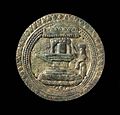 An 11th century CE linga-yoni plaque with a worshipper (Nepal)
 -
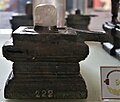
-
 Linga-yoni, Java (Indonesia)
 -
 Copper lingam at the Cát Tiên sanctuary, Vietnam
 -

-
 A lingam at the Katas Raj Temples in north Pakistan
 -
 Ganesha and Shiva Linga, Chiang Rai, Thailand
.jpg)

_(8205960337).jpg)


.jpg)

.jpg)

_(5153565239).jpg)


See also
[edit]- Banalinga
- Hindu iconography
- Indiana Jones and the Temple of Doom - a Lingam stone plays a central part in the film's plot
- Jyotirlinga
- Lingayatism
- Mukhalinga
- Gudimallam Lingam
- Pancharamas
- Shaligram
- Spatika Lingam
- Lingashtaka
Notes
[edit]- ^ Examples of this usage include the Laṅkāvatāra Sūtra in Buddhism, and Sukhlalji's bhasya on Tattvarthasutra in Jainism.[31]
- ^ This view is shared by K.R. Subramanian, who writes that some Buddhist stupas have been worshipped by Tamil Saivites because they believe it is a Shivalinga, and some ancient stupa sculptures from Amaravati and Jaggayyapeta look so much like a linga that anyone would mistake them for one.[72]
- ^ The form of fire, which exists in the kindling stick in a latent form, may not be seen, yet its linga is not destroyed but be seized again by another kindling stick.[4] Fire in its latent condition, unkindled, the potential of fire, its imperceptible essence, is the liūga of fire, in contrast with and indispensable to its visible form (Rūpa).[4]
- ^ Kramrisch claims that the representation of the phallic shape in the Gudimallam Lingam does not represent sexuality.[151] It represents "seminal retention" and practice of celibacy (Brahmacarya) (illustration of Urdhva Retas),[101][99][111][152] and represents Shiva as "he stands for complete control of the senses, and for the supreme carnal renunciation".[151]
- ^ Furthermore, the phallic shape, standing erect, always negates its function as an organ of procreation. Rather, the shape or pictorial representation is conveying that, the seed was channeled upward, not ejected for the sake of generation, but was reversed, retained and absorbed for regeneration as creative energy.[105]
- ^ This linga is likely a dedication memorial stone according to the inscription which states, "The Linga of the sons of Khajahuti, was dedicated by Nagasiri, the son of Vasethi. May the deity be pleased."[108] Bloch objected to "Linga of the sons" interpretation, stating it made no sense. Other scholars maintain that to be a cryptic epigraphic reference to "worshipped by", given the mention of "deity" later in the inscription.[109][110]
- ^ In the practice of seminal retention through self-discipline and Sādhanā, the mind is stirred, but not by external stimuli, but the result of realisation of true nature of the Self in the path of liberation (moksha). However, due to lack of understanding of the iconography of Lingam, the representation is often misunderstood.[111][99]
- ^ Although the sages were also ascetics, only because they observed established conventions, they failed when Shiva tested them with his outrageous ways.[124] The purpose of Shiva's visit to the hermitage, the place where the sages were living with their wives, was to enlighten the false sages by allowing them to humiliate him.[126] But the sages were lost in anger, but Shiva allowed himself to be humiliated in the image that met the eye of the sages.[126] Even though Shiva excited some of them as the source of their desire, they were unable to see him as the killer of desires.[127] Although Shiva revealed his true nature by his dance (Tandava), yet so great was his power of illusion (māyā), the deluded sages did not recognize him.[127] That falling phallus burnt everything in front; wherever it went it began to burn everything there. It went to all three Hindu worlds (hell, heaven, earth). All the worlds and the people were distressed. The sages could not recognise it as Shiva and sought refuge from Brahma. Brahma answered that they should pray to Parvati to assume a form of vaginal passage, and perform a procedure reciting vedic mantras and decorating the penis with flowers etc., so that the penis would become steady. As the phallus was held by Parvati in that form, an auspicion arrow formed. The pedestal shaped as the vagina and the phallus fixed therein are symbolic of the eternal creative forces personified as Śivā and Śiva. After the procedure was completed, the penis became static. This phallus was known as "hatesa" and "Siva Siva".[125] In one version of the story found in Vamana Purana, Shiva's visit to the hermitage in Deodar forests was an act of grace at Parvati's request.[124]
References
[edit]- ^ a b c d e f g h i j k l m n "lingam". Encyclopædia Britannica. 2010. Archived from the original on 4 May 2015. Retrieved 23 June 2022.
- ^ a b c d e f Linga Archived 18 March 2020 at the Wayback Machine, Monier Monier-Williams, Harvard University Archives, pp. 901-902 Archived 11 March 2020 at the Wayback Machine
- ^ a b c Yves Bonnefoy (1993). Asian Mythologies. University of Chicago Press. pp. 38–39. ISBN 978-0-226-06456-7. Archived from the original on 24 April 2023. Retrieved 1 October 2018.
- ^ a b c d e f g h i j k l m n Kramrisch 1994, p. 221.
- ^ a b c Gerrit Jan Meulenbeld; D. Wujastyk (2001). Studies on Indian Medical History. Motilal Banarsidass. pp. 49–51 with footnotes. ISBN 978-81-208-1768-5. Archived from the original on 7 September 2023. Retrieved 2 October 2018.
- ^ a b c Gerald James Larson (2001). Classical Sāṃkhya: An Interpretation of Its History and Meaning. Motilal Banarsidass. pp. 189–192, 270–271. ISBN 978-81-208-0503-3. Archived from the original on 19 October 2023. Retrieved 2 October 2018.
- ^ a b Kramrisch 1994, p. 217.
- ^ a b c Subramuniyaswami, Sivaya (2003). Dancing with Siva. USA: Himalayan Academy. ISBN 978-0-945497-94-3.
- ^ a b c d e f g Rohit Dasgupta (26 September 2014). Michael Kimmel; Christine Milrod; Amanda Kennedy (eds.). Cultural Encyclopedia of the Penis. Rowman & Littlefield. p. 107. ISBN 9780759123144. Archived from the original on 19 October 2023. Retrieved 1 October 2018.
- ^ a b c Beltz, Johannes (1 March 2011). "The Dancing Shiva: South Indian Processional Bronze, Museum Artwork, and Universal Icon". Journal of Religion in Europe. 4 (1). Brill Academic Publishers: 204–222. doi:10.1163/187489210x553566. S2CID 143631560.
- ^ a b c d Doniger, Wendy; Stefon, Matt (24 December 2014) [20 July 1998]. "Lingam (Hinduism)". Encyclopædia Britannica. Edinburgh: Encyclopædia Britannica, Inc. Archived from the original on 11 October 2016. Retrieved 22 May 2021.
- ^ a b c d e f g Doniger 2011, pp. 493–498.
- ^ Grimes 1996, p. 17.
- ^ a b James G. Lochtefeld (2001). The Illustrated Encyclopedia of Hinduism, Volume 2. The Rosen Publishing Group. p. 784. ISBN 978-0-8239-3180-4. Archived from the original on 19 October 2023. Retrieved 22 May 2021.
- ^ Johnson, W.J. (2009). A dictionary of Hinduism (1st ed.). Oxford: Oxford University Press. ISBN 9780191726705. Archived from the original on 18 March 2016. Retrieved 5 January 2016.(subscription, Wikipedia Library access or UK public library membership required)
- ^ Fowler, Jeaneane (1997). Hinduism: Beliefs and Practices. Brighton: Sussex Academic Press. pp. 42–43. ISBN 978-1-898723-60-8.
- ^ a b James G. Lochtefeld (2001). The Illustrated Encyclopedia of Hinduism, Volume 1. The Rosen Publishing Group. p. 390. ISBN 978-0-8239-3179-8. Archived from the original on 19 January 2023. Retrieved 1 October 2018.
- ^ [4][5][6][1][2][3]
- ^ a b Mansingh, Ajai (2016). "Stewards of Creation Covenant: Hinduism and the Environment". Caribbean Quarterly. 41 (1). A Journal of Caribbean Culture: 62. doi:10.1080/00086495.1995.11672075. Archived from the original on 7 September 2021. Retrieved 7 September 2021.
- ^ a b Constance & James 2006, p. 410.
- ^ Lewis R. Rambo; Charles E. Farhadian (2014). The Oxford Handbook of Religious Conversion. Oxford University Press. pp. 332–333. ISBN 978-0-19-971354-7. Archived from the original on 19 October 2023. Retrieved 1 October 2018.
- ^ Wadher, Rupesh; Dwivedi, RambabuR (2012). "Applicability and importance of Caraka′s concept of Aaturaparijnana Hetawah in understanding a patient". AYU. 33 (2): 188–192. doi:10.4103/0974-8520.105236. PMC 3611657. PMID 23559788., Quote: "Linga or Symptomatology: Linga acquires the second position in the Tri Sutra. It includes entire signs and symptoms of the diseases and health also. Only the knowledge of Hetu is not sufficient for the diagnosis of Aaturavastha. Hence Linga or the symptomatology is very useful tool in the diagnosis of a disease."
- ^ Thakar VJ (1982). "Diagnostic methods in ayurveda". Anc Sci Life. 1 (3): 139–45. PMC 3336683. PMID 22556480.
- ^ Junjarwad, Ashwini; Savalgi, Pavan; Vyas, Mahesh (2013). "Critical review on Bhaishajya Kaala (time of drug administration) in Ayurveda". AYU. 34 (1): 6–10. doi:10.4103/0974-8520.115436. PMC 3764882. PMID 24049398.
- ^ Peter M. Scharf (1996). The Denotation of Generic Terms in Ancient Indian Philosophy: Grammar, Nyāya, and Mīmāṃsā. American Philosophical Society. pp. 66, 136 with footnotes. ISBN 978-0-87169-863-6. Archived from the original on 19 October 2023. Retrieved 2 October 2018.
- ^ Hartmut Scharfe (1977). Grammatical Literature. Otto Harrassowitz Verlag. pp. 105–106. ISBN 978-3-447-01706-0. Archived from the original on 19 October 2023. Retrieved 2 October 2018.
- ^ Satis Chandra Vidyabhusana (1988). A History of Indian Logic: Ancient, Mediaeval and Modern Schools. Motilal Banarsidass. pp. 377, 510–511. ISBN 978-81-208-0565-1.
- ^ Wilhelm Halbfass (1991). Tradition and Reflection: Explorations in Indian Thought. State University of New York Press. pp. 159–161. ISBN 978-1-4384-0546-9. Archived from the original on 19 October 2023. Retrieved 2 October 2018.
- ^ James W. Haag; Gregory R. Peterson; Michael L. Spezio (2012). The Routledge Companion to Religion and Science. Routledge. pp. 503–504. ISBN 978-1-136-63417-8. Archived from the original on 19 October 2023. Retrieved 2 October 2018.
- ^ Alex Wayman (1987). "O, that Linga!". Annals of the Bhandarkar Oriental Research Institute. 68 (1/4): 19–20.
- ^ a b Alex Wayman (1987). "O, that Linga!". Annals of the Bhandarkar Oriental Research Institute. 68 (1/4): 17, 22–25.
- ^ a b c d T. A. Gopinatha Rao (1993). Elements of Hindu Iconography Volume 2. Motilal Banarsidass. p. 76. ISBN 978-81-208-0877-5. Archived from the original on 19 October 2023. Retrieved 30 September 2018.
- ^ Andrew David Hardy; Mauro Cucarzi; Patrizia Zolese (2009). Champa and the Archaeology of Mỹ Sơn (Vietnam). NUS Press. p. NUS Press. pp. 138, 159. ISBN 978-9971-69-451-7.
- ^ Pratapaditya Pal (1985). Art of Nepal: A Catalogue of the Los Angeles County Museum of Art Collection. University of California Press. p. 109. ISBN 978-0-520-05407-3.
- ^ Stella Kramrisch (1994). Exploring India'S Sacred Art Selected Writings of Stella Kramrisch Ed. & With A Biographical Essay. Motilal Banarsidass. pp. 141–147. ISBN 978-81-208-1208-6.
- ^ T. A. Gopinatha Rao (1993). Elements of Hindu Iconography Volume 2. Motilal Banarsidass. pp. 97–99. ISBN 978-81-208-0877-5. Archived from the original on 19 October 2023. Retrieved 30 September 2018.
- ^ N. S. Ramaswami (1976). Monograph on temples of Mukhalingam. Government of Andhra Pradesh. pp. 1–9. Archived from the original on 19 October 2023. Retrieved 1 October 2018.
- ^ Mahadev Chakravarti (1986). The Concept of Rudra-Śiva Through the Ages. Motilal Banarsidass. pp. 159–161. ISBN 978-81-208-0053-3. Archived from the original on 19 October 2023. Retrieved 1 October 2018.
- ^ S. Kramrisch (1994). The Presence of Siva. Princeton University Press. pp. 178–183. ISBN 0-691-01930-4. Archived from the original on 19 October 2023. Retrieved 30 September 2018.
- ^ T. A. Gopinatha Rao (1993). Elements of Hindu Iconography Volume 2. Motilal Banarsidass. pp. 95–96. ISBN 978-81-208-0877-5. Archived from the original on 19 October 2023. Retrieved 30 September 2018.
- ^ T. A. Gopinatha Rao (1993). Elements of Hindu Iconography Volume 2. Motilal Banarsidass. pp. 96–97. ISBN 978-81-208-0877-5. Archived from the original on 19 October 2023. Retrieved 30 September 2018.
- ^ T. A. Gopinatha Rao (1993). Elements of Hindu Iconography Volume 2. Motilal Banarsidass. pp. 96–98. ISBN 978-81-208-0877-5. Archived from the original on 19 October 2023. Retrieved 30 September 2018.
- ^ T. A. Gopinatha Rao (1993). Elements of Hindu Iconography Volume 2. Motilal Banarsidass. pp. 99–100. ISBN 978-81-208-0877-5. Archived from the original on 19 October 2023. Retrieved 30 September 2018.
- ^ T. A. Gopinatha Rao (1993). Elements of Hindu Iconography Volume 2. Motilal Banarsidass. pp. 87–94. ISBN 978-81-208-0877-5. Archived from the original on 19 October 2023. Retrieved 30 September 2018.
- ^ Christopher John Fuller (2004). The Camphor Flame: Popular Hinduism and Society in India. Princeton University Press. p. 58. ISBN 9780691120485. Archived from the original on 19 October 2023. Retrieved 24 September 2016.
- ^ Constance & James 2006, p. 260-261.
- ^ Constance & James 2006, p. 515-517.
- ^ Grimes 1996, p. 175-176.
- ^ "Dictionary of Dancing with Siva". Search for the 'Paraśiva: परशिव' and 'Parāśakti: पराशक्ति'. Archived from the original on 12 June 2018. Retrieved 10 July 2018.
- ^ a b c Sivananda, Swami (1996). "Worship of Siva Linga". Lord Siva and His Worship. The Divine Life Trust Society. Archived from the original on 18 February 2018. Retrieved 8 December 2008.
- ^ Susan Bayly (2003). Saints, Goddesses and Kings: Muslims and Christians in South Indian Society, 1700-1900. Cambridge University Press. pp. 129–130 with footnote 55. ISBN 978-0-521-89103-5. Archived from the original on 19 October 2023. Retrieved 30 September 2018.
- ^ Dominic Goodall, Nibedita Rout, R. Sathyanarayanan, S.A.S. Sarma, T. Ganesan and S. Sambandhasivacarya, The Pañcāvaraṇastava of Aghoraśivācārya: A twelfth-century South Indian prescription for the visualisation of Sadāśiva and his retinue, Pondicherry, French Institute of Pondicherry and Ecole française d'Extréme-Orient, 2005, p.12.
- ^ O'Flaherty, Wendy Doniger (1981). Śiva, the erotic ascetic. Oxford: Oxford University Press. ISBN 0-19-520250-3.
- ^ O'Flaherty, Wendy Doniger (2013). On Hinduism. Oxford: Oxford University Press. ISBN 9780199360079.
- ^ O'Flaherty, Wendy Doniger (2009). The Hindus: An Alternative History. United States: Viking Press. ISBN 978-0143116691.
- ^ Rohit Dasgupta (26 September 2014). Michael Kimmel; Christine Milrod; Amanda Kennedy (eds.). Cultural Encyclopedia of the Penis. Rowman & Littlefield. p. 107. ISBN 9780759123144. Archived from the original on 19 October 2023. Retrieved 1 October 2018.
- ^ J. L. Brockington (2016). Hinduism and Christianity. Springer. p. 33. ISBN 978-1-349-22280-3. Archived from the original on 19 October 2023. Retrieved 30 September 2018.
- ^ Douglas T. McGetchin (2009). Indology, Indomania, and Orientalism: Ancient India's Rebirth in Modern Germany. Fairleigh Dickinson Univ Press. p. 34. ISBN 978-0-8386-4208-5.
- ^ Doniger 2011, p. 500, Quote: "The British missionaries most despised what they regarded as the obscene idolatry of the lingam. The British in general, who were of course Victorian in every sense of the word, regarded the Hindus, as they regarded most colonized people of color, as simultaneously oversexed and impotent, and the British presence had a negative effect on the self-perception that Hindus had of their own bodies (Nandy 1983). For, still reeling from the onslaught of the Muslim campaigns against lingams, the Hindus who worked with and for the British internalized their colonizers' scorn."
- ^ a b Imma Ramos (2017). Pilgrimage and Politics in Colonial Bengal: The Myth of the Goddess Sati. Taylor & Francis. pp. 56–58. ISBN 978-1-351-84000-2. Archived from the original on 19 October 2023. Retrieved 30 September 2018.
- ^ Hugh B. Urban (2009). The Power of Tantra: Religion, Sexuality and the Politics of South Asian Studies. I.B.Tauris. pp. 8–10. ISBN 978-0-85773-158-6. Archived from the original on 19 October 2023. Retrieved 30 September 2018.
- ^ a b c Doniger 2011, pp. 500–502.
- ^ a b Doniger 2011, pp. 499–505.
- ^ Kramrisch 1994, p. 14.
- ^ Winternitz, Moriz; V. Srinivasa Sarma (1981). A History of Indian Literature, Volume 1. Motilal Banarsidass. p. 543 footnote 4. ISBN 978-81-208-0264-3. Archived from the original on 19 October 2023. Retrieved 2 July 2021.
- ^ Alex Wayman (1987). "O, that Linga!". Annals of the Bhandarkar Oriental Research Institute. 68 (1/4): 30., Quote: "That is why today one will read in various works by Indians on Saivism a denial that the linga is a phallus; and the late Dr. Basham once told the present writer that in all the years of his India contacts he never found any Saivite admitting that the linga is a phallus."
- ^ Alex Wayman (1987). "O, that Linga!". Annals of the Bhandarkar Oriental Research Institute. 68 (1/4): 29–31.
- ^ Lord Shiva and His Worship by Sri Swami Sivananda (1945), Chapter IX: Siva Yoga Sadhna, Section 7: Worship of Siva Lingam, 2015 edition, Allahabad Book World Ltd.
- ^ Lord Shiva and His Worship by Sri Swami Sivananda (1945), Chapter IX: Siva Yoga Sadhna, Section 7: Worship of Siva Lingam, Page 220, 2015 edition, Allahabad Book World Ltd.
- ^ T. A. Gopinatha Rao (1993). Elements of Hindu Iconography Volume 2. Motilal Banarsidass. pp. 81–84. ISBN 978-81-208-0877-5. Archived from the original on 19 October 2023. Retrieved 30 September 2018.
- ^ a b c Harding, Elizabeth U. (1998). "God, the Father". Kali: The Black Goddess of Dakshineswar. Motilal Banarsidass. pp. 156–157. ISBN 978-81-208-1450-9.
- ^ Subramanian K R (2002). Origin of Saivism and Its History in the Tamil Land. Asian Educational Services. pp. 29–30. ISBN 978-81-206-0144-4. Archived from the original on 19 October 2023. Retrieved 3 October 2018.
- ^ a b c d e f Asko Parpola (1985). "The Sky Garment - A study of the Harappan religion and its relation to the Mesopotamian and later Indian religions". Studia Orientalia. 57. The Finnish Oriental Society: 101–107.
- ^ Constance & James 2006, p. 516.
- ^ Jyotsna Chawla (1990). The R̥gvedic deities and their iconic forms. Munshiram Manoharlal Publishers. p. 185. ISBN 9788121500821. Archived from the original on 19 October 2023. Retrieved 30 September 2018.
- ^ Chakravarti 1986.
- ^ Lipner, Julius J. (2017). Hindu Images and Their Worship with Special Reference to Vaisnavism: A Philosophical-theological Inquiry. London; New York: Routledge, Taylor & Francis Group. p. 39. ISBN 9781351967822. OCLC 985345208. Archived from the original on 14 April 2021. Retrieved 25 July 2017.
- ^ a b c d Srinivasan 2004, p. 434.
- ^ Kenoyer, Jonathan Mark (1998). Ancient Cities of the Indus Vally Civilization. Oxford University Press. ISBN 9780195779400. Archived from the original on 19 October 2023. Retrieved 7 September 2021.
- ^ Arthur Llewellyn Basham (1967). The Wonder that was India: A Survey of the History and Culture of the Indian Subcontinent Before the Coming of the Muslims. Sidgwick & Jackson (1986 Reprint). p. 24. ISBN 978-0-283-99257-5. Archived from the original on 19 October 2023. Retrieved 30 September 2018., Quote: "It has been suggested that certain large ring-shaped stones are formalized representations of the female regenerative organ and were symbols of the Mother Goddess, but this is most doubtful."
- ^ Doniger 2011, pp. 485–502.
- ^ a b Doniger 2011, pp. 489–502.
- ^ Ellwood Austin Welden (1910). "The Samkhya Term, Linga". The American Journal of Philology. 31 (4). The Johns Hopkins University Press: 445–459. doi:10.2307/288521. JSTOR 288521.
- ^ Charles Phillips; Michael Kerrigan; David Gould (2011). Ancient India Myths and Beliefs. The Rosen Publishing Group. pp. 41–45. ISBN 978-1-4488-5990-0. Archived from the original on 19 October 2023. Retrieved 1 October 2018.
- ^ Harding, Elizabeth U. (1998). "God, the Father". Kali: The Black Goddess of Dakshineswar. Motilal Banarsidass. pp. 156–157. ISBN 978-81-208-1450-9.
- ^ a b c d e Vivekananda, Swami. "The Paris congress of the history of religions". The Complete Works of Swami Vivekananda. Vol. 4. Archived from the original on 24 February 2021. Retrieved 30 September 2008.
- ^ Singh, Nagendra Kr. (1997). Encyclopaedia of Hinduism (1st ed.). New Delhi: Centre for International Religious Studies. p. 1567. ISBN 9788174881687.[permanent dead link]
- ^ a b DeVito & DeVito 1994, p. 5.
- ^ Kramrisch 1994, p. 122.
- ^ Singh, Upinder (2008). A History of Ancient and Early Medieval India: From the Stone Age to the 12th Century. Pearson Education India. p. 435. ISBN 978-81-317-1120-0. Archived from the original on 19 October 2023. Retrieved 15 November 2020.
- ^ John Guy (2007). Indian Temple Sculpture. Harry N. Abrams. p. 35. ISBN 978-1-85177-509-5. Archived from the original on 19 October 2023. Retrieved 30 September 2018.
- ^ Klostermaier, Klaus K. (2007). A Survey of Hinduism (3. ed.). Albany, N.Y.: State University of New York Press. p. 111. ISBN 978-0-7914-7082-4. Archived from the original on 19 October 2023. Retrieved 24 September 2016.
- ^ a b c d e f Doniger 2011, pp. 491–493.
- ^ Elgood, Heather (2000). Hinduism and the Religious Arts. London: Cassell. p. 47. ISBN 978-0-8264-9865-6. Archived from the original on 15 January 2023. Retrieved 24 September 2016.
- ^ T. A. Gopinatha Rao (1997). Elements of Hindu Iconography. Motilal Banarsidass. pp. 223–229, 237. ISBN 978-81-208-0877-5. Archived from the original on 19 October 2023. Retrieved 30 September 2018.
- ^ Shiva as Lord of the Dance (Nataraja), Chola period, c. 10th/11th century Archived 15 February 2017 at the Wayback Machine The Art Institute of Chicago, United States
- ^ P. Arundhati (2002). Annapurna : A Bunch of Flowers of Indian Culture. Concept. pp. 40–45. ISBN 978-81-7022-897-4. Archived from the original on 19 October 2023. Retrieved 30 September 2018.
- ^ Ghurye, G.S. (1952). "Ascetic Origins". Sociological Bulletin. 1 (2). Sociological Bulletin, 1(2): 162–184. doi:10.1177/0038022919520206. S2CID 220049343.
- ^ a b c d Pensa, Corrado. "Some Internal and Comparative Problems in the Field of Indian Religions." Problems and Methods of the History of Religions. Brill, 1972. 102-122.
- ^ "Urdhvaretas, Urdhvaretās, Ūrdhvaretas, Urdhva-retas: 7 definitions". www.wisdomlib.org. 9 September 2014. Archived from the original on 15 July 2021. Retrieved 15 July 2021.
- ^ a b c Kramrisch 1994, p. 26.
- ^ a b Swami Agehananda Bharati (1970). The Tantric Tradition. Red Wheel/Weiser. p. 294. ISBN 0877282536.
- ^ a b Devdutt Pattanaik (2018). Shiva to Shankara: Giving Form to the Formless. HarperCollins. pp. 13–14. ISBN 9789352641956.
- ^ O'Flaherty, Wendy Doniger. "Asceticism and Sexuality in the Mythology of Śiva. Part I." History of Religions 8, no. 4 (1969): 300-37. Accessed September 7, 2021. http://www.jstor.org/stable/1062019 Archived 30 June 2021 at the Wayback Machine.
- ^ Kramrisch 1994, p. 555.
- ^ Kramrisch 1994, p. 238.
- ^ S. Kramrisch (1994). The Presence of Siva. Princeton University Press. p. 179. ISBN 0-691-01930-4. Archived from the original on 19 October 2023. Retrieved 30 September 2018.
- ^ a b c d T. A. Gopinatha Rao (1993). Elements of Hindu Iconography, Volume 2. Motilal Banarsidass. pp. 63–67. ISBN 978-81-208-0877-5. Archived from the original on 19 October 2023. Retrieved 30 September 2018.
- ^ a b Mahadev Chakravarti (1986). The Concept of Rudra-Śiva Through the Ages. Motilal Banarsidass. pp. 131–133. ISBN 978-81-208-0053-3. Archived from the original on 19 October 2023. Retrieved 1 October 2018.
- ^ C. Sivaramamurti (1977). L'Art en Inde. H. N. Abrams. p. 77. ISBN 978-0-8109-0630-3.
- ^ a b Pattanaik, Devdutt. Shiva to Shankara: Decoding the phallic symbol. Indus Source, 2006.
- ^ Govind Sadashiv Ghurye (1966). Indian Costume. Popular Prakashan. pp. xvi, xlvii. ISBN 978-81-7154-403-5. Archived from the original on 19 October 2023. Retrieved 30 September 2018.
- ^ Shashi Asthana (1999). Mathurā Kalā: Catalogue of Mathura Sculptures in National Museum. National Museum of India. pp. 23–28. ISBN 978-81-85832-10-4. Archived from the original on 19 October 2023. Retrieved 30 September 2018.
- ^ Frederick M. Asher (1980). The Art of Eastern India: 300 - 800. University of Minnesota Press. p. 27. ISBN 978-1-4529-1225-7. Archived from the original on 19 October 2023. Retrieved 30 September 2018.
- ^ Michael W. Meister (1984). Discourses on Siva. University of Pennsylvania Press. p. 494. ISBN 978-0-8122-7909-2. Archived from the original on 19 October 2023. Retrieved 30 September 2018.
- ^ Kramrisch 1994, p. 220-222.
- ^ a b c Kramrisch 1994, p. 222.
- ^ Grimes 1996, p. 176.
- ^ Alf Hiltebeitel (2018). Freud's Mahabharata. Oxford University Press. pp. 123–124, footnote 179. ISBN 978-0-19-087834-4. Archived from the original on 19 October 2023. Retrieved 30 September 2018.
- ^ a b c d Alain Daniélou (1991). The Myths and Gods of India. Princeton Bollingen Series. Inner Traditions / Bear & Co. pp. 222–224. ISBN 978-0-89281-354-4.
- ^ Kramrisch 1994, pp. 171–185.
- ^ K.V., Anantharaman. "Chapter X - Omnipotence of Siva Linga". Siva Gita A Critical Study. hdl:10603/295754. Archived from the original on 30 December 2021. Retrieved 16 July 2021.
- ^ "Reading the Vedic Literature in Sanskrit". is1.mum.edu. Archived from the original on 3 March 2016. Retrieved 2 June 2017.
- ^ a b c d Kramrisch 1994, p. 206.
- ^ a b c "The reason for Śiva's assuming the phallic form (liṅga) [Chapter 12]". www.wisdomlib.org. 29 October 2018. Archived from the original on 14 April 2021. Retrieved 5 March 2021.
- ^ a b Kramrisch 1994, p. 207.
- ^ a b Kramrisch 1994, p. 207-208.
- ^ "Mode of worshiping the phallic form of Śiva and making gifts [Chapter 11]". www.wisdomlib.org. 19 August 2018. Archived from the original on 14 April 2021. Retrieved 5 March 2021.
- ^ Chaturvedi (2004). Shiv Purana (2006 ed.). Diamond Pocket Books. p. 11. ISBN 978-81-7182-721-3. Archived from the original on 14 April 2021. Retrieved 15 November 2020.
- ^ a b Blurton, T. R. (1992). "Stone statue of Shiva as Lingodbhava". Extract from Hindu art (London, The British Museum Press). British Museum site. Archived from the original on 6 July 2010. Retrieved 2 July 2010.
- ^ Doniger 2011, pp. 498–499: "But several of the Delhi sultans, those who were particularly devout and iconoclast Muslims, regarded the lingam as sexual and anthropomorphic, and took pride in destroying as many lingams as they could. In 1026, Mahmud of Ghazni attacked the temple of Somnath, which held a famous Shiva lingam; this much, at least, seems to be historical fact. But then comes the mythologizing. According to some versions of the story, including early Turko-Persian triumphalist sources, Mahmud stripped the great gilded lingam of its gold and hacked it to bits with his sword, sending the bits back to Ghazni, where they were incorporated into the steps of the new mosque (Keay 2000: 207–209). Medieval Hindu epics of resistance created a countermythology in which the stolen image came to life (another bit of evidence that it was regarded as a living thing, a body in itself) and eventually, like a horse trotting back to the stable, returned to the temple to be reconsecrated (Davis 1997: 90–112)"
- ^ Mehrdad Shokoohy (2013). Muslim Architecture of South India. Routledge. pp. 17–18. ISBN 978-1-136-49984-5. Archived from the original on 19 October 2023. Retrieved 30 September 2018.
- ^ Olson 2007, p. 244.
- ^ McCormack 1963, pp. 59–62.
- ^ a b Dalal 2010, p. 208-209.
- ^ Olson 2007, p. 239–240.
- ^ Schouten 1995, pp. 71–72.
- ^ Schouten 1995, p. 6.
- ^ a b L.K.A. Iyer (1965). The Mysore. Mittal Publications. pp. 81–82. Archived from the original on 19 October 2023. Retrieved 3 October 2018.
- ^ Blake Michael 1992, pp. 22, 82–83.
- ^ Joanne Punzo Waghorne; Norman Cutler; Vasudha Narayanan (1996). Gods of Flesh, Gods of Stone: The Embodiment of Divinity in India. Columbia University Press. pp. 184 note 15. ISBN 978-0-231-10777-8. Archived from the original on 19 October 2023. Retrieved 3 October 2018.
- ^ "Amarnath: Journey to the shrine of a Hindu god". Boston.com. 13 July 2012. Archived from the original on 8 July 2017. Retrieved 16 February 2018.
- ^ under the section "General Introduction". "Kadavul Hindu Temple". Himalayanacademy. Archived from the original on 28 June 2018. Retrieved 15 February 2018.
- ^ "Iraivan Temple in the News". Archived from the original on 28 June 2018. Retrieved 15 February 2018.
- ^ "Rare Crystal Siva Lingam Arrives at Hawaii Temple". hinduismtoday. Archived from the original on 28 June 2018. Retrieved 15 February 2018.
- ^ Nadkarni, Vithal C. (4 April 2013). "Stones brook no contest". The Economic Times. ISSN 0013-0389. Archived from the original on 6 October 2023. Retrieved 24 September 2023.
- ^ "यहां है विश्व का सबसे बड़ा प्राकृतिक शिवलिंग". 16 January 2015. Archived from the original on 14 April 2021. Retrieved 28 September 2020.
- ^ "Bhuteshwar Shivling". news.yahoo.com. Archived from the original on 30 June 2018.
- ^ "Shivling in Chhattisgarh". 18 December 2015. Archived from the original on 30 June 2018. Retrieved 30 June 2018.
- ^ "Tallest Shiva lingam in country enters India book of records | Thiruvananthapuram News - Times of India". The Times of India. TNN. 10 January 2019. Archived from the original on 30 June 2021. Retrieved 27 June 2021.
- ^ a b Kramrisch 1994, p. 218.
- ^ Ghurye, G.S., 1952. Ascetic Origins. Sociological Bulletin, 1(2), pp.162-184.
Bibliography
[edit]- Basham, A. L. The Wonder That Was India: A survey of the culture of the Indian Sub-Continent before the coming of the Muslims, Grove Press, Inc., New York (1954; Evergreen Edition 1959).
- Blake Michael, R. (1992), The Origins of Vīraśaiva Sects: A Typological Analysis of Ritual and Associational Patterns in the Śūnyasaṃpādane, Motilal Banarsidass, ISBN 978-81-208-0776-1
- Chakravarti, Mahadev. The Concept of Rudra-Śiva Through the Ages, Delhi: Motilal Banarasidass (1986), ISBN 8120800532.
- Dalal, Roshen (2010), The Religions of India: A Concise Guide to Nine Major Faiths, Penguin Books, ISBN 978-0-14-341517-6
- Davis, Richard H. (1992). Ritual in an Oscillating Universe: Worshipping Śiva in Medieval India. Princeton, New Jersey: Princeton University Press. ISBN 9780691073866.
- Daniélou, Alain (1991). The Myths and Gods of India: The Classic Work on Hindu Polytheism. Inner Traditions / Bear & Company. pp. 222–231. ISBN 0-89281-354-7.
- Doniger, Wendy (2011), "God's Body, or, The Lingam Made Flesh: Conflicts over the Representation of the Sexual Body of the Hindu God Shiva", Soc. Res. Social Research, 78 (2): 485–508, ISSN 0037-783X, JSTOR 23347187, OCLC 772197753
- Drabu, V.N. Śaivāgamas: A Study in the Socio-economic Ideas and Institutions of Kashmir (200 B.C. to A.D. 700), New Delhi: Indus Publishing (1990), ISBN 8185182388.
- Kramrisch, Stella (1988). The Presence of Siva. Delhi: Motilal Banarsidass. ISBN 9788120804913.
- McCormack, William (1963), "Lingayats as a Sect", The Journal of the Royal Anthropological Institute of Great Britain and Ireland, 93 (1): 59–71, doi:10.2307/2844333, JSTOR 2844333
- Olson, Carl (2007), The Many Colors of Hinduism: A Thematic-historical Introduction, Rutgers University Press, ISBN 978-0813540689
- Śarmā, Rāmakaraṇa (1996). Śivasahasranāmāṣṭakam : eight collections of hymns containing one thousand and eight names of Śiva. Delhi: Nag Publishers. ISBN 9788170813507. OCLC 36990863. Includes Śivasahasranāmakoṣa, a dictionary of names. This work compares eight versions of the Śivasahasranāmāstotra. The preface and introduction (in English) by Ram Karan Sharma provide an analysis of how the eight versions compare with one another. The text of the eight versions is given in Sanskrit.
- Schumacher, Stephan and Woerner, Gert. The Encyclopedia of Eastern Philosophy and Religion, Buddhism, Taoism, Zen, Hinduism, Shambhala, Boston, (1994) ISBN 0-87773-980-3.
- Schouten, Jan Peter (1995), Revolution of the Mystics: On the Social Aspects of Vīraśaivism, Motilal Banarsidass, ISBN 978-8120812383
- Kramrisch, Stella (1994), The Presence of Śiva, Princeton, New Jersey: Princeton University Press, ISBN 978-0691019307
- Chakravarti, Mahadev (1986). The concept of Rudra-Śiva through the ages. Motilal Banarsidass Publ. ISBN 81-208-0053-2.
- Constance, Jones; James, Ryan (2006). Encyclopedia of Hinduism. Facts On File. ISBN 0816054584.
- DeVito, Carole; DeVito, Pasquale (1994). India - Mahabharata. Fulbright-Hays Summer Seminar Abroad 1994 (India). United States Educational Foundation in India.
- Srinivasan, Sharada (2004). "Shiva as 'cosmic dancer': On Pallava origins for the Nataraja bronze". World Archaeology. Vol. 36. The Journal of Modern Craft. pp. 432–450. doi:10.1080/1468936042000282726821. S2CID 26503807.
- Grimes, John A. (1996). A Concise Dictionary of Indian Philosophy: Sanskrit Terms Defined in English. State University of New York Press. ISBN 0791430677.
- Mahdihassan, S. (1989). "The Five Cosmic Elements as Depicted in Indian and Chinese Cosmologies". The American Journal of Chinese Medicine. 4. 17 (3n04): 245–252. doi:10.1142/S0192415X89000346. PMID 2699158. Retrieved 16 September 2021.
External links
[edit]

- Some interesting Linga images from Kalanjara and Ajaigarh, SK Sullerey (1980)
- O, that Linga!, Alex Wayman (1987)
- Linga and Yoni worship, Urmila Agrawal (1995)
- A note on the Linga with Sakti images in Bengal Art, KD Gupta (2011)
| Deities |  | ||||||||||
|---|---|---|---|---|---|---|---|---|---|---|---|
| Texts | |||||||||||
| Mantra/Stotra | |||||||||||
| Traditions | |||||||||||
| Festivals and observances | |||||||||||
| Shiva temples |
| ||||||||||
| Related topics | |||||||||||


| Philosophy |
|  | |||||||||||||||||
|---|---|---|---|---|---|---|---|---|---|---|---|---|---|---|---|---|---|---|---|
| Texts |
| ||||||||||||||||||
| Deities |
| ||||||||||||||||||
| Practices |
| ||||||||||||||||||
| Related | |||||||||||||||||||


Lingam
View on GrokipediaEtymology and Nomenclature
Linguistic Origins
The Sanskrit term liṅga (लिङ्ग), from which liṅgam derives as its nominative singular form, fundamentally signifies "sign," "mark," "token," "emblem," or "distinguishing characteristic."[1][7] This meaning reflects its role in denoting something that identifies, classifies, or evidences an underlying reality, independent of later symbolic associations in Hindu iconography.[5][8] In classical Sanskrit linguistics, liṅga primarily denotes grammatical gender—masculine (puṃ-liṅga), feminine (strī-liṅga), or neuter (napuṃsaka-liṅga)—as systematized by the grammarian Pāṇini in his Aṣṭādhyāyī (composed circa 500–400 BCE).[9] This usage positions liṅga as a marker of categorical distinction among words, extending metaphorically to broader classificatory functions in language and philosophy.[10] The word traces to the verbal root liṅg (or lip in some derivations), connoting "to paint," "to smear," or "to variegate," evoking the act of marking or delineating boundaries.[11] Earliest attestations appear in Vedic and post-Vedic texts around 800–200 BCE, including the Upanishads, where liṅga functions non-physically as "symptom," "evidence," or "indication," such as smoke signaling fire or an abstract emblem of the divine.[8] For example, the Śvetāśvatara Upaniṣad (circa 400–200 BCE) employs it to assert that Shiva, the Supreme Lord, possesses no liṅga, emphasizing formlessness beyond tangible signs.[12] This semantic foundation predates specialized ritual connotations, appearing also in early medical literature as "symptom" and in the Kāmasūtra (circa 3rd century CE) as physical or behavioral "signs."[13]Terminology in Texts
The Sanskrit term liṅga (लिङ्ग), meaning "sign," "mark," or "characteristic," appears in early texts across diverse contexts, including philosophical, medical, and erotic literature, without initial ties to Shaivite symbolism. In Vedic hymns, such as those in the Rigveda, liṅga denotes indicators or tokens, as in references to signs of divine presence or natural phenomena, but lacks explicit connection to Shiva's aniconic form or worship practices. Similarly, in Upanishadic and Nyaya philosophical traditions, it signifies distinguishing features or evidence, underscoring its generic semantic role as an identifier rather than a ritual object.[13] In post-Vedic Shaiva texts, particularly the Puranas and Agamas, liṅga evolves into śiva-liṅga, denoting the symbolic pillar representing Shiva's formless essence. The Linga Purana, composed between the 5th and 10th centuries CE, dedicates extensive sections to this terminology, portraying the liṅga as the "fusion" of cosmic principles and the manifest sign of the supreme deity, often depicted as an infinite column of light (jyotirliṅga) emerging in myths like Lingodbhava to affirm Shiva's transcendence over form. Other Puranas, such as the Shiva Purana, reinforce this by terming it the "nishkala" (formless) emblem, distinguishing it from anthropomorphic icons and emphasizing ritual purity in its veneration. This specialized usage reflects Shaivism's emphasis on aniconism, with terms like swayambhu-liṅga (self-manifest) or sthapita-liṅga (installed) denoting natural versus crafted variants in temple contexts.[14][15]Iconography
Physical Forms and Styles
The lingam typically manifests as a vertical cylindrical or slightly tapering pillar, 1 to 2 meters in height for temple installations, with a smooth, rounded or bulbous top, often mounted within a discoid yoni base to signify the union of male and female principles.[4][5] This form emphasizes abstraction over anatomical detail in most cases, prioritizing symbolic infinity through polished, unmarked surfaces.[16] Variations include the mukhalinga, featuring one or more carved faces of Shiva emerging from the pillar's surface, blending aniconic and iconic elements.[17][18] Ekamukha lingas bear a single face, while trimukha and chaturmukha styles incorporate three or four faces, respectively, often aligned with cardinal directions or Shiva's mythological aspects; panchamukha lingas extend this to five faces, symbolizing elemental and sensory completeness.[19] Sahasralingas represent another style, with the main shaft engraved with 100 to 1001 miniature lingas, as seen in Odisha temples, enhancing multiplicity and cosmic replication.[20] Archaeological evidence reveals early realistic phallic forms, such as the Gudimallam lingam from Andhra Pradesh, dated 1st-2nd century CE, measuring 1.524 meters tall with exposed glans and attached worshipper figures, contrasting later predominant abstract styles.[21] Natural swayambhu lingams, like banalingas sourced from the Narmada River, preserve elliptical or oval contours shaped by geological processes rather than carving.[16]Materials and Construction Methods
Lingams are constructed using a variety of materials, categorized primarily into permanent forms for temple installation and temporary ones for domestic or ritual use. Permanent lingams are typically carved from durable stones such as granite, basalt, marble, or sandstone, often sourced from riverbeds like the Narmada for banalingas, which are smooth, naturally egg-shaped pebbles considered self-manifested but sometimes minimally shaped.[22] Metals including gold, silver, copper, brass, and alloys like panchaloha (a mixture of five metals: copper, gold, silver, zinc, and iron) are cast or forged for smaller, portable lingams, valued for their conductivity in rituals.[23] Gemstone lingams, such as sphatika (rock crystal quartz), are prized for their transparency and refractive qualities, believed to amplify spiritual energy, and are meticulously carved to preserve natural facets.[24] Construction methods for stone lingams involve quarrying large blocks and sculpting them into a cylindrical shaft (sthambha) atop a disc-shaped base (yoni) representing the vulva, using chisels, hammers, and abrasives in ancient techniques dating back to the 1st century BCE, as evidenced by the Gudimallam lingam in Andhra Pradesh, which features intricate carvings of Shiva emerging from the lingam.[23] Metal lingams are created through melting and pouring into molds, followed by polishing and engraving, while clay or parthiva lingams are molded from river mud or soil, dried, and sometimes fired for durability in ephemeral worship.[25] The Agni Purana outlines proportional guidelines, such as the lingam's height being twelve times its diameter for optimal installation, with consecration rituals involving specific mixtures like salt and ghee for temporary forms or burnt sand for stability.[26] Transitory lingams for daily puja incorporate accessible materials like sand, rice flour, cow dung, ashes, or rudraksha seeds, shaped by hand during festivals such as Maha Shivaratri and discarded after use to symbolize impermanence.[25] Parad lingams, made from solidified mercury through alchemical processes, require expert handling due to toxicity and are constructed by amalgamating mercury with herbs and silver, forming a solid, silvery form without seams.[27] Wood lingams from sandalwood or other aromatic trees are lathe-turned or hand-carved, treated with oils to prevent decay, though less common in permanent temple settings due to perishability.[23] These methods emphasize ritual purity, with construction often performed by trained sthapatis (temple architects) following Shilpa Shastra texts for geometric precision and astrological timing.[28]Symbolic Interpretations
Aniconic Representation of Shiva
The lingam functions as an aniconic emblem of Shiva in Shaivism, depicting the deity's formless, infinite presence through a simple, abstract cylindrical pillar rather than anthropomorphic imagery. This representation underscores Shiva's nirguna (attributeless) nature, transcending human-like forms to symbolize cosmic consciousness and the unmanifest reality.[29][4] In Hindu scriptures such as the Linga Purana, the lingam manifests as an endless pillar of light, illustrating Shiva's boundless essence during the Lingodbhava episode, where the deity appears as an immeasurable column to resolve a contest between Brahma and Vishnu, affirming neither beginning nor end. This narrative emphasizes the lingam's role in conveying Shiva's supreme, non-anthropomorphic form, prioritizing devotion to the divine principle over iconographic depiction.[16] Philosophically, the aniconic lingam facilitates meditation on Shiva's formless aspect, aligning with Advaita Vedanta's emphasis on the ultimate reality beyond sensory perception, and distinguishes Shaivite worship by focusing on symbolic abstraction to evoke spiritual transcendence. Artifacts like 8th-century Kashmiri stone lingams exemplify this tradition, serving as votive objects in temples that invite contemplation of the deity's eternal, unchanging pillar of spiritual sustenance.[30][29]Phallic and Fertility Symbolism
The lingam has been interpreted by certain scholars as a phallic emblem signifying Shiva's generative potency and the principle of cosmic creation.[31] This view draws from the lingam's cylindrical shape, which in some ancient manifestations resembles male genitalia, symbolizing virility and the origin of life. When mounted on the yoni—a disc-like base representing the vulva—the composite form evokes the sacred union of Shiva (male energy) and Shakti (female energy), embodying fertility and the reproductive cycle essential to existence.[2] Archaeological artifacts provide tangible support for this phallic association, most notably the Gudimallam lingam in Andhra Pradesh, India, carbon-dated to approximately 200–100 BCE. This stone lingam exhibits explicit phallic traits, including a tapered shaft with anatomical details such as veins and a foreskin-like ridge, topped by a carved figure of Shiva in coitus with Parvati, underscoring erotic and procreative themes.[32] Similar early representations, such as those from the Shunga period (circa 2nd century BCE), depict devotees offering worship to lingam forms integrated with fertility motifs, suggesting ritual practices linked to agricultural abundance and human reproduction. In fertility symbolism, the lingam-yoni duo functions as a microcosm of universal generation, where ablutions with milk, honey, and seeds during worship rituals invoke blessings for progeny, crop yields, and communal prosperity.[33] These practices, documented in medieval Shaivite texts like the Agamas, align the lingam's form with tantric concepts of sexual energy as a conduit for spiritual and material renewal, though interpretations vary and some emphasize abstract rather than literal anatomy.[2] The phallic aspect thus highlights causal links between divine symbolism and human concerns with continuity and vitality, evidenced by persistent motifs in South Indian temple iconography from the 1st millennium CE onward.Evidence from Ancient Artifacts
The Gudimallam lingam, discovered in the Parasurameswara Temple at Gudimallam, Andhra Pradesh, represents one of the earliest known artifacts associated with Shiva linga worship, dated to approximately the 3rd century BCE based on stylistic analysis and archaeological context.[34] This monolithic stone linga, standing about 1.5 meters tall, exhibits a distinctly phallic form with a rounded top and a yoni base, accompanied by relief carvings depicting a devotee in a worship posture, suggesting ritual veneration of the aniconic symbol.[34] Scholars note its realistic proportions as evidence of fertility symbolism in early Shaivite iconography, though traditional interpretations emphasize its role as a transcendent emblem of Shiva rather than a literal phallus.[35] Artifacts from the Shunga period (circa 185–73 BCE) further illustrate linga worship, such as relief panels from Bhuteshwar and Mathura depicting Gandharvas and other figures offering reverence to cylindrical lingas mounted on pedestals.[36] These stone carvings, often integrated into architectural railings, show the linga as a central cult object, with surrounding motifs of floral offerings and attendants, indicating established devotional practices by the 2nd century BCE.[36] The prevalence of such depictions in northern Indian sites underscores the linga's symbolic function as an enduring, non-anthropomorphic representation of divine energy, predating more elaborate temple integrations. In the Kushan period (1st–3rd centuries CE), artifacts like the chaturmukha linga from Mathura, sculpted in red sandstone around the 2nd century CE, feature four faces of Shiva emerging from the linga pillar, combining aniconic and anthropomorphic elements.[37] Excavations in regions such as Karnal have yielded Kushan-era shivlings alongside Nandi figures, dated to 1,000–2,000 years ago through brick and sculpture sizing, evidencing widespread temple-based worship.[38] These multifaceted lingas symbolize Shiva's omnipresence, with the phallic core interpreted by some as denoting creative potency, while epigraphic and artistic contexts affirm its primary status as a sacred mark beyond mere generative symbolism.[37]Traditional Rejections and Philosophical Views
Traditional Hindu interpretations reject the notion that the lingam primarily symbolizes male genitalia, viewing such claims as a Western misreading influenced by colonial perspectives that reduce sacred symbols to sexual metaphors.[39] [40] Orthodox Shaiva scholars emphasize that "linga" derives from Sanskrit roots meaning "sign," "mark," or "emblem," denoting a representation of the formless, attributeless Brahman rather than a literal phallus.[41] This rejection stems from scriptural authority, where the lingam embodies Shiva's transcendent essence beyond dualities like gender or form, countering reductive Freudian or Orientalist analyses that overlook its metaphysical depth.[42] Philosophically, in Shaivism, the lingam signifies the infinite, unmanifest reality of Shiva, as illustrated in the Lingodbhava myth recounted in texts like the Shiva Purana. In this narrative, during a dispute between Brahma and Vishnu over supremacy, Shiva manifests as an immense, fiery pillar (lingam) with no beginning or end; Brahma fails to reach its top as a swan, and Vishnu cannot find its base as a boar, affirming Shiva's boundless nature.[43] [44] This episode underscores the lingam as an aniconic symbol of the absolute, the axis of creation bridging the formless (nirguna) and manifest (saguna) aspects of divinity, rather than a fertility icon.[45] Shaiva Agamas and Puranas further elaborate the lingam as the union of Purusha (consciousness) and Prakriti (matter), representing the primal cause of the cosmos without anthropomorphic connotations.[30] Devotees meditate on it as the static, eternal principle amid cyclic creation and dissolution, aligning with Advaita Vedanta's non-dual ontology where it evokes the undifferentiated reality.[46] Such views prioritize the lingam's role in contemplative practices, fostering realization of the self as identical with the divine, distinct from profane sexual symbolism projected by external observers.[41]Worship Practices
Daily and Ritual Observances
Daily worship of the Lingam in Shaiva traditions typically occurs twice, in the morning and evening, involving purification and offerings to invoke Shiva's presence. Devotees begin by bathing themselves and wearing clean clothes, then clean the Lingam and its pedestal, ensuring the yoni base faces north while the worshipper faces east. [47] [48] Lighting a lamp (diya) and incense sticks precedes chanting mantras such as "Om Namah Shivaya" or Shiva's 108 names, followed by abhishekam, where water, milk, honey, curd, ghee, and sugar are sequentially poured over the Lingam in a clockwise manner using a vessel like a udrani spoon. [49] [50] After drying the Lingam, vibhuti (sacred ash) or bhasma is applied, and offerings of bilva leaves, flowers, fruits, and sweets (naivedya) are placed, concluding with circumambulation (pradakshina) and prostration. [51] [47] These daily observances emphasize simplicity for householders, focusing on devotion through japa (repetition of mantras) and minimal materials, while temple priests may incorporate additional hymns from texts like the Shiva Purana. [50] In Lingayat households, where personal ishtalingas are worn or kept, daily rituals adapt to portable forms, involving mental worship or brief touch with bilva leaves when possible, reflecting the sect's emphasis on constant awareness of Shiva. [52] Ritual observances intensify during festivals, particularly Maha Shivaratri, observed annually in February or March on the 14th day of the Krishna Paksha in Phalguna month, involving all-night vigils, fasting, and extended abhishekam with panchamrita (five nectars: milk, curd, ghee, honey, sugar). [53] Devotees offer bilva leaves, considered most sacred for Shiva, and perform rudrabhishekam, chanting Rudram hymns, to seek purification and divine blessings; monthly Shivaratris follow similar but scaled-down practices. [54] [47] Other rituals include annabhishekam with cooked rice in select temples as a daily or periodic offering, symbolizing sustenance, though primarily elaborated during auspicious occasions. [55] These practices, rooted in agamic traditions, prioritize experiential devotion over elaborate iconography, with abhishekam symbolizing the dissolution of ego in Shiva's infinite form. [56]Temple and Domestic Worship
![Lord Shiva devotees offering milk, flowers, fruits and bel leaves on a Shivaling in a city temple during Maha Shivaratri][float-right] In Shaivite temples, the Lingam occupies the garbhagriha as the focal point of devotion, where priests conduct abhishekam by pouring consecrated liquids including milk, honey, curd, ghee, and water over it, signifying cosmic purification and sustenance of divine energy.[57] These rituals occur several times daily, with offerings of bilva leaves, fresh flowers, fruits, and incense sticks enhancing the puja, particularly intensified on Mondays and during Maha Shivaratri when devotees queue for darshan and participate in extended vigils.[49] Temple procedures emphasize priestly mediation via mantras from texts like the Rudram, ensuring the Lingam's perpetual sanctity through continuous maintenance and seasonal festivals.[58] Domestic worship of the Lingam requires a small-scale installation, typically under 6 inches in height and made from materials like Narmadeshwar stone or parad mercury, placed on a clean altar facing east or north in a dedicated puja room to facilitate daily observance.[59] Devotees must commit to routine abhishekam with water or milk, followed by applications of vibhuti ash, flower garlands, and simple aarti with a ghee lamp, as neglect of these is deemed disrespectful and potentially harmful per traditional injunctions.[60] Home pujas adapt temple vidhis modestly, incorporating personal chants and offerings like sweets or fruits, but exclude elaborate homams reserved for institutional settings due to resource constraints.[61] Larger Lingams are proscribed for households, as they demand temple-equivalent vigilance to avoid desecration.[62]Historical Development
Indus Valley Civilization Evidence
Archaeological excavations at Mohenjo-daro, a major Indus Valley Civilization site dating to approximately 2600–1900 BCE, yielded a steatite seal known as the Pashupati seal, depicting a cross-legged, possibly three-faced figure in a yogic posture, adorned with a horned headdress, surrounded by animals including an elephant, tiger, buffalo, and rhinoceros.[63] British archaeologist John Marshall, in his 1931 report on Mohenjo-daro, interpreted this figure as a proto-Shiva or "Pashupati" (lord of animals), citing similarities to later Hindu iconography of Shiva as a yogi and animal master, though the figure's nudity and posture suggest possible ithyphallic elements.[64] This interpretation posits continuity between Indus religious practices and later Shaivism, but remains speculative due to the undeciphered Indus script and lack of textual corroboration.[65] Additional artifacts from Mohenjo-daro and Harappa include stone phalli, ranging from miniature amulets to larger objects up to three feet in height, crafted from materials like limestone, alabaster, shell, faience, and paste, which Marshall identified as evidence of pre-Aryan phallism.[64] Ring-stones, abundant at both sites and varying from 0.5 inches to nearly four feet in diameter, feature undulating or quatrefoil surfaces and have been proposed as symbolic yoni (female counterparts to phalli), potentially linked to fertility cults or ritual objects.[64] At Kalibangan, a site in Rajasthan active around 2500 BCE, terracotta conical objects resembling lingams were unearthed, alongside similar stone structures reported at Harappa by archaeologist M.S. Vats in 1940 excavations.[66] These findings suggest symbolic use of phallic and ring-shaped forms in Indus contexts, possibly for ritual or apotropaic purposes, predating Vedic texts by over a millennium.[64] However, scholarly consensus views direct equivalence to the Hindu lingam— an aniconic emblem of Shiva—as unproven, with alternatives including mundane uses like games or weights, and interpretations influenced by nationalist efforts to link Indus culture to indigenous Hindu continuity rather than Indo-Aryan migrations.[67] Empirical evidence remains artifactual and iconographic, without confirmatory inscriptions or widespread temple structures dedicated to such symbols.[64]Vedic and Upanishadic References
The term liṅga derives from Sanskrit roots li (to dissolve) and gam (to go), connoting a mark or sign that implies dissolution and reemergence, though some etymologies, such as in the Nirukta (4.19), associate it with "lustful" connotations.[13][68] In Vedic Samhitas, including the Rigveda, liṅga appears infrequently and denotes an emblem, characteristic, or token, without reference to the aniconic Śiva-liṅga as a cult object or phallic symbol.[69] The Rigveda's earliest contextual use of liṅga suggests a form of worship alien to Aryan ritual practices, possibly indicating pre-Vedic influences, but it lacks any explicit link to Śiva or lingam veneration.[69] Core Śruti texts, such as the Rigveda and Yajurveda, contain no descriptions of Śiva-liṅga worship, which emerges more prominently in post-Vedic Smṛti literature like the Purāṇas.[68][70] The Upanishads employ liṅga in a metaphysical sense, emphasizing the formless divine rather than endorsing iconographic worship. The Śvetāśvatara Upanishad, a proto-Śaivite text dated to around 400–200 BCE, invokes Rudra-Śiva as the supreme reality but uses liṅga abstractly.[71] In its sixth chapter, verse 9, it states: "na tasya kaścit patir asti loke, na ceśitā, naiva ca tasya liṅgam" ("In that world, there is no lord for Him, nor is there a ruler; there is no sign [liṅgam] of Him"), portraying the ultimate Brahman as beyond all marks or indicators, accessible only through self-revelation.[72] This verse aligns with Advaita and Nyāya philosophical interpretations of liṅga as a "characteristic" or inferential sign, not a physical emblem for ritual.[71] Other Upanishads, such as those in the Muktika canon, similarly treat liṅga as emblematic of transcendental essence, predating the ritualistic Śiva-liṅga by centuries and reflecting a non-anthropomorphic theology.[71] These references highlight a conceptual rather than devotional role for liṅga in Vedic and Upanishadic corpora, where Śiva (as Rudra) is hymned for cosmic functions but not through lingam-centric rites.[70] The absence of lingam worship in these foundational texts underscores its likely integration from non-Vedic substrata into later Śaivism, as evidenced by the term's evolution from abstract signifier to sacred icon in epic and Purāṇic narratives.[69]Early Iconography and Temples (3rd Century BCE–1st Millennium CE)
The earliest known anthropomorphic lingam iconography appears in the Gudimallam lingam, dated between the 3rd century BCE and 1st century CE, housed in the Parasurameshwara Temple near Tirupati, Andhra Pradesh. This granite shaft, approximately 1.5 meters tall, features a realistic phallic form with a high-relief carving of Shiva depicted as a hunter standing triumphantly over the dwarf demon Apasmara, marking an early fusion of aniconic and iconic elements in Shaivite representation.[34][73] Archaeological recovery in 1903 confirmed its in-situ placement within a simple structural temple, suggesting organized lingam worship predating widespread temple architecture.[34] Shunga-period artifacts from Mathura, circa 100 BCE, depict lingam worship scenes, such as rail-enclosed lingas venerated by Gandharvas, indicating ritual practices integrated into urban religious life. These terracotta and stone reliefs portray the lingam as a central cult object, often cylindrical and pedestal-mounted, reflecting continuity from Mauryan influences toward more standardized iconography.[16] In the Kushan period (1st–3rd centuries CE), lingam representations evolved with multi-faced variants like the chaturmukha linga from Mathura, sculpted in red sandstone and featuring four directional faces of Shiva atop the shaft, symbolizing omnipresence. Such artifacts, numbering several from Mathura workshops, demonstrate regional adaptations under Indo-Greek and Central Asian influences, with lingams installed in early shrines.[37] By the mid-1st millennium CE, lingams became fixtures in rock-cut and structural temples, as seen in 5th-century mukhalingas with singular faces emerging from the shaft, found across South India and the Deccan. These developments paralleled the proliferation of Shaivite cave complexes, where lingams served as primary aniconic foci amid emerging anthropomorphic sculptures, evidencing a maturing temple cult from the 3rd century BCE onward.[16]Epics, Puranas, and Medieval Expansion
In the Mahabharata, the lingam is referenced in association with Shiva worship, including Krishna's establishment of the Bilvodakeshwara Linga to seek victory, as detailed in the Harivamsha Parva.[74] Certain recensions of the Ramayana describe Rama installing a Shiva linga during his campaigns, notably in the Yuddha Kanda, underscoring cross-sectarian reverence for Shiva's symbol.[75] The Puranas, composed roughly between the 4th and 12th centuries CE, provide extensive mythological and doctrinal elaboration on the lingam as Shiva's aniconic emblem. The Linga Purana, dated to the 5th–10th century CE and comprising about 11,000 verses, centers on linga worship (linga-puja), Shaiva cosmology, and the linga's representation of Shiva's formless essence, while outlining creation theories and ritual practices.[76] The Shiva Purana recounts the lingam's origin in narratives such as Shiva's emergence as an endless fiery pillar (jyotirlinga) amid a dispute between Brahma and Vishnu, affirming Shiva's transcendent supremacy and mandating lingam veneration to avert cosmic dissolution.[77] Medieval expansion from the 7th to 12th centuries CE marked the institutionalization of Shaivism, with lingam worship proliferating through temple constructions, tantric integrations, and royal patronage, particularly in South India under dynasties like the Cholas. Philosophers including Abhinavagupta (c. 975–1025 CE) synthesized Shaiva Siddhanta and Kashmir Shaivism doctrines, emphasizing the linga as a conduit for divine energy in esoteric rituals.[78] This period witnessed a surge in lingam-centric pilgrimage sites and sects, embedding the symbol deeply in devotional and philosophical frameworks across the subcontinent.[79]Adaptations Under Muslim Rule
During the Delhi Sultanate (1206–1526 CE) and subsequent Mughal Empire (1526–1857 CE), lingam worship encountered systematic disruptions through iconoclastic policies, including the destruction or desecration of numerous Shaiva temples by rulers such as Mahmud of Ghazni (r. 998–1030 CE), who targeted sites like Somnath in 1026 CE, and later sultans like Alauddin Khalji (r. 1296–1316 CE). These actions, driven by religious zeal and political consolidation, reduced public temple-based rituals, compelling Shaivites to prioritize discreet, non-monumental practices to preserve the tradition. A primary adaptation involved emphasizing personal devotion over institutional worship, facilitated by portable symbols like the ishtalinga—a compact, encased lingam worn by Lingayat adherents around the neck or arm for daily private rituals. This practice, rooted in 12th-century Veerashaiva reforms under Basavanna, enabled continuity in Deccan regions under Bahmani Sultanate (1347–1527 CE) and successor states, where temple vulnerabilities were acute, allowing faith transmission without fixed structures.[80] Resistance to conversion efforts, such as those by the Nizam of Hyderabad in the 18th–20th centuries, further underscored the ishtalinga's role in sustaining identity amid pressures.[81] In areas of relative tolerance, such as under Mughal emperor Akbar (r. 1556–1605 CE), who abolished the jizya tax in 1564 CE and issued firmans protecting Hindu sites, lingam veneration persisted or revived in some northern and eastern locales, including Orissa, where non-interference policies supported open practices.[82] Conversely, in Kashmir, where non-dualistic Shaivism had peaked by the 9th century, aggressive Islamization under Sultan Sikandar Butshikan (r. 1389–1413 CE) prompted the exile of scholars and esoteric preservation of texts and oral lineages beyond public view, limiting lingam-centric temple rites but ensuring philosophical survival. These shifts reflected causal responses to patronage loss and persecution, favoring internalized symbolism over ostentation.Modern Discoveries and Continuities (Post-1947)
Following India's independence in 1947, the Archaeological Survey of India (ASI) assumed formal protection of several ancient Lingam sites, including the Gudimallam Lingam in Andhra Pradesh, designated a protected monument in 1954 to preserve its continuous worship tradition dating back to the 1st century BCE. In 2020, ASI teams excavating the Cham temple complex in Vietnam uncovered a monolithic sandstone Shiva Linga from the 9th century CE, highlighting enduring Hindu cultural links beyond the subcontinent and prompting restoration efforts under bilateral agreements.[83] More recently, in July 2024, construction near the Srisailam Temple in Andhra Pradesh yielded a 14th- or 15th-century Shiva Linga, underscoring ongoing inadvertent discoveries amid modern development.[84] In August 2025, restoration of a sacred spring in the Karkoot Nag area revealed multiple Shiva Lingams alongside Hindu idols in a submerged structure, evidencing preserved ritual sites from antiquity.[85] A prominent example of post-independence revival occurred at the Somnath Temple in Gujarat, where the historic Jyotirlinga site—destroyed multiple times historically—was reconstructed starting November 1947 under Sardar Vallabhbhai Patel's initiative, with the new temple inaugurated in 1951 to restore Shaivite pilgrimage centrality.[86] This effort symbolized national recommitment to Hindu heritage amid partition's disruptions, facilitating renewed mass worship of the Linga form. Lingam worship has maintained strong continuity in modern India through temple-based and personal practices, particularly in Shaivite sects like Lingayatism, where devotees wear portable Ishtalingas for daily devotion alongside fixed Sthavara Lingas in shrines.[87] Annual festivals such as Maha Shivaratri perpetuate rituals like abhishekam—pouring milk, curd, and honey over Lingams—observed by millions at sites including the 12 Jyotirlingas, with events drawing over 150,000 participants in organized gatherings alone.[88] Despite secular governance, these observances reflect unbroken causal chains from ancient Shaivite traditions, supported by grassroots temple restorations and cultural diplomacy extending to international sites.[89]Sectarian Traditions
Lingayatism
Lingayatism, a monotheistic Shaivite tradition originating in 12th-century Karnataka, centers on exclusive devotion to Shiva manifested as the linga, rejecting polytheism, Vedic authority, and caste hierarchies. Founded by the philosopher-poet Basavanna (c. 1131–1167 CE), who served as a minister in the Kalachuri dynasty and established the Anubhava Mantapa assembly for spiritual discourse, the movement emphasized egalitarian access to divinity through personal linga worship rather than priestly mediation or temple rituals.[90][91] Adherents, known as Lingayats or Virashaivas, view the linga not as a phallic symbol but as an abstract representation of Shiva's formless essence and inner conscience, promoting direct, unmediated communion.[92] Central to Lingayat practice is the ishtalinga (personal linga), a small stone linga—typically carved from grey slate believed to generate subtle energy—encased in a silver or panchaloha (five-metal) container and worn perpetually around the neck as a necklace. This portable emblem serves as the devotee's constant companion, embodying Shiva's presence and functioning as their "guru, linga, and jangama" (the divine, the symbol, and the wandering ascetic representative). Initiation involves receiving the ishtalinga from a guru, after which daily rituals include ablution with water or vibhuti (sacred ash), offerings of bilva leaves, and recitation of mantras, performed multiple times without requiring temples or idols.[93][94] The tradition's panchachara (fivefold path) mandates linga worship (lingachara) alongside truthfulness, compassion, austerity, and non-covetousness, framing it as an ethical and spiritual discipline. Lingayats distinguish their linga veneration from broader Shaivite practices by prioritizing the ishtalinga over larger temple lingams, often critiquing the latter as prone to ritualistic excess or hierarchical control. Burial of the ishtalinga upon death underscores beliefs in the soul's immediate merger with Shiva, bypassing reincarnation cycles tied to karma in Vedic systems. While integrated into Shaivism, Lingayatism's insistence on Shiva's singularity and rejection of subsidiary deities like Vishnu or temple-centric puja has fueled debates over its status as an independent faith, with proponents citing Basavanna's vachanas (devotional poems) as anti-Brahmanical evidence. Historical records indicate rapid growth under Basavanna's influence, drawing diverse castes through linga-centered equality, though later accretions of community customs have varied regionally.[95][96]Other Shaivite Variations
Shaiva Siddhanta, a dualistic tradition prevalent in South India and Sri Lanka, centers temple-based worship of Shiva through the lingam as a representation of Sada Shiva, depicted with five faces and ten arms symbolizing divine attributes.[45] Practitioners perform elaborate rituals including abhisheka (anointing with liquids) and offerings, viewing the lingam as the embodiment of Shiva's transcendent form embedded in a yoni base to signify cosmic creation. This sect's Agamas prescribe daily puja sequences that integrate the lingam with mantras and visualizations, distinguishing it from more ascetic paths by emphasizing communal temple service (charya) as a path to liberation.[97] Pashupata Shaivism, an ancient ascetic order dating to at least the 2nd century CE, interprets the lingam abstractly as Shiva's unmanifest essence rather than a physical icon, with initiates engaging in meditative worship (dhyana) to realize the linga as inner consciousness.[98] Adherents, organized under gurus like Lakulisha, practiced extreme self-mortification and ritual impurity to transcend worldly bonds (pasha), using the lingam symbolically in initiation rites to invoke Shiva as Pashupati, lord of souls. This atimarga (extreme path) influenced later tantric developments but declined by the medieval period due to its rigorous demands.[99] Kashmir Shaivism, a non-dual tantric school flourishing from the 9th to 12th centuries CE in northern India, subordinates lingam worship to philosophical recognition (pratyabhijna) of Shiva as pure consciousness pervading all forms, with the lingam serving as a meditative focus for spanda (vibrant energy).[100] Texts like the Shiva Sutras describe the lingam as a symbol of anuttara (supreme reality), used in private rituals to dissolve dualities, though public temple lingam veneration was less emphasized compared to internal yoga. This tradition's emphasis on shaktipata (descent of grace) from guru to disciple integrates lingam symbolism into broader contemplative practices.[101] The Nath or Gorakhnath Shaivism, a syncretic yogic lineage emerging around the 11th century CE, combines Shaivite devotion with hatha yoga, venerating the lingam as a tool for kundalini awakening and control of vital winds (prana).[102] Followers, often wandering ascetics, carry portable lingams or use natural stones for puja, aligning worship with alchemical practices to achieve siddhis (powers) and immortality, as outlined in texts like the Goraksha Shataka. This sect's rituals blend lingam anointing with breath control and mudras, reflecting a practical fusion of devotion and physical discipline.[103]Associated Elements
Yoni and Symbolic Union
In Shaivite iconography and ritual practice, the yoni functions as the supportive base or pedestal upon which the lingam is installed, embodying the feminine creative energy of Shakti in conjunction with the lingam's representation of Shiva's formless consciousness. This arrangement, evident in temple worship since at least the early centuries CE, underscores the interdependence of male and female principles essential for cosmic manifestation. The yoni, typically carved as an oval or circular trough with a channel for libations, collects and directs ritual offerings such as milk and water poured over the lingam, symbolizing the generative and sustaining aspects of nature.[3][104] The symbolic union of lingam and yoni illustrates the metaphysical integration of Purusha (pure awareness) and Prakriti (primordial matter), from which the universe emerges through their harmonious interaction, a concept rooted in ancient Tantric and Shaivite texts that predate medieval compilations. This pairing transcends literal anatomical interpretations, instead denoting the non-dual reality where Shiva's static potency activates through Shakti's dynamic force, fostering cycles of creation, preservation, and dissolution. Archaeological instances, such as lingam-yoni ensembles in South Indian temples dating to the 7th-10th centuries, corroborate this enduring symbolism in material culture.[3][79] Worship involving the lingam-yoni complex emphasizes ritual immersion in this unity, where devotees meditate on the inseparability of opposites to attain spiritual insight, reflecting causal principles of balance in manifestation rather than isolated gender attributes. While Western scholars have occasionally reduced the motif to fertility symbols, indigenous Shaivite exegesis, as articulated in Agamic traditions, prioritizes its abstract representation of infinite energy convergence, supported by consistent iconographic continuity across Shaivite sects.[104][3]Pilgrimage Sites and Jyotirlingas
Numerous pilgrimage sites across India enshrine lingams revered as svayambhu (self-manifested) or ancient installations embodying Shiva's presence, drawing Shaivite devotees for rituals, austerities, and spiritual merit. These yatras emphasize the lingam's role as a focal point for meditation on Shiva's formless essence, often involving circumambulation, ablutions, and offerings amid natural or architectural settings. The twelve Jyotirlingas represent the apex of such sanctity, designated in the Shiva Purana as loci where Shiva appeared as radiant, infinite columns of light (jyoti) to resolve a primordial contest between Brahma and Vishnu over cosmic supremacy.[105][106] In the Puranic account, Brahma and Vishnu, assuming superiority, sought the lingam's ends—Vishnu admitting failure after traversing downward interminably, while Brahma falsely claimed success upward, incurring Shiva's curse of diminished worship. This manifestation underscores the lingam's symbolism of boundless, self-existent reality, beyond anthropomorphic limits. Pilgrimages to all twelve, spanning diverse terrains from Himalayan peaks to coastal plains, are deemed to confer liberation (moksha), sin eradication, and divine grace, with textual injunctions in Shaivite traditions promoting their visitation for holistic spiritual purification.[107][108]| No. | Jyotirlinga Name | Location (State/District) |
|---|---|---|
| 1 | Somnath | Prabhas Patan, Gir Somnath, Gujarat |
| 2 | Mallikarjuna | Srisailam, Andhra Pradesh |
| 3 | Mahakaleshwar | Ujjain, Madhya Pradesh |
| 4 | Omkareshwar | Khandwa (Narmada island), Madhya Pradesh |
| 5 | Baidyanath | Deoghar, Jharkhand |
| 6 | Bhimashankar | Pune, Maharashtra |
| 7 | Rameshwar | Rameswaram, Tamil Nadu |
| 8 | Nageshwar | Dwarka, Gujarat |
| 9 | Kashi Vishwanath | Varanasi, Uttar Pradesh |
| 10 | Trimbakeshwar | Nashik, Maharashtra |
| 11 | Kedarnath | Rudraprayag, Uttarakhand |
| 12 | Grishneshwar | Aurangabad, Maharashtra |