Hubbry Logo
SongkokSongkokMain
Open search
Songkok
Community hub
Songkok
logo
8 pages, 0 posts
0 subscribers
Be the first to start a discussion here.
Contribute something
Songkok
Songkok
from Wikipedia

Songkok
Sukarno
Tunku Abdul Rahman
Indonesian leader Sukarno (left) and Malaysian leader Tunku Abdul Rahman (right) wearing a peci/songkok.
TypeTraditional cap
Place of origin

The songkok (Jawi: سوڠكوء‎‎‎) or peci or kopiah (Pegon: كوفياه‎) is a cap widely worn in Brunei, Indonesia, Malaysia, Singapore, the southern Philippines, and southern Thailand, most commonly among Muslim males. It has the shape of a truncated cone, usually made of black or embroidered felt, cotton or velvet. It is also worn by males in formal occasions such as weddings and funerals or festive occasions such as the Eid ul-Fitr and Eid al-Adha holidays. In Indonesia, the peci is also associated with the nationalist movement.[1]

Names

[edit]

It is called "songkok" in Sumatra and the Malay Peninsula.[2] While in Java, it is called "kopiah" or "kopeah".[3] It is also known widely in Indonesia as "peci", although the peci has a more elliptical shape and is sometimes decorated.[2]

Origin

[edit]
Songkok, kopiah or peci has been traditionally worn by Muslim men in Southeast Asia, as shown here during prayer

Kopiah is recorded in Pigafetta's Italian-Malay vocabulary of 1521 (published 1524) as cophia,[4][5] while Kupiah appears in Hikayat Iskandar Zulkarnain, an epic which the original text was written before 1600 AD:[6]

Maka tatkala memeliharakan disuruhnya anaknya memakai perhiasan seperti pakaian laki-laki dan dikenakan kepada kepalanya kupiah ros yang keemasan. (So when he took care of his son, he ordered him to wear jewelry like men's clothes and put on his head a golden rosary kupiah.)

Kopiah (kupiah) is also described as being used by Majapahit elite troops (Bhayangkara), recorded in the Hikayat Banjar, written in or not long after 1663.[7][8]: 204 [9]

Other sources state that the origins of the songkok are thought to come from Islamic traditions and were introduced to Southeast Asia by Arab or Muslim traders. Songkok is closely related to the fez, a traditional Arab head covering. The fez is a cylindrical hat with a rounded tip and is usually red in color, often with a black crest. Historically, the fez became popular in the Ottoman Empire in the 19th century as a symbol of modernization, replacing the turban which was considered impractical. As Islamic cultural influences spread to Southeast Asia through trade routes, the concept of the fez was introduced and eventually adapted by the Malay community. However, due to differences in local environment and culture, the form of the fez was later modified into the songkok, which has a simpler shape with a flat tip and no crest. Culturally, the songkok has a similar meaning to the fez as a symbol of Islamic identity and is used in religious and formal events.[10][11][12] One Brunei newspaper account erroneously states that the songkok became a norm in the Southeast Asia Archipelago in the 13th century with the coming of Islam in the region.[2]

The earliest written mention of the word songkok is in Syair Siti Zubaidah (1840).[13] While traditional triangular Malay headress of Tengkolok or destar is associated with traditional Malay nobles and royalties, songkok on the other hand has become part of traditional Malay men's costume associated with Islam, traditionally worn by local ulamas.

The Royal Malay Regiment of the Malaysian Army have been using the songkok as part of their uniform since under British rule.[14]

Current use

[edit]

Brunei

[edit]

Indonesia

[edit]
Indonesian flag raising squad (Paskibra) wearing peci as part of their uniform

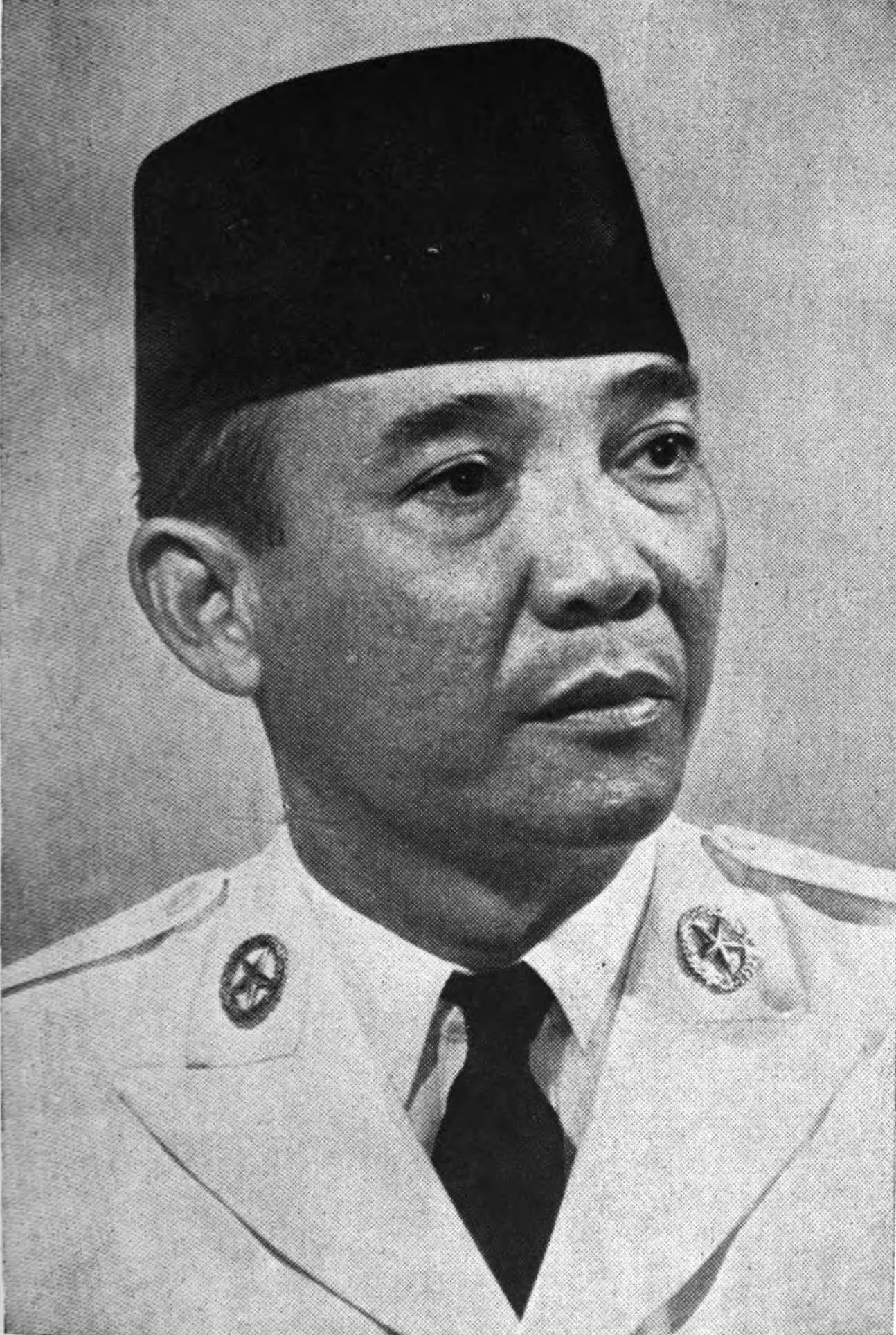
Traditionally, songkok is usually associated as a cap worn by Muslim men, during religious, formal or state occasions. However, in Indonesia, the songkok has become the national headress, with secular nationalist connotations made popular by Sukarno.[1] Numbers of Indonesian nationalist movement activist in early 20th century wore peci such as Sukarno, Mohammad Hatta, and Agus Salim. However, as the first president of Indonesia it was Sukarno that popularised peci – more precisely plain black velvet peci – as national men's cap of Indonesian,[15] and Indonesian male presidents have worn peci as part of their official presidential attire ever since. Indonesian official palace guards also wore peci as part of their uniform. The Paskibraka (Indonesian: pasukan pengibar bendera pusaka) or flag raising squad in Indonesian independence day ceremony also wear peci, and there is even female peci version with curved back. The Betawi people wear the Songkok as their traditional headdress usually colored dark red. Catholic and Protestant Betawi of Kampung Sawah regularly wear peci as part of traditional attire during church service.[16]

Malaysia

[edit]
Malay boys wearing songkok as part of their traditional attire in Malaysia

In Malaysia, traditional male Malay attire consists of a songkok, shirt, matching pants, and waist wrap that is called a songket. In a Dewan Undangan Negeri (State Legislative Assemblies) or in Dewan Rakyat (Parliament), all members (regardless of race or religion) within the legislative assembly, are required to wear the songkok (with a gold middle stripe) as a formal custom, at every State Customary Opening of Parliament (or respective State Legislative Assemblies), held once annually, in order to comply with the dress code of each legislative assembly opening.[17][18] This is done to ensure decorum whenever the respective Head of State (Yang di-Pertuan Agong for the Parliament of Malaysia, respective Sultans or Yang diPertua Negeri for each State Legislative Assemblies) is present to open the legislative assembly proceedings for the year. Similarly, all recipients of honorific orders bestowed by either the Yang di-Pertuan Agong (for federal honorific orders) or the Sultan (for each respective state honorific orders), are required to wear the gold-striped songkok along with the official customary attire in Malaysia, to receive their honorific orders in person.

The Speaker of the Dewan Rakyat themselves wears a songkok in place of the colonial wig,[19] as are also judges in their court dress.[20] The latter was pioneered by future-Chief Justice of Malaya Hashim Sani Yeop during his then chairing of the Ipoh High Court in 1978;[21][22] his choice was seen as highly contentious and transgressive among more senior judges at the time who wanted to abide by English court tradition.[23][24]

Singapore

[edit]

In Singapore, the songkok is not allowed to be worn in government schools, as part of the school uniform, as Singapore is officially a secular state and all religious headgear is not allowed to be worn.[citation needed] It is part of the standard uniform at madrasahs (Islamic religious schools).

Philippines

[edit]

In the Philippines, the songkok, known as kopiah or kupya, plays a role in the heraldry of the Sultanate of Sulu, and is part of the traditional wear of Bangsamoro men. It is part of the traditional formal clothing of Muslim Filipino men in general, along with a local Mindanaoan variation of the Baju Melayu and native malong (sarung). Some non-Muslim Lumad Filipino datu also wear the kopiah, as a result of being historically influenced by the fashions and customs of Muslim Filipinos. The kopiah is worn by Muslim Filipino men throughout the archipelago as a formal cap for prayers, and for religious and social functions. Kopiah with gold-string embroidery, or cuts of inaul or fabric with okir designs are gaining popularity alongside the conservative black velvet version. A red and white checkered Saudi-style ghutrah worn draped over a kopiah is a traditional indicator in the Southern Philippines of a hajji or male pilgrim who has been to Makkah as part of the hajj.[citation needed]

[edit]

See also

[edit]

References

[edit]
[edit]
Revisions and contributorsEdit on WikipediaRead on Wikipedia
from Grokipedia
The songkok is an oval-shaped, black cap traditionally worn by males, primarily in the Malay community across the , to complete customary attire during formal, religious, and social events. Typically constructed from felt, , or with a structure featuring a top (atap) and sides (dinding), often reinforced by a frame and lined for comfort, it serves as a symbol of Malay and adherence to Islamic practices encouraging head coverage during . Adopted since the 13th century in conjunction with the in the region, the songkok is commonly donned for occasions such as Hari Raya Puasa and Hari Raya Haji, as well as official functions, and features variations like the bergunung (raised sides) or berkalimah (inscribed with religious verses). In , it forms an integral part of male traditional dress, while in —where it is known as the peci—it has been incorporated into national attire, reflecting both religious devotion and cultural heritage across , including , , and the southern .

Nomenclature

Etymology and Regional Names

The term songkok derives from Malay, entering English usage as a borrowing from both Malay and Indonesian variants of the word, denoting a close-fitting, rimless typically worn by Muslim males in . The earliest documented appearance of the word occurs in the 19th-century Malay poem Syair Siti Zubaidah, though the precise linguistic origins of songkok itself—potentially linked to earlier Austronesian or regional descriptors for headwear—remain unattested in surviving texts prior to this period. Across Southeast Asia, the cap bears several regional names reflecting local linguistic and cultural adaptations. In Malaysia, Brunei, Singapore, and Sumatra, songkok predominates as the standard term, often associated with formal Malay attire such as baju Melayu. In Indonesia, particularly on Java, it is commonly called peci (or peci hitam for the black variant), a term that gained nationalist connotations in the early 20th century through adoption by independence figures, while kopiah (derived from Arabic kufi, referencing similar skullcaps) is used more broadly for plainer or embroidered styles in Javanese and Sumatran Muslim communities. These variations underscore the cap's integration into diverse ethnic Malay, Javanese, and Buginese traditions, with kopiah emphasizing religious connotations and peci evoking modern secular or ceremonial usage in Indonesia. In the southern Philippines, among Moro populations, it retains the songkok designation, aligning with broader Austronesian-Muslim naming patterns.

Physical Description

Materials and Construction


The songkok features a rigid inner frame constructed from layered materials for structural integrity, typically comprising 18 stitched layers of old newspapers, brown paper, and cloth, shaped into an oval top (atap) and rectangular sides (dinding) based on head measurements. The frame edges are sewn together, with the top attached to the sides, and often reinforced with manila card or cardboard before being coated or hammered for stiffness.
Outer covering involves draping and hand-stitching black velvet, felt, or over the frame, secured with precise to ensure a smooth, cylindrical or oval form that stands steadily on a flat surface. Black cloth may first line the lower sides to conceal the inner layers, followed by the final fabric application using techniques like stretching and edge flattening. Traditional fabrication is labor-intensive, often hand-sewn with vintage machines, taking 2-3 hours per cap, though modern variants may incorporate or imported velvets. Regional consistency in materials persists, with black predominant for formality, while embroidered felt or colored options (e.g., , ) appear in ceremonial or organizational contexts; ventilation holes or netting can be added to the top.

Design Variations

The songkok features an oval shape with a flat top in its standard configuration, typically measuring 3 to 6 inches in height and constructed by hand-sewing an oval atap (top) and rectangular dinding (sides) from stiffened materials like and manila card, then covering them with black , felt, or for durability and a smooth finish. Design variations encompass structural modifications such as the bergunung style, which includes raised sides for a more pronounced profile, and functional additions like studs for reinforcement or ventilated netting for breathability. Decorative subtypes include berlis models adorned with laces or tassels and berkalimah versions inscribed with religious verses, often applied via or stamping. Color schemes traditionally prioritize black to signify formality and , though historical records document , purple, and red variants used in military regiments across as early as the . Modern iterations expand to embroidered patterns with metallic threads or beads in , , , emerald , or hues, substituting with or polyester for lighter weight and varied textures suitable for casual or festive wear. Regional styles, such as those in Malaysia's state, retain a structured black velvet or felt form to complement traditional Baju Melayu attire but incorporate contemporary motifs like geometric or floral designs for personalization during events like Hari Raya. In , the equivalent peci often emphasizes a stiffer, more rigid frame for national formal contexts, reflecting adaptations in fit and rigidity across the .
Adaptations for ceremonial use, including curved-back female variants of the peci, demonstrate evolving designs for inclusive participation in events like Indonesia's Independence Day parades, diverging from the male-oriented oval standard.

Historical Development

Pre-Modern Origins

The songkok, a close-fitting cap worn by Muslim men, originated in the through the influence of Islam's arrival in the 13th century, when traders from the , Persia, and brought religious customs including skullcaps akin to the taqiyah. These early forms served as practical head coverings during prayer and daily observance, aligning with Islamic traditions of modesty and piety, and were gradually localized among Malay communities in regions like and the . Adoption coincided with the establishment of Muslim polities, such as the Samudra Pasai Sultanate around 1297, where such headwear marked religious identity amid pre-existing indigenous styles like the woven or destar. Prior to European contact, the songkok remained a simple, often unpadded cap made from basic fabrics, worn primarily by , sultans, and elites during religious rituals or court assemblies, symbolizing adherence to Islamic norms over animist or Hindu-Buddhist influences. Historical accounts associate its proliferation with Sufi missionaries and merchant networks that facilitated Islam's conversion of coastal trading hubs by the , though direct pre-colonial artifacts or illustrations are limited, relying instead on later textual correlations. In contrast to taller turbans in Persian or Indian Islamic contexts, the Southeast Asian variant adapted to tropical climates, emphasizing compactness and ventilation. The term "songkok" itself first appears in written records in the Malay Syair Siti Zubaidah around 1840, indicating linguistic formalization in the , but the garment's functional precursor—evident in oral traditions and Islamic assimilation patterns—predates this by at least five centuries. This timeline underscores the songkok's role not as an imported Ottoman fez (a 19th-century development), but as an indigenous evolution of basic Muslim skullcaps suited to maritime Southeast Asian societies.

Introduction and Spread in Southeast Asia

The songkok entered Southeast Asia with the dissemination of Islam during the 13th century, as Muslim traders and scholars from the Middle East and South Asia introduced variants of traditional skullcaps to the Malay Archipelago. These early forms, adapted from Arabian kofia styles originating in regions like Yemen and Oman, served as markers of religious identity amid the conversion of local sultanates and trading ports. By the 14th century, the cap had integrated into courtly attire in areas such as the Malacca Sultanate, facilitating its spread through maritime networks connecting the Malay Peninsula, Sumatra, Java, and Borneo. In , the peci variant gained prominence in pre-colonial Buginese royal ceremonies in , where ornate songkok denoted princely status. Its adoption extended eastward to Papua by the early 20th century, as evidenced by Papuan in wearing kopiah during the Dutch colonial period between 1933 and 1936. The cap's evolution incorporated influences from the Ottoman fez in the , leading to stiffer, black velvet versions popularized via returning pilgrims. This period marked a shift toward formalized designs, enhancing its role in both religious and social contexts across the . The songkok's spread accelerated in the colonial era, symbolizing resistance and unity; Indonesian nationalists, including and , wore peci during the 1930s independence movement, embedding secular nationalist associations. In , the Royal Malay Regiment incorporated it into uniforms upon formation on May 1, 1933, standardizing its use in military drills by 1941. Similarly, in the southern , Moro communities adopted it amid , extending its presence beyond the core Malay world by the early . These developments solidified the songkok as a versatile emblem bridging faith, tradition, and emerging national identities in .

Cultural and Religious Role

Significance in Islamic Practices

![Muslim men during Friday prayer in Tulehu mosque, wearing traditional caps][float-right] The songkok serves as a customary head covering for Muslim men in during Islamic worship, particularly (obligatory prayers), where it is worn in and congregational settings to denote respect and piety. Although Islamic does not render head covering mandatory for —evidenced by narrations of the Prophet Muhammad performing bareheaded in certain instances—it aligns with regional adab () emphasizing and emulation of prophetic practices. In Malaysian fatwas, omitting such coverage during is deemed khilaf al-awam (contrary to local custom), potentially diminishing communal reverence, though the prayer remains valid. This attire gains heightened significance during Jumu'ah (Friday congregational prayer), , and observances, where the songkok complements traditional garments like the , fostering a collective expression of faith and unity. Religious educators and scholars often wear it consistently, modeling discipline for students in madrasahs and (Islamic boarding schools), where it symbolizes scholarly devotion and cultural continuity in Sunni practices. In broader rituals, such as weddings, funerals, and gatherings, the songkok underscores humility before divine presence, distinguishing it from obligatory elements while reinforcing voluntary piety in non-Arab Muslim contexts. Its adoption reflects adaptation of universal Islamic principles to local norms, prioritizing empirical observance over rigid uniformity.

Symbolism in Malay and Regional Traditions

In Malay traditions, the songkok represents respect, maturity, and cultural decorum, often donned by elders and leaders during formal events to signify social standing and adherence to communal norms. It completes the attire, embodying Islamic modesty and heritage in ceremonies such as weddings and religious observances, where its presence underscores piety and tradition. The symbolizes Malay decorum intertwined with identity, aligning with Malaysia's constitutional recognition of as the federation's and promoting values of restraint and formality in public life. In Brunei, the songkok holds national significance, encapsulating the country's foundational pillars of Islamic faith, Malay ethnicity, and , as evidenced by its mandatory use in official protocols and state functions since the 1984 independence constitution emphasized these elements. Regionally, across Southeast Asian Muslim communities, the songkok functions as a marker of religious affiliation and cultural continuity, distinguishing adherents in diverse settings while evoking historical ties to Islamic scholarship and reform movements from the late onward. Its adoption in areas like southern reinforces ethnic solidarity among Moro populations, where it pairs with traditional garments to assert and faith amid historical conflicts.

Regional Adoption and Usage

Indonesia

In Indonesia, the songkok, locally termed peci or kopiah, transcends its origins as Muslim headwear to embody national identity and secular nationalism. Early 20th-century independence activists, including Sukarno, Mohammad Hatta, and Agus Salim, adopted the black velvet peci during political rallies and trials, such as the 1930 Partai Nasional Indonesia proceedings in Bandung, associating it with anti-colonial resistance and Indonesian unity. Sukarno, as Indonesia's first president from 1945 to 1967, elevated the plain black velvet peci to the status of a national men's cap, promoting it in official portraits and public appearances to symbolize modernity, self-reliance, and cultural pride distinct from Western or colonial attire. This shift imbued the peci with connotations of Pancasila ideology, representing egalitarian resistance and national symbolism rather than solely religious observance. Today, the peci features in formal national contexts, worn by figures like President during parliamentary oaths and state ceremonies as integral to sapu tangan attire, and by Paskibraka squads in Day flag-raising rituals, including adapted female versions with curved backs. Non-Muslims have also embraced variants, exemplified by Christian politician E.W.P. Tambunan donning a red peci in the to signal cultural affiliation. Its production centers in areas like emphasize black velvet for formal use, with sustainable materials gaining traction amid cultural preservation efforts.

Malaysia

In Malaysia, the songkok forms an essential part of the , the traditional formal attire for Malay men, which includes a collared , , and a waist wrap. It is routinely donned for religious observances like Hari Raya Puasa and Hari Raya Haji, as well as weddings and state functions, underscoring its role in expressing Malay Muslim identity. The modern songkok's design drew inspiration from the Ottoman fez, which Sultan Abu Bakar of Johor encountered during his visit to in February 1893, leading to its adaptation as stiffened headwear replacing earlier cloth variants among Muslim males in . This development aligned with Islamic recommendations (sunat) for head covering during prayers, promoting modesty and formality. By the late , the term "songkok" appeared in Malay literature, such as the poem Syair Siti Zubaidah, reflecting its integration into local customs. Militarily, the songkok was adopted by the Royal Malay Regiment upon its formation on January 23, 1933, featuring prominently in uniforms like the version for walking-out dress during British colonial rule. This usage persisted post-independence, with variations in black, purple, and green observed in ceremonial and training contexts, including bayonet drills in 1941. Today, it remains standard in the , particularly the , symbolizing discipline and heritage. Typically oval-shaped and crafted from black or felt, the songkok is handmade by layering fabric over a card frame, though factory production has increased since the mid-20th century. Styles vary slightly by region, but the plain black form predominates for everyday formality, with embroidered or peaked variants for special occasions.

In Brunei, the songkok constitutes a key element of the , the formal national attire for men, paired with a long-sleeved , , and . It is routinely worn at official functions, religious observances, and cultural events to denote formality and adherence to Malay-Muslim customs. Typically constructed from black velvet reinforced with for stiffness—replacing earlier paper stiffeners—the Bruneian variant features a distinctive oblong profile that has persisted despite evolving production techniques. Introduced via Arab traders, the songkok symbolizes Malay identity intertwined with Islam, evolving into a marker of national pride and religious devotion within Brunei's sultanate framework. During Hari Raya Aidilfitri celebrations, which follow Ramadan and emphasize communal prayers and family gatherings, men of all ages don the songkok, reinforcing intergenerational transmission of cultural values tied to faith. In royal ceremonies and court audiences, the songkok enhances the Baju Melayu ensemble, embodying respect for tradition and the monarchy, as seen in protocols observed since Brunei's independence in 1984.

Singapore

In Singapore, the songkok functions as a traditional velvet cap for Malay men, primarily worn as a head covering during formal occasions. It pairs with attire such as Baju Melayu, emphasizing cultural identity within the Malay community. Historically, the songkok formed part of the uniform for the Malay Regiment under British colonial administration. Established in 1933 and renamed the Malay Regiment in 1935, the unit adopted a songkok for walking-out dress by 1941, when recruits from local volunteers practiced drills on in October of that year. This military adoption reflected the cap's integration into disciplined, ceremonial contexts amid pre-World War II preparations. Contemporary usage persists in religious and social events, including prayers, weddings, funerals, and Hari Raya celebrations. Grooms typically wear the songkok with and samping during nikah ceremonies, upholding Malay wedding traditions. The cap's role underscores its enduring symbolism in preserving Malay heritage amid Singapore's multicultural framework.

Philippines and Other Areas

In the southern Philippines, particularly in Mindanao and the Bangsamoro Autonomous Region in Muslim Mindanao (BARMM), the songkok is worn by Muslim men as part of traditional and formal attire, often alongside the baju Melayu or local variants during religious observances, weddings, and official events. It holds cultural significance among Moro ethnic groups, including the Tausug and Maranao, where elderly men frequently don black songkoks for daily wear or white taqiyahs as alternatives in prayer settings. The cap also appears in historical and heraldic contexts, such as in the regalia associated with the , reflecting pre-colonial Islamic influences in the archipelago. Contemporary leaders, including BARMM Ahod "Murad" Ebrahim, incorporate the songkok into public appearances to symbolize regional identity and Islamic heritage. Beyond the , the songkok is prevalent in among the Malay Muslim population in provinces like Pattani, Yala, and , where it complements ensembles during Friday prayers and festivals such as Hari Raya. This usage underscores the cap's diffusion across Malay cultural spheres influenced by trade and migration routes since the .

Modern Adaptations

Preservation and Cultural Revival

In , artisanal traditions sustain songkok production, with family legacies exemplified by an 80-year-old craftsman in who hand-sews velvet caps using techniques passed down over decades, ensuring the skill's transmission amid . Commercial initiatives further support preservation, such as Songkok Malaya's 2023 recycling campaign, which collected nearly 200 worn-out songkok for repurposing, blending environmental with heritage continuity through promotion. In , community-specific efforts target variants like songkok reccak among the in Regency, , where local studies document oral histories, crafting demonstrations, and youth workshops to counter modernization's erosion, framing it as core to ethnic identity. National integration bolsters revival, as peci-style songkok feature in ceremonial attire for events like Day flag-raising by Paskibraka squads, embedding the cap in patriotic since the 1940s. Singapore recognizes songkok-making and wearing as intangible cultural heritage via the National Heritage Board's inventory, mandating documentation of techniques like felting and embroidery to foster appreciation during festivals such as Hari Raya, where it complements ensembles. Across , Islamic cultural resurgence since the has revived songkok in urban fashion and attire, with Malaysian designers adapting velvet styles for contemporary modesty wear, countering Western influences through -led revival programs. These efforts emphasize empirical transmission over commodification, prioritizing verifiable craft lineages documented in ethnographic records.

Commercial Production and Sustainability

Commercial production of songkok primarily occurs through small-scale, family-operated enterprises in and , with limited large-scale industrialization. In Gresik Regency, , , operations like UD Arif Jaya involve a structured process: the owner cuts patterns from imported to minimize waste, followed by by up to 17 employees (often family or local kin), embroidery adjusted to output, and family-handled under trademarks like "Tiga Terbang" for distribution across and beyond. These businesses, numbering around 261 small and medium industries in the region, follow seasonal production patterns tied to religious events, relying on traditional management and networks for rather than broad commercialization. In , production mirrors artisanal scales, as seen with Songkok Malaya in Sabak Bernam, employing five staff including two tailors to craft premium models from machine-washable fabrics that retain shape, an innovation replacing traditional or bases developed between 2018 and 2020. Distribution occurs via direct sales, resellers, and orders, with wages structured per output—such as Rp200,000 for tailors per 500 songkok in Indonesian models—emphasizing labor-intensive over automated processes. Sustainability efforts focus on material recycling and innovation to curb waste, given songkok's reliance on textiles like velvet that can accumulate as discards. Songkok Malaya's October 2024 campaign collected nearly 200 old or damaged songkok through exchange programs offering discounts (e.g., RM25 for adult sizes), sorting components like cardboard bases for composting or recycling centers to support river conservation and resource optimization. A follow-up in November 2024 extended these practices, promoting durable fabrics to extend product life and reduce environmental footprint. In Indonesia, waste minimization through material sorting aids sustainability, while government policies advocate training and market access to bolster long-term viability without documented adverse ecological impacts from production.

References

Add your contribution
Related Hubs
Contribute something
User Avatar
No comments yet.