Respect all members: no insults, harassment, or hate speech.
Be tolerant of different viewpoints, cultures, and beliefs. If you do not agree with others, just create separate note, article or collection.
Clearly distinguish between personal opinion and fact.
Verify facts before posting, especially when writing about history, science, or statistics.
Promotional content must be published on the “Related Services and Products” page—no more than one paragraph per service. You can also create subpages under the “Related Services and Products” page and publish longer promotional text there.
Do not post materials that infringe on copyright without permission.
Always credit sources when sharing information, quotes, or media.
Be respectful of the work of others when making changes.
Discuss major edits instead of removing others' contributions without reason.
If you notice rule-breaking, notify community about it in talks.
Do not share personal data of others without their consent.
The F-16's key features include a frameless bubble canopy for enhanced cockpit visibility, a side-stick to ease control while maneuvering, an ejection seat reclined 30 degrees from vertical to reduce the effect of g-forces on the pilot, and the first use of a relaxed static stability/fly-by-wire flight control system that helps to make it an agile aircraft. The fighter has a single turbofan engine, an internal M61 Vulcan cannon and 11 hardpoints. Although officially named "Fighting Falcon", the aircraft is commonly known by the nickname "Viper" among its crews and pilots.[9]
US Vietnam War experience showed the need for air superiority fighters and better air-to-air training for fighter pilots.[12] Based on his experience in the Korean War and as a fighter tactics instructor in the early 1960s, Colonel John Boyd with mathematician Thomas Christie developed the energy–maneuverability theory to model a fighter aircraft's performance in combat. Boyd's work called for a small, lightweight aircraft that could maneuver with the minimum possible energy loss and which also incorporated an increased thrust-to-weight ratio.[13][14] In the late 1960s, Boyd gathered a group of like-minded innovators who became known as the Fighter Mafia, and in 1969, they secured Department of Defense funding for General Dynamics and Northrop to study design concepts based on the theory.[15][16]
Air Force F-X proponents were opposed to the concept because they perceived it as a threat to the F-15 program, but the USAF's leadership understood that its budget would not allow it to purchase enough F-15 aircraft to satisfy all of its missions.[17] The Advanced Day Fighter concept, renamed F-XX, gained civilian political support under the reform-minded Deputy Secretary of Defense David Packard, who favored the idea of competitive prototyping. As a result, in May 1971, the Air Force Prototype Study Group was established, with Boyd a key member, and two of its six proposals would be funded, one being the Lightweight Fighter (LWF). The request for proposals issued on 6 January 1972 called for a 20,000-pound (9,100 kg) class air-to-air day fighter with a good turn rate, acceleration, and range, and optimized for combat at speeds of Mach 0.6–1.6 and altitudes of 30,000–40,000 feet (9,100–12,000 m). This was the region where USAF studies predicted most future air combat would occur. The anticipated average flyaway cost of a production version was $3 million. This production plan was hypothetical as the USAF had no firm plans to procure the winner.[18][19]
A right-side view of a YF-16 (foreground) and a Northrop YF-17, each armed with AIM-9 Sidewinder missiles
Five companies responded, and in 1972, the Air Staff selected General Dynamics' Model 401 and Northrop's P-600 for the follow-on prototype development and testing phase. GD and Northrop were awarded contracts worth $37.9 million and $39.8 million to produce the YF-16 and YF-17, respectively, with the first flights of both prototypes planned for early 1974. To overcome resistance in the Air Force hierarchy, the Fighter Mafia and other LWF proponents[which?] successfully advocated the idea of complementary fighters in a high-cost/low-cost force mix.[20] The "high/low mix" would allow the USAF to be able to afford sufficient fighters for its overall fighter force structure requirements. The mix gained broad acceptance by the time of the prototypes' flyoff, defining the relationship between the LWF and the F-15.[21][22]
The YF-16 was developed by a team of General Dynamics engineers led by Robert H. Widmer.[23] The first YF-16 was rolled out on 13 December 1973. Its 90-minute maiden flight was made at the Air Force Flight Test Center at Edwards AFB, California, on 2 February 1974. Its actual first flight occurred accidentally during a high-speed taxi test on 20 January 1974. While gathering speed, a roll-control oscillation caused a fin of the port-side wingtip-mounted missile and then the starboard stabilator to scrape the ground, and the aircraft then began to veer off the runway. The test pilot, Phil Oestricher, decided to lift off to avoid a potential crash, safely landing six minutes later. The slight damage was quickly repaired and the official first flight occurred on time.[24] The YF-16's first supersonic flight was accomplished on 5 February 1974, and the second YF-16 prototype first flew on 9 May 1974. This was followed by the first flights of Northrop's YF-17 prototypes on 9 June and 21 August 1974, respectively. During the flyoff, the YF-16s completed 330 sorties for a total of 417 flight hours;[25] the YF-17s flew 288 sorties, covering 345 hours.[26]
Increased interest turned the LWF into a serious acquisition program. NATO allies Belgium, Denmark, the Netherlands, and Norway were seeking to replace their F-104G Starfighterfighter-bombers.[27] In early 1974, they reached an agreement with the U.S. that if the USAF ordered the LWF winner, they would consider ordering it as well. The USAF also needed to replace its F-105 Thunderchief and F-4 Phantom II fighter-bombers. The U.S. Congress sought greater commonality in fighter procurements by the Air Force and Navy, and in August 1974 redirected Navy funds to a new Navy Air Combat Fighter program that would be a naval fighter-bomber variant of the LWF. The four NATO allies had formed the Multinational Fighter Program Group (MFPG) and pressed for a U.S. decision by December 1974; thus, the USAF accelerated testing.[28][29][30]
To reflect this serious intent to procure a new fighter-bomber, the LWF program was rolled into a new Air Combat Fighter (ACF) competition in an announcement by U.S. Secretary of DefenseJames R. Schlesinger in April 1974. The ACF would not be a pure fighter, but multirole, and Schlesinger made it clear that any ACF order would be in addition to the F-15, which extinguished opposition to the LWF.[29][30][31] ACF also raised the stakes for GD and Northrop because it brought in competitors intent on securing what was touted at the time as "the arms deal of the century".[32] These were Dassault-Breguet's proposed Mirage F1M-53, the Anglo-French SEPECAT Jaguar, and the proposed Saab 37E "Eurofighter". Northrop offered the P-530 Cobra, which was similar to the YF-17. The Jaguar and Cobra were dropped by the MFPG early on, leaving two European and two U.S. candidates. On 11 September 1974, the U.S. Air Force confirmed plans to order the winning ACF design to equip five tactical fighter wings. Though computer modeling predicted a close contest, the YF-16 proved significantly quicker going from one maneuver to the next and was the unanimous choice of those pilots that flew both aircraft.[33]
On 13 January 1975, Secretary of the Air ForceJohn L. McLucas announced the YF-16 as the winner of the ACF competition.[34] The chief reasons given by the secretary were the YF-16's lower operating costs, greater range, and maneuver performance that was "significantly better" than that of the YF-17, especially at supersonic speeds. Another advantage of the YF-16 – unlike the YF-17 – was its use of the Pratt & Whitney F100 turbofan engine, the same powerplant used by the F-15; such commonality would lower the cost of engines for both programs.[35] Secretary McLucas announced that the USAF planned to order at least 650, possibly up to 1,400 production F-16s. In the Navy Air Combat Fighter competition, on 2 May 1975, the Navy selected the YF-17 over the YF-16 (in the form of the Vought Model 1600 proposal) as the basis for what would become the McDonnell Douglas F/A-18 Hornet.[36][37]
The U.S. Air Force initially ordered 15 full-scale development (FSD) aircraft (11 single-seat and four two-seat models) for its flight test program which was reduced to eight (six F-16A single-seaters and two F-16B two-seaters).[38] The YF-16 design was altered for the production F-16. The fuselage was lengthened by 10.6 in (0.269 m), a larger nose radome was fitted for the AN/APG-66 radar, wing area was increased from 280 to 300 sq ft (26 to 28 m2), the tailfin height was decreased, the ventral fins were enlarged, two more stores stations were added, and a single door replaced the original nosewheel double doors. The F-16's weight was increased by 25% over the YF-16 by these modifications.[39][40]
The FSD F-16s were manufactured by General Dynamics in Fort Worth, Texas, at United States Air Force Plant 4 in late 1975; the first F-16A rolled out on 20 October 1976 and first flew on 8 December. The initial two-seat model achieved its first flight on 8 August 1977. The initial production-standard F-16A flew for the first time on 7 August 1978 and its delivery was accepted by the USAF on 6 January 1979. The aircraft entered USAF operational service with the 34th Tactical Fighter Squadron, 388th Tactical Fighter Wing, at Hill AFB in Utah, on 1 October 1980.[41]
The F-16 was given its name of "Fighting Falcon" on 21 July 1980. Its pilots and crews often use the name "Viper" instead, because of a perceived resemblance to a viper snake as well as to the fictional Colonial Viper starfighter from the television program Battlestar Galactica, which aired at the time the F-16 entered service.[42][9]
On 7 June 1975, the four European partners, now known as the European Participation Group, signed up for 348 aircraft at the Paris Air Show. This was split among the European Participation Air Forces (EPAF) as 116 for Belgium, 58 for Denmark, 102 for the Netherlands, and 72 for Norway. Two European production lines, one in the Netherlands at Fokker's Schiphol-Oost facility and the other at SABCA'sGosselies plant in Belgium, would produce 184 and 164 units respectively. Norway's Kongsberg Vaapenfabrikk and Denmark's Terma A/S also manufactured parts and subassemblies for EPAF aircraft. European co-production was officially launched on 1 July 1977 at the Fokker factory. Beginning in November 1977, Fokker-produced components were sent to Fort Worth for fuselage assembly, then shipped back to Europe for final assembly of EPAF aircraft at the Belgian plant on 15 February 1978; deliveries to the Belgian Air Force began in January 1979. The first Royal Netherlands Air Force aircraft was delivered in June 1979. In 1980, the first aircraft were delivered to the Royal Norwegian Air Force by Fokker and to the Royal Danish Air Force by SABCA.[43][44]
During the late 1980s and 1990s, Turkish Aerospace Industries (TAI) produced 232 Block 30/40/50 F-16s on a production line in Ankara under license for the Turkish Air Force. TAI also produced 46 Block 40s for Egypt in the mid-1990s and 30 Block 50s from 2010 onwards. Korean Aerospace Industries opened a production line for the KF-16 program, producing 140 Block 52s from the mid-1990s to mid-2000s (decade). If India had selected the F-16IN for its Medium Multi-Role Combat Aircraft procurement, a sixth F-16 production line would have been built in India.[45] In May 2013, Lockheed Martin stated there were currently enough orders to keep producing the F-16 until 2017.[46]
One change made during production was augmented pitch control to avoid deep stall conditions at high angles of attack. The stall issue had been raised during development but had originally been discounted. Model tests of the YF-16 conducted by the Langley Research Center revealed a potential problem, but no other laboratory was able to duplicate it. YF-16 flight tests were not sufficient to expose the issue; later flight testing on the FSD aircraft demonstrated a real concern. In response, the area of each horizontal stabilizer was increased by 25% on the Block 15 aircraft in 1981 and later retrofitted to earlier aircraft. In addition, a manual override switch to disable the horizontal stabilizer flight limiter was prominently placed on the control console, allowing the pilot to regain control of the horizontal stabilizers (which the flight limiters otherwise lock in place) and recover. Besides reducing the risk of deep stalls, the larger horizontal tail also improved stability and permitted faster takeoff rotation.[47][48]
In the 1980s, the Multinational Staged Improvement Program (MSIP) was conducted to evolve the F-16's capabilities, mitigate risks during technology development, and ensure the aircraft's worth. The program upgraded the F-16 in three stages. The MSIP process permitted the quick introduction of new capabilities, at lower costs and with reduced risks compared to traditional independent upgrade programs.[49] In 2012, the USAF had allocated $2.8 billion (~$3.77 billion in 2024) to upgrade 350 F-16s while waiting for the F-35 to enter service.[50] One key upgrade has been an auto-GCAS (ground collision avoidance system) to reduce instances of controlled flight into terrain.[51] Onboard power and cooling capacities limit the scope of upgrades, which often involve the addition of more power-hungry avionics.[52]
Lockheed won many contracts to upgrade foreign operators' F-16s. BAE Systems also offers various F-16 upgrades, receiving orders from South Korea, Oman, Turkey, and the US Air National Guard;[53][54][55] BAE lost the South Korean contract because of a price breach in November 2014.[56] In 2012, the USAF assigned the total upgrade contract to Lockheed Martin.[57] Upgrades include Raytheon's Center Display Unit, which replaces several analog flight instruments with a single digital display.[58]
In 2013, sequestration budget cuts cast doubt on the USAF's ability to complete the Combat Avionics Programmed Extension Suite (CAPES), a part of secondary programs such as Taiwan's F-16 upgrade.[59]Air Combat Command's General Mike Hostage stated that if he only had money for a service life extension program (SLEP) or CAPES, he would fund SLEP to keep the aircraft flying.[60] Lockheed Martin responded to talk of CAPES cancellation with a fixed-price upgrade package for foreign users.[61] CAPES was not included in the Pentagon's 2015 budget request.[62] The USAF said that the upgrade package will still be offered to Taiwan's Republic of China Air Force, and Lockheed said that some common elements with the F-35 will keep the radar's unit costs down.[63] In 2014, the USAF issued a RFI to SLEP 300 F-16 C/Ds.[64]
To make more room for assembly of its newer F-35 Lightning II fighter aircraft, Lockheed Martin moved the F-16 production from Fort Worth, Texas to its plant in Greenville, South Carolina.[3] Lockheed delivered the last F-16 from Fort Worth to the Iraqi Air Force on 14 November 2017, ending 40 years of F-16 production there. The company resumed production in 2019, though engineering and modernization work will remain in Fort Worth.[65] A gap in orders made it possible to stop production during the move; after completing orders for the last Iraqi purchase,[66] the company was negotiating an F-16 sale to Bahrain that would be produced in Greenville. This contract was signed in June 2018,[2] and the first planes rolled off the Greenville line in 2023.[67]
Tata Advanced Systems (TASL) and Lockheed Martin signed an agreement to produce F-16 wings in India on 4 September 2018.[68] As of September 2019, the prototype wing from the Indian facility would be delivered by 2020.[69] The wing prototype made in the Hyderabad facility of Tata–Lockheed Martin Aerostructures Limited (TLMAL) was delivered and certified in December 2021, paving way for the facility to be the sole provider of F-16 wings to Lockheed Martin. The wings were described as "a fuel-carrying 9-g, 12,000-hour, interchangeable and replaceable fighter wing".[70][71] It is the same facility which is also the sole provider of empennages of C-130J at a rate of 24 units per year and produced 85 units by April 2018.[72]
Comparison between F-16's inset cannon; early aircraft had four leading vents, a grille, and four trailing vents, while later aircraft had only two trailing vents
The F-16 is a single-engine, highly maneuverable, supersonic, multirole tactical fighter aircraft. It is much smaller and lighter than its predecessors but uses advanced aerodynamics and avionics, including the first use of a relaxed static stability/fly-by-wire (RSS/FBW) flight control system, to achieve enhanced maneuver performance. Highly agile, the F-16 was the first fighter aircraft purpose-built to pull 9-g maneuvers and can reach a maximum speed of over Mach 2. Innovations include a frameless bubble canopy for better visibility, a side-mounted control stick, and a reclined seat to reduce g-force effects on the pilot. It is armed with an internal 20 mm M61 Vulcan cannon in the left wing root and has multiple locations for mounting various missiles, bombs and pods. It has a thrust-to-weight ratio greater than one, providing power to climb and vertical acceleration.[73]
The F-16 was designed to be relatively inexpensive to build and simpler to maintain than earlier-generation fighters. The airframe is built with about 80% aviation-grade aluminum alloys, 8% steel, 3% composites, and 1.5% titanium. The leading-edge flaps, stabilators, and ventral fins make use of bonded aluminum honeycomb structures and graphite epoxylaminationcoatings. The number of lubrication points, fuel line connections, and replaceable modules is significantly less than in preceding fighters; 80% of the access panels can be accessed without stands.[45] The air intake was placed so it was rearward of the nose but forward enough to minimize air flow losses and reduce aerodynamic drag.[74]
Although the LWF program called for a structural life of 4,000 flight hours, capable of achieving 7.33-g with 80% internal fuel; GD's engineers decided to design the F-16's airframe life for 8,000 hours and for 9-g maneuvers on full internal fuel. This proved advantageous when the aircraft's mission changed from solely air-to-air combat to multirole operations. Changes in operational use and additional systems have increased weight, necessitating multiple structural strengthening programs.[75]
The F-16 has a cropped-delta wing incorporating wing-fuselage blending and forebody vortex-control strakes; a fixed-geometry, underslung air intake (with splitter plate[76]) to the single turbofan jet engine; a conventional tri-plane empennage arrangement with all-moving horizontal "stabilator" tailplanes; a pair of ventral fins beneath the fuselage aft of the wing's trailing edge; and a tricycle landing gear configuration with the aft-retracting, steerable nose gear deploying a short distance behind the inlet lip. The fixed-geometry pitot-type intake is lighter and simpler than variable-geometry designs, at the expense of pressure recovery performance at higher Mach numbers; the designers considered this a worthwhile tradeoff for an aircraft maneuvering primarily at subsonic and transonic speeds.[77] There is a boom-style aerial refueling receptacle located behind the single-piece "bubble" canopy of the cockpit. Split-flap speedbrakes are located at the aft end of the wing-body fairing, and a tailhook is mounted underneath the fuselage. A fairing beneath the rudder often houses ECM equipment or a drag chute. Later F-16 models feature a long dorsal fairing along the fuselage's "spine", housing additional equipment or fuel.[45][78]
Aerodynamic studies in the 1960s demonstrated that the "vortex lift" phenomenon could be harnessed by highly swept wing configurations to reach higher angles of attack, using leading edge vortex flow off a slender lifting surface. As the F-16 was being optimized for high combat agility, GD's designers chose a slender cropped-delta wing with a leading-edge sweep of 40° and a straight trailing edge. To improve maneuverability, a variable-camber wing with a NACA 64A-204 airfoil was selected; the camber is adjusted by leading-edge and trailing edge flaperons linked to a digital flight control system regulating the flight envelope.[45][75] The F-16 has a moderate wing loading, reduced by fuselage lift.[79] The vortex lift effect is increased by leading-edge extensions, known as strakes. Strakes act as additional short-span, triangular wings running from the wing root (the junction with the fuselage) to a point further forward on the fuselage. Blended into the fuselage and along the wing root, the strake generates a high-speed vortex that remains attached to the top of the wing as the angle of attack increases, generating additional lift and allowing greater angles of attack without stalling. Strakes allow a smaller, lower-aspect-ratio wing, which increases roll rates and directional stability while decreasing weight. Deeper wing roots also increase structural strength and internal fuel volume.[75][80]
A Portuguese Air Force F-16A outfitted with AIM-9 Sidewinder missiles, AN/ALQ-131 ECM pod, and external fuel tanks
Early F-16s could be armed with up to six AIM-9 Sidewinder heat-seeking short-range air-to-air missiles (AAM) by employing rail launchers on each wingtip, as well as radar-guided AIM-7 Sparrow medium-range AAMs in a weapons mix.[81] More recent versions support the AIM-120 AMRAAM, and US aircraft often mount that missile on their wingtips to reduce wing flutter.[82] The aircraft can carry various other AAMs, a wide variety of air-to-ground missiles, rockets or bombs; electronic countermeasures (ECM), navigation, targeting or weapons pods; and fuel tanks on 9 hardpoints – six under the wings, two on wingtips, and one under the fuselage. Two other locations under the fuselage are available for sensor or radar pods.[81] The F-16 carries a 20 mm (0.79 in)M61A1 Vulcan cannon, which is mounted inside the fuselage to the left of the cockpit.[81]
F-16C of the South Carolina Air National Guard in-flight over North Carolina equipped with air-to-air missiles, bomb rack, targeting pods, and electronic countermeasures pods
The F-16 is the first production fighter aircraft intentionally designed to be slightly aerodynamically unstable, also known as relaxed static stability (RSS), to both reduce drag and improve maneuverability.[83] Most aircraft are designed to have positive static stability, which induces the aircraft to return to straight and level flight attitude if the pilot releases the controls. This reduces maneuverability as the inherent stability has to be overcome and increases a form of drag known as trim drag. Aircraft with relaxed stability are designed to be able to augment their stability characteristics while maneuvering to increase lift and reduce drag, thus greatly increasing their maneuverability. At Mach 1, the F-16 gains positive stability because of aerodynamic changes.[84][85][86]
To counter the tendency to depart from controlled flight and avoid the need for constant trim inputs by the pilot, the F-16 has a quadruplex (four-channel) fly-by-wire (FBW) flight control system (FLCS). The flight control computer (FLCC) accepts pilot input from the stick and rudder controls and manipulates the control surfaces in such a way as to produce the desired result without inducing control loss. The FLCC conducts thousands of measurements per second on the aircraft's flight attitude to automatically counter deviations from the pilot-set flight path. The FLCC further incorporates limiters governing movement in the three main axes based on attitude, airspeed, and angle of attack (AOA)/g; these prevent control surfaces from inducing instability such as slips or skids, or a high AOA inducing a stall. The limiters also prevent maneuvers that would exert more than a 9-g load.[87][88]
Flight testing revealed that "assaulting" multiple limiters at high AOA and low speed can result in an AOA far exceeding the 25° limit, colloquially referred to as "departing"; this causes a deep stall; a near-freefall at 50° to 60° AOA, either upright or inverted. While at a very high AOA, the aircraft's attitude is stable but control surfaces are ineffective. The pitch limiter locks the stabilators at an extreme pitch-up or pitch-down attempting to recover. This can be overridden so the pilot can "rock" the nose via pitch control to recover.[89]
Unlike the YF-17, which had hydromechanical controls serving as a backup to the FBW, General Dynamics took the innovative step of eliminating mechanical linkages from the control stick and rudder pedals to the flight control surfaces.[90] The F-16 is entirely reliant on its electrical systems to relay flight commands, instead of traditional mechanically linked controls, leading to the early moniker of "the electric jet" and aphorisms among pilots such as "You don't fly an F-16; it flies you."[91] The quadruplex design permits "graceful degradation" in flight control response in that the loss of one channel renders the FLCS a "triplex" system.[92][93] The FLCC began as an analog system on the A/B variants but has been supplanted by a digital computer system beginning with the F-16C/D Block 40.[94][95] The F-16's controls suffered from a sensitivity to static electricity or electrostatic discharge (ESD) and lightning.[96] Up to 70–80% of the C/D models' electronics were vulnerable to ESD.[97]
A key feature of the F-16's cockpit is the exceptional field of view. The single-piece, bird-proofpolycarbonate bubble canopy provides 360° all-round visibility, with a 40° look-down angle over the side of the aircraft, and 15° down over the nose (compared to the common 12–13° of preceding aircraft); the pilot's seat is elevated for this purpose. Additionally, the F-16's canopy omits the forward bow frame found on many fighters, which is an obstruction to a pilot's forward vision.[45][98] The F-16's ACES IIzero/zero ejection seat is reclined at an unusual tilt-back angle of 30°; most fighters have a tilted seat at 13–15°. The tilted seat can accommodate taller pilots and increases g-force tolerance; however, it has been associated with reports of neck aches, possibly caused by incorrect headrest usage.[99] Subsequent U.S. fighters have adopted more modest tilt-back angles of 20°.[45][100] Because of the seat angle and the canopy's thickness, the ejection seat lacks canopy-breakers for emergency egress; instead the entire canopy is jettisoned prior to the seat's rocket firing.[101]
The pilot flies primarily by means of an armrest-mounted side-stick controller (instead of a traditional center-mounted stick) and an engine throttle; conventional rudder pedals are also employed. To enhance the pilot's degree of control of the aircraft during high-g combat maneuvers, various switches and function controls were moved to centralized hands on throttle-and-stick (HOTAS) controls upon both the controllers and the throttle. Hand pressure on the side-stick controller is transmitted by electrical signals via the FBW system to adjust various flight control surfaces to maneuver the F-16. Originally, the side-stick controller was non-moving, but this proved uncomfortable and difficult for pilots to adjust to, sometimes resulting in a tendency to "over-rotate" during takeoffs, so the control stick was given a small amount of "play". Since the introduction of the F-16, HOTAS controls have become a standard feature on modern fighters.[citation needed]
The F-16 has a head-up display (HUD), which projects visual flight and combat information in front of the pilot without obstructing the view; being able to keep their head "out of the cockpit" improves the pilot's situation awareness.[102] Further flight and systems information are displayed on multi-function displays (MFD). The left-hand MFD is the primary flight display (PFD), typically showing radar and moving maps; the right-hand MFD is the system display (SD), presenting information about the engine, landing gear, slat and flap settings, and fuel and weapons status. Initially, the F-16A/B had monochrome cathode-ray tube (CRT) displays; replaced by color liquid-crystal displays on the Block 50/52.[45][103] The Mid-Life Update (MLU) introduced compatibility with night-vision goggles (NVG). The BoeingJoint Helmet Mounted Cueing System (JHMCS) is available from Block 40 onwards for targeting based on where the pilot's head faces, unrestricted by the HUD, using high-off-boresight missiles like the AIM-9X.[104] The newer Scorpion Helmet Mounted Display is also available and would later replace the JHMCS in U.S. service.[105]
In November 2024 it was announced that the US Air Force had awarded a $9 million contract to Danish defense company Terma A/S, to supply its 3-D audio system for the aircraft, with a program of upgrades over the following two years. The system will provide high-fidelity digital audio by spatially separating radio signals, aligning audio with threat directions, and integrating active noise reduction.[106]
The F-16A/B was originally equipped with the Westinghouse AN/APG-66 fire-control radar. Its slotted planar array antenna was designed to be compact to fit into the F-16's relatively small nose. In uplook mode, the APG-66 uses a low pulse-repetition frequency (PRF) for medium- and high-altitude target detection in a low-clutter environment, and in look-down/shoot-down employs a medium PRF for heavy clutter environments. It has four operating frequencies within the X band, and provides four air-to-air and seven air-to-ground operating modes for combat, even at night or in bad weather. The Block 15's APG-66(V)2 model added more powerful signal processing, higher output power, improved reliability, and increased range in cluttered or jamming environments. The Mid-Life Update (MLU) program introduced a new model, APG-66(V)2A, which features higher speed and more memory.[107]
AN/APG-68, as fitted to the nose
The AN/APG-68, an evolution of the APG-66, was introduced with the F-16C/D Block 25. The APG-68 has greater range and resolution, as well as 25 operating modes, including ground-mapping, Doppler beam-sharpening, ground moving target indication, sea target, and track while scan (TWS) for up to 10 targets. The Block 40/42's APG-68(V)1 model added full compatibility with Lockheed Martin Low Altitude Navigation and Targeting Infrared for Night (LANTIRN) pods, and a high-PRF pulse-Doppler track mode to provide Interrupted Continuous Wave guidance for semi-active radar homing (SARH) missiles like the AIM-7 Sparrow. Block 50/52 F-16s initially used the more reliable APG-68(V)5 which has a programmable signal processor employing Very High Speed Integrated Circuit (VHSIC) technology. The Advanced Block 50/52 (or 50+/52+) is equipped with the APG-68(V)9 radar, with a 30% greater air-to-air detection range and a synthetic aperture radar (SAR) mode for high-resolution mapping and target detection-recognition. In August 2004, Northrop Grumman was contracted to upgrade the APG-68 radars of Block 40/42/50/52 aircraft to the (V)10 standard, providing all-weather autonomous detection and targeting for Global Positioning System (GPS)-aided precision weapons, SAR mapping, and terrain-following radar (TF) modes, as well as interleaving of all modes.[45]
The F-16E/F is outfitted with Northrop Grumman's AN/APG-80active electronically scanned array (AESA) radar.[108] Northrop Grumman developed the latest AESA radar upgrade for the F-16 (selected for USAF and Taiwan's Republic of China Air Force F-16 upgrades), named the AN/APG-83 Scalable Agile Beam Radar (SABR).[109][110] In July 2007, Raytheon announced that it was developing a Next Generation Radar (RANGR) based on its earlier AN/APG-79 AESA radar as a competitor to Northrop Grumman's AN/APG-68 and AN/APG-80 for the F-16.[45] On 28 February 2020, Northrop Grumman received an order from USAF to extend the service lives of their F-16s to at least 2048 with AN/APG-83 as part of the service-life extension program (SLEP).[111]
Afterburner – concentric ring structure inside the exhaust
The initial powerplant selected for the single-engined F-16 was the Pratt & Whitney F100-PW-200 afterburning turbofan, a modified version of the F-15's F100-PW-100, rated at 23,830 lbf (106.0 kN) thrust. During testing, the engine was found to be prone to compressor stalls and "rollbacks", wherein the engine's thrust would spontaneously reduce to idle. Until resolved, the Air Force ordered F-16s to be operated within "dead-stick landing" distance of its bases.[17] It was the standard F-16 engine through the Block 25, except for the newly built Block 15s with the Operational Capability Upgrade (OCU). The OCU introduced the 23,770 lbf (105.7 kN) F100-PW-220, later installed on Block 32 and 42 aircraft: the main advance being a Digital Electronic Engine Control (DEEC) unit, which improved reliability and reduced stall occurrence. Beginning production in 1988, the "-220" also supplanted the F-15's "-100", for commonality. Many of the "-220" engines on Block 25 and later aircraft were upgraded from 1997 onwards to the "-220E" standard, which enhanced reliability and maintainability; unscheduled engine removals were reduced by 35%.[112]
Adjustable exhaust nozzle in contracted position
The F100-PW-220/220E was the result of the USAF's Alternate Fighter Engine (AFE) program (colloquially known as "the Great Engine War"), which also saw the entry of General Electric as an F-16 engine provider. Its F110-GE-100 turbofan was limited by the original inlet to a thrust of 25,735 lbf (114.47 kN), the Modular Common Inlet Duct allowed the F110 to achieve its maximum thrust of 28,984 lbf (128.93 kN). (To distinguish between aircraft equipped with these two engines and inlets, from the Block 30 series on, blocks ending in "0" (e.g., Block 30) are powered by GE, and blocks ending in "2" (e.g., Block 32) are fitted with Pratt & Whitney engines.)[112][113]
The Increased Performance Engine (IPE) program led to the 29,588 lbf (131.61 kN) F110-GE-129 on the Block 50 and 29,160 lbf (129.7 kN) F100-PW-229 on the Block 52. F-16s began flying with these IPE engines in the early 1990s. Altogether, of the 1,446 F-16C/Ds ordered by the USAF, 556 were fitted with F100-series engines and 890 with F110s.[45] The United Arab Emirates' Block 60 is powered by the General Electric F110-GE-132 turbofan with a maximum thrust of 32,500 lbf (145 kN), the highest thrust engine developed for the F-16.[114]
The F-16 had been scheduled to remain in service with the U.S. Air Force until 2025.[119] Its replacement is planned to be the F-35A variant of the Lockheed Martin F-35 Lightning II, which is expected to gradually begin replacing several multirole aircraft among the program's member nations. However, owing to delays in the F-35 program, all USAF F-16s will receive service life extension upgrades.[120] In 2022, it was announced the USAF would continue to operate the F-16 for another two decades.[121]
The F-16's first air-to-air combat success was achieved by the Israeli Air Force (IAF) over the Bekaa Valley on 28 April 1981, against a Syrian Mi-8 helicopter, which was downed with cannon fire.[123] On 7 June 1981, eight Israeli F-16s, escorted by six F-15s, executed Operation Opera, their first employment in a significant air-to-ground operation. This raid severely damaged Osirak, an Iraqi nuclear reactor under construction near Baghdad, to prevent the regime of Saddam Hussein from using the reactor for the creation of nuclear weapons.[124]
The following year, during the 1982 Lebanon War Israeli F-16s engaged Syrian aircraft in one of the largest air battles involving jet aircraft, which began on 9 June and continued for two more days. Israeli Air Force F-16s were credited with 44 air-to-air kills during the conflict.[123][125]
In January 2000, Israel completed a purchase of 102 new F-16I aircraft in a deal totaling $4.5 billion.[126] F-16s were also used in their ground-attack role for strikes against targets in Lebanon. IAF F-16s participated in the 2006 Lebanon War and the 2008–09 Gaza War.[127] During and after the 2006 Lebanon war, IAF F-16s shot down Iranian-made UAVs launched by Hezbollah, using RafaelPython 5 air-to-air missiles.[128][129][130]
On 10 February 2018, an Israeli Air Force F-16I was shot down in northern Israel when it was hit by a relatively old model S-200 (NATO name SA-5 Gammon) surface-to-air missile of the Syrian Air Defense Force.[131] The pilot and navigator ejected safely in Israeli territory. The F-16I was part of a bombing mission against Syrian and Iranian targets around Damascus after an Iranian drone entered Israeli airspace and was shot down.[132] An Israel Air Force investigation determined on 27 February 2018 that the loss was due to pilot error since the IAF determined the air crew did not adequately defend themselves.[133]
Following the aftermath of the October 7 attacks, F-16Is have played a major role in Israel's Operation Swords of Iron, executing numerous airstrikes against Hamas targets in Gaza. The IAF has also employed F-16s in operations against Hezbollah in Lebanon and in strikes on Iranian-linked assets in Syria and Iraq, demonstrating the aircraft's versatility and reach.[134]
On 16 July 2024, the last single-seat F-16C Barak-1 ('Lightning' in Hebrew) were retired; the IAF continue to use the F-16D Brakeet and F-16I Sufa two-seat variants.[135] In October 2024, during Operation Days of Repentance F-16Is took part in significant operations against Iranian military infrastructure as the Israeli forces launched coordinated strikes on Iranian air defense systems and missile production facilities, aiming to degrade Iran's military capabilities and deter further aggression.[136][137]
Israeli F-16s have been instrumental in operations against Houthi targets in Yemen, taking advantage of the F-16's extended operational range and strategic reach, flying a distance of approximately 1,700 kilometers (about 1,056 miles).[138] Notably, on December 26, 2024, as part of Operation Tzelilei HaKerem, the IAF conducted airstrikes targeting Sana'a International Airport and other strategic locations, responding to Houthi missile and drone attacks on Israeli territory.[139]
During the Soviet–Afghan War, Pakistan Air Force (PAF) F-16As shot down between 20 and 30 Soviet and Afghan warplanes; the political situation however resulted in PAF officially recognizing only 9 kills which were made inside Pakistani airspace.[140] From May 1986 to January 1989, PAF F-16s from the Tail Choppers and Griffin squadrons using mostly AIM-9 Sidewinder missiles, shot down four AfghanSu-22s, two MiG-23s, one Su-25, and one An-26.[141] Most of these kills were by missiles, but at least one, a Su-22, was destroyed by cannon fire. One F-16 was lost in these battles. The downed F-16 was likely hit accidentally by the other F-16.[142]
On 7 June 2002, a PAF F-16B Block 15 (S. No. 82-605) shot down an Indian Air Force unmanned aerial vehicle, an Israeli-made Searcher II, using an AIM-9L Sidewinder missile, during a night interception near Lahore.[143]
The Pakistan Air Force has used its F-16s in various foreign and internal military exercises, such as the "Indus Vipers" exercise in 2008 conducted jointly with Turkey.[144][failed verification]
On 27 February 2019, following six Pakistan Air Force airstrikes in Jammu and Kashmir, India, Pakistani officials said that two of its fighter jets shot down one MiG-21 and one Su-30MKI belonging to the Indian Air Force.[147][148][149][150] Indian officials only confirmed the loss of one MiG-21 but denied losing any Su-30MKI in the clash and claimed the Pakistani claims as dubious.[151][152] Additionally Indian officials also claimed to have shot down one F-16 belonging to the Pakistan Air Force.[153][154] This was denied by the Pakistani side,[155] considered dubious by neutral sources,[156][157] and later backed by a report by Foreign Policy magazine, reporting that the US had completed a physical count of Pakistan's F-16s and found none missing.[158] A report by The Washington Post noted that the Pentagon and State Department refused public comment on the matter but did not deny the earlier report.[159]
In October 2025, Indian Air Force Chief of the Air Staff Amar Preet Singh claimed that five "high tech fighters" between F-16 and JF-17 class were downed by Indian air defense systems.[160] Though refraining to provide the evidences, he also reiterated his claim of August 2025 that 4-5 F-16s in the hangers at PAF Base Shahbaz were hit in Indian strikes during the 2025 India–Pakistan conflict. However, the U.S. defense officials had earlier refuted the Indian claims by having told the Reuters that they were not aware of any F-16 being hit inside Pakistan.[161][162]
The Turkish Air Force acquired its first F-16s in 1987. F-16s were later produced in Turkey under four phases of Peace Onyx programs. In 2015, they were upgraded to Block 50/52+ with CCIP by Turkish Aerospace Industries.[163] Turkish F-16s are being fitted with indigenous AESA radars and EW suite called SPEWS-II.[164]
On 18 June 1992, a Greek Mirage F1 crashed during a dogfight with a Turkish F-16.[165][166][167] On 8 February 1995, a Turkish F-16 crashed into the Aegean Sea after being intercepted by Greek Mirage F1 fighters.[168][169]
On 8 October 1996, seven months after the escalation a Greek Mirage 2000 reportedly fired an R.550 Magic II missile and shot down a Turkish F-16D over the Aegean Sea.[171][172] The Turkish pilot died, while the co-pilot ejected and was rescued by Greek forces.[167][173][174] In August 2012, after the downing of an RF-4E on the Syrian coast, Turkish Defence Minister İsmet Yılmaz confirmed that the Turkish F-16D was shot down by a Greek Mirage 2000 with an R.550 Magic II in 1996 near Chios island.[175] Greece denies that the F-16 was shot down.[176] Both Mirage 2000 pilots reported that the F-16 caught fire and they saw one parachute.[177][178]
On 23 May 2006, two Greek F-16s intercepted a Turkish RF-4 reconnaissance aircraft and two F-16 escorts off the coast of the Greek island of Karpathos, within the Athens FIR. A mock dogfight ensued between the two sides, resulting in a midair collision[179] between a Turkish F-16 and a Greek F-16. The Turkish pilot ejected safely, but the Greek pilot died owing to damage caused by the collision.[180][181]
Turkey used its F-16s extensively in its conflict with Kurdish insurgents in southeastern parts of Turkey and Iraq. Turkey launched its first cross-border raid on 16 December 2007, a prelude to the 2008 Turkish incursion into northern Iraq, involving 50 fighters before Operation Sun. This was the first time Turkey had mounted a night-bombing operation on a massive scale, and also the largest operation conducted by the Turkish Air Force.[182]
During the Syrian Civil War, Turkish F-16s were tasked with airspace protection on the Syrian border. After the RF-4 downing in June 2012 Turkey changed its rules of engagement against Syrian aircraft, resulting in scrambles and downings of Syrian combat aircraft.[183] On 16 September 2013, a Turkish Air Force F-16 shot down a Syrian Arab Air ForceMil Mi-17 helicopter near the Turkish border.[184] On 23 March 2014, a Turkish Air Force F-16 shot down a Syrian Arab Air Force MiG-23 when it allegedly entered Turkish air space during a ground attack mission against Al Qaeda-linked insurgents.[185] On 16 May 2015, two Turkish Air Force F-16s shot down a Syrian Mohajer 4 UAV firing two AIM-9 missiles after it trespassed into Turkish airspace for 5 minutes.[186][187] A Turkish Air Force F-16 shot down a Russian Air Force Sukhoi Su-24 on the Turkey-Syria border on 24 November 2015.[188]
On 1 March 2020, two Syrian Sukhoi Su-24s were shot down by Turkish Air Force F-16s using air-to-air missiles over Syria's Idlib Governorate.[189] All four pilots safely ejected.[190] On 3 March 2020, a Syrian Arab Army Air Force L-39 combat trainer was shot down by a Turkish F-16 over Syria's Idlib province.[191] The pilot died.[192]
As a part of Turkish F-16 modernization program new air-to-air missiles are being developed and tested for the aircraft. GÖKTUĞ program led by TUBITAK SAGE has presented two types of air-to-air missiles named as Bozdogan (Merlin) and Gokdogan (Peregrine). While Bozdogan has been categorized as a Within Visual Range Air-to-Air Missile (WVRAAM), Gokdogan is a Beyond Visual Range Air-to-Air Missile (BVRAAM). On 14 April 2021, first live test exercise of Bozdogan have successfully completed and the first batch of missiles are expected to be delivered throughout the same year to the Turkish Air Force.[193][194]
On 16 February 2015, Egyptian F-16s struck weapons caches and training camps of the Islamic State (ISIS) in Libya in retaliation for the murder of 21 Egyptian Coptic Christian construction workers by masked militants affiliated with ISIS. The airstrikes killed 64 ISIS fighters, including three leaders in Derna and Sirte on the coast.[195]
The Royal Netherlands Air Force, Belgian Air Component, Royal Danish Air Force and Royal Norwegian Air Force all fly the F-16.[199] All F-16s in most European air forces are equipped with drag chutes specifically to allow them to operate from automobile highways.[200]
A Yugoslavian MiG-29 was shot down by a Dutch F-16AM during the Kosovo War in 1999.[201] Belgian and Danish F-16s also participated in joint operations over Kosovo during the war.[201] Dutch, Belgian, Danish, and Norwegian F-16s were deployed during the 2011 intervention in Libya and in Afghanistan.[202] In Libya, Norwegian F-16s dropped almost 550 bombs and flew 596 missions,[203] some 17% of the total strike missions[204] including the bombing of Muammar Gaddafi's headquarters.[205]
In late March 2018, Croatia announced its intention to purchase 12 used Israeli F-16C/D "Barak"/"Brakeet" jets, pending U.S. approval.[206] Acquiring these F-16s would allow Croatia to retire its aging MiG-21s.[207] In January 2019, the deal was canceled because U.S. would only allow the resale if Israel stripped the planes of all the modernized electronics, while Croatia insisted on the original deal with all the upgrades installed.[208] At the end of November 2021, Croatia signed with France instead, for 12 Rafales.[209]
On 11 July 2018, Slovakia's government approved the purchase of 14 F-16 Block 70/72 to replace its aging fleet of Soviet-made MiG-29s.[210] A contract was signed on 12 December 2018 in Bratislava.[211]
In May 2023, an international coalition consisting of the United Kingdom, the Netherlands, Belgium and Denmark announced their intention to train Ukrainian Air Force pilots on the F-16 ahead of possible future deliveries to increase the Ukrainian Air Force capabilities in the current Russo-Ukrainian War. The U.S. confirmed that it would approve the re-export from these countries to Ukraine.[212] Denmark has agreed to help train Ukrainians on their usage of the fighter. Denmark's acting Defence Minister Troels Lund Poulsen said that Denmark "will now be able to move forward for a collective contribution to train Ukrainian pilots to fly F-16s".[213] On 6 July 2023, Romania announced that it will host the future training center after the meeting of the Supreme Council of National Defense.[214] During the 2023 Vilnius summit, a coalition was formed consisting of Denmark, the Netherlands, Belgium, Canada, Luxembourg, Norway, Poland, Portugal, Romania, Sweden, the United Kingdom, and Ukraine.[215] A number of Ukrainian pilots began training in Denmark and the U.S.[216][217] The European F-16 Training Center, organized by Romania, the Netherlands, and Lockheed Martin through several subcontractors, officially opened on 13 November 2023. It is located at the Romanian Air Force's 86th Air Base,[218] and Ukrainian pilots began training there in September 2024.[219] On 17 August 2023, the U.S. approved the transfer of F-16s from the Netherlands and Denmark to Ukraine after the Ukrainian pilots have completed their training.[220] The Netherlands and Denmark have announced that together they will donate up to 61 F-16AM/BM Block 15 MLU fighters to Ukraine once pilot training has been completed.[221][222]
On 13 May 2024, Danish Prime Minister Mette Frederiksen said that "F-16 from Denmark will be in the air over Ukraine within months." Denmark is sending 19 F-16s in total.[223] By the end of July 2024, the first F-16s were delivered to Ukraine.[224]
On 4 August 2024, President Zelensky announced to the public that the F-16 was now in operational service with Ukraine. Zelensky stated at an opening ceremony that: "F-16s are in Ukraine. We did it. I am proud of our guys who are mastering these jets and have already started using them for our country,".[225]
On 26 August 2024, F-16s were reportedly used to intercept Russian cruise missiles for the first time.[226] Also on 26 August, a Ukrainian F-16 crashed and the pilot, Oleksii Mes, was killed while intercepting Russian aerial targets during the cruise missile strikes. The cause is under investigation.[227]
On 13 December 2024, the Ukrainian Air Force stated that an F-16 shot down six Russian cruise missiles. Two were downed with "medium-range missiles", another two with "short-range missiles", and two were claimed to be downed by 20 mm cannon.[228]
On 12 April 2025, a Ukrainian Air Force F-16AM Block 20 was shot down in Sumy oblast, most likely by the S-400 missile system.[229] The crew of the S-400 system received a reward of 15 million roubles from a Russian private oil extraction company.[229]
As of October 2025, 4 F-16 fighters were lost by Ukrainian Air Force.[230]
Ukraine has confirmed the loss of four F-16 fighters and three pilots as of June 2025.[231]
The first crash occurred on 26 August 2024. An F-16 of the Ukrainian Air Force crashed in an undisclosed location in Ukraine during a Russian missile and drone attack. The pilot of the aircraft, Oleksii Mes, died in the crash.[232] On 30 August 2024, the Commander of the Ukrainian Air Force, Mykola Oleshchuk, was dismissed by President Zelenskyy and replaced by Lieutenant General Anatolii Kryvonozhko,[233] which was partially attributed to "indications" that the F-16 that crashed on 26 August was shot down in "a friendly fire incident". Ukrainian parliamentarian Maryana Bezuhla and Oleshchuk had previously argued over the cause of the F-16 loss.[234][235]
The second crash occurred on 12 April 2025. Ukraine stated that pilot Pavlo Ivanov was killed in action flying an F-16.[236][237] BBC-Ukraine reported that Russian Armed Forces fired three missiles at the F-16, which was probably flying over the Sumy region, either from an S-400 ground-to-air system or R-37 air-to-air missiles.[238]
The third crash occurred on 16 May 2025. The Ukrainian Air Force Command stated that a third F-16 was lost due to an unspecified onboard emergency while carrying out a mission to repel a Russian aerial attack.[239] The pilot was stated to have steered the aircraft from populated areas before ejecting and was rescued in a stable condition.[240]
The fourth crash occurred on 29 June 2025. A Ukrainian F-16 was lost and the pilot killed while repelling a Russian missile and drone attack, the third F-16 Ukraine has lost in such a way. The pilot, Lieutenant Colonel Maksym Ustymenko, "used all of his onboard weapons and shot down seven air targets". The seventh damaged his fighter and forced him to fly away from a residential area before crashing.[241][242]
On 11 October 2023, Deputy Assistant Secretary for Regional Security Mira Resnick confirmed to Jorge Argüello, Argentinean ambassador to the US, that the State Department has approved the transfer of 38 F-16s from Denmark.[246] On 16 April 2024, it was announced by defense minister Luis Petri that the country went through with the purchase of 24+1 Danish F-16s, that are to be brought up to date before they are sent to Argentina.[247] The 25th plane, an F-16B MLU Block 10, meant for mechanics training, came disassembled in an Argentinian C-130 in late December 2024.[248][249] The first aircraft, a F-16B, was unveiled in Buenos Aires on 24 February 2025.[250]
In 2019, the US State Department approved the possible sale of 8 F-16 Block 70s to Bulgaria,[251] and the deal was approved by the Bulgarian parliament, and President Rumen Radev.[252] In November 2022, the purchase of a further 8 F-16 Block 70 fighters, spares, weapons and other systems was approved for delivery in 2027.[253] The Bulgarian Air Force expects delivery of the first eight new F-16 Block 70s by 2025 and the second batch of eight F-16 Block 70s is expected in 2027.[254]
Two armed F-16s of the Venezuelan Air Force flew over the U.S. Navy destroyer USS Jason Dunham while in international waters, in what the U.S. Department of Defense described as a "show of force" and "highly provocative move". The action happened amidst tension between the U.S. and Venezuela due to ongoing U.S. military campaign against certain Latin American drug cartels.[257][258]
In 2021, the Defense Security Cooperation Agency approved the Philippines' purchase of 12 F-16s worth an estimated US$2.43 billion. However, the Philippines has yet to complete this deal due to financial constraints with negotiations ongoing.[259] In April 2025, the possible sale of 20 F-16s were approved, upgrading the previous approval made by DSCA.[260][261] It was reported in May 2025 that Lockheed Martin was interested in developing a facility similar to the Center for Innovation and Security Solutions in Abu Dhabi, depending on the success of the F-16s being sold.[262]
In January 2021, Canadian defence contractor Top Aces announced that they had taken delivery of the first civilian owned F-16s to their US HQ in Mesa, Arizona.[265] In an approval process that had taken years, they had purchased a batch of 29 F-16A/B Netz from the Israeli Air Force, including several that had taken part in Operation Opera. A year later, the first of these aircraft had finished the extensive AAMS mission system upgrades including AESA radar, HMCS, ECM, and Tactical Datalink. In late 2022 they began regular operations flying as contracted aggressors for USAF F-22 and F-35 squadrons in Luke AFB and Eglin AFB, as well as supporting exercises in other USAF and USMC bases.[266]
F-16 models are denoted by increasing block numbers to denote upgrades. The blocks cover both single- and two-seat versions. A variety of software, hardware, systems, weapons compatibility, and structural enhancements have been instituted over the years to gradually upgrade production models and retrofit delivered aircraft.[citation needed]
The F-16A (single seat) and F-16B (two seat) were initial production variants. These variants include the Block 1, 5, 10, 15, and 20 versions. Block 15 was the first major change to the F-16 with larger horizontal stabilizers. It is the most numerous of all F-16 variants with 983 produced. Around 300 earlier USAF F-16A and B aircraft were upgraded to the Block 15 Mid-Life Update (MLU) standard, getting analogous capability to F-16C/D Block 50/52 aircraft.[268][269] From 1987 a total of 214 Block 15 aircraft were upgraded to OCU (Operational Capability Upgrade) standard, with engines, structural and electronic improvements, and from 1988 all Block 15 were directly build to OCU specifications. Between 1989 and 1992 a total of 271 Block 15OCU airframes (246 F-16A and 25 F-16B) were converted at the Ogden Air Logistic Center to the ADF (Air Defense Fighter) variant, with improved IFF system, radio and radar, the ability to carry advanced Beyond Visual Range missiles and the addition of a side-mounted 150,000 candlepower spotlight for visual night identification of intruders. Originally intended for Cold-War air defense of the continental U.S. airspace, with the fall of the Berlin Wall the ADF lost a clear mission, and most were mothballed starting from 1994. Some mothballed ADFs were later exported to Jordan (12 -A and 4 -B models) and Thailand (15 -A and 1 -B), while 30 -A and 4 -B models were leased to Italy from 2003 to 2012[270][271]
An F-16D assigned to the 416th Flight Test Squadron, 412th Test Wing, Air Force Test Center, flies over the Mojave Desert near Edwards AFB, California
F-16C/D
F-16C Block 50M of the Chilean Air ForceThe F-16C (single seat) and F-16D (two seat) variants entered production in 1984. The first C/D version was the Block 25 with improved cockpit avionics and radar which added all-weather capability with beyond-visual-range (BVR) AIM-7 and AIM-120 air-air missiles. Block 30/32, 40/42, and 50/52 were later C/D versions.[272] The F-16C/D had a unit cost of US$18.8 million (1998).[73]Operational cost per flight hour has been estimated at $7,000[273] to $22,470[274] or $24,000, depending on the calculation method.[275][unreliable source?]
For the Indian MRCA competition for the Indian Air Force, Lockheed Martin offered the F-16IN Super Viper.[281] The F-16IN is based on the F-16E/F Block 60 and features conformal fuel tanks; AN/APG-80 AESA radar, General Electric F110-GE-132A engine with FADEC controls; electronic warfare suite and infrared search and track (IRST) unit; updated glass cockpit; and a helmet-mounted cueing system.[282] As of 2011, the F-16IN is no longer in the competition.[283][unreliable source?] In 2016, Lockheed Martin offered the new F-16 Block 70/72 version to India under the Make in India program.[284][285] In 2016, the Indian government offered to purchase 200 (potentially up to 300) fighters in a deal worth $13–15bn.[286] As of 2017, Lockheed Martin has agreed to manufacture F-16 Block 70 fighters in India with the Indian defense firm Tata Advanced Systems Limited. The new production line could be used to build F-16s for India and for exports.[287]
F-16IQ
In September 2010, the Defense Security Cooperation Agency informed the United States Congress of a possible Foreign Military Sale of 18 F-16IQ aircraft along with the associated equipment and services to the newly reformed Iraqi Air Force. The total value of sale was estimated at US$4.2 billion.[288] The Iraqi Air Force purchased those 18 jets in the second half of 2011, then later exercised an option to purchase 18 more for a total of 36 F-16IQs.[289] As of 2021[update], the Iraqi had lost two in accidents.[290] By 2023, the US government reported that these jets were Iraq's most capable airborne platforms with a 66 percent mission-capable rate. Their maintenance was being supported by private contractors. At the same time, Iraq's Russian-made systems were suffering from sanctions imposed in the wake of Russia's invasion of Ukraine.[291]
F-16N
The F-16N was an adversary aircraft operated by the United States Navy. It is based on the standard F-16C/D Block 30, is powered by the General Electric F110-GE-100 engine, and is capable of supercruise.[292] The F-16N has a strengthened wing and is capable of carrying an Air Combat Maneuvering Instrumentation (ACMI) pod on the starboard wingtip. Although the single-seat F-16Ns and twin-seat (T)F-16Ns are based on the early-production small-inlet Block 30 F-16C/D airframe, they retain the APG-66 radar of the F-16A/B. In addition, the aircraft's 20 mm cannon has been removed, as has the airborne self-protection jammer (ASPJ), and they carry no missiles. Their EW fit consists of an ALR-69 radar warning receiver (RWR) and an ALE-40 chaff/flare dispenser. The F-16Ns and (T)F-16Ns have the standard Air Force tailhook and undercarriage and are not aircraft carrier–capable. Production totaled 26 airframes, of which 22 are single-seat F-16Ns and 4 are twin-seat TF-16Ns. The initial batch of aircraft was in service between 1988 and 1998. At that time, hairline cracks were discovered in several bulkheads, and the Navy did not have the resources to replace them, so the aircraft were eventually retired, with one aircraft sent to the collection of the National Naval Aviation Museum at NAS Pensacola, Florida, and the remainder placed in storage at Davis-Monthan AFB. These aircraft were later replaced by embargoed ex-Pakistani F-16s in 2003. The original inventory of F-16Ns was previously operated by adversary squadrons at NAS Oceana, Virginia; NAS Key West, Florida; and the former NAS Miramar, California. The current F-16A/B aircraft are operated by the Naval Strike and Air Warfare Center at NAS Fallon, Nevada.[293][294][295]
At the 2012 Singapore Air Show, Lockheed Martin unveiled plans for the new F-16V variant with the V suffix for its Viper nickname. It features an AN/APG-83active electronically scanned array (AESA) radar, a new mission computer and electronic warfare suite, an automated ground collision avoidance system, and various cockpit improvements; this package is an option on current production F-16s and can be retrofitted to most in service F-16s.[296][297] First flight took place 21 October 2015.[298] Taiwanese media reported that Taiwan and the U.S. both initially invested in the development of the F-16V.[299] Upgrades to Taiwan's F-16 fleet began in January 2017.[300] The first country to confirm the purchase of 16 new F-16 Block 70/72 was Bahrain.[301][302]Greece announced the upgrade of 84 F-16C/D Block 52+ and Block 52+ Advanced (Block 52M) to the latest V (Block 70/72) variant in October 2017.[303][304] Slovakia announced on 11 July 2018 that it intends to purchase 14 F-16 Block 70/72 aircraft.[305][306] Lockheed Martin has redesignated the F-16V Block 70 as the "F-21" in its offering for India's fighter requirement.[307] Taiwan's Republic of China Air Force announced on 19 March 2019 that it formally requested the purchase of an additional 66 F-16V fighters.[308] The Trump administration approved the sale on 20 August 2019.[309][310] On 14 August 2020, Lockheed Martin was awarded a US$62 billion contract by the US DoD[311] that includes 66 new F-16s at US$8 billion (~$9.53 billion in 2024) for Taiwan.[312]
USAF QF-16A, on its first unmanned test flight, over the Gulf of Mexico
QF-16
In September 2013, Boeing and the U.S. Air Force tested an unmanned F-16, with two US Air Force pilots controlling the airplane from the ground as it flew from Tyndall AFB over the Gulf of Mexico.[313][314][315]
The F-16 has been involved in over 670 hull-loss accidents as of January 2025.[329][330]
On 8 May 1975, while practicing a 9-g aerial display maneuver with the second YF-16 (tail number 72-1568) at Fort Worth, Texas, prior to being sent to the Paris Air Show, one of the main landing gears jammed. The test pilot, Neil Anderson, had to perform an emergency gear-up landing and chose to do so in the grass, hoping to minimize damage and avoid injuring any observers. The aircraft was only slightly damaged, but because of the mishap, the first prototype was sent to the Paris Air Show in its place.[331]
On 15 November 1982, while on a training flight outside Kunsan Air Base in South Korea, USAF Captain Ted Harduvel died when he crashed inverted into a mountain ridge. In 1985, Harduvel's widow filed a lawsuit against General Dynamics claiming an electrical malfunction, not pilot error, as the cause; a jury awarded the plaintiff $3.4 million in damages. However, in 1989, the U.S. Court of Appeals ruled the contractor had immunity to lawsuits, overturning the previous judgment. The court remanded the case to the trial court "for entry of judgment in favor of General Dynamics".[332] The accident and subsequent trial was the subject of the 1992 film Afterburn.[333][334]
On 23 March 1994, during a joint Army-Air Force exercise at Pope AFB, North Carolina, F-16D (AF Serial No. 88-0171) of the 23d Fighter Wing / 74th Fighter Squadron was simulating an engine-out approach when it collided with a USAF C-130E. Both F-16 crew members ejected, but their aircraft, on full afterburner, continued on an arc towards Green Ramp and struck a USAF C-141 that was being boarded by US Army paratroopers. This accident resulted in 24 fatalities and at least 100 others injured.[335] It has since been known as the "Green Ramp disaster".[336]
On 15 September 2003, a United States Air Force Thunderbirds F-16C crashed during an air show at Mountain Home AFB, Idaho. Captain Christopher Stricklin attempted a "split S" maneuver based on an incorrect mean-sea-level altitude of the airfield. Climbing to only 1,670 ft (510 m) above ground level instead of 2,500 ft (760 m), Stricklin had insufficient altitude to complete the maneuver, but was able to guide the aircraft away from spectators and ejected less than one second before impact. Stricklin survived with only minor injuries; the aircraft was destroyed. USAF procedure for demonstration "Split-S" maneuvers was changed, requiring both pilots and controllers to use above-ground-level (AGL) altitudes.[337][338]
On 26 January 2015, a Greek F-16D crashed while performing a NATO training exercise in Albacete, Spain. Both crew members and nine French soldiers on the ground died when it crashed in the flight line, destroying or damaging two Italian AMXs, two French Alpha jets, and one French Mirage 2000.[339][340] Investigations suggested that the accident was due to an erroneous rudder setting that was caused by loose papers in the cockpit.[341]
On 7 July 2015, an F-16CJ collided with a Cessna 150M over Moncks Corner, South Carolina, U.S. The pilot of the F-16 ejected safely, but both people in the Cessna were killed.[342]
On 11 October 2018, an F-16 MLU from the 2nd Tactical Wing of the Belgian Air Component, on the apron at Florennes Air Station, was hit by a gun burst from a nearby F-16, whose cannon was fired inadvertently during maintenance. The aircraft caught fire and was burned to the ground, while two other F-16s were damaged and two maintenance personnel were treated for aural trauma.[343]
On 11 March 2020, a Pakistani F-16AM (Serial No. 92730) of the No. 9 Squadron (Pakistan Air Force) crashed in the Shakarparian area of Islamabad during rehearsals for the Pakistan Day Parade. The plane crashed when the F-16 was executing an aerobatic loop. As a result, the pilot of the F-16, Wing CommanderNoman Akram, who was also the Commanding Officer of the No. 9 Squadron "Griffins", lost his life. A board of inquiry ordered by the Pakistan Air Force later revealed that the pilot had every chance to eject but opted not to and tried his best to save the aircraft and avoid civilian casualties on the ground. Videos taken by locals on the ground show his F-16AM crashing into some woods. He was hailed a hero by Pakistanis while also gaining some attention internationally.[344]
On 6 May 2023, a U.S. Air Force F-16C of the 8th Fighter Wing crashed in a field near Osan Air Base in South Korea during a daytime training sortie. The pilot safely ejected from the aircraft.[345][importance?]
On 20 March 2024, an F-16 operated by the Hellenic Air Force crashed into the sea, close to the island of Psathoura in the northern Aegean Sea. The pilot ejected from the aircraft and was later rescued.[346]
On 30 April 2024, an Air Force General Dyamics F-16 crashed outside Holloman Air Force Base, located near Alamogordo in New Mexico. The pilot ejected safely before impact.[347]
On 8 May 2024, an F-16C of the Republic of Singapore Air Force crashed during takeoff within Tengah Air Base. The pilot successfully ejected from the aircraft without major injuries.[348] The cause was later identified to be from the malfunction of two of the three primary pitch rate gyroscopes on the aircraft. This was noted to be a "rare occurrence" by Lockheed Martin due to the concurrent failure of the two independent pitch rate gyroscopes giving similar inputs which caused the digital flight control computer to reject inputs from the correctly functioning pitch rate gyroscope and the backup pitch rate gyroscope when it was activated by the rejection of a primary pitch rate gyroscope.[349]
On 28 August 2025, a Polish Air Force F-16C Block 52+, from the Tiger Demo Team, crashed in Poland, whilst practising for the Radom Airshow. The pilot did not survive the accident.[350][351]
As newer variants have entered service, many examples of older F-16 models have been preserved for display worldwide, particularly in Europe and the United States.
3-view drawing of an F-16The underside of an F-16 during a vertical climbF-16 in afterburnerWeapons Storage and Security System vault in raised position holding a B61 nuclear bomb, adjacent to an F-16. The vault is within a Protective Aircraft Shelter.An Israeli F-16I Block 52 with conformal fuel tanks (CFTs), electronic countermeasures, and other external stores during a Red Flag exercise at Nellis AFB, NevadaA view of an AGM-84 Harpoon air-to-surface anti-ship missile fixed under the wing of an F-16
Data from USAF sheet,[73] International Directory of Military Aircraft,[83]Flight Manual for F-16C/D Block 50/52+[352]
Hardpoints: 2 × wing-tip air-to-air missile launch rails, 6 × under-wing, and 3 × under-fuselage pylon (2 of 3 for sensors) stations with a capacity of up to 17,000 lb (7,700 kg) of stores
Up to 3 × 300/330/370/600 US gallon (1,135, 1,250, 1,400, 2,270 L) Sargent Fletcherdrop tanks for ferry flight/extended range/loitering time or
UTC Aerospace DB-110 long range EO/IR sensor pod on centerline
Avionics
AN/APG-83 / AN/APG-68 radar (depends on aircraft variant). The AN/APG-68 radar is being replaced on many US Air Force F-16C/D Block 40/42 and 50/52 aircraft by the AN/APG-83 AESA radar.[359][360]
AN/ALR-56M radar warning receiver, being replaced on US Air Force F-16C/D Block 40/42 and 50/52 by AN/ALR-69A(V)
AN/ALQ-213 electronic warfare suite, being replaced on US Air Force F-16C/D Block 40/42 and 50/52 by AN/ALQ-257
^The F-16XL was originally referred to as "F-16E", with "F-16F" reserved for a variant, however this was dropped after the decision was made to procure the F-15E Strike Eagle instead.[279][280]
^Osborne, Phil, Executive Producer. "F-16 Fighting Falcon" (video #9-315842-037444). Magna Pacific, 2009. Quote: At 17:29, "Another development, which both manufacturers were aware of, was the aging F-104 Starfighters, which equip several European NATO air forces, would soon need to be replaced."
^Ibrahim, I.H.; Ng, E.Y.K.; Wong, K. (19 November 2014). "Flight Maneuverability Characteristics of the F-16 CFD and Correlation with its Intake Total Pressure Recovery and Distortion". Engineering Applications of Computational Fluid Mechanics. 5 (2): 223–234. doi:10.1080/19942060.2011.11015366. ISSN1994-2060. S2CID124964283.
^Dryden, Joe Bill (April 1986). "F-16 Aerodynamics". www.codeonemagazine.com. Code One Magazine. Archived from the original on 28 August 2008. Retrieved 7 August 2011.
^ abIskra, Alex (26 September 2003). "GD/L-M F-16A/B Netz in Israeli Service". Air Combat Information Group (ACIG). Archived from the original on 10 May 2012. Retrieved 16 May 2008.
^Rai Muhammad Saleh Azam. "An Airman Remembered". Defence Journal. Archived from the original on 22 April 2003. Retrieved 10 November 2022. due to political reasons, the kills made inside Afghan airspace by the PAF (estimated to be between 20 and 30, were never officially recognized or disclosed. To date, PAF officially recognized only the eight kills made inside Pakistani airspace and one forced manoeuvre kill.
^Lalwani, Sameer; Tallo, Emily. "Analysis | Did India shoot down a Pakistani F-16 in February? This just became a big deal". The Washington Post. Archived from the original on 30 November 2020. Retrieved 26 March 2020. Indian media reported that a U.S. Defense Department spokesman said he was unaware of any investigation. The Pentagon, like the State Department, has yet to issue a public statement on the F-16 count, but there have been no counter-leaks contradicting the Foreign Policy report.
^Venlet, David (31 December 2011). F-35 Selected Acquisition Report (SAR)(PDF) (pdf). Defense Acquisition Management Information Retrieval. p. 84. DD-A&T(Q&A)823–198. Archived(PDF) from the original on 13 May 2012. Retrieved 27 August 2012.
^Piccirillo, Albert C. (2014). Elegance in Flight: A Comprehensive History of the F-16XL Experimental Prototype and its Role in NASA Flight Research. Washington, D.C.: National Aeronautics and Space Administration. p. 143. ISBN978-1-62683-022-6.
^Ulvin, Philippe Bédos; Sandven, Synne Malen; Kruse, Jan Espen; Uleberg, Ingrid (24 August 2023). "Zelenskyj vil ha fredssamtaler i Norge" [Zelenskyj wants peace talks in Norway]. NRK (in Norwegian). Kyiv/Oslo. Retrieved 24 August 2023.
Droste, Carl S.; Walker, James E. (1980). The General Dynamics Case Study on the F-16 Fly-by-Wire Flight Control System. American Institute of Aeronautics and Astronautics. doi:10.2514/4.867873. ISBN9781563473074.
The General Dynamics F-16 Fighting Falcon is a single-engine, multirole fighter aircraft originally developed by the American aerospace company General Dynamics for the United States Air Force (USAF).[1] It is a compact, highly maneuverable platform capable of performing air-to-air combat, air-to-surface attack, and all-weather precision strike missions, with a proven track record in beyond-visual-range interceptions and suppression of enemy air defenses.[1] Powered by a single turbofan engine producing approximately 27,000 pounds of thrust, the F-16 features fly-by-wire flight controls, relaxed static stability for enhanced agility, and advanced avionics including a head-up display and reclined seating position to optimize pilot g-force tolerance.[1][2]Conceived in the early 1970s as part of the USAF's Lightweight Fighter (LWF) program, the F-16 emerged as a response to the need for a cost-effective, agile alternative to increasingly heavy and complex fighter aircraft like the F-15 Eagle, drawing lessons from aerial combat experiences in the Vietnam War.[2] General Dynamics' YF-16 prototype, featuring a blended-wing body design with leading-edge extensions for vortex lift and a single vertical stabilizer, competed against Northrop's YF-17 in the Air Combat Fighter (ACF) evaluation and was selected for full-scale development in 1975.[2] The first production F-16A flew on December 8, 1976, with initial operational capability achieved in January 1979 when the 388th Tactical Fighter Wing at Hill Air Force Base received its first aircraft; early production involved a multinational consortium with Belgium, Denmark, the Netherlands, Norway, and later Portugal, which jointly manufactured 348 F-16s.[1] Following General Dynamics' merger into Lockheed Martin in 1993, the company continued production and upgrades, with the F-16C/D variants introduced in the 1980s incorporating expanded capabilities such as increased payload and conformal fuel tanks.[3]The F-16's versatility is underscored by its armament options, including an internal M-61A1 20mm Vulcan cannon, up to six air-to-air missiles (such as AIM-120 AMRAAMs), and a wide array of air-to-ground munitions like precision-guided bombs and anti-radiation missiles, supported by nine hardpoints for a maximum external load of 17,000 pounds.[1] Key performance specifications include a maximum speed of Mach 2 (approximately 1,500 mph at altitude), a combat radius exceeding 340 miles on internal fuel, a service ceiling above 50,000 feet, and a ferry range of over 2,000 miles with drop tanks.[1] Modern iterations, such as the Block 70/72 variant, integrate active electronically scanned array (AESA) radar like the APG-83, advanced cockpit displays, automatic ground collision avoidance systems, and a structural life extended to 12,000 flight hours, enabling operations until at least 2060.[3] With more than 4,600 units produced to date, the F-16 remains in active service with the USAF (approximately 900 aircraft as of 2025), the Air National Guard, and operators in 28 nations worldwide, including NATO allies and partners in the Middle East and Asia, where it has participated in major conflicts such as Operations Desert Storm, Allied Force, and Enduring Freedom; recent deliveries include Block 70 aircraft to Bulgaria and Argentina in 2025.[4][1][3][5]
Development
Origins and Competitions
Following the Vietnam War, the United States Air Force sought a lightweight, cost-effective fighter to complement the more expensive F-15 Eagle, addressing budget constraints and the need for a high-low mix of aircraft capabilities as outlined in the 1974 Fiscal Year Defense Program, which emphasized multirole fighters for air superiority and ground attack.[6][7]In January 1972, the Air Force's Prototype Program Office at Wright-Patterson Air Force Base launched the Lightweight Fighter (LWF) program to evaluate advanced technology demonstrators for a new generation of agile, affordable day fighters.[6] The program's goals included developing an aircraft in the 20,000-pound gross weight class, capable of Mach 2 speeds, 6G maneuverability, high thrust-to-weight ratios, and superior transonic performance to counter threats like the MiG-21.[8][9]The LWF evolved into the Air Combat Fighter (ACF) program, culminating in a 1974-1975 fly-off competition at Edwards Air Force Base between General Dynamics' YF-16 and Northrop's YF-17 prototypes, selected from initial proposals in 1972 with contracts valued at approximately $38 million each for prototype development.[10] The YF-16 demonstrated exceptional performance, achieving sustained 9G turns, Mach 2+ speeds, and altitudes over 60,000 feet, leveraging Colonel John Boyd's energy-maneuverability theory for superior acceleration and dogfighting agility.[11] Its design incorporated relaxed static stability enabled by fly-by-wire controls, enhancing maneuverability beyond traditional limits.[12]On January 13, 1975, Secretary of the Air Force John L. McLucas announced the selection of the YF-16 as the ACF winner, awarding General Dynamics a full-scale development contract due to its lower unit cost—estimated at $6.7 million per aircraft in 1975 dollars—simpler single-engine design, and proven operational superiority over the twin-engine YF-17.[13][14]Early international interest emerged shortly after, with four NATO allies—Belgium, Denmark, the Netherlands, and Norway—forming the European Participation Group and committing to 348 F-16s in June 1975 at the Paris Air Show, driven by desires for standardized, cost-shared production and interoperability with U.S. forces.[15][16]
Production and Manufacturing
The full-scale development contract for the F-16 was awarded to General Dynamics on January 13, 1975, initiating the construction of six F-16A prototypes and two F-16B trainers as part of the program's engineering and manufacturing development phase.[17] The first full-scale development F-16A prototype rolled out on October 20, 1976, and achieved its maiden flight on December 8, 1976, from General Dynamics' Fort Worth, Texas facility, marking the transition from prototype testing to production preparation.[1] This was followed by the rollout and first flight of the initial production F-16A in August 1978, with deliveries commencing in early 1979.[18]Production ramped up rapidly at the Fort Worth plant, which served as the primary U.S. manufacturing site from 1978 onward, achieving a peak output rate of approximately 144 aircraft annually in the mid-1980s to meet initial U.S. Air Force requirements for 650 units.[1] The F-16 attained initial operational capability with the U.S. Air Force in January 1979, when the first operational aircraft were delivered to the 388th Tactical Fighter Wing at Hill Air Force Base, Utah.[1] Under a multinational consortium agreement signed in 1975 with Belgium, Denmark, the Netherlands, and Norway (later joined by Portugal), licensed production began in Europe in 1980 at facilities operated by SABCA in Belgium and Fokker in the Netherlands, enabling collaborative assembly and component manufacturing to support NATO allies.[1] By 2025, global F-16 production had exceeded 4,600 aircraft, reflecting sustained demand and ongoing assembly at Lockheed Martin's Greenville, South Carolina site following the 2019 relocation of the final production line from Fort Worth.[18]The unit flyaway cost for the F-16C/D variants was approximately $18.8 million in 1998 constant dollars, encompassing airframe, engine, and basic avionics without additional support equipment.[1] Over the program's lifespan, total acquisition costs have surpassed $60 billion when accounting for development, procurement, and initial sustainment across U.S. and international orders, as estimated in historical Government Accountability Office assessments adjusted for inflation and expanded production.[19] Export production agreements further diversified manufacturing; South Korea licensed assembly of 140 F-16s through Korea Aerospace Industries from 1981 into the 1990s, while Turkey's Turkish Aerospace Industries (TAI) facility began co-production in the 1980s, delivering over 270 aircraft for domestic and regional use.[20] These arrangements not only distributed industrial workloads but also enhanced interoperability among allied forces.[1]
Upgrades and Improvements
The F-16 Fighting Falcon's longevity has been sustained through a series of upgrade programs that addressed avionics, weaponry, and structural limitations, enabling the aircraft to remain viable into the 21st century. Early enhancements in the 1980s focused on expanding range and all-weather capabilities; the Block 30 variant introduced compatibility with Low Altitude Navigation and Targeting Infrared for Night (LANTIRN) pods, enabling precision strikes in low-visibility conditions by combining terrain-following radar and forward-looking infrared sensors.[21][22]In the 1990s, the Block 50/52 upgrades further modernized the fleet by incorporating advanced engines, conformal fuel tanks (CFTs) which increased internal fuel capacity without compromising aerodynamics, enhanced avionics for precision-guided munitions (PGMs), such as the Joint Direct Attack Munition (JDAM) and Wind-Corrected Munitions Dispenser (WCMD), which improved accuracy in contested environments.[22] These blocks also featured upgraded radar systems and multifunction displays to support beyond-visual-range engagements and smart weapon delivery.[23]The Service Life Extension Program (SLEP), initiated in the 2010s, targeted mid-life airframes to extend operational viability; for European operators, the Mid-Life Update (MLU) in the 1990s–2000s upgraded approximately 600 aircraft with the AN/APG-68(V) radar for improved target detection and integration of the AIM-120 Advanced Medium-Range Air-to-Air Missile (AMRAAM) for enhanced air superiority.[24] In the U.S., SLEP efforts focused on Blocks 40–52, incorporating structural reinforcements and avionics refreshes to achieve a 12,000-hour airframe life, up from the original 8,000 hours, through the use of composite materials in critical components like wing spars and empennage.[25] Early structural enhancements in the 1980s addressed wingfatigue issues identified during high-stress testing, involving reinforced lower wing skins and pivot fittings to prevent cracks under repeated 9-g maneuvers.More recent upgrades in the Block 70/72 configuration, rolling out from the 2010s through 2025, integrate the AN/APG-83 Active Electronically Scanned Array (AESA) radar for superior jamming resistance and multi-target tracking, alongside advanced cockpit displays with large-area touchscreens and the Automatic Ground Collision Avoidance System (Auto GCAS), which has prevented 12 accidents since 2014.[26] In 2024, the U.S. Air Force awarded a contract for 3D audio systems integration, providing pilots with spatial audio cues to enhance situational awareness in noisy cockpits by distinguishing threats via directional sound. In August 2025, Poland awarded Lockheed Martin a $3.8 billion contract to upgrade its 48 F-16s to the Block 70/72 configuration. Additionally, in October 2025, the U.S. Air Force contracted Terma for $10.5 million to supply 170 more 3D-Audio systems for F-16s, building on the 2024 integration.[27][28]Programs like the Common Configuration Implementation Program (CCIP), completed in the mid-2000s at a cost exceeding $2 billion, standardized software and hardware across over 650 Block 40/50 aircraft, enabling seamless integration of PGMs, Link 16 data links, and joint helmet-mounted cueing systems for improved interoperability.[29] By 2025, these initiatives have upgraded more than 2,000 F-16s worldwide, ensuring the platform's adaptability to evolving threats while controlling sustainment costs through modular upgrades.[30]
Manufacturing Relocation
The multinational F-16 program began with a June 10, 1975, Memorandum of Understanding (MOU) signed by the United States and four European nations—Belgium, Denmark, the Netherlands, and Norway—establishing the European Participating Air Forces (EPAF) framework for co-production, under which the four nations committed to 348 aircraft as part of the initial total program of 998 (including 650 for the USAF).[14] Under this agreement, production facilities in Europe were set up to assemble over 700 F-16s locally, with Belgium and the Netherlands serving as primary manufacturing hubs responsible for fuselages and final assembly, while Denmark and Norway contributed components such as wings and tails.[31] This arrangement facilitated technology transfer and shared costs, enabling the EPAF nations to produce their fleets starting in the early 1980s, with the first European-built F-16s delivered by 1982.[32]In the United States, F-16 production peaked at the General Dynamics (later Lockheed Martin) facility in Fort Worth, Texas, during the 1980s and 1990s, with thousands of aircraft rolling off the line to meet domestic and export demands.[33] By 2005, amid declining U.S. Air Force orders, Lockheed Martin announced plans to potentially close the production line if no new foreign military sales materialized, highlighting the program's reliance on international demand to sustain operations.[34] Although export contracts extended manufacturing, the Fort Worth line fully ceased F-16 production in November 2017 with the delivery of the final aircraft to the Iraqi Air Force, marking the end of 40 years at the site.[33]Overseas production expanded significantly through licensed manufacturing agreements, beginning with Turkey's Turkish Aerospace Industries (TAI), which established a line in Ankara in 1987 and produced 308 F-16s for the Turkish and Egyptian air forces through the 2010s.[35] Similarly, South Korea's Korea Aerospace Industries (KAI), in partnership with Samsung Aerospace, assembled 140 KF-16 Block 52 variants between 1994 and 2006 under the Peace Bridge program, incorporating local manufacturing of key components like wings and avionics.[36] In the 2020s, discussions for potential co-production offsets have included India, where Lockheed Martin proposed exclusive F-16 manufacturing in partnership with Tata Advanced Systems to meet Indian Air Force needs, though no firm agreements have been finalized as of 2025.[37]These relocations have yielded cost savings for partner nations through technology transfers, reducing unit prices by an estimated 10-20% via localized production and shared development expenses, as seen in the EPAF program's offset arrangements.[38] However, challenges in quality control arose in some licensed lines, including initial discrepancies in assembly standards at TAI and KAI facilities that required U.S. oversight and retraining to align with original specifications.[39] By 2025, international partnerships account for the majority of ongoing F-16 production activity, with over 70% of new builds destined for foreign operators through offset deals and licensed enhancements.[3]Looking ahead, Lockheed Martin has shifted remaining U.S.-based production to its Greenville, South Carolina, facility, which inaugurated the Block 70/72 line in 2021 and continues to manufacture advanced variants for global customers as of 2025, supported by a backlog exceeding 120 aircraft.[40] This relocation ensures sustained output for international sales, with projections for up to 300 additional Block 70/72 orders from Europe, Africa, and Asia.[41]
Design
Airframe and Configuration
The F-16 Fighting Falcon features a blended wing-body airframe design that incorporates area ruling to optimize transonic drag reduction, enhancing overall aerodynamic efficiency during high-speed maneuvers.[1] This configuration integrates the cropped delta wings seamlessly with the fuselage, reducing wave drag while maintaining a compact profile suitable for multirole operations. Leading-edge root extensions (LERX) extend forward from the wing roots, generating vortex lift that augments low-speed handling and enables close-coupled stability akin to canard effects without dedicated foreplanes, thereby improving agility across a wide flight envelope.[42]Central to the F-16's design is the relaxed static stability (RSS) concept, which introduces an intentional aerodynamic instability to boost maneuverability and responsiveness.[43] This instability is actively managed by a fly-by-wire (FBW) flight control system, originally implemented as a quad-redundant analog setup in the YF-16 prototypes and later evolving to include digital elements for enhanced precision.[44] The FBW system processes pilot inputs from a side-stick controller to command flight surfaces, ensuring stability while allowing the aircraft to achieve high angles of attack up to approximately 25 degrees.[1][45]The airframe measures 49 feet 5 inches in length, with a wingspan of 32 feet 8 inches and an empty weight of 18,900 pounds, contributing to its lightweight yet robust structure optimized for rapid acceleration and sustained turns.[1] Early production models primarily utilized aluminum alloys for the semi-monocoque construction, accounting for about 80 percent of the airframe, supplemented by steel, titanium, and minimal composites.[46] Over time, material evolution incorporated greater use of composites—reaching around 15 percent by the Block 50 variants—for weight savings and improved fatigue resistance without compromising structural integrity.[47] A frameless bubble canopy provides the pilot with near-360-degree visibility, further supporting situational awareness in dynamic combat scenarios.[1]The F-16 accommodates a single turbofanengine, either the Pratt & Whitney F100 or General Electric F110 series, depending on variant, powering its multirole configuration.[1] While conceptual designs explored internal weapons bays for reduced drag, production models standardize nine external hardpoints—two wingtips, six underwing, and one centerline—for versatile payload integration.[48]
Cockpit and Avionics
The F-16's cockpit is designed with an emphasis on ergonomics to enhance pilot performance during high-intensity maneuvers. The ejection seat, provided by Martin-Baker, features zero-zero capability, allowing safe ejection from ground level at zero airspeed in a near-level attitude.[49] This system, such as the US18E variant used in Block 70/72 aircraft, incorporates a lightweight structure with head and neck protection. The seat is reclined at a 30-degree angle to improve tolerance to sustained G-forces, reducing the effective load on the pilot's body compared to upright seating in other fighters.[50] Complementing this is the hands-on-throttle-and-stick (HOTAS) control arrangement, where the side-mounted control stick on the right console and throttle on the left enable precise inputs without removing hands from primary controls, minimizing workload during combat.[50]The avionics suite has evolved significantly from the original analog instrumentation in early blocks to a fully digital glass cockpit architecture starting with Block 40 and later variants. Initial F-16 models relied on traditional gauges for flight and systems data, but Block 40 introduced multifunction displays (MFDs) that consolidate information into programmable color screens, allowing pilots to reconfigure views for mission needs.[3] The head-up display (HUD) projects critical flight and targeting symbology onto a 30-degree by 40-degree field, enabling the pilot to maintain visual focus outside the cockpit without head-down transitions.[51] These upgrades transitioned the aircraft toward a more integrated, pilot-centric interface, with subsequent blocks incorporating larger, higher-resolution panels.Key avionics systems enhance situational awareness and network integration. The Link 16 datalink, integrated in the 1990s on Block 50/52 and later models, facilitates real-time data sharing for network-centric operations, allowing the F-16 to receive and transmit tactical pictures from allied platforms.[52] The Joint Helmet-Mounted Cueing System (JHMCS), introduced in the early 2000s, projects symbology onto the pilot's helmet visor for off-boresight targeting, where weapons can be cued by head movement rather than aircraft alignment.[53] In Block 70/72 aircraft, the large area display—manifested as a high-resolution 6-inch by 8-inch Center Pedestal Display—provides color moving maps, zoomable terrain views, and air-to-air situational data, further modernizing the cockpit layout.[54]Human factors engineering in the F-16 cockpit prioritizes workload reduction through intuitive systems. A voice warning system, often referred to as the "Bitchin' Betty," delivers synthesized audio alerts for threats and system anomalies, freeing the pilot from visual scanning during critical phases.[55] Automated threat detection via radar warning receivers provides prioritized cues, integrating with the displays to highlight immediate risks. The cockpit is fully compatible with night-vision goggles (NVGs), featuring NVIS-compliant lighting that minimizes glare and blooming, as upgraded through programs like those by Astronics for enhanced low-light operations.[56]Avionics upgrades, including the Mid-Life Update (MLU) program initiated in the late 1980s, have modernized flight controls and navigation. The F-16's fly-by-wire system transitioned to full digital processing in the 1980s via advanced flight control computers, improving stability and responsiveness over the initial hybrid analog-digital setup.[57] The MLU further digitized avionics with modular mission computers and enhanced displays, while integrating GPS-aided inertial navigation systems (GPS/INS) that achieve circular error probable (CEP) accuracy within 10 meters under optimal conditions, supporting precise low-level flight and jamming resistance.[58]
Armament and Sensors
The F-16 Fighting Falcon features a versatile armament capacity of up to 17,000 pounds (7,700 kilograms) distributed across nine external hardpoints, enabling a mix of air-to-air and air-to-ground munitions for multirole operations. These include short-range AIM-9 Sidewinder infrared-guided missiles and beyond-visual-range AIM-120 AMRAAM active radar missiles for air superiority missions, as well as air-to-ground options like the AGM-65 Maverick television- or infrared-guided missile and Joint Direct Attack Munition (JDAM) GPS-guided bombs for precision strikes.[1] An internal M61A1 Vulcan 20 mm cannon with 511 rounds provides close-range defensive capability.[59]The aircraft's sensor suite centers on multimode fire-control radars, evolving from the early AN/APG-66 in initial production models to the AN/APG-68 in later blocks, which offers a detection range of approximately 120 nautical miles (222 kilometers) against fighter-sized targets in air-to-air modes. Upgrades in Block 70/72 variants incorporate the Northrop GrummanAN/APG-83 Scalable Agile Beam Radar (SABR), an active electronically scanned array (AESA) system with enhanced detection exceeding 200 nautical miles (370 kilometers), improved resistance to electronic jamming, and simultaneous air-to-air and air-to-ground tracking.[60] Some export configurations integrate infrared search and track (IRST) pods for passive detection of low-observable threats, as seen in recent approvals for Taiwan's F-16 fleet.[61]Fire-control systems rely on a central air-to-air/air-to-ground computer that fuses data from the radar and other sensors, supporting automated target acquisition and weapon employment.[1] Podded targeting systems like the legacy Low Altitude Navigation and Targeting Infrared for Night (LANTIRN) have been largely supplanted by the Lockheed Martin Sniper XR advanced targeting pod, which provides electro-optical and infrared imaging for laser designation and precision-guided munitions delivery in all weather conditions.[62]For electronic warfare, the F-16 employs podded jammers such as the Northrop Grumman AN/ALQ-131 or the more advanced AN/ALQ-184, which emit broadband noise to disrupt enemy radars and missile guidance.[63] Defensive aids include the AN/ALE-47 countermeasures dispenser system, capable of deploying chaff and flares to decoy incoming missiles, integrated with radar warning receivers for automated response.[64]The F-16's multirole flexibility stems from software-configurable mission profiles, allowing rapid reprogramming for air-to-air interception, close air support, or suppression of enemy air defenses via the mission data file loaded pre-flight.[65] This is supported by over 7,000 pounds (3,175 kilograms) of internal fuel, enabling extended loiter times without external tanks for missions requiring sensor persistence.[1]
Propulsion System
The General Dynamics F-16 Fighting Falcon is powered by a single afterburning turbofan engine, selected from two competing families to enhance operational flexibility and commonality with other U.S. aircraft. The primary options include the Pratt & Whitney F100-PW-200, which delivers 23,830 lbf (106 kN) of thrust with afterburner, and the upgraded F100-PW-229 variant providing 29,160 lbf (129.7 kN).[66][67] Alternatively, the General Electric F110-GE-100 offers 27,000 lbf (120 kN), while the F110-GE-129 achieves 29,000 lbf (129 kN), enabling compatibility across production blocks and export configurations.[68][1]These engines contribute to the F-16's high-performance envelope, with a top speed of Mach 2+ at 40,000 ft (approximately 1,320 mph or 2,124 km/h) and a thrust-to-weight ratio of 1.095 when equipped with the F100-PW-229 under typical combat loading.[1]Key features of the propulsion system include the Digital Electronic Engine Control (DEEC) on F100-equipped models, which integrates sensor data for precise throttle response, surge protection, and optimized performance, achieving a specific fuel consumption of approximately 0.73 lb/(lbf·h) at military thrust settings.[66] The F110 series employs similar full-authority digital controls, contributing to internal fuel burn rates around 1,740 lb/hr during efficient cruise operations. Both engine families feature low-bypass ratios (0.36:1 for F100-PW-229) for balanced thrust and efficiency in multirole missions.[67]Maintenance is facilitated by a modular design, dividing the engine into removable sections such as the fan, core, low-pressure turbine, augmentor, and gearbox, which supports overhaul intervals of 4,000 engine flight hours.[66] Recent upgrades, including Full Authority Digital Engine Control (FADEC) enhancements on both F100 and F110 variants, have improved overall reliability and operability, reducing in-flight anomalies and extending on-wing time through better fault diagnostics and adaptive performance management.[69][70]Engine selection influences variant configurations, with the F110 powering approximately 60% of USAF F-16C/D models ordered (890 out of 1,446), promoting logistics commonality with the F-15. Export decisions often align with this split; for instance, Israel's F-16I Sufa variant uses the F100-PW-229 for enhanced low-altitude thrust, supporting specialized conformal fuel tanks and mission profiles.[71]
Operational History
United States Service
The F-16 Fighting Falcon entered U.S. Air Force service with the initial operational capability for the F-16A achieved in January 1979, when the first aircraft was delivered to the 388th Tactical Fighter Wing at Hill Air Force Base, Utah.[72] The 56th Tactical Fighter Wing at Luke Air Force Base, Arizona, also received its first F-16A/B aircraft in October 1979 as part of the early conversion from the F-4 Phantom II. The F-16C/D variants, incorporating improved avionics and expanded capabilities, attained initial operational capability in 1981.[1] By the mid-1980s, the F-16 had begun replacing the aging F-4 Phantom in multiple USAF tactical fighter wings, enhancing the service's front-line fighter force with a more agile and versatile platform.[73]Initially focused on air superiority roles, the F-16 demonstrated exceptional performance in USAF training exercises such as Red Flag during the 1980s, where it frequently achieved high simulated kill ratios in beyond-visual-range and close-in engagements against opposing forces, including those simulating larger aircraft like the F-15.[74] The aircraft's transition to a multirole platform accelerated with the introduction of the Block 30 variant in the mid-1980s, which added precision ground-attack capabilities through conformal fuel tanks and compatibility with advanced munitions, allowing it to perform both air-to-air and air-to-ground missions effectively.[75] This evolution was validated in combat during Operation Desert Storm in 1991, where USAF F-16s flew over 13,000 total sorties—more than any other allied aircraft—including significant suppression of enemy air defenses (SEAD) missions using AGM-88 HARM missiles to neutralize Iraqi radar sites.[1][76]In the post-Cold War era, F-16s played key roles in USAF-led operations over the Balkans, including Operation Allied Force in 1999, where they contributed to over 10,000 strike sorties as part of the NATO air campaign against Yugoslav forces, focusing on SEAD and close air support to protect ground operations.[77] From 2001 to 2021, F-16s accumulated extensive combat experience in Operations Iraqi Freedom and Enduring Freedom, logging thousands of hours in close air support missions to support ground troops, with individual pilots often exceeding 1,000 combat hours in the aircraft.[78] Pilot training for the F-16 includes the Introduction to Fighter Fundamentals (IFF) program at Holloman Air Force Base, New Mexico, where new aviators practice advanced fighter maneuvers in T-38C or AT-6 aircraft before transitioning to the F-16.[79]As of 2025, the USAF maintains over 800 active F-16s in its inventory, with ongoing upgrades under the Viper program modernizing select Block 40/50 aircraft to a Block 70/72 configuration, incorporating advanced radars, electronic warfare systems, and improved cockpits to extend service life.[80][81] Retirement of older F-16 variants is planned to accelerate in the 2030s as the service transitions to the F-35 Lightning II for multirole missions, with annual divestments supporting a balanced fighter force structure.[82]
Middle East Operations
The Israeli Air Force (IAF) was the first foreign operator of the F-16, acquiring 102 F-16A/B aircraft between 1980 and 1987 under the Peace Marble I program, with initial deliveries commencing in 1980. These early models, designated Netz (Hawk), played a pivotal role in the IAF's combat debut during Operation Opera on June 7, 1981, when eight F-16As, escorted by F-15s, conducted a 2,000 km round-trip mission to destroy Iraq's Osirak nuclear reactor near Baghdad, dropping 16 one-ton bombs with precision and returning without losses. The F-16A/B fleet further demonstrated its air superiority capabilities during the 1982 Lebanon War, particularly in Operation Mole Cricket 19—known as the Bekaa Valley Turkey Shoot—where Israeli F-16s contributed to downing over 80 Syrian aircraft, including MiG-21s and MiG-23s, in a series of engagements that neutralized Syria's air defenses without any Israeli losses.[83][84][85]The IAF expanded its F-16 holdings with 102 F-16C/D Barak aircraft acquired between 1988 and the 1990s through Peace Marble II and III programs, enhancing multirole capabilities for both air-to-air and ground-attack missions amid ongoing regional threats. In the 2000s, Israel introduced the locally modified F-16I Sufa (Storm), procuring 102 units from 2004 to 2016 under Peace Marble V, featuring conformal fuel tanks, Israeli avionics, and extended range for deep-strike operations. These variants have been central to IAF responses to regional tensions, including repeated airstrikes in Syria from the 2010s through 2025 targeting Iranian-backed forces and weapons convoys, with F-16s employing precision-guided munitions to degrade enemy infrastructure.[83][86][87]The Egyptian Air Force (EAF) has operated a substantial F-16 fleet since 1982, accumulating 218 aircraft across various blocks by 2025, beginning with initial deliveries of F-16A/B models under the Peace Vector program to bolster post-Camp David security. These jets have been instrumental in Sinai Peninsula patrols and counterinsurgency efforts, including strikes against ISIS affiliates during the Sinai insurgency starting in 2011, where F-16s conducted airstrikes supporting ground operations and border security. In 2023, the EAF upgraded portions of its inventory to Block 52 standards, incorporating advanced avionics and weaponry to enhance interoperability with U.S. forces and extend service life.[88][89][90]Other Middle Eastern operators have integrated the F-16 into their forces with varying operational emphases. The United Arab Emirates Air Force acquired 80 F-16E/F Block 60 Desert Falcon aircraft starting in 2005, equipped with the advanced AN/APG-80 AESA radar for superior situational awareness in both air-to-air and air-to-ground roles, primarily for territorial defense and coalition missions. Iraq's brief F-16 operations from 2008 onward involved a smaller fleet of 36 Block 52 aircraft delivered in the 2010s, used sparingly against ISIS targets but limited by maintenance challenges and reliance on U.S. support through 2025. Saudi Arabia maintains a training focus with its limited F-16 holdings, primarily supporting pilot development rather than frontline combat, complementing its larger F-15 fleet.[91][92][93]Joint exercises have strengthened regional F-16 interoperability, notably the annual Bright Star maneuvers hosted by Egypt since 1981, involving U.S. and allied forces in air combat training and multinational operations to enhance readiness against shared threats. In recent years, Israeli F-16I Sufas have been actively employed in Gaza operations from 2023 to 2025, conducting precision strikes and achieving over 20 confirmed target destructions amid the Israel-Hamas conflict.[94][95]
European and Asian Deployments
The F-16 has been a cornerstone of NATO's European air forces since the 1970s, with Belgium, Denmark, the Netherlands, and Norway participating in the European Participating Air Forces (EPAF) program that co-produced approximately 348 aircraft between 1979 and 1992.[31] As of mid-2025, before major donations, Belgium maintained around 52 active aircraft, Denmark about 43, the Netherlands roughly 60, and Norway about 50; however, by November 2025, donations have reduced these to approximately 52 (Belgium), 24 (Denmark), 20 (Netherlands), and under 40 (Norway, with some retained for training during F-35 transition).[96][97] In peacetime operations, these F-16s contribute to NATO's Baltic Air Policing mission, established in 2004 to monitor airspace over Estonia, Latvia, and Lithuania; rotations have included Belgian F-16s intercepting Russian aircraft in 2016 and 2020, Norwegian detachments in 2008 and 2019, and Romanian F-16s joining from 2023 to enhance eastern flank coverage.[98][99][100]Turkey's Air Force has integrated over 270 F-16C/D Block 30, 40, and 50 variants since 1987, making it one of the largest operators outside the U.S., with Turkish Aerospace Industries (TAI) handling local production and upgrades including the 2007 Common Configuration Implementation Program (CCIP) for 165 aircraft to enhance avionics and weapons integration.[101] In border operations during the 2010s, Turkish F-16s conducted airstrikes against Kurdish militants and Syrian targets, logging thousands of sorties while integrating indigenous munitions like the SOM cruise missile.[102] Recent TAI-led efforts aim to modernize remaining Block 50s toward Block 70 standards domestically, following a 2024 decision to forgo U.S. upgrade kits in favor of national programs to achieve greater sovereignty.[103]The Pakistan Air Force received 76 F-16A/B Block 15 aircraft starting in 1983, followed by 13 F-16C/D Block 52s in the mid-2000s, forming the backbone of its multirole capabilities despite U.S. end-user restrictions limiting use to counterterrorism.[104][105] These jets played a pivotal role in the 2019 Balakot crisis, where PAF F-16s escorted JF-17s in retaliatory strikes on Indian positions after an Indian airstrike, and during the ensuing February 27 dogfight, where a Pakistani F-16 reportedly downed an Indian MiG-21 Bison using an AIM-120 missile, with the Indian pilot captured and later released.[106]In other Asian deployments, Taiwan operates 141 upgraded F-16A/B Block 20s converted to F-16V Block 70 configuration since 2018, featuring advanced AESA radars and electronic warfare systems, with the upgrade program completing its first phase in 2024 to bolster defenses against regional threats.[107] Complementing this, 66 new Block 70 F-16Vs are under production, though deliveries—originally slated for completion by 2026—face delays pushing full handover to 2027 or later due to supply chain issues.[108] Singapore's Republic of Singapore Air Force fields over 60 F-16D Block 52+ aircraft, upgraded since 2023 with Israeli-origin electronic warfare suites, Python-5 missiles, and advanced targeting pods for all-weather operations in the Indo-Pacific.[109][110]Beyond combat, F-16s in Europe and Asia support peacetime quick reaction alert (QRA) duties, such as U.S. and Polish F-16s intercepting Russian Su-30s violating NATO airspace over the [Baltic Sea](/page/Baltic Sea) in 2022 amid heightened tensions.[111] They also participate in multinational exercises like Pitch Black, where Singaporean, U.S., and NATO ally F-16s from nations including the Netherlands honed large-force employment tactics in Australia in 2022, simulating complex air campaigns with over 100 aircraft from 17 countries.[112][113]
Recent Global Conflicts
The F-16 Fighting Falcon has seen significant involvement in the Russo-Ukrainian War since mid-2024, following pledges of 24 aircraft from the Netherlands and 19 from Denmark, totaling 43 jets to bolster Ukraine's air defenses.[114][115] Deliveries commenced in July 2024, with the Netherlands completing its transfers by May 2025.[116][117] The first combat missions occurred in August 2024, when Ukrainian F-16s intercepted Russian cruise missiles during a large-scale barrage, marking the aircraft's debut in active defense operations.[118]Ukrainian F-16 pilots achieved confirmed air-to-air victories, including the downing of two Russian Su-34 fighter-bombers in late 2024—one in October near Zaporizhzhia and another in November over the same region—using AIM-120 AMRAAM missiles.[119][120] These successes highlighted the F-16's role in challenging Russian air superiority, though operations faced constraints from Russian S-400 surface-to-air missile systems, which reportedly downed at least one F-16 in April 2025 during a high-altitude engagement.[121] By June 2025, Ukraine had sustained four F-16 losses: three from crashes, including non-combat incidents in August 2024 and April 2025, and one combat loss; these resulted in two pilot fatalities, on August 29, 2024, during a missile intercept mission, and April 12, 2025, amid frontline operations. As of October 2025, Ukraine's F-16 fleet, despite losses, flies roughly 80% of all Ukrainian Air Force sorties, continuing missile interceptions and limited strikes while facing ongoing threats from Russian air defenses. No additional confirmed losses reported through November 2025.[122][123][124][125]Integration challenges persisted, particularly in synchronizing F-16s with Western munitions and NATO-standard systems, compounded by the need for rapid pilot training through a 2024 NATO-led program at bases in Romania and Denmark, which graduated over 20 Ukrainian aviators by early 2025.[126][127] Despite these hurdles, the F-16s proved effective in missile interception, with pilots downing multiple targets per sortie, though low-altitude tactics were often required to evade S-400 threats, limiting offensive depth.[128][129]In Southeast Asia, Thai F-16s returned to combat in July 2025 during clashes with Cambodia over a border dispute, conducting precision strikes on military positions near the Ta Kwai Temple—the first operational use since the 1980s.[130][131] This deployment involved six aircraft, underscoring the F-16's adaptability in regional tensions akin to southern insurgency scenarios. Tensions escalated further in November 2025, with a fatal clash on November 13 near the border, leading Thailand to halt a U.S.-brokered peace agreement signed in October.[132][133]Emerging operators expanded F-16 roles elsewhere: Argentina received its first of 24 Danish F-16s in December 2024, with initial aircraft unveiled for training and patrols, including enhanced monitoring around the Falklands amid renewed sovereignty discussions.[134][135][136]Bulgaria took delivery of eight new Block 70 F-16s by late 2025, with the remaining eight slated for 2026–2027, positioning them for potential NATO frontline operations near conflict zones.[137][138]The Russia-Ukraine War accelerated global F-16 transfers, with over 100 aircraft delivered or pledged in 2024–2025 to allies like Ukraine, Bulgaria, Argentina, and Belgium, enhancing collective deterrence against Russian aggression.[139][140]
Civilian and Non-State Use
The F-16 Fighting Falcon has found significant application in civilian-operated adversary training programs, where private contractors provide "red air" services to simulate enemy threats for military pilots during dissimilar air combat exercises. These operations leverage surplus military F-16s, demilitarized and certified for non-combat roles, to enhance training realism against advanced fighters like the F-35 and F-22. By 2025, such contractors operate dozens of F-16s, augmenting government resources amid rising demand for high-fidelity simulations of threats like Russian Su-27 Flankers or Chinese J-10s.[141]Top Aces Corporation, based in Canada, is a leading provider of these services, operating 29 former Israeli Air Force F-16A/B Netz aircraft acquired in 2020 and introduced to service starting in 2021. These jets, upgraded with advanced aggressor mission systems including electronic warfare pods and infrared search-and-track capabilities, support U.S. Air Force training under a share of the $6.4 billion Combat Air Force Contracted Air Services (CCAS) indefinite delivery/indefinite quantity contract awarded in 2019. The fleet is based at a dedicated F-16 Center of Excellence in Mesa, Arizona, and has conducted missions simulating peer adversaries, with pilots noting enhanced maneuverability post-modification. In May 2021, Top Aces achieved a milestone when the first aircraft received Federal Aviation Administration (FAA) certification for civilian operations, enabling legal flight under U.S. registry.[142][143][144]Draken International, a U.S.-based firm, operates another substantial civilian F-16 fleet for similar red air and live-fly training exercises, supporting the U.S. Air Force, Navy, and other Department of Defense clients. The company acquired 12 surplus F-16s from the Royal Netherlands Air Force in 2021 and an additional 12 from the Royal Norwegian Air Force later that year, totaling 24 aircraft integrated into its broader inventory of over 150 tactical jets. These F-16s, drawn from Mid-Life Update (MLU) configurations, provide high-threat replication in exercises, including beyond-visual-range engagements and close air support scenarios. Draken's operations emphasize rapid deployment and cost efficiency, filling gaps in military aggressor availability.[145][146]Regulatory oversight for civilian F-16 operations requires FAA airworthiness certification under Part 91 or equivalent, involving structural inspections, avionics compliance, and removal of classified systems. Modifications common to aggressor roles include non-intrusive additions like smoke generation systems for visual identification during training, ensuring safe integration with military airspace without compromising the aircraft's core performance. As of 2025, the total operational civilian F-16 fleet across major contractors stands at approximately 53 aircraft, primarily with Top Aces and Draken.[141][142]Transitioning surplus F-16s to civilian use involves rigorous demilitarization processes overseen by the U.S. Defense Logistics Agency and State Department, including the physical removal or disablement of weapon delivery systems, fire-control radars, and sensitive avionics to prevent military reutilization. This "safing" entails cutting or rendering unusable components like missile rails and pylons, followed by export controls and FAA supplemental type certificates for reconfiguration. Such programs ensure these aircraft contribute to training without posing proliferation risks, with contractors like Top Aces and Draken handling final integrations for commercial viability.[147][148]
Variants
Early Production Models
The development of the F-16 began with two YF-16 prototypes constructed by General Dynamics in 1974, which conducted their initial flights in January and May of that year to demonstrate the aircraft's fly-by-wire (FBW) flight control system and relaxed static stability design.[149] These prototypes paved the way for further testing, including a CCV (Control Configured Vehicle) demonstrator modified from the second YF-16 in 1976, which flew for the first time on March 16 to evaluate decoupled flight controls and FBW enhancements for improved maneuverability.[150]Production of the operational F-16A single-seat and F-16B two-seat variants commenced in 1978, with initial deliveries to the U.S. Air Force and European Participating Air Forces under Blocks 1 through 15, totaling approximately 1,586 aircraft across these early configurations by the mid-1980s.[151] These models featured analog avionics, including basic cockpit instrumentation and the Westinghouse AN/APG-66 pulse-Doppler radar from Block 5 onward, enabling beyond-visual-range engagements with the AIM-7 Sparrow semi-active radar-homing missile, particularly in Block 15 variants equipped with early track-while-scan capabilities.[151] The aircraft's combat radius in a high-low-high mission profile with four 2,000-pound bombs and two AIM-9 Sidewinder missiles was approximately 340 nautical miles, emphasizing its role as a lightweightday fighter with internal fuel.[152]Early F-16A/B models lacked integrated terrain-following radar, relying instead on manual navigation for low-level operations, which limited all-weather penetration capabilities until later retrofits.[150] In the 1980s, the U.S. Air Force retrofitted at least 241 Block 15 F-16A/B aircraft to the Air Defense Fighter (ADF) configuration for Air National Guard interceptor roles, incorporating an upgraded AN/APG-66(V)2 radar and improved identification friend-or-foe systems to enhance beyond-visual-range intercepts with Sparrow missiles.[150]Exports of the F-16A began in 1980 to more than 20 nations, with Israel receiving the first batch under the Peace Marble I program, designating its Block 10 aircraft as the Netz (Hawk) for rapid integration into frontline squadrons.[153] By the 2000s, most early production F-16A/B models had been phased out of U.S. service due to structural fatigue and avionics obsolescence, though around 200 were upgraded to the Block 20 Mid-Life Update (MLU) standard, incorporating modular avionics and enhanced radar modes to extend their operational life.[150]
Block Upgrade Series
The Block 20 and Block 25 upgrades, introduced in the 1980s, focused on avionics and weapons enhancements through the Multistage Improvement Program (MSIP) II, improving compatibility for various missions including early SEAD capabilities with the AGM-88 HARManti-radiation missile. The first Block 25 F-16C was delivered in July 1984, marking a shift toward more versatile multirole capabilities while retaining the core airframe design. The dedicated Wild Weasel SEAD role was later assigned to Block 50/52 variants.The Block 30 and Block 32 variants, produced between 1981 and 1985 with approximately 832 aircraft built, introduced the Alternative Fighter Engine program, allowing operators to select either the General Electric F110-GE-100 or Pratt & Whitney F100-PW-200/220 engines for improved performance and reliability. A key addition was the integration of the Low Altitude Navigation and Targeting Infrared for Night (LANTIRN) pod system, enabling precision strikes in low-light and adverse weather conditions by providing terrain-following and targeting capabilities. These blocks featured a larger air intake to accommodate the more powerful GE engine and enhanced avionics for better multimode radar operation, significantly expanding the F-16's ground attack envelope.[154][155]Block 40 and Block 42, developed for night attack operations from 1988 through the 1990s with approximately 535 units produced, incorporated advanced terrain-following radar as part of the LANTIRN suite to enable low-level penetration in contested environments. These variants emphasized precision night strikes, with improved inertial navigation and forward-looking infrared systems for all-weather targeting, replacing older systems on earlier blocks. The design prioritized structural reinforcements for heavier weapon loads, including precision-guided munitions, making the F-16 a primary platform for close air support and interdiction in darkness.[156][52]The Block 50 and Block 52, manufactured from 1991 to 2008 with 914 aircraft delivered, featured upgraded AN/APG-68(V) radar with increased detection range and multimode capabilities, alongside compatibility for the AIM-120 AMRAAM beyond-visual-range air-to-air missile. These blocks supported the Wild Weasel SEAD role with HARM integration while adding maritime strike options through enhanced radar and weapons bays. Production emphasized higher thrust engines and digital flight controls for superior maneuverability, serving as the backbone of USAF multirole operations during this period.[157][158]The USAF F-16 Viper upgrade program, starting in the 2010s, modifies approximately 608 existing Block 40/42 and 50/52 aircraft to the V configuration (equivalent to Block 70 standard) through 2025 and beyond, incorporating the AN/APG-83 active electronically scanned array (AESA) radar for superior situational awareness and jamming resistance. It includes automatic ground collision avoidance system (auto GCAS) to mitigate controlled flight into terrain risks, drawing from service-wide safety data to enhance pilot survivability. This block represents a major modernization of existing airframes, focusing on network-centric warfare integration and extended service life.[159]The ongoing Block 70 and Block 72 variants, with 288 or more ordered by 2025, build on the Viper configuration by including advanced mission data files for improved identification friend or foe (IFF) processing and electronic warfare adaptability. These blocks feature a modernized cockpit with large-area displays and automatic threat cueing, ensuring compatibility with joint all-domain operations. Production emphasizes affordability and rapid deployment for both new builds and retrofits.[160][161]Upgrade paths for the F-16 fleet include the Pacer Denny program in the 1990s, which addressed structural fatigue through wing and fuselage reinforcements to extend airframe life beyond 8,000 hours. In the 2010s, the Falcon EDGE initiative focused on software enhancements, including updated flight management systems and datalink interoperability to align older blocks with modern threats. Overall, approximately 1,200 aircraft have been upgraded to Block 50 or higher equivalents through these and related programs like the Common Configuration Implementation Program (CCIP), ensuring sustained relevance.[162][159]Performance gains in the Block 70 include a 20% extension in combat radius via conformal fuel tanks (CFTs), which add internal fuel capacity without external drag penalties, alongside low-observable stealth coatings to reduce radar cross-section. These enhancements, including radar-absorbent materials applied to select USAF units, improve survivability in high-threat environments while maintaining the F-16's agility.[54][163]
Export and Specialized Versions
The F-16I Sufa, developed specifically for the Israeli Air Force, represents a tailored export variant incorporating indigenous enhancements for regional operational needs. Israel ordered 102 F-16I aircraft, with deliveries occurring between 2004 and 2009 following the first flight in December 2003.[71] Key modifications include two removable 450-gallon conformal fuel tanks mounted on the upper fuselage, which extend range without compromising aerodynamics or weapon load, alongside Israeli-developed avionics such as the Elbit Dash IV helmet-mounted display and Elop wide-angle heads-up display.[71] The aircraft integrates advanced systems like the Litening II targeting pod, LANTIRN navigation pod, and Northrop Grumman AN/APG-68(V)9 radar, enabling compatibility with Rafael Python-5 air-to-air missiles for beyond-visual-range engagements.[71]The United Arab Emirates' F-16E/F Block 60, known as the Desert Falcon, incorporates cutting-edge avionics and structural upgrades optimized for desert environments and extended missions. A total of 80 aircraft—55 single-seat F-16E and 25 two-seat F-16F—were delivered between 2004 and 2007.[91] This variant features the Northrop Grumman AN/APG-80 active electronically scanned array (AESA) radar for superior detection and tracking, provisions for a helmet-mounted cuing system to enhance pilot situational awareness, and the comprehensive Falcon Edge integrated electronic warfare suite, including the ALQ-165 self-protection jammer and advanced missile warning receivers.[91] Powered by the General Electric F110-GE-132 engine, it achieves sustained speeds up to Mach 1.89 at high altitudes, supporting multirole operations with increased fuel capacity from conformal tanks.[91]In the early 2000s, Lockheed Martin proposed the F-16IN Super Viper as a customized offering for India's Medium Multi-Role Combat Aircraft competition, emphasizing enhanced performance for South Asian threats. The design, derived from the Block 60, included supercruise capability for fuel-efficient supersonic flight without afterburner and forward canards to improve low-speed maneuverability and stability.[164] Despite these advancements, the proposal was not selected, and no F-16IN aircraft were produced.[164]Specialized non-production variants have also emerged from F-16 technology demonstrators, including the F-16XL cranked-arrow delta wing prototype built in the 1980s to explore advanced aerodynamics. Only two aircraft were constructed: a single-seat F-16XL-1 and a two-seat F-16XL-2, used by NASA from 1991 to 1996 for supersonic laminar flow research and sonic boom studies to inform high-speed civil transport designs.[165] The NF-16D Variable In-Flight Simulator Test Aircraft (VISTA), first flown in 1992, serves as a variable-stability platform for pilot training and autonomy testing, modified with computer-controlled surfaces to simulate diverse aircraft behaviors.[166] Redesignated X-62A in 2021, it continues operational service at Edwards Air Force Base, supporting AI integration and beyond-visual-range manned-unmanned teaming experiments.[166]Recent export contracts underscore the F-16's enduring global appeal, with over 4,600 aircraft delivered to more than 25 nations by 2025, more than 3,000 of which remain operational worldwide.[48] Slovakia's first two F-16 Block 70 jets were officially handed over on February 29, 2024, and arrived on July 22, 2024; as of November 2025, seven of the 14-aircraft order have been delivered, with the rest expected through 2026 to bolster NATO interoperability.[167][168] Taiwan's 66 new-build F-16V Block 70 fighters face production delays as of November 2025; approximately 50 are in assembly with 10 slated for flight tests, but initial deliveries are now projected for 2027, with completion by 2028 amid heightened regional tensions.[169]Bulgaria received its first F-16 Block 70 in April 2025 as part of a 16-aircraft order, with eight expected by end-2025.[170]
Related Aircraft Developments
The F-16's innovative design elements spurred several direct derivative projects that explored advanced aerodynamics and control technologies. In the early 1980s, General Dynamics developed the F-16XL as a technology demonstrator for the U.S. Air Force and NASA, featuring a cranked-arrow delta wing configuration that extended the fuselage for enhanced range and payload capacity while maintaining high maneuverability.[171] This aircraft, which conducted extensive flight testing at NASA's Dryden Flight Research Center, demonstrated superior low-speed handling and reduced drag at supersonic speeds compared to the standard F-16.[172] Although the F-16XL lost the 1981 Enhanced Tactical Fighter competition to the F-15E Strike Eagle and was not produced, its aerodynamic concepts, including the cranked delta wing for improved lift distribution, influenced stealth and supercruise features in later fifth-generation fighters like the F-22 Raptor.[171]Another key derivative was the F-16 VISTA (Variable stability In-flight Simulator Test Aircraft), a modified F-16D Block 30 introduced in the 1990s as a joint U.S. Air Force and Defense Advanced Research Projects Agency testbed for advanced flight control systems. Equipped with a multi-axis thrust-vectoring nozzle and modular fly-by-wire architecture, the VISTA enabled simulation of various aircraft behaviors, including post-stall recovery and relaxed static stability enhancements.[173] This platform played a crucial role in validating control laws for next-generation fighters, contributing to the development of the F-35 Lightning II's fly-by-wire system by testing adaptive algorithms that improve stability and pilot workload in high-angle-of-attack maneuvers.[174]The F-16's pioneering integration of digital fly-by-wire (FBW) technology and relaxed static stability (RSS) profoundly shaped subsequent aircraft designs, enabling greater agility without traditional mechanical backups. These features, which allowed the F-16 to achieve negative static margins for enhanced maneuverability, were adopted in the Boeing F/A-18E/F Super Hornet, where a quadruplex digital FBW system with RSS provides improved departure resistance and gust alleviation, building on F-16 lessons to enhance carrier-based operations.[175] Similarly, the Eurofighter Typhoon incorporated a full-authority quadruplex digital FBW system inspired by F-16 advancements, combining canard foreplanes with RSS to achieve superior instantaneous turn rates and energy retention in dogfights.[176] The lightweight fighter concept of the F-16, emphasizing affordability, single-engine efficiency, and multirole versatility, directly informed the Saab JAS 39 Gripen, which prioritizes low operating costs and rapid deployment while integrating comparable FBW controls for high agility.[177]Several proposed F-16 derivatives were canceled due to geopolitical shifts or competing priorities. The F-16/79, developed in the late 1970s as a downgraded exportvariant with a General Electric J79 turbojet engine instead of the Pratt & Whitney F100turbofan, aimed to limit sensitive technology transfers while offering reduced performance for neutral nations; its prototype flew in 1980, but an initial order from Iran was canceled following the 1979 Islamic Revolution, halting the program.[178] In the 1980s, the F-16XL (sometimes referenced in extended configurations as exploring further range enhancements) was evaluated for long-range strike roles but ultimately shelved after failing to secure production funding, as the USAF favored the dual-engine F-15E for interdictor missions.[179]In modern contexts, the F-16 continues to serve as a transitional platform to fifth-generation aircraft like the F-35, sharing logistics infrastructure such as the Ogden Air Logistics Complex, which provides unified maintenance, supply, and distribution support for both fleets to streamline sustainment and reduce costs.[180] Additionally, in the 2010s, Lockheed Martin proposed the F-21, an advanced F-16-based variant customized for export markets, positioning it as a competitor to indigenous designs like India's Light Combat Aircraft (LCA) Tejas during the Medium Multi-Role Combat Aircraft competition, though it did not advance to production.[181]Over more than four decades, the F-16 has exerted enduring influence on fourth- and fifth-generation fighters through its emphasis on FBW, RSS, and lightweight multirole design, with more than 4,600 aircraft produced worldwide since 1976, ensuring its role in shaping global airpower doctrines.[3]
Operators
Current Military Operators
The F-16 Fighting Falcon remains in active service with numerous air forces around the world as of November 2025, with approximately 2,767 aircraft operational across 29 nations.[182]In the United States, the Air Force operates approximately 838 F-16s across active duty, Air National Guard, and Air Force Reserve components in various multirole configurations, primarily for air superiority and ground attack missions, as of mid-2025.[183] Many units have received upgrades including active electronically scanned array radars to enhance combat capabilities.[184] The US Navy contracts adversary training services using F-16s operated by private companies such as ATAC.[185]Taiwan operates 141 F-16s, all upgraded to the Viper configuration, with deliveries of 66 new Block 70/72 aircraft ongoing (first unveiled in April 2025, with only 10 expected by end-2025 due to delays).[186][187][188]Ukraine operates approximately 50 F-16s as of November 2025, donated by Denmark (19), the Netherlands (24), Norway (6+), and others, integrated into its air force for combat operations amid the ongoing Russia-Ukraine war.[125][189]European operators, predominantly NATO members, maintain roughly 1,000 F-16s in service, supporting alliance air policing and deterrence roles. Poland fields 48 Block 52 aircraft delivered in the early 2020s, integrated into its fighter squadrons for enhanced interoperability.[186]Romania operates 17 legacy F-16s supplemented by 18 ex-Dutch models transferred in November 2025, totaling 35 aircraft and focusing on modernization efforts.[190][189]Greece sustains a fleet of 154 F-16s, including recent Viper upgrades for improved avionics and sensor fusion. Other key European users include Turkey with 238 aircraft and Belgium with 51, all contributing to collective defense.[186]In the Middle East and Asia, Israel actively employs 223 F-16s across its squadrons for precision strikes and air defense, with ongoing sustainment to maintain high readiness.[186]Turkey operates 238 F-16s as a cornerstone of its air force, despite geopolitical tensions affecting upgrades. Pakistan maintains 75 F-16s for border security and counterterrorism operations. South Korea flies 167 F-16s, recently modernized with advanced simulators for Viper-standard training. Singapore sustains 60 upgraded F-16s for regional patrol duties.[186]Latin American operators include Chile with 46 F-16s equipped for maritime surveillance and ground support. Venezuela operates 21 F-16s amid international sanctions that limit parts and maintenance, resulting in reduced operational tempo. Argentina began receiving 24 ex-Danish F-16s in 2025, with initial deliveries supporting fleet recapitalization efforts despite integration delays.[191][192]Globally, the F-16 fleet benefits from extensive sustainment programs, including a $987 million US Air Force contract awarded to Leidos in 2024 for foreign military sales support, ensuring long-term viability for international operators.[193]
Former Military Operators
Several nations have retired their F-16 fleets in recent years, often transferring aircraft to other operators or placing them in storage as part of modernization efforts. The United States Air Force, which maintains approximately 838 active F-16s as of mid-2025 after retiring 60 units in 2024, plans further divestments in the 2030s to support the transition to fifth-generation fighters like the F-35, with older Block 30 models targeted first while retaining Block 40 and 50 variants through the early 2040s.[194][195]Denmark completed the full retirement of its 72-aircraft F-16AM/BM fleet in 2024, marking the end of 42 years of service, with 19 jets donated to Ukraine starting in August 2024 and 24 sold to Argentina for approximately $300 million in a deal finalized in April 2024.[196][197] The remaining aircraft were either demilitarized or repurposed for training. Similarly, Norway retired its entire fleet of 52 F-16AM/BM fighters by January 2022 as part of its F-35A transition, with several units restored in 2023 and transferred to Ukraine for operational use, including an initial batch followed by additional aircraft in 2025.[198][199][200]The Royal Netherlands Air Force phased out its 76 F-16AM/BM aircraft by 2024, transferring them to multiple recipients including 46 to Chile between 2006 and 2011, 18 to Romania in November 2025 for a symbolic €1 fee to facilitate NATO interoperability, and others to the U.S. Air Force for aggressor training roles and to private contractor Top Aces for advanced adversary air services under a 2022 contract.[201][202][190] In Egypt, the Air Force operates approximately 218 F-16s as of 2025, with ongoing sustainment and a shift in focus to upgraded Block 40/52 models and newer platforms like the Rafale, while placing some older airframes in storage.[203][88]These retirements, driven by airframe aging—many exceeding 8,000 flight hours—and the adoption of stealth platforms like the F-35, have resulted in approximately 500 former F-16s demilled, sold, or transferred globally by late 2025, including U.S. divestments of 250 aircraft planned for fiscal year 2025 alone.[204] The legacy of these former operators includes enhanced global interoperability through initiatives like the F-16 Multinational Integrated Logistics Support program, which standardized maintenance and upgrades across allied fleets for over four decades.[205]
Potential and Emerging Operators
In April 2025, the United States approved a potential Foreign Military Sale to the Philippines for 20 F-16 Block 70/72 aircraft, valued at $5.58 billion, aimed at enhancing air capabilities amid escalating tensions in the South China Sea.[206] However, by September 2025, the Philippine government placed the acquisition on hold due to budgetary constraints, though discussions continue with Lockheed Martin on industrial offsets and potential resumption.[207] Initial deliveries were projected for 2027–2028 if finalized, with associated challenges including the need for a dedicated pilot training pipeline, as Philippine Air Force personnel have participated in joint exercises like Cope Thunder 25-2 to build familiarity with U.S. fighter operations.[208]Vietnam reached an agreement with the United States in April 2025 to acquire up to 24 F-16 fighter jets, marking the first U.S. fighter aircraft export to the country and signaling a shift from traditional Russian suppliers amid regional security concerns with China.[209] The deal reportedly involves upgraded F-16 variants, with negotiations focusing on integration into Vietnam's air force, though specific details on new versus refurbished airframes remain unconfirmed in official announcements.[210]Bulgaria's ongoing acquisition of 16 new F-16 Block 70 aircraft, contracted in 2019, continues into 2025 with deliveries progressing; the first arrived in February 2025, followed by additional batches, with the full complement expected by 2027 to modernize its aging MiG-29 fleet.[138][137]Indonesia has explored acquiring up to 24 F-16 Block 72 fighters since 2024 discussions, as part of broader fleet modernization, though recent priorities have shifted toward alternatives like Rafale and J-10 jets, keeping F-16 options under evaluation for multirole capabilities.[211]Argentina's emerging F-16 fleet, comprising 24 ex-Danish Block 15 aircraft acquired in 2024, sees initial deliveries of six jets by late 2025, with the remainder by 2028; discussions for expansion beyond this initial batch are underway to address long-term air defense needs.[136]India has reconsidered F-16 Block 70 proposals within its Multi-Role Fighter Aircraft (MRFA) program during the 2020s, with Lockheed Martin pitching local production of up to 114 jets, though the tender remains open amid competition from Rafale and Gripen.[212]The Russia-Ukraine war has heightened global demand for F-16s since 2022, prompting accelerated exports to NATO allies and Indo-Pacific partners to bolster deterrence, with over 100 potential aircraft in negotiation pipelines across these nations as of late 2025.[211] Key challenges include funding limitations and extended training requirements, as seen in the Philippines' case, where integrated U.S.-led programs are essential for operational readiness.[207]
Incidents and Preservation
Notable Accidents and Incidents
The F-16 Fighting Falcon has experienced numerous accidents since its introduction, with over 750 hull-loss incidents recorded as of November 2025, resulting in approximately 220 pilot fatalities across all operators.[213] These non-combat mishaps have often highlighted design, engine, and human factors, prompting significant safety enhancements. Early production models were particularly prone to issues during testing and initial training flights.[214]One of the earliest fatal incidents occurred on March 10, 1980, when a Royal Netherlands Air Force F-16A (J-216) crashed into the IJsselmeer lake during a training flight near Stavoren, killing the pilot due to spatial disorientation while practicing low-level maneuvers on the Vliehors range.[215] This marked the first fatal F-16 loss outside the U.S., occurring just 10 days after delivery. In the U.S., the first USAF fatal accident happened on August 5, 1981, when an F-16A crashed into the Utah Test and Training Range during a training mission, killing Captain J. Moates in a controlled flight into terrain scenario attributed to pilot error.[216]A notable mid-air collision took place on June 3, 1985, involving two Royal Netherlands Air Force F-16As from 311 Squadron near Borken, West Germany, during a training exercise; one pilot, 1st Lieutenant Wiebe F.M. Draaisma, was killed, while the other ejected safely.[217] The incident, which destroyed both aircraft, was caused by visual separation failure in poor weather. Systemic engine problems also emerged in the early 1980s with the Pratt & Whitney F100-PW-100, including compressor stalls and stall-stagnation conditions that required in-flight shutdowns, posing risks to single-engine fighters like the F-16; these led to the development and retrofit of the Digital Electronic Engine Control (DEEC) to improve throttle response and prevent such failures.[66]High-profile non-combat incidents include the March 24, 2003, event during Operation Iraqi Freedom preparations, where a USAF F-16CJ (88-0518) fired an AGM-88 HARM missile at a U.S. Army Patriot battery in southern Iraq after its radar locked onto the jet as a threat, damaging the launcher but causing no casualties; the mishap underscored identification friend-or-foe system vulnerabilities.[218] In a 2015 training accident at Nellis Air Force Base during Red Flag exercises, two F-16s collided on the runway due to pilot error, severely injuring one pilot but with no fatalities; the incident involved misjudged spacing during taxi operations.[219]Recent mishaps reflect ongoing training risks but also safety progress. On January 31, 2024, a USAF F-16 from the 8th Fighter Wing crashed into the Yellow Sea off South Korea's west coast during a routine training sortie near Gunsan, caused by an engine stall from hardware failure; the pilot ejected safely with no injuries and was rescued by maritime forces.[220] Safety features like the Automatic Ground Collision Avoidance System (Auto GCAS), fielded on Block 40/50 F-16s starting in 2014, have prevented at least 13 controlled flight into terrain incidents as of 2025, saving 13 pilots and 12 aircraft by automatically recovering the jet when pilots are incapacitated, such as from G-LOC.[221]On January 6, 2026, a Republic of China Air Force F-16V (serial number 6700, an upgraded F-16A Block 20) from Hualien Air Base crashed off the coast near Fengbin Township in Hualien County during a routine nighttime training mission. The incident was preliminarily attributed to a malfunction in the Modular Mission Computer (MMC), according to reports citing sources familiar with the investigation.[222] The pilot, Captain Hsin Po-yi, indicated he would eject at approximately 7:28 p.m. local time before the aircraft disappeared from radar eight seconds later, but no ejection seat signal or search-and-rescue radio ping has been detected, and his status remains unknown. Search-and-rescue operations by the Coast Guard, Army, Navy, and Air Force continue amid rough seas and poor weather conditions. Taiwan's Air Force has grounded its entire F-16 fleet pending inspections.[223][224][225]USAF Class A mishaps—those involving fatalities, serious injuries, or over $2.5 million in damage—often involve environmental factors like bird strikes, with maintenance and procedural lapses contributing. For example, in a 2022 incident at Eglin AFB, an F-16 ingested a pelican shortly after takeoff, causing engine damage classified as a Class A mishap due to the resulting turbine failure and $20 million in repair costs; investigations emphasized improved bird hazardmitigation and pre-flight checks.[226] Overall, these events have driven upgrades, reducing the F-16 mishap rate from 5.89 per 100,000 flight hours in the 1980s to under 2.0 today.
Combat Losses and Investigations
During Operation Desert Storm in 1991, the United States Air Force lost seven F-16s in combat: two to Iraqi MiG-25 interceptors in air-to-air engagements on February 27 and March 14, and five to surface-to-air missiles, including one SA-6 on January 19 near Baghdad. These incidents occurred amid intense air campaigns targeting Iraqi defenses, highlighting vulnerabilities in beyond-visual-range combat and ground-based threats despite the aircraft's overall low loss rate of approximately 0.8% across 13,800 sorties flown by coalition F-16s.[227]In Balkan operations, two U.S. F-16s were shot down by Serbian surface-to-air missiles: one on June 2, 1995, during Operation Deny Flight over Bosnia by an SA-6, with pilot Captain Scott O'Grady ejecting and being rescued after six days; and another on May 2, 1999, during Operation Allied Force over Serbia by an SA-3, with pilot Lt. Col. David Goldfein ejecting and rescued within a day.[228][229] Both losses underscored the effectiveness of integrated air defenses in contested airspace, though NATO achieved air superiority with minimal overall attrition.From 2001 to 2024 in Operations Enduring Freedom, Iraqi Freedom, and Inherent Resolve, U.S. and coalition F-16s sustained at least 12 combat losses, predominantly to small arms and man-portable air-defense systems (MANPADS) during close air support missions in Afghanistan, Iraq, and Syria.[230] These incidents, such as the November 27, 2006, crash of an F-16 near Kirkuk, Iraq, where pilot Maj. Troy Gilbert was killed during a low-level strafing run, emphasized risks from ground fire in asymmetric warfare environments.[231] In the 2019 Balakot airstrike and subsequent India-Pakistan clashes, no Pakistani F-16s were confirmed lost in combat, as verified by U.S. inventory audits despite conflicting claims.Since their introduction in Ukraine in mid-2024, three F-16s have been confirmed lost in combat against Russian forces as of November 2025: one on August 26, 2024, killing pilot Oleksii Mes due to a Russian missile during an intercept; one on April 12, 2025, to an S-400 surface-to-air missile, killing pilot Pavlo Ivanov; and one in May 2025 during a combat mission, with the pilot ejecting safely.[232] Investigations into these losses, led by the Ukrainian Air Force and international partners, continue to examine potential influences from Russian electronic warfare systems on navigation and targeting, with preliminary reports noting disruptions to GPS and radar in contested zones.[233]Israeli F-16s have experienced minimal combat losses, with one F-16A reported lost to a Syrian surface-to-air missile during the 1982 Lebanon War amid operations against Syrian forces in the Bekaa Valley, where the aircraft otherwise achieved 44 air-to-air victories without further attrition in that campaign.[234]Post-combat inquiries, such as the U.S. Air Force's review of 1991 Gulf War losses, identified key lessons including the hazards of low-altitude tactics in heavily defended areas, leading to doctrinal shifts toward higher-altitude precision strikes and smaller formations to reduce exposure.[235] These analyses prompted upgrades like the Have Glass V program, which applied radar-absorbent coatings to reduce the F-16's radar cross-section by approximately 76% to 1.2 square meters, enhancing survivability against modern surface-to-air threats observed in later conflicts.[236]
Aircraft on Display
Numerous F-16 Fighting Falcon airframes have been preserved in museums and public exhibits worldwide, serving as tangible representations of the aircraft's developmental milestones, operational history, and technological innovations. These static displays often highlight prototypes from the Lightweight Fighter program, early production models, and variants that advanced aerodynamics and avionics. Preservation efforts underscore the aircraft's enduring legacy, with restorations focusing on historical accuracy to educate visitors on its role in modern air power.[237]In the United States, the first production F-16A Block 1 (serial number 78-0001), delivered to the U.S. Air Force in August 1978, is on static display at Langley Air Force Base Memorial Park in Hampton, Virginia, commemorating the transition from prototype to operational fighter.[237] The second YF-16 prototype (serial number 72-01568), which participated in the 1975 fly-off competition against the Northrop YF-17, underwent restoration and was unveiled in its original configuration at the Fort Worth Aviation Museum in Texas in June 2024.[238] Another notable example is the F-16XL experimental variant (serial number 75-0747), a cranked-arrow delta-wing prototype used for NASA flight research in the 1990s, displayed at the Air Force Flight Test Museum at Edwards Air Force Base, California.[239]Internationally, an Israeli Air Force F-16A Netz (serial number 107), renowned for achieving 6.5 aerial victories during operations, is preserved at the Israeli Air Force Museum adjacent to Hatzerim Airbase, highlighting the aircraft's combat effectiveness in Middle Eastern conflicts.[240] In the Netherlands, a Royal Netherlands Air Force F-16A (serial number J-219) is exhibited at the Aviodrome aviation museum in Lelystad, representing European adoption and NATO interoperability.[241]Preservation initiatives, including restorations by institutions like the Fort Worth Aviation Museum and the Air Force Flight Test Museum, ensure these airframes remain accessible for public education and historical study. As of 2025, dozens of F-16s are on static display globally, with recent additions such as a battle-damaged Ukrainian F-16 preserved at Kyiv's National Military History Museum to symbolize the aircraft's role in contemporary defense efforts.[242]

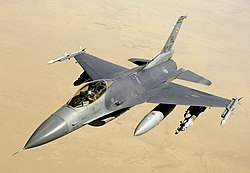


_crop.jpg)


_39W_Pakistan_Air_Force_Konya_AFB_30.6.22_(52233200683).jpg)
.jpg)

.jpg)


.jpg)


.jpg)


 Denmark – Royal Danish Air Force sold 24 F-16s to Argentine Air Force in 2024.[320] 19 F-16s donated to Ukrainian Air Force.[321]
 Italy – Italian Air Force used up to 30 F-16As and 4 F-16Bs of the Block 15 ADF variant, leased from the United States Air Force, from 2003 to 2012.[322]
 Netherlands – Royal Netherlands Air Force originally bought 213 aircraft. Later sold six F-16s to Royal Jordanian Air Force.[323] and 36 F-16s to Chilean Air Force in 2005.[324] Donating the rest of the fleet of 42 aircraft to Ukraine in 2024.[222][needs update]
 Norway – Royal Norwegian Air Force (RNoAF) on 6 January 2022, Norway announced that all F-16s had been retired and replaced with the F-35.[325] The RNoAF sold 32 of their F-16s to Romanian Air Force, with the remaining operational aircraft being donated to Ukraine.[326][327][328]


.jpg)


