Hubbry Logo
System on a chipSystem on a chipMain
Open search
System on a chip
Community hub
System on a chip
logo
8 pages, 0 posts
0 subscribers
Be the first to start a discussion here.
System on a chip
System on a chip
from Wikipedia

An Exynos 4 Quad (4412), on the circuit board of a Samsung Galaxy S III smartphone

A system on a chip (SoC) is an integrated circuit that combines most or all key components of a computer or electronic system onto a single microchip.[1] Typically, an SoC includes a central processing unit (CPU) with memory, input/output, and data storage control functions, along with optional features like a graphics processing unit (GPU), Wi-Fi connectivity, and radio frequency processing. This high level of integration minimizes the need for separate, discrete components, thereby enhancing power efficiency and simplifying device design.

High-performance SoCs are often paired with dedicated memory, such as LPDDR, and flash storage chips, such as eUFS or eMMC, which may be stacked directly on top of the SoC in a package-on-package (PoP) configuration or placed nearby on the motherboard. Some SoCs also operate alongside specialized chips, such as cellular modems.[2]

Fundamentally, SoCs integrate one or more processor cores with critical peripherals. This comprehensive integration is conceptually similar to how a microcontroller is designed, but providing far greater computational power. This unified design delivers lower power consumption and a reduced semiconductor die area compared to traditional multi-chip architectures, though at the cost of reduced modularity and component replaceability.

SoCs are ubiquitous in mobile computing, where compact, energy-efficient designs are critical. They power smartphones, tablets, and smartwatches, and are increasingly important in edge computing, where real-time data processing occurs close to the data source. By driving the trend toward tighter integration, SoCs have reshaped modern hardware design, reshaping the design landscape for modern computing devices.[3][4]

Types

[edit]
Microcontroller-based system on a chip

In general, there are three distinguishable types of SoCs:

Applications

[edit]

SoCs can be applied to any computing task. However, they are typically used in mobile computing such as tablets, smartphones, smartwatches, and netbooks as well as embedded systems and in applications where previously microcontrollers would be used.

Embedded systems

[edit]

Where previously only microcontrollers could be used, SoCs are rising to prominence in the embedded systems market. Tighter system integration offers better reliability and mean time between failure, and SoCs offer more advanced functionality and computing power than microcontrollers.[5] Applications include AI acceleration, embedded machine vision,[6] data collection, telemetry, vector processing and ambient intelligence. Often embedded SoCs target the internet of things, multimedia, networking, telecommunications and edge computing markets. Some examples of SoCs for embedded applications include the STMicroelectronics STM32, the Raspberry Pi Ltd RP2040, and the AMD Zynq 7000.

Mobile computing

[edit]
System on a chip AMD Élan SC450 in Nokia 9110 Communicator

Mobile computing based SoCs always bundle processors, memories, on-chip caches, wireless networking capabilities and often digital camera hardware and firmware. With increasing memory sizes, high end SoCs will often have no memory and flash storage and instead, the memory and flash memory will be placed right next to, or above (package on package), the SoC.[7] Some examples of mobile computing SoCs include:

Personal computers

[edit]

In 1992, Acorn Computers produced the A3010, A3020 and A4000 range of personal computers with the ARM250 SoC. It combined the original Acorn ARM2 processor with a memory controller (MEMC), video controller (VIDC), and I/O controller (IOC). In previous Acorn ARM-powered computers, these were four discrete chips. The ARM7500 chip was their second-generation SoC, based on the ARM700, VIDC20 and IOMD controllers, and was widely licensed in embedded devices such as set-top-boxes, as well as later Acorn personal computers.

Tablet and laptop manufacturers have learned lessons from embedded systems and smartphone markets about reduced power consumption, better performance and reliability from tighter integration of hardware and firmware modules, and LTE and other wireless network communications integrated on chip (integrated network interface controllers).[10]

On modern laptops and mini PCs, the low-power variants of AMD Ryzen and Intel Core processors use SoC design integrating CPU, IGPU, chipset and other processors in a single package. However, such x86 processors still require external memory and storage chips.

Structure

[edit]

An SoC consists of hardware functional units, including microprocessors that run software code, as well as a communications subsystem to connect, control, direct and interface between these functional modules.

Functional components

[edit]

Processor cores

[edit]

An SoC must have at least one processor core, but typically an SoC has more than one core. Processor cores can be a microcontroller, microprocessor (μP),[11] digital signal processor (DSP) or application-specific instruction set processor (ASIP) core.[12] ASIPs have instruction sets that are customized for an application domain and designed to be more efficient than general-purpose instructions for a specific type of workload. Multiprocessor SoCs have more than one processor core by definition. The ARM architecture is a common choice for SoC processor cores because some ARM-architecture cores are soft processors specified as IP cores.[11]

Memory

[edit]

SoCs must have semiconductor memory blocks to perform their computation, as do microcontrollers and other embedded systems. Depending on the application, SoC memory may form a memory hierarchy and cache hierarchy. In the mobile computing market, this is common, but in many low-power embedded microcontrollers, this is not necessary. Memory technologies for SoCs include read-only memory (ROM), random-access memory (RAM), Electrically Erasable Programmable ROM (EEPROM) and flash memory.[11] As in other computer systems, RAM can be subdivided into relatively faster but more expensive static RAM (SRAM) and the slower but cheaper dynamic RAM (DRAM). When an SoC has a cache hierarchy, SRAM will usually be used to implement processor registers and cores' built-in caches whereas DRAM will be used for main memory. "Main memory" may be specific to a single processor (which can be multi-core) when the SoC has multiple processors, in this case it is distributed memory and must be sent via § Intermodule communication on-chip to be accessed by a different processor.[12] For further discussion of multi-processing memory issues, see cache coherence and memory latency.

Interfaces

[edit]

SoCs include external interfaces, typically for communication protocols. These are often based upon industry standards such as USB, Ethernet, USART, SPI, HDMI, I²C, CSI, etc. These interfaces will differ according to the intended application. Wireless networking protocols such as Wi-Fi, Bluetooth, 6LoWPAN and near-field communication may also be supported.

When needed, SoCs include analog interfaces including analog-to-digital and digital-to-analog converters, often for signal processing. These may be able to interface with different types of sensors or actuators, including smart transducers. They may interface with application-specific modules or shields.[nb 1] Or they may be internal to the SoC, such as if an analog sensor is built in to the SoC and its readings must be converted to digital signals for mathematical processing.

Digital signal processors

[edit]

Digital signal processor (DSP) cores are often included on SoCs. They perform signal processing operations in SoCs for sensors, actuators, data collection, data analysis and multimedia processing. DSP cores typically feature very long instruction word (VLIW) and single instruction, multiple data (SIMD) instruction set architectures, and are therefore highly amenable to exploiting instruction-level parallelism through parallel processing and superscalar execution.[12]: 4  SP cores most often feature application-specific instructions, and as such are typically application-specific instruction set processors (ASIP). Such application-specific instructions correspond to dedicated hardware functional units that compute those instructions.

Typical DSP instructions include multiply-accumulate, Fast Fourier transform, fused multiply-add, and convolutions.

Other

[edit]

As with other computer systems, SoCs require timing sources to generate clock signals, control execution of SoC functions and provide time context to signal processing applications of the SoC, if needed. Popular time sources are crystal oscillators and phase-locked loops.

SoC peripherals including counter-timers, real-time timers and power-on reset generators. SoCs also include voltage regulators and power management circuits.

Intermodule communication

[edit]

SoCs comprise many execution units. These units must often send data and instructions back and forth. Because of this, all but the most trivial SoCs require communications subsystems. Originally, as with other microcomputer technologies, data bus architectures were used, but recently designs based on sparse intercommunication networks known as networks-on-chip (NoC) have risen to prominence and are forecast to overtake bus architectures for SoC design in the near future.[13]

Bus-based communication

[edit]

Historically, a shared global computer bus typically connected the different components, also called "blocks" of the SoC.[13] A very common bus for SoC communications is ARM's royalty-free Advanced Microcontroller Bus Architecture (AMBA) standard.

Direct memory access controllers route data directly between external interfaces and SoC memory, bypassing the CPU or control unit, thereby increasing the data throughput of the SoC. This is similar to some device drivers of peripherals on component-based multi-chip module PC architectures.

Wire delay is not scalable due to continued miniaturization, system performance does not scale with the number of cores attached, the SoC's operating frequency must decrease with each additional core attached for power to be sustainable, and long wires consume large amounts of electrical power. These challenges are prohibitive to supporting manycore systems on chip.[13]: xiii 

Network on a chip

[edit]

In the late 2010s, a trend of SoCs implementing communications subsystems in terms of a network-like topology instead of bus-based protocols has emerged. A trend towards more processor cores on SoCs has caused on-chip communication efficiency to become one of the key factors in determining the overall system performance and cost.[13]: xiii  This has led to the emergence of interconnection networks with router-based packet switching known as "networks on chip" (NoCs) to overcome the bottlenecks of bus-based networks.[13]: xiii 

Networks-on-chip have advantages including destination- and application-specific routing, greater power efficiency and reduced possibility of bus contention. Network-on-chip architectures take inspiration from communication protocols like TCP and the Internet protocol suite for on-chip communication,[13] although they typically have fewer network layers. Optimal network-on-chip network architectures are an ongoing area of much research interest. NoC architectures range from traditional distributed computing network topologies such as torus, hypercube, meshes and tree networks to genetic algorithm scheduling to randomized algorithms such as random walks with branching and randomized time to live (TTL).

Many SoC researchers consider NoC architectures to be the future of SoC design because they have been shown to efficiently meet power and throughput needs of SoC designs. Current NoC architectures are two-dimensional. 2D IC design has limited floorplanning choices as the number of cores in SoCs increase, so as three-dimensional integrated circuits (3DICs) emerge, SoC designers are looking towards building three-dimensional on-chip networks known as 3DNoCs.[13]

Design flow

[edit]
SoC design flow

A system on a chip consists of both the hardware, described in § Structure, and the software controlling the microcontroller, microprocessor or digital signal processor cores, peripherals and interfaces. The design flow for an SoC aims to develop this hardware and software at the same time, also known as architectural co-design. The design flow must also take into account optimizations (§ Optimization goals) and constraints.

Most SoCs are developed from pre-qualified hardware component IP core specifications for the hardware elements and execution units, collectively "blocks", described above, together with software device drivers that may control their operation. Of particular importance are the protocol stacks that drive industry-standard interfaces like USB. The hardware blocks are put together using computer-aided design tools, specifically electronic design automation tools; the software modules are integrated using a software integrated development environment.

SoCs components are also often designed in high-level programming languages such as C++, MATLAB or SystemC and converted to RTL designs through high-level synthesis (HLS) tools such as C to HDL or flow to HDL.[14] HLS products called "algorithmic synthesis" allow designers to use C++ to model and synthesize system, circuit, software and verification levels all in one high level language commonly known to computer engineers in a manner independent of time scales, which are typically specified in HDL.[15] Other components can remain software and be compiled and embedded onto soft-core processors included in the SoC as modules in HDL as IP cores.

Once the architecture of the SoC has been defined, any new hardware elements are written in an abstract hardware description language termed register transfer level (RTL) which defines the circuit behavior, or synthesized into RTL from a high level language through high-level synthesis. These elements are connected together in a hardware description language to create the full SoC design. The logic specified to connect these components and convert between possibly different interfaces provided by different vendors is called glue logic.

Design verification

[edit]

Chips are verified for validation correctness before being sent to a semiconductor foundry. This process is called functional verification and it accounts for a significant portion of the time and energy expended in the chip design life cycle, often quoted as 70%.[16][17] With the growing complexity of chips, hardware verification languages like SystemVerilog, SystemC, e, and OpenVera are being used. Bugs found in the verification stage are reported to the designer.

Traditionally, engineers have employed simulation acceleration, emulation or prototyping on reprogrammable hardware to verify and debug hardware and software for SoC designs prior to the finalization of the design, known as tape-out. Field-programmable gate arrays (FPGAs) are favored for prototyping SoCs because FPGA prototypes are reprogrammable, allow debugging and are more flexible than application-specific integrated circuits (ASICs).[18][19]

With high capacity and fast compilation time, simulation acceleration and emulation are powerful technologies that provide wide visibility into systems. Both technologies, however, operate slowly, on the order of MHz, which may be significantly slower – up to 100 times slower – than the SoC's operating frequency. Acceleration and emulation boxes are also very large and expensive at over US$1 million.[citation needed]

FPGA prototypes, in contrast, use FPGAs directly to enable engineers to validate and test at, or close to, a system's full operating frequency with real-world stimuli. Tools such as Certus[20] are used to insert probes in the FPGA RTL that make signals available for observation. This is used to debug hardware, firmware and software interactions across multiple FPGAs with capabilities similar to a logic analyzer.

In parallel, the hardware elements are grouped and passed through a process of logic synthesis, during which performance constraints, such as operational frequency and expected signal delays, are applied. This generates an output known as a netlist describing the design as a physical circuit and its interconnections. These netlists are combined with the glue logic connecting the components to produce the schematic description of the SoC as a circuit which can be printed onto a chip. This process is known as place and route and precedes tape-out in the event that the SoCs are produced as application-specific integrated circuits (ASIC).

Optimization goals

[edit]

SoCs must optimize power use, area on die, communication, positioning for locality between modular units and other factors. Optimization is necessarily a design goal of SoCs. If optimization was not necessary, the engineers would use a multi-chip module architecture without accounting for the area use, power consumption or performance of the system to the same extent.

Common optimization targets for SoC designs follow, with explanations of each. In general, optimizing any of these quantities may be a hard combinatorial optimization problem, and can indeed be NP-hard fairly easily. Therefore, sophisticated optimization algorithms are often required and it may be practical to use approximation algorithms or heuristics in some cases. Additionally, most SoC designs contain multiple variables to optimize simultaneously, so Pareto efficient solutions are sought after in SoC design. Oftentimes the goals of optimizing some of these quantities are directly at odds, further adding complexity to design optimization of SoCs and introducing trade-offs in system design.

For broader coverage of trade-offs and requirements analysis, see requirements engineering.

Targets

[edit]

Power consumption

[edit]

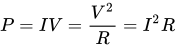
SoCs are optimized to minimize the electrical power used to perform the SoC's functions. Most SoCs must use low power. SoC systems often require long battery life (such as smartphones), can potentially spend months or years without a power source while needing to maintain autonomous function, and often are limited in power use by a high number of embedded SoCs being networked together in an area. Additionally, energy costs can be high and conserving energy will reduce the total cost of ownership of the SoC. Finally, waste heat from high energy consumption can damage other circuit components if too much heat is dissipated, giving another pragmatic reason to conserve energy. The amount of energy used in a circuit is the integral of power consumed with respect to time, and the average rate of power consumption is the product of current by voltage. Equivalently, by Ohm's law, power is current squared times resistance or voltage squared divided by resistance:

SoCs are frequently embedded in portable devices such as smartphones, GPS navigation devices, digital watches (including smartwatches) and netbooks. Customers want long battery lives for mobile computing devices, another reason that power consumption must be minimized in SoCs. Multimedia applications are often executed on these devices, including video games, video streaming, image processing; all of which have grown in computational complexity in recent years with user demands and expectations for higher-quality multimedia. Computation is more demanding as expectations move towards 3D video at high resolution with multiple standards, so SoCs performing multimedia tasks must be computationally capable platform while being low power to run off a standard mobile battery.[12]: 3 
Performance per watt

[edit]

SoCs are optimized to maximize power efficiency in performance per watt: maximize the performance of the SoC given a budget of power usage. Many applications such as edge computing, distributed processing and ambient intelligence require a certain level of computational performance, but power is limited in most SoC environments.

Waste heat

[edit]

SoC designs are optimized to minimize waste heat output on the chip. As with other integrated circuits, heat generated due to high power density are the bottleneck to further miniaturization of components.[21]: 1  The power densities of high speed integrated circuits, particularly microprocessors and including SoCs, have become highly uneven. Too much waste heat can damage circuits and erode reliability of the circuit over time. High temperatures and thermal stress negatively impact reliability, stress migration, decreased mean time between failures, electromigration, wire bonding, metastability and other performance degradation of the SoC over time.[21]: 2–9 

In particular, most SoCs are in a small physical area or volume and therefore the effects of waste heat are compounded because there is little room for it to diffuse out of the system. Because of high transistor counts on modern devices, oftentimes a layout of sufficient throughput and high transistor density is physically realizable from fabrication processes but would result in unacceptably high amounts of heat in the circuit's volume.[21]: 1 

These thermal effects force SoC and other chip designers to apply conservative design margins, creating less performant devices to mitigate the risk of catastrophic failure. Due to increased transistor densities as length scales get smaller, each process generation produces more heat output than the last. Compounding this problem, SoC architectures are usually heterogeneous, creating spatially inhomogeneous heat fluxes, which cannot be effectively mitigated by uniform passive cooling.[21]: 1 

Throughput

[edit]

SoCs are optimized to maximize computational and communications throughput.

Latency

[edit]

SoCs are optimized to minimize latency for some or all of their functions. This can be accomplished by laying out elements with proper proximity and locality to each-other to minimize the interconnection delays and maximize the speed at which data is communicated between modules, functional units and memories. In general, optimizing to minimize latency is an NP-complete problem equivalent to the Boolean satisfiability problem.

For tasks running on processor cores, latency and throughput can be improved with task scheduling. Some tasks run in application-specific hardware units, however, and even task scheduling may not be sufficient to optimize all software-based tasks to meet timing and throughput constraints.

Methodologies

[edit]

Systems on chip are modeled with standard hardware verification and validation techniques, but additional techniques are used to model and optimize SoC design alternatives to make the system optimal with respect to multiple-criteria decision analysis on the above optimization targets.

Task scheduling

[edit]

Task scheduling is an important activity in any computer system with multiple processes or threads sharing a single processor core. It is important to reduce § Latency and increase § Throughput for embedded software running on an SoC's § Processor cores. Not every important computing activity in a SoC is performed in software running on on-chip processors, but scheduling can drastically improve performance of software-based tasks and other tasks involving shared resources.

Software running on SoCs often schedules tasks according to network scheduling and randomized scheduling algorithms.

Pipelining

[edit]

Hardware and software tasks are often pipelined in processor design. Pipelining is an important principle for speedup in computer architecture. They are frequently used in CPUs (for example, the classic RISC pipeline) and GPUs (graphics pipeline), but are also applied to application-specific tasks such as digital signal processing and multimedia manipulations in the context of SoCs.[12]

Probabilistic modeling

[edit]

SoCs are often analyzed though probabilistic models, queueing networks, and Markov chains. For instance, Little's law allows SoC states and NoC buffers to be modeled as arrival processes and analyzed through Poisson random variables and Poisson processes.

Markov chains

[edit]

SoCs are often modeled with Markov chains, both discrete time and continuous time variants. Markov chain modeling allows asymptotic analysis of the SoC's steady state distribution of power, heat, latency and other factors to allow design decisions to be optimized for the common case.

Fabrication

[edit]

SoC chips are typically fabricated using metal–oxide–semiconductor (MOS) technology.[22] The netlists described above are used as the basis for the physical design (place and route) flow to convert the designers' intent into the design of the SoC. Throughout this conversion process, the design is analyzed with static timing modeling, simulation and other tools to ensure that it meets the specified operational parameters such as frequency, power consumption and dissipation, functional integrity (as described in the register transfer level code) and electrical integrity.

When all known bugs have been rectified and these have been re-verified and all physical design checks are done, the physical design files describing each layer of the chip are sent to the foundry's mask shop where a full set of glass lithographic masks will be etched. These are sent to a wafer fabrication plant to create the SoC dice before packaging and testing.

SoCs can be fabricated by several technologies, including:

ASICs consume less power and are faster than FPGAs but cannot be reprogrammed and are expensive to manufacture. FPGA designs are more suitable for lower volume designs, but after enough units of production ASICs reduce the total cost of ownership.[23]

SoC designs consume less power and have a lower cost and higher reliability than the multi-chip systems that they replace. With fewer packages in the system, assembly costs are reduced as well.

However, like most very-large-scale integration (VLSI) designs, the total cost[clarification needed] is higher for one large chip than for the same functionality distributed over several smaller chips, because of lower yields[clarification needed] and higher non-recurring engineering costs.

When it is not feasible to construct an SoC for a particular application, an alternative is a system in package (SiP) comprising a number of chips in a single package. When produced in large volumes, SoC is more cost-effective than SiP because its packaging is simpler.[24] Another reason SiP may be preferred is waste heat may be too high in a SoC for a given purpose because functional components are too close together, and in an SiP heat will dissipate better from different functional modules since they are physically further apart.

Examples

[edit]

Some examples of systems on a chip are:

Benchmarks

[edit]

SoC research and development often compares many options. Benchmarks, such as COSMIC,[25] are developed to help such evaluations.

See also

[edit]

Notes

[edit]

References

[edit]

Further reading

[edit]
[edit]
Revisions and contributorsEdit on WikipediaRead on Wikipedia
from Grokipedia
A system on a chip (SoC) is an that incorporates all or most components of an electronic system—such as one or more processors, , peripherals, and interconnects—onto a single die to form a complete functional unit. This integration enables compact, efficient designs by combining general-purpose with specialized hardware accelerators, such as digital signal processors (DSPs) or graphics processing units (GPUs), all sharing on-chip buses and resources. The evolution of SoCs traces back to the early 1970s with the advent of single-chip microprocessors, exemplified by the , a 4-bit CPU with 2,300 transistors that marked the shift from multi-chip systems to higher integration levels. By the late and , rapid advances in metal-oxide-semiconductor ( and very-large-scale integration (VLSI) enabled the inclusion of multiple cores, peripherals, and application-specific hardware, transforming microcontrollers into full SoCs for embedded applications. Key developments included the standardization of (IP) cores for reuse and the adoption of on-chip networks for communication, addressing the complexities of heterogeneous integration in designs exceeding millions of transistors. SoCs offer significant advantages, including reduced physical size, lower power consumption, and decreased manufacturing costs compared to multi-chip modules, while achieving higher through optimized hardware-software partitioning. These benefits stem from the ability to tailor dedicated accelerators for tasks like or AI directly on the chip, minimizing latency and energy use in data-intensive operations. In design, SoCs leverage scalable architectures like processors and field-programmable gate arrays (FPGAs) for prototyping, facilitating rapid iteration in complex systems. Contemporary SoCs power a wide array of applications, from consumer devices like smartphones and wearables to industrial sectors including controls and . In , they integrate CPU, GPU, and functionalities to enable seamless and connectivity features. Emerging uses extend to (IoT) sensors and multiprocessor systems-on-chip (MPSoCs) for parallel processing in edge AI, where multiple heterogeneous cores handle diverse workloads efficiently.

Definition and Fundamentals

Core Principles

A System on a Chip (SoC) is an that integrates all essential components of an electronic system—such as a (CPU), , (I/O) interfaces, and peripherals—onto a single die, enabling the chip to perform complete system functions independently. This monolithic integration contrasts with traditional multi-chip systems, where discrete components are connected via external wiring or circuit boards, often leading to higher latency and complexity. Key characteristics of SoCs include miniaturization, which allows for compact device designs by consolidating multiple functions into one chip, reducing overall system size compared to assemblies of separate components. They also achieve reduced power consumption through shorter on-chip signal paths that minimize energy loss from inter-chip communication. Additionally, SoCs offer lower cost in high-volume production due to in fabrication, despite higher initial non-recurring engineering expenses, and improved reliability from fewer external connections that could fail or introduce noise. In a basic SoC block diagram, the CPU serves as the central processor, interconnected via on-chip buses to random-access memory (RAM) for data storage, read-only memory (ROM) for firmware, timers for scheduling, and peripherals like I/O interfaces for external communication; these elements interact as a unified system, with the bus enabling efficient data flow and control signals to coordinate operations without off-chip dependencies. The emergence of SoCs in the late 20th century was driven by Moore's Law, which predicted the doubling of transistors on integrated circuits approximately every two years, allowing for the dense packing of complex subsystems into small form factors. Unlike a System-in-Package (SiP), which stacks multiple dies or components within a single package for integration, an SoC relies on monolithic fabrication where all elements are formed on one die, providing superior performance and lower latency but requiring more advanced for verification.

Evolution from Integrated Circuits

The evolution of integrated circuits laid the foundational pathway for system-on-a-chip (SoC) designs by progressively increasing the scale of integration on a single die. In the late 1950s and early 1960s, small-scale integration (SSI) limited chips to fewer than 10 logic gates, equivalent to roughly 100 , primarily for basic functions like amplifiers and switches. Medium-scale integration (MSI), emerging in the mid-1960s, expanded this to 10 to 100 gates, enabling more complex logic such as multiplexers and counters, while large-scale integration (LSI) in the 1970s achieved 100 to 10,000 gates, supporting microprocessors and early devices. This progression culminated in very-large-scale integration (VLSI) during the late 1970s and 1980s, where counts surpassed 100,000—often reaching millions—allowing the consolidation of entire subsystems, including computational logic, storage, and interfaces, onto one chip and paving the way for SoCs. Critical enablers in the accelerated this scaling toward SoC feasibility. Advances in , such as improved lens designs with higher numerical apertures (up to 0.5) and enhanced materials, reduced minimum feature sizes from several microns to below 1 micron, enabling denser packing without prohibitive manufacturing defects. The dominance of complementary metal-oxide-semiconductor () technology, which overtook NMOS by the mid-1980s, provided essential benefits like static power savings and scalability for high-density circuits, making it the standard for VLSI-based systems. Concurrently, (EDA) tools, including early logic synthesizers and automated layout systems, emerged to manage the growing design complexity, allowing hierarchical design flows that integrated analog and digital blocks efficiently. The shift from multi-chip modules (MCMs) to SoCs marked a pivotal reduction in system-level overheads. MCMs, which packaged multiple discrete chips on a shared substrate, incurred significant interconnect parasitics—such as and —that degraded and increased latency. SoCs addressed this by embedding all necessary components monolithically, significantly minimizing board space and through on-die wiring. MCM configurations often demanded numerous external pins for inter-chip signaling, whereas early SoC prototypes consolidated equivalent functionality with reduced pin counts, simplifying packaging and lowering I/O power dissipation. In the , custom application-specific integrated circuits () served as direct precursors to SoCs, demonstrating single-chip viability for tailored applications. These employed gate array or methodologies to merge custom logic with reusable macros, achieving integration levels that foreshadowed full SoC architectures without relying on off-chip components for core operations. This approach validated the economic and performance advantages of monolithic integration, setting the stage for broader SoC adoption.

Historical Development

Origins in the 1970s

The origins of system-on-a-chip (SoC) designs in the emerged from efforts to integrate multiple functions onto a single die, driven primarily by the need for compact, cost-effective in consumer devices such as calculators, digital watches, and early embedded control systems. These early developments addressed the limitations of discrete components and multi-chip systems, which were bulky and expensive for portable applications. Key challenges included constrained budgets, typically ranging from 2,000 to 10,000 per chip, due to the nascent state of large-scale integration (LSI) technology and fabrication processes. Pioneering SoC-like designs began with Intel's 4004 in 1971, which served as a foundational precursor by integrating a 4-bit (CPU) onto one chip for Busicom's electronic calculators, though it still required external memory and (I/O) support. This evolved into more complete integrations with Intel's 8048 in 1976, which incorporated an 8-bit CPU, 64 bytes of (RAM), 1 of (ROM), a /counter, and 27 I/O lines on a single die, enabling standalone operation for embedded tasks. Similarly, Texas Instruments introduced the TMS1000 in 1974, recognized as the first commercially available general-purpose , featuring a 4-bit CPU, on-chip ROM for program storage, 16 to 256 bits of RAM, and integrated I/O tailored for calculator applications like the TI SR-16 model. These chips marked a shift toward self-contained systems by embedding essential peripherals directly on the die. A critical innovation in these early SoCs was the inclusion of on-chip ROM to store , allowing pre-programmed instructions without external , which significantly reduced component count and board space—for instance, the TMS1000's ROM held algorithms directly. Basic peripherals, such as timers and I/O ports, were also integrated to handle interfacing with displays and keyboards, minimizing reliance on off-chip circuitry and lowering power consumption for battery-operated devices. Industry leaders like focused on programmable solutions for broader embedded controls, while emphasized custom chips to dominate the portable computing market. contributed through custom large-scale integration (LSI) chips for consumer devices, including specialized designs for Victor Comptometer's calculators, which integrated logic, , and control functions to enable early handheld models. These efforts collectively laid the groundwork for SoC amid growing demand for affordable, reliable in the decade.

Milestones from 1990s to Present

The marked a significant boom in System on a Chip (SoC) development, driven by the licensing of the architecture in 1990, which enabled widespread customization and adoption of low-power, scalable processor designs across various applications. 's , established through Advanced RISC Machines Ltd., allowed companies to license rather than developing cores from scratch, fostering innovation in embedded and mobile systems. Concurrently, the integration of Digital Signal Processors (DSPs) into SoCs emerged as a key advancement for multimedia processing, particularly in early digital cellphones and , where DSPs handled , audio, and image signal manipulation efficiently. This era saw SoCs transition from single-purpose chips to more versatile platforms, with DSP cores enabling real-time features like digital filters and compression in devices such as feature phones. Entering the 2000s, the mobile era propelled SoC evolution, exemplified by Qualcomm's Snapdragon platform launched in , which integrated CPU, GPU, and functionalities into a single to support multimedia-rich smartphones. The Snapdragon's 1 GHz core and multi-mode capabilities broke performance barriers, powering early devices and setting the stage for integrated . This period also witnessed the rise of fabless design models, where companies focused on and IP integration while outsourcing fabrication to foundries like , reducing costs and accelerating time-to-market amid the dot-com recovery and mobile boom. Fabless approaches gained prominence in SoCs, enabling rapid scaling for and applications. In the 2010s and into the , SoCs advanced toward multi-core heterogeneous architectures, combining general-purpose CPUs, specialized GPUs, and dedicated accelerators for diverse workloads. A pivotal milestone was the introduction of AI accelerators, such as Apple's Neural Engine in the A11 Bionic SoC of , which featured two dedicated cores capable of 600 billion operations per second to handle tasks like facial recognition and . By , the adoption of 5nm process nodes by foundries like enabled denser integration, with volume production supporting high-performance mobile SoCs that improved logic density by approximately 1.8 times over prior generations while enhancing speed and power efficiency. Recent trends as of 2025 focus on toward integrating emerging technologies, such as modems in future SoCs, to achieve terabit-per-second speeds and near-zero latency for AI-driven networks. Quantum-resistant security features, such as algorithms, are being embedded in SoCs to protect against threats in future communication systems. Additionally, chiplet-based SoCs have gained traction for , allowing heterogeneous integration of smaller dies to improve yield, scalability, and customization in complex designs. These advancements have dramatically increased transistor counts in SoCs, from tens of millions in the to over 50 billion by the 2020s, adhering closely to with doublings roughly every two years. This scaling has enabled pocket-sized devices with immense computational power, transforming into sophisticated platforms for AI, connectivity, and multimedia.

Types and Classifications

Microcontroller SoCs

Microcontroller SoCs integrate a core—typically 8-bit, 16-bit, or 32-bit—with on-chip memory such as flash or , analog-to-digital converters (ADCs), timers, and other peripherals to enable standalone operation in embedded systems. These designs consolidate the essential components of a (MCU) onto a single chip, providing a compact solution for inputs, executing control logic, and managing outputs without requiring external components for basic functionality. Unlike more complex SoCs, microcontroller variants prioritize simplicity and efficiency for resource-constrained environments. Key characteristics of microcontroller SoCs include low clock speeds, generally ranging from 1 MHz to 100 MHz, which balance performance with energy efficiency, and a focus on integrated peripherals for interfacing, such as universal asynchronous receiver-transmitters (UARTs), serial peripheral interfaces (SPIs), and inter-integrated circuit (I2C) buses. Representative examples are the family from , featuring 32-bit cores with up to 80 MHz operation in low-power models, integrated up to 1 MB, multiple ADCs, and timers for precise timing control. Similarly, Microchip Technology's PIC family offers 8-bit and 16-bit options with clock speeds up to 64 MHz, on-chip EEPROM, 10-bit ADCs, and communication peripherals like UART and SPI, making them suitable for cost-sensitive designs. These features support real-time responsiveness in applications like monitoring and . Design trade-offs in microcontroller SoCs emphasize cost-effectiveness for high-volume production through reduced die size and fewer transistors, achieving per-unit costs often below $1 in bulk, while limiting scalability for demanding tasks like parallel processing or high-throughput data handling due to constrained core architectures and . This approach favors reliability in deterministic environments over raw computational power, with power consumption optimized via techniques like dynamic voltage scaling. In practice, these SoCs excel in simple systems relying on bare-metal for direct hardware control without an operating system, maintaining power budgets under 1 W—often in the milliwatt range during active operation—to enable prolonged battery life in real-time, low-power scenarios such as wireless sensors and portable devices.

Application-Specific SoCs

Application-specific systems on a chip (SoCs), often implemented as application-specific integrated circuits () or application-specific standard products (ASSPs), are integrated circuits engineered for targeted domains such as processing, networking, or communications, featuring specialized functional blocks optimized for those uses. For instance, these SoCs may incorporate graphics processing units (GPUs) tailored for high-fidelity rendering in or modems designed for efficient data transmission in mobile devices. This domain-specific focus distinguishes them from general-purpose SoCs by prioritizing performance and efficiency for predefined workloads rather than broad versatility. A hallmark of application-specific SoCs is their heterogeneous , which integrates diverse processing elements to handle complex tasks synergistically. Common configurations include a (CPU) such as an ARM core paired with a dedicated GPU like the Mali series for parallel graphics computations, enabling seamless handling of visual effects in devices like smartphones. Additionally, these SoCs often embed hardware accelerators for resource-intensive operations, such as video encoding and decoding pipelines that support high-resolution formats, reducing latency and computational overhead in streaming applications. This multi-core setup allows for partitioning, where general-purpose cores manage while specialized units accelerate domain-specific computations. The customization of application-specific SoCs begins with the licensing of reusable (IP) cores from third-party providers, which provide verified building blocks like processor architectures or interface controllers, accelerating development timelines. Designers then employ (RTL) synthesis to create bespoke logic tailored to application demands, such as optimizing chains for 4K video transcoding or neural network inference in edge AI devices. This process involves iterative simulation and refinement to ensure compatibility and performance, often leveraging tools for hardware description languages like or . Compared to general-purpose alternatives, application-specific SoCs deliver significant advantages in resource utilization, achieving reductions in power consumption through tight integration and elimination of unnecessary circuitry, which is critical for battery-constrained environments like wearables or IoT sensors. They also minimize die area by focusing solely on essential components, lowering costs for high-volume production while enhancing via optimized interconnects. However, this specialization trades off reprogrammability, making them less adaptable to evolving requirements than field-programmable gate arrays (FPGAs). Overall, these benefits make application-specific SoCs ideal for markets demanding peak efficiency in fixed-function scenarios.

Internal Architecture

Core Components

A system on a chip (SoC) integrates multiple processor cores as its computational backbone, typically employing reduced instruction set computing (RISC) architectures such as for their power efficiency and scalability in embedded and mobile applications. Complex instruction set computing (CISC) architectures like x86 are utilized in certain high-performance SoCs, exemplified by Intel's Atom processors, which combine x86 cores with integrated peripherals for desktop and industrial uses. Multi-core configurations, often featuring 2 to 8 homogeneous or heterogeneous cores, enable parallel task execution to boost throughput while sharing resources like caches and interconnects. These cores operate across distinct clock domains, allowing independent —such as running high-performance cores at 2-3 GHz and efficiency cores at lower rates—to balance speed and energy use without global synchronization. The in an SoC optimizes data access through layered storage, starting with on-chip (SRAM) caches at L1 and L2 levels for low-latency retrieval of frequently used instructions and data, typically ranging from 32 KB to 2 MB per core. Embedded dynamic random-access memory (DRAM) serves as higher-capacity on-chip storage in some designs, offering densities up to several gigabits for buffering, though it consumes more power than SRAM due to refresh requirements. Non-volatile , integrated as embedded NOR or NAND, provides persistent storage for and configuration data, with capacities from 1 MB to 128 MB in modern SoCs. In multi-core setups, protocols such as the Modified-Exclusive-Shared-Invalid (MESI) ensure data consistency across caches by managing shared and private states through snooping or directory-based mechanisms. External interfaces facilitate connectivity beyond the chip, with Universal Serial Bus (USB) supporting device attachment and data transfer at speeds up to 480 Mbps in USB 2.0 implementations common in consumer SoCs. Express (PCIe) enables high-bandwidth links to accelerators and storage, often as Gen 3 or 4 lanes providing up to 16 GT/s per lane for expansion in server and automotive applications. Ethernet interfaces, typically 1 Gbps or 10 Gbps MAC/PHY blocks, handle networked communication, integrating with on-chip controllers for real-time data exchange in IoT and networking devices. Peripherals extend SoC functionality, including digital signal processors (DSPs) optimized for real-time signal processing tasks like audio filtering and image enhancement, often based on extensions in ARM Cortex-M cores with SIMD instructions. Graphics processing units (GPUs), such as the ARM Mali series, accelerate rendering and compute workloads with up to 1 TFLOPS performance in mid-range configurations, supporting OpenGL ES and Vulkan APIs. Neural processing units (NPUs) are increasingly integrated for AI and machine learning tasks, providing dedicated hardware for tensor operations and inference with low power. Security modules like Trusted Platform Modules (TPMs) embed cryptographic hardware for secure key generation, storage, and attestation, complying with standards such as TPM 2.0 to protect against tampering in trusted execution environments. Integrating these components poses challenges in die area allocation, where memory often occupies 40-60% of the area and logic 20-40%, impacting yield and , as larger dies exceeding 300 mm² generally increase defect risks. Power domains segment the SoC into isolated voltage islands, enabling selective shutdown of peripherals or cores to reduce leakage current by up to 50% in idle states, though this requires careful isolation to prevent cross-domain interference.

On-Chip Interconnects

On-chip interconnects in system-on-a-chip (SoC) designs facilitate high-speed data transfer between integrated components such as processors, , and peripherals, ensuring efficient communication in increasingly complex architectures. These interconnects have evolved to address the limitations of wire delays and as counts exceed billions, transitioning from simple shared buses to sophisticated networks that support concurrent transactions and predictable performance. Early SoC designs predominantly relied on bus-based interconnects, where a shared medium connects multiple masters and slaves through a centralized arbitration mechanism. The (AMBA), developed by , exemplifies this approach with protocols like the Advanced High-performance Bus (AHB) for high-throughput data transfers and the Advanced Peripheral Bus (APB) for low-power peripheral access. AHB supports burst transfers up to 1 GB/s in 32-bit configurations and employs a centralized arbiter with schemes such as round-robin to resolve contention, preventing bus monopolization by any single master. In shared bus architectures, all components access a common wire set, which simplifies design but introduces bottlenecks as the number of connected blocks increases beyond a few dozen. As SoC complexity grew in the late 1990s and early 2000s, bus-based systems struggled with scalability, leading to the adoption of Network-on-Chip (NoC) paradigms that treat on-chip communication as a packet-switched network akin to off-chip networks. NoC architectures decouple from communication, using distributed routers to route packets between (IP) blocks via dedicated links, enabling higher concurrency and modularity in multi-billion designs. This evolution marked a shift from single-bus topologies in 1970s-1980s integrated circuits to hierarchical NoCs in modern SoCs, where buses handle local peripherals while NoCs manage global traffic. NoC implementations typically employ 2D topologies like or to balance physical layout with communication efficiency; in a , routers form a grid connected by bidirectional , providing short paths for nearby nodes but longer routes across the chip. Routers in NoCs use or virtual-channel to forward packets, with virtual channels mitigating and improving throughput. topologies enhance this by wrapping edges, reducing average hop counts by up to 20% in large grids compared to , though at the cost of added wiring complexity. These designs latency—often 10-20 cycles per hop—for bandwidth, achieving aggregate throughputs of 100-500 GB/s in contemporary SoCs, far surpassing bus limits of 10-50 GB/s. Power overhead in NoCs averages 0.5-2 pJ/bit for , higher than buses' 0.1-0.5 pJ/bit but justified by in power-constrained environments. Advanced NoC features incorporate (QoS) mechanisms to prioritize traffic, such as priority-based in routers that guarantees bandwidth for real-time tasks like . Dynamic reconfiguration allows runtime adaptation of paths or virtual channels to varying workloads, reducing latency by 15-30% under bursty traffic while maintaining energy efficiency through techniques like adaptive voltage scaling on links. These capabilities ensure reliable interconnect performance in heterogeneous SoCs, connecting cores to with minimal interference.

Design Methodology

High-Level Design Phases

The high-level design phases of a System on a Chip (SoC) establish the foundational framework by translating into a synthesizable hardware description, ensuring alignment with performance, power, and functional goals before proceeding to detailed implementation. These phases typically encompass requirements gathering, definition, and (RTL) design, forming an iterative process that integrates hardware and software considerations early to mitigate risks in complex integrations. Emerging methodologies increasingly incorporate (AI) tools for automated partitioning, optimization, and exploration of design trade-offs, enhancing efficiency in complex SoCs. Requirements gathering initiates the process by capturing comprehensive functional specifications, performance targets such as clock speeds and throughput, and power budgets to constrain the overall design envelope. This phase involves stakeholder input to define the SoC's intended applications, including interfaces for peripherals like USB or , and non-functional constraints like area and latency. Modeling languages such as (UML) or (SysML) are employed to create visual representations of system behavior, facilitating communication among multidisciplinary teams and enabling early validation of requirements against use cases. For instance, SysML diagrams can model structural hierarchies and behavioral flows, helping to identify potential bottlenecks in data processing or memory access. Architecture definition follows, focusing on partitioning the system into hardware and software components to optimize and . This involves selecting (IP) cores—such as processors, memory controllers, or accelerators—categorized as hard (pre-fabricated layouts), soft (synthesizable RTL), or firm (partially parameterized)—to reuse proven blocks and reduce development time. High-level floorplanning sketches the spatial arrangement of major blocks to anticipate interconnect demands and thermal profiles, while hardware-software co-partitioning decisions determine which functions are implemented in dedicated hardware for efficiency versus software for flexibility. Tools like or models (e.g., Synchronous Data Flow) support exploration of architectural trade-offs, ensuring the design supports embedded operating systems through compatible bus protocols and interrupt handling. RTL design translates the architectural blueprint into a detailed hardware description using languages like or , which specify register operations, , and data paths at the cycle-accurate level. Designers implement modular blocks for components such as central processing units (CPUs) or digital signal processors (DSPs), incorporating finite state machines and interfaces to ensure seamless integration. (HLS) tools then convert behavioral descriptions—often from C/C++ or —into RTL code, accelerating development for algorithm-intensive blocks. (EDA) suites from vendors like (e.g., Design Compiler for synthesis) or (e.g., for RTL optimization) enable and early analysis of timing and functionality. Throughout these phases, iterative refinement through hardware-software co-design ensures concurrent development, where software models (e.g., in C++) are simulated alongside hardware prototypes to validate embedded OS compatibility and refine interfaces. This co-design approach, supported by in , allows for and adjustment of power-performance trade-offs. By iterating between specification, architecture, and RTL, designers achieve a balanced SoC that meets stringent targets before advancing to lower-level implementation.

Verification and Testing

Verification and testing of system-on-a-chip (SoC) designs are critical to ensure functional correctness, reliability, and adherence to specifications following the (RTL) design phase. These processes involve a combination of , , emulation, and coverage-driven approaches to detect defects early, reducing costly post-silicon fixes. In complex SoCs, verification can consume up to 70% of the design effort due to the integration of heterogeneous components like processors, memories, and peripherals. Modern verification also leverages AI-powered techniques for test generation, bug detection, and coverage closure to handle increasing design complexity. Simulation techniques form the backbone of SoC verification, enabling the execution of test scenarios on software models of the hardware. Cycle-accurate simulation provides bit- and cycle-level precision to mimic real-time behavior, often using hardware description languages like . The Universal Verification Methodology (UVM), standardized by Accellera as IEEE 1800.2, is widely adopted for building reusable testbenches; it employs layered components such as drivers, monitors, and scoreboards to generate stimuli, check responses, and model reference behavior for protocols like AXI or AHB. UVM facilitates constrained-random testing, where inputs are randomized within specification bounds to achieve broad coverage, and supports hybrid environments integrating IP blocks with models. Formal verification complements simulation by exhaustively proving design properties without relying on test vectors, using mathematical algorithms to explore all possible states. Equivalence checking verifies that the RTL implementation matches a golden , such as a behavioral , by mapping logic cones and resolving optimizations like retiming. detects issues like deadlocks or race conditions in multi-core interactions by traversing state spaces and checking against assertions. These methods are particularly effective for control logic in SoCs, where simulation might miss rare corner cases, though state explosion limits their scalability to smaller blocks. Emulation and prototyping accelerate system-level testing by mapping the SoC design onto hardware platforms, bridging the speed gap between and . FPGA-based emulation reconfigures field-programmable gate arrays to replicate the SoC's functionality at near-real-time speeds, allowing integration with software stacks and peripherals for end-to-end validation. For instance, frameworks like FERIVer use FPGAs to emulate cores, achieving up to 150x speedup over while supporting debug probes for waveform capture. This approach is essential for validating interactions in large SoCs, though it requires design partitioning to fit FPGA resources. Coverage metrics quantify verification completeness, guiding test development and sign-off. Code coverage measures exercised lines, branches, and toggles in the RTL to identify untested paths, while functional coverage tracks specification-derived points like protocol states or data ranges using covergroups. Assertion coverage ensures that temporal properties, written as concurrent assertions, are verified across scenarios. techniques introduce errors, such as bit flips or delays, to assess robustness and measure metrics like single-point fault coverage for safety-critical SoCs. Achieving 90-100% coverage in these categories is a common industry threshold, though gaps often require targeted tests. Verification of multi-core SoCs presents significant challenges due to concurrency, non-determinism, and scale, often involving billions of gates. Issues like across heterogeneous cores and limited observability complicate debug, necessitating advanced tools for trace analysis and breakpoint management. Standards like (IEEE 1149.1) enable on-chip debug through scan chains and , providing visibility into internal states via external probes, though bandwidth limitations hinder real-time tracing in high-speed designs. Emerging solutions integrate emulation with software debuggers to address these, ensuring reliable multi-core operation.

Optimization Strategies

Power and Thermal Management

Power management in system-on-a-chip (SoC) designs focuses on minimizing both dynamic and static power consumption to extend battery life in mobile and embedded applications while maintaining performance. Dynamic power, which arises from switching activity in , is governed by the equation Pdynamic=CV2fP_{dynamic} = C V^2 f, where CC is the load , VV is the supply voltage, and ff is the clock frequency; reducing VV or ff quadratically lowers this component without proportionally impacting performance. Static power, primarily due to subthreshold leakage current, becomes dominant in nanoscale processes below 10 nm, where leakage can account for up to 50% of total power in idle states as dimensions shrink and gate control weakens. Dynamic voltage and frequency scaling (DVFS) is a core technique for dynamic power reduction, adjusting voltage and frequency based on workload demands to optimize the V2fV^2 f trade-off, achieving up to 40% energy savings in variable-load scenarios like . Clock gating disables clock signals to inactive circuit blocks, preventing unnecessary toggling and reducing dynamic power by 20-30% in processors with fine-grained control. Power islands partition the SoC into voltage domains that can be independently powered down or scaled, mitigating leakage in unused sections and saving 15-25% static power through header/footer switches, though they introduce overhead in control logic. Low-power modes, such as and states, further cut consumption by retaining minimal state—e.g., at 3 nW in advanced microcontrollers—while allowing rapid wake-up for always-on features in IoT devices. Thermal management addresses heat dissipation from power density in densely integrated SoCs, where junction temperatures are limited to 85-105°C to prevent reliability degradation like . Exceeding these limits triggers thermal throttling, which dynamically reduces or voltage to cap power and cool the die, maintaining skin temperatures below 45°C in mobile platforms at the cost of 10-20% performance loss during sustained loads. In AI accelerators, metrics like tera-operations per second per watt (TOPS/W) quantify efficiency, with modern SoCs achieving 50-100 through combined DVFS and gating, emphasizing energy as a key constraint over raw speed. These strategies involve trade-offs between power, area, and ; for instance, implementing power islands in mobile SoCs increases die area by 5-10% due to isolation cells but reduces overall power by 20%, as seen in big.LITTLE architectures where high- cores consume more area for efficiency gains under thermal constraints. Leakage currents in 7 nm nodes can exceed 1 μA per million transistors at idle, necessitating multi-threshold voltage designs that balance speed in critical paths with low-leakage devices elsewhere, though this adds 3-5% area penalty. In battery-powered devices, such optimizations ensure prolonged operation, briefly referencing fabrication processes that influence baseline leakage without altering design-level controls.

Performance Enhancement Techniques

Performance enhancement techniques in system-on-a-chip (SoC) designs primarily target improvements in throughput, measured as , and latency, defined as access times for data and instructions, to meet the demands of real-time embedded applications. These techniques leverage both hardware and software optimizations to exploit available parallelism while accounting for on-chip constraints such as interconnect latency. By focusing on (ILP), SoCs can achieve higher execution rates without proportional increases in clock frequency, thereby balancing speed and energy efficiency. Hardware pipelining is a foundational for enhancing ILP in SoC processors, dividing instruction execution into multiple stages—such as fetch, decode, execute, memory access, and write-back in a classic five-stage —to allow overlapping of operations and increase throughput. This approach reduces the (CPI) by enabling multiple instructions to progress simultaneously, with studies showing potential ILP limits of 5 to 25 instructions in superscalar designs depending on branch prediction accuracy. In SoC contexts, is integrated with synthesizable architectures to support both ILP and task-level parallelism, as demonstrated in reconfigurable systems where pipeline depth directly correlates with reduced latency for workloads. Task scheduling methodologies, often integrated with real-time operating systems (RTOS), optimize SoC performance by dynamically allocating computational resources across multi-core processors to minimize latency and maximize throughput. In multi-processor SoCs (MPSoCs), static or dynamic schedulers control task execution and inter-task communications, ensuring predictable in hard real-time environments by supporting simultaneous execution on 1 to 4 cores per CPU. RTOS integration, such as modifications to , hides scheduling complexities from applications while enforcing deadlines, thereby enhancing overall system responsiveness without hardware reconfiguration. Advanced probabilistic modeling addresses variability in SoC performance due to manufacturing processes and workload fluctuations, using statistical methods to predict and mitigate impacts on throughput and latency. For instance, decentralized task scheduling algorithms incorporate hardware variability models to adjust priorities, reducing execution time variations by up to 20% in embedded RTOS environments. In network-on-chip (NoC) traffic analysis, Markov chain models capture state transitions to evaluate latency under bursty conditions, represented as the conditional probability P(statet+1statet)P(\text{state}_{t+1} \mid \text{state}_t), where states reflect buffer occupancy or packet routing paths in a 2D-mesh topology. Exploitation of parallelism further boosts SoC performance through single instruction multiple data (SIMD) and multiple instruction multiple data (MIMD) architectures, which process vectorized streams or independent tasks concurrently to elevate throughput. In embedded SoCs, SIMD extensions in loop-level operations yield significant speedups for , with average parallelism of 2-4 elements per instruction in non-multimedia applications. complements this by anticipating needs and loading them into on-chip caches ahead of time, reducing access latency; stream-based prefetchers in chip multiprocessors (CMPs) integrated into SoCs improve hit rates by 15-30% for irregular workloads. Performance evaluation in SoCs relies on metrics like cycle counts, which quantify total clock cycles for task completion, and CPI, which measures average cycles required per instruction to assess efficiency. Lower CPI values, often below 1 in pipelined designs, indicate effective ILP exploitation, while cycle count reductions validate scheduling optimizations; for example, hardware task schedulers in MPSoCs achieve CPI improvements of 10-25% under real-time constraints. These metrics provide a scalable way to benchmark enhancements without full-system simulations.

Fabrication and Manufacturing

Semiconductor Processes

The fabrication of system on a chip (SoC) devices relies on advanced processes that integrate billions of transistors and interconnects onto a single die, enabling compact, high-performance integrated circuits. These front-end processes transform raw into functional wafers through a sequence of precise steps, each optimized for nanoscale features to achieve the density and efficiency required for modern SoCs. Wafer preparation begins with the growth of high-purity silicon ingots via the Czochralski process, followed by slicing into 300 mm diameter wafers and polishing to atomic-level flatness to ensure uniform deposition and lithography. This step is critical for minimizing defects in SoC production, where even minor impurities can impact yield across large dies. Photolithography patterns the circuit features by coating the wafer with photoresist, exposing it to light through a mask, and developing the image to define transistor gates, contacts, and interconnects. For nodes below 7 nm, extreme ultraviolet (EUV) lithography is essential, using 13.5 nm wavelength light generated by laser-produced plasma sources to resolve features as small as 3 nm, enabling the high-resolution patterning needed for SoC complexity. Ion implantation then dopes the silicon with impurities like boron or phosphorus to create n-type or p-type regions for transistors, precisely controlling carrier concentration via accelerated ions at energies up to 200 keV. Etching removes unwanted material using plasma or wet chemicals to form trenches and vias, while deposition techniques such as chemical vapor deposition (CVD) or atomic layer deposition (ALD) add insulating layers (e.g., silicon dioxide) and conductive films (e.g., polysilicon gates). These steps repeat iteratively across 50-100 layers to build the full SoC structure. Semiconductor process nodes have evolved from 180 nm in the early , which supported initial SoC designs with transistor densities around 4 million per mm², to 3 nm in the 2020s, achieving approximately 250 million transistors per mm² (projected; realized densities around 200 million in commercial chips). This progression aligns with , which observes transistor density doubling approximately every two years, driven by innovations in and materials to sustain performance scaling despite physical limits. As of November 2025, foundries like have begun mass production of 2 nm processes using gate-all-around field-effect transistors (GAAFETs) with nanosheet channels, targeting transistor densities exceeding 400 million per mm² and incorporating backside power delivery to improve power efficiency and reduce voltage drop in high-performance SoCs. To enable 3D scaling at advanced nodes, FinFET (fin field-effect transistor) structures were introduced at 22 nm, where the channel is a vertical fin wrapped by the gate on three sides for better electrostatic control and reduced leakage. Gate-all-around (GAA) transistors, using nanosheet or channels fully encircled by the gate, further enhance scaling at 2 nm and below, improving drive current by up to 20% while minimizing short-channel effects. High-k dielectrics, such as hafnium-based oxides (e.g., HfO₂ with k ≈ 25), replace traditional SiO₂ to maintain gate control at thinner equivalent oxide thicknesses below 1 nm, reducing leakage currents by orders of magnitude in these structures. Leading foundries like and dominate SoC production, with TSMC's (N3) using enhanced FinFETs with EUV for high-volume manufacturing since 2022, while Samsung's equivalent SF3 node incorporates GAAFETs for mobile and AI chips. TSMC's introduces GAAFETs, entering in late 2025. Cost per wafer has trended upward with node shrinkage, from approximately $5,000 for 180 nm in the to over $20,000 for 3 nm as of 2025, due to increased EUV exposure counts and complex materials, though in 300 mm fabs mitigate per-chip expenses. SoC-specific fabrication emphasizes multi-layer metallization for on-chip interconnects, typically 10-15 layers using dual damascene processes to form low-resistance wiring that distributes signals across the die. These interconnects employ low- dielectrics ( < 2.5) and barriers like TaN to prevent , with scaling to 10 nm lines at 3 nm nodes to minimize RC delays and support high-speed flow in heterogeneous SoC designs.

Packaging and Yield Considerations

Packaging in system on a chip (SoC) devices involves integrating the fabricated die with supporting structures to enable electrical connectivity, thermal dissipation, and mechanical protection, often transitioning from single-die to multi-component assemblies to meet density and performance demands. Common packaging types for SoCs include flip-chip (BGA), which bonds the die upside-down to a substrate using bumps for high I/O density and improved . Another approach is 3D stacking, exemplified by high-bandwidth (HBM) integration, where multiple dies are vertically interconnected via through-silicon vias (TSVs) to achieve heterogeneous integration of logic and within a compact . System-in-package (SiP) hybrids further extend this by combining multiple chips, such as processors and passives, into a single module, facilitating modular SoC designs for diverse applications. Yield considerations are critical in SoC packaging, as defects accumulated during fabrication and assembly directly affect the proportion of functional units. The primary yield factor is defect density, denoted as D0D_0 (defects per unit area), which quantifies random defects across the wafer. The Poisson yield model provides a foundational estimate, given by the formula Y=eD0AY = e^{-D_0 \cdot A} where YY is the yield (fraction of good dies) and AA is the die area; this assumes defects follow a Poisson distribution, with typical D0D_0 values ranging from 0.5 to 2 defects/cm² in advanced nodes. Larger die areas in complex SoCs exacerbate yield loss, as the exponential relationship amplifies the impact of even low defect densities. Testing protocols ensure packaging integrity and functionality, beginning with wafer probe tests that electrically validate individual dies before dicing to identify known good dies (KGD) and minimize downstream costs. Final package tests, conducted post-assembly, assess inter-die connections, , and overall system performance using automated test equipment (ATE). Automatic test pattern generation (ATPG) plays a key role by creating patterns for scan chains—shift registers embedded in the SoC—to detect stuck-at faults and achieve high fault coverage, often exceeding 95% in production flows. Multi-die packaging introduces significant challenges, particularly warpage, which arises from coefficient of expansion (CTE) mismatches between dies, substrates, and encapsulants during thermal cycling, potentially leading to misalignment and interconnect failures. interfaces, such as underfill materials and interface materials (TIMs), must mitigate dissipation issues in stacked configurations, but poor selection can cause hotspots and reliability degradation in high-power SoCs. Economically, yield profoundly influences SoC production costs, as lower yields increase the number of wafers needed to meet volume targets, with each percentage point improvement potentially reducing costs by 1-2% in mature processes. Binning strategies address variability by sorting packaged SoCs into speed grades based on post-test performance, allowing higher-speed units to command premium pricing while repurposing slower ones for lower-tier markets, thereby optimizing overall revenue from a single design.

Applications and Use Cases

Embedded and IoT Devices

SoCs are integral to embedded and (IoT) devices operating in resource-constrained settings, such as smart home appliances, wearable gadgets, and industrial sensors. In smart home devices like thermostats, SoCs enable the integration of environmental sensors with wireless connectivity for automated climate control and . Wearables rely on SoCs to collect and process physiological data from onboard sensors, supporting applications in health monitoring and fitness tracking. Industrial sensors use SoCs to gather data on equipment performance and environmental conditions, facilitating in manufacturing environments. These applications demand SoCs with ultra-low power consumption, often in the microwatt range, to enable prolonged operation on small batteries or . Support for real-time operating systems, such as , ensures deterministic task scheduling for time-sensitive operations like polling. Integrated wireless protocol stacks, including for short-range personal area networks and for in , are essential for efficient data transmission without external modules. The exemplifies such integration, combining a low-power with and radios to function as a versatile IoT gateway in embedded systems like smart sensors and connected appliances. By consolidating processors, , peripherals, and connectivity on a single die, SoCs extend battery life in IoT devices through optimized power modes and reduce bill of materials (BOM) costs by minimizing discrete components. Despite these advantages, vulnerabilities pose significant challenges in connected embedded systems, including weak mechanisms and exploitable flaws that can enable unauthorized access or denial-of-service attacks.

Computing and Communications

In , system-on-a-chip (SoC) designs play a pivotal role in smartphones and tablets by integrating high-speed modems, advanced image signal processors (ISPs) for cameras, and display controllers to enable seamless multimedia experiences. For instance, Qualcomm's Snapdragon 8 Elite SoC incorporates an integrated Snapdragon X80 Modem-RF System supporting multi-gigabit speeds and sub-6GHz/mmWave bands, alongside an AI-enhanced ISP fused with NPU for features like semantic segmentation in real-time camera processing. Similarly, MediaTek's Dimensity series SoCs feature advanced HDR ISPs capable of handling multi-camera setups with up to 320MP sensors, while integrating display engines for 4K HDR output on or LCD panels in devices like high-end Android tablets. These integrations reduce latency for applications such as and video calls by processing data on-chip rather than relying on external components. In personal computing, SoCs based on ARM architectures are increasingly adopted in laptops and tablets, often bridging to discrete GPUs for enhanced graphics performance while maintaining power efficiency. Apple's M4 SoC, built on a second-generation 3nm process, combines a 10-core CPU, 10-core GPU, and neural engine in a unified for MacBook Air and models, delivering up to 1.5x faster CPU performance compared to the M2 SoC without external bridging in base configurations. Qualcomm's Snapdragon X Elite, an -based SoC for Windows laptops, features a 12-core Oryon CPU and integrated GPU supporting ray tracing, with PCIe 4.0 interfaces for optional discrete GPU attachment in high-end chassis like those from or . This approach allows x86 emulation via software layers while leveraging ARM's efficiency for all-day battery life in thin-and-light devices. For networking applications, SoCs in routers incorporate specialized packet processors and AI accelerators to handle high-throughput traffic and tasks. Broadcom's Jericho series SoCs integrate programmable packet processing engines with up to 10Tb/s switching capacity, enabling routers to perform and in data centers. Marvell's Prestera SoCs, such as the OCTEON family, combine multi-core processors with custom hardware for 100Gbps+ Ethernet ports and AI inference for in enterprise routers. These designs support real-time analytics at the network edge, such as predictive routing in base stations, by offloading computations from central servers. SoCs in computing and communications face demands for high-bandwidth I/O interfaces and multi-threaded to support bandwidth-intensive applications like 8K video streaming. Interfaces such as PCIe Gen5 and UFS 4.0 provide up to 128Gbps aggregate bandwidth for data transfer between SoC and peripherals, essential for buffering uncompressed video frames in smartphones. Multi-threaded CPU clusters, often with 8-12 cores, enable parallel decoding of HEVC or codecs, achieving 60fps playback on 4K streams while minimizing power draw through dynamic voltage scaling. Emerging trends in SoC design emphasize cloud-edge hybrids, where devices process local data at rates exceeding 100Gbps to complement resources. In edge servers, NVIDIA's Superchip—which coherently links an Neoverse-based Grace CPU with a Hopper GPU via —integrates high-bandwidth memory (HBM3) for 100Gbps+ interconnects, facilitating hybrid AI workloads like real-time video analytics split between edge and . As of 2021 IEEE IRDS projections, telecommunication optical networks are expected to scale to up to 250 Tb/s per fiber by 2027 using advanced modulation and wavelengths, while wireless communications will leverage terahertz frequencies (above 100 GHz) to achieve Tbps data rates and ultra-low latency in hybrid setups. This shift reduces dependency for latency-sensitive tasks, such as autonomous vehicle coordination, while scaling compute via distributed SoC clusters.

Automotive and Aerospace

SoCs are widely used in automotive applications, particularly for advanced driver-assistance systems (ADAS) and engine controls in electric vehicles (EVs). For example, NVIDIA's Drive Orin SoC integrates multiple cores, GPUs, and AI accelerators to handle real-time from cameras and , enabling Level 3 autonomy as of 2025. In , SoCs power systems for flight control and , such as those in Boeing's 787 Dreamliner, where radiation-hardened designs ensure reliability in harsh environments. These applications prioritize functional safety standards like for automotive and for , with SoCs reducing weight and power in embedded controls.

Examples and Evaluation

Prominent Commercial SoCs

Prominent commercial system on a chip (SoC) products from leading vendors exemplify the integration of CPU, GPU, NPU, and connectivity in compact packages tailored for , and embedded applications. Qualcomm's Snapdragon 8 Gen 4, fabricated on a node by , features an 8-core custom Oryon CPU configuration with an GPU supporting ray tracing for enhanced graphics rendering, alongside dedicated AI acceleration for on-device processing in premium smartphones. This SoC emphasizes gaming performance and connectivity, powering devices from manufacturers like and . Apple's A-series and M-series SoCs, built on architecture, integrate high-performance CPUs, custom GPUs, and neural processing units (NPUs) for seamless integration. The A18 Pro, used in iPhone 16 Pro models, employs a 3 nm TSMC process with a 6-core CPU (2 performance + 4 efficiency cores), a 6-core GPU, and a 16-core Neural Engine delivering up to 35 for AI tasks, containing approximately 20 billion transistors. The M4 SoC, targeted at Macs and iPads, advances this with a second-generation 3 nm process, up to 10 CPU cores, a 10-core GPU, and 28 billion transistors, enabling efficient AI workloads like real-time . In the PC and embedded space, AMD's Embedded 9000 series provides x86-based solutions on a 4 nm process, offering up to 16 cores and configurable TDP from 65 W to 170 W for industrial and applications. Intel's Core Ultra series 3 (Panther Lake), the first client SoCs on its 18A (1.8 nm equivalent) process, features up to 16 cores with integrated AI acceleration via an NPU, targeting laptops and achieving turbo boosts up to 5.1 GHz for . MediaTek's Dimensity 9400, on a 3 nm node, caters to budget and mid-range mobiles with an Cortex-X925 prime core, Immortalis-G925 GPU, and an APU for AI, supporting 8K video encoding at competitive pricing. NVIDIA's DRIVE Orin SoC, evolved from the lineage, targets automotive applications with a 12-core Cortex-A78AE CPU, GPU, and deep learning accelerator providing 254 of AI performance on an 8 nm process, incorporating 17 billion transistors for autonomous driving and ADAS systems in vehicles from partners like . These SoCs highlight 's overwhelming dominance in mobile markets, powering over 95% of shipments by 2025 through vendors like , Apple, and , driven by energy efficiency and scalability.

Benchmarking Standards

Benchmarking standards for systems on a chip (SoCs) provide standardized methodologies to evaluate performance, power consumption, and efficiency across diverse applications, from mobile devices to embedded systems. These standards ensure reproducible results by defining workloads, metrics, and reporting rules, enabling fair comparisons despite varying architectures and use cases. Key benchmarks target CPU and GPU capabilities, overall SoC integration, and power-related aspects, with organizations like the (SPEC) and the Embedded Microprocessor Benchmark Consortium (EEMBC) playing central roles in their development. For CPU and GPU evaluation, the SPEC CPU 2017 suite measures compute-intensive performance using integer and floating-point workloads derived from real applications, assessing aspects like memory access and compiler efficiency on SoC-integrated processors. Geekbench 6 offers a cross-platform alternative tailored for mobile SoCs, quantifying single- and multi-core CPU performance in integer and floating-point operations, alongside GPU compute tasks, to reflect everyday workloads on Android and devices. Graphics performance in SoCs is often gauged using gigaflops (GFLOPS), a metric representing peak floating-point operations per second, which highlights theoretical throughput for GPU accelerators in rendering and compute scenarios. SoC-specific benchmarks extend to holistic device evaluation, particularly in mobile and AI contexts. AnTuTu assesses integrated SoC performance across CPU, GPU, memory, and user experience (UX) components through synthetic tests simulating gaming, multitasking, and storage operations on smartphones. 3DMark, developed by UL Solutions, focuses on mobile graphics with cross-platform tests like Wild Life Extreme, evaluating real-time rendering and stability under load for Android and iOS SoCs. For AI inference, MLPerf from MLCommons standardizes latency and throughput measurements on edge devices, using models like ResNet-50 to benchmark SoC neural processing units (NPUs) in tasks such as image classification. Power metrics emphasize critical for battery-constrained SoCs, incorporating simulations of battery life and . EEMBC's ULPMark suite models ultra-low-power scenarios through profiles like CoreProfile (deep-sleep ) and PeripheralProfile (peripheral impacts), simulating long-term battery drain via iterative active-sleep cycles to estimate operational lifespan in IoT applications. tests, such as those in 3DMark's stress loops, repeatedly run workloads to measure SoC throttling and dissipation under sustained loads, revealing reliability limits. SPECpower_ssj2008 provides server-oriented power profiling but applies to high-performance SoCs by quantifying use across load levels in Java-based workloads. Standardization efforts by bodies like EEMBC and SPEC address embedded and server SoC needs, with EEMBC focusing on IoT and automotive benchmarks to ensure verifiable, application-specific results. However, cross-platform comparability remains challenging due to architectural differences (e.g., vs. x86), , and thermal variations that introduce variability in scores across devices and operating systems. To interpret results fairly, normalization techniques adjust raw scores for context, such as (e.g., operations per joule in ULPMark or ssj_ops/watt in SPECpower), accounting for power draw to highlight efficiency trade-offs in diverse SoC designs. This approach enables comparisons like GFLOPS per watt for GPUs, prioritizing sustainable scaling over absolute throughput.

References

Add your contribution
Related Hubs
User Avatar
No comments yet.