Hubbry Logo
Earth scienceEarth scienceMain
Open search
Earth science
Community hub
Earth science
logo
8 pages, 0 posts
0 subscribers
Be the first to start a discussion here.
Earth science
Earth science
from Wikipedia
The rocky side of a mountain creek in Costa Rica

Earth science or geoscience includes all fields of natural science related to the planet Earth.[1] This is a branch of science dealing with the physical, chemical, and biological complex constitutions and synergistic linkages of Earth's four spheres: the biosphere, hydrosphere/cryosphere, atmosphere, and geosphere (or lithosphere). Earth science can be considered to be a branch of planetary science but with a much older history.

Geology

[edit]
Layers of sedimentary rock in Makhtesh Ramon

Geology is broadly the study of Earth's structure, substance, and processes. Geology is largely the study of the lithosphere, or Earth's surface, including the crust and rocks. It includes the physical characteristics and processes that occur in the lithosphere as well as how they are affected by geothermal energy. It incorporates aspects of chemistry, physics, and biology as elements of geology interact. Historical geology is the application of geology to interpret Earth history and how it has changed over time.

Geochemistry studies the chemical components and processes of the Earth. Geophysics studies the physical properties of the Earth. Paleontology studies fossilized biological material in the lithosphere. Planetary geology studies geoscience as it pertains to extraterrestrial bodies. Geomorphology studies the origin of landscapes. Structural geology studies the deformation of rocks to produce mountains and lowlands. Resource geology studies how energy resources can be obtained from minerals. Environmental geology studies how pollution and contaminants affect soil and rock.[2] Mineralogy is the study of minerals and includes the study of mineral formation, crystal structure, hazards associated with minerals, and the physical and chemical properties of minerals.[3] Petrology is the study of rocks, including the formation and composition of rocks. Petrography is a branch of petrology that studies the typology and classification of rocks.[4]

Earth's interior

[edit]
A volcanic eruption is the release of stored energy from below Earth's surface.[5]

Plate tectonics, mountain ranges, volcanoes, and earthquakes are geological phenomena that can be explained in terms of physical and chemical processes in the Earth's crust.[6] Beneath the Earth's crust lies the mantle which is heated by the radioactive decay of heavy elements. The mantle is not quite solid and consists of magma which is in a state of semi-perpetual convection. This convection process causes the lithospheric plates to move, albeit slowly. The resulting process is known as plate tectonics.[7][8][9][10] Areas of the crust where new crust is created are called divergent boundaries, those where it is brought back into the Earth are convergent boundaries and those where plates slide past each other, but no new lithospheric material is created or destroyed, are referred to as transform (or conservative) boundaries.[8][10][11] Earthquakes result from the movement of the lithospheric plates, and they often occur near convergent boundaries where parts of the crust are forced into the earth as part of subduction.[12]

Plate tectonics might be thought of as the process by which the Earth is resurfaced. As the result of seafloor spreading, new crust and lithosphere is created by the flow of magma from the mantle to the near surface, through fissures, where it cools and solidifies. Through subduction, oceanic crust and lithosphere vehemently returns to the convecting mantle.[8][10][13] Volcanoes result primarily from the melting of subducted crust material. Crust material that is forced into the asthenosphere melts, and some portion of the melted material becomes light enough to rise to the surface—giving birth to volcanoes.[8][12]

Atmospheric science

[edit]
The magnetosphere shields the surface of Earth from the charged particles of the solar wind.
(image not to scale.)

Atmospheric science initially developed in the late-19th century as a means to forecast the weather through meteorology, the study of weather. Atmospheric chemistry was developed in the 20th century to measure air pollution and expanded in the 1970s in response to acid rain. Climatology studies the climate and climate change.[14]

The troposphere, stratosphere, mesosphere, thermosphere, and exosphere are the five layers which make up Earth's atmosphere. 75% of the mass in the atmosphere is located within the troposphere, the lowest layer. In all, the atmosphere is made up of about 78.0% nitrogen, 20.9% oxygen, and 0.92% argon, and small amounts of other gases including CO2 and water vapor.[15] Water vapor and CO2 cause the Earth's atmosphere to catch and hold the Sun's energy through the greenhouse effect.[16] This makes Earth's surface warm enough for liquid water and life. In addition to trapping heat, the atmosphere also protects living organisms by shielding the Earth's surface from cosmic rays.[17] The magnetic field—created by the internal motions of the core—produces the magnetosphere which protects Earth's atmosphere from the solar wind.[18] As the Earth is 4.5 billion years old,[19][20] it would have lost its atmosphere by now if there were no protective magnetosphere.

Earth's magnetic field

[edit]
Computer simulation of Earth's field in a period of normal polarity between reversals.[21] The lines represent magnetic field lines, blue when the field points towards the center and yellow when away. The rotation axis of Earth is centered and vertical. The dense clusters of lines are within Earth's core.[22]

Earth's magnetic field, also known as the geomagnetic field, is the magnetic field that extends from Earth's interior out into space, where it interacts with the solar wind, a stream of charged particles emanating from the Sun. The magnetic field is generated by electric currents due to the motion of convection currents of a mixture of molten iron and nickel in Earth's outer core: these convection currents are caused by heat escaping from the core, a natural process called a geodynamo.

The magnitude of Earth's magnetic field at its surface ranges from 25 to 65 μT (0.25 to 0.65 G).[23] As an approximation, it is represented by a field of a magnetic dipole currently tilted at an angle of about 11° with respect to Earth's rotational axis, as if there were an enormous bar magnet placed at that angle through the center of Earth. The North geomagnetic pole (Ellesmere Island, Nunavut, Canada) actually represents the South pole of Earth's magnetic field, and conversely the South geomagnetic pole corresponds to the north pole of Earth's magnetic field (because opposite magnetic poles attract and the north end of a magnet, like a compass needle, points toward Earth's South magnetic field.)

While the North and South magnetic poles are usually located near the geographic poles, they slowly and continuously move over geological time scales, but sufficiently slowly for ordinary compasses to remain useful for navigation. However, at irregular intervals averaging several hundred thousand years, Earth's field reverses and the North and South Magnetic Poles abruptly switch places. These reversals of the geomagnetic poles leave a record in rocks that are of value to paleomagnetists in calculating geomagnetic fields in the past. Such information in turn is helpful in studying the motions of continents and ocean floors. The magnetosphere is defined by the extent of Earth's magnetic field in space or geospace. It extends above the ionosphere, several tens of thousands of kilometres into space, protecting Earth from the charged particles of the solar wind and cosmic rays that would otherwise strip away the upper atmosphere, including the ozone layer that protects Earth from harmful ultraviolet radiation.

Hydrology

[edit]
Movement of water through the water cycle

Hydrology is the study of the hydrosphere and the movement of water on Earth. It emphasizes the study of how humans use and interact with freshwater supplies. Study of water's movement is closely related to geomorphology and other branches of Earth science. Applied hydrology involves engineering to maintain aquatic environments and distribute water supplies. Subdisciplines of hydrology include oceanography, hydrogeology, ecohydrology, and glaciology. Oceanography is the study of oceans.[24] Hydrogeology is the study of groundwater. It includes the mapping of groundwater supplies and the analysis of groundwater contaminants. Applied hydrogeology seeks to prevent contamination of groundwater and mineral springs and make it available as drinking water. The earliest exploitation of groundwater resources dates back to 3000 BC, and hydrogeology as a science was developed by hydrologists beginning in the 17th century.[25] Ecohydrology is the study of ecological systems in the hydrosphere. It can be divided into the physical study of aquatic ecosystems and the biological study of aquatic organisms. Ecohydrology includes the effects that organisms and aquatic ecosystems have on one another as well as how these ecosystems are affected by humans.[26] Glaciology is the study of the cryosphere, including glaciers and coverage of the Earth by ice and snow. Concerns of glaciology include access to glacial freshwater, mitigation of glacial hazards, obtaining resources that exist beneath frozen land, and addressing the effects of climate change on the cryosphere.[27]

Ecology

[edit]

Ecology is the study of the biosphere. This includes the study of nature and of how living things interact with the Earth and one another and the consequences of that. It considers how living things use resources such as oxygen, water, and nutrients from the Earth to sustain themselves. It also considers how humans and other living creatures cause changes to nature.[28]

Physical geography

[edit]

Physical geography is the study of Earth's systems and how they interact with one another as part of a single self-contained system. It incorporates astronomy, mathematical geography, meteorology, climatology, geology, geomorphology, biology, biogeography, pedology, and soils geography. Physical geography is distinct from human geography, which studies the human populations on Earth, though it does include human effects on the environment.[29]

Methodology

[edit]

Methodologies vary depending on the nature of the subjects being studied. Studies typically fall into one of three categories: observational, experimental, or theoretical. Earth scientists often conduct sophisticated computer analysis or visit an interesting location to study earth phenomena (e.g. Antarctica or hot spot island chains).

A foundational idea in Earth science is the notion of uniformitarianism, which states that "ancient geologic features are interpreted by understanding active processes that are readily observed." In other words, any geologic processes at work in the present have operated in the same ways throughout geologic time. This enables those who study Earth history to apply knowledge of how the Earth's processes operate in the present to gain insight into how the planet has evolved and changed throughout long history.

Earth's spheres

[edit]
−13 —
−12 —
−11 —
−10 —
−9 —
−8 —
−7 —
−6 —
−5 —
−4 —
−3 —
−2 —
−1 —
0 —
Earliest quasar / black hole

In Earth science, it is common to conceptualize the Earth's surface as consisting of several distinct layers, often referred to as spheres: the lithosphere, the hydrosphere, the atmosphere, and the biosphere, this concept of spheres is a useful tool for understanding the Earth's surface and its various processes[30] these correspond to rocks, water, air and life. Also included by some are the cryosphere (corresponding to ice) as a distinct portion of the hydrosphere and the pedosphere (corresponding to soil) as an active and intermixed sphere. The following fields of science are generally categorized within the Earth sciences:

Earth science breakup

[edit]

See also

[edit]

References

[edit]

Further reading

[edit]
[edit]
Revisions and contributorsEdit on WikipediaRead on Wikipedia
from Grokipedia
science, also known as geoscience, is the study of the planet , its composition, structure, processes, and history, extending beyond rocks and volcanoes to encompass the dynamic interactions among its atmosphere, oceans, , and . The field integrates principles from physics, , , and to investigate the , , atmosphere, and , revealing how these components evolve and influence one another over time. Key branches include geology, which analyzes the solid Earth's materials, tectonic movements, and mineral resources; oceanography, examining marine environments, currents, and seafloor geology; meteorology, modeling atmospheric dynamics and weather patterns; and climatology, tracing long-term climate variations driven by solar, orbital, and internal forcings. These disciplines have yielded pivotal insights, such as the discovery of Earth's molten core in 1906 through seismic wave analysis and the development of theory in the mid-20th century, which causally links , , earthquakes, and via empirical evidence from and mid-ocean ridges. Notable achievements also encompass mapping the geodynamo responsible for , enabling predictions of polarity reversals, and reconstructing paleoclimate records from ice cores and sediments that highlight cyclical natural variability, informing resource extraction, hazard mitigation, and while navigating controversies over predictive models' reliability amid data uncertainties and institutional tendencies toward alarmist interpretations in climate-related subfields.

Definition and Scope

Overview and Etymology

Earth science comprises the branches of that investigate the planet , its materials, surface processes, internal dynamics, and interactions with the atmosphere, , and . This interdisciplinary field addresses the Earth's physical constitution, from its core to its outer layers, encompassing studies of rock formation, tectonic activity, , , weather patterns, ocean circulation, and biogeochemical cycles. Key objectives include elucidating planetary over 4.54 billion years, predicting geological hazards such as earthquakes and eruptions, and assessing environmental changes driven by both natural forcings and human activities. The term "Earth science" emerged in the mid-19th century as an umbrella designation for these interconnected studies, distinguishing it from narrower disciplines like , which focuses primarily on the . Its first documented use dates to , reflecting a growing recognition of systemic interconnections across Earth's spheres, influenced by advances in observation and instrumentation during the Industrial era. Unlike , which extends to other celestial bodies, Earth science prioritizes empirical data from direct sampling, seismic profiling, and satellite remote sensing specific to this . Etymologically, "" derives from Old English eorþe, rooted in Proto-Indo-European er- (earth, ground), denoting the terrestrial surface as opposed to sky or water. "" traces to Latin scientia, from scire (to know), implying systematic knowledge gained through empirical methods. The compound " " thus signifies disciplined inquiry into the planet's empirical realities, evolving from ancient to modern quantitative analysis by the .

Interdisciplinary Integration

Earth science integrates foundational principles from physics, chemistry, , and to model the Earth as an interconnected system, enabling analyses that transcend single-discipline boundaries. For instance, geophysical investigations apply Newtonian and wave propagation theory to interpret seismic data, revealing subsurface structures such as the at approximately 5–10 km beneath and 20–70 km under continents. Similarly, employs thermodynamic principles and to quantify elemental distributions, as in the study of where trace elements like decay rates inform with precisions of ±1% over billions of years. Biological integrations manifest in biogeochemical cycles, where microbial processes drive rates of up to 140 teragrams annually, influencing and atmospheric composition through enzymatic reactions analyzed via isotopic fractionation (e.g., δ¹⁵N values). Paleontological evidence, combining with genetic , reconstructs evolutionary timelines, such as the around 541 million years ago, where geochemical proxies like carbon isotope excursions (δ¹³C shifts of -2 to -6‰) correlate with biotic radiations. Hydrologic models further exemplify this by incorporating from physics for (permeabilities ranging 10⁻¹⁵ to 10⁻⁹ m² in aquifers), for solute transport, and ecological feedbacks in rates of 200–500 g C/m²/year. Mathematical and computational tools underpin these syntheses, with differential equations simulating tectonic plate velocities (e.g., 1–10 cm/year via finite element methods) and stochastic models forecasting volcanic eruptions based on integrated geophysical, geochemical, and biological precursors like gas emission spikes. frameworks, formalized in the 1980s, emphasize causal feedbacks across spheres—, , atmosphere, and —quantified through coupled general circulation models that reproduce observed paleoclimate variabilities, such as the Last Glacial Maximum's 4–7°C 21,000 years ago. This approach counters siloed analyses by revealing emergent phenomena, like ocean-atmosphere teleconnections driving El Niño-Southern Oscillation cycles with periodicity of 2–7 years, validated against coral oxygen isotope records spanning millennia. Earth science differs from astronomy in its scope, concentrating on the physical structure, processes, and history of Earth itself—including its lithosphere, hydrosphere, atmosphere, and biosphere—while astronomy investigates celestial objects and phenomena beyond Earth, such as stars, planets in other systems, galaxies, and the universe's large-scale structure. This distinction arises because astronomical studies rely on remote observation and principles of astrophysics applicable across cosmic distances, whereas Earth science leverages direct fieldwork, laboratory analysis, and modeling of terrestrial data to elucidate planet-specific dynamics like plate tectonics and weather patterns. Planetary science, while overlapping in methodologies like geochemical analysis and , extends beyond Earth science by comparatively examining the formation, interiors, atmospheres, and surfaces of multiple planetary bodies, including moons, asteroids, and exoplanets, often integrating data from space missions to Mars or Jupiter's satellites. Earth science, by contrast, maintains a Earth-centric focus, prioritizing the unique interplay of Earth's geochemical cycles, , and evolutionary history without routine to non-terrestrial worlds unless for analogical insights into or . Environmental science intersects with Earth science but diverges by emphasizing interdisciplinary applications to human-induced changes, such as remediation, , and sustainable , frequently incorporating , , and alongside physical processes. Earth science, however, centers on intrinsic, non-anthropogenic mechanisms—like driving earthquakes or in variability—derived from empirical measurements of rock strata, seismic waves, and atmospheric composition, independent of societal impacts. Similarly, , particularly , shares terrain on landforms and but incorporates , patterns, and regional mapping, whereas Earth science delves into causal mechanisms at scales from atomic mineral structures to global biogeochemical fluxes.

Historical Development

Pre-Modern Foundations

(c. 624–546 BCE), often regarded as the first Western philosopher, initiated a shift from mythological explanations to naturalistic ones by proposing as the fundamental substance from which and its phenomena arose, with the Earth itself as a flat disk floating on an infinite sea, causing earthquakes through oceanic disturbances. This approach emphasized observable patterns over divine intervention, laying groundwork for empirical inquiry into terrestrial processes. Subsequent Ionian thinkers built on this, with (c. 610–546 BCE) suggesting the Earth hung unsupported in space and introducing the concept of boundless as the origin of opposites like hot and cold, influencing ideas on geological change. By the fifth century BCE, and argued for Earth's sphericity based on shadows casting circular arcs, rejecting flat-Earth models. (384–322 BCE) systematized these in his Meteorology, describing Earth's structure, the formation of rivers from subterranean sources, winds from solar heating, and earthquakes as winds trapped underground, while estimating at approximately 400,000 stadia (roughly 46,000–74,000 km, varying by stadion length) via timings. Eratosthenes of Cyrene (c. 276–194 BCE) advanced measurement precision by calculating at about 252,000 stadia (approximately 39,690 km, within 2% of modern 40,075 km) using the angle of sunlight in wells at Syene and on the summer solstice. Roman scholar (23–79 CE) compiled observational data in , documenting minerals, volcanoes, and fossils as remnants of past life or upheavals, though blending empirical notes with . In the medieval Islamic world, scholars preserved and refined Greek texts while adding measurements; Al-Biruni (973–1048 CE) determined Earth's radius at 6,339.6 km (close to modern 6,371 km) via trigonometric methods at Nandana and described Indian geology, including rock formations and fossils as evidence of ancient seas. Avicenna (Ibn Sina, 980–1037 CE) classified minerals by formation processes, distinguishing fossils from crystals and proposing subterranean vapors as causes of earthquakes and ore deposits. These contributions, translated into Latin by the 12th century, bridged ancient ideas to Renaissance empiricism, though European scholasticism largely deferred to Aristotle until observational challenges emerged.

19th-Century Systematization

The 19th century witnessed the systematization of Earth sciences through empirical methodologies and theoretical frameworks that emphasized observable processes and chronological ordering of natural phenomena. In geology, Charles Lyell's multi-volume Principles of Geology (1830–1833) codified uniformitarianism, asserting that the Earth's crust had been shaped by slow, continuous actions of volcanism, erosion, and sedimentation—mechanisms still active today—rather than episodic catastrophes, thereby providing a mechanistic basis for interpreting ancient landscapes over deep time. This approach integrated field observations with deductive reasoning, influencing subsequent stratigraphic analysis and rejecting teleological or biblical interpretations of geological history. Stratigraphy advanced concurrently with William Smith's 1815 Delineation of the Strata of , the first national geological map to delineate rock layers using their characteristic fossils for correlation, establishing the principle of faunal succession independent of geographic superposition. Smith's empirical mapping, derived from and surveys, enabled precise chronological sequencing of strata and foreshadowed global biostratigraphic standards, though initially overlooked due to his non-academic background. Paleontology gained systematic rigor under Georges Cuvier, whose comparative anatomy of fossils from the Paris Basin in works like Recherches sur les ossemens fossiles (1812) demonstrated functional correlations among skeletal parts, allowing reconstruction of extinct megafauna such as mastodons and confirming extinction as a geological reality driven by environmental shifts. Cuvier's emphasis on sudden faunal turnovers supported catastrophism, positing periodic global upheavals to explain discontinuities in the fossil record, which contrasted with Lyell's gradualism but enriched debates on Earth's dynamic history. Alexander von Humboldt's integrative expeditions, particularly to (1799–1804), synthesized , , and into systematic profiles of landscapes, producing the first isotherms (1817) to map global temperature distributions and revealing altitudinal zonation in and . His geomagnetic observatories and analyses of volcanic chains and ocean currents underscored causal interconnections across Earth's spheres, laying foundations for as a unified . In and , systematized data from naval logbooks into wind-current charts by 1847 and bathymetric surveys, detailed in The Physical Geography of the Sea (1855), which delineated major currents like the and mid-ocean depths exceeding 2,000 fathoms, facilitating predictive models of marine circulation. These efforts paralleled Humboldt's meteorological innovations, including coordinated global observations, and spurred institutionalization via geological surveys (e.g., , 1835) and observatories, transitioning Earth sciences from anecdotal inquiry to data-driven professions.

20th-Century Paradigm Shifts

Seismological studies in the early revealed the layered structure of Earth's interior, marking a departure from uniformist assumptions of a homogeneous planet. In 1906, Richard Dixon Oldham identified the Earth's core through analysis of shadows during the 1900 Assam earthquake, demonstrating a distinct inner region that refracts P-waves differently. This was followed by Andrija Mohorovičić's 1909 discovery of the , a boundary between the crust and mantle evidenced by abrupt changes in velocities from the 1909 Kulpa Valley earthquake data. By 1936, Inge Lehmann detected the inner core boundary using reflected PKP waves from South American and earthquakes, establishing a solid inner core within a liquid outer core. These findings, derived from empirical seismic observations, shifted from a simplistic interior model to one of concentric layers with varying densities and compositions, enabling causal explanations for and . Radiometric dating techniques, developed concurrently, overturned estimates of a young proposed by (20–400 million years based on cooling models). Bertram Boltwood's 1907 application of uranium-lead decay to minerals yielded ages up to 2.2 billion years, challenging contraction theories of . Refinements culminated in Clair Patterson's 1956 meteorite analysis, establishing Earth's age at 4.55 billion years via lead isotope ratios, corroborated by multiple decay systems. This empirical method, grounded in constant decay rates verified experimentally, provided absolute timescales for geological processes, replacing relative and enabling precise correlation of events like cycles. The mid-20th century's acceptance of represented the most profound shift, unifying disparate observations under a dynamic crustal model. Alfred Wegener's 1912 hypothesis, supported by matching fossils and across oceans, lacked a driving mechanism and faced rejection until post-World War II evidence emerged. Harry Hess's 1960 theory, inferred from echo-sounding profiles of mid-ocean ridges, proposed convection-driven divergence creating new crust. Paleomagnetic stripes, mapped by Vine and Matthews in 1963 from dredged samples, confirmed symmetric magnetic reversals matching Vine's predicted pattern, validating spreading rates of 1–10 cm/year. Transform faults, articulated by J. Tuzo Wilson in 1965, explained offset features like the , integrating distributions and volcanic arcs into rigid plate motions. By the late 1960s, global seismic networks and GPS precursors solidified the theory, rendering fixist models obsolete and explaining phenomena from earthquakes to biodiversity patterns through causal plate interactions. These shifts, driven by instrumental data rather than theoretical speculation, fostered interdisciplinary integration, with informing and dating constraining rates, yielding a causal framework for Earth's evolution absent in 19th-century .

Core Disciplines

Geology and Geodynamics

examines the composition, structure, and history of Earth's solid surface and interior through the study of rocks, minerals, and geological processes. Key principles include the law of superposition, which states that in undisturbed sedimentary sequences, older layers underlie younger ones, as observed in formations like the Grand Canyon. The rock cycle describes continuous transformations among igneous, sedimentary, and metamorphic rocks driven by processes such as crystallization from magma, erosion and sedimentation, and metamorphism under heat and pressure. Igneous rocks form via cooling of molten material, sedimentary rocks accumulate from weathered fragments or precipitates, and metamorphic rocks result from alteration of existing rocks without melting. investigates the forces and motions within Earth that cause deformation and flow of materials over geological timescales, applying physics to model and lithospheric behavior. Central to geodynamics is , the theory that Earth's comprises rigid plates moving atop the viscous , with processes operating since approximately 4.6 billion years ago following planetary formation. Evidence for plate motions includes symmetrical magnetic anomalies parallel to mid-ocean ridges, indicating rates of 1-10 cm per year, and the distribution of earthquakes and volcanoes along plate boundaries. The theory unified in the , explaining features like mountain ranges via convergence and via divergence. Earth's crust varies significantly: oceanic crust averages 5-10 km thick, composed primarily of dense basaltic rocks, while continental crust reaches 25-70 km thick, dominated by lighter granitic compositions, influencing isostatic balance and tectonic stability. Driving forces include slab pull from subducting plates and ridge push from upwelling mantle, with fueled by internal heat from and residual formation energy. Geodynamic models simulate these interactions to predict phenomena like zones, where oceanic plates descend into the mantle at rates up to 10 cm/year, recycling crust and generating volcanic arcs.

Atmospheric and Climate Science

Atmospheric science investigates the composition, structure, dynamics, and chemistry of Earth's gaseous envelope, which extends from the surface to the exosphere. Dry air comprises approximately 78.08% nitrogen, 20.95% oxygen, 0.93% argon, and trace amounts of carbon dioxide (around 0.0407% as of recent measurements), neon, methane, and other gases, with variable water vapor contributing to weather phenomena. The atmosphere's layered structure arises from thermal gradients and composition changes: the troposphere (0-12 km altitude) hosts convection and 75-80% of mass, where temperature decreases with height; the stratosphere (12-50 km) features ozone absorption warming; the mesosphere (50-85 km) cools to extreme lows; the thermosphere (85-600 km) heats via solar UV; and the exosphere fades into space. Atmospheric dynamics are governed by solar insolation differentials, Earth's rotation via the Coriolis effect, and topographic influences, producing global circulation cells: tropical Hadley cells drive and intertropical convergence zones; mid-latitude Ferrel cells facilitate ; and polar cells yield easterlies. These patterns redistribute heat and moisture, manifesting in phenomena like monsoons, jet streams, and cyclones, with empirical observations from weather stations and satellites confirming their role in regional precipitation variability— for instance, accounting for 25% of California precipitation fluctuations through specific teleconnection patterns. Volcanic injections of into the form aerosols that reflect , inducing temporary , as seen in historical events like the 1815 Tambora eruption. Climate science analyzes multi-decadal to millennial atmospheric trends, distinguishing short-term weather from long-term averages influenced by forcings such as variations (up to 0.1% over 11-year cycles), orbital parameters via (eccentricity ~100,000 years, obliquity ~41,000 years, precession ~23,000 years) that modulate insolation by up to 25% and correlate with glacial-interglacial shifts, and greenhouse gases. The greenhouse effect operates on first principles of radiative physics: solar shortwave radiation penetrates the atmosphere, warms the surface, which emits longwave infrared absorbed by triatomic molecules like H2O, CO2, and CH4, reducing outgoing flux and elevating surface temperatures by ~33°C relative to a non-greenhouse model. dominates absorption, but CO2's logarithmic forcing amplifies with concentration rises from anthropogenic emissions. Paleoclimate proxies reveal natural variability, with CO2 levels fluctuating 180-280 ppm across ice ages without industrial inputs, driven by orbital triggers amplifying feedbacks like and ocean circulation changes. Modern observations attribute ~1.1°C warming since 1880 partly to GHG increases, yet peer-reviewed analyses highlight global models' underestimation of natural internal variability at decadal-centennial scales, complicating attribution and underscoring solar and volcanic influences' ongoing roles. Empirical reconstructions, including temperatures and ice cores, confirm past warm intervals like the exceeded regional modern levels without equivalent CO2 forcings, emphasizing multifactor causality over singular drivers.

Hydrospheric Studies

Hydrospheric studies investigate the distribution, movement, and properties of water on Earth, encompassing oceans, rivers, lakes, groundwater, atmospheric vapor, and ice. The total volume of water in the hydrosphere is approximately 1.386 billion cubic kilometers, with oceans accounting for 96.5% of this total and covering 71% of the planet's surface. Freshwater constitutes about 2.5% of the hydrosphere, of which over 68% is locked in glaciers and ice caps, 30% resides in groundwater, and less than 1% appears in surface waters like rivers and lakes. Atmospheric water vapor represents a negligible fraction, roughly 0.001% or 12,900 cubic kilometers at any given time. Key processes analyzed include the hydrologic cycle, involving , , , infiltration, runoff, and , which redistributes water across compartments. Oceanographic research within hydrospheric studies examines physical dynamics such as , which drives global heat transport via density-driven currents influenced by temperature and salinity gradients. Chemical aspects focus on ocean salinity averaging 35 grams per kilogram, pH levels around 8.1, and biogeochemical cycles of elements like carbon and nutrients. Biological components study marine ecosystems, including productivity that generates about 50% of Earth's oxygen through . Hydrology addresses terrestrial , modeling watershed processes, recharge rates, and dynamics using empirical data from gauging stations and isotopic tracers. , a critical subfield, quantifies in polar sheets and mountain glaciers, revealing annual losses of approximately 400 gigatons from and 200 gigatons from based on satellite gravimetry measurements from 2002 to 2020. These studies employ first-principles and empirical observations to elucidate causal mechanisms, such as how solar insolation drives rates exceeding 400,000 cubic kilometers annually from oceans. Interactions with the lithosphere and atmosphere underscore hydrospheric influences on , , and climate regulation, where ocean heat capacity—holding 1,000 times more heat than the atmosphere—moderates global temperatures. Empirical models integrate data from floats, which have profiled over 2 million temperature and measurements since 2000, enabling precise mapping of and circulation variability. Source credibility in hydrospheric research favors direct measurements from agencies like NOAA and over model-dependent projections, as institutional biases in academia can inflate uncertainty in long-term forecasts.

Biospheric and Ecological Processes

The encompasses all living organisms and the environments they inhabit, extending from the deep subsurface to the upper atmosphere, and constitutes a dynamic subsystem within Earth's overall structure that interacts with the , , and atmosphere. Biospheric processes, driven primarily by , respiration, and , regulate elemental fluxes and energy transfers essential to , such as oxygen production and . These processes exhibit quantifiable scales; for instance, global gross primary productivity—the total carbon fixed by —reaches approximately 250 gigatons of carbon per year, split roughly equally between terrestrial (100–150 GtC yr⁻¹) and marine (100–150 GtC yr⁻¹) domains. Terrestrial net primary productivity, accounting for respiratory losses, is estimated at around 60 GtC yr⁻¹ based on atmospheric CO₂ constraints and modeling. Ecological processes within the biosphere involve organismal interactions, population dynamics, and community succession that shape ecosystem structure and function, influencing broader Earth system feedbacks. Primary producers, including terrestrial plants and oceanic phytoplankton, form the base of food webs, channeling energy through trophic levels via herbivory, predation, and decomposition, which recycles nutrients like nitrogen and phosphorus. Disturbance regimes, such as fires or storms, drive ecological succession, restoring productivity in perturbed systems; for example, post-disturbance recovery in forests can restore biomass accumulation rates within decades under favorable climatic conditions. Biodiversity enhances ecosystem resilience to perturbations, as diverse assemblages buffer against species loss impacts on process rates, evidenced by empirical studies showing higher functional redundancy in species-rich communities. Biogeochemical cycles exemplify the causal linkages between biospheric and abiotic components, with biological mediation accelerating fluxes compared to purely geochemical rates. In the , photosynthetic fixation contrasts with respiratory and decompositional releases, maintaining atmospheric CO₂ at levels suitable for life; oceanic alone contribute over half of global , exporting carbon to deep sediments via the . Nitrogen by microbes converts atmospheric N₂ into bioavailable forms at rates of 100–200 Tg N yr⁻¹ globally, fueling productivity while coupling to losses that influence like N₂O. These cycles exhibit empirical feedbacks, such as enhanced weathering by roots, which draws down atmospheric CO₂ over geological timescales. Biospheric-ecological processes exert regulatory influences across Earth's spheres, modulating via changes from cover and contributing to hydrological cycles. Interactions with the include transport in rivers, where ecosystems filter pollutants and stabilize sediments, while atmospheric exchanges involve biogenic volatile emissions affecting formation and . Geospheric feedbacks arise from bioturbation and incorporation into soils, enhancing and carbon storage; for instance, root systems and microbial activity accelerate silicate weathering, a process that has buffered CO₂ levels. These integrations underscore the 's role in stabilizing Earth's , though anthropogenic perturbations, such as land-use changes, have altered cycle fluxes by 10–20% in recent decades per observational data.

Earth's Physical Components

Lithospheric Structure

The lithosphere forms the Earth's rigid outer shell, comprising the crust and the uppermost mantle, which together behave as a brittle, mechanical unit distinct from the more ductile asthenosphere below. This layer is characterized by its low temperatures, typically below 1300°C, enabling elastic and brittle deformation rather than viscous flow on tectonic timescales. Its average thickness ranges from 50 to 200 kilometers, with variations determined by thermal gradients and composition, as inferred from seismic wave velocities and heat flow measurements. Oceanic lithosphere tends to be thinner, around 50-100 kilometers, thickening with age away from mid-ocean ridges due to conductive cooling, while continental lithosphere under cratons can reach 200-300 kilometers. The crust, the chemically distinct uppermost portion, exhibits bimodal composition: oceanic crust, 5-10 kilometers thick, consists mainly of mafic basaltic rocks with densities around 3.0 g/cm³, formed at spreading centers; continental crust, 20-70 kilometers thick, is felsic granitic with lower densities of about 2.7 g/cm³, incorporating ancient accreted terranes and sedimentary covers. Beneath lies the lithospheric mantle, composed of depleted peridotite (olivine-rich ultramafic rock), which is rigid and chemically modified by past melting events, contrasting with the fertile asthenospheric mantle. This structure is segmented into 7-8 major tectonic plates and numerous minor ones, each a coherent slab of lithosphere that moves over the asthenosphere, with boundaries defined by concentrated seismicity and volcanism. Plate interiors remain stable, while margins experience deformation, reflecting the lithosphere's role in global dynamics without implying uniform rigidity throughout.

Interior Dynamics

Earth's interior dynamics are governed by thermal and compositional processes in and core, driven by internal heat sources including primordial heat from planetary accretion, radiogenic decay of elements such as , , and , and released during inner core solidification. These mechanisms sustain vigorous fluid motions that transport heat outward, influencing surface and the geomagnetic field. Seismic and geodetic observations confirm ongoing convective circulation throughout , with subducted oceanic descending into the despite viscosity contrasts at the 660 km discontinuity. Mantle convection operates on scales of hundreds to thousands of kilometers, featuring upwellings of hot, buoyant material beneath mid-ocean ridges and hotspots, and downwellings associated with subduction zones. This whole-mantle flow accommodates , where the primary driving force is slab pull from the negative of , dense subducting plates, supplemented by viscous drag from underlying asthenospheric flow. Evidence includes the between surface plate motions and inferred deep mantle streams from global seismic models, with flow velocities on the order of 1-10 cm/year. Mantle plumes, originating near the core-mantle boundary, contribute to intraplate volcanism, as seen in hotspots like , where excess temperatures reach 200-300°C above surrounding mantle. In the outer core, convection of molten iron-nickel alloy, facilitated by via the Coriolis effect, powers the geodynamo that maintains the planetary magnetic field. Temperatures at the core-mantle boundary approximate 4000-5000 K, with compositional buoyancy from light elements released during inner core growth enhancing convective vigor. The inner core, solidifying at rates of about 0.5-1 mm per year, provides additional thermal and chemical driving forces, influencing dynamo stability and paleomagnetic reversals observed over geological time. Interactions at the core-mantle boundary, including thermal anomalies, couple core and mantle flows, affecting low-degree gravity anomalies and long-term tectonic patterns.

Magnetic Field and Geomagnetism

The , primarily generated by the geodynamo process in the liquid outer core, arises from convective motions of electrically conductive molten iron and alloys. These motions, driven by heat from core solidification and compositional differences, induce electric currents via the motion of conductors in an existing field, sustaining the through self-excitation as described by the induction equation. The resulting field approximates a geocentric axial but includes non-dipole components up to spherical degree 14 or higher, as modeled in global geomagnetic references. At the Earth's surface, the field intensity ranges from approximately 22,000 to 67,000 nanotesla (22 to 67 microtesla), varying by location with stronger values near the poles and weaker at the . The geomagnetic poles, defined where the field is vertical, differ from geographic poles; the was located at about 86°N, 142°E in 2024, drifting northwest toward at rates exceeding 50 km per year in recent decades due to secular variation in core flows. This wander reflects underlying core dynamics, tracked via observatories and satellite missions like Swarm, which resolve field changes down to core-mantle boundary influences. The , formed by the interaction of the geomagnetic field with the , extends asymmetrically: compressed on the dayside to about 10 radii and elongated into a magnetotail exceeding 100 radii on the nightside. It deflects most solar wind plasma, preventing erosion of the atmosphere by charged particles that would otherwise strip volatiles, as evidenced by the absence of such loss on compared to unmagnetized bodies like Mars. However, at the allows some energy and particle entry, driving auroral phenomena and geomagnetic storms during solar activity peaks. Paleomagnetic records from volcanic rocks and ocean floor basalts reveal frequent polarity reversals, with the field inverting such that magnetic north and south swap over timescales of 1,000 to 10,000 years, the last full reversal (Brunhes-Matuyama) occurring approximately 780,000 years ago. During transitions, field intensity can drop by up to 90%, increasing cosmic ray flux and potentially influencing atmospheric ionization, though no causal link to mass extinctions is firmly established. Over the past 160 million years, reversals have occurred hundreds of times, with average intervals of 200,000 to 300,000 years, inconsistent with simple periodic models and tied to chaotic core convection. Secular variation, including the ongoing 10-15% weakening of the dipole moment since the 1840s, arises from core surface flux patches and toroidal field , monitored globally to update models like the released every five years. While excursions—temporary deviations without full reversal—have occurred recently (e.g., ~41,000 years ago), current trends do not indicate an imminent reversal, as multipole fields persist and stability is maintained by rotation and buoyancy. Geomagnetism thus provides a probe into deep processes, with satellite-derived models resolving core flows at resolutions of hundreds of kilometers.

Methodological Approaches

Empirical Observation and Fieldwork

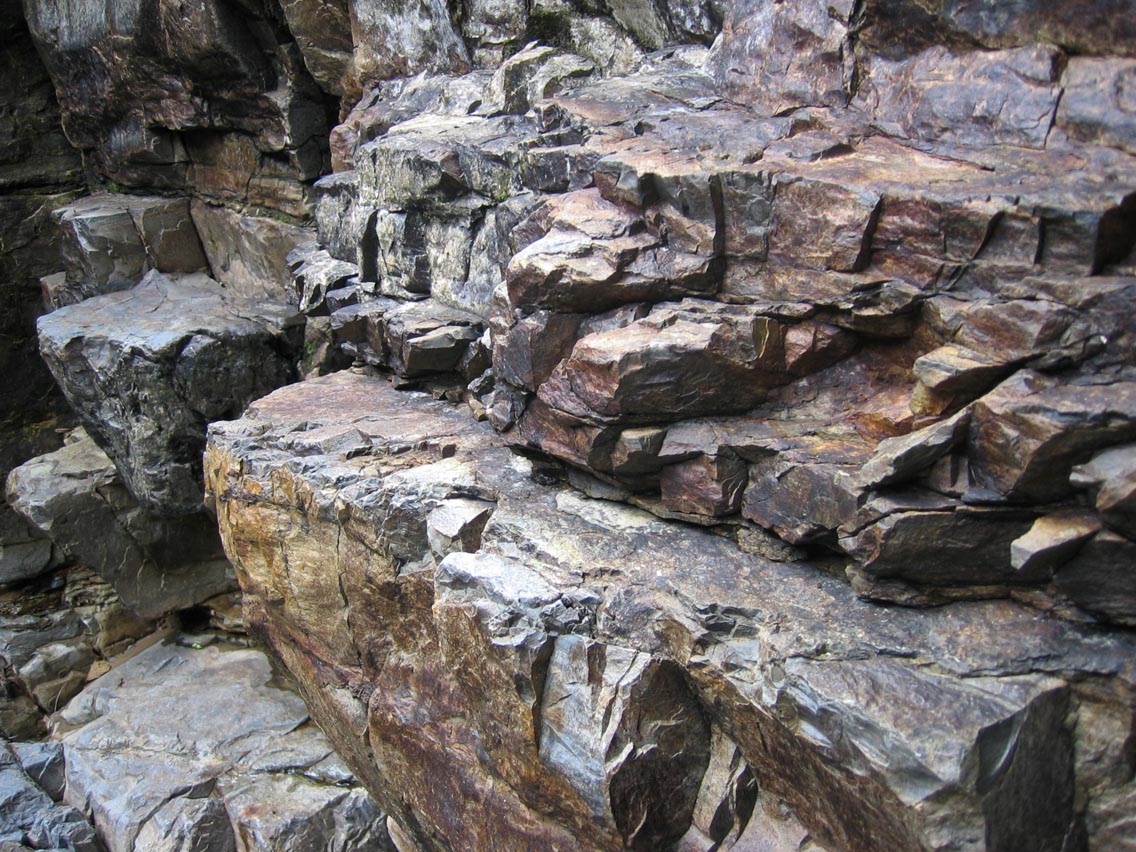
![Sedimentary rock layers observed during geological fieldwork](./assets/Layers_of_sedimentary_rock_in_Makhtesh_Ramon_5075450754 Empirical observation and fieldwork constitute core methodological approaches in Earth science, enabling direct collection of data from natural settings to inform theories of planetary processes. Geoscientists rely on in-situ measurements to capture variables unattainable in controlled experiments, such as large-scale tectonic deformations or patterns. These methods emphasize repeatable observations, where field notes, photographs, and samples document rock orientations, layers, and environmental conditions. Geological fieldwork typically involves mapping outcrops to determine and structure, including measuring the of beds, collecting rock and soil samples for mineralogical analysis, and identifying fossils for biostratigraphic . Techniques have evolved from manual sketching in the to integrating GPS for precise locational data, yet the emphasis remains on firsthand verification of subsurface inferences drawn from . For example, field expeditions document fault displacements and volcanic deposits to reconstruct seismic histories, providing empirical constraints on models. In and , fieldwork deploys shipboard coring for sediment records and radiosondes for upper-air profiling, respectively, to gather time-series data on currents, , and . These efforts validate numerical models by supplying ground-truth datasets; discrepancies between predicted and observed parameters, such as from floats cross-checked with direct casts, refine simulations of climate variability. Historical precedents include transoceanic voyages since the mid-20th century that recovered deep-sea cores, revealing through oxygen isotope ratios in . Field campaigns in remote or hazardous terrains, like Antarctic ice sheets or active fault zones, underscore logistical challenges, including equipment durability against extreme conditions and safety protocols for personnel. Despite advances in remote technologies, fieldwork persists as indispensable for causal inference, as laboratory analogs cannot replicate emergent properties of coupled Earth systems, such as biosphere-lithosphere interactions observed via soil pit excavations and ecological transects.

Experimental and Analytical Techniques

Experimental employs high-temperature and high-pressure apparatus to replicate conditions within Earth's interior, enabling the study of phase transitions, behaviors, and reaction kinetics relevant to mantle and core dynamics. Devices such as piston-cylinder apparatuses achieve pressures up to 3-5 GPa and temperatures exceeding 2000 K, simulating crustal and environments, while multi-anvil presses extend to 25 GPa for deeper mantle simulations. Diamond anvil cells, capable of generating pressures beyond 100 GPa, facilitate investigations into and core-mantle boundary processes, including the stability of post-perovskite phases under extreme conditions. These experiments provide empirical constraints on thermodynamic properties, such as data for , which inform geophysical models of Earth's internal structure. Analytical techniques in and rely heavily on X-ray diffraction (XRD) for non-destructive identification and structural characterization of crystalline phases in rocks and minerals. Powder XRD patterns, generated by directing X-rays at samples and measuring diffraction angles, yield d-spacing values that match reference databases for phase identification, with resolutions sufficient to distinguish polymorphs like and . Single-crystal XRD further determines atomic arrangements, lattice parameters, and defect structures, essential for understanding deformation mechanisms in tectonically active regions. Complementary electron microscopy methods, including scanning electron microscopy (SEM) coupled with (EDS), provide microstructural imaging and elemental mapping at micrometer scales, revealing textural relationships in igneous and metamorphic rocks. Geochemical analysis utilizes (ICP-MS) and thermal ionization mass spectrometry (TIMS) to quantify trace elements and radiogenic isotopes, achieving detection limits below parts per trillion for elements like rare earths and actinides. Stable isotope ratios, measured via (IRMS), trace geochemical cycles, such as and oxygen fractionation in hydrological systems or carbon isotopes in paleoclimate proxies from carbonates. For organic geochemistry, gas chromatography-mass spectrometry (GC-MS) separates and identifies volatile compounds in sediments, elucidating processes and source rock maturation. These methods, often integrated with sample digestion via acid dissolution or , ensure precise quantification while minimizing matrix effects, though calibration against certified standards is critical to account for instrumental drift. In , experimental approaches include ultrasonic to measure seismic velocities in polycrystalline aggregates under controlled and , yielding elasticity data that calibrate velocity models for interpreting . and thermal conductivity of molten iron alloys, determined through falling sphere viscometry and in setups, constrain core dynamics and mechanisms. Such laboratory-derived parameters bridge observational data gaps, as natural analogs are inaccessible, and validate computational simulations of planetary interiors.

Computational and Remote Sensing Tools

in Earth science encompasses techniques for acquiring data on Earth's surface, atmosphere, and oceans without direct contact, by detecting reflected or emitted from platforms such as satellites and . Passive methods, including multispectral and , capture sunlight reflected from surfaces to map land cover, vegetation indices like the (NDVI), and mineral compositions, with systems like Landsat providing continuous data archives since 1972 for in ecosystems and geology. Active techniques, such as (SAR) and , emit signals to penetrate clouds or vegetation, enabling all-weather topographic mapping and biomass estimation, as demonstrated by NASA's missions achieving resolutions below 1 meter. Instruments like radiometers and spectrometers quantify energy fluxes and spectral signatures, supporting applications in (e.g., via microwave radiometry) and cryospheric studies (e.g., dynamics via radar altimetry from CryoSat-2, launched in 2010). Data from missions such as MODIS on Terra and Aqua satellites, operational since 1999 and 2002 respectively, deliver daily global observations of aerosols, cloud properties, and sea surface temperatures at 250-meter to 1-kilometer resolutions, facilitating real-time monitoring of atmospheric and oceanic processes. These tools integrate with geographic information systems (GIS) for , though limitations include atmospheric interference and calibration uncertainties that require ground validation. Computational tools in Earth science rely on numerical simulations to model complex systems, integrating physical laws via partial differential equations solved on high-performance computers. system models (ESMs), such as those developed by the , couple atmospheric, oceanic, land, and biogeochemical components to simulate carbon cycles and climate variability, with resolutions down to 10 kilometers in recent configurations. The Community Surface Dynamics Modeling System (CSDMS), an open-source framework established in 2007, enables modular assembly of process-based models for , , and landscape evolution, promoting through standardized interfaces and supporting over 300 component models as of 2022. Finite element and finite volume methods underpin geodynamical simulations of and , with tools like ASPECT (Advanced Solver for Problems in Earth's Convection and Thermodynamics) handling million-element meshes to replicate data. Machine learning enhancements, applied by groups like Oak Ridge National Laboratory's Computational Earth Sciences, accelerate parameter estimation and in ESMs, processing petabytes of observational data for improved predictive fidelity. High-resolution simulations, leveraging as in ORNL's Earth system modeling efforts initiated around 2020, resolve sub-grid processes like , though model biases persist due to incomplete physics representations and require empirical tuning against paleoclimate proxies. Integration of inputs via techniques, such as ensemble Kalman filters, refines model initial conditions, enhancing forecasts for volcanic eruptions and aftershocks.

Practical Applications

Resource Exploration and Utilization

Exploration for Earth's resources relies on integrated geological, geophysical, and geochemical techniques to identify economically viable deposits of minerals, hydrocarbons, and geothermal energy. Initial reconnaissance involves geological mapping to delineate rock types and structures favorable for resource accumulation, such as sedimentary basins for oil and gas or igneous intrusions for metallic ores. Geophysical methods, including seismic refraction and reflection for subsurface imaging, gravity and magnetic surveys for density contrasts in mineral bodies, and electrical resistivity for geothermal fluids, enable non-invasive detection of anomalies. Geochemical sampling of soils, streams, and rocks detects trace elements indicative of mineralization, guiding targeted drilling to confirm reserves. These multidisciplinary approaches, refined since the mid-20th century, have increased discovery success rates, though exploration costs averaged $10-50 million per major find in recent decades. Hydrocarbon exploration, a cornerstone of resource geology, predominantly uses 2D and 3D seismic surveys to map stratigraphic traps and reservoir porosity, with advancements in full-waveform inversion improving resolution to meters-scale since the . As of year-end 2023, U.S. proved crude and condensate reserves totaled 46.4 billion barrels, reflecting a 3.9% decline from due to production outpacing additions, while global proved reserves were estimated at approximately 1.73 trillion barrels by industry sources. exploration employs similar seismic techniques alongside to assess plays, enabling hydraulic fracturing utilization that unlocked vast unconventional reserves, such as the Marcellus yielding over 25 trillion cubic feet since 2008. Coal resources are prospected via stratigraphic analysis and drilling, with dominating extraction where seams are shallow, accounting for 65% of U.S. production in 2023. Mineral exploration targets ore deposits formed by magmatic, hydrothermal, or sedimentary processes, using airborne electromagnetic surveys and to prioritize areas for critical minerals like and . The U.S. Geological Survey employs isotopic and analysis to evaluate undiscovered resources, estimating, for example, over 1 million metric tons of potential in sediment-hosted deposits as of 2022 assessments. Utilization involves selective methods: open-pit for low-grade porphyry deposits yielding billions of tons globally, and underground block caving for high-value gold ores, with processing via flotation and smelting to recover 90-95% of metals. Recycling and byproduct recovery, such as from smelters, enhance efficiency, though primary extraction remains dominant for base metals. Geothermal resource exploration integrates heat flow measurements, , and thermal gradient to locate convective systems, with resistivity methods identifying low-resistivity clay caps over reservoirs. Proven geothermal capacity reached 15.4 gigawatts worldwide by 2023, primarily in rift zones like and the , where binary cycle plants utilize moderate-temperature fluids for at 10-20% efficiency. Enhanced geothermal systems (EGS) expand utilization by fracturing hot dry rock, as demonstrated in the 2023 Utah project injecting water to create artificial reservoirs at depths exceeding 2 kilometers. Economic viability hinges on success rates, historically 20-30% for commercial wells, mitigated by probabilistic resource assessments.

Hazard Assessment and Mitigation

Hazard assessment in Earth science evaluates the likelihood, intensity, and spatial extent of geological events such as earthquakes, volcanic eruptions, landslides, and tsunamis to inform . Probabilistic seismic hazard analysis (PSHA) serves as a foundational technique for earthquakes, estimating the probability of ground-motion levels exceeding specified thresholds at a site over a defined time frame, such as 10% probability of exceedance in 50 years, by integrating characterizations, magnitude-frequency distributions, and ground-motion models while accounting for epistemic and aleatory uncertainties. USGS seismic hazard maps, derived from PSHA, delineate contours for applications in building codes and insurance, with the National Seismic Hazard Model updated biennially to incorporate new data from events like the . Volcanic hazard assessment employs real-time monitoring of precursors including seismic swarms, ground deformation via GPS and InSAR, and emissions to produce eruption forecasts and hazard zones, as implemented by the USGS Volcano Hazards Program for over 160 active U.S. volcanoes. assessments combine empirical inventories, statistical models like on factors such as slope angle, soil type, and precipitation, and deterministic analyses using limit equilibrium methods to map susceptibility, with USGS tools identifying post-wildfire debris-flow risks affecting areas up to 100 km downstream. These methods prioritize empirical data from historical events and geophysical surveys to quantify triggers like rainfall thresholds exceeding 50-100 mm/day for shallow landslides. Mitigation strategies reduce vulnerability through structural and non-structural measures tailored to hazard type. Earthquake mitigation includes enforcing seismic design standards in building codes, such as those based on the USGS National Seismic Hazard Model, which have demonstrably lowered collapse rates in events like the where retrofitted structures fared better. Early warning systems, operational in regions like since 2019, provide seconds-to-minutes of advance notice by detecting P-waves to trigger automated shutdowns. Volcanic mitigation encompasses barriers, ash-resistant , and zoned evacuation plans; for instance, reinforced roofs and sealed buildings mitigate ashfall loads up to 100-500 kg/m² observed in eruptions like in 1980. Landslide controls involve bioengineering like retaining walls and drainage systems, alongside regulatory zoning that prohibits development on slopes steeper than 30 degrees, as outlined in USGS mitigation frameworks reducing annual U.S. losses estimated at $2-4 billion. Integrated approaches, including and public education, emphasize causal factors like tectonic stress accumulation or hydrological saturation to prioritize resilient over reactive responses.

Environmental and Planetary Insights

Earth science elucidates environmental dynamics through geological mechanisms that regulate atmospheric composition and climate. Volcanic eruptions, such as the 1991 Mount Pinatubo event, inject sulfur dioxide into the stratosphere, forming aerosols that reflect sunlight and induce temporary global cooling of approximately 0.5°C lasting 1–2 years. Over geological timescales, silicate weathering serves as a thermostat by accelerating under warmer, higher-CO2 conditions to consume atmospheric carbon dioxide, thereby counteracting greenhouse forcing and stabilizing surface temperatures. Plate tectonics profoundly influences environmental stability by driving the long-term . zones recycle carbon-rich sediments into , where metamorphic processes release CO2 through arc , balancing the drawdown from and preventing runaway greenhouse or icehouse extremes. Moderate plate motion rates, around 2–10 cm per year, correlate with Earth's "Goldilocks" , fostering conditions suitable for liquid water and over billions of years. layers preserve proxies of past environments, revealing cycles of glaciation and warming tied to tectonic reconfiguration of continents and basins. Planetary insights from Earth science highlight the role of geodynamic activity in . Active on enables efficient volatile cycling, nutrient upwelling, and generation via core convection, shielding the atmosphere from erosion—features absent on and Mars, where stagnant lids contributed to uninhabitable states. Models suggest that exoplanets with prolonged internal heat retention, potentially sustaining and , could maintain habitable surfaces longer than those with rapid cooling. These processes underscore 's geological uniqueness in fostering persistent environmental conditions conducive to complex life.

Controversies and Debates

Uniformitarianism Versus Catastrophism

Uniformitarianism asserts that Earth's geological and geophysical features arise from processes operating gradually and continuously at rates observable in the present, as articulated by James Hutton in the late 18th century and popularized by Charles Lyell in his Principles of Geology (1830–1833). This principle, often summarized as "the present is the key to the past," implies that phenomena like sedimentation, erosion, and magnetic field variations result from uniform laws without requiring extraordinary past events. Catastrophism, conversely, posits that major geological transformations stem from sudden, large-scale disruptions, such as floods, volcanic eruptions, or impacts, as championed by Georges Cuvier in the early 19th century based on fossil discontinuities in the Paris Basin strata. In the context of geomagnetism, the debate manifests in interpretations of paleomagnetic records, where uniformitarianism favors models of the geodynamo driven by steady convective flows in the outer core, producing stable polarity over millions of years punctuated by rare, predictable shifts. Evidence from and volcanic rocks reveals approximately 183 reversals in the last 83 million years, with average intervals of about 450,000 years, aligning with gradual core dynamics under uniform principles. However, detailed analyses indicate transition periods as brief as 1,000–10,000 years—rapid on geological scales—challenging strict by implying threshold instabilities in core-mantle interactions rather than incremental change. Catastrophist perspectives gain traction from geomagnetic excursions, temporary deviations from stable polarity, such as the around 42,000 years ago, when field intensity plummeted to less than 10% of modern values, potentially weakening the and allowing increased cosmic influx. This episode correlates with atmospheric radiocarbon spikes and possible climatic perturbations, including enhanced auroral activity and , though direct causal links to megafaunal extinctions or human behavioral shifts remain speculative and unproven. Uniformitarians counter that such events fit within the variability of processes, without necessitating unprecedented mechanisms, as no mass extinctions align with reversals or excursions in the record. Modern earth science synthesizes both views through "," recognizing that catastrophic manifestations—like rapid reversals or field collapses—operate under invariant physical laws but exceed contemporary rates and scales, as evidenced by numerical simulations of core . This neo-catastrophist framework, informed by and impact cratering since the 1980s, acknowledges uniformitarianism's utility for long-term budgeting of processes while integrating empirical data for episodic disruptions, avoiding the teleological extremes of early tied to non-scientific narratives. In geomagnetism, this implies that while baseline field generation remains uniform, paleomagnetic anomalies demand causal models incorporating nonlinear instabilities, testable via ongoing observations like Swarm data showing current weakening trends.

Anthropogenic Climate Influence

Observing global temperature records reveals a warming trend of approximately 0.14°C per decade since 1880, with satellite-derived lower tropospheric data from the (UAH) reporting a trend of +0.16°C per decade from 1979 through September 2025, during which the September 2025 anomaly stood at +0.53°C relative to the 1991-2020 baseline. This warming coincides with a rise in atmospheric CO₂ concentrations from pre-industrial levels of about 280 ppm to over 420 ppm by 2023, primarily attributed to combustion and , which exert a of roughly 2.0 W/m² according to calculations based on spectroscopic data. Proponents of dominant anthropogenic influence, drawing from detection and attribution methods, assert that human-emitted greenhouse gases explain most post-1950 warming, with natural factors like and volcanic aerosols contributing minimally or offsetting effects. However, critiques highlight discrepancies between satellite and surface measurements, where surface datasets often show higher trends potentially inflated by urban heat island effects, station siting issues, and post-hoc adjustments that systematically cool historical records. Independent reassessments using unadjusted datasets question the causality of CO₂-driven warming, noting that empirical correlations between CO₂ and temperature weaken when accounting for lagged ocean responses and that no statistically significant tropical mid-tropospheric "hot spot"—predicted by models for greenhouse forcing—has materialized in radiosonde or satellite observations. Natural climate variability, including multidecadal oscillations like the Atlantic Multidecadal Oscillation and , has historically driven regional and global temperature shifts comparable to recent changes without elevated CO₂, as evidenced by proxy reconstructions from ice cores and sediments showing temperatures rivaling or exceeding 20th-century levels. Attribution studies, central to claims of anthropogenic dominance, rely on general circulation models that integrate human forcings to simulate "fingerprints" like stratospheric cooling and tropospheric warming, yet these models have systematically overestimated observed warming rates, with equilibrium estimates ranging from 1.5–4.5°C per CO₂ doubling in IPCC assessments but empirical constraints from balance analyses suggesting values closer to 1–2°C. Reviews of IPCC AR6 identify methodological flaws, including over-reliance on averages that individual model failures, underweighting of variability in optimal fingerprinting techniques, and selective emphasis on scenarios assuming high emissions despite real-world deviations toward lower trajectories. Sources underpinning strong attribution claims, such as IPCC reports, have faced scrutiny for institutional biases favoring alarmist narratives, evidenced by resistance to incorporating dissenting peer-reviewed critiques and alignment with policy-driven funding incentives in academia and government agencies. Event attribution analyses, which quantify the role of human influence in specific extremes like heatwaves or hurricanes, often conclude increased likelihood due to modeled warming, but these depend on ensembles prone to and fail to robustly disentangle internal variability, as demonstrated by inconsistencies in projecting tropical cyclone trends where observations show no clear intensification signal amid natural cycles. Empirical paleoclimate data further challenges high-sensitivity assumptions, revealing that CO₂ lagged temperature during glacial-interglacial transitions, implying amplification by orbital forcings and feedbacks rather than direct causation. Overall, while human activities contribute to radiative imbalance, the precise quantification remains contested, with indicating natural processes retain substantial and underscoring the need for unadjusted observations over model-dependent projections in resolving the debate.

Resource Scarcity and Abundance Narratives

Narratives of resource scarcity in Earth science posit that finite geological reserves of minerals, fossil fuels, and other non-renewable materials face inevitable depletion due to exponential population and consumption growth outpacing discovery rates. This view, exemplified by the 1972 Limits to Growth report from the , modeled interactions between industrial output, population, food production, , and pollution using the model, forecasting societal collapse around the mid-21st century under business-as-usual scenarios due to resource exhaustion. Proponents like biologist argued that scarcities in metals and energy would drive up prices and constrain development, as seen in his wagers against economist on commodity price trends. However, such predictions have often overstated geological constraints, influenced by assumptions of static and discovery rates that ignore empirical trends in and extraction. In contrast, abundance narratives emphasize that contains vast quantities of elements, with effective resource availability expanding through , improved geological mapping, and economic incentives for discovery. Historical data refute alarms: global proven oil reserves rose from approximately 600 billion barrels in the 1970s to over 1.7 trillion barrels by 2020, despite quadrupled consumption, as advanced seismic imaging, horizontal , and hydraulic fracturing unlocked previously uneconomic deposits. Similarly, Simon's 1980 wager with Ehrlich on prices of five metals (, chrome, , tin, ) resulted in a net decline in inflation-adjusted prices by 1990, affirming that ingenuity—via substitution, , and new finds—counteracts depletion signals. U.S. Geological Survey (USGS) assessments consistently identify potential for undiscovered mineral deposits, with reserve estimates growing as prices signal investment in deeper or remote geological formations, such as subduction zones or ancient cratons rich in critical minerals. From a geological standpoint, scarcity is less about absolute crustal abundance—where elements like rare earths constitute parts per million but are disseminated widely—than about concentration in economically viable ores formed by magmatic, hydrothermal, or sedimentary processes. While Limits to Growth scenarios projected industrial decline by the , global GDP and resource use have expanded without the modeled collapse, as recalibrations ignoring adaptive responses (e.g., efficiency gains, alternative sources) fail to align with observed data up to 2023. and academic sources amplifying scarcity often reflect institutional biases toward alarmism, prioritizing policy advocacy over longitudinal reserve trends documented by agencies like USGS and EIA. supports abundance when accounting for causal factors like R&D-driven extraction tech, which has neutralized demand pressures historically. Local or short-term bottlenecks, such as in or for batteries, persist but are mitigated by diversified supply chains and , underscoring that geological scarcity narratives undervalue dynamic human adaptation.

Recent Advancements

Observational Breakthroughs (2020-2025)

In 2020, seismic analysis revealed a new layer of partly molten rock beneath the , potentially influencing and volcanic activity, based on modeling of data from global seismic networks. This finding, derived from reprocessing decades of seismic records with advanced computational filters, suggested a at the lithosphere-asthenosphere boundary, challenging prior models of rigid crustal behavior. Subsequent studies in 2024 utilized Earth's surface distortions—measured via and GPS—to enhance imaging of the rocky interior, enabling higher-resolution maps of subsurface structures without dense seismic arrays. Deep-Earth observations advanced further with the 2024 detection of a doughnut-shaped region in the liquid outer core, identified through analysis of seismic wave scattering patterns from over 7,000 earthquakes recorded between 1990 and 2021, but refined with 2020s data integration. This structure, spanning thousands of kilometers and exhibiting distinct velocity anomalies, implies localized convective flows influencing geomagnetic field generation. In 2025, evidence emerged of an innermost inner core layer, hinted at by differential seismic travel times indicating distinct iron crystal orientations, corroborated by multiple global datasets. Additionally, observations of spontaneous seismic wave acceleration at 3,000 km depth revealed dynamic motion in the lowermost mantle, captured via full-waveform inversion of recent earthquake records. Oceanographic mapping saw substantial progress through the Seabed 2030 initiative, which increased high-resolution seafloor coverage from approximately 20% in 2020 to 27.3% by mid-2025, incorporating multibeam sonar data from over 14 new contributing vessels and autonomous vehicles. Breakthroughs included satellite altimetry from the SWOT mission (launched 2022), which derived seafloor topography from ocean surface height variations, revealing previously unmapped features like seamounts and trenches at resolutions down to 15 km. These observations facilitated discoveries of tectonic plate boundaries and hydrothermal vents, enhancing models of submarine volcanism and biodiversity hotspots. ![Earth cutaway showing interior layers][float-right] Satellite-based Earth observations yielded insights into surface processes, such as the 2020 COVID-19 lockdown's effect on atmospheric NO2 levels, monitored via ESA's Sentinel-5P satellite, which detected up to 40% reductions in urban areas, isolating human emission impacts from natural variability. In 2024, NASA's ALOFT campaign used airborne instruments to quantify gamma-ray glows—transient high-energy emissions in thunderstorms—occurring more frequently than previously estimated, with over 100 events documented during flights. These findings, cross-validated with ground-based networks, refined understanding of and its role in tropospheric chemistry.

Technological Innovations

Artificial intelligence and machine learning have transformed data analysis in earth sciences, enabling GeoAI frameworks to process multimodal data for enhanced and decision-making. These tools integrate structured imagery with unstructured data, improving predictions in areas like climate variability and seismic events; for instance, algorithms have expanded earthquake catalogs by detecting subtle signals in seismic records previously overlooked by manual methods. In geoscience interpretation, AI enhances workflows by automating fault detection and reservoir characterization, reducing human bias while adhering to physical laws of rock physics. Advances in seismic imaging technologies, particularly full-waveform inversion (FWI) variants like FWI3 introduced around 2025, achieve high-frequency extended-frequency-depth resolution with computational efficiency, allowing clearer subsurface models for resource exploration and hazard assessment. Complementary innovations include sparse arrays that capture high-resolution shallow subsurface images using fewer data points than traditional dense deployments, as demonstrated in 2025 studies optimizing wave acquisition schemes. These developments stem from improved algorithms for elimination and 3D/4D processing, particularly in challenging deepwater environments, enhancing accuracy in interpretations. Satellite-based remote sensing has seen integration of AI for on-orbit data processing, reducing latency in Earth monitoring applications such as snow cover mapping and tracking via missions like launched in 2020. NASA's Earthdata initiatives leverage AI to identify patterns in vast datasets from optical and instruments, supporting applications in monitoring and prediction. Drones and commercial constellations have further expanded high-resolution observations, with 2023-2025 deployments enabling real-time geohazard surveillance and resource mapping at scales unattainable by ground-based methods alone.

Implications for Future Research

Advancements in and are poised to transform Earth science by enabling the analysis of petabyte-scale datasets from satellites and ground sensors, but future research must prioritize hybrid models that integrate physical laws with empirical data to avoid and ensure causal interpretability. This approach addresses current limitations in predicting complex phenomena like atmospheric feedbacks and seismic precursors, where purely statistical methods have underperformed in extrapolating beyond training data. Peer-reviewed studies emphasize the need for standardized benchmarks and interdisciplinary validation to mitigate biases in AI-derived geophysical inferences. Enhanced techniques, such as improved uranium-lead dating and cosmogenic nuclide analysis, are essential for resolving temporal uncertainties in Earth's geologic record, facilitating research into the timing and drivers of initiation around 3.2 billion years ago and cycles. The National Academies' vision for 2020-2030 highlights opportunities in consortium-based efforts to calibrate rates of and crustal evolution, which remain debated due to sparse deep-time proxies. Future studies should leverage these tools to test hypotheses on deep-Earth dynamics, including recent observations of inner core asymmetry changes over decades, informing models of geomagnetic reversals and analogs. Observational breakthroughs from missions like NASA's demand expanded investment in multi-platform for real-time hazard monitoring and resource mapping, particularly in understudied regions like the . Challenges in Earth system models, including unresolved cryospheric-oceanic feedbacks, underscore the imperative for high-resolution simulations that incorporate recent emission surges and variability data. Rigorous, empirical-focused agendas will be critical to disentangle natural variability from anthropogenic signals, prioritizing verifiable proxies over narrative-driven projections.

References

Add your contribution
Related Hubs
User Avatar
No comments yet.