Hubbry Logo
Celtic BritonsCeltic BritonsMain
Open search
Celtic Britons
Community hub
Celtic Britons
logo
8 pages, 0 posts
0 subscribers
Be the first to start a discussion here.
Celtic Britons
Celtic Britons
from Wikipedia

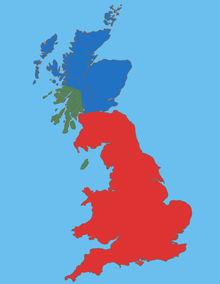
Great Britain and adjacent islands in the 5th century, before the invasion and subsequent founding of Anglo-Saxon kingdoms:
  Mainly (non-Pictish) Brittonic areas
  Mainly Pictish areas
  Mainly Goidelic areas

The Britons (*Pritanī, Latin: Britanni, Welsh: Brythoniaid), also known as Celtic Britons[1] or ancient Britons, were the Celtic people[2] who inhabited Great Britain from at least the British Iron Age until the High Middle Ages, at which point they diverged into the Welsh, Cornish, and Bretons (among others).[2] They spoke Common Brittonic, the ancestor of the modern Brittonic languages.[2]

The earliest written evidence for the Britons is from Greco-Roman writers and dates to the Iron Age.[2] Ancient Britain was made up of many tribes and kingdoms, associated with various hillforts. The Britons followed an ancient Celtic religion overseen by druids. Some of the southern tribes had strong links with mainland Europe, especially Gaul and Belgica, and minted their own coins. The Roman Empire conquered most of Britain in the 1st century AD, creating the province of Britannia. The Romans invaded northern Britain, but the Britonnic tribes such as the Caledonians and Picts in the north remained unconquered, and Hadrian's Wall which bisects modern Northumbria and Cumbria became the edge of the empire. A Romano-British culture emerged, mainly in the southeast, and British Latin coexisted with Brittonic.[3] It is unclear what relationship the Britons had with the Picts, who lived outside of the empire in northern Britain; however, most scholars today accept the fact that the Pictish language was closely related to Common Brittonic.[4]

Following the end of Roman rule in Britain during the 5th century, Anglo-Saxon settlement of eastern and southern Britain began. The culture and language of the Britons gradually fragmented, and much of their territory gradually became Anglo-Saxon, while the north and the Isle of Man became subject to a similar settlement by Gaelic-speaking tribes from Ireland who would eventually form Scotland. The extent to which this cultural change was accompanied by wholesale population changes is still debated. During this time, Britons migrated to mainland Europe and established significant colonies in Brittany (now part of France), the Channel Islands,[5] and Britonia (now part of Galicia, Spain).[2] By the 11th century, Brittonic-speaking populations had split into distinct groups: the Welsh in Wales, the Cornish in Cornwall, the Bretons in Brittany, the Cumbrians of the Hen Ogledd ("Old North") in modern southern Scotland and northern England, and the remnants of the Pictish people in northern Scotland.[6] Common Brittonic developed into the distinct Brittonic languages: Welsh, Cumbric, Cornish and Breton.[2]

Celtic warrior recreation, including carnyx and a replica of the Waterloo Helmet
Recreated Celtic village at St Fagans National Museum of History, Wales

Name

[edit]

In Celtic studies, 'Britons' refers to native speakers of the Brittonic languages in the ancient and medieval periods, "from the first evidence of such speech in the pre-Roman Iron Age, until the central Middle Ages".[2]

The earliest known reference to the inhabitants of Britain was made by Pytheas, a Greek geographer who made a voyage of exploration around the British Isles between 330 and 320 BC. Although none of his writings remain, writers during the following centuries make frequent reference to them. The ancient Greeks called the people of Britain the Pretanoí or Bretanoí.[2] Pliny's Natural History (77 AD) says the older name for the island was Albion,[2] and Avienius calls it insula Albionum, "island of the Albions".[7]The name could have reached Pytheas from the Gauls.[8]

The P-Celtic ethnonym has been reconstructed as *Pritanī, from Common Celtic *kʷritu, which became Old Irish cruth and Old Welsh pryd.[2] This likely means "people of the forms, shapely people", and could be linked to the Latin name Picti (the Picts), which is usually explained as meaning "painted people".[2] The Old Welsh name for the Picts was Prydyn.[9] Linguist Kim McCone suggests the name became restricted to inhabitants of the far north after Cymry displaced it as the name for the Welsh and Cumbrians.[10] The Welsh prydydd, "maker of forms", was also a term for the highest grade of a bard.[2]

The medieval Welsh form of Latin Britanni was Brython (singular and plural).[2] Brython was introduced into English usage by John Rhys in 1884 as a term unambiguously referring to the P-Celtic speakers of Great Britain, to complement Goidel; hence the adjective Brythonic refers to the group of languages.[11] "Brittonic languages" is a more recent coinage (first attested in 1923 according to the Oxford English Dictionary).

In the early Middle Ages, following the Anglo-Saxon settlement of Britain, the Anglo-Saxons called all Britons Bryttas or Wealas (Welsh), while they continued to be called Britanni or Brittones in Medieval Latin.[2] From the 11th century, they are more often referred to separately as the Welsh, Cumbrians, Cornish, and Bretons, as they had separate political histories from then.[2] From the early 16th century, and especially after the Acts of Union 1707, the terms British and Briton could be applied to all inhabitants of the Kingdom of Great Britain, including the English, Scottish, and some Irish, or the subjects of the British Empire generally.[12]

Language

[edit]
The Staffordshire Moorlands Pan

The Britons spoke an Insular Celtic language known as Common Brittonic. Brittonic was spoken throughout the island of Britain (in modern terms, England, Wales, and Scotland) and the Isle of Man.[2][a] According to early medieval historical tradition, such as The Dream of Macsen Wledig, the post-Roman Celtic speakers of Armorica were colonists from Britain, resulting in the Breton language, a language related to Welsh and identical to Cornish in the early period, and is still used today. Thus, the area today is called Brittany (Br. Breizh, Fr. Bretagne, derived from Britannia).

Common Brittonic developed from the Insular branch of the Proto-Celtic language that developed in the British Isles after arriving from the continent at some point between the 10th and the 7th century BC. The language eventually began to diverge; some linguists have grouped subsequent developments as Western and Southwestern Brittonic languages. Western Brittonic developed into Welsh in Wales and the Cumbric language in the Hen Ogledd or "Old North" of Britain (modern northern England and southern Scotland), while the Southwestern dialect became Cornish in Cornwall and South West England and Breton in Armorica. Pictish is now generally accepted to descend from Common Brittonic rather than being a separate Celtic language. Welsh and Breton survive today; Cumbric and Pictish became extinct in the 12th century. Cornish had become extinct by the 19th century but has been the subject of language revitalization since the 20th century.[13]

Tribal groups

[edit]
Tribal groups in southern Britain c. 150 AD

Celtic Britain was made up of many territories controlled by Brittonic tribes. They are generally believed to have dwelt throughout the whole island of Great Britain, at least as far north as the ClydeForth isthmus. The territory north of this was largely inhabited by the Picts; little direct evidence has been left of the Pictish language, but place names and Pictish personal names recorded in the later Irish annals suggest it was indeed related to the Common Brittonic language.[14][15][page needed][16][17] Their Goidelic (Gaelic) name, Cruithne, is cognate with Pritenī.

The following is a list of the major Brittonic tribes, in both the Latin and Brittonic languages, as well as their capitals during the Roman period.

Tribe Capital
Atrebatēs Calleva Atrebatum
Brigantēs/Brigantī Isurium Brigantum
Cantiacī Durovernum Cantiacorum
Carvetīī (*Carwetīī) Luguvalium
Catuvellaunī (*Catuwellaunī) Verulamium
Corieltauvī (*Corieltauī) Ratae Corieltauvorum
Cornovīī (*Cornowīī) Viroconium Cornoviorum
Damnonīī Vanduara (Loudoun Hill or Walls Hill)
Deceanglī Canovium or Clwydian hillforts
Demetae Moridunum
Dobunnī/Bodunnī Corinium Dobunnorum
Dumnonīī Isca Dumnoniorum
Durotrigēs Durnovaria; Maiden Castle
Īcenī/Ecenī Venta Icenorum
Novantae (*Nowantī) Rispain?
Ordovicēs (*Ordowicī) Dinas Dinorwig?
Parisī Petuaria
Reginī Noviomagus Reginorum
Selgovae (*Selgowī) Eildon Hill?
Silurēs Venta Silurum; Llanmelin
Textoverdī (*Textowerdī) Coria?
Trinovantēs (*Trinowantī) Camulodunum
Votadīnī/Otadīnī Traprain

Art

[edit]
The Battersea Shield, a ceremonial bronze shield dated 3rd–1st century BC, is an example of La Tène Celtic art from Britain.

The La Tène style, which covers British Celtic art, was late arriving in Britain, but after 300 BC the ancient British seem to have had generally similar cultural practices to the Celtic cultures nearest to them on the continent. There are significant differences in artistic styles, and the greatest period of what is known as the "Insular La Tène" style, surviving mostly in metalwork, was in the century or so before the Roman conquest, and perhaps the decades after it.[citation needed]

A recreation of a carnyx (war trumpet)

The carnyx, a trumpet with an animal-headed bell, was used by Celtic Britons during war and ceremony.[18][19]

History

[edit]

Origins

[edit]

There are competing hypotheses for when Celtic peoples, and the Celtic languages, first arrived in Britain, none of which have gained consensus. The traditional view during most of the twentieth century was that Celtic culture grew out of the central European Hallstatt culture, from which the Celts and their languages reached Britain in the first millennium BC.[20][21][page needed] More recently, John Koch and Barry Cunliffe have challenged that with their 'Celtic from the West' theory, which has the Celtic languages developing as a maritime trade language in the Atlantic Bronze Age cultural zone before it spread eastward.[22] Alternatively, Patrick Sims-Williams criticizes both of these hypotheses to propose 'Celtic from the Centre', which suggests Celtic originated in Gaul and spread during the first millennium BC, reaching Britain towards the end of this period.[23]

In 2021, a major archaeogenetics study uncovered a migration into southern Britain during the Bronze Age, over a 500-year period from 1,300 BC to 800 BC.[24][page needed] The migrants were "genetically most similar to ancient individuals from France" and had higher levels of Early European Farmers ancestry.[24][page needed] From 1000 to 875 BC, their genetic marker swiftly spread through southern Britain,[25] making up around half the ancestry of subsequent Iron Age people in this area, but not in northern Britain.[24][page needed] The "evidence suggests that rather than a violent invasion or a single migratory event, the genetic structure of the population changed through sustained contacts between mainland Britain and Europe over several centuries, such as the movement of traders, intermarriage, and small-scale movements of family groups".[25] The authors describe this as a "plausible vector for the spread of early Celtic languages into Britain".[24][page needed] There was much less migration into Britain during the subsequent Iron Age, so it is more likely that Celtic reached Britain before then.[24][page needed] Barry Cunliffe suggests that a branch of Celtic was already being spoken in Britain and that the Bronze Age migration introduced the Brittonic branch.[26]

The Anglo-Saxon Chronicle, which was originally compiled by the orders of King Alfred the Great in approximately 890, starts with this, incorporated into the Chronicle from Bede's Ecclesiastical History:[27]

Brittene igland is ehta hund mila lang ⁊ twa hun brad ⁊ her sind on þis igland fif geþeode Englisc ⁊ Brittisc ⁊ Wilsc[b] ⁊ Scyttisc ⁊ Pyhtisc ⁊ Bocleden. Erest weron bugend þises landes Brittes þa coman of Armenia.

The Anglo-Saxon Chronicle, original Bodi. Land. 636 text given by Benjamin Thorpe[28]
Translation:

The island of Britain is eight hundred miles long and two hundred broad; and here in this island are five languages: English and British and Welsh[c] and Scottish and Pictish and Book-language[d]. The first inhabitants of this land were Britons, who came from Armorica.[e]

The Anglo-Saxon Chronicle, translated by Michael Swanton[29]

Roman conquest

[edit]
A reconstruction drawing of Pagans Hill Romano-British temple

In 43 AD, the Roman Empire invaded Britain. The British tribes opposed the Roman legions for many decades, but by 84 the Romans had decisively conquered southern Britain and had pushed into Brittonic areas of what would later become northern England and southern Scotland. During the same period, Belgic tribes from the Gallic-Germanic borderlands settled in southern Britain. Caesar asserts the Belgae had first crossed the channel as raiders, only later establishing themselves on the island.[32] In 122 the Romans fortified the northern border with Hadrian's Wall, which spanned what is now Northern England. In 142 Roman forces pushed north again and began construction of the Antonine Wall, which ran between the ForthClyde isthmus, but they retreated back to Hadrian's Wall after 20 years. Although the native Britons south of Hadrian's Wall mostly kept their land, they were subject to the Roman governors, whilst the Brittonic-Pictish Britons north of the wall probably remained fully independent and unconquered. The Roman Empire retained control of "Britannia" until its departure about 410, although parts of Britain had effectively shrugged off Roman rule decades earlier.[citation needed]

Anglo-Saxon settlement of Britain

[edit]
Britons migrated westwards during the Anglo-Saxon settlement of Britain

Fifty years or so after the time of the Roman departure, the Germanic-speaking Anglo-Saxons began a migration to the south-eastern coast of Britain, where they began to establish their own kingdoms, and the Gaelic-speaking Scots migrated from Dál nAraidi (modern Northern Ireland) to the west coast of Scotland and the Isle of Man.[33][page needed][34][page needed] At the same time, Britons established themselves in what is now called Brittany and the Channel Islands. There they set up their own small kingdoms and the Breton language developed from Brittonic Insular Celtic rather than Gaulish or Frankish. A further Brittonic colony, Britonia, was also set up at this time in Gallaecia in northwestern Spain.

Many of the old Brittonic kingdoms began to gradually disappear in the centuries after the Anglo-Saxon and Scottish Gaelic invasions; Parts of the regions of modern East Anglia, East Midlands, North East England, Argyll, and South East England were the first to fall to the Germanic and Gaelic Scots invasions. The kingdom of Ceint (modern Kent) fell in 456 AD. Linnuis (which stood astride modern Lincolnshire and Nottinghamshire) was subsumed as early as 500 AD and became the English Kingdom of Lindsey.

Regni (essentially modern Sussex and eastern Hampshire) was likely fully conquered by 510. Ynys Weith (Isle of Wight) fell in 530, Caer Colun (essentially modern Essex) by 540. The Gaels arrived on the northwest coast of Britain from Ireland, dispossessed the native Britons, and founded Dal Riata which encompassed modern Argyll, Skye, and Iona between 500 and 560. Deifr (Deira) which encompassed modern-day Teesside, Wearside, Tyneside, Humberside, Lindisfarne (Medcaut), and the Farne Islands fell to the Anglo-Saxons in 559, and Deira became an Anglo-Saxon kingdom after this point.[35] Caer Went had officially disappeared by 575, becoming the Anglo-Saxon kingdom of East Anglia. Gwent was only partly conquered; its capital Caer Gloui (Gloucester) was taken by the Anglo-Saxons in 577, handing Gloucestershire and Wiltshire to the invaders, while the westernmost part remained in Brittonic hands, and continued to exist in modern Wales.

Caer Lundein, encompassing London, St. Albans and parts of the Home Counties,[36] fell from Brittonic hands by 600, and Bryneich, which existed in modern Northumbria and County Durham with its capital of Din Guardi (modern Bamburgh) and which included Ynys Metcaut (Lindisfarne), had fallen by 605 becoming Anglo-Saxon Bernicia.[37] Caer Celemion (in modern Hampshire and Berkshire) had fallen by 610. Elmet, a large kingdom that covered much of modern Yorkshire, Lancashire, and Cheshire and likely had its capital at modern Leeds, was conquered by the Anglo-Saxons in 627. Pengwern, which covered Staffordshire, Shropshire, Herefordshire, and Worcestershire, was largely destroyed in 656, with only its westernmost parts in modern Wales remaining under the control of the Britons, and it is likely that Cynwidion, which had stretched from modern Bedfordshire to Northamptonshire, fell in the same general period as Pengwern, though a sub-kingdom of Calchwynedd may have clung on in the Chilterns for a time.[38]

Novant, which occupied Galloway and Carrick, was subsumed by fellow Brittonic-Pictish polities by 700. Aeron, which encompassed modern Ayrshire,[39] was conquered by the Anglo-Saxon kingdom of Northumbria by 700.

Yr Hen Ogledd (the Old North)

[edit]
Yr Hen Ogledd (the Old North) c. 550 – c. 650

Some Brittonic kingdoms were able to successfully resist these incursions: Rheged (encompassing much of modern Northumberland and County Durham and areas of southern Scotland and the Scottish Borders) survived well into the 8th century, before the eastern part peacefully joined with the Anglo-Saxon kingdom of BerniciaNorthumberland by 730, and the west was taken over by the fellow Britons of Ystrad Clud.[40][page needed][41][page needed] Similarly, the kingdom of Gododdin, which appears to have had its court at Din Eidyn (modern Edinburgh) and encompassed parts of modern Northumbria, County Durham, Lothian and Clackmannanshire, endured until approximately 775 before being divided by fellow Brittonic Picts, Gaelic Scots and Anglo-Saxons.

The Kingdom of Cait, covering modern Caithness, Sutherland, Orkney, and Shetland, was conquered by Gaelic Scots in 871. Dumnonia (encompassing Cornwall, Devonshire, and the Isles of Scilly) was partly conquered during the mid 9th century AD, with most of modern Devonshire being annexed by the Anglo-Saxons, but leaving Cornwall, the Isles of Scilly (Enesek Syllan), and for a time part of western Devonshire (including Dartmoor), still in the hands of the Britons, where they became the Brittonic state of Kernow. The Channel Islands (colonised by Britons in the 5th century) came under attack from Norse and Danish Viking attack in the early 9th century, and by the end of that century had been conquered by Viking invaders.

The Kingdom of Ce, which encompassed modern Marr, Banff, Buchan, Fife, and much of Aberdeenshire, disappeared soon after 900. Fortriu, the largest Brittonic-Pictish kingdom which covered Strathearn, Morayshire and Easter Ross, had fallen by approximately 950 to the Gaelic Kingdom of Alba (Scotland). Other Pictish kingdoms such as Circinn (in modern Angus and The Mearns), Fib (modern Fife), Fidach (Inverness and Perthshire), and Ath-Fotla (Atholl), had also all fallen by the beginning of the 11th century or shortly after.

The Brythonic languages in these areas were eventually replaced by the Old English of the Anglo-Saxons, and Scottish Gaelic, although this was likely a gradual process in many areas. Similarly, the Brittonic colony of Britonia in northwestern Spain appears to have disappeared soon after 900. The kingdom of Ystrad Clud (Strathclyde) was a large and powerful Brittonic kingdom of the Hen Ogledd (the 'Old North') which endured until the end of the 11th century, successfully resisting Anglo-Saxon, Gaelic Scots and later also Viking attacks. At its peak it encompassed modern Strathclyde, Dumbartonshire, Cumbria, Stirlingshire, Lanarkshire, Ayrshire, Dumfries and Galloway, Argyll and Bute, and parts of North Yorkshire, the western Pennines, and as far as modern Leeds in West Yorkshire.[41][page needed][42][43][44][f] Thus the Kingdom of Strathclyde became the last of the Brittonic kingdoms of the 'Old North' to fall in the 1090s when it was effectively divided between England and Scotland.[45][46]

Wales, Cornwall and Brittany

[edit]

The Britons also retained control of Wales and Kernow (encompassing Cornwall, parts of Devon including Dartmoor, and the Isles of Scilly) until the mid 11th century when Cornwall was effectively annexed by the English, with the Isles of Scilly following a few years later, although at times Cornish lords appear to have retained sporadic control into the early part of the 12th century.

Wales remained free from Anglo-Saxon, Gaelic Scots and Viking control, and was divided among varying Brittonic kingdoms, the foremost being Gwynedd (including Clwyd and Anglesey), Powys, Deheubarth (originally Ceredigion, Seisyllwg and Dyfed), Gwent, and Morgannwg (Glamorgan). These Brittonic-Welsh kingdoms initially included territories further east than the modern borders of Wales; for example, Powys included parts of modern Merseyside, Cheshire and the Wirral and Gwent held parts of modern Herefordshire, Worcestershire, Somerset and Gloucestershire, but had largely been confined to the borders of modern Wales by the beginning of the 12th century.

However, by the early 12th century, the Anglo-Saxons and Gaels had become the dominant cultural force in most of the formerly Brittonic ruled territory in Britain, and the language and culture of the native Britons was thereafter gradually replaced in those regions,[47][failed verification] remaining only in Wales, Cornwall, the Isles of Scilly and Brittany, and for a time in parts of Cumbria, Strathclyde, and eastern Galloway. Cornwall (Kernow, Dumnonia) had certainly been largely absorbed by England by the 1050s to early 1100s, although it retained a distinct Brittonic culture and language.[48]. Wales and Brittany remained independent for a considerable time, however, with Brittany united with France in 1532, and Wales united with England by the Laws in Wales Acts 1535–1542 in the mid 16th century during the rule of the Tudors (Y Tuduriaid), who were themselves of Welsh heritage on the male side.

Wales, Cornwall, Brittany and the Isles of Scilly continued to retain a distinct Brittonic culture, identity and language, which they have maintained to the present day. The Welsh and Breton languages remain widely spoken, and the Cornish language, once close to extinction, has experienced a revival since the 20th century. The vast majority of place names and names of geographical features in Wales, Cornwall, the Isles of Scilly and Brittany are Brittonic, and Brittonic family and personal names remain common. During the 19th century, many Welsh farmers migrated to Patagonia in Argentina, forming a community called Y Wladfa, which today consists of over 1,500 Welsh speakers.

Eastern England

[edit]

Eastern England was populated by Brythonic tribes such as the Iceni, Corieltauvi, and Catuvellauni. In the most common view, the Britons of Eastern England were assimilated by Anglo-Saxons in the first 200 years of invasion, from 450-600 AD, as their kingdoms were conquered. This view is often supported by the lack of Brythonic toponyms in the region, and by various mentions such as the Anglo-Saxon Chronicle entry for 491 AD: "Aelle and Cissa begirt Andredesceaster and slay all who dwell therein, nor was there for that reason one Briton left alive".[49]

Evidence of continuing Brythonic presence in Eastern England can be found in the Life of Saint Guthlac, a biography of the East Anglian hermit who lived in the Fens during the early 8th century. Saint Guthlac was described as attacked on several occasions by people he believed were Britons living in the Fens.[50] The 12th century story Havelok the Dane includes a Saxon king Alsi, of Brittonic origin, who ruled over Lincoln, Lindsey, Rutland and Stamford. In the year 1090 a monk in Ramsey wrote that "the savage and untamable race of the Britons was ravaging far and wide in the province of Huntingdon". This suggests that Britons were still living in the Fens by 11th century and most likely practiced their own style of Christianity, which was considered pagan by local Anglo-Saxons.[50] Another story from Ramsey mentions raids of Britons not far from Royston in the 10th century.[51] In The Memorials of Cambridge we can find a line "If any of the gild slay a man, and he be an avenger by compulsion (neadwraca) and compensate for his violence, and the slain man be a twelfhynde man, let each of the gild give half a mark for his aid: if the slain man be a ceorl, two oras: if he be Welsh (Wylisc) one ora", where "Wylisc" refers to a Briton. We may infer that, though a Welsh servile population existed in Cambridgeshire in the tenth century, it was not so numerous as elsewhere, and that there the Welshman's life was more respected.[50] The legend of Wandlebury, popular in Cambridge, contains several pagan elements, mentioning a town Cantabrica and a tribe of Wandali near Ely, who were "savagely murdering the Christians".[52] The legend was first written in 1211 by Gervase of Tilbury, and can be seen an original Celtic story, originated at the end of the Roman Empire during the raids of Vandals, which later passed to local Anglo-Saxon population.[53]

Oosthuizen (2016) mentions six placenames in the region with the "wealh-" root, which means 'Briton', including Walewrth, Walsoken and Walpole. Other examples of Brythonic toponyms include River Great Ouse, from Proto-Celtic *Udso-s ('water'), River Welland (possibly from "wealh-" root), River Cam (Granta), from Proto-Celtic *kambos ('crooked'), Chettisham (compare Welsh "coed", meaning 'wood'), Chatteris (from the same root), King's Lynn, from Brythonic *llɨnn ('lake').[54][55] Comberton, a parish in South Cambridgeshire, is derived from the root "cymry", that refers to all Britons.[56]

Northern Iberia

[edit]

In the late 5th and early 6th centuries AD, a colony called Britonia was established in northern Galicia. The British settlements first appeared at the First Council of Lugo in 569 and later, a separate bishopric was established, with the first Bishop being Maeloc.[57] Despite the exact location of the diocese isn't known, as well as how long did Brythonic culture and language perfromed in the region, several toponyms across Galicia and Asturias containing root bret- or brit- can be still found,[58] including Bretelo in Ourense, Bertoña in A Capela or El Breton in Corvera, Asturias.[59]

Genetics

[edit]

Schiffels et al. (2016) examined the remains of three Iron Age Britons buried ca. 100 BC.[60] A female buried in Linton, Cambridgeshire carried the maternal haplogroup H1e, while two males buried in Hinxton both carried the paternal haplogroup R1b1a2a1a2, and the maternal haplogroups K1a1b1b and H1ag1.[61] Their genetic profile was considered typical for Northwest European populations.[60] Though sharing a common Northwestern European origin, the Iron Age individuals were markedly different from later Anglo-Saxon samples, who were closely related to Danes and Dutch people.[62]

Martiniano et al. (2018) examined the remains of a female Iron Age Briton buried at Melton between 210 BC and 40 AD.[63] She was found to be carrying the maternal haplogroup U2e1e.[64] The study also examined seven males buried in Driffield Terrace near York between the 2nd century AD and the 4th century AD during the period of Roman Britain.[63] Six of these individuals were identified as native Britons.[65] The six examined native Britons all carried types of the paternal R1b1a2a1a and carried the maternal haplogroups H6a1a, H1bs, J1c3e2, H2, H6a1b2 and J1b1a1.[64] The indigenous Britons of Roman Britain were genetically closely related to the earlier Iron Age female Briton, and displayed close genetic links to modern Celts of the British Isles, particularly Welsh people, suggesting genetic continuity between Iron Age Britain and Roman Britain, and partial genetic continuity between Roman Britain and modern Britain.[66][65] On the other hand, they were genetically substantially different from the examined Anglo-Saxon individual and modern English populations of the area, suggesting that the Anglo-Saxon settlement of Britain left a profound genetic impact.[67]

See also

[edit]

Footnotes

[edit]

References

[edit]
[edit]
Revisions and contributorsEdit on WikipediaRead on Wikipedia
from Grokipedia
The Celtic Britons, also known as the ancient Britons, were the indigenous (relative to the Roman invaders) Celtic-speaking inhabitants of during the (c. 800 BC–AD 43) and into the early medieval period, although earlier pre-Celtic populations had inhabited the island prior to the emergence of Celtic culture around 800 BC, forming a diverse array of tribal societies across the island. They emerged as part of a broader Atlantic Celtic cultural sphere, with genetic evidence indicating deep-rooted ancestry tracing back to post-Ice Age recolonization around 15,000 years ago, rather than large-scale migrations from during the . Speaking —a branch of the Celtic family that included early forms of Welsh, Cornish, and Breton—these peoples maintained oral traditions, as they left no written records of their own, with much of what is known derived from Greek, Roman, and later archaeological sources. Organized into kingdoms and tribes such as the , , and , Celtic Briton society was hierarchical and militarized, featuring chieftains, warriors, and druids who served as priests, judges, and political advisors. Their culture flourished through distinctive styles, evident in artifacts like the (c. 350–50 BC) and the Snettisham Hoard of gold torcs (c. 100–50 BC), which showcased swirling motifs, animal forms, and metalworking expertise that connected them to wider European Celtic traditions. Religiously, they practiced centered on nature deities, sacred groves, and rituals led by druids, with gods like later syncretized with Roman equivalents during occupation. The Roman invasion beginning in AD 43 under Emperor profoundly altered Celtic Briton life, leading to the province of where southern populations adopted Romano-British hybrid customs, while northern and western regions resisted, as seen in Queen Boudica's revolt of the in AD 60–61. After the Roman withdrawal around AD 410, Celtic Briton kingdoms persisted in areas like and , gradually Christianizing from the onward and influencing the development of medieval Welsh and Cornish identities. Their legacy endures in place names (e.g., Thames from Tamesis), linguistic survivals, and cultural motifs that shaped British heritage.

Name and Identity

Etymology

The term "Britons" derives from the Greek "Pretani" (or "Pritani"), first attested by the Massilian explorer around 320 BC during his circumnavigation of the , where he likely learned the name from local inhabitants. This Celtic-derived word is thought to mean "painted ones" or "tattooed people," alluding to the widespread practice of body decoration with woad or other pigments, as later described by Roman observers. The Romans Latinized it as "Britanni," applying it collectively to the island's dwellers in official nomenclature, as seen in inscriptions and texts from the 1st century BC onward. The related term "Celtae" (Greek "Keltoi") emerged earlier in Herodotus's Histories (c. 440 BC), where it denoted a people inhabiting the extreme west beyond the , possibly in Iberia. By the , Roman authors like extended "Celtae" to encompass the tribes and, by cultural and linguistic affinity, the Britons, whom Caesar portrayed in his (c. 50 BC) as akin to the Gauls in , religion, and warfare. Although "Britons" functioned as an overarching ethnic designation for the island's Celtic-speaking population, classical sources emphasized regional distinctions through specific tribal names, such as the in the southwest and the in the north and . Strabo's (c. 7 BC–23 AD) treats "Britons" as a unified island group while contrasting their traits with continental "Celti," noting the former's greater stature and less frequent blond hair. Ptolemy's (c. 150 AD) further refines this by enumerating over 30 tribes across Britain, mapping their territories and cities to reflect Roman administrative and ethnographic knowledge.

Terminology and Self-Perception

The Celtic Britons referred to themselves and their island homeland using indigenous terms rooted in Proto-Brythonic *Pritanī, which is reconstructed to mean "painted " or "tattooed folk," alluding to cultural practices of body decoration. This , first attested in the late 4th century BCE by the Greek explorer as *Prettanikē (Πρεττανική) for the islands and *Pritanī (Πρίτανοι) for their inhabitants, evolved in Brythonic languages into forms like Prydein in , denoting both the land of Britain and its collective . In native usage, such terms emphasized communal identity tied to the island's and social groups, without reference to broader continental affiliations. The applicability of the term "Celtic" to the ancient Britons remains a point of contention in contemporary scholarship, where the (c. 800–450 BCE) and La Tène (c. 450 BCE–1 CE) cultures are viewed primarily as stylistic and material markers of elite exchange networks across , rather than indicators of a unified ethnic or linguistic group. Archaeologists like Raimund Karl argue that while La Tène artifacts appear in Britain, they reflect and trade rather than migration of a distinct "Celtic" ethnicity, challenging earlier assumptions linking these cultures directly to Celtic-speaking populations. This perspective underscores that "Celtic" in the Iron Age context denotes shared artistic and technological traditions, not a self-perceived among the Britons. Modern of the Celtic Britons has shifted significantly since the 1970s, moving away from 19th-century that idealized as a mystical, unified race of warriors and bards—often influenced by nationalist revivals in Ireland, , and —toward an emphasis on as evidence of diverse, localized societies. Pioneering works, such as Barry Cunliffe's syntheses of , prioritize artifactual and settlement patterns over linguistic or mythical narratives, revealing the Britons as regionally varied communities shaped by local innovations rather than a monolithic "Celtic" essence. This post-1970s turn, informed by processual and , avoids projecting modern ethnic categories onto prehistoric evidence, focusing instead on social dynamics evident in hillforts and trade goods. Scholars caution against anachronistic uses of "Celtic" for the ancient Britons, as they did not employ the term for self-identification; this linkage originated in 18th-century revivals, particularly Edward Lhuyd's linguistic classification of Brythonic tongues as "Celtick," which retroactively framed insular peoples within a continental paradigm. Simon James' analysis highlights how such 18th- and 19th-century constructs, amplified by Romantic literature, invented an "Atlantic Celtic" identity that obscured the Britons' distinct, non-migratory development. Today, this awareness promotes more precise terminology, reserving "Celtic" for linguistic descendants like the Welsh while describing ancient Britons through their own recorded names and archaeological contexts.

Language

Brythonic Languages

The Brythonic languages, spoken by the Celtic Britons across much of prehistoric and , constitute the P-Celtic branch of the Insular , in contrast to the Q-Celtic of and . This classification stems from a key phonological innovation in P-Celtic, where the Proto-Celtic labio-velar *kʷ shifted to /p/, as seen in the Brythonic term *penn for "head" (from Proto-Celtic *kʷenno-), while Q-Celtic retained a /kʷ/ or /k/ sound, yielding Irish *ceann. , the ancestral form attested indirectly through place names and loanwords from the onward, featured a synthetic with noun cases, verb conjugations, and initial consonant mutations that marked grammatical relationships. Direct evidence of spoken Brythonic during the Roman period is scarce due to the dominance of Latin in formal writing, but key inscriptions provide glimpses into its vernacular use. The (tabellae defixionum), discovered at the sanctuary and dating to the 2nd–4th centuries AD, include over 130 lead defixiones in that incorporate Brythonic syntactic patterns and vocabulary, such as the phrase *anaduneis doess * interpreted as a Brythonic request for divine intervention ("let there not be comparison"). Similarly, Tabella Sulis 14 and 18 exhibit formulaic structures blending Latin and Brythonic elements, reflecting bilingualism among the local population and confirming Brythonic as the substrate language in southwest Britain. These artifacts demonstrate that Brythonic was actively spoken and occasionally written in informal, ritual contexts, preserving phonetic and morphological features lost in later stages. Over time, diverged regionally after the Roman withdrawal, evolving into the medieval Brythonic languages: Welsh in the west and north, Cornish in the southwest, and Breton via migration to (modern ) in the 5th–6th centuries AD. A pivotal development was the loss of the inherited Indo-European case system by the 6th century AD, driven by phonological (loss of unstressed final syllables), which eroded inflectional endings and shifted reliance toward prepositional phrases and word order for expressing grammatical functions. This analytic trend, combined with nasal mutations and spirantization (e.g., /p/ to /f/ in certain environments), marked the transition to , Old Cornish, and early Breton by the 9th–10th centuries. Brythonic vocabulary reflects layered influences, including a pre-Celtic substrate of non-Indo-European origin evident in hydronyms (river names) like the Avon (*abonā, "river") or those with endings such as -ar (e.g., Darent) that lack clear Celtic etymologies and suggest an earlier Paleolithic or Neolithic population. During the Roman era (43–410 AD), extensive contact introduced early Latin loanwords into everyday Brythonic lexicon, particularly in domains like agriculture (*karniđ, "mound" from Latin *carnarium), trade (*pont, "bridge" from Latin *pons), and administration, with estimates of around 800 such borrowings integrated before the 5th century. These loans often adapted to Brythonic phonology, illustrating the language's vitality amid Romanization while maintaining its core Celtic structure.

Linguistic Evidence and Evolution

Linguistic evidence for the primarily derives from surviving place names, which provide insight into their widespread use across prehistoric and early historic Britain. Numerous river and hill names of Brittonic origin persist in , reflecting the language's deep integration into the landscape. For instance, the name "Avon," appearing in multiple rivers such as the River Avon in and , derives from the Brittonic *abonā, meaning "river," illustrating a common Indo-European root adapted in Celtic contexts. Archaeological artifacts, particularly Ogham stones from western Britain, offer further textual evidence of Brittonic evolution during the early medieval period. These inscriptions, dating to the 5th and 6th centuries AD, appear in regions like and , where they record personal names and memorials in a script originally developed for but adapted locally. Examples include the Fardel Stone in and stones in , which blend Brittonic linguistic elements with Irish orthographic influences, indicating cultural and linguistic exchanges around the . The Ogham stone, a rare outlier discovered in (southeast ), dates to the 4th century AD and provides early evidence of the script's use beyond the west. Such stones demonstrate a transitional phase in Brittonic writing practices amid broader Celtic interactions. The evolution of Brittonic languages toward decline began with Romanization, which promoted bilingualism between Brittonic and Latin among the elite and urban populations from the 1st to 4th centuries AD. This process fostered code-switching and loanwords but did not fully supplant Brittonic as the vernacular for most rural communities. Subsequent Anglo-Saxon migrations and settlements from the onward exerted pressure in eastern and southern Britain, leading to a gradual to ; by the 7th century, Brittonic had largely retreated westward, with evidence from place-name substitutions and sparse loanwords in early English texts marking this transition. Despite these pressures, Brittonic descendants exhibited varying survival. Cornish ceased to function as a community language by the late , with the last fluent native speakers documented around , though isolated knowledge persisted into the . In contrast, Welsh has maintained vitality, with 538,300 speakers reported in the 2021 census, representing 17.8% of ' population aged three and over.

Society and Culture

Tribal Groups

The Celtic Britons were divided into numerous tribal groups during the , with territories delineated by natural features such as rivers and hills, as recorded in ancient geographical and historical accounts. These tribes maintained distinct identities while engaging in trade and occasional conflicts, shaping the cultural landscape of pre-Roman Britain. In the northern regions, the formed the largest tribal group, controlling a vast area from extending northward to the , encompassing modern-day , , and . Further north in what is now northern , the Caledonii occupied the Highlands and associated islands, as mapped by the geographer in the 2nd century AD. Southern Britain was dominated by powerful tribes such as the and the , who held sway over the southeast, including , , and parts of , with their influence peaking under the rule of King Cunobelinus from approximately 10 BC to 40 AD. In the southwest, particularly Dorset and surrounding areas, the were prominent, renowned for their extensive network of hill forts like Maiden Castle, which served as defensive and communal centers. Western tribes included the , who inhabited the peninsula of and west of the River Exe, maintaining a relatively isolated maritime-oriented society. To their north, the controlled , from the to the , noted for their fierce independence. Rather than forming centralized kingdoms, many British tribes operated as loose confederations or alliances, as evidenced by Julius Caesar's accounts of his expeditions in 55–54 BC, where multiple groups coordinated to provide hostages and tribute while resisting invasion. similarly described such fluid tribal networks in his , highlighting opportunistic pacts among southern and western groups during Roman encounters.

Social Structure

The social structure of the Celtic Britons during the was hierarchical, characterized by distinct classes that reflected a kinship-based integrated with political and economic dependencies. At the apex were rulers, often termed kings or chieftains, who held authority over tribal territories, supported by an elite class of nobles and warriors known as in Roman accounts, though indigenous terms like rīx (king) and noble equivalents appear in epigraphic evidence. These elites maintained power through clientage systems, where lower-status warriors and retainers pledged in exchange for , access, and resources, fostering reciprocal obligations that reinforced social cohesion and military strength. The majority of the population consisted of free farmers and craftsmen, who formed the backbone of agrarian communities organized into kin-based units resembling small tribal polities or tuatha-like groups, where land was communally managed within extended families or clans to support economies. Archaeological from widespread enclosed homesteads and rounds indicates these free individuals lived in such settlements, contributing labor and to elites while retaining personal freedoms and rights to property. Variations in this structure existed across tribes, with southern regions showing more centralized hierarchies tied to hillforts, while western areas emphasized autonomous kin groups. At the base of society were slaves and outcasts, primarily acquired through intertribal raids and warfare, who possessed limited and were used for labor, domestic service, or as status symbols. Archaeological evidence, including iron shackles from sites like , indicates enslavement practices involving physical restraint and ritual violence, such as , which may have supplied slaves to bolster elite households. These unfree individuals, often foreigners or war prisoners, had no legal standing and could be traded or sacrificed, underscoring the predatory aspects of Briton social dynamics. Gender roles within this hierarchy allowed for notable female agency, with women capable of owning property independently and assuming leadership positions, as exemplified by , queen of the tribe in the 1st century AD, who ruled autonomously and allied with against internal rivals. Bioarchaeological analysis further reveals women in martial contexts, such as the Iron Age burial on the (ca. 200-50 BC) containing a sword, shield fittings, and a mirror, interpreted as evidence of a female warrior participating in raids, challenging assumptions of exclusively male combat roles.

Daily Life

The economy of the Celtic Britons during the was primarily based on , combining arable cultivation and . Crops such as and were staples, supplemented by like peas and beans, while included for and , sheep for and mutton, and pigs for . Ironworking, introduced around 800 BC, revolutionized and craft production by enabling the creation of stronger tools like ploughshares and sickles, which improved efficiency in tilling and harvesting. played a significant role, particularly along Atlantic routes where tin from Cornish mines and salt from coastal evaporation pans were exchanged for from continental Europe, fostering connections with and beyond. Settlements reflected this agrarian lifestyle, with most people living in clustered roundhouses—circular timber-framed structures with thatched roofs and central hearths for cooking and warmth—grouped into open villages or defended hillforts. Hillforts, such as Maiden Castle in Dorset, which enclosed over 300 acres and could house up to 200 roundhouses, served as communal centers for storage, trade, and defense, though not all were continuously occupied. By the AD, the population of Britain is estimated at 1 to 2 million, supporting denser rural communities amid expanding farmland. These settlements often included workshops for local crafts, emphasizing self-sufficiency in a of fields, pastures, and enclosures. Daily sustenance centered on a porridge-based diet derived from ground or , processed using rotary querns—two stone disks for milling grains into —and sickles for harvesting. Meals were supplemented by products, from herded animals, and foraged items like nuts and berries, with evidence of communal feasting in larger settlements. consisted of tunics and cloaks, woven on looms and often dyed with woad for coloration, providing warmth in the ; these garments were fastened with iron brooches and sewn using bone needles. Technological advancements were most evident in , where skilled smiths produced intricate iron tools, weapons, and luxury items like mirrors for and chariots for and status display. Chariots, constructed with wooden frames and iron fittings, were used in processions and warfare, as seen in burials from sites like Wetwang Slack. Despite these innovations, coinage was not widespread until the late , with initial gold imports from appearing around , primarily for elite exchange rather than everyday use.

Art

The art of the Celtic Britons during the Iron Age drew from earlier Hallstatt influences, evident in geometric patterns on pottery and weapons dating from approximately 800 to 500 BC. These designs featured rigid symmetry, including spirals, fretwork, and abstract motifs such as meanders and water bird shapes, often executed in bronze casting and repoussé techniques on items like bronze vessels. The dominant artistic expression emerged with the La Tène style, spanning roughly 500 BC to the 1st century AD, characterized by curvilinear motifs, S-scrolls, spirals, tendrils, and intricate animal interlace patterns that emphasized fluidity and asymmetry. This style, adapted from continental Celtic traditions with influences from classical Graeco-Italic elements like palmettes, appeared on metalwork such as , fibulae, and cauldrons, evolving through phases including the Early Style (5th–mid-4th century BC) with more naturalistic forms and the later Plastic Style (2nd century BC) featuring three-dimensional zoomorphic details. A prime example is the Snettisham Hoard from , discovered in the 1940s and 1950s, which includes gold from the crafted from twisted wires and hollow tubes adorned with La Tène interlace, showcasing advanced goldworking techniques. Regional variations highlighted the adaptability of these styles across Britain. Mirror art flourished with swirling, symmetrical floral scrolls and circles incised on bronze backs, as seen in the Desborough Mirror (c. 50 BC–50 AD) from , which exemplifies the insular development of abstract, two-dimensional designs. Northern examples include sword s with anthropomorphic figures, such as the late 2nd-century BC hilt from North Grimston in , where stylized human forms integrated arms and legs as crossguards, blending zoomorphic and humanoid elements in iron and . Celtic Briton art primarily served functions of personal adornment and status display, with objects like and fibulae worn as elite jewelry rather than in akin to Mediterranean traditions. , in particular, denoted high social rank among , integrated into daily wear as neck rings that combined practical fastening with elaborate decoration.

Religion

The Celtic Britons practiced a polytheistic centered on a pantheon of deities associated with natural forces, , , and warfare, often tied to specific locales or tribes. This belief system emphasized , where spirits inhabited landscapes, rivers, and animals, and rituals sought to maintain harmony with these forces. Worship involved offerings, festivals, and communal ceremonies, reflecting a that integrated the sacred into everyday tribal life. Other key deities included , associated with light and skills, and Brigantia, linked to sovereignty and protection, evidenced in inscriptions and place names. Key deities included local figures such as , a goddess linked to the springs at Bath (), where her cult predated Roman influence and involved votive offerings for health and justice. Similarly, presided over a at overlooking the River Severn, symbolizing aquatic renewal and associated with tidal surges. Pan-Celtic elements appeared in , such as horned gods depicted as lords of animals with antlers, torques, and a purse, representing and the wild, with motifs echoing across British and continental . The druids formed the priestly class, serving as religious leaders, judges, poets, and ritual experts who preserved oral traditions and interpreted omens. According to Julius Caesar's account in the (c. 50s BCE), druids oversaw public and private sacrifices, resolved disputes on crimes, inheritances, and boundaries, and held authority to impose penalties, including exclusion from sacred rites, which carried severe . They gathered annually at a central in the territory to adjudicate matters, with their institution originating in Britain before spreading to . Caesar also alleged that druids conducted human sacrifices, burning victims in wicker structures to appease gods during crises, though this claim may reflect Roman biases. Sacred sites encompassed natural features and constructed monuments, including stone circles like those at Castlerigg and the , used for rituals possibly involving astronomical observations. Stonehenge, a and complex from c. 2500 BCE, predated Celtic arrival and shows limited evidence of later use. Votive deposits were common, with metalwork, weapons, and jewelry intentionally placed in rivers, bogs, and springs—such as at or the Thames—to honor water spirits or mark transitions. Under Roman rule, blended Celtic gods with Roman equivalents, facilitating cultural integration; for instance, the war deity Cocidius was equated with Mars at sites along , as seen in altars and carvings at Housesteads. This fusion preserved native worship, with temples like Bath's dedicated to combining Celtic healing aspects with Roman wisdom attributes. Elements of these beliefs persisted into the Christian era, influencing cults that localized veneration at former sacred springs and sites, such as those honoring healing figures akin to Sulis.

History

Origins

The origins of the Celtic Britons trace back to prehistoric migrations and cultural developments that introduced Indo-European elements to the . The , emerging around 2500–1800 BC, represents a key phase in this process, with its distinctive inverted-bell-shaped pottery and associated artifacts spreading from to Britain via routes along the and regions. This movement brought early linguistic and cultural precursors to what would become Celtic societies, facilitated by networks of and mobility across . Genetic analyses of over 400 ancient individuals reveal that Beaker-associated populations introduced steppe-related ancestry, leading to a rapid replacement of about 90% of Britain's within a few centuries, indicating significant migration rather than purely cultural exchange. Building on these foundations, the late Bronze Age (c. 1300–800 BC) in marked a shift toward burials in urns, reflecting evolving practices and amid increasing metallurgical expertise. This transitioned into the (c. 800–450 BC), the early phase often linked to proto-Celtic speakers, characterized by the widespread adoption of iron tools and weapons, elite burials with wagons and swords, and expanded trade networks that extended influences to peripheral regions like Britain. Archaeological evidence, including similar rites and bronze artifacts found in British contexts, points to indirect connections through maritime and overland exchanges rather than direct during this period. Archaeological and genetic syntheses underscore that the formation of Celtic Briton identity did not result from a singular "Celtic invasion" but from gradual cultural diffusion from continental Europe, accelerating by around 1000 BC as local Bronze Age communities adopted incoming technologies, art styles, and possibly linguistic elements. This process involved a blend of indigenous traditions with Hallstatt-influenced innovations, such as fortified hill settlements and distinctive pottery, without evidence of mass population displacement in the Iron Age prelude. Stable isotope and DNA studies further support continuity in Britain's population base, with Celtic traits emerging through sustained interaction rather than conquest. Among the earliest tangible evidences of these settled Celtic Briton communities is the Lake Village in , occupied from c. 250 BC to c. 50 BC, where inhabitants constructed artificial islands on timber platforms amid wetlands to support , , and craft production. Excavations uncovered over 100 roundhouses, granaries, and artifacts like iron tools and woven textiles, illustrating a stable adapted to the local environment and exemplifying the organizational complexity of pre-Roman Celtic life in southern Britain.

Iron Age Developments

The Iron Age in Britain, from approximately 800 BC to 43 AD, marked a period of profound societal transformation for the Celtic Britons, characterized by intensified , expanded economic interactions, and adaptations to environmental shifts. Technological adoption of ironworking enabled more efficient tools and weapons, supporting agricultural intensification and , while population pressures drove the establishment of larger, more complex communities. These developments laid the groundwork for the diverse tribal formations that emerged across the island, reflecting regional variations in settlement and resource use. A hallmark of this era was the widespread construction of hill forts, with over 3,300 defended enclosures identified in Britain and , many built or expanded between 600 BC and 300 BC. in exemplifies this trend, established around 700 BC with massive ramparts enclosing an area that supported 300–400 inhabitants focused on grain storage, wool production, and trade in iron and salt. These fortifications, often requiring communal labor for their earthworks and ditches, signal escalating defensive priorities amid of interpersonal —such as skeletal trauma from conflicts—and underscore , as larger groups coalesced for and . Trade networks flourished, linking Britain to continental and Mediterranean economies, particularly through the export of tin from Cornish deposits, which reached the Mediterranean via Phoenician intermediaries by around 500 BC. This commerce is evidenced by exotic imports, including wine amphorae from Gaul and Italy discovered in high-status Late Iron Age burials, such as a Belgic chieftain's grave in Cambridgeshire, highlighting elite access to foreign luxuries and cultural exchanges. Britons maintained a warrior-oriented society, emphasized by elite burials incorporating chariots, which symbolized mobility, status, and martial prowess. At Wetwang Slack in East Yorkshire, three such burials from the late featured disassembled vehicles, ornate horse gear, iron swords, and provisions like , interring accomplished individuals—both male and female—as revered leaders equipped for the . By the late 2nd to 1st century BC, this hierarchical structure manifested in oppida, expansive proto-urban complexes like (modern ), which enclosed 31 square kilometers and functioned as administrative, minting, and trading hubs for emerging polities. Environmental conditions during the aligned with the sub-Atlantic phase, featuring cooler temperatures and increased precipitation from around 850 BC onward, which prompted shifts toward more resilient farming and encouraged denser clustering of settlements in fortified uplands to optimize amid wetter climates.

Roman Conquest

The began in AD 43 under Emperor , who sought to enhance his prestige through military success. The was led by , commanding approximately 40,000 troops, including four legions of heavy infantry and an equal number of auxiliaries. The force crossed the in three divisions for safety, landing likely at in . Initial resistance came from the tribe, led by brothers and , sons of the late king Cunobelinus. Roman victories at the and Thames rivers subdued southern tribes, culminating in the capture of (modern ), the Catuvellaunian capital, where personally oversaw the final assault with praetorian guards and elephants. Resistance persisted in the west, where waged a guerrilla war from 43 to 51 AD, shifting operations to the rugged terrain of among the and . Rallying Britons with appeals to liberty, fortified hilltop positions with ramparts and rivers for defense. In 51 AD, Roman governor launched a decisive campaign, crossing a river and storming ' stronghold in a fierce battle. Though escaped initially, he sought refuge with Queen of the , who betrayed him to the Romans. Paraded in , impressed with a dignified speech and was granted clemency rather than execution. A major uprising erupted in 60–61 AD under , queen of the in eastern , triggered by Roman mistreatment following her husband ' death, including the flogging of and rape of her daughters. Allied with the , her forces destroyed , , and (St. Albans), massacring approximately 70,000 Roman citizens and allies. Governor quelled the revolt at the Battle of , where superior Roman tactics inflicted heavy losses on the Britons—up to 80,000 killed, compared to 400 Roman dead. poisoned herself afterward, ending the revolt. Further expansion targeted the north under , governor from 77 to 84 AD, who pushed into (modern ) against the Caledonii and other tribes. Over seven campaigns, Agricola advanced beyond the Clyde-Forth , building forts and using his fleet to raid coasts and explore further north. In 83 AD, at the , Agricola's auxiliary forces of about 12,000–13,000 faced over 30,000 led by on a hillside. Roman flanked the enemy, leading to a with 10,000 slain and only 360 Roman casualties; the survivors dispersed into the highlands.

Roman Britain

Following the Roman conquest, was organized as a with an administrative structure that integrated pre-existing Celtic tribal territories into Roman governance. The was divided into civitates, administrative districts that largely mirrored the boundaries of indigenous tribes, allowing for a degree of local continuity while imposing Roman oversight through appointed officials and tribal councils adapted to imperial models. By around 100 AD, (modern ) had emerged as the provincial capital, serving as the primary administrative, financial, and commercial center after replacing () in this role. The economy of Roman Britain flourished under imperial integration, with significant developments in agriculture, trade, and resource extraction supporting both local prosperity and empire-wide demands. Rural villas, such as those in the southeast, became centers of large-scale farming and elite residence, often featuring advanced infrastructure like heating systems. Towns like (modern St Albans) expanded rapidly as administrative and market hubs, boasting forums, basilicas, and theaters that facilitated commerce and civic life. Key industries included lead mining in the , where operations began by AD 49 and produced substantial ore for pipes, roofing, and export across the empire. Grain production was another vital sector, with surplus wheat and other cereals exported to feed Roman legions stationed elsewhere in Europe. Cultural progressed unevenly but markedly among the elite and urban populations, blending Celtic traditions with Roman customs. Bath houses, exemplified by the extensive complex at Bath (), became symbols of Roman hygiene and social life, adopted even in provincial settings. Mosaics depicting mythological scenes and geometric patterns adorned the floors of elite Briton villas, indicating the adoption of Roman artistic styles and by local landowners. Military integration further accelerated this process, as by the 2nd century AD, Britons were increasingly recruited into the —auxiliary units of non-citizen troops—serving alongside legionaries and gaining upon discharge. To secure the northern frontier against Caledonian tribes, Emperor Hadrian ordered the construction of in AD 122, a stone and turf barrier stretching 73 miles across , garrisoned by around 10,000 auxiliary troops in 15 forts. Later, under , the was built in AD 142 further north in , a 37-mile turf with wooden palisades and forts housing several thousand troops, though it was abandoned by the late 2nd century in favor of . These defenses not only demarcated the empire's edge but also facilitated trade and surveillance, stabilizing the province's borders through the 4th century.

Post-Roman Collapse

The withdrawal of Roman legions from Britain culminated in 410 AD with the rescript of Emperor Honorius, in which he advised the British provinces to organize their own defenses against barbarian threats, effectively ending direct imperial protection and marking the formal termination of Roman administration. This decision followed years of instability, including the usurpation of Constantine III in 407 AD, who had stripped Britain of troops to bolster his campaigns on the , leaving the province vulnerable. Raids by external groups had already strained Roman defenses from the 360s AD, with incursions by the from the north and the (Irish raiders) from the west intensifying after the troop withdrawals. Roman historian documented these attacks, noting that in 360 AD, the and broke peace agreements and devastated frontier regions, contributing to the so-called Barbarian Conspiracy of 367–368 AD, during which coordinated assaults overwhelmed garrisons and led to widespread disorder. Post-410 AD, without legionary support, these raids escalated, further disrupting coastal and northern settlements. The economic fabric of Roman Britain unraveled rapidly in the early 5th century, with most urban centers abandoned by around 450 AD as trade networks collapsed and populations shifted toward rural subsistence farming. Archaeological evidence from sites like and shows derelict forums and basilicas, with coinage and imported goods ceasing abruptly after 410 AD, reflecting a transition from a monetized to localized, self-sufficient agriculture focused on basic grain production. This decline affected an estimated majority of the roughly 20–25 major towns, though some rural villas and hillforts saw continued occupation. Amid this turmoil, continued to spread among the Britons, influenced by the Pelagian controversy around 400 AD, a theological debate initiated by the British monk , who emphasized human over and gained significant support in Britain before his ideas were condemned at the Council of Carthage in 418 AD. Native figures like , active in the mid-5th century and likely born in , exemplified this ; in his Confessio, he describes his mission to convert the Irish, drawing on British ecclesiastical traditions while operating in a post-Roman context of instability.

Anglo-Saxon Settlement

The arrival of Germanic groups in Britain, often termed the Anglo-Saxon settlement, began in earnest around 450 AD amid the post-Roman collapse, when sub-Roman authorities faced vulnerabilities from internal strife and external raids. According to in his (c. 540 AD), a proud —later identified as —invited Saxon mercenaries to counter Pictish and Scottish incursions, a decision that led to their initial settlement in the east. This narrative, while not naming specific leaders, aligns with later traditions in the , which dates the invitation to 449 AD and attributes it to the brothers , Jutish warriors who established a foothold in . Scholarly analysis places this invitation around 441–442 AD, marking the start of organized Germanic migration rather than sporadic raiding. Settlement patterns reveal distinct regional distributions among the Germanic tribes during 450–600 AD. The , associated with , concentrated in and the Isle of Wight, as described by in his Ecclesiastical History of the English People (731 AD), where their and formed early kingdoms. Angles from and expanded across eastern , establishing and , which coalesced into by around 600 AD under kings like . Genetic studies, including a 2022 analysis of early medieval genomes, support this influx and evidence of intermarriage, estimating that present-day populations in central and derive 25–47% of their ancestry from continental northern European (Anglo-Saxon) sources through admixture with the indigenous Britons, with higher proportions (up to 76%) in the east reflecting targeted settlement in fertile lowlands. Briton responses to the Germanic advance involved resistance led by sub-Roman leaders, notably Ambrosius Aurelianus, a Romano-British tyrant of possible provincial nobility. Gildas portrays Ambrosius as rallying the Britons against the , culminating in a decisive victory at the (Mons Badonicus) around 500 AD—the year of Gildas's birth—which temporarily halted Saxon expansion for decades. This battle, likely fought in southern England, represented a high point of organized Briton defense, though it did not reverse the broader tide of settlement. The scale of Germanic dominance is evident in linguistic shifts, particularly place names, where over 3,000 Anglo-Saxon-derived names had replaced British Celtic ones across the lowlands by 700 AD, signaling cultural and demographic transformation in areas like the southeast and . This replacement, documented through early medieval charters and studies, underscores how settlers imposed their nomenclature on farms, settlements, and regions, often incorporating or adapting pre-existing British river names while overwriting habitative terms.

Yr Hen Ogledd

Yr Hen Ogledd, encompassing the Brittonic-speaking kingdoms of northern Britain and southern Scotland, represented a resilient pocket of Celtic Briton culture and political autonomy from approximately 500 to 800 AD. These realms emerged in the post-Roman vacuum, maintaining continuity with earlier tribes such as the while adapting to new threats from Anglo-Saxon settlers and neighboring . Central to this region was the kingdom of , also known as Alt Clut, centered on the formidable stronghold of Dumbarton Rock overlooking the Clyde estuary in modern . This Briton polity, independent from the fifth to ninth centuries, controlled territories including parts of and resisted incursions, with its royal lineage tied to early Christian figures like St. Kentigern. Another prominent kingdom was , located near the in areas now spanning and , flourishing in the late sixth century under rulers like Urien, who led campaigns against emerging Anglo-Saxon powers around 580 AD. The kingdom of , based around modern and extending into , exemplified the martial challenges faced by these northern Britons. Its warriors' ill-fated expedition is immortalized in the early Welsh poem , composed around 600 AD by the and preserved in the thirteenth-century Book of Aneirin. The poem recounts the —likely near Catterick in —where approximately 300 elite Gododdin fighters, feasting for a year in preparation, launched a raid against Angle settlers but suffered near-total defeat, with only a handful surviving. This clash, dated variably to circa 570–600 AD, highlighted the Gododdin rulers' attempts to assert overlordship amid territorial rivalries, ultimately weakening the kingdom's defenses against further Anglo-Saxon advances. Bardic poetry formed a vital cultural output of Yr Hen Ogledd, serving as a medium to preserve Briton identity through eulogies of warriors and kings that emphasized themes of honor, bravery, and resistance. Works attributed to bards like and , such as The Gododdin and poems on battles like Argoed Llwyfain, linked northern Britons to a shared heroic past, fostering cultural unity despite political fragmentation. These oral traditions, later committed to writing in Welsh, reinforced genealogical and mythic ties, portraying rulers like Urien as exemplars of martial prowess. Evidence of integration with Pictish elements appears in alliances and shared resistance efforts, as seen in joint Briton-Pictish campaigns against common foes, which influenced poetic motifs of northern solidarity. The decline of Yr Hen Ogledd accelerated with Northumbria's expansion in the seventh century, as Anglo-Saxon kingdoms like absorbed Brittonic territories through conquest. was likely overrun by the late seventh century following Urien's death and subsequent dynastic ties to Northumbrian royalty. fragmented after Catraeth, with its core lands annexed by , transitioning from Bryneich to Anglo-Saxon control. endured longer, but the pivotal Battle of Nechtansmere in 685 AD—where decisively defeated Northumbrian king Ecgfrith—temporarily checked further incursions, allowing Alt Clut to persist until Viking raids in 870 AD. By the early eighth century, most Yr Hen Ogledd kingdoms had succumbed to these pressures, though their legacies endured in Welsh literature and .

Survival in Wales, Cornwall, and Brittany

Following the post-Roman collapse around 500 AD, Brittonic-speaking communities in western Britain maintained their cultural and political amid encroaching Anglo-Saxon settlements. A pivotal event was the in 577 AD, where West Saxon forces under Ceawlin and Cuthwine defeated the Britons, killing three British kings and capturing the cities of , , and Bath. This victory severed land connections between the Britons of and those in the southwest, isolating the and facilitating Anglo-Saxon expansion into the . In Wales, Brittonic survival manifested through the emergence of principalities such as and , which coalesced in the mountainous west after the Roman withdrawal around 383 AD. , centered initially on the former Roman capital of Viroconium (modern ), was ruled by the Gwertherion dynasty and served as a bulwark against incursions, enduring defeats like the in 616 AD while securing victories in 655 AD and 722 AD. , in the northwest, similarly preserved Brittonic governance, with rulers like (d. 877) briefly uniting it with and other territories against Viking and English threats. These kingdoms fostered early Welsh literature, such as the poem (c. 650–750 AD), underscoring cultural continuity. The construction of around 785 AD by further delineated the Anglo-Welsh border, stretching approximately 150 miles from the to the Severn, effectively halting English expansion into and reinforcing Welsh territorial identity. This earthwork, building on earlier barriers like , symbolized the persistent divide between Brittonic and Anglo-Saxon , influencing later unification efforts under figures like Gruffudd ap Llywelyn in 1057 AD. Cornish Britons similarly resisted integration, maintaining a distinct identity as part of the former Dumnonian kingdom until the 9th century, when Anglo-Saxon pressures intensified following the Battle of Deorham's isolation. Cornwall functioned semi-autonomously, with its rulers acknowledging Wessex overlordship only nominally until the late 8th century, as evidenced by conflicts and tributes recorded in the Anglo-Saxon Chronicle. Cornish cultural persistence is epitomized by the language, a Brythonic tongue that endured until the death of Dolly Pentreath, its last monoglot speaker, in 1777, though traditional use continued sporadically into the 19th century with figures like John Davey (d. 1891). A revival began in the early 1900s, sparked by Henry Jenner's Handbook of the Cornish Language (1904), leading to official recognition as a minority language in 2002 and standardized forms like the Standard Written Form in 2008; today, around 600 people report it as their main language. Migrations of Britons to (modern ) in the 5th and 6th centuries provided another avenue for survival, as refugees fleeing Anglo-Saxon invasions settled among the Gallo-Roman and native Celtic populations, transforming the region linguistically and culturally. These settlers, thousands of Christianized warriors and families, established Brythonic-speaking enclaves in areas like the Osismii and Curiosolitae territories, leading to the dominance of the by the and the renaming of Armorica as . This diaspora forms the historical basis for Arthurian legends, with Breton courts preserving and disseminating tales of a British hero-king, influencing medieval romances through figures like the 12th-century Breton lais. The after 1066 integrated these western regions into a broader feudal structure but preserved elements of Celtic laws. In , while Edward I's (1284) imposed English criminal law following the conquest of 1282–1283, civil matters such as land tenure and inheritance under the (Laws of , codified c. 945 AD) endured until the Laws in Wales Acts of 1535–1542 fully anglicized the legal system. Similarly, Cornish customs persisted in local governance, reflecting the ' pragmatic adaptation to Brittonic traditions rather than wholesale erasure.

Legacy in Eastern England

The legacy of the Celtic Britons in eastern , an area heavily impacted by Anglo-Saxon settlement from the fifth century onward, manifests in subtle linguistic, cultural, archaeological, and historiographical traces that highlight continuity amid transformation. Despite the dominance of toponymy in regions like , a modest but significant number of Brittonic place names survived, particularly among river names that Anglo-Saxon settlers adopted rather than replaced. For instance, the Thames derives from the Brittonic *Tamesis, meaning "dark flowing" or "dark ," a name attested in classical Roman sources and retained through the post-Roman period. Other eastern examples include the Great Ouse, from Brittonic *Ūskā ("water"), and the Nene, linked to *Nenna ("muddy "), illustrating how Brittonic hydroponymy persisted in landscapes where settlement names were largely overwritten. Scholars identify several hundred such Brittonic elements across , with river names comprising the majority in the east due to their practical utility for and boundaries. Cultural borrowings from the Britons influenced early Anglo-Saxon practices, especially in and , as settlers integrated into existing sub-Roman frameworks. Anglo-Saxon farmers in eastern adopted and adapted Brittonic-influenced Romano-British techniques, such as ridge-and-furrow ploughing and the cultivation of crops like and oats on light eastern soils, which were continuations of and Roman methods rather than wholesale innovations. Livestock management, including of cattle and sheep on former villa estates, also showed continuity, with Anglo-Saxon texts like the Rectitudines Singularum Personarum describing field systems echoing Brittonic communal . In , the 597 AD mission of , sent by , facilitated indirect Brittonic influence despite tensions; Augustine's negotiations with Briton bishops at Augustine's Oak near modern Brompton-on-Swale incorporated elements of existing Celtic monastic practices, such as and scriptural study, into the emerging English church, though the in 664 AD ultimately favored Roman . Archaeological evidence underscores this hybrid legacy, with sub-Roman structures and burial sites in eastern revealing Brittonic persistence into the sixth century. Villas and farmsteads, such as those near modern in , were reused and modified in the post-Roman period, with and tools indicating continued occupation by Brittonic communities before Anglo-Saxon overlay; for example, the site at Bloodmoor Hill shows transitional fifth- to sixth-century layers blending Romano-British wheel-thrown wares with early Anglo-Saxon handmade . Hybrid cemeteries in , like the large cremation site at Spong Hill near (excavated 1970s–1980s), contain over 2,000 burials from the fifth to seventh centuries, where Brittonic inhumation traditions mingled with incoming Anglo-Saxon cremations, and recent isotopic analysis reveals individuals of mixed local (Brittonic) and migrant ancestries, suggesting intermarriage and cultural blending rather than displacement. Genetic studies of skeletons from sites like Oakington further confirm this, showing up to 76% Brittonic ancestry in some early "Anglo-Saxon" graves, challenging narratives of total replacement. Historiographical accounts by early medieval writers like Gildas and Bede reflect the Britons' enduring, if marginalized, role in shaping English identity, portraying them as a defeated yet foundational "other." In his mid-sixth-century De Excidio et Conquestu Britanniae, Gildas depicts the Britons as morally corrupt provincials whose sins invited Saxon invasions, yet he frames their sub-Roman church as a lingering Christian bulwark, influencing later views of Britain's moral geography. Bede's 731 AD Historia Ecclesiastica Gentis Anglorum builds on this, describing the Britons as obstinately schismatic but crediting their pre-existing Christianity as a providential backdrop for Augustine's mission and the English conversion, thereby embedding Brittonic ecclesiastical heritage into the narrative of English exceptionalism. These texts, while biased toward Anglo-Saxon ascendancy, inadvertently highlight Brittonic contributions to the cultural mosaic of eastern England, informing modern interpretations of hybrid post-Roman societies.

Connections to Northern Iberia

The , flourishing in Galicia and northern from around 800 BC to 100 AD, exemplifies shared Celtic architectural and settlement practices with the Britons, featuring densely populated hillforts known as castros that parallel the defended enclosures and oppida of Britain. These fortified hilltop communities, often circular in layout with stone walls and internal dwellings, served as economic and social hubs, much like British hillforts such as Maiden Castle, reflecting a broader Atlantic Celtic tradition of communal defense and agrarian organization. Archaeological evidence highlights similarities in construction techniques, such as ramparts and entranceways designed for protection, underscoring cultural exchanges or parallel developments among Celtic groups across . Trade networks further linked Celtic Britons to northern Iberia, particularly through the Phoenician exploitation of Cornish tin resources around , which passed via Iberian ports en route to Mediterranean markets. Phoenician merchants, active along the Atlantic coasts of Iberia (modern and ), established trading posts that facilitated the exchange of British tin for Iberian metals, ceramics, and , fostering indirect cultural contacts between the regions. This commerce not only bolstered bronze production across the Celtic world but also hints at maritime mobility that may have enabled limited migration or technological between Britons and Iberian Celts. Under Roman rule, both northern Iberia and Britain experienced incorporation as provinces marked by prolonged native Celtic resistance, with the Lusitanian Wars (155–139 BC) in western Iberia echoing the fierce opposition seen in Britain's conquest (43–84 AD) and Boudica's revolt (60–61 AD). Lusitanian tribes, led by figures like , employed guerrilla tactics against Roman legions, similar to the hit-and-run strategies of British tribes such as the , delaying full pacification and highlighting parallel patterns of Celtic defiance against imperial expansion. These conflicts preserved elements of Celtic autonomy until Roman assimilation, with both regions retaining fortified sites as symbols of resistance. Medieval cultural ties persisted through the transmission of Arthurian legends to the , where they influenced Galician and , blending with local Celtic motifs in tales of enchanted realms and heroic quests. In Galician narratives, Arthurian elements converge with indigenous mythology, as seen in modern retellings that incorporate fairy-tale structures and references to Arthurian characters within a Celtic-Galician framework. Additionally, linguistic cognates in place names—such as Galician Bretoña (echoing "Britain" or "") and Céltigos (from Celtic tribal terms)—demonstrate enduring shared etymological roots between British and northwestern Iberian , rooted in ancient .

Genetics and Legacy

Genetic Studies

Archaeogenetic research has demonstrated that Britons experienced a ~90% population turnover from earlier Bell Beaker migrations during the , which introduced substantial steppe-related ancestry (~50%) that formed the basis of their genetic profile and persisted with continuity. This genetic profile resulted from large-scale population movements in the Middle to Late , where incoming groups from contributed the majority of ancestry to subsequent populations, including those of the . A 2025 study of 57 genomes from southern Britain estimates an average 73% ancestry from Early sources, with the remaining ~27% from continental European influx, highlighting ongoing genetic interactions during the . Analysis of from sites across confirms that individuals retained this dominant signature, with only moderate additional input from continental Neolithic-like populations, underscoring the lasting impact of movements on Celtic Briton genetics. Studies of ancient genomes from the Roman period indicate limited in Britain, with evidence of sporadic Mediterranean-related ancestry detected in some individuals, particularly in eastern sites dating to 200–400 AD. This modest input likely stems from military personnel, traders, or administrators from the Roman Empire's southern provinces, but overall, Roman-era populations in rural and urban contexts showed strong continuity with pre-Roman Britons, without evidence of widespread population replacement. Genome-wide data from Roman sites reveal that such non-local ancestry was sporadic and regionally concentrated, particularly in the east, highlighting the empire's uneven demographic influence. Post-Roman genetic shifts are marked by significant Anglo-Saxon admixture, with studies estimating 25–76% continental northern European ancestry in eastern by around 650 AD, derived from migrations originating in modern-day , , and the . In contrast, western regions experienced far less admixture, with levels below 10%, preserving a higher proportion of indigenous Celtic Briton ancestry. This east-west gradient in genetic turnover aligns with historical accounts of settlement patterns and reflects sex-biased migration, where incoming males contributed disproportionately to the . In modern populations, the Y-chromosome R1b-L21 remains prevalent, reaching up to 80% frequency in areas like and , which are considered strongholds of Celtic Briton descent. This traces back to arrivals associated with the , serving as a of the ancestral turnover that shaped the patrilineal lineages of the Celtic Britons and their descendants. Its persistence in these regions underscores the relative isolation and continuity of western Briton populations amid later migrations. Due to extensive migrations and intermixing throughout British history, no purely indigenous group remains unchanged in modern populations, with genetic studies revealing continuity of Celtic Briton ancestry alongside significant admixtures from Bronze Age steppe sources, Roman-era inputs, and post-Roman northern European migrations.

Modern Cultural Impact

The Romantic revival of Celtic Briton heritage in the late 18th and 19th centuries played a pivotal role in reshaping cultural narratives, particularly through the efforts of (Edward Williams, 1747–1826), who forged elements of ancient Welsh bardic traditions to foster a renewed sense of . Morganwg, a stonemason and poet from , invented much of the material in his Barddas manuscripts, presenting them as medieval Druidic lore, including rituals and genealogies that emphasized Wales's pre-Christian spiritual heritage. This culminated in his establishment of the Gorsedd of the Bards in 1792, a ceremonial assembly that blended fabricated antiquity with contemporary patriotism, influencing the structure of modern Welsh cultural institutions. These bardic innovations extended their reach into broader literature, notably inspiring J.R.R. Tolkien's fantasy works, where Welsh linguistic patterns and mythic motifs—revived through 19th-century romanticism—shaped elements like Elvish tongues and legendary landscapes. Tolkien, a philologist fascinated by Welsh phonetics and the Mabinogion, incorporated a "Celtic cast" into names and narratives, as he noted in his letters, drawing indirectly from the cultural resurgence Morganwg ignited. This legacy underscores how 19th-century fabrications became authentic touchstones for 20th-century creative expressions of Brittonic heritage. Language revival movements have sustained Celtic Briton influences into the , with the experiencing a notable resurgence via the Kernewek Kemmyn standardization adopted in 1984, which unified orthography and grammar to facilitate teaching and literature. By the 2021 UK Census, 563 individuals reported Cornish as their main language, reflecting steady growth from near-extinction in the , supported by community education and official recognition under the European Charter for Regional or Minority Languages. In , autonomist pushes have evolved from 19th-century into contemporary political campaigns, including a 2022 devolution proposal approved by the Regional Council and a 2025 initiative inspired by , advocating for greater fiscal and legislative powers within to preserve Breton linguistic and cultural distinctiveness. Festivals remain central to modern expressions of Celtic Briton identity, exemplified by the in , which trace their origins to a 1176 gathering hosted by Lord Rhys ap Gruffydd but were modernized in the as competitive events promoting poetry, music, and oratory in Welsh. The National Eisteddfod, established in 1861 and held annually since 1880 (except during wars and the ), now attracts over 150,000 attendees, serving as a cornerstone of cultural preservation and innovation. Complementing this, the International Celtic Congress, initiated in with Cornwall's inclusion at the meeting, has convened biennially to foster pan-Celtic dialogue on language, , and , with recent gatherings in 2021 (virtual) and 2023 emphasizing collaborative heritage projects across the six . Post-2020 scholarship has increasingly highlighted the hybridity of Celtic Briton legacies, rejecting romanticized notions of ethnic purity in favor of integrated cultural exchanges with Roman, Anglo-Saxon, and later influences, as explored in analyses of Arthurian myths. For instance, works like Celts, Romans, Britons (2020, with ongoing discussions in 2022 reviews) examine how classical and Celtic elements co-mingled in British identity formation, influencing modern reinterpretations. This perspective appears in BBC documentaries such as King Arthur's Britain: The Truth Unearthed (2018, revisited in post-2020 broadcasts), which use archaeological evidence to portray Arthurian legends as products of multicultural post-Roman Britain rather than isolated Celtic purity. Such reevaluations align with genetic studies showing shared ancestries among modern Welsh, Cornish, and broader UK populations.

References

Add your contribution
Related Hubs
User Avatar
No comments yet.