Recent from talks
Nothing was collected or created yet.
Arecaceae
View on Wikipedia
| Arecaceae | |
|---|---|
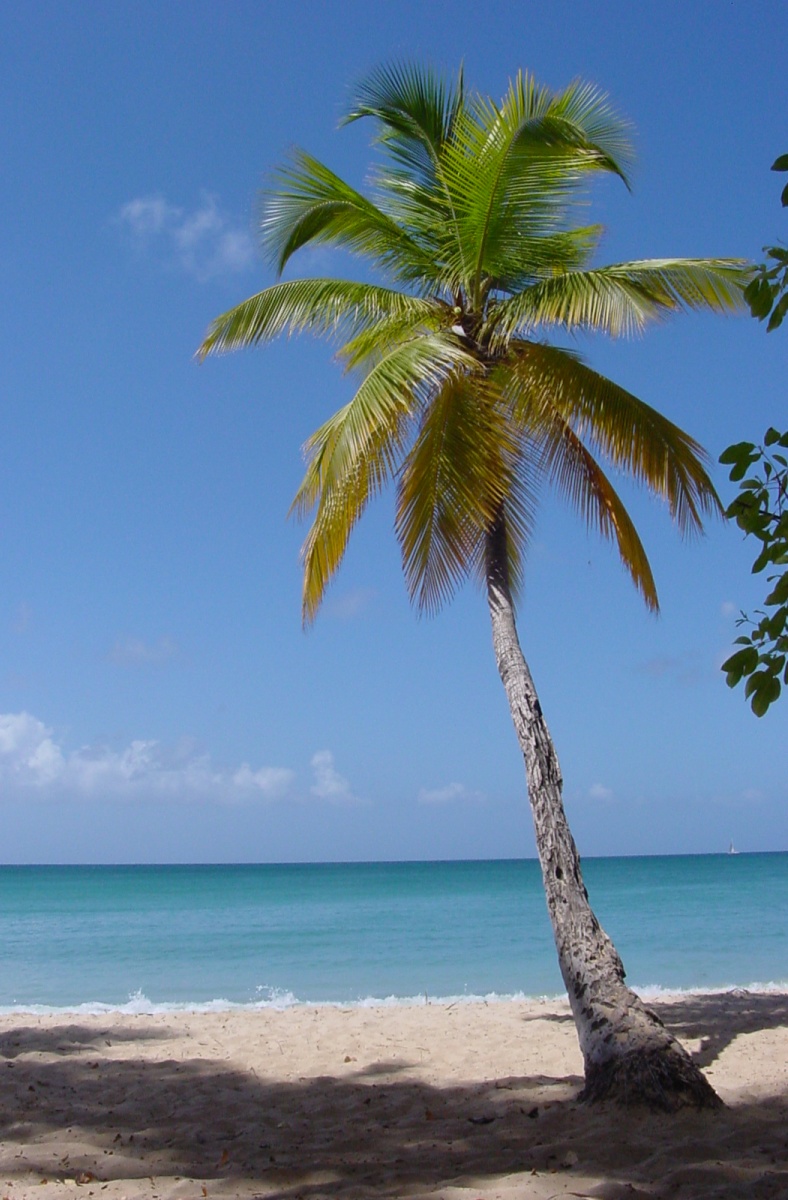
| Coconut (Cocos nucifera) in Martinique | |
| Scientific classification | |
| Kingdom: | Plantae |
| Clade: | Tracheophytes |
| Clade: | Angiosperms |
| Clade: | Monocots |
| Clade: | Commelinids |
| Order: | Arecales |
| Family: | Arecaceae Bercht. & J.Presl, nom. cons.[2] |
| Type genus | |
| Areca | |
| Subfamilies[3] | |
| Diversity | |
| Well over 2600 species in some 202 genera | |
| Synonyms | |
| |
The Arecaceae (/ˌærəˈkeɪsi.iː, -ˌaɪ/) are a family of perennial, flowering plants in the monocot order Arecales. Their growth form can be climbers, shrubs, tree-like and stemless plants, all commonly known as palms. Those having a tree-like form are colloquially called palm trees.[4] Currently, 181 genera with around 2,600 species are known,[5][6] most of which are restricted to tropical and subtropical climates. Most palms are distinguished by their large, compound, evergreen leaves, known as fronds, arranged at the top of an unbranched stem, except for the Hyphaene genus, which has branched palms. However, palms exhibit an enormous diversity in physical characteristics and inhabit nearly every type of habitat within their range, from rainforests to deserts.
Palms are among the best known and most extensively cultivated plant families. They have been important to humans throughout much of history, especially in regions like the Middle East and North Africa. A wide range of common products and foods are derived from palms. In contemporary times, palms are also widely used in landscaping. In many historical cultures, because of their importance as food, palms were symbols for such ideas as victory, peace, and fertility.
Etymology
[edit]The word Arecaceae is derived from the word areca with the suffix "-aceae". Areca is derived from Portuguese, via Malayalam അടയ്ക്ക (aṭaykka), which is from Dravidian *aṭ-ay-kkāy ("areca nut"). The suffix -aceae is the feminine plural of the Latin -āceus ("resembling").[citation needed]
Palm originates from Latin palma semantically overlapping with sense of "hand front" (due to similar splayed shape) ultimately from Proto-Indo-European *pl̥h₂meh₂, a direct descendant folm once existed in Old English.[7]
Morphology
[edit]Whether as shrubs, tree-like, or vines, palms have two methods of growth: solitary or clustered. The common representation is that of a solitary shoot ending in a crown of leaves. This monopodial character may be exhibited by prostrate, trunkless, and trunk-forming members. Some common palms restricted to solitary growth include Washingtonia and Roystonea. Palms may instead grow in sparse though dense clusters. The trunk develops an axillary bud at a leaf node, usually near the base, from which a new shoot emerges. The new shoot, in turn, produces an axillary bud and a clustering habit results. Exclusively sympodial genera include many of the rattans, Guihaia, and Rhapis. Several palm genera have both solitary and clustering members. Palms which are usually solitary may grow in clusters and vice versa.[8]
Palms have large, evergreen leaves that are either palmately ('fan-leaved') or pinnately ('feather-leaved') compound and spirally (-alternately) arranged at the top of the stem, with the sole exception of the king raphia (Raphia vinifera variety nigerica) which has opposite pairs of fronds. The leaves have a tubular sheath at the base that usually splits open on one side at maturity.[9] The inflorescence is a spadix or spike surrounded by one or more bracts or spathes that become woody at maturity. The flowers are generally small and white, radially symmetric, and can be either uni- or bisexual. The sepals and petals usually number three each and may be distinct or joined at the base. The stamens generally number six, with filaments that may be separate, attached to each other, or attached to the pistil at the base. The fruit is usually a single-seeded drupe (sometimes berry-like)[10] but some genera (e.g., Salacca) may contain two or more seeds in each fruit.
Like all monocots, palms do not have the ability to increase the width of a stem (secondary growth) via the same kind of vascular cambium found in non-monocot woody plants.[11] This explains the cylindrical shape of the trunk (almost constant diameter) that is often seen in palms, unlike in ring-forming trees. However, many palms, like some other monocots, do have secondary growth, although because it does not arise from a single vascular cambium producing xylem inwards and phloem outwards, it is often called "anomalous secondary growth".[12]
The Arecaceae are notable among monocots for their height, and for the size of their seeds, leaves, and inflorescences. Ceroxylon quindiuense, Colombia's national "tree", is the tallest monocot in the world, reaching up to 60 metres (197 ft) tall.[13] The coco de mer (Lodoicea maldivica) has the largest seeds of any plant, 40–50 centimetres (16–20 in) in diameter and weighing 15–30 kilograms (33–66 lb) each (coconuts are the second largest). Raffia palms (Raphia spp.) have the largest leaves of any plant, up to 25 metres (82 ft) long and 3 metres (10 ft) wide. The Corypha species have the largest inflorescence of any plant, up to 7.5 metres (25 ft) tall and containing millions of small flowers. Calamus stems can reach 200 metres (656 ft) in length.[citation needed]
Range and habitat
[edit]
Most palms are native to tropical and subtropical climates. Palms thrive in moist and hot climates but can be found in a variety of different habitats. Their diversity is highest in wet, lowland forests. South America, the Caribbean, and areas of the South Pacific and southern Asia are regions of concentration. Colombia may have the highest number of palm species in one country. There are some palms that are also native to desert areas such as the Arabian Peninsula and parts of northwestern Mexico. Only about 130 palm species naturally grow entirely beyond the tropics, mostly in humid lowland subtropical climates, in highlands in southern Asia, and along the rim lands of the Mediterranean Sea. The northernmost native palm is Chamaerops humilis, which reaches 44°N latitude along the coast of Liguria, Italy.[14] In the southern hemisphere, the southernmost palm is the Rhopalostylis sapida (nīkau), which reaches 44°S on the Chatham Islands where an oceanic climate prevails.[15] Cultivation of palms is possible north of subtropical climates, and some higher latitude locales such as the British Isles and the Pacific Northwest feature a few palms in protected locations and microclimates. In the United States, there are at least 12 native palm species, mostly occurring in the states of the Deep South and Florida.[16]
Palms inhabit a variety of ecosystems. More than two-thirds of palm species live in humid moist forests, where some species grow tall enough to form part of the canopy and shorter ones form part of the understory.[17] Some species form pure stands in areas with poor drainage or regular flooding, including Raphia hookeri which is common in coastal freshwater swamps in West Africa. Other palms live in tropical mountain habitats above 1 thousand metres (3 thousand feet), such as those in the genus Ceroxylon native to the Andes. Palms may also live in grasslands and scrublands, usually associated with a water source, and in desert oases such as the date palm. A few palms are adapted to extremely basic lime soils, while others are similarly adapted to extreme potassium deficiency and toxicity of heavy metals in serpentine soils.[15]
Taxonomy
[edit]
Palms are a monophyletic group of plants, meaning the group consists of a common ancestor and all its descendants.[17] Extensive taxonomic research on palms began with botanist H.E. Moore, who organized palms into 15 major groups based mostly on general morphological characteristics. The following classification, proposed by N.W. Uhl and J. Dransfield in 1987, is a revision of Moore's classification that organizes palms into 6 subfamilies.[18] A few general traits of each subfamily are listed below.
- Subfamily Arecoideae are the largest subfamily with 14 tribes and containing over 100 genera. All tribes have pinnate or bipinnate leaves and flowers arranged in groups of three, with a central pistillate and two staminate flowers.
- Subfamily Calamoideae includes the climbing palms, such as rattans. The leaves are usually pinnate; derived characters (synapomorphies) include spines on various organs, organs specialized for climbing, an extension of the main stem of the leaf-bearing reflexed spines, and overlapping scales covering the fruit and ovary.
- Subfamily Ceroxyloideae has small to medium-sized flowers, spirally arranged, with a gynoecium of three joined carpels.
- Subfamily Coryphoideae are the second-largest subfamily with 8 tribes. Most palms in this subfamily have palmately lobed leaves and solitary flowers with three, or sometimes four carpels. The fruit normally develops from only one carpel.
- Subfamily Nypoideae contains only one species, Nypa fruticans,[19] which has large, pinnate leaves. The fruit is unusual in that it floats, and the stem is underground and dichotomously branched, also unusual in palms.
The Phytelephantoideae is the sixth subfamily of Arecaceae in N.W. Uhl and J. Dransfield's 1987 classification. Members of this group have distinct monopodial flower clusters. Other distinct features include a gynoecium with five to 10 joined carpels, and flowers with more than three parts per whorl. Fruits are multiple-seeded and have multiple parts. From the modern phylogenomic data, the Phytelephantoideae are tribe in the Ceroxyloideae subfamily.[20]
Currently, few extensive phylogenetic studies of the Arecaceae exist. In 1997, Baker et al. explored subfamily and tribe relationships using chloroplast DNA from 60 genera from all subfamilies and tribes. The results strongly showed the Calamoideae are monophyletic, and Ceroxyloideae and Coryphoideae are paraphyletic. The relationships of Arecoideae are uncertain, but they are possibly related to the Ceroxyloideae and Phytelephantoideae. Studies have suggested the lack of a fully resolved hypothesis for the relationships within the family is due to a variety of factors, including difficulties in selecting appropriate outgroups, homoplasy in morphological character states, slow rates of molecular evolution important for the use of standard DNA markers, and character polarization.[21] However, hybridization has been observed among Orbignya and Phoenix species, and using chloroplast DNA in cladistic studies may produce inaccurate results due to maternal inheritance of the chloroplast DNA. Chemical and molecular data from non-organelle DNA, for example, could be more effective for studying palm phylogeny.[20]
Recently, nuclear genomes and transcriptomes have been used to reconstruct the phylogeny of palms. This has revealed, for example, that a whole-genome duplication event occurred early in the evolution of the Arecaceae lineage, that was not experienced by its sister clade, the Dasypogonaceae.[22]
For a phylogenetic tree of the family, see the list of Arecaceae genera.
Selected genera
[edit]


- Archontophoenix—Bangalow palm
- Areca—Betel palm
- Astrocaryum
- Attalea
- Bactris—Pupunha
- Beccariophoenix—Beccariophoenix alfredii
- Bismarckia—Bismarck palm
- Borassus—Palmyra palm, sugar palm, toddy palm
- Butia
- Calamus—Rattan palm
- Ceroxylon
- Cocos—Coconut
- Coccothrinax
- Copernicia—Carnauba wax palm
- Corypha—Gebang palm, Buri palm or Talipot palm
- Elaeis—Oil palm
- Euterpe—Cabbage heart palm, açaí palm
- Hyophorbe—Bottle palm
- Hyphaene—Doum palm
- Jubaea—Chilean wine palm, Coquito palm
- Latania—Latan palm
- Licuala
- Livistona—Cabbage palm
- Mauritia—Moriche palm
- Metroxylon—Sago palm
- Nypa—Nipa palm
- Parajubaea—Bolivian coconut palms
- Phoenix—Date palm
- Pritchardia
- Raphia—Raffia palm
- Rhapidophyllum
- Rhapis
- Roystonea—Royal palm
- Sabal—Palmettos
- Salacca—Salak
- Syagrus—Queen palm
- Thrinax
- Trachycarpus—Windmill palm, Kumaon palm
- Trithrinax
- Veitchia—Manila palm, Joannis palm
- Washingtonia—Fan palm
Evolution
[edit]This section needs additional citations for verification. (January 2016) |
The Arecaceae were the first modern family of monocots to appear in the fossil record around 80 million years ago (Mya), during the late Cretaceous period. The first modern species, such as Nypa fruticans and Acrocomia aculeata, appeared 69 Mya, as evidenced by fossil Nypa pollen. Palms appear to have undergone an early period of adaptive radiation. By 60 Mya, many of the modern, specialized genera of palms appeared and became widespread and common, much more widespread than their range today. Because palms separated from the monocots earlier than other families, they developed more intrafamilial specialization and diversity. By tracing back these diverse characteristics of palms to the basic structures of monocots, palms may be valuable in studying monocot evolution.[23] Several species of palms have been identified from flowers preserved in amber, including Palaeoraphe dominicana and Roystonea palaea.[24] Fossil evidence[clarification needed] of them can also be found in samples of petrified palmwood.[citation needed]
The relationship between the subfamilies is shown in the following cladogram:[citation needed]
| Arecaceae | |
Uses
[edit]

Evidence for cultivation of the date palm by Mesopotamians and other Middle Eastern peoples exists from more than 5,000 years ago,[25] in the form of date wood, pits for storing dates, and other remains of the date palm in Mesopotamian sites.[26][27] The date palm had a significant effect on the history of the Middle East and North Africa.[28] In the text "Date Palm Products" (1993), W.H. Barreveld wrote:[29]
One could go as far as to say that, had the date palm not existed, the expansion of the human race into the hot and barren parts of the "old" world would have been much more restricted. The date palm not only provided a concentrated energy food, which could be easily stored and carried along on long journeys across the deserts, it also created a more amenable habitat for the people to live in by providing shade and protection from the desert winds.[25]
An indication of the importance of palms in ancient times is that they are mentioned more than 30 times in the Bible,[30] and at least 22 times in the Quran.[31] The Torah also references the "70 date palm trees", which symbolize the 70 aspects of Torah that are revealed to those who "eat of its fruit."[32]
Arecaceae have great economic importance, including coconut products, oils, dates, palm syrup, ivory nuts, carnauba wax, rattan cane, raffia, and palm wood. This family supplies a large amount of the human diet and several other human uses, both by absolute amount produced and by number of species domesticated.[33] This is far higher than almost any other plant family, sixth out of domesticated crops in the human diet, and first in total economic value produced – sharing the top spot with the Poaceae and Fabaceae.[33] These human uses have also spread many Arecaceae species around the world.[33]
Along with dates mentioned above, members of the palm family with human uses are numerous:
- The type member of Arecaceae is the areca palm (Areca catechu), the fruit of which, the areca nut, is chewed with the betel leaf for intoxicating effects.
- Carnauba wax is harvested from the leaves of South American palms of the genus Copernicia.
- Rattans, whose stems are used extensively in furniture and baskets, are in the genus Calamus.
- Palm oil is an edible vegetable oil produced by the oil palms in the genus Elaeis.[34]
- Several species are harvested for heart of palm, a vegetable eaten in salads.[35]
- Sap of the nipa palm, Nypa fruticans, is used to make vinegar.
- Palm sap is sometimes fermented to produce palm wine or toddy, an alcoholic beverage common in parts of Africa, India, and the Philippines. The sap may be drunk fresh, but fermentation is rapid, reaching up to 4% alcohol content within an hour, and turning vinegary in a day.[36]
- Palmyra and date palm sap is harvested in Bengal, India, to process into gur and jaggery.
- Coconut is the partially edible seed of the fruit of the coconut palm (Cocos nucifera).[37]
- Coir is a coarse, water-resistant fiber extracted from the outer shell of coconuts, used in doormats, brushes, mattresses, and ropes.[38]
- Some indigenous groups living in palm-rich areas use palms to make many of their necessary items and food. Sago, for example, a starch made from the pith of the trunk of the sago palm Metroxylon sagu, is a major staple food for lowland peoples of New Guinea and the Moluccas.
- Palm wine is made from Jubaea also called Chilean wine palm, or coquito palm.
- Recently, the fruit of the açaí palm Euterpe has been used for its reputed health benefits.
- Saw palmetto (Serenoa repens) is being investigated as a drug for treating enlarged prostates.[39]
- Palm leaves are also valuable to some peoples as a material for thatching, basketry, clothing, and in religious ceremonies (see "Symbolism" below).[15]
- Ornamental uses: Today, palms are valuable as ornamental plants and are often grown along streets in tropical and subtropical cities. Chamaedorea elegans and Chamaedorea seifrizii is a popular houseplant and is grown indoors for its low maintenance. Farther north, palms are a common feature in botanical gardens or as indoor plants. Few palms tolerate severe cold and the majority of the species are tropical or subtropical. The three most cold-tolerant species are Trachycarpus fortunei, native to eastern Asia, and Rhapidophyllum hystrix and Sabal minor, both native to the southeastern United States.
- The southeastern U.S. state of South Carolina is nicknamed the Palmetto State after the sabal palmetto (cabbage palmetto), logs from which were used to build the fort at Fort Moultrie. During the American Revolutionary War, they were invaluable to those defending the fort, because their spongy wood absorbed or deflected the British cannonballs.[40]
- Singaporean politician Tan Cheng Bock uses a palm tree-like symbol similar to a Ravenala to represent him in the 2011 Singaporean presidential election.[41] The symbol of a party he founded, Progress Singapore Party, was also based on a palm tree.[42]
- On Ash Wednesday, Catholics receive a cross on their forehead made of palm ashes as a reminder of the Catholic belief that everyone and everything eventually returns to where it came from, commonly expressed by the saying "ashes to ashes and dust to dust."[43]
- Lately the Fujairah Research Centre reported the use of date palm leaves to help restore coral reefs as it merged ancient Emerati techniques with modern science.[44]
-
Fruit of the date palm Phoenix dactylifera
-
Washingtonia robusta palms line Ocean Avenue in Santa Monica, California.
-
Rodeo Palms, a subdivision in Manvel, Texas
-
Sabal palm in the Canaveral National Seashore
-
Coconut flowers
-
Close-up of the top, Atlantic Ocean, Georgia, U.S.
-
Palm Tree Orlando Florida
Endangered species
[edit]
Like many other plants, palms have been threatened by human intervention and exploitation. The greatest risk to palms is destruction of habitat, especially in the tropical forests, due to urbanization, wood-chipping, mining, and conversion to farmland. Palms rarely reproduce after such great changes in the habitat, and those with small habitat ranges are most vulnerable to them. The harvesting of heart of palm, a delicacy in salads, also poses a threat because it is derived from the palm's apical meristem, a vital part of the palm that cannot be regrown (except in domesticated varieties, e.g. of peach palm).[45] The use of rattan palms in furniture has caused a major population decrease in these species that has negatively affected local and international markets, as well as biodiversity in the area.[46] The sale of seeds to nurseries and collectors is another threat, as the seeds of popular palms are sometimes harvested directly from the wild. In 2006, at least 100 palm species were considered endangered, and nine species have been reported as recently extinct.[17]
However, several factors make palm conservation more difficult. Palms live in almost every type of warm habitat and have tremendous morphological diversity. Most palm seeds lose viability quickly, and they cannot be preserved in low temperatures because the cold kills the embryo. Using botanical gardens for conservation also presents problems, since they can rarely house more than a few plants of any species or truly imitate the natural setting.[47] There is also the risk that cross-pollination can lead to hybrid species.
The Palm Specialist Group of the World Conservation Union (IUCN) began in 1984, and has performed a series of three studies to find basic information on the status of palms in the wild, use of wild palms, and palms under cultivation. Two projects on palm conservation and use supported by the World Wildlife Fund took place from 1985 to 1990 and 1986–1991, in the American tropics and southeast Asia, respectively. Both studies produced copious new data and publications on palms. Preparation of a global action plan for palm conservation began in 1991, supported by the IUCN, and was published in 1996.[47]
The rarest palm known is Hyophorbe amaricaulis. The only living individual remains at the Botanic Gardens of Curepipe in Mauritius.
Arthropod pests
[edit]Some pests are specialists to particular taxa. Pests that attack a variety of species of palms include:
- Raoiella indica, the red palm mite[48]
- Caryobruchus gleditsiae, the palm seed beetle or palm seed weevil[49]
- Rhynchophorus ferrugineus, the red palm weevil, recently introduced to Europe[50][51]
- Rhynchophorus palmarum, the South American palm weevil[52]
Symbolism
[edit]
The palm branch was a symbol of triumph and victory in classical antiquity. The Romans rewarded champions of the games and celebrated military successes with palm branches. Early Christians used the palm branch to symbolize the victory of the faithful over enemies of the soul, as in the Palm Sunday festival celebrating the triumphal entry of Jesus Christ into Jerusalem. In Judaism, the palm represents peace and plenty, and is one of the Four Species of Sukkot; the palm may also symbolize the Tree of Life in Kabbalah.
The canopies of the Rathayatra carts which carry the deities of Krishna and his family members in the cart festival of Jagganath Puri in India are marked with the emblem of a palm tree. Specifically it is the symbol of Krishna's brother, Baladeva.[citation needed]
In 1840, the American geologist Edward Hitchcock (1793–1864) published the first tree-like paleontology chart in his Elementary Geology, with two separate trees of life for the plants and the animals. These are crowned (graphically) with the Palms and with Man.[53]
Today, the palm, especially the coconut palm, remains a symbol of the tropical island paradise.[17] Palms appear on the flags and seals of several places where they are native, including those of Haiti, Guam, Saudi Arabia, Florida, and South Carolina.

Other plants
[edit]Some species commonly called palms, though they are not true palms, include:
- Ailanthus altissima (Ghetto palm), a tree in the flowering plant family Simaroubaceae.[54]
- Alocasia odora x gageana 'Calidora' (Persian palm), a flowering plant in the family Araceae.[55]
- Aloe thraskii (Palm aloe), a flowering plant in the family Asphodelaceae.[56]
- Amorphophallus konjac (Snake palm), a flowering plant in the family Araceae.[57]
- Beaucarnea recurvata (Ponytail palm), a flowering plant in the family Asparagaceae.[58]
- Begonia luxurians (Palm leaf begonia), a flowering plant in the family Begoniaceae.[59]
- Biophytum umbraculum (South Pacific palm), a flowering plant in the family Oxalidaceae.[60]
- Blechnum appendiculatum (Palm fern), a fern in the family Aspleniaceae.[61]
- Brassica oleracea 'Lacinato kale' (Black Tuscan palm), a flowering plant in the family Brassicaceae.[62]
- Brighamia insignis (Vulcan palm), a flowering plant in the family Campanulaceae.[63]
- Carludovica palmata (Panama hat palm)[64] and perhaps other members in the family Cyclanthaceae.
- Cordyline australis (Cabbage palm, Torbay palm, ti palm) or palm lily[64] (family Asparagaceae) and other representatives in the genus Cordyline.
- Cyathea cunninghamii (Palm fern)[64] and other tree ferns (families Cyatheaceae and Dicksoniaceae) that may be confused with palms.
- Cycas revoluta (Sago palm)[64] and the rest of the order Cycadales.
- Cyperus alternifolius (Umbrella palm), a sedge in the family Cyperaceae.[65]
- Dasylirion longissimum (Grass palm), a flowering plant in the family Asparagaceae[66] and other plants in the genus Dasylirion.
- Daucus decipiens (Parsnip palm) a flowering plant in the family Apiaceae.
- Dioon spinulosum (Gum palm), a cycad in the family Zamiaceae.[67]
- Dracaena marginata (Dragon palm) a flowering plant in the family Asparagaceae.[68]
- Eisenia arborea (Southern sea palm), a species of brown alga in the family Lessoniaceae.[69]
- Encephalartos transvenosus (Modjadji’s palm) a cycad in the family Zamiaceae.
- Fatsia japonica (Figleaf palm), a flowering plant in the family Araliaceae.[70]
- Heracleum persicum (Tromsø palm), a flowering plant in the family Apiaceae.[71]
- Hypnodendron comosum (Palm tree moss or palm moss), a moss in the family Hypnodendraceae.[72]
- Musa species (Banana palm), a flowering plant in the family Musaceae.[73]
- Pachypodium lamerei (Madagascar palm), a flowering plant in the family Apocynaceae.[74][75]
- Pandanus spiralis (Screw palm), a flowering plant in the family Pandanaceae[64] and perhaps other Pandanus spp.
- Ravenala (Traveller's palm),[64] a flowering plant in the family Strelitziaceae.
- Setaria palmifolia (Palm grass),[64] a grass in the family Poaceae.
- Yucca brevifolia (Yucca palm or palm tree yucca) a flowering plant in the family Asparagaceae.[76]
- Yucca filamentosa (Needle palm)[77] and Yucca filifera (St. Peter's palm),[78] flowering plants in the family Asparagaceae.
- Zamia furfuracea (Cardboard palm), a cycad in the family Zamiaceae.[79]
- Zamioculcas zamiifolia (Emerald palm or aroid palm), a flowering plant in the family Araceae.[80]
See also
[edit]- Coconut
- Fan palm—genera with palmate leaves
- List of Arecaceae genera
- List of foliage plant diseases (Arecaceae)
- List of hardy palms—palms able to withstand colder temperatures
- Postelsia—called the "sea palm" (a brown alga)
References
[edit]Citations
[edit]- ^ "Bajo Comisión - Kachaike Formation (Cretaceous to of Argentina)". PBDB.org.
- ^ Angiosperm Phylogeny Group (2009). "An update of the Angiosperm Phylogeny Group classification for the orders and families of flowering plants: APG III". Botanical Journal of the Linnean Society. 161 (2): 105–121. doi:10.1111/j.1095-8339.2009.00996.x. hdl:10654/18083.
- ^ "Arecaceae Bercht. & J. Presl, nom. cons". Germplasm Resources Information Network. United States Department of Agriculture. 2007-04-13. Archived from the original on 2009-08-11. Retrieved 2009-07-18.
- ^ The name "Palmaceae" is not accepted because the name Arecaceae (and its acceptable alternative Palmae, ICBN Art. 18.5 Archived 2006-05-24 at the Wayback Machine) are conserved over other names for the palm family.
- ^ Baker, William J.; Dransfield, John (2016). "Beyond Genera Palmarum : progress and prospects in palm systematics". Botanical Journal of the Linnean Society. 182 (2): 207–233. doi:10.1111/boj.12401.
- ^ Christenhusz, M. J. M.; Byng, J. W. (2016). "The number of known plants species in the world and its annual increase". Phytotaxa. 261 (3): 201–217. Bibcode:2016Phytx.261..201C. doi:10.11646/phytotaxa.261.3.1. Archived from the original on 2016-07-29.
- ^ Mallory, James P.; Adams, Douglas Q. (1997). Encyclopedia of Indo-European culture. Chicago: Fitzroy Dearborn. p. 255. ISBN 1-884964-98-2.
- ^ Uhl, Natalie W.; Dransfield, John (1987). Genera Palmarum – A classification of palms based on the work of Harold E. Moore. Lawrence, Kansas: Allen Press. ISBN 978-0-935868-30-2.
- ^ "Arecaceae (Palmae)". Botany Department University of Hawaiʻi. Archived from the original on April 24, 2006.
- ^ Zona, Scott (2000). "Arecaceae". In Flora of North America Editorial Committee (ed.). Flora of North America North of Mexico (FNA). Vol. 22. New York and Oxford: Oxford University Press. Archived from the original on 2006-05-25 – via eFloras.org, Missouri Botanical Garden, St. Louis, MO & Harvard University Herbaria, Cambridge, MA.
- ^ Chase, Mark W. (2004). "Monocot relationships: an overview". American Journal of Botany. 91 (10): 1645–1655. doi:10.3732/ajb.91.10.1645. PMID 21652314.
- ^ Donoghue, Michael J. (2005). "Key innovations, convergence, and success: macroevolutionary lessons from plant phylogeny" (PDF). Paleobiology. 31 (sp5): 77–93. doi:10.1666/0094-8373(2005)031[0077:KICASM]2.0.CO;2. S2CID 36988476. Archived from the original on 2011-07-23.
- ^ "Presidencia de la República". idm.presidencia.gov.co. Archived from the original on September 29, 2007.
- ^ Orsino, Francesco; Olivari, Silvia (January 1, 1987). "The presence of Chamaerops humilis L. on Portofino promontory (East Liguria)". Webbia. 41 (2): 261–272. doi:10.1080/00837792.1987.10670414.
- ^ a b c "Tropical Palms by Food and Agriculture Organization". Archived from the original on May 6, 2006.
- ^ "Westcoast Landscape and Lawns | Are Palm Trees Native to Florida?". Archived from the original on 2024-04-22. Retrieved 2024-04-22.
- ^ a b c d "Virtual Palm Encyclopedia – Introduction". Archived from the original on July 19, 2006.
- ^ N. W. Uhl, J. Dransfield (1987). Genera palmarum: a classification of palms based on the work of Harold E. Moore, Jr. (Allen Press, Lawrence, Kansas).
- ^ John Leslie Dowe (2010). Australian Palms: Biogeography, Ecology and Systematics. Csiro. p. 83. ISBN 9780643096158. Archived from the original on February 2, 2014. Retrieved April 20, 2012.
- ^ a b "Palms on the University of Arizona Campus". Archived from the original on June 21, 2006.
- ^ Hahn, William J. (2002). "A Molecular Phylogenetic Study of the Palmae (Arecaceae) Based on atpB, rbcL, and 18S nrDNA Sequences". Systematic Biology. 51 (1): 92–112. doi:10.1080/106351502753475899. JSTOR 3070898. PMID 11943094.
- ^ Barrett, C. F.; McKain, M. R.; Sinn, B. T.; Ge, X. J.; Zhang, Y.; Antonelli, A.; Bacon, C. D. (2019). "Ancient Polyploidy and Genome Evolution in Palms". Genome Biology and Evolution. 11 (5): 1501–1511. doi:10.1093/gbe/evz092. PMC 6535811. PMID 31028709. Retrieved 2023-11-07.
- ^ "Evolution and the fossil record". Virtual Palm Encyclopedia. Archived from the original on April 18, 2006.
- ^ Poinar, G. (2002). "Fossil palm flowers in Dominican and Baltic amber". Botanical Journal of the Linnean Society. 139 (4): 361–367. doi:10.1046/j.1095-8339.2002.00052.x.
- ^ a b W.H. Barreveld. "Date Palm Products – Introduction". Food and Agriculture Organization of the United Nations. Archived from the original on 19 June 2007. Retrieved 2007-06-12.
- ^ "Museum Researcher Makes Revealing Discovery". Archived from the original on 2004-01-13. Retrieved 5 February 2022.
- ^ Miller, Naomi F. (2000). "Plant Forms in Jewellery from the Royal Cemetery at Ur". Iraq. 62: 149–155. doi:10.2307/4200486. JSTOR 4200486. S2CID 191372053.
- ^ "Date palm: The cornerstone of civilisation in the Middle East and North Africa". www.nhm.ac.uk. Retrieved 2024-04-22.
- ^ "Date palm products". Food and Agriculture Organization of the United Nations. Retrieved 2024-04-22.
- ^ "BibleGateway.com - Keyword Search". Biblegateway.com. Archived from the original on March 10, 2007.
- ^ "The Koran". Quod.lib.umich.edu.
- ^ "The Healing Power of Trees". Chabad.org.
- ^ a b c
- Hufford, Matthew B.; Berny Mier y Teran, Jorge C.; Gepts, Paul (2019-04-29). "Crop Biodiversity: An Unfinished Magnum Opus of Nature". Annual Review of Plant Biology. 70 (1): 727–751. Bibcode:2019AnRPB..70..727H. doi:10.1146/annurev-arplant-042817-040240. PMID 31035827. S2CID 140371099.
- Roncal, Julissa; Zona, Scott; Lewis, Carl E. (2008). "Molecular Phylogenetic Studies of Caribbean Palms (Arecaceae) and Their Relationships to Biogeography and Conservation". The Botanical Review. 74 (1): 78–102. Bibcode:2008BotRv..74...78R. doi:10.1007/s12229-008-9005-9. S2CID 40119059. p. 79:
comparable only to the[sic] that of grasses and legumes
- Johnson, Dennis V. (2010). Tropical Palms. Food and Agriculture Organization of the United Nations. ISBN 978-92-5-106742-0. OCLC 712674911. Retrieved 2022-03-24.
- Macía, Manuel J.; Armesilla, Pedro J.; Cámara-Leret, Rodrigo; Paniagua-Zambrana, Narel; Villalba, Soraya; Balslev, Henrik; Pardo-de-Santayana, Manuel (2011). "Palm Uses in Northwestern South America: A Quantitative Review". The Botanical Review. 77 (4): 462–570. Bibcode:2011BotRv..77..462M. doi:10.1007/s12229-011-9086-8. S2CID 24354469.
- Fehr, Vincent; Buitenwerf, Robert; Svenning, Jens-Christian (2020-08-25). "Non-native palms (Arecaceae) as generators of novel ecosystems: A global assessment". Diversity and Distributions. 26 (11): 1523–1538. Bibcode:2020DivDi..26.1523F. doi:10.1111/ddi.13150. S2CID 225298021.
- Tregear, James W.; Rival, Alain; Pintaud, Jean-Christophe (2011). "A family portrait: unravelling the complexities of palms". Annals of Botany. 108 (8): 1387–1389. doi:10.1093/aob/mcr269. PMC 3219500. PMID 22200064.
- Eiserhardt, Wolf L.; Svenning, Jens-Christian; Kissling, W. Daniel; Balslev, Henrik (2011-06-28). "Geographical ecology of the palms (Arecaceae): determinants of diversity and distributions across spatial scales". Annals of Botany. 108 (8): 1391–1416. doi:10.1093/aob/mcr146. PMC 3219491. PMID 21712297.
- ^ MD, Celeste Robb-Nicholson (2007-10-01). "By the way, doctor: Is palm oil good for you?". Harvard Health. Retrieved 2024-04-22.
- ^ admin (2022-07-01). "Hearts of Palm Salad - Louisiana Cookin'". Retrieved 2024-04-22.
- ^ Battcock, Mike; Azam-Ali, Sue. "Chapter Four: Products of Yeast Fermentation". Food and Agriculture Organization of the United Nations. Retrieved 31 October 2019.
- ^ "Is a coconut a fruit, nut or seed?". Library of Congress, Washington, D.C. 20540 USA. Retrieved 2024-04-22.
- ^ Martinelli, Flavia R. Bianchi; Pariz, Marcos Gomes; de Andrade, Rodolfo; Ferreira, Saulo Rocha; Marques, Francisco A.; Monteiro, Sergio N.; de Azevedo, Afonso R. G. (2024-03-18). "Influence of drying temperature on coconut-fibers". Scientific Reports. 14 (1): 6421. Bibcode:2024NatSR..14.6421M. doi:10.1038/s41598-024-56596-z. PMC 10944830. PMID 38494529.
- ^ Gordon, Andrea E.; Shaughnessy, Allen F. (2003-03-15). "Saw palmetto for prostate disorders". American Family Physician. 67 (6): 1281–1283. PMID 12674456.
- ^ "Revolutionary War Exhibit Text" (PDF). November 2002. Archived from the original (PDF) on November 10, 2006.
- ^ See, Sharon (18 August 2011). "PE: Candidates unveil election symbols". Channel News Asia. Archived from the original on 23 October 2012. Retrieved 22 August 2011.
- ^ "PSP can help people take up issues only if voted into Parliament, says Tan Cheng Bock at party launch". The Straits Times. 3 August 2019.
- ^ Lemke, Rebekah (16 January 2019). "3 Must-Know Facts About Ash Wednesday". Catholic Relief Services. Retrieved 1 April 2022.
- ^ "UAE: Ancient Emirati techniques help restore coral reefs". gulfnews.com. 2024-09-10. Retrieved 2024-09-22.
- ^ Rose Kahele (August–September 2007). "Big Island Hearts". Hana Hou!. Vol. 10, no. 4. Archived from the original on 2016-08-26. Retrieved 2016-08-14.
- ^ Dennis Johnson, ed. (1996). Palms: Their Conservation and Sustained Utilization (PDF). International Union for Conservation of Nature. ISBN 978-2-8317-0352-7. Archived from the original (PDF) on 2009-01-14. Retrieved 2009-07-02.
- ^ a b "Palm Conservation: Its Atecedents, Status, and Needs". Archived from the original on August 15, 2006.
- ^ "Pest Alerts - Red palm mite, DPI - FDACS". Doacs.state.fl.us. Archived from the original on 2010-12-02. Retrieved 2010-07-30.
- ^ Robert E. Woodruff (1968). "The palm seed "weevil," Caryobruchus gleditsiae (L.) in Florida (Coleoptera: Bruchidae)" (PDF). Entomology Circular. 73: 1–2. Archived from the original (PDF) on 2011-07-24.
- ^ Rhynchophorus ferrugineus Archived 2007-07-23 at the Wayback Machine at North American Plant Protection Organization (NAPPO)
- ^ Ferry, F.; Gómez, S. (2002). "The Red Palm Weevil in the Mediterranean Area". Palms. 46 (4): 172–178.
- ^ "South American palm weevil | Applied Biological Control Research". biocontrol.ucr.edu. Retrieved 2025-02-26.
- ^ Archibald, J. David (2009). "Edward Hitchcock's Pre-Darwinian (1840) 'Tree of Life'". Journal of the History of Biology. 42 (3): 561–592. CiteSeerX 10.1.1.688.7842. doi:10.1007/s10739-008-9163-y. PMID 20027787. S2CID 16634677.
- ^ "PlantFiles: Ailanthus Species, Chinese Sumac, Ghetto Palm, Stinking Sumac, Tree of Heaven, Varnish Tree". Davesgarden.com. Retrieved 5 February 2022.
- ^ "Alocasia 'Calidora' Elephant's ear Persian palm Care Plant Varieties & Pruning Advice". Shootgardening.co.uk. Retrieved 5 February 2022.
- ^ "Aloe thraskii". Llifle.com. Retrieved 5 February 2022.
- ^ "Amorphophallus konjac Devil's tongue Snake palm Umbrella arum Voodoo lily rivieri mairei Konjaku Konnyaku Care Plant Varieties & Pruning Advice". Shootgardening.co.uk. Retrieved 5 February 2022.
- ^ "StackPath". Gardeningknowhow.com. 16 February 2012. Retrieved 5 February 2022.
- ^ "Begonia luxurians". Gardenersworld.com. Retrieved 5 February 2022.
- ^ "Biophytum umbraculum". The Encyclopedia of Life.
- ^ Thompson, Emma (2016). "Blechnum appendiculatum (palm fern)". Cabi.org. CABI Compendium. doi:10.1079/cabicompendium.118974. Retrieved 2022-02-05.
- ^ "Why Black Tuscan Kale (Cavolo Nero) is Good for You". Heal with food. Retrieved 3 February 2023.
- ^ "Gardens: all hail the vulcan palm". The Guardian. 10 January 2016.
- ^ a b c d e f g FAO 1995. Tropical Palms.. Introduction. "Tropical Palms - Introduction". Archived from the original on 2006-08-31. Retrieved 2006-07-15. Non-Wood Forest Products 10. FAO – Food and Agriculture Organization of the United Nations. ISBN 92-5-104213-6
- ^ "How to Plant & Grow Umbrella Palm (Cyperus alternifolius)". Pondinformer.com. 15 August 2021. Retrieved 5 February 2022.
- ^ "Dealing with drought". Gainescille.com.
- ^ "Dioon spinulosum (Giant Dioon)". Gardenia.net. Retrieved 5 February 2022.
- ^ "Trimming the Dracaena Dragon Palm". Homeguide.sfgate. 6 June 2012. Retrieved 5 February 2022.
- ^ "SIMoN :: Species Database". Sanctuarysimon.org. Retrieved 5 February 2022.
- ^ "Fatsia japonica (Big-leaf paper plant, Figleaf Palm, Formosa rice tree, Glossy-Leaved Paper Plant, Japanese Aralia, Japanese Fatsia, Paper Plant) | North Carolina Extension Gardener Plant Toolbox". Plants.ces.ncsu.edu. Retrieved 5 February 2022.
- ^ Alm, Torbjørn (2013). "Ethnobotany of Heracleum persicum Desf. ex Fisch., an invasive species in Norway, or how plant names, uses, and other traditions evolve". Journal of Ethnobiology and Ethnomedicine. 9 (1) 42. doi:10.1186/1746-4269-9-42. ISSN 1746-4269. PMC 3699400. PMID 23800181.
- ^ "Palm Tree Moss - Hypnodendron comosum - by Patomarazul - JungleDragon". Jungledragon.com. Retrieved 5 February 2022.
- ^ "Banana Palm Tree".
- ^ "RHS Plant Selector - Pachypodium lamerei". Retrieved 16 January 2021.
- ^ "AGM Plants - Ornamental" (PDF). Rhs.org.uk. July 2017. p. 70. Retrieved 14 April 2018.
- ^ "Yucca brevifolia (Joshua Tree)". Gardenia.net. Retrieved 5 February 2022.
- ^ "Yucca filamentosa (Adam's Needle)". Gardenia.net. Retrieved 5 February 2022.
- ^ "Yucca filifera | St. Peter's palm Conservatory Greenhouse/RHS Gardening". Rhs.org.uk. Retrieved 5 February 2022.
- ^ "What Is A Zamia Cardboard Palm: Tips On Growing Cardboard Palms". Gardeningknowhow.com. 24 December 2013. Retrieved 2 January 2022.
- ^ "Zamioculcas, a survivor plant born eons ago - and perfect for the home!". Nature-and-garden.com. 2 December 2021. Retrieved 5 February 2022.
General sources
[edit]- Dransfield, J.; Uhl, N. W.; Asmussen, C. B.; Baker, W. J.; Harley, M. M.; Lewis, C. E. (January 2005). "A new phylogenetic classification of the palm family, Arecaceae". Kew Bulletin. 60 (4): 559–569. (Latest Arecaceae or Palmae classification.)
- Hahn, William J. (2002). "A Molecular Phylogenetic Study of the Palmae (Arecaceae) Based on atpB, rbcL, and 18S nrDNA Sequences". Systematic Biology. 51 (1): 92–112. doi:10.1080/106351502753475899. JSTOR 3070898. PMID 11943094.
- Schultz-Schultzenstein, C. H. (1832). Natürliches System des Pflanzenreichs..., p. 317. Berlin, Germany. (in German)
External links
[edit]- Palmpedia—A wiki-based site dedicated to high quality images and information on palm trees.
- Fairchild Guide to Palms—A collection of palm images, scientific data, and horticultural information hosted by Fairchild Tropical Botanic Garden, Miami.
- Kew Botanic Garden's Palm Genera list—A list of the currently acknowledged genera by Kew Royal Botanic Gardens in London, England (archived 2007)
- Palm species listing with images—Palm and Cycad Societies of Australia (PACSOA)
- Palm & Cycad Societies of Florida, Inc. (PACSOF), which includes pages on Arecaceae taxonomy and a photo index.
- Sterken, Peter (2008). "The Elastic Stability of Palms" (PDF). Plant Science Bulletin. 54 (4). Archived from the original (PDF) on 17 December 2008.
- Palmaceae in the BoDD—Botanical Dermatology Database
- Wallace, A. R. (1853), Palm trees of the Amazon and their uses.
Arecaceae
View on GrokipediaArecaceae, commonly known as the palm family, is a botanical family of perennial monocotyledonous flowering plants in the order Arecales, encompassing approximately 183 genera and over 2,600 species primarily distributed across tropical and subtropical regions worldwide.[1]
Members exhibit diverse growth forms, including solitary or clustered trees with unbranched trunks, shrubs, stemless plants, and climbing vines equipped with cirri or flagella for support.[2]
Characteristic features include large, evergreen leaves that are either pinnately or palmately compound, often forming a terminal crown, with inflorescences borne on branched spadices and fruits typically as one-seeded drupes.[3]
Palms originated in the early Cretaceous period, with a rich fossil record underscoring their ancient lineage and adaptability that predates the diversification of modern angiosperms.[4]
Economically, Arecaceae species provide essential resources such as coconut for food and oil, dates from Phoenix dactylifera, sago from pith of certain genera like Metroxylon, and materials like rattan for weaving and construction, supporting human livelihoods in tropical ecosystems.[3][4]
Ecologically, palms play keystone roles in tropical forests by influencing habitat structure, seed dispersal via vertebrates, and carbon sequestration through long-lived trunks.[5]
Etymology and nomenclature
Etymology
The name Arecaceae is derived from the genus Areca L., the type genus of the family, which Carl Linnaeus established for the betel nut palm (Areca catechu L.) in Species Plantarum (1753).[6] The term areca itself originates from the Malabar (Malayalam) common name for this palm, transmitted through Portuguese colonial accounts of Southeast Asian flora.[7] The suffix -aceae follows standard botanical nomenclature for designating plant families, as codified in the International Code of Nomenclature for algae, fungi, and plants (ICN). Historically, the family was designated Palmae Juss., a name proposed by Antoine Laurent de Jussieu in Genera Plantarum (1789) and reflecting the Latin palma for palm-like trees; this alternative remains conserved under ICN Article 18.5 due to its long usage, though Arecaceae holds nomenclatural priority as the legitimate name based on the type genus Areca.[8] In vernacular usage across major languages, the family is typically called the "palm family" (English), famille des palmiers (French), or Familie der Palmen (German), often evoking economically dominant genera like the coconut palm (Cocos nucifera L.) or date palm (Phoenix dactylifera L.), which underpin terms such as "cocotero" in Spanish or "tamareira" in Portuguese for palm-derived products.[8]Taxonomic history
The initial classification of palms within Arecaceae traces to Carl Linnaeus, who in Species Plantarum (1753) described nine species using his sexual system, emphasizing stamen and pistil counts alongside basic floral traits to place them among monocotyledons.[9] This artificial approach grouped diverse forms without reflecting evolutionary relationships, as Linnaeus lacked comprehensive tropical specimens.[10] Nineteenth-century natural systems advanced delineation through correlated morphological features. In Genera Plantarum (1862–1883), George Bentham and Joseph Dalton Hooker positioned palms in the series Pandaneae, prioritizing inflorescence arrangement—such as spadix branching patterns—and fruit structure, including drupe form and seed endosperm, to infer affinities among genera.[9] Joseph Hooker drew on extensive Kew herbarium holdings, including field-collected materials, to describe over 100 genera, though limitations in geographic coverage persisted.[9] Twentieth-century revisions integrated microscopy-enabled characters like pollen exine patterns and wood anatomy, revealing hidden variations. Harold E. Moore Jr. (1973) outlined 15 informal major groups across five lines of descent, synthesizing inflorescence, fruit, pollen ultrastructure, and seed traits to challenge prior tribe-based schemes.[10][11] Natalie W. Uhl and John Dransfield's Genera Palmarum (1987) formalized these into a ranked framework, incorporating karyological data (e.g., chromosome numbers) and anatomical details like vascular bundles, providing the first comprehensive phylogenetic synthesis grounded in multifaceted evidence.[10] By the 1990s, cladistic analyses supplanted intuitive groupings, applying parsimony to morphological matrices and nascent molecular sequences to reconstruct branching patterns. These efforts, including early rDNA studies, aligned with broader angiosperm phylogenies and were corroborated by Angiosperm Phylogeny Group publications (1998 onward), affirming Arecaceae's monophyly within Arecales while highlighting homoplasies in traditional markers.[10]Description
Morphology
Members of Arecaceae exhibit diverse growth habits, ranging from tree-like and shrubby forms to climbing lianas and acaulescent (stemless) plants, typically as solitary or clustered perennials. The stem, known as the caudex, is usually a single, unbranched, woody structure that is erect, cylindrical to slightly tapered, and often covered with persistent leaf bases, scars, or fibrous remnants; exceptions include rare branching in genera like Hyphaene. Stems vary from slender and flexible in climbers to massive in arborescent species, with surfaces smooth, rough, or armed with spines in some cases.[10][12] Leaves are large, evergreen, and compound, arranged spirally to form a terminal crownshaf; blades are pinnate (feather-like, leaflets along a rachis) or palmate (fan-like, segments from a central point), with intermediate costapalmate types in some genera. Petioles may be unarmed or bear spines, as seen in Phoenix species, while sheaths clasp the stem, occasionally fusing into a distinct crownshaft in taxa like Roystonea. These leaf morphologies, combined with the unbranched stem and apical rosette, distinguish Arecaceae from herbaceous or branched monocots such as grasses or lilies.[12][10] Inflorescences arise in leaf axils, often large and paniculate with branching to multiple orders or simpler spicate forms, enclosed by spathes and bearing clusters of small, three-merous flowers that are bisexual, unisexual, or both. Fruits are typically drupes with one seed (rarely up to three), featuring an exocarp that is smooth, warty, or prickly, and a mesocarp that is fleshy, fibrous, or mealy overlying a hard endocarp.[10][12]Anatomy and physiology
Palms exhibit monocotyledonous stem anatomy characterized by the absence of a vascular cambium, precluding secondary thickening and relying instead on primary growth from the apical meristem and intercalary meristems at leaf bases for elongation. This enables rapid vertical growth, with some species like Roystonea regia reaching heights over 30 meters without proportional diameter increase, supported by scattered vascular bundles in an atactostele configuration. Each bundle comprises collateral xylem and phloem surrounded by sclerenchymatous fibers that enhance mechanical strength against buckling, facilitating canopy dominance in competitive tropical understories.[12] Leaf anatomy features fibrovascular bundles aligned parallel to the lamina margins, with a hypodermis beneath the epidermis that stores water and reduces transpiration in xeromorphic species such as Washingtonia. The bundles include thick-walled fibers for rigidity and phloem strands for nutrient transport, while roots display similar scattered vascular arrangements with adventitious origins, often developing extensive fibrous networks or pneumatodes for aeration in wetland-adapted taxa. In arid species, root cortex parenchyma expands for osmotic adjustment and water retention.[13] Physiologically, Arecaceae predominantly utilize the C3 photosynthetic pathway, fixing CO₂ via the Calvin cycle in mesophyll cells, though this efficiency is tempered by photorespiration in high-light tropics. Drought tolerance arises from stomatal regulation, where closure under water deficit minimizes transpiration losses while maintaining internal CO₂ via crassulacean-like adjustments in some, though not full CAM. Stem and leaf parenchyma serve as capacitance tissues; for instance, in Sabal palmetto, stem water storage scales linearly with height, buffering leaf water potential during dry periods and supporting sustained photosynthesis.[14][15][16]Distribution and ecology
Geographic range
The Arecaceae family, consisting of approximately 2,600 species across 183 genera, displays a primarily pantropical distribution, occurring naturally in tropical and subtropical regions of Africa, Asia, Australia, Oceania, and the Americas.[17] This range aligns with the family's ecological constraints, as palms thrive in warm climates with minimal seasonal variation, though some species extend into semi-arid zones like the Saharan oases or Sonoran Desert fringes.[18] Natural occurrences are rare beyond 40° latitude north or south, reflecting physiological limitations to extreme cold rather than dispersal barriers alone.[19] Species richness peaks in Southeast Asia, the Amazon Basin, and Madagascar, where environmental stability and historical biogeographic factors have fostered diversification. Southeast Asia harbors over 1,000 species, including dense concentrations in Borneo and the Malay Peninsula, surpassing other regions in generic diversity.[20] The Amazon Basin supports around 800 species, many adapted to understory or floodplain niches, while Madagascar hosts approximately 170 species, over 90% of which are endemic.[21] Island hotspots amplify this pattern, with New Caledonia featuring over 40 endemic species across eight genera, and Caribbean archipelagos like Cuba and Hispaniola exhibiting high endemism in genera such as Coccothrinax and Hemithrinax.[22] Most Arecaceae species exhibit sensitivity to frost, with lethal temperatures often above -5°C for tropical taxa, precluding natural establishment in cold temperate zones despite occasional survival of hardier subtropical forms like Washingtonia filifera down to -11°C.[23] Human-mediated introductions have extended the family's apparent range into subtropical areas, including coastal California, the Mediterranean Basin, and southern Australia, where species such as Phoenix dactylifera and Washingtonia robusta are widely planted for ornamental and economic purposes as of 2025.[24] These cultivated populations, however, remain dependent on microclimates and irrigation, underscoring the family's inherent tropical affinity.[25]Habitats and adaptations
Members of the Arecaceae family primarily occupy tropical and subtropical environments worldwide, with over 2,600 species distributed across diverse niches including rainforests, mangroves, savannas, and semi-arid regions. In tropical rainforests, palms often dominate the understory or occupy canopy gaps, leveraging their tolerance for shaded, humid conditions and variable light levels to persist amid dense vegetation. This positioning reflects adaptations such as flexible stems and large, compound leaves with rachises that bend under wind or weight, minimizing breakage in crowded forest strata.[19][26][4] In wetland habitats like mangroves, the genus Nypa, represented by N. fruticans, thrives in intertidal zones with anoxic, saline soils. Unlike typical mangroves with pneumatophores, Nypa employs persistent leaf bases as aeration structures, facilitating oxygen diffusion to underground roots via aerenchyma tissue, which counters oxygen deficiency in submerged substrates. Certain species also develop prop or stilt roots in shallow, wet soils, enhancing anchorage and aeration in periodically flooded areas.[27][28] Savanna-dwelling palms endure seasonal droughts and fires through traits like underground buds and resprouting capabilities, while arid-adapted genera such as Washingtonia exhibit xeromorphic leaf features including thick, waxy, glaucous blades, amphistomatic stomata, and isolateral anatomy to reduce transpiration and withstand desiccation. These palms often cluster near water sources in desert oases, combining drought tolerance with access to subsurface moisture.[29][30] Palms demonstrate versatility across soil types, from oligotrophic, sandy substrates low in nutrients—where species like Euterpe edulis persist via efficient nutrient uptake—to heavier clays or well-drained volcanic-derived soils, influenced by factors such as pH, aluminum content, and drainage. This edaphic tolerance stems from extensive, fibrous root systems that exploit shallow soil horizons effectively, even in nutrient-poor conditions.[31][19][32]Ecological interactions
Palms in the family Arecaceae frequently serve as keystone species within tropical and subtropical ecosystems, where their fruits and structural features provide vital food sources and nesting or roosting sites for a wide array of vertebrates, including birds, bats, and primates.[33] [34] These interactions underpin trophic dynamics, as palms support frugivores that, in turn, mediate seed dispersal over distances that promote forest regeneration and maintain biodiversity.[26] [35] Seed dispersal by vertebrates is particularly pronounced in many palm species, with frugivores such as parrots and rodents consuming fruits and defecating intact seeds far from parent plants, thereby reducing density-dependent mortality and facilitating recruitment in heterogeneous landscapes.[36] For instance, in Chilean temperate forests, the rodent Octodon degus disperses seeds of Jubaea chilensis, aiding establishment in disturbed sites.[36] Such mutualistic relationships enhance palm distribution while linking palms to broader food webs, though defaunation from habitat fragmentation disrupts these processes, leading to reduced palm densities.[37] In nutrient-limited tropical soils, palms exhibit symbiotic associations with arbuscular mycorrhizal fungi (AMF), which extend root hyphal networks to augment uptake of phosphorus and micronutrients, enabling persistence in oligotrophic conditions prevalent in rainforests and savannas.[38] [39] Studies on species like coconut (Cocos nucifera) reveal diverse AMF communities that correlate with improved seedling growth and nutrient efficiency, underscoring the fungi's role in palm ecology beyond cultivation.[40] Complementary interactions with nitrogen-fixing bacteria, such as Rhizobium and Azospirillum in the rhizosphere, further bolster nitrogen availability, fostering soil fertility and supporting associated understory vegetation.[41] [42] As ecosystem engineers, palms modify habitats through their architecture, with fibrous root mats and tall trunks contributing to soil stabilization by mitigating erosion in flood-prone or sloped terrains, while their persistent biomass aids carbon sequestration in forest stands.[43] [19] In natural settings, palm-dominated understories accumulate soil organic carbon via litter inputs and root turnover, enhancing long-term storage in tropical forests where they comprise significant aboveground biomass.[44] These roles amplify resilience against disturbances like cyclones, as evidenced in Pacific island ecosystems where palms anchor soils post-storm.[19]Taxonomy and classification
Subfamilies and tribes
The Arecaceae family is classified into five subfamilies—Arecoideae, Calamoideae, Ceroxyloideae, Coryphoideae, and Nypoideae—within the monocot order Arecales, distinguished from other grass-like orders such as Poales by characteristics including woody habit and specialized inflorescences.[45][46] This subdivision reflects morphological traits like flower structure, fruit type, and growth form, with further delineation into 28 tribes across the subfamilies.[45] Arecoideae represents the largest subfamily, encompassing approximately 1,200 species and over 100 genera, primarily characterized by pinnate leaves and diverse fruit morphologies adapted to tropical environments.[47] Calamoideae, known for its climbing palms including the economically significant rattans, includes around 550 species in 17 genera, with tribes defined by spiny stems and flagellate inflorescences.[48] Coryphoideae features fan-leaved palms with about 600 species, emphasizing tribes based on syncarpous gynoecia and dry fruits.[47] The remaining subfamilies, Ceroxyloideae and Nypoideae, are smaller, with Ceroxyloideae comprising hermaphroditic flowers and Nypoideae limited to the mangrove genus Nypa with unisexual flowers and knee roots.[45] Tribal classifications within these subfamilies rely on diagnostic features such as perianth fusion, stamen arrangement, and endocarp structure; for instance, the tribe Cocoseae in Arecoideae groups taxa with elater-bearing pollen and fibrous mesocarps, underpinning genera of high economic value through oil-rich fruits.[49] These divisions facilitate identification and highlight adaptive radiations, such as climbing habits in Calamoideae tribes like Calameae.[48]Genera and species diversity
The Arecaceae family consists of approximately 183 genera and more than 2,600 species, predominantly found in tropical and subtropical regions worldwide.[45] Subfamily Arecoideae accounts for the majority of this diversity, encompassing over 100 genera and nearly 55% of the family's species.[45] Notable genera include Elaeis (oil palm, two species), Phoenix (date palm, about 19 species), and the monotypic Cocos (coconut palm, C. nucifera), which highlight both economic utility and morphological variation across the family. Numerous monotypic genera, such as Nypa (mangrove palm) and Voaniola (endemic to Madagascar), exemplify the spectrum from species-rich clades to singular evolutionary lineages.[45] Speciation patterns in Arecaceae frequently involve adaptive radiations, especially on islands, where Miocene dispersals have driven diversification in tribes like Trachycarpeae across Pacific archipelagos.[50]Phylogenetic updates
A 2023 plastid phylogenomic study sequenced complete plastomes from 179 genera, representing 98% of the family's diversity, and reconstructed a robust backbone phylogeny for Arecaceae using maximum likelihood analyses of 15,000+ variable sites across 77 plastid genes.[17] This framework corroborated the monophyly of all five recognized subfamilies (Arecoideae, Calamoideae, Ceroxyloideae, Coryphoideae, and Nypoideae) and resolved deep interfamilial relationships with high support, though some shallow divergences remained polytomous due to limited plastid signal.[17] Nuclear phylogenomic approaches have since complemented these plastid data to resolve conflicts, particularly in rapidly diversifying clades. For instance, a 2024 analysis of 151 low-copy nuclear genes from 37 endemic New Caledonian species and 77 relatives in tribe Areceae (Arecoideae) inferred a well-supported phylogeny, clarifying subtribal boundaries and revealing multiple independent colonizations of ultramafic soils as drivers of local radiation.[51] Such nuclear datasets highlight cytonuclear discordance in Areceae, attributed to incomplete lineage sorting rather than widespread introgression.[51] Hybridization has emerged as a key factor complicating phylogeny in certain lineages, with a 2024 genomic survey across Arecaceae detecting reticulate evolution disproportionately in Arecoideae and Coryphoideae, where it contributes to morphological convergence and underestimated species boundaries.[52] These findings underscore the need for integrated phylogenomic pipelines incorporating both organellar and nuclear markers to disentangle adaptive radiations from reticulation signals in hybridization-prone groups like subtribe Butiinae.[52]Evolutionary history
Fossil record
The fossil record of Arecaceae documents a Cretaceous origin, with the earliest definitive evidence consisting of pollen grains assigned to the form genus Arecipites from Late Cretaceous deposits in West Africa, dated to approximately 80–70 million years ago (mya), and fossilized palm fruits (endocarps) from Maastrichtian horizons in India indicating the presence of the tribe Borasseae around 70–66 mya.[53] These macro- and microfossils, preserved in sedimentary contexts associated with tropical paleoenvironments, represent stem-group lineages predating the Cretaceous-Paleogene (K-Pg) boundary at 66 mya.[54] A 2024 phylogenomic analysis incorporating 1,033 nuclear genes, calibrated against a synthesized fossil dataset, estimates the crown-group origin of Arecaceae in the Early Cretaceous (circa 110–100 mya), suggesting that pre-Late Cretaceous fossils may exist but remain unidentified or equivocal due to morphological convergence with other monocots.[55] This molecular clock approach reconciles sparse early fossil occurrences with inferred divergence times, highlighting potential under-sampling in pre-Maastrichtian strata from Gondwanan landmasses.[56] Following the K-Pg mass extinction, Arecaceae underwent marked diversification in the Paleogene, with Paleocene assemblages from northern Colombia yielding fronds and fruits akin to basal arecoid palms in post-extinction rainforests.[57] Eocene lagerstätten, such as those in the Messel Pit (Germany) and Green River Formation (North America), preserve diverse organs including leaves, inflorescences, and fruits morphologically comparable to modern subfamilies like Coryphoideae and Arecoideae, evidencing rapid adaptation to Paleogene megathermal climates.[55] These deposits, dated 56–34 mya, underscore a Cenozoic radiation coinciding with global warming episodes like the Early Eocene Climatic Optimum.[58]Origins and diversification
The palm family Arecaceae likely originated in the early Cretaceous period, approximately 100-130 million years ago, with evidence pointing to a Gondwanan cradle in regions corresponding to modern South America, Africa, and India.[59][56] Phylogenetic analyses indicate that ancestral lineages diversified amid the breakup of Gondwana, where vicariance events isolated populations across emerging continents, contributing to early clade formation in subfamilies like Ceroxyloideae.[60] However, pure vicariance does not fully explain distributions; long-distance dispersal by birds and mammals played a pivotal role, enabling trans-oceanic crossings and establishment in Laurasian regions such as Southeast Asia and the Pacific.[61][50] Major radiations occurred during the Paleogene and Neogene, coinciding with the expansion of tropical rain forests and post-Eocene cooling that contracted suitable habitats, prompting adaptive shifts.[62] Elevated net diversification rates in the tropics, driven by stable warm-wet climates, led to hotspots in the New World and Indo-Pacific, with India acting as an early Paleogene evolutionary center before faunal exchanges via the India-Asia collision.[63][64] These events aligned with broader angiosperm coevolution, where palms integrated into emergent forest ecosystems, benefiting from pollinator and disperser networks.[59] Key morphological innovations facilitated this diversification, including the evolution of large, nutrient-rich seeds suited for endozoochory by vertebrates, which enhanced dispersal efficacy across fragmented landscapes.[65] Adaptations in fruit syndromes—such as colorful, fleshy drupes attracting avian and mammalian frugivores—coupled with wind-dispersed pollen, promoted gene flow and colonization of insular and continental habitats.[19] These traits, emerging post-Cretaceous, underscore causal links between biotic interactions and clade proliferation, rather than climatic determinism alone.[66]Hybridization events
Hybridization in the Arecaceae family, while relatively uncommon in natural settings, has been documented in approximately 114 putative instances across genera, though this figure likely underestimates occurrences due to under-reporting and challenges in identification via morphological traits alone.[67] Of these, around 20 hybrids are considered widespread, with notable examples in genera such as Phoenix (e.g., P. canariensis × P. reclinata forming Phoenix ×arehuquensis) and Washingtonia (e.g., W. filifera × W. robusta), where interspecific crosses produce fertile offspring capable of backcrossing.[68] Seven distinct hybrid zones have been identified, often in areas of sympatry where overlapping distributions facilitate gene flow.[68] Recent analyses, including a 2024 study leveraging phylogenetic and distributional data, indicate that hybridization is not evenly distributed across palm lineages, with hybrid frequency showing low but detectable phylogenetic signal, suggesting evolutionary clustering in certain clades rather than random occurrence.[52] This uneven pattern implies that while hybridization contributes to trait variation and potentially speciation—through mechanisms like introgression enhancing adaptive diversity—it can also lead to the swamping of locally adapted genotypes in contact zones, reducing population fitness under divergent selective pressures.[68] For instance, in high-elevation wax palms (Ceroxylon spp.), introgressive hybridization following secondary contact has been shown to homogenize gene pools across isolated populations, counteracting allopatric divergence driven by positive selection.[69] In agricultural contexts, natural hybridization insights inform breeding programs aimed at developing disease-resistant cultivars, as seen in Phoenix date palms where interspecific crosses introduce genetic variation for traits like Fusarium wilt resistance, though such efforts must balance hybrid vigor against potential fertility issues or maladaptive introgression.[70] Overall, these events underscore hybridization's dual role in Arecaceae evolution: as a driver of novelty in permissive environments but a risk to lineage integrity where barriers to gene flow are weak.[68]Human utilization
Traditional uses
Indigenous peoples in the Amazon have traditionally employed palm leaves for thatching roofs and weaving mats for housing, with species like Lepidocaryum tenue and Socratea exorrhiza yielding fronds that provide waterproof covering lasting 10–15 years when properly layered and maintained.[71] In northwestern South America, stems from palms such as Guilielma gasipaes serve as supports for dwellings and raw material for utensils and tools, including bows, arrows, and fishing implements, reflecting knowledge passed through generations among indigenous groups who document over 50 uses per species in some cases. Pacific island societies, including those in Melanesia, utilize fronds from Metroxylon and Cocos nucifera for cordage, baskets, and structural bindings in communal houses, often combining them with stems felled for single-use harvesting to sustain local supplies.[72] [73] Subsistence food derives primarily from palm fruits, seeds, and processed pith; for instance, in eastern Amazonia, communities harvest fruits from 20 of 27 known palm species for direct consumption or fermentation into beverages, prioritizing wild stands for seasonal yields.[74] Sago palms (Metroxylon sagu) supply a starch staple in traditional diets of Southeast Asian and Pacific indigenous groups, extracted by felling mature trunks, rasping the pith, kneading to release starch granules, and settling in water troughs—a labor-intensive process yielding up to 200–300 kg per tree that supports communities during lean periods.[75] Medicinal applications include the use of Areca catechu nuts as a chewed stimulant in South and Southeast Asian indigenous practices, wrapped in betel leaf (Piper betle) for purported benefits like improved alertness and mild euphoria from arecoline alkaloids, though ethnographic records note associated risks such as tooth staining, oral lesions, and long-term carcinogenesis from chronic use exceeding 10–20 nuts daily.[76] [77] In Amazonian contexts, palm sap and fruit extracts treat ailments like diarrhea and wounds, with indigenous healers in central regions citing over 30 species for therapeutic roles based on empirical observation rather than systematic validation.[78]Economic products
Coconuts from Cocos nucifera serve as a primary economic product through copra, the dried kernel used for extraction and other applications, alongside coconut water harvested directly from immature fruits. Indonesia led global coconut production in 2023, outputting approximately 18 million metric tons, contributing to a worldwide total exceeding 60 million metric tons annually.[79] Date fruits from Phoenix dactylifera represent another major commodity, with global production estimates around 10 million metric tons for 2023, supporting a market valued at roughly USD 9.5 billion. Egypt ranks as the top producer, exceeding 1 million metric tons yearly, followed by Saudi Arabia and Algeria.[80][81][82] Rattan canes from climbing genera such as Calamus and Daemonorops supply materials for furniture, baskets, and handicrafts, with international trade in raw rattan valued at about USD 50 million and finished products reaching USD 1.2 billion. Bamboo and rattan furniture trade alone totaled USD 328 million in 2023, reflecting demand for durable, natural woven goods.[83][84] Ornamental palms, including dwarf species like Chamaedorea elegans, drive trade in landscaping and interior decoration, forming a subset of the broader ornamental plants sector projected to exceed USD 50 billion by 2025. These plants are propagated and exported widely, particularly from tropical nurseries to temperate markets.[85] Palm kernel oil, derived as a byproduct, feeds biofuel production, where transesterification yields biodiesel at efficiencies up to 94% under optimized conditions, supporting renewable energy applications without overlapping primary oil sectors.[86]Nutritional and health aspects
Fruits from Arecaceae species exhibit diverse nutritional profiles, generally rich in carbohydrates, vitamins, minerals, and bioactive compounds including phenolic acids, carotenoids, anthocyanins, and tocopherols.[87] For instance, date palm (Phoenix dactylifera) fruits contain approximately 66% carbohydrates and 11% moisture, contributing to their use as energy-dense foods.[88] Other palms, such as those in Amazonian species, provide amino acids, fibers, and antioxidants that support potential health promotion through anti-inflammatory and antimicrobial properties.[89] Palm oil, extracted from the mesocarp of oil palm (Elaeis guineensis), comprises about 50% saturated fatty acids (primarily palmitic acid), 40% monounsaturated fats (mainly oleic acid), and 10% polyunsaturated fats.[90] It is distinguished by high levels of tocotrienols—forms of vitamin E with antioxidant activity—and, in its unrefined red form, substantial beta-carotene, which serves as a vitamin A precursor and may improve blood levels of these nutrients in deficient populations.[91] [92]| Component | Approximate Percentage |
|---|---|
| Saturated fatty acids | 50% |
| Monounsaturated fats | 40% |
| Polyunsaturated fats | 10% |
Palm oil production
Production statistics
Global palm oil production reached approximately 78 million metric tons in the 2024/2025 marketing year, with Elaeis guineensis (African oil palm) serving as the primary cultivated species.[99] Indonesia accounted for 46 million metric tons (58% of the total), while Malaysia produced 19.4 million metric tons (25%), together comprising over 80% of worldwide output.[99] Other notable producers included Thailand at 3.33 million metric tons and Colombia at around 2 million metric tons.[99][100]| Country | Production (million metric tons, 2024/2025) | Share of Global (%) |
|---|---|---|
| Indonesia | 46 | 58 |
| Malaysia | 19.4 | 25 |
| Thailand | 3.33 | 4 |
| Others | ~9.27 | 13 |
| Total | 78 | 100 |
