Hubbry Logo
RedneckRedneckMain
Open search
Redneck
Community hub
Redneck
logo
8 pages, 0 posts
0 subscribers
Be the first to start a discussion here.
Redneck
Redneck
from Wikipedia

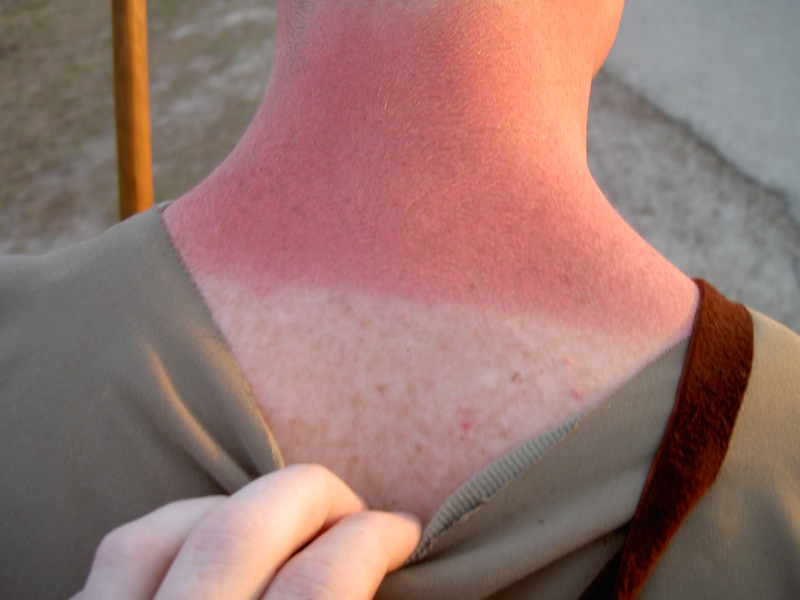
The term may come from the look of a sunburned neck.

Redneck is a derogatory term mainly applied to white Americans perceived to be crass and unsophisticated, closely associated with rural whites of the southern United States.[1][2] Its meaning possibly stems from the sunburn found on farmers' necks dating back to the late 19th century.[3] Authors Joseph Flora and Lucinda MacKethan describe the stereotype as follows:

Redneck is a derogatory term currently applied to some lower-class and working-class southerners. The term, which came into common usage in the 1930s, is derived from the redneck's beginnings as a "yeoman farmer" whose neck would burn as they toiled in the fields. These yeoman farmers settled along the Virginia, North Carolina, and South Carolina coasts.[4]

Its modern usage is similar in meaning to cracker (especially regarding Texas, Georgia, and Florida), hillbilly (especially regarding Appalachia and the Ozarks),[5] and white trash (but without the last term's suggestions of immorality).[6][7][8] In Britain, the Cambridge Dictionary definition states: "A poor, white person without education, esp. one living in the countryside in the southern US, who is believed to have prejudiced ideas and beliefs. This word is usually considered offensive."[9] People from the white South sometimes jocularly call themselves "rednecks" as insider humor.[10]

Some people claim that the term’s origin is that during the West Virginia Mine Wars of the early 1920s, workers organizing for labor rights donned red bandanas, worn tied around their necks, as they marched up Blair Mountain in a pivotal confrontation. The West Virginia Mine Wars Museum commemorates their struggle for fair wages. A monument in front of the George Buckley Community Center in Marmet, WV, part of the "Courage in the Hollers Project" of the West Virginia Mine Wars Museum depicts the silhouettes of four mine workers cut from steel plate, wearing bright red bandanas around their necks or holding them in their hands.[11][12] However, the term was used as early as 1830 to refer to white rural Southern laborers[13], so although the 1920s wearers of red bandanas may have used the term, they did not originate it.

By the 1970s, the term had become offensive slang, its meaning expanded to include racism, loutishness, and opposition to modern ways.[14]

Patrick Huber, in his monograph A Short History of Redneck: The Fashioning of a Southern White Masculine Identity, emphasized the theme of masculinity in the 20th-century expansion of the term, noting: "The redneck has been stereotyped in the media and popular culture as a poor, dirty, uneducated, and racist Southern white man."[15]

19th and early 20th centuries

[edit]

Political term for poor farmers

[edit]

The term originally characterized farmers that had a red neck, caused by sunburn from long hours working in the fields. A citation from provides a definition as "poorer inhabitants of the rural districts ... men who work in the field, as a matter of course, generally have their skin stained red and burnt by the sun, and especially is this true of the back of their necks".[16] Hats were usually worn and they protected that wearer's head from the sun, but also provided psychological protection by shading the face from close scrutiny.[17] The back of the neck however was more exposed to the sun and allowed closer scrutiny about the person's background in the same way callused working hands could not be easily covered.

By 1900, "rednecks" was in common use to designate the political factions inside the Democratic Party comprising poor white farmers in the South.[18] The same group was also often called the "wool hat boys" (for they opposed the rich men, who wore expensive silk hats). A newspaper notice in Mississippi in August 1891 called on rednecks to rally at the polls at the upcoming primary election:[19]

Primary on the 25th.
And the "rednecks" will be there.
And the "Yaller-heels" will be there, also.
And the "hayseeds" and "gray dillers", they'll be there, too.
And the "subordinates" and "subalterns" will be there to rebuke their slanderers and traducers.
And the men who pay ten, twenty, thirty, etc. etc. per cent on borrowed money will be on hand, and they'll remember it, too.

Poor white sharecroppers in Alabama,

By , the political supporters of the Mississippi Democratic Party politician James K. Vardaman—chiefly poor white farmers—began to describe themselves proudly as "rednecks", even to the point of wearing red neckerchiefs to political rallies and picnics.[20]

Linguist Sterling Eisiminger, based on the testimony of informants from the Southern United States, speculated that the prevalence of pellagra in the region during the Great Depression may have contributed to the rise in popularity of the term; red, inflamed skin is one of the first symptoms of that disorder to appear.[21]

Coal miners

[edit]
Coal miners in soda fountain, Kentucky, 1946

The term "redneck" in the early 20th century was occasionally used in reference to American coal miner union members who wore red bandanas for solidarity. The sense of "a union man" dates at least to the 1910s and was especially popular during the 1920s and 1930s in the coal-producing regions of West Virginia, Kentucky, and Pennsylvania.[22] It was also used by union strikers to describe poor white strikebreakers.[23]

Late 20th and early 21st centuries

[edit]

Writers Edward Abbey and Dave Foreman also use "redneck" as a political call to mobilize poor rural white Southerners. "In Defense of the Redneck" was a popular essay by Ed Abbey. One popular early Earth First! bumper sticker was "Rednecks for Wilderness". Murray Bookchin, an urban leftist and social ecologist, objected strongly to Earth First!'s use of the term as "at the very least, insensitive".[24] However, many Southerners have proudly embraced the term as a self-identifier.[25][26] Similarly to Earth First!'s use, the self-described "anti-racist, pro-gun, pro-labor" group Redneck Revolt have used the term to signal its roots in the rural white working-class and celebration of what member Max Neely described as "redneck culture".[27]

As political epithet

[edit]

According to Chapman and Kipfer in their "Dictionary of American Slang", by 1975 the term had expanded in meaning beyond the poor Southerner to refer to "a bigoted and conventional person, a loutish ultra-conservative".[28] For example, in 1960 John Bartlow Martin expressed Senator John F. Kennedy should not enter the Indiana Democratic presidential primary because the state was "redneck conservative country". Indiana, he told Kennedy, was a state "suspicious of foreign entanglements, conservative in fiscal policy, and with a strong overlay of Southern segregationist sentiment".[29] Writer William Safire observed that it is often used to attack white Southern conservatives, and more broadly to degrade working class and rural whites that are perceived by urban progressives to be insufficiently progressive.[30] At the same time, some white Southerners have reappropriated the word, using it with pride and defiance as a self-identifier.[31]

[edit]

Outside the United States

[edit]

Historical Scottish Covenanter usage

[edit]

In Scotland in the 1640s, the Covenanters rejected rule by bishops, often signing manifestos using their own blood. Some wore red cloth around their neck to signify their position, and were called rednecks by the Scottish ruling class to denote that they were the rebels in what came to be known as The Bishop's War that preceded the rise of Cromwell.[32][33] Eventually, the term began to mean simply "Presbyterian", especially in communities along the Scottish border. Because of the large number of Scottish immigrants in the pre-revolutionary American South, some historians have suggested that this may be the origin of the term in the United States.[34]

Dictionaries document the earliest American citation of the term's use for Presbyterians in , as "a name bestowed upon the Presbyterians of Fayetteville (North Carolina)".[16][33]

South Africa

[edit]

An Afrikaans term which translates literally as "redneck", rooinek, is used as a disparaging term for English South Africans, in reference to their supposed naïveté as later arrivals in the region in failing to protect themselves from the sun.[35]

See also

[edit]

References

[edit]

Further reading

[edit]
[edit]
Revisions and contributorsEdit on WikipediaRead on Wikipedia
from Grokipedia
Redneck is a term denoting a poor, rural white person in the , originating from the sunburned necks of those engaged in outdoor manual labor such as farming. The word first appeared in print around , initially in reference to Presbyterians but soon applied more broadly to uneducated Southern whites, often synonymous with "cracker." By the late , it had become a class-based slur used by owners and middle-class whites to demean lower-class sharecroppers and farmers in the lower Mississippi Valley, highlighting distinctions in wealth and skin tone from sun exposure. In the early , the term extended to white coal miners in who wore red bandanas during labor strikes, associating it with union and populist movements against interests. Mid-century usage linked rednecks to racial , portraying them as embodying Southern white , though the core connotation remained tied to and manual toil. From the onward, working-class whites began reclaiming the label as a badge of authenticity, hard work, and resistance to urban , fostering a celebrated in country music, , and trends like "redneck ." This evolution reflects a shift from pure to self-identification among blue-collar communities, often emphasizing traditional values and independence despite persistent of and bigotry.

Etymology and Origins

Literal and Early American Meanings

The term "redneck" originated in the early 19th-century American South as a literal descriptor for the sunburned necks of farmers and laborers who toiled outdoors in the fields without protective collars, exposing their to prolonged sun exposure while plowing or harvesting crops. This physical marker distinguished them from urban or wealthier classes who avoided such manual agrarian work, with the earliest known printed attestation appearing in in Anne Royall's Southern Tour, though initially in a contextual sense tied to rural Presbyterians before evolving to denote "poor and poorly educated Southern U.S. white person." By the latter half of the , the term had solidified as a reference to farmers and sharecroppers in regions like the , whose necks reddened from hours under the sun while wearing open-necked shirts and wide-brimmed hats. In early American usage, "redneck" functioned primarily as a pejorative class slur deployed by urban elites, plantation owners, and middle-class whites to demean the rural agrarian poor, emphasizing their economic hardship, social isolation, and perceived lack of refinement rather than any ideological stance. For instance, in 1893, linguist Hubert A. Shands documented it in Mississippi as "a name applied by the better class of people to the poorer [white] inhabitants of the rural districts," highlighting its role in reinforcing intra-white hierarchies amid post-Civil War poverty and tenant farming. Newspapers and dialect studies from the era, such as Joseph W. Carr's 1904 notes from Arkansas, portrayed "rednecks" as "uncouth countrymen" from swampy backwoods, backward due to geographic remoteness that limited education and market access, fostering stereotypes of ignorance tied directly to subsistence-level farming rather than inherent traits. This distinguished it from contemporaneous slurs like "cracker," which carried more regional flavor without the explicit class-inflected disdain for poverty-induced rusticity.

Scottish Covenanter Roots

The , a Presbyterian movement in 17th-century , emerged in opposition to the religious policies imposed by King Charles I and later monarchs, particularly the enforcement of Anglican practices on the . On February 28, 1638, thousands gathered at in to sign the , pledging resistance to episcopacy and royal interference in church affairs, which sparked the (1639–1640) and broader civil conflicts. This defiance extended through the 1643 , allying Scots with English Parliamentarians, but intensified under Restoration persecution from 1660, culminating in the "Killing Times" of the 1680s, where Covenanter rebels faced execution or transportation for armed uprisings against royal authority, such as at Bothwell Bridge (1679) and Drumclog (1679). Supporters of the Covenants, often drawn from lowland farmers and artisans, adopted visible markers of loyalty, including red cloth tied around their necks to symbolize the blood oath of the covenants and distinguish themselves during rallies and skirmishes against monarchical forces. This practice gave rise to the term "redneck" as a descriptor for these defiant Presbyterians, initially denoting their rebellious stance rather than physical appearance, with early references linking it to Covenanter participants in the against English overreach. Many Covenanter descendants, via Ulster plantation settlers known as Scots-Irish, migrated to the American colonies starting in the early , with waves from 1718 onward comprising Presbyterian farmers from 's Bann and Foyle Valleys fleeing economic hardship and religious tensions. By the mid-1700s, these migrants dominated settlement in the Appalachian backcountry and , with historical records indicating over 200,000 Ulster Scots arriving between 1710 and 1775, pushing southward from into frontier regions like the and Carolina highlands. This demographic concentration—evidenced by church records, land grants, and surname distributions—fostered a cultural continuity of clannish networks and anti-authoritarian rooted in Covenanter resistance, shaping an independent tradition that prized over centralized rule.

Historical Evolution in the United States

19th Century: Rural Laborers and Farmers

In the latter half of the , following the , the term "redneck" emerged as a derogatory label applied by upper-class whites to lower-class white farmers and laborers in the rural , particularly those engaged in physically demanding outdoor work that resulted in sunburned necks. This usage reflected class distinctions rather than ethnic or regional pride, with the descriptor highlighting the visible marks of manual toil on individuals who lacked the resources to avoid such labor. Non-slaveholding whites, who comprised the majority of prior to —estimated at about 75% of white families in the Confederacy—faced exacerbated economic hardship after , as the collapse of the system forced many into or tenant farming arrangements that perpetuated debt and subsistence-level existence. Sharecropping and tenancy became dominant in the post-war , ensnaring a significant portion of white farmers in cycles of ; by the , these systems accounted for much of the agricultural output in states like and , where white sharecroppers outnumbered Black ones in some areas, with two-thirds of all sharecroppers being white by later assessments rooted in 19th-century patterns. from the period indicate that depletion from overcultivation of and , combined with a lack of capital for fertilizers or machinery, confined farmers to marginal lands, yielding average farm values in the as low as $10-20 per acre in upland regions by 1880. This was especially pronounced in the Southern and Appalachian regions, where census records from 1850 to 1900 show high concentrations of smallholder white farms—often under 50 acres—dependent on family labor amid eroded hill slopes and limited access to markets or credit, contrasting with the fertile bottomlands controlled by former . Politically, "redneck" denoted these impoverished voters who challenged the entrenched power of and merchants, as seen in Mississippi's agrarian revolts from the 1870s onward, where poor hill farmers—labeled rednecks—mobilized against Bourbon Democratic dominance through organizations like the , exposing class-based resentments over debt peonage and railroad monopolies without alliance to laborers. Such tensions underscored a divide where exploited stereotypes of rednecks as ignorant and violent to maintain control, yet the term captured a real socioeconomic whose opposition to oligarchic rule foreshadowed Populist insurgencies by the .

Early 20th Century: Union Militancy in Coal Regions

In the early , the term "redneck" gained prominence in the context of intense labor conflicts in Appalachian coal regions, particularly during the West Virginia Mine Wars (1912–1921), where miners confronted exploitative conditions including economies, inadequate safety measures leading to frequent accidents and , and suppression by private detective agencies like the Baldwin-Felts outfit. These conditions, characterized by 12-hour shifts in hazardous underground environments and denial of rights, fueled radical organizing efforts by the (UMWA) against absentee-owned coal operators who controlled housing, stores, and local governance in non-union counties like and Logan. The militancy reflected a direct response to economic , where miners faced , blacklisting, and violence for union sympathies, culminating in armed resistance as a means to secure recognition and better wages. The pivotal event was the in August–September 1921, the largest armed labor uprising in U.S. history since the Civil War, involving roughly 10,000 miners marching from Charleston toward Logan County to liberate union organizers and organize holdout mines. Participants, including white, Black, and immigrant workers, donned red bandanas around their necks as a symbol of and to differentiate from company forces wearing white handkerchiefs, earning them the moniker "Red Neck Army" in contemporary reports. Over five days of combat starting , the miners—armed with rifles, homemade bombs, and artillery—exchanged fire with approximately 3,000 deputies, sheriff's forces, and company guards bolstered by machine guns and biplanes dropping jerry-rigged explosives, resulting in an estimated 10 to 50 fatalities, though exact figures remain disputed due to underreporting. Federal intervention via President Warren G. Harding's order for 2,100 troops and Army bombers prompted the miners' surrender by September 2, averting further escalation. The term "redneck" emerged here with dual connotations: coal operators and authorities deployed it pejoratively to stigmatize strikers as uncouth radicals or Bolshevik sympathizers, evoking the "red" peril of communism amid post-World War I anxieties, while the miners reclaimed it as a badge of proletarian defiance and interracial unity against corporate power. This usage extended beyond the battle, with "redneck" denoting union loyalists in coal districts through the 1920s and 1930s, as documented in labor histories. Immediate outcomes included the of over 1,200 miners on charges ranging from to , many acquitted or pardoned after trials that exposed operator abuses, though UMWA membership in southern plummeted from 50,000 to near zero by due to reprisals. Despite tactical suppression, the conflict's media coverage—reaching millions via national press—amplified awareness of mining perils, contributing causally to federal investigations into labor conditions and paving the way for UMWA revival under the National Industrial Recovery Act of 1933, which facilitated widespread and wage hikes in the industry.

Mid-to-Late 20th Century Shifts

Post-World War II economic transformations prompted widespread rural-to-urban migration in the United States, driven by agricultural that reduced farm labor needs and the allure of jobs in northern cities. In central , population declined by approximately 24% between 1950 and 1970 according to census analyses, with over three million residents departing the broader region during this period. These shifts reflected structural changes rather than individual shortcomings, as mechanized farming displaced sharecroppers and smallholders while coal-dependent communities faced early signs of industry contraction. The term "redneck," previously linked to sun-exposed rural workers or militant unionists in coal fields, increasingly served as a derogatory label for white working-class individuals experiencing socioeconomic stagnation, extending to urban migrants from the . This evolution coincided with the initiatives launched in 1964, which documented persistent rates exceeding national averages; for instance, 's poverty rate stood at 30.9% in 1960 compared to the U.S. average of 22.2%. Despite federal programs, rural areas like retained poverty levels roughly double the urban norm into the 1970s, underscoring the limits of policy interventions amid ongoing . Deindustrialization intensified in coal regions through the 1970s and 1980s, with factors including , competition from alternative fuels, and environmental regulations under the Clean Air Act of 1970 that imposed sulfur emission controls, contributing to mine closures and job losses. employment peaked in the early 1920s but saw steady erosion post-1950, accelerating as regulations restricted high-sulfur from . These policy-driven constraints, alongside global market shifts, fostered economic despair that undermined family structures and laid groundwork for the , with Appalachian counties later exhibiting overdose death rates 72% higher than non-Appalachian areas per regional health analyses drawing on CDC data. Such outcomes highlight causal chains from to social fragmentation, independent of cultural attributions.

Cultural Identity and Lifestyle

Core Values: Self-Reliance, Family, and Patriotism

Rednecks, often embodying rural working-class white culture in the American South and , prioritize through practical skills and resourcefulness. Sociological observations highlight DIY ingenuity in maintaining homes, vehicles, and equipment without reliance on , a trait adaptive to remote locations with limited access to urban . and serve as key mechanisms for self-sufficiency, providing and fostering skills in land stewardship, as evidenced in studies of subsistence practices that link these activities to and independence from commercial supply chains. This self-reliance extends to community mutual aid, where informal networks of neighbors exchange labor, tools, and goods during crises like floods or harvests, rooted in Appalachian traditions predating modern welfare systems. Ethnographic accounts describe these practices as reciprocal obligations that strengthen social bonds and buffer economic volatility, contrasting with individualized urban support structures. Such mutualism underscores a cultural emphasis on collective problem-solving over state dependency. Patriotism manifests in disproportionate military service, with rural whites overrepresented among enlistees; analyses of post-9/11 recruitment data show enlistment rates rising with rural population density, as rural counties supplied a higher share of troops relative to their demographic weight. For instance, Department of Defense figures indicate that recruits from small towns and rural areas comprised a significant portion of forces in and , driven by a sense of duty to national defense. Family-centric norms reinforce these values, with rural cohorts exhibiting lower rates than urban counterparts in recent analyses, prioritizing extended kin networks and marital stability over personal . Data from the early 2020s reveal that rural areas, particularly in conservative regions, sustain longer marriages amid cultural pressures to uphold familial roles, as supported by comparative studies attributing this to enforcement of traditional commitments.

Economic Foundations: Hard Work and Rural Resilience

Rural Southern workers, particularly those in white working-class communities, predominantly engage in physically demanding trades such as , , farming, and oil extraction, reflecting high labor force involvement in essential resource industries. These sectors require sustained manual effort amid environmental challenges, with (BLS) data indicating elevated occupational risks: the 2023 nonfatal injury and illness incidence rate for , , fishing, and stood at 4.0 cases per 100 workers, approximately 1.5 times the national average of 2.7 across all industries. , a staple rural occupation, consistently reports fatality rates exceeding 80 per 100,000 workers, far surpassing urban benchmarks dominated by service and office roles. Oil and gas extraction similarly yields total recordable case rates of 1.3 per 100 workers, underscoring the hazardous conditions endured for economic provision. This pattern of high-risk employment demonstrates resilience against economic adversity, as rural laborers maintain participation rates in labor-intensive fields despite mechanization and market fluctuations. Post-2008 recession analyses reveal rural recovery trajectories bolstered by small business entrepreneurship, with over 84 percent of rural county establishments classified as small businesses providing localized services like mechanics and truck stops. Small Business Administration (SBA) reports highlight that such ventures, often family-operated in the South, contributed to employment stabilization, generating 44 percent of U.S. economic activity through adaptive, self-reliant operations amid broader downturns. Cultural factors further reinforce this work orientation, with empirical inquiries into Southern white rural communities identifying a strong ethic against as a normative value, prioritizing personal labor over assistance programs. Studies refute historical of , showing instead that structural barriers like limited access compel sustained engagement in available manual work, yielding lower proportional reliance on aid relative to comparable urban low-income groups when adjusted for eligibility and uptake behaviors. SNAP participation, while elevated in contexts at 16 percent of households versus metropolitan rates, correlates more with isolation and eligibility expansion than aversion to effort, as evidenced by persistent in high-injury trades.

Stereotypes, Criticisms, and Realities

Common Derogatory Tropes

Common derogatory tropes associated with "redneck" identity frequently depict individuals as inherently ignorant, emphasizing and resistance to . These portrayals extend to characterizations of , with rednecks shown as uncouth, loud, and disdainful of or urban norms. is another recurrent element, framing rednecks as hot-headed, physically aggressive, and prone to mean-spirited confrontations. Racial forms a core trope, often linking rednecks to virulent , including associations with cross-burnings and opposition to civil advancements during the mid-20th century. and academic narratives in the through amplified this by portraying rural Southern whites as synonymous with bigotry, attributing social unrest like riots to their class-based animosities rather than broader dynamics. Such framing, prevalent in urban-oriented outlets, positioned rednecks as existential threats to progressive ideals, rooted in perceptions of their economic marginalization fueling reactionary politics. These stereotypes trace to earlier comedic depictions, such as in (1962–1971), which popularized naive, backward rural migrants clashing with city sophistication, evolving into broader disdain for working-class rusticity. Urban class biases underpin many tropes, with coastal media and elite commentators using "redneck" to deride rural voters as prejudiced holdouts against modernization. A notable example of this overreach occurred in 2016, when described half of Donald Trump's supporters—often encompassing rural white demographics—as a "basket of deplorables," implying irredeemable bigotry and backwardness. Media amplification has contributed to self-perpetuating cycles, where repeated slurs normalize viewing rural lifestyles as culturally inferior, irrespective of individual variances. Left-leaning institutions, including academia and major news organizations, have historically framed rednecks as obstacles to social progress, often overlooking instances of rural interracial alliances in labor or contexts. This pattern reflects systemic urban-rural divides, where class contempt masquerades as moral critique.

Empirical Counter-Evidence and Causal Factors

High school graduation rates in rural areas have approached or exceeded national averages in recent years, with rural districts achieving 89.8% for the 2019-20 school year compared to the overall U.S. rate of 87%. Persistent gaps in higher education enrollment, such as 56% immediate college attendance for rural graduates versus 62% in suburban areas from the class of , stem primarily from chronic underfunding of rural schools and limited access to advanced rather than inherent cultural rejection of . Elevated opioid overdose death rates in rural regions, surpassing urban rates by 2020 at 26.2 per 100,000 versus 28.6, trace to aggressive of prescription opioids in the 1990s and 2000s, followed by economic dislocations from and resource industry declines, rather than intrinsic moral or cultural decay. Rural communities demonstrate robust civic participation, with formal rates rebounding to 23.2% nationally by 2023 and informal neighborly assistance often higher in rural states, reflecting strong social cohesion amid adversity as tracked by joint Bureau and surveys. Stereotypes portraying rural white communities as driven by racial supremacy overlook the cultural legacy of Scots-Irish clan-based feuds imported from and lowland , which emphasized familial loyalty and vendettas independent of modern racial ideologies. Contemporary social attitudes among rural whites correlate more closely with tangible economic hardships, including net losses of 380,000 from rural counties between 2000 and 2016 and stagnant job growth, than with abstract supremacist doctrines, per demographic analyses. These external pressures—policy failures in trade, energy transitions, and infrastructure—better explain divergences in worldview without invoking innate character flaws.

Political Dimensions

Early Radical Associations

![Coal miners in a soda fountain, Wheelwright, Kentucky][float-right] In the early 20th century, particularly during the Mine Wars from 1912 to 1921, coal miners affiliated with the (UMWA) engaged in armed confrontations against coal operators to secure union recognition and better working conditions. These struggles, including the Paint Creek-Cabin Creek strike of 1912 and culminating in the in August-September 1921, involved up to 10,000 miners marching against company-enforced non-union labor and private security forces such as the Baldwin-Felts detective agency, which evicted families and suppressed organizing efforts. The conflicts represented a revolt against corporate control over wages, housing, and payment systems, with miners drawing on class-based solidarity that transcended ethnic divisions. During the 1921 Battle of Blair Mountain, striking miners wore red bandanas around their necks to distinguish themselves from company forces and aerial bombings, earning the derogatory label "rednecks" from opponents who sought to portray the uprising as the work of uneducated, radical agitators. Coal operators and their allies, including state authorities, employed the term to delegitimize the strikes by associating participants with socialist or communist influences infiltrating the UMWA, thereby justifying the deployment of state militias and federal troops that ultimately quelled the march after five days of combat. Historical accounts note that such rhetoric masked the operators' use of armed guards—who had killed union organizers, including in the 1914 elsewhere but similarly in Appalachian fields—to maintain non-union status, amid UMWA membership drives that peaked in the 1910s with over 400,000 national members by correlating to heightened solidarity actions like the red bandana displays. The radical associations extended to alliances between miners and socialist organizers, as evidenced by UMWA locals hosting speakers from the Socialist Party and in the , fostering a of anti-corporate revolt that framed the as a broader proletarian struggle against capitalist exploitation. Despite federal intervention leading to over 500 indictments for and —many later dropped—the events underscored early 20th-century labor militancy where "redneck" bands symbolized unified resistance, predating ideological shifts and highlighting class interests over later political alignments.

Contemporary Conservatism and Class-Based Realignment

The of white working-class voters, including those in rural Southern communities culturally associated with "redneck" identity, accelerated in the and 1980s as they shifted en masse from the Democratic Party to the Republicans during the Nixon and Reagan administrations. This defection stemmed from dissatisfaction with Democratic policies on social issues, particularly opposition to court-mandated forced busing for school desegregation, which was viewed as disrupting community stability, and rising urban crime rates amid perceived Democratic softness on following the liberal reforms. Nixon's and campaigns capitalized on these grievances by emphasizing "law and order" and local control over , drawing support from blue-collar ethnics and Southern whites who felt alienated by national Democratic elites. Voting patterns reflect this transformation: white non-college-educated men, a core demographic overlapping with working-class rural voters, moved rightward, with Republican presidential support among white voters exceeding 50% consistently from 1968 onward and strengthening in the . By the , Gallup tracking showed Republican party identification surging in rural and Southern regions, reaching majorities among white voters in these areas by the late 1980s, as Democrats lost ground amid cultural and economic shifts. Underlying economic causes included , which hollowed out bases in the and , exacerbated by trade liberalization under Democratic presidents. Carter-era and eroded union purchasing power, while Clinton's 1993-1994 push for NAFTA facilitated , displacing over 800,000 U.S. jobs by 2000 and weakening organized labor's traditional Democratic allegiance. These policies bred resentment toward globalist trade deals perceived as prioritizing corporate interests over domestic workers, prompting a class-based of Democratic elites. Critics from the left, often in academia and mainstream outlets, frame this realignment as driven by racial resentment rather than material concerns, yet data underscores economic as a key driver. Pat Buchanan's 1992 Republican primary challenge to , where he garnered 23% of the vote on a platform of trade protectionism, immigration restriction, and anti-elite rhetoric, exemplified this appeal to displaced industrial workers skeptical of and cultural liberalization. Buchanan's "culture war" speech at the 1992 GOP convention further highlighted working-class anxieties over social decay and economic insecurity, prefiguring later populist strains without relying on identity-based explanations alone. This evidence prioritizes causal economic dislocations over monocausal narratives of bigotry, as union decline correlated directly with partisan realignment in deindustrialized regions.

Influence in 21st-Century Elections

In the held on November 8, garnered overwhelming support from rural white working-class voters, a demographic often associated with , contributing decisively to his victory. Exit polls from Edison Research, as reported by ABC News, showed Trump winning white voters without a college degree by 67% to 28%, achieving a 39-point margin that marked the largest such gap in exit polling history dating back to 1980. This bloc, concentrated in rural areas of the Midwest, , and the , drove Republican gains in non-metropolitan counties, where Trump's performance exceeded prior GOP nominees by margins sufficient to flip key states like , , and . Polling data from indicated these voters' preferences were rooted in economic grievances, including manufacturing decline and trade imbalances, rather than purely cultural or identity-based appeals, with 68% of rural white voters citing the economy as their top issue. This electoral dynamic reemerged in the 2024 presidential election on November 5, where Trump secured a broader victory, expanding margins in rural precincts amid sustained turnout among non-college educated whites. Analyses from post-election validated voter data revealed Trump improving his national popular vote margin by approximately 6 points over 2020, with rural areas—particularly in the and —showing deepened Republican support driven by persistent economic dissatisfaction over job and . The selection of J.D. Vance as Trump's vice presidential running mate on July 15, 2024, leveraged Vance's "" memoir, published in 2016, which chronicled working-class struggles in Ohio's and Kentucky's , resonating with voters facing and cultural dislocation. Rural youth turnout rose notably, narrowing urban-rural gaps, as per Tufts University's Center for Information & Research on Civic Learning and Engagement, further amplifying this demographic's role in outcomes like Trump's expanded wins in states such as and . Interpretations of this influence diverge along ideological lines, with empirical data underscoring economic causality over singular narratives. Left-leaning sources, including analyses, often attribute the shifts to cultural backlash against demographic changes, positing resentment toward urban elites and policy shifts on and as secondary to identity tensions. Conservative perspectives, echoed in voter surveys from , frame it as a pragmatic response to elite-driven and regulatory overreach that exacerbated rural , evidenced by consistent polling priorities on tariffs and across both 2016 and 2024 cycles. These views highlight causal factors like wage stagnation in non-metro areas—down 2.5% adjusted for inflation from 2000 to 2016 per data—rather than assuming uniform ideological purity, though outlets exhibit tendencies toward emphasizing reactionary motives amid their documented left-leaning institutional biases.

Reclamation and Positive Self-Identification

Emergence of Redneck Pride

The concept of redneck pride emerged in the as a cultural reclamation among working-class rural and Southern whites, transforming a term historically used to demean poor farmers and laborers into a symbol of defiance against perceived urban and condescension. This shift drew from country music's portrayal of rural authenticity and resilience, allowing individuals to self-identify with rather than , emphasizing values like hard work and over socioeconomic stigma. By the early 1970s, cultural expressions in music began highlighting redneck identity positively, with scholars identifying as an inflection point for this pride movement, coinciding with songs that celebrated rural stereotypes as sources of strength. This reclamation continued into the 2000s, exemplified by Wilson's 2004 hit "Redneck Woman," which explicitly embraced the label through lyrics touting bonfires, cutoff jeans, and unpretentious living as emblems of empowered class identity, resonating widely as an anthem of self-affirmation. In practical mobilization, the term gained traction during the 2018 West Virginia teachers' strike, where rank-and-file educators across all 55 counties adopted "rednecks" as a unifying of , framing it as a proud marker of shared economic struggles against low wages and inadequate benefits in a resource-dependent state. Participants viewed this self-labeling as resistance to external narratives of backwardness, drawing on historical labor traditions to assert collective agency. Empirical observations by 2016 highlighted a broader resurgence, with redneck manifesting as an attitudinal response to class-based resentments, where individuals increasingly claimed the term not solely as a class descriptor but as a deliberate lifestyle assertion amid cultural divides. This evolution reflected causal pressures from in rural areas, fostering a reclaiming dynamic that prioritized over imposed stereotypes.

Contributions to American Culture and Society

Country music, emerging from the folk traditions and lived experiences of rural Southern whites often stereotyped as rednecks, has shaped since the early , with Nashville becoming its epicenter by the mid-1900s through recordings of working-class narratives on , labor, and resilience. The genre's economic footprint includes substantial contributions to the U.S. recorded music sector, where streaming and sales of country tracks form a key segment of the industry's $5.6 billion mid-2025 revenue, driven partly by rural-rooted storytelling that resonates broadly. Rural Americans, including those embodying redneck demographics, have provided outsized , enlisting at higher rates and bearing disproportionate casualties in recent conflicts. In and , rural soldiers accounted for 27% of U.S. fatalities despite comprising only 19% of the population, resulting in a death rate 60% higher than urban counterparts, per analyses of Department of Defense data through 2011. This pattern reflects higher enlistment from economically limited rural areas, sustaining U.S. defense commitments with tangible human costs. Redneck-associated ingenuity, born of necessity in Appalachian and Southern rural economies, fostered mechanical innovations that influenced motorsports and energy technologies. , formalized as in , traces directly to moonshine bootleggers who modified everyday vehicles for speed to outrun authorities during and beyond, with early drivers like leveraging these skills to pioneer the sport. Similarly, expertise from illicit liquor production—refining corn mash into high-proof —has parallels in modern applications, where similar stills produce for fuel additives, reducing reliance on as demonstrated in small-scale operations adaptable to vehicles. Rural patenting rates, while lower per capita than urban (about one-third), equalize when normalized by inventor numbers, indicating comparable innovative output per capable individual in grassroots settings like and manufacturing.

Media Depictions: From Slur to Celebration

In the mid-20th century, media portrayals of rural Southern whites often reinforced derogatory stereotypes, depicting them as backward or menacing figures. The 1972 film Deliverance, directed by John Boorman, exemplified this by presenting Appalachian locals as violent, inbred antagonists terrorizing urban visitors, a narrative that crystallized the "redneck" as a symbol of rural savagery and cultural inferiority in popular imagination. This trope drew from earlier literary and cinematic traditions but amplified them through graphic horror elements, contributing to the term's pejorative weight without contextualizing socioeconomic hardships like poverty and isolation. A shift toward more sympathetic depictions emerged in the 1970s amid "redneck cinema" and television, which recast rural protagonists as resourceful rebels challenging corrupt authority. The Dukes of Hazzard, airing from 1979 to 1985 on CBS, featured the Duke cousins as charismatic, anti-establishment figures in Hazzard County, Georgia, engaging in high-speed chases and moonshine runs while upholding family honor and community values. The series softened the slur by emphasizing folksy ingenuity and moral uprightness over ignorance, appealing to audiences through humor and action that celebrated rural self-reliance rather than mocking it. By the 1990s, comedic reclamation further transformed the image, with stand-up routines embracing the label through self-aware exaggeration. Comedian Jeff Foxworthy's routine "You Might Be a Redneck If...," popularized via his 1993 album of the same name—which sold over three million copies—listed hyperbolic traits like owning a on blocks to highlight everyday rural absurdities, fostering pride among working-class audiences. This approach contrasted with persistent Hollywood slurs by prioritizing insider humor, influencing subsequent media to balance critique with authenticity, as seen in (1992), where rural characters were portrayed with precise dialects and customs that resonated positively with Southern viewers for their unvarnished realism.

Impact on Music, Film, and Humor

Outlaw country music in the 1970s rebelled against Nashville's polished establishment, blending rock influences with themes of working-class defiance that resonated with rural and Southern audiences stereotyped as redneck. Hank Williams Jr. advanced this anti-elite ethos through lyrics celebrating rural self-sufficiency, as in his 1981 hit "A Country Boy Can Survive," which charted at number 1 on Billboard's Hot Country Songs and encapsulated survivalist pride amid economic hardship. His dominance in the genre is evidenced by eight albums topping Billboard's Top Country Albums chart during a five-year span in the early 1980s, with career sales surpassing 19 million units, primarily driven by loyalty from rural and blue-collar listeners who identified with his rowdy, unapologetic persona. In film, (1977) glorified trucker autonomy and evasion of authority, portraying redneck archetypes as clever rebels in a high-octane chase narrative that tapped into post-counterculture "redneck chic" and boosted CB radio adoption among working-class drivers. The film's anti-authoritarian appeal aligned with Southern white working-class sentiments, contributing to its cultural footprint through sequels and merchandise. Conversely, (2010) offered a stark depiction of Ozark rural grit, following a teenage girl's perilous quest amid meth-fueled and clan loyalties, framed as "redneck noir" for its unflinching realism without romanticization. The adaptation of Daniel Woodrell's novel highlighted survival amid systemic neglect, earning three Academy Award nominations and praise for authentic portrayal of Appalachian underclass resilience. Examples of laid-back redneck characters include Billy Bob Thornton as Karl Childers in Sling Blade (1996), a slow-talking, benevolent rural man with a calm demeanor; Randy Quaid as Cousin Eddie in National Lampoon’s Christmas Vacation (1989), a casual, carefree relative living in an RV; David Spade as Joe Dirt in Joe Dirt (2001), a relaxed, mullet-wearing drifter with a laid-back attitude; and Jim Varney as Ernest P. Worrell in commercials and films, an iconic, folksy redneck though more energetic than purely laid-back. Redneck-themed , exemplified by Jeff Foxworthy's "You Might Be a Redneck If" routines since 1993, employed observational to navigate class boundaries, transforming potential slurs into badges of exaggerated that audiences used to affirm cultural distinctiveness. Comedians like Larry the Cable Guy have performed stand-up with a stereotypical redneck persona featuring casual, "git 'er done" humor. Ethnographic analyses of circuits describe such humor as fostering emotional resilience by reframing socioeconomic marginalization through reflexive , allowing performers and rural attendees to process hardships with ironic detachment rather than victimhood. This style, rooted in Southern circuits, influenced broader circuits by prioritizing authenticity over elite sensibilities, with Foxworthy's specials drawing millions in viewership and sales.

Global and Comparative Contexts

Historical Parallels Outside the U.S.

In 17th-century , the —a Presbyterian movement opposing the Stuart monarchy's efforts to impose episcopal governance on the —adopted red cloth worn around the neck as a of defiance during religious and political upheavals. This practice emerged amid the of February 28, 1638, which thousands signed in their own blood to affirm , and the of 1643, extending resistance to . Rebels displayed the red neckwear as an of commitment during persecutions under the Restoration (1660–1688), including the Pentland Rising of November 1666, where around 3,000 mobilized against government forces, and the on June 22, 1679, involving up to 6,000 fighters suppressed by royal troops under the Duke of Monmouth. The red cloth signified blood oaths against perceived tyranny, marking wearers as principled dissenters from lowland elites and crown authority. This Scottish tradition of rural and working-class Presbyterians using visible markers of parallels the defiant identity later linked to "redneck," with causal in diaspora migrations that preserved anti-authoritarian ethos among emigrant communities. Historical accounts attribute the neckwear to Covenanter field preachers and armed societies in the southwest lowlands, where economic hardships among small farmers amplified resistance to centralized religious control, fostering a legacy of self-reliant opposition sustained through family lore and oral rather than uniform elite documentation. Outside Europe, parallels are more analogous than terminological, with sparse evidence in linking Boer (Dutch-descended) farmers to "redneck" traits during conflicts. , as independent trekboers expanding inland from the in the 1830s–1840s (involving over 12,000 emigrants), exhibited rugged agrarian defiance against British colonial overreach, culminating in the Anglo-Boer Wars of 1880–1881 and 1899–1902, where units of 30,000–40,000 horsemen employed guerrilla tactics rooted in pastoral self-sufficiency. While modern commentaries draw comparisons to "redneck" resilience, historical texts show no widespread pre-20th-century use of the term for , limited instead to occasional Dutch satirical references, such as a 1900 depicting "Boer and Redneck" as colonial archetypes.

Modern Equivalents in Other Nations

In , the term "bogan" denotes a cultural of working-class white , frequently from rural or peri-urban areas, who exhibit anti-urban and a rejection of cosmopolitan norms, akin to the class-based resentments associated with American rednecks. This figure, analyzed in socio-historical studies as a trope challenging middle-class , often involves displays of overt , preference for popular media, and disdain for intellectual pretensions, with the label gaining traction in media and public discourse since the . However, bogans differ in their stronger ties to suburban and less pronounced ethnic homogeneity compared to U.S. counterparts. Canada's regions, including Alberta's , feature analogs in "hicks" or self-identified "rednecks" among rural laborers and energy sector workers, who endure disparagement from urban elites in eastern centers like . These individuals, often in extractive industries employing over 200,000 in alone as of 2016, express parallel frustrations with federal policies perceived as undermining resource economies, fueling conservative political mobilization. Yet, Canadian variants lack the deep-rooted regional secessionist undertones of American rednecks, being more integrated into national multicultural frameworks. Empirical comparisons reveal no identical matches elsewhere, as the U.S. redneck identity remains uniquely anchored in Scots-Irish settler legacies, internalized southern honor cultures, and post-Civil War economic dislocations—causal factors not replicated in Australia's convict-influenced class dynamics or Canada's individualism. Cross-national studies underscore these divergences, cautioning against reductive analogies that overlook historical specificity.

References

Add your contribution
Related Hubs
User Avatar
No comments yet.