


Community hub
Recent from talks
Contribute something
Nothing was collected or created yet.
Science and technology in China
View on Wikipedia


Science and technology in the People's Republic of China have developed rapidly from the 1980s to the 2020s, with major scientific and technological progress over the last four decades.[1][2] From the 1980s to the 1990s, the government of the People's Republic of China successively launched the 863 Program and the "Strategy to Revitalize the Country Through Science and Education", which greatly promoted the development of China's science and technological institutions.[1][3]
As per the Global Innovation Index in 2025, China was considered one of the most innovative in the world, ranking 10th globally, third in the Asia & Oceania region, and second for large countries with a population of over 100 million.[4]
History
[edit]| Part of a series on the |
| History of science and technology in China |
|---|
 |


China was a global scientific and technological leader up until the early years of the Ming dynasty. Ancient and medieval Chinese discoveries and Chinese innovations such as papermaking, printing, the compass, and gunpowder (the Four Great Inventions) contributed to the economic development of ancient and medieval East Asia, the Middle East and Europe. Chinese scientific activity began to neuter and wane around the fourteenth century. Unlike in Europe and other parts of the Western World, Western engineers and scientists did not attempt to reduce observations of nature to mathematical laws and nor did they not form a scholarly community with criticisms and progressive research. In the Chinese Confucian cultural ethos dating back to the Han dynasty, Confucian philosophers held a strong focus by placing an overemphasis on literature, the arts, and public administration, while scientific and technological pursuits were looked down upon in terms of prestige and respectability and regarded to be unworthy endeavors that were fell far beneath their social pay grade as such domains of inquiry were seen as trivial or restricted to limited practical applications.[11][12] One contributing factor is believed to be the imperial examination system, which deprived the incentives that encouraged up-and-coming Chinese intellectuals to actively engage in scientific and technological endeavors. The absence of motivating factors rooted in the imperial examinations stifled the development of scientific and technological innovation and resulted in a stagnation of Chinese scientific and technological creativity and development over the last several centuries.[13] By the 17th century, Europe and the Western world surpassed China in scientific and technological advancement.[14] The causes of this early modern Great Divergence continue to be debated by scholars to this day.[15]
After being defeated repeatedly by Japan and Western nations in the 19th century, Chinese reformers began promoting modern science and technology as part of the Self-Strengthening Movement. After the Communist victory in 1949 science and technology research was organized based on the model of the Soviet Union. It was characterized by a bureaucratic organization led by non-scientists, research according to the goals of central plans, separation of research from production, specialized research institutes, concentration on practical applications, and restrictions on information flows. Researchers should work as collectives for society rather than as individuals seeking recognition. Many studied in the Soviet Union which also transferred technology. The Soviet Union provided 10,000 experts to China to facilitate its development.[16]: 356
China began a formal computing development program in 1956 when it launched the Twelve-Year Science Plan and formed the Beijing Institute of Computing Technology under the Chinese Academy of Sciences.[17]: 100
From the 1950s until the end of the Mao era, China emphasized self-reliance in scientific and technological development.[16]: 356 This resulted from its relative international isolation and its ideological stance.[16]: 356
Beginning in 1964, China through the Third Front construction built a self-sufficient industrial base in its hinterlands as a strategic reserve in the event of war with the Soviet Union or the United States.[18]: 1 The Third Front construction was primarily carried out in secret, with the location for Third Front projects following the principle of “close to the mountains, dispersed, and hidden” (靠山, 分散, 隐蔽; kàoshān, fēnsàn, yǐnbì).[19]: 179 From 1964-1974, China invested more than 40% of its industrial capacity in Third Front regions.[20]: 297–298 After Nixon's China trip in 1972, investment to the Third Front region gradually declined.[18]: 225–229 Rapprochement between the United States and China decreased the fear of invasion which motivated the Third Front construction.[19]: 180 Through its distribution of infrastructure, industry, and human capital around the country, the Third Front created favorable conditions for subsequent market development and private enterprise.[19]: 177
The Cultural Revolution (1966-1976), which sought to remove perceived bourgeois influences and attitudes, caused large negative effects and disruptions. Construction of the Third Front slowed during its early stages.[18]: 12 Among other measures it saw the scientific community and formal education attacked, intellectuals were sent to do manual labor, universities and academic journals were closed, most research ceased, and for nearly a decade China trained no new scientists and engineers.[12]
In 1966, China transitioned from vacuum-tube computers to fully transistorized computers.[17]: 101 In the mid-1960s through the late 1960s, China began a semiconductor program and was producing third-generation computers by 1972.[17]: 101
After Mao Zedong's death, S&T was established as one of the Four Modernizations in 1976. The new leader Deng Xiaoping, and architect of the Chinese economic reform, was a strong promoter of S&T and reversed the policies of the Cultural revolution. The Soviet inspired system was then gradually reformed. Media began promoting the value of S&T, scientific thinking, and scientific achievement.[12] The third and fourth generations of leaders came almost exclusively from technical backgrounds.
In March 1986, China launched the large-scale technology development plan, the 863 Project.[21]: 88
The State Council of the People's Republic of China in 1995 issued the "Decision on Accelerating S&T Development" which described planned Science & Technology development for the coming decades. It described S&T as the chief productive force and affecting economic development, social progress, national strength, and living standards. S&T should become closely associated with market needs. Not only Soviet style institutes should do research but also universities and private industries. State institutions should form joint ventures with Chinese or foreign venture capital in order for S&T developments to reach the industry. S&T personal should become more occupationally mobile, pay should be linked to economic results, and age and seniority should become less important for personal decisions. Intellectual property rights should be respected. Information exchange should improve and there should be competition and open bidding on projects. The environment should be protected. Chinese indigenous S&T in certain key areas should be especially promoted. Public officials should improve their understanding of S&T and incorporate S&T in decision making. Society, including Communist Party youth organizations, labor unions and the mass media, should actively promote respect for knowledge and human talents.[22]


Since the 1990s, China has concentrated on building physical infrastructure such as roads and ports. During the 2010s, a policy was implemented requiring technology transfer as a condition for foreign companies wanting entry into the Chinese market. However, China has shifted its growing focus towards prioritizing indigenous innovation to meet its national scientific and technological requirements.[23] During this period China has succeeded in developing an innovation infrastructure, founded on the establishment of over 100 science and technology parks in many parts of the country, along with encouragement of entrepreneurship outside the state-owned sector. Yip and McKern argue that Chinese firms have evolved through three phases as their innovation capabilities have matured and that by 2017 many of them are of world standard. They are now strong competitors in the China market and increasingly in foreign markets, where they are establishing local operations.[24]
Techno-nationalism
[edit]While the term "techno-nationalism" was originally applied to the United States in the 1980s, it has since been used to describe nationalistic technology policies in many countries, particularly in Asia.[25] Chinese techno-nationalism is rooted in the country's humiliation at the hands of more advanced countries in the 19th century. Indeed, China's leaders (like those of other countries) have long seen scientific and technological development as vital for achieving economic affluence, national security, and national prestige. Lacking indigenous technological intellectual property and innovation are seen as key national problems. The 21st century has thus seen a series of central government initiatives designed to promote "indigenous innovation" and technological development more generally in China. These include the National Medium- and Long-Term Program for Science and Technology Development (2006–20), the Strategic Emerging Industries initiative, the Internet Plus initiative, and the Made in China 2025 Program, among others.
Through these initiatives, the Chinese state has intervened in the economy in a variety of ways to promote national technological development and reduce reliance on other countries. Prioritized industries and firms are protected and guided. There are systematic efforts to replace foreign technology and intellectual properties with indigenous technology. Foreign companies are given many incentives for technology transfer and for moving R&D to China. At the same time the technological abilities of domestic companies are supported in various ways. Such policies have generated considerable conflict between China and developed countries, particularly the United States, although China has often proven flexible when its policies have been challenged.[26]
Nationalism and nationalistic achievements have been seen as becoming the main ideological justifications and societal glue for the regime as Marxism loses influence. Some science and technology mega-projects have been viewed as questionable trophy projects done for propaganda purposes with Chinese state-controlled media being filled with reports of Chinese achievements.[27][28] In 2019, reports surfaced stating that the Chinese government has ordered all foreign PC hardware and operating systems that are installed in government offices to be replaced in the next three years.[29][30][31][32][33] Other reports stated that the Chinese government would be increasing subsidies for tech firms.[34]
Gross domestic expenditure on research and development
[edit]In its Medium and Long-Term Plan for the Development of Science and Technology (2006–2020), China fixed itself the target of devoting 2.5% of GDP to research and development by 2020. Between 2003 and 2012, gross domestic expenditure on research and development (GERD) rose from 1.13% to 1.98% of GDP, suggesting that the country was on track to meet its target.[35]
The research firm Battelle estimates that China's GERD will exceed that of the United States by 2023.[36] However, several convergent factors cast doubt over the accuracy of Battelle's prediction: the deceleration in China's rate of economic growth in 2014, the considerable drop in industrial production since 2012 and the major stock market slide in mid-2015. After progressing rapidly for a decade, GERD stabilized at 2.07% of GDP in 2015.[37]
China devoted 5.1% of total research spending to basic research in 2015, according to the UNESCO Institute for Statistics. This is up from 4.8%, on average, over the past decade, but less than in 2004 (6.0%). The prolonged policy focus on experimental development has resulted in enterprises contributing three-quarters of Chinese research spending (77% of total expenditure on R&D in 2015). Enterprises focus on experimental development, which accounted for as much as 97% of their total research expenditure by 2015.[37] Business enterprises contributed 60% of GERD in 2000 and 74% in 2008. In 2004, 74% of GERD went on experimental development.[38] China aims to increase the share of basic research to 15% of total research spending by 2020.[23][35]
Institutions
[edit]The State Council of the People's Republic of China is the top administrative organ in China. Immediately below it are several ministries and ministry level organizations involved with various aspects of science and technology.[39] The State Council Science and Education Leading Group, consisting of the leaders of the major science bodies, attempts to organize the national policy. Efficiency of overall coordination has been questioned with various agencies seen as having overlapping missions and rivalries for resources and sometimes engaging in wasteful duplication.[40]
The Ministry of Science and Technology of the People's Republic of China, formerly the State Science and Technology Commission, is the body primarily responsible for science and technology strategy and policy. It also administers national research programs, S&T development zones, and international cooperation. The Ministry of Education of the People's Republic of China oversees education as well as research institutes at universities. Several other ministries such as the Ministry of Industry and Information Technology of the People's Republic of China, the Ministry of Health of the People's Republic of China, and the Ministry of Agriculture of the People's Republic of China are also involved in S&T.[39]
The National Planning Office of Philosophy and Social Sciences directs planning for social sciences and philosophy.
The Chinese Academy of Sciences (CAS) is the most prestigious professional science organization in China with China's scientific elite being members. It directs many research institutes, research programs, graduate training programs, and gives influential advice. The Chinese Academy of Engineering (CAE) gives important advice but unlike the CAS does not have research institutes of its own.[39] The Chinese Academy of Social Sciences (CASS) has a similar role to CAS for social sciences and philosophy. There are also many more narrow academies such as the Chinese Academy of Fishery Sciences.
The National Natural Science Foundation of China (NSFC) gives grants to individual researchers after peer-review.[40]
The People's Liberation Army General Armaments Department directs military R&D.
The national scientific and academic organizations affiliated to the China Association for Science and Technology are also important forces in scientific and technological research.
The Society of Chinese Scientific Journalism presides over the Society of Chinese Technical Communication, China's first government approved technical communication association. Since 2002, the group has held annual conferences.[41]
Research is carried out by governmental research institutes, in higher learning institutions, and by private enterprises.[40]
Local governments have become increasingly important in R&D funding and may now contribute up to half of government spending. Intense rivalry for research and high tech industry has been argued to sometimes create wasteful subsidized overcapacity, dispersal of efforts better centralized in a few localities, and poorly judged bureaucratic subsidizing of technologies that soon become out-dated.[40][42]
National programs
[edit]As of 2010, China's national R&D programs encompassed the:[40]
- Key Technologies Program (renamed in 2006 as "zhicheng" or Support)
- National High Technology Program (863 Program)
- National Basic Research Program (973 Program)
- Spark Program - Rural technology
- Torch Program - New technology commercialization by creating special hi-tech zones and incubators
- Key Laboratories Program
- Engineering Research Centers
- State Key and New Product Program
- Innovation Fund for Small and Medium-Sized Enterprises
- Special Technology Development Project for Research Institutes
- Action Plan for Promoting Trade by Science and Technology
- National New Products Program
- Agricultural S&T Transfer Fund
The major national programs received 15-20% of government R&D spending in 2010. They funded research, after a stated competitive proposal procedure, in universities, institutes, and enterprise. Important project may receive funding from several programs. The programs have arguably had a strong effect but have also been involved in scandals, corruption and fraud. They have been accused mainly of producing derivative works rather than driving innovation and it has been claimed that they ignore merit in selecting projects in favor of cronyism. China is trying to improve its efficiency through measures such as more peer-review and evaluations.[40]
In 2014, the China Integrated Circuit Industry Investment Fund was established in an effort to reduce dependence on foreign semiconductor companies.[43]: 274
Economic and Technological Development Zones
[edit]
Based on the success of the Special Economic Zones of the People's Republic of China, China has created Economic and Technological Development Zones. They have the purposes of building up high tech industries, attracting foreign investment, increasing exports, and improve the regional economy. They are considered to have been very successful and have been expanded from an initial fourteen to fifty-four.[44]
Education and R&D personnel
[edit]| Rank | Mathematics | Sciences | Reading | |||
|---|---|---|---|---|---|---|
| 1. |  Shanghai, China Shanghai, China |
600 | Shanghai, China |
575 | Shanghai, China |
556 |
| 2. |  Singapore Singapore |
562 |  Finland Finland |
554 |  South Korea South Korea |
539 |
| 3. |  Hong Kong, China Hong Kong, China |
555 | Hong Kong, China |
549 | Finland |
536 |
| 4. | South Korea |
546 | Singapore |
542 | Hong Kong, China |
533 |
| 5. |  Taiwan Taiwan |
543 |  Japan Japan |
539 | Singapore |
526 |
| 6. | Finland |
541 | South Korea |
538 |  Canada Canada |
524 |
| 7. |  Liechtenstein Liechtenstein |
536 |  New Zealand New Zealand |
532 | New Zealand |
521 |
| 8. |  Switzerland Switzerland |
534 | Canada |
529 | Japan |
520 |
| 9. | Japan |
529 |  Estonia Estonia |
528 |  Australia Australia |
515 |
| 10. | Canada |
527 | Australia |
527 |  Netherlands Netherlands |
508 |
In the first participation of Chinese student in an international student assessment test, the 2009 PISA, 15-year-old students from Shanghai ranked first in all of the three categories: mathematics, science, and reading. The Chinese students scored particularly well compared to other nations in mathematics. One explanation for the Chinese results may be a culture emphasizing education and competitive examinations and more time spent studying in part due to less participation in activities such as sports. Teaching has become a higher status occupation. Also, industrialized Shanghai which has done important educational reforms may not be representative for the rest of China. While there was no evidence of cheating or technical problems with the testing, Shanghai attracts many immigrants from the rest of China may have allowed particularly good students to study in the city. The OECD director of the testing, Andreas Schleicher, said that the results were expected to produce astonishment and had been examined for accuracy by international experts after the OECD received the Shanghai scores. He also said that the results "refute the commonly held hypothesis that China just produces rote learning" and "Large fractions of these students demonstrate their ability to extrapolate from what they know and apply their knowledge very creatively in novel situations".[46] He believes that China has moved away from learning by rote.[47] According to Schleicher, Russia performs well in rote-based assessments, but not in PISA, whereas China does well in both rote-based and broader assessments.[48] In 2018 four major regions (Beijing, Shanghai, Jiangsu and Zhejiang) in China topped the rankings in reading, mathematics and science[49] and China's school children are now the smartest in the world.[50] Chinese high school students won multiple gold medals every year consistently at many International Science Olympiad Competitions like the International Biology Olympiad,[51] the International Olympiad on Astronomy and Astrophysics,[52] the International Olympiad in Informatics,[53] the International Earth Science Olympiad,[54] the International Mathematical Olympiad,[55] the International Physics Olympiad[56] and the International Chemistry Olympiad.[57]
China's rank based on number of Gold Medals in last 10 years(2014-2023):
China has become one of the world's biggest sources for research and development personnel. Between 2000 and 2008, the number of engineers and scientists more than doubled to 1.59 million. Relative to population size this is still low compared to major developed nations like the United States and Japan but the gap is rapidly closing.[38] The number of doctorate awards in science and engineering have increased tenfold since the early 1990s.[58] The number of students in general at universities increased from 1 million to 5.4 million during the 1998-2007 period.[23] In 2009 alone, China produced over 10,000 PhD engineering graduates, and as many as 500,000 BSc graduates in engineering, mathematics, information technology, and computer science – more than any other country.[59]
The C9 League, pitched as China's Ivy League, is an alliance of nine elite Chinese universities which receive a high amount of national research funding and produce a large share of national research output.
Chinese universities contribute an unusually large share of patents. The universities receive about half of R&D money from private enterprises.[23]
Eight out of nine members of the Politburo Standing Committee of the Chinese Communist Party (CCP) have engineering degrees, including CCP general secretary Hu Jintao.[23]
2.25 million students have studied abroad since 1978. 340,000 were studying abroad in 2011 which was an increase by 20% over the previous year. In total 818,400 have returned to China with this occurring in particular in recent years. 186,200 returned to China in 2011 which was an increase by 38% over the previous year. China offers several benefits for high-achieving foreign educated Chinese who return to China. Students are now also returning because increased job opportunities unlike previously when many stayed abroad due lack of jobs in China.[60] A 2009 study found that only 10% of Chinese students plan to stay in the United States due to visa restrictions, fear of lack of job opportunities, and belief that US growth will lag behind average world growth rates. 52% believed that the best job opportunities were in China which was in marked contrast with earlier surveys. 74% felt that the best days of China's economy was coming. 68% intended to start businesses.[61] When they return, foreign educated students often provide crucial science and technology knowledge, management skills, and innovation abilities for scientific research and industry. The senior management in high tech companies are often foreign educated.[62]
Chinese diaspora
[edit]Overseas Chinese, as is the case for other diasporas and their homelands, have played a substantial role in contributing to China's scientific and technological development. The Chinese diaspora have been seen as a key conduit for channelling and facilitating expertise, investment, trade, and modern technology transfers to the country through their engagement in both commercial activities and public non-profit cooperation.[63] By using 'Brain Gain' to attract highly educated overseas Chinese to return to China to work, China has made significant improvements in its innovation ecosystem although there are some limitations to how sustainable this technique may be.
Industrial espionage
[edit]One of the objectives of Chinese intelligence activity abroad is alleged to be industrial espionage as well gaining military technology. Also private companies have been accused of espionage. Intelligence agencies suspect that thousands of Western companies may have been affected by data breaches that can be traced back to China.[64]
International cooperation
[edit]The China Internet Information Center stated in a 2005 article that China had inter-governmental cooperative S&T agreements with 96 nations, cooperative S&T programs with 152 nations and regions, and participated in more than 1,000 international S&T cooperative organizations. NGO international exchanges and cooperative activities had increased. The China Association for Science and Technology and related organizations as well as the National Natural Science Foundation of China participated in many cooperative international organizations. Chinese researchers held 281 leading posts on international organizations' expert committees and held 293 executive member-director or higher level positions.[65]
Technology transfer and R&D by multinational corporations
[edit]In the early 1980s foreign companies began transferring technology by licensing agreements and sales of equipment. Later in the 1980s many multinational corporations started transferring technology by entering into joint ventures with Chinese companies in order to expand in China. China in the 1990s introduced increasingly sophisticated regulations of foreign investment by which access to the Chinese market was traded for technology transfer. The entry of China into the World Trade Organization in 2001 required this practice stop but critics argue that it continues. Chinese critics have argued such technology transfer may be useful for catching up but does not create new, cutting-edge technologies.[40]
China has increasingly encouraged multinational corporations to create R&D centers in China. Chinese critics have argued that foreign owned R&D mainly benefits foreign companies and removes many talented Chinese researchers from indigenous companies and institutions. Chinese supporters have argued that the foreign R&D serves as a role model and encouragement for indigenous companies and creates skilled communities from which labor and knowledge can easily flow to indigenous companies. In 2010 there were 1,200 such R&D centers and 400 out the Fortune 500 corporations had created such R&D centers. Corporations have argued that this is a necessity in order to adapt products for the local requirements of the Chinese market as well as it being essential for maintaining global competitiveness to make use the many available Chinese engineers and scientists. China is now ranked first when multinational corporations are asked in which nation future R&D centers are most likely to be located.[40]
Innovation
[edit]A 2005 report found serious shortcomings to China's national innovation system. There were problems with services to help turn S&T work into results and the allocation of national funding to support S&T was far from optimal. Sometimes researchers became short-sighted if they get too close to the market. Another serious problem was that companies facing severe competition looked first to purchase foreign technology rather than investing in developing technology and technology development capacity at home in China. Many of the patent applications came from medium-sized enterprises (70%) since small enterprises invest little in research.[66] China's hierarchical, top-down society where authority is greatly respected and feared has been argued to stifle creative debate.[67]
China in a 2006 report outlined policies for improving innovation. They include 20 large megaprojects in areas such as nanotechnology, high-end generic microchips, aircraft, biotechnology, and new drugs. This is combined with a more bottom-up approach on a Silicon Valley model consisting of small start-ups, venture capital, and cooperation between industry and universities.[68]
It has also been argued that China is the world leader in making small, innovative improvements to existing designs. One example is continual improvements to the design of power supplies making them gradually smaller, less expensive, and more energy efficient. This may not create completely new products or create headlines but may be more important for creating employment.[69][70]
A 2016 NBER paper found that the Chinese economy is becoming increasingly innovative.[71] The study found that rising labor costs in China and "expanded market opportunities in the world economy" were the main drivers behind innovations.[71] The study also found that state-owned firms innovated less than private firms, even though state-owned firms received far greater subsidies.[71]
In 2020, China's spending on research and development climbed 10.3% to a record 2.44 trillion Chinese yuan ($378 billion) according to the nation's National Bureau of Statistics.[72]
A 2023 Australian Strategic Policy Institute study of what it deemed as 44 critical technologies concluded that China leads the world in 37 of them, including 5G internet, electric batteries, and hypersonic missiles.[73]: 155
Per the Global Innovation Index in 2025, China was one of the most competitive in the world, ranking 10th in the world, 3rd in the Asia & Oceania region and 2nd for countries with a large population of over 100 million.[4] Since 2014, China has been the only middle-income economy and the only newly industrialized economy in the top 30.[74] It has increased its ranking considerably since 2013, where it was ranked 35th globally.[75] China ranks No. 1 globally in patents, utility models, trademarks, industrial designs, and creative goods exports. It also has two (Shenzhen-Hong Kong-Guangzhou and Beijing in the #1 and #4 spots, respectively) of the global top 5 science and technology clusters, which is more than any other country.[76]
As of 2024, the Nature Index ranks seven Chinese universities or institutions in the global top ten for volume of research output.[77] The Leiden Ranking rates six in the global top ten.[77]
Procurement
[edit]The central Chinese government, a large buyer of high tech products, in 2009 proposed controversial policies demanding that companies selling to it promote Chinese innovation and that the products sold are free of foreign intellectual property.[68] The most controversial parts were later withdrawn but local Chinese governments continue to use procurement to encourage indigenous innovation.[40]
Intellectual property
[edit]China's legal framework for intellectual property (IP) protection is developing rapidly as China becomes a source of innovation, but its IP framework is still less developed than most industrialized nations as of 2023.[78]: 2 The general trend of its IP system has been to develop towards increasing similarity with the E.U. and U.S. systems.[79]: 267
Patents
[edit]In 2011, China became the nation with the greatest number of filed patent applications.[citation needed] Nevertheless, this reflects in part that the government gives companies incentives for filing patent applications whether the patent ends up granted or does not. The percentage of patents applications in China filed by Chinese companies rose from less than 52% in 2006 to nearly 73% in 2010.[citation needed] World Intellectual Property Organization (WIPO) data show that Chinese companies have also become more important regarding patents overseas; Chinese companies are in places two and four, respectively, regarding the number of patent applications filed by individual companies.[citation needed] China aims to transform the economy from "Made in China" to "Designed in China,"[editorializing] and from contract manufacturing to having brand name companies with resulting improved profit margins.[80]
According to the recent data from the World Intellectual Property Indicators, China's patent office received 1.54 million patent applications in 2018, representing nearly half of patent applications worldwide—more than double the U.S.[81][82][unreliable source?] In 2019, China surpassed the U.S. as the top source of international patent applications filed with WIPO.[citation needed] China-based applicants filed for 58,990 patent applications; 57,840 applications were filed by American applicants.[83]
According to the WIPO, the U.S. had 247,609 equivalent patent applications filed abroad in 2021; Japan and China followed with 190,399 and 111,905, respectively.[84] China ranked second after South Korea in the gross domestic product (GDP)-adjusted number of applications, with 8,159 resident patent applications per US$100 billion in GDP. China also had 5,738 applications in this category. When considering patent applications adjusted for population, China held the fourth global position. South Korea led with 3,599 equivalent patent applications per million population, followed by Japan (1,770), Switzerland (1,119), and China (1,010).[84]
Standards
[edit]To encourage innovation and avoid foreign intellectual property China has been developing indigenous technical standards. One example is the TD-SCDMA 3G standard. Critics have seen it as costly and delaying 3G introduction while supporters argue that it has increased technical abilities and experience which has increased Chinese competitiveness regarding 4G.[40] Long-Term Evolution Time-Division Duplex is being implemented as China's indigenous 4G standard.
Academic publishing
[edit]The Royal Society in a 2011 report on academic publishing stated that in share of English scientific research papers the United States was first followed by China, the UK, Germany, Japan, France, and Canada. The report predicted that China would overtake the United States some time before 2020, possibly as early as 2013. Science-Metrix, a Canadian data-analysis company, predicted that in 2010 China would publish as many natural sciences and engineering peer-reviewed papers as the United States. In 2015 China is predicted to publish as many papers as the US across all fields. In 2030 China is predicted to surpass the US in life and social sciences.[85] In 2017, China overtakes the U.S. with the highest number of scientific publications.[86]
An analysis of ISI Web of Knowledge data found that China had increased its share of the most highly cited science articles from 1.85% in 2001 to 11.3% in 2011. By 2019, China overtakes UK in 'highly cited researchers' table and ranks second after the United States according to Web of Science, who publish the annual list.[87] Chinese research papers in the fields of material science, chemistry and engineering technology were the most cited in the world in the past decade, according to the same report.[88] The share of the United States declined from 64.3% to 50.7% during the same ten-year period.[89]
A 2009 study of Chinese social science studies in the Social Sciences Citation Index found a slow increase until 1999. The 1999-2007 period saw a very rapid increase. However, in 2007 China still only contributed 1.39% of the studies and mainland China only surpassed Hong Kong in 2006. Economics & business had larger share than social, political & communication science and psychology. The low share of social sciences compared to natural sciences may reflect that this is a common pattern in Asian nations, that Chinese social scientists publish in national journals not included in the Index and have less career incitements regarding publishing in international journals, and that state ideology and control is more important for social sciences than natural sciences. In China natural sciences are administered by the Ministry of Science and Technology while social sciences are administered by the National Planning Office of Philosophy and Social Sciences which may hinder inter-disciplinary collaboration.[90] Although the proportion of Social Science Citation Index (SSCI) articles published internationally from Mainland China has been increasing over time during 1999–2018, it only accounted for 14% of the world in 2018 compared to Eastern Europe (around 25 percent) and Western Europe (around 50 percent).[91]
Articles published in China related to basic medial science and clinical research and indexed by PubMed increased on average by 31.2% and 22% each year between 2000 and 2009. Randomized clinical trial were about 1/3 of clinical research articles. However, in 2009 this still represented only 1.5% of worldwide clinical research articles and 1.7% of worldwide randomized clinical trials. Clinical research education for medical students and the involvement and the supporting environment for medical doctors regarding clinical research have shortcomings.[92]
There are 8,000 journals and 4,600 in scientific fields. Almost all Chinese science organizations publish their own journal. The government owns or supports most journals with only a small number being privately owned. The "publish or perish" system has been argued to contribute to many low quality journals and articles that are infrequently cited and also to plagiarism and fraud. The Chinese government has put into place stricter regulations, punished or terminated some journals, and aims increase quality control and peer evaluation of journals as well as to create five to ten large publishing groups.[93] As part of the reforms, in 2012 the China Association for Science and Technology, which oversees 1,050 journals, in a declaration listed various forms of misconduct, plagiarism, and fraud and as well, the penalties for perpetrating them such as written warnings, blacklisting, contacting the researcher's home institution or funding agencies, or public disclosure. It has also been seen as important by increasing pressure on other journals and by informing editors who may not know that some actions such as favoring researchers based on personal relations are unacceptable. China also plans to give substantial financial incentives to top journals based on factors such as their Chinese and international impact factor. It has been questioned if this will have an effect on the many poor quality journals who in return for money help researchers fill their institutional requirements for published papers.[94] It has been suggested that intense and high profile scrutiny of publication misconduct in China is unsympathetic to the unrealistic pressures Chinese institutes place on their employees to publish, that this scrutiny is disproportionate to scrutiny of similar practices elsewhere in the world, and that this may reflect nationalist and racist biases.[95]
In 2022, China passed both the US and the European Union in the number of high-impact research papers published.[77]
State-owned enterprises
[edit]Chinese state-owned enterprises are owned by a variety of actors such as local governments and governmental agencies. They may benefit from advantages not available for smaller, more innovative firms which have been seen as problematic. In 2010 state owned enterprises won many biddings for renewable energy projects since they did not have worry about paying off investments for several decades and could ignore risks and costs. The owners may attempt to protect their enterprises from competition by regulations or otherwise use their influence in an unfair manner which may stifle more innovative, private competitors. Private enterprises surpassed stated owned enterprises during the 2002-2007 period regarding rapidity of increase of research spending, patent applications, and R&D laboratories. The number of research scientists and engineers increased rapidly in private enterprises while they declined in state owned enterprises.[40]
Corruption
[edit]Concerned about corruption in Chinese science,[96] some Chinese scientists, including Professor Liu Ming (刘明) of Zhejiang University in his 2005 book Critique of the Academic Evaluation System (学术评价制度批判), argue that interference from government officials and university bureaucrats makes peer review far less effective in China than it could be. The time scientists spend cultivating politically influential people is lost to scientific research. Liu argues that the command economy mentality of measuring everything by the numbers combined with pervasive political interference results in a great waste of money, human talent as well as considerable corruption in Chinese science.[97] A 2008 investigation into a certification for high tech enterprises allowing large tax breaks and other advantages found that more than 70% of the enterprises had gained this under questionable circumstances and an investigation of a sample found that 73% did not pass the requirements.[40]
Awards
[edit]The State Science and Technology Prizes, including the State Preeminent Science and Technology Award, are the highest honor in People's Republic of China in science and technology, in order to recognize citizens and organizations who have made remarkable contributions to scientific and technological progress, and to promote the development of science and technology.
Specific areas of R&D
[edit]
The 13th Five-Year Plan for the National Economy and Social Development (2016–2020) will initiate the key Scientific and Technological Innovation 2030 Project in the following key areas: aero-engines and gas turbines; a deep sea station; quantum communication and quantum computers; brain sciences and brain research. The project also encompasses nine other sub-projects, including an innovative seed industry, smart grid, space-terrestrial information network, intelligent manufacturing and robots.[98]
Agriculture
[edit]There is a lack of arable land and water which means only new technology can increase the output of Chinese agriculture. Chinese Communist Party former general secretary Jiang Zemin has therefore called for a "new revolution in agricultural science and technology."[99] Restrictions and regulations concerning genetically modified foods have been introduced or proposed after widespread public concern.[100] China has been buying millions of foreign breeder animals as well as large amount of foreign semen and livestock embryos in order to rapidly improve the genetics of Chinese livestock.[101] More advanced agricultural methods such as increasing use of pesticides has contributed to concerns regarding the Food safety in China.
Aquaculture and fishing
[edit]
In 2008 the fishing industry in China accounted for 34% of the global output. Aquaculture in China had more than twice the output of capture fishing and contributed 62.3% of the global aquaculture output.[102] The rapid growth of aquaculture is in part due to Chinese research such as regarding the artificial breeding of carps.[103][104]
Chemistry, materials science and nanotechnology
[edit]A 2012 study found that China's share of academic papers in the field of nanotechnology had increased from less than 10% in 2000 to nearly a quarter in 2009 and had overtaken the United States for first position. However, China was less influential in the top three journals and regarding citations, suggesting a lesser quality.[105] In terms of the density of publication, however, the United States remained ahead, with 68.76 articles on nanotechnology per million inhabitants, compared to 25.44 per million for China in 2014.[35] China was in second place for the number of patents granted. A number of bodies have been created to establish national standards and ensure oversight.[105]
According to the Institute of Scientific and Technical Information of China, which is affiliated with the Ministry of Science and Technology, China contributed about one-quarter of all academic articles published around the world in materials science and chemistry and 17% of those published in physics between 2004 and 2014 but just 8.7% of those in molecular biology and genetics. This nevertheless represents a steep rise from just 1.4% of the world share of publications in molecular biology and genetics over 1999–2003.[35][37]

KPMG in 2010 predicted that the Chinese chemical industry will become world's largest producer by 2015. The Chinese government aims to make China self-sufficient regarding petrochemicals and plastics with the exception of the raw feedstock of oil and gas. The Chinese industry is increasing R&D in order to create higher value products using more advanced technology.[106]
Deep sea exploration
[edit]China is developing its deep sea exploration capabilities, such as by the Jiaolong submersible, with an eye to future applications such as deep sea mining.[107]
Electronics and information technology
[edit]In 2009 China manufactured 48.3% of the world's televisions, 49.9% of mobile phones, 60.9% of personal computers and 75% of LCD monitors. Indigenously made electronic components have become an important source of recent growth.
Artificial intelligence
[edit]On 8 July 2017, the Chinese State Council announced plans to turn China into the world leader in artificial intelligence (AI) by 2030, seeking to make the industry worth 1 trillion yuan.[108] The State Council published a three-step road map to that effect in which it outlined how it expects AI to be developed and deployed across a wide number of industries and sectors, such as in areas from the military to city planning.[108] According to the road map, China plans to catch up to current AI world leaders' technological abilities by 2020, make major breakthroughs by 2025 and be the world leader in 2030.[109][110]
Drones and robotics
[edit]China is the leader in drone technology, it is the first country in the world to create large scale transport drones, as well as the first to produce an amphibious drone. Chinese drone companies such as DJI and Ehang (Beijing Yi-Hang Creation Science & Technology) conquered majority of the civilian drone industry, with DJI alone dominating 85% of the global market share. Ehang also created the world's first flying taxi drone, Ehang 184, an eco-friendly low altitude autonomous aerial vehicle capable of providing transportation and medium distance communication.[111][112][113][114][115]
In some regions, such as the Pearl River Delta, manufacturers have problems with labor shortages, raising wages, and higher expectations regarding work from more highly educated young people. This has increased the demand for industrial robots. As of 2017, China is the largest user and producer of robotics technology, as well as the first country in the world to perform an automated dental implant. It is the largest and fastest-growing robotics market in the world, and plans to manufacture at least 100,000 industrial robots annually by 2020.[116][117][118]
Software industry
[edit]The Chinese software industry in 2010 had a higher than 15% share of the world's software and information service market and had been growing by an average 36% each year during the previous decade. Chinese IT companies have been moving away from narrow downstream services and products to having a full range. China, with the active support of the Chinese government, is a leading pioneer in Internet of Things technology.[119]
According to the China Internet Network Information Center there were 751 million internet users as of 2017, with 53.2% of the population being internet users. The number of mobile internet users reached 724 million, with high penetration rates for mobile phones and broadband internet.[120][121] By 2017, China has the largest e-commerce market in the world, worth US$1.132 trillion, with a significant lead on other markets and almost tripling US market, the second largest.[122]
In 2017, there were more than 1.36 billion mobile subscribers in China, with the number of fixed line subscriptions hitting 310 million. The number of 4G users increased significantly, hitting 932 million by August 2017.[123][124][125] By 2020, China plans to adopt 5G network nationwide. State-owned China Telecom has already deployed 5G-oriented C-RAN fronthaul network, unveiling that it will be conducting commercial trials of 5G technology in 2019 and carry out network field trials in six Chinese cities in the latest sign of China's determination to lead the global deployment of the next-generation mobile technology.[126][127][128]
Microprocessors
[edit]China has its own versions of microprocessors, manufactured and developed domestically, which are also used to build the world's most powerful supercomputers.
| processor architecture | Processor name | Manufacturer | supported OS | Supercomputer |
|---|---|---|---|---|
| RISC64 | SW26010 | ShenWei | RaiseOS (Linux) | Sunway TaihuLight |
| MIPS64 | Loongson, Godson | ICT & CAS | Android, Linux, BSD | Dawning 6000 |
| Power8, Power9 (IBM) | PowerCore CP1, CP2 | Suzhou PowerCore | Suse Linux | |
| SPARC64 | FeiTeng3rd gen, Galaxy FT-1500 | YinHeFeiTeng | Kylin Linux | Tianhe-2 |
| IA64 (Itanium) | FeiTeng 1st gen | YinHeFeiTeng | ||
| ARM64 | Phytium Mars, Xiaomi | Phytium Technology | Kylin Linux | |
| x86-64 (VIA) | KX-7000, KH-40000 | Zhaoxin | Unity Operating System | |
| ARM64 | Kungpeng | HiSilicon | EulerOS/Unity Operating System | |
| ARM64 | Kirin 900 | HiSilicon | Android/Harmony OS | |
| x86-64 (AMD Zen) | THATIC |
Supercomputing
[edit]Supercomputing in China has expanded rapidly. Supercomputing affects the possibility to do cutting-edge research in many areas such as design of pharmaceuticals, cryptanalysis, natural resource exploration, climate models, and military technology. As of 2017, China had 202 of the 500 most powerful supercomputers in the world, far exceeding any other country (including the US which has 143), in addition to possessing the top 2 most powerful supercomputers.[129][130] China is developing the capacity to manufacture the components domestically and plans to be the first to build an exascale supercomputer. China may also be planning to create much more powerful large-scale distributed supercomputing by connecting its supercomputer centers together.[131] Tianhe-1 was for a period in 2010-2011 the world's fastest supercomputer.[132] In June 2013, Tianhe-2, the successor to Tianhe-1, took the crown from its predecessor. In 2016, China's new supercomputer, Sunway TaihuLight became the world's most powerful supercomputer, significantly surpassing Tianhe-2's capabilities by three folds, while using Chinese-made chips. This signals China's success not only in the supercomputing industry, but also its domestic chip-making technology.[133][134]
Semiconductors
[edit]China's semiconductor industry has, despite extensive governmental support, had many problems, such as innovative new designs. This may be due to factors such as poorly guided state and local government support for soon outdated technologies and geographically scattered efforts, lacking engineering education, and poor protection of intellectual property. However various trends may change this, such a new emphasis on market mechanisms rather than direct support, concentration of efforts, the return of Chinese who have studied abroad, increased pressure on foreign companies to transfer technology, indigenous Chinese technological standards, and increased demands for indigenous technology in the local market.[42][135][136]
The country has rapidly progressed in the semiconductor industry, while backing its largest chip maker and developer, Tsinghua Unigroup, with a US$150 billion funding to secure China's dominance in the semiconductor technology, and build a world-class semiconductor industry over the next 5 years.[137][138][139] However, as of 2020 China has yet to achieve dominance.[140]
Entertainment-related technologies
[edit]The Chinese animation industry and access to the latest technology, such as 3D computer-generated imagery technology, is actively supported by the Chinese government and included in the latest national planning. In part, this may be because of a desire to increase Chinese soft power. The same technology as in Hollywood is available and much postproduction is outsourced to China. Successful indigenous artistic creativity is seen as a problem and may be restricted by factors such as production being aimed at getting government patronage rather than public approval, censorship, and some storylines based on Chinese culture not appealing to foreign audiences.[141] DreamWorks Animation, in a joint venture with Chinese companies, will set up a studio in Shanghai that may eventually get bigger than DreamWorks HQ, in part to avoid to quota restrictions on foreign films with China within a decade having been predicted to become the world's biggest cinema and entertainment market.[142][143] Disney has also entered into a partnership in order to help develop the Chinese animation industry.[144]
The China Research Institute of Film Science & Technology and the China Film Group Corporation developed and in 2012 put into commercial use the DMAX motion picture film format as well as associated technologies. It has been described as a competitor to IMAX and as laying the foundation for Chinese film projection technology using indigenous Chinese technology and intellectual property.[145]
Environment-friendly technologies
[edit]Rapid industrialization has been accompanied by many environmental problems and rising pollution in China. One part of the Chinese response involves advanced technology such as the world's largest high-speed rail network and high fuel efficiency requirements for vehicles.[146] China is rapidly expanding its wastewater treatment systems and power plant emission reduction systems.[147][148] Due to the Chinese water crisis, as well as for future exports, China is building up its desalination technological abilities and plans to create an indigenous industry. Some cities have introduced extensive water conservation and recycling programs and technologies.[149]
Health sciences
[edit]Biotechnology and genetics
[edit]Monitor Group in a 2010 report predicted that China within a decade will become the world leader in discovery and innovation in life sciences. Some research is seen as less controversial in China than elsewhere such as research regarding the genetic causes of intelligence. BGI, formerly Beijing Genomics Institute, has been described as having the world's largest DNA sequencing facilities.[131]
Stem cell research and stem cell treatments are less controversial in Chinese culture which have supported Chinese research as well medical tourism to China in order to receive experimental and often unproven therapies. In 2012 a regulatory crackdown was instituted which may increase the ability of the Chinese industry to get approval for sales of future therapies to other nations.[150][151] More generally, China aims and has made progress towards becoming a world leader in regenerative medicine which also includes areas such as tissue engineering and gene therapy.[152]
China in 2011 stated that biotechnology (including biopharmacy, biological engineering, bio-agriculture and biomanufacturing) was a major priority for science and technology spending. Biotechnology will be used to enhance economic development as well as for improving Chinese environmental protection, nutrition, healthcare, and medicine. The Chinese governments expects biotechnology to add 1 million jobs during the 2011-2015 period.[153]
Neuroscientific research
[edit]On 22 March 2018, an agreement was signed establishing the Chinese Institute for Brain Science, Beijing.[154] The launch of this institute may represent a significant departure from the current policy focus on applied research and development.[37]
Once completed, the new brain institute will serve as a core facility for the country's planned project to study the human brain. The institute will not be part of the Chinese Academy of Sciences. Rather, it will collaborate with the academy, along with Beijing's other leading biomedical institutions, including Tsinghua University, Peking University and the Academy of Military Medical Sciences.[37]
The new institute will probably receive funding both from the National Natural Science Foundation and from the megascience programs within the Scientific and Technological Innovation 2030 Project. In March 2018, the government announced plans to place the National Natural Science Foundation under the Ministry of Science and Technology but the implications of this latest reorganization of science are unclear, as the two agencies have different missions in support of basic research.[37]
Pharmaceuticals and medical technology
[edit]
Merrill Lynch predicted in 2011 that China would become the world's second largest pharmaceutical market in 2013 and the largest in 2020.[155] The chief executive of Hoffmann-La Roche in 2012 stated a few years ago many Chinese life sciences scientists had to leave China but that many were now returning to conditions often better than in the West regarding laboratories, funding, and political support for the industry.[156] Counterfeit drugs have caused a number of scandals as well as being a problem for drug development and authorities have increased regulations and enforcement.[157][158]
A 2011 report by PwC stated that a decade earlier China barely had any presence in the medical technology industry but its abilities had been rapidly growing. China could well become more important than Europe by 2020.[159]
Industrial manufacturing
[edit]Development of advanced machine tools, such as computer numerical control machine tools, are seen as a priority and supported by the Chinese government. China is the world's leading producer and consumer of machine tools.[160] A 2010 US government report stated that US export controls of advanced five axis machine tools were ineffectual due to the technical capabilities of Chinese and Taiwanese manufacturers.[161]
Military technology
[edit]One example of new Chinese military technology is the DF-21D anti-ship ballistic missile which reportedly has contributed to a quick and major change in US naval strategy.[162] China is developing anti-satellite weapons and plans to make the navigational Beidou system global by 2020.[163] Other new technologies include Chinese anti ballistic missile developments, the Chengdu J-20 fifth-generation jet fighter, and possibly electromagnetic pulse weapons.[164][165] Chinese reconnaissance satellites are, according to a 2011 report, almost equal to those of the United States in some areas in which China had almost no capability a decade earlier.[166] Despite increased defense spending, China's share of the world's import of arms is rapidly falling, in part reflecting the increased abilities of the indigenous military production.[167] China is also developing power projection military capabilities such as through the Chinese aircraft carrier program and the Type 071 amphibious transport dock.
15-28% of governmental R&D expenditures may go to military research according to some unofficial estimates. The Chinese defense sector remains almost completely state-owned but military equipment production has been reorganized into corporate bodies allowing limited competition and the defense patent system has been reformed to allow greater rewards to innovative enterprises and individuals. The organizational structure has shed civilian applications while at the same time cooperation with the civilian sector has increased and state supported civilian research sometimes have dual use applications.[40] Chinese jet engines remains a problematic area that has caused concern at the highest levels with China still being largely dependent on imports from foreign manufacturers. One possible explanation is a continued Soviet style fragmentation of the research and production line into many isolated units having little contact with one another causing problems with overall standardization, integration, and quality control. More problems from this may be duplication of efforts, dispersal of efforts, and unproductive competition over patronage causing problems such as dishonest reporting of problems. High precision jet engines may be particularly sensitive to accumulated quality problems.[168]
History of China's hydrogen bomb
[edit]China became a nuclear power in the 1960s.[16]: 356 China successfully tested a hydrogen bomb on June 17, 1967, at Lop Nur Nuclear Weapon Test Base, in Malan, Xinjiang (also known as "Test No. 6"). China became the fourth country to have successfully developed a thermonuclear weapon after the United States, Soviet Union and the United Kingdom. The device was dropped from a Hong-6 (Chinese manufactured Tu-16) and was parachute-retarded for an airburst at 2960 meters. The bomb was a three-stage device with a boosted U-235 primary and U-238 pusher. The yield was 3.3 megatons.
It was a fully functional, full-scale, three-stage hydrogen bomb, tested 32 months after China had made its first fission device. China thus produced the shortest fission-to-fusion development known in history. China had received extensive technical help from the Soviet Union to jump-start their nuclear program, but by 1960, the rift between the Soviet Union and China had become so great that the Soviet Union ceased all assistance to China.[1] Thus, the Number 6 test was indeed an independent endeavor, after the induced military and economic sanctions enacted by the superpowers at the time, the United States and the Soviet Union.
China's H-bomb was different from the traditional Teller-Ulam configuration. As an advantage, it was completed without the calculations needed from supercomputers, which would consume a lot of time. To shrink the size of the weapon, the reflectors were made parabolic with the solid fusion fuel located at the foci. It is also known as Yu Min Design (or Yu-Deng Design) as Yu Min made major contributions including the solutions to a series of fundamental and critical theoretical problems of nuclear weapons, which led to breakthrough of the unique hydrogen bomb.
The goal of China was to produce a thermonuclear device of at least a megaton in yield that could be dropped by an aircraft or carried by a ballistic missile. Several explosions to test thermonuclear weapon designs, characteristics and yield boosting preceded the thermonuclear test.[1]
Mining and rare earth industry
[edit]
Advisory firm The Beijing Axis director Lilian Luca in 2010 stated that China was becoming a world leader in mining technology. Technological solutions were initially concentrated on achieving massive low-cost production but increasing emphasis has been placed on environmental and safety issues in part reflecting greater concern in China with environmental issues. China was already a world leader in certain areas such as rare earth elements.[169] China has imposed export quotas on rare earth elements, 95% of which are mined in China, citing environmental issues, but has been accused of wanting to force high tech industry using rare earth elements to move to China.
Finding rare earth elements is only the first and some argue the easiest step. Other steps towards manufacturing such as refining is controlled by China and Japan with the previously dominant United States having lost all of its producers and much of its fundamental technological ability with the number of scientists and engineers in the area declining dramatically.[170]
Polar research
[edit]The Chinese Arctic and Antarctic Administration (CAA) organizes China's scientific program for both the Arctic and Antarctic. Polar research by China, in particular in Antarctica, has been growing rapidly. China now has three Antarctic research stations and one in the Arctic on the Norwegian island of Svalbard.[171][172]
Space science
[edit]
The Chinese space program is a major source of national pride.[173] In 1970 the first Chinese satellite, Dong Fang Hong I, was launched. In 2003 China become the third country to independently send humans into space with Yang Liwei's spaceflight aboard Shenzhou 5. In 2008 China conducted a spacewalk with the Shenzhou 7 mission. In 2011 Tiangong-1 was launched which was the first step towards a Chinese space station around 2020. The active Chinese Lunar Exploration Program includes a lunar rover in 2013 and possibly a crewed lunar landing in the 2020s. Experience gained from the lunar program will be used for future programs such as exploration of Mars and Venus.[174][175]
China plans to launch 5 commercial satellites for foreign customers in 2012 and aims to capture 15% of the commercial launch market and 10% of the satellite export market by 2015. In 2011 China launched a total of 19 rockets, which was the second most after Russia.[176]
The Five hundred meter Aperture Spherical Telescope, completed in 2016, is the world's largest radio telescope.[177][178]
Textiles
[edit]China in 2012 produced more than one-third of the developed world's apparel import but the share has been decreasing in recent years as low-technology and labor-intensive production has been moving to regions like Southeast Asia and Eastern Europe.[179][180]
Transportation
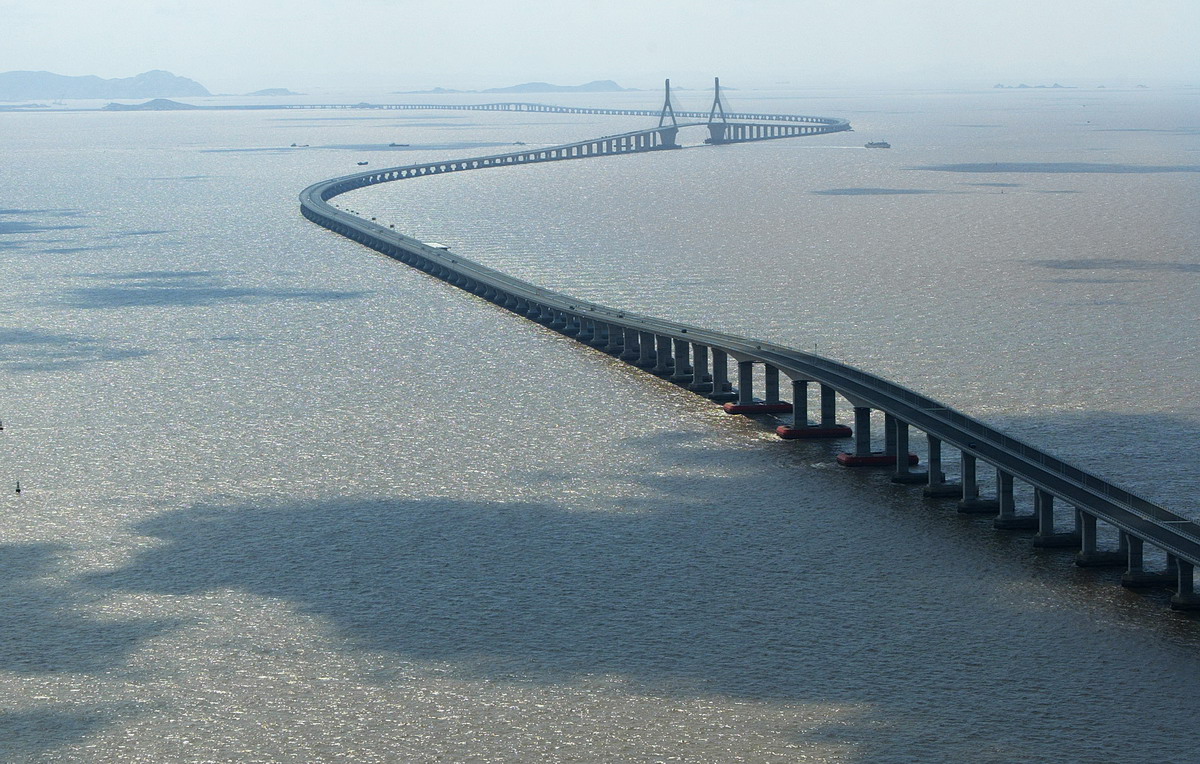
[edit]Transportation infrastructure continues to be rapidly developed. The National Trunk Highway System was in 2011 estimated to surpass the US interstate system in length.[181] Many Chinese cities have or are planning to build metros or other forms of rapid transit.
Commercial aircraft
[edit]The state owned Comac aerospace manufacturer aims to reduce Chinese dependency on foreign companies for large passenger aircraft.[182] The future C919 aims to be completely made in China.[183]
Motor vehicles
[edit]The automotive industry in China is the world's largest producer of motor vehicles.[184] However, China's indigenous car companies have had difficulties on the global market and the growing electric vehicle market has been seen as way to remedy this. China in 2010 proposed controversial legislation requiring foreign electric vehicle producers to form minority joint-ventures and share technologies with Chinese carmakers in order to get market access.[185] A 2011 report financed by the World Bank stated that China was becoming the world leader on electric vehicles.[186]
Shipbuilding
[edit]In 2009-2010 China became the world's largest shipbuilder, however South Korea regained the top position in 2011 due to more advanced technology. China is developing its technological abilities and competition is expected to increase.[187][188]
Trains
[edit].jpg)
The BBC wrote in a 2011 article on high-speed rail in China that China in 2005 had no high-speed railways. In 2010 it had more than Europe and in 2012 China was expected to have more than the rest of the world combined. China demanded that foreign companies wanting to participate had to share their technology. Some 10,000 Chinese engineers and academics then in three years produced a faster Chinese high-speed train that China is now exporting to other nations.[67]
See also
[edit]

- CERNET
- Chinese Academy of Sciences
- Chinese Academy of Engineering
- Chinese Academy of Social Sciences
- China–United States trade war (2018–present)
- CSTNET
- History of science and technology in the People's Republic of China
- List of Chinese inventions
- Made in China 2025
- Science in newly industrialized countries
- Sinofuturism
References
[edit]Citations
[edit]- ^ a b "China's Science and Technology Development Summary". www.mfa.gov.cn. Retrieved June 27, 2022.
- ^ Yang, Dali (1990). "State and Technological Innovation in China: A Historical Overview, 1949-89". Asian Perspective. 14 (1): 91–112. ISSN 0258-9184. JSTOR 42703933.
- ^ Chen, E. Yegin (1995). "Technological Development and Cooperation in Greater China". Managerial and Decision Economics. 16 (5): 565–579. doi:10.1002/mde.4090160507. ISSN 0143-6570. JSTOR 2487968.
- ^ a b "Global Innovation Index 2025: Innovation at a Crossroads". World Intellectual Property Organization. September 16, 2025. Retrieved September 19, 2025.
- ^ Xi 1981, p. 464.
- ^ Jean-Marc Bonnet-Bidaud; Françoise Praderie; Susan Whitfield. "The Dunhuang Chinese Sky: A comprehensive study of the oldest known star atlas". International Dunhuang Project, British Library. Archived from the original on April 2, 2014. Retrieved March 13, 2015.
- ^ Miyajima, Kazuhiko (1998). "Projection Methods in Chinese, Korean and Japanese Star Maps". Highlights of Astronomy. 11 (2): 712–715. doi:10.1017/s1539299600018554.
- ^ Needham 1986d, p. 569.
- ^ Needham 1986b, p. 208.
- ^ Sivin 1995, p. 32.
- ^ Fraser (2014), p. 370.
- ^ a b c "Country Studies - China - Federal Research Division - The Library of Congress". loc.gov.
- ^ Justin Yifu Lin (2011). "Demystifying the Chinese Economy" (PDF). Cambridge University Press, Preface xiv.
- ^ Chinese Studies in the History and Philosophy of Science and Technology. Vol. 179. Kluwer Academic Publishers. 1996. pp. 137–138. ISBN 978-0-7923-3463-7.
- ^ Frank, Andre (2001). "Review of The Great Divergence". Journal of Asian Studies. 60 (1): 180–182. doi:10.2307/2659525. JSTOR 2659525.
- ^ a b c d Zhong, Yang (2024). "Attitudes Toward Religion, Science, and Technology in China". In Zhong, Yang; Inglehart, Ronald (eds.). China as Number One? The Emerging Values of a Rising Power (EPUB). China Understandings Today series. Ann Arbor, Michigan: University of Michigan Press. ISBN 978-0-472-07635-2.
- ^ a b c Mullaney, Thomas S. (2024). The Chinese Computer: a Global History of the Information Age. Cambridge, MA: The MIT Press. ISBN 9780262047517.
- ^ a b c Meyskens, Covell F. (2020). Mao's Third Front: The Militarization of Cold War China. Cambridge, United Kingdom: Cambridge University Press. doi:10.1017/9781108784788. ISBN 978-1-108-78478-8. OCLC 1145096137. S2CID 218936313.
- ^ a b c Marquis, Christopher; Qiao, Kunyuan (2022). Mao and Markets: The Communist Roots of Chinese Enterprise. New Haven: Yale University Press. doi:10.2307/j.ctv3006z6k. ISBN 978-0-300-26883-6. JSTOR j.ctv3006z6k. OCLC 1348572572. S2CID 253067190.
- ^ Lan, Xiaohuan (2024). How China Works: An Introduction to China's State-led Economic Development. Translated by Topp, Gary. Palgrave Macmillan. doi:10.1007/978-981-97-0080-6. ISBN 978-981-97-0079-0.
- ^ Minami, Kazushi (2024). People's Diplomacy: How Americans and Chinese Transformed US-China Relations during the Cold War. Ithaca, NY: Cornell University Press. ISBN 9781501774157.
- ^ "State Council Decision on Accelerating S&T Development". usembassy-china.org.cn. Archived from the original on March 3, 2001.
- ^ a b c d e "Media - In the News - Battelle". battelle.org. Archived from the original (PDF) on February 17, 2012. Retrieved March 3, 2012.
- ^ Yip, George; McKern, Bruce (April 8, 2016). China's Next Strategic Advantage:from Imitation to Innovation. Boston: MIT Press 2016. ISBN 978-0-262-03458-6.
- ^ Reich, Robert (May 1987). "The Rise of Technonationalism". The Atlantic: 62.
- ^ Kennedy, Andrew (2013). "China's Search for Renewable Energy: Pragmatic Techno-nationalism". Asian Survey. 53 (5): 909–930. doi:10.1525/as.2013.53.5.909. hdl:1885/84753.
- ^ "Nationalism in China". Council on Foreign Relations.
- ^ Iain Mills. "China Chooses 'Mega-Events' Over Structural Reforms". worldpoliticsreview.com.
- ^ "China Bans Government Offices From Using Foreign-Made Tech". gizmodo.com. December 9, 2019.
- ^ "China moves to ban foreign software and hardware from state offices – TechCrunch". techcrunch.com. December 9, 2019.
- ^ Lyons, Kate (December 9, 2019). "China tells government offices to remove all foreign computer equipment | China | The Guardian". amp.theguardian.com.
- ^ Villas-Boas, Antonio (December 9, 2019). "China aims to replace up to 30 million pieces of foreign tech in government offices with Chinese tech by 2022". Business Insider.
- ^ "China reportedly bans foreign technology in its government and public offices". CNN. December 9, 2019.
- ^ "China will increase support, subsidies for tech firms, official says". South China Morning Post. May 24, 2019.
- ^ a b c d Cao, Cong (2015). China. In: UNESCO Science Report: towards 2030 (PDF). Paris: UNESCO. ISBN 978-92-3-100129-1.
- ^ "Media - In the News - Battelle" (PDF). battelle.org.
- ^ a b c d e f Cao, Cong (April 30, 2018). "Brain research has become a policy focus for China". Blogpost on UNESCO Science Report portal.
- ^ a b "Data" (PDF). unesdoc.unesco.org.
- ^ a b c James Wilsdon; James Keeley (2007). "China: The next science superpower?" (PDF). The Atlas of Ideas: Mapping the new geography of science. London: Demos. ISBN 978-1-84180-173-5. Archived from the original (PDF) on March 28, 2013.
- ^ a b c d e f g h i j k l m "Data" (PDF). uscc.gov. Archived (PDF) from the original on January 2, 2013. Retrieved March 6, 2012.
- ^ Barnum, C. M., & Li, H. (2006). Chinese and American technical communication: A cross-cultural comparison of differences. Technical communication, 53(2), 143-166.
- ^ a b Vivek Wadhwa, Why China's Chip Industry Won't Catch America's, September 3, 2009 Bloomberg BusinessWeek, September 3, 2009
- ^ Zhang, Angela Huyue (2024). High Wire: How China Regulates Big Tech and Governs Its Economy. Oxford University Press. doi:10.1093/oso/9780197682258.001.0001. ISBN 9780197682258.
- ^ "National Economic and Technological Development Zones-China.org.cn". china.org.cn.
- ^ PISA results 2009 (2010). "Comparing Countries' and economies' performance" (PDF). What Students Know and can do: Student Performance in reading, mathematics and Science (figure 1). Oecd.org. p. 8. Archived from the original (PDF) on June 7, 2012.
- ^ Dillon, Sam (December 7, 2010). "In PISA Test, Top Scores From Shanghai Stun Experts". The New York Times.
- ^ Mance, Henry (December 7, 2010), "Why are Chinese schoolkids so good?", Financial Times, retrieved June 28, 2012
- ^ Cook, Chris (December 7, 2010), "Shanghai tops global state school rankings", Financial Times, archived from the original on December 10, 2022, retrieved June 28, 2012
- ^ "PISA 2018 Insights and Interpretations" (PDF).
- ^ "Which countries have the smartest kids?". World Economic Forum. Retrieved May 10, 2020.
- ^ "IBO results & reports". International Biology Olympiad. Retrieved May 27, 2020.
- ^ "The Beijing Planetarium Led a Team to Participate in the International Olympiad of Astronomy and Astrophysics and Achieved Great Results".
- ^ "China results on International Olympiad in Informatics".
- ^ "List of Medal and Team Award Winners | IESO-info". Archived from the original on December 19, 2021. Retrieved May 27, 2020.
- ^ "International Mathematical Olympiad". www.imo-official.org. Archived from the original on November 12, 2020. Retrieved May 9, 2020.
- ^ "IPhO: People's Republic of China - Individual Results". ipho-unofficial.org. Retrieved May 9, 2020.
- ^ "China tops 48th International Chemistry Olympiad | Chemical & Engineering News". cen.acs.org. Retrieved May 9, 2020.
- ^ Dieter Ernst (2011). "China's Innovation Policy Is a Wake-Up Call for America" (PDF). Asia Pacific Issues. No. 100. East-West Center. pp. 1–12. ISSN 1522-0966. Archived from the original (PDF) on September 23, 2015.
- ^ Colvin, Geoff (July 29, 2010). "The rise of engineers in China is leaving the US behind - Jul. 29, 2010". cnn.com.
- ^ The PIE News (March 21, 2012). "International Education News l The PIE News l Number of returning Chinese students up 38%". thepienews.com.
- ^ "Losing the World's Best and Brightest: America's New Immigrant Entrepreneurs, Part V - Kauffman.org". kauffman.org.
- ^ Vivek Wadhwa, Committee on the Judiciary of the United States House of Representatives Subcommittee on Immigration Policy and Enforcement, October 5, 2011
- ^ Teo Victor, Technonationalism, Development and the Chinese Diaspora in East Asia: An Exploratory Study, University of Hong Kong, Hong Kong, The 4th International Conference of Institutes & Libraries for Overseas Chinese Studies May 9–11, Guangzhou, China
- ^ Ashlee Vance (March 15, 2012). "China Corporate Espionage Boom Knocks Wind Out of U.S. Companies". Bloomberg.com.
- ^ "International Cooperation in Science and Technology -- china.org.cn". china.org.cn.
- ^ "Issues in Building a National Innovation System" in 2005 High Technology Development Report (Gao Jishu Fazhan Baogao) from the Chinese Academy of Science (Kexue Chubanshe, Beijing 2005).
- ^ a b Robinson, Michael (August 1, 2010). "BBC News – China's new industrial revolution". BBC. Retrieved August 14, 2011.
- ^ a b Segal, Adam (January 16, 2019). "China's Innovation Wall". Foreign Affairs.
- ^ Tom Hancock. "Chinese innovation: world beating, but boring". ZDNet.
- ^ "Welcome - Yale University Press". yalepress.yale.edu.
- ^ a b c Wei, Shang-Jin; Xie, Zhuan; Zhang, Xiaobo (November 2016). "From "Made in China" to "Innovated in China": Necessity, Prospect, and Challenges". NBER Working Paper No. 22854. doi:10.3386/w22854.
- ^ Shead, Sam (March 1, 2021). "China's spending on research and development hits a record $378 billion". CNBC.
- ^ Garlick, Jeremy (2024). Advantage China: Agent of Change in an Era of Global Disruption. Bloomsbury Academic. ISBN 978-1-350-25231-8.
- ^ En, Wipoen. "Global Innovation Index 2014". www.wipo.int. Retrieved September 19, 2025.
- ^ En, Wipoen. "Global Innovation Index 2013". www.wipo.int. Retrieved September 20, 2025.
- ^ "Innovation Cluster Ranking 2025". global-innovation-index. Retrieved September 20, 2025.
- ^ a b c "China has become a scientific superpower". The Economist. ISSN 0013-0613. Retrieved September 26, 2024.
- ^ Lewis, Joanna I. (2023). Cooperating for the Climate: Learning from International Partnerships in China's Clean Energy Sector. Cambridge, Massachusetts: The MIT Press. doi:10.7551/mitpress/11959.001.0001. ISBN 978-0-262-54482-5. S2CID 167841443.
- ^ Cheng, Wenting (2023). China in Global Governance of Intellectual Property: Implications for Global Distributive Justice. Palgrave Socio-Legal Studies series. Palgrave Macmillan. doi:10.1007/978-3-031-24370-7. ISBN 978-3-031-24369-1. S2CID 256742457.
- ^ "China tops U.S, Japan to become top patent filer". Reuters. December 21, 2011.
- ^ "World Intellectual Property Indicators: Filings for Patents, Trademarks, Industrial Designs Reach Record Heights in 2018". www.wipo.int. Retrieved May 10, 2020.
- ^ 张洁. "China's patent applications hit record 1.54 million in 2018 - Chinadaily.com.cn". www.chinadaily.com.cn. Retrieved May 10, 2020.
- ^ "China Becomes Top Filer of International Patents in 2019". www.wipo.int. Retrieved May 10, 2020.
- ^ a b World Intellectual Property Indicators 2022 (PDF). World Intellectual Property Organization. November 1, 2022. ISBN 978-92-805-3463-4.
- ^ MacKenzie, Debora. "Iran showing fastest scientific growth of any country". New Scientist.
- ^ Tollefson, Jeff (January 18, 2018). "China declared world's largest producer of scientific articles". Nature. 553 (7689): 390. Bibcode:2018Natur.553..390T. doi:10.1038/d41586-018-00927-4.
- ^ Clarivate, David Pendlebury Head of Research Analysis (November 19, 2019). "Highly Cited Researchers 2019: Strong evidence of Mainland China's rise to the highest levels of research". Clarivate. Retrieved May 10, 2020.
- ^ 马驰. "China now No 2 in cited scientific papers - Chinadaily.com.cn". global.chinadaily.com.cn. Retrieved May 10, 2020.
- ^ "China on track for #2 most influential country in science publishing by 2014 | Press Release". Archived from the original on May 28, 2012. Retrieved May 25, 2012.
- ^ Zhou, P.; Thijs, B.; Glänzel, W. (2008). "Is China also becoming a giant in social sciences?". Scientometrics. 79 (3): 593. doi:10.1007/s11192-007-2068-x. S2CID 23590444.
- ^ "Toward internationalization: a bibliometric analysis of the social sciences in Mainland China from 1979 to 2018". osf.io. Retrieved May 10, 2020.
- ^ Hu, Y.; Huang, Y.; Ding, J.; Liu, Y.; Fan, D.; Li, T.; Shou, C.; Fan, J.; Wang, W.; Dong, Z.; Qin, X.; Fang, W.; Ke, Y. (2011). "Status of clinical research in China". The Lancet. 377 (9760): 124–5. doi:10.1016/S0140-6736(11)60017-2. PMID 21215881. S2CID 8737517.
- ^ "CHINA: Crackdown on sub-standard journals - University World News". universityworldnews.com.
- ^ Cyranoski, D. (2012). "Chinese publishers vow to cleanse journals". Nature. doi:10.1038/nature.2012.10509. S2CID 178903332.
- ^ McLellan, Timothy (2025). "Asian Tricks and Research Misconduct: From Orientalism and Occidentalism to Solidarity against Audit Cultures". East Asian Science, Technology and Society: An International Journal: 1–21. doi:10.1080/18752160.2025.2482324.
- ^ See for example the mid March 2006 issue of China Newsweek 中国新闻周刊 "A SARS-like Epidemic of Corruption in Higher Education and Science", 9 June 2006: Vol. 312. no. 5779, pp. 1464–1466.
- ^ Liu Ming, Critique of the Academic Evaluation System 学术评价制度批判 Changjiang Wenyi Chubanshe, 2005.
- ^ Tang, Shubiao (March 11, 2016). "China's new vision for the next five years". China Today.
- ^ "Untitled Document". Archived from the original on January 27, 2012. Retrieved March 2, 2012.
- ^ Monica Tan, The Diplomat. "China Shuts Down GE Rice?". The Diplomat.
- ^ "Insight: U.S. barnyards help China super-size food production". tribunedigital-chicagotribune. April 19, 2012.
- ^ "FAO Fisheries & Aquaculture - Topics". fao.org.
- ^ "FAO National Aquaculture Sector Overview (NASO)". fao.org. February 1, 2005.
- ^ "CAFS-Research Achievement". Archived from the original on March 28, 2012. Retrieved May 24, 2012.
- ^ a b "China 'soaring ahead' in nanotechnology research". SciDev.Net.
- ^ "KPMG - High Growth Markets magazine - Chemicals". Archived from the original on August 3, 2012. Retrieved April 12, 2012.
- ^ Broad, William J. (September 11, 2010). "China Explores a Frontier 2 Miles Deep". The New York Times.
- ^ a b Kharpal, Arjun (July 21, 2017). "China wants to be a $150 billion world leader in AI by 2030". CNBC. Retrieved July 24, 2017.
- ^ "China sets out road map to lead world in artificial intelligence by 2030". South China Morning Post. Retrieved July 24, 2017.
- ^ "China Outlines Ambitions to Become World Leader in AI by 2025 - Caixin Global". Caixin Global. Retrieved July 24, 2017.
- ^ "What China's Drone Makers Could Teach Other Chinese Brands".
- ^ "Chinese engineers make plane into first large delivery drone - The Nation". The Nation.
- ^ "DJI is dominating the consumer drone industry, so which companies are left? - The Drone Girl". The Drone Girl. February 26, 2017.
- ^ "First city in the world to have flying taxis; the future is here - Cape Business News".
- ^ Pham, Sherisse. "This Chinese drone can take off and land on water". CNNMoney.
- ^ Edward Tse; Matthias Hendrichs (December 30, 2011). "A message from robots: it's our turn". China Daily. Archived from the original on January 9, 2012.
- ^ Lui, Kevin. "Chinese Robot Installed Dental Implant Without Human Help". Time.
- ^ Zaleski, Andrew (September 6, 2017). "China's blueprint to crush the US robotics industry". CNBC.
- ^ [1] Archived 2012-03-26 at the Wayback Machine
- ^ "China's audacious and inventive new generation of entrepreneurs". The Economist.
- ^ "Chinese apps dominate most-used Android app rankings". The Straits Times. September 21, 2017.
- ^ "China's ecommerce market to pass $1.1tn in 2017". The Drum.
- ^ "China: mobile users 2017 | Statista". Statista.
- ^ "China 4G subscriber base hits 932M - Mobile World Live". Mobile World Live. September 20, 2017.
- ^ "China's Fixed-line Broadband Penetration Rate To Hit 63% This Year – China Money Network". www.chinamoneynetwork.com.
- ^ "China's advanced 5G network set for adoption in 2020". August 30, 2017.
- ^ Daniels, Guy (September 22, 2017). "China Telecom deploys 5G-oriented C-RAN fronthaul network". TelecomTV.
- ^ "China Telecom Plans Commercial 5G Trials in 2019 | Light Reading". Light Reading.
- ^ "Chinese supercomputer is the world's fastest — and without using US chips". The Verge.
- ^ "China dominates top supercomputers list". BBC News. November 13, 2017.
- ^ a b "The Daily Beast". The Daily Beast.
- ^ China's Defense University builds World Third fastest supercomputer, china-defense-mashup.com, October 29, 2009
- ^ "China's New Supercomputer Puts the U.S. Even Farther Behind—Like, Way Behind". WIRED.
- ^ Davey Alba (June 17, 2013). "China's Tianhe-2 Caps Top 10 Supercomputers". IEEE Spectrum.
- ^ "Opportunities for China's semiconductor industry". The Nation. March 26, 2012. Archived from the original on April 3, 2013.
- ^ Chai, Nobunaga (August 3, 2011). "Expectations for China's semiconductor industry during the 12th Five Year Plan".
- ^ "China's Top Chipmaker Secures $22 Billion to Expand Globally". Bloomberg.com. March 28, 2017.
- ^ "China's largest chipmaker secures US$22bn in funds". www.taipeitimes.com.
- ^ "China will dominate the global semiconductor market in the next 5 years". electroiq.com.
- ^ "Semiconductors are China's Choke Point". Bloomberg.com. October 24, 2020.
- ^ Benjamin Haas, Chinese make big push into animation, August 17, 2011, Los Angeles Times
- ^ Georg Szalai. "DreamWorks Animation to Unveil Landmark Joint Venture in China (Report)". The Hollywood Reporter.
- ^ "DreamWorks Animation unveils China studio plans". Los Angeles Times. February 17, 2012.
- ^ Pierson, David; Verrier, Richard (April 11, 2012). "Disney, China to join in animation initiative". Los Angeles Times.
- ^ "Makers of DMAX Aim to Break IMAX Monopoly". cri.cn. Archived from the original on April 17, 2012.
- ^ Zhang, J.; Mauzerall, D. L.; Zhu, T.; Liang, S.; Ezzati, M.; Remais, J. V. (2010). "Environmental health in China: Progress towards clean air and safe water". The Lancet. 375 (9720): 1110–9. doi:10.1016/S0140-6736(10)60062-1. PMC 4210128. PMID 20346817.
- ^ Greg Browder; et al. (2007). "Stepping up - Improving the performance of China's urban water utilities" (PDF). worldbank.org.
- ^ Lu, Z.; Streets, D. G.; Zhang, Q.; Wang, S.; Carmichael, G. R.; Cheng, Y. F.; Wei, C.; Chin, M.; Diehl, T.; Tan, Q. (2010). "Sulfur dioxide emissions in China and sulfur trends in East Asia since 2000". Atmospheric Chemistry and Physics. 10 (13): 6311. Bibcode:2010ACP....10.6311L. doi:10.5194/acp-10-6311-2010.
- ^ Wines, Michael (October 25, 2011). "China Takes Loss to Get Ahead in Desalination Industry". The New York Times.
- ^ "Wild_East_Or_Scientific_Feast_". The Economist. January 16, 2010.
- ^ "Short Sharp Science: China attempts to halt unproven stem cell therapies". newscientist.com.
- ^ McMahon, D. S.; Thorsteinsdóttir, H.; Singer, P. A.; Daar, A. S. (2010). "Cultivating regenerative medicine innovation in China". Regenerative Medicine. 5 (1): 35–44. doi:10.2217/rme.09.78. PMID 20055687. S2CID 207353199.
- ^ "China placing priority on biotechnology". www.chinadaily.com.cn.
- ^ Cyranoski, David (April 5, 2018). "Beijing launches pioneering brain-science centre".
- ^ "In China drug industry, reward may outweigh risk - MarketWatch". Archived from the original on April 13, 2013. Retrieved March 22, 2012.
- ^ "China more positive about pharma than many in west - Schwan". pharmatimes.com.
- ^ Mooney, P. (2010). "China cracks down on counterfeiters". Nature Medicine. 16 (4): 360. doi:10.1038/nm0410-360a. PMID 20376025. S2CID 205377696.
- ^ Laurie Burkitt (November 2, 2011). "China Police Nab Fake-Drug Ring - WSJ". WSJ.
- ^ "Frugal_Healing". The Economist. January 22, 2011.
- ^ "Machine Tools in China". www.marketresearch.com.
- ^ "U.S. Precision Machine Tool Industry Is No Longer A Global Competetitive [sic] Force". manufacturingnews.com. Archived from the original on March 13, 2010.
- ^ "Report: Chinese Develop Special "Kill Weapon" to Destroy U.S. Aircraft Carriers - U.S. Naval Institute". usni.org. Archived from the original on January 21, 2013. Retrieved March 2, 2012.
- ^ "China's Space Advances Worry US Military". Space.com. February 28, 2012.
- ^ "How China is advancing its military reach". BBC News. January 18, 2012.
- ^ "Report: China building electromagnetic pulse weapons for use against U.S. carriers". The Washington Times.
- ^ "China's 'eye-in-the-sky' nears par with US". Financial Times. July 11, 2011. Archived from the original on December 10, 2022. Retrieved April 13, 2012.
- ^ Daniel Ten Kate (March 18, 2012). "China's Share of Global Arms Imports Falls, Sipri Says". Bloomberg.com.
- ^ "Is China About to Get Its Military Jet Engine Program Off the Ground?". WSJ. May 14, 2012.
- ^ "Economy; China mining". Archived from the original on July 19, 2010. Retrieved April 2, 2012.
- ^ Lou Kilzer, http://www.pittsburghlive.com/x/pittsburghtrib/news/s_790579.html Archived April 13, 2012, at the Wayback Machine
- ^ John Garnaut, China has Antarctica in its sights Archived April 30, 2012, at the Wayback Machine, September 4, Brisbane Times, 2010
- ^ "Chinese Arctic and Antarctic Administration(CAA)". www.chinare.gov.cn.
- ^ David Eimer in Beijing (November 5, 2011). "China's huge leap forward into space threatens US ascendancy over heavens". Telegraph.co.uk. London.
- ^ ABC News. "Technology and Science News - ABC News". ABC News.
- ^ Tania Branigan (September 20, 2010). "China could make moon landing in 2025". the Guardian. London.
- ^ 颜筱箐. "China's growing space industry to become leading force". china.org.cn.
- ^ Ananthaswamy, Anil. "China starts building world's biggest radio telescope". New Scientist.
- ^ Mike Wall (July 6, 2016). "China Finishes Building World's Largest Radio Telescope". Space.com. Retrieved April 6, 2018.
- ^ "China's textile industry in crisis". moneycontrol.com.
- ^ Dexter Roberts (January 12, 2012). "Where Made-in-China Textiles Are Emigrating". Businessweek.com. Archived from the original on January 15, 2012.
- ^ "China Expressway System to Exceed US Interstates, newgeography.com, Feb 10, 2011". newgeography.com. January 22, 2011. Retrieved June 25, 2012.
- ^ Staff writers (May 11, 2008). "Chinese plane business gets wings". BBC News. Retrieved June 25, 2011.
- ^ China Tracker. "China's Aviation Industry Takes Flight". Forbes.
- ^ "OICA 2011 statistic". OICA. Retrieved June 25, 2012.
- ^ Norihiko Shirouzu (September 16, 2010). "Auto Makers Join Criticism of Chinese Policy Makers - WSJ". WSJ.
- ^ "China leading electric vehicle race, study says". BBC News. April 21, 2011.
- ^ "Korea overtakes China as world's top shipbuilder in 2011". January 10, 2012.
- ^ Park, Kyunghee (September 30, 2011). "Korea Shipyards' LNG Skill Beats China Bulk Focus: Freight". Bloomberg.com.
Sources
[edit] This article incorporates text from a free content work. Licensed under CC-BY-SA IGO 3.0. Text taken from UNESCO Science Report: towards 2030, UNESCO, UNESCO Publishing.
- Fraser, Ian W. (2014), "Zhang Heng 张衡", in Brown, Kerry (ed.), The Berkshire Dictionary of Chinese Biography, Great Barrington: Berkshire Publishing, ISBN 978-1-933782-66-9
- Needham, Joseph (1986b), Science and Civilisation in China: Volume 3, Mathematics and the Sciences of the Heavens and the Earth, Cambridge: Cambridge University Press
- Needham, Joseph (1986d), Science and Civilisation in China: Volume 4, Physics and Physical Technology, Part 3: Civil Engineering and Nautics, Cambridge: Cambridge University Press
- Sivin, Nathan (1995), Science in Ancient China, Brookfield, Vermont: VARIORUM, Ashgate Publishing
- Xi, Zezong (1981), "Chinese Studies in the History of Astronomy, 1949–1979", Isis, 72 (3): 456–470, Bibcode:1981Isis...72..456X, doi:10.1086/352793, S2CID 144323050

External links
[edit]
- Ministry of Science and Technology
- China Association for Science and Technology (CAST)
- Science & Technology Links
- SciTech: Popular Science in China Archived November 9, 2006, at the Wayback Machine China Radio International
- Chinese Science and the 'Nobel Prize Complex' by Cong Cao
- In Memoriam: Dr. Joseph Needham, 1900–1995 Erik Zürcher, International Institute for Asian Studies (IIAS) Newsletter
- 1995 CCP Central Committee and State Council "Decision on Accelerating S&T Development"
- Nanotechnology Ecosystem of China
- [2]
- Videos


Science and technology in China
View on GrokipediaHistorical Development
Ancient and Imperial Innovations
Ancient Chinese innovations in science and technology emerged from empirical observations and practical necessities, spanning from the Bronze Age to the late imperial dynasties. During the Shang dynasty (c. 1600–1046 BC), advanced bronze metallurgy allowed for the production of complex ritual vessels using lost-wax and piece-mold casting techniques, demonstrating early mastery of alloying copper with tin and lead.[13] Oracle bone inscriptions from sites like Anyang, dating to around 1200 BC, recorded divinations and early astronomical data, including solar eclipses observed as early as 1217 BC.[14] In the Warring States period (475–221 BC), mechanical devices advanced with the invention of the crossbow, featuring trigger mechanisms for improved accuracy and range up to 350 meters, and the south-pointing spoon lodestone compass used for geomancy by the 4th century BC.[15] The Han dynasty (206 BC–220 AD) saw further progress, including Cai Lun's refinement of papermaking around 105 AD using mulberry bark and rags, which replaced bamboo slips for writing and record-keeping.[16] Zhang Heng's seismoscope, completed in 132 AD, employed a bronze vessel with dragon heads to detect distant earthquakes through inverted pendulums dropping balls into toad mouths.[17] The Tang dynasty (618–907 AD) introduced gunpowder, discovered by alchemists in the 9th century while seeking an immortality elixir, initially applied in fireworks and incendiary devices before military rockets and bombs.[16] Woodblock printing emerged in the 7th century for reproducing texts and images, enabling mass dissemination of knowledge.[18] Astronomy advanced with detailed star catalogs; the Dunhuang manuscript from the 7th century depicts 1,565 stars across 284 constellations.[19] During the Song dynasty (960–1279 AD), technological sophistication peaked with Bi Sheng's movable type printing using clay characters around 1040 AD, facilitating cheaper book production.[18] The magnetic compass evolved for maritime navigation by the 11th century, aiding exploration and trade.[3] Su Song's water-powered astronomical clock tower, erected in Kaifeng in 1092 AD, stood 12 meters tall and integrated an armillary sphere, celestial globe, and escapement mechanism driven by chain links to track time and celestial motions accurately for calendrical purposes.[20] This device represented an early fusion of hydraulics, mechanics, and astronomy, though it was destroyed in 1127 AD during Jurchen invasions.[21] In mathematics, the Han-era Nine Chapters on the Mathematical Art (c. 100 AD) outlined solutions to linear equations, fractions, and areas using the decimal system and rod calculus.[22] Medicine progressed empirically, with the Huangdi Neijing (c. 200 BC) systematizing pulse diagnosis, acupuncture, and yin-yang balance, while later imperial compendia like Li Shizhen's Bencao Gangmu (1596 AD) cataloged over 1,800 drugs from empirical testing.[23] These innovations emphasized observation and utility over abstract theorizing, influencing agriculture through iron plows and seed drills, and hydraulics via the Dragon Backbone Waterway system in the 6th century BC for irrigation.[17] Later imperial periods saw refinements but fewer breakthroughs, as bureaucratic conservatism and focus on classical scholarship sometimes stifled further experimentation.[24]Republican Period Challenges (1912-1949)
The Republican era in China, spanning 1912 to 1949, encountered severe obstacles to scientific and technological progress due to pervasive political fragmentation, military conflicts, and economic turmoil. After the abdication of the Qing emperor in February 1912, the nation descended into warlordism, with regional militarists controlling territories and diverting resources toward warfare rather than research infrastructure. This decentralization stifled coordinated national efforts in science, as funding for universities and nascent research bodies remained inconsistent and localized.[25] Intellectuals returning from overseas studies, numbering in the thousands by the 1920s, often faced inadequate facilities and institutional support amid competing loyalties to factional leaders.[26] The establishment of key institutions, such as the Academia Sinica in 1928 under the Nationalist government, represented an attempt to centralize scientific endeavors, yet these were undermined by persistent instability. Intended to promote advanced research in fields like physics and biology, the academy struggled with limited budgets and brain drain, as many scholars emigrated or aligned with safer foreign affiliations.[27] Engineering societies and technical associations emerged during this period to professionalize disciplines, but their growth was hampered by the absence of stable governance and industrial base.[28] Economic policies prioritizing agriculture over industry, rooted in Confucian traditions, further constrained technological innovation, leaving China reliant on imported machinery and expertise.[29] The Second Sino-Japanese War from July 1937 to September 1945 inflicted catastrophic damage on scientific infrastructure, particularly in coastal cities hosting major universities like Peking and Tsinghua. Bombings and occupations destroyed laboratories, libraries, and equipment, while forced migrations of faculty to remote areas like Kunming disrupted collaborations and data continuity.[30] Hyperinflation in the late 1940s, peaking at rates exceeding 1,000% annually by 1949, eroded purchasing power for imports and salaries, compelling scientists to prioritize survival over experimentation.[31] The ensuing civil war between Nationalists and Communists from 1946 onward compounded these losses, scattering personnel and halting projects, with an estimated exodus of over 1,000 academics to Taiwan or the West by 1949. These cumulative disruptions ensured that, despite sporadic advancements in applied fields like meteorology for military purposes, overall scientific output remained marginal compared to global peers.[32]Early People's Republic (1949-1976)
Following the establishment of the People's Republic of China on October 1, 1949, the new government prioritized reorganizing scientific institutions along Soviet lines, emphasizing central planning and ideological alignment with Marxism-Leninism. The Chinese Academy of Sciences was restructured in 1949 from its Republican-era predecessor, serving as the primary body for basic research, while applied sciences were integrated into state ministries for heavy industry and defense. In 1949, China had approximately 50,000 scientific and technical personnel nationwide, with fewer than 500 engaged in formal research activities, reflecting the devastation from decades of war and limited prior investment. Soviet assistance from 1950 onward included dispatching 11,000 to 50,000 specialists to aid in building industrial and scientific infrastructure, alongside training around 38,000 Chinese scientists and engineers in the USSR. This support facilitated the 1956 Twelve-Year National Plan for Scientific and Technological Development, which aimed to prioritize 79 key disciplines in fields like metallurgy, electronics, and atomic energy to catch up with advanced nations. The First Five-Year Plan (1953-1957) allocated resources to emulate Soviet models in sectors such as machine-building and chemicals, yielding modest gains in technical education and infrastructure, with over 100 specialized institutes established by 1957. However, the Great Leap Forward (1958-1962) shifted focus to mass mobilization and ideological campaigns, promoting pseudoscientific practices like backyard steel furnaces and exaggerated agricultural techniques, which diverted scientists from rigorous research and contributed to widespread resource misallocation. This period saw industrial output claims inflated through falsified data, but actual scientific productivity plummeted amid the ensuing famine, which killed tens of millions and eroded institutional capacity, as rural labor requisitions pulled personnel from labs and universities. The 1960 Sino-Soviet split ended technical aid, compelling a policy of self-reliance ("zili gengsheng"), yet it spurred determination in strategic areas; China's nuclear program, initiated in 1955 with initial Soviet blueprints, achieved its first atomic bomb test on October 16, 1964, at Lop Nur, followed by a hydrogen bomb on June 17, 1967—accomplishments driven by concentrated state resources despite isolation. The Cultural Revolution (1966-1976) inflicted profound damage on civilian science, with universities shuttered, over 200,000 intellectuals labeled "counterrevolutionaries" and sent for manual labor re-education, and research institutes paralyzed by factional struggles and anti-expert rhetoric. Basic research in fields like biology and physics stagnated, as campaigns against "bourgeois" knowledge suppressed empirical methods in favor of Maoist axioms, leading to a brain drain and loss of expertise; for instance, genetics research was condemned as reactionary. Military-related projects, however, were somewhat insulated under the "Two Bombs, One Satellite" initiative, culminating in the launch of Dong Fang Hong 1, China's first satellite, on April 24, 1970, demonstrating orbital capabilities with limited telemetry. By 1976, scientific output remained far below global leaders, with R&D constrained by political turmoil, though defense technologies advanced selectively to counter perceived threats from the US and USSR. These disruptions underscored the causal primacy of ideological interference over institutional autonomy in hindering sustained progress.Reform Era Acceleration (1978-2000)
Following the Third Plenum of the 11th Central Committee of the Chinese Communist Party in December 1978, China initiated comprehensive economic reforms that prioritized science and technology as foundational to national modernization. Deng Xiaoping emphasized this shift in his March 1978 speech at the National Science Conference, stating that science and technology constitute the primary productive force and are central to the Four Modernizations—encompassing agriculture, industry, national defense, and science and technology itself.[33] [34] These policies marked a departure from the ideological disruptions of the Cultural Revolution (1966–1976), which had decimated scientific institutions and personnel; post-1978 efforts focused on rehabilitating researchers, restoring academies like the Chinese Academy of Sciences, and drafting an Eight-Year Plan for science and technology development to rapidly expand research capacity.[35] Reform measures included aggressive technology importation, establishment of special economic zones starting in 1979 to attract foreign investment and know-how, and encouragement of overseas study for thousands of Chinese scholars. By the mid-1980s, China had signed agreements for technology transfer worth billions, including joint ventures in electronics and machinery, while government R&D funding began to rise, though remaining low as a percentage of GDP—around 0.7% by the early 1990s compared to over 2% in leading Western economies.[36] [37] The 1986 National High-Tech Research and Development Program (863 Program), approved under Premier Zhao Ziyang, targeted breakthroughs in seven priority areas: biotechnology, space technology, information technology, automation, energy, new materials, and lasers, with initial state funding of approximately 10 billion RMB supporting applied and basic research.[38] This initiative launched over 4,500 projects by the early 2000s, yielding advancements such as domestic supercomputers and novel biomedicines, though outputs were often incremental rather than transformative due to limited foundational capabilities.[39] [40] Complementing the 863 Program, the Torch Program, formally approved by the State Council in August 1988, promoted high-tech industrialization through technology business incubators, software parks, and high-tech development zones, such as the Tianjin Economic-Technological Development Area established in 1984.[41] [42] These efforts spurred commercialization of research, with incubators hosting nascent enterprises in semiconductors and telecommunications; by the late 1990s, China had developed over 50 such zones, facilitating tech transfer from state labs to industry. Key achievements included the deployment of the Yinhe-1 supercomputer in 1983 for vector processing and progress in hybrid rice strains by Yuan Longping, enhancing agricultural yields, though overall innovation lagged behind global leaders due to institutional rigidities and brain drain, with many trained scientists emigrating.[43] Scientific output grew modestly, with science and engineering journal articles rising from about 6,000 in 1990 to higher volumes by 2000, reflecting expanded researcher numbers exceeding 1 million by decade's end.[43] Despite these strides, systemic challenges like overemphasis on quantity over quality in publications and heavy reliance on state directives persisted, setting the stage for intensified efforts in the 21st century.[44]21st-Century Push (2001-Present)
Following China's accession to the World Trade Organization in December 2001, the country accelerated technology acquisition through foreign investment and joint ventures, laying groundwork for domestic capabilities. The government issued the Medium- and Long-Term Plan for Science and Technology Development in 2006, targeting indigenous innovation to reduce reliance on imported technologies by 2020.[45] This plan emphasized core technologies in areas like information technology, biotechnology, and space, backed by increased state funding. Research and development expenditure as a percentage of GDP rose from approximately 1% in 2000 to 2.56% in 2022, with total R&D spending reaching 3.613 trillion yuan (about $500 billion) in 2024, up 8% from the previous year.[46][47] China's share of global R&D grew from 4% in 2000 to 26% in 2023, driven by state-directed investments and enterprise contributions.[48] Annual growth averaged 10.5% from 2021 to 2024, outpacing major economies.[49] In aerospace, China achieved its first human spaceflight with Shenzhou 5 on October 15, 2003, becoming the third country to independently send astronauts to orbit.[50] Subsequent milestones included the launch of Tiangong-1 space lab module in 2011, multiple crewed missions, and the operational Chinese Space Station by 2022, with plans for lunar exploration via the Chang'e program, including sample returns from the moon's far side in 2020.[50][51] High-speed rail construction expanded rapidly from the mid-2000s, with the Beijing-Tianjin line opening in 2008 as the first operational segment exceeding 300 km/h.[52] By 2019, the network spanned over 35,000 km, comprising two-thirds of the global total, facilitated by technology transfers from foreign firms like Kawasaki and Siemens, followed by domestic production.[52] This infrastructure supported economic integration and urbanization. The 2015 Made in China 2025 initiative prioritized self-sufficiency in ten high-tech sectors, including semiconductors, robotics, and new-energy vehicles, with goals to elevate domestic content in core components to 70% by 2025.[53] Progress included dominance in 5G infrastructure deployment and advancements in artificial intelligence applications, though challenges persist in cutting-edge chip fabrication.[54] In quantum computing, China developed the Zuchongzhi processor, demonstrating supremacy in specific tasks by 2021, alongside efforts to integrate quantum with AI for industrial applications.[55][56] Under Xi Jinping since 2012, policies shifted toward "new quality productive forces," emphasizing breakthroughs in basic research and dual-use technologies amid U.S. export controls.[45] By 2025, China led in patent filings and scientific publications by volume, though assessments of breakthrough innovation quality vary, with state control influencing research directions.[57][58]Policy and Investment Framework
Techno-Nationalism and Strategic Directives
China's techno-nationalism manifests as a state-driven ideology prioritizing technological self-sufficiency and innovation as pillars of national security and economic sovereignty, particularly intensified under Xi Jinping's leadership since 2012.[59] This approach frames science and technology advancement as essential to the "great rejuvenation of the Chinese nation," with Xi emphasizing in a 2025 speech that building a "country strong in science and technology" requires overcoming "card-neck" vulnerabilities in core technologies through indigenous innovation.[60] Policies reflect a "whole-of-nation" mobilization, integrating party oversight, state resources, and private sector efforts to reduce dependence on foreign inputs, amid escalating U.S.-China rivalry.[61] A cornerstone directive is "Made in China 2025," unveiled by the State Council in May 2015, which targets upgrading manufacturing through 10 priority sectors including information technology, robotics, and aerospace.[62] The plan sets quantifiable goals, such as achieving 70% domestic content for core components and materials by 2025, while promoting "indigenous innovation" to shift China from assembly-based production to high-value design and production leadership.[63] Implementation involved fiscal incentives, R&D subsidies, and standards favoring local firms, though assessments indicate mixed progress, with advancements in electric vehicles and renewables but persistent gaps in semiconductors.[64] Complementing this is the Military-Civil Fusion (MCF) strategy, elevated to a national mandate in 2015 and formalized in subsequent five-year plans, aiming to leverage civilian technological ecosystems for military modernization.[65] MCF mandates bidirectional knowledge transfer, enabling civilian entities to access classified defense projects while channeling commercial breakthroughs—like in AI and quantum computing—into People's Liberation Army capabilities.[66] Xi has described MCF as integral to constructing a "world-class military" by 2049, with directives requiring state-owned enterprises and universities to align R&D with dual-use applications.[67] The 14th Five-Year Plan (2021-2025) and emerging 15th Five-Year Plan (2026-2030) reinforce these through "strategic emerging industries" and "dual circulation," doubling down on self-reliance amid U.S. export controls.[68] In October 2025, China's economic blueprint explicitly prioritizes tech autonomy in chips and biotech, allocating resources via national programs to achieve breakthroughs in foundational technologies by mid-century.[69] Within this framework, artificial intelligence is designated as a key "new quality productive force" to drive economic growth, secure global leadership in AI, and diminish reliance on U.S. technology. The government promotes accelerated AI development, including open-sourcing models and offering free access to foster adoption among global developers and in developing countries, paralleling approaches in hardware dissemination such as Huawei smartphones.[70][45] These directives underscore a causal link between technological prowess and geopolitical standing, with Xi asserting in 2024 that sci-tech self-strengthening is non-negotiable for national revival.[71]R&D Expenditure Trends and Allocation
China's research and development (R&D) expenditure has grown rapidly in absolute terms, reaching 3.613 trillion yuan (approximately $496 billion) in 2024, an 8.3% increase from 2023.[47][72] This marks a continuation of double-digit growth rates observed in prior years, with expenditures rising from 2.439 trillion yuan in 2020 to 3.336 trillion yuan in 2023.[73][74] As a percentage of gross domestic product (GDP), known as R&D intensity, China's figure has steadily increased from around 2.14% in 2018 to 2.6% in 2023, approaching levels in many OECD countries, though it remains below leaders like the United States (3.45%) and Japan (3.45%).[75][76][77] Funding sources for R&D have shifted toward business enterprises, which accounted for 79.3% of total expenditures in recent data, reflecting a model where state-directed enterprises drive applied innovation.[78] Government funding, while comprising a smaller overall share, dominates basic research, serving as the primary or sole source for foundational studies, with business contributions to this category rising from 21% in 2012 to 35% by later years.[79][80] In contrast, applied research sees significant government involvement (around 85% in some analyses), underscoring a state-centric approach to strategic priorities over pure market-driven allocation.[80] Allocation by R&D type emphasizes experimental development over basic research, with the latter consistently representing a low share of total spending—approximately 6.8% in 2023 (225.91 billion yuan out of 3.336 trillion yuan)—compared to higher proportions in Western economies.[73][75] In 2024, basic research funding grew by 10.7%, applied research by 17.6%, and experimental development by 7.6%, indicating accelerating investment in near-term technological applications amid policy pushes for self-reliance in sectors like semiconductors and artificial intelligence.[49] This structure prioritizes outcomes aligned with national goals, such as the "Made in China 2025" initiative, over balanced scientific inquiry, potentially limiting long-term breakthroughs despite volume growth.[76]| Year | Total R&D Expenditure (trillion yuan) | R&D Intensity (% GDP) | Basic Research Share |
|---|---|---|---|
| 2020 | 2.439 | ~2.4 | ~5-6% |
| 2023 | 3.336 | 2.6 | 6.8% |
| 2024 | 3.613 | ~2.58 | N/A (growth +10.7%) |
Major National Programs and Initiatives
China's major national programs and initiatives in science and technology have emphasized state coordination to achieve self-reliance and global competitiveness, often prioritizing strategic sectors like information technology, biotechnology, and advanced manufacturing. The National High-Tech Research and Development Program, known as the 863 Program, launched in March 1986, targeted seven priority areas including automation, biotechnology, and space technology, with the aim of developing indigenous capabilities in high-tech fields through targeted funding and international collaboration.[38] By focusing on applied research with potential for commercialization, it supported over 10,000 projects by the early 2000s, contributing to advancements in areas like genetically modified crops and high-speed rail components, though implementation involved significant technology transfers from abroad.[81] Complementing this, the National Basic Research Program (973 Program), initiated in 1997, allocated funds for frontier basic research in fields such as energy, materials, and population health, funding around 1,000 projects during its run until 2016, with an emphasis on building long-term scientific foundations rather than immediate applications.[82] The Outline of the National Medium- and Long-Term Program for Science and Technology Development (2006-2020), promulgated in February 2006, set ambitious goals for China to become an innovation-driven economy by 2020, including mastering 402 key technologies across 25 megaprojects in areas like core electronic components, large aircraft, and new energy vehicles.[83] This plan committed approximately 4 trillion yuan (about $580 billion USD at the time) to R&D, aiming for indigenous innovation rates exceeding 60% in core technologies, though progress was uneven, with dependencies on foreign inputs persisting in semiconductors and high-end equipment.[84] It integrated earlier programs like 863 and 973 into a broader framework, fostering national laboratories and emphasizing "leapfrog development" in strategic domains. In 2015, the State Council issued Made in China 2025, a 10-year industrial policy to transform China from a low-end manufacturer to a high-tech leader, targeting self-sufficiency in core materials and components at 40% by 2020 and 70% by 2025 across 10 priority sectors including robotics, aerospace, and biopharmaceuticals.[85] Supported by subsidies exceeding 100 billion yuan annually and policies favoring domestic firms, it accelerated adoption of technologies like 5G and electric vehicles, with China achieving over 50% global market share in photovoltaics and lithium batteries by 2020, though international concerns arose over forced technology transfers and market distortions.[63] Following the phase-out of 973 and integration of 863 into the National Key R&D Program in 2016, this successor initiative streamlined funding for over 30,000 projects by 2023, prioritizing basic research alongside applied breakthroughs in quantum information and brain science.[38] The 14th Five-Year Plan (2021-2025), approved in March 2021, reinforces these efforts with directives for "high-quality" innovation, allocating resources to "AI Plus" applications, deep-sea and polar exploration, and satellite internet constellations, aiming for breakthroughs in 7 major frontiers like integrated circuits and stem cells.[86] By 2024, R&D intensity reached 2.68% of GDP, with national labs expanded to 34, driving outputs like the completion of the FAST radio telescope upgrades and advancements in fusion energy research. The 2025 Government Work Report further specifies the cultivation of emerging future industries, including the low-altitude economy, embodied intelligence, 6G, quantum technology, and bio-manufacturing, through investment mechanisms, construction of future industry technology parks and pioneer zones, and standardization initiatives covering brain-machine interfaces.[87][88][89] These programs collectively reflect a "whole-of-nation" approach, channeling state resources through entities like the Ministry of Science and Technology to address technological bottlenecks, though efficacy varies by sector due to factors like institutional silos and reliance on imported expertise.[59]Institutional and Organizational Structure
State Research Academies and Laboratories
The Chinese Academy of Sciences (CAS), established in 1949, serves as China's foremost national research institution for natural sciences, functioning as both a comprehensive research performer and a scientific advisory body to the government. It oversees 104 research institutes, 12 branch academies, three universities, and auxiliary organizations across 23 provincial-level regions, employing over 60,000 researchers as of recent reports. CAS has driven key advancements, including contributions to sequencing 1% of the human genome and the full rice genome, alongside pioneering China's early talent attraction programs for overseas experts.[90][91][92] CAS operates numerous state key laboratories, which form a core component of China's national laboratory system, emphasizing frontier basic research and applied technologies aligned with state priorities such as materials science and environmental information systems. These labs, often housed within CAS institutes, have produced over 250 significant awards in fields like materials structure analysis since the institution's early development. The academy's structure integrates multidisciplinary divisions, with 728 elected members providing peer-reviewed guidance on policy, though its outputs are directed toward national strategic goals under the Ministry of Science and Technology (MOST).[93][94][95] The Chinese Academy of Engineering (CAE), founded in 1994 under the State Council, complements CAS by focusing on engineering sciences and technology advisory roles, comprising elected members who represent the pinnacle of engineering expertise in China. Unlike CAS's broader scientific scope, CAE emphasizes practical applications in infrastructure, manufacturing, and strategic technologies, serving as a national think tank for engineering policy recommendations. It has facilitated international collaborations and launched journals like Engineering to disseminate findings, with its 2022 budget underscoring investments in advisory functions over direct R&D execution.[96][97][98] China's State Key Laboratories (SKLs), numbering 533 as approved by MOST in 2023, represent a decentralized network of elite facilities hosted by academies like CAS, universities, and state-owned enterprises, tasked with advancing core technologies through long-term funding and evaluation cycles. These labs prioritize areas such as chemical engineering, bioreactors, and optics, with geocoded distributions showing concentrations in eastern provinces and ties to national programs like the 863 High-Tech R&D Initiative. Performance metrics include mandatory five-year assessments, fostering outputs in ultrafine powders and luminescent devices, though critics note dependency on state directives may limit serendipitous discovery compared to more autonomous Western models.[99][100]Universities and Academic Institutions
China's university system has undergone rapid expansion since the late 1970s, with over 3,000 institutions by 2024, emphasizing science, technology, engineering, and mathematics (STEM) disciplines to support national innovation goals.[101] Elite universities, concentrated in coastal regions, drive much of the country's research output, producing over 50,000 STEM PhD graduates annually as of 2025, surpassing the United States in volume.[102] This scale stems from state-directed policies prioritizing higher education investment, yet outcomes reflect heavy emphasis on quantitative metrics like publications and patents over foundational breakthroughs.[4] The Double First-Class Initiative, launched in 2015 and expanded post-2020, targets building world-class universities and disciplines through selective funding for 147 institutions, succeeding earlier Project 211 and Project 985 efforts.[103] [104] Under this plan, resources flow to disciplines like engineering and materials science, with Phase 2 emphasizing long-term sustainability and evaluation reforms to address prior inefficiencies in talent training and performance metrics.[105] Leading examples include Tsinghua University, ranked first domestically and globally competitive in engineering per QS 2025 assessments, and Peking University, strong in natural sciences.[106] Other top performers, such as Shanghai Jiao Tong University and Zhejiang University, contribute significantly to patent filings and technological standards, with Double First-Class universities forming innovation hubs linked to state programs.[107] [108] Universities play a central role in China's national innovation system, conducting substantial R&D funded by government allocations and collaborating with state labs and enterprises.[109] In 2024, they accounted for a growing share of high-impact publications and applied research in areas like artificial intelligence and quantum computing, bolstered by massive STEM enrollment exceeding 11 million undergraduates overall.[110] However, systemic challenges persist, including political oversight that curtails academic freedom, with the Chinese Communist Party assuming direct control over university governance since 2023, merging administrative and party roles.[111] This has intensified self-censorship on sensitive topics, potentially stifling creative inquiry, as evidenced by restrictions under Xi Jinping's leadership.[112] Quality assurance remains uneven, with reports of academic misconduct such as plagiarism and fabricated data undermining credibility, despite policy efforts to establish integrity systems.[113] International rankings highlight progress in metrics like citation volume, but critics note overreliance on state incentives may prioritize incremental improvements over disruptive innovation, with domestic evaluations often inflating outputs through metric gaming.[114] While universities repatriate talent via programs attracting overseas PhDs—over 80% return rate since 2012—the brain drain of top researchers to freer environments persists due to these constraints.[115] Overall, the system excels in scale and applied R&D alignment with policy but faces hurdles in fostering independent, high-quality scholarship essential for sustained technological leadership.[116]Economic Development Zones and Innovation Hubs
China's national-level Economic and Technological Development Zones (ETDZs), first established in 1984, serve as key platforms for integrating economic growth with technological advancement, attracting foreign direct investment (FDI) and fostering industrial clusters in high-tech sectors. By 2024, these zones, numbering over 230 under review by the Ministry of Commerce, contributed significantly to foreign trade, totaling 10.3 trillion yuan in the reviewed zones. They implement preferential policies such as tax incentives and streamlined regulations to promote technology transfer and R&D activities, leading to enhanced patent outputs; for instance, the establishment of special economic zones, precursors to modern ETDZs, has been associated with a 21.2% increase in invention patent citations.[117][118] These zones host a substantial portion of China's innovation ecosystem, accounting for 18.3% of national high-tech enterprises and over 700 state-level incubators as of mid-2025, which support startups in areas like semiconductors, biotechnology, and advanced manufacturing. ETDZs lead in applying national sci-tech policies, creating environments for technological spillover from FDI, where a 10% FDI increase correlates with a 0.86% rise in patent applications, particularly in resource-intensive regions. Examples include the Tianjin Economic-Technological Development Area, which exemplifies urban-tech integration with modern infrastructure supporting R&D clusters.[119][120][121] Prominent innovation hubs within or akin to these zones include national demonstration zones such as Zhongguancun Science Park in Beijing, established in 1988 and dubbed "China's Silicon Valley," which by 2024 hosted 114 unicorn companies and drove 43% of Beijing's top tech firms, fueling advancements in AI and software. Zhangjiang Hi-Tech Park in Shanghai focuses on integrated circuits and biomedicine, while Suzhou's biotech cluster aims to host over 10,000 companies by 2030, leveraging precision engineering for robotics and life sciences. These hubs, part of broader initiatives like the National Innovation Demonstration Zones approved since 2016, enhance regional innovation by concentrating talent, capital, and policy support, though their effectiveness varies by local absorptive capacity for foreign R&D spillovers.[122][123][124][125]State-Owned Enterprises versus Private Sector Dynamics
State-owned enterprises (SOEs) in China dominate strategic sectors of science and technology, such as semiconductors, telecommunications infrastructure, and aerospace, where they benefit from preferential access to state financing, policy directives, and national resources to pursue long-term, high-risk projects aligned with government priorities like self-reliance in core technologies.[126][127] In contrast, private firms excel in consumer-oriented and digital technologies, including e-commerce, mobile applications, and artificial intelligence applications, leveraging market responsiveness and entrepreneurial incentives to achieve faster commercialization.[128][129] This division reflects a hybrid model where SOEs provide scale and stability for foundational R&D, while private entities drive incremental innovation and efficiency gains, though empirical evidence indicates private firms generally outperform SOEs in converting R&D inputs into marketable outputs.[130][131] R&D expenditure dynamics underscore these disparities: China's total R&D spending reached 3.613 trillion yuan in 2024, growing 8% year-over-year, with SOEs accounting for a disproportionate share of state-allocated funds due to their role in national programs like "Made in China 2025."[47] However, studies of manufacturing firms show SOEs exhibit lower R&D efficiency, with state ownership correlating to reduced innovation returns owing to bureaucratic inertia, agency problems, and softer budget constraints that diminish incentives for cost-effective resource use.[132][133] Private firms, facing market competition, allocate R&D more productively, though they often rely on SOE partnerships or equity stakes for access to subsidized capital and data resources, as evidenced by increasing SOE shareholdings in private tech companies since the early 2020s.[134][135] In terms of outputs, private enterprises generated 77.4% of invention patent applications in 2017, a trend persisting into the 2020s as their share of high-value patents in digital and biotech fields outpaces SOEs, which focus on utility models in heavy industries but lag in breakthrough inventions per R&D dollar spent.[135][136] SOE patent filings have declined from around 45% in the early 2000s to under 10% by the mid-2020s, partly due to privatization reforms that boost post-reform innovation by cutting agency costs, though SOEs retain advantages in state-protected sectors like defense tech.[137][131] Efficiency metrics reinforce this: SOEs in the tech sector show lower returns on assets and innovation productivity compared to private counterparts, often prioritizing national objectives over profitability, which enables sustained investment in areas like quantum computing but hampers agility.[138][139] Policy frameworks amplify these dynamics through "techno-nationalist" directives that channel resources to SOEs for strategic autonomy, while subjecting private firms to regulatory scrutiny—such as antitrust actions against tech giants since 2020—to align them with state goals, fostering hybrid "state-connected" private entities that blend private efficiency with SOE oversight.[59][140] This has led to private sector gains in market value share among top firms, reaching 37.2% in early 2025, yet SOEs absorb over half of corporate credit despite contributing less than a quarter of GDP, raising concerns about resource misallocation that could stifle broader innovation unless balanced by further reforms.[129][141] Privatization episodes demonstrate causal links to heightened firm-level innovation, suggesting potential for efficiency gains if state dominance eases in non-strategic tech domains.[142][131]Human Capital and Talent Ecosystem
STEM Education System and Outputs
China's basic education system, comprising nine years of compulsory schooling from ages six to fifteen, places significant emphasis on mathematics and science from primary levels, with curricula designed to build foundational STEM competencies through rigorous drills and problem-solving exercises.[143] This approach contributes to strong performance in international assessments; for instance, students from selected Chinese provinces and cities, such as those represented in prior PISA cycles, achieved mean mathematics scores of 591 in 2018, surpassing the OECD average by over 100 points, while science scores reached 590. Although full national participation in PISA 2022 was limited, participating Chinese economies like Macao (China) scored 535 in overall mathematics, science, and reading—second globally after Singapore—indicating sustained proficiency in analytical skills among top performers.[144] The national college entrance examination, known as the gaokao, further reinforces STEM prioritization, as high-stakes testing in mathematics, physics, and chemistry determines access to elite universities, channeling a disproportionate share of top students into technical fields.[145] In higher education, over 40% of undergraduate degrees awarded in China are in STEM disciplines, compared to about 20% in the United States, reflecting deliberate policy incentives to expand technical talent pools.[5] Enrollment in STEM programs has surged, with China's universities producing around 5 million STEM graduates annually at the bachelor's and associate levels as of recent estimates, alongside more than 50,000 STEM PhDs in 2022—a 13.7% increase from the prior year.[146][147] Projections based on current trends suggest annual STEM PhD outputs could exceed 77,000 by 2025.[4] Government initiatives, including the 2024-2035 Outline for Building China into a Leading Country in Education, aim to elevate STEM education quality by integrating practical skills, interdisciplinary approaches, and reduced emphasis on rote memorization, while expanding early childhood enrollment—reaching 92% for ages 3-5—to foster early STEM interest.[148][143] However, critiques highlight persistent challenges: many programs prioritize theoretical knowledge over hands-on application, leading to outdated curricula that inadequately prepare graduates for innovative roles, with some studies noting stagnation or declines in critical thinking during undergraduate years.[149][150] Despite these outputs' scale enabling rapid workforce scaling, the system's exam-driven nature may constrain originality, as evidenced by lower per capita innovation metrics relative to inputs, though recent reforms seek to address this through policy-mandated shifts toward project-based learning.[151] China ranks second globally in overall STEM education development, per a 2025 index, underscoring its quantitative strengths amid ongoing qualitative enhancements.[152]R&D Workforce Scale and Demographics
China possesses the world's largest research and development (R&D) workforce, with full-time equivalent (FTE) personnel reaching 6.35 million in 2022, surpassing all other nations.[153] [154] This figure marked an increase from 5.72 million in 2021 and reflected a 1.8-fold expansion since 2012.[155] In terms of researchers specifically, the count stood at approximately 1.85 million FTE that year, yielding 1,849 researchers per million inhabitants—higher than many developed economies but below leaders like South Korea or Israel.[156] The business enterprise sector dominates, accounting for the majority of personnel, with compound annual growth rates exceeding 11% in recent years.[157] Demographically, the R&D workforce skews male, with women comprising an average of 24.9% nationally, though regional variations exist—such as 29% in Shanghai in 2021.[158] [159] In 2018, female R&D personnel numbered 1.76 million, up 6% from the prior year, amid broader growth in women in science and technology roles.[160] Age-wise, the cohort remains relatively youthful, with over 80% of researchers in national key R&D programs under 45 years old as of 2023, aligning with a national labor force average age of 38.3 in 2022.[154] [161] Education levels are elevated, reflecting China's emphasis on higher STEM training; in 2018, among R&D personnel, 452,000 held doctoral degrees and 976,000 master's degrees, with the share of highly educated workers continuing to rise.[160] This composition supports concentration in fields like engineering and applied sciences, though technicians form a significant portion—44% of total R&D personnel in 2020.[162] Overall, the workforce's scale and human capital underpin China's innovation push, though per capita intensity lags advanced peers.[163]Chinese Diaspora and Talent Repatriation Programs
The Chinese diaspora, comprising millions of ethnic Chinese living abroad, has played a pivotal role in global science and technology advancements, particularly in fields like computer science, artificial intelligence, and engineering. Researchers born in China but working overseas—estimated to number in the tens of thousands in top global institutions—have contributed disproportionately to high-impact publications and innovations, often collaborating with China-based teams to facilitate knowledge transfer. For instance, diaspora scholars have co-authored papers that propelled China toward parity in certain scientific domains, with exceptional influence in AI where they lead at high-tech firms and academia.[164][165][166] China's talent repatriation efforts, formalized through national programs since the mid-2000s, aim to reverse historical brain drain by incentivizing overseas Chinese experts to return or contribute remotely. The flagship Thousand Talents Plan (TTP), launched in 2008 under the Chinese Communist Party's "innovative country" strategy, targets senior scientists and entrepreneurs with financial incentives, research funding, and institutional positions to bolster domestic R&D in strategic areas like military technologies and renewable energy. By 2017, the TTP had recruited over 7,000 high-end researchers, many from the United States, with participants often maintaining dual affiliations to accelerate technology transfer. Complementary initiatives, such as the Young Thousand Talents (YTT) program introduced in 2011, focus on early-career talent under 40, offering up to 1 million yuan (about $150,000 USD) in startup grants and priority access to labs.[167][168][169] These programs have demonstrated measurable success in attracting and retaining talent, with over 16,000 scientists and entrepreneurs returning via various schemes by 2018, contributing to surges in high-quality publications and patent outputs. Empirical analyses of YTT recruits show that more than half hold PhDs from the world's top 100 STEM universities, and post-recruitment, their scientific productivity exceeds that of non-participants by metrics like citation rates and grant acquisitions, fostering long-term innovation ecosystems in China. Returnees often enhance host institutions' global rankings and interdisciplinary collaborations, though outcomes vary by field, with stronger impacts in applied sciences than pure theory.[170][171][169] However, repatriation efforts have drawn international scrutiny for potential national security risks, including non-disclosure of participation and facilitation of intellectual property acquisition. U.S. agencies like the FBI have documented cases where TTP participants covertly transferred sensitive technologies to Chinese entities, prompting visa restrictions and prosecutions under espionage statutes since 2018. While Chinese officials frame these as merit-based recruitment, critics argue the programs prioritize state-directed goals over open innovation, sometimes leading to ethical lapses like grant fraud or undeclared foreign funding, which have eroded trust in diaspora networks abroad.[172][173][168]Brain Drain and Retention Challenges
China's science and technology sector has historically faced substantial brain drain, as many of its most talented STEM graduates pursued and remained in careers abroad, particularly in the United States, due to higher salaries, advanced research infrastructure, and fewer restrictions on inquiry. Between 2017 and 2019, over 83% of Chinese nationals earning science and engineering PhDs in the US continued residing there five years post-graduation.[174] This exodus was exacerbated by domestic factors such as relatively low academic pay, limited spousal employment opportunities, challenges in children's education abroad, and family separations, alongside perceptions of inferior research facilities and political constraints on sensitive topics.[175] Geopolitical shifts, including US scrutiny under initiatives like the China Initiative and visa restrictions, have accelerated a partial reverse brain drain since the late 2010s, with Chinese-origin scientists increasingly relocating to China amid concerns over surveillance, funding cuts, and professional insecurity in the West. The annual number of such scientists departing the US grew from 900 in 2010 to 2,621 in 2021, with 67% of relocations targeting China by that year; at least 85 US-based researchers joined Chinese institutions full-time starting in 2024.[176] [177] [178] Surveys of US-based Chinese scientists indicate 61% contemplating departure, 72% feeling unsafe in research, and 42% fearing arbitrary investigations, driving talent toward China's competitive incentives.[177] To retain and repatriate talent, China implemented aggressive programs like the Thousand Talents Plan (launched 2008), offering grants, labs, salaries, and family support to attract overseas experts, alongside the Young Thousand Talents initiative targeting early-career PhDs. These efforts have proven effective: the Young Thousand Talents program successfully recruited elite expatriates, boosting their productivity and China's overall STEM output, with participants outperforming domestic peers in publications and grants.[171] [169] By 2023, over 200 such recruitment schemes operated, contributing to rising return rates among diaspora scientists trained abroad.[167] Notwithstanding these gains, retention challenges endure, rooted in systemic issues like restricted academic freedom, ideological oversight in research prioritization, and censorship of politically sensitive findings, which deter sustained high-impact innovation. Returning scientists frequently experience diminished international visibility, with bibliometric data showing declines in global citations and collaborations post-repatriation, as institutional pressures favor applied, state-aligned work over basic inquiry.[179] [180] While incentives have repatriated talent, incomplete integration—evident in hesitancy among "hesitant Hai Gui" (sea turtles, slang for returnees) due to persistent quality-of-life gaps and enforcement risks—limits long-term retention, particularly in fields vulnerable to export controls or espionage allegations.[181] Empirical assessments suggest that without addressing these causal barriers, China's talent ecosystem risks recurring outflows despite scaled inputs.[170]Innovation Processes and Outputs
Patent Filings and Technological Standards
China has led global patent filings by volume since 2011, with residents filing 1.64 million applications worldwide in 2023, accounting for nearly half of the global total of 3.55 million.[182] The China National Intellectual Property Administration (CNIPA) received 1.68 million applications in 2023, a 3.6% increase from 2022, predominantly in fields like digital communication and computer technology.[183] This surge stems from government incentives, including subsidies and filing quotas for state-owned enterprises, universities, and research institutions, which prioritize quantity over novelty.[6] In 2024, CNIPA granted 1.045 million invention patents, up 13.5% year-on-year, though utility model grants continued to decline amid efforts to curb low-value filings.[184] Despite the volume, analyses indicate lower average quality of Chinese patents compared to those from the United States or Japan, as measured by forward citations and triadic patent families (filed in multiple jurisdictions).[6] For instance, in artificial intelligence, China granted nearly 13,000 AI patents in 2024—exceeding the U.S. figure—but U.S. patents garnered higher citation impacts, reflecting greater technological influence.[6] The 2023 patent grant rate was approximately 55%, with many filings involving incremental improvements rather than breakthroughs, exacerbated by lax examination standards and a focus on domestic utility models that offer weaker protection.[12] Invention patent grants dropped 28.75% in the first half of 2025 versus the prior year, signaling potential tightening of criteria amid international scrutiny.[185] Under the Patent Cooperation Treaty (PCT), China originated 70,160 international applications in 2024, up nearly 1% from 2023, demonstrating growing outbound ambition but still trailing in high-value international validations.[186] In technological standards, China has transitioned from participant to influencer, contributing significantly to bodies like the International Telecommunication Union (ITU), International Organization for Standardization (ISO), and 3rd Generation Partnership Project (3GPP).[187] Chinese firms, notably Huawei, hold substantial standard-essential patents (SEPs) in 5G, with Huawei representatives chairing key 3GPP working groups and contributing to over 20% of 5G essential patents declared globally as of 2021.[188][189] This involvement supports China's "Made in China 2025" initiative, aiming for dominance in standards by 2035 through domestic bodies like the Standardization Administration of China (SAC), which aligns national rules with international ones while prioritizing local technologies.[190] However, proposals like Huawei's "New IP" protocol have raised compatibility concerns, viewed by critics as mechanisms to embed Chinese preferences into global infrastructure, potentially enabling control or surveillance features incompatible with Western systems.[191] Participation in European Telecommunications Standards Institute (ETSI) has expanded, but geopolitical tensions have prompted restrictions on Chinese firms in sensitive areas like 6G development.[192]| Top Origins of Patent Applications Worldwide (2023) | Number of Filings |
|---|---|
| China | 1,640,000 |
| United States | 518,364 |
| Japan | 414,413 |
| Republic of Korea | 287,954 |
| Germany | 167,097 |