


Community hub
Recent from talks
Contribute something
Nothing was collected or created yet.
Magnesium oxide
View on Wikipedia | |
 | |
| Names | |
|---|---|
| IUPAC name
Magnesium oxide
| |
Other names
| |
| Identifiers | |
3D model (JSmol)
|
|
| ChEMBL | |
| ChemSpider | |
| ECHA InfoCard | 100.013.793 |
| EC Number |
|
| E number | E530 (acidity regulators, ...) |
| KEGG | |
PubChem CID
|
|
| RTECS number |
|
| UNII | |
CompTox Dashboard (EPA)
|
|
| |
| |
| Properties | |
| MgO | |
| Molar mass | 40.304 g/mol[1] |
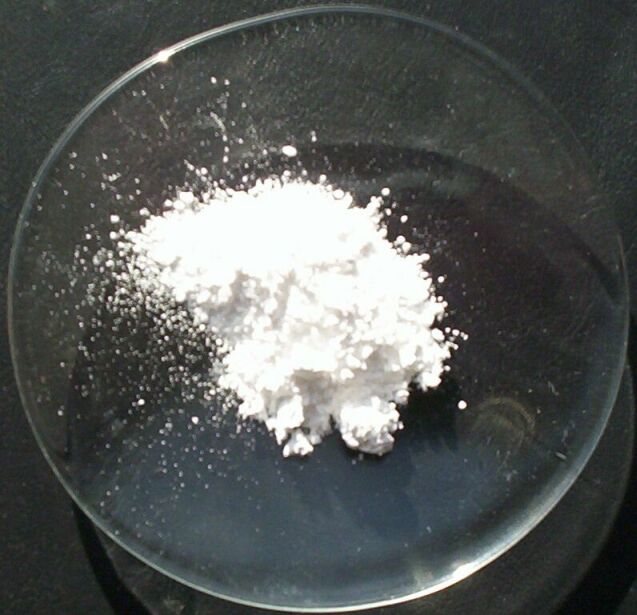
| Appearance | White powder |
| Odor | Odorless |
| Density | 3.6 g/cm3[1] |
| Melting point | 2,852 °C (5,166 °F; 3,125 K)[1] |
| Boiling point | 3,600 °C (6,510 °F; 3,870 K)[1] |
| Solubility | Soluble in acid (reacts to form usually soluble salts, e.g. MgCl2 in HCl), ammonia insoluble in alcohol |
| Electrical resistivity | Dielectric[a] |
| Band gap | 7.8 eV[2] |
| −10.2·10−6 cm3/mol[3] | |
| Thermal conductivity | 45–60 W·m−1·K−1[4] |
Refractive index (nD)
|
1.7355 |
| 6.2 ± 0.6 D | |
| Structure | |
| Halite (cubic), cF8 | |
| Fm3m, No. 225 | |
a = 4.212Å
| |
| Octahedral (Mg2+); octahedral (O2−) | |
| Thermochemistry | |
Heat capacity (C)
|
37.2 J/mol K[8] |
Std molar
entropy (S⦵298) |
26.95 ± 0.15 J·mol−1·K−1[9] |
Std enthalpy of
formation (ΔfH⦵298) |
−601.6 ± 0.3 kJ·mol−1[9] |
Gibbs free energy (ΔfG⦵)
|
−569.3 kJ/mol[8] |
| Pharmacology | |
| A02AA02 (WHO) A06AD02 (WHO), A12CC10 (WHO) | |
| Hazards | |
| Occupational safety and health (OHS/OSH): | |
Main hazards
|
Metal fume fever, Irritant |
| GHS labelling: | |

| |
| Warning | |
| H315, H319, H335 | |
| P261, P264, P271, P273, P280, P302+P352, P304+P340, P305+P351+P338, P312, P333+P313, P337+P313, P362, P363, P391, P403+P233, P405 | |
| NFPA 704 (fire diamond) | |
| Flash point | Non-flammable |
| NIOSH (US health exposure limits): | |
PEL (Permissible)
|
TWA 15 mg/m3 (fume)[10] |
REL (Recommended)
|
None designated[10] |
IDLH (Immediate danger)
|
750 mg/m3 (fume)[10] |
| Safety data sheet (SDS) | ICSC 0504 |
| Related compounds | |
Other anions
|
Magnesium sulfide Magnesium selenide |
Other cations
|
Beryllium oxide Calcium oxide Strontium oxide Barium oxide |
Related compounds
|
Magnesium hydroxide Magnesium nitride |
Except where otherwise noted, data are given for materials in their standard state (at 25 °C [77 °F], 100 kPa).
| |


Magnesium oxide (MgO), or magnesia, is a white hygroscopic solid mineral that occurs naturally as periclase and is a source of magnesium (see also oxide). It has an empirical formula of MgO and consists of a lattice of Mg2+ ions and O2− ions held together by ionic bonding. Magnesium hydroxide forms in the presence of water (MgO + H2O → Mg(OH)2), but it can be reversed by heating it to remove moisture.
Magnesium oxide was historically known as magnesia alba (literally, the white mineral from Magnesia), to differentiate it from magnesia nigra, a black mineral containing what is now known as manganese.
Related oxides
[edit]While "magnesium oxide" normally refers to MgO, the compound magnesium peroxide MgO2 is also known. According to evolutionary crystal structure prediction,[11] MgO2 is thermodynamically stable at pressures above 116 GPa (gigapascals), and a semiconducting suboxide Mg3O2 is thermodynamically stable above 500 GPa. Because of its stability, MgO is used as a model system for investigating vibrational properties of crystals.[12]
Electric properties
[edit]Pure MgO is not conductive and has a high resistance to electric current at room temperature. The pure powder of MgO has a relative permittivity inbetween 3.2 to 9.9 with an approximate dielectric loss of tan(δ) > 2.16x10³ at 1kHz.[5][6][7]

Production
[edit]Magnesium oxide is produced by the calcination of magnesium carbonate or magnesium hydroxide. The latter is obtained by the treatment of magnesium chloride MgCl
2 solutions, typically seawater, with limewater or milk of lime.[13]
- Mg2+ + Ca(OH)2 → Mg(OH)2 + Ca2+
Calcining at different temperatures produces magnesium oxide of different reactivity. High temperatures 1500 – 2000 °C diminish the available surface area and produces dead-burned (often called dead burnt) magnesia, an unreactive form used as a refractory. Calcining temperatures 1000 – 1500 °C produce hard-burned magnesia, which has limited reactivity and calcining at lower temperature, (700–1000 °C) produces light-burned magnesia, a reactive form, also known as caustic calcined magnesia. Although some decomposition of the carbonate to oxide occurs at temperatures below 700 °C, the resulting materials appear to reabsorb carbon dioxide from the air.[citation needed]
Applications
[edit]Refractory insulator
[edit]MgO is prized as a refractory material, i.e. a solid that is physically and chemically stable at high temperatures. It has the useful attributes of high thermal conductivity and low electrical conductivity. According to a 2006 reference book:[14]
By far the largest consumer of magnesia worldwide is the refractory industry, which consumed about 56% of the magnesia in the United States in 2004, the remaining 44% being used in agricultural, chemical, construction, environmental, and other industrial applications.
MgO is used as a refractory material for crucibles. It is also used as an insulator in heat-resistant electrical cable.
Biomedical
[edit]Among metal oxide nanoparticles, magnesium oxide nanoparticles (MgO NPs) have distinct physicochemical and biological properties, including biocompatibility, biodegradability, high bioactivity, significant antibacterial properties, and good mechanical properties, which make it a good choice as a reinforcement in composites.[15]
Heating elements
[edit]It is used extensively as an electrical insulator in tubular construction heating elements as in electric stove and cooktop heating elements. There are several mesh sizes available and most commonly used ones are 40 and 80 mesh per the American Foundry Society. The extensive use is due to its high dielectric strength and average thermal conductivity. MgO is usually crushed and compacted with minimal airgaps or voids.
Cement
[edit]MgO is one of the components in Portland cement in dry process plants.
Sorel cement uses MgO as the main component in combination with MgCl2 and water.
Fertilizer
[edit]MgO has an important place as a commercial plant fertilizer[16] and as animal feed.[17]
Fireproofing
[edit]It is a principal fireproofing ingredient in construction materials. As a construction material, magnesium oxide wallboards have several attractive characteristics: fire resistance, termite resistance, moisture resistance, mold and mildew resistance, and strength, but also a severe downside as it attracts moisture and can cause moisture damage to surrounding materials.[18][14][1]
Medical
[edit]Magnesium oxide is used for relief of heartburn and indigestion, as an antacid, magnesium supplement, and as a short-term laxative. It is also used to improve symptoms of indigestion. Side effects of magnesium oxide may include nausea and cramping.[19] In quantities sufficient to obtain a laxative effect, side effects of long-term use may rarely cause enteroliths to form, resulting in bowel obstruction.[20]
Waste treatment
[edit]Magnesium oxide is used extensively in the soil and groundwater remediation, wastewater treatment, drinking water treatment, air emissions treatment, and waste treatment industries for its acid buffering capacity and related effectiveness in stabilizing dissolved heavy metal species.[according to whom?]
Many heavy metals species, such as lead and cadmium, are least soluble in water at mildly basic conditions (pH in the range 8–11). Solubility of metals increases their undesired bioavailability and mobility in soil and groundwater. Granular MgO is often blended into metals-contaminating soil or waste material, which is also commonly of a low pH (acidic), in order to drive the pH into the 8–10 range. Metal-hydroxide complexes tend to precipitate out of aqueous solution in the pH range of 8–10.
MgO is packed in bags around transuranic waste in the disposal cells (panels) at the Waste Isolation Pilot Plant, as a CO2 getter to minimize the complexation of uranium and other actinides by carbonate ions and so to limit the solubility of radionuclides. The use of MgO is preferred over CaO since the resulting hydration product (Mg(OH)
2) is less soluble and releases less hydration heat. Another advantage is to impose a lower pH value (about 10.5) in case of accidental water ingress into the dry salt layers, in contast to the more soluble Ca(OH)
2 which would create a higher pH of 12.5 (strongly alkaline conditions). The Mg2+
cation being the second most abundant cation in seawater and in rocksalt, the potential release of magnesium ions dissolving in brines intruding the deep geological repository is also expected to minimize the geochemical disruption.[21]
Niche uses
[edit]
- As a food additive, it is used as an anticaking agent. It is known to the US Food and Drug Administration for cacao products; canned peas; and frozen dessert.[22] It has an E number of E530.
- As a reagent in the installation of the carboxybenzyl (Cbz) group using benzyl chloroformate in EtOAc for the N-protection of amines and amides.[23]
- Doping MgO (about 1–5% by weight) into hydroxyapatite, a bioceramic mineral, increases the fracture toughness by migrating to grain boundaries, where it reduces grain size and changes the fracture mode from intergranular to transgranular.[24][25]
- Pressed MgO is used as an optical material. It is transparent from 0.3 to 7 μm. The refractive index is 1.72 at 1 μm and the Abbe number is 53.58. It is sometimes known by the Eastman Kodak trademarked name Irtran-5, although this designation is obsolete. Crystalline pure MgO is available commercially and has a small use in infrared optics.[26]
- An aerosolized solution of MgO is used in library science and collections management for the deacidification of at-risk paper items. In this process, the alkalinity of MgO (and similar compounds) neutralizes the relatively high acidity characteristic of low-quality paper, thus slowing the rate of deterioration.[27]
- Magnesium oxide is used as an oxide barrier in spin-tunneling devices. Owing to the crystalline structure of its thin films, which can be deposited by magnetron sputtering, for example, it shows characteristics superior to those of the commonly used amorphous Al2O3. In particular, spin polarization of about 85% has been achieved with MgO[28] versus 40–60 % with aluminium oxide.[29] The value of tunnel magnetoresistance is also significantly higher for MgO (600% at room temperature and 1,100 % at 4.2 K[30]) than Al2O3 (ca. 70% at room temperature[31]).
- MgO is a common pressure transmitting medium used in high pressure apparatuses like the multi-anvil press.[32]
Brake lining
[edit]Magnesia is used in brake linings for its heat conductivity and intermediate hardness.[33] It helps dissipate heat from friction surfaces, preventing overheating, while minimizing wear on metal components.[34] Its stability under high temperatures ensures reliable and durable braking performance in automotive and industrial applications.[35]
Thin film transistors
[edit]In thin film transistors(TFTs), MgO is often used as a dielectric material or an insulator due to its high thermal stability, excellent insulating properties, and wide bandgap.[36] Optimized IGZO/MgO TFTs demonstrated an electron mobility of 1.63 cm2/Vs, an on/off current ratio of 1,000,000:1, and a subthreshold swing of 0.50 V/decade at −0.11 V.[37] These TFTs are integral to low-power applications, wearable devices, and radiation-hardened electronics, contributing to enhanced efficiency and durability across diverse domains.[38][39]
Historical uses
[edit]- It was historically used as a reference white color in colorimetry, owing to its good diffusing and reflectivity properties.[40] It may be smoked onto the surface of an opaque material to form an integrating sphere.
- Early gas mantle designs for lighting, such as the Clamond basket, consisted mainly of magnesium oxide.
Precautions
[edit]Inhalation of magnesium oxide fumes can cause metal fume fever.[41]
See also
[edit]- Calcium oxide – Chemical compound of calcium
- Barium oxide – Chemical compound used in cathode-ray tubes
- Calcium silicate – Chemical compound naturally occurring as the mineral larnite
- Magnesium sulfide – Inorganic compound generated in the production of metallic iron
- Reactive magnesia
Notes
[edit]References
[edit]- ^ a b c d Haynes, William M., ed. (2011). CRC Handbook of Chemistry and Physics (92nd ed.). Boca Raton, Florida: CRC Press. p. 4.74. ISBN 1-4398-5511-0.
- ^ Taurian, O.E.; Springborg, M.; Christensen, N.E. (1985). "Self-consistent electronic structures of MgO and SrO" (PDF). Solid State Communications. 55 (4): 351–5. Bibcode:1985SSCom..55..351T. doi:10.1016/0038-1098(85)90622-2. Archived from the original (PDF) on 2016-03-03. Retrieved 2012-03-27.
- ^ Haynes, William M., ed. (2011). CRC Handbook of Chemistry and Physics (92nd ed.). Boca Raton, Florida: CRC Press. p. 4.133. ISBN 1-4398-5511-0.
- ^ Application of magnesium compounds to insulating heat-conductive fillers Archived 2013-12-30 at the Wayback Machine. konoshima.co.jp
- ^ a b A P, Johnson (November 1986). Structural and electrical properties of magnesium oxide powders (Masters). Durham University.
- ^ a b Subramanian, M. A.; Shannon, R. D.; Chai, B. H. T.; Abraham, M. M.; Wintersgill, M. C. (November 1989). "Dielectric constants of BeO, MgO, and CaO using the two-terminal method". Physics and Chemistry of Minerals. 16 (8): 741–746. Bibcode:1989PCM....16..741S. doi:10.1007/BF00209695. ISSN 0342-1791. S2CID 95280958.
- ^ a b Hornak, Jaroslav; Trnka, Pavel; Kadlec, Petr; Michal, Ondřej; Mentlík, Václav; Šutta, Pavol; Csányi, Gergely; Tamus, Zoltán (2018-05-30). "Magnesium Oxide Nanoparticles: Dielectric Properties, Surface Functionalization and Improvement of Epoxy-Based Composites Insulating Properties". Nanomaterials. 8 (6): 381. doi:10.3390/nano8060381. ISSN 2079-4991. PMC 6027305. PMID 29848967.
- ^ a b Haynes, William M., ed. (2011). CRC Handbook of Chemistry and Physics (92nd ed.). Boca Raton, Florida: CRC Press. p. 5.15. ISBN 1-4398-5511-0.
- ^ a b Haynes, William M., ed. (2011). CRC Handbook of Chemistry and Physics (92nd ed.). Boca Raton, Florida: CRC Press. p. 5.2. ISBN 1-4398-5511-0.
- ^ a b c NIOSH Pocket Guide to Chemical Hazards. "#0374". National Institute for Occupational Safety and Health (NIOSH).
- ^ Zhu, Qiang; Oganov A.R.; Lyakhov A.O. (2013). "Novel stable compounds in the Mg-O system under high pressure" (PDF). Phys. Chem. Chem. Phys. 15 (20): 7696–7700. Bibcode:2013PCCP...15.7696Z. doi:10.1039/c3cp50678a. PMID 23595296. Archived from the original (PDF) on 2013-12-03. Retrieved 2013-11-06.
- ^ Mei, AB; O. Hellman; C. M. Schlepütz; A. Rockett; T.-C. Chiang; L. Hultman; I. Petrov; J. E. Greene (2015). "Reflection Thermal Diffuse X-Ray Scattering for Quantitative Determination of Phonon Dispersion Relations". Physical Review B. 92 (17) 174301. Bibcode:2015PhRvB..92q4301M. doi:10.1103/physrevb.92.174301.
- ^ Margarete Seeger; Walter Otto; Wilhelm Flick; Friedrich Bickelhaupt; Otto S. Akkerman. "Magnesium Compounds". Ullmann's Encyclopedia of Industrial Chemistry. Weinheim: Wiley-VCH. doi:10.1002/14356007.a15_595.pub2. ISBN 978-3-527-30673-2.
- ^ a b Mark A. Shand (2006). The chemistry and technology of magnesia. John Wiley and Sons. ISBN 978-0-471-65603-6. Retrieved 10 September 2011.
- ^ Saberi A, Baltatu MS, Vizureanu P (May 2024). "Recent Advances in Magnesium-Magnesium Oxide Nanoparticle Composites for Biomedical Applications". Bioengineering. 11 (5): 508. doi:10.3390/bioengineering11050508. PMC 11117911. PMID 38790374.
- ^ Nutrient Science. fertilizer101.org. Retrieved on 2017-04-26.
- ^ Magnesium oxide for the Animal Feed Industry. lehvoss.de
- ^ Mármol, Gonzalo; Savastano, Holmer (July 2017). "Study of the degradation of non-conventional MgO-SiO 2 cement reinforced with lignocellulosic fibers". Cement and Concrete Composites. 80: 258–267. doi:10.1016/j.cemconcomp.2017.03.015.
- ^ Magnesium Oxide. MedlinePlus. Last reviewed 02/01/2009
- ^ Tatekawa Y, Nakatani K, Ishii H, et al. (1996). "Small bowel obstruction caused by a medication bezoar: report of a case". Surgery Today. 26 (1): 68–70. doi:10.1007/BF00311997. PMID 8680127. S2CID 24976010.
- ^ wipp.energy.gov Step-By-Step Guide for Waste Handling at WIPP. Waste Isolation Pilot Plant. wipp.energy.gov
- ^ "Compound Summary for CID 14792 – Magnesium Oxide". PubChem.
- ^ Dymicky, M. (1989-02-01). "Preparation of Carbobenzoxy-L-Tyrosine Methyl and Ethyl Esters and of the Corresponding Carbobenzoxy Hydrazides". Organic Preparations and Procedures International. 21 (1): 83–90. doi:10.1080/00304948909356350. ISSN 0030-4948.
- ^ Tan, C.Y.; Yaghoubi, A.; Ramesh, S.; Adzila, S.; Purbolaksono, J.; Hassan, M.A.; Kutty, M.G. (December 2013). "Sintering and mechanical properties of MgO-doped nanocrystalline hydroxyapatite" (PDF). Ceramics International. 39 (8): 8979–8983. doi:10.1016/j.ceramint.2013.04.098. Archived from the original (PDF) on 2017-03-12. Retrieved 2015-08-08.
- ^ Tan, Chou Yong; Singh, Ramesh; Tolouei, R.; Sopyan, Iis; Teng, Wan Dung (2011). "Synthesis of High Fracture Toughness of Hydroxyapatite Bioceramics". Advanced Materials Research. 264–265: 1849–1855. doi:10.4028/www.scientific.net/amr.264-265.1849. ISSN 1662-8985. S2CID 137578750.
- ^ Stephens, Robert E. & Malitson, Irving H. (1952). "Index of Refraction of Magnesium Oxide". Journal of Research of the National Bureau of Standards. 49 (4): 249–252. doi:10.6028/jres.049.025.
- ^ "Mass Deacidification: Saving the Written Word". Library of Congress. Retrieved 26 September 2011.
- ^ Parkin, S. S. P.; Kaiser, C.; Panchula, A.; Rice, P. M.; Hughes, B.; Samant, M.; Yang, S. H. (2004). "Giant tunnelling magnetoresistance at room temperature with MgO (100) tunnel barriers". Nature Materials. 3 (12): 862–867. Bibcode:2004NatMa...3..862P. doi:10.1038/nmat1256. PMID 15516928. S2CID 33709206.
- ^ Monsma, D. J.; Parkin, S. S. P. (2000). "Spin polarization of tunneling current from ferromagnet/Al2O3 interfaces using copper-doped aluminum superconducting films". Applied Physics Letters. 77 (5): 720. Bibcode:2000ApPhL..77..720M. doi:10.1063/1.127097.
- ^ Ikeda, S.; Hayakawa, J.; Ashizawa, Y.; Lee, Y. M.; Miura, K.; Hasegawa, H.; Tsunoda, M.; Matsukura, F.; Ohno, H. (2008). "Tunnel magnetoresistance of 604% at 300 K by suppression of Ta diffusion in CoFeB/MgO/CoFeB pseudo-spin-valves annealed at high temperature". Applied Physics Letters. 93 (8): 082508. Bibcode:2008ApPhL..93h2508I. doi:10.1063/1.2976435. S2CID 122271110.
- ^ Wang, D.; Nordman, C.; Daughton, J. M.; Qian, Z.; Fink, J. (2004). "70% TMR at Room Temperature for SDT Sandwich Junctions with CoFeB as Free and Reference Layers". IEEE Transactions on Magnetics. 40 (4): 2269. Bibcode:2004ITM....40.2269W. CiteSeerX 10.1.1.476.8544. doi:10.1109/TMAG.2004.830219. S2CID 20439632.
- ^ Wang, Haikuo; He, Duanwei; Yan, Xiaozhi; Xu, Chao; Guan, Junwei; Tan, Ning; Wang, Wendan (December 2011). "Quantitative measurements of pressure gradients for the pyrophyllite and magnesium oxide pressure-transmitting mediums to 8 GPa in a large-volume cubic cell". High Pressure Research. 31 (4): 581–591. Bibcode:2011HPR....31..581W. doi:10.1080/08957959.2011.614238. ISSN 0895-7959.
- ^ "Magnesium Oxide Ceramic Materials - An Overview". Advanced Ceramic Materials. Aug 8, 2024. Retrieved Sep 15, 2024.
- ^ CN patent 105087849A
- ^ WO patent 2020122684A1
- ^ Green, Julissa (Apr 24, 2024). "Magnesium Oxide Target in Thin-Film Transistors Production". Sputter Targets. Stanford Advanced Materials. Retrieved Oct 30, 2024.
- ^ Su, Zhan; Zhang, Xiao (2024). "Effect of substrate temperature on growth mechanism and properties of PEALD-MgO dielectric films for amorphous-IGZO TFTs". Surface and Coatings Technology. 483 130819. doi:10.1016/j.surfcoat.2024.130819.
- ^ Yu, Fangzhou; Hong, Wen (2021). "MgZnO-Based Negative Capacitance Transparent Thin-Film Transistor Built on Glass". IEEE Journal of the Electron Devices Society. 9: 798–803. Bibcode:2021IJEDS...9..798Y. doi:10.1109/JEDS.2021.3108904.
- ^ Zhao, Cheng; Li, Jun (2017). "Mg Doping to Simultaneously Improve the Electrical Performance and Stability of MgInO Thin-Film Transistors". IEEE Transactions on Electron Devices. 64 (5): 2216–2220. Bibcode:2017ITED...64.2216Z. doi:10.1109/TED.2017.2678544.
- ^ Tellex, Peter A.; Waldron, Jack R. (1955). "Reflectance of Magnesium Oxide". JOSA. 45 (1): 19. Bibcode:1955JOSA...45...19T. doi:10.1364/JOSA.45.000019.
- ^ Magnesium Oxide. National Pollutant Inventory, Government of Australia.
External links
[edit]Magnesium oxide
View on GrokipediaChemical and Physical Properties
Structure
Magnesium oxide has the chemical formula MgO and exists as a binary ionic compound composed of Mg²⁺ cations and O²⁻ anions, bonded through electrostatic interactions characteristic of ionic bonding.[7] At ambient conditions, MgO crystallizes in the periclase structure, which is isostructural with rock salt (NaCl) and adopts a face-centered cubic lattice with space group Fm3m (No. 225). In this arrangement, Mg²⁺ and O²⁻ ions each occupy octahedral sites, resulting in a coordination number of 6 for both ions and forming a three-dimensional network stabilized by ionic forces. The lattice constant is 0.421 nm (4.21 Å).[8][9] MgO exhibits several polymorphic forms under extreme conditions. The cubic B1 (rock salt) phase is thermodynamically stable at standard temperature and pressure, but compression induces a transition to the cubic B2 (CsCl-type) phase at approximately 410 GPa, where the coordination number increases to 8. Theoretical calculations predict additional high-pressure polymorphs, including the zincblende (B3) and B81 structures, though experimental realization remains limited to the B1-B2 sequence up to terapascal pressures; hexagonal phases akin to wüstite (FeO) have been hypothesized for defective MgO but not confirmed in stoichiometric material. High-temperature phases are primarily theoretical, with the B1 structure persisting to melting points exceeding 3000°C due to its ionic robustness. The rock salt structure yields a theoretical density of 3.58 g/cm³, consistent with experimental measurements, and a molar mass of 40.304 g/mol calculated from atomic weights. The purely ionic model effectively describes MgO's bonding, predicting high lattice energy from the 2:2 charge balance and negligible covalent contribution, as supported by electron density distributions showing localized charges on ions.[9][7][10]Physical Properties
Magnesium oxide appears as a white, hygroscopic powder or as colorless crystals, and it is odorless and tasteless.[7] Its hygroscopic nature causes it to absorb moisture from the air, forming magnesium hydroxide over time.[11] The compound exhibits exceptional thermal stability, with a melting point of 2,852 °C and a boiling point of 3,600 °C, attributable to the strong ionic lattice energy in its rock salt structure.[7][12] Magnesium oxide has a density of 3.58 g/cm³.[7] Its thermal conductivity ranges from 30 to 60 W/(m·K), while the specific heat capacity is 0.937 J/(g·K).[5][7] The coefficient of thermal expansion is 13.4 × 10⁻⁶ /K.[13] Mechanically, magnesium oxide demonstrates moderate hardness, rating 5.5–6.5 on the Mohs scale and approximately 500–600 HV on the Vickers scale.[7][14] Its Young's modulus is around 300 GPa, reflecting the rigidity of its ionic bonding.[15] Magnesium oxide is insoluble in water, with a solubility of 0.0086 g/100 mL at 20 °C, though an aqueous suspension exhibits a pH of around 10.5 due to slight hydrolysis.[7][11]Chemical Properties
Magnesium oxide exhibits basic oxide characteristics due to its ionic bonding structure, in which oxide ions accept protons from acids to form water. It reacts readily with acids to produce magnesium salts and water; for instance, the reaction with hydrochloric acid proceeds as follows: This behavior underscores its role as a simple metal oxide in acid-base chemistry.[16][17] Additionally, magnesium oxide reacts slowly with water to yield magnesium hydroxide, a weakly basic compound: The reaction is limited by the low solubility of the product, resulting in only partial conversion under ambient conditions. Magnesium oxide demonstrates thermal stability in air up to high temperatures, owing to its refractory properties, but it can react with carbon dioxide to form magnesium carbonate: This carbonation process occurs more readily in the presence of moisture or at elevated temperatures.[17][18] In most environments, it remains redox inert, resisting oxidation or reduction.[5]Electrical and Optical Properties
Magnesium oxide exhibits a wide band gap of 7.8 eV, which renders it an excellent electrical insulator with a room-temperature resistivity exceeding 10^{14} \Omega \cdot \mathrm{cm}.[19] This insulating behavior stems from its rock-salt crystal structure, which minimizes electronic conduction pathways. The material's dielectric constant is approximately 9.8 at 25°C and 1 MHz, paired with a low dielectric loss tangent of less than 10^{-4} under the same conditions, making it suitable for capacitor applications where minimal energy dissipation is required.[20] Additionally, magnesium oxide demonstrates a high breakdown strength, typically around 80 kV/mm in optimized forms, enabling its use in high-voltage dielectric components.[21] At elevated temperatures, the electrical conductivity of magnesium oxide increases due to enhanced ionic motion, primarily involving magnesium cation vacancies.[22] Ionic conduction dominates up to at least 1000°C, with an emerging electronic component at higher temperatures that further elevates conductivity.[22] This temperature dependence arises from thermally activated defect migration, transitioning the material from a near-perfect insulator to one with measurable ionic transport. Optically, magnesium oxide is transparent across a broad spectrum from the ultraviolet (with an absorption cutoff below 200 nm, corresponding to its band gap) to the mid-infrared.[19] Its refractive index is 1.72 in the visible range, contributing to low reflection losses in optical devices.[23] The material also displays photoluminescence properties, featuring defect-related emissions in the UV-visible range, such as blue luminescence around 2.7-3.0 eV attributed to oxygen vacancies and surface states.[24] These emissions are particularly pronounced in nanostructured forms due to increased defect densities.[25]Related Compounds
Forms of Magnesium Oxide
Magnesium oxide exists in several distinct forms, primarily differentiated by their preparation methods and resulting physical characteristics, which influence their reactivity and applications. The naturally occurring mineral form is periclase, a cubic crystalline structure of pure MgO found in metamorphosed limestones and ultramafic rocks. Periclase exhibits high thermal stability and is widely utilized in refractory materials due to its resistance to high temperatures and chemical corrosion.[26][27] Dead-burned magnesia (DBM) is produced through high-temperature calcination of magnesium compounds above 1,500 °C, resulting in a dense, crystalline structure with low chemical reactivity. This form is characterized by minimal hydration potential, making it ideal for refractory ceramics and steelmaking linings where stability under extreme conditions is essential.[28][29] Hard-burned and light-burned magnesia represent intermediate forms based on calcination temperatures between 800 °C and 1,500 °C. Hard-burned magnesia, calcined at 1,000–1,500 °C, possesses moderate reactivity and slower hydration rates, suitable for applications requiring balanced durability and chemical response. In contrast, light-burned magnesia, prepared at 700–1,000 °C, features a porous structure with high surface area and rapid hydration, enhancing its utility in processes demanding quick reactivity.[30][31][32] Nanoparticle forms of magnesium oxide (MgO NPs) are engineered with particle sizes typically ranging from 5 nm to 100 nm, offering surface areas exceeding 100 m²/g and significantly amplified reactivity compared to bulk forms. These nanoparticles exhibit enhanced adsorption and catalytic properties due to their high surface-to-volume ratio, enabling applications in environmental remediation and antimicrobial agents.[33][34] Reactive magnesium oxide (RMgO), also known as caustic-calcined magnesia, is synthesized via low-temperature processes at 700–1,000 °C, yielding highly reactive particles with surface areas often above 25 m²/g. This form's elevated hydration and carbonation rates make it particularly suitable for cementitious composites, where it contributes to lower-energy production and improved mechanical performance in sustainable building materials.[35][36] Fused magnesia is obtained by melting high-purity magnesium oxide in an electric arc furnace at temperatures around 2,800 °C, producing a vitreous, dense material with purity levels exceeding 99%. Its exceptional electrical insulation and thermal shock resistance render it valuable for electrical heating elements and high-performance refractories in demanding industrial environments.[37][38]Comparison to Similar Oxides
Magnesium oxide (MgO) shares structural similarities with other group 2 oxides, such as calcium oxide (CaO), but exhibits distinct physical and chemical properties due to the smaller ionic radius of Mg²⁺ compared to Ca²⁺. The melting point of MgO is 2852 °C, higher than that of CaO at 2613 °C, reflecting the greater lattice energy in MgO (3795 kJ/mol versus 3414 kJ/mol for CaO).[7][39] MgO also demonstrates lower reactivity with water, forming Mg(OH)₂ slowly under ambient conditions, whereas CaO reacts vigorously to produce Ca(OH)₂ and heat, owing to the higher solubility of Ca(OH)₂ (0.173 g/100 mL) compared to Mg(OH)₂ (0.0009 g/100 mL). Additionally, MgO offers superior electrical insulation with a lower electrical conductivity than CaO, as evidenced by its slightly higher resistivity in comparable polycrystalline forms. Both compounds are employed in cement production, but MgO contributes to slower-setting mixtures due to its delayed hydration kinetics, which can enhance long-term expansion control in Portland cement blends.[40][41] In contrast to zinc oxide (ZnO), MgO is predominantly ionic and serves as an excellent electrical insulator with a wide band gap of approximately 7.8 eV, while ZnO possesses a more covalent character and acts as a semiconductor with a band gap of 3.3 eV, enabling applications in optoelectronics such as LEDs and solar cells. This difference in electronic structure makes MgO preferable for high-temperature refractories where insulation is critical, whereas ZnO's semiconducting properties suit photovoltaic and piezoelectric devices. Lattice energy further underscores their divergence, with MgO at 3795 kJ/mol compared to 4142 kJ/mol for ZnO, though the latter's wurtzite structure influences its lower melting point of 1975 °C versus MgO's 2852 °C.[36][42][43] Compared to aluminum oxide (Al₂O₃), MgO is less dense (3.58 g/cm³ versus 3.95 g/cm³ for Al₂O₃) but more strongly basic, as MgO reacts readily with acids to form salts without amphoteric behavior, unlike Al₂O₃ which exhibits both acidic and basic properties. MgO also displays higher thermal shock resistance in refractory applications, attributable to its lower Young's modulus and higher fracture toughness in certain composites, despite Al₂O₃'s superior hardness (Mohs 9 versus 6.5 for MgO) that favors its use in abrasives and cutting tools. The band gap of Al₂O₃ is wider at about 8.8 eV, enhancing its insulating capabilities, but MgO's melting point (2852 °C) exceeds Al₂O₃'s (2072 °C), contributing to its stability in extreme thermal environments. Lattice energy for Al₂O₃ is notably higher at approximately 15,916 kJ/mol (for the compound), reflecting its corundum structure.[7][44] Among other group 2 refractory oxides like strontium oxide (SrO) and barium oxide (BaO), MgO stands out for its superior thermal stability and natural abundance, derived primarily from magnesite and seawater processing, unlike the rarer SrO and BaO sources. SrO and BaO exhibit lower melting points (2531 °C and 1923 °C, respectively) and reduced lattice energies (3217 kJ/mol and 3029 kJ/mol), making MgO the most robust for industrial refractories within this series.| Oxide | Lattice Energy (kJ/mol) | Band Gap (eV) | Melting Point (°C) |
|---|---|---|---|
| MgO | 3795 | 7.8 | 2852 |
| CaO | 3414 | 7.7 | 2613 |
| SrO | 3217 | ~6.5 | 2531 |
| BaO | 3029 | ~5.5 | 1923 |
| ZnO | 4142 | 3.3 | 1975 |
| Al₂O₃ | 15916 | 8.8 | 2072 |
Occurrence and Production
Natural Occurrence
Magnesium oxide occurs naturally as the mineral periclase, a rare cubic compound (MgO) typically found in contact metamorphic environments such as metamorphosed limestones, dolomites, and ultramafic rocks.[26][47] Periclase forms under high-temperature conditions, often exhibiting perfect cleavage and a sub-vitreous luster, but pure crystals are uncommon due to its tendency to react with surrounding minerals.[48] The primary terrestrial sources of magnesium oxide are the carbonate minerals magnesite (MgCO₃) and dolomite (CaMg(CO₃)₂), which are abundant in sedimentary and metamorphic deposits and serve as precursors to MgO through thermal processing.[49][50] Global reserves of magnesite, the primary magnesium-bearing ore, total approximately 7.7 billion metric tons as of 2023, with the largest deposits in Russia (30%), Slovakia (16%), China (7.5%), Brazil (3%), and Greece and Australia (each 4%). Note that North Korea's reserves, previously estimated at around 18%, are not included in the latest assessments due to limited verifiable data. China accounts for about 60% of worldwide magnesite production.[51] Magnesium oxide also appears in extraterrestrial materials, including chondritic meteorites where it can constitute up to 32% of the composition in some stony varieties, and lunar regolith, particularly in basaltic rocks with MgO contents reaching 10-19% in picritic types.[52][53] Brucite (Mg(OH)₂), a hydrous magnesium mineral, occurs less commonly in serpentinized ultramafic rocks and altered periclase deposits, providing a minor natural source convertible to MgO.[54][55] Extracting magnesium from these natural sources presents environmental challenges, including energy-intensive open-pit mining operations that involve large-scale earth removal, leading to habitat disruption, soil erosion, and potential water contamination from processing residues.[56][57]Industrial Production
The primary industrial production of magnesium oxide (MgO) relies on the thermal decomposition, or calcination, of naturally occurring magnesium carbonate minerals such as magnesite (MgCO₃) or dolomite (CaMg(CO₃)₂). This process involves heating the ore in rotary kilns or vertical shaft furnaces at temperatures ranging from 700°C to 1,800°C, yielding MgO and carbon dioxide gas via the reaction MgCO₃ → MgO + CO₂.[31] Calcination of these minerals accounts for approximately 90% of global MgO supply, with annual production estimated at around 12-14 million metric tons as of 2023, predominantly from China which contributes over 60% of output.[58][59] An alternative route extracts magnesium from seawater or magnesium-rich brines, such as those in the Dead Sea, where lime (Ca(OH)₂) is added to precipitate magnesium hydroxide (Mg(OH)₂), followed by filtration, drying, and calcination at 800-1,000°C to produce MgO.[60][50] This method is employed in regions with abundant brine resources, including the Dead Sea area, and contributes a smaller but significant portion of global production, particularly for higher-purity grades.[61] In the Pidgeon process for magnesium metal smelting, calcined dolomite serves as the feedstock, and the reduction step generates a slag residue rich in unreacted MgO, which can be recovered and repurposed as industrial-grade MgO.[62] This byproduct route integrates with primary magnesium production, enhancing overall resource efficiency in facilities using silicothermic reduction.[63] Industrial calcination processes consume 3-5 GJ of energy per metric ton of MgO, primarily from fossil fuels, resulting in CO₂ emissions of approximately 1 metric ton per metric ton of MgO due to both mineral decomposition and fuel combustion.[64] Purity levels vary by application, with refractory-grade MgO typically achieving 95-99% purity from direct calcination, while pharmaceutical grades exceed 99.5% through additional purification steps like re-precipitation and high-temperature dead-burning.[65][66] Recent developments since 2020 emphasize greener production to mitigate emissions, including biomass co-firing in kilns to replace fossil fuels and solar thermal calcination using concentrated sunlight for energy-efficient decomposition at lower operational costs.[67][68] These approaches can reduce energy use by up to 15% and facilitate CO₂ capture, aligning with sustainability goals in the magnesia sector.[69]Laboratory Synthesis
Magnesium oxide (MgO) is commonly synthesized in laboratory settings through the thermal decomposition of magnesium hydroxide or carbonate precursors, which provides a straightforward route to high-purity material. The decomposition of magnesium hydroxide follows the reaction Mg(OH)₂ → MgO + H₂O, typically occurring at temperatures between 350 and 500 °C in a furnace under controlled atmosphere to minimize impurities.[70] Similarly, calcination of magnesium carbonate (MgCO₃) at around 800 °C yields MgO via MgCO₃ → MgO + CO₂, often used for producing reagent-grade powders with surface areas up to 100 m²/g depending on the calcination conditions.[71] These methods are favored in research for their simplicity and ability to control particle morphology, such as transitioning from spherical to plate-like structures as temperature increases.[70] The sol-gel method offers precise control over nanoparticle formation, starting with magnesium acetate or nitrate precursors dissolved in a solvent like methanol, followed by hydrolysis and gelation with a base or acid, and subsequent annealing at 400–600 °C to form crystalline MgO.[72] This approach typically produces cubic or spherical nanoparticles with sizes around 10–20 nm, suitable for applications requiring uniform dispersion.[73] Annealing conditions are critical to achieve phase purity, as confirmed by X-ray diffraction (XRD) patterns matching the periclase structure of MgO.[74] Hydrothermal synthesis enables the production of high surface area MgO nanoparticles by reacting magnesium salts, such as magnesium chloride or nitrate, with a base like sodium hydroxide in an autoclave at 100–200 °C under elevated pressure for several hours.[75] This method yields particles with surface areas exceeding 150 m²/g and controlled morphologies, such as nanorods or nanosheets, due to the solvothermal environment promoting oriented growth.[76] Post-synthesis calcination at 500 °C converts any intermediate hydroxides to pure MgO, with transmission electron microscopy (TEM) revealing uniform sizes below 50 nm.[77] Combustion synthesis provides a rapid, exothermic route by mixing magnesium nitrate with a fuel like glycine or urea, followed by ignition in a preheated muffle furnace at 300–500 °C, directly forming porous MgO nanoparticles through self-propagating combustion.[78] This technique achieves high purity (>99%) in minutes, producing fluffy powders with crystallite sizes of 20–30 nm as determined by XRD.[79] The fuel-to-oxidizer ratio influences the gas evolution and thus the porosity, enhancing reactivity for research purposes.[80] Laboratory-synthesized MgO is characterized for purity exceeding 99.9% using techniques like XRD for crystallinity and TEM for morphology, ensuring suitability for reagent-grade applications in catalysis and materials research.[75] Recent advances include green synthesis routes employing plant extracts, such as those from Hyphaene thebaica or Acalypha indica leaves, as reducing agents in solution combustion or precipitation methods to produce eco-friendly MgO nanoparticles with sizes of 10–40 nm, as reported in studies from 2022–2024.[81][82] These biogenic approaches reduce chemical usage while maintaining high purity, verified by Fourier-transform infrared spectroscopy showing organic capping.[83]Applications
Refractory and Ceramic Uses
Magnesium oxide (MgO) plays a pivotal role in refractory materials due to its exceptional thermal stability and resistance to chemical attack, making it indispensable for high-temperature industrial processes. In particular, its high melting point of approximately 2,800 °C enables sustained performance in extreme environments, such as those encountered in metallurgical operations.[84] Refractory bricks and linings composed primarily of MgO, often with purity levels exceeding 90%, are widely employed in steel furnaces to line vessels like basic oxygen furnaces and electric arc furnaces. These materials provide robust protection against corrosion from basic slags, which are molten byproducts rich in calcium and silica, thereby extending the operational life of furnace linings under temperatures approaching 2,000 °C or higher.[84][85][86] MgO-based crucibles and molded shapes are essential for melting and handling reactive metals, including rare earth elements and alloys, owing to their superior thermal shock resistance and inertness to molten metals. This resistance minimizes cracking during rapid heating or cooling cycles, ensuring reliable containment in foundry and laboratory settings.[87][88] In electric furnaces, MgO serves as a critical electrical insulator surrounding nichrome resistance wires in tubular heating elements, facilitating efficient heat transfer while preventing short circuits at elevated temperatures. The powder form of MgO is compacted around the coiled wire within a metal sheath, providing both thermal conductivity and dielectric isolation essential for safe and durable operation.[89][90] For ceramic applications in electronics, MgO is utilized in insulators and substrates due to its high dielectric strength, which supports reliable performance in high-voltage components such as capacitors and circuit boards. With a dielectric constant around 9.8–11.2, it enables compact designs that maintain electrical integrity under thermal stress.[91][92][93] Fused magnesia, produced by electric arc fusion of high-purity MgO, enhances advanced refractories for glass and cement kilns, offering superior density and corrosion resistance compared to dead-burned variants. These refractories line rotary kilns and melting tanks, withstanding abrasive wear and chemical fluxes at temperatures up to 1,700 °C.[37][94] In 2023, refractories accounted for approximately 50% of global MgO consumption, underscoring its dominance in high-temperature material sectors.[95]Construction and Cement Applications
Magnesium oxide has been utilized in construction since ancient times, with evidence of its presence in Roman pozzolanic mixes that contributed to the durability of structures like the Pantheon.[96] These early formulations combined calcined lime, often containing magnesium oxide impurities from dolomitic limestone, with volcanic ash to form hydraulic cements resistant to seawater and weathering.[97] In modern applications, magnesium oxide serves as a key component in Sorel cement, formed by reacting MgO with MgCl₂ and H₂O to produce magnesium oxychloride phases that bind aggregates.[98] This cement is valued for its rapid setting and high early strength, making it suitable for flooring tiles and fire-resistant panels in buildings.[99] Its low thermal conductivity also enhances insulation properties in wallboards and decorative elements.[100] Reactive magnesium oxide is increasingly incorporated into low-carbon concrete as a partial replacement for Portland cement, typically at 5–20% by weight, to reduce emissions while enabling CO₂ sequestration through carbonation (MgO + CO₂ → MgCO₃).[101] This process forms stable magnesium carbonates that enhance long-term strength and durability, with accelerated carbonation curing achieving up to 100% conversion in blends under controlled CO₂ exposure.[102] Such formulations have demonstrated compressive strengths comparable to traditional concrete after 28 days, supporting sustainable building practices.[103] Magnesium phosphate cements, produced by reacting MgO with phosphates like KH₂PO₄, offer rapid-setting capabilities ideal for emergency repairs of pavements and structures, achieving compressive strengths exceeding 40 MPa within hours.[104] These cements set in under 15 minutes even at low temperatures, providing bond strengths over 2 MPa to existing concrete surfaces.[105] As an additive in lime- and cement-based mortars, magnesium oxide at dosages of 5–10% improves sulfate resistance by forming protective layers that limit ion penetration and expansion damage.[106] This enhances overall durability in aggressive environments, reducing water absorption by up to 42% and extending service life in sulfate-rich soils.[107] Research in the 2020s has advanced MgO-based geopolymer systems, where magnesium oxide activates aluminosilicate precursors under ambient conditions to create low-emission binders for sustainable construction.[35] These materials can reduce CO₂ emissions by approximately 50% compared to Portland cement, owing to minimized clinkering and inherent carbonation potential.[108] Applications include eco-friendly blocks and panels with mechanical properties meeting structural standards.[109]Agricultural and Fertilizer Uses
Magnesium oxide serves as a vital source of magnesium ions (Mg²⁺) essential for chlorophyll synthesis in plants, enabling efficient photosynthesis and overall growth.[110] As the central atom in the chlorophyll molecule, Mg²⁺ constitutes up to 25% of the plant's total magnesium content, and deficiencies manifest as interveinal chlorosis, particularly in crops like tomatoes and potatoes, where foliar or soil applications of magnesium oxide have been shown to enhance chlorophyll production and yield.[111][112] In addition to nutrient supply, magnesium oxide functions as a liming agent to counteract soil acidity by raising pH levels, with its high neutralizing capacity making it more effective than traditional materials; specifically, 1 ton of magnesium oxide provides acidity neutralization equivalent to approximately 2.5 tons of calcium carbonate.[113] This property stems from its oxide form, which reacts readily with soil acids to form magnesium salts and water, improving nutrient availability in acidic environments.[114] Typical application rates for magnesium oxide in agriculture range from 100 to 500 kg per hectare, often applied as calcined magnesite to address magnesium deficiencies or soil acidity, with adjustments based on soil tests and crop needs.[115] These rates ensure gradual magnesium release due to the compound's low water solubility, supporting sustained plant uptake without risking over-application.[116] Recent advancements include bio-based magnesium oxide nanoparticles used for seed priming, which promote plant growth and yield; studies from 2022 to 2024 demonstrate increases of 20–30% in seedling vigor, chlorophyll content, and overall yield in crops such as chickpea and mustard through enhanced nutrient absorption and stress tolerance.[117][118] Magnesium oxide is also incorporated into fertilizer blends like dolomitic lime, a mixture of magnesium oxide and calcium oxide, specifically formulated for acidic soils to simultaneously supply magnesium and calcium while neutralizing pH.[114] This blend is particularly effective in maintaining balanced cation exchange in soils prone to aluminum toxicity.[119] Globally, agriculture accounts for approximately 10% of magnesium oxide production, underscoring its role in enhancing crop productivity and soil health worldwide.[120]Medical and Pharmaceutical Uses
Magnesium oxide is widely used in pharmaceuticals as an antacid to relieve heartburn, sour stomach, and acid indigestion by neutralizing excess gastric acid. The compound reacts with hydrochloric acid in the stomach according to the equation MgO + 2HCl → MgCl₂ + H₂O, producing magnesium chloride and water without generating carbon dioxide gas.[121] Typical over-the-counter formulations include 400 mg tablets, with recommended doses of 1 to 2 tablets daily, not exceeding 800 mg in 24 hours.[122] In addition to its antacid properties, magnesium oxide serves as a laxative through an osmotic mechanism, where poorly absorbed magnesium ions draw water into the intestinal lumen, softening stool and promoting bowel movements.[123] This effect results from partial dissolution in the gastrointestinal tract, leading to water retention and stimulation of peristalsis.[124] It is particularly useful for short-term relief of constipation, often administered in doses similar to antacid uses. As a dietary supplement, magnesium oxide helps prevent and treat magnesium deficiency, providing approximately 241 mg of elemental magnesium per 400 mg tablet due to its high magnesium content.[122] However, its bioavailability is relatively low due to poor solubility in neutral pH environments, with studies indicating absorption rates around 15%, though it improves slightly in acidic conditions.[125][126] This limited absorption reduces its effectiveness for systemic benefits like sleep support compared to other magnesium forms with higher bioavailability, such as magnesium glycinate.[126] Pharmaceutical-grade magnesium oxide must meet United States Pharmacopeia (USP) standards, containing not less than 96.0% and not more than 100.5% MgO after ignition, and is available in forms such as tablets, capsules, and suspensions.[127] Historical use of magnesium oxide in medicine dates to the 19th century, when it was introduced as a pharmaceutical agent in Western practices and later adopted in Eastern contexts, serving as a precursor to formulations like milk of magnesia (magnesium hydroxide suspension) patented in 1873.[128][129] Despite its benefits, magnesium oxide is contraindicated in patients with renal impairment due to the risk of hypermagnesemia from reduced excretion.[130] The tolerable upper intake level for supplemental elemental magnesium is 350 mg per day for adults to avoid adverse effects.Biomedical and Nanomaterial Applications
Magnesium oxide nanoparticles (MgO NPs) have garnered significant attention in biomedical applications due to their biocompatibility, high surface area, and ability to generate reactive oxygen species (ROS), which underpin their therapeutic potential. In particular, MgO NPs exhibit potent antibacterial activity against pathogens such as Escherichia coli and [Staphylococcus aureus](/page/Staphylococcus aureus), primarily through the production of ROS that damage bacterial cell membranes and disrupt metabolic processes.[131] This mechanism has been demonstrated in studies showing up to 99% inhibition of bacterial growth at concentrations as low as 1 mg/mL, making MgO NPs promising for infection control in biomedical settings.[132] In bone tissue engineering, MgO NPs are incorporated into polymer-based scaffolds, such as bacterial cellulose or polycaprolactone composites, to enhance biocompatibility and osteoconductivity. These scaffolds promote osteogenic differentiation of osteoblast-like cells by releasing magnesium ions that stimulate bone mineralization and cell proliferation, with in vitro studies reporting up to 2-fold increases in alkaline phosphatase activity compared to unmodified scaffolds.[133] The biodegradability of MgO NPs ensures gradual ion release, supporting long-term bone regeneration without eliciting significant inflammatory responses, as evidenced by systematic reviews highlighting their minimal toxicity and favorable integration with host tissue. MgO NPs serve as efficient carriers for drug delivery, leveraging their porous structure and high surface area—often exceeding 100 m²/g—for loading antibiotics like tetracycline or ciprofloxacin. In pH-sensitive environments, such as acidic tumor microenvironments or infected wounds (pH ~5–6), these nanoparticles enable controlled release, with studies showing sustained antibiotic elution over 300 minutes and up to 90% drug loading efficiency.[134] This pH-responsive behavior minimizes premature drug release in neutral physiological conditions (pH 7.4), enhancing targeted therapeutic efficacy while reducing systemic side effects.[135] Recent in vitro studies from 2020 to 2024 have explored the anticancer potential of MgO NPs, which induce apoptosis in tumor cells through ROS-mediated oxidative stress and disruption of mitochondrial function. For instance, biogenic MgO NPs have shown IC50 values of 15–50 µg/mL against breast (MDA-MB-231), cervical (HeLa), and prostate (PC3) cancer cell lines, with mechanisms involving caspase activation and DNA fragmentation.[136] These effects are attributed to the nanoparticles' ability to penetrate cell membranes and elevate intracellular ROS levels, selectively targeting malignant cells while sparing normal fibroblasts.[137] For wound healing, MgO NPs are integrated into electrospun dressings, such as polycaprolactone/gelatin membranes, to provide anti-inflammatory effects alongside antimicrobial action. These dressings suppress pro-inflammatory cytokines like TNF-α and IL-6, accelerating re-epithelialization and collagen deposition in diabetic wound models, with healing rates improved by 30–50% compared to controls.[138] The nanoparticles' ROS generation neutralizes bacterial biofilms, while their ion-releasing properties modulate the immune response, fostering a pro-regenerative environment.[139] In magnesium-based implants, MgO NPs act as corrosion inhibitors by forming protective oxide layers that slow degradation rates in physiological environments. Composites incorporating 1–5 wt% MgO NPs into Mg-Zn-Zr alloys exhibit reduced corrosion current densities by up to 70%, extending implant lifespan from weeks to months while maintaining mechanical integrity and biocompatibility.[140] This controlled degradation prevents hydrogen gas accumulation and alkalization, common issues in bare Mg implants, thus improving clinical outcomes in orthopedic applications.[141]Environmental and Niche Uses
Magnesium oxide plays a significant role in environmental applications, particularly in air and water pollution control. In flue gas desulfurization (FGD) processes at power plants, MgO slurries are employed to absorb sulfur dioxide (SO₂) from industrial emissions, forming magnesium sulfite (MgSO₃) through the reaction MgO + SO₂ → MgSO₃.[142] This method offers advantages over traditional limestone-based systems, including higher absorption efficiency and easier byproduct recovery, with studies demonstrating desulfurization rates exceeding 90% under optimized conditions such as reduced particle sizes for the MgO absorbent.[143] In wastewater treatment, MgO serves as a neutralizing agent for acidic effluents and facilitates the precipitation of heavy metals like lead, cadmium, and copper as insoluble hydroxides, leveraging its basicity to raise pH levels and promote metal removal.[144] This approach is particularly effective in mine water remediation, where low-grade MgO derived from natural magnesite achieves substantial metal precipitation while minimizing sludge volume compared to lime-based alternatives.[145] Beyond pollution mitigation, magnesium oxide finds niche applications in materials science and safety enhancements. As a fireproofing additive, MgO is incorporated into textiles and plastics at loadings of 10–20% to act as a smoke suppressant and flame retardant, decomposing endothermically to release water vapor and dilute combustible gases during combustion.[146] This enhances thermal stability in polymer composites, reducing smoke density and improving fire resistance without halogenated compounds. In degradable food packaging, recent advances in green-synthesized MgO nanoparticles (NPs) from 2023–2024 have enabled their integration into biopolymeric films, providing antimicrobial barriers against pathogens like Escherichia coli and Staphylococcus aureus while promoting biodegradability and UV protection.[147] These NPs, often produced via plant-mediated routes, exhibit broad-spectrum antibacterial activity due to reactive oxygen species generation, extending food shelf life in sustainable packaging solutions.[148] Magnesium oxide also contributes to specialized engineering and electronics uses. In non-asbestos brake linings, MgO functions as a friction modifier in composite formulations, stabilizing the coefficient of friction, enhancing wear resistance, and improving thermal conductivity to dissipate heat during braking.[149] This replaces hazardous asbestos fibers with safer alternatives like aramid or ceramic reinforcements, maintaining performance in automotive applications. In flexible electronics, MgO serves as a high-k gate dielectric in thin-film transistors (TFTs), enabling low-voltage operation and high carrier mobility in oxide-based channels such as ZnO or InGaZnO.[150] Solution-processed MgO films, deposited at room temperature, achieve dielectric constants around 9–10, supporting bendable devices for displays and sensors with minimal leakage currents.[151] Historically, magnesium oxide has been utilized in niche catalytic roles, notably in 20th-century nickel-magnesium oxide systems for reforming processes like methane dry reforming, where it stabilizes nickel particles to enhance catalyst longevity and selectivity in hydrogen production.[152] These supported catalysts, often derived from spent materials, demonstrate improved resistance to sintering and carbon deposition, underscoring MgO's enduring value in industrial chemistry.[153]Safety and Toxicology
Health Effects
Magnesium oxide dust inhalation can cause respiratory irritation, including coughing, chest tightness, and symptoms of metal fume fever such as flu-like malaise and fever, particularly in occupational settings where fumes or fine particles are generated during processing or welding.[154] The Occupational Safety and Health Administration (OSHA) has established a permissible exposure limit (PEL) of 15 mg/m³ as a time-weighted average for total dust to mitigate these risks.[155] Ingestion of magnesium oxide is generally considered safe in small doses, as it is commonly used as a dietary supplement and antacid with low systemic absorption due to its poor solubility in neutral pH environments.[156] However, excessive intake can result in hypermagnesemia, an elevated serum magnesium level that manifests with gastrointestinal symptoms like nausea and vomiting, as well as cardiovascular effects including hypotension and bradycardia.[157] The oral median lethal dose (LD50) for magnesium oxide in rats exceeds 5,000 mg/kg, indicating relatively low acute toxicity, though individual responses vary based on dose and health status. Direct contact of magnesium oxide powder with skin typically causes only mild mechanical irritation without evidence of allergic sensitization or systemic absorption. Eye exposure may produce temporary irritation, redness, and discomfort, but it does not lead to permanent damage or corrosion upon prompt rinsing.[158] Magnesium oxide is not classified as a carcinogen by the International Agency for Research on Cancer (IARC).[159] Individuals with impaired kidney function, such as those with chronic kidney disease, represent a vulnerable population at heightened risk for magnesium accumulation and hypermagnesemia following exposure or supplementation, as renal excretion is the primary route of elimination.[160] Recent studies on magnesium oxide nanoparticles (MgO NPs) indicate low toxicity at doses below 100 mg/kg in animal models, with minimal histopathological changes observed in liver and kidney tissues.[161] However, higher doses may induce oxidative stress through reactive oxygen species generation, potentially leading to cellular damage and alterations in hormonal or stress-related biomarkers.[162]Environmental Considerations
The production of magnesium oxide (MgO) through calcination of magnesite or other precursors generates significant CO₂ emissions, typically ranging from approximately 1 ton of CO₂ per ton of MgO produced via conventional dry-route processes.[163] These emissions arise primarily from the thermal decomposition of magnesium carbonate, contributing to the compound's overall carbon footprint in industrial applications. Efforts to mitigate this include carbon capture initiatives, such as pilot projects at magnesium oxide mines in Europe that deployed specialized containers for CO₂ sequestration starting in late 2024.[164] Mining activities for magnesite, a primary source of MgO, often lead to habitat disruption in quarry sites, including soil erosion, deforestation, and loss of local biodiversity.[56] Extraction from brines, an alternative method, involves substantial water consumption; for instance, producing one ton of magnesium requires processing over 800 tons of seawater through evaporation, potentially straining water resources in arid regions.[165] Magnesium oxide nanoparticles (MgO NPs) exhibit favorable environmental biodegradability, decomposing into magnesium ions (Mg²⁺) that are naturally occurring and harmless in soil and aquatic environments, posing minimal long-term ecological risk compared to persistent nanomaterials.[166] Life-cycle assessments of MgO production reveal a higher direct global warming potential than calcium oxide (CaO)-based alternatives due to greater CO₂ release during magnesite calcination (about 1.1 tons CO₂ per ton versus 0.78–0.83 tons for limestone).[167] However, in carbonated MgO applications, such as reactive magnesia cements, subsequent CO₂ sequestration can offset emissions, potentially yielding a net lower impact in full-cycle evaluations. Under the European Union's REACH regulation, MgO is classified as non-hazardous, with no specific labeling requirements for acute toxicity or environmental persistence, though inhalation controls for dust are mandated during handling to prevent particulate emissions. Sustainable practices are advancing, including recycling of spent MgO-based refractories from steelmaking, where crushed materials are reused as furnace additives without extensive processing, reducing raw material demand and waste.[169] The broader MgO market, incorporating such eco-friendly sourcing, is projected to grow from USD 7.1 billion in 2024 to USD 12.7 billion by 2034, driven by demand for low-carbon alternatives in construction and agriculture.[95]Handling and Precautions
Magnesium oxide should be stored in sealed, airtight containers to prevent absorption of moisture due to its hygroscopic nature, and it must be kept away from acids and incompatible materials such as strong oxidizers.[170] Under proper dry, cool, and well-ventilated conditions, its shelf life exceeds two years from the date of manufacture.[171] When handling magnesium oxide, particularly in powder or dust form, appropriate personal protective equipment (PPE) is essential, including respirators with dust filters, chemical-resistant gloves, safety goggles, and protective clothing to minimize skin and eye contact.[172] Processing areas should feature adequate ventilation systems to control airborne dust concentrations and prevent inhalation exposure.[158] In the event of a spill, collect the material using non-sparking tools by sweeping or vacuuming with a HEPA-filtered unit, while avoiding the use of water or wet methods to prevent clumping and potential reaction.[170] Place the collected material in suitable sealed containers for disposal in accordance with local regulations. Magnesium oxide is classified as non-hazardous for transportation under U.S. Department of Transportation (DOT) regulations and does not require special shipping labels or placards, though it should be marked as an irritant if in dust form.[158][173] For emergency procedures, immediately flush affected eyes or skin with large amounts of water for at least 15 minutes, and for inhalation incidents, move the individual to fresh air while providing oxygen if breathing is difficult, then seek prompt medical attention.[172] Best practices for handling include selecting dead-burned magnesium oxide forms, which have higher density and lower reactivity, to reduce dust generation in sensitive or high-precision applications.[174]References
- https://www.[mdpi](/page/MDPI).com/2673-4605/15/1/78