Hubbry Logo
SunglassesSunglassesMain
Open search
Sunglasses
Community hub
Sunglasses
logo
8 pages, 0 posts
0 subscribers
Be the first to start a discussion here.
Sunglasses
Sunglasses
from Wikipedia

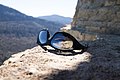
Wearing sunglasses under direct sunlight: Large lenses offer good protection, but broad temple arms are also needed against "stray light" from the sides.

Sunglasses or sun glasses (informally called shades or sunnies; more names below) are a form of protective eyewear designed primarily to prevent bright sunlight and high-energy visible light from damaging or discomforting the eyes. They can sometimes also function as a visual aid, as variously termed spectacles or glasses exist, featuring lenses that are colored, polarized or darkened. In the early 20th century, they were also known as sun cheaters (cheaters then being an American slang term for glasses).[1]

Since the 1930s, sunglasses have been a popular fashion accessory,[2] especially on the beach.

The American Optometric Association recommends wearing sunglasses that block ultraviolet radiation (UV) whenever a person is in the sunlight[3] to protect the eyes from UV and blue light, which can cause several serious eye problems. Their usage is mandatory immediately after some surgical procedures, such as LASIK, and recommended for a certain time period in dusty areas, when leaving the house and in front of a TV screen or computer monitor after LASEK. Dark glasses that do not block UV radiation can be more damaging to the eyes than not wearing eye protection at all, because they tend to open the pupil and allow more UV rays into the eye.

History

[edit]

First precursors

[edit]
Inuit snow goggles function by reducing exposure to sunlight, not by reducing its intensity.

Since the 13th century and until the spread of contemporary UV-shielding spectacles against snowblindness, Inuit made and wore snow goggles of flattened walrus or caribou ivory with narrow slits to look through to block almost all of the harmful reflected rays of the sun.[4][5] In many different forms and with many different materials, the indigenous peoples of North America and northern Asia crafted highly efficient equipment to protect their eyes against the damaging effects of strong sunlight in icy circumstances.[6]

Other precursors

[edit]

Pliny the Elder claimed that the Roman emperor Nero liked to watch gladiator fights using cut emeralds. These, however, appear to have worked rather like mirrors.[7]

The first sunglasses, made from flat panes of smoky quartz called Ai Tai (靉靆), meaning "dark clouds,"[8] which offered no corrective powers but did protect the eyes from glare, were used in China in the 12th century or possibly earlier. Documents describe the use of such crystal sunglasses by judges in ancient Chinese courts to conceal their facial expressions while questioning witnesses.[9][10]

In 1459, Nuno Fernandes made a request for a pair of spectacles to protect the eyes while horseriding in the snow against the glare coming from the snow, though no description of any actual spectacles is given.[11]

King Louis XIV's court watched the 1706 solar eclipse through a telescope with a smoky glass filter attached.[12]

By the 18th century, tinted, mirror-like framed Murano glasses had been used as so-called "gondola glasses" (vetri da gondola and also da dama) by Venetian women and children, to shield their eyes from the glare from the water in the canals. The Doge and other well-off Venetians, such as possibly Goldoni, sported, in the late 18th century, so-called "goldoni glasses," tinted pairs of spectacles with pieces of cloth as sun guards on the sides of the glasses.[13][11]

James Ayscough began experimenting with tinted lenses in spectacles around 1752. These were not "sunglasses" as that term is now used; Ayscough believed that blue- or green-tinted glass could correct for specific vision impairments. Protection from the sun's rays was not a concern for him.

Antoine Lavoisier conducting an experiment related to combustion generated by amplified sun light

One of the earliest surviving depictions of a person wearing sunglasses is one from 1772 of the scientist Antoine Lavoisier, who worked with amplified sunlight. By the 19th century, tinted spectacles were worn by railway travelers.[14]

Popularly, it is claimed that yellow/amber and brown-tinted glasses had been used to alleviate symptoms of syphilis in the 19th and early 20th centuries, because sensitivity to light was one of the symptoms of the disease, although no sources have been found that state prescription of such.[15]

From the late 19th century, short references of sunglasses have been found in reports, such as one from 1866 by Walter Alden, who wrote of soldiers using, during the American Civil War (1861–1865), "shell spectacles" ("verres de cocquille") to protect against sunlight on long marches, or by the British T. Longmore reporting in The Optical Manual (1885) of soldiers in Egypt being equipped with tinted glass "eye protectors." By 1895, sunglasses were mentioned in advertisements, such as in The Sioux City Journal.[11]

Modern developments

[edit]

Jean-Marie-Théodore Fieuzal (1836–1888) was the first to argue for UV protection with (yellow) shaded glasses, and by 1899, Rodenstock GmbH produced possibly the first sunglasses intended for shielding eyes from UV light and not just glare.[16]

In 1913, Crookes lenses[17] were introduced,[18] made from glass containing cerium, which completely blocked ultraviolet light.[19][20] In the early 1920s, the use of sunglasses started to become more widespread, especially among movie stars. Inexpensive mass-produced sunglasses made from celluloid were first produced by Sam Foster in 1929. Foster found a ready market on the beaches of Atlantic City, New Jersey where he began selling sunglasses under the name Foster Grant from a Woolworth on the Boardwalk.[21] By 1938, Life magazine wrote of how sunglasses were a "new fad for wear on city streets ... a favorite affectation of thousands of women all over the U.S." It stated that 20 million sunglasses were sold in the United States in 1937 but estimated that only about 25% of American wearers needed them to protect their eyes.[2] At the same time, sunglasses started to be used as aids for pilots and even produced for the gaining aviation sector, eventually adding to sunglasses as cultural icons and to their popularity. Polarized sunglasses first became available in 1936 when Edwin H. Land began experimenting with making lenses with his patented Polaroid filter. In 1947, the Armorlite Company began producing lenses with CR-39 resin.[22]

As of 2008, Xiamen, China, was the world's largest producer of sunglasses with its port exporting 120 million pairs each year.[23]

Functions

[edit]
Effect of pair of polarized filters

Visual clarity and comfort

[edit]

Sunglasses can improve visual comfort and visual clarity by protecting the eye from glare.[24]

The lenses of polarized sunglasses reduce glare reflected at some angles off shiny non-metallic surfaces, such as water. They allow wearers to see into water when only surface glare would otherwise be seen, and eliminate glare from a road surface when driving into the sun.[25]

Protection

[edit]
Broad temple arms protect against "stray light" entering from the sides.

Sunglasses offer protection against excessive exposure to light, including its visible and invisible components.

The most widespread protection is against ultraviolet radiation, which can cause short-term and long-term ocular problems such as photokeratitis (snow blindness), cataracts, pterygium, and various forms of eye cancer.[26] Medical experts advise the public on the importance of wearing sunglasses to protect the eyes from UV;[26] for adequate protection, experts recommend sunglasses that reflect or filter out 99% or more of UVA and UVB light, with wavelengths up to 400 nm. Sunglasses that meet this requirement are often labeled as "UV400". This is slightly more protection than the widely used standard of the European Union (see below), which requires that 95% of the radiation up to only 380 nm must be reflected or filtered out.[27] Sunglasses are not sufficient to protect the eyes against permanent harm from looking directly at the Sun, even during a solar eclipse. Special eyewear known as solar viewers are required for direct viewing of the sun. This type of eyewear can filter out UV radiation harmful to the eyes.[28]

More recently, high-energy visible light (HEV) has been implicated as a cause of age-related macular degeneration;[29] before, debates had already existed as to whether "blue blocking" or amber tinted lenses may have a protective effect.[30] Some manufacturers already design glasses to block blue light; the insurance company Suva, which covers most Swiss employees, asked eye experts around Charlotte Remé (ETH Zürich) to develop norms for blue blocking, leading to a recommended minimum of 95% of the blue light.[31] Sunglasses are especially important for children, as their ocular lenses are thought to transmit far more HEV light than adults (lenses "yellow" with age).

Assessing protection

[edit]
These safety sunglasses have a scratch resistant coating, block 99.9% UV, and meet ANSI Z87.1 and CSA Z94.3 standards.

The only way to assess the protection of sunglasses is to have the lenses measured, either by the manufacturer or by a properly equipped optician. Several standards for sunglasses (see below) allow a general classification of the UV protection (but not the blue light protection), and manufacturers often indicate simply that the sunglasses meet the requirements of a specific standard rather than publish the exact figures.

One "visible" quality test for sunglasses is their fit. The lenses should fit close enough to the face that only very little "stray light" can reach the eye from their sides, or from above or below, but not so close that the eyelashes smear the lenses. To protect against "stray light" from the sides, the lenses should fit close enough to the temples or merge into broad temple arms or leather blinders. Another test is for lenses said to be polarising: having two such lenses, they should block all light when after each other with one pair turned 90°.

It is not possible to "see" the protection that sunglasses offer. Dark lenses do not automatically filter out more harmful UV radiation and blue light than light lenses. Inadequate dark lenses are even more harmful than inadequate light lenses (or wearing no sunglasses at all) because they provoke the pupil to open wider. As a result, more unfiltered radiation enters the eye. Depending on the manufacturing technology, sufficiently protective lenses can block much or little light, resulting in dark or light lenses. The lens color is not a guarantee either. Lenses of various colors can offer sufficient (or insufficient) UV protection. Regarding blue light, the color gives at least a first indication: Blue blocking lenses are commonly yellow or brown, whereas blue or gray lenses cannot offer the necessary blue light protection. However, not every yellow or brown lens blocks sufficient blue light. In rare cases, lenses can filter out too much blue light (i.e., 100%), which affects color vision and can be dangerous in traffic when colored signals are not properly recognized.

High prices cannot guarantee sufficient protection as no correlation between high prices and increased UV protection has been demonstrated. A 1995 study reported that "Expensive brands and polarizing sunglasses do not guarantee optimal UVA protection."[32] The Australian Competition & Consumer Commission has also reported that "[c]onsumers cannot rely on price as an indicator of quality".[33] One survey even found that a $6.95 pair of generic glasses offered slightly better protection than expensive Salvatore Ferragamo shades.[34]

Further functions

[edit]
Protecting his eyes from exposure due to exophthalmos, sunglasses have become the trademark of German singer Heino.

While non-tinted glasses are very rarely worn without the practical purpose of correcting eyesight or protecting one's eyes, sunglasses have become popular for several further reasons, and are sometimes worn even indoors or at night.

Sunglasses can be worn to hide one's eyes. They can make eye contact impossible, which can be intimidating to those not wearing sunglasses; the avoided eye contact can also demonstrate the wearer's detachment,[citation needed] which is considered desirable (or "cool") in some circles. Eye contact can be avoided even more effectively by using mirrored sunglasses. Sunglasses can also be used to hide emotions; this can range from hiding blinking to hiding weeping and its resulting red eyes. In all cases, hiding one's eyes has implications for nonverbal communication; this is useful in poker, and many professional poker players wear heavily tinted glasses indoors while playing, so that it is more difficult for opponents to read tells which involve eye movement and thus gain an advantage.

Artist Elize Ryd wearing sunglasses as part of her costume for the Tuska Open Air Metal Festival

Fashion trends can be another reason for wearing sunglasses, particularly designer sunglasses from high-end fashion brands. Sunglasses of particular shapes may be in vogue as a fashion accessory. The relevance of sunglasses within the fashion industry has included prominent fashion editors' reviews of annual trends in sunglasses as well as runway fashion shows featuring sunglasses as a primary or secondary component of a look.[35] Fashion trends can also draw on the "cool" image of sunglasses and association with a particular lifestyle, especially the close connection between sunglasses and beach life. In some cases, this connection serves as the core concept behind an entire brand.

People may also wear sunglasses to hide an abnormal appearance of their eyes. This can be true for people with severe visual impairment, such as the blind, who may wear sunglasses to avoid making others uncomfortable. The assumption is that it may be more comfortable for another person not to see the hidden eyes rather than see abnormal eyes or eyes which seem to look in the wrong direction. People may also wear sunglasses to hide dilated or contracted pupils, bloodshot eyes due to drug use, chronic dark circles or crow's feet, recent physical abuse (such as a black eye), exophthalmos (bulging eyes), a cataract, or eyes which jerk uncontrollably (nystagmus).

Lawbreakers have been known to wear sunglasses during or after committing a crime as an aid to hiding their identities.[36]

Standards

[edit]

The international standard for sunglasses is ISO 12312.[37] It is divided into three parts, the first of them, about "Sunglasses for general use", was first published in 2013[38] and then with a new edition in 2022.[39][40] The second, about "Filters for direct observation of the sun", was published in 2015[41][42] and the third "Sunglasses for running, cycling and similar active lifestyles" in 2022.[43][44]

As of 2009, the European CE mark indicates that the glasses actually offer a certain level of sun protection.

Australia

[edit]

Australia introduced the world's first national standards for sunglasses in 1971.[citation needed] They were updated and expanded in 1990 to AS 1067.1-1990 Sunglasses and fashion spectacles (incl. Part 1 Safety Requirements and Part 2 Performance Requirements), and replaced in 2003 by AS/NZS 1067:2003 Sunglasses and fashion spectacles. This aligned the Australian standard to the European standard[citation needed] opening the European market to Australian-made sunglasses.[45][full citation needed] The Australian Standard AS-NZS 1067 defines standards for sunglasses with respect both to UVA (wavelengths between 315 nm and 400 nm) and UVB transmittance.[46] The five ratings for transmittance (filter) under this standard are based on the amount of absorbed light, 0 to 4, with "0" providing some protection from UV radiation and sunglare, and "4" indicating a high level of protection, but not to be worn when driving.

Europe

[edit]

The European standard EN 1836:2005 has four transmittance ratings: "0" for insufficient UV protection, "2" for sufficient UHV protection,[clarification needed] "6" for good UHV protection and "7" for "full" UHVV protection, meaning that no more than 5% of the 380 nm rays are transmitted. Products which fulfill the standard receive a CE mark. There is no European rating for transmittance protection for radiation of up to 400 nm ("UV400"), as required in other countries (incl. the United States) and recommended by experts.[27] The current European standard, EN 1836:2005, was preceded by the older standards EN 166:1995 (Personal eye protection – Specifications), EN167: 1995 (Personal eye protection – Optical test methods), and EN168: 1995 (Personal eye protection – Non-optical test methods), which in 2002 were republished as a revised standard under the name of EN 1836:1997 (which included two amendments). In addition to filtering, the standard also lists requirements for minimum robustness, labeling, materials (non-toxic for skin contact and not combustible) and lack of protrusions (to avoid harm when wearing them).[47] Categories for the European standard, which are required to be marked on the frame:[48][49]

  • Category 0 – 80–100% transmission – for fashion, indoor use, or cloudy days
  • Category 1 – 43–80% transmission – low sun exposure
  • Category 2 – 18–43% transmission – medium sun exposure
  • Category 3 – 8–18% transmission – strong brightness, light reflected of water or snow
  • Category 4 – 3–8% transmission – intense sunshine for high mountains, glaciers; not for use when driving or on the road.

United States

[edit]

Sunglasses sold in the United States are regulated by the Food and Drug Administration and are required to conform to safety standards. The U.S. standard is ANSI Z80.3-2001,[50] which includes three transmittance categories. According to this standard, the lens should have a UVB (280 to 315 nm) transmittance of no more than one per cent and a UVA (315 to 380 nm) transmittance of no more than 0.3 times the visual light transmittance. The ANSI Z87.1-2003 standard includes requirements for basic impact and high impact protection. In the basic impact test, a 1 in (2.54 cm) steel ball is dropped on the lens from a height of 50 in (127 cm). In the high velocity test, a 1/4 in (6.35 mm) steel ball is shot at the lens at 150 ft/s (45.72 m/s). To pass both tests, no part of the lens may touch the eye.[51]

Special-use

[edit]

Land vehicle driving

[edit]
Hunter S. Thompson was known for wearing yellow-tinted driving glasses.

When driving a vehicle, particularly at high speed, dazzling glare caused by a low Sun, or by lights reflecting off snow, puddles, other vehicles, or even the front of the vehicle, can be lethal. Sunglasses can protect against glare when driving. Two criteria must be met: vision must be clear, and the glasses must let sufficient light get to the eyes for the driving conditions. General-purpose sunglasses may be too dark, or otherwise unsuitable for driving.

The Automobile Association and the Federation of Manufacturing Opticians have produced guidance for selection of sunglasses for driving. Variable tint or photochromic lenses increase their optical density when exposed to UV light, reverting to their clear state when the UV brightness decreases. Car windscreens filter out UV light,[52][53] slowing and limiting the reaction of the lenses and making them unsuitable for driving as they could become too dark or too light for the conditions. Some manufacturers produce special photochromic lenses that adapt to the varying light conditions when driving.

Lenses of fixed tint are graded according to the optical density of the tint; in the UK sunglasses must be labelled and show the filter category number. Lenses with light transmission less than 75% are unsuitable for night driving, and lenses with light transmission less than 8% (category 4) are unsuitable for driving at any time; they should by UK law be labelled 'Not suitable for driving and road use'. Yellow tinted lenses are also not recommended for night use. Due to the light levels within the car, filter category 2 lenses which transmit between 18% and 43% of light are recommended for daytime driving. Polarised lenses normally have a fixed tint, and can reduce reflected glare more than non-polarised lenses of the same density, particularly on wet roads.

Graduated lenses, with the bottom part lighter than the top, can make it easier to see the controls within the car. All sunglasses should be marked as meeting the standard for the region where sold. An anti-reflection coating is recommended, and a hard coating to protect the lenses from scratches. Sunglasses with deep side arms can block side, or peripheral, vision and are not recommended for driving.[54]

Even though some of these glasses are proven good enough for driving at night, it is strongly recommended not to do so, due to the changes in a wide variety of light intensities, especially while using yellow tinted protection glasses. The main purpose of these glasses are to protect the wearer from dust and smog particles entering into the eyes while driving at high speeds.

Aircraft piloting

[edit]

Many of the criteria for sunglasses worn when piloting an aircraft are similar to those for land vehicles. Protection against UV radiation is more important, as its intensity increases with altitude. Polarised glasses are undesirable as aircraft windscreens are often polarised, intentionally or unintentionally, showing Moiré patterns on looking through the windscreen; and some LCDs used by instruments emit polarised light, and can dim or disappear when the pilot turns to look at them.

Sports

[edit]
Sunglasses worn by an ocean kayaker
A Sherpa mountain guide on an expedition to K2 (8.611 m), wearing anatomically shaped mountaineering sunglasses

Like corrective glasses, sunglasses have to meet special requirements when worn for sports. They need shatterproof and impact-resistant lenses; a strap or other fixing is typically used to keep glasses in place during sporting activities, and they have a nose cushion.[55]

For water sports, so-called water sunglasses (also: surf goggles or water eyewear) are specially adapted for use in turbulent water, such as the surf or whitewater. In addition to the features for sports glasses, water sunglasses can have increased buoyancy to stop them from sinking should they come off, and they can have a vent or other method to eliminate fogging.[56]

Mountain climbing or traveling across glaciers or snowfields requires above-average eye protection, because sunlight (including ultraviolet radiation) is more intense in higher altitudes, and snow and ice reflect additional light. Popular glasses for this use are a type called glacier glasses or glacier goggles. They typically have very dark round lenses and leather blinders at the sides, which protect the eyes by blocking the Sun's rays around the edges of the lenses. What are Glacier Glasses?

Special shaded visors were once allowed in American football; Jim McMahon, quarterback for the Chicago Bears and San Diego Chargers, famously used a sun visor during his professional football career due to a childhood eye injury and almost always wears dark sunglasses when not wearing a football helmet. Darkened visors now require a doctor's prescription at most levels of the game, mainly because concussion protocol requires officials to look a player in the eye, something made difficult by tinted visors.[57]

Space

[edit]
2006: Swedish astronaut Christer Fuglesang wears glasses during a construction mission for the International Space Station.

Special protection is required for space travel because the sunlight is far more intense and harmful than on Earth, where it is always filtered through the atmosphere. Sun protection is needed against much higher UV radiation and even against harmful infrared radiation, both within and outside the spacecraft. Within the spacecraft, astronauts wear sunglasses with darker lenses and a thin protective gold coating. During space walks, the visor of the astronauts' helmets, which also has a thin gold coating for extra protection, functions as strong sunglasses.[58][59][60] The frames of sunglasses and corrective glasses used in space must meet special requirements. They must be flexible and durable, and must fit firmly in zero-gravity. Reliable fit is particularly important when wearing corrective glasses underneath tight helmets and in space suits: once inside the spacesuit, slipped glasses cannot be touched to push them back into place, sometimes for up to ten hours. Frames and glasses must be designed so that small pieces of the glasses such as screws and glass particles cannot become dislodged, then float and be inhaled. 90% of astronauts wear glasses in space, even if they do not require corrective glasses on Earth, because zero-gravity and pressure changes temporarily affect their vision.[58]

The first sunglasses used in a Moon landing were the original pilot sunglasses produced by American Optical. In 1969 they were used aboard the Eagle, the Lunar Module of Apollo 11, the first crewed mission to land on the Moon.[61] NASA research primarily by scientists James B. Stephens and Charles G. Miller at the Jet Propulsion Laboratory (JPL) resulted in special lenses that protected against the light in space and during laser and welding work. The lenses used colored dyes and small particles of zinc oxide, which absorbs ultraviolet light and is also used in sunscreen lotions. The research was later broadened to further terrestrial applications, e.g., deserts, mountains, and fluorescent-lighted offices, and the technology was commercially marketed by a U.S. company.[62] Since 2002 NASA uses the frame of the designer model Titan Minimal Art of the Austrian company Silhouette, combined with specially dark lenses developed jointly by the company and "the" NASA optometrist Keith Manuel. The frame is very light at 1.8 grams, and does not have screws or hinges that could detach.[58]

Construction

[edit]

Lens

[edit]
A range of sunglass models with lenses of different colors, for sale in New York City
Different reflection characteristics and variations in glass stress are demonstrated when photographed through a polarizing lens (bottom picture).

The color of the lens can vary depending on style, fashion, and purpose, but for general use, red, grey, green, or brown are recommended to avoid or minimize color distortion, which could affect safety when, for instance, driving a car or a school bus.

  • Gray and green lenses are considered neutral because they maintain true colors.
  • Brown lenses cause some color distortion, but also increase contrast.
  • Turquoise lenses are good for medium and high light conditions, because they are good at enhancing contrast, but do not cause significant color distortion.
  • Yellow is "optimum for object definition, but creates a harsh visible light"; amber "allegedly makes distant objects appear more distinct, especially in snow or haze. These lenses are popular with skiers, hunters, boaters and pilots".[30]
  • Blue or purple lenses are popular with shooters as they increase the contrast of orange targets against green foliage or grass backdrops.[63]

With the introduction of office computing, ergonomists may recommend mildly tinted glasses for use by display operators, in order to increase contrast.[64]

While some blue blocking sunglasses (see above) are produced as regular sunglasses for exposure to bright sunlight, others—especially for macular degeneration patients—do not block light or other colors in order to function well in regular daylight and even dim sunlight.[27] The latter allow the passage of enough light so normal evening activities can continue, while blocking the light that prevents production of the hormone melatonin.[citation needed] Blue-blocking tinted glasses, i.e. amber or yellow, are sometimes recommended to treat insomnia; they are worn in artificial lighting after dark, to reestablish the circadian rhythm and treat delayed sleep phase disorder.[65][66]

Some models have polarized lenses, made of Polaroid polarized plastic sheeting, to reduce glare caused by light reflected from non-metallic surfaces such as water (see Brewster's angle for how this works) as well as by polarized diffuse sky radiation (skylight). This can be especially useful to see beneath the surface of the water when fishing.

A mirrored coating can be applied to the lens. This mirrored coating deflects some of the light when it hits the lens so that it is not transmitted through the lens, making it useful in bright conditions; however, it does not necessarily reflect UV radiation as well. Mirrored coatings can be made any color by the manufacturer for styling and fashion purposes. The color of the mirrored surface is irrelevant to the color of the lens. For example, a gray lens can have a blue mirror coating, and a brown lens can have a silver coating. Sunglasses of this type are sometimes called mirrorshades. A mirror coating does not get hot in sunlight and it prevents scattering of rays in the lens bulk.

Sunglass lenses are made of either glass, plastic, or SR-91. Plastic lenses are typically made from acrylic, polycarbonate, CR-39 or polyurethane. Glass lenses have the best optical clarity and scratch resistance, but are heavier than plastic lenses. They can also shatter or break on impact. Plastic lenses are lighter and shatter-resistant, but are more prone to scratching. Polycarbonate plastic lenses are the lightest, and are also almost shatterproof, making them good for impact protection. CR-39 is the most common plastic lens, due to low weight, high scratch resistance, and low transparency for ultraviolet and infrared radiation. SR-91 is a proprietary material that was introduced by Kaenon Polarized in 2001. Kaenon's lens formulation was the first non-polycarbonate material to pass the high-mass impact ANSI Z.87.1 testing. Additionally, it was the first to combine this passing score with the highest marks for lens clarity. Jerry Garcia's sunglasses had a polykrypton-C type of lens which was 'cutting edge' in 1995.

Any of the above features, color, polarization, gradation, mirroring, and materials, can be combined into the lens for a pair of sunglasses. Gradient glasses are darker at the top of the lens where the sky is viewed and transparent at the bottom. Corrective lenses or glasses can be manufactured with either tinting or darkened to serve as sunglasses. An alternative is to use the corrective glasses with a secondary lenses such as oversize sunglasses that fit over the regular glasses, clip-on lens that are placed in front of the glasses, and flip-up glasses which feature a dark lens that can be flipped up when not in use (see below). Photochromic lenses gradually darken when exposed to ultraviolet light.

Frames

[edit]
This sunglass eyeshield uses a nylon half-frame and interchangeable lenses.

Frames are generally made of plastic, nylon, a metal or a metal alloy. Nylon frames are usually used in sports because they are lightweight and flexible. They are able to bend slightly and return to their original shape instead of breaking when pressure is applied to them. This flex can also help the glasses grip better on the wearer's face. Metal frames are usually more rigid than nylon frames, thus they can be more easily damaged when the wearer participates in sport activities, but this is not to say that they cannot be used for such activities. Because metal frames are more rigid, some models have spring loaded hinges to help them grip the wearer's face better. The end of the resting hook and the bridge over the nose can be textured or have rubber or plastic material to improve hold. The ends of the resting hook are usually curved so that they wrap around the ear; however, some models have straight resting hooks. Oakley, for example, has straight resting hooks on all their glasses, preferring to call them "earstems".

In recent years, manufacturers have started to use various types of woods to make frames for sunglasses. Materials such as bamboo, ebony, rosewood, pear wood, walnut and zebrawood, are used making them non-toxic and nearly allergy free. The construction of a wooden frame involves laser-cutting from planks of wood. Already cut and ground to a uniform size, a buffing wheel is used to sand and buff every piece separately before they are assembled. The laser-cutouts of wood are then glued together by hand (mostly), layer on layer, to produce wooden frames. Some brands have experimented with recycled wood from objects like skateboards, whiskey barrels and baseball bats. Shwood, for example have experimented with these materials, they have even used recycled newspaper to manufacture frames.

Their final look can vary according to the color, type and finishing. With wooden sunglasses, various shades of brown, beige, burgundy or black are most common. Wooden sunglasses come in various designs and shapes. However, these sunglasses are usually more expensive than the conventional plastic, acetate or metal frames and require more care. They have been famously worn by the likes of Beyoncé, Snoop Dogg and Machine Gun Kelly.

Frames can be made to hold the lenses in several different ways. There are three common styles: full frame, half frame, and frameless. Full frame glasses have the frame go all around the lenses. Half frames go around only half the lens; typically the frames attach to the top of the lenses and on the side near the top. Frameless glasses have no frame around the lenses and the ear stems are attached directly to the lenses. There are two styles of frameless glasses: those that have a piece of frame material connecting the two lenses, and those that are a single lens with ear stems on each side.

Some sports-optimized sunglasses have interchangeable lens options. Lenses can be easily removed and swapped for a different lens, usually of a different color. The purpose is to allow the wearer to easily change lenses when light conditions or activities change. The reasons are that the cost of a set of lenses is less than the cost of a separate pair of glasses, and carrying extra lenses is less bulky than carrying multiple pairs of glasses. It also allows easy replacement of a set of lenses if they are damaged. The most common type of sunglasses with interchangeable lenses has a single lens or shield that covers both eyes. Styles that use two lenses also exist, but are less common.

Nose bridge

[edit]

Nose bridges provide support between the lens and the face. They also prevent pressure marks caused by the weight of the lens or frame on the cheeks. People with large noses may need a low nose bridge on their sunglasses. People with medium noses may need a low or medium nose bridge. People with small noses may need sunglasses with high nose bridges to allow clearance.

Fashion (alphabetically)

[edit]

The following types are not all mutually exclusive; glasses may be in Aviator style with mirrored lenses, for example.

Aviator

[edit]
Aviator sunglasses

Aviator sunglasses feature oversize teardrop-shaped lenses and a thin metal frame with double or triple bridges.

A Bengali man sporting aviator sunglasses

The design was introduced in 1936 by Bausch & Lomb for issue to U.S. military aviators. As a fashion statement, aviator sunglasses are often made in mirrored, colored, and wrap-around styles.

The model first gained popularity in the 1940s when Douglas MacArthur was seen sporting a pair at the Pacific Theatre. However, it was in the late 1960s when the frames became widely used with the rise of the hippie counterculture, which preferred large metallic sunglasses. The brand became an icon of the 1970s, worn by Paul McCartney and Freddie Mercury among others, and was also used as prescription eyeglasses. Aviators' association with disco culture led to a decline in their popularity by 1980. The model saw more limited use throughout the 1980s and 1990s, aided by a 1982 product placement deal, featured most notably in Top Gun and Cobra, with both films causing a 40% rise in 1986. Aviators became popular again around 2000, as the hippie movement experienced a brief revival, and was prominently featured in the MTV show Jackass.

Browline

[edit]

Based on the eyeglass design of the same name, browline glasses have hard plastic or horn-rimmed arms and upper portions joined to a wire lower frame. A traditional, conservative style based on mid-20th century design, browlines were adapted into sunglasses form in the 1980s and rapidly became one of the most popular styles; it has ebbed and sprung in popularity in the decades that have followed.[67]

Oversized

[edit]
Oversized sunglasses à la Jackie O

Oversized sunglasses, which were fashionable in the 1980s, are now often used for humorous purposes. They usually come in bright colors with colored lenses and can be purchased cheaply.

The singer Elton John sometimes wore oversized sunglasses on stage in the mid-1970s as part of his Captain Fantastic act.

Since the late 2000s, moderately oversized sunglasses have become a fashion trend. There are many variations, such as the "Onassis", discussed below, and Dior white sunglasses.

Onassis glasses or "Jackie O's" are very large sunglasses worn by women. This style of sunglasses is said to mimic the kind most famously worn by Jacqueline Kennedy Onassis in the 1960s. The glasses continue to be popular with women, and celebrities may use them, ostensibly to hide from paparazzi.

Oversized sunglasses, because of their larger frames and lenses, are useful for individuals who are trying to minimize the apparent size or arch of their nose. Oversized sunglasses also offer more protection from sunburn due to the larger areas of skin they cover, although sunblock should still be used.

Shutter shades

[edit]

Shutter shades were invented in the late 1940s, became a fad in the early 1980s and have experienced a revival in the early-to-mid 2010s. Instead of tinted lenses, they decrease sun exposure by means of a set of parallel, horizontal shutters (like a small window shutter). Analogous to Inuit goggles (see above), the principle is not to filter light, but to decrease the amount of sun rays falling into the wearer's eyes. To provide UV protection, shutter shades sometimes use lenses in addition to the shutters; if not, they provide very insufficient protection against ultraviolet radiation and blue light.

Teashades

[edit]
Teashade sunglasses

"Teashades" (sometimes also called "John Lennon glasses", "hippie glasses," "Ozzy glasses," "Round Metal", or, occasionally, "Granny glasses") were a type of psychedelic art wire-rim sunglasses that were often worn, usually for purely aesthetic reasons, by members of the 1960s counterculture. Pop icons such as Mick Jagger, Roger Daltrey, John Lennon, Jerry Garcia, Boy George, Liam Gallagher, Suggs, Ozzy Osbourne, Duckie (Jon Cryer) in Pretty in Pink and Jodie Foster's character in the film Taxi Driver all wore teashades. The original teashade design was made up of medium-sized, perfectly round lenses, supported by pads on the bridge of the nose and a thin wire frame. When teashades became popular in the late 1960s, they were often elaborated: Lenses were elaborately colored, mirrored, and produced in excessively large sizes, and with the wire earpieces exaggerated. A uniquely colored or darkened glass lens was usually preferred. Modern versions tend to have plastic lenses, as do many other sunglasses. Teashades are hard to find in shops today; however, they can still be found at many costume Web sites and in some countries.

The term has now fallen into disuse, although references can still be found in literature of the time. "Teashades" was also used to describe glasses worn to hide the effects of recreational drugs such as marijuana (conjunctival injection) or heroin (pupillary constriction) or just bloodshot eyes.

Wayfarer

[edit]
Original Ray-Ban Wayfarer

The Ray-Ban Wayfarer is a (mostly) plastic-framed design for sunglasses produced by the Ray-Ban company. Introduced in 1952, the trapezoidal lenses are wider at the top than the bottom (inspired by the Browline eyeglasses popular at the time), and were famously worn by James Dean, Roy Orbison, Elvis Presley, Bob Marley, The Beatles and other actors and singers. The original frames were black; frames in many different colors were later introduced. There is often a silver piece on the corners as well. Since the early 1980s, makers have also developed variants of the model, most notably the Clubmaster model, introduced in 1982, essentially Browlines made of plastic.

These were mostly popular in the late 1950s and during the 1960s (being linked to the rock-and-roll/blues and Mod cultures), before plastic glasses were displaced by metallic rims popular among the counter-culture. In the late 1970s, the rise of New wave music, New Romanticism and the popularity of The Blues Brothers aside from 50s and 1960s nostalgia and the anti-disco backlash later on brought the model out of near-retirement, becoming the most sold model between 1980 and 1999 aided by a lucrative 1982 product placement deal, which put it on many movies and TV shows such as The Breakfast Club and Moonlighting. 1980s nostalgia and the influence of the hipster subculture and the television series Mad Men boosted Wayfarers once again after a slump in the 1990s and 2000s, also aided by a 2000 redesign (New Wayfarer), surpassing Aviators since 2012.

Wrap-around

[edit]
Mirrored wrap-around sunglasses

Wrap-arounds are a style of sunglasses characterized by being strongly curved, to wrap around the face. They may have a single curved semi-circular lens that covers both eyes and much of the same area of the face covered by protective goggles, usually with a minimal plastic frame and single piece of plastic serving as a nosepiece. Glasses described as wraparound may alternatively have two lenses, but again with a strongly curved frame.

These were first made in the 1960s as variants of the Aviator model, used by Yoko Ono and Clint Eastwood in the Dirty Harry films. The modern variant surged in the mid-1980s, heavily based on the then-popular Wayfarer, but adapting it to a more futuristic look. As a backlash against 80s fashion occurred in the 1990s, wraparounds became one of the favorite frames of the decade.

Variants

[edit]

Clip-on

[edit]
Clip-on sunglasses

Clip-on glasses are a form of tinted glasses that can be clipped on to eyeglasses for protection from the sun. An alternative are flip-up glasses.

Gradient lenses

[edit]
Glasses with gradient lenses

Gradient lenses go from a darker shade at the top to a lighter one at the bottom, so there will be more protection from sunlight the higher one looks through the lens, but the lower one looks through the lens, the less protection is offered. An advantage is that one can wear them indoors without fear of tripping over something and also allowing the user to see. Wearing sunglasses to nightclubs has become common in recent times, where the gradient lens comes in handy. Gradient lenses may also be advantageous for activities such as flying airplanes and driving automobiles, as they allow the operator a clear view of the instrument panel, low in his line of sight and usually hidden in shadow, while still reducing glare from the view out the windscreen. The Independent (London), has also referred to these style of sunglasses as the Murphy Lens.[citation needed]

Double gradient lenses are dark at the top, light in the middle and dark at the bottom.

Gradients should not be confused with bifocals and progressive lenses.

Flip-up

[edit]

Flip-up sunglasses add the benefits of sunglasses to corrective eyeglasses, allowing the wearer to flip up the tinted lenses for indoor use. Alternatives include: clip-on glasses, and wrap around sunglasses that fit over the eyeglasses.

Mirrored

[edit]
Mirrored aviators

Mirrored lenses have a metallic, partially reflective coating on the outer surface combined with a tinted glass lens. Mirrored lenses of different colors can expand the range of fashion styles.

Other names

[edit]

There are various words referring to eyepieces with darkened lenses:

  • Shades is a term used in North America.
  • Glares is a term popular in India if the glass is dark.
  • Glints is a term for glasses originating from the "glint" that is noticeable when somebody wearing glasses moves their head.
  • Sun spectacles is a term used by some opticians.
  • Spekkies is a term used predominantly in southern Australia.
  • Sun specs (also sunspecs) is the shortened form of sun spectacles.
  • Sunglass a monocle version.[citation needed]
  • Sun-shades can also refer to the sun-shading eyepiece-type, although the term is not exclusive to these. Also in use is the derivative abbreviation, "shades".
  • Dark glasses (also preceded by pair of) — generic term in common usage.
  • Sunnies is used in Australian, South African and New Zealand slang.
  • Smoked spectacles usually refers to the darkened eyepieces worn by blind people.
  • Solar shields Usually refers to models of sunglasses with large lenses.
  • Stunna shades: Used as a slang term in the hyphy movement, usually referring to sunglasses with oversized lenses.
  • Glecks is Scottish slang for glasses or sunglasses.
  • Cooling glasses is a term used in Southern India (predominantly Kerala) and the Middle East for sunglasses.

Producers

[edit]

Most brands are produced by two producers:

  • Luxottica Group (revenue €9 billion (2018))
  • Safilo Group (revenue €1 billion (2018))

While other niche players are:

See also

[edit]

References

[edit]
[edit]
Revisions and contributorsEdit on WikipediaRead on Wikipedia
from Grokipedia
Sunglasses, also commonly known as shades (particularly in North American English), are eyeglasses with tinted or darkened lenses designed to protect the wearer's eyes from excessive brightness, glare, and harmful ultraviolet (UV) radiation emitted by the sun. They function by absorbing, reflecting, or filtering light, thereby reducing eye strain and preventing potential damage to the cornea, lens, and retina. The origins of sunglasses trace back over 2,000 years to communities in the , who crafted "sun goggles" from materials like walrus ivory, bone, or wood with narrow horizontal slits to shield against snow blindness caused by intense reflected . Modern tinted sunglasses emerged in the mid-18th century when English optician James Ayscough developed lenses in green and blue hues, initially for vision correction but soon recognized for reducing from bright . By the early , commercialization advanced with Sam Foster's 1929 launch of mass-produced sunglasses in the United States, sold at Woolworth's stores and popularized among . Standards such as ISO 8980-3 and ANSI Z80.3, referenced by the FDA, specify that sunglasses labeled for UV protection must block 99-100% of UVA and UVB rays (UV transmittance <=1% for 280-380 nm) while meeting transmittance guidelines for visible light. They are categorized by tint density and light filtration levels, ranging from Category 0 (minimal tint for indoor or cloudy use, blocking less than 20% of light) to Category 4 (maximum tint for extreme conditions like high-altitude or water sports, blocking over 92% of light). Common types include polarized lenses, which reduce glare from reflective surfaces like water or roads by blocking horizontal light waves—a invented by Edwin Land in the 1930s; photochromic lenses that automatically darken in UV exposure; and wraparound or sports designs for enhanced peripheral protection. Beyond protection, sunglasses have evolved into a staple, influencing cultural trends from aviator styles in U.S. military to designer frames in modern luxury markets.

History

Ancient and pre-modern precursors

Over 2,000 years ago, peoples in the developed protective eyewear known as , crafted from materials such as wood, bone, or ivory with narrow horizontal slits to shield against snow blindness caused by intense reflected sunlight on ice and snow. Archaeological evidence dates the earliest examples to around the 1st century CE, with continued use by culture ancestors of the modern from approximately 1000 to 1600 CE, limiting peripheral light entry while allowing forward vision for hunting and travel. In the 1st century CE, reportedly viewed gladiatorial contests through emerald-tinted gems, which served to soothe his eyes amid the bright arena conditions. According to Pliny the Elder's , held a concave emerald lens to his eye, interpreting the gem's hue as beneficial for reducing during outdoor spectacles. The earliest known precursors to modern sunglasses emerged in ancient around the 12th century CE, where judges wore eyewear consisting of flat panes of riveted to frames. These devices, known as ai tai, were designed primarily to conceal the wearer's eye expressions during interrogations, thereby maintaining an appearance of , though the smoky tint also provided some shading from light. In the , tinted glass lenses began appearing in and for therapeutic purposes, aimed at alleviating or improving vision under bright conditions rather than solely for concealment. English optician James Ayscough introduced spectacles with green and blue tinted lenses in the 1750s, promoting them as aids for correcting deficiencies and reducing light sensitivity. Similar developments occurred in Asian contexts, where tinted crystal or glass lenses were adopted for medicinal eye treatments, building on earlier traditions of shaded eyewear. Across various ancient cultures, simpler precursor devices for sun shading included visors and slit-based shades, such as those crafted by hunters or handheld gem lenses in Roman society, which foreshadowed the evolution toward framed in later centuries.

20th-century developments

The of affordable sunglasses began in 1929 when Sam Foster, founder of the company, introduced celluloid-based and sold the first pairs at a Woolworth store on the Atlantic City boardwalk, sparking widespread commercial appeal in the United States. This innovation shifted sunglasses from niche protective items to accessible fashion accessories, leveraging the popularity of beach culture and emerging plastics technology. By the early , had expanded production, establishing sunglasses as a consumer staple. Advancements in lens technology accelerated in 1936 with Edwin H. Land's development of synthetic polarizing filters at the , which effectively reduced glare from reflective surfaces like water and roads. These filters, initially demonstrated at a New York event, were commercialized through partnerships with optical firms in the late 1930s and saw broader adoption in eyewear during the 1940s amid wartime demands for enhanced visibility. That same year, created the Aviator model specifically for U.S. Army Air Corps pilots, incorporating anti-glare green-tinted lenses to combat high-altitude sunlight without distorting color perception. The design's teardrop shape and metal frame prioritized durability and field of view, contributing to its military standardization. Following , sunglasses experienced a surge in popularity during the , driven by economic prosperity and cultural shifts toward leisure and style. Hollywood played a pivotal role, with celebrities like popularizing cat-eye frames as symbols of glamour and sophistication in films and public appearances. This era's consumer boom transformed sunglasses into everyday fashion items, blending functionality with aspirational aesthetics. In the , sunglasses became integral to the movement, symbolizing rebellion and artistic expression amid social upheaval. Teashades—round, wire-rimmed frames with dark lenses—gained prominence through their association with of , embodying psychedelic influences and vibes. This style's adoption by musicians and activists further embedded sunglasses in , extending their role beyond protection to statements of identity.

Contemporary innovations

Since the early 2010s, the integration of (AR) technology into smart sunglasses has transformed eyewear into multifunctional devices, blending visual overlays with everyday vision correction and sun protection. , released in 2013, pioneered this shift by incorporating a heads-up display for notifications, navigation, and camera capture directly into lightweight frames, marking the first widespread consumer AR eyewear. Subsequent models built on this foundation; Snap Inc.'s Spectacles, launched in 2016, added hands-free video recording and AR filters tailored for sharing, emphasizing seamless integration with mobile apps. By 2021, Meta's collaboration with introduced Stories smart sunglasses, featuring built-in cameras, speakers, and open-ear audio for calls and music, while maintaining a conventional sunglass aesthetic to broaden consumer appeal. In September 2025, Meta released the Display glasses, adding a built-in heads-up display for AI interactions and digital content overlay, priced at $799 USD. Advancements in photochromic lenses during the enhanced automatic tinting mechanisms, allowing sunglasses to adapt more rapidly to varying UV exposure levels for improved versatility in dynamic environments. Companies like refined these lenses with faster activation and fade-back times, reducing transition delays to under 30 seconds in some formulations, which addressed earlier limitations in responsiveness under indoor-outdoor shifts. This evolution enabled clearer vision in fluctuating light conditions without manual adjustments, prioritizing user comfort and UV protection across prescription and non-prescription options. Sustainability efforts in sunglasses production gained momentum in the mid-2010s, with brands adopting eco-friendly materials to mitigate environmental impact from manufacturing waste. Sea2See, founded in 2015, pioneered the use of recycled ocean plastic and abandoned fishing nets for frames and lenses, diverting from landfills while ensuring durability comparable to traditional . Complementary innovations included bio-based derived from renewable plant sources, reducing reliance on petroleum-based plastics and lowering the of frame production by up to 70% in select models. Post-2015, blue light blocking lenses emerged as a response to increased digital screen exposure, incorporating filters that absorb high-energy visible light wavelengths (400-455 nm) to alleviate and potential disruptions. These lenses, often layered onto standard sunglass tints, gained popularity amid rising concerns over prolonged device use, with consumers seeking protective for both outdoor and indoor settings. In the 2020s, innovations in coatings and frame materials have focused on durability and performance under extreme conditions. Advanced hydrophilic treatments, such as those developed by in 2025, create a permanent molecular barrier that disperses moisture evenly across lenses, lasting the eyewear's lifetime without reapplication and maintaining clarity during high-humidity activities like sports or mask-wearing. Concurrently, lightweight frames hybridized with have enhanced strength-to-weight ratios, with pure titanium constructions achieving up to 50% lighter profiles than steel equivalents while resisting corrosion and flexing without deformation.

Functions

Protection from light and UV radiation

Sunglasses primarily protect the eyes by blocking (UV) radiation, which is divided into three categories based on : UVA (315-400 nm), which penetrates deeply into eye tissues and contributes to long-term damage such as premature aging of the lens and ; UVB (280-315 nm), which primarily affects the eye's surface and can cause acute issues like (sunburn of the ); and UVC (below 280 nm), which is almost entirely absorbed by the Earth's atmosphere and does not reach the surface. By filtering out UVA and UVB rays, sunglasses play a key role in preventing chronic eye conditions, including cataracts (clouding of the lens), age-related (, damage to the central ), and (growth on the ). The estimates that UV radiation contributes to approximately 10% of the 15 million global cases of cataract-related blindness annually. Long-term studies, such as the Beaver Dam Eye Study (initiated in ), have provided evidence that consistent use of sunglasses and hats is associated with a reduced risk of early lesions, though results on progression vary. In addition to UV protection, sunglasses mitigate excessive visible light exposure through standardized lens categories (0-4), which indicate the percentage of visible light transmission (VLT) and corresponding absorption levels. Category 0 lenses transmit 80-100% of light (minimal tint, for low-light conditions); Category 1 transmits 43-80% (light tint for overcast days); Category 2 transmits 18-43% (medium tint for general use); Category 3 transmits 8-18% (dark tint absorbing 82-92% of light, ideal for bright ); and Category 4 transmits 3-8% (very dark, for extreme like high-altitude or water sports, not for ). These categories help reduce overall light intensity reaching the eyes, thereby lowering the risk of and supporting long-term ocular health. Additionally, by diminishing from visible light, sunglasses enhance immediate visual comfort during outdoor activities.

Visual comfort and clarity

Sunglasses enhance visual comfort by reducing through polarization, a process that selectively filters out horizontally polarized light waves reflected from surfaces such as , roads, or . This mechanism blocks intense reflected light that would otherwise scatter and overwhelm the , allowing for clearer vision and less visual fatigue during activities like or . Certain lens tints further improve contrast and , particularly in challenging lighting. Amber and rose tints filter shorter blue wavelengths, emphasizing reds and greens to heighten edge definition and terrain visibility in low-light or overcast conditions, such as during dawn, , or . This selective absorption boosts perceived sharpness without significantly altering overall brightness. In particular, on overcast beach days—where low light combines with glare from water and sand—polarized lenses with rose, amber, copper, or light rose copper tints are optimal. These tints enhance contrast and brighten vision in low light while effectively reducing glare. A higher visible light transmission (VLT) of 40% or more is recommended, along with 100% UV protection. Dark gray or black tints should be avoided, as they can make conditions appear too dim. Lens colors also influence color to suit specific environments. Gray tints provide neutral color transmission, minimizing for accurate rendering of natural hues in bright . In contrast, yellow tints enhance visibility in hazy or foggy atmospheres by increasing contrast against muted backgrounds, making distant objects stand out more distinctly. By mitigating glare and optimizing light transmission, sunglasses reduce the need for squinting, which alleviates and associated headaches. Polarized lenses decrease muscular tension around the eyes and enhance overall comfort during prolonged exposure to bright environments. In and , polarized sunglasses aid precise color rendering by suppressing unwanted reflections, allowing photographers and cinematographers to preview scenes with reduced glare and saturated colors for better composition and exposure assessment.

Additional practical applications

Sunglasses serve various non-optical roles, including the concealment of eye movements and facial expressions to maintain or project during high-stakes interactions such as negotiations or in . In poker, players often wear tinted or mirrored lenses to obscure subtle eye cues known as "tells," which could reveal their hand or intentions, thereby gaining a psychological edge in the game. Celebrities frequently don oversized or dark sunglasses indoors to shield emotional responses from and fans, fostering a of detachment and control in public settings. This practice extends to , where sunglasses act as a stylistic barrier that subtly enhances personal mystique without overt signaling. Reflective-lensed sunglasses can function as improvised signaling devices in emergencies, leveraging their mirror-like surfaces to attract rescuers by flashing over long distances. Survival experts recommend using any polished reflective object, such as the back of a compact or mirrored , to create visible glints up to several miles away, particularly in open terrain or over . In or maritime distress scenarios, three rapid flashes from such a reflection serve as a universal , complementing other tools like flares when is available. FL-41 tinted lenses, a rose-colored filter developed in the early 1990s, provide therapeutic benefits for sufferers by blocking specific wavelengths of fluorescent that trigger attacks. Clinical studies have shown that these lenses reduce frequency by up to 74% in pediatric patients and improve tolerance to harsh indoor lighting, decreasing associated symptoms like and . The tint specifically attenuates blue-green around 480-520 nm, which is prevalent in fluorescent sources, offering relief without fully darkening the . In military and contexts, sunglasses have evolved from World War II-era designs to fulfill aesthetic and camouflage functions, aiding operatives in blending into civilian environments while concealing intent. Aviator-style sunglasses, originally issued to U.S. Army Air Corps pilots in the 1930s and widely used during WWII, provided pilots with glare reduction but also served as a subtle for personnel on covert missions. , agencies like the incorporated sunglasses into concealment kits for spies, using them to mask eye contact and expressions during or infiltration, a tactic that persists in modern tactical eyewear for undercover operations. Sunglasses are integrated into (VR) and (AR) setups to manage ambient light, enhancing immersion by controlling external glare in mixed-reality environments. Optical see-through head-mounted displays, resembling smart sunglasses, employ dimming technologies like electrochromic films to selectively filter real-world light, preventing washout of virtual overlays and improving contrast in varying lighting conditions. This light control is crucial for applications in training simulations or extended VR sessions, where balanced visibility between physical and digital elements reduces user fatigue and maintains spatial awareness.

Standards and Regulations

UV protection requirements

The (ISO) 12312-1 standard, updated in 2022, establishes criteria for sunglasses intended for against solar UV radiation. The standard specifies UV requirements that vary by filter category. For categories 2-4, lenses must limit to less than 1% for UV rays with wavelengths from 280 to 380 nm. Categories 0 and 1 have less stringent relative limits based on visible light (τ_v), such as UV-A ≤ τ_v D65, allowing higher transmission in low-tint lenses. This applies to sunglass filters for general use, where category 0 includes lightly tinted fashion lenses and higher categories provide progressively darker tints for greater visible light reduction, but UV blockage is tailored to prevent ocular damage such as or cataracts. UV in ISO 12312-1:2022 covers wavelengths 280-380 nm, with claims like UV400 extending to 400 nm. In the United States, the (FDA) classifies nonprescription sunglasses as Class I medical devices. Impact resistance is required under 21 CFR 801.410. For UV protection claims like "UV400" or "100% UV protection," products must absorb 99-100% of UV radiation up to 400 nm, with substantiation per FDA guidance and standards like ANSI Z80.3, verified through compliance testing to ensure no misleading claims about eye safety. This requirement aligns with voluntary standards from the (ANSI) Z80.3, which similarly stipulates near-total UV absorption (at least 95%) for labeled protective to mitigate risks like from chronic exposure. UV protection efficacy in sunglasses is assessed using , a precise optical technique that measures lens across UV wavelengths (typically 280-400 nm) by directing a source through the lens and recording the percentage of passing through at intervals of 5 nm or finer resolution. This method, often performed with double-beam UV-Vis spectrophotometers equipped with integrating spheres for uniform illumination, ensures compliance by quantifying absorption coefficients and identifying any spectral leaks that could allow harmful rays to reach the eyes. Consumers can verify UV protection through professional testing at an optician using a UV meter or photometer, often free or low-cost, or via at-home methods such as shining a UV lamp on fluorescent elements in a banknote (no fluorescence should appear through protected lenses) or using an inexpensive UV meter for direct transmittance measurement. Sunglasses lenses are categorized as cosmetic or protective based on their primary intent and performance: cosmetic lenses (equivalent to ISO category 0 or 1) offer minimal tinting for style with basic UV blockage but may transmit up to 20% visible light and are unsuitable for prolonged sun exposure, while protective lenses (categories 2-4) demand stricter UV filtration alongside higher visible light reduction (up to 92% for category 4) to safeguard against intense glare and radiation in outdoor activities. For wraparound styles, standards like ISO 12312-1 require extended side coverage to minimize peripheral UV exposure, which can account for up to 50% of total ocular irradiation in non-enclosed designs, ensuring comprehensive shielding around the eye's orbit. Post-2020 revisions to UV standards, including the 2022 iteration of ISO 12312-1, focus on UV blockage, with mandatory limits on UV (280-380 nm). Emerging concerns over high-energy visible (HEV) blue light (400-450 nm) have led some manufacturers to offer lenses attenuating at least 15-20% of this range to address stress from digital and solar sources. Regional enforcement varies, with the mandating for ISO compliance, while some Asian markets rely on voluntary testing.

Impact resistance and safety standards

Impact resistance standards for sunglasses ensure that lenses and frames withstand physical stresses to prevent eye injuries from drops, collisions, or flying objects. In the United States, the (ANSI) Z80.3 standard governs nonprescription sunglasses, requiring lenses to pass a drop-ball test where a 5/8-inch (16 mm) steel ball weighing 0.56 ounces (16 grams) is dropped from a of 50 inches (127 cm) onto the lens surface without cracking, fracturing, or shattering. This test simulates everyday impact scenarios, such as accidental drops, and applies to both plano and low-power prescription sunglasses intended for general use. Polycarbonate lenses play a crucial role in meeting these high-impact criteria due to their superior compared to traditional materials. These lenses absorb shocks up to 10 times better than , making them virtually shatterproof and ideal for safety-focused . Manufacturers often select for its ability to flex under impact rather than break, thereby reducing the risk of shards causing during normal wear or minor accidents. For sports applications, more stringent standards address sport-specific hazards, such as high-velocity projectiles. The ASTM F803 standard specifies requirements for protective eyewear in activities like racquet sports, mandating lateral coverage through side shields or wraparound designs to guard against peripheral impacts from balls or rackets. This includes testing for lens retention and frame integrity when struck by simulated hazards, such as a traveling at 90 mph, ensuring comprehensive without compromising visibility. These provisions parallel UV protection requirements by emphasizing multifaceted safety in dynamic environments. Child safety regulations under the Consumer Product Safety Improvement Act (CPSIA) extend impact and design standards to pediatric sunglasses, treating them as children's products if marketed for ages 12 and under. The CPSIA incorporates bans on small detachable parts that pose hazards for children under 3, as defined in 16 CFR Part 1501, requiring components to not fit through a small parts cylinder tester. Additionally, regulations limit sharp edges and points under 16 CFR 1500.48 and 1500.49, using accessibility probes to ensure metal or glass elements on frames and lenses do not present laceration risks for children under 8. Compliance involves third-party testing to verify that eyewear avoids these hazards while maintaining impact resistance. Post-2015 developments in standards have enhanced shatter-resistant features, particularly for adventure sports eyewear, in response to rising incidents of lens fragmentation during high-risk activities. The 2018 revision of ANSI Z80.3 incorporated updated testing protocols for coatings that improve shatter resistance, such as advanced polycarbonate treatments, to better address impacts from environmental debris in sports like mountain biking and skiing. Similarly, ASTM F803 updates around this period emphasized durable, non-shattering lens coatings to mitigate injuries reported in extreme outdoor pursuits.

Regional variations

In , sunglasses must comply with the mandatory Consumer Goods (Sunglasses and Fashion Spectacles) Safety Standard, which incorporates key requirements from the voluntary AS/NZS 1067.1:2016 standard for eye and face protection. This includes mandating lens categories 2 through 4 based on visible light transmission levels suitable for general, driving, or high-glare conditions, along with required labeling indicating compliance with AS/NZS 1067 for UV protection up to 400 nm. Non-compliant imports, such as those failing UV or labeling criteria, are prohibited from sale, enforced through border inspections and product recalls by the Australian Competition and Consumer Commission. In the , EN ISO 12312-1:2022 governs non-prescription sunglasses and sunglare filters, specifying optical and mechanical properties including UV protection across the full solar spectrum and controlled visible light transmission. Compliance requires , affixed by manufacturers after self-assessment or third-party verification, to confirm adherence to UV absorption and transmission limits. For children's , the standard imposes stricter mechanical requirements, typically met through the use of impact-resistant materials to enhance safety. In the United States, the FDA classifies non-prescription sunglasses as Class I medical devices under 21 CFR Part 801, with labeling for UV being voluntary unless claims are made, in which case substantiation is required. State-level variations exist, such as California's Proposition 65, which mandates warning labels for eyewear containing trace amounts of chemicals like in lenses or in frames due to potential reproductive or carcinogenic risks. Enforcement approaches differ significantly: the employs pre-market certification through notified bodies to verify CE compliance before products enter the market, whereas the relies on post-market surveillance, including FDA inspections, consumer complaints, and recalls for non-compliant items. In the 2020s, international harmonization efforts have advanced through ISO 12312-1:2022, which standardizes requirements for sunglasses and sunglare filters to facilitate global trade by aligning UV protection, light transmission, and general use criteria across regions. In , adoption varies; implemented the mandatory GB/T 39552.1-2020 standard in 2021, closely aligned with ISO 12312-1:2013 for classifications and performance, while other countries like and reference ISO or regional equivalents with partial implementation.

Construction

Lens materials and technologies

Sunglasses lenses are primarily composed of materials selected for their optical clarity, durability, and protective qualities. lenses, often made from mineral glass such as crown glass, provide exceptional optical clarity and high scratch resistance due to their hardness, making them suitable for premium sunglasses where visual precision is prioritized. However, these lenses are denser and heavier than plastic alternatives, which can reduce wearer comfort during extended use. Despite these limitations, glass lenses remain available in various men's styles, with numerous listings on AliExpress for polarized, vintage, and pilot designs specifying "glass lens" or "عدسة زجاجية" and valued for their better optical quality compared to plastic alternatives. Polycarbonate has become the predominant lens material in modern sunglasses, valued for its superior impact resistance that prevents shattering under force, a key factor in safety standards for . This is lightweight and inherently blocks nearly all UV up to 380 nm without additional treatments, contributing to its widespread adoption in approximately 45% of the global sunglasses market as of 2023. Its Abbe value of around indicates moderate , resulting in minimal peripheral distortion for most users, though it may exhibit slight color fringing in high-prescription scenarios. Trivex, invented in 2001 by originally for military applications like transparent armor, offers a balanced alternative by combining polycarbonate's impact resistance with enhanced optical performance. This polyurethane-based material achieves an Abbe value of 43-45, providing sharper central and with reduced distortion compared to polycarbonate, while remaining lightweight and highly durable. Trivex lenses are particularly effective for rimless frame designs due to their tensile strength, which resists cracking at drill holes. Lens coatings significantly enhance performance by addressing environmental and optical challenges. Anti-reflective coatings minimize surface reflections, which typically cause about 4% light loss per lens interface in untreated or ; these multilayer films can boost transmission to 99% or more, reducing and improving compatibility. Hydrophobic coatings, often silicone-based, create a water-repellent surface that causes droplets to bead and roll off, maintaining clarity in rain or sweat without streaking. Emerging technologies incorporate for advanced functionality, such as graphene-infused tints that enable lightweight UV blocking with high transparency. Graphene family nanomaterials (GFNs) exhibit strong UV absorption properties while maintaining thin profiles, potentially revolutionizing lens durability and optical efficiency in 2020s innovations for ocular protection. These developments draw from research on GFNs' biocompatibility and light manipulation capabilities, though commercial adoption in sunglasses remains in early stages.

Frame designs and materials

Sunglasses frames serve as the structural foundation, balancing durability, comfort, and aesthetics while supporting the lenses. Common materials include , derived from , which offers exceptional durability and a wide array of vibrant colors due to its moldable properties during manufacturing. In recent years, sustainable options such as bio-based and recycled plastics have gained popularity for eco-friendly frames. Metal alloys, particularly , provide lightness, making them ideal for sensitive skin and extended wear without causing irritation. , valued for its flexibility and impact resistance, allows frames to bend without breaking, enhancing longevity in active scenarios. Frame designs vary to optimize and style, with full-rim constructions encircling the entire lens for maximum stability and protection against lens displacement during movement. Semi-rimless designs, featuring a top frame rail and metal supports below, reduce overall weight while maintaining a sleek profile suitable for everyday use. Rimless options eliminate visible framing around the lenses, promoting a minimalist aesthetic and further minimizing bulk for unobtrusive wear. Hinge mechanisms contribute to frame functionality, with barrel hinges consisting of interlocking loops secured by a screw, prized for their robust in standard applications. In contrast, spring hinges incorporate a flexible spring element, allowing temples to extend beyond 90 degrees for improved comfort and accommodation of varying head sizes. Effective in frames prevents slippage by centering mass around the bridge, which integrates seamlessly with the overall to distribute pressure evenly. Average frame weights range from 20 to 30 grams, ensuring wearability without fatigue. In the 2020s, trends toward 3D-printed custom frames have gained prominence, enabling precise fits tailored to individual facial measurements through additive manufacturing techniques.

Fitting components

Fitting components of sunglasses ensure comfort, stability, and proper alignment during wear, primarily through adjustable or fixed elements that interface with the nose and ears. The nose bridge, often equipped with , supports the frame's weight and prevents slippage or indentation on the skin. Adjustable nose , typically made of soft , allow users to customize the fit by sliding or bending them to match individual nose shapes, thereby distributing pressure evenly and minimizing marks or discomfort. In contrast, fixed unibody designs, common in or frames, integrate the bridge directly into the frame structure without separate pads, providing a seamless but less adaptable fit that relies on the frame's molded shape for support. Temple arms, also known as earpieces, extend from the frame hinges to curve around the ears for secure retention. These arms are generally curved in a gentle "skull temple" design to hook comfortably behind the ears, accommodating various head contours while avoiding excessive pressure. Standard temple lengths range from 130 to 150 mm, with common sizes like 135 mm or 145 mm ensuring the arms rest without digging into the or sliding forward. Materials such as provide natural grip due to their textured surface, enhancing stability during movement. At the ends of the temple arms, rubberized tips—often —offer non-slip contact with the skin, reducing friction and temple pressure for prolonged comfort. These tips conform to the ear's shape, preventing slippage on oily skin or during . Bridge width standards typically span 14 to 24 , influencing how the frame sits on the nose and aligns the lenses optically with the wearer's (PD), which measures the space between centers—averaging 54 to 68 in adults. A properly matched bridge width centers the of the lenses with the PD, avoiding visual distortion or strain. Modern sunglasses incorporate ergonomic adjustments like flex hinges, which use spring-loaded or resilient mechanisms at the frame-temple junction to accommodate diverse head shapes and allow slight without damage, improving overall fit and durability. Frame materials, such as flexible metals or polymers, further support these adjustments by resisting deformation. To assess whether sunglasses fit properly, verify that they are comfortable, secure during movement, and provide full coverage without pressure or slipping. Key signs of proper fit include the bridge resting comfortably on the nose without slipping, marks, or pressure; temples hugging the head snugly without digging into the temples or ears or leaving marks; lenses centering the eyes with pupils aligned in the middle, the top of the frame below the eyebrows, and the bottom not touching the cheeks; frames remaining in place when moving the head, looking down, or bending over; absence of discomfort, pinching, headaches, or pressure points after extended wear; and no gaps around the eyes to ensure adequate UV protection. For better selection, measure facial dimensions such as temple-to-temple width and bridge width, then compare to frame dimensions including lens width, bridge width, and temple length. Trying on sunglasses in person or using virtual try-on tools is recommended to confirm the fit.

Specialized Applications

Driving and aviation

Sunglasses designed for incorporate specialized features to manage from reflective surfaces like roads, hoods, and other vehicles, enhancing visual clarity and safety during daylight hours. Polarized lenses, which use a chemical film to filter out horizontally polarized light waves that cause , are particularly effective for reducing reflections from wet pavement or shiny objects, thereby improving contrast and reducing for drivers. However, these lenses can interfere with (LCD) dashboards and heads-up displays (HUDs) in vehicles, causing temporary blackouts or invisibility of critical information due to the alignment of the polarization filter with the display's light orientation. For night driving or adverse weather conditions such as or , yellow or tinted lenses are often selected to enhance visibility by filtering blue light and boosting contrast between objects and their backgrounds, potentially making road edges and hazards more discernible in low-contrast environments. These tints sharpen focus in hazy or misty conditions without overly darkening the view, though indicates mixed results on their overall effectiveness for hazard detection at night. In aviation, sunglasses must adhere to specific performance standards to ensure pilots maintain clear vision amid varying light levels and cockpit conditions. The Federal Aviation Administration (FAA) recommends lenses with 15-30% visible light transmission to balance glare reduction with sufficient brightness for instrument reading, while avoiding excessive darkening that could impair low-light operations. For military pilots, eyewear complies with MIL-PRF-31013, a U.S. Department of Defense specification for ballistic protection against fragments and impacts, alongside anti-fog coatings to prevent condensation on lenses during high-altitude or humid flights. Wraparound designs are favored in both driving and aviation to shield against peripheral light intrusion at high speeds, minimizing distractions from side glare and wind while preserving a wide field of view. Since the , advancements in sunglasses for electric vehicles have focused on HUD-compatible tints that avoid polarization interference with digital displays, ensuring pilots and drivers can access speed, , and battery information without distortion. These non-polarized or specially coated tints, integrated into post-2010 designs like those in electric models, maintain glare control while supporting transparent overlay projections on windshields.

Sports and recreation

Sunglasses designed for and emphasize enhanced visibility, durability, and comfort during physical activities, often incorporating specialized lens tints and frame geometries to address , impact, and environmental challenges. In , green-tinted lenses improve contrast on fairways and greens by filtering specific wavelengths of , allowing players to better discern subtle variations and read putting surfaces. For skiing and other winter snow sports, both mirrored and polarized lenses are used to mitigate intense glare from snow surfaces. Mirrored lenses reflect sunlight, while polarized lenses effectively eliminate reflective glare, frequently featuring wrap-around designs, side shields, or glacier-style frames to block peripheral reflections, along with tints such as rose, amber, or copper to enhance contrast in bright, uniform snowy conditions. Examples include the Julbo Vermont Classic glacier glasses with leather side shields and polarized Spectron lenses for superior glare reduction, the Smith Guide’s Choice with ChromaPop polarized lenses for enhanced clarity and wrap design suited to skiing, and the Goodr Wrap G as a budget-friendly polarized wrap-around option. Other notable models feature similar technologies, such as the Sunski Tera with removable side shields for versatile snow protection and the Oakley Sutro with Prizm lenses for improved contrast. Cycling sunglasses typically feature vented frames to promote airflow and prevent lens fogging during high-exertion rides, while shatterproof lenses comply with ASTM F803 standards for impact resistance, protecting against at speeds up to 60 mph. In sports such as or , hydrophobic coatings repel saltwater and spray to maintain clarity, paired with 100% UVA/UVB-blocking lenses that safeguard eyes from prolonged exposure to reflective surfaces. These designs often apply impact standards like ANSI Z87.1 for peripheral during dynamic movements. Performance-oriented sports sunglasses prioritize wraparound styles providing up to 180 degrees of for unobstructed , essential for tracking fast-moving objects in activities like running or , with many models weighing under 25 grams to minimize fatigue during extended use. In the , smart sports glasses from like Oakley integrate GPS tracking and monitoring via connections to devices such as watches, delivering real-time performance data like pace and elevation through voice-activated AI interfaces.

Extreme environments

Sunglasses designed for extreme environments address unique challenges such as intense , pressure differentials, and variable light conditions beyond standard terrestrial use. In applications, has employed -coated visors since the Apollo missions in 1969 to protect astronauts from (UV) and (IR) in the of . These visors, part of the (EVA) assembly, feature a thin that reflects harmful IR wavelengths while permitting visible light transmission for clear vision during lunar walks and other extravehicular tasks. In high-altitude , Category 4 lenses are essential for blocking intense UV exposure at elevations exceeding 8,000 meters, where solar radiation can increase by over 50% compared to due to thinner atmospheric filtering. These lenses limit visible light transmission to 3-8%, reducing glare from snow and ice while providing full-spectrum UV protection to prevent snow blindness and long-term eye damage. Recommended models, such as those from Julbo, feature wraparound designs with side shields for comprehensive coverage in alpine conditions above 8,000 meters. Comparable risks occur in snowy and glacial environments, such as at Jungfraujoch in the Swiss Alps at an altitude of 3,454 meters. Here, intense sunlight combined with high UV reflection from snow and ice creates a considerable risk of snow blindness, a painful UV-induced condition affecting the cornea. This risk persists even in cloudy or bad weather, as UV rays penetrate clouds and remain present. Sunglasses are therefore essential in these conditions, regardless of apparent weather. Recommended types include Category 4 high-protection lenses (with low visible light transmission), polarized lenses to reduce glare from reflective surfaces, or glacier glasses with side shields for protection against peripheral light exposure. For winter snow glare specifically, sunglasses featuring wrap-around designs, side shields, or glacier-style frames effectively block peripheral reflections from snow. High-quality polarized lenses, often in rose, amber, or copper tints to enhance contrast and visibility in flat-light conditions, are particularly suitable. Notable models recommended in recent reviews for such conditions include the Julbo Vermont Classic, with leather side shields and polarized Spectron lenses for excellent glare reduction in bright snowy environments; the Smith Guide’s Choice, featuring ChromaPop polarized lenses and a wrap-around design for superior clarity during skiing; the Sunski Tera, with polarized lenses and removable side shields for versatile snow protection; the Oakley Sutro with Prizm lenses for enhanced contrast; the Goodr Wrap G as a budget wrap-around polarized option; and the Zeal Selkirk in a polarized glacier-style design. NASA has developed electrochromic laminates for spacesuit visors to dynamically adjust tinting in response to variable solar exposure, enabling rapid switching for optimal contrast while minimizing power use. These systems prepare astronauts for environments like the planet's thin atmosphere and dust storms that amplify UV and IR hazards.

Fashion Styles

Aviator

The aviator style of sunglasses originated in the as a practical solution for pilots facing high-altitude , featuring distinctive teardrop-shaped lenses measuring 55-62mm in width and slim metal frames with a double bridge for durability and a wide . patented this design on May 7, 1937, under the brand, initially issuing them to U.S. Army Air Corps pilots to enhance without distorting colors. A hallmark of the original aviators was the G-15 green lens tint, which absorbs 85% of visible while preserving natural color perception and providing excellent contrast for tasks. Modern variations retain this core aesthetic but incorporate refinements like adjustable nose pads for improved comfort and fit across diverse face shapes, evolving from the rigid pilot-issue models of the 1930s and 1940s. The style's popularity surged during , epitomized by General Douglas MacArthur's iconic 1944 landing on a Philippine beach while wearing aviators, which cemented their image as a symbol of military resolve. Its cultural resonance continued into the 1980s, boosted by Tom Cruise's portrayal of a in the 1986 Top Gun, where the gold-framed aviators became synonymous with cool, rebellious heroism and drove widespread adoption in civilian fashion. This enduring appeal, blending functionality with timeless style, has kept aviators a staple in wardrobes worldwide for nearly a century.

Wayfarer

The Wayfarer sunglasses, introduced by in 1952, feature trapezoidal lenses measuring 50-55 mm in width, set within sturdy acetate frames that marked a shift from traditional metal designs toward more versatile, everyday wear. Designed by American optical designer Stegeman for , 's parent company at the time, the style emphasizes a balanced, aesthetic with iconic riveted corners and a subtle browline for enhanced structural integrity and visual appeal. Weighing approximately 40 grams, these frames provide a comfortable, balanced fit suitable for prolonged use, contributing to their enduring popularity as a casual staple. Crafted from zyl acetate—a type of known for its properties and resistance to —the Wayfarer frames offer durability without causing skin irritation, making them ideal for sensitive wearers. This material undergoes hand-polishing to achieve a smooth, glossy finish that enhances both and longevity, reflecting the craftsmanship standards of the era. The design's full-frame construction provides casual versatility, distinguishing it from more rigid styles while maintaining a lightweight profile. Sales of the Wayfarer were strong throughout the 1950s and 1960s, with the style gaining widespread popularity among celebrities and the public before declining in the 1970s, influencing many modern casual frame designs through its accessible, adaptable silhouette. The style experienced a significant revival in the 1980s, boosted by Tom Cruise's portrayal in the film Risky Business, which propelled annual sales from modest figures to over 360,000 pairs that year. In the 2010s, slimline iterations like the New Wayfarer and Wayfarer II emerged, featuring narrower frames and softer lines to align with contemporary fashion trends while preserving the original's timeless appeal.

Browline

Browline sunglasses feature a distinctive with a bold, thick upper frame that mimics the shape and prominence of the eyebrows, paired with thinner, more delicate lower rims that provide subtle support for the lenses. This horn-rimmed aesthetic evokes a sense of structure and authority, making it particularly associated with professional and intellectual styles. The style was popularized in the late 1940s when Shuron Ltd. introduced the innovative Ronsir model in 1947, designed by company vice president Jack Rohrbach to offer a flattering, eyebrow-enhancing look that quickly gained traction among professionals. Typical browline frames measure 50-54mm in lens width, providing a balanced fit for most face shapes while maintaining the style's signature proportions. They are frequently crafted in tortoiseshell acetate, which adds a warm, textured depth that complements the bold upper bar and enhances the retro appeal. This material choice not only contributes to the frame's durability but also allows for versatile color variations, from classic browns to modern hues. A notable variant, the Clubmaster, emerged in the 1980s through , blending the traditional browline silhouette with a half-rim construction that uses metal for the lower portions, creating a lighter, more streamlined profile while retaining the eyebrow-mimicking upper frame. This adaptation helped revive the style for broader audiences, emphasizing its blend of formality and approachability. In , browline sunglasses symbolize mid-century authority, as seen in the iconic images of civil rights leader , who frequently wore them as part of his sharp-suited persona, and in the television series , where characters donned them to embody 1960s executive sophistication, sparking a resurgence. Contemporary adaptations in the prioritize comfort through lightweight nylon-based materials like TR90, which offer flexibility and reduced weight compared to traditional or metal, allowing for all-day wear without compromising the bold aesthetic. These modern iterations maintain the while appealing to a wider demographic seeking versatile, everyday .

Oversized

Oversized sunglasses are characterized by dramatically large frames and lenses, typically featuring widths exceeding 60mm, which often adopt shield-style or exaggerated cat-eye shapes that can cover nearly half the wearer's face for a bold, dramatic effect. These designs emphasize glamour and visibility, extending coverage beyond standard to create an enveloping that draws attention to the eyes while providing an expansive . The use of lightweight acrylic materials in oversized frames emerged prominently in the , pioneered by as one of the first major fashion houses to license eyewear, enabling the construction of substantial yet comfortable structures suitable for large proportions. This innovation allowed for vibrant, futuristic designs that balanced weight with durability, setting the stage for oversized styles to evolve from novelty to staple in high fashion. The trend gained significant momentum in the 2000s, propelled by celebrity endorsements from figures like and , who popularized shield and oversized variants as symbols of sleek, high-profile glamour during the Y2K era. In the , the style has seen a resurgence with a focus on , incorporating eco-friendly frames that maintain the oversized aesthetic while appealing to environmentally conscious consumers. These versions highlight renewable materials, reducing the environmental footprint of traditional plastics without compromising the dramatic scale. Functionally, oversized sunglasses provide enhanced UV protection by offering a broader shield against harmful rays, blocking more light from the sides and top compared to smaller frames, which is particularly beneficial in bright outdoor conditions. This expanded coverage helps safeguard the eyes, eyelids, and surrounding skin from prolonged sun exposure. For those seeking even greater peripheral protection, oversized designs can incorporate subtle wraparound elements to minimize light leakage. In terms of facial fit, fashion guidelines and eyewear retailers often recommend oversized square sunglasses for individuals with round face shapes. The angular frames provide contrast to the soft curves, adding definition and creating the illusion of a slimmer, longer face. However, such advice is subjective and varies by personal preference and exact proportions. Potential drawbacks include the risk of overwhelming the face if the frames are excessively large, making it appear disproportionate or smaller; if positioned too low on the nose or extending below the cheekbones, they can shorten the facial appearance; and precise fit is necessary to prevent the frames from dominating features or causing discomfort, as oversized frames can feel heavy or tend to slip more easily.

Teashades

Teashades are a distinctive style of sunglasses characterized by small, circular lenses, usually around 40-45 mm in diameter, set in thin wire or plastic frames. These frames often feature a double bridge or curved nose piece, giving the glasses a compact, artistic appearance that emphasizes their roundness. The style emerged in the 1960s amid the rising counterculture and music scenes, with early adoption in London's mod subculture around 1962. It gained widespread popularity through The Beatles, particularly John Lennon, who wore them prominently starting in 1966 during the filming of How I Won the War and throughout his career. Lennon's choice of round wire-rimmed teashades, often in tinted versions, became synonymous with the hippie movement and psychedelic era, symbolizing rebellion and artistic expression. Teashades typically feature dark amber or brown tints, which were favored in the 1960s for enhancing color perception during psychedelic experiences and concealing dilated pupils from drug use; they are generally non-prescription sunglasses. The amber hue provides moderate UV protection while adding a warm tone to vision. The style experienced revivals in the 1990s grunge scene, exemplified by Kurt Cobain's frequent use of similar round frames, aligning with the era's anti-establishment vibe. In the 2010s, teashades resurfaced in hipster fashion trends, where round wire frames became a staple for their vintage, ironic appeal. Despite their cultural icon status, teashades offer limited lens coverage due to their small size, permitting side light entry and reducing protection against peripheral glare.

Wraparound

Wraparound sunglasses feature a curved frame design that extends around the sides of the face, providing enhanced peripheral protection compared to standard flat-lensed styles. This configuration typically employs a base curve of 8 to 9, which refers to the lens's front surface curvature measured in diopters, allowing the eyewear to conform closely to the head's contours for a near-seal against light intrusion from all angles. The style originated in the 1980s, evolving from ski and motocross goggles that utilized lightweight materials to create protective, wrap-style eyewear for high-speed outdoor activities. Modern wraparound frames often incorporate TR-90, a thermoplastic polymer known for its flexibility, lightweight properties, and resistance to deformation, ensuring a secure grip during dynamic motion without slippage. Pioneering models like Oakley's Eyeshades, introduced in 1984 and produced through the early 1990s, popularized this design in athletic contexts by combining a single-lens shield with adjustable straps for optimal fit in sports such as and running. These innovations helped establish wraparounds as a staple in performance , influencing subsequent designs focused on durability and unobstructed vision. By the , wraparound styles transitioned into fashion, with slimmer, more refined versions appearing in collections, blending utilitarian protection with urban aesthetics. This crossover was evident in collaborations like Fenty x Puma in 2017, which reintroduced curved silhouettes for everyday wear. Key benefits include superior wind and debris deflection during activities involving speeds common to endurance sports, though the tight facial contouring can sometimes cause pressure or discomfort at the nose bridge for prolonged use. Such features tie directly into sports applications, where the enclosed design minimizes distractions and enhances safety.

Lens Variants

Gradient and polarized

Gradient lenses feature a tint that is darkest at the top and gradually fades to a lighter shade toward the bottom, providing enhanced protection from overhead while maintaining clearer visibility for downward gazes. This design helps reduce from the horizon or without overly darkening the lower portion of the lens, making it ideal for activities where users need to see instruments, dashboards, or ground-level details. For instance, drivers benefit from the darker upper section blocking intense light from above, while the lighter bottom allows unobstructed views of the road or vehicle controls. Polarized lenses incorporate an embedded chemical film consisting of aligned crystals or molecules that selectively filter light, blocking up to 99% of horizontally polarized glare while permitting vertical light to pass through. This technology was developed in 1932 by , who created the synthetic Polaroid material; the first commercial polarized filters for optical devices, including sunglasses, became available in 1936. Refinements in polarizing films during the improved durability, optical clarity, and manufacturing processes, enabling thinner, more efficient layers suitable for in . Polarized lenses excel in reducing reflections from flat surfaces like roads, water, or snow, enhancing contrast and color perception for safer, more comfortable vision. In particular, in bright snowy conditions during winter, polarized lenses with rose, amber, or copper tints enhance contrast and reduce intense glare from reflective snow surfaces, improving visibility and safety in high-glare winter environments. In particular, on overcast beach days, polarized lenses with rose, amber, copper, or light rose copper tints are optimal, as these tints enhance contrast and brighten vision in low-light conditions while effectively reducing glare from reflective surfaces such as water and sand. Lenses with higher visible light transmission (VLT 40% or greater) are preferred to maintain adequate brightness, along with 100% UV protection. Dark tints such as gray or black should be avoided in these conditions, as they can make the environment appear too dim. To further reduce peripheral reflections from snow, polarized lenses are commonly incorporated into wrap-around designs, frames with removable side shields, or glacier-style glasses to provide comprehensive protection against side glare in snowy conditions. Common applications include , where polarized lenses minimize distracting reflections from pavement or other vehicles, and , as they cut through surface glare on water to reveal underwater details more clearly. Polarized lenses are also effective in winter sports such as skiing and snowboarding, where they reduce snow glare to improve terrain perception. However, drawbacks exist: the can cause LCD screens, such as those on smartphones or dashboards, to appear darkened or blacked out when viewed at certain angles due to conflicting filter orientations. Not all sports benefit equally, as polarization may distort visibility in activities involving fast-moving objects or low-light conditions. In the , some designs feature reduced polarization to improve compatibility with digital displays, enhancing screen readability while maintaining glare reduction. These can sometimes be combined briefly with mirrored coatings for added reflectivity.

Mirrored and photochromic

Mirrored lenses utilize a thin of metal oxides, such as or , applied via to the exterior surface of the lens. This reflective layer typically bounces back 5-15% of incident light in the , thereby decreasing the overall light transmission through the lens and enhancing glare reduction while also limiting the visibility of the wearer's eyes from external observers. Mirrored lenses are often combined with polarizing filters for enhanced glare reduction and can incorporate single-vision prescription corrections, including +2.5 diopters for hyperopia or reading assistance. These are available as custom options from multiple retailers, with various mirror colors (e.g., silver, blue, gold, green, red) and lens materials such as polycarbonate, with prices for the lenses starting around $185. Photochromic lenses, in contrast, employ embedded crystals—primarily or bromide—that undergo a photochemical reaction when exposed to (UV) . This activation causes the crystals to form light-absorbing complexes, reducing visible light transmission from about 85% in clear conditions to as low as 15% when fully darkened, typically within 30-60 seconds of UV exposure; the lenses then gradually clear in shaded or indoor environments over 2-3 minutes as the complexes revert. These variants serve distinct practical purposes: mirrored coatings excel in intense, reflective settings like snowy terrains or water surfaces, where they further cut down on blinding glare from horizontal reflections to improve visual clarity and comfort during activities such as or . Photochromic adaptations, meanwhile, provide versatility for fluctuating outdoor conditions, automatically adjusting tint levels during transitions between sun and shade, making them suitable for , , or everyday use in unpredictable . The development of these technologies has progressed significantly over decades. Mirrored coatings emerged in the mid-20th century as durable, interference-based layers, while photochromic innovation began with glass formulations in the before shifting to lighter substrates with the introduction of Transitions lenses in 1990; by the 2020s, the eighth-generation Transitions Signature GEN 8 lenses achieved up to 30% faster darkening (under 40 seconds to full tint) and up to three minutes quicker fading to clear compared to 1990s predecessors, thanks to advanced nanocomposite matrices and photoactive dyes. A key limitation of photochromic lenses is their reduced in automobiles, as most modern windshields filter out nearly all UV rays, preventing and leaving the lenses minimally tinted during driving.

Tinted and specialty filters

Tinted lenses in sunglasses apply a uniform color to the entire lens surface, providing static to reduce light intensity and alter without adaptive changes. Gray tints offer neutral color transmission, preserving natural hues while effectively minimizing overall brightness and across various lighting conditions. tints enhance contrast by boosting warm tones and filtering shorter blue wavelengths, making them suitable for activities in variable or hazy environments where is key. Green tints maintain true color balance similar to gray but with added contrast in bright , allowing for accurate visual cues in outdoor settings. These static tints are often combined with base UV protection to block harmful rays. Specialty filters extend beyond general tints to address specific visual challenges. The FL-41 rose tint, a precise rose-colored filter, targets sensitivity by blocking a significant portion of wavelengths around 480-520 nm, providing relief for associated with and other conditions. In medical applications, FL-41 rose lenses have demonstrated efficacy in reducing symptoms; a seminal clinical study found that children with experienced a 74% reduction in attack frequency after four months of use compared to baseline. Blue-block filters, such as those targeting the 400-455 nm range, are designed for prolonged screen exposure, mitigating digital by attenuating high-energy violet-blue emitted from devices while preserving clarity for indoor tasks. For low-light scenarios like night driving, clear lenses with anti-glare coatings serve as a specialty option, eliminating reflections on the lens surface to sharpen contrast and reduce halos from headlights without dimming the available light. These coatings enhance visibility in dim conditions by allowing maximum light transmission while minimizing distractions from glare sources. Custom filters, such as anaglyph designs with red-cyan color separation, enable stereoscopic 3D viewing by directing distinct image layers to each eye, creating in compatible media like films or prints.

Accessories and Modifications

Clip-on and flip-up

Clip-on sunglasses consist of sunglass lenses that attach to the frames of existing eyeglasses via spring-loaded clips, enabling wearers to temporarily convert prescription or clear-lens glasses into shaded versions for sun protection. Developed in the 1930s in as a practical solution to reduce from reflective surfaces, these accessories gained commercial prominence in the . The clips are constructed from lightweight metals, often fitted with soft rubber or silicone tips to minimize contact with the underlying lenses and prevent scratches during attachment and removal. This design ensures a secure fit across various frame shapes, though precise alignment is essential for optimal vision clarity. Key advantages of clip-ons include their cost-effectiveness, as they allow customization of existing eyewear without the expense of separate sunglasses, and their quick, tool-free application for adapting to changing light conditions. However, potential drawbacks involve occasional misalignment that can distort peripheral vision or cause discomfort, as well as added weight from the extra layer. Flip-up sunglasses incorporate a hinged mechanism on the upper portion of the frame, allowing the tinted lenses to pivot upward for indoor use or downward for outdoor , providing dual functionality in a single pair. Originating from early 20th-century designs like those patented for players in , flip-ups surged in popularity during the , appealing to casual wearers and athletes for their hands-free versatility in variable lighting. In modern iterations during the , magnetic attachments have largely replaced traditional clips and hinges, using embedded magnets for a , seamless connection that aligns automatically and reduces wear on . These advancements enhance integration with prescription bases, offering effortless transitions while maintaining lightweight profiles. As of 2026, affordable blue-tinted variants are widely available, including polarized mirrored blue flip-up clip-ons with UV400 protection and blue polarized options designed for outdoor and fishing use, with prices starting at $9.95 on platforms such as eBay. These products are compatible with prescription eyewear and provide economical sun protection for activities requiring glare reduction.

Prescription integration

Prescription integration in sunglasses enables vision-impaired individuals to combine sun protection with corrective , primarily through the . This involves grinding semi-finished lens blanks to precise curvatures that incorporate the required prescription power, followed by applying tints or coatings for glare reduction and UV blocking. Advanced custom options include prescription mirrored polarized sunglasses, which combine polarized lenses for effective glare reduction with mirrored coatings for additional brightness protection, style, and light reflection. These are available as custom single-vision prescriptions from multiple retailers, supporting powers such as +2.5 diopters (common for hyperopia or reading), with various mirror colors (e.g., silver, blue, gold) and lens materials like polycarbonate, with prices starting around $185 for the lenses. Typical prescription ranges for such lenses span from -10 diopters for severe to +6 diopters for hyperopia, accommodating a broad spectrum of visual needs while ensuring compatibility with sunglass frames. For active users, particularly in sports, clip-in options and other modular approaches offer flexible prescription integration. These are custom-ground corrective inserts that snap or slide into the frame of non-prescription sunglasses, preserving the original lens design for impact resistance or . Top-rated models that accept prescription lens inserts or swaps include the Roka SR-1x (with Rx insert, limited to +3.00/-4.00 diopters), the Rudy Project Rydon (wide Rx range -9.00/+5.00 diopters, via inserts or direct mounting), and Oakley models like Jawbreaker and Flak 2.0 XL (interchangeable lenses with prescription replacement options). These are highly recommended for sports and performance in 2026 reviews. Brands like Rudy Project and 100% provide such adapters, allowing seamless addition of , , and axis corrections without compromising the frame's performance features. This method is especially popular in and , where full lens replacement might alter fit or weight balance. Progressive multifocal lenses represent an advanced form of prescription integration in sunglasses, delivering gradual power transitions for distance, intermediate, and near vision in a single tinted lens. These no-line bifocals maintain full UV protection through integrated blockers, ensuring eye health during outdoor activities like driving or golfing. Manufacturers apply the progressive design via freeform surfacing technology, which customizes the lens corridors to the wearer's pupillary distance and frame tilt for optimal clarity. Integrating high prescriptions into sunglasses presents challenges, such as increased lens thickness at the edges, which can cause discomfort or aesthetic issues in slim frames. This is addressed by high-index materials with a of 1.67, which bend light more efficiently to produce lenses up to 50% thinner than standard plastic, ideal for powers exceeding ±6.00 diopters. These materials also support anti-reflective coatings to minimize distortions from edge curvature. The market for prescription-integrated sunglasses reflects growing demand, estimated at $7.55 billion globally as of 2025, driven by aging populations and outdoor lifestyles.

Custom and adjustable features

Custom and adjustable features in sunglasses allow users to tailor frames to their unique facial structure, preferences, and environmental values, enhancing comfort and personal expression without relying on standard sizing. These options leverage advanced and materials to provide solutions, distinguishing them from off-the-shelf products by focusing on individual fit and aesthetic modifications. enables the creation of sunglasses frames precisely matched to a wearer's face geometry, capturing measurements such as , bridge width, and temple length for optimal alignment. Companies like Breezm utilize smartphone-based 3D facial scans to generate custom frames that reflect unique facial features, reducing discomfort from ill-fitting designs. Similarly, VISAGES employs facial scan to collect essential metrics, including pupillary height, facilitating remote ordering of corrective and non-corrective produced via . This approach ensures frames conform to individual contours, improving wearability for diverse face shapes. As of 2025, AI integrations in these scanning tools have further improved fitting accuracy. Adjustable components, such as temples and bridges, incorporate mechanisms like screws for manual tweaks or materials for flexible reshaping, allowing users to adapt post-purchase. Memory metal alloys, often titanium-based, enable temples and bridges to bend and return to their original shape, providing durability and customizable fit for varying head sizes. Flexon exemplify this with technologically advanced memory metal in bridges and temples, which can be flexed, bent, or twisted without permanent deformation. Screw-based adjustments on temples allow opticians to fine-tune and , while clip-on or screw-on bridges in rimless designs offer interchangeable options for personalized comfort. Color customization services from brands like enable stylistic personalization through diverse color blocks and finishes, allowing customers to choose frame colors that match personal style during online selection. Engraving services from brands like and further extend this by offering on frames alongside color and material customizations, creating unique pieces. 's service includes options for adding initials, logos, or patterns. Brands like provide light engraving options to personalize sunglasses, often combined with color selections for a tailored look. In the 2020s, virtual try-on applications using (AR) have transformed by simulating how sunglasses appear on a user's face in real-time, aiding style decisions remotely. Warby Parker's AR tool, accessible via their website and app, lets customers virtually test sunglasses frames to visualize fit and aesthetics before purchase. Platforms like Fittingbox and Perfect Corp integrate AR into retailers' sites, boosting engagement and reducing return rates through accurate previews. These apps employ to overlay 3D models onto live camera feeds, supporting the rise of sales. Eco-custom options incorporate user-driven choices in recycled material blends, promoting sustainability while allowing personalization of frame composition. Brands like 30 South offer fully customizable sunglasses using recycled materials, where users can select from bio-acetate or post-consumer plastic blends for their frames in collaboration with ethical manufacturers. Loopper provides personalized eco-sunglasses made from user-selected recycled sources like cork, bamboo, or ocean waste, minimizing environmental impact through compostable and low-resource designs. These services blend customization with upcycling, enabling frames from innovative material mixes without compromising UV protection or style.

Terminology and Culture

Alternative names

Sunglasses have been referred to by various terms throughout history, evolving from compound phrases to more concise modern . The earliest documented use of the term "sunglasses" appears in the , specifically in within the Monthly Magazine, marking its formation as a compound word from "sun" and "" to denote tinted for glare protection. Prior to this standardization, the phrase "sun " was occasionally used in English texts from the late to describe protective lenses against , though it often referred to non-tinted or differently purposed eyewear. In contemporary English, particularly in North American slang, "shades" is a common informal and colloquial term for sunglasses. It originated in American English around 1958 as slang, derived from "shade" meaning a cover to protect the eyes (with "eyeshade" dating to 1801), reflecting their function of providing shade from bright sunlight. The term evokes the darkening effect of the lenses on light and gained popularity through mid-century American culture, including films like (1955), where characters don "shades" as a of coolness. Another common variant is "sunnies," a form prevalent in since the late , reflecting the country's informal linguistic style of abbreviating words. Historical slang in the United States includes "cheaters," which emerged in the early as a colloquial term for eyeglasses in general but specifically applied to inexpensive or dark-lensed sunglasses by the , implying they "cheat" the sun's intensity. In the , less common but noted slang includes "blinders" for heavily tinted pairs that obscure vision, though this usage remains niche and tied to regional dialects. Internationally, sunglasses bear distinct names across languages, often directly translating the protective function. In French, they are known as lunettes de soleil, literally "sun glasses," a term standardized in the with the rise of European production. Spanish speakers use gafas de sol, emphasizing solar protection and common since the early in Iberian and Latin American contexts. In German, Sonnenbrille combines "sun" and "glasses," a compound word dating to the 1920s amid growing awareness of protection. Additional regional variants include "cooling glasses" in , derived from the perceived soothing effect on eyes in hot climates and in use since the late 1970s.

Cultural and social significance

Sunglasses have served as a powerful symbol of and within , allowing public figures to maintain a sense of mystery amid constant scrutiny. In the 1960s, popularized oversized "Jackie O" styles, using them to shield her expressions and evade , thereby transforming the accessory into an emblem of poised detachment from the gaze of the masses. This trend influenced fashion icons across decades, where large frames not only protected but also curated an aura of untouchability, as seen in portraits of figures like , who concealed vulnerability behind bug-eyed shades during the same era. In subcultures, sunglasses embodied rebellion and identity, particularly through mirrored lenses in punk rock scenes of the 1970s and 1980s, where they projected defiance against societal norms and authority. Worn by bands and fans alike, these reflective shades created an intimidating barrier, aligning with punk's DIY ethos and anti-establishment stance that rejected conventional aesthetics in favor of raw provocation. Similarly, in 1990s hip-hop culture, bling-encrusted sunglasses emerged as markers of success and extravagance, adorning artists like those in the bling era to signify upward mobility and cultural dominance amid the genre's celebration of excess. Media portrayals have reinforced sunglasses as icons of coolness and intrigue, especially in spy films where they enhance the enigmatic allure of protagonists. films, starting from the 1960s, frequently feature 007 donning aviator or wraparound styles to evoke sophistication and readiness, associating the accessory with espionage's blend of danger and charisma. This trope extends across the genre, with aviators symbolizing timeless heroism in cinematic narratives that prioritize visual cues of invincibility. Post-1970s intersected with to position women's oversized sunglasses as tools of empowerment, enabling bold self-expression in an era of expanding gender roles. As women's liberation movements challenged traditional , large frames became part of a liberated that prioritized and , allowing wearers to command without apology. This shift reflected broader cultural changes, where accessories like these underscored women's agency in defining their public personas amid evolving social norms. In the 2020s, social media augmented reality (AR) filters have amplified sunglasses' cultural role by simulating styles and driving youth purchases through virtual try-ons and influencer trends. Platforms like and enable users to experiment with effects, fostering a 29% daily AR filter usage rate among Gen Z and influencing 85% of their buying decisions via peer and celebrity endorsements. brands report up to 30% sales boosts from such campaigns targeting teens, highlighting how digital shapes real-world adoption.

Manufacturers and Industry

Major producers

EssilorLuxottica, formed by the 2018 merger of Italian giant and French lens maker , dominates the global sunglasses industry as the world's largest player in design, manufacturing, and distribution of . , founded in 1961 by in Agordo, , began as a small factory producing metal components for eyeglass frames and expanded through strategic acquisitions, including in 1999 and Oakley in 2007, to build a portfolio of over a dozen owned brands alongside licensed fashion houses like and . The merger created a vertically integrated powerhouse controlling significant portions of the frames (around 25% pre-merger for ) and lenses markets (45% for ), enabling it to influence pricing and distribution worldwide through retail chains like and . As of 2024, reports annual revenues of €26.5 billion, underscoring its market leadership in premium and luxury sunglasses segments. Safilo Group, established in 1934 in , , ranks as the second-largest manufacturer globally, specializing in the production of sunglasses, prescription frames, and sports with a strong emphasis on innovative materials and athletic performance. The company, which started as a family-run operation crafting ski goggles, has grown through key acquisitions, including the Carrera brand in 1996 for its motorsport heritage and Smith Optics in the same year for high-performance sports lenses. Safilo's portfolio now includes over 30 brands, blending owned lines like —acquired in 2012 for its polarized technology—with licensed partnerships such as and , focusing particularly on sport and lifestyle categories that account for a substantial portion of its output. In 2023, Safilo achieved net sales of €1.02 billion, reflecting its position as a key competitor to in and . As of 2024, net sales were €993.2 million. Marcolin, an Italian eyewear firm founded in 1961 in , has carved a niche in luxury licensing agreements, producing high-end sunglasses under prestigious fashion labels while maintaining in-house manufacturing capabilities across and . The company holds exclusive licenses for brands like Guess—renewed through 2040 in 2025—and , alongside others such as and Gant, enabling it to blend Italian craftsmanship with global fashion trends in its collections. Marcolin's production emphasizes in facilities that handle design, prototyping, and assembly, contributing to its output of millions of pairs annually; for instance, its 2023 revenues reached €558.3 million, driven by these licensed portfolios. As of 2024, revenues were €545.8 million. With around 2,000 employees as of 2024, Marcolin focuses on sustainable practices and innovation in materials to support its role in the premium segment. In the United States, independent producers like Maui Jim and Warby Parker represent specialized approaches to the sunglasses market, emphasizing polarization technology and direct-to-consumer models, respectively. Maui Jim, founded in 1980 on Hawaii's shores, pioneered lightweight, polarized lenses with its PolarizedPlus2 technology, which enhances color and reduces glare for outdoor activities, producing durable frames suited for marine and adventure use. Warby Parker, launched in 2010 as a disruptor to traditional retail, offers affordable, stylish sunglasses starting at $95 through an online try-at-home service, integrating prescription options and focusing on ethical sourcing to capture younger demographics in the e-commerce space. Asia's sunglasses production landscape is shifting toward greater global influence, with Chinese brand Bolon and South Korean label exemplifying rapid growth in design and manufacturing. Bolon, based in , , has expanded from domestic optical frames to international sunglasses exports, leveraging cost-effective production in one of the world's largest clusters. , established in 2011 in , , combines avant-garde aesthetics with AR-integrated smart features in its 2025 collections, manufacturing in facilities across Korea and while achieving sales surpassing 600 billion won (about $450 million) in 2023. In 2024, consolidated sales reached 789.1 billion won. This Asian momentum contributes to the region's increasing share of worldwide output, projected to approach 30% by 2025 amid rising demand for affordable and trendy options. The global sunglasses market was valued at approximately USD 30.7 billion in 2024 and is projected to reach USD 49.3 billion by 2034, growing at a (CAGR) of 5.4%, with significant expansion driven by rising demand in the region due to increasing disposable incomes and . This growth reflects broader trends, where leads the global market, fueled by fashion-conscious consumers in countries like and . For instance, in Japan, inexpensive all-black polarized sunglasses with black frames and dark (smoke) lenses are widely available through e-commerce platforms such as Rakuten, often priced at around 3000 yen or less (frequently much cheaper). Popular examples include Coleman black frame models with smoke polarized lenses in the 1000 yen range, and numerous generic black frame polarized models ranging from approximately 470 yen to 2900 yen, all featuring UV cut and glare reduction capabilities. Key trends include the rising prominence of , which captured about 25% of sunglasses sales in 2024 as consumers increasingly opt for virtual try-on features and convenience, particularly among younger demographics. has also gained traction, with brands incorporating recycled materials into production; for instance, partnerships like Karün's collaboration with utilize regenerated nylon from discarded fishing nets, aligning with consumer preferences for eco-friendly products that reduce environmental impact. Counterfeiting poses a major challenge, representing an estimated 10% of the market; based on the global market size, this equates to around USD 3 billion in annual lost revenue for the industry. Demographically, and drive much of the market's , favoring customizable options such as personalized frame colors and lens tints to express individuality, with over 50% of their purchases occurring according to surveys. Post-2020, a boom following the has boosted UV-aware buying, with demand for protective eyewear rising by approximately 15% as public awareness of eye risks from prolonged outdoor exposure grew amid increased leisure activities.

References

Add your contribution
Related Hubs
User Avatar
No comments yet.