


Community hub
Recent from talks
Contribute something
Nothing was collected or created yet.
Urbanization
View on Wikipedia


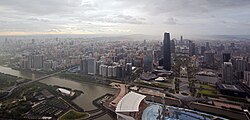
.jpg)
Urbanization (or urbanisation in British English) is the population shift from rural to urban areas, the corresponding decrease in the proportion of people living in rural areas, and the ways in which societies adapt to this change. It can also mean population growth in urban areas instead of rural ones.[1] It is predominantly the process by which towns and cities are formed and become larger as more people begin to live and work in central areas.[2]
Although the two concepts are sometimes used interchangeably, urbanization should be distinguished from urban growth. Urbanization refers to the proportion of the total national population living in areas classified as urban, whereas urban growth strictly refers to the absolute number of people living in those areas.[3] It is predicted that by 2050, about 64% of the developing world and 86% of the developed world will be urbanized. This is predicted to generate artificial scarcities of land, lack of drinking water, playgrounds and other essential resources for most urban dwellers.[4] The predicted urban population growth is equivalent to approximately 3 billion urbanites by 2050, much of which will occur in Africa and Asia.[5] Notably, the United Nations has also recently projected that nearly all global population growth from 2017 to 2030 will take place in cities, with about 1.1 billion new urbanites over the next 10 years.[6] In the long term, urbanization is expected to significantly impact the quality of life in negative ways.[7][8]
Urbanization is relevant to a range of disciplines, including urban planning, geography, sociology, architecture, economics, education, statistics, and public health. The phenomenon has been closely linked to globalization, modernization, industrialization, marketization, administrative/institutional power, and the sociological process of rationalization.[9][10][11] Urbanization can be seen as a specific condition at a set time (e.g. the proportion of total population or area in cities or towns), or as an increase in that condition over time. Therefore, urbanization can be quantified either in terms of the level of urban development relative to the overall population, or as the rate at which the urban proportion of the population is increasing. Urbanization creates enormous social, economic and environmental challenges, which provide an opportunity for sustainability with the "potential to use resources much less or more efficiently, to create more sustainable land use and to protect the biodiversity of natural ecosystems." However, current urbanization trends have shown that massive urbanization has led to unsustainable ways of living.[5] Developing urban resilience and urban sustainability in the face of increased urbanization is at the centre of international policy in Sustainable Development Goal 11 "Sustainable cities and communities."
Urbanization is not merely a modern phenomenon, but a rapid and historic transformation of human social roots on a global scale, whereby predominantly rural culture is being rapidly replaced by predominantly urban culture. The first major change in settlement patterns was the accumulation of hunter-gatherers into villages many thousands of years ago. Village culture is characterized by common bloodlines, intimate relationships, and communal behaviour, whereas urban culture is characterized by distant bloodlines, unfamiliar relations, and competitive behaviour. This unprecedented movement of people is forecast to continue and intensify during the next few decades, mushrooming cities to sizes unthinkable only a century ago. As a result, the world urban population growth curve has up till recently followed a quadratic-hyperbolic pattern.[12]
History
[edit]),_OWID.svg)

From the development of the earliest cities in Indus valley civilization, Mesopotamia and Egypt until the 18th century, an equilibrium existed between the vast majority of the population who were engaged in subsistence agriculture in a rural context, and small centres of populations in the towns where economic activity consisted primarily of trade at markets and manufactures on a small scale. Due to the primitive and relatively stagnant state of agriculture throughout this period, the ratio of rural to urban population remained at a fixed equilibrium. However, a significant increase in the percentage of the global urban population can be traced in the 1st millennium BCE.[15]
With the onset of the British Agricultural Revolution and Industrial Revolution[16] in the late 18th century, this relationship was finally broken and an unprecedented growth in urban population took place over the course of the 19th century, both through continued migration from the countryside and due to the tremendous demographic expansion that occurred at that time. In England and Wales, the proportion of the population living in cities with more than 20,000 people jumped from 17% in 1801 to 54% in 1891. Moreover, and adopting a broader definition of urbanization, while the urbanized population in England and Wales represented 72% of the total in 1891, for other countries the figure was 37% in France, 41% in Prussia and 28% in the United States.[17]
As labourers were freed up from working the land due to higher agricultural productivity they converged on the new industrial cities like Manchester and Birmingham which were experiencing a boom in commerce, trade, and industry. Growing trade around the world also allowed cereals to be imported from North America and refrigerated meat from Australasia and South America. Spatially, cities also expanded due to the development of public transport systems, which facilitated commutes of longer distances to the city centre for the working class.
Urbanization rapidly spread across the Western world and, since the 1950s, it has begun to take hold in the developing world as well. At the turn of the 20th century, just 15% of the world population lived in cities.[18] According to the UN, the year 2007 witnessed the turning point when more than 50% of the world population were living in cities, for the first time in human history.[17]
Yale University in June 2016 published urbanization data from the time period 3700 BC to 2000 AD, the data was used to make a video showing the development of cities on the world during the time period.[19][20][21] The origins and spread of urban centres around the world were also mapped by archaeologists.[14]
Causes
[edit] | This section needs additional citations for verification. (June 2021) |


Urbanization occurs either organically or planned as a result of individual, collective and state action. Living in a city can be culturally and economically beneficial since it can provide greater opportunities for access to the labour market, better education, housing, and safety conditions, and reduce the time and expense of commuting and transportation. Conditions like density, proximity, diversity, and marketplace competition are elements of an urban environment that deemed beneficial. However, there are also harmful social phenomena that arise: alienation, stress, increased cost of living, and mass marginalization that are connected to an urban way of living.[citation needed] Suburbanization, which is happening in the cities of the largest developing countries, may be regarded as an attempt to balance these harmful aspects of urban life while still allowing access to the large extent of shared resources.[citation needed]
In cities, money, services, wealth and opportunities are centralized. Many rural inhabitants come to the city to seek their fortune and alter their social position. Businesses, which provide jobs and exchange capital, are more concentrated in urban areas. Whether the source is trade or tourism, it is also through the ports or banking systems, commonly located in cities, that foreign money flows into a country.
Many people move into cities for economic opportunities, but this does not fully explain the very high recent urbanization rates in places like China and India. Rural flight is a contributing factor to urbanization. In rural areas, often on small family farms or collective farms in villages, it has historically been difficult to access manufactured goods, though the relative overall quality of life is very subjective, and may certainly surpass that of the city. Farm living has always been susceptible to unpredictable environmental conditions, and in times of drought, flood or pestilence, survival may become extremely problematic.
Thai farmers are seen as poor, stupid, and unhealthy. As young people flee the farms, the values and knowledge of rice farming and the countryside are fading, including the tradition of long kek, helping neighbours plant, harvest, or build a house. We are losing what we call Thai-ness, the values of being kind, helping each other, having mercy and gratefulness.
In a New York Times article concerning the acute migration away from farming in Thailand, life as a farmer was described as "hot and exhausting". "Everyone says the farmer works the hardest but gets the least amount of money". In an effort to counter this impression, the Agriculture Department of Thailand is seeking to promote the impression that farming is "honorable and secure".[23]
However, in Thailand, urbanization has also resulted in massive increases in problems such as obesity. Shifting from a rural environment to an urbanized community also caused a transition to a diet that was mainly carbohydrate-based to a diet higher in fat and sugar, consequently causing a rise in obesity.[24][better source needed] City life, especially in modern urban slums of the developing world, is not immune to pestilence or climatic disturbances such as floods, yet continues to strongly attract migrants. Examples of this were the 2011 Thailand floods and 2007 Jakarta flood. Urban areas are also far more prone to violence, drugs, and other urban social problems. In the United States, industrialization of agriculture has negatively affected the economy of small and middle-sized farms and strongly reduced the size of the rural labor market.
These are the costs of participating in the urban economy. Your increased income is canceled out by increased expenditure. In the end, you have even less left for food.
Particularly in the developing world, conflict over land rights due to the effects of globalization has led to less politically powerful groups, such as farmers, losing or forfeiting their land, resulting in obligatory migration into cities. In China, where land acquisition measures are forceful, there has been far more extensive and rapid urbanization (54%) than in India (36%), where peasants form militant groups (e.g. Naxalites) to oppose such efforts. Obligatory and unplanned migration often results in the rapid growth of slums. This is also similar to areas of violent conflict, where people are driven off their land due to violence.
Cities offer a larger variety of services, including specialist services not found in rural areas. These services require workers, resulting in more numerous and varied job opportunities. Elderly people may be forced to move to cities where there are doctors and hospitals that can cater to their health needs. Varied and high-quality educational opportunities are another factor in urban migration, as well as the opportunity to join, develop, and seek out social communities.
Urbanization also creates opportunities for women that are not available in rural areas. This creates a gender-related transformation where women are engaged in paid employment and have access to education. This may cause fertility to decline. However, women are sometimes still at a disadvantage due to their unequal position in the labour market, their inability to secure assets independently from male relatives and exposure to violence.[26]
People in cities are more productive than in rural areas. An important question is whether this is due to agglomeration effects or whether cities simply attract those who are more productive. Urban geographers have shown that there exists a large productivity gain due to locating in dense agglomerations. It is thus possible that agents locate in cities in order to benefit from these agglomeration effects.[27]
Dominant conurbation
[edit]The dominant conurbation(s) of a country can get more benefits from the same things cities offer, attracting the rural population and urban and suburban populations from other cities. Dominant conurbations are quite often disproportionately large cities, but do not have to be. For instance Greater Manila is a conurbation instead of a city. Its total population of 20 million (over 20% national population) make it a primate city, but Quezon City (2.7 million), the largest municipality in Greater Manila, and Manila (1.6 million), the capital, are normal cities instead. A conurbation's dominance can be measured by output, wealth, and especially population, each expressed as a percentage of the entire country's. Greater Seoul is one conurbation that dominates South Korea. It is home to 50% of the entire national population.[28]
Though Greater Busan-Ulsan (15%, 8 million) and Greater Osaka (14%, 18 million) dominate their respective countries, their populations are moving to their even more dominant rivals, Seoul and Tokyo respectively.[29]
Economic effects
[edit]

As cities develop, costs will skyrocket. This often takes the working class out of the market, including officials and employees of the local districts. For example, Eric Hobsbawm's book The age of revolution: 1789–1848 (published 1962 and 2005) chapter 11, stated "Urban development in our period was a gigantic process of class segregation, which pushed the new labouring poor into great morasses of misery outside the centres of government, business, and the newly specialized residential areas of the bourgeoisie. The almost universal European division into a 'good' west end and a 'poor' east end of large cities developed in this period." This is probably caused by the south-west wind which carries coal smoke and other pollutants down, making the western edges of towns better than the eastern ones.[30]
Similar problems now affect less developed countries, as rapid development of cities makes inequality worse. The drive to grow quickly and be efficient can lead to less fair urban development. Think tanks such as the Overseas Development Institute have proposed policies that encourage labour-intensive to make use of the migration of less skilled workers.[31] One problem these migrant workers are involved with is the growth of slums. In many cases, the rural-urban unskilled migrant workers are attracted by economic opportunities in cities. Unfortunately, they cannot find a job and or pay for houses in urban areas and have to live in slums.[32]
Urban problems, along with developments in their facilities, are also fuelling suburb development trends in less developed nations, though the trend for core cities in said nations tends to continue to become ever denser. Development of cities is often viewed negatively, but there are positives in cutting down on transport costs, creating new job opportunities, providing education and housing, and transportation. Living in cities permits individuals and families to make use of their closeness to workplaces and diversity.[33][34][35][36] While cities have more varied markets and goods than rural areas, facility congestion, domination of one group, high overhead and rental costs, and the inconvenience of trips across them frequently combine to make marketplace competition harsher in cities than in rural areas.[citation needed]
In many developing countries where economies are growing, the growth is often random and based on a small number of industries. Youths in these nations lack access to financial services and business advisory services, cannot get credit to start a business, and have no entrepreneurial skills. Therefore, they cannot seize opportunities in these industries. Making sure adolescents have access to excellent schools and infrastructure to work in such industries and improve schools is compulsory to promote a fair society.[37]
Environmental effects
[edit]| Part of a series on |
| Pollution |
|---|
 |


Furthermore, urbanization improves environmental eminence through superior facilities and standards in urban areas as compared to rural areas. Lastly, urbanization curbs pollution emissions by increasing innovations.[38] In his 2009 book Whole Earth Discipline, Stewart Brand argues that the effects of urbanization are primarily positive for the environment. First, the birth rate of new urban dwellers falls immediately to replacement rate and keeps falling, reducing environmental stresses caused by population growth.[39] Secondly, emigration from rural areas reduces destructive subsistence farming techniques, such as improperly implemented slash and burn agriculture. Alex Steffen also speaks of the environmental benefits of increasing the urbanization level in "Carbon Zero: Imagining Cities that can save the planet".[40]
However, existing infrastructure and city planning practices are not sustainable.[41] In July 2013 a report issued by the United Nations Department of Economic and Social Affairs[42] warned that with 2.4 billion more people by 2050, the amount of food produced will have to increase by 70%, straining food resources, especially in countries already facing food insecurity due to changing environmental conditions. The mix of changing environmental conditions and the growing population of urban regions, according to UN experts, will strain basic sanitation systems and health care, and potentially cause a humanitarian and environmental disaster.[43]
Urban heat island
[edit]Urban heat islands have become a growing concern over the years. An urban heat island is formed when industrial areas absorb and retain heat. Much of the solar energy reaching rural areas is used to evaporate water from plants and soil. In cities, there are less vegetation and exposed soil. Most of the sun's energy is instead absorbed by buildings and asphalt; leading to higher surface temperatures. Vehicles, factories, and heating and cooling units in factories and homes release even more heat.[44] As a result, cities are often 1 to 3 °C (1.8 to 5.4 °F) warmer than other areas near them.[45] Urban heat islands also make the soil drier and absorb less carbon dioxide from emissions.[46] A Qatar University study found that land-surface temperatures in Doha increased annually by 0.65 °C from 2002 to 2013 and 2023.[47]
Water quality
[edit]Urban runoff, polluted water created by rainfall on impervious surfaces, is a common effect of urbanization. Precipitation from rooftops, roads, parking lots and sidewalks flows to storm drains, instead of percolating into groundwater. The contaminated stormwater in the drains is typically untreated and flows to nearby streams, rivers or coastal bays.[48]
Eutrophication in water bodies is another effect large populations in cities have on the environment. When rain occurs in these large cities, it filters CO2 and other pollutants in the air onto the ground. These chemicals are washed directly into rivers, streams, and oceans, making water worse and damaging ecosystems in them.[49]
Eutrophication is a process which causes low levels of oxygen in water and algal blooms that may harm aquatic life.[50] Harmful algal blooms make dangerous toxins. They live best in nitrogen- and phosphorus-rich places which include the oceans contaminated by the aforementioned chemicals.[51] In these ideal conditions, they choke surface water, blocking sunlight and nutrients from other life forms. Overgrowth of algal blooms makes water worse overall and disrupts the natural balance of aquatic ecosystems. Furthermore, as algal blooms die, CO2 is produced. This makes the ocean more acidic, a process called acidification.[52]
The ocean's surface can absorb CO2 from the Earth's atmosphere as emissions increase with the rise in urban development. In fact, the ocean absorbs a quarter of the CO2 produced by humans.[53] This helps to lessen the harmful effects of greenhouse gases, but it also makes the ocean more acidic.[54] A drop in pH the prevents the proper formation of calcium carbonate, which sea creatures need to build or keep shells or skeletons.[55][53] This is especially true for many species of molluscs and coral. However, some species have been able to thrive in a more acidic environment.[56]
Food waste
[edit]Rapid growth of communities creates new challenges in the developed world and one such challenge is an increase in food waste[57] also known as urban food waste.[58][59][60] Food waste is the disposal of food products that can no longer be used due to unused products, expiration, or spoilage. The increase of food waste can raise environmental concerns such as increase production of methane gases and attraction of disease vectors.[59][61] Landfills are the third leading cause of the release of methane,[62] causing a concern on its impact to our ozone and on the health of individuals. Accumulation of food waste causes increased fermentation, which increases the risk of rodent and bug migration. An increase in migration of disease vectors creates greater potential of disease spreading to humans.[63]
Waste management systems vary on all scales from global to local and can also be influenced by lifestyle. Waste management was not a primary concern until after the Industrial Revolution. As urban areas continued to grow along with the human population, proper management of solid waste became an apparent concern. To address these concerns, local governments sought solutions with the lowest economic impacts which meant implementing technical solutions at the very last stage of the process.[64] Current waste management reflects these economically motivated solutions, such as incineration or unregulated landfills. Yet, a growing increase for addressing other areas of life cycle consumption has occurred from initial stage reduction to heat recovery and recycling of materials.[64] For example, concerns for mass consumption and fast fashion have moved to the forefront of the urban consumers' priorities. Aside from environmental concerns (e.g. climate change effects), other urban concerns for waste management are public health and land access.
Habitat fragmentation
[edit]Urbanization can have a large effect on biodiversity by causing a division of habitats and thereby alienation of species, a process known as habitat fragmentation.[65] Habitat fragmentation does not destroy the habitat, as seen in habitat loss, but rather breaks it apart with things like roads and railways.[66] This change may affect a species ability to sustain life by separating it from the environment in which it is able to easily access food, and find areas that they may hide from predation.[67] With proper planning and management, fragmentation can be avoided by adding corridors that aid in the connection of areas and allow for easier movement around urbanized regions.[68][69]
Depending on the various factors, such as level of urbanization, both increases or decreases in "species richness" can be seen.[70][71] This means that urbanization may be detrimental to one species but also help facilitate the growth of others. In instances of housing and building development, many times vegetation is completely removed immediately in order to make it easier and less expensive for construction to occur, thereby obliterating any native species in that area. Habitat fragmentation can filter species with limited dispersal capacity. For example, aquatic insects are found to have lower species richness in urban landscapes.[72] The more urbanized the surrounding of habitat is, the fewer species can reach the habitat.[73] The negative effects of urbanisation on aquatic insects can be long-lasting from the temporal perspective.[74] Other times, such as with birds, urbanization may allow for an increase in richness when organisms are able to adapt to the new environment. This can be seen in species that may find food while scavenging developed areas or vegetation that has been added after urbanization has occurred i.e. planted trees in city areas.[75]
Health and social effects
[edit]When cities don't plan for increases in population it drives up house and land prices, creating rich (ghettos) and poor ghettos. "You get a very unequal society and that inequality is manifested where people live, in our neighbourhoods, and it means there can be less capacity for empathy and less development for all society."
In the developing world, urbanization does not translate into a significant increase in life expectancy.[77] Rapid urbanization has led to increased mortality from non-communicable diseases associated with lifestyle, including cancer and heart disease.[78] Differences in mortality from contagious diseases vary depending on the particular disease and location.[77]
Urban health levels are on average better in comparison to rural areas. However, residents in poor urban areas such as slums and informal settlements suffer "disproportionately from disease, injury, premature death, and the combination of ill-health and poverty entrenches disadvantage over time."[26] Many of the urban poor have difficulty accessing health services due to their inability to pay for them; so they resort to less qualified and unregulated providers.[citation needed]
While urbanization is associated with improvements in public hygiene, sanitation and access to health care, it also entails changes in occupational, dietary, and exercise patterns.[78] It can have mixed effects on health patterns, alleviating some problems, and accentuating others.[77]
Nutrition
[edit]Traditionally, rural populations have tended to eat plant-based diets rich in grains, fruits and vegetables, and with low fat content. However, rural people migrating to urban areas often shift towards diets that rely more on processed foods characterized by a higher content of meat, sugars, refined grains and fats. Urban residents typically have reduced time available for at-home food preparation combined with increased disposable income, facilitating access to convenience foods and ready-to-eat meals.[79]
One such effect is the formation of food deserts. Nearly 23.5 million people in the United States lack access to supermarkets within one mile of their home.[80] Several studies suggest that long distances to a grocery store are associated with higher rates of obesity and other health disparities.[81]
Food deserts in developed countries often correspond to areas with a high density of fast food chains and convenience stores that offer little to no fresh food.[82] Urbanization has been shown to be associated with the consumption of less fresh fruits, vegetables, and whole grains and a higher consumption of processed foods and sugar-sweetened beverages.[81] Poor access to healthy food and high intakes of fat, sugar and salt are associated with a greater risk for obesity, diabetes and related chronic disease. Overall, body mass index and cholesterol levels increase sharply with national income and the degree of urbanization.[40]
Food deserts in the United States are most commonly found in low-income and predominately African American neighbourhoods.[81] One study on food deserts in Denver, Colorado found that, in addition to minorities, the affected neighbourhoods also had a high proportion of children and new births.[83] In children, urbanization is associated with a lower risk of under-nutrition but a higher risk of being overweight.[77]
Infections
[edit]Urbanization has also been linked to the spread of communicable diseases, which can spread more rapidly in the favourable environment with more people living in a smaller area. Such diseases can be respiratory infections and gastrointestinal infections. Other infections could be infections, which need a vector to spread to humans. An example of this could be dengue fever.[84]
Asthma
[edit]Urbanization has also been associated with an increased risk of asthma as well. Throughout the world, as communities transition from rural to more urban societies, the number of people affected by asthma increases. The odds of reduced rates of hospitalization and death from asthmas has decreased for children and young adults in urbanized municipalities in Brazil. This finding indicates that urbanization may have a negative impact on population health particularly affecting people's susceptibility to asthma.[85]
In low and middle income countries many factors contribute to the high numbers of people with asthma. Similar to areas in the United States with increasing urbanization, people living in growing cities in low income countries experience high exposure to air pollution, which increases the prevalence and severity of asthma among these populations.[86] Links have been found between exposure to traffic-related air pollution and allergic diseases.[87] Children living in poor, urban areas in the United States now have an increased risk of morbidity due to asthma in comparison to other low-income children in the United States.[88] In addition, children with croup living in urban areas have higher hazard ratios for asthma than similar children living in rural areas. Researchers suggest that this difference in hazard ratios is due to the higher levels of air pollution and exposure to environmental allergens found in urban areas.[89]
Exposure to elevated levels of ambient air pollutants such as nitrogen dioxide (NO2), carbon monoxide (CO), and particulate matter with a diameter of less than 2.5 micrometres (PM2.5), can cause DNA methylation of CpG sites in immune cells, which increases children's risk of developing asthma. Studies have shown a positive correlation between Foxp3 methylation and children's exposure to NO2, CO, and PM2.5. Furthermore, any amount of exposure to high levels of air pollution have shown long term effects on the Foxp3 region.[90]
Despite the increase in access to health services that usually accompanies urbanization, the rise in population density negatively affects air quality ultimately mitigating the positive value of health resources as more children and young adults develop asthma due to high pollution rates.[85] However, urban planning, as well as emission control, can lessen the effects of traffic-related air pollution on allergic diseases such as asthma.[87]
Crime
[edit]Historically, crime and urbanization have gone hand in hand. The simplest explanation is that areas with a higher population density are surrounded by greater availability of goods. Committing crimes in urbanized areas is also more feasible. Modernization has led to more crime as well, as the modern media has raised greater awareness of the income gap between the rich and the poor. This leads to feelings of deprivation, which in turn can lead to crime. In some regions where urbanization happens in wealthier areas, a rise in property crime and a decrease in violent crime is seen.[91]
Data shows that there is an increase in crime in urbanized areas. Some factors include per capita income, income inequality, and overall population size. There is also a smaller association between unemployment rate, police expenditures and crime.[92] The presence of crime also has the ability to produce more crime. These areas have less social cohesion and therefore less social control. This is evident in the geographical regions that crime occurs in. As most crime tends to cluster in city centres, the further the distance from the centre of the city, the lower the occurrence of crimes are.[93]
Migration is also a factor that can increase crime in urbanized areas. People from one area are displaced and forced to move into an urbanized society. Here they are in a new environment with new norms and social values. This can lead to less social cohesion and more crime.[94]
Physical activity
[edit]Although urbanization tends to produce more negative effects, one positive effect that urbanization has impacted is an increase in physical activity in comparison to rural areas. Residents of rural areas and communities in the United States have higher rates of obesity and engage in less physical activity than urban residents.[95] Rural residents consume a higher percent of fat calories and are less likely to meet the guidelines for physical activity and more likely to be physically inactive.[96][97] In comparison to regions within the United States, the west has the lowest prevalence of physical inactivity and the south has the highest prevalence of physical inactivity.[97] Metropolitan and large urban areas across all regions have the highest prevalence of physical activity among residents.[97]
Barriers such as geographic isolation, busy and unsafe roads, and social stigmas lead to decreased physical activity in rural environments.[98] Faster speed limits on rural roads prohibits the ability to have bike lanes, sidewalks, footpaths, and shoulders along the side of the roads.[95] Less developed open spaces in rural areas, like parks and trails, suggest that there is lower walkability in these areas in comparison to urban areas.[95] Many residents in rural settings have to travel long distances to utilize exercise facilities, taking up too much time in the day and deterring residents from using recreational facilities to obtain physical activity.[98] Additionally, residents of rural communities are traveling further for work, decreasing the amount of time that can be spent on leisure physical activity and significantly decreases the opportunity to partake in active transportation to work.[95]
Neighbourhoods and communities with nearby fitness venues, a common feature of urbanization, have residents that partake in increased amounts of physical activity.[98] Communities with sidewalks, street lights, and traffic signals have residents participating in more physical activity than communities without those features.[95] Having a variety of destinations close to where people live, increases the use of active transportation, such as walking and biking.[99] Active transportation is also enhanced in urban communities where there is easy access to public transportation due to residents walking or biking to transportation stops.[99]
In a study comparing different regions in the United States, opinions across all areas were shared that environmental characteristics like access to sidewalks, safe roads, recreational facilities, and enjoyable scenery are positively associated with participation in leisure physical activity.[97] Perceiving that resources are nearby for physical activity increases the likelihood that residents of all communities will meet the guidelines and recommendations for appropriate physical activity.[99] Specific to rural residents, the safety of outdoor developed spaces and convenient availability to recreational facilities matters most when making decisions on increasing physical activity.[96] In order to combat the levels of inactivity in rural residents, more convenient recreational features, such as the ones discussed in this paragraph, need to be implemented into rural communities and societies.[citation needed]
Mental health
[edit]Urbanization factors that contribute to mental health can be thought of as factors that affect the individual and factors that affect the larger social group. At the macro, social group level, changes related to urbanization are thought to contribute to social disintegration and disorganization. These macro factors contribute to social disparities which affect individuals by creating perceived insecurity.[100] Perceived insecurity can be due problems with the physical environment, such as issues with personal safety, or problems with the social environment, such as a loss of positive self-concepts from negative events.[101] Increased stress is a common individual psychological stressor that accompanies urbanization and is thought to be due to perceived insecurity. Changes in social organization, a consequence of urbanization, are thought to lead to reduced social support, increased violence, and overcrowding. It is these factors that are thought to contribute to increased stress.[102]
A 2004 study of 4.4 million Swedish residents found that people who live in cities have a 20% increased chance of developing depression[need quotation to verify].[103]
Changing forms
[edit] | This section needs additional citations for verification. (June 2021) |

Different forms of urbanization can be classified depending on the style of architecture and planning methods as well as the historic growth of areas.

In cities of the developed world urbanization traditionally exhibited a concentration of human activities and settlements around the downtown area, the so-called in-migration. In-migration refers to migration from former colonies and similar places. The fact that many immigrants settle in impoverished city centres led to the notion of the "peripheralization of the core", which simply describes that people who used to be at the periphery of the former empires now live right in the centre.
Recent developments, such as inner-city redevelopment schemes, mean that new arrivals in cities no longer necessarily settle in the centre. In some developed regions, the reverse effect, originally called counter urbanization has occurred, with cities losing population to rural areas, and is particularly common for richer families. This has been possible because of improved communications and has been caused by factors such as the fear of crime and poor urban environments. It has contributed to the phenomenon of shrinking cities experienced by some parts of the industrialized world.
Rural migrants are attracted by the possibilities that cities can offer, but often settle in shanty towns and experience extreme poverty. The inability of countries to provide adequate housing for these rural migrants is related to overurbanization, a phenomenon in which the rate of urbanization grows more rapidly than the rate of economic development, leading to high unemployment and high demand for resources.[104] In the 1980s, this was attempted to be tackled with the urban bias theory which was promoted by Michael Lipton.
Most of the urban poor in developing countries unable to find work can spend their lives in insecure, poorly paid jobs. According to research by the Overseas Development Institute pro-poor urbanization will require labour-intensive growth, supported by labour protection, flexible land use regulation and investments in basic services.'[105]
Suburbanization
[edit]When the residential area shifts outward, this is called suburbanization. A number of researchers and writers suggest that suburbanization has gone so far to form new points of concentration outside the downtown both in developed and developing countries such as India.[106] This networked, poly-centric form of concentration is considered by some emerging pattern of urbanization. It is called variously edge city (Garreau, 1991), network city (Batten, 1995), postmodern city (Dear, 2000), or exurb, though the latter term now refers to a less dense area beyond the suburbs. Los Angeles is the best-known example of this type of urbanization. In the United States, this process has reversed as of 2011, with "re-urbanization" occurring as suburban flight due to chronically high transport costs.[107]
...the most important class conflict in the poor countries of the world today is not between labour and capital. Nor is it between foreign and national interests. It is between rural classes and urban classes. The rural sector contains most of the poverty and most of the low-cost sources of potential advance; but the urban sector contains most of the articulateness, organization, and power. So the urban classes have been able to win most of the rounds of the struggle with the countryside...
Planned urbanization
[edit]Urbanization can be planned urbanization or organic. Planned urbanization, i.e.: planned community or the garden city movement, is based on an advance plan, which can be prepared for military, aesthetic, economic or urban design reasons. Examples can be seen in many ancient cities; although with exploration came the collision of nations, which meant that many invaded cities took on the desired planned characteristics of their occupiers. Many ancient organic cities experienced redevelopment for military and economic purposes, new roads carved through the cities, and new parcels of land were cordoned off serving various planned purposes giving cities distinctive geometric designs. UN agencies prefer to see urban infrastructure installed before urbanization occurs. Landscape planners are responsible for landscape infrastructure (public parks, sustainable urban drainage systems, greenways etc.) which can be planned before urbanization takes place, or afterwards to revitalize an area and create greater livability within a region. Concepts of control of the urban expansion are considered in the American Institute of Planners.
As population continues to grow and urbanize at unprecedented rates, new urbanism and smart growth techniques are implemented to create a transition into developing environmentally, economically, and socially sustainable cities. Additionally, a more well-rounded approach articulates the importance to promote participation of non-state actors, which could include businesses, research and non-profit organizations and, most importantly, local citizens.[109] Smart Growth and New Urbanism's principles include walkability, mixed-use development, comfortable high-density design, land conservation, social equity, and economic diversity. Mixed-use communities work to fight gentrification with affordable housing to promote social equity, decrease automobile dependency to lower use of fossil fuels, and promote a localized economy. Walkable communities have a 38% higher average GDP per capita than less walkable urban metros (Leinberger, Lynch). By combining economic, environmental, and social sustainability, cities will become equitable, resilient, and more appealing than urban sprawl that overuses land, promotes automobile use, and segregates the population economically.[110][111]
Water scarcity
[edit]Urbanization throughout the world
[edit]
Presently, most countries in the world are urbanized, with the global urbanization average numbering 56.2% in 2020.[113] However, there are great differences between some regions; the nations of Europe, the Middle East, the Americas and East Asia are predominantly urbanized. Meanwhile, two large belts (from central to eastern Africa, and from central to southeast Asia) of very lowly urbanized countries exist, as seen on the map here. These labeled countries are among the least urbanized.[citation needed]
As of 2022, urbanization rates are over 80% in the United States, Canada, Mexico, Brazil, Argentina, Chile, Japan, Australia, the United Kingdom, France, Finland, Denmark, Israel, Spain and South Korea. South America is the most urbanized continent in the world, accounting for more than 80% of its total population living in urban areas. It is also the only continent where the urbanization rate is over 80%.
See also
[edit]

- Back to the land
- City-state
- Counterurbanization
- Division of labour
- Exurb
- Ghetto
- Human population planning
- Human migration
- Megalopolis (city type)
- Political demography
- Pseudo-urbanization
- Push and pull factors in migration
- Urban ecology
- Urban exploration
- Urban history
- Urban metabolism
- Urban morphology
- Urban studies
- Urbanization by country
- White flight
Historical
[edit]Regional
[edit]References
[edit]- ^ "Urbanization". MeSH browser. National Library of Medicine. Archived from the original on 16 March 2016. Retrieved 5 November 2014.
The process whereby a society changes from a rural to an urban way of life. It refers also to the gradual increase in the proportion of people living in urban areas.
- ^ "Urbanization in". demographic partitions. Archived from the original on 22 October 2018. Retrieved 8 July 2015.
- ^ Tacoli, Cecilia (2015). Urbanisation, rural-urban migration and urban poverty. McGranahan, Gordon, Satterthwaite, David. London: International Institute for Environment and Development. ISBN 978-1-78431-137-7. OCLC 942419887.
- ^ "Urban life: Open-air computers". The Economist. 27 October 2012. Archived from the original on 5 September 2017. Retrieved 20 March 2013.
- ^ a b "Urbanization". UNFPA – United Nations Population Fund. Archived from the original on 26 May 2020. Retrieved 11 May 2015.
- ^ Barney Cohen (2015). "Urbanization, City Growth, and the New United Nations Development Agenda". Vol. 3, no. 2. Cornerstone, The Official Journal of the World Coal Industry. pp. 4–7. Archived from the original on 27 June 2015. Retrieved 26 June 2015.
- ^ Dutt, A.K.; Noble, A.G.; Venugopal, G.; Subbiah, S. (2006). Challenges to Asian Urbanization in the 21st Century. GeoJournal Library. Springer Netherlands. ISBN 978-1-4020-2531-0. Retrieved 22 March 2023.
- ^ Sridhar, K.S.; Mavrotas, G. (2021). Urbanization in the Global South: Perspectives and Challenges. Taylor & Francis. ISBN 978-1-000-42636-6. Retrieved 22 March 2023.
- ^ Schroeder, Ralph (2020). "Weberian Social Theory: Rationalization in a Globalized World". The Oxford Handbook of Max Weber. Oxford University Press. pp. 150–166. doi:10.1093/oxfordhb/9780190679545.013.9. ISBN 978-0-19-067954-5.
- ^ Gries, T.; Grundmann, R. (2018). "Fertility and modernization: the role of urbanization in developing countries". Journal of International Development. 30 (3): 493–506. doi:10.1002/jid.3104.
- ^ Gu, Chaolin (2019). "Urbanization: Processes and driving forces". Science China Earth Sciences. 62 (9): 1351–1360. Bibcode:2019ScChD..62.1351G. doi:10.1007/s11430-018-9359-y.
- ^ Introduction to Social Macrodynamics: Secular Cycles and Millennial Trends. Archived 18 September 2018 at the Wayback Machine Moscow: URSS, 2006; Korotayev A. The World System urbanization dynamics. History & Mathematics: Historical Dynamics and Development of Complex Societies Archived 29 February 2020 at the Wayback Machine. Edited by Peter Turchin, Leonid Grinin, Andrey Korotayev, and Victor C. de Munck. Moscow: KomKniga, 2006. The World System urbanization dynamics. History & Mathematics: Historical Dynamics and Development of Complex Societies . Edited by Peter Turchin, Leonid Grinin, Andrey Korotayev, and Victor C. de Munck. Moscow: KomKniga, 2006. ISBN 5-484-01002-0. P. 44-62
- ^ "Urbanization over the past 500 years". Our World in Data. Archived from the original on 14 March 2020. Retrieved 6 March 2020.
- ^ a b Stephens, Lucas; Fuller, Dorian; Boivin, Nicole; Rick, Torben; Gauthier, Nicolas; Kay, Andrea; Marwick, Ben; Armstrong, Chelsey Geralda; Barton, C. Michael (30 August 2019). "Archaeological assessment reveals Earth's early transformation through land use". Science. 365 (6456): 897–902. Bibcode:2019Sci...365..897S. doi:10.1126/science.aax1192. hdl:10150/634688. ISSN 0036-8075. PMID 31467217. S2CID 201674203.
- ^ Andrey Korotayev and Leonid Grini (2006). "The Urbanization and Political Development of the World System: A comparative quantitative analysis". In Peter Turchin; Leonid Grinin; Victor C. de Munck; and Andrey Korotayev (eds.). History & Mathematics: Historical Dynamics and Development of Complex Societies. Vol. 2. pp. 115–153. Archived from the original on 16 August 2021. Retrieved 23 June 2016.
- ^ "Industrial Revolution | Definition, History, Dates, Summary, & Facts". Encyclopedia Britannica. Archived from the original on 31 October 2020. Retrieved 29 October 2020.
- ^ a b Christopher Watson (1993). K.B. Wildey; Wm H. Robinson (eds.). Trends in urbanisation. Proceedings of the First International Conference on Urban Pests. CiteSeerX 10.1.1.522.7409.
- ^ Annez, Patricia Clarke; Buckley, Robert M. (2009). "Urbanization and Growth: Setting the Context" (PDF). In Spence, Michael; Annez, Patricia Clarke; Buckley, Robert M. (eds.). Urbanization and Growth. Commission on Growth and Development. ISBN 978-0-8213-7573-0. Archived (PDF) from the original on 25 May 2017. Retrieved 9 November 2013.
- ^ Reba, Meredith; Reitsma, Femke; Seto, Karen C. (7 June 2016). "Spatializing 6,000 years of global urbanization from 3700 BC to AD 2000". Scientific Data. 3 160034. Bibcode:2016NatSD...360034R. doi:10.1038/sdata.2016.34. ISSN 2052-4463. PMC 4896125. PMID 27271481.
- ^ "Research Data–Seto Lab". urban.yale.edu. Archived from the original on 18 May 2019. Retrieved 9 July 2016.
- ^ "The History of Urbanization, 3700 BC – 2000 AD". YouTube. 15 June 2016. Archived from the original on 30 October 2021. Retrieved 24 September 2018.
- ^ based on 2000 U.S. Census Data
- ^ a b Fuller, Thomas (5 June 2012). "Thai Youth Seek a Fortune Away From the Farm". The New York Times. Archived from the original on 5 June 2012. Retrieved 5 June 2012.
- ^ Jitnarin, Nattinee; Kosulwat, Vongsvat; Rojroongwasinkul, Nipa; Boonpraderm, Atitada; Haddock, Christopher K.; Poston, Walker S. C.; Jitnarin, Nattinee; Kosulwat, Vongsvat; Rojroongwasinkul, Nipa (21 January 2010). "Risk Factors for Overweight and Obesity among Thai Adults: Results of the National Thai Food Consumption Survey". Nutrients. 2 (1): 60–74. doi:10.3390/nu2010060. PMC 3257614. PMID 22253992.
- ^ "Early Death Assured in India Where 900 Million Go Hungry". Bloomberg. 13 June 2012. Archived from the original on 14 June 2012. Retrieved 13 June 2012.
- ^ a b "Urbanization, gender and urban poverty:Paid work and unpaid carework in the city". UNFPA. 2012. Archived from the original on 22 July 2015. Retrieved 11 May 2015.
- ^ Di Clemente, Riccardo; Strano, Emanuele; Batty, Michael (2021). "Urbanization and economic complexity". Scientific Reports. 11 (1): 3952. arXiv:2009.11966. Bibcode:2021NatSR..11.3952D. doi:10.1038/s41598-021-83238-5. PMC 7889875. PMID 33597604.
- ^ KOSIS, Korean Statistical Information Service Archived 26 August 2013 at the Wayback Machine.(in Korean)
- ^ Jacobs, A.J (2011). "Ulsan, South Korea: A Global and Nested 'Great' Industrial City" (PDF). The Open Urban Studies Journal. 4 (8–20): 8–20. doi:10.2174/1874942901104010008. Archived (PDF) from the original on 24 June 2021. Retrieved 27 May 2020 – via core.ac.uk.
- ^ Benedictus, Leo (12 May 2017). "Blowing in the wind: why do so many cities have poor east ends?". The Guardian. Archived from the original on 12 May 2017. Retrieved 12 May 2017.
- ^ Grant, Ursula (2008) Opportunity and exploitation in urban labour markets Archived 18 September 2012 at the Wayback Machine London: Overseas Development Institute
- ^ Todaro, Michael P. (1969). "A Model of Labor Migration and Urban Unemployment in Less Developed Countries". The American Economic Review. 59 (1): 148.
- ^ Glaeser, Edward (Spring 1998). "Are Cities Dying?". The Journal of Economic Perspectives. 12 (2): 139–60. doi:10.1257/jep.12.2.139.
- ^ Brand, Stewart. "Whole Earth Discipline – annotated extract". Archived from the original on 15 January 2012. Retrieved 29 November 2009.
- ^ Nowak, J. (1997). "Neighborhood Initiative and the Regional Economy". Economic Development Quarterly. 11: 3–10. doi:10.1177/089124249701100101. S2CID 154678238.
- ^ Using the Gall-Peters Projection it is estimated that come 2015 the worlds urban population is set to exceed 4 billion, most of this growth is expected in Africa and Asia and China to be 50% urbanized.
- ^ "State of the World Population 2014". UNFPA. 2014. Archived from the original on 12 September 2018. Retrieved 11 May 2015.
- ^ Yasin, Iftikhar; Ahmad, Nawaz; Chaudhary, M. Aslam (22 July 2019). "Catechizing the Environmental-Impression of Urbanization, Financial Development, and Political Institutions: A Circumstance of Ecological Footprints in 110 Developed and Less-Developed Countries". Social Indicators Research. 147 (2): 621–649. doi:10.1007/s11205-019-02163-3. ISSN 0303-8300. S2CID 199855869.
- ^ "Urbanization: An Environmental Force to Be Reckoned With". Archived from the original on 3 December 2019. Retrieved 19 July 2019.
- ^ Carbon Zero: Imagining Cities that can save the planet by Alex Steffen
- ^ Luqman, Muhammad; Rayner, Peter J.; Gurney, Kevin R. (2023). "On the impact of urbanisation on CO2 emissions". npj Urban Sustainability. 3 (1): 6. Bibcode:2023npjUS...3....6L. doi:10.1038/s42949-023-00084-2.
- ^ "World Economic and Social Survey (WESS) 2013" Archived 7 April 2014 at the Wayback Machine World Economic and Social Affairs. July 2013.
- ^ Auber, Tamar (17 July 2013) "Climate change and rapid urban expansion in Africa threaten children's lives." Archived 13 November 2014 at the Wayback Machine UNEARTH News. Retrieved 10 August 2013.
- ^ Park, H.-S. (1987). Variations in the urban heat island intensity affected by geographical environments. Environmental Research Center papers, no. 11. Ibaraki, Japan: Environmental Research Center, The University of Tsukuba.
- ^ "Heat Island Effect" Archived 14 August 2015 at the Wayback Machine. Epa.gov (17 November 2010). Retrieved on 7 April 2014.
- ^ "Heating Up: Study Shows Rapid Urbanization in China Warming the Regional Climate Faster than Other Urban Areas". Archived from the original on 20 October 2019. Retrieved 31 July 2008.
- ^ Patel, S., Indraganti, M., & Jawarneh, R. N. (2024). Urban planning impact on summer human thermal comfort in Doha, Qatar. Building and Environment, 254. https://doi.org/10.1016/j.buildenv.2024.111374
- ^ "Runoff (surface water runoff)". USGS Water Science School. Reston, VA: U.S. Geological Survey (USGS). 6 June 2018.
- ^ Jiang, Leiwen; Hoepf Young, Malea; Hardee, Karen (2008). "Population, Urbanization, And The Environment". World Watch. 21 (5): 34–39.
- ^ "About Eutrophication | World Resources Institute". wri.org. 12 September 2013. Archived from the original on 19 November 2018. Retrieved 18 November 2018.
- ^ "Harmful Algal Blooms". US Environmental Protection Administration. 3 June 2013. Archived from the original on 4 February 2020. Retrieved 18 November 2018.
- ^ Ramesh, R; Lakshmi, A; Purvaja, R; Costanzo, S.D; Kelsey, R.H; Hawkey, J; Datta, A; Dennison, W.C (2013). "Eutrophication and Ocean Acidification" (PDF). Archived (PDF) from the original on 21 April 2021. Retrieved 18 November 2018.
- ^ a b "National Climate Assessment". National Climate Assessment. Archived from the original on 18 November 2018. Retrieved 18 November 2018.
- ^ Feely, Richard A.; Alin, Simone R.; Newton, Jan; Sabine, Christopher L.; Warner, Mark; Devol, Allan; Krembs, Christopher; Maloy, Carol (August 2010). "The combined effects of ocean acidification, mixing, and respiration on pH and carbonate saturation in an urbanized estuary". Estuarine, Coastal and Shelf Science. 88 (4): 442–449. Bibcode:2010ECSS...88..442F. doi:10.1016/j.ecss.2010.05.004. ISSN 0272-7714.
- ^ Fisheries, NOAA (9 September 2018). "Understanding Ocean Acidification | NOAA Fisheries". fisheries.noaa.gov. Archived from the original on 19 November 2018. Retrieved 18 November 2018.
- ^ "Ocean Acidification". Smithsonian Ocean. 30 April 2018. Archived from the original on 9 November 2020. Retrieved 18 November 2018.
- ^ Thyberg, Krista L.; Tonjes, David J. (2016). "Drivers of food waste and their implications for sustainable policy development". Resources, Conservation and Recycling. 106: 110–123. Bibcode:2016RCR...106..110T. doi:10.1016/j.resconrec.2015.11.016. ISSN 0921-3449. S2CID 30784882. Archived from the original on 27 December 2019. Retrieved 31 October 2018.
- ^ "Article: "Urban Food Waste generation: challenges and opportunities" Journal: Int. J. of Environment and Waste Management, 2009 Vol.3 No.1/2 pp.4 - 21 Abstract: Greater economic activity and a wider economic gap between rural and urban areas is leading to accelerated urbanisation and the generation of 35% more Urban Food Waste (UFW) from 2007 to 2025. Besides landfilling, this paper examines the advantages of introducing onsite composting and anaerobic digestion for the environmental recycling of UFW and the lowering of handling cost. For Asia and Africa, these solutions for UFW could reduce the mass of MSW by 43% and 55%, respectively, thus help there cities manage almost all of their MSW. For North America and Europe, such practice could reduce earth warming trends. - Inderscience Publishers - linking academia, business and industry through research". inderscience.com. Archived from the original on 1 November 2018. Retrieved 7 October 2018.
- ^ a b Adhikari, Bijaya K.; Barrington, Suzelle; Martinez, José (October 2006). "Predicted growth of world urban food waste and methane production". Waste Management & Research. 24 (5): 421–433. Bibcode:2006WMR....24..421A. doi:10.1177/0734242X06067767. ISSN 0734-242X. PMID 17121114. S2CID 34299202.
- ^ Adhikari, Bijaya K.; Barrington, Suzelle F.; Martinez, Jose (2009). "Urban Food Waste generation: challenges and opportunities" (PDF). International Journal of Environment and Waste Management. 3 (1/2): 4. Bibcode:2009IJEWM...3....4A. doi:10.1504/ijewm.2009.024696. ISSN 1478-9876. S2CID 96476310. Archived (PDF) from the original on 26 July 2018. Retrieved 1 February 2019.
- ^ "Vector-borne diseases". World Health Organization. Archived from the original on 4 January 2023. Retrieved 19 October 2018.
- ^ EPA, OA, US (23 December 2015). "Overview of Greenhouse Gases | US EPA". US EPA. Archived from the original on 12 August 2016. Retrieved 16 October 2018.
- ^ Venkateswaran, Sandhya (1994). "Managing Waste: Ecological, Economic and Social Dimensions". Economic and Political Weekly. 29 (45/46): 2907–2911. JSTOR 4401996.
- ^ a b Bai, Xuemei; McPhearson, Timon; Cleugh, Helen; Nagendra, Harini; Tong, Xin; Zhu, Tong; Zhu, Yong-Guan (17 October 2017). "Linking Urbanization and the Environment: Conceptual and Empirical Advances". Annual Review of Environment and Resources. 42 (1): 215–240. doi:10.1146/annurev-environ-102016-061128. ISSN 1543-5938.
- ^ Elmqvist, Thomas; Zipperer, Wayne; Güneralp, Burak (2016). "10". Urbanization, habitat loss, biodiversity decline: solution pathways to break the cycle. pp. 139–151.
- ^ Liu Z, He C, Wu J (2016). "The Relationship between Habitat Loss and Fragmentation during Urbanization: An Empirical Evaluation from 16 World Cities". PLOS ONE. 11 (4) e0154613. Bibcode:2016PLoSO..1154613L. doi:10.1371/journal.pone.0154613. PMC 4849762. PMID 27124180.
- ^ Skagen, Susan K.; Yackel Adams, Amy A.; Adams, Rod D. (2005). "Nest Survival Relative to Patch Size in a Highly Fragmented Shortgrass Prairie Landscape". The Wilson Bulletin. 117 (1): 23–34. Bibcode:2005TWBu..117...23S. doi:10.1676/04-038. S2CID 85173365. Archived from the original on 27 February 2021. Retrieved 25 December 2020.
- ^ "Habitat Fragmentation and Wildlife Corridors" (PDF). Archived (PDF) from the original on 25 September 2022. Retrieved 11 July 2022.
- ^ "Habitat fragmentation – Practical considerations". Forest Research. Archived from the original on 24 September 2022. Retrieved 4 August 2022.
Features such as footpaths, rivers and canals already offer green corridors in many urban areas. Greenspace that is not suitable breeding habitat for many species may still serve to improve permeability, and therefore movement, between breeding sites.
- ^ McKinney, Michael L. (29 January 2008). "Effects of urbanization on species richness: A review of plants and animals". Urban Ecosystems. 11 (2): 161–176. Bibcode:2008UrbEc..11..161M. doi:10.1007/s11252-007-0045-4. ISSN 1083-8155. S2CID 23353943.
- ^ Sidemo-Holm, William; Ekroos, Johan; Reina García, Santiago; Söderström, Bo; Hedblom, Marcus (2022). "Urbanization causes biotic homogenization of woodland bird communities at multiple spatial scales". Global Change Biology. 28 (21): 6152–6164. Bibcode:2022GCBio..28.6152S. doi:10.1111/gcb.16350. PMC 9804485. PMID 35983686.
- ^ Lundkvist, E.; Landin, J.; Karlsson, F. (2002). "Dispersing diving beetles (Dytiscidae) in agricultural and urban landscapes in south-eastern Sweden". Annales Zoologici Fennici.
- ^ Liao, W.; Venn, S.; Niemelä, J. (2020). "Environmental determinants of diving beetle assemblages (Coleoptera: Dytiscidae) in an urban landscape". Biodiversity and Conservation. 29 (7): 2343–2359. Bibcode:2020BiCon..29.2343L. doi:10.1007/s10531-020-01977-9. hdl:10138/315037.
- ^ Liao, W.; Soininen, J. (2025). "Temporal alpha and beta diversity of diving beetles (Coleoptera: Dytiscidae) reveals biotic heterogenisation in urban ponds". Freshwater Biology. 70 (1) e14374. Bibcode:2025FrBio..70E4374L. doi:10.1111/fwb.14374.
- ^ McKinney, Michael (October 2002). "Urbanization, Biodiversity, and Conservation". BioScience. 52 (10): 883. doi:10.1641/0006-3568(2002)052[0883:UBAC]2.0.CO;2.
- ^ "In crowded Hlaing Tharyar township, slums sit next to gated communites (sic) | Coconuts Yangon". 22 February 2016. Archived from the original on 10 June 2016. Retrieved 27 May 2016.
- ^ a b c d Eckert S, Kohler S (2014). "Urbanization and health in developing countries: a systematic review". World Health & Population. 15 (1): 7–20. doi:10.12927/whp.2014.23722. PMID 24702762. Archived from the original on 7 February 2020. Retrieved 20 September 2019.
- ^ a b Allender S, Foster C, Hutchinson L, Arambepola C (November 2008). "Quantification of urbanization in relation to chronic diseases in developing countries: a systematic review". Journal of Urban Health. 85 (6): 938–51. doi:10.1007/s11524-008-9325-4. PMC 2587653. PMID 18931915.
- ^ The State of World Fisheries and Aquaculture 2024. FAO. 7 June 2024. doi:10.4060/cd0683en. ISBN 978-92-5-138763-4.
 This article incorporates text from this source, which is available under the CC BY 4.0 license.
- ^ Block, Jason P.; Subramanian, S. V. (8 December 2015). "Moving Beyond "Food Deserts": Reorienting United States Policies to Reduce Disparities in Diet Quality". PLOS Medicine. 12 (12) e1001914. doi:10.1371/journal.pmed.1001914. ISSN 1549-1676. PMC 4672916. PMID 26645285.
- ^ a b c Ghosh-Dastidar, Bonnie; Cohen, Deborah; Hunter, Gerald; Zenk, Shannon N.; Huang, Christina; Beckman, Robin; Dubowitz, Tamara (2014). "Distance to Store, Food Prices, and Obesity in Urban Food Deserts". American Journal of Preventive Medicine. 47 (5): 587–595. doi:10.1016/j.amepre.2014.07.005. PMC 4205193. PMID 25217097.
- ^ Cooksey-Stowers, Kristen; Schwartz, Marlene B.; Brownell, Kelly D. (14 November 2017). "Food Swamps Predict Obesity Rates Better Than Food Deserts in the United States". International Journal of Environmental Research and Public Health. 14 (11): 1366. doi:10.3390/ijerph14111366. PMC 5708005. PMID 29135909.
- ^ Stilley, Megan (2012). Urban food deserts: An exploration of northern neighbourhoods in Denver (Thesis). The University of Colorado at Denver. ProQuest 1013635534.
- ^ Neiderud, Carl-Johan (January 2015). "How urbanization affects the epidemiology of emerging infectious diseases". Infection Ecology & Epidemiology. 5 (1) 27060. Bibcode:2015InfEE...527060N. doi:10.3402/iee.v5.27060. ISSN 2000-8686. PMC 4481042. PMID 26112265.
- ^ a b Ponte, Eduardo Vieira; Cruz, Alvaro A.; Athanazio, Rodrigo; Carvalho-Pinto, Regina; Fernandes, Frederico L. A.; Barreto, Mauricio L.; Stelmach, Rafael (1 February 2018). "Urbanization is associated with increased asthma morbidity and mortality in Brazil". The Clinical Respiratory Journal. 12 (2): 410–417. doi:10.1111/crj.12530. ISSN 1752-699X. PMID 27400674. S2CID 46804746.
- ^ Cruz, Álvaro A.; Stelmach, Rafael; Ponte, Eduardo V. (1 June 2017). "Asthma prevalence and severity in low-resource communities". Current Opinion in Allergy and Clinical Immunology. 17 (3): 188–193. doi:10.1097/aci.0000000000000360. ISSN 1528-4050. PMID 28333691. S2CID 6018699.
- ^ a b Carlsten, Christopher; Rider, Christopher F. (1 April 2017). "Traffic-related air pollution and allergic disease". Current Opinion in Allergy and Clinical Immunology. 17 (2): 85–89. doi:10.1097/aci.0000000000000351. ISSN 1528-4050. PMID 28141628. S2CID 38066984.
- ^ Keet, Corinne A.; Matsui, Elizabeth C.; McCormack, Meredith C.; Peng, Roger D. (September 2017). "Urban residence, neighborhood poverty, race/ethnicity, and asthma morbidity among children on Medicaid". Journal of Allergy and Clinical Immunology. 140 (3): 822–827. doi:10.1016/j.jaci.2017.01.036. PMC 8050806. PMID 28283418.
- ^ Lin, Sheng-Chieh; Lin, Hui-Wen; Chiang, Bor-Luen (1 September 2017). "Association of croup with asthma in children". Medicine. 96 (35) e7667. doi:10.1097/md.0000000000007667. ISSN 0025-7974. PMC 5585480. PMID 28858086.
- ^ Prunicki, Mary; Stell, Laurel; Dinakarpandian, Deendayal; de Planell-Saguer, Mariangels; Lucas, Richard W.; Hammond, S. Katharine; Balmes, John R.; Zhou, Xiaoying; Paglino, Tara (5 January 2018). "Exposure to NO2, CO, and PM2.5 is linked to regional DNA methylation differences in asthma". Clinical Epigenetics. 10 2. doi:10.1186/s13148-017-0433-4. ISSN 1868-7083. PMC 5756438. PMID 29317916.
- ^ Shelley, L. I. (1981). Crime and modernization: The impact of industrialization and urbanization on crime. Carbondale: Southern Illinois University Press.
- ^ Gumus, E. (2004). Crime in urban areas: An empirical investigation.
- ^ Bruinsma, G. J. (2007). Urbanization and urban crime: Dutch geographical and environmental research. Crime and Justice, 35(1), 453-502.
- ^ Malik, A. A. (2016). Urbanization and Crime: A Relational Analysis. J. HUMAN. & Soc. Scl., 21, 68-69.
- ^ a b c d e Umstattd Meyer, M. Renée; Moore, Justin B.; Abildso, Christiaan; Edwards, Michael B.; Gamble, Abigail; Baskin, Monica L. (2016). "Rural Active Living". Journal of Public Health Management and Practice. 22 (5): E11 – E20. doi:10.1097/phh.0000000000000333. PMC 4775461. PMID 26327514.
- ^ a b Befort, Christie A.; Nazir, Niaman; Perri, Michael G. (1 September 2012). "Prevalence of Obesity Among Adults From Rural and Urban Areas of the United States: Findings From NHANES (2005-2008)". The Journal of Rural Health. 28 (4): 392–397. doi:10.1111/j.1748-0361.2012.00411.x. ISSN 1748-0361. PMC 3481194. PMID 23083085.
- ^ a b c d REIS, JARED P.; BOWLES, HEATHER R.; AINSWORTH, BARBARA E.; DUBOSE, KATRINA D.; SMITH, SHARON; LADITKA, JAMES N. (1 December 2004). "Nonoccupational Physical Activity by Degree of Urbanization and U.S. Geographic Region". Medicine & Science in Sports & Exercise. 36 (12): 2093–2098. doi:10.1249/01.mss.0000147589.98744.85. ISSN 0195-9131. PMID 15570145.
- ^ a b c Seguin, Rebecca; Connor, Leah; Nelson, Miriam; LaCroix, Andrea; Eldridge, Galen (2014). "Understanding Barriers and Facilitators to Healthy Eating and Active Living in Rural Communities". Journal of Nutrition and Metabolism. 2014 146502. doi:10.1155/2014/146502. ISSN 2090-0724. PMC 4276670. PMID 25574386.
- ^ a b c Sallis, James F.; Floyd, Myron F.; Rodríguez, Daniel A.; Saelens, Brian E. (7 February 2012). "Role of Built Environments in Physical Activity, Obesity, and Cardiovascular Disease". Circulation. 125 (5): 729–737. doi:10.1161/circulationaha.110.969022. ISSN 0009-7322. PMC 3315587. PMID 22311885.
- ^ Luciano (2016). "Perceived insecurity, mental health and urbanization: Results from a multicentric study". International Journal of Social Psychiatry. 62 (6): 252–61. doi:10.1177/0020764016629694. hdl:11380/1101303. PMID 26896027. S2CID 37122169.
- ^ Berry, Helen (6 December 2007). "'Crowded suburbs' and 'killer cities': a brief review of the relationship between urban environments and mental health". NSW Public Health Bulletin. 18 (12): 222–7. doi:10.1071/NB07024. PMID 18093463.
- ^ Srivastava, Kalpana (July 2009). "Urbanization and mental health". Industrial Psychiatry Journal. 18 (2): 75–6. doi:10.4103/0972-6748.64028. PMC 2996208. PMID 21180479.
- ^ Rautio, Nina; Filatova, Svetlana; Lehtiniemi, Heli; Miettunen, Jouko (February 2018). "Living environment and its relationship to depressive mood: A systematic review". International Journal of Social Psychiatry. 64 (1): 92–103. doi:10.1177/0020764017744582. ISSN 0020-7640. PMID 29212385.
- ^ Davis, Kingsley; Hertz Golden, Hilda (1954). "Urbanization and the Development of Pre-Industrial Areas". Economic Development and Cultural Change. 3 (1): 6–26. doi:10.1086/449673. S2CID 155010637.
- ^ "Opportunity and exploitation in urban labour markets" (PDF). Overseas Development Institute. November 2008. Archived from the original (PDF) on 27 March 2009. Retrieved 12 January 2009.
- ^ Sridhar, K. S. (2007). "Density gradients and their determinants: Evidence from India". Regional Science and Urban Economics. 37 (3): 314–44. Bibcode:2007RSUE...37..314S. doi:10.1016/j.regsciurbeco.2006.11.001.
- ^ Bora, Madhusmita (1 July 2012). "Shifts in U.S. housing demand will likely lead to the re-urbanization of America". Nwitimes.com. Archived from the original on 26 September 2017. Retrieved 20 March 2013.
- ^ Varshney, A. (ed.) 1993. "Beyond Urban Bias", p. 5. London: Frank Cass.
- ^ Lwasa, Seto, Shauib, Karen (27 November 2021). "Chapter 8 Urban Systems and other Settlements" (PDF). Archived (PDF) from the original on 4 April 2022. Retrieved 4 April 2022.
{{cite web}}: CS1 maint: multiple names: authors list (link) - ^ Christopher B. Leinberger; Patrick Lynch (2014). Foot Traffic Ahead: Ranking Walkable Urbanism in America's Largest Metros (PDF) (Report). The George Washington University School of Business. Archived from the original (PDF) on 24 September 2015. Retrieved 11 July 2015.
- ^ Lovelace, E.H. (1965). "Control of urban expansion: the Lincoln, Nebraska experience". Journal of the American Institute of Planners. 31 (4): 348–52. doi:10.1080/01944366508978191.
- ^ "Publication CRAPU | Université Quisqueya". uniq.edu.ht. Retrieved 29 September 2023.
- ^ "UN: How has the world's urban population changed from 1950 to 2020?". World Economic Forum. 4 November 2020. Archived from the original on 31 October 2022. Retrieved 31 October 2022.

Sources
[edit] This article incorporates text from a free content work. Licensed under CC BY 4.0 (license statement/permission). Text taken from The State of World Fisheries and Aquaculture 2024, FAO.

Further reading
[edit]- Armus, Diego; Lear, John (1998). "The trajectory of Latin American urban history". Journal of Urban History. 24 (3): 291–301. doi:10.1177/009614429802400301. S2CID 144282123.
- Bairoch, Paul. Cities and economic development: from the dawn of history to the present (U of Chicago Press, 1991). online review
- Goldfield, David. ed. Encyclopedia of American Urban History (2 vol 2006); 1056pp; Excerpt and text search
- Hays, Samuel P (1993). "From the History of the City to the History of the Urbanized Society". Journal of Urban History. 19 (1): 3–25. doi:10.1177/009614429301900401. S2CID 144479930.
- Hoffmann, Ellen M., et al. "Is the push-pull paradigm useful to explain rural-urban migration? A case study in Uttarakhand, India." PloS one 14.4 (2019): e0214511. online
- Lees, Andrew. The city: A world history (New Oxford World History, 2015), 160pp.
- McShane, Clay. "The State of the Art in North American Urban History," Journal of Urban History (2006) 32#4 pp 582–597, identifies a loss of influence by such writers as Lewis Mumford, Robert Caro, and Sam Warner, a continuation of the emphasis on narrow, modern time periods, and a general decline in the importance of the field. Comments by Timothy Gilfoyle and Carl Abbott contest the latter conclusion.
External links
[edit]

- World Urbanization Prospects, the 2014 Revision, Website of the United Nations Population Division
- Urbanization in Bulgaria
- NASA Night Satellite Imagery – City lights can provide a simple, visual measure of urbanization
- Geopolis: research group, University of Paris-Diderot, France
- The Natural History of Urbanization, by Lewis Mumford
- The World System urbanization dynamics, by Andrey Korotayev
- Brief review of world socio-demographic trends includes a review of global urbanization trends
- World Economic and Social Survey 2013, United Nations Department of Economic and Social Affairs.
| General | |
|---|---|
| Property | |
| Related fields | |
| |


Urbanization
View on GrokipediaDefinition and Conceptual Framework
Core Definition and Etymology
Urbanization refers to the increasing concentration of human populations in urban areas, characterized by the expansion of cities, towns, and settlements through demographic shifts, land-use transformation from rural to built environments, and associated economic activities.[7] This process entails not only population growth in discrete urban locales but also changes in settlement density, infrastructure development, and the reorganization of social and economic functions away from dispersed rural patterns.[8] Scholarly analyses emphasize that urbanization involves both absolute increases in urban dwellers—driven by natural population growth and net migration—and relative rises in the urban share of total population, often measured against rural baselines.[9] The term originates from the Latin urbs, denoting a city or enclosed settlement, which forms the root of urbanus ("pertaining to the city") and evolved through Romance languages into modern usage.[10] "Urbanization" as a noun emerged in English by the 1880s, derived from "urbanize" (first attested in the 1640s meaning "to make civil" but shifting by 1884 to "convert into a city," influenced by French urbaniser from 1873), with the suffix "-ation" indicating the act or process.[11] This linguistic development reflects historical observations of societal transitions toward centralized, city-based living, distinct from earlier agrarian dispersals.[12]Measurement Metrics and Urban-Rural Dichotomy
Urbanization is commonly measured by the percentage of a country's total population residing in urban areas, a metric tracked by organizations such as the United Nations and the World Bank using national census data and estimates.[13] [14] This proportion reflects the shift from rural to urban living but relies on varying national definitions of "urban," which complicates cross-country comparisons.[1] Additional metrics include urban growth rates, the number of urban agglomerations exceeding certain population thresholds (e.g., one million inhabitants), and density-based indicators like built-up area coverage from satellite data.[15] [16] Definitions of urban areas diverge significantly across countries and institutions, often incorporating thresholds for population size, density, economic function, or administrative status.[1] For instance, the United States Census Bureau classifies urbanized areas as contiguous census blocks with at least 50,000 residents and urban clusters as those with 2,500 to 49,999 residents, emphasizing contiguous high-density settlement.[17] In contrast, countries like Japan use administrative designations, while others, such as Sweden, apply low population thresholds (e.g., 200 inhabitants) combined with centrality measures.[18] The World Bank generally adopts national statistical offices' criteria for urban population percentages but employs grid-based approaches—such as 250-meter cells with over 50% built-up area—for more consistent global analyses, highlighting how administrative boundaries can inflate or deflate reported urbanization levels.[19] [15] To address definitional inconsistencies, the United Nations Statistical Commission endorsed the Degree of Urbanisation method in March 2020, classifying global territories into three categories based on population size and density: cities (50,000+ inhabitants at >1,500 people/km²), towns and semi-dense areas (5,000–49,999 inhabitants at 300–1,500 people/km²), and rural areas (fewer than 5,000 inhabitants or <300 people/km²).[20] [21] This gridded, harmonized approach uses census and satellite data to enable comparable metrics, revealing that national definitions can vary urban population shares by up to 20–30 percentage points in some cases.[22] Despite its advantages, implementation requires high-quality geospatial data, which remains limited in developing regions.[23] The urban-rural dichotomy underpinning these metrics oversimplifies settlement patterns, as real-world transitions form continua with peri-urban zones exhibiting mixed characteristics like commuting flows and hybrid land uses.[1] This binary classification struggles to capture functional integration, where rural areas supply labor and resources to cities, and urban sprawl encroaches on countryside, leading to measurement challenges such as double-counting migrants or ignoring suburban density gradients.[24] [25] Critics argue it masks intra-rural or intra-urban disparities and fails to track subtle urbanicity changes over time, prompting calls for multidimensional indices incorporating infrastructure access or economic output alongside demographics.[25] Empirical studies using continuum models, such as those scaling urbanicity by remoteness from city centers, demonstrate stronger correlations with development outcomes than strict dichotomies.[26]| Criterion Type | Examples of Definitions |
|---|---|
| Population Threshold | Sweden: ≥200 inhabitants; India: ≥5,000 with specific density/economic criteria; United States: ≥50,000 for urbanized areas.[18] [1] |
| Density-Focused | UN Degree: >1,500/km² for cities; World Bank grids: >50% built-up in 250m cells.[21] [15] |
| Administrative/Hybrid | Japan: Legally designated cities; Many African nations: Government gazetted towns regardless of size.[16] [27] |
Historical Development
Ancient and Pre-Industrial Urban Centers
The origins of urbanization trace to southern Mesopotamia during the Uruk period, circa 4000–3100 BCE, where the city of Uruk expanded to approximately 250 hectares by 3100 BCE and later achieved a population of around 50,000 inhabitants through intensified agriculture, irrigation systems, and centralized administration.[28][29] This development featured monumental ziggurats, temple complexes, and evidence of craft specialization, enabling surplus production that supported non-agricultural elites and laborers.[29] Parallel urban formations arose independently in the Indus Valley around 2600 BCE, with Mohenjo-Daro and Harappa demonstrating grid-based planning, baked-brick architecture, and sophisticated drainage, sustaining estimated populations of 30,000 to 60,000 each via riverine agriculture and trade.[30] In ancient Egypt, Memphis emerged as the primary urban center circa 3100 BCE, serving as the capital of unified Lower Egypt and concentrating governmental, religious, and economic functions, though its population likely remained below 50,000 due to reliance on Nile flood-based farming and decentralized villages.[31] Early Chinese urbanization manifested at Erlitou (c. 1900–1500 BCE), a 300-hectare site with palace foundations, bronze workshops, and ritual areas, indicating state-level organization possibly tied to proto-dynastic polities and supporting several thousand residents through millet and rice cultivation.[32] Further north, Anyang functioned as the Shang dynasty capital from approximately 1300 to 1046 BCE, encompassing oracle bone inscriptions, royal tombs, and artisan quarters for a population exceeding 10,000.[33] Mesoamerican urbanization lagged, with Teotihuacan rising by the 1st century CE to cover 20 square kilometers and house over 100,000 people in multi-ethnic neighborhoods, pyramids, and marketplaces, fueled by obsidian trade and chinampa agriculture despite lacking draft animals or iron tools.[34] Pre-industrial cities worldwide, spanning these ancient hubs to medieval exemplars like Constantinople (peaking at 500,000 residents in the 6th century CE via Black Sea commerce) and Baghdad (nearing 1 million in the 9th century Abbasid era through canal-irrigated hinterlands), typically comprised less than 10% of regional populations, dependent on rural surpluses transported by human or animal labor.[35] These centers centralized power, religion, and exchange but faced constraints from disease, famine, and limited sanitation, often stagnating below 100,000 inhabitants until technological advances.Industrial Era Acceleration
The Industrial Revolution, commencing in Britain during the late 18th century, catalyzed a sharp acceleration in urbanization by concentrating mechanized production and labor in emerging industrial hubs proximate to coal resources, waterways, and ports.[1] This shift drew rural populations to cities seeking wage labor in factories, where steam-powered machinery enabled unprecedented scales of output unattainable in dispersed agrarian settings.[36] In England and Wales, the urban population share—defined as residents in settlements exceeding 2,500 inhabitants—rose from approximately 20% in 1800 to over 50% by 1851, reflecting net in-migration exceeding natural population growth in urban areas.[1] [37] Agricultural enclosures, formalized through parliamentary acts peaking between 1760 and 1820, played a pivotal causal role by consolidating fragmented common lands into larger, privately held farms optimized for crop rotation and livestock improvement, thereby displacing smallholders and cottagers reliant on communal access for subsistence.[38] These reforms boosted agricultural yields by an average of 45% in enclosed parishes by 1830, freeing surplus labor from the countryside while exacerbating rural inequality and vagrancy, which funneled migrants toward urban employment opportunities.[38] Empirical evidence from parish-level data indicates that enclosed regions experienced heightened out-migration rates, with many former rural laborers absorbing into textile mills and ironworks, as urban industrial wages, though initially low, offered higher returns than declining agrarian prospects.[39] Manchester exemplifies this dynamic: its population surged from 77,000 in 1801 to 316,000 by 1851, driven primarily by cotton factory influxes that tripled the local populace over the first half of the century.[40] [41] The pattern propagated across continental Europe and North America as industrial technologies diffused, with Belgium achieving early mechanization around 1830 and Germany following via Ruhr Valley coal fields, elevating Europe's overall urban share from under 15% in 1800 to about 25% by 1900 in industrializing nations.[1] In the United States, urbanization lagged initially due to abundant land but accelerated post-1840 with railroad expansion and immigrant labor inflows, propelling the urban population from 5% in 1800 to 40% by 1900, concentrated in manufacturing corridors like the Northeast.[1] [36] Infrastructure innovations, including canals and later steam railroads, reduced transport costs by up to 80% for bulk goods, further incentivizing urban agglomeration by linking factories to raw materials and markets.[42] This era's urbanization, however, imposed immediate strains, including overcrowded housing and sanitation deficits, as city populations outpaced infrastructural adaptation.[37] )20th Century Suburbanization and Global Spread
In the United States, suburbanization intensified after World War II, fueled by widespread automobile adoption, the Federal-Aid Highway Act of 1956 which funded over 40,000 miles of interstate highways, and federal policies like the GI Bill and FHA loans that enabled low-cost homeownership for returning veterans and middle-class families. The suburban share of the U.S. population increased from 19.5% in 1940 to 30.7% by 1960, coinciding with a rise in homeownership from 44% to 62%.[43] Developments such as Levittown, New York—where prefabricated homes were produced at a rate of 30 per day starting in 1947—exemplified mass-produced, single-family housing that attracted over 82,000 residents across Levittown sites by the early 1950s, driven by the baby boom generation's demand for spacious living away from urban density.[44] This shift also reflected racial dynamics, with white middle-class families moving outward amid urban deindustrialization and policies like redlining that restricted minority access to suburban loans, though Black suburbanization grew modestly to about 5% of the Black population by 1960. ) In Europe, suburbanization emerged more gradually and was constrained by postwar reconstruction priorities, denser land use, and zoning laws favoring compact development, though automobile growth and peripheral housing projects accelerated sprawl from the 1960s onward. By 1990, many large European cities experienced substantial outward migration, with central city populations declining 10-20% in countries like France and the UK as suburbs absorbed 40-50% of metropolitan growth.[45] Factors included economic recovery, rising incomes, and infrastructure like the UK's motorway system, but unlike the U.S., European suburbs often integrated multi-family units and public transit, limiting low-density sprawl.[46] Globally, urbanization expanded rapidly in the 20th century, with the urban population proportion rising from approximately 16% in 1900 to 29% in 1950 and reaching 47% by 2000, shifting the epicenter from Europe and North America—where 50-60% urbanization prevailed by mid-century—to developing regions like Asia and Latin America, which accounted for 75% of new urban dwellers after 1950.[1] This spread was propelled by industrialization, agricultural mechanization displacing rural labor, and migration to manufacturing hubs, though suburbanization in these areas often manifested as informal peri-urban settlements rather than planned U.S.-style tracts. In Japan and Australia, similar postwar booms mirrored Western patterns, with suburban populations doubling between 1950 and 1980 due to rail extensions and car ownership surges.[1] By century's end, over 2.8 billion people lived in urban areas worldwide, marking a transition where developing countries' urbanization rates outpaced the developed world by factors of 2-3 annually in the 1980s and 1990s.[47]Drivers and Mechanisms
Economic Pull Factors
Economic pull factors represent the attractions of urban areas that draw individuals from rural regions primarily through prospects of higher earnings and employment opportunities. These factors stem from structural economic advantages in cities, including concentrated labor markets, diverse industries, and productivity enhancements via agglomeration economies, where firms and workers benefit from proximity through shared inputs, labor pooling, and knowledge spillovers.[48][49] In historical contexts, such as the Industrial Revolution in Europe and North America during the 19th century, mechanized factories offered wages substantially exceeding agricultural incomes, prompting mass rural-to-urban migration; for instance, urban manufacturing wages in Britain averaged 50-100% higher than rural farm labor by the mid-1800s.[50] In contemporary developing economies, these pull factors manifest through rapid industrialization and service sector expansion, as seen in China post-1980s reforms, where urban non-agricultural jobs provided income multiples of rural earnings, fueling urbanization rates that rose from 19% in 1980 to over 60% by 2020.[51] Empirical data indicate persistent urban wage premiums, with city dwellers globally earning approximately 33% more than rural counterparts due to these economic concentrations, though premiums vary by context—peaking at around 31% in the U.S. in 1940 before fluctuating with sectoral shifts.[52][53] Agglomeration effects further amplify this by reducing transaction costs and fostering innovation; studies show that a 10% increase in urban density correlates with 3-5% productivity gains across firms in developing countries.[54] Urban centers also pull migrants via access to formal employment in manufacturing and services, contrasting rural subsistence agriculture vulnerable to weather and market fluctuations. World Bank analyses of rural-urban migration in low-income nations highlight that expected urban income gains, often 2-3 times rural levels after accounting for migration costs, drive net flows, with over 50% of migrants citing job prospects as primary motivation in surveys from Africa and Asia.[55][56] However, these benefits are not uniform; in advanced economies, the urban premium has narrowed for low-skilled workers amid automation, yet remains a key driver for skilled labor seeking specialized roles.[57] Overall, economic pull factors underscore urbanization as a response to rational incentives for higher returns on labor, supported by evidence of sustained migration despite urban challenges.[58]Demographic and Migration Dynamics
Urban population growth arises from the interplay of natural demographic increase—births exceeding deaths in urban areas—and net in-migration, with the latter dominating in most developing regions. According to United Nations estimates, rural-urban migration has historically accounted for a substantial portion of urbanization, particularly in Asia and Africa, where it contributes to over 50% of urban expansion in many countries when including territorial reclassifications.[59][60] Globally, the urban population reached 56% of the total in 2020, projected to rise to 68% by 2050, driven primarily by migration flows from rural hinterlands seeking economic opportunities.[1][59] In developing countries, rural-urban migration is propelled by demographic pressures such as high rural fertility rates and population surpluses in agriculture, contrasted with urban pull factors including non-farm employment. World Bank analyses indicate that in low- and middle-income nations, this migration pattern has fueled rapid urban growth rates exceeding 3% annually in some regions during the late 20th and early 21st centuries.[61][62] Fertility differentials exacerbate these dynamics: urban total fertility rates (TFRs) are systematically lower than rural ones, often by 0.5 to 1.0 children per woman globally, reflecting factors like higher education, female labor participation, and access to contraception in cities.[63][64] This results in urban natural increase rates below replacement levels in many cases, making sustained in-migration essential to offset aging and low birth rates.[65] International migration amplifies urban demographic shifts, as migrants tend to concentrate in gateway cities, contributing disproportionately to their population growth. In high-income countries, immigrants comprise up to 20-30% of urban populations in major metros, bringing younger age structures and higher fertility relative to native-born residents.[66][67] This pattern underscores migration's role in countering urban fertility declines, though it introduces challenges like integration and housing strains. In contrast, developed economies have witnessed counter-trends such as suburbanization since the mid-20th century, where intra-metropolitan migration disperses populations outward, yet overall urbanization levels stabilize at high rates above 80%.[1] These dynamics highlight migration's causal primacy in urbanization, independent of natural growth variations.[68]Technological and Infrastructure Enablers
The advent of key technological and infrastructural innovations in the 19th and 20th centuries overcame fundamental barriers to dense urban living, such as mobility limitations, disease risks from waste accumulation, energy constraints, and vertical space inefficiencies, thereby enabling unprecedented population concentrations in cities.[69] These developments shifted urbanization from pre-industrial patterns constrained by walking distances to expansive, interconnected metropolitan systems supported by mechanized systems for transport, sanitation, power distribution, and high-rise construction.[70] Transportation infrastructure played a central role by expanding access to labor markets and resources beyond immediate vicinities. Steam-powered railroads, emerging in the early 19th century, facilitated rural-to-urban migration and industrial agglomeration, with networks in Europe and North America correlating to urban population surges as workers relocated for factory jobs.[70] In the 20th century, automobiles and highway systems, particularly post-World War II, permitted decentralized urban forms and suburban expansion, as seen in North American cities where built-up areas grew faster than populations due to reduced travel costs.[70] Sanitation and water supply systems addressed public health crises that previously capped urban densities. Mid-19th-century reforms, influenced by Edwin Chadwick's "sanitary idea" in England, emphasized engineered environments to combat epidemics like cholera, leading to widespread adoption of sewerage and waterworks that supported population booms by reducing mortality rates.[69] In the United States, sanitary infrastructure expansions from the late 19th century onward handled surging urban demands, with systems designed explicitly for growth enabling cities to sustain millions without collapsing under waste-related diseases.[71] The global sanitary revolution, involving piped water and sewers, similarly underpinned 19th- and 20th-century urban expansions by improving hygiene and habitability.[72] Electrification provided reliable energy for lighting, machinery, and appliances, extending productive hours and supporting industrial clusters. Thomas Edison's Pearl Street Station in New York City, operational from 1882, marked the first commercial central power plant, powering 85 buildings and laying groundwork for grid-based urban energy systems. By the 1920s, most American urban areas achieved near-universal access, transforming city functions with electric traction for streetcars and motors for factories, which in turn amplified agglomeration economies.[73] Advances in building technology enabled vertical expansion on scarce land. Elisha Otis's safety elevator, demonstrated in 1853 with a fail-safe brake to prevent falls, made multi-story passenger transport feasible, directly contributing to skyscraper viability.[74] Combined with steel-frame construction from the 1880s—exemplified by Chicago's Home Insurance Building (1885), the first true skyscraper at 10 stories—these innovations reduced height-related costs and wind vulnerabilities, allowing densities that accommodated urban economic scaling.[75] Skyscraper heights grew at 1.3% annually since 1900, driven by such efficiencies, fostering productivity gains through closer proximity in high-value locations.[75]Global Patterns and Variations
Regional Urbanization Rates
Urbanization rates vary widely by region, with advanced economies in Northern America and Europe exhibiting high levels due to early industrialization, while developing regions like Africa and Asia show lower but rapidly increasing proportions driven by economic opportunities and population pressures. As of 2020, Northern America recorded 82.7% of its population in urban areas, followed closely by Latin America and the Caribbean at 80.7%, reflecting decades of internal migration and urban-centric growth policies.[59] Europe stood at 74.8%, Oceania at 68.2%, Asia at 50.5%, and Africa at 43.0%, the lowest globally, underscoring persistent rural majorities in sub-Saharan contexts despite accelerating shifts.[59] These disparities arise from differing paces of economic transformation and infrastructural capacity; for instance, Africa's low base rate masks the world's fastest urban growth at over 3.5% annually in recent decades, fueled by natural increase and migration amid agricultural limitations.[59] Projections indicate continued divergence in trajectories: by 2025, Northern America is expected to reach 83.9%, Latin America and the Caribbean 83.0%, and Europe 75.9%, with modest increments reflecting stabilized demographics, whereas Africa's rate could climb to 47.1% and Asia's to 53.7%, concentrating urban expansion in densely populated developing zones.[59] Oceania's intermediate level at 69.5% projected for 2025 aligns with its island-based urban clusters.[59]| Region | Urban Population (%) in 2020 | Projected Urban Population (%) in 2025 |
|---|---|---|
| Northern America | 82.7 | 83.9 |
| Latin America and the Caribbean | 80.7 | 83.0 |
| Europe | 74.8 | 75.9 |
| Oceania | 68.2 | 69.5 |
| Asia | 50.5 | 53.7 |
| Africa | 43.0 | 47.1 |
Emergence of Megacities and Conurbations
Megacities, defined by the United Nations as urban agglomerations with populations exceeding 10 million inhabitants, first emerged in the mid-20th century. In 1950, only two such entities existed: New York with approximately 12.3 million residents and Tokyo with around 7 million, though Tokyo surpassed the threshold shortly thereafter.[78] By 1975, the number had grown to five, primarily in developed regions, but accelerated urbanization in developing countries propelled the count to 10 by 1990 and 34 by 2023, with the majority now concentrated in Asia and Latin America.[79] This proliferation reflects sustained rural-to-urban migration and natural population growth, outpacing infrastructure development in many cases.[59] Conurbations, or extensive multi-city urban clusters formed through contiguous expansion and economic interdependence, represent an advanced stage of megacity evolution. The Tokyo-Yokohama conurbation, one of the earliest modern examples, integrated surrounding municipalities into a cohesive metropolitan area exceeding 37 million by the early 21st century, facilitated by post-World War II industrial recovery and high-speed rail networks.[1] Similarly, Europe's Ruhr Valley conurbation arose from 19th-century coal and steel industries, linking multiple cities into a 5-million-person industrial belt by the mid-20th century, though its growth has since stabilized.[80] In the developing world, conurbations have expanded most dramatically since the 1980s due to export-oriented manufacturing and foreign investment. The Pearl River Delta in China, encompassing Guangzhou, Shenzhen, and Hong Kong, transitioned from fragmented cities to the world's largest continuous urban area by 2015, surpassing Tokyo with an estimated 42.6 million inhabitants across 7,000 square kilometers of built-up land, up from 4,500 square kilometers in 2000.[81] [82] This growth stemmed from special economic zones established in the late 1970s, attracting millions of migrants and fostering integrated supply chains.[83] Other notable examples include the Yangtze River Delta around Shanghai, with over 80 million in its extended agglomeration, and India's Mumbai-Pune corridor, where rapid infrastructure links have blurred city boundaries.[84] These formations underscore how transportation advancements and policy-driven agglomeration enable conurbations to function as single economic units, amplifying productivity but straining resources.[85] Projections indicate continued emergence, particularly in Africa and South Asia, with potential new megacities like Lagos and Kinshasa reaching 20 million each by 2035, often evolving into conurbations amid limited planning.[59] Empirical data from satellite imagery and census analyses confirm that over 80% of recent megacity growth occurs in low- and middle-income countries, where conurbation formation correlates with GDP per capita rises but also heightened vulnerability to climate and governance challenges.[86]Rural-Urban Migration Flows
Rural-urban migration constitutes the predominant mechanism fueling urban population growth in developing regions, where natural increase alone insufficiently accounts for observed expansion rates. Between 2000 and 2019, high-resolution data indicate that migration accelerated urban growth in approximately 50% of the world's urban areas, contributing significantly to the global urban population surpassing 4 billion by 2020.[87] In Asia and Africa, internal migration flows from rural hinterlands to cities have driven the majority of urbanization, with Asia's urban share reaching about 50% and Africa's at 43% as of recent estimates.[6] In China, rural-to-urban migration has scaled massively, with 288 million migrants recorded in 2018, representing a workforce comparable to the entire population of the United States at that time and underpinning the nation's urban transformation.[88] This flow, often temporary or circular due to household registration systems, has sustained annual urban population increases exceeding 20 million people in peak decades. India's rural-urban migration has similarly intensified, with urban dwellers comprising 37% of the population (about 535 million) in 2024, up from prior decades, as economic opportunities draw laborers from agrarian regions despite infrastructure strains.[89] [90] Africa exhibits the fastest urbanization trajectory among continents, projected to see its urban population double by 2050, largely through rural exodus prompted by agricultural decline and urban job prospects. Intra-country movements predominate, with circular patterns common in East and West Africa, where migrants return seasonally for harvests.[91] [92] In Latin America, net rural-urban migration has stabilized post-1990s peaks but continues to shape conurbations, with balanced in- and out-flows in some nations per census analyses.[93] Globally, these flows exhibit spatiotemporal variation, with net migration rates ranging from near-zero to three per 1,000 people annually, concentrated in emerging economies where urban pull factors outweigh rural retention.[94] While developed regions like Europe and North America experienced net rural depopulation earlier, contemporary patterns in the Global South underscore migration's role in structural economic shifts, though barriers such as policy restrictions and climate shocks modulate volumes.[56] Projections from the United Nations anticipate sustained inflows, elevating urban proportions to 68% worldwide by 2050, contingent on managed integration.[6]Economic Impacts
Productivity Gains and Innovation Hubs
Urban areas generate productivity gains through agglomeration economies, where the concentration of firms, workers, and infrastructure reduces transaction costs, enables specialization, and facilitates matching between employers and employees.[48] These effects manifest in thicker labor markets that allow for better allocation of human capital, shared access to specialized inputs like suppliers and utilities, and localized learning from frequent interactions.[95] Empirical studies consistently find that larger urban density correlates with higher output per worker; for instance, a doubling of city employment is associated with productivity increases of 2-7 percent across various economies and city sizes.[96] Cross-country data reveal a strong positive correlation between the share of urban population and GDP per capita, with urbanized nations averaging significantly higher incomes than rural-dominated ones, reflecting these efficiency advantages.[97] Within countries, urban workers earn 20-50 percent more than rural counterparts on average, attributable to scale effects rather than just selection of higher-skilled individuals into cities.[98] In developing economies, where baseline productivity is lower, agglomeration benefits can be even larger, though realization depends on complementary investments in transport and institutions to mitigate congestion.[54] Cities also serve as innovation hubs by amplifying knowledge spillovers, where proximity accelerates the diffusion of ideas through formal channels like collaborations and informal ones like chance encounters.[99] Metropolitan areas with high densities of educated workers exhibit elevated patent rates and R&D outputs per capita, as evidenced by U.S. metro data showing that knowledge-intensive sectors thrive in environments with dense networks of inventors and firms.[100] Global indices of innovation hubs, such as those ranking cities by agglomeration of talent and spillover effects, confirm that top performers like Tokyo and San Francisco derive sustained growth from these dynamics, outpacing less dense regions in technological advancement.[101] However, these gains diminish beyond optimal scales if diseconomies like high costs erode net benefits, underscoring the need for policy to sustain urban productivity without over-reliance on size alone.[102]Poverty Reduction and Income Convergence
Urbanization has been empirically linked to poverty reduction primarily through enhanced economic productivity and employment opportunities in urban areas, where GDP per capita correlates positively with higher urbanization rates across countries. In developing nations, rural-to-urban migration facilitates access to higher-wage jobs in manufacturing, services, and construction, lifting migrants out of subsistence agriculture. For instance, between 1990 and 2019, global extreme poverty (under $1.90/day) declined from 36% to under 10%, coinciding with urbanization rates rising from 43% to 56%, with much of the reduction occurring as rural populations transitioned to urban economies.[103][104] Evidence from Asia underscores this dynamic: China's urbanization rate surged from 26% in 1990 to 64% by 2023, contributing to extreme poverty falling from 66% to near zero, as urban industrial clusters generated millions of jobs and remittances supported rural households.[105] Similarly, in India, urban poverty rates dropped from 10.7% to 1.1% between 2011-12 and 2022-23, narrower than rural declines but reflective of convergence as urban expansion absorbed rural migrants into formal employment.[106] Studies confirm urbanization's spillover effects, including remittances and market linkages, reduce rural poverty by 0.5-1% per percentage point increase in urban proximity.[107] Income convergence between urban and rural areas accelerates with urbanization, as urban land expansion narrows the gap by 0.005-0.011% per 1% increase in urban area, driven by factor mobility and technology diffusion.[108] However, aggregate urban poverty headcounts can rise temporarily if migration exceeds job growth, as seen globally from 1993-2002 when urban poor increased by 50 million while rural poor fell by 150 million, yet overall absolute poverty declined due to higher urban incomes.[109] In Vietnam, urbanization directly boosted rural household expenditures by improving non-farm employment access, evidencing causal poverty alleviation without relying on distorted policy narratives.[110] This process aligns with causal mechanisms where urban density fosters agglomeration economies, raising average incomes and enabling poverty traps to break via scalable infrastructure and human capital accumulation, though outcomes depend on governance to mitigate slum formation.[111] Cross-country data from 163 nations (1991-2019) shows a 1% urbanization rise correlates with 0.168% fewer vulnerable employment instances, supporting convergence toward higher living standards.[112] Despite biases in some academic sources overemphasizing urban challenges, empirical aggregates affirm urbanization's net role in global poverty eradication.[113]Costs: Congestion, Housing Pressures, and Inequality
Urban congestion arises from the concentration of economic activity and population in limited spaces, leading to severe traffic delays and elevated transportation costs. In 2024, drivers in the world's 100 largest urban areas lost an average of 42 hours to congestion, with total global economic losses estimated at over $1 trillion annually, including wasted time, fuel, and productivity.[114] In the United States, congestion cost drivers $771 per person in lost time value alone, equivalent to about one workweek, while freight trucking incurred $108.8 billion in delays in 2022 due to highway bottlenecks.[115][116] These costs stem causally from rapid rural-urban migration overwhelming infrastructure capacity, as seen in cities like London and New York, where peak-hour delays exceed 50 hours per driver yearly.[114] Housing pressures intensify with urbanization as demand surges from in-migrants outpace supply, constrained by land-use regulations, zoning laws, and construction barriers. Globally, over 1.6 billion people lack adequate housing, with urban affordability crises evident in median house-price-to-income ratios exceeding 9.0—deemed "severely unaffordable"—in markets like Hong Kong (16.7 in 2023) and Sydney (13.3).[117][118] In the U.S., a shortage of 4.7 million homes as of 2025 has driven median home prices up 50% since 2019 in many metros, pricing out lower-income households and fueling informal settlements or homelessness in cities like Los Angeles and New York.[119] This mismatch is exacerbated by urban containment policies that limit peripheral development, raising land costs and rents faster than wages; for instance, U.S. median rents rose 35% from pre-2020 levels amid urbanization-driven demand.[120][121] Urbanization often amplifies income inequality, particularly in the initial phases of rapid growth, as low-skilled rural migrants enter high-productivity urban labor markets but face barriers like skill mismatches and informal employment. Empirical studies confirm an inverted-U relationship per Kuznets' hypothesis, where inequality rises with early urbanization before potential long-term convergence; in China, for example, urban expansion initially widened income gaps by 0.005-0.011% per 1% land increase due to uneven agglomeration benefits.[122][108] Within cities, larger population densities correlate with higher racial, gender, and overall wage disparities, as skilled workers capture disproportionate gains from innovation hubs while migrants cluster in low-wage sectors.[123] In developing economies like Vietnam, urbanization has increased locality-level inequality by concentrating wealth in urban elites, though aggregate rural-urban gaps may narrow over decades.[124] This dynamic reflects causal sorting of talent to cities, leaving behind rural areas and fostering urban underclasses, with city size directly predicting elevated Gini coefficients in cross-national data.[125]Social and Health Effects
Access Improvements: Education, Healthcare, and Social Mobility
Urbanization facilitates improved access to education through the agglomeration of institutions, qualified educators, and learning resources in densely populated areas, enabling higher enrollment and completion rates compared to rural settings. A cross-regional analysis in Europe indicates that children growing up in urban areas consistently achieve higher levels of human capital, including educational attainment and cognitive skills, attributable to better school infrastructure and proximity to advanced institutions.[126] Similarly, longitudinal data from Sweden reveal that urban residency during childhood causally boosts adult earnings and employment probabilities by 5-10%, mediated in part by enhanced educational opportunities.[127] In developing contexts, such as 11 Middle Eastern countries, a 1% rise in urbanization correlates with a 1.91% increase in secondary education access and up to 2.95% in tertiary access, particularly benefiting women through reduced geographic barriers.[128] Healthcare access similarly benefits from urban concentration of hospitals, specialists, and public health infrastructure, resulting in lower exclusion rates and better preventive and curative services. Globally, 56% of rural residents lack essential health services, a figure more than double that in urban areas, due to sparse facilities and longer travel distances in countryside regions.[129] World Health Organization assessments highlight that rural health systems suffer from weaker capacity and higher inequities in determinants like sanitation and vaccination coverage, whereas urban proximity to providers reduces mortality from treatable conditions; for example, urban-rural gaps in physician density reach 8.0 versus 5.1 per 10,000 residents in contexts like the United States, with analogous disparities worldwide.[130][131] Empirical evidence from 175 countries further links urbanization to public health investments that elevate life expectancy and reduce disease burdens, though localized overcrowding can strain systems without adequate planning.[132] These gains in education and healthcare underpin social mobility by providing pathways to skill acquisition and health maintenance essential for labor market participation. Urban migration exposes individuals to diverse job networks and higher-wage sectors, with World Bank analyses showing urbanization as a key driver in poverty reduction—lifting over 1 billion people out of extreme poverty since 1990 through improved human capital formation.[133] Childhood urban exposure correlates with intergenerational income elasticity reductions, implying greater mobility; for instance, studies in varied economies demonstrate that urban-raised cohorts experience 10-15% higher absolute mobility rates via education-linked earnings premiums.[127] However, while access expands opportunities, realized mobility remains contingent on individual agency and policy environments, as urban settings can amplify volatility in low-income subgroups without supportive institutions.[134] Overall, the causal chain from urban access to mobility reflects resource concentration's efficiency, outweighing rural isolation's constraints in aggregate empirical outcomes.Challenges: Crime Rates, Mental Health, and Infectious Diseases
Urban areas consistently report higher violent crime rates than rural regions, with metropolitan statistical areas exhibiting approximately 300% more violent crime than rural areas, as documented in a National Bureau of Economic Research analysis of U.S. data. This disparity arises from causal factors including population anonymity, which reduces informal social controls; greater opportunities for interpersonal conflict in dense settings; and the concentration of poverty and inequality, which correlate with elevated homicide rates in urban neighborhoods—often 3 to 4 times higher than citywide averages in high-poverty zones. Property crimes show more mixed patterns, with some studies indicating that urbanization may deter pecuniary offenses through increased surveillance and economic activity, though overall crime burdens remain heavier in cities due to volume and severity.[135][136][137] Mental health challenges intensify in urban environments, where prevalence of common mental disorders such as depression and anxiety exceeds rural rates by modest but consistent margins—10.4% urban versus 8.9% rural in large-scale surveys of working-age populations. Meta-analyses of developed countries confirm urbanicity's association with higher depression prevalence, potentially driven by chronic stressors like noise pollution, social disconnection amid superficial interactions, and disrupted circadian rhythms from artificial lighting and overcrowding. While serious mental illness rates are comparable overall, urban dwellers experience elevated symptoms of generalized anxiety (up to 6% higher severity) and functional impairments, compounded by limited access to green spaces and community ties that buffer stress in rural settings. Suicide rates, conversely, skew higher rurally due to isolation and firearm availability, highlighting that urbanization trades acute social pressures for broader psychosocial strains.[138][139][140]High population density in cities facilitates the transmission of infectious diseases through elevated contact rates and interconnected mobility networks, as evidenced by historical outbreaks like the 19th-century cholera epidemics in U.S. and European cities, where unsanitary crowding in tenements amplified waterborne spread, killing tens of thousands in places like New York City in 1832. Modern examples include the 1918 Spanish flu, which surged in urban centers due to mass transit and workforce density, and SARS in 2003, originating in densely packed Asian markets before globalizing via air hubs. For COVID-19, peer-reviewed analyses link urban density to increased infection likelihood via direct proximity effects, though outcomes vary by socioeconomic controls like ventilation and poverty; initial waves hit cities harder, with structural equation models showing density's indirect role in elevating both cases and mortality through household overcrowding. While some studies question density's isolated impact amid confounding factors like inequality, causal realism underscores that urban proximity inherently raises basic reproductive numbers (R0) for respiratory pathogens, necessitating targeted interventions beyond vaccination.[141][142][143][144][145]