


Community hub
Recent from talks
Contribute something
Nothing was collected or created yet.
Orange County, California
View on Wikipedia | This article needs additional citations for verification. (July 2025) |
Orange County (officially the County of Orange; often initialized O.C.) is a county located in the Greater Los Angeles area in Southern California, United States. As of the 2020 United States census, the population was 3,186,989,[4] making it the third most populous county in California, the sixth most populous in the United States, and more populous than 19 U.S. states and Washington, D.C.[6] Although mostly suburban, it is the second most densely populated county in the state behind San Francisco County.[7] The county's three most populous cities are Anaheim, Santa Ana and Irvine, each of which has a population surpassing 300,000.[8] Santa Ana is also the county seat. Six cities in Orange County lie along the Pacific Coast: Seal Beach, Huntington Beach, Newport Beach, Laguna Beach, Dana Point and San Clemente.
Key Information


.jpg)
.jpg)
.jpg)
.jpg)
.JPG)


Orange County is included in the Los Angeles–Long Beach–Anaheim Metropolitan Statistical Area. The county has 34 incorporated cities. Older cities such as Tustin, Santa Ana, Anaheim, Orange and Fullerton have traditional downtowns dating back to the 19th century, while newer commercial development or "edge cities" stretch along the Interstate 5 (Santa Ana) Freeway between Disneyland and Santa Ana and between South Coast Plaza and the Irvine Business Complex and cluster at Irvine Spectrum.[9]
The county is a tourist center, with attractions such as Disneyland Resort, Knott's Berry Farm, Mission San Juan Capistrano, Huntington Beach Pier, the Richard Nixon Presidential Library and Museum, Orange County Zoo, Modjeska House, Segerstrom Center for the Arts, Yost Theater, Bowers Museum, Balboa Island, Angel Stadium, Downtown Santa Ana, Crystal Cove Historic District, Honda Center, the Old Orange County Courthouse, Orange County Fair, the Irvine Ranch Natural Landmarks, Heritage Hills Historic Park, Ocean Institute and several popular beaches along its more than 40 mi (64 km) of coastline.[10] It is also home to a major research university, the University of California, Irvine (UCI), along with a number of other notable colleges and universities such as Chapman University and Cal State Fullerton.[11]
History
[edit]
The history of Orange County, California, spans thousands of years, beginning with Acjachemen indigenous peoples who lived off the land through hunting, fishing, and gathering. Later, Shoshonean-speaking tribes, including the Juaneño and Gabrielino, settled in the area. Spanish colonization began in 1769 with expeditions and the establishment of missions like Mission San Juan Capistrano. Under Spanish and later Mexican rule, large land grants formed ranchos, which dominated the economy through cattle ranching.
One of the first land grants in Orange County under Spanish Rule was Rancho Santiago de Santa Ana which was given to José Antonio Yorba and Juan Pablo Peralta (nephew) in 1810, the year of the commencement of the war of Mexican Independence.[12]
After California became part of the United States in 1850, the Gold Rush spurred demand for beef,[13] boosting the local economy. However, environmental challenges and legal disputes over land ownership led many rancheros to sell their lands, often to American settlers.[14] The first American-founded town, Anaheim, was established in 1857 by German immigrants.[15] Other towns like Santa Ana[16] and Orange soon followed, supported by agriculture and improved irrigation.[17]
The arrival of railroads in the 1870s and a real estate boom in the 1880s fueled rapid growth. In 1889, Orange County officially separated from Los Angeles County, with Santa Ana as its seat. Agriculture, especially citrus,[17] dominated until the mid-20th century, alongside oil discoveries and transportation developments like highways and railways.[18]
World War II brought military bases and postwar population growth. By the 1950s, suburban development replaced farmland, and cities rapidly incorporated. The Disneyland Resort 1955 opening marked the rise of tourism.[19]
In 1994, Robert Citron was serving as Treasurer-Tax Collector and chose leveraging strategies with county investments that ended in Chapter 9 bankruptcy for the County, costing 3,000 jobs at the county and $1.64 billion in losses.[20]
Geography
[edit]
According to the U.S. Census Bureau, the county has a total area of 948 sq mi (2,460 km2), of which 791 sq mi (2,050 km2) is land and 157 sq mi (410 km2) (16.6%) is water.[21] It is the smallest county by area in Southern California, being just over 40% the size of the region's next smallest county, Ventura. The average annual temperature is about 68 °F (20 °C).
Orange County is bordered on the southwest by the Pacific Ocean, on the north by Los Angeles County, on the northeast by San Bernardino County, on the east by Riverside County, and on the southeast by San Diego County.
The northwestern part of the county lies on the coastal plain of the Los Angeles Basin, while the southeastern end rises into the foothills of the Santa Ana Mountains. Most of Orange County's population reside in one of two shallow coastal valleys that lie in the basin, the Santa Ana Valley and the Saddleback Valley. The Santa Ana Mountains lie within the eastern boundaries of the county and of the Cleveland National Forest. The high point is Santiago Peak (5,689 ft (1,734 m)[22]), about 20 mi (32 km) east of Santa Ana. Santiago Peak and nearby Modjeska Peak, just 200 ft (60 m) shorter, form a ridge known as Saddleback, visible from almost everywhere in the county. The Peralta Hills extend westward from the Santa Ana Mountains through the communities of Anaheim Hills, Orange, and ending in Olive. The Loma Ridge is another prominent feature, running parallel to the Santa Ana Mountains through the central part of the county, separated from the taller mountains to the east by Santiago Canyon.
The Santa Ana River is the county's principal watercourse, flowing through the middle of the county from northeast to southwest. Its major tributary to the south and east is Santiago Creek. Other watercourses within the county include Aliso Creek, San Juan Creek, and Horsethief Creek. In the North, the San Gabriel River also briefly crosses into Orange County and exits into the Pacific on the Los Angeles-Orange County line between the cities of Long Beach and Seal Beach. Laguna Beach is home to the county's only natural lakes, Laguna Lakes, which are formed by water rising up against an underground fault.
Regions of Orange County
[edit]
Orange County is sometimes divided into northern and southern regions. There are significant political, demographic, economic and cultural distinctions between North and South Orange County.[23] A popular dividing line between the two regions is the Costa Mesa Freeway.
Northern Orange County, including Anaheim, Fullerton, Garden Grove and Santa Ana, was the first part of the county to be developed and is culturally closer to neighboring Los Angeles County. This region is more Hispanic (mostly Mexican) and Asian (predominantly Vietnamese and Korean),[24] more densely populated (Santa Ana is the among the most densely populated cities in the United States), younger, less wealthy and with higher unemployment. It has more renters and fewer homeowners and generally votes Democratic. There are notable exceptions to these general trends, such as strongly Republican Yorba Linda and affluent Anaheim Hills, North Tustin, and Villa Park.[23] Northern Orange County is predominantly flat, giving way to the Santa Ana Mountains in the Northeast.
Southern Orange County is wealthier, more residential, more Republican, predominantly non-Hispanic white, and more recently developed. Irvine, the largest city in the region, is an exception to some of these trends, being not only a major employment center, but also a major tech hub and education center with UCI. Furthermore, the city is an Asian plurality (both South and East Asian), and votes reliably Democratic in recent years. Southern Orange County almost always includes Irvine,[25] Newport Beach, and the cities to their southeast, including Lake Forest, Laguna Hills, Laguna Niguel, Laguna Beach, Laguna Woods, Mission Viejo, San Juan Capistrano, Aliso Viejo, and San Clemente.
Another region of Orange County is the Orange Coast, which includes the six cities bordering the Pacific Ocean.
Commercial districts and edge cities
[edit]
Older cities in North Orange County like Santa Ana, Anaheim, Orange and Fullerton have traditional downtowns dating to the late 19th century, with Downtown Santa Ana being the home of the county, state and federal institutions. However, far more commercial activity is concentrated in clusters of newer commercial development located further south in the county's edge cities which include:
- Anaheim–Santa Ana, running along Interstate 5 between Disneyland and Downtown Santa Ana,
- The South Coast Metro, located along Interstate 405 and including South Coast Plaza, John Wayne Airport and the Irvine Business Complex; and
- Irvine Spectrum in eastern Irvine, at the interchange where I-5 and I-405 meet.[26]
National protected areas
[edit]Demographics
[edit]| Census | Pop. | Note | %± |
|---|---|---|---|
| 1890 | 13,589 | — | |
| 1900 | 19,696 | 44.9% | |
| 1910 | 34,436 | 74.8% | |
| 1920 | 61,375 | 78.2% | |
| 1930 | 118,674 | 93.4% | |
| 1940 | 130,760 | 10.2% | |
| 1950 | 216,224 | 65.4% | |
| 1960 | 703,925 | 225.6% | |
| 1970 | 1,420,386 | 101.8% | |
| 1980 | 1,932,709 | 36.1% | |
| 1990 | 2,410,556 | [27] | 24.7% |
| 2000 | 2,846,289 | [27] | 18.1% |
| 2010 | 3,010,232 | [28] | 5.8% |
| 2020 | 3,186,989 | [29] | 5.9% |
| 2024 (est.) | 3,170,435 | [30] | −0.5% |
| U.S. Decennial Census[31] | |||
2020 census
[edit]From the 2020 United States census, Orange County had a population of 3,186,989. The racial makeup of Orange County was 1,383,257 (43.7%) White (37.6% non-Hispanic white), 53,842 (1.7%) African American, 38,322 (1.2%) Native American, 706,813 (22.2%) Asian, 9,035 (0.3%) Pacific Islander, 548,539 (17.2%) from other races, and 447,181 (14.0%) from two or more races. [32] Hispanic or Latino of any race were 1,086,834 persons (34.1%).[29]
| Race / Ethnicity (NH = Non-Hispanic) | Pop 1980[33] | Pop 1990[34] | Pop 2000[35] | Pop 2010[28] | Pop 2020[29] | % 1980 | % 1990 | % 2000 | % 2010 | % 2020 |
|---|---|---|---|---|---|---|---|---|---|---|
| White alone (NH) | 1,510,698 | 1,554,501 | 1,458,978 | 1,328,499 | 1,198,655 | 78.16% | 64.49% | 51.26% | 44.13% | 37.61% |
| Black or African American alone (NH) | 24,411 | 39,159 | 42,639 | 44,000 | 49,304 | 1.26% | 1.62% | 1.50% | 1.46% | 1.55% |
| Native American or Alaska Native alone (NH) | 12,951 | 8,584 | 8,414 | 6,216 | 5,298 | 0.67% | 0.36% | 0.30% | 0.21% | 0.17% |
| Asian alone (NH) | 86,893 | 240,756 | 383,810 | 532,477 | 699,124 | 4.50% | 9.99% | 13.48% | 17.69% | 21.94% |
| Native Hawaiian or Pacific Islander alone (NH) | x [36] | x [37] | 8,086 | 8,357 | 7,714 | 0.28% | 0.28% | 0.28% | 0.28% | 0.24% |
| Other race alone (NH) | 11,417 | 2,728 | 4,525 | 5,593 | 14,818 | 0.59% | 0.11% | 0.16% | 0.19% | 0.46% |
| Mixed race or Multiracial (NH) | x [38] | x [39] | 64,258 | 72,117 | 125,242 | x | x | 2.26% | 2.40% | 3.93% |
| Hispanic or Latino (any race) | 286,339 | 564,828 | 875,579 | 1,012,973 | 1,086,834 | 14.82% | 23.43% | 30.76% | 33.65% | 34.10% |
| Total | 1,932,709 | 2,410,556 | 2,846,289 | 3,010,232 | 3,186,989 | 100.00% | 100.00% | 100.00% | 100.00% | 100.00% |
Racial / Ethnic Profile of places in Orange County, California
[edit]| Racial / Ethnic Profile of places in Orange County, California (2020 Census) | ||||||||||||||||||||||||||||||||||||||||||||||||||||||||||||||||||||||||||||||||||||||||||||||||||||||||||||||||||||||||||||||||||||||||||||||||||||||||||||||||||||||||||||||||||||||||||||||||||||||||||||||||||||||||||||||||||||||||||||||||||||||||||||||||||||||||||||||||||||||||||||||||||||||||||||||||||||||||||||||||||||||||||||||||||||||||||||||||||||||||||||||||||||||||||||||||||||||||||||||||||||||||||||||||||||||||||||||||||||||||||||||||||||||||||||||||||||||||||||||||||||||||||||||||||||||||||||||||||||||||||||||||||||||||||||||||||||||||||||||||||||||||||||||||||||||||||||||||||||||||||||||||||||||||||||||||||||||||||||||||||||||||||||||||||||||||||||||||||||||||||||||||||||||||||||||||||||||||||||||||||||||||||||||||||||||||||||||||||||||||||||||||||||||||||||||||||||||||||||||||||||||||||||||||||||||||||||||||||||||||||||||||||||||||||||||||||||||||||||||||||||||||||||||||||||||||||||||||||||||||||||||||||||||||||||||||||||||||||||||||
|---|---|---|---|---|---|---|---|---|---|---|---|---|---|---|---|---|---|---|---|---|---|---|---|---|---|---|---|---|---|---|---|---|---|---|---|---|---|---|---|---|---|---|---|---|---|---|---|---|---|---|---|---|---|---|---|---|---|---|---|---|---|---|---|---|---|---|---|---|---|---|---|---|---|---|---|---|---|---|---|---|---|---|---|---|---|---|---|---|---|---|---|---|---|---|---|---|---|---|---|---|---|---|---|---|---|---|---|---|---|---|---|---|---|---|---|---|---|---|---|---|---|---|---|---|---|---|---|---|---|---|---|---|---|---|---|---|---|---|---|---|---|---|---|---|---|---|---|---|---|---|---|---|---|---|---|---|---|---|---|---|---|---|---|---|---|---|---|---|---|---|---|---|---|---|---|---|---|---|---|---|---|---|---|---|---|---|---|---|---|---|---|---|---|---|---|---|---|---|---|---|---|---|---|---|---|---|---|---|---|---|---|---|---|---|---|---|---|---|---|---|---|---|---|---|---|---|---|---|---|---|---|---|---|---|---|---|---|---|---|---|---|---|---|---|---|---|---|---|---|---|---|---|---|---|---|---|---|---|---|---|---|---|---|---|---|---|---|---|---|---|---|---|---|---|---|---|---|---|---|---|---|---|---|---|---|---|---|---|---|---|---|---|---|---|---|---|---|---|---|---|---|---|---|---|---|---|---|---|---|---|---|---|---|---|---|---|---|---|---|---|---|---|---|---|---|---|---|---|---|---|---|---|---|---|---|---|---|---|---|---|---|---|---|---|---|---|---|---|---|---|---|---|---|---|---|---|---|---|---|---|---|---|---|---|---|---|---|---|---|---|---|---|---|---|---|---|---|---|---|---|---|---|---|---|---|---|---|---|---|---|---|---|---|---|---|---|---|---|---|---|---|---|---|---|---|---|---|---|---|---|---|---|---|---|---|---|---|---|---|---|---|---|---|---|---|---|---|---|---|---|---|---|---|---|---|---|---|---|---|---|---|---|---|---|---|---|---|---|---|---|---|---|---|---|---|---|---|---|---|---|---|---|---|---|---|---|---|---|---|---|---|---|---|---|---|---|---|---|---|---|---|---|---|---|---|---|---|---|---|---|---|---|---|---|---|---|---|---|---|---|---|---|---|---|---|---|---|---|---|---|---|---|---|---|---|---|---|---|---|---|---|---|---|---|---|---|---|---|---|---|---|---|---|---|---|---|---|---|---|---|---|---|---|---|---|---|---|---|---|---|---|---|---|---|---|---|---|---|---|---|---|---|---|---|---|---|---|---|---|---|---|---|---|---|---|---|---|---|---|---|---|---|---|---|---|---|---|---|---|---|---|---|---|---|---|---|---|---|---|---|---|---|---|---|---|---|---|---|---|---|---|---|---|---|---|---|---|---|---|---|---|---|---|---|---|---|---|---|---|---|---|---|---|---|---|---|---|---|---|---|---|---|---|---|---|---|---|---|---|---|---|---|---|---|---|---|---|---|---|---|---|---|---|---|---|---|---|---|---|---|---|---|---|---|---|---|---|---|---|---|---|---|---|---|---|---|---|---|---|---|---|---|---|---|---|---|---|---|---|---|---|---|---|---|---|---|---|---|---|---|---|---|---|---|---|---|---|---|---|---|---|---|---|---|---|---|---|---|---|---|---|---|---|---|---|---|---|---|---|---|---|---|---|---|---|---|---|---|---|---|---|---|---|---|---|---|---|---|---|---|---|---|---|---|---|---|---|---|---|---|---|---|---|---|---|---|---|---|---|---|---|---|---|---|---|---|---|---|---|---|---|---|---|---|---|---|---|---|---|---|---|---|---|---|---|---|---|---|---|---|---|---|---|---|---|---|---|---|---|---|---|---|---|---|---|---|---|---|---|---|---|---|---|---|---|---|---|---|---|---|---|---|---|---|---|---|---|---|---|---|---|---|---|---|---|---|---|---|---|---|---|---|---|---|---|---|---|---|---|---|---|---|---|---|---|---|---|---|---|---|---|---|---|---|---|---|---|---|---|---|---|---|---|---|---|---|---|---|---|---|---|---|---|---|---|---|---|---|---|---|---|---|---|---|---|---|---|---|---|---|---|---|---|---|---|---|---|---|---|---|---|---|---|---|---|---|---|---|---|---|---|---|---|---|---|---|---|---|---|---|---|---|---|---|---|---|---|---|---|---|
| Following is a table of cities and census-designated places in Orange County. Data for the United States (with and without Puerto Rico), the state of California, and Orange County itself have been included for comparison purposes. The majority racial/ethnic group is coded per the key below.
|
2010
[edit]
The 2010 United States census reported that Orange County had a population of 3,010,232. The racial makeup of Orange County was 1,830,758 (60.8%) White (44.0% non-Hispanic white), 50,744 (1.7%) African American, 18,132 (0.6%) Native American, 537,804 (17.9%) Asian, 9,354 (0.3%) Pacific Islander, 435,641 (14.5%) from other races, and 127,799 (4.2%) from two or more races. Hispanic or Latino of any race were 1,012,973 persons (33.7%).[88]
The Hispanic and Latino population is predominantly of Mexican origin; this group accounts for 28.5% of the county's population, followed by Salvadorans (0.8%), Guatemalans (0.5%), Puerto Ricans (0.4%), Cubans (0.3%), Colombians (0.3%), and Peruvians (0.3%).[89] Santa Ana with its population reportedly 75 percent Hispanic/Latino, is among the most Hispanic/Latino percentage cities in both California and the U.S., esp. of Mexican-American descent.[90]
Among the Asian population, 6.1% are Vietnamese, followed by Koreans (2.9%), Chinese (2.7%), Filipinos (2.4%), Indians (1.4%), Japanese (1.1%), Cambodians (0.2%), Pakistanis (0.2%), Thais (0.1%), Indonesians (0.1%), and Laotians (0.1%).[89] According to KPCC in 2014, Orange County has the largest proportion of Asian Americans in Southern California, where one in five residents are Asian American.[91] There is also a significant Muslim population in the county.[92]
2000
[edit]As of the census[93] of 2000, there were 2,846,289 people, 935,287 households, and 667,794 families living in the county, making Orange County the second most populous county in California. The population density was 1,392/km2 (3,606/sq mi). There were 969,484 housing units at an average density of 474/km2 (1,228/sq mi). The racial makeup of the county was 64.8% White, 13.6% Asian, 1.7% African American, 0.7% Native American, 0.3% Pacific Islander, 14.8% from other races, and 4.1% from two or more races. 30.8% were Hispanic or Latino of any race. 8.9% were of German, 6.9% English and 6.0% Irish ancestry according to Census 2000. 58.6% spoke only English at home; 25.3% spoke Spanish, 4.7% Vietnamese, 1.9% Korean, 1.5% Chinese (Cantonese or Mandarin) and 1.2% Tagalog.
In 1990, still according to the census[94] there were 2,410,556 people living in the county. The racial makeup of the county was 78.6% White, 10.3% Asian or Pacific Islander, 1.8% African American, 0.5% Native American, and 8.8% from other races. 23.4% were Hispanic or Latino of any race.
Out of 935,287 households, 37.0% had children under the age of 18 living with them, 55.9% married couples were living together, 10.7% had a female householder with no husband present, and 28.6% were non-families. 21.1% of all households were made up of individuals, and 7.2% had someone living alone who was 65 years of age or older. The average household size was 3.00 and the average family size was 3.48.
Ethnic change has been transforming the population. By 2009, nearly 45 percent of the residents spoke a language other than English at home. Whites now comprise only 45 percent of the population, while the numbers of Hispanics grow steadily, along with Vietnamese, Korean and Chinese families. The percentage of foreign-born residents jumped to 30 percent in 2008 from 6 percent in 1970. The mayor of Irvine, Sukhee Kang, was born in Korea, making him the first Korean-American to run a major American city. "We have 35 languages spoken in our city," Kang observed.[95] The population is diverse age-wise, with 27.0% under the age of 18, 9.4% from 18 to 24, 33.2% from 25 to 44, 20.6% from 45 to 64, and 9.9% 65 years of age or older. The median age is 33 years. For every 100 females, there were 99.0 males. For every 100 females age 18 and over, there were 96.7 males.
The median income for a household in the county was $61,899, and the median income for a family was $75,700 (these figures had risen to $71,601 and $81,260 respectively as of a 2007 estimate[96]). Males had a median income of $45,059 versus $34,026 for females. The per capita income for the county was $25,826. About 7.0% of families and 10.3% of the population were below the poverty line, including 13.2% of those under age 18 and 6.2% of those age 65 or over.
Residents of Orange County are known as "Orange Countians".[97]
In 2016, The top countries of origin for Orange County's immigrants were Mexico, Vietnam, Korea, the Philippines, China, India, Iran, Japan and El Salvador.[98]
Government
[edit]
The Government of Orange County is defined and authorized under the California Constitution, California law and the Charter of the County of Orange.[99] Much of the Government of California is in practice the responsibility of local governments such as the Government of Orange County.
Orange County is a charter county of California; its seat is Santa Ana.
The elected offices of the county government consist of the five-member board of supervisors, assessor, auditor-controller, clerk-recorder, district attorney-public administrator, sheriff-coroner, and treasurer-tax collector. Except for the board of supervisors, each of these elected officers are elected by the voters of the entire county and oversee their own county departments.[100]
A seventh countywide elected officer, the County Superintendent of Schools (jointly with an independently elected County Board of Education) oversees the independent Orange County Department of Education.[101]
As of 2025, the Board of Supervisors oversees a $10.8 billion annual budget and over 16,000 employees.[102][103] The county government is managed on a day-to-day basis by a county executive officer and is organized into many departments. Outside of the elected official departments (named above), the board of supervisors manage the following departments: Clerk of the Board, County Counsel, Orange County Ethics Commission, Office of Independent Review and Internal Audit. Other major departments are grouped into four categories.[104]
Public Protection
- Public Defender
- Probation
Community Services
- Social Services Agency
- Health Care Agency
- Child Support Services
- John Wayne Airport
Infrastructure & Environmental Resources
- OC Community Resources
- Registrar of Voters
- OC Waste and Recycling
- OC Public Works
Department of Education
[edit]The County Department of Education is wholly separate from the County government and is jointly overseen by the elected County Superintendent of Schools and the five-member Orange County Board of Education, whose trustees are popularly elected from five separate trustee areas.[101]
County-level scandals
[edit]In October 2024, Supervisor Andrew Do submitted a guilty plea to conspiracy to commit bribery as a result of taking more than $550,000 in bribes for directing and voting in favor of more than $10 million in COVID funds to his daughter's charity. His plea deal included paying back bribes that he and his daughters had received. He was sentenced to 5 years in federal prison.[105]
On July 12, 2010, it was revealed that former Sheriff Mike Carona received over $215,000 in pension checks in 2009, despite his felony conviction for attempting to obstruct a grand jury investigation.[106][107] A 2005 state law denied a public pension to public officials convicted of wrongdoing in office, however, that law only applied to benefits accrued after December 2005. Carona became eligible for his pension at age 50, and is also entitled, by law, to medical and dental benefits.[108][109] The county pension program continues to pay out his pension through 2023.[110]
Politics
[edit]- Democratic (37.4%)
- Republican (33.3%)
- No Party Preference (NPP) (23.6%)
- American Independent (3.40%)
- Libertarian (1.20%)
- Green (0.30%)
- Other Parties (0.80%)
Political history
[edit]From the mid-20th century until the 2010s, Orange County was known as a Republican stronghold and consistently sent Republican representatives to the state and federal legislatures—so strongly that Ronald Reagan described it as the place that "all the good Republicans go to die."[112] It was one of five counties in the state that voted for Barry Goldwater in 1964. During most of the 20th century and up until 2016, Orange County was known for its political conservatism and for being a bastion for the Republican Party, with a 2005 academic study listing three Orange County cities as among America's 25 most conservative.[113] Orange County's Republican registration reached its apex in 1991, 55.6% of registered voters.[114] But with the 2008 election it began trending Democratic until Hillary Clinton won the county with an eight-point majority in 2016.[115][116]
Hillary Clinton became the first Democrat since 1936 to carry Orange County in a presidential election and in the 2018 midterm elections the Democratic Party gained control of every Congressional seat in the county.[112][117][118][119] Although Democrats controlled all congressional districts in Orange County at the time, Republicans maintained a lead in voter registration numbers (although it shrunk to less than a percentage point as of February 10, 2019,[120] as compared with over 10% on February 10, 2013).[121] The number of registered Democrats surpassed the number of registered Republicans in the county in August 2019. As the number of Democrats increased, the number of voters not aligned with a political party increased to comprise 27.4% of the county's voters in 2019.[122] Republicans held a majority on the county Board of Supervisors until 2022, when Democrats established a 3–2 control of the body. Seven out of the 12 state legislators from Orange County are also Republicans.
In 2020, Joe Biden further improved slightly on Clinton's 2016 margin of victory.[123][124] In 2023, the Republican party's registration was 33%, while the Democratic party's registration was 37.5%.[114] In 2024, Orange County again voted for the Democratic nominee and California native Kamala Harris, though Harris only won a plurality by a smaller margin than Biden or Hillary Clinton. Orange County is one of six "reverse pivot counties", counties that voted Republican in 2008 and 2012 before voting Democratic in 2016 onward.[125]
| Year | Republican | Democratic | Third party(ies) | |||
|---|---|---|---|---|---|---|
| No. | % | No. | % | No. | % | |
| 2024 | 654,815 | 47.06% | 691,731 | 49.72% | 44,761 | 3.22% |
| 2020 | 676,498 | 44.44% | 814,009 | 53.48% | 31,606 | 2.08% |
| 2016 | 507,148 | 42.35% | 609,961 | 50.94% | 80,412 | 6.71% |
| 2012 | 582,332 | 51.87% | 512,440 | 45.65% | 27,892 | 2.48% |
| 2008 | 579,064 | 50.19% | 549,558 | 47.63% | 25,065 | 2.17% |
| 2004 | 641,832 | 59.68% | 419,239 | 38.98% | 14,328 | 1.33% |
| 2000 | 541,299 | 55.75% | 391,819 | 40.36% | 37,787 | 3.89% |
| 1996 | 446,717 | 51.67% | 327,485 | 37.88% | 90,374 | 10.45% |
| 1992 | 426,613 | 43.87% | 306,930 | 31.56% | 239,006 | 24.58% |
| 1988 | 586,230 | 67.75% | 269,013 | 31.09% | 10,064 | 1.16% |
| 1984 | 635,013 | 74.70% | 206,272 | 24.27% | 8,792 | 1.03% |
| 1980 | 529,797 | 67.90% | 176,704 | 22.65% | 73,711 | 9.45% |
| 1976 | 408,632 | 62.16% | 232,246 | 35.33% | 16,555 | 2.52% |
| 1972 | 448,291 | 68.27% | 176,847 | 26.93% | 31,515 | 4.80% |
| 1968 | 314,905 | 63.14% | 148,869 | 29.85% | 34,933 | 7.00% |
| 1964 | 224,196 | 55.89% | 176,539 | 44.01% | 430 | 0.11% |
| 1960 | 174,891 | 60.81% | 112,007 | 38.95% | 701 | 0.24% |
| 1956 | 113,510 | 66.82% | 54,895 | 32.31% | 1,474 | 0.87% |
| 1952 | 80,994 | 70.29% | 33,397 | 28.98% | 844 | 0.73% |
| 1948 | 48,587 | 60.88% | 29,018 | 36.36% | 2,209 | 2.77% |
| 1944 | 38,394 | 56.92% | 28,649 | 42.47% | 407 | 0.60% |
| 1940 | 36,070 | 55.49% | 28,236 | 43.44% | 691 | 1.06% |
| 1936 | 23,494 | 43.31% | 29,836 | 55.00% | 921 | 1.70% |
| 1932 | 22,623 | 45.91% | 23,835 | 48.37% | 2,818 | 5.72% |
| 1928 | 30,572 | 79.35% | 7,611 | 19.75% | 344 | 0.89% |
| 1924 | 19,913 | 67.35% | 2,565 | 8.68% | 7,088 | 23.97% |
| 1920 | 12,797 | 71.52% | 3,502 | 19.57% | 1,594 | 8.91% |
| 1916 | 10,609 | 56.59% | 6,474 | 34.54% | 1,663 | 8.87% |
| 1912 | 123 | 1.08% | 4,406 | 38.58% | 6,892 | 60.34% |
| 1908 | 3,244 | 53.74% | 1,911 | 31.65% | 882 | 14.61% |
| 1904 | 2,665 | 59.54% | 1,034 | 23.10% | 777 | 17.36% |
| 1900 | 2,155 | 51.24% | 1,777 | 42.25% | 274 | 6.51% |
| 1896 | 1,932 | 51.06% | 1,712 | 45.24% | 140 | 3.70% |
| 1892 | 1,152 | 39.74% | 1,000 | 34.49% | 747 | 25.77% |
| Year | Republican | Democratic |
|---|---|---|
| 2022 | 51.5% 492,734 | 48.5% 464,206 |
| 2018 | 49.9% 539,951 | 50.1% 543,047 |
| 2014 | 55.6% 344,817 | 44.4% 275,707 |
| 2010 | 56.8% 499,878 | 37.4% 328,663 |
| 2006 | 69.7% 507,413 | 25.5% 185,388 |
| 2002 | 57.5% 368,152 | 34.7% 222,149 |
| 1998 | 52.1% 370,736 | 44.7% 318,198 |
| 1994 | 67.7% 516,811 | 27.7% 211,132 |
| 1990 | 63.7% 425,025 | 31.3% 208,886 |
| 1986 | 71.9% 468,092 | 26.5% 172,782 |
| 1982 | 61.4% 422,878 | 36.7% 252,572 |
| 1978 | 44.2% 272,076 | 48.7% 299,577 |
| 1974 | 56.9% 297,870 | 40.6% 212,638 |
| 1970 | 66.9% 308,982 | 31.5% 145,420 |
| 1966 | 72.2% 293,413 | 27.9% 113,275 |
| 1962 | 59.4% 169,962 | 39.2% 112,152 |
| 1958 | 53.6% 98,729 | 46.3% 85,364 |
| 1954 | 69.7% 63,148 | 30.3% 27,511 |
| 1950 | 75.4% 57,348 | 24.6% 18,711 |
The Republican margin began to narrow in the 1990s and 2000s as the state trended Democratic until the mid- to late-2010s when it voted for the Democratic Party in 2016 and in 2018, when the Democratic party won every United States House District anchored in the county, including four that had previously been held by Republicans.[127] This prompted media outlets to declare Orange County's Republican leanings "dead", with the Los Angeles Times running an op-ed titled, "An obituary to old Orange County, dead at age 129."[112][117][118][119][128] While Republicans were able to recapture two of the seven U.S. House seats in Orange County in 2020, Democrats continued to hold the other five, Biden won the county by a slightly greater margin than Clinton had, and Democrats received a majority of the votes in each of the seven congressional districts.[124] Republicans still carry more weight at the local level, and in 2020 for the State Assembly elections, they won 50.2% of the vote and four out of seven seats of the county.[129] In the 2022 midterm elections, no congressional districts flipped, though Republicans performed strongly in Orange County, with every statewide GOP candidate carrying it.
For the 119th United States Congress in the United States House of Representatives, Orange County is split between six congressional districts:[130]
- California's 38th congressional district, represented by Democrat Linda Sánchez,
- California's 40th congressional district, represented by Republican Young Kim,
- California's 45th congressional district, represented by Democrat Derek Tran,
- California's 46th congressional district, represented by Democrat Lou Correa,
- California's 47th congressional district, represented by Democrat Dave Min, and
- California's 49th congressional district, represented by Democrat Mike Levin.
The 40th, 45th, 46th, and 47th districts are all centered in Orange County. The 38th has its population center in Los Angeles County, while the 49th is primarily San Diego County-based. 132, 154, 188 In the California State Senate, Orange County is split into 6 districts:[130]
- the 30th senatorial district, represented by Democrat Bob Archuleta,
- the 32nd senatorial district, represented by Republican Kelly Seyarto,
- the 34th senatorial district, represented by Democrat Tom Umberg,
- the 36th senatorial district, represented by Republican Tony Strickland,
- the 37th senatorial district, represented by Republican Steven Choi, and
- the 38th senatorial district, represented by Democrat Catherine Blakespear.
In the California State Assembly, Orange County is split into 9 districts:[130]
- the 59th Assembly district, represented by Republican Phillip Chen,
- the 64th Assembly district, represented by Democrat Blanca Pacheco,
- the 67th Assembly district, represented by Democrat Sharon Quirk-Silva,
- the 68th Assembly district, represented by Democrat Avelino Valencia,
- the 70th Assembly district, represented by Republican Tri Ta,
- the 71st Assembly district, represented by Republican Kate Sanchez,
- the 72nd Assembly district, represented by Republican Diane Dixon,
- the 73rd Assembly district, represented by Democrat Cottie Petrie-Norris, and
- the 74th Assembly district, represented by Republican Laurie Davies.
Overview
[edit]According to the California Secretary of State, as of February 10, 2019, Orange County has 1,591,543 registered voters. Of these, 34% (541,711) are registered Republicans, and 33.3% (529,651) are registered Democrats. An additional 28.5% (453,343) declined to state a political party.[120]
Orange County has produced notable Republicans, such as President Richard Nixon (born in Yorba Linda and lived in Fullerton and San Clemente), U.S. Senator John F. Seymour (previously mayor of Anaheim), and U.S. Senator Thomas Kuchel (of Anaheim). Former Congressman Christopher Cox (of Newport Beach), a White House counsel for President Reagan, is also a former chairman of the U.S. Securities and Exchange Commission. Orange County was also home to former Republican Congressman John G. Schmitz, a presidential candidate in 1972 from the ultra-conservative American Independent Party, John Birch Society member, and the father of Mary Kay Letourneau. In 1996, Curt Pringle (later mayor of Anaheim) became the first Republican Speaker of the California State Assembly in decades.
While the growth of the county's Hispanic and Asian populations in recent decades has significantly influenced Orange County's culture, its conservative reputation has remained largely intact. Partisan voter registration patterns of Hispanics, Asians and other ethnic minorities in the county have tended to reflect the surrounding demographics, with resultant Republican majorities in all but the central portion of the county. When Loretta Sanchez, a Blue Dog Democrat, defeated veteran Republican Bob Dornan in 1996, she was continuing a trend of Democratic representation of that district that had been interrupted by Dornan's 1984 upset of former Congressman Jerry Patterson. Until 1992, Sanchez herself was a moderate Republican, and she is viewed as somewhat more moderate than other Democrats from Southern California.
The county is featured prominently in Lisa McGirr's book Suburban Warriors: The Origins of the New American Right. She argues that its conservative political orientation in the 20th century owed much to its settlement by farmers from the Great Plains, who reacted strongly to communist sympathies, the civil rights movement, and the turmoil of the 1960s in nearby Los Angeles — across the "Orange Curtain". In the 1970s and 1980s, Orange County was one of California's leading Republican voting blocs and a subculture of residents with "Middle American" values that emphasized capitalist religious morality[clarification needed] in contrast to West coast liberalism.
Orange County has many Republican voters from culturally conservative Asian-American, Middle Eastern and Latino immigrant groups. The large Vietnamese-American communities in Garden Grove and Westminster are predominantly Republican; Vietnamese Americans registered Republicans outnumber those registered as Democrats, 55% to 22% as of 2007, while as of 2017 that figure is 42% to 36%. Republican Assemblyman Van Tran was the first Vietnamese-American elected to a state legislature and joined with Texan Hubert Vo as the highest-ranking elected Vietnamese-American in the United States until the 2008 election of Joseph Cao in Louisiana's 2nd congressional district. In the 2007 special election for the vacant county supervisor seat following Democrat Lou Correa's election to the state senate, two Vietnamese-American Republican candidates topped the list of 10 candidates, separated from each other by only seven votes, making the Orange County Board of Supervisors entirely Republican; Correa is first of only two Democrats to have served on the Board since 1987 and only the fifth since 1963.
Even with the Democratic sweep of Orange County's congressional seats in 2018, as well as a steady trend of Democratic gains in voter registration, the county remains very Republican downballot. Generally, larger cities–those with a population over 100,000, such as Anaheim, Santa Ana, and Irvine – feature a registration advantage for Democrats, while the other municipalities still have a Republican voter registration advantage. This is especially true in Newport Beach, Yorba Linda, and Villa Park, the three cities where the Republican advantage is largest. As of February 10, 2019, the only exceptions to the former are Huntington Beach and Orange, while exceptions to the latter include Buena Park, Laguna Beach and Stanton.[120]
Similarly, despite Orange County supporting Democratic candidates for president in 2016, and 2020, there are still several smaller municipalities in the county that have continued to vote Republican for president. In addition to the aforementioned Newport Beach, Yorba Linda, and Villa Park, the cities of Huntington Beach, Dana Point, San Juan Capistrano, and San Clemente also supported Republican nominee Donald Trump for president twice.[131]
Voter registration (2020 census)
[edit]| Population and registered voters | ||
|---|---|---|
| Total population[132] | 3,186,989 | |
| Registered voters[111][note 1] | 1,811,669 | 56.85% total |
| Democratic[111] | 677,915 | 37.4% |
| Republican[111] | 603,479 | 33.3% |
| Democratic–Republican spread | +74,436 | +4.1% |
| American Independent[111] | 61,539 | 3.4% |
| Green[111] | 5,990 | 0.3% |
| Libertarian[111] | 21,244 | 1.2% |
| Peace and Freedom[111] | 7,479 | 0.4% |
| Miscellaneous[111] | 6,855 | 0.4% |
| No party preference[111] | 427,168 | 23.6% |
Cities by population and voter registration (2020 census)
[edit]| City | Population[132] | Registered voters[111][note 1] | Democratic[111] | Republican[111] | D–R spread[111] | Other[111] | No party preference[111] |
|---|---|---|---|---|---|---|---|
| Aliso Viejo | 52,176 | 63.5% | 36.1% | 33.2% | +2.9% | 7.1% | 23.6% |
| Anaheim | 346,824 | 51.2% | 42.2% | 28.6% | +13.6% | 6.0% | 23.2% |
| Brea | 47,325 | 64.8% | 34.1% | 38.0% | −3.9% | 5.6% | 22.3% |
| Buena Park | 84,034 | 54.8% | 40.1% | 29.8% | +10.2% | 5.5% | 24.6% |
| Costa Mesa | 111,918 | 56.9% | 36.0% | 33.6% | +2.5% | 7.7% | 22.7% |
| Cypress | 50,151 | 64.5% | 36.0% | 34.2% | +1.8% | 5.9% | 23.9% |
| Dana Point | 33,107 | 73.5% | 29.9% | 42.1% | −12.2% | 8.0% | 20.1% |
| Fountain Valley | 57,047 | 68.4% | 31.8% | 38.8% | −7.0% | 5.9% | 23.4% |
| Fullerton | 143,617 | 56.7% | 39.5% | 31.3% | +8.2% | 6.0% | 23.2% |
| Garden Grove | 171,949 | 55.4% | 36.5% | 32.7% | +3.8% | 5.7% | 25.2% |
| Huntington Beach | 198,711 | 68.6% | 30.2% | 41.7% | −11.5% | 7.3% | 20.8% |
| Irvine | 307,670 | 52.9% | 39.2% | 25.7% | +13.5% | 5.2% | 29.9% |
| La Habra | 63,097 | 56.2% | 40.8% | 32.0% | +8.8% | 6.2% | 21.0% |
| La Palma | 15,581 | 64.9% | 39.0% | 32.6% | +6.4% | 4.5% | 23.8% |
| Laguna Beach | 23,032 | 78.6% | 42.1% | 28.6% | +13.4% | 7.8% | 21.5% |
| Laguna Hills | 31,374 | 65.1% | 33.5% | 36.8% | −3.3% | 6.7% | 22.9% |
| Laguna Niguel | 64,355 | 71.9% | 32.6% | 38.0% | −5.5% | 7.7% | 21.7% |
| Laguna Woods | 17,644 | 87.4% | 41.0% | 34.1% | +6.9% | 5.2% | 19.7% |
| Lake Forest | 85,858 | 64.9% | 34.6% | 35.9% | −1.3% | 6.6% | 23.0% |
| Los Alamitos | 11,780 | 63.8% | 35.3% | 36.4% | −1.1% | 7.3% | 21.0% |
| Mission Viejo | 93,653 | 72.0% | 33.0% | 39.0% | −6.0% | 6.7% | 21.3% |
| Newport Beach | 85,239 | 71.4% | 24.9% | 47.8% | −22.9% | 6.5% | 20.8% |
| Orange | 139,911 | 58.6% | 36.3% | 35.4% | +0.9% | 6.7% | 21.6% |
| Placentia | 51,824 | 64.0% | 35.0% | 36.6% | −1.7% | 6.1% | 22.2% |
| Rancho Santa Margarita | 47,949 | 67.2% | 31.2% | 40.3% | −9.1% | 6.7% | 21.7% |
| San Clemente | 64,293 | 71.5% | 27.7% | 44.7% | −17.0% | 7.7% | 19.9% |
| San Juan Capistrano | 35,196 | 67.1% | 31.1% | 40.6% | −9.5% | 7.3% | 21.0% |
| Santa Ana | 310,227 | 44.5% | 49.8% | 20.7% | +29.2% | 5.7% | 23.8% |
| Seal Beach | 25,242 | 76.9% | 36.2% | 40.2% | −4.0% | 6.0% | 17.7% |
| Stanton | 37,962 | 49.8% | 42.0% | 27.7% | +14.2% | 5.7% | 24.6% |
| Tustin | 80,276 | 54.7% | 39.9% | 28.2% | +11.7% | 6.1% | 25.7% |
| Villa Park | 5,843 | 81.0% | 22.0% | 51.9% | −29.9% | 5.7% | 20.4% |
| Westminster | 90,911 | 60.7% | 32.8% | 35.7% | −2.8% | 5.9% | 25.6% |
| Yorba Linda | 68,336 | 72.4% | 25.9% | 48.0% | −22.1% | 5.7% | 20.5% |
Former congressional districts
[edit]| Former congressional districts by year | |
|---|---|
| Year | Congressional district(s) |
| 1885–1893 | 6 |
| 1893–1903[133][134] | 7 |
| 1903–1913[133][135] | 8 |
| 1913–1933 | 11 |
| 1933–1943[133][136] | 19 |
| 1943–1953[133][137] | 22 |
| 1953–1963[133][138] | 28 |
| 1963–1973[133][139] | 34, 35 |
| 1973–1983 | 38, 39, 40 |
| 1983–1993 | 38, 39, 40 |
| 1993–2003 | 40, 46, 47, 48 |
| 2003–2013[133][140] | 40, 42, 44, 46, 47, 48 |
Education
[edit]Orange County is the home of many colleges and universities, including:
|
|
Some institutions not based in Orange County operate satellite campuses, including the University of Southern California, National University, Pepperdine University, and Springfield College.
The Orange County Department of Education oversees 28 school districts.
Economy
[edit]Business
[edit]

Orange County is the headquarters of many Fortune 1000 companies including Ingram Micro (#95[141]) in Irvine, Pacific Life (#272[142]) and Chipotle Mexican Grill (#372[143]) in Newport Beach, Edwards Lifesciences (#566[144]) in Irvine, and First American Corporation (#570[145]) in Santa Ana. Other headquarters in Orange County include medical device companies Beckman Coulter in Brea and Masimo in Irvine, and the staffing company Allied Universal in Santa Ana. Irvine is also the home of notable technology divisions like TV and sound bar company VIZIO, router manufacturer Linksys, video/computer game creator Blizzard Entertainment, and in-flight product manufacturer Panasonic Avionics Corporation. Also, the Mercedes-Benz Classic Center USA is located in the City of Irvine. Many regional headquarters for international businesses reside in Orange County like Mazda, Toshiba, Toyota, Samsung, Kia, in the City of Irvine, Mitsubishi in the City of Cypress, Kawasaki Motors in Foothill Ranch, and Hyundai in the City of Fountain Valley. Fashion is another important industry to Orange County. Oakley, Inc. a division of Luxottica is headquartered in Lake Forest. Hurley International a subsidiary of Bluestar Alliance LLC is headquartered in Costa Mesa. The shoe company Pleaser USA, Inc. is located in Fullerton. St. John is headquartered in Irvine. Tustin, is home to Ricoh Electronics, New American Funding, and Safmarine. Wet Seal is headquartered in Lake Forest. PacSun a chain owned by PSEB is headquartered in Anaheim. PacSun. Restaurant chains including Taco Bell and In-N-Out Burger have headquarters in Irvine and other others including Marie Callender's, El Pollo Loco, Wienerschnitzel, and Del Taco have headquarters in Orange County.
Shopping
[edit]
Shopping in Orange County is centered around regional shopping malls, big box power centers and smaller strip malls. South Coast Plaza in Costa Mesa is the largest mall in California, the sixth largest in the United States, and 55th largest in the world. Other regional shopping malls include (from north to south): Brea Mall, The Village at Orange, MainPlace Santa Ana, Westminster Mall, Bella Terra in Huntington Beach, The Market Place straddling Tustin and Irvine, The District in Tustin, Irvine Spectrum Center, Fashion Island in Newport Beach, Five Lagunas and The Shops at Mission Viejo. Downtown Disney and Anaheim GardenWalk are specialized shopping and entertainment centers aimed at visitors. Power centers include La Habra Marketplace, Anaheim Plaza, and Anaheim Town Square. There are two major outlet malls, The Outlets at Orange and The Outlets at San Clemente.[146]
Tourism
[edit]Tourism remains a vital aspect of Orange County's economy. Anaheim is the main tourist hub, with the Disneyland Resort's Disneyland being the second most visited theme park in the world. Also, Knott's Berry Farm gets about 7 million visitors annually and is located in the city of Buena Park. The Anaheim Convention Center holds many major conventions throughout the year. Resorts within the Beach Cities receive visitors throughout the year due to their close proximity to the beach, biking paths, mountain hiking trails, golf courses, shopping and dining.
Arts and culture
[edit]
The area's warm Mediterranean climate and 42 mi (68 km) of year-round beaches attract millions of tourists annually. Huntington Beach is a hot spot for sunbathing and surfing; nicknamed Surf City USA, it is home to many surfing competitions. "The Wedge", at the tip of The Balboa Peninsula in Newport Beach, is one of the most famous body surfing spots in the world. Southern California surf culture is prominent in Orange County's beach cities. Another one of these beach cities being Laguna Beach, just south of Newport Beach. A few popular beaches include A Thousand Steps on 9th Street, Main Street Beach, and The Montage.
Other tourist destinations include the theme parks Disneyland Park and Disney California Adventure Park in Anaheim and Knott's Berry Farm in Buena Park. Due to the 2022 reopening of Wild Rivers in Irvine, the county is home to three water parks along with Soak City in Buena Park and Great Wolf Lodge in Anaheim.[147] The Anaheim Convention Center is the largest such facility on the West Coast. The Old Towne, Orange Historic District in the City of Orange (the traffic circle at the middle of Chapman Avenue at Glassell Street) still maintains its 1950s image, and appeared in the movie That Thing You Do!.
Little Saigon is another tourist destination, home to the largest concentration of Vietnamese people outside Vietnam. There are also sizable Taiwanese, Filipino, Chinese, and Korean communities, particularly in western Orange County. This is evident in several Asian-influenced shopping centers in Asian American hubs like Irvine. Popular food festival 626 Night Market has a location at OC Fair & Event Center in Costa Mesa and is a popular attraction for Asian and fusion food, as well as an Art Walk and live entertainment.[148]
Historical points of interest include Mission San Juan Capistrano, the destination of migrating swallows. The Richard Nixon Presidential Library and Museum is in Yorba Linda and the Richard Nixon Birthplace, on the grounds of the Library, is a National Historic Landmark. John Wayne's yacht, the Wild Goose or USS YMS-328, is in Newport Beach. Other notable structures include the home of Madame Helena Modjeska, in Modjeska Canyon on Santiago Creek; Ronald Reagan Federal Building and Courthouse in Santa Ana, the largest building in the county; the historic Balboa Pavilion and Balboa Fun Zone in Newport Beach, and the Huntington Beach Pier. The county has nationally known centers of worship, such as Crystal Cathedral in Garden Grove, the largest house of worship in California; Saddleback Church in Lake Forest, one of the largest churches in the United States; and the Calvary Chapel.
Religion
[edit] | This section needs additional citations for verification. (January 2025) |
In 2014, the county had 1,075 religious organizations, the sixth-highest total among all US counties (matching its status as the sixth most populous county in the US).[149]
Orange County is the base for several religious organizations:
- The Newport Beach California Temple, one of four temples operated by the Church of Jesus Christ of Latter-day Saints in Southern California.
- Christ Cathedral (formerly Reverend Robert Schuller's Crystal Cathedral) is the cathedral of the Roman Catholic Diocese of Orange, located in Garden Grove.
- University Synagogue, one of the world's largest Reconstructionist Jewish synagogues located in Irvine to serve the sizable Jewish community in the area, especially students at nearby University of California, Irvine.
- Beth Jacob Congregation of Irvine, the largest Orthodox Jewish synagogue between Los Angeles and San Diego, serving several thousand families.
- Temple Beth El of South Orange County, located in Aliso Viejo, and built in 2001 to serve the fast-growing Jewish community in Orange County, this 65,000 sq ft (6,000 m2) synagogue can seat 1,400 congregants and is the largest by size in Orange County, and is one of the largest places of worship in the state in terms of size. Temple Beth El is affiliated with both the Reform and Conservative Judaism denominations.[150]
- Temple Bat Yahm of Newport Beach, is the largest Reform synagogue in Newport Beach and serves more than 500 families.
- Chabad of Orange County, serves more than 100,000 Jewish families at more than of a dozen of its synagogues and community centers located in Irvine, Laguna Woods, Newport Beach, Aliso Viejo, Mission Viejo, Rancho Santa Margarita, San Clemente, North Irvine, Laguna Niguel, Yorba Linda, Tustin, Dana Point, Huntington Beach and Laguna Beach. These synagogues adhere to the Chabad-Lubavitch school of Orthodox Judaism, but all Jews are welcome to worship regardless of denomination or background.[151]
- Temple Beth Emet of Anaheim, is the only synagogue in Anaheim and was the first Conservative Jewish synagogue to open in Orange County back in 1955.
- Islamic Center of Irvine, which has raised over $5.5 million for its expansion project (as of October 2018).[152]
- Islamic Institute of Orange County, an Islamic Center in Orange County, located in Anaheim and founded in 1991.[153]
- The Islamic Society of Orange County in Garden Grove, established in 1976 and one of the largest mosques in the United States.
- Islamic Center of Santa Ana (ICSA), which opened a new $2.6 million facility in 2017.[154]
- Orange County Islamic Foundation, located in Mission Viejo.[155]
- The Islamic Educational Center of Orange County (IECOC), located in Costa Mesa[156]
- Forty Martyrs Armenian Apostolic Church,[157] located in Santa Ana is one of two Armenian Apostolic Church, otherwise referred to as "Armenian Orthodox Church" or "Gregorian Church" in Orange County.
- St. Mary Armenian Church,[158] located in Costa Mesa is one of two Armenian Apostolic Church, otherwise referred to as "Armenian Orthodox Church" or "Gregorian Church" in Orange County.
- Family International, also known as "The Children of God", was founded in 1968 in Huntington Beach by David Berg.
- Chuck Smith, early leader in the Jesus People movement and founder of Calvary Chapel in Costa Mesa.
- Pao Fa Temple in Irvine is one of the largest Buddhist monasteries and temples in the United States.
- The Purpose Driven Life author Rick Warren and his Saddleback Church (the largest church in California) are in Lake Forest.
- The Roman Catholic Diocese of Orange headed by Bishop Kevin Vann. There are about 1.04 million Catholics in Orange County.[159]
- Trinity Broadcasting Network began as Channel 40 in Tustin, now in Costa Mesa.
- Monasteries of the Vedanta Society and St. Michael's Abbey are located in Trabuco Canyon.
- The Vineyard Christian Fellowship movement began in Orange County.
- The Jain Center of Southern California in Buena Park, largest center for followers of Jain faith, originally started by Jains from India
- The Sikh Center of Orange County located in Santa Ana
- The Sikh Center of Buena Park – Gurdwara Singh Sabha
- Harvest Orange County in Irvine. Also holds the Harvest Crusades in Anaheim Stadium.
- Living Stream Ministry is headquartered in Anaheim and hosts several Christian conferences a year.
- Orange County Buddhist Center in Laguna Hills, part of the Soka Gakkai International
Sports
[edit]Huntington Beach annually plays host to the U.S. Open of Surfing, AVP Pro Beach Volleyball and Vans World Championship of Skateboarding.[160] It was also the shooting location for Pro Beach Hockey.[161] USA Water Polo, Inc. has moved its headquarters to Irvine, California.[162] Orange County's active outdoor culture is home to many surfers, skateboarders, mountain bikers, cyclists, climbers, hikers, kayaking, sailing and sand volleyball.

The Major League Baseball team in Orange County is the Los Angeles Angels. The team won the World Series under manager Mike Scioscia in 2002. In 2005, new owner Arte Moreno wanted to change the name to "Los Angeles Angels" in order to better tap into the Los Angeles media market, the second largest in the country. However, the standing agreement with the city of Anaheim demanded that they have "Anaheim" in the name, so they became the Los Angeles Angels of Anaheim. This name change was hotly disputed by the city of Anaheim, but the change stood, which prompted a lawsuit by the city of Anaheim against Arte Moreno, won by the latter. Prior to the 2016 season Moreno and the club officially dropped the Anaheim moniker now simply going by the Los Angeles Angels.
The county's National Hockey League team, the Anaheim Ducks, won the 2007 Stanley Cup beating the Ottawa Senators. They also came close to winning the 2003 Stanley Cup finals after losing in Game 7 against the New Jersey Devils.
The Toshiba Classic, the only PGA Champions Tour event in the area, is held each March at The Newport Beach Country Club. Past champions include Fred Couples (2010), Hale Irwin (1998 and 2002), Nick Price (2011), Bernhard Langer (2008) and Jay Haas (2007). The tournament benefits the Hoag Hospital Foundation and has raised over $16 million in its first 16 years.
Orange County SC is a United Soccer League team and are the only professional soccer club in Orange County. The team's first season was in 2011 and it was successful as Charlie Naimo's team made it to the quarter-finals of the playoffs. With home games played at Championship Soccer Stadium in Orange County Great Park the team looks to grow in the Orange County community and reach continued success. Former and current Orange County SC players include Richard Chaplow, Bright Dike, Maykel Galindo, Carlos Borja, and goalkeeper Amir Abedzadeh.
Professional football made its debut in 1960 when the Los Angeles Chargers of the American Football League held their inaugural training camp at Chapman University, then known as Chapman College. In 1966, the AFL considered expansion into the Southern California market and staged a doubleader exhibition at the newly-opened Anaheim Stadium. A year later, the National Football League's Los Angeles Rams began holding one preseason game at The Big A for the next three seasons before making a permanent move in time for the 1980 season. Though the team had some success, the Rams stayed for only 15 years before relocating to St. Louis in 1995.
The National Basketball Association's Los Angeles Clippers played some home games at The Arrowhead Pond, now known as the Honda Center, from 1994 to 1999, before moving to Staples Center (now Crypto.com Arena), which they shared with the Los Angeles Lakers. In 2011, a relocation bid was launched by the Sacramento Kings to move to Anaheim, but the effort was denied in a vote by the NBA Board of Governors and the franchise ultimately remained in Sacramento.
Media
[edit]Orange County is served by media in Los Angeles, including its TV and radio stations. Two television stations—KOCE-TV, the main PBS member station in the Southland and KDOC-TV, a Tri-State Christian Television (TCT) owned-and-operated station—are located in Orange County.
There are a few radio stations that are actually located in Orange County. KYLA 92.7 FM has a Christian format. KSBR 88.5 FM airs a jazz music format branded as "Jazz-FM" along with news programming. KUCI 88.9 FM is a free form college radio station that broadcasts from UC Irvine. KWIZ 96.7 FM, located in Santa Ana, airs a regional Mexican music format branded as "La Rockola 96.7". KWVE-FM 107.9 is owned by the Calvary Chapel of Costa Mesa. KWVE-FM is also the primary Emergency Alert System station for the county. The Los Angeles Angels of Anaheim also own and operate a sports-only radio station from Orange, KLAA. KX 93.5 FM[163] broadcasts out of Laguna Beach and features an eclectic mix of mostly alternative rock.
County-wide politics and government coverage is primarily provided by the Orange County Register and Voice of OC. OC Weekly was an alternative weekly publication, and Excélsior is a Spanish-language newspaper. A few communities are served by the Los Angeles Times' publication of the Daily Pilot. Orange Coast was established in 1974 and is the oldest continuously published lifestyle magazine in the region. OC Music Magazine is also based out of Orange County, serving local musicians and artists.
The Orange County Plain Dealer (January 1898 to May 8, 1925), was a mostly Anaheim-based newspaper, and successor to The Independent, bought by James E. Valjean, a Republican and edited by him, a former editor of the Portsmouth Blade (Ohio).[164][165]
Other newspapers were: Anaheim Daily Herald, Anaheim Gazette, Anaheim Bulletin.[166]
Transportation
[edit]Transit in Orange County is offered primarily by the Orange County Transportation Authority (OCTA). OCTA manages the county's bus network and funds the construction and maintenance of local streets, highways, and freeways; regulates taxicab services; maintains express toll lanes through the median of California State Route 91; and works with Southern California's Metrolink to provide commuter rail service along three lines: the Orange County Line, the 91/Perris Valley Line, and the Inland Empire–Orange County Line, along with owning the land on which the Surf Line rests upon from the county line just north of Trestles Bridge until the wye adjacent to Fullerton Station.
Major highways
[edit]
Ground transportation in Orange County relies heavily on three major interstate highways: the Santa Ana Freeway (I-5), the San Diego Freeway (I-405 and I-5 south of Irvine), and the San Gabriel River Freeway (I-605), which briefly passes through northwestern Orange County. The other freeways in the county are state highways, and include the Riverside and Artesia Freeway (SR 91) and the Garden Grove Freeway (SR 22) running east–west, and the Orange Freeway (SR 57), the Costa Mesa Freeway (SR 55), the Laguna Freeway (SR 133), the San Joaquin Transportation Corridor (SR 73), the Eastern Transportation Corridor (SR 261, SR 133, SR 241), and the Foothill Transportation Corridor (SR 241) running north–south. Minor stub freeways include the Richard M. Nixon Freeway (SR 90), also known as Imperial Highway, and the southern terminus of Pacific Coast Highway (SR 1). There are no U.S. Highways in Orange County, though two existed in the county until the mid-1960s: 91 and 101. US 91 went through what is now the state route of the same number, and US 101 was replaced by Interstate 5. SR 1 was once a bypass of US 101 (Route 101A).
.svg)
.svg)
.svg)
.svg)


Bus
[edit]The bus network comprises 6,542 stops on 51 lines, running along most major streets, and accounts for 210,000 boardings a day. The fleet of 508 buses is gradually being replaced by CNG (Compressed natural gas)-powered vehicles and electric powered buses, which already represent over 70% of the total fleet. Service is operated by OCTA employees and First Transit under contract. OCTA operates four bus rapid transit service, Rapid, on Harbor Boulevard, Beach Boulevard, Main St and 17th/Westminister. In addition, OCTA offers paratransit service for the disabled (OC ACCESS), also operated by MV. OCTA offers OC flex for the rural areas of Orange County.
Rail
[edit]

Since 1992, Metrolink has operated three commuter rail lines through Orange County, and has also maintained Rail-to-Rail service with parallel Amtrak service. On a typical weekday, over 40 trains run along the Orange County Line, the 91/Perris Valley Line and the Inland Empire–Orange County Line. Along with Metrolink riders on parallel Amtrak lines, these lines generate approximately 15,000 boardings per weekday. Metrolink also began offering weekend service on the Orange County Line and the Inland Empire-Orange County line in the summer of 2006. As ridership has steadily increased in the region, new stations have opened at Anaheim Canyon, Buena Park, Tustin, and Laguna Niguel/Mission Viejo. Plans for a future station in Placentia are underway and is expected to be completed by 2020.
Since 1938, the Atchison, Topeka, and Santa Fe Railroad and later Amtrak, has operated the Pacific Surfliner regional passenger train route (previously named the San Diegan until 2000)[167] through Orange County. The route includes stops at eight stations in Orange County including, in northbound order, San Clemente Pier (selected trips), San Juan Capistrano, Laguna Niguel/Mission Viejo (formerly), Irvine Transportation Center, Santa Ana Regional Transportation Center, Orange (formerly), Anaheim Regional Transportation Intermodal Center (ARTIC), and Fullerton Transportation Center.
OC Streetcar, formerly known as the Santa Ana/Garden Grove Fixed Guideway Project, is a streetcar line connecting Downtown Santa Ana to the Depot at Santa Ana which is currently under construction and expected to open in 2026.[168] OCTA has also proposed connecting the two systems via Harbor Boulevard and the West Santa Ana Branch corridor.[169][170] Plans for a streetcar for Harbor Boulevard in Fullerton, Anaheim, and Garden Grove — the Anaheim Rapid Connection — were shelved in 2018.
Sea
[edit]A car and passenger ferry service, the Balboa Island Ferry, comprising three ferries running every five minutes, operates within Newport Harbor between Balboa Peninsula and Balboa Island in Newport Beach. The Catalina Flyer connects the Balboa Peninsula to Avalon with daily round-trip passage through about nine months of the year. The Catalina Express connects Dana Point to Avalon (with departures from two greater Long Beach ports also connecting to Two Harbors).
Air
[edit]Orange County's only major airport is John Wayne Airport; its abbreviation (SNA) refers to Santa Ana, the closest large town in the early 20th century.[171] The airport is located in unincorporated territory surrounded by Newport Beach, Costa Mesa, and Irvine. On destination monitors with flights to SNA, the airport is usually described as "Orange County, CA" or "Santa Ana/Orange County". In 2014, its Thomas F. Riley Terminal handled over 9 million passengers annually and as of 2019, seven airline brands provide scheduled service. Los Angeles International Airport, is frequently used by Orange County residents which provides more domestic and international destinations.
Communities
[edit]
Cities
[edit]- Aliso Viejo
- Anaheim
- Brea
- Buena Park
- Costa Mesa
- Cypress
- Dana Point
- Fountain Valley
- Fullerton
- Garden Grove
- Huntington Beach
- Irvine
- La Habra
- La Palma
- Laguna Beach
- Laguna Hills
- Laguna Niguel
- Laguna Woods
- Lake Forest
- Los Alamitos
- Mission Viejo
- Newport Beach
- Orange
- Placentia
- Rancho Santa Margarita
- San Clemente
- San Juan Capistrano
- Santa Ana (county seat)
- Seal Beach
- Stanton
- Tustin
- Villa Park
- Westminster
- Yorba Linda
Unincorporated communities
[edit]These communities are outside city limits in unincorporated county territory.
- Anaheim Island
- Coto de Caza CDP[note 2]
- El Modena CDP (added in 2024)
- Emerald Bay
- Ladera Ranch CDP[note 2]
- Las Flores CDP[note 2]
- Midway City CDP[note 2]
- Modjeska CDP[note 2]
- North Tustin CDP[note 2]
- Cowan Heights
- Lemon Heights
- Panorama Heights
- Olive
- Orange Park Acres CDP (added in 2024)
- Rancho Mission Viejo CDP[note 2]
- Rossmoor CDP[note 2]
- Santiago Canyon
- Silverado CDP[note 2]
- Trabuco Canyon CDP[note 2]
- Williams Canyon CDP[note 2]
Planned communities
[edit]Orange County has a history of large planned communities. Nearly 30 percent of the county was created as master planned communities,[citation needed] the most notable being the City of Irvine, Coto de Caza, Anaheim Hills, Tustin Ranch, Tustin Legacy, Ladera Ranch, Talega, Rancho Santa Margarita, and Mission Viejo. Irvine is often referred to as a model master-planned city because its original seven villages (College Park, The Colony, The Ranch, Culverdale, The Racket Club, University Park, and Turtle Rock) were laid out by the Irvine Company of the mid-1960s before it was bought by a group of investors including Donald Bren.
In culture
[edit]Orange County has been the setting for numerous written works and motion pictures, as well as a popular location for shooting motion pictures.
The city of San Juan Capistrano is where writer Johnston McCulley set the first novella about Zorro, The Curse of Capistrano. It was published in 1919 and later renamed The Mark of Zorro. Science fiction novels set in Orange County include A Scanner Darkly (1977) by Philip K. Dick and the Three Californias trilogy by Kim Stanley Robinson (1984–1990). Many novels by suspense thriller writer Dean Koontz are set in Orange County; Koontz is a resident of Newport Beach.
Orange County was featured by Huell Howser in Road Trip Episode 109.[172]
Popular television series set in Orange County include the Fox drama The O.C. (2003–2007), the Fox sitcom Arrested Development (2003–2006), and the Bravo reality show The Real Housewives of Orange County (2006–present). The three programs share a common focus on the extravagant lifestyles of the county's upper class.
See also
[edit]
Notes
[edit]References
[edit]- ^ a b "The Birth of Orange County". OrangeCountyHistory.org. Orange County Historical Society. Archived from the original on April 9, 2017. Retrieved November 17, 2018.
- ^ "Board of Supervisors". Orange County, California. Archived from the original on March 28, 2019. Retrieved March 27, 2019.
- ^ "Santiago Peak". Peakbagger.org. Archived from the original on March 25, 2015. Retrieved January 30, 2015.
- ^ a b "Orange County, California". United States Census Bureau. Archived from the original on September 26, 2022. Retrieved January 30, 2022.
- ^ "Gross Domestic Product: All Industries in Orange County, CA". fred.stlouisfed.org.
- ^ "American FactFinder". United States Census Bureau. Retrieved July 10, 2014.[dead link]
- ^ "California Population Density County Rank". USA.com. Archived from the original on August 14, 2013. Retrieved August 14, 2013.
- ^ "Find a County". National Association of Counties. Archived from the original on May 3, 2015. Retrieved June 7, 2011.
- ^ Garreau, Joel (1991). Edge City. Knopf Doubleday Publishing. ISBN 9780307801944. Archived from the original on August 2, 2020. Retrieved June 24, 2019.
- ^ "Orange County's Best Beaches". Visit California. Retrieved September 1, 2025.
- ^ "Accredited Colleges and Universities in Orange County". Orange County Government. Retrieved September 1, 2025.
- ^ Yasmine Ghazipour (November 6, 2019). "Prequel to the Origin Story: A Prehistory of Santa Ana's Foundation". bowers.org. Retrieved July 4, 2025.
- ^ MaryEllen Ryan and Gary S. Breschini (2005). "The California Cattle Boom, 1849-1862". mchsmuseum.com. Retrieved July 5, 2025.
- ^ "How Rancho Owners Lost Their Land And Why That Matters Today". pbssocal.org. April 16, 2012. Retrieved July 4, 2025.
- ^ "History of Early Anaheim". orangecountyhistory.org. July 4, 2025. Retrieved July 4, 2025.
- ^ Richardson, Rob. "The History Santa Ana". santaanahistory.com. Retrieved July 17, 2025.
- ^ a b Brigandi, Phil (2011). "A Brief History of Orange". orangecountyhistory.org. Retrieved July 17, 2025.
- ^ Chris Jepsen (July 22, 2016). "Citrus groves once 'dominated and defined much of the landscape'". Los Angeles Times. Retrieved July 4, 2025.
- ^ "Brief History of Orange County". orangecountyhistory.org. July 4, 2025. Retrieved July 4, 2025.
- ^ Teri Sforza (December 10, 2019). "Here's how Orange County went broke 25 years ago". ocregister.com. Retrieved July 4, 2025.
- ^ "2010 Census Gazetteer Files". United States Census Bureau. August 22, 2012. Archived from the original on September 25, 2015. Retrieved September 28, 2015.
- ^ "RP 1". NGS Data Sheet. National Geodetic Survey, National Oceanic and Atmospheric Administration, United States Department of Commerce. Retrieved July 16, 2009.
- ^ a b University of California, Irvine Community and Labor Project; UCLA Labor Center (July 2014). "Orange County on the Cusp of Change" (PDF). Archived (PDF) from the original on March 4, 2016. Retrieved September 12, 2016.
- ^ "Orange County 2010 Census Demographic Profiles" (PDF). US Census Bureau. Archived (PDF) from the original on September 24, 2020. Retrieved January 23, 2020 – via Cal State Fullerton.
- ^ Strickland, Daryl (June 1, 2001). "Vacanies Are Up in South OC Offices". Los Angeles Times. Archived from the original on June 24, 2019. Retrieved June 22, 2019.
- ^ "Edge City Locations". Maryland State Archives - Edge City News. Retrieved August 31, 2025.
- ^ a b "Census 2000 PHC-T-4. Ranking Tables for Counties: 1990 and 2000" (PDF). United States Census Bureau. April 2, 2001. Archived (PDF) from the original on December 18, 2014. Retrieved September 28, 2015.
- ^ a b "P2: Hispanic or Latino, and Not Hispanic or Latino by Race – 2010: DEC Redistricting Data (PL 94-171) – Orange County, California". United States Census Bureau.
- ^ a b c "P2: Hispanic or Latino, and Not Hispanic or Latino by Race – 2020: DEC Redistricting Data (PL 94-171) – Orange County, California". United States Census Bureau.
- ^ "QuickFacts: Orange County, California". United States Census Bureau. Retrieved May 23, 2025.
- ^ "National Historical Geographic Information System Archive of US Census Data". IPUMS Data Collection. Retrieved July 3, 2025.
- ^ "P1: 2020: DEC Redistricting Data (PL 94-171) – Orange County, California". United States Census Bureau.
- ^ "California: 1980, General Social and Economic Characteristics, Part 1 - Table 59: Persons by Race, Hispanic Origin, and Sex" (PDF). United States Census Bureau.
- ^ "California: 1990, Part 1 - Table 5: Race and Hispanic Origin" (PDF). United States Census Bureau. Retrieved July 14, 2024.
- ^ "P004: Hispanic or Latino, and Not Hispanic or Latino by Race – 2000: DEC Summary File 1 – Orange County, California". United States Census Bureau.
- ^ included in the Asian category in the 1980 Census
- ^ included in the Asian category in the 1990 Census
- ^ not an option in the 1980 Census
- ^ not an option in the 1990 Census
- ^ a b "P2 Hispanic or Latino, and Not Hispanic or Latino by Race – 2020: DEC Redistricting Data (PL 94-171) – United States by State and Territory". United States Census Bureau.
- ^ "P2 Hispanic or Latino, and Not Hispanic or Latino by Race – 2020: Dec Redistricting Data (PL 94-171) – California". United States Census Bureau.
- ^ "P2 Hispanic or Latino, and Not Hispanic or Latino by Race – 2020: Dec Redistricting Data (PL 94-171) – Orange County, California". United States Census Bureau. Archived from the original on February 11, 2022. Retrieved February 11, 2022.
- ^ "P2: Hispanic or Latino, and Not Hispanic or Latino by Race – 2020: DEC Redistricting Data (PL 94-171) – Aliso Viejo city, California". United States Census Bureau.
- ^ "P2 Hispanic or Latino, and Not Hispanic or Latino by Race – 2020: DEC Redistricting Data (PL 94-171) – Anaheim city, California". United States Census Bureau.
- ^ "P2: Hispanic or Latino, and Not Hispanic or Latino by Race – 2020: DEC Redistricting Data (PL 94-171) – Brea city, California". United States Census Bureau.
- ^ "P2: Hispanic or Latino, and Not Hispanic or Latino by Race – 2020: DEC Redistricting Data (PL 94-171) – Buena Park city, California". United States Census Bureau. Retrieved January 26, 2024.
- ^ "P2: Hispanic or Latino, and Not Hispanic or Latino by Race – 2020: DEC Redistricting Data (PL 94-171) – Costa Mesa city, California". United States Census Bureau. Retrieved January 26, 2024.
- ^ "P2: Hispanic or Latino, and Not Hispanic or Latino by Race – 2020: DEC Redistricting Data (PL 94-171) – Coto de Caza CDP, California". United States Census Bureau.
- ^ "P2: Hispanic or Latino, and Not Hispanic or Latino by Race – 2020: DEC Redistricting Data (PL 94-171) – Cypress city, California". United States Census Bureau.
- ^ "P2 Hispanic or Latino, and Not Hispanic or Latino by Race – 2020: DEC Redistricting Data (PL 94-171) – Dana Point city, California". United States Census Bureau.
- ^ "P2: Hispanic or Latino, and Not Hispanic or Latino by Race – 2020: DEC Redistricting Data (PL 94-171) – Fountain Valley city, California". United States Census Bureau.
- ^ "P2: Hispanic or Latino, and Not Hispanic or Latino by Race – 2020: DEC Redistricting Data (PL 94-171) – Fullerton city, California". United States Census Bureau. Retrieved January 26, 2024.
- ^ "P2: Hispanic or Latino, and Not Hispanic or Latino by Race – 2020: DEC Redistricting Data (PL 94-171) – Garden Grove city, California". United States Census Bureau. Retrieved January 26, 2024.
- ^ "P2 Hispanic or Latino, and Not Hispanic or Latino by Race – 2020: DEC Redistricting Data (PL 94-171) – Huntington Beach city, California". United States Census Bureau.
- ^ "P2: Hispanic or Latino, and Not Hispanic or Latino by Race – 2020: DEC Redistricting Data (PL 94-171) – Irvine city, California". United States Census Bureau.
- ^ "P2: Hispanic or Latino, and Not Hispanic or Latino by Race – 2020: DEC Redistricting Data (PL 94-171) – La Habra city, California". United States Census Bureau.
- ^ "P2: Hispanic or Latino, and Not Hispanic or Latino by Race – 2020: DEC Redistricting Data (PL 94-171) – La Palma city, California". United States Census Bureau.
- ^ "P2 Hispanic or Latino, and Not Hispanic or Latino by Race – 2020: DEC Redistricting Data (PL 94-171) – Ladera Ranch CDP, California". United States Census Bureau.
- ^ "P2: Hispanic or Latino, and Not Hispanic or Latino by Race – 2020: DEC Redistricting Data (PL 94-171) – Laguna Beach city, California". United States Census Bureau.
- ^ "P2: Hispanic or Latino, and Not Hispanic or Latino by Race – 2020: DEC Redistricting Data (PL 94-171) – Laguna Hills city, California". United States Census Bureau.
- ^ "P2: Hispanic or Latino, and Not Hispanic or Latino by Race – 2020: DEC Redistricting Data (PL 94-171) – Laguna Niguel city, California". United States Census Bureau.
- ^ "P2: Hispanic or Latino, and Not Hispanic or Latino by Race – 2020: DEC Redistricting Data (PL 94-171) – Laguna Woods city, California". United States Census Bureau.
- ^ "P2 Hispanic or Latino, and Not Hispanic or Latino by Race – 2020: DEC Redistricting Data (PL 94-171) – Lake Forest city, California". United States Census Bureau.
- ^ "P2: Hispanic or Latino, and Not Hispanic or Latino by Race – 2020: DEC Redistricting Data (PL 94-171) – Las Flores CDP (Orange County), California". United States Census Bureau.
- ^ "P2: Hispanic or Latino, and Not Hispanic or Latino by Race – 2020: DEC Redistricting Data (PL 94-171) – Los Alamitos city, California". United States Census Bureau.
- ^ "P2 Hispanic or Latino, and Not Hispanic or Latino by Race – 2020: DEC Redistricting Data (PL 94-171) – Midway City CDP, California". United States Census Bureau.
- ^ "P2: Hispanic or Latino, and Not Hispanic or Latino by Race – 2020: DEC Redistricting Data (PL 94-171) – Mission Viejo city, California". United States Census Bureau. Retrieved January 26, 2024.
- ^ "P2: Hispanic or Latino, and Not Hispanic or Latino by Race – 2020: DEC Redistricting Data (PL 94-171) - Modjeska CDP, California". United States Census Bureau. Retrieved January 26, 2024.
- ^ "P2 Hispanic or Latino, and Not Hispanic or Latino by Race – 2020: DEC Redistricting Data (PL 94-171) – Newport Beach city, California". United States Census Bureau.
- ^ "P2: Hispanic or Latino, and Not Hispanic or Latino by Race – 2020: DEC Redistricting Data (PL 94-171) – North Tustin CDP, California". United States Census Bureau.
- ^ "P2 Hispanic or Latino, and Not Hispanic or Latino by Race – 2020: DEC Redistricting Data (PL 94-171) – Orange city, California". United States Census Bureau.
- ^ "P2: Hispanic or Latino, and Not Hispanic or Latino by Race – 2020: DEC Redistricting Data (PL 94-171) – Placentia city, California". United States Census Bureau.
- ^ "P2: Hispanic or Latino, and Not Hispanic or Latino by Race – 2020: DEC Redistricting Data (PL 94-171) - Rancho Mission Viejo CDP, California". United States Census Bureau. Retrieved January 26, 2024.
- ^ "P2: Hispanic or Latino, and Not Hispanic or Latino by Race – 2020: DEC Redistricting Data (PL 94-171) – Rancho Santa Margarita city, California". United States Census Bureau.
- ^ "P2: Hispanic or Latino, and Not Hispanic or Latino by Race – 2020: DEC Redistricting Data (PL 94-171) – Rossmoor CDP, California". United States Census Bureau.
- ^ "P2: Hispanic or Latino, and Not Hispanic or Latino by Race – 2020: DEC Redistricting Data (PL 94-171) – San Clemente city, California". United States Census Bureau.
- ^ "P2 Hispanic or Latino, and Not Hispanic or Latino by Race – 2020: DEC Redistricting Data (PL 94-171) – San Juan Capistrano city, California". United States Census Bureau.
- ^ "P2: Hispanic or Latino, and Not Hispanic or Latino by Race – 2020: DEC Redistricting Data (PL 94-171) – Santa Ana city, California". United States Census Bureau.
- ^ "P2 Hispanic or Latino, and Not Hispanic or Latino by Race – 2020: DEC Redistricting Data (PL 94-171) – Seal Beach city, California". United States Census Bureau.
- ^ "P2: Hispanic or Latino, and Not Hispanic or Latino by Race – 2020: DEC Redistricting Data (PL 94-171) - Silverado CDP, California". United States Census Bureau. Retrieved January 26, 2024.
- ^ "P2: Hispanic or Latino, and Not Hispanic or Latino by Race – 2020: DEC Redistricting Data (PL 94-171) – Stanton city, California". United States Census Bureau.
- ^ "P2: Hispanic or Latino, and Not Hispanic or Latino by Race – 2020: DEC Redistricting Data (PL 94-171) - Trabuco Canyon CDP, California". United States Census Bureau. Retrieved January 26, 2024.
- ^ "P2: Hispanic or Latino, and Not Hispanic or Latino by Race – 2020: DEC Redistricting Data (PL 94-171) – Tustin city, California". United States Census Bureau.
- ^ "P2: Hispanic or Latino, and Not Hispanic or Latino by Race – 2020: DEC Redistricting Data (PL 94-171) – Villa Park city, California". United States Census Bureau.
- ^ "P2 Hispanic or Latino, and Not Hispanic or Latino by Race – 2020: DEC Redistricting Data (PL 94-171) – Westminster city, California". United States Census Bureau.
- ^ "P2: Hispanic or Latino, and Not Hispanic or Latino by Race – 2020: DEC Redistricting Data (PL 94-171) - Williams Canyon CDP, California". United States Census Bureau. Retrieved January 26, 2024.
- ^ "P2: Hispanic or Latino, and Not Hispanic or Latino by Race – 2020: DEC Redistricting Data (PL 94-171) – Yorba Linda city, California". United States Census Bureau.
- ^ "2010 Census P.L. 94-171 Summary File Data". United States Census Bureau.
- ^ a b "U.S. Census website". U.S. Census Bureau. 2010. Archived from the original on December 27, 1996. Retrieved September 14, 2012.
- ^ Eng, Lily; Schwartz, Bob (February 26, 1991). "City's Latinos on the Grow : Majority: Santa Ana's Hispanics make up 65% of the population and have recorded solid gains, but some still say they are ignored by City Hall". Los Angeles Times. Archived from the original on October 17, 2018. Retrieved April 16, 2020.
- ^ Huang, Josie (July 8, 2014). "Report: As Asian-American population grows in Orange County, so do needs". KPCC. Archived from the original on April 26, 2015. Retrieved December 11, 2014.
- ^ Woo, Michelle (May 15, 2013). "Nahda Designs: Haute Hijab". OC Weekly. Archived from the original on September 13, 2014.
- ^ "U.S. Census website". United States Census Bureau. Archived from the original on December 27, 1996. Retrieved May 14, 2011.
- ^ "U.S. Census website". United States Census Bureau. Archived from the original on December 27, 1996. Retrieved January 31, 2008.
- ^ Adam Nagourney, "Orange County Is No Longer Nixon Country," New York Times, Aug. 30, 2010 Archived October 9, 2017, at the Wayback Machine.
- ^ "Factfinder – Orange County, CA". Archived from the original on June 6, 2011. Retrieved December 14, 2009.
- ^ Dickson, Paul (2006). Labels for Locals: What to Call People from Abilene to Zimbabwe (Revised ed.). HarperCollins. p. 174. ISBN 978-0-06-088164-1. Archived from the original on February 10, 2022. Retrieved February 10, 2011.
Orange County, California. Orange Countian.
- ^ "Orange County" (PDF).
- ^ California Government Code § 23004
- ^ "Elected Officials". County of Orange, California. Retrieved August 27, 2025.
- ^ a b "About the Board". Orange County Department of Education. Archived from the original on February 19, 2017.
- ^ "OC Human Resource Services". County of Orange, California. Retrieved August 27, 2025.
- ^ "Citizens' Guide to FY 2025-26 Budget" (PDF). County of Orange, California. Retrieved August 27, 2025.
- ^ "County of Orange Organizational Chart" (PDF). County of Orange, California. Retrieved August 27, 2025.
- ^ Biesiada, Noah (June 9, 2025). "Former OC Supervisor Sentenced to 5 Years in Federal Prison in Bribery Scheme". Voice of the OC. Retrieved July 7, 2025.
- ^ Brazil, Ben (September 17, 2020). "Amid movement against police brutality, former O.C. sheriff and convicted felon collects big pension". Los Angeles Times. Retrieved July 7, 2025.
- ^ Esquivel, Paloma (July 9, 2010). "Convicted Orange County Sheriff Collects $215,000 Pension". Los Angeles Times. Archived from the original on May 25, 2017. Retrieved April 16, 2020.
- ^ "Why Does Mike Carona Get a $200,000 Pension?". Orange County Register. August 21, 2013. Archived from the original on August 19, 2014. Retrieved July 15, 2014.
- ^ "Assembly Bill No. 1044" (PDF). Legislative Counsel: State of California. Archived (PDF) from the original on August 19, 2014. Retrieved July 15, 2014.
- ^ "Orange County Employees Retirement System (OCERS) Michael Carona". transparentcalifornia.com. Retrieved July 7, 2025.
- ^ a b c d e f g h i j k l m n o p "Orange County Registrar of Voters – Election Data Central". Ocvote.com. Archived from the original on July 12, 2022. Retrieved July 19, 2022.
- ^ a b c ARELLANO, GUSTAVO (November 7, 2018). "An obituary for old Orange County, dead at age 129". Los Angeles Times. Archived from the original on November 15, 2018. Retrieved November 16, 2018.
- ^ "Study ranks America's most liberal and conservative cities". Govpro.com. August 16, 2005. Archived from the original on July 22, 2012. Retrieved July 22, 2010.
- ^ a b Will, George (August 16, 2023). "Republicans aim to regain what used to be their California stronghold". The Washington Post. Retrieved August 23, 2023.
- ^ "2016 Presidential General Election". Ocvote.com. Archived from the original on November 10, 2016. Retrieved November 10, 2016.
- ^ Mehta, Seema; Goffard, Christopher & Do, Anh (November 9, 2016). "Hillary Clinton turned Orange County blue. Minorities and college-educated women helped her". Los Angeles Times. Archived from the original on July 24, 2018. Retrieved July 24, 2018.
- ^ a b Wildermuth, John (November 9, 2018). "CA House race turnaround: Democrat Josh Harder leads GOP Rep. Jeff Denham". San Francisco Chronicle. Archived from the original on November 14, 2018. Retrieved November 16, 2018.
- ^ a b Thornton, Paul (November 10, 2018). "RIP Republican Orange County". Los Angeles Times. Archived from the original on November 16, 2018. Retrieved November 16, 2018.
- ^ a b Nagourney, Adam (November 10, 2018). "Dana Rohrabacher Loses, Eroding Republican Foothold in California". The New York Times. Archived from the original on November 15, 2018. Retrieved November 15, 2018.
- ^ a b c "Report of Registration Odd-Number Year Report by political subdivision" (PDF). California Secretary of State. February 10, 2019. Archived (PDF) from the original on March 23, 2019. Retrieved June 10, 2019.
- ^ "February 10, 2021 – Report of Registration" (PDF). California Secretary of State. Archived from the original (PDF) on May 13, 2021. Retrieved June 25, 2021.
- ^ Metha, Seema; Mason, Melanie (August 7, 2019). "Orange County, longtime GOP stronghold, now has more registered Democrats than Republicans". Los Angeles Times. Archived from the original on August 8, 2019. Retrieved August 8, 2019.
- ^ "Orange County, once a GOP bastion, goes for Biden over Trump". Los Angeles Times. November 4, 2020. Archived from the original on November 5, 2020. Retrieved November 6, 2020.
- ^ a b Siders, David (November 28, 2020). "GOP finds silver lining in Trump's landslide California loss". Politico. Archived from the original on November 28, 2020. Retrieved November 28, 2020.
- ^ "Reverse-Pivot Counties: The counties that voted McCain-Romney-Clinton from 2008-2016". Archived from the original on November 5, 2020. Retrieved May 29, 2020.
- ^ Leip, David. "Dave Leip's Atlas of U.S. Presidential Elections". uselectionatlas.org. Archived from the original on September 19, 2019. Retrieved November 9, 2016.
- ^ Hannon, Elliot (November 18, 2018). "Democrat Declared Winner in Orange County House Race, Marking a Clean Democratic Sweep of the Onetime Conservative Stronghold". Slate. The Washington Post Group. Archived from the original on November 18, 2018. Retrieved November 18, 2018.
Democrat Declared Winner in Orange County House Race, Marking a Clean Democratic Sweep of the Onetime Conservative Stronghold By Elliot Hannon Nov 18, 2018
- ^ Hiltzik, Michael (November 30, 2018). "California Republicans see what happens when more voters vote, and they don't like it one bit". Los Angeles Times. Archived from the original on February 13, 2021. Retrieved December 3, 2018.
- ^ "Statement of vote – General election November 3, 2020" (PDF). Archived (PDF) from the original on December 14, 2020. Retrieved February 7, 2021.
- ^ a b c "Final Maps Report". California Citizens Redistricting Commission. December 27, 2021. pp. 132, 154, 188. Archived from the original on January 5, 2023. Retrieved January 5, 2023.
- ^ "Current Election Results | OC Vote". Archived from the original on January 14, 2021. Retrieved January 15, 2021.
- ^ a b "Census Quick Facts – Orange County, California". Census.gov. Archived from the original on July 17, 2019. Retrieved July 19, 2022.
- ^ a b c d e f g "JoinCalifornia – Redistricting". Joincalifornia.com. Archived from the original on November 18, 2018. Retrieved November 11, 2018.
- ^ "Photographic image of area map" (JPG). Onevoter.org. Archived from the original on March 14, 2016. Retrieved November 17, 2018.
- ^ "Photographic image of area map" (JPG). Onevoter.org. Archived from the original on March 14, 2016. Retrieved November 17, 2018.
- ^ "Photographic image of area map" (JPG). Onevoter.org. Archived from the original on November 11, 2018. Retrieved November 17, 2018.
- ^ "Photographic image of area map" (JPG). Onevoter.org. Archived from the original on October 5, 2017. Retrieved November 17, 2018.
- ^ "Photographic image of area map" (JPG). Onevoter.org. Archived from the original on March 15, 2016. Retrieved November 17, 2018.
- ^ "Photographic image of area map" (JPG). Onevoter.org. Archived from the original on March 15, 2016. Retrieved November 17, 2018.
- ^ "Congressional Districts". November 3, 2002. Archived from the original on November 3, 2002. Retrieved March 29, 2020.
- ^ "Ingram Micro". 2025 Fortune 500. Retrieved July 3, 2025.
- ^ "Pacific Life | 2025 Fortune 500". Retrieved July 3, 2025.
- ^ "Chipotle Mexican Grill | 2025 Fortune 500". Retrieved July 3, 2025.
- ^ "Edwards Lifesciences | 2025 Fortune 500". Retrieved July 3, 2025.
- ^ "First American Financial; 2025 Fortune 500". Retrieved July 3, 2025.
- ^ "Opening Day: 18 Years in the Making Outlets at San Clemente Welcome Shoppers Today". Orange County Register. November 13, 2015. Archived from the original on March 6, 2019. Retrieved March 4, 2019.
- ^ "Indoor Water Park & Resort | Anaheim Resort | Great Wolf Lodge".
- ^ "OC Night Market stocks up on food, entertainment and more". Daily Pilot. May 19, 2018. Archived from the original on May 24, 2018. Retrieved January 30, 2020.
- ^ "Social Capital Variables Spreadsheet for 2014". PennState College of Agricultural Sciences, Northeast Regional Center for Rural Development. December 8, 2017. Archived from the original on December 31, 2019. Retrieved December 30, 2019.
- ^ "O.C.'s Largest Synagogue Set to Open". Los Angeles Times. LA Times. Archived from the original on May 14, 2022. Retrieved May 14, 2022.
- ^ "Jewish Congregations in and around Orange County". Jewish Federation of Orange County. Archived from the original on May 20, 2022. Retrieved May 14, 2022.
- ^ "New Site Update – The Islamic Center of Irvine". Icoi.net. Archived from the original on October 2, 2018. Retrieved October 2, 2018.
- ^ "mission-vision – Islamic Institute of Orange County – Masjid Omar AlFarouk". Iioc.com. Archived from the original on October 2, 2018. Retrieved October 2, 2018.
- ^ "About Us – ICSA Masjid". icsamasjid.net. Archived from the original on October 2, 2018. Retrieved October 2, 2018.
- ^ "The Organization – Orange County Islamic Foundation". Ocif.org. Archived from the original on October 2, 2018. Retrieved October 2, 2018.
- ^ "Start of IECOC – IECOC – Islamic Educational Center of Orange County". Iecoc.org. Archived from the original on October 2, 2018. Retrieved October 2, 2018.
- ^ "Forty Martyrs Armenian Apostolic Church". Archived from the original on February 16, 2016. Retrieved July 11, 2016.
- ^ "stmaryarmenianchurch". Archived from the original on May 17, 2019. Retrieved May 17, 2019.
- ^ "The History of the Diocese of Orange County". The Roman Catholic Diocese of Orange. Archived from the original on September 15, 2008.
- ^ "City of Huntington Beach, California – Home". huntington-beach.ca.us. Archived from the original on October 22, 2002. Retrieved January 15, 2006.
- ^ [1] Archived November 4, 2008, at the Wayback Machine
- ^ "USAWATERPOLO.ORG – Contact Us". usawaterpolo.org. Archived from the original on August 16, 2021. Retrieved September 2, 2021.
- ^ "KX 93.5 – Laguna's Only FM – Orange County Radio Station". July 27, 2015. Archived from the original on July 27, 2015.
- ^ Jepsen, Chris (September 17, 2018). "The Orange County Plain Dealer". Orange County History Roundup. Archived from the original on March 19, 2022. Retrieved May 31, 2022.
- ^ Schultz, Jason; Mabe, Jon; Maya, Chris. "Orange County Plain Dealer". Yore Anaheim. Archived from the original on May 31, 2022. Retrieved May 31, 2022.
- ^ Schultz, Jason; Mabe, Jon; Maya, Chris. "About". Yore Anaheim. Archived from the original on October 5, 2022. Retrieved May 31, 2022.
- ^ "Amtrak Surfliner Inaugural Celebration – June 1, 2000". Trainweb. Archived from the original on April 21, 2010. Retrieved December 6, 2009.
- ^ "Fixed Guideway Project". santaanatransitvision.com. Archived from the original on April 21, 2012. Retrieved January 18, 2013.
- ^ Gonzales, Ron (June 24, 2012). "Proposed streetcar would connect Santa Ana, Anaheim, Garden Grove". Orange County Register. Archived from the original on May 11, 2013. Retrieved January 18, 2013.
- ^ Weikel, Dan (May 12, 2015). "Rail could make a comeback in O.C. with proposed streetcar line". Los Angeles Times. Archived from the original on July 27, 2020. Retrieved April 16, 2020.
- ^ "History of John Wayne Airport". John Wayne Airport Orange County. Retrieved September 15, 2025.
- ^ "Orange County- Road Trip with Huell Howser (109) – Huell Howser Archives at Chapman University". September 25, 2001. Archived from the original on January 25, 2022. Retrieved January 25, 2022.
Further reading
[edit]- Robin Rockey, 100 Things to Do in Orange County Before You Die. Reedy Press, 2019.[1][2][3]
- Gustavo Arellano, Orange County: A Personal History. New York: Scribner, 2008.
- Samuel Armor, History of Orange County, California: With Biographical Sketches of the Leading Men and Women of the County Who have been Identified with its Earliest Growth and Development from the Early Days to the Present. Los Angeles: Historic Record Company, 1921.
- Mark Baldassare, When Government Fails: The Orange County Bankruptcy. San Francisco: Public Policy Institute of California, 1998.
- Mike Heywood, A History of Orange County: Twelve Decades of Extraordinary Change, 1889 to 2010. n.c.: Aardvark Global Publishing, 2010.
- Philippe Jorion and Robert Roper, Big Bets Gone Bad: Derivatives and Bankruptcy in Orange County. San Diego: Academic Press, 1995.
- Kling, Rob, Spencer C Olin, and Mark Poster, Postsuburban California: The Transformation of Orange County since World War II. Berkeley, CA: University of California Press, 1991.
- Milkovich, Barbara Ann. "Townbuilders of Orange County: A study of four southern California cities, 1857-1931" (PhD dissertation, University of California, Riverside; ProQuest Dissertations & Theses, 1995. 9527796).
- Turner, Laura Gray. "Citrus Culture: The Mentality of the Orange Rancher in Progressive Era North Orange County" (PhD dissertation, California State University, Fullerton; ProQuest Dissertations & Theses, 1995. 1375159).
- Walker, Doris I. Orange County Then and Now (Then & Now). Thunder Bay Press, 2006.[4]
- Orange County Historical Society, Orange County. Charleston, SC: Arcadia, 2005.
- An Illustrated History of Southern California: Embracing the Counties of San Diego, San Bernardino, Los Angeles and Orange, and the Peninsula of Lower California, From the Earliest Period of Occupancy to the Present Time; Together with Glimpses of their Prospects; Also, Full-Page Portraits of Some of their Eminent Men, and Biographical Mention of Many of their Pioneers and of Prominent Citizens of To-day. Chicago: Lewis Publishing Co., 1890.
- The Majestic Empire: Orange County California. Santa Ana, CA: Orange County Board of Supervisors, 1964.
- Orange County, California: The Story of Orange County. Santa Ana, CA: Board of Supervisors of Orange County, California, 1939.
External links
[edit] Media related to Orange County, California at Wikimedia Commons
- Official website
 Orange County, California travel guide from Wikivoyage
- Orange County's Changing Politics – slideshow by The New York Times
- Orange County, California on National Association Of Counties
- Filming Locations in Orange County Archived May 25, 2017, at the Wayback Machine

Places adjacent to Orange County, California | |
|---|---|


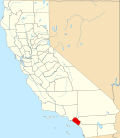

State of California | |
|---|---|
Sacramento (capital) | |
| Topics | |
| Regions |
|
| Metro regions | |
| Counties |
|
| Most populous cities | |

| International | |
|---|---|
| National | |
| Geographic | |
| Other | |

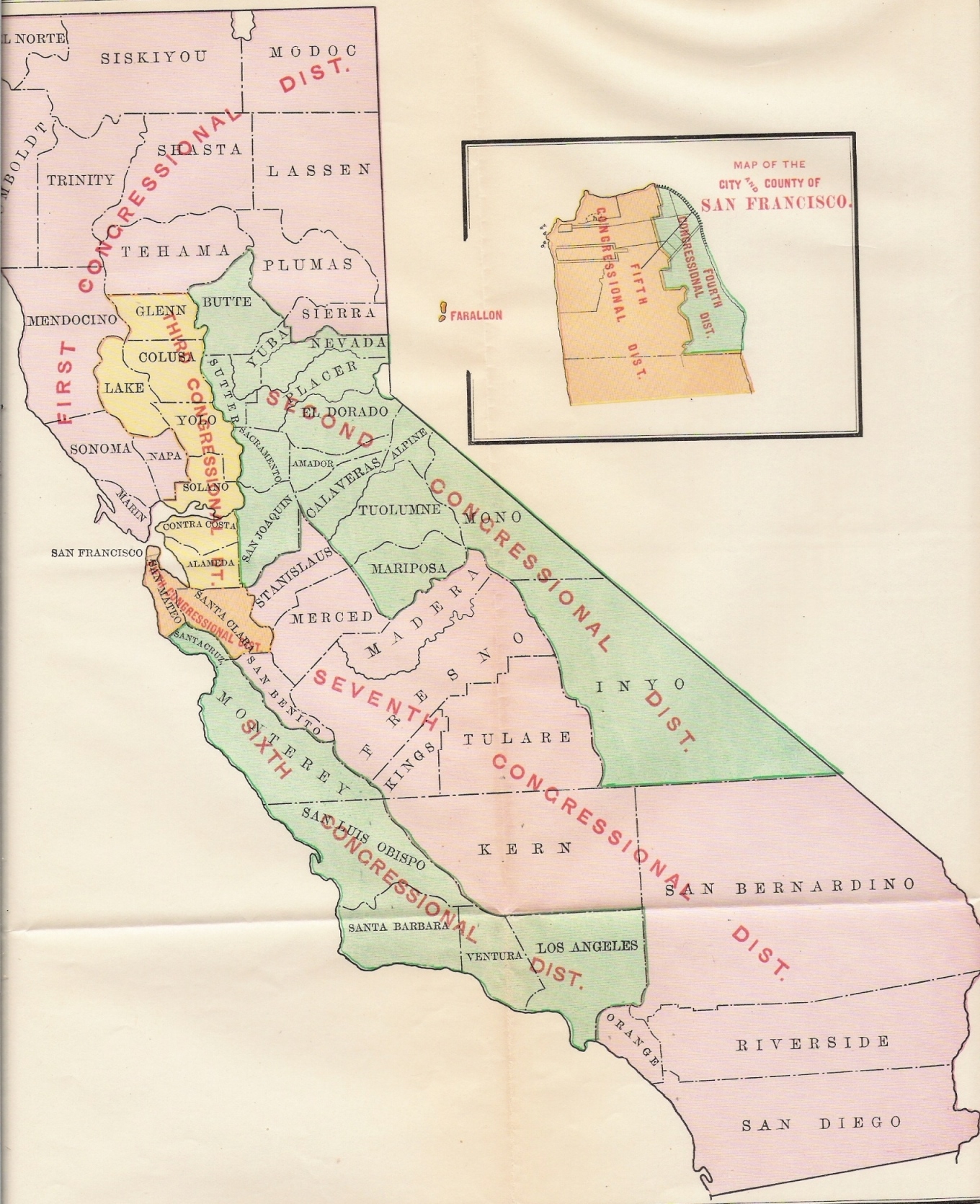

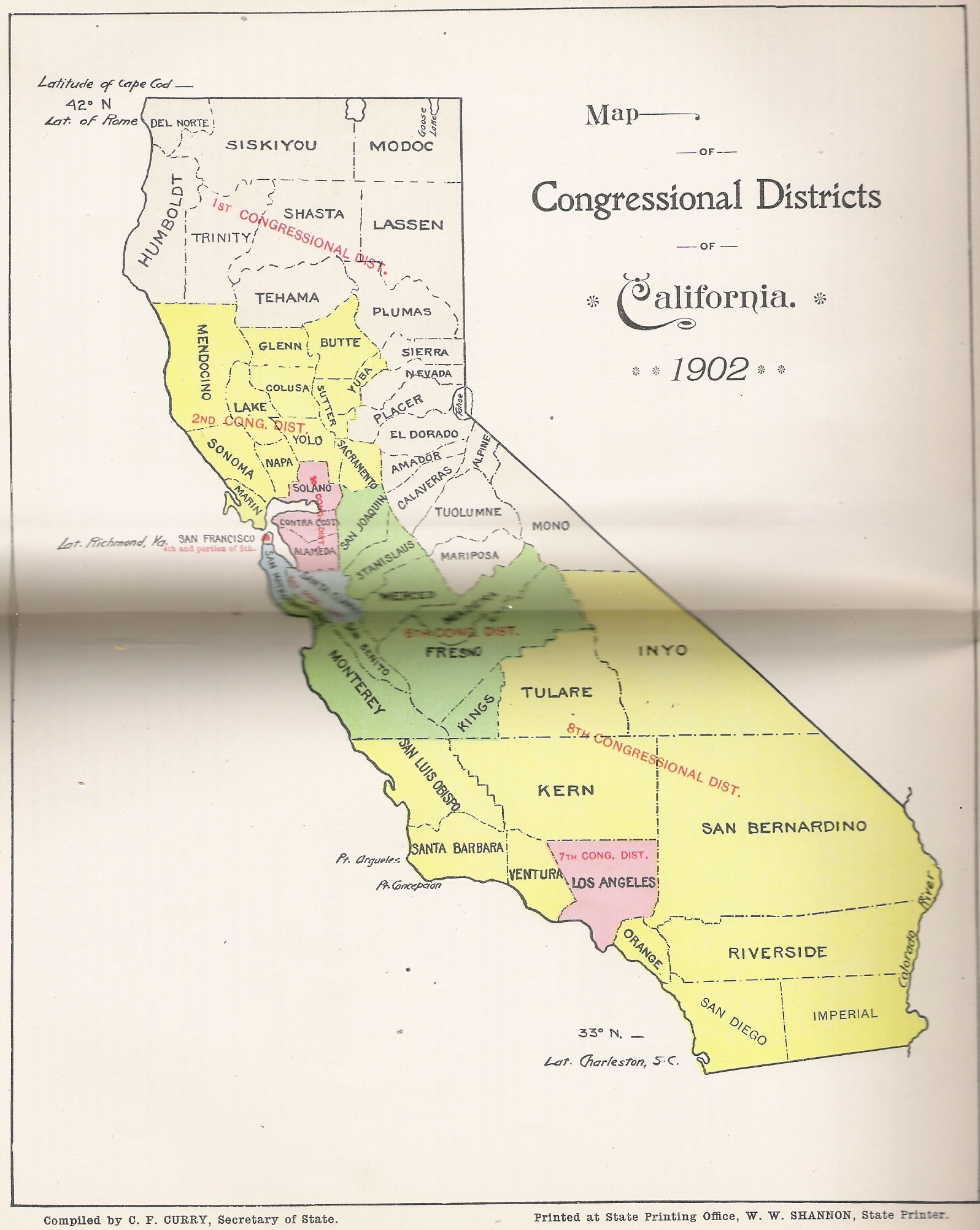

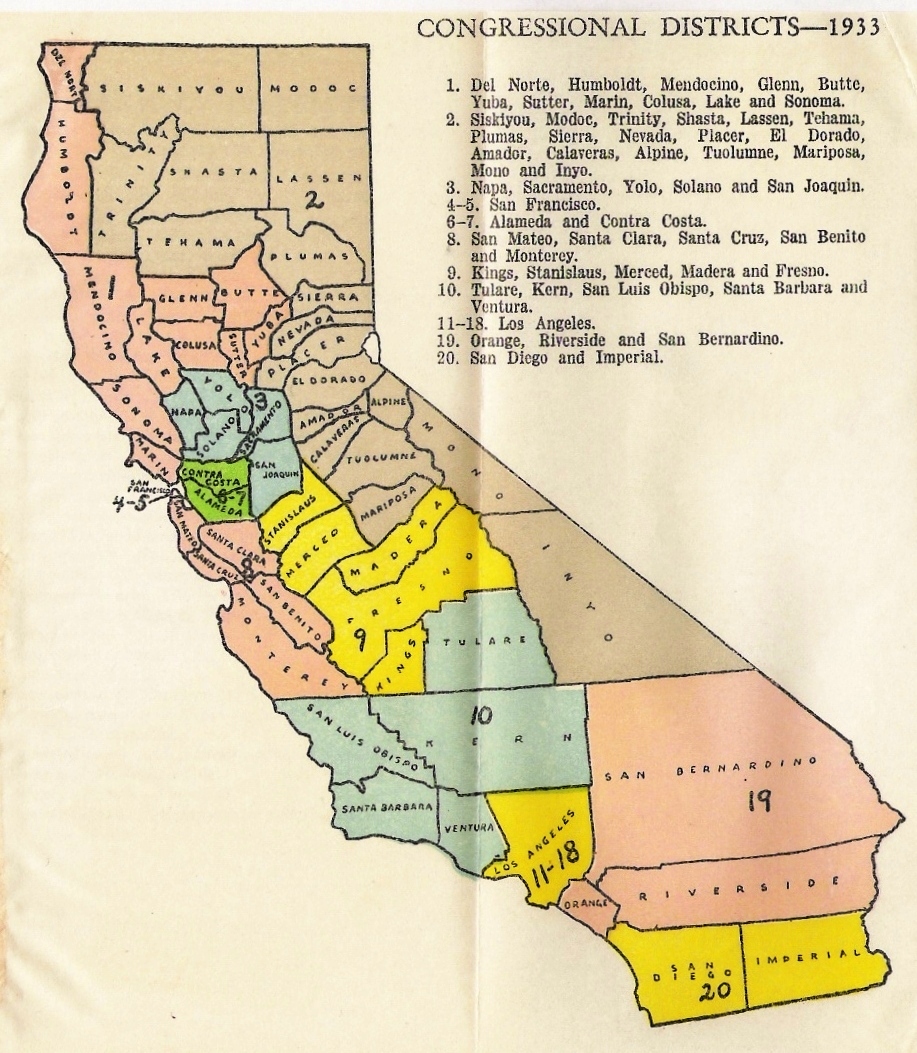

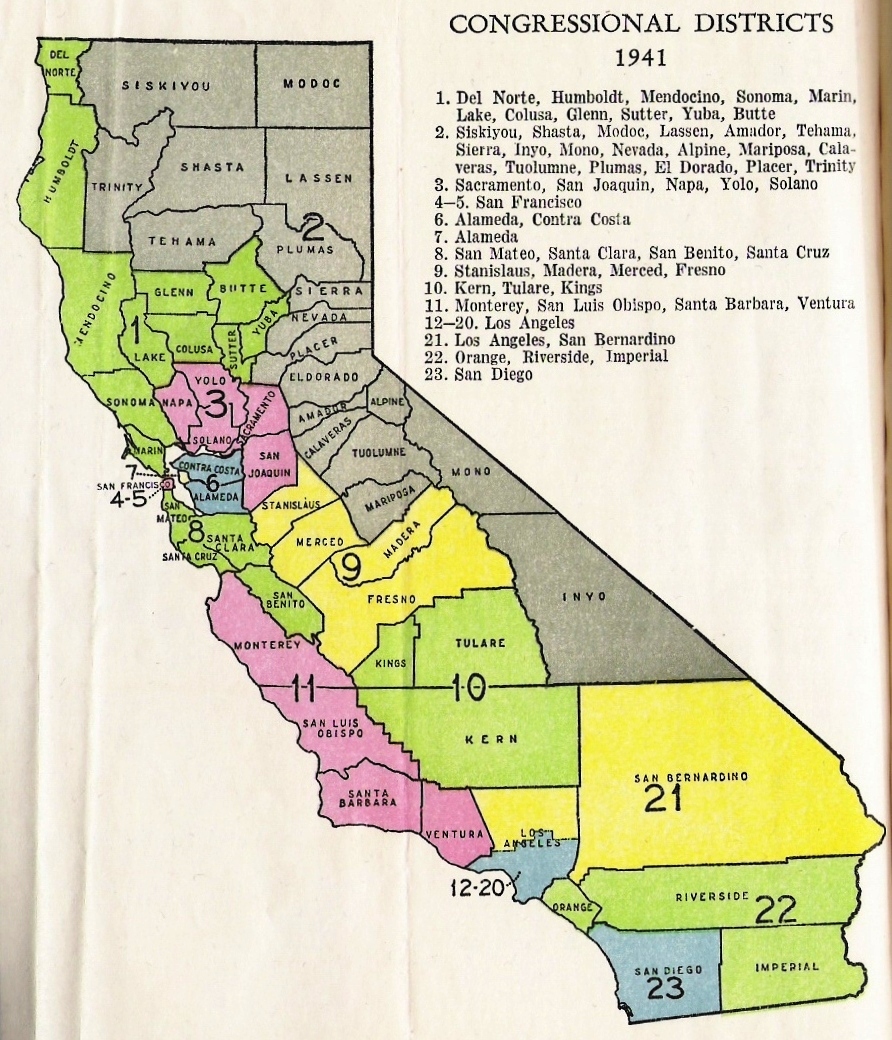

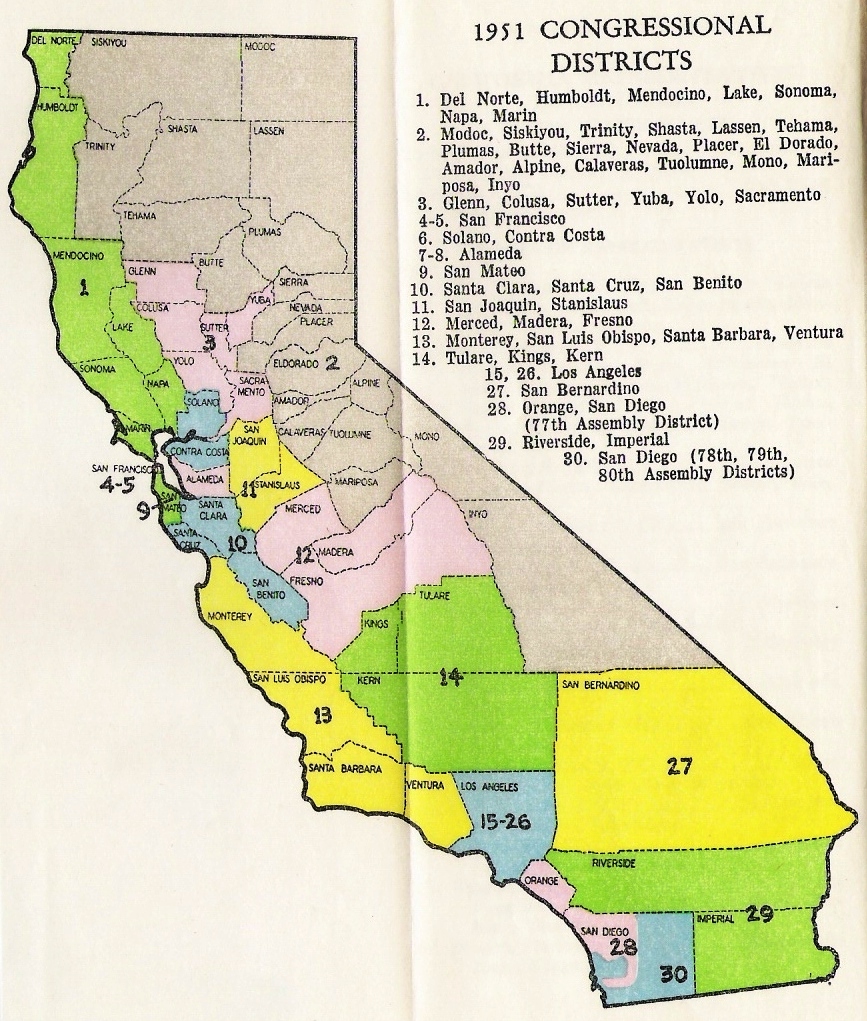

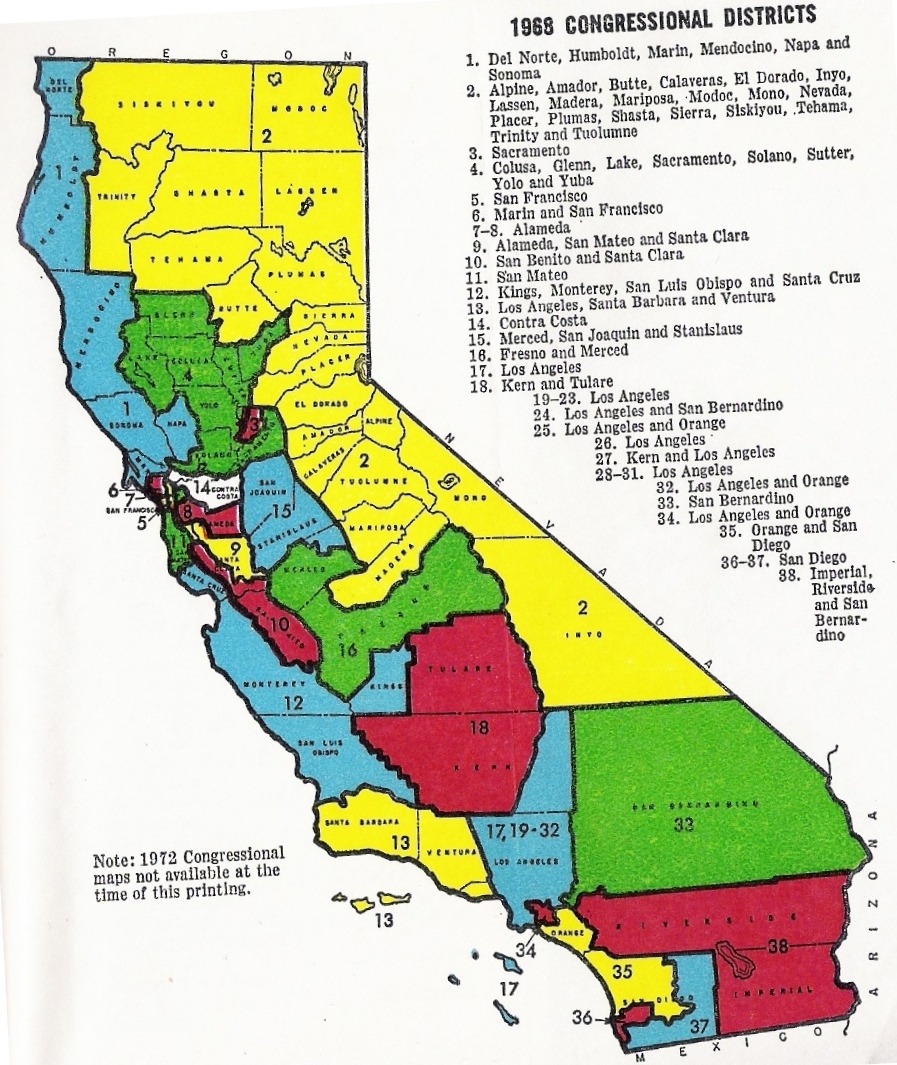
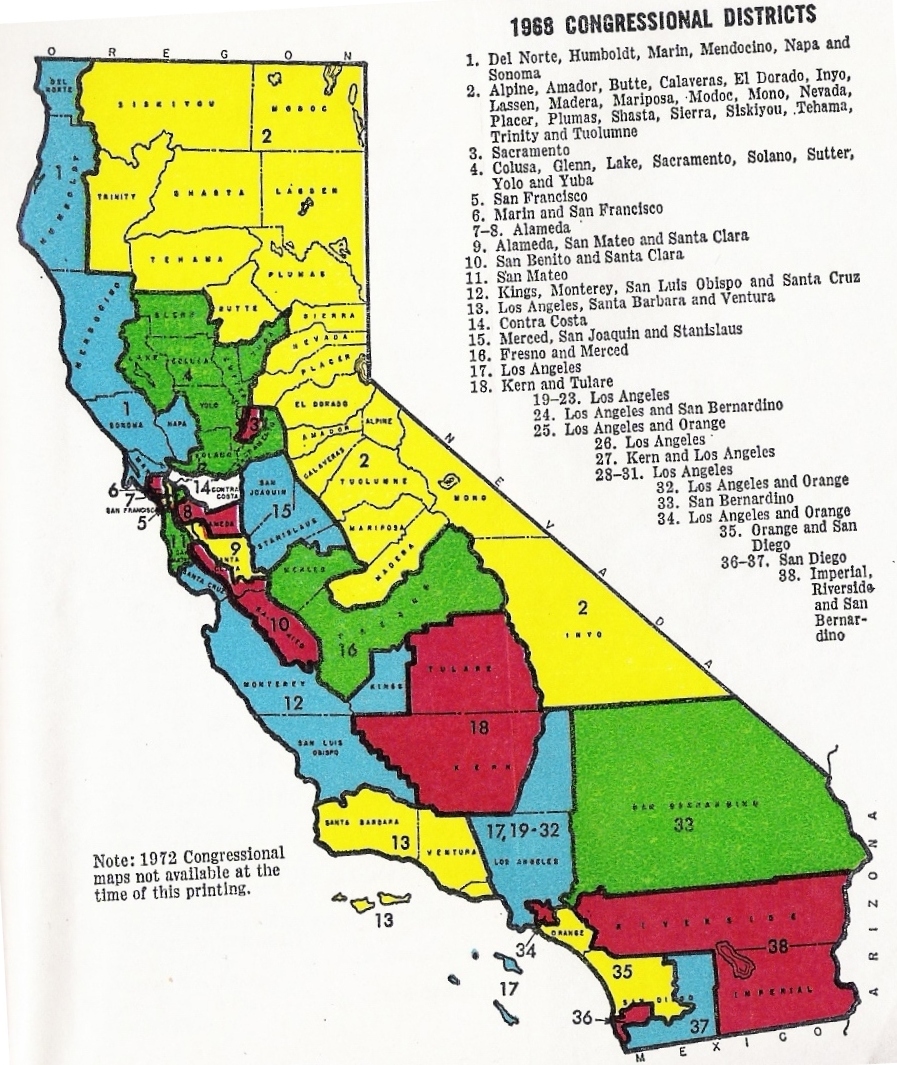


- ^ "100 Things to do in Orange County Before You die – Reedy Press LLC". Archived from the original on October 21, 2020. Retrieved October 20, 2020.
- ^ "The Ultimate Guide to Orange County, California". 100 Things to Do in Orange County Before You Die. Archived from the original on October 22, 2020. Retrieved October 20, 2020.
- ^ "Local author recommends 100 amazing things to do in O.C. In new book". Los Angeles Times. January 2, 2020. Archived from the original on October 22, 2020. Retrieved October 20, 2020.
- ^ Walker, Doris (2006). Orange County then & Now. Thunder Bay Press. ISBN 9781592235995. Archived from the original on February 10, 2022. Retrieved October 29, 2020.
Orange County, California
View on GrokipediaGeography
Physical features and topography
Orange County encompasses 791 square miles of land, characterized by a varied topography ranging from sea level along its western Pacific coastline to elevations exceeding 5,600 feet in the interior mountains. The county's western edge consists of a narrow coastal plain featuring sandy beaches, dunes, and rocky headlands, backed by low-lying bluffs and mesas such as those in the San Joaquin Hills. This plain, formed through sedimentary deposition and marine processes, supports urban development in coastal cities while transitioning eastward to gently rolling foothills.[7][8] The central and eastern portions are dominated by the Santa Ana Valley, a broad alluvial basin drained by the Santa Ana River, which originates in the highlands and flows westward through the county, shaping fertile lowlands historically used for agriculture. South of this valley lies the Saddleback Valley, a structural depression between the Santa Ana Mountains and the subsidiary Laguna and San Joaquin Hills, featuring chaparral-covered slopes and intermittent streams. The Santa Ana Mountains, a northern segment of the Peninsular Ranges, form the rugged eastern and southeastern boundaries, rising steeply due to tectonic uplift associated with regional fault systems; these mountains exhibit granitic cores overlain by sedimentary and metamorphic rocks, with drainages carving deep canyons.[9][10][11] Santiago Peak, at 5,689 feet, marks the county's highest elevation within these mountains, offering panoramic views and serving as a key hydrological divide where watersheds feed both the Pacific and inland basins. The lowest points occur at sea level along the 42-mile coastline, where wave action and longshore drift maintain dynamic beach profiles. Overall, the topography reflects ongoing tectonic influences from nearby faults, including compressional forces that elevate the ranges while subsidence in coastal basins accommodates sediment from eroding highlands.[12][13][8]Climate and environmental conditions
Orange County features a hot-summer Mediterranean climate (Köppen Csa), marked by mild, wet winters and warm, dry summers influenced by its coastal position along the Pacific Ocean.[14] The long-term annual average temperature for the county is 62.4°F, with coastal areas moderated by marine layers that often produce fog and overcast skies during summer mornings, while inland zones experience greater diurnal temperature swings and higher summer peaks exceeding 90°F.[15] Average annual precipitation totals approximately 13 inches, predominantly falling between November and March, with summer months typically receiving less than 0.5 inches.[16] Prevailing westerly sea breezes dominate much of the year, but episodic Santa Ana winds—katabatic flows from interior deserts—bring hot, dry conditions with gusts up to 50-100 mph, particularly in autumn, heightening wildfire ignition and spread risks across the county's chaparral-covered hills.[17] These winds, combined with low humidity and drought-prone vegetation, have fueled major fires such as the 2020 Silverado Fire, which burned over 12,000 acres in the county.[18] Environmental conditions reflect heavy urbanization's impacts, with air quality frequently reaching moderate levels on the Air Quality Index due to ozone, particulate matter, and nitrogen oxides from vehicular traffic and industrial sources, as monitored by the South Coast Air Quality Management District.[19] Water resources rely on a mix of approximately 50% imported supplies from the Colorado River Aqueduct and State Water Project, supplemented by local groundwater recharge and advanced recycled water via the Groundwater Replenishment System, which produces over 130 million gallons daily to combat overdraft and seawater intrusion.[20] Coastal waters face challenges from urban runoff carrying pollutants, prompting ongoing monitoring and mitigation under programs ensuring compliance with bacterial standards for recreation.[21] Watershed management addresses flood control and habitat preservation amid development pressures.[22]Subregions and urban development patterns
Orange County is informally divided into northern, central, southern, and coastal subregions, each exhibiting distinct urban forms shaped by historical land use and economic drivers. The northern subregion, encompassing cities like Anaheim, Fullerton, and Brea, features a mix of older industrial zones and entertainment hubs, with development accelerating after the 1955 opening of Disneyland, which catalyzed residential and commercial expansion around theme parks and freeways.[23] Central areas, including Santa Ana and Orange, retain 19th-century downtown grids amid denser urban cores serving as administrative and retail nodes.[24] Southern subregions, such as Irvine and Mission Viejo, exemplify master-planned communities developed from the 1960s onward by entities like the Irvine Company, prioritizing self-contained villages, curved streets, and integrated green spaces over traditional grids to accommodate rapid population influx while mitigating sprawl perceptions.[25] Coastal zones, including Huntington Beach and Newport Beach, prioritize low-density luxury housing and tourism, with development constrained by environmental regulations and topography, preserving beachfront aesthetics since the early 20th century. Inland hills and canyons remain less developed, buffering urban expansion.[26] Urban development patterns transitioned from 19th-century agriculture—dominated by citrus groves—to post-World War II suburbanization, fueled by federal highway investments like Interstate 5 (completed sections by 1960s) and Interstate 405, enabling decentralized "edge city" growth around commercial nodes rather than a singular core.[23] This freeway-oriented model resulted in polycentric density peaks, with over 38 square miles exceeding 10,000 persons per square mile by the late 20th century, challenging narratives of unchecked sprawl.[27] By 2001, countywide density reached 3,665 persons per square mile, second only to San Francisco among California counties, driven by infill and multi-family housing amid land scarcity.[28] Recent patterns emphasize sustainable retrofits and transit-oriented development along corridors like the Metrolink, though automobile dependency persists due to historical low-density zoning legacies.[26]Protected areas and natural resources
Orange County encompasses a diverse array of protected areas, including state parks, county-managed wilderness parks, marine protected areas, and wildlife reserves that preserve coastal, wetland, and upland habitats amid urban development. Crystal Cove State Park covers 2,400 acres along the coastline, featuring 3.2 miles of beach, tide pools, and underwater kelp forests protected as a State Marine Conservation Area allowing limited recreational take.[29] Aliso and Wood Canyons Wilderness Park, part of the Orange County Parks system, spans thousands of acres of riparian and oak woodland ecosystems supporting native species like the California gnatcatcher. The county's regional and wilderness park network totals 39,000 acres across 25 sites, including inland areas like Carbon Canyon Regional Park with its native riparian habitats.[30] Marine protected areas safeguard approximately 12 miles of the county's 44-mile coastline, restricting fishing and extraction to protect rocky intertidal zones, kelp reefs, and sandy seafloors. Laguna Beach State Marine Reserve covers over six square miles, preserving tide pools, surfgrass beds, and biodiversity hotspots for species including lobsters and garibaldi fish.[31] Dana Point State Marine Conservation Area encompasses nearly four square miles from shore to 150-foot depths, supporting kelp forests frequented by whales, seals, and migratory fish.[32] Inland, the Santa Ana Mountains include conserved lands totaling over 20,000 acres managed for ecological connectivity between Los Angeles and San Diego counties.[33] Wetland and wildlife reserves provide critical habitat for migratory birds and endangered species along the Pacific Flyway. Bolsa Chica Ecological Reserve protects 1,300 acres of coastal estuary, including salt marshes vital for the endangered California least tern and light-footed clapper rail.[34] Seal Beach National Wildlife Refuge, established in 1972, serves as a stopover for shorebirds amid otherwise developed coastal zones.[35] San Joaquin Marsh Wildlife Sanctuary spans over 300 acres of restored freshwater wetlands, enhancing biodiversity in an urban setting.[36] Natural resources in Orange County are dominated by water and subsurface hydrocarbons, with limited remaining extractable minerals due to urbanization. The Orange County Groundwater Basin, managed by the Orange County Water District, supplies water to 2.5 million residents across 350 square miles through replenishment, recycling, and imported sources, tracking a monthly water budget to sustain reliability.[37] The district's Groundwater Replenishment System recycles wastewater into drinking water, contributing significantly to local supplies alongside the Santa Ana River.[38] Oil production, historically a major resource, peaked in fields like Brea-Olinda, which has yielded over 430 million barrels since the late 19th century, with approximately 20 million barrels remaining recoverable. As of December 2024, the county ranks 14th in California for barrels of oil equivalent produced monthly, though output has declined sharply from its mid-20th-century highs due to depletion and regulations.[39] Other resources include preserved native vegetation and farmlands in open spaces, supporting pollination and genetic diversity, but commercial agriculture has largely transitioned to urban uses.[40]History
Indigenous peoples and pre-colonial era
The region now known as Orange County, California, was inhabited by indigenous Uto-Aztecan-speaking peoples for at least 10,000 years prior to European contact in 1769.[41] The primary groups included the Tongva (also known as Gabrielino or Kizh), who occupied the northern coastal and inland areas extending from the Los Angeles Basin into present-day northern Orange County, and the Acjachemen (also called Juaneño), who controlled the southern coastal zones from the beaches to the inland mountains, particularly around the San Juan and San Mateo River drainages.[42] [43] These groups maintained distinct territories with interconnected village networks, where the Tongva supported populations in sites near modern-day Long Beach and La Puente, while Acjachemen settlements centered in areas like San Juan Capistrano.[44] Archaeological evidence, including shell middens, grinding stones, and projectile points recovered from sites such as Aliso Creek and Bolsa Chica Mesa, indicates sustained seasonal exploitation of marine resources, small game, and wild plants like acorns and seeds.[45] These indigenous societies were hunter-gatherers who constructed temporary dome-shaped dwellings from tule reeds and brush, adapting to the Mediterranean climate's wet winters and dry summers by migrating between coastal villages for fishing and shellfish harvesting and inland sites for acorn processing and hunting deer, rabbits, and birds.[46] Tools crafted from local chert and steatite, along with cogged stones—circular artifacts with notched edges possibly used for fishing or ceremonial purposes—dated to approximately 9,000 years before present, underscore technological continuity and resource management practices.[47] Population estimates for the broader Tongva region hovered around 5,000 individuals on the eve of Spanish arrival, though precise figures for Orange County-specific territories remain uncertain due to varying scholarly methodologies and limited ethnohistoric records.[48] Social organization featured village headmen overseeing resource allocation and trade in items like asphaltum for waterproofing and shell beads for exchange, with evidence of ritual practices inferred from rock art and burial goods but lacking written documentation.[49] Pre-colonial Orange County exhibited ecological adaptations reflecting causal dependencies on local hydrology and biodiversity, such as reliance on riparian zones for fresh water and oak savannas for staple foods, without evidence of large-scale agriculture or permanent fortifications indicative of intergroup conflict.[50] Engraved stones and food remains from stratified sites confirm multi-millennial occupation layers, with no archaeological indicators of metalworking or wheeled transport, aligning with broader Southern California patterns of low-density, mobile foraging economies.[51] These patterns persisted until disrupted by Spanish expeditions in the late 18th century, though direct pre-contact interactions with outsiders were minimal.[52]Spanish colonization and mission period
The Spanish exploration of the region now comprising Orange County occurred during the Portolá expedition of 1769, led by Gaspar de Portolá, which marked the first recorded European overland traversal of Alta California north from San Diego.[53] The expedition camped at several sites within the area, including San Juan Canyon and near present-day Irvine, noting fertile valleys, coastal plains, and indigenous villages while seeking a route to Monterey Bay.[53] This journey facilitated initial mapping and contact with the Acjachemen people, who inhabited the coastal and canyon regions for over 10,000 years in semi-permanent villages sustained by hunting, gathering, fishing, and acorn processing.[54] Spain's colonization intensified through the establishment of Franciscan missions under Junípero Serra to secure territorial claims against Russian and British advances, promote Catholicism among natives, and develop self-sustaining agricultural outposts supported by presidios and pueblos.[55] In Orange County, Mission San Juan Capistrano was founded on November 1, 1776, by Serra as the seventh in the chain of 21 Alta California missions, following an initial attempt on October 30, 1775, by Fermín Lasuén that was abandoned due to an indigenous uprising at Mission San Diego.[56] Located in what is now San Juan Capistrano, the mission served approximately 1,000 Acjachemen (also known as Juaneño) neophytes at its peak, who were relocated from dispersed villages to central compounds for baptism, instruction in Catholicism, and labor in irrigated farming, cattle ranching, weaving, and construction.[57] The mission's economy relied on crops like wheat, corn, and olives, alongside vast herds numbering thousands of cattle, enabling surplus production that supported Spanish military garrisons.[56] Mission life imposed European norms on Acjachemen society, including gender-separated dormitories, communal meals, and suppression of traditional practices, with neophytes compelled to attend daily masses and work under overseers.[58] Empirical records indicate severe demographic collapse: pre-contact Acjachemen numbers in the region likely exceeded 1,500, but by the 1830s secularization, mission populations had dwindled due to epidemics of smallpox, measles, and syphilis—diseases to which natives lacked immunity—compounded by malnutrition, overwork, and corporal punishments for infractions or flight attempts.[58] [59] Resistance manifested in occasional revolts, such as Acjachemen attacks on the mission in its early years, and widespread desertions, with escapees often recaptured by soldiers.[59] Architectural achievements included the Great Stone Church, constructed between 1797 and 1806 using local sandstone and featuring vaulted ceilings inspired by Spanish designs, which collapsed in a 1812 earthquake killing 40 people, primarily Acjachemen.[56] The mission period fostered introduction of Old World technologies like plows, wheels, and iron tools, alongside permanent infrastructure that laid groundwork for later ranchos, though at the expense of indigenous autonomy and health.[55] By the early 19th century, San Juan Capistrano had become a key node in Spain's coastal supply chain, with its adobe structures, orchards, and vineyards exemplifying the mission system's blend of religious, economic, and military objectives until Mexican independence in 1821 shifted control.[60]Mexican ranchos and early American settlement
Following Mexican independence from Spain in 1821, the government secularized the Franciscan missions in 1834, redistributing former mission lands and authorizing private grants of up to 11 leagues (approximately 48,800 acres) to Mexican citizens who would occupy and develop them for ranching and agriculture.[60] By 1846, nearly all land in what became Orange County comprised such ranchos, primarily focused on large-scale cattle operations that supplied hides and tallow to international markets via coastal ports.[60] Prominent examples included the Rancho Santiago de Santa Ana, a 62,516-acre grant conceded in 1810 to José Antonio Yorba and Juan Pablo Peralta along the Santa Ana River, which supported extensive grazing and featured multiple adobes as family residences.[61] Earlier Spanish concessions, such as Manuel Nieto's 1784 permit for roughly 150,000 acres between the Santa Ana and San Gabriel Rivers, were formalized under Mexico in 1834 and subdivided among heirs into five ranchos—Los Alamitos, Las Bolsas, Los Cerritos, Los Coyotes, and Santa Gertrudis—encompassing much of northern and coastal Orange County.[62] Other grants, like Rancho San Juan Cajon de Santa Ana and extensions such as Lomas de Santiago, further dominated the inland areas, sustaining a ranchero elite through vaquero labor and seasonal roundups.[61] The Mexican-American War concluded with the Treaty of Guadalupe Hidalgo in 1848, ceding California to the United States and integrating rancho lands into Los Angeles County (which then included Orange County).[60] U.S. authorities required validation of Mexican titles through lengthy surveys and legal proceedings under the Land Act of 1851, imposing fees that burdened many Californio owners already strained by the California Gold Rush's temporary cattle boom (1849–1852), followed by devastating floods (1861–1862) and droughts (1863–1864).[61] These pressures led to widespread sales or foreclosures, fragmenting ranchos into smaller parcels attractive to Anglo-American settlers seeking farmland.[61] The first organized American settlement emerged in 1857 when 50 German immigrants from San Francisco purchased 1,165 acres of Rancho San Juan Cajon de Santa Ana to establish a cooperative wine colony, naming it Anaheim (from "Ana" for the river and "heim" for home); initial settlers arrived in 1859, planting vineyards that shifted to citrus after phylloxera outbreaks.[60] [63] By the late 1860s, further influxes included Midwestern farmers buying subdivided rancho lands, founding towns such as Santa Ana (1869, via William Spurgeon's purchase from the Yorba family) and Tustin, marking the transition from pastoral ranching to intensive agriculture.[61] This era solidified American dominance, with ranchero families often retaining smaller holdings amid economic adaptation.[61]County formation and 19th-century agriculture
Orange County was established as a separate entity from Los Angeles County on August 1, 1889, following years of agitation by southern residents who sought greater local control amid rapid economic expansion.[60] [64] The enabling legislation was signed into law by Governor Robert Waterman on March 11, 1889, with voter approval secured on June 4, 1889, in a referendum limited to the proposed county's territory.[65] [66] Santa Ana was designated the county seat after a competitive selection process among rival towns.[60] The separation reflected frustrations with Los Angeles County's distant administration, which locals argued neglected infrastructure needs in the agriculturally productive south, where population had grown to over 13,000 by 1880.[60] In the decades preceding formation, the area's economy transitioned from large-scale Mexican-era ranchos focused on cattle grazing to smaller American-owned farms emphasizing diversified crops suited to the Mediterranean climate and fertile alluvial soils.[60] Early settlers after California's 1850 statehood pursued wheat and barley cultivation, but water scarcity and market fluctuations prompted shifts toward horticulture by the 1860s. German immigrants founding Anaheim in 1857 initially planted vineyards, yielding significant wine production until phylloxera infestations in the 1880s forced diversification.[60] Citrus cultivation emerged as a cornerstone of 19th-century agriculture, with the first intentional orange plantings occurring around 1870 in Anaheim, credited to settler William Saunders Hardin, who propagated seedlings from decayed fruit imported via steamer.[67] [68] These early efforts involved seedling varieties prone to inconsistency, but the 1880s introduction of budded Valencia oranges—ideal for extended shelf life and summer ripening—spurred commercial viability, with plantings expanding rapidly on irrigated lands near the Santa Ana River.[67] Walnuts and apricots also gained prominence, alongside vegetable trials like celery, sugar beets, and lima beans by the late 1890s, capitalizing on marshy coastal soils.[60] Dairy operations and residual cattle ranching persisted in southern hills, but fruit crops drove the late-century boom, with citrus exports via emerging railroads boosting land values from $10 to over $100 per acre in prime areas.[60] This agricultural surge, yielding high-value perishable goods, underpinned the population influx and infrastructural demands that precipitated countyhood, establishing farming as the dominant economic force through the turn of the century.[60]20th-century industrialization and suburbanization
The early 20th century marked the onset of industrialization in Orange County, primarily through the oil industry, which began with exploratory drilling in the 1890s in areas like Brea Canyon and gained momentum with major strikes in the Olinda and Brea-Olinda fields between 1919 and 1920.[69] These discoveries led to a significant economic boost, with production peaking in the 1920s and supporting infrastructure development, though output declined by mid-century as fields matured.[70] Concurrently, agriculture underwent industrialization, with large-scale fruit and nut exports driving mechanized farming operations and contributing to the erosion of small family farms by the 1920s.[71] World War II accelerated industrial diversification, as defense-related manufacturing expanded in Southern California, including Orange County, where facilities supported aircraft production and military logistics.[72] Postwar economic growth transformed the county's landscape, with aerospace emerging as a key sector; Northrop Aircraft established the first major presence in the late 1930s, followed by firms like Douglas and later McDonnell Douglas, drawing on federal contracts during the Cold War.[73] This industrial base, combined with returning veterans and federal housing initiatives, fueled suburbanization, as agricultural lands were subdivided for tract housing developments. Population surged from 130,760 in 1940 to 216,224 in 1950—a 65% increase—and exploded to 703,925 by 1960, reflecting rapid suburban expansion in cities like Garden Grove and Buena Park.[74][75] Infrastructure such as Interstate 5, completed in segments through the 1950s and 1960s, facilitated commuter access to jobs in Los Angeles while enabling low-density residential sprawl. The 1955 opening of Disneyland in Anaheim not only shifted economic focus toward tourism but also catalyzed ancillary commercial and housing growth, emblematic of the county's transition from rural agrarian roots to a prototypical suburban-industrial hub.[71] By the late 20th century, this pattern had diversified further into electronics and high-technology manufacturing, though tied to volatile defense spending cycles.[76]Post-World War II boom and modern growth
Following World War II, Orange County's population surged due to returning military personnel and economic opportunities from defense-related industries. The county's population grew from approximately 130,000 in 1940 to over 700,000 by 1960, driven by suburban expansion that converted agricultural lands into residential developments.[71][60] This boom was fueled by federal investments in infrastructure, including the construction of Interstate 5, which facilitated commuting and commercial activity.[77] The aerospace and electronics sectors expanded rapidly during the Cold War, supported by government contracts. By the height of the era, these industries employed around 31,000 workers in Orange County, contributing to manufacturing's dominance in the local economy.[78][79] Companies like Hughes Aircraft established major facilities, such as the 1957 plant in Fullerton spanning over 400 acres, which bolstered industrial employment and technological innovation.[80] The opening of Disneyland in Anaheim on July 17, 1955, marked a pivotal shift toward tourism as an economic driver. The park attracted millions of visitors annually, stimulating hotel construction, retail, and service jobs while accelerating population influx in surrounding areas.[77][81] By 1963, the county's population exceeded one million, reflecting sustained suburbanization and diversification beyond agriculture.[71][60] In the 1970s and 1980s, Orange County experienced further prosperity, with median family income rising 74% from $28,705 in 1980 to $39,916 by 1989, alongside robust job creation in services and real estate.[82] Post-Cold War adjustments in the 1990s reduced aerospace reliance, but growth persisted through tourism, advanced manufacturing, and commercial hubs like Irvine's planned business districts.[83] Today, the county sustains economic vitality via a mix of hospitality, technology, and logistics, though high housing costs reflect ongoing development pressures.[84]Demographics
Historical population growth
Orange County's population grew slowly in its formative years after separation from Los Angeles County in 1889, reflecting its agricultural economy and rural character. The 1890 census recorded 13,589 residents, increasing to 19,696 by 1900 and 34,436 by 1910, driven primarily by farming settlements and citrus cultivation. Growth accelerated modestly during the 1920s oil boom and interwar urbanization, reaching 118,674 in 1930 and stabilizing at 130,760 in 1940 amid the Great Depression.[85] Decennial census data illustrate the trajectory:| Year | Population |
|---|---|
| 1890 | 13,589 |
| 1900 | 19,696 |
| 1910 | 34,436 |
| 1920 | 61,375 |
| 1930 | 118,674 |
| 1940 | 130,760 |
| 1950 | 216,224 |
| 1960 | 703,925 |
| 1970 | 1,420,386 |
| 1980 | 1,932,709 |
| 1990 | 2,410,556 |
| 2000 | 2,846,289 |
| 2010 | 3,010,232 |
Current racial, ethnic, and linguistic composition
As of July 1, 2023, the estimated population of Orange County was 3,175,693. The county's racial and ethnic composition reflects significant diversity, shaped by historical immigration patterns from Latin America, Asia, and elsewhere, with no group comprising an absolute majority. According to 2022 estimates derived from U.S. Census Bureau data, non-Hispanic Whites accounted for 37.7% of the population, Hispanics or Latinos of any race 34.1%, non-Hispanic Asians 21.7%, and non-Hispanic Blacks or African Americans 1.8%.[87] Other groups included those identifying as two or more races (3.2%), non-Hispanic American Indians or Alaska Natives (0.5%), and non-Hispanic Native Hawaiians or Pacific Islanders (0.4%).[87] These figures align with trends from the 2020 Census, which reported non-Hispanic Whites at 37.6%, Hispanics at 34.1%, and Asians at 21.9%, indicating relative stability amid ongoing demographic shifts driven by differential birth rates, migration, and aging populations.[86]| Racial/Ethnic Group | Percentage (2022 est.) | Approximate Population |
|---|---|---|
| Non-Hispanic White | 37.7% | 1,197,000 |
| Hispanic/Latino (any race) | 34.1% | 1,083,000 |
| Non-Hispanic Asian | 21.7% | 689,000 |
| Non-Hispanic Black | 1.8% | 57,000 |
| Two or more races | 3.2% | 102,000 |
| Other (including Native American, Pacific Islander) | 1.5% | 48,000 |
Income, poverty, and socioeconomic indicators
The median household income in Orange County was $113,702 in 2023, exceeding the California statewide median by 18% and the U.S. national median by 45%.[95] [88] Per capita income reached $59,169 in the same year, reflecting a concentration of high-earning sectors such as technology, finance, and tourism.[96] The county's average annual household income stood at $159,889, underscoring socioeconomic stratification where upper-income brackets predominate amid elevated living costs.[97] Poverty affected 9.5% of the population in 2023, a rate approximately 21% below California's 12% and 24% below the U.S. 11.1% official rate, with 296,000 individuals below the threshold out of 3.13 million residents.[98] [99] This figure has declined from 10.9% in 2019, attributable to robust job growth in professional services and manufacturing, though pockets of higher poverty persist in areas with lower-wage immigrant labor.[99] Educational attainment supports these outcomes: 87.1% of adults aged 25 and older held at least a high school diploma in 2023, surpassing California's 84.8%, while 43.4% possessed a bachelor's degree or higher, up from 40.6% in 2019.[98] [100] Unemployment averaged 3.5% in 2023, lower than the state and national figures, though it rose to 4.6% by August 2025 amid sector-specific slowdowns in construction and hospitality.[101] [102]| Indicator | Orange County (2023) | California | United States |
|---|---|---|---|
| Median Household Income | $113,702 | ~$96,500 | ~$78,600 |
| Poverty Rate | 9.5% | 12% | 11.1% |
| Bachelor's Degree or Higher (age 25+) | 43.4% | ~35% (est.) | ~34% (est.) |
| Unemployment Rate (annual avg.) | 3.5% | ~5% (est.) | ~3.7% (est.) |
Immigration patterns and cultural integration
Orange County's immigration patterns have been shaped by agricultural labor demands in the early 20th century, followed by surges enabled by the 1965 Immigration and Nationality Act and refugee resettlement programs. Mexican migrants arrived in significant numbers during the Bracero Program (1942–1964), providing seasonal farmworkers for citrus and vegetable industries, with many transitioning to permanent residency through family reunification chains post-1965. Asian immigration accelerated after 1975, particularly Vietnamese refugees fleeing the fall of Saigon, who resettled in areas like Westminster and Garden Grove, forming the core of Little Saigon—the largest Vietnamese diaspora community outside Vietnam, numbering nearly 200,000 by the 2010s.[106] Other Asian groups, including Koreans, Chinese, and Indians, grew through skilled worker visas and family sponsorships, contributing to a diversified inflow. As of the latest American Community Survey estimates, approximately 30.9% of Orange County's population—about 967,000 individuals—is foreign-born, exceeding the national average and reflecting sustained inflows from Latin America (primarily Mexico, comprising over 40% of immigrants) and Asia (around 50%, led by Vietnam at 10–15%).[98] This composition stems from historical patterns: Hispanic shares rose from under 10% in 1970 to over 40% by 2020 via low-skilled labor migration, while Vietnamese arrivals peaked in the late 1970s–1980s, with subsequent waves from family ties and H-1B visas for other Asians.[107] Net migration has slowed since 2010, with California's immigrant population growing only 5% through 2023 amid economic shifts and border enforcement.[107] Cultural integration varies by group and generation, with metrics showing progress in economic participation but persistence of linguistic and spatial segregation. About 18% of residents have limited English proficiency, highest among Vietnamese (over 40% in first-generation households) and Hispanic groups, correlating with enclave residence that sustains native-language use but facilitates initial economic footholds through ethnic businesses.[92] [78] Little Saigon exemplifies refugee-driven enclave formation, where Vietnamese entrepreneurs built a commercial hub with over 2,000 businesses by the 2000s, fostering political activism against communism but also intergenerational tensions over assimilation.[108] Second-generation immigrants exhibit higher English proficiency (over 90%) and educational attainment, with Asian Americans achieving median household incomes 20–30% above the county average, though Hispanic rates lag at 70–80% proficiency and elevated poverty (twice the county norm).[109] Homeownership among naturalized immigrants reaches 60–70%, driven by stable employment in tech, manufacturing, and services, indicating causal links between legal status, skill acquisition, and upward mobility despite enclave dependencies. Intergroup interactions, such as Latino-Vietnamese business overlaps, have evolved pragmatically since the 1990s, reducing early frictions through shared economic interests.[110]Government and Administration
Structure of county government
Orange County functions as a charter county under the California Constitution, affording it home rule powers that enable customized administrative structures exceeding those mandated for general law counties.[111] The Board of Supervisors constitutes the primary governing authority, comprising five members elected at-large within their respective districts to staggered four-year terms, with districts redrawn decennially to reflect population shifts while maintaining approximate equal representation of the county's over 3 million residents.[112][113] The Board exercises both legislative and executive responsibilities, including enacting ordinances, approving the annual budget exceeding $7 billion as of fiscal year 2023-2024, appointing advisory commissions, and overseeing special districts for services like flood control and sanitation.[112][114] The Board appoints the County Executive Officer (CEO), who directs daily operations and coordinates among roughly 22 departments grouped into four programmatic areas: Public Protection (encompassing sheriff, probation, and district attorney functions), Community Services (including social services and child welfare), Infrastructure and Environmental Resources (covering public works and waste management), and General Government (featuring counsel, human resources, and finance).[115][116] As of July 2025, the CEO reports directly to the Board and manages a workforce of approximately 35,000 employees delivering services such as health care, public safety, and infrastructure maintenance.[115][117] Voters independently elect constitutional officers including the Assessor (responsible for property assessments), Auditor-Controller (handling financial auditing and payroll), Clerk-Recorder (managing vital records and elections), District Attorney (prosecuting crimes), Sheriff-Coroner (enforcing laws and conducting autopsies), Treasurer-Tax Collector (collecting taxes and investing funds), and Superintendent of Schools (overseeing educational policy coordination), all serving four-year terms with no term limits unless specified by state law.[118][114] The charter outlines vacancy procedures for Supervisors, mandating special elections for terms exceeding 365 days remaining, gubernatorial appointments aligned with statewide primaries for 180-365 days, or Board appointments for shorter periods, ensuring continuity while adhering to electoral accountability.[119] Unique provisions require voter approval for any increases in elected officials' retirement benefits beyond statutory baselines, reflecting fiscal conservatism embedded in the charter framework.[120]Board of Supervisors and key officials
The Orange County Board of Supervisors serves as the primary legislative and executive authority for the county, comprising five members elected to staggered four-year terms from single-member districts that encompass the county's cities and unincorporated areas.[112] The board oversees an annual budget exceeding $8 billion, manages county departments, and appoints key administrative roles such as the county executive officer.[114] As of October 2025, Doug Chaffee holds the position of chairman, with Katrina Foley serving as vice chair.[114]| District | Supervisor | Role/Notes |
|---|---|---|
| 1st | Janet Nguyen | Elected in 2024 |
| 2nd | Vicente Sarmiento | Incumbent |
| 3rd | Donald P. Wagner | Incumbent |
| 4th | Doug Chaffee | Chairman |
| 5th | Katrina Foley | Vice Chair |
- Sheriff-Coroner: Don Barnes, who leads the Orange County Sheriff's Department, providing law enforcement services to unincorporated areas and contract cities.[114][123]
- District Attorney: Todd Spitzer, responsible for prosecuting crimes and advising county agencies on legal matters.[114]
- Assessor: Claude Parrish, tasked with appraising property values for taxation; delivered the 2025-26 assessment roll covering all locally assessable properties.[114][124]
- Auditor-Controller: Andrew N. Hamilton, overseeing financial reporting, payroll, and internal audits for county operations.[114]
- Clerk-Recorder: Hugh Nguyen, managing public records, elections support, and marriage licenses.[114]
- Treasurer-Tax Collector: Shari Freidenrich, handling tax collection, investment of county funds, and treasury management.[114]
Public safety and law enforcement
The Orange County Sheriff's Department (OCSD) serves as the primary law enforcement agency for unincorporated areas of the county and provides contracted police services to 13 cities, including Yorba Linda and Laguna Hills, employing nearly 4,000 sworn and professional staff across six commands and 23 divisions to address patrol, investigations, corrections, and special operations for a population exceeding 3.2 million residents. [125] [126] [127] Larger municipalities maintain independent police departments, such as those in Anaheim, Irvine, and Newport Beach, which handle local policing autonomously while coordinating with OCSD on regional threats like gang activity and narcotics trafficking. [126] Orange County's violent crime rates remain among the lowest in California, with many cities ranking in the state's top 20 safest in 2024 based on incidents per 1,000 residents; for instance, Rancho Santa Margarita recorded the lowest statewide rate, followed closely by Aliso Viejo and Yorba Linda. [128] Property crime rates have also trended downward in select areas, such as Laguna Niguel's drop from 10.5 to 9.9 per 1,000 between 2024 and 2025, though aggravated assaults have risen countywide, mirroring a 1.7% statewide violent crime increase from 2022 to 2023 driven by such offenses. [128] [129] [130] In 2024, Laguna Beach emerged as the safest coastal city in the county for violent crime, with rates significantly below state averages of 503 per 100,000 residents. [131] Law enforcement efforts emphasize data-driven policing, including OCSD's CrimeMapping tool for public access to incident reports on 15 crime types searchable by address or ZIP code, alongside collaborative initiatives with probation and courts to manage post-release supervision under California's Public Safety Realignment. [132] [133] Despite these measures, challenges persist from state-level policy shifts, such as Proposition 47's misdemeanor thresholds for certain thefts, which critics attribute to sustained property crimes, though empirical data shows Orange County's overall rates 31% above national averages primarily due to assault variances rather than theft. [134] [129]Educational governance and departments
The Orange County Department of Education (OCDE), established to support local educational entities, maintains headquarters at 200 Kalmus Drive in Costa Mesa and delivers direct instruction to vulnerable student populations, such as those in juvenile justice facilities, foster care, and alternative education programs.[135] It also furnishes mandated fiscal oversight, professional development, and operational support to the county's 28 independent school districts, which collectively administer over 600 schools enrolling approximately 450,000 students.[135] These districts function as autonomous local agencies, each directed by an elected board of trustees responsible for policy formulation, budgeting, and compliance with California state education codes.[136] At the county level, the Orange County Board of Education, comprising five members elected by district to staggered four-year terms, exercises oversight of the OCDE by approving its annual budget, receiving independent audits, and adjudicating appeals from local district decisions on matters like student expulsions or charter school petitions.[137] The board's responsibilities extend to fiscal accountability for county-operated programs and ensuring alignment with state priorities, though it lacks direct control over district curricula or daily operations.[137] The OCDE's superintendent, appointed by the board, manages day-to-day administration, including departments focused on curriculum support, special education coordination, and data analytics for district improvement.[138] Higher education governance in Orange County operates through separate structures, with public institutions falling under state systems or local community college districts rather than county-level authority. The University of California, Irvine, established in 1965, is governed by the University of California's 26-member Board of Regents, which sets system-wide policies on admissions, tuition, and research funding.[139] California State University, Fullerton, founded in 1957 and located primarily in the county, answers to the California State University system's 24-member Board of Trustees, overseeing 23 campuses with emphasis on teaching and regional access. Community colleges, including those in the North Orange County Community College District (serving Cypress College, Fullerton College, and continuing education centers) and Rancho Santiago Community College District (serving Santa Ana College and Santiago Canyon College), are directed by locally elected seven-member governing boards that manage budgets, facilities, and program accreditation independently of K-12 entities.[140] These boards incorporate participatory governance models involving faculty senates, staff councils, and student representatives to inform decisions on resource allocation and strategic planning.[140] Private institutions like Chapman University operate under self-perpetuating boards without public oversight.Politics
Historical conservatism and Republican dominance
Orange County established itself as a Republican stronghold following its separation from Los Angeles County in 1889, but its political identity solidified in the post-World War II era amid rapid suburbanization and economic growth driven by aerospace and defense industries.[141] The influx of middle-class families, many fleeing urban liberalism, fostered a culture emphasizing anticommunism, limited government, and traditional values, with the county hosting numerous chapters of the John Birch Society by the early 1960s. This environment propelled local resident Richard Nixon's political career and made Orange County a cradle for the modern conservative movement, as detailed in analyses of grassroots activism that influenced national Republican strategies.[141] The county's conservatism manifested in overwhelming support for Republican presidential candidates, voting GOP in every election from 1952 through 2012, with the last Democratic victory occurring in 1936.[142] Barry Goldwater received strong backing in 1964, reflecting the area's rejection of moderate Republicanism, while Ronald Reagan, who quipped that Orange County was "where good Republicans go before they die," drew from its activist base during his gubernatorial and presidential campaigns.[143] Voter registration trends underscored this dominance, with Republicans comprising a majority—peaking at over 50% of registered voters in the late 1980s and maintaining a lead of up to 15 points into the 1990s—fueled by evangelical growth and fiscal hawkishness, particularly after the 1994 county bankruptcy reinforced demands for spending restraint.[144][145] This Republican hegemony extended to local governance and congressional representation, producing figures like Senator John Schmitz and consistently electing GOP majorities to the Board of Supervisors through the late 20th century.[146] The "fishhook" pattern of conservative Southern California counties, with Orange County as the decisive tip, often determined statewide outcomes, amplifying its influence in California politics despite comprising a small fraction of the state's population.[146] Such patterns stemmed from demographic stability—predominantly white, affluent suburbs—and cultural institutions like conservative churches and think tanks that mobilized against perceived liberal overreach in education and welfare policies.[147]Shifts in voter alignment and demographic influences
Historically, Orange County served as a bastion of Republican support, with voters consistently favoring GOP presidential candidates from the 1950s through the early 2010s, reflecting its predominantly white, middle-class suburban demographics rooted in post-World War II migration and aerospace-driven growth.[148] However, alignment began shifting leftward in the 2010s, culminating in Hillary Clinton's narrow victory in the 2016 presidential election—the first Democratic win in the county since Franklin D. Roosevelt in 1936—with Clinton receiving 48.8% to Donald Trump's 45.5%.[148] This trend accelerated in 2020, when Joe Biden secured 53.5% against Trump's 44.8%, driven by higher turnout among younger and minority voters.[149] Demographic transformations underpin these electoral changes, as the county's non-Hispanic white population declined from 62.8% in 1990 to 36.7% by the 2020 Census, offset by growth in Hispanic (40.5%) and Asian (21.6%) shares.[150] Hispanic voters, whose numbers surged due to immigration and natural increase, have aligned strongly with Democrats, supporting them by margins exceeding 70% in recent statewide races, influenced by economic policies, labor issues, and cultural outreach.[151] Asian communities, including large Vietnamese and Korean subgroups, exhibit more variability—Vietnamese Americans retaining conservative leanings on foreign policy and social issues—but overall Asian turnout has favored Democrats amid education and tech-sector priorities, contributing to the 2018 Democratic House flip in districts like CA-48.[152] Voter registration reflects this realignment: Republicans held a majority through the 2000s, but Democrats overtook them in 2019, with no-party-preference independents rising to about 25% by 2024.[153] As of August 2024, Democrats comprised 37% of registered voters (678,487), Republicans 34% (622,275), and independents the balance, signaling a competitive "purple" landscape where GOP strength persists in inland areas but erodes along the diverse coast.[154] These shifts correlate with broader causal factors, including suburban densification, intergenerational value changes among millennials, and Republican challenges in adapting to multicultural electorates, though conservative pockets like Huntington Beach maintain resistance.[155]Registration, turnout, and election outcomes
As of February 10, 2025, Orange County's registered voters totaled 1,892,572, with Democrats comprising 36.41% (689,027), Republicans 34.32% (649,489), and no party preference voters 23.09% (436,956); minor parties accounted for the remainder, including American Independent at 3.91% (73,905).[156] This represents a narrow Democratic plurality, reflecting demographic shifts including immigration and younger voter influxes that have eroded historical Republican advantages since the 1990s.[157] No party preference registration has grown steadily, reaching over 23% by early 2025, often behaving as a swing bloc in outcomes.[157] Voter turnout in Orange County fluctuates with election type, peaking in presidential cycles due to higher salience and mail-in accessibility under California's Voter's Choice Act. In the November 2020 general election, turnout reached 82.4% of eligible voters (1,033,264 ballots cast out of 1,253,933 eligible).[158] The 2022 midterm saw lower participation at 54.9% (737,801 ballots out of 1,343,614 eligible), typical of off-year contests with reduced mobilization.[158] Turnout rebounded to 65.7% in the 2024 general (935,614 ballots out of 1,423,933 eligible), though below 2020 levels, with disproportionate declines among Democrats, racial minorities, and younger voters compared to Republicans.[158][159] Presidential election outcomes illustrate tightening partisan competition. In 2020, Joe Biden secured 53.5% to Donald Trump's 45.7%, marking the second consecutive Democratic presidential win in the county after Barack Obama's 2012 victory and reversing long-standing Republican dominance.[160] By 2024, Kamala Harris won narrowly with 49.74% (677,914 votes) to Trump's 47.07% (641,480 votes), a margin under 3% that reflected Republican gains amid lower overall turnout and Trump's improved performance across demographics, including among independents and some Latino voters.[161][162] Local races often diverge, with Republicans retaining control of the Board of Supervisors and winning key congressional seats in 2024, underscoring split-ticket voting patterns driven by district-specific issues like housing costs and public safety.[163]Role in state and national politics
Orange County has long been a cradle of modern American conservatism, exerting significant influence on national Republican politics through its alignment with figures like Richard Nixon, who was born in Yorba Linda in 1913 and drew early support from the county's anti-communist networks. The area hosted formative activities of the John Birch Society in the 1960s, fostering grassroots activism that shaped the party's right-wing ideology and contributed to the Goldwater movement's momentum. Ronald Reagan, whose congressional district included parts of the county before his governorship, described it as the destination "where the good Republicans go before they die," underscoring its role as a retirement haven for ideologically committed conservatives who bolstered national party fundraising and volunteer efforts.[141][143] In presidential elections, the county functioned as a reliable bellwether for Republican victories, supporting GOP candidates in every contest from 1940 through 2012, often by double-digit margins that mirrored or exceeded national trends. This pattern broke in 2016, when Hillary Clinton secured 48.8% of the vote to Donald Trump's 45.4%, the first Democratic win since Franklin D. Roosevelt's 1936 landslide; the shift repeated in 2020 with Joe Biden's victory and in 2024 with Kamala Harris prevailing by approximately 4 points, though Trump's share rose to 47.5%, narrowing his prior deficits amid broader Republican gains among working-class and minority voters.[142][162] Nationally, Orange County's congressional districts remain pivotal in contests for U.S. House majority control, with races in areas like the 47th District highlighting education-based partisan divides—college graduates favoring Democrats while non-graduates lean Republican—and influencing outcomes in tight national cycles. The county's independent-minded voters and redistricting reforms, implemented via Proposition 20 in 2010 and subsequent citizen commissions, have amplified its swing potential, drawing heavy campaign investments from both parties.[143][164][165] At the state level, Orange County anchored the California Republican Party's suburban base, providing key delegates and funding that sustained GOP resistance to Democratic supermajorities in Sacramento, though population growth from Asian and Latino immigration eroded this dominance, with Democrats achieving voter registration parity in 2018 and a plurality by August 2019 (38.2% to 37.5%). The Vietnamese-American enclave in Little Saigon, representing over 200,000 residents, has mobilized as a conservative-leaning bloc since 1984 voter registration drives, influencing anti-communist foreign policy stances and tipping local races toward Republicans on issues like China trade. The county's state legislative delegation reflects this evolution, comprising five Assembly members and two Senators as of 2025, including Democrats like Sharon Quirk-Silva (AD-67) and Republicans like Tri Ta (AD-70), who advocate for fiscal restraint amid California's progressive policies.[166][167][168]Economy
Major sectors and economic drivers
Orange County's economy is characterized by diversity across multiple sectors, with no single industry accounting for more than one-third of economic output or labor market employment.[169] Prominent sectors include healthcare, tourism and hospitality, business and professional services, advanced manufacturing, and information and communication technology.[5] These clusters represent approximately three-fourths of all jobs in the county and underpin its role as a regional economic powerhouse.[170] Healthcare stands as the largest employer, with 237,000 positions in 2024, driven by an aging population and expanding medical facilities.[171] Tourism and hospitality, fueled by attractions such as Disneyland Resort and coastal destinations, generated significant job growth, including 10,642 positions added in leisure and hospitality during the most recent tracked period.[172] Business and professional services contribute through high-wage roles in finance, legal, and consulting, supporting the county's corporate headquarters and innovation ecosystem.[5] Advanced manufacturing, particularly in aerospace and electronics, and information technology sectors leverage proximity to research institutions like the University of California, Irvine, fostering clusters in digital media and biotech.[173] Projected expansions highlight retail, hospitality, and tourism with up to 19% employment growth, alongside 16% in health services, indicating sustained demand from consumer spending and demographic shifts.[174] This sectoral balance mitigates vulnerability to downturns in any one area, though reliance on service-oriented industries exposes the economy to fluctuations in tourism and real estate.[175]Employment and key corporations
Orange County's civilian labor force numbered 1,651,500 in August 2025, with 1,576,200 individuals employed and an unemployment rate of 4.6 percent.[176] [177] The county's economy supports diverse employment across professional services, healthcare, technology, education, and tourism, with Irvine emerging as a central hub for biotechnology and information technology firms.[178] The Walt Disney Company ranks as the largest employer in Orange County, with approximately 34,000 employees primarily based at the Disneyland Resort in Anaheim, driving significant job creation in hospitality, entertainment, and support services.[179] [180] Other major employers include the University of California, Irvine, which employs over 15,000 in academic and research roles, and various healthcare providers such as Providence St. Joseph Hospital in Orange and Kaiser Permanente in Anaheim, each operating large hospital facilities.[181] [182] Key corporations headquartered in the county include Edwards Lifesciences Corporation in Irvine, a leader in heart valve technologies employing thousands in medical device manufacturing and research; Broadcom Inc., also in Irvine, focused on semiconductors with substantial engineering and production staff; and Masimo Corporation, specializing in patient monitoring solutions.[183] [182] Additional prominent firms encompass AbbVie in pharmaceutical research and Boeing in aerospace support services, contributing to advanced manufacturing and defense-related employment.[182] These entities underscore Orange County's concentration in high-skill sectors, with healthcare and life sciences alone accounting for a substantial share of professional jobs.[178]Real estate, housing affordability, and market trends
Orange County's real estate market is characterized by persistently high property values, driven by constrained supply and strong demand from its coastal location, economic opportunities, and quality-of-life amenities. As of September 2025, the median sale price for homes in the county stood at $1.2 million, reflecting a 3.0% increase from the previous year.[184] Listing prices averaged $1.3 million in August 2025, down 1.4% year-over-year, indicating slight softening in asking prices amid rising inventory.[185] Overall home values averaged $1,155,104, with only modest appreciation of 0.5% over the past year, as higher mortgage rates and increased listings tempered rapid price escalation seen in prior cycles.[186] Housing affordability remains severely limited, with the county's home price-to-income ratio exceeding 10:1 in the Los Angeles-Orange County region, far above national norms.[187] Qualifying for a mortgage on a median-priced home requires an annual household income of approximately $373,200, a 129% increase over five years, while affordability for first-time buyers in California hovered at 29% in Q2 2025, with Orange County figures likely lower due to localized premiums.[188] Only about 15% of California households could afford the statewide median home price of $905,680 in Q2 2025, and Orange County's elevated costs exacerbate this, pushing 81% of extremely low-income households to spend over half their income on housing.[189][190] Market trends in 2024-2025 show a transition toward balance, with active listings up 12% year-over-year by November 2025, easing the inventory shortage that fueled prior booms.[191] Homes sold increased 14.6% year-over-year, though months of inventory rose to 3.1 months for attached homes by April 2025, signaling reduced competition in some segments.[192][193] Price growth slowed to 2-3% annually, influenced by mortgage rates above 6% and buyer caution, yet desirable coastal and inland areas like South Orange County saw 2.8% appreciation through mid-2025.[194] High costs stem primarily from geographic constraints limiting developable land, stringent zoning and environmental regulations restricting density, and sustained in-migration drawn by employment in tech, aerospace, and tourism sectors.[195][196] These supply-side barriers, compounded by policies like California's Proposition 13 that encourage long-term ownership over turnover, perpetuate scarcity despite population pressures.[197]Tourism, retail, and service industries
![Sleeping beauty castle dlr 2019.jpg][float-right] Tourism constitutes a vital economic pillar in Orange County, generating $15.8 billion in visitor spending in 2023, reflecting a 5.3% increase from the prior year.[198] The Disneyland Resort in Anaheim serves as the preeminent attraction, drawing approximately 17.3 million visitors to Disneyland Park alone in 2024, with the combined resort attendance exceeding 27 million annually.[199] Opened on July 17, 1955, the resort not only anchors regional tourism but also stimulates ancillary spending on lodging, dining, and transportation, contributing to broader economic multipliers in hospitality and retail sectors.[199] The county's 42 miles of Pacific coastline further bolsters tourism through beach destinations such as Huntington Beach, renowned for surfing competitions like the U.S. Open of Surfing held annually since 1994, and Newport Beach, featuring harbor cruises and Balboa Island.[200] Laguna Beach attracts visitors with its art festivals, including the Pageant of the Masters established in 1935, which recreates classical paintings using live models. Knott's Berry Farm in Buena Park, originating as a berry stand in the 1920s and evolving into a theme park by 1940, adds amusement park variety with roller coasters and seasonal events, hosting millions yearly.[200] Retail thrives in tandem with tourism, exemplified by South Coast Plaza in Costa Mesa, the largest shopping center on the West Coast, which reported $2.5 billion in taxable sales for the year ending June 30, 2024.[201] This upscale mall, spanning 2.8 million square feet with over 250 stores including luxury brands like Chanel and Hermès, draws international clientele and achieved pre-pandemic sales exceeding $1.5 billion annually.[201] Fashion Island in Newport Beach complements this with open-air luxury retail, while the Irvine Spectrum Center integrates shopping, dining, and entertainment, appealing to families and tourists. Collectively, Orange County's 29 largest shopping centers recorded $9.3 billion in sales for the same period, despite a 0.8% decline amid post-pandemic adjustments.[201] Service industries, encompassing hospitality, food services, and leisure, underpin these sectors by providing accommodations and experiences that sustain visitor stays. Anaheim alone hosted 26 million travelers in 2024, supporting $6.6 billion in spending largely through hotel and restaurant services.[200] The county's proximity to major airports and highways facilitates this ecosystem, though challenges like international travel recovery persist, with domestic visitors compensating via higher per-capita expenditures.[200] These industries employ tens of thousands, leveraging the county's appeal as a gateway to Southern California's attractions while contending with labor shortages and inflationary pressures on operational costs.[198]Education
Primary and secondary school systems
Public education in Orange County, California, is administered through 27 independent K-12 school districts, including 15 unified districts that cover both elementary and secondary levels, seven elementary districts primarily serving grades K-6 or K-8, and five high school districts focused on grades 7-12 or 9-12.[136] These districts operate over 600 public schools with a total enrollment of 429,869 students in the 2024–25 school year.[202] Prominent districts include Irvine Unified School District, Capistrano Unified School District, and Anaheim Union High School District, reflecting the county's decentralized structure where local boards of trustees govern operations independently.[136] The Orange County Department of Education (OCDE) provides oversight, fiscal services, and support such as curriculum development and special education coordination, while directly managing alternative and community schools for at-risk or special-needs students, enrolling 14,203 pupils in 2024–25.[203] Funding derives primarily from state allocations via the Local Control Funding Formula, supplemented by local property taxes, with per-pupil expenditures averaging above state levels due to the county's relatively high property values. Countywide academic performance exceeds California averages, with 2023–24 CAASPP results showing higher percentages of students meeting or exceeding standards in English language arts, mathematics, and science compared to statewide figures of approximately 47 percent in ELA and 34 percent in math.[204] The four-year adjusted cohort high school graduation rate stood at 92 percent for 2023–24, outperforming the state's 86.4 percent, alongside 57.3 percent of graduates meeting University of California/California State University entrance requirements versus 51.9 percent statewide.[205] Chronic absenteeism fell to 15.2 percent in 2023–24, below the state rate of 20.4 percent, indicating improved attendance trends post-pandemic.[205] Districts in affluent areas like Irvine and Laguna Beach consistently rank highest on metrics such as test proficiency and college readiness, while others, including those with higher proportions of low-income or English learner students, show persistent gaps requiring targeted interventions.[206] Private and parochial schools supplement the public system, enrolling roughly 10 percent of K-12 students countywide, with institutions like Orange Lutheran High School and Santa Margarita Catholic High School noted for strong academic outcomes among faith-based options.[207] Charter schools, authorized by local districts or the county board, represent about 10 percent of enrollment, emphasizing innovative models but facing scrutiny over fiscal management in some cases.[202]Higher education institutions
Orange County is home to prominent public and private higher education institutions, primarily concentrated in the University of California and California State University systems, alongside independent universities offering undergraduate and graduate programs. These institutions contribute significantly to the region's economy through research, innovation, and workforce development, with combined enrollments exceeding 100,000 students across four-year campuses. Public universities dominate in scale and research output, while private ones emphasize liberal arts and professional training. Community colleges, numbering around nine districts, provide associate degrees and transfer pathways, enrolling tens of thousands annually and facilitating access to bachelor's programs.[208] The University of California, Irvine (UCI), established in 1965 as part of the UC system's expansion to meet post-World War II enrollment demands, operates as a public research university on a 1,500-acre campus in Irvine. It reported a total enrollment of 36,621 students in the most recent academic year, including 29,085 undergraduates and over 7,500 graduate and health sciences students. UCI is recognized for strengths in biological sciences, computer science, and engineering, with notable research contributions in areas like environmental science and medical advancements, supported by federal grants exceeding $500 million annually.[209][210] California State University, Fullerton (CSUF), founded in 1957 through state legislation to address regional higher education needs in north Orange County, serves as a comprehensive public university with a focus on teaching, applied research, and diverse student access. Campus enrollment stands at 43,662 students, predominantly undergraduates pursuing degrees in business, education, and communications. CSUF maintains accreditation from the Western Association of Schools and Colleges and emphasizes affordability, with in-state tuition historically lower than UC counterparts, attracting a commuter-heavy student body from surrounding urban areas.[211][212] Chapman University, a private institution relocated to Orange in the 1950s from its original Los Angeles site founded in 1861 as a Methodist college, enrolls approximately 9,760 students, with 7,713 undergraduates across 50 majors in schools of business, film, law, and pharmacy. It ranks among mid-tier national universities, prioritizing small class sizes and experiential learning, including film production programs that leverage proximity to Hollywood. Enrollment growth has averaged steady increases, reflecting demand for professional-oriented degrees amid rising private tuition costs.[213] Smaller private universities include Concordia University Irvine, a Lutheran-affiliated institution established in 1976, offering undergraduate and graduate programs in education, business, and nursing to around 4,000 students with an emphasis on faith-based liberal arts education. These complement the larger public systems by providing specialized, values-oriented alternatives, though they represent a minority of total higher education capacity in the county.[214]| Institution | Type | Founded | Total Enrollment | Key Focus Areas |
|---|---|---|---|---|
| UC Irvine | Public (UC system) | 1965 | 36,621 | Research in sciences, engineering, health |
| CSU Fullerton | Public (CSU system) | 1957 | 43,662 | Business, education, applied professions |
| Chapman University | Private | 1861 (Orange campus 1950s) | 9,760 | Film, business, law, liberal arts |
| Concordia University Irvine | Private (Lutheran) | 1976 | ~4,000 | Education, nursing, faith-integrated studies |
Performance metrics and reform efforts
Orange County public schools demonstrate performance above state averages across key metrics, though recovery from pandemic-era disruptions remains incomplete. The four-year adjusted cohort high school graduation rate reached 92 percent for the 2023-24 school year, reflecting a 2.1 percentage point increase from the prior year and surpassing the statewide rate of 86.7 percent.[205][215] On Smarter Balanced Assessments, 41 percent of Orange County students in tested grades met or exceeded standards in mathematics during the 2023-24 cycle, exceeding the state average of 31 percent, while English language arts proficiency rates also outpaced statewide figures, with gains of at least one percentage point across most grades from 2023.[204] These results position Orange County above California benchmarks but below pre-2019 levels, with chronic absenteeism trends showing positive momentum amid broader recovery efforts.[205]| Metric (2023-24) | Orange County | California State |
|---|---|---|
| Four-Year Graduation Rate | 92% | 86.7% |
| Mathematics Proficiency (Met/Exceeded Standards) | 41% | 31% |
Transportation and Infrastructure
Roadways and major highways
Orange County's roadway infrastructure features a comprehensive freeway system overseen by Caltrans District 12, which manages 17 state highways across the county's 791 square miles, supporting high-volume commuter, freight, and tourism traffic.[224] The Master Plan of Arterial Highways, adopted in 1956 by the Orange County Transportation Authority (OCTA) and local agencies, coordinates the expansion and maintenance of this network to accommodate population growth and economic activity.[225] Interstate 5 (I-5), designated as the Santa Ana Freeway, forms the central north-south spine of the county, extending from the Los Angeles County line through cities like Anaheim, Irvine, and San Juan Capistrano to the San Diego County border, with segments handling up to 380,000 vehicles daily.[226] Constructed primarily between 1950 and 1960, I-5 facilitated suburban expansion by connecting rural areas to urban centers and attracting industries such as aerospace.[227] Recent OCTA-led projects, including a $687 million improvement spanning 6.5 miles from State Route 73 (SR-73) to El Toro Road completed in 2025, added high-occupancy vehicle (HOV) lanes and interchanges to mitigate congestion.[228] Interstate 405 (I-405), the San Diego Freeway, parallels I-5 along the coast for 24 miles from the Los Angeles County line to SR-73, serving as a bypass for coastal communities like Huntington Beach, Costa Mesa, and Newport Beach while linking to major employment hubs and John Wayne Airport.[226] It experiences some of the nation's highest traffic volumes, with average daily traffic reaching 374,000 vehicles in segments near Seal Beach as of 2008, prompting the addition of 16 miles of express lanes from SR-73 to Interstate 605 completed in 2014.[229][226] East-west connectivity is provided by SR-91 (Riverside Freeway), which crosses the northern county for about 10 miles between SR-55 and SR-241, ranking among the busiest corridors with capacity expansions adding lanes in the 2010s.[226] SR-22 (Garden Grove Freeway) spans the central region east-west, with carpool lane additions completed in 2007 enhancing flow through urban areas like Garden Grove and Fountain Valley.[226] North-south routes include SR-57 (Orange Freeway), linking Fullerton to Anaheim and supporting truck traffic as part of the regional goods movement system, and SR-55 (Costa Mesa Freeway), connecting inland areas to the coast over roughly 9 miles with ongoing HOV extensions.[226] Toll facilities like SR-73 (San Diego Freeway extension and San Joaquin Hills Toll Road) provide premium capacity from Costa Mesa to Laguna Niguel, integrated into the Transportation Corridor Agencies system to alleviate pressure on free routes.[226] These highways collectively handle millions of vehicle-miles daily, though persistent congestion underscores the need for continued investments funded by measures like OCTA's Measure M half-cent sales tax, which has allocated over $1 billion for roadway preservation since 1990.[230]Public transit and rail systems
The Orange County Transportation Authority (OCTA), established in 1991 through state legislation consolidating prior agencies, oversees public transit operations across the county's 34 cities and unincorporated areas, including bus services and coordination of commuter rail.[231] OCTA's funding derives primarily from Measure M, a voter-approved half-cent sales tax enacted in 1990 and extended via Measure M2 from 2011 to 2041, which allocates revenues to transit, highways, and rail enhancements.[232] In fiscal year 2024, specialized programs such as the Community College Pass contributed 16.3% to overall system ridership, reflecting efforts to boost usage among students.[233] OC Bus, operated by OCTA, provides fixed-route service connecting all incorporated cities, with routes adjusted seasonally to address demand patterns.[231] Post-pandemic ridership has largely recovered, achieving one of the nation's highest recovery rates by mid-2025, though a 13% decline occurred in June 2025 amid federal immigration enforcement actions in the region.[234] Monthly boarding data, mandated for public disclosure under state law SB125, indicates variability influenced by economic factors and service adjustments, with local routes showing ridership coefficients as low as 1.7 passengers per revenue hour in recent analyses.[235][236] Commuter rail in Orange County primarily utilizes the Metrolink Orange County Line, spanning from Los Angeles Union Station southward to Oceanside, with key stops including Buena Park, Fullerton, Anaheim, Orange, Santa Ana, Irvine, Laguna Niguel/Mission Viejo, San Juan Capistrano, and San Clemente.[237] This 62-mile segment operates on shared tracks with Amtrak's Pacific Surfliner, which provides intercity service along the same corridor, stopping at Fullerton, Anaheim, Santa Ana, Irvine, San Juan Capistrano, and San Clemente.[238] Schedules emphasize peak-hour commuter flows, with connections to broader Southern California networks.[239] The OC Streetcar, a 4.15-mile light rail line centered in Santa Ana, links existing bus and rail hubs including the Santa Ana Regional Transportation Center, with construction advancing to 90-95% completion by May 2025 and low-speed vehicle testing underway.[240][241] Originally slated for 2022 service, delays have pushed revenue operations to spring 2026, amid criticisms of cost overruns and urban disruption in a project funded partly through Measure M allocations.[242][243] The initiative aims to enhance downtown connectivity but faces scrutiny over projected ridership relative to national light rail averages, which rarely exceed 30% of total transit usage.[232]Airports, ports, and air/sea travel
John Wayne Airport (SNA), located in Santa Ana, serves as the primary commercial airport for Orange County, handling domestic and limited international flights.[244] The airport accommodates 12 commercial airlines and two all-cargo carriers, with nearly 500 general aviation aircraft based onsite.[244] In 2024, it processed over 11 million passengers, reflecting its role as a key regional hub ranked among North America's top large airports for efficiency.[245] Cargo operations remain modest, with all-cargo carriers handling approximately 1,000-1,200 tons monthly in recent reports, supplemented by incidental belly cargo on passenger flights totaling around 100 tons per month.[246] Fullerton Municipal Airport provides general aviation services, including flight training and private charters, but lacks scheduled commercial operations.[247] Orange County lacks major commercial seaports, with maritime activity centered on recreational harbors and marinas such as Newport Harbor, Dana Point Harbor, and Huntington Harbour.[248] These facilities support boating, yachting, fishing, and whale-watching excursions, accommodating thousands of vessels annually but handling negligible commercial cargo.[249] Dana Point Harbor features launch ramps, boutiques, and dining, emphasizing tourism over freight.[249] Sea travel options include short-distance ferries like the Balboa Island Ferry, which shuttles vehicles and pedestrians across Newport Harbor for local access, and longer routes such as the Catalina Flyer catamaran from Newport Beach to Avalon on Catalina Island, operating daily with capacity for 600 passengers.[250] Catalina Express also departs from Dana Point, providing high-speed service to the island, approximately 22 miles offshore.[251] These services facilitate tourism and leisure rather than routine commuter or cargo transport, with no inter-county public ferry networks within Orange County.[252]Culture and Society
Arts, entertainment, and cultural institutions
Orange County's entertainment landscape is dominated by theme parks, with Disneyland Park in Anaheim opening on July 17, 1955, as the world's first Disney theme park and drawing over 18 million visitors annually in recent years.[253] Adjacent Disney California Adventure Park, which debuted in 2001, complements it with attractions themed around California and Pixar properties.[254] Knott's Berry Farm in Buena Park originated as a berry stand in 1920, introduced its first amusement attraction in 1940, and evolved into a full theme park featuring roller coasters and seasonal events.[255] Performing arts thrive at the Segerstrom Center for the Arts in Costa Mesa, which opened on September 29, 1986, and includes the Renée and Henry Segerstrom Concert Hall for orchestral performances and the Samueli Theater for drama and dance.[256] Resident ensembles include the Pacific Symphony, founded in 1978 as Orange County's professional orchestra, and South Coast Repertory, established in 1964 with its first production that November, known for new play development and earning regional Tony Awards.[257][258] Other venues encompass the Irvine Barclay Theatre for diverse concerts and the Laguna Playhouse, a historic site for regional theater productions.[259] Cultural institutions feature museums like the Bowers Museum in Santa Ana, opened in 1936 and focused on global artifacts with permanent exhibits on ancient cultures.[260] The Orange County Museum of Art (OCMA), tracing origins to 1962 as the Balboa Pavilion Gallery, maintains a collection exceeding 4,500 twentieth- and twenty-first-century works, emphasizing contemporary California art.[261] The Hilbert Museum of California Art at Chapman University showcases over 500 pieces tracing the state's artistic history from the early 1900s.[262] Laguna Beach sustains an artist colony tradition through the annual Festival of Arts, initiated in 1932, which juries local works for exhibition and sale, alongside the Pageant of the Masters tableaux vivants begun in 1933.[263] These events, held in summer, attract over 200,000 attendees and underscore the area's bohemian heritage amid coastal scenery.[263] Arts Orange County, the regional nonprofit council, supports broader creative initiatives including grants and advocacy for over 1,000 member organizations.[264]Religious demographics and institutions
According to the 2020 U.S. Religion Census, Orange County had a population of 3,186,989, with 1,577,780 religious adherents representing 49.5% of residents.[265] This figure encompasses members reported by congregations across 372 religious bodies, though it excludes those identifying as unaffiliated or not affiliated with counted groups, implying roughly half the population lacks formal religious adherence.[265] The data, derived from direct congregational reports rather than self-reported surveys, provides a conservative estimate of organized religious participation, potentially undercounting sporadic attendees while avoiding inflation from broader surveys.[266] Catholics form the largest group, with 952,343 adherents (29.9% of the population) across 54 parishes under the Diocese of Orange, which reports serving 1.3 million Catholics countywide.[265][267] Protestant denominations follow, including 151,704 non-denominational Christians (4.8%), 82,848 Southern Baptists (2.6%), and 73,196 members of The Church of Jesus Christ of Latter-day Saints (2.3%).[265] Smaller non-Christian communities include 36,165 Muslims (1.1%), alongside Buddhists, Hindus, Jews, and others comprising under 1% each.[265]| Religious Group | Adherents | % of Population | Congregations |
|---|---|---|---|
| Catholic Church | 952,343 | 29.9% | 54 |
| Non-denominational Christian | 151,704 | 4.8% | 156 |
| Southern Baptist Convention | 82,848 | 2.6% | 162 |
| Church of Jesus Christ of Latter-day Saints | 73,196 | 2.3% | 116 |
| Muslim Estimate | 36,165 | 1.1% | 20 |
Sports teams and recreational facilities
Orange County hosts two major professional sports franchises. The Los Angeles Angels, a Major League Baseball team, play home games at Angel Stadium in Anaheim, which has a capacity of approximately 43,000 and opened in 1966.[272] The Anaheim Ducks of the National Hockey League compete at the Honda Center, an arena with about 17,000 seats that debuted in 1993.[272] [273] In soccer, Orange County SC fields a team in the USL Championship, the third tier of American professional soccer, based at Championship Soccer Stadium in Irvine's Great Park since 2018; the venue seats around 2,500 for matches.[274] [275] Several colleges and universities in the county support competitive athletic programs. The University of California, Irvine's Anteaters compete in NCAA Division I, notably in basketball and volleyball at the Bren Events Center.[276] California State University, Fullerton's Titans also participate in Division I, with baseball at Goodwin Field and other sports drawing regional attendance.[277] Community colleges like Orange Coast College offer teams in football at LeBard Stadium, capacity 7,600, and various other sports including soccer and track.[278] [279] Recreational facilities abound, emphasizing outdoor activities along the 42-mile coastline and inland preserves. OC Parks manages over 24,000 acres, including regional parks like Carbon Canyon for hiking and equestrian trails, and coastal sites such as Huntington State Beach for surfing and volleyball, where annual competitions attract thousands.[280] [281] Inland, the Irvine Great Park features sports complexes with ice rinks, soccer fields, and the FivePoint Arena hosting events.[279] Lake Forest Sports Park spans 86 acres with fields for youth leagues and tournaments.[279] These venues support casual recreation, youth sports, and events, contributing to the county's emphasis on physical activity amid its suburban landscape.[282]Local media landscape
The primary daily newspaper serving Orange County is the Orange County Register, founded on November 25, 1905, as the Santa Ana Register by a group of local businessmen to cover the county's then-20,000 residents.[283] It expanded significantly under publisher R.C. Hoiles starting in 1935, adopting a free-market editorial stance, and officially became the Orange County Register in 1985.[284] Today, it is owned by Digital First Media, a subsidiary of Alden Global Capital, a hedge fund known for acquiring newspapers and implementing staff reductions to prioritize profitability over expansive coverage.[285] The paper publishes print editions alongside its digital platform, ocRegister.com, focusing on local news, sports, and business, with a circulation historically peaking at over 300,000 daily in the 1990s before declining amid industry shifts.[286] Alternative and specialized print outlets include the OC Weekly, an independent weekly founded in 1995 that covers arts, culture, food, and investigative reporting with a focus on countercultural perspectives, though it suspended print operations in 2019 due to financial pressures before resuming digitally.[287] The Orange County Business Journal, a weekly business publication launched in 1985, provides in-depth coverage of commercial real estate, technology, and economic development, serving professionals in the county's affluent coastal and inland areas.[288] Nonprofit and community-focused digital-first outlets like Voice of OC, established in 2009, emphasize government accountability, public policy, and quality-of-life issues through investigative journalism funded by memberships and grants.[289] Television coverage in Orange County falls within the Los Angeles Designated Market Area (DMA), the second-largest in the U.S., with major network affiliates such as KABC (ABC Channel 7), KCBS/KCAL (CBS Channels 2/9), KNBC (NBC Channel 4), and KTTV (Fox Channel 11) providing extensive local news segments dedicated to county events, traffic, and weather.[290] Stations physically based in Orange County include KDOC (Channel 56), an independent outlet airing local programming and infomercials; KOCE (PBS Channel 50), the public broadcaster offering educational content and "OC World," a weekly news magazine launched in the early 2000s focusing on county issues; and KTBN (Channel 40), a religious broadcaster.[291] These outlets compete with cable and streaming services, where local news consumption has shifted toward on-demand formats amid declining linear viewership. Radio options blend national syndication with local signals receivable across the county's 71 FM/AM stations within listening range of central areas like Orange city.[292] Community and college stations include KUCI 88.9 FM (UC Irvine), offering eclectic music and public affairs, and KOCI 101.5 FM (Ocean Institute in Dana Point), focusing on educational marine topics and local talk.[293] Commercial formats dominate with KTWV 94.7 FM (rhythmic contemporary hits), KFSH 95.9 FM (Christian contemporary), and extensions of Los Angeles signals like KCRW 89.9 FM (NPR affiliate with news and eclectic music).[294] News-talk stations such as KNX 1070 AM/97.1 FM provide rolling coverage of traffic, weather, and breaking stories tailored to Southern California commuters.[295] Digital and ethnic media supplement traditional outlets, with sites like New Santa Ana offering hyper-local reporting on the city of Santa Ana's politics and events, and LAist extending NPR-style coverage to Orange County alongside Los Angeles.[288] Ethnic publications, including Spanish-language dailies and community papers listed in directories like the Orange County Press Club's resources, cater to the county's diverse demographics, such as Vietnamese and Korean communities in areas like Westminster and Garden Grove.[296] Overall, the landscape reflects broader industry challenges, including consolidation under corporate ownership and a pivot to digital subscriptions, with local coverage often prioritizing high-impact stories like housing costs and public safety over granular community beats.[297]Communities and Development
Incorporated cities and their characteristics
Orange County encompasses 34 incorporated cities, established through local elections and petitions to the county Board of Supervisors, with the earliest incorporations dating to the late 19th century.[298] These municipalities vary widely in size, economy, and character, from tourism-heavy urban centers to affluent planned communities and coastal enclaves focused on recreation and residential living. The three largest cities—Anaheim, Irvine, and Santa Ana—each exceed 300,000 residents based on 2023 estimates, collectively housing over 25% of the county's population.[299] Smaller cities, such as Villa Park (population 5,794) and Los Alamitos (33,757), maintain distinct identities tied to suburban or military-adjacent development.[299] Anaheim, incorporated in 1876 with an initial population under 1,000, has grown into the county's most populous city at 336,414 residents, driven by the Disneyland Resort—opened on July 17, 1955—which generates over $5 billion annually in economic impact through tourism.[299][300] The city also features Angel Stadium, home to Major League Baseball's Los Angeles Angels since 1966, and the Honda Center, hosting the National Hockey League's Anaheim Ducks, contributing to a sports and entertainment economy that employs tens of thousands.[300] Santa Ana, incorporated in 1886 and serving as the county seat since 1878, has 310,069 residents and functions as an administrative and industrial hub, with a focus on logistics, manufacturing, and government operations centered around the county's historic Old Orange County Courthouse.[299][301] Irvine, developed as a master-planned community starting in the 1960s under the Irvine Company, reported 318,761 residents in 2023 and stands out for its engineered layout emphasizing safety, with crime rates consistently below state averages due to private security and community design.[299][302] The city hosts the University of California, Irvine (enrollment over 36,000 as of fall 2023), fostering a knowledge-based economy in technology, biomedical research, and corporate headquarters, including firms like Broadcom and Edwards Lifesciences.[302] Coastal cities like Huntington Beach (187,945 residents), dubbed "Surf City USA" for its surfing heritage tracing to the 1910s, blend oil extraction—historically from offshore platforms—with beachfront commerce and a conservative political lean reflected in local governance.[299][303] Newport Beach (population approximately 77,000), incorporated in 1906, features high-end harbors accommodating over 9,000 boats and median home values exceeding $3 million, supporting yachting, finance, and luxury retail sectors.[301] Other notable inland cities include Garden Grove (172,361 residents), known for Little Saigon—the largest Vietnamese enclave outside Vietnam, established post-1975 immigration waves—and its agricultural roots transitioning to retail; Fullerton (143,719), with historic districts from its 1907 incorporation and California State University, Fullerton (enrollment about 42,000); and Orange (137,781), preserving 19th-century architecture around its Old Towne plaza amid citrus industry remnants.[299][301] Southern cities such as Laguna Beach (23,687), an artists' colony since the early 1900s with festivals drawing from its scenic coves, and Mission Viejo (93,305), a planned community from the 1960s emphasizing family-oriented suburbs and the Saddleback Valley's equestrian culture, highlight the county's diverse residential and recreational profiles.[299][303]| City | 2023 Population Estimate | Primary Economic Drivers | Notable Features |
|---|---|---|---|
| Anaheim | 336,414 | Tourism, entertainment, sports | Disneyland Resort, professional stadiums |
| Irvine | 318,761 | Technology, education, biomedical | Master-planned layout, UC Irvine |
| Santa Ana | 310,069 | Government, logistics, manufacturing | County seat, diverse immigrant communities |
| Huntington Beach | 187,945 | Beach tourism, oil, retail | Surfing culture, coastal piers |
| Garden Grove | 172,361 | Retail, ethnic commerce | Little Saigon district |