Hubbry Logo
Geography of GreeceGeography of GreeceMain
Open search
Geography of Greece
Community hub
Geography of Greece
logo
8 pages, 0 posts
0 subscribers
Be the first to start a discussion here.
Geography of Greece
Geography of Greece
from Wikipedia

Greece is a country in Southeastern Europe, on the Balkan Peninsula.[5] It is bordered to the north by Albania, North Macedonia and Bulgaria; to the east by Turkey, and is surrounded to the east by the Aegean Sea, to the south by the Cretan and the Libyan seas, and to the west by the Ionian Sea which separates Greece from Italy.

Key Information

The country consists of an extremely rough, mountainous, peninsular mainland jutting out into the Mediterranean Sea at the southernmost tip of the Balkans, and two smaller peninsulas projecting from it: the Chalkidiki and the Peloponnese, which is joined to the mainland by the Isthmus of Corinth. Greece also has many islands, of various sizes, the largest being Crete, Euboea, Lesvos, Rhodes, Chios, Kefalonia, and Corfu; groups of smaller islands include the Dodecanese and the Cyclades. According to the CIA World Factbook, Greece has 13,676 kilometres (8,498 mi) of coastline, the largest in the Mediterranean Basin.[6]

Greece's latitude ranges from 35°N to 42°N and its longitude from 19°E to 28°E. As a result of this and its physical geography, the country has considerable climatic variation.

Physical geography

[edit]
Topographic map of Greece

Greece is located in South Eastern Europe, bordering the Ionian Sea and the Mediterranean Sea. It is a peninsular country, with an archipelago of about 3,000 islands.

It has a total area of 131,957 km2 (50,949 sq mi),[6] of which land area is 130,647 km2 and internal waters (lakes and rivers) account for 1,310 km2. Land boundaries with Albania (212 km), North Macedonia (234 km), Bulgaria (472 km) and Turkey (192 km) measure approximately 1,110 km in total. Of the country's total territory, 83.33% or 110,496 km2 (42,663 sq mi) is mainland territory and the rest 16.67% or 21,461 km2 (8,286 sq mi) is island territory.[7] It has an exclusive economic zone of 505,572 km2 (195,202 sq mi) which is the 53rd largest.[4]

Greece's coastline measures 13,676 km (8,498 mi).[citation needed]

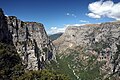
80% of Greece is mountainous. The Pindus mountain range lies across the center of the country in a northwest-to-southeast direction, with a maximum elevation of 2,637 m. Extensions of the same mountain range stretch across the Peloponnese and underwater across the Aegean, forming many of the Aegean Islands including Crete, and joining with the Taurus Mountains of southern Turkey. Central and western Greece contain high and steep peaks intersected by many canyons and other karstic landscapes, including the Meteora and the Vikos Gorges – the latter being the world's deepest canyon in proportion to its width, and the third deepest after the Copper Canyon in Mexico and the Grand Canyon in the United States, plunging vertically for more than 1,100 metres.[8]

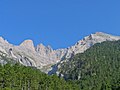
Mount Olympus is the highest point in Greece, the 7th highest and the 9th most prominent mountain in mainland Europe (together with Gerlachovský štít and including Großglockner as a separate mountain),[9] rising to 2,917 m above sea level. The Rhodope Mountains form the border between Greece and Bulgaria; that area is covered with vast and thick forests.

Plains are found in eastern Thessaly (the Thessalian Plain), in central Macedonia (the Thessaloniki-Giannitsa Plain) and in Thrace.

Elevation extremes

[edit]

Extremities of Greece

[edit]

The extreme points of Greece are [10]

  • North: Ormenio village (42°00′41″ N, 26°13′15″ E)
  • South: Gavdos island (35°48′11″ N, 24°07′25″ E)
  • East: Strongyli island (36°06′17″ N, 29°38′39″ E)
  • West: Othonoi island (40°51′11″ N, 19°22′41″ E)

Natural resources

[edit]

Greece has notable deposits of petroleum, magnetite, lignite, bauxite, hydropower, marble, limestone[3] Ancient Greeks used limestone as a durable building material in many buildings such as the Parthenon.[11] Greece has substantial marine life with plentiful fish in its EEZ.[4]

Land use

[edit]
  • Arable land: 19.71%
  • Permanent crops: 8.95%
  • Other: 71.37% (2012 est.)

Irrigated land: 15,550 km2 (2007)

Regions of Greece
Cities and islands of Greece
Greece's cities, main towns, main rivers, islands and selected archaeological sites.

Mainland

[edit]

Mainland Greece forms the southernmost part of the Balkan peninsula with two additional smaller peninsulas projecting from it: the Chalkidiki and the Peloponnese. The north of the country includes the regions of Macedonia and Thrace. To the south the mainland narrows and includes the regions of Epirus, Thessaly and Central Greece, where the region of Attica and the capital city Athens are located. Further south, the smaller peninsula of Peloponnese is separated from the rest of the Greek mainland by the Corinthian and Saronic Gulfs, but joined by the Isthmus of Corinth.

Mainland Greece covers about 80% of the total territory and is largely mountainous. The largest mountain range of Greece is the Pindus range, the southern extension of the Dinaric Alps, which forms the spine of the Greek mainland, separating Epirus from Thessaly and Macedonia. The country's tallest mountain is Mount Olympus, which also separates Thessaly from Macedonia. Its highest peak rises to 2,918 m above sea level, making it the second highest of the Balkan peninsula after Musala in the Rila Mountain.

The number of islands vary between 1,200 and 6,000.[12] A figure frequently cited in travel guides is 1,425 islands, of which 166 are said to be inhabited.[13] The Greek Tourism Organization reports a figure of 6,000, with 227 of them inhabited.[14] Paris Match, however, raises this number to 9,841 islands, of which only 169 have a recorded continuous human presence. [15]

The Greek islands account for about 20% of the country's total territory,[16] and vary greatly in size as well as in climate. The country's largest island is Crete, with Euboea being second largest. Other large Greek islands include Rhodes and Lesbos in the Aegean Sea, and Corfu and Cephalonia in the Ionian Sea. Many of the smaller Greek islands form groups or chains, often called archipelagos, with notable examples being the Cyclades and the Sporades in the south and central Aegean Sea respectively.

Aegean

[edit]

The islands of the Aegean Sea are situated between mainland Greece to the west and north, Anatolia to the east and the island of Crete to the south. Traditionally, the islands are classified into seven groups, from north to south:

Ionian Islands

[edit]

The Ionian Islands are a group of seven islands. The six northern islands lie off the western coast of Greece, in the Ionian Sea. The other island, Kythira, lies off the southern tip of the Peloponnese. Kythira is part of the modern administrative region of Attica, not the Ionian Islands (Ionioi Nisoi). The Ionian Islands are distinct from the historical region of Ionia, which is today part of western Turkey.

Crete

[edit]

Crete is the largest island of Greece and the second largest in the Eastern Mediterranean, after Cyprus. The island spans 260 km from east to west and 60 km from north to south at its widest. The island narrows in the region close to Ierapetra, where it is only 12 km wide. Crete covers an area of 8,336 km2 (3,219 sq mi), with a coastline of 1046 km. It is surrounded to the north by the Sea of Crete; to the south by the Libyan Sea; to the west by the Myrtoan Sea; and to the east by the Karpathion Sea. It lies about 160 km south of the Greek mainland.

Crete is characterized by a mountain range crossing from west to east, formed by three different subranges:

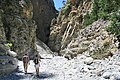
These encompass fertile plateaus, such as Lasithi, Omalos and Nidha; caves such as Diktaion and Idaion; and gorges such as the Samariá Gorge. The protected area of the Samariá Gorge is the home of the Cretan goat, or kri-kri, while the endangered Bearded vulture or lammergeyer lives in the Cretan mountains and gorges.

Crete's rivers include the Ieropotamos River in the southern part of the island.

Environment

[edit]
Map of earthquakes in Greece and adjacent countries 1900–2017

Greece is a mostly mountainous country with a very long coastline, filled with peninsulas and islands.

The climate can range from cold semi-arid to cold climate mountain forests.

Greece's natural hazards include severe earthquakes, floods, droughts and wildfires. Current environmental issues in Greece include air pollution and water pollution.

Climate

[edit]
Köppen climate classification of Greece

The climate of Greece is mild. A Mediterranean climate prevails on the coast and islands, and a strong Continental climate prevails in all of the mountainous regions of the interior. Summers are hot and dry and winters are cold and humid.[6] Summer is rainless and the almost cloudless season lasts about three months. In July and August, the temperature usually rises to around 30–35 °C and even above 40 °C. In the eastern part of the country and especially in the archipelago, a cooling Etesian wind blows in the summer, but in big cities like Athens it can get swelteringly hot. The wind can be very strong at times, which makes sailing difficult.

A special feature of Greek weather is the high amount of sunshine. It is available for six hours even in winter, and up to 12–13 hours a day in summer. The rains mostly occur in winter. Snow can be found everywhere in Greece, but it is rare in the archipelago. In low-lying areas, snow hardly ever stays on the ground more than 1 day. On the tops of the highest mountains, snow remains well into the summer. Spring and autumn are short in-between seasons when the weather is variable.[17][18]

Extensive forest fires cause problems almost every year in late summer. Sometimes they lead to widespread evacuations and even deaths.

[edit]

See also

[edit]

References

[edit]

Further reading

[edit]
Revisions and contributorsEdit on WikipediaRead on Wikipedia
from Grokipedia
Greece is a southeastern European nation occupying the southern part of the Balkan Peninsula, along with numerous islands in the Aegean and Ionian Seas, bordering the to the south. With a total area of 131,957 square kilometers, including 130,647 square kilometers of land and 1,310 square kilometers of water, Greece features a strategic location that dominates key sea lanes in the and the southern approach to the . The country shares land boundaries totaling 1,110 kilometers with (212 km), (234 km), (472 km), and (192 km), while boasting Europe's longest coastline at 13,676 kilometers. The terrain of Greece is predominantly mountainous, with ranges extending into the sea to form peninsulas and approximately 2,000 islands, of which about 170 are inhabited, contributing to its fragmented geography. Elevation extremes range from sea level at the to 2,917 meters at , the highest point, while the climate is temperate, characterized by mild, wet winters and hot, dry summers. Natural resources include , , , , lead, , , , , salt, and potential, supporting land use patterns where covers 44.3% (including 14.1% arable, 8% permanent crops, and 22.3% permanent ), forests occupy 30.3%, and other uses make up 25.4% (2022 est.). Approximately 12,191 square kilometers of land are irrigated (2021), underscoring the importance of water management in this water-scarce environment. Greece faces natural hazards such as severe earthquakes, , and wildfires, alongside environmental challenges including , degradation of coastal zones, loss of biodiversity, , waste disposal, and increasing exacerbated by . Its geography has profoundly shaped , with the majority of the concentrated on the mainland and larger islands, particularly in urban areas like , due to the rugged interior limiting widespread agriculture and development. This diverse landscape not only defines Greece's physical identity but also underpins its historical role as a crossroads of civilizations.

Location and Extent

Coordinates and Borders

Greece occupies a strategic position in southeastern Europe, primarily on the Balkan Peninsula, with its central geographic coordinates at 39°00′ N, 22°00′ E. The country's territory extends across latitudes from approximately 34° N to 42° N and longitudes from 19° E to 29° E, encompassing a diverse range of continental and insular landforms. This positioning places Greece at the crossroads of , , and , influencing its historical and cultural development. The extreme points of Greece define its territorial extent. The northernmost point lies near Ormenio in the Evros regional unit, at 41°44′ N along the border with Bulgaria. The southernmost point is on the island of Gavdos, at 34°48′11″ N, marking the southern limit of the European continent. The easternmost point is the islet of Strongyli in the Megisti (Kastellorizo) archipelago, at 29°38′43″ E, close to the Turkish coast. The westernmost point is on the island of Othonoi in the Ionian Sea, at 19°23′32″ E. These extremities highlight Greece's elongated shape and scattered island distribution. Greece shares land borders totaling 1,110 km with four neighboring countries: to the northwest (212 km), to the north (234 km), to the north (472 km), and to the northeast (192 km). These boundaries are primarily mountainous and riverine, with the Evros River forming much of the frontier with and . The borders reflect Greece's position within the , contributing to regional geopolitical dynamics. The total area of Greece is 131,957 km², including 130,647 km² of and 1,310 km² of inland bodies. Approximately 80% of the area consists of the mainland peninsula, while the remaining 20% comprises over 2,000 islands scattered across the Aegean, Ionian, and . This division underscores Greece's archipelagic nature, with the mainland featuring peninsulas like the and Central Greece.

Coastline and Maritime Claims

Greece's coastline is one of the longest and most complex in the world relative to the country's land area, owing to its highly indented geography, deeply incised peninsulas, and approximately 6,000 islands and islets (227 inhabited). The measured length varies significantly depending on the scale and method of measurement, a phenomenon known as the coastline paradox, where finer scales yield longer results. The most widely accepted international figure is 13,676 kilometers, placing Greece 11th globally and first in the Mediterranean Sea. Common rounded estimates approximate 15,000 km, while detailed modern mappings using satellite imagery and GIS report lengths exceeding 20,000–20,800 km, including the smallest islets and rocks. Among European countries (excluding Greenland), standard figures rank Greece second after Norway (58,133 km), ahead of the United Kingdom (12,429 km), Italy (7,600 km), and Denmark (7,314 km). This configuration results in one of the highest coastline-to-land-area ratios worldwide, enhancing Greece's strategic position in the eastern Mediterranean, facilitating maritime trade, tourism, and naval activities while exposing it to environmental challenges such as erosion and pollution. The extensive coastline plays a vital role in tourism (beaches and island culture), fisheries and shipping, delimitation of the exclusive economic zone (EEZ), and addressing concerns like coastal erosion, rising sea levels, and biodiversity protection, underscoring its maritime-oriented geography. The Isthmus of Corinth, a narrow land bridge approximately 6 kilometers wide at its narrowest point, significantly influences Greece's coastal geography by dividing the mainland into the regions of Central Greece to the north and the Peloponnese peninsula to the south. This natural division separates the Gulf of Corinth to the west from the Saronic Gulf to the east, with the modern Corinth Canal—completed in 1893—traversing the isthmus to connect these bodies of water and shorten sea routes by about 325 kilometers. The isthmus has historically shaped regional connectivity and defense strategies, amplifying the coastal dynamics of both sides. Greece asserts maritime claims in line with the United Nations Convention on the Law of the Sea (UNCLOS), including a territorial sea extending 6 nautical miles from its baselines and a continental shelf reaching to the 200-meter depth or the depth of exploitation. Its claimed exclusive economic zone (EEZ) covers approximately 505,572 square kilometers, providing sovereign rights for resource exploration and exploitation, particularly in fisheries that support a vital sector of the economy and potential hydrocarbon reserves in the eastern Mediterranean. This EEZ underpins economic activities like offshore energy prospecting, though full realization depends on international delimitations. Greece maintains maritime boundaries with Italy in the Ionian Sea, established through a 2020 agreement that delimits the continental shelf and EEZ using equidistance principles adjusted for geographical factors. Similar agreements exist with Albania, resolved via a 2009 International Tribunal for the Law of the Sea ruling, while boundaries with Libya remain under negotiation amid overlapping claims. However, maritime borders with Turkey in the Aegean Sea are highly disputed, involving tensions over island-generated zones, continental shelf extents, and EEZ allocations, leading to ongoing diplomatic efforts and occasional escalations. These disputes highlight the complexities of balancing national interests with international law in a densely populated sea region.

Physical Features

Topography

Greece's topography is dominated by rugged, mountainous, and hilly terrain, with approximately 80% of the country's land area classified as such. The Mountain Range serves as the primary backbone of the mainland, extending roughly 160 km from the northwest to the southeast and effectively dividing the country into western and eastern sectors. This central range, along with subsidiary highlands, creates a complex mosaic of elevated landforms that characterize the nation's . The mainland forms a prominent protruding into the at the southern extremity of the Balkan Peninsula. Situated at the active boundary between the African and Eurasian tectonic plates, Greece experiences ongoing tectonic forces that have profoundly shaped its fragmented landscape, producing deep inland gulfs such as the —formed through crustal extension and rifting—and numerous bays that indent the coastline. These processes have also resulted in narrow coastal strips, often hemmed in by abrupt rises to the interior highlands. The prevailing relief features steep slopes rising sharply from the sea, coupled with scarce expanses of level ground, which constrain and dictate settlement distributions. This topographic configuration has historically fostered clustered populations along accessible shores and lowlands while promoting isolation in upland areas, influencing everything from ancient regional divisions to modern infrastructure challenges.

Mountains and Elevation Extremes

Greece's mountainous terrain dominates its mainland landscape, contributing to its rugged topography and influencing climate, biodiversity, and human settlement patterns. The country features several prominent mountain ranges, with elevations generally exceeding 2,000 meters in many areas, creating a stark contrast between high peaks and coastal lowlands. The highest point in Greece is , located in the Olympus massif on the border between and Macedonia, where the Mytikas peak rises to 2,917 meters above . This summit holds profound mythological significance as the legendary abode of the ancient Greek gods and supports diverse alpine ecosystems, including sub-alpine vegetation zones above 2,500 meters that represent the highest treeline in the . The Range forms the central backbone of mainland Greece, extending approximately 160 kilometers from the Albanian border southward through and , with its highest peaks including at 2,637 meters and Grammos at 2,520 meters. This range's north-south orientation shapes regional and gradients, from dense forests at lower elevations to rocky alpine meadows higher up. In the northeast, the straddle the border with , featuring notable peaks in the Greek portion such as Tsakalos at 1,826 meters and Oxies at 1,811 meters, which support coniferous forests and unique formations. Further south in the , the Range stands as a prominent barrier between Laconia and , culminating at Profitis peak with an elevation of 2,405 meters and characterized by steep slopes and endemic . At the opposite extreme, Greece's lowest point is the at 0 meters along its extensive coastline.

Plains and Valleys

Greece's plains and valleys, comprising approximately 23% of the country's total land area, represent the primary arable regions in a predominantly mountainous terrain. These flatlands, formed largely through alluvial deposits from rivers, have historically facilitated and by providing fertile soil amid surrounding highlands. Intensive farming in these areas focuses on crops such as , , and olives, though they remain vulnerable to seasonal flooding due to their low and riverine origins. The Plain stands as the largest and most productive of these features, an expansive alluvial basin covering about 4,000 km² in central Greece, shaped by sediments from the Pinios River system. This plain supports a significant portion of the nation's grain and cotton production, underscoring its economic importance. In , the coastal plains of Macedonia, including the area around , offer narrower but vital strips of cultivable land along the Aegean shore, while the lowlands of in the northeast provide additional fertile expanses for . Notable valleys include the Tempe Valley, a scenic 10 km-long gorge in that serves as a natural corridor between the enclosing mountains. Similarly, the Spercheios Valley in central Greece extends along its namesake , offering a key passage and agricultural pocket in . These regions, isolated by adjacent mountain ranges, fostered the growth of ancient city-states by concentrating populations in defensible, resource-rich basins conducive to early and trade.

Hydrography

Rivers and Streams

Greece's river systems are characterized by their brevity and variability, largely influenced by the country's rugged , ic landscapes, and , which result in short, steep watercourses that are often seasonal and prone to flash flooding during winter rains. Most rivers and streams are under 100 km in length, with flows diminishing significantly in summer due to high evaporation rates and subsurface drainage through formations prevalent in regions. These hydrological features limit flow to a few major rivers, while numerous smaller streams contribute to localized and but rarely form extensive networks. The longest river entirely within Greece is the Aliakmon, stretching 297 km through the regions of West and before draining into the Thermaic Gulf of the ; its basin covers approximately 8,800 km² and supports agricultural activities in the surrounding plains. The Acheloos, the second-longest at 220 km, originates in the Mountains and flows westward to the , with a basin area of about 5,650 km² that includes diverse terrains from highlands to coastal deltas. Another significant river is the Pinios, measuring 205 km as it traverses the Thessaly Plain from the range to the , draining a basin of roughly 10,600 km² and forming a vital corridor for in one of 's most fertile areas. Other major rivers include the transboundary Evros (Greek length ~200 km, basin in ~10,000 km²) draining to the , and Nestos (Greek length ~130 km, basin in ~5,000 km²), both contributing to eastern . Together, these major rivers and their tributaries account for the bulk of flow on the mainland, covering significant portions of the non-insular territory, though overall discharge remains modest due to geological infiltration and climatic constraints. Human interventions, particularly damming, have significantly altered Greece's river for generation and needs. The Acheloos River, for instance, hosts multiple like those at Kremasta and Kastraki, contributing substantially to national production while regulating flow for downstream agriculture. Similarly, the Ladon River system in the features a prominent completed in 1955 at Pidima, creating a that supports both hydroelectric power (with a capacity tied to the Public Power Corporation's network) and for regional farmlands, exemplifying the integrated water management approach in water-scarce areas. These structures help mitigate seasonal variability but have raised concerns over ecological impacts, such as reduced downstream flows affecting connected wetlands.

Lakes and Wetlands

Greece's inland water bodies include a number of natural lakes and artificial reservoirs, alongside extensive wetlands that support rich . The largest natural lake is Lake Trichonida, located in the region of in , covering an area of 98.6 km² and serving as a key freshwater habitat fed by local streams. This tectonic lake is characterized by its shallow depth and oligotrophic waters, hosting diverse aquatic flora and fauna, including endemic fish species. Another significant natural feature is the Prespa Lakes complex, comprising Great Prespa Lake and Lesser Prespa Lake, which straddle the borders of , , and in the northwest of the country. These lakes, totaling around 92 km² in the Greek portion, form a transboundary Ramsar of international importance, renowned for its , including over 260 bird species and unique endemic fish like the Prespa trout. The area is a critical stopover for migratory birds and supports rare amphibians and reptiles in its surrounding marshes. Artificial reservoirs play a vital role in water management, with Lake Marathon (also known as ) being a prominent example. Constructed between 1929 and 1931 by damming the Charadros River, this reservoir near holds approximately 41 million cubic meters of water and historically provided the city's primary drinking supply, though it now serves secondary purposes including and . Other reservoirs, such as those on the Acheloos River, contribute to hydroelectric power and flood control but are integrated into broader hydrographic systems. Greece's wetlands are ecologically vital, with the Evros Delta in the northeast standing out as one of Europe's premier bird areas. This 190 km² coastal delta, formed by the Evros River, supports over 300 bird species, including wintering populations of greater white-fronted geese and Dalmatian pelicans, and is designated as an Important Bird and Biodiversity Area (IBA) by . Further south, the Messolonghi-Aitoliko Lagoons complex, the largest lagoon system in Greece at about 150 km², functions as a Biosphere Reserve and , fostering a of brackish marshes, reedbeds, and salt flats that harbor more than 290 bird species and serve as a nursery for Mediterranean fisheries. These wetlands collectively enhance , , and coastal protection across the country.

Islands and Archipelagos

Aegean Islands

The constitute the majority of Greece's approximately 6,000 islands and islets, with around 227 inhabited across the country, predominantly hosting the bulk of these landforms in the . These islands are classified into seven main groups based on their geographical position: the Northeastern (including , , and ), the Northern Sporades, the , the Southern Sporades (or ), the , (sometimes grouped as Western ), and the Eastern extensions near . This division reflects the fragmented archipelago's extension from the northern southward to the Cretan Sea, encompassing diverse topographies shaped by tectonic activity and maritime isolation. Prominent islands in the Northeastern Aegean group include , Greece's third-largest island at 1,630 km², known for its elongated form and bays; , with its mastic groves; and , featuring rugged interior mountains. In the central group, stands as the largest at over 400 km², offering fertile valleys amid barren heights, while exemplifies the smaller, wind-swept isles prized for their coastal features. Some islands, particularly in the southern groups, owe their origins to volcanic activity, such as , where a massive formed around 3,600 years ago from explosive eruptions in the , creating dramatic cliffs and submerged rims. The terrain across the Aegean Islands is predominantly arid and rocky, with thin soils supporting and limited due to scarce freshwater resources, often reliant on seasonal streams or . This landscape results from prolonged tectonic extension and erosion in a of hot, dry summers and mild, wet winters. Their strategic location, bridging mainland and the Anatolian coast, has historically facilitated maritime trade networks, enabling exchanges of goods like , metals, and textiles among Bronze Age societies and beyond.

Ionian Islands

The form a chain of islands in the off the western coast of mainland Greece, comprising seven principal islands: (the largest at 593 km²), , , , Ithaca, Paxi, and (the latter located off the peninsula). These islands collectively cover approximately 2,300 km² of land area, characterized by a mix of rugged interiors and extensive sandy beaches along their coastlines. The group is separated from the Greek mainland by the Corfu Channel and from the Italian mainland by the to the north, facilitating maritime connections while influencing local weather patterns. Unlike the drier Aegean islands to the east, the Ionian Islands exhibit lush, greener landscapes due to higher annual rainfall, often exceeding 1,000 mm in some areas, which supports denser vegetation cover. Olive groves dominate much of the terrain, forming expansive agricultural landscapes that blend with the islands' Mediterranean evergreen woodlands in various stages of succession. The islands' geology features prominent karst formations, resulting from the dissolution of limestone rocks, which create dramatic caves and sinkholes; a notable example is the Melissani Cave on Cephalonia, a collapsed karst sinkhole with an underground lake illuminated by a natural skylight. The interiors of these islands are predominantly rugged, with steep hills and mountainous terrain rising sharply from the sea, contrasting with their coastal fringes of fine sandy beaches that draw attention for their scenic beauty and accessibility. This topography contributes to the islands' isolation and unique ecological character within Greece's island geography.

Crete

Crete is the largest island in Greece, covering an area of 8,336 km² and extending 260 km in length from east to west, with a varying width between 12 and 60 km. The island's elongated form is dominated by three major mountain ranges that divide it into distinct regions: the White Mountains (Lefka Ori) in the west, the Ida Mountains (Psiloritis range) in the center, and the Dikti Mountains in the east. These ranges create a rugged backbone, isolating the interior and contributing to Crete's diverse microclimates and topography. The highest point on Crete is Mount Ida, also known as Psiloritis, which rises to 2,456 m in the central range and holds cultural significance in ancient Greek mythology as the birthplace of . The island features dramatic gorges carved by erosion, including the Samaria Gorge in the White Mountains, which stretches 16 km from an elevation of 1,250 m to and is one of Europe's longest. These geological features highlight Crete's tectonic history and provide habitats for unique flora and . Crete's rivers are characteristically short and seasonal, often drying up in summer due to the island's karstic terrain and low rainfall in certain periods; the Geropotamos River, the longest at around 47 km, flows year-round in parts and drains into the near the . is concentrated on the limited coastal plains, particularly along the northern shore, where fertile soils support crops like olives and amid the otherwise mountainous landscape. To the south of lies the islet of , administratively part of the island and marking the southernmost point of territory at Cape Tripiti.

Geology

Geological Formation

Greece's geological landscape is profoundly shaped by its position within the , a convergent tectonic boundary where the African Plate subducts beneath the Eurasian Plate (specifically the ), at a rate of approximately 35 mm per year. This ongoing , which began intensifying in the , has driven the uplift of across the Hellenides, including the and Rhodope ranges, through compressive forces and crustal shortening. The process has resulted in a complex orogenic belt characterized by thrust faults and nappes, with the arc curving from the to the , influencing the country's rugged topography. Dominant rock formations in Greece stem from sedimentary sequences, particularly extensive platforms and deep-water deposits accumulated during the opening and closure of the . These limestones, often of to age, form the backbone of major mountain ranges and exhibit prominent features—such as sinkholes, caves, and poljes—arising from the chemical dissolution of carbonates by over millions of years. , consisting of alternating and turbidites, represents syn-orogenic in foreland basins during the . Volcanic activity, linked to the , has produced the , with notable centers on Peninsula (dormant since the ) and Island, where andesitic to rhyolitic eruptions occurred from the to recent times, forming calderas and geothermal fields. Ophiolites in the Mountains preserve fragments of oceanic crust from the Neo-Tethys, obducted onto continental margins during intra-oceanic and later Eocene collision. These ultramafic and sequences, including peridotites and basalts, testify to ancient before tectonic closure. During the was restricted to the highest elevations, such as (2,917 m), where glaciers and moraines indicate multiple advances during the Pleistocene, with the snowline at about 2,400 m during the . This limited ice cover reflects Greece's , contrasting with more extensive northern European glaciations, though ongoing contributes to elevated seismic risks in the region.

Seismic Activity

Greece is situated at the convergence of the African and Eurasian tectonic plates along the Hellenic zone, positioning it on several major fault lines that contribute to its high . This tectonic setting results in thousands of earthquakes annually across the country, with events of magnitude 5 or greater occurring several times per year on average. A notable recent example is the 2024–2025 earthquake swarm, which produced over 28,000 tremors from mid-2024 through early 2025, with magnitudes up to 5.3 and evidence of magma intrusion driving the activity. Accompanying this swarm was gradual uplift of the by several centimeters, detected through geodetic monitoring. Historically, the 1953 Ionian earthquake on August 12 struck the with a magnitude of 7.2, causing widespread devastation, including coastal uplift and tsunamis that inundated coastal areas. The Corinth Gulf rift, one of Europe's fastest-extending continental rifts, remains highly active, as evidenced by intense seismic sequences such as the 2020–2021 crisis that generated over 3,500 earthquakes. Given that a large proportion of Greece's population resides in seismically hazardous areas, the country has implemented rigorous building regulations through the Greek Code for Seismic Resistant Structures (EAK 2000), which zones the nation into categories of seismic risk to enforce design standards for resilience.

Natural Resources

Minerals and Fuels

Greece possesses significant reserves of , the primary ore for aluminum production, with exploitable deposits estimated at 100 million metric tons, making it the largest holder in the . These reserves are concentrated in central Greece, particularly in the Parnassus-Ghiona and Helikon-Parnassos regions, where mining operations have been active since the mid-20th century. Bauxite extraction supports the country's aluminum industry, though production has fluctuated due to global market demands and domestic processing limitations. Lignite, a low-grade used primarily for , represents another key , with exploitable reserves totaling around 3.1 billion metric tons. Major deposits are located in the and basins in northern and southern Greece, respectively, fueling about 20% of the nation's power needs historically, though its use is declining amid energy transitions. Additionally, Greece holds abundant deposits of and , essential for and ornamental purposes; the Pentelikon , for instance, was famously used in the , and annual production exceeds 2 million metric tons from around 210 active quarries nationwide. Among other minerals, Greece boasts the world's largest reserves of , an expanded used in insulation and horticulture, estimated at over 100 million metric tons, primarily on islands like and . , an , occurs in skarn-type deposits in areas such as Laurion and the , though exploitation remains limited due to lower grades. The mining sector as a whole contributes approximately 3% to Greece's GDP, with exports of these minerals generating significant revenue, particularly for perlite and . In terms of fuels, production is modest, centered on small onshore fields in and the offshore Prinos basin in the northern , which has yielded over 100 million barrels since discovery in 1974 but is now in decline. potential exists in the Aegean and Ionian Seas, with tentative recoverable reserves estimated at 600-680 billion cubic meters as of 2025 based on recent seismic surveys, though geopolitical tensions and exploratory challenges have delayed development. Extraction of these resources faces stringent environmental regulations, including directives on emissions and , which have imposed restrictions on new licenses and rehabilitation requirements, balancing economic benefits against ecological preservation.

Renewable Resources

Greece's renewable resources encompass a range of sustainable assets that support production, , and ecological services, leveraging the country's diverse terrain and coastal extent. These resources include from major river systems, forests for timber and soil protection, marine fisheries within its (EEZ), and high potential for wind and , alongside arable lands suited to key crops. Hydropower represents a significant source in , with the country's economically exploitable potential estimated at approximately 12 TWh annually, of which about 40% has been developed through installed capacity totaling 3,217.4 MW across large and small hydroelectric plants. The Acheloos River in is a primary contributor, hosting a cascade of with an installed capacity of 907.2 MW, including major facilities like the Kremasta Dam (437.2 MW) and Kastraki Dam (320 MW), which harness the river's high runoff for . Ongoing projects, such as the planned Mesochora Dam (161.6 MW) and Avlaki project (83.6–100 MW), aim to further tap this potential, supporting national goals to expand hydroelectric output to 3,800 MW by 2030. Forests cover about 30% of Greece's land area, spanning roughly 3.75 million hectares and playing a vital role in providing sustainable timber and controlling , particularly in mountainous regions. Predominantly composed of coniferous species such as pines and in higher elevations, which account for around 38–42% of forest composition, these woodlands are interspersed with broadleaf varieties like oaks and chestnuts. In the rugged terrain of the Mountains and other ranges, conifer-dominated forests stabilize slopes, reducing erosion rates influenced by steep relief and seasonal rainfall, while also yielding timber for construction and fuel on a renewable basis. Marine resources within Greece's EEZ, which extends over 500,000 square kilometers in the Aegean, Ionian, and , sustain abundant that form a cornerstone of the and . Key small pelagic such as sardines and anchovies dominate catches, comprising significant portions of annual landings—anchovies alone accounted for 11% of the value in 2018, with total landings reaching 68,000 tonnes worth €431 million. These provide a primary protein source for the population, integral to the Mediterranean diet's emphasis on for essential nutrients, though stocks face pressures from and climate variability. Complementing , Greece's marine and coastal zones offer high potential for and ; onshore capacity stands at over 5.5 GW as of mid-2025 with untapped offshore prospects, while solar photovoltaic installations have surged to contribute substantially to the 57% renewable share in electricity production by 2023. Arable soils, concentrated in fertile plains like those of , Macedonia, and the , underpin renewable agricultural resources, particularly for olives and grapes, which thrive in the and well-drained loamy soils. These crops, adapted to the region's rocky and terraced landscapes, yield and wine as sustainable staples, with olives covering extensive areas suited to marginal soils and grapes benefiting from the sunny, mild conditions of coastal and inland valleys. Such production supports long-term through practices, enhancing and providing enduring economic value without depleting finite reserves.

Land Use

Agricultural Land

Greece's agricultural landscape is dominated by arable land and permanent crops, which together support a diverse range of productions despite the country's rugged . Arable land accounts for 14.1% of the total land area (2022 est.), spanning approximately 18,400 km², and is predominantly concentrated in the fertile plains of and Macedonia, where flat topography facilitates large-scale cultivation. Permanent crops occupy 8% of the land (2022 est.), with olives covering about 70% of the cultivated permanent crop area, alongside significant vineyards that contribute to the nation's renowned wine and oil industries. These perennial plantings thrive in the , providing stable yields on terraced hillsides and coastal zones. Irrigated areas, totaling 12,191 km² (2021 est.), are primarily focused on lowland plains and support key field crops such as , , and , enhancing productivity in water-scarce regions. Soil types play a crucial role in agricultural distribution, with fertile alluvial soils prevalent in river valleys and deltas, offering high nutrient content ideal for . However, mountainous areas suffer from significant due to steep slopes, sparse vegetation, and intense rainfall, which limits arable expansion and necessitates conservation practices to prevent degradation.

Urban and Forested Areas

In Greece, land use beyond arable and permanent cropland encompasses approximately 77.9% of the total territory (2022 est.), incorporating permanent pasture, forests, urban developments, and other non-cultivated areas. Recent estimates indicate a decline in overall agricultural land to 44.3% (2022 est.), reflecting shifts toward other uses amid environmental pressures and urbanization. This broad category reflects the country's diverse topography, where much of the land remains unsuitable for intensive agriculture due to mountainous terrain and rocky soils. Forests, a key component, cover about 30% of the land area, equivalent to roughly 39,000 square kilometers, predominantly featuring coniferous species such as Aleppo pine (Pinus halepensis) and Calabrian pine (Pinus brutia), alongside deciduous oaks like the kermes oak (Quercus coccifera) and downy oak (Quercus pubescens). These woodland ecosystems, which constitute around 38% conifers and 62% broadleaves overall, play a vital role in soil stabilization and watershed protection across the mainland and islands. Urban areas account for roughly 5% of Greece's land, with development heavily concentrated in major metropolitan regions and exhibiting patterns of coastal sprawl driven by and . The , home to approximately 3.15 million residents as of 2023, dominates as the largest urban center, sprawling across the basin and extending toward the Saronic Gulf, where informal expansions have intensified along shorelines. Similarly, Thessaloniki's metro population of about 815,000 supports a compact urban core in , with secondary growth radiating toward the Thermaic Gulf. These concentrations highlight Greece's high rate of over 80% of the population, yet the limited overall urban footprint underscores the challenges of balancing development with the nation's fragmented geography. Protected forests form an essential subset of Greece's woodlands, safeguarding unique ecosystems amid a long history of that dates back to ancient times. Intensive for , , and during the Classical period contributed to widespread woodland loss, as evidenced by historical accounts and paleoenvironmental studies showing reduced tree cover by the Hellenistic era. Today, areas like the Vikos-Aoös National Park in , established in 1973 and spanning 126 square kilometers, exemplify conservation efforts; this Global Geopark preserves pristine pine and oak forests within dramatic gorges and plateaus, prohibiting commercial exploitation to maintain ecological integrity. Such protected zones, covering parts of the Mountains, represent critical refugia against ongoing pressures from human activity. Industrial zones remain limited in extent, primarily clustered near major ports to support maritime trade and logistics without encroaching significantly on forested or rural landscapes. The , Greece's principal gateway, hosts concentrated industrial facilities including shipyards, warehouses, and manufacturing sites across a compact area of about 12 square kilometers, facilitating over 20 million tons of annual while minimizing inland expansion. These zones, often integrated into urban peripheries, reflect a strategic approach that prioritizes coastal access over broad territorial allocation, preserving larger forested expanses elsewhere.

Environment

Biodiversity

Greece exhibits exceptional , influenced by its position within the Mediterranean Basin hotspot and its varied geological formations that have created diverse habitats ranging from mountains to islands and wetlands. The country's flora comprises approximately 6,000 species, with around 23% being endemic, reflecting high levels of driven by isolation and climatic variation. Dominant vegetation types include maquis shrublands, characterized by dense evergreen shrubs such as holm oak () and strawberry tree (), which prevail in coastal and lowland areas, and phrygana, a low-growing, drought-resistant shrub community featuring species like thorny burnet (Sarcopoterium spinosum) and (Thymbra capitata), common in the arid and . Terrestrial fauna is equally diverse, encompassing about 100 species and 400 species, many of which are of conservation significance. Iconic examples include the (Capra aegagrus cretica), an endemic wild goat restricted to Crete's rugged gorges and cliffs, and the (Gypaetus barbatus), a large raptor that nests in high mountain areas and feeds on bone marrow, symbolizing Greece's alpine ecosystems. Key biodiversity hotspots underscore this richness, such as the mountain range in , which harbors populations of brown bears (Ursus arctos) and gray wolves (Canis lupus) amid mixed forests and alpine meadows, serving as a critical refuge for large carnivores. Wetlands like the Prespa Lakes, a transboundary complex, support breeding colonies of Dalmatian pelicans (Pelecanus crispus), hosting one of Europe's largest populations and exemplifying the ornithological importance of these freshwater systems. Greece designates 10 Ramsar sites as wetlands of international importance, covering over 163,000 hectares and protecting vital habitats for migratory and resident . Marine biodiversity in Greece's extensive coastline and archipelagos is profound, with around 3,500 recorded , including numerous endemics such as the (Ladigesocypris ghigii) and Lesvos (Oxynoemacheilus theophilii), which inhabit coastal streams and lagoons. seagrass meadows (), endemic to the Mediterranean, form extensive underwater forests along the shores, providing essential habitat for fish, , and supporting coastal stability through oxygen production and sediment stabilization.

Environmental Challenges

Greece faces significant environmental challenges, including air and water pollution, which pose risks to public health and ecosystems. In urban areas like Athens, air pollution remains a concern, with particulate matter (PM2.5) levels requiring further reductions to meet 2030 emission goals under the National Emission Reduction Commitments Directive, despite overall improvements in air quality. Challenges are exacerbated by an ageing public bus fleet contributing to elevated PM2.5 concentrations. Water pollution, primarily from agricultural nutrient runoff and industrial discharges, affects surface waters, where more than 60% achieve good ecological status and nutrient pollution levels remain high across the European Union, including Greece. Urban wastewater treatment has advanced, but revisions to agricultural water management and urban reuse legislation are ongoing to address these pressures. Habitat loss driven by , , and natural hazards further compounds . Rapid and growth in coastal zones lead to and degradation of natural habitats, increasing water consumption on islands and threatening through unregulated development. Annual wildfires, such as the 2021 Evia fire that burned over 50,000 hectares of forest and , accelerate and , with post-fire vulnerabilities amplifying ecosystem losses. These anthropogenic and hazard-related threats contribute to broader declines, including the erosion of coastal ecosystems vital for protection. Policy responses include efforts to implement EU environmental directives, though enforcement remains weak, particularly in protected areas covering 35% of Greece's land and 18.3% of marine territories, with plans announced in July 2025 for two new national marine parks, currently under public consultation, to reach 30% marine protection. The European Environment Agency's 2025 assessment notes improvements in waste management through the national circular economy action plan (2021-2025) and waste prevention program (2021-2030), yet ongoing vulnerabilities persist in circularity rates and overall sustainability. To mitigate floods and droughts, which exacerbate water stress and ecosystem damage, Greece has updated river basin and flood risk management plans, though climate-related threats continue to impact agriculture and biodiversity.

Climate

Climate Zones

Greece exhibits a diverse array of climate zones, primarily shaped by its varied , , and proximity to the , as classified under the Köppen-Geiger system. The dominant climate type is the hot-summer Mediterranean (Csa), which encompasses most coastal regions, the , and the majority of the islands, featuring mild winters with average temperatures rarely dropping below 0°C and hot, dry summers where temperatures often exceed 30°C. This zone is marked by seasonal patterns, with the majority of rainfall occurring during winter months, contributing to lush in coastal areas despite the overall in summer. In contrast, the interior mountainous regions, especially the range in northern and , feature a cooler variant of the (Csb), characterized by greater temperature variability and colder winters influenced by continental air masses. Winters here can see average lows below freezing, with snowfall common at higher elevations, while summers remain relatively warm but cooler than in lowland areas due to altitude. This zone experiences more pronounced seasonal contrasts compared to the coastal Mediterranean type. The islands in the central Aegean feature a hot-summer (Csa) with semi-arid characteristics, one of the driest zones in , with limited annual often below 400 mm, leading to arid landscapes and reliance on adaptations. Annual rainfall in this region is significantly lower than the national average, exacerbating risks during extended dry periods. The Ionian Islands, on the western side, show subtropical influences within a humid subtropical framework (Cfa in parts), with higher humidity, more consistent rainfall throughout the year, and milder conditions due to the protective effect of the Ionian Sea. This results in greener, more temperate environments compared to the eastern Aegean counterparts. Overall, annual precipitation across Greece varies widely from 500 to 1,400 mm in most regions, with the highest amounts exceeding 2,000 mm in the western Pindus Mountains due to orographic effects from prevailing westerly winds. These zonal differences underscore Greece's climatic heterogeneity, influencing agriculture, water resources, and ecosystems.

Seasonal Weather Patterns

Greece exhibits pronounced seasonal weather patterns shaped by its , with coastal and island regions generally experiencing milder conditions compared to the cooler, more variable interiors and mountains. These patterns feature hot, dry summers and mild, wetter winters, though regional differences influence local variations. During summer from June to August, weather across is predominantly hot and dry, with coastal areas averaging 30–35°C daytime temperatures, though extremes during heatwaves can exceed 40–48°C in low-lying regions. is scarce, often limited to occasional thunderstorms in the north, fostering arid conditions that dry out vegetation. winds, originating from , sporadically blow from the south, adding heat, dust, and humidity to the already warm air. Winter, spanning to , brings milder and more humid conditions to coastal zones, where temperatures typically range from 5–15°C, accompanied by frequent rainfall that supports greener landscapes. In contrast, mountainous areas turn colder, with sub-zero temperatures and snowfall common above 1,000 meters, enabling seasonal . Northerly meltsemi winds, dry and gusty, can influence early winter weather in the Aegean, moderating temperatures but increasing chill factors. The country benefits from abundant sunshine throughout the year, averaging 2,500–3,000 hours annually, distributed as roughly 6 hours per day in winter and 12–13 hours in summer, contributing to its appeal as a sunny destination. This high solar exposure intensifies summer dryness, making forest fires a frequent occurrence amid the vegetation and occasional strong winds.

Climate Change Impacts

Greece has experienced a notable rise in average temperatures due to , with a country-wide increase of approximately 1.5°C observed from 1991 to 2020, and locally exceeding 2°C in some regions. This warming trend, at about 0.05°C per year, has exceeded the global average and contributed to more frequent and intense heatwaves. The summer of 2024 marked the hottest on record, with average temperatures +2.9°C above the 1991-2020 baseline. For instance, the summer of 2023 was one of the hottest on record prior to 2024, with temperatures reaching 46.4°C in , , establishing a new national high and prolonging the heatwave to one of the longest in Greece's history. These extreme events have amplified risks to human health, , and , particularly in urban areas like where heat islands exacerbate the effects. The impacts of these changes extend to intensified droughts and wildfires, which have become more severe and recurrent. In 2023, widespread wildfires ravaged , including , resulting in production losses estimated at 13–21 billion euros annually across the region for an average season, with Greece bearing a significant share due to its vulnerability to dry conditions. These fires not only destroyed vast forested areas but also disrupted and , key sectors of the Greek . The record heat of 2024 further intensified wildfire risks and drought conditions. Concurrently, sea-level rise poses a growing threat to Greece's extensive coastline, with projections indicating a relative sea-level increase of 0.28–0.55 meters by 2100 under low-emissions scenarios, potentially flooding 15% of coastal wetlands and endangering socioeconomic hubs. Increased flooding in lowland plains, such as the region devastated by in September 2023, has further highlighted hydrological shifts, submerging agricultural lands and causing unprecedented crop and livestock losses. Biodiversity in is undergoing shifts as warmer conditions drive redistribution, with Mediterranean flora and moving northward or to higher elevations to track suitable . Endemic in mountainous ecosystems, for example, are experiencing range contractions and fragmentations, while marine communities face alterations from warming waters, including toxic algal blooms and the spread of non-indigenous . These changes threaten Greece's rich ecological diversity, a Mediterranean hotspot already under pressure from loss. Greece's policy response includes integration with the EU Green Deal, which supports adaptation measures like enhanced early warning systems and resilient infrastructure, though implementation has lagged in some areas. The country received a medium rating in the 2025 Climate Change Performance Index, ranking 22nd globally and reflecting moderate progress in emissions reduction and renewable energy but underscoring gaps in adaptation. Despite these efforts, vulnerabilities persist, as noted in the European Environment Agency's 2025 assessments, with ongoing risks from heatwaves, droughts, floods, and fires projected to intensify without accelerated action.

References

Add your contribution
Related Hubs
User Avatar
No comments yet.