


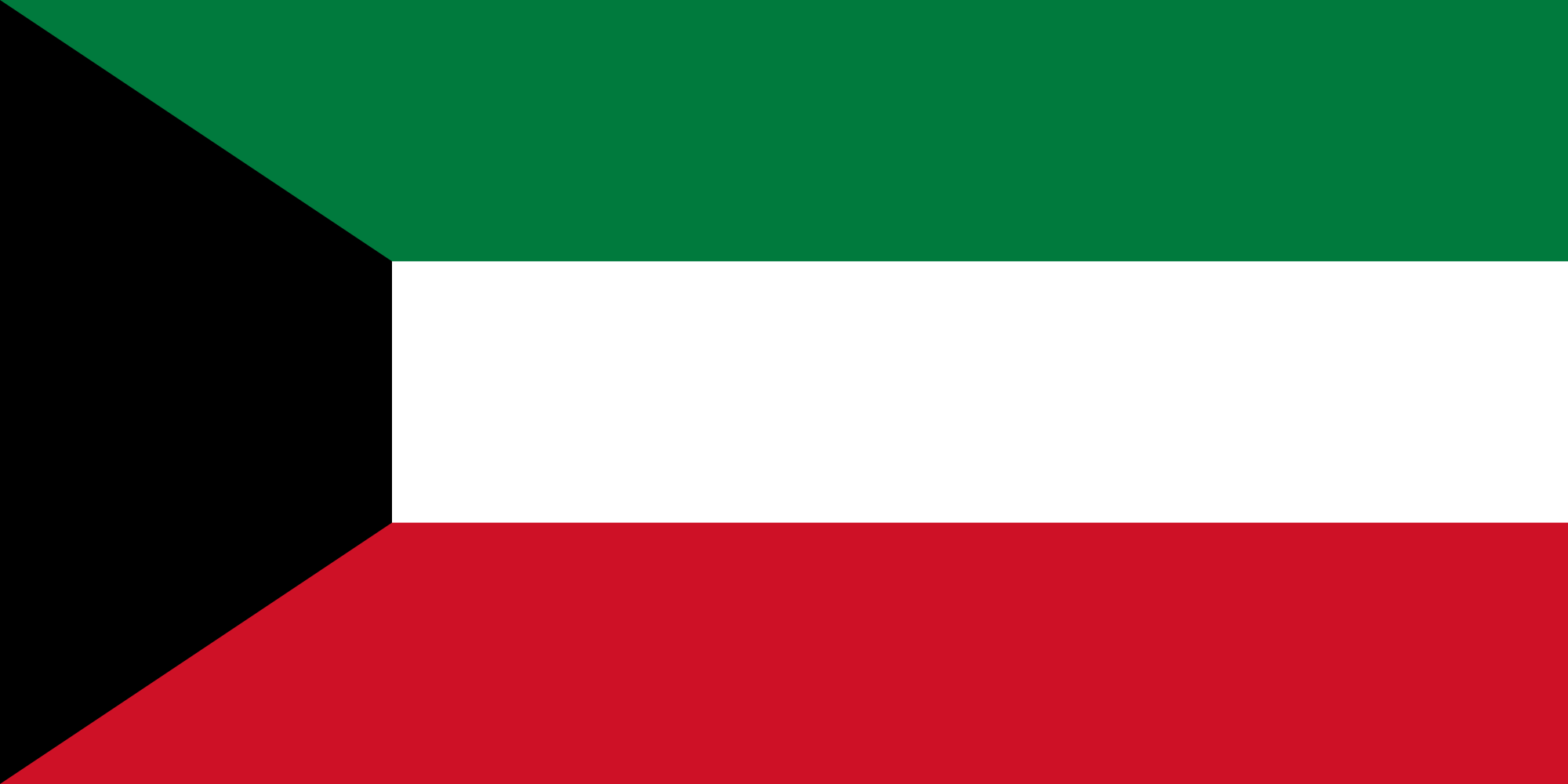

Community hub
Kuwait
View on Wikipedia
Kuwait,[a] officially the State of Kuwait,[b] is a country in West Asia and the geopolitical region known as the Middle East. It is situated in the northern edge of the Arabian Peninsula at the head of the Arabian Gulf (commonly known as the persian gulf), bordering Iraq to the north and Saudi Arabia to the south.[16] With a coastline of approximately 500 km (311 mi), Kuwait also shares a maritime border with Iran, across the Arabian Gulf.[17] Kuwait is a city-state,[18] most of the country's population reside in the urban agglomeration of Kuwait City, the capital and largest city.[19] As of 2024[update], Kuwait has a population of 4.82 million, of which 1.53 million are Kuwaiti citizens while the remaining 3.29 million are foreign nationals from over 100 countries.[20] Kuwait has the world's third largest number of foreign nationals as a percentage of the population, where its citizens make up less than 30% of the overall population,[21] and also holds the title of having the most valuable paper currency in the world as of 2025.[22]
Key Information


The territory of modern-day Kuwait has been occupied by humans since antiquity, particularly due to its strategic location at the head of the Arabian Gulf near the mouth of the Tigris and Euphrates rivers. In the early 18th century, the territory of modern-day Kuwait was under the jurisdiction of the Bani Khalid clan; then the territory became known as the Sheikdom of Kuwait and a British protectorate in 1899. Prior to the discovery of oil reserves in 1938, the territory of modern-day Kuwait contained a regional trade port.[23][24] The protectorate agreements with the United Kingdom ended in June 1961 when Kuwait officially became an independent state.
From 1946 to 1982, Kuwait underwent large-scale modernization, largely based on income from oil production. In the 1980s, Kuwait experienced a period of geopolitical instability and an economic crisis following the stock market crash. It suffered pro-Iranian attacks during the Iran–Iraq War, as a result of Kuwait's financial support to Iraq. In 1990, the state of Kuwait was invaded, installed a puppet regime, and subsequently annexed by Iraq under the leadership of Saddam Hussein following disputes over oil production. The Iraqi occupation of Kuwait ended on 26 February 1991, after a U.S. and Saudi Arabia–led international coalition expelled Iraqi forces from the country during the Gulf War.[25]
Like most other Arab states of the Arabian Gulf, Kuwait is an emirate; the emir is the head of state and the ruling Al Sabah family dominates the country's political system. Kuwait's official state religion is Islam, specifically the Maliki school of Sunni Islam. Kuwait is a high-income economy, backed by the world's sixth largest oil reserves. Kuwait is considered to be a pioneer in the region when it comes to the arts and popular culture, often called the "Hollywood of the Gulf"; the nation started the oldest modern arts movement in the Arabian Peninsula and is known to have created among the leading artists in the region.[26][27] Kuwaiti popular culture, in the form of theatre, radio, music, and television soap opera, is exported to neighboring Gulf Cooperation Council (GCC) states.[28] Kuwait is a founding member of the GCC and is also a member of the United Nations, the Arab League, and OPEC.
Etymology
[edit]The name "Kuwait" is from the Kuwaiti Arabic diminutive form of كوت (Kut or Kout), meaning "fortress built near water".[29] The country's official name has been the "State of Kuwait" since 1961.
History
[edit]Antiquity
[edit]Following the post-glacial flooding of the Arabian Gulf basin, debris from the Tigris–Euphrates river formed a substantial delta, creating most of the land in present-day Kuwait and establishing the present coastlines.[30] One of the earliest evidence of human habitation in Kuwait dates back to the Mesolithic era (c. 8000 BC).[31] Historically, most of present-day Kuwait was part of ancient Mesopotamia.[32][33]
During the Ubaid period (c. 5500–3700 BC), Kuwait was the central site of interaction between the peoples of Mesopotamia and Neolithic Eastern Arabia,[34][35][36][37][38] including Bahra 1 and site H3 in Subiya.[34][39][40][41] The Neolithic inhabitants of Kuwait were among the world's earliest maritime traders.[42] One of the world's earliest reed boats was discovered at site H3 dating back to the Ubaid period.[43] Other Neolithic sites in Kuwait are located in Khiran and Sulaibikhat.[34]
Mesopotamians first settled in the Kuwaiti island of Failaka in 2000 BC.[44][45] Traders from the Sumerian city of Ur inhabited Failaka and ran a mercantile business.[44][45] The island had many Mesopotamian-style buildings typical of those found in Iraq dating from around 2000 BC.[45][44] In 4000 BC until 2000 BC, Kuwait was home to the Dilmun civilization.[46][47][48][49][31] Dilmun included Al-Shadadiya,[31] Akkaz,[46] Umm an Namil,[46][50] and Failaka.[46][49] At its peak in 2000 BC, Dilmun controlled the Arabian Gulf trading routes.[51]
During the Dilmun era (from ca. 3000 BC), Failaka was known as "Agarum", the land of Enzak, a great god in the Dilmun civilization according to Sumerian cuneiform texts found on the island.[52] As part of Dilmun, Failaka became a hub for the civilization from the end of the 3rd to the middle of the 1st millennium BC.[52][53] After the Dilmun civilization, Failaka was inhabited by the Kassites of Mesopotamia,[54] and was formally under the control of the Kassite dynasty of Babylon.[54] Studies indicate traces of human settlement can be found on Failaka dating back to as early as the end of the 3rd millennium BC, and extending until the 20th century AD.[52] Many of the artifacts found in Falaika are linked to Mesopotamian civilizations and seem to show that Failaka was gradually drawn toward the civilization based in Antioch.[55]

Under Nebuchadnezzar II, the bay of Kuwait was under Babylonian control.[56] Cuneiform documents found in Failaka indicate the presence of Babylonians in the island's population.[57] Babylonian Kings were present in Failaka during the Neo-Babylonian Empire period, Nabonidus had a governor in Failaka and Nebuchadnezzar II had a palace and temple in Falaika.[58][59] Failaka also contained temples dedicated to the worship of Shamash, the Mesopotamian sun god in the Babylonian pantheon.[59]
Following the Fall of Babylon, the bay of Kuwait came under the control of the Achaemenid Empire (c. 550‒330 BC) as the bay was repopulated after seven centuries of abandonment.[60] Failaka was under the control of the Achaemenid Empire as evidenced by the archaeological discovery of Achaemenid strata.[58][61] There are Aramaic inscriptions that testify Achaemenid presence.[61]
In fourth century BC, the ancient Greeks colonized the bay of Kuwait under Alexander the Great. The ancient Greeks named mainland Kuwait Larissa and Failaka was named Ikaros.[62][63][64][65] The bay of Kuwait was named Hieros Kolpos.[66] According to Strabo and Arrian, Alexander the Great named Failaka Ikaros because it resembled the Aegean Island of that name in size and shape. Elements of Greek mythology were mixed with the local cults.[67] "Ikaros" was also the name of a prominent city situated in Failaka.[68] Large Hellenistic forts and Greek temples were uncovered.[69] Archaeological remains of Greek colonization were also discovered in Akkaz, Umm an Namil, and Subiya.[31]

At the time of Alexander the Great, the mouth of the Euphrates River was located in northern Kuwait.[70][71] The Euphrates river flowed directly into the Arabian Gulf via Khor Subiya which was a river channel at the time.[70][71] Failaka was located 15 kilometers from the mouth of the Euphrates river.[70][71] By the first century BC, the Khor Subiya river channel dried out completely.[70][71]
In 127 BC, Kuwait was part of the Parthian Empire and the kingdom of Characene was established around Teredon in present-day Kuwait.[72][73][74] Characene was centered in the region encompassing southern Mesopotamia,[75] Characene coins were discovered in Akkaz, Umm an Namil, and Failaka.[76][77] A busy Parthian commercial station was situated in Kuwait.[78]
In 224 AD, Kuwait became part of the Sassanid Empire. At the time of the Sassanid Empire, Kuwait was known as Meshan,[79] which was an alternative name of the kingdom of Characene.[80][81] Akkaz was a Partho-Sassanian site;[82] the Sassanid religion's tower of silence was discovered in northern Akkaz.[82][83][84] Late Sassanian settlements were discovered in Failaka.[85] In Bubiyan, there is archaeological evidence of Sassanian to early Islamic periods of human presence as evidenced by the recent discovery of torpedo-jar pottery shards on several prominent beach ridges.[86]
In 636 AD, the Battle of Chains between the Sassanid Empire and Rashidun Caliphate was fought in Kuwait.[87][88] As a result of Rashidun victory in 636 AD, the bay of Kuwait was home to the city of Kazma (also known as "Kadhima" or "Kāzimah") in the early Islamic era.[88][89][90][91][92][93][94]
1752–1945: Pre-oil
[edit]
In the early to mid 1700s, Kuwait City was a small fishing village. Administratively, it was a sheikhdom, ruled by sheikhs from the local Bani Khalid clan.[95] Sometime in the mid 1700s, the Bani Utbah settled in Kuwait City.[96][97] Sometime after the death of the Bani Khalid's leader Barak bin Abdul Mohsen and the fall of the Bani Khalid Emirate, the Utub were able to wrest control of Kuwait as a result of successive matrimonial alliances.[97]
In the latter half of the eighteenth century, Kuwait began establishing itself as a maritime port and gradually became a principal commercial center for the transit of goods between Baghdad, India, Persia, Muscat, and the Arabian Peninsula.[98][99] By the late-1700s, Kuwait had established itself as a trading route from the Arabian Gulf to Aleppo.[100] During the Persian siege of Basra in 1775–79, Iraqi merchants took refuge in Kuwait and were partly instrumental in the expansion of Kuwait's boat-building and trading activities.[101] As a result, Kuwait's maritime commerce boomed,[101] as the Indian trade routes with Baghdad, Aleppo, Smyrna and Constantinople were diverted to Kuwait during this time.[100][102][103] The East India Company was diverted to Kuwait in 1792.[104] The East India Company secured the sea routes between Kuwait, India and the east coasts of Africa.[104] After the Persians withdrew from Basra in 1779, Kuwait continued to attract trade away from Basra.[105] The flight of many of Basra's leading merchants to Kuwait continued to play a significant role in Basra's commercial stagnation well into the 1850s.[105]
The instability in Basra helped foster economic prosperity in Kuwait.[106][107] In the late 18th century, Kuwait was a haven for Basra merchants fleeing Ottoman persecution.[108] Kuwait was the center of boat building in the Arabian Gulf,[109] its ships renowned throughout the Indian Ocean.[110][111] Its sailors developed a positive reputation in the Arabian Gulf.[98][112][113] In the 19th century, Kuwait became significant in the horse trade,[114] with regular shipments in sailing vessels.[114] In the mid 19th century, it was estimated that Kuwait exported an average of 800 horses to India annually.[106]
In 1899, ruler Sheikh Mubarak Al Sabah signed an agreement with the British government in India (subsequently known as the Anglo-Kuwaiti Agreement of 1899) making Kuwait a British protectorate. This gave Britain exclusive access and trade with Kuwait, while denying Ottoman and Germany provinces to the north a port on the Arabian Gulf. The Sheikhdom of Kuwait remained a British protectorate until 1961.[95][115]

After the Anglo-Ottoman Convention of 1913, Kuwait was established as an autonomous kaza, or district, of the Ottoman Empire and a de facto protectorate of Great Britain.
During World War I, the British Empire imposed a trade blockade against Kuwait because its ruler at the time, Salim Al-Mubarak Al-Sabah, supported the Ottoman Empire.[117][118][119] The British economic blockade heavily damaged Kuwait's economy.[119]
In 1919, Sheikh Salim Al-Mubarak Al-Sabah intended to build a commercial city in the south of Kuwait. This caused a diplomatic crisis with Najd, but Britain intervened, discouraging Sheikh Salim. In 1920, an attempt by the Ikhwan to build a stronghold in southern Kuwait led to the Battle of Hamdh. The Battle of Hamdh involved 2,000 Ikhwan fighters against 100 Kuwaiti cavalrymen and 200 Kuwaiti infantrymen. The battle lasted for six days and resulted in heavy but unknown casualties on both sides resulting in the victory of the Ikhwan forces and leading to the battle of Jahra around the Kuwait Red Fort. The Battle of Jahra happened as the result of the Battle of Hamdh. A force of three to four thousand Ikhwan, led by Faisal Al-Dawish, attacked the Red Fort at Al-Jahra, defended by fifteen hundred men. The fort was besieged and the Kuwaiti position precarious.[120] The Ikhwan attack repulsed for the while, negotiations began between Salim and Al-Dawish; the latter threatened another attack if the Kuwaiti forces did not surrender. The local merchant class convinced Salim to call in help from British troops, who showed up with airplanes and three warships, ending the attacks.[120][121] After the Battle of Jahra, Ibn Saud's warriors, the Ikhwan, demanded that Kuwait follows five rules.[122] They demanded that all the Shias be evicted, that all should adopt the Ikhwan doctrine, that the Turks be labelled "heretics", that smoking, munkar, and prostitution be abolished, and that American missionary hospital be destroyed.[123]

The Kuwait–Najd War of 1919–20 erupted in the aftermath of World War I. The war occurred because Ibn Saud of Najd wanted to annex Kuwait.[117][124] The sharpened conflict between Kuwait and Najd led to the death of hundreds of Kuwaitis. The war resulted in sporadic border clashes throughout 1919–1920.
When Percy Cox was informed of the border clashes in Kuwait, he sent a letter to the Ruler of Arabistan Sheikh Khazʽal Ibn Jabir offering the Kuwaiti throne to either him or one of his heirs. Khaz'al refused.[125] He then asked:
...even so, do you think that you have come to me with something new? Al Mubarak's position as ruler of Kuwait means that I am the true ruler of Kuwait. So there is no difference between myself and them, for they are like the dearest of my children and you are aware of this. Had someone else come to me with this offer, I would have complained about them to you. So how do you come to me with this offer when you are well aware that myself and Al Mubarak are one soul and one house, what affects them affects me, whether good or evil.[125]
Following the Kuwait–Najd War in 1919–20, Ibn Saud imposed a trade blockade against Kuwait from the years 1923 until 1937.[126] The goal of the Saudi economic and military attacks on Kuwait was to annex as much of Kuwait's territory as possible. At the Uqair conference in 1922, the boundaries of Kuwait and Najd were set; as a result of British interference, Kuwait had no representative at the Uqair conference. After the Uqair conference, Kuwait was still subjected to a Saudi economic blockade and intermittent Saudi raiding.
Kuwait immensely declined in regional economic importance,[111] due to the trade blockades and the world economic depression.[117] Before Mary Bruins Allison visited Kuwait in 1934, Kuwait had already lost its prominence in long-distance trade.[111]

The Great Depression harmed Kuwait's economy, starting in the late 1920s.[126] International trading was one of Kuwait's main sources of income before oil.[126] Kuwait's merchants were mostly intermediary merchants.[126] As a result of the decline of European demand for goods from India and Africa, Kuwait's economy suffered. The decline in international trade resulted in an increase in gold smuggling by Kuwait's ships to India.[126] Some local merchant families became rich from this smuggling.[127] Kuwait's pearl industry also collapsed as a result of the worldwide economic depression.[127] At its height, Kuwait's pearl industry had led the world's luxury market, regularly sending out between 750 and 800 ships to meet the European elite's desire for pearls.[127] During the economic depression, luxuries like pearls were in little demand.[127] The Japanese invention of cultured pearls also contributed to the collapse of Kuwait's pearl industry.[127]
Freya Stark wrote about the extent of poverty in Kuwait at the time:[126]
Poverty has settled in Kuwait more heavily since my last visit five years ago, both by sea, where the pearl trade continues to decline, and by land, where the blockade established by Saudi Arabia now harms the merchants.
On 22 February 1938, oil was first discovered in the Burgan field.
1946–1980: State-building
[edit]Between 1946 and 1980, Kuwait experienced a period of prosperity driven by oil and its liberal cultural atmosphere; this period is called the "golden era of Kuwait".[128][129][130][131] In 1946, crude oil was exported for the first time. In 1950, a major public-work programme began to enable Kuwaiti citizens to enjoy a luxurious standard of living.
By 1952, the country became the largest oil exporter in the Arabian Gulf region. This massive growth attracted many foreign workers, especially from Palestine, Iran, India, and Egypt – with the latter being particularly political within the context of the Arab Cold War.[132] It was also in 1952 that the first masterplan of Kuwait was designed by the British planning firm of Minoprio, Spenceley, and Macfarlane. In 1958, Al-Arabi magazine was first published.[133] Many foreign writers moved to Kuwait because they enjoyed greater freedom of expression than elsewhere in the Middle East.[134][135] Kuwait's press was described as one of the freest in the world.[136] Kuwait was the pioneer in the literary renaissance in the Middle East.[133]
In June 1961, Kuwait became independent with the end of the British protectorate and the Sheikh Abdullah Al-Salim Al-Sabah became Emir of Kuwait. Kuwait's national day, however, is celebrated on 25 February, the anniversary of the coronation of Sheikh Abdullah (it was originally celebrated on 19 June, the date of independence, but concerns over the summer heat caused the government to move it).[137]
At the time, Kuwait was considered the most developed country in the region.[138][139][140] Kuwait was the pioneer in the Middle East in diversifying its earnings away from oil exports.[141] The Kuwait Investment Authority is the world's first sovereign wealth fund.
Kuwaiti society embraced liberal and non-traditional attitudes throughout the 1960s and 1970s.[142][143] For example, most Kuwaiti women did not wear the hijab in the 1960s and 70s.[144][145]
_aerial_c1959.jpeg)
Although Kuwait formally gained independence in 1961, Iraq initially refused to recognize the country's independence by maintaining that Kuwait is part of Iraq, albeit Iraq later briefly backed down following a show of force by Britain and Arab League support of Kuwait's independence.[146][147][148]
The short-lived Operation Vantage crisis evolved in July 1961, as the Iraqi government threatened to invade Kuwait and the invasion was finally averted following plans by the Arab League to form an international Arab force against the potential Iraqi invasion of Kuwait.[149][150] As a result of Operation Vantage, the Arab League took over the border security of Kuwait and the British had withdrawn their forces by 19 October.[146] Iraqi prime minister Abd al-Karim Qasim was killed in a coup in 1963 but, although Iraq recognised Kuwaiti independence and the military threat was perceived to be reduced, Britain continued to monitor the situation and kept forces available to protect Kuwait until 1971. There had been no Iraqi military action against Kuwait at the time: this was attributed to the political and military situation within Iraq which continued to be unstable.[16]
A treaty of friendship between Iraq and Kuwait was signed in 1963 by which Iraq recognised the 1932 border of Kuwait.[151] Under the terms of the newly drafted Constitution, Kuwait held its first parliamentary elections in 1963.
Kuwait University was established in 1966.[140] Kuwait's theatre industry became well known throughout the region.[128][140] After the 1967 Six Day War, Kuwait along with other Arabic speaking countries voted the three no's of the Khartoum Resolution: no peace with Israel, no recognition of Israel, and no negotiations with Israel. From the 1970s onward, Kuwait scored highest of all Arab countries on the Human Development Index.[140] The Iraqi poet Ahmed Matar left Iraq in the 1970s to take refuge in the more liberal environment of Kuwait. Kuwait is the 25th most peaceful country in the world, according to the 2024 Global Peace Index.[152]
The Kuwait-Iraq 1973 Samita border skirmish evolved on 20 March 1973, when Iraqi army units occupied El-Samitah near the Kuwaiti border, which evoked an international crisis.[153]
On 6 February 1974, Palestinian militants occupied the Japanese embassy in Kuwait, taking the ambassador and ten others hostage. The militants' motive was to support the Japanese Red Army members and Palestinian militants who were holding hostages on a Singaporean ferry in what is known as the Laju incident. Ultimately, the hostages were released, and the guerrillas allowed to fly to Aden. This was the first time Palestinian guerrillas struck in Kuwait as the Al Sabah ruling family, headed by Sheikh Sabah Al-Salim Al-Sabah, funded the Palestinian resistance movement. Kuwait had been a regular endpoint for Palestinian plane hijacking in the past and had considered itself safe.
Kuwait International Airport was opened in 1979 by the Al Hani Construction with a joint venture of Ballast Nedam.
1981–1991: Wars and terrorism
[edit]The Al Sabah strongly advocated Islamism throughout the 1980s.[154] At that time, the most serious threat to the continuity of Al Sabah came from home-grown democrats,[154] who were protesting the 1976 suspension of the parliament.[154] The Al Sabah were attracted to Islamists preaching the virtues of a hierarchical order that included loyalty to the Kuwaiti monarchy.[154] In 1981, the Kuwaiti government gerrymandered electoral districts in favour of the Islamists.[155][154] Islamists were the government's main allies, hence Islamists were able to dominate state agencies, such as the government ministries.[154]

During the Iran–Iraq War, Kuwait ardently supported Iraq. As a result, there were various pro-Iran terror attacks across Kuwait, including the 1983 bombings, the attempted assassination of Emir Jaber in May 1985, the 1985 Kuwait City bombings, and the hijacking of several Kuwait Airways planes. Kuwait's economy and scientific research sector significantly suffered due to the pro-Iran terror attacks.[156]
Simultaneously, Kuwait experienced a major economic crisis after the Souk Al-Manakh stock market crash and decrease in oil price.[157][158][159][160]

After the Iran–Iraq War ended, Kuwait declined an Iraqi request to forgive its US$65 billion debt.[161] An economic rivalry between the two countries ensued after Kuwait increased its oil production by 40 percent.[162] Tensions between the two countries increased further in July 1990, after Iraq complained to OPEC claiming that Kuwait was stealing its oil from a field near the border by slant drilling of the Rumaila field.[162]
In August 1990, Iraqi forces invaded and annexed Kuwait without any warning. After a series of failed diplomatic negotiations, the United States led a coalition to remove the Iraqi forces from Kuwait, in what became known as the Gulf War. On 26 February 1991, in phase of code-named Operation Desert Storm, the coalition succeeded in driving out the Iraqi forces. As they retreated, Iraqi forces carried out a scorched earth policy by setting oil wells on fire.[163]
During the Iraqi occupation, nearly 1,000 civilians were killed in Kuwait. In addition, 600 people went missing during Iraq's occupation;[164] remains of approximately 375 were found in mass graves in Iraq. Kuwait celebrates 26 February as Liberation Day.
1992–present: Present era
[edit]In the early 1990s, Kuwait deported nearly 400,000 Palestinians.[165] Kuwait's policy was a form of collective punishment, in response to the alignment of the PLO with Saddam Hussein. Kuwait also deported thousands of Iraqis and Yemenis after the Gulf War.[166][167] Hundreds of thousands of stateless Bedoon were also expelled from Kuwait in the early-to-mid 1990s.[168][169][166][170][167] At the House of Commons of the United Kingdom in 1995, it was revealed that the Al Sabah ruling family deported 150,000 stateless Bedoon to refugee camps in the Kuwaiti desert near the Iraqi border with minimal water, insufficient food, and no basic shelter.[171][169] Many of the stateless Bedoon fled to Iraq where they remain stateless people even today.[172][173]
In March 2003, Kuwait became the springboard for the US-led invasion of Iraq. In 2005, women won the right to vote and run in elections. Upon the death of the Emir Jaber in January 2006, Sheikh Saad Al-Sabah succeeded him but was removed nine days later due to his failing health. As a result, Sheikh Sabah Al-Ahmad Al-Jaber Al-Sabah was sworn in as Emir. From that point onwards, Kuwait suffered from chronic political deadlock between the government and parliament which resulted in multiple cabinet reshuffles and dissolutions.[174] This significantly hampered investment and economic reforms in Kuwait, making the country's economy much more dependent on oil.[174]
Despite the political instability, Kuwait had the highest Human Development Index ranking in the Arab world from 2006 to 2009.[175][176][177][178][179][180] China awarded Kuwait Investment Authority an additional $700 million quota on top of $300 million awarded in March 2012.[181] The quota is the highest to be granted by China to foreign investment entities.[181]


In March 2014, David S. Cohen, who was then the United States Secretary of the Treasury for Terrorism and Financial Intelligence, and many others accused Kuwait of funding terrorism, particularly for ISIS and Al-Qaeda.[182][183][184][185][186][187][188][189][190][191]
On 26 June 2015, a suicide bombing took place at a Shia Muslim mosque in Kuwait. The Islamic State of Iraq and the Levant claimed responsibility for the attack. Twenty-seven people were killed and 227 people were wounded. It was the largest terror attack in Kuwait's history. In the aftermath, a lawsuit was filed accusing the Kuwaiti government of negligence and direct responsibility for the terror attack.[192][193]
Due to declining oil prices in the mid-to-late 2010s, Kuwait faced one of the worst economic crunches in its history.[194] Sabah Al Ahmad Sea City was inaugurated in mid-2016.[195][196][197][198][199] Simultaneously, Kuwait invested significantly in its economic relations with China.[200] China has been Kuwait's largest trade partner since 2016.[201][202][203][204][205]
Under the Belt and Road Initiative, Kuwait and China have various cooperation projects including Al-Mutlaa which is currently under construction in northern Kuwait.[206][207][208][209][210] The Sheikh Jaber Al-Ahmad Al-Sabah Causeway is part of the first phase of the Silk City project.[211] The causeway was inaugurated in May 2019 as part of Kuwait Vision 2035,[212][213] it connects Kuwait City to northern Kuwait.[212][211]
The COVID-19 pandemic exacerbated Kuwait's economic crisis.[214][215][216][217] Kuwait's economy faced a budget deficit of $46 billion in 2020.[218][219][174] It was Kuwait's first fiscal deficit since 1995.[220][221] In September 2020, Kuwait's Crown Prince Sheikh Nawaf Al-Ahmad Al-Jaber Al-Sabah became the 16th Emir of Kuwait and the successor to Emir Sheikh Sabah Al-Ahmad Al-Jaber Al-Sabah, who died at the age of 91.[222] In October 2020, Sheikh Mishal Al-Ahmad Al-Jaber Al-Sabah was appointed as the Crown Prince.[223][224][225][226] In December 2023, Kuwait's Emir Sheikh Nawaf al-Ahmad al-Jaber al-Sabah died and was replaced by Mishal Al-Ahmad Al-Jaber Al-Sabah.[227]
Kuwait currently has the largest US military presence in the entire Middle East region.[228] There are over 14,000 US military personnel stationed in the country.[228] Camp Arifjan is the largest US military base in Kuwait. The US uses bases in Kuwait as staging hubs, training ranges, and logistical support for its Middle East operations.[228]
In recent years, Kuwait's infrastructure projects market has regularly underperformed due to political deadlock between the executive and legislative branches.[229][174] Kuwait is now the region's most oil-dependent country with the lowest share of economic diversification.[174][215] According to the World Economic Forum, Kuwait has the weakest infrastructure quality in the region.[230]
Since March 2024, Kuwait has been revoking the citizenship of many citizens (by decree).[231][232] By March 2025, Kuwait revoked the citizenship of 42,000 people in just six months.[233][234][235] The most high-profile revocation was that of singer Nawal and actor Dawood Hussain in early December 2024.[236] According to Carnegie Endowment, Kuwait has weaponized citizenship revocation as a tool for political control.[237]
Geography
[edit]


Located at the head of the Arabian Gulf in the north-east corner of the Arabian Peninsula, Kuwait is one of the smallest countries in the world in terms of land area. Kuwait lies between latitudes 28° and 31° N, and longitudes 46° and 49° E. Kuwait is generally low-lying, with the highest point being 306 m (1,004 ft) above sea level.[16] Mutla Ridge is the highest point in Kuwait.
Kuwait has ten islands.[238] With an area of 860 km2 (330 sq mi), the Bubiyan is the largest island in Kuwait and is connected to the rest of the country by a 2,380-metre-long (7,808 ft) bridge.[239] 0.6% of Kuwaiti land area is considered arable[16] with sparse vegetation found along its 499-kilometre-long (310 mi) coastline.[16] Kuwait City is located on Kuwait Bay, a natural deep-water harbor.
Kuwait's Burgan field has a total capacity of approximately 70 billion barrels (11 billion cubic metres) of proven oil reserves. During the 1991 Kuwaiti oil fires, more than 500 oil lakes were created covering a combined surface area of about 35.7 km2 (13+3⁄4 sq mi).[240] The resulting soil contamination due to oil and soot accumulation had made eastern and south-eastern parts of Kuwait uninhabitable. Sand and oil residue had reduced large parts of the Kuwaiti desert to semi-asphalt surfaces.[241] The oil spills during the Gulf War also drastically affected Kuwait's marine resources.[242]
Climate
[edit]Due to Kuwait's proximity to Iraq and Iran, the winter season in Kuwait is colder than other coastal countries in the region (especially UAE, Qatar, and Bahrain).[243] Kuwait is also less humid than other coastal countries in the region. The spring season in March is warm with occasional thunderstorms. The frequent winds from the northwest are cold in winter and hot in summer. Southeasterly damp winds spring up between July and October. Hot and dry south winds prevail in spring and early summer. The shamal, a northwesterly wind common during June and July, causes dramatic sandstorms.[244] Summers in Kuwait are some of the hottest on earth. The highest recorded temperature was 54.0 °C (129.2 °F) at Mitribah on 21 July 2016, which is the highest temperature recorded in Asia.[245][246]
Kuwait emits a lot of carbon dioxide per person compared to most other countries.[247] In recent years, Kuwait has been regularly ranked among the world's highest countries in term of CO2 per capita emissions.[248][249][250]
Nature reserves
[edit]At present, there are five protected areas in Kuwait recognized by the IUCN. In response to Kuwait becoming the 169th signatory of the Ramsar Convention, Bubiyan Island's Mubarak al-Kabeer reserve was designated as the country's first Wetland of International Importance.[251] The 50,948 ha (125,900 acres) reserve consists of small lagoons and shallow salt marshes and is important as a stop-over for migrating birds on two migration routes.[251] The reserve is home to the world's largest breeding colony of crab-plover.[251]
Biodiversity
[edit]Currently, 444 species of birds have been recorded in Kuwait, 18 species of which breed in the country.[252] The arfaj is the national flower of Kuwait.[253] Due to its location at the head of the Arabian Gulf near the mouth of the Tigris–Euphrates river, Kuwait is situated at the crossroads of many major bird migration routes and between two and three million birds pass each year.[254] Kuwait's marine and littoral ecosystems contain the bulk of the country's biodiversity heritage.[254] The marshes in northern Kuwait and Jahra have become increasingly important as a refuge for passage migrants.[254]
Twenty eight species of mammal are found in Kuwait; animals such as gerboa, desert rabbits and hedgehogs are common in the desert.[254] Large carnivores, such as the wolf, caracal and jackal, are no longer present.[254] Among the endangered mammalian species are the red fox and wild cat.[254] Forty reptile species have been recorded although none are endemic to Kuwait.[254]
Kuwait, Oman and Yemen are the only locations where the endangered smoothtooth blacktip shark is confirmed as occurring.[255]
Kuwaiti islands are important breeding areas for four species of tern and the socotra cormorant.[254] Kubbar Island has been recognised an Important Bird Area (IBA) by BirdLife International because it supports a breeding colony of white-cheeked terns.[256]
Water and sanitation
[edit].svg)
Kuwait is part of the Tigris–Euphrates river system basin.[257][258][259][260][261][262] Several Tigris–Euphrates confluences form parts of the Kuwait–Iraq border.[263] Bubiyan Island is part of the Shatt al-Arab delta.[86] Kuwait is partially part of the Mesopotamian Marshes.[264][265][266] Kuwait does not currently have any permanent rivers within its territory. However, Kuwait does have several wadis, the most notable of which is Wadi al-Batin which forms the border between Kuwait and Iraq.[267] Kuwait also has several river-like marine channels around Bubiyan Island, most notably Khawr Abd Allah which is now an estuary, but once was the point where the Shatt al-Arab emptied into the Arabian Gulf. Khawr Abd Allah is located in southern Iraq and northern Kuwait, the Iraq-Kuwait border divides the lower portion of the estuary, but adjacent to the port of Umm Qasr the estuary becomes wholly Iraqi. It forms the northeast coastline of Bubiyan Island and the north coastline of Warbah Island.[268]
Kuwait relies on water desalination as a primary source of fresh water for drinking and domestic purposes.[269][270] There are currently more than six desalination plants.[270] Kuwait was the first country in the world to use desalination to supply water for large-scale domestic use. The history of desalination in Kuwait dates back to 1951 when the first distillation plant was commissioned.[269]
In 1965, the Kuwaiti government commissioned the Swedish engineering company of VBB (Sweco) to develop and implement a plan for a modern water-supply system for Kuwait City. The company built five groups of water towers, thirty-one towers total, designed by its chief architect Sune Lindström, called "the mushroom towers". For a sixth site, the Emir of Kuwait, Sheikh Jaber Al-Ahmed, wanted a more spectacular design. This last group, known as Kuwait Towers, consists of three towers, two of which also serve as water towers.[271] Water from the desalination facility is pumped up to the tower. The thirty-three towers have a standard capacity of 102,000 cubic meters of water. "The Water Towers" (Kuwait Tower and the Kuwait Water Towers) were awarded the Aga Khan Award for Architecture (1980 Cycle).[272]
Kuwait's fresh water resources are limited to groundwater, desalinated seawater, and treated wastewater effluents.[269] There are three major municipal wastewater treatment plants.[269] Most water demand is currently satisfied through seawater desalination plants.[269][270] Sewage disposal is handled by a national sewage network that covers 98% of facilities in the country.[273]
Government and politics
[edit]Political system
[edit]Kuwait is an emirate.[3] The Emir is the head of state, he belongs to the Al Sabah ruling family. The political system consists of an appointed government and judiciary. The Polity data series[276] and Economist Democracy Index[277] both categorize Kuwait as an autocracy (dictatorship). Kuwait was previously described as "anocratic".[278] Freedom House previously rated the country as "partly free" in the Freedom in the World survey.[279]
According to International IDEA’s Global State of Democracy (GSoD) Indices and Democracy Tracker, Kuwait performs in the low to mid-range on overall democratic measures, with particular weaknesses in political representation, including credible elections, effective parliament and inclusive suffrage.[280][281][282]

Executive power is exercised by the government. The Emir appoints the prime minister, who in turn chooses the cabinet of ministers comprising the government. In recent decades, numerous policies of the Kuwaiti government have been characterized as "demographic engineering",[237] especially in relation to Kuwait's stateless Bedoon crisis and the history of naturalization in Kuwait.[237]
The Emir appoints the judges. The Constitution of Kuwait was promulgated in 1962.[283] The Constitutional Court is charged with ruling on the conformity of laws and decrees with the constitution.
Legislative power is exercised by the Emir. It was formerly exercised by the National Assembly. As per article 107 of the Kuwait constitution, the Emir has the power to dissolve the assembly and elections for a new assembly should be held within two months.[284] The Emir has suspended various articles of the constitution on three occasions: 29 August 1976 under Sheikh Sabah Al-Salim Al-Sabah, 3 July 1986 under Sheikh Jaber Al-Ahmed Al-Sabah, and 10 May 2024 under Sheikh Mishal Al-Ahmad Al-Jaber Al-Sabah.[3]

Kuwait's political instability has significantly hampered the country's economic development and infrastructure.[285][174][215] Kuwait is regularly characterized as being a "rentier state" in which the ruling family uses oil revenues to buy the political acquiescence of the citizenry; more than 70% of government spending consists of public sector salaries and subsidies.[286] Kuwait has the highest public sector wage bill in the GCC region as public sector wages account for 12.4% of GDP.[218]
Kuwaiti women are considered among the most emancipated women in the Middle East. In 2014 and 2015, Kuwait was ranked first among Arab countries in the Global Gender Gap Report.[287][288][289] In 2013, 53% of Kuwaiti women participated in the labor force,[290] where they outnumber working Kuwaiti men,[291] giving Kuwait the highest female citizen participation in the workforce of any GCC country.[291][290][292] According to the Social Progress Index, Kuwait ranks first in social progress in the Arab world and Muslim world and second highest in the Middle East after Israel.[293] However, women's political participation in Kuwait has been limited.[294] Despite multiple prior attempts at granting Kuwaiti women suffrage, they were not permanently enfranchised until 2005.[295]
Kuwait ranks among the world's top countries by life expectancy,[296] women's workforce participation,[291][290] global food security,[297] and school order and safety.[298] Kuwait previously had a public sphere and civil society with political and social organizations.[299][300] Professional groups like the Chamber of Commerce, which represents the interests of Kuwaiti businesses and industries, still exist.[299][300]
Al Sabah dynasty
[edit].jpg)
The Al Sabah ruling family adhere to the Maliki school of Sunni Islam. Article 4 of the Kuwait constitution stipulates that Kuwait is a hereditary emirate whose emir must be an heir of Mubarak Al-Sabah.[284] Mubarak had four sons, but an informal pattern of alternation between the descendants of his sons Jabir and Salem emerged since his death in 1915.[301] This pattern of succession had one exception before 2006, when Sheikh Sabah Al-Salim, a son of Salem, was named crown prince to succeed his half-brother Sheikh Abdullah Al-Salem as a consequence of infighting and lack of consensus within the ruling family council.[301] The alternating system was resumed when Sheikh Sabah Al-Salim named Sheikh Jaber Al-Ahmed of the Jabir branch as his crown prince, eventually ruling as Emir for 29 years from 1977 to 2006.[301] On 15 January 2006, Emir Sheikh Jaber Al-Ahmed died and his crown prince, Sheikh Saad Al-Abdullah of the Salem branch was named Emir.[302] On 23 January 2006, the National Assembly unanimously voted in favor of Sheikh Saad Al-Abdullah abdicating in favor of Sheikh Sabah Al-Ahmed, citing his illness with a form of dementia.[301] Instead of naming a successor from the Salem branch as per convention, Sheikh Sabah Al-Ahmed named his half-brother Sheikh Nawaf Al-Ahmed as crown prince and his nephew Sheikh Nasser Al-Mohammed as prime minister.[301] On 16 December 2023, Sheikh Nawaf Al-Ahmed died, And Sheikh Mishal Al-Ahmad Al-Jaber would be the successor.
Theoretically, Article 4 of the constitution stipulates that the incoming Emir's choice of crown prince needs to be approved by an absolute majority of the National Assembly.[284] If this approval is not achieved, the emir is constitutionally required to submit three alternative candidates for crown prince to the National Assembly.[284] This process previously caused contenders for power to engage in alliance-building in the political scene, which had taken historically private feuding within the ruling family to the "public arena and the political realm".[301]
Foreign relations
[edit]
The foreign affairs of Kuwait are handled at the level of the Ministry of Foreign Affairs. The first foreign affairs department bureau was established in 1961. Kuwait became the 111th member state of the United Nations in May 1963. It is a long-standing member of the Arab League and Gulf Cooperation Council.
Before the Gulf War, Kuwait was the only "pro-Soviet" state in the Arabian Gulf region.[303] Kuwait acted as a conduit for the Soviets to the other Arab states of the Arabian Gulf, and Kuwait was used to demonstrate the benefits of a pro-Soviet stance.[303] In July 1987, Kuwait refused to allow U.S. military bases in its territory.[304] As a result of the Gulf War, Kuwait's relations with the U.S. have improved (major non-NATO ally). Kuwait is also a major ally of ASEAN and enjoys a close economic relationship with China while working to establish a model of cooperation in numerous fields.[305][306]
Kuwait is a major non-NATO ally to the United States and currently has the largest US military presence in the entire Middle East region.[228] The United States government utilizes Kuwait-based military bases as staging hubs, training ranges, and logistical support for regional and international military operations.[228] The bases include Camp Arifjan, Camp Buehring, Ali Al Salem Air Field, and the naval base Camp Patriot.[228] Kuwait also has strong economic ties to China and ASEAN.[307][308]
Under the Belt and Road Initiative,[309][211] Kuwait and China have many important cooperation projects including South al-Mutlaa and Mubarak Al Kabeer Port.[206][207][208][310][211]
Military
[edit]
The Kuwaiti armed forces consist of the Land Forces, the Air Force (including the Air Defense Force), the Navy (including the Coast Guard), the National Guard, and the Emiri Guard, with a total of 17,500 active personnel and 23,700 reservists. The Emiri Guard is tasked with the protection of the Emir of Kuwait. The National Guard remains independent of the regular armed forces command structure, subordinated directly to the Emir and the prime minister, and is involved in both internal security and external defense. The Coast Guard is part of the Ministry of Interior while all of the other branches are part of the Ministry of Defense, and the National Guard provides assistance to both agencies. Since 1991 the United States has been the country's main security partner, carrying out training exercises with its military, and Kuwait is also a participant in the Gulf Cooperation Council's Peninsula Shield Force. The Kuwaiti military uses American, Russian, and western European equipment.[311][312]
In 2017 Kuwait reintroduced mandatory military service for its male citizens, consisting of four months of training and eight months of service. Conscription was previously in effect from 1961 to 2001, though it was not fully enforced at that time.[313][314] Kuwait was the only Gulf country to have had military conscription until 2014, when Qatar also implemented the policy.[315]
When Saudi Arabia began its intervention in the Yemeni civil war in early 2015, Kuwait joined the Saudi-led coalition. Kuwaiti forces provided an artillery battalion and 15 fighter jets, though their contribution to the operations in Yemen was limited.[316][317]
Legal system
[edit]Kuwait follows the civil law system modeled after the French legal system;[318][319][320] Kuwait's legal system is largely secular.[321][322][323][324] Sharia law governs only family law for Muslim residents,[322][325] while non-Muslims in Kuwait have a secular family law. For the application of family law, there are three separate court sections: Sunni (Maliki), Shia, and non-Muslim. According to the United Nations, Kuwait's legal system is a mix of English common law, French civil law, Egyptian civil law and Islamic law.[326]
The court system in Kuwait is secular.[327][328] Unlike other Arab states of the Arabian Gulf, Kuwait does not have Sharia courts.[328] Sections of the civil court system administer family law.[328] Kuwait has the most secular commercial law in the Arabian Gulf region.[329] The parliament criminalized alcohol consumption in 1983.[330] Kuwait's Code of Personal Status was promulgated in 1984.[331]
Administrative divisions
[edit]
Kuwait is divided into six governorates:
- Al Asimah Governorate (or Capital Governorate)
- Hawalli Governorate
- Farwaniya Governorate
- Mubarak Al-Kabeer Governorate
- Ahmadi Governorate
- Jahra Governorate
The governorates are further subdivided into Areas.
Human rights and corruption
[edit]Human rights in Kuwait has been the subject of significant criticism, particularly regarding the Bedoon (stateless people).[170][168][332][166] The Kuwaiti government's handling of the stateless Bedoon crisis has come under criticism from many human rights organisations and even the United Nations.[333] According to Human Rights Watch in 1995, Kuwait has produced 300,000 stateless Bedoon.[334] Kuwait has the largest number of stateless people in the entire region.[168][335] Since 1986, the Kuwaiti government has refused to grant any form of documentation to the Bedoon including birth certificates, death certificates, identity cards, marriage certificates, and driving licences.[335][336] According to several human rights organizations, Kuwait is committing ethnic cleansing and genocide against the stateless Bedoon.[170][168][335] Additionally, LGBT people in Kuwait have few legal protections.[337]
On the other hand, human rights organizations have criticized Kuwait for the human rights abuses toward foreign nationals. Foreign nationals account for 70% of Kuwait's total population. The kafala system leaves foreign nationals prone to exploitation. Administrative deportation is very common in Kuwait for minor offenses, including minor traffic violations. Kuwait is one of the world's worst offenders in human trafficking. Hundreds of thousands of foreign nationals are subjected to numerous human rights abuses including involuntary servitude. They are subjected to physical and sexual abuse, non-payment of wages, poor work conditions, threats, confinement to the home, and withholding of passports to restrict their freedom of movement.[338][339]
Kuwait's mistreatment of foreign workers has resulted in various high-profile diplomatic crises. In 2018, there was a diplomatic crisis between Kuwait and the Philippines due to the mistreatment of Filipino workers in Kuwait. Approximately 60% of Filipinos in Kuwait are employed as domestic workers. In July 2018, Kuwaiti fashionista Sondos Alqattan released a controversial video criticizing domestic workers from the Philippines.[340] In 2020, there was a diplomatic crisis between Kuwait and Egypt due to the mistreatment of Egyptian workers in Kuwait.[341]
Various Kuwaitis have been jailed after they criticized the Al Sabah ruling family.[342] In 2010, the U.S. State Department said it had concerns about the case of Kuwaiti blogger and journalist Mohammad Abdul-Kader al-Jassem who was on trial for allegedly criticizing the ruling al-Sabah family, and faced up to 18 years in prison if convicted.[343] He was detained after a complaint against him was issued by the office of Kuwait's Emir Sheikh Sabah al-Ahmad al-Sabah.[343]
Extensive corruption among Kuwait's high-level government officials is a serious problem resulting in tensions between the government and the public.[344] In the Corruption Perceptions Index 2007, Kuwait was ranked 60th out of 179 countries for corruption (least corrupt countries are at the top of the list). On a scale of 0 to 10 with 0 the most corrupt and 10 the most transparent, Transparency International rated Kuwait 4.3.[345]
In 2009, 20% of the youth in juvenile centres had dyslexia, as compared to the 6% of the general population.[346] Data from a 1993 study found that there is a higher rate of psychiatric morbidity in Kuwaiti prisons than in the general population.[347]
Economy
[edit]
Kuwait has a wealthy petroleum-based economy.[348] Its official currency is the Kuwaiti dinar which is the most valuable paper currency in the world.[349] By various per-capita measures of economic output, Kuwait is one of the wealthiest countries in the world.[350][351][352][353]
In 2021, Kuwait was the GCC region's most oil-dependent country with the weakest infrastructure quality and lowest share of economic diversification.[174][215][230]
In 2019, Iraq was Kuwait's leading export market and food/agricultural products accounted for 94.2% of total export commodities.[354] Globally, Kuwait's main export products were mineral fuels including oil (89.1% of total exports), aircraft and spacecraft (4.3%), organic chemicals (3.2%), plastics (1.2%), iron and steel (0.2%), gems and precious metals (0.1%), machinery including computers (0.1%), aluminum (0.1%), copper (0.1%), and salt, sulphur, stone and cement (0.1%).[355] Kuwait was the world's biggest exporter of sulfonated, nitrated and nitrosated hydrocarbons in 2019.[356] Kuwait was ranked 63rd out of 157 countries in the 2019 Economic Complexity Index (ECI).[356]
In recent decades, Kuwait has enacted certain measures to regulate foreign labor due to security concerns. For instance, workers from Georgia are subject to heightened scrutiny when applying for entry visas, and an outright ban was imposed on the entry of domestic workers from Guinea-Bissau and Vietnam.[357] Workers from Bangladesh are also banned.[358] In April 2019, Kuwait added Ethiopia, Burkina Faso, Bhutan, Guinea and Guinea-Bissau to the list of banned countries bringing the total to 20. According to Migrant Rights, the bans are put in place mainly due to the fact that these countries lack embassies and labour corporations in Kuwait.[359]
Petroleum and natural gas
[edit]Despite its relatively small territory, Kuwait has proven crude oil reserves of 104 billion barrels, estimated to be 10% of the world's reserves. Kuwait also has substantial natural gas reserves. All natural resources in the country are state property.
As part of Kuwait Vision 2035, Kuwait aims to position itself as a global hub for the petrochemical industry.[360] Al Zour Refinery is the largest refinery in the Middle East.[361][362][363] It is Kuwait's largest environmentally friendly oil refinery,[364][360] where this refers to the effect on the local environment as opposed to the global environmental impact of burning the resulting oil. This Al Zour Refinery is a Kuwait-China cooperation project under the Belt and Road Initiative.[365] Al Zour LNG Terminal is the Middle East's largest import terminal for liquefied natural gas.[366][367][368] It is the world's largest capacity LNG storage and regasification green field project.[369][370] The project has attracted investments worth US$3 billion.[371][372] Other megaprojects include biofuel and clean fuels.[373][374] On January 20, 2025, the Kuwait Oil Company announced a major hydrocarbon discovery at the Al Jlaiaa offshore field, which it sees as a significant milestone in the nation's energy sector. The development aligns with Kuwait's strategic plans to enhance its offshore exploration and production capabilities.[375][376]
Health
[edit]Kuwait has a state-funded healthcare system, which provides treatment without charge to Kuwaiti nationals. There are outpatient clinics in every residential area in Kuwait. A public insurance scheme exists to provide reduced cost healthcare to expatriates. Private healthcare providers also run medical facilities in the country, available to members of their insurance schemes. As part of Kuwait Vision 2035, many new hospitals recently opened.[377][378][379] In the years leading up to the COVID-19 pandemic, Kuwait invested in its health care system at a rate that was proportionally higher than most other GCC countries.[380] Under the Kuwait Vision 2035 healthcare strategy, the public hospital sector significantly increased its capacity.[378][377][379] Many new hospitals recently opened, Kuwait currently has 20 public hospitals.[381][378][377][379] The new Sheikh Jaber Al-Ahmad Hospital is the largest hospital in the Middle East.[382] Kuwait also has 16 private hospitals.[377]
Private sector hospitals in Kuwait offer multiple specialities. This trend is likely to grow further, especially in tapping opportunities to reduce treatments performed overseas and develop inbound medical tourism market by developing high end speciality hospitals.[383]
Transport
[edit]Kuwait has a modern network of highways. Roadways extended 5,749 km (3,572 mi), of which 4,887 km (3,037 mi) is paved. There are more than two million passenger cars, and 500,000 commercial taxis, buses, and trucks in use. On major highways the maximum speed is 120 km/h (75 mph). Since there is no railway system in the country, most people travel by automobiles.


The country's public transportation network consists almost entirely of bus routes. The state owned Kuwait Public Transportation Company was established in 1962. It runs local bus routes across Kuwait as well as longer distance services to other Gulf states. The main private bus company is CityBus, which operates about 20 routes across the country. Another private bus company, Kuwait Gulf Link Public Transport Services, was started in 2006. It runs local bus routes across Kuwait and longer distance services to neighbouring countries.
The Kuwait Ports Public Authority manages and operates ports across Kuwait. The country's principal commercial seaports are Shuwaikh and Shuaiba, which handled combined cargo of 753,334 TEU in 2006.[384] Mina Al-Ahmadi is the largest port in the country.
There are two airports in Kuwait. Kuwait International Airport serves as the principal hub for international air travel. State-owned Kuwait Airways is the largest airline in the country. A portion of the airport complex is designated as Al Mubarak Air Base, which contains the headquarters of the Kuwait Air Force, as well as the Kuwait Air Force Museum. In 2004, the first private airline of Kuwait, Jazeera Airways, was launched. In 2005, the second private airline, Wataniya Airways was founded.
As of May 2025[update], Kuwait International Airport is facing serious problems, as 14 international airlines have stopped flying to the airport. This is due to issues such as management problems, a weak economy, and tough competition from nearby airports. Fewer flights have led to fewer passengers, causing worries about the airport's future and its dwindling importance in the region.[385]
Education
[edit]
The general education system consists of four levels: kindergarten (lasting for 2 years), primary (lasting for 5 years), intermediate (lasting for 4 years) and secondary (lasting for 3 years).[386] Schooling at primary and intermediate level is compulsory for all students aged 6 – 14. All the levels of state education, including higher education, are free.[387] The public education system is undergoing a revamp due to a project in conjunction with the World Bank.[388][389] There are two public universities and 14 private universities.
Finance
[edit]The Kuwait Investment Authority (KIA) is Kuwait's largest sovereign wealth fund specializing in foreign investment. The KIA is the world's oldest sovereign wealth fund. Since 1953, the Kuwaiti government has directed investments into Europe, the United States and the Asia–Pacific. In 2021, the holdings were valued at around $700 billion in assets.[390][391] It is the 3rd largest sovereign wealth fund in the world.[390][391]
Kuwait has a leading position in the financial industry in the GCC.[392] The Emir has promoted the idea that Kuwait should focus its energies, in terms of economic development, on the financial industry.[392] The historical preeminence of Kuwait (among the GCC monarchies) in finance dates back to the founding of the National Bank of Kuwait in 1952.[392] The bank was the first local publicly traded corporation in the GCC region.[392] In the late 1970s and early 1980s, an alternative stock market, trading in shares of GCC companies, emerged in Kuwait, the Souk Al-Manakh.[392] At its peak, its market capitalization was the third highest in the world, behind only the United States and Japan, and ahead of the United Kingdom and France.[392]
Kuwait has a large wealth-management industry.[392] Kuwaiti investment companies administer more assets than those of any other GCC country, save the much larger Saudi Arabia.[392] The Kuwait Financial Centre, in a rough calculation, estimated that Kuwaiti firms accounted for over one-third of the total assets under management in the GCC.[392]
The relative strength of Kuwait in the financial industry extends to its stock market.[392] For many years, the total valuation of all companies listed on the Kuwait Stock Exchange far exceeded the value of those on any other GCC bourse, except Saudi Arabia.[392] In 2011, financial and banking companies made up more than half of the market capitalization of the Kuwaiti bourse; among all the GCC states, the market capitalization of Kuwaiti financial-sector firms was, in total, behind only that of Saudi Arabia.[392] In recent years, Kuwaiti investment companies have invested large percentages of their assets abroad, and their foreign assets have become substantially larger than their domestic assets.[392]
Kuwait is a major source of foreign economic assistance to other states through the Kuwait Fund for Arab Economic Development, an autonomous state institution created in 1961 on the pattern of international development agencies. In 1974, the fund's lending mandate was expanded to include all developing countries in the world.

In the past five years, there has been a rise in entrepreneurship and small business start-ups in Kuwait.[393][394] The informal sector is also on the rise,[395] mainly due to the popularity of Instagram businesses.[396][397][398] In 2020, Kuwait ranked fourth in the MENA region in startup funding after the UAE, Egypt and Saudi Arabia.[399]
Other non-oil industries
[edit]The biggest non-oil industry is steel manufacturing.[400][401][402][403][404] United Steel Industrial Company (KWT Steel) is Kuwait's main steel manufacturing company, which caters to all of Kuwait's domestic market demands (particularly construction).[401][400][402][403] Kuwait is self-sufficient in steel.[401][400][402][403]
In 2016, Kuwait's food self-sufficiency ratio was 49.5% in vegetables, 38.7% in meat, 12.4% in dairy, 24.9% in fruits, and 0.4% in cereals.[405] 8.5% of Kuwait's entire territory consists of agricultural land, although arable land constitutes 0.6% of Kuwait's entire territory.[406][407] Historically, Jahra was a predominantly agricultural area. There are currently various farms in Jahra.[408]
Kuwait was ranked 71st in the Global Innovation Index in 2024.[409] According to the United States Patent and Trademark Office, Kuwait registered 448 patents as of 31 December 2015.[410][411][412][413] In the early to mid 2010s, Kuwait produced the largest number of scientific publications and patents per capita in the region and registered the highest growth regionally.[414][415][416][417][418][412]
Kuwait was the first country in the region to implement 5G technology.[419] Kuwait is among the world's leading markets in 5G penetration.[419][420]
Tourism in Kuwait still remains very limited due to poor infrastructure and the alcohol ban. The annual "Hala Febrayer" festival somewhat attracts tourists from neighboring GCC countries,[421] and includes a variety of events including music concerts, parades, and carnivals.[421][422][423] The festival is a month-long commemoration of the liberation of Kuwait, and runs from 1 to 28 February. Liberation Day itself is celebrated on 26 February.[424]

In 2020, Kuwait's domestic travel and tourism spending was $6.1 billion.[425] The WTTC named Kuwait as one of the world's fastest-growing countries in travel and tourism GDP in 2019, with 11.6% year-on-year growth.[425] In 2016, the tourism industry generated nearly $500 million in revenue.[426] In 2015, tourism accounted for 1.5 percent of the GDP.[427][428] Sabah Al Ahmad Sea City is one of Kuwait's biggest attractions.
The Amiri Diwan recently inaugurated the new Kuwait National Cultural District (KNCD), which comprises Sheikh Abdullah Al Salem Cultural Centre, Sheikh Jaber Al Ahmad Cultural Centre, Al Shaheed Park, and Al Salam Palace.[429][430][431][432] With a capital cost of more than US$1 billion, the project is one of the largest cultural investments in the world.[430] The Kuwait National Cultural District is a member of the Global Cultural Districts Network.[433] Al Shaheed Park is the largest green roof project ever undertaken in the region.[434]
- Space and satellite programmes

Kuwait has an emerging space industry which is largely driven by private sector initiatives.[435] Seven years after the launch of the world's first communications satellite, Telstar 1, Kuwait in October 1969 inaugurated the first satellite ground station in the Middle East, "Um Alaish".[436] The Um Alaish satellite station complex housed several satellite ground stations including Um Alaish 1 (1969), Um Alaish 2 (1977), and Um Alaish 3 (1981). It provided satellite communication services in Kuwait until 1990 when it was destroyed by the Iraqi armed forces during the Iraqi invasion of Kuwait.[437] In 2019, Kuwait's Orbital Space established an amateur satellite ground station to provide free access to signals from satellites in orbit passing over Kuwait. The station was named Um Alaish 4 to continue the legacy of "Um Alaish" satellite station.[438] Um Alaish 4 is a member of FUNcube distributed ground station network[439] and the Satellite Networked Open Ground Station project (SatNOGS).[440]
Kuwait's Orbital Space in collaboration with the Space Challenges Program[441] and EnduroSat[442] introduced an international initiative called "Code in Space". The initiative allows students from around the world to send and execute their own code in space.[443] The code is transmitted from a satellite ground station to a cubesat (nanosatellite) orbiting earth 500 km (310 mi) above sea level. The code is then executed by the satellite's onboard computer and tested under real space environment conditions. The nanosatellite is called "QMR-KWT" (Arabic: قمر الكويت) which means "Moon of Kuwait", translated from Arabic.[444] QMR-KWT launched to space on 30 June 2021[445] on SpaceX Falcon 9 Block 5 rocket and was part of the payload of a satellite carrier called ION SCV Dauntless David by D-Orbit.[446] It was deployed into its final orbit (Sun-synchronous orbit) on 16 July 2021.[447] QMR-KWT is Kuwait's first satellite.[445][448][444]
The Kuwait Space Rocket (KSR) is a Kuwaiti project to build and launch the first suborbital liquid bi-propellant rocket in Arabia.[449] The project is divided into two phases with two separate vehicles: an initial testing phase with KSR-1 as a test vehicle capable of reaching an altitude of 8 km (5.0 mi) and a more expansive suborbital test phase with the KSR-2 planned to fly to an altitude of 100 km (62 mi).[450]
Kuwait's Orbital Space in collaboration with the Kuwait Scientific Center (TSCK) introduced for the first time in Kuwait the opportunity for students to send a science experiment to space. The objectives of this initiative was to allow students to learn about (a) how science space missions are done; (b) microgravity (weightlessness) environment; (c) how to do science like a real scientist. This opportunity was made possible through Orbital Space agreement with DreamUp PBC and Nanoracks LLC, which are collaborating with NASA under a Space Act Agreement.[451] The students' experiment was named "Kuwait's Experiment: E.coli Consuming Carbon Dioxide to Combat Climate Change".[452][453] The experiment was launched on SpaceX CRS-21 (SpX-21) spaceflight to the International Space Station (ISS) on 6 December 2020. Astronaut Shannon Walker (member of the ISS Expedition 64) conducted the experiment on behalf of the students. In July 2021, Kuwait University announced that it is launching a national satellite project as part of state-led efforts to pioneer the country's sustainable space sector.[454][455]
Demographics
[edit]
Kuwait's 2023 population was 4.82 million people, of which 1.53 million were Kuwaitis and 3.29 million expatriates.[20]
Ethnic groups
[edit]Expatriates in Kuwait account for around 60% of Kuwait's total population. At the end of December 2018, 57.65% of Kuwait's total population were Arabs (including Arab expats).[456] Indians and Egyptians are the largest expat communities respectively.[457][20]
Religion
[edit]
.jpg)
Kuwait's official state religion is Maliki Sunni Islam. The Al Sabah ruling family adhere to the Maliki school of Sunni Islam. Most Kuwaiti citizens are Muslim; there is no official national census but it is estimated that 60%–70% are Sunni and 30%–40% are Shia.[458][459] Kuwait also has a large community of expatriate Christians, Hindus, Buddhists, and Sikhs.[460] As of 2020, there are an estimated 837,585 Christians, comprising 17.93% of the population — the second largest religious group.[456] Most Christians in Kuwait are from Kerala in India, namely Malankara Orthodox, Mar Thoma, and Roman Catholic. The first Malankara Orthodox parish was St. Thomas Indian Orthodox Pazhayapally Ahmadi, established in 1934.[461] Kuwait includes a native Christian community, estimated to be composed of between 259 and 400 Kuwaiti citizens.[462] Kuwait is the only GCC country besides Bahrain to have a local Christian population who hold citizenship. A small number of Kuwaiti citizens follow the Baháʼí Faith.[460][463]
Languages
[edit]Kuwait's official language is Modern Standard Arabic, but its everyday usage is limited to journalism and education. Kuwaiti Arabic is the variant of Arabic used in everyday life.[464] English is widely understood and often used as a business language. Besides English, French is taught as a third language for the students of the humanities at schools, but for two years only. Kuwaiti Arabic is a variant of Gulf Arabic, sharing similarities with the dialects of neighboring coastal areas in Eastern Arabia.[465] Due to immigration during its pre-oil history as well as trade, Kuwaiti Arabic borrowed a lot of words from Persian, Indian languages, Balochi language, Turkish, English and Italian.[466]
Due to historical immigration, Kuwaiti Persian is used among Ajam Kuwaitis.[467][468] The Iranian sub-dialects of Larestani, Khonji, Bastaki and Gerashi also influenced the vocabulary of Kuwaiti Arabic.[469] Most Shia Kuwaiti citizens are of Iranian ancestry.[470][471][472][473][474][475]
Culture
[edit]Kuwaiti popular culture, in the form of theatre, radio, music, and television soap opera, flourishes and is even exported to neighboring states.[28][476] Within the Arab states of the Arabian Gulf, the culture of Kuwait is the closest to the culture of Bahrain; this is evident in the close association between the two states in theatrical productions and soap operas.[477]
Performing arts
[edit]
Kuwait has the oldest performing arts industry in the Arabian Peninsula.[478] Kuwait's television drama industry is the largest and most active Gulf Arab drama industry and annually produces a minimum of fifteen serials.[479][480][481] Kuwait is the main production center of the Gulf television drama and comedy scene.[480] Most Gulf television drama and comedy productions are filmed in Kuwait.[480][482][483] Kuwaiti soap operas are the most-watched soap operas from the Gulf region.[479][484][485] Soap operas are most popular during the time of Ramadan, when families gather to break their fast.[486] Although usually performed in the Kuwaiti dialect, they have been shown with success as far away as Tunisia.[487] Kuwait is frequently dubbed the "Hollywood of the Gulf" due to the popularity of its television soap operas and theatre.[488][489]
Kuwait is the main centre of scenographic and performing arts education in the GCC region.[490][491] Many famous Middle Eastern actors and singers attribute their success to training in Kuwait.[492] The Higher Institute of Theatrical Arts (HIDA) provides higher education in theatrical arts.[491] The institute has several divisions and attracts theatrical students from all over the GCC region. Many actors have graduated from the institute, such as Souad Abdullah, Mohammed Khalifa, Mansour Al-Mansour, along with a number of prominent critics such as Ismail Fahd Ismail.
Kuwait is known for its home-grown tradition of theatre.[493][494][495] Kuwait is the only country in the Gulf Arab region with a theatrical tradition.[493] The theatrical movement in Kuwait constitutes a major part of the country's cultural life.[496] Theatrical activities in Kuwait date back to the 1920s when the first spoken dramas were released.[497] Theatre activities are still popular today.[496]
Theatre in Kuwait is subsidized by the government, previously by the Ministry of Social Affairs and now by the National Council for Culture, Arts, and Letters (NCCAL).[498] Every urban district has a public theatre.[499] The public theatre in Salmiya is named after actor Abdulhussain Abdulredha. The annual Kuwait Theater Festival is the largest theatrical arts festival in Kuwait.
Kuwait is the birthplace of various popular musical genres, such as sawt and fijiri.[500][501] Traditional Kuwaiti music is a reflection of the country's seafaring heritage,[502] which was influenced by many diverse cultures.[503][504][500] Kuwait is widely considered the centre of traditional music in the GCC region.[500] Kuwaiti music has considerably influenced the music culture in other GCC countries.[505][501] Kuwait pioneered contemporary Khaliji music.[506][507][508] Kuwaitis were the first commercial recording artists in the Gulf region.[506][507][508] The first known Kuwaiti recordings were made between 1912 and 1915.[509] Saleh and Daoud Al-Kuwaity pioneered the Kuwaiti sawt music genre and wrote over 650 songs, many of which are considered traditional and still played daily on radio stations both in Kuwait and the rest of the Arab world.[501][510][511][512][513][514]
Kuwait is home to various music festivals, including the International Music Festival hosted by the National Council for Culture, Arts and Letters (NCCAL).[515][516] The Sheikh Jaber Al-Ahmad Cultural Centre contains the largest opera house in the Middle East.[517] Kuwait has several academic institutions specializing in university-level music education.[518][519] The Higher Institute of Musical Arts was established by the government to provide bachelor's degrees in music.[520][518][519] In addition, the College of Basic Education offers bachelor's degrees in music education.[520][518][519] The Institute of Musical Studies offers music education qualifications equivalent to secondary school.[520][519][518]
Kuwait has a reputation for being the central music influence of the GCC countries.[521] Over the last decade of satellite television stations, many Kuwaiti musicians have become household names in other Arab countries. For example, Bashar Al Shatty became famous due to Star Academy. Contemporary Kuwaiti music is popular throughout the Arab world. Nawal El Kuwaiti, Nabeel Shoail and Abdallah Al Rowaished are the most popular contemporary performers.[522]
Visual arts
[edit]
Kuwait has the oldest modern arts movement in the Arabian Peninsula.[523][524][525] Beginning in 1936, Kuwait was the first Gulf Arab country to grant scholarships in the arts.[523] The Kuwaiti artist Mojeb al-Dousari was the earliest recognized visual artist in the Gulf Arab region.[526] He is regarded as the founder of portrait art in the region.[527] The Sultan Gallery was the first professional Arab art gallery in the Gulf.[528][529]
Kuwait is home to more than 30 art galleries.[530][531] In recent years, Kuwait's contemporary art scene has boomed.[532][533][534] Khalifa Al-Qattan was the first artist to hold a solo exhibition in Kuwait. He founded a new art theory in the early 1960s known as "circulism".[535][536] Other notable Kuwaiti artists include Sami Mohammad, Thuraya Al-Baqsami and Suzan Bushnaq.
The government organizes various arts festivals, including the Al Qurain Cultural Festival and Formative Arts Festival.[537][538][539] The Kuwait International Biennial was inaugurated in 1967,[540] more than 20 Arab and foreign countries have participated in the biennial.[540] Prominent participants include Layla Al-Attar. In 2004, the Al Kharafi Biennial for Contemporary Arab Art was inaugurated.
Cuisine
[edit]Kuwaiti cuisine is a fusion of Arabian, Iranian, and Mesopotamian cuisines. Kuwaiti cuisine is part of the Eastern Arabian cuisine. A prominent dish in Kuwaiti cuisine is machboos, a rice-based dish usually prepared with basmati rice seasoned with spices, and chicken or mutton.
Seafood is a significant part of the Kuwaiti diet, especially fish.[541] Mutabbaq samak is a national dish in Kuwait. Other local favourites are hamour (grouper), which is typically served grilled, fried, or with biryani rice because of its texture and taste; safi (rabbitfish); maid (mulletfish); and sobaity (sea bream).
Kuwait's traditional flatbread is called Iranian khubz. It is a large flatbread baked in a special oven and it is often topped with sesame seeds. Numerous local bakeries dot the country; the bakers are mainly Iranians (hence the name of the bread, "Iranian khubuz").
Museums
[edit]

.jpg)
The new Kuwait National Cultural District (KNCD) consists of various cultural venues including Sheikh Abdullah Al Salem Cultural Centre, Sheikh Jaber Al Ahmad Cultural Centre, Al Shaheed Park, and Al Salam Palace.[430][429] With a capital cost of more than US$1 billion, it is one of the largest cultural districts in the world.[430] The Abdullah Salem Cultural Centre is the largest museum complex in the Middle East.[543][544] The Kuwait National Cultural District is a member of the Global Cultural Districts Network.[433]
Sadu House is among Kuwait's most important cultural institutions. Bait Al-Othman is the largest museum specializing in Kuwait's history. The Scientific Center is one of the largest science museums in the Middle East. The Museum of Modern Art showcases the history of modern art in Kuwait and the region.[545] The Kuwait Maritime Museum presents the country's maritime heritage in the pre-oil era. Several traditional Kuwaiti dhow ships are open to the public, such as Fateh Al-Khayr and Al-Hashemi-II which entered the Guinness Book of World Records as the largest wooden dhow ever built.[546][547] The Historical, Vintage, and Classical Cars Museum displays vintage cars from Kuwait's motoring heritage. The National Museum, established in 1983, has been described as "underused and overlooked".[548]
Several Kuwaiti museums are devoted to Islamic art, most notably the Tareq Rajab Museums and Dar al Athar al Islamiyyah cultural centres.[542][549][550][551] The Dar al Athar al Islamiyyah cultural centres include education wings, conservation labs, and research libraries.[551][552] There are several art libraries in Kuwait.[553][551][554][552] Khalifa Al-Qattan's Mirror House is the most popular art museum in Kuwait.[555] Many museums in Kuwait are private enterprises.[556][549] In contrast to the top-down approach in other Gulf states, museum development in Kuwait reflects a greater sense of civic identity and demonstrates the strength of civil society in Kuwait, which has produced many independent cultural enterprises.[557][549][556]
Society
[edit]Urban Kuwaiti society is more open than other Gulf Arab societies.[558] Kuwaiti citizens are ethnically diverse, consisting of both Arabs and Persians (Ajam).[559][560][561] Kuwait stands out in the region as the most liberal in empowering women in the public sphere.[562][563][564] Kuwaiti women outnumber men in the workforce.[291] Kuwaiti political scientist Ghanim Alnajjar sees these qualities as a manifestation of Kuwaiti society as a whole, whereby in the Gulf Arab region it is "the least strict about traditions".[565]
Media
[edit]
Kuwait produces more newspapers and magazines per capita than its neighbors.[566][567] The state-owned Kuwait News Agency (KUNA) is the largest media house in the country. The Ministry of Information regulates the media industry in Kuwait. Kuwait's media is annually classified as partly free in the Freedom of Press survey by Freedom House.[568] Since 2005,[569] Kuwait has frequently earned the highest ranking of all Arab countries in the annual Press Freedom Index by Reporters Without Borders.[570][571][572][573][574][575][576][577][578] In 2009, 2011, 2013 and 2014, Kuwait surpassed Israel as the country with the greatest press freedom in the Middle East.[570][571][572][573][577] Kuwait is also frequently ranked as the Arab country with the greatest press freedom in Freedom House's annual Freedom of Press survey.[579][580][581][582][583][584][585]
Kuwait has 15 satellite television channels, of which four are controlled by the Ministry of Information. State-owned Kuwait Television (KTV) offered first colored broadcast in 1974 and operated five television channels. Government-funded Radio Kuwait also offers daily informative programming in several languages including Arabic, Persian, Urdu, and English on the AM and SW.
Literature
[edit]Kuwait has in recent years produced several prominent contemporary writers such as Ismail Fahd Ismail, author of over twenty novels and numerous short story collections. There is also evidence that Kuwaiti literature has long been interactive with English and French literature.[586]
Sport
[edit]
Football is the most popular sport in Kuwait. The Kuwait Football Association (KFA) is the governing body of football in Kuwait. The KFA organizes the men's, women's, and futsal national teams. The Kuwaiti Premier League is the top league of Kuwaiti football, featuring eighteen teams. The Kuwait national football team have been the champions of the 1980 AFC Asian Cup, runners-up of the 1976 AFC Asian Cup, and have taken third place of the 1984 AFC Asian Cup. Kuwait has also been to one FIFA World Cup, in 1982; they drew 1–1 with Czechoslovakia before losing to France and England, failing to advance from the first round. Kuwait is home to many football clubs including Al-Arabi, Al-Fahaheel, Al-Jahra, Al-Kuwait, Al-Naser, Al-Salmiya, Al-Shabab, Al Qadsia, Al-Yarmouk, Kazma, Khaitan, Sulaibikhat, Sahel, and Tadamon. The biggest football rivalry in Kuwait is between Al-Arabi and Al Qadsia.
Basketball is one of the country's most popular sports. The Kuwait national basketball team is governed by the Kuwait Basketball Association (KBA). Kuwait made its international debut in 1959. The national team has been to the FIBA Asian Championship in basketball eleven times. The Kuwaiti Division I Basketball League is the highest professional basketball league in Kuwait. Cricket in Kuwait is governed by the Kuwait Cricket Association. Other growing sports include rugby union. Handball is widely considered to be the national icon of Kuwait, although football is more popular among the overall population.

Ice hockey in Kuwait is governed by the Kuwait Ice Hockey Association. Kuwait first joined the International Ice Hockey Federation in 1985, but was expelled in 1992 due to a lack of ice hockey activity.[587] Kuwait was re-admitted into the IIHF in May 2009.[588] In 2015, Kuwait won the IIHF Challenge Cup of Asia.[589][590]
In February 2020, Kuwait held for the first time a leg of the UIM Aquabike World Championship in front of Marina Beach City.[591]
In May 2022, Kuwait hosted the Third Gulf Cooperation Council (GCC) Games at the 360 Marina. The event featured 16 different sports, including volleyball, basketball, swimming, athletics, karate and judo and attracted over 1,700 male and female players.[592]
See also
[edit]
Notes
[edit]References
[edit]- ^ "Kuwait's Constitution of 1962, Reinstated in 1992" (PDF). Constitute Project. Archived (PDF) from the original on 11 August 2016. Retrieved 31 August 2020.
- ^ a b "Kuwait - The World Factbook". Central Intelligence Agency. Retrieved 15 September 2025.
- ^ a b c Crystal, Jill (1994). "Kuwait: Constitution". In Metz, Helen Chapin (ed.). Persian Gulf states : country studies (3rd ed.). Federal Research Division, Library of Congress. pp. 84–86. ISBN 0-8444-0793-3. OCLC 29548413. Archived from the original on 17 October 2020. Retrieved 20 March 2021.
 This article incorporates text from this source, which is in the public domain.
- ^ "Article 4 of Kuwait's Constitution of 1962, Reinstated in 1992" (PDF). Constitution Net. Archived (PDF) from the original on 29 October 2023. Retrieved 29 October 2023.
- ^ "دستور الكويت, الباب الرابع" [Constitution of Kuwait, Chapter Four]. National Assembly website (in Arabic).
- ^ "ما أسباب تأجيل انعقاد مجلس الأمة الكويتي؟" [What are the reasons for postponing the Kuwaiti National Assembly?]. Al Jazeera (in Arabic). 9 April 2024.
- ^ "Kuwait Population (2025) - Worldometer".
- ^ "Kuwait". The World Factbook (2025 ed.). Central Intelligence Agency. Retrieved 8 February 2024.
- ^ "World Economic Outlook Database, April 2025".
- ^ "World Economic Outlook Database, April 2025".
- ^ "World Economic Outlook Database, April 2025".
- ^ "World Economic Outlook Database, April 2025".
- ^ "Human Development Report 2025" (PDF). United Nations Development Programme. 6 May 2025. Archived (PDF) from the original on 6 May 2025. Retrieved 6 May 2025.
- ^ "Kuwait – definition of Kuwait in English". Lexico. Archived from the original on 22 August 2017. Retrieved 5 May 2017.
- ^ "Definition of Kuwait by Merriam-Webster". Merriam-Webster. Archived from the original on 1 May 2017. Retrieved 5 May 2017.
- ^ a b c d e "Kuwait". The World Factbook. Central Intelligence Agency. 10 April 2015. Archived from the original on 10 January 2021. Retrieved 24 January 2021.
- ^ "Coastline - The World Factbook". www.cia.gov. Archived from the original on 12 June 2022. Retrieved 2 April 2021.
- ^ El-Katiri, Laura, Bassam Fattouh and Paul Segal. 2011 Anatomy of an oil-based welfare state: rent distribution in Kuwait. Kuwait City: Kuwait Programme on Development, Governance and Globalisation in the Gulf States
- ^ "The World's Cities in 2018. Data Booklet" (PDF). United Nations. Archived from the original (PDF) on 15 July 2019. Retrieved 29 March 2021.
- ^ a b c Jabr, Ahmad (22 February 2024). "Expats still make up two thirds of population as some communities grow". Kuwait Times. Archived from the original on 25 February 2024. Retrieved 25 February 2024.
- ^ UN_MigrantStockTotal_2019
- ^ "What are the strongest currencies in the world? (2025)". Wise. 16 April 2024. Retrieved 22 October 2025.
- ^ Woertz, Eckart; Ajl, Max (2018). "Wise cities" in the Mediterranean?: challenges of urban sustainability. Barcelona: Barcelona Centre for International Affairs. ISBN 978-84-92511-57-0. OCLC 1117436298.
- ^ "Contributors". Comparative Studies of South Asia, Africa and the Middle East. 35 (2): 382–384. 2015. doi:10.1215/1089201x-3139815. ISSN 1089-201X.
- ^ "OPEC pressures Kuwait to moderate quota demand", New Straits Times, 7 June 1989
- ^ "Kuwait's theater culture is still thriving. Here's why". Fast Company Middle East. Retrieved 8 September 2024.
- ^ "Culture". kuwaitembassy.ca. Retrieved 8 September 2024.
- ^ a b Holes, Clive (2004). Modern Arabic: Structures, Functions, and Varieties. Georgetown University Press. p. 75. ISBN 978-1-58901-022-2.
- ^ Peck, Malcolm (1997). The A to Z of the Gulf Arab States. Scarecrow Press. p. 167. ISBN 978-1-4617-3190-0.
- ^ "The Post-glacial Flooding of the Persian Gulf, animation and images". University of California, Santa Barbara. Archived from the original on 20 September 2022. Retrieved 15 August 2021.
- ^ a b c d "The Archaeology of Kuwait" (PDF). Cardiff University. pp. 1–427. Archived (PDF) from the original on 14 December 2019. Retrieved 14 January 2021.
- ^ Pryke, Louise (23 April 2018). "In ancient Mesopotamia, sex among the gods shook heaven and earth". The Conversation. Archived from the original on 26 September 2022. Retrieved 28 April 2022.
- ^ "Mesopotamia". History. 24 April 2023. Archived from the original on 9 July 2022. Retrieved 9 July 2022.
- ^ a b c Carter, Robert (2019). "The Mesopotamian frontier of the Arabian Neolithic: A cultural borderland of the sixth–fifth millennia BC". Arabian Archaeology and Epigraphy. 31 (1): 69–85. doi:10.1111/aae.12145. Archived from the original on 21 September 2022. Retrieved 18 May 2024.
- ^ Carter, Robert (25 October 2010). Maritime Interactions in the Arabian Neolithic: The Evidence from H3, As-Sabiyah, an Ubaid-Related Site in Kuwait. BRILL. ISBN 978-90-04-16359-1. Archived from the original on 21 February 2018. Retrieved 14 January 2021.
- ^ Carter, Robert (2006). "Boat remains and maritime trade in the Arabian Gulf during the sixth and fifth millennia BC" (PDF). Antiquity. 80 (307): 52–63. doi:10.1017/s0003598x0009325x. ISSN 0003-598X. S2CID 162674282. Archived (PDF) from the original on 1 March 2021. Retrieved 14 January 2021.
- ^ Carter, Robert. "Maritime Interactions in the Arabian Neolithic: The Evidence from H3, As-Sabiyah, an Ubaid-Related Site in Kuwait". Archived from the original on 26 February 2021. Retrieved 14 January 2021.
- ^ "How Kuwaitis lived more than 8,000 years ago". Kuwait Times. 25 November 2014. Archived from the original on 21 September 2022. Retrieved 3 April 2021.
- ^ Carter, Robert (2002). "Ubaid-period boat remains from As-Sabiyah: excavations by the British Archaeological Expedition to Kuwait". Proceedings of the Seminar for Arabian Studies. 32: 13–30. JSTOR 41223721.
- ^ Carter, Robert; Philip, Graham. "Beyond the Ubaid: Transformation and integration in the late prehistoric societies of the Middle East" (PDF). Archived (PDF) from the original on 17 January 2019. Retrieved 14 January 2021.
- ^ "PAM 22". pcma.uw.edu.pl. Archived from the original on 22 September 2022. Retrieved 14 January 2021.
- ^ Carter, Robert (2011). "The Neolithic origins of seafaring in the Arabian Gulf". Archaeology International. 24 (3): 44. doi:10.5334/ai.0613.
- ^ Weekes, Richard (31 March 2001). "Secrets of world's oldest boat are discovered in Kuwait sands". The Daily Telegraph. Archived from the original on 10 January 2022. Retrieved 21 August 2013.
- ^ a b c "Failaka Island - Silk Roads Programme". UNESCO. Archived from the original on 22 September 2022. Retrieved 3 April 2021.
- ^ a b c "Traders from Ur?". Archaeology Magazine. Archived from the original on 17 August 2013. Retrieved 21 July 2013.
- ^ a b c d "Kuwait's archaeological sites reflect human history & civilizations (2:50 – 3:02)". Ministry of Interior News. 2 November 2013. Archived from the original on 19 December 2021.
- ^ Glassner, Jean-Jacques; Herron, Donald M. (1990). Jean-Jacques Glassner (ed.). The Invention of Cuneiform: Writing in Sumer. JHU Press. p. 7. ISBN 978-0-8018-7389-8.
- ^ Nyrop, Richard F. (2008). Richard F. Nyrop (ed.). Area Handbook for the Persian Gulf States. Wildside Press LLC. p. 11. ISBN 978-1-4344-6210-7.
From about 4000 to 2000 B.C. the civilization of Dilmun dominated 250 miles of the eastern coast of Arabia from present-day Kuwait to Bahrain and extended sixty miles into the interior to the oasis of Hufuf (see fig. 2).
- ^ a b Calvet, Yves (1989). "Failaka and the Northern Part of Dilmun". Proceedings of the Seminar for Arabian Studies. 19: 5–11. JSTOR 41223078.
- ^ Connan, Jacques; Carter, Robert (2007). "A geochemical study of bituminous mixtures from Failaka and Umm an-Namel (Kuwait), from the Early Dilmun to the Early Islamic period". Jacques Connan, Robert Carter. 18 (2): 139–181. doi:10.1111/j.1600-0471.2007.00283.x.
- ^ Eidema, Jesper; Højlund, Flemming (1993). "Trade or diplomacy? Assyria and Dilmun in the eighteenth century BC". World Archaeology. 24 (3): 441–448. doi:10.1080/00438243.1993.9980218.
- ^ a b c "Sa'ad and Sae'ed Area in Failaka Island". UNESCO. Archived from the original on 28 September 2013. Retrieved 28 August 2013.
- ^ Potts, Daniel T.. Mesopotamian civilization: the material foundations. 1997
- ^ a b Potts, D.T. (2009). "Potts 2009 – The archaeology and early history of the Persian Gulf". p. 35. Archived from the original on 20 October 2021. Retrieved 14 January 2021.
- ^ Tétreault, Mary Ann. "Failaka Island: Unearthing the Past in Kuwait". Middle East Institute. Archived from the original on 3 October 2022. Retrieved 21 July 2013.
- ^ "Brill's New Pauly: encyclopedia of the ancient world". 2007. p. 212. Archived from the original on 9 November 2023. Retrieved 23 July 2022.
- ^ Ray, Himanshu Prabha (2003). The Archaeology of Seafaring in Ancient South Asia. Cambridge University Press. p. 101. ISBN 978-0-521-01109-9.
- ^ a b Briant, Pierre (2002). Pierre Briant (ed.). From Cyrus to Alexander: A History of the Persian Empire. Eisenbrauns. p. 761. ISBN 978-1-57506-120-7.
- ^ a b Bryce, Trevor (2009). Trevor Bryce (ed.). The Routledge Handbook of the Peoples and Places of Ancient Western Asia. Routledge. p. 198. ISBN 978-1-134-15908-6.
- ^ Bonnéric, Julie (2021). "Guest editors' foreword". Arabian Archaeology and Epigraphy. 32: 1–5. doi:10.1111/aae.12195. S2CID 243182467. Archived from the original on 20 September 2022. Retrieved 12 October 2021.
- ^ a b Parpas, Andreas P. "HELLENISTIC IKAROS-FAILAKA" (PDF). p. 5. Archived (PDF) from the original on 16 November 2022. Retrieved 5 May 2022.
- ^ Shaw, Ralph (1976). Kuwait. Macmillan. p. 10. ISBN 978-0-333-21247-9.
- ^ Middle East Annual Review. Middle East Review. 1980. p. 241. ISBN 978-0-904439-10-6.
- ^ Kilner, Peter; Wallace, Jonathan (1979). The Gulf Handbook - Volume 3. Trade & Travel Publications. p. 344. ISBN 978-0-900751-12-7.
- ^ Jalālzaʼī, Mūsá Ḵh̲ān (1991). "as+provedby+the+famous+stone+of+Ikaros K̲h̲alīj aur bainulaqvāmī siyāsat. p. 34.
- ^ "The European Exploration of Kuwait". Archived from the original on 23 March 2014. Retrieved 21 July 2013.
- ^ Makharadze, Zurab; Kvirkvelia, Guram; Murvanidze, Bidzina; Chkhvimiani, Jimsher; Ad Duweish, Sultan; Al Mutairi, Hamed; Lordkipanidze, David (2017). "Kuwait-Georgian Archaeological Mission – Archaeological Investigations on the Island of Failaka in 2011–2017" (PDF). Bulletin of the Georgian National Academy of Sciences. 11 (4): 178. Archived (PDF) from the original on 16 January 2021. Retrieved 14 January 2021.
- ^ J. Hansamans, Charax and the Karkhen, Iranica Antiquitua 7 (1967) page 21–58
- ^ George Fadlo Hourani, John Carswell, Arab Seafaring: In the Indian Ocean in Ancient and Early Medieval Times Princeton University Press, page 131
- ^ a b c d Parpas, Andreas P. (2016). Naval and Maritime Activities of Alexander the Great in South Mesopotamia and the Gulf. pp. 62–117. Archived from the original on 20 September 2022. Retrieved 7 May 2022.
- ^ a b c d Hermann Gasche, ed. (2004). The Persian Gulf shorelines and the Karkheh, Karun and Jarrahi Rivers: A Geo-Archaeological Approach. pp. 19–54. Archived from the original on 20 September 2022. Retrieved 9 July 2022.
- ^ Parpas, Andreas P. (2016). The Hellenistic Gulf: Greek Naval Presence in South Mesopotamia and the Gulf (324-64 B.C.). p. 79. Archived from the original on 20 September 2022. Retrieved 7 May 2022.
- ^ "Travel - Peter Harrington London" (PDF). Peter Harrington. 2017. p. 4. Archived (PDF) from the original on 20 September 2022. Retrieved 7 May 2022.
- ^ Bent, J. Theodore (January 1890). "The Bahrein Islands, in the Persian Gulf". Proceedings of the Royal Geographical Society and Monthly Record of Geography. 12 (1). JSTOR: 13. doi:10.2307/1801121. JSTOR 1801121.
- ^ Farrokh, Kaveh (2007). Shadows in the Desert: Ancient Persia at War. Bloomsbury USA. p. 124. ISBN 978-1-84603-108-3.
With Babylon and Seleucia secured, Mehrdad turned to Charax in southern Mesopotamia (modern south Iraq and Kuwait).
- ^ Reade, Julian, ed. (1996). Indian Ocean In Antiquity. Routledge. p. 275. ISBN 978-1-136-15531-4. Archived from the original on 20 September 2022. Retrieved 16 August 2021.
- ^ "Hellenism in the East" (PDF). Amelie Kuhrt, Susan Sherwin-White. 1987. Archived (PDF) from the original on 30 December 2013. Retrieved 14 January 2021.
To the south of Characene, on Failaka, the north wall of the fort was pushed forward, before occupation ceased around 100 BC.
- ^ Gregoratti, Leonardo. "A Parthian Harbour in the Gulf: the Characene". p. 216. Archived from the original on 20 September 2022. Retrieved 14 January 2021.
- ^ Hill, Bennett D.; Beck, Roger B.; Crowston, Clare Haru (2008). A History of World Societies, Combined Volume (PDF). p. 165. Archived from the original (PDF) on 3 December 2013.
Centered in the fertile Tigris- Euphrates Valley, but with access to the Arabian Gulf and extending south to Meshan (modern Kuwait), the Sassanid Empire's economic prosperity rested on agriculture; its location also proved well suited for commerce.
- ^ Falk, Avner (1996). A Psychoanalytic History of the Jews. Fairleigh Dickinson Univ Press. p. 330. ISBN 978-0-8386-3660-2.
In 224 he defeated the Parthian army of Ardavan Shah (Artabanus V), taking Isfahan, Kerman, Elam (Elymais) and Meshan (Mesene, Spasinu Charax, or Characene).
- ^ Cohen, Abraham (1980). Ancient Jewish Proverbs. Library of Alexandria. ISBN 978-1-4655-2678-6.
The large and small measures roll down and reach Sheol; from Sheol they proceed to Tadmor (Palmyra), from Tadmor to Meshan (Mesene), and from Meshan to Harpanya (Hipparenum).
- ^ a b Gachet, J. (1998). "Akkaz (Kuwait), a Site of the Partho-Sasanian Period. A preliminary report on three campaigns of excavation (1993–1996)". Proceedings of the Seminar for Arabian Studies. 28: 69–79. JSTOR 41223614.
- ^ "Tell Akkaz in Kuwait.", The Journal of the American Oriental Society, archived from the original on 21 September 2022, retrieved 14 January 2021
- ^ "LE TELL D'AKKAZ AU KOWEÏT TELL AKKAZ IN KUWAIT" (PDF). p. 2. Archived from the original (PDF) on 30 December 2013.
- ^ Bonnéric, Julie (2021). "A consideration on the interest of a pottery typology adapted to the late Sasanian and early Islamic monastery at al-Qusur (Kuwait)". Arabian Archaeology and Epigraphy. 32: 70–82. doi:10.1111/aae.12190. S2CID 234836940. Archived from the original on 14 February 2023. Retrieved 18 May 2024.
- ^ a b Reinink-Smith, Linda; Carter, Robert (2022). "Late Holocene development of Bubiyan Island, Kuwait". Quaternary Research. 109: 16–38. Bibcode:2022QuRes.109...16R. doi:10.1017/qua.2022.3. S2CID 248250022. Archived from the original on 14 February 2023. Retrieved 30 April 2022.
- ^ Ray, Kurt (2003). A Historical Atlas of Kuwait. The Rosen Publishing Group, Inc. pp. 10. ISBN 978-0-8239-3981-7.
- ^ a b Dipiazza, Francesca Davis (2008). Francesca Davis DiPiazza (ed.). Kuwait in Pictures. Twenty-First Century Books. pp. 20–21. ISBN 978-0-8225-6589-5.
- ^ Ulrich, Brian. "Kāzimah remembered: historical traditions of an early Islamic settlement by Kuwait Bay". British Museum, Seminar for Arabian Studies. Archived from the original on 20 September 2022. Retrieved 14 January 2021.
- ^ Kennet, Derek. "Investigating an Early Islamic Landscape on Kuwait Bay: the archaeology of historical Kadhima". Durham University. Archived from the original on 20 September 2022. Retrieved 14 January 2021.
- ^ Maguer-Gillon, Sterenn Le; Ulrich, Brian; Kennet, Derek. Kadhima: Kuwait in the early centuries of Islam. academia.edu. Archived from the original on 20 September 2022. Retrieved 14 January 2021.
- ^ "The Soft stone from Kadhima: evidence for trade connections and domestic activities". Kuwait NCCAL, Durham University. Archived from the original on 20 September 2022. Retrieved 3 April 2021.
- ^ Ulrich, Brian (January 2013). "From Iraq to the Hijaz in the Early Islamic Period: History and Archaeology of the Basran Hajj Road and the Way(s) through Kuwait". The Hajj: Collected Essays, ed. Venetia Porter and Liana Saif. Archived from the original on 20 September 2022. Retrieved 14 January 2021.
- ^ Kennet, Derek; Blair, Andrew; Ulrich, Brian; Al-Duwīsh, Sultan M. (2011). "The Kadhima Project: investigating an Early Islamic settlement and landscape on Kuwait Bay". Proceedings of the Seminar for Arabian Studies. 41. jstor.org: 161–172. JSTOR 41622130.
- ^ a b Casey, Michael (2007). The history of Kuwait – Greenwood histories of modern nations. Greenwood. ISBN 978-0-313-34073-4.
- ^ Al-Jassar, Mohammad Khalid A. (May 2009). Constancy and Change in Contemporary Kuwait City: The Socio-cultural Dimensions of the Kuwait Courtyard and Diwaniyya (PhD thesis). The University of Wisconsin-Milwaukee. p. 64. ISBN 978-1-109-22934-9. Retrieved 27 May 2017.[dead link]
- ^ a b "'Gazetteer of the Persian Gulf. Vol I. Historical. Part IA & IB. J G Lorimer. 1915' [1001] (1156/1782)". qdl.qa. 30 September 2014. p. 1000. Archived from the original on 16 January 2015. Retrieved 16 January 2015.
- ^ a b Bell, Gawain (1983). Shadows on the Sand: The Memoirs of Sir Gawain Bell. C. Hurst. p. 222. ISBN 978-0-905838-92-2.
- ^ "ʻAlam-i Nisvāṉ". University of Karachi. 1995. p. 18. Archived from the original on 24 February 2018.
Kuwait became an important trading port for import and export of goods from India, Africa and Arabia.
- ^ a b Al-Jassar, Mohammad Khalid A. (May 2009). Constancy and Change in Contemporary Kuwait City: The Socio-cultural Dimensions of the Kuwait Courtyard and Diwaniyya (PhD thesis). The University of Wisconsin-Milwaukee. p. 66. Retrieved 27 May 2017.[dead link]
- ^ a b Bennis, Phyllis; Moushabeck, Michel, eds. (1991). Beyond the Storm: A Gulf Crisis Reader. Brooklyn, New York: Olive Branch Press. p. 42. ISBN 978-0-940793-82-8.
- ^ Lauterpacht, Elihu; Greenwood, C. J.; Weller, Marc (1991). The Kuwait Crisis: Basic Documents. Cambridge international documents series, Issue 1. Cambridge, UK: Research Centre for International Law, Cambridge University Press. p. 4. ISBN 978-0-521-46308-9.
- ^ Lauterpacht, E.; Greenwood, C. J.; Weller, Marc; Bethlehem, Daniel (1991). The Kuwait Crisis: Basic Documents. Cambridge University Press. p. 4. ISBN 978-0-521-46308-9.
- ^ a b Al-Jassar, Mohammad Khalid A. (May 2009). Constancy and Change in Contemporary Kuwait City: The Socio-cultural Dimensions of the Kuwait Courtyard and Diwaniyya (PhD thesis). The University of Wisconsin-Milwaukee. p. 67. Retrieved 27 May 2017.[dead link]
- ^ a b Abdullah, Thabit A. J. (2001). Merchants, Mamluks, and Murder: The Political Economy of Trade in Eighteenth-Century Basra. Albany, New York: State University of New York Press. p. 72. ISBN 978-0-7914-4807-6.
- ^ a b Al-Jassar, Mohammad Khalid A. Constancy and Change in Contemporary Kuwait City: The Socio-cultural Dimensions of the Kuwait Courtyard and Diwaniyya (PhD thesis). The University of Wisconsin-Milwaukee. p. 68. Retrieved 27 May 2017.[dead link]
- ^ Hasan, Mohibbul (2007). Waqai-i manazil-i Rum: Tipu Sultan's mission to Constantinople. Aakar Books. p. 18. ISBN 978-81-87879-56-5.
For owing to Basra's misfortunes, Kuwait and Zubarah became rich.
- ^ Fattah, Hala Mundhir (1997). The Politics of Regional Trade in Iraq, Arabia, and the Gulf, 1745–1900. SUNY Press. p. 114. ISBN 978-0-7914-3113-9.
- ^ The impact of economic activities on the social and political structures of Kuwait (1896–1946) (PDF). p. 108. Archived (PDF) from the original on 4 March 2016. Retrieved 8 July 2014.
- ^ Donaldson, Neil (2008). The Postal Agencies in Eastern Arabia and the Gulf. Lulu.com. p. 93. ISBN 978-1-4092-0942-3.
- ^ a b c Mary Bruins Allison (1994). Doctor Mary in Arabia: Memoirs. University of Texas Press. p. 1. ISBN 978-0-292-70456-5.
- ^ ́Goston, Ga ́bor A.; Masters, Bruce Alan (2009). Encyclopedia of the Ottoman Empire. Infobase. p. 321. ISBN 978-1-4381-1025-7.
- ^ Agius, Dionisius A. (2012). Seafaring in the Arabian Gulf and Oman: People of the Dhow. Routledge. p. 48. ISBN 978-1-136-20182-0.
- ^ a b Fattah, Hala Mundhir (1997). The Politics of Regional Trade in Iraq, Arabia, and the Gulf, 1745–1900. SUNY Press. p. 181. ISBN 978-0-7914-3113-9. Archived from the original on 6 February 2021. Retrieved 14 January 2021.
- ^ "Kuwait summary | Britannica".
- ^ Busch, 337.
- ^ a b c Mary Ann Tétreault (1995). The Kuwait Petroleum Corporation and the Economics of the New World Order. Greenwood Publishing. pp. 2–3. ISBN 978-0-89930-510-3. Archived from the original on 13 January 2023. Retrieved 14 January 2021.
- ^ Lea, David (2001). A Political Chronology of the Middle East. Psychology Press. p. 142. ISBN 978-1-85743-115-5.
- ^ a b Scudder, Lewis R. (1998). The Arabian Mission's Story: In Search of Abraham's Other Son. Wm. B. Eerdmans. p. 104. ISBN 978-0-8028-4616-7.
- ^ a b Toth, Anthony B. (2005). "Losses in the Saudi and Iraqi Struggles over Kuwait's Frontiers, 1921–1943". British Journal of Middle Eastern Studies. 32 (2): 145–67. doi:10.1080/13530190500281424. JSTOR 30037690. S2CID 154636834.
- ^ Al-Khatrash, F. A. (1970) British political relation with Kuwait 1890-1921, Durham theses, Durham University. Available at Durham E-Theses Online: http://etheses.dur.ac.uk/9812/
- ^ Kostiner, Joseph. "On Instruments and Their Designers: The Ikhwan of Najd and the Emergence of the Saudi State." Middle Eastern Studies, vol. 21, no. 3, 1985, pp. 298–323. JSTOR, http://www.jstor.org/stable/4283073. Accessed 2 Apr. 2025
- ^ "Global Art Forum – 26:12–28:12". Sulayman Al-Bassam. 7 May 2014. Archived from the original on 19 December 2021.
- ^ Casey, Michael S. (2007). The History of Kuwait. Bloomsbury. pp. 54–55. ISBN 978-0-313-34073-4.
- ^ a b Khalif, Hussein. Tareekh Al Kuwait Al Siyasi. p. 221.
- ^ a b c d e f Al-Jassar, Mohammad Khalid A. (May 2009). Constancy and Change in Contemporary Kuwait City: The Socio-cultural Dimensions of the Kuwait Courtyard and Diwaniyya (PhD thesis). The University of Wisconsin-Milwaukee. p. 80. Retrieved 27 May 2017.[dead link]
- ^ a b c d e Casey, Michael S. (2007). The History of Kuwait. Westport, Connecticut: Greenwood Publishing Group. p. 57. ISBN 978-0-313-34073-4.
- ^ a b Al Sager, Noura, ed. (2014). Acquiring Modernity: Kuwait's Modern Era Between Memory and Forgetting. National Council for Culture, Arts and Letters. p. 7. ISBN 978-99906-0-423-8.
- ^ Al-Nakib, Farah (2014). Al-Nakib, Farah (ed.). "Kuwait's Modernity Between Memory and Forgetting". Academia.edu: 7. Archived from the original on 6 August 2017.
- ^ Farid, Alia (2014). "Acquiring Modernity: Kuwait at the 14th International Architecture Exhibition". aliafarid.net. Archived from the original on 30 October 2016. Retrieved 27 May 2017.
- ^ Gonzales, Desi (November–December 2014). "Acquiring Modernity: Kuwait at the 14th International Architecture Exhibition". Art Papers. Archived from the original on 24 December 2014. Retrieved 21 February 2015.
- ^ Tsourapas, Gerasimos (2 July 2016). "Nasser's Educators and Agitators across al-Watan al-'Arabi: Tracing the Foreign Policy Importance of Egyptian Regional Migration, 1952–1967" (PDF). British Journal of Middle Eastern Studies. 43 (3): 324–341. doi:10.1080/13530194.2015.1102708. ISSN 1353-0194. S2CID 159943632. Archived from the original (PDF) on 20 July 2018. Retrieved 10 July 2019.
- ^ a b Sajjad, Valiya S. "Kuwait Literary Scene A Little Complex". Arab Times. Archived from the original on 29 November 2014.
A magazine, Al Arabi, was published in 1958 in Kuwait. It was the most popular magazine in the Arab world. It came out it in all the Arabic countries, and about a quarter million copies were published every month.
- ^ Gunter, Barrie; Dickinson, Roger, eds. (2013). News Media in the Arab World: A Study of 10 Arab and Muslim Countries. New York: Bloomsbury Publishing USA. p. 24. ISBN 978-1-4411-0239-3.
- ^ Sager, Abdulaziz; Koch, Christian; Tawfiq Ibrahim, Hasanain, eds. (2008). Gulf Yearbook 2006–2007. I. B. Tauris. p. 39.
The Kuwaiti press has always enjoyed a level of freedom unparalleled in any other Arab country.
- ^ al-Nakib, Farah (17 September 2014). "Understanding Modernity: A Review of the Kuwait Pavilion at the Venice Biennale". Jadaliyya. Archived from the original on 29 November 2014.
- ^ Bourisly, Nibal K.; Al-hajji, Maher N. (2004). "Kuwait's National Day: Four Decades of Transformed Celebrations". In Fuller, Linda K. (ed.). National Days/national Ways: Historical, Political, and Religious Celebrations Around the World. Greenwood Publishing Group. pp. 125–126. ISBN 978-0-275-97270-7. Archived from the original on 14 February 2017. Retrieved 23 February 2018.
- ^ "Looking for Origins of Arab Modernism in Kuwait". Hyperallergic. Archived from the original on 11 July 2015.
- ^ Al-Nakib, Farah (1 March 2014). "Towards an Urban Alternative for Kuwait: Protests and Public Participation". Built Environment. 40 (1): 101–117. doi:10.2148/benv.40.1.101.
- ^ a b c d "Cultural developments in Kuwait". March 2013. Archived from the original on 24 February 2018. Retrieved 27 May 2017.
- ^ Chee Kong, Sam (1 March 2014). "What Can Nations Learn from Norway and Kuwait in Managing Sovereign Wealth Funds". Market Oracle. Archived from the original on 13 September 2014. Retrieved 16 November 2014.
- ^ Muslim Education Quarterly. Vol. 8. Islamic Academy. 1990. p. 61. Archived from the original on 20 May 2022. Retrieved 1 May 2021.
Kuwait is a primary example of a Muslim society which embraced liberal and Western attitudes throughout the sixties and seventies.
- ^ Osnos, Evan (11 July 2004). "In Kuwait, conservatism a launch pad to success". Chicago Tribune. Archived from the original on 1 July 2015.
- ^ Rubin, Barry, ed. (2010). Guide to Islamist Movements. Vol. 1. Armonk, New York: M.E. Sharpe. p. 306. ISBN 978-0-7656-4138-0.
- ^ Wheeler, Deborah L. (2006). The Internet in the Middle East: Global Expectations And Local Imaginations. Albany, New York: State University of New York Press. p. 99. ISBN 978-0-7914-6586-8.
- ^ a b James Paul & Martin Spirit; Robinson, Peter (2008). "Kuwait: The first crisis 1961". Riots, Rebellions, Gunboats and Peacekeepers. Archived from the original on 2 April 2015. Retrieved 17 January 2010.
- ^ Mobley, Richard A. (2007–2008). "Gauging the Iraqi Threat to Kuwait in the 1960s - UK Indications and Warning". Central Intelligence Agency. Archived from the original on 24 March 2010. Retrieved 17 January 2010.
- ^ Helene von Bismarck, "The Kuwait Crisis of 1961 and its Consequences for Great Britain's Persian Gulf Policy", in British Scholar, vol. II, no. 1 (September 2009) pp. 75–96
- ^ Helene von Bismarck, "The Kuwait Crisis of 1961 and its Consequences for Great Britain's Persian Gulf Policy" British Scholar, vol. II, no. 1 (September 2009) pp. 75–96
- ^ Scott, By Richard (20 June 1961). ""Independence for Kuwait: UK protection withdrawn" The Guardian, June 20, 1961". TheGuardian.com. Archived from the original on 10 April 2021. Retrieved 18 May 2024.
- ^ Brown, Harry (October 1994). "The Iraq-Kuwait boundary dispute: historical background and the UN decisions of 1992 and 1993". IBRU Boundary and Security Bulletin. Archived from the original on 9 October 2020. Retrieved 1 April 2020.
- ^ "2024 Global Peace Index" (PDF).
- ^ "US diplomatic cable mentioning the incident". Archived from the original on 16 December 2023. Retrieved 18 May 2024.
- ^ a b c d e f "Frankenstein's Lament in Kuwait". November 2001. Archived from the original on 16 December 2023. Retrieved 5 January 2024.
- ^ Plotkin Boghardt, Lori, ed. (2006). Kuwait Amid War, Peace and Revolution 1979-1991 and New Challenges. Springer. p. 46. ISBN 978-0-230-62745-1.
- ^ Bansal, Narottam P.; Singh, Jitendra P.; Ko, Song; Castro, Ricardo; Pickrell, Gary; Manjooran, Navin Jose; Nair, Mani; Singh, Gurpreet, eds. (1 July 2013). Processing and Properties of Advanced Ceramics and Composites. Vol. 240. Hoboken, New Jersey: John Wiley & Sons. p. 205. ISBN 978-1-118-74411-6.
- ^ "KUWAIT'S MARKET BAILOUT". New York Times. 18 February 1983. Archived from the original on 14 February 2021. Retrieved 5 April 2021.
- ^ "KUWAIT IN BAILOUT EFFORT AFTER MARKET COLLAPSES". The New York Times. 25 December 1982. Archived from the original on 3 October 2021. Retrieved 5 April 2021.
- ^ "KUWAIT'S BUSTLING STOCK SOUK". The New York Times. 5 April 1982. Archived from the original on 3 October 2021. Retrieved 5 April 2021.
- ^ "Kuwait Losses Affect Bahrain". The New York Times. 10 April 1983.
- ^ "Iraqi Invasion of Kuwait; 1990". Acig.org. Archived from the original on 6 October 2014. Retrieved 28 June 2010.
- ^ a b Gregory, Derek (2004). The Colonial Present: Afghanistan, Palestine, Iraq. Wiley-Blackwell. ISBN 978-1-57718-090-6. Retrieved 28 June 2010.
- ^ "Iraq and Kuwait: 1972, 1990, 1991, 1997". Earthshots: Satellite Images of Environmental Change. Archived from the original on 29 April 2012. Retrieved 14 January 2013.
- ^ "Iraq and Kuwait Discuss Fate of 600 Missing Since Gulf War". Los Angeles Times. Associated Press. 9 January 2003. Archived from the original on 6 October 2014.
- ^ Hicks, Neil (1 January 1992). Kuwait: Building the Rule of Law: Human Rights in Kuwait. Lawyers Committee for Human Rights. ISBN 978-0-934143-49-3.
- ^ a b c "Mideast situation – Middle East Watch Report – Letter from Palestine". United Nations. 1991.
- ^ a b "Human Rights Watch World Report 1993 - Kuwait". Human Rights Watch. 1993. Archived from the original on 7 June 2022. Retrieved 13 March 2021.
- ^ a b c d "Kuwait Laws and Policies of Ethnic Discrimination, Erasure and Genocide Against The Bedoon Minority - Submission on Human Rights Protections for Minorities Recognised in the UN System". Susan Kennedy Nour al Deen. 2020.
- ^ a b Susan Kennedy Nour al Deen (2018). "The Bedoun Archive: A public archive created for the northern tribes Bedouin of Kuwait". Education as Change. 22 (2). doi:10.25159/1947-9417/3435. S2CID 240259439.
- ^ a b c "Kuwait's humanitarian disaster Inter-generational erasure, ethnic cleansing and genocide of the Bedoon". OHCHR. 2019.
- ^ "House of Commons Hansard Debates for 23 Oct 1995 - Parliament Publications". House of Commons of the United Kingdom. 23 October 1995. Archived from the original on 17 August 2021. Retrieved 5 April 2021.
- ^ "EASO Country of Origin Information Report Iraq Targeting of Individuals" (PDF). European Asylum Support Office. pp. 149–150. Archived (PDF) from the original on 11 March 2021. Retrieved 5 April 2021.
- ^ Charlie Dunmore and Edith Champagne in Basra, Iraq (10 October 2019). "Citizenship hopes become reality for Iraq's Bidoon minority". UNCHR. Archived from the original on 20 December 2021. Retrieved 5 April 2021.
- ^ a b c d e f g Helal, Ahmed (18 November 2020). "Kuwait's fiscal crisis requires bold reforms". Atlantic Council. Archived from the original on 8 June 2023. Retrieved 17 July 2021.
- ^ "Kuwait ranks top among Arab states in human development – UNDP report". KUNA. 2009. Archived from the original on 12 August 2016.
- ^ "Human Development Index 2009" (PDF). Human Development Report. hdr.undp.org. p. 143. Archived (PDF) from the original on 13 May 2014.
- ^ "Human Development Index 2007/2008" (PDF). Human Development Report. p. 233. Archived (PDF) from the original on 15 April 2014.
- ^ "Human Development Index 2006" (PDF). Human Development Report. p. 283. Archived (PDF) from the original on 10 March 2016.
- ^ "HDI of Kuwait is highest in the Arab world". Brazil-Arab News Agency. 2009. Archived from the original on 22 September 2022. Retrieved 22 March 2021.
- ^ "Kuwait ranks top among Arab states in human development". Kuwait News Agency. 2009. Archived from the original on 22 September 2022. Retrieved 22 March 2021.
- ^ a b "China grants Kuwait highest investment quota". Investvine. 21 January 2013. Archived from the original on 24 July 2013. Retrieved 5 February 2013.
- ^ "Kuwait, ally on Syria, is also the leading funder of extremist rebels". The Washington Post. Archived from the original on 11 February 2021. Retrieved 5 April 2021.
- ^ "How our allies in Kuwait and Qatar funded Islamic State". www.telegraph.co.uk. 6 September 2014. Archived from the original on 10 January 2022.
- ^ David Andrew Weinberg (16 January 2014). "New Kuwaiti Justice Minister Has Deep Extremist Ties". Archived from the original on 23 March 2021. Retrieved 5 April 2021.
- ^ William Mauldin, "U.S. Calls Qatar, Kuwait Lax Over Terror Financing" Archived 27 September 2018 at the Wayback Machine, The Wall Street Journal, 23 October 2014
- ^ Pall, Zoltan. "Kuwaiti Salafism and Its Growing Influence in the Levant". Archived from the original on 22 March 2021. Retrieved 5 April 2021.
- ^ Mary Ann Tétreault (November 2001). "Frankenstein's Lament in Kuwait". Archived from the original on 7 March 2021. Retrieved 5 April 2021.
- ^ Dickinson, Elizabeth (30 November 2001). "Playing with Fire: Why Private Gulf Financing for Syria's Extremist Rebels Risks Igniting Sectarian Conflict at Home". Archived from the original on 23 March 2021. Retrieved 5 April 2021.
- ^ Rogin, Josh (14 June 2014). "America's Allies Are Funding ISIS". The Daily Beast. Archived from the original on 14 March 2021. Retrieved 5 April 2021.
- ^ "The Terrorist Funding Disconnect with Qatar and Kuwait". The Washington Institute. Archived from the original on 23 March 2021. Retrieved 5 April 2021.
- ^ "Kuwait: Extremism and Terrorism | Counter Extremism Project". www.counterextremism.com. Archived from the original on 10 April 2021. Retrieved 5 April 2021.
- ^ "تفجير مسجد الصادق رفض إلزام الحكومة تعويض المتضررين" (in Arabic). 4 September 2018. Archived from the original on 1 January 2022. Retrieved 18 July 2021.
- ^ "حكم نهائي يُخلي مسؤولية الحكومة الكويتية من تعويض متضرري تفجير مسجد الإمام الصادق | صحيفة الأحساء نيوز" (in Arabic). 4 September 2018. Archived from the original on 22 September 2022. Retrieved 18 July 2021.
- ^ "UPDATE 1-Kuwait closes 2019-2020 fiscal year with $18 bln deficit -finance ministry". Reuters. 30 August 2020. Archived from the original on 17 July 2021. Retrieved 17 July 2021.
- ^ "Sea City achieves the impossible". The Worldfolio. March 2016. Archived from the original on 20 December 2016.
- ^ "Tamdeen Group's US$700 million Al Khiran development to bolster Kuwait's retail and tourism growth". Tamdeen Group. Archived from the original on 20 December 2016.
- ^ Heialy, Yasmin (26 June 2016). "Kuwait: Multi-billion Sea City ready in 25 years". Construction Week Online. Archived from the original on 15 July 2021. Retrieved 10 May 2021.
- ^ Jones, D. A.; Nithyanandan, M.; Williams, I. (4 June 2012). "Sabah Al-Ahmad Sea City Kuwait: development of a sustainable man-made coastal ecosystem in a saline desert". Aquatic Ecosystem Health & Management. 15: 84–92. Bibcode:2012AqEHM..15S..84J. doi:10.1080/14634988.2012.663706. S2CID 83932029.
- ^ "Sabah Al-Ahmad Sea City - Khiran". Kuwait Institute for Scientific Research. Archived from the original on 10 May 2021. Retrieved 10 May 2021.
- ^ Ismail Numan Telci, Mehmet Rakipoğlu (17 July 2021). "Hedging as a Survival Strategy for Small States: The Case of Kuwait". All Azimuth. 10 (2): 213–229. doi:10.20991/allazimuth.960945. Archived from the original on 26 July 2021. Retrieved 26 July 2021.
- ^ "Trade with China worth USD 19 billion". Kuwait News Agency (KUNA). 23 March 2020.
- ^ Chaziza, Mordechai (19 July 2020). "China's Strategic Partnership with Kuwait: New Opportunities for the Belt and Road Initiative". Contemporary Review of the Middle East. 7 (4): 501–519. doi:10.1177/2347798920940081. S2CID 225578218. Archived from the original on 16 April 2021. Retrieved 16 April 2021.
- ^ "Kuwait, China seek to link vision with initiative". Kuwait News Agency (KUNA). 19 November 2018. Archived from the original on 16 April 2021. Retrieved 16 April 2021.
- ^ "Foreign Trade in Figures". Archived from the original on 26 November 2022. Retrieved 15 May 2021.
- ^ "Kuwait's imports from China decline 13% in two months". Zawya. 23 March 2020. Archived from the original on 16 April 2021. Retrieved 16 April 2021.
- ^ a b "CGGC completes Kuwait Residential City infrastructure work". Zawya. 8 March 2021. Archived from the original on 21 January 2022. Retrieved 11 May 2021.
- ^ a b Warrier, Ranju (12 March 2021). "CGGC completes main works at Kuwait's Al Mutlaa Residential City project". Construction Week Online. Archived from the original on 15 April 2021. Retrieved 11 April 2021.
- ^ a b Dadlani, Disha (14 June 2020). "China's CGGC prioritises health at Kuwait's Al Mutlaa project". Construction Week Online. Archived from the original on 30 April 2021. Retrieved 19 April 2021.
- ^ Warrier, Ranju (26 October 2020). "CGGC delivers plots for 12,177 units at Kuwait's Al Mutlaa Project". Construction Week Online. Archived from the original on 9 May 2021. Retrieved 9 May 2021.
- ^ "Eyeing the private sector". Gulf Construction. 1 June 2021. Archived from the original on 22 August 2021. Retrieved 2 June 2021.
- ^ a b c d "Phase One of Kuwait's BRI-Backed US$130 Billion Silk City Opens". Hong Kong Trade Development Council. 10 June 2019. Archived from the original on 3 October 2022. Retrieved 11 April 2021.
- ^ a b "Sheikh Jaber Bridge to give impetus to Kuwait's 2035 vision in northern region". KUNA. Archived from the original on 9 June 2023.
- ^ "The Long Bridge to "Silk City"". NASA Earth Observatory. 8 September 2019. Archived from the original on 22 March 2021. Retrieved 3 April 2021.
- ^ "Cash-strapped Kuwait struggles with paying government salaries". The Arab Weekly. 19 August 2020. Archived from the original on 17 July 2021. Retrieved 17 July 2021.
- ^ a b c d Ellis, Eric (30 April 2021). "Financial markets: Is it too late for Kuwait?". Euromoney. Archived from the original on 28 March 2023. Retrieved 17 July 2021.
- ^ "Kuwait facing "immediate crisis" as it seeks cash to plug deficit". Arabian Business. 3 February 2021.
- ^ "Oil-rich Kuwait faces looming debt crisis". Al Jazeera. 24 November 2020. Archived from the original on 17 July 2021. Retrieved 17 July 2021.
- ^ a b "Kuwait's fractious politics undermine much-needed fiscal measures". MEI. 11 March 2021. Archived from the original on 27 March 2023. Retrieved 17 July 2021.
- ^ "Kuwait emir urges MPs to end conflict and help tackle liquidity crunch". The New Arab. 15 December 2020. Archived from the original on 17 July 2021. Retrieved 17 July 2021.
- ^ International Monetary Fund (1 January 2000). "Overall Fiscal Balance for General Government for Kuwait". FRED, Federal Reserve Bank of St. Louis. Archived from the original on 12 September 2021. Retrieved 12 September 2021.
- ^ "Cash-strapped Kuwait struggles with paying government salaries |". AW. Archived from the original on 17 July 2021. Retrieved 12 September 2021.
- ^ "Kuwait swears in new emir after Sheikh Sabah's death". Aljazeera. Archived from the original on 30 September 2020. Retrieved 30 September 2020.
- ^ "Sheikh Meshaal sworn in as Kuwait's new crown prince – Middle East". Al Jazeera. 8 October 2020. Archived from the original on 20 October 2020. Retrieved 16 October 2020.
- ^ MacDonald, Fiona (19 June 2021). "This $600 Billion Wealth Fund Got Caught in a Power Struggle". Bloomberg News.
- ^ Freer, Courtney (30 April 2021). "Political Gridlock Is Damaging the Kuwaiti Economy". World Politics Review. Archived from the original on 17 July 2021. Retrieved 17 July 2021.
- ^ "Kuwait Credit Rating Cut for Second Time in Two Years by S&P". Bloomberg. 16 July 2021. Archived from the original on 17 July 2021. Retrieved 17 July 2021.
- ^ "Kuwait's Emir Sheikh Nawaf dies at 86, Sheikh Meshaal named successor". Al Jazeera. Archived from the original on 18 December 2023. Retrieved 18 December 2023.
- ^ a b c d e f "Factbox: U.S. forces in Gulf region and Iraq". 8 January 2020. Archived from the original on 13 November 2021. Retrieved 13 November 2021.
- ^ "Kuwait Projects". MEED. 2021. Archived from the original on 16 April 2021. Retrieved 16 April 2021.
- ^ a b "Expat Exodus Adds To Gulf Region's Economic Diversification". S&P Global. 15 February 2021. Archived from the original on 1 April 2023. Retrieved 19 September 2021.
- ^ "Kuwaiti Citizenship and Punitive Revocation". ImpACT International for Human Rights Policies. April 2024.
- ^ "Kuwait's Unlawful Citizenship Revocations: a Tool of Repression Leading to Statelessness". Americans for Democracy and Human Rights in Bahrain (ADHRB). July 2024.
- ^ "'Stateless overnight': Authoritarian crackdown strips 42,000 Kuwaitis of nationality". France24. March 2025.
- ^ "The Gulf state purging tens of thousands of its citizens". Financial Times. March 2025.
- ^ "More than 42,000 lose Kuwaiti citizenship in six months". Gulf News. March 2025.
- ^ "Kuwait revokes citizenship of two celebrities". gulfnews.com. 1 December 2024. Retrieved 1 December 2024.
- ^ a b c Mohammad Al-Mailam (July 2023). "Kuwait's Stateless Stalemate: How the Weaponization of Citizenship Transformed State and Society". Carnegie Endowment.
- ^ "Bubiyan (island, Kuwait)". Encyclopædia Britannica. Archived from the original on 10 December 2008. Retrieved 28 June 2010.
- ^ "Structurae [en]: Bubiyan Bridge (1983)". En.structurae.de. 19 October 2002. Archived from the original on 28 April 2011. Retrieved 28 June 2010.
- ^ Pendick, Daniel. "Kuwaiti Oil Lakes". Encarta. Archived from the original on 1 November 2009.
- ^ "The Economic and Environmental Impact of the Gulf War on Kuwait and the Arabian Gulf". American.edu. Archived from the original on 29 July 2010. Retrieved 28 June 2010.
- ^ "Kuwait (country)". Encarta. Archived from the original on 21 October 2009.
- ^ "Surveying and Establishment of a Comprehensive Database for the Marine Environment of Kuwait eMISK" (PDF). Archived (PDF) from the original on 20 September 2022. Retrieved 12 May 2022.
- ^ "Kuwait: Climate". Encyclopædia Britannica. Archived from the original on 4 June 2008. Retrieved 28 June 2010.
- ^ "WMO verifies 3rd and 4th hottest temperature recorded on Earth". public.wmo.int/en. World Meteorological Organization (WMO). 18 June 2019. Archived from the original on 18 December 2023. Retrieved 5 July 2019.
- ^ Masters, Jeff (15 January 2012). "2012: Earth's 10th warmest year on record, and warmest with a La Niña – New country and territory hottest temperature records set in 2012". Weather Underground. Archived from the original on 17 February 2019. Retrieved 18 August 2014.
- ^ "EDGAR - The Emissions Database for Global Atmospheric Research". edgar.jrc.ec.europa.eu. Archived from the original on 31 May 2021. Retrieved 24 April 2021.
- ^ CO2 emissions (metric tons per capita) Archived 1 October 2018 at the Wayback Machine, according to the World Bank.
- ^ "Country Trends". Global Footprint Network. Archived from the original on 8 August 2017. Retrieved 4 June 2020.
- ^ Lin, David; Hanscom, Laurel; Murthy, Adeline; Galli, Alessandro; Evans, Mikel; Neill, Evan; Mancini, MariaSerena; Martindill, Jon; Medouar, FatimeZahra; Huang, Shiyu; Wackernagel, Mathis (2018). "Ecological Footprint Accounting for Countries: Updates and Results of the National Footprint Accounts, 2012–2018". Resources. 7 (3): 58. Bibcode:2018Resou...7...58L. doi:10.3390/resources7030058.
- ^ a b c Ramsar (7 September 2015). "Kuwait becomes Ramsar state". BirdGuides. Archived from the original on 19 February 2016. Retrieved 7 September 2015.
- ^ Lepage, Denis. "Checklist of birds of Kuwait". Bird Checklists of the World. Avibase. Archived from the original on 27 June 2020. Retrieved 16 July 2021.
- ^ Omar, Samira A. S.; Bhat, N. R. (February 2008). "Alteration of the Rhanterium epapposum plant community in Kuwait and restoration measures". International Journal of Environmental Studies. 65 (1): 139–155. Bibcode:2008IJEnS..65..139O. doi:10.1080/00207230701823332. ISSN 0020-7233. S2CID 95988423. Archived from the original on 31 March 2023. Retrieved 13 February 2023.
- ^ a b c d e f g h "National Biodiversity Strategy for the State of Kuwait". 7 September 2015. p. 12. Archived from the original on 19 February 2016.
- ^ Edmonds, N.J.; Al-Zaidan, A.S.; Al-Sabah, A.A.; Le Quesne, W.J.F.; Devlin, M.J.; Davison, P.I.; Lyons, B.P. (February 2021). "Kuwait's marine biodiversity: Qualitative assessment of indicator habitats and species". Marine Pollution Bulletin. 163 111915. Bibcode:2021MarPB.16311915E. doi:10.1016/j.marpolbul.2020.111915. PMID 33360724.
- ^ "Kubbar Island". BirdLife Data Zone. BirdLife International. 2021. Archived from the original on 5 December 2021. Retrieved 24 February 2021.
- ^ Abdelmohsen, Karem; Sultan, Mohamed; Save, Himanshu; Abotalib, Abotalib Z.; Yan, Eugene; Zahran, Khaled H. (2022). "Buffering the impacts of extreme climate variability in the highly engineered Tigris Euphrates river system". Scientific Reports. 12 (1): 4178. Bibcode:2022NatSR..12.4178A. doi:10.1038/s41598-022-07891-0. PMC 8907168. PMID 35264678. S2CID 247361048.
- ^ Zentner, Matthew (2012). Design and impact of water treaties: Managing climate change. Springer. p. 144. ISBN 978-3-642-23743-0.
The Tigris-Euphrates-Shatt al Arab is shared between Iraq, Iran, Syria, Kuwait and Turkey.
- ^ Rubec, Clayton (2009). "The Key Biodiversity Areas Project in Iraq: Objectives and scope 2004–2008". p. 40.
- ^ "Lower Tigris & Euphrates". feow.org. 2013. Archived from the original on 17 November 2015.
- ^ "Lower Tigris & Euphrates". feow.org. Archived from the original on 25 February 2021. Retrieved 15 June 2022.
- ^ Bozkurt, Deniz; Omer Lutfi Sen (2012). "Hydrological response of past and future climate changes in the Euphrates-Tigris Basin" (PDF). p. 1. Archived (PDF) from the original on 6 March 2020. Retrieved 1 April 2021.
The Euphrates-Tigris Basin, covering areas in five countries (Turkey, Iraq, Syria, Iran and Kuwait), is a major water resource of the Middle East.
- ^ Caldwel, Dan (2011). Vortex of Conflict: U.S. Policy Toward Afghanistan, Pakistan, and Iraq. Stanford University Press. p. 60. ISBN 978-0-8047-7749-0.
- ^ Hurst, Christon J. (13 May 2019). The Structure and Function of Aquatic Microbial Communities. Springer. ISBN 978-3-030-16775-2. Archived from the original on 20 September 2022. Retrieved 15 June 2022.
- ^ Irzoqy, Israa Mahmooed Mohammed; Ibrahim, Lamia Flaieh; Al-Tufaily, Hodoud Mohamed Abboud (2022). "Analysis of the environmental reality of the marshes and its sustainable development". IOP Conference Series: Earth and Environmental Science. 1002 (1): 7–15. Bibcode:2022E&ES.1002a2010I. doi:10.1088/1755-1315/1002/1/012010. S2CID 248237509.
- ^ Wilson, Anthony (15 November 2017). Swamp: Nature and Culture. Reaktion Books. ISBN 978-1-78023-891-3. Archived from the original on 20 September 2022. Retrieved 15 June 2022.
- ^ Wadi Al-Bāṭin Archived 1 December 2017 at the Wayback Machine.
- ^ "'Abd Allah Khawr". Encyclopædia Britannica. Vol. I: A-Ak - Bayes (15th ed.). Chicago, Illinois: Encyclopædia Britannica, Inc. 2010. pp. 16. ISBN 978-1-59339-837-8.
- ^ a b c d e F. Hamoda, Mohamed (September 2001). "Desalination and water resource management in Kuwait". Desalination. 138 (1–3): 165. Bibcode:2001Desal.138..165H. doi:10.1016/S0011-9164(01)00259-4.
- ^ a b c "Irrigation in the near east region in figures". Food and Agriculture Organization. Archived from the original on 11 October 2016. Retrieved 12 March 2016.
- ^ Kultermann 1981
- ^ Aga Khan Award
- ^ "Regulations of Wastewater Treatment and Reuse in Kuwait". Beatona. Archived from the original on 19 February 2016. Retrieved 12 March 2016.
- ^ "Polity IV Country Report 2010: Kuwait" (PDF). Center for Systemic Peace. Archived (PDF) from the original on 26 February 2023. Retrieved 15 January 2021.
- ^ "About Polity". Center for Systemic Peace. Archived from the original on 20 July 2023. Retrieved 15 January 2021.
- ^ Polity gives it a score of −7[274] which it categories as autocratic[275]
- ^ "Global democracy has another bad year". The Economist. 22 January 2020. ISSN 0013-0613. Archived from the original on 23 March 2021. Retrieved 15 January 2021.
- ^ Selvik, Kjetil (2011). "Elite Rivalry in a Semi-Democracy: The Kuwaiti Press Scene". Middle Eastern Studies. 47 (3): 478. doi:10.1080/00263206.2011.565143. S2CID 154057034. Archived from the original on 6 August 2017.
- ^ "Freedom in the World: Kuwait". Freedom House. 2011. Archived from the original on 7 March 2013. Retrieved 25 June 2012.
- ^ "Kuwait | The Global State of Democracy". www.idea.int. Retrieved 29 September 2025.
- ^ "Global State of Democracy Indices | The Global State of Democracy". www.idea.int. Retrieved 29 September 2025.
- ^ "Home | The Global State of Democracy". www.idea.int. Retrieved 29 September 2025.
- ^ "The origins of Kuwait's National Assembly" (PDF). London School of Economics. p. 7. Archived (PDF) from the original on 16 November 2016.
- ^ a b c d Kuwait, Government of. Kuwait Constitution. Archived from the original on 4 April 2023. Retrieved 12 September 2021.
- ^ "Kuwait's royals are taking their feuds public". Washington Post. 8 May 2014. Archived from the original on 18 March 2023. Retrieved 20 August 2021.
- ^ "Fitch Revises Kuwait's Outlook to Negative; Affirms at 'AA'". Fitch Ratings. 2 February 2021. Archived from the original on 20 September 2022. Retrieved 9 June 2021.
- ^ "Kuwait highest in closing gender gap: WEF". Archived from the original on 11 October 2016. Retrieved 15 June 2016.
- ^ "The Global Gender Gap Index 2014 – World Economic Forum". World Economic Forum. Archived from the original on 14 April 2017.
- ^ "Global Gender Gap Index Results in 2015". Global Gender Gap Report 2015. World Economic Forum. Archived from the original on 5 June 2016.
- ^ a b c "Kuwait: Selected Issues" (PDF). p. 17. Archived (PDF) from the original on 30 October 2014.
Kuwait has higher female labor market participation than other GCC countries; further improvements in labor force participation can support future growth prospects. Kuwait's labor force participation rate for Kuwaiti women (53 percent) is slightly above the world average (51 percent) and much higher than the MENA average (21 percent).
- ^ a b c d "Kuwait leads Gulf states in women in workforce". Gulf News. 8 April 2016. Archived from the original on 14 May 2016.
- ^ Fund, International Monetary (2012). International Monetary Fund (ed.). Kuwait: Selected Issues and Statistical Appendix. International Monetary Fund. p. 43. ISBN 978-1-4755-2741-4.
- ^ Stephenson, Lindsey (2011). "Women and the Malleability of the Kuwaiti Diwaniyya". Academia.edu. Archived from the original on 6 August 2017.
- ^ "Kuwaiti women struggle for suffrage (Blue Revolution), 2002–2005 | Global Nonviolent Action Database". nvdatabase.swarthmore.edu. Archived from the original on 26 August 2019. Retrieved 13 April 2023.
- ^ "Life expectancy and Healthy life expectancy, data by country". World Health Organization. 2020. Archived from the original on 5 March 2013. Retrieved 22 March 2021.
- ^ "Global Food Security Index 2021". Economist Intelligence Unit. 2021. Archived from the original on 12 October 2021. Retrieved 22 March 2021.
- ^ "Kuwait first worldwide in school order plus safety index". Kuwait News Agency. 12 January 2021. Archived from the original on 27 May 2023. Retrieved 26 April 2021.
- ^ a b Rubin, Barry (2013). Crises in the Contemporary Persian Gulf. Routledge. p. 92. ISBN 978-1-135-28882-2. Archived from the original on 19 February 2016.
- ^ a b F. Gregory Gause (1994). Oil Monarchies: Domestic and Security Challenges in the Arab Gulf States. Council on Foreign Relations. pp. 69–70. ISBN 978-0-87609-151-7.
- ^ a b c d e f Ulrichsen, Kristian; Henderson, Simon (4 October 2019). "Kuwait: A Changing System Under Stress". The Washington Institute for Near East Policy. Archived from the original on 2 September 2021. Retrieved 19 September 2021.
- ^ "Next in Line: Succession and the Kuwaiti Monarchy". Carnegie Endowment for International Peace. Archived from the original on 4 May 2023. Retrieved 19 September 2021.
- ^ a b Yetiv, Steve (1995). America and the Persian Gulf: The Third Party Dimension in World Politics. Westport, Connecticut: Greenwood Publishing Group. p. 51. ISBN 978-0-275-94973-0.
- ^ Wallace, Charles P. (20 July 1987). "No Military Bases for U.S., Kuwait Says". Los Angeles Times. Archived from the original on 26 July 2014.
- ^ "China and Kuwait agree to establish strategic partnership". GBTIMES. Archived from the original on 10 July 2018. Retrieved 16 December 2018.
- ^ "KUNA: Kuwait calls for stronger GCC-ASEAN partnership – Politics – 28/09/2017". www.kuna.net.kw. Archived from the original on 12 July 2023. Retrieved 10 July 2018.
- ^ "China and Kuwait agree to establish strategic partnership". GBTIMES. Archived from the original on 10 July 2018. Retrieved 10 July 2018.
- ^ "KUNA: Kuwait calls for stronger GCC-ASEAN partnership- Politics - 28/09/2017". www.kuna.net.kw. Archived from the original on 12 July 2023. Retrieved 10 July 2018.
- ^ Khedr, Hatem (13 April 2021). "Kuwait and China seek diversifying economy via Belt and Road Initiative". Al-Monitor. Archived from the original on 5 August 2023. Retrieved 18 September 2021.
- ^ "China and Kuwait to Build New Port". Port Technology. 21 February 2019. Archived from the original on 31 May 2023. Retrieved 17 April 2021.
- ^ IISS (2023). The Military Balance 2023. International Institute for Strategic Studies. pp. 336–337.
- ^ "Kuwait". CIA World Factbook. Archived from the original on 10 January 2021. Retrieved 5 February 2024.
- ^ Ardemagni, Eleonora (25 April 2018). "Building New Gulf States Through Conscription". Carnegie Endowment for International Peace. Archived from the original on 1 February 2021. Retrieved 5 February 2024.
- ^ Barany, Zoltan (5 June 2023). "National Service in the Gulf: Unsurprising Disparities". Italian Institute for International Political Studies. Archived from the original on 4 February 2024. Retrieved 5 February 2024.
- ^ Barany, Zoltan (25 January 2017). "Big News! Conscription in the Gulf". Middle East Institute. Archived from the original on 5 February 2024. Retrieved 5 February 2024.
- ^ "Kuwait to send troops to Saudi Arabia to fight Yemen rebels - newspaper". Reuters. 29 December 2015. Retrieved 5 February 2024.
- ^ Cafiero, Giorgio (12 August 2020). "Kuwait's Yemen foreign policy". Middle East Institute. Archived from the original on 5 February 2024. Retrieved 5 February 2024.
- ^ "Kuwaiti Constitution". World Intellectual Property Organization. Archived from the original on 12 August 2014.
The Kuwait Legal system is based on civil law jurisdiction; it is derived from Egyptian and French laws.
- ^ "Doing business in Kuwait". Practical Law. Thomson Reuters. Archived from the original on 4 March 2016. Retrieved 12 March 2016.
- ^ "Doing Business in Kuwait: A tax and legal guide" (PDF). Archived (PDF) from the original on 10 October 2017.
- ^ Nyrop, Richard F. (1985). Persian Gulf states: Country Studies. DA pam;550-185. For sale by the Supt. of Docs., U.S. G.P.O. p. 80. Archived from the original on 18 January 2016. Retrieved 2 November 2014.
In addition, Kuwait has established a secular legal system, unique among the Gulf states.
- ^ a b Hopkins, Nicholas S.; Ibrahim, Saad Eddin, eds. (1997). Arab Society: Class, Gender, Power, and Development (3rd ed.). Cairo, Egypt: American University of Cairo. p. 417. ISBN 978-977-424-404-9.
- ^ Induragi, Douglas. "The Legal System of Kuwait: An Evaluation Of Its Applicability". academia.edu. p. 4. Archived from the original on 6 August 2017.
- ^ Maddex, Robert L. (5 March 2014). Constitutions of the World. Abingdon, UK: Routledge. p. 153. ISBN 978-1-136-21789-0.
- ^ Liebesny, Herbert J. (1974). The Law of the Near and Middle East: Readings, Cases, and Materials. Albany, New York: State University of New York Press. p. 110. ISBN 978-0-87395-256-9.
- ^ "State of Kuwait, Public Administration Country Profile" (PDF). United Nations. September 2004. p. 7. Archived from the original (PDF) on 10 August 2014.
- ^ "State of Kuwait". London School of Economics. 21 March 2011. Archived from the original on 1 November 2014.
The court system in Kuwait is secular and tries both civil and criminal cases.
- ^ a b c Price, David (2009). The Development of Intellectual Property Regimes in the Arabian Gulf States: Infidels at the Gates. Abingdon, UK: Routledge-Cavendish. p. 23. ISBN 978-1-134-02496-4.
- ^ Hafeez, Zeeshan Javed. Islamic Commercial Law and Economic Development. San Fabcisco, California: Heliographica. p. 10. ISBN 978-1-933037-09-7.
- ^ "Gulf parliaments' war on alcohol". Gulf News. 10 December 2014. Archived from the original on 27 December 2016.
- ^ Citizenship, Faith, & Feminism: Jewish and Muslim Women Reclaim ... 1611680115 Jan Lynn Feldman – 2011
- ^ "Human Rights Developments Kuwait". Human Rights Watch. 1993.
- ^ "Human Rights Council, Forty-sixth session, 22 February–19 March 2021, Agenda item 3, Promotion and protection of all human rights, civil, political, economic, social and cultural rights, including the right to development. Written statement* submitted by International Council. Supporting Fair Trial and Human Rights, a nongovernmental organization in special consultative status. The Secretary-General has received the following written statement which is circulated in accordance with Economic and Social Council resolution 1996/31". United Nations. 17 February 2021. p. 2. Archived from the original on 5 April 2021. Retrieved 2 June 2022.
- ^ "The Bedoons of Kuwait Citizens without Citizenship". Human Rights Watch.
- ^ a b c Deen, Susan Kennedy Nour al (January 2019). "Kuwait Bedoon - Special Rapporteurs, United Nations, Requesting Investigation of Kuwait's Treatment of the Bedoon". UN Special Procedures Request – via www.academia.edu.
- ^ Kareem, Mona (2013). "Is Kuwait Serious About Bedoon Naturalization?".
- ^ ILGA World; Lucas Ramón Mendos (2019). State-Sponsored Homophobia (PDF) (Report) (13th ed.). International Lesbian, Gay, Bisexual, Trans and Intersex Association. pp. 201, 444–446. Archived from the original (PDF) on 12 June 2023. Retrieved 19 July 2023.
- ^ "Trafficking in Persons Report 2007". U.S. Department of State. 2007. Retrieved 25 June 2012.
- ^ "2007: Annual Survey of violations of trade union rights". International Trade Union Confederation. 2007. Archived from the original on 18 March 2012. Retrieved 25 June 2012.
- ^ "Beauty brands cut ties with Kuwaiti blogger over domestic worker comments". The Guardian. 25 July 2018. Retrieved 17 December 2021.
- ^ "Egyptian government fires official who insulted Kuwait to avoid diplomatic crisis". Al-Monitor. November 2020.
- ^ "Kuwait jails MPs, dissidents over 2011 parliament raid". Arabian Business. 27 November 2017. Retrieved 6 August 2021.
- ^ a b "U.S. concerned by case of jailed Kuwaiti blogger". Reuters. 4 June 2010 – via www.reuters.com.
- ^ "A Snapshot of Corruption in Kuwait". Business Anti-Corruption Portal. Archived from the original on 15 March 2014. Retrieved 7 February 2014.
- ^ Corruption Perceptions Index 2007 Transparency International
- ^ Elbeheri, Gad; Everatt, John; Malki, Mohammad Al (2009). "The incidence of dyslexia among young offenders in Kuwait". Dyslexia. 15 (2): 86–104. doi:10.1002/dys.361. PMID 18433005. S2CID 41540141.
- ^ Fido, Abdullahi; Al-Jabally, Maher (1993). "Presence of psychiatric morbidity in prison population in Kuwait". Annals of Clinical Psychiatry. 5 (2): 107–110. doi:10.3109/10401239309148971. PMID 8348201.
- ^ "The World Factbook". CIA Factbook. Archived from the original on 20 December 2016.
- ^ "What are the strongest currencies in the world? (2025)". Wise. 16 April 2024. Retrieved 22 October 2025.
- ^ Suneson, Grant (7 July 2019). "These are the 25 richest countries in the world". USA Today.
- ^ "GDP per capita, PPP (current international $)", World Development Indicators database Archived 28 February 2017 at the Wayback Machine, World Bank. Database updated on 14 April 2015.
- ^ GDP – per capita (PPP) Archived 13 June 2007 at the Wayback Machine, The World Factbook, Central Intelligence Agency.
- ^ Economic Outlook Database, October 2015 Archived 29 January 2016 at the Wayback Machine, International Monetary Fund. Database updated on 6 October 2015.
- ^ "Kuwait: Market Profile". Hong Kong Trade Development Council. 30 April 2021.
- ^ "Kuwait's Top Exports 2022". www.worldstopexports.com.
- ^ a b "Kuwait". The Observatory of Economic Complexity.
- ^ "Citing Security Concerns, Kuwait Bans Entry to These Nationalities". Al Bawaba. 8 November 2018. Retrieved 8 November 2018.
- ^ "Kuwait Re-Activates Ban on Bangladeshi Workers". Al Bawaba. 5 March 2018. Retrieved 8 November 2018.
- ^ "70% of domestic workers in Kuwait have expired contracts". 2 December 2020.
- ^ a b Pritchard, Ellie (22 June 2021). "Al-Zour: Kuwait's vision of becoming an international hub in the Middle East". Valve World. Archived from the original on 21 January 2022. Retrieved 21 July 2021.
- ^ "Sinopec completes main unit of the Middle East's largest refinery". Hydrocarbon Processing. 16 December 2019.
- ^ "Largest Refinery Project in the Middle East". Process Worldwide. 24 August 2016.
- ^ "Start-up of Kuwait's al-Zour refinery still months off". Argus Media. 16 March 2021. Archived from the original on 16 March 2021. Retrieved 16 April 2021.
- ^ Talal Aljiran; Walid Alkandari (13 October 2019). "Site Preparation & Soil remediation for Kuwait's Largest Environmental Friendly oil Refinery, by Utilizing Dredging & Soil Compaction". OnePetro. Bibcode:2019kogs.conf98101A. doi:10.2118/198101-MS. S2CID 210318313.
- ^ "Feature: Kuwait's refinery project showcases Chinese concept of "win-win cooperation"". Xinhua News Agency. 14 December 2019. Archived from the original on 14 December 2019.
- ^ "Kuwait Aims to Finish Middle East's Biggest LNG Terminal by March". Bloomberg. 15 September 2020.
- ^ "Middle East's Largest Import Terminal for Liquefied Natural Gas". Cosmopolitan Daily. 21 September 2020.
- ^ Siow, Alex (2 October 2020). "Kuwait LNG import to rival Pakistan in three years". ICIS.
- ^ "AL-ZOUR LNG IMPORT PROJECT". Denso. 2020.
- ^ "Liquefied Natural Gas Import Facility (LNGI)". KIPIC. 2021. Archived from the original on 26 May 2022. Retrieved 16 July 2021.
- ^ "Al-Zour Project". NES Fircroft. 2021.
- ^ "Al-Zour LNG Import Terminal Project, Kuwait". Hydrocarbons Technology. 2017.
- ^ "Kuwait completes work on $16bn Clean Fuels Project". Argus Media. 30 May 2021.
- ^ "Kuwait completes biofuel project". Kuwait News Agency. 27 May 2021.
- ^ Al Amir, Khitam (2025). "Kuwait announces major hydrocarbon discovery at Al Jlaiaa offshore field". Gulf News: Latest UAE news, Dubai news, Business, travel news, Dubai Gold rate, prayer time, cinema. Retrieved 21 January 2025.
- ^ "Kuwait Uncovers Significant Hydrocarbon Reserves in Al-Jlaiaa Offshore Field". Saudi Press Agency. 20 January 2025. Retrieved 21 January 2025.
- ^ a b c d "Kuwait 2020 Health Infrastructure Report". 4 April 2020. Archived from the original on 2 November 2021. Retrieved 16 April 2021.
- ^ a b c "Healthcare Infrastructure in Kuwait: On Solid Footing". 2017.
- ^ a b c "Mega-projects boost hospital capacity in Kuwait". Oxford Business Group. 2016. Archived from the original on 20 December 2016.
- ^ "Covid-19 Response Report Kuwait" (PDF). Oxford Business Group. 26 March 2021. p. 6.
- ^ Ali, Hayfaa; Ibrahem, Samaa Zenhom; Al Mudaf, Buthaina; Al Fadalah, Talal; Jamal, Diana; El-Jardali, Fadi (March 2018). "Baseline assessment of patient safety culture in public hospitals in Kuwait". BMC Health Services Research. 18 (1): 5. doi:10.1186/s12913-018-2960-x. ISSN 1472-6963. PMC 5840785. PMID 29510705.
There are 20 public hospitals in Kuwait
- ^ "MidEast's largest hospital to open in Kuwait by end of 2016". Arabian Business. 2016. Archived from the original on 13 December 2016.
- ^ "Kuwait Healthcare" (PDF). Kdipa.gov.kw.
- ^ "Kuwait's ports continue to break records – Transportation". ArabianBusiness.com. 4 June 2007. Retrieved 28 June 2015.
- ^ Report, Gulf News (2 May 2025). "14 international airlines exit Kuwait airport as stagnation deepens". Gulf News: Latest UAE news, Dubai news, Business, travel news, Dubai Gold rate, prayer time, cinema. Retrieved 4 May 2025.
- ^ "The National Report on the Development of Education" (PDF). UNESCO. Retrieved 8 May 2020.
- ^ Kuwait Education Indicators Report 2007, Executive Summary
- ^ "New schools to meet growing demand in Kuwait". 22 September 2014. Archived from the original on 2 February 2016.
- ^ "Kuwait's new curriculum to be ready in two years". Archived from the original on 4 February 2016.
- ^ a b "World's Oldest Wealth Fund Swells to Record and Cracks the Top 3". Bloomberg. 2 July 2021.
- ^ a b "SWFI". 16 July 2021.
- ^ a b c d e f g h i j k l m Herb, Michael (2014). The Wages of Oil: Parliaments and Economic Development in Kuwait and the UAE. Cornell University Press. ISBN 978-0-8014-5468-4.
- ^ Al-Kharafi, Naeimah (12 October 2014). "Encouraging social entrepreneurship in Kuwait – Special report". Kuwait Times. Archived from the original on 29 November 2014.
- ^ Saltzman, Jason (11 November 2014). "Keeping Up With Kuwaiti Connection: The Startup Circuit In Kuwait Is Up And At 'Em". Entrepreneur Middle East.
- ^ Etheridge, Jamie (27 February 2014). "What's behind the growth of Kuwait's informal economy". Kuwait Times. Archived from the original on 29 November 2014.
- ^ Greenfield, Rebecca (12 July 2013). "In Kuwait, Instagram Accounts Are Big Business". The Wire: News for the Atlantic. Archived from the original on 29 November 2014.
- ^ Kuo, Lily; Foxman, Simone (16 July 2013). "A rising class of Instagram entrepreneurs in Kuwait is selling comics, makeup and sheep". Quartz. Archived from the original on 23 November 2014.
- ^ "Kuwait's booming Instagram economy". kottke.org. 12 July 2013. Archived from the original on 29 November 2014.
- ^ Domat, Chloe (February 2021). "Kuwait: Crisis Complicates Reform". Global Finance.
- ^ a b c "United Steel Industries covers Kuwait's demand for steel—Chairman". Kuwait News Agency. 6 February 2007.
- ^ a b c "KWT Steel: Our ultimate goal is to become a fully-integrated steel manufacturer". Steel Orbis. 13 November 2018.
- ^ a b c "New rebar capacity coming up in Kuwait". Steel Orbis. 19 November 2019.
- ^ a b c "United Steel Industrial Co. (KWTSTEEL)". Epicos. 19 August 2019.
- ^ "Faisal Awwad Al Khaldi: Go Big or Go Home". The Business Year. 2019. Archived from the original on 2 February 2022. Retrieved 14 June 2021.
- ^ "Food self-sufficiency ratio in Kuwait in 2016, by type". Statista. 26 August 2020.
- ^ Moon-hee, Choi (18 May 2021). "South Korean Companies Building Smart Farms in the Middle East". Business Korea.
- ^ "Land use - The World Factbook". www.cia.gov.
- ^ "Farmers of Jahra".[permanent dead link]
- ^ World Intellectual Property Organization (2024). Global Innovation Index 2024: Unlocking the Promise of Social Entrepreneurship. World Intellectual Property Organization. p. 18. doi:10.34667/tind.50062. ISBN 978-92-805-3681-2. Retrieved 6 October 2024.
- ^ "Patents By Country, State, and Year – All Patent Types". United States Patent and Trademark Office. Archived from the original on 3 March 2016. Retrieved 12 March 2016.
- ^ "Arab World to have more than 197 million Internet users by 2017, according to Arab Knowledge Economy Report". Archived from the original on 29 November 2014.
To date, the United States Patent and Trademark Office (USPTO) have granted 858 patents to the Kingdom of Saudi Arabia, positioning it 29th in the world. Kuwait is at second place with 272 patents and Egypt at third with 212 patents, so far
- ^ a b "Arab Economy Knowledge Report 2014" (PDF). pp. 20–22. Archived from the original (PDF) on 29 November 2014.
- ^ "UNESCO Science Report 2005" (PDF). p. 162. Archived (PDF) from the original on 7 December 2014.
- ^ "Kuwait Sees Fastest Growth of GCC Countries in Obtaining U.S. Patents". Yahoo News. 12 December 2013. Archived from the original on 9 April 2016. Retrieved 12 March 2016.
- ^ "Regional Profile of the Information Society in Western Asia" (PDF). p. 53. Archived (PDF) from the original on 22 August 2017.
- ^ "Arab states" (PDF). pp. 264–265. Archived (PDF) from the original on 11 October 2016.
- ^ "Science and Technology in the OIC Member Countries" (PDF). p. 7. Archived from the original on 20 December 2014.
- ^ "A Mixed Bag of Scientific Commitment". MIT Technology Review. Archived from the original on 13 July 2016. Retrieved 12 March 2016.
- ^ a b "5G's role in transforming Kuwait into a digital economy". Analysys Mason. 25 January 2021.
- ^ "UK ranked sixth in global 5G market, according to OMDIA". RealWire. 4 June 2020.
- ^ a b "Hala February kicks off with a bang". Kuwait Times. 29 January 2016. Archived from the original on 13 September 2016.
- ^ "Hala Febrayer 2016 Carnival attracts thousands of participants". Al Bawaba. Archived from the original on 11 September 2016.
- ^ "Ooredoo Sponsors Kuwait's Biggest Annual Festival". 17 January 2016. Archived from the original on 11 October 2016.
- ^ "Flag-hoisting ceremony signals start of Kuwait national celebrations of 2017". Kuwait Times. 3 February 2017. Archived from the original on 3 February 2017. Retrieved 25 February 2017.
- ^ a b "RLA hailed for expertise on Kuwait development". Hospitality Net. 23 February 2021.
In 2020, domestic travel and tourism spending for Kuwait reached $6.1bn, up from $1.6bn, with family tourism a rapidly-growing segment.
- ^ "Kuwait tenth in total Arab countries' tourism revenue". 27 August 2016. Archived from the original on 28 August 2016.
- ^ "Travel & Tourism Economic Impact 2015" (PDF). World Travel & Tourism Council. Archived from the original (PDF) on 11 October 2016.
- ^ "Kuwait's investments in travel and tourism sector to grow by 4.3% per annum". BQ Magazine. Archived from the original on 21 September 2016.
- ^ a b "Kuwait National Cultural District". Archived from the original on 17 April 2021. Retrieved 2 April 2021.
- ^ a b c d "Kuwait National Cultural District Museums Director" (PDF). 28 August 2017. Archived from the original (PDF) on 25 January 2018.
- ^ "New details emerge about Kuwait's new cultural district". Gulf Construction. 1 July 2015.
- ^ Sheikh Jaber Al-Ahmad Cultural Centre New Kuwait.
- ^ a b "Current Members – Global Cultural Districts Network". GCDN. Global Cultural Districts Network. 25 September 2017. Archived from the original on 21 April 2021. Retrieved 2 April 2021.
- ^ netconstructions.de, Michael Probst Stuckmann. "Al Shaheed Park - The Green Belt around Kuwait City | ZinCo Green Roof Systems". zinco-greenroof.com.
- ^ "The Emerging Space Industry in Kuwait". Euro-Gulf Information Centre. 1 February 2021.
- ^ Kuwait News Agency, KUNA (28 October 2001). "UM AL-AISH" SATELLITE STATION, THE FIRST IN THE MIDDLE EAST". Retrieved 7 August 2020.
- ^ "Kuwait scraps obsolete satellite station". Arabian Business. 7 January 2009. Retrieved 7 August 2020.
- ^ "Um AlAish 4". ORBITAL SPACE. Archived from the original on 3 December 2020. Retrieved 7 August 2020.
- ^ "Ranking · AMSAT-UK Data Warehouse". warehouse.funcube.org.uk. Retrieved 7 August 2020.
- ^ "SatNOGS Network – Ground Station Um Alaish 4". network.satnogs.org. Retrieved 7 August 2020.
- ^ "Space Challenges Program | www.spaceedu.net". Space Challenges. Retrieved 7 August 2020.
- ^ "EnduroSat – Class-leading CubeSat Modules, NanoSats & Space Services". CubeSat by EnduroSat. Retrieved 7 August 2020.
- ^ "Code In Space!". ORBITAL SPACE. Retrieved 7 August 2020.
- ^ a b "Orbital Space confirms June 24 launch date for Kuwait's first CubeSat". Arab Space News. 10 June 2021. Archived from the original on 13 June 2021.
- ^ a b "Kuwait's first Satellite launched into space". Kuwait News Agency. 30 June 2021.
- ^ "D-Orbit's Coming Up With A WILD RIDE Via Their ION Satellite Carrier – SatNews". news.satnews.com. Retrieved 10 August 2021.
- ^ "WILD RIDE MISSION UPDATES". D-Orbit. Retrieved 10 August 2021.
- ^ "Momentus and EnduroSat sign two launch agreements". SpaceNews. 16 June 2020. Retrieved 7 August 2020.
- ^ "Kuwaiti youth eager to put country on space exploration map". Kuwait News Agency (KUNA). 24 September 2018. Retrieved 14 February 2020.
- ^ "ناصر أشكناني لـ"السياسة": صاروخ فضائي كويتي يضعنا في الدول المتقدمة". السياسة جريدة كويتية يومية | Al SEYASSAH Newspaper (in Arabic). Archived from the original on 12 February 2020. Retrieved 14 February 2020.
- ^ "Space Month". services.tsck.org.kw. Archived from the original on 9 July 2021. Retrieved 1 March 2021.
- ^ "EIS". ORBITALSPACE. Retrieved 10 August 2021.
- ^ "Experiment Details". www.nasa.gov. Retrieved 10 August 2021.
- ^ "Kuwait University reveals work for sustainable space sector". Kuwait News Agency. 12 July 2021.
- ^ "تمديد التسجيل للدفعة 2 في مشروع القمر الاصطناعي الكويتي إلى 15 الجاري". Al-Anba (in Arabic). 13 July 2021.
- ^ a b "Nationality by Religion in Kuwait 2018". Statistic PACI. Archived from the original on 13 March 2014. Retrieved 4 February 2019.
- ^ "Kuwait MP seeks five-year cap on expat workers' stay". Gulf News. 30 January 2014. Archived from the original on 28 March 2014.
- ^ "How one country came together after a terror attack". BBC. 2015. Archived from the original on 7 April 2016. Retrieved 12 March 2016.
- ^ "The Evolution of U. S.-Turkish Relations in a Transatlantic Context" (PDF). Strategic Studies Institute. p. 87. Archived from the original (PDF) on 18 March 2015.
- ^ a b "International Religious Freedom Report for 2007". US State Department. 2007. Retrieved 12 March 2016.
- ^ "About Us - St.Thomas Indian Orthodox Pazhayapally". www.orthodoxchurchahmadi.org. Retrieved 17 June 2024.
- ^ "International Religious Freedom Report". US State Department. 1999. Archived from the original on 10 March 2016. Retrieved 12 March 2016.
- ^ "البهائيون في الكويت 100 منتمٍ... ومحفل يديره تسعة أشخاص". Al Rai (in Arabic). Archived from the original on 6 July 2015.
- ^ "page 19" (PDF). Archived from the original (PDF) on 13 July 2016.
- ^ "خالد الرشيد: "اللهجة الكويتية" "مظلومة" في مدارسنا.. لأن أغلب معلمينا وافدون". 20 January 2015. Archived from the original on 20 January 2015.
- ^ "page 28" (PDF). Archived (PDF) from the original on 13 July 2016.
- ^ Alhabib, Mohammad E. (2010). The Shia Migration from Southwestern Iran to Kuwait: Push-Pull Factors during the Late Nineteenth and Early Twentieth Centuries. Georgia State University (Thesis). Archived from the original on 27 December 2016.
- ^ Gazsi, Dénes. "The Persian Dialects of the Ajam in Kuwait" (PDF). The University of Iowa.
- ^ Al-Tajir (2013). Al-Tajir (ed.). Lang & Linguistic in Bahrain. Routledge. p. 11. ISBN 978-1-136-13626-9. Archived from the original on 5 January 2014.
- ^ Butenschon, Nils A.; Davis, Uri; Hassassian, Manuel (2000). Nils August Butenschøn; Uri Davis; Manuel Sarkis Hassassian (eds.). Citizenship and the State in the Middle East: Approaches and Applications. Syracuse University Press. p. 190. ISBN 978-0-8156-2829-3.
- ^ Binder, Leonard (1999). Ethnic Conflict and International Politics in the Middle East (PDF). University Press of Florida. p. 164. ISBN 978-0-8130-1687-0. Archived from the original on 8 December 2013.
Unlike the Shi'a of Saudi Arabia or Bahrain, the Kuwaiti Shi'a mostly are of Persian descent.
- ^ Hertog, Steffen; Luciani, Giacomo; Valeri, Marc (2013). Rivka Azoulay (ed.). Business Politics in the Middle East. Hurst Publishers. p. 71. ISBN 978-1-84904-235-2.
- ^ Ende, Werner; Steinbach, Udo (2002). Werner Ende, Udo Steinbach (ed.). Islam in the World Today: A Handbook of Politics, Religion, Culture, and Society. Cornell University Press. p. 533. ISBN 0-8014-6489-7.
- ^ Potter, Lawrence G. (June 2014). Lawrence G. Potter (ed.). Sectarian Politics in the Persian Gulf. Oxford University Press. p. 135. ISBN 978-0-19-023796-7.
- ^ Louër, Laurence (2011). Laurence Louër (ed.). Transnational Shia Politics: Religious and Political Networks in the Gulf. Hurst. p. 47. ISBN 978-1-84904-214-7.
- ^ Alawi, Ali (6 March 2013). "Ali's roadtrip from Bahrain to Kuwait (PHOTOS)". Archived from the original on 17 April 2016. Retrieved 20 April 2016.
The trip to Kuwait – a country that has built a deep connection with people in the Persian Gulf thanks to its significant drama productions in theater, television, and even music – started with 25 kilometers of spectacular sea view
- ^ Zubir, S.S.; Brebbia, C.A., eds. (2014). The Sustainable City VIII (2 Volume Set): Urban Regeneration and Sustainability. Volume 179 of WIT Transactions on Ecology and the Environment. Ashurst, Southampton, UK: WIT Press. p. 599. ISBN 978-1-84564-746-9.
- ^ Hamada, Ahmad (2015). The Integration History of Kuwaiti Television from 1957-1990: An Audience-Generated Oral Narrative on the Arrival and Integration of the Device in the City (Thesis). Virginia Commonwealth University.
- ^ a b Al Mukrashi, Fahad (22 August 2015). "Omanis turn their backs on local dramas". Gulf News. Archived from the original on 25 April 2016.
Kuwait's drama industry tops other Gulf drama as it has very prominent actors and actresses, enough scripts and budgets, produces fifteen serials annually at least.
- ^ a b c Hammond, Andrew, ed. (2017). Pop Culture in North Africa and the Middle East: Entertainment and Society Around the World. California: ABC-CLIO. pp. 143–144. ISBN 978-1-4408-3384-7.
- ^ "Closer cultural relations between the two countries". Oman Daily Observer. 20 February 2017. Archived from the original on 15 April 2017. Retrieved 14 April 2017.
The Kuwaiti television is considered the most active in the Gulf Arab region, as it has contributed to the development of television drama in Kuwait and the Arabian Gulf region. Therefore, all the classics of the Gulf television drama are today Kuwaiti dramas by Kuwaiti actors
- ^ "Big plans for small screens". BroadcastPro Me. Archived from the original on 23 April 2016. Retrieved 9 April 2016.
Around 90% of Khaleeji productions take place in Kuwait.
- ^ Papavassilopoulos, Constantinos (10 April 2014). "OSN targets new markets by enriching its Arabic content offering". IHS Inc. Archived from the original on 22 April 2016. Retrieved 9 April 2016.
- ^ Fattahova, Nawara (26 March 2015). "First Kuwaiti horror movie to be set in "haunted" palace". Kuwait Times. Archived from the original on 18 May 2015.
Kuwait's TV soaps and theatrical plays are among the best in the region and second most popular after Egypt in the Middle East.
- ^ Asheim, Bjørn T. "An Innovation driven Economic Diversification Strategy for Kuwait" (PDF). Kuwait Foundation for the Advancement of Sciences. p. 9. Archived from the original (PDF) on 10 July 2017. Retrieved 27 August 2017.
- ^ "Kuwaiti Drama Museum: formulating thoughts of the Gulf". 23 May 2014. Archived from the original on 27 April 2016. Retrieved 20 April 2016.
- ^ Mansfield, Peter (1990). Kuwait: vanguard of the Gulf. Hutchinson. p. 113. ISBN 978-0-09-173604-0. Archived from the original on 16 April 2017.
- ^ Alsalem, Fatima (2021). Kuwait From "Hollywood of the Gulf" to Social Media Diwaniyas. Global Communications. Vol. 3. pp. 163–180. doi:10.11647/obp.0238. ISBN 978-1-80064-059-7. S2CID 234896146.
- ^ "Kuwait Cultural Days kick off in Seoul". Kuwait News Agency (in Arabic). 18 December 2015. Archived from the original on 13 July 2016.
- ^ Alhajri, Khalifah Rashed. A Scenographer's Perspective on Arabic Theatre and Arab-Muslim Identity (PDF) (PhD). Leeds, UK: University of Leeds. p. 207. Archived (PDF) from the original on 4 March 2017. Retrieved 19 March 2021.
- ^ a b "Shooting the Past". y-oman.com. 11 July 2013. Archived from the original on 5 May 2016. Retrieved 22 April 2016.
Most Omanis who get to study drama abroad tend to go to Kuwait or Egypt. In the Gulf, Kuwait has long been a pioneer in theatre, film and television since the establishment of its Higher Institute of Dramatic Arts (HIDA) in 1973. By contrast, there is no drama college or film school in Oman, although there is a drama course at Sultan Qaboos University.
- ^ Al-Hudaid, Nada (February 2020). "Karamah ('marvel'): an exploration of the literal and ethnographic meaning of miracles among Shìa female artists in Kuwait" (PDF). World Art. 10 (1): 4. doi:10.1080/21500894.2020.1735502. S2CID 216347543.
- ^ a b Hammond, Andrew (2007). Popular Culture in the Arab World: Arts, Politics, and the Media. Cairo, Egypt: American University in Cairo Press. p. 277. ISBN 978-977-416-054-7.
- ^ Cavendish, Marshall (2006). World and Its Peoples, Volume 1. Singapore: Marshall Cavendish. p. 244. ISBN 978-0-7614-7571-2. Archived from the original on 2 January 2017.
- ^ Watson, Katie (18 December 2010). "Reviving Kuwait's theatre industry". BBC News. Archived from the original on 11 November 2014.
- ^ a b Herbert, Ian; Leclercq, Nicole, eds. (2000). "An Account of the Theatre Seasons 1996–97, 1997–98 and 1998–99". The World of Theatre (2000 ed.). London: Taylor & Francis. p. 147. ISBN 978-0-415-23866-3.
- ^ Rubin, Don, ed. (1999). "Kuwait". The World Encyclopedia of Contemporary Theatre. Vol. 4: The Arab world. London: Taylor & Francis. p. 143. ISBN 978-0-415-05932-9.
- ^ Herbert, Ian; Leclercq, Nicole, eds. (2003). "World of Theatre 2003 Edition: An Account of the World's Theatre Seasons". The World of Theatre (2003 ed.). London: Taylor & Francis. p. 214. ISBN 978-1-134-40212-0.
- ^ MacLeod, Fiona. "The London musician who found harmony in Kuwait". Financial Times. Archived from the original on 9 April 2017.
- ^ a b c Killius, Rolf (17 October 2014). "Hidden Treasures: Reflections on Traditional Music in Kuwait". Qatar Digital Library. Archived from the original on 23 March 2015.
- ^ a b c Killius, Rolf (15 June 2017). "The Cradle of Arabic Sawt Music: The Early Musician Generations in Kuwait". Qatar Digital Library. Archived from the original on 28 August 2017.
- ^ "Kuwait's musical heritage: The heartbeat of a nation". Archived from the original on 4 September 2014.
- ^ Chamas, Sophie. "Ya Bahr". Brownbook. Archived from the original on 13 June 2014.
- ^ "The Innerworkings of Kuwaiti Pearl Diving: Ghazi Al-Mulaifi". YouTube. 2 June 2013. Archived from the original on 6 June 2014.
- ^ "Opportunity report for Dutch businesses in Gulf region – Creative Industries" (PDF). Government of Netherlands. p. 10. Archived from the original (PDF) on 20 September 2016.
- ^ a b Said, Mustafa. "History of Recording in the Gulf area, Part 1". Archived from the original on 15 July 2016. Retrieved 12 March 2016.
- ^ a b Ulaby, Laith. Performing the Past: Sea Music in the Arab Gulf States (PDF) (PhD). University of California, Los Angeles. p. 99.
- ^ a b Said, Mustafa. "History of Recording in the Gulf area, Part 2". Archived from the original on 27 May 2016. Retrieved 12 March 2016.
- ^ "A Gulfie record collector writes". Mada Masr.
- ^ Urkevich, Lisa (2008). "Crossing Paths in the Middle East: Cultural Struggles of Jewish-Kuwaiti Musicians in the 20th Century". American Historical Association.
- ^ "The Sawt in Kowait". Arab Sounds. 2021.
- ^ Ahmad Ali AlSalhi (2021). "ṢAUT IN BAHRAIN AND KUWAIT: History and Creativity in Concept and Practice" (PDF). Royal Holloway, University of London.
- ^ Lambert, Jean (2020). THE YEMENI SOURCES OF POETRY AND MUSIC IN THE SAWT OF THE GULF: THE ROLE OF THE ARABIAN DIASPORA IN INDIA. HAL (open archive).
- ^ "The Jews of Arabia". BBC News. 13 December 2014.
Kuwaiti musicians Daoud Al-Kuwaiti (oud) and his brother Saleh (violin).
- ^ "International Music Festival opens in Kuwait" (PDF). Archived (PDF) from the original on 13 September 2016.
- ^ "Int'l Music Festival opens in Kuwait". Kuwait News Agency. Archived from the original on 11 September 2016.
- ^ "Sheikh Jaber Al Ahmad Cultural Centre". jacc-kw.com.
- ^ a b c d Alderaiwaish, Ahmad. Teaching the Clarinet in Kuwait: Creating A Curriculum for the Public Authority for Applied Education and Training (PDF) (PhD). University of Southampton. pp. 51–55. Archived (PDF) from the original on 25 August 2017.
- ^ a b c d Alyoser, Abdulaziz Z. Self-Reported Attitudes and Practices of Music Instructors in Kuwait regarding Adult Music Learners (PhD). Case Western Reserve University. p. 12. Archived from the original on 26 August 2017.
- ^ a b c Al-Faraj, Hamed. Kuwait music educators' perspectives regarding the general goals for music education in Kuwait (PhD). Case Western Reserve University. pp. 23–26. Archived from the original on 26 August 2017.
- ^ "Culture of Kuwait". Kuwait Embassy in Austria. Archived from the original on 25 October 2016. Retrieved 1 April 2017.
- ^ Badley, Bill. "Sounds of the Arabian Peninsula". 2000. In Broughton, Simon and Ellingham, Mark with McConnachie, James and Duane, Orla (Ed.), World Music, Vol. 1: Africa, Europe and the Middle East, pp 351–354. Rough Guides Ltd, Penguin Books. ISBN 1-85828-636-0
- ^ a b Bloom, Jonathan; Sheila, Blair, eds. (2009). Grove Encyclopedia of Islamic Art & Architecture: Three-Volume Set (2009 ed.). London: Oxford University Press. p. 405. ISBN 978-0-19-530991-1. Archived from the original on 30 April 2016.
- ^ Zuhur, Sherifa, ed. (2001). Colors of Enchantment: Theater, Dance, Music, and the Visual Arts of the Middle East (2001 ed.). New York: American University in Cairo Press. p. 383. ISBN 978-1-61797-480-9.
- ^ Asheim, Bjørn T. "An Innovation driven Economic Diversification Strategy for Kuwait" (PDF). Kuwait Foundation for the Advancement of Sciences. pp. 49–50. Archived from the original (PDF) on 10 July 2017. Retrieved 27 August 2017.
- ^ Al Qassemi, Sultan Sooud (22 November 2013). "Correcting misconceptions of the Gulf's modern art movement". Al-Monitor: The Pulse of the Middle East. Archived from the original on 29 November 2014.
- ^ "Kuwait". Atelier Voyage. Archived from the original on 29 November 2014. Retrieved 16 November 2014.
- ^ Khouri, Kristine (15 April 2014). "Mapping Arab Art through the Sultan Gallery". ArteEast. Archived from the original on 11 October 2016.
- ^ "The Sultan Gallery – Kristine Khouri". YouTube. 26 March 2015. Archived from the original on 18 January 2016.
- ^ "Culture of Kuwait". Kuwait Embassy in Austria. Archived from the original on 2 April 2017.
- ^ "Art Galleries and Art Museums in Kuwait". Art Kuwait. Archived from the original on 3 May 2017.
- ^ "Egyptian Artist Fatma, talks about the gateway to human faces and equality for all". Reconnecting Arts. 29 January 2017. Archived from the original on 22 August 2017.
- ^ "Kuwaiti Artist Rua AlShaheen tells us about recycling existing elements to tell a new narrative". Reconnecting Arts. 3 April 2017. Archived from the original on 5 April 2017.
- ^ "Farah Behbehani & the Story of the letter Haa '". Al Ostoura Magazine. 4 May 2017. Archived from the original on 22 August 2017.
- ^ Muayad H., Hussain (2012). Modern Art from Kuwait: Khalifa Qattan and Circulism (PDF) (PhD thesis). University of Birmingham. Archived (PDF) from the original on 11 October 2016.
- ^ "Khalifa Qattan, Founder of Circulism". Archived from the original on 29 November 2014.
- ^ "Interview with Ali Al-Youha – Secretary General of Kuwait National Council for Culture, Arts and Letters (NCCAL)" (PDF). oxgaps.org. Archived (PDF) from the original on 3 August 2017.
- ^ "Kuwait celebrates formative arts festival". Kuwait News Agency (KUNA). Archived from the original on 31 March 2017.
- ^ "KAA honors winners of His Highness Amir formative arts award". Kuwait News Agency (KUNA). Archived from the original on 31 March 2017.
- ^ a b "12th Kuwait International Biennial". AsiaArt archive. Archived from the original on 31 March 2017.
- ^ "Consumption of fish and shellfish and the regional markets". Food and Agriculture Organization. Retrieved 8 October 2014.
- ^ a b "Home". Tareq Rajab Museum.
- ^ Kuwait, Adrian Murphy Main Image: a rain forest at the Sheikh Abdullah Al Salam Cultural Centre in (30 March 2017). "BECK – international museum fit-out: breaking the boundaries of what's possible". Museums + Heritage Advisor.
- ^ "Kuwait Cultural Centre" (PDF). Archived from the original (PDF) on 12 April 2019. Retrieved 24 June 2018.
- ^ "Kuwait Museum of Modern Art". myartguides.com. Archived from the original on 18 May 2017.
- ^ "Top tourism attractions in Kuwait city". Times of Oman. 8 June 2015. Archived from the original on 7 December 2019. Retrieved 11 August 2015.
- ^ Guinness World Records 2002. Guinness World Records Limited. 2001. p. 311. ISBN 0-85112-124-1.
- ^ Gonzales, Desi (November–December 2014). "Acquiring Modernity: Kuwait at the 14th International Architecture Exhibition". Art Papers. Archived from the original on 24 December 2014. Retrieved 21 February 2015.
- ^ a b c Exell, Karen (2016). Modernity and the Museum in the Arabian Peninsula. Taylor & Francis. pp. 147–179. ISBN 978-1-317-27900-6. Archived from the original on 16 April 2017.
- ^ "HOME - The Al-Sabah Collection". thealsabahcollection.com.
- ^ a b c "Dar al-Athar al-Islamiyyah at Amricani Cultural Centre". darmuseum.org.kw. Archived from the original on 6 August 2022. Retrieved 6 August 2022.
- ^ a b "Dar al-Athar al-Islamiyyah at Yarmouk Cultural Centre". Archived from the original on 6 August 2022. Retrieved 6 August 2022.
- ^ "Abous Us – CAPKuwait". capkuwait.com.
- ^ "First Art Library in Kuwait". artkuwait.org. 29 April 2013. Archived from the original on 22 February 2014.
- ^ "The Great Journey". Ibraaz. Archived from the original on 27 January 2018.
- ^ a b Excell, Karen; Wakefield, Sarina, eds. (2016). Museums in Arabia: Transnational Practices and Regional Processes. Taylor & Francis. pp. 137–158. ISBN 978-1-317-09276-6. Archived from the original on 16 April 2017.
- ^ Exell, Karen (2016). Modernity and the Museum in the Arabian Peninsula. Taylor & Francis. p. 176. ISBN 978-1-317-27900-6. Archived from the original on 16 April 2017.
- ^ Alazemi, Einas. The role of fashion design in the construct of national identity of Kuwaiti women in the 21st century (PhD). University of Southampton. pp. 140–199. Archived from the original on 22 August 2017.
- ^ Al Sager, Noura, ed. (2014). Acquiring Modernity: Kuwait's Modern Era Between Memory and Forgetting. National Council for Culture, Arts and Letters. p. 7. ISBN 978-99906-0-423-8.
- ^ Hamad H. Albloshi (9 August 2018). "Social Activism and Political Change in Kuwait Since 2006". Issue Brief.
- ^ Hamad H. Albloshi. "Kuwait's National Assembly: Roles and Dynamics".
- ^ "The Situation of Women in the Gulf States" (PDF). p. 18. Archived (PDF) from the original on 6 June 2017.
- ^ Young, Karen E. (17 December 2015). "Small Victories for GCC Women: More Educated, More Unemployed". The Arab Gulf States Institute. Archived from the original on 17 June 2017. Retrieved 18 May 2017.
- ^ Young, Karen E. "More Educated, Less Employed: The Paradox of Women's Employment in the Gulf" (PDF). pp. 7–8. Archived from the original (PDF) on 22 August 2017. Retrieved 18 May 2017.
- ^ Stephenson, Lindsey. "Women and the Malleability of the Kuwaiti Diwaniyya". p. 190. Archived from the original on 6 August 2017.
- ^ Sakr, Naomi (2004). Women and Media in the Middle East: Power Through Self-Expression. I.B.Tauris. p. 122. ISBN 978-1-85043-545-7. Archived from the original on 19 February 2016.
- ^ Darwish, Ali (2009). Social Semiotics of Arabic Satellite Television: Beyond the Glamour. Writescope Publishers. p. 120. ISBN 978-0-9757419-8-6. Archived from the original on 29 May 2016.
- ^ "Freedom of the Press – Scores and Status Data 1980–2014". Freedom House. Archived from the original on 17 March 2016. Retrieved 12 March 2016.
- ^ "Press Freedom". Archived from the original on 27 September 2015.
Since 2005, Kuwait has earned the highest ranking of all Arab countries on the annual Press Freedom Index of Reporters Without Borders.
- ^ a b "Kuwait Press Freedom". Archived from the original on 27 September 2015.
- ^ a b "Press Freedom Index 2011–2012". 20 April 2016. Archived from the original on 14 September 2016.
- ^ a b "Press Freedom Index 2013". 2 May 2016. Archived from the original on 14 September 2016.
- ^ a b "World Press Freedom Index 2014 – Reporters Without Borders". 2 May 2016. Archived from the original on 14 September 2016.
- ^ "Press Freedom Index 2006". 20 April 2016. Archived from the original on 14 September 2016.
- ^ "Press Freedom Index 2007". 20 April 2016. Archived from the original on 14 September 2016.
- ^ "Press Freedom Index 2008". 20 April 2016. Archived from the original on 14 September 2016.
- ^ a b "Press Freedom Index 2009". 20 April 2016. p. 2. Archived from the original on 14 September 2016.
- ^ "Press Freedom Index 2010". 20 April 2016. Archived from the original on 14 September 2016.
- ^ "Operation Roll Back Kuwaiti Freedom". Human Rights Watch. 21 July 2010. Archived from the original on 3 January 2015.
- ^ "Freedom of the Press 2010" (PDF). p. 25. Archived (PDF) from the original on 11 October 2016.
- ^ "Freedom of the Press 2009" (PDF). p. 20. Archived (PDF) from the original on 27 December 2016.
- ^ "Freedom of the Press 2008" (PDF). p. 24. Archived (PDF) from the original on 11 October 2016.
- ^ "Freedom of the Press 2006" (PDF). p. 15. Archived (PDF) from the original on 30 December 2014.
- ^ "Freedom of the Press 2007" (PDF). p. 21. Archived (PDF) from the original on 11 October 2016.
- ^ "Freedom of the Press 2005" (PDF). p. 15. Archived (PDF) from the original on 30 December 2014.
- ^ "Kuwaiti literature interacts with foreign literature – study". KUNA.
- ^ Szemberg, Szymon; Podnieks, Andrew (2008). "Story #42;Breakup of old Europe creates a new hockey world". International Ice Hockey Federation. Archived from the original on 15 June 2009. Retrieved 9 June 2009.
- ^ "Welcome, Georgia & Kuwait". International Ice Hockey Federation. 13 May 2009. Archived from the original on 28 December 2010. Retrieved 9 June 2009.
- ^ "Kuwait wins IIHF Ice Hockey Challenge Cup of Asia". 12 June 2015. Archived from the original on 4 February 2016.
- ^ "Kuwait top ice hockey Challenge Cup". 12 June 2015. Archived from the original on 4 February 2016.
- ^ "Double delight for Team Abu Dhabi riders at Kuwait Grand Prix". www.gulftoday.ae.
- ^ "Kuwait: Kuwait names red fox the official mascot of Third GCC Games". www.gdnonline.com. 5 December 2017. Retrieved 9 May 2022.

External links
[edit]- Albaik Kuwait – The popular Saudi Arabian fast-food chain has opened its first branch in Kuwait, located in the Avenues Mall food court.
Further reading
[edit]- Abd el-aal, Abd el-aziz Khairy; Al-Awadhi, Jasem Mohammed; Al-Dousari, Ali, eds. (2023). The Geology of Kuwait. Regional Geology Reviews. Springer Nature. doi:10.1007/978-3-031-16727-0. ISBN 978-3-031-16727-0.
- Al-Kuwari, Maryam (2025). Tribal Reawakening and the Future of State-Building in Kuwait and Qatar. Gulf Studies. Vol. 20. Springer Nature. doi:10.1007/978-981-97-9663-2. ISBN 978-981-97-9663-2.
- Bianco, C. (2020). A Gulf apart: How Europe can gain influence with the Gulf Cooperation Council. European Council on Foreign Relations.
- Bianco, C. (2021). Can Europe Choreograph a Saudi-Iranian Détente? European University Institute, Robert Schuman Center for Advanced Studies, Middle East Directions. Available at: [1].
- Bianco, C., & Stansfield, G. (2018). The intra-GCC crises: Mapping GCC fragmentation after 2011. International Affairs, 94(3), 613–635.
- Miniaoui, Héla, ed. Economic Development in the Gulf Cooperation Council Countries: From Rentier States to Diversified Economies. Vol. 1. Springer Nature, 2020.
- Guzansky, Y., & Even, S. (2020). The economic crisis in the Gulf States: A challenge to the "contract" between rulers and ruled. INSS Insight No. 1327, 1 June 2020. Available at [2].
- Guzansky, Y., & Marshall, Z. A. (2020). The Abraham accords: Immediate significance and long-term implications. Israel Journal of Foreign Affairs, 1–11.
- Guzansky, Y., & Segal, E. (2020). All in the family: Leadership changes in the Gulf. INSS Insight No. 1378, 30 August 2020. Available at: [3]
- Guzansky, Y., & Winter, O. (2020). Apolitical Normalization: A New Approach to Jews in Arab States. INSS Insight No. 1332, 8 June 2020. Available at: [4].
- Tausch, Arno; Heshmati, Almas; Karoui, Hichem (2015). The political algebra of global value change. General models and implications for the Muslim world (1st ed.). New York: Nova Science. ISBN 978-1-62948-899-8. Available at: (PDF) The political algebra of global value change: General models and implications for the Muslim world
- Tausch, Arno (2021). The Future of the Gulf Region: Value Change and Global Cycles. Gulf Studies, Volume 2, edited by Prof. Mizanur Rahman, Qatar University (1st ed.). Cham, Switzerland: Springer. ISBN 978-3-030-78298-6.
- Woertz, Eckart. "Wither the self-sufficiency illusion? Food security in Arab Gulf States and the impact of COVID-19." Food Security 12.4 (2020): 757-760.
- Zweiri, Mahjoob, Md Mizanur Rahman, and Arwa Kamal, eds. The 2017 Gulf Crisis: An Interdisciplinary Approach. Vol. 3. Springer Nature, 2020.
External links
[edit] Definitions from Wiktionary
 Media from Commons
 News from Wikinews
 Quotations from Wikiquote
 Texts from Wikisource
 Textbooks from Wikibooks
 Resources from Wikiversity
 Travel information from Wikivoyage


| ||||||||||||||||||||||||||||||||||||||||||||||||||


| International | |
|---|---|
| National | |
| Geographic | |
| Artists | |
| People | |
| Other | |
