


Community hub
Recent from talks
Contribute something
Nothing was collected or created yet.
New media art
View on Wikipedia


New media art includes artworks designed and produced by means of electronic media technologies. It comprises virtual art, computer graphics, computer animation, digital art, interactive art, sound art, Internet art, video games, robotics, 3D printing, immersive installation and cyborg art. The term defines itself by the thereby created artwork, which differentiates itself from that deriving from conventional visual arts such as architecture, painting or sculpture.
New media art has origins in the worlds of science, art, and performance. Some common themes found in new media art include databases, political and social activism, Afrofuturism, feminism, and identity, a ubiquitous theme found throughout is the incorporation of new technology into the work. The emphasis on medium is a defining feature of much contemporary art and many art schools and major universities now offer majors in "New Genres" or "New Media" and a growing number of graduate programs have emerged internationally.[1]
New media art may involve degrees of interaction between artwork and observer or between the artist and the public, as is the case in performance art. Several theorists and curators have noted that such forms of interaction do not distinguish new media art but rather serve as a common ground that has parallels in other strands of contemporary art practice.[2] Such insights emphasize the forms of cultural practice that arise concurrently with emerging technological platforms, and question the focus on technological media per se. New media art involves complex curation and preservation practices that make collecting, installing, and exhibiting the works harder than most other mediums.[3] Many cultural centers and museums have been established to cater to the advanced needs of new media art.
History
[edit] | This section needs additional citations for verification. (September 2015) |
The origins of new media art can be traced to the moving image inventions of the 19th century such as the phenakistiscope (1833), the praxinoscope (1877) and Eadweard Muybridge's zoopraxiscope (1879). From the 1900s through the 1960s, various forms of kinetic and light art, from Thomas Wilfred's 'Lumia' (1919) and 'Clavilux' light organs[4] to Jean Tinguely's self-destructing sculpture Homage to New York (1960) can be seen as progenitors of new media art.[5]
Steve Dixon in his book Digital Performance: New Technologies in Theatre, Dance and Performance Art argues that the early twentieth century avant-garde art movement Futurism was the birthplace of the merging of technology and performance art. Some early examples of performance artists who experimented with then state-of-the-art lighting, film, and projection include dancers Loïe Fuller and Valentine de Saint-Point. Cartoonist Winsor McCay performed in sync with an animated Gertie the Dinosaur on tour in 1914. By the 1920s many Cabaret acts began incorporating film projection into performances.[5]
Robert Rauschenberg's piece Broadcast (1959), composed of three interactive re-tunable radios and a painting, is considered one of the first examples of interactive art. German artist Wolf Vostell experimented with television sets in his (1958) installation TV De-collages. Vostell's work influenced Nam June Paik, who created sculptural installations featuring hundreds of television sets that displayed distorted and abstract footage.[5]
Beginning in Chicago during the 1970s, there was a surge of artists experimenting with video art and combining recent computer technology with their traditional mediums, including sculpture, photography, and graphic design. Many of the artists involved were grad students at The School of the Art Institute of Chicago, including Kate Horsfield and Lyn Blumenthal, who co-founded the Video Data Bank in 1976.[6] Another artists involved was Donna Cox, she collaborated with mathematician George Francis and computer scientist Ray Idaszak on the project Venus in Time which depicted mathematical data as 3D digital sculptures named for their similarities to Paleolithic Venus statues.[7] In 1982 artist Ellen Sandor and her team called (art)n Laboratory created the medium called PHSCologram, which stands for photography, holography, sculpture, and computer graphics. Her visualization of the AIDS virus was depicted on the cover of IEEE Computer Graphics and Applications in November 1988.[6] At the University of Illinois in 1989, members of the Electronic Visualization Laboratory Carolina Cruz-Neira, Thomas DeFanti, and Daniel J. Sandin collaborated to create what is known as CAVE or Cave Automatic Virtual Environment an early virtual reality immersion using rear projection.[8]
In 1983, Roy Ascott introduced the concept of "distributed authorship" in his worldwide telematic project La Plissure du Texte[9] for Frank Popper's "Electra" at the Musée d'Art Moderne de la Ville de Paris. The development of computer graphics at the end of the 1980s and real time technologies in the 1990s combined with the spreading of the Web and the Internet favored the emergence of new and various forms of interactive art by Ken Feingold, Lynn Hershman Leeson, David Rokeby, Ken Rinaldo, Perry Hoberman, Tamas Waliczky; telematic art by Roy Ascott, Paul Sermon, Michael Bielický; Internet art by Vuk Ćosić, Jodi; virtual and immersive art by Jeffrey Shaw, Maurice Benayoun, Monika Fleischmann, and large scale urban installation by Rafael Lozano-Hemmer. In Geneva, the Centre pour l'Image Contemporaine or CIC coproduced with Centre Georges Pompidou from Paris and the Museum Ludwig in Cologne the first internet video archive of new media art.[10]

Simultaneously advances in biotechnology have also allowed artists like Eduardo Kac to begin exploring DNA and genetics as a new art medium.[12]
Influences on new media art have been the theories developed around interaction, hypertext, databases, and networks. Important thinkers in this regard have been Vannevar Bush and Theodor Nelson, whereas comparable ideas can be found in the literary works of Jorge Luis Borges, Italo Calvino, and Julio Cortázar.
Themes
[edit]In the book New Media Art, Mark Tribe and Reena Jana named several themes that contemporary new media art addresses, including computer art, collaboration, identity, appropriation, open sourcing, telepresence, surveillance, corporate parody, as well as intervention and hacktivism.[13] In the book Postdigitale,[14] Maurizio Bolognini suggested that new media artists have one common denominator, which is a self-referential relationship with the new technologies, the result of finding oneself inside an epoch-making transformation determined by technological development.
New media art does not appear as a set of homogeneous practices, but as a complex field converging around three main elements: 1) the art system, 2) scientific and industrial research, and 3) political-cultural media activism.[15] There are significant differences between scientist-artists, activist-artists and technological artists closer to the art system, who not only have different training and technocultures, but have different artistic production.[16] This should be taken into account in examining the several themes addressed by new media art.
Non-linearity can be seen as an important topic to new media art by artists developing interactive, generative, collaborative, immersive artworks like Jeffrey Shaw or Maurice Benayoun who explored the term as an approach to looking at varying forms of digital projects where the content relays on the user's experience. This is a key concept since people acquired the notion that they were conditioned to view everything in a linear and clear-cut fashion. Now, art is stepping out of that form and allowing for people to build their own experiences with the piece. Non-linearity describes a project that escape from the conventional linear narrative coming from novels, theater plays and movies. Non-linear art usually requires audience participation or at least, the fact that the "visitor" is taken into consideration by the representation, altering the displayed content. The participatory aspect of new media art, which for some artists has become integral, emerged from Allan Kaprow's Happenings and became with Internet, a significant component of contemporary art.
The inter-connectivity and interactivity of the internet, as well as the fight between corporate interests, governmental interests, and public interests that gave birth to the web today, inspire a lot of current new media art.
Databases
[edit]One of the key themes in new media art is to create visual views of databases. Pioneers in this area include Lisa Strausfeld, Martin Wattenberg[17] and Alberto Frigo.[18] From 2004 to 2014 George Legrady's piece "Making Visible the Invisible" displayed the normally unseen library metadata of items recently checked out at the Seattle Public Library on six LCD monitors behind the circulation desk.[19] Database aesthetics holds at least two attractions to new media artists: formally, as a new variation on non-linear narratives; and politically as a means to subvert what is fast becoming a form of control and authority.
Political and social activism
[edit]Many new media art projects also work with themes like politics and social consciousness, allowing for social activism through the interactive nature of the media. New media art includes "explorations of code and user interface; interrogations of archives, databases, and networks; production via automated scraping, filtering, cloning, and recombinatory techniques; applications of user-generated content (UGC) layers; crowdsourcing ideas on social- media platforms; narrowcasting digital selves on "free" websites that claim copyright; and provocative performances that implicate audiences as participants".[20]
Afrofuturism
[edit]Afrofuturism is an interdisciplinary genre that explores the African diaspora experience, predominantly in the United States, by deconstructing the past and imagining the future through the themes of technology, science fiction, and fantasy. Musician Sun Ra, believed to be one of the founders of Afrofuturism, thought a blend of technology and music could help humanity overcome the ills of society.[21] His band, The Sun Ra Arkestra, combined traditional Jazz with sound and performance art and were among the first musicians to perform with a synthesizer.[22] The twenty-first century has seen a resurgence of Afrofuturism aesthetics and themes with artists and cooperation's like Jessi Jumanji and Black Quantum Futurism and art educational centers like Black Space in Durham, North Carolina.[23]
Feminism and the female experience
[edit]Japanese artist Mariko Mori's multimedia installation piece Wave UFO (1999–2003) sought to examine the science and perceptions behind the study of consciousness and neuroscience. Exploring the ways that these fields undertake research in a materially reductionist manner. Mori's work emphasized the need for these fields to become more holistic and incorporate insights and understanding of the world from philosophy and the humanities.[24] Swiss artist Pipilotti Rist's (2008) immersive video installation Pour Your Body Out explores the dichotomy of beauty and the grotesque in the natural world and their relation to the female experience. The large-scale 360-degree installation featured breast-shaped projectors and circular pink pillows that invited viewers to relax and immerse themselves in the vibrant colors, psychedelic music, and partake in meditation and yoga.[24] American filmmaker and artist Lynn Hershman Leeson explores in her films the themes of identity, technology and the erasure of women's roles and contributions to technology. Her (1999) film Conceiving Ada depicts a computer scientist and new media artist named Emmy as she attempts and succeeds at creating a way to communicate through cyberspace with Ada Lovelace, an Englishwoman who created the first computer program in the 1840s via a form of artificial intelligence.[25]
Identity
[edit]With its roots in outsider art, New Media has been an ideal medium for an artist to explore the topics of identity and representation. In Canada, Indigenous multidisciplinary artists like Cheryl L'Hirondelle and Kent Monkman have incorporated themes about gender, identity, activism, and colonization in their work.[26] Monkman, a Cree artist, performs and appears as their alter ego Miss Chief Eagle Testickle, in film, photography, painting, installation, and performance art. Monkman describes Miss Chief as a representation of a two-spirit or non-binary persona that does not fall under the traditional description of drag.[27]
Future of new media art
[edit]The emergence of 3D printing has introduced a new bridge to new media art, joining the virtual and the physical worlds. The rise of this technology has allowed artists to blend the computational base of new media art with the traditional physical form of sculpture. A pioneer in this field was artist Jonty Hurwitz who created the first known anamorphosis sculpture using this technique.
Longevity
[edit]As the technologies used to deliver works of new media art such as film, tapes, web browsers, software and operating systems become obsolete, New Media art faces serious issues around the challenge to preserve artwork beyond the time of its contemporary production. Currently, research projects into New media art preservation are underway to improve the preservation and documentation of the fragile media arts heritage (see DOCAM – Documentation and Conservation of the Media Arts Heritage).
Methods of preservation exist, including the translation of a work from an obsolete medium into a related new medium,[28] the digital archiving of media (see the Rhizome ArtBase, which holds over 2000 works, and the Internet Archive), and the use of emulators to preserve work dependent on obsolete software or operating system environments.[29][30]
Around the mid-90s, the issue of storing works in digital form became a concern. Digital art such as moving images, multimedia, interactive programs, and computer-generated art has different properties than physical artwork such as oil paintings and sculptures. Unlike analog technologies, a digital file can be recopied onto a new medium without any deterioration of content. One of the problems with preserving digital art is that the formats continuously change over time. Former examples of transitions include that from 8-inch floppy disks to 5.25-inch floppies, 3-inch diskettes to CD-ROMs, and DVDs to flash drives. On the horizon is the obsolescence of flash drives and portable hard drives, as data is increasingly held in online cloud storage.[31]
Museums and galleries thrive off of being able to accommodate the presentation and preservation of physical artwork. New media art challenges the original methods of the art world when it comes to documentation, its approach to collection and preservation. Technology continues to advance, and the nature and structure of art organizations and institutions will remain in jeopardy. The traditional roles of curators and artist are continually changing, and a shift to new collaborative models of production and presentation is needed.[32]
Preservation
[edit]See also Conservation and restoration of new media art
New media art encompasses various mediums all which require their own preservation approaches.[3] Due to the vast technical aspects involved no established digital preservation guidelines fully encompass the spectrum of new media art.[33] New media art falls under the category of "complex digital object" in the Digital Curation Centre's digital curation lifecycle model which involves specialized or totally unique preservation techniques. Complex digital objects preservation has an emphasis on the inherent connection of the components of the piece.[34]
Education
[edit]In New Media programs, students are able to get acquainted with the newest forms of creation and communication. New Media students learn to identify what is or isn't "new" about certain technologies.[35] Science and the market will always present new tools and platforms for artists and designers. Students learn how to sort through new emerging technological platforms and place them in a larger context of sensation, communication, production, and consumption.
When obtaining a bachelor's degree in New Media, students will primarily work through practice of building experiences that utilize new and old technologies and narrative. Through the construction of projects in various media, they acquire technical skills, practice vocabularies of critique and analysis, and gain familiarity with historical and contemporary precedents.[35]
In the United States, many Bachelor's and Master's level programs exist with concentrations on Media Art, New Media, Media Design, Digital Media and Interactive Arts.[36]
Theorists and historians
[edit]Notable art theorists and historians working in this field include:
Types
[edit]The term New Media Art is generally applied to disciplines such as:
- Artistic computer game modification
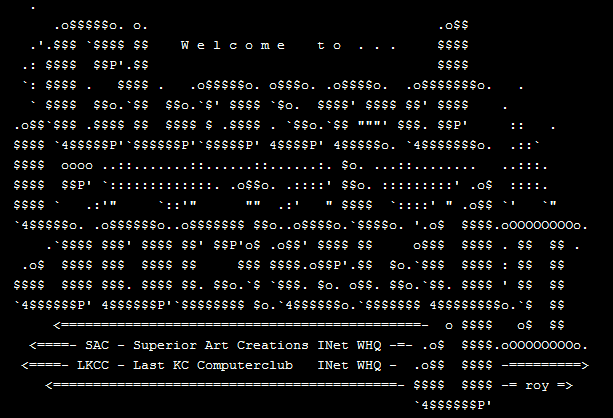
- ASCII art
- Bio Art
- Cyberformance
- Computer art
- Critical making
- Digital art
- Demoscene
- Digital poetry
- Electronic art
- Experimental musical instrument building
- Evolutionary art
- Fax art
- Generative art
- Glitch art
- Hypertext
- Information art
- Interactive art
- Kinetic art
- Light art
- Motion graphics
- Net art
- Performance art
- Radio art
- Robotic art
- Screenlife
- Software art
- Sound art
- Systems art
- Telematic art
- Video art
- Video games
- Virtual art
Artists
[edit]Cultural centres
[edit]- Australian Network for Art and Technology
- Center for Art and Media Karlsruhe
- Centre pour l'Image Contemporaine
- Daniel Langlois Foundation
- Eyebeam Art and Technology Center
- FACT Liverpool
- Foundation for Art and Creative Technology
- Gray Area Foundation for the Arts
- Harvestworks
- InterAccess
- Los Angeles Center for Digital Art (LACDA)
- Netherlands Media Art Institute
- NTT InterCommunication Center
- Rhizome (organization)
- RIXC
- School for Poetic Computation (SFPC)
- School of the Art Institute of Chicago
- Squeaky Wheel: Film and Media Arts Center
- V2 Institute for the Unstable Media
- WORM
See also
[edit]
- ART/MEDIA
- Artmedia
- Aspect magazine
- Culture jamming
- Digital media
- Digital puppetry
- Electronic Language International Festival
- Electronic literature
- Expanded Cinema
- Experiments in Art and Technology
- Interactive film
- Interactive media
- Intermedia
- LA Freewaves
- Net.art
- New media art festivals
- New media artist
- New media art journals
- New media art preservation
- Remix culture
- VJing
References
[edit]- ^ Shanken, Edward A. (2005). "Artists in Industry and the Academy: Collaborative Research, Interdisciplinary Scholarship and the Creation and Interpretation of Hybrid Forms". Leonardo. 38 (5). MIT Press - Journals: 415–418. doi:10.1162/leon.2005.38.5.415. ISSN 0024-094X. S2CID 55958365.
- ^ "Contemporary Art and New Media: Toward a Hybrid Discourse?". 15 February 2011.
- ^ a b Paul, Christiane (2012). "The myth of immateriality – presenting new media art". Technoetic Arts. 10 (2): 167–172. doi:10.1386/tear.10.2-3.167_7.
- ^ Eskilson, Stephen (2003). "Thomas Wilfred and Intermedia: Seeking a Framework for Lumia". Leonardo. 36 (1). MIT Press - Journals: 65–68. doi:10.1162/002409403321152347. ISSN 0024-094X. S2CID 57568475.
- ^ a b c Dixon, S. (2015). Digital Performance: A History of New Media in Theater, Dance, Performance Art, and Installation. Leonardo. MIT Press. ISBN 978-0-262-52752-1.
- ^ a b Cox et al. 2018, p. 50-70.
- ^ Cox et al. 2018, p. 165–169.
- ^ Cox et al. 2018, p. 85-91.
- ^ "La Plissure du Texte". 1904.cc. Archived from the original on 2015-04-02.
- ^ "Nouveaux Media – New Media – Neue Medien". www.newmedia-art.org.
- ^ Broeckmann, Andreas (2007). "Image, Process, Performance, Machine: Aspects of an Aesthetics of the Machinic". In Oliver Grau (ed.). Media Art Histories. Cambridge: MIT Press. pp. 204–205. doi:10.7551/mitpress/4530.003.0014. ISBN 978-0-262-07279-3.
- ^ Kac, E. (2007). "Art that looks you in the eye: hybrids, clones, mutants, synthetics, and transgenics". Signs of life: Bio art and beyond. MIT Press. pp. 1–27.
- ^ Mark Tribe, Reena Jana (2007), New Media Art, Introduction, Rome: Taschen, ISBN 978-3-8228-2537-2
- ^ Maurizio Bolognini (2008), Postdigitale (in Italian), Rome: Carocci Editore, ISBN 978-88-430-4739-0
- ^ Catricalà, Valentino (2015). Media Art. Toward a new Definition of Arts in the Age of Technology. Gli Ori. ISBN 978-88-7336-564-8.
- ^ Maurizio Bolognini (2010). From interactivity to democracy. Towards a post-digital generative art. Artmedia X Proceedings, Paris.
- ^ Bulajic, Viktorija Vesna (2007). Database aesthetics: art in the age of information overflow. University of Minnesota Press.
- ^ Moulon, Dominique (2013). Contemporary new media art. Nouvelles éditions Scala.
- ^ van der Meulen, Sjoukje (2017). "A Strong Couple: New Media and Socially Engaged Art". Leonardo. 50 (2). MIT Press - Journals: 170–176. doi:10.1162/leon_a_00963. hdl:1874/361010. ISSN 0024-094X.
- ^ Hudson, D.; Zimmermann, P. (2015-04-09). Thinking Through Digital Media. New York: Palgrave Macmillan. ISBN 978-1-137-43362-6.
- ^ Womack, Y.L. (2013). Afrofuturism: The World of Black Sci-Fi and Fantasy Culture. Chicago Review Press. ISBN 978-1-61374-799-5.
- ^ Youngquist, Paul (2016). A pure solar world: Sun Ra and the birth of Afrofuturism. Austin: University of Texas Press. doi:10.7560/726369. ISBN 978-1-4773-1117-2.
- ^ Peattie, Peggy (2021-08-26). "Afrofuturism Revelation and Revolution; Voices of the Digital Generation". Journal of Communication Inquiry. 46 (2). SAGE Publications: 161–184. doi:10.1177/01968599211041117. ISSN 0196-8599. S2CID 239684575.
- ^ a b Mondloch, K. (2018). A Capsule Aesthetic: Feminist Materialisms in New Media Art. University of Minnesota Press. ISBN 978-1-4529-5511-7.
- ^ Kinder, M. (2005). "A cinema of intelligent agents: conceiving ada and teknolust". In Tromble, M. (ed.). The art and films of lynn Hershman leeson: Secret agents, private. University of California Press. pp. 167–181.
- ^ Nagam, Julie; Swanson, Kerry (2014). "Decolonial Interventions in Performance and New Media Art: In Conversation with Cheryl L'Hirondelle and Kent Monkman". Canadian Theatre Review. 159. University of Toronto Press Inc. (UTPress): 30–37. doi:10.3138/ctr.159.006. ISSN 0315-0836. S2CID 194059689.
- ^ Scudeler, June (2015-12-01). ""Indians on Top": Kent Monkman's Sovereign Erotics". American Indian Culture and Research Journal. 39 (4). California Digital Library (CDL): 19–32. doi:10.17953/aicrj.39.4.scudeler. ISSN 0161-6463.
- ^ "Digital Rosetta Stone" (PDF). ercim.org.
- ^ Rinehart, Richard. "Preserving the Rhizome ArtBase (report)". rhizome.org. Archived from the original on 2005-01-16.
- ^ Rose, Frank (2016-10-21). "The Mission to Save Vanishing Internet Art". The New York Times. ISSN 0362-4331. Retrieved 2016-11-14.
- ^ "Longevity of Electronic Art". besser.tsoa.nyu.edu. Retrieved 2017-12-07.
- ^ Paul, Christiane (2008). New Media in the White Cube and Beyond. Berkeley: University of California Press. ISBN 978-0-520-25597-5. OCLC 225871513.
- ^ Almeida, Nora (2012). "Dismantling the Monolith: post-media art and the culture of instability". Art Documentation: Journal of the Art Libraries Society of North America. 31 (1). University of Chicago Press: 2–11. doi:10.1086/664932. ISSN 0730-7187. JSTOR 664932. S2CID 109627137.
- ^ Post, Colin (2017). "Preservation practices of new media artists". Journal of Documentation. 73 (4): 716–732. doi:10.1108/JD-09-2016-0116.
- ^ a b "The School of Art and Design – University of Illinois at Urbana-Champaign". illinois.edu. Archived from the original on 2016-03-02. Retrieved 2013-04-30.
- ^ "New Media Programs in the United States — Dr. Edgar Huang". www.iupui.edu.
Further reading
[edit]- Wardrip-Fruin, Noah; Montfort, Nick, eds. (2003). The New Media Reader. The MIT Press. ISBN 0-262-23227-8.
- Maurice Benayoun (July 2011). The Dump, 207 Hypotheses for Committing Art (in French). France: Fyp éditions. ISBN 978-2-916571-64-5.
- Timothy Murray; Derrick de Kerckhove; Oliver Grau; Kristine Stiles; Jean-Baptiste Barrière; Dominique Moulon; Jean-Pierre Balpe (2011). Maurice Benayoun - Open Art (in French). Nouvelles éditions Scala. ISBN 978-2-35988-046-5.
- Bush, Vannevar (1945-07-01). "As We May Think". The Atlantic. Archived from the original on 2012-08-22.
- Ascott, Roy (2003). Telematic Embrace: Visionary Theories of Art, Technology, and Consciousness. Berkeley, Calif.: Univ of California Press. ISBN 978-0-520-21803-1.
- Barreto, Ricardo; Perissinotto, Paula (2002). The Culture of Immanence. INTERNET ART FILE 2002, São Paulo, IMESP. ISBN 85-7060-038-0. Archived from the original (DOC) on 2008-06-25.
- Jorge Luis Borges (1941). "The Garden of Forking Paths." Editorial Sur.
- Bourriaud, Nicolas (2020) [1998]. Relational Aesthetics. Les presses du réel. ISBN 978-2-37896-371-2.
- Buci-Glucksmann, Christine (1999). "L'art à l'époque virtuel". In Olive, Jean-Paul; Amey, Claude (eds.). Les frontières esthétiques de l'art (in French). Paris Montréal (Québec): Editions L'Harmattan. ISBN 2-7384-8262-7.
- Buci-Glucksmann, Christine (2002). La folie du voir: Une esthétique du virtuel (in French). Paris: Editions Galilée. ISBN 978-2-7186-0599-9.
- Catricalà, Valentino (2015-01-01). "Media Art. Towards a New Definition of Arts in the Age of Technology". Academia.edu.
- Graham, Beryl; Cook, Sarah (2010). Rethinking Curating: Art After New Media. Cambridge: MIT Press (MA). ISBN 978-0-262-01388-8.
- "Curating New Media – Beryl Graham & Sarah Cook on the challenges of exhibiting massless media". Art Monthly. No. 261. November 2002.
- Cook, Sarah (2010). A Brief History of Curating New Media Art – Conversations with Curators. Berlin: Damaris Publishing. ISBN 978-3-941644-20-5.
- Cook, Sarah (2010). A Brief History of Working with New Media Art – Conversations with Artists. Berlin: The Green-Box-Kunst-Ed. ISBN 978-3-941644-21-2.
- Fleischmann, Monika; Reinhard, Ulrike (2004). Digitale Transformationen : Medienkunst als Schnittstelle von Kunst, Wissenschaft, Wirtschaft und Gesellschaft [Digital Transformations – Media Art as at the Interface between Art, Science, Economy and Society] (in German). Heidelberg: WHOIS Verlags- & Vetriebsgesellschaft. ISBN 978-3-934013-38-4.
- Fleischmann, Monika; Strauss, Wolfgang, eds. (2001). CAST01//Living in Mixed Realities. ISSN 1618-1387.
- Shapiro, Alan N. (2010). "Preface". In Gatti, Gianna Maria (ed.). The Technological Herbarium. Avinus Verlag. ISBN 978-3-86938-012-4.
- Gere, Charlie (2002). Digital Culture. London: Reaktion Books. ISBN 978-1-86189-143-3.
- Paul Brown; Charlie Gere; Nicholas Lambert; Catherine Mason, eds. (2008). White Heat Cold Logic: British Computer Art 1960–1980. MIT Press/Leonardo Books. ISBN 978-0-262-02653-6.
- Graham, Philip Mitchell, New Epoch Art, InterACTA: Journal of the Art Teachers Association of Victoria, Published by ACTA, Parkville, Victoria, No 4, 1990, ISSN 0159-9135, Cited In APAIS. This database is available on the Informit Online Internet Service or on CD-ROM, or on Australian Public Affairs – Full Text
- Grau, Oliver (2003). Virtual Art: From Illusion to Immersion. Cambridge (Mass.): Mit Press. ISBN 0-262-07241-6.
- Grau, Oliver (2007). MediaArtHistories. Cambridge, Mass: MIT Press. ISBN 978-0-262-07279-3.
- Hansen, Mark (2004). New Philosophy for New Media. Cambridge, Mass.: MIT Press. ISBN 978-0-262-08321-8.
- Higgins, Dick (February 1966). "Intermedia". The Something else Newsletter. 1 (1).
- Lopes, Dominic McIver. (2009). A Philosophy of Computer Art. London: Routledge
- Manovich, Lev (2002-02-22). The Language of New Media. Cambridge, Mass.: MIT Press. ISBN 0-262-63255-1.
- Manovich, Lev (2002). "Ten Key Texts on Digital Art: 1970-2000". Leonardo. 35 (5). MIT Press - Journals: 567–575. doi:10.1162/002409402320774385. ISSN 0024-094X. S2CID 57566892.
- Manovich, Lev (2003-02-14). "New Media from Borges to HTML" (PDF). In Wardrip-Fruin, Noah; Montfort, Nick (eds.). The New Media Reader. Cambridge, Mass: MIT Press. ISBN 978-0-262-23227-2.
- Mondloch, Kate (2010). Screens: Viewing Media Installation Art. Minneapolis, Minn: University of Minnesota Press. ISBN 978-0-8166-6522-8.
- Paul, Christiane (2003). Digital Art. London: Thames & Hudson. ISBN 0-500-20367-9.
- Paul, Christiane (2007-01-27). "Challenges for a Ubiquitous Museum: Presenting and Preserving New Media". NeMe.
- Robert C. Morgan, Commentaries on the New Media Arts Pasadena, CA: Umbrella Associates,1992
- Janet Murray (2003). "Inventing the Medium", The New Media Reader. MIT Press.
- Frank Popper (2007) From Technological to Virtual Art, MIT Press/Leonardo Books
- Frank Popper (1997) Art of the Electronic Age, Thames & Hudson
- Edward Shanken (2009-02-09). "Writings on Contemporary Art and New Media".
- Shanken, Edward A. (2009-02-21). Art and Electronic Media. London New York [Lagny-sur-Marne]: Phaidon. ISBN 978-0-7148-4782-5.
- Tribe, Mark; Jana, Reena (2009). New Media Art. Basic art series. Taschen. ISBN 978-3-8365-1413-2. Archived from the original on 2010-07-05.
- Usselmann, Rainer (2003). "The Dilemma of Media Art: Cybernetic Serendipity at the ICA London". Leonardo. 36 (5). MIT Press - Journals: 389–396. doi:10.1162/002409403771048191. ISSN 0024-094X. S2CID 263470200.
- Rainer Usselmann, (2002) "About Interface: Actualisation and Totality", University of Southampton
- Wands, Bruce (2006). Art of the Digital Age. London: Thames and Hudson. ISBN 0-500-23817-0.
- Whitelaw, Mitchell (2006). Metacreation: Art and Artificial Life. Cambridge, Mass London: MIT Press. ISBN 0-262-73176-2.
- Dietz, Steve (2004-02-16). "Collecting New Media Art: Just Like Anything Else, Only Different". NeMe.
- Worms, Anne-Cécile (2008). Arts Numériques: Tendances, Artistes, Lieux et Festivals (in French). M21 Editions. ISBN 978-2-916260-33-4. Archived from the original on 2018-06-25.
- Youngblood, Gene (1970). Expanded Cinema. New York. E.P. Dutton & Company.
- Prada, Juan Martín (2012-04-12). Prácticas artísticas e internet en la época de las redes sociales (in Spanish). Ediciones Akal, S.A. ISBN 978-84-460-3517-6.
- New Media Faculty, (2011). "New Media", University of Illinois at Urbana-Champaign
- Hiekel, Jörn Peter (2009). Vernetzungen: Neue Musik im Spannungsfeld von Wissenschaft und Technik (in German). Institut für Neue Musik und Musikerziehung Darmstadt. OCLC 320198124.
- Bailey, Chris; Gardiner, Hazel (2016-04-08). Revisualizing Visual Culture. Routledge. doi:10.4324/9781315606286. ISBN 978-1-317-06349-0.
- Hudson, Dale; Zimmermann, Patricia R. (2009). "Taking things apart: Migratory archives, locative media, and micropublics". Afterimage. 36 (4): 14–19. doi:10.1525/aft.2009.36.4.15.
- Moss, Ceci (2008-12-03). "Thoughts on "New Media Artists vs Artists With Computers"". Rhizome.
- Nechvatal, Joseph (2013-08-20). "Whither Art? David Joselit's Digital Art Problem". Hyperallergic.
- Joselit, David (2013). After Art. Princeton: Princeton University Press. ISBN 978-0-691-15044-4.
- Guertin, Carolyn (2012-04-26). Digital Prohibition: Piracy and authorship in new media art. London: Continuum. ISBN 978-1-4411-0610-0.
- Catricalà, Valentino (2013-01-01). "Come l'avanguardia inventò il futuro. L'Optofono di Raoul Hausman, la "visione elettromeccanica di Lissitzky e le forme dell'energia" [How the avant-garde invented the future. The Raoul Hausmann’s Optophone, the Lissitzky‘s "electromecchanic vision" and the shapes of energies]. In "Imago. Rivista di studi sul cinema e i media" (in Italian).
- Hudson, D.; Zimmermann, P. (2015-04-09). Thinking Through Digital Media: Transnational Environments and Locative Places. Palgrave Macmillan. ISBN 978-1-137-43362-6.
- Strehovec, Janez; Baldwin, Sandy (2016-10-08). Text as Ride: Electronic Literature and New Media Art. Computing Literature. West Virginia University Press. ISBN 9781943665372. OCLC 959956315.
- Cox, D.; Sandor, E.; Fron, J.; Wainwright, L.; Balsamo, A.; Malloy, J.; Cruz-Niera, C.; Bushell, C.; Goggin, N.; Rasmussen, M. (2018). New Media Futures: The Rise of Women in the Digital Arts. University of Illinois Press. ISBN 978-0-252-05018-3.

| International | |
|---|---|
| National | |
| Other | |

New media art
View on GrokipediaDefinition and Scope
Core Characteristics
New media art fundamentally relies on digital technologies, including computers, networks, and software, to create works that are computable and modifiable at the code level, distinguishing it from analog or static traditional forms.[7] This digital foundation enables numerical representation, where media elements are encoded as data, allowing for manipulation, simulation, and reproducibility through algorithms rather than physical replication.[7] A defining trait is interactivity, which transforms passive viewing into active engagement, where user inputs—such as touch, gestures, or data streams—dynamically alter the artwork's form or narrative in real time.[8] This participatory element often blurs boundaries between creator, audience, and machine, fostering collaborative or emergent outcomes, as seen in early interactive installations from the 1990s onward.[9] Complementing this is modularity, structuring works as discrete, recombinable components—like pixels, code modules, or networked nodes—that permit variability and customization without fixed authorship.[7] Automation and algorithmic processes further characterize the field, automating aesthetic decisions through procedural rules, generative algorithms, or AI-driven systems, which produce evolving outputs beyond human manual control; for instance, software may generate infinite variations from initial parameters.[7] Multimodality integrates diverse elements—sound, video, text, and sensors—into hybrid experiences, often leveraging transcoding to interface cultural layers with computational logic, reflecting broader information culture.[7] These traits emphasize ephemerality and adaptability, as works evolve with technological updates or obsolescence, challenging permanence in favor of process over product.[8]Boundaries with Traditional Art
New media art is demarcated from traditional art forms primarily through its dependence on digital technologies and computational processes, which enable numerical representation of media as manipulable data, modularity in composable elements, automation of creation and variation, and transcoding between cultural and computational layers.[3] These attributes, as articulated by media theorist Lev Manovich in his 2001 analysis, contrast with traditional art's reliance on analog materials like paint, stone, or canvas, where the artwork's essence inheres in the physical object's fixed form and the artist's irreplaceable manual execution.[3] Traditional works, such as oil paintings or sculptures, prioritize permanence and singularity, often preserved for centuries in institutional collections due to their material durability, whereas new media artifacts—frequently software-based or hardware-dependent—face inherent ephemerality from rapid technological shifts.[10] A core boundary lies in interactivity and audience agency: traditional art typically affords passive contemplation of a static object, with viewer engagement limited to perceptual interpretation, while new media art incorporates real-time responsiveness, allowing participants to alter outcomes via input devices, algorithms, or networks, thereby blurring lines between creator and observer.[11] For example, interactive installations from the 1990s onward, such as those using sensors or user interfaces, evolve dynamically with each encounter, challenging traditional notions of authorship and fixed meaning.[12] This variability—where a single codebase or dataset yields multiple iterations—undermines the aura of uniqueness central to traditional art markets, which value originals over reproductions; in new media, editions or certificates often certify access to processes rather than singular objects.[3] Technological obsolescence further delineates these realms, as new media works risk inaccessibility when hardware, software, or formats become unsupported, necessitating emulation or migration strategies absent in traditional conservation.[13] Institutions like the Museum of Modern Art have documented cases, such as preserving 1990s Japanese media installations by rebuilding obsolete tech stacks, highlighting how new media's lifespan can span mere years compared to traditional artifacts enduring millennia.[13] Despite overlaps—such as digital tools augmenting traditional techniques—these material, experiential, and preservative distinctions maintain new media's status as a distinct paradigm, driven by computation's logic rather than craft's tactility.[14]Historical Evolution
Pre-Digital Foundations (1920s-1970s)
The pre-digital foundations of new media art trace to modernist experiments that integrated emerging technologies, motion, and audience engagement, challenging static object-based traditions. In the 1920s, the Bauhaus school, founded by Walter Gropius in 1919, emphasized the fusion of art, craft, and industrial production, incorporating photography, film, and light experiments by László Moholy-Nagy, such as his Light-Space Modulator (1922–1930), which projected dynamic light patterns to explore spatial perception and mechanical processes. These efforts prefigured new media's emphasis on process and technological mediation, though constrained by analog tools. Similarly, Constructivism in the Soviet Union during the 1920s promoted utilitarian art forms tied to machinery and mass media, influencing later hybrid media practices. Post-World War II developments amplified motion and interactivity through kinetic art, which employed mechanical devices, motors, and environmental forces to create viewer-dependent experiences. Alexander Calder's mobiles, introduced in 1932, used air currents for unpredictable movement, marking an early shift toward art as temporal event rather than fixed form. By the 1950s–1960s, artists like Jean Tinguely constructed self-destructing machines, such as Homage to New York (1960), and Jesús Rafael Soto developed vibrating wire installations, simulating digital-like flux without electronics.[15] Op art, concurrent in the 1960s with figures like Bridget Riley and Victor Vasarely, induced illusory motion through geometric patterns, anticipating algorithmic visual effects and perceptual interactivity in digital works. These analog precursors highlighted causality in viewer-art relations, laying groundwork for computational dynamism. In the 1960s–1970s, Fluxus and conceptual art further eroded media boundaries, prioritizing ideas, performance, and ephemerality over commodified objects. Fluxus, emerging around 1962 under George Maciunas, promoted "intermedia"—a term coined by Dick Higgins in 1966—to blend disciplines like music, visual art, and daily actions in events that democratized participation.[16] Higgins's framework challenged medium specificity, fostering hybrid forms that influenced networked and performative new media.[17] Conceptual artists, including Sol LeWitt with his wall drawings instructed via text (1968 onward), emphasized linguistic and procedural instructions, dematerializing art and prefiguring code-based generation. Happenings, initiated by Allan Kaprow in 1959, integrated audience improvisation and site-specificity, underscoring social and temporal dimensions later amplified by digital interfaces. These movements collectively shifted focus from representation to systems and participation, providing causal precedents for new media's interactive paradigms despite lacking digital substrates.Digital Emergence (1980s-1990s)
The 1980s saw the initial emergence of digital art within new media practices, driven by the commercialization of personal computers such as the Apple Macintosh in 1984, which introduced graphical user interfaces and software like MacPaint that democratized image creation for non-programmers.[18] This technological shift enabled artists to experiment with computational processes, moving beyond analog media to generate and manipulate visuals algorithmically. Harold Cohen's AARON program, refined throughout the decade, exemplified early autonomous digital drawing; by 1982, it produced line drawings autonomously, with Cohen later adding color manually, marking a pivotal step in AI-assisted art.[19][20] Prominent artists adopted emerging hardware for creative output, highlighting digital tools' potential in fine art. In 1985, Andy Warhol used a Commodore Amiga 1000 to create a digitized portrait of Debbie Harry, one of the first instances of a major traditional artist embracing consumer-level digital imaging.[21] David Hockney followed in 1986, employing the professional Quantel Paintbox system to produce digital paintings for a BBC documentary series, demonstrating high-end digital manipulation's expressive capabilities.[22] Concurrently, interactive and generative experiments proliferated; Lynn Hershman Leeson's Lorna (1979–1984), an interactive LaserDisc installation, allowed viewers to navigate a branching narrative via remote control, prefiguring user-driven digital experiences.[23] In the 1990s, software advancements like Adobe Photoshop's release in 1990 facilitated sophisticated image editing and collage, integrating digital video manipulation into artistic workflows.[18] Maurizio Bolognini's Programmed Machines series, initiated in 1988 and expanded through the decade, consisted of sealed computers autonomously generating endless streams of random images, emphasizing the machine's productive process over consumable output and underscoring generative art's philosophical underpinnings.[24] The decade's latter half introduced network effects with the World Wide Web's advent around 1995, enabling early net art forms that distributed digital works online, though institutional recognition remained limited due to ephemerality and technological barriers.[23] These developments established digital emergence as a foundational phase, prioritizing process, interactivity, and computation over static representation.Networked Expansion (2000s)
In the 2000s, new media art underwent networked expansion as artists leveraged emerging Web 2.0 technologies, which emphasized user-generated content, interactivity, and social platforms, shifting from static web pages to dynamic, participatory systems. This period built on 1990s net art by integrating broadband proliferation and platforms like Friendster (launched 2002), MySpace (2003), Facebook (2004), YouTube (2005), and Twitter (2006), enabling real-time collaboration and data flows in artistic practice. Artists increasingly critiqued corporate-controlled networks while exploiting their connective potential, producing works that blurred authorship, distribution, and audience roles.[23][25] Key works exemplified this expansion through critical engagement with online commerce and social dynamics. In 2002, Keith and Mendi Obadike created The Interaction of Coloreds, an eBay auction listing the artists' skin color as a commodity, satirizing racial biases embedded in digital marketplaces and highlighting how networked platforms commodify identity. Similarly, Casey Reas's {Software} Structures series, initiated in 2004 using the Processing programming language, generated dynamic visual patterns that could be adapted across networked environments, underscoring algorithmic autonomy in distributed systems. Tate's commissioning of net art from 2000 to 2011 further institutionalized these practices, preserving volatile digital works amid rapid technological shifts.[23][26] This era also saw concerns over ephemerality, as software obsolescence threatened networked artworks' longevity; for instance, early 2000s discussions noted that digital pieces risked vanishing with hardware updates, prompting preservation efforts like Cornell University's 2000 initiative for internet-based multimedia archives. Collaborative projects proliferated, with Web 2.0 fostering peer-to-peer exchanges that challenged traditional gallery models, though economic models prioritized voluntary sharing over sustained funding. By decade's end, these developments laid groundwork for post-internet art, emphasizing hybrid physical-digital networks over pure online forms.[27][28][29]AI and Post-Digital Shifts (2010s-2025)
The integration of artificial intelligence into new media art accelerated in the 2010s with the advent of generative adversarial networks (GANs), introduced in 2014 by Ian Goodfellow and colleagues as a method for training neural networks to generate realistic images through adversarial competition between generator and discriminator components. This technology enabled artists to produce novel visual outputs from datasets, shifting new media practices toward algorithmic co-creation where human prompts interfaced with machine learning models to explore themes of perception, memory, and data visualization. Early adopters like Refik Anadol employed GANs and similar AI systems to create immersive installations, such as his 2018 "Machine Hallucinations" series, which transformed architectural scans and environmental data into fluid, dream-like projections exhibited at venues including the San Francisco Museum of Modern Art. These works highlighted AI's capacity for synthesizing vast datasets into aesthetic forms, often critiquing the commodification of information in digital economies.[30] By the late 2010s, AI-generated pieces gained market prominence, exemplified by the Obvious collective's "Portrait of Edmond de Belamy" in 2018, a GAN-trained image of a fictional nobleman sold at Christie's for $432,500, marking the first major auction of AI art and sparking debates on authorship, as the output derived from remixing 15th-century portrait datasets without original human painting. This period saw new media artists leveraging open-source GAN frameworks to interrogate creativity's boundaries, with figures like Mario Klingemann developing autonomous systems such as "Memories of Passersby I" (2018), an AI that continuously generated and aged portraits in real-time at London's King's Cross station. However, empirical analyses revealed limitations, including mode collapse—where GANs repetitively produced similar outputs—and reliance on biased training data, often scraped from human artworks without consent, leading to lawsuits by visual artists against AI firms like Stability AI in 2023 for alleged copyright infringement. Post-digital shifts from the mid-2010s onward emphasized hybridity over digital purity, responding to the saturation of screen-based media by reintroducing analog materiality, glitches, and performative elements into AI-driven works, as theorized in Florian Cramer's 2014 formulation of post-digital aesthetics as a condition where computational processes are demystified and integrated into everyday materiality. Artists like Hito Steyerl incorporated AI simulations into video essays, such as "How Not to Be Seen: A Fucking Didactic Educational .MOV File" (2013, extended in later iterations), using algorithmic rendering to critique visibility and surveillance in data-saturated societies. By the 2020s, diffusion models supplanted GANs for broader accessibility, with tools like DALL-E (launched 2021 by OpenAI) and Stable Diffusion (2022) enabling text-to-image generation, fueling installations such as Anadol's "Unsupervised" (2022) at MoMA, which hallucinated abstractions from the museum's 180,000 digitized artworks using custom AI trained on public-domain images.[30] These advancements prompted institutional responses, including the 2023 formation of AI art curatorial guidelines by museums to address ethical data sourcing, amid growing recognition that AI outputs often amplify dataset biases rather than innovate independently.[31] Into 2025, new media art's AI trajectory reflects causal tensions between technological determinism and human agency, with market data indicating AI-assisted works comprising under 1% of global art sales despite hype, as collectors prioritize verifiable human curation over automated novelty.[32] Post-digital critiques have intensified, focusing on ecological costs—AI training consumes energy equivalent to thousands of households annually—and philosophical questions of intentionality, where first-principles analysis reveals AI as a statistical interpolator of priors rather than a causal originator of meaning. Exhibitions like Ars Electronica's 2024 Prix for AI art underscored this by awarding hybrid projects blending machine outputs with manual intervention, signaling a maturation toward tools that augment rather than supplant artistic reasoning.Technological Forms
Interactive Installations
Interactive installations in new media art employ computational systems, sensors, and real-time processing to enable direct audience participation, transforming passive observation into dynamic co-creation where user inputs—such as gestures, proximity, or biometric data—trigger audiovisual responses.[33][34] These works emerged prominently in the 1970s, building on cybernetic principles to explore human-machine symbiosis, with early systems relying on video processing and basic input devices rather than widespread digital networks.[35] Pioneering efforts include Myron Krueger's Videoplace (1974–1990s), an artificial reality environment connecting two separated rooms via video cameras and projection screens, where participants' body outlines were digitized and manipulated in real-time to interact with graphic elements or remote counterparts, emphasizing responsive environments without physical contact.[36][37] Krueger's system processed skeletal data from luminance-keyed video feeds to generate immediate feedback, influencing subsequent interactive paradigms by prioritizing gestural control over narrative content.[38] In the 1980s, David Rokeby's Very Nervous System (developed from 1982, first major iteration 1986) advanced this through custom image-processing software that captured participant movements via overhead video cameras, converting positional data into synthesized soundscapes and visual projections, creating a "nervous" ecosystem responsive to velocity, direction, and body posture.[39][40] The installation used analog-to-digital converters and MIDI interfaces for low-latency audio generation, allowing multiple users to collectively alter the sonic environment, which demonstrated early applications of computer vision in artistic interactivity.[41] Contemporary examples, such as Rafael Lozano-Hemmer's Pulse Room (first installed 2006), integrate biometric sensors to detect visitors' heart rates via fingertip clamps, sequentially illuminating hundreds of light bulbs in rhythm with the input before archiving the pattern for subsequent users, thereby layering collective physiological data into a shared, ephemeral display.[42] Lozano-Hemmer's works often scale to public spaces, employing motion trackers, proximity detectors, and networked processors to amplify interpersonal dynamics, as in 33 Questions per Minute (2000–ongoing), where spoken queries from participants are vocalized by robotic mouths.[43] These installations typically leverage infrared sensors, cameras, and real-time algorithms for input detection, ensuring sub-second responsiveness critical to perceptual immersion.[44][45] Core technologies in such installations include motion sensors (e.g., ultrasonic or Kinect-style depth cameras) for gesture recognition, biometric interfaces for physiological capture, and embedded microcontrollers for processing, enabling causal links between human agency and emergent outputs while highlighting the medium's dependence on reliable hardware calibration to avoid latency-induced disengagement.[46][47] By the 2010s, integration of machine learning refined input interpretation, as seen in Lozano-Hemmer's biometric series, yet foundational systems like Krueger's underscore that interactivity stems from direct sensor-to-effector mappings rather than opaque AI mediation.[48]Generative and Algorithmic Creations
Generative and algorithmic creations in new media art encompass works where artists devise computational systems—typically algorithms executed by computers—that autonomously produce visual, sonic, or interactive outputs according to predefined rules, often incorporating elements of randomness or evolution to yield unpredictable results.[49] This approach shifts authorship from direct manual intervention to the design of self-sustaining processes, distinguishing it from traditional deterministic art forms by emphasizing emergence and autonomy.[50] Computational generative art emerged prominently in the 1960s, coinciding with access to early digital plotters and mainframe computers, as artists explored mathematical permutations and stochastic methods to challenge human-centric creation.[51] Pioneering examples include Frieder Nake's Hommage à Paul Klee series from 1965, which used a computer algorithm to generate line drawings mimicking the constructive geometry of Klee's work, plotted via the Graphomat Z64 machine at the Technical University of Stuttgart.[52] Similarly, Vera Molnár began experimenting with computer-generated permutations in 1968, producing works like Interruptions, where systematic variations of geometric forms were algorithmically derived and output on plotters, exhibited at the 1968 Cybernetic Serendipity show in London.[53] Georg Nees presented the first solo exhibition of computer-generated art in 1965 at the Stuttgart Institute of Technology, featuring algorithmic patterns based on quasi-random grids and polyominos, demonstrating how code could reveal novel aesthetic structures beyond manual execution.[51] These early efforts relied on batch-processed outputs, limited by hardware constraints, yet established algorithmic art as a rigorous, rule-based practice rooted in cybernetics and information theory.[54] By the late 1980s, advancements in personal computing enabled more autonomous systems, as seen in Maurizio Bolognini's Programmed Machines series initiated in 1988, comprising sealed computers—over 200 units by 2004—that continuously generate digital images through programmed interactions of virtual particles, without real-time artist oversight or viewer interaction.[24] The outputs, stored as archives of thousands of images printable on demand, underscore the work's focus on the generative process's entropy and immateriality, critiquing the commodification of art by prioritizing unseen machine aesthetics over tangible products.[55] Harold Cohen's AARON, developed from 1973 and refined through the 1980s, represented an early algorithmic drawing system capable of producing colored plots autonomously, evolving via rule-based heuristics to simulate creative decision-making, with exhibitions like those at the San Francisco Museum of Modern Art in 1979 showcasing its outputs.[56] Subsequent developments incorporated evolutionary algorithms and simulations, such as cellular automata, influencing works like those by Manfred Mohr from 1969 onward, where cubic lattice transformations generated abstract sculptures and plots via algorithmic projections.[51] In the 1990s, real-time generative systems proliferated with accessible software, enabling dynamic visuals responsive to inputs, though core to the form remains the artist's specification of the underlying code rather than post-hoc edits.[49] This subdomain of new media art persists in challenging notions of originality, as the algorithm's iterations can produce vast corpora—e.g., Bolognini's machines yielding indefinite image flows—raising questions about reproducibility and the locus of creativity in machine-mediated processes.[57] Empirical studies of such systems highlight their reliance on verifiable computational determinism, where outputs emerge causally from initial parameters, contrasting with interpretive biases in traditional art criticism.[58]Immersive Environments (VR/AR)
Immersive environments in virtual reality (VR) and augmented reality (AR) represent a subset of new media art where artists construct interactive, three-dimensional spaces that engage participants' sensory and bodily presence, often subverting conventional viewing distances and enabling direct corporeal navigation.[59] Unlike passive media, these works leverage head-mounted displays, motion tracking, and spatial audio to foster embodied experiences, drawing from computational rendering and real-time interaction paradigms developed in the late 20th century.[60] Early VR art experiments emphasized phenomenological immersion over simulation fidelity, prioritizing subjective perception and spatial ambiguity.[61] Pioneering VR installations emerged in the mid-1990s as hardware like head-mounted displays became viable for artistic use, building on prior interactive systems from the 1960s and 1970s. Canadian artist Char Davies' Osmose (1995) exemplifies this shift, featuring a breath- and body-motion-controlled interface within a 3D virtual landscape of grids, trees, and fluid forms, accompanied by interactive soundscapes that respond to participant immersion depth.[60] Debuted at the Musée d'art contemporain de Montréal in 1995, Osmose critiqued anthropocentric VR tropes by emphasizing ethereal, non-representational spaces, with participants suspended in a harness to evoke weightlessness; physiological data from over 10,000 sessions indicated heightened meditative states compared to standard viewing.[61] [62] Davies followed with Éphémère (1998), extending organic motifs into decaying foliage realms, further integrating biofeedback for navigation.[63] Australian artist Jeffrey Shaw advanced VR through multi-user and panoramic systems, as in his Legible City series (starting 1989, with VR iterations in the 1990s), where cyclists pedaled through text-composed urban simulations overlaid on real cityscapes, blending AR elements with VR navigation to interrogate legibility and public space.[64] Shaw's later AVIE (AutoView Immersive Environment) platform, developed from 2007, supports 360-degree stereoscopic VR for group immersion, as deployed in installations like The Back of Beyond (2008), which projected Australian landscapes for collective bodily interaction.[65] These works, exhibited at venues like ZKM Karlsruhe, underscore VR's capacity for social and locative critique, evolving from single-user setups to networked environments by the 2000s.[66] AR extensions in new media art overlay digital elements onto physical reality via mobile devices or see-through displays, enabling site-specific interventions that hybridize environments without full sensory isolation. Early examples include Shaw's integrations in Legible City, where textual "buildings" augmented bike paths in Amsterdam and Karlsruhe (1999-2002), prompting riders to "read" the city through pedaling.[64] By the 2010s, consumer AR tools facilitated broader adoption, as in Rafael Lozano-Hemmer's Pulse Room variants (2006 onward) using AR to visualize heartbeats in gallery spaces, though core immersion relies on biometric sensors rather than pure overlays.[67] Recent VR/AR art, post-2012 Oculus Rift democratization, critiques immersion's isolating effects; for instance, Marina Abramović's The Life (2018) VR piece at Art Basel simulated life-death transitions via guided meditation in headset-bound voids, highlighting VR's potential for introspective ritual over escapism.[68] Technological constraints, such as latency and cybersickness, have shaped artistic strategies, favoring low-fidelity, abstract forms over photorealism to mitigate disorientation—evident in Davies' wireframe aesthetics yielding 20-30 minute sessions without nausea in empirical tests.[61] Preservation challenges persist due to obsolete hardware, with institutions like the Daniel Langlois Foundation archiving Davies' systems for emulation.[69] These environments expand new media art's ontological scope, probing human-technology embodiment amid advancing haptics and AI-driven dynamics by 2025.[67]Networked and Data-Driven Works
Networked art in new media encompasses works that leverage digital connectivity, such as the internet and telecommunications, to enable real-time interaction, data exchange, and distributed participation across global audiences. Emerging prominently in the mid-1990s, this form capitalized on the World Wide Web's expansion, allowing artists to bypass traditional institutions and create ephemeral, participatory pieces that critiqued or embodied network culture.[70] The net.art movement, active from approximately 1994 to 1998, exemplified this shift, with practitioners like Vuk Ćosić, JODI (Joan Heemskerk and Dirk Paesmans), and Alexei Shulgin producing browser-based interventions that exploited glitches, hyperlinks, and email lists to merge art with online discourse.[71] These works often emphasized the medium's instability, using HTML code, ASCII art, and early web protocols to highlight the internet's underlying infrastructure rather than polished aesthetics.[70] By the early 2000s, networked practices evolved with Web 2.0 platforms, incorporating user-generated content and social media APIs for collaborative or surveillance-themed installations. Artists began engaging platforms like YouTube and Flickr, producing works that mapped social dynamics or commodified personal data flows.[23] Rafael Lozano-Hemmer's telematic projects, such as Pulse Room (2006), utilized biometric sensors and wireless networks to synchronize participants' heartbeats in public spaces, demonstrating how physical and virtual networks could amplify collective presence.[71] This era underscored causal links between technological affordances—like latency and bandwidth—and artistic outcomes, where delays or disconnections became integral to the experience, revealing networks' material limits over idealized seamlessness.[72] Data-driven works, often intersecting with networked forms, process vast datasets from sources like APIs, sensors, or public records to generate visualizations, simulations, or algorithmic outputs that expose patterns in social, environmental, or economic phenomena. Aaron Koblin's Flight Patterns (2005), created using FAA air traffic data, rendered millions of flight paths as animated lines over the United States, illustrating aviation's spatial rhythms and densities through open-source tools like Processing.[73] Similarly, Refik Anadol's installations, such as Machine Hallucinations: Nature Dreams (2019), employ machine learning on archival datasets—comprising petabytes of images and environmental metrics—to produce immersive projections that simulate emergent aesthetics from statistical correlations, challenging viewers to discern human intent amid probabilistic outputs.[74] These pieces prioritize empirical aggregation over narrative imposition, with algorithms deriving form from raw inputs like weather telemetry or urban mobility logs, though critics note potential distortions from data incompleteness or selection biases inherent in sourced repositories.[75] In networked data art, real-time feeds amplify dynamism; for instance, Paolo Cirio's Loophole (2014) scraped foreclosure data from U.S. banks and overlaid it on Google Street View, enabling virtual navigation of economic distress sites to critique financial opacity.[76] Such interventions rely on APIs for live data ingestion, fostering works that evolve with external events, but they also confront ethical hurdles like privacy erosion and platform dependency, where service disruptions can render pieces inoperable. Empirical studies of these practices reveal higher engagement metrics in interactive variants—e.g., viewer dwell times doubling in responsive installations—yet preservation challenges persist due to obsolete protocols and proprietary data locks.[77] Overall, these forms underscore networks' dual role as enablers of unprecedented scale and vectors for systemic vulnerabilities, grounded in verifiable data traces rather than speculative ideals.[72]Theoretical Foundations
Influential Theorists
Lev Manovich developed a foundational framework for understanding new media through his 2001 book The Language of New Media, which posits new media as a convergence of media technologies and digital computing, emphasizing five key principles: numerical representation, modularity, automation, variability, and transcoding.[78] These principles derive from the computational logic underlying digital objects, distinguishing new media from traditional forms by enabling programmability and database-driven structures over linear narratives.[3] Manovich's analysis traces new media aesthetics to precedents in painting, cinema, and human-computer interfaces, arguing that digital media remediate older cultural forms while introducing modular composability that prioritizes user variability over fixed authorship.[79] Roy Ascott advanced cybernetic theory in art from the 1960s, integrating concepts from Norbert Wiener and W. Ross Ashby to advocate for "behaviorist art" that rejects static objects in favor of interactive systems responsive to viewer participation and feedback loops.[80] In works like his Groundcourse pedagogy at Ealing School of Art (1961–1964), Ascott applied cybernetic principles to foster process-oriented creativity, viewing art as a dynamic, telematic network where meaning emerges from relational behaviors rather than predefined forms.[81] His later concept of "technoetics" synthesizes cybernetics, telematics, and consciousness studies, positing art as a transformative interface for human-technology symbiosis, influencing networked and immersive new media practices.[82] Max Bense and Abraham Moles contributed early information-theoretic foundations in the 1950s–1960s, with Bense's generative aesthetics in Germany quantifying artistic structures through probabilistic models and Moles's French semiotics analyzing perceptual information flows in media environments.[72] These approaches, rooted in empirical measurement of aesthetic variables, prefigured algorithmic and data-driven new media by treating art as programmable systems amenable to scientific analysis, though often critiqued for reducing subjective experience to quantifiable entropy.[72] Ascott and Manovich built on such precedents, but their frameworks emphasize causal interactivity and cultural remediation over purely statistical models, reflecting new media's evolution toward user-agency and hybrid media logics.Debates on Authenticity and Value
Critics of new media art often invoke Walter Benjamin's concept of "aura," arguing that the medium's inherent reproducibility undermines the authenticity derived from an artwork's unique presence in time and space, as mechanical and digital replication strips away ritualistic or traditional value tied to originality.[83][84] In practice, this manifests in generative or algorithmic works, where code can produce infinite variations, challenging notions of a singular "original" and prompting debates over whether authenticity resides in the artist's intent, the software's execution, or the viewer's interaction rather than a fixed object.[85] Proponents counter that new media's authenticity emerges from its dynamic, process-oriented nature, such as in interactive installations where viewer participation creates ephemeral, site-specific experiences irreducible to copies, though empirical studies indicate audiences still perceive physical originals as more valuable due to tangible scarcity.[86] Valuation debates center on new media's intangibility and technological dependence, which disrupt traditional metrics like provenance and material rarity, leading to inconsistent market appraisals where works' worth fluctuates with software viability rather than enduring appeal.[87] The 2021 Christie's auction of Beeple's NFT "Everydays: The First 5000 Days" for $69.3 million exemplified speculative peaks, positioning digital art briefly among top auction values, yet subsequent market crashes— with many NFTs reselling for fractions of peak prices by 2023—highlight value as driven by hype rather than intrinsic merit or cultural endurance.[88][89] Preservation challenges exacerbate this, as obsolescence of hardware, software, or formats renders works inaccessible, diminishing long-term economic and historical value; surveys of new media artists reveal widespread strategies like emulation or migration, but success rates vary, with institutional efforts often lagging due to resource constraints and shifting priorities toward more stable media.[6] These tensions reflect broader causal realities: while new media expands artistic expression through accessibility and innovation, its value proposition remains contested, with empirical sales data underscoring volatility over stability, and authenticity claims requiring scrutiny against reproducible outputs that prioritize conceptual over material essence. Academic sources, often embedded in tech-optimistic circles, may overstate enduring impact, yet market corrections provide grounding evidence of overhyped valuations detached from verifiable demand.[90]Key Figures and Works
Early Innovators
Early innovators in new media art pioneered the integration of emerging technologies like video and computers during the 1960s, challenging conventional artistic boundaries by emphasizing interactivity, ephemerality, and process over static objects. These experiments often stemmed from collaborations between artists and engineers, leveraging tools initially developed for scientific or military purposes to generate dynamic visual experiences.[18] Nam June Paik stands as a foundational figure in video art, beginning with modifications to television sets in 1963 as part of Fluxus performances that distorted broadcast signals into sculptural forms. In 1965, Paik acquired one of the earliest Sony Portapak portable video recorders, enabling on-location recording and editing that produced seminal works blending live action with electronic manipulation. His collaboration with engineer Shuya Abe yielded the Paik-Abe Video Synthesizer in 1970, a device for real-time colorization and image distortion, which facilitated installations like TV Buddha (1974) and established video as a viable artistic medium independent of film.[91][92] At Bell Telephone Laboratories, engineers-turned-artists advanced computer-generated imagery. A. Michael Noll produced the first digital computer artworks in summer 1962 using an IBM 7090, creating abstract patterns such as Gaussian Quadratic through algorithms combining mathematics and pseudo-randomness; these were first exhibited at the Howard Wise Gallery in 1965 alongside perceptual psychologist Bela Julesz's works.[93][94] Lillian Schwartz, arriving at Bell Labs in the late 1960s as one of its initial artist-in-residence, developed Pixillation (1970), an early computer film employing the EXPLOR program to animate pixel mosaics and explore optical illusions, bridging traditional sculpture with digital abstraction.[95][96] John Whitney Sr. pioneered motion graphics with Catalog (1961), the earliest known computer-animated experimental film, repurposing surplus World War II analog computers and anti-aircraft targeting mechanisms to orchestrate parametric patterns in abstract cinema. Roy Ascott introduced cybernetic concepts to interactive art from 1961, creating Change Paintings—instruction-based canvases altered by participants—and developing the Groundcourse curriculum at Ealing School of Art (1961–1964), which applied feedback loops and behavioral systems to foster process-oriented, telematic precursors to networked media. These efforts collectively demonstrated how computational logic and electronic feedback could redefine authorship and perception in art.[97][98][99]Modern Practitioners
Refik Anadol, born in 1985 in Istanbul, Turkey, is a prominent media artist specializing in data-driven installations that employ machine learning algorithms to generate immersive visual experiences from vast datasets, such as architectural archives or natural phenomena.[100] His 2022 exhibition "Unsupervised" at the Museum of Modern Art featured large-scale projections evolving in real time based on AI processing of public domain image collections, drawing over 100,000 visitors and highlighting the intersection of human memory and computational abstraction.[30] Anadol's approach emphasizes the aesthetic potential of AI as a collaborative tool rather than a replacement for human creativity, with works like "Machine Hallucinations" (2019) transforming 180 million photographic records into fluid, dream-like animations exhibited at venues including the San Francisco Museum of Modern Art.[101] The collective teamLab, established in 2001 in Tokyo by an interdisciplinary group of artists, engineers, and programmers, produces borderless digital environments that respond dynamically to viewer movement and presence, often using projection mapping and sensors to create collective, participatory spaces.[102] Their installation "teamLab Planets," launched in 2018 and expanded by 2023 to accommodate 2 million annual visitors, immerses participants in water-based rooms where light, sound, and flora projections shift based on body positions, generating unique outcomes for each interaction without predefined narratives.[103] By 2024, teamLab had deployed nearly 60 global installations, including "Borderless" in Shanghai, which utilized over 500 computers and sensors to produce emergent artworks that challenge traditional boundaries between observer and object.[104] This scale reflects a shift toward experiential, non-commodifiable art forms reliant on real-time computation. Rafael Lozano-Hemmer, a Mexican-Canadian artist active since the 1990s, develops interactive platforms incorporating biometrics, robotics, and surveillance technologies to engage public participation, often critiquing power dynamics in data collection.[105] In "Pulse Room" (first installed 2006, with iterations through 2020s), participants grip sensors that capture heartbeats to illuminate sequences of 300 light bulbs, creating ephemeral archives of bodily rhythms that decay upon new inputs, exhibited at sites like the Venice Biennale.[42] His 2023 work "Climate Parliament" featured 481 electroluminescent panels pulsing with global temperature data and voter inputs on environmental policy, installed at Rice University's Moody Center and emphasizing technology's role in amplifying collective agency over algorithmic determinism.[106] Lozano-Hemmer's oeuvre, spanning over 50 major projects, prioritizes impermanence and site-specificity, with custom software ensuring each activation yields unrepeatable results.[107] Other notable figures include Cory Arcangel, whose glitch art and video game modifications, such as "Super Mario Clouds" (2002, remade 2020s), deconstruct digital nostalgia through hacked consumer electronics, influencing net art's critique of obsolescence.[108] These practitioners collectively advance new media by integrating computational processes with physical interaction, though their reliance on proprietary tech raises ongoing questions about reproducibility and access in non-institutional settings.[109]Institutional Support
Educational Programs
Numerous universities offer undergraduate and graduate programs dedicated to new media art, emphasizing interdisciplinary training in digital technologies, interactive media, and computational creativity to prepare students for careers in artistic production, curation, and technology integration.[110] These curricula typically combine studio practice with technical instruction in areas such as animation, video installation, networked systems, and data visualization, fostering skills in programming, software development, and critical analysis of digital culture.[111] Programs often require portfolios and hands-on projects, reflecting the field's emphasis on experimentation and innovation over traditional fine arts methodologies.[112] At the undergraduate level, Bachelor of Arts (BA) and Bachelor of Fine Arts (BFA) degrees in new media or digital media art are available at institutions like the University of North Carolina at Asheville, which offers concentrations in animation, interactive media, and video art design.[112] The University of North Texas provides a New Media Art program focusing on technology, visual culture, and performance through methods including installation and film.[113] Similarly, the University of Illinois Urbana-Champaign's BFA in Studio Art with a New Media concentration explores narrative and critical potentials of digital forms.[114] Other programs, such as the University of Louisiana at Lafayette's New Media & Digital Art curriculum, encourage free experimentation across media to develop individual artistic voices.[111] Graduate programs, particularly Master of Fine Arts (MFA) degrees, build on these foundations with advanced research and thesis exhibitions. Carnegie Mellon University ranks highly for time-based media, integrating new media practices within its fine arts offerings.[110] UCLA's MFA in Design Media Arts spans three years, emphasizing personal development, technical mastery, and theoretical grounding culminating in a thesis project.[115] The University of California, Santa Cruz offers a two-year MFA in Digital Arts & New Media, prioritizing artistic innovation, interdisciplinary collaboration, and social action.[116] Additional notable MFA programs include those at the University at Buffalo for Media Arts Production, focusing on challenging conventional media forms, and the University of North Texas for New Media Art, targeting careers in education, museums, and entertainment.[117][118] International options, such as Paris College of Art's MA/MFA in Transdisciplinary New Media, stress collaborative teamwork across digital and artistic boundaries.[119]| Institution | Degree | Focus Areas |
|---|---|---|
| Carnegie Mellon University | MFA (Time-Based Media) | Digital innovation, performance, installation |
| UCLA | MFA Design Media Arts | Technical skills, theory, thesis exhibition |
| UC Santa Cruz | MFA Digital Arts & New Media | Interdisciplinary collaboration, social action |
| University of North Texas | MFA Studio Art (New Media) | Visual culture, technology, career preparation |