



Community hub
Recent from talks
Contribute something
Nothing was collected or created yet.
Palestinian Americans
View on Wikipedia
Key Information

| Part of a series on |
| Palestinians |
|---|
 |
| Demographics |
| Politics |
|
| Religion / religious sites |
| Culture |
| List of Palestinians |
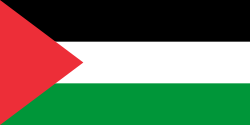
Palestinian Americans (Arabic: فلسطينيو أمريكا, romanized: Filasṭīnīyū Amrīkā) are Americans who are of full or partial Palestinian descent.
There are around 160,000 Palestinian Americans according to the 2023 American Community Survey, making up around 0.05% of the U.S. population.
The Palestinian community is concentrated in the Chicago, New York City,[2] Philadelphia, Houston, and Detroit metropolitan areas, with other populations in the Los Angeles and San Francisco metropolitan areas. Some Palestinians have emigrated to smaller metropolitan or micropolitan/rural areas, such as Gallup, New Mexico, in the late 20th and 21st century.
History
[edit].jpg)
Early immigration
[edit]The first Palestinians who immigrated to the United States arrived after 1908, when the Ottoman Empire passed a new conscription law mandating all Ottoman citizens into the military.[5] These Palestinians were overwhelmingly Christian, and only a minority of them were Muslims. The 1922 census of Palestine lists 1,778 Palestinians living abroad in the United States (1,352 Christian, 426 Muslim, along with 19 Druze), the second highest number behind the group listing of South and Central American republics.[6] Palestinian immigration began to decline after 1924, with a new law limiting the number of immigrants, as well as the Great Depression, which heavily reduced immigration.
Palestinian exodus
[edit]The population in the United States began to increase after World War II. During the 1950s, many Christians from Ramallah started immigrating to the states, then followed by Muslims from nearby towns. The establishment of the state of Israel led to many Palestinian Jews becoming Israeli citizens, and those that remained Palestinian were principally Arab, many of whom were then displaced in the Nakba due to the 1948 Arab–Israeli War. However, the greatest wave of Palestinian immigration began in 1967 after the Six-Day War, or as Middle Easterners and North Africans call it, the June War. This wave of immigrants reached its peak in the 1980s.[7]
Modern history
[edit]After the Immigration and Nationality act of 1965 was enacted, many Palestinians started immigrating again into the United States. Most Palestinians that immigrated to the United States in this period were more educated than the Palestinians that arrived before 1965, due to the preferential status for educated immigrants, and a "brain drain" of professionals and the more educated Palestinians.[8]
Beginning in the 1990s, many Palestinian communities were subject to intensive government surveillance under Operation Vulgar Betrayal (OVB), an FBI-led dragnet operation launched in collaboration with Israeli intelligence which sought to uncover networks of financial support for Hamas and Hezbollah among Palestinian Americans. These suspicions proved to be unsubstantiated, and no terrorism-related convictions were ever made.[9] In 2015, filmmaker Assia Boundaoui produced a documentary on the experience of Palestinians living in Bridgeview, Illinois, revealing the unscrupulous tactics used by the FBI as well as the total lack of transparency surrounding the surveillance effort.[9]
Demographics
[edit]U.S. cities
[edit]Chicago, Illinois, is home to the largest Palestinian concentration among US metropolitan areas: There is an estimated population of 85,000 Palestinians in greater Chicagoland, and Palestinians form 60% of the Arab community in the region.[10][11] Bridgeview, Illinois (often referred to as "Little Palestine"),[12] and its surrounding suburbs in southwest Cook County also have a significant population of Palestinian Americans, alongside a large Jordanian American community.[13] The southwest suburban Palestinian community features prominently in Ta-Nehisi Coates' 2024 book, The Message, with the author visiting a survivor of the Deir Yasin Massacre now living in Orland Park, Illinois, and dining in a Middle Eastern restaurant alongside local Palestinian activists and leaders.
A large number of Palestinians settled in the areas surrounding Paterson,[14][15] and Bay Ridge,[16] which together make up the New York metropolitan area. Many other Palestinians settled in the Houston metropolitan area, Los Angeles metro area, Metro Detroit, Greater Cleveland, Metro New Orleans, Metro Jacksonville, and Metro Miami. Paterson, New Jersey, has its southern half of the city nicknamed Little Ramallah, with an Arab American population estimated as high as 20,000 in 2015.[17] It is one of the most concentrated areas of Palestinian Americans in the entire United States.[18] It is also called Little Istanbul, since it also has a growing Turkish American community.
Bay Ridge's Arab community in Brooklyn, New York, is also a significant neighborhood home to an estimated population of 35,000,[19] of which its largest Arab ethnic groups are Palestinians and Yemenis.[16][20] However, it is also home to many other Arab ethnic groups, making Bay Ridge's Arab community a diverse population.

There are nearly 3,000 Palestinians in San Mateo County, accounting for a half percent of its population; while still small on a large scale, it is ten times higher than the national rate of Palestinians Americans.[21] The San Francisco Bay Area, including San Francisco proper, has had a history of Palestinian settlement since the early 20th century.
According to the 2000 United States census, there were 72,112 people of Palestinian ancestry living in the United States, increasing to 171,969 by the 2022 American Community Survey.[22] It is difficult to count the numbers of Palestinian Americans, since the United States does not recognize Palestine as a country, and only recognizes "Palestinian" as a nationality.
Top 10 Cities with the Largest Palestinian Community in the United States are, according to Zip Atlas:[23]
| Rank | City | No. of Palestinians |
|---|---|---|
| 1 | New York, NY | 4,376 |
| 2 | Chicago, IL | 2,554 |
| 3 | Houston, TX | 2,134 |
| 4 | Philadelphia, PA | 1,971 |
| 5 | Orland Park, IL | 1,876 |
| 6 | Los Angeles, CA | 1,861 |
| 7 | Tinley Park, IL | 1,381 |
| 8 | Cleveland, OH | 1,285 |
| 9 | Columbus, OH | 1,211 |
| 10 | Alafaya, FL | 1,170 |
Also according to Zip Atlas,[24] the top 10 Cities with the Highest Percentage of Palestinian Population in the United States are:
| Rank | City | Percent of Population as Palestinian |
|---|---|---|
| 1 | Junction, IL | 16.07% |
| 2 | Orland Hills, IL | 13.51% |
| 3 | Apple Mountain Lake, VA | 9.20% |
| 4 | Chicago Ridge, IL | 7.87% |
| 5 | Clarkson, NY | 7.62% |
| 6 | Willards, MD | 6.52% |
| 7 | Hickory Hills, IL | 6.10% |
| 8 | Spring Valley Village, TX | 5.57% |
| 9 | Bridgeview, IL | 5.28% |
| 10 | Roseland, IN | 4.99% |
Religion
[edit]Palestinian Muslim Americans practice the Sunni sect of Islam, in the Hanafi and Shafi'i madhab.[25]
A large part of Palestinian Christians belong to the Greek Orthodox Church of Jerusalem, with a significant presence of the Latin and Melkite church followers. Smaller minorities adhere to various sects of Protestantism.[citation needed]
Language
[edit]Besides English, many Palestinian Americans speak Palestinian Arabic. Palestinians who once lived or worked in Palestine may have spoken Modern Hebrew as a second language.[25][26] Many Palestinians are fluent in other languages.
Education
[edit]In the United States approximately 46% of Palestinians have obtained at least a college degree, compared to 18% of the American population.[27][failed verification] The study of culture and the Arabic language is increasingly important among Palestinians, especially in college and graduate school. Thus, some Palestinian or Arab organizations are working to monitor and improve the teaching of Arab history and culture in the American schools.[8] Palestinians, along with Jordanians, have one of the highest education rates among the Arab countries.[28]
Socioeconomics
[edit]Among the 90 percent of Palestinian American men and 40 percent of women who are in the labor force, 40 percent and 31 percent, have either professional, technical, or managerial positions. There are also large numbers in sales: 26 percent of men, and 23 percent of women. The self-employment rate for men is a significant 36 percent (only 13 percent for women), compared to 11 percent for non-immigrant men. Of the self-employed, 64 percent are in retail trade, with half owning grocery stores. In terms of income, the mean for Palestinian families in 1979 was $25,400,(adjusted for inflation $109,728) with 24 percent earning over $35,000 and 20 percent earning less than $10,000.[25]
Culture
[edit]Palestinian culture is a blend of Eastern Mediterranean influences. Palestinians share commonalities with nearby peoples of the Levant, including Lebanese, Syrians, and Jordanians.

Cuisine
[edit]Palestinians cook many similar foods to the Levant. Examples are kanafeh, hummus, falafel, musakhan, waraq al-'inib, and other Palestinian dishes. These foods, such as Kanafeh, have been very popular in the United States, such as in New York City.[29]
Business
[edit]Palestinian Americans have owned Middle Eastern groceries, shops and restaurants ever since their immigration to the United States. Most of these businesses are in large cities such as New York City and Chicago.[30]
Notable figures
[edit]
Edward Said was a U.S. naturalized Palestinian professor at Columbia University, and widely known as the "Father of Orientalism". He was also a strong voice and advocate for the American Arab Anti Discrimination Committee (ADC) and studied the breaches of civil liberties of Arabs and Muslims in the United States during the 1990s and later after hijacking on September 11th 2001.[31]
Rashid Khalidi is a Palestinian-American historian of the Middle East and former Edward Said Professor Emeritus of Modern Arab Studies at Columbia University. His many works include the 2020 publication of The Hundred Years' War on Palestine: A History of Settler Colonialism and Resistance, 1917-2017, in which he examines the Zionist claim to Palestine through the lens of settler colonialism and European and American imperialism. Khalidi retired from his position at Columbia University in October 2024.[32]
Huwaida Arraf is a Palestinian activist, author and lawyer based in the city of Ramallah who founded an organization called the International Solidarity Movement (ISM) which seeks to help the Palestinian side of the Israeli–Palestinian conflict through non-violent protests.[33] She was also part of a peace initiative called Seeds of Peace which sought to create communication between Palestinian and Jewish youth.[34]
Ismail al-Faruqi was a Palestinian-American philosopher and theologian, known for his significant contributions to Islamic studies and the philosophy of religion. He founded the International Institute of Islamic Thought (IIIT) and was a leading figure in the Islamization of knowledge, advocating for the integration of Islamic principles with contemporary academic disciplines. Al-Faruqi's work emphasized the importance of cultural and religious understanding in addressing global issues.[35]
Khaled Mohamed Khaled, better known by his stage name DJ Khaled, is an American hip hop artist and record producer of Palestinian descent who rose to fame in the 2000s with the debut of his first album Listennn... the Album which reached the 12th spot on the US Billboard 200 chart.[36]
Gigi Hadid and Bella Hadid, two sisters who are both models, are of Palestinian descent through their father Mohamed. Both sisters have expressed their public support for Palestine.[37][38]
Belal Muhammad, the current UFC Welterweight Champion was born and raised in Chicago, Illinois, to Palestinian parents. He often drapes the Palestinian flag around his shoulders both before and after his fights and is vocal in his support for a Free Palestine.
Politics
[edit]Domestic politics
[edit]
A poll in October 2016 found that 60% of Arab-American (including Palestinian-Americans) voters voted for Hillary Clinton (with 26% voting for Donald Trump). The survey found evidence of continued movement by Arab-American voters away from the Republican Party, and that 52% of voters identified as Democrats with only 26% calling themselves Republicans.[39]
2016 Election
[edit]Arab Americans who supported Hillary Clinton believed that addressing gun violence, health care, and Social Security were important to electing the President, however those who supported Donald Trump saw combatting terrorism, further regulating government spending, and creating stricter immigration policies as of chief importance after "Jobs and the economy".[39] Both groups believed Hillary Clinton to be a stronger choice when it came to improving education and resolving racial tensions.[39]
2020 Election
[edit]Despite 26% of Arab-Americans voting for Trump in 2016, the President's Pro-Israel policies such as the recognition of Jerusalem as Israel's capital by moving the American Embassy from Tel Aviv to Jerusalem considerably lessened his support from Arab-Americans and Palestinian-Americans in particular.[40] Initiatives such as "Yalla Vote" formed to encourage Arab voters to register and participate in the 2020 Election and boost the number of Arab-American votes. An exit poll indicated that the majority of Arab and Muslim Americans supported Biden in the election, with as much as 81% of Muslim voters casting their support in his favor.[41]
2024 Election
[edit]In the leadup to the 2024 election, Palestinians and Arab Americans more broadly were considered a key electorate, particularly in Michigan, which is considered an essential swing state for winning the election.[42] Indeed, prominent Arab groups from Michigan had pressured Vice President and presidential candidate Kamala Harris to break from President Biden's staunchly pro-Israel policy and act to end the fighting in Gaza. Other groups with Michigan-roots, such as the Uncommitted Movement, decided not to support Harris while urging voters not to support Trump either.[42]
In response to concerns, Harris made efforts to reach out to Arab American leaders in the community, setting up a meeting in which she discussed her consternation about the scale of suffering in Gaza and her efforts to end the war the war there. Harris' VP-pick, Minnesota governor Tim Walz, separately addressed Democratic Muslim groups with a promise to keep an open door to discussion and working to secure an end to the war, simultaneously pointing to Trump's documented history of Islamophobic policies and anti-Palestinian rhetoric.[43]
Granular data following Harris' defeat showed Trump and Jill Stein coming away with a substantial portion of the Arab Muslim vote; in the Detroit suburb of Dearborn, Trump won 42% of votes, followed by Harris at 36% and Stein at 18%.[44] While demographic groups across Michigan trended to the right from 2020, the change was particularly pronounced in Dearborn, which had overwhelmingly supported Biden (by a 3:1 margin) in 2020.[45] A similar swing was noted in Hamtramck, Michigan, the first majority-Muslim city in the US. With an estimated 200,000+ registered Muslim voters in Michigan, and Trump's winning margin of 84,000 votes, the lost Muslim and Arab votes significantly harmed Harris' bid to win Michigan.[44]
Exit polls found that between 50 percent and 63 percent of US Muslim voters supported Harris.[45] Several Muslim and Arab voters who pivoted from supporting Biden in 2020 to Trump or Stein in 2024 mentioned wanting to exact accountability and punish Democrats for their perceived complicity in "genocide in Gaza", as well as an inability to procure a sustained ceasefire.[45]
Foreign politics
[edit]![[icon]](https://en.wikipedia.org/wiki/File:Wiki_letter_w_cropped.svg) | This section is empty. You can help by adding to it. (September 2025) |
Government
[edit]Ammar Campa-Najjar is a Democratic candidate of Palestinian and Mexican Heritage from East County who ran for Congress to represent California's 50th congressional district in 2020.[46] Ammar worked as a campaign official in San Diego raising awareness and helping to get President Barack Obama reelected in 2012.[47] His opponent in the 2020 electoral season is Darrell Issa (another Arab-American of Lebanese, German and Bohemian (Czech) ancestry).
Only a couple Americans of Palestinian ancestry have served or are currently serving as members of Congress. Rashida Tlaib, an American born to Palestinian parents, is a Democratic congresswoman of the Michigan House of Representatives, who ran for U.S. House of Representatives seat from Michigan's 13th congressional district. She became one of the first Muslim women elected to Congress (along with Somali-American Ilhan Omar of Minnesota), and the first Palestinian-American woman in Congress.[48][49] Justin Amash, was a Republican-turned Independent Congressman of Palestinian ancestry, serving in the U.S House of Representatives representing Michigan's 3rd District.
At the State level, Athena Salman of the Arizona House of Representatives is of Palestinian Ancestry. Palestinian-American Iman Jodeh was elected to the Colorado House of Representatives in the 2020 United States elections.[50] Fady Qaddoura, born on the West Bank was elected to the Indiana Senate in 2020.[51]
See also
[edit]

References
[edit]- ^ "American Community Survey Palestinians 2023". United States Census Bureau. Retrieved May 27, 2024.
- ^ "Largest Palestinian Community in the United States by City | Zip Atlas". zipatlas.com. Retrieved May 24, 2024.
- ^ "More Palestinians live in Cook County than any other county in the nation". WBEZ. November 16, 2023. Retrieved July 10, 2024.
- ^ "1982 Versus 2024: A Tale of Three Cities". Arab American Institute. February 19, 2024. Retrieved July 10, 2024.
- ^ "Palestinian Americans facts, information, pictures | Encyclopedia.com articles about Palestinian Americans". www.encyclopedia.com. Retrieved January 30, 2018.
- ^ Palestine Census ( 1922).
- ^ "Palestinian Americans | Encyclopedia.com". www.encyclopedia.com. Retrieved October 22, 2020.
- ^ a b Kurson, Ken. "Palestinian Americans". everyculture.com. Retrieved July 21, 2017.
- ^ a b Niva, Steve (September 23, 2019). "Countering the Surveillance State". MERIP. Retrieved October 6, 2024.
- ^ "Illinois Arab American Community". Arab America. Retrieved January 16, 2018.
- ^ "Palestinians". www.encyclopedia.chicagohistory.org. Retrieved January 31, 2018.
- ^ Herman, Max (August 7, 2015). "They call it Little Palestine". The Chicago Reporter. Retrieved October 6, 2024.
- ^ Abowd, Mary. "Arab Community has Deep Roots in Chicago". The Chicago Reporter. Retrieved July 10, 2024.
- ^ Adely, Hannan (July 19, 2014). "Hundreds of Palestinians rally in Paterson in protest of Israeli military campaign". North Jersey Media Group. Archived from the original on July 24, 2014. Retrieved July 19, 2014.
- ^ Cowen, Richard (May 18, 2014). "Paterson's Palestinians celebrate annual flag-raising at City Hall". North Jersey Media Group. Archived from the original on October 10, 2014. Retrieved July 19, 2014.
- ^ a b Hedges, Chris (October 4, 1990). "Palestinians Struggling To Rebuild Their Lives". The New York Times. ISSN 0362-4331. Retrieved January 16, 2018.
- ^ Yellin, Deena (May 3, 2015). "Palestinian flag-raising is highlight of heritage week in Paterson". North Jersey Media Group. Archived from the original on May 5, 2015. Retrieved May 4, 2015.
- ^ Yoked, Tzach (December 20, 2017). "New Nablus Welcome to Little Palestine, New Jersey". Haaretz. Retrieved February 10, 2018.
- ^ "The Jew Who Helps Run an Important Arab-American Organization in Brooklyn". Tablet Magazine. Retrieved January 16, 2018.
- ^ Robbins, Liz (2017). "Worry and Disbelief in Yemeni-American Community in Brooklyn". The New York Times. ISSN 0362-4331. Retrieved January 16, 2018.
- ^ "Total Population Detailed Demographic and Housing Characteristics". U.S. Census.
- ^ "Explore Census Data". data.census.gov. Retrieved July 10, 2024.
- ^ "Largest Palestinian Community in the United States by City | 2023 | Zip Atlas". zipatlas.com. Retrieved October 20, 2023.
- ^ "Percentage of Palestinian Population in the United States by City | 2023 | Zip Atlas". zipatlas.com. Retrieved October 20, 2023.
- ^ a b c "Palestinian Americans - History, Israel, Modern era, Significant immigration waves, Settlement patterns". www.everyculture.com. Retrieved January 26, 2018.
- ^ "The latest hot language among Palestinians in Gaza? Hebrew". Christian Science Monitor. March 18, 2013. ISSN 0882-7729. Retrieved January 26, 2018.
- ^ "Educational Attainment in the United States: 2012 - Detailed Tables". United States Census Bureau. Archived from the original on July 4, 2013. Retrieved June 25, 2013.
- ^ "Arab Countries Ranked by Literacy Rate". Arab America. September 8, 2018. Retrieved October 31, 2018.
- ^ "'Bearded Bakers' Bring Epic Dessert Party to NYC". NBC New York. Retrieved January 16, 2018.
- ^ Sifton, Sam (February 23, 2010). "Tanoreen Restaurant in Bay Ridge, Brooklyn". The New York Times. ISSN 0362-4331. Retrieved January 17, 2018.
- ^ "Edward Said: American intellectual, Palestinian patriot, breaker of dogmas | Opinion". Newsweek. September 25, 2020. Retrieved October 22, 2020.
- ^ Iqbal, Razia (October 8, 2024). "Rashid Khalidi, America's foremost scholar of Palestine, is retiring: 'I don't want to be a cog in the machine any more'". the Guardian. Retrieved October 24, 2024.
- ^ "Huwaida Arraf". American Friends Service Committee. March 30, 2010. Archived from the original on November 16, 2017. Retrieved October 22, 2020.
- ^ "Home". Seeds of Peace. Retrieved October 22, 2020.
- ^ Yusuf, Imtiyaz (Spring–Summer 2014). "Ismail al-Faruqi's Contribution to the Academic Study of Religion". Islamic Studies. 53 (1/2). Islamic Research Institute, International Islamic University, Islamabad: 108–110. doi:10.52541/isiri.v53i1-2.181. JSTOR 44627369.
- ^ Archive-Chris-Harris. "AFI Score First Billboard #1; Ice Cube And Yung Joc Open Big". MTV News. Archived from the original on December 6, 2014. Retrieved October 22, 2020.
- ^ Petrarca, Emilia (May 16, 2018). "Gigi Hadid Weighs in on Israel–Palestine Conflict". The Cut.
- ^ "Bella Hadid says 'proud to be Palestinian' after Instagram deletes story showing her father's birthplace". Middle East Monitor. July 8, 2020.
- ^ a b c Zogby, James (October 29, 2016). "Arab American Voters: Clinton 60 Percent, Trump 26 Percent". HuffPost. Retrieved October 21, 2020.
- ^ "Arab American voters could play important role in key swing states". ABC News. Retrieved October 21, 2020.
- ^ "Muslim Voters Voted Overwhelmingly For Biden, Support Key Democratic Priorities" (PDF). Emgage USA. November 12, 2021. Retrieved November 8, 2024.
- ^ a b Ward, Myah (October 5, 2024). "'It's not won': Democrats jittery over razor-thin race in Michigan". Politico. Retrieved October 5, 2024.
- ^ "Tim Walz makes direct appeal to conflicted Muslim voters". NBC News. October 4, 2024. Retrieved October 6, 2024.
- ^ a b "In historic shift, American Muslim and Arab voters desert Democrats". Voice of America. November 7, 2024. Retrieved November 9, 2024.
- ^ a b c Whisnant, Gabe (November 6, 2024). "Michigan's Muslim voters sent Kamala Harris a "message"—Democrat". Newsweek. Retrieved November 9, 2024.
- ^ "Home | Ammar Campa-Najjar for Congress | CA 50". www.campacampaign.com. Retrieved October 21, 2020.
- ^ "About Ammar Campa-Najjar". www.campacampaign.com. Retrieved October 21, 2020.
- ^ Herndon, Astead W. (August 8, 2018). "Rashida Tlaib, With Primary Win, Is Poised to Become First Muslim Woman in Congress". The New York Times. Retrieved October 31, 2018.
- ^ "With Primary Win, Rashida Tlaib Set to Become First Palestinian-American Congresswoman". Haaretz. August 8, 2018. Retrieved October 31, 2018.
- ^ "New State House representatives include Colorado's 1st Muslim legislator, military veteran". KMGH. November 5, 2020. Retrieved November 9, 2020.
- ^ Sikich, Chris. "Qaddoura becomes first Muslim elected to Indiana Statehouse as Dems pick up one Senate seat". The Indianapolis Star. Retrieved November 9, 2020.
External links
[edit]- Palestinian American Council
- Arab Americans: Demographics Archived October 23, 2016, at the Wayback Machine
Arab Americans by state of origin | ||
|---|---|---|
| Africa |  | |
| Asia | ||
| By location | ||
Based on state membership in the Arab League. | ||
| Central Asian |  | |
|---|---|---|
| East Asian | ||
| South Asian | ||
| Southeast Asian | ||
| Other | ||
| History | ||
| Topics | ||
| Regions | ||
Palestinian Americans
View on GrokipediaPalestinian Americans are United States citizens and residents of Palestinian ancestry, primarily descending from the Arab population of the historic region of Palestine, now comprising Israel, the West Bank, and the Gaza Strip. According to the 2020 decennial Census, 174,887 individuals self-identified with Palestinian ancestry, representing a subset of the broader Arab American population estimated at over 3.7 million, though undercounting is acknowledged due to factors like reluctance to disclose ethnicity amid geopolitical sensitivities.[1][2]
Immigration to the United States commenced in the late 19th century under Ottoman rule, with initial migrants often from rural areas seeking economic opportunities, followed by accelerated waves after the 1948 establishment of Israel and the ensuing displacement of Palestinian Arabs, as well as post-1967 Six-Day War upheavals.[3][1] Today, they are geographically concentrated in urban centers such as Chicago, Illinois—which hosts the largest community with over 17,000 residents—New Jersey, and California, where they have established ethnic enclaves, businesses, and cultural institutions.[4]
Palestinian Americans have integrated into American society through professional success in fields like medicine, engineering, academia, and entrepreneurship, often achieving high educational attainment reflective of broader Arab American patterns.[5] Notable figures include U.S. Representative Rashida Tlaib, the first Palestinian American woman elected to Congress in 2018, who has advocated for progressive policies alongside her heritage's perspective on the Israeli-Palestinian conflict.[6] Their community maintains cultural continuity via organizations promoting heritage, cuisine such as knafeh, and social networks, while engaging in advocacy that amplifies Palestinian narratives in U.S. public discourse—efforts sometimes contentious due to associations with Islamist groups or anti-Israel stances that diverge from mainstream American foreign policy consensus.[5][7]
History
Early Immigration Waves
Palestinian emigration to the United States began in the late 19th century, with initial departures from Ottoman Palestine recorded around 1876 amid broader Arab migration patterns driven by economic pressures.[3] Early migrants originated primarily from Christian villages in the Bethlehem area, including Beit Jala and Beit Sahour, as well as Ramallah and Nazareth regions, where poverty, land shortages, unemployment, and Ottoman taxation rates of 12-35% on agricultural tithes exacerbated hardships.[3] These factors prompted young men to seek opportunities abroad, often initially traveling to Latin America before redirecting to North America.[8] The influx intensified after the Ottoman Empire's 1909 conscription law mandated military service for non-Muslims, accelerating emigration among Christians who comprised approximately 90% of early Palestinian arrivals, with Muslims making up the rest.[3] By 1913, around 3,000 individuals from Bethlehem, Beit Jala, and Ramallah had settled in the U.S., part of an estimated 13,000 emigrants from Jerusalem's mountainous periphery and Galilee villages between 1900 and 1919.[3] Peak years occurred in 1913-1914, before World War I disruptions and U.S. quota laws in 1924 reduced annual arrivals to an average of 100 from 1921 to 1939.[3] Settling in industrial cities such as Chicago and New York, these pioneers worked as itinerant peddlers vending jewelry, textiles, and notions, leveraging familial and communal networks to sustain the trade despite lacking prior experience in it.[9][3] Successful ventures enabled some to open fixed retail establishments, fostering ethnic enclaves that provided mutual aid and chain migration for families, though overall numbers remained modest compared to later waves.[9]Post-Mandatory Palestine Period
The termination of the British Mandate for Palestine on May 14, 1948, and the ensuing Arab-Israeli War led to the displacement of an estimated 700,000 to 750,000 Palestinians from territories that became Israel, marking the onset of a major refugee crisis known as the Nakba. Most displaced Palestinians resettled in neighboring countries such as Jordan, Lebanon, Syria, and the Gaza Strip, with smaller numbers reaching distant destinations including the United States. U.S. immigration during this period was severely limited by the Immigration Act of 1924, which established national origins quotas allocating only minimal slots—typically under 100 annually—for regions encompassing Palestine and surrounding Arab areas, prioritizing Western European entrants and classifying Middle Easterners under restrictive Asiatic barred zones or tiny quotas.[10] Special legislative measures provided limited exceptions for Palestinian refugees. The Refugee Relief Act of 1953 authorized the admission of approximately 2,000 Palestinian families, primarily those displaced in 1948, as part of broader refugee provisions amid Cold War-era humanitarian efforts. Subsequent admissions included 985 additional Palestinian refugees in 1956 and 1960, often facilitated through ad hoc visa extensions or family sponsorships by earlier Arab immigrants. These arrivals were predominantly Christian Palestinians from urban areas like Jerusalem, Bethlehem, and Ramallah, motivated by economic hardship, family ties, and avoidance of regional instability rather than mass refugee flows, and they tended to settle in established Arab enclaves in Chicago, New York City, and New Jersey to leverage kinship networks for employment in trade and small businesses. The 1967 Six-Day War exacerbated displacement, with another 280,000 to 350,000 Palestinians fleeing or being expelled from the West Bank and Gaza Strip—termed the Naksa—though direct U.S. immigration remained constrained by ongoing quota limitations until reforms. Pre-1965 Palestinian entrants numbered in the low thousands cumulatively, reflecting policy barriers rather than demand, and contributed to nascent community institutions like mutual aid societies, but did not significantly expand the diaspora compared to later periods.Modern Immigration and Diaspora Growth
The acceleration of Palestinian immigration to the United States in the modern era, particularly after the 1967 Six-Day War, was driven by the Israeli occupation of the West Bank and Gaza Strip, which displaced additional populations and created conditions of political and economic uncertainty. Emigration intensified during subsequent conflicts, including the Lebanese Civil War (1975–1990), where many Palestinians residing in refugee camps faced violence, and the First Intifada (1987–1993), prompting outflows seeking asylum, family reunification, or educational opportunities. The 1965 Immigration and Nationality Act, which abolished national-origin quotas, facilitated this influx by prioritizing family ties and skilled workers, allowing Palestinians to enter via nonimmigrant visas—such as student or employment categories—before adjusting to permanent status.[11][5] U.S. government data reflect this diaspora expansion, with the population of Palestinian ancestry rising from 72,112 individuals in the 2000 Census to 174,887 in the 2020 Census, a more than twofold increase attributable to both direct immigration and secondary migration through chain effects. The 2019 American Community Survey estimated 109,699 people with primary Palestinian ancestry, though this figure likely undercounts total community size due to inconsistent self-reporting of ethnicity among second- and third-generation descendants. Annual lawful permanent resident admissions from the broader Middle East and North Africa region, which includes Palestinian-origin individuals often categorized under Jordan or as stateless from the West Bank/Gaza, numbered in the thousands during peak periods like the 1990s and 2000s, supported by refugee and asylee programs amid intifadas and Gaza evacuations.[1][10] This growth has been uneven, with surges tied to specific crises—such as post-2000 Second Intifada displacements—but tempered by U.S. immigration restrictions and the lack of a sovereign Palestinian state for direct visa processing, leading many to route through third countries like Jordan. Community estimates from advocacy groups often exceed official tallies, claiming up to 250,000 or more, but these lack empirical verification and may reflect inclusion of partial ancestries or undocumented migrants; American Community Survey data, derived from rigorous sampling, provide the most reliable benchmark despite potential underenumeration biases common in ethnic self-identification surveys. Natural increase, with Palestinian American families maintaining higher fertility rates than the national average, has compounded immigration-driven expansion, solidifying urban enclaves in states like Illinois and California.[1][2]Demographics
Population Estimates and Geographic Distribution
The population of Palestinian Americans is estimated at 174,887 individuals who self-reported Palestinian ancestry in the 2020 U.S. decennial Census, though community organizations suggest the actual number exceeds 180,000 due to underreporting in official surveys.[1] [12] This figure represents a subset of the broader Arab American population, estimated at 3.7 million nationwide, with Palestinians comprising a distinct ethnic group within it.[2] Census data indicate growth from prior decades, reflecting ongoing immigration and natural increase, but precise totals remain challenging due to varying self-identification and mixed ancestries.[1] Palestinian Americans are geographically dispersed across the United States, with up to 95% residing in metropolitan areas, but notable concentrations exist in specific urban centers. The Chicago metropolitan area, particularly Cook County, Illinois, hosts the largest Palestinian community in the country, with Illinois reporting 17,261 Palestinian residents as of recent estimates, comprising about 0.14% of the state's population.[4] [13] This includes significant numbers in suburbs like Bridgeview, often referred to as "Little Palestine" for its dense Palestinian businesses and residents.[14] Other major hubs include the New York metropolitan area, with 8,854 in New York State and concentrations in Brooklyn's Bay Ridge neighborhood, and cities like Houston, Texas, and Paterson, New Jersey.[15] [16]| State | Estimated Palestinian Population | Percentage of State Population |
|---|---|---|
| Illinois | 17,261 | 0.14% |
| New York | 8,854 | N/A |
| Ohio | Significant (exact figure varies by source) | N/A |
| New Jersey | Significant (exact figure varies by source) | N/A |
| California | Large community | N/A |
| Texas | Large community | N/A |
Religious and Linguistic Composition
The religious composition of Palestinian Americans reflects the demographics of their ancestral homeland, where Sunni Islam predominates, though a significant Christian minority persists due to selective early-20th-century immigration patterns favoring Christians from Ottoman Palestine. Estimates suggest Islam is the primary religion, with Christians comprising 10-50% of the community, including adherents of Greek Orthodox, Roman Catholic, and smaller Protestant denominations; this contrasts with broader Arab American populations, where Christians form a larger share owing to heavier Lebanese and Syrian inflows.[18] [1] Community data indicate robust Muslim and Christian Palestinian enclaves in states like Illinois, Michigan, and California, with religious institutions serving as key social anchors, though precise nationwide breakdowns remain elusive due to undercounting in federal surveys and self-reported ancestry limitations.[1] Linguistically, Palestinian Americans are predominantly English-speaking, with high bilingual proficiency shaped by generational assimilation and educational norms. Over 25% speak only English at home, while among non-English-primary households, more than 80% report speaking English "very well," exceeding rates for some other immigrant groups; Palestinian Arabic—a Levantine dialect continuum encompassing urban, rural, and Gaza variants—remains prevalent in family and community settings, particularly among recent immigrants and first-generation members.[19] [1] This dialect facilitates cultural continuity, though English dominance grows with U.S.-born generations, and Modern Standard Arabic is less commonly used outside formal or religious contexts.[19]Age, Family Structure, and Education Levels
Palestinian Americans tend to have a younger age profile compared to both Arab Americans and the white population, reflecting patterns of more recent immigration and higher fertility rates among earlier generations. According to 2019 American Community Survey (ACS) data, the median age is lower than that of individuals reporting Arab ancestry and substantially below the white racial category's median.[1] Family structures among Palestinian Americans emphasize extended and multigenerational households, with an average family size of 3.23 persons, aligning closely with but slightly exceeding broader U.S. family averages. U.S. Census-derived data indicate that 65.1% of households are family-based, including 48.0% married-couple households and 28.1% with children under 18, alongside notably low rates of single-parent households at 2.2% for single fathers and 5.9% for single mothers. Earlier 2000 Census analysis showed an even larger average family size of four persons, higher than the national average at the time, underscoring a cultural preference for cohesive, multi-generational living arrangements.[20][21] Education levels among Palestinian Americans surpass those of the white population, with a greater proportion holding college degrees, consistent with broader trends among Arab and Middle Eastern/North African (MENA) Americans who prioritize educational achievement. 2019 ACS data reveal higher rates of bachelor's degree or higher attainment relative to white Americans, though specific percentages for Palestinians are not disaggregated in primary sources; analogous MENA immigrant groups show 49% of adults aged 25 and older with at least a bachelor's degree in 2022. This emphasis on education stems from community values and historical migration patterns favoring skilled professionals, though earlier 2000 data reported 23% with bachelor's degrees and 15.7% with graduate degrees among those over 25, exceeding contemporaneous U.S. averages of 17.6% and 7.9%, respectively.[1][10][21]Socioeconomic Characteristics
Educational Attainment and Professional Occupations
Palestinian Americans demonstrate elevated levels of educational attainment relative to the general U.S. population, reflecting broader patterns among Arab American communities where emphasis on education persists across generations. According to data compiled from U.S. Census sources, approximately 49% of Arab Americans aged 25 and older hold a bachelor's degree or higher, compared to about 32% of the overall U.S. adult population as of recent estimates.[22] Specific analyses of Palestinian Americans indicate they exceed average educational benchmarks for white Americans, with higher rates of college degree completion driven by cultural prioritization of schooling and selective immigration patterns favoring skilled migrants.[1] In professional occupations, Palestinian Americans are overrepresented in fields requiring advanced education, such as management, engineering, medicine, and academia, aligning with the 45% of working Arab Americans employed in managerial, professional, technical, sales, or administrative roles—substantially above national medians.[22] This concentration stems from high educational investment and entrepreneurial tendencies, though granular Census data on Palestinian-specific occupations remains limited due to underreporting in ancestry self-identification. Community reports highlight success in healthcare and STEM professions, where bilingual and multicultural skills provide competitive edges.[1] Despite these strengths, barriers like discrimination may channel some into self-employment or niche ethnic businesses, though empirical evidence points to overall upward mobility through professional channels.[23]Income Levels and Entrepreneurial Success
Palestinian Americans exhibit median household incomes that surpass the national average, reflecting patterns of selective immigration and high educational attainment among earlier waves. According to aggregated U.S. Census-derived data, the median household income for Palestinian Americans stands at $90,574 as of recent estimates, positioning it among the higher-earning demographic groups.[20] This figure exceeds the overall U.S. median of approximately $74,580 reported for 2022 by the Census Bureau, though Palestinian households often feature larger family sizes that may influence per capita metrics.[24] Comparisons within broader Arab American cohorts reveal variability, with overall Arab household medians ranging from $60,398 in 2017 to around $74,000 in more recent analyses, potentially diluting Palestinian-specific highs due to inclusion of lower-income recent immigrants from conflict zones.[22] [25] Immigrants from Israel/Palestine regions specifically report medians up to $113,000, underscoring entrepreneurial and professional selectivity among this subgroup.[26] Disparities persist, however, with some studies noting that newer Palestinian arrivals face initial economic hurdles tied to refugee status and urban concentration in areas like Chicago and New Jersey, where median Arab incomes lag state averages.[27] Entrepreneurial activity among Palestinian Americans centers on family-owned enterprises, particularly in retail, food services, and real estate, leveraging tight-knit community networks for resilience and expansion. A 2024 study surveying 90 Palestinian family firms in the U.S. found these businesses demonstrate strong growth potential compared to counterparts in Palestine, attributed to access to capital markets, legal stability, and diaspora remittances—factors enabling scalability absent in origin countries.[28] Notable examples include ventures incorporating cultural elements like traditional embroidery and cuisine, which have sustained operations amid geopolitical tensions, as reported by owners facing harassment yet receiving community support post-2023 events.[29] [30] Quantitative self-employment rates remain underreported in census breakdowns, but qualitative evidence highlights success stories, such as Palestinian-American developer Bashar al-Masri's international projects, illustrating pathways from immigrant peddling to large-scale investment.[31] Overall, entrepreneurial success correlates with generational progression, where second- and third-generation individuals outperform first-generation arrivals by integrating professional skills into business models.[32]Economic Challenges and Welfare Dependency
Palestinian Americans encounter economic challenges, including elevated poverty rates relative to the national average. Data indicate that approximately 16% of Palestinian American families live below the poverty line, surpassing the U.S. average of 10.1% during the period analyzed.[19] This disparity persists even as broader Arab American households report median incomes comparable to or slightly above the national figure of around $60,000 in recent years.[22] Contributing factors include larger average family sizes, which increase financial pressures, and patterns of more recent immigration from conflict-affected areas, often resulting in initial underemployment or reliance on lower-wage sectors upon arrival.[1] Despite these hurdles, entrepreneurship serves as a key mitigation strategy, with many Palestinian Americans establishing family-run businesses in retail, construction, and services, leveraging communal networks for capital and labor.[21] However, barriers such as perceived discrimination—exacerbated by events like post-9/11 scrutiny or heightened tensions following the October 7, 2023, Hamas attacks—can limit access to professional opportunities and financing, perpetuating cycles of economic strain for some households. Specific metrics on welfare dependency remain scarce, but aggregate data for Arab Americans show poverty-driven public assistance usage at rates similar to the national immigrant average (around 13-14%), tempered by cultural norms favoring self-reliance and mutual aid over government programs.[33] Overall, while socioeconomic mobility is evident through intergenerational gains in education and occupation, these challenges underscore vulnerabilities tied to diaspora-specific disruptions rather than inherent incapacity.[10]Cultural Elements
Traditional Cuisine and Festivals
Palestinian American communities preserve traditional Levantine dishes with distinct regional preparations, such as maqluba—an inverted casserole of rice, eggplant, cauliflower, and chicken or lamb originating from central Palestine—and musakhan, featuring roasted chicken atop taboon bread flavored with sumac and caramelized onions.[34][35] These meals, often prepared for family gatherings, emphasize communal eating and use ingredients like za'atar, olive oil, and fermented yogurt (jameed) in dishes such as mansaf, which some communities regard as a national staple despite its Jordanian associations.[36] In U.S. cities with large populations like Chicago and the Bay Area, restaurants and home cooks adapt these recipes, incorporating local produce while maintaining authenticity, as seen in manakish flatbreads topped with thyme mixture served at cultural events.[37][38] Desserts like knafeh, a cheese-filled pastry soaked in syrup and topped with pistachios from Nablus, remain popular at celebrations, symbolizing festive indulgence.[38] Shared staples including hummus, falafel, and tabbouleh, while common across the Levant, feature Palestinian variations like finer bulgur in salads or chickpea patties fried in home-rendered fat, prepared in diaspora settings to reinforce cultural ties.[39][40] Community cookbooks and events highlight these foods' role in identity preservation amid assimilation pressures. Palestinian Americans organize annual heritage festivals that integrate cuisine with music, dance, and crafts, such as the 46th Palestine Cultural Day held in Redwood City, California, on October 19, 2025, drawing thousands for displays of traditional dishes alongside dabke performances.[41][42] The Ramallah Convention, convened in the Bay Area in July 2025 with attendees from across the U.S., features Palestinian meals like maqluba and fosters networking among expatriates.[43] Similarly, the Houston Palestinian Festival, the longest-running in the U.S., spans April 19-20, 2025, emphasizing food stalls serving shawarma and sweets to promote cultural resilience.[44] These events, often hosted by groups like the Palestinian American Coalition, adapt homeland traditions—such as wedding feasts or harvest rituals—into public celebrations, blending religious observances like Eid with secular heritage displays.[45][46]Family Dynamics and Gender Roles
Palestinian American families often preserve core elements of traditional Arab kinship structures, including patrilineal descent and a strong emphasis on familial solidarity, where extended relatives provide mutual support despite geographic dispersion in the United States.[47] These dynamics reflect influences from Palestinian heritage, with households typically centered on nuclear units but maintaining ties to overseas kin through remittances and visits.[47] Gender roles within these families traditionally align with patriarchal norms, wherein fathers hold authority as primary providers and decision-makers, while mothers focus on domestic responsibilities and child-rearing, though women's public participation has increased since mid-20th-century migrations.[47] In the diaspora context, such roles persist but evolve under American influences, with second-generation women leveraging education and professional opportunities to negotiate greater autonomy, particularly in marital decisions.[48] Marriage practices among Palestinian Americans illustrate this tension between tradition and adaptation. First- and early second-generation immigrants frequently prioritized endogamous unions within Palestinian or Arab communities to preserve cultural and national identity, often through semi-arranged matches facilitated by parents.[49] However, among younger second-generation women interviewed in Milwaukee (born late 1980s–1990s), a shift toward self-selected exogamous marriages with non-Palestinian Muslims has emerged, justified through reinterpretations of Islamic principles emphasizing personal compatibility and religious piety over ethnic nationalism.[49] These women, drawing on 16 in-depth interviews, employed Quranic arguments and appeals to American individualism to overcome parental resistance, contrasting with older sisters (born 1970s–early 1980s) who faced stricter communal expectations.[49] This generational evolution underscores women's increasing agency in challenging patriarchal constraints, as education abroad and career pursuits enable redefinition of spousal criteria beyond clan alliances.[48] Cross-border marriages, common in earlier waves (1950s–1980s), linked diaspora families to homeland networks but declined as younger cohorts prioritized Islamic over national endogamy, reflecting broader identity negotiations amid displacement.[49] Despite these changes, family honor remains tied to gendered expectations, with women navigating compliance in public spheres while asserting private influence through religious literacy.[47]Media Representation and Artistic Contributions
Palestinian Americans have limited visibility in mainstream U.S. media, where portrayals often frame them through the prism of the Israeli-Palestinian conflict, emphasizing associations with violence or extremism rather than diverse personal narratives.[50] Community members have criticized coverage for perpetuating stereotypes and disinformation, which they link to heightened risks of hate crimes, as evidenced by incidents following the October 7, 2023, Hamas attacks on Israel.[50] Analyses of major U.S. news outlets reveal patterns of disproportionate focus on Israeli casualties and perspectives in Gaza conflict reporting, contributing to skewed public perceptions of Palestinian identities, including those of Americans.[51] In artistic domains, Palestinian Americans have contributed notably in music and digital content creation. DJ Khaled, born Jason Khaled Khaled in New Orleans in 1975 to Palestinian immigrant parents, has achieved commercial success as a record producer and DJ, with albums such as Major Key (2016) topping the Billboard 200 chart and featuring collaborations with artists like Jay-Z and Future.[52] His work blends hip-hop and trap influences, amassing over 15 million albums sold worldwide by 2023. In acting, Waleed Zuaiter, raised in the U.S. by Palestinian parents, has appeared in television series like Homeland (2011–2020) and produced films addressing Arab experiences, such as The Oath (2018). Digital media pioneer Yousef Erakat, known as FouseyTube, built a following of over 10 million YouTube subscribers by 2019 through comedy sketches and vlogs drawing on his Palestinian American upbringing, though his career later faced setbacks due to personal struggles publicized in 2022. These figures represent emerging but underrepresented voices in entertainment, often navigating identity themes amid broader Arab American artistic lineages.[53]