Hubbry Logo
ShamanismShamanismMain
Open search
Shamanism
Community hub
Shamanism
logo
8 pages, 0 posts
0 subscribers
Be the first to start a discussion here.
Shamanism
Shamanism
from Wikipedia

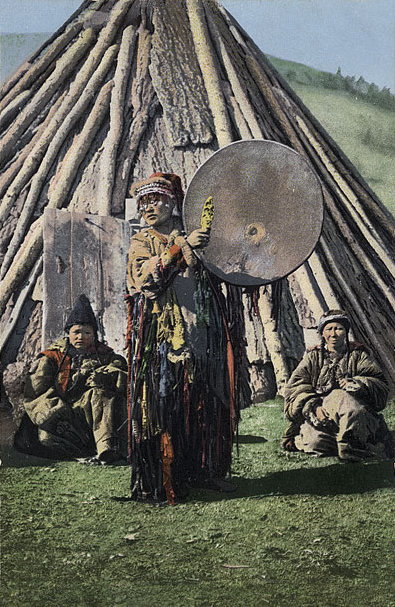
Russian postcard based on a photo taken in 1908 by S. I. Borisov, showing a female shaman of probable Khakas ethnicity[1][2][3]

Shamanism is a spiritual practice that involves a practitioner (shaman) interacting with the spirit world through altered states of consciousness, such as trance.[4][5] The goal of this is usually to direct spirits or spiritual energies into the physical world for the purpose of healing, divination, or to aid human beings in some other way.[4][6]

Beliefs and practices categorized as shamanic have attracted the interest of scholars from a variety of disciplines, including anthropologists, archeologists, historians, religious studies scholars, philosophers, and psychologists. Hundreds of books and academic papers on the subject have been produced, with a peer-reviewed academic journal being devoted to the study of shamanism.

Terminology

[edit]

Etymology

[edit]
The earliest known depiction of a Siberian shaman, by the Dutch explorer Nicolaes Witsen, 17th century. Witsen called him a "priest of the Devil" and drew clawed feet for the supposed demonic qualities.[7]

The Modern English word shamanism derives from the Russian word шаман, šamán, which itself comes from the word samān from a Tungusic language[8] – possibly from the southwestern dialect of the Evenki spoken by the Sym Evenki peoples,[9] or from the Manchu language.[10] The etymology of the word is sometimes connected to the Tungus root sā-, meaning "to know".[11][12] However, Finnish ethnolinguist Juha Janhunen questions this connection on linguistic grounds: "The possibility cannot be completely rejected, but neither should it be accepted without reservation since the assumed derivational relationship is phonologically irregular (note especially the vowel quantities)."[13]

Mircea Eliade noted that the Sanskrit word श्रमण, śramaṇa, designating a wandering monastic or holy figure, has spread to many Central Asian languages along with Buddhism and could be the ultimate origin of the word shaman.[14] The word has been reported in Gandhari as ṣamana, in Tocharian A as ṣāmaṃ, in Tocharian B as ṣamāne and in Chinese as 沙門, shāmén.[15]

The term was adopted by Russians interacting with the indigenous peoples in Siberia. It is found in the memoirs of the exiled Russian churchman Avvakum.[16] It was brought to Western Europe twenty years later by the Dutch statesman Nicolaes Witsen, who reported his stay and journeys among the Tungusic- and Samoyedic-speaking Indigenous peoples of Siberia in his book Noord en Oost Tataryen (1692).[7] Adam Brand, a merchant from Lübeck, published in 1698 his account of a Russian embassy to China; a translation of his book, published the same year, introduced the word shaman to English speakers.[17]

Anthropologist and archeologist Silvia Tomášková argued that by the mid-1600s, many Europeans applied the Arabic term shaitan (meaning "devil") to the non-Christian practices and beliefs of Indigenous peoples beyond the Ural Mountains.[18] She suggests that shaman may have entered the various Tungus dialects as a corruption of this term, and then been told to Christian missionaries, explorers, soldiers and colonial administrators with whom the people had increasing contact for centuries.

A female shaman is sometimes called a shamanka, which is not an actual Tungus term but simply shaman plus the Russian suffix -ka (for feminine nouns).[19]

Definitions

[edit]

There is no single agreed-upon definition for the word "shamanism" among anthropologists. Anthropologist Manvir Singh argues that the most justifiable definition includes three basic features: entering non-ordinary states, engaging with unseen realities, and providing services like healing and divination.[4][20]

The English historian Ronald Hutton noted that by the dawn of the 21st century, there were four separate definitions of the term which appeared to be in use:[21]

  1. To refer to "anybody who contacts a spirit world while in an altered state of consciousness".
  2. Those who contact a spirit world while in an altered state of consciousness at the behest of others.
  3. In an attempt to distinguish shamans from other magico-religious specialists who are believed to contact spirits, such as "mediums", "witch doctors", "spiritual healers" or "prophets", this definition suggests that shamans undertake some particular technique not used by the others. However, scholars advocating the third view have failed to agree on what the defining technique should be.
  4. "Shamanism" referring to the Indigenous religions of Siberia and neighboring parts of Asia.

According to the Oxford English Dictionary, a shaman (/ˈʃɑːmən/ SHAH-mən, /ˈʃæmən/ SHAM-ən or /ˈʃmən/ SHAY-mən)[22] is someone who is regarded as having access to, and influence in, the world of benevolent and malevolent spirits, who typically enters into a trance state during a ritual, and practices divination and healing.[6][22] The word "shaman" probably originates from the Tungusic Evenki language of North Asia. According to Juha Janhunen, "the word is attested in all of the Tungusic idioms" such as Negidal, Lamut, Udehe/Orochi, Nanai, Ilcha, Orok, Manchu and Ulcha, and "nothing seems to contradict the assumption that the meaning 'shaman' also derives from Proto-Tungusic" and may have roots that extend back in time at least two millennia.[23] The term was introduced to the west after Russian forces conquered the shamanistic Khanate of Kazan in 1552.

The term "shamanism" was first applied by Western anthropologists as outside observers of the ancient religion of the Turks and Mongols, as well as those of the neighbouring Tungusic- and Samoyedic-speaking peoples. Upon observing more religious traditions around the world, some Western anthropologists began to also use the term in a very broad sense. The term was used to describe unrelated magicoreligious practices found within the ethnic religions of other parts of Asia, Africa, Australasia and even completely unrelated parts of the Americas, as they believed these practices to be similar to one another.[24] While the term has been incorrectly applied by cultural outsiders to many Indigenous spiritual practices, the words "shaman" and "shamanism" do not accurately describe the variety and complexity that is Indigenous spirituality. Each nation and tribe has its own way of life, and uses terms in their own languages.[25]

Mircea Eliade writes, "A first definition of this complex phenomenon, and perhaps the least hazardous, will be: shamanism = 'technique of religious ecstasy'."[26] Shamanism encompasses the premise that shamans are intermediaries or messengers between the human world and the spirit worlds. Shamans are said to treat ailments and illnesses by mending the soul. Alleviating traumas affecting the soul or spirit are believed to restore the physical body of the individual to balance and wholeness. Shamans also say that they enter supernatural realms or dimensions to obtain solutions to problems afflicting the community, or visit other worlds or dimensions to bring guidance to misguided souls and to ameliorate illnesses of the human soul caused by foreign elements. Shamans operate primarily within the spiritual world, which, they believe, in turn affects the human world. The restoration of balance is said to result in the elimination of the ailment.[26]

Criticism of the term

[edit]
A tableau presenting figures from various cultures described as "shamans" in Western academic literature.

The anthropologist Alice Kehoe criticizes the term "shaman" in her book Shamans and Religion: An Anthropological Exploration in Critical Thinking. Part of this criticism involves the notion of cultural appropriation.[27] This includes criticism of New Age and modern Western forms of shamanism, which, according to Kehoe, misrepresent or dilute Indigenous practices. Kehoe also believes that the term reinforces racist ideas such as the noble savage.

Kehoe is highly critical of Mircea Eliade's work on shamanism as an invention synthesized from various sources unsupported by more direct research. To Kehoe, citing practices such as drumming, trance, chanting, entheogen and hallucinogen use, spirit communication, and healing as definitive of shamanism ignores the fact that they exist outside of what is defined as shamanism and even play similar roles in nonshamanic cultures, for example chanting in the Abrahamic religions. She argues that these expression are unique to each culture that uses them and that such practices cannot be generalized easily, accurately, or usefully into a global religion of shamanism. Because of this, Kehoe is also highly critical of the hypothesis that shamanism is an ancient, unchanged, and surviving religion from the Paleolithic period.[27]

The term has been criticized[by whom?] for its perceived colonial roots, and as a tool to perpetuate perceived contemporary linguistic colonialism. By Western scholars, the term "shamanism" is used to refer to a variety of different cultures and practices around the world, which can vary dramatically and may not be accurately represented by a single concept. Billy-Ray Belcourt, an author and award-winning scholar from the Driftpile Cree Nation in Canada, argues that using language with the intention of simplifying culture that is diverse, such as Shamanism, as it is prevalent in communities around the world and is made up of many complex components, works to conceal the complexities of the social and political violence that Indigenous communities have experienced at the hands of settlers.[28] Belcourt argues that language used to imply "simplicity" in regards to Indigenous culture, is a tool used to belittle Indigenous cultures, as it views Indigenous communities solely as a result of a history embroiled in violence, that leaves Indigenous communities only capable of simplicity and plainness.

Anthropologist Mihály Hoppál [de] also discusses whether the term "shamanism" is appropriate. He notes that for many readers, "-ism" implies a particular dogma, like Buddhism, Catholicism or Judaism. He recommends using the term "shamanhood"[29] or "shamanship"[30] (a term used in old Russian and German ethnographic reports at the beginning of the 20th century) for stressing the diversity and the specific features of the discussed cultures. He believes that this places more stress on the local variations[11] and emphasizes that shamanism is not a religion of sacred dogmas, but linked to the everyday life in a practical way.[31] Following similar thoughts, he also conjectures a contemporary paradigm shift.[29] Piers Vitebsky also mentions that, despite really astonishing similarities, there is no unity in shamanism. The various, fragmented shamanistic practices and beliefs coexist with other beliefs everywhere. There is no record of pure shamanistic societies (although their existence is not impossible).[32] Norwegian social anthropologist Hakan Rydving has likewise argued for the abandonment of the terms "shaman" and "shamanism" as "scientific illusions".[33]

Dulam Bumochir has affirmed the above critiques of "shamanism" as a Western construct created for comparative purposes and, in an extensive article, has documented the role of Mongols themselves, particularly "the partnership of scholars and shamans in the reconstruction of shamanism" in post-1990/post-communist Mongolia.[34] This process has also been documented by Swiss anthropologist Judith Hangartner in her landmark study of Darhad shamans in Mongolia.[35] Historian Karena Kollmar-Polenz argues that the social construction and reification of shamanism as a religious "other" actually began with the 18th-century writings of Tibetan Buddhist monks in Mongolia and later "probably influenced the formation of European discourse on Shamanism".[36]

History

[edit]

Shamanism is a system of religious practice.[37] Historically, it is often associated with Indigenous and tribal societies, and involves belief that shamans, with a connection to the otherworld, have the power to heal the sick, communicate with spirits, and escort souls of the dead to the afterlife. The origins of Shamanism stem from Mongolia and indigenous peoples of far northern Europe and Siberia.[38]

Despite structural implications of colonialism and imperialism that have limited the ability of Indigenous peoples to practice traditional spiritualities, many communities are undergoing resurgence through self-determination[39] and the reclamation of dynamic traditions.[40] Other groups have been able to avoid some of these structural impediments by virtue of their isolation, such as the nomadic Tuvan (with an estimated population of 3000 people surviving from this tribe).[41] Tuva is one of the most isolated Asiatic tribes in Russia where the art of shamanism has been preserved until today due to its isolated existence, allowing it to be free from the influences of other major religions.[42]

Beliefs

[edit]
Bonda "disari" (shaman) Sukra Dhangdamajhi shares his shamanic practices in the Bonda language

There are many variations of shamanism throughout the world, but several common beliefs are shared by all forms of shamanism. Common beliefs identified by Eliade (1972) are the following:[26]

  • Spirits exist and they play important roles both in individual lives and in human society
  • The shaman can communicate with the spirit world
  • Spirits can be benevolent or malevolent
  • The shaman can treat sickness caused by malevolent spirits
  • The shaman can employ trances inducing techniques to incite visionary ecstasy and go on vision quests
  • The shaman's spirit can leave the body to enter the supernatural world to search for answers
  • The shaman evokes animal images as spirit guides, omens, and message-bearers
  • The shaman can perform other varied forms of divination, scry, throw bones, and sometimes foretell of future events

Shamanism is based on the premise that the visible world is pervaded by invisible forces or spirits which affect the lives of the living.[43] Although the causes of disease lie in the spiritual realm, inspired by malicious spirits, both spiritual and physical methods are used to heal. Commonly, a shaman "enters the body" of the patient to confront the spiritual infirmity and heals by banishing the infectious spirit.

Many shamans have expert knowledge of medicinal plants native to their area, and an herbal treatment is often prescribed. In many places shamans learn directly from the plants, harnessing their effects and healing properties, after obtaining permission from the indwelling or patron spirits. In the Peruvian Amazon Basin, shamans and curanderos use medicine songs called icaros to evoke spirits. Before a spirit can be summoned it must teach the shaman its song.[43] The use of totemic items such as rocks with special powers and an animating spirit is common.

Belief in witchcraft and sorcery, known as brujería in Latin America, exists in many societies. Other societies assert all shamans have the power to both cure and kill. Those with shamanic knowledge usually enjoy great power and prestige in the community, but they may also be regarded suspiciously or fearfully as potentially harmful to others.[44]

Soul and spirit concepts

[edit]
Soul
Soul can generally explain more, seemingly unassociated phenomena in shamanism:[45][46][47]
Healing
Healing may be based closely on the soul concepts of the belief system of the people served by the shaman.[48] It may consist of the supposed retrieving the lost soul of the ill person.[49]
Scarcity of hunted game
Scarcity of hunted game can be solved by "releasing" the souls of the animals from their hidden abodes. Besides that, many taboos may prescribe the behavior of people towards game, so that the souls of the animals do not feel angry or hurt, or the pleased soul of the already killed prey can tell the other, still living animals, that they can allow themselves to be caught and killed.[50][51]
Spirits
Spirits are invisible entities that only shamans can see. They are seen as persons that can assume a human or animal body.[52] Some animals in their physical forms are also seen as spirits such as the case of the eagle, snake, jaguar, and rat.[52] Beliefs related to spirits can explain many different phenomena.[53] For example, the importance of storytelling, or acting as a singer, can be understood better if the whole belief system is examined. A person who can memorize long texts or songs, and play an instrument, may be regarded as the beneficiary of contact with the spirits (e.g. Khanty people).[54]

Practice

[edit]

Generally, shamans traverse the axis mundi and enter the "spirit world" by effecting a transition of consciousness, entering into an ecstatic trance, either autohypnotically or through the use of entheogens or ritual performances.[55] The methods employed are diverse, and are often used together.

Music and songs

[edit]

Just like shamanism itself,[11] music and songs related to it in various cultures are diverse. In several instances, songs related to shamanism are intended to imitate natural sounds, via onomatopoeia.[56]

Sound mimesis in various cultures may serve other functions not necessarily related to shamanism: practical goals such as luring game in the hunt;[57] or entertainment (Inuit throat singing).[57][58]

Initiation and learning

[edit]

Shamans often say that they have been called through dreams or signs. However, some say their powers are inherited. In traditional societies shamanic training varies in length, but generally takes years.

Turner and colleagues mention a phenomenon called "shamanistic initiatory crisis",[59] a rite of passage for shamans-to-be, commonly involving physical illness or psychological crisis. The significant role of initiatory illnesses in the calling of a shaman can be found in the case history of Chuonnasuan, who was one of the last shamans among the Tungus peoples in Northeast China.[60]

The wounded healer is an archetype for a shamanic trial and journey. This process is important to young shamans. They undergo a type of sickness that pushes them to the brink of death. This is said to happen for two reasons:[61]

  • The shaman crosses over to the underworld. This happens so the shaman can venture to its depths to bring back vital information for the sick and the tribe.
  • The shaman must become sick to understand sickness. When the shaman overcomes their own sickness, they believe that they will hold the cure to heal all that suffer.

Items used in spiritual practice

[edit]
Goldes shaman priest in his regalia

Shamans may employ varying materials in spiritual practice in different cultures.

The drum is used by shamans of several peoples in Siberia.[62] The beating of the drum allows the shaman to achieve an altered state of consciousness or to travel on a journey between the physical and spiritual worlds. Much fascination surrounds the role that the acoustics of the drum play to the shaman. Shaman drums are generally constructed of an animal-skin stretched over a bent wooden hoop, with a handle across the hoop.

Roles

[edit]
South Moluccan shaman in an exorcism ritual involving children, Buru, Indonesia (1920)
A shaman of the Itneg people in the Philippines renewing an offering to the spirit (anito) of a warrior's shield (kalasag) (1922)[63]
Buryat shaman on Olkhon Island, Russia

Shamans have been conceptualized as those who are able to gain knowledge and power to heal in the spiritual world or dimension. Most shamans have dreams or visions that convey certain messages. Shamans may say that they have or have acquired many spirit guides, who they believe guide and direct them in their travels in the spirit world. These spirit guides are always thought to be present within the shaman, although others are said to encounter them only when the shaman is in a trance. The spirit guide energizes the shamans, enabling them to enter the spiritual dimension. Shamans say that they heal within the communities and the spiritual dimension by returning lost parts of the human soul from wherever they have gone. Shamans also say that they cleanse excess negative energies, which are said to confuse or pollute the soul. Shamans act as mediators in their cultures.[64][65] Shamans say that they communicate with the spirits on behalf of the community, including the spirits of the deceased. Shamans believe they can communicate with both living and dead to alleviate unrest, unsettled issues, and to deliver gifts to the spirits.

Shamans perform a variety of functions depending upon their respective cultures;[66] healing,[48][67] leading a sacrifice,[68] preserving traditions by storytelling and songs,[69] fortune-telling,[70] and acting as a psychopomp ("guide of souls").[71] A single shaman may fulfill several of these functions.[66]

There are distinct types of shamans who perform more specialized functions. For example, among the Nanai people, a distinct kind of shaman acts as a psychopomp.[72] Other specialized shamans may be distinguished according to the type of spirits, or realms of the spirit world, with which the shaman most commonly interacts. These roles vary among the Nenets, Enets, and Selkup shamans.[73][74]

The assistant of an Oroqen shaman (called jardalanin, or "second spirit") knows many things about the associated beliefs. He or she accompanies the rituals and interprets the behaviors of the shaman.[75] Despite these functions, the jardalanin is not a shaman. For this interpretative assistant, it would be unwelcome to fall into a trance.[76]

Ecological aspect

[edit]

As the primary teacher of tribal symbolism, the shaman may have a leading role in this ecological management, actively restricting hunting and fishing. Among the Tucano people, a sophisticated system exists for environmental resources management and for avoiding resource depletion through overhunting. This system is conceptualized mythologically and symbolically by the belief that breaking hunting restrictions may cause illness.[citation needed] The shaman is able to "release" game animals, or their souls, from their hidden abodes.[77][78] The Piaroa people have ecological concerns related to shamanism.[79] Among the Inuit the angakkuq (shamans) fetch the souls of game from remote places,[80][81] or soul travel to ask for game from mythological beings like the Sea Woman.[82]

Economics

[edit]

The way shamans get sustenance and take part in everyday life varies across cultures. In many Inuit groups, they provide services for the community and get a "due payment",[who?] and believe the payment is given to the helping spirits.[83] An account states that the gifts and payments that a shaman receives are given by his partner spirit. Since it obliges the shaman to use his gift and to work regularly in this capacity, the spirit rewards him with the goods that it receives.[84] These goods, however, are only "welcome addenda". They are not enough to enable a full-time shaman. Shamans live like any other member of the group, as a hunter or housewife.

Since the early 2000s, the growth of ayahuasca tourism in South America has created an economic niche for practitioners, particularly in Iquitos, Peru, where retreat centers cater to foreign visitors. Media attention in international outlets further contributed to this trend, and many shamans and facilitators now sustain themselves by leading ceremonies for paying participants.[85][86][87]

Furthermore, due to the predominant number of female shamans over males, shamanism was and continues to be an integral part of women's economic liberation.[citation needed] Shamanism often serves as an economic resource due to the requirement of payment for service. This economic revenue was vital for female shamans, especially those living during the Chosun Dynasty in Korea (A.D. 1392–1910). In a culture that disapproved of female economic autonomy, the practice of shamanism allowed women to advance themselves financially and independently, in a way that had not been possible for them before.[88]

Academic study

[edit]
Sámi noaidi with his drum

Cognitive and evolutionary approaches

[edit]

There are two major frameworks among cognitive and evolutionary scientists for explaining shamanism. The first, proposed by anthropologist Michael Winkelman, is known as the "neurotheological theory".[89][90] According to Winkelman, shamanism develops reliably in human societies because it provides valuable benefits to the practitioner, their group, and individual clients. In particular, the trance states induced by dancing, hallucinogens, and other triggers are hypothesized to have an "integrative" effect on cognition, allowing communication among mental systems that specialize in theory of mind, social intelligence, and natural history.[91] With this cognitive integration, the shaman can better predict the movement of animals, resolve group conflicts, plan migrations, and provide other useful services.

The neurotheological theory contrasts with the "by-product" or "subjective" model of shamanism developed by anthropologist Manvir Singh.[4][6][92][93] According to Singh, shamanism is a cultural technology that adapts to (or hacks) our psychological biases to convince us that a specialist can influence important but uncontrollable outcomes.[94] Citing work on the psychology of magic and superstition, Singh argues that humans search for ways of influencing uncertain events, such as healing illness, controlling rain, or attracting animals. As specialists compete to help their clients control these outcomes, they drive the evolution of psychologically compelling magic, producing traditions adapted to people's cognitive biases. Shamanism, Singh argues, is the culmination of this cultural evolutionary process—a psychologically appealing method for controlling uncertainty. For example, some shamanic practices exploit our intuitions about humanness: Practitioners use trance and dramatic initiations to seemingly become entities distinct from normal humans and thus more apparently capable of interacting with the invisible forces believed to oversee important outcomes. Influential cognitive and anthropological scientists, such as Pascal Boyer and Nicholas Humphrey, have endorsed Singh's approach,[95][96] although other researchers have criticized Singh's dismissal of individual- and group-level benefits.[97]

Ecological approaches and systems theory

[edit]

Gerardo Reichel-Dolmatoff relates these concepts to developments in the ways that modern science (systems theory, ecology, new approaches in anthropology and archeology) treats causality in a less linear fashion.[77] He also suggests a cooperation of modern science and Indigenous lore.[77]

Historical origins

[edit]

Shamanic practices may originate as early as the Paleolithic, predating all organized religions,[98][99][100] and certainly as early as the Neolithic period.[100] The earliest alleged burial of a shaman (and by extension the earliest supposed evidence of shamans and shamanic practices) dates back to the early Upper Paleolithic era (c. 30,000 BP) in what is now the Czech Republic.[101]

Sanskrit scholar and comparative mythologist Michael Witzel proposes that all of the world's mythologies, and also the concepts and practices of shamans, can be traced to the migrations of two prehistoric populations: the "Gondwana" type (of circa 65,000 years ago) and the "Laurasian" type (of circa 40,000 years ago).[102]

In November 2008, researchers from the Hebrew University of Jerusalem announced the discovery of a 12,000-year-old site in Israel that is perceived as one of the earliest-known shaman burials. The elderly woman had been arranged on her side, with her legs apart and folded inward at the knee. Ten large stones were placed on the head, pelvis, and arms. Among her unusual grave goods were 50 complete tortoise shells, a human foot, and certain body parts from animals such as a cow tail and eagle wings. Other animal remains came from a boar, leopard, and two martens. "It seems that the woman … was perceived as being in a close relationship with these animal spirits", researchers noted. The grave was one of at least 28 graves at the site, located in a cave in lower Galilee and belonging to the Natufian culture, but is said to be unlike any other among the Epipaleolithic Natufians or in the Paleolithic period.[103]

Semiotic and hermeneutic approaches

[edit]

A debated etymology of the word "shaman" is "one who knows",[12][104] implying, among other things, that the shaman is an expert in keeping together the multiple codes of the society, and that to be effective, shamans must maintain a comprehensive view in their mind which gives them certainty of knowledge.[11] According to this view, the shaman uses (and the audience understands) multiple codes, expressing meanings in many ways: verbally, musically, artistically, and in dance. Meanings may be manifested in objects such as amulets.[104] If the shaman knows the culture of their community well,[65][105][106] and acts accordingly, their audience will know the used symbols and meanings and therefore trust the shamanic worker.[106]

There are also semiotic, theoretical approaches to shamanism,[107][108] and examples of "mutually opposing symbols" in academic studies of Siberian lore, distinguishing a "white" shaman who contacts sky spirits for good aims by day, from a "black" shaman who contacts evil spirits for bad aims by night.[109] (Series of such opposing symbols referred to a world-view behind them. Analogously to the way grammar arranges words to express meanings and convey a world, also this formed a cognitive map).[11][110] Shaman's lore is rooted in the folklore of the community, which provides a "mythological mental map".[111][112] Juha Pentikäinen uses the concept "grammar of mind".[112][113]

Armin Geertz coined and introduced the hermeneutics,[114] or "ethnohermeneutics",[110] interpretation. Hoppál extended the term to include not only the interpretation of oral and written texts, but that of "visual texts as well (including motions, gestures and more complex rituals, and ceremonies performed, for instance, by shamans)".[115] Revealing the animistic views in shamanism, but also their relevance to the contemporary world, where ecological problems have validated paradigms of balance and protection.[112]

Medical anthropology approaches

[edit]

In many societies where shamanism is practiced, the understanding and treatment of illness are closely tied to social and cultural processes. Disease is often seen not just as a biological condition but as a disruption in the balance of spiritual and social relationships. The concept of the body in these contexts is multifaceted, encompassing physical, social, and cultural dimensions.[116] Anthropologists Nancy Scheper-Hughes and Margaret Lock expand on this by introducing the idea of "the three bodies": the "individual body", relating to personal health experiences; the "social body", connecting health to social and cultural values; and the "body politic", reflecting the influence of power structures on health outcomes.[117]

According to anthropologist Donald Joralemon, the practice of medicine is inherently a social process, both in shamanistic societies and contemporary biomedicine.[116] Joralemon argues that healing rituals, diagnoses, and treatments are deeply embedded in the cultural norms and social expectations of a community. This is particularly evident in shamanism, where the shaman addresses not only physical symptoms but also the spiritual and communal aspects of illness. The shaman's role is to restore harmony within the individual and the community, reinforcing the social bonds believed to influence health. Joralemon emphasizes that in both traditional and modern medical practices, disease is not merely a biological fact but a social phenomenon, shaped by the cultural and societal contexts in which it occurs .[116]

Where a Shaman is present within a community - the group determines whether an individual is true Shaman or not. The group also determines whether an individual is sick and doomed by sorcery, this is where a Shaman is given the role to dispel an illness. The Shaman does not become a great Shaman because they cure a person, it is because they are known by the group as great Shamans. Community members known as dreamers also listen in on private conversations to convey an individual's known sickness.[118]

Decline and revitalization and tradition-preserving movements

[edit]
A shaman doctor of Kyzyl, 2005. Attempts are being made to preserve and revitalize Tuvan shamanism:[119] former authentic shamans have begun to practice again, and young apprentices are being educated in an organized way.[120]

Traditional, Indigenous shamanism is believed to be declining around the world. Whalers who frequently interacted with Inuit groups are one source of this decline in that region.[121] In many areas, former shamans ceased to fulfill the functions in the community they used to, as they felt mocked by their own community,[122] or regarded their own past as deprecated and were unwilling to talk about it to ethnographers.[123]

Besides personal communications of former shamans, folklore texts may narrate directly about a deterioration process. For example, a Buryat epic text details the wonderful deeds of the ancient "first shaman" Kara-Gürgän:[124] he could even compete with God, create life, steal back the soul of the sick from God without his consent. A subsequent text laments that shamans of older times were stronger, possessing capabilities like omnividence,[125] fortune-telling even for decades in the future, moving as fast as a bullet.[126]

In most affected areas, shamanic practices ceased to exist, with authentic shamans dying and their personal experiences dying with them. The loss of memories is not always lessened by the fact the shaman is not always the only person in a community who knows the beliefs and motives related to the local shaman-hood.[127] Although the shaman is often believed and trusted precisely because they "accommodate" to the beliefs of the community,[106] several parts of the knowledge related to the local shamanhood consist of personal experiences of the shaman, or root in their family life,[128] thus, those are lost with their death. Besides that, in many cultures, the entire traditional belief system has become endangered (often together with a partial or total language shift), with the other people of the community remembering the associated beliefs and practices (or the language at all) grew old or died, many folklore memories, songs, and texts were forgotten—which may threaten even such peoples who could preserve their isolation until the middle of the 20th century, like the Nganasan.[129]

Some areas could enjoy a prolonged resistance due to their remoteness.

  • Variants of shamanism among Inuit were once a widespread (and very diverse) phenomenon, but today is rarely practiced, as well as already having been in decline among many groups, even while the first major ethnological research was being done,[130] e.g. among Inuit, at the end of the 19th century, Sagloq, the last angakkuq who was believed to be able to travel to the sky and under the sea died—and many other former shamanic capacities were lost during that time as well, like ventriloquism and sleight of hand.[131]
  • The isolated location of Nganasan people allowed shamanism to be a living phenomenon among them even at the beginning of the 20th century,[132] the last notable Nganasan shaman's ceremonies were recorded on film in the 1970s.[133]

After exemplifying the general decline even in the most remote areas, there are revitalizations or tradition-preserving efforts as a response. Besides collecting the memories,[134] there are also tradition-preserving[135] and even revitalization efforts,[136] led by authentic former shamans (for example among the Sakha people[137] and Tuvans).[120]

Native Americans in the United States do not call their traditional spiritual ways "shamanism". However, according to Richard L. Allen, research and policy analyst for the Cherokee Nation, they are regularly overwhelmed with inquiries by and about fraudulent shamans, (aka "plastic medicine people").[138] He adds, "One may assume that anyone claiming to be a Cherokee 'shaman, spiritual healer, or pipe-carrier', is equivalent to a modern day medicine show and snake-oil vendor."[139]

Regional variations

[edit]

See also

[edit]

References

[edit]

Further reading

[edit]
[edit]
Revisions and contributorsEdit on WikipediaRead on Wikipedia
from Grokipedia
Shamanism comprises a spectrum of spiritual practices prevalent in indigenous societies, especially among hunter-gatherers, where a shaman—a specialized practitioner—enters trance states induced by rhythmic , chanting, , or entheogens to purportedly interact with spirit entities for , , soul retrieval, and maintaining ecological . The term originates from the Evenki (Tungusic) word šamān, meaning "one who knows," introduced to Western scholarship via Russian accounts of Siberian peoples in the 17th century and later generalized by anthropologists despite debates over its universal applicability. Cross-culturally, shamanic roles exhibit recurrent features, such as ecstatic mediation between human communities and realms, likely evolving as cultural adaptations that leverage innate human predispositions toward animistic perceptions and agency detection to foster social cohesion and therapeutic outcomes. Empirical studies document trance-induced neurophysiological changes akin to those in or , correlating with reported psychological benefits like reduced anxiety, though claims of literal spirit communion lack verifiable evidence beyond subjective experience and cultural context. Defining characteristics include the shaman's voluntary ecstasy, unlike possession in other traditions, and a focus on practical efficacy over doctrinal orthodoxy, with controversies arising from Western appropriations that dilute indigenous protocols and overlook potential risks of psychotropic rituals.

Terminology

Etymology

The term "shaman" originates from the Tungusic of Siberian indigenous peoples, where it is rendered as šaman or saman, signifying "one who knows." This designation referred specifically to knowledgeable spiritual intermediaries among Tungusic groups and entered Russian usage through explorers' encounters in during the late . The suffix "-ism" was appended in European scholarship to form "shamanism," denoting a system of practices, with early dissemination occurring via accounts from Russian expeditions. German scholar advanced its recognition in the West through his detailed ethnographic observations during Siberian travels in the , published in Reise durch verschiedene Provinzen des Russischen Reichs (–1778), which highlighted the prevalence of such figures across diverse Siberian ethnicities despite local variations. Twentieth-century historian extended the term's scope globally in Le Chamanisme et les techniques archaïques de l'extase (1951; English edition 1964), framing shamanism as a universal of ecstatic techniques among religious specialists. This broadening, while influential, has drawn empirical scrutiny for etic overgeneralization, as it retrofits culturally distinct traditions—such as those in non-Tungusic or —under a Siberia-derived prototype, often eliding indigenous terminologies and contextual nuances in favor of phenomenological abstraction.

Definitions

Shamanism refers to a set of practices observed across diverse indigenous cultures, particularly among societies, wherein a specialist voluntarily induces of to interact with purported spirit entities for purposes such as , , or community guidance. This involves establishing personalistic relationships with non-human agents, distinguishing shamanic roles from formalized religious structures. Ethnographic from Siberian Tungusic groups, where the term originates, and analogous practices in African, American, and Asian forager communities highlight these interactions as pragmatic responses to existential challenges like illness or , rather than abstract theological pursuits. Key to shamanism is the practitioner's control over ecstatic techniques—such as rhythmic drumming, through , or of psychoactive plants like —which induce verifiable physiological shifts, including theta-wave brain activity (4-8 Hz) associated with dissociation and heightened suggestibility. studies of induced shamanic trances reveal decreased connectivity in auditory and default mode networks, alongside right-hemisphere dominance, supporting causal links between these methods and experiential claims of spirit contact without invoking untestable metaphysics. These effects align with cross-cultural patterns where shamans, unlike who perform non-ecstatic, institutionalized rituals, achieve voluntary soul-flight or journey states to negotiate outcomes in the human realm. Shamans differ from mediums, who experience involuntary possession by spirits leading to loss of agency, by maintaining volitional command over trance entry and exit, often employing the same techniques to retrieve lost souls or combat malevolent forces on behalf of clients. Anthropological typologies, such as Mircea Eliade's emphasis on ascent and ecstasy, capture these traits but have been critiqued for over-romanticizing shamanism as a primordial archetype detached from contextual variability in ethnographic records. Empirical criteria thus prioritize observable ecstatic proficiency and instrumental efficacy, as evidenced in healing success rates documented among groups like the Shipibo-Conibo, where trance-mediated interventions correlate with reduced psychosomatic symptoms.

Criticisms of the Term

The term "shamanism" has been critiqued by anthropologists for functioning as a Western-imposed category that overlays a homogenized model—typically derived from Tungusic Siberian practices involving individual ecstatic soul journeys—onto heterogeneous indigenous traditions worldwide, thereby obscuring their distinct causal dynamics and cultural specificities. , in his 2001 analysis Shamans: Siberian Spirituality and the Western Imagination, contends that the broad application of "shamanism" emerged from 18th- and 19th-century European Romantic projections, which romanticized Siberian accounts while lacking pre-16th-century empirical attestation for such practices as a unified , thus representing more a construct of than a verifiable universal tradition. Cross-cultural ethnographic data further undermine claims of universality, as many spirit mediumship practices deviate fundamentally from the core shamanic archetype of autonomous trance-induced flight to other realms; for example, African traditions such as those among the Zulu or Yoruba often prioritize collective possession by ancestral forces in communal settings without individualized soul dualism or animal spirit intermediaries, as evidenced in comparative analyses of global religious forms. Reviews of databases like eHRAF reveal that while ecstatic elements recur, they manifest through varied mechanisms—such as hereditary roles or oracle consultations in Southeast Asian contexts—precluding a single pan-cultural fit and highlighting how the term's elasticity dilutes rigorous causal distinctions between practices. In response, scholars like Dulam Bumochir advocate replacing "shamanism" with emic, culture-specific descriptors (e.g., "böö mörgöl" for Mongolian practices) to foster ethnocentrically neutral scholarship that emphasizes observable induction and empirical outcomes over abstracted universals, enabling first-principles dissection of how environmental, social, and neurological factors drive these phenomena independently across societies. This reframing counters the term's tendency to project Western dualistic ontologies onto non-Western systems, where spirit interactions may operate through immediate, localized causal chains rather than transcendent journeys.

Historical Origins

Prehistoric and Archaeological Evidence

Archaeological evidence for practices akin to shamanism in the period primarily derives from cave art and burial sites, interpreted through ethnographic analogies to trance-induced visions and ritual mediation, though such links remain speculative due to the absence of textual records. Sites like Cave in , dated to approximately 17,000 BCE via radiocarbon analysis of associated artifacts, feature vivid depictions of animals and geometric patterns that some researchers attribute to entoptic phenomena—visual hallucinations produced during of , such as those induced by or rhythmic stimulation in dark enclosures. This neuropsychological model posits that early humans, lacking artificial light, entered caves for ritual purposes, experiencing phosphenes and form constants wired into the human , which parallel shamanic trance reports from contemporary societies. However, these interpretations rely on uniformitarian assumptions about cognitive universals, potentially projecting modern ethnographic data onto prehistoric contexts without direct causal evidence. Burial practices provide additional indirect indicators of ritualistic behaviors possibly involving intermediaries with supernatural mediation. The Sungir site in , dated to around 30,000–34,000 years ago through stratigraphic and , contains elaborate graves of an adult male and two children, covered in red —a mineral pigment often linked to symbolic transformation or blood s in later shamanic traditions—and accompanied by thousands of ivory beads, fox canines strung as pendants, and horse bones arranged in patterns. The 's application, totaling over 13,000 beads per burial in some cases, suggests intentional symbolic acts beyond mere , potentially reflecting beliefs in soul duality or ecstatic journeys to mediate with spirits, as inferred from biogenetic predispositions for via endogenous opioids and serotonin pathways in the . Similar use appears in other burials, such as those with animal remains implying totemic associations. Despite these findings, direct evidence for institutionalized shamanic roles—such as specialized practitioners inducing s for or —is lacking, as artifacts indicate communal s but not hierarchical . Critiques highlight that shamanic models often impose ethnographic templates, overlooking regional variability in motifs and burial customs, which may stem from hunting magic or totemic symbolism rather than universal ecstasies. Empirical data thus supports early tied to neurobiology, but causal attribution to "shamanism" exceeds verifiable traces, risking anachronistic narratives of spiritual sophistication.

Development in Hunter-Gatherer Societies

Shamanistic practices emerged as adaptive mechanisms in societies, facilitating social cohesion and amid environmental uncertainties and existential threats such as and mortality. Cross-cultural analyses indicate that such practices characterized the religious lives of most documented groups, with shamans mediating perceived interactions between and spirit realms to reinforce group unity through communal rituals. These traditions likely evolved to exploit innate intuitions about agency and hidden forces, enabling practitioners to demonstrate credibility via trance-induced performances that signaled access to otherwise unverifiable domains. In groups like the !Kung San of , trance rituals involved prolonged dancing and rhythmic clapping by women, inducing in male healers through and emotional intensity, often culminating in convulsive episodes resembling epileptic seizures. These states were interpreted as channels for extracting malevolent energies causing illness, functioning empirically as communal that reduced psychosomatic stress and promoted placebo-mediated recovery, though without evidence of supernatural causation. Similar dynamics appeared among Australian Aboriginal foragers, where shamans achieved visionary states via rhythmic ceremonies and techniques, devoid of hallucinogens, to address communal anxieties over death and resource failure. Evolutionarily, these practices served as low-technology , leveraging endogenous neurochemical responses—such as endorphin release during —to mitigate nocebic effects of and isolation, thereby enhancing group survival in high-mortality contexts where hovered around 30 years. While romanticized accounts portray unmediated , physiological evidence points to as a byproduct of repetitive or, in select cases, entheogenic plants, yielding therapeutic benefits through and social bonding rather than literal otherworldly traversal. This pragmatic utility underscores shamanism's role in stabilizing small-band dynamics, countering individual despair without relying on unverifiable metaphysics.

Interactions with Early Civilizations

In ancient Mesopotamia, around 3000 BCE during the Early Dynastic period, shamanic elements persisted in legendary figures such as Lugalbanda, a king of the First Dynasty of Uruk depicted in Sumerian epics as possessing visionary and transformative abilities akin to those of shamans, including ecstatic journeys and communion with divine birds. These narratives, preserved in cuneiform texts from circa 2100 BCE, illustrate how individual mediators between human and spirit realms initially retained prominence amid the rise of urban centers and irrigation-based agriculture. However, as state formation advanced, such roles increasingly merged with institutionalized priesthoods; the asipu, Sumerian exorcists and ritual specialists documented in temple records from the Third Dynasty of Uruk (circa 2600–2350 BCE), performed incantations against demons and illness within hierarchical temple complexes, shifting emphasis from personal trance states to scripted, collective rituals supported by scribal bureaucracies. This evolution reflects the replacement of fluid, individual shamanic authority by scalable temple systems, as evidenced by the prominence of priest-kings in texts like the Sumerian King List, where spiritual mediation became a royal prerogative rather than a dispersed practice. In , Olmec artifacts from sites like , dating to approximately 1200–400 BCE, depict hybrid human-jaguar figures interpreted as shamans undergoing transformation, linking to earlier ecstatic practices through motifs of animal spirit alliance and posture. These jade and ceramic representations, including were-jaguar babies symbolizing supernatural lineage, demonstrate continuity in shamanic —such as pelt-wearing figures evoking trance-induced —even as Olmec society developed monumental and elite hierarchies that formalized spiritual roles into proto-priestly functions. Historical records and art from subsequent Mesoamerican cultures, such as the Maya and Zapotec, show further dilution, with individual shamans evolving into temple-based diviners by 500 BCE, as agricultural surpluses enabled dedicated priesthoods that prioritized calendrical s over solitary visions, thereby institutionalizing what were once personal ecstatic interventions. This pattern underscores a causal dynamic wherein the demands of complex societies favored enduring, hierarchical mediators over ephemeral shamanic ones, as seen in the textual and archaeological transition from portable amulets to fixed temple altars.

Core Beliefs

Animism and Supernatural Entities

Shamanic traditions across indigenous cultures, particularly among Siberian peoples like the Evenki and Yukaghir, embody an where natural elements such as animals, rocks, rivers, and weather phenomena are believed to harbor spirits endowed with agency and intentionality. Shamans are thought to mediate relations with these entities through visions or dreams induced by rhythmic drumming or chanting, negotiating alliances or resolving conflicts to influence outcomes like successful hunts or communal harmony. These beliefs function as cultural frameworks for interpreting environmental , hypothesizing influences where empirical observation attributes events to physical processes. Central to this worldview are helper spirits, often manifesting as animal totems such as bears, eagles, or wolves, which shamans invoke for guidance, protection, or power during ecstatic states. In Siberian ethnographies, these totems are described as autonomous allies acquired through initiatory visions, providing the shaman with enhanced perceptual or manipulative capacities over the spirit-laden world. Empirically, such experiences align with anthropomorphic cognition, where humans project mental states onto non-human entities as a heuristic for navigating uncertainty, rooted in evolutionary adaptations for social inference rather than evidence of external agencies. Cross-cultural examinations reveal recurrent taxonomies of spirits—categorized by locale, function, or hierarchy—in shamanic societies from to the , suggesting shared perceptual patterns in attributing agency to the inanimate. However, no reproducible empirical data supports the independent existence or causal efficacy of these entities beyond psychological mechanisms, such as heightened emotional processing during that fosters vivid, agency-imputing hallucinations. This attribution persists as a testable against naturalistic explanations, with anthropological accounts providing descriptive rather than verificatory .

Soul Dualism and Ecstatic Journeys

In shamanistic traditions among Tungusic-speaking peoples of Siberia, such as the Evenki, the human soul is conceptualized as comprising multiple components, including a "body soul" that maintains physiological vitality and a "free soul" that detaches during trance to navigate spiritual domains. This dualism enables the shaman to conduct ecstatic journeys, where the free soul purportedly interacts with supernatural entities to diagnose or remedy afflictions. Analogous models appear in Inuit and other circumpolar cultures, with the shaman's free soul undertaking voyages while the body soul anchors life functions. Shamanic narratives describe these journeys as retrieval missions for patients' lost souls, believed captured by malevolent spirits and responsible for illness, dissociation, or misfortune. Empirically, such experiences align with phenomena, where trauma prompts perceptual detachment interpreted as , rather than verifiable metaphysical transit. High-density EEG recordings of shamans in trance reveal heightened and activity, patterns consistent with internal hypnagogic imagery and reduced , not external perception or dualistic separation. The soul loss paradigm serves as a pre-scientific explanatory framework for psychosomatic symptoms and trauma responses, akin to folk attributing distress to intangible fragmentation. Rituals invoking soul retrieval yield therapeutic benefits through suggestion, expectancy, and mechanisms, enhancing via hypnotic rapport and cultural validation, independent of causation. No controlled studies substantiate literal or interdimensional travel, with neural data indicating endogenous hallucinatory processes modulated by cultural priming.

Practices

Initiation Processes

Initiation into shamanism typically occurs through two primary pathways: spontaneous crises marked by severe illness, visions, or near-death-like experiences, or deliberate selection followed by under an established shaman. Ethnographic accounts from Siberian and other indigenous groups frequently describe the "shamanic crisis" as an initial phase involving painful physical and psychological symptoms, interpreted as a call from spirits or ancestors, which resolves only after the individual accepts the role. , when present, entails prolonged observation and training, often lasting years, but the crisis path predominates in contexts where shamans are not hereditarily selected. Ordeals form a core component of , designed to induce through physical and sensory stressors such as prolonged isolation, , and exposure to extremes. These practices, documented in cross-cultural ethnographies, lead to hallucinations and visions that candidates interpret as encounters with entities or dismemberment-rebirth motifs. From a causal perspective, such triggers spontaneous neural firing as the compensates for reduced input via homeostatic plasticity mechanisms, generating internal perceptions that mimic external stimuli. This neurobiological response explains the reliability of ordeal-induced experiences without invoking causation, though practitioners attribute them to spiritual selection. Gender dynamics in shamanic initiation reflect cultural patterns rather than universal equality, with males predominating in most documented cases across societies, where physical ordeals favor male and social roles reinforce male authority in rituals. Females participate as shamans in certain contexts, such as Korean mudang or some Amazonian groups, often through possession-oriented crises rather than ecstatic journeys, but these roles remain secondary or differentiated by gender-specific spirits and practices. Empirical surveys indicate no evidence of deliberate gender balancing in selection, with male dominance linked to societal structures prioritizing male endurance for communal ordeals.

Trance Induction Techniques

Shamanic trance induction often employs non-pharmacological methods such as repetitive at frequencies of 4-7 Hz, which entrains brain activity to patterns observable in EEG recordings. Laboratory studies replicating shamanic have demonstrated increased power, associated with of including deep relaxation and vividness, as participants synchronize neural oscillations to the auditory . Similarly, prolonged dancing to exhaustion, as practiced in certain indigenous , induces physiological fatigue leading to states, with EEG patterns showing shifts toward dominance and reduced alpha activity, mirroring fatigue-induced in controlled settings. These techniques leverage sensory overstimulation and bodily depletion to disrupt default neural processing, fostering suggestible hypnagogic-like experiences without external substances. Pharmacological induction relies on psychoactive plants, notably containing DMT in Amazonian shamanism, which activates serotonin 5-HT2A receptors to produce hallucinogenic visions and ego dissolution. In African Bwiti traditions, from root bark similarly modulates serotonin and other systems, inducing prolonged introspective states during initiations. Clinical trials in the have confirmed these compounds' effects on brain connectivity, including reduced activity and enhanced sensory processing, but highlight risks such as acute exacerbation in predisposed individuals, with incidence rates around 0.2-0.6% in controlled psychedelic studies. Empirically, these methods generate heightened and perceptual distortions via measurable brain mechanisms—auditory driving, metabolic exhaustion, or receptor —rather than interfacing with external entities, as phenomena align with known neurophysiological responses to , repetition, or pharmacological perturbation without evidence of veridical extrasensory insight. High-density EEG analyses of shamanic practitioners reveal spectral changes in power and connectivity consistent with internal cognitive reconfiguration, underscoring as a brain-generated state amenable to replication sans cultural context. Such findings critique interpretations, attributing reported ecstasies to endogenous hacks exploiting neural plasticity for adaptive survival functions in ancestral environments.

Ritual Applications

Shamanic healing rituals often involve techniques such as soul retrieval, where the shaman enters a to locate and return fragmented aspects of a person's soul believed lost due to trauma, or extraction, aimed at removing intrusive spiritual entities or energies causing illness. These practices are applied to address physical and psychological ailments, with empirical studies on shamanic for temporomandibular disorders (TMD) demonstrating significant self-reported pain reduction (P < 0.001) persisting up to nine months post-treatment in small cohorts. However, such outcomes align with placebo mechanisms, where ritual enhances expectation-driven analgesia, as sham operations and shamanistic ceremonies similarly boost patient responsiveness to non-specific therapeutic elements rather than metaphysical interventions. Meta-analyses of effects in indicate efficacy rates of approximately 30-50% attributable to psychological factors like belief and ritual context, without evidence for causation in shamanic applications. Divinatory rituals in shamanism employ methods like into reflective surfaces, casting bones or objects, or interpreting animal behaviors to discern future events or hidden causes of misfortune, functioning primarily through human . These techniques leverage cognitive biases such as —the perception of meaningful patterns in random data—and , where ambiguous results are retrofitted to fit preconceived queries, yielding subjective guidance but lacking verifiable predictive accuracy beyond chance. Anthropological analyses frame as an epistemic tool evolved for social in uncertain environments, effective for fostering consensus rather than objective foresight. Communal shamanic rites, including drumming circles and collective trance inductions, promote group catharsis and social cohesion through synchronized activities that trigger neurochemical responses. Participation in such rituals elevates oxytocin levels, the hormone associated with bonding and trust, analogous to effects observed in communal singing or religious gatherings, thereby strengthening interpersonal ties and reducing group stress via endogenous opioid release. This physiological basis supports ritual utility in hunter-gatherer societies for maintaining alliance stability, independent of claimed supernatural elements.

Social Roles

Healing and Therapeutic Functions

Shamans diagnose and treat illnesses attributed to spiritual causes, such as soul loss or malevolent intrusions, using rituals that incorporate verbal suggestion, incantations, and symbolic manipulations to expel entities or restore balance. These methods target psychosomatic manifestations, where perceived spiritual affliction exacerbates physical symptoms through mechanisms akin to effects, which rituals aim to reverse via heightened expectation of recovery. In Siberian traditions, healers employ drumming, chants, and offerings without always invoking spirits directly for simpler cases, focusing on communal reassurance to alleviate distress. Anthropological accounts document remission in psychogenic disorders, such as anxiety-induced or unexplained pains, following shamanic interventions, with effectiveness tied to cultural in spiritual etiology rather than physiological intervention. Studies of traditional healers indicate psychosocial benefits for conditions, including symptom relief through participation, though rigorous controls are absent in pre-modern contexts.00515-5/abstract) Failures predominate in organic diseases like infections or fractures, where shamans historically deferred to adjuncts or accepted inefficacy, revealing boundaries delimited by lack of empirical causation models. From a causal standpoint, success derives from interpersonal fostering trust, analogous to therapeutic alliances in early forms, supplemented by endorphin release from rhythmic induction and group . This prefigures modern brief therapies by emphasizing narrative reframing and expectancy without systematic evidence gathering, relying instead on iterated cultural validation. Such approaches exploit mind-body linkages empirically observable in responses, yet remain constrained by unverifiable attributions.

Divinatory and Prophetic Roles

Shamans engage in by interpreting natural omens, such as patterns in bird flights, animal movements, or cracks in heated sheep scapulae, to forecast outcomes for communal activities like expeditions and agricultural harvests. In ethnographic studies of Siberian and North American indigenous groups, these methods extend to trance-induced visions achieved through rhythmic , chanting, and dancing, enabling purported flights to the spirit realm for revelations on game locations or crop success. Such practices, documented across societies since at least the era, integrate shamans' accumulated environmental knowledge into predictions. These divinatory techniques demonstrate adaptive accuracy primarily through shamans' reliance on observable cues, such as seasonal animal migrations or weather indicators, rather than verifiable access. For example, among the of Southwest , ethnographic surveys of 47 villagers reported divination efficacy at around 64% for decisions like raid outcomes or planting sites, but computational models reveal this perception stems from prior beliefs and selective underreporting of failures, not inherent predictive power. In contexts like hunting rituals, shamans' guidance aligns with empirical tracking skills, enhancing practical success rates without requiring otherworldly intervention. Prophetic roles, involving claims of foretelling distant events via spirit consultations, are critiqued as products of cognitive biases rather than foresight. Psychological research on traditional highlights dominance of , where vague trance visions are retroactively aligned with events, and , which privileges remembered accuracies while dismissing misses—patterns observed in epistemic practices like yarrow stalk throws or shell divinations. No controlled studies substantiate ; instead, ambiguous pronouncements allow flexible reinterpretation, sustaining belief despite inconsistent outcomes. Despite these limitations, divinatory and prophetic functions yield social utility by mitigating in resource-scarce environments, coordinating group actions for hunts or migrations, and bolstering resilience through ritual-shared explanations. Analyses of the across 186 societies link shamanic to heightened cohesion in groups, where it signals commitment to norms and reduces decision paralysis amid unpredictable fitness threats like failed yields. This utility persists independent of empirical validity, as communal rituals reinforce cooperation without reliance on genuine prescience.

Community and Leadership Influence

In traditional Inuit societies, shamans known as angakkuq exerted considerable community influence by enforcing taboos and mediating through their role in managing spiritual forces underlying customary laws. This authority often derived from the credible threat of retribution, such as curses, which communities feared could disrupt harmony with animistic entities; historical narratives describe angakkuq invoking such curses against thieves or violators, compelling restitution or behavioral compliance to avert calamity. Such leverage positioned shamans as arbiters in interpersonal and communal disputes, where empirical resolution relied on perceived ecstatic access to otherworldly adjudication rather than formalized institutions. Shamans frequently forged alliances with political leaders, amplifying reciprocal influence in governance. Among the Ainu of , male shamans occasionally served as village chiefs, wielding military command during intergroup conflicts and integrating spiritual authority with secular power. This pattern reflects instrumental incentives: leaders consulted shamans for prophetic insights to legitimize decisions, while shamans gained protection and status, a dynamic persisting into contemporary settings. In , where shamanism (mudang practices) retains cultural embeddedness despite modernization, presidents and elites have sought shamanic counsel for political timing and strategy, as evidenced by recurring rumors and documented cases of advisory roles. However, this concentration of influence harbors risks of manipulation, particularly where spiritual claims evade empirical verification. The 2016-2017 scandal surrounding President illustrated such dynamics, with shaman-influenced confidante coercing policy access and resource extraction, leading to Park's for . In pre-modern indigenous contexts, analogous potentials for arose from shamans' monopoly on interpretive , enabling exploitation of communal fears in ; anthropological accounts highlight how unchallengeable ecstatic narratives could pressure compliance, underscoring causal incentives for self-serving distortions over altruistic in opaque systems.

Psychological and Neurological Perspectives

Mechanisms of Altered Consciousness

Rhythmic auditory stimulation, such as repetitive drumming at frequencies of 4-7 Hz, induces theta brain wave dominance in shamanic practitioners, correlating with subjective reports of trance states and physiological markers like reduced heart rate variability. Electroencephalography (EEG) studies demonstrate that this entrainment synchronizes neural oscillations, facilitating entry into altered states of consciousness (ASC) without pharmacological agents. Functional magnetic resonance imaging (fMRI) during simulated shamanic drumming reveals shifts in network connectivity, including reduced posterior cingulate cortex activity—a key default mode network (DMN) node—linked to diminished self-referential processing and ego boundaries, akin to patterns observed in meditation and psychedelics. These changes occur through sensory gating and cross-frequency coupling, where external rhythms override endogenous brain patterns, producing dissociative experiences interpretable as journeys but grounded in neurophysiological dynamics rather than external influences. From an evolutionary perspective, shamanic ASC leverage innate neurocognitive modules shaped by development, integrating subcortical emotional systems with cortical to enhance group cohesion and adaptive responses. Anthropologist posits that these states activate biogenetic structures, such as the 's modular organization, fostering , , and collective synchronization, which conferred survival advantages in ancestral environments by promoting social bonding and stress resilience. Cross-cultural consistencies in trance induction suggest these mechanisms predate symbolic , reflecting conserved primate-like behaviors amplified in Homo sapiens for coordinating threat responses or resource sharing. Empirical models indicate no requirement for causation, as -induced ASC align with modular fragmentation resolved through rhythmic integration, yielding functional outcomes like heightened perceptual acuity without verifiable interaction with non-material entities. Recent investigations in the 2020s confirm that prolonged , common in shamanic vigils, replicates ASC via disrupted thalamocortical loops and elevated dissociation scores on scales like the Clinician-Administered Dissociative States Scale, mirroring phenomenology through prefrontal hypoactivity and sensory amplification. from these protocols shows analogous EEG desynchronization and fMRI patterns to drumming-induced states, with no empirical detection of external agents or spirit communications beyond endogenous hallucinations driven by buildup and homeostatic imbalances. Controlled studies emphasize causal realism in these effects, attributing content to errors in fatigued brains rather than metaphysical incursions, underscoring ASC as scalable physiological phenomena adaptable across cultures.

Associations with Mental Health Conditions

Shamanic experiences often exhibit parallels with symptoms of schizophrenia, particularly acute episodes characterized by auditory hallucinations, visions, and altered perceptions of reality. Julian Silverman proposed in 1967 that shamans frequently display schizophrenic-like traits during initiation crises, such as hearing voices interpreted as spirit communications and experiencing ego dissolution, which mirror the positive symptoms of acute schizophrenia. Cross-cultural psychiatric studies have identified elevated incidences of such traits among shamanic practitioners compared to general populations, with ethnographic reports from Siberian, Amazonian, and Indigenous North American groups documenting pre-shamanic psychotic breaks that resolve into functional roles only if socially integrated. However, these parallels do not equate shamanism with pathology outright, as empirical data indicate selection biases in traditional societies favoring individuals whose symptoms remit and yield adaptive behaviors, rather than chronic debilitation. Associations with epilepsy, especially temporal lobe variants, further link shamanic visions to neurological anomalies. EEG studies of individuals reporting mystical or visionary states reveal irregular temporal lobe activity akin to interictal discharges in (TLE), where auras manifest as profound sensory distortions or presences resembling spirit encounters. In shamanic contexts, such as among , historical accounts describe seizure-like trances precipitating prophetic abilities, corroborated by modern linking TLE to hyper-religiosity and dissociative episodes that parallel trance dissociation without full convulsive seizures. Dissociative symptoms, including depersonalization during rituals, align with TLE's experiential domain, suggesting a substrate of aberrant neural firing rather than purely cultural constructs. Traditional societies often frame these conditions as adaptive, selecting "functional psychotics" whose episodes confer social value through or , contrasting with maladaptive outcomes in unsupportive environments. Anthropological reevaluations emphasize that while shamanic roles may harness prodromal psychotic or epileptic traits productively—evidenced by lower chronic impairment rates in integrated practitioners—untreated underlying disorders pose risks of , as seen in case studies of shamans deteriorating without communal validation. This adaptive filtering challenges romanticized views of shamanism as inherently therapeutic genius, underscoring instead a pragmatic societal mechanism that mitigates but does not eliminate pathological liabilities, per causal analyses of symptom persistence. Modern clinical perspectives highlight the need for , as conflating such states with benign overlooks potential for progressive neurological decline absent intervention.

Criticisms and Controversies

Evaluation of Supernatural Efficacy

Claims of efficacy in shamanism, particularly spirit-mediated healing and divination, lack empirical validation through rigorous, replicable experimentation. Scientific investigations prioritize testable predictions, yet shamanic assertions of intervention by non-physical entities remain unfalsifiable in principle, as successes can be retrofitted to naturalistic outcomes while failures are attributed to elusive spiritual dynamics. Controlled studies consistently fail to isolate effects beyond psychological suggestion, pharmacological aids, or , underscoring the absence of evidence as indicative of absent supernatural causation. In healing contexts, purported spirit-assisted cures have not withstood randomized controlled trials (RCTs) demonstrating superiority to controls. A of shamanic treatment for temporomandibular disorders (TMD) involving 10 participants reported symptom reductions, but its small scale, lack of blinding, and absence of a supernatural-specific mechanism precluded causal attribution to spirits; improvements aligned with responses and natural variability observed in TMD cohorts. Broader reviews of spiritual or distant , akin to shamanic practices, analyzed 23 trials and found only 57% yielded positive effects, many undermined by methodological flaws like inadequate and non-replication, with no consistent evidence for non-local or ethereal influences. Meta-analyses attribute reported successes to expectancy effects, endorphin release from rituals, or concurrent herbal interventions rather than spirit agency, as supernatural hypotheses predict verifiable anomalies—like instantaneous cures defying biological timelines—that remain unobserved. Shamanic divination and telepathic claims fare similarly under parapsychological scrutiny, with laboratory replications yielding null results attributable to mundane cues. Attempts to test psi phenomena, including those mirroring shamanic spirit consultations, exhibit high failure rates in independent verification, as seen in replicability crises where initial anomalies evaporate under stricter controls; for instance, protocols failed retesting across multiple sites. Ethnographic observations of divinatory accuracy often resolve to —observing subtle behavioral cues and probabilistic guessing—rather than extrasensory access, a technique validated in psychological experiments simulating without elements. Absent reproducible data distinguishing from chance or inference, naturalistic models of heightened intuition via in suffice, obviating unfalsifiable spirit intermediaries. This evidentiary void favors causal realism, wherein observable chains—neural, biochemical, social—explain phenomena without invoking undetectable realms. While shamanic traditions persist culturally, their efficacy eludes empirical corroboration, mirroring broader parapsychological patterns where methodological rigor erodes anomalous claims. Prioritizing verifiable mechanisms aligns with scientific progress, as supernatural posits, lacking , contribute neither to therapeutic advancements nor epistemic clarity.

Power Dynamics and Exploitation

In traditional shamanic societies lacking formalized institutions, shamans' receipt of fees, goods, or labor for and services can engender economic dependency among community members, as alternatives for resolving ailments or disputes are scarce. Among the of the Venezuelan Amazon, ethnographic accounts describe shamans who, driven by unchecked pursuit of power and excessive use of hallucinogens, evolve into domineering figures exerting control over communal resources and decisions, transforming spiritual roles into instruments of personal dominance. Such dynamics highlight how spiritual authority, unverifiable by empirical means, incentivizes exploitation in low-trust environments where transparency and mechanisms are absent, contrasting with societies featuring institutionalized checks on power. Shamans have historically leveraged curses, accusations, or prophetic claims to manipulate social conflicts and consolidate influence. In sub-Saharan African contexts, traditional diviners—functionally akin to shamans—frequently identify individuals as witches, precipitating mob violence, property destruction, or killings; for instance, in during the late 20th century, such pronouncements by healers triggered widespread beatings and extreme reprisals against the accused. These acts often serve political ends, such as eliminating rivals or extracting payments for counter-rituals, amplifying tensions in communities already strained by resource scarcity and weak . Sexual exploitation represents another vector of abuse, with shamans invoking spiritual authority to coerce or seduce vulnerable individuals. In the Ojibwe community of Hollow Water, , restorative justice processes in the 1980s and 1990s uncovered patterns where shamans employed rituals and claimed supernatural prowess to groom and assault young women, exploiting the trust inherent in their intermediary roles between human and spirit realms. Such cases underscore the risks when personal agency intersects with unchallengeable claims of otherworldly insight, particularly in isolated groups where dissent invites supernatural reprisal.

Modern Appropriation and Ethical Concerns

Neo-shamanism, a contemporary Western adaptation of indigenous shamanic practices, often involves commercial retreats, workshops, and hallucinogen-based ceremonies that prioritize personal spiritual experiences over communal or ecological contexts. This movement has proliferated since the late , with practitioners adopting rituals from Siberian, Amazonian, and other traditions without deep cultural immersion, leading to accusations of diluting authentic lineages. Critics argue that such transforms sacred knowledge into marketable products, as seen in the global shamanic tourism industry valued at millions annually by the . Ayahuasca tourism exemplifies these issues, with Western seekers traveling to Peru and Ecuador for ceremonies led by self-proclaimed shamans, many unqualified and lacking traditional training. Reports document risks including psychological harm from improper facilitation of visions or trauma integration, as untrained individuals fail to manage adverse reactions. Sexual exploitation has emerged as a recurrent problem, with investigations revealing abuse by facilitators exploiting vulnerable participants in unregulated settings; for instance, Peruvian authorities noted multiple cases by 2018, prompting calls for oversight. Indigenous voices, such as leaders from the Amazon, contend that this appropriation undermines their stewardship of plant medicines like , commodifying knowledge tied to specific environmental and spiritual locales that cannot be effectively replicated elsewhere. Ethical lapses in neo-shamanic circles often stem from absent traditional safeguards, such as community accountability or lineage verification, fostering exploitation and misrepresentation that erodes native authority over their practices. In the 2020s, shaman consultations persist among South Korean business and political elites, as evidenced by 2025 probes into shamans linked to former Kim Keon-hee, involving allegations of through luxury gifts and influence-peddling. These cases highlight risks, where spiritual advice intersects with power structures, potentially enabling undue sway over decisions without transparency or ethical constraints.

Academic Study

Evolutionary and Cognitive Theories

Evolutionary theories posit shamanism as an adaptive cultural complex that enhanced group cohesion in ancestral environments by leveraging trance-induced to simulate intervention and foster shared perceptual experiences. According to a 2017 model in Behavioral and Brain Sciences, shamanic practices evolved culturally to exploit intuitive , convincing participants of shamans' access to hidden and powers, thereby promoting and reducing free-riding in small-scale societies where verifiable outcomes were limited. These rituals, involving rhythmic drumming or chanting at frequencies around 4-7 Hz waves, synchronize activity across participants, generating collective hallucinations or visions that reinforce in-group bonds analogous to modern team-building but rooted in signaling reliability without empirical proof. Such mechanisms likely conferred fitness benefits by stabilizing alliances in bands, where perceived spiritual authority could enforce norms without centralized enforcement, as evidenced by cross-cultural persistence in pre-agricultural societies dating back at least 30,000 years via cave art depicting trance-like figures. Cognitively, shamanism arises from modular brain systems tuned for survival, particularly the hyperactive agency detection device (HADD), which biases perception toward inferring intentional agents in ambiguous stimuli to minimize costly misses, such as overlooking predators. This error-management heuristic, formalized in evolutionary psychology, explains animistic beliefs central to shamanism—attributing spirits to natural phenomena—as overextensions of adaptive vigilance, with laboratory experiments demonstrating increased false positives for agency under priming conditions mimicking uncertainty, such as rustling sounds or patterned noise. Shamanic trance amplifies this via sensory deprivation or overload, engaging theory-of-mind modules to project human-like intentions onto non-agents, yielding visions interpreted as spirit communication; neuroimaging shows reduced prefrontal activity during such states, impairing critical evaluation and enhancing suggestibility, consistent with byproduct theories where religious cognition emerges incidentally from heuristics for social navigation and threat detection rather than direct selection for spiritual insight. These frameworks refute notions of shamanism as harboring epistemically superior "ancient ," instead framing it as a non-adaptive spillover from survival-oriented lacking or beyond effects in rituals. Empirical tests, including double-blind studies on or drumming analogs, reveal no efficacy but confirm psychological benefits like reduced anxiety via endorphin release, underscoring causal realism: outcomes stem from neurochemical modulation, not otherworldly causation. While adaptive for ancestral coordination, modern appropriations ignore this fallibility, as HADD-driven beliefs correlate with endorsements but fail under controlled scrutiny, prioritizing pattern-seeking over evidence.

Ethnographic and Cross-Cultural Analyses

Ethnographic analyses of shamanism rely on immersive fieldwork, including , to document practices from both emic (insider) and etic (outsider) viewpoints, revealing shamans as mediators between human and spirit realms across diverse societies. Such studies, conducted since the early , emphasize observable rituals like drumming and chanting to induce , rather than unverifiable claims. Cross-cultural comparisons, facilitated by databases like the Human Relations Area Files (eHRAF), identify recurrent traits such as induction for and , present in over 100 societies spanning to the . For instance, states—characterized by rhythmic stimulation and sensory alteration—appear in approximately 90% of documented shamanic traditions, often quantified through ethnographic reports of physiological markers like or convulsions. However, divergences emerge in role specificity: Siberian shamans frequently perform soul retrieval via ecstatic flight, while Amazonian counterparts emphasize plant-induced visions for communal prophecy, underscoring cultural adaptations over universal archetypes. Michael Harner's "core shamanism," derived from fieldwork among Conibo and Jivaro peoples in the 1960s–1970s, posits extractable techniques like journeying with a drumbeat, claiming validity based on shared neurophysiological responses. Critiques, however, highlight its , arguing it strips practices of contextual cosmologies and risks misrepresenting indigenous ontologies as interchangeable tools, as evidenced by indigenous activists' objections to decontextualized adoption. Methodological challenges in these ethnographies include , where researchers' preconceptions—often influenced by Western romanticism—inflate interpretive over empirical behaviors, as seen in selective reporting of "ecstatic" episodes without controlling for effects. Rigorous approaches prioritize quantifiable data, such as duration (typically 10–30 minutes in Siberian rituals) and ritual frequency (e.g., weekly in some groups), to mitigate subjectivity and enable causal inferences about social functions like . This emic-etic balance reveals shamanism's adaptive utility in small-scale societies, though academic biases toward phenomenological accounts may underemphasize prosaic explanations like in outcomes.

Recent Empirical Investigations

A 2021 electroencephalography (EEG) study involving 24 experienced shamanic practitioners and 24 matched controls during induced states revealed distinct neural signatures, including increased power (4-8 Hz) over frontal and parietal regions and enhanced gamma synchrony (30-100 Hz), correlating with reports of vivid and ego dissolution but without evidence of cognition. These patterns align with broader findings on of (ASC), where disrupts activity, prioritizing sensory-motor integration over internal narrative, though causal links to therapeutic outcomes remain unestablished beyond effects. In 2024, an empirical survey of 75 participants exposed to archetypal symbols from shamanic rituals—such as animal motifs and geometric patterns—demonstrated measurable shifts in subjective ASC, with pre- and post-exposure assessments showing heightened emotional , intensification, and perceptual alterations akin to mild dissociation. The effects, quantified via validated scales like the Altered States of Consciousness Rating Scale, were attributed to evolutionary-cognitive predispositions for symbolic processing rather than metaphysical archetypes, as similar responses occurred in non-ritual contexts involving tasks. This grounds Jungian-inspired interpretations in verifiable perceptual biases, without invoking untestable transcendental mechanisms. Sociological inquiries post-2020 have probed shamanism's adaptation to . A 2025 analysis of Korean practices found resurgence among urban youth, driven by economic precarity including rates exceeding 7% and soaring housing costs, with surveys indicating rituals serve as proximate strategies for uncertainty rather than predictors of improved outcomes. Participants reported temporary relief via communal rites, but longitudinal data suggested no sustained socioeconomic benefits, framing the trend as amid weakened institutional trust. Parallel 2025 research on digital discourses surrounding , drawn from of over 500 online threads and videos, showed framings emphasizing human volition and cultural continuity over spiritual otherworldliness, correlating with state-promoted narratives of ethnic heritage amid Han-majority assimilation policies. Empirical coding revealed 68% of posts linking shamanic agency to personal , yet tied to nationalist revivalism rather than empirical transcendence, with no observed shifts in participants' efficacy post-engagement. These patterns reflect instrumental uses of tradition in , unsubstantiated by causal evidence for influence.

Regional Forms

Siberian and Eurasian Traditions

The term "shaman" originates from the Tungusic word saman, used by Evenki and related Siberian peoples to denote a ritual specialist who knows how to interact with spirits. In Evenki practices among Tungusic groups, shamans induce ecstatic trances primarily through rhythmic drumming on reindeer-hide instruments, enabling soul journeys to the sky realm to negotiate with upper-world spirits for community healing, successful hunts, and protection from malevolent forces. These drums symbolize vehicles like bows propelling the shaman's spirit, reflecting the centrality of reindeer herding in Evenki nomadic economy, where shamans perform rituals to ensure herd health and favorable weather conditions integral to survival. Soviet policies from the 1930s onward systematically suppressed Siberian shamanism during collectivization and anti-religious campaigns, classifying shamans as counter-revolutionary elements; many were executed, imprisoned, or forced underground, decimating practitioner numbers and disrupting clan-based transmission. Post-1991 dissolution of the USSR allowed partial revival, with some Evenki communities reinstating rituals, yet ethnographic accounts document persistent decline due to pervasive alcoholism, which has eroded social structures and supplanted traditional spiritual roles with substance dependency, contributing to demographic crises in indigenous Siberian populations. Regional variations appear in Mongolian and Tuvan (Siberian) traditions, where shamans employ overtone throat singing, or khoomei, to generate harmonic overtones facilitating trance induction and spirit communication, often during rituals tied to pastoral herding economies for livestock prosperity and environmental harmony. These practices emphasize causal linkages between ritual efficacy and ecological adaptation, with shamans historically serving as mediators in human-animal-spirit relations amid nomadic lifestyles. Despite revivals, 21st-century ethnographies note that urbanization and alcohol-related social fragmentation continue to challenge the continuity of these specialized roles.

Americas Indigenous Practices

Indigenous shamanistic practices in the Americas predated European contact, with archaeological evidence indicating the use of psychoactive substances for ritual purposes dating back millennia. In Mesoamerica, hallucinogenic plants, cacti, and mushrooms were employed to induce altered states during healing and ceremonial activities, as evidenced by artifacts from pre-Columbian sites. Similarly, in South America, residues of ayahuasca—a brew combining Banisteriopsis caapi vine and Psychotria viridis leaves—have been identified in shamanic pouches from Bolivia dating to approximately 1000 CE, suggesting continuity in plant-based spirit communion practices. These traditions emphasized intermediaries who accessed other realms through trance states to address illness, community disputes, or environmental knowledge, often involving animal transformations or spirit negotiations in cosmology. In the Amazon basin, curanderos or ayahuasqueros served as healers who invoked spirits via ayahuasca ceremonies to diagnose and treat ailments, a practice rooted in indigenous ethnobotany with potential origins linked to ceramic vessels from around BCE in northeastern Amazon contexts. These shamans prepared the brew and guided participants through visions believed to reveal hidden causes of , such as soul loss or spirit intrusions, while incorporating icaros () to the . Archaeological ties include ancient vessels possibly used for psychoactive preparations, underscoring pre-Columbian reliance on entheogens for ecological and medicinal rather than purely recreational use. North American variants featured vision quests among Plains and Woodland tribes, where individuals isolated in wilderness settings fasted and prayed for guardian spirits, sometimes incorporating peyote cactus (Lophophora williamsii) in southwestern groups like the Huichol for trance-induced revelations. Peyote rituals, involving ingestion of mescal buttons for psychoactive effects, aimed at personal guidance or communal healing, with practices spreading northward by the mid-19th century among tribes such as the Comanche and Kiowa. However, these have faced distortion through non-indigenous adoption, diluting traditional protocols that emphasized rigorous preparation and tribal specificity. Empirical observations note that such group ceremonies provide psychosocial support, fostering communal bonds and placebo-mediated recovery independent of supernatural attributions. European colonization from the 16th century onward profoundly altered these practices through suppression and forced conversion, leading to syncretism where indigenous elements merged with Christianity to evade persecution. Missionaries targeted shamans as idolatrous, resulting in the decline of open rituals and the integration of peyote worship with Christian sacraments in formations like the Native American Church by the late 19th century. This blending preserved core ecstatic elements but often subordinated them to monotheistic frameworks, reducing the prevalence of unadulterated pre-Columbian forms amid population decimation and cultural erasure.

African and Oceanic Variants

In southern African traditions, such as among the Zulu, sangomas serve as diviners and healers who diagnose ailments through bone-throwing practices involving 20 to 40 items, including bones and other objects, interpreted to identify spiritual causes of illness. These practitioners often undergo an initial phase of involuntary possession by ancestral spirits, which marks the onset of their calling, contrasting with the voluntary ecstatic trances characteristic of Siberian shamanism where the practitioner maintains control and journeys to spirit realms. Over time, trained sangomas gain mastery to manage possessions for healing, but this model emphasizes spirit incarnation rather than shamanic de-possession, leading scholars to debate its classification under strict shamanic definitions limited to ascensual metaphysics and controlled ecstasy. African variants frequently prioritize ancestor mediation for resolving social and health disruptions, yet empirical studies highlight naturalistic elements like herbal remedies alongside divination, with limited evidence for supernatural interventions beyond cultural belief systems. Possession cults predominate in many sub-Saharan contexts, differing from prototypical shamanism by lacking the shaman's autonomous spirit negotiation, as noted in cross-cultural analyses that restrict the term to traditions with verifiable ecstatic techniques rather than passive mediumship. In Oceanic traditions, Hawaiian kahuna function as specialized healers employing lāʻau lapaʻau, a system of using native to treat physical and spiritual ailments, often integrating and but grounded in observable botanical rather than or . These experts, meaning "keeper of secret ," focus on holistic restoration through empirical plant combinations passed orally, with practices like showing physiological effects independent of claims. veneration appears in rituals, yet kahuna roles align more with priestly herbalism than shamanic ecstasy, stretching definitional boundaries as Oceanic systems emphasize communal harmony over individual trance-induced spirit voyages. Cross-cultural metrics, prioritizing controlled and spirit mastery, classify many African and Oceanic practices as analogous but not core shamanism, due to prevalence of involuntary possession or ritual herbalism over the voluntary, journeying model observed in Eurasian prototypes.

Contemporary Developments

Revitalization Movements

In post-Soviet , indigenous groups such as the Evenki have pursued the revitalization of shamanic practices as a means to preserve following decades of suppression under state atheism and Russification policies. Efforts include the reclamation of traditional s, including the use of s for spirit communication, which were historically central to Evenki cosmology but prohibited during the Soviet era. This revival gained in the and , coinciding with the relaxation of religious restrictions after the USSR's collapse in 1991, allowing communities to reintegrate animistic beliefs into daily life despite the dominance of Russian Orthodox Christianity. By the late , Siberian shamans organized to seek formal recognition, culminating in with the of a "supreme shaman" and calls for status within Russia's secular framework, reflecting broader post-colonial assertions of indigenous . Similar movements among Sakha (Yakut) peoples emphasize ecological and spiritual reconnection, differentiating their practices from European esotericism through persistent animistic environmental agency. However, empirical indicate primarily in bolstering and cohesion, with no verifiable of restored beyond psychological and social benefits. Challenges persist, including debates over authenticity to with Orthodox elements or modern adaptations, which blur traditional boundaries and invite from both practitioners and anthropologists. For instance, emerging shamans in and face regarding whether their roles derive from hereditary calling or opportunistic revival. has facilitated these movements by heritage , which provides economic incentives for but risks and dilution of esoteric for external audiences.

Neo-Shamanism and Global Spread

Neo-shamanism emerged in the late 20th century as a Western adaptation of indigenous shamanic practices, emphasizing universal "core" techniques such as steady monotonous frame drumming at approximately 4–7 beats per second to induce altered states for journeying to non-ordinary reality and spirit journeying, decoupled from specific cultural contexts. Michael Harner, an anthropologist who studied Amazonian shamanism in the 1950s, formalized this approach through his 1979-founded Center for Shamanic Studies, later renamed the Foundation for Shamanic Studies in 1987, which trained thousands in decontextualized methods presented as accessible to non-indigenous practitioners. By the 2020s, the foundation expanded offerings to include online courses and workshops, proliferating amid digital accessibility and post-pandemic demand for virtual spiritual experiences, with programs charging fees for certification in these stripped-down practices. This movement's global spread intertwined with psychedelic tourism, particularly ayahuasca retreats in Peru, where over 170 centers operated by 2019, serving thousands annually and fueling economic incentives through paid ceremonies marketed as transformative healings. Despite ayahuasca's legal status for traditional use in Peru, the commercialization drew Western seekers, with retreat revenues supporting local economies but often prioritizing volume over rigorous screening, leading to reported fatalities from complications like dehydration, interactions with pre-existing conditions, or inadequate medical oversight rather than direct overdose from the brew's low toxicity. Instances include a 2015 death of a Canadian participant from aspiration during purging and multiple cases in the 2020s linked to unregulated centers in Peru and Colombia. Critics characterize neo-shamanism as psychologically oriented rather than authentic , with practices diluted by omission of embedded cultural, ecological, and communal roles, rendering them profit-driven commodifications suited to individualistic Western consumers. Empirical investigations reveal evidence for supernatural claims, attributing reported benefits—such as reduced anxiety or enhanced —to analogous mechanisms in or psychedelics, like from altered states, without verifying spirit interactions or healing beyond and expectation effects. This adaptation, while enabling broad , risks fostering superficial engagements that overlook the causal complexities of original shamanic tied to contexts.

Ecological and Economic Aspects

Environmental Interactions

Shamanic traditions incorporated practical of through generations of observational , identifying pharmacologically effective independent of claimed spiritual communications. For instance, Andean indigenous healers, including those in shamanic roles, utilized cinchona bark to alleviate fevers, a practice that Europeans later refined into for treatment after its introduction in the 1630s. Similarly, Amazonian shamans employed like those yielding precursors alongside hallucinogens such as , with stemming from biochemical properties discerned via empirical use rather than animistic mediation. This ethnobotanical accumulation parallels broader indigenous pharmacopeias, where repeated experimentation—testing dosages, combinations, and effects—filtered viable remedies from toxic or inert ones, yielding compounds later validated scientifically, as in the isolation of antidiabetic agents from shaman-sourced by firms like Shaman Pharmaceuticals. Assertions of shamanism's intrinsic ecological , often amplified in academic and popular accounts, overstate the case by conflating symbolism with causal conservation; ethnographic indicate anthropocentric priorities dominated, with human sustenance trumping environmental limits. Shaman-mediated hunting , such as negotiations with game masters in Amazonian and Siberian contexts, facilitated extraction by securing spiritual permissions for kills, but subsistence demands frequently led to overhunting when taboos were circumvented or excesses demanded additional offerings. In societies incorporating shamanism, like many Siberian and North American indigenous groups, ceremonial and spirit propitiations prioritized communal feasts and status over , contributing to localized depletions akin to those in non-shamanic systems. These practices reflect pragmatic to —viewing as a reciprocal but ultimately human-serving domain—rather than proactive ecocentrism, with spiritual narratives serving to rationalize exploitation as cosmically ordained. Neo-shamanic adaptations in contexts project an eco-spiritual onto these traditions, portraying shamanism as a for countering modern while downplaying the agency in pre-industrial impacts. Practitioners often invoke animistic "interconnectedness" to , yet this reframing ignores how traditional shamans navigated causal realities like and climatic variability through resource-oriented strategies, not inherent restraint. Such interpretations, prevalent in antimodernist neo-shamanic , have drawn for fabricating a harmonious archetype that evades accountability for historical overexploitation and aligns with selective environmental advocacy disconnected from empirical drivers like habitat conversion. Academic sources promoting this view frequently exhibit a bias toward romanticizing indigenous systems, underemphasizing data on depletion to fit narratives of pre-colonial sustainability.

Economic Structures and Incentives

In traditional Siberian societies, shamans were compensated through non-monetary gifts such as reindeer, goats, or other livestock, which served as direct exchanges for rituals addressing illness, hunting success, or spiritual crises; this system created economic interdependence, as shamans relied on community resources while communities depended on their purported supernatural interventions. Such arrangements incentivized shamans to maintain their roles by demonstrating apparent efficacy in unverifiable domains, securing ongoing tribute without empirical accountability. In pre-market economies, this model occupied a stable niche, where the opacity of spiritual outcomes shielded practitioners from falsification, allowing resource accumulation akin to specialists in other intangible services. Contemporary examples reveal adaptation to market dynamics, with South Korean mudang (shamans) charging fixed fees for consultations—typically around 100,000 South Korean won (approximately $73 USD) for 30- to 60-minute sessions—positioning their services as paid expertise in divination and crisis resolution, sometimes sought by high-status clients for personal or political guidance. This fee-based structure underscores self-interested incentives, as shamans leverage cultural persistence and psychological predispositions toward supernatural agency to sustain demand, much like modern consulting in uncertain fields. However, the monopoly on "invisible" services—outcomes not subject to repeatable testing—has empirically enabled fraud, as in the 2025 case of a South Korean shaman in Asan who defrauded clients through investment schemes disguised as spiritual advice, exploiting trust in under-regulated spiritual markets. From an evolutionary perspective, shamanism's economic viability in foraging and early agrarian societies stemmed from its alignment with human cognitive biases, such as heightened sensitivity to potential agents in ambiguous environments, enabling practitioners to profit by interpreting uncertainties as spiritual threats amenable to ritual resolution; this cultural adaptation persisted because it delivered perceived value without requiring verifiable results, filling a gap later contested by scientific scrutiny. In causal terms, the lack of falsifiability granted shamans competitive advantages over alternative healers, fostering power asymmetries and resource flows that rewarded charisma and narrative skill over empirical outcomes, a pattern echoed in pseudoscientific enterprises today where regulatory voids permit similar incentives.

References

Add your contribution
Related Hubs
User Avatar
No comments yet.