


Community hub
Recent from talks
Contribute something
Nothing was collected or created yet.
5-HT2A receptor
View on Wikipedia


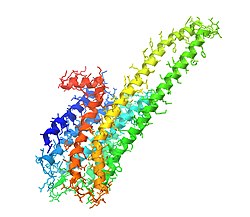
The 5-HT2A receptor is a subtype of the 5-HT2 receptor that belongs to the serotonin receptor family and functions as a G protein-coupled receptor (GPCR).[4] It is a cell surface receptor[5] that activates multiple intracellular signalling cascades.[6] Like all 5-HT2 receptors, the 5-HT2A receptor is coupled to the Gq/G11 signaling pathway. It is the primary excitatory receptor subtype among the serotonin-responsive GPCRs. The 5-HT2A receptor was initially noted for its central role as the primary target of serotonergic psychedelic drugs such as LSD and psilocybin mushrooms. It later regained research prominence when found to mediate, at least in part, the effects of many antipsychotic drugs, particularly atypical antipsychotics.
History
[edit]The serotonin receptors were split into two classes by John Gaddum and Picarelli in 1957 when it was discovered that some of the serotonin-induced changes in the gut could be blocked by morphine, while the remainder of the response was inhibited by dibenzyline (phenoxybenzamine), leading to the naming of M and D receptors, respectively.[7][8] The 5-HT2A receptor is thought to correspond to what was originally described as D subtype of serotonin receptors by Gaddum and Picarelli.[7][8]
In the era before molecular cloning, when radioligand binding and displacement was the only major tool, spiperone and LSD were shown to label two different 5-HT receptors, and neither of them displaced morphine, leading to naming of the 5-HT1, 5-HT2 and 5-HT3 receptors, corresponding to high affinity sites from LSD, spiperone and morphine, respectively.[9] Later, it was shown that the 5-HT2 receptor was very close to the 5-HT1C receptor and they were thus were grouped together, renaming the 5-HT2 receptor into 5-HT2A receptor and the 5-HT1C reeptor into the 5-HT2C receptor. Thus, the 5-HT2 receptor family is composed of three separate molecular entities: the 5-HT2A (formerly known as 5-HT2 or D), the 5-HT2B (formerly known as 5-HT2F) and the 5-HT2C (formerly known as 5-HT1C) receptors.[10]
The serotonin 5-HT2A receptor was identified via radioligand binding in 1978 by Leysen and colleagues.[11][12] Peroutka and Snyder identified two distinct serotonin receptors and named them the 5-HT1 receptor and 5-HT2 receptor in 1979.[13][14] Later, both of these receptors were found to have several subtypes, including the serotonin 5-HT2A receptor.[13] The serotonin 5-HT2A receptor was characterized as a membrane protein by Wouters and colleagues in 1985.[11][15] The gene encoding the rat serotonin 5-HT2A receptor, HTR2A, was cloned in 1988 by Pritchett and colleagues.[11][16] The human gene was cloned by Branchek and colleagues in 1990.[13][17]
Gene
[edit]
The 5-HT2A receptors is coded by the HTR2A gene. In humans the gene is located on chromosome 13. The gene has previously been called just HTR2 until the description of two related genes HTR2B and HTR2C. Several interesting polymorphisms have been identified for HTR2A: A-1438G (rs6311), C102T (rs6313), and His452Tyr (rs6314). Many more polymorphisms exist for the gene. A 2006 paper listed 255.[18][19]
Probable role in fibromyalgia as the T102C polymorphisms of the gene 5HT2A were common in fibromyalgia patients.[20]
Human HTR2A gene is thought to consist of 3 introns and 4 exons and to overlap with human gene HTR2A-AS1 which consists of 18 exons.[21] There are over 200 organisms that have orthologs with the human HTR2A. Currently, the best documented orthologs for HTR2A gene are the mouse,[22] and zebrafish.[23] There are 8 paralogs for the HTR2A gene. The HTR2A gene is known to interact and activate G-protein genes such as GNA14, GNAI1, GNAI3, GNAQ, and GNAZ.[24] These interactions are critical for cell signaling[25][26] and homeostasis[27] in many organisms.[28]
In human brain tissue, regulation of HTR2A varies depending on the region:[21] frontal cortex, amygdala, thalamus, brain stem and cerebellum. In a paper from 2016, they found that HTR2A undergoes a variety of different splicing events, including utilization of alternative splice acceptor sites, exon skipping, rare exon usage, and intron retention.[21]
Transcriptional regulation
[edit]There are a few mechanisms of regulation for HTR2A gene such regulated by DNA methylation at particular transcript binding sites.[29][30] Another mechanism for the correct regulation of gene expression is achieved through alternative splicing. This is a co-transcriptional process, which allows the generation of multiple forms of mRNA transcript from a single coding unit and is emerging as an important control point for gene expression. In this process, exons or introns can be either included or excluded from precursor-mRNA resulting in multiple mature mRNA variants.[31] These mRNA variants result in different isoforms which may have antagonistic functions or differential expression patterns, yielding plasticity and adaptability to the cells.[32] One study found that the common genetic variant rs6311 regulates expression of HTR2A transcripts containing the extended 5' UTR.[21]
Tissue distribution
[edit]5-HT2A is expressed widely throughout the central nervous system (CNS).[33] It is expressed near most of the serotonergic terminal rich areas, including neocortex (mainly prefrontal, parietal, and somatosensory cortex) and the olfactory tubercle [citation needed]. Especially high concentrations of this receptor on the apical dendrites of pyramidal cells in layer V of the cortex may modulate cognitive processes, working memory, and attention[34][35][36] by enhancing glutamate release followed by a complex range of interactions with the 5-HT1A,[37] GABAA,[38] adenosine A1,[39] AMPA,[40] mGluR2/3,[41] mGlu5,[42] and OX2 receptors.[43][44] In the rat cerebellum, the protein has also been found in the Golgi cells of the granular layer,[45] and in the Purkinje cells.[46][47]
In the periphery, it is highly expressed in platelets and many cell types of the cardiovascular system, in fibroblasts, and in neurons of the peripheral nervous system. Additionally, 5-HT2A mRNA expression has been observed in human monocytes.[48] Whole-body distribution of the 5-HT2A/2C receptor agonist, [11C]Cimbi-36 show uptake in several internal organs and brown adipose tissue (BAT), but it is not clear if this represents specific 5-HT2A receptor binding.[49]
Structure
[edit]The 5-HT2A receptor is a member of the class A (rhodopsin-like) G protein-coupled receptor (GPCR) family, characterized by seven transmembrane α-helices connected by extracellular and intracellular loops.[50][51] Its ligand-binding pocket is composed of two adjacent subpockets: the orthosteric binding pocket (OBP) and an extended binding pocket (EBP), with a unique side-extended cavity near the orthosteric site that distinguishes it from related receptors.[52][53] Ligands are anchored primarily through a conserved aspartate residue (D155^3.32) that interacts with their charged amine groups, while additional interactions involve hydrophobic contacts and hydrogen bonds with residues in both the OBP and EBP.[53][54] Structural studies reveal that the receptor undergoes significant conformational changes upon activation, particularly in transmembrane helices 3 and 6, which facilitate G protein coupling and signal transduction.[50][53] The extracellular ligand-binding pocket is closed by a flexible "lid," and the intracellular region includes a short helix (H8) stabilized by π-stacking interactions, both of which contribute to the receptor's dynamic conformational landscape.[53] These structural features underlie the receptor's ability to recognize diverse ligands and mediate complex signaling behaviors.
The cryo-EM structures of the serotonin 5-HT2A receptor with a variety of serotonin 5-HT2A receptor agonists, including the tryptamines serotonin (neurotransmitter and endogenous agonist), psilocin (psychedelic), and dimethyltryptamine (DMT) (psychedelic), the lysergamides LSD (psychedelic) and 2-bromo-LSD (BOL-148) (non-hallucinogenic), and the phenethylamines mescaline (psychedelic) and RS130-180 (β-arrestin-biased agonist with unknown hallucinogenic potential), have been solved and published by Bryan Roth and colleagues.[55][56]
Function
[edit]The 5-HT2A receptor is a subtype of serotonin receptor that plays a critical role in the central nervous system, particularly in regions involved in cognition, learning, and memory.[57] It is highly expressed in the cerebral cortex, especially in layer V pyramidal neurons and certain interneurons, where it modulates thalamocortical information processing and may influence gamma oscillations, which are important for sensory integration and perception.[58] Functionally, the 5-HT2A receptor is a G protein-coupled receptor (GPCR) that primarily signals through the phospholipase C (PLC) pathway, leading to the production of inositol triphosphate (IP3) and diacylglycerol, but it can also activate other signaling cascades such as arachidonic acid and 2-arachidonylglycerol pathways.[58] Notably, the receptor exhibits "functional selectivity," meaning different ligands can differentially activate these signaling pathways, which is relevant for the distinct effects of hallucinogens, antipsychotics, and antidepressants that target the receptor.[58][54] Activation of the 5-HT2A receptor by agonists is associated with enhanced cognition and hallucinogenic effects, while antagonists have antipsychotic and antidepressant properties.[57] Dysregulation of 5-HT2A receptor function has been implicated in psychiatric disorders such as depression, schizophrenia, and drug addiction.[57] Additionally, the receptor undergoes unique regulatory processes, including desensitization and internalization that are partly independent of β-arrestin, further distinguishing it from other GPCRs and influencing its response to long-term pharmacological modulation.[58]
Signaling cascade
[edit]The 5-HT2A receptor is known primarily to couple to the Gαq signal transduction pathway. Upon receptor stimulation with agonist, Gαq and β-γ subunits dissociate to initiate downstream effector pathways. Gαq stimulates phospholipase C (PLC) activity, which subsequently promotes the release of diacylglycerol (DAG) and inositol triphosphate (IP3), which in turn stimulate protein kinase C (PKC) activity and Ca2+ release.[59]
Effects
[edit]Physiological processes mediated by the receptor include:
- CNS: neuronal excitation, hallucinations, out-of-body experiences, and fear. Primarily responsible for the psychedelic effects associated with 5-HT2A receptor agonists such as LSD, DMT, etc.[60][61]
- Activation of the 5-HT2A receptor with 2,5-dimethoxy-4-iodoamphetamine (DOI) produces potent anti-inflammatory effects in several tissues including cardiovascular and gut. Other 5-HT2A agonists like LSD also have potent anti-inflammatory effects against TNF-alpha-induced inflammation.[62][63]
- Activation of the 5-HT2A receptor in hypothalamus causes increases in hormonal levels of oxytocin, prolactin, ACTH, corticosterone, and renin.[64][65]
- Role in memory and learning.[36][66][67]
- Role in arthralgia.[68][69]
- Role in Alzheimer's disease.[70]
- Smooth muscle contraction in the gut.[5]
- Probable role in sleep paralysis.[61]
- Probable role in aging.[71][72]
Ligands
[edit]Agonists
[edit]Activation of the 5-HT2A receptor is necessary for the effects of the "classic" psychedelics like LSD, psilocin and mescaline, which act as full or partial agonists at this receptor, and represent the three main classes of 5-HT2A agonists, the ergolines, tryptamines and phenethylamines, respectively. A very large family of derivatives from these three classes has been developed, and their structure-activity relationships have been extensively researched.[73][74] Agonists acting at 5-HT2A receptors located on the apical dendrites of pyramidal cells within regions of the prefrontal cortex are believed to mediate hallucinogenic activity. Some findings reveal that psychoactive effects of classic psychedelics are mediated by the receptor heterodimer 5-HT2A–mGlu2 and not by monomeric 5-HT2A receptors.[75][76][60] However, newer research suggests that 5HT2A and mGlu2 receptors do not physically associate with each other, so the former findings have questionable relevance.[77] Agonists enhance dopamine in PFC,[36] enhance memory and play an active role in attention and learning.[78][79]
Serotonin 5-HT2A receptor agonists include serotonergic psychedelics[80] and non-hallucinogenic agents.[81][82] Psychedelics have widely been encountered as recreational drug or drugs of misuse, with potential clinical consequences such as overdose, hospitalization, bad trips and worsened mental health, and rare adverse effects such as seizures, psychosis, and hallucinogen persisting perception disorder (HPPD).[83][84] On the other hand, psychedelics and non-hallucinogenic serotonin 5-HT2A receptor agonists are under development as novel treatments for psychiatric disorders like depression, anxiety, and addiction as well as other conditions like cluster headaches.[85][86][87][88][89] Both psychedelics and non-hallucinogenic serotonin 5-HT2A receptor agonists are claimed to act as psychoplastogens and this might be involved in their therapeutic effects.[88][90][91]
Anti-inflammatory effects
[edit]Various serotonergic psychedelics, acting as serotonin 5-HT2A receptor agonists, have been found to be highly potent and efficacious anti-inflammatory and immunomodulatory agents in preclinical research (i.e., animal and in-vitro studies).[92][93][94][95][96][97][98] In contrast to corticosteroids however, psychedelics with anti-inflammatory effects do not appear to suppress the immune system.[92][93] Some psychedelics have been found to be far more potent in their anti-inflammatory effects than in their psychedelic effects.[94][95] For instance, (R)-DOI is 30- to >50-fold more potent in producing anti-inflammatory effects than in producing psychedelic-like behavioral effects in animal research.[94][95][93] Psilocin, the active form of psilocybin, has similar anti-inflammatory potency as (R)-DOI.[93][94][98]
The potencies of psychedelics and other serotonin 5-HT2A receptor agonists as anti-inflammatory drugs vary, with 2C-I, DOIB, 2C-B, 4-HO-DiPT, DOI, 2,5-DMA, DOET, DOM, psilocin, and 2C-H being highly potent and fully efficacious anti-inflammatories; TMA-2, 2C-B-Fly, TCB-2, ETH-LAD, LSD, and 2C-T-33 being partially efficacious anti-inflammatories; and lisuride, 1-methylpsilocin, 5-MeO-DMT, and DMT having negligible efficacy.[93][98] Both non-hallucinogenic agents with full anti-inflammatory effects, such as 2,5-DMA, and non-anti-inflammatory agents with full psychedelic effects, such as DOTFM, are known.[98][99][100] Hence, the psychedelic and anti-inflammatory effects of serotonin 5-HT2A receptor agonists appear to be fully dissociable.[98][99][100] These effects appear to be mediated by different intracellular signaling pathways, although the exact pathways are unclear.[100]
Serotonin 5-HT2A receptor agonists with anti-inflammatory effects but reduced psychedelic effects, such as 2C-iBu (ELE-02), are under development for the potential treatment of inflammatory conditions.[101][102][103] They may also have applications in the treatment of neuroinflammation.[92][95] The anti-inflammatory effects of psychedelics might be involved in the claimed effects of psychedelic microdosing.[104][105] Relatedly, LSD microdosing is being studied in the treatment of Alzheimer's disease specifically for its anti-inflammatory effects.[106][107]
Full agonists
[edit]- 25B-NBOMe – also known as Cimbi-36; used as a PET imaging tool for visualizing the 5-HT2A receptor[108]
- 25I-NBOH and its 2-methoxy-analog 25I-NBOMe[109]
- BMB-202 – highly selective[110]
- 18F FECIMBI-36 – radiolabelled agonist ligand for mapping 5-HT2A / 5-HT2C receptor distribution[111]
- 5-Methoxytryptamine – full agonist to several serotonin receptors.
- O-4310 – 5-HT2A selective, claimed to have 100× selectivity over 5-HT2C and be inactive at 5-HT2B
- PHA-57378 – dual 5-HT2A / 5-HT2C agonist, anxiolytic effects in animal studies.[112]
- TCB-2[113]
Partial agonists
[edit]- 25C-NBOMe
- 25CN-NBOH – 100× selectivity for 5-HT2A over 5-HT2C, 46× selectivity over 5-HT2B.[114]
- 3-Carboxy indole PB-22 (1-pentyl-indole-3-carboxylic acid) – a metabolite of the synthetic cannabinoid PB-22, partial agonist at 5-HT2A[115]
- BMB-201 – non-hallucinogenic-like in animals[116]
- Bromo-DragonFLY[19]
- DMBMPP – a structurally constrained derivative of 25B-NBOMe, which acts as a potent partial agonist with 124× selectivity for 5-HT2A over 5-HT2C, making it the most selective agonist ligand identified to date.[117]
- (R)-DOI – traditionally the most common 5-HT2A reference agonist used in research[118]
- Efavirenz – an antiretroviral drug, produces psychiatric side effects thought to be mediated by 5-HT2A.[119]
- IHCH-7113 – 5-HT2A agonist derived by simplification of the 5-HT2A antagonist antipsychotic lumateperone.[120]
- Lisuride – an antiparkinson dopamine agonist of the ergoline class, that is also a dual 5-HT2A / 5-HT2C agonist[121] and 5-HT2B antagonist.[122]
- Mefloquine – an antimalarial drug, also produces psychiatric side effects which may be mediated through 5-HT2A and/or 5-HT2C receptors.[123]
- Methysergide – a congener of methylergonovine, used in treatment of migraine blocks 5-HT2A and 5-HT2C receptors, but sometimes acts as partial agonist, in some preparations.
- Piperidine derivatives such as OSU-6162, which acts as a partial agonist at both 5-HT2A and dopamine D2 receptors, and Z3517967757.
- Quipazine – 5-HT2A agonist but also potent 5-HT3 agonist.[124]
- SN-22 – partial agonist at all three 5-HT2 subtypes
- Some benzazepines and similar compounds related to lorcaserin such as SCHEMBL5334361 are potent 5-HT2A agonists as well as showing action at 5-HT2C.[125][126][127][128][129]
- Substituted tetrahydro-β-carboline[130]
- Tetrahydropyridine derivatives such as (R)-69,[131] Z4154032166 and WXVL_BT0793LQ2118.[132]
- Zalsupindole (DLX-001; AAZ-A-154) – non-hallucinogenic but retains antidepressant effects in animals.[133]
Selective agonists
[edit]- 25CN-NBOH[134][81]
- BMB-202[110]
- DMBMPP[81][135]
- LPH-5[136][137]
- LPH-48[138]
- Lysergine[81][139]
- O-4310[140][141]
- TGF-8027[142]
Peripherally selective agonists
[edit]One effect of 5-HT2A receptor activation is a reduction in intraocular pressure, and so 5-HT2A agonists can be useful for the treatment of glaucoma. This has led to the development of compounds such as AL-34662 that are hoped to reduce pressure inside the eyes but without crossing the blood–brain barrier and producing hallucinogenic side effects.[143] Animal studies with this compound showed it to be free of hallucinogenic effects at doses up to 30 mg/kg, although several of its more lipophilic analogues did produce the head-twitch response known to be characteristic of hallucinogenic effects in rodents.[144]
Antagonists
[edit]Serotonin 5-HT2A receptor antagonists, including many atypical antipsychotics, more selective agents like pimavanserin, and certain antidepressants and hypnotics like trazodone, mirtazapine, tricyclic antidepressants, and hydroxyzine, are used in the treatment of psychiatric disorders and other conditions such as depression, anxiety, psychosis, and insomnia.[145][146][147] Ketanserin, a dual serotonin 5-HT2A receptor antagonist and α1-adrenergic receptor antagonist, is used as an antihypertensive agent.[148][147] The non-selective serotonin 5-HT2A receptor antagonist cyproheptadine is frequently used off-label to treat serotonin syndrome, albeit based on limited clinical evidence.[149][150][151] Serotonin 5-HT2A receptor antagonists like ketanserin have been used as psychedelic antidotes or "trip killers" to manage the hallucinogenic effects of serotonergic psychedelics.[152][153][154]
List of antagonists
[edit]- 2-Alkyl-4-aryl-tetrahydro-pyrimido-azepines – subtype selective antagonists (35 g: 60-fold).[155]
- 5-MeO-NBpBrT
- AMDA and related derivatives – family of selective 5-HT2A antagonists.[156][157][158][159][160]
- Atypical antipsychotics – e.g., quetiapine, and asenapine are relatively potent antagonists of 5-HT2A
- Brexpiprazole – an atypical antipsychotic, is a potent antagonist at 5-HT2A receptors (Ki = 0.47 nM in humans).[161][162]
- Cariprazine
- Cyclobenzaprine – a strong antagonist of both 5-HT2A and 5-HT2C receptors
- Cyproheptadine
- Ergot alkaloids are mostly nonspecific 5-HT receptor antagonists, but a few ergot derivatives such as metergoline and nicergoline bind preferentially to members of the 5-HT2 receptor family.
- Hydroxyzine (Atarax) (minor effect)
- Ketanserin – The discovery of ketanserin was a landmark in the pharmacology of 5-HT2 receptors. Ketanserin, though capable of blocking 5-HT induced platelet adhesion, however does not mediate its well-known antihypertensive action through 5-HT2 receptor family, but through its high affinity for alpha1 adrenergic receptors. It also has high affinity for H1 histaminergic receptors equal to that at 5-HT2A receptors. Compounds chemically related to ketanserin such as ritanserin are more selective 5-HT2A receptor antagonists with low affinity for alpha-adrenergic receptors. However, ritanserin, like most other 5-HT2A receptor antagonists, also potently inhibits 5-HT2C receptors.
- Lumateperone
- LY-367,265 – dual 5-HT2A antagonist / SSRI with antidepressant effects
- Nantenine
- Nefazodone – blocks post-synaptic 5-HT2A receptors, and to a lesser extent inhibits pre-synaptic serotonin and norepinephrine reuptake.
- Niaprazine
- Opipramol – atypical antidepressant
- Pizotifen – a non-selective antagonist.[163]
- Trazodone – a potent 5-HT2A antagonist, as well as an antagonist on other serotonin receptors.
- Tetracyclic antidepressants – mianserin,[164] mirtazapine, maprotiline
- Tricyclic antidepressants (TCAs) – e.g., amitriptyline, nortriptyline, amoxapine, clomipramine, doxepin, maprotiline, imipramine, iprindole[164]
- Typical antipsychotics – e.g., haloperidol and chlorpromazine (minor)
- Volinanserin (MDL100907, M100907) – the most potent 5-HT2A antagonist;[165] underwent a few clinical trials but was ultimately never marketed.
Peripherally selective antagonists
[edit]Antagonists and cardiovascular disease
[edit]Increased 5-HT2A expression is observed in patients with coronary thrombosis, and the receptor has been associated with processes that influence atherosclerosis.[166] As the receptor is present in coronary arteries[167] and capable of mediating vasoconstriction, 5-HT2A has also been linked to coronary artery spasms.[168] 5-HT antagonism, therefore, has potential in the prevention of cardiovascular disease, however, no studies have been published so far.[166]
Inverse agonists
[edit]- AC-90179 – potent and selective inverse agonist at 5-HT2A, also 5-HT2C antagonist.[169][170]
- Atypical antipsychotics – clozapine, iloperidone, olanzapine, paliperidone, risperidone
- Eplivanserin (Sanofi Aventis) – sleeping pill that reached phase II trials (but for which the application for approval was withdrawn), acts as a selective 5-HT2A inverse agonist.
- Nelotanserin (APD-125) – selective 5-HT2A inverse agonist developed by Arena Pharmaceuticals for the treatment of insomnia. APD-125 was shown to be effective and well tolerated in clinical trials.[171]
- Pimavanserin (ACP-103) – more selective than AC-90179, orally active, antipsychotic in vivo, now FDA approved for the treatment of hallucinations and delusions associated with Parkinson's disease.[172][173][174][175][176]
Positive allosteric modulators
[edit]Positive allosteric modulators of the serotonin 5-HT2A receptor have been identified.[177][178] These include CTW0404 and CTW0419.[177][178] They selectively potentiated the serotonin 5-HT2A receptor without affecting the serotonin 5-HT2B and 5-HT2C receptors.[177][178] Unlike serotonin 5-HT2A receptor agonists, they did not substitute for the serotonergic psychedelic (R)-DOI in drug discrimination tests and did not produce the head-twitch response, suggesting that they lack psychedelic effects.[177][178] Instead, they blunted the (R)-DOI-induced head-twitch response.[178] The (R)-enantiomer of glaucine has also been reported to be a serotonin 5-HT2A receptor positive allosteric modulator.[179] A dual serotonin 5-HT2C and 5-HT2A receptor positive allosteric modulator is the oleamide analogue JPC0323.[180][181]
Functional selectivity
[edit]5-HT2A-receptor ligands may differentially activate the transductional pathways (see above). Studies evaluated the activation of two effectors, PLC and PLA2, by means of their second messengers. Compounds displaying more pronounced functional selectivity are 2,5-DMA and 2C-N. The former induces IP accumulation without activating the PLA2 mediated response, while the latter elicits AA release without activating the PLC mediated response.[182]


Recent research has suggested potential signaling differences within the somatosensory cortex between 5-HT2A agonists that produce headshakes in the mouse and those that do not, such as lisuride, as these agents are also non-hallucinogenic in humans despite being active 5-HT2A agonists.[183][184] One known example of differences in signal transduction is between the two 5-HT2A agonists serotonin and DOI that involves differential recruitment of intracellular proteins called β-arrestins, more specifically arrestin beta 2.[185][186] Cyclopropylmethanamine derivatives such as (−)-19 have also been shown to act as 5-HT2A/2C agonists with functional selectivity for Gq-mediated signaling compared with β-arrestin recruitment.[187]
Serotonin-elevating drugs
[edit]Besides direct serotonin 5-HT2A receptor agonists, many drugs elevate serotonin levels and indirectly activate serotonin 5-HT2A receptors.[188][189] Examples include antidepressants and anxiolytics such as selective serotonin reuptake inhibitors (SSRIs), serotonin–norepinephrine reuptake inhibitors (SNRIs), monoamine oxidase inhibitors (MAOIs), and serotonin precursors like tryptophan and 5-hydroxytryptophan (5-HTP).[188][189] In addition, serotonin releasing agents (SRAs), including appetite suppressants like fenfluramine and chlorphentermine and entactogens like MDMA, elevate serotonin levels and indirectly activate serotonin 5-HT2A receptors similarly.[190][191][192][193][194][195] Serotonin 5-HT2A receptor activation may be involved in the therapeutic effects of serotonin-elevating medications[188][189] and appears to be importantly involved in the subjective effects of SRAs like MDMA.[153] Serotonin-elevating drugs can cause serotonin syndrome under certain circumstances, for instance in overdose or with combination of multiple serotonergic drugs, and the serotonin 5-HT2A receptor appears to be a key serotonin receptor in mediating this syndrome.[196][197][198]
Methods to analyse the receptor
[edit]The receptor can be analysed by neuroimaging, radioligand, genetic analysis, measurements of ion flows, and other ways.[citation needed]
Neuroimaging
[edit]The 5-HT2A receptors may be imaged with PET-scanners using the fluorine-18-altanserin,[199] MDL 100,907[200] or [11C]Cimbi-36[108][201] radioligands that binds to the neuroreceptor, e.g., one study reported a reduced binding of altanserin particularly in the hippocampus in patients with major depressive disorder.[202]
Altanserin uptake decreases with age reflecting a loss of specific 5-HT2A receptors with age.[203][204][205]
Other
[edit]Western blot with an affinity-purified antibody and examination of 5-HT2A receptor protein samples by electrophoresis has been described. Immunohistochemical staining of 5-HT2A receptors is also possible.[5]
Clinical significance
[edit]Associations with psychiatric disorders
[edit]Several studies have seen links between the -1438G/A polymorphism and mood disorders, such as major depressive disorder.[206] and a strong link with an odds ratio of 1.3 has been found between the T102C polymorphism and schizophrenia.[207]
The T102C polymorphism has also been studied in relation to suicide attempts, with a study finding excess of the C/C genotype among the suicide attempters.[208] A number of other studies were devoted to finding an association of the gene with schizophrenia, with diverging results.[209]
These individual studies may, however, not give a full picture: A review from 2007 looking at the effect of different SNPs reported in separate studies stated that "genetic association studies [of HTR2A gene variants with psychiatric disorders] report conflicting and generally negative results" with no involvement, small or a not replicated role for the genetic variant of the gene.[210]
Polymorphisms in the promoter gene coding Early growth response 3 (EGR3) are associated with schizophrenia. Studies have demonstrated a relationship between EGR3 and HTR2A, and schizophrenia-like behaviors in transgenic animals.[211][212] Exactly how these results translate over to further biopsychological understanding of schizophrenia is still widely debated.[213][214] There is some evidence that dysfunction of HTR2A can impact pharmacological interventions.[215]
Several studies have assessed a relationship between 5-hydroxytryptamine (serotonin) 2A receptor (5-HTR2A) gene polymorphisms with an increased risk of suicidal behavior. One study revealed that T102C polymorphism is associated with suicidal behavior[216] but other studies failed to replicate these findings and found no association between polymorphism and suicidal behavior.[217]
Treatment response
[edit]Genetics seems also to be associated to some extent with the amount of adverse events in treatment of major depression disorder.[218]
Associations with substance abuse
[edit]Polymorphisms in the 5-HT2A receptor coding gene HTR2A (rs6313 and s6311) have been shown to have conflicting associations with alcohol misuse. For example, A polymorphism in the 5-HT2A receptor coding gene HTR2A (rs6313) was reported to predict lower positive alcohol expectancy, higher refusal self-efficacy, and lower alcohol misuse in a sample of 120 young adults. However, this polymorphism did not moderate the linkages between impulsivity, cognition, and alcohol misuse.[219] There are conflicting results as other studies have found associations between T102C polymorphisms alcohol misuse.[220][221]
Drug impact on gene expression
[edit]There is some evidence that methylation patterns may contribute to relapse behaviors in people who use stimulants.[222] In mice, psychotropic drugs such as DOI, LSD, DOM, and DOB which produced differing transcriptional patterns among several different brain regions.[212]
See also
[edit]References
[edit]- ^ a b c GRCh38: Ensembl release 89: ENSG00000102468 – Ensembl, May 2017
- ^ "Human PubMed Reference:". National Center for Biotechnology Information, U.S. National Library of Medicine.
- ^ "Mouse PubMed Reference:". National Center for Biotechnology Information, U.S. National Library of Medicine.
- ^ Cook EH, Fletcher KE, Wainwright M, Marks N, Yan SY, Leventhal BL (August 1994). "Primary structure of the human platelet serotonin 5-HT2A receptor: identify with frontal cortex serotonin 5-HT2A receptor". Journal of Neurochemistry. 63 (2): 465–469. doi:10.1046/j.1471-4159.1994.63020465.x. PMID 8035173. S2CID 40207336.
- ^ a b c Kling A (2013). 5-HT2A: a serotonin receptor with a possible role in joint diseases (PDF) (Ph.D. thesis). Umeå, Sweden: Umeå Universitet. ISBN 978-91-7459-549-9.
- ^ Raote I (2007). "Serotonin 2A (5-HT2A) Receptor Function: Ligand-Dependent Mechanisms and Pathways". Ishier. Frontiers in Neuroscience. Press/Taylor & Francis. ISBN 978-0-8493-3977-6. PMID 21204452.
- ^ a b Sanders-Bush E, Mayer SE (2006). "Chapter 11: 5-Hydroxytryptamine (Serotonin): Receptor Agonists and Antagonists". In Brunton LL, Lazo JS, Parker K (eds.). Goodman & Gilman's the Pharmacological Basis of Therapeutics (11th ed.). New York: McGraw-Hill. ISBN 0-07-142280-3.
- ^ a b Gaddum JH, Picarelli ZP (September 1957). "Two kinds of tryptamine receptor". Br J Pharmacol Chemother. 12 (3): 323–328. doi:10.1111/j.1476-5381.1957.tb00142.x. PMC 1509685. PMID 13460238.
- ^ Siegel GJ, Albers RW (2005). Basic neurochemistry: molecular, cellular, and medical aspects. Vol. 1 (7th ed.). Academic Press. p. 241. ISBN 0-12-088397-X.
- ^ Hoyer D, Hannon JP, Martin GR (April 2002). "Molecular, pharmacological and functional diversity of 5-HT receptors". Pharmacology, Biochemistry, and Behavior. 71 (4): 533–554. doi:10.1016/S0091-3057(01)00746-8. PMID 11888546. S2CID 25543069.
- ^ a b c Chiu YT, Deutch AY, Wang W, Schmitz GP, Huang KL, Kocak DD, et al. (September 2023). "A suite of engineered mice for interrogating psychedelic drug actions". bioRxiv. doi:10.1101/2023.09.25.559347. PMC 10557740. PMID 37808655.
The HTR2A was first identified by radioligand binding in 1978 (Leysen et al., 1978), was characterized as a membrane protein in 1985 (Wouters et al., 1985), and its encoding gene, Htr2a, was cloned in 1988 (Pritchett et al., 1988). The structure of Htr2a was characterized further by the Chen and Shih groups for human HTR2A and Toth group for murine Htr2a, who identified various introns, exons, and promoters (Chen et al., 1992; Shih et al., 1996; Toth, 1996).
- ^ Leysen JE, Niemegeers CJ, Tollenaere JP, Laduron PM (March 1978). "Serotonergic component of neuroleptic receptors". Nature. 272 (5649): 168–171. doi:10.1038/272168a0. PMID 564466.
- ^ a b c Nichols DE, Nichols CD (May 2008). "Serotonin receptors". Chem Rev. 108 (5): 1614–1641. doi:10.1021/cr078224o. PMID 18476671.
- ^ Peroutka SJ, Snyder SH (November 1979). "Multiple serotonin receptors: differential binding of [3H]5-hydroxytryptamine, [3H]lysergic acid diethylamide and [3H]spiroperidol". Mol Pharmacol. 16 (3): 687–699. doi:10.1016/S0026-895X(25)13812-1. PMID 530254.
- ^ Wouters W, Van Dun J, Leysen JE, Laduron PM (September 1985). "Solubilization of rat brain serotonin-S2 receptors using CHAPS/salt". Eur J Pharmacol. 115 (1): 1–9. doi:10.1016/0014-2999(85)90577-1. PMID 2931292.
- ^ Pritchett DB, Bach AW, Wozny M, Taleb O, Dal Toso R, Shih JC, et al. (December 1988). "Structure and functional expression of cloned rat serotonin 5HT-2 receptor". EMBO J. 7 (13): 4135–4140. doi:10.1002/j.1460-2075.1988.tb03308.x. PMC 455123. PMID 2854054.
- ^ Branchek T, Adham N, Macchi M, Kao HT, Hartig PR (November 1990). "[3H]-DOB(4-bromo-2,5-dimethoxyphenylisopropylamine) and [3H] ketanserin label two affinity states of the cloned human 5-hydroxytryptamine2 receptor". Mol Pharmacol. 38 (5): 604–609. doi:10.1016/S0026-895X(25)09519-7. PMID 2233697.
- ^ Bonis J, Furlong LI, Sanz F (October 2006). "OSIRIS: a tool for retrieving literature about sequence variants". Bioinformatics. 22 (20): 2567–2569. doi:10.1093/bioinformatics/btl421. PMID 16882651.
Supplementary material to article
- ^ a b Chambers JJ, Kurrasch-Orbaugh DM, Parker MA, Nichols DE (March 2001). "Enantiospecific synthesis and pharmacological evaluation of a series of super-potent, conformationally restricted 5-HT(2A/2C) receptor agonists". Journal of Medicinal Chemistry. 44 (6): 1003–1010. doi:10.1021/jm000491y. PMID 11300881.
- ^ Goldstein AT, Pukall C, Goldstein IL (2020). "Fibromyalgia and Female Sexual Pain Disorders". Female Sexual Pain Disorders: Evaluation and Management (2 ed.). Wiley. ISBN 978-1-119-48266-6.
- ^ a b c d Ruble CL, Smith RM, Calley J, Munsie L, Airey DC, Gao Y, et al. (January 2016). "Genomic structure and expression of the human serotonin 2A receptor gene (HTR2A) locus: identification of novel HTR2A and antisense (HTR2A-AS1) exons". BMC Genetics. 17 (1) 16. doi:10.1186/s12863-015-0325-6. PMC 4702415. PMID 26738766.
- ^ Medrihan L, Sagi Y, Inde Z, Krupa O, Daniels C, Peyrache A, et al. (August 2017). "Initiation of Behavioral Response to Antidepressants by Cholecystokinin Neurons of the Dentate Gyrus". Neuron. 95 (3): 564–576.e4. doi:10.1016/j.neuron.2017.06.044. PMID 28735749.
- ^ Griffin A, Hamling KR, Knupp K, Hong S, Lee LP, Baraban SC (March 2017). "Clemizole and modulators of serotonin signalling suppress seizures in Dravet syndrome". Brain. 140 (3): 669–683. doi:10.1093/brain/aww342. PMC 6075536. PMID 28073790.
- ^ Giulietti M, Vivenzio V, Piva F, Principato G, Bellantuono C, Nardi B (July 2014). "How much do we know about the coupling of G-proteins to serotonin receptors?". Molecular Brain. 7 (1) 49. doi:10.1186/s13041-014-0049-y. PMC 4105882. PMID 25011628.
- ^ Lal D, May P, Perez-Palma E, Samocha KE, Kosmicki JA, Robinson EB, et al. (March 2020). "Gene family information facilitates variant interpretation and identification of disease-associated genes in neurodevelopmental disorders". Genome Medicine. 12 (1) 28. doi:10.1186/s13073-020-00725-6. PMC 7079346. PMID 32183904.
- ^ Gao W, Guo N, Zhao S, Chen Z, Zhang W, Yan F, et al. (November 2020). "HTR2A promotes the development of cardiac hypertrophy by activating PI3K-PDK1-AKT-mTOR signaling". Cell Stress & Chaperones. 25 (6): 899–908. doi:10.1007/s12192-020-01124-x. PMC 7591670. PMID 32519137.
- ^ Cao X, Wang Y, Shu D, Qu H, Luo C, Hu X (October 2020). "Food intake-related genes in chicken determined through combinatorial genome-wide association study and transcriptome analysis". Animal Genetics. 51 (5): 741–751. doi:10.1111/age.12980. PMID 32720725. S2CID 220839883.
- ^ Garza-Brenner E, Sifuentes-Rincón AM, Randel RD, Paredes-Sánchez FA, Parra-Bracamonte GM, Arellano Vera W, et al. (August 2017). "Association of SNPs in dopamine and serotonin pathway genes and their interacting genes with temperament traits in Charolais cows". Journal of Applied Genetics. 58 (3): 363–371. doi:10.1007/s13353-016-0383-0. PMID 27987181. S2CID 34463383.
- ^ Cheah SY, Lawford BR, Young RM, Morris CP, Voisey J (January 2017). "mRNA Expression and DNA Methylation Analysis of Serotonin Receptor 2A (HTR2A) in the Human Schizophrenic Brain". Genes. 8 (1): 14. doi:10.3390/genes8010014. PMC 5295009. PMID 28054990.
- ^ Falkenberg VR, Gurbaxani BM, Unger ER, Rajeevan MS (March 2011). "Functional genomics of serotonin receptor 2A (HTR2A): interaction of polymorphism, methylation, expression and disease association". Neuromolecular Medicine. 13 (1): 66–76. doi:10.1007/s12017-010-8138-2. PMC 3044825. PMID 20941551.
- ^ Kelemen O, Convertini P, Zhang Z, Wen Y, Shen M, Falaleeva M, et al. (February 2013). "Function of alternative splicing". Gene. 514 (1): 1–30. doi:10.1016/j.gene.2012.07.083. PMC 5632952. PMID 22909801.
- ^ Wang ET, Ward AJ, Cherone JM, Giudice J, Wang TT, Treacy DJ, et al. (June 2015). "Antagonistic regulation of mRNA expression and splicing by CELF and MBNL proteins". Genome Research. 25 (6): 858–871. doi:10.1101/gr.184390.114. PMC 4448682. PMID 25883322.
- ^ Beliveau V, Ganz M, Feng L, Ozenne B, Højgaard L, Fisher PM, et al. (January 2017). "A High-Resolution In Vivo Atlas of the Human Brain's Serotonin System". The Journal of Neuroscience. 37 (1): 120–128. doi:10.1523/JNEUROSCI.2830-16.2016. PMC 5214625. PMID 28053035.
- ^ Aghajanian GK, Marek GJ (April 1999). "Serotonin, via 5-HT2A receptors, increases EPSCs in layer V pyramidal cells of prefrontal cortex by an asynchronous mode of glutamate release". Brain Research. 825 (1–2): 161–171. doi:10.1016/S0006-8993(99)01224-X. PMID 10216183. S2CID 20081913.
- ^ Marek GJ, Wright RA, Gewirtz JC, Schoepp DD (2001). "A major role for thalamocortical afferents in serotonergic hallucinogen receptor function in the rat neocortex". Neuroscience. 105 (2): 379–392. doi:10.1016/S0306-4522(01)00199-3. PMID 11672605. S2CID 19764312.
- ^ a b c Bortolozzi A, Díaz-Mataix L, Scorza MC, Celada P, Artigas F (December 2005). "The activation of 5-HT receptors in prefrontal cortex enhances dopaminergic activity". Journal of Neurochemistry. 95 (6): 1597–1607. doi:10.1111/j.1471-4159.2005.03485.x. hdl:10261/33026. PMID 16277612. S2CID 18350703.
- ^ Amargós-Bosch M, Bortolozzi A, Puig MV, Serrats J, Adell A, Celada P, et al. (March 2004). "Co-expression and in vivo interaction of serotonin1A and serotonin2A receptors in pyramidal neurons of prefrontal cortex". Cerebral Cortex. 14 (3): 281–299. doi:10.1093/cercor/bhg128. hdl:10261/34683. PMID 14754868.
- ^ Feng J, Cai X, Zhao J, Yan Z (September 2001). "Serotonin receptors modulate GABA(A) receptor channels through activation of anchored protein kinase C in prefrontal cortical neurons". The Journal of Neuroscience. 21 (17): 6502–6511. doi:10.1523/JNEUROSCI.21-17-06502.2001. PMC 6763081. PMID 11517239.
- ^ Marek GJ (June 2009). "Activation of adenosine(1) (A(1)) receptors suppresses head shakes induced by a serotonergic hallucinogen in rats". Neuropharmacology. 56 (8): 1082–1087. doi:10.1016/j.neuropharm.2009.03.005. PMC 2706691. PMID 19324062.
- ^ Zhang C, Marek GJ (January 2008). "AMPA receptor involvement in 5-hydroxytryptamine2A receptor-mediated pre-frontal cortical excitatory synaptic currents and DOI-induced head shakes". Progress in Neuro-Psychopharmacology & Biological Psychiatry. 32 (1): 62–71. doi:10.1016/j.pnpbp.2007.07.009. PMID 17728034. S2CID 44889209.
- ^ Gewirtz JC, Marek GJ (November 2000). "Behavioral evidence for interactions between a hallucinogenic drug and group II metabotropic glutamate receptors". Neuropsychopharmacology. 23 (5): 569–576. doi:10.1016/S0893-133X(00)00136-6. PMID 11027922.
- ^ Marek GJ, Zhang C (September 2008). "Activation of metabotropic glutamate 5 (mGlu5) receptors induces spontaneous excitatory synaptic currents in layer V pyramidal cells of the rat prefrontal cortex". Neuroscience Letters. 442 (3): 239–243. doi:10.1016/j.neulet.2008.06.083. PMC 2677702. PMID 18621097.
- ^ Lambe EK, Liu RJ, Aghajanian GK (November 2007). "Schizophrenia, hypocretin (orexin), and the thalamocortical activating system". Schizophrenia Bulletin. 33 (6): 1284–1290. doi:10.1093/schbul/sbm088. PMC 2779889. PMID 17656637.
- ^ Liu RJ, Aghajanian GK (January 2008). "Stress blunts serotonin- and hypocretin-evoked EPSCs in prefrontal cortex: role of corticosterone-mediated apical dendritic atrophy". Proceedings of the National Academy of Sciences of the United States of America. 105 (1): 359–364. Bibcode:2008PNAS..105..359L. doi:10.1073/pnas.0706679105. PMC 2224217. PMID 18172209.
- ^ Geurts FJ, De Schutter E, Timmermans JP (June 2002). "Localization of 5-HT2A, 5-HT3, 5-HT5A and 5-HT7 receptor-like immunoreactivity in the rat cerebellum". Journal of Chemical Neuroanatomy. 24 (1): 65–74. doi:10.1016/S0891-0618(02)00020-0. PMID 12084412. S2CID 16510169.
- ^ Maeshima T, Shutoh F, Hamada S, Senzaki K, Hamaguchi-Hamada K, Ito R, et al. (August 1998). "Serotonin2A receptor-like immunoreactivity in rat cerebellar Purkinje cells". Neuroscience Letters. 252 (1): 72–74. doi:10.1016/S0304-3940(98)00546-1. PMID 9756362. S2CID 28549709.
- ^ Maeshima T, Shiga T, Ito R, Okado N (December 2004). "Expression of serotonin2A receptors in Purkinje cells of the developing rat cerebellum". Neuroscience Research. 50 (4): 411–417. doi:10.1016/j.neures.2004.08.010. PMID 15567478. S2CID 5772490.
- ^ Dürk T, Panther E, Müller T, Sorichter S, Ferrari D, Pizzirani C, et al. (May 2005). "5-Hydroxytryptamine modulates cytokine and chemokine production in LPS-primed human monocytes via stimulation of different 5-HTR subtypes". International Immunology. 17 (5): 599–606. doi:10.1093/intimm/dxh242. PMID 15802305.
- ^ Johansen A, Holm S, Dall B, Keller S, Kristensen JL, Knudsen GM, et al. (July 2019). "Human biodistribution and radiation dosimetry of the 5-HT2A receptor agonist Cimbi-36 labeled with carbon-11 in two positions". EJNMMI Research. 9 (1) 71. doi:10.1186/s13550-019-0527-4. PMC 6669221. PMID 31367837.
- ^ a b Shan J, Khelashvili G, Mondal S, Mehler EL, Weinstein H (2012). "Ligand-dependent conformations and dynamics of the serotonin 5-HT(2A) receptor determine its activation and membrane-driven oligomerization properties". PLOS Computational Biology. 8 (4) e1002473. Bibcode:2012PLSCB...8E2473S. doi:10.1371/journal.pcbi.1002473. PMC 3330085. PMID 22532793.
- ^ Chalit JE, Ragan EJ. The Serotonin G-Protein Coupled Receptor 5HT2A: Molecular and Multiple Sequence Analysis (PDF) (Report).
- ^ Kimura KT, Asada H, Inoue A, Kadji FM, Im D, Mori C, et al. (February 2019). "Structures of the 5-HT2A receptor in complex with the antipsychotics risperidone and zotepine". Nature Structural & Molecular Biology. 26 (2): 121–128. doi:10.1038/s41594-018-0180-z. PMID 30723326.
- ^ a b c d Viohl N, Hakami Zanjani AA, Khandelia H (March 2025). "Molecular insights into the modulation of the 5HT2A receptor by serotonin, psilocin, and the G protein subunit Gqα". FEBS Letters. 599 (6): 876–891. doi:10.1002/1873-3468.15099. PMC 11931985. PMID 39865564.
- ^ a b Wallach J, Cao AB, Calkins MM, Heim AJ, Lanham JK, Bonniwell EM, et al. (December 2023). "Identification of 5-HT2A receptor signaling pathways associated with psychedelic potential". Nature Communications. 14 (1) 8221. doi:10.1038/s41467-023-44016-1. PMC 10724237. PMID 38102107.
- ^ Gumpper RH, Jain MK, Kim K, Sun R, Sun N, Xu Z, et al. (March 2025). "The structural diversity of psychedelic drug actions revealed". Nature Communications. 16 (1) 2734. Bibcode:2025NatCo..16.2734G. doi:10.1038/s41467-025-57956-7. PMC 11923220. PMID 40108183.
- ^ Gumpper RH, DiBerto J, Jain M, Kim K, Fay J, Roth BL (September 2022). Structures of Hallucinogenic and Non-Hallucinogenic Analogues of the 5-HT2A Receptor Reveals Molecular Insights into Signaling Bias (PDF). University of North Carolina at Chapel Hill Department of Pharmacology Research Retreat September 16th, 2022 – William and Ida Friday Center.
Recently, there has been a resurgence in utilizing classical psychedelics to treat depression, addiction, anxiety disorders, and cluster headaches. The biological target of these compounds, and the route of its therapeutic actions, is the 5HT2A receptor (5HT2AR). It has been hypothesized that the hallucinations and therapeutic actions can be separated through biased agonism and G-protein activation. Here we present 8 new cryoEM structures covering all major compound classes for the 5HT2AR including a novel arrestin biased compound RS130-180. Utilizing the structural and functional data we noticed a correlation between ligand bias and the placement of the canonical "toggle-switch" tryptophan. These findings lead to a broader mechanistic understanding of 5HT2AR activation as well as potential for the development of biased ligands.
- ^ a b c Zhang G, Stackman RW (2015). "The role of serotonin 5-HT2A receptors in memory and cognition". Frontiers in Pharmacology. 6: 225. doi:10.3389/fphar.2015.00225. PMC 4594018. PMID 26500553.
- ^ a b c d Raote I, Bhattacharya A, Panicker MM (2007). "Serotonin 2A (5-HT2A) Receptor Function: Ligand-Dependent Mechanisms and Pathways.". In Chattopadhyay A (ed.). Serotonin Receptors in Neurobiology. Frontiers in Neuroscience. Boca Raton (FL): CRC Press/Taylor & Francis. ISBN 978-0-8493-3977-6. PMID 21204452.
- ^ Urban JD, Clarke WP, von Zastrow M, Nichols DE, Kobilka B, Weinstein H, et al. (January 2007). "Functional selectivity and classical concepts of quantitative pharmacology". The Journal of Pharmacology and Experimental Therapeutics. 320 (1): 1–13. doi:10.1124/jpet.106.104463. PMID 16803859. S2CID 447937.
- ^ a b Moreno JL, Holloway T, Albizu L, Sealfon SC, González-Maeso J (April 2011). "Metabotropic glutamate mGlu2 receptor is necessary for the pharmacological and behavioral effects induced by hallucinogenic 5-HT2A receptor agonists". Neuroscience Letters. 493 (3): 76–79. doi:10.1016/j.neulet.2011.01.046. PMC 3064746. PMID 21276828.
- ^ a b Jalal B (November 2018). "The neuropharmacology of sleep paralysis hallucinations: serotonin 2A activation and a novel therapeutic drug". Psychopharmacology. 235 (11): 3083–3091. doi:10.1007/s00213-018-5042-1. PMC 6208952. PMID 30288594.
- ^ Yu B, Becnel J, Zerfaoui M, Rohatgi R, Boulares AH, Nichols CD (November 2008). "Serotonin 5-hydroxytryptamine(2A) receptor activation suppresses tumor necrosis factor-alpha-induced inflammation with extraordinary potency". The Journal of Pharmacology and Experimental Therapeutics. 327 (2): 316–323. doi:10.1124/jpet.108.143461. PMID 18708586. S2CID 25374241.
- ^ Nau F, Yu B, Martin D, Nichols CD (2013). "Serotonin 5-HT2A receptor activation blocks TNF-α mediated inflammation in vivo". PLOS ONE. 8 (10) e75426. Bibcode:2013PLoSO...875426N. doi:10.1371/journal.pone.0075426. PMC 3788795. PMID 24098382.
- ^ Van de Kar LD, Javed A, Zhang Y, Serres F, Raap DK, Gray TS (May 2001). "5-HT2A receptors stimulate ACTH, corticosterone, oxytocin, renin, and prolactin release and activate hypothalamic CRF and oxytocin-expressing cells". The Journal of Neuroscience. 21 (10): 3572–3579. doi:10.1523/JNEUROSCI.21-10-03572.2001. PMC 6762485. PMID 11331386.
- ^ Zhang Y, Damjanoska KJ, Carrasco GA, Dudas B, D'Souza DN, Tetzlaff J, et al. (November 2002). "Evidence that 5-HT2A receptors in the hypothalamic paraventricular nucleus mediate neuroendocrine responses to (−)DOI". The Journal of Neuroscience. 22 (21): 9635–9642. doi:10.1523/JNEUROSCI.22-21-09635.2002. PMC 6758011. PMID 12417689.
- ^ Harvey JA (2003). "Role of the serotonin 5-HT(2A) receptor in learning". Learning & Memory. 10 (5): 355–362. doi:10.1101/lm.60803. PMC 218001. PMID 14557608.
- ^ Williams GV, Rao SG, Goldman-Rakic PS, Foresta M, Ropolo M, Degan P, et al. (March 2010). "Defective repair of 5-hydroxy-2'-deoxycytidine in Cockayne syndrome cells and its complementation by Escherichia coli formamidopyrimidine DNA glycosylase and endonuclease III". Free Radical Biology & Medicine. 48 (5): 681–690. doi:10.1016/j.freeradbiomed.2009.12.007. PMC 6758292. PMID 11923449.
- ^ Passier A, van Puijenbroek E (November 2005). "Mirtazapine-induced arthralgia". British Journal of Clinical Pharmacology. 60 (5): 570–572. doi:10.1111/j.1365-2125.2005.02481.x. PMC 1884949. PMID 16236049.
- ^ Adwan MH (August 2016). "An update on drug-induced arthritis". Rheumatology International. 36 (8): 1089–1097. doi:10.1007/s00296-016-3462-y. PMID 27000044. S2CID 25401280.
- ^ Herth MM, Knudsen GM (June 2015). "Current radiosynthesis strategies for 5-HT2A receptor PET tracers". Journal of Labelled Compounds & Radiopharmaceuticals. 58 (7): 265–273. doi:10.1002/jlcr.3288. PMID 25997728.
- ^ Beer R (13 June 2023). "Anblick von toten Fliegen lässt Fliegen altern". science.ORF.at (in German). Retrieved 14 June 2023.
- ^ Gendron CM, Chakraborty TS, Duran C, Dono T, Pletcher SD (June 2023). "Ring neurons in the Drosophila central complex act as a rheostat for sensory modulation of aging". PLOS Biology. 21 (6) e3002149. doi:10.1371/journal.pbio.3002149. PMC 10263353. PMID 37310911.
- ^ Nichols DE (February 2004). "Hallucinogens". Pharmacology & Therapeutics. 101 (2): 131–181. doi:10.1016/j.pharmthera.2003.11.002. PMID 14761703.
- ^ Blaazer AR, Smid P, Kruse CG (September 2008). "Structure-activity relationships of phenylalkylamines as agonist ligands for 5-HT(2A) receptors". ChemMedChem. 3 (9): 1299–1309. doi:10.1002/cmdc.200800133. PMID 18666267. S2CID 7537908.
- ^ Moreno JL, Muguruza C, Umali A, Mortillo S, Holloway T, Pilar-Cuéllar F, et al. (December 2012). "Identification of three residues essential for 5-hydroxytryptamine 2A-metabotropic glutamate 2 (5-HT2A·mGlu2) receptor heteromerization and its psychoactive behavioral function". The Journal of Biological Chemistry. 287 (53): 44301–44319. doi:10.1074/jbc.M112.413161. PMC 3531745. PMID 23129762.
- ^ González-Maeso J, Ang RL, Yuen T, Chan P, Weisstaub NV, López-Giménez JF, et al. (March 2008). "Identification of a serotonin/glutamate receptor complex implicated in psychosis". Nature. 452 (7183): 93–97. Bibcode:2008Natur.452...93G. doi:10.1038/nature06612. PMC 2743172. PMID 18297054.
- ^ Taddeucci A, Olivero G, Roggeri A, Milanese C, Giorgio FP, Grilli M, et al. (September 2022). "Presynaptic 5-HT2A-mGlu2/3 Receptor-Receptor Crosstalk in the Prefrontal Cortex: Metamodulation of Glutamate Exocytosis". Cells. 11 (19): 3035. doi:10.3390/cells11193035. PMC 9562019. PMID 36230998.
- ^ Wingen M, Kuypers KP, Ramaekers JG (February 2007). "The role of 5-HT1a and 5-HT2A receptors in attention and motor control: a mechanistic study in healthy volunteers". Psychopharmacology. 190 (3): 391–400. doi:10.1007/s00213-006-0614-x. PMID 17124621. S2CID 25125461.
- ^ Wingen M, Kuypers KP, Ramaekers JG (July 2007). "Selective verbal and spatial memory impairment after 5-HT1A and 5-HT2A receptor blockade in healthy volunteers pre-treated with an SSRI". Journal of Psychopharmacology. 21 (5): 477–485. doi:10.1177/0269881106072506. PMID 17092965. S2CID 19575488.
- ^ Nichols DE (April 2016). "Psychedelics". Pharmacol Rev. 68 (2): 264–355. doi:10.1124/pr.115.011478. PMC 4813425. PMID 26841800.
- ^ a b c d Duan W, Cao D, Wang S, Cheng J (January 2024). "Serotonin 2A Receptor (5-HT2AR) Agonists: Psychedelics and Non-Hallucinogenic Analogues as Emerging Antidepressants". Chem Rev. 124 (1): 124–163. doi:10.1021/acs.chemrev.3c00375. PMID 38033123.
- ^ Atiq MA, Baker MR, Voort JL, Vargas MV, Choi DS (May 2024). "Disentangling the acute subjective effects of classic psychedelics from their enduring therapeutic properties". Psychopharmacology (Berl). 242 (7): 1481–1506. doi:10.1007/s00213-024-06599-5. PMC 12226698. PMID 38743110.
- ^ Hinkle JT, Graziosi M, Nayak SM, Yaden DB (December 2024). "Adverse Events in Studies of Classic Psychedelics: A Systematic Review and Meta-Analysis". JAMA Psychiatry. 81 (12): 1225–1235. doi:10.1001/jamapsychiatry.2024.2546. PMC 11375525. PMID 39230883.
- ^ Schlag AK, Aday J, Salam I, Neill JC, Nutt DJ (March 2022). "Adverse effects of psychedelics: From anecdotes and misinformation to systematic science". J Psychopharmacol. 36 (3): 258–272. doi:10.1177/02698811211069100. PMC 8905125. PMID 35107059.
- ^ Roth BL, Gumpper RH (May 2023). "Psychedelics as Transformative Therapeutics". Am J Psychiatry. 180 (5): 340–347. doi:10.1176/appi.ajp.20230172. PMID 37122272.
- ^ Rhee TG, Davoudian PA, Sanacora G, Wilkinson ST (December 2023). "Psychedelic renaissance: Revitalized potential therapies for psychiatric disorders". Drug Discov Today. 28 (12) 103818. doi:10.1016/j.drudis.2023.103818. PMID 37925136.
- ^ Nutt D, Spriggs M, Erritzoe D (February 2023). "Psychedelics therapeutics: What we know, what we think, and what we need to research". Neuropharmacology. 223 109257. doi:10.1016/j.neuropharm.2022.109257. PMID 36179919.
- ^ a b Vargas MV, Meyer R, Avanes AA, Rus M, Olson DE (2021). "Psychedelics and Other Psychoplastogens for Treating Mental Illness". Front Psychiatry. 12 727117. doi:10.3389/fpsyt.2021.727117. PMC 8520991. PMID 34671279.
- ^ Aday JS, Barnett BS, Grossman D, Murnane KS, Nichols CD, Hendricks PS (September 2023). "Psychedelic Commercialization: A Wide-Spanning Overview of the Emerging Psychedelic Industry". Psychedelic Medicine. 1 (3): 150–165. doi:10.1089/psymed.2023.0013. PMC 11661494. PMID 40046566.
- ^ Hatzipantelis CJ, Olson DE (February 2024). "The Effects of Psychedelics on Neuronal Physiology". Annu Rev Physiol. 86: 27–47. doi:10.1146/annurev-physiol-042022-020923. PMC 10922499. PMID 37931171.
- ^ Olson DE (February 2022). "Biochemical Mechanisms Underlying Psychedelic-Induced Neuroplasticity". Biochemistry. 61 (3): 127–136. doi:10.1021/acs.biochem.1c00812. PMC 9004607. PMID 35060714.
- ^ a b c Nichols DE, Johnson MW, Nichols CD (February 2017). "Psychedelics as Medicines: An Emerging New Paradigm". Clin Pharmacol Ther. 101 (2): 209–219. doi:10.1002/cpt.557. PMID 28019026.
- ^ a b c d e Flanagan TW, Nichols CD (2022). "Psychedelics and Anti-inflammatory Activity in Animal Models". Disruptive Psychopharmacology. Current Topics in Behavioral Neurosciences. Vol. 56. pp. 229–245. doi:10.1007/7854_2022_367. ISBN 978-3-031-12183-8. PMID 35546383.
- ^ a b c d Nichols CD (November 2022). "Psychedelics as potent anti-inflammatory therapeutics". Neuropharmacology. 219 109232. doi:10.1016/j.neuropharm.2022.109232. PMID 36007854.
- ^ a b c d Flanagan TW, Nichols CD (August 2018). "Psychedelics as anti-inflammatory agents" (PDF). Int Rev Psychiatry. 30 (4): 363–375. doi:10.1080/09540261.2018.1481827. PMID 30102081.
- ^ Thompson C, Szabo A (December 2020). "Psychedelics as a novel approach to treating autoimmune conditions". Immunol Lett. 228: 45–54. doi:10.1016/j.imlet.2020.10.001. hdl:10852/80687. PMID 33035575.
- ^ Low ZX, Ng WS, Lim ES, Goh BH, Kumari Y (September 2024). "The immunomodulatory effects of classical psychedelics: A systematic review of preclinical studies". Prog Neuropsychopharmacol Biol Psychiatry. 136 111139. doi:10.1016/j.pnpbp.2024.111139. PMID 39251080.
- ^ a b c d e Flanagan TW, Billac GB, Landry AN, Sebastian MN, Cormier SA, Nichols CD (April 2021). "Structure-Activity Relationship Analysis of Psychedelics in a Rat Model of Asthma Reveals the Anti-Inflammatory Pharmacophore". ACS Pharmacol Transl Sci. 4 (2): 488–502. doi:10.1021/acsptsci.0c00063. PMC 8033619. PMID 33860179.
- ^ a b Flanagan TW, Billac G, Nichols CD (2022). "Differential Regulation of Inflammatory Responses Following 5-HT 2 Receptor Activation in Pulmonary Tissues". The FASEB Journal. 36 (S1) fasebj.2022.36.S1.R2617. doi:10.1096/fasebj.2022.36.S1.R2617. ISSN 0892-6638.
- ^ a b c Flanagan TW, Foster TP, Galbato TE, Lum PY, Louie B, Song G, et al. (February 2024). "Serotonin-2 Receptor Agonists Produce Anti-inflammatory Effects through Functionally Selective Mechanisms That Involve the Suppression of Disease-Induced Arginase 1 Expression". ACS Pharmacology & Translational Science. 7 (2): 478–492. doi:10.1021/acsptsci.3c00297. PMC 10863441. PMID 38357283.
The effects of (R)-DOTFM were examined in the head-twitch response (HTR) assay. (R)-DOTFM produced a strong HTR with a potent ED 50 of 0.60 μmol/kg. These values are equivalent to (R)-DOI, as previously determined.
- ^ Newvine C (8 July 2020). "Eleusis Draws on Research Into Psychedelics To Develop New Medicines for Inflammation". Lucid News - Psychedelics, Consciousness Technology, and the Future of Wellness. Retrieved 16 February 2025.
- ^ Shlomi Raz, Eleusis (February 2020). Eleusis Drug Development Overview. LSX World Congress 2020.
- ^ WO published 2020210823, Charles D. Nichols; Gerald Billac & David E. Nichols, "Compounds and methods for treating inflammatory disorders", published 15 October 2020
- ^ Kuypers KP, Ng L, Erritzoe D, Knudsen GM, Nichols CD, Nichols DE, et al. (September 2019). "Microdosing psychedelics: More questions than answers? An overview and suggestions for future research". J Psychopharmacol. 33 (9): 1039–1057. doi:10.1177/0269881119857204. PMC 6732823. PMID 31303095.
- ^ Kinderlehrer DA (2025). "Mushrooms, Microdosing, and Mental Illness: The Effect of Psilocybin on Neurotransmitters, Neuroinflammation, and Neuroplasticity". Neuropsychiatr Dis Treat. 21: 141–155. doi:10.2147/NDT.S500337. PMC 11787777. PMID 39897712.
- ^ Kozlowska U, Nichols C, Wiatr K, Figiel M (July 2022). "From psychiatry to neurology: Psychedelics as prospective therapeutics for neurodegenerative disorders". J Neurochem. 162 (1): 89–108. doi:10.1111/jnc.15509. PMID 34519052.
- ^ Family N, Maillet EL, Williams LT, Krediet E, Carhart-Harris RL, Williams TM, et al. (March 2020). "Safety, tolerability, pharmacokinetics, and pharmacodynamics of low dose lysergic acid diethylamide (LSD) in healthy older volunteers". Psychopharmacology (Berl). 237 (3): 841–853. doi:10.1007/s00213-019-05417-7. PMC 7036065. PMID 31853557.
- ^ a b Ettrup A, da Cunha-Bang S, McMahon B, Lehel S, Dyssegaard A, Skibsted AW, et al. (July 2014). "Serotonin 2A receptor agonist binding in the human brain with [¹¹C]Cimbi-36". Journal of Cerebral Blood Flow and Metabolism. 34 (7): 1188–1196. doi:10.1038/jcbfm.2014.68. PMC 4083382. PMID 24780897.
- ^ Braden MR, Parrish JC, Naylor JC, Nichols DE (December 2006). "Molecular interaction of serotonin 5-HT2A receptor residues Phe339(6.51) and Phe340(6.52) with superpotent N-benzyl phenethylamine agonists". Molecular Pharmacology. 70 (6): 1956–1964. doi:10.1124/mol.106.028720. PMID 17000863. S2CID 15840304.
- ^ a b Vasilkevich A, Halberstadt AL, Duan J, Merritt CR, Cunningham KA, McCorvy J, et al. (October 2024). Novel 5-HT2A selective agonists with well-characterized PK profile and short duration of action (PDF). Society for Neuroscience 2024 Annual Meeting (Chicago), October 5–9.
- ^ Prabhakaran J, Solingapuram Sai KK, Zanderigo F, Rubin-Falcone H, Jorgensen MJ, Kaplan JR, et al. (January 2017). "In vivo evaluation of [18F]FECIMBI-36, an agonist 5-HT2A/2C receptor PET radioligand in nonhuman primate". Bioorganic & Medicinal Chemistry Letters. 27 (1): 21–23. doi:10.1016/j.bmcl.2016.11.043. PMC 5348621. PMID 27889455.
- ^ Ennis MD, Hoffman RL, Ghazal NB, Olson RM, Knauer CS, Chio CL, et al. (July 2003). "2,3,4,5-tetrahydro- and 2,3,4,5,11,11a-hexahydro-1H-[1,4]diazepino[1,7-a]indoles: new templates for 5-HT(2C) agonists". Bioorganic & Medicinal Chemistry Letters. 13 (14): 2369–2372. doi:10.1016/S0960-894X(03)00403-7. PMID 12824036.
- ^ McLean TH, Parrish JC, Braden MR, Marona-Lewicka D, Gallardo-Godoy A, Nichols DE (September 2006). "1-Aminomethylbenzocycloalkanes: conformationally restricted hallucinogenic phenethylamine analogues as functionally selective 5-HT2A receptor agonists". Journal of Medicinal Chemistry. 49 (19): 5794–5803. doi:10.1021/jm060656o. PMID 16970404.
- ^ Hansen M. Design and Synthesis of Selective Serotonin Receptor Agonists for Positron Emission Tomography Imaging of the Brain (Revised, Duplex print).pdf (Ph.D. thesis). University of Copenhagen – via Google Docs.
- ^ Åstrand A, Guerrieri D, Vikingsson S, Kronstrand R, Green H (December 2020). "In vitro characterization of new psychoactive substances at the μ-opioid, CB1, 5HT1A, and 5-HT2A receptors-On-target receptor potency and efficacy, and off-target effects". Forensic Science International. 317 110553. doi:10.1016/j.forsciint.2020.110553. PMID 33160102.
- ^ Vasilkevich A, Duan J, Lovera A, McCorvy J, Pedersen JT (October 2024). Novel 5-HT2A/2C mixed and partial agonist and its efficacy in preclinical pain models (PDF). Society for Neuroscience 2024 Annual Meeting, Chicago, October 5–9.
- ^ Juncosa JI, Hansen M, Bonner LA, Cueva JP, Maglathlin R, McCorvy JD, et al. (January 2013). "Extensive rigid analogue design maps the binding conformation of potent N-benzylphenethylamine 5-HT2A serotonin receptor agonist ligands". ACS Chemical Neuroscience. 4 (1): 96–109. doi:10.1021/cn3000668. PMC 3547484. PMID 23336049.
- ^ Canal CE, Morgan D (July 2012). "Head-twitch response in rodents induced by the hallucinogen 2,5-dimethoxy-4-iodoamphetamine: a comprehensive history, a re-evaluation of mechanisms, and its utility as a model". Drug Testing and Analysis. 4 (7–8): 556–576. doi:10.1002/dta.1333. PMC 3722587. PMID 22517680.
- ^ Gatch MB, Kozlenkov A, Huang RQ, Yang W, Nguyen JD, González-Maeso J, et al. (November 2013). "The HIV antiretroviral drug efavirenz has LSD-like properties". Neuropsychopharmacology. 38 (12): 2373–2384. doi:10.1038/npp.2013.135. PMC 3799056. PMID 23702798.
- ^ Cao D, Yu J, Wang H, Luo Z, Liu X, He L, et al. (January 2022). "Structure-based discovery of nonhallucinogenic psychedelic analogs". Science. 375 (6579): 403–411. Bibcode:2022Sci...375..403C. doi:10.1126/science.abl8615. PMID 35084960. S2CID 246360313.
- ^ Egan CT, Herrick-Davis K, Miller K, Glennon RA, Teitler M (April 1998). "Agonist activity of LSD and lisuride at cloned 5HT2A and 5HT2C receptors". Psychopharmacology. 136 (4): 409–414. doi:10.1007/s002130050585. PMID 9600588. S2CID 3021798.
- ^ Hofmann C, Penner U, Dorow R, Pertz HH, Jähnichen S, Horowski R, et al. (2006). "Lisuride, a dopamine receptor agonist with 5-HT2B receptor antagonist properties: absence of cardiac valvulopathy adverse drug reaction reports supports the concept of a crucial role for 5-HT2B receptor agonism in cardiac valvular fibrosis". Clinical Neuropharmacology. 29 (2): 80–86. doi:10.1097/00002826-200603000-00005. PMID 16614540. S2CID 33849447.
- ^ Janowsky A, Eshleman AJ, Johnson RA, Wolfrum KM, Hinrichs DJ, Yang J, et al. (July 2014). "Mefloquine and psychotomimetics share neurotransmitter receptor and transporter interactions in vitro". Psychopharmacology. 231 (14): 2771–2783. doi:10.1007/s00213-014-3446-0. PMC 4097020. PMID 24488404.
- ^ de la Fuente Revenga M, Shah UH, Nassehi N, Jaster AM, Hemanth P, Sierra S, et al. (March 2021). "Psychedelic-like Properties of Quipazine and Its Structural Analogues in Mice". ACS Chemical Neuroscience. 12 (5): 831–844. doi:10.1021/acschemneuro.0c00291. PMC 7933111. PMID 33400504.
- ^ Ennis MD, Hoffman RL, Ghazal NB, Olson RM, Knauer CS, Chio CL, et al. (July 2003). "2,3,4,5-tetrahydro- and 2,3,4,5,11,11a-hexahydro-1H-[1,4]diazepino[1,7-a]indoles: new templates for 5-HT(2C) agonists". Bioorganic & Medicinal Chemistry Letters. 13 (14): 2369–2372. doi:10.1016/s0960-894x(03)00403-7. PMID 12824036.
- ^ Smith BM, Smith JM, Tsai JH, Schultz JA, Gilson CA, Estrada SA, et al. (March 2005). "Discovery and SAR of new benzazepines as potent and selective 5-HT(2C) receptor agonists for the treatment of obesity". Bioorganic & Medicinal Chemistry Letters. 15 (5): 1467–1470. doi:10.1016/j.bmcl.2004.12.080. PMID 15713408.
- ^ WO WO2007149728, Mohapatra S, Hellberg MR, Feng Z, "Aryl and heteroaryl tetrahydrobenzazepine derivatives and their use for treating glaucoma", assigned to Alcon Manufacturing, Ltd.
- ^ Smith BM, Smith JM, Tsai JH, Schultz JA, Gilson CA, Estrada SA, et al. (January 2008). "Discovery and structure-activity relationship of (1R)-8-chloro-2,3,4,5-tetrahydro-1-methyl-1H-3-benzazepine (Lorcaserin), a selective serotonin 5-HT2C receptor agonist for the treatment of obesity". Journal of Medicinal Chemistry. 51 (2): 305–313. doi:10.1021/jm0709034. PMID 18095642.
- ^ Jensen AA, Plath N, Pedersen MH, Isberg V, Krall J, Wellendorph P, et al. (February 2013). "Design, synthesis, and pharmacological characterization of N- and O-substituted 5,6,7,8-tetrahydro-4H-isoxazolo[4,5-d]azepin-3-ol analogues: novel 5-HT(2A)/5-HT(2C) receptor agonists with pro-cognitive properties". Journal of Medicinal Chemistry. 56 (3): 1211–1227. doi:10.1021/jm301656h. PMID 23301527.
- ^ Orr MJ, Cao AB, Wang CT, Gaisin A, Csakai A, Friswold AP, et al. (April 2022). "Discovery of Highly Potent Serotonin 5-HT2 Receptor Agonists Inspired by Heteroyohimbine Natural Products". ACS Medicinal Chemistry Letters. 13 (4): 648–657. doi:10.1021/acsmedchemlett.1c00694. PMC 9014500. PMID 35450369.
- ^ Kaplan AL, Confair DN, Kim K, Barros-Álvarez X, Rodriguiz RM, Yang Y, et al. (October 2022). "Bespoke library docking for 5-HT2A receptor agonists with antidepressant activity". Nature. 610 (7932): 582–591. Bibcode:2022Natur.610..582K. doi:10.1038/s41586-022-05258-z. PMC 9996387. PMID 36171289. S2CID 252598838.
- ^ Lyu J, Kapolka N, Gumpper R, Alon A, Wang L, Jain MK, et al. (December 2023). "AlphaFold2 structures template ligand discovery". bioRxiv. doi:10.1101/2023.12.20.572662. PMC 10769324. PMID 38187536.
- ^ Dong C, Ly C, Dunlap LE, Vargas MV, Sun J, Hwang IW, et al. (May 2021). "Psychedelic-inspired drug discovery using an engineered biosensor". Cell. 184 (10): 2779–2792.e18. doi:10.1016/j.cell.2021.03.043. PMC 8122087. PMID 33915107.
- ^ Märcher Rørsted E, Jensen AA, Kristensen JL (November 2021). "25CN-NBOH: A Selective Agonist for in vitro and in vivo Investigations of the Serotonin 2A Receptor". ChemMedChem. 16 (21): 3263–3270. doi:10.1002/cmdc.202100395. PMID 34288515.
- ^ Juncosa JI, Hansen M, Bonner LA, Cueva JP, Maglathlin R, McCorvy JD, et al. (January 2013). "Extensive rigid analogue design maps the binding conformation of potent N-benzylphenethylamine 5-HT2A serotonin receptor agonist ligands". ACS Chem Neurosci. 4 (1): 96–109. doi:10.1021/cn3000668. PMC 3547484. PMID 23336049.
- ^ M Ro Rsted E, Jensen AA, Smits G, Frydenvang K, Kristensen JL (May 2024). "Discovery and Structure-Activity Relationships of 2,5-Dimethoxyphenylpiperidines as Selective Serotonin 5-HT2A Receptor Agonists". Journal of Medicinal Chemistry. 67 (9): 7224–7244. doi:10.1021/acs.jmedchem.4c00082. PMC 11089506. PMID 38648420.
- ^ Jensen AA, Cecchi CR, Hibicke M, Bach AH, Kaadt E, Marcher-Rorsted E, et al. (22 April 2024). "The selective 5-HT 2A receptor agonist LPH-5 induces persistent and robust antidepressant-like effects in rodents". bioRxiv. doi:10.1101/2024.04.19.590212.
- ^ "LPH 48". AdisInsight. 22 May 2024. Retrieved 30 October 2024.
- ^ Yuan H, Guo Z, Luo T (February 2017). "Synthesis of (+)-Lysergol and Its Analogues To Assess Serotonin Receptor Activity". Org Lett. 19 (3): 624–627. doi:10.1021/acs.orglett.6b03779. PMID 28106398.
- ^ US 7655691, Kumaran G, Morency C, Roth B, Sard HP, Shuster L Xu L, "Indole compounds useful as serotonin selective agents.", published 11 May 2006, assigned to Organix Inc
- ^ Motaghinejad O, Motaghinejad M, Motevalian M, Rahimi-Sharbaf F, Beiranvand T (October 2017). "The effect of maternal forced exercise on offspring pain perception, motor activity and anxiety disorder: the role of 5-HT2 and D2 receptors and CREB gene expression". Journal of Exercise Rehabilitation. 13 (5): 514–525. doi:10.12965/jer.1734992.496. PMC 5667597. PMID 29114525.
- ^ Fenske TG, McKee JL, Cavalco NG, Schalk SS, Bonniwell EM, Lammers JC, et al. (September 2025). "Discovery of Highly Selective 5-HT2A Agonists Using Structure-Guided Design". J Med Chem. doi:10.1021/acs.jmedchem.5c01855. PMID 40997862.
- ^ Sharif NA, McLaughlin MA, Kelly CR (February 2007). "AL-34662: a potent, selective, and efficacious ocular hypotensive serotonin-2 receptor agonist". Journal of Ocular Pharmacology and Therapeutics. 23 (1): 1–13. doi:10.1089/jop.2006.0093. PMID 17341144.
- ^ May JA, Dantanarayana AP, Zinke PW, McLaughlin MA, Sharif NA (January 2006). "1-((S)-2-aminopropyl)-1H-indazol-6-ol: a potent peripherally acting 5-HT2 receptor agonist with ocular hypotensive activity". Journal of Medicinal Chemistry. 49 (1): 318–328. doi:10.1021/jm050663x. PMID 16392816.
- ^ Mestre TA, Zurowski M, Fox SH (April 2013). "5-Hydroxytryptamine 2A receptor antagonists as potential treatment for psychiatric disorders". Expert Opin Investig Drugs. 22 (4): 411–421. doi:10.1517/13543784.2013.769957. PMID 23409724.
- ^ de Angelis L (January 2002). "5-HT2A antagonists in psychiatric disorders". Curr Opin Investig Drugs. 3 (1): 106–112. PMID 12054060.
- ^ a b Casey AB, Cui M, Booth RG, Canal CE (June 2022). ""Selective" serotonin 5-HT2A receptor antagonists". Biochem Pharmacol. 200 115028. doi:10.1016/j.bcp.2022.115028. PMC 9252399. PMID 35381208.
- ^ Brogden RN, Sorkin EM (December 1990). "Ketanserin. A review of its pharmacodynamic and pharmacokinetic properties, and therapeutic potential in hypertension and peripheral vascular disease". Drugs. 40 (6): 903–949. doi:10.2165/00003495-199040060-00010. PMID 2079001.
- ^ Badr B, Naguy A (October 2022). "Cyproheptadine: a psychopharmacological treasure trove?". CNS Spectr. 27 (5): 533–535. doi:10.1017/S1092852921000250. PMID 33632345.
- ^ Badar A (2024). "Serotonin syndrome: An often-neglected medical emergency". J Family Community Med. 31 (1): 1–8. doi:10.4103/jfcm.jfcm_236_23. PMC 10883429. PMID 38406216.
- ^ King E, Rotella JA (February 2025). "Review article: Efficacy of cyproheptadine in the management of serotonin toxicity following deliberate self-poisoning - A systematic review". Emerg Med Australas. 37 (1) e14554. doi:10.1111/1742-6723.14554. PMID 39791184.
- ^ Halman A, Kong G, Sarris J, Perkins D (January 2024). "Drug-drug interactions involving classic psychedelics: A systematic review". J Psychopharmacol. 38 (1): 3–18. doi:10.1177/02698811231211219. PMC 10851641. PMID 37982394.
- ^ a b Halberstadt AL, Nichols DE (2020). "Serotonin and serotonin receptors in hallucinogen action". Handbook of the Behavioral Neurobiology of Serotonin. Handbook of Behavioral Neuroscience. Vol. 31. pp. 843–863. doi:10.1016/B978-0-444-64125-0.00043-8. ISBN 978-0-444-64125-0. ISSN 1569-7339. S2CID 241134396.
- ^ Yates G, Melon E (January 2024). "Trip-killers: a concerning practice associated with psychedelic drug use" (PDF). Emerg Med J. 41 (2): 112–113. doi:10.1136/emermed-2023-213377. PMID 38123961. Archived from the original (PDF) on 11 May 2025.
- ^ Shireman BT, Dvorak CA, Rudolph DA, Bonaventure P, Nepomuceno D, Dvorak L, et al. (March 2008). "2-Alkyl-4-aryl-pyrimidine fused heterocycles as selective 5-HT2A antagonists". Bioorganic & Medicinal Chemistry Letters. 18 (6): 2103–2108. doi:10.1016/j.bmcl.2008.01.090. PMID 18282705.
- ^ Westkaemper RB, Runyon SP, Bondarev ML, Savage JE, Roth BL, Glennon RA (September 1999). "9-(Aminomethyl)-9,10-dihydroanthracene is a novel and unlikely 5-HT2A receptor antagonist". European Journal of Pharmacology. 380 (1): R5 – R7. doi:10.1016/S0014-2999(99)00525-7. PMID 10513561.
- ^ Westkaemper RB, Glennon RA (June 2002). "Application of ligand SAR, receptor modeling and receptor mutagenesis to the discovery and development of a new class of 5-HT(2A) ligands". Current Topics in Medicinal Chemistry. 2 (6): 575–598. doi:10.2174/1568026023393741. PMID 12052195. S2CID 23576058.
- ^ Peddi S, Roth BL, Glennon RA, Westkaemper RB (December 2003). "Spiro[9,10-dihydroanthracene]-9,3'-pyrrolidine-a structurally unique tetracyclic 5-HT2A receptor antagonist". European Journal of Pharmacology. 482 (1–3): 335–337. doi:10.1016/j.ejphar.2003.09.059. PMID 14660041.
- ^ Runyon SP, Mosier PD, Roth BL, Glennon RA, Westkaemper RB (November 2008). "Potential modes of interaction of 9-aminomethyl-9,10-dihydroanthracene (AMDA) derivatives with the 5-HT2A receptor: a ligand structure-affinity relationship, receptor mutagenesis and receptor modeling investigation". Journal of Medicinal Chemistry. 51 (21): 6808–6828. doi:10.1021/jm800771x. PMC 3088499. PMID 18847250.
- ^ Wilson KJ, van Niel MB, Cooper L, Bloomfield D, O'Connor D, Fish LR, et al. (May 2007). "2,5-Disubstituted pyridines: the discovery of a novel series of 5-HT2A ligands". Bioorganic & Medicinal Chemistry Letters. 17 (9): 2643–2648. doi:10.1016/j.bmcl.2007.01.098. PMID 17314044.
- ^ Ishima T, Futamura T, Ohgi Y, Yoshimi N, Kikuchi T, Hashimoto K (April 2015). "Potentiation of neurite outgrowth by brexpiprazole, a novel serotonin-dopamine activity modulator: a role for serotonin 5-HT1A and 5-HT2A receptors". European Neuropsychopharmacology. 25 (4): 505–511. doi:10.1016/j.euroneuro.2015.01.014. PMID 25687838.
- ^ Das S, Barnwal P, Winston AB, Mondal S, Saha I (February 2016). "Brexpiprazole: so far so good". Therapeutic Advances in Psychopharmacology. 6 (1): 39–54. doi:10.1177/2045125315614739. PMC 4749739. PMID 26913177.
- ^ Rang HP (2003). Pharmacology. Edinburgh: Churchill Livingstone. ISBN 0-443-07145-4. Page 187
- ^ a b Pälvimäki EP, Roth BL, Majasuo H, Laakso A, Kuoppamäki M, Syvälahti E, et al. (August 1996). "Interactions of selective serotonin reuptake inhibitors with the serotonin 5-HT2c receptor". Psychopharmacology. 126 (3): 234–240. doi:10.1007/bf02246453. PMID 8876023. S2CID 24889381.
- ^ Marek GJ, Martin-Ruiz R, Abo A, Artigas F (December 2005). "The selective 5-HT2A receptor antagonist M100907 enhances antidepressant-like behavioral effects of the SSRI fluoxetine". Neuropsychopharmacology. 30 (12): 2205–2215. doi:10.1038/sj.npp.1300762. PMID 15886717.
- ^ a b Marcinkowska M, Kubacka M, Zagorska A, Jaromin A, Fajkis-Zajaczkowska N, Kolaczkowski M (January 2022). "Exploring the antiplatelet activity of serotonin 5-HT2A receptor antagonists bearing 6-fluorobenzo[d]isoxazol-3-yl)propyl) motif- as potential therapeutic agents in the prevention of cardiovascular diseases". Biomedicine & Pharmacotherapy. 145 112424. doi:10.1016/j.biopha.2021.112424. PMID 34785417. S2CID 244111116.
- ^ Nilsson T, Longmore J, Shaw D, Pantev E, Bard JA, Branchek T, et al. (May 1999). "Characterisation of 5-HT receptors in human coronary arteries by molecular and pharmacological techniques". European Journal of Pharmacology. 372 (1): 49–56. doi:10.1016/S0014-2999(99)00114-4. PMID 10374714.
- ^ Nagatomo T, Rashid M, Abul Muntasir H, Komiyama T (October 2004). "Functions of 5-HT2A receptor and its antagonists in the cardiovascular system". Pharmacology & Therapeutics. 104 (1): 59–81. doi:10.1016/j.pharmthera.2004.08.005. PMID 15500909.
- ^ Weiner DM, Burstein ES, Nash N, Croston GE, Currier EA, Vanover KE, et al. (October 2001). "5-hydroxytryptamine2A receptor inverse agonists as antipsychotics". The Journal of Pharmacology and Experimental Therapeutics. 299 (1): 268–276. doi:10.1016/S0022-3565(24)29327-7. PMID 11561089.
- ^ Vanover KE, Harvey SC, Son T, Bradley SR, Kold H, Makhay M, et al. (September 2004). "Pharmacological characterization of AC-90179 [2-(4-methoxyphenyl)-N-(4-methyl-benzyl)-N-(1-methyl-piperidin-4-yl)-acetamide hydrochloride]: a selective serotonin 2A receptor inverse agonist". The Journal of Pharmacology and Experimental Therapeutics. 310 (3): 943–951. doi:10.1124/jpet.104.066688. PMID 15102927. S2CID 12205122.
- ^ Rosenberg R, Seiden DJ, Hull SG, Erman M, Schwartz H, Anderson C, et al. (December 2008). "APD125, a selective serotonin 5-HT(2A) receptor inverse agonist, significantly improves sleep maintenance in primary insomnia". Sleep. 31 (12): 1663–1671. doi:10.1093/sleep/31.12.1663. PMC 2603489. PMID 19090322.
- ^ Vanover KE, Weiner DM, Makhay M, Veinbergs I, Gardell LR, Lameh J, et al. (May 2006). "Pharmacological and behavioral profile of N-(4-fluorophenylmethyl)-N-(1-methylpiperidin-4-yl)-N'-(4-(2-methylpropyloxy)phenylmethyl) carbamide (2R,3R)-dihydroxybutanedioate (2:1) (ACP-103), a novel 5-hydroxytryptamine(2A) receptor inverse agonist". The Journal of Pharmacology and Experimental Therapeutics. 317 (2): 910–918. doi:10.1124/jpet.105.097006. PMID 16469866. S2CID 22681576.
- ^ Gardell LR, Vanover KE, Pounds L, Johnson RW, Barido R, Anderson GT, et al. (August 2007). "ACP-103, a 5-hydroxytryptamine 2A receptor inverse agonist, improves the antipsychotic efficacy and side-effect profile of haloperidol and risperidone in experimental models". The Journal of Pharmacology and Experimental Therapeutics. 322 (2): 862–870. doi:10.1124/jpet.107.121715. PMID 17519387. S2CID 28861527.
- ^ Vanover KE, Betz AJ, Weber SM, Bibbiani F, Kielaite A, Weiner DM, et al. (October 2008). "A 5-HT2A receptor inverse agonist, ACP-103, reduces tremor in a rat model and levodopa-induced dyskinesias in a monkey model". Pharmacology, Biochemistry, and Behavior. 90 (4): 540–544. doi:10.1016/j.pbb.2008.04.010. PMC 2806670. PMID 18534670.
- ^ Abbas A, Roth BL (December 2008). "Pimavanserin tartrate: a 5-HT2A inverse agonist with potential for treating various neuropsychiatric disorders". Expert Opinion on Pharmacotherapy. 9 (18): 3251–3259. doi:10.1517/14656560802532707. PMID 19040345. S2CID 71240383.
- ^ Office of the Commissioner (10 September 2019). "FDA approves first drug to treat hallucinations and delusions associated with Parkinson's disease". FDA. Archived from the original on 7 September 2019.
- ^ a b c d Merritt C, Bolinger A, Anastasio N, Zhou J, Cunningham K (December 2022). "ACNP 61st Annual Meeting: Poster Abstracts P541 - P809: P722. Novel Positive Allosteric Modulators Augment 5-HT2A Receptor Functionality". Neuropsychopharmacology. 47 (Suppl 1): 371–520 (470–470). doi:10.1038/s41386-022-01486-z. PMC 9714408. PMID 36456695.
- ^ a b c d e Zamora JC, Merritt CR, Bolinger AA, Fox RG, Wild CT, Wold EA, et al. (2024). "Serendipitous Discovery of Novel 5-HT2AR Positive Allosteric Modulators (PAMs) Derived From 5-HT2CR PAM Scaffolds". The Journal of Pharmacology and Experimental Therapeutics. 389: 87. doi:10.1124/jpet.087.985400.
- ^ Heng HL, Chee CF, Thy CK, Tee JT, Chin SP, Herr DR, et al. (February 2019). "In vitro functional evaluation of isolaureline, dicentrine and glaucine enantiomers at 5-HT2 and α1 receptors". Chem Biol Drug Des. 93 (2): 132–138. doi:10.1111/cbdd.13390. PMID 30216681.
- ^ Brunetti L, Francavilla F, Leopoldo M, Lacivita E (May 2024). "Allosteric Modulators of Serotonin Receptors: A Medicinal Chemistry Survey". Pharmaceuticals (Basel). 17 (6): 695. doi:10.3390/ph17060695. PMC 11206742. PMID 38931362.
Several compounds of this series showed significant efficacy at 1 nM in improving 5-HT-mediated calcium efflux. Interestingly, while some of them were selective PAMs of 5-HT2CR, others were described as dual 5-HT2AR/5-HT2CR PAMs. None of these compounds were reported as PAMs of 5-HT2BR. A full characterization was conducted for dual PAM JPC0323 (Figure 6), which evoked a 44% increase in maximum 5-HT-induced Ca2+ intake and also showed negligible displacement at orthosteric binding sites of a number of GPCRs and transporters and exhibited favorable pharmacokinetic parameters. In rats, JPC0323 suppressed spontaneous ambulation in a 5-HT2CR-dependent manner, suggesting that the compound has a preference for 5-HT2CR over 5-HT2AR [75].
- ^ Chen J, Garcia EJ, Merritt CR, Zamora JC, Bolinger AA, Pazdrak K, et al. (July 2023). "Discovery of Novel Oleamide Analogues as Brain-Penetrant Positive Allosteric Serotonin 5-HT2C Receptor and Dual 5-HT2C/5-HT2A Receptor Modulators". J Med Chem. 66 (14): 9992–10009. doi:10.1021/acs.jmedchem.3c00908. PMC 10853020. PMID 37462530.
- ^ Moya PR, Berg KA, Gutiérrez-Hernandez MA, Sáez-Briones P, Reyes-Parada M, Cassels BK, et al. (June 2007). "Functional selectivity of hallucinogenic phenethylamine and phenylisopropylamine derivatives at human 5-hydroxytryptamine (5-HT)2A and 5-HT2C receptors". The Journal of Pharmacology and Experimental Therapeutics. 321 (3): 1054–1061. doi:10.1124/jpet.106.117507. PMID 17337633. S2CID 11651502.
- ^ González-Maeso J, Weisstaub NV, Zhou M, Chan P, Ivic L, Ang R, et al. (February 2007). "Hallucinogens recruit specific cortical 5-HT(2A) receptor-mediated signaling pathways to affect behavior". Neuron. 53 (3): 439–452. doi:10.1016/j.neuron.2007.01.008. PMID 17270739. S2CID 16309730.
- ^ Cussac D, Boutet-Robinet E, Ailhaud MC, Newman-Tancredi A, Martel JC, Danty N, et al. (October 2008). "Agonist-directed trafficking of signalling at serotonin 5-HT2A, 5-HT2B and 5-HT2C-VSV receptors mediated Gq/11 activation and calcium mobilisation in CHO cells". European Journal of Pharmacology. 594 (1–3): 32–38. doi:10.1016/j.ejphar.2008.07.040. PMID 18703043.
- ^ Schmid CL, Raehal KM, Bohn LM (January 2008). "Agonist-directed signaling of the serotonin 2A receptor depends on beta-arrestin-2 interactions in vivo". Proceedings of the National Academy of Sciences of the United States of America. 105 (3): 1079–1084. doi:10.1073/pnas.0708862105. PMC 2242710. PMID 18195357.
- ^ Abbas A, Roth BL (January 2008). "Arresting serotonin". Proceedings of the National Academy of Sciences of the United States of America. 105 (3): 831–832. Bibcode:2008PNAS..105..831A. doi:10.1073/pnas.0711335105. PMC 2242676. PMID 18195368.
- ^ Zhang G, Cheng J, McCorvy JD, Lorello PJ, Caldarone BJ, Roth BL, et al. (July 2017). "Discovery of N-Substituted (2-Phenylcyclopropyl)methylamines as Functionally Selective Serotonin 2C Receptor Agonists for Potential Use as Antipsychotic Medications". Journal of Medicinal Chemistry. 60 (14): 6273–6288. doi:10.1021/acs.jmedchem.7b00584. PMC 7374938. PMID 28657744.
- ^ a b c Blier P, El Mansari M (2013). "Serotonin and beyond: therapeutics for major depression". Philos Trans R Soc Lond B Biol Sci. 368 (1615) 20120536. doi:10.1098/rstb.2012.0536. PMC 3638389. PMID 23440470.
- ^ a b c Pourhamzeh M, Moravej FG, Arabi M, Shahriari E, Mehrabi S, Ward R, et al. (August 2022). "The Roles of Serotonin in Neuropsychiatric Disorders". Cell Mol Neurobiol. 42 (6): 1671–1692. doi:10.1007/s10571-021-01064-9. PMC 11421740. PMID 33651238.
- ^ Rothman RB, Baumann MH (April 2002). "Serotonin releasing agents. Neurochemical, therapeutic and adverse effects". Pharmacol Biochem Behav. 71 (4): 825–836. doi:10.1016/s0091-3057(01)00669-4. PMID 11888573.
- ^ Rothman RB, Baumann MH (July 2002). "Therapeutic and adverse actions of serotonin transporter substrates". Pharmacol Ther. 95 (1): 73–88. doi:10.1016/s0163-7258(02)00234-6. PMID 12163129.
- ^ Rothman RB, Baumann MH (2000). "Neurochemical mechanisms of phentermine and fenfluramine: Therapeutic and adverse effects". Drug Development Research. 51 (2): 52–65. doi:10.1002/1098-2299(200010)51:2<52::AID-DDR2>3.0.CO;2-H. ISSN 0272-4391.
- ^ Rothman RB, Baumann MH (2006). "Therapeutic potential of monoamine transporter substrates". Curr Top Med Chem. 6 (17): 1845–1859. doi:10.2174/156802606778249766. PMID 17017961.
- ^ Dunlap LE, Andrews AM, Olson DE (October 2018). "Dark Classics in Chemical Neuroscience: 3,4-Methylenedioxymethamphetamine" (PDF). ACS Chem Neurosci. 9 (10): 2408–2427. doi:10.1021/acschemneuro.8b00155. PMC 6197894. PMID 30001118.
- ^ Oeri HE (May 2021). "Beyond ecstasy: Alternative entactogens to 3,4-methylenedioxymethamphetamine with potential applications in psychotherapy". J Psychopharmacol. 35 (5): 512–536. doi:10.1177/0269881120920420. PMC 8155739. PMID 32909493.
- ^ Gillman PK (February 2010). "Triptans, serotonin agonists, and serotonin syndrome (serotonin toxicity): a review". Headache. 50 (2): 264–272. doi:10.1111/j.1526-4610.2009.01575.x. PMID 19925619.
- ^ Sun-Edelstein C, Tepper SJ, Shapiro RE (September 2008). "Drug-induced serotonin syndrome: a review". Expert Opin Drug Saf. 7 (5): 587–596. doi:10.1517/14740338.7.5.587. PMID 18759711.
- ^ Chiew AL, Isbister GK (March 2025). "[Not Available]". Br J Clin Pharmacol (in French). 91 (3): 654–661. doi:10.1111/bcp.16152. PMC 11862804. PMID 38926083.
- ^ Lemaire C, Cantineau R, Guillaume M, Plenevaux A, Christiaens L (December 1991). "Fluorine-18-altanserin: a radioligand for the study of serotonin receptors with PET: radiolabeling and in vivo biologic behavior in rats". Journal of Nuclear Medicine. 32 (12): 2266–2272. PMID 1744713.
- ^ Lundkvist C, Halldin C, Ginovart N, Nyberg S, Swahn CG, Carr AA, et al. (1996). "[11C]MDL 100907, a radioligland for selective imaging of 5-HT(2A) receptors with positron emission tomography". Life Sciences. 58 (10): PL 187-PL 192. doi:10.1016/0024-3205(96)00013-6. PMID 8602111.
- ^ Johansen A, Hansen HD, Svarer C, Lehel S, Leth-Petersen S, Kristensen JL, et al. (April 2018). "The importance of small polar radiometabolites in molecular neuroimaging: A PET study with [11C]Cimbi-36 labeled in two positions". Journal of Cerebral Blood Flow and Metabolism. 38 (4): 659–668. doi:10.1177/0271678x17746179. PMC 5888860. PMID 29215308.
- ^ Mintun MA, Sheline YI, Moerlein SM, Vlassenko AG, Huang Y, Snyder AZ (February 2004). "Decreased hippocampal 5-HT2A receptor binding in major depressive disorder: in vivo measurement with [18F]altanserin positron emission tomography". Biological Psychiatry. 55 (3): 217–224. doi:10.1016/j.biopsych.2003.08.015. PMID 14744461. S2CID 24849671.
- ^ Rosier A, Dupont P, Peuskens J, Bormans G, Vandenberghe R, Maes M, et al. (November 1996). "Visualisation of loss of 5-HT2A receptors with age in healthy volunteers using [18F]altanserin and positron emission tomographic imaging". Psychiatry Research. 68 (1): 11–22. doi:10.1016/S0925-4927(96)02806-5. PMID 9027929. S2CID 32317795.
- ^ Meltzer CC, Smith G, Price JC, Reynolds CF, Mathis CA, Greer P, et al. (November 1998). "Reduced binding of [18F]altanserin to serotonin type 2A receptors in aging: persistence of effect after partial volume correction". Brain Research. 813 (1): 167–171. doi:10.1016/S0006-8993(98)00909-3. PMID 9824691. S2CID 21884218.
- ^ Adams KH, Pinborg LH, Svarer C, Hasselbalch SG, Holm S, Haugbøl S, et al. (March 2004). "A database of [(18)F]-altanserin binding to 5-HT(2A) receptors in normal volunteers: normative data and relationship to physiological and demographic variables". NeuroImage. 21 (3): 1105–1113. doi:10.1016/j.neuroimage.2003.10.046. PMID 15006678. S2CID 24403109.
- ^ Choi MJ, Lee HJ, Lee HJ, Ham BJ, Cha JH, Ryu SH, et al. (2004). "Association between major depressive disorder and the -1438A/G polymorphism of the serotonin 2A receptor gene". Neuropsychobiology. 49 (1): 38–41. doi:10.1159/000075337. PMID 14730199. S2CID 19528052.
- ^ Williams J, Spurlock G, McGuffin P, Mallet J, Nöthen MM, Gill M, et al. (May 1996). "Association between schizophrenia and T102C polymorphism of the 5-hydroxytryptamine type 2a-receptor gene. European Multicentre Association Study of Schizophrenia (EMASS) Group". Lancet. 347 (9011): 1294–1296. doi:10.1016/s0140-6736(96)90939-3. PMID 8622505. S2CID 8510590.
- ^ Vaquero-Lorenzo C, Baca-Garcia E, Diaz-Hernandez M, Perez-Rodriguez MM, Fernandez-Navarro P, Giner L, et al. (July 2008). "Association study of two polymorphisms of the serotonin-2A receptor gene and suicide attempts". American Journal of Medical Genetics. Part B, Neuropsychiatric Genetics. 147B (5): 645–649. doi:10.1002/ajmg.b.30642. PMID 18163387. S2CID 31504282.
- ^ Gene Overview of All Published Schizophrenia-Association Studies for HTR2A Archived 21 February 2009 at the Wayback Machine – SzGene database at Schizophrenia Research Forum.
- ^ Serretti A, Drago A, De Ronchi D (2007). "HTR2A gene variants and psychiatric disorders: a review of current literature and selection of SNPs for future studies". Current Medicinal Chemistry. 14 (19): 2053–2069. doi:10.2174/092986707781368450. PMID 17691947.
- ^ Maple AM, Zhao X, Elizalde DI, McBride AK, Gallitano AL (July 2015). "Htr2a Expression Responds Rapidly to Environmental Stimuli in an Egr3-Dependent Manner". ACS Chemical Neuroscience. 6 (7): 1137–1142. doi:10.1021/acschemneuro.5b00031. PMC 4565721. PMID 25857407.
- ^ a b Williams AA, Ingram WM, Levine S, Resnik J, Kamel CM, Lish JR, et al. (September 2012). "Reduced levels of serotonin 2A receptors underlie resistance of Egr3-deficient mice to locomotor suppression by clozapine". Neuropsychopharmacology. 37 (10): 2285–2298. doi:10.1038/npp.2012.81. PMC 3422493. PMID 22692564.
- ^ Latorre E, Mesonero JE, Harries LW (November 2019). "Alternative splicing in serotonergic system: Implications in neuropsychiatric disorders". Journal of Psychopharmacology. 33 (11): 1352–1363. doi:10.1177/0269881119856546. PMID 31210090. S2CID 190531249.
- ^ Spies M, Nasser A, Ozenne B, Jensen PS, Knudsen GM, Fisher PM (November 2020). "Common HTR2A variants and 5-HTTLPR are not associated with human in vivo serotonin 2A receptor levels". Human Brain Mapping. 41 (16): 4518–4528. doi:10.1002/hbm.25138. PMC 7555071. PMID 32697408.
- ^ Qesseveur G, Petit AC, Nguyen HT, Dahan L, Colle R, Rotenberg S, et al. (June 2016). "Genetic dysfunction of serotonin 2A receptor hampers response to antidepressant drugs: A translational approach". Neuropharmacology. 105: 142–153. doi:10.1016/j.neuropharm.2015.12.022. PMID 26764241. S2CID 15031564.
- ^ Ghasemi A, Seifi M, Baybordi F, Danaei N, Samadi Rad B (June 2018). "Association between serotonin 2A receptor genetic variations, stressful life events and suicide". Gene. 658: 191–197. doi:10.1016/j.gene.2018.03.023. PMID 29526601. S2CID 4854262.
- ^ Videtic A, Pungercic G, Pajnic IZ, Zupanc T, Balazic J, Tomori M, et al. (September 2006). "Association study of seven polymorphisms in four serotonin receptor genes on suicide victims". American Journal of Medical Genetics. Part B, Neuropsychiatric Genetics. 141B (6): 669–672. doi:10.1002/ajmg.b.30390. PMID 16856120. S2CID 9279191.
- ^ Laje G, McMahon FJ (December 2007). "The pharmacogenetics of major depression: past, present, and future". Biological Psychiatry. 62 (11): 1205–1207. doi:10.1016/j.biopsych.2007.09.016. PMID 17949692. S2CID 37225993.
- ^ Leamy TE, Connor JP, Voisey J, Young RM, Gullo MJ (December 2016). "Alcohol misuse in emerging adulthood: Association of dopamine and serotonin receptor genes with impulsivity-related cognition". Addictive Behaviors. 63: 29–36. doi:10.1016/j.addbeh.2016.05.008. PMID 27399274.
- ^ Jakubczyk A, Wrzosek M, Lukaszkiewicz J, Sadowska-Mazuryk J, Matsumoto H, Sliwerska E, et al. (January 2012). "The CC genotype in HTR2A T102C polymorphism is associated with behavioral impulsivity in alcohol-dependent patients". Journal of Psychiatric Research. 46 (1): 44–49. doi:10.1016/j.jpsychires.2011.09.001. PMC 3224206. PMID 21930285.
- ^ da Silva Junior FC, Araujo RM, Sarmento AS, de Carvalho MM, Fernandes HF, Yoshioka FK, et al. (December 2020). "The association of A-1438G and T102C polymorphisms in HTR2A and 120 bp duplication in DRD4 with alcoholic dependence in a northeastern Brazilian male population". Gene Reports. 21 100889. doi:10.1016/j.genrep.2020.100889. S2CID 224859807.
- ^ Land MA, Ramesh D, Miller AL, Pyles RB, Cunningham KA, Moeller FG, et al. (10 June 2020). "Methylation Patterns of the HTR2A Associate With Relapse-Related Behaviors in Cocaine-Dependent Participants". Frontiers in Psychiatry. 11 532. doi:10.3389/fpsyt.2020.00532. PMC 7299072. PMID 32587535.
Further reading
[edit]- Perez-Aguilar JM, Shan J, LeVine MV, Khelashvili G, Weinstein H (November 2014). "A functional selectivity mechanism at the serotonin-2A GPCR involves ligand-dependent conformations of intracellular loop 2". Journal of the American Chemical Society. 136 (45): 16044–16054. Bibcode:2014JAChS.13616044P. doi:10.1021/ja508394x. PMC 4235374. PMID 25314362.
External links
[edit]- "5-HT2A". IUPHAR Database of Receptors and Ion Channels. International Union of Basic and Clinical Pharmacology.
- 5-HT2A+Receptor at the U.S. National Library of Medicine Medical Subject Headings (MeSH)
- Human HTR2A genome location and HTR2A gene details page in the UCSC Genome Browser.
- Overview of all the structural information available in the PDB for UniProt: P28223 (5-hydroxytryptamine receptor 2A) at the PDBe-KB.