Hubbry Logo
CamelCamelMain
Open search
Camel
Community hub
Camel
logo
8 pages, 0 posts
0 subscribers
Be the first to start a discussion here.
Camel
Camel
from Wikipedia

Camel
Temporal range: Pliocene–Recent[1]
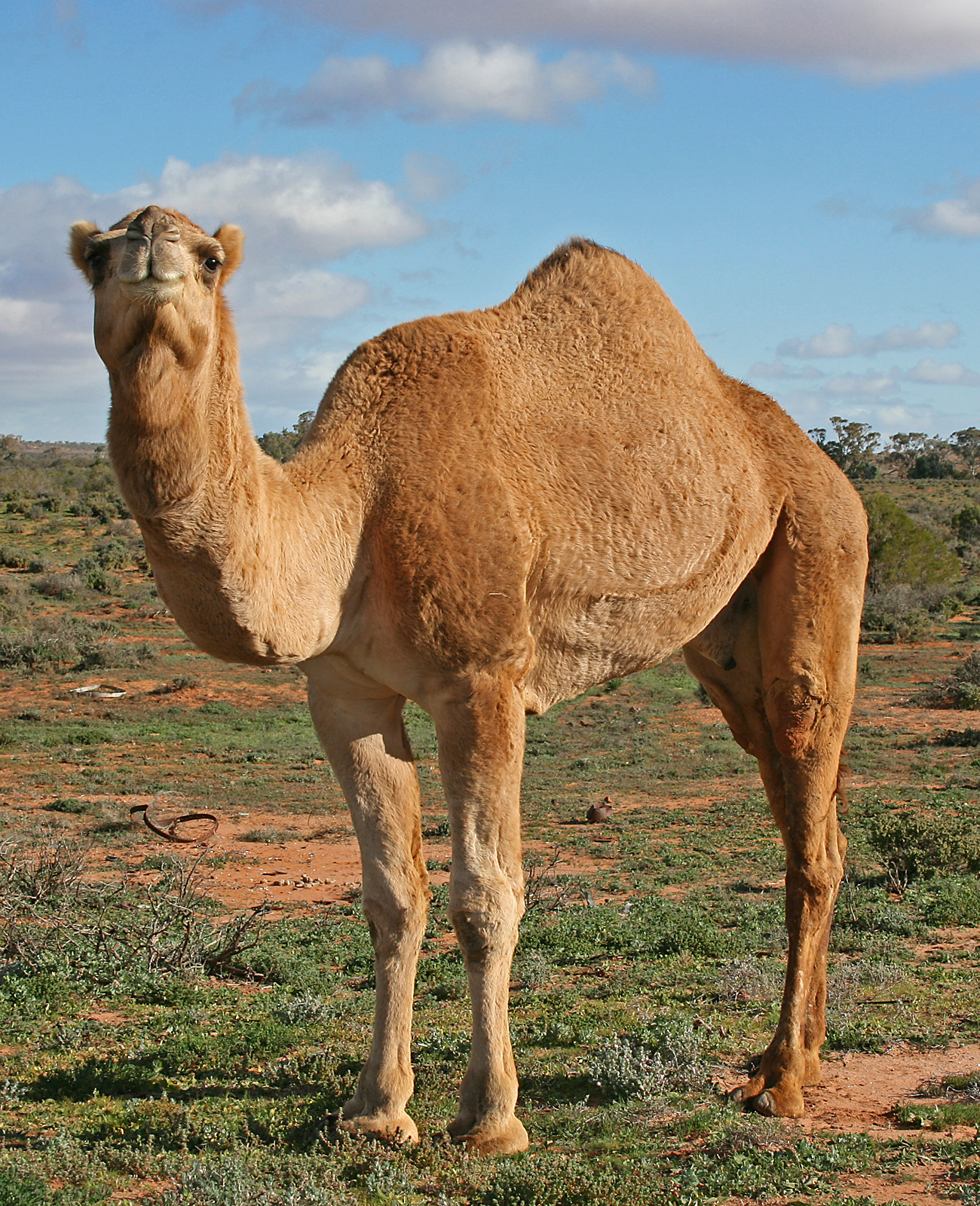
A one-humped camel
Dromedary
(Camelus dromedarius)
A shaggy two-humped camel
Bactrian camel
(Camelus bactrianus)
Scientific classification Edit this classification
Kingdom: Animalia
Phylum: Chordata
Class: Mammalia
Order: Artiodactyla
Family: Camelidae
Tribe: Camelini
Genus: Camelus
Linnaeus, 1758
Type species
Camelus dromedarius [6]
Linnaeus, 1758
Species
Distribution of camels worldwide
Synonyms
List

A camel (from Latin: camelus and Ancient Greek: κάμηλος (kamēlos) from Ancient Semitic: gāmāl[7][8]) is an even-toed ungulate in the genus Camelus that bears distinctive fatty deposits known as "humps" on its back. Camels have long been domesticated and, as livestock, they provide food (camel milk and meat) and textiles (fiber and felt from camel hair). Camels are working animals especially suited to their desert habitat and are a vital means of transport for passengers and cargo. There are three surviving species of camel. The one-humped dromedary makes up 94% of the world's camel population, and the two-humped Bactrian camel makes up 6%. The wild Bactrian camel is a distinct species that is not ancestral to the domestic Bactrian camel, and is now critically endangered, with fewer than 1,000 individuals.

The word camel is also used informally in a wider sense, where the more correct term is "camelid", to include all seven species of the family Camelidae: the true camels (the above three species), along with the "New World" camelids: the llama, the alpaca, the guanaco, and the vicuña, which belong to the separate tribe Lamini.[9] Camelids originated in North America during the Eocene, with the ancestor of modern camels, Paracamelus, migrating across the Bering land bridge into Asia during the late Miocene, around 6 million years ago.

Taxonomy

[edit]

Extant species

[edit]

Three species are extant:[10][11]

Genus Camelus Linnaeus, 1758 – nine species
Common name Scientific name and subspecies Range Size and ecology IUCN status and estimated population
Bactrian camel

Camelus bactrianus
Linnaeus, 1758
Domesticated; Central Asia, including the historical region of Bactria and Turkey.
Map of range
Size:

Habitat:

Diet:
 NE 


Unknown Unknown

Dromedary / Arabian camel

Camelus dromedarius
Linnaeus, 1758
Domesticated; the Middle East, Sahara Desert, and South Asia; introduced to Australia
Map of range
Size:

Habitat:

Diet:
 NE 


Unknown Unknown

Wild Bactrian camel

Camelus ferus
Przewalski, 1878
Remote areas of northwest China and Mongolia
Map of range
Size:

Habitat:

Diet:
 EN 


Unknown Population declining

Biology

[edit]

The average life expectancy of a camel is 40 to 50 years.[12] A full-grown adult dromedary camel stands 1.85 m (6 ft 1 in) at the shoulder and 2.15 m (7 ft 1 in) at the hump.[13] Bactrian camels can be a foot taller. Camels can run at up to 65 km/h (40 mph) in short bursts and sustain speeds of up to 40 km/h (25 mph).[14] Bactrian camels weigh 300 to 1,000 kg (660 to 2,200 lb) and dromedaries 300 to 600 kg (660 to 1,320 lb). The widening toes on a camel's hoof provide supplemental grip for varying soil sediments.[15]

The male dromedary camel has an organ called a dulla in his throat, a large, inflatable sac that he extrudes from his mouth when in rut to assert dominance and attract females. It resembles a long, swollen, pink tongue hanging out of the side of the camel's mouth.[16] Camels mate by having both male and female sitting on the ground, with the male mounting from behind.[17] The male usually ejaculates three or four times within a single mating session.[18] Camelids are the only ungulates to mate in a sitting position.[19]

Ecological and behavioral adaptations

[edit]

Camel humps store fat for when food is scarce. If a camel uses the fat, the hump becomes limp and droops.

It is a common myth that a camel stores water in its hump,[20] but the humps in fact are reservoirs of fatty tissue, which can be used as a reserve source of calories, not water. When this tissue is metabolized, it yields a greater mass of water than that of the fat processed. This fat metabolization, while releasing energy, causes water to evaporate from the lungs during respiration (as oxygen is required for the metabolic process): overall, there is a net decrease in water.[21][22]

A portrait of a camel with a visibly thick mane
A camel's thick coat is one of its many adaptations that aid it in desert-like conditions.
A leashed pack camel
A camel in Somalia, which has the world's largest camel population[23]

Camels have a series of physiological adaptations that allow them to withstand long periods of time without any external source of water.[24] The dromedary camel can drink as seldom as once every 10 days even under very hot conditions, and can lose up to 30% of its body mass due to dehydration.[25] They can drink as much as 30 imperial gallons (140 litres) at a time[26] but this is stored in the animal's bloodstream, not, as popularly believed, in its humps.[20]

Unlike other mammals, camels' red blood cells are oval rather than circular in shape. This facilitates the flow of red blood cells during dehydration[27] and makes them better at withstanding high osmotic variation without rupturing when drinking large amounts of water.[28][29]

Camels are able to withstand changes in body temperature and water consumption that would kill most other mammals. Their temperature ranges from 34 °C (93 °F) at dawn and steadily increases to 40 °C (104 °F) by sunset, before they cool off at night again.[24] In general, to compare between camels and the other livestock, camels lose only 1.3 liters of fluid intake every day while the other livestock lose 20 to 40 liters per day.[30] Maintaining the brain temperature within certain limits is critical for animals; to assist this, camels have a rete mirabile, a complex of arteries and veins lying very close to each other which utilizes countercurrent blood flow to cool blood flowing to the brain.[31] Camels rarely sweat, even when ambient temperatures reach 49 °C (120 °F).[32] Any sweat that does occur evaporates at the skin level rather than at the surface of their coat; the heat of vaporization therefore comes from body heat rather than ambient heat. Camels can withstand losing 25% of their body weight in water, whereas most other mammals can withstand only about 12–14% dehydration before cardiac failure results from circulatory disturbance.[29]

When the camel exhales, water vapor becomes trapped in their nostrils and is reabsorbed into the body as a means to conserve water.[33] Camels eating green herbage can ingest sufficient moisture in milder conditions to maintain their bodies' hydrated state without the need for drinking.[34]

Camels have three-chambered stomachs and perform rumination as part of their digestive process, even though they are not part of the ruminant sub-order.[35]

Domesticated camel calves lying in sternal recumbency, which aids heat loss

The camel's thick coat insulates it from the intense heat radiated from desert sand; a shorn camel must sweat 50% more to avoid overheating.[36] During the summer the coat becomes lighter in color, reflecting light as well as helping avoid sunburn.[29] The camel's long legs help by keeping its body farther from the ground, which can heat up to 70 °C (158 °F).[37][38] Dromedaries have a pad of thick tissue over the sternum called the pedestal. When the animal lies down in a sternal recumbent position, the pedestal raises the body from the hot surface and allows cooling air to pass under the body.[31]

Camels' mouths have a thick leathery lining, allowing them to chew thorny desert plants. Long eyelashes and ear hairs, together with nostrils that can close, form a barrier against sand. If sand gets lodged in their eyes, they can dislodge it using their translucent third eyelid (also known as the nictitating membrane). The camels' gait and widened feet help them move without sinking into the sand.[37][39]

The kidneys and intestines of a camel are very efficient at reabsorbing water. Camels' kidneys have a 1:4 cortex to medulla ratio.[40] Thus, the medullary part of a camel's kidney occupies twice as much area as a cow's kidney. Secondly, renal corpuscles have a smaller diameter, which reduces surface area for filtration. These two major anatomical characteristics enable camels to conserve water and limit the volume of urine in extreme desert conditions.[41] Camel urine comes out as a thick syrup, and camel faeces are so dry that they do not require drying when used to fuel fires.[42][43][44][45]

The camel immune system differs from those of other mammals. Normally, the Y-shaped antibody molecules consist of two heavy (or long) chains along the length of the Y, and two light (or short) chains at each tip of the Y.[46] Camels, in addition to these, also have antibodies made of only two heavy chains, a trait that makes them smaller and more durable.[46] These "heavy-chain-only" antibodies, discovered in 1993, are thought to have developed 50 million years ago, after camelids split from ruminants and pigs.[46]

The parasite Trypanosoma evansi causes the disease surra in camels.[47]: 2 

Genetics

[edit]

The karyotypes of different camelid species have been studied earlier by many groups,[48][49][50][51][52][53] but no agreement on chromosome nomenclature of camelids has been reached. A 2007 study flow sorted camel chromosomes, building on the fact that camels have 37 pairs of chromosomes (2n=74), and found that the karyotype consisted of one metacentric, three submetacentric, and 32 acrocentric autosomes. The Y is a small metacentric chromosome, while the X is a large metacentric chromosome.[54]

Skull of an F1 hybrid camel, Museum of Osteology, Oklahoma

The hybrid camel, a hybrid between Bactrian and dromedary camels, has one hump, though it has an indentation 4–12 cm (1.6–4.7 in) deep that divides the front from the back. The hybrid is 2.15 m (7 ft 1 in) at the shoulder and 2.32 m (7 ft 7 in) tall at the hump. It weighs an average of 650 kg (1,430 lb) and can carry around 400 to 450 kg (880 to 990 lb), which is more than either the dromedary or Bactrian can.[55]

According to molecular data, the wild Bactrian camel (C. ferus) separated from the domestic Bactrian camel (C. bactrianus) about 1 million years ago.[56][57] New World and Old World camelids diverged about 11 million years ago.[58] In spite of this, these species can hybridize and produce viable offspring.[59] The cama is a camel-llama hybrid bred by scientists to see how closely related the parent species are.[60] Scientists collected semen from a camel via an artificial vagina and inseminated a llama after stimulating ovulation with gonadotrophin injections.[61] The cama is halfway in size between a camel and a llama and lacks a hump. It has ears intermediate between those of camels and llamas, longer legs than the llama, and partially cloven hooves.[62][63] Like the mule, camas are sterile, despite both parents having the same number of chromosomes.[61]

Evolution

[edit]

The earliest known camel, called Protylopus, lived in North America 40 to 50 million years ago (during the Eocene).[18] It was about the size of a rabbit and lived in the open woodlands of what is now South Dakota.[64][65] By 35 million years ago, the Poebrotherium was the size of a goat and had many more traits similar to camels and llamas.[66][67] The hoofed Stenomylus, which walked on the tips of its toes, also existed around this time, and the long-necked Aepycamelus evolved in the Miocene.[68] The split between the tribes Camelini, which contains modern camels and Lamini, modern llamas, alpacas, vicuñas, and guanacos, is estimated to have occurred over 16 million years ago.[69]

The ancestor of modern camels, Paracamelus, migrated into Eurasia from North America via Beringia during the late Miocene, between 7.5 and 6.5 million years ago.[70][71][72] During the Pleistocene, around 3 to 1 million years ago, the North American Camelidae spread to South America as part of the Great American Interchange via the newly formed Isthmus of Panama, where they gave rise to guanacos and related animals.[18][64][65] Populations of Paracamelus continued to exist in the North American Arctic into the Early Pleistocene.[71][73] This creature is estimated to have stood around nine feet (2.7 metres) tall. The Bactrian camel diverged from the dromedary about 1 million years ago, according to the fossil record.[74]

The last camel native to North America was Camelops hesternus, which vanished along with horses, short-faced bears, mammoths and mastodons, ground sloths, sabertooth cats, and many other megafauna as part of the Quaternary extinction event, coinciding with the migration of humans from Asia at the end of the Pleistocene, around 13–11,000 years ago.[75][76]

An extinct giant camel species, Camelus knoblochi roamed Asia during the Late Pleistocene, before becoming extinct around 20,000 years ago.[77]

Domestication

[edit]
A camel carrying supplies, Tang dynasty
A man on a camel, Tang dynasty
Woman on a camel breastfeeding, Tang dynasty

Like horses, camels originated in North America and eventually spread across Beringia to Asia. They survived in the Old World, and eventually humans domesticated them and spread them globally. Along with many other megafauna in North America, the original wild camels were wiped out during the spread of the first indigenous peoples of the Americas from Asia into North America, 10 to 12,000 years ago; although fossils have never been associated with definitive evidence of hunting.[75][76]

Most camels surviving today are domesticated.[45][78] Although feral populations exist in Australia, India and Kazakhstan, wild camels survive only in the wild Bactrian camel population of the Gobi Desert.[12]

History

[edit]

When humans first domesticated camels is disputed. Dromedaries may have first been domesticated by humans in Somalia or South Arabia sometime during the 3rd millennium BC, the Bactrian in central Asia around 2,500 BC,[18][79][80][81] as at Shar-i Sokhta (also known as the Burnt City), Iran.[82] A study from 2016, which genotyped and used world-wide sequencing of modern and ancient mitochondrial DNA (mtDNA), suggested that they were initially domesticated in the southeast Arabian Peninsula,[83] with the Bactrian type later being domesticated around Central Asia.[84]

Martin Heide's 2010 work on the domestication of the camel tentatively concludes that humans had domesticated the Bactrian camel by at least the middle of the third millennium somewhere east of the Zagros Mountains, with the practice then moving into Mesopotamia. Heide suggests that mentions of camels "in the patriarchal narratives may refer, at least in some places, to the Bactrian camel", while noting that the camel is not mentioned in relationship to Canaan.[85] Heide and Joris Peters reasserted that conclusion in their 2021 study on the subject.[86]

In 2009–2013, excavations in the Timna Valley by Lidar Sapir-Hen and Erez Ben-Yosef discovered what may be the earliest domestic camel bones yet found in Israel or even outside the Arabian Peninsula, dating to around 930 BC. This garnered considerable media coverage, as it is strong evidence that the stories of Abraham, Jacob, Esau, and Joseph were written after this time.[87][88]

The existence of camels in Mesopotamia and Arabia but not in Syria is not a new idea. The historian Richard Bulliet thought that although camels were occasionally mentioned in the Bible, this didn't mean that the domestic camels were common in the Holy Land at that time.[89] The archaeologist William F. Albright, writing even earlier, saw camels in the Bible as an anachronism.[90]

The official report by Sapir-Hen and Ben-Joseph says:

The introduction of the dromedary camel (Camelus dromedarius) as a pack animal to the southern Levant ... substantially facilitated trade across the vast deserts of Arabia, promoting both economic and social change (e.g., Kohler 1984; Borowski 1998: 112–116; Jasmin 2005). This ... has generated extensive discussion regarding the date of the earliest domestic camel in the southern Levant (and beyond) (e.g., Albright 1949: 207; Epstein 1971: 558–584; Bulliet 1975; Zarins 1989; Köhler-Rollefson 1993; Uerpmann and Uerpmann 2002; Jasmin 2005; 2006; Heide 2010; Rosen and Saidel 2010; Grigson 2012). Most scholars today agree that the dromedary was exploited as a pack animal sometime in the early Iron Age (not before the 12th century [BC])

and concludes:

Current data from copper smelting sites of the Arabah Valley enable us to pinpoint the introduction of domestic camels to the southern Levant more precisely based on stratigraphic contexts associated with an extensive suite of radiocarbon dates. The data indicate that this event occurred not earlier than the last third of the 10th century [BC] and most probably during this time. The coincidence of this event with a major reorganization of the copper industry of the region—attributed to the results of the campaign of Pharaoh Shoshenq I—raises the possibility that the two were connected, and that camels were introduced as part of the efforts to improve efficiency by facilitating trade.[88]

Textiles

[edit]

Desert tribes and Mongolian nomads use camel hair for tents, yurts, clothing, bedding and accessories. Camels have outer guard hairs and soft inner down, and the fibers may also be sorted by color and age of the animal. The guard hairs can be felted for use as waterproof coats for the herdsmen, while the softer hair is used for premium goods.[91] The fiber can be spun for use in weaving or made into yarns for hand knitting or crochet. Pure camel hair is recorded as being used for western garments from the 17th century onwards, and from the 19th century a mixture of wool and camel hair was used.[92]

Military uses

[edit]
A special BSF camel contingent, Republic Day Parade, New Delhi (2004)
A painting of soldiers on camels
Camel Corps at Magdhaba, Egypt, 23 December 1916, by Harold Septimus Power (1925)

By at least 1200 BC the first camel saddles had appeared, and Bactrian camels could be ridden. The first saddle was positioned to the back of the camel, and control of the Bactrian camel was exercised by means of a stick. However, between 500 and 100 BC, Bactrian camels came into military use. New saddles, which were inflexible and bent, were put over the humps and divided the rider's weight over the animal. In the seventh century BC the military Arabian saddle evolved, which again improved the saddle design slightly.[93][94]

Military forces have used camel cavalries in wars throughout Africa, the Middle East, and their use continues into the modern-day within the Border Security Force (BSF) of India. The first documented use of camel cavalries occurred in the Battle of Qarqar in 853 BC.[95][96][97] Armies have also used camels as freight animals instead of horses and mules.[98][99]

The East Roman Empire used auxiliary forces known as dromedarii, whom the Romans recruited in desert provinces.[100][101] The camels were used mostly in combat because of their ability to scare off horses at close range (horses are afraid of the camels' scent),[19] a quality famously employed by the Achaemenid Persians when fighting Lydia in the Battle of Thymbra (547 BC).[55][102][103]

19th and 20th centuries

[edit]
A photo of Bulgarian military-transport camels in 1912
A camel caravan of the Bulgarian military during the First Balkan War, 1912

The United States Army established the U.S. Camel Corps, stationed in California, in the 19th century.[19] One may still see stables at the Benicia Arsenal in Benicia, California, where they nowadays serve as the Benicia Historical Museum.[104] Though the experimental use of camels was seen as a success (John B. Floyd, Secretary of War in 1858, recommended that funds be allocated towards obtaining a thousand more camels), the outbreak of the American Civil War in 1861 saw the end of the Camel Corps: Texas became part of the Confederacy, and most of the camels were left to wander away into the desert.[99]

France created a méhariste camel corps in 1912 as part of the Armée d'Afrique in the Sahara[105] in order to exercise greater control over the camel-riding Tuareg and Arab insurgents, as previous efforts to defeat them on foot had failed.[106] The Free French Camel Corps fought during World War II, and camel-mounted units remained in service until the end of French rule over Algeria in 1962.[107]

In 1916, the British created the Imperial Camel Corps. It was originally used to fight the Senussi, but was later used in the Sinai and Palestine Campaign in World War I. The Imperial Camel Corps comprised infantrymen mounted on camels for movement across desert, though they dismounted at battle sites and fought on foot. After July 1918, the Corps began to become run down, receiving no new reinforcements, and was formally disbanded in 1919.[108]

In World War I, the British Army also created the Egyptian Camel Transport Corps, which consisted of a group of Egyptian camel drivers and their camels. The Corps supported British war operations in Sinai, Palestine, and Syria by transporting supplies to the troops.[109][110][111]

The Somaliland Camel Corps was created by colonial authorities in British Somaliland in 1912; it was disbanded in 1944.[112]

Bactrian camels were used by Romanian forces during World War II in the Caucasian region.[113] At the same period the Soviet units operating around Astrakhan in 1942 adopted local camels as draft animals due to shortage of trucks and horses, and kept them even after moving out of the area. Despite severe losses, some of these camels ended up as far west as to Berlin itself.[114]

The Bikaner Camel Corps of British India fought alongside the British Indian Army in World Wars I and II.[115]

The Tropas Nómadas (Nomad Troops) were an auxiliary regiment of Sahrawi tribesmen serving in the colonial army in Spanish Sahara (today Western Sahara). Operational from the 1930s until the end of the Spanish presence in the territory in 1975, the Tropas Nómadas were equipped with small arms and led by Spanish officers. The unit guarded outposts and sometimes conducted patrols on camelback.[116][117]

21st century competition

[edit]

The annual King Abdulaziz Camel Festival is held in Saudi Arabia. In addition to camel racing and camel milk tasting, the festival holds a camel "beauty pageant" with prize money of $57m (£40m). In 2018, 12 camels were disqualified from the beauty contest after their owners were found to have injected them with botox.[118] In a similar incident in 2021, over 40 camels were disqualified.[119]

Food uses

[edit]

Camel meat and milk are foods that are found in many cuisines, typically in Middle Eastern, North African and some Australian cuisines.[120][121][122][123] Camels provide food in the form of meat and milk.[124]

Dairy

[edit]
Camels at the Khan and old bridge, Lajjun, Ottoman Syria (now in Israel) - 1870s drawing
A camel calf nursing on camel milk

Camel milk is a staple food of desert nomad tribes and is sometimes considered a meal itself; a nomad can live on only camel milk for almost a month.[19][42][125][126]

Camel milk can readily be made into yogurt, but can only be made into butter if it is soured first, churned, and a clarifying agent is then added.[19] Until recently, camel milk could not be made into camel cheese because rennet was unable to coagulate the milk proteins to allow the collection of curds.[127] Developing less wasteful uses of the milk, the FAO commissioned Professor J.P. Ramet of the École Nationale Supérieure d'Agronomie et des Industries Alimentaires, who was able to produce curdling by the addition of calcium phosphate and vegetable rennet in the 1990s.[128] The cheese produced from this process has low levels of cholesterol and is easy to digest, even for the lactose intolerant.[129][130]

Camel milk can also be made into ice cream.[131][132]

Meat

[edit]

A Somali camel meat and rice dish
Camel meat pulao, from Pakistan

Approximately 3.3 million camels and camelids are slaughtered each year for meat worldwide.[133] A camel carcass can provide a substantial amount of meat. The male dromedary carcass can weigh 300–400 kg (661–882 lb), while the carcass of a male Bactrian can weigh up to 650 kg (1,433 lb). The carcass of a female dromedary weighs less than the male, ranging between 250 and 350 kg (550 and 770 lb).[18] The brisket, ribs and loin are among the preferred parts, and the hump is considered a delicacy.[134] The hump contains "white and sickly fat", which can be used to make the khli (preserved meat) of mutton, beef, or camel.[135] On the other hand, camel milk and meat are rich in protein, vitamins, glycogen, and other nutrients making them essential in the diet of many people. From chemical composition to meat quality, the dromedary camel is the preferred breed for meat production. It does well even in arid areas due to its unusual physiological behaviors and characteristics, which include tolerance to extreme temperatures, radiation from the sun, water paucity, rugged landscape and low vegetation.[136] Camel meat is reported to taste like coarse beef, but older camels can prove to be very tough,[13][18] although camel meat becomes tenderer the more it is cooked.[137]

Camel is one of the animals that can be ritually slaughtered and divided into three portions (one for the home, one for extended family/social networks, and one for those who cannot afford to slaughter an animal themselves) for the qurban of Eid al-Adha.[138][139]

The Abu Dhabi Officers' Club serves a camel burger mixed with beef or lamb fat in order to improve the texture and taste.[140] In Karachi, Pakistan, some restaurants prepare nihari from camel meat.[141] Specialist camel butchers provide expert cuts, with the hump considered the most popular.[142]

Camel meat has been eaten for centuries. It has been recorded by ancient Greek writers as an available dish at banquets in ancient Persia, usually roasted whole.[143] The Roman emperor Heliogabalus enjoyed camel's heel.[42] Camel meat is mainly eaten in certain regions, including Eritrea, Somalia, Djibouti, Saudi Arabia, Egypt, Syria, Libya, Sudan, Ethiopia, Kazakhstan, and other arid regions where alternative forms of protein may be limited or where camel meat has had a long cultural history.[18][42][134] Camel blood is also consumable, as is the case among pastoralists in northern Kenya, where camel blood is drunk with milk and acts as a key source of iron, vitamin D, salts and minerals.[18][134][144]

A 2005 report issued jointly by the Saudi Ministry of Health and the United States Centers for Disease Control and Prevention details four cases of human bubonic plague resulting from the ingestion of raw camel liver.[145]

Camel meat is also occasionally found in Australian cuisine: for example, a camel lasagna is available in Alice Springs.[143][144] Australia has exported camel meat, primarily to the Middle East but also to Europe and the US, for many years.[146] The meat is very popular among East African Australians, such as Somalis, and other Australians have also been buying it. The feral nature of the animals means they produce a different type of meat to farmed camels in other parts of the world,[121] and it is sought after because it is disease-free, and a unique genetic group. Demand is outstripping supply, and governments are being urged not to cull the camels, but redirect the cost of the cull into developing the market. Australia has seven camel dairies, which produce milk, cheese and skincare products in addition to meat.[147]

Religion

[edit]

Islam

[edit]

Muslims consider camel meat halal (Arabic: حلال, 'allowed'). However, according to some Islamic schools of thought, a state of impurity is brought on by the consumption of it. Consequently, these schools hold that Muslims must perform wudhu (ablution) before the next time they pray after eating camel meat.[148] Also, some Islamic schools of thought consider it haram (Arabic: حرام, 'forbidden') for a Muslim to perform Salat in places where camels lie, as it is said to be a dwelling place of the Shaytan (Arabic: شيطان, 'Devil').[148] According to Abu Yusuf (d.798), the urine of camels may be used for medical treatment if necessary, but according to Abū Ḥanīfah, the drinking of camel urine is discouraged.[149]

Islamic texts contain several stories featuring camels. In the story of the people of Thamud, the prophet Salih miraculously brings forth a naqat (Arabic: ناقة, 'milch-camel') out of a rock. After Muhammad migrated from Mecca to Medina (the Hijrah), he allowed his she-camel to roam there; the location where the camel stopped to rest determined the location where he would build his house in Medina.[150]

Judaism

[edit]

According to Jewish tradition, camel meat and milk are not kosher.[151] Camels possess only one of the two kosher criteria; although they chew their cud, they do not have cloven hooves: "But these you shall not eat among those that bring up the cud and those that have a cloven hoof: the camel, because it brings up its cud, but does not have a [completely] cloven hoof; it is unclean for you."[152]

The Palestinian Muslim Makhamara clan in Yatta, who claim descent from Jews, reportedly avoid eating camel meat, a practice cited as evidence of their Jewish origins.[153][154]

Cultural depictions

[edit]

What may be the oldest carvings of camels were discovered in 2018 in Saudi Arabia. They were analysed by researchers from several scientific disciplines and, in 2021, were estimated to be 7,000 to 8,000 years old.[155] The dating of rock art is made difficult by the lack of organic material in the carvings that may be tested, so the researchers attempting to date them tested animal bones found associated with the carvings, assessed erosion patterns, and analysed tool marks in order to determine a correct date for the creation of the sculptures. This Neolithic dating would make the carvings significantly older than Stonehenge (5,000 years old) and the Egyptian pyramids at Giza (4,500 years old) and it predates estimates for the domestication of camels.

Distribution and numbers

[edit]
A view into a canyon: many camels gathering around a watering hole
Camels in the Guelta d'Archei, in northeastern Chad

There are approximately 14 million camels alive as of 2010, with 90% being dromedaries.[156] Dromedaries alive today are domesticated animals (mostly living in the Horn of Africa, the Sahel, Maghreb, Middle East and South Asia). The Horn region alone has the largest concentration of camels in the world,[23] where the dromedaries constitute an important part of local nomadic life. They provide nomadic people in Somalia[18] and Ethiopia with milk, food, and transportation.[126][157][158][159]

A world map with large camel populations marked
Commercial camel market headcount in 2003

Over one million dromedary camels are estimated to be feral in Australia, descended from those introduced as a method of transport in the 19th and early 20th centuries.[160] This population is growing about 8% per year;[161] it was estimated at 700,000 in 2008.[144][156][162] Representatives of the Australian government have culled more than 100,000 of the animals in part because the camels use too much of the limited resources needed by sheep farmers.[163]

A small population of introduced camels, dromedaries and Bactrians, wandered through Southwestern United States after having been imported in the 19th century as part of the U.S. Camel Corps experiment. When the project ended, they were used as draft animals in mines and escaped or were released. Twenty-five U.S. camels were bought and exported to Canada during the Cariboo Gold Rush.[99]

The Bactrian camel is, as of 2010, reduced to an estimated 1.4 million animals, most of which are domesticated.[45][156][164] The Wild Bactrian camel is the only truly wild (as opposed to feral) camel in the world. It is a distinct species that is not ancestral to the domestic Bactrian camel. The wild camels are critically endangered and number approximately 950, inhabiting the Gobi and Taklamakan Deserts in China and Mongolia.[165]

See also

[edit]

References

[edit]
[edit]
Revisions and contributorsEdit on WikipediaRead on Wikipedia
from Grokipedia
A camel is a large even-toed belonging to the Camelus in the family Camelidae, renowned for its distinctive fatty humps, exceptional adaptations to harsh environments, and millennia-long role in human transportation and sustenance. The comprises three extant : the (Camelus dromedarius), which has one hump and accounts for about 90% of the world's camels; the domestic (Camelus bactrianus), with two humps and native to ; and the critically endangered wild (Camelus ferus), also two-humped and restricted to remote parts of and . These mammals typically weigh 400–600 kg (880–1,320 lb), stand 1.8–2.1 m (6–7 ft) at the shoulder, and feature long necks, slender legs, broad feet for traversing sand, and tough, leathery mouths suited to thorny vegetation. Camels are pseudoruminants that efficiently process fibrous through , allowing survival on sparse while storing energy as in their humps—up to 36 kg (80 lb) in dromedaries—which can be metabolized during scarcity. Their physiological adaptations include closing nostrils to exclude , double-layered eyelids with long lashes to shield eyes from dust, and the ability to conserve by producing concentrated and minimal sweat; dromedaries can endure up to two weeks without drinking and rehydrate by consuming 100 liters (26 gallons) in minutes. Bactrian camels, adapted to colder steppes, possess thick, insulating coats that protect against extreme temperatures ranging from -40°C to 40°C (-40°F to 104°F). The was domesticated around 3,500 years ago in southern Arabia, and the around 5,000 years ago in —camels revolutionized trade along routes like the , carrying loads up to 200 kg (440 lb) over 30 km (20 miles) daily. As of 2024, more than 40 million camels exist globally, primarily in and , valued for (rich in ), , , and racing, though wild populations face threats from loss and hybridization. Evolving from North American ancestors about 45 million years ago, camelids dispersed worldwide before the family's branch (llamas, alpacas) diverged.

Taxonomy

Classification

The family Camelidae belongs to the suborder within the order Artiodactyla, encompassing even-toed ungulates adapted to arid environments, and is divided into two tribes: , representing camels of the Camelus, and Lamini, comprising camelids such as llamas (Lama glama), alpacas (Lama pacos), guanacos (Lama guanicoe), and vicuñas (Vicugna vicugna). The genus Camelus, established by Carl Linnaeus in 1758, includes the true camels and is characterized by species domesticated for millennia in Asia and Africa. The primary species are Camelus dromedarius (Linnaeus, 1758), the dromedary or one-humped camel, native to the Middle East and North Africa, and Camelus bactrianus (Linnaeus, 1758), the domestic Bactrian or two-humped camel, originating from Central Asia. A third species, Camelus ferus (Przewalski, 1839), represents the wild Bactrian camel, restricted to remote deserts in Mongolia and China. Subspecies distinctions within Camelus primarily apply to Bactrian camels, where the domestic form is sometimes denoted as C. bactrianus bactrianus, while the wild variant (C. ferus) was historically classified as a subspecies (C. b. ferus) but elevated to full species status in 2002 based on genetic evidence of significant divergence. The dromedary (C. dromedarius) lacks recognized wild subspecies and exists solely in domesticated populations, though regional breeds exhibit minor morphological variations without formal taxonomic separation. Linnaeus's original 1758 classification in placed both and Bactrian camels under Camelus based on limited specimens of domestic animals, with subsequent revisions in the 19th and 20th centuries refining the hierarchy through and, later, molecular data to distinguish wild from domestic lineages. Camels diverged from other around 40-50 million years ago, forming a distinct lineage within Camelidae.

Extant Species

The three extant species of true camels belong to the genus Camelus in the family Camelidae. The (Camelus dromedarius), also known as the Arabian camel, features a single dorsal hump composed primarily of reserves, a slender build with a long-curved neck and deep-narrow chest, and short, sandy to light brown hair that is longer on the throat, shoulder, and hump. Males typically reach a shoulder height of 1.8–2.0 m and weigh 400–600 kg, while females are about 10% smaller in both dimensions and mass. Adapted to hot, arid environments, dromedaries inhabit deserts and semi-deserts across the , , and parts of , thriving in regions with prolonged dry seasons and sparse vegetation. In contrast, the domestic Bactrian camel (Camelus bactrianus) is distinguished by two humps, a stockier frame, and a thicker, shaggier coat of dark brown or grayish fur that reaches up to 255 mm in length on the head, neck, humps, and legs, shedding seasonally to suit varying climates. Domestic Bactrian camels measure 1.8–2.3 m at the shoulder, with head-body lengths of 2.25–3.45 m, and weigh 300–690 kg, with males generally larger than females. They prefer the cold, arid steppes and mountainous deserts of Central Asia, including the Gobi and Taklamakan regions in Mongolia and western China, where they endure extreme temperature fluctuations and limited water availability. The wild Bactrian camel (Camelus ferus), a third distinct species genetically separated from its domestic counterpart for over a million years, exhibits a smaller, more slender physique with pyramid-shaped humps and lighter build compared to domestic Bactrians. Restricted to remote, extremely arid pockets of the Gobi and Gashun Gobi deserts in northwestern China and southwestern Mongolia, this species faces severe threats from habitat degradation and human activities. Classified as Endangered on the IUCN Red List as of October 2025, this reclassification from Critically Endangered reflects that the anticipated severe population decline has been less rapid than projected, though the species remains at high risk from habitat loss, climate change, and hybridization with domestic camels; the wild population is estimated at fewer than 1,100 individuals, making it one of the rarest large mammals globally.

Evolution

Fossil Record

The fossil record of camels (family Camelidae) originates in during the Eocene epoch, approximately 40 to 50 million years ago, with the earliest known member being the small, rabbit-sized , a forest-dwelling that lacked the specialized adaptations of modern camels. This diminutive form, about the size of a jackrabbit and adapted to subtropical forested environments, represents the basal tylopod (an early lineage) from which subsequent camelids evolved, with fossils primarily recovered from Eocene deposits in the . Over the and epochs, camelids diversified in , transitioning from small browsers to larger herbivores, with genera like Poebrotherium and Procamelus showing progressive increases in size and limb elongation suited to open woodlands and grasslands. During the , around 7 to 10 million years ago, some camelid lineages migrated from to across the , marking the initial dispersal of the group to the and setting the stage for the evolution of modern Camelus species there. In , Miocene forms included the striking , a giraffe-like characterized by an elongated and long limbs, reaching shoulder heights of up to 4 meters, which likely browsed high in prairie habitats. By the , even larger taxa emerged, such as Megatylopus, a giant camel standing over 3.5 meters tall at the , with robust builds adapted for grazing in expanding grasslands, exemplifying the peak diversity and gigantism of North American camelids before the Pleistocene. The Pleistocene epoch saw the persistence of large camelids like Camelops in North America, but these lineages underwent a mass extinction around 11,000 years ago at the end of the epoch, coinciding with rapid climate warming, habitat shifts from grasslands to forests, and the arrival of Paleoindian hunters who exploited them as prey. This event wiped out all native North American camelids, including giants like Titanotylopus and Camelops, while Old World populations survived and diversified, leading to the extant dromedary and Bactrian camels. South American lamoids, descendants of a separate Pliocene migration via the Panamanian isthmus around 3 million years ago, also persisted but represent a distinct tribe.

Phylogenetic Relationships

Camelidae belongs to the suborder within the order Artiodactyla (now often classified as Cetartiodactyla to include cetaceans), where forms a distinct basal lineage sister to —a comprising Ruminantia and Cetancodonta ( and whales)—with this combined group being sister to Suoidea (pigs and peccaries). This positioning is supported by comprehensive molecular phylogenies using mitochondrial and nuclear genomes, highlighting Camelidae's early divergence among even-toed ungulates and its shared ancestry with ruminants while distinguishing it from suines. The family Camelidae splits into two main tribes: Camelini (including Camelus dromedarius and Bactrian Camelus bactrianus) and Lamini (llamas, alpacas, guanacos, and vicuñas). Molecular clock analyses based on complete mitogenomes estimate the between these tribes at approximately 15.8 million years ago, with a 95% credibility interval of 9.2–23.2 million years ago, aligning with the Early to Middle boundary and reflecting the ancient split facilitated by and migration events. These estimates are derived from Bayesian relaxed clock models calibrated with priors, underscoring the deep evolutionary separation between Asian and South American camelid lineages. Mitochondrial DNA studies, particularly of the cytochrome b gene, have been instrumental in elucidating the origins and relationships within Camelini. Analysis of sequences from domestic and wild Bactrian camels across reveals a monophyletic lineage for domestic forms, with shared haplotypes indicating a single domestication origin in following migration from North America via the Bering around 7 million years ago. For wild Bactrian camels (Camelus ferus), mtDNA mitogenome comparisons show no haplotype sharing with domestic Bactrian camels, confirming their distinct Asian origins in the Gobi Desert region and an ancient divergence estimated at 1.1–2.3 million years ago, supporting their status as a separate species endemic to Mongolia and northwestern China. Despite their deep divergence, and Bactrian camels retain hybridization potential, producing fertile F1 offspring known as "Turkoman" or "koulan" hybrids in regions like and . These hybrids, typically resulting from crossing a male Bactrian with a female , exhibit intermediate traits such as enhanced load-carrying capacity and cold tolerance, and are deliberately bred using methods like the Turkmen hybridization system to combine the stamina of dromedaries with the endurance of Bactrians. Genetic analyses confirm ongoing in hybrid zones, though pure wild Bactrian populations show limited from domestic hybrids.

Biology

Anatomy and Physiology

Camels exhibit a suite of anatomical and physiological adaptations that enable survival in arid environments, characterized by extreme , scarce , and loose substrates. Their body structure includes an elongated, arched that facilitates access to high and provides an elevated vantage for scanning the horizon. Broad, padded feet with leathery soles and two functional toes spread weight over a large surface area, preventing sinking into and distributing pressure to minimize from hot ground. Nostrils are slit-like with muscular closure mechanisms that seal during sandstorms to exclude particles and conserve moisture by trapping exhaled . Eyes are protected by double rows of long, thick eyelashes and a transparent (third eyelid) that sweeps across the to remove debris without impairing vision. The hump, a defining feature, consists primarily of serving as an reserve rather than , metabolizing into fatty acids and during periods of deprivation to yield both calories and metabolic . In dromedaries, the single hump can store up to 80% of the body's total , with reserves weighing up to 36 kg (80 lb) in well-fed individuals, allowing sustenance for weeks without . This is mobilized preferentially, shrinking the hump as needed, and contrasts with common misconceptions about . Water conservation is achieved through specialized , where kidneys feature long loops of Henle—up to four to six times longer than in —and a thick that facilitate for maximal . This enables production of highly concentrated , up to approximately 2,400 mOsm/L, about twice as concentrated as the maximum concentration of ~1,200 mOsm/L, with daily output as low as 1.3 liters even under hydration. The forestomach (rumen-like compartment) acts as a , holding up to 100 liters of water post-drinking, which is released gradually to maintain hydration without overwhelming absorption. recycling across the further minimizes nitrogenous waste and water loss. Temperature regulation relies on nasal countercurrent heat exchange, where inhaled air is warmed and exhaled air is cooled by contact with nasal turbinates, recovering up to 60% of moisture and reducing respiratory water loss. This mechanism, combined with vasoconstriction in the nasal mucosa, cools arterial blood to the brain via the carotid rete, lowering cerebral temperature by 3–5°C below core body temperature during heat stress, preventing hyperthermia-induced damage. Fur provides insulation, with dromedaries sporting shorter, lighter coats in summer for reflectivity and Bactrian camels thicker winter pelage for retention; overall, body temperature fluctuates diurnally from 34–42°C without excessive sweating. Sensory systems support desert navigation, with an acute sense of smell enabling detection of water sources via geosmin odors from damp soil up to 80 km (50 miles) away, far exceeding typical ungulate capabilities. Vision is adapted for low-light and panoramic views through horizontally elongated pupils and a wide binocular field (55–65°), but color discrimination is limited to dichromatic perception, emphasizing brightness and motion over hue distinction.

Genetics

Camels possess a diploid chromosome number of 2n=74, consisting of 37 pairs, which is consistent with other species such as and llamas. This includes three pairs of submetacentric autosomes and 33 pairs of acrocentric autosomes, with the comprising an X and a Y. The similarity in across camelids facilitates comparative genomic studies and underscores their evolutionary conservation within the suborder. Recent genomic studies (as of 2025) have identified genes linked to physiological adaptations, productivity traits, and effects in camel populations. Key genetic adaptations in camels include genes associated with milk production and environmental stress tolerance. The CSN2 gene, encoding β-casein, is a major contributor to the protein content in , exhibiting polymorphisms that influence milk yield and composition, with variants showing higher expression in lactating females. For heat tolerance, heat shock protein genes such as and play critical roles in cellular protection against thermal stress; these genes are upregulated in camel fibroblasts under high temperatures, enabling greater thermotolerance compared to other mammals like mice. Comparative analyses reveal that camel have unique promoter regions and patterns that enhance protein stability in arid conditions. Domestication in camels is marked by signatures of reduced in domestic populations relative to wild counterparts, reflecting bottlenecks during . Genome-wide studies indicate lower nucleotide diversity in dromedaries and domestic Bactrian camels, particularly in regions linked to neural crest-derived traits like tameness. Y-chromosome analyses reveal distinct haplogroups separating wild and domestic Bactrian camels, with a divergence estimated at approximately 27,000 years ago and domestication events around 4,000–6,000 years ago, highlighting male-driven and limited post-domestication. Camels demonstrate notable disease resistance, particularly through innate immunity genes that confer tolerance to pathogens like evansi, the causative agent of . High nucleotide diversity in (MHC) class I and II loci, as well as innate immune response genes, supports robust antibacterial and antiviral defenses; for instance, peptidoglycan recognition proteins like PGLYRP4 show adaptations absent in some camel lineages but present in comparative models. with highlights expanded immune gene families in camels, such as heavy-chain immunoglobulins, which provide efficient neutralization without classical light chains, contributing to their resilience in parasite-endemic regions. Hybrids between dromedaries and Bactrian camels, known as F1 crosses (e.g., nar or tülu), exhibit full and hybrid vigor, often displaying enhanced production and size due to complementary . However, F2 generations (F1 intercrosses) show reduced and viability, attributed to chromosomal incompatibilities and disrupted interactions, despite the identical 2n=74 . Genetic studies suggest conserved recombination regulators like the PRDM9 's domain minimize meiotic issues in F1 but lead to sterility barriers in later generations, limiting widespread .

Reproduction and Life Cycle

Camels exhibit a polygynous mating system, in which a single male mates with multiple females during the breeding season. Female camels are induced ovulators, meaning ovulation is triggered by copulation, which induces a surge in luteinizing hormone approximately 32-40 hours post-mating in dromedaries and 36-48 hours in Bactrians. This physiological response ensures efficient fertilization but contributes to the species' low reproductive efficiency due to the dependence on physical mating. Breeding in camels is seasonal, primarily influenced by photoperiod changes, with activity peaking during cooler months such as November to March in many regions. Shortening the daily photoperiod during non-breeding periods can enhance reproductive performance in males, including increased testosterone levels and semen quality. Sexual maturity is reached at 3-4 years in females and 4-6 years in males, allowing breeding to begin shortly thereafter. The gestation period lasts approximately 13 months in dromedaries (390 ± 2 days) and 13-14 months in Bactrians (around 402 days), with twin births being rare at less than 1% of pregnancies. Birth typically results in a single calf weighing 30-40 kg, which stands and walks within 6-8 hours. Calves nurse for up to 18 months, though often occurs around 12-13 months, supporting rapid early growth. Domestic camels have a lifespan of 40-50 years, while wild individuals tend to live shorter lives, often 30-40 years due to environmental pressures. Females remain reproductively active for 20-30 years, and males for 15-20 years after maturity.

Behavior and Ecology

Social Structure and Behavior

Camels display flexible social structures that vary between wild and domestic contexts, with both (Camelus dromedarius) and Bactrian (Camelus bactrianus) species forming small to medium-sized groups centered on family units. In wild populations, such as the critically endangered (Camelus ferus), herds typically consist of 6-20 individuals led by a dominant alpha male accompanying adult females and their calves, while sexually mature young males (around 5-8 years old) are expelled to form solitary or small groups of 2-10 animals. These fission-fusion societies allow temporary aggregations of up to 71 individuals during breeding seasons or at sources, but average group sizes range from 3-11 year-round, with larger formations in winter rutting periods. Domestic herds, managed by pastoralists, often mirror this composition but can reach up to 30-50 individuals in larger pastoral settings, featuring family subgroups of females and young alongside segregated male groups to mitigate . Communication among camels relies on a combination of vocalizations, , and olfactory cues to maintain group cohesion and signal status. Vocal signals include low grunts and moans during routine interactions, escalating to loud roars or bubbling "blo-blo-blo" cries from rutting males to attract females and deter rivals. plays a key role, with flicking indicating irritation or submission, and or regurgitating as a defensive during conflicts, often aimed at the face to assert dominance without physical contact. Scent marking via , , or secretions from the occipital further reinforces territorial and reproductive signals, particularly among males. Daily routines in both wild and domestic camels emphasize in arid environments, featuring bimodal activity patterns with peaks and (crepuscular tendencies) to avoid heat, followed by extended resting in shaded areas. Wild camels travel average straight-line distances of 3-6 km per day, though actual migration paths can extend up to 50 km in search of and during seasonal shifts. Domestic camels follow similar cycles but adapt to schedules, with herds migrating 30-40 km daily when herded over long distances. Dominance hierarchies structure interactions within groups, with males establishing rank through ritualized contests involving pushing with lowered heads and necks, snapping jaws, or with canine teeth, rarely escalating to fatal injuries except in intense rutting rivalries. Females maintain subtler hierarchies, often leading decisions in units by alternating paths during group travel, prioritizing access to preferred vegetation while minimizing conflict through avoidance. In domestic settings, camels demonstrate high trainability for tasks like herding or carrying loads, responding well to consistent human handling through positive and vocal commands, which fosters bonds in communities. However, males become notably aggressive during the annual rut (typically winter for Bactrian and variable for ), charging or biting at handlers and other animals, necessitating isolation to ensure safety.

Diet and Feeding

Camels are strict herbivores adapted to arid environments, primarily browsing on thorny shrubs, dwarf shrubs, halophytes, and grasses, which constitute the bulk of their diet—typically around 47.5% dwarf shrubs, 29.9% trees and branches, and 11.2% grasses. These often include species avoided by other due to thorns, high , or aromatic compounds, yet camels tolerate and digest them effectively thanks to their prehensile, flexible and robust oral structures that protect against spines. Salty halophytes, which can be toxic to , sheep, and , form a significant portion of their , providing essential minerals while contributing to through their moisture content. The camel's digestive system is optimized for extracting maximum nutrition from low-quality, fibrous vegetation through a three-chambered stomach consisting of the (for initial ), reticulum (for mixing and regurgitation), and (the true for enzymatic digestion). Microbial in the breaks down , producing volatile fatty acids as an energy source, while cud-chewing (rumination) further pulverizes the material, enabling camels to utilize roughage with very low protein content more efficiently than , supporting comparable growth rates on poorer diets. This process allows them to derive up to 50% more digestible energy from arid forages compared to bovines under similar conditions. Water requirements are minimal, with camels surviving up to 14-20 days without drinking in extreme by conserving and relying on metabolic produced from oxidation—approximately 1.07 grams of per gram of metabolized from hump reserves. Upon accessing , they can rapidly consume up to 100-110 liters to replenish losses without digestive upset, though under normal arid conditions, intake averages 20-40 liters every few days depending on and activity. strategies enhance hydration; camels browse up to 3 meters in height using their elongated necks and legs, selectively stripping leaves with tough, leathery lips, and shift seasonally to water-rich succulents during dry periods to supplement intake. In domesticated camels, nutritional management includes providing mineral licks to maintain sodium balance and prevent deficiencies, as natural forage may lack sufficient electrolytes for sustained performance in labor or racing. These supplements support osmotic regulation, particularly in saline environments where dietary sodium intake varies.

Environmental Adaptations

Camels exhibit remarkable adaptations that enable them to thrive in arid environments, primarily through morphological and physiological traits that minimize loss and facilitate movement across unstable terrain. Their wide, padded hooves, functioning like snowshoes, distribute body weight to prevent sinking into soft , allowing efficient locomotion over dunes without excessive energy expenditure. Additionally, camels have a low sweating rate compared to other mammals, relying instead on nasal countercurrent exchange and behavioral to dissipate , which conserves vital moisture in temperatures exceeding 40°C. In contrast, Bactrian camels, native to colder arid regions, possess adaptations for enduring subzero temperatures down to -40°C, including a thick, double-layered with an outer and insulating underdown up to 5 cm long that traps air for thermal retention. This woolly insulation reduces conductive heat loss, while physiological mechanisms such as shivering thermogenesis generate metabolic heat during cold exposure, enabling survival in and winters without significant energy diversion from . Their humps also store that can be metabolized for both energy and supplemental warmth. These traits underpin camels' exceptional for long-distance migration, with individuals capable of traveling up to 200 km without by drawing on stored and minimizing urinary and fecal loss, while carrying loads of approximately 300 kg over extended periods. To avoid predation in open landscapes, camels rely on keen visual and olfactory senses for early detection of threats like lions or wolves, enhanced by group vigilance where herd members alternate scanning for danger, and their sandy coloration provides partial against dune backgrounds. Contemporary exacerbates , prompting shifts in camel ranges as habitats become unsuitable; for instance, modeling predicts reduced suitability in core areas like the Kumtag Desert for wild Bactrian camels, forcing populations toward peripheral regions with altered vegetation and water availability.

Domestication

History

The earliest depictions of camels appear in from the , with life-sized engravings in dated to approximately 12,000 years ago, illustrating wild camels in a now-arid that was then more hospitable. These prehistoric representations predate , which genetic and archaeological evidence places later; for dromedaries, molecular studies indicate initial around the late second millennium BCE in the southeastern , with analysis showing a domestication bottleneck consistent with human management from that region. Bactrian camels were domesticated independently around 4,500–6,000 years ago on the steppes of , including areas in modern , where archaeological remains of managed herds suggest early use for milk and transport. By the 1st millennium BCE, domesticated camels facilitated the expansion of overland trade networks in the Middle East and Asia. The Incense Route, active from roughly 1000 BCE, relied on dromedary caravans to transport frankincense, myrrh, and spices from southern Arabia across the desert to Mediterranean ports, enabling economic connections between the Arabian Peninsula, the Levant, and Egypt. Similarly, the Silk Road, established around the 2nd century BCE during the Han Dynasty, utilized Bactrian camels for long-distance caravans carrying silk, spices, and other goods across Central Asia to Europe, with their endurance allowing passage through harsh steppes and mountains. These routes disseminated camel populations and breeding practices, integrating the animals into diverse cultures from the Mediterranean to East Asia. In the , European colonial expansions introduced camels to new continents for logistical support in arid environments. received its first camels in the 1840s, imported primarily from the and to aid exploration and mining operations in the , where over 10,000 were eventually brought to haul supplies during gold rushes and railway construction. In the United States, the Army Camel Corps operated from 1856 to 1866 as an experimental unit, importing about 75 camels from the to test their viability for desert transport in the Southwest; while effective in trials, the program ended due to the Civil War and logistical challenges. The marked a decline in camel reliance with the rise of mechanized transport. Post-World War II advancements in trucks, tractors, and roads reduced the need for camels in and across and the , leading to sharp population drops in regions like where displaced draft animals by the . This shift transformed camels from essential work animals to more niche roles in communities.

Dromedary Domestication

Dromedary camels (Camelus dromedarius) have been selectively bred in arid regions primarily for traits that enhance their utility in harsh environments, including improved production, performance, and load-carrying ability. Breeding programs focus on increasing yield, with high-performing females capable of producing up to 20 liters per day under optimal management, supporting nutritional needs in nomadic communities. For , selective breeding emphasizes speed, enabling elite dromedaries to reach up to 65 km/h in short sprints, a trait prized in competitive events across the . Load capacity is another key goal, with bred individuals able to carry 150-450 kg over distances of 40-50 km daily, making them indispensable for transport in desert terrains. Regional breeding practices vary by cultural and environmental needs. In the , communities have long selected dromedaries for exceptional endurance, prioritizing animals that can traverse vast distances with minimal water and forage while maintaining stamina under extreme heat. This selection involves evaluating physical conformation, such as leg structure and hump size, during traditional assessments to ensure suitability for long migrations and pack work. In contrast, on the , breeding emphasizes production, with herds managed for larger capacity and higher persistency, often integrating crossbreeding with local ecotypes to boost output in semi-intensive systems. Genetic management of dromedaries reveals significant bottlenecks, with approximately 94% of modern populations tracing their maternal lineage to ancient Arabian stock, reflecting historical and migration patterns that concentrated diversity in the before dispersal. To address low and introduce superior traits, has been widely adopted since the 1990s, allowing controlled mating with frozen semen to improve fertility rates and reduce in isolated herds. Health management practices are integral to successful , focusing on preventive measures tailored to arid conditions. Vaccinations against camelpox, a causing lesions and reduced productivity, are routinely administered, providing immunity for up to 6 years with live attenuated . For pack animals, is commonly performed on males around 2-3 years of age to minimize aggression during rutting season, enhancing docility and work efficiency without compromising physical strength. Economically, dromedaries dominate as the primary domestic camel species, accounting for about 94% of the global of over 41 million camels (as of 2023), with the majority concentrated in and the where they underpin livelihoods through multifaceted roles.

Bactrian Domestication

The domestication of Bactrian camels (Camelus bactrianus) occurred approximately 4,500–6,000 years ago in the steppes of eastern , with early centers of nomadic herding emerging in around 2,000 BCE, where they were integral to pastoralist societies for transport and sustenance. Archaeological evidence from sites in and southern supports this timeline, indicating initial for endurance in arid and cold environments. In the region, including adjacent high-altitude areas like , Bactrian camels were utilized historically from the early historic period (circa 650–1000 CE) for crossing rugged terrains, though their presence there diminished over time due to environmental and cultural shifts. Bactrian camels have been selectively bred for adaptations suited to cold climates, particularly their thick coat, which provides insulation against subzero temperatures and enables their use in pack trains across Central Asian steppes and mountains. Annual production in domestic lines averages up to 5 kg per mature female, harvested to support industries while maintaining the animal's . Their inherent cold resistance, characterized by physiological traits like efficient fat storage in dual humps and low metabolic rates during scarcity, allows them to carry loads of 170–250 kg over long distances in harsh winters, making them vital for transhumant herding. Modern breeding programs in Mongolia, China, and Kazakhstan emphasize preserving hardy traits from ancestral lines, such as resilience to drought and altitude, through genetic diversity assessments using mtDNA and whole-genome sequencing to avoid inbreeding in domestic populations. These efforts integrate wild Bactrian genetic markers—distinct from domestic ones by about 2.4% in mtDNA—to enhance disease resistance and adaptability in breeding stock, particularly in breeds like the Mongolian Gobi Altai for sustained pastoral viability. Hybridization programs with dromedaries (Camelus dromedarius), ongoing since ancient times, produce fertile F1 crosses in Kazakhstan via methods like the Turkmen approach (male Bactrian × female dromedary), yielding animals with improved milk yields (up to 69% higher) and wool productivity (192% increase) for multipurpose use in variable climates. Management practices for domestic Bactrian camels include seasonal shearing in to , coinciding with natural molting to collect undercoat fibers without stress, typically yielding 2–5 kg of fine per animal while preventing overheating in warmer months. In high-altitude regions exceeding 4,000 meters, where hypobaric hypoxia poses risks, herders provide dietary supplements such as licks rich in iron and cobalt or home-made grain feeds to support levels and mitigate , enhancing reproductive success and load-carrying capacity. These interventions, combined with , sustain herd health in nomadic systems across the Altai and Gobi regions. Culturally, Bactrian camels were essential to the logistics of the in the 13th century, with over one million employed as military pack animals to transport provisions, weapons, and tents across vast Eurasian distances, facilitating conquests from to . This integration underscored their role beyond utility, embedding them in Mongol identity as symbols of endurance and mobility in epic narratives like the Secret History of the Mongols.

Uses

Transportation and Labor

Camels have long served as vital pack animals in arid and semi-arid regions, with dromedaries capable of carrying loads of 150-300 kg over distances of 30-50 km in a single day under optimal conditions. Bactrian camels, adapted to colder environments, can transport 170-270 kg across similar daily ranges and are particularly suited for traversing snow-covered terrain at altitudes above 2,000 m, enduring temperatures as low as -40°C. These capacities stem from their physiological adaptations, such as efficient energy storage in humps and broad feet for stability on uneven ground, enabling sustained labor without frequent rest. Historically, camels facilitated extensive trade networks, most notably in the trans-Saharan that operated from the 1st to the 19th centuries, where convoys sometimes comprised up to 10,000-20,000 animals to transport salt, , and other goods across the . These massive assemblies, often numbering 5,000-12,000 camels by the medieval period, underscored the animal's role in economic exchange between and sub-Saharan regions, with each camel bearing 150-200 kg of cargo over multi-week journeys. In modern contexts, camels continue to support transportation in remote areas, such as mustering feral populations in Australia's outback using helicopters and ground teams to manage herds for commercial export or culling. Tourism in Morocco increasingly relies on camel treks through the Sahara, where guided rides cover 20-50 km daily, providing access to dunes and oases while promoting cultural heritage. Agriculturally, camels aid plowing in Somalia's semi-arid zones, where they pull traditional implements to till soil for crops like sorghum, and haul water in Rajasthan, India, drawing from deep wells to sustain villages amid water scarcity. Ergonomic considerations in camel labor include specialized saddle designs tailored to nomadic lifestyles, such as the minimalist Somali pack saddle—comprising poles over padded hides for load distribution—or the South Arabian mahawi, a U-shaped frame with bags for balanced carrying on long treks. These prevent pressure sores by leveling and hips, though overuse can lead to injuries like lameness and damage, necessitating veterinary interventions such as treatment, deworming, and rest periods at rescue centers. Camels have also extended their utility to in harsh terrains, though details on such applications are covered elsewhere.

Food and Products

serves as a vital in arid regions, characterized by a composition that includes approximately 3.5% fat and elevated levels of compared to cow's . The content ranges from 5.7 to 9.8 mg per 100 ml, providing about three to five times more than in bovine , which supports its role in addressing nutritional deficiencies among nomadic populations. With a water content averaging 88%, is particularly hydrating, enabling it to sustain and other pastoralist communities during extended periods without access to sources. Derived products from camel milk include , which is a dietary staple in traditions, often consumed fresh or fermented for preservation in conditions. Cheese production, however, presents challenges due to the milk's low content, particularly the reduced κ-casein proportion (about 0.05 compared to 0.33 in cow's milk), resulting in softer textures and higher losses that yield harder, drier varieties when processed. These cheeses require specific coagulation aids, such as camel , to achieve viable firmness and yield. Camel meat is valued for its lean profile, containing approximately 50 mg of per 100 g, significantly lower than in or lamb (around 196 mg/100 g). Camels are typically slaughtered between 3 and 8 years of age to optimize meat tenderness and quality, as older animals yield tougher cuts. Nutritionally, it provides about 1,360 kcal per kg, with high protein (19.5 g/100 g) and low fat (6.4 g/100 g), making it a healthy alternative in traditional diets. In North , camel meat features in dishes like tagine, a slow-cooked stew incorporating spices, dried fruits, and for enhanced flavor and tenderness. Beyond food, camel hides are processed into durable known for its resistance, attributed to oils in the fibers, and used for items like saddles and that withstand harsh environments. Bones are traditionally crafted into tools such as needles, knife handles, and spoons, valued for their strength in nomadic tool-making. Camel urine holds a place in , exhibiting antibacterial properties against pathogens like and , with inhibition zones up to 30 mm in laboratory tests. Global trade in camel products emphasizes and exports, with supplying halal-certified camel to Middle Eastern markets from its populations, while leads as Africa's largest exporter, shipping approximately 3.7 million heads in 2024, including tens of thousands to hundreds of thousands of camels, under slaughter standards. These exports adhere to practices, which permit camel consumption in Muslim dietary laws, facilitating integration into international supply chains.

Military and Racing

Camels have played a significant role in operations across various historical periods, particularly in arid environments where their endurance and adaptability provided tactical advantages over horses. In the from the 16th to 19th centuries, including camel-mounted troops, were integral to and logistics, carrying heavier loads and thriving in harsh conditions during campaigns such as of in 1683. These units facilitated rapid mobilization in the , often outpacing equine-mounted forces in sustained operations. During the late 19th century, the British employed camel-mounted troops in as part of the Gordon Relief Expedition, notably in the in January 1885, where the Camel Corps—comprising Guards, Heavy, Light, and Mounted Infantry regiments—fought off Mahdist forces in close-quarters combat after dismounting from their camels. In the 19th and early 20th centuries, Western militaries experimented with camels to enhance capabilities. The established the U.S. Camel Corps in 1856 under Secretary of War , importing 33 camels from the for pack transport and scouting in the arid Southwest, where they demonstrated superior load-carrying (up to 600 pounds) and water efficiency during expeditions like the 1857 survey from to . During , the Australian Imperial Camel Corps, formed in 1916, conducted long-range patrols and infantry assaults in the Sinai and campaigns, with Australian battalions contributing to key victories such as the capture of in 1917, where camels enabled five-day operations without resupply. In , camels supported patrols and logistics for Allied and Axis forces; for instance, British and Arab units used them for transporting petrol across North African dunes in 1942, while Soviet forces in captured wild camels for artillery towing during the Stalingrad counteroffensive. Contemporary camel racing emphasizes speed and breeding, transforming the animal into a competitive athlete in organized events. In the , races like those at the Al Marmoom Camel Racetrack achieve sprint speeds of up to 65 km/h and sustained paces of 40 km/h over distances of 4-10 km, drawing thousands of spectators and prizes exceeding $1 million. Specialized breeds, such as the Najdi from , are selectively bred for racing due to their lean build and agility, with purebred lines dominating UAE and Gulf competitions through controlled pedigrees and training regimens. In the , camels continue limited military roles, such as Russian forces using them for supply in amid vehicle shortages in 2024-2025, while drone-assisted enhances civilian pastoral management in regions like China's , where UAVs guide herds over vast Gobi expanses to reduce labor. In October 2025, Ukrainian forces rescued a used by Russian troops for transport in amid equipment shortages. International festivals, including India's Camel Fair, feature competitive races alongside trading, with events like 5-km sprints showcasing over 30,000 camels annually since the . Training for racing camels involves rigorous preparation, historically relying on lightweight child jockeys for balance, but now regulated to prioritize welfare. From the to early , children as young as 4, often from , rode in UAE races, facing high injury risks, until a 2002 federal ban set minimum age and weight limits, leading to the 2005 introduction of robotic jockeys that remotely control whips and guidance. Doping controls have intensified since the , with the Emirates Authority for Standardized Medical Biology implementing urine, plasma, and hair testing for substances like corticosteroids and selective modulators, resulting in penalties for violations detected in post-race samples.

Cultural Significance

Religious Roles

In Islam, camels hold significant religious importance, being considered for consumption of both meat and milk, provided they are slaughtered according to Islamic rites. This permissibility stems from and traditions that classify camels among clean livestock animals suitable for dietary use, distinguishing them from prohibited foods like . The explicitly references camels as a sign of divine creation in Al-Ghashiyah (88:17), urging reflection on their unique physiology as evidence of Allah's power and wisdom. Camels have played a practical role in Islamic rituals, particularly during the pilgrimage, where they served as essential transport for pilgrims in historical caravans. In the , large camel caravans from regions like and carried thousands of participants across deserts to , embodying endurance and communal devotion as described in Quranic verses such as Al-Hajj (22:27), which mentions pilgrims arriving "on foot and on every lean camel." This transportation role underscored the camel's symbolic value as a facilitator of one of Islam's Five Pillars. In rituals like , camels are commonly sacrificed to commemorate Prophet Ibrahim's willingness to submit to God's command, with the distributed to family, friends, and the needy. Up to seven people may share a single camel sacrifice, emphasizing equity and charity, and special camel markets emerge during this festival in places like and to facilitate purchases for the rite. In , however, camels are deemed treif (non-kosher) due to their cud-chewing without fully cloven hooves, as outlined in Leviticus 11:4, prohibiting their and consumption. Biblical narratives, such as Genesis 24, mention camels in contexts of wealth and , like the ten camels Abraham's servant brought for Rebecca, highlighting their status as valuable assets rather than dietary staples. Among other faiths, camels receive reverence in certain Hindu communities in , where they are viewed as sacred providers akin to cows, with cultural taboos against their slaughter and symbolic associations with prosperity in temple rituals around sacred sites like . In , camels were not central, as they were introduced later and did not play a significant role in early or deities. Modern interpretations within face challenges from rising , as some Muslims reconcile animal sacrifice obligations by donating for ethical alternatives or emphasizing mercy in , though traditionalists maintain the rite's spiritual necessity.

Depictions in Art and Folklore

Camels have been depicted in across the and Persia, often symbolizing trade and endurance in desert landscapes. In Persian miniatures from the medieval period, such as those illustrating historical manuscripts, caravans of camels are frequently shown traversing arid terrains, laden with goods and accompanied by merchants, highlighting their role in commerce. These intricate paintings, produced in workshops like those of the Safavid era, use stylized forms to emphasize the animals' humped silhouettes against vibrant backgrounds, as seen in works depicting Ottoman and Mughal influences. In literature, camels feature prominently in classic tales of adventure and survival. The includes camels in stories like those of , where they appear as vital companions during voyages across deserts and seas, such as in episodes involving perilous journeys and encounters with mythical creatures. Rudyard Kipling's 1902 "How the Camel Got His Hump" personifies the camel as the "Ship of the Desert," a lazy yet resilient beast punished by a djinn with a hump to store food for long treks, drawing on to explain its anatomy through whimsical . Folklore across camel-rearing cultures portrays the animals with supernatural associations. In Arabian traditions, camels are linked to . Modern media continues to romanticize camels in visual storytelling. The 1962 film Lawrence of Arabia features extensive camel scenes, including processions across Jordanian dunes and pivotal moments like the Aqaba raid, where the animals underscore themes of and desert warfare, filmed with real herds for authenticity. In animation, Disney's 1992 Aladdin depicts camels as and transport in the fictional Agrabah, such as the Sultan's elephantine camel Rajah or market beasts, blending humor with exotic Orientalist imagery in a context. Symbolically, camels represent endurance and thresholds in and idioms. The English "the that broke the camel's back," originating from an about overloading, illustrates how a minor addition can cause collapse after cumulative strain, first recorded in English in the . Other idioms, like "strain at a gnat and swallow a camel," evoke in overlooking major flaws while fixating on trifles, rooted in proverbial from life.

Distribution and Conservation

Current Range and Habitat

Camels, comprising the (Camelus dromedarius) and Bactrian (Camelus bactrianus) species, are primarily distributed across arid and semi-arid regions of and , with introduced populations elsewhere. The , the more widespread species, occupies vast expanses in North and , including the Desert, and Southwest , encompassing the and extending to northern and the in . Feral populations, introduced in the for transport, now thrive across approximately 3.3 million square kilometers of central and western Australia's regions, including the Great Sandy, Gibson, Great Victoria, and Simpson Deserts, as well as semi-arid rangelands; this feral population is estimated at around 1 million individuals as of 2025. The domestic Bactrian camel is concentrated in , particularly the steppes and deserts of and , with smaller populations in , , and parts of . Its wild counterpart, a distinct (), is critically restricted to remote desert pockets, including the in southern and isolated areas of the and Taklamakan Deserts in , . These wild populations have experienced significant range contractions since the mid-20th century, largely due to by domestic that degrades sparse vegetation and water sources in shared arid landscapes. Both species favor extreme environments such as hot deserts like the and Thar, cold deserts like the Gobi, and semi-arid s, where they can endure elevations up to 4,000 meters, as seen in the for Bactrians. In human-modified settings, dromedaries are increasingly integrated into enclosures in northern Kenya's arid rangelands, where temporary bomas (night enclosures) support amid expanding camel herding. Similarly, domestic Bactrians are maintained in protected reserves and breeding areas in , such as , which preserves habitats while facilitating traditional .

Population Estimates

The global population of domestic camels is estimated at approximately 42 million heads as of 2025, with the vast majority being dromedaries; feral populations add approximately 1 million more worldwide, primarily in . Dromedaries constitute about 90% of this total, while Bactrian camels account for the remaining 10%, primarily in domesticated form across . No wild dromedary populations exist, as all are domesticated. Wild Bactrian camels (Camelus ferus), a distinct from their domesticated counterparts, number fewer than 1,000 individuals, with estimates ranging from 800 to 950 split between remote regions in and . These critically endangered animals are confined to isolated habitats, highlighting the near-extinction of truly wild camelids. Regionally, camel populations are concentrated in arid and semi-arid zones of and , with hosting over 80% of the global total. Key countries include with 10.7 million heads, with 7.5 million, and with 4.8 million, based on 2023 FAO data extrapolated to 2025. In contrast, populations in parts of , such as , have experienced declines averaging -0.85% annually due to and land-use changes. Overall, domestic camel numbers have grown at about 1.8% per year globally since 1961, with showing higher rates around 2-3% amid increasing demand for milk and transport. Within herds, demographics favor breeding sustainability, with females comprising roughly 60-65% of the population to support reproduction and milk production. Age structures from FAO censuses indicate a predominance of mature adults, with about 65% of females in prime breeding years (5-20 years old), reflecting selective culling of young males and retention of productive females up to 23 years on average. These estimates derive primarily from FAO and UNEP surveys, which integrate national agricultural censuses and monitoring, though challenges persist in accurately counting nomadic herds due to mobility across borders and remote terrains. Independent analyses suggest the true figure may exceed 50 million when accounting for underreported pastoral systems.

Conservation Status

Domestic camels, including dromedaries (Camelus dromedarius) and domesticated (Camelus bactrianus), are not formally assessed under the criteria, as they are managed livestock species with stable or increasing global populations exceeding 35 million individuals. In contrast, the wild Bactrian camel (Camelus ferus) was reclassified from Critically Endangered to Endangered on the in October 2025, reflecting a wild population estimated at fewer than 1,000 individuals confined to remote regions in and . Wild Bactrian camels face severe threats from degradation driven by and climate change-induced droughts, which have reduced available lands and water sources in the ; additional pressures include , for meat and hides, and hybridization with domestic camels that dilutes genetic purity. Dromedary populations, primarily domestic, encounter loss from and expanding agriculture in arid regions, alongside occasional , though these impacts are mitigated by human management and do not threaten overall viability. Conservation efforts for wild Bactrian camels center on protected areas like Mongolia's Great Gobi B Strictly Protected Area, established in 1975 and expanded to safeguard over 44,000 km² of desert habitat, alongside breeding programs at the Zakhyn Us center and the Wild Camel Protection Foundation's facility in the Gobi buffer zone since the early 2000s. For dromedaries, initiatives emphasize genetic diversity preservation through in-situ herding by pastoral communities and ex-situ gene banks that store semen and embryos to counter breed erosion from modernization. International collaborations, including the IUCN Species Survival Commission's Antelope Specialist Group and the Wild Camel Protection Foundation, coordinate monitoring and anti-poaching patrols, while community-based herding in Ethiopia supports sustainable land use by integrating camels into resilient pastoral systems amid aridification. The future outlook for camel conservation hinges on integrating sustainable practices, such as eco-tourism models that fund protection through controlled camel trekking in reserves, thereby generating for local communities while reducing reliance on extractive activities; ongoing genetic and reintroduction in suitable arid zones could further bolster resilience against pressures.

References

Add your contribution
Related Hubs
User Avatar
No comments yet.