Hubbry Logo
logo
Multihull
Community hub

Multihull

logo
0 subscribers
Read side by side
from Wikipedia
The relationship between monohulls & multihulls

A multihull is a boat or ship with more than one hull, whereas a vessel with a single hull is a monohull. The most common multihulls are catamarans (with two hulls), and trimarans (with three hulls). There are other types, with four or more hulls, but such examples are very rare and tend to be specialised for particular functions.[1]

Multihull history

[edit]
A Polynesian catamaran

Single-outrigger boats, double-canoes (catamarans), and double-outrigger boats (trimarans) of the Austronesian peoples are the direct antecedents of modern multihull vessels. They were developed during the Austronesian Expansion (c. 3000 to 1500 BC) which allowed Austronesians to colonize maritime Southeast Asia, Micronesia, Island Melanesia, Madagascar, and Polynesia. These Austronesian vessels are still widely used today by traditional fishermen in Austronesian regions in maritime Southeast Asia, Oceania and Madagascar; as well as areas they were introduced to by Austronesians in ancient times like in the East African coast and in South Asia.[2][3][4][5][6]

Greek sources also describe large third-century BC catamarans, one built under the supervision of Archimedes, the Syracusia,[7] and another reportedly built by Ptolemy IV Philopator of Egypt, the Tessarakonteres.[8][9]

Modern developers

[edit]

Modern pioneers of multihull design include James Wharram (UK), Derek Kelsall (UK), Tom Lack (UK), Lock Crowther (Aust), Hedly Nicol (Aust), Malcolm Tennant (NZ), Jim Brown (USA), Arthur Piver (USA), Chris White (US), Ian Farrier (NZ), LOMOcean (NZ), Darren Newton (UK), Jens Quorning (DK) and Dick Newick (USA).[citation needed]

Multihull types

[edit]

Single-outrigger ("proa")

[edit]
Model of a wa, a single-outrigger vessel, from Woleai in the National Museum of Ethnology (Japan)

A single-outrigger canoe is a canoe with a slender outrigger ("ama") attached by two or more struts ("akas"). This craft will normally be propelled by paddles. Single-outrigger canoes that use sails are usually inaccurately referred to by the name "proa". While single-outrigger canoes and proas both derive stability from the outrigger, the proa has the greater need of the outrigger to counter the heeling effect of the sail. The outrigger on a proa can either be on the lee or windward side, or in a tacking proa, interchangeable. However, more recently, proas tend to keep the outrigger either to leeward or to wind which means that instead of tacking, a "shunt" is required, whereby the bow becomes the stern, and the stern becomes the bow.

Catamaran (twin-hull)

[edit]

A catamaran is a vessel with twin hulls. Commercial catamarans began in 17th century England. Separate attempts at steam-powered catamarans were carried out by the middle of the 20th century. However, success required better materials and more developed hydrodynamic technologies. During the second half of the 20th century catamaran designs flourished. Catamaran configurations are used for racing, sailing, tourist and fishing boats.

The hulls of a catamaran are typically connected by a bridgedeck, although some simpler cruising catamarans[10] simply have a trampoline stretched between the crossbeams (or "akas").[11] Small beachable catamarans, such as the Hobie Cat, also have only a trampoline between the hulls.

Catamarans derive stability from the distance between the hulls—transverse clearance—the greater this distance, the greater the stability.[12] Typically, catamaran hulls are slim, although they may flare above the waterline to give reserve buoyancy.[13] The vertical clearance between the design waterplane and the bottom of the bridge deck determines the likelihood of contact with waves. Increased vertical clearance diminishes such contact and increases seaworthiness, within limits.[14]

The twin-hull (catamaran) design is effective in enhancing the stability of very small, lightweight and narrow personal boats designed for paddling and powering with portable outboard motors. The 100 lbs (45 kg), 38 inches (96 cm) wide Wavewalk S4 Microskiff catamaran is sufficiently stable to allow for three adult anglers to stand in it and fish in full confidence, and it allows for three adults to stand in it and paddle in full confidence.

Trimaran (double-outrigger)

[edit]
A 60' trimaran with high aspect fractional Bermuda rig

A trimaran (or double-outrigger) is a vessel with two outrigger floats attached on either side of a main hull by a crossbeam, wing, or other form of superstructure. They are derived from traditional double-outrigger vessels of maritime Southeast Asia.[2][3][4] Despite not being traditionally Polynesian,[5][6] western trimarans use traditional Polynesian terms for the hull (vaka), the floats (ama), and connectors (aka).[15] The word trimaran is a portmanteau of tri and (cata)maran,[16] a term that is thought to have been coined by Victor Tchetchet, a pioneering modern multihull designer, born in Ukraine (at that time part of the Russian Empire).[17]

Some trimaran configurations use the outlying hulls to enhance stability and allow for shallow draft, examples include the experimental ship RV Triton[18] and the Independence class of littoral combat ships (US).[19]

Four and five hulls

[edit]

Some multihulls with four (quadrimaran) or five (pentamaran) hulls have been proposed; few have been built.[20] In 2018 a Swiss entrepreneur sought funding[21] to build a sail-driven quadrimaran called Manta that would use solar power to scoop plastic from the ocean.[22] Manta was still under development as of the end of 2023.[23] A French manufacturer, Tera-4, produces motor quadrimarans which use aerodynamic lift between the four hulls to promote planing and reduce power consumption.[24]

Design concepts for vessels with two pair of outriggers have been referred to as pentamarans. The design concept comprises a narrow, long hull that cuts through waves. The outriggers then provide the stability that such a narrow hull needs. While the aft sponsons act as trimaran sponsons do, the front sponsons do not touch the water normally; only if the ship rolls to one side do they provide added buoyancy to correct the roll.[25][26] BMT Group, a shipbuilding and engineering company in the UK, has proposed a fast cargo ship and a yacht using this kind of hull.[27][28]

SWATH multihulls

[edit]
A narrow waterline distinguishes a SWATH ship from a conventional catamaran

Multihull designs may have hull beams that are slimmer at the water surface ("waterplane") than underwater. This arrangement allows good wave-piercing, while keeping a buoyant hydrodynamic hull beneath the waterplane. In a catamaran configuration this is called a small waterplane area twin hull, or SWATH.[29] While SWATHs are stable in rough seas, they have the drawbacks, compared with other catamarans, of having a deeper draft, being more sensitive to loading, and requiring more power because of their higher underwater surface areas.[30] Triple-hull configurations of small waterplane area craft had been studied, but not built, as of 2008.[31]

Performance

[edit]

Each hull of a multihull vessel can be narrower than that of a monohull with the same displacement[32] and long, narrow hulls, a multihull typically produces very small bow waves and wakes, a consequence of a favorable Froude number.[33][34][35] Vessels with beamy hulls (typically monohulls) normally create a large bow wave and wake. Such a vessel is limited by its "hull speed", being unable to "climb over" its bow wave unless it changes from displacement mode to planing mode. Vessels with slim hulls (typically multihulls) will normally create no appreciable bow wave to limit their progress.

In 1978, 101 years after catamarans like Amaryllis were banned from yacht racing[36][37] they returned to the sport. This started with the victory of the trimaran Olympus Photo, skippered by Mike Birch in the first Route du Rhum. Thereafter, no open ocean race was won by a monohull. Winning times dropped by 70%, since 1978. Olympus Photo's 23-day 6 hr 58' 35" success dropped to Gitana 11's 7d 17h 19'6", in 2006. Around 2016 the first large wind driven foil-borne racing catamarans were built. These cats rise onto foils and T-foiled rudders only at higher speeds.[citation needed]

Sailing multihulls and workboats

[edit]
A catamaran ferry in Salem, Massachusetts
A French catamaran trawler

The increasing popularity of catamaran since the 1960s is down to the added space, speed, shallow draft, and lack of heeling underway. The stability of a multihull makes sailing much less tiring for the crew, and is particularly suitable for families. Having no need for ballast for stability, multihulls are much lighter than monohull sailboats; but a multihull's fine hull sections mean that one must take care not to overload the vessel. Powerboats catamarans are increasingly used for racing, cruising and as workboats and fishing boats. Speed, the stable working platform, safety, and added space are the prime advantages for power cats.

"The weight of a multihull, of this length, is probably not much more than half the weight of a monohull of the same length and it can be sailed with less crew effort."[38]

Racing catamarans and trimarans are popular in France, New Zealand and Australia. Cruising cats are commonest in the Caribbean and Mediterranean (where they form the bulk of the charter business) and Australia. Multihulls are less common in the US, perhaps because their increased beam require wider dock/slips. Smaller multihulls may be collapsible and trailerable, and thus suitable for daybooks and racers. Until the 1960s most multihull sailboats (except for beach cats) were built either by their owners or by boat builders; since then companies have been selling mass-produced boats, of which there are more than 150 models.[39]

See also

[edit]

Notes

[edit]

References and Bibliography

[edit]
[edit]
Revisions and contributorsEdit on WikipediaRead on Wikipedia
from Grokipedia
A multihull is a type of watercraft featuring two or more parallel hulls of similar size, providing enhanced transverse stability and reduced hydrodynamic resistance compared to traditional monohull designs.[1] The most common configurations include catamarans with two hulls and trimarans with three, where the additional hulls—often called amas in trimarans—connect via a central structure to form a wide platform that minimizes heeling and improves speed, particularly in sailing applications.[1] Multihulls originated in ancient Austronesian and Polynesian maritime cultures, where outrigger canoes and double-hulled vessels enabled efficient ocean voyaging and stability in rough seas as early as 1500 BCE.[2] In the Western world, the first documented catamaran design appeared in 1662 by British engineer William Petty,[3] though widespread adoption occurred in the 20th century with advancements in materials like fiberglass, leading to their use in racing, ferries, and military high-speed craft.[2] Key advantages include superior planing efficiency at high speeds—up to 45 knots in some catamarans—and greater interior volume for passenger comfort, though they can suffer from higher slamming in waves and complex structural demands.[1][4] Multihulls have been prominent in offshore sailing races, including the America's Cup, due to their ability to harness apparent wind for bursts exceeding 20 knots; modern designs often incorporate hydrofoiling for even higher speeds. Commercial variants serve in eco-friendly ferries and patrol boats emphasizing fuel efficiency and stability.[1]

Overview

Definition and Basic Principles

A multihull is a watercraft featuring two or more parallel hulls connected by a rigid frame or bridging structure, which provides inherent transverse stability primarily through the wide separation of the hulls rather than relying on ballast weight.[5] This design contrasts with traditional monohulls by distributing buoyancy across multiple slender hulls, enabling reduced hydrodynamic resistance while maintaining equilibrium.[6] The basic principles of multihull stability center on transverse stability derived from the geometry of hull separation, which generates a righting moment to counteract heeling forces such as wind or waves.[7] This stability is quantified by the metacentric height (GM), calculated as the difference between the height of the metacenter (KM) above the keel and the height of the center of gravity (KG) above the keel:
GM=KMKG GM = KM - KG
A positive GM indicates that the vessel will return to an upright position after small disturbances, with multihulls typically exhibiting higher initial GM values due to their beam width, resulting in reduced heeling angles compared to monohulls.[8] Multihulls thus experience less pronounced rolling, enhancing passenger comfort and operational efficiency in moderate conditions.[7] Key components of a multihull include the crossbeams, often termed akas in traditional designs, which serve as the primary bridging structures to connect the hulls and transfer loads such as heeling moments and torsional forces between them.[9] In configurations like outriggers or trimarans, the central hull is known as the vaka, while the outer hulls or floats are amas, with the akas providing the structural linkage to ensure overall integrity.[10] In comparison to monohulls, multihulls emphasize form stability—achieved through the physical separation and buoyancy distribution of the hulls—over weight-based stability from keels or ballast, allowing for lighter construction and shallower draft without compromising initial uprightness.[6] This form-dependent approach minimizes the need for heavy internal weighting, though it requires careful engineering of the bridging elements to handle dynamic loads effectively.[9]

Advantages and Disadvantages

Multihull designs offer several key advantages over traditional monohull vessels, primarily stemming from their multiple hull configuration that distributes buoyancy and weight more evenly. One primary benefit is greater initial stability, which significantly reduces the risk of capsizing under normal sailing conditions due to the wide beam providing lateral support without the need for a heavy keel. This stability allows for level passage without excessive heeling, making multihulls more comfortable for crew and passengers, particularly in moderate seas, and enabling easier handling for less experienced sailors.[11][12] Additionally, multihulls typically feature a shallower draft compared to monohulls of similar length, facilitating access to shallow waters and beaching without grounding risks, which is advantageous for coastal cruising or exploratory voyages in areas like the Bahamas. The increased deck space between hulls provides expansive living and sailing areas, offering more room for amenities, storage, and socializing—equivalent to that of a much larger monohull—while enhancing privacy through separated hull accommodations. At higher speeds, multihulls exhibit reduced wave-making resistance owing to their slender hull forms and higher slenderness ratios (typically 11:1 to 13:1), which minimize drag from bow and stern waves, leading to improved fuel efficiency and smoother rides.[13][14] Despite these benefits, multihulls present notable disadvantages, particularly in construction and operational complexity. Building multihulls involves higher complexity and cost due to the need for multiple hulls and robust connecting structures, often requiring specialized materials and labor, which can double maintenance demands as each hull needs individual attention. In heavy weather, multihulls are less forgiving without meticulous design, as they lack the self-righting capability of keeled monohulls and can slide sideways in breaking waves, potentially leading to broaching if not managed properly. A specific hazard is pitchpoling, where the bow buries into a wave during high-speed surfing, causing the stern to lift and the vessel to somersault forward, a risk heightened in catamarans with full bow sections or in trimarans when outriggers immerse. Structural stress on connecting beams or cross-members is another concern, as these junctions experience concentrated loads from wave impacts and twisting forces, necessitating reinforced engineering to prevent fatigue failure over time.[11][10][7] Trade-offs in multihull design further balance these pros and cons, influencing overall performance. The length-to-beam ratio plays a critical role: wider beams (e.g., 1.7:1 to 2.2:1 for catamarans) enhance stability and space but increase windage, marina berthing costs, and pitchpoling susceptibility, while narrower ratios improve maneuverability at the expense of initial stability. Material choices, such as carbon fiber composites, enable significant weight savings—up to 30-50% lighter than traditional fiberglass or aluminum—boosting speed and payload efficiency, though they demand precise construction to mitigate issues like low strain-to-failure and higher upfront costs. These considerations underscore why multihulls are often selected for speed-oriented or comfort-focused applications rather than all-purpose versatility.[10][13][7]

History

Ancient and Traditional Origins

The origins of multihull vessels trace back to the Austronesian peoples, who developed outrigger canoes as early as 1500 BCE during their expansive migrations across the Pacific and Indian Oceans. These early designs, including single-outrigger canoes, enabled long-distance ocean crossings from Southeast Asia, facilitating the settlement of remote islands through advanced navigation techniques reliant on stars, winds, and currents. Archaeological and linguistic evidence supports that by 1500 BCE, Austronesians had reached eastern Indonesia and begun venturing further, using these vessels to transport people, plants, and animals over vast distances.[15][16] Key cultures in the Pacific, such as the Polynesians, refined multihull designs for exploration and daily use, with double canoes known as vaka tau or similar terms representing a pinnacle of traditional engineering. These double-hulled vessels, lashed together for enhanced stability and cargo capacity, were essential for inter-island voyages among Pacific Islanders, supporting fishing communities and cultural exchanges across archipelagos like those in the Solomon Islands and beyond. In South Asia, the Tamil kattumaram—log rafts bound together to form rudimentary catamarans—emerged as a staple for coastal fishing along India's eastern shores, with references in Sangam literature from the early centuries CE highlighting their role in maritime trade and sustenance. Additionally, ancient Egyptian and Roman records describe twin-hulled or multi-hulled vessels adapted for heavy transport, such as double-ships used to ferry obelisks from the Nile to Rome, demonstrating early Mediterranean adaptations of similar principles for stability in riverine and coastal navigation.[17][18][19][20] Traditional multihull designs, particularly single-outrigger proas, emphasized speed and stability in prevailing trade winds, featuring asymmetrical hulls with one end serving as bow or stern interchangeably. These proas employed shunting rigs—crab-claw sails that reversed without a tiller by shifting the rig and crew positions—allowing efficient maneuvering without modern steering mechanisms, a technique honed over millennia in Micronesian and broader Austronesian contexts. Such innovations prioritized lightweight construction from local woods and fibers, enabling rapid directional changes suited to open-ocean conditions.[21] Multihulls evolved to serve diverse roles in fishing, warfare, and exploration, with proas and outriggers becoming integral to Austronesian trade networks that spanned from the Philippines to East Africa. These vessels facilitated the transport of goods like spices and textiles, while in warfare, larger double canoes allowed for troop deployments across islands. The spread via trade routes extended Austronesian multihull influences to Madagascar around 500–1000 CE, where linguistic and botanical evidence indicates settlers arrived using outrigger-equipped boats, blending with local Bantu traditions to form hybrid maritime cultures. This diffusion underscores the practical adaptability of multihulls in pre-industrial societies, laying foundational principles for later global seafaring.[21][22]

Modern Developments and Innovations

In the Western world, the concept of multihulls reemerged in the 17th century with British polymath William Petty's design of the "Invention" in 1662, a twin-hulled vessel aimed at combining speed and stability for maritime transport, though it achieved limited practical use.[2] In the late 19th century, naval architect Nathaniel Herreshoff conducted early experiments with catamaran designs, including the 30-foot Amaryllis in 1876, which influenced discussions around the America's Cup but faced resistance from traditionalists and racing authorities, resulting in its disqualification and a ban on catamarans in conventional yacht racing, leading him to abandon further multihull pursuits.[23] These efforts highlighted the potential of multihulls for speed but underscored engineering challenges in mainstream adoption. The mid-20th century marked a resurgence, with British designer James Wharram pioneering offshore catamarans inspired by Polynesian double-hull traditions; in 1954, he launched the 23.5-foot Tangaroa, the first such vessel built in Britain for long-distance cruising, proving multihulls' viability for bluewater voyages.[24] Concurrently, American Arthur Piver advanced trimaran configurations in the 1950s and 1960s, designing plywood-based models like the 35-foot Nomad, which popularized the type among amateur builders for its balance of stability and performance.[25] Key innovators in the 1970s included Dick Newick, who developed hybrid proa and trimaran designs emphasizing lightweight construction and hydrodynamic efficiency, such as the 1975 trimaran Moxie, built to compete in transatlantic races and showcasing simplified rigging for speed.[26] Chris White further refined performance catamarans in subsequent decades, introducing innovative mastfoil systems in models like the Atlantic series, where carbon-fiber poles integrated with rotating wing masts enhanced sail control and reduced weight.[27] The adoption of advanced composites, particularly carbon fiber in hulls and rigging, significantly reduced structural weight—often by up to 50% compared to traditional fiberglass—enabling lighter, faster vessels without compromising strength.[28] Early experimental projects like the 1969 Icarus initiative, led by James Grogono, explored hydrofoiling multihulls to lift hulls out of the water for reduced drag, laying groundwork for later foiling technologies in racing designs.[29] In the 21st century, foiling multihulls gained prominence with the GC32 class, introduced in the 2010s as a 10-meter carbon-fiber catamaran capable of speeds exceeding 40 knots through T-foils and curved daggerboards, revolutionizing one-design racing.[30] Sustainable innovations emerged alongside, with electric propulsion systems becoming standard in cruising multihulls; for instance, servo-assisted motors like those from Oceanvolt provide silent operation and hydrogeneration, recharging batteries via propellers during sailing to achieve zero-emission ranges of over 50 nautical miles.[31] Regulatory advancements supported these shifts, including ISO 12217-2 (first published in 2002) and ISO 12215-7 (first published in 2020), which established stability and scantling standards specifically for multihulls up to 24 meters, ensuring safer integration of foils and electric systems.[32]

Types and Configurations

Outrigger Designs

Outrigger designs in multihull vessels primarily feature asymmetric configurations where a single main hull, known as the vaka, is paired with one or more floats, called amas, connected via crossbeams or iakos. These setups provide lateral stability through the lever arm created by the offset amas, allowing for efficient sailing with minimal wetted surface area. Traditional designs, originating from Polynesian and Micronesian maritime cultures, have evolved into modern adaptations that incorporate composite materials and auxiliary foils for enhanced performance.[33][34] Single-outrigger proas consist of one main hull with an ama positioned on the leeward side to counter heeling forces. The ama remains windward during sailing, and direction changes are achieved through shunting, a technique where the crew moves the sail, mast, and steering oar to the opposite end of the double-ended vaka in approximately 10 seconds, reversing the roles of bow and stern without tacking. This asymmetric arrangement minimizes drag while maintaining stability, with the ama providing low-volume buoyancy concentrated forward and leeward to support crew weight and prevent capsize. Modern examples include the Pacific Proa designs, such as the Va’a Motu 30 and Canoe 50, which range from 30 to 50 feet and use fiberglass construction for ocean cruising.[33][35][36] Double-outrigger configurations employ symmetrical amas on both sides of the vaka, offering greater overall stability for load-carrying and rough-water navigation, as commonly seen in Micronesian vessels. These designs use multiple booms—typically two to six per side—lashed directly or via stick connectives to distribute stress and enhance resistance to wave impacts. A variant, the tacking proa with a central rig, allows conventional tacking by positioning the mast amidships and using adjustable sails like the Oceanic lateen, enabling the ama to switch sides without shunting. In these setups, amas are mounted higher to reduce drag during tacks, with buoyancy designed to provide balanced trim.[34][33] Key design specifics include ama volume tailored to ensure sufficient righting moment without excess weight, typically achieved through lightweight foam-core or plywood construction. Crossbeams undergo stress analysis focusing on bending loads during heeling, with lashed timber or hollow box-section iakos providing flexibility to absorb shocks, often sheathed in fiberglass for added strength. Hybrid modern proas incorporate daggerboards or pivoting leeboards in the vaka or amas to improve upwind performance by reducing leeway, as seen in scalable designs like the Ulua (17.9 to 26.9 feet).[33][36] Variations include beach catamarans fitted with outriggers, such as the broken-wing configuration, where an additional safety ama opposes the main one to prevent capsize during beach launches and provide a large windward hiking seat for balance. These adaptations maintain the asymmetric ethos of outriggers while borrowing symmetrical stability elements from catamarans.[33]

Catamarans

Catamarans are multihull vessels characterized by two parallel, identical hulls connected by a cross-structure, providing inherent stability through wide beam separation. The hulls are typically slender and symmetrical, optimized for reduced hydrodynamic resistance, with the connecting structure varying between a lightweight trampoline netting for performance-oriented models or a solid bridgedeck for cruising variants to support accommodations and rigging.[37] Many modern designs incorporate wave-piercing bows, which feature fine, downward-sloping entries that allow waves to pass beneath the hulls, minimizing vertical slamming and pitching motions for improved seakeeping.[37] Configurations of catamarans span recreational beach-launchable models to larger cruising platforms, with both sailing and powered propulsion options. Beach cats, such as the Hobie 16—a 16-foot (4.88 m) fiberglass recreational sailboat—utilize trampoline netting between hulls for simplicity and ease of beaching, accommodating two crew members on trapezes for high-speed day sailing.[38] Cruising catamarans, typically ranging from 40 to 60 feet (12 to 18 m) in length, feature enclosed cabins, galleys, and saloons on a solid bridgedeck, enabling long-distance voyages for families or charters; these are predominantly sailing rigs but include powered variants with outboard or inboard engines for auxiliary propulsion and maneuverability in harbors.[39] Key features of catamarans emphasize performance and comfort through optimized ratios and structural elements. They often achieve high sail area-to-displacement (SA/D) ratios, typically exceeding 30 for performance models, which enables efficient power generation relative to lightweight displacement and supports planing speeds in moderate winds.[40] For lateral resistance, designs incorporate either retractable daggerboards, which provide superior upwind pointing (up to 2° higher than fixed keels) and reduce leeway by 5°, or fixed mini-keels for shallower draft and easier grounding recovery, with daggerboards favored in racing for adjustable lift.[41] Bridgedeck clearance, the vertical distance from the waterline to the underside of the connecting deck, is crucial to prevent wave interference and hobby-horsing (fore-aft pitching); recommended values range from 5-7% of the overall length, ensuring minimal slamming in ocean conditions.[42] Contemporary examples illustrate the versatility of catamaran designs across applications. The Lagoon 42, a 42-foot (12.80 m) mass-produced sailing catamaran, exemplifies charter-oriented cruising with its spacious four-cabin layout, 7.68 m beam for stability, and ergonomic cockpit, having earned accolades like Boat of the Year 2017 for blending comfort and seaworthiness.[39] In racing, high-performance catamarans such as those in the GC32 class feature carbon-fiber construction, wave-piercing bows, and SA/D ratios over 40, achieving speeds exceeding 30 knots in foiling configurations for grand prix events.

Trimarans and Beyond

Trimarans feature a central main hull flanked by two smaller outrigger hulls, known as amas, which provide enhanced lateral stability through their wide beam configuration.[43] This design allows the vessel to maintain balance without relying on deep keels or heavy ballast, making trimarans particularly suitable for high-speed sailing and long-distance cruising. Many modern trimarans incorporate folding mechanisms for the amas, enabling easy trailering and storage; for instance, the Corsair F-28 uses a patented system where the amas fold inward against the central hull in under two minutes with minimal tools, reducing the overall beam from approximately 6 meters to 2.5 meters.[44] Larger ocean-going trimarans often achieve beams of 15 to 20 meters to maximize stability in rough seas, distributing weight across the amas to prevent capsizing and improve righting moments.[45] Quadramarans extend this concept to four hulls, arranged in configurations such as diamond, tetra, or slice, which further enhance stability for specialized applications like research vessels operating in variable conditions.[46] These designs reduce hydrodynamic resistance at high speeds compared to monohulls, with the diamond configuration demonstrating the lowest total resistance in towing tests across Froude numbers from 0.1 to 0.6, thanks to optimized hull spacing that minimizes wave interference.[46] Pentamarans, with five hulls, offer even greater transverse stability and deck space; the M80 Stiletto, a U.S. experimental naval prototype, employs a pentamaran hull made of carbon fiber composites, achieving speeds over 50 knots while maintaining a shallow draft of 0.76 meters for littoral operations. Similarly, BMT's Pentamaran concept optimizes drag reduction for long-range autonomous vessels, providing up to 30% better fuel efficiency than traditional monohulls through its streamlined multi-hull array.[47] The Small Waterplane Area Twin Hull (SWATH) represents a specialized multihull variant with two fully submerged, torpedo-shaped hulls connected by slender struts to a broad upper platform, drastically reducing the waterplane area to minimize wave-induced motions.[48] This configuration cuts pitch and roll by up to 50% in rough seas compared to conventional catamarans, offering superior seakeeping for operations in sea states up to 5 or higher.[48] SWATH designs are commonly applied in offshore platforms and research vessels, such as NOAA's conceptual oceanographic ships, where the stable deck supports sensitive equipment and personnel during extended deployments in adverse weather. Advanced multihull variants include hydrofoil-assisted designs, which integrate lifting foils to partially elevate the hulls out of the water, combining multihull stability with reduced drag for higher speeds.[49] Examples encompass the HYSUCAT series of catamarans and trimarans, with over 300 vessels built since 1980 achieving up to 50% resistance savings at planing speeds, and larger ferries like the 55-meter North West Bay trimaran that enhance seakeeping and maneuverability for passenger transport.[49] Modular designs further enable disassembly for transport or reconfiguration; folding trimarans like the Corsair series allow quick breakdown without specialized tools, while concepts such as the Argo pod catamaran use interchangeable hull molds and central pods for easy reassembly in remote locations.[50]

Design and Engineering

Stability and Buoyancy Mechanics

In multihulls, buoyancy is distributed across multiple hulls, which enhances transverse stability by increasing the overall righting moment compared to monohulls of similar displacement. The righting moment (RM) is calculated as RM = Δ × GZ, where Δ represents the vessel's displacement (weight) and GZ is the righting arm, the horizontal distance between the centers of gravity and buoyancy at a given heel angle.[51][52] This distribution shifts buoyancy primarily to the leeward hull(s) as the windward hull lifts, maximizing the lever arm for righting forces; in trimarans, the leeward ama (outrigger) provides additional secondary stability by immersing further to counteract heeling moments.[51][53] Capsize risks in multihulls differ from monohulls due to their wide beam and low center of gravity, with primary threats being pitchpoling (forward rotation, often at high speeds from wave impact or deceleration) rather than traditional rolling (lateral inversion from beam seas). Pitchpoling can occur when dynamic forces overwhelm the reduced righting moment during rapid deceleration, as seen in trimarans slowing from 30 knots to 8 knots, where RM drops significantly.[51][54] Rolling capsizes are more wind-driven, with catamarans showing higher vulnerability (84% of incidents wind- or pitchpole-related) than trimarans (47% wind-related, 19% pitchpoling). A critical beam-to-length ratio exceeding 0.5 (B/L > 0.5) is essential for stability, as narrower designs increase pitchpoling risk while wider beams (e.g., B/L ≈ 0.59 optimum) enhance resistance to both modes without excessive pitching.[10][54] Metacentric stability in multihulls relies on form rather than ballast, with the transverse metacentric radius (BM) given by BM = I / ∇, where I is the second moment of area of the waterplane and ∇ is the displaced volume. This yields higher initial stability (GM) due to the separated hulls' wide waterplane inertia; for example, increasing sidehull separation in trimarans from 10 m to 15 m raises BM from 5.5 m to 8.8 m. Ballast-free designs depend on hull shape for positive stability up to hull lift-off (typically 10–13° heel), beyond which leeward immersion provides the primary righting lever, though adding ballast (e.g., 800 kg) can improve safety margins by 13%. Recent innovations include gyroscopic stabilizers, which provide active damping to reduce rolling and improve comfort in multihulls, as implemented in vessels like the Bluegame BGM75 (2025).[52][53][51][55] Stability parameters, including center of gravity (KG) height, are verified through inclining experiments conducted in calm water, where known weights are shifted transversely to measure heel angles and pendulums track metacenter shifts. For multihulls, experiments account for multi-hull immersion by using closely spaced buttocks lines across all hulls, ensuring accurate Δ and KG determination before sail loading; this follows standard naval architecture procedures adapted for form-stable designs without internal ballast.[53][56]

Hydrodynamics and Propulsion

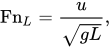
Multihulls exhibit distinct hydrodynamic characteristics due to their multiple slender hulls, which primarily reduce two key types of drag: frictional and wave-making. Frictional drag, arising from the interaction between the hull surface and water, is minimized in multihulls through the use of slender hull forms that decrease the wetted surface area compared to monohulls of equivalent displacement.[57] Wave-making drag, generated by the energy required to create bow and stern waves, is further reduced when the length-to-beam ratio (L/B) exceeds 10, as this configuration disrupts wave formation less efficiently.[58] Slender body theory underpins these advantages, approximating the hull as a thin body to predict low wave resistance in multihull designs, particularly effective for high length-to-beam ratios common in catamarans and trimarans.[59] Propulsion systems in multihulls leverage these hydrodynamic traits, with sail rigs optimized for high lift-to-drag (L/D) ratios to maximize forward thrust. Wing sails, often employed in racing multihulls like America's Cup catamarans, achieve L/D ratios exceeding 20 through aerodynamic profiles that generate substantial lift while minimizing induced drag, outperforming traditional soft sails.[60] For powered propulsion, outboard engines are frequently mounted on amas (outrigger hulls) in trimarans to distribute thrust and enhance maneuverability without compromising the main hull's streamlining.[58] Electric pod drives represent a modern alternative, integrating motor, propeller, and cooling into compact underwater units that mount beneath the hulls, providing quiet, efficient operation suitable for multihull configurations.[61] Efficiency in multihull hydrodynamics varies between displacement and planing modes, governed by the Froude number, defined as $ Fn = \frac{V}{\sqrt{L \cdot g}} $, where $ V $ is speed, $ L $ is waterline length, and $ g $ is gravitational acceleration. In displacement mode (typically $ Fn < 0.4 ),catamarandemihullsareoptimizedforlowresistancethroughslenderformsthatmaintainhullseparationtoavoidinterferencedrag.[](https://www.researchgate.net/publication/242160262Performancecomparisionbetweenplaningmonohullandcatamaranathighfroudenumbers)Athigherspeedsinsemiplaningorplaningmodes(), catamaran demihulls are optimized for low resistance through slender forms that maintain hull separation to avoid interference drag.[](https://www.researchgate.net/publication/242160262_Performance_comparision_between_planing_monohull_and_catamaran_at_high_froude_numbers) At higher speeds in semi-planing or planing modes ( Fn > 0.8 $), the hulls lift partially out of the water, drastically reducing wetted area and enabling fuel savings up to 30% over monohulls at equivalent speeds.[62] Innovations in multihull propulsion include appendages like T-foils, which generate hydrodynamic lift to elevate the hulls above the water surface, thereby minimizing drag by reducing contact with the water.[63] These foils, as seen in high-performance foiling catamarans such as SailGP's F50 class, allow sustained speeds over 50 knots with significantly lowered resistance. Electric pods further innovate by enabling regenerative propulsion, where propellers act as turbines under sail to recharge batteries, enhancing overall energy efficiency in hybrid multihull setups.[61]

Performance Characteristics

Speed and Efficiency

Multihulls exhibit significant speed potential due to their lightweight construction and reduced hydrodynamic drag compared to monohulls. Cruising catamarans typically achieve average speeds of around 15 knots, while trimarans average about 10 knots; both can reach 15-20 knots and higher under favorable conditions.[64][65] In high-performance applications, such as foiling catamarans like the GC32, speeds exceeding 40 knots have been recorded, with a peak of 41.6 knots achieved during training in 2017. More recent foiling designs, such as those in the 2024 Rolex Fastnet Race multihull class, have pushed boundaries, with ongoing projects like SP80 targeting 80 knots as of 2025.[66][67][68] Efficiency in multihulls stems from a lower resistance-to-power ratio, enabling them to attain higher speeds with less propulsion input relative to monohulls. For powered vessels, specific fuel consumption can be reduced by approximately 7-10% compared to monohulls at displacement speeds, as evidenced by operational data on comparable ships where catamarans averaged 4.98 tons of fuel versus 5.38 tons for monohulls over similar routes.[69] This advantage arises from factors like light weight, with many performance multihulls featuring a displacement-to-length (D/L) ratio below 100, classifying them as ultralight and minimizing wave-making resistance.[70] Additionally, multihulls demonstrate superior velocity made good (VMG) on windward and leeward legs due to their inherent stability, which allows sustained higher boat speeds without excessive heeling.[71] In comparisons to monohulls, multihulls generally outperform in light winds, where their low wetted surface and stability enable quicker acceleration and better overall progress.[72] However, they may be less efficient in head seas, as the wide beam can lead to increased slamming and higher resistance in choppy conditions. For power catamarans, this efficiency translates to extended operational range; designs like the ILIAD 62 achieve over 3,500 nautical miles at economical speeds, often exceeding the range of equivalent monohulls through optimized fuel use.[73][74]

Handling and Safety

Multihulls exhibit distinct handling characteristics influenced by their wide beam, which enhances initial stability and reduces heeling but can result in a larger turning radius compared to monohulls, making tight maneuvers more challenging in confined spaces.[75] This beam also tends to increase leeway, or sideways drift, particularly in gusty conditions or when sailing upwind, necessitating the use of daggerboards or centerboards to minimize slippage and maintain course.[10] In outrigger designs like proas, maneuvering involves shunting—reversing the bow and stern by switching the outrigger to the opposite side—rather than the tacking used in catamarans, where the vessel pivots through the wind using its symmetrical hulls.[76] Shunting requires precise timing to avoid loss of momentum, especially in heavy weather, but can be simpler in large waves as it avoids turning directly into the wind.[77] For extended voyages, autopilot systems tailored to multihulls integrate advanced sensors to handle rapid speed changes and wave-induced motions, often featuring wind-vane modes for efficient steering on long passages while conserving battery power.[78] Safety in multihull operation centers on mitigating risks like pitchpoling, where the bow dives into a wave and the stern lifts, potentially flipping the vessel; designers counter this by incorporating low bow volume with fine entries to reduce wave resistance and prevent the bow from burying deeply.[79] Capsize recovery varies by configuration, with some trimarans designed for self-righting through buoyant masts and high cabin structures that leverage wave action to roll the vessel upright after inversion.[80] In outrigger craft, emergency protocols may involve controlled ama flooding—releasing air from the outrigger to sink it temporarily, allowing the main hull to pivot and right the boat—followed by reinflation using manual pumps or CO2 systems.[80] Key safety features include watertight bulkheads in each hull, with trimaran amas requiring at least three compartments to contain flooding and preserve overall buoyancy.[81] EPIRBs and liferafts are placed for quick access post-inversion, such as on the aft crossbeam or in bridgedeck boxes on multihulls, secured for deployment if the vessel inverts.[82] Stability is quantified by the angle of vanishing stability (AVS), with values exceeding 120 degrees indicating strong resistance to capsize; however, self-righting is not inherent and depends on design features like buoyant elements.[83] Operators benefit from multihull-specific training to address seamanship challenges, such as the Royal Yachting Association (RYA) courses that progress from basic skills to advanced techniques in varied wave conditions, emphasizing recovery from knockdowns and optimized sail handling.[84]

Applications and Uses

Recreational and Racing

Multihulls have become increasingly popular for recreational sailing due to their stability and spacious interiors, making them ideal for bluewater cruising. Cruising catamarans like the Outremer 45, introduced in the early 2000s, exemplify this trend, offering lightweight construction and performance-oriented designs suitable for long-distance voyages with small crews.[85][86] These vessels combine seaworthiness with comfort, enabling sailors to tackle ocean passages efficiently while maintaining ease of handling. For shorter outings, day-sailing beach catamarans such as the Hobie 16 and Nacra 17 provide accessible entry points, emphasizing fun and agility in coastal waters.[87] The charter market for multihulls has seen steady expansion since 2010, driven by demand for stable platforms in vacation sailing.[88][89] This rise reflects broader appeal for family-oriented and inclusive experiences, including designs adapted for disabled sailors, such as the wheelchair-accessible Impossible Dream catamaran and the HH44-OC, which feature one-level layouts and automated systems for barrier-free operation.[90][91][92] In racing, multihulls dominate high-speed competitions, with classes like the A-Class foiling catamaran achieving sustained speeds exceeding 20 knots, often reaching 35 knots in open fleets.[93][94] Trimarans have set benchmarks in offshore events, such as the 2012 Jules Verne Trophy record by Banque Populaire V, which completed a non-stop circumnavigation in 45 days, 13 hours, and 42 minutes at average speeds over 26 knots.[95][96] The America's Cup in 2021 introduced the AC75 foiling yachts, pushing multihull-inspired hydrofoil technology to new extremes with speeds up to 50 knots, influencing broader racing innovations.[97][98] Major events highlight multihull prowess, including the Route du Rhum transatlantic race, a biennial solo challenge from Saint-Malo to Guadeloupe that features dedicated multihull classes and has drawn record entries since its 1978 inception.[99][100] Speed records underscore their potential, with vessels like the MOD70 Phaedo^3 averaging 650 nautical miles per day during transoceanic runs, equivalent to sustained speeds of over 27 knots.[101] Amateur racing has grown alongside these spectacles, with the global racing sailboat market expanding at a 6.8% CAGR through 2033, fueled by accessible classes and events like the U.S. Multihull Championship.[102][103]

Commercial and Workboats

Multihulls, especially catamarans and trimarans, have become prominent in commercial shipping and workboat operations due to their inherent stability, fuel efficiency, and ability to provide expansive deck areas for payloads. These vessels excel in applications requiring reliable performance in varied sea conditions, such as passenger and vehicle ferries, offshore support, fishing, and emerging cargo transport.[104][6] In the ferry sector, catamarans hold over 70% of the high-speed market share, offering speeds up to 40 knots while accommodating large passenger and vehicle capacities. For instance, Incat Tasmania's Express 3, a 109-meter wave-piercing catamaran launched in 2017, serves Danish operator Molslinjen on routes between Denmark and Sweden, carrying up to 1,200 passengers and 310 cars with reduced fuel consumption compared to monohulls. Similarly, Austal's trimaran ferries, such as the 127-meter Benchijigua Express delivered in 2004 to Fred. Olsen, S.A., operate in the Canary Islands, achieving 40-knot speeds and enhanced stability through a slender main hull flanked by outriggers, which minimizes roll and improves passenger comfort. Trimarans like Austal's Bajamar Express and Banaderos Express, both 118 meters, further demonstrate this design's viability for high-volume routes, with the former entering service in 2019 for the same operator. These designs benefit from lower wake-wash, making them suitable for environmentally sensitive coastal areas.[105][104][106] For workboats, multihulls provide superior platforms for offshore industries, including oil and gas crew transfers and wind farm support, where stability reduces vertical accelerations by up to 50% over traditional catamarans. The ModCat hull form, developed for high-speed operations, powers vessels like the 79-meter US Navy Sea Fighter and the 59-meter passenger ferry Betico II, but has been adapted commercially by oil companies to replace helicopter transfers to platforms, using only a 5% power increase for better seakeeping. In fishing, catamarans offer a stable work deck and fuel savings of around 50% at light loads; Walter Schurtenberger's 65-foot catamaran, deployed in the spiny lobster fishery, cruises above 20 knots with twin 385-hp engines, while Gerry Smyth's Maxus Cat series (11.95-14 meters) serves as trawlers and lobster boats, burning approximately 10 gallons per hour at 8.5 knots. Trimarans enhance this with large, steady decks and low fuel use; Mobimar's trimaran workboats are designed for heavy-sea operations, featuring non-slamming hulls and reduced consumption for tasks like supply runs.[6][107][108] Emerging commercial uses include sustainable cargo transport, exemplified by VELA Transport's trimaran sailing cargo ship, an approximately 67-meter vessel under construction by Austal with 100% wind propulsion, set to carry cargo equivalent to around 51 TEU (or 600 EUR pallets) across the Atlantic starting in 2026. In September 2025, VELA announced a partnership with Takeda to transport pharmaceuticals using this vessel, emphasizing its suitability for temperature-sensitive goods.[109][110][6] Overall, multihulls' slender hulls reduce wave-making drag and improve length-to-displacement ratios, enabling higher payloads and operational economies in these sectors.

References

User Avatar
No comments yet.