Respect all members: no insults, harassment, or hate speech.
Be tolerant of different viewpoints, cultures, and beliefs. If you do not agree with others, just create separate note, article or collection.
Clearly distinguish between personal opinion and fact.
Verify facts before posting, especially when writing about history, science, or statistics.
Promotional content must be published on the “Related Services and Products” page—no more than one paragraph per service. You can also create subpages under the “Related Services and Products” page and publish longer promotional text there.
Do not post materials that infringe on copyright without permission.
Always credit sources when sharing information, quotes, or media.
Be respectful of the work of others when making changes.
Discuss major edits instead of removing others' contributions without reason.
If you notice rule-breaking, notify community about it in talks.
Do not share personal data of others without their consent.
Julius Caesar addresses an assembly of leaders of the Gauls in Lucotecia, asking for their support.[2]
52 BCE
The Parisii are defeated by the Roman general Titus Labienus at the Battle of Lutetia. A Gallo-Roman garrison town, called Lutetia, is founded on the left bank of the Seine.[3][4]
Between 14 and 37 CE
The sailors of Lutetia erect the Pillar of the Boatmen in honor of the Roman god Jupiter.
Between 40 and 11 CE
Construction of the Forum of Lutetia
Between 100 and 200 CE
Construction of the baths, the amphitheater and the theater of Lutetia
3rd century CE
Lutetia gradually becomes known as Civitas Parisiorum, the "City of the Parisii", then simply "Paris".[3]
c. 250 CE
Arrival of Christianity in Paris; execution by Romans of Bishop Saint Denis on Montmartre, the "Mountain of Martyrs".[4]
275-276
The settlement on the left bank is ravaged by Germanic tribes.
About 300 CE
A rampart is built around the Île de la Cité.
358 CE
The Roman commander Julian the Apostate resides in Paris during the winter, when not fighting the Germanic tribes.
360 CE
Julian is proclaimed Roman Emperor by his soldiers.
Tomb of Sainte Geneviève in the church of Saint-Étienne-du-Mont, near the PanthéonA 13th century statue of Childebert I, founder of the future Abbey of Saint-Germain-des-Prés (Louvre)The coronation of Hugh Capet, the Count of Paris, as King of the Franks in 987. He died in Paris in 996 and was buried in the Basilica of Saint-Denis.(Illustration from the 14th century, in the National Library of France)
Burial of Saint Genevieve atop the hill on the left bank which now bears her name. A basilica, the Basilique des Saints Apôtres, is built on the site and consecrated on 24 December 520. It later becomes the site of the Basilica of Saint-Genevieve, which after the French Revolution becomes the Panthéon.
511
Clovis I, the king of the Franks, makes Paris his capital.[6][4] (Some sources give the date 508[5])
About 540-550
Construction of the Saint-Étienne cathedral, predecessor to Notre-Dame de Paris, begins.[5]
543
Founding of the Basilica of Saint-Vincent, by Childebert I, the King of Paris. The Basilica becomes the burial place for the first French kings, beginning with Childebert.[7]
Council of Meaux–Paris — The church council opened at Meaux because of the siege but ended in Paris in February 846.
856
28 December – The Vikings return and burn the city again.
857
Vikings led by Björn Ironside almost destroy Paris, and burn all its churches, except those that pay a ransom: Saint-Étienne (now Notre-Dame cathedral), Saint-Denis and Saint-Germain-des-Prés.
861
The Vikings burn Paris and the Abbey of Saint-Germain-des-Prés. The Abbey is pillaged again in 869.
870
King Charles the Bald orders the construction of two bridges, the Grand Pont and the Petit Pont, ostensibly to block the passage of the Vikings up the Seine.
6 February – The Petit pont washes away, allowing the Vikings to lay siege to the city and pillage the surrounding region.
September – The Carolingian Emperor Charles the Fat pays the Vikings 700 pounds of silver to depart.
887-889
The Vikings attack Paris again in May 887 and June–July 888, but thanks to strengthened defenses the city is not captured.
978
October – Siege of Paris by the Holy Roman Emperor Otto II. The Parisians block the supplies of the invaders from going up the Seine. An army led by Hugh Capet arrives and the siege is finally lifted on 30 December.
988
Hugh Capet, elected King of the Franks in 987, resides in Paris for a time, and returns again in 989, 992 and 994–995.[9][4]
The celebrated scholar Abélard begins teaching at the school of Notre-Dame.
1112
King Louis VI gives special privileges to the Basilica of Saint-Denis, raising the status of Paris over Orléans as the capital of the Capetian Kings.[10]
1113
Construction begins of a new Grand Pont, later called the pont au Change, completed in 1116. The Petit Pont is also rebuilt.
1116
The scholar Abélard begins what becomes a legendary romance with the nun Héloïse in about 1116. In 1117 is punished for his relationship by castration. He retires to the monastery of Saint-Denis and then to Saint-Ayoul, but later returns to Paris and to Héloïse.
c. 1120
Teachers and students begin taking up residence on the left bank, around the montagne Sainte-Geneviève, since the cloister of Notre-Dame is not large enough to house them all. This is the beginning of the Latin Quarter and the future University of Paris.[10]
1131
13 October – Death of Philippe, the eldest son of king Louis VI, who died the day after being thrown from his horse, which panicked when he encountered a pig. As a result, it is forbidden to let pigs go freely on the city streets.[10]
1132
The Bishop of Paris punishes the teachers and students on the montagne Sainte-Geneviève for the growing number of conflicts between the students and the townspeople.
Abbot Suger begins the reconstruction of the Basilica of Saint-Denis in the new Gothic style. The new Basilica is consecrated on 11 June 1144, and becomes a model for cathedrals and churches across Europe.
1134
King Louis VI grants to the merchants of Paris the right to seize the property of their debtors and to form associations, the first steps toward a municipality.[11]
1137
A new market is installed at Champeaux, which gradually replaces the market on the place de Grève and becomes the central market of Les Halles.
First mention in documents of the corporation of butchers in the city.
1147
The Templars occupy their new building in Paris, in the presence of king Louis VII and of the Pope. When he departs for the Crusades, the king leaves the royal treasury in the care of the Templars, and the regency with Abbot Suger of Saint-Denis.
21 April – Pope Eugene III consecrates the new church of Saint-Pierre-de-Montmartre.
King Louis VII confirms the privileges of the corporation of water merchants, whose water-bearers carry water from the Seine to residences.
1176
First mention in documents of the Fair of Saint-Germain. Half of the profits were reserved for King Louis VII.
1180
Founding of the collège des Dix-Huit by Messire Josse de Londres, an Englishman. This was the first college in Paris, established for eighteen poor clerical students in a room within the Hôtel-Dieu.[13][14]
5 February – King Philip Augustus (Philippe Auguste) arrests the leaders of the Jewish community, and requires them to pay 15,000 silver marcs.
1182
Philip Augustus expels the Jews from the Île de la Cité, and their synagogue is turned into a church. They are allowed to return in 1198, in return for paying heavy taxes.[15]
19 May – Consecration of the altar of the cathedral of Notre Dame.[16]
1183
Two market buildings are constructed at the small hamlet Les Champeaux meaning ("little fields"), the beginning of Les Halles.
1186
Philip Augustus orders the paving of the major streets of the city with cobblestones (pavés).
1190
Philip Augustus departs for the Third Crusade. Six Paris merchants are assigned to act as a council of the regency in his absence, each with a key to the treasury. Before departing, he orders the construction of the first wall around the entire city. The wall on the right bank is finished in 1208, and on the left bank between 1209 and 1213. He also begins construction of the fortress of the Louvre on the right bank.[17]
1197
March – A flood destroys all the bridges over the Seine; the King is forced to abandon his palace on the Île de la Citè and move to the hill of Sainte-Geneviève.
Battles between the sergeants of the Provost of Paris and students, which cause the death of five students. When the Paris students threaten to leave the city, Philip Augustus grants the students the right to be judged exclusively by the tribunal of the Bishop of Paris. This marks the beginning of the legal status of the University of Paris.
The Abbot of Saint-Geneviève purchases the clos Garlande on the Left Bank and builds houses in the neighborhood for students.
1207
Pope Innocent III limits the number of chairs of theology at the University to eight, to maintain control over the University.
1209
The second college of the University is founded; the Collège des pauvres écoliers de Saint-Honoré, for thirteen students without funds.
1210
Pope Innocent III permits the teachers of the University to form a corporation, and in 1212 gives them a degree of independence from the authority of the Bishop of Paris.[18]
Ten Amauriciens, students of the scholar Amaury de Chartres, are condemned for heresy and burned at the stake outside of Paris, beyond the rampart gate porte des Champeaux, for making too much of the works of Aristotle.[18]
16 November – Pope Innocent III prohibits the teaching of Roman, or civil law, at the University; only canon law can be taught.
December – Conflicts between the Bishop of Paris and the University, which is supported by the new Pope, Honorius III.
1229
26 February – More street battles between students and the sergeants of the Provost of Paris. On 15 April the University temporarily leaves the city in protest, and some of the teachers depart for Oxford and Cambridge.
1230
Paris scriptoria producing illuminated manuscripts flourish. The style of the Paris school is copied throughout France.
For the first time, the ringing of the bells of the churches of Paris is regulated by clocks, so that all sound at about the same time. The time of day becomes an important feature in regulating the work and life of the city.[21]
1246
The University of Paris is granted financial and judicial autonomy, and its own seal.
26 April – Consecration of Sainte-Chapelle, built to house sacred relics from the Holy Land purchased by Louis IX (Saint Louis).
c. 1250
Founding of the Parlement of Paris (Curia Regis), to advise the King on legal matters and later to make judicial decisions.
1252
Saint Thomas Aquinas begins to teach at the University of Paris, and remains until 1259. He returns between 1269 and 1272.[21]
1254
June – Alphonse de Poitiers, brother of Louis IX, moves into his recently built townhouse (hôtel d'Hosteriche) near the Louvre. Following his example, other princes of the blood and members of the high aristocracy built princely residences in the same neighborhood.[21]
1256
10 June – First stone laid for the Abbaye royale de Longchamp, the royal convent of Longchamp, by Isabelle, Louis IX's sister.
Money-changers establish themselves on the Grand Pont, which becomes known as the Pont-au-Change.
1306
21 July – Expulsion of the Jews from Paris, and confiscation of their property. They are allowed to return in July 1315, but recover only a third of their property.[24]
30 December – Riots following an increase in rents. King Philip IV is besieged in the tower of the temple. Twenty-one rioters are later hanged.
1307
13 October – Philip IV orders the arrest of the Knights Templar, and the seizure of their property.
1310
Construction begins of a clock tower in the Palace on the Île de la Cité, finished in 1314.
1314
The leaders of the Knights Templar, including Jacques de Molay, are burned at the stake on the Île aux Juifs, also called Île des Templiers, an island west of the Île de la Cité.
1321
14 September – Organization of the first recorded company of musicians, the Confrérie de Saint-Julien-des-Ménétriers.
1326
The breakup of ice on the Seine destroys all the wooden bridges. The Île de la Cité is supplied with food by boat for a period of five weeks.
7 July – Étienne Marcel buys a house on the place de Grève to serve as the first city hall.
1358
22 February; Armed supporters of Étienne Marcel invade the Palace. In the presence of the Dauphin, Charles, the heir to the throne, future Charles V, they kill the Marshals of Champagne and Normandy, and take the Dauphin under their protection. On 24 February, four Paris merchants, including Étienne Marcel, become members of the new royal council.
4 May – King Charles II of Navarre, accompanied by an army of English mercenaries, enters Paris. Étienne Marcel takes his side, and the Dauphin flees the city.
22 July – Battles within and around Paris between supporters of the Dauphin and of Charles of Navarre. Charles of Navarre flees the city.
31 July – Étienne Marcel attempts to open the gates of the city to the mercenaries of Charles of Navarre, and is killed at the bastion of Saint-Antoine by supporters of the Dauphin.
2 August – The Dauphin returns to Paris. The leading supporters of Étienne Marcel and Charles of Navarre are executed, but others are given a general amnesty. The Dauphin buys the Hôtel Saint-Pol in the Saint-Paul quarter, and lives there until his death.
1368
The course of the Bièvre River at the moat of Saint-Bernard is diverted to empty into the Seine at La Tournelle. The portion within the city is covered and used as a sewer.
1370
A royal decree orders that all churches ring their bells at the hour and quarter-hour, as determined by the clock installed in the square courtyard of the Palais de la Cité.
22 April – Placement of the first stone of the Bastille.
1378
Construction of the first Pont Saint-Michel, known then as the Pont-neuf; finished in 1387.
1390
29 October – First trial for sorcery, Jeanne de Brigue is convicted by the Parlement of Paris and burned at the stake on 19 August 1391.
1391
August – Founding of the first corporation of artists, the Confrérie des peintres and tailleurs d'images.[26]
The Palais de la Cité as it appeared between 1412 and 1416, as illustrated in the Très Riches Heures du Duc de Berry (June).The Tour Jean-sans-Peur, last vestige of the Burgundian occupation (15th century), at 20 rue Étienne Marcel in 2nd arrondissement.
July–August – After a series of riots and disturbances, the Armagnacs gain control of Paris from the Burgundians; Jean Sans Peur flees the city.[4]
1418
29 May – Burgundian coup d'état – The Armagnacs have become increasingly unpopular in Paris. During the night of May 29, the merchants of Paris open the porte Saint-Germain-des Prés to the Burgundian soldiers. Bernard VII, Count of Armagnac, and the other leaders of the Armagnacs are arrested in their beds and massacred on 12 June.
14 July – Jean Sans Peur and Queen Isabeau enter Paris by the Porte Saint-Antoine. The fifteen-year-old Dauphin, the future Charles VII of France, escapes the city.[29]
1419
10 September – Jean Sans Peur goes to meet the Dauphin at the bridge of Montereau, and is killed by the Dauphin's supporters (the Armagnacs).
1420
30 May – Philip the Good (Philippe le Bon), the new Duke of Burgundy and ruler of Paris, forms an alliance with the English and persuades King Charles the Mad (Charles le Fol) and leaders of university and the merchants of Paris take an oath to accept Henry V of England as the heir to the French throne.
1 December – King Henry V of England arrives in Paris and takes residence at the Louvre, while King Charles VI the Mad is moved to the hôtel Saint-Pol.[29]
1422
31 August – Death of Henry V of England, followed on 21 October by the death of Charles VI of France. Thereafter the kings of France spend very little time in Paris, until 1528, when François I returns there with the court.[30]
1423
February – The leaders of Paris take an oath of allegiance to the Duke of Bedford, representing Henry VI of England, who is in England and just one year old. Joan of Arc unsuccessfully lays siege to Paris, held by the Burgundians, and is wounded – Illustration from the Vigile du roi Charles VII (1429)
1427
First record of the arrival of the Romani people, or gypsies, in Paris.
1429
8 September – Joan of Arc, fighting for King Charles VII (Charles le Victorieux), tries and fails to retake Paris. She is wounded outside the Porte Saint-Honoré.
1430
May – Joan of Arc, captured by the Burgundians in 1429, is handed over to the English in Rouen and brought to trial for heresy. The case against her is prepared by the Bishop Pierre Cauchon. At Cauchon's request, the faculty of the University of Paris endorses the charge of heresy against her. She is convicted and burned at the stake.
1431
16 December. Henry VI of England, nine years old, comes to Paris for a month and is crowned King of France at the Cathedral of Notre Dame by his uncle, the Cardinal of Winchester.
1432
March to 8 April – Floods submerge Le Marais from the porte Saint-Antoine to the porte Saint-Martin.[30]
1436
28 February – After a series of victories, the army of Charles VII surrounds Paris. Charles VII promises amnesty to the Parisians who supported the Burgundians and English.
13 April – Uprising within the city against the English and Burgundians; the soldiers of Charles VII enter the city through the porte Saint-Jacques.
15 April – The English soldiers are allowed to depart by boat on the Seine for Rouen.
1437
12 November – Charles VII returns to Paris, but remains only three weeks. He moves his residence and the court to the Châteaux of the Loire Valley.[31]
Louis XI takes sanctuary in Paris and asks the support of the merchants, university and clergy, whose franchises he abolished in 1461. The siege of Paris by the league continues until 29 October, when a treaty is signed with Louis XI.
1467
The neighborhood militias are abolished, and replaced by sixty-one detachments of professional soldiers, reviewed by Louis XI on 14 September. Page of the first book to be printed in Paris, Letters by Gasparin de Bergame.
1469
The first French printing-press was set up in the Sorbonne.[4]
Establishment of royal postal service with couriers on horseback.
1485
Construction begins of the Hôtel de Cluny for the Abbots of the Cluny Monastery, finished in 1510. It is now the museum of the Middle Ages.
1494
The municipality of Paris refuses to loan King Charles VIII (Charles l'Affable) 100,000 écus for a military expedition to Italy, which it considers useless.
First recorded case of syphilis in Paris, brought from Italy by soldiers of Charles VIII. Foreigners in the city with the disease are expelled from the city on 6 March 1497.
1497
A flood of the Seine reaches the place de Grève, place Maubert and the rue Saint-André-des-Arts.
1499
October 25 – A flood of the Seine causes the collapse of the wooden pont Notre-Dame.
6 July – Reconstruction begins of the Pont Notre-Dame in stone, replacing the wooden bridge which collapsed on 25 October 1499. The new bridge is finished in 1514.[23][33]
1504
July – Ordinance of the Parlement de Paris for the lighting of Paris streets; at nine in the evening Parisians are required to put a candle in a lantern in their window. The ordinance is not widely obeyed, and is repeated in 1524, 1526, 1551, and later.[34]
1505
Publication of the first printed Book of Hours in Roman letters. The use of Gothic script gradually disappears.
5 April – The direction of the Hôtel-Dieu hospital is transferred from the chanoines of Notre-Dame cathedral to eight laymen governors selected among the business leaders of Paris by the City Assembly,
First French translation of the New Testament of the Bible published. In 1525, alarmed by this unauthorized text, the theology faculty of the University of Paris forbids further translations of the Bible.
March – The city police force of 120 archers and sixty arbaletriers is reinforced with one hundred arquebusiers,
8 August – The Augustine monk Jean Vallière is burned at the stake for proclaiming that Jesus Christ was born like other humans.
1527
15 March – Letters of patent issued to construct the quai du Louvre.
28 February – In order to turn the Louvre into a palatial residence, demolition of its great central tower begins.
15 March – François I formally announces that he plans to make Paris his principal residence.
1529
19 August – Miles Regnault, secretary of the Bishop of Paris, who had converted to Lutheranism, is condemned and burned at the stake on the Place de Grève.
1530
March – François I founds the Collège des lecteurs royaux, or Collège de France, to offer lectures in subjects not taught at the College of Sorbonne, including Hebrew, Ancient Greek, and mathematics.
1531
December – New outbreak of bubonic plague. The Holy Innocents' Cemetery is completely filled, so a new cemetery for plague victims is created on the plain of Grenelle, facing the hill of Chaillot.
1532
19 August – First stone placed for the new Saint-Eustache church, not finished until 1637.
April – The Ordinance of Fontainebleau orders the demolition of the gates on the right bank of the wall built by Philippe-Auguste.
1 November – At the opening of the academic year, the rector of the university, Nicolas Cop, causes a scandal by giving a lecture inspired by Jean Calvin.
1534
15 August – Ignace de Loyola and his followers take an oath at the base of Montmartre to defend the Church and Pope. This is the founding of the Jesuit order.[36]
17–18 October – Calvinists put up anti catholic posters in the streets of Paris and several towns in France, including on the door of king François Ier's bedroom in Amboise. The Parliament of Paris orders the arrest of two hundred suspected Calvinists, six of whom are burned on the night of 18 October, and many others before the end of the year.[36]
17 November – The printer Antoine Augerau becomes the first printer to be burned at the stake, at Place Maubert, for publishing a book criticizing the sister of the King, Marguerite de Navarre, for her alleged sins.
1535
23 January – First woman heretic, Marie la Catelle, a schoolteacher, burned at the stake for reading the New Testament in French to her pupils.
15 February – The printer Etienne de La Forge is burned at the stake for printing copies of the New Testament and distributing them to the poor. The Lescot wing in the Cour Carrée, the oldest existing façade of the Louvre Palace is begun in 1546
19 August – The Sorbonne publishes the first Index, or list of forbidden books.
7 November – François I creates the Grand Bureau des Pauvres, responsible for assisting the indigent, beggars and vagabonds, under the authority of the Bureau de la Ville, or city administration.[37]
2 August – Letters of patent from François I approve the reconstruction of the west wing of the Louvre, to be done by the architect Pierre Lescot with decoration by sculptor Jean Goujon.
3 August – The printer Étienne Dolet is burned at the stake on Place Maubert. Two other printers are burned that summer, Michel Vincent (19 August) and Pierre Gresteau (13 September).
1547
31 March – Death of King François I, who is succeeded by his son, Henry II.
22 April – For the first time, a large shipment of firewood is made by floating the logs down the river in a raft from the Nivernais region to Paris.
8 October – The Parlement de Paris creates a commission, called the Chambre ardente, to prosecute Protestants.
30 August – Inauguration of a new theater next to the Hôtel de Bourgogne used to present religious dramas and comedies by a troupe called Les Confrères de la Passion. This was the first theatre in the city.[37]The Fontaine des Innocents (1549), the oldest existing fountain in Paris
7 February – The Parliament of Paris forbids secret schools which provide religious instruction.
12 July – First stone placed for a new city gate, called the Porte Neuve and then the Porte de la Conférence, at the western edge of the Jardin des Tuileries.
1557
11 August – Many Parisians flee the city after a Spanish army advancing from Flanders defeats the French at Saint-Quentin. Queen Catherine de' Medici remains in the city and helps re-establish confidence.
1558
13 May – Gathering of thousands of Protestants at the Pré-aux-Clercs for an open-air service, despite threats from the city authorities.
Burning at the stake, after hanging, of Anne du Bourg, member of the Paris Parliament, for heresy (23 December 1559)
1559
25 May – First synod of Calvinists on rue des Marais (now rue Visconti) formally establishes the Reformed Church of France on 29 May.
10 June – The Parliament of Paris debates new royal edicts prohibiting the Protestant church. Henry II personally attends the session, and the members calling for tolerance are arrested.[41]
30 June – During the celebrations of the marriages of the sister and daughter of King Henry II on rue Saint-Antoine, Henry II is mortally wounded in the eye by a lance carried by the commander of his Scottish guard, Gabriel de Montgomery. He dies on 10 July and his young and sickly son François II succeeds him.
23 December – Anne du Bourg, a member of the Parliament of Paris and Catholic defender of tolerance for Protestants, is first hung and then burned at the stake for opposing the King's views.
1560
5 December – On the death of François II, his ten-year-old brother Charles IX succeeds him.
1561
29 December – the "Tumulte" of Saint-Médard. Catholics attack Protestants conducting a service at the maison du Patriarche, near the church of Saint-Médard. The building where the service was held is burned the next day.
1562
4 April – The connétable de Montmorency orders the burning of the chairs and pews of the Protestant temples of Popincourt and Jerusalem.
1563
2 July – Opening by the Jesuits of the Collége de Clermont, today Lycée Louis-le-Grand.
November – A royal edict creates the tribunal des juges consuls, ancestor of the modern Tribunal de Commerce. It meets in the Abbaye de Saint-Magloire on rue Saint-Denis (at the site of today's number 82).
14 July – A royal ordinance modifies how municipal elections are conducted; under the new rules, the cities present the King with two lists of candidates, and the King decides.
1565
9 March – New regulations for the façades of houses: wooden decoration must be replaced by cut stone or plaster.
1 August – Decision taken to build a quay along the river at what is now Chaillot.
1566
Creation of the Marché Neuf, or new market, at the west end of the Petit-Pont and beginning of the construction of the Quai de Gloriette.
12 July – construction begins of a new city wall on the west, which includes the Tuileries Palace and the gardens of the Tuileries.
1568
City militia reorganized into neighborhood companies commanded by captains; the companies of each quarter of the city are formed into columns commanded by colonels.
1569
30 June – Several members of a wealthy Protestant family, the Gastines, are sentenced to death, and their house demolished and replaced by a cross to expiate their "sins".
1571
6 March – The first troupe of Italian actors, called I Gelosi, arrives in Paris. After a few performances, they are banned by the Parliament of Paris.[42]
22 August – Admiral Gaspard II de Coligny, a prominent Protestant leader, is attacked and wounded on rue des Poulies, not far from the Louvre.
24 August – At four o'clock in the morning, the bells of the church of Saint-Germain l'Auxerrois give the signal to begin the massacre of Protestants, known as the St. Bartholomew's Day massacre. The killing continues until August 30, and takes the lives of about two thousand Protestants in the city.[42]
1573
The architect Jean Bullant begins construction of a new residence for Catherine de' Medici, the future Hôtel de Soissons, finished in 1584.
Founding by Nicolas Houel of the first school of pharmacy in France.
19 June – First performance of the Italian theater troupe I Gelosi in the hall of the Petit-Bourbon, with great success.[44]
1577
A commission is named to study projects for a new bridge over the Seine. On 15 February 1578, Henry III chooses the project for a bridge across the western end of the Île-de-la-Cité, the future Pont Neuf.
24 September – First performance of a ballet at the French court: Circé by Balthazar de Beaujoyeux, performed at the Louvre.
1582
The Gregorian calendar is introduced in Paris, with the elimination of ten days; 9 December is followed by 20 December.
1587
The teaching of Arabic is introduced at the Collège de France.
1588
9 May – Henry I, Duke of Guise, leader of the ultra-Catholic faction, makes a triumphal entry into Paris, cheered by the Parisians.
12 May – Day of the Barricades. The Duke of Guise leads an insurrection against Henry III. The King flees Paris for the Loire Valley on 13 May.
18–20 May – the Holy League, the Catholic party, takes charge of the administration of Paris. The Duke of Guise is named lieutenant-general of the armies.
25 December – After the murder of the Duke of Guise and Louis II, Cardinal de Guise at the Château de Blois, the Sorbonne declares that the French owe no more allegiance to King Henry III. A new city council of forty members, dominated by supporters of the Holy League, is chosen.
1589
13 March – The league proclaims the cardinal de Bourbon is the new king, under the name Charles X.
2 August – Henry III of Navarre becomes Henry IV, king of France,
1 November Henry IV tries to capture Paris by a surprise attack on the walls around the left bank, but fails.
1590
7 May – Henry IV attacks the city again, this time at the faubourgs Saint-Denis and Saint-Martin, but the attack fails.
14 May – The Catholic League holds a large procession in the city to keep up the morale of the catholic Parisians.
8 August – Popular revolt within Paris against the Catholic League, demanding either bread or peace. The rebellion is harshly suppressed.
10–11 September – Night attack on the city by Henry IV between the gates of Saint-Jacques and Saint-Marcel. The attack is unsuccessful. Henry IV lifts the siege when he learns that a Spanish army is approaching to aid the Catholic League.
1591
2 September – The ruling council of the Catholic League, called the Seize ("Sixteen"), offers the crown of France to Philip II of Spain.
15 November – Growing tensions between the Seize and the Parliament of Paris. Three leaders of Parliament are arrested, tried and hanged.
4 December – The Seize are arrested by Charles de Mayenne, military commander of the Catholic League, and four members are hung at the Louvre. Growing discontent in Paris against the league.
16 May – Henry IV announces that he will give up the Protestant faith.
25 July – Henry IV formally converts to Catholicism in the Basilica of St Denis.
1595
9 January – Surveying begins for a new (southern) wing of Louvre, on the side of the Seine river, the galerie du bord-de-l'eau, to connect the Louvre with the Tuileries Palace.
14 March – The Catholic League's governor of Paris, the comte de Brissac, agrees to surrender the city to Henry IV in exchange for money and the promise of the title of maréchal.[47]
22 March – The gates of Paris are opened to the army of Henry IV.
24 March – Henry IV enters the city, and is welcomed by a cheering crowd.
12 May – Expulsion of the Jesuits from the city, declared "enemies of the State," by the Parliament of Paris and the rector of the university.
1596
23 December – The pont aux Meuniers collapses. It is replaced in 1609 by the pont Marchand.
1598
13 April – The Edict of Nantes brings an end to the wars of religion. Protestant temples are banned inside Paris and within five leagues of the city. The first Protestant temples open at Grigny, then at Ablon.[47]
King Henry IV crosses the Pont Neuf to inaugurate the bridge, (20 June 1603).
1600
28 September – New statutes of the University of Paris published which increase royal authority and reduce power of students.
1602
Tapestry weavers from Brussels introduce Flemish techniques at what later became the Gobelins Manufactory.[47]
2 January – Construction begins La Samaritaine, a giant pump, located at the Pont Neuf, to raise drinking water from the Seine and to irrigate the Tuileries gardens. It began working 3 October 1608. A department store of the same name is built next to the site of the pump in the 19th century.
20 June – King Henry IV crosses the Pont Neuf to inaugurate the bridge, though work is not finished until July 1606. It is the first Paris bridge with sidewalks and without buildings[47]
1604
29 June – Convent of the Capucines founded on rue Saint-Honoré.
July – Henry IV signs letters patent ordering construction of Place Royale (now Place des Vosges), the first residential square in Paris, on the site of the former park of the royal Hôtel des Tournelles. It is completed in 1612.
1606
1 August – Royal authorization given to build a Protestant church at Charenton.
Workshop created within the Louvre to make tapestries of silk, "in the Persian and Turkish fashion".[48]
1607
6 February – Opening of rue Dauphine, followed shortly by rue Christine and rue d'Anjou Dauphine (now Rue de Nesle), in honor of Henry IV's third son, Gaston de France, the Dauphin, bearing the title of duc d'Anjou.
28 May – Approval given for creation of Place Dauphine, on the site of the old royal gardens on Île de la Cité.
18 August – First stone placed of the Collège Royal, later the Collège de France.
1611
18 September – Placing of the first stone for the Church of the Minimes on the Place Royale (later Place des Vosges). The famous Carrousel Le roman des chevaliers de la gloire, a major celebration at the inauguration of the Place Royale, now Place des Vosges, (1612). (Oil on wood, Polish school, 17th century, Carnavalet museum, Paris.)
1612
5–7 April – Celebration of the wedding contract between Louis XIII and Anne of Austria and inauguration of the Place Royale, with the famous Ballet équestre du Carrousel taking place within the Place Royale.[49]
1614
19 April – Contract signed to create the Île Saint-Louis by combining two small islands, the Île aux Vaches and Île Notre-Dame, and building a new bridge, the Pont Marie, to the Right Bank. The work was finished in 1635.
24 July – King Louis XIII places the first stone of the façade of the church of Saint-Gervais. Work of the architect Salomon de Brosse, the façade was finished in 1621.
24 April – Concini, Minister of King Louis XIII and favorite the Queen Mother, Marie de' Medici, is murdered on the entry bridge of the Louvre, probably on Louis XIII's orders; Marie de' Medici is exiled to Blois.
1617
22 October – Letters of patent given for three companies of chair bearers, the first organized public transport within the city.[50]
1618
June – Authority over printers, bookbinders and book stores is transferred from the Church to secular authorities.
1619
27 July – first stone placed for the convent of the Trinity of the order of the reformed Petits Augustins, on the site of the modern École des beaux-arts. view of Paris in 1620, by Matthäus Merian
1620
Opening of the first Pont de la Tournelle, made of wood. The bridge was destroyed by blocks of ice floating on the river in 1637 and 1651 and rebuilt in stone in 1654.
1621
26 September – The Protestant temple at Charenton is burned by a Catholic mob, after the news of the death of Henry of Lorraine, Duke of Mayenne fighting the Protestants in the unsuccessful Siege of Montauban.
23 October – Both the Pont Marchand and the Pont au Change are burned; the Protestants are blamed. View of the Louvre Palace in 1622, reconstruction by Hoffbauer.
1622
A windmill, called the moulin du palais, is built atop Montmartre. In the 19th century, it is renamed the Moulin de la galette (it became a famous landmark in the 19th century).
22 October – For centuries, the bishop of Paris was under the authority of the archbishop of Sens. On this date Paris was given its own archbishop, and the Roman Catholic Archdiocese of Paris established.[12]
1623
19 May – First water arrives from Arcueil, in a new channel following the route of the ancient Roman aqueduct, at the new reservoir on rue d'Enfer, near the present Observatory.
29 December – The theater troupe known as the Comédiens du Roi is given permission to perform plays at the hôtel de Bourgogne[51]
1630 The Medici Fountain completed in the gardens of the Luxembourg Palace (about 1630)
Construction of the pont Saint-Landry between the Île-de-la-Cité and the recently created Île-Saint-Louis.
1631
30 May – First issue of La Gazette de France, the first weekly magazine in France, published by Théophraste Renaudot. Published every Friday, its last issue was on 30 September 1915.[52]
9 October – Contract to build a new wall around the city, reinforced with bastions. Work continued until 1647.
1632
Construction of the pont Rouge (also known as the pont Barbier) to replace the old bac (ferry). In 1689, the bridge was rebuilt of stone, and named the Pont Royal.[51]
1633
21 March – The state buys land in the faubourg Saint-Victor to create the future Jardin des plantes.
23 November – the State Council approves the construction of new defenses to protect the Faubourg Saint-Honoré, Montmartre and Villeneuve. They were completed in 1636.
1634
13 March – First meeting of the Académie française. The academy was formally established by letters of patent on 27 January 1635.[53]
13 October – A corporation of the distillers and vendors of eau de vie is formed, breaking away from the corporation of vinegar-makers, due to the growing popularity of the beverage.[53]
1634
Théâtre du Marais, also known as the Troupe de Montdory or the Troupe du Roi au Marais, founded in an unused tennis court on the Vieille Rue du Temple opposite the church of the Capuchins.
6 June – Cardinal Richelieu bequeathes his new residence to King Louis XIII; it becomes the Palais-Royal at his death in 1642.
August – Panic and flight of many from Paris caused by the invasion of the Spanish army into Picardy.
1637
January – Great success of Corneille's play Le Cid, given by the Troupe du Roi au Marais
26 April – Consecration of the church of Saint-Eustache.
1638
15 January – The Royal Council orders the placing of thirty-one stones to mark the edges of the city; building beyond the stones without royal approval is forbidden. The stones are in place by 4 August.[53]
1640
Founding of the Imprimerie royale, or royal printing house, within the Louvre.
Reconstruction of the Hôtel de Villeroy, by Nicolas V de Villeroy, later tutor of Louis XIV.
1641
16 January – First permanent theater in Paris opens within the Palais-Royal.[6]
7 October – The young king and his court move from the Louvre to the Palais-Royal.
First coffee house or café opens in Paris, but is not profitable and closes. The first successful café does not arrive until 1672.[53]
11 October – Cardinal Mazarin moves into the Hôtel Tubeuf on rue des Petits-Champs, next to the Palais-Royal, and opens his personal library to scholars. In 1682, he donated his library to the Collège des Quatre-Nations, where it remains today as the Bibliothèque Mazarine ("Mazarine Library").[55]
1644
1 January – The theater company of Molière and Madeleine Béjart begins performing in the tennis court of Mestayers (jeu de paume des Mestayers). Molière goes deeply into debt to support the company, and is imprisoned in August 1645 in the Grand Châtelet.[56]
1645
28 February – First performance of an opera in Paris, La Finita Panza by Marco Marazzoli, in the hall of the Palais-Royal.
1646
20 February – Construction begins of the church of Saint-Sulpice, not completed until 1788.
1647
Pont au Change rebuilt by architect Androuet du Cerceau.[39]Battle of Paris between the soldiers of king Louis XIV and the men of the Fronde, (2 July 1652). Anonymous, (Château de Versailles)
26 August – Cardinal Mazarin has the leaders of the Parlement, or law courts, of Paris arrested, because they have refused to enforce his edicts on fiscal policy and taxes. This begins the insurrection of Paris against the royal government known as the Fronde parlementaire (1648–1649).
27 August – The Day of the Barricades. More than twelve hundred barricades erected in Paris against the royal authorities, and prisoners seized by Mazarin are liberated on the 29th.
13 September – King Louis XIV, the Regent Queen Mother and Mazarin leave Paris for Rueil, then Saint-Germain-en-Laye. After negotiations with the Parlement, they accept the Parlement's propositions and return to Paris on 30 October.
1649
5–6 January – The King and Queen Mother flee Paris again to Saint-Germain-en-Laye.
11 January – The leaders of the Fronde take an oath to end the rule of Cardinal Mazarin. The royal army led by Condé, blockades Paris.
11 March – Under the Paix de Rueil, the King and court are allowed to return to Paris, in exchange for amnesty for the Frondeurs.
19 September – City hall runs out of funds. City workers go unpaid, and riots break out sporadically through the end of year.
27 August – The Day of the Barricades. More than twelve hundred barricades erected in Paris streets against the royal authorities, and prisoners seized by Mazarin are liberated on the 29th.
13 September – The King, Queen Mother and Mazarin leave Paris for Rueil, then Saint-Germain-en-Laye. After negotiations with the Parlement, they accept its propositions and return to Paris on 30 October. The tower of the Grand Châtelet in 1650
1650
Mineral springs discovered at Passy, at the present-day rue des Eaux. The mineral baths there remain fashionable until the end of the 19th century.
18 January – Mazarin orders the arrest of Louis de Bourbon, Prince of Condé, le Grand Condé, who has turned against the government, and of the Fronde of the Parlement.
30 January – The Fronde of the princes (Fronde des Princes, 1650–1653), led by Condé, and Fronde of the Paris Parlement join together against Mazarin.
6–7 January – Cardinal Mazarin flees from Paris.
1652
11 April – Condé, leader of the Fronde of princes, enters Paris, pursued by the royal army.
2 July – The Battle of Paris. The royal army, led by Turenne, defeats the army of Condé outside the city; Condé and his men take refuge inside the city walls.
4 July – Soldiers of Condé lay siege to the Hôtel de Ville to force the Parlement to join the Fronde of the princes.
13 October – The Parlement sends a delegation to Mazarin and the King at Saint-Germain-en Laye, asking for peace.
14 October – The Fronde collapses, and Condé flees the city.
21 October – Louis XIV and his court return in triumph to Paris, and take up residence in the Louvre.
22 October – An amnesty is proclaimed for the Fronde participants, except for its leaders.
1653
3 February – Cardinal Mazarin returns to Paris. On 4 July, the leaders of Paris honor him with a banquet at the Hôtel de Ville and a fireworks show.[58]
1 March – A historic flood of the Seine washes away the Pont Marie, even though it was built of stone. The water reaches an historic high of 8.81 meters, higher than the 8.50 meters during the 1910 floods.
24 June – The theater troupe of Molière is given the privilege to perform before the King, a privilege earlier given to the troupe of the Hôtel de Bourgogne and the Comédiens italiens.
1659
10 May – Molière and his troupe perform L'Étourdi at the Louvre. On 21 October, they perform Les Précieuses ridicules.
28 November – Privilege of making and selling hot chocolate granted to David Chaillou, first valet de chambre of the Count of Soissons. This begins the fashion of drinking chocolate in Paris.[58]The Louvre and the quay of the Seine in the 1660s
1660
Introduction of coffee in Paris. It had previously been served in Marseille in 1626, but did not become popular until 1669, during the visit to Paris of the first ambassador from the Turkish sultan.[58]
26 August – A new square, place du Trône (now Place de la Nation) is created on the east side of Paris for a ceremony to welcome Louis XIV and his new bride, Maria Theresa of Spain.
1661
20 January – Theater company of Molière takes up residence at the Palais-Royal
3–7 March – The will of Cardinal Mazarin endows the founding of the Collège des Quatre-Nations, to grant free education for sixty young nobles from the recently annexed provinces of Alsace, Pignerol, Artois and Roussillon. The architect Le Vau is selected to design the building.
1662
14 February – Installation of the salle des machines, a hall for theater performances and spectacles, in the Tuileries.
March – Royal letters of patent give to Laudati de Caraffa the privilege of establishing stations of torch-bearers and lantern-bearers to escort people through the dark streets at night.
18 March – First public transport line established of coaches running regularly between porte Saint-Antoine and Luxembourg. The service continues until 1677.
11 December – A decree re-organizes the policing of Paris, and quadruples the number of city watchmen.
22 December – Establishment of the Académie royale des sciences. Colbert presents the members of the Academy of Sciences to Louis XIV (1667)
1667
17 February – The number of authorized printing houses in Paris is reduced to thirty-six to facilitate censorship.
March – The founding of the Paris Observatory, which is finished in 1672. It is located in the avenue de l'Observatoire. The Paris meridian becomes the meridian on all French maps: it runs through the center of the salle méridienne (also known as salle de Cassini) of the observatory.[23]
15 March – A royal edict creates the position of Lieutenant-General of Police. The first to hold the office is Gabriel Nicolas de La Reynie, named on 29 March.
18 August – First regulations governing the height of buildings in Paris and the faubourgs.
2 September – First royal ordinance for street lighting. 2,736 lanterns with candles are installed on 912 streets.
15 September – The butte des Moulins, between, rue des Petits-Champs and rue Saint-Roch, is divided into lots, and twelve new streets created.
10 February – Louis XIV moves the royal court to Versailles.
30 November – First stone placed for the Hôtel des Invalides, a home for wounded soldiers. It was inaugurated in October 1674.
1672
February – First successful Parisian café opens at the foire Saint-Germain, a fair held in the vicinity of the Saint-Germain-des-Prés Abbey.
April 1672 – First issue of Mercure galant, later Mercure de France, published. In 1678 it published the first reviews of high fashion.[62][65]
26 August – A new city regulation fixes the new limits of the city and tries again to limit any construction beyond them. Thirty-five new boundary stones are placed around the city in April 1674. The Porte Saint-Denis, built by Louis XIV on the site of the old city wall, which he declared were no longer needed (1675).
1673
Two large pumps built on the pont Notre-Dame to lift drinking water from the Seine. They continued working until 1858.
17 March – Decree of the council to build the quai Neuf, which becomes the quai Le Pelletier.
The drinking of coffee with milk comes into fashion, described by Madame de Sévigné in a letter of 17 December 1688.
4 July – The state buys the hôtel de Vendôme and the convent of the Capucines in order to build the future place Louis-le-Grand, the modern Place Vendôme.
22 October – The Paris Parlement registers the revocation of the Edict of Nantes, revoking the toleration of the Protestant Church. The same day begins the demolition of the Protestant temple at Charenton.
25 October – First stone placed for the pont Royal to replace the old pont Rouge. It was completed in June 1689.
1686
Café Procope, opens and remains the oldest Paris café in operation.[62]
28 March – Inauguration of Place des Victoires, with an equestrian statue of Louis XIV in the center. Since the houses around it have not yet been built, they are represented by painted backdrops.[67]
1687
Ordinance permitting the Vilain family to open public baths along the river between the Cours-la-Reine and the Pont Marie.
1692
February – Creation of the position of the Lieutenant-General of the King for the government of Paris. The first to hold the title is Jean-Baptiste Le Ragois de Bretonvilliers de Saint-Dié.
1693
20 October – During a bread shortage, the city authorities distribute bread to the poor. The effort ends in a riot, with many killed.
1697
June – The Comédie Italienne theater troupe is banned after they perform La Fausse prude at the Hôtel de Bourgogne; the play has an unflattering character clearly representing Madame de Maintenon, the morganatic wife of Louis XIV. The actors are compelled to leave the city.
1698
18 September – A mysterious prisoner wearing a black velvet mask is incarcerated in the Bastille. Voltaire romanticizes this story into that of a prisoner with an iron mask, who later becomes the subject of the novel The Vicomte of Bragelonne: Ten Years Later by Alexandre Dumas.[68]
Louis XIV visits the unfinished Les Invalides in 1706
1701
December – A royal edict divides the city into twenty police districts, added to the sixteen quarters created by the Hôtel de Ville.[68]
1706
28 August – Consecration of the church of Les Invalides, in the presence of the King.[68]
1709
6 January – Extreme cold hits Paris, that will last until the end of March. Temperature drops to -40 Celsius, (estimated as the thermometer was invented that year.)the Seine freezes, causing shipments of food by boat to be stopped. The cold wave paralyzes all of France, making it also impossible to bring supplies to Paris by road. In that period, twenty four to thirty thousand persons die from hunger and cold in Paris alone; near one million in all of France.[68]
15 March – Seine begins to thaw, causing flood.
5 April – First food shipment reaching Paris by road.
20 August – Food riot quelled by the army, leaving two dead.
1714
7 August – Royal Council prohibits building on the boulevards from the Porte Saint-Honoré to Porte Saint-Antoine without authorization of the Bureau de la Ville.[69]
1715
1 September – Death of Louis XIV. Philippe d'Orléans becomes Regent and on 30 December moves the five-year-old king Louis XV and Court from Versailles to Paris.[70]
31 December – An ordinance authorizes the first public ball in Paris, the masked ball at the Paris Opera.[70]
18 May – The Comédie Italienne theater troupe, banned by Louis XIV in 1697 to perform in Paris, is allowed to return and performs at the Palais Royal.[70]
1718
4 December – The Banque Générale becomes the Banque Royale and effectively the central bank of France. Two-thirds of its assets are government bills and notes.
Completion of Place Louis-le-Grand, now Place Vendôme.
24 March – John Law's Bank closes, unable to pay its subscribers. Financial panic follows, and the Paris stock market is closed until 1724.
10 July – Rioters storm the Banque Royale, demanding to exchange their banknotes for silver. Banker John Law flees to Brussels, then Venice.[71]
1721
28 November – Public execution of the bandit Louis-Dominique Cartouche, famed for robbing the rich and giving to the poor. Thanks to a play about him the same year by the Comédie Italienne, he became a Parisian folk hero.[71]
1722
Construction begins of the Palais-Bourbon, finished in 1728. After the Revolution of 1789, it became the seat of the National Assembly.
The Hôtel de Ville in 1740
1723
23 February – A royal regulation forbids printing houses and publishing outside of the Latin quarter on the Left Bank. The law is intended to make censorship more effective.[71]
1728
16 January – First street signs, made of iron painted white with black letters, put in place. They were easy to steal, and in 1729 were replaced by carved stone plaques.[72]
1738 – The founding of the royal porcelain manufactory in Vincennes; it was transferred in 1757 to Sèvres.[74]
1745
26 March – Permission given by the royal censors for the publication of the first Encyclopédie. It was published between 1751 and 1772.[76]
1749
March – The exhibition at the Saint-Germain fair of the first rhinoceros ever to be seen in Paris.[76]The Encyclopédie, published in Paris by Diderot and D'Alembert between 1751 and 1772
The establishment of Boulanger offers Parisians a choice of "restaurants", namely soups, meat and egg dishes, in competition with existing taverns and cabarets. This was a predecessor of the modern restaurant.[79]
1767
September – Benjamin Franklin comes to Paris to discuss his experiments with electricity with French scientists
1767–1783 – The grain market (Halle aux Blés) constructed. In 1885 the building became the Paris Chamber of Commerce.[80]
30 May – Tragic fireworks display, Place Louis XV, during festivities given in celebration of the marriage of the Dauphin and Dauphine (the future king Louis XVI and queen Marie Antoinette); 132 persons died.[81]
August – The foundung of a corporation of merchants of fashion, also including feather dealers and florists, separate from the corporation of small shopkeepers.[83]
Construction begins of the Hôtel de Salm, finished in 1784. After the Revolution of 1789, it became the Palais de la Légion d'Honneur.
1783
Royal decrees requiring a relation between the height of buildings and the width of the street, and declaring that new streets must be at least thirty feet (about ten meters) wide.[87]
3 September – Treaty of Paris signed at 56 rue Jacob by Benjamin Franklin, John Jay, John Adams, and Henry Laurens for the United States and David Hartley for Britain, ending the American Revolution. Depiction of the Montgolfier brothers' first balloon ascension, a captive ascension with two men aboard, on 19 October 1783, in the gardens of the royal wallpaper manufacturer Jean-Baptiste Réveillon, in the faubourg Saint-Antoine, in Paris. Picture was published in Journal officiel n° 299, dated 26 October 1783.
8 June – A decree of the Prévôt de Paris authorized caterers and chefs to establish restaurants and to serve clients until eleven in the evening in winter and midnight in summer.[91]
The first restaurant in the modern sense, the Taverne anglaise, is opened by Antoine Beauvilliers in the arcade of the Palais-Royal.[88]
Construction begins of a large steam-powered pump at Gros-Caillou, on the Quai d'Orsay, to provide drinking water from the Seine for the population of the left bank.[88]
September – A royal edict orders the demolition of houses built on the Paris bridges and on some of the quays. The edict was carried out in 1788.
1787
The duc d'Orléans sells spaces in the arcades of the Palais-Royal which are occupied by cafés, restaurants and shops.
13 July – Devastating hail storms accompanied by strong winds of a force rarely seen, following a path from the southwest of France to the north, destroyed crops, orchards, killed farm animals, tore roofs and toppled steeples. In Paris, the faubourg Saint-Antoine was hardest hit.[92] It caused a major increase in bread prices, and the migration of thousands of peasants into Paris.[93]
16 August – The French state becomes bankrupt, and begins issuing paper money to pay for pensions, rents and the salaries of soldiers. Large-scale demonstrations and civil disorders begin. The storming of the Bastille (14 July 1789). Anonymous.
12–19 May – Paris elects deputies to the Estates-General, a legislative assembly summoned by Louis XVI to raise funds.
12 July – Parisians respond to the dismissal of the King's reformist minister, Necker, with civil disturbances. Confrontations between Royal-Allemand Dragoon Regiment and a crowd of protestors on Place Louis XV, and Sunday strollers in the Tuileries gardens. Mobs storm the city armories and take weapons. In the evening, the new customs barriers around the city are burned.[93]
14 July – Storming of the Bastille, a symbol of royal authority, releasing seven prisoners. The governor of the Bastille surrenders and is lynched by the crowd.[94]
15 July – The astronomer Jean Sylvain Bailly is chosen Mayor of Paris at the Hôtel de Ville.
17 July – King Louis XVI comes to the Hôtel de Ville and accepts a tricolor cocarde.
5–6 October – The royal family is forced to move from Versailles to Paris.[94]
19 October – The deputies of the National Assembly move from Versailles to Paris, first to the residence of the Archbishop, then, on 9 November, to the Manège of the Tuileries Palace.
3 April – The church of Sainte-Geneviève is transformed into the Panthéon. Mirabeau is the first famous Frenchman to have his tomb placed there on 4 April, followed by Voltaire on 11 July.[89]
20–21 June – The King and his family flee Paris, but are captured at Varennes and brought back on 25 June.
17 July – A large demonstration on the Champ de Mars demands the immediate proclamation of a republic. The National Assembly orders Mayor Bailly to disperse the crowd. Soldiers fire on the crowd, killing many.[95]
19 September – Mayor Bailly resigns.
1792
25 April – First execution using the guillotine of the bandit Nicolas Pelletier on the Place de Grève.
20 November – Discovery of the Armoire de fer, an iron box containing documents incriminating Louis XVI, in his apartment at the Tuileries.
10 to 26 December – King Louis XVI's trial. The execution of King Louis XVI on the Place de la Révolution, 21 January 1793. Bibliothèque nationale de France
30 March – Arrest of Georges Danton, chief opponent of Robespierre. He is guillotined 5 April. The Festival of the Supreme Being, by Pierre-Antoine Demachy, 8 June 1794.
8 June – Celebration of the Cult of the Supreme Being held on Champ de Mars, presided over by Robespierre.
11 June – Beginning of the climax of Reign of Terror, period known as the Grande Terreur. Between June 11 and 27 July, 1,366 persons are condemned to death.[97]
27 July – 9th Thermidor, the convention accuses Robespierre of crimes. He is arrested together with several of his acolytes, among which Saint-Just.
28 July – Robespierre and those arrested with him are guillotined, this signaling the end of the Reign of Terror.[94]
24 August – The revolutionary committees of the twelve Paris sections are abolished, and replaced by new arrondissement committees.
31 August – The municipal government of Paris is abolished, and the city put directly under the national government.[88]
22 October – The École centrale des travaux publics, predecessor of the École Polytechnique (school) established.
1795
20 May – Rioting sans-culottes invade the convention meeting hall, demanding "bread and the 1793 Constitution". Army troops loyal to the government occupy the Faubourg Saint-Antoine and disarm demonstrators. First use of a frameless parachute from a Montgolfier balloon over Paris by André Garnerin in 1797
5 October – An uprising by royalists in the center of the city is suppressed with artillery fire by General Napoleon Bonaparte.
11 October – Paris is once again organized into twelve municipalities, within the new department of the Seine.
2 November – The Directory government is established.
22 October – First parachute jump with a frameless parachute made by André Garnerin from a Montgolfier balloon at an altitude of 700 meters over the Plaine de Monceau.[98]
17 February – Napoleon reorganizes city into twelve arrondissements, each with a mayor with little power, under two Prefects, one for the police and one for administration of the city, both appointed by him.[97]
19 February – Napoleon makes the Tuileries Palace his residence.
12 March – Napoleon orders the creation of three new cemeteries outside the city; Montmartre to the north; Père-Lachaise to the east, and Montparnasse to the south.[100]
4 February – Napoleon decrees a new system of house numbers, beginning at the Seine, with even numbers on the right side of street and odd numbers on the left.
1806
2 May – Decree ordering the building of fourteen new fountains, including the Fontaine du Palmier on the Place du Châtelet, to provide drinking water.
7 July – First stone laid for the Arc de Triomphe du Carrousel, on Place du Carrousel, between the Tuileries Palace and the Louvre.
8 August – First stone laid for the Arc de Triomphe at Étoile. Inaugurated on 29 July 1836, during the reign of Louis Philippe.
2 December – Decree ordering the creation a "Temple of Glory" dedicated to the soldiers of Napoleon's armies on the site of the unfinished church of the Madeleine.
13 June – Decree to build rue Soufflot on the left bank, on the axis of the Panthéon.
29 July – Decree reducing the number of theaters in Paris to eight; the Opéra, Opéra-Comique, Théâtre-Français, Théâtre de l'Impératrice (Odéon); Vaudeville, Variétés, Ambigu, Gaîté. The Opéra Italien, Cirque Olympique and Théâtre de Porte-Saint-Martin were added later.[103]
1808
2 December – Completion of the Ourcq Canal, bringing fresh drinking water 107 kilometers to Paris.[101]
2 December – First stone placed of the elephant fountain on Place de la Bastille. Only a wood and plaster full-size version was completed.
1809
16 August – Opening of the flower market on quai Desaix (now quai de Corse).
A military review at the Carrousel facing the Tuileries Palace (1810).
1810
5 February – For censorship purpose, number of printing houses in Paris limited to fifty.
2 April – Religious ceremony of the marriage of Napoléon to his second wife, Marie-Louise of Austria, in the Salon carré of the Louvre.
4 April – first stone laid for the Palace of the Ministry of Foreign Affairs on the quai d'Orsay. It was completed in 1838.
15 August – Completion of the Place Vendôme column, made of 1200 captured Russian and Austrian cannons[101]
29 April – During review of the Paris National Guard by King Charles X, the soldiers greet him with anti-government slogans. The King dissolves the National Guard.[107]
30 June – A giraffe, a gift of the Pasha of Egypt to Charles X, and the first-ever seen in Paris, is put on display in the Jardin des Plantes.
19–20 November – political demonstrations around the legislative elections; street barricades go up in the Saint-Denis and Saint-Martin neighborhoods.
February – Concert Society of the Paris Conservatory founded. The first concert took place on 9 March.
11 April – Introduction of service by the omnibus, carrying 18 to 25 passengers. Fare was 25 centimes.[108]
1829
1 January – The rue de la Paix becomes the first street in Paris lit by gaslight.
12 March – Creation of the sergents de ville, the first uniformed Paris police force. Originally one hundred in number, they were mostly former army sergeants. They carried a cane during the day, and a sword at night.[109]
25 February – Pandemonium in the audience at the Théâtre Français, between the supporters of the classical style and those of the new romantic style, during the first performance of Victor Hugo's romantic drama Hernani.
16 March – Two hundred twenty deputies send a message to king Charles X criticizing his governance.
July – First vespasiennes, or public urinals, also serving as advertising kiosks, appear on Paris boulevards.
25 July – Charles X issues ordinances dissolving the national assembly, changing the election law and suppressing press freedom.
27–29 July – The Trois Glorieuses, three days of street battles between the army and opponents of the government. The insurgents install a provisional government in the Hôtel de Ville. Charles X leaves Saint-Cloud, his summer residence.
9 August – the Duke of Orléans, Louis-Philippe, is sworn King of the French.
28 November – Assassination attempt on Louis-Philippe by Giuseppe Marco Fieschi, using an "infernal machine" of twenty gun barrels firing at once, as the king is riding on the Boulevard du Temple. The king is unharmed, but eighteen people are killed.
1836
Founding of two popular inexpensive newspapers, La Presse and Le Siècle.
7 January – Louis Daguerre presents his pioneer work on photography at the French Academy of Sciences. The academy gives him a pension, and publishes the technology for free use by anyone in the world.
12–13 May – Followers of Louis Blanqui begin armed uprising in attempt to overthrow government, but are quickly arrested by the army and national guard.[113]
2 August – Opening of railway line along the Seine between Paris and Versailles.
28 June – City government decrees installation of new street numbers, in white numbers on enameled blue porcelain plaques. These numbers remain until 1939.
9 July – Opponents of the government hold the first of a series of large banquets, the Campagne des banquets, to defy the law forbidding political demonstrations.[115]
1848–1869 – The Second Republic and the Second Empire
22 February – Government bans banquets of the political opposition.
23 February – Crowds demonstrate against Louis-Philippe's Prime Minister, Guizot. That evening soldiers fire on a crowd outside Guizot's residence, boulevard des Capucines, killing 52.[117]
24 February – Barricades appear in many neighborhoods. The government resigns, Louis-Philippe and his family flee into exile in England, and the Second Republic is proclaimed at the Hôtel de Ville.
22–26 June – Armed uprising by the more radical republicans in the working-class neighborhoods of eastern Paris, suppressed by the army under General Louis-Eugène Cavaignac. The city remains under martial law until 19 October.
2 August – The first tourist excursion train to the beach at Dieppe leaves Paris. This begins the tradition of leaving Paris for summer holidays in August.[118]
3 March – new cholera epidemic begins in the overcrowded center of the city. Between March and September, sixteen thousand deaths.
8 May – First stone placed for first public housing for workers in Paris, the cité ouvrière on rue de Rochechouart.
13 June – Armed uprising by radical republicans in the Saint-Martin district against the government of the Second Republic, led by Ledru-Rollin. It was suppressed by the army, causing eight deaths.
3 July – Inauguration of the train line, operated by the Compagnie du chemin de fer de Paris à Strasbourg, opens between Paris and Strasbourg in eastern France.
12 August – Inauguration of the train line between Paris and Lyon.
19 May – opening of Mazas prison. Building the stone banks of the Seine, begun in 1840, underway in 1851
1851
5 June – Louis-Napoleon lays first stone for the new central market of Les Halles.
2 December – Louis-Napoleon, not allowed by the Constitution to run for re-election, seizes power through a coup d'état and moves his residence to the Tuileries Palace. There is sporadic opposition in the Faubourg Saint-Antoine and neighborhood of the temple, quickly subdued by the army.
10 December – Decree of Louis-Napoleon to begin building the ceinture railroad line around the city, 38 kilometers long. The line was finished in 1870.
1852
26 March – A decree allows the government to more easily expropriate old buildings and the adjacent land in order to build new boulevards through the center of Paris.
Aristide Boucicaut and the Videau brothers open Le Bon Marché, the first modern Paris department store. The store has twelve employees in 1852, and 1,788 in 1877.[120]
1853
29 June – Napoleon III installs a huge map of Paris in his office at the Tuileries Palace and he and his new prefect of the Seine, Georges-Eugène Haussmann, begin planning the reconstruction of central Paris.
21 November – A demonstration of the first tram line between the modern avenue de New York and the Cours-la-Reine. A line is later opened connecting Place de la Concorde with the pont de Sèvres.
1854 A Paris omnibus in the early 1850s
Louis Vuitton opens a luggage shop on Rue Neuve des Capucines, and in 1858 introduces a line of flat-bottomed canvas trunks, convenient for stacking.
19 July – The Compagnie parisienne d'éclairage is formed, with a monopoly for providing gas distribution. The company installs thousands of new gaslights along the city streets.[122]
11 August – Napoleon III decrees the construction of boulevard Saint-Michel and boulevard Saint-Germain on the left bank.
29 August – Napoleon III decrees the building of Avenue des Amandiers (now Avenue de la République) and Boulevard Prince-Eugène (now Boulevard Voltaire). The new Boulevard de Sébastopol, opened by Napoleon III in 1858.
1858
14 January – Bomb attack on Emperor Napoleon III by Orsini, an Italian nationalist, outside the Paris Opera. The Emperor is unharmed, but 156 persons are killed or injured.
17 February – Napoleon III decrees the annexation of the faubourgs, which were small communes lying between the Mur des Fermiers généraux and the Thiers wall, effective January 1, 1860.
16 June – decree creating twenty arrondissements for the future enlarged city.
22 June – Decree by Haussmann that, along boulevards and streets at least twenty meters wide, buildings can be as high as twenty meters, but must not have more than five floors. This, along with standards for uniform façade design, material and color, gives the distinct Haussmann look to Paris boulevards.[126]
5 January – After intense criticism by Parliament, Napoleon III dismisses Haussmann
19 July – France declares war on Prussia, the southern German states immediately side with Prussia. The Franco-Prussian War begins.
28 July – Napoleon III departs Paris to take command of the French army at Metz.
4 September – News reaches Paris that Napoleon III has been captured by the Prussians at Battle of Sedan. The government falls and the Third Republic proclaimed at Hôtel de Ville.
17 September – The Prussian army surrounds the city, and siege of Paris begins.[136]
23 September – first balloon departs the besieged city. By January 28, sixty-six balloons depart with a hundred passengers.[137]
14 November – Message service by carrier pigeons established between Paris and the outside world. The Paris population suffers from cold, hunger and disease.
1871
January – Prussians bombard Paris with heavy siege guns for twenty-three nights.
28 January – Armistice and capitulation of Paris. Prussians remain in their positions outside the city.
1 March – Prussians hold a brief victory parade on the Champs-Élysées, then withdraw to their positions.[138]
18 March – French army tries to remove 271 cannon from the heights of Montmartre, but is blocked by members of the Paris National Guard. The Guard captures and executes two French generals. The most radical members of the Guard seize the Hôtel de Ville and other strategic points in the city. The army and government withdraw from Paris to Versailles.[139]The burning of the Tuileries Palace by the Paris Commune (24 May 1871)
26 March – Elections for the new Paris Commune, or city council, with low voting in affluent west Paris but high turnout in the working-class neighborhoods. The new council is dominated by anarchists, radical socialists and revolutionary candidates.
27 March – The new Commune officially takes power. It replaces the French tricolor with the red flag and proposes a revolutionary program.
16 May – At the suggestion of Gustave Courbet, the column in the Place Vendôme is pulled down in a civic ceremony.
21–28 May – The Paris Commune is suppressed by the French Army during "The Bloody Week" (La Semaine sanglante) with seven to ten thousand Communards killed in the fighting or executed afterwards and buried in mass graves in the city's cemeteries, and forty three thousand Parisians taken prisoners.[139] The Tuileries Palace, Hôtel de Ville and other government buildings are burned down by the Communards; and the Paris city archives [fr] are destroyed. Afterwards, Paris is placed under martial law.[140]
September – Installation of the first Wallace fountain, to encourage Parisians to drink water instead of wine or liquor.
3 January – The ice on the Seine thaws suddenly, and the river rises more than two meters in three hours, sweeping away the pont des Invalides, under reconstruction.[142]
10 July – Amnesty for those imprisoned or exiled after the Paris Commune.
14 July – Bastille Day is celebrated officially for the first time since 1802
15 August (through 15 November) – The Exposition internationale d'électricité is held, highlighted by the illumination of the Grands Boulevards with electric lights.
18 August – Opening of the Chat Noir, the first modern cabaret in Montmartre.[143]
12 April – opening of the Olympia music hall on boulevard des Capucines.
3 July – Disturbances in the Latin Quarter between students and supporters of Senator René Bérenger over supposedly indecent costumes worn at the Bal des Quatre z'arts. One person is killed.[145]
December – Opening of the Vélodrome d'hiver cycling stadium on the rue Suffren, in the former Galerie des Machines from the 1889 Exposition.
9 December – the anarchist Auguste Vaillant explodes a bomb in the National Assembly, injuring forty-six persons. Poster for the first public screening of a motion picture at the Grand Café, Paris (1895)
1894
10 to 30 January – The Photo-club de Paris, founded in 1888 by Constant Puyo, Robert Demachy and Maurice Boucquet, holds the first International Exposition of Photography at the Galeries Georges Petit,[147]8 rue de Sèze (8th arrondissement), devoted to photography as an art rather than a science. The exhibit launches the movement called Pictorialism.
First championship of France football tournament between six Parisian teams.
12 February – The anarchist Émile Henry explodes a bomb in the café of the Gare Saint-Lazare, killing one person and wounding twenty-three.
15 March – The anarchist Amédée Pauwels explodes a bomb in the church of La Madeleine. One person, the bomber, is killed.
22 July – The first automobile race, organized by Le Petit Journal, from Paris to Rouen.
22 March – first projected showing of a motion picture by Louis Lumière at a conference on the future industry of cinematography at 44 rue de Rennes.[150]
10 August – The founding of Gaumont, the first major French film studio.
28 December – First public projection of a motion picture by the Lumière Brothers in the basement of the Grand Café, on the corner of Rue Scribe and boulevard des Capucines.[89] Thirty-eight persons attend, including future director Georges Méliès.
3 September – opening of the first movie theater, in the theatre Robert-Houdon on boulevard des Italiens. The theater is rented for three months by Georges Méliès to show films.
4 December – The first Paris automobile show held as part of the Salon du Cycle at the Palais des Sports on rue de Berri.
22 March – First England-France Rugby match played at Parc des Princes.
11 June – first motorized bus line begins service between Montmartre and Saint-Germain-des-Prés. Horse-drawn omnibuses continued to run until January 1913.
23 October – First airplane flight in Paris by Santos Dumont, flying sixty meters at an altitude of three meters at the Parc de Bagatelle.
1907
22 February – First woman receives a license to drive a taxi in Paris.
25 March – first traffic roundabout created in Paris at Place de l'Étoile.
January 21–28 – Great flood of Paris. The Seine rises 8.5 meters, the highest level since 1658, and overflows its banks. The flood affects one sixth of the buildings in Paris.[157]
13 February – Opening of the Vélodrome d'hiver cycling stadium on rue de Grenelle.
3 December – First use of neon lights on the Grand Palais. The first neon advertising sign appears on Boulevard Montmartre in 1912.
Coco Chanel Opens her first boutique, called Chanel Modes, at 21 rue Cambon.[158]
At the Salon d'automne of 1910, held from 1 October to 8 November, Jean Metzinger introduced an extreme form of what would soon be labeled Cubism.[160]
1911
24 January – Departure of the first Paris-Monte Carlo automobile race.
22 August – The Mona Lisa is stolen from the Louvre. It was recovered in Florence in December, 1913.[161]
The Cubist contribution to the 1912 Salon d'automne created a controversy in the Municipal Council of Paris, leading to a debate in the Chambre des Députés about the use of public funds to provide the venue for such art. The Cubists were defended by the Socialist deputy, Marcel Sembat.[163][164]
Crowd of reservists being mobilized at the Gare de l'Est (2 August 1914)
1914
31 July – Jean Jaurès, leader of the French socialists, assassinated by mentally disturbed man in the Café du Croissant on rue du Croissant in Montmartre.
1 August – Mobilization of army reservists.
3 August – France declares war on Germany. The beginning of the First World War. Paris taxis carried 6000 soldiers to the front lines during the First Battle of the Marne (8 September 1914).
29 August – As German army approaches, French government and National Assembly depart Paris for Bordeaux.[165]
September 6–9 – Army requisitions 600–1000 Paris taxis to transport six thousand soldiers fifty kilometers to the front lines in the First Battle of the Marne.[166]
December 9 – Government and National Assembly return to Paris. During the First World War, Montparnasse became the new gathering place for Paris artists and writers. Amedeo Modigliani, Pablo Picasso and André Salmon in front of the café Le Dôme, photographed by Jean Cocteau (1916).
El Ajedrecista automaton introduced at University of Paris.
1915
10 September – the Satirical magazine Canard enchaîné begins publication.
30 October – official prices of food are posted on doorways of public schools, to deter speculation.
1916
20 January – Frozen meat goes on sale in two Paris butcher shops.
29 January – First bombing of Paris by a German Zeppelin. Twenty-six persons are killed and thirty two wounded at Belleville.
27 August – 1,700 Chinese workers arrive at the Gare de Lyon to work in Paris armaments factories, replacing men mobilized into the army. One of the Chinese workers was Zhou Enlai, future Communist leader in China, who worked in the Renault factory at Boulogne-sur-Seine, town renamed Boulogne-Billancourt in 1924.[167]
15 December – The first woman conductor is hired for the Paris tramways.
9 February – Shortage of coal and grain. Bakers are permitted to sell only one kind of bread, sold the day after it is baked.
15 May – Wave of strikes in Paris workshops and factories, demanding a five-day week and an extra franc a day to compensate for higher prices. Most demands are granted.[168]
1 September – Rationing of coal begins.
25 November – Seats are reserved on Paris public transportation for the blind and those wounded in the war.
15 October – Execution by firing squad of the DutchMata Hari, a spy for the Germans, in the moat of the Château de Vincennes. Victory parade on Place de la Concorde, (11 November 1918)
1918
29 January – Rationing of bread is imposed; a card allows three hundred grams per day per person.
30 January – Night bombing raid by twenty-eight German aircraft kills sixty-five persons and injures two hundred. Further raids took place on 8 and 11 March.
11 March – German bombing raid causes a panic in the Bolivar metro station, killing seventy one persons.
21 March – German long-range artillery fires eighteen shells into Paris, killing fifteen and wounding sixty-nine. The shelling continued until 16 September.
29 March – a German shell hits the Saint-Gervais church during mass, killing eighty-two persons and injuring sixty-nine.
October – Epidemic of Spanish influenza, which began at the start of the year, kills 1,778 persons in one week.
11 November – Signing of armistice ends the war. Victory celebrations on the Champs-Élysées.
The first Shakespeare and Company, owned by Sylvia Beach, an American expatriate, opened at 8 rue Dupuytren. It moved to a larger location at 12 rue de l'Odéon in the 6th arrondissement in 1922 but closed in 1940 and never re-opened.
1920
19 August – National Assembly votes a credit of 500,000 francs to build a mosque near the Jardin des Plantes.
The Paris edition of the American fashion magazine Vogue begins publication.
28 January – Remains of an unknown French soldier killed in the war placed in a tomb beneath the Arc de Triomphe.
26 November – first concert broadcast by radio from the transmitter on the Eiffel Tower.
November – Ernest Hemingway arrives in Paris as a correspondent for the Toronto Star with his wife Hadley and settles at 74 rue du Cardinal-Lemoine on the Left Bank. He remains in Paris at different addresses and with a different wife until 1928.
22 January – A bronze star is placed on the parvis of the Cathedral of Notre-Dame. Henceforth, distances on French highways are measured from this point.
23 April – Street battles between the Communists and a nationalist group, the Jeunesses Patriotes, on rue Damrémont. Four persons are killed, forty injured.[174]
20 June – Fifteen-hundred seat Théâtre Pigalle opens, designed to be the most modern theater in the world. It presented plays staged by Sacha Guitry, Max Reinhardt and other leading directors, before closing in 1948 and being replaced by a parking garage in 1958.
5 October – Communists attack a rally of young socialists at the Gymnase Japy; more than two hundred persons injured.[179]
14 April – First broadcast of a television signal by René Barthélemy at the École Supérieure d'électricité (Supélec) de Malakoff.
6 May – Paris Colonial Exposition, celebrating the products and cultures of France's overseas colonies, opens in the Bois de Vincennes. Before it closes on 15 November, it attracts thirty-three million visitors.[179]
6 May – Assassination of Paul Doumer, President of the French Republic, on rue Berryer, by a white Russian émigré, Paul Gorguloff. President Doumer died the following day, on 7 May.
7 November – First drawing of the National Lottery.
1934
3 January – First metro line to the suburbs, to Pont de Sèvres, opens.
12 January – National Assembly debates the Stavisky Affair, a case of high-level political corruption. Violent anti-government street demonstrations break out.
6 February – Riots outside the National Assembly protesting corruption of parliament members. Eleven persons are killed and more than three hundred injured.[180] (See also 6 February 1934 riots)
1935 Popular Front banners for the 1936 elections. The lowest sign says: "Make the rich pay."
26 April – First official television broadcast from the Ministry of the post, telegraph and telephone (PTT) on rue de Grenelle.
5 July – First stone placed for the Musée national d'art moderne (Museum of Modern Art), in the western wing of the Palais de Tokyo, on the avenue de Tokio (renamed avenue de New York in 1945). (The Musée national d'art moderne is now in the Centre Georges Pompidou.)
14 July – The Communists and socialists hold a joint demonstration on Bastille Day, the first demonstration of the new Front populaire, or Popular Front of the left.
1936 – Population: 2,829,753[172]The pavilions of Soviet Russia (right) and Nazi Germany (left) faced each other at the 1937 Paris Exposition.
3 May – The Front populaire wins the parliamentary elections.
26 May – Strikes in many Paris industries and businesses settled by a salary agreement made with the new government on 7 June.
1937
1 May – May Day is celebrated as an official holiday for the first time.
10 March – First gas masks distributed to Paris population.
19 March – Bomb shelters designated throughout Paris.
25 August – The Communist newspaper L'Humanité is closed by the French government for praising the Hitler-Stalin pact as a "new and appreciable contribution to peace, constantly threatened by the warmongering fascists."[181]
31 August – Children are evacuated from Paris.
September 1 – Government orders mobilization and a state of siege.
23 June – Hitler comes to Paris for one day. He makes a brief visit to the terrace of the Palais de Chaillot to see the Eiffel Tower.
18 October – German occupation authorities announced that Jews will have a special status.
11 November – First anti-occupation demonstration by students at the Arc de Triomphe.[181]
26 December – Germans suspend the powers of the Municipal Council.
1941
14 May – Five thousand non-French Jews, mostly refugees, arrested.
22 June – Germany invades the Soviet Union. The French Communist Party actively joins the Resistance.
1 July – Rationing of textiles begins.
20 July – Opening of the transit Drancy internment camp to hold Jews before deportation.
21 August – A German officer is killed at the Barbès-Rochechouart metro station by a member of the Communist Party, Pierre Georges, later known as Colonel Fabien. The Germans respond by taking civilian hostages and threatening to execute them if more assassinations take place.
3 September – First Allied bombing of factories and railroad yards in Paris; four hundred five persons killed. General de Gaulle celebrates the liberation of Paris (26 August 1944).28th Infantry Division marches down the Champs Élysées, 29 Aug 1944.
1944
20–21 April – Allied bombing of gare de la Chapelle-Saint-Denis in 18th arrondissement kills 650 persons. Marshal Pétain attends the funeral on 23 April, his first visit to Paris since 1940.
6 June – Allied forces land at Normandy. French Resistance groups in Paris, largely led by the Communist Party, begin organizing an uprising.
19 August – As Allied forces approach Paris, the French resistance seizes the telephone exchange, ministries and public buildings, including the Prefecture of Police, which is defended against the Germans by two thousand policemen. About 1,500 resistance fighters are killed in the uprising, including about six hundred civilians.[184]
25 August – The German commander, General Choltitz, refuses to carry out Hitler's order to destroy the city's monuments. At four in the afternoon, at gare Montparnasse, he surrenders the city to General Leclerc.
25 August – General Charles de Gaulle arrives at gare Montparnasse, and is shown Choltitz' surrender. In the evening, he gives a speech to the crowd from the balcony of the Hôtel de Ville.
26 August – General de Gaulle arrives at three in the afternoon at the Arc de Triomphe and walks down the Champs-Élysées to the Place de la Concorde, acclaimed by a huge and delirious crowd.
29 August – Parade of the US 28th Infantry Division down the Champs Élysées to Place de la Concorde.
1 September – Provisional French government led by de Gaulle established in Paris.
18 December – Le Monde newspaper begins publication.[185]
Épuration, or purge, of Parisians who collaborated with the Germans. 9,969 persons were arrested, of whom 211 were executed, and 1616 acquitted. The others received prison sentences. Many suspected collaborators left Paris and went abroad.[186]
1945
29 April – First municipal elections after the war, and the first French elections in which women could vote. Six parties take part: the Communists take thirty percent of the vote and 27 council seats out of ninety, making them the largest group in the council.
Recovering from the war. Paris automobile show in 1946.High fashion became a major French export after the war. A gown by Christian Dior worn by Eva Peron (1950)
1 January – Rationing of bread re-established, and continues until 1 February 1949.
3 February – First issue of the sports newspaper L'Équipe published.
5 April – Socialist government nationalizes the private gas and electricity companies.
23 April – Houses of prostitution ordered closed.
1947
12 February – First major fashion show after the war organized by Christian Dior at 30 Avenue Montaigne. High fashion became an important French export industry and foreign – currency earner.
25 April – Communist trade union begins strike at Renault factory.
5 May – Split between communists and socialists. New socialist Prime Minister Paul Ramadier dismisses communist ministers from French government.
June – Communist unions organize strikes and work stoppages of railroad and bank employees.[184]
The Bread ration reduced to 200 grams per person, less than during the German Occupation.
20 October – The Rassemblement du peuple français, a new center-right party led by Charles de Gaulle, wins Paris municipal elections, with 52 seats on the council out of ninety. The Communists win twenty-five seats, the socialists win five.[184]
November – Communist trade unions organize strikes of metal workers, public employees, teachers, and railroad workers in an effort to bring down the government, and call a general strike for December 1. Railroad lines are sabotaged. The navy, army and firemen are called in to keep electricity networks and the metro running.[184]
9 – The Communists call off the general strike.
1948
21 March – The Régie autonome des transports parisiens (RATP) organized, a single authority to manage Paris public transport.
26 June – Inauguration of Paris-Orly airport, at the time the largest airport in Europe.
1 May – First demonstrations in Paris of Algerians demanding independence from France.
1952
18 May – Large demonstration on the Champs-Élysées of Algerians supporting independence for Algeria.
28 May – Violent confrontations between Communist demonstrators and police over visit of U.S. General Matthew Ridgway. Several hundred persons injured.
1953
26 April to May 3 – The Paris municipal elections won by center right – coalition formed with left republicans (RGR), Gaullists (RPF) and independents.[184]
14 July – Violent confrontations between Communists and Algerian independence supporters and the police. Seven persons are killed, and one hundred twenty-six injured.
1 February – Abbé Pierre issues an appeal for the city to aid the homeless.
1 August – Ordnance forbids Parisians to honk their car horns "except in case of danger."
1 November – War of independence begins in Algeria, with serious repercussions in Paris. Numerous killings in Paris of members of two rival Algerian factions, the Front de Libération Nationale (FLN), or National Liberation Front, and the Mouvement national algérien (MNA), and large demonstrations are organized by the Communists and Algerian nationalists.[188]
1955
15 September – Renault workers win three weeks of paid vacation.
1956
Short film – The Red Balloon released, set in Paris. It won the Academy Award in 1956 for best original screenplay.
7 November – Following the suppression of the Hungarian uprising by Soviet troops, large demonstrations take place outside Communist Party headquarters in Paris. When the name of the place outside their building is changed to the name of Lajos Kossuth, a Hungarian anti-Russian patriot, the Communists move to a new location on place du Colonel-Fabien.[189]
8 November – New metro cars running on rubber wheels instead of steel wheels begin service between Châtelet and Mairie des Lilas.
1958
19 May – Following a revolt by the French military in Algiers on 13 May, Charles de Gaulle holds a press conference at the Palais d'Orsay offering to form a new government, "If the people wish."
1 June – De Gaulle is invested as head of government by the National Assembly.
28 September – Proposed Constitution of the Fifth French Republic approved by the National Assembly.
1959
27 April – Demolition begins of the Vélodrome d'Hiver.
30 December – Rock singer Johnny Hallyday performs on radio program Paris-Cocktail and becomes an instant star.
1960
20 March – Paris police creates an auxiliary force of Muslim policemen to combat increasing terrorist attacks coming from the Algerian War.
12 April – Inauguration of the autoroute du Sud a highway from Paris to the south of France via Lyon.
1961
6 January – First bomb attacks in Paris by the Organisation armée secrète (OAS), an armed terrorist group fighting to keep Algeria as part of France.
24 April – Opening of expanded Paris-Orly airport.
29 August – The Paris wing of the FLN, the major underground group fighting for Algerian independence, begins a campaign of killing French policemen, particularly Muslim auxiliaries. Thirteen policemen are killed between 29 August and 3 October.[190]
5 October – Paris municipality imposes a curfew on Algerians (French Muslim of Algeria), advising them to be off the streets between 8:30 p.m. and 5:30 a.m.
17 October – Between thirty and forty thousand Algerians stage an illegal but peaceful march against the curfew, marching in four columns to the center of the city. The police violently breaks up the demonstration, arresting six to seven thousand persons. Trapped by the police, some demonstrators jump or are thrown off the pont Saint-Michel. The number of persons killed has never been reliably established; estimates vary widely from thirty to fifty dead[190] to over two hundred.[191] (See Paris massacre of 1961 for one point of view of the events).
17 January – Seventeen bombs explode planted by the OAS, demanding continued French rule over Algeria.
8 February – Illegal anti-OAS demonstration by FLN and Communists is suppressed by the police. Eight persons are killed, most of them crushed by the crowd trying to take sanctuary in the Charonne metro station. (For one point of view of the event, see The Charonne Metro Station Massacre.)
4 August – Malraux Law, named for French Culture Minister André Malraux, requires that façades of Paris buildings be cleaned of decades of soot and dirt. Cleaning begins.
1963
Landmarks such as the Cathedral of Notre-Dame-de-Paris change in color from dark grey to white after cleaning.[192]
21 April – The last duel is fought in the Bois de Boulogne between two members of the French National Assembly, Gaston Defferre and René Ribière (who lost the duel).[193]
29 November – Autoroute opens from Paris to Lille.
22 March – Coalition of Trotskyists, Maoists and anarchists organizes anti-government demonstrations at University of Nanterre.[195]
3 May – Student demonstrations spread to the Sorbonne campus, and police are called in.
6 May – The violent confrontations between demonstrators and police in the Latin Quarter leave eight hundred persons injured.
10 May – Barricades go up on rue Gay-Lussac, and a night of rioting.
13 May – The CFDT trade union and other unions support the students, and join in a large joint demonstration.
20 May – A general strike paralyzes the city. The Communists denounce Daniel Cohn-Bendit and other student leaders, because many have a Maoist ideology.[195][196]
25 May – Prime Minister Georges Pompidou negotiates a labor agreement with the CGT and other unions, concluded on May 27.
27 May – Large meeting of students, socialist party and CFDT at the Charléty stadium calls for bringing down the government of President Charles de Gaulle. Socialist leader François Mitterrand is proposed as a candidate for president, with Pierre Mendès France as prime minister.[195]
30 May – President de Gaulle launches a counter-offensive; he dissolves the National Assembly and calls for new elections 23 June and June 30. A demonstration on the Champs-Élysées.of an estimated one million persons supports de Gaulle.
June – The student leaders deny the authority of the President and call for more demonstrations. The Communist-backed unions of the CGT announce that they have no objections to new elections. The government raises the minimum wage by 35 percent, and most union members gradually go back to work. The last barricades are removed 20 June. The official statistics for the May events show 1,910 policemen injured, and 1,459 demonstrators injured. Damage to the streets (the removal of cobblestones to make barricades) is calculated at 2.5 million francs.[195]
June – Gaullist candidates win an absolute majority in the National Assembly. In Paris, the vote for the Communist candidates falls to eighteen percent from thirty percent in the previous elections.[195]
1969
28 February – The central market at Les Halles is moved outside the city to Rungis.
In the Paris municipal council elections Gaullist and center-right candidates win forty-six out of ninety seats; the Communists win twenty seats and the socialists seven.
The demolition begins of the historic pavilions of Les Halles, the central wholesale food market, whose function had been moved to the suburb of Rungis in 1969.
13 September – Opening of Tour Maine-Montparnasse, the first (and last) skyscraper in central Paris—said to have the most beautiful view of the city because it's the one place from which one cannot see the Tour Montparnasse.[197]
27 May – Valéry Giscard d'Estaing is elected President of the French Republic. He abruptly cancels several of the major Paris projects begun by President Georges Pompidou, including the highway along the left bank of the Seine, a skyscraper at Place d'Italie, and an international commerce center at Les Halles.[198]
25 March Jacques Chirac becomes the first elected mayor of Paris since 1793. He centralizes municipal power in the mayor's office, creating the positions of twenty-five deputy mayors and restricting the meetings of the municipal council to one meeting a month, no longer than one day long.[199]
7 March – Radical leftist group called "Les autonomies" pillages twenty-four shops on rue La Fayette.
1 May – "Les autonomes" attack eighty-three Paris stores after the traditional May Day demonstration.
1979
13 January – Stores around the Gare Saint-Lazare are vandalized by "Les autonomes".
23 March – Following a peaceful demonstration by communist mine workers, "Les autonomes" vandalize 121 stores and shops in Paris. More than two hundred persons are injured.
1 May – The "Nuit bleu" (Blue night). A dozen bombs are set off by Corsican nationalists, who set off more bombs on 2 May and 31 May.
4 September – Inauguration of the Forum des Halles, on the site of the former central market.
1980
28 January – First anisettes, automated individual pay toilets for Paris streets, authorized.
12 June – First terrorist attack at Paris-Orly airport by the anarchist-communist revolutionary organization Action directe. Seven people wounded.
3 October – Terrorist attack on the synagogue on rue Copernic. Four persons are killed and twenty injured.
10 May – François Mitterrand elected President of the French Republic. He is the first socialist president of the Fifth Republic and the first leftist president in 23 years.
22 May – First Salon du Livre book fair opens at the Grand Palais.
2 September – The inauguration of the TGV high-speed train line between Paris and Lyon.
7 February – Corsican terrorist group FLNC sets off seventeen bombs in the Paris region.
22 February – Car bomb on rue Marbeuf kills one and injures sixty-three. The Syrian secret services are suspected of organizing the attack.[200]
21 June – First Fête de la Musique festival in the Paris streets and parks.
30 June – New socialist majority in the National Assembly tries to make the office of Paris mayor ceremonial, and hand over real power to the mayors of the twenty arrondissements. Their effort, opposed by Mayor Jacques Chirac, fails.[200]
9 August – A Palestinian terrorist group places a bomb at the Jo Goldenberg restaurant on rue des Rosiers in Le Marais, killing six persons and wounding twenty-two.
17 September – A bomb placed in the car of an Israeli diplomat in front of the Lycée Carnot injures forty-seven persons.
1983
13 March – In the Paris municipal elections, Jacques Chirac and center-right candidates win 68 percent of the vote and eighteen out of twenty arrondissements. Only the 13th and 20th arrondissements give a majority to the left.
15 July – The Armenian militant group ASALA explodes a bomb at the check-in counter of Turkish Airlines at Paris-Orly airport. Eight persons, including a child, are killed, and fifty-four injured.[200]
20 March – Bomb explodes in the Galerie Point-Show on the Champs-Élysées. Two persons are killed.
4 May – First Paris Marathon takes place, with eleven thousand participants.
9 July – Action-Directe terrorist group explodes a bomb at the headquarters of the police brigade charged with fighting terrorism. One person is killed and twenty-two injured.
17 September – Bomb attack on Tati store on rue de Rennes kills seven and injures fifty-six. Between September 4 and September 17, attacks by radical Islamic groups kill eleven persons and injure city-six.
1 December – Opening of the Musée d'Orsay, featuring 19th century French art.
4–5 December – Students demonstrate against the Devaquet project for university reform. The Minister resigns and the reform plan is withdrawn.
1987
29 June – Police lay siege to the Iranian Embassy in France, until an Iranian diplomat implicated in the bombings of 1986 appears before a judge and then is expelled from France back to Iran.
4 March – President Mitterrand inaugurates the Louvre Pyramid, part of the Grand Louvre, the first of his grand projects for Paris.
14 July – President Mitterrand announces project to construct a new national library.
Mayor Jacques Chirac defeats President Mitterrand in Paris in the first round of the Presidential elections, but in the second round Mitterrand wins Paris by 58 to 42 percent. Mitterrand receives an absolute majority in nine Paris arrondissements.[201]
19 March – Paris municipal elections won by center-right Rassemblement pour la République (RPR) and Union pour un mouvement populaire (UMP) parties. Of the 163 municipal council seats, 140 are won by the center-right, 18 by the socialists; three communists are elected, and one ecologist.[201]
1 August – First class cars on the metro are taken out of service.
7 November – Prime Minister Édith Cresson decrees that about twenty government institutions, including the École Nationale d'Administration, (ENA) will be moved outside of Paris. ENA goes to Strasbourg. The move is highly unpopular with government officials.
28 March – Center-right parties dominate legislative elections in Paris. Socialists win only one out of twenty-one seats.
18 May – Opening of the TGV train line between Paris and Lille.
8 July – The floating swimming pool Deligny, first placed in the Seine in 1796, sinks.
20 November – Inauguration of the Richelieu wing of the Louvre, the second phase of the Grand Louvre project.
26 December – City of Paris begins a medical doctor service called SAMU (Service d'aide médicale d'urgence) providing emergency medical treatment at home.
1994
31 March – Violent demonstrations over changes in French labor laws; cars burned and stores pillaged.
14 July – First Bastille Day parade on Champs-Élysées with participation of 200 German soldiers of the Eurocorps.
November – Eurostar railway service between Paris and London begins.
7 May – Paris Mayor Jacques Chirac wins the second round of the French presidential elections over Lionel Jospin. He wins 60 percent of the vote in Paris.
22 May – Deputy Mayor Jean Tiberi replaces Chirac as the new mayor of Paris. He is formally elected by the municipal council on 25 June.
14 June – First scandals emerge about Paris city government, involving attribution of city-owned luxury apartments at low rents to government officials.
25 July – Bomb explodes on an RER train at the Saint-Michel station. Seven are killed, eighty-four injured. The attack is blamed on Algerian Islamists.
17 August – A bomb explodes in a garbage can on avenue de Friedland at corner with Place Charles de Gaulle-Étoile, injuring seventeen people.
17 October – Bomb explodes on RER train between Musée-d'Orsay and Saint-Michel stations; twenty-nine persons are injured. The attacks are blamed on the Armed Islamic Group of Algeria.[202]
1 January – Eiffel Tower lit with sparkling lights for first time, to mark the new century.
2001
18 March – Election of Bertrand Delanoë, the first socialist and first openly gay mayor of Paris. The socialists and greens take 49.63 percent of the vote, compared with 50.37 percent for the center-right candidates, but the left wins a majority of the seats in the municipal council, which selects the mayor.
2002
5 October – First Nuit Blanche festival, with museums and cultural institutions remaining open all night long.
5 October – Mayor Delanoë is stabbed but not seriously injured by a deranged unemployed man, outside the Hôtel de Ville.
27 October to 14 November – Riots of young residents of the low-income housing projects of the Paris suburbs and then across France, burning schools, day-care centers and other government buildings and almost nine thousand cars. The riots caused an estimated 200 million euros in property damage, and led to almost three thousand arrests.[203] On 14 November 2005, as the riots ended. President Jacques Chirac blamed the rioters for a lack of respect for the law and for French values, but also condemned inequalities in French society and "the poison of racism."[204]
12 February – Seven activists from the radical feminist group Femen bare their breasts inside the Cathedral of Notre Dame de Paris to demonstrate against the doctrines of the Catholic Church.
19 June – Inauguration of the Promenade des Berges de la Seine, a city park located on 2.3 kilometers of the former highway along the left bank of the Seine.
Paris Musées, a non-profit organization created in 1985 to manage the fourteen city-owned museums, is turned into public institution overseen by the city government.
2014
17 March – One-day limited traffic ban in effect due to a peak in air pollution.[207]
30 March – Election of Anne Hidalgo, the first woman mayor of Paris.
17 June – Mayor Hidalgo announces that the city budget deficit will increase to 400 million Euros in 2014, due to a reduction in support from the national government and a growth of spending on social services.[208]
19 September – City officials announce plan to gradually remove more than seven hundred thousand locks attached by tourists to the Pont des Arts as symbols of love. Officials said the weight of the locks damaged the bridge and altered its historic appearance.[209]
11 January – An estimated 1.3 million persons demonstrate in Paris against terrorism and for freedom of speech following the terrorist attack at Charlie Hebdo.
14 January 2015 – President Hollande inaugurates the city's new symphony hall, the Philharmonie de Paris, designed by architect Jean Nouvel, at Parc de la Villette. The opening concert is dedicated to the victims of the Charlie Hebdo shooting.[211]
25 June – Three thousand Paris taxicab drivers go on strike, blocking roads to the airports and train stations, burning two cars, and damaging seventy others. Seven policemen were injured. Taxi drivers were protesting against competition from other vehicle for hire companies such as Uber.[212]
13 November – Simultaneous terrorist attacks took place in Paris, carried out by three coordinated teams of terrorists. The Islamic State of Iraq and the Levant claimed responsibility for the attacks. The gunmen opened fire at several sidewalk cafes, exploded two bombs near the Stade de France stadium, where a match between Germany and France was taking place, and killed more than eighty persons at the Bataclan theater, where a concert was about to take place. In all, the attackers killed 130 persons and injured 368, of whom 42 were still in a critical state on 16 November.[213] Seven terrorists took part, and killed themselves by setting off explosive vests.[214] French president François Hollande declared that France was in a nationwide state of emergency, reestablished controls at the French border, and brought fifteen hundred soldiers into Paris. Schools and universities and other public institutions in Paris were ordered closed. It was the most deadly recorded terrorist attack to take place in France.[215]
^Paris et ses fontaines, de la Renaissance à nos jours, texts assembled by Dominique Massounie, Pauline-Prevost-Marchilhacy and Daniel Rabreau, Délégation à l'action artistique de la Ville de Paris
^Fierro, Alfred, Histoire et dictionnaire de Paris, p. 571
^ abFierro, Alfred, Histoire et dictionnaire de Paris, p. 573.
^ abcdJoan DeJean. The Essence of Style: How The French Invented High Fashion, Fine Food, Chic Cafés, Style, Sophistication, and Glamour, New York: Free Press, 2005, ISBN978-0-7432-6413-6
^Fierro, Alfred, Histoire et dictionnaire de Paris, p. 624.
^Dominique Jarrassé, Grammaire des jardins parisiens, p. 75
^Dominique Jarrassé, Grammaire des jardins parisiens, p. 110
^ abcdMichael Barker (1998). "Brasseries, Restaurants and Cafés in Paris, and a Gazetteer of Establishments of Decorative Interest". Journal of the Decorative Arts Society (22): 82–89. JSTOR41809275.
^ abcFierro, Alfred, Histoire et dictionnaire de Paris, p. 625
^Alfred Hermann Fried (1911). "Ein Verzeichnis der internationalen Regierungskonferenzen von 1815-1910 (List of intergovernmental conferences)". Handbuch der Friedensbewegung [Handbook of the Peace Movement] (in German) (2nd ed.). Berlin: Verlag der Friedens-Warte. hdl:2027/mdp.39015008574801 – via HathiTrust.
^Dominique Jarrassé, Grammaire des jardins parisiens, p. 122
^Dominique Jarrassé, Grammaire des jardins parisiens, p. 129
^Chilver, Ian (Ed.). "Fauvism"Archived 2011-11-09 at the Wayback Machine, The Oxford Dictionary of Art, Oxford University Press, 2004. Retrieved from enotes.com, 26 December 2007.
^MAM, Musée d'Art Moderne de la Ville de Paris, Paris 1937, L'Art Indépendant, ex. cat. ISBN2-85346-044-4, Paris-Musées, 1987, p. 188
^Christopher Green, Cubism and its Enemies, Modern Movements and Reaction in French Art, 1916-28, Yale University Press, New Haven and London, 1987 p. 314, note 51
^"Le Jazz-Hot: The Roaring Twenties", in William Alfred Shack, Harlem in Montmartre: A Paris Jazz Story Between the Great Wars, University of California Press, 2001, p. 35.
^Direction de l'information et de la communication. "Histoire et Patrimonie" (in French). Mairie de Paris. Archived from the original on 10 June 2015. Retrieved 30 June 2014. Comité d'histoire de la Ville de Paris
The timeline of Paris documents the sequence of pivotal events in the city's development, commencing with its founding as a settlement by the Celtic Parisii tribe on the Seine River around the 3rd century BCE, subsequently known as Lutetia Parisiorum under Roman administration from the 1st century BCE.[1][2] This chronology traces Paris's transformation into the capital of the Frankish kingdom under Clovis I in 508 CE, its medieval ascendancy as a center of learning and monarchy, the upheavals of the French Revolution starting in 1789, 19th-century urban renewal under Georges-Eugène Haussmann, and its enduring role in the 20th and 21st centuries as a hub of diplomacy, culture, and innovation.[3][4] Throughout these eras, Paris has endured invasions, plagues, wars, and revolutions while fostering advancements in art, science, and governance that profoundly influenced European and global history.[5]
Origins and Roman Period
Parisii Settlement and Celtic Era
Archaeological excavations along the Seine River have uncovered evidence of Neolithic settlements in the Paris region, with the Bercy site yielding remains of a village dating to approximately 4000–2500 BC, including wooden dwellings, storage pits, and over 40 dugout canoes that facilitated early riverine transport and resource exploitation.[6] Further Neolithic features, such as pits and enclosures from the Cerny culture around 4200 BC, have been identified in nearby areas like Ivry-sur-Seine, indicating organized agrarian communities amid floodplain environments prone to erosion.[7][8]Bronze Age occupations followed, marked by increased settlement density, cemeteries, and diverse architectures in the Upper Seine Valley, reflecting a shift toward more permanent habitations and metallurgical activities.[9][10]By the late Iron Age, around 250 BC, the Celtic Parisii tribe coalesced in the Seine basin, establishing fortified oppida as their primary settlements; these hillforts or enclosed villages served as administrative, economic, and defensive hubs amid the La Tène cultural horizon.[11][12] The Parisii, possibly a subgroup or offshoot of the neighboring Senones tribe, controlled territory between the Seine and Marne rivers, with their chief oppidum—later known as Lutetia—strategically positioned on an island in the Seine, though direct archaeological traces on the modern Île de la Cité remain elusive, suggesting initial foci on nearby elevated sites.[13][14]The Parisii economy relied on agriculture, animal husbandry, and river-based exchange, integrating into Gallic networks that distributed iron tools, pottery, and possibly salted goods via the Seine waterway, as inferred from oppidum structures and artifact distributions akin to those of adjacent tribes like the Meldes.[15] Culturally, they adhered to Celtic practices, including polytheistic worship potentially mediated by druids, warrior elites, and torc-wearing nobility, with evidence of coin minting and crafted metalwork underscoring social hierarchies and intertribal alliances prior to external pressures.[16] Interactions with neighbors involved both cooperation in trade and competition for resources, positioning the Parisii within the fragmented Gaulish confederacies of the period.[17]
Lutetia Parisiorum under Roman Rule
Following the defeat of the Parisii tribe in 52 BCE during the Gallic Wars, Julius Caesar's lieutenant Titus Labienus razed their oppidum at Lutetia and pursued the survivors across the Seine, securing Roman control over the region.[2] The site was reestablished as Lutetia Parisiorum, a Roman civitas capital within the province of Gallia Lugdunensis, administered through a council of local elites (ordo decurionum) under imperial oversight from Lugdunum (modern Lyon).[2]Urban expansion accelerated under Augustus and subsequent emperors from the late 1st century BCE to the 2nd century CE, transforming Lutetia into a typical Gallo-Roman town. Key infrastructure included a central forum on the Left Bank with a basilica for judicial and commercial functions, temples dedicated to imperial cult and local deities, a theater accommodating approximately 3,000 spectators for performances, and the Arènes de Lutèce amphitheater, which could seat up to 15,000 for gladiatorial contests and venationes. Public baths, such as the extensive complex later incorporated into the Musée de Cluny, provided hygiene and social spaces, while a 16-kilometer aqueduct channeled water from southern springs to fountains and reservoirs, supporting a population estimated at 5,000 to 10,000 residents by the 2nd century.[18][19] These developments reflected standard Roman urban planning, emphasizing monumental public works to romanize provincial elites and facilitate trade along the Seine.[18]A Christian community formed by the mid-3rd century, evidenced by martyrdom accounts and early ecclesiastical traditions; Bishop Dionysius (later Saint Denis) is recorded as proselytizing in Lutetia before his execution circa 250 CE under Emperor Decius, alongside companions Rusticus and Eleutherius, whose relics were venerated on the site of Montmartre.[2] This aligns with broader Christian diffusion in Gaul amid intermittent persecutions, though Lutetia's adherence remained marginal relative to pagan cults until the 4th century's Edict of Milan legalized the faith empire-wide.Decline set in during the Crisis of the Third Century, exacerbated by Germanic incursions; the Alemanni raided Gaul in 275-276 CE, prompting residents to abandon vulnerable Left Bank quarters and consolidate defenses on the Île de la Cité, where a circuit wall—repurposed from earlier structures—enclosed about 10 hectares.[2] By the early 4th century, economic contraction and repeated barbarian pressures, including Frankish probes, reduced the city to a fortified island outpost, with the extramural Roman fabric largely deserted by 400 CE as administrative focus shifted eastward under Constantine's reforms.[2]
Early and High Middle Ages
Frankish Conquest and Merovingian Paris
In 486, Clovis I, king of the Salian Franks, defeated the Roman general Syagrius at the Battle of Soissons, securing control over northern Gaul including the city of Lutetia, soon known as Paris.[20] This conquest marked the end of Roman authority in the region and integrated Paris into the expanding Frankish realm. Clovis initially ruled from Tournai but shifted focus to Paris following his conversion to Catholicism.Clovis's baptism, likely occurring on Christmas Day in 508 under the auspices of Bishop Remigius of Reims, solidified alliances with the Gallo-Roman clergy and populace.[21][22] He subsequently established Paris as the primary royal residence and convened councils there, such as the First Council of Orléans in 511, elevating its status as a political and ecclesiastical center.[23] Upon Clovis's death later that year, he was buried in Paris, and the city served as a focal point for his sons' divisions of the kingdom.Merovingian kings expanded Paris's Christian infrastructure, commissioning basilicas that underscored the city's emerging importance. Childebert I (r. 511–558), one of Clovis's sons, constructed the Basilica of Saint-Étienne around 528 adjacent to an existing early church, which became the precursor to Notre-Dame Cathedral.[24] Following his 542 victory over the Visigoths, Childebert founded the Abbey of Saint-Vincent (later Saint-Germain-des-Prés) in 543–557, housing relics and serving as a royal burial site.[25] These projects, funded by conquest spoils, attracted pilgrims and reinforced monarchical piety amid frequent civil wars among Clovis's heirs.By the late 7th century, Merovingian authority waned as kings, derisively termed rois fainéants (do-nothing kings), increasingly delegated governance to mayors of the palace, who managed palaces like that in Paris.[26] Figures such as Pepin of Herstal gained prominence through these roles, exploiting royal incapacity and partition customs that fragmented the realm into subkingdoms—Neustria, Austrasia, and Burgundy—yet Paris retained symbolic prestige as a Merovingian heartland until the dynasty's effective eclipse around 751.[27] This devolution reflected causal pressures from incessant fratricidal strife and aristocratic empowerment, diminishing centralized control without fully eroding Paris's residential role.
Carolingian Decline and Capetian Rise (9th-11th Centuries)
The Carolingian dynasty's authority in West Francia waned significantly during the 9th century, exacerbated by internal divisions following the Treaty of Verdun in 843 and repeated Viking incursions that exposed royal weaknesses. Paris, as a strategic Seine River stronghold, became a prime target; in March 845, a Viking fleet of approximately 120 ships led by Ragnar Lodbrok sailed up the river, sacking the city on Easter Sunday and prompting King Charles the Bald to pay 7,000 pounds of silver in danegeld to secure their withdrawal.[28] This payment highlighted the Carolingians' inability to mount effective defenses, as centralized military responses faltered amid feudal fragmentation.[29]The siege of 885–886 represented an even graver threat, with a Viking armada exceeding 300 vessels under chieftains Sigfred and Hastein blockading Paris from November 885. Count Odo (Eudes) of Paris, alongside Bishop Gauzlin, orchestrated a robust defense of the city's walls and bridges, repelling assaults involving battering rams, siege towers, and incendiary ships; Odo personally led sorties and repairs despite relentless bombardment.[30] The 10-month ordeal ended only after Odo evaded the besiegers to summon aid from King Charles the Fat, who ultimately disbursed 700 pounds of gold in tribute in late 886, allowing the Vikings to ravage elsewhere.[31]Odo's success elevated local nobility, culminating in his election as king in 888, underscoring Paris's emerging role as a bulwark against external perils amid Carolingian impotence.[30]By the late 10th century, the Carolingian line neared extinction with Louis V's death in 987, prompting the aristocracy to elect Hugh Capet, Duke of Francia and effective ruler of the Paris region, as king on July 3, 987, following an assembly at Senlis.[32] Crowned initially at Noyon and reconfirmed in Paris, Hugh's Robertian lineage—rooted in Île-de-France—prioritized the city as a residence and administrative hub, displacing itinerant Carolingian preferences for sites like Laon. This Capetian ascension consolidated Paris's centrality, as Hugh and successors like Robert II fortified royal authority through proximity to the Seine's trade nexus.[33]Entering the 11th century, Paris exhibited tentative urban recovery, with population estimates rising from sparse post-Viking lows to several thousand by 1050, fueled by agricultural surpluses and river commerce. Key infrastructure included the rebuilding of vital bridges like the Petit Pont and emerging markets on the Right Bank, alongside fortified abbeys such as Saint-Germain-des-Prés, which anchored economic revival without yet spurring monumental Gothic expansions.[34] These developments laid groundwork for Paris's ascent as Francia's preeminent center under Capetian stewardship.[34]
Gothic Transformations (12th-13th Centuries)
In the 12th century, the schools of the Left Bank in Paris evolved into the University of Paris around 1150, marking the emergence of organized higher education focused on theology, law, and arts.[35] This institution became the epicenter of scholasticism, a dialectical method reconciling faith and reason through Aristotelian logic, drawing scholars such as Peter Lombard and later Albertus Magnus, fostering intellectual debates that shaped medieval thought.[36] By the early 13th century, papal privileges in 1200 and 1231 formalized its structure, elevating Paris's role as a European intellectual capital.[37]The Gothic architectural revolution transformed Paris's skyline, beginning with Notre-Dame Cathedral, whose construction commenced in 1163 under Bishop Maurice de Sully on the Île de la Cité.[38] Employing innovative techniques like pointed arches, ribbed vaults, and flying buttresses, the cathedral's choir was completed by 1182, the nave by the 1220s, and much of the structure by 1260, though the western facade and towers extended into the 14th century.[39] This project symbolized the city's growing prosperity and ecclesiastical ambition, involving thousands of workers and exemplifying the Rayonnant Gothic style's emphasis on light through expansive stained-glass windows.Philip II Augustus, reigning from 1180 to 1223, drove urban expansion by ordering a new defensive wall around Paris between 1190 and 1215, enclosing about 270 hectares—double the area of prior fortifications—and incorporating the Louvre as a fortress.[40] He also constructed the Halles central market in 1183 to centralize commerce, paved streets, built bridges, and improved sanitation, spurring population growth from around 25,000 to over 50,000 residents.[41] These initiatives reflected centralized royal authority and economic vitality, positioning Paris as Capetian France's administrative and commercial hub.Under Louis IX (r. 1226–1270), canonized in 1297 for his piety, Paris further embodied sacral kingship through the Sainte-Chapelle, commissioned around 1242 and consecrated in 1248 to enshrine relics including the Crown of Thorns purchased in 1239.[42] This jewel-box chapel, with its towering stained-glass walls comprising 13th-century biblical narratives, highlighted Louis's Crusading zeal—evident in his Seventh Crusade (1248–1254), which brought relics despite military failure—and administrative reforms like standardized weights and justice under the oak of Vincennes.[43] His rule enhanced Paris's prestige, though Crusade expenditures strained finances, yet reinforced its status as a center of Christian devotion and governance.
Late Middle Ages
14th Century: Black Death and Early Hundred Years' War
The Black Death reached Paris in the summer of 1348, likely via trade routes from Mediterranean ports, devastating the city's population estimated at around 100,000 prior to the outbreak.[44] The bubonic plague epidemic persisted through 1349, claiming approximately half of Paris's inhabitants—roughly 50,000 deaths—through symptoms including fever, buboes, and septicemia, exacerbated by poor sanitation and dense urban living.[44] Eyewitness accounts from the period describe mass graves and abandoned homes, with the mortality rate varying by district but uniformly catastrophic, reducing the labor force and disrupting guilds, markets, and ecclesiastical functions central to Parisian life.[44]Concurrently, the early phase of the Hundred Years' War (1337–1360) imposed severe economic pressures on Paris under King Philip VI (r. 1328–1350), as English naval victories like Sluys (1340) and land triumphs at Crécy (1346) enabled chevauchées—raiding expeditions—that indirectly strained the Île-de-France region through inflated taxation and coin debasement to fund defenses.[45]Paris, as the royal seat, fortified its walls and hosted assemblies levying taille and gabelle taxes, fueling resentment among merchants and artisans amid post-plague scarcity and war costs exceeding annual revenues.[45] The capture of King John II at Poitiers in 1356 intensified chaos, with English demands for ransom and territorial cessions threatening Parisian stability, though direct sieges spared the city in this period.[46]This turmoil sparked the Jacquerie peasant revolt in May 1358, originating in villages north of Paris along the Oise River and spreading to suburbs like Saint-Denis, where rural laborers targeted noble châteaus in reprisal for exactions by routiers—mercenary bands—and seigneurial dues.[47] Rebels, numbering in the thousands under leaders like Guillaume Cale, burned over 100 manors in the Parisian hinterlands, briefly allying with urban provost Étienne Marcel's faction in the city, but lacked coordination and were crushed by noble forces at Mello by June, with thousands executed in summary reprisals.[47] The uprising highlighted class fractures amplified by war and plague, temporarily disrupting food supplies to Paris but ultimately reinforcing royal authority under the dauphin (later Charles V), who suppressed it to restore order.[47]By the 1360s, under Charles V (r. 1364–1380), Paris served as the base for strategic reforms, including professionalizing the army via ordonnances and recapturing border territories, though early-century scars lingered in demographic decline and fiscal exhaustion.[48] The king's residence at the Palais de la Cité and investments in the Louvre's bastions underscored Paris's role as a fortified nerve center, mitigating further immediate threats while the war's attritional costs persisted.[48]
15th Century: Burgundian Wars and English Occupation
The Armagnac–Burgundian Civil War, erupting after the 1407 assassination of Louis I, Duke of Orléans, intensified factional strife in Paris, culminating in the Burgundians' violent seizure of the city on May 29, 1418, following massacres of Armagnac supporters that killed hundreds, including officials and clergy.[49] This control aligned Paris with the Burgundian Duke John the Fearless, who built defensive structures like the Tour Jean sans Peur to fortify his position amid ongoing unrest.[50] The alliance between Burgundians and English forces, forged after Henry V's victory at Agincourt in 1415, enabled English incursions into French territory, exacerbating the civil conflict's impact on the capital.The Treaty of Troyes, signed on May 21, 1420, between Henry V, Charles VI of France, and Philip the Good of Burgundy, disinheritied the French Dauphin Charles in favor of Henry as regent and heir, effectively placing Paris under Anglo-Burgundian governance.[51] Henry V entered Paris on December 1, 1420, receiving oaths of allegiance from city officials and clergy, marking the onset of formal English occupation that lasted until 1436.[52] Following Henry V's death in 1422, his infant son Henry VI was proclaimed king of France, with John, Duke of Bedford, serving as regent; Paris hosted Henry VI's coronation on December 17, 1431, symbolizing the dual monarchy's peak influence over the city.[53] During this period, English and Burgundian authorities imposed governance, including oaths of loyalty from church leaders, while economic hardship and sporadic violence persisted.[54]In 1429, Joan of Arc, supporting Charles VII, led an assault on Paris on September 8 after successes at Orléans, targeting the Porte Saint-Honoré but sustaining a crossbow wound to the thigh and failing to breach the defenses bolstered by English commander Jean de Brosse and Burgundian forces.[55] The failed siege underscored the city's fortifications and divided loyalties, delaying French recovery. The turning point came with the Treaty of Arras in 1435, reconciling Charles VII and Philip the Good, prompting Burgundian withdrawal from Paris and enabling French forces under artillery commander Jean Bureau to besiege the city from April 1436, compelling English surrender on April 13 without major fighting.[56]The wars contributed to severe population decline in Paris, dropping from around 200,000 in the early 14th century to approximately 100,000 by 1422 due to famine, plague, and conflict-induced exodus, rendering parts of the city nearly uninhabitable.[57] Post-1436 recovery under Charles VII involved stabilizing governance, reducing taxation burdens, and fostering trade resumption, with demographic rebound toward pre-war levels by the early 16th century alongside nascent Renaissance influences in scholarship and architecture.[58]
Renaissance and Religious Conflicts
16th Century: Wars of Religion and Renaissance Growth
The French Wars of Religion, spanning 1562 to 1598, pitted Catholics against Huguenots in eight distinct conflicts that ravaged Paris through sieges, riots, and mass killings.[59] These wars exacerbated urban instability, with Protestant minorities—comprising about 10% of France's population by 1560—facing persecution amid factional noble rivalries under weak Valois monarchs.[60]Paris, as the royal seat, endured repeated Catholic League blockades and Huguenot uprisings, leading to economic contraction and temporary depopulation as residents fled violence.[61]The St. Bartholomew's Day Massacre on August 24, 1572, epitomized the era's brutality, beginning with the assassination of Huguenot leader Admiral Gaspard de Coligny and escalating into mob killings ordered by Catherine de' Medici and the Guise family.[62] Approximately 3,000 Protestants died in Paris alone, with violence spreading to provinces and totaling up to 70,000 nationwide, shattering fragile peace accords and fueling further warfare.[62] This event, triggered by wedding tensions between Catholic and Huguenot elites, deepened sectarian divides, prompting Huguenot exoduses from the city and hindering trade.[63]Subsequent wars culminated in the Catholic League's dominance over Paris by 1588, expelling King Henry III and installing Charles, Cardinal of Bourbon, as puppet monarch.[64] Henry of Navarre, a Huguenot claimant, converted to Catholicism in 1593—famously quipping "Paris is well worth a mass"—and entered the city unopposed on March 22, 1594, after League fractures.[64] His Edict of Nantes, promulgated April 13, 1598, granted Huguenots limited worship rights, fortified towns, and civil equality, restoring order and enabling economic recovery.[65]Amid turmoil, Renaissance influences fostered cultural expansion under Francis I (r. 1515–1547), who commissioned Italianate transformations of medieval structures.[66]The Louvre Palace underwent redesign starting 1546 by Pierre Lescot, shifting from fortress to residence with classical facades and ornate interiors symbolizing royal patronage.[67] Similarly, the Fontaine des Innocents, erected 1547–1550 at Les Halles, featured Lescot's architecture and Jean Goujon's nymph sculptures, marking early public Renaissance monuments providing water to growing urban populations.[68]Paris emerged as a printing hub, hosting over 100 presses by the early 1500s, disseminating theological tracts, legal texts, and humanist works despite censorship edicts.[69] Women operated dozens of shops, producing volumes that amplified Reformation debates and scholarly exchange, with output surging tenfold Europe-wide in the century.[70] These advancements, blending Italian imports with local innovation, laid groundwork for intellectual vitality even as religious strife subsided by century's end.[71]
Early Modern Absolutism
17th Century: Henry IV, Louis XIII, and Louis XIV's Transformations
Henry IV (r. 1589–1610) initiated significant urban improvements in Paris, aiming to stabilize and beautify the city after the Wars of Religion. In 1607, he commissioned the Place Dauphine, a triangular public square on the western tip of the Île de la Cité adjacent to the Pont Neuf, intended to house nobility and merchants while exemplifying Renaissance-inspired town planning with uniform brick-and-stone facades.[72] This project, completed shortly after his assassination in 1610, integrated seamlessly with existing infrastructure and symbolized royal patronage of orderly urban space. Concurrently, Henry IV advanced the Louvre's transformation by constructing the Grande Galerie along the Seine embankment from 1605 onward, linking the Louvre Palace to the Tuileries and facilitating east-west expansion while accommodating administrative functions and art collections.[73] These efforts contributed to Paris's population rebounding to over 400,000 by the early 17th century, straining medieval infrastructure but spurring further development.[74]Under Louis XIII (r. 1610–1643) and his chief minister Cardinal Richelieu, Paris experienced centralized governance that prioritized military and administrative consolidation over expansive urban projects, though the Louvre's reconstruction continued incrementally. Richelieu focused on suppressing noble factions and Huguenot resistance, which indirectly supported urban stability by curbing internal threats, but his direct influence manifested more in provincial planning, such as the grid-layout town of Richelieu (1631–1642), rather than Parisian overhauls.[75] By 1637, the city's population reached approximately 415,000, highlighting the need for enhanced quays and bridges to manage trade and traffic along the Seine.[76] Political tensions culminated in the Fronde revolts (1648–1653), a series of uprisings led by nobles, parlements, and urban mobs against regent Anne of Austria and Cardinal Mazarin, resulting in barricades, royal flight from Paris, and sporadic bombardment that disrupted construction and exacerbated economic strain without permanent territorial changes. These events, while weakening fiscal resources, ultimately reinforced absolutist control by discrediting parliamentary resistance.Louis XIV (r. 1643–1715), ascending to personal rule after the Fronde, shifted the court to Versailles in 1682 to escape Parisian intrigue, yet commissioned enduring Parisian infrastructure to project military prowess and royal magnificence. The Hôtel des Invalides, begun in 1671 and designed by Libéral Bruant, housed up to 7,000 aged or wounded soldiers, centralizing veteran care and symbolizing the Sun King's martial absolutism; its construction, completed in phases by 1676, included a domed church later enhanced by Jules Hardouin-Mansart.[77] The Louvre's eastern facade received Claude Perrault's iconic colonnade (1667–1674), unifying the palace complex and advancing the east-west urban axis toward future expansions. Additionally, Place Vendôme, initiated in 1698 under Mansart's octagonal design, commemorated military conquests with uniform aristocratic residences and a planned central column (erected 1810), though funding delays reflected Versailles's fiscal priorities.[78] These Bourbon-era initiatives, amid population pressures nearing 500,000, emphasized monumental symmetry and functional infrastructure, laying groundwork for absolutist urbanism despite the capital's secondary role post-Versailles.[74]
Enlightenment to Revolution
18th Century: Intellectual Ferment and Pre-Revolutionary Tensions
In the 18th century, Paris emerged as the epicenter of the Enlightenment, where intellectual discourse flourished through private salons hosted by influential women such as Madame Anne-Catherine Helvétius, fostering debates among philosophes on reason, science, and governance.[79] These gatherings facilitated the exchange of radical ideas, challenging traditional authority and clerical dominance. The city's role intensified with the publication of the Encyclopédie, edited by Denis Diderot and Jean le Rond d'Alembert, which appeared in 17 volumes of text from 1751 to 1765, followed by supplementary volumes until 1772, compiling knowledge to promote empirical inquiry over superstition.[80] Thinkers like Voltaire, whose critiques of intolerance and advocacy for civil liberties circulated widely despite his periods of exile, and Jean-Jacques Rousseau, whose works on social contract and inequality gained traction among Parisian elites, amplified this ferment, though their personal rivalries underscored ideological fractures.[81]Economically, Paris experienced expansion through artisanal workshops producing luxury goods and increasing trade, yet stark inequalities persisted, with a significant portion of the population—estimated at around one-third indigent by mid-century—struggling amid rising costs.[82]Bread prices, critical to working-class sustenance, sparked recurrent unrest, culminating in the Flour War of 1775, where over 300 riots and grain seizures erupted across regions including Paris, driven by speculative hoarding and poor harvests.[83] This volatility highlighted the disconnect between elite prosperity and subsistence crises, exacerbating social tensions in a city whose population grew to approximately 650,000 by the 1780s.Under Louis XVI, fiscal strains mounted from prior wars, including the Seven Years' War and aid to the American Revolution, ballooning national debt and annual deficits to 112 million livres by 1786, prompting failed reform efforts.[84] The Assembly of Notables, convened at Versailles in February 1787 with 144 high-ranking clergy, nobles, and officials, rejected Controller-General Charles Alexandre de Calonne's proposals for universal land taxes and free trade, revealing entrenched privileges and royal impotence.[85] The Bastille, a royal fortress-prison holding few inmates by the late 1780s, had long symbolized arbitrary despotism in Enlightenment critiques, embodying the perceived abuses that fueled pre-revolutionary discontent without yet provoking direct assault.[86]
French Revolution and Reign of Terror (1789-1799)
The storming of the Bastille prison on July 14, 1789, ignited widespread unrest in Paris, as crowds seeking arms and gunpowder amid fears of royal troop movements assaulted the fortress, leading to its surrender after hours of fighting and the lynching of its governor, Bernard-René de Launay.[87] This event prompted the formation of the Paris National Guard under Marquis de Lafayette and elevated the city's electoral assemblies into the Commune of Paris, which exerted influence over the National Constituent Assembly relocated from Versailles to Paris in October 1789 following women's marches demanding bread and political action. The Bastille's fall symbolized resistance to monarchical authority, though it held only seven prisoners at the time, underscoring the action's more psychological than practical impact on arming revolutionaries.[88]Radicalization accelerated in 1792, with the storming of the Tuileries Palace on August 10 by sans-culottes and fédérés, resulting in over 1,000 deaths including Swiss Guards, forcing King Louis XVI's suspension and the establishment of the National Convention. The September Massacres followed, where Paris mobs executed around 1,100-1,600 perceived counterrevolutionaries, including priests and prisoners, amid panic over Prussian invasion threats. Louis XVI's trial culminated in his guillotining on January 21, 1793, at the Place de la Révolution (now Place de la Concorde), drawing massive crowds and sparking Vendée rebellions elsewhere, though Paris remained the epicenter of Jacobin control.The Reign of Terror, formalized by the Law of Suspects in September 1793 and dominated by the Committee of Public Safety under Maximilien Robespierre, saw Paris's Revolutionary Tribunal condemn thousands via rapid trials, with guillotine executions averaging 3-4 daily but peaking at 71 in one hour during the period.[89] Nationwide, official records indicate approximately 16,000-17,000 executions from September 1793 to July 1794, with Paris accounting for a significant portion—over 2,600 by guillotine alone—as the apparatus targeted Girondins (executed June 1793), Hébertists, and Dantonists (April 1794) to consolidate power against internal factions and external wars.[90] Robespierre's emphasis on virtue through terror, justified as necessary for republican survival, led to the Cult of the Supreme Being festival on June 8, 1794, but fueled paranoia, culminating in his own arrest.The Thermidorian Reaction began on July 27, 1794 (9 Thermidor Year II), when Convention deputies, fearing inclusion in purges, denounced and arrested Robespierre, his brother Augustin, and allies like Saint-Just during a Convention session in Paris, followed by their guillotining without trial the next day amid public relief and reprisals against Jacobins.[91] This shift dismantled the Terror's machinery, though it ushered in the Directory's instability from 1795, marked by economic woes, royalist uprisings suppressed by Napoleon's cannonade on October 5, 1795 (13 Vendémiaire), and leftist insurrections like the Prairial uprising in May-June 1795.The Directory's corruption and military setbacks eroded legitimacy, paving the way for the Coup of 18 Brumaire on November 9-10, 1799, when Napoleon Bonaparte, returning from Egypt, collaborated with directors like Sieyès to dissolve the Councils via troops at Saint-Cloud outside Paris, facing resistance in the Council of Five Hundred but securing control through bayonets and proclaiming the Consulate.[92] This bloodless maneuver ended the Revolution's republican phase in Paris, installing Bonaparte as First Consul and centralizing authority amid the city's war-weary populace.[93]
19th Century: Empires, Revolutions, and Modernization
Napoleonic Empire (1800-1815)
Following the establishment of the Consulate in late 1799, Napoleon Bonaparte centralized administrative authority in Paris, elevating the city as the hub of imperial governance through reforms that streamlined prefectural oversight and judicial structures. The most enduring legal achievement was the Code civil des Français, promulgated on 21 March 1804 after deliberations in Parisian legislative bodies, which codified civil law principles emphasizing individual property rights, contractual equality, and patriarchal family structures, supplanting revolutionary inconsistencies with a uniform national framework drafted under Napoleon's direct supervision.[94] This code, applying equally across France but originating from Paris-based commissions, reinforced centralized control by prioritizing state-enforced legal uniformity over local customs.[94]To symbolize military triumphs and imperial grandeur, Napoleon initiated monumental constructions in Paris. In 1806, shortly after the Battle of Austerlitz, he commissioned the Arc de Triomphe du Carrousel and the larger Arc de Triomphe de l'Étoile, with the latter's first stone laid on 6 August 1806 at the Place de l'Étoile (now Place Charles de Gaulle), designed by Jean Chalgrin to evoke Roman arches and honor the Grande Armée's victories.[95] Concurrently, the Vendôme Column was erected in Place Vendôme, its bronze sheathing cast from 1,200 captured Austrian cannons from Austerlitz, topped by a statue of Napoleon in imperial attire and inaugurated on 15 August 1810 to commemorate the 1805 campaign.[96] These projects, funded amid wartime expenditures, aimed to project permanence and glory but strained resources, with the column's 425 bronze plaques and spiral frieze depicting battle scenes underscoring Paris's role as a stage for propaganda.[96]The Continental System, decreed from Berlin in November 1806 and Milan in December, imposed a blockade against British goods, profoundly disrupting Paris's economy through smuggling proliferation, raw material shortages, and inflated prices for essentials like sugar and colonial imports. By 1810–1811, thousands of Parisian businesses collapsed, unemployment surged among textile and luxury trade workers dependent on exports, and black-market speculation exacerbated foodscarcity in a city of approximately 600,000 residents, fostering discontent that weakened imperial support.[97] Wartime levies and conscription further burdened the capital, though police prefect Joseph Fouché maintained order via surveillance networks.In the 1814 campaign, Allied armies totaling over 100,000 under Schwarzenberg and Blücher advanced on Paris; after French defenses under Marshal Moncey crumbled in clashes at Montmartre and Belleville on 30–31 March, the coalition entered the undefended city on 31 March, prompting senatorial defections and Napoleon's abdication on 6 April.[98] During the Hundred Days, Napoleon returned from Elba, landing at Cannes on 1 March 1815 and entering Paris triumphantly on 20 March amid defections from royalist garrisons; he mobilized forces but departed for the Waterloo campaign on 12 June, suffering defeat on 18 June that led to his second abdication on 22 June, averting re-occupation as Bourbon forces under the Duke of Wellington approached without resistance.[99]
Bourbon Restoration and July Monarchy (1815-1848)
The Bourbon Restoration began with Louis XVIII's return to Paris on July 8, 1815, following Napoleon's defeat at Waterloo, under the terms of the Constitutional Charter promulgated in 1814, which created a hereditary monarchy with a bicameral parliament comprising the appointed Chamber of Peers and an elected Chamber of Deputies, while guaranteeing civil liberties and property rights. In Paris, the period initially brought administrative stability after years of war, though the White Terror saw extralegal reprisals against former revolutionaries and Bonapartists, with royalist fervor manifesting in public ceremonies and the restoration of religious institutions. The city's population, which had reached 713,966 by 1817, reflected post-war recovery amid limited urban infrastructure changes, as conservative policies prioritized monarchical legitimacy over expansive public works.[100] Under Charles X, who ascended in 1824, ultra-royalist influence intensified, including laws indemnifying émigré nobles for Revolution-era losses totaling 1 billion francs by 1825, fostering resentment among liberal and commercial classes in Paris, where newspapers like Le Constitutionnel criticized growing absolutist tendencies.Tensions erupted in the July Revolution of 1830 after Charles X issued the July Ordinances on July 26, dissolving the Chamber of Deputies, imposing press censorship, and altering electoral laws to favor elites, prompting immediate street protests in Paris centered on the Palais-Royal and printing districts. By July 27, workers and students erected over 4,000 barricades across eastern and central arrondissements, clashing with Swiss Guard and cavalry units; fighting intensified on July 28–29, resulting in approximately 800 combatant deaths and 4,000 wounded, with National Guard defections tipping the balance against royal forces.[101] Charles X fled to Rambouillet on July 31 and abdicated on August 2, leading to Louis-Philippe's acclamation as "King of the French" on August 9 by a provisional government dominated by Orléanist liberals, marking a shift to a more bourgeois constitutional order under a revised Charter expanding the electorate to about 200,000 property-owning males.[102]The July Monarchy under Louis-Philippe emphasized economic liberalism and infrastructure, with Paris as the hub of early industrialization; the first French steam railway, a 20-kilometer line to Saint-Germain-en-Laye, opened on August 25, 1837, followed by concessions for lines to Versailles (1839) and Rouen (1843), spurring suburban development and coal imports via the Seine.[103] The city's population surged from 785,000 in 1831 to over 1 million by 1846, straining sanitation and housing in densely packed faubourgs like Belleville, though major projects remained modest, including the completion of the Arc de Triomphe in 1836.[104] Political stability under François Guizot's ministry from 1840 promoted "enrichissez-vous" self-help for the middle class, but restricted suffrage fueled opposition from republicans and socialists organizing in Parisian clubs.An agricultural crisis from poor harvests in 1846–1847 triggered industrial slowdowns, with grain prices doubling and silk/coal sectors contracting, leading to 25% unemployment among Parisian workers by late 1847 and soup kitchen demands exceeding 100,000 daily rations.[105] This economic distress, compounded by electoral reforms debates, culminated in banned reform banquets sparking riots on February 22–24, 1848, where crowds of 200,000 clashed with troops near the Chamber of Deputies, forcing Louis-Philippe's abdication on February 24 amid widespread barricade fighting and over 500 deaths.[105]
Second Republic, Second Empire, and Haussmann Reforms (1848-1870)
The Second Republic, established after the February Revolution of 1848 toppled the July Monarchy, faced immediate turmoil in Paris, where economic hardship fueled demands for social reforms. The provisional government's creation of National Workshops to employ the unemployed initially alleviated unrest but strained finances, prompting their abrupt closure on June 21, 1848. This sparked the June Days uprising, a workers' revolt marked by barricade fighting across the city; government forces under General Eugène Cavaignac suppressed it by June 26, resulting in 1,500 to 3,000 insurgent deaths and over 12,000 arrests, many exiled to Algeria.[106][107] The repression solidified conservative control in the National Assembly and discredited moderate republicans, paving the way for authoritarian consolidation.[108]Louis-Napoleon Bonaparte, nephew of Napoleon I, capitalized on his name's appeal in the republic's first direct presidential election on December 10–11, 1848, under universal male suffrage, defeating rivals like Louis-Eugène Cavaignac.[109] As president, he navigated tensions with the legislature, culminating in the coup d'état of December 2, 1851, when he dissolved the National Assembly, arrested opponents, and imposed emergency powers amid clashes that killed around 400 in Paris. A plebiscite on December 20–21, 1851, endorsed his actions with over 90% approval, followed by constitutional changes. Another plebiscite in November 1852 overwhelmingly ratified the restoration of the empire, leading to his proclamation as Emperor Napoleon III on December 2, 1852, thus ending the Second Republic and inaugurating the Second Empire.[110][111]Under Napoleon III's authoritarian rule, Paris underwent profound modernization to accommodate rapid population growth—from 949,000 in 1851 to over 1.6 million by 1861—and address overcrowding, sanitation crises, and vulnerability to insurrections. In June 1853, Napoleon III appointed Georges-Eugène Haussmann as prefect of the Seine department, tasking him with a comprehensive urban renewal program known as Haussmannization. This involved demolishing 20,000 structures, displacing tens of thousands of residents (primarily working-class), and constructing 137 kilometers of new boulevards, such as the Avenue de l'Opéra and Boulevard Haussmann, to facilitate traffic, military movement, and aesthetic uniformity with uniform six-story buildings featuring balconies and mansard roofs.[112][113] Infrastructure improvements included expanding the sewer network from 100 to 600 kilometers, building aqueducts to supply clean water, and creating green spaces like the enlarged Bois de Boulogne (1852–1859), Bois de Vincennes, and Parc des Buttes-Chaumont (1864–1867), which enhanced public health by reducing cholera outbreaks linked to prior filth.[114] These projects, financed by loans, taxes, and property seizures, cost over 2.5 billion francs but transformed Paris into a model of imperial grandeur, though critics noted the displacement and debt burden.[115]The Second Empire era also showcased Paris internationally through universal expositions that stimulated trade and industry. The 1855 Exposition Universelle, held from May 15 to November 15 on the Champs-Élysées, drew 5.16 million visitors and displayed innovations in agriculture, manufacturing, and arts, despite financial losses offset by prestige gains.[116] The larger 1867 Exposition, from April 1 to November 3, attracted 9 million paid attendees (11 million total) across 50,000 exhibitors from 32 nations, featuring pavilions like the Japanese display and contributing to economic vitality through tourism and contracts amid France's industrial expansion.[117][118] These events underscored Napoleon III's vision of Paris as a global capital, bolstering regime legitimacy until mounting debts and foreign setbacks eroded support by 1870.
Paris Commune and Third Republic Consolidation (1871-1899)
The Siege of Paris, lasting from September 19, 1870, to January 28, 1871, during the Franco-Prussian War, isolated the city after the French defeat at Sedan on September 1, 1870, resulting in severe food shortages, bombardment, and over 160,000 French casualties across the conflict.[119] The armistice of January 26, 1871, which ceded Alsace-Lorraine and required reparations, fueled resentment among Parisian radicals against the provisional Government of National Defense and its conservative successor under Adolphe Thiers, based in Versailles.[120]On March 18, 1871, National Guard units mutinied, proclaiming the Paris Commune as a radical autonomous government dominated by socialists, anarchists, and Blanquists seeking decentralized democracy, worker self-management, and secular reforms including the abolition of night work for bakers and remission of rents. The Commune's 72-day rule implemented measures like cooperative workshops and church property seizures but faced internal factionalism and military isolation. Government forces, reinforced by provincial troops, retook Paris during Bloody Week (May 21–28, 1871), executing or summarily killing 10,000 to 20,000 Communards in street fighting and reprisals, with thousands more deported to New Caledonia.[121]The Commune's violent suppression, involving the destruction of symbols like the Vendôme Column and the Tuileries Palace, discredited radicalism and enabled Third Republic consolidation. Thiers's executive authority suppressed unrest, secured loans for Prussian indemnity payments by 1873, and navigated monarchist majorities in the National Assembly. A constitutional crisis ensued, with monarchist candidate Henri, Count of Chambord, rejecting tricolor republican symbols in 1871, leading to his withdrawal; this impasse yielded the 1875 constitutional laws establishing a bicameral legislature, weak presidency, and republican framework by February 25, 1875, ratified narrowly at 1-vote margin.By the 1880s, Paris experienced infrastructural modernization amid republican stability, exemplified by the Eiffel Tower's construction from 1887 to 1889 under engineer Gustave Eiffel, using 18,000 prefabricated iron pieces riveted by 300 workers, reaching 300 meters upon inauguration on March 31, 1889, as the Exposition Universelle's entrance arch symbolizing engineering prowess despite initial aesthetic protests.[122] The Métro's inception addressed overcrowding, with Line 1 planning approved in 1896 and excavation starting October 4, 1898, via cut-and-cover method by the Compagnie du chemin de fer métropolitain de Paris (CMP), connecting Porte Maillot to Porte de Vincennes over 10.6 kilometers with 8 initial stations.[123]Social fractures reemerged in the Dreyfus Affair, triggered by the October 1894 arrest of Jewish artillery captain Alfred Dreyfus for alleged treason via a bordereau document later proven forged and linked to Major Ferdinand Walsin Esterhazy. Dreyfus's December 22, 1894, closed-door court-martial, tainted by antisemitic testimonies and degraded uniform ceremony, sentenced him to life on Devil's Island; Esterhazy's 1898 acquittal and Lieutenant Colonel Henry’s forged evidence exposure intensified rifts by 1899 between Dreyfusards—defending republican justice, led by intellectuals like Émile Zola—and anti-Dreyfusards upholding military honor, exposing clerical-nationalist versus secular-progressive divides amid rising antisemitism.[124] The scandal, peaking with Zola's February 1898 "J'accuse...!" open letter convicting him of libel, undermined army credibility but reinforced republican institutions through investigations concluding by 1899.
20th Century: Wars, Reconstruction, and Social Shifts
Belle Époque to World War I (1900-1918)
The Exposition Universelle of 1900, held from April 14 to November 12, drew over 50 million visitors to Paris, showcasing technological and artistic achievements while spurring urban development, including new railway stations, bridges, and the inaugural line of the Paris Métro.[125] The Métro's Line 1 opened on July 19, 1900, linking Porte de Vincennes to Porte Maillot with eight initial stations, facilitating access to the exposition grounds and marking the city's shift toward modern subterranean transit amid rapid population growth.[126] This event, intertwined with the second modern Olympic Games, highlighted Paris's role as a global cultural center during the Belle Époque, where artistic innovation in styles like Art Nouveau proliferated alongside cabaret culture and avant-garde experimentation.[127]In the pre-war years, Paris absorbed waves of immigrant labor from regions like Italy and Belgium to support expanding industries, contributing to social tensions manifested in frequent strikes, with French employers adopting varied strategies from negotiation to repression to counter agitation peaking around 1906–1907 and 1912–1913. The onset of World War I in August 1914 brought immediate mobilization, exemplified by General Joseph Gallieni's requisition of roughly 600 Parisian Renault taxis on September 5 to transport approximately 3,000–6,000 troops from the capital to the Marne front, covering about 60 miles in a symbolic effort that bolstered French defenses during the First Battle of the Marne.[128]Paris faced direct threats from German forces throughout the war, including Zeppelin raids and Gotha bomber attacks from 1917 onward, culminating in 1918 with the Paris Gun's long-range shelling from March 23 to August 9, which launched around 320 projectiles from 120 kilometers away, killing 256 civilians and wounding over 620, with a notable strike on the Saint-Gervais church on March 29 claiming 88 lives.[129] The armistice on November 11, 1918, preceded the Spanish influenza pandemic's devastating wave in Paris, where flu-specific mortality reached 7,777 deaths at a rate of 2.67 per 1,000 inhabitants, exacerbating wartime hardships through overwhelmed hospitals and economic strain.[130]
Interwar Prosperity and Crises (1919-1939)
Following the Armistice of 1918, Paris underwent a period of economic reconstruction amid lingering war devastation, with the city serving as a hub for repatriation and rebuilding efforts that stabilized urban infrastructure by the mid-1920s.[131] The 1921 census recorded Paris's population at over 2.9 million, its historical peak, driven by returning residents and migration that supported industrial and commercial revival.[132] This era, dubbed Les Années Folles (the Crazy Years), featured exuberant cultural dynamism, including the popularization of jazz music through expatriate performers and the emergence of Surrealism as an avant-garde movement formalized by André Breton's 1924 manifesto in the city. Artistic and literary expatriates, such as Ernest Hemingway and Gertrude Stein, congregated in Montparnasse and Saint-Germain-des-Prés, fostering innovation in literature, painting, and fashion amid relative prosperity until the late 1920s.[131]The Wall Street Crash of 1929 precipitated the Great Depression, which reached France more gradually than in other nations, with industrial production declining sharply by 1931 and unemployment rising to affect over 800,000 workers nationwide by 1936, including significant impacts in Paris's manufacturing sectors.[133]France's delayed devaluation of the franc in 1936 exacerbated deflationary pressures, leading to slower recovery compared to Britain or the United States, as gold standard adherence prioritized currency stability over stimulus.[134] Political fragmentation ensued, with rotating governments unable to stem social unrest, culminating in the electoral triumph of the Popular Front coalition in May 1936 under Léon Blum.[133] This left-wing alliance of socialists, communists, and radicals prompted massive strikes in June 1936, involving over 12,000 actions and factory occupations across France, particularly in Parisian metalworking and automotive industries, paralyzing production for weeks.[135]The Matignon Agreements of June 1936, negotiated amid the strikes, introduced landmark reforms including collective bargaining, a 40-hour workweek, and two weeks of paid vacation, boosting worker purchasing power but straining industrial competitiveness.[135] Blum's government faced conservative backlash and resigned in 1937, yielding to further instability as France grappled with rising fascist threats abroad. In September 1938, Prime Minister Édouard Daladier endorsed the Munich Agreement, conceding the Sudetenland to Nazi Germany in a bid for peace, which elicited mixed reactions in Paris—initial relief among the populace but protests from anti-appeasement factions decrying betrayal of Czechoslovakia.[136] Concurrently, France accelerated defensive preparations, expanding the Maginot Line's extensions toward Paris and fortifying suburban rings with concrete bunkers and anti-tank obstacles by 1939, reflecting heightened militarization amid economic malaise.[133]
World War II Occupation and Liberation (1939-1945)
Following the declaration of war on September 3, 1939, Paris experienced the Phoney War period of relative inactivity on the Western Front until May 1940, with daily life continuing amid blackouts and mobilization but without large-scale evacuations comparable to those in Britain.[137] As German forces invaded France on May 10, 1940, panic led to the exode, a mass flight from Paris involving up to 2 million residents fleeing southward ahead of the advancing Wehrmacht.[138] The French government evacuated the capital on June 10, 1940, declaring it an open city to spare it bombardment; German troops entered unopposed on June 14, occupying key sites like the Eiffel Tower and establishing military administration under General Karl Heinrich von Stülpnagel.[139]Rationing commenced in September 1940, limiting adults to 350 grams of bread, 300 grams of meat (later reduced), 50 grams of cheese, and scant fats daily, exacerbating shortages that drove reliance on black markets and contributed to widespread malnutrition.[140][141]Under German oversight in the occupied zone, French civil authorities, including the Paris prefecture, collaborated with Nazi directives, enforcing anti-Jewish statutes and aiding deportations despite the Vichy regime's nominal control in the unoccupied south.[142] The Vél d'Hiv Roundup on July 16–17, 1942, exemplified this complicity: approximately 13,152 Jews, including 4,000 children, were arrested by French gendarmes and police acting on orders from Vichy Secretary-General René Bousquet and German SS officials, confined in sweltering conditions at the Vélodrome d'Hiver stadium before transfer to transit camps like Drancy.[142][143] Over 90% of those deported from this action perished in Auschwitz, highlighting the scale of local enforcement in what became the largest single roundup of Jews in France.[144] Meanwhile, the French Resistance, initially fragmented and numbering in the low thousands in Paris, escalated sabotage efforts from 1941 onward, targeting rail lines, power grids, and German patrols to disrupt logistics, with actions intensifying after the 1942 German annexation of the Vichy zone.[145]Allied advances post-Normandy landings on June 6, 1944, prompted a Resistance uprising in Paris starting August 19, as French Forces of the Interior (FFI) seized prefectures and barricaded streets against the 20,000-strong German garrison.[146] The French 2nd Armored Division under General Philippe Leclerc, supported by U.S. 4th Infantry Division elements, entered the city on August 24–25, prompting garrison commander Dietrich von Choltitz to surrender on August 25, defying orders to raze the city.[147]Street fighting and reprisals resulted in over 4,000 deaths across Paris and suburbs, including civilians, FFI fighters, and some 4,200 German killed or wounded, with 15,000 Germans captured.[148][146] General Charles de Gaulle's arrival and parade down the Champs-Élysées drew massive crowds in celebration, though sporadic violence and purges of collaborators followed amid the joy of liberation after four years of occupation.[146]
Post-War Boom and Decolonization Era (1946-1968)
Following the liberation of Paris in 1944, the city underwent rapid reconstruction supported by the U.S.-led Marshall Plan, which provided France with approximately $2.3 billion in aid between 1948 and 1952 to rebuild infrastructure and stimulate industrial output, including utilities and transportation networks essential to the capital's recovery from wartime damage.[149] This influx facilitated the Trente Glorieuses, a period of sustained economic expansion from 1945 to 1975 characterized by annual GDP growth averaging over 5% in France, driven by state-directed investment, full employment policies, and modernization of sectors like steel and automobiles that bolstered Paris as the nation's economic hub.[150] Paris experienced population influx from rural areas and colonies, swelling to over 7 million in the metropolitan area by the 1960s, prompting urban planning initiatives such as the 1965 creation of the Institut d'Aménagement et d'Urbanisme de la Région Parisienne to address housing shortages through high-density developments.[150]Decolonization strained Paris amid the Algerian War (1954–1962), as the Front de Libération Nationale (FLN) extended its guerrilla tactics to metropolitan France, conducting bombings and assassinations targeting police and civilians to pressure French authorities.[151] An estimated 4,300 Algerians affiliated with the FLN and rival groups were killed in France during the conflict, often in clashes with security forces, while FLN networks exploited the large Algerian immigrant community—numbering around 350,000 in Paris by 1961—for recruitment and logistics.[151] Tensions peaked on 17 October 1961, when approximately 30,000 Algerians demonstrated against a police-imposed curfew targeting North African men; Paris police under Maurice Papon responded with brutal force, beating protesters, drowning some in the Seine, and killing between 100 and 200, according to declassified estimates and eyewitness accounts, in an event long downplayed by French officials.[152][153]These pressures converged with domestic discontent in May 1968, when student protests at the Sorbonne and Nanterre universities—initially sparked by dormitory visitation rules and opposition to Vietnam War policies—escalated into widespread riots against perceived authoritarianism under President Charles de Gaulle, with barricades erected across the Latin Quarter and clashes injuring hundreds.[154] The unrest spread to workers, culminating in a general strike involving nearly 10 million participants across France, paralyzing factories, transport, and services in Paris and nearly collapsing the government as demands for wage increases and factory control challenged Gaullist stability.[154] De Gaulle responded by dissolving the National Assembly on 30 May, but his party secured a landslide victory in snap elections on 23–30 June, averting revolution while exposing fractures in the post-war consensus on authority and economic modernization.[154]
Late 20th Century: Economic Challenges and Political Transitions (1969-1999)
The 1973 oil crisis, triggered by the OPEC embargo, quadrupled global oil prices and induced a severe recession in France, with inflation surging above 10% and unemployment beginning a sharp rise from around 2.5% in the early 1970s to over 5% by the decade's end.[155][156] In Paris, the shock accelerated deindustrialization, as energy-intensive manufacturing sectors in the city's eastern districts and inner suburbs contracted amid higher costs and global competition, shifting the regional economy toward services while displacing blue-collar workers.[157] This structural change contributed to persistent job losses, with the Paris region's industrial employment falling by approximately 40% from 1970 to 1990.[158]Amid these economic strains, cultural initiatives like the Centre Pompidou, commissioned under President Georges Pompidou and opened on January 31, 1977, symbolized an effort to reposition Paris as a hub of modern innovation, featuring high-tech architecture and public art spaces to attract tourism and intellectual capital despite fiscal pressures.[159] In 1977, Jacques Chirac was elected the first directly chosen mayor of Paris since 1870, serving until 1995 and implementing urban renewal projects such as park expansions and infrastructure upgrades, though his tenure faced criticism for opaque city budgeting amid national economic woes.[160] The 1981 election of François Mitterrand as president marked a leftward political shift, with nationalizations of major banks and industries aimed at stimulating growth but resulting in ballooning deficits, currency devaluations, and an inflation spike to 14% by 1982, which exacerbated unemployment in Paris by limiting private investment.[161][162]Suburban expansion in the 1970s and 1980s, driven by large-scale housing projects (grands ensembles) to accommodate migrant workers and growing populations, intensified economic disparities as deindustrialization hit banlieues hardest, fostering pockets of high unemployment exceeding 15% in Seine-Saint-Denis by the late 1980s.[163] National unemployment peaked at 10.7% in 1994, with Paris region rates following suit around 10-12%, reflecting rigid labor markets and welfare dependencies that hindered reemployment.[164][165] Mitterrand's 1983 policy pivot to austerity, including spending cuts, aligned France with European monetary convergence but prolonged stagnation in Paris, where service-sector growth failed to absorb displaced industrial labor.[161]Chirac's 1995 presidential victory signaled a center-right transition, but early reforms under Prime MinisterAlain Juppé provoked massive public transport strikes in November-December 1995, paralyzing Paris subways and rails for weeks in protest against pension cuts and deficit reduction needed for euro adoption via the 1992 Maastricht Treaty.[166][167] These strikes, involving over a million participants nationally, highlighted fiscal rigidities and union strength, forcing partial concessions while underscoring Paris's vulnerability to disruptions in its commuter-dependent economy.[168] Preparations for the single currency intensified austerity through the late 1990s, stabilizing inflation below 2% by 1999 but at the cost of subdued growth around 1-2% annually in the Paris region.[169] Chirac's mayoral successor, Jean Tiberi, managed transitional budgets amid these pressures, focusing on limited infrastructure like the RER extensions to mitigate suburban isolation.[160]
21st Century: Globalization, Terrorism, and Urban Strains
2000-2010: Millennium Events and Suburban Riots
The anticipated Y2K computer disruptions failed to materialize in Paris, where extensive remediation of software and systems prevented widespread failures in utilities, transportation, and finance, reflecting effective preemptive engineering across France. On December 31, 1999, the city hosted grand millennium festivities centered on the Eiffel Tower, featuring a synchronized pyrotechnic spectacle with 20,000 fireworks and dynamic light projections that symbolized technological optimism and drew international attention.[170][171]France transitioned to the euro on January 1, 2002, introducing physical banknotes and coins that replaced the franc, streamlining commerce in Paris amid initial inflationary pressures but ultimately boosting intra-European trade by an estimated 33% cumulatively by year's end through reduced transaction costs. Politically, the decade saw continuity under President Jacques Chirac until 2007, when Nicolas Sarkozy—interior minister since 2002 and architect of stricter policing amid suburban tensions—was elected president on May 6, securing 53.06% of the vote against Ségolène Royal in a contest emphasizing economic liberalization and security reforms.[172][173]Tensions erupted in the 2005 banlieue riots, triggered on October 27 in Clichy-sous-Bois—a northeastern Paris suburb—when two teenagers of Tunisian and Malian descent, Zied Benna (17) and Bouna Traoré (15), died from electrocution in a power substation while evading police during a burglary pursuit, fueling claims of systemic overreach. Violence escalated over three weeks, engulfing 274 communes primarily in the Paris region, with rioters torching 10,000 vehicles, damaging 2,900 buildings, and prompting 2,888 arrests amid nightly clashes involving 35,000 security personnel deployed.[174] A state of emergency, enacted November 8 under a 1955 colonial-era law, curbed the unrest but exposed causal roots in integration breakdowns: banlieues, housing 40% of France's Muslim population (largely North African immigrants and their descendants), recorded youth unemployment at 30-40%—triple the national 10% average—compounded by spatial segregation, welfare traps, and cultural enclaves resisting secular assimilation, as second-generation residents rejected republican norms for identity-based grievances.[175] Sarkozy's characterization of perpetrators as "scum" (voyous et racaille) underscored demands for order, yet mainstream analyses often minimized ethnic dimensions, attributing disorder chiefly to socioeconomic factors while overlooking policy failures in enforcing language proficiency, employment incentives, and anti-separatism measures that perpetuated parallel societies.[176]
2011-2020: Islamist Attacks, Yellow Vest Protests, and Notre-Dame Fire
On January 7, 2015, two Islamist gunmen, Saïd and Chérif Kouachi, attacked the Paris offices of the satirical magazine Charlie Hebdo, killing 12 people and injuring 11 others in retaliation for the publication's depictions of the Prophet Muhammad.[177] The assailants, affiliated with al-Qaeda in the Arabian Peninsula, shouted "Allahu Akbar" during the assault and declared it vengeance for the Prophet, highlighting jihadist ideological motivations rooted in opposition to perceived blasphemy.[178] This incident, part of a wave of related attacks including the January 9 siege at a kosher supermarket in eastern Paris where four hostages were killed by another jihadist, prompted France to declare a state of emergency and deploy over 50,000 security personnel nationwide.[179]The deadliest jihadist assault occurred on November 13, 2015, when a coordinated team of attackers linked to the Islamic State executed shootings and suicide bombings at the Bataclan concert hall, several cafes, and near the Stade de France, resulting in 130 deaths and over 400 injuries.[180] The Bataclan alone saw 89 fatalities as gunmen methodically targeted concertgoers during an Eagles of Death Metal performance, with attackers citing France's military interventions in Syria and Iraq as justification in subsequent claims of responsibility.[181] These operations, involving automatic weapons and explosives, exposed vulnerabilities in urban security despite prior alerts, leading to a three-month state of emergency, the invocation of Article 16 of the French Constitution for expanded executive powers, and long-term enhancements in intelligence sharing and counter-terrorism laws like the 2017 anti-terrorism measures that increased surveillance and house arrests.[182]Social tensions erupted in the Yellow Vest (Gilets Jaunes) protests, beginning November 17, 2018, initially sparked by a proposed fuel tax hike intended to fund ecological transitions but perceived by many as exacerbating rural and working-class living costs amid stagnant wages and urban-rural divides.[183] Demonstrations in Paris quickly escalated into widespread riots, with protesters clashing with police on the Champs-Élysées, vandalizing luxury stores, and damaging landmarks like the Arc de Triomphe, where graffiti and broken windows symbolized broader grievances against President Emmanuel Macron's policies favoring urban elites and green levies over direct economic relief.[184] The unrest, spanning 2018-2019 and involving up to 282,000 participants at its peak, caused an estimated €200 million in material damages nationwide, including €3-4 million in Paris alone from the initial violent weekends, alongside 11 protester deaths, thousands of injuries, and billions in indirect economic losses from disruptions.[185][186] In response, Macron suspended the tax, raised the minimum wage by €100 monthly, and abolished the wealth tax on non-property assets, though the movement persisted, critiqued by some as hijacked by anarchists while rooted in legitimate populist discontent with centralized governance.[187]On April 15, 2019, a fire broke out in Notre-Dame Cathedral's attic during renovation works, destroying the 19th-century spire designed by Eugène Viollet-le-Duc and the oak roof frame—comprising 1,000 tons of timber—but sparing the main vaulted structure and most interior relics due to the stone ceiling's containment of debris.[188] French authorities attributed the blaze to probable electrical faults or cigarette discard amid scaffolding, rejecting arson theories despite initial unverified claims, with no human casualties but significant smoke damage to artworks like the 14th-century Virgin and Child statue.[189] President Macron pledged a five-year restoration funded by over €840 million in global donations, emphasizing national unity and cultural preservation, though debates arose over modernization versus faithful reconstruction, including lead roof replacements and enhanced fireproofing.[190] By 2020, cleanup advanced with lead decontamination and structural assessments, underscoring longstanding maintenance neglect in France's heritage sites amid budget constraints.[191]These events amplified debates on immigration, integration failures contributing to radicalization—evident in attackers' profiles of French-born individuals with petty criminal histories turning to Salafist ideologies—and the balance between security measures and civil liberties, as post-attack policies faced criticism for overreach from human rights groups while public support prioritized prevention of further jihadist incursions.[192] The Yellow Vests highlighted socioeconomic fractures, with empirical data showing higher protest participation from peripheral regions burdened by fuel dependency and declining purchasing power, challenging narratives of isolated tax discontent.[193] Notre-Dame's loss, while accidental, exposed causal risks from deferred upkeep, prompting stricter regulations on historical monuments.[194]
2021-Present: COVID-19, 2024 Olympics, and Ongoing Unrest
In response to the third wave of COVID-19, France implemented a national lockdown starting April 3, 2021, with Paris among the hardest-hit areas subject to school closures in certain zones and restrictions on non-essential movements. A nationwide curfew from 6 p.m. to 6 a.m. remained in place through much of early 2021, limiting social and economic activity in the capital while schools and essential shops stayed open but bars and restaurants closed. Easing began late April 2021, with further reopenings by June, including borders, though Paris's dense population sustained high transmission rates necessitating sustained vigilance.[195][196][197]Preparations for the 2024 Summer Olympics, hosted in Paris from July 26 to August 11, involved extensive infrastructure upgrades and security deployments amid fiscal overruns, with the French state absorbing the majority of costs estimated in the billions of euros. Security expenditures faced scrutiny from auditors for inadequate budgeting and management, while threats included potential cyber intrusions from actors like Russia and physical risks from terrorism or protests, though the event proceeded without major incidents. Critics highlighted pre-games clearances of homeless and migrant encampments—displacing an estimated 12,500 vulnerable individuals—as measures to enhance urban aesthetics, prompting accusations of social cleansing and fueling anti-Olympics demonstrations.[198][199][200][201][202]Social tensions persisted through widespread unrest, including 2023 riots in Paris suburbs following the police shooting of teenager Nahel Merzouk, which involved arson of vehicles and public buildings, looting, and clashes resulting in over 3,000 arrests nationwide. Protests against pension reforms and farmer blockades earlier in the decade compounded fiscal strains post-COVID and Olympics. In September 2025, the grassroots "Block Everything" movement orchestrated nationwide blockades and strikes, leading to riots in Paris and other cities, heavy police responses with water cannons, and dozens of arrests on the first day of a new prime minister's tenure, driven by anger over economic policies and perceived government overreach.[203][204][205]
Territorial and Administrative Evolution
Medieval and Early Modern Boundaries
During the late 12th and early 13th centuries, King Philip II Augustus ordered the construction of a new city wall to fortify Paris against external threats, including invasions by the Plantagenets. Work began on the Right Bank in 1190 and extended to the Left Bank around 1200, completing by 1215; the enclosure spanned roughly 5 kilometers in total length and covered approximately 253 hectares, incorporating the Île de la Cité, emerging urban cores on both banks, and limited open spaces such as vineyards and fields.[206][207] This wall marked a significant expansion from earlier Roman-era defenses, which had enclosed only about 10 hectares, reflecting Paris's growth as a political and economic center under Capetian rule.[208]In the mid-14th century, amid the Hundred Years' War, Charles V initiated further fortifications starting in 1356, extending and reinforcing the enceinte to include burgeoning faubourgs on the Right Bank and enhancing defenses with towers and gates. Completed under his successor Charles VI by 1383, these works effectively doubled the protected area in some sectors by incorporating suburbs that had developed outside Philip Augustus's walls, though the core medieval boundaries persisted without formal administrative expansion.[207][209] The extensions prioritized military utility over urban integration, as evidenced by the retention of older walls in places rather than wholesale replacement.By the early modern period, Paris's formal boundaries remained tied to these medieval fortifications, with limited royal extensions such as Louis XIII's 1630s additions to the western Right Bank, which briefly pushed defenses outward before demolition in 1670 under Louis XIV.[209] Faubourgs—suburban districts like Saint-Antoine and Saint-Honoré—proliferated densely outside the walls from the 16th century onward, housing artisans, markets, and growing populations but lacking incorporation into the city's administrative or fiscal jurisdiction until after the Revolution.[210] This pattern of organic sprawl without annexation preserved a compact urban core of under 500 hectares into the late 18th century, constraining governance to the walled intra-muros while faubourgs operated semi-autonomously under seigneurial or parish control.[207]
19th-Century Annexations and Haussmannization
In 1860, during the Second Empire under Napoleon III, Paris annexed eleven surrounding suburban communes—Auteuil, Passy, Vaugirard, Grenelle, Montrouge, Batignolles-Monceau, La Chapelle, La Villette, Belleville, Ménilmontant, and Charonne—along with portions of others, expanding the city's administrative boundaries from approximately 33 square kilometers to 78 square kilometers.[211] This incorporation, formalized by imperial decree on June 25, 1859, and effective January 1, 1860, integrated diverse working-class and rural areas into the urban core, boosting the population from about 1 million to 1.7 million by the 1861 census, with an influx of roughly 500,000 residents primarily from proletarian suburbs.[212] The expansion aimed to consolidate municipal control over peripheral growth, fund infrastructure through unified taxation, and preempt the independent development of rival urban centers, though it strained resources and sparked resistance from annexed communities over lost local autonomy.[213]Concurrently, Georges-Eugène Haussmann, appointed prefect of the Seine department in 1853, oversaw a sweeping urban renovation from 1853 to 1870, demolishing or replacing around 20,000 buildings and displacing over 350,000 residents to create radial boulevards, uniform facades, and modern amenities.[114] Key projects included piercing wide avenues like the Boulevard Haussmann (opened 1864) and Avenue de l'Opéra (1878), which facilitated traffic flow and ventilation in the previously congested medieval core, while new aqueducts, fountains, and a quadrupled sewer network—reaching 600 kilometers by 1870—addressed chronic sanitation crises that had fueled epidemics like cholera outbreaks in the 1830s and 1840s.[214] Haussmann also developed public green spaces, including the Parc des Buttes-Chaumont (inaugurated 1867), Parc Montsouris (1870), and expansions of the Bois de Boulogne and Bois de Vincennes, adding over 1,800 hectares of parks to promote public health and recreation amid rapid industrialization.[215]Beyond hygiene and circulation, Haussmann's axial redesign incorporated strategic elements for social order, particularly after the 1848 Revolution's barricade warfare, with broad, straight boulevards designed to impede insurrectionist defenses and enable rapid troop deployment—features contemporaries like Victor Hugo criticized as tools for regime stability.[216][114] Napoleon III explicitly tasked Haussmann with unifying disparate neighborhoods under imperial oversight, prioritizing "air and light" to metaphorically and literally dispel revolutionary shadows, though the project's 2.5 billion franc cost (financed via loans and expropriations) ballooned debt and contributed to Haussmann's dismissal in 1870 amid fiscal scrutiny.[217] These transformations, while modernizing Paris into a model of imperial grandeur, exacerbated class divides by favoring bourgeois districts and displacing the poor to outskirts, setting precedents for centralized urban planning.[113]
20th-21st Century: Suburban Expansion and Grand Paris Projects
Following World War II, Paris experienced rapid population growth due to the baby boom and rural-to-urban migration, necessitating large-scale suburban housing to alleviate central overcrowding. From the 1950s to the 1970s, the French government constructed grands ensembles—high-rise public housing complexes—in the banlieues surrounding Paris, such as Sarcelles and La Courneuve, housing over 1.5 million residents by 1973 to address a severe housing shortage exacerbated by wartime destruction and industrialization.[218] These monolithic estates, often exceeding 10,000 units per project, were initially occupied by working- and middle-class French families, but economic shifts led to the departure of upwardly mobile residents, concentrating lower-income households, including many North African immigrants recruited for labor in the 1960s construction and manufacturing booms.[219] This demographic evolution, combined with inadequate social services and isolation from central Paris, fostered spatial segregation, with immigrant populations reaching 30-40% in some banlieues by the 1980s, correlating with higher unemployment and social tensions rather than integrated urban fabric.[220]To counter uncontrolled sprawl and promote balanced regional development, the government designated five villes nouvelles (new towns) around Paris between 1965 and 1972: Cergy-Pontoise to the northwest, Évry to the south, Marne-la-Vallée to the east, Melun-Sénart further east, and Saint-Quentin-en-Yvelines to the southwest, each planned to accommodate 300,000-500,000 residents with integrated housing, jobs, and infrastructure linked by the expanding RER commuter rail.[221] These projects, influenced by British and Scandinavian models, aimed to decongest Paris proper—whose population had stabilized at around 2.1 million—by fostering self-contained suburbs, though implementation lagged until the 1970s oil crises, resulting in incomplete economic diversification and persistent commuter dependency on the capital.[222]In the 2000s, addressing suburban fragmentation and mobility bottlenecks, President Nicolas Sarkozy launched the Grand Paris initiative in 2009, envisioning a 130 km orbital transport loop and extensions to integrate banlieues more effectively with the core city, emphasizing sustainable development through reduced car reliance and green infrastructure.[223] The flagship Grand Paris Express, approved in 2010 with a €35 billion budget, comprises 200 km of new automated metro lines and 68 stations operational by 2030, projected to serve 2 million daily passengers and cut CO2 emissions by promoting public transit over peripheral highways.[224] Complementing this, urban renewal policies targeted grands ensembles via demolition-reconstruction programs, such as the 2003 ANRU agency efforts to raze 250,000 substandard units nationwide by 2020, though critics note uneven success in mitigating segregation due to persistent economic disparities.[225]Culminating these efforts, the Métropole du Grand Paris was established on January 1, 2016, by French law, unifying 131 communes across 814 km² and 7.2 million inhabitants—including Paris and its inner suburbs—under a single metropolitan authority to coordinate planning, transport, and economic development, superseding fragmented departmental governance.[226] This entity, governed by a council with proportional representation, allocates €2-3 billion annually for projects like RER upgrades and eco-districts, aiming to resolve sprawl-induced inequalities, though some outer communes resisted integration fearing dilution of local autonomy.[227] By 2025, it has facilitated cross-boundary investments, such as unified waste management and flood resilience, marking a shift from ad-hoc suburban growth to cohesive regionalism.


 France portal
 History portal


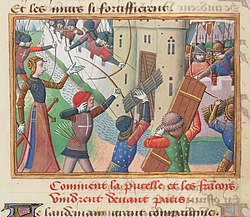
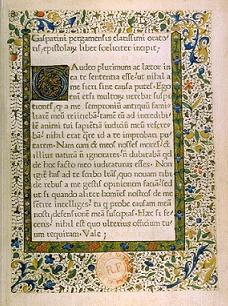


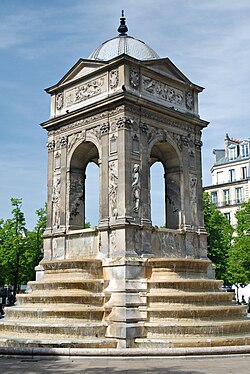


_p217.jpg)


_by_Jean_Petit_-_Louvre_1660s.jpg)


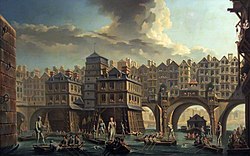


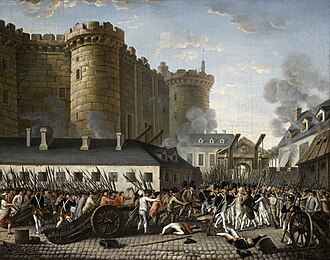
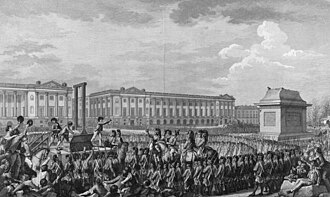
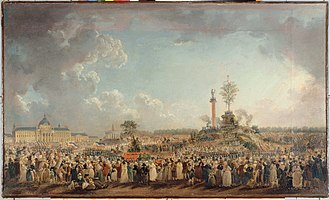


.jpg)
.jpg)


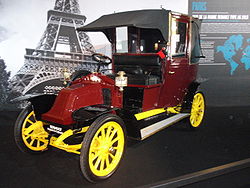


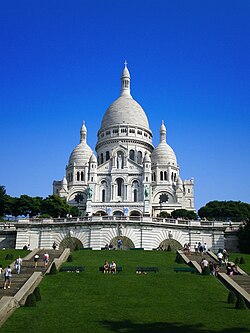

.jpg)


.jpg)


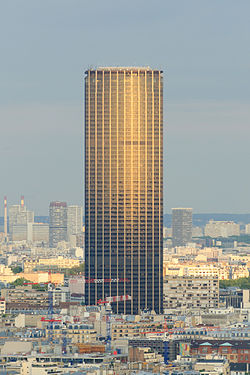
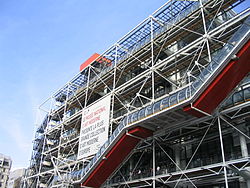


![[icon]](https://en.wikipedia.org/wiki/File:Wiki_letter_w_cropped.svg)


 1180
1180
 1575
1575
 1615
1615 1650
1650 1682
1682


 1703
1703 1720
1720 ~1741
~1741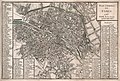 1765
1765 1782
1782 1784
1784 1789
1789 1799
1799


 1801
1801 1821
1821 1828
1828 1838
1838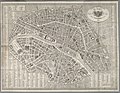 1845
1845 1853
1853 1859
1859 1867
1867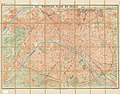 1871
1871 1891
1891 1892
1892


 1905
1905 1933
1933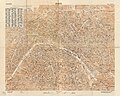 1944
1944 1956
1956 1960
1960 1989
1989


_-_BHVP.jpg)


