Hubbry Logo
SonarSonarMain
Open search
Sonar
Community hub
Sonar
logo
8 pages, 0 posts
0 subscribers
Be the first to start a discussion here.
Sonar
Sonar
from Wikipedia

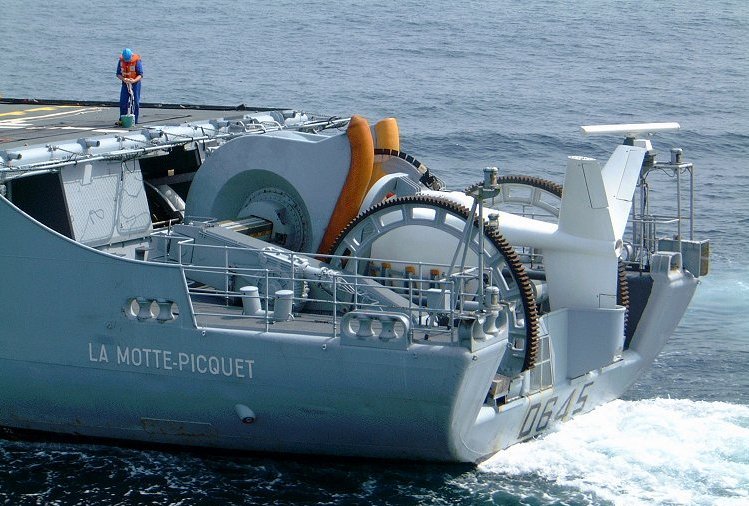
French F70 type frigates (here, La Motte-Picquet) are fitted with VDS (variable depth sonar) type DUBV43 or DUBV43C towed sonars.
A sonar image of the Soviet Navy minesweeper T-297, formerly the Latvian Virsaitis, which was shipwrecked in December 1941 in the Gulf of Finland.[1]

Sonar (sound navigation and ranging or sonic navigation and ranging)[2] is a technique that uses sound propagation (usually underwater, as in submarine navigation) to navigate, measure distances (ranging), communicate with or detect objects on or under the surface of the water, such as other vessels.[3]

"Sonar" can refer to one of two types of technology: passive sonar means listening for the sound made by vessels; active sonar means emitting pulses of sounds and listening for echoes. Sonar may be used as a means of acoustic location and of measurement of the echo characteristics of "targets" in the water.[4] Acoustic location in air was used before the introduction of radar. Sonar may also be used for robot navigation,[5] and sodar (an upward-looking in-air sonar) is used for atmospheric investigations. The term sonar is also used for the equipment used to generate and receive the sound. The acoustic frequencies used in sonar systems vary from very low (infrasonic) to extremely high (ultrasonic). The study of underwater sound is known as underwater acoustics or hydroacoustics.

The first recorded use of the technique was in 1490 by Leonardo da Vinci, who used a tube inserted into the water to detect vessels by ear.[6] It was developed during World War I to counter the growing threat of submarine warfare, with an operational passive sonar system in use by 1918.[3] Modern active sonar systems use an acoustic transducer to generate a sound wave which is reflected from target objects.[3]

History

[edit]

Although some animals (dolphins, bats, some shrews, and others) have used sound for communication and object detection for millions of years, use by humans in the water was initially recorded by Leonardo da Vinci in 1490: a tube inserted into the water was said to be used to detect vessels by placing an ear to the tube.[6]

In the late 19th century, an underwater bell was used as an ancillary to lighthouses or lightships to provide warning of hazards.[7]

The use of sound to "echo-locate" underwater in the same way as bats use sound for aerial navigation seems to have been prompted by the Titanic disaster of 1912.[8] The world's first patent for an underwater echo-ranging device was filed at the British Patent Office by English meteorologist Lewis Fry Richardson a month after the sinking of Titanic.[9] A German physicist Alexander Behm obtained a patent for an echo sounder in 1913.[10]

The Canadian engineer Reginald Fessenden, while working for the Submarine Signal Company in Boston, Massachusetts, built an experimental system beginning in 1912, a system later tested in Boston Harbor, and in 1914 from the U.S. Revenue Cutter Miami on the Grand Banks off Newfoundland.[9][11] In that test, Fessenden demonstrated depth sounding, underwater communications (Morse code) and echo ranging, detecting an iceberg at a 2-mile (3.2 km) range.[12][13] The "Fessenden oscillator", operated at about 500 Hz frequency, was unable to determine the bearing of the iceberg due to the 3-metre wavelength and the small dimension of the transducer's radiating face, less than 13 wavelength in diameter. In 1915, the ten Montreal-built British H-class submarines launched were equipped with Fessenden oscillators.[14]

During World War I the need to detect submarines prompted more research into the use of sound. The British made early use of underwater listening devices called hydrophones. The French physicist Paul Langevin, working with a Russian immigrant electrical engineer Constantin Chilowsky, worked on the development of active sound devices for detecting submarines in 1915. Although piezoelectric and magnetostrictive transducers later superseded the electrostatic transducers they used, this work influenced future designs. Lightweight sound-sensitive plastic film and fibre optics have been used for hydrophones. Terfenol-D and lead magnesium niobate (PMN) have been developed for projectors.

ASDIC

[edit]
An ASDIC display unit from around 1944

In 1916, under the British Board of Invention and Research, Canadian physicist Robert William Boyle took on the active sound detection project with A. B. Wood, producing a prototype for testing in mid-1917. This work for the Anti-Submarine Division of the British Naval Staff was undertaken in utmost secrecy, and used quartz piezoelectric crystals to produce the world's first practical underwater active sound detection apparatus.[15]

To maintain secrecy, no mention of sound experimentation or quartz was made – the word used to describe the early work ("supersonics") was changed to "ASD"ics, and the quartz material to "ASD"ivite: "ASD" for "Anti-Submarine Division", hence the British acronym ASDIC. In 1939, in response to a question from the Oxford English Dictionary, the Admiralty made up the story that it stood for "Allied Submarine Detection Investigation Committee", and this is still widely believed,[16] though no committee bearing this name has been found in the Admiralty archives.[15]

By 1918, Britain and France had built prototype active systems. The British tested their ASDIC on HMS Antrim in 1920 and started production in 1922. The 6th Destroyer Flotilla had ASDIC-equipped vessels in 1923. An anti-submarine school HMS Osprey and a training flotilla of four vessels were established on Portland in 1924.

By the outbreak of World War II, the Royal Navy had five sets for different surface ship classes, and others for submarines, incorporated into a complete anti-submarine system. The effectiveness of early ASDIC was hampered by the use of the depth charge as an anti-submarine weapon. This required an attacking vessel to pass over a submerged contact before dropping charges over the stern, resulting in a loss of ASDIC contact in the moments leading up to attack. The hunter was effectively firing blind, during which time a submarine commander could take evasive action. This situation was remedied with new tactics and new weapons.

The tactical improvements developed by Frederic John Walker included the creeping attack. Two anti-submarine ships were needed for this, usually sloops or corvettes. One, the "directing ship" tracked the target submarine on ASDIC, while the second ship, with her ASDIC turned off and running at 5 knots, started an attack as directed. The low speed of the approach meant the submarine could not predict when depth charges were going to be released. Any evasive action was detected by the directing ship and steering orders to the attacking ship given accordingly.[17]

The new weapons to deal with the ASDIC blind spot were "ahead-throwing weapons", such as Hedgehogs and later Squids, which projected warheads at a target ahead of the attacker and still in ASDIC contact. These allowed a single escort to make better aimed attacks on submarines. Developments during the war resulted in British ASDIC sets that used several different shapes of beam, such as the Q attachment to the Type 144 set, which was aligned at a deeper angle. The Type 147B set, which had an articulated transducer, enabled operators to cover the blind spot.[18] Another development was the FIDO Homing Torpedo, which aimed itself at the target submarine using passive sonar.

Early in World War II (September 1940), British ASDIC technology was transferred for free to the United States. Research on ASDIC and underwater sound was expanded in the UK and in the US. Many new types of military sound detection were developed. These included sonobuoys, first developed by the British in 1944 under the codename High Tea, dipping/dunking sonar and mine-detection sonar. This work formed the basis for post-war developments related to countering the nuclear submarine.

SONAR

[edit]

During the 1930s American engineers developed their own underwater sound-detection technology, and important discoveries were made, such as the existence of thermoclines and their effects on sound waves.[19] Americans began to use the term SONAR for their systems, coined by Frederick Hunt to be the equivalent of RADAR.[20]

US Navy Underwater Sound Laboratory

[edit]

In 1917, the US Navy acquired J. Warren Horton's services for the first time. On leave from Bell Labs, he served the government as a technical expert, first at the experimental station at Nahant, Massachusetts, and later at US Naval Headquarters, in London, England. At Nahant he applied the newly developed vacuum tube, then associated with the formative stages of the field of applied science now known as electronics, to the detection of underwater signals. As a result, the carbon button microphone, which had been used in earlier detection equipment, was replaced by the precursor of the modern hydrophone. Also during this period, he experimented with methods for towing detection. This was due to the increased sensitivity of his device. The principles are still used in modern towed sonar systems.

To meet the defense needs of Great Britain, Horton was sent to England to install in the Irish Sea bottom-mounted hydrophones connected to a shore listening post by submarine cable. While this equipment was being loaded on the cable-laying vessel, World War I ended and he returned home.

During World War II, Horton continued to develop sonar systems that could detect submarines, mines, and torpedoes. He published Fundamentals of Sonar in 1957 as chief research consultant at the US Navy Underwater Sound Laboratory. He held this position until 1959 when he became technical director, a position he held until mandatory retirement in 1963.[21][22]

Materials and designs in the US and Japan

[edit]

There was little progress in US sonar from 1915 to 1940. In 1940, US sonars typically consisted of a magnetostrictive transducer and an array of nickel tubes connected to a 1-foot-diameter steel plate attached back-to-back to a Rochelle salt crystal in a spherical housing. This assembly penetrated the ship hull and was manually rotated to the desired angle. The piezoelectric Rochelle salt crystal had better parameters, but the magnetostrictive unit was much more reliable.

High losses to US merchant supply shipping early in World War II led to large scale high priority US research in the field, pursuing both improvements in magnetostrictive transducer parameters and Rochelle salt reliability. Ammonium dihydrogen phosphate (ADP), a superior alternative, was found as a replacement for Rochelle salt; the first application was a replacement of the 24 kHz Rochelle-salt transducers. Within nine months, Rochelle salt was obsolete. The ADP manufacturing facility grew from few dozen personnel in early 1940 to several thousands in 1942.

One of the earliest application of ADP crystals were hydrophones for acoustic mines. The crystals were specified for low-frequency cutoff at 5 Hz, withstanding mechanical shock for deployment from aircraft from 3,000 m (10,000 ft), and ability to survive neighbouring mine explosions. One of key features of ADP reliability is its zero aging characteristics; the crystal keeps its parameters even over prolonged storage.

Another application was for acoustic homing torpedoes. Two pairs of directional hydrophones were mounted on the torpedo nose, in the horizontal and vertical plane; the difference signals from the pairs were used to steer the torpedo left-right and up-down. A countermeasure was developed: the targeted submarine discharged an effervescent chemical, and the torpedo went after the noisier fizzy decoy. The counter-countermeasure was a torpedo with active sonar – a transducer was added to the torpedo nose, and the microphones were listening for its reflected periodic tone bursts. The transducers comprised identical rectangular crystal plates arranged to diamond-shaped areas in staggered rows.

Passive sonar arrays for submarines were developed from ADP crystals. Several crystal assemblies were arranged in a steel tube, vacuum-filled with castor oil, and sealed. The tubes then were mounted in parallel arrays.

The standard US Navy scanning sonar at the end of World War II operated at 18 kHz, using an array of ADP crystals. Desired longer range, however, required use of lower frequencies. The required dimensions were too big for ADP crystals, so in the early 1950s magnetostrictive and barium titanate piezoelectric systems were developed, but these had problems achieving uniform impedance characteristics, and the beam pattern suffered. Barium titanate was then replaced with more stable lead zirconate titanate (PZT), and the frequency was lowered to 5 kHz.[23]

The US fleet used this material in the AN/SQS-23 sonar for several decades. The SQS-23 sonar first used magnetostrictive nickel transducers, but these weighed several tons, and nickel was expensive and considered a critical material; piezoelectric transducers were therefore substituted. The sonar was a large array of 432 individual transducers. At first, the transducers were unreliable, showing mechanical and electrical failures and deteriorating soon after installation; they were also produced by several vendors, had different designs, and their characteristics were different enough to impair the array's performance. The policy to allow repair of individual transducers was then sacrificed, and "expendable modular design", sealed non-repairable modules, was chosen instead, eliminating the problem with seals and other extraneous mechanical parts.[24]

The Imperial Japanese Navy at the onset of World War II used projectors based on quartz. These were big and heavy, especially if designed for lower frequencies; the one for Type 91 set, operating at 9 kHz, had a diameter of 30 inches (760 mm) and was driven by an oscillator with 5 kW power and 7 kV of output amplitude. The Type 93 projectors consisted of solid sandwiches of quartz, assembled into spherical cast iron bodies.

The Type 93 sonars were later replaced with Type 3, which followed German design and used magnetostrictive projectors. The projectors consisted of two rectangular identical independent units in a cast-iron rectangular body about 16 by 9 inches (410 mm × 230 mm). The exposed area was half the wavelength wide and three wavelengths high. The magnetostrictive cores were made from 4 mm stampings of nickel, and later of an iron-aluminium alloy with aluminium content between 12.7% and 12.9%. The power was provided from a 2 kW at 3.8 kV, with polarization from a 20 V, 8 A DC source.

The passive hydrophones of the Imperial Japanese Navy were based on moving-coil design, Rochelle salt piezo transducers, and carbon microphones.[25]

Later developments in transducers

[edit]

Magnetostrictive transducers were pursued after World War II as an alternative to piezoelectric ones. Nickel scroll-wound ring transducers were used for high-power low-frequency operations, with size up to 13 feet (4.0 m) in diameter, probably the largest individual sonar transducers ever. The advantage of metals is their high tensile strength and low input electrical impedance, but they have electrical losses and lower coupling coefficient than PZT, whose tensile strength can be increased by prestressing.

Other materials were also tried. Nonmetallic ferrites were promising for their low electrical conductivity resulting in low eddy current losses, Metglas offered high coupling coefficient, but they were inferior to PZT overall. In the 1970s, compounds of rare earths and iron were discovered with superior magnetomechanic properties, namely the Terfenol-D alloy. This made possible new designs, e.g. a hybrid magnetostrictive-piezoelectric transducer. The most recent of these improved magnetostrictive materials is Galfenol.

Other types of transducers include variable-reluctance (or moving-armature, or electromagnetic) transducers, where magnetic force acts on the surfaces of gaps, and moving coil (or electrodynamic) transducers, similar to conventional speakers; the latter are used in underwater sound calibration, due to their very low resonance frequencies and flat broadband characteristics above them.[26]

Active sonar

[edit]
The principle of an active sonar

Active sonar uses a sound transmitter (or projector) and a receiver. When the two are in the same place it is monostatic operation. When the transmitter and receiver are separated it is bistatic operation.[27] When more transmitters (or more receivers) are used, again spatially separated, it is multistatic operation. Most sonars are used monostatically with the same array often being used for transmission and reception.[28] Active sonobuoy fields may be operated multistatically.

Active sonar creates a pulse of sound, often called a "ping", and then listens for reflections (echo) of the pulse. This pulse of sound is generally created electronically using a sonar projector consisting of a signal generator, power amplifier and electro-acoustic transducer/array.[29] A transducer is a device that can transmit and receive acoustic signals ("pings"). A beamformer is usually employed to concentrate the acoustic power into a beam, which may be swept to cover the required search angles.

Generally, the electro-acoustic transducers are of the Tonpilz type and their design may be optimised to achieve maximum efficiency over the widest bandwidth, in order to optimise performance of the overall system. Occasionally, the acoustic pulse may be created by other means, e.g. chemically using explosives, airguns or plasma sound sources.

To measure the distance to an object, the time from transmission of a pulse to reception is measured and converted into a range using the known speed of sound.[30] To measure the bearing, several hydrophones are used, and the set measures the relative arrival time to each, or with an array of hydrophones, by measuring the relative amplitude in beams formed through a process called beamforming. Use of an array reduces the spatial response so that to provide wide cover multibeam systems are used.[31]

The target signal, if present, together with noise is then passed through forms of signal processing,[32] which for simple sonars may be just energy measurement. It is then presented to some form of decision device, that calls the output either the required signal or noise. This decision device may be an operator with headphones or a display. In more sophisticated sonars this function may be carried out by software. Further processes may be carried out to classify the target and localise it, as well as measuring its velocity.

The pulse may be at constant frequency or a chirp of changing frequency, to allow pulse compression on reception. Simple sonars generally use the former with a filter wide enough to cover possible Doppler changes due to target movement, while more complex ones generally include the latter technique. Since digital processing became available pulse compression has usually been implemented using digital correlation techniques. Military sonars often have multiple beams to provide all-round cover, while simple ones only cover a narrow arc, although the beam may be rotated, relatively slowly, by mechanical scanning.

Particularly when single frequency transmissions are used, the Doppler effect can be used to measure the radial speed of a target. The difference in frequency between the transmitted and received signal is measured and converted into a velocity. Since Doppler shifts can be introduced by either receiver or target motion, allowance has to be made for the radial speed of the searching platform.

One useful small sonar is similar in appearance to a waterproof flashlight. The head is pointed into the water, a button is pressed, and the device displays the distance to the target. Another variant is a "fishfinder" that shows a small display with shoals of fish. Some civilian sonars, which are not designed for stealth, approach active military sonars in capability, with three-dimensional displays of the area near the boat.

When active sonar is used to measure the distance from the transducer to the bottom, it is known as echo sounding. Similar methods may be used looking upward for wave measurement.

Active sonar is also used to measure distance through water between two sonar transducers or a combination of a hydrophone (underwater acoustic microphone) and projector (underwater acoustic speaker). When a hydrophone/transducer receives a specific interrogation signal it responds by transmitting a specific reply signal. To measure distance, one transducer/projector transmits an interrogation signal and measures the time between this transmission and the receipt of the other transducer/hydrophone reply.

The time difference, scaled by the speed of sound through water and divided by two, is the distance between the two platforms. This technique, when used with multiple transducers/hydrophones/projectors, can calculate the relative positions of static and moving objects in water.

In combat situations, an active pulse can be detected by an enemy and will reveal a submarine's position at twice the maximum distance that the submarine can itself detect a contact and give clues as to the submarine's identity based on the characteristics of the outgoing ping. For these reasons, active sonar is not frequently used by military submarines.

A very directional, but low-efficiency, type of sonar, used by fisheries, military, and for port security, makes use of a complex nonlinear feature of water known as non-linear sonar, the virtual transducer being known as a parametric array.

Project Artemis

[edit]

Project Artemis was an experimental research and development project in the late 1950s to mid 1960s to examine acoustic propagation and signal processing for a low-frequency active sonar system that might be used for ocean surveillance. A secondary objective was examination of engineering problems of fixed active bottom systems.[33] The receiving array was located on the slope of Plantagnet Bank off Bermuda. The active source array was deployed from the converted World War II tanker USNS Mission Capistrano.[34] Elements of Artemis were used experimentally after the main experiment was terminated.

Transponder

[edit]

This is an active sonar device that receives a specific stimulus and immediately (or with a delay) retransmits the received signal or a predetermined one. Transponders can be used to remotely activate or recover subsea equipment.[35]

Performance prediction

[edit]

A sonar target is small relative to the sphere, centred around the emitter, on which it is located. Therefore, the power of the reflected signal is very low, several orders of magnitude less than the original signal. Even if the reflected signal was of the same power, the following example (using hypothetical values) shows the problem: Suppose a sonar system is capable of emitting a 10,000 W/m2 signal at 1 m, and detecting a 0.001 W/m2 signal. At 100 m the signal will be 1 W/m2, due to the inverse-square law.

If the entire signal is reflected from a 10 m2 target, it will be at 0.001 W/m2 when it reaches the emitter, i.e. just detectable. However, the original signal will remain above 0.001 W/m2 until 3000 m. Any 10 m2 target between 100 and 3000 m using a similar or better system would be able to detect the pulse, but would not be detected by the emitter. The detectors must be very sensitive to pick up the echoes. Since the original signal is much more powerful, it can be detected many times further than twice the range of the sonar (as in the example).

Active sonar have two performance limitations: due to noise and reverberation. In general, one or other of these will dominate, so that the two effects can be initially considered separately.

In noise-limited conditions at initial detection:[36]

SL − 2PL + TS − (NL − AG) = DT,

where SL is the source level, PL is the propagation loss (sometimes referred to as transmission loss), TS is the target strength, NL is the noise level, AG is the array gain of the receiving array (sometimes approximated by its directivity index) and DT is the detection threshold.

In reverberation-limited conditions at initial detection (neglecting array gain):

SL − 2PL + TS = RL + DT,

where RL is the reverberation level, and the other factors are as before.

Hand-held sonar for use by a diver

[edit]
  • The LIMIS (limpet mine imaging sonar) is a hand-held or ROV-mounted imaging sonar for use by a diver. Its name is because it was designed for patrol divers (combat frogmen or clearance divers) to look for limpet mines in low visibility water.
  • The LUIS (lensing underwater imaging system) is another imaging sonar for use by a diver.
  • There is or was a small flashlight-shaped handheld sonar for divers, that merely displays range.
  • For the INSS (integrated navigation sonar system)

Upward looking sonar

[edit]

An upward looking sonar (ULS) is a sonar device pointed upwards looking towards the surface of the sea. It is used for similar purposes as downward looking sonar, but has some unique applications such as measuring sea ice thickness, roughness and concentration,[37][38] or measuring air entrainment from bubble plumes during rough seas. Often it is moored on the bottom of the ocean or floats on a taut line mooring at a constant depth of perhaps 100 m. They may also be used by submarines, AUVs, and floats such as the Argo float.[39]

Passive sonar

[edit]

Passive sonar listens without transmitting.[40] It is often employed in military settings, although it is also used in science applications, e.g., detecting fish for presence/absence studies in various aquatic environments – see also passive acoustics and passive radar. In the very broadest usage, this term can encompass virtually any analytical technique involving remotely generated sound, though it is usually restricted to techniques applied in an aquatic environment.

Identifying sound sources

[edit]

Passive sonar has a wide variety of techniques for identifying the source of a detected sound. For example, U.S. vessels usually operate 60 Hertz (Hz) alternating current power systems. If transformers or generators are mounted without proper vibration insulation from the hull or become flooded, the 60 Hz sound from the windings can be emitted from the submarine or ship. This can help to identify its nationality, as all European submarines and nearly every other nation's submarine have 50 Hz power systems. Intermittent sound sources (such as a wrench being dropped), called "transients," may also be detectable to passive sonar. Until fairly recently,[when?] an experienced, trained operator identified signals, but now computers may do this.

Passive sonar systems may have large sonic databases, but the sonar operator usually finally classifies the signals manually. A computer system frequently uses these databases to identify classes of ships, actions (i.e. the speed of a ship, or the type of weapon released and the most effective countermeasures to employ), and even particular ships.

Noise limitations

[edit]

Passive sonar on vehicles is usually severely limited because of noise generated by the vehicle. For this reason, many submarines operate nuclear reactors that can be cooled without pumps, using silent convection, or fuel cells or batteries, which can also run silently. Vehicles' propellers are also designed and precisely machined to emit minimal noise. High-speed propellers often create tiny bubbles in the water, and this cavitation has a distinct sound.

The sonar hydrophones may be towed behind the ship or submarine in order to reduce the effect of noise generated by the watercraft itself. Towed units also combat the thermocline, as the unit may be towed above or below the thermocline.

The display of most passive sonars used to be a two-dimensional waterfall display. The horizontal direction of the display is bearing. The vertical is frequency, or sometimes time. Another display technique is to color-code frequency-time information for bearing. More recent displays are generated by the computers, and mimic radar-type plan position indicator displays.

Performance prediction

[edit]

Unlike active sonar, only one-way propagation is involved. Because of the different signal processing used, the minimal detectable signal-to-noise ratio will be different. The equation for determining the performance of a passive sonar is[41][36]

SL − PL = NL − AG + DT,

where SL is the source level, PL is the propagation loss, NL is the noise level, AG is the array gain and DT is the detection threshold. The figure of merit of a passive sonar is

FOM = SL + AG − (NL + DT).

Performance factors

[edit]

The detection, classification and localisation performance of a sonar depends on the environment and the receiving equipment, as well as the transmitting equipment in an active sonar or the target radiated noise in a passive sonar.

Sound propagation

[edit]

Sonar operation is affected by variations in sound speed, particularly in the vertical plane. Sound travels more slowly in fresh water than in sea water, though the difference is small. The speed is determined by the water's bulk modulus and mass density. The bulk modulus is affected by temperature, dissolved impurities (usually salinity), and pressure. The density effect is small. The speed of sound (in feet per second) is approximately:

4388 + (11.25 × temperature (in °F)) + (0.0182 × depth (in feet)) + salinity (in parts-per-thousand ).

This empirically derived approximation equation is reasonably accurate for normal temperatures, concentrations of salinity and the range of most ocean depths. Ocean temperature varies with depth, but at between 30 and 100 meters there is often a marked change, called the thermocline, dividing the warmer surface water from the cold, still waters that make up the rest of the ocean. This can frustrate sonar, because a sound originating on one side of the thermocline tends to be bent, or refracted, through the thermocline.

The thermocline may be present in shallower coastal waters. Wave action will often mix the water column and eliminate the thermocline. Water pressure also affects sound propagation: higher pressure increases the sound speed, which causes the sound waves to refract away from the area of higher sound speed. The mathematical model of refraction is called Snell's law.

If the sound source is deep and the conditions are right, propagation may occur in the 'deep sound channel'. This provides extremely low propagation loss to a receiver in the channel. This is because of sound trapping in the channel with no losses at the boundaries. Similar propagation can occur in the 'surface duct' under suitable conditions. In this case, there are reflection losses at the surface.

In shallow water propagation is generally by repeated reflection at the surface and bottom, where considerable losses can occur.

Sound propagation is affected by absorption in the water itself as well as at the surface and bottom. This absorption depends upon frequency, with several different mechanisms in sea water. Long-range sonar uses low frequencies to minimise absorption effects.

The sea contains many sources of noise that interfere with the desired target echo or signature. The main noise sources are waves and shipping. The motion of the receiver through the water can also cause speed-dependent low frequency noise.

Scattering

[edit]

When active sonar is used, scattering occurs from small objects in the sea as well as from the bottom and surface. This can be a major source of interference. This acoustic scattering is analogous to the scattering of the light from a car's headlights in fog: a high-intensity pencil beam will penetrate the fog to some extent, but broader-beam headlights emit much light in unwanted directions, much of which is scattered back to the observer, overwhelming that reflected from the target ("white-out"). For analogous reasons active sonar needs to transmit in a narrow beam to minimize scattering.

Bubble clouds shown under the sea. From ref.[42]

The scattering of sonar from objects (mines, pipelines, zooplankton, geological features, fish etc.) is how active sonar detects them, but this ability can be masked by strong scattering from false targets, or 'clutter'. Where they occur (under breaking waves;[43] in ship wakes; in gas emitted from seabed seeps and leaks[44] etc.), gas bubbles are powerful sources of clutter, and can readily hide targets. TWIPS (Twin Inverted Pulse Sonar)[45][46][47] is currently the only sonar that can overcome this clutter problem.

Comparison of Standard Sonar and TWIPS in finding a target in bubbly water. Adapted from ref.[45]

This is important as many recent conflicts have occurred in coastal waters, and the inability to detect whether mines are present or not present hazards and delays to military vessels, and also to aid convoys and merchant shipping trying to support the region long after the conflict has ceased.[45]

Target characteristics

[edit]

The sound reflection characteristics of the target of an active sonar, such as a submarine, are known as its target strength. A complication is that echoes are also obtained from other objects in the sea such as whales, wakes, schools of fish and rocks.

Passive sonar detects the target's radiated noise characteristics. The radiated spectrum comprises a continuous spectrum of noise with peaks at certain frequencies which can be used for classification.

Countermeasures

[edit]

Active (powered) countermeasures may be launched by a vessel under attack to raise the noise level, provide a large false target, and obscure the signature of the vessel itself.

Passive (i.e., non-powered) countermeasures include:

  • Mounting noise-generating devices on isolating devices.
  • Sound-absorbent coatings on the hulls of submarines, for example anechoic tiles.

Military applications

[edit]

Modern naval warfare makes extensive use of both passive and active sonar from water-borne vessels, aircraft and fixed installations. Although active sonar was used by surface craft in World War II, submarines avoided the use of active sonar due to the potential for revealing their presence and position to enemy forces. However, the advent of modern signal-processing enabled the use of passive sonar as a primary means for search and detection operations. In 1987 a division of Japanese company Toshiba reportedly[48] sold machinery to the Soviet Union that allowed their submarine propeller blades to be milled so that they became radically quieter, making the newer generation of submarines more difficult to detect.

The use of active sonar by a submarine to determine bearing is extremely rare and will not necessarily give high quality bearing or range information to the submarines fire control team. However, use of active sonar on surface ships is very common and is used by submarines when the tactical situation dictates that it is more important to determine the position of a hostile submarine than conceal their own position. With surface ships, it might be assumed that the threat is already tracking the ship with satellite data as any vessel around the emitting sonar will detect the emission. Having heard the signal, it is easy to identify the sonar equipment used (usually with its frequency) and its position (with the sound wave's energy). Active sonar is similar to radar in that, while it allows detection of targets at a certain range, it also enables the emitter to be detected at a far greater range, which is undesirable.

Since active sonar reveals the presence and position of the operator, and does not allow exact classification of targets, it is used by fast (planes, helicopters) and by noisy platforms (most surface ships) but rarely by submarines. When active sonar is used by surface ships or submarines, it is typically activated very briefly at intermittent periods to minimize the risk of detection. Consequently, active sonar is normally considered a backup to passive sonar. In aircraft, active sonar is used in the form of disposable sonobuoys that are dropped in the aircraft's patrol area or in the vicinity of possible enemy sonar contacts.

Passive sonar has several advantages, most importantly that it is silent. If the target radiated noise level is high enough, it can have a greater range than active sonar, and allows the target to be identified. Since any motorized object makes some noise, it may in principle be detected, depending on the level of noise emitted and the ambient noise level in the area, as well as the technology used. To simplify, passive sonar "sees" around the ship using it. On a submarine, nose-mounted passive sonar detects in directions of about 270°, centered on the ship's alignment, the hull-mounted array of about 160° on each side, and the towed array of a full 360°. The invisible areas are due to the ship's own interference.

Once a signal is detected in a certain direction (which means that something makes sound in that direction, this is called broadband detection) it is possible to zoom in and analyze the signal received (narrowband analysis). This is generally done using a Fourier transform to show the different frequencies making up the sound. Since every engine makes a specific sound, it is straightforward to identify the object. Databases of unique engine sounds are part of what is known as acoustic intelligence or ACINT.

Another use of passive sonar is to determine the target's trajectory. This process is called target motion analysis (TMA), and the resultant "solution" is the target's range, course, and speed. TMA is done by marking from which direction the sound comes at different times, and comparing the motion with that of the operator's own ship. Changes in relative motion are analyzed using standard geometrical techniques along with some assumptions about limiting cases.

Passive sonar is stealthy and very useful. I requires high-tech electronic components and is costly. It is generally deployed on expensive ships in the form of arrays to enhance detection. Surface ships use it to good effect. It is even better used by submarines, and it is used by airplanes and helicopters, mostly to a "surprise effect", since submarines can hide under thermal layers. If a submarine's commander believes he is alone, he may bring his boat closer to the surface and be easier to detect, or go deeper and faster, and thus make more sound.

Examples of sonar applications in military use are given below. Many of the civil uses given in the following section may also be applicable to naval use.

Anti-submarine warfare

[edit]
Variable depth sonar and its winch

Until recently, ship sonars were usually made with hull mounted arrays, either amidships or at the bow. It was soon found after their initial use that a means of reducing flow noise was required. The first were made of canvas on a framework, then steel ones were used. Now domes are usually made of reinforced plastic or pressurized rubber. Such sonars are primarily active in operation. An example of a conventional hull mounted sonar is the SQS-56.

Because of the problems of ship noise, towed sonars are also used. These have the advantage of being able to be placed deeper in the water, but have limitations on their use in shallow water. These are called towed arrays (linear) or variable depth sonars (VDS) with 2/3D arrays. A problem is that the winches required to deploy/recover them are large and expensive. VDS sets are primarily active in operation, while towed arrays are passive.

An example of a modern active-passive ship towed sonar is Sonar 2087 made by Thales Underwater Systems.

Torpedoes

[edit]

Modern torpedoes are generally fitted with an active/passive sonar. This may be used to home directly on the target, but wake homing torpedoes are also used. An early example of an acoustic homer was the Mark 37 torpedo.

Torpedo countermeasures can be towed or free. An early example was the German Sieglinde device while the Bold was a chemical device. A widely used US device was the towed AN/SLQ-25 Nixie while the mobile submarine simulator (MOSS) was a free device. A modern alternative to the Nixie system is the UK Royal Navy S2170 Surface Ship Torpedo Defence system.

Mines

[edit]

Mines may be fitted with a sonar to detect, localize and recognize the required target. An example is the CAPTOR mine.

Mine countermeasures

[edit]

Mine countermeasure (MCM) sonar, sometimes called "mine and obstacle avoidance sonar (MOAS)", is a specialized type of sonar used for detecting small objects. Most MCM sonars are hull mounted but a few types are VDS design. An example of a hull mounted MCM sonar is the Type 2193 while the SQQ-32 mine-hunting sonar and Type 2093 systems are VDS designs.

Submarine navigation

[edit]

Submarines rely on sonar to a greater extent than surface ships as they cannot use radar in water. The sonar arrays may be hull mounted or towed. Information fitted on typical fits is given in Oyashio-class submarine and Swiftsure-class submarine.

Aircraft

[edit]
AN/AQS-13 dipping sonar deployed from an H-3 Sea King

Helicopters can be used for antisubmarine warfare by deploying fields of active-passive sonobuoys or can operate dipping sonar, such as the AQS-13. Fixed wing aircraft can also deploy sonobuoys and have greater endurance and capacity to deploy them. Processing from the sonobuoys or dipping sonar can be on the aircraft or on ship. Dipping sonar has the advantage of being deployable to depths appropriate to daily conditions. Helicopters have also been used for mine countermeasure missions using towed sonars such as the AQS-20A.

Underwater communications

[edit]

Dedicated sonars can be fitted to ships and submarines for underwater communication.

Ocean surveillance

[edit]

The United States began a system of passive, fixed ocean surveillance systems in 1950 with the classified name Sound Surveillance System (SOSUS) with American Telephone and Telegraph Company (AT&T), with its Bell Laboratories research and Western Electric manufacturing entities being contracted for development and installation. The systems exploited the SOFAR channel, also known as the deep sound channel, where a sound speed minimum creates a waveguide in which low frequency sound travels thousands of miles.[49][50]

Analysis was based on an AT&T sound spectrograph, which converted sound into a visual spectrogram representing a time–frequency analysis of sound that was developed for speech analysis and modified to analyze low-frequency underwater sounds. That process was Low Frequency Analysis and Recording and the equipment was termed the Low Frequency Analyzer and Recorder, both with the acronym LOFAR. LOFAR research was termed Jezebel and led to usage in air and surface systems, particularly sonobuoys using the process and sometimes using "Jezebel" in their name.[49][50][51][52] The proposed system offered such promise of long-range submarine detection that the Navy ordered immediate moves for implementation.[50][53]

Lofargram writers, one for each array beam, on a NAVFAC watch floor

Between installation of a test array followed by a full scale, forty element, prototype operational array in 1951 and 1958 systems were installed in the Atlantic and then the Pacific under the unclassified name Project Caesar. The original systems were terminated at classified shore stations designated Naval Facility (NAVFAC) explained as engaging in "ocean research" to cover their classified mission. The system was upgraded multiple times with more advanced cable allowing the arrays to be installed in ocean basins and upgraded processing.[49][50]

The shore stations were eliminated in a process of consolidation and rerouting the arrays to central processing centers into the 1990s. In 1985, with new mobile arrays and other systems becoming operational the collective system name was changed to Integrated Undersea Surveillance System (IUSS). In 1991, the mission of the system was declassified. The year before IUSS insignia were authorized for wear. Access was granted to some systems for scientific research.[49][50]

A similar system is believed to have been operated by the Soviet Union.

Underwater security

[edit]

Sonar can be used to detect frogmen and other scuba divers. This can be applicable around ships or at entrances to ports. Active sonar can also be used as a deterrent and/or disablement mechanism. One such device is the Cerberus system.

AN/PQS-2A handheld sonar, shown with detachable flotation collar and magnetic compass

Hand-held sonar

[edit]

Limpet mine imaging sonar (LIMIS) is a hand-held or ROV-mounted imaging sonar designed for patrol divers (combat frogmen or clearance divers) to look for limpet mines in low visibility water.

The LUIS is another imaging sonar for use by a diver.

Integrated navigation sonar system (INSS) is a small flashlight-shaped handheld sonar for divers that displays range.[54][55]

Intercept sonar

[edit]

This is a sonar designed to detect and locate the transmissions from hostile active sonars. An example of this is the Type 2082 fitted on the British Vanguard-class submarines.

Civilian applications

[edit]

Fisheries

[edit]

Fishing is an important industry that is seeing growing demand, but world catch tonnage is falling as a result of serious resource problems. The industry faces a future of continuing worldwide consolidation until a point of sustainability can be reached. However, the consolidation of the fishing fleets are driving increased demands for sophisticated fish finding electronics such as sensors, sounders and sonars. Historically, fishermen have used many different techniques to find and harvest fish. However, acoustic technology has been one of the most important driving forces behind the development of the modern commercial fisheries.

Sound waves travel differently through fish than through water because a fish's air-filled swim bladder has a different density than seawater. This density difference allows the detection of schools of fish by using reflected sound. Acoustic technology is especially well suited for underwater applications since sound travels farther and faster underwater than in air. Today, commercial fishing vessels rely almost completely on acoustic sonar and sounders to detect fish. Fishermen also use active sonar and echo sounder technology to determine water depth, bottom contour, and bottom composition.

Cabin display of a fish finder sonar

Companies such as eSonar, Raymarine, Marport Canada, Wesmar, Furuno, Krupp, and Simrad make a variety of sonar and acoustic instruments for the deep sea commercial fishing industry. For example, net sensors take various underwater measurements and transmit the information back to a receiver on board a vessel. Each sensor is equipped with one or more acoustic transducers depending on its specific function. Data is transmitted from the sensors using wireless acoustic telemetry and is received by a hull mounted hydrophone. The analog signals are decoded and converted by a digital acoustic receiver into data which is transmitted to a bridge computer for graphical display on a high resolution monitor.

Echo sounding

[edit]

Echo sounding is a process used to determine the depth of water beneath ships and boats. A type of active sonar, echo sounding is the transmission of an acoustic pulse directly downwards to the seabed, measuring the time between transmission and echo return, after having hit the bottom and bouncing back to its ship of origin. The acoustic pulse is emitted by a transducer which receives the return echo as well. The depth measurement is calculated by multiplying the speed of sound in water (averaging 1,500 meters per second) by the time between emission and echo return.[56]

The value of underwater acoustics to the fishing industry has led to the development of other acoustic instruments that operate in a similar fashion to echo-sounders but, because their function is slightly different from the initial model of the echo-sounder, have been given different terms.

Net location

[edit]

The net sounder is an echo sounder with a transducer mounted on the headline of the net rather than on the bottom of the vessel. Nevertheless, to accommodate the distance from the transducer to the display unit, which is much greater than in a normal echo-sounder, several refinements have to be made. Two main types are available. The first is the cable type in which the signals are sent along a cable. In this case, there has to be the provision of a cable drum on which to haul, shoot and stow the cable during the different phases of the operation. The second type is the cable-less net-sounder – such as Marport's Trawl Explorer – in which the signals are sent acoustically between the net and hull mounted receiver-hydrophone on the vessel. In this case, no cable drum is required but sophisticated electronics are needed at the transducer and receiver.

The display on a net sounder shows the distance of the net from the bottom (or the surface), rather than the depth of water as with the echo-sounder's hull-mounted transducer. Fixed to the headline of the net, the footrope can usually be seen which gives an indication of the net performance. Any fish passing into the net can also be seen, allowing fine adjustments to be made to catch the most fish possible. In other fisheries, where the amount of fish in the net is important, catch sensor transducers are mounted at various positions on the cod-end of the net. As the cod-end fills up these catch sensor transducers are triggered one by one and this information is transmitted acoustically to display monitors on the bridge of the vessel. The skipper can then decide when to haul the net.

Modern versions of the net sounder, using multiple element transducers, function more like a sonar than an echo sounder and show slices of the area in front of the net and not merely the vertical view that the initial net sounders used.

The sonar is an echo-sounder with a directional capability that can show fish or other objects around the vessel.

ROV and UUV

[edit]

Small sonars have been fitted to remotely operated vehicles (ROVs) and unmanned underwater vehicles (UUVs) to allow their operation in murky conditions. These sonars are used for looking ahead of the vehicle. The Long-Term Mine Reconnaissance System is a UUV for MCM purposes.

Vehicle location

[edit]

Sonars which act as beacons are fitted to aircraft to allow their location in the event of a crash in the sea. Short and long baseline sonars may be used for caring out the location, such as LBL.

Prosthesis for the visually impaired

[edit]

In 2013 an inventor in the United States unveiled a "spider-sense" bodysuit, equipped with ultrasonic sensors and haptic feedback systems, which alerts the wearer of incoming threats; allowing them to respond to attackers even when blindfolded.[57]

Scientific applications

[edit]

Biomass estimation

[edit]

Detection of fish, and other marine and aquatic life, and estimation their individual sizes or total biomass using active sonar techniques. Sound pulses reflect off any object that has a different density than the surrounding medium. This includes fish, or more specifically, the air-filled swim bladder on fish.[58] These echoes provide information on fish size, location, abundance and behavior. This is especially effective for fish swim bladders (e.g. herring, cod, and pollock), and less useful for fish without them (e.g. sharks, mackerel, and flounder).[59] Data from the watercolumn is usually processed differently than seafloor or object detection data, this data type can be processed with specialized software.[58]

Wave measurement

[edit]

An upward looking echo sounder mounted on the bottom or on a platform may be used to make measurements of wave height and period. From this statistics of the surface conditions at a location can be derived.

Water velocity measurement

[edit]

Special short range sonars have been developed to allow measurements of water velocity.

Bottom type assessment

[edit]

Sonars have been developed that can be used to characterise the sea bottom into, for example, mud, sand, and gravel. Relatively simple sonars such as echo sounders can be promoted to seafloor classification systems via add-on modules, converting echo parameters into sediment type. Different algorithms exist, but they are all based on changes in the energy or shape of the reflected sounder pings. Advanced substrate classification analysis can be achieved using calibrated (scientific) echosounders and parametric or fuzzy-logic analysis of the acoustic data.

Bathymetric mapping

[edit]
Graphic depicting hydrographic survey ship conducting multibeam and side-scan sonar operations

Side-scan sonars can be used to derive maps of seafloor topography (bathymetry) by moving the sonar across it just above the bottom. Low frequency sonars such as GLORIA have been used for continental shelf wide surveys while high frequency sonars are used for more detailed surveys of smaller areas.

Hull-mounted multibeam echosounders on large surface vessels produce swathes of bathymetric data in near real time. One example, the General Instrument "Seabeam" system, uses a projector array along the keel to ensonify the bottom with a fan beam. Signals from a hydrophone array mounted athwartships are processed to synthesize multiple virtual fan beams crossing the projector beam at right angles.

Sonar imaging

[edit]

Creating two and three-dimensional images using sonar data.

Sub-bottom profiling

[edit]

Powerful low frequency echo-sounders have been developed for providing profiles of the upper layers of the ocean bottom. One of the most recent devices is Innomar's SES-2000 quattro multi-transducer parametric SBP, used for example in the Puck Bay for underwater archaeological purposes.[60]

Gas leak detection from the seabed

[edit]

Gas bubbles can leak from the seabed, or close to it, from multiple sources. These can be detected by both passive[61] and active sonar[44] (shown in schematic figure[61] by yellow and red systems respectively).

Active (red) and passive (yellow) sonar detection of bubbles from seabed (natural seeps and CCSF leaks) and gas pipelines, taken from ref.[61]

Natural seeps of methane and carbon dioxide occur.[44] Gas pipelines can leak, and it is important to be able to detect whether leakage occurs from Carbon Capture and Storage Facilities (CCSFs; e.g. depleted oil wells into which extracted atmospheric carbon is stored).[62][63][64][65] Quantification of the amount of gas leaking is difficult, and although estimates can be made use active and passive sonar, it is important to question their accuracy because of the assumptions inherent in making such estimations from sonar data.[61][66]

Synthetic aperture sonar

[edit]

Various synthetic aperture sonars have been built in the laboratory and some have entered use in mine-hunting and search systems. An explanation of their operation is given in synthetic aperture sonar.

Parametric sonar

[edit]

Parametric sources use the non-linearity of water to generate the difference frequency between two high frequencies. A virtual end-fire array is formed. Such a projector has advantages of broad bandwidth, narrow beamwidth, and when fully developed and carefully measured it has no obvious sidelobes: see Parametric array. Its major disadvantage is very low efficiency of only a few percent.[67] P.J. Westervelt summarizes the trends involved.[68]

Sonar in extraterrestrial contexts

[edit]

The use of both active and passive sonar has been proposed for various extraterrestrial environments.[69] One example is Titan, where active sonar could be used to determine the depth of its hydrocarbon seas,[70] and passive sonar could be used to detect methanefalls.[71]

Proposals that do not take proper account of the difference between terrestrial and extraterrestrial environments could lead to erroneous measurements.[72][73][74][75][76][77]

Ecological impact

[edit]

Effect on marine mammals

[edit]
A humpback whale

Research has shown that use of active sonar can lead to mass strandings of marine mammals.[78] Beaked whales, the most common casualty of the strandings, have been shown to be highly sensitive to mid-frequency active sonar.[79] Other marine mammals such as the blue whale also flee from the source of the sonar,[80] while naval activity was suggested to be the most probable cause of a mass stranding of dolphins.[81]

The US Navy, which part-funded some of the studies, said that the findings only showed behavioural responses to sonar, not actual harm, but they "will evaluate the effectiveness of [their] marine mammal protective measures in light of new research findings".[78] A 2008 US Supreme Court ruling on the use of sonar by the US Navy noted that there had been no cases where sonar had been conclusively shown to have harmed or killed a marine mammal.[82]

Some marine animals, such as whales and dolphins, use echolocation systems, sometimes called biosonar to locate predators and prey. Research on the effects of sonar on blue whales in the Southern California Bight shows that mid-frequency sonar use disrupts the whales' feeding behavior. This indicates that sonar-induced disruption of feeding and displacement from high-quality prey patches could have significant and previously undocumented impacts on baleen whale foraging ecology, individual fitness and population health.[83]

A review of evidence on the mass strandings of beaked whale linked to naval exercises where sonar was used was published in 2019. It concluded that the effects of mid-frequency active sonar are strongest on Cuvier's beaked whales but vary among individuals or populations. The review suggested the strength of response of individual animals may depend on whether they had prior exposure to sonar, and that symptoms of decompression sickness have been found in stranded whales that may be a result of such response to sonar. It noted that in the Canary Islands where multiple strandings had been previously reported, no more mass strandings had occurred once naval exercises during which sonar was used were banned in the area, and recommended that the ban be extended to other areas where mass strandings continue to occur.[84][85]

Effect on fish

[edit]

Low frequency sonar can create a small temporary shift in the hearing threshold of some fish.[86][87][a]

Frequencies and resolutions

[edit]

The frequencies of sonars range from infrasonic to above a megahertz. Generally, the lower frequencies have longer range, while the higher frequencies offer better resolution, and smaller size for a given directionality.

To achieve reasonable directionality, frequencies below 1 kHz generally require large size, usually achieved as towed arrays.[88]

Low frequency sonars are loosely defined as 1–5 kHz, albeit some navies regard 5–7 kHz also as low frequency. Medium frequency is defined as 5–15 kHz. Another style of division considers low frequency to be under 1 kHz, and medium frequency at between 1–10 kHz.[88]

American World War II era sonars operated at a relatively high frequency of 20–30 kHz, to achieve directionality with reasonably small transducers, with typical maximum operational range of 2,500 yd. Postwar sonars used lower frequencies to achieve longer range; e.g. SQS-4 operated at 10 kHz with range up to 5,000 yd. SQS-26 and SQS-53 operated at 3 kHz with range up to 20,000 yd; their domes had size of approx. a 60-ft personnel boat, an upper size limit for conventional hull sonars. Achieving larger sizes by conformal sonar array spread over the hull has not been effective so far, for lower frequencies linear or towed arrays are therefore used.[88]

Japanese WW2 sonars operated at a range of frequencies. The Type 91, with 30 inch quartz projector, worked at 9 kHz. The Type 93, with smaller quartz projectors, operated at 17.5 kHz (model 5 at 16 or 19 kHz magnetostrictive) at powers between 1.7 and 2.5 kilowatts, with range of up to 6 km. The later Type 3, with German-design magnetostrictive transducers, operated at 13, 14.5, 16, or 20 kHz (by model), using twin transducers (except model 1 which had three single ones), at 0.2 to 2.5 kilowatts. The simple type used 14.5 kHz magnetostrictive transducers at 0.25 kW, driven by capacitive discharge instead of oscillators, with range up to 2.5 km.[25]

The sonar's resolution is angular; objects further apart are imaged with lower resolutions than nearby ones.

Another source lists ranges and resolutions vs frequencies for sidescan sonars. 30 kHz provides low resolution with range of 1000–6,000 m, 100 kHz gives medium resolution at 500–1,000 m, 300 kHz gives high resolution at 150–500 m, and 600 kHz gives high resolution at 75–150 m. Longer range sonars are more adversely affected by nonhomogenities of water. Some environments, typically shallow waters near the coasts, have complicated terrain with many features; higher frequencies become necessary there.[89]

See also

[edit]

Explanatory notes

[edit]

Citations

[edit]
  1. ^ Jürgen Rohwer; Mikhail Monakov; Mikhail S. Monakov (2001). Stalin's Ocean-going Fleet: Soviet Naval Strategy and Shipbuilding Programmes, 1935–1953. Psychology Press. p. 264. ISBN 978-0-7146-4895-8.
  2. ^ Administrative Practices Glossary of Standardized Terms. Air Force AFM. U.S. Government Printing Office. 1961. p. 129. Retrieved 2022-11-02.
  3. ^ a b c "Sonar". Encyclopaedia Britannica. Retrieved 18 January 2019.
  4. ^ Wragg, David W. (1973). A Dictionary of Aviation (first ed.). Osprey. p. 245. ISBN 978-0-85045-163-4.
  5. ^ David Ribas; Pere Ridao; José Neira (26 July 2010). Underwater SLAM for Structured Environments Using an Imaging Sonar. Springer Science & Business Media. ISBN 978-3-642-14039-6.
  6. ^ a b Fahy, Frank (1998). Fundamentals of noise and vibration. John Gerard Walker. Taylor & Francis. p. 375. ISBN 978-0-419-24180-5.
  7. ^ Thomas Neighbors, David Bradley (ed.), Applied Underwater Acoustics: Leif Bjørnø, Elsevier, 2017, ISBN 0128112476, page 8
  8. ^ M. A. Ainslie (2010), Principles of Sonar Performance Modeling, Springer, p. 10
  9. ^ a b Hill, M. N. (1962). Physical Oceanography. Allan R. Robinson. Harvard University Press. p. 498.
  10. ^ W. Hackmann (1984), Seek and Strike, pn
  11. ^ Seitz, Frederick (1999). The cosmic inventor: Reginald Aubrey Fessenden (1866–1932). Vol. 89. American Philosophical Society. pp. 41–46. ISBN 978-0-87169-896-4.
  12. ^ Hendrick, Burton J. (August 1914). "Wireless under the water: a remarkable device that enables a ship's captain to determine the exact location of another ship even en the densest fog". The World's Work: A History of Our Time. XLIV (2): 431–434. Retrieved 2009-08-04.
  13. ^ "Report of Captain J. H. Quinan of the U.S.R.C. Miami on the echo fringe method of detecting icebergs and taking continuous soundings". Hydrographic Office Bulletin. 1914-05-13. (quoted in a NOAA transcript by Central Library staff April, 2002 Archived 2010-05-10 at the Wayback Machine.
  14. ^ "The rotary bowcap". Archived from the original on 2007-06-26.
  15. ^ a b Hackmann, Willem (1984). Seek & Strike: Sonar, Anti-Submarine Warfare, and the Royal Navy, 1914-54. London: HMSO. hdl:2027/uc1.b4255154. ISBN 978-0-11-290423-6.
  16. ^ "World War II Naval Dictionary". USS Abbot (DD-629). Archived from the original on 12 December 2013. Retrieved 12 November 2019.
  17. ^ Burn, Alan (1993). "Appendix 6". The Fighting Captain: Frederic John Walker RN and the Battle of the Atlantic (2006, Kindle ed.). Barnsley: Pen and Sword. ISBN 978-1-84415-439-5.
  18. ^ Marc Milner, (2003; reprint 2011) Battle of the Atlantic pp. 212-4 The History Press ISBN 978 0752 461878
  19. ^ Howeth: Chapter XXXIX. Washington. 1963.
  20. ^ "AIP Oral History: Frederick Vinton Hunt, Part II". 23 February 2015.
  21. ^ from Dr. Horton's autobiographical sketch and US Department of the Navy Undersea Warfare Center
  22. ^ Horton, J. Warren (1957). Fundamentals of Sonar. Annapolis: United States Naval Institute. p. 387.
  23. ^ Frank Massa. Sonar Transducers: A History Archived 2015-04-18 at the Wayback Machine
  24. ^ Frank Massa. Sonar Transducers: A History Archived 2015-04-18 at the Wayback Machine
  25. ^ a b Schwalm, E. E.; Lang, A. A.; Lealy, J. W.; Lavarack, T. V.; Kadish, S. H. Japanese Sonar and Asdic (PDF) (Report). United States Navy. Archived from the original (PDF) on 2015-09-24. Retrieved 2015-05-08.
  26. ^ Sherman, Charles H; Butler, John L; Brown, David A (2008). "Transducers and Arrays for Underwater Sound". The Journal of the Acoustical Society of America. 124 (3): 1385. Bibcode:2008ASAJ..124.1385S. doi:10.1121/1.2956476. ISBN 978-0-387-33139-3. Archived from the original on 2018-04-26.
  27. ^ "Basic Sonar System (Active)". fas.org. Archived from the original on 2020-06-22. Retrieved 2020-06-22.
  28. ^ Bjørnø, Leif (2017). "Sonar Systems". Applied Underwater Acoustics. Elsevier. ISBN 978-0-12-811240-3.
  29. ^ Tucker, D.G.; Gazey, B.K. (1966). Applied underwater acoustics. Pergamon Press.
  30. ^ US Department of Commerce, National Oceanic and Atmospheric Administration. "NOAA Ocean Explorer: Technology: Observation Tools: SONAR". oceanexplorer.noaa.gov. Archived from the original on 2020-06-22. Retrieved 2020-06-22.
  31. ^ Abraham, D.A. (2017). "Signal Processing". Applied Underwater Acoustics. Elsevier. ISBN 978-0-12-811240-3.
  32. ^ Abraham, D.A. (2017). "Signal Processing". Applied Underwater Acoustics. Elsevier. ISBN 978-0-12-811240-3.
  33. ^ McClinton, A. T. (September 7, 1967). Project Artemnis Acoustic Source Summary Report (PDF) (Report). Washington, D.C.: U.S. Naval Research Laboratory. p. iv. Archived (PDF) from the original on June 11, 2020. Retrieved 19 April 2020.
  34. ^ Erskine, Fred T. III (August 2013). A History of the Acoustics Division of the Naval Research Laboratory The First Eight Decades 1923—2008 (PDF) (Report). Washington, D.C.: Naval Research Laboratory. pp. 59–63. Archived (PDF) from the original on June 10, 2020. Retrieved 19 April 2020.
  35. ^ "Lightweight Actuation Transponder (LAT)". Sonardyne. Archived from the original on 2020-06-23. Retrieved 2020-06-23.
  36. ^ a b ISO 18405:2017 Underwater acoustics - terminology. Sonar equation, entry 3.6.2.3
  37. ^ Connolley, William (29 May 2005). "Stoat: Sea ice: What I do in my spare time :-)". Stoat. Retrieved 19 October 2017.
  38. ^ Fissel, D. B.; Marko, J. R.; Melling, H. (2008-01-01). "Advances in upward looking sonar technology for studying the processes of change in Arctic Ocean ice climate". Journal of Operational Oceanography. 1 (1): 9–18. Bibcode:2008JOO.....1....9F. doi:10.1080/1755876X.2008.11081884. ISSN 1755-876X. S2CID 125961523.
  39. ^ "Blue-sea thinking". The Economist: Technology Quarterly. 10 March 2018. Archived from the original on 2020-11-09. Retrieved 2020-11-16.
  40. ^ "Science of Sound". www.usff.navy.mil. U.S. Fleet Forces Command. Retrieved 30 October 2023.
  41. ^ M. A. Ainslie (2010), Principles of Sonar Performance Modeling, Springer, p68
  42. ^ Leighton, T.G.; Coles, D.C.H.; Srokosz, M.; White, P.R.; Woolf, D.K. (2018). "Asymmetric transfer of CO2 across a broken sea surface". Scientific Reports. 8 (1): 8301. Bibcode:2018NatSR...8.8301L. doi:10.1038/s41598-018-25818-6. PMC 5974314. PMID 29844316.
  43. ^ Woolf, D.K.; Thorpe, S.A. (1991). "Escape of methane gas from the seabed along the West Spitsbergen continental margin". J. Mar. Res. 49 (3): 435–466. doi:10.1357/002224091784995765 (inactive 1 July 2025).{{cite journal}}: CS1 maint: DOI inactive as of July 2025 (link)
  44. ^ a b c Westbrook, G.K.; Thatcher, K.E.; Rohling, E.J.; Piotrowski, A.M.; Pälike, H.; Osborne, A.H.; Nisbet, E.G.; Minshull, T.A.; Lanoisellé, M.; James, R.H.; Hühnerbach, V.; Green, D.; Fisher, R.E.; Crocker, A.J.; Chabert, A.; Bolton, C.; Beszczynska-Möller, A.; Berndt, C.; Aquilina, A. (2009). "Escape of methane gas from the seabed along the West Spitsbergen continental margin" (PDF). J. Mar. Res. 36 (15): L15608. Bibcode:2009GeoRL..3615608W. doi:10.1029/2009GL039191.
  45. ^ a b c Leighton, T. G.; Finfer, D. C.; White, P. R.; Chua, G. – H.; Dix, J. K. (2010). "Clutter suppression and classification using twin inverted pulse sonar (TWIPS)" (PDF). Proceedings of the Royal Society A. 466 (2124): 3453–3478. Bibcode:2010RSPSA.466.3453L. doi:10.1098/rspa.2010.0154. S2CID 111066936.
  46. ^ Leighton, T. G.; Chua, G. H.; White, P. R. (2012). "Do dolphins benefit from nonlinear mathematics when processing their sonar returns?" (PDF). Proceedings of the Royal Society A. 468 (2147): 3517–3532. Bibcode:2012RSPSA.468.3517L. doi:10.1098/rspa.2012.0247. S2CID 109255100.
  47. ^ Leighton, T. G.; Finfer, D. C.; Chua, G. H.; White, P. R.; Dix, J. K. (2011). "Clutter suppression and classification using twin inverted pulse sonar in ship wakes" (PDF). The Journal of the Acoustical Society of America. 130 (5): 3431–7. Bibcode:2011ASAJ..130.3431L. doi:10.1121/1.3626131. PMID 22088017.
  48. ^ "How The Soviet Akula Changed Submarine Warfare". Foxtrot Alpha. 13 October 2017. Retrieved 2020-01-15.
  49. ^ a b c d Whitman, Edward C. (Winter 2005). "SOSUS The "Secret Weapon" of Undersea Surveillance". Undersea Warfare. Vol. 7, no. 2. Archived from the original on 24 March 2020. Retrieved 5 January 2020.
  50. ^ a b c d e "Integrated Undersea Surveillance System (IUSS) History 1950 - 2010". IUSS/CAESAR Alumni Association. Retrieved 22 May 2020.
  51. ^ Munk, Walter H.; Spindel, Robert C.; Baggeroer, Arthur; Birdsall, Theodore G. (20 May 1994). "The Heard Island Feasibility Test" (PDF). Journal of the Acoustical Society of America. 96 (4). Acoustical Society of America: 2330–2342. Bibcode:1994ASAJ...96.2330M. doi:10.1121/1.410105. Retrieved 26 September 2020.
  52. ^ Lieberman, Philip; Blumstein, Sheila E. (4 February 1988). Speech Physiology, Speech Perception, and Acoustic Phonetics. Cambridge, Cambridgeshire, UK/New York: Cambridge University Press. pp. 51–52. ISBN 0-521-30866-6. LCCN 87013187. Retrieved 22 May 2020.
  53. ^ "Origins of SOSUS". Commander, Undersea Surveillance. Archived from the original on 7 August 2020. Retrieved 22 May 2020.
  54. ^ Lent, K (2002). "Very High Resolution Imaging Diver Held Sonar". Report to the Office of Naval Research. Archived from the original on 2008-10-08. Retrieved 2008-08-11.
  55. ^ Krueger, Kenneth L. (2003-05-05). "Diver Charting and Graphical Display". Texas Univ at Austin Applied Research Labs. Archived from the original on 2009-08-13. Retrieved 2009-01-21.
  56. ^ "NOAA Ocean Explorer: Echo Sounding Reading". Archived from the original on 2015-09-10.
  57. ^ "This Suit Gives You A Real Life Spider-Sense". Forbes. 23 February 2013. Archived from the original on 27 February 2013. Retrieved 12 March 2013.
  58. ^ a b Fisheries, NOAA (2021-01-07). "Acoustic Hake Survey Methods on the West Coast | NOAA Fisheries". NOAA. Retrieved 2023-07-29.
  59. ^ Staugler, Betty (2019-10-15). "Weightless in the Water". UF/IFAS Extension Charlotte County. Retrieved 2023-07-29.
  60. ^ Pydyn, Andrzej; Popek, Mateusz; Kubacka, Maria; Janowski, Łukasz (2021-05-08). "Exploration and reconstruction of a medieval harbour using hydroacoustics, 3-D shallow seismic and underwater photogrammetry: A case study from Puck, southern Baltic Sea". Archaeological Prospection. 28 (4): 527–542. Bibcode:2021ArchP..28..527P. doi:10.1002/arp.1823.
  61. ^ a b c d Leighton, T.G.; White, P.R. (2012). "Quantification of undersea gas leaks from carbon capture and storage facilities, from pipelines and from methane seeps, by their acoustic emissions" (PDF). Proceedings of the Royal Society A. 468 (2138): 485–510. Bibcode:2012RSPSA.468..485L. doi:10.1098/rspa.2011.0221. S2CID 108841954.
  62. ^ Blackford, J.; Stahl, H.; Bull, J.; et al. (28 September 2014). "Detection and impacts of leakage from sub-seafloor deep geological carbon dioxide storage" (PDF). Nature Climate Change. 4 (11): Published online. Bibcode:2014NatCC...4.1011B. doi:10.1038/nclimate2381. hdl:20.500.11820/c1af030d-8998-471e-bcc3-ec174bb2ae24. S2CID 54825193.
  63. ^ Berges, B. J. P; Leighton, T.G.; White, P.R. (2015). "Passive acoustic quantification of gas fluxes during controlled gas release experiments". International Journal of Greenhouse Gas Control. 38: 64–79. Bibcode:2015IJGGC..38...64B. doi:10.1016/j.ijggc.2015.02.008.
  64. ^ Hannis, S.; Chadwick, A.; Pearce, J.; et al. (2015). "Review of Offshore Monitoring for CCS Projects" (PDF). IEAGHG Technical Report 2015-02 (July 2015): Copyright 2016 IEAGHG.
  65. ^ Hannis, S.; Chadwick, A.; Connelly, D.; et al. (2017). "Review of offshore CO2 storage monitoring: Operational and research experiences of meeting regulatory and technical requirements". Energy Procedia. 114: 5967–5980. doi:10.1016/j.egypro.2017.03.1732.
  66. ^ Ainslie, M. A.; Leighton, T. G. (2011). "Review of scattering and extinction cross-sections, damping factors, and resonance frequencies of a spherical gas bubble" (PDF). The Journal of the Acoustical Society of America. 130 (5): 3184–3208. Bibcode:2011ASAJ..130.3184A. doi:10.1121/1.3628321. PMID 22087992.
  67. ^ H O Berktay, Some Finite Amplitude Effects in Underwater Acoustics in V M Albers "Underwater Acoustics" 1967
  68. ^ Westervelt, P. J. (1963). Parametric acoustic array. The Journal of the Acoustical Society of America, 35(4), 535-537.
  69. ^ Leighton, T. G.; Petculescu, A. (1 August 2016). "Acoustic and related waves in extraterrestrial environments" (PDF). The Journal of the Acoustical Society of America. 140 (2): 1397–1399. Bibcode:2016ASAJ..140.1397L. doi:10.1121/1.4961539. ISSN 0001-4966. PMID 27586765.
  70. ^ Arvelo & Lorenz (2013), J Acoust Soc Am
  71. ^ Leighton, T. G.; White, P. R.; Finfer, D. C. (2005). "The sounds of seas in space" (PDF). Proceedings of the International Conference on Underwater Acoustic Measurements, Technologies and Results, Heraklion, Crete, 28 June-1 July 2005. Vol. II. pp. 833–840.
  72. ^ Ainslie, M. A.; Leighton, T. G. (2016). "Sonar equations for planetary exploration" (PDF). The Journal of the Acoustical Society of America. 140 (2): 1400–1419. Bibcode:2016ASAJ..140.1400A. doi:10.1121/1.4960786. PMID 27586766.
  73. ^ Leighton, T.G.; Finfer, D.C.; White, P.R. (2008). "The problems with acoustics on a small planet" (PDF). Icarus. 193 (2): 649–652. Bibcode:2008Icar..193..649L. doi:10.1016/j.icarus.2007.10.008.
  74. ^ Jiang, J; Baik, K; Leighton, T.G. (2011). "Acoustic attenuation, phase and group velocities in liquid-filled pipes II: Simulation for Spallation Neutron Sources and planetary exploration" (PDF). The Journal of the Acoustical Society of America. 130 (2): 695–706. Bibcode:2011ASAJ..130..695J. doi:10.1121/1.3598463. PMID 21877784.
  75. ^ Leighton, T.G. (2009). "Fluid loading effects for acoustical sensors in the atmospheres of Mars, Venus, Titan, and Jupiter" (PDF). The Journal of the Acoustical Society of America. 125 (5): EL214–9. Bibcode:2009ASAJ..125L.214L. doi:10.1121/1.3104628. PMID 19425625.
  76. ^ Ainslie, M. A.; Leighton, T. G. (2009). "Near resonant bubble acoustic cross-section corrections, including examples from oceanography, volcanology, and biomedical ultrasound" (PDF). The Journal of the Acoustical Society of America. 126 (5): 2163–75. Bibcode:2009ASAJ..126.2163A. doi:10.1121/1.3180130. PMID 19894796.
  77. ^ Leighton, T.G.; White, P.R.; Finfer, D.C. (2012). "The opportunities and challenges in the use of extra-terrestrial acoustics in the exploration of the oceans of icy planetary bodies" (PDF). Earth, Moon, and Planets. 109 (1–4): 99–116. Bibcode:2012EM&P..109...91L. doi:10.1007/s11038-012-9399-6. S2CID 120569869.
  78. ^ a b Damian Carrington (3 July 2013). "Whales flee from military sonar leading to mass strandings, research shows". The Guardian. Archived from the original on 1 October 2017.
  79. ^ Stacy L. DeRuiter; Brandon L. Southall; John Calambokidis; Walter M. X. Zimmer; Dinara Sadykova; Erin A. Falcone; Ari S. Friedlaender; John E. Joseph; David Moretti; Gregory S. Schorr; Len Thomas; Peter L. Tyack (2013). "First direct measurements of behavioural responses by Cuvier's beaked whales to mid-frequency active sonar". Biology Letters. 9 (4) 20130223. doi:10.1098/rsbl.2013.0223. PMC 3730631. PMID 23825085.
  80. ^ Goldbogen J. A.; Southall B. L.; Deruiter S. L.; Calambokidis J.; Friedlaender A. S.; Hazen E. L.; Falcone E. A.; Schorr G. S.; Douglas A.; Moretti D. J.; Kyburg C.; McKenna M. F.; Tyack P. L. (Jul 3, 2013). "Blue whales respond to simulated mid-frequency military sonar". Proceedings of the Royal Society B. 280 (765) 20130657. doi:10.1098/rspb.2013.0657. PMC 3712439. PMID 23825206.
  81. ^ Jepson P. D.; Deaville R.; Acevedo-Whitehouse K.; et al. (Apr 30, 2013). "What caused the UK's largest common dolphin (Delphinus delphis) mass stranding event?". PLOS ONE. 8 (4) e60953. Bibcode:2013PLoSO...860953J. doi:10.1371/journal.pone.0060953. PMC 3640001. PMID 23646103.
  82. ^ Winter vs. National Resources Defense Council Archived 2017-12-09 at the Wayback Machine No. 07–1239., October term, 2008
  83. ^ Goldbogen J. A.; Southall B. L.; Deruiter S. L.; Calambokidis J.; Friedlaender A. S.; Hazen E. L.; Falcone E. A.; Schorr G. S.; Douglas A.; Moretti D. J.; Kyburg C.; McKenna M. F.; Tyack P. L. (Jul 3, 2013). "Blue whales respond to simulated mid-frequency military sonar". Proceedings of the Royal Society B. 280 (765) 20130657. doi:10.1098/rspb.2013.0657. PMC 3712439. PMID 23825206.
  84. ^ Bernaldo de Quirós Y; Fernandez A; Baird RW; et al. (30 January 2019). "Advances in research on the impacts of anti-submarine sonar on beaked whales". Proceedings of the Royal Society B. 286 (1895) 20182533. doi:10.1098/rspb.2018.2533. PMC 6364578. PMID 30963955.
  85. ^ Batchelor, Tom (30 January 2019). "Scientists demand military sonar ban to end mass whale strandings". The Independent.
  86. ^ Popper A. N.; Halvorsen M. B.; Kane A.; Miller D. L.; Smith M. E.; Song J.; Wysocki L. E. (2007). "The effects of high-intensity, low-frequency active sonar on rainbow trout". The Journal of the Acoustical Society of America. 122 (1): 623–635. Bibcode:2007ASAJ..122..623P. doi:10.1121/1.2735115. PMID 17614519.
  87. ^ Halvorsen M. B.; Zeddies D. G.; Chicoine D.; Popper A. N. (2013). "Effects of low-frequency naval sonar exposure on three species of fish". The Journal of the Acoustical Society of America. 134 (2): EL205 – EL210. Bibcode:2013ASAJ..134L.205H. doi:10.1121/1.4812818. PMID 23927226.
  88. ^ a b c Friedman, Norman (1997). The Naval Institute Guide to World Naval Weapons Systems, 1997–1998. Naval Institute Press. ISBN 978-1-55750-268-1. Archived from the original on 2018-04-26.
  89. ^ Søreide, Fredrik (2011-04-28). Ships from the Depths. Texas A&M University Press. ISBN 978-1-60344-218-3. Archived from the original on 2018-04-26.

General bibliography

[edit]

Further reading

[edit]
[edit]
Revisions and contributorsEdit on WikipediaRead on Wikipedia
from Grokipedia
Sonar, originally an for SOund Navigation And Ranging, is a technique that employs the propagation of sound waves through to detect, locate, and measure distances to objects by analyzing echoes returned from those objects. The underlying principle relies on the reflection of acoustic pulses emitted from a , with the time delay between transmission and reception determining range, while Doppler shifts can indicate motion. Developed primarily for , sonar operates in active mode by generating pulses or in passive mode by listening for self-emitted sounds from targets, enabling detection of and mines that are opaque to electromagnetic signals. The technology traces its origins to early 20th-century efforts amid submarine threats, with French physicist pioneering the use of piezoelectric quartz crystals in 1915–1918 to transmit and receive ultrasonic pulses, laying the foundation for practical echo-ranging systems. By , advancements in sonar, such as the Allied ASDIC and improved array designs, proved decisive in countering campaigns through enhanced detection ranges and accuracy, contributing to the protection of transatlantic convoys. Postwar, sonar evolved into diverse forms including towed arrays, side-scan variants for seabed mapping, and dipping sonars deployed from helicopters, expanding beyond military use to civilian applications like fisheries echosounders for stock assessment and bathymetric surveys for ocean floor charting. While sonar's reliability stems from water's superior acoustic conductivity compared to air—allowing low-frequency waves to propagate hundreds of kilometers—its high-intensity active variants have raised concerns over potential physiological impacts on marine mammals, prompting regulatory mitigations like power reductions during exercises, though empirical data indicate effects are context-dependent and often mitigated by operational protocols.

Fundamentals

Acoustic Principles

Sonar systems exploit propagating through water, where sound travels at approximately 1500 m/s, compared to 343 m/s in air, enabling efficient transmission over long distances in the oceanic medium. This speed varies primarily with (a 1°C change alters it by about 4 m/s), (a 1‰ change by about 1 m/s), and (increasing with depth), creating gradients that refract waves and form channels like the deep sound channel for extended . As the transmitted spreads spherically from the source, its intensity diminishes due to geometric spreading (proportional to 1/r² in three dimensions) and absorption, which increases with and is more pronounced in than air owing to molecular relaxation processes involving and salts. Higher frequencies provide better resolution for but suffer greater , limiting range, while lower frequencies penetrate farther but offer coarser detail. Upon striking a target, such as a or seafloor, a fraction of the acoustic reflects specularly or diffusely depending on the target's , , and mismatch with , producing an that returns to the receiver. The round-trip time-of-flight yields target range via = (c × t)/2, where c is the local speed and t the delay; from volume inhomogeneities like bubbles or biological layers can introduce clutter, while bottom or surface reflections cause multipath interference. These principles underpin detection thresholds modeled by the sonar equation, balancing source level against propagation losses, target strength, and noise.

Active Sonar Mechanics

Active sonar systems transmit an acoustic pulse generated by a that converts into sound waves, typically using piezoelectric transducers vibrating at frequencies from a few hundred hertz to several megahertz. The pulse propagates through the water medium at speeds around 1500 m/s, undergoing spherical spreading and absorption losses that attenuate intensity with distance according to the transmission loss term in the sonar equation. Upon encountering a target, the sound scatters based on the target's acoustic cross-section, quantified by target strength (TS), which measures the ratio of reflected to incident intensity in decibels. The returning echo travels back to the receiver, often co-located with the transmitter in monostatic configurations, where the same switches from transmit to receive mode via a transmit-receive switch. Reception involves converting the weak acoustic signal to electrical via hydrophones, followed by pre-amplification to overcome ambient noise levels (NL), typically dominated by flow noise or biological sources in shallow waters. applies matched filtering to compress the pulse, enhancing (SNR) as predicted by the active sonar equation: SNR = SL - 2TL + TS - (NL - DI), where SL is source level, TL transmission loss, and DI directivity index. Range determination relies on measuring the round-trip time delay Δt between transmission and arrival, yielding R = (c Δt)/2, with c the local influenced by , , and pressure gradients. Bearing is resolved through , where arrays of elements form directional beams by phase-shifting signals to maximize sensitivity in specific directions, enabling azimuthal resolution. For moving targets, Doppler shift in frequency provides , with Δf/f = 2v/c for source and receiver motion, though from surface or bottom reflections can introduce ambiguities requiring advanced reverberation suppression techniques.

Passive Sonar Mechanics

Passive sonar operates by detecting acoustic emissions radiated by targets, such as machinery noise, propeller , or biological sounds, without transmitting any signals of its own. This method relies on the inherent sound levels produced by the target, known as the source level (SL), which propagates through the subject to transmission loss (TL) before reaching the receiver. The core mechanic is governed by the passive sonar equation: detection threshold = SL - TL - (detection index) + ambient noise (N) + (if applicable, though minimal in passive mode) - array gain + processing gain. Unlike active sonar, passive systems provide bearing information via directional sensitivity but cannot directly compute range or depth without additional from multiple sensors or motion of the platform. Hydrophone arrays form the primary sensing element, consisting of multiple piezoelectric transducers arranged in linear, planar, or conformal configurations to capture fluctuations from waves. These arrays, often hull-mounted, towed, or variable-depth, convert acoustic into electrical signals amplified by low-noise preamplifiers to overcome self- and cable losses. includes analog-to-digital conversion, followed by to mitigate ambient from sources like shipping, , or , which can mask target signatures at frequencies typically between 10 Hz and 10 kHz. Beamforming is central to passive sonar , employing delay-and-sum or adaptive algorithms to steer reception toward specific directions and enhance (SNR). Conventional delays signals from each based on the plane-wave assumption and sums them constructively for the look direction, yielding bearing estimates with resolution proportional to over (e.g., for a 100 m at 1 kHz, approximates 1-2 degrees). Adaptive techniques, such as minimum variance distortionless response (MVDR), further suppress interferers by estimating matrices from snapshot data, improving performance in multipath or noisy environments but requiring computational resources on the order of O(M^3) for M elements. Post-beamforming analysis involves (LOFAR) or (DEMON) spectral processing to identify target-specific features, such as tonal lines from engines or modulation from blade rate. Detection occurs when the processed output exceeds a threshold set by false alarm probability, often using Neyman-Pearson criteria, with integration over time or to accumulate SNR gains (e.g., 10 log T for incoherent integration over duration T). Limitations include dependence on target radiated noise levels, which quiet modern submarines reduce to 100-120 dB re 1 μPa at 1 m, and vulnerability to self-noise from the observing platform, necessitating quieting measures like isolated mounts or electric .

Historical Development

Early Concepts and World War I Origins

The concept of using underwater sound for detection emerged in the early , spurred by maritime safety concerns following the RMS Titanic's collision with an on April 15, 1912, which killed over 1,500 people. Canadian inventor , working for the Submarine Signal Company, developed the Fessenden oscillator—an electromagnetic capable of generating low-frequency sound waves (around 540 Hz)—starting in 1912. By 1914, Fessenden conducted successful echo-ranging experiments in the Atlantic, detecting a 450-foot-long at a distance of more than two miles using reflected sound pulses, demonstrating the practical feasibility of active acoustic ranging for obstacle avoidance. World War I intensified these efforts due to the German U-boat campaign, which sank over 5,000 Allied ships and threatened to sever supply lines. In France, physicist Paul Langevin, collaborating with Russian engineer Constantin Chilowsky from 1915, pioneered the first active sonar prototype by exploiting the piezoelectric properties of quartz crystals to both transmit ultrasonic pulses and receive echoes, achieving detection ranges up to 1,500 meters in tests by 1918. A prototype was installed on a trawler for sea trials shortly before the Armistice on November 11, 1918, marking the initial operational demonstration of echo-location for submarine detection. Parallel developments occurred in Britain and the , where passive hydrophones—underwater microphones for listening to propeller noise—were deployed by 1918 to locate submerged threats, though limited by ambient and range. The Allied Detection Investigation (ASDIC), formed in 1917, coordinated Anglo-French research, laying groundwork for pulsed active systems, but wartime prototypes remained experimental and saw no combat use before the war's end. These innovations built on empirical observations of sound propagation in , where low frequencies travel farther due to lower absorption, contrasting with higher-frequency ultrasound for precision at shorter ranges.

World War II Advancements and ASDIC/SONAR

During , active sonar systems, known as ASDIC in British nomenclature and SONAR in American usage, underwent critical operational enhancements primarily for against German U-boats in the . Originating from experiments with piezoelectric transducers around 1917-1918, these systems by 1939 equipped most British destroyers with models like Type 144, transmitting directional sound pulses at 20-50 kHz to detect echoes from submerged targets at ranges up to 2,000 meters in calm conditions. Key advancements included refinements in transducer design and to mitigate environmental interferences such as thermoclines and rough seas, which often limited effectiveness against surfaced or fast-diving submarines. British developments introduced secondary sets like Type 147 for tracking deep-diving targets, operating alongside primary ASDIC domes, while integration with forward-throwing weapons such as mortar allowed for more precise attacks without losing contact. Frequencies remained centered around 20 kHz for surface-near detection, prioritizing short-range accuracy over long-distance propagation, though limitations persisted in distinguishing submarines from or wrecks. Allied forces, including Canadian and American navies, adopted similar systems, with U.S. SONAR emphasizing modular improvements for escorts; by early 1944, enhanced detection capabilities contributed to sinking U-boats at rates exceeding vessel losses, marking a turning point in the naval campaign. These evolutions relied on empirical testing in operational theaters, underscoring sonar's role as a foundational ASW tool despite vulnerabilities to German countermeasures like bold surfaced transits during poor visibility.

Post-War Innovations in the US, UK, and Japan

In the , post-World War II sonar advancements shifted toward passive systems to detect increasingly quiet Soviet submarines during the early . The Sound Surveillance System (), initiated in the early 1950s and first operational arrays deployed by 1958, utilized fixed arrays on the ocean floor to monitor acoustic signatures over thousands of kilometers, enabling strategic tracking of submarine transits. Towed linear arrays, prototyped in the late 1950s by adapting geophysical seismic streamer technology, provided mobile passive detection from surface vessels and submarines, with initial deployments on SURTASS ships by the 1970s to complement . Active sonar evolved with scanning mechanisms to accommodate faster platform speeds, building on wartime transducers for broader sector coverage on destroyers. In the , innovations emphasized overcoming environmental limitations like the , leading to variable depth sonar (VDS) prototypes in the early that allowed towed transducers to be lowered to optimal depths for enhanced signal propagation. The Type 184 medium-frequency active sonar, developed post-1945 and entering service in the mid-1950s, equipped destroyers with improved resolution for close-range , featuring a large for directional beams. Submarine sonar progressed with passive flank arrays and early towed systems, culminating in Sonar 2024 integration on Swiftsure-class boats by the mid-1970s for low-frequency detection. In , post-war military sonar development was initially restricted by constitutional limits on offensive capabilities, with the (JMSDF), formed in 1954, relying on U.S.-supplied equipment for early destroyers and submarines. Indigenous efforts accelerated in the , yielding the OQS-101 low-frequency active/passive bow sonar, tested on vessels like the Ariake-class and standardized on later classes such as Shirane by the 1970s for hull-mounted detection up to several kilometers. Commercial sector innovations, driven by fisheries needs, advanced high-frequency echo sounders and multibeam systems, influencing global transducer manufacturing by the through companies like OKI.

Cold War Era and Underwater Laboratories

The era saw intensified sonar development driven by the escalating submarine arms race between the and the , particularly for (ASW). The U.S. Navy initiated the () in 1949 following tests demonstrating submarine detection ranges of 10-15 nautical miles using SOFAR s off Point Sur, California. By the mid-1950s, consisted of fixed underwater arrays deployed on the ocean floor in strategic locations, leveraging the for passive acoustic surveillance to track noisy diesel and early nuclear Soviet submarines over thousands of miles. Active sonar technologies advanced to counter faster Soviet , with the introduction of scanning sonars that allowed rapid sector searches and the shift to low-frequency systems for extended detection ranges. Variable depth sonar (VDS) emerged to position transducers below surface noise and thermoclines, improving performance in layered ocean environments. Towed array sonars, trailed behind ships or , provided enhanced passive listening capabilities with reduced self-noise, becoming standard for long-range detection by the . Underwater laboratories supported these innovations through specialized research facilities. The Naval Underwater Sound Laboratory (NUSL), established in 1945 at , , by consolidating sonar efforts from and Harvard's Underwater Sound Laboratory, became the primary hub for ASW sonar development. From the to the , NUSL focused on countermeasures against nuclear submarines and missile threats, conducting experiments on acoustic , transducer design, and that informed and shipboard systems. This facility's work extended to calibration and testing in controlled aquatic environments, contributing to the evolution of fixed and mobile sonar arrays amid imperatives.

Modern Transducer and Material Evolutions

Following the era's reliance on (PZT) ceramics, modern sonar transducers have evolved through the integration of single-crystal piezoelectric materials, notably relaxor ferroelectrics like Pb(Mg1/3Nb2/3)O3-PbTiO3 (PMN-PT), which provide electromechanical coupling coefficients exceeding 0.85—compared to 0.6–0.7 for PZT—yielding up to 2–3 times higher transmit voltage response and receive sensitivity for naval applications. These crystals, first grown in bulk form in the early via solid-state reaction or flux methods, enabled compact and designs by the early 2000s, reducing component count while enhancing bandwidth from 50–100% in traditional ceramics to over 100% in single-crystal variants, critical for active sonar in variable underwater environments. Further refinements include doped variants like Pb(In1/2Nb1/2)O3-PMN-PT (PIN-PMN-PT), introduced around 2005 to improve thermal stability and Curie temperatures above 130°C, addressing high-power, high-duty-cycle demands in submarine sonar arrays where operational temperatures exceed 100°C under prolonged transmission. Single crystals also facilitate flextensional transducers, such as stacked or cymbal designs, achieving source levels over 200 dB re 1 μPa at 1 m in low-frequency (1–10 kHz) regimes, with evaluations confirming endurance under 50–100 W/cm² acoustic intensities without depolarization. Piezoelectric composites, evolving from 1980s diced PZT-polymer structures to advanced 1-3 and 2-2 connectivities, have complemented single crystals by lowering to 10–20 MRayl (versus 30–35 MRayl for bulk ceramics), minimizing reflection losses at the water interface and enabling flexible, conformal arrays for hull-mounted or towed sonar. These materials, often combining PMN-PT fibers with , support multi-octave bandwidths and reduced in large-aperture systems, as demonstrated in prototypes achieving 120–150 dB receive sensitivity across 2–20 kHz. Despite higher fabrication costs—single crystals costing 10–50 times more than PZT per unit volume—advances in scalable growth techniques, such as Bridgman methods yielding crystals up to 100 mm diameter by 2010, have driven adoption in U.S. Navy and allied programs for enhanced detection ranges exceeding 100 km in deep-water operations. Emerging micromachined technologies, including capacitive (CMUT) and piezoelectric (PMUT) variants, offer potential for miniaturized, array-scale sonar elements with integrated electronics, though their primary validation remains in higher-frequency (MHz) rather than kHz-range underwater sonar, where power handling limits persist below 10 /cm². Overall, these evolutions prioritize causal improvements in and environmental resilience, with single-crystal and composite transducers now standard in systems like the U.S. AN/BQQ-10, outperforming legacy designs by 10–20 dB in under .

Sonar Systems and Technologies

Performance Prediction Models

Performance prediction models for sonar systems primarily rely on the sonar equation, a foundational framework developed during to quantify signal excess and estimate detection ranges by balancing transmitted signal strength against propagation losses, environmental noise, and system sensitivities. The equation expresses the received (SNR) as SL - 2TL + TS + (DI - NL) + AG ≥ DT for active sonar, where SL denotes source level in dB re 1 μPa at 1 m, TL is one-way transmission loss, TS is target strength, DI is directivity index, NL is , AG is array gain, and DT is the detection threshold; solving for range involves iterative computation of these terms based on , , and oceanographic conditions. For passive sonar, the equation simplifies to EL - TL - NL + DI + AG ≥ DT, with EL as the target's effective radiated level, omitting the doubled TL and TS since no echo return is involved. Transmission loss (TL) is modeled using empirical formulas like spherical spreading plus absorption, TL = 20 log R + αR (R in km, α in dB/km), but advanced predictions incorporate ray tracing or parabolic equation solvers to account for multipath propagation, refraction due to sound speed profiles, and bottom interactions, which can extend or limit effective ranges by 20-50% in shallow waters. Ambient noise (NL) predictions draw from Knudsen spectra, adjusted for shipping, biological sources, and wind speeds, with levels ranging from 50-80 dB re 1 μPa²/Hz across 1-10 kHz bands; reverberation in active systems adds a volume or surface scattering term, RL ≈ SL - 2TL + BS (BS as backscattering strength), often dominating performance in littoral environments where it can mask targets at ranges beyond 5-10 km. Target strength (TS) models vary by aspect and frequency, e.g., TS ≈ 10 log(σ) where σ is radar cross-section analog for acoustic scattering, with submarines exhibiting -10 to 0 dB at broadside for low-frequency active sonar. Probabilistic extensions to the sonar equation integrate , such as using (ROC) curves or J-divergence metrics to forecast probability of detection (Pd) and false alarm (Pf) from SNR distributions, assuming Gaussian or chi-squared statistics for signal-plus-noise; for instance, Pd ≈ 0.5 erfc[(DT - μ)/√(2σ²)] under normal approximations, enabling simulations for in variable environments. Validation against at-sea data reveals prediction errors of 3-6 dB in SNR for mid-frequency systems, attributable to unmodeled bubble curtains or variability, prompting hybrid models that couple the equation with full-wave simulations like finite element methods for high-fidelity forecasts in complex . Multistatic configurations extend these by aggregating contributions from multiple sources and receivers, with performance gains up to 10 dB in array gain over monostatic setups, as implemented in tools like the Sonar Equation Modeling and Simulation Tool (SEMAST).

Propagation and Environmental Factors

The propagation of sonar signals underwater is governed by the in , which averages approximately 1500 meters per second but varies significantly due to environmental factors. Sound speed increases with at about 4 meters per second per degree , with at 1.4 meters per second per practical salinity unit (PSU), and with hydrostatic at 17 meters per second per kilometer of depth. These variations form a sound speed profile (SSP) that dictates ray refraction via , bending acoustic paths toward regions of lower speed. In typical oceanic conditions, a warm surface layer overlain by a colder creates a negative SSP gradient, refracting rays downward and producing shadow zones beyond direct paths while enabling convergence zones where refracted rays focus, potentially extending effective sonar ranges to 30–50 kilometers in deep water. Absorption converts acoustic energy to through molecular relaxation processes, with the coefficient increasing strongly with —roughly proportional to frequency squared at low frequencies and higher powers at ultrasonic levels—limiting high-frequency sonar to shorter ranges; for instance, at 1 kHz, absorption is around 0.002 decibels per meter, escalating to over 0.1 decibels per meter at 100 kHz in at 10°C and 35 PSU . Scattering from volume inhomogeneities, such as biogenic particles, layers, and gas bubbles, redirects energy, contributing to diffuse that masks targets and reduces signal-to-noise ratios. Bottom and surface reflections introduce multipath arrivals, causing temporal spreading and interference patterns that degrade resolution in active sonar systems, particularly in shallow waters where boundary interactions dominate. Dynamic oceanographic features exacerbate unpredictability. Internal waves and fronts perturb the SSP on scales of hours to days, altering paths and introducing fluctuations in received signal levels up to 20–30 decibels. Wind-generated bubble clouds near the surface, prevalent at wind speeds above 5 meters per second, enhance and absorption across mid-frequencies (1–10 kHz), creating near-surface ducts that trap low-frequency but attenuate higher frequencies, thus influencing sonar performance in varying sea states. further modulates by channeling along contours or generating caustics, while temporal changes like tidal currents affect and thus local SSP in coastal regions. Accurate sonar operation requires real-time environmental modeling to predict these effects, as deviations can shift detection thresholds by factors of 2–10 in range.

Target Detection and Scattering Characteristics

Target detection in active sonar systems depends on the backscattering of transmitted acoustic pulses from underwater objects, where the received echo signal must exceed ambient noise, reverberation, and the system's detection threshold to achieve reliable identification. The process involves propagating a sound wave to the target, which scatters a portion of the energy back to the receiver, with detection performance governed by the sonar equation: signal-to-noise ratio (SNR) = source level (SL) - 2 × transmission loss (TL) + target strength (TS) - noise level (NL) + array gain (AG) - detection threshold (DT). Reverberation from the seafloor or volume scatterers often limits detection range in shallow water, as diffuse backscatter can mask low-reflectivity targets. Target strength (TS), a core metric of scattering efficacy, quantifies the target's effective acoustic cross-section as TS (dB) = 10 log_{10} (σ), where σ represents the ratio of backscattered intensity at 1 meter to the incident intensity, independent of range. TS varies with , aspect , and target geometry; for rigid bodies at high ka values (where k is the and a is the characteristic dimension), scattering follows geometric acoustics principles, yielding higher broadside returns, while low ka regimes invoke dominated by resonance from internal voids like swim bladders in . Empirical measurements for submarines at high frequencies (e.g., >10 kHz) show anisotropic patterns, with pressure acoustic-boundary element models predicting TS fluctuations of 10-20 dB across angles due to specular reflections from hull surfaces. Scattering characteristics further influence detection by introducing frequency-dependent behaviors, such as forward at low frequencies or multipath effects from complex shapes, which can reduce monostatic returns but enhance bistatic systems. In practice, TS for metallic targets like mines or vessels ranges from -10 dB for large hulls to -40 dB for small objects, calibrated via free-field tests to account for material absorption and edge . Advanced models incorporate these traits to predict detection probabilities, emphasizing that environmental factors like thermoclines amplify or attenuate beyond intrinsic target properties.

Counter-Detection and Stealth Countermeasures

Submarines and naval vessels counter sonar detection primarily through measures that minimize radiated acoustic noise to evade passive sonar systems, which listen for self-generated sounds, and reduce target strength against active sonar pings via absorption and of incident waves. These stealth techniques have evolved since , prioritizing causal mechanisms like and wave impedance matching over simplistic noise masking. To counter passive sonar, vessels employ at the source, transmission paths, and radiators. Propulsion systems such as propulsors encase the rotor in a duct, suppressing —a primary source from bubble collapse—and reducing broadband hydrodynamic by up to several decibels compared to open propellers, as demonstrated in integrated studies. Machinery isolation uses rubber mounts, rafted platforms, and piezoelectric actuators to decouple vibrations from the hull, preventing efficient sound transmission; for instance, condition-based monitoring systems dynamically adjust operations to maintain low signatures in platforms like the Ohio-class submarines. (AIP) in conventional submarines further extends silent submerged endurance, minimizing diesel-related spikes. Against active sonar, anechoic coatings dominate, consisting of viscoelastic tiles with embedded voids or resonators that mismatch , absorbing over 90% of incident energy in targeted frequencies and reducing backscattered echoes. These tiles, applied since the , also dampen internal machinery noise radiating outward; modern variants include Alberich-style rubber with ellipsoidal cavities for broadband absorption (4–20 kHz) and metasurfaces that induce destructive interference, dissipating more than 91% of sound while reflecting under 3%. Emerging active coatings, such as those using giant magnetostrictive materials, modulate echo frequencies to confuse classifiers, while Chinese prototypes emit counter-waves to mimic water impedance, potentially nullifying pings from U.S. systems. Hull streamlining via further scatters flow-generated noise, integrating with coatings for holistic signature management. Active countermeasures, including noise generators and acoustic decoys, target sonar targeting solutions such as those on torpedoes. Effectiveness depends on sophistication: simple stationary or slow noise generators lack significant Doppler shift, enabling modern systems to filter them as clutter using Doppler velocity gating and classification algorithms that expect torpedo-like kinematics. Advanced mobile or propelled decoys must simulate realistic radial velocities, tonal and broadband signatures, and maneuvering to mimic threats effectively. Jammers raise the noise floor to degrade passive detection ranges or active echo strength, though multi-static, AI-aided classification, and wideband processing in advanced sonars reduce their impact. Layered defenses combining these with evasion and hard-kill measures remain essential, as single decoys or jammers are insufficient against contemporary threats. Predictive tools like the Rapid Assessment Tool model these signatures during design, enabling iterative reductions in radiated noise for programs such as SEA 1000 submarines, where whole-vessel estimates guide material and configuration choices. Despite advancements, challenges persist, including coating durability under pressure and the trade-offs between stealth and speed, as quieter operation often requires reduced .

Military Applications

Anti-Submarine Warfare Operations

Sonar serves as the primary sensor for anti-submarine warfare (ASW) operations, enabling the detection, classification, localization, and tracking of submerged submarines through acoustic signatures. In these operations, surface ships, submarines, and aircraft deploy sonar systems to search vast ocean areas, often coordinating multi-asset efforts to maintain contact with stealthy targets. The process typically begins with wide-area surveillance using passive sonar to avoid revealing the searcher's position, transitioning to active sonar for precise ranging once a potential contact is cued. Active sonar operations involve emitting acoustic pulses that reflect off a submarine's hull, providing range, bearing, and depth information independent of the target's output. Systems like variable depth sonars (VDS) or towed active-passive arrays, such as the TRAPS, allow ships to optimize transmission by adjusting depth to exploit layers like thermoclines for better and reduced self-. In helicopter ASW, dipping sonars like the AQS-18F are lowered into the water for rapid, localized active searches, enhancing detection in contested littoral zones. These active modes, while effective for classification, risk counter-detection by alerting quiet diesel-electric or nuclear submarines equipped with evasion tactics. Passive sonar operations predominate in initial detection phases, relying on hydrophone arrays to capture propeller cavitation, machinery hum, or biological noise from submarines operating above minimal radiated noise levels. Towed array sonars, trailed behind surface vessels or submarines, extend passive detection ranges to tens of kilometers in low-noise environments, as seen in systems integrated into the U.S. Navy's (V) combat suite for automated tracking and targeting handoff to weapons. Sonobuoys deployed from provide dispersed passive listening fields, relaying data for , though effectiveness diminishes against advanced anechoic-coated hulls designed to minimize acoustic . Integrated ASW operations fuse sonar data with environmental models to predict propagation losses from salinity gradients and ambient noise, enabling operators to maneuver for optimal geometries. Modern networks, such as low-frequency active (LFA) sonars on surveillance ships, support long-range detection up to hundreds of kilometers against deep-diving threats, though limited by regulatory constraints on marine life impacts. Countermeasures like acoustic decoys or submarine quieting challenge sonar efficacy, necessitating continuous advancements in signal processing for false target rejection and multi-static configurations where separate projectors and receivers enhance stealth.

Torpedo Guidance and Intercept Systems

Torpedoes employ acoustic homing via for , distinguishing between passive systems that detect target-generated noise—such as propeller cavitation or machinery hum—and active systems that transmit pulses and analyze echoes for range, bearing, and . The U.S. Navy's Mk 48 heavyweight , introduced in the and upgraded through Mod 7 and Mod 8 variants, integrates both passive and active modes within its Common Broadband Advanced Sonar System (CBASS), enabling detection at extended ranges while minimizing self-noise for stealthy approaches. in the Mk 48's guidance section processes broadband data to discriminate targets from decoys, with wire-command guidance allowing real-time operator inputs from submarines like the Virginia-class before autonomous handover. Early acoustic torpedoes, such as Germany's G7es T V Zaunkönig deployed in 1943, relied on passive homing tuned to escort vessel frequencies around 250 Hz, achieving limited success against Allied convoys but vulnerable to speed changes or masking. Modern systems mitigate such weaknesses through multi-frequency sonar arrays and adaptive algorithms; for instance, the Mk 48 Mod 8 features enhanced low-frequency active sonar for cluttered environments, supporting intercepts against surface ships or submarines at speeds exceeding 55 knots. Hybrid guidance often combines inertial navigation with sonar updates, ensuring precision in underwater propagation challenges like thermoclines. Intercept systems counter incoming torpedoes by leveraging hull-mounted or towed sonar arrays to detect acoustic signatures, followed by deployment of hard-kill or soft-kill responses. The U.S. Surface Ship Torpedo Defense (SSTD) program, tested through 2018, uses networks including the Torpedo Warning System (TWS) to localize threats via passive sonar, cueing the Countermeasure Anti-Torpedo ()—a 6.75-inch interceptor with its own active sonar seeker for homing. Soft-kill options like the towed array intercept active pings from enemy torpedoes and retransmit amplified echoes to seduce the seeker, or emit broadband noise to spoof passive homing, providing evasion windows for maneuvering at 20-30 knots. Rafael's TORBUSTER, operational since the , deploys as a hard-kill with sonar-guided neutralization, extending reaction times against wake-homing or acoustic threats. These systems demand high-fidelity sonar performance to overcome stealth features, such as propulsors reducing noise to below 100 dB at 1 km, necessitating interceptor guidance with directional arrays for bearing accuracy within 5 degrees. Integration on platforms like Arleigh Burke-class destroyers combines sonar for multi-threat tracking, though challenges persist in shallow waters where masks signals. Ongoing developments, including the U.S. Compact Rapid Attack Weapon (CRAW), prioritize compact sonar seekers for submarine-launched anti- roles.

Mine Detection and Countermeasures

Sonar systems play a central role in naval mine countermeasures (MCM) by enabling the detection, classification, and localization of underwater mines, which pose significant threats to maritime operations due to their ability to remain concealed on seabeds or in water columns. High-frequency active sonar, such as side-scan and synthetic aperture variants, transmits acoustic pulses to generate images of the seafloor, distinguishing mine-like objects from natural clutter like rocks or debris based on echo returns and shadow patterns. These systems operate typically at frequencies between 100 kHz and 1 MHz to achieve resolutions down to centimeters, though performance degrades in high-reverberation environments or with buried mines. The historical development of sonar for mine hunting traces to the , when the U.S. Navy Mine Defense Laboratory pioneered for seabed imaging, transitioning it into operational systems like the C-MK-1 for mine detection. By the , the U.S. advanced synthetic aperture sonar (SAS), adapting principles to sonar for enhanced resolution and area coverage rates exceeding 10 km² per hour at depths up to 200 meters. This evolution addressed limitations of earlier mechanical scanning sonars, which suffered from lower resolutions and slower sweep rates. Modern MCM sonars integrate multiple modalities for improved accuracy. The AN/AQS-20C, developed by , combines low- and high-frequency , gap-filler sonar, and volume-search sonar with laser line-scan for real-time mine detection and classification, achieving detection probabilities over 90% in littoral waters. Similarly, the AQS-24B/C airborne system from employs high-resolution sonar alongside laser scanners for high-speed surveys from helicopters, covering swaths up to 100 meters wide. Thales' SAMDIS sonar features modular, open-architecture design for integration with unmanned systems, supporting data sharing across allied forces. Autonomous underwater vehicles (AUVs) and unmanned surface vessels (USVs) have transformed MCM by deploying for stand-alone or coordinated operations, reducing human risk in contested areas. For instance, multi-aperture sonar systems like Wavefront's Solstice MAS enable precise mine hunting and hydrographic surveys, with resolutions under 5 cm at towing speeds of 5 knots. In March 2025, Thales delivered the world's first fully autonomous mine-hunting system to the Royal Navy, utilizing AI-equipped drones for detection and neutralization, capable of operating in GPS-denied environments. Machine learning enhances classification amid challenges like seabed variability and false positives from non-mine-like bottom objects. Datasets of side-scan images, comprising thousands of annotated examples, train models to differentiate mines via shape, size, and acoustic signatures, achieving false alarm rates below 5% in tests. Countermeasure protocols post-detection involve remote neutralization via influence sweeping or robotic disposal, with sonar guiding precision strikes to minimize environmental disturbance. Ongoing integrations, such as iXblue's inertial with sonar on Belgian and Dutch MCM vessels, ensure stable platform control for accurate mapping in shallow waters.

Submarine Navigation and Communication

Submarines utilize active systems for navigation in environments where electromagnetic signals like GPS are ineffective due to water absorption. Hull-mounted or towed sonar arrays emit acoustic pulses to measure distances to the seafloor via returns, enabling bottom-tracking for depth determination and position estimation. Forward-looking sonars, operating in the 10-100 kHz range, provide real-time imaging for obstacle avoidance, detecting wrecks, undersea cables, or keels during under-ice transits. Systems such as the German SCOUT 2.0 integrate mine and obstacle detection directly into submarine operations, scanning sectors up to several kilometers ahead to prevent collisions at speeds exceeding 20 knots. Passive sonar complements active modes by listening for ambient ocean noise, propeller cavitation, or biological sounds to infer navigational hazards without emitting detectable signals, preserving stealth. Historical development traces to the 1920s, when echo-ranging evolved from World War I anti-submarine efforts into practical depth-sounding tools like fathometers, allowing underway submarines to map contours and avoid grounding. By World War II, U.S. Navy submarines employed QA-type active sonars for ranging, though limited by reverberation and thermocline effects that distort returns in layered water columns. For communication, submarines leverage underwater acoustic modems embedded in sonar suites to transmit data via modulated sound waves, as radio frequencies attenuate rapidly below the surface. These systems operate at low frequencies (typically 1-10 kHz) for ranges up to tens of kilometers, encoding binary data in or against channel impairments like and Doppler shifts from platform motion. ATLAS ELEKTRONIK's integrated sonar-communications , for instance, repurposes arrays for bidirectional links between or with surface assets, achieving of 100-1000 bps in shallow waters but dropping in deep oceans due to spherical spreading losses. Tactical acoustic signaling enables coordinated maneuvers in wolf packs, relaying position or command covertly, though active transmission risks by enemy passive arrays. Long-range communication defaults to (ELF) or (VLF) antennas trailed from surfaced or shallow-dived submarines, but sonar-based acoustics fill gaps for submerged, short-haul exchanges, as demonstrated in exercises integrating JANUS-standard protocols for interoperability. Environmental factors, including shipping noise and gradients, impose bit-error rates exceeding 10% without error correction, necessitating adaptive coding schemes.

Aircraft and Surface Vessel Integration

Sonar integration in naval primarily involves -borne dipping systems for (ASW), where a is lowered into the water via a cable to depths of up to 200 meters for active and passive detection of submerged . These systems enable to conduct localized searches independent of surface platforms, with modern variants like the AQS-18F offering enhanced detection ranges and classification capabilities for s and unmanned surface vehicles. The FLASH dipping sonar, for instance, has seen over 500 units ordered for deployment, demonstrating reliability across diverse maritime environments. Earlier systems, such as the AN/AQS-13 deployed from SH-3H s in 1979, laid the groundwork by allowing rapid deployment and retrieval for tactical ASW operations. Surface vessels integrate sonar through hull-mounted arrays for immediate short-range active detection and towed arrays for extended passive , minimizing interference from the ship's own . Hull-mounted systems like the AN/SQS-53C, part of the undersea warfare suite, provide wideband omnidirectional reception and target tracking integrated with combat management systems on U.S. destroyers and cruisers. Towed array sonars, such as GeoSpectrum's TAS, trail arrays behind the vessel to detect submarines, torpedoes, and surface ships at greater distances by exploiting low-frequency passive acoustics. Variable-depth sonars (VDS), including Thales' CAPTAS-4, allow ships to adjust depth for optimal performance in varying layers, enhancing both active emission and passive listening modes. These integrations often combine with aircraft data via networked systems for multi-static operations, where dipping sonar pings are processed by surface vessels to improve overall ASW effectiveness.

Ocean Surveillance and Security Networks

The United States Navy's Sound Surveillance System (SOSUS), initiated in the early 1950s under Project Jezebel, deployed fixed arrays of hydrophones on the ocean floor to passively detect acoustic signatures from submarines via low-frequency sound propagation in the . By the mid-1950s, these arrays formed a multibillion-dollar network spanning key areas of the Atlantic and Pacific Oceans, enabling long-range oceanic surveillance that proved effective against the noisy diesel-electric and early nuclear submarines of the during the . In 1985, the system was redesignated the Integrated Undersea Surveillance System (IUSS) to integrate fixed bottom arrays with mobile platforms, enhancing flexibility and coverage for global maritime acoustic surveillance. A core mobile component, the Surveillance Towed Array Sensor System (SURTASS), deploys long linear arrays towed behind specialized ocean surveillance ships, such as the Victorious-class, for passive detection and tracking of contacts at extended ranges exceeding hundreds of kilometers under favorable conditions. SURTASS data, relayed via to shore-based processing centers, supports real-time localization and classification, contributing to cueing for aircraft, ships, and submarines. These networks provide persistent undersea domain awareness essential for , including early warning of adversarial incursions and enforcement of strategies. IUSS capabilities have been upgraded since the to counter quieter modern s, incorporating advanced and distributed amid rising threats from nations like , whose fleet expanded to over 60 vessels by 2023. International adaptations, such as Russia's recent Arctic undersea grid using acquired Western technology, reflect analogous efforts to secure strategic waterways against peer competitors.

Civilian and Commercial Uses

Fisheries Resource Assessment

Sonar systems, particularly active acoustic methods employing echo sounders, enable fisheries resource assessment by transmitting sound pulses into the water column and analyzing backscattered from targets to estimate abundance and . Single-beam and split-beam echo sounders operate at frequencies typically between 38 kHz and 200 kHz, calibrated to measure the nautical area (s_A), which integrates over surveyed transects. These instruments provide rapid, non-invasive surveys of pelagic stocks, allowing estimation of total by combining acoustic data with species-specific target strength values derived from empirical or theoretical models. Multibeam and omnidirectional sonars extend coverage for volumetric sampling of schools, quantifying school dimensions and densities in three dimensions to improve estimates in dynamic distributions. For instance, the Simrad ME70 multibeam echo sounder, designed for fisheries research, facilitates wide-swath observations during vessel surveys, reducing undersampling errors in heterogeneous populations. In practice, agencies like NOAA conduct annual acoustic-trawl surveys for species such as Pacific , where echo integration aggregates to derive abundance indices, validated against trawl samples for length and weight distributions. applications adapt similar echo-sounding for in-situ monitoring in net pens, achieving precisions within 10-15% of direct sampling when accounting for orientation and swimbladder contributions to target strength. Accuracy depends on calibration, avoidance mitigation, and post-processing to partition backscatter by species or size class, with error propagation models quantifying uncertainties often below 20% for well-monitored stocks. Parametric and horizontally steered sonars offer advantages in shallow or turbid waters by minimizing volume-searching biases, though integration with machine learning enhances classification from raw echograms. These methods underpin quota settings and sustainability evaluations, as seen in the Institute of Marine Research's acoustic surveys for Northeast Atlantic cod and capelin since the 1980s, informing total allowable catches.

Bathymetric and Seabed Mapping

Bathymetric sonar measures ocean depths by transmitting acoustic pulses from a transducer and recording the time for echoes to return from the seafloor, with depth computed as half the product of the sound speed in water—typically around 1500 m/s—and the round-trip travel time. Sound speed varies with temperature, salinity, and pressure, requiring real-time environmental corrections for precision, often achieving vertical accuracies of 1% of depth or better in controlled surveys. Multibeam echo sounders (MBES), pioneered by the U.S. Navy in the , revolutionized mapping by projecting a fan of narrow acoustic beams across-track, covering swaths up to 5-7 times the water depth at typical operating frequencies of 10-400 kHz. The first multi-beam system installation occurred in , marking a shift from single-beam echo sounders that provided only depths to comprehensive areal coverage. Modern MBES systems deliver horizontal resolutions down to centimeters in shallow waters and support analysis for seafloor composition inference, essential for habitat mapping and geological studies. Side-scan sonar enhances bathymetric with detailed imagery of features, employing towed or hull-mounted transducers that emit pulses perpendicular to the vessel's track, forming sonographs from intensity variations. Operating at frequencies from 100 kHz to over 1 MHz, it achieves resolutions of 1-10 cm over ranges up to several kilometers, proving invaluable for detecting , , and roughness in applications like pipeline routing and archaeological surveys. Integration of MBES and side-scan in geographic information systems yields three-dimensional models, with global efforts leveraging these for initiatives covering over 20% of the seafloor at resolutions better than 100 meters as of 2023. These technologies underpin hydrographic charting by agencies like NOAA, where MBES surveys ensure safe navigation by identifying hazards with sub-meter accuracy, while from side-scan aids in classifying sediments via contrasts. Advances in processing algorithms correct for beam patterns and motion, minimizing artifacts and enabling automated feature extraction for efficient large-scale ocean floor characterization.

Remote and Autonomous Vehicle Operations

Sonar enables remotely operated vehicles (ROVs) and autonomous underwater vehicles (AUVs) to conduct underwater inspections, mapping, and in environments with limited visibility, where optical sensors are ineffective due to or depth. ROVs, tethered to surface vessels for power and control, integrate sonar with video cameras and lights to provide real-time acoustic and visual data for tasks such as pipeline integrity checks in offshore oil and gas operations. AUVs, operating untethered for extended missions, rely on battery-powered sonar for self-navigation, obstacle avoidance, and seafloor profiling without continuous human intervention. Forward-looking sonar, mounted on the front of these vehicles, emits acoustic pulses to detect obstacles and ahead, facilitating path planning and collision avoidance during surveys. For instance, systems like those developed for ROVs scan three-dimensional areas to ensure comprehensive coverage in search operations, using algorithms to optimize trajectories based on sonar returns. , often dual-frequency for varied resolutions, generates high-fidelity images of the seabed for and seabed classification, supporting applications in hydrographic surveys and documentation. In AUV deployments, such as those for bathymetric mapping, multibeam sonar arrays produce detailed topographic data over large areas, as demonstrated in missions covering seafloor with resolutions down to centimeters. Commercial advancements include synthetic aperture sonar (SAS) integrated into unmanned vehicles, achieving ultra-high-resolution imaging for precise target identification in industries like subsea infrastructure maintenance. Robotics reported $3 million in orders for SAS systems in May 2025, enhancing AUV capabilities for commercial seabed surveys with resolutions exceeding traditional side-scan methods. Sonar-based algorithms, leveraging on acoustic data, improve autonomous classification of underwater features, reducing false positives in cluttered environments by up to 20% in tested models. These technologies support extended AUV endurance, with vehicles like those equipped with configurable sonar arrays operating for hours in deep water, gathering environmental data on , , and alongside acoustic profiles. Sonar systems function as essential navigation aids for maritime vessels by measuring water depth and detecting submerged obstacles that may not be visible on surface or charts. Single-beam echosounders, a form of active sonar, emit acoustic pulses downward to determine depth beneath the vessel, providing continuous bathymetric critical for safe passage in varying conditions. Multibeam echosounders extend this capability across a swath of the seafloor, generating detailed maps used by hydrographic agencies to update nautical charts and identify navigational hazards such as uncharted reefs or wrecks. Forward-looking sonar (FLS) enhances hazard avoidance by scanning ahead of the vessel, alerting operators to in-water obstacles, shallow areas, or in real time. Systems like the FarSounder 3D sonar detect and display seafloor features and obstructions up to 300 meters forward, updating 3D visualizations every two seconds to support evasive maneuvers and reduce collision risks. Similarly, the Vigilant FLS provides automated alerts for subsurface threats, improving in poorly charted or congested waters such as harbors and channels. These technologies operate on the principle of reflection, where echoes from targets are processed to form images, though performance can degrade in high states due to . Side-scan sonar contributes to hazard detection by towing transducers parallel to the , producing high-resolution images of the seafloor flanks to reveal wrecks, debris, or geological features posing risks to shipping. Hydrographic surveys employing have identified numerous navigational obstructions, enabling safer routing and corrections by agencies responsible for maritime safety. For instance, it detects objects like lost fishing gear or submerged rocks that could damage hulls or propellers, with applications in both pre-transit surveys and responses. Integration of these sonar types with GPS and electronic systems allows for georeferenced mapping, facilitating automated alerts and route optimization in commercial shipping.

Industrial and Archaeological Surveys

In industrial applications, sonar facilitates detailed inspections of underwater infrastructure such as pipelines, cables, and offshore platforms, enabling the detection of anomalies like , , or structural damage without direct physical contact. Multibeam sonar systems, which emit fan-shaped acoustic beams to map seafloor topography and submerged features, are widely employed in offshore oil and gas surveys to assess stability and route subsea assets. For instance, forward-looking sonar integrated with autonomous underwater vehicles (AUVs) tracks pipelines by processing echo returns to pinpoint positions with high precision, supporting maintenance in challenging environments up to depths of several hundred meters. Side-scan sonar complements multibeam systems in industrial surveys by providing high-resolution imagery of the seafloor, identifying hazards or leaks along corridors through shadow patterns cast by obstacles. These technologies are integral to projects like , habitat mapping, and infrastructure monitoring, where shallow-water multibeam sonars achieve resolutions sufficient for detecting features as small as centimeters across swaths up to several hundred meters wide. In , multibeam echosounders operating at frequencies around 95 kHz have mapped seafloors from 5 to 600 meters depth, aiding in for rigs and s since the late 1990s. For archaeological surveys, sonar enables non-invasive detection and mapping of submerged sites, including shipwrecks and ancient structures, by revealing outlines obscured by sediment or water turbidity. , which tows a to generate acoustic shadows highlighting wreck contours, was first successfully applied to locate a modern wreck, the Vineyard Lightship, off in 1963, marking an early milestone in . More advanced implementations, such as synthetic aperture sonar, identified two Japanese WWII vessels sunk during the 1943 in the , providing detailed seafloor imagery for historical analysis in surveys conducted around 2020. Multibeam and side-scan combinations further support comprehensive site documentation, as demonstrated in expeditions using optic-acoustic methods to model ancient in 3D, preserving details from depths beyond diver reach. In 2011-2012, identified a historic in the during BOEM expeditions, followed by ROV confirmation, illustrating its role in pinpointing targets for targeted excavation. These tools have also uncovered prehistoric features, like a 10,000-year-old stone fish weir in detected via in 2010, emphasizing sonar's capacity to extend archaeological inquiry into deep or remote waters while minimizing site disturbance.

Scientific and Research Applications

Biomass and Ecosystem Estimation

Sonar systems, particularly active acoustic echosounders and multibeam sonars, enable non-invasive estimation of marine biomass by transmitting sound pulses that reflect off fish aggregations, with backscattered signals processed to calculate volume backscattering strength (s_v), a proxy for fish density. Biomass is then derived by multiplying s_v by target strength (TS) values specific to species or size classes, calibrated through empirical models or trawl validations, as applied in surveys for species like Pacific hake where acoustic transects cover thousands of kilometers to yield annual stock estimates. These methods rely on assumptions of uniform distribution within insonified volumes and account for beam geometry and frequency-dependent scattering, with multifrequency systems (e.g., 18-333 kHz) distinguishing fish from non-fish scatterers like plankton or bubbles. In ecosystem estimation, fisheries acoustics extend beyond single-species biomass to map spatial distributions and assemblage structures, informing trophic dynamics and habitat quality; for instance, omnidirectional sonars have quantified individual fish school biomass for herring (Clupea harengus), integrating school geometry and density to support ecosystem models of predator-prey interactions. Broadband and split-beam sonars enhance resolution for mesopelagic layers, where biomass can exceed epipelagic zones by factors of 10-100, aiding global carbon flux assessments by estimating fish-mediated vertical migrations. Imaging sonars, such as adaptive resolution systems, provide 3D visualizations of reef-associated fish, enabling size-class differentiation and relative abundance metrics that proxy biodiversity, though absolute calibration requires optical or trawl ground-truthing to mitigate errors from orientation-dependent scattering. Survey designs incorporate systematic transects with parallel spacing (e.g., 5-10 km for pelagic stocks) to minimize variance, as validated in simulations for capelin (Mallotus villosus) where echo integration yielded biomass estimates within 20% of trawl-independent measures. For broader ecosystems, horizontal beaming and dual-frequency analysis detect structured habitats' fish densities, with seasonal peaks (e.g., fall biomass at 2.3 g/m³ in temperate systems) reflecting spawning or migration patterns. Limitations include vessel avoidance biasing near-surface estimates—reducing apparent biomass by up to 50% for some species—and the need for species-specific TS databases, which peer-reviewed compilations update iteratively based on ex situ measurements. Despite these, acoustic methods underpin over 80% of global fish stock assessments, providing scalable data for ecosystem-based management.

Oceanographic Measurements

Sonar-based acoustic techniques facilitate the remote sensing of key oceanographic variables, including currents, temperature distributions, and related physical properties, by leveraging the dependence of sound speed on temperature, salinity, and pressure. These methods provide spatially extensive data unattainable through direct sampling, enabling synoptic views of ocean dynamics. Acoustic Doppler Current Profilers (ADCPs) measure current speed and direction by transmitting acoustic pulses and analyzing the Doppler shift in echoes backscattered from scatterers such as or bubbles. Operating at frequencies from 75 kHz for deep-ocean profiling up to 3 MHz for shallow waters, ADCPs resolve velocities in bins as fine as 1 meter over ranges exceeding 500 meters in low-frequency configurations, with typical accuracies of 1 cm/s or better. Moored, ship-mounted, or lowered ADCPs have mapped phenomena like the and coastal since adaptations for ocean use in the late 1970s. Ocean acoustic tomography employs reciprocal sound transmissions between seafloor transponders to infer basin-scale and current fields via travel-time perturbations. Low-frequency signals (e.g., 250 Hz) propagate over 1000+ km, with inversions yielding ray-averaged sound speeds convertible to with precisions of 0.1°C and baroclinic currents; the technique demonstrated feasibility in a 1981 experiment spanning 300 km horizontally and 1.5 km vertically. Applications include Kuroshio monitoring, where 2009 deployments profiled currents southeast of using multipath arrivals. Inverted echo sounders (IES), deployed on the bottom, gauge water-column integrated speed by timing acoustic round trips to the sea surface at frequencies around 10-12 kHz. This vertical acoustic travel time (VATT), primarily sensitive to upper-ocean temperature, enables reconstruction of temperature profiles and steric height when calibrated against climatological , achieving dynamic height accuracies of 1-3 cm. IES arrays have tracked variations, as in 1970s MODE experiments monitoring meanders. Pressure-equipped variants (PIES) further resolve barotropic flows.

Seafloor Profiling and Imaging

Sub-bottom profiling utilizes low-frequency to penetrate seafloor and generate images of subsurface geological layers. These systems emit acoustic pulses downward from a , which reflect off contrasts in interfaces, with the time-of-flight and of returns used to construct vertical cross-sections revealing , buried channels, and structural features. Frequencies typically range from 3.5 kHz to 7 kHz for conventional pingers, enabling penetration depths up to 1,000 meters depending on type and source energy, such as boomers or sparkers for deeper profiling. sub-bottom profilers improve vertical resolution by transmitting swept-frequency signals across a bandwidth, often 1-10 kHz, yielding finer details of layering compared to fixed-frequency pulses. Applications in include identifying submarine landslides, gas migration pathways, and paleolandforms like ancient riverbeds, providing data complementary to surface mapping by revealing depositional histories and tectonic influences. For instance, systems on vessels like NOAA Ship Okeanos Explorer have imaged volcanic ridges and deposition around seamounts, aiding in hazard assessment and resource exploration. Seafloor surface imaging primarily employs , which detects objects and textures by measuring the intensity of acoustic from seafloor targets. Mounted on towed fish or hull arrays, it projects fan-shaped beams port and starboard at oblique angles, sweeping areas as the platform advances; echo strength varies with material hardness—hard features like rocks or wrecks produce strong returns rendered as dark shades, while softer sediments appear lighter, with shadows indicating height and relief. Operating frequencies of 100-500 kHz balance resolution and coverage, with lower values (e.g., 100-200 kHz) suiting wide-area surveys and higher ones (up to 1 MHz) for detailed inspections. This method excels in efficiently mapping large swaths for cultural heritage sites, such as shipwrecks, and characterizing habitats or debris fields, often integrated with depth data from echosounders for 3D context; its low cost and non-invasive nature make it preferable over visual methods in turbid or deep waters. Backscatter data from side-scan also supports substrate classification, distinguishing sand, mud, or bedrock based on acoustic properties verified against ground-truth samples.

Advanced Techniques: Synthetic Aperture and Parametric Sonar

Synthetic aperture sonar (SAS) employs motion of the transducer platform to coherently integrate multiple acoustic returns from a target area, effectively synthesizing a larger virtual aperture than physically feasible with a single array element. This technique, adapted from principles developed in the early 1950s, enables along-track resolutions approaching the divided by two, often achieving centimetric scales independent of range, unlike conventional sonar limited by beamwidth. For instance, SAS systems have demonstrated resolutions of 1-5 cm over swaths up to several kilometers, providing detailed seafloor imagery for mine detection and geological surveys. The core process involves precise to correct for platform instabilities, followed by algorithms that correlate phase-aligned echoes across pings. Early sonar applications emerged in the 1970s-1980s, with significant advancements in efficiency by the 1990s enabling real-time operation; for example, interferometric SAS variants now support 3D by measuring phase differences across dual receivers. Empirical tests confirm SAS outperforms in resolution uniformity, though it demands stable trajectories and higher computational loads, with signal-to-noise ratios degrading in multipath environments like shallow waters. Parametric sonar leverages nonlinear acoustic propagation, where two collinear high-frequency primary beams (typically 10-100 kHz) interact in the water medium to generate a low-frequency difference tone via self-demodulation, forming a virtual endfire array with inherently narrow beamwidths (down to 2-5 degrees) and reduced sidelobes. Proposed theoretically by Peter J. Westervelt in 1963, this parametric acoustic array (PAA) exploits the medium's nonlinearity coefficient β, yielding secondary frequencies f2 - f1 that propagate with minimal diffraction, ideal for high-resolution imaging at lower audible ranges without bulky physical apertures. Applications include sub-bottom profiling to depths of tens of meters in sediments and underwater communication, where modulation schemes like M-ary DPSK achieve data rates up to several kbps over kilometers. Unlike linear sonars, parametric systems exhibit absorption-limited absorption for the virtual beam, enhancing penetration in turbid or bubbly waters, though efficiency suffers from high primary absorption (attenuation coefficients >0.1 dB/m) necessitating high source levels (up to 200 dB re 1 μPa at 1 m). Experimental validations, such as ocean trials, report axial beam resolutions of λ/2 at the difference frequency, with applications in target tracking and tomography; however, cavitation thresholds and harmonic generation must be managed to avoid distortion. Calibration via standard targets confirms performance, with ongoing research focusing on broadband variants for multifrequency ocean monitoring.

Extraterrestrial and Extreme Environment Adaptations

Sonar systems operating under polar ice require specialized adaptations to handle confined spaces, variable ice roughness, and multipath echoes from ice keels. Upward-looking transducers, often operating at frequencies between 10-50 kHz, measure the vertical distance from the vehicle to the ice-water interface, providing critical for collision avoidance and surfacing decisions in and autonomous underwater vehicles (AUVs). The AN/BQS-15 modular sonar suite, deployed on U.S. Navy since the 1980s, integrates high-resolution profiling with capabilities, delivering real-time hull-to-ice clearance measurements accurate to within meters even in turbulent under-ice conditions. Side-scan sonar adaptations for under-ice environments emphasize wide-swath imaging of the ice underside to map features like pressure ridges and polynyas, using frequencies around 100-500 kHz for enhanced resolution in scattering-heavy media. These systems, mounted on AUVs, employ adaptive to mitigate clutter from ice debris and enable historical logging of safe surfacing gaps, as demonstrated in expeditions where coverage rates exceed 1 km² per hour. Low-cost frameworks incorporating (SLAM) algorithms further optimize data collection by dynamically adjusting survey paths based on ice topography, reducing energy demands in battery-limited missions. In extraterrestrial contexts, sonar adaptations focus on subsurface worlds like Jupiter's moon Europa and Saturn's moon Titan, where acoustic propagation must account for non-aqueous fluids and extreme temperatures. Modified sonar equations incorporate alien medium properties, such as sound speeds of approximately in Europa's hypothesized saline versus 1,000-1,200 m/s in Titan's liquid methane-ethane lakes, alongside adjusted absorption coefficients to predict signal loss over planetary scales. These formulations enable feasibility assessments for active sonar in ice-penetrating probes, balancing transmission loss against ambient noise from cryovolcanism or tidal forces. Proposed missions leverage side-scan sonar variants for high-resolution bathymetry in extraterrestrial liquids, adapting low-frequency arrays (below 10 kHz) to penetrate hazy hydrocarbon atmospheres on Titan or map Europa's seafloor from sub-ice vehicles. Passive acoustic systems, derived from Earth deep-ocean technologies, target detection of geological events like ice quakes or potential biogenic sounds, with sensitivities tuned for sparse data environments in the outer solar system. Such adaptations prioritize low-power, radiation-hardened transducers compatible with robotic landers, as no operational extraterrestrial sonar deployments have occurred as of 2025.

Environmental and Ecological Considerations

Observed Impacts on Marine Mammals

Multiple mass stranding events of (family Ziphiidae) have been temporally and spatially associated with mid-frequency active sonar (MFAS) operations during naval exercises. In March 2000, 17 cetaceans, predominantly Cuvier's beaked whales (Ziphius cavirostris), stranded in following a U.S. sonar exercise using AN/SQS-53C MFAS, with necropsy findings including gas emboli and hemorrhage consistent with or induced by behavioral disruption. Similar patterns occurred in the in 2002, where 14 beaked whales stranded during a MFAS exercise, with tissues showing bubble formation akin to decompression injury. A statistical analysis of Mediterranean and data from 1960–2004 found significant correlations between naval sonar activity and beaked whale strandings, though not for other cetacean or non-sonar naval events. In the Pacific, a 2018 stranding of over 30 beaked whales in the coincided with Large Scale Strike Group Exercises involving MFAS, with acoustic modeling indicating exposure levels sufficient to elicit strong avoidance responses in sensitive . Empirical field studies have documented beaked whales ceasing echolocation and clicks, surfacing more frequently, and altering dive patterns in response to simulated and operational MFAS, behaviors that could precipitate bubble formation via rapid ascents. These observations support a risk-disturbance , where sonar is perceived as a predator-like , triggering anti-predator responses that, in deep-diving like beaked whales, lead to physiological injury under normal diving pressures. Broader behavioral impacts include avoidance of sonar sources by humpback whales and sperm whales, with reduced vocalizations and displacement from foraging grounds observed during exposure to mid-frequency sounds. Controlled exposure experiments on bottlenose dolphins (Tursiops truncatus) demonstrated temporary threshold shifts (TTS) in hearing after MFAS pulses at received levels of 180–200 dB re 1 μPa, indicating potential auditory fatigue without permanent damage. However, causation remains inferential for most events, as factors like oceanographic conditions or pre-existing issues cannot be fully excluded, and dose-response relationships vary by , context, and exposure duration. No definitive evidence links low-frequency sonar or commercial systems to comparable strandings.

Effects on Fish Populations and Ecosystems

Laboratory and field experiments have demonstrated that exhibit behavioral responses to sonar transmissions, such as increased speeds, altered schooling formations, and avoidance of sources, particularly for with swim bladders sensitive to mid- to low-frequency pulses. These reactions typically occur at levels exceeding 160-180 dB re 1 μPa, but they are often short-lived, with resuming normal activity shortly after exposure cessation. Physiological assessments reveal minimal evidence of direct injury or mortality from sonar in most fish species under realistic exposure scenarios. For instance, (Oncorhynchus mykiss) subjected to high-intensity, low-frequency active sonar pulses (up to 203 dB re 1 μPa at 1 m) displayed no immediate or delayed mortality and no morphological damage to sensory hair cells in the , even days post-exposure. Temporary threshold shifts in hearing sensitivity have been observed in clupeids like at intensities above 190 dB re 1 μPa, but recovery occurs within hours to days without permanent auditory impairment. Claims of widespread or lethal effects from commercial or naval sonar lack substantiation in controlled studies, as fish mortality thresholds generally require pressures far exceeding operational sonar outputs. Population-level consequences attributable to sonar acoustics remain undocumented in empirical datasets, with no verified cases of declines linked directly to sonar-induced mortality or reduced recruitment. Fisheries monitoring in sonar-intensive areas, such as naval training grounds, shows stable or fluctuating abundances influenced primarily by overfishing, oceanographic variability, and pollution rather than acoustic exposure. Indirect effects via enhanced angling efficiency from live-imaging sonar (e.g., forward-facing systems) may elevate harvest rates in recreational fisheries, potentially increasing size-selective mortality, but creel surveys indicate no significant overexploitation in monitored populations as of 2024. In ecosystems, sonar could theoretically disrupt trophic interactions if persistent behavioral changes impair or predator evasion, yet field observations reveal rapid and negligible cascading effects on community structure. prey , integral to diets, show stress responses to low-frequency sonar but without population-level propagation to fish biomass in reviewed studies. Overall, sonar's on fish-dominated systems appears confined to transient disturbances, with broader impacts unverified due to variables and sparse long-term monitoring.

Empirical Debates and Causation Challenges

Empirical studies have documented temporal and spatial correlations between mid-frequency active sonar (MFAS) operations and mass strandings of beaked whales, such as the 2000 event involving 17 animals during a U.S. Navy exercise, where necropsies revealed acute trauma consistent with rather than typical pathologies like . Similar patterns occurred in the 1996 Greek stranding of Cuvier's beaked whales and 2002 incidents, with sonar signals detected in the vicinity. However, these associations do not conclusively establish causation, as not all sonar exposures result in strandings, and baseline stranding rates without sonar activity remain poorly quantified due to inconsistent global reporting. Causation challenges arise from confounding factors, including individual variability in sensitivity, environmental variables like influencing sound propagation, and alternative explanations such as underlying issues or navigational errors in deep-diving . For instance, the "gas bubble" hypothesis posits that sonar induces behavioral panic leading to rapid ascents and emboli, mimicking , supported by controlled exposure studies showing elevated diving disruptions in beaked whales at received levels above 179 dB re 1 μPa. Yet, retrospective analyses question whether bubbles predate exposure or if sonar directly triggers them, with some peer-reviewed models indicating thresholds for such responses exceed typical naval levels without accounting for cumulative prior noise. Experimental data from tag deployments reveal avoidance behaviors—such as cessation of echolocation and horizontal displacement—at levels of 140-160 dB, but fail to replicate stranding in or field trials, limiting . Debates persist over population-level impacts, with behavioral response studies indicating short-term foraging reductions but no empirical evidence of sustained reproductive or survival declines attributable to sonar, as long-term monitoring data from sonar-intensive regions like the North Atlantic show stable beaked whale abundances. Critics argue that observational biases inflate perceived risks, given sonar's deployment in biologically rich areas, while proponents of stronger links cite histopathological findings from stranded animals, though these lack controlled comparators. Knowledge gaps include dose-response relationships for non-beaked cetaceans and synergistic effects with other stressors like shipping noise, underscoring the need for standardized metrics beyond correlation. Source credibility varies, with naval-funded research potentially underemphasizing risks, yet independent reviews from bodies like the National Research Council affirm acute effects while cautioning against overextrapolation to chronic causation without longitudinal data.

Mitigation Strategies and Empirical Effectiveness

Mitigation strategies for sonar operations primarily aim to minimize exposure of s to high-intensity acoustic signals through procedural and technological measures. , or soft-start, procedures involve gradually increasing sonar source levels over 10-30 minutes, providing animals with time to detect the approaching sound and potentially depart the area before reaching injurious levels. Passive acoustic monitoring (PAM) deploys hydrophones to detect marine mammal vocalizations in real-time, triggering shutdowns or power reductions if animals are present within defined safety zones, typically 1-5 km depending on species sensitivity. Visual monitoring by trained lookouts supplements these, enforcing exclusion zones during operations, while temporal and spatial planning avoids known migration corridors or breeding grounds based on historical sighting data. Empirical assessments of ramp-up effectiveness derive largely from exposure modeling and controlled behavioral response studies rather than direct field observations of prevented injuries. Simulations indicate can reduce the radius of potential temporary hearing threshold shifts by 40-78%, contingent on animal swim speeds (assumed 1.5-9 m/s) and detection thresholds around 80-100 dB re 1 μPa, though rapid responders like beaked whales may evade full mitigation if already near the source. A 2015 study on humpback whales found mitigated risk for most individuals but offered limited protection to subsets within 1 km, as behavioral avoidance during the procedure reduced but did not eliminate exposure overlap. Field data linking to fewer strandings remain correlative, with no randomized controlled trials possible; causation challenges persist due to factors like multi-source noise events. PAM demonstrates detection rates of 70-95% for vocalizing odontocetes in shallow waters under low ambient noise, enabling timely shutdowns that correlate with zero observed behavioral disruptions in monitored exercises, but efficacy drops for mysticetes or silent phases, with false negatives up to 30% for deep-diving species like sperm whales. Integration of PAM with visual methods in naval protocols has reduced predicted high-cumulative-exposure events by 50-80% in models, yet peer-reviewed critiques highlight overreliance on vocalization proxies, as noise-induced quieting masks presence and underestimates for non-vocalizers. Combined strategies show promise in dose-response experiments, where mitigated exposures below 180-190 dB re 1 μPa rarely elicit strong avoidance or physiological stress, but population-level empirical validation is sparse, relying on pre/post-operation sighting surveys rather than long-term metrics. Overall, while these measures demonstrably lower individual exposure probabilities, their effectiveness against rare mass-stranding events—potentially involving synergistic stressors—lacks robust causal evidence, underscoring needs for adaptive thresholds informed by ongoing behavioral data.

Technical Specifications

Frequency Bands and Resolution Trade-offs

Sonar systems utilize distinct bands to optimize performance for specific applications, generally categorized as low- (typically 1–10 kHz), mid- (10–100 kHz), and high- (above 100 kHz). Low- operations prioritize extended range, as acoustic absorption in increases approximately exponentially with , allowing signals to propagate tens of kilometers in deep ocean environments before significant . Mid- bands balance range and detail, commonly employed in naval detection systems for ranges up to several kilometers. High- sonars, often exceeding 200 kHz, enable precise imaging but limit effective ranges to under 1 km due to heightened absorption and by water particulates and biological scatterers. Resolution in sonar imaging derives fundamentally from wave physics, where spatial resolution scales inversely with wavelength λ = c/f, with c ≈ 1500 m/s ( in ) and f the operating frequency. Higher frequencies yield shorter wavelengths, permitting finer discrimination of targets via reduced limits; for example, at 500 kHz, wavelengths approach 3 mm, supporting resolutions of centimeters in cross-range and range dimensions for short-pulse systems. Conversely, low frequencies (e.g., 3 kHz, λ ≈ 0.5 m) constrain resolution to meters, necessitating larger apertures to achieve comparable beamwidths, as θ ≈ λ/D (D = diameter). These trade-offs manifest in practical design constraints: high-frequency systems demand narrower beamwidths for resolution but incur greater power needs to overcome (following α ≈ 0.11 f² dB/km at 10–100 kHz, rising sharply beyond), while low-frequency arrays require substantial physical size—often impractical for compact platforms—and exhibit vulnerability to multipath interference in shallow waters. Empirical evaluations confirm that for seabed mapping, frequencies above 100 kHz routinely achieve 5–10 cm resolutions at short ranges, whereas sub-10 kHz systems favor detection over , with resolutions degraded by 10–100 times. Advanced receivers can dynamically trade detection probability for enhanced resolution by adjusting thresholds, though this reduces sensitivity in noisy environments.

Signal Processing and AI Enhancements

Signal processing in sonar systems employs techniques such as to spatially filter incoming acoustic signals from arrays, thereby enhancing directional sensitivity and suppressing sidelobe interference in noisy underwater channels. Matched filtering applies correlation with the transmitted waveform to compress pulses, improving range resolution and (SNR) by factors up to the time-bandwidth product, typically 10-100 for linear modulated (LFM) chirps used in active sonar. Doppler processing exploits shifts from relative motion to discriminate moving targets from stationary clutter, with low-frequency analysis and recording (LOFAR) and of narrowband signals (DEMON) spectra isolating propeller tones in passive modes. These classical methods, rooted in linear filtering and statistical , address and but struggle with non-stationary and complex oceanographic variability. Artificial intelligence, particularly , augments these processes by enabling adaptive denoising and feature extraction from raw acoustic data, where convolutional neural networks (CNNs) outperform traditional (CFAR) detectors in low-SNR regimes by learning hierarchical representations of echoes. For instance, models enhance line spectra in passive sonar by isolating tonal components like machinery harmonics, achieving up to 20 dB improvement in tonal-to-noise contrast compared to spectral subtraction alone. In (ATR), residual networks (ResNet) integrated with channel attention mechanisms classify multi-target acoustic signatures with accuracies exceeding 95% on benchmark datasets, surpassing hand-crafted features by adapting to environmental distortions like effects. From 2020 to 2025, AI-driven advancements have focused on real-time processing for autonomous systems, including for dynamic that optimizes weights against time-varying interference, reducing computational load by 30-50% over adaptive least squares algorithms. Hybrid models combining physics-based simulations with generative adversarial networks (GANs) synthesize for rare-event detection, such as mine-like objects, mitigating scarcity in domains. Empirical evaluations confirm AI's causal efficacy in tasks, like attributing detections to targets versus false positives via counterfactual analysis, though challenges persist in interpretability and to simulated acoustics without field validation. These integrations have extended sonar utility in naval operations, with AI enabling faster signal adaptation to stratified columns, as demonstrated in systematic reviews of mid-frequency active systems.

Recent Advancements

AI and Data Processing Integrations

, particularly and algorithms, has been integrated into sonar pipelines to automate tasks such as signal denoising, enhancement, and , addressing limitations in traditional matched filtering approaches that struggle with variable underwater noise and clutter. These integrations leverage to extract features from raw acoustic returns, enabling real-time adaptation to environmental variability like thermoclines and . A 2025 highlights AI's role in processing sonar signals for naval operations, where convolutional neural networks (CNNs) reduce false alarms by up to 30% compared to classical methods in reverberant environments. In target classification, supervised models, including support vector machines and random forests, have been evaluated on passive sonar datasets for ship identification, achieving classification accuracies exceeding 90% on Brazilian Navy recordings of vessel signatures. frameworks further advance this by applying generative adversarial networks (GANs) for in scarce underwater datasets, improving generalization for synthetic aperture sonar (SAS) imagery analysis. For example, CNN-based classifiers trained on sonar tiles have demonstrated binary target/non-target discrimination with precision rates above 95% in controlled tests, outperforming hand-crafted feature extractors like (CFAR) detectors. Recent hydrographic applications incorporate AI for sonogram denoising and automated object segmentation, as seen in the 2025 SONARMUS project, where ML models process multibeam echo sounder data to classify seafloor features with reduced computational latency. In underwater , sonar-integrated enables autonomous navigation by predicting obstacle positions from forward-looking sonar pings, with variants optimizing path planning amid sparse labeled data. These advancements, however, rely on high-quality training datasets, as sonar imagery's speckle noise and low signal-to-noise ratios pose ongoing challenges to model robustness, necessitating hybrid AI-traditional hybrids for operational deployment.

High-Resolution and 3D Imaging Developments

High-resolution sonar imaging has advanced significantly through synthetic sonar (SAS) techniques, which synthesize a larger effective by processing multiple pings from a moving platform, achieving along-track resolutions on the order of centimeters independent of range, unlike conventional limited by physical size. Interferometric SAS (InSAS) extends this by incorporating phase differences between receivers to generate co-registered high-resolution images and , enabling detailed seafloor characterization with resolutions approaching 5 cm at frequencies around 100-500 kHz. These systems, such as Discovery's HISAS operating at 70-100 kHz, produce ultra-high-resolution acoustic images alongside , supporting applications in mine countermeasures and mapping. Three-dimensional imaging developments leverage multibeam and scanning sonar configurations to construct volumetric s, with real-time capabilities emerging in compact systems for vehicles. The Teledyne Marine BV5000 MK2 3D multibeam scanning sonar, for instance, employs mechanical scanning to generate high-resolution 3D of structures and objects, achieving point densities suitable for laser-like visualization in low-visibility conditions. Recent innovations include the Sonar 3D-15, introduced in 2024, which provides real-time 3D generation up to 15 meters range using wide-aperture multibeam arrays, free from acoustic artifacts common in traditional sonars. Additionally, frequency-steered designs in miniature sonars enable high-resolution 3D over short distances, with prototypes demonstrating volumetric reconstruction up to 25 meters using advanced . Further progress in 2024 includes MIT's Autonomous Sparse-Aperture Multibeam Echo Sounder, which uses sparse arrays for rapid, high-resolution seafloor mapping from surface platforms, reducing costs while maintaining sub-meter resolution over wide swaths. Multibeam imaging sonars have also enhanced underwater , detecting fine-scale damage on subsea assets with resolutions improved by higher beam counts and adaptive , as validated in 2025 field tests. These developments prioritize hardware innovations like wider bandwidths and integrated , though trade-offs persist between resolution (favored by higher frequencies) and propagation range due to in water.

Lightweight and Deployable Systems

Lightweight and deployable sonar systems emphasize compact transducers, modular arrays, and portable that enable rapid setup on diverse platforms such as unmanned underwater vehicles (UUVs), helicopters, small boats, or even handheld units, prioritizing mobility over fixed installations for tactical flexibility and cost efficiency. These systems typically operate in high-frequency bands for improved resolution in shallow or confined waters, with weights often under 50 kg and deployment times measured in minutes to support missions like mine countermeasures, , or environmental surveys. In military contexts, Ultra Maritime's Sea Spear, unveiled in April 2025, represents a breakthrough as the first lightweight deployable active sonar optimized for detection, offering long-range surveillance and threat monitoring from small surface vessels or buoys without requiring large hull-mounted arrays. Weighing significantly less than traditional towed systems, Sea Spear integrates with existing platforms for rapid, inexpensive enhancements to capabilities, demonstrated at Sea Air Space 2025. Similarly, dipping sonars like Thales' FLASH series, with over 500 units ordered by 2025, allow deployment to variable depths, achieving detection ranges up to several kilometers in real-sea conditions through active pulsing and . For unmanned systems, EdgeTech's 2205 sonar suite, configurable for AUVs and UUVs, supports hundreds of installations with and forward-looking modes, enabling autonomous and at depths up to 300 meters while maintaining low power draw for extended missions. The Klein UUV 3500 integrates with payloads for AUVs, providing high-resolution imaging (down to 0.3 m) in modular form factors under 10 kg, suited for defense and commercial surveys. ' Bluefin-12 UUV pairs lightweight synthetic aperture sonar with environmental sensors for modular payloads, achieving survey speeds of 3-4 knots over 16-hour endurance periods. Civilian applications include handheld devices like the AquaEye Pro, a portable active sonar weighing approximately 1 kg, designed for to detect drowning victims at ranges up to 30 meters in turbid waters within minutes of submersion, using automated target to reduce operator needs. EdgeTech's 4125i portable unit, operational since the early 2020s with technology at dual frequencies (300/600 kHz), delivers ultra-high resolution (2.5 cm) for shallow-water search and recovery, deployable from small boats or divers with swath widths exceeding 100 meters. These systems underscore empirical trade-offs, where reduced size limits acoustic power and range compared to shipborne arrays but enhances accessibility for ad-hoc operations, as validated in field trials showing detection probabilities above 90% in controlled littoral environments.

References

Add your contribution
Related Hubs
User Avatar
No comments yet.