


Community hub
Recent from talks
Contribute something
Nothing was collected or created yet.
Nitrous oxide
View on Wikipedia
 | |
 | |
 | |
| Names | |
|---|---|
| IUPAC names | |
| Systematic IUPAC name
Oxidodinitrogen(N—N) | |
Other names
| |
| Identifiers | |
3D model (JSmol)
|
|
| 8137358 | |
| ChEBI | |
| ChEMBL | |
| ChemSpider | |
| DrugBank | |
| ECHA InfoCard | 100.030.017 |
| E number | E942 (glazing agents, ...) |
| 2153410 | |
| KEGG | |
PubChem CID
|
|
| RTECS number |
|
| UNII | |
| UN number | 1070 (compressed) 2201 (liquid) |
CompTox Dashboard (EPA)
|
|
| |
| |
| Properties | |
| N 2O | |
| Molar mass | 44.013 g/mol |
| Appearance | colourless gas |
| Density | 1.977 g/L (gas) |
| Melting point | −90.86 °C (−131.55 °F; 182.29 K) |
| Boiling point | −88.48 °C (−127.26 °F; 184.67 K) |
| 1.5 g/L (15 °C) | |
| Solubility | soluble in alcohol, ether, sulfuric acid |
| log P | 0.35 |
| Vapor pressure | 5150 kPa (20 °C) |
| −18.9·10−6 cm3/mol | |
Refractive index (nD)
|
1.000516 (0 °C, 101.325 kPa) |
| Viscosity | 14.90 μPa·s[3] |
| Structure | |
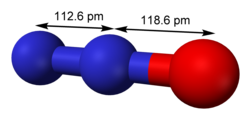
| linear, C ∞v | |
| 0.166 D | |
| Thermochemistry | |
Std molar
entropy (S⦵298) |
219.96 J/(K·mol) |
Std enthalpy of
formation (ΔfH⦵298) |
+82.05 kJ/mol |
| Pharmacology | |
| N01AX13 (WHO) | |
| Inhalation | |
| Pharmacokinetics: | |
| 0.004% | |
| 5 minutes | |
| Respiratory | |
| Hazards | |
| GHS labelling: | |

| |
| Danger | |
| H270 | |
| P220, P244, P282, P317, P336, P370+P376, P403, P410+P403 | |
| NFPA 704 (fire diamond) | |
| Flash point | Nonflammable |
| Safety data sheet (SDS) | Ilo.org, ICSC 0067 |
| Related compounds | |
| Nitric oxide Dinitrogen trioxide Nitrogen dioxide Dinitrogen tetroxide Dinitrogen pentoxide | |
Related compounds
|
Ammonium nitrate Azide |
Except where otherwise noted, data are given for materials in their standard state (at 25 °C [77 °F], 100 kPa).
| |


Nitrous oxide (dinitrogen oxide or dinitrogen monoxide), commonly known as laughing gas, nitrous, or factitious air, among others,[4] is a chemical compound, an oxide of nitrogen with the formula N
2O. At room temperature, it is a colourless non-flammable gas, and has a slightly sweet scent and taste.[4] At elevated temperatures, nitrous oxide is a powerful oxidiser similar to molecular oxygen.[4]
Nitrous oxide has significant medical uses, especially in surgery and dentistry, for its anaesthetic and pain-reducing effects,[5] and it is on the World Health Organization's List of Essential Medicines.[6] Its colloquial name, "laughing gas", coined by Humphry Davy, describes the euphoric effects upon inhaling it, which cause it to be used as a recreational drug inducing a brief "high".[5][7] When abused chronically, it may cause neurological damage through inactivation of vitamin B12. It is also used as an oxidiser in rocket propellants and motor racing fuels, and as a frothing gas for whipped cream.
Nitrous oxide is also an atmospheric pollutant, with a concentration of 333 parts per billion (ppb) in 2020, increasing at 1 ppb annually.[8][9] It is a major scavenger of stratospheric ozone, with an impact comparable to that of CFCs.[10] About 40% of human-caused emissions are from agriculture,[11][12] as nitrogen fertilisers are digested into nitrous oxide by soil micro-organisms.[13] As the third most important greenhouse gas, nitrous oxide substantially contributes to global warming.[14][15] Reduction of emissions is an important goal in the politics of climate change.[16]
Discovery and early use
[edit]The gas was first synthesised in 1772 by English natural philosopher and chemist Joseph Priestley who called it dephlogisticated nitrous air (see phlogiston theory)[17] or inflammable nitrous air.[18] Priestley published his discovery in the book Experiments and Observations on Different Kinds of Air (1775), where he described how to produce the preparation of "nitrous air diminished", by heating iron filings dampened with nitric acid.[19]

The first important use of nitrous oxide was made possible by Thomas Beddoes and James Watt, who worked together to publish the book Considerations on the Medical Use and on the Production of Factitious Airs (1794). This book was important for two reasons. First, James Watt had invented a novel machine to produce "factitious airs" (including nitrous oxide) and a novel "breathing apparatus" to inhale the gas. Second, the book also presented the new medical theories by Thomas Beddoes, that tuberculosis and other lung diseases could be treated by inhalation of "Factitious Airs".[20]

The machine to produce "Factitious Airs" had three parts: a furnace to burn the needed material, a vessel with water where the produced gas passed through in a spiral pipe (for impurities to be "washed off"), and finally the gas cylinder with a gasometer where the gas produced, "air", could be tapped into portable air bags (made of airtight oily silk). The breathing apparatus consisted of one of the portable air bags connected with a tube to a mouthpiece. With this new equipment being engineered and produced by 1794, the way was paved for clinical trials,[clarification needed] which began in 1798 when Thomas Beddoes established the "Pneumatic Institution for Relieving Diseases by Medical Airs" in Hotwells (Bristol). In the basement of the building, a large-scale machine was producing the gases under the supervision of a young Humphry Davy, who was encouraged to experiment with new gases for patients to inhale.[20] The first important work of Davy was examination of the nitrous oxide, and the publication of his results in the book: Researches, Chemical and Philosophical (1800). In that publication, Davy notes the analgesic effect of nitrous oxide at page 465 and its potential to be used for surgical operations at page 556.[21] Davy coined the name "laughing gas" for nitrous oxide.[22]
Despite Davy's discovery that inhalation of nitrous oxide could relieve a conscious person from pain, another 44 years elapsed before doctors attempted to use it for anaesthesia. The use of nitrous oxide as a recreational drug at "laughing gas parties", primarily arranged for the British upper class, became an immediate success beginning in 1799. While the effects of the gas generally make the user appear stuporous, dreamy and sedated, some people also "get the giggles" in a state of euphoria, and frequently erupt in laughter.[23]
One of the earliest commercial producers in the U.S. was George Poe, cousin of the poet Edgar Allan Poe, who also was the first to liquefy the gas.[24]
The first time nitrous oxide was used as an anaesthetic drug in the treatment of a patient was when dentist Horace Wells, with assistance by Gardner Quincy Colton and John Mankey Riggs, demonstrated insensitivity to pain from a dental extraction on 11 December 1844.[25] In the following weeks, Wells treated the first 12 to 15 patients with nitrous oxide in Hartford, Connecticut, and, according to his own record, only failed in two cases.[26] In spite of these convincing results having been reported by Wells to the medical society in Boston in December 1844, this new method was not immediately adopted by other dentists. The reason for this was most likely that Wells, in January 1845 at his first public demonstration to the medical faculty in Boston, had been partly unsuccessful, leaving his colleagues doubtful regarding its efficacy and safety.[27] The method did not come into general use until 1863, when Gardner Quincy Colton successfully started to use it in all his "Colton Dental Association" clinics, that he had just established in New Haven and New York City.[20] Over the following three years, Colton and his associates successfully administered nitrous oxide to more than 25,000 patients.[28] Today, nitrous oxide is used in dentistry as an anxiolytic, as an adjunct to local anaesthetic.
Nitrous oxide was not found to be a strong enough anaesthetic for use in major surgery in hospital settings. Instead, diethyl ether, being a stronger and more potent anaesthetic, was demonstrated and accepted for use in October 1846, along with chloroform in 1847.[20] When Joseph Thomas Clover invented the "gas-ether inhaler" in 1876, it became a common practice at hospitals to initiate all anaesthetic treatments with a mild flow of nitrous oxide, and then gradually increase the anaesthesia with the stronger ether or chloroform. Clover's gas-ether inhaler was designed to supply the patient with nitrous oxide and ether at the same time, with the exact mixture being controlled by the operator of the device. It remained in use by many hospitals until the 1930s.[28] Although hospitals today use a more advanced anaesthetic machine, these machines still use the same principle launched with Clover's gas-ether inhaler, to initiate the anaesthesia with nitrous oxide, before the administration of a more powerful anaesthetic.
Colton's popularisation of nitrous oxide led to its adoption by a number of less than reputable quacksalvers, who touted it as a cure for consumption, scrofula, catarrh and other diseases of the blood, throat and lungs. Nitrous oxide treatment was administered and licensed as a patent medicine by the likes of C. L. Blood and Jerome Harris in Boston and Charles E. Barney of Chicago.[29][30]
Chemical properties and reactions
[edit]Nitrous oxide is a colourless gas with a faint, sweet odour.
Nitrous oxide supports combustion by releasing the dipolar bonded oxygen radical, and can thus relight a glowing splint.
N
2O is inert at room temperature and has few reactions. At elevated temperatures, its reactivity increases. For example, nitrous oxide reacts with NaNH
2 at 187 °C (369 °F) to give NaN
3:
- 2 NaNH2 + N2O → NaN3 + NaOH + NH3
This reaction is the route adopted by the commercial chemical industry to produce azide salts, which are used as detonators.[31]
Mechanism of action
[edit]The pharmacological mechanism of action of inhaled N
2O is not fully known. However, it has been shown to directly modulate a broad range of ligand-gated ion channels, which likely plays a major role. It moderately blocks NMDAR and [[CHRNB2|β 2-subunit]]-containing nACh channels, weakly inhibits AMPA, kainate, [[GABAA-rho receptor|GABA C]] and [[5-HT3 receptor|5-HT 3 receptors]], and slightly potentiates [[GABAA receptor|GABA A]] and glycine receptors.[32][33] It also has been shown to activate two-pore-domain K+
channels.[34] While N
2O affects several ion channels, its anaesthetic, hallucinogenic and euphoriant effects are likely caused mainly via inhibition of NMDA receptor-mediated currents.[32][35] In addition to its effects on ion channels, N
2O may act similarly to nitric oxide (NO) in the central nervous system.[35] Nitrous oxide is 30 to 40 times more soluble than nitrogen.
The effects of inhaling sub-anaesthetic doses of nitrous oxide may vary unpredictably with settings and individual differences;[36][37] however, Jay (2008)[38] suggests that it reliably induces the following states and sensations:
- Intoxication
- Euphoria/dysphoria
- Spatial disorientation
- Temporal disorientation
- Reduced pain sensitivity
A minority of users also experience uncontrolled vocalisations and muscular spasms. These effects generally disappear minutes after removal of the nitrous oxide source.[38]
Anxiolytic effect
[edit]In behavioural tests of anxiety, a low dose of N
2O is an effective anxiolytic. This anti-anxiety effect is associated with enhanced activity of GABA A receptors, as it is partially reversed by benzodiazepine receptor antagonists. Mirroring this, animals that have developed tolerance to the anxiolytic effects of benzodiazepines are partially tolerant to N
2O.[39] Indeed, in humans given 30% N
2O, benzodiazepine receptor antagonists reduced the subjective reports of feeling "high", but did not alter psychomotor performance.[40][41]
Analgesic effect
[edit]The analgesic effects of N
2O are linked to the interaction between the endogenous opioid system and the descending noradrenergic system. When animals are given morphine chronically, they develop tolerance to its pain-killing effects, and this also renders the animals tolerant to the analgesic effects of N
2O.[42] Administration of antibodies that bind and block the activity of some endogenous opioids (not β-endorphin) also block the antinociceptive effects of N
2O.[43] Drugs that inhibit the breakdown of endogenous opioids also potentiate the antinociceptive effects of N
2O.[43] Several experiments have shown that opioid receptor antagonists applied directly to the brain block the antinociceptive effects of N
2O, but these drugs have no effect when injected into the spinal cord.
Apart from an indirect action, nitrous oxide, like morphine[44] also interacts directly with the endogenous opioid system by binding at opioid receptor binding sites.[45][46]
Conversely, [[alpha-2 adrenergic receptor|α 2-adrenoceptor]] antagonists block the pain-reducing effects of N
2O when given directly to the spinal cord, but not when applied directly to the brain.[47] Indeed, [[alpha-2B adrenergic receptor|α 2B-adrenoceptor]] knockout mice or animals depleted in norepinephrine are nearly completely resistant to the antinociceptive effects of N
2O.[48] Apparently N
2O-induced release of endogenous opioids causes disinhibition of brainstem noradrenergic neurons, which release norepinephrine into the spinal cord and inhibit pain signalling.[49] Exactly how N
2O causes the release of endogenous opioid peptides remains uncertain.
Production
[edit]Various methods of producing nitrous oxide are used.[50]
Industrial methods
[edit]
Nitrous oxide is prepared on an industrial scale by carefully heating ammonium nitrate[50] at about 250 °C, which decomposes into nitrous oxide and water vapour.[51]
- NH4NO3 → 2 H2O + N2O
The addition of various phosphate salts favours formation of a purer gas at slightly lower temperatures. This reaction may be difficult to control, resulting in detonation.[52]
Laboratory methods
[edit]The decomposition of ammonium nitrate is also a common laboratory method for preparing the gas. Equivalently, it can be obtained by heating a mixture of sodium nitrate and ammonium sulfate:[53]
- 2 NaNO3 + (NH4)2SO4 → Na2SO4 + 2 N2O + 4 H2O
Another method involves the reaction of urea, nitric acid and sulfuric acid:[54]
- 2 (NH2)2CO + 2 HNO3 + H2SO4 → 2 N2O + 2 CO2 + (NH4)2SO4 + 2 H2O
Direct oxidation of ammonia with a manganese dioxide-bismuth oxide catalyst has been reported:[55] cf. Ostwald process.
- 2 NH3 + 2 O2 → N2O + 3 H2O
Hydroxylammonium chloride reacts with sodium nitrite to give nitrous oxide. If the nitrite is added to the hydroxylamine solution, the only remaining by-product is salt water. If the hydroxylamine solution is added to the nitrite solution (nitrite is in excess), however, then toxic higher oxides of nitrogen also are formed:
- NH3OHCl + NaNO2 → N2O + NaCl + 2 H2O
Treating HNO
3 with SnCl
2 and HCl also has been demonstrated:
- 2 HNO3 + 8 HCl + 4 SnCl2 → 5 H2O + 4 SnCl4 + N2O
Hyponitrous acid decomposes to N 2O and water with a half-life of 16 days at 25 °C at pH 1–3.[56]
- H2N2O2 → H2O + N2O
Atmospheric occurrence
[edit]


Nitrous oxide is a minor component of Earth's atmosphere and is an active part of the planetary nitrogen cycle. Based on analysis of air samples gathered from sites around the world, its concentration surpassed 330 ppb in 2017.[8] The growth rate of about 1 ppb per year has also accelerated during recent decades.[9] Nitrous oxide's atmospheric abundance has grown more than 20% from a base level of about 270 ppb in 1750.[58]
Important atmospheric properties of N
2O are summarized in the following table:
| Property | Value |
|---|---|
| Ozone depletion potential (ODP) | 0.017[10] (CCl3F = 1) |
| Global warming potential (GWP: 100-year) | 273[59] (CO2 = 1) |
| Atmospheric lifetime | 116 ± 9 years[60] |
In 2022 the IPCC reported that: "The human perturbation of the natural nitrogen cycle through the use of synthetic fertilizers and manure, as well as nitrogen deposition resulting from land-based agriculture and fossil fuel burning has been the largest driver of the increase in atmospheric N2O of 31.0 ± 0.5 ppb (10%) between 1980 and 2019."[60]
Emissions by source
[edit]17.0 (12.2 to 23.5) million tonnes total annual average nitrogen in N
2O was emitted in 2007–2016.[60] About 40% of N
2O emissions are from humans and the rest are part of the natural nitrogen cycle.[61] The N
2O emitted each year by humans has a greenhouse effect equivalent to about 3 billion tonnes of carbon dioxide: for comparison humans emitted 37 billion tonnes of actual carbon dioxide in 2019, and methane equivalent to 9 billion tonnes of carbon dioxide.[62]
Most of the N
2O emitted into the atmosphere, from natural and anthropogenic sources, is produced by microorganisms such as denitrifying bacteria and fungi in soils and oceans.[63] Soils under natural vegetation are an important source of nitrous oxide, accounting for 60% of all naturally produced emissions. Other natural sources include the oceans (35%) and atmospheric chemical reactions (5%).[64] Wetlands can also be emitters of nitrous oxide.[65][66] Emissions from thawing permafrost may be significant, but as of 2022 this is not certain.[60]
The main components of anthropogenic emissions are fertilised agricultural soils and livestock manure (42%), runoff and leaching of fertilisers (25%), biomass burning (10%), fossil fuel combustion and industrial processes (10%), biological degradation of other nitrogen-containing atmospheric emissions (9%) and human sewage (5%).[67][68][69][70][71] Agriculture enhances nitrous oxide production through soil cultivation, the use of nitrogen fertilisers and animal waste handling.[72] These activities stimulate naturally occurring bacteria to produce more nitrous oxide. Nitrous oxide emissions from soil can be challenging to measure as they vary markedly over time and space,[73] and the majority of a year's emissions may occur when conditions are favorable during "hot moments"[74][75] and/or at favorable locations known as "hotspots".[76]
Among industrial emissions, the production of nitric acid and adipic acid are the largest sources of nitrous oxide emissions. The adipic acid emissions specifically arise from the degradation of the nitrolic acid intermediate derived from the nitration of cyclohexanone.[67][77][78]
Biological processes
[edit]Microbial processes that generate nitrous oxide may be classified as nitrification and denitrification. Specifically, they include:
- aerobic autotrophic nitrification, the stepwise oxidation of ammonia (NH
3) to nitrite (NO−
2) and to nitrate (NO−
3) - anaerobic heterotrophic denitrification, the stepwise reduction of NO−
3 to NO−
2, nitric oxide (NO), N
2O and ultimately N
2, where facultative anaerobe bacteria use NO−
3 as an electron acceptor in the respiration of organic material in the condition of insufficient oxygen (O
2) - nitrifier denitrification, which is carried out by autotrophic NH
3-oxidising bacteria and the pathway whereby ammonia (NH
3) is oxidised to nitrite (NO−
2), followed by the reduction of NO−
2 to nitric oxide (NO), N
2O and molecular nitrogen (N
2) - heterotrophic nitrification
- aerobic denitrification by the same heterotrophic nitrifiers
- fungal denitrification
- non-biological chemodenitrification
These processes are affected by soil chemical and physical properties such as the availability of mineral nitrogen and organic matter, acidity and soil type, as well as climate-related factors such as soil temperature and water content.
The emission of the gas to the atmosphere is limited greatly by its consumption inside the cells, by a process catalysed by the enzyme nitrous oxide reductase.[79]
Uses
[edit]Rocket motors
[edit]Nitrous oxide may be used as an oxidiser in a rocket motor. Compared to other oxidisers, it is much less toxic and more stable at room temperature, making it easier to store and safer to carry on a flight. Its high density and low storage pressure (when maintained at low temperatures) make it highly competitive with stored high-pressure gas systems.[80]
In a 1914 patent, American rocket pioneer Robert Goddard suggested nitrous oxide and gasoline as possible propellants for a liquid-fuelled rocket.[81] Nitrous oxide has been the oxidiser of choice in several hybrid rocket designs (using solid fuel with a liquid or gaseous oxidiser). The combination of nitrous oxide with hydroxyl-terminated polybutadiene fuel has been used by SpaceShipOne and others. It also is notably used in amateur and high power rocketry with various plastics as the fuel.
Nitrous oxide may also be used as a monopropellant. In the presence of a heated catalyst at a temperature of 577 °C (1,071 °F), N
2O decomposes exothermically into nitrogen and oxygen.[82] Because of the large heat release, the catalytic action rapidly becomes secondary, as thermal autodecomposition becomes dominant. In a vacuum thruster, this may provide a monopropellant specific impulse (I sp) up to 180 s. While noticeably less than the I sp available from hydrazine thrusters (monopropellant, or bipropellant with dinitrogen tetroxide), the decreased toxicity makes nitrous oxide a worthwhile option.
The ignition of nitrous oxide depends critically on pressure. It deflagrates at approximately 600 °C (1,112 °F) at a pressure of 309 psi (21 atmospheres).[83] At 600 psi, the required ignition energy is only 6 joules, whereas at 130 psi a 2,500-joule ignition energy input is insufficient.[84][85]
Internal combustion engine
[edit]In vehicle racing, nitrous oxide (often called "nitrous" in this context) increases engine power by providing more oxygen during combustion, thus allowing the engine to burn more fuel. It is an oxidising agent roughly equivalent to hydrogen peroxide, and much stronger than molecular oxygen. Nitrous oxide is not flammable at low pressure/temperature, but at about 300 °C (572 °F), its breakdown delivers more oxygen than atmospheric air. It often is mixed with another fuel that is easier to deflagrate.
Nitrous oxide is stored as a compressed liquid. In an engine intake manifold, the evaporation and expansion of the liquid causes a large drop in intake charge temperature, resulting in a denser charge and allowing more air/fuel mixture to enter the cylinder. Sometimes nitrous oxide is injected into (or prior to) the intake manifold, whereas other systems directly inject it just before the cylinder (direct port injection).
The technique was used during World War II by Luftwaffe aircraft with the GM-1 system to boost the power output of aircraft engines. Originally meant to provide the Luftwaffe standard aircraft with superior high-altitude performance, technological considerations limited its use to extremely high altitudes. Accordingly, it was only used by specialised planes such as high-altitude reconnaissance aircraft, high-speed bombers and high-altitude interceptor aircraft. It sometimes could be found on Luftwaffe aircraft also fitted with another engine-boost system, MW 50, a form of water injection for aviation engines that used methanol for its boost capabilities.
One of the major problems of nitrous oxide oxidant in a reciprocating engine is excessive power: if the mechanical structure of the engine is not properly reinforced, it may be severely damaged or destroyed. It is important with nitrous oxide augmentation of petrol engines to maintain proper and evenly spread operating temperatures and fuel levels to prevent pre-ignition (also called detonation or spark knock).[86] However, most problems associated with nitrous oxide come not from excessive power but from excessive pressure, since the gas builds up a much denser charge in the cylinder. The increased pressure and temperature can melt, crack, or warp the piston, valve, and cylinder head.
Automotive-grade liquid nitrous oxide differs slightly from medical-grade. A small amount of sulfur dioxide (SO
2) is added to prevent substance abuse.[87]
Aerosol propellant for food
[edit]
2O whipped-cream chargers
The gas is approved for use as a food additive (E number: E942), specifically as an aerosol spray propellant. It is commonly used in aerosol whipped cream canisters and cooking sprays.
The gas is extremely soluble in fatty compounds. In pressurised aerosol whipped cream, it is dissolved in the fatty cream until it leaves the can, when it becomes gaseous and thus creates foam. This produces whipped cream four times the volume of the liquid, whereas whipping air into cream only produces twice the volume. Unlike air, nitrous oxide inhibits rancidification of the butterfat. Carbon dioxide cannot be used for whipped cream because it is acidic in water, which would curdle the cream and give it a seltzer-like "sparkle".
Extra-frothed whipped cream produced with nitrous oxide is unstable, and will return to liquid within half an hour to one hour.[88] Thus, it is not suitable for decorating food that will not be served immediately.
In December 2016, there was a shortage of aerosol whipped cream in the United States, with canned whipped cream use at its peak during the Christmas and holiday season, due to an explosion at the Air Liquide nitrous oxide facility in Florida in late August. The company prioritized the remaining supply of nitrous oxide to medical customers rather than to food manufacturing.[89]
Also, cooking spray, made from various oils with lecithin emulsifier, may use nitrous oxide propellant, or alternatively food-grade alcohol or propane.
Medical
[edit]
2O tanks used in dentistry
Nitrous oxide has been used in dentistry and surgery, as an anaesthetic and analgesic, since 1844.[20] In the early days, the gas was administered through simple inhalers consisting of a breathing bag made of rubber cloth.[28] Today, the gas is administered in hospitals by means of an automated relative analgesia machine, with an anaesthetic vaporiser and a medical ventilator, that delivers a precisely dosed and breath-actuated flow of nitrous oxide mixed with oxygen in a 2:1 ratio.
Nitrous oxide is a weak general anaesthetic, and so is generally not used alone in general anaesthesia, but used as a carrier gas (mixed with oxygen) for more powerful general anaesthetic drugs such as sevoflurane or desflurane. It has a minimum alveolar concentration of 105% and a blood/gas partition coefficient of 0.46. The use of nitrous oxide in anaesthesia can increase the risk of postoperative nausea and vomiting.[90][91][92]
Dentists use a simpler machine which only delivers an N
2O/O
2 mixture for the patient to inhale while conscious but must still be a recognised purpose designed dedicated relative analgesic flowmeter with a minimum 30% of oxygen at all times and a maximum upper limit of 70% nitrous oxide. The patient is kept conscious throughout the procedure, and retains adequate mental faculties to respond to questions and instructions from the dentist.[93]
Inhalation of nitrous oxide is used frequently to relieve pain associated with childbirth, trauma, oral surgery and acute coronary syndrome (including heart attacks). Its use during labour has been shown to be a safe and effective aid for birthing women.[94] Its use for acute coronary syndrome is of unknown benefit.[95]
In Canada and the UK, Entonox and Nitronox are used commonly by ambulance crews (including unregistered practitioners) as rapid and highly effective analgesic gas.
Fifty percent nitrous oxide can be considered for use by trained non-professional first aid responders in prehospital settings, given the relative ease and safety of administering 50% nitrous oxide as an analgesic. The rapid reversibility of its effect would also prevent it from precluding diagnosis.[96]
Recreational
[edit]


Recreational inhalation of nitrous oxide, to induce euphoria and slight hallucinations, began with the British upper class in 1799 in gatherings known as "laughing gas parties".[97]
From the 19th century, the widespread availability of the gas for medical and culinary purposes allowed for recreational use to greatly expand globally. In the UK as of 2014, nitrous oxide was estimated to be used by almost half a million young people at nightspots, festivals and parties.[98]
Widespread recreational use of the drug throughout the UK was featured in the 2017 Vice documentary Inside The Laughing Gas Black Market, in which journalist Matt Shea met with dealers of the drug who stole it from hospitals.[99]
A significant issue cited in London's press is the effect of nitrous oxide canister littering, which is highly visible and causes significant complaints from communities.[100]
Prior to 8 November 2023 in the UK, nitrous oxide was subject to the Psychoactive Substances Act 2016, making it illegal to produce, supply, import or export nitrous oxide for recreational use. The updated law prohibited possession of nitrous oxide, classifying it as a Class C drug under the Misuse of Drugs Act 1971.[101]
While nitrous oxide is understood by most recreational users to give a "safe high", many are unaware that excessive consumption may cause neurological harm which, if left untreated, can cause permanent neurological damage.[102] In Australia, recreation use became a public health concern following a rise in reports of neurotoxicity and emergency room admissions. In the state of South Australia, legislation was passed in 2020 to restrict canister sales.[103]
In 2024, under the street name "Galaxy Gas", nitrous oxide has exploded in popularity among young people for recreational use, partially driven by TikTok trends.[104][105]
Safety
[edit]Nitrous oxide is a significant occupational hazard for surgeons, dentists and nurses. Because the gas is minimally metabolised in humans (with a rate of 0.004%), it retains its potency when exhaled into the room by the patient, and can intoxicate the clinic staff if the room is poorly ventilated, with potential chronic exposure. A continuous-flow fresh-air ventilation system or N
2O scavenger system may be needed to prevent waste-gas buildup.[citation needed] The National Institute for Occupational Safety and Health recommends that workers' exposure to nitrous oxide should be controlled during the administration of anaesthetic gas in medical, dental and veterinary operators.[106] It set a recommended exposure limit (REL) of 25 ppm (46 mg/m3) to escaped anaesthetic.[107]
Exposure to nitrous oxide causes short-term impairment of cognition, audiovisual acuity, and manual dexterity, as well as spatial and temporal disorientation,[108] putting the user at risk of accidental injury.[38]
Nitrous oxide is neurotoxic, and medium or long-term habitual consumption of significant quantities can cause neurological harm with the potential for permanent damage if left untreated.[103][102] It is believed that, like other NMDA receptor antagonists, N
2O produces Olney's lesions in rodents upon prolonged (several hour) exposure.[109][110][111][112]
However, because it is normally expelled from the body rapidly, it is less likely to be neurotoxic than other NMDAR antagonists.[113] In rodents, short-term exposure results in only mild injury that is rapidly reversible, and neuronal death occurs only after constant and sustained exposure.[109] Nitrous oxide may also cause neurotoxicity after extended exposure because of hypoxia. This is especially true of non-medical formulations such as whipped-cream chargers ("whippits" or "nangs"),[114] which contain no oxygen gas.[115]
In reports to poison control centers, heavy users (≥400 g or ≥200 L of N2O gas in one session) or frequent users (regular, i.e., daily or weekly) have developed signs of peripheral neuropathy: ataxia (gait abnormalities) or paresthesia (perception of sensations such as tingling, numbness, or prickling, mostly in the extremities). Such early signs of neurological damage indicate chronic toxicity.[116]
Nitrous oxide might have therapeutic use in treating stroke. In a rodent model, nitrous oxide at 75% by volume reduced ischemia-induced neuronal death induced by occlusion of the middle cerebral artery, and decreased NMDA-induced Ca2+ influx in neuronal cell cultures, a cause of excitotoxicity.[113]
Occupational exposure to ambient nitrous oxide has been associated with DNA damage, due to interruptions in DNA synthesis.[117] This correlation is dose-dependent[118][119] and does not appear to extend to casual recreational use; however, further research is needed to confirm the level of exposure needed to cause damage.
Inhalation of pure nitrous oxide causes oxygen deprivation, resulting in low blood pressure, fainting, and even heart attacks. This can occur if the user inhales large quantities continuously, as with a strap-on mask connected to a gas canister or other inhalation system, or prolonged breath-holding.[120]
Long-term exposure to nitrous oxide may cause [[Vitamin B12 deficiency|vitamin B 12 deficiency]]. This can cause serious neurotoxicity if the user has preexisting vitamin B 12 deficiency.[121] It inactivates the cobalamin form of vitamin B 12 by oxidation. Symptoms of vitamin B 12 deficiency, including sensory neuropathy, myelopathy and encephalopathy, may occur within days or weeks of exposure to nitrous oxide anaesthesia in people with subclinical vitamin B 12 deficiency. Symptoms are treated with high doses of vitamin B 12, but recovery can be slow and incomplete.[122] People with normal vitamin B 12 levels have stores to make the effects of nitrous oxide insignificant, unless exposure is repeated and prolonged (nitrous oxide abuse). Vitamin B 12 levels should be checked in people with risk factors for vitamin B 12 deficiency prior to using nitrous oxide anaesthesia.[123]
Several experimental studies in rats indicate that chronic exposure of pregnant females to nitrous oxide may have adverse effects on the developing fetus.[124][125][126]
At room temperature (20 °C [68 °F]) the saturated vapour pressure is 50.525 bar, rising up to 72.45 bar at 36.4 °C (97.5 °F)—the critical temperature. The pressure curve is thus unusually sensitive to temperature.[127] As with many strong oxidisers, contamination of parts with fuels have been implicated in rocketry accidents, where small quantities of nitrous/fuel mixtures explode due to "water hammer"-like effects (sometimes called "dieseling"—heating due to adiabatic compression of gases can reach decomposition temperatures).[128] Some common building materials such as stainless steel and aluminium can act as fuels with strong oxidisers such as nitrous oxide, as can contaminants that may ignite due to adiabatic compression.[129] There also have been incidents where nitrous oxide decomposition in plumbing has led to the explosion of large tanks.[83]
Environmental impact
[edit]Global accounting of N
2O sources and sinks over the decade ending 2016 indicates that about 40% of the average 17 TgN/yr (teragrams, or million metric tons, of nitrogen per year) of emissions originated from human activity, and shows that emissions growth chiefly came from expanding agriculture.[11][12]

Nitrous oxide has significant global warming potential as a greenhouse gas. On a per-molecule basis, considered over a 100-year period, nitrous oxide has 265 times the atmospheric heat-trapping ability of carbon dioxide (CO
2).[59] However, because of its low concentration (less than 1/1,000 of that of CO
2), its contribution to the greenhouse effect is less than one third that of carbon dioxide, and also less than methane.[130] On the other hand, since about 40% of the N
2O entering the atmosphere is the result of human activity,[67] control of nitrous oxide is part of efforts to curb greenhouse gas emissions.[131]
Most human caused nitrous oxide released into the atmosphere is a greenhouse gas emission from agriculture, when farmers add nitrogen-based fertilizers onto the fields, and through the breakdown of animal manure. Reduction of emissions can be a hot topic in the politics of climate change.[132]
Nitrous oxide is also released as a by-product of burning fossil fuel, though the amount released depends on which fuel was used. It is also emitted through the manufacture of nitric acid, which is used in the synthesis of nitrogen fertilizers. The production of adipic acid, a precursor to nylon and other synthetic clothing fibres, also releases nitrous oxide.[133]
A rise in atmospheric nitrous oxide concentrations has been implicated as a possible contributor to the extremely intense global warming during the Cenomanian-Turonian boundary event.[134]
Nitrous oxide has also been implicated in thinning the ozone layer. A 2009 study suggested that N
2O emission was the single most important ozone-depleting emission and it was expected to remain the largest throughout the 21st century.[10][135]
Legality
[edit]In India transfer of nitrous oxide from bulk cylinders to smaller, more transportable E-type, 1,590-litre-capacity tanks[136] is legal when intended for medical anaesthesia.
The New Zealand Ministry of Health has warned that nitrous oxide is a prescription medicine whose sale or possession without a prescription is an offense under the Medicines Act.[137] This would seemingly prohibit all non-medicinal uses of nitrous oxide, although it is implied that only recreational use will be targeted.
In August 2015, the Council of the London Borough of Lambeth (UK) banned the use of the drug for recreational purposes, making offenders liable to an on-the-spot fine of up to £1,000.[138] In September 2023, the UK Government announced that nitrous oxide would be made illegal by the end of the year as a class C drug, with possession potentially carrying up to a two-year prison sentence or an unlimited fine.[139]
Possession of nitrous oxide is legal under United States federal law and is not subject to DEA purview.[140] It is, however, regulated by the Food and Drug Administration under the Food Drug and Cosmetics Act; prosecution is possible under its "misbranding" clauses, prohibiting the sale or distribution of nitrous oxide for the purpose of human consumption without a proper medical license. Many states have laws regulating the possession, sale and distribution of nitrous oxide. Such laws usually ban distribution to minors or limit the amount that may be sold without special license.[citation needed] For example, in California, possession for recreational use is prohibited and qualifies as a misdemeanor.[141]
See also
[edit]

References
[edit]- ^ "[Nitrous oxide]". Degruyter.com. Retrieved 24 July 2022.
- ^ IUPAC nomenclature of inorganic chemistry 2005. PDF, p. 317.
- ^ Takahashi M, Shibasaki-Kitakawa N, Yokoyama C, Takahashi S (1996). "Viscosity of Gaseous Nitrous Oxide from 298.15 K to 398.15 K at Pressures up to 25 MPa". Journal of Chemical & Engineering Data. 41 (6): 1495–1498. doi:10.1021/je960060d. ISSN 0021-9568.
- ^ a b c "Nitrous oxide". PubChem, US National Library of Medicine. 14 September 2024. Retrieved 20 September 2024.
- ^ a b Quax ML, Van Der Steenhoven TJ, Bronkhorst MW, Emmink BL (July 2020). "Frostbite injury: An unknown risk when using nitrous oxide as a party drug". Acta Chirurgica Belgica. 120 (1–4). Taylor & Francis on behalf of the Royal Belgian Society for Surgery: 140–143. doi:10.1080/00015458.2020.1782160. ISSN 0001-5458. PMID 32543291. S2CID 219702849.
- ^ Organization WH (2019). World Health Organization model list of essential medicines: 21st list 2019. Geneva: World Health Organization. hdl:10665/325771.
- ^ Turner S (30 August 2024). "Nitrous-Oxide: What is it good for?". Drug Science. Retrieved 3 October 2024.
- ^ a b "Nitrous Oxide (N2O) Mole Fraction" (PDF). Massachusetts Institute of Technology. Archived (PDF) from the original on 9 October 2022. Retrieved 15 February 2021.
- ^ a b "Trends in Atmospheric Nitrous Oxide". National Oceanic and Atmospheric Administration / Earth System Research Laboratories. Retrieved 15 February 2021.
- ^ a b c Ravishankara AR, Daniel JS, Portmann RW (27 August 2009), "Nitrous Oxide (N2O): The Dominant Ozone-Depleting Substance Emitted in the 21st Century" (PDF), Science, 326 (5949): 123–125, Bibcode:2009Sci...326..123R, doi:10.1126/science.1176985, PMID 19713491, S2CID 2100618, archived (PDF) from the original on 9 October 2022
- ^ a b Tian H, Xu R, Canadell JG, Thompson RL, Winiwarter W, Suntharalingam P, et al. (October 2020). "A comprehensive quantification of global nitrous oxide sources and sinks". Nature. 586 (7828): 248–256. Bibcode:2020Natur.586..248T. doi:10.1038/s41586-020-2780-0. hdl:1871.1/c74d4b68-ecf4-4c6d-890d-a1d0aaef01c9. ISSN 1476-4687. PMID 33028999. S2CID 222217027. Archived from the original on 3 December 2020. Retrieved 9 November 2020.
{{cite journal}}: CS1 maint: bot: original URL status unknown (link) - ^ a b Thompson, R. L., Lassaletta, L., Patra, P. K. (2019). "Acceleration of global N2O emissions seen from two decades of atmospheric inversion". Nat. Clim. Change. 9 (12): 993–998. Bibcode:2019NatCC...9..993T. doi:10.1038/s41558-019-0613-7. hdl:11250/2646484. S2CID 208302708.
- ^ "Reduce nitrous oxide emissions". Ag Matters. 13 December 2021. Retrieved 1 April 2024.
- ^ "Chapter 8". AR5 Climate Change 2013: The Physical Science Basis. pp. 677–678.
- ^ "Nitrous oxide emissions pose an increasing climate threat, study finds". phys.org. Retrieved 9 November 2020.
- ^ Mundschenk S (3 August 2022). "The Netherlands is showing how not to tackle climate change | The Spectator". www.spectator.co.uk. Retrieved 28 August 2022.
- ^ Keys T (1941). "The Development of Anesthesia". Anesthesiology. 2 (5): 552–574. Bibcode:1982AmSci..70..522D. doi:10.1097/00000542-194109000-00008. S2CID 73062366.
- ^ McEvoy JG (6 March 2015). "Gases, God and the balance of nature: a commentary on Priestley (1772) 'Observations on different kinds of air'". Philosophical Transactions of the Royal Society A: Mathematical, Physical and Engineering Sciences. 373 (2039) 20140229. Bibcode:2015RSPTA.37340229M. doi:10.1098/rsta.2014.0229. PMC 4360083. PMID 25750146.
- ^ Priestley J (1776). "Experiments and Observations on Different Kinds of Air". Erowid.
- ^ a b c d e Sneader W (2005). "Systematic Medicine". Drug Discovery –A History. John Wiley and Sons. pp. 74–87. ISBN 978-0-471-89980-8.
- ^ Davy H (1800). Researches, chemical and philosophical –chiefly concerning nitrous oxide or dephlogisticated nitrous air, and its respiration. Printed for J. Johnson.
- ^ Hardman JG (2017). Oxford Textbook of Anaesthesia. Oxford University Press. p. 529. ISBN 978-0-19-964204-5.
- ^ Brecher EM (1972). "Consumers Union Report on Licit and Illicit Drugs, Part VI – Inhalants and Solvents and Glue-Sniffing". Consumer Reports Magazine. Retrieved 18 December 2013.
- ^ "George Poe is Dead". Washington Post. 3 February 1914. Archived from the original on 1 March 2013. Retrieved 29 December 2007.
- ^ Erving HW (1933). "The Discoverer of Anæsthesia: Dr. Horace Wells of Hartford". The Yale Journal of Biology and Medicine. 5 (5): 421–430. PMC 2606479. PMID 21433572.
- ^ Wells H (1847). A history of the discovery, of the application of nitrous oxide gas, ether, and other vapours, to surgical operations. J. Gaylord Wells.
- ^ Desai SP, Desai MS, Pandav CS (2007). "The discovery of modern anaesthesia-contributions of Davy, Clarke, Long, Wells and Morton". Indian J Anaesth. 51 (6): 472–8.
- ^ a b c Miller AH (1941). "Technical Development of Gas Anesthesia". Anesthesiology. 2 (4): 398–409. doi:10.1097/00000542-194107000-00004. S2CID 71117361.
- ^ "Alleged Forgery". The Inter Ocean. 28 September 1877. p. 8. Retrieved 26 October 2015.
- ^ "A Man of Ominous Name". The Inter Ocean. 19 February 1890. Retrieved 26 October 2015.
- ^ Housecroft, Catherine E., Sharpe, Alan G. (2008). "Chapter 15: The group 15 elements". Inorganic Chemistry (3rd ed.). Pearson. p. 464. ISBN 978-0-13-175553-6.
- ^ a b Yamakura T, Harris RA (2000). "Effects of gaseous anaesthetics nitrous oxide and xenon on ligand-gated ion channels. Comparison with isoflurane and ethanol". Anesthesiology. 93 (4): 1095–101. doi:10.1097/00000542-200010000-00034. PMID 11020766. S2CID 4684919.
- ^ Mennerick S, Jevtovic-Todorovic V, Todorovic SM, Shen W, Olney JW, Zorumski CF (1998). "Effect of nitrous oxide on excitatory and inhibitory synaptic transmission in hippocampal cultures". Journal of Neuroscience. 18 (23): 9716–26. doi:10.1523/JNEUROSCI.18-23-09716.1998. PMC 6793274. PMID 9822732.
- ^ Gruss M, Bushell TJ, Bright DP, Lieb WR, Mathie A, Franks NP (2004). "Two-pore-domain K+ channels are a novel target for the anesthetic gases xenon, nitrous oxide, and cyclopropane". Molecular Pharmacology. 65 (2): 443–52. doi:10.1124/mol.65.2.443. PMID 14742687. S2CID 7762447.
- ^ a b Emmanouil DE, Quock RM (2007). "Advances in Understanding the Actions of Nitrous Oxide". Anesthesia Progress. 54 (1): 9–18. doi:10.2344/0003-3006(2007)54[9:AIUTAO]2.0.CO;2. PMC 1821130. PMID 17352529.
- ^ Atkinson RM, Green JD, Chenoweth DE, Atkinson JH (1 October 1979). "Subjective Effects of Nitrous Oxide: Cognitive, Emotional, Perceptual and Transcendental Experiences". Journal of Psychedelic Drugs. 11 (4): 317–330. doi:10.1080/02791072.1979.10471415. PMID 522172.
- ^ Walker DJ, Zacny JP (1 September 2001). "Within- and between-subject variability in the reinforcing and subjective effects of nitrous oxide in healthy volunteers". Drug and Alcohol Dependence. 64 (1): 85–96. doi:10.1016/s0376-8716(00)00234-9. PMID 11470344.
- ^ a b c Jay M (1 September 2008). "Nitrous oxide: recreational use, regulation and harm reduction". Drugs and Alcohol Today. 8 (3): 22–25. doi:10.1108/17459265200800022.
- ^ Emmanouil DE, Johnson CH, Quock RM (1994). "Nitrous oxide anxiolytic effect in mice in the elevated plus maze: mediation by benzodiazepine receptors". Psychopharmacology. 115 (1–2): 167–72. doi:10.1007/BF02244768. PMID 7862891. S2CID 21652496.
- ^ Zacny JP, Yajnik S, Coalson D, Lichtor JL, Apfelbaum JL, Rupani G, et al. (1995). "Flumazenil may attenuate some subjective effects of nitrous oxide in humans: a preliminary report". Pharmacology Biochemistry and Behavior. 51 (4): 815–9. doi:10.1016/0091-3057(95)00039-Y. PMID 7675863. S2CID 39068081.
- ^ Gillman MA (2022). "What is better for psychiatry: Titrated or fixed concentrations of nitrous oxide?". Front. Psychiatry. 13 (773190) 773190: 460–3. doi:10.3389/fpsyt.2022.773190. PMC 9441863. PMID 36072452.
- ^ Berkowitz BA, Finck AD, Hynes MD, Ngai SH (1979). "Tolerance to nitrous oxide analgesia in rats and mice". Anesthesiology. 51 (4): 309–12. doi:10.1097/00000542-197910000-00006. PMID 484891. S2CID 26281498.
- ^ a b Branda EM, Ramza JT, Cahill FJ, Tseng LF, Quock RM (2000). "Role of brain dynorphin in nitrous oxide antinociception in mice". Pharmacology Biochemistry and Behavior. 65 (2): 217–21. doi:10.1016/S0091-3057(99)00202-6. PMID 10672972. S2CID 1978597.
- ^ Gillman M.A. [1986a]. Minireview: Analgesic [sub anaesthetic] nitrous oxide interacts with the endogenous opioid system : A review of the evidence. Life Sciences 39: 1209-1221
- ^ (Daras, C., Cantrill, R. C., Gillman, M. A. [1983]. 3[H]-Naloxone displacement: evidence for nitrous oxide as an opioid agonist. European Journal of Pharmacology 89: 177-8.
- ^ Ori, C., Ford-Rice, F., London, E. D. [1989]. Effects of nitrous oxide and halothane on mu and kappa opioid receptors in guinea-pig brain. Anesthesiology 70: 541-544.)
- ^ Guo TZ, Davies MF, Kingery WS, Patterson AJ, Limbird LE, Maze M (1999). "Nitrous oxide produces antinociceptive response via alpha2B and/or alpha2C adrenoceptor subtypes in mice". Anesthesiology. 90 (2): 470–6. doi:10.1097/00000542-199902000-00022. PMID 9952154.
- ^ Sawamura S, Kingery WS, Davies MF, Agashe GS, Clark JD, Koblika BK, et al. (2000). "Antinociceptive action of nitrous oxide is mediated by stimulation of noradrenergic neurons in the brainstem and activation of [alpha]{2B adrenoceptors". J. Neurosci. 20 (24): 9242–51. doi:10.1523/JNEUROSCI.20-24-09242.2000. PMC 6773006. PMID 11125002.
- ^ Maze M, Fujinaga M (2000). "Recent advances in understanding the actions and toxicity of nitrous oxide". Anaesthesia. 55 (4): 311–4. doi:10.1046/j.1365-2044.2000.01463.x. PMID 10781114. S2CID 39823627.
- ^ a b Parmon VN, Panov GI, Uriarte A, Noskov AS (2005). "Nitrous oxide in oxidation chemistry and catalysis application and production". Catalysis Today. 100 (2005): 115–131. doi:10.1016/j.cattod.2004.12.012.
- ^ Holleman AF, Wiberg, E. (2001). Inorganic Chemistry. San Diego: Academic Press. ISBN 978-0-12-352651-9.
- ^ "Nitrous oxide plant". Sanghi Organization. Archived from the original on 27 November 2013. Retrieved 18 December 2013.
- ^ "Nitrogen Family" Archived 21 October 2014 at the Wayback Machine. chemistry.tutorvista.com
- ^ "Preparation of Nitrous Oxide from Urea, Nitric Acid and Sulfuric Acid".
- ^ Suwa T, Matsushima A, Suziki Y, Namina Y (1961). "Manufacture of Nitrous Oxide by the Catalytic Oxidation of Ammonia". The Journal of the Society of Chemical Industry, Japan. 64 (11): 1879–1888. doi:10.1246/nikkashi1898.64.11_1879.
- ^ Egon Wiberg, Arnold Frederick Holleman (2001) Inorganic Chemistry, Elsevier ISBN 0-12-352651-5
- ^ "N
2O Budget". Global Carbon Project. Retrieved 9 November 2020. - ^ "Chapter 6". TAR Climate Change 2001: The Scientific Basis. p. 358.
- ^ a b US Environmental Protection Agency. 12 January 2016.
- ^ a b c d Chapter 5: Global Carbon and other Biogeochemical Cycles and Feedbacks. www.ipcc.ch (Report). Retrieved 6 May 2023.
- ^ US EPA O (23 December 2015). "Overview of Greenhouse Gases". United States Environmental Protection Agency. Retrieved 4 May 2023.
- ^ "| Greenhouse Gas (GHG) Emissions | Climate Watch". www.climatewatchdata.org. Retrieved 4 May 2023.
- ^ Sloss LL (1992). Nitrogen Oxides Control Technology Fact Book. William Andrew. p. 6. ISBN 978-0-8155-1294-3.
- ^ U.S. Environmental Protection Agency (2010), "Methane and Nitrous Oxide Emissions from Natural Sources". Report EPA 430-R-10-001.
- ^ Bange HW (2006). "Nitrous oxide and methane in European coastal waters". Estuarine, Coastal and Shelf Science. 70 (3): 361–374. Bibcode:2006ECSS...70..361B. doi:10.1016/j.ecss.2006.05.042.
- ^ Thompson AJ, Giannopoulos G, Pretty J, Baggs EM, Richardson DJ (2012). "Biological sources and sinks of nitrous oxide and strategies to mitigate emissions". Philosophical Transactions of the Royal Society B. 367 (1593): 1157–1168. doi:10.1098/rstb.2011.0415. PMC 3306631. PMID 22451101.
- ^ a b c K. L. Denman, G. Brasseur, et al. (2007), "Couplings Between Changes in the Climate System and Biogeochemistry". In Fourth Assessment Report of the Intergovernmental Panel on Climate Change, Cambridge University Press.
- ^ Steinfeld, H., Gerber, P., Wassenaar, T., Castel, V., Rosales, M., de Haan, C. (2006). Livestock's long shadow: Environmental issues and options. Fao.org. Retrieved 2 February 2008.
- ^ "Overview of Greenhouse Gases: Nitrous Oxide". U.S. Environmental Protection Agency. 23 December 2015. Archived from the original on 12 August 2016. Retrieved 31 March 2016.
- ^ "Nitrous Oxide: Sources and Emissions". U.S. Environmental Protection Agency. 2006. Archived from the original on 16 January 2008. Retrieved 2 February 2008.
- ^ IPCC. 2013. Climate change: the physical basis (WG I, full report). p. 512.
- ^ Thompson RL, Lassaletta L, Patra PK, Wilson C, Wells KC, Gressent A, et al. (18 November 2019). "Acceleration of global N 2 O emissions seen from two decades of atmospheric inversion" (PDF). Nature Climate Change. 9 (12): 993–998. Bibcode:2019NatCC...9..993T. doi:10.1038/s41558-019-0613-7. hdl:11250/2646484. ISSN 1758-6798. S2CID 208302708.
{{cite journal}}: CS1 maint: overridden setting (link) - ^ Molodovskaya M, Warland J, Richards BK, Öberg G, Steenhuis TS (2011). "Nitrous Oxide from Heterogeneous Agricultural Landscapes: Source Contribution Analysis by Eddy Covariance and Chambers". Soil Science Society of America Journal. 75 (5): 1829. Bibcode:2011SSASJ..75.1829M. doi:10.2136/SSSAJ2010.0415.
- ^ Molodovskaya M, Singurindy O, Richards BK, Warland JS, Johnson M, Öberg G, et al. (2012). "Temporal variability of nitrous oxide from fertilized croplands: hot moment analysis". Soil Science Society of America Journal. 76 (5): 1728–1740. Bibcode:2012SSASJ..76.1728M. doi:10.2136/sssaj2012.0039. S2CID 54795634.
- ^ Singurindy O, Molodovskaya M, Richards BK, Steenhuis TS (July 2009). "Nitrous oxide emission at low temperatures from manure-amended soils under corn (Zea mays L.)". Agriculture, Ecosystems & Environment. 132 (1–2): 74–81. Bibcode:2009AgEE..132...74S. doi:10.1016/j.agee.2009.03.001.
- ^ Mason C, Stoof C, Richards B, Das S, Goodale C, Steenhuis T (2017). "Hotspots of nitrous oxide emission in fertilized and unfertilized perennial grasses on wetness-prone marginal land in New York State". Soil Science Society of America Journal. 81 (3): 450–458. Bibcode:2017SSASJ..81..450M. doi:10.2136/sssaj2016.08.0249.
- ^ Reimer R. A., Slaten C. S., Seapan M., Lower M. W., Tomlinson P. E. (1994). "Abatement of N2O emissions produced in the adipic acid industry". Environmental Progress. 13 (2): 134–137. Bibcode:1994EnvPr..13..134R. doi:10.1002/ep.670130217.
- ^ Shimizu, A., Tanaka, K., Fujimori, M. (2000). "Abatement of N2O emissions produced in the adipic acid industry". Chemosphere – Global Change Science. 2 (3–4): 425–434. Bibcode:2000ChGCS...2..425S. doi:10.1016/S1465-9972(00)00024-6.
- ^ Schneider, Lisa K., Wüst, Anja, Pomowski, Anja, Zhang, Lin, Einsle, Oliver (2014). "No Laughing Matter: The Unmaking of the Greenhouse Gas Dinitrogen Monoxide by Nitrous Oxide Reductase". In Kroneck, Peter M. H., Sosa Torres, Martha E. (eds.). The Metal-Driven Biogeochemistry of Gaseous Compounds in the Environment. Metal Ions in Life Sciences. Vol. 14. Springer. pp. 177–210. doi:10.1007/978-94-017-9269-1_8. ISBN 978-94-017-9268-4. PMID 25416395.
- ^ Berger, Bruno (5 October 2007). "Is nitrous oxide safe?" (PDF). Swiss Propulsion Laboratory. pp. 1–2. Archived (PDF) from the original on 9 October 2022.
...Self pressurizing (Vapor pressure at 20°C is ~50.1 bar...Nontoxic, low reactivity -> rel. safe handling (General safe ???)...Additional energy from decomposition (as a monopropellant: ISP of 170 s)...Specific impulse doesn't change much with O/F...[page 2] N 2O is a monopropellant (as H 2O 2 or Hydrazine...)
- ^ Goddard, R. H. (1914) "Rocket apparatus" U.S. patent 1,103,503
- ^ Nitrous Oxide Safety. Space Propulsion Group (2012)
- ^ a b Munke, Konrad (2 July 2001) Nitrous Oxide Trailer Rupture, Report at CGA Seminar "Safety and Reliability of Industrial Gases, Equipment and Facilities", 15–17 October 2001, St. Louis, Missouri
- ^ "Scaled Composites Safety Guidelines for N
2O" (PDF). Scaled Composites. 17 June 2009. Archived from the original (PDF) on 12 July 2011. Retrieved 29 December 2013.For example, N2O flowing at 130 psi in an epoxy composite pipe would not react even with a 2500 J ignition energy input. At 600 psi, however, the required ignition energy was only 6 J.
- ^ FR-5904. Pratt & Whitney Aircraft.
- ^ Cline, Allen W. (January 2000) "Engine Basics: Detonation and Pre-Ignition". CONTACT! Magazine
- ^ "Holley performance products, FAQ for Nitrous Oxide Systems". Holley. Retrieved 18 December 2013.
- ^ "Explora Science | Nitrous use as a propellant and in cooking". Archived from the original on 27 February 2019. Retrieved 19 February 2019.
- ^ Dewey C (21 December 2016). "The real reason grocery stores are running out of whipped cream this Christmas". The Washington Post. Retrieved 22 December 2016.
- ^ Divatia JV, Vaidya JS, Badwe RA, Hawaldar RW (1996). "Omission of Nitrous Oxide during Anesthesia Reduces the Incidence of Postoperative Nausea and Vomiting". Anesthesiology. 85 (5): 1055–1062. doi:10.1097/00000542-199611000-00014. PMID 8916823. S2CID 41549796.
- ^ Hartung J (1996). "Twenty-Four of Twenty-Seven Studies Show a Greater Incidence of Emesis Associated with Nitrous Oxide than with Alternative Anesthetics". Anesthesia & Analgesia. 83 (1): 114–116. doi:10.1213/00000539-199607000-00020.
- ^ Tramèr M, Moore A, McQuay H (February 1996). "Omitting nitrous oxide in general anaesthesia: meta-analysis of intraoperative awareness and postoperative emesis in randomized controlled trials". British Journal of Anaesthesia. 76 (2): 186–193. doi:10.1093/bja/76.2.186. PMID 8777095.
- ^ Council on Clinical Affairs (2013). "Guideline on use of nitrous oxide for pediatric dental patients" (PDF). Reference Manual V37. 6: 206–210. Archived (PDF) from the original on 9 October 2022.
- ^ Copeland C (16 December 2010). "Nitrous Oxide Analgesia for Childbirth". Pregnancy.org. Archived from the original on 25 May 2011.
- ^ O'Connor RE, Brady W, Brooks SC, Diercks D, Egan J, Ghaemmaghami C, et al. (2010). "Part 10: acute coronary syndromes: 2010 American Heart Association Guidelines for Cardiopulmonary Resuscitation and Emergency Cardiovascular Care". Circulation. 122 (18 Suppl 3): S787–817. doi:10.1161/CIRCULATIONAHA.110.971028. PMID 20956226.
- ^ Faddy SC, Garlick SR (1 December 2005). "A systematic review of the safety of analgesia with 50% nitrous oxide: can lay responders use analgesic gases in the prehospital setting?". Emergency Medicine Journal. 22 (12): 901–908. doi:10.1136/emj.2004.020891. PMC 1726638. PMID 16299211.
- ^ Davy H (1800). Researches, chemical and philosophical: chiefly concerning nitrous oxide, or diphlogisticated nitrous air, and its respiration. Francis A. Countway Library of Medicine. London : printed for J. Johnson, St. Paul's Church-Yard, by Biggs and Cottle, Bristol.
- ^ "Warning over laughing gas misuse". The Guardian. London. Press Association. 9 August 2014. Retrieved 9 August 2014.
- ^ VICE (7 February 2017), Inside The Laughing Gas Black Market, archived from the original on 29 October 2021, retrieved 29 March 2019
- ^ "Recycling used laughing gas canisters for cash could help create a cleaner Britain". Metro. 10 July 2018. Retrieved 15 July 2019.
- ^ "Nitrous oxide ban: guidance". GOV.UK. Retrieved 6 December 2023.
- ^ a b "Nitrous oxide: Laughing gas users risk spine damage, say doctors". Retrieved 26 March 2023.
- ^ a b Evans EB, Evans MR (November 2021). "Nangs, balloons and crackers: Recreational nitrous oxide neurotoxicity". Aust J Gen Pract (Review). 50 (11): 834–838. doi:10.31128/AJGP-10-20-5668. PMID 34713284. S2CID 240153502.
- ^ Rakowitz R (27 September 2024). "Everything Parents of Teens Need To Know about the Drug Going Viral on TikTok". SheKnows. Retrieved 30 September 2024.
- ^ "What is Galaxy Gas?". www.poison.org. Retrieved 19 August 2025.
- ^ CDC.gov NIOSH Alert: Controlling Exposures to Nitrous Oxide During Anesthetic Administration. Cincinnati, OH: U.S. Department of Health and Human Services, Public Health Service, Centers for Disease Control, National Institute for Occupational Safety and Health, DHHS (NIOSH) Publication No. 94-100
- ^ "NIOSH Pocket Guide to Chemical Hazards – Nitrous oxide". CDC. Retrieved 21 November 2015.
- ^ Criteria for a recommended standard: occupational exposure to waste anesthetic gases and vapors. Cincinnati, OH: U.S. Department of Health, Education, and Welfare, Public Health Service, Center for Disease Control, National Institute for Occupational Safety and Health, DHEW (NIOSH) Publication No. 77B140.
- ^ a b Jevtovic-Todorovic V, Beals J, Benshoff N, Olney JW (2003). "Prolonged exposure to inhalational anesthetic nitrous oxide kills neurons in adult rat brain". Neuroscience. 122 (3): 609–16. doi:10.1016/j.neuroscience.2003.07.012. PMID 14622904. S2CID 9407096.
- ^ Nakao S, Nagata A, Masuzawa M, Miyamoto E, Yamada M, Nishizawa N, et al. (2003). "NMDA receptor antagonist neurotoxicity and psychotomimetic activity". Masui. The Japanese Journal of Anesthesiology (in Japanese). 52 (6): 594–602. PMID 12854473.
- ^ Jevtovic-Todorovic V, Benshoff N, Olney JW (2000). "Ketamine potentiates cerebrocortical damage induced by the common anaesthetic agent nitrous oxide in adult rats". British Journal of Pharmacology. 130 (7): 1692–8. doi:10.1038/sj.bjp.0703479. PMC 1572233. PMID 10928976.
- ^ Jevtovic-Todorovic V, Carter LB, Carter (2005). "The anesthetics nitrous oxide and ketamine are more neurotoxic to old than to young rat brain". Neurobiology of Aging. 26 (6): 947–56. doi:10.1016/j.neurobiolaging.2004.07.009. PMID 15718054. S2CID 25095727.
- ^ a b Abraini JH, David HN, Lemaire M (2005). "Potentially neuroprotective and therapeutic properties of nitrous oxide and xenon". Annals of the New York Academy of Sciences. 1053 (1): 289–300. Bibcode:2005NYASA1053..289A. doi:10.1111/j.1749-6632.2005.tb00036.x. PMID 16179534. S2CID 34160112.
- ^ De Vasconcellos K, Sneyd JR (2013). "Nitrous oxide: Are we still in equipoise? A qualitative review of current controversies". British Journal of Anaesthesia. 111 (6): 877–85. doi:10.1093/bja/aet215. PMID 23801743.
- ^ Middleton B (2012). Physics in anaesthesia. Banbury, Oxfordshire, UK: Scion Pub. Ltd. ISBN 978-1-904842-98-9.
- ^ van Riel A (2022). "Alarming increase in poisonings from recreational nitrous oxide use after a change in EU-legislation, inquiries to the Dutch Poisons Information Center". International Journal of Drug Policy. 100 103519. doi:10.1016/j.drugpo.2021.103519. PMID 34753046.
- ^ Randhawa G, Bodenham A (1 March 2016). "The increasing recreational use of nitrous oxide: history revisited". British Journal of Anaesthesia. pp. 321–324. doi:10.1093/bja/aev297. PMID 26323292.
- ^ Wrońska-Nofer T, Nofer JR, Jajte J, Dziubałtowska E, Szymczak W, Krajewski W, et al. (1 March 2012). "Oxidative DNA damage and oxidative stress in subjects occupationally exposed to nitrous oxide (N2O)". Mutation Research/Fundamental and Molecular Mechanisms of Mutagenesis. 731 (1): 58–63. doi:10.1016/j.mrfmmm.2011.10.010. PMID 22085808.
- ^ Wrońska-Nofer T, Palus J, Krajewski W, Jajte J, Kucharska M, Stetkiewicz J, et al. (18 June 2009). "DNA damage induced by nitrous oxide: Study in medical personnel of operating rooms". Mutation Research/Fundamental and Molecular Mechanisms of Mutagenesis. 666 (1–2): 39–43. Bibcode:2009MRFMM.666...39W. doi:10.1016/j.mrfmmm.2009.03.012. PMID 19439331.
- ^ Banks A, Hardman JG (1 October 2005). "Nitrous oxide". Continuing Education in Anaesthesia Critical Care & Pain. 5 (5): 145–148. doi:10.1093/bjaceaccp/mki039. ISSN 1743-1816.
- ^ Flippo TS, Holder WD Jr (1993). "Neurologic Degeneration Associated with Nitrous Oxide Anesthesia in Patients with Vitamin B12 Deficiency". Archives of Surgery. 128 (12): 1391–5. doi:10.1001/archsurg.1993.01420240099018. PMID 8250714.
- ^ Giannini A (1999). Drug Abuse. Los Angeles: Health Information Press. ISBN 978-1-885987-11-2.
- ^ Conrad M (4 October 2006). "Pernicious Anemia". Medscape. Retrieved 2 June 2008.
- ^ Vieira E, Cleaton-Jones P, Austin J, Moyes D, Shaw R (1980). "Effects of low concentrations of nitrous oxide on rat fetuses". Anesthesia and Analgesia. 59 (3): 175–7. doi:10.1213/00000539-198003000-00002. PMID 7189346. S2CID 41966990.
- ^ Vieira E (1979). "Effect of the chronic administration of nitrous oxide 0.5% to gravid rats". British Journal of Anaesthesia. 51 (4): 283–7. doi:10.1093/bja/51.4.283. PMID 465253.
- ^ Vieira E, Cleaton-Jones P, Moyes D (1983). "Effects of low intermittent concentrations of nitrous oxide on the developing rat fetus". British Journal of Anaesthesia. 55 (1): 67–9. doi:10.1093/bja/55.1.67. PMID 6821624.
- ^ Nitrous oxide Archived 30 March 2016 at the Wayback Machine. Air Liquide Gas Encyclopedia.
- ^ "Vaseline triggered explosion of hybrid rocket". Ukrocketman.com.
- ^ "Safetygram 20: Nitrous Oxide" (PDF). Airproducts.com. Archived from the original (PDF) on 1 September 2006.
- ^ US Environmental Protection Agency, "Climate Change Indicators: Atmospheric Concentrations of Greenhouse Gases" Web document, accessed on 2017-02-14
- ^ "4.1.1 Sources of Greenhouse Gases". IPCC TAR WG1 2001. Archived from the original on 29 October 2012. Retrieved 21 September 2012.
- ^ Mundschenk S (3 August 2022). "The Netherlands is showing how not to tackle climate change | The Spectator". www.spectator.co.uk. Retrieved 28 August 2022.
- ^ "Overview of Greenhouse Gases: Nitrous Oxide Emissions". United States Environmental Protection Agency. 6 October 2016. Retrieved 14 July 2019.
- ^ Naafs BD, Monteiro FM, Pearson A, Higgins MB, Pancost RD, Ridgwell A (10 December 2019). "Fundamentally different global marine nitrogen cycling in response to severe ocean deoxygenation". Proceedings of the National Academy of Sciences of the United States of America. 116 (50): 24979–24984. Bibcode:2019PNAS..11624979N. doi:10.1073/pnas.1905553116. PMC 6911173. PMID 31767742.
- ^ Grossman L (28 August 2009). "Laughing gas is biggest threat to ozone layer". New Scientist.
- ^ "Ohio Medical" (PDF). www.ohiomedical.com. Archived from the original (PDF) on 17 April 2016. Retrieved 20 September 2017.
- ^ Anderton J (26 June 2005). "Time's up for sham sales of laughing gas". Beehive.govt.nz. Archived from the original on 8 January 2015.
- ^ "Lambeth Council bans laughing gas as recreational drug". BBC News. 17 August 2015. Retrieved 17 August 2015.
- ^ "Nitrous oxide: Laughing gas to be illegal by end of year". BBC News. 5 September 2023. Retrieved 5 September 2023.
- ^ "US Nitrous Oxide Laws (alphabetically) Based on a search of online free legal databases. Conducted May 2002". Center for Cognitive Liberty and Ethics. Archived from the original on 24 January 2008. Retrieved 27 January 2008.
- ^ "California Penal Code § 381b". California Office of Legislative Counsel. 1984. Retrieved 27 October 2024.
Further reading
[edit]- Schmidt EW (2022). "Nitrous Oxide". Encyclopedia of Oxidizers. De Gruyter. pp. 2905–3042. doi:10.1515/9783110750294-023. ISBN 978-3-11-075029-4.
- Schmidt EW (2023). "Nitrous Oxide Monopropellants". Encyclopedia of Monopropellants. De Gruyter. pp. 1215–1436. doi:10.1515/9783110751390-009. ISBN 978-3-11-075139-0.
- Leont'ev AV, Fomicheva OA, Proskurnina MV, Zefirov NS (2001). "Modern chemistry of nitrous oxide". Russian Chemical Reviews. 70 (2): 91–104. Bibcode:2001RuCRv..70...91L. doi:10.1070/RC2001v070n02ABEH000631. ISSN 0036-021X.
External links
[edit]
- Occupational Safety and Health Guideline for Nitrous Oxide
- Paul Crutzen Interview Freeview video of Paul Crutzen Nobel Laureate for his work on decomposition of ozone talking to Harry Kroto Nobel Laureate by the Vega Science Trust.
- National Pollutant Inventory – Oxide of nitrogen fact sheet
- National Institute for Occupational Safety and Health – Nitrous Oxide
- CDC – NIOSH Pocket Guide to Chemical Hazards – Nitrous Oxide
- Nitrous Oxide FAQ
- Erowid article on Nitrous Oxide
- Nitrous oxide fingered as monster ozone slayer Archived 29 September 2012 at the Wayback Machine, Science News
- Dental Fear Central article on the use of nitrous oxide in dentistry
- Altered States Database


| International | |
|---|---|
| National | |
| Other | |