



Community hub
Wikipedia
China
View on Wikipedia
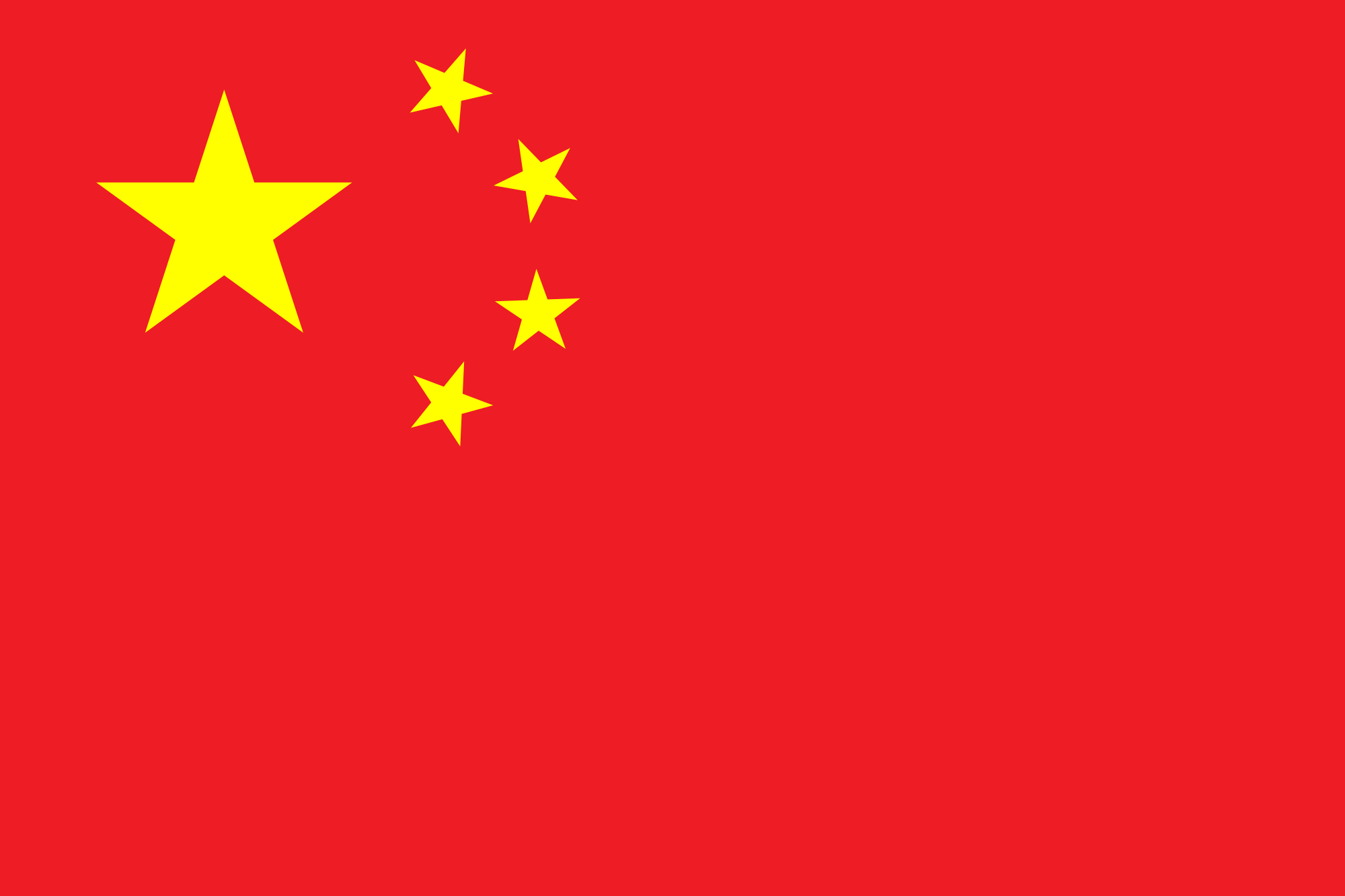
China,[h] officially the People's Republic of China (PRC),[i] is a country in East Asia. With a population exceeding 1.4 billion, it is the second-most populous country after India, representing 17% of the world population. China borders fourteen countries by land[j] across an area of 9.6 million square kilometers (3,700,000 sq mi), making it the third-largest country by area.[k] The country is divided into 33 province-level divisions: 22 provinces,[l] 5 autonomous regions, 4 municipalities, and 2 semi-autonomous special administrative regions. Beijing is the capital, while Shanghai is the most populous city by urban area and largest financial center.
Key Information


.svg)


China saw the first humans in the region arriving during the Paleolithic era. By the 2nd millennium BCE dynastic states had emerged in the Yellow River basin. The 8th–3rd centuries BCE saw a breakdown in the authority of the Zhou dynasty, accompanied by the emergence of administrative and military techniques, literature and philosophy. In 221 BCE, China was unified under an emperor, ushering in two millennia of imperial dynasties. With the invention of gunpowder and paper, the establishment of the Silk Road, and the Great Wall, Chinese culture flourished and has heavily influenced its neighbors and lands further afield. China began to cede parts of the country in the 19th century, to European powers by a series of unequal treaties. The 1911 Revolution overthrew the Qing dynasty and the Republic of China (ROC) was established the following year. The country was unstable and fragmented during the Warlord Era, which ended upon the Northern Expedition conducted by the Kuomintang (KMT) to reunify the country. The Chinese Civil War began in 1927, when KMT forces purged members of the Chinese Communist Party (CCP), who proceeded to engage in fighting against the KMT-led Nationalist government. Following invasion by the Japan in 1937, the CCP – under the leadership of Mao Zedong – and KMT formed the Second United Front to fight the Japanese. The Second Sino-Japanese War ended in a Chinese victory; however, the CCP and the KMT resumed their civil war.
In 1949, the resurgent Communists established control, proclaiming the People's Republic of China and forcing the Nationalist government to retreat to the island of Taiwan. The country was split, with both sides claiming to be the legitimate government. Following the implementation of land reforms, attempts by the PRC to realize communism failed: the Great Leap Forward was responsible for the Great Chinese Famine which resulted in millions of deaths, and the Cultural Revolution was a period of turmoil and persecution. Economic reforms that began in 1978 moved the country away from a socialist planned economy towards a market-based economy, spurring significant economic growth. A movement for increased democracy and political liberalization stalled after the 1989 Tiananmen Square protests and massacre.
China is a unitary communist state led by the CCP that self-designates as a socialist state. It is one of the five permanent members of the UN Security Council. It is a founding member of multilateral and regional organizations such as the AIIB, the Silk Road Fund, the New Development Bank, and the RCEP. It is a member of BRICS, the G20, APEC, the SCO, and the East Asia Summit. Making up around one-fifth of the world economy, the Chinese economy is the world's largest by PPP-adjusted GDP. China is the second-wealthiest country, albeit ranking poorly in measures of democracy and human rights. The country has been one of the fastest-growing economies and is the world's largest manufacturer and exporter, as well as the second-largest importer. China is a nuclear-weapon state with the world's largest standing army and the second-largest defense budget. It is described as either a potential or established superpower,[14][15][16] due to its influence in the fields of geopolitics, technology, manufacturing, economics and culture.[17][18][19][20] China is known for its cuisine and culture. It is a megadiverse country, and has 60 UNESCO World Heritage Sites.
Etymology
[edit]
The word "China" has been used in English since the 16th century; however, it was not used by the Chinese themselves during this period. Its origin has been traced through Portuguese, Malay, and Persian back to the Sanskrit word Cīna, used in ancient India.[21] "China" appears in Richard Eden's 1555 translation[m] of the 1516 journal of the Portuguese explorer Duarte Barbosa.[n][21] Barbosa's usage was derived from Persian Chīn (چین), which in turn derived from Sanskrit Cīna (चीन).[26] The origin of the Sanskrit word is a matter of debate.[21] Cīna was first used in early Hindu scripture, including the Mahabharata (3rd century BCE–4th century CE) and the Laws of Manu (2nd century BCE–2nd century CE).[27] In 1655, Martino Martini suggested that the word China is derived ultimately from the name of the Qin dynasty (221–206 BCE).[28][27] Although use in Indian sources precedes this dynasty, this derivation is still given in various sources.[29] Alternative suggestions include the names for Yelang and the Jing or Chu state.[27][30]
The official name of the modern state is the "People's Republic of China" (simplified Chinese: 中华人民共和国; traditional Chinese: 中華人民共和國; pinyin: Zhōnghuá rénmín gònghéguó). The shorter form is "China" (中国; 中國; Zhōngguó), from zhōng ('central') and guó ('state'), a term which developed under the Western Zhou dynasty in reference to its royal demesne.[o][p] It was used in official documents as an synonym for the state under the Qing.[33] The name Zhongguo is also translated as 'Middle Kingdom' in English.[34] China is sometimes referred to as mainland China or "the Mainland" when distinguishing it from the Republic of China or the PRC's Special Administrative Regions.[35][36][37]
History
[edit]Prehistory
[edit]
Archaeological evidence suggests that early hominids inhabited China 2.25 million years ago.[38] The hominid fossils of Peking Man, a Homo erectus who used fire,[39] have been dated to between 680,000 and 780,000 years ago.[40] The fossilized teeth of Homo sapiens (dated to 125,000–80,000 years ago) have been discovered in Fuyan Cave.[41] Chinese proto-writing existed in Jiahu around 6600 BCE,[42] at Damaidi around 6000 BCE,[43] Dadiwan from 5800 to 5400 BCE, and Banpo dating from the 5th millennium BCE. Some scholars have suggested that the Jiahu symbols (7th millennium BCE) constituted the earliest Chinese writing system.[42]
Early dynastic rule
[edit]
According to traditional Chinese historiography, the Xia dynasty was established during the late 3rd millennium BCE, marking the beginning of the dynastic cycle that was understood to underpin China's entire political history. In the modern era, the Xia's historicity came under increasing scrutiny, in part due to the earliest known attestation of the Xia being written millennia after the date given for their collapse. In 1958, archaeologists discovered sites belonging to the Erlitou culture that existed during the early Bronze Age; they have since been characterized as the remains of the historical Xia, but this conception is often rejected.[44][45][46] The Shang dynasty that traditionally succeeded the Xia is the earliest for which there are both contemporary written records and undisputed archaeological evidence.[47] The Shang ruled much of the Yellow River valley until the 11th century BCE, with the earliest hard evidence dated c. 1300 BCE.[48] The oracle bone script, attested from c. 1250 BCE but generally assumed to be considerably older,[49][50] represents the oldest known form of written Chinese,[51] and is the direct ancestor of modern Chinese characters.[52]
The Shang were overthrown by the Zhou, who ruled between the 11th and 5th centuries BCE, though the centralized authority of Son of Heaven was slowly eroded by fengjian lords. Some principalities eventually emerged from the weakened Zhou and continually waged war with each other during the 300-year Spring and Autumn period. By the time of the Warring States period of the 5th–3rd centuries BCE, there were seven major powerful states left.[53]
Imperial China
[edit]Qin and Han
[edit]
The Warring States period ended in 221 BCE after the state of Qin conquered the other six states, reunited China and established the dominant order of autocracy. King Zheng of Qin proclaimed himself the Emperor of the Qin dynasty, becoming the first emperor of a unified China. He enacted Qin's legalist reforms, notably the standardization of Chinese characters, measurements, road widths, and currency. His dynasty also conquered the Yue tribes in Guangxi, Guangdong, and Northern Vietnam.[54] The Qin dynasty lasted only fifteen years, falling soon after the First Emperor's death.[55][56]
Following widespread revolts during which the imperial library was burned,[q] the Han dynasty emerged to rule China between 206 BCE and 220 CE, creating a cultural identity among its populace still remembered in the ethnonym of the modern Han Chinese.[55][56] The Han expanded the empire's territory considerably, with military campaigns reaching Central Asia, Mongolia, Korea, and Yunnan, and the recovery of Guangdong and northern Vietnam from Nanyue. Han involvement in Central Asia and Sogdia helped establish the land route of the Silk Road, replacing the earlier path over the Himalayas to India. Han China gradually became the largest economy of the ancient world.[58] Despite the Han's initial decentralization and the official abandonment of the Qin philosophy of Legalism in favor of Confucianism, Qin's legalist institutions and policies continued to be employed by the Han government and its successors.[59]
Three Kingdoms, Jin, Northern and Southern dynasties
[edit]After the end of the Han dynasty, a period of strife known as Three Kingdoms followed, at the end of which Wei was swiftly overthrown by the Jin dynasty. The Jin fell to civil war upon the ascension of a developmentally disabled emperor; the Five Barbarians then rebelled and ruled northern China as the Sixteen States. The Xianbei unified them as the Northern Wei, whose Emperor Xiaowen reversed his predecessors' apartheid policies and enforced a drastic sinification on his subjects. In the south, the general Liu Yu secured the abdication of the Jin in favor of the Liu Song. The various successors of these states became known as the Northern and Southern dynasties, with the two areas finally reunited by the Sui in 581.[citation needed]
Sui, Tang and Song
[edit]The Sui restored the Han to power through China, reformed its agriculture, economy and imperial examination system, constructed the Grand Canal, and patronized Buddhism. However, they fell quickly when their conscription for public works and a failed war in northern Korea provoked widespread unrest.[60][61] Under the succeeding Tang and Song dynasties, Chinese economy, technology, and culture entered a golden age.[62] The Tang dynasty retained control of the Western Regions and the Silk Road,[63] which brought traders to as far as Mesopotamia and the Horn of Africa,[64] and made the capital Chang'an a cosmopolitan urban center. However, it was devastated and weakened by the An Lushan rebellion in the 8th century.[65] In 907, the Tang disintegrated completely when the local military governors became ungovernable. The Song dynasty ended the separatist situation in 960, leading to a balance of power between the Song and the Liao dynasty. The Song was the first government in world history to issue paper money and the first Chinese polity to establish a permanent navy which was supported by the developed shipbuilding industry along with the sea trade.[66]
Between the 10th and 11th century CE, the population of China doubled to around 100 million people, mostly because of the expansion of rice cultivation in central and southern China, and the production of abundant food surpluses. The Song dynasty also saw a revival of Confucianism, in response to the growth of Buddhism during the Tang,[67] and a flourishing of philosophy and the arts, as landscape art and porcelain were brought to new levels of complexity.[68] However, the military weakness of the Song army was observed by the Jin dynasty. In 1127, Emperor Emeritus Huizong, Emperor Qinzong of Song and the capital Bianjing were captured during the Jin–Song wars. The remnants of the Song retreated to southern China and reestablished the Song at Jiankang.[69]
Yuan, Ming and Qing
[edit]
The Mongol conquest of China began in 1205 with the campaigns against Western Xia by Genghis Khan,[70] who also invaded Jin territories.[71] In 1271, the Mongol leader Kublai Khan established the Yuan dynasty, which conquered the last remnant of the Song dynasty in 1279. Before the Mongol invasion, the population of Song China was 120 million citizens; this was reduced to 60 million by the time of the census in 1300.[72] A peasant named Zhu Yuanzhang overthrew the Yuan in 1368 and founded the Ming dynasty as the Hongwu Emperor. Under the Ming dynasty, China enjoyed another golden age, developing one of the strongest navies in the world and a rich and prosperous economy amid a flourishing of art and culture. It was during this period that admiral Zheng He led the Ming treasure voyages throughout the Indian Ocean, reaching as far as East Africa.[73]
In the early Ming dynasty, China's capital was moved from Nanjing to Beijing. With the budding of capitalism, philosophers such as Wang Yangming critiqued and expanded Neo-Confucianism with concepts of individualism and equality of four occupations.[74] The scholar-official stratum became a supporting force of industry and commerce in the tax boycott movements, which, together with the famines and defense against Japanese invasions of Korea (1592–1598) and Later Jin incursions led to an exhausted treasury.[75] In 1644, Beijing was captured by a coalition of peasant rebel forces led by Li Zicheng. The Chongzhen Emperor committed suicide when the city fell. The Manchu Qing dynasty, then allied with Ming dynasty general Wu Sangui, overthrew Li's short-lived Shun dynasty and subsequently seized control of Beijing, which became the new capital of the Qing dynasty.[76]

The Qing dynasty, which lasted from 1644 until 1912, was the last imperial dynasty of China. The Ming-Qing transition (1618–1683) cost 25 million lives, but the Qing appeared to have restored China's imperial power and inaugurated another flowering of the arts.[77] After the Southern Ming ended, the further conquest of the Dzungar Khanate added Mongolia, Tibet and Xinjiang to the empire.[78] Meanwhile, China's population growth resumed and shortly began to accelerate. It is commonly agreed that pre-modern China's population experienced two growth spurts, one during the Northern Song period (960–1127), and other during the Qing period (around 1700–1830).[79] By the High Qing era China was possibly the most commercialized country in the world, and imperial China experienced a second commercial revolution by the end of the 18th century.[80] On the other hand, the centralized autocracy was strengthened in part to suppress anti-Qing sentiment with the policy of valuing agriculture and restraining commerce, like the Haijin during the early Qing period and ideological control as represented by the literary inquisition, causing some social and technological stagnation.[81][82]
Fall of the Qing dynasty
[edit]
In the mid-19th century, the Opium Wars with Britain and France forced China to pay compensation, open treaty ports, allow extraterritoriality for foreign nationals, and cede Hong Kong to the British[83] under the 1842 Treaty of Nanking, the first of what have been termed the unequal treaties. The First Sino-Japanese War (1894–1895) resulted in Qing China's loss of influence in the Korean Peninsula, as well as the cession of Taiwan to Japan.[84] The Qing dynasty also began experiencing internal unrest in which tens of millions of people died, especially in the White Lotus Rebellion, the failed Taiping Rebellion that ravaged southern China in the 1850s and 1860s and the Dungan Revolt (1862–1877) in the northwest. The initial success of the Self-Strengthening Movement of the 1860s was frustrated by a series of military defeats in the 1880s and 1890s.[85]
In the 19th century, the great Chinese diaspora began. Losses due to emigration were added to by conflicts and catastrophes such as the Northern Chinese Famine of 1876–1879, in which between 9 and 13 million people died.[86] The Guangxu Emperor drafted a reform plan in 1898 to establish a modern constitutional monarchy, but these plans were thwarted by the Empress Dowager Cixi. The ill-fated anti-foreign Boxer Rebellion of 1899–1901 further weakened the dynasty. Although Cixi sponsored a program of reforms known as the late Qing reforms, the Xinhai Revolution of 1911–1912 ended the Qing dynasty and established the Republic of China.[87] Puyi, the last Emperor, abdicated in 1912.[88]
Establishment of the Republic and World War II
[edit]On 1 January 1912, the Republic of China was established, and Sun Yat-sen of the Kuomintang (KMT) was proclaimed provisional president.[89] In March 1912, the presidency was given to Yuan Shikai, a former Qing general who in 1915 proclaimed himself Emperor of China. In the face of popular condemnation and opposition from his own Beiyang Army, he was forced to abdicate and re-establish the republic in 1916.[90] After Yuan Shikai's death in 1916, China was politically fragmented. Its Beijing-based government was internationally recognized but virtually powerless; regional warlords controlled most of its territory.[91][92] During this period, China participated in World War I and saw a far-reaching popular uprising (the May Fourth Movement).[93]

In the late 1920s, the Kuomintang under Chiang Kai-shek was able to reunify the country under its own control with a series of deft military and political maneuverings known collectively as the Northern Expedition.[94][95] The Kuomintang moved the nation's capital to Nanjing and implemented "political tutelage", an intermediate stage of political development outlined in Sun Yat-sen's Three Principles of the People program for transforming China into a modern democratic state.[96][97] The Kuomintang briefly allied with the Chinese Communist Party (CCP) during the Northern Expedition, though the alliance broke down in 1927 after Chiang violently suppressed the CCP and other leftists in Shanghai, marking the beginning of the Chinese Civil War.[98] The CCP declared areas of the country as the Chinese Soviet Republic (Jiangxi Soviet) in November 1931 in Ruijin, Jiangxi. The Jiangxi Soviet was wiped out by the KMT armies in 1934, leading the CCP to initiate the Long March and relocate to Yan'an in Shaanxi. It would be the base of the communists before major combat in the Chinese Civil War ended in 1949.
In 1931, Japan invaded and occupied Manchuria. Japan invaded other parts of China in 1937, precipitating the Second Sino-Japanese War (1937–1945), a theater of World War II. The war forced an uneasy alliance between the Kuomintang and the CCP. Japanese forces committed numerous war atrocities against the civilian population; as many as 20 million Chinese civilians died.[99] An estimated 40,000 to 300,000 Chinese were massacred in Nanjing alone during the Japanese occupation.[100] China, along with the UK, the United States, and the Soviet Union, were recognized as the Allied "Big Four" in the Declaration by United Nations.[101][102] Along with the other three great powers, China was one of the four major Allies of World War II, and was later considered one of the primary victors in the war.[103][104] After the surrender of Japan in 1945, Taiwan, along with the Penghu, were handed over to Chinese control; however, the validity of this handover is controversial.[105]
People's Republic
[edit]
China emerged victorious but war-ravaged and financially drained. The continued distrust between the Kuomintang and the Communists led to the resumption of civil war. Constitutional rule was established in 1947, but because of the ongoing unrest, many provisions of the ROC constitution were never implemented in mainland China.[105] Afterwards, the CCP took control of most of mainland China, and the ROC government retreated offshore to Taiwan.
On 1 October 1949, CCP Chairman Mao Zedong formally proclaimed the People's Republic of China in Tiananmen Square, Beijing.[107] In 1950, the PRC captured Hainan from the ROC[108] and annexed Tibet.[109] However, remaining Kuomintang forces continued to wage an insurgency in western China throughout the 1950s.[110] The CCP consolidated its popularity among the peasants through the Land Reform Movement, which included the state-tolerated executions of between 1 and 2 million landlords by peasants and former tenants.[111] Though the PRC initially allied closely with the Soviet Union, the relations between the two communist nations gradually deteriorated, leading China to develop an independent industrial system and its own nuclear weapons.[112]
The Chinese population increased from 550 million in 1950 to 900 million in 1974.[113] The historical consensus is that the policies of the Mao-era significantly reduced poverty.[114] However, the Great Leap Forward, an idealistic massive industrialization project, resulted in an estimated 15 to 55 million deaths between 1959 and 1961, mostly from starvation.[115][116] In 1964, China detonated its first atomic bomb.[117] In 1966, Mao and his allies launched the Cultural Revolution, sparking a decade of political recrimination and social upheaval that lasted until Mao's death in 1976. In October 1971, the PRC replaced the ROC in the United Nations, and took its seat as a permanent member of the Security Council.[118]

After Mao's death, the Gang of Four were arrested by Hua Guofeng and held responsible for the Cultural Revolution. The Cultural Revolution was rebuked, with millions rehabilitated. Deng Xiaoping took power in 1978, and started the reform and opening up, instituting large-scale political and economic reforms, together with the "Eight Elders", most senior and influential members of the party. The government loosened its control and the communes were gradually disbanded.[119] Agricultural collectivization was dismantled and farmlands privatized. While foreign trade became a major focus, special economic zones (SEZs) were created. Inefficient state-owned enterprises (SOEs) were restructured and some closed. This marked China's transition away from planned economy.[120] China adopted its current constitution on 4 December 1982.[121]
In 1989, there were protests such those in Tiananmen Square, and then throughout the entire nation.[122] Jiang Zemin was elevated to become the CCP general secretary, becoming the paramount leader. Jiang continued economic reforms, closing many SOEs and trimming down "iron rice bowl" (life-tenure positions).[123][124][125] China's economy grew sevenfold during this time.[123] British Hong Kong and Portuguese Macau returned to China in 1997 and 1999, respectively, as special administrative regions under the principle of one country, two systems. The country joined the World Trade Organization in 2001.[123]
At the 16th CCP National Congress in 2002, Hu Jintao succeeded Jiang as the general secretary.[123] Under Hu, China maintained its high rate of economic growth, overtaking the United Kingdom, France, Germany and Japan to become the world's second-largest economy.[126] However, the growth also severely impacted the country's resources and environment,[127][128] and caused major social displacement.[129][130] Xi Jinping succeeded Hu as paramount leader at the 18th CCP National Congress in 2012. Shortly after his ascension to power, Xi launched a vast anti-corruption crackdown,[131] that prosecuted more than 2 million officials by 2022.[132] During his tenure, Xi has consolidated power unseen since the initiation of economic and political reforms.[133]
Geography
[edit]
China's landscape is vast and diverse, ranging from the Gobi and Taklamakan Deserts in the arid north to the subtropical forests in the wetter south. The Himalaya, Karakoram, Pamir and Tian Shan mountain ranges separate China from much of South and Central Asia. The Yangtze and Yellow Rivers, the third- and sixth-longest in the world, respectively, run from the Tibetan Plateau to the densely populated eastern seaboard. China's coastline along the Pacific Ocean is 14,500 km (9,000 mi) long and is bounded by the Bohai, Yellow, East China and South China seas. China connects through the Kazakh border to the Eurasian Steppe.
The territory of China lies between latitudes 18° and 54° N, and longitudes 73° and 135° E. The geographical center of China is marked by the Center of the Country Monument at 35°50′40.9″N 103°27′7.5″E / 35.844694°N 103.452083°E. China's landscapes vary significantly across its vast territory. In the east, along the shores of the Yellow Sea and the East China Sea, there are extensive and densely populated alluvial plains, while on the edges of the Inner Mongolian plateau in the north, broad grasslands predominate. Southern China is dominated by hills and low mountain ranges, while the central-east hosts the deltas of China's two major rivers, the Yellow River and the Yangtze River. Other major rivers include the Xi, Mekong, Brahmaputra and Amur. To the west sit major mountain ranges, most notably the Himalayas. High plateaus feature among the more arid landscapes of the north, such as the Taklamakan and the Gobi Desert. The world's highest point, Mount Everest (8,848 m), lies on the Sino-Nepalese border.[134] The country's lowest point, and the world's third-lowest, is the dried lake bed of Ayding Lake (−154 m) in the Turpan Depression.[135]
Despite spanning the equivalent of five geographical timezones (from UTC+5 to UTC+9), China uses a single national time zone, China Standard Time (UTC+8).[136][137] This uniform time policy was adopted in 1949.[136]
Climate
[edit]
China's climate is mainly dominated by dry seasons and wet monsoons, which lead to pronounced temperature differences between winter and summer. In the winter, northern winds coming from high-latitude areas are cold and dry; in summer, southern winds from coastal areas at lower latitudes are warm and moist.[139]
A major environmental issue in China is the continued expansion of its deserts, particularly the Gobi Desert.[140] Although barrier tree lines planted since the 1970s have reduced the frequency of sandstorms, prolonged drought and poor agricultural practices have resulted in dust storms plaguing northern China each spring, which then spread to other parts of East Asia, including Japan and Korea. Water quality, erosion, and pollution control have become important issues in China's relations with other countries. Melting glaciers in the Himalayas could potentially lead to water shortages for hundreds of millions of people.[141] According to academics, in order to limit climate change in China to 1.5 °C (2.7 °F) electricity generation from coal in China without carbon capture must be phased out by 2045.[142] With current policies, the GHG emissions of China will probably peak in 2025, and by 2030 they will return to 2022 levels. However, such pathway still leads to three-degree temperature rise.[143]
Official government statistics about Chinese agricultural productivity are considered unreliable, due to exaggeration of production at subsidiary government levels.[144][145] Much of China has a climate very suitable for agriculture and the country has been the world's largest producer of rice, wheat, tomatoes, eggplant, grapes, watermelon, spinach, and many other crops.[146] In 2021, 12 percent of global permanent meadows and pastures belonged to China, as well as 8% of global cropland.[147]
Biodiversity
[edit]
China is one of 17 megadiverse countries,[148] lying in two of the world's major biogeographic realms: the Palearctic and the Indomalayan. By one measure, China has over 34,687 species of animals and vascular plants, making it the third-most biodiverse country in the world, after Brazil and Colombia.[149] The country is a party to the Convention on Biological Diversity;[150] its National Biodiversity Strategy and Action Plan was received by the convention in 2010.[151]
China is home to at least 551 species of mammals (the third-highest in the world),[152] 1,221 species of birds (eighth),[153] 424 species of reptiles (seventh)[154] and 333 species of amphibians (seventh).[155] Wildlife in China shares habitat with, and bears acute pressure from, one of the world's largest population of humans. At least 840 animal species are threatened, vulnerable or in danger of local extinction, due mainly to human activity such as habitat destruction, pollution and poaching for food, fur and traditional Chinese medicine.[156] Endangered wildlife is protected by law, and as of 2005[update], the country has over 2,349 nature reserves, covering a total area of 149.95 million hectares, 15 percent of China's total land area.[157] Most wild animals have been eliminated from the core agricultural regions of east and central China, but they have fared better in the mountainous south and west.[158][159] The Baiji was confirmed extinct on 12 December 2006.[160]
China has over 32,000 species of vascular plants,[161] and is home to a variety of forest types. Cold coniferous forests predominate in the north of the country, supporting animal species such as moose and Asian black bear, along with over 120 bird species.[162] The understory of moist conifer forests may contain thickets of bamboo. In higher montane stands of juniper and yew, the bamboo is replaced by rhododendrons. Subtropical forests, which are predominate in central and southern China, support a high density of plant species including numerous rare endemics. Tropical and seasonal rainforests, though confined to Yunnan and Hainan, contain a quarter of all the animal and plant species found in China.[162] China has over 10,000 recorded species of fungi.[163]
Environment
[edit]
In the early 2000s, China has suffered from environmental deterioration and pollution due to its rapid pace of industrialization.[164][165] Regulations such as the 1979 Environmental Protection Law are fairly stringent, though they are poorly enforced, frequently disregarded in favor of rapid economic development.[166] China has the second-highest death toll because of air pollution, after India, with approximately 1 million deaths.[167][168] Although China ranks as the highest CO2 emitting country,[169] it only emits 8 tons of CO2 per capita, significantly lower than developed countries such as the United States (16.1), Australia (16.8) and South Korea (13.6).[170] Greenhouse gas emissions by China are the world's largest.[170] The country has significant water pollution problems; only 89.4% of China's national surface water was graded suitable for human consumption by the Ministry of Ecology and Environment in 2023.[171]
China has prioritized clamping down on pollution, bringing a significant decrease in air pollution in the 2010s.[172] In 2020, the Chinese government announced its aims for the country to reach its peak emissions levels before 2030, and achieve carbon neutrality by 2060 in line with the Paris Agreement,[173] which, according to Climate Action Tracker, would lower the expected rise in global temperature by 0.2–0.3 degrees – "the biggest single reduction ever estimated by the Climate Action Tracker".[173] According to China's government, the forest coverage of the country grew from 10% of the overall territory in 1949 to 25% in 2024.[174]
China is the world's leading investor in renewable energy and its commercialization, with $546 billion invested in 2022;[175] it the world's leading manufacturer of renewable energy technologies and invests heavily in local-scale renewable energy projects.[176][175][177] Long heavily relying on non-renewable energy sources such as coal, China's adaptation of renewable energy has increased significantly in recent years.[178] In 2024, 58.2% of China's electricity came from coal (largest producer in the world), 13.5% from hydroelectric power (largest), 9.8% from wind (largest), 8.3% from solar energy (largest), 4.4% from nuclear energy (second-largest), 3% from natural gas (fifth-largest), and 2.1% from bioenergy (largest); in total, 38% of China's energy came from clean energy sources.[179] Despite its emphasis on renewables, China remains deeply connected to global oil markets and next to India, has been the largest importer of Russian crude oil in 2022.[180][181]
Political geography
[edit]
China is the third-largest country in the world by land area after Russia, and the third- or fourth-largest country in the world by total area.[r] China's total area is generally stated as being approximately 9,600,000 km2 (3,700,000 sq mi).[182] Specific area figures range from 9,572,900 km2 (3,696,100 sq mi) according to the Encyclopædia Britannica,[12] to 9,596,961 km2 (3,705,407 sq mi) according to the UN Demographic Yearbook,[5] and The World Factbook.[4]
China has the longest combined land border in the world, measuring 22,117 km (13,743 mi) and its coastline covers approximately 14,500 km (9,000 mi) from the mouth of the Yalu River (Amnok River) to the Gulf of Tonkin.[4] China borders 14 nations and covers the bulk of East Asia, bordering Vietnam, Laos, and Myanmar in Southeast Asia; India, Bhutan, Nepal, Pakistan[s] and Afghanistan in South Asia; Tajikistan, Kyrgyzstan and Kazakhstan in Central Asia; and Russia, Mongolia, and North Korea in Inner Asia and Northeast Asia. It is narrowly separated from Bangladesh and Thailand to the southwest and south, and has several maritime neighbors such as Japan, Philippines, Malaysia, and Indonesia.[183]
China has resolved its land borders with 12 out of 14 neighboring countries, having pursued substantial compromises in most of them.[184][185][186] China currently has a disputed land border with India[187] and Bhutan.[188] China is additionally involved in maritime disputes with multiple countries over territory in the East and South China Seas, such as the Senkaku Islands and the entirety of South China Sea Islands.[189][190]
Government and politics
[edit]

The People's Republic of China is a communist state governed by the Chinese Communist Party (CCP). The CCP is officially guided by socialism with Chinese characteristics, which is Marxism adapted to Chinese circumstances.[191] The Chinese constitution states that the PRC "is a socialist state governed by a people's democratic dictatorship that is led by the working class and based on an alliance of workers and peasants", and that "the defining feature of socialism with Chinese characteristics is the leadership of the Chinese Communist Party."[192][193]
The PRC officially characterizes itself as a democracy—more specifically, a whole-process people's democracy.[194] However, the country is commonly described as an authoritarian one-party state and a dictatorship,[195][196] with some of the world's heaviest restrictions in many civil areas, most notably against freedom of the press, freedom of assembly, free formation of social organizations, freedom of religion and free access to the Internet.[197] China has consistently been ranked amongst the lowest as an "authoritarian regime" by the Economist Intelligence Unit's Democracy Index, ranking at 145th out of 167 countries in 2024.[198] Other sources suggest that terming China as "authoritarian" does not sufficiently account for the multiple consultation mechanisms that exist in the Chinese governmental system.[199]
Chinese Communist Party
[edit]
The CCP is the founding and sole ruling party of the PRC. According to the CCP constitution, the CCP's highest body is the National Congress held every five years.[200] The National Congress elects the Central Committee, who then elects the party's Politburo, Politburo Standing Committee and the general secretary (party leader), the top leadership of the country.[200] The general secretary holds ultimate power and authority over party and state and serves as the informal paramount leader.[201] The current general secretary is Xi Jinping, who took office on 15 November 2012.[202] At the local level, the secretary of the CCP committee of a subdivision outranks the local government level; CCP committee secretary of a provincial division outranks the governor while the CCP committee secretary of a city outranks the mayor.[203]
Government
[edit].jpg)
.jpg)
(crop).jpg)

The government in China is under the sole control of the CCP.[204] The CCP controls appointments in government bodies, with most senior government officials being CCP members.[204]
The National People's Congress (NPC), with nearly 3,000-members, as the highest organ of state power holds the unified powers of the state,[193] though observers often describe it as a "rubber stamp" body.[205] The NPC meets annually, while the NPC Standing Committee, around 150 members elected from NPC delegates, meets every couple of months.[205] Elections are indirect and not pluralistic, with nominations at all levels being controlled by the CCP.[194] The NPC is dominated by the CCP, with another eight minor parties having nominal representation under the condition of upholding CCP leadership.[206]
The NPC elects the president. The presidency is the ceremonial state representative, not the constitutional head of state. The incumbent president is Xi Jinping, who is also the general secretary of the CCP and the chairman of the Central Military Commission, making him China's paramount leader and supreme commander of the armed forces. The premier is the head of government, with Li Qiang being the incumbent. The premier is officially nominated by the president and then elected by the NPC, and has generally been either the second- or third-ranking member of the Politburo Standing Committee (PSC). The premier presides over the State Council, China's cabinet, composed of four vice premiers, state councillors, and the heads of ministries and commissions.[193] The Chinese People's Political Consultative Conference (CPPCC) is a political advisory body that is critical in China's "united front" system, which aims to gather non-CCP voices to support the CCP. Similar to the people's congresses, CPPCCs have subdivisions; the National Committee of the CPPCC is chaired by Wang Huning, the fourth-ranking member of the PSC.[207]
The governance of China is characterized by a high degree of political centralization but significant economic decentralization.[208]: 7 Policy instruments or processes are often tested locally before being applied more widely, resulting in a policy that involves experimentation and feedback.[209]: 14 Generally, central government leadership refrains from drafting specific policies, instead using the informal networks and site visits to affirm or suggest changes to the direction of local policy experiments or pilot programs.[210]: 71 The typical approach is that central government leadership begins drafting formal policies, law, or regulations after policy has been developed at local levels.[210]: 71
Administrative divisions
[edit]The PRC is constitutionally a unitary state divided into 23 provinces,[t] five autonomous regions (each with a designated minority group), four direct-administered municipalities—collectively referred to as "mainland China"—as well as the special administrative regions (SARs) of Hong Kong and Macau.[211] The PRC regards the island of Taiwan as its Taiwan Province, Kinmen and Matsu as a part of Fujian Province, and islands the ROC controls in the South China Sea as a part of Hainan Province and Guangdong Province, even though all these territories are governed by the Republic of China (ROC).[212][37] Geographically, all 31 provincial divisions of mainland China can be grouped into six regions: North China, East China, Southwestern China, South Central China, Northeast China, and Northwestern China.[213]

| Provinces (省) |
|
|---|---|
| Claimed Province |
Taiwan (台湾省), governed by the Republic of China |
| Autonomous regions (自治区) |
|
| Municipalities (直辖市) | |
| Special administrative regions (特别行政区) |
Foreign relations
[edit]
The PRC has diplomatic relations with 179 United Nations member-states and maintains embassies in 174. As of 2024[update], China has one of the largest diplomatic networks of any country in the world.[214] In 1971, the PRC replaced the ROC as the sole representative of China in the United Nations and as one of the five permanent members of the United Nations Security Council.[215] It is a member of intergovernmental organizations including the G20,[216] the SCO,[217] the BRICS,[218] the East Asia Summit,[219] and the APEC.[220] China is also a former member and leader of the Non-Aligned Movement and still considers itself an advocate for developing countries.[221]
The PRC officially maintains the one China principle: the view that there is only one sovereign state with the name "China"—represented by the PRC—and that Taiwan is part of that China.[222] The unique status of Taiwan has led to countries formally recognizing the PRC to maintain unique "one China policies" that differ from each other; some countries explicitly recognize the PRC's claim over Taiwan, while others, including the U.S. and Japan, only acknowledge the claim.[222] Chinese officials have protested on numerous occasions when foreign countries have made diplomatic overtures to Taiwan,[223] especially in the matter of armament sales.[224] Most countries have switched recognition from the ROC to the PRC since the latter replaced the former in the UN in 1971.[225]
.jpg)
Much of current Chinese foreign policy is reportedly based on Premier Zhou Enlai's Five Principles of Peaceful Coexistence, as well as by the concept of "harmony without uniformity", which encourages diplomatic relations between states despite ideological differences.[226] This policy may have led China to support or maintain close ties with states that are regarded as dangerous and repressive by Western nations, such as Sudan,[227] North Korea and Iran.[228] China's close relationship with Myanmar has involved support for its ruling governments as well as for its ethnic rebel groups,[229] including the Arakan Army.[230] China has a close political, economic and military relationship with Russia,[231] and the two states often vote in unison in the UN Security Council.[232][233] China provided Russia with economic and diplomatic support during the Russo-Ukrainian War.[234][235] China's relationship with the United States is complex, and includes deep trade ties but significant political differences.[236]
Since the early 2000s, China has followed a policy of engaging with African nations for trade and bilateral co-operation.[237][238][239] It maintains extensive and highly diversified trade links with the European Union, and became its largest trading partner for goods.[240] China is increasing its influence in Central Asia[241] and South Pacific.[242] The country has strong trade ties with ASEAN countries[243] and major South American economies,[244] and is the largest trading partner of Brazil, Chile, Peru, Uruguay, Argentina, and several others.[245]
In 2013, China initiated the Belt and Road Initiative (BRI), a large global infrastructure building initiative with funding on the order of $50–100 billion per year.[246] BRI could be one of the largest development plans in modern history.[247] It expanded significantly over the next six years and, as of April 2020[update], included 138 countries and 30 international organizations. In addition to intensifying foreign policy relations, the focus is particularly on building efficient transport routes, especially the maritime Silk Road with its connections to East Africa and Europe. However many loans made under the program are unsustainable and China has faced a number of calls for debt relief from debtor nations.[248][249]
Military
[edit]
The People's Liberation Army (PLA) is considered one of the world's most powerful militaries and has rapidly modernized in the recent decades.[250] Since 2024, it consists of four services: the Ground Force (PLAGF), the Navy (PLAN), the Air Force (PLAAF) and the Rocket Force (PLARF). It also has four independent arms: the Aerospace Force, the Cyberspace Force, the Information Support Force, and the Joint Logistics Support Force, the first three of which were split from the disbanded Strategic Support Force (PLASSF).[251] Its nearly 2.2 million active duty personnel is the largest in the world. The PLA holds the world's third-largest stockpile of nuclear weapons,[252][253] and the world's second-largest navy by tonnage.[254]
.jpg)
China's official military budget for 2024 totalled US$229 billion (1.67 trillion Yuan), the second-largest in the world, though SIPRI estimates that its real expenditure that year was US$314 billion, making up 12% of global military spending and accounting for 1.7% of the country's GDP.[255] The PLA is commanded by the Central Military Commission (CMC) of the party and the state; though officially two separate organizations, the two CMCs have identical membership except during leadership transition periods and effectively function as one organization. The chairman of the CMC is the commander-in-chief of the PLA.[256]
Sociopolitical issues and human rights
[edit]The situation of human rights in China has attracted significant criticism from foreign governments, foreign press agencies, and non-governmental organizations, alleging widespread civil rights violations such as detention without trial, forced confessions, torture, restrictions of fundamental rights, and excessive use of the death penalty.[197][257] Since its inception, Freedom House has ranked China as "not free" in its Freedom in the World survey,[197] while Amnesty International has documented significant human rights abuses.[257] The Chinese constitution states that the "fundamental rights" of citizens include freedom of speech, freedom of the press, the right to a fair trial, freedom of religion, universal suffrage, and property rights. However, in practice, these provisions do not afford significant protection against criminal prosecution by the state.[258][259] China has limited protections regarding LGBT rights.[260] Although some criticisms of government policies and the ruling CCP are tolerated, censorship of political speech and information are amongst the harshest in the world and routinely used to prevent collective action.[261] The government suppresses popular protests and demonstrations that it considers a potential threat to "social stability".[262] China additionally uses a massive surveillance network of cameras, facial recognition software, sensors, and surveillance of personal technology as a means of social control of persons living in the country.[196]

.jpg)
China is regularly accused of large-scale repression and human rights abuses in Tibet and Xinjiang,[264][265][266] where significant numbers of ethnic minorities reside, including violent police crackdowns and religious suppression.[267][268] Since 2017, the Chinese government has been engaged in a harsh crackdown in Xinjiang, with around one million Uyghurs and other ethnic and religion minorities being detained in internment camps aimed at changing the political thinking of detainees, their identities, and their religious beliefs.[269] According to Western reports, political indoctrination, torture, physical and psychological abuse, forced sterilization, sexual abuse, and forced labor are common in these facilities.[270] According to a 2020 Foreign Policy report, China's treatment of Uyghurs meets the UN definition of genocide,[271] while a separate UN Human Rights Office report said they could potentially meet the definitions for crimes against humanity.[272] The Chinese authorities have also cracked down on dissent in Hong Kong, especially after the passage of a national security law in 2020.[273]
In 2017 and 2020, the Pew Research Center ranked the severity of Chinese government restrictions on religion as being among the world's highest, despite ranking religious-related social hostilities in China as low in severity.[274][275] The Global Slavery Index estimated that in 2016 more than 3.8 million people (0.25% of the population) were living in "conditions of modern slavery", including victims of human trafficking, forced labor, forced marriage, child labor, and state-imposed forced labor. The state-imposed re-education through labor (laojiao) system was formally abolished in 2013, but it is not clear to what extent its practices have stopped.[276] The much larger reform through labor (laogai) system includes labor prison factories, detention centers, and re-education camps; the Laogai Research Foundation has estimated in June 2008 that there were nearly 1,422 of these facilities, though it cautioned that this number was likely an underestimate.[277]
Public views of government
[edit]Political concerns in China include the growing gap between rich and poor and government corruption.[278] Nonetheless, international surveys show the Chinese public have a high level of satisfaction with their government.[208]: 137 These views are generally attributed to the material comforts and security available to large segments of the Chinese populace as well as the government's attentiveness and responsiveness.[208] : 136 According to the World Values Survey (2022), 91% of Chinese respondents have significant confidence in their government.[208]: 13 A Harvard University survey published in July 2020 found that citizen satisfaction with the government had increased since 2003, also rating China's government as more effective and capable than ever in the survey's history.[279]
Economy
[edit]
China has the world's second-largest economy in terms of nominal GDP,[280] and the world's largest in terms of purchasing power parity (PPP).[281] As of 2022[update], China accounts for around 18% of the global economy by nominal GDP.[282] China is one of the world's fastest-growing major economies,[283] with its economic growth having been almost consistently above 5 percent since the introduction of the reform and opening up policy in 1978.[284] According to the World Bank, China's GDP grew from $150 billion in 1978 to $18.74 trillion by 2024.[285] It ranks 64th by nominal GDP per capita, making it an upper-middle income country.[286] Of the world's 500 largest companies, 135 are headquartered in China.[287] As of at least 2024, China has the world's second-largest equity markets and futures markets, as well as the third-largest bond market.[288]: 153
China was one of the world's foremost economic powers throughout the arc of East Asian and global history. The country had one of the largest economies in the world for most of the past two millennia,[289] during which it has seen cycles of prosperity and decline.[58][290] Since economic reforms began in 1978, China has developed into a highly diversified economy and one of the most consequential players in international trade. Major sectors of competitive strength include manufacturing, retail, mining, steel, textiles, automobiles, energy generation, green energy, banking, electronics, telecommunications, real estate, e-commerce, and tourism. China has three out of the ten largest stock exchanges in the world[291]—Shanghai, Hong Kong and Shenzhen—that together have a market capitalization of over $15.9 trillion, as of October 2020[update].[292] China has three out of the world's ten most competitive financial centers according to the 2024 Global Financial Centres Index—Shanghai, Hong Kong, and Shenzhen.[293]

Modern-day China is often described as an example of state capitalism or party-state capitalism.[295][296] The state dominates in strategic "pillar" sectors such as energy production and heavy industries, but private enterprise has expanded enormously, with around 30 million private businesses recorded in 2008.[297][298][299] According to official statistics, privately owned companies constitute more than 60% of China's GDP.[300]
China has been the world's largest manufacturing nation since 2010, after overtaking the U.S., which had been the largest for the previous hundred years.[301][302] China has also been the second-largest in high-tech manufacturing country since 2012, according to US National Science Foundation.[303] China is the second-largest retail market after the United States.[304] China leads the world in e-commerce, accounting for over 37% of the global market share in 2021.[305] The Chinese automotive industry is regarded as one of the most competitive and innovative in the world.[177] China is the world's leader in electric vehicle consumption and production, manufacturing and buying half of all the plug-in electric cars (BEV and PHEV) in the world as of 2022[update].[306] China is also the leading producer of batteries for electric vehicles as well as several key raw materials for batteries.[307]
Tourism
[edit].jpg)
China received 65.7 million international visitors in 2019,[308] and in 2018 was the fourth-most-visited country in the world.[308] It also experiences an enormous volume of domestic tourism; Chinese tourists made an estimated 6 billion travels within the country in 2019.[309] China hosts the world's second-largest number of World Heritage Sites (60) after Italy, and is one of the most popular tourist destinations (first in the Asia-Pacific).
Wealth
[edit]China accounted for 18.6% of the world's total wealth in 2022, second highest in the world after the U.S.[310] China brought more people out of extreme poverty than any other country in history[311][312]—between 1978 and 2018, China reduced extreme poverty by 800 million.[208]: 23 From 1990 to 2018, the proportion of the Chinese population living with an income of less than $1.90 per day (2011 PPP) decreased from 66.3% to 0.3%, the share living with an income of less than $3.20 per day from 90.0% to 2.9%, and the share living with an income of less than $5.50 per day decreased from 98.3% to 17.0%.[313]
From 1978 to 2018, the average standard of living multiplied by a factor of twenty-six.[314] Wages in China have grown significantly in the last 40 years—real (inflation-adjusted) wages grew seven-fold from 1978 to 2007.[315] Per capita incomes have also risen significantly – when the PRC was founded in 1949, per capita income in China was one-fifth of the world average; per capita incomes now equal the world average itself.[314] China's development is highly uneven; its major cities and coastal areas are far more prosperous than its rural and interior regions.[316] It has a high level of economic inequality,[317] which has increased quickly since the economic reforms.[318] Income inequality decreased in the 2010s,[319] and China's Gini coefficient was 0.357 in 2021.[10]
In March 2024, China ranked second in the world, after the U.S., in total number of billionaires and total number of millionaires, with 473 Chinese billionaires[320] and 6.2 million millionaires.[310] In 2019, China overtook the U.S. as the home to the highest number of people who have a net personal wealth of at least $110,000, according to the global wealth report by Credit Suisse.[321][322] China had 85 female billionaires as of January 2021[update], two-thirds of the global total.[323] China has had the world's largest middle-class population since 2015;[324] the middle-class grew to 500 million by 2024.[325]
China in the global economy
[edit].jpg)
China has been a member of the WTO since 2001 and is the world's largest trading power.[327] By 2016, China was the largest trading partner of 124 countries.[328] China became the world's largest trading nation in 2013 by the sum of imports and exports, as well as the world's largest commodity importer, accounting for roughly 45% of maritime's dry-bulk market.[329][330]
China's foreign exchange reserves reached US$3.246 trillion as of March 2024[update], making its reserves by far the world's largest.[331] In 2022, China was amongst the world's largest recipient of inward foreign direct investment (FDI), attracting $180 billion, though most of these were speculated to be from Hong Kong.[332] China also invests abroad, with a total outward FDI of $147.9 billion in 2023,[333] and a number of major takeovers of foreign firms by Chinese companies.[334]
Economists have argued that the renminbi is undervalued, due to currency intervention from the Chinese government, giving China an unfair trade advantage.[335] The Chinese government has promoted the internationalization of the renminbi in order to wean itself off its dependence on the U.S. dollar as a result of perceived weaknesses of the international monetary system.[336] The renminbi is a component of the IMF's special drawing rights and the world's fourth-most traded currency as of 2023[update].[337] However, partly due to capital controls that make the renminbi fall short of being a fully convertible currency, it remains far behind the Euro, the U.S. Dollar and the Japanese Yen in international trade volumes.[338] China has also been widely criticized for manufacturing large quantities of counterfeit goods.[339][340] In 2023, Harvard University's Economic Complexity Index ranked complexity of China's exports 16th in the world, up from 24th in 2010.[341]
Science and technology
[edit]Historical
[edit]
China was a world leader in science and technology until the Ming dynasty.[342] Ancient and medieval Chinese discoveries and inventions, such as papermaking, printing, the compass, and gunpowder (the Four Great Inventions), became widespread across East Asia, the Middle East and later Europe. Chinese mathematicians were the first to use negative numbers.[343][344] By the 17th century, the Western World surpassed China in scientific and technological advancement.[345] The causes of this early modern Great Divergence continue to be debated by scholars.[346]
After repeated military defeats by the European colonial powers and Imperial Japan in the 19th century, Chinese reformers began promoting modern science and technology as part of the Self-Strengthening Movement. After the Communists came to power in 1949, efforts were made to organize science and technology based on the model of the Soviet Union, in which scientific research was part of central planning.[347] After Mao's death in 1976, science and technology were promoted as one of the Four Modernizations,[348] and the Soviet-inspired academic system was gradually reformed.[349]
Modern era
[edit]Since the end of the Cultural Revolution, China has made significant investments in scientific research[350] and is quickly catching up with the U.S. in R&D spending.[351][352] China officially spent around 2.7% of its GDP on R&D in 2024, totaling to around $496 billion.[353] According to the World Intellectual Property Indicators, China received more applications than the U.S. did in 2018 and 2019 and ranked first globally in patents, utility models, trademarks, industrial designs, and creative goods exports in 2021.[354][355][356] It was ranked 10th[357][358] in the Global Innovation Index in 2025, a considerable improvement from its rank of 35th in 2013.[359][360] Chinese supercomputers are ranked among the fastest in the world.[361][u] Its efforts to develop the most advanced semiconductors and jet engines have seen delays and setbacks.[362][363]
China is developing its education system with an emphasis on science, technology, engineering, and mathematics (STEM).[364] Its academic publication apparatus became the world's largest publisher of scientific papers in 2016.[365][366][367] In 2022, China overtook the US in the Nature Index, which measures the share of published articles in leading scientific journals.[368][369]
Space program
[edit]
The Chinese space program started in 1958 with some technology transfers from the Soviet Union. However, it did not launch the nation's first satellite until 1970 with the Dong Fang Hong I, which made China the fifth country to do so independently.[370]
In 2003, China became the third country in the world to independently send humans into space with Yang Liwei's spaceflight aboard Shenzhou 5. As of 2023, eighteen Chinese nationals have journeyed into space, including two women. In 2011, China launched its first space station testbed, Tiangong-1.[371] In 2013, a Chinese robotic rover Yutu successfully touched down on the lunar surface as part of the Chang'e 3 mission.[372]
In 2019, China became the first country to land a probe—Chang'e 4—on the far side of the Moon.[373] In 2020, Chang'e 5 successfully returned Moon samples to the Earth, making China the third country to do so independently.[374] In 2021, China became the third country to land a spacecraft on Mars and the second one to deploy a rover (Zhurong) on Mars.[375] China completed its own modular space station, the Tiangong, in low Earth orbit on 3 November 2022.[376][377][378] On 29 November 2022, China performed its first in-orbit crew handover aboard the Tiangong.[379][380]
In May 2023, China announced a plan to land humans on the Moon by 2030.[381] To that end, China has been developing a lunar-capable super-heavy launcher, the Long March 10, a new crewed spacecraft, and a crewed lunar lander.[382][383] China sent Chang'e 6 on 3 May 2024, which conducted the first lunar sample return from Apollo Basin on the far side of the Moon.[384] This is China's second lunar sample return mission, the first was achieved by Chang'e 5 from the lunar near side 4 years ago.[385] It also carried a Chinese rover called Jinchan to conduct infrared spectroscopy of lunar surface and imaged Chang'e 6 lander on lunar surface.[386]
Infrastructure
[edit]After a decades-long infrastructural boom,[387] China has produced numerous world-leading infrastructural projects: it has the largest high-speed rail network,[388] the most supertall skyscrapers,[389] the largest power plant (the Three Gorges Dam),[390] the most extensive ultra-high-voltage transmission network and innovation infrastructure,[391][392] and a global satellite navigation system with the largest number of satellites.[393]
Telecommunications
[edit]China is the largest telecom market in the world and currently has the largest number of active cellphones of any country, with over 1.7 billion subscribers, as of February 2023[update]. It has the largest number of internet and broadband users, with over 1.1 billion Internet users as of December 2024[update]—equivalent to around 78.6% of its population.[394] By 2018, China had more than 1 billion 4G users, accounting for 40% of world's total.[395] China is making rapid advances in 5G—by late 2018, China had started large-scale and commercial 5G trials.[396] As of December 2023[update], China had over 810 million 5G users and 3.38 million base stations installed.[397]
China Mobile, China Unicom and China Telecom, are the three large providers of mobile and internet in China. China Telecom alone served more than 145 million broadband subscribers and 300 million mobile users; China Unicom had about 300 million subscribers; and China Mobile, the largest of them all, had 925 million users, as of 2018[update].[398] Combined, the three operators had over 3.4 million 4G base-stations in China.[399] Several Chinese telecommunications companies, most notably Huawei and ZTE, have been accused of spying for the Chinese military.[400]
China has developed its own satellite navigation system, dubbed BeiDou, which began offering commercial navigation services across Asia in 2012[401] as well as global services by the end of 2018.[402] Beidou followed GPS and GLONASS as the third completed global navigation satellite.[403]
Transport
[edit]
.jpg)
Since the late 1990s, China's national road network has been significantly expanded through the creation of a network of national highways and expressways. In 2022, China's highways had reached a total length of 177,000 km (110,000 mi), making it the longest highway system in the world.[404] China has the world's largest market for automobiles,[405][406] having surpassed the United States in both auto sales and production. The country is the world's largest exporter of cars by number as of 2023.[407][408] A side-effect of the rapid growth of China's road network has been a significant rise in traffic accidents.[409] In urban areas, bicycles remain a common mode of transport, despite the increasing prevalence of automobiles – as of 2023[update], there are approximately 200 million bicycles in China.[410]
China's railways, which are operated by the state-owned China State Railway Group Company, are among the busiest in the world, handling a quarter of the world's rail traffic volume on only 6 percent of the world's tracks in 2006.[411] As of 2023[update], the country had 159,000 km (98,798 mi) of railways, the second-longest network in the world.[412] The railways strain to meet enormous demand particularly during the Chinese New Year holiday, when the world's largest annual human migration takes place.[413] China's high-speed rail (HSR) system started construction in the early 2000s. By the end of 2024, high speed rail in China had reached 48,000 kilometers (29,826 miles) of dedicated lines alone, making it the longest HSR network in the world.[414] Services on the Beijing–Shanghai, Beijing–Tianjin, and Chengdu–Chongqing lines reach up to 350 km/h (217 mph), making them the fastest conventional high speed railway services in the world. With an annual ridership of over 3.3 billion passengers in 2024, it is the world's busiest.[415] The network includes the Beijing–Guangzhou high-speed railway, the single longest HSR line in the world, and the Beijing–Shanghai high-speed railway, which has three of longest railroad bridges in the world.[416] The Shanghai maglev train, which reaches 431 km/h (268 mph), is the fastest commercial train service in the world.[417] Since 2000, the growth of rapid transit systems in Chinese cities has accelerated.[418] As of December 2023[update], 55 Chinese cities have urban mass transit systems in operation.[419] As of 2020[update], China boasts the five longest metro systems in the world with the networks in Shanghai, Beijing, Guangzhou, Chengdu and Shenzhen being the largest.
The civil aviation industry in China is mostly state-dominated, with the Chinese government retaining a majority stake in the majority of Chinese airlines. The top three airlines in China are Air China, China Southern Airlines, and China Eastern Airlines,[420] which collectively made up 71% of the market in 2018, are all state-owned. Air travel has expanded rapidly in the last decades, with the number of passengers increasing from 16.6 million in 1990 to 551.2 million in 2017.[421] China had approximately 259 airports in 2024.[422]
China has over 2,000 river and seaports, about 130 of which are open to foreign shipping.[423] Of the fifty busiest container ports, 18 are located in China, of which the busiest is the Port of Shanghai, also the busiest port in the world.[424] The country's inland waterways are the world's sixth-longest, and total 27,700 km (17,212 mi).[425]
Water supply and sanitation
[edit]Water supply and sanitation infrastructure in China is facing challenges such as rapid urbanization, as well as water scarcity, contamination, and pollution.[426] According to the Joint Monitoring Program for Water Supply and Sanitation, 93% of rural households had access to basic sanitation in 2022 (up from 77% in 2015).[427] The ongoing South–North Water Transfer Project intends to abate water shortage in the north.[428]
Demographics
[edit].jpg)
The 2020 Chinese census recorded the population as approximately 1,411,778,724. About 17.95% were 14 years old or younger, 63.35% were between 15 and 59 years old, and 18.7% were over 60 years old.[429] Between 2010 and 2020, the average population growth rate was 0.53%.[429]
Given concerns about population growth, China implemented a two-child limit during the 1970s, and, in 1979, began to advocate for an even stricter limit of one child per family. Beginning in the mid-1980s, however, given the unpopularity of the strict limits, China began to allow some major exemptions, particularly in rural areas, resulting in what was actually a "1.5"-child policy from the mid-1980s to 2015; ethnic minorities were also exempt from one-child limits.[430] The next major loosening of the policy was enacted in December 2013, allowing families to have two children if one parent is an only child.[431] In 2016, the one-child policy was replaced in favor of a two-child policy.[432] A three-child policy was announced on 31 May 2021, due to population aging,[432] and in July 2021, all family size limits as well as penalties for exceeding them were removed.[433] In 2023, the total fertility rate was reported to be 1.09, ranking among the lowest in the world.[434] In 2023, National Bureau of Statistics estimated that the population fell 850,000 from 2021 to 2022, the first decline since 1961.[435]
According to one group of scholars, one-child limits had little effect on population growth[436] or total population size.[437] However, these scholars have been challenged.[438] The policy, along with traditional preference for boys, may have contributed to an imbalance in the sex ratio at birth.[439][440] The 2020 census found that males accounted for 51.2% of the total population.[441] However, China's sex ratio is more balanced than it was in 1953, when males accounted for 51.8% of the population.[442]
Urbanization
[edit]
China has urbanized significantly in recent decades. The percent of the country's population living in urban areas increased from 20% in 1980 to over 67% in 2024.[443][444][445] China has over 160 cities with a population of over one million,[446] including the 18 megacities as of 2024[update][447][448] (cities with a population of over 10 million) of Chongqing, Shanghai, Beijing, Chengdu, Guangzhou, Shenzhen, Tianjin, Xi'an, Suzhou, Zhengzhou, Wuhan, Hangzhou, Linyi, Shijiazhuang, Dongguan, Qingdao, Changsha and Hefei.[449][450] The total permanent population of Chongqing, Shanghai, Beijing and Chengdu is above 20 million.[451] Shanghai is China's most populous urban area[452][453] while Chongqing is its largest city proper, the only city in China with a permanent population of over 30 million.[1] The figures in the table below are from the 2020 census, and are only estimates of the urban populations within administrative city limits; a different ranking exists for total municipal populations. The large "floating populations" of migrant workers make conducting censuses in urban areas difficult;[454] the figures below include only long-term residents.
| Rank | Name | Province | Pop. | Rank | Name | Province | Pop. | ||
|---|---|---|---|---|---|---|---|---|---|
| 1 | Shanghai | SH | 24,281,400 | 11 | Hong Kong | HK | 7,448,900 | ||
| 2 | Beijing | BJ | 19,164,000 | 12 | Zhengzhou | HA | 7,179,400 | ||
| 3 | Guangzhou | GD | 13,858,700 | 13 | Nanjing | JS | 6,823,500 | ||
| 4 | Shenzhen | GD | 13,438,800 | 14 | Xi'an | SN | 6,642,100 | ||
| 5 | Tianjin | TJ | 11,744,400 | 15 | Jinan | SD | 6,409,600 | ||
| 6 | Chongqing | CQ | 11,488,000 | 16 | Shenyang | LN | 5,900,000 | ||
| 7 | Dongguan | GD | 9,752,500 | 17 | Qingdao | SD | 5,501,400 | ||
| 8 | Chengdu | SC | 8,875,600 | 18 | Harbin | HL | 5,054,500 | ||
| 9 | Wuhan | HB | 8,652,900 | 19 | Hefei | AH | 4,750,100 | ||
| 10 | Hangzhou | ZJ | 8,109,000 | 20 | Changchun | JL | 4,730,900 | ||
- ^ Population of Hong Kong as of 2018 estimate[456]
- ^ The data of Chongqing in the list is the data of "Metropolitan Developed Economic Area", which contains two parts: "City Proper" and "Metropolitan Area". The "City proper" are consist of 9 districts: Yuzhong, Dadukou, Jiangbei, Shapingba, Jiulongpo, Nan'an, Beibei, Yubei, & Banan, has the urban population of 5,646,300 as of 2018. And the "Metropolitan Area" are consist of 12 districts: Fuling, Changshou, Jiangjin, Hechuan, Yongchuan, Nanchuan, Qijiang, Dazu, Bishan, Tongliang, Tongnan, & Rongchang, has the urban population of 5,841,700.[457] Total urban population of all 26 districts of Chongqing are up to 15,076,600.
Ethnic groups
[edit]
China legally recognizes 56 distinct ethnic groups, who comprise the Zhonghua minzu. The largest of these nationalities are the Han Chinese, who constitute more than 91% of the total population.[429] The Han Chinese – the world's largest single ethnic group[458] – outnumber other ethnic groups in every place excluding Tibet, Xinjiang,[459] Linxia,[460] and autonomous prefectures like Xishuangbanna.[461] Ethnic minorities account for less than 10% of the population of China, according to the 2020 census.[429] Compared with the 2010 population census, the Han population increased by 60,378,693 persons, or 4.93%, while the population of the 55 national minorities combined increased by 11,675,179 persons, or 10.26%.[429] The 2020 census recorded a total of 845,697 foreign nationals living in mainland China.[462]
Languages
[edit]
There are as many as 292 living languages in China.[463] The languages most commonly spoken belong to the Sinitic branch of the Sino-Tibetan language family, which contains Mandarin (spoken by 80% of the population),[464][465] and other varieties of Chinese language: Jin, Wu, Min, Hakka, Yue, Xiang, Gan, Hui, Ping and unclassified Tuhua (Shaozhou Tuhua and Xiangnan Tuhua).[466] Languages of the Tibeto-Burman branch, including Tibetan, Qiang, Naxi and Yi, are spoken across the Tibetan and Yunnan–Guizhou Plateau. Other ethnic minority languages in southwestern China include Zhuang, Thai, Dong and Sui of the Tai-Kadai family, Miao and Yao of the Hmong–Mien family, and Wa of the Austroasiatic family. Across northeastern and northwestern China, local ethnic groups speak Altaic languages including Manchu, Mongolian and several Turkic languages: Uyghur, Kazakh, Kyrgyz, Salar and Western Yugur.[467] Korean is spoken natively along the border with North Korea. Sarikoli, the language of Tajiks in western Xinjiang, is an Indo-European language.[468] Taiwanese indigenous peoples, including a small population on the mainland, speak Austronesian languages.[469]
Standard Chinese, a variety based on the Beijing dialect of Mandarin, is the national language of China, having de facto official status.[2] It is used as a lingua franca between people of different linguistic backgrounds.[470] In the autonomous regions of China, other languages may also serve as a lingua franca, such as Uyghur in Xinjiang, where governmental services in Uyghur are constitutionally guaranteed.[471]
Religion
[edit]
[472][473][474][475]
■ Chinese folk religion (including Confucianism, Taoism, and groups of Chinese Buddhism)
■ Buddhism tout court
■ Islam
■ Ethnic minorities' indigenous religions
■ Mongolian folk religion
■ Northeast China folk religion influenced by Tungus and Manchu shamanism; widespread Shanrendao
Freedom of religion is guaranteed by China's constitution, although religious organizations that lack official approval can be subject to state persecution.[193] The government of the country is officially atheist, and the Chinese Communist Party requires its members to be atheist.[476] Religious affairs and issues in the country are overseen by the National Religious Affairs Administration, under the CCP's United Front Work Department.[477]
.jpg)
Over the millennia, the Chinese civilization has been influenced by various religious movements. The "three doctrines" of Confucianism, Taoism, and Buddhism have historically shaped Chinese culture,[478][479] enriching a theological and spiritual framework of traditional religion which harks back to the early Shang and Zhou dynasty. Chinese folk religion, which is framed by the three doctrines and by other traditions,[480] consists in allegiance to the shen, who can be deities of the surrounding nature or ancestral principles of human groups, concepts of civility, culture heroes, many of whom feature in Chinese mythology and history.[481] Amongst the most popular cults of folk religion are those of the Yellow Emperor, embodiment of the God of Heaven and one of the two divine patriarchs of the Chinese people,[482][483] of Mazu (goddess of the seas),[482] Guandi (god of war and business), Caishen (god of prosperity and richness), Pangu and many others. In the early decades of the 21st century, the Chinese government has been engaged in a rehabilitation of folk cults—formally recognizing them as "folk beliefs" as distinguished from doctrinal religions,[484] and often reconstructing them into forms of "highly curated" civil religion[485]—as well as in a national and international promotion of Buddhism.[486] China is home to many of the world's tallest religious statues, representing either deities of Chinese folk religion or enlightened beings of Buddhism; the tallest of all is the Spring Temple Buddha in Henan.

Statistics on religious affiliation in China are difficult to gather due to complex and varying definitions of religion and the diffusive nature of Chinese religious traditions. Scholars note that in China there is no clear boundary between the three doctrines and local folk religious practices.[478] Chinese religions or some of their currents are also definable as non-theistic and humanistic, since they do not hold that divine creativity is completely transcendent, but that it is inherent in the world and in particular in the human being.[487] In 2023, according to surveys done by Pew Research, 93% of respondents were formally unaffiliated with any religion. However, in terms of practices, 75% visit family graveyards each year, 47% believe in feng shui, 33% believe in buddha, 26% burn incense to deities each year and 18% believe in taoist deities. These are not exclusive beliefs and often these will overlap as the respondents will have multiple beliefs at the same time. For example, of those 33% who believe in buddha, a significant portion also believe in figures such as Taoist immortals, Jesus Christ, Catholic God and Allah.[488] Chinese folk religion also comprises a variety of salvationist doctrinal organized movements which emerged since the Song dynasty.[489] There are also ethnic minorities in China who maintain their own indigenous religions, while major religions characteristic of specific ethnic groups include Tibetan Buddhism among Tibetans, Mongols and Yugurs,[490] and Islam among the Hui, Uyghur, Kazakh,[491] and Kyrgyz peoples, and other ethnicities in the northern and northwestern regions of the country.
Education
[edit]
Compulsory education in China comprises primary and junior secondary school, which together last for nine years from the age of 6 and 15.[494] The Gaokao, China's national university entrance exam, is a prerequisite for entrance into most higher education institutions. Vocational education is available to students at the secondary and tertiary level.[495] More than 10 million Chinese students graduated from vocational colleges every year.[496] In 2023, about 92.0 percent of students continued their education at a three-year senior secondary school, while 60.8 percent of secondary school graduates were enrolled in higher education.[497]
China has the largest education system in the world,[498] with about 287 million students and 18.85 million full-time teachers in over 470,300 schools in 2023.[497] Annual education investment went from less than US$50 billion in 2003 to more than US$817 billion in 2020.[499][500] However, there remains an inequality in education spending. In 2010, the annual education expenditure per secondary school student in Beijing totalled ¥20,023, while in Guizhou, one of the poorest provinces, it only totalled ¥3,204.[501] China's literacy rate has grown dramatically, from only 20% in 1949 and 65.5% in 1979,[502] to 97% of the population over age 15 in 2020.[503]
As of 2024[update], China has over 3,167 universities, with over 47.6 million students enrolled in mainland China, giving China the largest higher education system in the world.[504][505] As of 2025[update], China had the world's highest number of top universities.[506][507][508] Currently, China trails only the United States and the United Kingdom in terms of representation on lists of the top 200 universities according to the 2024 Aggregate Ranking of Top Universities, a composite ranking system of three world-most followed university rankings (ARWU+QS+THE).[509] China had five universities listed among the world's top 50, placing it third after the United States and the United Kingdom based on aggregate performance from four widely observed university rankings (THE+ARWU+QS+US News).[510] China is home to two of the highest-ranking universities (Tsinghua University and Peking University) in Asia and emerging economies, according to the Times Higher Education World University Rankings[511] and the Academic Ranking of World Universities.[512] These universities are members of the C9 League, an alliance of elite Chinese universities offering comprehensive and leading education.[513]
Health
[edit]
The National Health Commission, together with its counterparts in the local commissions, oversees the health needs of the population.[514] An emphasis on public health and preventive medicine has characterized Chinese health policy since the early 1950s. The Communist Party started the Patriotic Health Campaign, which was aimed at improving sanitation and hygiene, as well as treating and preventing several diseases. Diseases such as cholera, typhoid and scarlet fever, which were previously rife in China, were nearly eradicated by the campaign.[515]
After Deng Xiaoping began instituting economic reforms in 1978, the health of the Chinese public improved rapidly because of better nutrition, although many of the free public health services provided in the countryside disappeared. Healthcare in China became mostly privatized, and experienced a significant rise in quality. In 2009, the government began a three-year large-scale healthcare provision initiative worth US$124 billion.[516] By 2011, the campaign resulted in 95% of China's population having basic health insurance coverage.[517] By 2022, China had established itself as a key producer and exporter of pharmaceuticals, producing around 40 percent of active pharmaceutical ingredients in 2017.[518]
As of 2024[update], the life expectancy at birth exceeds 79 years.[519] As of 2023[update], the infant mortality rate is 5 per thousand.[520] Both have improved significantly since the 1950s.[v] Rates of stunting, a condition caused by malnutrition, have declined from 33.1% in 1990 to 4.5% in 2024.[523][524] Despite significant improvements in health and the construction of advanced medical facilities, China has several emerging public health problems, such as respiratory illnesses caused by widespread air pollution,[525] hundreds of millions of cigarette smokers,[526] and an increase in obesity among urban youths.[527][528] In 2010, air pollution caused 1.2 million premature deaths in China.[529] Chinese mental health services are inadequate.[530] China's large population and densely populated cities have led to serious disease outbreaks, such as SARS in 2003, although this has since been largely contained.[531] The COVID-19 pandemic was first identified in Wuhan in December 2019;[532][533] pandemic led the government to enforce strict public health measures intended to completely eradicate the virus, a goal that was eventually abandoned in December 2022 after protests against the policy.[534][535]
Culture and society
[edit]
Since ancient times, Chinese culture has been heavily influenced by Confucianism. Chinese culture, in turn, has heavily influenced East Asia and Southeast Asia.[536] For much of the country's dynastic era, opportunities for social advancement could be provided by high performance in the prestigious imperial examinations, which have their origins in the Han dynasty.[537] The literary emphasis of the exams affected the general perception of cultural refinement in China, such as the belief that calligraphy, poetry and painting were higher forms of art than dancing or drama. Chinese culture has long emphasized a sense of deep history and a largely inward-looking national perspective.[538] Examinations and a culture of merit remain greatly valued in China today.[539]

Today, the Chinese government has accepted numerous elements of traditional Chinese culture as being integral to Chinese society. With the rise of Chinese nationalism and the end of the Cultural Revolution, various forms of traditional Chinese art, literature, music, film, fashion and architecture have seen a vigorous revival,[541][542] and folk and variety art in particular have sparked interest nationally and even worldwide.[543] Access to foreign media remains heavily restricted.[544]
Architecture
[edit]Chinese architecture has developed over millennia in China and has remained a vestigial source of perennial influence on the development of East Asian architecture,[545][546][547] including in Japan, Korea, and Mongolia.[548] and minor influences on the architecture of Southeast and South Asia including the countries of Malaysia, Singapore, Indonesia, Sri Lanka, Thailand, Laos, Cambodia, Vietnam and the Philippines.[549][550]
Chinese architecture is characterized by bilateral symmetry, use of enclosed open spaces, feng shui (e.g. directional hierarchies),[551] a horizontal emphasis, and an allusion to various cosmological, mythological or in general symbolic elements. Chinese architecture traditionally classifies structures according to type, ranging from pagodas to palaces.[552][548]
.jpg)
Chinese architecture varies widely based on status or affiliation, such as whether the structures were constructed for emperors, commoners, or for religious purposes. Other variations in Chinese architecture are shown in vernacular styles associated with different geographic regions and different ethnic heritages, such as the stilt houses in the south, the Yaodong buildings in the northwest, the yurt buildings of nomadic people, and the Siheyuan buildings in the north.[553]
Literature
[edit]
Chinese literature has its roots in the Zhou dynasty's literary tradition.[554] The classical texts of China encompass a wide range of thoughts and subjects, such as the calendar, military, astrology, herbology, and geography, as well as many others.[555] Among the most significant early works are the I Ching and the Shujing, which are part of the Four Books and Five Classics. These texts were the cornerstone of the Confucian curriculum sponsored by the state throughout the dynastic periods. Inherited from the Classic of Poetry, classical Chinese poetry developed to its floruit during the Tang dynasty. Li Bai and Du Fu opened the forking ways for the poetic circles through romanticism and realism respectively. Chinese historiography began with the Shiji, the overall scope of the historiographical tradition in China is termed the Twenty-Four Histories, which set a vast stage for Chinese fictions along with Chinese mythology and folklore.[556] Pushed by a burgeoning citizen class in the Ming dynasty, Chinese classical fiction rose to a boom of the historical, town and gods and demons fictions as represented by the Four Great Classical Novels which include Water Margin, Romance of the Three Kingdoms, Journey to the West and Dream of the Red Chamber.[557] Along with the wuxia fictions of Jin Yong and Liang Yusheng,[558] it remains an enduring source of popular culture in the Chinese sphere of influence.[559]
In the wake of the New Culture Movement after the end of the Qing dynasty, Chinese literature embarked on a new era with written vernacular Chinese for ordinary citizens. Hu Shih and Lu Xun were pioneers in modern literature.[560] Various literary genres, such as misty poetry, scar literature, young adult fiction and the xungen literature, which is influenced by magic realism,[561] emerged following the Cultural Revolution. Mo Yan, a xungen literature author, was awarded the Nobel Prize in Literature in 2012.[562]
Music
[edit]Chinese music covers a highly diverse range of music from traditional music to modern music. Chinese music dates back before the pre-imperial times. Traditional Chinese musical instruments were traditionally grouped into eight categories known as bayin (八音). Traditional Chinese opera is a form of musical theatre in China originating thousands of years and has regional style forms such as Beijing and Cantonese opera.[563] Chinese pop (C-Pop) includes mandopop and cantopop. Chinese hip hop and Hong Kong hip hop have become popular.[564]
Fashion
[edit]
Hanfu is the historical clothing of the Han people in China. The qipao or cheongsam is a popular Chinese female dress.[565] The hanfu movement has been popular in contemporary times and seeks to revitalize Hanfu clothing.[566] China Fashion Week is the country's only national-level fashion festival.[567]
Media
[edit]The mass media of China primarily consists of television, newspapers, radio, and magazines. State media outlets operate under the control of the CCP. The largest media organizations are the People's Daily, Xinhua News Agency, and the China Media Group consisting of China Central Television, China Global Television Network, China National Radio and China Radio International.[568]
Cinema was first introduced to China in 1896 and the first Chinese film, Dingjun Mountain, was released in 1905.[569] China has had the largest number of movie screens in the world since 2016;[570] China became the largest cinema market in 2020,[571][572] and domestic movies dominate the market.[573] The top three highest-grossing films in China as of 2025[update] were Ne Zha 2 (2025), The Battle at Lake Changjin (2021), and Wolf Warrior 2 (2017).[574] In 2025, the video game market of China was the world's largest by revenue.[575] China has the most comprehensive and sophisticated Internet censorship regime in the world called the Great Firewall, with numerous websites being blocked.[576] China requires a real-name system for Internet services and online platforms.[577]
Cuisine
[edit]
Chinese cuisine is highly diverse, drawing on several millennia of culinary history and geographical variety, in which the most influential are known as the "Eight Major Cuisines", including Sichuan, Cantonese, Jiangsu, Shandong, Fujian, Hunan, Anhui, and Zhejiang cuisines.[578] Chinese cuisine is known for its breadth of cooking methods and ingredients.[579] China's staple food is rice in the northeast and south, and wheat-based breads and noodles in the north. Bean products such as tofu and soy milk remain a popular source of protein. Pork is now the most popular meat in China, accounting for about three-fourths of the country's total meat consumption.[580] There is also the vegetarian Buddhist cuisine and the pork-free Chinese Islamic cuisine. Chinese cuisine, due to the area's proximity to the ocean and milder climate, has a wide variety of seafood and vegetables. Offshoots of Chinese food, such as Hong Kong cuisine and American Chinese cuisine, have emerged in the Chinese diaspora.
Sports
[edit]
China has one of the oldest sporting cultures. There is evidence that archery (shèjiàn) was practiced during the Western Zhou dynasty. Swordplay (jiànshù) and cuju, a sport loosely related to association football[581] date back to China's early dynasties as well.[582]
Physical fitness is widely emphasized in Chinese culture, with morning exercises such as qigong and tai chi widely practiced,[583] and commercial gyms and private fitness clubs are gaining popularity.[584] Basketball is the most popular spectator sport in China.[585] The Chinese Basketball Association and the American National Basketball Association also have a huge national following amongst the Chinese populace, with native-born and NBA-bound Chinese players and well-known national household names such as Yao Ming and Yi Jianlian being held in high esteem.[586] China's professional football league, known as Chinese Super League, is the largest football market in East Asia.[587] Other popular sports include martial arts, table tennis, badminton, swimming and snooker. China is home to a huge number of cyclists, with an estimated 470 million bicycles as of 2012[update].[588] China has the world's largest esports market.[589] Many more traditional sports, such as dragon boat racing, Mongolian-style wrestling[590][591] and horse racing are also popular.
China has participated in the Olympic Games since 1932, although it has only participated as the PRC since 1952. China hosted the 2008 Summer Olympics in Beijing, where its athletes received 48 gold medals – the highest number of any participating nation that year.[592] China also won the most medals at the 2012 Summer Paralympics, with 231 overall, including 95 gold.[593][594] In 2011, Shenzhen hosted the 2011 Summer Universiade. China hosted the 2013 East Asian Games in Tianjin and the 2014 Summer Youth Olympics in Nanjing, the first country to host both regular and Youth Olympics. Beijing and its nearby city Zhangjiakou collaboratively hosted the 2022 Winter Olympics, making Beijing the first dual Olympic city by holding both the Summer Olympics and the Winter Olympics.[595][596] China hosted the Asian Games in 1990 (Beijing), 2010 (Guangzhou), and 2023 (Hangzhou).[597]
See also
[edit]
Notes
[edit]- ^ Paramount leader of China, who holds the titles of:
- ^ Chairman of the Chinese People's Political Consultative Conference
- ^ While not an upper house of the legislature, the Chinese People's Political Consultative Conference exists as an advisory body. However, much of the parliamentary functions are held by the Standing Committee of the National People's Congress when ordinary congress is not in session.
- ^ UN figure for mainland China, which excludes Hong Kong, Macau, and Taiwan.[5] It also excludes the Trans-Karakoram Tract (5,180 km2 (2,000 sq mi)), Aksai Chin (38,000 km2 (15,000 sq mi)) and other territories in dispute with India. The total area of China is listed as 9,572,900 km2 (3,696,100 sq mi) by the Encyclopædia Britannica.[6]
- ^ Excluding residents of Hong Kong, Macao, Taiwan and foreigners living in the 31 provinces, autonomous regions and municipalities
- ^ GDP figures exclude Taiwan, Hong Kong, and Macau.
- ^ The Hong Kong dollar is used in Hong Kong and Macau, while the Macanese pataca is used in Macau only.
- ^ Chinese: 中国; pinyin: Zhōngguó
- ^ Chinese: 中华人民共和国; pinyin: Zhōnghuá Rénmín Gònghéguó
- ^ China's border with Pakistan is disputed by India, which claims the entire Kashmir region as its territory. China is tied with Russia as having the most land borders of any country.
- ^ The total area ranking relative to the United States depends on the measurement of total areas. See list of countries and dependencies by area for information. The following two primary sources represent the range of estimates of China's and the United States' total areas.
- The Encyclopædia Britannica lists China as the third-largest country (after Russia and Canada) with a total area of 9,572,900 km2,[6] and the US as fourth-largest at 9,525,067 km2.[12]
- The CIA World Factbook lists China as the fourth-largest country (after Russia, Canada and the United States) with a total area of 9,596,960 km2,[4] and the United States as the third-largest at 9,833,517 km2.[13]
- ^ Excluding the disputed Taiwan Province. See § Administrative divisions.
- ^ "... Next into this, is found the great China, whose king is thought to be the greatest prince in the world, and is named Santoa Raia".[22][23]
- ^ "... The Very Great Kingdom of China".[24] (Portuguese: ... O Grande Reino da China ...).[25]
- ^ Its earliest extant use is on the ritual bronze vessel He zun, where it apparently refers to only the Shang's immediate demesne conquered by the Zhou.[31]
- ^ Its meaning "Zhou's royal demesne" is attested from the 6th-century BC Classic of History, which states "Huangtian bestowed the lands and the peoples of the central state to the ancestors" (皇天既付中國民越厥疆土于先王).[32]
- ^ Owing to Qin Shi Huang's earlier policy involving the "burning of books and burying of scholars", the destruction of the confiscated copies at Xianyang was an event similar to the destructions of the Library of Alexandria in the west. Even those texts that did survive had to be painstakingly reconstructed from memory, luck, or forgery.[57] The Old Texts of the Five Classics were said to have been found hidden in a wall at the Kong residence in Qufu. Mei Ze's "rediscovered" edition of the Book of Documents was only shown to be a forgery in the Qing dynasty.
- ^ According to the Encyclopædia Britannica, the total area of the United States, at 9,522,055 km2 (3,676,486 sq mi), is slightly smaller than that of China. Meanwhile, the CIA World Factbook states that China's total area was greater than that of the United States until the coastal waters of the Great Lakes was added to the United States' total area in 1996. From 1989 through 1996, the total area of US was listed as 9,372,610 km2 (3,618,780 sq mi) (land area plus inland water only). The listed total area changed to 9,629,091 km2 (3,717,813 sq mi) in 1997 (with the Great Lakes areas and the coastal waters added), to 9,631,418 km2 (3,718,711 sq mi) in 2004, to 9,631,420 km2 (3,718,710 sq mi) in 2006, and to 9,826,630 km2 (3,794,080 sq mi) in 2007 (territorial waters added).
- ^ China's border with Pakistan and part of its border with India falls in the disputed region of Kashmir. The area under Pakistani administration is claimed by India, while the area under Indian administration is claimed by Pakistan.
- ^ The People's Republic of China claims the islands of Taiwan and Penghu, which it does not control, as its disputed 23rd province, i.e. Taiwan Province; along with Kinmen and Matsu Islands as part of Fujian Province. These are controlled by the Taipei-based Republic of China (ROC). See § Administrative divisions for more details.
- ^ Some of the chips used were not domestically developed until Sunway TaihuLight in 2016. China has not submitted newer entries to TOP500 amid tensions with the United States.
- ^ The national life expectancy at birth rose from about 31 years in 1949 to 75 years in 2008,[521] and infant mortality decreased from 300 per thousand in the 1950s to around 33 per thousand in 2001.[522]
References
[edit]- ^ a b 2015年重庆常住人口3016.55万人 继续保持增长态势 (in Chinese). Chongqing News. 28 January 2016. Archived from the original on 29 January 2016. Retrieved 13 February 2016.
- ^ a b Adamson, Bob; Feng, Anwei (27 December 2021). Multilingual China: National, Minority and Foreign Languages. Routledge. p. 90. ISBN 978-1-0004-8702-2.
Despite not being defined as such in the Constitution, Putonghua enjoys de facto status of the official language in China and is legislated as the standard form of Chinese.
- ^ "Main Data of the Seventh National Population Census". Stats.gov.cn. Archived from the original on 2021-05-11. Retrieved 2021-07-25.
- ^ a b c d "China". The World Factbook (2025 ed.). Central Intelligence Agency. Retrieved 2013-11-23. (Archived 2013 edition.)
- ^ a b "Demographic Yearbook—Table 3: Population by sex, rate of population increase, surface area and density" (PDF). UN Statistics. 2007. Archived from the original (PDF) on 2010-12-24. Retrieved 2010-07-31.
- ^ a b "China". Encyclopædia Britannica. Archived from the original on 2019-07-27. Retrieved 2017-12-04.
- ^ "Total surface area as of 19 January 2007". United Nations Statistics Division. Archived from the original on 2023-12-03. Retrieved 2024-03-28.
- ^ "National Economy – 10.Total Population Went down and Urbanization Rate Continued to Grow (31 December 2024)". www.stats.gov.cn. National Bureau of Statistics of China (NBSC). 17 January 2025. Retrieved 2025-01-17.
- ^ a b c d "World Economic Outlook Database, April 2025 Edition. (China)". www.imf.org. International Monetary Fund. 22 April 2025. Retrieved 2025-05-26.
- ^ a b "Gini index – China". World Bank. Archived from the original on 2024-03-19. Retrieved 2022-05-24.
- ^ "Human Development Report 2025" (PDF). United Nations Development Programme. 6 May 2025. Archived (PDF) from the original on 2025-05-06. Retrieved 2025-05-06.
- ^ a b c "United States". Encyclopædia Britannica. Archived from the original on 2015-05-28. Retrieved 2017-12-04.
- ^
 This article incorporates text from this source, which is in the public domain: "United States". The World Factbook (2025 ed.). Central Intelligence Agency. Retrieved 2016-07-03. (Archived 2016 edition.)
- ^ "The Debate – Macron in the middle? French president in China amid superpower showdown". France 24. 5 April 2023. Retrieved 2023-04-09.
- ^ Simon, Kuper. "There are only two global superpowers left". Financial Times.
- ^ Eaglen, Mackenzie (6 June 2023). "It's Time to Retire the Term "Near-Peer" Competitor When It Comes to China". AEI.
- ^ Saaida, Mohammed (July 2023). "The Rise of China as a Global Superpower and its Implications for International Relations". ResearchGate.
- ^ Jolly, Dominique (30 January 2025). "China as a Technological Superpower". iris.
- ^ Baldwin, Richard (17 January 2024). "China is the world's sole manufacturing superpower: A line sketch of the rise". VOX CEPR.
- ^ Strimpel, Zoe (26 April 2025). "The West can no longer afford to ignore China's superpower status". The Telegraph.
- ^ a b c "China". Oxford English Dictionary. Archived from the original on 2023-07-12. Retrieved 2024-03-28.ISBN 0-1995-7315-8
- ^ Eden, Richard (1555), Decades of the New World, p. 230 Archived 11 August 2023 at the Wayback Machine.
- ^ Myers, Henry Allen (1984). Western Views of China and the Far East, Volume 1. Asian Research Service. p. 34.
- ^ Barbosa, Duarte (1918). Dames, Mansel Longworth (ed.). The Book of Duarte Barbosa. Vol. II. London: Asian Educational Services. p. 211. ISBN 978-8-1206-0451-3.
{{cite book}}: ISBN / Date incompatibility (help) - ^ Barbosa, Duarte (1946). Augusto Reis Machado (ed.). Livro em que dá Relação do que Viu e Ouviu no Oriente. Lisbon: Agência Geral das Colónias. Archived from the original on 2008-10-22.. (in Portuguese)
- ^ "China Archived 21 September 2011 at the Wayback Machine". The American Heritage Dictionary of the English Language (2000). Boston and New York: Houghton-Mifflin.
- ^ a b c Wade, Geoff. "The Polity of Yelang and the Origin of the Name 'China' Archived 17 November 2017 at the Wayback Machine". Sino-Platonic Papers, No. 188, May 2009, p. 20.
- ^ Martino, Martin, Novus Atlas Sinensis, Vienna 1655, Preface, p. 2.
- ^ Bodde, Derk (1986). "The state and empire of Ch'in". In Denis Twitchett; Michael Loewe (eds.). The Cambridge History of China: Volume 1, The Ch'in and Han Empires, 221 BC – AD 220. Cambridge University Press. p. 20. doi:10.1017/CHOL9780521243278.003. ISBN 978-0-5212-4327-8.
- ^ Yule, Henry (1866). Cathay and the Way Thither. Asian Educational Services. pp. 3–7. ISBN 978-8-1206-1966-1.
{{cite book}}: ISBN / Date incompatibility (help) - ^ Chen Zhi (9 November 2004). "From Exclusive Xia to Inclusive Zhu-Xia: The Conceptualisation of Chinese Identity in Early China". Journal of the Royal Asiatic Society. 14 (3): 185–205. doi:10.1017/S135618630400389X. JSTOR 25188470. S2CID 162643600.
- ^ 《尚書》, 梓材. (in Chinese)
- ^ Wilkinson, Endymion (2000). Chinese History: A Manual. Harvard-Yenching Institute Monograph No. 52. Harvard University Asia Center. p. 132. ISBN 978-0-6740-0249-4.
- ^ Tang, Xiaoyang; Guo, Sujian; Guo, Baogang (2010). Greater China in an Era of Globalization. Lanham, MD: Rowman & Littlefield Publishers. pp. 52–53. ISBN 978-0-7391-3534-1.
- ^ "美国唐人街两面"中国"国旗之争" [The dispute over two "Chinese" flags in Chinatown, USA]. BBC News. Archived from the original on 2020-12-02. Retrieved 2020-11-05.
- ^ "Chou Hsi-wei on Conflict Zone". Deutsche Welle. Archived from the original on 2021-04-16. Retrieved 2020-11-05.
So-called 'China', we call it 'Mainland', we are 'Taiwan'. Together we are 'China'.
- ^ a b "What's behind China-Taiwan tensions?". BBC News. 6 November 2015. Archived from the original on 2015-11-07. Retrieved 2022-11-10.
- ^ Ciochon, Russell; Larick, Roy (1 January 2000). "Early Homo erectus Tools in China". Archaeology. Archived from the original on 2020-01-06. Retrieved 2012-11-30.
- ^ "The Peking Man World Heritage Site at Zhoukoudian". UNESCO. Archived from the original on 2016-06-23. Retrieved 2013-03-06.
- ^ Shen, G.; Gao, X.; Gao, B.; Granger, De (March 2009). "Age of Zhoukoudian Homo erectus determined with (26)Al/(10)Be burial dating". Nature. 458 (7235): 198–200. doi:10.1038/nature07741. PMID 19279636. S2CID 19264385.
- ^ Rincon, Paul (14 October 2015). "Fossil teeth place humans in Asia '20,000 years early'". BBC News. Archived from the original on 2017-08-17. Retrieved 2015-10-14.
- ^ a b Rincon, Paul (17 April 2003). "'Earliest writing' found in China". BBC News. Archived from the original on 2012-03-20. Retrieved 2020-01-14.
- ^ Qiu Xigui (2000) Chinese Writing English translation of 文字學概論 by Gilbert L. Mattos and Jerry Norman Early China Special Monograph Series No. 4. Berkeley: The Society for the Study of Early China and the Institute of East Asian Studies, University of California, Berkeley. ISBN 978-1-5572-9071-7
- ^ Tanner, Harold M. (2009). China: A History. Hackett. pp. 35–36. ISBN 978-0-8722-0915-2.
- ^ "Bronze Age China". National Gallery of Art. 19 September 1999. Archived from the original on 2013-07-25. Retrieved 2013-07-11.
- ^ China: Five Thousand Years of History and Civilization. City University of Hong Kong Press. 2007. p. 25. ISBN 978-9-6293-7140-1.
- ^ Pletcher, Kenneth (2011). The History of China. Britannica Educational Publishing. p. 35. ISBN 978-1-6153-0181-2.
- ^ Fowler, Jeaneane D.; Fowler, Merv (2008). Chinese Religions: Beliefs and Practices. Sussex Academic Press. p. 17. ISBN 978-1-8451-9172-6.
- ^ Boltz, William G. (February 1986). "Early Chinese Writing". World Archaeology. 17 (3): 436. doi:10.1080/00438243.1986.9979980. JSTOR 124705.
- ^ Keightley, David N. (Autumn 1996). "Art, Ancestors, and the Origins of Writing in China". Representations. 56 (Special Issue: The New Erudition): 68–95. doi:10.2307/2928708. JSTOR 2928708. S2CID 145426302.
- ^ Hollister, Pam (1996). "Zhengzhou". In Schellinger, Paul E.; Salkin, Robert M. (eds.). International Dictionary of Historic Places: Asia and Oceania. Fitzroy Dearborn Publishers. p. 904. ISBN 978-1-8849-6404-6.
- ^ Allan, Keith (2013). The Oxford Handbook of the History of Linguistics. Oxford University Press. p. 4. ISBN 978-0-1995-8584-7.
- ^ "Warring States". Encyclopædia Britannica. 15 September 2023. Archived from the original on 2024-01-19. Retrieved 2024-03-28.
- ^ Sima, Qian (1993) [c. 91 BCE]. Records of the Grand Historian. Translated by Watson, Burton. Hong Kong: Columbia University Press. pp. 11–12. ISBN 0-231-08165-0.
- ^ a b Bodde, Derk (1986). "The State and Empire of Ch'in". In Twitchett, Denis; Loewe, Loewe (eds.). The Ch'in and Han Empires, 221 BC – AD 220. The Cambridge History of China. Vol. 1. Cambridge University Press. pp. 20–102. ISBN 0-521-24327-0.
- ^ a b Lewis, Mark Edward (2007). The Early Chinese Empires: Qin and Han. Belknap. ISBN 978-0-6740-2477-9.
- ^ Cotterell, Arthur (2011). The Imperial Capitals of China. Pimlico. pp. 35–36.
- ^ a b Dahlman, Carl J.; Aubert, Jean-Eric (2001). China and the Knowledge Economy: Seizing the 21st Century (Report). WBI Development Studies. Herndon, VA: World Bank Publications. ERIC ED460052.
- ^ Goucher, Candice; Walton, Linda (2013). World History: Journeys from Past to Present. Vol. 1: From Human Origins to 1500 CE. Routledge. p. 108. ISBN 978-1-1350-8822-4.
- ^ Lee, Ki-Baik (1984). A new history of Korea. Harvard University Press. p. 47. ISBN 978-0-6746-1576-2.
- ^ Graff, David Andrew (2002). Medieval Chinese warfare, 300–900. Routledge. p. 13. ISBN 0-4152-3955-9.
- ^ Adshead, S. A. M. (2004). T'ang China: The Rise of the East in World History. Palgrave Macmillan. p. 54. doi:10.1057/9780230005518_2. ISBN 9780230005518.
- ^ Nishijima, Sadao (1986). "The Economic and Social History of Former Han". In Twitchett, Denis; Loewe, Michael (eds.). Cambridge History of China: Volume I: the Ch'in and Han Empires, 221 B.C. – A.D. 220. Cambridge University Press. pp. 545–607. doi:10.1017/CHOL9780521243278.012. ISBN 978-0-5212-4327-8.
- ^ Bowman, John S. (2000). Columbia Chronologies of Asian History and Culture. Columbia University Press. pp. 104–105.
- ^ China: Five Thousand Years of History and Civilization. City University of HK Press. 2007. p. 71. ISBN 978-9-6293-7140-1.
- ^ Paludan, Ann (1998). Chronicle of the Chinese Emperors. Thames & Hudson. p. 136. ISBN 0-5000-5090-2.
- ^ Huang, Siu-Chi (1999). Essentials of Neo-Confucianism: Eight Major Philosophers of the Song and Ming Periods. Greenwood. p. 3. ISBN 978-0-3132-6449-8.
- ^ "Northern Song dynasty (960–1127)". Metropolitan Museum of Art. October 2001. Archived from the original on 2017-10-10. Retrieved 2013-11-27.
- ^ Gernet, Jacques (1962). Daily Life in China on the Eve of the Mongol Invasion, 1250–1276. Stanford University Press. p. 22. ISBN 978-0-8047-0720-6. OCLC 1029050217.
{{cite book}}: ISBN / Date incompatibility (help) - ^ May, Timothy (2012). The Mongol Conquests in World History. Reaktion. p. 1211. ISBN 978-1-8618-9971-2.
- ^ Weatherford, Jack (2004). "Tale of Three Rivers". Genghis Khan and the Making of the Modern World. Random House. p. 95. ISBN 978-0-6098-0964-8.
- ^ Ho, Ping-ti (1970). "An Estimate of the Total Population of Sung-Chin China". Études Song. 1 (1): 33–53.
- ^ Rice, Xan (25 July 2010). "Chinese archaeologists' African quest for sunken ship of Ming admiral". The Guardian. Archived from the original on 2016-12-27. Retrieved 2020-01-16.
- ^ "Wang Yangming (1472–1529)". Internet Encyclopedia of Philosophy. Archived from the original on 2013-11-09. Retrieved 2013-12-09.
- ^ 论明末士人阶层与资本主义萌芽的关系. 8 April 2012. Archived from the original on 2015-09-09. Retrieved 2015-09-02.
- ^ "Qing dynasty". Britannica. Archived from the original on 2018-03-09. Retrieved 2022-11-10.
- ^ Roberts, John M. (1997). A Short History of the World. Oxford University Press. p. 272. ISBN 0-1951-1504-X.
- ^ Fletcher, Joseph (1978). "Ch'ing Inner Asia c. 1800". In John K. Fairbank (ed.). The Cambridge History of China. Vol. 10, Part 1. Cambridge University Press. p. 37. doi:10.1017/CHOL9780521214476.003. ISBN 978-1-1390-5477-5.
- ^ Deng, Kent (2015). China's Population Expansion and Its Causes during the Qing Period, 1644–1911 (PDF). p. 1. Archived (PDF) from the original on 2024-03-09. Retrieved 2023-08-28.
- ^ Rowe, William (2010). China's Last Empire – The Great Qing. Harvard University Press. p. 123. ISBN 9780674054554.
- ^ 中国通史·明清史. 九州出版社. 2010. pp. 104–112. ISBN 978-7-5108-0062-7.
- ^ 中华通史·第十卷. 花城出版社. 1996. p. 71. ISBN 978-7-5360-2320-8.
- ^ Embree, Ainslie; Gluck, Carol (1997). Asia in Western and World History: A Guide for Teaching. M.E. Sharpe. p. 597. ISBN 1-5632-4265-6.
- ^ "Sino-Japanese War (1894–1895)". Encyclopædia Britannica. Archived from the original on 2021-09-20. Retrieved 2022-01-16.
- ^ Enhan (李恩涵), Li (2004). 近代中國外交史事新研. 臺灣商務印書館. p. 78. ISBN 978-9-5705-1891-7.
- ^ "Dimensions of need – People and populations at risk". Food and Agriculture Organization of the United Nations. 1995. Archived from the original on 2023-10-30. Retrieved 2013-07-03.
- ^ Xiaobing, Li (2007). A History of the Modern Chinese Army. University Press of Kentucky. pp. 13, 26–27. ISBN 978-0-8131-2438-4.
- ^ "The abdication decree of Emperor Puyi (1912)". Chinese Revolution. 4 June 2013. Archived from the original on 2023-04-10. Retrieved 2021-05-29.
- ^ Tamura, Eileen (1997) China: Understanding Its Past. Volume 1. University of Hawaii Press ISBN 0-8248-1923-3 p.146
- ^ Haw, Stephen (2006). Beijing: A Concise History. Taylor & Francis. p. 143. ISBN 0-4153-9906-8.
- ^ Elleman, Bruce (2001). Modern Chinese Warfare. Routledge. p. 149. ISBN 0-4152-1474-2.
- ^ Hutchings, Graham (2003). Modern China: A Guide to a Century of Change. Harvard University Press. p. 459. ISBN 0-6740-1240-2.
- ^ Panda, Ankit (5 May 2015). "The Legacy of China's May Fourth Movement". The Diplomat. Archived from the original on 2024-02-22. Retrieved 2024-03-28.
- ^ Zarrow, Peter (2005). China in War and Revolution, 1895–1949. Routledge. p. 230. ISBN 0-4153-6447-7.
- ^ Leutner, M. (2002). The Chinese Revolution in the 1920s: Between Triumph and Disaster. Routledge. p. 129. ISBN 0-7007-1690-4.
- ^ Tien, Hung-Mao (1972). Government and Politics in Kuomintang China, 1927–1937. Vol. 53. Stanford University Press. pp. 60–72. ISBN 0-8047-0812-6.
- ^ Zhao, Suisheng (2000). China and Democracy: Reconsidering the Prospects for a Democratic China. Routledge. p. 43. ISBN 0-4159-2694-7.
- ^ Apter, David Ernest; Saich, Tony (1994). Revolutionary Discourse in Mao's Republic. Harvard University Press. p. 198. ISBN 0-6747-6780-2.
- ^ "Nuclear Power: The End of the War Against Japan". BBC. Archived from the original on 2015-11-28. Retrieved 2013-07-14.
- ^ "Judgement: International Military Tribunal for the Far East" Archived 4 August 2018 at the Wayback Machine. Chapter VIII: Conventional War Crimes (Atrocities). November 1948. Retrieved 4 February 2013.
- ^ "The Moscow Declaration on general security". Yearbook of the United Nations 1946–1947. United Nations. 1947. p. 3. OCLC 243471225. Archived from the original on 2015-05-18. Retrieved 2015-04-25.
- ^ "Declaration by United Nations". United Nations. Archived from the original on 2017-05-25. Retrieved 2015-06-20.
- ^ Hoopes, Townsend, and Douglas Brinkley FDR and the Creation of the U.N. (Yale University Press, 1997)
- ^ Gaddis, John Lewis (1972). The United States and the Origins of the Cold War, 1941–1947. Columbia University Press. pp. 24–25. ISBN 978-0-2311-2239-9.
- ^ a b Tien, Hung-mao (1991). "The Constitutional Conundrum and the Need for Reform". In Feldman, Harvey (ed.). Constitutional Reform and the Future of the Republic of China. M. E. Sharpe. p. 3. ISBN 978-0-8733-2880-7.
- ^ 李丹青. "What's behind the founding ceremony of the PRC?". www.chinadaily.com.cn. Archived from the original on 2023-02-18.
- ^ Westcott, Ben; Lee, Lily (30 September 2019). "They were born at the start of Communist China. 70 years later, their country is unrecognizable". CNN. Archived from the original on 2019-12-15.
- ^ "Red Capture of Hainan Island". The Tuscaloosa News. 9 May 1950. Archived from the original on 2023-08-10.
- ^ "The Tibetans" (PDF). University of Southern California. Archived from the original (PDF) on 2013-10-16. Retrieved 2013-07-20.
- ^ Garver, John W. (1997). The Sino-American alliance: Nationalist China and American Cold War strategy in Asia. M.E. Sharpe. p. 169. ISBN 978-0-7656-0025-7.
- ^ Busky, Donald (2002). Communism in History and Theory. Greenwood Publishing Group. p. 11. ISBN 978-0-2759-7733-7.
- ^ "A Country Study: China". loc.gov. Area handbook series. January 1988. Archived from the original on 2016-06-12. Retrieved 2017-10-03.
- ^ Holmes, Madelyn (2008). Students and teachers of the new China: thirteen interviews. McFarland. p. 185. ISBN 978-0-7864-3288-2.
- ^ Mesa-Lago, Carmelo (2025). Comparing Socialist Approaches: Economics and Social Security in Cuba, China, and Vietnam. Pitt Latin American Series. Pittsburgh, PA: University of Pittsburgh Press. p. 61. ISBN 9780822948476.
- ^ Mirsky, Jonathan (9 December 2012). "Unnatural Disaster". The New York Times. Archived from the original on 2012-12-11. Retrieved 2012-12-07.
- ^ Holmes, Leslie (2009). Communism: A Very Short Introduction. Oxford University Press. p. 32. ISBN 978-0-1995-5154-5.
Most estimates of the number of Chinese dead are in the range of 15 to 30 million.
- ^ "1964: China's first atomic bomb explodes". china.org.cn. Archived from the original on 2023-03-22. Retrieved 2023-02-18.
- ^ Kao, Michael Y. M. (1988). "Taiwan's and Beijing's Campaigns for Unification". In Feldman, Harvey; Kao, Michael Y. M.; Kim, Ilpyong J. (eds.). Taiwan in a Time of Transition. Paragon House. p. 188.
- ^ Hamrin, Carol Lee; Zhao, Suisheng (15 January 1995). Decision-making in Deng's China: Perspectives from Insiders. M.E. Sharpe. p. 32. ISBN 978-0-7656-3694-2.
- ^ Hart-Landsberg, Martin; Burkett, Paul (March 2005). China and Socialism: Market Reforms and Class Struggle. Monthly Review Press. ISBN 978-1-5836-7123-8. ("Review". Monthly Review. 28 February 2001. Archived from the original on 2009-01-05. Retrieved 2008-10-30.)
- ^ "Primary Source Document with Questions (DBQs) CONSTITUTION OF THE PEOPLE ' S REPUBLIC OF CHINA (1982)" (PDF). Columbia College.
- ^ Harding, Harry (December 1990). "The Impact of Tiananmen on China's Foreign Policy". National Bureau of Asian Research. Archived from the original on 2014-04-04. Retrieved 2013-11-28.
- ^ a b c d "Jiang Zemin, who guided China's economic rise, dies". Associated Press. 30 November 2022. Archived from the original on 2023-04-03. Retrieved 2022-11-30.
- ^ "China Gets Down to Business at Party Congress". Los Angeles Times. 13 September 1997. Archived from the original on 2022-10-18. Retrieved 2020-01-12.
- ^ Vogel, Ezra (2011). Deng Xiaoping and the Transformation of China. Belknap Press. p. 682. ISBN 978-0-6747-2586-7.
- ^ Orlik, Tom (16 November 2012). "Charting China's Economy: A Decade Under Hu Jintao". The Wall Street Journal. Archived from the original on 2016-12-21. Retrieved 2023-05-16.
- ^ Carter, Shan; Cox, Amanda; Burgess, Joe; Aigner, Erin (26 August 2007). "China's Environmental Crisis". The New York Times. Archived from the original on 2012-01-16. Retrieved 2012-05-16.
- ^ Griffiths, Daniel (16 April 2004). "China worried over pace of growth". BBC News. Archived from the original on 2020-11-18. Retrieved 2006-04-16.
- ^ China: Migrants, Students, Taiwan Archived 27 December 2016 at the Wayback Machine UC Davis Migration News January 2006
- ^ Cody, Edward (28 January 2006). "In Face of Rural Unrest, China Rolls Out Reforms". The Washington Post. Archived from the original on 2017-10-14. Retrieved 2020-01-18.
- ^ "China's anti-corruption campaign expands with new agency". BBC News. 20 March 2018. Archived from the original on 2019-09-24. Retrieved 2019-09-13.
- ^ Marquis, Christopher; Qiao, Kunyuan (15 November 2022). Mao and Markets: The Communist Roots of Chinese Enterprise. Yale University Press. doi:10.2307/j.ctv3006z6k. ISBN 978-0-3002-6883-6. JSTOR j.ctv3006z6k. S2CID 253067190.
- ^ Wingfield-Hayes, Rupert (23 October 2022). "Xi Jinping's party is just getting started". BBC News. Archived from the original on 2023-03-17. Retrieved 2022-10-23.
- ^ "Nepal and China agree on Mount Everest's height". BBC News. 8 April 2010. Archived from the original on 2018-07-12. Retrieved 2020-01-18.
- ^ "Lowest Places on Earth". National Park Service. 28 February 2015. Archived from the original on 2015-02-07. Retrieved 2013-12-02.
- ^ a b "Why Is There Only 1 Time Zone in China?". timeanddate.com. Retrieved 2025-08-28.
- ^ "About time: One huge country, one time zone". BBC News. 23 March 2011. Retrieved 2025-08-28.
- ^ Beck, Hylke E.; Zimmermann, Niklaus E.; McVicar, Tim R.; Vergopolan, Noemi; Berg, Alexis; Wood, Eric F. (30 October 2018). "Present and future Köppen-Geiger climate classification maps at 1-km resolution". Scientific Data. 5 180214. Bibcode:2018NatSD...580214B. doi:10.1038/sdata.2018.214. PMC 6207062. PMID 30375988.
- ^ Regional Climate Studies of China. Springer. 2008. p. 1. ISBN 978-3-5407-9242-0.
- ^ "Beijing hit by eighth sandstorm". BBC News. 17 April 2006. Archived from the original on 2009-01-01. Retrieved 2020-01-21.
- ^ Reilly, Michael (24 November 2008). "Himalaya glaciers melting much faster". NBC News. Archived from the original on 2020-10-23. Retrieved 2011-09-21.
- ^ China's New Growth Pathway: From the 14th Five-Year Plan to Carbon Neutrality (PDF) (Report). Energy Foundation China. December 2020. p. 24. Archived from the original (PDF) on 2021-04-16. Retrieved 2020-12-16.
- ^ Lui, Swithin (19 May 2022). "Guest post: Why China is set to significantly overachieve its 2030 climate goals". Carbon Brief. Archived from the original on 2022-05-23. Retrieved 2022-05-24.
- ^ Chow, Gregory (2006) Are Chinese Official Statistics Reliable? CESifo Economic Studies 52. 396–414. 10.1093/cesifo/ifl003.
- ^ Liu G, Wang X, Baiocchi G, Casazza M, Meng F, Cai Y, Hao Y, Wu F, Yang Z (October 2020). "On the accuracy of official Chinese crop production data: Evidence from biophysical indexes of net primary production". Proceedings of the National Academy of Sciences. 117 (41): 25434–25444. Bibcode:2020PNAS..11725434L. doi:10.1073/pnas.1919850117. PMC 7568317. PMID 32978301.
- ^ "Countries by commodity". FAOSTAT. Archived from the original on 2020-06-29. Retrieved 2020-01-16.
- ^ World Food and Agriculture – Statistical Yearbook 2023. Rome: Food and Agriculture Organization of the United Nations. 2023. doi:10.4060/cc8166en. ISBN 978-9-2513-8262-2. Archived from the original on 2023-12-15. Retrieved 2023-12-13.
- ^ Williams, Jann (10 December 2009). "Biodiversity Theme Report". Environment.gov.au. Archived from the original on 2011-08-11. Retrieved 2010-04-27.
- ^ Countries with the Highest Biological Diversity Archived 26 March 2013 at the Wayback Machine. Mongabay.com. 2004 data. Retrieved 24 April 2013.
- ^ "Country Profiles – China". Convention on Biological Diversity. Archived from the original on 2023-12-09. Retrieved 2012-12-09.
- ^ "translation: China Biodiversity Conservation Strategy and Action Plan. Years 2011–2030" (PDF). Convention on Biological Diversity. Archived (PDF) from the original on 2022-10-09. Retrieved 2012-12-09.
- ^ IUCN Initiatives – Mammals – Analysis of Data – Geographic Patterns 2012 Archived 12 May 2013 at the Wayback Machine. IUCN. Retrieved 24 April 2013. Data does not include species in Taiwan.
- ^ Countries with the most bird species Archived 16 February 2013 at the Wayback Machine. Mongabay.com. 2004 data. Retrieved 24 April 2013.
- ^ Countries with the most reptile species Archived 16 February 2013 at the Wayback Machine. Mongabay.com. 2004 data. Retrieved 24 April 2013.
- ^ IUCN Initiatives – Amphibians – Analysis of Data – Geographic Patterns 2012 Archived 12 May 2013 at the Wayback Machine. IUCN. Retrieved 24 April 2013. Data does not include species in Taiwan.
- ^ Top 20 countries with most endangered species IUCN Red List Archived 24 April 2013 at the Wayback Machine. 5 March 2010. Retrieved 24 April 2013.
- ^ "Nature Reserves". China Internet Information Center. Archived from the original on 2010-11-15. Retrieved 2013-12-02.
- ^ Turvey, Samuel (2013). "Holocene survival of Late Pleistocene megafauna in China: a critical review of the evidence". Quaternary Science Reviews. 76: 156–166. Bibcode:2013QSRv...76..156T. doi:10.1016/j.quascirev.2013.06.030.
- ^ Lander, Brian; Brunson, Katherine (2018). "Wild Mammals of Ancient North China". The Journal of Chinese History. 2 (2). Cambridge University Press: 291–312. doi:10.1017/jch.2017.45. S2CID 90662935.
- ^ Turvey, Samuel (2008). Witness to Extinction: How we failed to save the Yangtze River dolphin. Oxford University Press.
- ^ Countries with the most vascular plant species Archived 12 January 2014 at the Wayback Machine. Mongabay.com. 2004 data. Retrieved 24 April 2013.
- ^ a b China (3 ed.). Rough Guides. 2003. p. 1213. ISBN 978-1-8435-3019-0.
- ^ Conservation Biology: Voices from the Tropics. John Wiley & Sons. 2013. p. 208. ISBN 978-1-1186-7981-4.
- ^ Ma, Xiaoying; Ortalano, Leonard (2000). Environmental Regulation in China. Rowman & Littlefield. pp. 1. ISBN 978-0-8476-9399-3.
- ^ "China acknowledges 'cancer villages'". BBC News. 22 February 2013. Archived from the original on 2024-03-21. Retrieved 2013-02-23.
- ^ Soekov, Kimberley (28 October 2012). "Riot police and protesters clash over China chemical plant". BBC News. Archived from the original on 2016-04-10. Retrieved 2020-01-18.
- ^ "Is air quality in China a social problem?". Center for Strategic and International Studies. ChinaPower Project. 15 February 2016. Archived from the original on 2020-03-26. Retrieved 2020-03-26.
- ^ "Ambient air pollution: A global assessment of exposure and burden of disease". World Health Organization. Archived from the original on 2016-09-28. Retrieved 2018-04-28.
- ^ Chestney, Nina (10 June 2013). "Global carbon emissions hit record high in 2012". Reuters. Archived from the original on 2013-11-19. Retrieved 2013-11-03.
- ^ a b "Each Country's Share of CO2 Emissions". Union of Concerned Scientists. August 2020. Archived from the original on 2019-10-15. Retrieved 2020-10-30.
- ^ "2023 State of Ecology & Environment Report Review". China Water Risk. 25 June 2024. Retrieved 2024-10-18.
- ^ Jayaram, Kripa; Kay, Chris; Murtaugh, Dan (14 June 2022). "China Reduced Air Pollution in 7 Years as Much as US Did in Three Decades". Bloomberg News. Archived from the original on 2023-11-07. Retrieved 2024-01-13.
- ^ a b "China going carbon neutral before 2060 would lower warming projections by around 0.2 to 0.3 degrees C". Climate Action Tracker. 23 September 2020. Archived from the original on 2024-02-11. Retrieved 2020-09-27.
- ^ "China completes 3,000-km green belt around its biggest desert, state media says". Reuters. Yahoo. 29 November 2024. Retrieved 2024-12-08.
- ^ a b Schonhardt, Sara (30 January 2023). "China Invests $546 Billion in Clean Energy, Far Surpassing the U.S." Scientific American. Archived from the original on 2023-05-19. Retrieved 2023-05-19.
- ^ Meng, Meng (5 January 2017). "China to plow $361 billion into renewable fuel by 2020". Reuters. Archived from the original on 2023-07-27. Retrieved 2018-05-28.
- ^ a b Gelles, David; Sengupta, Somini; Bradsher, Keith; Plumer, Brad; Stevens, Harry (30 June 2025). "There's a Race to Power the Future. China Is Pulling Away". The New York Times. ISSN 0362-4331. Retrieved 2025-06-30.
- ^ Maguire, Gavin (23 November 2022). "Column: China on track to hit new clean & dirty power records in 2022". Reuters. Archived from the original on 2023-04-16. Retrieved 2023-05-15.
- ^ "Global Electricity Review 2025: Analysis of key power sector emitters in 2023". Ember. 8 April 2025. Retrieved 2025-05-15.
- ^ Perkins, Robert (7 October 2022). "Russian seaborne crude exports slide to 12-month low as EU ban, price caps loom". S&P Global. Archived from the original on 2022-10-14.
- ^ International Energy Agency (24 February 2022). "Oil Market and Russian Supply – Russian supplies to global energy markets". IEA. Archived from the original on 2023-01-16. Retrieved 2022-04-27.
- ^ Ma, Jin Shuang; Liu, Quan Riu (February 1998). "The Present Situation and Prospects of Plant Taxonomy in China". Taxon. 47 (1). Wiley: 67–74. Bibcode:1998Taxon..47...67M. doi:10.2307/1224020. JSTOR 1224020.
- ^ Wei, Yuwa (2014). "China and ITS Neighbors". Willamette Journal of International Law and Dispute Resolution. 22 (1). Willamette University College of Law: 105–136. JSTOR 26210500.
- ^ "Groundless to view China as expansionist, says Beijing after PM Modi's Ladakh visit". India Today. 3 July 2020. Archived from the original on 2023-08-10. Retrieved 2020-08-13.
- ^ Fravel, M. Taylor (1 October 2005). "Regime Insecurity and International Cooperation: Explaining China's Compromises in Territorial Disputes". International Security. 30 (2): 46–83. doi:10.1162/016228805775124534. S2CID 56347789.
- ^ Fravel, M. Taylor (2008). Strong Borders, Secure Nation: Cooperation and Conflict in China's Territorial Disputes. Princeton University Press. ISBN 978-0-6911-3609-7.
- ^ "India-China dispute: The border row explained in 400 words". BBC News. 14 December 2022. Archived from the original on 2022-04-20. Retrieved 2023-05-16.
- ^ "Bhutan wants a border deal with China: Will India accept?". BBC News. 26 April 2023. Archived from the original on 2023-05-15. Retrieved 2023-05-16.
- ^ "China denies preparing war over South China Sea shoal". BBC News. 12 May 2012. Archived from the original on 2020-02-07. Retrieved 2020-01-16.
- ^ "How uninhabited islands soured China-Japan ties". BBC News. 27 November 2013. Archived from the original on 2018-07-10. Retrieved 2020-01-16.
- ^ "Xi reiterates adherence to socialism with Chinese characteristics". Xinhua News Agency. 5 January 2013. Archived from the original on 2016-02-01. Retrieved 2020-01-14.
- ^ Wei, Changhao (11 March 2018). "Annotated Translation: 2018 Amendment to the P.R.C. Constitution (Version 2.0)". NPC Observer. Archived from the original on 2018-12-22. Retrieved 2019-08-22.
- ^ a b c d "Constitution of the People's Republic of China". National People's Congress. 20 November 2019. Archived from the original on 2023-07-02. Retrieved 2021-03-20.
- ^ a b "Democracy". Decoding China. Heidelberg University. 4 February 2021. Archived from the original on 2022-08-16. Retrieved 2022-08-22.
- ^ Ringen, Stein (2016). The Perfect Dictatorship: China in the 21st Century. Hong Kong University Press. p. 3. ISBN 978-9-8882-0893-7.
- ^ a b Qian, Isabelle; Xiao, Muyi; Mozur, Paul; Cardia, Alexander (21 June 2022). "Four Takeaways From a Times Investigation Into China's Expanding Surveillance State". The New York Times. Archived from the original on 2023-01-16. Retrieved 2022-07-23.
- ^ a b c "Freedom in the World 2024: China". Freedom House. 2024. Retrieved 2024-04-05.
- ^ "The global democracy index: how did countries perform in 2024?". The Economist. 27 February 2025. Retrieved 2025-02-27.
- ^ Laikwan, Pang (2024). One and All: The Logic of Chinese Sovereignty. Stanford, CA: Stanford University Press. p. 1. ISBN 978-1-5036-3881-5.
- ^ a b Ruwitch, John (13 October 2022). "China's major party congress is set to grant Xi Jinping a 3rd term. And that's not all". NPR. Archived from the original on 2022-10-14. Retrieved 2022-10-15.
- ^ Hernández, Javier C. (25 October 2017). "China's 'Chairman of Everything': Behind Xi Jinping's Many Titles". The New York Times. Archived from the original on 2017-10-25. Retrieved 2020-01-14.
Mr. Xi's most important title is general secretary, the most powerful position in the Communist Party. In China's one party system, this ranking gives him virtually unchecked authority over the government.
- ^ Phillips, Tom (24 October 2017). "Xi Jinping becomes most powerful leader since Mao with China's change to constitution". The Guardian. Archived from the original on 2017-10-24. Retrieved 2017-10-24.
- ^ Lawrence, Susan V.; Lee, Mari Y. (24 November 2021). "China's Political System in Charts: A Snapshot Before the 20th Party Congress". Congressional Research Service. Archived from the original on 2022-06-16. Retrieved 2022-12-20.
- ^ a b Ma, Josephine (17 May 2021). "Party-state relations under China's Communist Party: separation of powers, control over government and reforms". South China Morning Post. Archived from the original on 2023-05-28. Retrieved 2023-06-23.
- ^ a b "How China is Ruled: National People's Congress". BBC News. Archived from the original on 2020-04-13. Retrieved 2009-07-14.
- ^ "China: Nipped In The Bud – Background". Human Rights Watch. Archived from the original on 2021-04-16. Retrieved 2021-03-18.
- ^ Tiezzi, Shannon (4 March 2021). "What Is the CPPCC Anyway?". The Diplomat. Archived from the original on 2024-03-28. Retrieved 2022-08-21.
- ^ a b c d e Jin, Keyu (2023). The New China Playbook: Beyond Socialism and Capitalism. Viking. ISBN 978-1-9848-7828-1.
- ^ Heilmann, Sebastian (2018). Red Swan: How Unorthodox Policy-Making Facilitated China's Rise. The Chinese University of Hong Kong Press. ISBN 978-9-6299-6827-4.
- ^ a b Brussee, Vincent (2023). Social Credit: The Warring States of China's Emerging Data Empire. Palgrave MacMillan. ISBN 978-9-8199-2188-1.
- ^ "Administrative Division". State Council of the People's Republic of China. 26 August 2014. Archived from the original on 2022-07-09. Retrieved 2022-12-19.
- ^ Chang, Bi-yu (2015). Place, Identity, and National Imagination in Post-war Taiwan. Routledge. pp. 35–40, 46–60. ISBN 978-1-3176-5812-2.
- ^ Brown, Kerry (2013). Contemporary China. Macmillan International Higher Education – University of Sydney. p. 7. ISBN 978-1-1372-8159-3.
- ^ "Global Diplomacy Index – Country Rank". Lowy Institute. Archived from the original on 2024-02-25. Retrieved 2024-02-26.
- ^ Chang, Eddy (22 August 2004). "Perseverance will pay off at the UN". The Taipei Times. Archived from the original on 2007-08-06.
- ^ "About G20". G20. Archived from the original on 2023-08-25. Retrieved 2023-07-04.
- ^ "Riyadh joins Shanghai Cooperation Organization as ties with Beijing grow". Reuters. 29 March 2023. Archived from the original on 2023-10-11. Retrieved 2023-11-22.
- ^ "Bric summit ends in China with plea for more influence". BBC News. 14 April 2011. Archived from the original on 2024-02-25. Retrieved 2011-10-24.
- ^ "EAS Participating Countries". East Asia Summit. Archived from the original on 2023-09-23. Retrieved 2023-07-04.
- ^ "About APEC". Asia-Pacific Economic Cooperation. September 2021. Archived from the original on 2024-03-21. Retrieved 2023-07-04.
- ^ "China says communication with other developing countries at Copenhagen summit transparent". People's Daily. 21 December 2009. Archived from the original on 2009-12-22. Retrieved 2019-01-31.
- ^ a b Drun, Jessica (28 December 2017). "One China, Multiple Interpretations". Center for Advanced China Research. Archived from the original on 2020-03-09. Retrieved 2023-01-11.
- ^ "Taiwan's Ma to stopover in US: report". Agence France-Presse. 12 January 2010. Archived from the original on 2015-09-09.
- ^ Macartney, Jane (1 February 2010). "China says US arms sales to Taiwan could threaten wider relations". The Times. Archived from the original on 2023-07-12. Retrieved 2020-01-18.
- ^ Hale, Erin (25 October 2021). "Taiwan taps on United Nations' door, 50 years after departure". Al Jazeera. Archived from the original on 2023-01-29. Retrieved 2023-01-11.
- ^ Keith, Ronald C. China from the inside out – fitting the People's republic into the world. PlutoPress. pp. 135–136.
- ^ Timothy Webster (17 May 2013). "China's Human Rights Footprint in Africa". Case Western Reserve University School of Law. pp. 628 and 638. Archived from the original on 2024-02-29. Retrieved 2024-03-28.
- ^ Martel, William C. (29 June 2012). "An Authoritarian Axis Rising?". The Diplomat. Archived from the original on 2013-12-16.
- ^ Maria Siow (27 March 2021). "Could Myanmar's ethnic armed groups turn the tide against the junta, with a little help from Beijing?". South China Morning Post. Archived from the original on 2023-11-27. Retrieved 2023-11-27.
- ^ DAVID BREWSTER (8 November 2022). "How China, India and Bangladesh could be drawn into Myanmar's conflict". Lowy Institute. Archived from the original on 2024-02-24. Retrieved 2024-03-28.
- ^ Davidson, Helen (16 March 2022). "How close are China and Russia and where does Beijing stand on Ukraine?". The Guardian. Archived from the original on 2022-03-22. Retrieved 2023-01-11.
- ^ "Energy to dominate Russia President Putin's China visit". BBC News. 5 June 2012. Archived from the original on 2024-02-14. Retrieved 2020-01-16.
- ^ Gladstone, Rick (19 July 2012). "Friction at the U.N. as Russia and China Veto Another Resolution on Syria Sanctions". The New York Times. Archived from the original on 2022-01-01. Retrieved 2012-11-15.
- ^ Jozwiak, Rikard (12 July 2025). "Beijing's Growing Boldness: China's Stance On Ukraine Sparks EU Alarm". Radio Free Europe/Radio Liberty.
- ^ Wall, Louisa (17 July 2025). "China's Position on Russia and Ukraine Is a Warning to the West and the Pacific". The Diplomat.
- ^ Martin, Eric; Monteiro, Ana (7 February 2023). "US-China Goods Trade Hits Record Even as Political Split Widens". Bloomberg News. Archived from the original on 2023-05-02. Retrieved 2023-05-16.
- ^ McLaughlin, Abraham (30 March 2005). "A rising China counters US clout in Africa". The Christian Science Monitor. Archived from the original on 2007-08-16. Retrieved 2020-01-18.
- ^ Lyman, Princeton (21 July 2005). "China's Rising Role in Africa". Council on Foreign Relations. Archived from the original on 2007-07-15. Retrieved 2007-06-26.
- ^ Politzer, Malia (6 August 2008). "China and Africa: Stronger Economic Ties Mean More Migration". Migration Policy Institute. Archived from the original on 2023-12-02. Retrieved 2013-01-26.
- ^ Timsit, Annabelle (15 February 2021). "China dethroned the US as Europe's top trade partner in 2020". Quartz. Archived from the original on 2023-10-02. Retrieved 2021-03-18.
- ^ Wolff, Stefan (24 May 2023). "How China is increasing its influence in central Asia as part of global plans to offer an alternative to the west". The Conversation. Archived from the original on 2024-03-03. Retrieved 2024-03-28.
- ^ Owen Greene; Christoph Bluth (9 February 2024). "China's increasing political influence in the south Pacific has sparked an international response". The Conversation. Archived from the original on 2024-03-03. Retrieved 2024-03-28.
- ^ "ASEAN Statistical Yearbook 2022" (PDF). ASEAN. December 2022. Archived (PDF) from the original on 2023-05-16. Retrieved 2023-05-16.
- ^ "The U.S. and China Are Battling for Influence in Latin America, and the Pandemic Has Raised the Stakes". Time. 4 February 2021. Archived from the original on 2024-03-23. Retrieved 2021-03-28.
- ^ Garrison, Cassandra (14 December 2020). "In Latin America, a Biden White House faces a rising China". Reuters. Archived from the original on 2023-11-08. Retrieved 2021-03-28.
- ^ Dollar, David (October 2020). "Seven years into China's Belt and Road". Brookings. Archived from the original on 2023-05-30. Retrieved 2020-12-01.
- ^ Cai, Peter. "Understanding China's Belt and Road Initiative". Lowy Institute. Archived from the original on 2022-09-01. Retrieved 2020-11-30.
- ^ Kynge, James; Sun, Yu (30 April 2020). "China faces wave of calls for debt relief on 'Belt and Road' projects". Financial Times. Archived from the original on 2022-12-10. Retrieved 2022-10-28.
- ^ Broadman, Harry G. (2007). Africa's Silk Road: China and India's New Economic Frontier. World Bank. hdl:10986/7186. ISBN 978-0-8213-6835-0. Archived from the original on 2024-03-28. Retrieved 2024-03-28.
- Wolf D. Hartmann; Wolfgang Maennig; Run Wang (2017). Chinas neue Seidenstraße Kooperation statt Isolation – der Rollentausch im Welthandel. Frankfurter Allgemeine Buch. p. 59. ISBN 978-3-9560-1224-2.
- Hernig, Marcus (2018). Die Renaissance der Seidenstrasse : der Weg des chinesischen Drachens ins Herz Europas. FinanzBuch Verlag (FBV). p. 112. ISBN 978-3-9597-2138-7.
- de Wilt, Harry (17 December 2019). "Is 'One Belt, One Road' a China Crisis for North Sea Main Ports?". World Cargo News. 17. Archived from the original on 2023-10-18. Retrieved 2023-10-16.
- Santevecchi, Guido (November 2019). "Di Maio e la Via della Seta: «Faremo i conti nel 2020», siglato accordo su Trieste". Corriere della Sera. 5. Archived from the original on 2023-10-18. Retrieved 2024-03-28.
- ^ Maizland, Lindsay (5 February 2020). "China's Modernizing Military". Council on Foreign Relations. Archived from the original on 2022-08-14. Retrieved 2022-08-14.
- ^ "Chinese PLA embraces a new system of services and arms: Defense spokesperson – China Military". eng.chinamil.com.cn. Archived from the original on 2024-04-20. Retrieved 2024-04-20.
- ^ "Which Countries Have the Most Nuclear Weapons?". Visual Capitalist. 30 September 2021. Archived from the original on 2023-08-10. Retrieved 2021-11-27.
- ^ "Chinese Nuclear Program". Atomic Heritage Foundation. 19 July 2018. Archived from the original on 2020-08-06. Retrieved 2024-03-28.
- ^ Lendon, Brad (6 March 2021). "Analysis: China has built the world's largest navy. Now what's Beijing going to do with it?". CNN. Archived from the original on 2022-08-10. Retrieved 2022-08-14.
- ^ "Trends in Military Expenditure 2024" (PDF). Stockholm International Peace Research Institute. April 2025. Retrieved 2025-04-28.
- ^ "What China's New Central Military Commission Tells Us About Xi's Military Strategy". Asia Society. 27 October 2022. Archived from the original on 2022-12-21. Retrieved 2022-12-21.
- ^ a b "China". Amnesty International. Archived from the original on 2023-05-15. Retrieved 2023-05-15.
- ^ Sorman, Guy (2008). Empire of Lies: The Truth About China in the Twenty-First Century. Encounter Books. pp. 46, 152. ISBN 978-1-5940-3284-4.
- ^ "China: Events of 2021". World Report 2022: China. Human Rights Watch. 2 December 2021. Archived from the original on 2023-05-17. Retrieved 2023-05-15.
- ^ "For China's LGBTQ community, safe spaces are becoming harder to find". NBC News. 13 June 2023. Archived from the original on 2024-01-19. Retrieved 2023-08-08.
- ^ King, Gary; Pan, Jennifer; Roberts, Margaret E. (May 2013). "How Censorship in China Allows Government Criticism but Silences Collective Expression" (PDF). American Political Science Review. 107 (2): 326–343. doi:10.1017/S0003055413000014. S2CID 53577293. Archived (PDF) from the original on 2022-10-09. Retrieved 2015-03-06.
Our central theoretical finding is that, contrary to much research and commentary, the purpose of the censorship program is not to suppress criticism of the state or the Communist Party.
- ^ Christian Göbel and Lynette H. Ong, "Social unrest in China." Long Briefing, Europe China Research and Academic Network (ECRAN) (2012) p 18 Archived 16 January 2021 at the Wayback Machine. Chatham House
- ^ "Uighurs: 'Credible case' China carrying out genocide". BBC News. 8 February 2021. Archived from the original on 2021-02-08. Retrieved 2021-02-08.
- ^ Anna Morcom (June 2018). "The Political Potency of Tibetan Identity in Pop Music and Dunglen". Himalaya. 38. Royal Holloway, University of London. Archived from the original on 2021-10-02. Retrieved 2021-10-18.
- ^ "Dalai Lama hits out over burnings". BBC. 7 November 2011. Archived from the original on 2019-11-03. Retrieved 2024-03-28.
- ^ Asat, Rayhan; Yonah Diamond (15 July 2020). "The World's Most Technologically Sophisticated Genocide Is Happening in Xinjiang". Foreign Policy. Archived from the original on 2024-03-28. Retrieved 2024-03-28.
- ^ Hatton, Celia (27 June 2013). "China 'moves two million Tibetans'". BBC News. Archived from the original on 2024-02-29. Retrieved 2013-06-27.
- ^ "Fresh unrest hits China's Xinjiang". BBC News. 29 June 2013. Archived from the original on 2024-01-20. Retrieved 2013-06-29.
- ^ Graham-Harrison, Emma; Garside, Juliette (24 November 2019). "'Allow no escapes': leak exposes reality of China's vast prison camp network". The Guardian. Archived from the original on 2024-03-14. Retrieved 2020-01-18.
- ^ Khatchadourian, Raffi (5 April 2021). "Surviving the Crackdown in Xinjiang". The New Yorker. Archived from the original on 2021-04-10. Retrieved 2023-03-19.
- ^ "China Suppression Of Uighur Minorities Meets U.N. Definition Of Genocide, Report Says". NPR. 4 July 2020. Archived from the original on 2020-10-19. Retrieved 2020-09-28.
- ^ Cumming-Bruce, Nick; Ramzy, Austin (31 August 2022). "U.N. Says China May Have Committed 'Crimes Against Humanity' in Xinjiang". The New York Times. Archived from the original on 2022-09-01. Retrieved 2022-09-01.
- ^ "Hong Kong national security law: What is it and is it worrying?". BBC News. 28 June 2022. Archived from the original on 2020-05-28. Retrieved 2022-08-12.
- ^ "3. Middle East still home to highest levels of restrictions on religion, although levels have declined since 2016". Pew Research Center. 15 July 2019. Archived from the original on 2024-01-06. Retrieved 2024-01-06.
- ^ "3. Small changes in median scores for government restrictions, social hostilities involving religion in 2020". Pew Research Center. 29 November 2022. Archived from the original on 2024-01-06. Retrieved 2024-01-02.
- ^ "China". Global Slavery Index. 2016. Archived from the original on 2016-07-06. Retrieved 2018-03-13.
- ^ "Laogai Handbook: 2007–2008" (PDF). Laogai Research Foundation. 2008. Archived (PDF) from the original on 2023-12-25. Retrieved 2024-03-28.
- ^ "China sounds alarm over fast growing gap between rich and poor". Associated Press. 11 May 2002. Archived from the original on 2014-06-10. Retrieved 2013-02-01.
- ^ Zhao, Suisheng (2023). The dragon roars back: transformational leaders and dynamics of Chinese foreign policy. Stanford University Press. p. 163. ISBN 978-1-5036-3088-8.
- ^ Kollewe, Justin McCurry Julia (14 February 2011). "China overtakes Japan as world's second-largest economy". The Guardian. Archived from the original on 2019-07-19. Retrieved 2019-07-08.
- ^ "GDP PPP (World Bank)". World Bank. 2018. Archived from the original on 2019-02-19. Retrieved 2019-02-18.
- ^ "World Economic Outlook Database, April 2023". International Monetary Fund. April 2023. Archived from the original on 2023-04-13. Retrieved 2023-05-16.
- ^ "Overview". World Bank. Archived from the original on 2020-09-30. Retrieved 2020-09-13.
- ^ "GDP growth (annual %) – China". World Bank. Archived from the original on 2022-05-31. Retrieved 2018-05-25.
- ^ "GDP (current US$) – China". World Bank. Archived from the original on 2019-09-06. Retrieved 2023-07-07.
- ^ "GDP PPP (World Bank)". World Bank. 2018. Archived from the original on 2019-09-02. Retrieved 2019-02-18.
- ^ "Global 500". Fortune Global 500. Archived from the original on 2023-01-16. Retrieved 2023-08-03.
- ^ Curtis, Simon; Klaus, Ian (2024). The Belt and Road City: Geopolitics, Urbanization, and China's Search for a New International Order. New Haven and London: Yale University Press. doi:10.2307/jj.11589102. ISBN 978-0-3002-6690-0. JSTOR jj.11589102.
- ^ Maddison, Angus (2007). Contours of the World Economy 1–2030 AD: Essays in Macro-Economic History. Oxford University Press. p. 379. ISBN 978-0-1916-4758-1.
- ^ "Angus Maddison. Chinese Economic Performance in the Long Run. Development Centre Studies" (PDF). p. 29. Archived (PDF) from the original on 2022-10-09. Retrieved 2017-09-15.
- ^ "Top 10 Largest Stock Exchanges in the World By Market Capitalization". ValueWalk. 19 February 2019. Retrieved 2019-11-28.
- ^ "China's Stock Market Tops $10 Trillion First Time Since 2015". Bloomberg L.P. 13 October 2020. Archived from the original on 2020-10-31. Retrieved 2020-10-28.
- ^ "GFCI 36 Rank – Long Finance". www.longfinance.net. Retrieved 2024-09-24.
- ^ "World Bank World Development Indicators". World Bank. Archived from the original on 2014-12-20. Retrieved 2014-12-08.
- ^ Pearson, Margaret; Rithmire, Meg; Tsai, Kellee S. (1 September 2021). "Party-State Capitalism in China". Current History. 120 (827): 207–213. doi:10.1525/curh.2021.120.827.207.
- ^ Pearson, Margaret M.; Rithmire, Meg; Tsai, Kellee S. (1 October 2022). "China's Party-State Capitalism and International Backlash: From Interdependence to Insecurity". International Security. 47 (2): 135–176. doi:10.1162/isec_a_00447.
- ^ John Lee. "Putting Democracy in China on Hold". The Center for Independent Studies. 26 July 2008. Retrieved 16 July 2013.
- ^ "China Is a Private-Sector Economy". Bloomberg Businessweek. 22 August 2005. Archived from the original on 2008-02-13. Retrieved 2010-04-27.
- ^ "Microsoft Word – China2bandes.doc" (PDF). OECD. Archived from the original (PDF) on 2008-10-10. Retrieved 2010-04-27.
- ^ Hancock, Tom (30 March 2022). "China Crackdowns Shrink Private Sector's Slice of Big Business". Bloomberg News. Archived from the original on 2024-03-28. Retrieved 2023-04-13.
- ^ Marsh, Peter (13 March 2011). "China noses ahead as top goods producer". Financial Times. Archived from the original on 2022-12-10. Retrieved 2020-01-18.
- ^ Levinson, Marc (21 February 2018). "U.S. Manufacturing in International Perspective" (PDF). Federation of American Scientists. Archived (PDF) from the original on 2022-10-09.
- ^ "Report – S&E Indicators 2018". nsf.gov. Archived from the original on 2023-09-23. Retrieved 2019-07-08.
- ^ Shane, Daniel (23 January 2019). "China will overtake the US as the world's biggest retail market this year". CNN. Archived from the original on 2024-04-25. Retrieved 2019-02-18.
- ^ Cameron, Isabel (9 August 2022). "China continues to lead global ecommerce market with over $2 trillion sales in 2022". Charged. Archived from the original on 2023-12-02. Retrieved 2023-05-19.
- ^ Baraniuk, Chris (11 October 2022). "China's electric car market is booming but can it last?". BBC News. Retrieved 2023-04-13.
- ^ "China Dominates the Global Lithium Battery Market". Institute for Energy Research. 9 September 2020. Retrieved 2021-03-28.
- ^ a b "UNWTO World Tourism Barometer and Statistical Annex, December 2020 | World Tourism Organization". UNWTO World Tourism Barometer (English Version). 18 (7): 1–36. 18 December 2020. doi:10.18111/wtobarometereng.2020.18.1.7.
- ^ Liang, Xinlu (19 August 2021). "How has China's travel industry been hurt by the coronavirus pandemic, and when will tourism recover?". South China Morning Post. Retrieved 2023-05-16.
- ^ a b Shorrocks, Anthony; Davies, James; Lluberas, Rodrigo (2023). Global Wealth Databook 2023. UBS and Credit Suisse Research Institute. Archived from the original on 2023-08-15. Retrieved 2024-12-13.
- ^ "China lifting 800 million people out of poverty is historic: World Bank". Business Standard India. Press Trust of India. 13 October 2017. Retrieved 2019-02-22.
- ^ Four Decades of Poverty Reduction in China: Drivers, Insights for the World, and the Way Ahead. World Bank Publications. 2022. p. ix. ISBN 978-1-4648-1878-3.
By any measure, the speed and scale of China's poverty reduction is historically unprecedented.
- ^ "Is China Succeeding at Eradicating Poverty?". Center for Strategic and International Studies. 23 October 2020. Retrieved 2021-03-28.
- ^ a b Bergsten, C. Fred (2022). The United States vs. China: The Quest for Global Economic Leadership. Polity Press. ISBN 978-1-5095-4735-7.
- ^ "Rising Wages: Has China Lost Its Global Labor Advantage?". iza.org. Retrieved 2019-02-21.
- ^ King, Stephen (2 February 2016). "China's path to tackling regional inequality". Financial Times.
- ^ Duggan, Jennifer (12 January 2013). "Income inequality on the rise in China". Al Jazeera. Archived from the original on 2013-07-22. Retrieved 2020-01-14.
- ^ Tobin, Damian (29 June 2011). "Inequality in China: Rural poverty persists as urban wealth balloons". BBC News. Retrieved 2020-01-14.
- ^ "Just how Dickensian is China?". The Economist. 2 October 2021. Retrieved 2023-05-15.
- ^ "Forbes World's Billionaires List: The Richest People in the World 2023". Forbes. Retrieved 2023-05-15.
- ^ Khan, Yusuf (22 October 2019). "China has overtaken the US to have the most wealthy people in the world | Markets Insider". Business Insider. Retrieved 2019-11-12.[permanent dead link]
- ^ Dawkins, David (21 October 2019). "China Overtakes U.S. In Global Household Wealth Rankings 'Despite' Trade Tensions – Report". Forbes. Retrieved 2019-11-12.
- ^ Chen, Qin (27 March 2021). "China is now home to two-thirds of the world's top women billionaires, four times more than the US, Hurun research institute reveals". South China Morning Post. Retrieved 2021-03-28.
- ^ Zheping, Huang (14 October 2015). "China's middle class has overtaken the US's to become the world's largest". Quartz. Retrieved 2019-06-22.
- ^ Zuo, Mandy (3 March 2024). "China's middle-income population passes 500 million mark, state-owned newspaper says". South China Morning Post. Retrieved 2024-05-21.
- ^ "2024 Production Statistics". OICA. Retrieved 2025-10-26.
{{cite web}}: CS1 maint: url-status (link) - ^ He, Laura (13 January 2023). "China's exports plunge as global demand weakens, but trade with Russia hits record high". CNN. Retrieved 2023-05-19.
- ^ Desjardins, Jeff (27 April 2016). "Four Maps Showing China's Rising Dominance in Trade". Visual Capitalist. Retrieved 2019-12-04.
- ^ Monaghan, Angela (10 January 2014). "China surpasses US as world's largest trading nation". The Guardian. Retrieved 2019-12-04.
- ^ Paris, Costas (27 April 2021). "China's Imports of Commodities Drive a Boom in Dry-Bulk Shipping". The Wall Street Journal. Retrieved 2021-04-29.
- ^ "China forex reserves rise to $3.246 trln in March". Reuters. 7 April 2024. Retrieved 2024-05-21.
- ^ "China Foreign Investment Posts Record Slump as Covid Zero Ended". Bloomberg News. 19 January 2023. Retrieved 2023-05-15.
- ^ Chow, Loletta (5 February 2024). "Overview of China outbound investment of 2023". Ernst & Young. Retrieved 2024-05-21.
- ^ "Being eaten by the dragon". The Economist. 11 November 2010.
- ^ He, Laura (4 June 2021). "China's stronger currency means difficult choices for Beijing". CNN Business. CNN. Retrieved 2022-07-27.
- ^ Huang, Yukon (Fall 2013). "Does Internationalizing the RMB Make Sense for China?" (PDF). Cato Journal. Retrieved 2014-07-28.
- ^ Kawate, Iori (23 December 2023). "China's yuan rises to 4th most used currency in global settlements". Nikkei Asia. Retrieved 2024-05-21.
- ^ "RMB now 8th most widely traded currency in the world". Society for Worldwide Interbank Financial Telecommunication. Archived from the original on 2015-11-05. Retrieved 2013-10-10.
- ^ "Intellectual Property Rights" (PDF). Asia Business Council. Carnegie Endowment for International Peace. September 2005. Archived from the original (PDF) on 2010-03-26. Retrieved 2012-01-13.
- ^ "MIT CIS: Publications: Foreign Policy Index". MIT Center for International Studies. Archived from the original on 2007-02-14. Retrieved 2010-05-15.
- ^ "The Atlas of Economic Complexity". Harvard Growth Lab. Retrieved 2025-07-18.
- ^ Tom (1989), 99; Day & McNeil (1996), 122; Needham (1986e), 1–2, 40–41, 122–123, 228.
- ^ "In Our Time: Negative Numbers". BBC News. 9 March 2006. Retrieved 2013-06-19.
- ^ Struik, Dirk J. (1987). A Concise History of Mathematics. New York: Dover Publications. pp. 32–33. "In these matrices we find negative numbers, which appear here for the first time in history."
- ^ Chinese Studies in the History and Philosophy of Science and Technology. Vol. 179. Kluwer Academic Publishers. 1996. pp. 137–138. ISBN 978-0-7923-3463-7.
- ^ Frank, Andre (2001). "Review of The Great Divergence". Journal of Asian Studies. 60 (1): 180–182. doi:10.2307/2659525. JSTOR 2659525.
- ^ Yu, Q. Y. (1999). The Implementation of China's Science and Technology Policy. Greenwood Publishing Group. p. 2. ISBN 978-1-5672-0332-5.
- ^ Vogel, Ezra F. (2011). Deng Xiaoping and the Transformation of China. Harvard University Press. p. 129. ISBN 978-0-6740-5544-5.
- ^ DeGlopper, Donald D. (1987). "Soviet Influence in the 1950s". China: a country study. Library of Congress.
- ^ Jia, Hepeng (9 September 2014). "R&D share for basic research in China dwindles". Chemistry World. Archived from the original on 2015-02-19. Retrieved 2020-01-21.
- ^ Normile, Dennis (10 October 2018). "Surging R&D spending in China narrows gap with United States". Science. Retrieved 2019-02-20.
- ^ "China Has Surpassed the U.S. in R&D Spending, According to New National Academy of Arts and Sciences Report – ASME". asme.org. Retrieved 2020-10-26.
- ^ Bela, Victoria (24 January 2025). "China's R&D growth passes US$496 billion in steady rise to hi-tech dominance". South China Morning Post. Retrieved 2025-01-24.
- ^ Dutta, Soumitra; Lanvin, Bruno; Wunsch-Vincent, Sacha; León, Lorena Rivera; World Intellectual Property Organization (2021). Global Innovation Index 2021: Tracking Innovation Through the COVID-19 Crisis (14th ed.). World Intellectual Property Organization. doi:10.34667/tind.44315. ISBN 978-9-2805-3249-4.
- ^ "World Intellectual Property Indicators: Filings for Patents, Trademarks, Industrial Designs Reach Record Heights in 2018". wipo.int. Retrieved 2020-05-10.
- ^ "China Becomes Top Filer of International Patents in 2019". wipo.int. Retrieved 2020-10-26.
- ^ "GII Innovation Ecosystems & Data Explorer 2025". WIPO. Retrieved 2025-10-16.
- ^ Dutta, Soumitra; Lanvin, Bruno (2025). Global Innovation Index 2025: Innovation at a Crossroads. World Intellectual Property Organization. p. 19. doi:10.34667/tind.58864. ISBN 978-92-805-3797-0. Retrieved 2025-10-17.
- ^ "WIPO Global Innovation Index 2025: Switzerland, Sweden, US, the Republic of Korea and Singapore Top Ranking; China Enters Top 10; Innovation Investment Growth Slows". www.wipo.int. Retrieved 2025-09-19.
- ^ "Global Innovation Index". INSEAD Knowledge. 28 October 2013. Archived from the original on 2021-09-02. Retrieved 2021-09-02.
- ^ "China retakes supercomputer crown". BBC News. 17 June 2013. Retrieved 2013-06-18.
- ^ Zhu, Julie (14 December 2022). "Exclusive: China readying $143 billion package for its chip firms in face of U.S. curbs". Reuters. Retrieved 2022-12-23.
- ^ Day, Lewin (28 July 2020). "80 Years From Invention, China Is Struggling With Jet Engines". HackADay Insider.
- ^ Colvin, Geoff (29 July 2010). "Desperately seeking math and science majors". CNN Business. Archived from the original on 2010-10-17. Retrieved 2012-04-09.
- ^ Orszag, Peter R. (12 September 2018). "China is Overtaking the U.S. in Scientific Research". Bloomberg News. Archived from the original on 2019-02-20. Retrieved 2019-02-19.
- ^ Tollefson, Jeff (18 January 2018). "China declared world's largest producer of scientific articles". Nature. 553 (7689): 390. Bibcode:2018Natur.553..390T. doi:10.1038/d41586-018-00927-4.
- ^ Koshikawa, Noriaki (8 August 2020). "China passes US as world's top researcher, showing its R&D might". Nikkei Asia. Retrieved 2022-06-08.
- ^ Baker, Simon (19 May 2023). "China overtakes United States on contribution to research in Nature Index". Nature. doi:10.1038/d41586-023-01705-7. PMID 37208516.
- ^ Hawkins, Amy (24 May 2023). "China overtakes US in contributions to nature and science journals". The Guardian. ISSN 0261-3077. Retrieved 2024-09-23.
- ^ Long, Wei (25 April 2000). "China Celebrates 30th Anniversary of First Satellite Launch". Space daily. Archived from the original on 2016-05-15.
- ^ Amos, Jonathan (29 September 2011). "Rocket launches Chinese space lab". BBC News. Retrieved 2012-05-20.
- ^ Rincon, Paul (14 December 2013). "China lands Jade Rabbit robot rover on Moon". BBC News. Retrieved 2014-07-26.
- ^ Lyons, Kate. "Chang'e 4 landing: China probe makes historic touchdown on far side of the moon". The Guardian. Archived from the original on 2019-01-03. Retrieved 2019-01-03.
- ^ "Moon rock samples brought to Earth for first time in 44 years". The Christian Science Monitor. 17 December 2020. Retrieved 2021-02-23.
- ^ "China succeeds on country's first Mars landing attempt with Tianwen-1". NASASpaceFlight.com. 15 May 2021. Retrieved 2021-05-15.
- ^ China 'N Asia Spaceflight [@CNSpaceflight] (3 November 2022). "Official completion time of #Mengtian relocation is 01:32UTC" (Tweet). Retrieved 2022-11-03 – via Twitter.
- ^ Skibba, Ramin. "China Is Now a Major Space Power". Wired. Retrieved 2022-11-04.
- ^ "Celestial second fiddle no more, China completes its space station". Washington Post. Retrieved 2022-11-24.
- ^ "Chinese astronauts meet in space for historic crew handover". Spaceflight Now. Retrieved 2022-12-16.
- ^ Woo, Ryan; Liangping, Gao (30 November 2022). "Chinese astronauts board space station in historic mission". Reuters. Retrieved 2022-12-16.
- ^ Wang, Vivian (29 May 2023). "China Announces Plan to Land Astronauts on Moon by 2030". The New York Times.
- ^ Jones, Andrew (6 March 2022). "China wants its new rocket for astronaut launches to be reusable". Space.com. Retrieved 2023-10-05.
- ^ Jones, Andrew (17 July 2023). "China sets out preliminary crewed lunar landing plan". spacenews.com. Retrieved 2023-07-24.
- ^ Jones, Andrew [@AJ_FI] (25 April 2023). "China's Chang'e-6 sample return mission (a first ever lunar far side sample-return) is scheduled to launch in May 2024, and expected to take 53 days from launch to return module touchdown. Targeting southern area of Apollo basin (~43º S, 154º W)" (Tweet) – via Twitter.
- ^ Jones, Andrew (10 January 2024). "China's Chang'e-6 probe arrives at spaceport for first-ever lunar far side sample mission". SpaceNews. Retrieved 2024-01-10.
- ^ Jones, Andrew (6 May 2024). "China's Chang'e-6 is carrying a surprise rover to the moon". SpaceNews. Archived from the original on 2024-05-08. Retrieved 2024-05-08.
- ^ Qu, Hongbin. "China's infrastructure builds foundation for growth". HSBC. Archived from the original on 2022-05-28. Retrieved 2020-12-01.
- ^ "China has built the world's largest bullet-train network". The Economist. 13 January 2017. Retrieved 2020-09-13.
- ^ "Countries or Jurisdictions Ranked by Number of 150m+ Completed Buildings". The Skyscraper Center. Retrieved 2020-11-30.
- ^ "Three Gorges Dam: The World's Largest Hydroelectric Plant". United States Geological Survey. 30 August 2018. Retrieved 2020-12-01.
- ^ Vara, Vasanthi (18 November 2022). "Who are the leading innovators in HVDC transmission systems for the power industry?". Power Technology. Retrieved 2025-01-03.
- ^ You, Xiaoying (15 November 2024). "'A bullet train for power': China's ultra-high-voltage electricity grid". BBC Future. Retrieved 2025-01-03.
- ^ Gao, Ryan Woo (12 June 2020). "China set to complete Beidou network rivalling GPS in global navigation". Reuters. Retrieved 2020-12-01.
- ^ "China's internet users surpass 1.1 billion, powering digital economy and innovation". State Council of China. 18 January 2025. Retrieved 2025-01-18.
- ^ "China breaks 1B 4G subscriber mark". Mobile World Live. 22 January 2018. Retrieved 2019-02-23.
- ^ Woyke, Elizabeth. "China is racing ahead in 5G. Here's what that means". MIT Technology Review. Retrieved 2019-02-21.
- ^ Zuo, Mandy (29 March 2024). "China's 5G market set to expand, fuel economic growth as tech solidifies status as pillar industry". South China Morning Post. Retrieved 2024-05-21.
- ^ "Blog: China operator H1 2018 scorecard". Mobile World Live. 21 August 2018. Retrieved 2019-02-23.
- ^ "China ranked in top 5 for 4G penetration". TechNode. 8 November 2018. Retrieved 2019-02-23.
- ^ Engleman, Eric (8 October 2012). "Huawei, ZTE Provide Opening for China Spying, Report Says". Bloomberg News. Retrieved 2012-10-26.
- ^ "China's Beidou GPS-substitute opens to public in Asia". BBC News. 27 December 2012. Retrieved 2012-12-27.
- ^ "China Is Building a $9 Billion Rival to the American-Run GPS". Bloomberg News. 26 November 2018. Retrieved 2019-02-21.
- ^ Elmer, Keegan (3 August 2020). "China promises state support to keep BeiDou satellite system at cutting edge". South China Morning Post. Retrieved 2020-08-22.
- ^ "多我国高速公路通车里程稳居世界第一" [China's expressway mileage ranks first in the world]. State Council of the People's Republic of China. 23 November 2023. Retrieved 2024-05-21.
- ^ "China overtakes US as world's biggest car market". The Guardian. 8 January 2010. Retrieved 2023-06-07.
- ^ Ho, Patricia Jiayi (12 January 2010). "China Overtakes U.S. to Become Largest Auto Market". The Wall Street Journal. Retrieved 2023-06-06.
- ^ Harley, Michael. "China Overtakes Japan As The World's Biggest Exporter Of Passenger Cars". Forbes. Retrieved 2023-06-06.
- ^ "China overtakes Japan as world's top car exporter". BBC News. 19 May 2023. Retrieved 2023-06-06.
- ^ "Road Traffic Accidents Increase Dramatically Worldwide". Population Reference Bureau. Archived from the original on 2017-10-10. Retrieved 2013-11-16.
- ^ "China has 200 million bicycles in use: industry association". China Daily. 17 September 2023. Retrieved 2024-05-21.
- ^ "Chinese Railways Carry Record Passengers, Freight". Xinhua. 21 June 2007.
- ^ "中国国家铁路集团有限公司2023年统计公报" [China State Railway Group Co., Ltd. Statistical Bulletin 2023] (in Chinese). 1 March 2024. Archived from the original on 2024-04-08. Retrieved 2024-04-08.
- ^ "China's trains desperately overcrowded for Lunar New Year". The Seattle Times. 22 January 2009.
- ^ "China's rail network continued to break records in 2024". State Council Information Office. Retrieved 2025-07-18.
- ^ "China's high-speed railways offer majority of passenger trips in 2024". Xinhua News Agency. 16 January 2025. Retrieved 2025-07-18.
- ^ "China opens world's longest high-speed rail route". BBC. 26 December 2012. Retrieved 2012-12-26.
- ^ Jones, Ben (7 December 2022). "Flying without wings: The world's fastest trains". CNN Travel. Retrieved 2023-05-16.
- ^ Areddy, James T. (10 November 2013). "China's Building Push Goes Underground". The Wall Street Journal. Retrieved 2013-11-16.
- ^ "China's urban rail transit trips skyrocket 130% in December 2023". China Daily. 13 January 2024. Retrieved 2024-05-21.
- ^ "China's big three state airlines lag behind profitable private peers". Nikkei Asia. Retrieved 2025-02-23.
- ^ Du, Harry (26 September 2018). "How is Commercial Aviation Propelling China's Economic Development?". ChinaPower Project. Retrieved 2023-12-17.
- ^ "China adds 43 civil transport airports in 5 years". State Council of the People's Republic of China. 18 February 2021. Retrieved 2023-05-16.
- ^ "China's Global Network of Shipping Ports Reveal Beijing's Strategy". VOA. 13 September 2021. Retrieved 2022-09-15.
- ^ "The Top 50 Container Ports". World Shipping Council. Washington, D.C. Retrieved 2022-07-14.
- ^ "Waterways – The World Factbook". The World Factbook. Central Intelligence Agency. Archived from the original on 2022-04-12. Retrieved 2022-07-14.
- ^ Hook, Leslie (14 May 2013). "China: High and dry: Water shortages put a brake on economic growth". Financial Times. Archived from the original on 2022-12-10. Retrieved 2013-05-15.
- ^ Progress on household drinking water, sanitation and hygiene 2000–2022. 2023. p. 124. ISBN 978-92-806-5476-9.
- ^ Freeman, Carla. "Quenching the Dragon's Thirst: The South-North Water Transfer Project—Old Plumbing for New China?" (PDF). Woodrow Wilson International Center for Scholars. Retrieved 2023-05-16.
- ^ a b c d e "Communiqué of the Seventh National Population Census (No. 2)". National Bureau of Statistics of China. 11 May 2021. Archived from the original on 2021-05-11. Retrieved 2021-05-11.
- ^ Kızlak, Kamuran (21 June 2021). "Çin'de üç çocuk: Siz yapın, biz bakalım" [Three children in China: You do it, we'll see]. BirGün (in Turkish). Archived from the original on 2022-08-16.
- ^ "China formalizes easing of one-child policy". USA Today. 28 December 2013. Retrieved 2023-05-16.
- ^ a b Birtles, Bill (31 May 2021). "China introduces three-child policy to alleviate problem of ageing population". ABC News. Retrieved 2021-05-31.
- ^ Cheng, Evelyn (21 July 2021). "China scraps fines, will let families have as many children as they'd like". CNBC. Retrieved 2022-04-29.
- ^ Qi, Liyan (19 August 2023). "China's Fertility Rate Dropped Sharply, Study Shows". The Wall Street Journal. Retrieved 2023-12-12.
- ^ Ng, Kelly (17 January 2023). "China's population falls for first time since 1961". BBC News. Retrieved 2023-01-17.
- ^ Feng, Wang; Yong, Cai; Gu, Baochang (2012). "Population, Policy, and Politics: How Will History Judge China's One-Child Policy?" (PDF). Population and Development Review. 38: 115–129. doi:10.1111/j.1728-4457.2013.00555.x. Archived from the original (PDF) on 2019-06-06. Retrieved 2018-05-16.
- ^ Whyte, Martin K.; Wang, Feng; Cai, Yong (2015). "Challenging Myths about China's One-Child Policy" (PDF). The China Journal. 74: 144–159. doi:10.1086/681664. PMC 6701844. PMID 31431804. Archived (PDF) from the original on 2022-10-09.
- ^ Goodkind, Daniel (2017). "The Astonishing Population Averted by China's Birth Restrictions: Estimates, Nightmares, and Reprogrammed Ambitions". Demography. 54 (4): 1375–1400. doi:10.1007/s13524-017-0595-x. PMID 28762036. S2CID 13656899.
- ^ Parry, Simon (9 January 2005). "Shortage of girls forces China to criminalize selective abortion". The Daily Telegraph. Archived from the original on 2022-01-10. Retrieved 2012-10-22.
- ^ "Chinese facing shortage of wives". BBC News. 12 January 2007. Retrieved 2009-03-23.
- ^ "Communiqué of the Seventh National Population Census (No. 4)". National Bureau of Statistics of China. 11 May 2021. Retrieved 2023-05-16.
- ^ "Chinese mainland gender ratios most balanced since 1950s: census data". Xinhua News Agency. 20 October 2011. Archived from the original on 2011-09-11. Retrieved 2023-05-19.
- ^ "Urban population (% of total)". World Bank. Retrieved 2018-05-28.
- ^ "Where China's future will happen". The Economist. 16 April 2014. Retrieved 2023-02-18.
- ^ "中国人口连续三年下降 去年减少139万人" [China's population has declined for three consecutive years, with a decrease of 1.39 million people last year]. Lianhe Zaobao. 17 January 2025. Retrieved 2025-01-18.
- ^ FlorCruz, Jaime A. (20 January 2012). "China's urban explosion: A 21st century challenge". CNN. Retrieved 2015-02-18.
- ^ Wong, Maggie Hiufu. "Megacities and more: A guide to China's most impressive urban centers". CNN. Retrieved 2020-10-26.
- ^ 张洁. "Chongqing, Chengdu top new first-tier cities by population". China Daily. Retrieved 2021-11-03.
- ^ "17 Chinese cities have a population of over 10 million in 2021". www.ecns.cn. Retrieved 2022-05-31.
- ^ "China's Hefei Is Fourth City in Yangtze River Delta Region With Over 10 Million Residents". www.yicaiglobal.com. Retrieved 2025-03-11.
- ^ 孙迟. "China's inland rides waves of innovation, new opportunities". global.chinadaily.com.cn. Retrieved 2022-05-31.
Chengdu and Chongqing are now two of the only four cities (the other two are Beijing and Shanghai) in China with populations of more than 20 million.
- ^ Demographia (March 2013). Demographia World Urban Areas (PDF) (9th ed.). Archived from the original (PDF) on 2013-05-01.
- ^ OECD Urban Policy Reviews: China 2015. OECD. 18 April 2015. p. 37. doi:10.1787/9789264230040-en. ISBN 978-9-2642-3003-3. Archived from the original on 2017-03-27. Retrieved 2019-09-03.
- ^ Francesco Sisci. "China's floating population a headache for census". The Straits Times. 22 September 2000.
- ^ Ministry of Housing and Urban-Rural Development of the People's Republic of China(MOHURD) (2021). 中国城市建设统计年鉴2020 [China Urban Construction Statistical Yearbook 2018] (in Chinese). Beijing: China Statistic Publishing House.
- ^ August 2018 (PDF). Hong Kong Monthly Digest of Statistics (Report). Census and Statistics Department. August 2018. p. 4.
- ^ Chongqing Statistics Bureau (2019). 重庆统计年鉴2019 [Chongqing Statistical Yearbook 2019] (in Chinese). Beijing: China Statistic Publishing House. p. 613. ISBN 978-7-5037-8854-3.
- ^ Lilly, Amanda (7 July 2009). "A Guide to China's Ethnic Groups". The Washington Post. Archived from the original on 2013-12-09. Retrieved 2023-05-19.
- ^ China's Geography: Globalization and the Dynamics of Political, Economic, and Social Change. Rowman & Littlefield Publishers. 2011. p. 102. ISBN 978-0-7425-6784-9.
- ^ Zhang, Bo; Druijven, Peter; Strijker, Dirk (17 September 2017). "A tale of three cities: negotiating ethnic identity and acculturation in northwest China". Journal of Cultural Geography. 35 (1). University of Groningen: 44–74. doi:10.1080/08873631.2017.1375779. ISSN 0887-3631.
The major Muslim groups in Linxia are the Hui and the Dongxiang, accounting for 31.6% and 26.0% of the population, respectively, while the Han group makes up 39.7% (The Sixth National Census).
- ^ "Ecosystem services and management of Long Forest created by Dai Indigenous People in Xishuangbanna, China". Open Case Studies. University of British Columbia. Retrieved 2024-02-23.
- ^ "Communiqué of the Seventh National Population Census (No. 8)". National Bureau of Statistics of China. 11 May 2021. Retrieved 2023-04-22.
- ^ Languages of China – from Lewis, M. Paul (ed.), 2009. Ethnologue: Languages of the World, Sixteenth edition. Dallas, TX: SIL International.
- ^ Zhao, E'nuo; Wu, Yue (16 October 2020). "Over 80 percent of Chinese population speak Mandarin". People's Daily. Retrieved 2023-09-15.
- ^ Kaplan, Robert B.; Baldauf, Richard B. (2008). Language Planning and Policy in Asia: Japan, Nepal, Taiwan and Chinese characters. Multilingual Matters. p. 42. ISBN 978-1-8476-9095-1.
- ^ 中国语言地图集 [Language Atlas of China]. Vol. 1: Dialects (2nd ed.). Beijing: Chinese Academy of Social Sciences, City University of Hong Kong. 2012 [1987]. p. 8. ISBN 978-7-100-07054-6.
- ^ Li Yang (17 November 2015). "Yugur people and Sunan Yugur autonomous county". China Daily. Retrieved 2024-02-23.
- ^ Joo, Ian; Hsu, Yu-Yin (September 2021). "A Preliminary Survey of Linguistic Areas in East Asia Based on Phonological Features". Buckeye East Asian Linguistics. 5. Hong Kong Polytechnic University: 58. ISSN 2378-9387 – via Ohio State University Knowledge Bank.
Sarikoli, an Indo-European language spoken in northwestern China, shows some connection to Turkic languages (Kazakh and Uyghur) spoken nearby.
- ^ "Languages". 2005. Government of China. Retrieved 31 May 2015.
- ^ Law of the People's Republic of China on the Standard Spoken and Written Chinese Language (Order of the President No. 37). Central People's Government of the People's Republic of China. 31 October 2000. Archived from the original on 2013-07-24. Retrieved 2013-06-21.
For purposes of this Law, the standard spoken and written Chinese language means Putonghua (a common speech with pronunciation based on the Beijing dialect) and the standardized Chinese characters.
- ^ Dwyer, Arienne M. (2005). The Xinjiang Conflict: Uyghur Identity, Language Policy, and Political Discourse. East-West Center Washington. pp. 43–44. ISBN 978-1-9327-2828-6.
- ^ Dumortier, Brigitte (2002). "Religions en Chine" (Map). Atlas des religions. Croyances, pratiques et territoires. Atlas/Monde (in French). Autrement. p. 34. ISBN 2-7467-0264-9. Archived from the original on 2017-04-27.
- ^ "Religions in China" (Map). Narody Vostochnoi Asii [Ethnic Groups of East Asia]. 1965. Archived from the original on 2017-04-27. Zhongguo Minsu Dili [Folklore Geography of China], 1999; Zhongguo Dili [Geography of China], 2002.
- ^ Gao, Wende, ed. (1995). "Religions in China" (Map). 中国少数民族史大辞典 [Chinese Dictionary of Minorities' History] (in Chinese). Jilin Education Press. Archived from the original on 2017-04-27.
- ^ Xin Haishan (殷海山); Li Yaozong (李耀宗); Guo Jie (郭洁), eds. (1991). "Religions in China" (Map). 中国少数民族艺术词典 [Chinese Minorities' Arts Dictionary] (in Chinese). National Publishing House (民族出版社). Archived from the original on 2017-04-27.
- ^ "How to get kicked out of China's Communist Party". The Economist. 5 September 2024. ISSN 0013-0613. Archived from the original on 2024-09-05. Retrieved 2025-06-30.
- ^ 国家宗教事务局 [National Religious Affairs Administration] (in Chinese). Chinese Government.
- ^ a b Yao, Xinzhong (2010). Chinese Religion: A Contextual Approach. London: A&C Black. pp. 9–11. ISBN 978-1-8470-6475-2.
- ^ Miller, James (2006). Chinese Religions in Contemporary Societies. ABC-CLIO. p. 57. ISBN 978-1-8510-9626-8.
- ^ Tam Wai Lun, "Local Religion in Contemporary China", in Xie, Zhibin (2006). Religious Diversity and Public Religion in China. Ashgate. p. 73. ISBN 978-0-7546-5648-7.
- ^ Teiser, Stephen F. (1996). "The Spirits of Chinese Religion" (PDF). In Lopez, Donald S. Jr. (ed.). Religions of China in Practice. Princeton University Press. Archived (PDF) from the original on 2022-10-09 – via Asia for Educators Online, Columbia University.. Extracts in The Chinese Cosmos: Basic Concepts.
- ^ a b Laliberté, André (2011). "Religion and the State in China: The Limits of Institutionalization". Journal of Current Chinese Affairs. 40 (2): 7. doi:10.1177/186810261104000201. S2CID 30608910.
- ^ Sautman, Barry (1997). "Myths of Descent, Racial Nationalism and Ethnic Minorities in the People's Republic of China". In Dikötter, Frank (ed.). The Construction of Racial Identities in China and Japan: Historical and Contemporary Perspectives. University of Hawaiʻi Press. pp. 80–81. ISBN 978-9-6220-9443-7.
- ^ Wang, Xiaoxuan (2019). "'Folk Belief', Cultural Turn of Secular Governance and Shifting Religious Landscape in Contemporary China". In Dean, Kenneth; Van der Veer, Peter (eds.). The Secular in South, East, and Southeast Asia. Global Diversities. Palgrave Macmillan. pp. 137–164. doi:10.1007/978-3-319-89369-3_7. ISBN 978-3-0300-7751-8. S2CID 158975292.
- ^ Johnson, Ian (21 December 2019). "China's New Civil Religion". The New York Times. Archived from the original on 2020-04-19.
- ^ Ashiwa, Yoshiko; Wank, David L. (2020). The Chinese State's Global Promotion of Buddhism (PDF) (Report). The Geopolitics of Religious Soft Power. Berkley Center, Georgetown University. Archived (PDF) from the original on 2021-02-16.
- ^ Adler, Joseph A. (2011). The Heritage of Non-Theistic Belief in China (PDF). Toward a Reasonable World: The Heritage of Western Humanism, Skepticism, and Freethought. Archived (PDF) from the original on 2022-10-09.
- ^ "Measuring Religion in China" (PDF). Pew Research Center. 30 August 2023. Archived (PDF) from the original on 2023-09-09.
- ^ Broy, Nikolas (2015). "Syncretic Sects and Redemptive Societies. Toward a New Understanding of 'Sectarianism' in the Study of Chinese Religions" (PDF). Review of Religion and Chinese Society. 2 (4): 158. doi:10.2307/2059958. JSTOR 2059958. S2CID 162946271.
- ^ "Menjumpai etnis Yugur di atas ketinggian 3.830 mdpl puncak Bars Snow". Antara News (in Indonesian). 10 June 2021. Retrieved 2024-02-23.
Bedanya lagi, Yugur memeluk agama Buddha Tibet, sedangkan Uighur beragama Islam. Konon, Yugur merupakan orang-orang Uighur yang beragama Buddha yang melarikan diri ke Gansu sejak Kerajaan Khaganate Uighur tumbang pada tahun 840 Masehi.
- ^ nl:Lode Vanoost [in Dutch] (10 March 2024). "Op bezoek bij de Oeigoeren in Xinjiang" [Visiting the Uyghurs in Xinjiang]. DeWereldMorgen. Archived from the original on 2024-04-04.
- ^ "Peking University". Times Higher Education (THE). 18 September 2020. Retrieved 2020-12-09.
- ^ "Overall Ranking, Best Chinese Universities Rankings – 2019". shanghairanking.com. Archived from the original on 2020-03-30. Retrieved 2020-12-09.
- ^ "Compulsory Education Law of the People's Republic of China". Ministry of Education. 23 July 2009. Archived from the original on 2022-03-19. Retrieved 2021-11-03.
- ^ "Statistical report on China's educational achievements in 2022". Ministry of Education. 3 April 2023. Retrieved 2023-12-17.
- ^ "Zheng Yali: vocational education entering a new development stage". Ministry of Education of the People's Republic of China. 23 March 2021. Archived from the original on 2023-01-28. Retrieved 2021-11-03.
- ^ a b "2024年全国教育事业发展统计公报" [Statistical Bulletin on National Education Development in 2024]. Ministry of Education. 11 June 2025. Retrieved 2025-07-18.
- ^ "China Case Study: Situation Analysis of the Effect of and Response to COVID-19 in Asia" (PDF). UNICEF. August 2021. p. 21. Archived (PDF) from the original on 2022-10-09. Retrieved 2021-11-03.
- ^ "In Education, China Takes the Lead". The New York Times. 16 January 2013. Retrieved 2023-06-17.
- ^ "MOE releases 2020 Statistical Bulletin on Educational Spending". Ministry of Education. 7 May 2021. Archived from the original on 2023-03-21. Retrieved 2021-11-03.
- ^ Roberts, Dexter (4 April 2013). "Chinese Education: The Truth Behind the Boasts". Bloomberg News. Archived from the original on 2013-04-06. Retrieved 2023-06-17.
- ^ Galtung, Marte Kjær; Stenslie, Stig (2014). 49 Myths about China. Rowman & Littlefield. p. 189. ISBN 978-1-4422-3622-6.
- ^ "Literacy rate, adult total (% of people ages 15 and above) - China". World Bank. Retrieved 2022-10-04.
- ^ "全国高等学校名单" [List of national colleges and universities]. Ministry of Education. 20 June 2025. Retrieved 2025-06-27.
- ^ Zou, Shuo (3 December 2020). "China's higher education system is world's largest, officials say". China Daily. Retrieved 2021-11-03.
- ^ "ShanghaiRanking's Academic Ranking of World Universities 2025 Press Release". www.shanghairanking.com. 15 August 2025. Retrieved 2025-08-15.
- ^ "U.S. News Releases 2025–2026 Best Global Universities Rankings | Clarivate". Retrieved 2025-08-15.
- ^ "PRESS RELEASE: World University Rankings 2025| CWUR | Center for World University Rankings". cwur.org. Retrieved 2025-06-02.
- ^ "Country Analysis | Aggregate Ranking of Top Universities 2024". UNSW Research. Retrieved 2025-06-02.
- ^ symondsgsb (7 September 2025). "Top 100 - BlueSky Ranking of University Rankings 2025/26". Bluesky Thinking. Retrieved 2025-09-09.
- ^ "World University Rankings". Times Higher Education (THE). 4 October 2024. Retrieved 2025-08-15.
- ^ "ShanghaiRanking's Academic Ranking of World Universities". www.shanghairanking.com. Retrieved 2025-08-15.
- ^ "Eastern stars: Universities of China's C9 League excel in select fields". Times Higher Education World University Rankings. 17 February 2011. Retrieved 2023-05-16.
- ^ "What we do". National Health Commission. Retrieved 2023-12-17.
- ^ "Peking University of Health Sciences". 14 December 2015. Archived from the original on 2024-08-29. Retrieved 2023-06-09.
- ^ Lawrence, Dune; Liu, John (22 January 2009). "China's $124 Billion Health-Care Plan Aims to Boost Consumption". Bloomberg News. Archived from the original on 2013-10-29. Retrieved 2020-01-16.
- ^ Liu, Yuanli (1 November 2011). "China's Health Care Reform: Far From Sufficient". The New York Times. Retrieved 2023-05-16.
- ^ "The great medicines migration". Nikkei Asia. 5 April 2022. Archived from the original on 2024-09-29. Retrieved 2023-05-16.
- ^ "China's average life expectancy reaches 79 years in 2024: health official". National Health Commission. 10 March 2025. Retrieved 2025-07-18.
- ^ "Mortality rate, infant (per 1,000 live births) – China". World Bank. Retrieved 2013-10-28.
- ^ "Life expectancy increases by 44 years from 1949 in China's economic powerhouse Guangdong". People's Daily. 4 October 2009.
- ^ "China's Infant Mortality Rate Down". 11 September 2001. China.org.cn. Retrieved 3 May 2006.
- ^ Stone, R. (2012). "Despite Gains, Malnutrition Among China's Rural Poor Sparks Concern". Science. 336 (6080): 402. doi:10.1126/science.336.6080.402. PMID 22539691.
- ^ "Malnutrition: Share of children who are stunted". Our World in Data. Archived from the original on 2025-07-15. Retrieved 2025-07-18.
- ^ McGregor, Richard (2 July 2007). "750,000 a year killed by Chinese pollution". Financial Times. Archived from the original on 2022-12-10. Retrieved 2007-07-22.
- ^ Tatlow, Didi Kirsten (10 June 2010). "China's Tobacco Industry Wields Huge Power". The New York Times. Archived from the original on 2022-01-01. Retrieved 2020-01-16.
- ^ "Serving the people?". 1999. Bruce Kennedy. CNN. Retrieved 17 April 2006.
- ^ "Obesity Sickening China's Young Hearts". 4 August 2000. People's Daily. Retrieved 17 April 2006.
- ^ Wong, Edward (1 April 2013). "Air Pollution Linked to 1.2 Million Premature Deaths in China". The New York Times. Archived from the original on 2022-01-01. Retrieved 2020-01-14.
- ^ "Chinese mental health services falling short: report". China Plus. 25 February 2019.
- ^ "China's latest SARS outbreak has been contained, but biosafety concerns remain". 18 May 2004. World Health Organization. Retrieved 17 April 2006.
- ^ "The Epidemiological Characteristics of an Outbreak of 2019 Novel Coronavirus Diseases (COVID-19) – China, 2020" (PDF). China CDC Weekly. 2: 1–10. 20 February 2020. Archived (PDF) from the original on 2020-02-22 – via Chinese Center for Disease Control and Prevention.
- ^ Novel Coronavirus Pneumonia Emergency Response Epidemiology Team (17 February 2020). "The Epidemiological Characteristics of an Outbreak of 2019 Novel Coronavirus Diseases (COVID-19) in China". China CDC Weekly 中华流行病学杂志 (in Chinese). 41 (2): 145–151. doi:10.3760/cma.j.issn.0254-6450.2020.02.003. PMID 32064853. S2CID 211133882.
- ^ Che, Chang; Chien, Amy Chang; Stevenson, Alexandra (7 December 2022). "What Has Changed About China's 'Zero Covid' Policy". The New York Times.
- ^ "China abandons key parts of zero-Covid strategy after protests". BBC News. 7 December 2022. Retrieved 2023-06-30.
- ^ Bader, Jeffrey A. (6 September 2005). "China's Role in East Asia: Now and the Future". Brookings Institution. Retrieved 2023-05-16.
- ^ China: Understanding Its Past. University of Hawaii Press. 1997. p. 29.
- ^ Jacques, Martin (19 October 2012). "A Point of View: What kind of superpower could China be?". BBC News. Retrieved 2012-10-21.
- ^ "Historical and Contemporary Exam-driven Education Fever in China" (PDF). KEDI Journal of Educational Policy. 2 (1): 17–33. 2005. Archived from the original (PDF) on 2015-03-01.
- ^ "Fenghuang Ancient City". UNESCO World Heritage Centre. Retrieved 2023-02-19.
- ^ ""China: Traditional arts". Library of Congress – Country Studies". Library of Congress Country Studies. July 1987. Archived from the original on 2005-02-26. Retrieved 2011-11-01.
- ^ "China: Cultural life: The arts". Encyclopædia Britannica. Retrieved 2011-11-01.
- ^ "China: Folk and Variety Arts". Library of Congress Country Studies. July 1987. Archived from the original on 2004-11-14. Retrieved 2011-11-01.
- ^ Kuo, Lily (13 March 2013). "Why China is letting 'Django Unchained' slip through its censorship regime". Quartz. Archived from the original on 2013-05-14. Retrieved 2013-07-12.
- ^ Goodrich, L. Carrington (2007). A Short History of the Chinese People (Third ed.). Sturgis Press. ISBN 978-1-4067-6976-0.
- ^ Formichi, Chiara (2013). Religious pluralism, state and society in Asia. Routledge. ISBN 978-1-1345-7542-8.
- ^ Robin W. Winks; Alaine M. Low (2001). Historiography. Oxford University Press. ISBN 978-0-1915-4241-1.
- ^ a b Cartwright, Mark (24 October 2017). "Ancient Chinese Architecture". World History Encyclopedia. Retrieved 2023-02-19.
- ^ Bandaranayake, Senake (1974). Sinhalese monastic architecture: the viháras of Anurádhapura. Brill. ISBN 9-0040-3992-9.
- ^ Nithi Sathāpitānon; Brian Mertens (2012). Architecture of Thailand: a guide to traditional and contemporary forms. Didier Millet. ISBN 978-9-8142-6086-2.
- ^ Tuobin; 托宾 Toibin, Colm (2021). Bu lu ke lin = Brooklyn (in Chinese). Bo,Li, 柏栎 (Di 1 ban ed.). Shang hai yi wen chu ban she you xian gong si. ISBN 978-7-5327-8659-6.
- ^ Itō, Chūta; 伊藤忠太 (2017). Zhongguo jian zhu shi. Yizhuang Liao, 廖伊庄 (Di 1 ban ed.). 中国画报出版社. ISBN 978-7-5146-1318-6.
- ^ 徐怡涛. (2010). Zhong guo jian zhu. Xu yi tao, 徐怡涛. Gao deng jiao yu chu ban she. ISBN 978-7-0402-7421-9.
- ^ 中国文学史概述. jstvu.edu.cn. Archived from the original on 2015-07-22. Retrieved 2015-07-18.
- ^ "The Canonical Books of Confucianism – Canon of the Literati". 14 November 2013. Archived from the original on 2014-02-02. Retrieved 2014-01-14.
- ^ Guo, Dan. 史传文学与中国古代小说. 明清小说研究 (April 1997). Archived from the original on 2015-07-22. Retrieved 2015-07-18.
- ^ 第一章 中国古典小说的发展和明清小说的繁荣. nbtvu.net.cn. Archived from the original on 2015-10-15. Retrieved 2015-07-18.
- ^ 金庸作品从流行穿越至经典. Baotou News. 12 March 2014. Archived from the original on 2015-07-22. Retrieved 2015-07-18.
- ^ 四大名著在日、韩的传播与跨文化重构. Journal of Northeast Normal University (Philosophy and Social Sciences) (June 2010). Retrieved 2015-07-18.
- ^ 新文化运动中的胡适与鲁迅 (in Chinese (China)). CCP Hangzhou Party School Paper (中共杭州市委党校学报). April 2000. Archived from the original on 2015-07-22. Retrieved 2015-07-18.
- ^ 魔幻现实主义文学与"寻根"小说". literature.org.cn (in Chinese (China)). February 2006. Archived from the original on 2015-07-23. Retrieved 2015-07-18.
- ^ "莫言:寻根文学作家" (in Chinese (China)). Dongjiang Times (东江时报). 12 October 2012. Archived from the original on 2015-07-22. Retrieved 2015-07-18.
- ^ "A Brief History of Chinese Opera". ThoughtCo. Retrieved 2020-09-14.
- ^ "Why Chinese rappers don't fight the power". BBC. 6 November 2019. Retrieved 2021-11-23.
- ^ "Qipao | dress". Encyclopædia Britannica. Retrieved 2020-09-14.
- ^ "Current and Former EXO Members Are Some of China's Most Expensive Singers". JayneStars.com. Retrieved 2020-09-14.
- ^ Xingxin, Zhu (19 September 2023). "China fashion week struts its stuff". China Daily.
- ^ "China media guide". BBC News. 22 August 2023. Retrieved 2025-07-09.
- ^ Zhang, Yingjin & Xiao, Zhiwei (1998). "The Fifth Generation" in Encyclopedia of Chinese Film. Taylor & Francis, p. 128. ISBN 0-415-15168-6.
- ^ Brzeski, Patrick (20 December 2016). "China Says It Has Passed U.S. as Country With Most Movie Screens". The Hollywood Reporter. Retrieved 2016-12-21.
- ^ Tartaglione, Nancy (15 November 2016). "China Will Overtake U.S. In Number Of Movie Screens This Week: Analyst". Deadline Hollywood. Retrieved 2016-11-15.
- ^ PricewaterhouseCoopers. "Strong revenue growth continues in China's cinema market". PwC. Archived from the original on 2020-03-03. Retrieved 2020-09-14.
- ^ Gambrell, Dorothy; Fevrier, Tom (23 September 2025). "A New Script". Bloomberg News. Retrieved 2025-10-26.
- ^ "内地总票房排名" [All-Time Domestic Box Office Rankings]. China Box Office (in Chinese). Archived from the original on 2020-02-16. Retrieved 2020-03-02.
- ^ "Top countries and markets by video game revenues". Newzoo. Retrieved 2025-10-28.
{{cite web}}: CS1 maint: url-status (link) - ^ "Freedom on the Net: 2022". Freedom House. 2022. Archived from the original on 2023-01-23. Retrieved 2023-05-15.
- ^ Feng, Coco (15 July 2025). "China rolls out 'voluntary' cyber ID system amid concerns over privacy, censorship". South China Morning Post. Retrieved 2025-07-15.
- ^ "Eight Major Cuisines". chinese.cn. 2 June 2011. Archived from the original on 2015-09-12. Retrieved 2015-07-17.
- ^ 中国美食成外国网友"噩梦" 鸡爪内脏鱼头不敢吃. Xinhua News Agency. 23 September 2013. Archived from the original on 2013-09-26. Retrieved 2015-07-17.
- ^ "China's Hunger For Pork Will Impact The U.S. Meat Industry". Forbes. 19 June 2013. Retrieved 2020-01-18.
- ^ Historical Dictionary of Soccer. Scarecrow Press. 2011. p. 2. ISBN 978-0-8108-7188-5.
- ^ "Sport in Ancient China". JUE LIU (刘珏) (The World of Chinese). 31 August 2013. Archived from the original on 2017-10-10. Retrieved 2014-06-28.
- ^ Thornton, E. W.; Sykes, K. S.; Tang, W. K. (2004). "Health benefits of Tai Chi exercise: Improved balance and blood pressure in middle-aged women". Health Promotion International. 19 (1): 33–38. doi:10.1093/heapro/dah105. PMID 14976170.
- ^ "China health club market – Huge potential & challenges". China Sports Business. 1 July 2011. Retrieved 2012-07-31.
- ^ 2014年6岁至69岁人群体育健身活动和体质状况抽测结果发布. Wenzhou People's Government. 7 August 2014. Archived from the original on 2015-11-09. Retrieved 2015-11-23.
- ^ Beech, Hannah (28 April 2003). "Yao Ming". Time. Archived from the original on 2011-07-05. Retrieved 2007-03-30.
- ^ 足球不给劲观众却不少 中超球市世界第9亚洲第1. Sohu Sports. 14 July 2013. Retrieved 2015-07-17.
- ^ "Bike-Maker Giant Says Fitness Lifestyle Boosting China Sales". Bloomberg News. 17 August 2012. Retrieved 2012-09-08.
- ^ Kharpal, Arjun (15 July 2022). "China remains the world's largest e-sports market despite gaming crackdown". CNBC.
- ^ Graceffo, Antonio (25 September 2020). "Mongolia's wrestling culture: From the grasslands to the cage". www.intellinews.com. Retrieved 2025-07-22.
- ^ "Mongolian wrestling competition held in Hohot, north China – Xinhua | English.news.cn". www.xinhuanet.com. Retrieved 2025-07-22.
- ^ "China targets more golds in 2012". BBC Sport. 27 August 2008. Retrieved 2011-11-27.
- ^ "Medal Count". London2012.com. Archived from the original on 2012-08-30. Retrieved 2012-09-09.
- ^ "China dominates medals; U.S. falls short at Paralympics". USA Today. 9 September 2012. Retrieved 2013-06-19.
- ^ "Beijing: The world's first dual Olympic city". olympics.com. Retrieved 2022-02-06.
- ^ "Beijing 2022 Winter Games Olympics – results & video highlights". International Olympic Committee. 23 February 2018. Retrieved 2018-02-23.
- ^ "At-a-glance guide to the Hangzhou Asian Games". Radio France Internationale. 21 September 2023. Retrieved 2024-12-15.

 This article incorporates text from a free content work. Licensed under CC BY-SA IGO 3.0 (license statement/permission). Text taken from World Food and Agriculture – Statistical Yearbook 2023, FAO, FAO.
 Further reading
[edit]External links
[edit] Definitions from Wiktionary
 Media from Commons
 News from Wikinews
 Quotations from Wikiquote
 Resources from Wikiversity
 Travel information from Wikivoyage


Government
[edit]General information
[edit]- China at a Glance from People's Daily
- China at the Encyclopædia Britannica
- Country profile – China at BBC News
- China. The World Factbook. Central Intelligence Agency.
- China, People's Republic of (archived 2012) from UCB Libraries GovPubs
Maps
[edit]- Google Maps—China
 Wikimedia Atlas of the People's Republic of China
 Geographic data related to China at OpenStreetMap


| International | |
|---|---|
| National | |
| Geographic | |
| Academics | |
| Artists | |
| People | |
| Other | |


Grokipedia
China
View on GrokipediaNames and Etymology
Historical Designations
The Chinese polity has historically been called Zhōngguó (中國), meaning "Central States" or "Middle Kingdom," signifying its role as the civilized core amid peripheral territories. This term first appeared in Zhou dynasty texts around the 7th century BCE, such as the Zuozhuan, referring to central domains under Zhou influence during the Spring and Autumn period (771–476 BCE).[9] Over time, Zhōngguó expanded from specific central polities to broader Han territories and dynasties, becoming a standard proper noun in the late imperial era. By the Qing dynasty (1644–1912), Manchu rulers used equivalents like Dulimbai Gurun ("Central Nation") to fit this framework.[10][11] Earlier indigenous terms included Huáxià (華夏), an ethnonym for Zhou-era tribes stressing cultural refinement, predating Zhōngguó and often interchangeable in texts like the Shijing (詩經) (compiled ca. 11th–7th centuries BCE).[12] During the Warring States period (475–221 BCE), variant centralist terms emerged, but Qin unification (221–206 BCE) standardized imperial nomenclature based on these traditions. Foreign exonyms often derived from specific dynasties or regions. "China" stems from Qín (pronounced "Chin"), transmitted via Sanskrit Cīna (in the Mahabharata, ca. 400 BCE–400 CE) and Old Persian Chīn, denoting the unifying northwestern polity.[13] This term dominated Indic, Persian, and European usage, eclipsing earlier Graeco-Roman names like Sêres for silk producers in Central Asia (1st century BCE, per Strabo).[12] In medieval Central Asia and Europe, northern China was termed Khitay or Cathay after the Khitan (Qìdān (契丹)) Liao dynasty (907–1125), which held Beijing.[14] Marco Polo's Travels (ca. 1298) spread this name, alongside Mangi (from Southern Song Mǎnzī, 1127–1279), amid Yuan-era (1271–1368) divisions. External names typically reflected ruling groups or regions rather than Zhōngguó.[15][16]Modern Terminology
The official name of the state founded on October 1, 1949, is the People's Republic of China (Zhōnghuá Rénmín Gònghéguó, 中华人民共和国 / 中華人民共和國 in traditional characters, used in contexts such as Hong Kong and Macau), denoting a socialist republic led by the Chinese Communist Party. This emphasizes the Chinese (Zhōnghuá) ethnic and cultural foundation, people's (rénmín) governance, and republican (gònghéguó) form, setting it apart from the prior Republic of China (Zhōnghuá Mínguó, 中華民國) (1912–1949).[17][18] Within China, the country is typically called Zhōngguó (中国), translating to "central states" or "middle kingdom," which arose from ancient views of Han core areas as the political and cultural center amid surrounding territories. By the late 19th century, Zhōngguó had become the standard national self-reference in diplomacy and persists as the everyday and official shorthand. The English term "China," etymologically distinct from Zhōngguó, originates from the Qin dynasty (221–206 BCE) through Persian (Chīn), Sanskrit (Cīna), Latin (Sina), and Silk Road trade routes.[9][19] To differentiate territory under direct control post-1949, "Mainland China" (Dàlù, 中国大陆) denotes the geographic mainland excluding Taiwan, with Hong Kong and Macau later incorporated as special administrative regions in 1997 and 1999 under "one country, two systems." Globally, "China" refers to the People's Republic, which assumed the United Nations seat from the Republic of China in 1971, aligning with widespread recognition of its control over most claimed areas despite ongoing disputes.[18][17][18]Belief, Philosophy, and Religious Traditions
China’s intellectual and religious history developed not as a system of mutually exclusive faiths, but as an integrated civilizational framework in which cosmology, ethics, ritual, and political authority were structurally intertwined. Rather than centering on exclusive doctrinal belief, traditional Chinese thought emphasized moral harmony, relational order, and cosmic balance.[20]Civilizational Foundations
The early Chinese worldview revolved around the concept of Heaven (天, Tiān) as a moral-cosmic authority rather than a personal creator deity.[21] Political legitimacy was expressed through the Mandate of Heaven (天命), linking ethical governance to cosmic order.[22] Complementary metaphysical models such as Yīn–Yáng (阴阳) and the Five Phases (五行) structured understandings of nature, medicine, governance, and history.[23] Ritual propriety (礼, Lǐ) functioned not only as social etiquette but as a cosmological technology aligning human society with universal order.[20]The Three Teachings (三教)
The "Three Teachings" (三教, Sānjiào) refer to Confucianism, Daoism, and Buddhism—the three major philosophical and religious traditions that have shaped Chinese civilization. These teachings were often regarded as complementary: Confucianism provided ethical and political framework for social harmony and governance, Daoism emphasized living in accordance with the Dao and natural order, and Buddhism introduced concepts of karma, rebirth, and enlightenment. Over centuries, they interacted, influenced each other, and were synthesized in Chinese thought and practice.Confucianism as Ethical-Political Orthodoxy
Confucianism served as the ethical-political orthodoxy, stressing moral cultivation, social hierarchy, and governance through virtue and ritual to achieve harmony.[24]Daoism: Cosmology and Ritual Order
Pre-Imperial Foundations (4th–3rd century BCE)
The intellectual roots of Daoism lie in the Warring States period.[25]Classical Daoist Texts
Daodejing (道德经), attributed to Laozi (老子)[26][25] Zhuangzi (庄子)[27][25] These texts articulated:- The Dao (道) as the ineffable source of reality
- Non-action (无为) as alignment with cosmic process
- Critique of rigid social conventions
Early Religious Daoism (2nd–3rd century CE)
Daoism became institutionalized during the late Eastern Han dynasty.[28] The Celestial Masters Movement (天师道), founded by Zhang Daoling (张道陵) in the 2nd century CE, was pivotal in this transformation.[28] This movement introduced an organized priesthood, communal confession rituals, healing and talismanic practices, and theocratic local governance. These features marked the birth of Daoism as a structured religion.[28]Six Dynasties Development (3rd–6th century)
Daoism diversified and became more systematized during the Six Dynasties period.[28]Shangqing (上清) Tradition
The Shangqing Tradition emphasized visionary revelations, meditation and inner cultivation techniques, and imagery of a celestial bureaucracy.Lingbao (灵宝) Tradition
The Lingbao Tradition focused on ritual liturgy, cosmological elements influenced by Buddhism, and themes of universal salvation. Overall, the period saw the development of canonical texts, complex ritual systems, and a hierarchical celestial pantheon.[28]Tang Dynasty (618–907)
During the Tang Dynasty (618–907), Daoism reached imperial prestige. The Tang imperial family claimed descent from Laozi. As a result, Daoism received:- State patronage
- Canonical compilation efforts
- Formal recognition alongside Buddhism
- Integration of ritual Daoism into state ceremonies.[29]
Yuan–Ming Period (1271–1644)
During the Yuan and Ming periods (1271–1644), Daoism saw the flourishing of the Quanzhen school and continued refinement of internal alchemy. The Quanzhen (Complete Perfection) school was founded by Wang Chongyang (1113–1170) in the late 12th century. It emphasized monastic discipline, celibacy, and meditation practices influenced by Chan Buddhism. Quanzhen promoted the unity of the Three Teachings (Daoism, Confucianism, and Buddhism) and became the dominant Daoist tradition in northern China during the Yuan dynasty.[30] Internal alchemy (内丹) continued to expand and refine its practices, building on developments from the Song dynasty. Key aspects included:- Meditation and inner transformation
- Systematic metaphysical synthesis
- Interaction with Neo-Confucianism Consequently, Daoism became increasingly scholastic and contemplative.[31]
Qing Dynasty (1644–1912)
During the Qing Dynasty (1644–1912), Daoism lost much of its political centrality as the Manchu rulers favored Neo-Confucianism to legitimize their authority. However, folk and ritual Daoism remained vibrant at the grassroots level, with strong persistence of ritual practices, expansion of temple networks, and growing syncretism and overlap with popular religion.[32]Daoism in the Modern Period (20th century–present)
Under the People’s Republic of China:- Daoist religious institutions were heavily regulated and faced significant suppression.
- Many temples were closed or repurposed during the Cultural Revolution (1966–1976).
- A revival began in the 1980s amid broader religious policy relaxation and economic reforms.
- cultural heritage
- a living ritual tradition
- a minority institutional religion
- a philosophical resource in contemporary Chinese society.[33]
Buddhism: Transformation and Integration
Buddhism entered China during the Eastern Han dynasty (25–220 CE) and, adapted from India, introduced concepts of karma and enlightenment, developing into multiple doctrinal and practice-oriented schools over several centuries while integrating with indigenous traditions to influence art, philosophy, and ethics.[34] The following branches are presented in approximate historical order of institutional formation within China: Early Translation and Meditation Traditions (2nd–4th century) In the 2nd to 4th centuries, Buddhism was introduced to China primarily through foreign monks who translated scriptures and taught meditation practices. These early transmissions formed lineages and doctrinal circles rather than fully organized schools.- An Shigao meditation lineage (安世高系) — Early emphasis on meditation manuals and Abhidharma psychology.[35]
- Lokakṣema translation tradition (支婁迦讖系) — Early Mahāyāna sūtra transmission.[35]
- Sanlun precursors — Early Mādhyamika textual transmission.
- Sanlun School (三论宗) (4th–6th centuries): Based on Nāgārjuna’s Mādhyamika philosophy, emphasized emptiness (空) and the two truths doctrine. One of the earliest formalized doctrinal schools.[36]
- Tiantai School (天台宗) (6th century): Founded by Zhiyi (智顗, 538–597), centered on the Lotus Sūtra, developed a systematic doctrinal classification (判教). Influential in later East Asian Buddhism.[37]
- Dilun and Shelun traditions (地论宗 / 摄论宗) (6th century): Based on Yogācāra texts, focused on consciousness-only (唯识), precursors to the Faxiang school.
- Faxiang School (法相宗) (7th century): Founded by Kuiji (窥基, 632–682) based on Xuanzang's (玄奘) translations, known as Weishi (consciousness-only) school. Emphasized analysis of dharma characteristics and consciousness-only doctrine; declined after the Tang but influenced other schools.
- Huayan School (华严宗) (7th century): Based on the Avataṃsaka Sūtra, developed a metaphysics of interpenetration (事事无碍) with a strong cosmological dimension.[38]
- Pure Land School (净土宗) (5th–7th centuries): Developed with key figures Huiyuan (334–416), Tanluan (476–542), Daochuo (562–645), and Shandao (613–681); centered on devotion to Amitābha Buddha and nianfo practice for rebirth in Sukhāvatī. Became one of the most popular traditions, especially among lay practitioners.
- Chan School (禅宗) (6th–8th centuries): Traced to Bodhidharma (c. 5th/6th century), emphasized meditation and direct insight into one's nature, with the key doctrine: "A special transmission outside the scriptures; not founded upon words and letters." Became the dominant school in later Chinese Buddhism.[38]
- Vinaya School (律宗) (7th century): Focused on monastic discipline (Vinaya) and important in institutional formation.[39]
- Esoteric (Tang Mi) Buddhism (密宗) (8th century): Introduced by Indian and Central Asian masters, featured ritual mantra and mandala practice, influenced later Chinese and Japanese traditions. Later Developments
- Chan–Pure Land syncretism (Song dynasty): During the Song dynasty, Chan and Pure Land traditions increasingly integrated, with practitioners combining Chan's emphasis on meditation and sudden enlightenment with Pure Land's devotional recitation of Amitābha's name for rebirth in the Western Paradise. This dual practice became widespread, promoted by masters like Yongming Yanshou. (Song dynasty).
- Lay revival movements (Ming–Qing): In the Ming and Qing dynasties, despite the dominance of Neo-Confucianism, Buddhism experienced revivals among the laity, including literati patronage of temples, large-scale printing and distribution of scriptures, and the formation of lay societies dedicated to merit accumulation and devotional activities.
- Modern reform movements (19th–20th century): Facing challenges from Western imperialism, secularism, and anti-superstition campaigns, Buddhist reformers such as Taixu advocated for a modernized "humanistic Buddhism" focused on social welfare, education, and active engagement with contemporary society rather than purely monastic or otherworldly pursuits.
Folk Religion and Ancestral Practice
Folk religion encompassed ancestor worship, local deities, and syncretic practices drawing from the three teachings, reinforcing community and familial bonds.[40]History
Prehistory and Ancient Civilizations
Prehistory
Evidence of early humans in China dates to the Paleolithic period, with Homo erectus fossils known as Peking Man from Zhoukoudian near Beijing, spanning 770,000 to 230,000 years ago.[41] These remains include skullcaps, teeth, and stone tools, showing fire use and hunting among archaic hominins. Homo sapiens arrived around 45,000 years ago, as indicated by blade tools and animal bones at Shiyu in Shanxi, suggesting advanced hunting.[42] Neolithic cultures emerged around 7500 BCE, establishing prehistoric China as a major cultural center primarily in the Yellow River Basin (黃河流域, 黄河文明) and Yangtze River Basin (長江流域, 長江文明), alongside smaller centers such as the Liao River Basin (遼河流域, 遼河文明) with Neolithic cultures like Hongshan. In the Yellow River valley, sites like Peiligang (c. 7000–5000 BCE) and Cishan (c. 6500–5000 BCE) featured millet cultivation, pottery, and early animal domestication. Parallel developments in the Yangtze basin included the Pengtoushan culture (c. 7500–6100 BCE), with evidence of rice agriculture and settled villages.[43] The Yangshao culture (5000–3000 BCE) along the middle Yellow River produced painted pottery, pit-house villages, and domesticated pigs and dogs, alongside rice and millet farming that drove population growth.[44] Southern sites like Hemudu (c. 5500–3300 BCE) advanced rice domestication and featured pile-dwelling architecture. The succeeding Longshan culture (3000–2000 BCE) featured fortified settlements with rammed-earth walls up to 10 meters high, black-burnished pottery on slow wheels, proto-urban centers, social stratification, evidence of conflict from mass graves, and early metallurgy.[45] Contemporaneous with late Longshan, the Liangzhu culture (c. 3300–2300 BCE) in the Yangtze delta developed sophisticated jade working, ritual platforms, and hydraulic systems indicative of social complexity.[46]Semi-Legendary Xia Dynasty (夏朝)
The Bronze Age marked the rise of ancient civilizations, starting with the Xia dynasty (夏朝) (c. 2070–1600 BCE), whose archaeological confirmation remains limited and relies primarily on later textual records without inscriptional proof. Erlitou in Henan yields palatial structures and bronze casting from around 1900 BCE, possibly linking to late Xia or early Shang; 2024 excavations revealed rammed-earth walls and an expanded site layout, further supporting Xia capital associations.[47][48] Traditional accounts, as recorded in ancient texts like Sima Qian's Records of the Grand Historian, list the following approximately 17 rulers (semi-legendary; reign years per traditional chronology):[49]| No. | Name (Traditional Chinese) | Reign Years | Major Event |
|---|---|---|---|
| 1 | Yu the Great (大禹) | 2207–2198 BCE | legendary founder who controlled floods |
| 2 | Qi (帝啟) | 2197–2189 BCE | son of Yu who established hereditary rule |
| 3 | Tai Kang (太康) | 2188–2160 BCE | |
| 4 | Zhong Kang (中康) | 2159–2147 BCE | |
| 5 | Xiang (帝相) | 2146–2119 BCE | |
| 6 | Han Zhuo (寒浞) | 2128–2080 BCE | |
| 7 | Xiao Kang (小康) | 2079–2058 BCE | |
| 8 | Zhu of Xia (帝杼) | 2057–2041 BCE | |
| 9 | Huai of Xia (帝槐) | 2040–2015 BCE | |
| 10 | Mang of Xia (帝芒) | 2014–1997 BCE | |
| 11 | Xie (帝泄) | 1996–1981 BCE | |
| 12 | Bu Xiang (不降) | 1980–1922 BCE | |
| 13 | Jiong (帝扃) | 1921–1901 BCE | |
| 14 | Jin (帝厪) | 1900–1880 BCE | |
| 15 | Kong Jia (孔甲) | 1879–1849 BCE | |
| 16 | Gao (帝皋) | 1848–1838 BCE | |
| 17 | Fa (帝發) | 1837–1819 BCE | |
| 18 | Jie of Xia (帝桀) | 1818–1766 BCE | last ruler whose tyranny precipitated the dynasty's fall to the Shang |
Shang dynasty (c. 1600–1046 BCE)
The Shang dynasty (c. 1600–1046 BCE), attested at Anyang (Yinxu), employed oracle bone inscriptions—over 100,000 incised fragments of ox scapulae and turtle plastrons with the earliest mature Chinese script—for divinations, royal genealogies, and calendars under kings like Wu Ding (c. 1250–1192 BCE).[50] The traditional list of Shang kings, derived from Sima Qian's Records of the Grand Historian and oracle bone inscriptions, is as follows (dates approximate and based on conventional chronology):| Order | English Name | Traditional Chinese | Temple/Posthumous Name | Reign Years (approx.) | Major Events/Notes |
|---|---|---|---|---|---|
| 1 | Cheng Tang (Da Yi) | 成湯 (大乙) | - | c. 1675–1646 BCE | Founder; overthrew Xia dynasty; established Shang rule from Bo. |
| 2 | Tai Ding | 太丁 | - | Died before accession | Eldest son of Tang; predeceased father. |
| 3 | Wai Bing | 外丙 | - | c. 1646–1644 BCE | Ruled briefly from Bo. |
| 4 | Zhong Ren | 中壬 | - | c. 1644–1640 BCE | Ruled from Bo. |
| 5 | Tai Jia | 太甲 | Taizong (太宗) | c. 1537–1523 BCE | Regent Yi Yin; ruled from Bo. |
| 6 | Wo Ding | 沃丁 | - | c. 1523–1504 BCE | Ruled from Bo. |
| 7 | Tai Geng | 太庚 | - | c. 1504–1470 BCE | Ruled from Bo. |
| 8 | Xiao Jia | 小甲 | - | c. 1470–1453 BCE | Ruled from Bo. |
| 9 | Yong Ji | 雍己 | - | c. 1453–1441 BCE | Ruled from Bo. |
| 10 | Tai Wu | 太戊 | Zhongzong (中宗) | c. 1441–1366 BCE | Long reign; flourished state religion. |
| 11 | Zhong Ding | 中丁 | - | c. 1366–1357 BCE | Moved capital to Ao. |
| 12 | Wai Ren | 外壬 | - | c. 1357–1347 BCE | Ruled from Ao. |
| 13 | He Dan Jia | 河亶甲 | - | c. 1347–1338 BCE | Ruled from Xiang. |
| 14 | Zu Yi | 祖乙 | Gaozu (高祖) | c. 1338–1319 BCE | Moved to Geng. |
| 15 | Zu Xin | 祖辛 | - | c. 1319–1314 BCE | Ruled from Bi. |
| 16 | Wo Jia | 沃甲 | - | c. 1314–1309 BCE | Ruled from Bi. |
| 17 | Zu Ding | 祖丁 | - | c. 1309–1300 BCE | Ruled from Bi. |
| 18 | Nan Geng | 南庚 | - | c. 1300–1294 BCE | Moved to Yan. |
| 19 | Yang Jia | 陽甲 | - | c. 1294–1290 BCE | Ruled from Yan. |
| 20 | Pan Geng | 盤庚 | - | c. 1290–1262 BCE | Moved capital to Yin; renamed dynasty Yin. |
| 21 | Xiao Xin | 小辛 | - | c. 1262–1259 BCE | Ruled from Yin. |
| 22 | Xiao Yi | 小乙 | - | c. 1259–1249 BCE | Ruled from Yin. |
| 23 | Wu Ding | 武丁 | Gaozong (高宗) | c. 1250–1192 BCE | Historical ruler attested in oracle bones; military expansions; ruled from Yin. |
| 24 | Zu Geng | 祖庚 | - | c. 1192–1181 BCE | Ruled from Yin. |
| 25 | Zu Jia | 祖甲 | - | c. 1181–1148 BCE | Ruled from Yin. |
| 26 | Lin Xin | 廩辛 | - | c. 1148–1144 BCE | Ruled from Yin. |
| 27 | Kang Ding | 康丁 | - | c. 1144–1136 BCE | Ruled from Yin. |
| 28 | Wu Yi | 武乙 | - | c. 1136–1112 BCE | Conflicts with Zhou; ruled from Yin and later sites. |
| 29 | Wen Ding | 文丁 | - | c. 1112–1102 BCE | Imprisoned Zhou leader; ruled from Yin. |
| 30 | Di Yi | 帝乙 | - | c. 1102–1076 BCE | Ruled from Yin. |
| 31 | Di Xin (Zhou) | 帝辛 | - | c. 1076–1046 BCE | Last king; tyranny led to fall; self-immolation at defeat. |
Zhou dynasty (周朝; 1046–256 BCE)
The Zhou dynasty (1046–256 BCE) from the Wei River valley overthrew the Shang at Muye, justifying rule through the Mandate of Heaven—divine sanction revocable for moral lapses, as noted on bronzes.Western Zhou (西周)
(1046–771 BCE) bronzes detail feudal enfeoffments and land grants, with iron tools post-1000 BCE boosting agriculture.[54] The rulers of Western Zhou, based on traditional accounts in Sima Qian's Records of the Grand Historian and corroborated by bronze inscriptions, are listed below (dates approximate per conventional chronology; scholarly variations exist):| Order | English Name | Traditional Chinese | Personal Name | Posthumous/Temple Name | Reign Years (BCE) | Major Events/Notes |
|---|---|---|---|---|---|---|
| 1 | King Wu | 武王 | Fa (發) | Wu | c. 1046–1043 | Conquered Shang at Battle of Muye; founded Zhou dynasty. |
| 2 | King Cheng | 成王 | Song (誦) | Cheng | c. 1042–1021 | Regency by Duke of Zhou; feudal system consolidation. |
| 3 | King Kang | 康王 | Zhao (釗) | Kang | c. 1020–996 | Era of peace and prosperity. |
| 4 | King Zhao | 昭王 | Xia (瑕) | Zhao | c. 995–977 | Southern campaigns; possible death in battle against Chu. |
| 5 | King Mu | 穆王 | Man (滿) | Mu | c. 976–922 | Long reign; legendary western expeditions. |
| 6 | King Gong | 共王 | Yī (繄) | Gong | c. 922–900 | Maintained stability. |
| 7 | King Yih | 懿王 | Xi (熙) | Yih | c. 899–892 | Internal administrative challenges. |
| 8 | King Xiao | 孝王 | Xiǎo (孝) | Xiao | c. 891–886 | Brief reign. |
| 9 | King Yi | 夷王 | Jǐ (姬) | Yi | c. 885–878 | Economic strains; reliance on vassal loans. |
| 10 | King Li | 厲王 | Hu (胡) | Li | c. 877–841 | Tyrannical rule led to rebellion; exiled, followed by Gonghe regency (841–828 BCE). |
| 11 | King Xuan | 宣王 | Jīng (靖) | Xuan | c. 827–782 | Military revival and reforms. |
| 12 | King You | 幽王 | Gōng (宮) | You | c. 781–771 | Misuse of warning beacons; dynasty's fall to Quanrong invaders in 771 BCE. |
Eastern Zhou (東周)
The Eastern Zhou period (770–256 BCE), following the relocation of the capital to Luoyang due to nomadic invasions, marked a time of decentralized authority among vassal states, fostering philosophical advances, innovations in crossbow warfare, elaborate tomb complexes, and city walls, ultimately transitioning into intensified interstate conflicts. This era is traditionally divided into the Spring and Autumn period and the Warring States period.[52]| Order | English Name | Traditional Chinese | Personal Name | Posthumous/Temple Name | Reign Years (BCE) | Major Events/Notes |
|---|---|---|---|---|---|---|
| 1 | King Ping of Zhou | 周平王 | Ji Yijiu (姬宜臼) | Ping | 770–720 | Capital moved to Luoyang |
| 2 | King Huan of Zhou | 周桓王 | Ji Lin (姬林) | Huan | 720–697 | |
| 3 | King Zhuang of Zhou | 周莊王 | Ji Tuo (姬佗) | Zhuang | 697–682 | |
| 4 | King Xi of Zhou | 周僖王 (周釐王) | Ji Huqi (姬胡齊) | Xi | 682–677 | |
| 5 | King Hui of Zhou | 周惠王 | Ji Lang (姬閬) | Hui | 677–652 | |
| 6 | King Xiang of Zhou | 周襄王 | Ji Zheng (姬鄭) | Xiang | 652–619 | |
| 7 | King Qing of Zhou | 周頃王 | Ji Renchen (姬壬臣) | Qing | 619–613 | |
| 8 | King Kuang of Zhou | 周匡王 | Ji Ban (姬班) | Kuang | 613–607 | |
| 9 | King Ding of Zhou | 周定王 | Ji Yu (姬瑜) | Ding | 607–586 | |
| 10 | King Jian of Zhou | 周簡王 | Ji Yi (姬夷) | Jian | 586–572 | |
| 11 | King Ling of Zhou | 周靈王 | Ji Xiexin (姬泄心) | Ling | 572–545 | |
| 12 | King Jing of Zhou | 周景王 | Ji Gui (姬貴) | Jing | 545–521 | |
| 13 | King Dao of Zhou | 周悼王 | Ji Meng (姬猛) | Dao | 521–520 | |
| 14 | King Jing of Zhou | 周敬王 | Ji Gai (姬匄) | Jing | 520–476 | |
| 15 | King Yuan of Zhou | 周元王 | Ji Ren (姬仁) | Yuan | 476–469 | |
| 16 | King Zhending of Zhou | 周貞定王 | Ji Jie (姬介) | Zhending | 469–441 | |
| 17 | King Ai of Zhou | 周哀王 | Ji Qubing (姬去病) | Ai | 441 | |
| 18 | King Si of Zhou | 周思王 | Ji Shu (姬叔) | Si | 441 | |
| 19 | King Kao of Zhou | 周考王 | Ji Wei (姬嵬) | Kao | 441–426 | Duke Huan of West Zhou |
| 20 | King Weilie of Zhou | 周威烈王 | Ji Wu (姬午) | Weilie | 426–402 | |
| 21 | King An of Zhou | 周安王 | Ji Jiao (姬驕) | An | 402–376 | Duke Wei of West Zhou |
| 22 | King Lie of Zhou | 周烈王 | Ji Xi (姬喜) | Lie | 376–369 | |
| 23 | King Xian of Zhou | 周顯王 | Ji Pian (姬扁) | Xian | 369–320 | Duke Hui of West Zhou |
| 24 | King Shenjing of Zhou | 周慎靚王 | Ji Ding (姬定) | Shenjing | 320–315 | |
| 25 | King Nan of Zhou | 周赧王 (周隱王) | Ji Yan (姬延) | Nan | 315–256 | Last king; fall to Qin[55] |
Spring and Autumn period
The Spring and Autumn period (c. 770–476 BCE) was characterized by relative stability under nominal Zhou kingship, with powerful vassal states such as Qi, Jin, Chu, Qin, Yan, Song, Lu, and Zheng engaging in diplomacy, alliances, and occasional warfare, as chronicled in texts like the Spring and Autumn Annals. It saw the emergence of key philosophical traditions, including the foundations of Confucianism and Daoism, amid the Hundred Schools of Thought.[56]Warring States period
The Warring States period (戰國時代; Zhànguó shídài; c. 475–221 BCE) featured relentless warfare among consolidating states (Qin, Chu, Qi, Yan, Han, Zhao, and Wei), driving legalist reforms, military and administrative innovations, and technological progress in areas like iron metallurgy and irrigation, culminating in Qin's unification of China.[57]Imperial Dynasties
Qin Dynasty
The imperial period of China commenced with the Qin dynasty's conquest and unification of the warring states in 221 BC under Ying Zheng, who proclaimed himself Qin Shi Huang, the First Emperor. This marked the end of the Zhou dynasty's fragmented feudal system and the imposition of a centralized bureaucratic state with standardized weights, measures, currency, and script across the realm.[58] Qin's Legalist policies emphasized strict laws, forced labor for massive infrastructure projects like early Great Wall segments and the Terracotta Army mausoleum, and suppression of dissent through book burnings and executions of scholars, fostering short-term stability but provoking widespread rebellion due to heavy taxation and corvée labor.[59] The dynasty collapsed in 206 BC following the emperor's death and uprisings led by figures like Liu Bang, who founded the subsequent Han dynasty.| No. | Name | Temple Name | Years of Reign | Major Events |
|---|---|---|---|---|
| 1 | Qin Shi Huang (Ying Zheng / 嬴政) | None | 221–210 BC | Unification of China, standardization of weights, measures, script; construction of early Great Wall and Terracotta Army |
| 2 | Qin Er Shi (Huhai / 胡亥) | None | 210–207 BC | Continued policies leading to rebellions and dynasty's collapse |
Han Dynasty
The Han dynasty (206 BC–220 AD), divided into Western (206 BC–9 AD) and Eastern (25–220 AD) phases, represented a golden era of cultural and economic consolidation, with a population peaking at around 60 million by 2 AD.[61] It adopted Confucianism as state orthodoxy under Emperor Wu (r. 141–87 BC), establishing the imperial examination system for civil service recruitment based on classical texts, which endured for centuries.[62] Economically, iron plows and crop rotation boosted agriculture, while the Silk Road facilitated trade in silk, spices, and horses, extending Han influence westward to Central Asia and yielding innovations like paper (invented ca. 105 AD by Cai Lun) and seismographs.[61] Militarily, campaigns against the Xiongnu nomads under Wu expanded territory to include modern Vietnam and Korea, though overextension and eunuch corruption contributed to the dynasty's fragmentation into the Three Kingdoms period after the Yellow Turban Rebellion in 184 AD.[63] The following table lists the emperors of the Han dynasty:| Order | Personal Name | Temple Name/Posthumous | Reign Years | Major Event/Achievement |
|---|---|---|---|---|
| 1 | Liu Bang (劉邦) | Gaozu (高祖) | 206–195 BC | Founded the Han dynasty. |
| 2 | Liu Ying (劉盈) | Huidi (惠帝) | 195–188 BC | Early consolidation under regency. |
| 3 | Lü Zhi (呂雉) | Empress Dowager Lü | 187–180 BC | Regent for minor emperors. |
| 4 | Liu Heng (劉恆) | Wen (文帝) | 180–157 BC | Promoted economic recovery and reduced taxes. |
| 5 | Liu Qi (劉啟) | Jing (景帝) | 157–141 BC | Suppressed Rebellion of the Seven States. |
| 6 | Liu Che (劉徹) | Wu (武帝) | 141–87 BC | Expanded territory; adopted Confucianism as orthodoxy. |
| 7 | Liu Fuling (劉弗陵) | Zhao (昭帝) | 87–74 BC | Continued policies under regency. |
| 8 | Liu Xun (劉詢) | Xuan (宣帝) | 74–49 BC | Restored stability after Wang Mang's influence. |
| 9 | Liu Shi (劉奭) | Yuan (元帝) | 49–33 BC | Cultural patronage but weakening central power. |
| 10 | Liu Ao (劉翺) | Cheng (成帝) | 33–7 BC | Increased influence of consorts and eunuchs. |
| 11 | Liu Xin (劉欣) | Ai (哀帝) | 7–1 BC | Short reign marked by favoritism and reforms. |
| 12 | Liu Kan (劉衎) | Ping (平帝) | 1 BC–6 AD | Child emperor under Wang Mang's control. |
| 13 | Liu Ying (劉嬰) | Ruzi (孺子) | 6–8 AD | Last Western Han emperor; end of phase. |
| 14 | Liu Xuan (劉玄) | Gengshi (更始帝) | 23–25 AD | Brief restoration before Eastern Han. |
| 15 | Liu Xiu (劉秀) | Guangwu (光武帝) | 25–57 AD | Founded Eastern Han; restored order. |
| 16 | Liu Zhuang (劉莊) | Ming (明帝) | 57–75 AD | Promoted Buddhism; administrative stability. |
| 17 | Liu Da (劉炟) | Zhang (章帝) | 75–88 AD | Cultural flourishing. |
| 18 | Liu Zhao (劉肇) | He (和帝) | 88–105 AD | Ended eunuch dominance temporarily. |
| 19 | Liu Long (劉隆) | Shang (殤帝) | 105 AD | Child emperor; short reign. |
| 20 | Liu Hu (劉祜) | An (安帝) | 106–125 AD | Faced natural disasters and regency issues. |
| 21 | Liu Yi (劉懿) | Shaodi (少帝) | 125 AD | Brief minor rule. |
| 22 | Liu Bao (劉保) | Shun (順帝) | 125–144 AD | Increased eunuch power. |
| 23 | Liu Bing (劉炳) | Chong (沖帝) | 144–145 AD | Child emperor. |
| 24 | Liu Zuan (劉纘) | Zhi (質帝) | 145–146 AD | Poisoned young. |
| 25 | Liu Zhi (劉志) | Huan (桓帝) | 146–168 AD | Eunuch dominance grew. |
| 26 | Liu Hong (劉宏) | Ling (靈帝) | 168–189 AD | Corruption and Yellow Turban Rebellion. |
| 27 | Liu Bian (劉辯) | Shaodi (少帝) | 189 AD | Deposed after short reign. |
| 28 | Liu Xie (劉協) | Xian (獻帝) | 189–220 AD | Last emperor; abdicated to Cao Pi. |
Three Kingdoms Period
The Three Kingdoms period (220–280 AD) arose after the Han dynasty's collapse, dividing China into three states: Cao Wei (north), Shu Han (southwest), and Eastern Wu (southeast). Cao Wei rulers:| Personal Name | Temple Name | Reign Years |
|---|---|---|
| Cao Pi (曹丕) | Gāozǔ (高祖) | 220–226 |
| Cao Rui (曹叡) | Lièzǔ (烈祖) | 227–239 |
| Cao Fang (曹芳) | None | 239–254 |
| Cao Mao (曹髦) | None | 254–260 |
| Cao Huan (曹奐) | None | 260–266 |
| Personal Name | Temple Name | Reign Years |
|---|---|---|
| Sun Quan (孫權) | Tàizǔ (太祖) | 222–252 |
| Sun Liang (孫亮) | None | 252–258 |
| Sun Xiu (孫休) | None | 258–264 |
| Sun Hao (孫皓) | None | 264–280 |
Jin Dynasty
The Jin dynasty (265–316 AD for Western Jin) was established by Sima Yan, who usurped Wei and unified China by conquering Shu Han (263 AD) and Eastern Wu (280 AD). Internal conflicts, notably the War of the Eight Princes (291–306 AD), eroded central authority, culminating in nomadic invasions and the dynasty's fragmentation after the Uprising of the Five Barbarians (304–316 AD). This brief reunification highlighted the challenges of sustaining imperial control amid aristocratic rivalries.[66] The emperors of the Western Jin dynasty are listed below:| Order | Personal Name | Traditional Chinese Name | Posthumous Name | Reign Years | Major Events |
|---|---|---|---|---|---|
| 1 | Sima Yan | 司馬炎 | 武帝 (Wǔdì) | 265–290 | Usurped the Wei throne, conquered Shu Han and Eastern Wu to unify China. |
| 2 | Sima Zhong | 司馬衷 | 惠帝 (Huìdì) | 290–306 | Oversaw the War of the Eight Princes, leading to political instability. |
| 3 | Sima Chi | 司馬熾 | 懷帝 (Huáidì) | 307–311 | Captured by Xiongnu forces amid barbarian uprisings. |
| 4 | Sima Ye | 司馬鄴 | 愍帝 (Mǐndì) | 313–317 | Last emperor; Western Jin collapsed following nomadic invasions. |
Eastern Jin and Sixteen Kingdoms Period
The Eastern Jin (317–420 AD), founded by Sima Rui in the south with capital at Jiankang (modern Nanjing), represented a southward shift of Han elites fleeing northern chaos. Concurrently, northern China splintered into the Sixteen Kingdoms (304–439 AD), ephemeral regimes dominated by non-Han groups including Xiongnu, Xianbei, Di, Qiang, and Jie, marked by constant warfare and migration. This division spurred southern cultural refinement in arts and scholarship while northern turmoil facilitated ethnic integration.[67][68] The Sixteen Kingdoms, ordered approximately by founding date, were as follows:| No. | Name | Ethnic Group | Duration |
|---|---|---|---|
| 1 | Cheng Han (成漢) | Di | 304–347 |
| 2 | Former Zhao (前趙) | Xiongnu | 304–329 |
| 3 | Former Liang (前涼) | Han Chinese | 314–376 |
| 4 | Later Zhao (後趙) | Jie | 319–351 |
| 5 | Former Yan (前燕) | Xianbei | 337–370 |
| 6 | Former Qin (前秦) | Di | 351–394 |
| 7 | Later Yan (後燕) | Xianbei | 384–409 |
| 8 | Later Qin (後秦) | Qiang | 384–417 |
| 9 | Western Qin (西秦) | Xianbei | 385–431 |
| 10 | Later Liang (後涼) | Han Chinese | 386–403 |
| 11 | Southern Liang (南涼) | Xianbei | 397–414 |
| 12 | Northern Liang (北涼) | Xianbei | 397–439 |
| 13 | Southern Yan (南燕) | Xianbei | 398–410 |
| 14 | Western Liang (西涼) | Han Chinese | 400–421 |
| 15 | Xia (夏) | Xiongnu | 407–431 |
| 16 | Northern Yan (北燕) | Xianbei | 409–436 |
| No. | Posthumous Name | Personal Name | Reign Years | Major Event/Note |
|---|---|---|---|---|
| 1 | Emperor Yuan (晉元帝) | Sima Rui (司馬睿) | 317–322 | Founded the Eastern Jin dynasty after the collapse of the Western Jin. |
| 2 | Emperor Ming (晉明帝) | Sima Shao (司馬紹) | 322–325 | Consolidated the regime and conducted military campaigns. |
| 3 | Emperor Cheng (晉成帝) | Sima Yan (司馬衍) | 325–342 | Ruled as a minor under regents; peak of gentry clan influence. |
| 4 | Emperor Kang (晉康帝) | Sima Yue (司馬岳) | 342–344 | Short reign marked by ongoing internal power struggles. |
| 5 | Emperor Mu (晉穆帝) | Sima Dan (司馬聃) | 344–361 | Oversaw northern reclamation campaigns. |
| 6 | Emperor Ai (晉哀帝) | Sima Pi (司馬丕) | 361–365 | Faced clan rivalries and court instability. |
| 7 | Deposed Emperor (晉廢帝) | Sima Yi (司馬奕) | 365–370 | Deposed and demoted to Duke of Haixi. |
| 8 | Emperor Jianwen (晉簡文帝) | Sima Yu (司馬昱) | 371–372 | Brief reign dominated by general Huan Wen. |
| 9 | Emperor Xiaowu (晉孝武帝) | Sima Yao (司馬曜) | 372–396 | Victory at the Battle of Fei River (383) against Former Qin. |
| 10 | Emperor An (晉安帝) | Sima Dezong (司馬德宗) | 396–418 | Suffered usurpation by Huan Xuan (403–404). |
| 11 | Emperor Gong (晉恭帝) | Sima Dewen (司馬德文) | 418–420 | Abdicated to Liu Yu, ending the dynasty; demoted to Prince of Lingling. |
Southern and Northern Dynasties
The Southern and Northern Dynasties (420–589 AD) perpetuated north-south division. The Southern Dynasties were:- Liu Song (420–479, founded by Liu Yu)
| Order | Regnal Name | Personal Name | Reign Years | Major Events |
|---|---|---|---|---|
| 1 | Emperor Wu (宋武帝) | Liu Yu (劉裕) | 420–422 | Founded the dynasty after dethroning Eastern Jin; centralized military power and settled northern refugees.[69] |
| 2 | Infant Emperor (宋少帝) | Liu Yifu (劉義符) | 422–423 | Succeeded father but replaced by younger brother due to ineffective governance. |
| 3 | Emperor Wen (宋文帝) | Liu Yilong (劉義隆) | 424–453 | Oversaw prosperous Yuanjia era; land reforms, literary advancements, and failed northern campaigns. |
| 4 | Emperor Xiaowu (宋孝武帝) | Liu Jun (劉駿) | 453–464 | Seized throne amid fratricide; suppressed princely rebellions and favored non-gentry advisors. |
| 5 | First Deposed Emperor (宋前廢帝) | Liu Ziye (劉子業) | 464–465 | Attempted to eliminate rivals; murdered by uncle Liu Yu. |
| 6 | Emperor Ming (宋明帝) | Liu Yu (劉彧) | 465–472 | Eliminated claimants through violence; lost territories to Northern Wei. |
| 7 | Second Deposed Emperor (宋後廢帝) | Liu Yu (劉昱) | 472–477 | Underage ruler killed amid power struggles; demoted posthumously. |
| 8 | Emperor Shun (宋順帝) | Liu Zhun (劉準) | 477–479 | Puppet emperor under regent Xiao Daocheng; deposed, ending the dynasty. |
- Southern Qi (479–502, founded by Xiao Daocheng)
| Order | Regnal Name | Personal Name | Reign Years | Major Events |
|---|---|---|---|---|
| 1 | Emperor Gao (齊高帝) | Xiao Daocheng (蕭道成) | 479–482 | Founded the dynasty after deposing Liu Song; consolidated power through military reforms.[70] |
| 2 | Emperor Wu (齊武帝) | Xiao Ze (蕭賾) | 482–493 | Oversaw Yongming era prosperity; implemented tax reforms and cultural patronage. |
| 3 | Deposed Emperor (廢帝) | Xiao Zhaoye (蕭昭業) | 493–494 | Deposed and murdered due to tyrannical rule and court intrigues. |
| 4 | Prince Gong (恭王) | Xiao Zhaowen (蕭昭文) | 494 | Brief reign as child emperor; quickly deposed by uncle Xiao Luan. |
| 5 | Emperor Ming (齊明帝) | Xiao Luan (蕭鸞) | 494–498 | Usurped throne through violence; eliminated rivals but faced ongoing instability. |
| 6 | Deposed Emperor (廢帝) | Xiao Baojuan (蕭寶卷) | 498–500 | Notorious for cruelty; deposed amid rebellions. |
| 7 | Emperor He (齊和帝) | Xiao Baorong (蕭寶融) | 501–502 | Final emperor as puppet; deposed by Xiao Yan, leading to Liang dynasty. |
- Liang (502–557, founded by Xiao Yan)
| Order | Regnal Name | Personal Name | Reign Years | Major Events |
|---|---|---|---|---|
| 1 | Emperor Wu (梁武帝) | Xiao Yan (蕭衍) | 502–549 | Founded dynasty; patron of Buddhism, civil reforms, died in Hou Jing rebellion. |
| 2 | Emperor Jianwen (梁簡文帝) | Xiao Gang (蕭綱) | 549–551 | Succeeded father amid instability; brief reign during Hou Jing coup. |
| 3 | Emperor Yuan (梁元帝) | Xiao Yi (蕭詼) | 552–554 | Internal power struggles; lost northern territories. |
| 4 | Emperor Jing (梁敬帝) | Xiao Fangzhi (蕭方智) | 555–557 | Final emperor; deposed by Chen Baxian ending the dynasty. |
- Chen (557–589, founded by Chen Baxian)
| Order | Regnal Name | Personal Name | Reign Years | Major Events |
|---|---|---|---|---|
| 1 | Emperor Wu (陳武帝) | Chen Baxian (陳霸先) | 557–559 | Founded the dynasty after deposing Liang. |
| 2 | Emperor Wen (陳文帝) | Chen Qian (陳蒨) | 559–566 | Consolidated power and oversaw stability. |
| 3 | - | Chen Bozong (陳伯宗) | 566–568 | Child emperor, deposed. |
| 4 | Emperor Xuan (陳宣帝) | Chen Xu (陳頵) | 569–582 | Expanded territory briefly but faced Sui threats. |
| 5 | Houzhu (陳後主) | Chen Shubao (陳叔寶) | 582–589 | Ineffective rule leading to Sui conquest. |
- Northern Wei (386–535, founded by Tuoba Gui)
| Order | Regnal Name | Personal Name | Reign Years | Major Events |
|---|---|---|---|---|
| 1 | Emperor Daowu (北魏道武帝) | Tuoba Gui (拓跋珪) | 386–409 | Founded the dynasty; unified northern tribes and expanded territory. |
| 2 | Emperor Mingyuan (北魏明元帝) | Tuoba Si (拓跋嗣) | 409–423 | Continued expansions; strengthened central authority. |
| 3 | Emperor Taiwu (北魏太武帝) | Tuoba Tao (拓跋燾) | 423–452 | Conquered Northern Liang and other states; briefly suppressed Buddhism. |
| 4 | Emperor Wencheng (北魏文成帝) | Tuoba Jun (拓跋濬) | 452–465 | Stabilized the empire; initiated administrative reforms. |
| 5 | Emperor Xianwen (北魏獻文帝) | Tuoba Hong (拓跋弘) | 465–471 | Abdicated to son; later assassinated in coup. |
| 6 | Emperor Xiaowen (北魏孝文帝) | Yuan Hong (元宏) | 471–499 | Implemented Sinicization policies; relocated capital to Luoyang. |
| 7 | Emperor Xuanwu (北魏宣武帝) | Yuan Ke (元恪) | 499–515 | Managed internal rebellions; promoted Buddhism. |
| 8 | Emperor Xiaoming (北魏孝明帝) | Yuan Xu (元詧) | 515–528 | Child emperor under regents; era of factional strife. |
- Eastern Wei (534–550, established under Gao Huan's influence with puppet emperors)
| Order | Regnal Name | Personal Name | Reign Years | Major Events |
|---|---|---|---|---|
| 1 | Emperor Xiaojing (東魏孝靜帝) | Yuan Shanjian (元善見) | 534–550 | Installed as puppet emperor by Gao Huan following the Northern Wei split; nominal rule from Ye; deposed by Gao Yang, transitioning to Northern Qi. |
- Western Wei (535–557, established under Yuwen Tai's influence with puppet emperors)
| Order | Regnal Name | Personal Name | Reign Years | Major Events |
|---|---|---|---|---|
| 1 | Emperor Wen (西魏文帝) | Yuan Baoju (元寶炬) | 535–551 | Enthroned as puppet emperor in Chang'an by Yuwen Tai following the Northern Wei split; period of regency and administrative reforms under Yuwen Tai. |
| 2 | Emperor Fei (西魏廢帝) | Yuan Qin (元欽) | 551–552 | Briefly enthroned after Yuwen Tai's death; deposed by Yuwen Hu. |
| 3 | Emperor Gong (西魏恭帝) | Yuan Kuo (元廓) | 553–556 | Final puppet emperor; dynasty succeeded by Northern Zhou in 557. |
- Northern Qi (550–577, founded by Gao Yang)
| Order | Regnal Name | Personal Name | Reign Years | Major Events |
|---|---|---|---|---|
| 1 | Emperor Wenxuan (北齊文宣帝) | Gao Yang (高洋) | 550–559 | Founded Northern Qi, defeated nomad tribes (Kumoxi, Khitan, Rouran), expanded territory, continued equal-field system. |
| 2 | The Deposed Emperor (北齊廢帝) | Gao Yin (高殷) | 559–560 | Brief reign, deposed after one year. |
| 3 | Emperor Xiaozhao (北齊孝昭帝) | Gao Yan (高演) | 560–561 | Short reign, succeeded his nephew, focused on maintaining rule. |
| 4 | Emperor Wucheng (北齊武成帝) | Gao Zhan (高湛) | 561–564 | Continued rule, faced increasing decadence and corruption in administration. |
| 5 | The Last Ruler (北齊後主) | Gao Wei (高緯) | 564–576 | Reign marked by decadence, corruption, and heavy taxation; Northern Zhou conquered Northern Qi in 577; abdicated. |
| 6 | The Prince of Ande (安德王) | Gao Yanzong (高延宗) | 576 | Brief rule during the fall of Northern Qi, unable to prevent conquest by Northern Zhou. |
| 7 | The Infant Ruler (北齊幼主) | Gao Heng (高恆) | 576–577 | Installed as ruler after his father’s abdication, Northern Qi fell to Northern Zhou in 577. |
- Northern Zhou (557–581, founded by Yuwen Tai's forces with Yuwen Hu as regent initially)
| Order | Regnal Name | Personal Name | Reign Years | Major Events |
|---|---|---|---|---|
| 1 | Emperor Xiaomin (周孝閔帝) | Yuwen Jue (宇文覺) | 557–560 | Founding emperor under Yuwen Hu's regency; deposed and executed amid power consolidation. |
| 2 | Emperor Ming (周明帝) | Yuwen Yu (宇文毓) | 560–561 | Succeeded brother; emphasized administrative efficiency; died young. |
| 3 | Emperor Wu (周武帝) | Yuwen Yong (宇文邕) | 561–578 | Implemented legal and military reforms; conquered Northern Qi; suppressed Buddhism temporarily. |
| 4 | Emperor Xuan (周宣帝) | Yuwen Yun (宇文贇) | 578–579 | Brief reign focused on personal indulgences; died unexpectedly. |
| 5 | Emperor Jing (周靜帝) | Yuwen Chan (宇文闡) | 579–581 | Child emperor under regents; deposed by Yang Jian, leading to Sui dynasty. |
Sui Dynasty (隋朝)
After centuries of division, the Sui dynasty (Chinese: 隋朝; 581–618) reunified China.[75] The dynasty was ruled by two emperors:| # | Name | Temple Name | Years of Reign | Major Events |
|---|---|---|---|---|
| 1 | [Yang Jian](/page/Yang Jian) (楊堅) | Gaozu | 581–604 | Reunified China by conquering the Chen dynasty in 589 and implemented administrative reforms including a new legal code and land redistribution.[75] |
| 2 | [Yang Guang](/page/Yang Guang) (楊廣) | Shizu | 604–618 | Oversaw the construction of the Grand Canal to link northern and southern China but pursued costly military campaigns against Korea, contributing to widespread rebellions and the dynasty's fall.[75] |
Tang Dynasty (唐朝)
Often regarded as a cosmopolitan peak, the Tang dynasty (618–907) expanded territory to 12 million square kilometers under Emperor Taizong (r. 626–649), though An Lushan's capture of the capital in 755 initiated decline. Key advancements encompassed woodblock printing, porcelain, poetry by Li Bai and Du Fu, and Silk Road trade drawing merchants from Persia to Japan. Eunuch interference and war-related fiscal strain weakened central authority, resulting in warlord fragmentation by 907.[76] The following table lists the emperors of the Tang dynasty:| No. | Personal Name | Temple Name | Reign Years | Major Event/Achievement |
|---|---|---|---|---|
| 1 | Li Yuan (李淵) | Gaozu (高祖) | 618–626 | Founded the Tang dynasty after rebelling against the Sui. |
| 2 | Li Shimin (李世民) | Taizong (太宗) | 626–649 | Territorial expansion; initiated the prosperous Zhenguan era. |
| 3 | Li Zhi (李治) | Gaozong (高宗) | 649–683 | Ruled under significant influence from Empress Wu Zetian. |
| 4 | Li Xian (李顯) | Zhongzong (中宗) | 684, 705–710 | Deposed by Wu Zetian; restored but faced court interference. |
| 5 | Li Dan (李旦) | Ruizong (睿宗) | 684–690, 710–712 | Brief reigns amid power struggles involving Wu Zetian. |
| 6 | Wu Zetian (武則天) | (Empress regnant) | 690–705 | Only female emperor; proclaimed the Zhou interregnum. |
| 7 | Li Chongmao (李重茂) | Shaodi (少帝) | 710 | Child emperor quickly deposed in coup. |
| 8 | Li Longji (李隆基) | Xuanzong (玄宗) | 712–756 | Kaiyuan prosperity; later An Lushan Rebellion due to neglect. |
| 9 | Li Heng (李亨) | Suzong (肅宗) | 756–762 | Suppressed the An Lushan Rebellion; rise of eunuch power. |
| 10 | Li Yu (李豫) | Daizong (代宗) | 762–779 | Concluded rebellion suppression; favored Buddhism heavily. |
| 11 | Li Shi (李適) | Dezong (德宗) | 779–805 | Attempted to reclaim power from regional warlords. |
| 12 | Li Song (李誦) | Shunzong (順宗) | 805 | Short reign focused on administrative reforms. |
| 13 | Li Chun (李純) | Xianzong (憲宗) | 806–820 | Recovered central authority; assassinated by eunuchs. |
| 14 | Li Heng (李恆) | Muzong (穆宗) | 820–824 | Neglected governance; allowed warlord growth. |
| 15 | Li Zhan (李湛) | Jingzong (敬宗) | 824–827 | Youthful rule dominated by eunuchs and corruption. |
| 16 | Li Ang (李昂) | Wenzong (文宗) | 827–840 | Continued dominance of eunuchs in court. |
| 17 | Li Yan (李炎) | Wuzong (武宗) | 840–846 | Persecuted Buddhism to consolidate power. |
| 18 | Li Chen (李忱) | Xuanzong (宣宗) | 846–859 | Promoted culture and technology development. |
| 19 | Li Cui (李漼) | Yizong (懿宗) | 859–873 | Marked beginning of further dynastic decline. |
| 20 | Li Xuan (李儇) | Xizong (僖宗) | 873–888 | Faced Huang Chao Rebellion weakening the regime. |
| 21 | Li Ye (李晔) | Zhaozong (昭宗) | 888–904 | Amid chaos and rebellions. |
| 22 | Li Zhu (李柷) | Ai (哀帝) | 904–907 | Last emperor; poisoned by chancellor Zhu Wen. |
The Anshi Rebellion (安史之亂, 755–763) and the Devastation of Tang China (618–907)
The Anshi Rebellion (安史之亂, 755–763), led by An Lushan (安祿山) and later Shi Siming (史思明), was the most catastrophic internal crisis of the Tang Dynasty (618–907). It erupted during the reign of Emperor Xuanzong (玄宗, r. 712–756), at a time when Tang China appeared to be at its cultural and economic zenith. The rebellion fundamentally shattered that golden age.[77]Immediate Impact
In 755, An Lushan, a frontier general commanding massive regional armies, declared himself emperor of a rival “Yan” state. His forces rapidly captured Luoyang and then Chang’an, forcing Emperor Xuanzong to flee westward. The imperial court fractured; Xuanzong abdicated in favor of his son, Emperor Suzong (肅宗, r. 756–762), while the empire descended into prolonged civil war.[77] The capital regions were devastated. Agricultural production collapsed, tax registers were destroyed, and millions were displaced. Some historical census comparisons suggest population losses—through death, famine, and migration—reaching tens of millions, though modern scholars debate exact numbers. Regardless of precise figures, the demographic shock was immense.[77]Five Dynasties and Ten Kingdoms (五代十國)
The Five Dynasties and Ten Kingdoms period (907–960) was an era of political fragmentation following the Tang dynasty's collapse, featuring five short-lived successive dynasties in northern China and ten contemporaneous kingdoms in the south, characterized by incessant warfare and division until unification under the Song dynasty founder Zhao Kuangyin in 960.[78] Five Dynasties (northern China):- Later Liang (後梁, 907–923)
- Later Tang (後唐, 923–936)
- Later Jin (後晉, 936–946)
- Later Han (後漢, 947–950)
- Later Zhou (後周, 951–960)
| Order | Dynasty | Rulers and Reign Years | Major Events |
|---|---|---|---|
| 1 | Later Liang (後梁, 907–923) | Zhu Wen (朱溫, Taizu, 907–912); Zhu Yougui (朱友珪, Mo Di, 912); Zhu Youzhen (朱友貞, Endi, 913–923) | Zhu Wen founded dynasty by deposing Tang emperor Ai and murdered him; Zhu Wen assassinated by son Yougui amid court intrigue; Yougui killed by Youzhen; dynasty fell to Later Tang invasion in 923.[79] |
| 2 | [Later Tang](/page/Later Tang) (後唐, 923–936) | Li Cunxu (李存勗, Zhuangzong, 923–926); Li Siyuan (李嗣源, Mingzong, 926–933); Li Conghou (李從厚, Min, 933–934); Li Congyi (李從珂, Fei, 934–937) | Li Cunxu, Shatuo leader, conquered Later Liang but died in rebellion; Li Siyuan provided relative stability and administrative reforms; later rulers faced coups and ended with defeat by Later Jin.[79] |
| 3 | Later Jin (後晉, 936–946) | Shi Jingtang (石敬瑭, Gaozu, 936–942); Shi Chonggui (石重貴, Chudi, 943–947) | Shi Jingtang founded with Liao alliance, ceding Sixteen Prefectures; died naturally; Shi Chonggui rejected Liao suzerainty, leading to invasion and dynasty's fall.[79] |
| 4 | Later Han (後漢, 947–950) | Liu Zhiyuan (劉知遠, Gaozu, 947–948); Liu Chengyou (劉承祐, Yin, 948–951) | Liu Zhiyuan seized power after Jin collapse; died soon after; young Liu Chengyou killed in military rebellion, ending dynasty.[79] |
| 5 | [Later Zhou](/page/Later Zhou) (後周, 951–960) | Guo Wei (郭威, Taizu, 951–954); Chai Rong (柴榮, Shizong, 954–959); Chai Zongxun (柴宗訓, Gongdi, 959–960) | Guo Wei founded post-Han chaos; Chai Rong, adopted, conducted reforms and campaigns against south; child emperor abdicated to Zhao Kuangyin, founding Song.[79] |
| Order | Kingdom | Rulers and Reign Years | Major Events |
|---|---|---|---|
| 1 | Wu (吳, 902–937) | Wu Taizu (楊行密, Yang Xingmi, 902–905) Wu Liezu (楊渥, Yang Wo, 905–908) Wu Gaozu (楊隆演, Yang Longyan, 908–920) Wu Ruidi (楊溥, Yang Pu, 920–937) | Yang Xingmi founded the kingdom, rising from military commissioner to king of Wu and focusing on economic reconstruction; Yang Wo, son of the founder, murdered by generals amid power struggles; Yang Longyan, brother, adopted the king title but was influenced by regent Xu Wen; Yang Pu, brother, was proclaimed emperor and later deposed by the founder of Southern Tang.[80] |
| 2 | Former Shu (前蜀, 907–925) | Wang Jian (王建, Gaozu 高祖, 907–918) Wang Yan (王衍, Houzhu 后主, 918–925) | Wang Jian founded the kingdom after rising from military commissioner and expanded territory through conquests; Wang Yan's reign was marked by corruption and extravagance, leading to conquest by Later Tang in 925.[81] |
| 3 | Chu (楚, 907–951) | Ma Yin (馬殷, Wumuwang, 907–930) Ma Xisheng (馬希昇, 930–932) Ma Xifan (馬希範, Wenzhaowang, 932–947) Ma Xiguang (馬希廣, 947–949) Ma Xi'e (馬希萼, 950–951) | Ma Yin founded the kingdom, focused on peaceful rule and economic policies; Ma Xisheng brief reign amid succession struggles; Ma Xifan increased taxes leading to instability; Ma Xiguang deposed amid internal conflicts; Ma Xi'e final ruler before conquest by Southern Tang.[82] |
| 4 | Min (閩, 909–945) | Wang Shenzhi (王審知, Min Taizu, 909–925) Wang Yanhan (王延翰, Min Sizong, 925–926) Wang Yanjun (王延鈞, Min Huizong, 926–935) Wang Jipeng (王繼鵬, Min Kangzong, 935–939) Wang Yanxi (王延羲, Min Jingzong, 939–944) Wang Yanzheng (王延政, Min Tiandedi, 943–945) | Wang Shenzhi founded the Min kingdom, attracting scholars, improving bureaucracy, and promoting maritime trade. He was succeeded by his son Yanhan, who was killed by his brother Yanjun. Yanjun proclaimed himself emperor but was controlled by ministers and killed by Jipeng. Jipeng was removed by uncle Yanxi. Yanxi was killed by a general. Yanzheng proclaimed emperor of Yin then Min, expanding north, but Min was destroyed by Southern Tang in 945.[83] |
| 5 | Wuyue (吳越, 907–978) | Qian Liu (錢鏐, Wuyue Wusuwang, 907–931); Qian Yuanguan (錢元瓘, Wuyue Wenmuwang, 932–941); Qian Hongzuo (錢宏佐, Wuyue Zhongxianwang, 941–946); Qian Hongzong (錢宏倧, Wuyue Zhongxunwang, 947); Qian Hongchu (錢宏俶, Wuyue Zhongyiwang, 948–978) | Qian Liu founded Wu-Yue, established capital in Hangzhou, reinforced Qiantang River dykes, and promoted economic prosperity through silk, paper, and porcelain trade; Qian Yuanguan maintained internal and external peace; Qian Hongzuo attempted to gain territory from Min but was defeated; Qian Hongzong had a brief reign; Qian Hongchu conquered Fuzhou from Min in 946 and submitted to the Song dynasty in 978.[84] |
| 6 | Southern Han (南漢, 917–971) | Liu Yin (劉隱, Liezong, posthumous founder until 911) Liu Yan (劉巖, Gaozu, 917–941) Liu Fen (劉玢, Shangdi, 942) Liu Cheng (劉晟, Zhongzong, 943–957) Liu Chang (劉鋹, Houzhu, 958–971) | Liu Yin founded the kingdom's basis as military leader. Liu Yan declared empire, established capital at Panyu, military clashes with Chu. Liu Fen brief reign, murdered by brother. Liu Cheng seized throne, expanded by conquering from Chu. Liu Chang eunuch influence, surrendered to Song.[85] |
| 7 | Jingnan (荊南, 924–960) | Gao Jixing (高季興, posthumous Wuxinwang 武信王, 924–928); Gao Conghui (高從誨, posthumous Wenxianwang 文獻王, 928–947); Gao Baorong (高保融, posthumous Zhenyiwang 貞懿王, 948–960); followed by acting rulers Gao Baoxu (960–961) and Gao Jichong (962–963) | Gao Jixing founded the kingdom with capital at Jingzhou, assembled Tang remnants, declared independence under Later Tang suzerainty; Gao Conghui maintained trade hub status, interfered in tribute missions; Gao Baorong continued suzerainty acknowledgments; ended with Song conquest in 963.[86] |
| 8 | Later Shu (後蜀, 934–965) | Meng Zhixiang 孟知祥 (Gaozu 高祖, 934); Meng Chang 孟昶 (Houzhu 後主, 934–965) | Meng Zhixiang founded Later Shu after consolidating control over the Sichuan Basin as military commissioner; died in 934. Meng Chang succeeded his father, sponsored cultural developments like the Huajianji anthology, conducted military campaigns but lost territories to Later Zhou, and surrendered to Song dynasty forces in 965, ending the kingdom.[87] |
| 9 | Southern Tang (南唐, 937–975) | Li Bian (李昪, Liezu 烈祖, 937–943) Li Jing (李璟, Yuanzong 元宗, 943–961) Li Yu (李煜, Houzhu 後主, 961–975) | Li Bian founded the kingdom by deposing Wu's Yang Pu, focused on peaceful administration, promoted trade, education, and state examinations. Li Jing expanded territory through conquests of Min and parts of Chu but faced defeats by Later Zhou, ceding lands and accepting suzerainty. Li Yu patronized arts, literature, and poetry but showed little military interest, leading to surrender to Song forces in 975, ending the dynasty.[88] |
| 10 | Northern Han (北漢, 951–979) | Liu Chong (劉崇, Shizu 北漢世祖, 951–954); Liu Chengjun (劉承鈞, Ruizong 北漢睿宗, 954–968); Liu Ji'en (劉繼恩, Shaozhu 北漢少主 or Feidi 北漢廢帝, 967); Liu Jiyuan (劉繼元, Yingwudi 北漢英武帝, 968–979) | Liu Chong, brother of Later Han founder, established Northern Han with Liao support after Later Han collapse, maintaining alliance and defending against southern threats; Liu Chengjun continued Liao ties but lost territories to Later Zhou and early Song; Liu Ji'en's brief reign marked internal instability; Liu Jiyuan, a child emperor under regents, saw the state's conquest by Song forces in 979, ending Northern Han.[89] |
Song Dynasty
The Song dynasty (Chinese: 宋朝; pinyin: Sòng cháo; 960–1279) achieved exceptional economic vitality despite vulnerabilities to northern nomads, including the contemporaneous Liao dynasty (907–1125), which controlled northern territories, and Western Xia kingdom (1038–1227) in the northwest,[90][91] sustaining a 100 million population and GDP per capita comparable to medieval Europe through double-cropping rice strains and 125,000 tons of annual iron production by the 11th century.[92] Innovations including Bi Sheng's movable-type printing (ca. 1040), gunpowder weapons, the magnetic compass, and paper currency bolstered commerce and urbanization—Kaifeng exceeded 1 million residents.[93] Yet civil-military divisions, alongside Jurchen Jin dynasty (1115–1234) and Mongol invasions, restricted rule to southern territories after 1127, ending with Kublai Khan's 1279 conquest.[94]| No. | Name | Traditional Chinese | Temple Name | Years of Reign | Major Event/Contribution |
|---|---|---|---|---|---|
| 1 | Zhao Kuangyin | 趙匡胤 | Taizu | 960–976 | Founded the Song dynasty through a coup against the Later Zhou. |
| 2 | Zhao Guangyi | 趙光義 | Taizong | 976–997 | Consolidated central power and reformed administration. |
| 3 | Zhao Heng | 趙恆 | Zhenzong | 997–1022 | Signed the Treaty of Chanyuan, establishing peace with Liao. |
| 4 | Zhao Zhen | 趙禎 | Renzong | 1022–1063 | Oversaw a golden age of culture, economy, and stability. |
| 5 | Zhao Shu | 趙曙 | Yingzong | 1063–1067 | Maintained continuity during a short reign. |
| 6 | Zhao Xu | 趙頊 | Shenzong | 1067–1085 | Implemented Wang Anshi's New Policies for fiscal reform. |
| 7 | Zhao Xu | 趙煦 | Zhezong | 1085–1100 | Ruled under regency; reversed some reforms. |
| 8 | Zhao Ji | 趙佶 | Huizong | 1100–1126 | Promoted arts and culture but neglected military defenses. |
| 9 | Zhao Huan | 趙桓 | Qinzong | 1126–1127 | Captured during the Jingkang Incident by the Jin. |
| 10 | Zhao Gou | 趙構 | Gaozong | 1127–1162 | Established Southern Song; relocated capital to Lin'an. |
| 11 | Zhao Shen | 趙眘 | Xiaozong | 1162–1189 | Attempted military campaigns to recover northern territories. |
| 12 | Zhao Dun | 趙惇 | Guangzong | 1189–1194 | Focused on internal stability amid personal challenges. |
| 13 | Zhao Kuo | 趙擴 | Ningzong | 1194–1224 | Period marked by scholarly factions and corruption. |
| 14 | Zhao Yun | 趙昀 | Lizong | 1224–1264 | Faced increasing Mongol pressures. |
| 15 | Zhao Xi | 趙禥 | Duzong | 1264–1274 | Oversaw further decline and internal decay. |
| 16 | Zhao Xian | 趙㬎 | Gongzong | 1274–1276 | Child emperor who abdicated to uncle. |
| 17 | Zhao Shi | 趙昰 | Emperor Duanzong | 1276–1278 | Led resistance in exile; died young. |
| 18 | Zhao Bing | 趙昺 | (None) | 1278–1279 | Last emperor; perished in Mongol conquest. |
Early Modern Period (Yuan, Ming, and Qing)
Yuan dynasty
The Mongol-led Yuan dynasty (Chinese: 元朝; pinyin: Yuán cháo; 1271–1368), established by Kublai Khan after conquering the Song, imposed a four-tier ethnic hierarchy favoring Mongols over Han Chinese while promoting Eurasian trade through the Pax Mongolica and canal expansions linking the Yellow and Yangtze rivers.[95] Failed invasions of Japan (1274, 1281) and Vietnam exposed logistical limits, and heavy taxation, plagues, and Han resentment sparked the Red Turban Rebellion, enabling Zhu Yuanzhang to overthrow Yuan rule and found the Ming.[96] List of Emperors| Order | Temple Name | Personal Name | Reign Years | Major Events/Notes |
|---|---|---|---|---|
| 1 | Shizu (世祖) | Kublai Khan (忽必烈) | 1260–1294 | Founded the Yuan dynasty, completed conquest of the Song dynasty. |
| 2 | Chengzong (成宗) | Temür (鐵穆耳) | 1294–1307 | Consolidated administration and maintained stability. |
| 3 | Wuzong (武宗) | Külüg Khan (海山) | 1307–1311 | Focused on fiscal reforms and military campaigns. |
| 4 | Renzong (仁宗) | Ayurparibhadra (愛育黎拔力八達) | 1311–1320 | Promoted Confucian scholarship and cultural policies. |
| 5 | Yingzong (英宗) | Shudibala (碩德八剌) | 1320–1323 | Assassinated in a coup. |
| 6 | Taiding Emperor (泰定帝) | Yesün Temür (也孫鐵木爾) | 1323–1328 | Oversaw internal governance amid succession disputes. |
| 7 | Tianshun Emperor (天順帝) | Aragibag (阿剌吉八) | 1328 | Brief reign as infant emperor. |
| 8 | Wenzong (文宗) | Tugh Temür (圖帖睦爾) | 1328, 1329–1332 | Ruled twice; emphasized literature and arts. |
| 9 | Mingzong (明宗) | Qoshila (和世剌) | 1329 | Short reign; died before full assumption of power. |
| 10 | Ningzong (寧宗) | Rinchinbal (懿璘質班) | 1332 | Child emperor with brief tenure. |
| 11 | Shundi (順帝) | Toghon Temür (妥懽帖睦爾) | 1333–1368 | Last emperor; faced rebellions leading to the dynasty's fall.[97] |
Ming dynasty
The Ming dynasty (明朝; 1368–1644) restored Han Chinese sovereignty, completing the Great Wall's modern form with 8,850 km of fortifications against Mongol threats and launching Zheng He's seven treasure voyages (1405–1433) to East Africa with fleets up to 317 ships and 27,000 men before halting due to fiscal conservatism.[98] New World crops like maize and sweet potatoes boosted agricultural output to support 150–200 million people, but eunuch dominance, peasant revolts such as Li Zicheng's in 1644, and Manchu incursions from the north caused its fall.[94]| No. | Personal Name | Temple Name | Years of Reign | Major Event |
|---|---|---|---|---|
| 1 | 朱元璋 (Zhu Yuanzhang) | Taizu | 1368–1398 | Founded the dynasty |
| 2 | 朱允炆 (Zhu Yunwen) | None | 1398–1402 | Usurped by uncle |
| 3 | 朱棣 (Zhu Di) | Chengzu | 1402–1424 | Yongle Encyclopedia and treasure voyages |
| 4 | 朱高熾 (Zhu Gaochi) | Renzong | 1424–1425 | Brief reign |
| 5 | 朱瞻基 (Zhu Zhanji) | Xuanzong | 1425–1435 | Cultural peak |
| 6 | 朱祁鎮 (Zhu Qizhen) | Yingzong | 1435–1449, 1457–1464 | Tumu crisis |
| 7 | 朱祁鈰 (Zhu Qiyu) | None | 1449–1457 | Regency |
| 8 | 朱祁鎮 (Zhu Qizhen, restored) | Yingzong | (see above) | Restoration |
| 9 | 朱見深 (Zhu Jianshen) | Xianzong | 1464–1487 | Stable but corrupt |
| 10 | 朱祐樘 (Zhu Youtang) | Xiaozong | 1487–1505 | Reforms |
| 11 | 朱厚照 (Zhu Houzhao) | Wuzong | 1505–1521 | Adventures |
| 12 | 朱厚熜 (Zhu Houcong) | Shizong | 1521–1567 | Daoist interests |
| 13 | 朱載垕 (Zhu Zaihou) | Muzong | 1567–1572 | Brief |
| 14 | 朱翊鈞 (Zhu Yijun) | Shenzong | 1572–1620 | Long reign with neglect |
| 15 | 朱常洛 (Zhu Changluo) | Guangzong | 1620 | Short reign |
| 16 | 朱由校 (Zhu Youjiao) | None | 1620–1627 | Eunuch influence |
| 17 | 朱由檢 (Zhu Youjian) | None | 1627–1644 | Fall of dynasty |
Qing dynasty
The Manchu Qing dynasty (清朝; pinyin: Qīng cháo) (1644–1912) was ruled by the following emperors:| Order | Name | Traditional Chinese | Temple Name | Years of Reign | Major Event |
|---|---|---|---|---|---|
| 1 | Shunzhi Emperor | 順治帝 | Shizu (世祖) | 1644–1661 | Establishment of Qing rule over China |
| 2 | Kangxi Emperor | 康熙帝 | Shengzu (聖祖) | 1661–1722 | Territorial expansions and cultural patronage |
| 3 | Yongzheng Emperor | 雍正帝 | Shizong (世宗) | 1722–1735 | Administrative and fiscal reforms |
| 4 | Qianlong Emperor | 乾隆帝 | Gaozong (高宗) | 1735–1796 | Peak prosperity and military campaigns |
| 5 | Jiaqing Emperor | 嘉慶帝 | Renzong (仁宗) | 1796–1820 | Suppression of internal rebellions |
| 6 | Daoguang Emperor | 道光帝 | Xuanzong (宣宗) | 1820–1850 | Confrontation with Western powers |
| 7 | Xianfeng Emperor | 咸豐帝 | Wenzong (文宗) | 1850–1861 | Taiping Rebellion and further decline |
| 8 | Tongzhi Emperor | 同治帝 | Muzong (穆宗) | 1861–1875 | Early Self-Strengthening Movement |
| 9 | Guangxu Emperor | 光緒帝 | Dezong (德宗) | 1875–1908 | Hundred Days' Reform attempts |
| 10 | Xuantong Emperor (Puyi) | 宣統帝 | None | 1908–1912 | Final years leading to abdication |
Fall of the Qing and Republican Era (1912–1949)
The Xinhai Revolution (辛亥革命) began on October 10, 1911, with the Wuchang Uprising, in which Qing New Army elements mutinied and ignited provincial revolts.[102] Driven by resentment against foreign encroachments (such as the Opium Wars and unequal treaties) and internal problems like corruption, population pressures, and failed reforms, this nationalist movement prompted Emperor Puyi's abdication on February 12, 1912.[102] [103] Ending two millennia of imperial rule, the revolution could not forge stable republican government amid ensuing power struggles.[102] Sun Yat-sen, leader of the Tongmenghui alliance, served briefly as provisional president of the Republic of China, proclaimed on January 1, 1912, before yielding to Qing general Yuan Shikai to avert civil war; Yuan assumed office on March 10.[102] Yuan's authoritarianism dissolved parliament in 1914, suppressed the Kuomintang (KMT, or Nationalists) following its election win, and peaked with his abortive bid to revive monarchy as Hongxian Emperor in December 1915, ending in his death amid rebellions in June 1916.[104] The Warlord Era (1916–1928) splintered China among rival cliques like Zhili, Anhui, and Fengtian, promoting banditry, opium revival, and economic decline as foreign powers secured loans and concessions.[104] The May Fourth Movement crystallized intellectual dissent on May 4, 1919, when over 3,000 Beijing students decried the Treaty of Versailles awarding Japan Germany's Shandong concessions; protests escalated into national strikes and boycotts targeting warlord graft and advocating science, democracy, and vernacular baihua reform.[105] This anti-imperialist momentum aided the Chinese Communist Party (CCP), formed in 1921 with Soviet support, and spurred Sun Yat-sen's KMT reorganization in Guangzhou, culminating in the First United Front alliance with the CCP in 1924 against warlords.[104] Sun's death in March 1925 propelled Chiang Kai-shek, who started the Northern Expedition in July 1926; the National Revolutionary Army seized Wuhan and Nanjing by 1927, achieving nominal KMT unification of China by June 1928 after overcoming major warlord blocs.[106] The Nanjing Decade (1928–1937) saw the KMT under Chiang Kai-shek prioritize centralization, abolish some unequal treaties, stabilize currency via the fabi in 1935, and achieve modest industrialization—railways expanded from 8,000 to 20,000 kilometers, with GDP growing 3.5% annually amid global depression—though rural poverty, corruption, and land inequality persisted.[107] Chiang suppressed CCP forces in five encirclement campaigns, forcing Mao Zedong's Long March (1934–1935) that reduced communist numbers from 300,000 to under 10,000, while Japanese aggression escalated with the Manchurian invasion (1931) and full war after the Marco Polo Bridge Incident on July 7, 1937.[107] The Second Sino-Japanese War (1937–1945) devastated China, with Japanese forces capturing Nanjing in December 1937 and killing 200,000–300,000 civilians; overall casualties exceeded 15 million, including battles at Shanghai (1937, over 200,000 dead) and Wuhan (1938).[108] A Second United Front briefly halted KMT-CCP infighting, but mutual distrust prevailed as both conserved strength. Post-1945, civil war resumed after Japan's surrender. CCP forces leveraged rural guerrilla tactics and land reforms to expand from 1.2 million troops in 1945 to 4 million by 1949, capturing Mukden (October 1948) and Beijing (January 1949) in campaigns inflicting 1.5 million KMT casualties.[109] KMT corruption, hyperinflation (prices rising 2,000% in 1948), and strategic errors eroded support, leading Chiang Kai-shek to retreat to Taiwan. On October 1, 1949, Mao Zedong proclaimed the People's Republic in Beijing, ending mainland Republican rule.[109] The CCP's success addressed warlordism and Japanese devastation, though KMT narratives emphasize Soviet aid over CCP popular support claims.[109]Establishment of the People's Republic (1949–1976)
On October 1, 1949, Mao Zedong (毛泽东) proclaimed the People's Republic of China (PRC) from Tiananmen Gate in Beijing, ending the Chinese Civil War and naming Beijing the capital.[109] [110] The Chinese Communist Party (CCP) had secured victory over Chiang Kai-shek's Nationalists, who retreated to Taiwan by December with roughly 2 million troops and civilians, retaining Republic of China control there.[111] [112] PRC founding consolidated CCP rule over mainland China, installing Mao as party and Central People's Government chairman to pursue socialist reconstruction after strife that killed millions since the 1920s.[109] Early rule prioritized control via 1950–1951 counter-revolutionary suppression, executing or jailing hundreds of thousands of ex-Nationalists and threats, alongside 1949–1953 land reforms redistributing 40 million hectares from landlords to peasants—yet involving 1–2 million executions through mass trials and struggles.[113] [114] Intended to eradicate feudalism and class foes, these triggered violence, upheaval, and rural disruptions from destroyed deeds and forced collectivization.[115] The 1953 First Five-Year Plan, with Soviet aid, grew steel output to 1.8 million tons yearly but left agriculture stagnant amid coerced labor and ideological focus over farming needs.[113] PRC involvement in the Korean War (1950–1953) diverted resources, claimed over 400,000 Chinese lives, strained the economy, and built Soviet Union ties that deteriorated by the late 1950s.[109] Launched in 1958, the Great Leap Forward (大跃进) pursued rapid industrialization and agricultural collectivization by forming people's communes that absorbed 99% of rural households, alongside backyard furnaces and inflated production reports to hit ambitious targets.[116] Labor shifts from farms to steel-making, falsified data, and grain exports during shortages sparked the Great Chinese Famine (1959–1961), claiming 23–55 million lives mostly from starvation and disease.[117] [118] Central planning flaws, dismissed famine warnings, and Mao's emphasis on class struggle rather than pragmatic fixes caused industrial breakdowns and rural exodus.[116] Recovery followed in 1962 via policy shifts like commune dissolutions, yet the crisis damaged CCP legitimacy; internal dissent was quashed through the Anti-Rightist Campaign, which victimized over 500,000 intellectuals starting in 1957.[113] From 1966 to 1976, the Cultural Revolution (文化大革命) saw Mao purge rivals and reignite zeal by unleashing millions of youth as Red Guards against "capitalist roaders" via struggle sessions, seizures, and attacks on officials, teachers, and cultural icons.[119] It shuttered schools and universities, razed artifacts, and fractured society, with 500,000–2 million deaths from violence, suicides, and massacres—including cannibalism in Guangxi.[120] [119] Factional strife halted governance until the People's Liberation Army intervened in 1968, yielding sub-3% annual GDP growth.[113] Mao's death on September 9, 1976, from Parkinson's and heart issues at age 82 closed an era of ideological primacy over welfare, yielding tens of millions of excess deaths.[121] [116]Reform Era and Economic Transformation (1978–2012)
After Mao Zedong's death in 1976 and the arrest of the Gang of Four, Deng Xiaoping consolidated power. At the Third Plenum of the 11th Central Committee in December 1978, he launched "Reform and Opening Up," prioritizing pragmatic modernization in agriculture, industry, national defense, and science and technology over ideological campaigns. These reforms integrated market mechanisms with state planning, notably decollectivizing agriculture via the household responsibility system. Farmers could sell surplus after meeting quotas, boosting output by over 50% in the early 1980s.[122][123] Industrial reforms and foreign engagement ensued. In 1980, Special Economic Zones (SEZs) opened in Shenzhen, Zhuhai, Shantou, and Xiamen, offering tax incentives, relaxed rules, and infrastructure to attract foreign direct investment (FDI) and technology. SEZs drew 59.8% of FDI in 1981; by 2007, they generated 22% of GDP, 46% of FDI inflows, export manufacturing growth, and over 30 million jobs. State-owned enterprises (SOEs), which had controlled over 70% of pre-reform output, faced restructuring from the late 1970s onward: increased managerial autonomy, a 1979 dual-track pricing system, and the 1990s "grasping the large and releasing the small" policy. This corporatized major SOEs while privatizing or closing inefficient smaller ones, dropping their industrial output share below 30% by 2012.[124][125][126][127] China joined the World Trade Organization on December 11, 2001, committing to tariff reductions and intellectual property protections. This deepened global ties, with exports rising from $266 billion in 2001 to $2.05 trillion by 2012 amid average annual GDP growth over 9% from 1978 to 2012. Per capita GDP climbed from $156 in 1978 to over $6,000 in constant terms. Reforms lifted over 800 million from extreme poverty, cutting the rural poverty rate from 30.7% (250 million) in 1978 to under 10% by 2012 via migration, farm productivity, and factory jobs. Urbanization surged from 18% to 52%, fueled by township and village enterprises employing over 100 million by the mid-1990s and non-state sectors surpassing 70% of GDP in the early 2000s. Though the Party retained control in key areas, competition and improved property rights drove non-state growth, with total factor productivity contributing about 40% of post-1978 expansion. Inequality increased, as the Gini coefficient rose from 0.3 in 1978 to 0.49 by 2012 due to coastal favoritism, but market incentives reversed prior stagnation.[128][129][5][130][131][123][132]Xi Jinping Leadership (2012–Present)
Xi Jinping (习近平; pinyin: Xí Jìnpíng) became General Secretary of the Chinese Communist Party (CCP) in November 2012 and President of China in March 2013, consolidating authority by departing from post-Mao collective leadership norms.[133][134] In 2017, the CCP enshrined "Xi Jinping Thought on Socialism with Chinese Characteristics for a New Era" in its constitution, elevating his ideology to guide policies in governance, economy, and foreign affairs.[135] Xi launched an anti-corruption campaign in late 2012, targeting officials at all levels and punishing over 1.5 million by 2017—including figures like Zhou Yongkang—with cases peaking at 632,000 in 2018. Official data indicate reduced bribery, though Western analysts argue it mainly purged rivals to centralize Xi's control rather than reform the system.[136][137][138] By 2025, purges reached finance and the People's Liberation Army Rocket Force, emphasizing loyalty amid threats. In 2018, presidential term limits were abolished; Xi secured a third term as General Secretary in 2022, appointing loyalists to the Politburo Standing Committee and favoring ideological conformity over checks.[139][140][141][142] Xi redirected economic policy toward "common prosperity" and self-reliance, including "Made in China 2025" subsidies for AI and semiconductors. Nominal GDP rose from $8.5 trillion in 2012 to $17.7 trillion in 2021, with 2010s real growth averaging 6-7%, though it slowed due to property crises like Evergrande's default and local debts exceeding 100% of GDP; 2024 growth reached 5%, with 2025 targets met to end the 14th Five-Year Plan.[143][144][145] Crackdowns on tech firms like Alibaba wiped over $1 trillion in market value, worsening youth unemployment above 20% in 2023, as debt servicing surged 321% from 2013-2024. The October 2025 Fourth Plenum set a 2030 roadmap for high-quality development, military enhancement, and reforms; Xi committed to proactive fiscal and monetary measures in 2026 for innovation-driven growth.[146][147][148] Xi's "zero-COVID" policy from 2020 involved mass testing and lockdowns that curbed early outbreaks but imposed heavy costs, such as Shanghai's 2022 shutdown impacting 25 million. Linked to his prestige, it ended suddenly in December 2022 after protests sparked by a November 24 Urumqi fire killing at least 10, where lockdowns delayed rescues and confined people, restricting necessities and fueling demonstrations against restrictions.[149][150][151][152][153] Foreign policy advanced influence through the 2013 Belt and Road Initiative, investing over $1 trillion in 150 countries despite debt-trap concerns, such as Sri Lanka's port handover. In the South China Sea, post-2013 island militarization ignored the 2016 arbitration ruling. Toward Taiwan, military drills escalated—with 1,700 warplane incursions in 2022—alongside reunification rhetoric, leading to suspended ties after 2016 elections. Purges and decoupling pressures in 2025 challenged Xi's rejuvenation aims amid U.S.-led alliances.[154][155][156][157][158][159][160]Geography
Territorial Extent and Borders
The People's Republic of China (PRC) spans 9,596,961 square kilometers (3,705,407 square miles) total, including 9,326,410 square kilometers (3,624,807 square miles) of land, ranking third or fourth largest by effective control, excluding Taiwan and disputed areas.[161] This encompasses the mainland, special administrative regions of Hong Kong and Macau, and offshore islands, but excludes Taiwan, claimed as its 23rd province despite de facto independence under the Republic of China (ROC) since 1949.[162] The PRC constitution asserts sovereignty over Taiwan through Qing Dynasty continuity. Most countries recognize the PRC as China's sole legal government under the One China policy, acknowledging Beijing's Taiwan claim; the U.S. "acknowledges" but does not "accept" it. A 2025 International Institute for Strategic Studies survey shows nearly all states recognize, acknowledge, or note the PRC stance, with few formal ties to Taiwan.[163][164] The PRC shares 22,147 kilometers of land borders with 14 countries: North Korea (1,416 km), Russia (4,133 km), Mongolia (4,677 km), Kazakhstan (1,765 km), Kyrgyzstan (1,063 km), Tajikistan (477 km), Afghanistan (92 km), Pakistan (438 km), India (2,659 km), Nepal (1,389 km), Bhutan (477 km), Myanmar (2,185 km), Laos (475 km), and Vietnam (1,297 km).[162] Most were set by post-1949 agreements, but the 3,488 km Sino-Indian border remains disputed due to undefined colonial-era lines.[165] Its 14,500-kilometer coastline fronts the Yellow Sea, East China Sea, and South China Sea. The PRC claims a 200-nautical-mile exclusive economic zone (EEZ) under the United Nations Convention on the Law of the Sea, ratified in 1996.[162] The "nine-dash line" in the South China Sea overlaps EEZs of Vietnam, the Philippines, Malaysia, Brunei, and Taiwan, with militarized control of features like the Paracel Islands and Spratly Islands since the 1970s.[164] A 2016 Permanent Court of Arbitration ruling deemed the nine-dash line without legal basis under UNCLOS, which the PRC rejected as biased.[164] Major disputes include the Sino-Indian border over Aksai Chin (38,000 km² controlled by China after the 1962 war but claimed by India) and Arunachal Pradesh (90,000 km² administered by India but termed "South Tibet" by China), stemming from the ambiguous 1914 McMahon Line and Qing Dynasty claims, including the 2020 Galwan Valley clash.[166] In the East China Sea, claims with Japan over the Senkaku Islands/Diaoyu Islands involve EEZ resources, while PRC patrols in the Taiwan Strait assert its position. These emphasize resources and strategy, with limited concessions and frequent state media coverage.[166]Physical Features and Climate
China spans about 9.6 million square kilometers, with diverse topography: high-elevation plateaus and mountain ranges in the west—such as the Tibetan Plateau (averaging over 4,000 meters), Kunlun, and Tian Shan—transitioning eastward to low-lying plains and basins suited for agriculture.[167][168] Northwestern deserts, including the Gobi (extending into Mongolia) and Taklamakan (in the Tarim Basin), cover about 13% of the land, amplifying arid interior conditions.[169] Major rivers sustain landscapes and populations: the Yangtze, Asia's longest at 6,300 kilometers, flows from the Tibetan Plateau to the East China Sea; the Yellow River, 5,464 kilometers long, carries silt from the Loess Plateau and has historically flooded.[170] Elevations range from Mount Everest's 8,848 meters on the southern border to the -154-meter Turpan Depression, shaping ecosystems and settlements.[167] Western features barrier east-west travel, while eastern plains support dense urbanization and farming.[171] China's climate includes humid subtropical conditions in the south, continental temperate in the north and interior, and arid to semi-arid in the west, driven by latitude, elevation, and monsoons.[172] Eastern and southern regions get heavy summer rains—over 2,000 millimeters annually along the southeastern coast—contrasting dry, cold Siberian winters.[173] Northern Manchuria features subarctic winters averaging -20°C in January and humid summers up to 25°C; southern Guangdong has milder winters above 10°C with persistent humidity.[174] Precipitation falls sharply from over 1,000 millimeters in the Yangtze Basin to under 50 millimeters in northwestern deserts (national average 650 millimeters), causing eastern floods and western droughts tied to topography and circulation.[172][173]Environmental Challenges
China's rapid industrialization, urbanization, and fossil fuel dependence have caused severe environmental degradation, polluting air, water, soil, and land. Desertification covers 27.4% of territory, while contamination threatens arable land and water bodies, endangering food security, public health, and economic stability for over 400 million people.[175] Policies since the 2010s, including Xi Jinping's "ecological civilization" initiative, face enforcement gaps, industrial relocation, and continued extraction, producing uneven progress toward goals like ending severe air pollution by 2025.[176] Air pollution from coal and vehicles persists, with 2024 urban PM2.5 at 29.3 µg/m³—over five times World Health Organization limits—and national levels at 31.0 µg/m³, ranking China 21st globally. Hotspots like Xinjiang's Hotan Prefecture reach 88.9 µg/m³ as industrial migration outpaces clean energy adoption.[176] [177] [178] Under Xi, coal curbs and monitoring reduced PM2.5 by 41% from 2013 to 2022, but seasonal smog and health effects, including shorter life expectancy, underscore ongoing problems.[179] Water scarcity and pollution heighten risks: China holds 7% of global freshwater for 20% of the world's population, with per capita renewable supplies at 2,018 m³ annually—below scarcity thresholds. About 70% of rivers and lakes, and 80-90% of groundwater, are contaminated by industrial and agricultural runoff, heavily polluting groundwater in half of cities.[180] [181] [182] Wastewater volumes rose over 50% from 2000 to 2015 with rising demand, depleting northern aquifers such as those in the North China Plain.[183] Soil pollution affects 10.18% of farmland, impacting 13.86% of grain output, from heavy metals like cadmium, mercury, nickel, and copper due to mining, smelting, and excess fertilizers. Elevated cadmium in southern rice areas increases cancer risks; 2025 analyses rank China among major producers with the worst contamination.[184] [185] Remediation efforts, including 2025 microbial techniques, lag as metal accumulation exceeds standards.[186] [187] Desertification expands the Gobi southward by up to 3,600 km² annually from overgrazing, deforestation, and climate change, degrading grasslands, causing sandstorms, and displacing communities. The Great Green Wall has planted billions of trees since the 1970s, slowing advance despite low survival rates and monoculture weaknesses.[188] [175] 2025 partnerships with Mongolia seek expanded barriers, though expansion continues in remote areas.[189] As the largest carbon emitter, China derives 69.5% of CO2 from coal; early 2025 emissions declined 1% as solar growth cut fossil fuels by 2%. Coal-to-chemicals expansion may boost emissions 2% by 2029, complicating pre-2030 peaking targets amid relocation-driven pollution.[190] [191] [192] Xi's policies improved air quality and lifted renewables to 20% of energy by 2025, but prioritize substitution over elimination—such as ongoing coal growth. Advances may include reporting exaggeration and pose risks to biodiversity and resilience.[193] [194] [195]Government and Politics
Political Structure and Communist Party Dominance
The People's Republic of China is a unitary Marxist-Leninist one-party state under the Communist Party of China (CCP), which holds supreme authority over government, military, and society as affirmed by the 1982 Constitution.[196][4] This excludes multiparty competition, subordinating state institutions to party directives via Leninist democratic centralism, where lower organs implement higher decisions without dissent.[4] By late 2024, the CCP had 100.27 million members (7.1% of adults), with cells embedded in enterprises, universities, and communities for oversight.[197] The CCP hierarchy centers on apex bodies for core decisions. The National Congress, held every five years, selects ~2,300 vetted delegates to elect the Central Committee (~200 full members, 170 alternates), which appoints the typically 24-member Politburo and its usually 7-member Standing Committee for closed-door policy deliberation.[4] General Secretary Xi Jinping, in office since 2012, leads these bodies and chairs the Central Military Commission, directing the People's Liberation Army (PLA), which pledges loyalty to the party over the state.[4] Parallel party committees at all levels—from provinces to villages—mirror and guide state administration to align with CCP goals.[198] Formally, the National People's Congress (NPC) serves as the highest state organ, with ~3,000 deputies indirectly elected via local congresses for five-year terms and annual two-week sessions.[199] Its 170-member Standing Committee handles legislation between sessions but primarily ratifies CCP-approved policies; most deputies are party members or loyalists.[200] The State Council, led by Premier Li Qiang since 2023, executes NPC laws under Politburo oversight, with party-approved appointments.[199] The presidency, held by Xi since 2013, is ceremonial yet symbolizes unified leadership; 2018 reforms removed term limits.[4] CCP dominance integrates party mechanisms into governance, eliminating separation of powers and embedding ideology throughout. The PLA's 2 million active troops answer to the party's Central Military Commission, bypassing civilian ministries.[4] Xi's anti-corruption campaign since 2012 investigated over 4.7 million officials by 2022, purging rivals and placing loyalists, culminating in his third term as General Secretary in 2022.[201] This centralization extends to state-owned and private firms via party committees, enforcing conformity and surveillance to prioritize regime stability amid economic challenges.[202]Administrative Divisions and Local Governance
China's administrative divisions form a five-tier hierarchy: provincial, prefecture, county, township, and village levels (or urban neighborhood committees). Established after 1949, the system balances CCP central control with delegated administrative and economic duties, though CCP authority prevails everywhere. Provincial units oversee policy execution, resources, and appointments, while lower tiers manage public services, land use, and taxation.[203][204] The 34 provincial-level divisions comprise 23 provinces, 5 autonomous regions for ethnic minorities, 4 centrally administered municipalities (Beijing, Chongqing, Shanghai, Tianjin), and 2 special administrative regions (Hong Kong, Macau). Provinces such as Guangdong and Sichuan govern vast territories and populations; municipalities like Shanghai function as city-provinces with economic leeway under party supervision. Autonomous regions (Inner Mongolia, Guangxi, Ningxia, Tibet, Xinjiang) enjoy constitutional self-rule, including minority languages and reserved positions, yet CCP-appointed Han Chinese officials emphasize national unity over local independence.[205][206] Roughly 333 prefecture-level units—including cities, autonomous prefectures, leagues, and prefectures—bridge provincial directives and county implementation, prioritizing industry and infrastructure aligned with central goals. About 2,800 county-level divisions (counties, county-level cities, autonomous counties, districts) address local needs like agriculture, education, and health services. Over 40,000 township-level units oversee communities, with around 500,000 villages operating as self-governing bodies under township direction; these elect committees to advance party objectives on stability and poverty reduction.[203][207] Local governance integrates state and CCP structures in a "party-government unified" model, with party committees mirroring government hierarchies. Centrally appointed CCP secretaries direct policy, personnel, and resources at each level, while government heads handle administration under party guidance. This setup enables conformity and swift mandate execution, as seen in anti-corruption and COVID-19 campaigns, but favors accountability to Beijing over local input. Local people's congresses nominally legislate and supervise, yet party-vetted delegates confine them to ratification.[208][209][210] Under "one country, two systems," special administrative regions retain capitalist systems and separate judiciaries. Hong Kong's Basic Law establishes an executive-led government, with a chief executive selected by a Beijing-influenced committee and a legislature; the 2020 National Security Law and 2024 electoral changes have heightened candidate vetting and curbed opposition. Macau maintains similar autonomy amid greater self-censorship. Provinces share tax and land sale revenues to spur growth, but Xi Jinping's recentralization via debt limits and purges constrains local innovation for security priorities.[204][211]Legal System and Rule of Law
China's legal system follows a socialist framework with civil law influences, prioritizing codified statutes over precedent. The Constitution of the People's Republic of China, enacted in 1982 and amended through 2018, nominally serves as supreme law, outlining state organization, citizens' rights, and Chinese Communist Party (CCP) leadership.[212][213] Yet it subordinates legal authority to CCP directives: Article 1 deems the socialist system under Party guidance inviolable, and amendments embed Xi Jinping Thought. The National People's Congress (NPC) and its Standing Committee enact primary legislation (over 300 national laws by 2023); the State Council issues administrative regulations; local congresses promulgate rules—all aligned with superior CCP policies.[214][212][213] The judiciary includes a tiered court system under the Supreme People's Court (SPC): about 3,500 basic-level courts, 300 intermediate courts, and 13 higher courts (2022 figures), plus specialized tribunals for maritime, intellectual property, and military cases.[215] The procuratorate, led by the Supreme People's Procuratorate, manages prosecutions, approves nearly all arrests (99% in 2021), and supervises judicial work, while the Ministry of Public Security handles investigations.[215] In 2023, over 400,000 judges underwent political vetting, with CCP directives since 1987 favoring Party loyalty over expertise.[216] CCP oversight continues via Central Political and Legal Affairs Commissions, which steer sensitive cases—like corruption trials tied to anti-corruption campaigns (e.g., Bo Xilai's 2013 conviction).[217][218] The 2006 "Three Supremes" doctrine ranks the Party's cause, people's interests (as Party-interpreted), and law above judicial impartiality.[219] Reforms since 2015 introduced trans-regional adjudication, reducing local protectionism in commercial disputes by 20-30% in pilot areas, though political cases remain under central Party control.[220][221] Absent separation of powers, the CCP positions itself above the law; the 2018 amendment strengthened Party leadership without empowering courts to review its actions.[222] Xi Jinping's 2014–2020 reforms mandated national exams for 95% of new judges by 2019 and centralized funding to curb local interference, yet intensified Party oversight—SPC leaders hold CCP Central Committee positions.[223][221] Enforcement stays selective: administrative litigation hit 318,000 cases in 2022, with plaintiff win rates below 10% against the government.[224] Critics, including Chinese scholars, call this "rule by law," deploying legal mechanisms for stability and Party aims rather than impartial accountability.[217]Human Rights Record
China's human rights record under the Chinese Communist Party (CCP) involves systematic suppression of political dissent, religious freedom, and minority rights, per international reports. Freedom House's 2024 Freedom in the World report scored China 9/100, labeling it "Not Free" for lacking electoral democracy, pervasive surveillance, and restricted civil liberties.[225] The UN and NGOs highlight arbitrary detention, torture, and forced labor—practices the CCP justifies for national security and stability.[226] These arise from the party's power monopoly, which criminalizes challenges and promotes self-censorship and fear. The 1989 Tiananmen Square crackdown exemplifies repression: the People's Liberation Army deployed tanks and troops to disperse pro-democracy protesters in Beijing, causing hundreds to thousands of deaths per declassified UK cables and eyewitnesses.[227] [228] Official figures cited 200-300 fatalities, mostly soldiers, but Amnesty and independent estimates show far higher civilian losses; ongoing censorship bars commemoration or discussion in China.[228] The event set a precedent, reinforced by purges of activists and intellectuals that highlight the CCP's intolerance for organized opposition. Treatment of ethnic and religious minorities includes targeted abuses. In Xinjiang since 2017, the CCP has detained over one million Uyghurs and other Muslim minorities in internment camps with mass surveillance, forced indoctrination, coerced labor, and sterilizations to suppress births—alleged genocide-level policies.[229] [230] A 2022 UN report concluded these may constitute serious human rights violations or crimes against humanity, drawing on detainee testimonies, satellite imagery, and leaked documents.[226] Falun Gong practitioners have faced persecution since 1999, including custody torture and forced organ harvesting; 2021 UN experts alarmed over systematic extractions from prisoners of conscience, evidenced by transplant data discrepancies and witness accounts.[231] [232] The one-child policy (1979–2015) used coercive measures like forced abortions and sterilizations, impacting tens of millions and creating demographic imbalances with 30–40 million more men than women.[233] Officials enforced quotas via invasive monitoring and penalties such as home demolitions and job losses, confirmed by internal documents and survivor testimonies in medical journals.[234] Relaxed to two- and three-child policies, its effects linger in gender-selective abortions, aging pressures, and absent accountability for enforcements. The Great Firewall enforces censorship and surveillance by blocking foreign websites, monitoring domestic internet use, and applying real-time AI-driven filtering to sensitive topics like Tiananmen or Xinjiang, resulting in over 10,000 inaccessible sites and a "social credit" system that penalizes nonconformity with restrictions on travel or employment—earning China the lowest score in Freedom House's 2024 Freedom on the Net report for the tenth consecutive year.[235][236] In Hong Kong, the 2020 National Security Law and 2024 Article 23 have curtailed freedoms promised under the 1997 handover, yielding over 10,000 arrests, dissolution of pro-democracy groups, and lengthy activist sentences criticized by the UN for eroding judicial independence.[237] [238] While CCP sources dismiss these as Western fabrications, empirical evidence from leaked directives and victim data links centralized authority to rights erosion, prioritizing regime stability over individual protections.[239]Economy
Historical Development and Growth Drivers
Before the 1978 reforms, China's post-1949 economy adhered to a Soviet-style central plan emphasizing agricultural collectivization and heavy industry.[123] The Great Leap Forward (1958–1962) pursued rapid industrialization through communal farming and backyard furnaces, but triggered a severe famine and contraction: grain output fell up to 30%, with 15–55 million excess deaths from starvation and related causes.[240][241] The Cultural Revolution (1966–1976) disrupted production and human capital further, limiting average annual GDP growth below 5% in the 1960s and early 1970s, while per capita income stagnated near $200.[123] The Third Plenum of the 11th Central Committee in December 1978 marked a pivot under Deng Xiaoping's leadership, prioritizing economic modernization over ideology via market-oriented reforms under Communist Party oversight.[123] Initial measures included the household responsibility system, which decollectivized agriculture by allocating land-use rights and surplus incentives to families, raising grain production 50% from 1978 to 1984.[242] Special economic zones (SEZs), starting with Shenzhen in 1980, offered tax incentives and deregulation to attract foreign direct investment (FDI), which rose from negligible levels to $3.5 billion annually by 1990.[243] Township and village enterprises (TVEs) proliferated in the 1980s, employing over 100 million rural workers by 1996 and contributing 30% of industrial output through semi-private operations.[242] These reforms drove real GDP growth averaging 10% annually from 1978 to 2010, transforming China from an agrarian economy (80% rural in 1978) to a global manufacturing powerhouse by the early 2000s.[128] World Trade Organization accession in 2001 accelerated exports from $266 billion in 2001 to $2.5 trillion by 2018, aided by over 200 million rural-to-urban migrants by 2010 and competitive currency undervaluation.[5][244] Sustained expansion relied on heavy infrastructure investment, fueled by household savings exceeding 30% of GDP, which peaked at 40–45% investment share and advanced urbanization from 18% in 1978 to 60% by 2020.[243][245] Total factor productivity improvements—accounting for about 40% of 1980s–1990s growth—stemmed from labor and capital reallocation to efficient sectors, bolstered by technology transfers via joint ventures and state R&D.[245] However, reliance on state-owned enterprises in key areas, coupled with post-2008 credit expansion, bred inefficiencies, overcapacity, and debt over 300% of GDP, slowing growth to 6–7% annually after 2010.[5][244]Key Sectors and State Intervention
China's economy comprises services, industry (including manufacturing, mining, construction, and utilities), and agriculture. In 2023, services contributed 54.6% of GDP, industry 38.3%, and agriculture 7.1%.[246] Manufacturing leads industry, accounting for about 26% of GDP in 2024 through export-oriented production in electronics, machinery, automobiles, and textiles.[247] High-tech manufacturing grew 9.6% year-on-year in the first three quarters of 2025, driven by investments in semiconductors, electric vehicles (EVs), and artificial intelligence.[248] Though smaller, agriculture ensures food security for 1.4 billion people, employs 22% of the workforce, and prioritizes rice, wheat, and pork despite limited arable land.[5] State intervention shapes these sectors through state-owned enterprises (SOEs), industrial policies, and fiscal tools. SOEs, controlled by central or local governments, generate 30-40% of GDP and dominate energy, telecommunications, finance, transportation, and defense, holding up to 83% of assets and revenue in key industries as of 2019.[249] [250] They gain advantages from state bank credit, subsidies, and protections, securing leads such as over 50% of the global shipbuilding market by 2023.[251] The Chinese Communist Party (CCP) steers development via five-year plans and "Made in China 2025," advancing high-tech self-sufficiency with subsidies, R&D, and technology transfers.[252] Subsidies underpin 41% of policies, alongside tax incentives and procurement that favor sectors like EVs—where output reached 9.5 million units in 2023 (over 60% globally)—yet foster overcapacity in steel and solar.[252] [253] Post-2008 initiatives include equity stakes in private firms, while "common prosperity" since 2021 curbs tech giants like Alibaba to align with state objectives, though it raises innovation concerns. SOE capital comprised 68% of total firm capital by 2017, emphasizing state direction over market forces.[254][255]Global Trade and Integration
China's integration into global trade accelerated after the 1978 reforms under Deng Xiaoping, shifting from a closed, planned economy to export-oriented industrialization. Accession to the World Trade Organization in 2001 required tariff reductions, barrier removals, and openings in services and agriculture, boosting foreign direct investment and achieving 30% annual export growth from 2001 to 2006.[256][257] These changes drove structural shifts that increased manufacturing's GDP share, reduced trade uncertainty, and established China as the world's leading goods exporter.[258] In 2025, merchandise exports reached US$3.8 trillion and imports US$2.6 trillion, generating a US$1.2 trillion surplus—up 20% from 2024's US$992 billion.[259][260] A 20% drop in U.S. shipments was offset by increases to Southeast Asia, the European Union, Africa, and Latin America.[261] Key exports like electronics, machinery, and textiles go primarily to the U.S. (US$688.3 billion bilateral trade), EU (US$785.8 billion), ASEAN, Japan, and South Korea. The recent U.S. goods deficit with China surpassed US$400 billion, driven by China's low costs, subsidies, and supply chains, although U.S. services exports to China produced a US$33.2 billion surplus in 2024.[262][263] Launched in 2013, the Belt and Road Initiative integrates China further into global networks through infrastructure financing in over 140 countries, reviving Silk Road routes and expanding markets. It has increased bilateral trade by up to 4.1% among participants, offloaded excess steel and construction capacity, and linked 46.6% of China's 2023 trade to partners.[264][265] However, high debt in recipient countries and opaque lending raise concerns about dependency.[266] The Regional Comprehensive Economic Partnership, effective since 2022, strengthens Asia-Pacific ties by covering 30% of global GDP and reducing tariffs on 90% of intra-member goods. Persistent frictions include U.S. Section 301 tariffs imposed since 2018 against intellectual property theft and forced transfers, which have spurred Chinese export diversification and technological self-reliance. The EU's US$276 billion deficit in 2022 has heightened scrutiny of state-owned enterprises and overcapacity in electric vehicles and solar panels.[262] China's surplus-oriented approach often limits reciprocal market access, straining the multilateral trading system it initially embraced.[267] Amid the 2026 Iran war, Iran's Islamic Revolutionary Guard Corps (IRGC) has imposed a tiered toll of $1 per barrel for escorted transit through the Strait of Hormuz, requiring payment in yuan or stablecoins. This move highlights the renminbi's increasing role in global energy transactions and has triggered US scrutiny of crypto issuers involved in facilitating such payments. Despite White House claims of a ceasefire seeking full reopening of the Strait of Hormuz, oil transits remain at zero due to lingering threats and Iranian unreliability, keeping supply risks active. However, China is uniquely positioned to absorb this disruption; pre-disruption Gulf oil imports of approximately 5 million barrels per day face delays but are cushioned by massive stockpiles and Iranian crude (about 13% of total imports), while alternative supply plans transform the chokehold into a manageable economic risk, granting Beijing diplomatic leverage to push for de-escalation while maintaining ties with Iran.[268] [269] [270] [271] In April 2026, the US Navy implemented a targeted blockade of Iranian ports and exports through the Strait of Hormuz, interdicting vessels involved in Iranian oil exports or toll payments while allowing other international maritime traffic to proceed unimpeded. A US-sanctioned Chinese tanker, carrying oil from Saudi Arabia, successfully transited the strait without challenge, as its passage complied fully with the blockade's parameters by not involving Iranian exports. This incident generated significant online discussion and mockery of US enforcement capabilities, underscoring the precise, limited scope of the blockade amid ongoing regional tensions.[272] [273]Recent Challenges and Structural Issues
China's GDP growth slowed to 4.8% year-on-year in Q3 2025 from 5.2% in Q2, reflecting weak domestic demand despite export support.[274] Structural issues—high debt, aging population, and slowing productivity—limit medium-term potential, per the World Bank.[275] US trade tensions underscore export risks, yet China's 2025 global trade surplus neared $1.2 trillion.[276] The property crisis, ongoing since 2020 and exemplified by Evergrande's collapse under $300 billion debt and its August 2025 delisting from the Hong Kong Stock Exchange, triggered an 8% drop in new home sales that year, eroding consumer confidence and local land-sale revenues.[277][278] Local government debt hit 48 trillion RMB officially by end-2024, with hidden liabilities from financing vehicles surpassing 60 trillion RMB, leading to a 10 trillion RMB refinancing push in late 2024.[279][280] Youth unemployment reached 18.9% for ages 16-24 in August 2025 (excluding students), as 12.2 million graduates encountered skill mismatches and weak demand.[281] Low fertility and rapid aging have shrunk the working-age population, doubled the elderly share over three decades, elevated dependency ratios, and strained pension systems.[282][283] Manufacturing overcapacity drives deflationary pressures, while state-owned enterprise inefficiencies stifle private sector dynamism, despite rebalancing commitments in the 2026-2030 Five-Year Plan.[284][285] An investment-heavy policy focus and modest fiscal reforms have prompted calls for aggressive stimulus, but 2025 initiatives fell short of restoring 5% growth.[286]Demographics
Population Size and Trends
As of the end of 2024, China's population was approximately 1.408 billion, down 1.4 million from 2023 per National Bureau of Statistics data.[287] This contraction, the third consecutive year after a 2021 peak of 1.412 billion, stems from deaths exceeding births amid low fertility rates.[288] The 2020 census reported 1,411.78 million residents as the latest baseline.[289] The one-child policy (1979–2015) reduced fertility from over 2.5 births per woman in 1990 to below replacement by the early 2000s, preventing an estimated 400 million births and skewing the sex ratio at birth to 1.16 boys per girl via selective abortions.[290] [291] [292] Relaxations to two children (2016) and three (2021) have not reversed the decline, with the total fertility rate at 1.01 in 2024—well below the 2.1 replacement level.[288] [293] In 2024, births rose modestly to 9.54 million (up 520,000 from 2023) but trailed 10.94 million deaths, amid an aging population where over 20% are 60 or older.[294] Factors like economic pressures, high child-rearing costs, urbanization, and delayed marriages sustain low rates despite incentives such as extended maternity leave.[283] The working-age population (15–64) is projected to shrink 28% from its peak by 2050, straining labor supply and pensions.[295] Official figures underscore a structural shift to depopulation, worsened by urban-rural disparities.[287][294]| Year | Population (millions) | Births (millions) | Fertility Rate |
|---|---|---|---|
| 2020 | 1,412 | 12.0 | 1.3 |
| 2023 | 1,410 | 9.0 | 1.0 |
| 2024 | 1,408 | 9.5 | 1.01 |
Ethnic Groups and Minorities
China officially recognizes 56 ethnic groups, with Han Chinese forming the vast majority. The 2020 Seventh National Population Census reported 1,286.31 million Han, or 91.11% of the total 1,411.78 million population; the 55 minorities numbered 125.47 million, or 8.89%. [289] [296] These groups concentrate in border regions and autonomous areas, where they often form local pluralities or majorities, though Han migration has shifted demographics in areas like Xinjiang and Tibet. [297] Major minorities include the Zhuang (about 19.6 million, mainly in Guangxi); Hui (Muslim Chinese, nationwide); Uyghurs (Turkic Muslims in Xinjiang, roughly 11 million); Miao (southern provinces); Manchus (northeast); Yi (southwest); Tujia; Tibetans (6-7 million, primarily in the Tibetan Autonomous Region); Mongols (Inner Mongolia); and others like Buyi, Koreans, and Dong. [298] Smaller groups, in the tens or hundreds of thousands, encompass Tajiks, Russians, and Gaoshan (Taiwan indigenous peoples recognized on the mainland). Identification relies on self-identification, linguistic, and cultural criteria, though some subgroups face pressure to fit recognized categories. Autonomy is granted in five regions (Xinjiang Uyghur, Tibetan, Inner Mongolian, Ningxia Hui, Guangxi Zhuang), 30 prefectures, and 120 counties, providing minorities preferential policies like relaxed family planning, affirmative action in education and employment, and nominal self-governance. [299] [300] In practice, however, the system stresses national unity under Communist Party leadership, with minority officials enforcing Han-centric policies that constrain true self-rule. [301] Since the 2010s, Xi Jinping's Sinicization has advanced Mandarin education, interethnic integration, and cultural assimilation to counter separatism—officially presented as anti-extremism measures but viewed as coercive by independent sources. [302] [303] In Xinjiang, where Uyghurs form about 46% of the population amid Han influx, over one million have been detained in "vocational training centers" since 2017 for re-education, forced labor, and sterilization, according to UN reports drawing on witness accounts and leaks; China calls them voluntary deradicalization facilities. [304] [305] [306] Tibetan policies similarly involve boarding schools separating children from families, limits on monastic influence, and Han-led development that erode cultural traditions despite autonomy claims. [307] [308] These approaches prioritize territorial integrity and stability, as reflected in data on waning traditional practices alongside rising Han shares in minority regions. [309]Urbanization and Internal Migration
Economic reforms from 1978 under Deng Xiaoping propelled China's urbanization, raising the share of permanent urban residents from 18% to 67% by 2024 (National Bureau of Statistics).[310] Driven by industrial growth, foreign investment, and state infrastructure, this shift concentrated economic activity in coastal and inland cities, where urban dwellers numbered 944 million out of 1.408 billion people by 2024.[310][311] Rural-to-urban migration fuels this process. In 2024, 300 million rural migrant workers—over one-third of the labor force—sought jobs in manufacturing, construction, and services, boosting GDP and remittances.[312] The floating population peaked at 286 million in 2020 and remains elevated, concentrating in megacities like Shanghai, Beijing, and Guangzhou.[313] Urban wages, multiple times rural levels, drive migration; monthly migrant earnings averaged 4,961 yuan ($700 USD) in 2023.[314] Post-2020, flows eased slightly from COVID-19 and rural aging, yet interprovincial movement endures.[315] The 1958 hukou system classifies citizens as rural or urban, binding services such as education, healthcare, and housing to registration.[316] Rural migrants in cities face access barriers, resulting in informal work and harsh conditions within a dual economy. This constrains measured urbanization; official figures overlook 300 million non-hukou urban migrants, yielding estimates above 70%.[317] Hukou reforms since 2014 promote urban status and welfare access for migrants in smaller cities, aiming for 70% urbanization by 2029.[318] They shrank the urban-rural benefits disparity from 17.3 to 15 percentage points between 2013 and 2020, although megacities maintain restrictions to avert overload.[319] Challenges include infrastructure strain, environmental damage, social tensions, heightened poverty, and health inequities for non-hukou residents.[320] Migration persists due to rural lags in agriculture and demographics.[321]Society
Education and Technological Advancement
China mandates nine years of compulsory primary and junior secondary education, with near-universal enrollment (over 99% primary, 95% junior secondary) and 97% adult literacy achieved through state expansion since the 1986 Compulsory Education Law.[322] Rural areas, however, suffer quality gaps from resource disparities. Higher education has expanded rapidly, attaining 60% gross tertiary enrollment in 2023 across over 3,000 STEM-prioritizing universities to advance economic goals.[322] Students from Beijing, Shanghai, Jiangsu, and Zhejiang topped 2018 PISA rankings in reading, math, and science, exceeding most OECD nations.[323] These results capture elite urban provinces, excluding migrants and rural students, while revealing national shortcomings in learning productivity and creative problem-solving.[324] [325] Urban-rural divides intensify inequality, as rural students confront subpar facilities, teacher shortages, and lower upper secondary progression despite measures like boarding schools.[326] [327] Vocational tracks often steer rural youth toward low-wage jobs, differing from urban academic tracks.[328] These initiatives fuel technological progress, generating over 4.7 million annual STEM graduates and advances in 5G and AI.[329] R&D spending reached 3.61 trillion yuan (2.55% of GDP) in 2024, second globally, alongside 1.6 million invention patents in 2023—mostly incremental.[330] [331] "Made in China 2025" seeks self-reliance in semiconductors, AI, and robotics, supporting Huawei's 5G lead with over 190,000 patents by 2024.[331] Political controls stifle innovation by restricting dissent and risk, as U.S. officials document IP theft through cyber operations, forced transfers, and recruitment in over 1,000 cases, favoring imitation over invention despite scale advantages.[332] [333] [334] [335] [336]Healthcare System and Public Welfare
China's healthcare system relies on government-mandated basic medical insurance, covering over 95% of the population (1.334 billion people) by late 2023.[337] Coverage has risen from about 10% two decades ago, spurred by 2009 reforms establishing Urban Employee Basic Medical Insurance (UEBMI) for workers and Urban-Rural Residents Basic Medical Insurance (URRBMI) for others, followed by a 2016 merger that reduced fragmentation.[338] Reimbursements, however, cover roughly 50% of inpatient costs and less for outpatient care, yielding high out-of-pocket expenses that burden lower-income groups most.[339] Health spending reached 7.2% of GDP in 2023 amid aging demographics, yet per capita outlay lagged developed nations at $670 in 2021.[340][341] Health metrics have improved, with life expectancy at 78.6 years in 2023 from expanded access and public efforts—though data from the National Health Commission may carry upward bias due to centralized reporting.[342] Infant mortality fell to 4.5 per 1,000 live births in 2023, and under-5 mortality to 6.8 per 1,000 by 2022, aided by enhanced prenatal care and vaccinations.[343][344] Urban-rural gaps endure: rural areas face lower utilization, elevated chronic conditions, and inferior infrastructure, with income disparities fueling unequal access.[345] Urban hospitals provide better facilities and reimbursements than understaffed rural clinics, broadening outcome differences—intensified post-COVID by life expectancy variances.[346] Reforms focus on primary care to counter physician shortages and urban overuse, yet emphasize volume over quality.[347] Public welfare connects to healthcare via a social security system of five insurances—pension, medical, unemployment, work injury, maternity—plus housing funds, with central guidance and local management.[348] Pensions increasingly unify urban and rural coverage, but urban UEBMI benefits surpass rural ones amid uneven compliance; a 2024 survey indicated under 30% of firms fully contribute, especially for migrants.[349][350] Unemployment insurance covered 196 million in 2019 out of an 800 million workforce, yet provides low benefits and excludes many rural workers despite subsidies like ¥30 annual urban premiums, curbing its role in slowdowns.[351][352] Other supports encompass dibao allowances for the vulnerable and poverty programs that eradicated extreme poverty for nearly 100 million by 2020; however, aging (296 million elderly by 2023) pressures funds, driving 2025 low-income expansions.[353] Subsidies and mandates have accelerated coverage, but hukou barriers and decentralized funding sustain urban-rural inequities, with adequacy favoring wealthier provinces.[354]Social Policies and Family Structure
China's social policies have shaped family structures, notably through the one-child policy introduced in 1979 to curb population growth and resource constraints. It restricted most urban couples to one child and permitted rural families two if the first was female, enforced by fines, job losses, and coerced abortions or sterilizations. The policy averted about 400 million births, lowering fertility from 2.81 children per woman in 1979 to roughly 1.7 by the early 2010s.[290][355] Enforcement amplified son preference from patrilineal traditions, driving sex-selective abortions and female infanticide. This skewed the sex ratio at birth to 121 males per 100 females by the mid-2000s, creating a "marriage squeeze" that left millions of men unmarried, raised bride prices, enhanced women's leverage, and increased divorce rates. Families transitioned to a "4-2-1" structure—one child supporting two parents and four grandparents—straining elder care and accelerating population aging, with the workforce projected to decline 28% by 2050.[356][357][358][359][360][295] To alleviate demographic pressures, China shifted to a universal two-child policy in 2016 and a three-child policy in 2021, eliminating quotas while adding incentives such as extended maternity leave, housing subsidies, and tax relief—including Beijing's up to $1,500 per child annually. These measures aimed to reverse fertility's plunge to 1.01 births per woman by 2024, far below the 2.1 replacement rate, but any birth surges remained temporary.[361][362][363][288] Urbanization and the hukou system have shifted preferences toward nuclear families, with over 300 million rural migrants entering cities since the 1980s and often leaving children behind with grandparents amid urban access limits. This "left-behind" challenge affects millions, associating with educational and mental health difficulties, while hukou reforms since 2014 have mitigated but not resolved divides. Low marriage and birth rates endure, fueled by high child-rearing costs and career demands, underscoring that policy incentives alone cannot override broader societal barriers.[364][365][288]Military and Security
People's Liberation Army Organization
The People's Liberation Army (PLA) is the uniformed military branch of the Chinese Communist Party (CCP) and the People's Republic of China, under the CCP's absolute leadership.[366] Its highest authority is the Central Military Commission (CMC), which functions as both a CCP organ and state institution under the "one institution, two names" system, chaired by Xi Jinping since 2012.[367][368] The CMC oversees 15 functional departments for joint staff, political work, logistics, and equipment, directing strategy, operations, and administration across PLA elements.[367] The PLA prioritizes joint operations through five theater commands—Eastern, Southern, Western, Northern, and Central—which replaced seven military regions in 2016 to counter threats including Taiwan, the South China Sea, and India's border.[369][370] Each command integrates services under joint leadership from a commander and political commissar, both typically CCP Central Committee members, to maintain party oversight and coordination. As of 2025, the PLA fields about 2 million active personnel, with the Ground Force (largest at ~965,000) structured into 13 group armies of 50,000–60,000 troops, further divided into brigades of 5,000–6,000.[371][372] The PLA encompasses five main services: Ground Force (PLAGF), Navy (PLAN), Air Force (PLAAF), Rocket Force (PLARF), and Information Support Force (ISF). Formed in April 2024 from the former Strategic Support Force, the ISF handles cyber, electronic warfare, and information operations.[373][374] Supporting arms include the Aerospace Force (ASF) for space, Cyberspace Force (CSF) for networks, and Joint Logistics Support Force (JLSF) for sustainment, enabling integrated domain warfare. Reforms since 2015 emphasize mechanization, informationization, and jointness, including 300,000 personnel reductions to streamline structures.[373][375][376] These reforms centralized CMC authority, eliminated service-led regions, elevated the Rocket Force for missiles, and created the SSF (now ISF) for non-kinetic functions.[377][378] They counter departmentalism and localism while fostering multi-domain joint command, though political commissars limit decentralization. By 2025, the PLA appears more professionalized, but implementation differs, with ground forces prevailing and advanced domains progressing more slowly.[379]Defense Modernization and Capabilities
China's defense modernization, led by the Chinese Communist Party under Xi Jinping, aims to build a "world-class" People's Liberation Army (PLA) by 2049. Interim targets include enhanced joint operations, informatization, and power projection by 2027 and 2035.[373] [380] Priorities include anti-access/area denial (A2/AD) systems for regional deterrence, such as Taiwan scenarios, alongside global reach via naval and air expansions.[373] Reforms since 2015 have established five theater commands, reduced personnel by 300,000, and bolstered Central Military Commission oversight, though corruption-driven purges have affected readiness.[381] [373] The 2025 defense budget totals 1.78 trillion yuan ($246 billion), a 7.2% nominal increase from 2024, positioning China as the second-largest spender behind the United States.[382] [383] Independent estimates suggest actual costs exceed official figures, factoring in off-budget elements like paramilitaries and R&D, reaching $314 billion (SIPRI 2024) or $330–450 billion when adjusted for purchasing power and concealed expenses.[384] [385] These funds support advanced platform acquisitions, advancing quantity and certain technologies while exposing gaps in combat experience and integration.[381] The PLA Rocket Force maintains over 400 ICBMs, all capable of reaching the United States, with a nuclear stockpile surpassing 600 warheads in mid-2024 and projected to exceed 1,000 by 2030.[386] [387] Hypersonic systems include the operational DF-17 (1,800–2,500 km range) for targeting mobile assets like carriers and the tested DF-27 for intercontinental strikes, enhancing A2/AD in the Western Pacific.[388] [389] [373] Naval progress features three carriers: Liaoning (2012), Shandong (2019), and Fujian (launched 2022, undergoing trials with electromagnetic catapults and over 80,000 tons displacement).[390] [391] In June 2025, Liaoning and Shandong conducted dual-carrier exercises beyond the First Island Chain, indicating blue-water advancements.[392] The People's Liberation Army Navy operates over 370 ships and submarines, including Type 055 destroyers equipped with advanced missiles.[381] The PLA Air Force deploys about 300 J-20 stealth fighters as of September 2025, with annual production of 100–120 units and a transition to domestic WS-10C/15 engines.[393] [394] These emphasize air superiority and strikes but lag behind U.S. counterparts like the F-22 in stealth and sensors due to design compromises.[381] Ground forces prioritize mechanization and amphibious operations for contingencies like cross-strait conflicts, while cyber and space components draw on civilian technologies via military-civil fusion.[395] [396]| Key PLA Capability | Description | Status (as of 2025) |
|---|---|---|
| Nuclear Warheads | Operational stockpile | >600, increasing to >1,000 by 2030[387] |
| ICBMs | Road-mobile, MIRV-capable | >400, all U.S.-reachable[386] |
| J-20 Fighters | Stealth multirole | ~300 operational, production 100–120/year[393] |
| Aircraft Carriers | Conventional/EMALS | 3 (Liaoning, Shandong, Fujian in trials)[390] |
| Hypersonic Missiles | Glide vehicle systems | DF-17 operational; DF-27 tested[388] [389] |