Recent from talks
Contribute something
Nothing was collected or created yet.
Ecology
View on Wikipedia
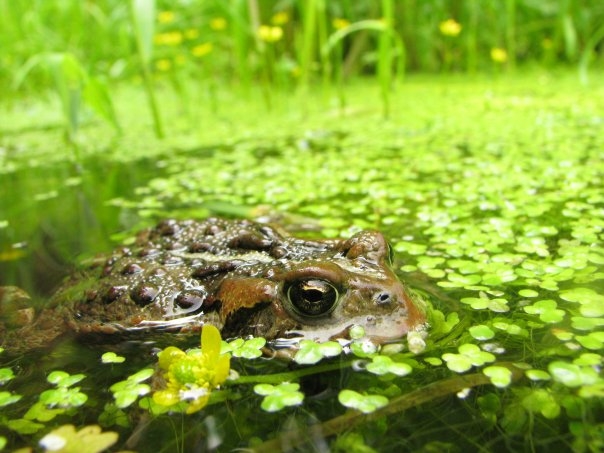
| Ecology addresses the full scale of life, from tiny bacteria to processes that span the entire planet. Ecologists study many diverse and complex relations among species, such as predation and pollination. The diversity of life is organized into different habitats, from terrestrial to aquatic ecosystems. |
| Part of a series on |
| Biology |
|---|
Ecology (from Ancient Greek οἶκος (oîkos) 'house' and -λογία (-logía) 'study of')[A] is the natural science of the relationships among living organisms and their environment. Ecology considers organisms at the individual, population, community, ecosystem, and biosphere levels. Ecology overlaps with the closely related sciences of biogeography, evolutionary biology, genetics, ethology, and natural history.
Ecology is a branch of biology, and is the study of abundance, biomass, and distribution of organisms in the context of the environment. It encompasses life processes, interactions, and adaptations; movement of materials and energy through living communities; successional development of ecosystems; cooperation, competition, and predation within and between species; and patterns of biodiversity and its effect on ecosystem processes.
Ecology has practical applications in fields such as conservation biology, wetland management, natural resource management, and human ecology.
The term ecology (German: Ökologie) was coined in 1866 by the German scientist Ernst Haeckel. The science of ecology as we know it today began with a group of American botanists in the 1890s.[1] Evolutionary concepts relating to adaptation and natural selection are cornerstones of modern ecological theory.
Ecosystems are dynamically interacting systems of organisms, the communities they make up, and the non-living (abiotic) components of their environment. Ecosystem processes, such as primary production, nutrient cycling, and niche construction, regulate the flux of energy and matter through an environment. Ecosystems have biophysical feedback mechanisms that moderate processes acting on living (biotic) and abiotic components of the planet. Ecosystems sustain life-supporting functions and provide ecosystem services like biomass production (food, fuel, fiber, and medicine), the regulation of climate, global biogeochemical cycles, water filtration, soil formation, erosion control, flood protection, and many other natural features of scientific, historical, economic, or intrinsic value.
Levels, scope, and scale of organization
[edit]Ecosystems vary from tiny to vast. A single tree is of little consequence to the classification of a forest ecosystem, but is critically relevant to organisms living in and on it.[2] Several generations of an aphid population can exist over the lifespan of a single leaf. Each of those aphids, in turn, supports diverse bacterial communities.[3] The nature of connections in ecological communities cannot be explained by knowing the details of each species in isolation, because the emergent pattern is neither revealed nor predicted until the ecosystem is studied as an integrated whole.[4]
The main subdisciplines of ecology, population (or community) ecology and ecosystem ecology, differ in their contrasting paradigms. The former focuses on organisms' distribution and abundance, while the latter focuses on materials and energy fluxes.[5]
Hierarchy
[edit]To structure the study of ecology into a conceptually manageable framework, the biological world is organized into a hierarchy, ranging in scale from (as far as ecology is concerned) organisms, to populations, to guilds, to communities, to ecosystems, to biomes, and up to the level of the biosphere.[6] This framework forms a panarchy[7] and exhibits non-linear behaviors; this means that "effect and cause are disproportionate, so that small changes to critical variables, such as the number of nitrogen fixers, can lead to disproportionate, perhaps irreversible, changes in the system properties."[8]: 14
Biodiversity
[edit]Biodiversity (an abbreviation of "biological diversity") describes the diversity of life from genes to ecosystems and spans every level of biological organization. The term has several interpretations, and there are many ways to index, measure, characterize, and represent its complex organization.[10][11][12] Biodiversity includes species diversity, ecosystem diversity, and genetic diversity and scientists are interested in the way that this diversity affects the complex ecological processes operating at and among these respective levels.[11][13][14]
Biodiversity plays an important role in ecosystem services which by definition maintain and improve human quality of life.[12][15][16] It delivers ecosystem services across heterogeneous real-world landscapes, influenced by human management and environmental conditions.[17] Conservation priorities and management techniques require different approaches and considerations to address the full ecological scope of biodiversity. Natural capital that supports populations is critical for maintaining ecosystem services[18][19] and species migration (e.g., riverine fish runs and avian insect control) has been implicated as one mechanism by which those service losses are experienced.[20] An understanding of biodiversity has practical applications for species and ecosystem-level conservation planners as they make management recommendations to consulting firms, governments, and industry.[21]
Habitat
[edit]
The habitat of a species describes the environment over which it occurs and the type of community that is formed.[22] More specifically, "habitats can be defined as regions in environmental space that are composed of multiple dimensions, each representing a biotic or abiotic environmental variable; that is, any component or characteristic of the environment related directly (e.g. forage biomass and quality) or indirectly (e.g. elevation) to the use of a location by the animal."[23]: 745
Niche
[edit]
Definitions of niche date back to 1917.[26] In 1957, G. Evelyn Hutchinson introduced "the set of biotic and abiotic conditions in which a species is able to persist and maintain stable population sizes."[26]: 519 The niche is a central concept in the ecology of organisms and is sub-divided into fundamental and realized niches. The fundamental niche is the set of environmental conditions under which a species is able to persist. The realized niche is the set of environmental plus ecological conditions under which a species persists.[26][27][28] The Hutchinsonian niche is defined more technically as a "Euclidean hyperspace whose dimensions are defined as environmental variables and whose size is a function of the number of values that the environmental values may assume for which an organism has positive fitness."[29]: 71
Niche construction
[edit]Organisms are subject to environmental pressures, but they also modify their habitats. The regulatory feedback between organisms and their environment can affect conditions from local (e.g., a beaver pond) to global scales, over time and even after death, such as decaying logs or silica skeleton deposits from marine organisms.[30] Ecosystem engineering is related to niche construction, but the former relates only to the physical modifications of the habitat whereas the latter also considers the evolutionary implications of physical changes to the environment and feedback on natural selection. Ecosystem engineers are defined as: "organisms that directly or indirectly modulate the availability of resources to other species, by causing physical state changes in biotic or abiotic materials. In so doing they modify, maintain and create habitats."[31]: 373
Biome
[edit]Biomes are larger units of organization that categorize regions of the Earth's ecosystems, mainly according to the structure and composition of vegetation.[32] There are different methods to define the continental boundaries of biomes dominated by different functional types of vegetative communities that are limited in distribution by climate, precipitation, weather, and other environmental variables. Biomes include tropical rainforest, temperate broadleaf and mixed forest, temperate deciduous forest, taiga, tundra, hot desert, and polar desert.[33] Other researchers have recently categorized other biomes, such as the human and oceanic microbiomes. To a microbe, the human body is a habitat and a landscape.[34] Microbiomes were discovered largely through advances in molecular genetics, which have revealed a hidden richness of microbial diversity on the planet. The oceanic microbiome plays a significant role in the ecological biogeochemistry of the planet's oceans.[35]
Biosphere
[edit]The largest scale of ecological organization is the biosphere: the total sum of ecosystems on the planet. Ecological relationships regulate the flux of energy, nutrients, and climate all the way up to the planetary scale. For example, the dynamic history of the planetary atmosphere's CO2 and O2 composition has been affected by the biogenic flux of gases coming from respiration and photosynthesis, with levels fluctuating over time in relation to the ecology and evolution of plants and animals.[36] Ecological theory has also been used to explain self-emergent regulatory phenomena at the planetary scale: for example, the Gaia hypothesis is an example of holism applied in ecological theory.[37] The Gaia hypothesis states that there is an emergent feedback loop generated by the metabolism of living organisms that maintains the core temperature of the Earth and atmospheric conditions within a narrow self-regulating range of tolerance.[38]
Population ecology
[edit]Population ecology studies the dynamics of species populations and how these populations interact with the wider environment.[39] A population consists of individuals of the same species that live, interact, and migrate through the same niche and habitat.[40]
A primary law of population ecology is the Malthusian growth model[41] which states, "a population will grow (or decline) exponentially as long as the environment experienced by all individuals in the population remains constant."[41]: 18 Simplified population models usually starts with four variables: death, birth, immigration, and emigration.
An example of an introductory population model describes a closed population, such as on an island, where immigration and emigration does not take place. Hypotheses are evaluated with reference to a null hypothesis which states that random processes create the observed data. In these island models, the rate of population change is described by:
where N is the total number of individuals in the population, b and d are the per capita rates of birth and death respectively, and r is the per capita rate of population change.[41][42]
Using these modeling techniques, Malthus' population principle of growth was later transformed into a model known as the logistic equation by Pierre Verhulst:
where N(t) is the number of individuals measured as biomass density as a function of time, t, r is the maximum per-capita rate of change commonly known as the intrinsic rate of growth, and is the crowding coefficient, which represents the reduction in population growth rate per individual added. The formula states that the rate of change in population size () will grow to approach equilibrium, where (), when the rates of increase and crowding are balanced, . A common, analogous model fixes the equilibrium, as K, which is known as the "carrying capacity."
Population ecology builds upon these introductory models to further understand demographic processes in real study populations. Commonly used types of data include life history, fecundity, and survivorship, and these are analyzed using mathematical techniques such as matrix algebra. The information is used for managing wildlife stocks and setting harvest quotas.[42][43] In cases where basic models are insufficient, ecologists may adopt different kinds of statistical methods, such as the Akaike information criterion,[44] or use models that can become mathematically complex as "several competing hypotheses are simultaneously confronted with the data."[45]
Metapopulations and migration
[edit]The concept of metapopulations was defined in 1969[46] as "a population of populations which go extinct locally and recolonize".[47]: 105 Metapopulation ecology is another statistical approach that is often used in conservation research.[48] Metapopulation models simplify the landscape into patches of varying levels of quality,[49] and metapopulations are linked by the migratory behaviours of organisms. Animal migration is set apart from other kinds of movement because it involves the seasonal departure and return of individuals from a habitat.[50] Migration is also a population-level phenomenon, as with the migration routes followed by plants as they occupied northern post-glacial environments. Plant ecologists use pollen records that accumulate and stratify in wetlands to reconstruct the timing of plant migration and dispersal relative to historic and contemporary climates. These migration routes involved an expansion of the range as plant populations expanded from one area to another. There is a larger taxonomy of movement, such as commuting, foraging, territorial behavior, stasis, and ranging. Dispersal is usually distinguished from migration because it involves the one-way permanent movement of individuals from their birth population into another population.[51][52]
Community ecology
[edit]
Community ecology examines how interactions among species and their environment affect the abundance, distribution and diversity of species within communities.
Community ecology is the study of the interactions among a collection of species that inhabit the same geographic area. Community ecologists study the determinants of patterns and processes for two or more interacting species. Research in community ecology might measure species diversity in grasslands in relation to soil fertility. It might also include the analysis of predator-prey dynamics, competition among similar plant species, or mutualistic interactions between crabs and corals.[53]: 250
Ecosystem ecology
[edit]These ecosystems, as we may call them, are of the most various kinds and sizes. They form one category of the multitudinous physical systems of the universe, which range from the universe as a whole down to the atom.

The underlying concept of an ecosystem can be traced back to 1864 in the published work of George Perkins Marsh ("Man and Nature").[55][56] Ecosystems may be habitats within biomes that form an integrated whole and a dynamically responsive system having both physical and biological complexes. Ecosystem ecology is the science of determining the fluxes of materials (e.g. carbon, phosphorus) between different pools (e.g., tree biomass, soil organic material). Ecosystem ecologists attempt to determine the underlying causes of these fluxes. Research in ecosystem ecology might measure primary production (g C/m^2) in a wetland in relation to decomposition and consumption rates (g C/m^2/y). This requires an understanding of the community connections between plants (i.e., primary producers) and the decomposers (e.g., fungi and bacteria).[57]
Food webs
[edit]
A food web is the archetypal ecological network. Plants capture solar energy and use it to synthesize simple sugars during photosynthesis. As plants grow, they accumulate nutrients and are eaten by grazing herbivores, and the energy is transferred through a chain of organisms by consumption. The simplified linear feeding pathways that move from a basal trophic species to a top consumer is called the food chain. Food chains in an ecological community create a complex food web. Food webs are a type of concept map used to illustrate and study pathways of energy and material flows.[58][59][60]
Trophic levels
[edit]
A trophic level (from Greek troph, τροφή, trophē, meaning "food" or "feeding") is "a group of organisms acquiring a considerable majority of its energy from the lower adjacent level (according to ecological pyramids) nearer the abiotic source."[61]: 383 Links in food webs primarily connect feeding relations or trophism among species. Biodiversity within ecosystems can be organized into trophic pyramids, in which the vertical dimension represents feeding relations that become further removed from the base of the food chain up toward top predators, and the horizontal dimension represents the abundance or biomass at each level.[62] When the relative abundance or biomass of each species is sorted into its respective trophic level, they naturally sort into a 'pyramid of numbers'.[63]
Species are broadly categorized as autotrophs (or primary producers), heterotrophs (or consumers), and Detritivores (or decomposers). Autotrophs are organisms that produce their own food (production is greater than respiration) by photosynthesis or chemosynthesis. Heterotrophs are organisms that must feed on others for nourishment and energy (respiration exceeds production).[39] Heterotrophs can be further sub-divided into different functional groups, including primary consumers (strict herbivores), secondary consumers (carnivorous predators that feed exclusively on herbivores), and tertiary consumers (predators that feed on a mix of herbivores and predators).[64] Omnivores do not fit neatly into a functional category because they eat both plant and animal tissues. It has been suggested that omnivores have a greater functional influence as predators because compared to herbivores, they are relatively inefficient at grazing.[65]
Trophic levels are part of the holistic or complex systems view of ecosystems.[66][67] Each trophic level contains unrelated species that are grouped together because they share common ecological functions, giving a macroscopic view of the system.[68] While the notion of trophic levels provides insight into energy flow and top-down control within food webs, it is troubled by the prevalence of omnivory in real ecosystems. This has led some ecologists to "reiterate that the notion that species clearly aggregate into discrete, homogeneous trophic levels is fiction."[69]: 815 Nonetheless, recent studies have shown that real trophic levels do exist, but "above the herbivore trophic level, food webs are better characterized as a tangled web of omnivores."[70]: 612
Keystone species
[edit]
A keystone species is a species that is connected to a disproportionately large number of other species in the food-web. Keystone species have lower levels of biomass in the trophic pyramid relative to the importance of their role. The many connections that a keystone species holds means that it maintains the organization and structure of entire communities. The loss of a keystone species results in a range of dramatic cascading effects (termed trophic cascades) that alters trophic dynamics, other food web connections, and can cause the extinction of other species.[71][72] The term keystone species was coined by Robert Paine in 1969 and is a reference to the keystone architectural feature as the removal of a keystone species can result in a community collapse just as the removal of the keystone in an arch can result in the arch's loss of stability.[73] Sea otters (Enhydra lutris) are commonly cited as an example because they limit the density of sea urchins that feed on kelp. If sea otters are removed from the system, the urchins graze until the kelp beds disappear, and this has a dramatic effect on community structure.[74]
Complexity
[edit]Complexity is understood as a large computational effort needed to assemble numerous interacting parts. Global patterns of biological diversity are complex. This biocomplexity stems from the interplay among ecological processes that influence patterns at different scales, such as transitional areas or ecotones spanning landscapes. Complexity stems from the interplay among levels of biological organization as energy, and matter is integrated into larger units that superimpose onto the smaller parts.[75]: 209 Small scale patterns do not necessarily explain larger ones, as in Aristotle's expression "the sum is greater than the parts".[76][77][E] "Complexity in ecology is of at least six distinct types: spatial, temporal, structural, process, behavioral, and geometric."[78]: 3 From these principles, ecologists have identified emergent and self-organizing phenomena that operate at different environmental scales of influence, ranging from molecular to planetary, and these require different explanations at each integrative level.[38][79]
Holism
[edit]Holism is a critical part of the theory of ecology. Holism addresses the biological organization of life that self-organizes into layers of emergent whole systems that function according to non-reducible properties. This means that higher-order patterns of a whole functional system, such as an ecosystem, cannot be predicted or understood by a simple summation of the parts.[80] "New properties emerge because the components interact, not because the basic nature of the components is changed."[39]: 8
Relation to evolution
[edit]Ecology and evolutionary biology are sister disciplines. Natural selection, life history, development, adaptation, populations, and inheritance thread equally into both. In this framework, the analytical tools of ecologists and evolutionists overlap as they study life through phylogenetics or Linnaean taxonomy.[81] There is no sharp boundary separating ecology from evolution, and they differ more in their areas of applied focus. Both explain properties and processes across different spatial or temporal scales of organization.[82][38] Ecologists study the abiotic and biotic factors that influence evolutionary processes,[83][84] and evolution can be rapid, occurring on ecological timescales as short as one generation.[85]
Behavioural ecology
[edit]
All organisms have behaviours. Even plants express complex behaviour, including memory and communication.[87] Behavioural ecology is the study of an organism's behaviour in its environment and its ecological and evolutionary implications. Ethology is the study of observable movement or behaviour in animals. This could include investigations of motile sperm of plants, mobile phytoplankton, zooplankton swimming toward the female egg, the cultivation of fungi by weevils, the mating dance of a salamander, or social gatherings of amoeba.[88][89][90][91][92]
Adaptation is the central unifying concept in behavioural ecology.[93] Behaviours can be recorded as traits and inherited in much the same way that eye and hair colour can. Behaviours can evolve by means of natural selection as adaptive traits conferring functional utilities that increases reproductive fitness.[94][95]
Cognitive ecology
[edit]Cognitive ecology integrates theory and observations from evolutionary ecology and cognitive science, to understand the effect of animal interaction with their habitat on their cognitive systems.[96] "Until recently, however, cognitive scientists have not paid sufficient attention to the fundamental fact that cognitive traits evolved under particular natural settings. With consideration of the selection pressure on cognition, cognitive ecology can contribute intellectual coherence to the multidisciplinary study of cognition."[97][98]
Social ecology
[edit]Social-ecological behaviours are notable in the social insects, slime moulds, social spiders, human society, and naked mole-rats where eusocialism has evolved. Social behaviours include reciprocally beneficial behaviours among kin and nest mates[90][95][99] and evolve from kin and group selection. Kin selection explains altruism through genetic relationships, whereby an altruistic behaviour leading to death is rewarded by the survival of genetic copies distributed among surviving relatives. The social insects, including ants, bees, and wasps are most famously studied for this type of relationship because the male drones are clones that share the same genetic make-up as every other male in the colony.[95] In contrast, group selectionists find examples of altruism among non-genetic relatives and explain this through selection acting on the group; whereby, it becomes selectively advantageous for groups if their members express altruistic behaviours to one another. Groups with predominantly altruistic members survive better than groups with predominantly selfish members.[95][100]
Coevolution
[edit]

Ecological interactions can be classified broadly into a host and an associate relationship. A host is any entity that harbours another that is called the associate.[101] Relationships between species that are mutually or reciprocally beneficial are called mutualisms. Examples of mutualism include fungus-growing ants employing agricultural symbiosis, bacteria living in the guts of insects and other organisms, the fig wasp and yucca moth pollination complex, lichens with fungi and photosynthetic algae, and corals with photosynthetic algae.[102][103] If there is a physical connection between host and associate, the relationship is called symbiosis. Approximately 60% of all plants, for example, have a symbiotic relationship with arbuscular mycorrhizal fungi living in their roots forming an exchange network of carbohydrates for mineral nutrients.[104]
Biogeography
[edit]Biogeography is the comparative study of the geographic distribution of organisms and the corresponding evolution of their traits in space and time.[105] The Journal of Biogeography was established in 1974.[106] Biogeography and ecology share many of their disciplinary roots. Island biogeography, published by Robert MacArthur and Edward O. Wilson in 1967,[107] is one of the fundamentals of ecological theory.[108] Biogeography has a long history in the natural sciences concerning the spatial distribution of plants and animals. Ecology and evolution provide the explanatory context for biogeographical studies.[105] Biogeographical patterns result from ecological processes that influence range distributions, such as migration and dispersal.[108] and from historical processes that split populations or species into different areas. The biogeographic processes that result in the natural splitting of species explain much of the modern distribution of the Earth's biota. The splitting of lineages in a species is called vicariance biogeography and it is a sub-discipline of biogeography.[109] There are also practical applications in the field of biogeography concerning ecological systems and processes. For example, the range and distribution of biodiversity and invasive species responding to climate change is a serious concern and active area of research in the context of global warming.[110][111]
r/K selection theory
[edit]r/K selection theory[D] is one of the first predictive models in ecology used to explain life-history evolution. Its premise is that natural selection varies with population density. For example, when an island is first colonized, density of individuals is low. The initial increase in population size is not limited by competition, leaving an abundance of available resources for rapid population growth. These early phases of population growth experience density-independent forces of natural selection, which is called r-selection. As the population becomes more crowded, it approaches the island's carrying capacity, thus forcing individuals to compete more heavily for fewer available resources. Under crowded conditions, the population experiences density-dependent forces of natural selection, called K-selection.[112] In the r/K-selection model, the first variable r is the intrinsic rate of natural increase in population size and the second variable K is the carrying capacity of a population.[28]
Molecular ecology
[edit]The relationship between ecology and genetic inheritance predates modern techniques for molecular analysis. Molecular ecological research became more feasible with the development of rapid and accessible genetic technologies, such as the polymerase chain reaction (PCR). The rise of molecular technologies and the influx of research questions into this new field resulted in the publication Molecular Ecology in 1992.[113] Molecular ecology uses analytical techniques to study genes in an evolutionary and ecological context. In 1994, John Avise played a leading role in this area of science with the publication of his book, Molecular Markers, Natural History and Evolution.[114]
Human ecology
[edit]A dual discipline
[edit]Only within the moment of time represented by the present century has one species man acquired significant power to alter the nature of his world.
Ecology is both a biological science and a human science.[39] Human ecology is an interdisciplinary investigation into the ecology of our species. "Human ecology may be defined: (1) from a bioecological standpoint as the study of man as the ecological dominant in plant and animal communities and systems; (2) from a bioecological standpoint as simply another animal affecting and being affected by his physical environment; and (3) as a human being, somehow different from animal life in general, interacting with physical and modified environments in a distinctive and creative way. A truly interdisciplinary human ecology will most likely address itself to all three."[116]: 3 The term was formally introduced in 1921, but many sociologists, geographers, psychologists, and other disciplines were interested in human relations to natural systems centuries prior, especially in the late 19th century.[116][117]
Restoration Ecology
[edit]Ecosystem management is not just about science nor is it simply an extension of traditional resource management; it offers a fundamental reframing of how humans may work with nature.
Ecology is an employed science of restoration, repairing disturbed sites through human intervention, in natural resource management, and in environmental impact assessments. Edward O. Wilson predicted in 1992 that the 21st century "will be the era of restoration in ecology".[119]
Relation to the environment
[edit]The environment of ecosystems includes both physical parameters and biotic attributes. It is dynamically interlinked and contains resources for organisms at any time throughout their life cycle.[39][120] Like ecology, the term environment has different conceptual meanings and overlaps with the concept of nature. Environment "includes the physical world, the social world of human relations and the built world of human creation."[121]: 62 The physical environment is external to the level of biological organization under investigation, including abiotic factors such as temperature, radiation, light, chemistry, climate and geology. The biotic environment includes genes, cells, organisms, members of the same species (conspecifics) and other species that share a habitat.[122]
Disturbance and resilience
[edit]A disturbance is any process that changes or removes biomass from a community, such as a fire, flood, drought, or predation.[123] Disturbances are both the cause and product of natural fluctuations within an ecological community.[124][123][125][126] Biodiversity can protect ecosystems from disturbances.[126]
Metabolism and the early atmosphere
[edit]Metabolism – the rate at which energy and material resources are taken up from the environment, transformed within an organism, and allocated to maintenance, growth and reproduction – is a fundamental physiological trait.
The Earth was formed approximately 4.5 billion years ago.[128] As it cooled and a crust and oceans formed, its atmosphere transformed from being dominated by hydrogen to one composed mostly of methane and ammonia. Over the next billion years, the metabolic activity of life transformed the atmosphere into a mixture of carbon dioxide, nitrogen, and water vapor. These gases changed the way that light from the sun hit the Earth's surface and greenhouse effects trapped heat. There were untapped sources of free energy within the mixture of reducing and oxidizing gasses that set the stage for primitive ecosystems to evolve and, in turn, the atmosphere also evolved.[129]

Throughout history, the Earth's atmosphere and biogeochemical cycles have been in a dynamic equilibrium with planetary ecosystems. The history is characterized by periods of significant transformation followed by millions of years of stability.[130] The evolution of the earliest organisms, likely anaerobic methanogen microbes, started the process by converting atmospheric hydrogen into methane (4H2 + CO2 → CH4 + 2H2O). Anoxygenic photosynthesis reduced hydrogen concentrations and increased atmospheric methane, by converting hydrogen sulfide into water or other sulfur compounds (for example, 2H2S + CO2 + hv → CH2O + H2O + 2S). Early forms of fermentation also increased levels of atmospheric methane. The transition to an oxygen-dominant atmosphere (the Great Oxidation) did not begin until approximately 2.4–2.3 billion years ago, but photosynthetic processes started 0.3–1 billion years prior.[130][131]
Radiation: heat, temperature and light
[edit]
The biology of life operates within a certain range of temperatures. Heat is a form of energy that regulates temperature. Heat affects growth rates, activity, behaviour, and primary production. Temperature is largely dependent on the incidence of solar radiation. The latitudinal and longitudinal spatial variation of temperature greatly affects climates and consequently the distribution of biodiversity and levels of primary production in different ecosystems or biomes across the planet. Heat and temperature relate importantly to metabolic activity. Poikilotherms have a body temperature largely dependent on the temperature of the external environment. In contrast, homeotherms regulate their internal body temperature by expending metabolic energy.[83][84][132] There is a relationship between light, primary production, and ecological energy budgets. Sunlight is the primary input of energy into the planet's ecosystems. Light is composed of electromagnetic energy of different wavelengths. Radiant energy from the sun generates heat, provides photons of light measured as active energy in the chemical reactions of life, and also acts as a catalyst for genetic mutation.[83][84][132] Plants, algae, and some bacteria absorb light and assimilate the energy through photosynthesis. Organisms capable of assimilating energy by photosynthesis or through inorganic fixation of H2S are autotrophs. Autotrophs—responsible for primary production—assimilate light energy which becomes metabolically stored as potential energy in the form of biochemical enthalpic bonds.[83][84][132]
Physical environments
[edit]Water
[edit]Wetland conditions such as shallow water, high plant productivity, and anaerobic substrates provide a suitable environment for important physical, biological, and chemical processes. Because of these processes, wetlands play a vital role in global nutrient and element cycles.
Diffusion of carbon dioxide and oxygen is approximately 10,000 times slower in water than in air. When soils are flooded, they quickly lose oxygen, becoming hypoxic (an environment with O2 concentration below 2 mg/liter) and eventually completely anoxic where anaerobic bacteria thrive among the roots. Water influences the intensity and spectral composition of light as it reflects off the water surface and submerged particles.[133] Salt water plants (halophytes) have additional specialized adaptations, such as the development of special organs for shedding salt and osmoregulating their internal salt (NaCl) concentrations, to live in estuarine, brackish, or oceanic environments.[133] The physiology of fish is adapted to compensate for environmental salt levels through osmoregulation. Their gills form electrochemical gradients that mediate salt excretion in salt water and uptake in fresh water.[134]
Gravity
[edit]The shape and energy of the land are significantly affected by gravitational forces. These govern many of the geophysical properties and distributions of biomes across the Earth. On the organismal scale, gravitational forces provide directional cues for plant and fungal growth (gravitropism), orientation cues for animal migrations, and influence the biomechanics and size of animals.[83] Ecological traits, such as allocation of biomass in trees during growth are subject to mechanical failure as gravitational forces influence the position and structure of branches and leaves.[135] The cardiovascular systems of animals are functionally adapted to overcome the pressure and gravitational forces that change according to the features of organisms (e.g., height, size, shape), their behaviour (e.g., diving, running, flying), and the habitat occupied (e.g., water, hot deserts, cold tundra).[136]
Pressure
[edit]Climatic and osmotic pressure places physiological constraints on organisms, especially those that fly and respire at high altitudes, or dive to deep ocean depths.[137] These constraints influence vertical limits of ecosystems in the biosphere, as organisms are physiologically sensitive and adapted to atmospheric and osmotic water pressure differences.[83] For example, oxygen levels decrease with decreasing pressure and are a limiting factor for life at higher altitudes.[138] Water transportation by plants is affected by osmotic pressure gradients.[139][140][141] Water pressure in the depths of oceans requires that organisms adapt to these conditions. For example, diving animals such as whales, dolphins, and seals are adapted to deal with changes in sound due to water pressure differences.[142]
Wind and turbulence
[edit]
Turbulent forces in air and water affect the environment and ecosystem distribution, form, and dynamics. On a planetary scale, ecosystems are affected by circulation patterns in the global trade winds. Wind power and the turbulent forces it creates can influence heat, nutrient, and biochemical profiles of ecosystems.[83] For example, wind running over the surface of a lake creates turbulence, mixing the water column and influencing the environmental profile to create thermally layered zones, affecting how fish, algae, and other parts of the aquatic ecosystem are structured.[145][146]
Wind speed and turbulence influence evapotranspiration rates and energy budgets in plants and animals.[133][147] Wind speed, temperature and moisture content vary as winds travel across different land features and elevations. For example, the westerlies come into contact with the coastal and interior mountains of western North America to produce a rain shadow on the leeward side of the mountain. The air expands and moisture condenses as the winds increase in elevation; this is called orographic lift and can cause precipitation. This environmental process produces spatial divisions in biodiversity, as species adapted to wetter conditions are range-restricted to the coastal mountain valleys and unable to migrate across the xeric ecosystems to intermix with sister lineages that are segregated to the interior mountain systems.[148][149]
Fire
[edit]Plants convert carbon dioxide into biomass and emit oxygen into the atmosphere. By approximately 350 million years ago (the end of the Devonian period), photosynthesis had brought the concentration of atmospheric oxygen above 17%, which allowed combustion to occur.[150] Fire releases CO2 and converts fuel into ash and tar. Fire is a significant ecological parameter that raises many issues pertaining to its control and suppression.[151] While the issue of fire in relation to ecology and plants has been recognized for a long time,[152] Charles Cooper brought attention to the issue of forest fires in relation to the ecology of forest fire suppression and management in the 1960s.[153][154]
Soils
[edit]Soil is the living top layer of mineral and organic dirt that covers the surface of the planet. It is the chief organizing centre of most ecosystem functions, and it is of critical importance in agricultural science and ecology. The decomposition of dead organic matter (for example, leaves on the forest floor), results in soils containing minerals and nutrients that feed into plant production. The whole of the planet's soil ecosystems is called the pedosphere where a large biomass of the Earth's biodiversity organizes into trophic levels. Invertebrates that feed and shred larger leaves, for example, create smaller bits for smaller organisms in the feeding chain. Collectively, these organisms are the detritivores that regulate soil formation.[155][156] Soils form composite phenotypes where inorganic matter is enveloped into the physiology of a whole community. As organisms feed and migrate through soils they physically displace materials, an ecological process called bioturbation. This aerates soils and stimulates heterotrophic growth and production. Soil microorganisms are influenced by and are fed back into the trophic dynamics of the ecosystem.[157][158]
Biogeochemistry and climate
[edit]Ecologists study nutrient budgets to understand how these materials are regulated, flow, and recycled through the environment.[83][84][132] This research has led to an understanding that there is global feedback between ecosystems and the physical parameters of this planet, including minerals, soil, pH, ions, water, and atmospheric gases. Six major elements (hydrogen, carbon, nitrogen, oxygen, sulfur, and phosphorus; H, C, N, O, S, and P) form the constitution of all biological macromolecules and feed into the Earth's geochemical processes. From the smallest scale of biology, the combined effect of billions of ecological processes amplify and regulate the biogeochemical cycles of the Earth.[159]
History
[edit]Early beginnings
[edit]By ecology, we mean the whole science of the relations of the organism to the environment including, in the broad sense, all the "conditions of existence". Thus, the theory of evolution explains the housekeeping relations of organisms mechanistically as the necessary consequences of effectual causes; and so forms the monistic groundwork of ecology.
Ecology has a complex origin.[161] Ancient Greek philosophers such as Hippocrates and Aristotle recorded observations on natural history. However, they saw species as unchanging, while varieties were seen as aberrations. Modern ecology sees varieties as the real phenomena, leading to adaptation by natural selection.[39][162][163] Ecological concepts such as a balance and regulation in nature can be traced to Herodotus (died c. 425 BC), who described mutualism in his observation of "natural dentistry". Basking Nile crocodiles, he noted, opened their mouths to give sandpipers safe access to pluck leeches out, giving nutrition to the sandpiper and oral hygiene for the crocodile.[161] Aristotle and his student Theophrastus observed plant and animal migrations, biogeography, physiology, and their behavior, giving an early analogue to the concept of an ecological niche.[164][165]
Nowhere can one see more clearly illustrated what may be called the sensibility of such an organic complex, – expressed by the fact that whatever affects any species belonging to it, must speedily have its influence of some sort upon the whole assemblage. He will thus be made to see the impossibility of studying any form completely, out of relation to the other forms, – the necessity for taking a comprehensive survey of the whole as a condition to a satisfactory understanding of any part.
Ecological concepts such as food chains, population regulation, and productivity were developed in the 1700s, through the works of microscopist Antonie van Leeuwenhoek (1632–1723) and botanist Richard Bradley (1688?–1732).[39] Biogeographer Alexander von Humboldt (1769–1859) recognized ecological gradients, where species are replaced or altered in form along environmental gradients. Humboldt drew inspiration from Isaac Newton, as he developed a form of "terrestrial physics".[167][168][169] Natural historians, such as Humboldt, James Hutton, and Jean-Baptiste Lamarck laid the foundations of ecology.[170] The term "ecology" (German: Oekologie, Ökologie) was coined by Ernst Haeckel in his book Generelle Morphologie der Organismen (1866).[171] Haeckel was a zoologist, artist, writer, and later in life a professor of comparative anatomy.[160][172]
Linnaeus founded an early branch of ecology that he called the economy of nature.[173] He influenced Charles Darwin, who adopted Linnaeus' phrase in The Origin of Species.[160] Linnaeus was the first to frame the balance of nature as a testable hypothesis.[174]
Since 1900
[edit]Modern ecology first attracted substantial scientific attention toward the end of the 19th century. Ellen Swallow Richards adopted the term "oekology" in the U.S. as early as 1892.[177] In the early 20th century, ecology transitioned from description to a more analytical form of scientific natural history.[167][170][178] Frederic Clements published the first American ecology book, Research Methods in Ecology in 1905,[179] presenting the idea of plant communities as a superorganism. This launched a debate between ecological holism and individualism that lasted until the 1970s.[180]
In 1942, Raymond Lindeman wrote a landmark paper on the trophic dynamics of ecology. Trophic dynamics became the foundation for much work on energy and material flow through ecosystems. Robert MacArthur advanced mathematical theory, predictions, and tests in ecology in the 1950s.[170][181][182]
This whole chain of poisoning, then, seems to rest on a base of minute plants which must have been the original concentrators. But what of the opposite end of the food chain—the human being who, in probable ignorance of all this sequence of events, has rigged his fishing tackle, caught a string of fish from the waters of Clear Lake, and taken them home to fry for his supper?
Ecology surged in popular and scientific interest during the 1960–1970s environmental movement.[170] In 1962, marine biologist and ecologist Rachel Carson's book Silent Spring helped to mobilize the environmental movement by alerting the public to toxic pesticides, such as DDT (C14H9Cl5), bioaccumulating in the environment. Since then, ecologists have worked to bridge their understanding of the degradation of the planet's ecosystems with environmental politics, law, restoration, and natural resources management.[21][170][184][185]
See also
[edit]- Lists
Notes
[edit]- ^ In Ernst Haeckel's (1866) footnote where the term ecology originates, he also gives attribute to Ancient Greek: χώρας, romanized: khōrā, lit. 'χωρα', meaning "dwelling place, distributional area" —quoted from Stauffer (1957).
- ^ This is a copy of Haeckel's original definition (Original: Haeckel, E. (1866) Generelle Morphologie der Organismen. Allgemeine Grundzige der organischen Formen- Wissenschaft, mechanisch begriindet durch die von Charles Darwin reformirte Descendenz-Theorie. 2 vols. Reimer, Berlin.) translated and quoted from Stauffer (1957).
- ^ Foster & Clark (2008) note how Smut's holism contrasts starkly against his racial political views as the father of apartheid.
- ^ First introduced in MacArthur & Wilson's (1967) book of notable mention in the history and theoretical science of ecology, The Theory of Island Biogeography.
- ^ Aristotle wrote about this concept in Metaphysics (Quoted from The Internet Classics Archive translation by W. D. Ross. Book VIII, Part 6): "To return to the difficulty which has been stated with respect both to definitions and to numbers, what is the cause of their unity? In the case of all things which have several parts and in which the totality is not, as it were, a mere heap, but the whole is something besides the parts, there is a cause; for even in bodies contact is the cause of unity in some cases and in others viscosity or some other such quality."
References
[edit]- ^ S. E. Kingsland, "Foundational Papers: Defining Ecology as a Science", in L. A. Real and J. H. Brown, eds., Foundations of Ecology: Classic Papers with Commentaries. Chicago: U of Chicago Press, 1991. pp. 1–2.
- ^ Stadler, B.; Michalzik, B.; Müller, T. (1998). "Linking aphid ecology with nutrient fluxes in a coniferous forest". Ecology. 79 (5): 1514–1525. doi:10.1890/0012-9658(1998)079[1514:LAEWNF]2.0.CO;2. ISSN 0012-9658.
- ^ Humphreys, N. J.; Douglas, A. E. (1997). "Partitioning of symbiotic bacteria between generations of an insect: a quantitative study of a Buchnera sp. in the pea aphid (Acyrthosiphon pisum) reared at different temperatures". Applied and Environmental Microbiology. 63 (8): 3294–3296. Bibcode:1997ApEnM..63.3294H. doi:10.1128/AEM.63.8.3294-3296.1997. PMC 1389233. PMID 16535678.
- ^ Liere, Heidi; Jackson, Doug; Vandermeer, John; Wilby, Andrew (20 September 2012). "Ecological Complexity in a Coffee Agroecosystem: Spatial Heterogeneity, Population Persistence and Biological Control". PLOS ONE. 7 (9) e45508. Bibcode:2012PLoSO...745508L. doi:10.1371/journal.pone.0045508. PMC 3447771. PMID 23029061.
- ^ Steward T.A. Pickett; Jurek Kolasa; Clive G. Jones (1994). Ecological Understanding: The Nature of Theory and the Theory of Nature. San Diego: Academic Press. ISBN 978-0-12-554720-8.
- ^ Nachtomy, Ohad; Shavit, Ayelet; Smith, Justin (2002). "Leibnizian organisms, nested individuals, and units of selection". Theory in Biosciences. 121 (2): 205–230. doi:10.1007/s12064-002-0020-9. S2CID 23760946.
- ^ Holling, C. S. (2004). "Understanding the complexity of economic, ecological, and social systems". Ecosystems. 4 (5): 390–405. doi:10.1007/s10021-001-0101-5. S2CID 7432683.
- ^ Levin, S. A. (1999). Fragile Dominion: Complexity and the Commons. Reading, MA: Perseus Books. ISBN 978-0-7382-0319-5. Archived from the original on 18 March 2015. Retrieved 27 June 2015.
- ^ Kiessling, W.; Simpson, C.; Foote, M. (2009). "Reefs as cradles of evolution and sources of biodiversity in the Phanerozoic" (PDF). Science. 327 (5962): 196–198. Bibcode:2010Sci...327..196K. doi:10.1126/science.1182241. PMID 20056888. S2CID 206523585. Archived (PDF) from the original on 12 January 2011. Retrieved 12 April 2020.
- ^ Noss, R. F. (1990). "Indicators for monitoring biodiversity: A hierarchical approach". Conservation Biology. 4 (4): 355–364. Bibcode:1990ConBi...4..355N. doi:10.1111/j.1523-1739.1990.tb00309.x. JSTOR 2385928.
- ^ a b Scholes, R. J.; Mace, G. M.; Turner, W.; Geller, G. N.; Jürgens, N.; Larigauderie, A.; Muchoney, D.; Walther, B. A.; Mooney, H. A. (2008). "Toward a global biodiversity observing system" (PDF). Science. 321 (5892): 1044–1045. doi:10.1126/science.1162055. PMID 18719268. S2CID 206514712. Archived from the original (PDF) on 10 July 2011.
- ^ a b Cardinale, Bradley J.; Duffy, J. Emmett; Gonzalez, Andrew; Hooper, David U.; Perrings, Charles; Venail, Patrick; Narwani, Anita; Mace, Georgina M.; Tilman, David; Wardle, David A.; Kinzig, Ann P.; Daily, Gretchen C.; Loreau, Michel; Grace, James B.; Larigauderie, Anne; Srivastava, Diane S.; Naeem, Shahid (6 June 2012). "Biodiversity loss and its impact on humanity" (PDF). Nature. 486 (7401): 59–67. Bibcode:2012Natur.486...59C. doi:10.1038/nature11148. PMID 22678280. S2CID 4333166. Archived (PDF) from the original on 21 September 2017. Retrieved 10 August 2019.
- ^ Wilson, E. O. (2000). "A global biodiversity map". Science. 289 (5488): 2279. PMID 11041790.
- ^ Purvis, A.; Hector, A. (2000). "Getting the measure of biodiversity" (PDF). Nature. 405 (6783): 212–218. doi:10.1038/35012221. PMID 10821281. S2CID 4333920. Archived from the original (PDF) on 28 April 2014.
- ^ Ostfeld, R. S. (2009). "Biodiversity loss and the rise of zoonotic pathogens". Clinical Microbiology and Infection. 15 (s1): 40–43. doi:10.1111/j.1469-0691.2008.02691.x. PMID 19220353.
- ^ Tierney, Geraldine L.; Faber-Langendoen, Don; Mitchell, Brian R.; Shriver, W. Gregory; Gibbs, James P. (2009). "Monitoring and evaluating the ecological integrity of forest ecosystems" (PDF). Frontiers in Ecology and the Environment. 7 (6): 308–316. Bibcode:2009FrEE....7..308T. doi:10.1890/070176. Archived from the original (PDF) on 29 December 2010. Retrieved 1 February 2010.
- ^ Qiu, J. & Mitchell, M. (2024). Understanding biodiversity–ecosystem service linkages in real landscapes. Landscape Ecology, 39, 188. https://doi.org/10.1007/s10980-024-01980-3
- ^ Ceballos, G.; Ehrlich, P. R. (2002). "Mammal population losses and the extinction crisis" (PDF). Science. 296 (5569): 904–907. Bibcode:2002Sci...296..904C. doi:10.1126/science.1069349. PMID 11988573. S2CID 32115412. Archived from the original (PDF) on 20 July 2011. Retrieved 16 March 2010.
- ^ Palumbi, Stephen R.; Sandifer, Paul A.; Allan, J. David; Beck, Michael W.; Fautin, Daphne G.; Fogarty, Michael J.; Halpern, Benjamin S.; Incze, Lewis S.; Leong, Jo-Ann; et al. (2009). "Managing for ocean biodiversity to sustain marine ecosystem services" (PDF). Frontiers in Ecology and the Environment. 7 (4): 204–211. Bibcode:2009FrEE....7..204P. doi:10.1890/070135. hdl:1808/13308. Archived from the original (PDF) on 11 June 2010.
- ^ Wilcove, D. S.; Wikelski, M. (2008). "Going, going, gone: Is animal migration disappearing". PLOS Biology. 6 (7) e188. doi:10.1371/journal.pbio.0060188. PMC 2486312. PMID 18666834.
- ^ a b Hammond, H. (2009). Maintaining Whole Systems on the Earth's Crown: Ecosystem-based Conservation Planning for the Boreal Forest. Slocan Park, BC: Silva Forest Foundation. p. 380. ISBN 978-0-9734779-0-0. Archived from the original on 5 December 2009. Retrieved 31 January 2010.
- ^ Whittaker, R. H.; Levin, S. A.; Root, R. B. (1973). "Niche, habitat, and ecotope" (PDF). The American Naturalist. 107 (955): 321–338. Bibcode:1973ANat..107..321W. doi:10.1086/282837. S2CID 84504783. Archived from the original (PDF) on 5 September 2012.
- ^ Beyer, Hawthorne L.; Haydon, Daniel T.; Morales, Juan M.; Frair, Jacqueline L.; Hebblewhite, Mark; Mitchell, Michael; Matthiopoulos, Jason (2010). "The interpretation of habitat preference metrics under use–availability designs". Philosophical Transactions of the Royal Society B. 365 (1550): 2245–2254. doi:10.1098/rstb.2010.0083. PMC 2894962. PMID 20566501.
- ^ Laland, K. N.; Odling-Smee, F. J.; Feldman, M. W. (1999). "Evolutionary consequences of niche construction and their implications for ecology". Proceedings of the National Academy of Sciences. 96 (18): 10242–10247. Bibcode:1999PNAS...9610242L. doi:10.1073/pnas.96.18.10242. PMC 17873. PMID 10468593.
- ^ Hughes, D. P.; Pierce, N. E.; Boomsma, J. J. (2008). "Social insect symbionts: evolution in homeostatic fortresses" (PDF). Trends in Ecology & Evolution. 23 (12): 672–677. Bibcode:2008TEcoE..23..672H. doi:10.1016/j.tree.2008.07.011. PMID 18951653. Archived from the original (PDF) on 6 June 2011. Retrieved 28 January 2010.
- ^ a b c Wiens, J. J.; Graham, C. H. (2005). "Niche conservatism: Integrating evolution, ecology, and conservation biology" (PDF). Annual Review of Ecology, Evolution, and Systematics. 36: 519–539. doi:10.1146/annurev.ecolsys.36.102803.095431. Archived from the original (PDF) on 24 October 2012.
- ^ Hutchinson, G. E. (1957). "Concluding remarks". Cold Spring Harbor Symposia on Quantitative Biology. 22 (797): 415–427. doi:10.1101/SQB.1957.022.01.039.
- ^ a b Begon, M.; Townsend, C. R.; Harper, J. L. (2005). Ecology: From Individuals to Ecosystems (4th ed.). Wiley-Blackwell. p. 752. ISBN 1-4051-1117-8. Archived from the original on 30 October 2013. Retrieved 14 December 2010.
- ^ D. L., Hardesty (1975). "The niche concept: suggestions for its use in human ecology". Human Ecology. 3 (2): 71–85. Bibcode:1975HumEc...3...71H. doi:10.1007/BF01552263. JSTOR 4602315. S2CID 84328940.
- ^ Hastings, Alan; Byers, James E.; Crooks, Jeffrey A.; Cuddington, Kim; Jones, Clive G.; Lambrinos, John G.; Talley, Theresa S.; Wilson, William G. (2007). "Ecosystem engineering in space and time". Ecology Letters. 10 (2): 153–164. Bibcode:2007EcolL..10..153H. doi:10.1111/j.1461-0248.2006.00997.x. PMID 17257103. S2CID 44870405.
- ^ Jones, Clive G.; Lawton, John H.; Shachak, Moshe (1994). "Organisms as ecosystem engineers". Oikos. 69 (3): 373–386. Bibcode:1994Oikos..69..373J. doi:10.2307/3545850. JSTOR 3545850.
- ^ Palmer, M.; White, P. S. (1994). "On the existence of ecological communities" (PDF). Journal of Vegetation Sciences. 5 (2): 279–282. Bibcode:1994JVegS...5..279P. doi:10.2307/3236162. JSTOR 3236162. Archived from the original (PDF) on 5 September 2012.
- ^ Prentice; I. C.; Harrison, S. P.; Leemans, R.; Monserud, R. A.; Solomon, A. M. (1992). "Special paper: A global biome model based on plant physiology and dominance, soil properties and climate" (PDF). Journal of Biogeography. 19 (2): 117–134. Bibcode:1992JBiog..19..117P. doi:10.2307/2845499. JSTOR 2845499. Archived (PDF) from the original on 20 December 2022. Retrieved 11 December 2022.
- ^ Turnbaugh, Peter J.; Ley, Ruth E.; Hamady, Micah; Fraser-Liggett, Claire M.; Knight, Rob; Gordon, Jeffrey I. (2007). "The human microbiome project". Nature. 449 (7164): 804–810. Bibcode:2007Natur.449..804T. doi:10.1038/nature06244. PMC 3709439. PMID 17943116.
- ^ DeLong, E. F. (2009). "The microbial ocean from genomes to biomes" (PDF). Nature. 459 (7244): 200–206. Bibcode:2009Natur.459..200D. doi:10.1038/nature08059. hdl:1721.1/69838. PMID 19444206. S2CID 205216984. Archived from the original (PDF) on 18 July 2011. Retrieved 14 January 2010.
- ^ Igamberdiev, Abir U.; Lea, P. J. (2006). "Land plants equilibrate O2 and CO2 concentrations in the atmosphere" (PDF). Photosynthesis Research. 87 (2): 177–194. Bibcode:2006PhoRe..87..177I. doi:10.1007/s11120-005-8388-2. PMID 16432665. S2CID 10709679. Archived from the original (PDF) on 3 March 2016.
- ^ Lovelock, J.E.; Margulis, L. (1974). "Atmospheric homeostasis by and for the biosphere: the gaia hypothesis". Tellus A. 26 (1–2): 2–10. Bibcode:1974Tell...26....2L. doi:10.3402/tellusa.v26i1-2.9731. S2CID 129803613.
- ^ a b c Lovelock, J. (2003). "The living Earth". Nature. 426 (6968): 769–770. Bibcode:2003Natur.426..769L. doi:10.1038/426769a. PMID 14685210. S2CID 30308855.
- ^ a b c d e f g h Odum, E. P.; Barrett, G. W. (2005). Fundamentals of Ecology. Brooks Cole. p. 598. ISBN 978-0-534-42066-6. Archived from the original on 28 July 2020. Retrieved 6 January 2020.
- ^ Waples, R. S.; Gaggiotti, O. (2006). "What is a population? An empirical evaluation of some genetic methods for identifying the number of gene pools and their degree of connectivity". Molecular Ecology. 15 (6): 1419–1439. doi:10.1111/j.1365-294X.2006.02890.x. PMID 16629801. S2CID 9715923. Archived from the original on 25 October 2019. Retrieved 10 August 2019.
- ^ a b c Turchin, P. (2001). "Does population ecology have general laws?". Oikos. 94 (1): 17–26. Bibcode:2001Oikos..94...17T. doi:10.1034/j.1600-0706.2001.11310.x. S2CID 27090414.
- ^ a b Vandermeer, J. H.; Goldberg, D. E. (2003). Population Ecology: First Principles. Woodstock, Oxfordshire: Princeton University Press. ISBN 0-691-11440-4.
- ^ Berryman, A. A. (1992). "The origins and evolution of predator-prey theory". Ecology. 73 (5): 1530–1535. Bibcode:1992Ecol...73.1530B. doi:10.2307/1940005. JSTOR 1940005. S2CID 84321947.
- ^ Anderson, D. R.; Burnham, K. P.; Thompson, W. L. (2000). "Null hypotheses testing: Problems, prevalence, and an alternative" (PDF). J. Wildl. Manage. 64 (4): 912–923. doi:10.2307/3803199. JSTOR 3803199. Archived from the original (PDF) on 2 June 2013. Retrieved 4 August 2012.
- ^ Johnson, J. B.; Omland, K. S. (2004). "Model selection in ecology and evolution" (PDF). Trends in Ecology and Evolution. 19 (2): 101–108. CiteSeerX 10.1.1.401.777. doi:10.1016/j.tree.2003.10.013. PMID 16701236. Archived (PDF) from the original on 14 October 2012.
- ^ Levins, R. (1969). "Some demographic and genetic consequences of environmental heterogeneity for biological control". Bulletin of the Entomological Society of America. 15 (3): 237–240. doi:10.1093/besa/15.3.237. Archived from the original on 8 April 2022. Retrieved 19 November 2020.
- ^ Levins, R. (1970). "Extinction". In Gerstenhaber, M. (ed.). Some Mathematical Questions in Biology. American Mathematical Soc. pp. 77–107. ISBN 978-0-8218-1152-8. Archived from the original on 18 March 2015. Retrieved 27 June 2015.
- ^ Smith, M. A.; Green, D. M. (2005). "Dispersal and the metapopulation paradigm in amphibian ecology and conservation: Are all amphibian populations metapopulations?". Ecography. 28 (1): 110–128. Bibcode:2005Ecogr..28..110A. doi:10.1111/j.0906-7590.2005.04042.x.
- ^ Hanski, I. (1998). "Metapopulation dynamics" (PDF). Nature. 396 (6706): 41–49. Bibcode:1998Natur.396...41H. doi:10.1038/23876. S2CID 4405264. Archived from the original (PDF) on 31 December 2010.
- ^ Nebel, S. (2010). "Animal migration". Nature Education Knowledge. 10 (1): 29. Archived from the original on 16 July 2011.
- ^ Clark, J. S.; Fastie, C.; Hurtt, G.; Jackson, S. T.; Johnson, C.; King, G. A.; Lewis, M.; Lynch, J.; Pacala, S.; et al. (1998). "Reid's paradox of rapid plant migration" (PDF). BioScience. 48 (1): 13–24. doi:10.2307/1313224. JSTOR 1313224. Archived (PDF) from the original on 6 July 2011.
- ^ Dingle, H. (18 January 1996). Migration: The Biology of Life on the Move. Oxford University Press. p. 480. ISBN 0-19-509723-8. Archived from the original on 18 March 2015. Retrieved 27 June 2015.
- ^ a b Johnson, M. T.; Strinchcombe, J. R. (2007). "An emerging synthesis between community ecology and evolutionary biology". Trends in Ecology and Evolution. 22 (5): 250–257. Bibcode:2007TEcoE..22..250J. doi:10.1016/j.tree.2007.01.014. PMID 17296244.
- ^ Tansley, A. G. (1935). "The use and abuse of vegetational concepts and terms" (PDF). Ecology. 16 (3): 284–307. Bibcode:1935Ecol...16..284T. doi:10.2307/1930070. JSTOR 1930070. Archived from the original (PDF) on 26 July 2011.
- ^ Marsh, G. P. (1864). Man and Nature: Physical Geography as Modified by Human Action. Cambridge, MA: Belknap Press. p. 560.
- ^ O'Neil, R. V. (2001). "Is it time to bury the ecosystem concept? (With full military honors, of course!)" (PDF). Ecology. 82 (12): 3275–3284. doi:10.1890/0012-9658(2001)082[3275:IITTBT]2.0.CO;2. ISSN 0012-9658. Archived from the original (PDF) on 19 May 2011. Retrieved 20 June 2011.
- ^ Brinson, M. M.; Lugo, A. E.; Brown, S (1981). "Primary Productivity, Decomposition and Consumer Activity in Freshwater Wetlands". Annual Review of Ecology and Systematics. 12 (1): 123–161. Bibcode:1981AnRES..12..123B. doi:10.1146/annurev.es.12.110181.001011.
- ^ O'Neill, D. L.; Deangelis, D. L.; Waide, J. B.; Allen, T. F. H. (1986). A Hierarchical Concept of Ecosystems. Princeton University Press. p. 253. ISBN 0-691-08436-X.
- ^ Pimm, S. (2002). Food Webs. University of Chicago Press. p. 258. ISBN 978-0-226-66832-1. Archived from the original on 18 March 2015. Retrieved 27 June 2015.
- ^ Pimm, S. L.; Lawton, J. H.; Cohen, J. E. (1991). "Food web patterns and their consequences" (PDF). Nature. 350 (6320): 669–674. Bibcode:1991Natur.350..669P. doi:10.1038/350669a0. S2CID 4267587. Archived from the original (PDF) on 10 June 2010.
- ^ Hairston, N. G. Jr.; Hairston, N. G. Sr. (1993). "Cause-effect relationships in energy flow, trophic structure, and interspecific interactions" (PDF). The American Naturalist. 142 (3): 379–411. Bibcode:1993ANat..142..379H. doi:10.1086/285546. hdl:1813/57238. S2CID 55279332. Archived from the original (PDF) on 20 July 2011.
- ^ Duffy, J. Emmett; Cardinale, Bradley J.; France, Kristin E.; McIntyre, Peter B.; Thébault, Elisa; Loreau, Michel (2007). "The functional role of biodiversity in ecosystems: incorporating trophic complexity". Ecology Letters. 10 (6): 522–538. Bibcode:2007EcolL..10..522D. doi:10.1111/j.1461-0248.2007.01037.x. PMID 17498151. Archived from the original on 5 March 2020. Retrieved 7 December 2019.
- ^ Elton, C. S. (1927). Animal Ecology. London: Sidgwick and Jackson. ISBN 0-226-20639-4.
{{cite book}}: ISBN / Date incompatibility (help) - ^ Davic, R. D. (2003). "Linking keystone species and functional groups: a new operational definition of the keystone species concept" (PDF). Conservation Ecology. 7 (1) resp11: r11. doi:10.5751/ES-00502-0701r11. hdl:10535/2966. Archived (PDF) from the original on 30 July 2020. Retrieved 24 September 2019.
- ^ Oksanen, L. (1991). "Trophic levels and trophic dynamics: A consensus emerging?". Trends in Ecology and Evolution. 6 (2): 58–60. Bibcode:1991TEcoE...6...58O. doi:10.1016/0169-5347(91)90124-G. PMID 21232425.
- ^ Loehle, C.; Pechmann, Joseph H. K. (1988). "Evolution: The missing ingredient in systems ecology". The American Naturalist. 132 (9): 884–899. Bibcode:1988ANat..132..884L. doi:10.1086/284895. JSTOR 2462267. S2CID 85120393.
- ^ Ulanowicz, R. E.; Kemp, W. Michael (1979). "Toward canonical trophic aggregations" (PDF). The American Naturalist. 114 (6): 871–883. Bibcode:1979ANat..114..871U. doi:10.1086/283534. hdl:1834/19829. JSTOR 2460557. S2CID 85371147. Archived (PDF) from the original on 1 November 2018. Retrieved 10 August 2019.
- ^ Li, B. (2000). "Why is the holistic approach becoming so important in landscape ecology?". Landscape and Urban Planning. 50 (1–3): 27–41. Bibcode:2000LUrbP..50...27L. doi:10.1016/S0169-2046(00)00078-5.
- ^ Polis, G. A.; Strong, D. R. (1996). "Food web complexity and community dynamics" (PDF). The American Naturalist. 147 (5): 813–846. Bibcode:1996ANat..147..813P. doi:10.1086/285880. S2CID 85155900. Archived from the original (PDF) on 20 July 2011.
- ^ Thompson, R. M.; Hemberg, M.; Starzomski, B. M.; Shurin, J. B. (2007). "Trophic levels and trophic tangles: The prevalence of omnivory in real food webs" (PDF). Ecology. 88 (3): 612–617. Bibcode:2007Ecol...88..612T. doi:10.1890/05-1454. PMID 17503589. Archived from the original (PDF) on 15 August 2011.
- ^ Fischer, J.; Lindenmayer, D. B.; Manning, A. D. (2006). "Biodiversity, ecosystem function, and resilience: ten guiding principles for commodity production landscapes" (PDF). Frontiers in Ecology and the Environment. 4 (2): 80–86. doi:10.1890/1540-9295(2006)004[0080:BEFART]2.0.CO;2. ISSN 1540-9295. Archived from the original (PDF) on 6 July 2011. Retrieved 2 February 2010.
- ^ Libralato, S.; Christensen, V.; Pauly, D. (2006). "A method for identifying keystone species in food web models" (PDF). Ecological Modelling. 195 (3–4): 153–171. Bibcode:2006EcMod.195..153L. doi:10.1016/j.ecolmodel.2005.11.029. Archived from the original (PDF) on 19 May 2012.
- ^ Paine, R. T. (January 1969). "A Note on Trophic Complexity and Community Stability". The American Naturalist. 103 (929): 91–93. Bibcode:1969ANat..103...91P. doi:10.1086/282586. S2CID 83780992.
- ^ Mills, L. S.; Soule, M. E.; Doak, D. F. (1993). "The keystone-species concept in ecology and conservation". BioScience. 43 (4): 219–224. doi:10.2307/1312122. JSTOR 1312122. S2CID 85204808.
- ^ Novikoff, A. B. (1945). "The concept of integrative levels and biology" (PDF). Science. 101 (2618): 209–215. Bibcode:1945Sci...101..209N. doi:10.1126/science.101.2618.209. PMID 17814095. Archived from the original (PDF) on 15 May 2011.
- ^ Schneider, D. D. (2001). "The rise of the concept of scale in ecology" (PDF). BioScience. 51 (7): 545–553. doi:10.1641/0006-3568(2001)051[0545:TROTCO]2.0.CO;2. ISSN 0006-3568. Archived (PDF) from the original on 3 March 2016.
- ^ Molnar, J.; Marvier, M.; Kareiva, P. (2004). "The sum is greater than the parts". Conservation Biology. 18 (6): 1670–1671. Bibcode:2004ConBi..18.1670M. doi:10.1111/j.1523-1739.2004.00l07.x. S2CID 40349801.
- ^ Loehle, C. (2004). "Challenges of ecological complexity". Ecological Complexity. 1 (1): 3–6. Bibcode:2004EcoCm...1....3.. doi:10.1016/j.ecocom.2003.09.001.
- ^ Odum, E. P. (1977). "The emergence of ecology as a new integrative discipline". Science. 195 (4284): 1289–1293. Bibcode:1977Sci...195.1289O. doi:10.1126/science.195.4284.1289. PMID 17738398. S2CID 36862823.
- ^ Liu, J.; Dietz, Thomas; Carpenter, Stephen R.; Folke, Carl; Alberti, Marina; Redman, Charles L.; Schneider, Stephen H.; Ostrom, Elinor; Pell, Alice N.; et al. (2009). "Coupled human and natural systems" (PDF). Ambio: A Journal of the Human Environment. 36 (8): 639–649. doi:10.1579/0044-7447(2007)36[639:CHANS]2.0.CO;2. ISSN 0044-7447. PMID 18240679. S2CID 18167083. Archived from the original (PDF) on 9 August 2011.
- ^ Miles, D. B.; Dunham, A. E. (1993). "Historical perspectives in ecology and evolutionary biology: The use of phylogenetic comparative analyses". Annual Review of Ecology and Systematics. 24 (1): 587–619. Bibcode:1993AnRES..24..587M. doi:10.1146/annurev.es.24.110193.003103.
- ^ Levins, R.; Lewontin, R. (1980). "Dialectics and reductionism in ecology" (PDF). Synthese. 43: 47–78. doi:10.1007/bf00413856. S2CID 46984334. Archived from the original (PDF) on 10 May 2013.
- ^ a b c d e f g h Allee, W. C.; Park, O.; Emerson, A. E.; Park, T.; Schmidt, K. P. (1949). Principles of Animal Ecology. W. B. Sunders, Co. p. 837. ISBN 0-7216-1120-6.
{{cite book}}: ISBN / Date incompatibility (help) - ^ a b c d e Rickleffs, Robert E. (1996). The Economy of Nature. University of Chicago Press. p. 678. ISBN 0-7167-3847-3.
- ^ Yoshida, T (2003). "Rapid evolution drives ecological dynamics in a predator–prey system". Nature. 424 (6946). Nature Publishing Group: 303–306. Bibcode:2003Natur.424..303Y. doi:10.1038/nature01767. PMID 12867979. S2CID 4425455.
- ^ Stuart-Fox, D.; Moussalli, A. (2008). "Selection for social signalling drives the evolution of chameleon colour change". PLOS Biology. 6 (1) e25. doi:10.1371/journal.pbio.0060025. PMC 2214820. PMID 18232740.
- ^ Karban, R. (2008). "Plant behaviour and communication". Ecology Letters. 11 (7): 727–739. Bibcode:2008EcolL..11..727K. doi:10.1111/j.1461-0248.2008.01183.x. PMID 18400016.
- ^ Tinbergen, N. (1963). "On aims and methods of ethology" (PDF). Zeitschrift für Tierpsychologie. 20 (4): 410–433. Bibcode:1963Ethol..20..410T. doi:10.1111/j.1439-0310.1963.tb01161.x. Archived (PDF) from the original on 9 June 2011.
- ^ Hamner, W. M. (1985). "The importance of ethology for investigations of marine zooplankton". Bulletin of Marine Science. 37 (2): 414–424. Archived from the original on 7 June 2011.
- ^ a b Strassmann, J. E.; Zhu, Y.; Queller, D. C. (2000). "Altruism and social cheating in the social amoeba Dictyostelium discoideum". Nature. 408 (6815): 965–967. Bibcode:2000Natur.408..965S. doi:10.1038/35050087. PMID 11140681. S2CID 4307980.
- ^ Sakurai, K. (1985). "An attelabid weevil (Euops splendida) cultivates fungi". Journal of Ethology. 3 (2): 151–156. doi:10.1007/BF02350306. S2CID 30261494.
- ^ Anderson, J. D. (1961). "The courtship behaviour of Ambystoma macrodactylum croceum". Copeia. 1961 (2): 132–139. doi:10.2307/1439987. JSTOR 1439987.
- ^ "Behavioral Ecology". International Society for Behavioral Ecology. Archived from the original on 10 April 2011. Retrieved 15 April 2011.
- ^ Gould, Stephen J.; Vrba, Elizabeth S. (1982). "Exaptation – a missing term in the science of form". Paleobiology. 8 (1): 4–15. Bibcode:1982Pbio....8....4G. doi:10.1017/S0094837300004310. S2CID 86436132.
- ^ a b c d Wilson, Edward. O. (2000). Sociobiology: The New Synthesis (25th anniversary ed.). President and Fellows of Harvard College. ISBN 978-0-674-00089-6. Archived from the original on 18 March 2015. Retrieved 27 June 2015.
- ^ Adrian G Palacios, Francisco Bozinovic; Bozinovic (2003). "An "enactive" approach to integrative and comparative biology: Thoughts on the table". Biology Research. 36 (1): 95–99. doi:10.4067/S0716-97602003000100008. hdl:10533/174736. PMID 12795209.
- ^ Reuven Dukas (1998). "§1.3 Why study cognitive ecology?". In Reuven Dukas (ed.). Cognitive Ecology: The Evolutionary Ecology of Information Processing and Decision Making. University of Chicago Press. p. 4. ISBN 978-0-226-16932-3. Archived from the original on 18 March 2015. Retrieved 27 June 2015.
- ^ Reuven Dukas; John M. Ratcliffe (2009). "Introduction". In Reuven Dukas; John M. Ratcliffe (eds.). Cognitive Ecology II. University of Chicago Press. pp. 1 ff. ISBN 978-0-226-16937-8. Archived from the original on 18 March 2015. Retrieved 27 June 2015.
Cognitive ecology focuses on the ecology and evolution of "cognition" defined as the neuronal processes concerned with the acquisition, retention, and use of information....we ought to rely on ecological and evolutionary knowledge for studying cognition.
- ^ Sherman, P. W.; Lacey, E. A.; Reeve, H. K.; Keller, L. (1995). "The eusociality continuum" (PDF). Behavioral Ecology. 6 (1): 102–108. doi:10.1093/beheco/6.1.102. PMID 21237927. Archived from the original (PDF) on 19 July 2011.
- ^ Wilson, D. S.; Wilson, E. O. (2007). "Rethinking the theoretical foundation of sociobiology". The Quarterly Review of Biology. 82 (4): 327–348. doi:10.1086/522809. PMID 18217526. S2CID 37774648.
- ^ Page, R. D. M. (1991). "Clocks, clades, and cospeciation: Comparing rates of evolution and timing of cospeciation events in host-parasite assemblages". Systematic Zoology. 40 (2): 188–198. doi:10.2307/2992256. JSTOR 2992256.
- ^ Herre, E. A.; Knowlton, N.; Mueller, U. G.; Rehner, S. A. (1999). "The evolution of mutualisms: exploring the paths between conflict and cooperation" (PDF). Trends in Ecology and Evolution. 14 (2): 49–53. doi:10.1016/S0169-5347(98)01529-8. PMID 10234251. Archived from the original (PDF) on 20 September 2009.
- ^ Gilbert, F. S. (1990). Insect life cycles: Genetics, evolution, and co-ordination. New York: Springer-Verlag. p. 258. ISBN 0-387-19550-5. Archived from the original on 1 August 2020. Retrieved 6 January 2020.
- ^ Kiers, E. T.; van der Heijden, M. G. A. (2006). "Mutualistic stability in the arbuscular mycorrhizal symbiosis: Exploring hypotheses of evolutionary cooperation" (PDF). Ecology. 87 (7): 1627–1636. doi:10.1890/0012-9658(2006)87[1627:MSITAM]2.0.CO;2. ISSN 0012-9658. PMID 16922314. Archived from the original (PDF) on 16 October 2009. Retrieved 31 December 2009.
- ^ a b Parenti, L. R.; Ebach, M. C. (2009). Comparative Biogeography: Discovering and Classifying Biogeographical Patterns of a Dynamic Earth. London: University of California Press. ISBN 978-0-520-25945-4. Archived from the original on 11 September 2015. Retrieved 27 June 2015.
- ^ "Journal of Biogeography – Overview". Wiley. doi:10.1111/(ISSN)1365-2699. Archived from the original on 9 February 2013. Retrieved 16 March 2018.
- ^ MacArthur, R.; Wilson, E. O. (1967). The Theory of Island Biogeography. Princeton, NJ: Princeton University Press.
- ^ a b Wiens, J. J.; Donoghue, M. J. (2004). "Historical biogeography, ecology and species richness" (PDF). Trends in Ecology and Evolution. 19 (12): 639–644. doi:10.1016/j.tree.2004.09.011. PMID 16701326. Archived from the original on 1 June 2010.
- ^ Morrone, J. J.; Crisci, J. V. (1995). "Historical biogeography: Introduction to methods". Annual Review of Ecology and Systematics. 26 (1): 373–401. Bibcode:1995AnRES..26..373M. doi:10.1146/annurev.es.26.110195.002105. S2CID 55258511.
- ^ Svenning, Jens-Christian; Condi, R. (2008). "Biodiversity in a warmer world". Science. 322 (5899): 206–207. doi:10.1126/science.1164542. PMID 18845738. S2CID 27131917.
- ^ Landhäusser, Simon M.; Deshaies, D.; Lieffers, V. J. (2009). "Disturbance facilitates rapid range expansion of aspen into higher elevations of the Rocky Mountains under a warming climate". Journal of Biogeography. 37 (1): 68–76. doi:10.1111/j.1365-2699.2009.02182.x. S2CID 82859453.
- ^ Reznick, D.; Bryant, M. J.; Bashey, F. (2002). "r- and K-selection revisited: The role of population regulation in life-history evolution" (PDF). Ecology. 83 (6): 1509–1520. doi:10.1890/0012-9658(2002)083[1509:RAKSRT]2.0.CO;2. ISSN 0012-9658. Archived from the original (PDF) on 30 December 2010. Retrieved 27 January 2010.
- ^ Rieseberg, L. (ed.). "Molecular Ecology". Molecular Ecology. Wiley. doi:10.1111/(ISSN)1365-294X.
- ^ Avise, J. (1994). Molecular Markers, Natural History and Evolution. Kluwer Academic Publishers. ISBN 0-412-03771-8. Archived from the original on 18 March 2015. Retrieved 27 June 2015.
- ^ Rachel Carson (1962). ""Silent Spring" (excerpt)". Houghton Mifflin. Archived from the original on 14 October 2012. Retrieved 4 October 2012.
- ^ a b Young, G. L. (1974). "Human ecology as an interdisciplinary concept: A critical inquiry". Advances in Ecological Research Volume 8. Vol. 8. pp. 1–105. doi:10.1016/S0065-2504(08)60277-9. ISBN 978-0-12-013908-8.
- ^ Gross, M. (2004). "Human geography and ecological sociology: the unfolding of human ecology, 1890 to 1930 – and beyond". Social Science History. 28 (4): 575–605. doi:10.1017/S0145553200012852. S2CID 233365777.
- ^ Grumbine, R. E. (1994). "What is ecosystem management?" (PDF). Conservation Biology. 8 (1): 27–38. Bibcode:1994ConBi...8...27G. doi:10.1046/j.1523-1739.1994.08010027.x. Archived from the original (PDF) on 2 May 2013.
- ^ Wilson, E. O. (1992). The Diversity of Life. Harvard University Press. p. 440. ISBN 978-0-674-05817-0.
- ^ Mason, H. L.; Langenheim, J. H. (1957). "Language analysis and the concept "environment"". Ecology. 38 (2): 325–340. Bibcode:1957Ecol...38..325M. doi:10.2307/1931693. JSTOR 1931693.
- ^ Kleese, D. A. (2001). "Nature and nature in Psychology". Journal of Theoretical and Philosophical Psychology. 21: 61–79. doi:10.1037/h0091199.
- ^ Campbell, Neil A.; Williamson, Brad; Heyden, Robin J. (2006). Biology: Exploring Life. Boston, Massachusetts: Pearson Prentice Hall. ISBN 0-13-250882-6. Archived from the original on 2 November 2014.
- ^ a b Hughes, A. R. "Disturbance and diversity: an ecological chicken and egg problem". Nature Education Knowledge. 1 (8): 26. Archived from the original on 5 December 2010.
- ^ Levin, S. A. (1992). "The problem of pattern and scale in ecology: The Robert H. MacArthur Award". Ecology. 73 (6): 1943–1967. doi:10.2307/1941447. JSTOR 1941447.
- ^ Holling, C. S. (1973). "Resilience and stability of ecological systems" (PDF). Annual Review of Ecology and Systematics. 4 (1): 1–23. Bibcode:1973AnRES...4....1H. doi:10.1146/annurev.es.04.110173.000245. JSTOR 2096802. S2CID 53309505. Archived (PDF) from the original on 17 March 2020. Retrieved 10 August 2019.
- ^ a b Folke, C.; Carpenter, S.; Walker, B.; Scheffer, M.; Elmqvist, T.; Gunderson, L.; Holling, C.S. (2004). "Regime shifts, resilience, and biodiversity in ecosystem management" (PDF). Annual Review of Ecology and Systematics. 35: 557–581. CiteSeerX 10.1.1.489.8717. doi:10.1146/annurev.ecolsys.35.021103.105711. JSTOR 2096802. Archived from the original (PDF) on 18 October 2012.
- ^ Morgan Ernest, S. K.; Enquist, Brian J.; Brown, James H.; Charnov, Eric L.; Gillooly, James F.; Savage, Van M.; White, Ethan P.; Smith, Felisa A.; Hadly, Elizabeth A.; Haskell, John P.; Lyons, S. Kathleen; Maurer, Brian A.; Niklas, Karl J.; Tiffney, Bruce (2003). "Thermodynamic and metabolic effects on the scaling of production and population energy use" (PDF). Ecology Letters. 6 (11): 990–995. Bibcode:2003EcolL...6..990E. doi:10.1046/j.1461-0248.2003.00526.x. Archived from the original (PDF) on 8 June 2011. Retrieved 6 September 2009.
- ^ Allègre, Claude J.; Manhès, Gérard; Göpel, Christa (1995). "The age of the Earth". Geochimica et Cosmochimica Acta. 59 (8): 1455–1456. Bibcode:1995GeCoA..59.1445A. doi:10.1016/0016-7037(95)00054-4.
- ^ Wills, C.; Bada, J. (2001). The Spark of Life: Darwin and the Primeval Soup. Cambridge, MA: Perseus Publishing. ISBN 978-0-7382-0493-2.
- ^ a b Goldblatt, Colin; Lenton, Timothy M.; Watson, Andrew J. (2006). "Bistability of atmospheric oxygen and the Great Oxidation" (PDF). Nature. 443 (7112): 683–686. Bibcode:2006Natur.443..683G. doi:10.1038/nature05169. PMID 17036001. S2CID 4425486. Archived from the original (PDF) on 20 August 2011.
- ^ Catling, D. C.; Claire, M. W. (2005). "How Earth's atmosphere evolved to an oxic state: A status report" (PDF). Earth and Planetary Science Letters. 237 (1–2): 1–20. Bibcode:2005E&PSL.237....1C. doi:10.1016/j.epsl.2005.06.013. Archived from the original (PDF) on 10 October 2008. Retrieved 6 September 2009.
- ^ a b c d Kormondy, E. E. (1995). Concepts of Ecology (4th ed.). Benjamin Cummings. ISBN 0-13-478116-3.
- ^ a b c d Cronk, J. K.; Fennessy, M. S. (2001). Wetland Plants: Biology and Ecology. Washington, D.C.: Lewis Publishers. ISBN 1-56670-372-7. Archived from the original on 18 March 2015. Retrieved 27 June 2015.
- ^ Evans, D. H.; Piermarini, P. M.; Potts, W. T. W. (1999). "Ionic transport in the fish gill epithelium" (PDF). Journal of Experimental Zoology. 283 (7): 641–652. Bibcode:1999JEZ...283..641E. doi:10.1002/(SICI)1097-010X(19990601)283:7<641::AID-JEZ3>3.0.CO;2-W. Archived from the original (PDF) on 26 June 2010. Retrieved 9 December 2009.
- ^ Swenson, N. G.; Enquist, B. J. (2008). "The relationship between stem and branch wood specific gravity and the ability of each measure to predict leaf area". American Journal of Botany. 95 (4): 516–519. Bibcode:2008AmJB...95..516S. doi:10.3732/ajb.95.4.516. PMID 21632377. S2CID 429191.
- ^ Gartner, Gabriel E.A.; Hicks, James W.; Manzani, Paulo R.; et al. (2010). "Phylogeny, ecology, and heart position in snakes" (PDF). Physiological and Biochemical Zoology. 83 (1): 43–54. doi:10.1086/648509. hdl:11449/21150. PMID 19968564. S2CID 16332609. Archived from the original on 16 July 2011.
- ^ Neri Salvadori; Pasquale Commendatore; Massimo Tamberi (14 May 2014). Geography, structural Change and Economic Development: Theory and Empirics. Edward Elgar Publishing.
- ^ Jacobsen, D. (2008). "Low oxygen pressure as a driving factor for the altitudinal decline in taxon richness of stream macroinvertebrates". Oecologia. 154 (4): 795–807. Bibcode:2008Oecol.154..795J. doi:10.1007/s00442-007-0877-x. PMID 17960424. S2CID 484645.
- ^ Wheeler, T. D.; Stroock, A. D. (2008). "The transpiration of water at negative pressures in a synthetic tree". Nature. 455 (7210): 208–212. Bibcode:2008Natur.455..208W. doi:10.1038/nature07226. PMID 18784721. S2CID 4404849.
- ^ Pockman, W. T.; Sperry, J. S.; O'Leary, J. W. (1995). "Sustained and significant negative water pressure in xylem". Nature. 378 (6558): 715–716. Bibcode:1995Natur.378..715P. doi:10.1038/378715a0. S2CID 31357329.
- ^ Zimmermann, U.; Schneider, H.; Wegner, L. H.; Wagner, M.; Szimtenings, A.; Haase, F.; Bentrup, F. W. (2002). "What are the driving forces for water lifting in the xylem conduit?". Physiologia Plantarum. 114 (3): 327–335. Bibcode:2002PPlan.114..327Z. doi:10.1034/j.1399-3054.2002.1140301.x. PMID 12060254.
- ^ Kastak, D.; Schusterman, R. J. (1998). "Low-frequency amphibious hearing in pinnipeds: Methods, measurements, noise, and ecology". Journal of the Acoustical Society of America. 103 (4): 2216–2228. Bibcode:1998ASAJ..103.2216K. doi:10.1121/1.421367. PMID 9566340. S2CID 19008897.
- ^ Friedman, J.; Harder, L. D. (2004). "Inflorescence architecture and wind pollination in six grass species" (PDF). Functional Ecology. 18 (6): 851–860. Bibcode:2004FuEco..18..851F. doi:10.1111/j.0269-8463.2004.00921.x. S2CID 20160390. Archived from the original (PDF) on 6 July 2011.
- ^ Harder, L. D.; Johnson, S. D. (2009). "Darwin's beautiful contrivances: evolutionary and functional evidence for floral adaptation". New Phytologist. 183 (3): 530–545. Bibcode:2009NewPh.183..530H. doi:10.1111/j.1469-8137.2009.02914.x. PMID 19552694.
- ^ Shimeta, J.; Jumars, P. A.; Lessard, E. J. (1995). "Influences of turbulence on suspension feeding by planktonic protozoa; experiments in laminar shear fields". Limnology and Oceanography. 40 (5): 845–859. Bibcode:1995LimOc..40..845S. doi:10.4319/lo.1995.40.5.0845.
- ^ Etemad-Shahidi, A.; Imberger, J. (2001). "Anatomy of turbulence in thermally stratified lakes". Limnology and Oceanography. 46 (5): 1158–1170. Bibcode:2001LimOc..46.1158E. doi:10.4319/lo.2001.46.5.1158. hdl:10072/426332.
- ^ Wolf, B. O.; Walsberg, G. E. (2006). "Thermal effects of radiation and wind on a small bird and implications for microsite selection". Ecology. 77 (7): 2228–2236. doi:10.2307/2265716. JSTOR 2265716.
- ^ Daubenmire, R. (1975). "Floristic plant geography of eastern Washington and northern Idaho". Journal of Biogeography. 2 (1): 1–18. Bibcode:1975JBiog...2....1D. doi:10.2307/3038197. JSTOR 3038197.
- ^ Steele, C. A.; Carstens, B. C.; Storfer, A.; Sullivan, J. (2005). "Testing hypotheses of speciation timing in Dicamptodon copei and Dicamptodon aterrimus (Caudata: Dicamptodontidae)" (PDF). Molecular Phylogenetics and Evolution. 36 (1): 90–100. Bibcode:2005MolPE..36...90S. doi:10.1016/j.ympev.2004.12.001. PMID 15904859. Archived from the original (PDF) on 14 August 2010.
- ^ Lenton, T. M.; Watson, A. (2000). "Redfield revisited. 2. What regulates the oxygen content of the atmosphere". Global Biogeochemical Cycles. 14 (1): 249–268. Bibcode:2000GBioC..14..249L. doi:10.1029/1999GB900076.
- ^ Lobert, J. M.; Warnatz, J. (1993). "Emissions from the combustion process in vegetation" (PDF). In Crutzen, P. J.; Goldammer, J. G. (eds.). Fire in the Environment: The Ecological, Atmospheric and Climatic Importance of Vegetation Fires. Wiley. ISBN 978-0-471-93604-6. Archived from the original (PDF) on 6 January 2009. Retrieved 11 December 2009.
- ^ Garren, K. H. (1943). "Effects of fire on vegetation of the southeastern United States". Botanical Review. 9 (9): 617–654. Bibcode:1943BotRv...9..617G. doi:10.1007/BF02872506. S2CID 31619796.
- ^ Cooper, C. F. (1960). "Changes in vegetation, structure, and growth of southwestern pine forests since white settlement". Ecological Monographs. 30 (2): 130–164. Bibcode:1960EcoM...30..129C. doi:10.2307/1948549. JSTOR 1948549.
- ^ Cooper, C. F. (1961). "The ecology of fire". Scientific American. 204 (4): 150–160. Bibcode:1961SciAm.204d.150C. doi:10.1038/scientificamerican0461-150.
- ^ Coleman, D. C.; Corssley, D. A.; Hendrix, P. F. (2004). Fundamentals of Soil Ecology (2nd ed.). Academic Press. ISBN 0-12-179726-0. Archived from the original on 18 March 2015. Retrieved 27 June 2015.
- ^ Wilkinson, M. T.; Richards, P. J.; Humphreys, G. S. (2009). "Breaking ground: Pedological, geological, and ecological implications of soil bioturbation" (PDF). Earth-Science Reviews. 97 (1–4): 257–272. Bibcode:2009ESRv...97..257W. doi:10.1016/j.earscirev.2009.09.005. Archived from the original on 13 April 2020. Retrieved 3 August 2012.
- ^ Phillips, J. D. (2009). "Soils as extended composite phenotypes". Geoderma. 149 (1–2): 143–151. Bibcode:2009Geode.149..143P. doi:10.1016/j.geoderma.2008.11.028.
- ^ Reinhardt, L.; Jerolmack, D.; Cardinale, B. J.; Vanacker, V.; Wright, J. (2010). "Dynamic interactions of life and its landscape: Feedbacks at the interface of geomorphology and ecology" (PDF). Earth Surface Processes and Landforms. 35 (1): 78–101. Bibcode:2010ESPL...35...78R. doi:10.1002/esp.1912. S2CID 14924423. Archived from the original (PDF) on 17 March 2015. Retrieved 2 January 2015.
- ^ Falkowski, P. G.; Fenchel, T.; Delong, E. F. (2008). "The microbial engines that drive Earth's biogeochemical cycles" (PDF). Science. 320 (5879): 1034–1039. Bibcode:2008Sci...320.1034F. doi:10.1126/science.1153213. PMID 18497287. S2CID 2844984. Archived from the original (PDF) on 13 April 2020. Retrieved 24 October 2017.
- ^ a b c Stauffer, R. C. (1957). "Haeckel, Darwin and ecology". The Quarterly Review of Biology. 32 (2): 138–144. doi:10.1086/401754. S2CID 84079279.
- ^ a b Egerton, F. N. (2001). "A history of the ecological sciences: early Greek origins" (PDF). Bulletin of the Ecological Society of America. 82 (1): 93–97. Archived from the original (PDF) on 17 August 2012. Retrieved 29 September 2010.
- ^ Benson, Keith R. (2000). "The emergence of ecology from natural history". Endeavour. 24 (2): 59–62. doi:10.1016/S0160-9327(99)01260-0. PMID 10969480.
- ^ Sober, E. (1980). "Evolution, population thinking, and essentialism". Philosophy of Science. 47 (3): 350–383. doi:10.1086/288942. JSTOR 186950. S2CID 170129617.
- ^ Hughes, J. D. (1985). "Theophrastus as ecologist". Environmental Review. 9 (4): 296–306. doi:10.2307/3984460. JSTOR 3984460. S2CID 155638387.
- ^ Hughes, J. D. (1975). "Ecology in ancient Greece". Inquiry. 18 (2): 115–125. doi:10.1080/00201747508601756.
- ^ Forbes, S. (1887). "The lake as a microcosm" (PDF). Bulletin of the Scientific Association. Peoria, IL: 77–87. Archived from the original (PDF) on 27 September 2011. Retrieved 22 December 2009.
- ^ a b Kingsland, S. (2004). "Conveying the intellectual challenge of ecology: An historical perspective" (PDF). Frontiers in Ecology and the Environment. 2 (7): 367–374. doi:10.1890/1540-9295(2004)002[0367:CTICOE]2.0.CO;2. ISSN 1540-9295. Archived from the original (PDF) on 10 August 2011.
- ^ Rosenzweig, M. L. (2003). "Reconciliation ecology and the future of species diversity". Oryx. 37 (2): 194–205. doi:10.1017/s0030605303000371. S2CID 37891678.
- ^ Hawkins, B. A. (2001). "Ecology's oldest pattern". Endeavor. 25 (3): 133–134. doi:10.1016/S0160-9327(00)01369-7. PMID 11725309.
- ^ a b c d e McIntosh, R. P. (1985). The Background of Ecology: Concept and Theory. Cambridge University Press. p. 400. ISBN 0-521-27087-1.
- ^ Haeckel, Ernst (1866). Generelle Morphologie der Organismen [The General Morphology of Organisms] (in German). Vol. 2. Berlin, (Germany): Georg Reimer. p. 286. Archived from the original on 18 June 2019. Retrieved 27 February 2019.
- ^ Friederichs, K. (1958). "A definition of ecology and some thoughts about basic concepts". Ecology. 39 (1): 154–159. Bibcode:1958Ecol...39..154F. doi:10.2307/1929981. JSTOR 1929981.
- ^ Egerton, F. N. (2007). "A history of the ecological sciences, part 23: Linnaeus and the economy of nature". Bulletin of the Ecological Society of America. 88 (1): 72–88. doi:10.1890/0012-9623(2007)88[72:AHOTES]2.0.CO;2. ISSN 0012-9623.
- ^ Kormandy, E. J.; Wooster, Donald (1978). "Review: Ecology/economy of nature – synonyms?". Ecology. 59 (6): 1292–1294. doi:10.2307/1938247. JSTOR 1938247.
- ^ Hector, A.; Hooper, R. (2002). "Darwin and the first ecological experiment". Science. 295 (5555): 639–640. doi:10.1126/science.1064815. PMID 11809960. S2CID 82975886.
- ^ Sinclair, G. (1826). "On cultivating a collection of grasses in pleasure-grounds or flower-gardens, and on the utility of studying the Gramineae". London Gardener's Magazine. Vol. 1. New-Street-Square: A. & R. Spottiswoode. p. 115. Archived from the original on 7 April 2022. Retrieved 19 November 2020.
- ^ Hunt, Caroline Louisa (1912). The life of Ellen H. Richards. Boston: Whitcomb & Barrows.
- ^ Jones, Madison (8 August 2021). "A Counterhistory of Rhetorical Ecologies". Rhetoric Society Quarterly. 51 (4): 336–352. doi:10.1080/02773945.2021.1947517. ISSN 0277-3945. S2CID 238358762.
- ^ Clements, F. E. (1905). Research methods in ecology. Lincoln, Neb.: University Pub. Comp. ISBN 0-405-10381-6. Archived from the original on 1 August 2020. Retrieved 6 January 2020.
{{cite book}}: ISBN / Date incompatibility (help) - ^ Gleason, H. A. (1926). "The individualistic concept of the plant association" (PDF). Bulletin of the Torrey Botanical Club. 53 (1): 7–26. doi:10.2307/2479933. JSTOR 2479933. Archived from the original (PDF) on 22 July 2011.
- ^ Cook, R. E. (1977). "Raymond Lindeman and the trophic-dynamic concept in ecology" (PDF). Science. 198 (4312): 22–26. Bibcode:1977Sci...198...22C. doi:10.1126/science.198.4312.22. PMID 17741875. S2CID 30340899. Archived (PDF) from the original on 5 October 2012.
- ^ Odum, E. P. (1968). "Energy flow in ecosystems: A historical review". American Zoologist. 8 (1): 11–18. doi:10.1093/icb/8.1.11. JSTOR 3881528.
- ^ Carson, R. (2002). Silent Spring. Houghton Mifflin Company. p. 348. ISBN 0-618-24906-0.
- ^ Palamar, C. R. (2008). "The justice of ecological restoration: Environmental history, health, ecology, and justice in the United States" (PDF). Human Ecology Review. 15 (1): 82–94. Archived from the original (PDF) on 26 July 2011. Retrieved 8 August 2012.
- ^ Krebs, J. R.; Wilson, J. D.; Bradbury, R. B.; Siriwardena, G. M. (1999). "The second Silent Spring" (PDF). Nature. 400 (6745): 611–612. Bibcode:1999Natur.400..611K. doi:10.1038/23127. S2CID 9929695. Archived from the original (PDF) on 31 March 2013.
External links
[edit]- / "Ecology " entry by Alkistis Elliott-Graves in the Stanford Encyclopedia of Philosophy
- The Nature Education Knowledge Project: Ecology
Ecology
View on GrokipediaFundamentals
Definition and Scope
Ecology is the scientific study of the interactions among organisms and between organisms and their physical environment, encompassing both biotic components (such as other organisms) and abiotic factors (such as climate, soil, and resources). This discipline seeks to explain the distribution and abundance of organisms through empirical observation, experimentation, and modeling of causal processes like resource acquisition, reproduction, and survival.[2][13][1] The scope of ecology spans multiple hierarchical levels of biological organization, from individual organisms and their physiological responses to environmental gradients, to populations where dynamics of birth, death, immigration, and emigration determine size and growth rates. It extends to communities, analyzing interspecies interactions such as competition, predation, mutualism, and parasitism that shape species composition and diversity. At the ecosystem level, ecology investigates flows of energy and matter, including primary production by autotrophs (typically 1-3% of solar energy captured in terrestrial systems) and decomposition cycles that recycle nutrients like nitrogen and phosphorus.[14][15] The biosphere represents the broadest scale, integrating global patterns influenced by factors like atmospheric circulation and ocean currents, with ecology providing frameworks to assess large-scale phenomena such as biogeochemical cycles.[4] As an interdisciplinary field, ecology integrates principles from genetics, physiology, evolution, and physical sciences to test hypotheses about causal mechanisms, often employing quantitative methods like differential equations for population models (e.g., the logistic growth equation incorporating carrying capacity) and statistical analyses of field data. While it informs applied areas like conservation and resource management, its core remains descriptive and predictive understanding of natural systems, grounded in verifiable patterns rather than normative goals.[16][17] Sources from academic institutions emphasize this empirical foundation, though some popular accounts may overemphasize human-centric applications at the expense of fundamental organismal processes.[18]Ontological and Methodological Foundations
Ecology rests on a realist ontology, positing that organisms, their environments, and the interactions among them exist independently of human observation or conceptualization, governed by causal processes rooted in physical, chemical, and biological laws.[19] This framework assumes naturalism, wherein ecological phenomena emerge from material entities and their relations, without invoking supernatural or idealistic explanations, and emphasizes comprehensive scope across scales from molecular to global levels.[20] Such realism underpins the inference of unobservable structures, like trophic cascades or gene flow, from empirical patterns, rejecting constructivist views that treat ecological "realities" as socially mediated narratives.[21] Causal mechanisms form the core of this ontology, with organismal traits and environmental factors driving dynamics through proximate causes—such as resource competition or predation—traceable to ultimate evolutionary origins via natural selection acting on heritable variation.[22] While holistic descriptions of systems (e.g., energy flows or nutrient cycles) are useful heuristics, they derive explanatory power from reductionist underpinnings, where aggregate behaviors arise from individual-level interactions rather than emergent properties defying lower-level causation; claims of irreducible holism often stem from incomplete data rather than ontological necessity.[23] This causal realism prioritizes testable mechanisms over correlational storytelling, acknowledging that ecological complexity arises from nonlinear feedbacks but remains amenable to mechanistic dissection. Methodologically, ecology adapts the hypothetical-deductive scientific method to open, heterogeneous systems, beginning with theory-driven hypotheses about causal relations, followed by targeted data collection via observation, manipulation, or simulation.[24] Field experiments, such as exclusion cages for herbivory effects or mark-recapture for population estimation, enable quasi-experimental inference where full replication proves infeasible due to spatial heterogeneity or ethical constraints on large-scale interventions.[25] Statistical tools, including generalized linear models and Bayesian inference, address variability from multiple covariates, while long-term monitoring sites—like the Hubbard Brook Experimental Forest, operational since 1963—provide replicated time-series data for validating models against stochastic disturbances.[26] Mathematical modeling, from Lotka-Volterra equations for predator-prey dynamics to spatially explicit simulations, bridges scales but requires empirical parameterization to avoid overparameterization pitfalls common in data-sparse contexts.[27] Despite these adaptations, methodological challenges persist, including pseudoreplication risks in non-independent samples and publication biases favoring significant results, necessitating rigorous null hypothesis testing and meta-analytic synthesis for robust inference.[28]Hierarchical Levels of Organization
Populations and Metapopulations
A population in ecology refers to a group of individuals of the same species that occupy a particular geographic area and interact through processes such as reproduction, competition for resources, and predation.[29] These interactions occur within a shared environment influenced by both biotic factors, like conspecific density, and abiotic factors, such as temperature and resource availability.[30] Population size, denoted as , is the total number of individuals, while density measures individuals per unit area or volume, affecting encounter rates and thus demographic rates.[31] Population dynamics describe changes in size and structure over time, driven by births (), deaths (), immigration (), and emigration (), with per capita growth rate .[32] In resource-unlimited conditions, populations exhibit exponential growth, modeled as , where growth accelerates unboundedly, as observed in early bacterial cultures or invasive species introductions without predators.[33] Resource limitations introduce density dependence, leading to logistic growth: , where is the carrying capacity, the maximum sustainable population size set by resource constraints; equilibrium occurs at , as empirically verified in laboratory populations of paramecia and yeast.[34] These models assume closed populations, ignoring spatial structure, but deviations arise from environmental stochasticity and Allee effects at low densities, where per capita growth declines due to mate-finding failures.[35] Metapopulations extend population concepts to spatially fragmented landscapes, comprising discrete local populations (subpopulations) of the same species connected by dispersal, with persistence reliant on a balance between local extinctions and recolonizations.[36] The term was introduced by Richard Levins in 1969 to model insect pest dynamics across agricultural patches, formalized as , where is the fraction of occupied patches, the colonization rate, and the extinction rate; equilibrium occupancy requires for persistence.[37] This classic Levins model assumes identical patches and ignores local dynamics, but extensions incorporate heterogeneity and rescue effects from immigration reducing extinction risk.[38] Empirical support for metapopulation dynamics appears in fragmented habitats, such as the Glanville fritillary butterfly (Melitaea cinxia) in Finnish Åland Islands, where spatiotemporal patch occupancy data from 1970s–1990s revealed colonization-extinction equilibria, with habitat quality and connectivity predicting persistence as per incidence function models.[39] Similarly, pool frog (Pelophylax lessonae) metapopulations in Sweden exhibit source-sink structures, with high-quality ponds exporting dispersers to sustain marginal habitats, confirmed by mark-recapture studies showing gene flow preventing local extinctions.[40] In conservation, metapopulation theory informs habitat corridor design, as fragmented reserves risk below-critical occupancy if dispersal is curtailed, evidenced by declining butterfly populations in isolated European grasslands post-1950s agricultural intensification.[41] Local adaptation and genetic drift within subpopulations can erode overall fitness if isolation exceeds dispersal rates, underscoring the causal role of spatial structure in demographic stability over single-population models.[42]Communities and Interactions
An ecological community consists of populations of different species that co-occur and interact within a defined area, such as a forest or pond.[43] These interactions, which are biotic and often density-dependent, determine community assembly, structure, and dynamics by influencing species coexistence, abundance, and diversity.[44] Community structure encompasses species composition, richness, evenness, and the relative abundances shaped by these processes, with empirical evidence from field and lab studies showing that stronger negative interactions tend to reduce local diversity while positive ones can enhance it.[45] Biotic interactions are classified by their net effects on the fitness of participating species: mutualism (+/+), where both benefit; competition (-/-), where both are harmed; predation or herbivory (+/-), where one consumes the other; commensalism (+/0), where one benefits without affecting the other; and parasitism (+/-), where one exploits the host at its expense.[43] Competition occurs when species vie for shared limiting resources like food or space, leading to the competitive exclusion principle, which posits that two species with identical niches cannot coexist indefinitely.[46] This was demonstrated in Gause's 1934 laboratory experiments with Paramecium caudatum and P. aurelia, where the latter outcompeted and excluded the former under uniform conditions due to superior resource use efficiency.[47] Predation involves a predator harvesting prey, exerting top-down control that can regulate prey populations and promote diversity by preventing competitive dominance.[43] Historical data from Hudson's Bay Company fur records (1845–1935) reveal cyclic fluctuations in Canadian lynx (Lynx canadensis) and snowshoe hare (Lepus americanus) populations, with lynx peaks lagging hare peaks by about one year, illustrating predator-prey dynamics driven by prey overexploitation followed by predator decline.[43] Mutualism, conversely, fosters interdependence; for instance, in plant-pollinator systems, bees (Apis mellifera) access nectar while transferring pollen, boosting plant reproductive success and bee nutrition, with studies quantifying increased seed set in pollinated versus unpollinated flowers.[48] Such interactions often stabilize communities by buffering against environmental variability, as modeled in eco-evolutionary frameworks where temperature-dependent competition and trophic links reduce extinction risks under climate shifts.[44] Parasitism and commensalism further modulate community networks, with parasites potentially increasing host diversity by weakening dominant competitors, though evidence varies by system.[43] Overall, the diversity and strength of interaction types—rather than species number alone—underpin community stability, as diverse networks resist perturbations better than uniform ones, supported by simulations showing higher persistence with mixed positive and negative links.[49] Interactions are context-specific, varying with density, environment, and evolution, emphasizing causal roles in structuring real-world communities beyond abiotic drivers.[44]Ecosystems and Biomes
An ecosystem comprises biological communities of living organisms interacting with abiotic components such as soil, water, and climate, functioning as a unit through energy flows and nutrient cycles.[50] This integrated system emphasizes the exchange of matter and energy, where producers convert solar energy into biomass via photosynthesis, consumers obtain energy through trophic interactions, and decomposers recycle nutrients back into the system.[51] Ecosystems range in scale from microbial mats covering square centimeters to vast ocean basins spanning millions of square kilometers, with boundaries often defined by functional rather than strict spatial limits.[52] Biomes represent larger-scale ecological units aggregating multiple ecosystems sharing dominant climatic conditions, vegetation physiognomy, and faunal assemblages adapted to those environments.[53] Defined primarily by annual temperature and precipitation patterns, biomes exhibit predictable patterns in primary productivity and species composition; for instance, tropical rainforests in biomes with over 2000 mm annual rainfall support high biomass and diversity, while deserts with less than 250 mm sustain sparse xerophytic vegetation.[54] Major terrestrial biomes include tundra, boreal forest (taiga), temperate deciduous forest, tropical rainforest, savanna, grassland, chaparral, and desert, each reflecting gradients in evapotranspiration and frost exposure.[55] Aquatic biomes, encompassing freshwater and marine systems, are classified by salinity, depth, and flow regimes rather than vegetation dominance, with examples like coral reefs—ecosystems within marine biomes—hosting over 25% of marine species despite covering less than 1% of ocean floor area.[56] Transitions between biomes, such as ecotones, occur where climatic thresholds shift community structure, influencing biodiversity hotspots; empirical data from global vegetation maps confirm these boundaries align with Köppen climate zones, validated through satellite remote sensing since the 1980s.[57]| Biome | Mean Annual Temperature (°C) | Annual Precipitation (mm) | Dominant Vegetation | Geographic Examples |
|---|---|---|---|---|
| Tundra | -10 to 5 | 150-400 | Lichens, mosses, low shrubs | Arctic regions, Alaskan North Slope |
| Boreal Forest | -5 to 5 | 300-850 | Coniferous trees (spruce, fir) | Siberia, Canada |
| Temperate Deciduous Forest | 5-15 | 750-1500 | Broadleaf trees (oak, maple) | Eastern U.S., Europe |
| Tropical Rainforest | 20-25 | 2000+ | Tall evergreen trees, epiphytes | Amazon Basin, Congo |
| Savanna | 20-25 | 900-1500 | Grasses with scattered trees | East African plains |
| Desert | 20-25 (hot) or variable | <250 | Succulents, cacti | Sahara, Sonoran |
Biosphere-Scale Dynamics
The biosphere constitutes the planetary layer where life interacts with Earth's atmosphere, hydrosphere, lithosphere, and pedosphere, spanning from ocean depths exceeding 10 km to altitudes above 8 km. Biosphere-scale dynamics integrate biological, geological, and atmospheric processes across global reservoirs, regulating elemental balances, energy distribution, and climate stability through mechanisms like biogeochemical cycling and feedback loops. These dynamics sustain habitability by recycling nutrients and modulating environmental conditions, with life influencing abiotic spheres as much as vice versa; for example, photosynthetic organisms have maintained atmospheric oxygen at 21% for millions of years via long-term carbon sequestration in sediments.[59][60] Central to these dynamics are biogeochemical cycles that flux elements like carbon, nitrogen, and phosphorus between biotic and abiotic compartments on timescales from days to millennia. In the global carbon cycle, terrestrial gross primary production fixes roughly 120 GtC annually through photosynthesis, matched by respiration and decomposition releases, while oceanic uptake and outgassing involve comparable magnitudes; natural fluxes total around 200 GtC per year across compartments, but anthropogenic emissions averaged 10.1 GtC yr⁻¹ from fossil fuels and 1.5 GtC yr⁻¹ from land-use change during 2010–2019, driving net atmospheric accumulation of 5.1 GtC yr⁻¹.[61][62] The nitrogen cycle, involving biological fixation of 140 Tg N yr⁻¹ and industrial additions exceeding 100 Tg N yr⁻¹, similarly alters global patterns, enhancing productivity but risking eutrophication. Phosphorus cycling, limited by rock weathering inputs of about 20 Tg P yr⁻¹, constrains primary production and accumulates in sediments over geological epochs.[63][64] Feedbacks between the biosphere and atmosphere amplify variability in these dynamics, with vegetation cover modulating regional precipitation and surface radiation by up to 30% through evapotranspiration and albedo effects. Positive feedbacks, such as permafrost thaw releasing methane (estimated at 50–100 Tg CH₄ yr⁻¹ currently), can accelerate warming, while negative ones like enhanced plant growth under elevated CO₂ (greening observed via satellite data covering 25–50% of vegetated lands since 1980s) partially mitigate it. Ocean-biosphere interactions, including phytoplankton-driven dimethyl sulfide emissions influencing cloud formation, further link global cycles to climate.[65][66] The planetary boundaries framework quantifies risks to biosphere stability by defining nine processes, including climate change and biosphere integrity (genetic diversity loss at 1,000 times background extinction rates); assessments indicate seven boundaries transgressed as of 2025, with ocean acidification newly breached due to pH drops of 0.1 units since pre-industrial era from CO₂ absorption. Originating from empirical data on Holocene baselines, this model highlights causal pressures like habitat conversion (50% of ice-free land altered) but faces critique for subjective threshold selections, as Earth's resilience involves unquantified adaptive capacities.[67][68][69] Despite debates in academic circles prone to precautionary emphases, core indicators—such as atmospheric CO₂ at 423 ppm in 2025 versus 280 ppm pre-industrial—underscore disequilibria from scaled-up human perturbations.[70]Key Ecological Concepts
Habitat, Niche, and Niche Construction
A habitat refers to the specific set of environmental conditions and resources in a locality that enable an organism's occupancy, survival, and reproduction.[71] These include abiotic factors such as temperature, moisture, and substrate, alongside biotic elements like food availability and shelter, which collectively determine whether a species can persist in that area.[71] Habitats vary in scale, from microhabitats like a leaf's surface to macrohabitats such as a forest or ocean basin, and organisms often require multiple habitat types across life stages—for instance, amphibians may breed in wetlands but forage in adjacent uplands.[72] The ecological niche extends beyond mere location to encompass an organism's functional role within its habitat, integrating how it acquires resources, responds to competitors, and interacts with the environment.[73] Joseph Grinnell introduced the term in 1917, defining the niche as the specific habitat address and set of relational conditions—particularly climatic and physiographic—that restrict a species' distribution and abundance, akin to a species' "profession" in its ecological address.[74] G. Evelyn Hutchinson advanced this in 1957 by conceptualizing the niche as an n-dimensional hypervolume, where axes represent environmental variables (e.g., temperature, pH, resource levels) defining conditions for positive population growth; this framework quantifies the niche as a multidimensional space rather than a static place.[75] The fundamental niche delineates the full range of conditions under which a species can theoretically survive and reproduce in isolation, absent biotic interactions like competition or predation.[76] In contrast, the realized niche is the subset actually occupied due to interspecific pressures, such as competitive exclusion, where overlapping fundamental niches lead species to partition resources—evidenced in barnacle studies where one species preempts space, restricting the other to suboptimal zones.[76] Empirical measurements, via experiments like reciprocal transplants, often reveal realized niches contracting to 20-50% of fundamental ones in competitive settings, underscoring biotic limitations on distribution.[76] Niche construction theory posits that organisms actively modify their environments, altering selection pressures and creating ecological inheritance for descendants or other species, thus feedback into evolutionary dynamics.[77] Formalized by Odling-Smee, Laland, and Feldman in their 2003 monograph, it emphasizes processes like beaver dam-building, which floods valleys to form wetlands enhancing aquatic biodiversity, or earthworm burrowing that improves soil aeration and nutrient cycling, persisting beyond the constructors' lifetimes.[77] This contrasts passive adaptation by highlighting reciprocal causation: organisms not only respond to niches but engineer them, with models showing niche-constructing alleles fixing faster under certain conditions, as in simulations where constructed refuges buffer deleterious mutations.[78] Examples include termite mounds regulating internal microclimates via ventilation tunnels, sustaining colonies in arid habitats where unmodified soils would preclude survival.[77]Biodiversity Patterns and Measurement
Biodiversity displays pronounced spatial patterns, with species richness generally increasing toward lower latitudes in a phenomenon known as the latitudinal diversity gradient. This gradient manifests across diverse taxa, including ants, where tropical assemblages exhibit markedly higher species counts compared to polar or temperate regions, supported by integrated analyses of global occurrence datasets spanning millions of records. Empirical observations in deep-sea ecosystems similarly reveal elevated species coexistence near the equator, with richness declining poleward, as documented in surveys of benthic foraminifera and other marine invertebrates. Molecular evolutionary rates show weaker latitudinal variation than expected, suggesting that factors beyond mutation speed, such as ecological opportunities or historical contingencies, underpin the gradient's steepness in vertebrates.[79][80][81] A core spatial pattern is the species-area relationship, empirically described by the power-law model , where represents species richness, is habitat area, is a constant reflecting taxon and region, and (typically 0.1–0.3) quantifies the scaling exponent derived from nested sampling designs. This relationship holds across terrestrial, aquatic, and fragmented landscapes, with extreme value theory confirming its robustness in large-scale biodiversity inventories like those from GBIF, where values align with predictions from neutral and niche-based models. In habitat islands or reserves, deviations occur due to fragmentation, yielding a species-fragmented area relationship that adjusts upward under isolation, as evidenced by meta-analyses of island biogeography datasets.[82][83][84] Biodiversity hotspots represent concentrated patterns of endemism and elevated richness under threat, often in tropical mountains where local alpha diversity combines with high beta turnover driven by elevational gradients and climatic heterogeneity. These regions, comprising less than 3% of Earth's land surface, harbor over 50% of vascular plant species and significant vertebrate endemics, with idiosyncratic richness-turnover dynamics defying uniform pole-equator declines.[85][86] Measurement of biodiversity employs hierarchical scales and indices to capture richness, evenness, and compositional variation. Alpha diversity quantifies local community structure via species richness (raw count of species) or abundance-weighted metrics; the Shannon index, (where is the proportional abundance of species ), integrates rarity by penalizing dominance, yielding values from 0 (monoculture) to species-dependent maxima around 5 for diverse forests. The Simpson index, , emphasizes dominance probability, ranging 0–1, and proves less sensitive to rare species, as validated in fragmented landscapes where it correlates with carbon stocks and land cover.[87][88] Beta diversity measures turnover or differentiation between sites, often as (where is regional gamma diversity, the total species pool), revealing assembly mechanisms like dispersal limitation or environmental filtering; in soil bacteria, it peaks along latitudinal transects due to local processes overriding regional gradients. Gamma diversity aggregates landscape-scale patterns, incorporating both alpha pooling and beta variability, essential for hotspot delineation. Empirical indices like these, applied in meta-analyses of agricultural fragments, show richness declining with isolation but buffered by evenness in matrix habitats.[89][90]Food Webs, Trophic Levels, and Keystone Species
Food webs represent the interconnected network of trophic interactions within an ecosystem, depicting the flow of energy and matter through multiple feeding pathways rather than isolated linear chains.[91] Unlike simplistic food chains, food webs account for omnivory, alternative prey, and intraguild predation, revealing the complexity and stability dynamics of communities. Empirical studies, such as those analyzing aquatic systems, demonstrate that food web structure emerges from constraints on predator-prey size ratios and guild specializations, influencing overall biodiversity and resilience.[92] Trophic levels classify organisms into hierarchical categories based on their primary mode of nutrient acquisition: autotrophs (producers) at level I convert solar energy into biomass via photosynthesis; herbivores (primary consumers) at level II feed on producers; carnivores occupy higher levels (secondary, tertiary) as predators of lower consumers; and decomposers break down detritus across levels.[93] Energy transfer efficiency between trophic levels averages approximately 10%, as articulated in Lindeman's 1942 trophic-dynamic framework, due to losses from metabolism, heat dissipation, and incomplete consumption—limiting higher-level biomass and explaining pyramidal structures in ecosystems.[93] This unidirectional flow adheres to the second law of thermodynamics, with no significant back-transfer, constraining food chain lengths typically to 3-5 levels in most natural systems.[94] Keystone species exert a disproportionately strong influence on community composition relative to their biomass or abundance, often by regulating populations of dominant competitors or prey.[95] Robert Paine coined the term in 1969, observing that removal of the predatory starfish Pisaster ochraceus from intertidal zones led to dominance by mussels, reducing diversity from 15 to 8 species.[95] Similarly, sea otters (Enhydra lutris) in Pacific kelp forests control sea urchin (Strongylocentrotus spp.) populations, preventing overgrazing of kelp and maintaining habitat for numerous species; their decline correlates with urchin barrens and biodiversity loss.[96] Keystone effects are context-dependent, verified through exclusion experiments, and contrast with ecosystem engineers that modify habitats physically rather than through trophic control.[97]Dynamic Processes
Population Dynamics and Regulation
Population dynamics encompasses the changes in population size and composition over time, primarily governed by rates of birth (natality), death (mortality), immigration, and emigration, with net growth determined by the intrinsic rate of increase , where and and represent per capita birth and death rates, respectively.[33] In resource-unlimited environments, populations grow exponentially, as described by the differential equation , leading to a J-shaped curve where population size accelerates without bound. This model assumes constant per capita growth independent of density, observed in early stages of colonizing species or microbial cultures under ideal lab conditions, such as Escherichia coli doubling every 20 minutes until nutrient depletion.[33] [98] Real-world populations deviate from pure exponential growth due to environmental constraints, transitioning to logistic growth, which incorporates a carrying capacity —the maximum sustainable population size limited by resources—via the equation , producing an S-shaped curve that slows as approaches . Here, represents the density-dependent inhibition coefficient, with equilibrium at where .[33] [99] This model, originally formulated by Pierre-François Verhulst in 1838 and refined in ecology, better fits empirical data from species like sheep on St. Kilda Island (1750–1790), where populations stabilized around resource limits despite initial booms.[33] Logistic parameters are estimated from time-series data, though sensitivity to initial conditions and stochasticity can lead to oscillations or crashes in boom-bust cycles, as seen in some microbial and vertebrate populations.[100][99] Population regulation stabilizes fluctuations around through density-dependent factors, which intensify with increasing density and include intraspecific competition for food or territory, reducing per capita growth; predation, where predator efficiency rises via functional responses (e.g., Holling Type II, handling time limits intake); and disease or parasitism, with transmission rates proportional to host contacts. For instance, in gypsy moth (Lymantria dispar) outbreaks, high larval densities promote baculovirus epizootics, collapsing populations by over 90% in affected areas.[101] Density-independent factors, such as droughts or floods, impose mortality irrespective of density, often triggering irruptions followed by regulation, but contribute less to long-term stability; empirical studies, like those on small mammals, show density dependence dominates via birth rate suppression in 70–80% of cases.[102] [101] Metapopulation dynamics extend single-population models by considering spatial structure, with local extinctions balanced by dispersal (rescue effect) and colonization, regulating regional abundance; for example, butterfly habitats fragmented by agriculture exhibit source-sink dynamics where high-density sources subsidize low-density sinks.[103] Stochastic events and Allee effects—positive density dependence at low numbers, like mating failures—can destabilize small populations, increasing extinction risk below critical thresholds, as modeled in conservation biology for endangered species.[104] Overall, regulation reflects causal interactions between biotic limits and abiotic perturbations, with empirical validation favoring models integrating both over purely exponential assumptions.[104][99]Succession, Disturbance, and Resilience
Ecological succession refers to the sequential replacement of species in a community over time, driven by changes in environmental conditions, resource availability, and biotic interactions such as competition and facilitation.[105] Primary succession occurs on newly exposed substrates lacking soil or biota, such as bare rock from volcanic activity or glacial retreat, beginning with pioneer species like lichens and mosses that initiate soil formation through weathering and organic accumulation.[106] Secondary succession follows disturbances in areas with existing soil and seed banks, proceeding more rapidly due to residual propagules and nutrients, as seen in post-fire recovery where herbaceous plants and shrubs colonize first, followed by trees.[107] Mechanisms of succession include facilitation, where early species modify the habitat to favor later arrivals by improving soil fertility or reducing harsh conditions; inhibition, where pioneers suppress successors through resource competition or allelopathy until they senesce; and tolerance, where species coexist based on differential responses to resources without strong modification.[105] On Surtsey Island, formed by eruptions from November 1963 to June 1967, primary succession progressed from the first vascular plant in 1965 to 69 species by 2013, with seabirds accelerating soil development through guano deposition and trampling.[108] In Yellowstone National Park's 1988 fires, which burned 36% of the area amid drought, secondary succession in lodgepole pine forests involved rapid regeneration from serotinous cones releasing seeds post-fire, enriching soil with ash and exposing mineral substrates, though approximately 41,000 hectares at higher elevations converted to persistent grass-sage steppe due to cooler conditions limiting tree establishment.[109][110] Disturbances, defined as discrete events altering community structure, mortality, or resource availability—such as fires, floods, storms, or herbivory—interrupt or redirect succession by creating patches of varying age and composition.[111] The intermediate disturbance hypothesis, proposed by Connell in 1978, posits that species diversity peaks at moderate disturbance frequencies and intensities, as low disturbance allows competitive dominants to exclude others, while high disturbance prevents species establishment; empirical support includes tropical rainforests where treefall gaps maintain diversity, though critiques argue the hypothesis oversimplifies spatial heterogeneity and lacks consistent quantitative evidence across scales.[112][113][114] Resilience quantifies an ecosystem's capacity to withstand and recover from disturbances while retaining core functions like productivity and nutrient cycling.[115] Engineering resilience, akin to stability in engineered systems, measures the speed of return to a single equilibrium state post-perturbation and resistance to deviation, often modeled via buffer capacity against small shocks.[116] In contrast, ecological resilience, as defined by Holling in 1973, emphasizes persistence amid larger disturbances by absorbing change without shifting to an alternative stable state, accommodating multiple basins of attraction and focusing on thresholds where systems flip regimes, such as grasslands shifting to shrublands under overgrazing.[115] Factors enhancing resilience include biodiversity, which buffers against species loss via functional redundancy, and connectivity, enabling recolonization; however, chronic stressors like climate shifts can erode it by altering disturbance regimes, as evidenced in Yellowstone where post-1988 lodgepole recovery relied on pre-fire seed banks but faced challenges from warmer, drier conditions delaying canopy closure.[116][110]Energy Flow, Nutrient Cycling, and Metabolism
Energy enters ecosystems predominantly through solar radiation captured by photosynthetic autotrophs, converting light into chemical energy via photosynthesis, with global gross primary production estimated at 132.7 petagrams of carbon per year from 2001 to 2022.[117] This energy flows unidirectionally through trophic levels—producers, herbivores, carnivores, and decomposers—with approximately 10% transferred between successive levels due to losses from metabolism, heat, and uneaten biomass, as formalized in Lindeman's trophic-dynamic principle.[118] The resulting ecological efficiency limits higher trophic levels, explaining biomass pyramids where producer biomass vastly exceeds that of top predators.[119] In contrast to energy's one-way dissipation, nutrients cycle through biogeochemical pathways, enabling repeated reuse by organisms. The carbon cycle involves fixation into organic compounds by photosynthesis, release via autotrophic and heterotrophic respiration, and decomposition, maintaining atmospheric CO2 levels essential for primary production.[120] The nitrogen cycle transforms atmospheric N2 into bioavailable forms through biological fixation by diazotrophs like Rhizobium bacteria, followed by ammonification, nitrification, and denitrification, with human activities such as fertilizer use altering fluxes and contributing to eutrophication.[63] Other cycles, including phosphorus and sulfur, follow sedimentary or gaseous routes, with microbial mediation ensuring nutrient availability despite losses to sediments or the atmosphere.[121] Ecosystem metabolism quantifies these processes through production and respiration rates. Gross primary production (GPP) represents total photosynthetic carbon fixation, while ecosystem respiration (ER) includes autotrophic and heterotrophic breakdown of organics, yielding net ecosystem production (NEP = GPP - ER), which indicates carbon accumulation or loss.[122] Positive NEP in productive systems like forests supports biomass growth, whereas negative NEP in heterotrophic systems like some streams signals carbon export; global terrestrial NEP contributes to atmospheric CO2 drawdown, modulated by climate and land use.[123] These metrics, measured via eddy covariance or biogeochemical models, reveal metabolic balances driving ecosystem dynamics.[124]Abiotic Influences
Physical Factors: Climate, Radiation, and Geology
Climate exerts profound control over ecological processes by modulating organismal physiology, species distributions, and community structure. Temperature influences metabolic rates, enzyme activity, and developmental thresholds, with many ectothermic species exhibiting Q10 values around 2, meaning reaction rates approximately double for every 10°C rise within tolerable limits. Precipitation patterns determine water availability, shaping hydration-dependent processes like transpiration and nutrient uptake, while extremes such as droughts constrain primary productivity in water-limited ecosystems. These factors collectively define biome boundaries; for example, tropical regions with mean annual temperatures exceeding 20°C and precipitation over 2000 mm support high-biomass forests, whereas arid zones with less than 250 mm annually foster sparse xerophytic vegetation.[125][126] Solar radiation, encompassing photosynthetically active radiation (PAR, 400-700 nm) and ultraviolet (UV) components, drives energy input into ecosystems while imposing selective pressures. PAR fuels photosynthesis, with global patterns of insolation correlating to latitudinal productivity gradients, as higher equatorial irradiance supports denser vegetation canopies. UV-B radiation (280-315 nm), however, penetrates surface waters to depths of several meters and terrestrial soils, degrading dissolved organic matter, inhibiting bacterioplankton productivity by up to 50% in exposed systems, and impairing phytoplankton nitrogen assimilation. In terrestrial contexts, elevated UV-B reduces plant biomass slightly (typically <10%) but markedly affects herbivores and microbes, altering trophic interactions and decomposition rates. These effects intensify with ozone depletion, though ecosystem-level responses often mitigate via behavioral adaptations like shade-seeking or biochemical screening.[127][128][129] Geological features, including lithology, topography, and tectonic history, underpin habitat heterogeneity and long-term evolutionary trajectories. Parent rock composition dictates soil properties: igneous rocks like basalt yield fertile, neutral-pH soils rich in bases, supporting diverse herbaceous communities, whereas acidic granitic derivations favor coniferous dominance. Topographic relief influences microclimates, drainage, and erosion, with steeper slopes promoting oligotrophic conditions and higher biodiversity via habitat mosaics, as evidenced in mountainous regions where elevational gradients compress climatic zones. Plate tectonics reshapes continental configurations, altering ocean circulation and isolating populations; for instance, the Miocene uplift of the Tibetan Plateau redirected monsoons, fostering aridification in Central Asia and driving steppe ecosystem formation. Over geological timescales, these dynamics integrate with biotic factors under Hans Jenny's soil formation model—climate, organisms, relief, parent material, and time—to generate edaphic niches that constrain or enable species assemblages.[130][131][132]Chemical Factors: Biogeochemistry and Early Atmospheres
Biogeochemical cycles govern the flux of essential elements such as carbon, nitrogen, and phosphorus among biotic and abiotic reservoirs, mediating ecosystem function through processes like fixation, decomposition, and mineralization.[120] These pathways integrate biological uptake by producers, transfer via consumers, and geological transformations, sustaining primary productivity; for instance, nitrogen fixation by prokaryotes converts atmospheric N2 into bioavailable forms at rates up to 140 Tg/year globally.[63] Disruptions, including anthropogenic nutrient loading exceeding natural fluxes by factors of 2–10 in some watersheds, can induce eutrophication and biodiversity loss by altering stoichiometric balances in food webs.[121] In ecological systems, chemical gradients—such as pH, salinity, and redox potential—impose selective pressures on metabolic pathways, favoring anaerobes in sulfidic sediments where sulfate reduction dominates over methanogenesis when SO42- concentrations exceed 1 mM.[133] Trace metals like iron and molybdenum catalyze enzymatic reactions in nutrient cycles; molybdenum's bioavailability, tied to oxidative weathering, limits denitrification in low-oxygen environments, constraining N2O emissions to below 10% of total N losses in many soils.[134] These factors underscore causal links between geochemical availability and community assembly, where elemental ratios (e.g., Redfield C:N:P = 106:16:1) dictate growth limitations and trophic efficiencies.[120] Earth's primordial atmosphere, post-accretion around 4.5 billion years ago, likely comprised CO2, N2, and H2O vapor with minor H2, based on zircon xenocryst analyses showing δ18O values consistent with liquid water presence by 4.4 Ga, rather than the methane-ammonia dominated reducing mix of early experiments.[135] [136] This neutral-to-weakly reducing composition limited prebiotic organic synthesis yields to below 1% in abiotic simulations without catalytic surfaces, constraining early microbial niches to hydrothermal vents where redox disequilibria drove chemolithotrophy.[137] The Great Oxidation Event (GOE) at approximately 2.4 Ga, evidenced by mass-independent sulfur isotope fractionation cessation in sediments, resulted from cyanobacterial oxygenic photosynthesis outpacing sinks like volcanic outgassing and Fe2+ oxidation, elevating O2 from <10-5 to ~1–10% present atmospheric levels.[138] [139] This biogeochemical threshold oxidized ocean Fe2+ to form ~1018 kg of banded iron formations between 2.7–1.8 Ga, while enabling aerobic metabolisms that increased energy yields by 10–100 fold over anaerobiosis, restructuring early trophic cascades from fermentation-dominated to predator-prey dynamics.[140] [141] Post-GOE feedbacks, including UV screening by O3, expanded habitable zones and diversified sulfur and nitrogen cycles, with denitrification rates rising as NO3- became stable.[138]Spatial Factors: Gravity, Pressure, and Fluid Dynamics
Gravity imposes fundamental constraints on organismal form and ecological organization, primarily through mechanical demands on structural integrity and orientation. In terrestrial environments, it limits maximal body size via the square-cube law, where volume-scaled mass increases faster than cross-sectional support area, explaining the absence of gigantic insects beyond Paleozoic atmospheric conditions that temporarily alleviated respiratory limits.[142] Plants respond via gravitropism, with statoliths in root caps sensing acceleration to direct downward growth for anchorage and upward shoot elongation for light capture, a process conserved across angiosperms and gymnosperms.[143] This orients forest stratification, concentrating biomass in emergent canopies up to 100 meters in species like Sequoia sempervirens, while understory layers adapt to gravity-amplified shade and humidity gradients.[144] Aquatic systems mitigate these effects through buoyancy, enabling gelatinous forms like jellyfish (Scyphozoa) that would collapse under full gravitational load on land.[145] Hydrostatic pressure, scaling linearly with depth at approximately 0.1 MPa per 10 meters in seawater, delineates vertical zonation in marine ecosystems by compressing biomolecules and slowing reaction kinetics. Deep-sea microbes exhibit reduced metabolic activity below 40 MPa, with carbon cycling rates dropping by orders of magnitude compared to surface waters, as evidenced by in situ abyssal measurements.[146] Piezophilic bacteria, comprising up to 80% of hadal communities, possess pressure-resistant enzymes and membranes with high polyunsaturated fatty acid content to maintain fluidity, allowing niche occupation in trenches exceeding 8000 meters.[147] Eukaryotic megafauna, such as amphipods (Hirondellea gigas) in the Mariana Trench, endure 110 MPa via compact genomes and osmolytes like trimethylamine N-oxide to counteract protein denaturation, enforcing physiological barriers that prevent upslope migration and sustain biodiversity hotspots.[148] Decompression in captured specimens induces barotrauma, underscoring pressure's role as a selective filter independent of temperature or oxygen.[149] Fluid dynamics mediates spatial connectivity and resource fluxes, dictating organismal locomotion and habitat heterogeneity via dimensionless parameters like the Reynolds number (Re), which transitions flows from laminar (Re < 2000) to turbulent regimes. In lotic ecosystems, shear stresses from turbulent cascades erode substrates, fostering riffle-pool mosaics that support 2-5 times higher invertebrate diversity than lentic waters through enhanced oxygen delivery and detrital retention.[150] Aerial dispersal of pollen and seeds relies on vortex shedding and drag minimization, as in wind-pollinated pines (Pinus spp.) where cone morphology optimizes Re-dependent trajectories over kilometers.[151] Benthic suspension feeders, such as mussels (Mytilus spp.), exploit boundary layer flows for particle capture, with pumping rates scaling inversely to viscosity in high-Re coastal currents, linking hydrodynamic regimes to trophic efficiency.[152] Alterations, like dam-induced flow homogenization, collapse these dynamics, reducing ecological resilience as observed in regulated rivers with 30-50% declines in macroinvertebrate richness.Evolutionary and Behavioral Dimensions
Coevolution and r/K Selection
Coevolution refers to the reciprocal evolutionary changes that occur between interacting species, where adaptations in one species exert selective pressures on another, leading to mutual modifications over generations through natural selection.[153] This process manifests in various interactions, including predator-prey dynamics, where prey evolve defenses such as camouflage or toxins, prompting predators to develop countermeasures like enhanced sensory capabilities or specialized hunting techniques.[154] Empirical studies, such as those on garter snakes and toxic newts in western North America, demonstrate this arms race: snakes resistant to tetrodotoxin in newt skin have higher survival rates, while newts with higher toxin levels evade predation more effectively, with genetic evidence confirming ongoing reciprocal selection since at least the 1960s.[155] Mutualistic coevolution provides another key example, as seen in the yucca plant-yucca moth system, where moths pollinate plants in exchange for oviposition sites, with plant evolution favoring structures that limit excess egg-laying to prevent larval overexploitation, documented through field observations and genetic analyses showing divergence over millennia.[156] Geographic mosaics of coevolution further illustrate variability, where local selection pressures create patchy adaptations across landscapes, as evidenced by host-parasite interactions in California grasslands, where grass resistance to aphids varies regionally, driving parasite counter-adaptations measurable via reciprocal transplant experiments conducted in the 1990s and 2000s.[156] These patterns underscore causal realism in ecology: coevolution arises from density-dependent interactions and resource competition, not random drift, with empirical support from long-term field data rather than modeled assumptions alone. The r/K selection theory posits a continuum of life-history strategies shaped by population density and environmental stability, where r-selection favors traits maximizing intrinsic population growth rate (r) in low-density, unstable habitats—such as small body size, early reproduction, and high fecundity with minimal parental care—while K-selection emphasizes competitive efficiency near carrying capacity (K), promoting delayed reproduction, larger offspring, and extended parental investment.[157] Originating from MacArthur and Wilson's 1967 equilibrium theory of island biogeography, the framework predicts r-strategists like many insects exhibit boom-bust cycles, overshooting K and crashing due to resource depletion, whereas K-strategists like elephants maintain stable populations through low r but high survival to maturity.[158] Empirical validation includes great tit populations in the Netherlands, where low-density phases select for higher r via faster fledging rates, shifting to K-favoring traits like larger clutch sizes under density-dependent competition, as quantified in 40-year banding data showing heritability of growth rates correlating with survival.[159] Criticisms highlight the theory's oversimplification, as continuous variation in strategies defies strict dichotomies, and density-independent factors like predation often confound predictions; nonetheless, meta-analyses of 100+ vertebrate studies affirm correlations between habitat stability and K-traits, with r-strategists dominating disturbed environments like post-fire landscapes.[157] In microbial ecology, chemostat experiments replicate r/K dynamics, with r-selected bacteria outcompeting under nutrient pulses but yielding to K-types in steady-state conditions, providing controlled evidence since the 1970s.[160] Coevolution intersects with r/K selection through antagonistic or mutualistic pressures that modulate density dependence and stability, thereby influencing strategy evolution; for instance, in predator-prey coevolution, escalating defenses may favor K-strategies in prey for sustained investment in quality offspring amid chronic threat, as modeled in slow-fast population systems where "slow" (K-like) species coevolve stable equilibria with "fast" (r-like) exploiters.[161] Empirical cases, such as coevolving aphids and parasitoids, show r-selected aphids thriving in low-parasite-density refuges but shifting toward K-traits under intense reciprocal selection, with field trials in the 1980s revealing heritable changes in reproductive timing tied to interaction strength.[162] This linkage emphasizes first-principles causality: coevolutionary arms races amplify density-dependent regulation, selecting against pure r-strategies in interactive webs, as substantiated by simulations and observations where mutualism buffers K-populations against extinction risks exceeding 20% higher in non-coevolving scenarios.[163]Behavioral, Cognitive, and Social Ecology
Behavioral ecology analyzes how behaviors influence individual fitness by balancing costs like energy use and risks against benefits such as resource acquisition and reproduction.[164] This field integrates evolutionary biology to predict adaptive responses to environmental pressures, including foraging, mating, and anti-predator strategies.[165] Optimal foraging theory, a foundational model, assumes animals maximize net energy intake by selecting prey types or patch residence times based on profitability, handling costs, and encounter rates.[166] Field tests on species like shorebirds and hummingbirds have confirmed predictions, such as prey size selectivity, in over 70% of cases, though inconsistencies arise from factors like incomplete information or predation risks not fully captured in basic models.[167] Cognitive ecology explores how cognitive mechanisms—perception, memory, learning, and decision-making—shape ecological interactions and vice versa.[168] It emphasizes species-specific cognitive adaptations to natural challenges, such as spatial cognition in patchy environments. Studies on wild coral reef fish reveal that individuals with superior numerical discrimination forage more efficiently, gaining 15-20% higher energy returns in competitive settings.[169] Avian research in natural habitats demonstrates that problem-solving abilities predict survival rates, with corvids exhibiting tool use linked to novel food extraction success rates exceeding 80% in controlled field trials.[170] These findings underscore cognition as an evolved trait enhancing fitness, rather than a uniform capacity across taxa. Social ecology investigates the origins and maintenance of group structures, cooperation, and conflict in animal societies, grounded in inclusive fitness theory.[171] Kin selection explains altruism via Hamilton's rule (rB > C), where benefits (B) to recipients weighted by genetic relatedness (r) exceed actor costs (C). Empirical support includes burying beetles, where higher larval relatedness boosts growth rates by up to 25% through cooperative resource defense, though it increases competition later.[172] Eusociality in hymenopterans, featuring reproductive division of labor and sterile castes, correlates with haplodiploidy yielding asymmetric relatedness (0.75 to sisters vs. 0.25 to brothers), but phylogenetic evidence indicates lifetime monogamy as the primary precursor, enabling high intracolony relatedness essential for caste evolution across 15 independent origins.[173][174] In non-eusocial vertebrates like birds, inclusive fitness accounts for helping behaviors, with models fitting observed investment patterns in over 90% of cooperative breeders studied.[175]Biogeography and Molecular Ecology
Biogeography investigates the geographic distributions of species and ecosystems, integrating ecological processes with historical contingencies to explain patterns observed across spatial scales and geological time. Historical biogeography emphasizes long-term evolutionary dynamics, such as vicariance due to continental drift or dispersal across barriers, drawing on phylogenetic reconstructions and paleontological evidence to trace clade origins and radiations.[176] [177] In contrast, ecological biogeography focuses on contemporary distributions shaped by abiotic gradients like climate and soil, alongside biotic interactions including competition and predation, operating over ecological timescales rather than millions of years.[178] [179] A foundational model in ecological biogeography is the equilibrium theory of island biogeography, formulated by Robert H. MacArthur and E. O. Wilson in their 1967 monograph, which predicts that species richness on islands achieves a dynamic equilibrium where immigration rates decline with increasing species occupancy and extinction rates rise with decreasing island area.[180] [181] Larger islands support higher diversity due to lower extinction probabilities from larger populations, while proximity to source pools elevates immigration; empirical validations include arthropod surveys on Florida Keys mangroves showing species-area exponents around 0.25-0.35, aligning with theoretical predictions.[182] Critiques, however, underscore limitations in assuming rapid equilibrium, as molecular and fossil data reveal persistent nonequilibrium states influenced by historical events like glaciation, challenging universal applicability in fragmented habitats.[183] [184] Molecular ecology employs genetic markers, such as microsatellites and single-nucleotide polymorphisms, to quantify ecological phenomena including gene flow, effective population sizes, and local adaptation, providing empirical resolution to distributional patterns unattainable through morphology alone.[185] [186] Phylogeography, emerging in the late 1980s, bridges these domains by mapping genealogical lineages onto landscapes to reconstruct historical migrations and barriers; for instance, analyses of cytochrome b sequences in North American mammals have dated post-Pleistocene expansions to approximately 10,000-20,000 years ago, correlating with ice retreat.[187] [188] This approach tests biogeographic hypotheses causally, revealing cryptic refugia and dispersal routes, as in European trees where chloroplast DNA haplotypes indicate southern glacial refugia followed by northward recolonization.[189] The synergy of biogeography and molecular ecology has advanced understanding of processes like hybridization and invasive spread; DNA barcoding, utilizing mitochondrial COI genes, identifies species in diverse assemblages with over 95% accuracy in tested groups, informing conservation by detecting admixture in fragmented populations.[190] Empirical studies, such as those on Pacific island birds, integrate genomic data to refute strict isolation models, showing historical gene flow via rare long-distance events rather than vicariance alone.[191] Such integrations highlight causal realism in distributions, prioritizing verifiable genetic evidence over equilibrium assumptions where data indicate disequilibrium persistence.[192]Human Dimensions
Human Ecology as a Dual Perspective
Human ecology examines the interactions between human populations and their biophysical, social, and built environments, adopting a dual perspective that encompasses both biological constraints and cultural adaptations. Biologically, humans operate as organisms subject to ecological fundamentals, including resource scarcity, predator-prey dynamics, and density-dependent regulation, which historically limited population growth to levels sustainable by foraging yields of approximately 0.1-0.5 tons of food per hectare in hunter-gatherer societies. Cultural mechanisms, however, enable rapid behavioral and technological responses, such as tool use and social organization, which amplify carrying capacities beyond genetic adaptations alone. This biocultural framework, as articulated in foundational analyses, treats humans as evolving systems where natural selection acts on both genes and transmitted knowledge.[193] Empirical evidence illustrates this duality: pre-agricultural human densities rarely exceeded 0.1 individuals per square kilometer in most habitats, constrained by caloric intake limits of 2,000-3,000 kcal per day per person from wild resources. The Neolithic Revolution around 10,000 BCE introduced domestication, boosting yields to 1-2 tons per hectare for staples like wheat and rice, allowing densities to rise to 10-50 per square kilometer in fertile regions. Further, the Industrial Revolution from the 18th century onward, via fossil fuel-enabled mechanization and synthetic fertilizers, propelled global population from 1 billion in 1804 to 8 billion by November 15, 2022, with per capita food production increasing 2.5-fold despite arable land expansion of only 12%. These shifts reflect cultural evolution's role in decoupling human numbers from immediate biotic limits, unlike non-human species where adaptations occur over millennia.[194] The dual perspective reveals causal asymmetries: biological pressures, such as pandemics reducing medieval European populations by 30-60% during the Black Death (1347-1351), persist, yet cultural innovations like vaccination—eliminating smallpox by 1980 and reducing polio cases by 99% since 1988—counter them effectively. In contrast, overreliance on biological analogies in some analyses underestimates institutional adaptations, such as markets optimizing resource allocation, which have empirically averted Malthusian traps predicted in 1798 but unrealized due to yield innovations like hybrid maize increasing outputs 3-5 times in the 20th century. This integration of perspectives informs that human ecology prioritizes evidence of adaptive capacity over static limit assumptions, acknowledging culture's acceleration of evolutionary processes.[195][196]Applied Ecology: Restoration and Management
Applied ecology applies ecological principles to practical interventions for rehabilitating degraded habitats and maintaining ecosystem services, often addressing anthropogenic disturbances like habitat fragmentation, pollution, and overexploitation. Restoration efforts seek to return ecosystems to pre-degradation states or alternative stable configurations, while management focuses on ongoing stewardship to prevent decline or enhance resilience. Empirical evidence from meta-analyses shows restoration actions generally yield positive outcomes, though success varies by biome, intervention type, and monitoring rigor.[197] [198] Restoration ecology distinguishes between active methods, such as planting native species or soil amendment, and passive approaches relying on natural regeneration after disturbance removal. A meta-analysis of dryland ecosystems found active restoration increased vegetation cover and soil stability more than passive methods in arid conditions, but passive regeneration outperformed active planting in tropical forests where seed banks and dispersal remain viable. Terrestrial restoration across biomes boosts average biodiversity by 20% relative to degraded controls, with reduced variability in species richness post-intervention, indicating stabilized community assembly. Forest restoration specifically mitigates climate impacts by decreasing global warming potentials by 327.7% through enhanced carbon sequestration and reduced emissions from degraded soils. Wetland and grassland restorations achieve lesser but significant reductions of 62.0% and 157.7%, respectively, via improved hydrology and biomass accumulation. However, meta-analyses risk overestimating success due to heterogeneous data and selective reporting, emphasizing the need for standardized metrics like trajectory toward reference conditions.[199] [200] [197] [198] [201] Management strategies in applied ecology prioritize adaptive frameworks to cope with ecological uncertainty and stochasticity, involving hypothesis testing, monitoring, and iterative adjustment of actions. The U.S. Department of the Interior's adaptive management protocol, applied since the 2000s in waterfowl habitats and fisheries, integrates experimentation—such as varying harvest quotas or habitat manipulations—with data feedback to refine policies. In invasive species control, management efficacy exhibits high variability; experimental tests show even combined strategies like mechanical removal and biocontrol fail stochastically in 30-50% of cases due to dispersal dynamics and environmental noise, necessitating scaled-up monitoring over single interventions. Salmon habitat restorations in Pacific Northwest rivers, involving over 8,500 actions from 2000-2015, demonstrate that prioritizing high-potential sites enhances population resilience, with empirical models linking restored channel complexity to 10-25% increases in juvenile survival rates. Marine restorations, including oyster reef reconstructions, succeed in elevating biodiversity and water quality even under persistent fishing pressure, as evidenced by meta-analyses of 100+ projects showing 15-30% gains in functional traits like filtration capacity. Failures often stem from ignoring biotic interactions, such as native competition suppressing invasives, highlighting the causal role of trophic structure in outcomes.[202] [203] [204] [205] [206] Keystone species reintroductions exemplify integrated restoration-management, where empirical tracking informs scaling. Sea otter recoveries in Alaskan kelp forests since the 1970s have restored predator-prey balances, increasing kelp density by 50-100% and sequestering additional carbon equivalent to 10^6 tons annually through reduced herbivory. Conservation programs' success hinges on addressing extrinsic factors like funding continuity; expert evaluations of 200+ initiatives identify inadequate monitoring and stakeholder conflict as primary failure modes, reducing efficacy by up to 40% without adaptive corrections. Overall, applied ecology's empirical foundation reveals that context-specific, evidence-driven interventions outperform generic prescriptions, with long-term monitoring essential to discern causal mechanisms from correlative trends.[207]Ecological Economics: Markets vs. Regulation
Ecological economics posits the economy as embedded within biophysical constraints, necessitating policies that align human activities with ecosystem carrying capacities. Within this framework, the debate between market mechanisms and regulatory approaches centers on addressing externalities like pollution and resource depletion. Market-based instruments, such as tradable emission permits and Pigouvian taxes, seek to harness price signals to incentivize efficient resource use by making environmental costs explicit to actors.[208] In contrast, regulatory or command-and-control measures impose direct mandates, such as emission standards or quotas, to enforce limits irrespective of costs. Empirical assessments indicate that well-designed market mechanisms often achieve environmental goals at lower abatement costs than rigid regulations, though ecological economists critique markets for potentially undervaluing irreversible damages or long-term sustainability thresholds.[209] Cap-and-trade systems exemplify market efficacy in pollution control. The U.S. Acid Rain Program, implemented under the 1990 Clean Air Act Amendments, established a nationwide cap on sulfur dioxide (SO2) emissions from power plants, allowing tradable permits. This resulted in a 56% emissions reduction from 1990 baseline levels by 2014, surpassing the program's targets, while actual compliance costs averaged $1-2 billion annually—far below the $6-8 billion projected for equivalent command-and-control regulations.[209] Similarly, individual transferable quotas (ITQs) in fisheries have curbed overexploitation by assigning harvest rights, enabling markets to allocate effort efficiently. In Iceland's cod fishery, introduced in 1991, ITQs stabilized stocks, boosted economic value to over $1 billion annually by 2020, and eliminated subsidies, contrasting with pre-ITQ open-access regimes that led to serial depletion.[210] Pigouvian taxes, by taxing emissions at marginal social cost levels, have also shown promise; British Columbia's 2008 carbon tax reduced per capita fuel consumption by 19% over five years without net GDP loss, outperforming regulatory alternatives in flexibility.[211] Regulatory approaches, while effective in setting firm limits, often incur higher enforcement and opportunity costs due to inflexibility. Command-and-control standards, such as uniform emission caps on vehicles or factories, require technology mandates that discourage innovation and vary in efficiency across firms, leading to abatement costs 2-10 times higher than market equivalents in modeled scenarios.[212] For instance, pre-trading NOx regulations in the U.S. Northeast achieved reductions but at elevated costs compared to subsequent cap-and-trade pilots.[209] Proponents argue regulations better handle non-marginal damages, like biodiversity loss, where market failures in valuing public goods persist, yet evidence from property rights assignments—such as tradable development rights for wetlands—demonstrates markets can internalize such values without top-down dictates.[213]| Approach | Key Examples | Environmental Outcomes | Economic Efficiency |
|---|---|---|---|
| Markets (e.g., Cap-and-Trade, ITQs) | U.S. SO2 program; Iceland cod ITQs | 50%+ emissions/stock recovery; exceeded caps | Costs 50-80% below regulation forecasts; innovation incentives[209][210] |
| Regulation (e.g., Standards, Quotas) | NOx mandates; fishery effort limits | Compliance with limits but slower adaptation | Higher enforcement costs; reduced flexibility[212] |
Controversies and Empirical Critiques
Debates on Equilibrium vs. Disequilibrium Models
Equilibrium models in ecology posit that ecosystems and populations tend toward stable states, such as carrying capacities or climax communities, following perturbations, with regulatory mechanisms like density-dependent feedback restoring balance.[214] These models draw from mathematical frameworks, including the logistic growth equation where population size approaches an equilibrium at carrying capacity via , assuming intrinsic rates of increase and competition parameters lead to self-regulation.[215] Early proponents, influenced by Clements' 1916 superorganism analogy, viewed succession as directional toward predictable endpoints, with empirical support from controlled experiments showing population oscillations damping toward stability in simple predator-prey systems.[216] Disequilibrium models, emerging prominently in the 1980s, challenge this by emphasizing stochastic disturbances, spatial heterogeneity, and non-stationary dynamics that prevent return to prior states, portraying ecosystems as transient mosaics rather than balanced equilibria.[217] Key evidence includes arid rangelands where episodic droughts and herbivory drive nonequilibrium persistence, with vegetation and livestock numbers fluctuating without converging to fixed points, as documented in long-term monitoring data from Texas and African savannas showing production decoupled from density dependence.[218] Proponents like Pickett and White argued in 1985 that disturbances such as fires or floods reset trajectories, fostering patch dynamics where diversity arises from variability rather than stability, supported by coral reef studies post-bleaching events (e.g., 1998 El Niño) revealing alternate community compositions without reversion.[219] [220] Critics of equilibrium paradigms highlight their overreliance on idealized assumptions, such as uniform environments and rapid recovery, which fail in empirical contexts like climate-variable biomes where thresholds separate equilibrium from nonequilibrium regimes based on rainfall variance exceeding 30% annually.[221] For instance, boreal forests exhibit disequilibrium under frequent crown fires, with post-disturbance succession yielding novel assemblages influenced by seed dispersal limits rather than deterministic convergence, contradicting Odum's 1969 systems ecology predictions.[222] Equilibrium models' limitations are evident in conservation misapplications, such as assuming static baselines for restoration, whereas nonequilibrium views prioritize maintaining adaptive variance for resilience, as seen in Serengeti grazing systems where wildlife migrations sustain productivity amid flux.[220] [223] The debate underscores scale dependency: small, buffered systems (e.g., laboratory microcosms) may approximate equilibrium, but landscape-level data from satellite imagery and paleo-records reveal persistent disequilibrium in 70-80% of terrestrial ecosystems due to disturbance frequencies outpacing recovery times.[224] Hybrid perspectives now integrate both, recognizing multiple attractors in chaotic dynamics, yet empirical critiques favor disequilibrium for predictive power in anthropogenic contexts, where human-induced changes amplify non-stationarity beyond traditional regulatory assumptions.[225] This shift, informed by resilience theory since the 1970s, cautions against equilibrium-biased policies that undervalue ecological fluidity.[226]Biodiversity Decline: Alarmism vs. Empirical Trends
Claims of a biodiversity crisis frequently invoke projections of mass extinctions, such as the Intergovernmental Science-Policy Platform on Biodiversity and Ecosystem Services (IPBES) estimate that up to one million species face extinction risk over decades to millennia, driven by habitat loss, overexploitation, and climate change.[227] However, these projections rely on models extrapolating from limited data, often assuming worst-case scenarios without accounting for adaptation, range shifts, or conservation successes. Empirical observations of actual extinctions tell a different story: the International Union for Conservation of Nature (IUCN) Red List documents approximately 900 species extinctions since 1500 AD across all assessed taxa, out of over 2 million described species, equating to a verified rate far below the hyped "1,000 to 10,000 times background" multiplier cited in alarmist narratives.[228][229] This observed rate averages about 1.8 extinctions per year globally, with vertebrates comprising only 338 documented cases since 1500, highlighting that confirmed losses remain rare despite extensive monitoring.[229][230] Population trends for monitored species show declines in specific groups, but not a universal collapse. The World Wildlife Fund's Living Planet Index reports an average 69% decline in vertebrate populations since 1970, based on roughly 5,000 species, yet this metric selectively tracks subsets prone to decline and overlooks increases elsewhere, such as in managed or recovering habitats.[231] For birds, eBird and BirdLife International data indicate 48% of species decreasing globally, 39% stable, and 6% increasing as of 2022, with successes like the recovery of peregrine falcons and bald eagles through targeted interventions countering habitat pressures.[232] Insect biomass studies, such as a German reserve showing 75% decline over 30 years, have fueled "insect apocalypse" rhetoric, but subsequent analyses attribute much variation to weather fluctuations rather than irreversible trends, and global data remain sparse with methodological biases toward localized, high-decline sites.[233] These patterns suggest localized pressures—often from land-use intensification—rather than systemic, irreversible loss. Alarmism in biodiversity discourse, amplified by organizations like IPBES and WWF, may stem from advocacy incentives and precautionary modeling that prioritizes threats over verified outcomes, potentially skewing policy toward inefficient interventions. Empirical critiques, including those questioning the sixth mass extinction label, emphasize that while human impacts elevate risks, actual extinction rates do not match geological precedents like the Cretaceous-Paleogene event, where 75% of species vanished rapidly.[229] Conservation efforts have stabilized or reversed declines in over 48 species delisted from the IUCN Red List since 1993, demonstrating adaptive management can mitigate pressures without assuming catastrophe.[228] Sustained monitoring and habitat protection yield measurable gains, underscoring that trends are heterogeneous and responsive to evidence-based actions rather than doomsday projections.Carrying Capacity Myths and Human Adaptation
The concept of carrying capacity, defined as the maximum population of a species that an environment can sustain indefinitely without depleting resources, has often been misapplied to humans by assuming a static limit for Earth.[234] Neo-Malthusian predictions, such as those in Paul Ehrlich's 1968 book The Population Bomb, forecasted widespread famine and societal collapse by the 1980s due to population outstripping food supply, but these did not materialize as global food production per capita rose substantially.[235] Similarly, Thomas Malthus's 1798 essay warned of arithmetic resource growth versus geometric population increase leading to checks like starvation, yet historical data shows human population expanding from about 1 billion in 1800 to over 8 billion today without corresponding mass die-offs, thanks to adaptive innovations.[234] A notable empirical critique came from economist Julian Simon's 1980 wager with Ehrlich, betting $1,000 on whether prices of five commodity metals (copper, chromium, nickel, tin, and tungsten) would rise or fall by 1990 amid population growth. Simon posited that human ingenuity would make resources more abundant; the outcome favored Simon, as inflation-adjusted prices fell by an average of 57.6%, demonstrating resource scarcity did not intensify as predicted.[235] This bet underscored the myth of fixed carrying capacity, as technological substitutions and efficiencies—such as recycling and new mining techniques—effectively expanded resource availability. Simon's broader thesis in The Ultimate Resource (1981) argued that human minds, through problem-solving, act as the ultimate resource, repeatedly raising carrying capacity beyond ecological limits presumed by static models.[236] Human adaptation has empirically lifted carrying capacity via agricultural revolutions. The Haber-Bosch process, industrialized in 1913, enabled synthetic nitrogen fertilizers, tripling global crop yields by fixing atmospheric nitrogen for ammonia production, which now supports about half of the world's food output.[237] The Green Revolution of the 1960s-1970s, led by high-yield wheat and rice varieties developed by Norman Borlaug, increased cereal production by over 250% in developing countries between 1960 and 1990, outpacing population growth.[238] From 1961 to 2020, global food production rose 3.7-fold while population grew 2.5-fold, yielding higher per capita availability despite arable land expansion slowing to near zero net gain.[239] Further expansions include genetically modified crops, introduced commercially in 1996, which by 2023 covered 190 million hectares and boosted yields by reducing pest losses and enabling herbicide tolerance, adding an estimated 22% to U.S. corn productivity.[237] Irrigation advancements, such as drip systems, have conserved water while supporting 40% of global food production on 20% of cropland. These innovations refute claims of an immutable planetary limit, as evidenced by declining real food prices over decades and projections showing sufficient supply for a 9.7 billion population by 2050 under continued technological progress.[240] While environmental costs like soil degradation exist, adaptive responses—such as precision agriculture using GPS and AI—continue to mitigate them, aligning with causal mechanisms where innovation responds to scarcity signals rather than predetermined equilibria.[239]Historical Development
Precursors and Early Observations
Ancient Greek philosophers provided some of the earliest documented observations of organism-environment interactions. Aristotle (384–322 BC) cataloged animal behaviors, habitats, and interdependencies in History of Animals, describing how species adapted to specific locales and influenced one another through predation and symbiosis.[241] His student Theophrastus (c. 371–287 BC) extended these inquiries to plants, detailing distributions, soil preferences, and associations in Enquiry into Plants (ca. 300 BC), emphasizing causal links between environmental factors and vegetation patterns.[241] During the Enlightenment, naturalists shifted toward systematic interconnections. Carl Linnaeus (1707–1778), in Oeconomia Naturae (1749), conceptualized nature as a self-regulating "economy" where species filled niches, competed, and balanced populations through chains of dependency, predating formal population dynamics. Gilbert White (1720–1793) contributed detailed local observations in The Natural History and Antiquities of Selborne (1789), recording seasonal cycles, migrations, and predator-prey relations in British habitats, highlighting empirical variability over abstract balance.[242] Alexander von Humboldt (1769–1859) integrated fieldwork with quantitative measurements, documenting elevational and latitudinal gradients in species richness during South American expeditions (1799–1804); in Essai sur la géographie des plantes (1807), he quantified biodiversity's increase toward equatorial tropics, linking it to climate and topography as causal drivers.[243] Charles Darwin (1809–1882) built on these in On the Origin of Species (1859), analyzing ecological struggles for existence, niche specialization, and co-evolution, where environmental pressures selected traits via differential survival. These precursors culminated in Ernst Haeckel (1834–1919) coining "ecology" (Oecologie) in Generelle Morphologie der Organismen (1866), defining it as the study of organisms' relations to inorganic, organic, and societal environments, explicitly extending Darwinian mechanisms to community-level dynamics.[244][245] Haeckel's framework privileged empirical interconnections over teleological harmony, though early adoption lagged until quantitative methods emerged.[246]Modern Foundations (1900-1950)
The early 20th century saw ecology coalesce as a formal discipline, building on 19th-century natural history through systematic studies of plant and animal communities, succession dynamics, and interspecies interactions. In the United States, botanists like Frederic E. Clements advanced concepts of vegetation development, positing that plant communities undergo predictable successional stages toward a stable "climax" formation determined by climate and soil, as detailed in his 1916 monograph Plant Succession: An Analysis of the Development of Vegetation, published by the Carnegie Institution.[247] This work emphasized communities as quasi-organisms evolving via causal processes like competition and facilitation, influencing field studies in North American prairies and forests. Concurrently, the Ecological Society of America was established on December 28, 1915, during a meeting of the American Association for the Advancement of Science in Columbus, Ohio, to promote research and standardize methods amid growing interest in bioecology.[248] Animal ecology gained traction with Charles S. Elton's 1927 book Animal Ecology, which framed ecosystems in terms of trophic levels, food chains, and "pyramids of numbers" reflecting biomass distribution across herbivores, carnivores, and producers.[249] Elton defined the ecological niche as an organism's functional role within its community—encompassing food sources, predators, and habitat—shifting focus from static distributions to dynamic relational processes, informed by Arctic expeditions and British wildlife observations. This complemented plant-centric views by highlighting consumer-resource dynamics, though Elton's qualitative pyramids assumed equilibrium states later scrutinized for oversimplifying fluctuations.[250] Mathematical modeling emerged to quantify population interactions, notably through Alfred J. Lotka's 1920 and 1925 analyses of chemical kinetics applied to biology, and Vito Volterra's independent 1926 derivations of predator-prey equations.[251] These Lotka-Volterra equations describe cyclic oscillations in prey (e.g., rabbits) and predator (e.g., foxes) abundances, where prey growth is logistic but curbed by predation rates, and predator growth depends on prey encounters minus intrinsic mortality:with parameters representing per capita rates; equilibrium cycles arise from phase-plane analysis, validated against Canadian fur-trapping data showing decadal booms and busts./01:_Population_Dynamics/1.04:_The_Lotka-Volterra_Predator-Prey_Model) Such models introduced causal realism via differential equations, enabling predictions of stability without invoking teleology. By the 1930s, critiques of holistic community views spurred conceptual refinements, exemplified by Arthur G. Tansley's 1935 paper "The Use and Abuse of Vegetational Concepts and Terms," which rejected Clements' superorganism analogy as anthropomorphic and introduced the term "ecosystem" to denote integrated physical-biological systems driven by energy flows and nutrient cycles rather than organismic intent.[252] Tansley argued ecosystems encompass abiotic factors (e.g., soil, climate) interacting causally with biota, countering biotic determinism with empirical evidence from British vegetation surveys. This period's foundations—spanning descriptive succession, trophic structuring, mathematical dynamics, and systemic integration—laid groundwork for postwar quantification, though early models often idealized equilibrium, underestimating stochastic disturbances evident in field data.[253]
