


Community hub
Recent from talks
Contribute something
Nothing was collected or created yet.
Food industry
View on Wikipedia


The food industry is a complex, global network of diverse businesses that supplies most of the food consumed by the world's population. The food industry today has become highly diversified, with manufacturing ranging from small, traditional, family-run activities that are highly labour-intensive, to large, capital-intensive and highly mechanized industrial processes. Many food industries depend almost entirely on local agriculture, animal farms, produce, and/or fishing.[1]
It is challenging to find an inclusive way to cover all aspects of food production and sale. The UK Food Standards Agency describes it as "the whole food industry – from farming and food production, packaging and distribution, to retail and catering".[2] The Economic Research Service of the USDA uses the term food system to describe the same thing, stating: "The U.S. food system is a complex network of farmers and the industries that link to them. Those links include makers of farm equipment and chemicals as well as firms that provide services to agribusinesses, such as providers of transportation and financial services. The system also includes the food marketing industries that link farms to consumers, and which include food and fiber processors, wholesalers, retailers, and foodservice establishments."[3] The food industry includes:
- Agriculture: raising crops, livestock, and seafood. Agricultural economics.
- Manufacturing: agrichemicals, agricultural construction, farm machinery and supplies, seed, etc.
- Food processing: preparation of fresh products for market, and manufacture of prepared food products
- Marketing: promotion of generic products (e.g., milk board), new products, advertising, marketing campaigns, packaging, public relations, etc.
- Wholesale and food distribution: logistics, transportation, warehousing
- Foodservice (which includes catering)
- Grocery, farmers' markets, public markets and other retailing
- Regulation: local, regional, national, and international rules and regulations for food production and sale, including food quality, food security, food safety, marketing/advertising, and industry lobbying activities
- Education: academic, consultancy, vocational
- Research and development: food science, food microbiology, food technology, food chemistry, and food engineering
- Financial services: credit, insurance
Areas of research such as food grading, food preservation, food rheology, food storage directly deal with the quality and maintenance of quality overlapping many of the above processes.
Only subsistence farmers, those who survive on what they grow, and hunter-gatherers can be considered outside the scope of the modern food industry.
The dominant companies in the food industry have sometimes been referred to as Big Food, a term coined by the writer Neil Hamilton.[4][5][6][7]
Food production
[edit]
Most food produced for the food industry comes from commodity crops using conventional agricultural practices. Agriculture is the process of producing food, feeding products, fiber and other desired products by the cultivation of certain plants and the raising of domesticated animals (livestock). On average, 83% of the food consumed by humans is produced using terrestrial agriculture. In addition to terrestrial agriculture, aquaculture and fishing play vital roles in global food production. Aquaculture involves the cultivation of aquatic organisms such as fish, shrimp, and mollusks in controlled environments like ponds, tanks, or cages. It contributes significantly to the world's seafood supply and provides an important source of protein for human consumption. Fishing, on the other hand, relies on harvesting wild aquatic species from oceans, rivers, and lakes, further diversifying the sources of food for human populations and supporting livelihoods in coastal communities worldwide. Together, terrestrial agriculture, aquaculture, and fishing collectively ensure a diverse and ample supply of food to meet the dietary needs of people across the globe.[8]
Scientists, inventors, and others devoted to improving farming methods and implements are also said to be engaged in agriculture. One in three people worldwide are employed in agriculture,[9] yet it only contributes 3% to global GDP.[10] In 2017, on average, agriculture contributes 4% of national GDPs.[8] Global agricultural production is responsible for between 14 and 28% of global greenhouse gas emissions, making it one of the largest contributors to global warming, in large part due to conventional agricultural practices, including nitrogen fertilizers and poor land management.[8]
Agronomy is the science and technology of producing and using plants for food, fuel, fibre, and land reclamation. Agronomy encompasses work in the areas of plant genetics, plant physiology, meteorology, and soil science. Agronomy is the application of a combination of sciences. Agronomists today are involved with many issues including producing food, creating healthier food, managing the environmental impact of agriculture, and extracting energy from plants.[11]
Food processing
[edit]
Food processing includes the methods and techniques used to transform raw ingredients into food for human consumption. Food processing takes clean, harvested or slaughtered and butchered components and uses them to produce marketable food products. There are several different ways in which food can be produced.[12]
One-off production: This method is used when customers make an order for something to be made to their own specifications, for example, a wedding cake. The making of one-off products could take days depending on how intricate the design is.[citation needed]
Batch production: This method is used when the size of the market for a product is not clear, and where there is a range within a product line. A certain number of the same goods will be produced to make up a batch or run, for example a bakery may bake a limited number of cupcakes. This method involves estimating consumer demand.[citation needed]
Mass production: This method is used when there is a mass market for a large number of identical products, for example chocolate bars, ready meals and canned food. The product passes from one stage of production to another along a production line.[citation needed]
Just-in-time (JIT) (production): This method of production is mainly used in restaurants. All components of the product are available in-house and the customer chooses what they want in the product. It is then prepared in a kitchen, or in front of the buyer as in sandwich delicatessens, pizzerias, and sushi bars.[citation needed]
Industry influence
[edit]The food industry has a large influence on consumerism. Organizations, such as The American Academy of Family Physicians (AAFP), have been criticized for accepting monetary donations from companies within the food industry, such as Coca-Cola.[13] These donations have been criticized for creating a conflict of interest and favoring an interest such as financial gains.[13]
Criticism
[edit]Media
[edit]There are a number of books, film, TV and web-related exposés and critiques of the food industry, including:
- Eat This, Not That (nonfiction series published in Men's Health magazine)
- Fast Food Nation (2001 nonfiction book)
- Chew On This (2005 book adaptation of Fast Food Nation for younger readers)
- Fast Food Nation (2006 documentary film)
- Food, Inc. (2008 documentary film)
- Panic Nation (2006 nonfiction book)
- Super Size Me (2004 documentary film)
- Forks over Knives (2011 documentary film)
- The Jungle (1906 novel by Upton Sinclair that exposed health violations and unsanitary practices in the American meat packing industry during the early 20th century, based on his investigation for a socialist newspaper)
Corporate Influence
[edit]The Bretton Woods Institutions - The World Bank and International Monetary Fund - play a large role in how the food industry functions today.[14] These global funds were born after World War II, to help rebuild Europe and prevent another Great Depression. Overall, their main purpose was to stabilize economies.[14] The IMF provided short term loans while the World Bank was focused on larger projects that would bring electricity back to cities, roads, and other "essential" needs.[15] The World Banks mission and purpose, however, transformed as its President Robert McNamara issued a system of loans known as Structural Adjustment. In accepting loans from the World Bank, countries - especially the Global South - became economically, politically, and socially tied to the West.[16] Many countries struggled to pay back their loans, beginning the process of global debt, privatization, and the downfall of local economies.[17] As a result of Western intervention, many small scale farmers have been displaced, as US corporations have bought out land in other countries and continued to monopolize on food.[18] Today, several multinational corporations have pushed agricultural technologies on developing countries including improved seeds, chemical fertilizers, and pesticides, crop production.[19]
Policy
[edit]In 2020 scientists reported that reducing emissions from the global food system is essential to achieving the Paris Agreement's climate goals.[20][21] In 2020, an evidence review for the European Union's Scientific Advice Mechanism found that, without significant change, emissions would increase by 30–40% by 2050 due to population growth and changing consumption patterns, and concluded that "the combined environmental cost of food production is estimated to amount to some $12 trillion per year, increasing to $16 trillion by 2050".[22] The IPCC's and the EU's reports concluded that adapting the food system to reduce greenhouse gas emissions impacts and food security concerns, while shifting towards a sustainable diet, is feasible.[8]
Regulation
[edit]Since World War II, agriculture in the United States and the entire national food system in its entirety has been characterized by models that focus on monetary profitability at the expense of social and environmental integrity.[23] Regulations exist to protect consumers and somewhat balance this economic orientation with public interests for food quality, food security, food safety, animal well-being, environmental protection and health.[24]
Proactive guidance
[edit]In 2020, researchers published projections and models of potential impacts of policy-dependent mechanisms of modulation, or lack thereof, of how, where, and what food is produced. They analyzed policy-effects for specific regions or nations such as reduction of meat production and consumption, reductions in food waste and loss, increases in crop yields and international land-use planning. Their conclusions include that raising agricultural yields is highly beneficial for biodiversity-conservation in sub-Saharan Africa while measures leading to shifts of diets are highly beneficial in North America and that global coordination and rapid action are necessary.[25][26][27]
Wholesale and distribution
[edit]
A vast global cargo network connects the numerous parts of the industry. These include suppliers, manufacturers, warehousers, retailers and the end consumers.) Wholesale markets for fresh food products have tended to decline in importance in urbanizing countries, including Latin America and some Asian countries as a result of the growth of supermarkets, which procure directly from farmers or through preferred suppliers, rather than going through markets.
The constant and uninterrupted flow of product from distribution centers to store locations is a critical link in food industry operations. Distribution centers run more efficiently, throughput can be increased, costs can be lowered, and manpower better utilized if the proper steps are taken when setting up a material handling system in a warehouse.[28]
Retail
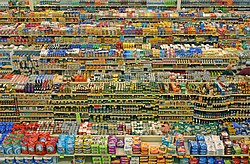
[edit]With worldwide urbanization,[29] food buying is increasingly removed from food production. During the 20th century, the supermarket became the defining retail element of the food industry. There, tens of thousands of products are gathered in one location, in continuous, year-round supply.
Food preparation is another area where the change in recent decades has been dramatic. Today, two food industry sectors are in apparent competition for the retail food dollar. The grocery industry sells fresh and largely raw products for consumers to use as ingredients in home cooking. The food service industry, by contrast, offers prepared food, either as finished products or as partially prepared components for final "assembly". Restaurants, cafes, bakeries and mobile food trucks provide opportunities for consumers to purchase food.
In the 21st century online grocery stores emerged and digital technologies for community-supported agriculture have enabled farmers to directly sell produce.[30] Some online grocery stores have voluntarily set social goals or values beyond meeting consumer demand and the accumulation of profit.[31]
Food industry technologies
[edit]
Modern food production is defined by sophisticated technologies. These include many areas. Agricultural machinery, originally led by the tractor, has practically eliminated human labor in many areas of production. Biotechnology is driving much change, in areas as diverse as agrochemicals, plant breeding and food processing. Many other types of technology are also involved, to the point where it is hard to find an area that does not have a direct impact on the food industry. As in other fields, computer technology is also a central force. Other than that, there few more modern technologies that can help to improve the industry as well which are, robotics and automation, blockchain, nanotech, 3D printing, artificial intelligence, smart farming and others. These new technologies can improve the industry in the following ways:
- Robotics and automation: Robotics and automation are being used to automate processes such as packaging, sorting, and quality control, which reduces labor costs and increases efficiency. These technologies also reduce the likelihood of contamination by reducing human contact with food.[32]
- Blockchain: Blockchain technology is being used to improve food safety by providing transparency in the supply chain. This technology allows for real-time tracking of food products, from farm to table, which helps to identify any potential safety hazards and enables quick response to any issues.[33]
- Nanotechnology: Nanotechnology is being used to develop new packaging materials that can extend the shelf life of food and reduce food waste. These materials can also be designed to be biodegradable, reducing the environmental impact of packaging.[34]
- 3D printing: 3D printing is being used to create custom food products and to make food production more efficient.[35] With 3D printing, it is possible to create complex shapes and designs that would be difficult to achieve with traditional manufacturing techniques.
- Artificial intelligence: (AI) is being used to analyze large amounts of data in the food industry, which can help to identify trends and patterns. This technology can be used to optimize processes and to improve the quality and safety of food products.[citation needed]
- Smart farming: Smart farming involves the use of sensors and data analytics to optimize crop yields and reduce waste. This technology can help farmers to make more informed decisions about when to plant, water, and harvest crops, which can improve the efficiency and sustainability of agriculture.[36]
Marketing
[edit]As consumers grow increasingly removed from food production, the role of product creation, advertising, and publicity become the primary vehicles for information about food. With processed food as the dominant category, marketers have almost infinite possibilities in product creation. Of the food advertised to children on television, 73% is fast or convenience foods.[37]
One of the main challenges in food industry marketing is the high level of competition in the market. Companies must differentiate themselves from their competitors by offering unique products or using innovative marketing techniques. For example, many food companies are now using social media platforms to promote their products and engage with customers.
Another important aspect of food industry marketing is understanding consumer behavior and preferences. This includes factors such as age, gender, income, and cultural background. Companies must also be aware of changing consumer trends and adapt their marketing strategies accordingly.
Labor and education
[edit] | This section needs to be updated. (June 2021) |

Until the last 100 years, agriculture was labor-intensive. Farming was a common occupation and millions of people were involved in food production. Farmers, largely trained from generation to generation, carried on the family business. That situation has changed dramatically today. In America in 1870, 70–80% of the US population was employed in agriculture.[38] As of 2021[update], less than 2% of the population is directly employed in agriculture,[39][40][41] and about 83% of the population lives in cities.[42]
See also
[edit]


- Agroindustry
- Agricultural expansion
- Dietary supplement
- Factory farming
- Food fortification, also called Nutrification
- Geography of food
- Local food
- Ultra-processed food
References
[edit]- ^ Parmeggiani, Lougi, ed. (1983). "???". Encyclopædia of Occupational Health and Safety (3rd ed.). Geneva: International Labour Office. ISBN 92-2-103289-2.
- ^ "Industry". Food Standards Agency (UK). Archived from the original on 2012-06-05. Retrieved 2010-12-09.
- ^ "Food market structures: Overview". Economic Research Service (USDA). Archived from the original on July 28, 2012.
- ^ Sue Booth; John Coveney (19 February 2015). Food Democracy: From consumer to food citizen. Springer. pp. 3–. ISBN 978-981-287-423-8.
- ^ Gray, Allison; Hinch, Ronald (1 October 2019). A Handbook of Food Crime: Immoral and Illegal Practices in the Food Industry and What to Do About Them. Policy Press. pp. 371–. ISBN 978-1-4473-5628-8.
- ^ Booth, Sue; Coveney, John (2015), Booth, Sue; Coveney, John (eds.), "'Big Food'—The Industrial Food System", Food Democracy: From consumer to food citizen, SpringerBriefs in Public Health, Singapore: Springer, pp. 3–11, doi:10.1007/978-981-287-423-8_2, ISBN 978-981-287-423-8
- ^ Stuckler, David; Nestle, Marion (19 June 2012). "Big Food, Food Systems, and Global Health". PLOS Medicine. 9 (6) e1001242. doi:10.1371/journal.pmed.1001242. ISSN 1549-1676. PMC 3378592. PMID 22723746.
- ^ a b c d Mbow, C.; Rosenzweig, C.; Barioni, L. G.; Benton, T.; et al. (2019). "Chapter 5: Food Security" (PDF). IPCC SRCCL 2019.
- ^ "Labour" (PDF). FAO.org. The Food and Agriculture Organization of the United Nations. Retrieved 15 May 2015.
- ^ "Macroeconomy" (PDF). FAO.org. The Food and Agriculture Organization of the United Nations. Retrieved 15 May 2015.
- ^ "I'm An Agronomist!". Imanagronomist.net. Archived from the original on 16 November 2017. Retrieved 2 May 2013.
- ^ Fellows, P. J. (2009). Food Processing Technology: Principles and Practice. Woodhead Publishing. pp. 3–5. ISBN 978-1-84569-216-2.
- ^ a b Brody, Howard (1 August 2016). "Professional medical organizations and commercial conflicts of interest: ethical issues". Annals of Family Medicine. 8 (4): 354–358. doi:10.1370/afm.1140. ISSN 1544-1717. PMC 2906531. PMID 20644191.
- ^ a b Hickel, Jason (2017). The divide: a brief guide to global inequality and its solutions. London. ISBN 978-1-78515-112-5. OCLC 984907212.
{{cite book}}: CS1 maint: location missing publisher (link) - ^ Goldman, Michael (2008-10-01). Imperial Nature. Yale University Press. doi:10.12987/9780300132090. ISBN 978-0-300-13209-0. S2CID 264519062.
- ^ Steinmetz-Jenkins, Daniel (2022-06-15). "The Rotten Roots of the IMF and the World Bank". ISSN 0027-8378. Retrieved 2022-12-08.
- ^ Escobar, Arturo (2012). Encountering Development: The Making and Unmaking of the Third World. Princeton, N.J. p. 3. ISBN 978-1-4008-3992-6. OCLC 757736395.
{{cite book}}: CS1 maint: location missing publisher (link) - ^ Clapp, Jennifer (2018). Speculative harvests: financialization, food, and agriculture. S. Ryan Isakson. Black Point, Nova Scotia. ISBN 978-1-77363-023-6. OCLC 1013824989.
{{cite book}}: CS1 maint: location missing publisher (link) - ^ Aktar, Wasim; Sengupta, Dwaipayan; Chowdhury, Ashim (2009-03-01). "Impact of pesticides use in agriculture: their benefits and hazards". Interdisciplinary Toxicology. 2 (1): 1–12. doi:10.2478/v10102-009-0001-7. ISSN 1337-9569. PMC 2984095. PMID 21217838.
- ^ "Reducing global food system emissions key to meeting climate goals". phys.org. Retrieved 8 December 2020.
- ^ Clark, Michael A.; Domingo, Nina G. G.; Colgan, Kimberly; Thakrar, Sumil K.; Tilman, David; Lynch, John; Azevedo, Inês L.; Hill, Jason D. (6 November 2020). "Global food system emissions could preclude achieving the 1.5° and 2°C climate change targets". Science. 370 (6517): 705–708. Bibcode:2020Sci...370..705C. doi:10.1126/science.aba7357. ISSN 0036-8075. PMID 33154139. S2CID 226254942. Retrieved 8 December 2020.
- ^ SAPEA (2020). A sustainable food system for the European Union (PDF). Berlin: SAPEA - Science Advice for Policy by European Academies. p. 39. doi:10.26356/sustainablefood. ISBN 978-3-9820301-7-3. Archived from the original (PDF) on 2020-04-18. Retrieved 2020-12-28.
- ^ Schattman, Rachel. Sustainable Food Sourcing and Distribution in the Vermont-Regional Food System (PDF) (Report). Archived from the original (PDF) on 2 February 2017. Retrieved 22 January 2017.
- ^ Szajkowska, Anna (March 2012). Regulating Food Law: Risk Analysis and the Precautionary Principle as General Principles of EU Food Law. Wageningen Academic Pub. ISBN 978-90-8686-194-1. Retrieved 22 January 2017.
- ^ "Global food industry on course to drive rapid habitat loss – research". The Guardian. 21 December 2020. Retrieved 17 January 2021.
- ^ "Current food production systems could mean far-reaching habitat loss". phys.org. Retrieved 17 January 2021.
- ^ Williams, David R.; Clark, Michael; Buchanan, Graeme M.; Ficetola, G. Francesco; Rondinini, Carlo; Tilman, David (21 December 2020). "Proactive conservation to prevent habitat losses to agricultural expansion". Nature Sustainability. 4 (4): 314–322. Bibcode:2020NatSu...4..314W. doi:10.1038/s41893-020-00656-5. hdl:2434/857211. ISSN 2398-9629. S2CID 229346085. Archived from the original on 25 January 2021. Retrieved 17 January 2021.
- ^ "Boosting efficiency at the DC". Grocery Headquarters. Archived from the original on 27 March 2010. Retrieved 26 March 2012.
- ^ "World Urbanization Prospects: The 2003 Revision". Department of Economic and Social Affairs, Population Division (United Nations).
- ^ Foote, Natasha (2 April 2020). "Innovation spurred by COVID-19 crisis highlights 'potential of small-scale farmers'".
- ^ "Amid Pandemic, Local Company Delivering Meat And Fresh, Organic Sustainable Foods". 22 May 2020. Retrieved 26 May 2020.
- ^ Robotnik (2022-01-31). "Application of robotics in agriculture". Robotnik. Retrieved 2023-05-05.
- ^ Tian, Feng (2016). "An agri-food supply chain traceability system for China based on RFID & blockchain technology". 2016 13th International Conference on Service Systems and Service Management (ICSSSM). pp. 1–6. doi:10.1109/ICSSSM.2016.7538424. ISBN 978-1-5090-2842-9.
- ^ "Nanotechnology in Agriculture and Food Systems". National Institute of Food and Agriculture. 24 May 2022. Retrieved 2023-05-05.
- ^ "Can 3D Printing Revolutionise The Agriculture Industry? - Manufactur3D". manufactur3dmag.com. 2021-08-18. Retrieved 2023-05-05.
- ^ Sciforce (2023-01-25). "Smart Farming: The Future of Agriculture". IoT For All. Retrieved 2023-05-05.
- ^ Kunkel, Dale (2009). "The Impact of Industry Self-Regulation on the Nutritional Quality of Foods Advertised to Children on Television" (PDF). Children Now. Archived from the original (PDF) on 2018-09-19. Retrieved 2018-09-19.
- ^ Neat Facts About United States Agriculture Archived 14 March 2014 at the Wayback Machine, Retrieved 19 November 2013
- ^ "Employment by major industry sector". Bls.gov. 19 December 2013. Archived from the original on 11 May 2018. Retrieved 1 April 2014.
- ^ "Extension". Csrees.usda.gov. 28 March 2014. Archived from the original on 28 March 2014. Retrieved 1 April 2014.
- ^ "Agriculture and Food Sectors and the Economy". Retrieved 18 May 2023.
- ^ "U.S Cities Factsheet". Retrieved 18 May 2023.
Works cited
[edit]- IPCC (2019). Shukla, P. R.; Skea, J.; Calvo Buendia, E.; Masson-Delmotte, V.; et al. (eds.). IPCC Special Report on Climate Change, Desertification, Land Degradation, Sustainable Land Management, Food Security, and Greenhouse gas fluxes in Terrestrial Ecosystems (PDF). In press.
Further reading
[edit]- Nelson, Scott Reynolds. Oceans of Grain: How American Wheat Remade the World (2022) excerpt
- Nestle, M. (2013). Food Politics: How the Food Industry Influences Nutrition and Health. California Studies in Food and Culture. University of California Press. ISBN 978-0-520-95506-6. 534 pages.
- Vasconcellos, J.A. (2003). Quality Assurance for the Food Industry: A Practical Approach. CRC Press. ISBN 978-0-203-49810-1. 448 pages.
- Kress-Rogers, E.; Brimelow, C.J.B. (2001). Instrumentation and Sensors for the Food Industry. Woodhead Publishing Series in Food Science, Technology and Nutrition. Woodhead. ISBN 978-1-85573-560-6. 836 pages.
- Traill, B.; Pitts, E. (1998). Competitiveness in the Food Industry. Springer. ISBN 978-0-7514-0431-9. 301 pages.
- Food Fight: The Inside Story of the Food Industry
External links
[edit]


| Continental |
| ||||||||||||
|---|---|---|---|---|---|---|---|---|---|---|---|---|---|
| National and (regional) |
| ||||||||||||
| Ethnic |
| ||||||||||||
| Religious | |||||||||||||
| Historical |
| ||||||||||||
| Styles | |||||||||||||
| Lists | |||||||||||||
| Related | |||||||||||||
| General | |||||||||||||||||||||||||||||||||||||
|---|---|---|---|---|---|---|---|---|---|---|---|---|---|---|---|---|---|---|---|---|---|---|---|---|---|---|---|---|---|---|---|---|---|---|---|---|---|
| Food industry |
| ||||||||||||||||||||||||||||||||||||
| Food politics | |||||||||||||||||||||||||||||||||||||
| Institutions | |||||||||||||||||||||||||||||||||||||


Food industry
View on GrokipediaHistory
Origins and pre-industrial practices
The origins of organized food production trace back to the Neolithic Revolution, when human societies transitioned from hunter-gatherer lifestyles to sedentary agriculture around 11,700 years ago, driven by climate stabilization at the end of the last Ice Age and enabling population growth through reliable crop yields.[13] This shift began in the Fertile Crescent of the Near East, where wild plants were selectively cultivated, leading to domestication of emmer wheat, einkorn wheat, barley, and legumes such as lentils and chickpeas by approximately 10,000 BCE, as evidenced by archaeological remains of non-shattering seed heads indicative of human selection.[14] Parallel developments occurred in China with rice and millet domestication around 8,000 BCE, and in Mesoamerica with maize, squash, and beans by 7,000 BCE, fundamentally altering human diets by providing calorie-dense staples that supported larger communities.[15] Animal domestication complemented plant cultivation, starting with goats and sheep in the Zagros Mountains around 10,000 BCE, followed by cattle and pigs by 9,000 BCE in the same region, which supplied meat, milk, hides, and labor for plowing.[16] By 6,000 BCE, these practices had spread globally, with most modern livestock species domesticated across Eurasia, the Americas, and Africa, fostering surplus production that laid the groundwork for food processing and exchange.[15] Early farming relied on manual tools like sickles and digging sticks, with irrigation emerging in Mesopotamia by 6,000 BCE to mitigate flood risks and boost yields in arid zones.[13] Pre-industrial food processing emerged alongside agriculture, primarily through mechanical grinding and biochemical methods to extend shelf life and enhance palatability. Stone querns for milling grains into flour date to 10,000 BCE in the Near East, enabling bread production as a staple, while fermentation—observed in residue analysis from Natufian sites around 12,000 BCE—produced beer, wine, and leavened breads by harnessing wild yeasts for alcohol and acids that inhibited spoilage.[17] Preservation techniques, essential for seasonal surpluses, included sun-drying of fruits and meats from prehistoric times, salting fish and pork in ancient Mesopotamia by 3,000 BCE to draw out moisture and curb bacterial growth, and smoking over wood fires in Europe and Asia to impart antimicrobial compounds.[18][19] These methods, rooted in empirical observation rather than scientific theory, minimized waste in non-refrigerated environments and concentrated nutrients, as fermented dairy like yogurt from goat milk appeared by 8,000 BCE in the Near East.[20] Specialization and trade networks developed as surpluses allowed division of labor, with ancient Sumerian city-states by 3,500 BCE featuring artisan bakers, brewers, and butchers organized into proto-guilds, while markets in Egypt and Greece exchanged barley, olives, and wine for spices from as far as India via overland routes established by 2,000 BCE.[21] Long-distance commerce, such as Roman-era shipments of garum (fermented fish sauce) across the Mediterranean, integrated regional produce into urban diets, with amphorae residues confirming olive oil and wine transport volumes exceeding millions of liters annually by the 1st century CE.[22] These practices, reliant on human and animal labor without mechanization, sustained civilizations until the 18th century but were constrained by perishability, local yields, and rudimentary transport like pack animals and river barges.[23]Industrial Revolution transformations
The Industrial Revolution catalyzed a fundamental shift in the food industry from artisanal, small-scale production to mechanized factory systems, enabling mass preservation, processing, and distribution to sustain rapidly urbanizing populations. Powered machinery, steam engines, and early chemical innovations replaced manual labor, dramatically increasing output and reducing costs, while fostering the rise of specialized food factories. These changes were driven by the need to supply non-local markets, as urban migration in Britain reached 50% of the population by 1851, necessitating reliable, scalable food supply chains.[24][25] Pioneering food preservation techniques emerged to combat spoilage in transit and storage. In 1809, French inventor Nicolas Appert developed canning by sealing food in glass jars and heating them in boiling water, a method initially for military use that Peter Durand patented in tin cans in 1810 for greater durability and portability. Louis Pasteur advanced this in 1865 with pasteurization, heating liquids like milk to 60–70°C to eliminate pathogens without full sterilization, extending shelf life while preserving nutritional value. These innovations allowed perishable goods to reach distant consumers, laying the groundwork for commercial food export.[26][27] Mechanization extended to core processing steps, exemplified by the adoption of roller mills in the 1870s, which used steel rollers to produce finer, whiter flour at scales unattainable with traditional stone grinding, boosting efficiency in grain milling factories across Europe and America. Steam-powered threshing machines proliferated in the late 19th century, automating grain separation and integrating with factory workflows. Early factories, such as Appert's House of Appert near Paris established post-1809, demonstrated commercial viability, evolving into operations for sugar refining, margarine production (invented 1869), and industrial baking by 1870.[28][29] Railroads revolutionized distribution from the 1830s onward, slashing transport times and costs for bulk commodities like grain and meat, while early refrigerated cars in the 1850s–1870s enabled fresh produce and dairy to travel long distances, spurring regional specialization and market expansion in the U.S. and Europe. This infrastructure, combined with preservation advances, reduced food waste and supported population growth, though it concentrated production in industrial hubs.[25][30]20th-century expansion and globalization
The food industry's expansion in the 20th century was propelled by mechanization, automation in processing, and intensification of agriculture, which collectively boosted output and efficiency. Early in the century, advancements in engineering enabled widespread adoption of machinery for planting, harvesting, and food preservation, reducing labor needs and scaling production amid urbanization and rising populations.[31][32] By the 1920s and 1930s, refrigerated railcars and trucks facilitated longer supply chains, allowing fresh produce and meats to reach distant markets, while canning and dehydration techniques extended shelf life for exports.[33] Post-World War II economic recovery in Europe and North America spurred demand for diverse, convenient foods, driving the rise of processed products and multinational operations. Rising discretionary incomes shifted consumption toward animal proteins like chicken, whose global trade volumes surged due to specialized breeding and feed innovations.[32] American firms pioneered multinational expansion starting in the late 1940s, establishing overseas subsidiaries for sourcing, processing, and distribution, with companies like those in grains and meats leveraging economies of scale to penetrate emerging markets.[34] Containerization, introduced in the 1950s, revolutionized logistics by standardizing shipping and slashing costs, enabling a boom in international agricultural commodity trade that grew from peripheral exchanges in 1900 to integrated global networks by 2000.[35][36] The Green Revolution, launched in the 1950s through mid-1960s, amplified this globalization by tripling yields in staple crops like wheat and rice via semi-dwarf varieties, synthetic fertilizers, and expanded irrigation, averting famines and enabling surplus for export from regions like Mexico and India.[37] Global cereal production rose sharply, with yields per hectare increasing by over 150% in developing countries between 1961 and 2000, supporting population growth from 3 billion to 6 billion while lowering real food prices and fostering agro-industrial complexes tied to international inputs like seeds and chemicals.[38][39] By century's end, consolidation among a handful of corporations controlled key segments such as seeds, fertilizers, and processing, with four firms handling 60-90% of global grain trade, underscoring the shift to vertically integrated, borderless supply chains.[40][41]Developments from 1980 to present
The food industry underwent significant consolidation starting in the 1980s, driven by mergers and acquisitions that reduced the number of independent players and concentrated market power among a few large corporations. For instance, Philip Morris acquired General Foods in 1985 for $5.6 billion, marking one of the largest non-oil mergers at the time and exemplifying the trend toward vertical integration in processing and distribution.[42] Over 6,000 mergers, acquisitions, and leveraged buyouts occurred in the U.S. food marketing system from the 1980s onward, enabling economies of scale but raising concerns about reduced competition and supplier leverage.[43] This consolidation extended globally, with agribusiness firms expanding into developing markets, intensifying export-oriented production and altering local food systems.[44] Biotechnological advancements, particularly genetically modified organisms (GMOs), transformed primary production from the mid-1990s. The first commercial GMO crops, including herbicide-tolerant soybeans and insect-resistant corn, entered U.S. markets in 1996, rapidly achieving widespread adoption; by 2020, GM crops covered over 190 million hectares globally and contributed to a 22% yield increase while reducing pesticide use.[45] [46] Farm incomes from GM technology rose cumulatively by billions annually from 1996 to 2020, primarily through higher productivity in staple crops like maize and cotton, though debates persist over long-term ecological effects and corporate control of seeds.[47] These innovations supported globalization by enhancing supply chain efficiency, with food trade networks evolving to favor high-income countries' exports from 1986 to 2020.[48] Food safety regulations strengthened in response to major outbreaks, shifting from reactive inspections to preventive systems. The 1993 Jack in the Box E. coli O157:H7 incident, which sickened hundreds and prompted deaths, catalyzed the adoption of Hazard Analysis and Critical Control Points (HACCP) frameworks; the U.S. Pathogen Reduction/HACCP rule for meat and poultry was finalized in 1996, mandating science-based controls across processing.[49] [50] Subsequent global standards, influenced by bodies like the Codex Alimentarius, addressed risks from globalization, including BSE (mad cow disease) in the late 1990s and ongoing pathogen issues in supply chains.[51] From the 2000s, consumer-driven trends emphasized sustainability and alternatives amid rising health and environmental concerns. Organic production in the U.S. expanded from niche markets in the 1990s to $62 billion in sales by 2021, supported by federal standards established in 2002, reflecting demand for reduced chemical inputs.[52] Plant-based products surged post-2010, with market growth fueled by perceptions of lower environmental footprints compared to animal-sourced foods, though lifecycle analyses indicate variable sustainability gains depending on production methods.[53] [54] These shifts coincided with ultra-processed food dominance—comprising up to 60% of U.S. diets by 2020—prompting policy scrutiny over obesity links, yet industry adaptation included fortified and functional foods.[55] Recent disruptions, such as COVID-19 supply chain strains, underscored vulnerabilities but accelerated automation and traceability technologies.[56]Economic Scope and Contributions
Global market size and growth trends
The global food industry, encompassing production, processing, distribution, and retail of food and beverage products, reached a market value of approximately US$9.44 trillion in 2025.[57] Independent estimates place the core food segment alone at US$9.37 trillion for the same year, reflecting the inclusion of primary agricultural outputs, processed goods, and beverages across supply chains.[58] These figures derive from aggregated data on consumer spending, wholesale trade, and value-added processing, adjusted for inflation and exchange rates in major reports from market research firms. Annual growth is projected at a compound annual growth rate (CAGR) of 3.91% from 2025 to 2030, expanding the market to US$11.37 trillion by the decade's end, driven primarily by population expansion, urbanization, and rising disposable incomes in developing regions.[57] Alternative forecasts indicate a higher CAGR of 6.34% for the food subsector specifically, potentially reaching over US$12 trillion by 2030, attributed to efficiencies in supply chains and demand for convenience foods amid demographic shifts.[58] In the United States, the fastest-growing segments in food and beverage manufacturing projected through 2026 include plant-based and alternative protein products, functional and health-focused beverages (such as energy drinks, probiotic drinks, and fortified beverages), and convenience/ready-to-eat foods and snacks, with high CAGRs often exceeding 8-15% in these subcategories, driven by consumer demand for health, sustainability, and convenience, compared to overall industry growth of around 4-6%.[59] Key drivers include global population growth from 8.1 billion in 2025 to approximately 8.5 billion by 2030, which sustains baseline demand for staples, alongside a 2-3% annual increase in per capita food consumption in emerging economies like those in Asia and Africa.[57]| Metric | 2025 Value | Projected 2030 Value | CAGR (2025-2030) |
|---|---|---|---|
| Food and Beverage Market | US$9.44 trillion | US$11.37 trillion | 3.91% |
| Core Food Segment | US$9.37 trillion | ~US$12.5 trillion (implied) | 6.34% |
Employment, GDP multipliers, and trade impacts
The food industry, spanning primary agriculture, processing, manufacturing, distribution, and retail, employs a substantial portion of the global workforce. In 2023, the agricultural sector—including forestry and fishing—accounted for 916 million jobs worldwide, comprising 26.1 percent of total employment, with higher concentrations in developing regions where it often exceeds 40 percent of jobs.[60] In the United States, agriculture, food, and related industries supported 10.4 percent of total employment, equivalent to approximately 16.6 million jobs based on labor force data, though broader estimates including retail and services reach over 34 million positions.[61] [62] These figures reflect the sector's labor-intensive nature, particularly in low-wage primary production, but also its shift toward higher-skilled roles in processing and logistics amid mechanization and automation trends. GDP multipliers quantify the broader economic ripple effects of food industry activity, capturing indirect impacts from supplier purchases and induced effects from worker spending. Empirical input-output models estimate multipliers for agricultural output ranging from 1.5 to 2.0, indicating that each dollar of direct value added generates 0.5 to 1.0 dollar in secondary economic activity across linked sectors like transportation and equipment manufacturing.[63] [64] In the U.S., the sector contributed 5.5 percent to GDP in 2023, or $1.537 trillion, with multipliers amplifying this through domestic supply chains; for example, food and agriculture output supports disproportionate gains in rural economies via localized procurement.[65] Such effects are derived from interindustry linkages, though they vary by subsector—processing exhibits higher multipliers than primary farming due to greater intermediate inputs—and are sensitive to commodity price volatility and policy interventions like subsidies. International trade in food and agricultural products exerts significant macroeconomic influences, bolstering GDP in export-oriented nations while heightening import dependence elsewhere. Global trade volume reached $1.9 trillion in 2023, representing about 25 percent of world food production by value and facilitating calorie transfers that doubled since 2000 to address regional shortages.[66] [67] For the U.S., agricultural exports totaled $175.5 billion in 2023, generating an additional $186.9 billion in domestic output through multiplier effects on jobs and investment, primarily in commodities like soybeans and meat.[68] Trade surpluses in net-exporting countries like the U.S. and Brazil enhance terms of trade and foreign exchange reserves, but global patterns reveal imbalances—developing importers face higher food inflation risks from supply disruptions, as evidenced by 2022-2023 events—and underscore causal links between trade openness, productivity gains in efficient producers, and vulnerabilities from overreliance on distant suppliers.[69]Role in poverty reduction and food security
The food industry, encompassing agriculture, processing, and distribution, plays a pivotal role in poverty alleviation by generating substantial employment in developing regions where alternative opportunities are limited. In 2023, the agricultural sector alone employed 916 million people globally, representing 26.1% of total employment, with agrifood systems as a whole accounting for approximately 39% of the workforce in prior assessments. [60] [70] These jobs, often accessible to low-skilled workers including smallholders and laborers, provide income stability that directly lifts households out of extreme poverty, particularly in rural areas of sub-Saharan Africa and South Asia where farm labor constitutes a large share of the poorest demographics. [71] Agricultural expansion within the food industry exhibits a higher poverty-reduction multiplier than non-agricultural growth in low-income countries, with empirical analyses indicating that a 1% increase in agricultural output can reduce poverty by up to 2.5 times more effectively among the extreme poor compared to equivalent gains in other sectors. [72] [73] This stems from agriculture's labor-intensive nature and its capacity to raise rural wages while stimulating linked activities like processing and transport, thereby amplifying economy-wide effects. [74] Productivity enhancements, such as improved crop yields or value-added processing, further bolster incomes by lowering production costs and enabling market access for small producers, though outcomes vary by policy support for inclusive growth. [75] Regarding food security, the industry's processing and supply chain efficiencies reduce post-harvest losses—estimated at 14% globally—and extend shelf life through techniques like drying and fortification, making nutritious food more affordable and accessible to vulnerable populations. [76] [77] In low-income settings, these mechanisms lower consumer prices, enhancing purchasing power for net buyers who comprise most of the poor, while fortified staples address micronutrient deficiencies prevalent in 2 billion people as of recent data. [78] Overall, sustained industry-led innovations in distribution infrastructure have correlated with declines in undernourishment rates, from 10.6% in 2005 to around 9% by 2022, underscoring causal pathways from scaled production to stabilized access amid population pressures. [79]Primary Production
Agricultural and livestock methods
Modern agricultural methods in crop production for the food industry center on intensive, mechanized systems designed to maximize output per unit of land and labor. These include large-scale monoculture of staple commodities such as maize, soybeans, and wheat, supported by synthetic fertilizers derived from processes like the Haber-Bosch method for nitrogen fixation, extensive irrigation networks, and regular applications of chemical pesticides and herbicides. Global use of inorganic fertilizers in agriculture totaled 185 million tonnes of nutrients in 2022, with nitrogen comprising 58% of this amount.[80] Pesticide applications reached 3.70 million tonnes of active ingredients in the same year, addressing estimated annual crop losses of 20-40% due to pests and diseases.[81][82] Such practices have driven substantial yield gains; for instance, global maize production per hectare rose from approximately 1.8 tonnes in 1961 to over 5.9 tonnes by 2021, attributable in large part to fertilizer use, improved seed varieties, and mechanization.[83] Tillage systems, often conventional plowing followed by seeding with heavy machinery, prepare soil for uniform planting, while precision techniques—incorporating GPS, sensors, and variable-rate applicators—enable targeted delivery of inputs to minimize waste and enhance efficiency. These methods prioritize scalability for commodity crops that form the backbone of food processing and animal feed, though they demand significant energy and water resources. Livestock methods have transitioned to intensive confinement rearing, predominantly through concentrated animal feeding operations (CAFOs), defined as facilities confining 1,000 or more cattle, 700 or more mature dairy cows, 2,500 or more swine, or 125,000 or more poultry for 45 days or more annually without crop production on-site.[84] In the United States, CAFOs house about 99% of farmed animals as of 2022, encompassing nearly all poultry and pigs, and the majority of beef cattle during finishing phases in feedlots.[85] Animals receive formulated grain-based feeds, often soy- and corn-derived, supplemented with vitamins, minerals, and growth-promoting antibiotics to accelerate weight gain and control disease in dense populations. CAFO systems segregate production stages—e.g., farrowing barns for pigs, broiler houses for chickens, and open feedlots for cattle—facilitating specialized management and biosecurity. Waste is typically collected in manure lagoons or pits for later land application as fertilizer, though this generates concentrated nutrient loads. These approaches have scaled production dramatically; U.S. total red meat and poultry output reached 86.6 billion pounds in 2023, supporting lower retail prices and global export capacity.[86] While enabling food abundance, high-density confinement raises documented challenges in pathogen transmission and effluent management, per federal assessments.[87]Aquaculture and fisheries
Aquaculture involves the controlled cultivation of aquatic organisms such as fish, crustaceans, molluscs, and aquatic plants in freshwater, brackish, or marine environments, while fisheries encompass the harvesting of wild aquatic species through capture methods. Together, they supply seafood, a critical protein source contributing approximately 17% of global animal protein intake. In 2022, total global production from fisheries and aquaculture reached 223.2 million tonnes, including 185.4 million tonnes of aquatic animals and 37.8 million tonnes of algae, marking a 4.4% increase from 2020. Capture fisheries production stood at 92.3 million tonnes in 2022, with 81 million tonnes from marine sources and 11.3 million tonnes from inland waters, primarily consisting of finfish, crustaceans, and molluscs harvested via methods like trawling, longlining, and purse seining.[88] Despite technological advances in detection and efficiency, many wild stocks face overexploitation, with about 35.4% classified as overfished in 2020, though improved management has stabilized production levels since the 1990s. Aquaculture, by contrast, has expanded rapidly, producing 130.9 million tonnes of aquatic animals in 2022—surpassing capture fisheries for the first time—and accounting for over 51% of total aquatic animal production for human consumption when excluding non-food uses like fishmeal.[89] Leading aquaculture species include carps (45% of production), followed by catfish, tilapia, and salmon, with China dominating output at over 60% of global volume.[90] Systems range from pond-based freshwater farming to marine net pens and recirculating aquaculture systems (RAS), which recycle water to minimize environmental discharge. This growth has alleviated pressure on wild stocks by providing an alternative protein supply, with aquaculture's expansion rate averaging 5.8% annually from 2000 to 2022, outpacing other animal protein sectors.[90] Sustainability challenges in capture fisheries include bycatch, habitat disruption from bottom trawling, and illegal, unreported, and unregulated (IUU) fishing, which undermines stock recovery despite international agreements like those under the UN Fish Stocks Agreement. In aquaculture, issues encompass nutrient pollution from uneaten feed and feces, disease outbreaks requiring antibiotics, and reliance on wild fish for feed—though fish-in/fish-out ratios have improved to below 1:1 for many fed species via plant-based alternatives.[91] Innovations such as integrated multi-trophic aquaculture (IMTA), which co-cultures fed species with extractive organisms like seaweed and shellfish to recycle nutrients, and offshore farming to reduce coastal impacts, address these concerns. Effective regulation, including performance-based standards, has enabled aquaculture to achieve positive outcomes in economic viability and social equity in many regions, countering narratives of inherent unsustainability.[91] Economically, the sectors support over 60 million jobs globally, with fisheries providing direct employment in harvesting and aquaculture driving value addition through processing and export, contributing an estimated $150-200 billion in annual trade value. In developing countries, they enhance food security by supplying affordable protein, with per capita seafood consumption rising to 20.7 kg in 2020, and bolster rural economies through backward linkages in feed and equipment supply. Projections indicate aquaculture will account for two-thirds of seafood by 2030, underscoring its role in meeting rising demand amid stagnant wild capture yields.[92]Biotechnology applications including GMOs
Biotechnology applications in primary food production encompass techniques such as genetic engineering, marker-assisted breeding, and genome editing to enhance crop resilience, yield, and nutritional profiles, as well as to improve animal health and growth efficiency. These methods enable precise modifications to plant and animal genomes, addressing challenges like pest damage, environmental stresses, and nutrient deficiencies more effectively than traditional breeding. For instance, recombinant DNA technology allows the insertion of genes conferring traits such as insect resistance or drought tolerance, while CRISPR-Cas9 facilitates targeted edits without introducing foreign DNA.[93][45] Genetically modified organisms (GMOs), a subset of these applications, involve the stable insertion of genetic material from unrelated species to confer specific agronomic benefits. The first commercial GMO crop for food use was the Flavr Savr tomato, approved by the U.S. FDA in 1994 for delayed ripening to extend shelf life, though it achieved limited market success. Widespread adoption began in 1996 with herbicide-tolerant soybeans and insect-resistant cotton and corn, developed by companies like Monsanto (now Bayer). Major GMO traits include Bacillus thuringiensis (Bt) toxin for lepidopteran pest control and glyphosate tolerance for simplified weed management, primarily in maize, soybeans, cotton, and canola.[45][94] By 2024, GMO crops occupied approximately 210 million hectares globally, with the United States, Brazil, Argentina, Canada, and India accounting for over 90% of planting. In the U.S., adoption rates exceeded 90% for corn, soybeans, and cotton, correlating with yield increases of 22% for Bt corn and 15% for herbicide-tolerant soybeans compared to non-GMO counterparts, alongside a 37% reduction in insecticide use from 1996 to 2018. These modifications have boosted food production efficiency, with GMO-derived ingredients like corn syrup, soybean oil, and canola oil comprising significant portions of processed foods and animal feed—over 70% of global GE biomass is directed to livestock.[95][96][97] In livestock and aquaculture, biotechnology primarily involves GMO feed crops, which enhance feed efficiency and reduce production costs without direct animal modification in most cases. Emerging applications include gene-edited pigs resistant to porcine reproductive and respiratory syndrome and salmon engineered for faster growth via growth hormone genes, approved for consumption in the U.S. in 2015 and Canada earlier. However, regulatory hurdles limit widespread animal GMOs, with approvals focusing on case-by-case safety assessments.[98][99] Scientific assessments by bodies like the National Academies of Sciences, Engineering, and Medicine, the World Health Organization, and the FDA affirm that approved GMOs pose no greater risk to human health or the environment than conventional varieties, based on over two decades of compositional analyses, toxicity tests, and field trials. Meta-analyses of peer-reviewed studies show no substantiated evidence of health harms from GMO consumption, contrasting with public skepticism often amplified by advocacy groups despite empirical data indicating benefits like reduced tillage and lower mycotoxin levels in Bt crops. Regulatory frameworks in major markets, such as the U.S. Coordinated Framework, evaluate GMOs through USDA for plant pest risks, EPA for pesticidal traits, and FDA for food safety, ensuring equivalence to non-GMO foods.[100][101][102]Processing and Value Addition
Core techniques and preservation methods
Core techniques in food processing encompass mechanical, thermal, and biochemical operations that convert raw agricultural products into stable, marketable forms while minimizing nutrient loss and ensuring safety. Mechanical methods such as milling reduce grain particles to flour or meal, facilitating downstream applications like baking and improving digestibility by breaking down starches.[103] Thermal techniques, including blanching and cooking, inactivate enzymes and pathogens; for instance, blanching vegetables prior to freezing denatures enzymes that cause discoloration and flavor degradation.[104] Biochemical processes like fermentation employ microorganisms to produce acids or alcohols, enhancing flavor and preservation, as seen in yogurt production where Lactobacillus species lower pH to inhibit spoilers.[105] Preservation methods primarily target microbial inactivation, moisture control, and oxidative prevention to extend shelf life without compromising quality. Canning involves hermetic sealing followed by retort heating to 121°C for 3-5 minutes, achieving commercial sterility by destroying Clostridium botulinum spores, with global application in fruits, vegetables, and meats since the early 19th century but refined industrially post-1900.[104][106] Pasteurization applies milder heat, such as 72°C for 15 seconds in high-temperature short-time (HTST) systems for milk, reducing vegetative pathogens like Salmonella by 5-log cycles while retaining more nutrients than sterilization.[105] Freezing at -18°C or below halts enzymatic and microbial activity, preserving texture in products like frozen seafood for up to 12 months, though freeze-thaw cycles can induce drip loss from ice crystal formation.[107] Dehydration removes 80-95% of water content via air drying, spray drying, or freeze-drying, inhibiting bacterial growth (which requires aw >0.91) in items like powdered milk or dried fruits, though it concentrates non-enzymatic browning precursors like sugars.[104][108] Non-thermal alternatives, including high-pressure processing (HPP) at 400-600 MPa for 3-5 minutes, disrupt microbial cell membranes without altering covalent bonds, extending refrigerated shelf life of juices by 2-4 times compared to pasteurization while better retaining vitamins.[109] Modified atmosphere packaging (MAP) adjusts gas composition (e.g., 5% O2, 5-20% CO2) to slow respiration and oxidation in fresh produce, reducing spoilage by 30-50% in some cases.[104] Hurdle technology integrates multiple sub-lethal stresses—such as reduced water activity (aw), acidity (pH <4.6), and natural antimicrobials like nisin—to achieve preservation synergistically, minimizing individual method intensities and preserving sensory qualities; for example, combining drying with mild heat cuts energy use by up to 50% in jerky production.[110] Natural preservatives, including plant-derived essential oils (e.g., oregano carvacrol), inhibit pathogens at concentrations of 0.1-1% by disrupting cell membranes, gaining traction since 2020 amid demand for additive-free products, though efficacy varies with food matrix pH and fat content.[111] These methods collectively reduce global food waste by 10-20% through extended usability, though over-reliance on any single approach risks resistance or quality degradation.[106]Quality assurance and standardization
Quality assurance in food processing encompasses systematic protocols to mitigate risks of contamination, spoilage, and variability, ensuring products remain safe and consistent from production through packaging. Central to this is the Hazard Analysis and Critical Control Points (HACCP) system, a preventive approach that analyzes biological, chemical, and physical hazards at each stage and defines monitoring procedures, corrective actions, and verification steps at critical control points.[112] Originally developed in the 1960s by the Pillsbury Company for NASA to safeguard astronauts' food supplies, HACCP has evolved into a foundational requirement for processors handling seafood (mandatory since 1997), juices (2001), and low-acid canned foods under U.S. Food and Drug Administration (FDA) oversight.[112] Compliance involves prerequisite programs like sanitation and supplier controls, with regular audits to validate efficacy. Standardization aligns processing practices with uniform criteria for composition, labeling, and safety thresholds, often guided by international frameworks to enable cross-border trade. The Codex Alimentarius Commission, jointly run by the Food and Agriculture Organization (FAO) and World Health Organization (WHO) since 1963, establishes voluntary standards for over 200 commodities, including maximum residue limits for pesticides (e.g., CXS 193-1995 for contaminants) and guidelines for additives (updated as of 2024).[113] These serve as benchmarks for national regulations, promoting equivalence in safety outcomes; for example, Codex texts underpin WTO sanitary measures by providing science-based evidence for risk assessments. Complementing this, ISO 22000:2018 outlines requirements for a food safety management system (FSMS), integrating HACCP with organizational planning, resource allocation, and continual improvement to address supply chain vulnerabilities.[114] Certification under ISO 22000, pursued by thousands of global firms, demonstrates alignment with these principles through third-party verification.[115] Regulatory enforcement varies by jurisdiction but emphasizes traceability and testing. In the U.S., the FDA's Food Safety Modernization Act (FSMA), enacted in 2011, shifted focus to preventive controls for registered facilities, requiring hazard analysis and risk-based preventive controls (HARPC) akin to HACCP, with full rules finalized by 2015 covering over 75% of the food supply.[116] The European Union mandates HACCP under Regulation (EC) No 852/2004 for all food business operators, supplemented by strict harmonized limits on additives and materials (e.g., Regulation (EC) No 1935/2004 for contact substances), often exceeding Codex minima through EFSA risk evaluations.[117] Both regimes incorporate microbiological testing (e.g., for Salmonella and E. coli), shelf-life validation, and recall protocols, with non-compliance triggering import refusals or penalties; U.S. FDA data from 2023 reported over 1,000 import alerts tied to safety violations. Schemes like BRC Global Standard and SQF, recognized by the Global Food Safety Initiative (GFSI) since 2008, further standardize audits, reducing redundancy for multinational processors.[118] These layered approaches have empirically lowered incidence rates, as evidenced by declining U.S. foodborne outbreaks post-FSMA implementation, though gaps persist in emerging risks like allergens.[116]Scale efficiencies and cost reductions
In food processing, scale efficiencies arise primarily from spreading fixed costs—such as investments in machinery, facilities, and quality control systems—over larger production volumes, thereby reducing average per-unit costs.[119] Larger plants also enable bulk purchasing of inputs like packaging and utilities, negotiating lower prices due to volume, and implementing specialized labor divisions that boost productivity.[120] These mechanisms are evident across subsectors, where empirical analyses confirm that expanding output capacity lowers marginal production expenses, particularly in capital-intensive operations like canning, milling, and extrusion.[121] A key example is the meatpacking industry, where larger slaughter and processing facilities process higher livestock volumes, achieving economies of scale that diminish per-animal costs through optimized throughput and reduced downtime.[122] U.S. Department of Agriculture data indicate that post-1980s consolidation into bigger plants enabled firms to cut processing expenses per head, contributing to industry concentration where the top four beef packers handled over 80% of volume by the 2020s.[122] Similarly, in dairy processing, scaled operations for cheese and powdered milk utilize continuous-flow systems that minimize waste and energy use per kilogram, with studies showing cost per unit declines as plant capacity exceeds thresholds like 100,000 liters daily.[123] Automation and technology adoption amplify these gains at scale; for instance, high-volume bakeries and beverage bottlers deploy robotic packaging lines feasible only at outputs above millions of units annually, yielding 15-25% labor cost savings compared to smaller facilities.[124] Processed food manufacturers further exploit scale by standardizing recipes across global plants, reducing R&D amortization and supply chain redundancies, as documented in analyses of firms like those in Group I strategies for marginal cost minimization.[125] However, while these efficiencies drive competitive pricing, they can lead to vulnerabilities, such as amplified disruptions from plant failures, underscoring that optimal scale balances cost reductions against operational risks.[126] Overall, long-term cost structures in foodservice and manufacturing reveal decreasing average costs with firm growth up to certain sizes, after which diseconomies like managerial complexity may emerge, per econometric models of U.S. industry data.[123] These dynamics have propelled centralization since the industrial era, enabling processors to capture value addition while passing some savings to consumers via lower retail prices.[127]Supply Chain Operations
Wholesale, logistics, and cold chain infrastructure
Wholesale operations serve as intermediaries aggregating food products from producers for distribution to retailers, institutions, and food service providers, relying on large-scale markets and distribution centers equipped with storage and sorting facilities. In the United States, examples include regional wholesale produce terminals, while in Europe, chains like Metro Cash & Carry integrate cash-and-carry models with logistics hubs to supply bulk goods efficiently.[128] The global wholesale market, encompassing food sectors, reached $56,663.2 billion in revenue in 2024 and is forecasted to expand to $77,242.88 billion by 2029, driven by rising demand for efficient bulk handling.[129] Logistics infrastructure in the food industry coordinates transportation modes such as trucks, rail, and maritime vessels, with specialized fleets for perishables to minimize transit times and spoilage risks. The food logistics market was valued at USD 122.19 billion in 2023 and is projected to grow to USD 221.08 billion by 2032 at a compound annual growth rate (CAGR) of 6.9%, fueled by e-commerce expansion and supply chain resilience needs.[130] Key components include distribution hubs with automated sorting systems and multimodal terminals that facilitate seamless handoffs between transport types, reducing costs through optimized routing and load consolidation. Cold chain infrastructure maintains controlled temperatures for temperature-sensitive foods like dairy, meat, and produce, preventing microbial growth and quality degradation through integrated systems of refrigerated warehouses, reefer containers, and transport vehicles. The global cold chain logistics market stood at $293.58 billion in 2023 and is expected to reach $862.33 billion by 2032, reflecting increased demand for fresh and frozen goods.[131] Similarly, the food-specific cold chain segment was estimated at USD 59.37 billion in 2024, projected to hit USD 277.43 billion by 2033 at a CAGR of approximately 18.7%, underscoring its role in global food security.[132] Advancements in cold chain rely on Internet of Things (IoT) sensors embedded in reefer trucks and warehouses for real-time monitoring of temperature, humidity, and location, enabling predictive maintenance and automated alerts to avert breaches.[133] [134] These technologies integrate with data analytics platforms to optimize energy use in refrigeration units, which consume significant power—often accounting for 40-50% of warehouse operating costs—while addressing challenges like equipment failures and variable ambient conditions.[135] Infrastructure gaps persist in developing regions, where inadequate cooling leads to higher post-harvest losses, but investments in modular cold storage and solar-powered units are mitigating these through scalable, low-cost deployments.[136] Overall, robust wholesale, logistics, and cold chain systems causally underpin reduced food waste and consistent supply, with disruptions like fuel price volatility or port delays amplifying vulnerabilities in perishable flows.Retail formats and e-commerce integration
Supermarkets and hypermarkets constitute the primary retail formats for food distribution, accounting for the majority of global grocery sales through their combination of extensive product assortments, including fresh produce, packaged goods, and household essentials. In the United States, these formats alongside mass merchandisers captured over 90% of food-at-home sales in recent years, with chains like Walmart and Kroger leading market shares exceeding 25% combined.[137] Convenience stores serve smaller, frequent purchases focused on ready-to-eat items and beverages, representing about 5-10% of food retail volume in developed markets due to their accessibility and extended hours.[137] Discount formats, such as Aldi and Lidl, emphasize low prices via limited assortments and private labels, gaining traction amid inflation pressures, with private label shares rising to around 20% in U.S. grocery dollar volume by early 2023.[138] E-commerce integration has transformed these formats by enabling omnichannel models that blend physical stores with digital platforms, accelerating post-2020 due to pandemic-driven shifts in consumer behavior. Global online grocery sales reached approximately USD 67.64 billion in 2024, projected to grow at a compound annual rate of 36.8% through 2033, though penetration remains lower than non-perishables at 10-15% in the U.S. and varying up to 20% in parts of Europe.[139] Retailers like Walmart and Target have invested in curbside pickup and home delivery, with U.S. online grocery sales surging 18% year-over-year in the second half of 2024, supported by partnerships with third-party platforms such as Instacart.[140] These integrations leverage existing store infrastructure for fulfillment, reducing costs compared to pure-play online models, though challenges persist from high last-mile delivery expenses for perishables, estimated at 10-15% of order value.[141] In Europe, hypermarkets like Carrefour integrate e-commerce via apps and automated warehouses, contributing to online grocery market growth from USD 151.88 billion in 2023 toward projections exceeding USD 600 billion by 2032.[142] Emerging technologies, including AI-driven inventory management and drone delivery pilots, further enhance efficiency, with grocers reporting up to 20% improvement in order accuracy through digital tools.[143] Overall, e-commerce's share in food retail is expected to stabilize at 8-12% globally by 2030, driven by consumer demand for convenience rather than displacing physical stores, as hybrid models prove more resilient amid economic volatility.[141]International trade and tariff effects
The international trade in food and agricultural products reached a value of $1.9 trillion in 2022, driven by commodities such as grains, oilseeds, meats, and dairy, with major exporters including the United States, the European Union, Brazil, and Argentina.[144] In 2024, U.S. agricultural exports totaled $176 billion, reflecting a 1% increase from the prior year, while EU agri-food exports hit a record €235.4 billion, up 3% year-over-year.[145][146] This trade supports global food security but exposes participants to policy risks, including tariffs that alter comparative advantages and redirect flows; for instance, the U.S. recorded a record agricultural trade deficit of $37.6 billion in 2024, fueled by rising imports.[147] Tariffs function as ad valorem duties or specific rates on imported food goods, ostensibly to shield domestic industries from low-cost foreign competition, but empirical evidence demonstrates they elevate domestic prices, distort resource allocation, and provoke retaliation that harms exporters.[148] A 10% tariff increase typically raises producer prices by about 1%, with multiplier effects in food markets amplifying shocks due to inelastic demand and integrated supply chains.[148][149] Studies of tariff reductions show they lower retail food prices and enhance access to diverse diets in importing countries, underscoring how protectionism burdens consumers more than it aids producers net of retaliatory losses.[150] The 2018–present U.S.–China trade war exemplifies tariff-induced disruptions in food trade, with Chinese retaliatory duties on U.S. soybeans, pork, and corn causing export losses exceeding $27 billion through 2025, as China pivoted to suppliers like Brazil and Argentina.[151] U.S. soybean exports to China plummeted over 70% initially, leading to domestic gluts, price collapses, and $13.2 billion in annualized losses, partially offset by government subsidies but resulting in long-term market share erosion.[152][153] By 2025, escalated U.S. tariffs averaging 57.6% on Chinese goods—covering nearly all imports—have compounded effects, raising U.S. input costs for processed foods reliant on Chinese intermediates while China's 32.6% average on U.S. exports continues to suppress agricultural volumes.[154][155] Other examples include EU tariffs averaging 5% on non-EU agricultural imports—higher than the U.S. 3.3% most-favored-nation rate—which protect sectors like dairy and sugar but inflate prices for imported fruits, nuts, and meats; for instance, EU duties on U.S. poultry and beef have limited transatlantic trade despite quality equivalency.[156] In 2025 U.S. policy shifts introduced reciprocal tariffs, including a 10% baseline on all imports effective April, with higher rates on countries like China (up to 84% on select goods), targeting imbalances but risking broader food price hikes and supply chain rerouting.[157][158] These measures, while justified by some as correcting unfair practices, align with historical patterns where tariffs yield net economic losses through reduced trade volumes and higher costs, as quantified in analyses of past escalations.[159][160]Technological Advancements
Automation, AI, and precision agriculture
Automation in food processing has advanced significantly through robotics, enabling precise handling of perishable goods and reducing human error in tasks like sorting, packaging, and sanitation. The global food robotics market reached USD 2.71 billion in 2024, driven by applications in meat processing, bakery operations, and dairy handling, where robots perform repetitive tasks with consistent speed and hygiene standards.[161] In harvesting, autonomous systems such as strawberry-picking robots have emerged, addressing labor shortages by operating 24/7 with gentle gripping mechanisms to minimize crop damage, as demonstrated by prototypes achieving up to 80% efficiency compared to manual methods.[162] By 2024, over 330 companies were developing crop robotics for weeding, pruning, and fruit detection using computer vision, reflecting a shift toward commercialization in row crops like tomatoes and apples.[163] Precision agriculture employs GPS-guided machinery, soil sensors, and variable-rate applicators to tailor inputs like fertilizers and irrigation to specific field zones, optimizing resource use and crop yields. Adoption rates vary by farm size, with large operations (over 2,000 acres) utilizing technologies like yield monitors and auto-steering at rates exceeding 70%, compared to under 20% on small farms, according to U.S. Department of Agriculture data from 2024.[164] These systems have delivered yield improvements of 15-20% in grains and vegetables by enabling data-driven decisions on planting density and nutrient application, while reducing fertilizer use by 25-30% through site-specific management.[165] Environmentally, precision techniques cut water consumption by up to 30% via drip irrigation controlled by real-time soil moisture data and lower pesticide runoff by targeting applications, contributing to a projected 6% additional global productivity gain upon full adoption.[166][167][168] Artificial intelligence integrates with automation and precision tools for predictive analytics in supply chains and quality assurance, forecasting demand to minimize spoilage and optimizing routes amid disruptions. In processing plants, AI-powered machine vision systems inspect products for defects at speeds surpassing human capabilities, as in poultry lines where algorithms detect contaminants with 99% accuracy, reducing recall risks.[169] The AI market for food safety and quality control is valued at USD 2.7 billion in 2025, projected to reach USD 13.7 billion by 2030, fueled by real-time monitoring of storage conditions and blockchain-tracked traceability to ensure compliance.[170] For instance, AI models analyze satellite imagery and weather data to predict harvest volumes, enabling processors to adjust inventory and cut waste by 20-30% in dairy and produce sectors.[171] Challenges include high upfront costs for small operators and data silos, but causal benefits from reduced inputs and labor dependency substantiate long-term efficiency gains over traditional methods.[172]Novel foods: alternative proteins and fermentation
Novel foods encompass ingredients and products derived from innovative processes or sources not traditionally consumed, with alternative proteins representing a key category aimed at diversifying supply amid rising global demand projected to reach 345 million metric tons of protein by 2050.[173] These include plant-based options like pea and soy isolates, insect-derived proteins, cultivated (cell-cultured) animal cells, and microbial proteins produced via fermentation, each offering potential reductions in land use compared to conventional livestock, though actual environmental gains depend on scalable implementation and lifecycle assessments showing variable water and energy footprints.[174] The global alternative protein market was valued at approximately USD 15.7 billion in 2024, with forecasts indicating growth to USD 25.2 billion by 2029 at a compound annual growth rate (CAGR) of 9.9%, driven by investments in R&D despite consumer hesitancy over sensory attributes.[175] Precision fermentation, a biotechnology leveraging genetically engineered microorganisms—such as yeast or bacteria—to produce specific animal-like proteins, fats, or flavors, has emerged as a scalable alternative to animal-derived ingredients, bypassing the need for full animal rearing.[176] This process involves inserting genes encoding target molecules into host microbes, which then secrete the desired compounds during controlled fermentation, akin to brewing but optimized for food-grade outputs like casein for cheese or heme for meat-like umami.[177] Leading examples include Perfect Day's whey protein, approved for U.S. dairy applications since 2020 and enabling lactose-free ice cream production, and Impossible Foods' soy leghemoglobin, authorized by the FDA in 2019 for plant-based burgers to mimic bleeding and taste.[178] Other companies, such as The EVERY Company producing egg proteins and New Culture developing casein for mozzarella, have secured regulatory nods in regions like New Zealand (Daisy Lab's approvals in May 2024) and the U.S., with products entering markets for pizza toppings expected in late 2024.[179][180] Cultivated meat, another novel protein avenue, involves growing animal cells in bioreactors with nutrient media to form muscle and fat tissues, achieving FDA pre-market approval for Upside Foods' chicken in June 2023 and subsequent sales in select U.S. restaurants, though commercial scaling remains limited by costs exceeding USD 10 per pound as of 2024.[181] Regulatory landscapes vary, with Singapore granting the first global approval in 2020, while U.S. states like Indiana enacted a two-year ban on production and sales effective May 2025, and others like Florida and Arizona impose labeling or outright prohibitions citing consumer protection and agricultural impacts.[182][183] Investments in cultivated meat showed tentative recovery in 2025 after a 2023 trough, but high energy demands for cell proliferation challenge claims of net-zero emissions without breakthroughs in bioreactor efficiency.[184] Despite promotional narratives from industry groups emphasizing sustainability, alternative proteins face empirical hurdles in nutrition, sensory replication, and economics that temper their disruptive potential. Plant- and microbe-based options often require fortification to match animal proteins' complete amino acid profiles and bioavailability, with processing introducing potential digestibility issues or anti-nutritional factors like phytates in legumes.[185] Taste and texture mismatches persist, as evidenced by consumer panels rating many products inferior to conventional meat in flavor intensity and mouthfeel, necessitating additives that inflate ultra-processing levels and question long-term health outcomes absent longitudinal data.[186] Costs for precision-fermented and cultivated proteins remain 2-10 times higher than commodity meats due to media and equipment expenses, with price parity projections hinging on yield improvements rather than subsidies, while environmental assertions—such as 90% greenhouse gas reductions—overlook upstream impacts like nitrogen fertilizers for feed crops or electricity for fermenters sourced from non-renewable grids.[187][188] These realities underscore that while fermentation offers causal advantages in resource decoupling from animal metabolism, widespread adoption demands rigorous, independent verification beyond advocacy-driven models prevalent in academia and aligned media.[189]Data analytics for efficiency and prediction
Data analytics in the food industry leverages machine learning algorithms, big data processing, and statistical modeling to optimize operations and anticipate future events, drawing from sources such as IoT sensors, historical production records, and external variables like weather patterns. These tools enable real-time monitoring of supply chain variables, identifying inefficiencies such as excess inventory or delayed logistics, which can reduce operational costs by streamlining resource use across processing, distribution, and retail stages.[190][191] In agricultural production, predictive models forecast crop yields by integrating satellite imagery, soil moisture data, and meteorological forecasts, allowing producers to adjust irrigation, fertilization, and planting densities proactively. Machine learning techniques, including random forests and gradient boosting, have demonstrated accuracies exceeding 85% in yield predictions for crops like potatoes and staples in semi-arid regions, based on datasets spanning rainfall, area under cultivation, and historical output from 2010–2023.[192][193] Such applications mitigate risks from climate variability, with hybrid models incorporating explainable AI enhancing interpretability for on-farm decisions.[194] For supply chain efficiency, analytics platforms analyze transaction logs, demand signals, and event data to predict disruptions, optimizing inventory levels and routing to cut waste by up to 15–20% in perishable goods handling. In processing facilities, anomaly detection via neural networks flags equipment failures before occurrence, extending machinery lifespan and minimizing downtime; for example, sensor-driven models in beverage production correlate vibration patterns with predictive maintenance needs, achieving 30% reductions in unplanned halts as reported in industry implementations from 2022 onward.[191][195] Demand forecasting integrates consumer behavior data with seasonal trends, enabling dynamic adjustments that lowered overproduction in global food firms by refining order quantities against actual sales variances observed between 2020 and 2024.[190][196] Quality prediction models, trained on spectroscopic and chemical assay data, assess product shelf life and contamination risks during manufacturing, supporting just-in-time processing to preserve freshness while complying with safety thresholds. These advancements, grounded in causal linkages between input variables and outcomes, contrast with traditional heuristics by quantifying probabilistic scenarios, though model performance depends on data quality and validation against empirical field trials.[192] Overall, adoption has correlated with 10–25% efficiency gains in audited chains, per analyses of deployments in major producers since 2018.[191]Marketing and Demand Drivers
Strategies for product promotion and branding
Food companies utilize branding to differentiate products in saturated markets by emphasizing unique attributes such as origin, quality, or sensory appeal, often through consistent visual identities and narratives that foster consumer loyalty. Promotion strategies complement this by leveraging diverse channels to raise awareness and stimulate demand, including targeted advertising and experiential marketing. Empirical analyses show that processed food manufacturers prioritize brand development and asset protection to sustain competitive advantages, with intangible elements like trademarks contributing to long-term value extraction from consumers.[125] Digital platforms have emerged as dominant promotion tools since the early 2010s, with social media campaigns and influencer endorsements driving engagement among younger demographics. Studies indicate that unhealthy food marketing via social media and advergaming significantly influences pester behaviors and preferences in children and adolescents, leading to measurable shifts in food choices. For instance, exposure to such content correlates with increased selection of high-sugar or high-fat items in experimental settings. In 2024-2025, brands increasingly integrate data-driven personalization, using consumer research to refine positioning around lifestyle integration rather than mere product features.[197][198] Traditional media persists for broad-reach promotion, particularly television and radio advertisements that target families and older consumers. Local print ads and in-store displays also promote seasonal or regional products, with evidence from extension services highlighting their role in direct-to-consumer sales for smaller producers. However, effectiveness varies; while TV spots build brand recall, their impact on sales is often amplified by cross-channel integration, as seen in fast-food chains' diversified approaches that combine media buys with price promotions.[199][200] Packaging serves as a silent branding and promotion mechanism, incorporating claims about nutrition, sustainability, or convenience to influence impulse buys at retail. Regulatory frameworks, such as the U.S. Federal Trade Commission's oversight of nutrient content and health claims in ads, constrain unsubstantiated assertions to prevent deception. Recent trends include sustainability-focused branding to enhance loyalty, though independent evaluations reveal limited voluntary restraint by industry on unhealthy promotions, prompting calls for stricter rules. Mandatory marketing restrictions in jurisdictions like Chile have empirically reduced high-fat, sugar, and salt product purchases by up to 24% in targeted outlets.[201][202] Overall, food marketing's causal influence on consumption is well-documented, with meta-analyses confirming that promotional techniques elevate awareness and usage of branded items, particularly in competitive segments like beverages and snacks. Healthy food promotions show promise in countering this, achieving positive behavioral shifts in six of ten reviewed interventions, though scale remains limited without regulatory enforcement. Industry adaptation to 2025 trends emphasizes evidence-based strategies over assumptions, prioritizing precise targeting amid rising scrutiny on child-directed ads.[203][204][198]Labeling regulations and consumer transparency
In the United States, the Food and Drug Administration (FDA) enforces food labeling under the Federal Food, Drug, and Cosmetic Act, requiring packaged foods to include a Nutrition Facts panel detailing serving size, calories, macronutrients, vitamins, and added sugars, with updates effective January 1, 2021, to reflect scientific consensus on dietary risks like those from added sugars exceeding 10% of daily calories. Allergen labeling is mandatory for eight major allergens since the Food Allergen Labeling and Consumer Protection Act of 2004, listed either in ingredients or a separate "contains" statement. In 2025, the FDA proposed front-of-package (FOP) nutrition labeling for most packaged foods to highlight key nutrients like sodium, saturated fat, and added sugars, aiming to aid quick consumer assessment amid evidence that such labels influence healthier choices without overly burdening industry. [205] The definition of "healthy" claims was revised in a final rule delayed to April 28, 2025, requiring foods to meet limits on saturated fat, sodium, and added sugars while providing qualifying nutrients like fiber or protein, addressing prior ambiguities that allowed some ultra-processed items to qualify. [206] European Union regulations, primarily under Regulation (EU) No 1169/2011, mandate comprehensive labeling including ingredients in descending weight order, quantitative indication for characterizing ingredients, and a nutrition declaration per 100g/ml for energy, fat, saturates, carbohydrates, sugars, protein, and salt, with a minimum font height of 1.2mm for legibility. [207] Allergens must be emphasized in bold, and origin labeling is required for certain products like unprocessed meats specifying country of birth, rearing, and slaughter since 2014 amendments. [208] Unlike the US, EU rules prohibit certain health claims without pre-approval by the European Food Safety Authority, reducing unsubstantiated assertions, though voluntary claims like "natural" remain unregulated and prone to consumer misinterpretation. Globally, Codex Alimentarius standards provide harmonized guidelines, but national variations persist, complicating international trade. Consumer transparency faces challenges from misleading claims and incomplete disclosures, with surveys indicating 83% of US consumers read labels yet only 16% deem health claims highly trustworthy due to vague terms like "natural" or "clean," which lack standardized definitions and often mask ultra-processed formulations. [209] Process labeling, such as for genetically modified ingredients, remains voluntary in the US despite state-level mandates like Vermont's short-lived 2016 law overridden by federal preemption, leading to QR code initiatives like SmartLabel for digital access to details, though adoption varies and requires consumer tech access. [210] Controversies include "sugar-free" labels permitting sugar alcohols that impact blood glucose, and "whole grain" claims obscuring refined flour dominance, as evidenced by studies showing labels influence purchases but fail to curb obesity trends linked to misperceived healthiness. [211] [212] Industry opposition to mandatory FOP labels cites costs and potential stigmatization, yet meta-analyses confirm such interventions modestly reduce intake of concerning nutrients without evidence of broad reformulation evasion. [213] [214]| Aspect | US (FDA) Requirements | EU Requirements (Reg. 1169/2011) |
|---|---|---|
| Nutrition Declaration | Per serving; includes added sugars since 2021 | Per 100g/ml; mandatory for most pre-packed |
| Allergen Highlighting | Plain text or "contains" statement | Bold or emphasized in ingredients list |
| Health Claims | Nutrient content and structure/function; "healthy" redefined 2025 | Authorized claims only; stricter pre-approval |
| Origin Labeling | Voluntary except country of origin for some meats | Mandatory for unprocessed foods like meat |
| FOP Labeling | Proposed 2025 for key nutrients | Voluntary; some member states encourage |
Shifts in preferences: convenience versus health claims
Consumer preferences in the food industry have increasingly balanced demands for convenience—driven by time constraints and urbanization—with scrutiny of health claims amid rising awareness of diet-related diseases such as obesity and type 2 diabetes. In the United States, 17% of residents reported replacing full meals with snacks in 2024, up from 14% in 2023, reflecting accelerated adoption of quick-consumption formats amid busy lifestyles.[216] Globally, this tension manifests in market expansions where convenience products incorporate health-oriented labeling to appeal to dual priorities, though empirical data indicate persistent trade-offs, as ultra-processed convenient items often conflict with evidence-based nutritional guidelines emphasizing whole foods.[217] The convenience segment has exhibited robust growth, fueled by working populations and single-person households seeking minimal preparation. The U.S. ready-to-eat meals market reached $59.70 billion in revenue by 2025, projected to expand at a compound annual growth rate (CAGR) of 7.78% through 2030. The fastest growing segments in US food and beverage manufacturing projected through 2026 include plant-based and alternative protein products, functional and health-focused beverages (such as energy drinks, probiotic drinks, and fortified beverages), and convenience/ready-to-eat foods and snacks. These are driven by consumer demand for health, sustainability, and convenience, with CAGRs often exceeding 8-15% in subcategories, compared to overall industry growth of around 4-6%.[218] Worldwide, prepared meals are anticipated to grow from $190.71 billion in 2025 to $291.27 billion by 2032 at a 6.24% CAGR, with demand concentrated in urban areas where delivery services and pre-packaged options reduce cooking time.[219] This shift correlates with e-commerce integration, as online platforms facilitate impulse purchases of shelf-stable or frozen conveniences, though over-reliance on such products has been linked in cohort studies to higher caloric intake without proportional nutrient density.[220] Conversely, health claims have propelled premium segments, with consumers favoring products touting reduced sugars, added proteins, or organic sourcing despite higher costs. The global healthy foods market, encompassing items with explicit nutritional benefits, stood at $653 billion in 2023 and is forecasted to reach $1,258.5 billion by 2030 at a 10% CAGR, outpacing overall food inflation.[221] In the U.S., 67% of shoppers actively avoid added sugars, sodium, and artificial ingredients, per 2024 surveys, while 76% express preference for food-based health management over pharmaceuticals.[217][222] Organic produce sales grew 2.6% to $20.5 billion in 2023, though growth slowed from prior years due to price sensitivity; such claims often rely on perceptual benefits rather than uniform superior outcomes, as meta-analyses show limited nutritional edges in organics beyond pesticide residues.[223][224] Industry responses increasingly hybridize these preferences, with "convenient health" innovations like protein-enriched snacks or meal kits featuring clean labels gaining traction—54% of U.S. adults adhered to specific diets in 2024, up from pre-pandemic baselines.[225] However, emerging factors such as GLP-1 agonist medications (e.g., semaglutide) are curbing overall food volume, with 39% of users reducing purchases, potentially amplifying selectivity toward verified health attributes over mere convenience.[226] Regional variations persist: in developing markets, affordability trumps health claims, while affluent demographics prioritize functional foods, underscoring causal links between income, education, and preference polarization.[227]Regulatory Framework
Safety standards and inspection regimes
The Codex Alimentarius Commission, established in 1963 by the Food and Agriculture Organization (FAO) and World Health Organization (WHO), develops international food standards, guidelines, and codes of practice to protect consumer health and facilitate fair trade practices. These standards cover contaminants, additives, residues, hygiene, and labeling, serving as a reference for national regulations and World Trade Organization disputes, though adoption remains voluntary and varies by country.[228][229] Hazard Analysis and Critical Control Points (HACCP), originally developed in the 1960s for NASA's space food safety, mandates systematic identification and control of hazards at critical production points, with principles formalized by the FDA in 1997 guidelines and required under the U.S. Food Safety Modernization Act (FSMA) of 2011 for high-risk foods like seafood, juice, and meat. Implementation emphasizes prevention over end-product testing, involving hazard analysis, critical limits, monitoring, corrective actions, verification, and record-keeping. Studies indicate HACCP reduces foodborne illness risks when fully integrated, though challenges include incomplete hazard identification and lack of ongoing training.[230][231] In the United States, the FDA oversees domestic and imported food safety for most products, conducting risk-based inspections of approximately 75,000 facilities annually, though shortfalls persist, with COVID-19 disruptions exacerbating delays. The European Food Safety Authority (EFSA) provides scientific risk assessments, while member states handle enforcement under harmonized EU regulations like Regulation (EC) No 178/2002, emphasizing traceability and rapid alerts. Globally, inspections across countries like the U.S., Canada, Australia, and EU nations follow similar risk-prioritized approaches, focusing on high-risk operations, but effectiveness varies due to resource constraints and jurisdictional fragmentation.[232][233][234] Despite these regimes, persistent outbreaks highlight enforcement gaps: U.S. data show tens of millions of annual foodborne illnesses, with 2024 FDA investigations linking over 20 outbreaks to 1,364 illnesses, and 296 recalls primarily from pathogens, allergens, and manufacturing errors. Regulatory failures include the FDA's unfulfilled mandate under FSMA to set produce irrigation water standards by 2018, contributing to recurring contamination in leafy greens, and broader issues like inadequate monitoring of processing facilities. In developing contexts, weak implementation amplifies risks, underscoring that standards alone insufficiently mitigate hazards without rigorous, funded inspections.[235][236][237][238][239]Subsidies, tariffs, and trade policies
In the United States, federal agricultural subsidies totaled approximately $9.3 billion in direct payments to farmers for commodity crops in 2024, representing 5.9% of total farm earnings that year.[240] These payments, primarily through programs like Agriculture Risk Coverage and crop insurance premiums, disproportionately support crops such as corn, soybeans, and wheat, which serve as key inputs for processed foods and animal feed.[241] Direct government farm program payments are projected to rise to $40.5 billion in 2025, driven by expanded support under the 2024 Farm Bill, which allocates broader agricultural funding estimated at over $1 trillion through 2029 when including related programs like crop insurance.[241][242] Historical data from 1995 to 2024 shows direct payment programs disbursing $53.8 billion, with livestock-related subsidies exceeding $72 billion cumulatively, often incentivizing overproduction and market distortions.[243][244] In the European Union, the Common Agricultural Policy (CAP) allocates €386.6 billion for 2021-2027, equivalent to roughly €0.34 per EU citizen daily, with the majority funding direct payments to farmers for income support and market measures.[245] This budget, comprising about 30% of the EU's total expenditure, emphasizes environmental conditions for 40% of funds to be climate-relevant, though critics note persistent support for high-emission livestock and commodity production.[246][247] Globally, such subsidies—totaling over $540 billion annually—frequently distort production incentives, favoring export-oriented commodities and undermining competitiveness in unsubsidized developing economies.[248] Tariffs on agricultural goods remain a primary trade barrier under World Trade Organization (WTO) rules, with simple average bound tariffs higher for agriculture than non-agricultural products in many members, often featuring peaks exceeding 100% on sensitive items like dairy, sugar, and meats.[249][250] The WTO Agreement on Agriculture seeks market-oriented reforms by capping domestic support and export subsidies, yet enforcement gaps persist, as evidenced by ongoing disputes; for instance, U.S. retaliatory tariffs in 2018 led to $27 billion in lost agricultural exports, prompting market diversions and higher domestic prices.[251][252] Recent policy shifts, including proposed 10-46% U.S. tariffs on imports in 2025, have accelerated supply chain nearshoring and supplier diversification in the food sector to mitigate cost increases on ingredients like grains and processed inputs.[253][254] These policies collectively exacerbate global trade distortions, with subsidies proven nearly twice as trade-disruptive as equivalent tariffs by encouraging surplus production and dumping in low-tariff markets, particularly harming net-food-importing developing countries.[255] Empirical analyses indicate that a 1% subsidy increase can boost subsidized exporters' volumes while reducing global productivity growth by altering planting toward less efficient, high-support crops.[256][257] WTO negotiations continue to prioritize disciplining such "amber box" supports—those most distortive to trade—though progress stalls amid geopolitical tensions, including post-2022 grain export restrictions from Ukraine war disruptions.[258][251]International harmonization efforts
The Codex Alimentarius Commission, established in 1963 by the Food and Agriculture Organization (FAO) of the United Nations and the World Health Organization (WHO), serves as the central international body for developing harmonized food standards, guidelines, and codes of practice to protect consumer health and ensure fair practices in food trade.[259] [260] Comprising 189 member countries and one member organization (the European Union), the Commission has produced over 200 specific food standards, more than 100 guidelines and codes of practice, approximately 4,400 maximum levels for food additives, and over 6,600 maximum residue limits for pesticides and veterinary drugs as of recent assessments.[261] [262] These outputs address contaminants, hygiene, labeling, additives, and methods of analysis, with decisions reached through consensus among member governments, industry stakeholders, and consumer representatives, grounded in scientific risk assessments to minimize discrepancies in national regulations that could impede global trade.[263] The World Trade Organization's (WTO) Agreement on the Application of Sanitary and Phytosanitary Measures (SPS Agreement), effective since January 1, 1995, reinforces these efforts by requiring WTO members—currently 164 economies—to align their sanitary and phytosanitary measures with international standards such as those from Codex, where possible, to facilitate trade while permitting stricter national rules only if supported by scientific evidence of risk.[264] [265] Article 3.1 of the SPS Agreement explicitly encourages harmonization by basing measures on Codex guidelines for food safety, alongside the International Plant Protection Convention (IPPC) for plant health and the World Organisation for Animal Health (WOAH, formerly OIE) for animal health, thereby reducing non-tariff barriers estimated to affect billions in annual food trade volumes.[266] [267] The WTO's SPS Committee monitors compliance and resolves disputes, as seen in cases where divergent standards on hormone-treated beef or genetically modified organisms were adjudicated based on adherence to Codex-referenced science rather than protectionist motives.[268] Despite progress, full harmonization remains incomplete due to varying national capacities, cultural preferences in risk tolerance, and instances where countries justify deviations via Article 5's risk assessment provisions, leading to ongoing negotiations and capacity-building initiatives funded by entities like the Codex Trust Fund since 2003 to assist developing nations in adopting standards.[229] Collaborative mechanisms, such as joint FAO/WHO/WTO workshops, continue to address emerging issues like antimicrobial resistance in food chains and climate impacts on supply, with over 30 active Codex committees tackling specific commodities and principles as of 2023.[269]Workforce Dynamics
Employment patterns and skill requirements
The food industry encompasses a broad spectrum of employment, from primary agriculture to processing, manufacturing, distribution, and retail, with global agricultural employment reaching 892 million people in 2022, accounting for 26.2% of total worldwide employment, predominantly in low- and middle-income countries where women comprised 37.5% of the sector's workforce.[70] In high-income nations, employment in agri-food systems has declined to approximately 10% of the labor force, shifting toward off-farm roles in processing and services as productivity gains reduce on-farm needs.[270] In the United States, agriculture, food, and related industries supported 10.4% of total employment as of early 2025, with food and beverage manufacturing alone employing over 2.1 million workers by late 2024, reflecting steady growth from 1.6 million in 2014 amid mechanization and demand expansion.[61] [271] Employment patterns exhibit significant seasonality, particularly in agriculture, where workers often face irregular schedules tied to planting, harvesting, or livestock cycles, leading to temporary hiring spikes and higher turnover; for instance, U.S. farmworkers, averaging 1.5 million hired annually, include many seasonal migrants via programs like H-2A visas for short-term needs.[272] [273] In processing and manufacturing subsectors, patterns lean toward year-round operations with shift work, though labor shortages persist, exacerbated by an aging workforce and post-pandemic turnover, prompting reliance on automation for repetitive tasks like packaging and sorting to sustain output.[274] [275] Globally, these shortages risk leaving nearly 2 million roles unfilled in food manufacturing by addressing demographic shifts and skill mismatches rather than expanding low-wage pools.[276] Skill requirements vary by subsector, with entry-level roles in agriculture and basic processing demanding physical stamina, attention to detail for quality detection, and foundational knowledge of sanitation and hazard identification to comply with safety protocols.[277] [278] In manufacturing, workers need proficiency in operating machinery, food preparation techniques like packing (required in 12.36% of job postings) and cooking (10.42%), alongside soft skills for teamwork in high-turnover environments.[279] Higher-skilled positions, such as quality assurance managers, food scientists, and packaging engineers, require advanced competencies in process optimization, regulatory compliance, and emerging technologies like automation interfaces, driven by industry 4.0 integration.[280] A persistent skills gap arises from retiring technicians and the need for digital literacy, with automation bridging shortages in manual roles but elevating demand for reskilling in areas like robotics maintenance and data-driven quality control.[274] [281]Labor conditions across global operations
Agriculture remains the largest employer in the global food industry, with approximately 870 million people engaged in agrifood systems as of 2022, yet labor conditions often involve hazardous work, low wages, and limited protections, particularly in developing regions.[70] In low- and middle-income countries, workers face exposure to pesticides, heavy machinery, and extreme weather without adequate safety gear or training, contributing to elevated injury rates.[282] Migrant laborers, who comprise a significant portion of the workforce in both agriculture and processing—such as 70% of U.S. farmworkers—frequently endure wage theft, excessive hours, and substandard housing, exacerbating vulnerabilities in supply chains for commodities like fruits, seafood, and meat.[283][284] Child labor persists as a critical issue, with 70% of the estimated 160 million children in child labor worldwide concentrated in agriculture as of recent ILO data, involving tasks like harvesting cocoa, coffee, and rice that expose them to chemicals and physical strain.[285][286] This figure rose by 8.4 million between 2016 and 2020, driven by economic pressures, conflicts, and climate events in regions like sub-Saharan Africa and South Asia, where enforcement of age restrictions is weak.[287] The U.S. Department of Labor identifies over 200 food-related goods from 82 countries tainted by child or forced labor, including tilapia from China and sugarcane from Brazil, highlighting systemic failures in upstream supply chains.[288] In food processing facilities, safety risks are pronounced, with workers facing a 60% higher injury rate and 9.5 times greater fatality risk compared to other sectors, often from machinery entanglements, slips, or chemical exposures.[289] Meat and poultry plants report particularly severe outcomes: an average of 27 daily amputations or hospitalizations in U.S. facilities as of 2023 data, compounded by faster line speeds increasing musculoskeletal disorder risks for 81% of poultry workers.[290][291] Globally, forced labor risks permeate even developed markets, with U.S. land-based food supplies showing high incidence in animal proteins and processed produce due to undocumented migrant exploitation.[292] Wage conditions vary starkly: in developing countries, agricultural workers often earn below living standards, as seen in Thai seafood processing where migrants from Myanmar and Cambodia report debt bondage and withheld pay, supplying brands like Nestlé.[293] Palm oil plantations in Indonesia and Malaysia similarly involve child and forced labor for global firms, with workers paid as little as $2-3 daily amid hazardous conditions.[294] Efforts by organizations like the ILO emphasize decent work deficits, including poor social protection, but implementation lags due to informal employment dominating 80% of agricultural jobs in low-income areas.[295] In contrast, developed nations enforce stricter standards, though violations persist, such as repeated child labor citations in U.S. crop farming since 1995.[296]Training programs and shortage mitigations
Labor shortages persist across the food industry's segments, including agriculture, processing, and manufacturing, driven by factors such as aging workforces, immigration restrictions, and unappealing working conditions. In U.S. food manufacturing, employment reached 1,747,100 workers in September 2024, with an unemployment rate of 4.2%, yet vacancies remain high amid rising unit labor costs of 7.5% for the year.[297][298] In agriculture, labor demands for seasonal harvesting exacerbate shortages, with farmers reporting difficulties filling roles despite mechanization efforts.[299] Training programs emphasize food safety, operational skills, and certifications to build competency. The ServSafe initiative, developed by the National Restaurant Association, delivers online and classroom training for food handlers and managers, covering hygiene, allergen control, and hazard analysis, with millions certified annually.[300] Apprenticeships in food processing, such as those offered by the Aerospace Joint Apprenticeship Council (AJAC), provide 18-24 months of paid on-the-job training, including equipment operation and quality control, culminating in wage progression and credentialing without debt.[301] The U.S. Food and Drug Administration's FSMA training modules target producers and importers, focusing on preventive controls and supply chain security under the Food Safety Modernization Act of 2011.[302] Industrial Manufacturing Technician apprenticeships, spanning 3,000 hours, train workers on production equipment setup, monitoring, and process improvement applicable to food facilities.[303] Shortage mitigations combine human capital investment with technological and policy measures. Industry leaders prioritize upskilling programs to improve retention, as trained workers adapt faster to roles in automated environments.[304] Adoption of labor-saving technologies, including AI-driven robotics for palletizing and sorting, reduces manual demands in processing plants, with implementations scaling in 2024 to offset workforce gaps.[305] In agriculture, strategies include H-2A visa expansions for temporary foreign workers, alongside incentives like subsidized housing and benefits to attract domestic labor.[299] Wage increases—often 5-10% above regional averages—and flexible scheduling further mitigate turnover, particularly in manufacturing and farm operations facing 2025 projections of sustained deficits.[306][307]Health and Nutritional Outcomes
Reductions in malnutrition and famine risks
The prevalence of undernourishment worldwide declined from approximately 23% of the global population in 1990 to 8.2% in 2024, reflecting sustained increases in food availability driven by agricultural intensification and expanded distribution networks.[308][309] This reduction equates to averting hunger for over a billion people relative to earlier baselines, with calorie supply per capita rising by about 30% since the mid-20th century due to yield-enhancing technologies like hybrid seeds and mechanized farming.[37][310] The Green Revolution, initiated in the 1960s through industry-supported breeding of high-yielding crop varieties, fertilizers, and irrigation systems, played a pivotal role in curtailing famine risks in densely populated regions such as South Asia. In India, for instance, wheat production tripled between 1967 and 1978, preventing projected famines that could have affected hundreds of millions amid population growth exceeding 2% annually.[311] Overall, these innovations averted an estimated 18 to 27 million hectares of additional land conversion for agriculture and saved over 100 million infant lives in developing countries by 2000 through enhanced food security.[312][313] Improvements in food supply chains, including cold storage, refrigerated transport, and efficient logistics, have further mitigated malnutrition by curbing post-harvest losses, which historically claimed 20-40% of production in developing regions. Adoption of such technologies reduced grain losses by up to 50% in targeted interventions, stabilizing supplies and lowering famine vulnerability during localized shortages.[314][315] Global trade integration has complemented these efforts by redistributing surpluses, as evidenced by integrated markets dampening price spikes from poor harvests and preventing acute localized famines observed pre-1950.[316] Despite these gains, stagnation in undernourishment reductions since 2015 underscores ongoing risks from conflict and climate factors, though baseline famine frequency has dropped markedly due to diversified industrial production.[317]Debates on processed foods and obesity causation
Observational epidemiological studies have consistently reported positive associations between higher consumption of ultra-processed foods (UPFs)—defined by the NOVA classification as industrially formulated products with additives, high sugar, fat, and salt content—and increased risks of weight gain and obesity, particularly among adults.[318] For instance, a 2018 analysis of U.S. adults found that those in the highest quartile of UPF intake had higher odds of excess weight, with the link stronger in women.[319] These patterns align temporally with the global obesity rise since the 1980s, coinciding with expanded availability of affordable processed items like snacks and ready meals.[320] Randomized controlled trials provide causal evidence that UPFs promote overeating and adiposity beyond simple caloric equivalence. In a 2019 inpatient trial with 20 adults, participants on an ad libitum UPF diet consumed 500 kcal/day more than on a minimally processed diet, gaining 0.9 kg over two weeks despite matched macronutrients and palatability ratings.[321] A 2024 trial replicated this, showing 813 kcal/day higher intake and 1.1 kg greater weight gain on UPFs, attributed to faster eating rates and reduced chewing that impair satiety signals.[322] Proponents argue these effects stem from UPF design—hyper-palatable textures, emulsifiers disrupting gut hormones, and rapid absorption favoring fat storage—independent of total energy, challenging the primacy of voluntary overeating.[323] Critics contend that obesity causation fundamentally traces to sustained positive energy balance, with UPFs facilitating rather than initiating surplus via affordability and convenience, not inherent toxicity.[324] Energy balance models emphasize that weight gain requires excess calories regardless of source, and while UPFs correlate with intake, twin studies highlight genetic and behavioral confounders over processing per se.[325] E-value analyses of observational data suggest unmeasured factors like socioeconomic status could explain associations without invoking UPF causality.[326] Alternative frameworks, such as the carbohydrate-insulin model, posit refined carbs in many UPFs drive hyperinsulinemia and fat partitioning, but empirical tests favor overall intake as the proximal driver.[327] The debate persists due to limited long-term trials and potential biases in funding or interpretation, with industry-backed research downplaying UPF roles while public health advocates, often from academia, amplify them amid anti-corporate sentiments.[318] A 2025 trial in weight loss contexts found minimally processed diets yielded greater fat loss (-289 kcal/day imbalance equivalent) than UPFs, supporting reduced processing for metabolic benefits, yet scalability to free-living populations remains unproven.[328] Consensus holds that while UPFs exacerbate overconsumption risks, obesity multifactorially involves genetics, environment, and policy, with caloric density and portion norms as enduring levers.[329]Fortification and nutrient enhancement benefits
Food fortification involves the deliberate addition of essential micronutrients to commonly consumed staples, such as salt, flour, and milk, to address widespread deficiencies and improve population-level health outcomes. This practice has demonstrably reduced the incidence of specific nutrient deficiency disorders through empirical evidence from large-scale implementations. For instance, mandatory fortification programs have prevented thousands of cases annually by enhancing nutrient bioavailability without requiring behavioral changes from consumers.[330][331] One prominent benefit is the prevention of neural tube defects (NTDs) via folic acid fortification of grain products. In the United States, following the 1998 implementation of mandatory folic acid addition to enriched cereal grains, NTD prevalence at birth declined by approximately 19% to 50%, averting an estimated 1,000 affected pregnancies each year. Similar reductions, up to 50%, have been observed in other countries with comparable policies, based on surveillance data linking fortification to decreased folate-sensitive NTD rates. These outcomes stem from elevated serum folate levels in women of childbearing age, directly correlating with lower NTD risks during early gestation.[332][333][334] Iodization of salt has similarly curtailed iodine deficiency disorders (IDDs), including goiter and cognitive impairments. Universal salt iodization, promoted globally since the 1990s, has improved iodine status in populations, reducing goiter prevalence and enhancing thyroid function, as evidenced by urinary iodine concentration metrics exceeding deficiency thresholds in iodized regions. Over the past 25 years, this intervention has contributed to averting severe IDDs in billions, with goiter rates dropping below 5% in schoolchildren in compliant areas. The mechanism involves stable iodine delivery through a staple condiment, yielding broad coverage at low cost.[335][336][331] Vitamin D fortification of dairy products, such as milk, has proven effective in preventing rickets and supporting bone health, particularly in northern latitudes with limited sunlight exposure. Fortified milk provides 400 IU per serving, meeting recommended intakes and correlating with reduced rickets incidence in infants and children reliant on these sources post-breastfeeding. Historical data show that such fortification eliminated endemic rickets in fortified markets by maintaining adequate serum 25(OH)D levels, averting skeletal deformities.[337][338][339] Broader nutrient enhancements, including iron and vitamin A additions to staples like flour and oils, have alleviated anemia and xerophthalmia in deficient populations, with fortification yielding higher micronutrient absorption than unenhanced diets. Economically, these interventions are highly cost-effective, with World Health Organization analyses indicating returns of up to $27 per dollar invested through reduced healthcare burdens and improved productivity. Fortification's scalability via existing food industry infrastructure amplifies these gains, delivering nutrients passively to at-risk groups.[340][341]Environmental Considerations
Resource inputs: water, land, and emissions data
Agricultural production, the core of the food industry, consumes vast quantities of water and land while emitting significant greenhouse gases. Globally, agriculture accounts for approximately 70% of freshwater withdrawals, equating to about 2,800 cubic kilometers per year, with irrigation dominating use in arid regions.[342] Water footprints vary markedly across products; for example, 1 kg of beef requires around 15,400 liters of total water, predominantly green water from rainfall, whereas 1 kg of pork uses 6,000 liters and chicken 4,300 liters.[343] Crop production, such as 1 kg of wheat, demands about 1,250 liters, highlighting the resource intensity of animal-based foods driven by feed crop cultivation and direct animal needs.[343] Land use for food production occupies nearly half of the world's habitable land, spanning 48 million square kilometers, or roughly 38% of total land area excluding deserts and glaciers.[344] In 2022, global agricultural land totaled 4,781 million hectares, with cropland covering 1,573 million hectares and permanent pastures the remainder, primarily for livestock grazing.[345] This allocation reflects historical expansion, including deforestation, though recent trends show stabilization in developed regions alongside cropland intensification to boost yields per hectare.[344] Greenhouse gas emissions from agrifood systems reached 16.2 billion tonnes of CO₂ equivalent in 2022, comprising about 30% of total anthropogenic emissions of 53.8 Gt CO₂eq.[346][347] Within this, on-farm activities like enteric fermentation from ruminants and manure management contribute the majority, with livestock systems alone responsible for over 70% of agricultural emissions; rice cultivation and synthetic fertilizers add further methane and nitrous oxide.[346] Post-farm stages, including processing and transport, account for around 29% of food system emissions, underscoring the full-chain impact.[348]| Food Category | Average Water Footprint (L/kg) | Land Use (m²/kg protein, annual) | GHG Emissions (kg CO₂eq/kg) |
|---|---|---|---|
| Beef | 15,400 | 1,700 | 60 |
| Pork | 6,000 | 10 | 7.5 |
| Poultry | 4,300 | 7.1 | 6 |
| Wheat | 1,250 | 2.5 | 1.2 |
Sustainability initiatives and measurable outcomes
The food industry has implemented initiatives such as regenerative agriculture, supply chain decarbonization, and waste reduction programs to address its substantial environmental footprint, which accounts for approximately one-third of global greenhouse gas emissions primarily from livestock, rice production, and land use changes.[352] Regenerative practices, including cover cropping and reduced tillage, aim to enhance soil carbon sequestration and biodiversity while lowering emissions intensity in crop and livestock supply chains.[353] Corporate pledges often align with frameworks like the Science Based Targets initiative, focusing on Scope 3 emissions that dominate the sector's profile.[354] Measurable outcomes vary by company and initiative, with some demonstrating verifiable reductions amid broader sector challenges. Archer Daniels Midland reported that its 2024 regenerative agriculture programs across partner farms avoided over 1 million metric tons of CO2 equivalent emissions compared to regional baselines, through improved soil health and yield efficiency.[355] PepsiCo achieved a 22% absolute reduction in carbon emissions from 2019 to 2023 via over 500 energy efficiency projects and fuel conversions in operations and logistics.[356] US Foods reduced absolute Scope 1 and Scope 2 emissions by 16% since 2019, supporting goals for operational decarbonization.[357] Compass Group documented an 11% weighted average emissions cut in assessed supply chain products by 2024, driven by sustainable sourcing criteria.[358] However, aggregate industry progress remains modest, with agricultural production contributing 11% of global GHG emissions and limited evidence of scaled reductions despite widespread commitments.[359] Some efforts show setbacks; for example, Oatly's corporate climate footprint rose 15% from 2023 to 2024, attributed to packaging and operational expansions.[360] Initiatives targeting methane from enteric fermentation and manure, which comprise a significant portion of sector emissions, have prioritized feed additives and manure management, yet empirical data indicate uneven adoption and verification challenges.[361] Food waste reduction efforts, aligned with UN Sustainable Development Goal 12.3 to halve per capita waste by 2030, have yielded site-specific gains but lack comprehensive sector-wide metrics.[353] Overall, while corporate reports highlight localized successes, independent assessments underscore the need for standardized, third-party verified metrics to distinguish substantive outcomes from aspirational targets.[362]Adaptation to climate variability
Climate variability, including increased frequency of droughts, floods, and temperature extremes, poses risks to food production by reducing crop yields and disrupting livestock productivity. Empirical analyses indicate that such changes explain up to 77% of yield variability in staple crops like maize in regions such as Ethiopia.[363] Globally, even with adaptation measures, rising temperatures are projected to decrease production of key staples by an average of 4.4% relative to current levels by mid-century.[364] These impacts are compounded in supply chains, where localized events like extreme rainfall can cascade to affect processing and distribution, as seen in vulnerability assessments of maize, rice, and wheat systems.[365] The food industry has responded through varietal improvements, such as the adoption of drought-tolerant maize hybrids, which have boosted yields by 15% and cut crop failure risks by 30% in adoption areas.[366] Herbicide-tolerant and insect-resistant genetically engineered crops, including drought-resilient varieties, cover over 90% of U.S. cotton acreage as of 2024, enabling sustained output amid water scarcity.[96] Complementary strategies include enhanced irrigation and crop diversification, which regression models show mitigate yield losses from irregular rainfall patterns, contributing to household food security in variable agro-ecological zones.[367] Precision agriculture tools, such as soil moisture sensors and weather forecasting integration, further support on-farm resilience by optimizing inputs during variability spikes.[368] At the supply chain level, firms have pursued resilience via diversified sourcing and collaborative networks, as demonstrated in value chain analyses where multi-actor partnerships reduced drought vulnerabilities in staple production systems.[369] Case studies, including beverage companies mapping climate risks across tiers, highlight investments in supplier training for adaptive practices, yielding measurable reductions in disruption probabilities.[370] However, incremental adaptations may prove insufficient against rapid shifts, with studies emphasizing the need for transformative approaches like regional production relocations to offset projected losses.[371] Overall, while these measures have buffered some variability—evidenced by stabilized outputs in adopting regions—systemic limits persist, particularly in rain-fed systems comprising much of global agriculture.[372]Controversies and Balanced Perspectives
Corporate consolidation: efficiencies versus monopoly risks
In the U.S. food processing sector, corporate consolidation has intensified over recent decades, with four-firm concentration ratios (CR4) exceeding 40% in key subsectors such as beef slaughtering (85%), pork processing (66%), and poultry processing (58%) as of 2017 data updated through 2022.[373][374] This trend stems from mergers and acquisitions among dominant players like Tyson Foods, JBS, Cargill, and Pilgrim's Pride, which control over 80% of beef, pork, and chicken markets combined.[6] Similar patterns appear in upstream inputs, where four firms hold 60-90% of global seed, fertilizer, and agrochemical markets.[375] While European and Canadian markets show comparable dynamics, U.S. enforcement under the Clayton Act has scrutinized deals like the blocked Sysco-US Foods merger in 2015 and ongoing probes into JBS expansions.[376] Proponents argue consolidation yields efficiencies through economies of scale, enabling investments in automation, logistics, and R&D that lower unit costs and enhance supply chain resilience. Empirical studies indicate that larger processors achieve 10-20% cost reductions per unit output via vertical integration and bulk procurement, as seen in consolidated dairy and grain sectors where operational efficiencies improved technical productivity by up to 13% post-merger.[377][378] For instance, post-2000s mergers in meatpacking correlated with faster throughput and reduced waste, contributing to stable or declining retail prices for staples like poultry (down 2-3% annually adjusted for inflation from 2010-2020) despite input volatility.[379] These gains arise from first-principles advantages: fixed costs spread over larger volumes, bargaining power with suppliers, and data-driven optimizations, though pass-through to consumers varies by market conditions.[380] Conversely, high concentration poses monopoly and monopsony risks, enabling oligopolistic pricing power that squeezes farmers and elevates consumer costs without proportional efficiency benefits. In beef processing, CR4 levels above 70% have been linked to persistent packer margins exceeding 20% of wholesale prices during 2020-2022 supply disruptions, contributing to retail inflation outpacing general CPI by 5-10%.[381][382] Antitrust analyses highlight reduced entry barriers for new competitors, with DOJ and FTC blocking or conditioning mergers like Bayer-Monsanto (2018) over seed market dominance risks.[383] Farmer incomes have declined relative to processors' profits, as monopsony power in input markets (e.g., 70% control in hog contracting) allows below-market payments, evidenced by USDA data showing farm-gate prices stagnating while upstream profits rose 15-25% from 2015-2023.[376] Critics, including FTC reports, note that while efficiencies exist, they often fail to offset anticompetitive harms like tacit collusion, prompting calls for stricter horizontal merger guidelines updated in 2023 to presume illegality above 30% market shares.[379][381] Empirical evidence remains mixed, with some econometric models finding no direct causation between concentration and price hikes when controlling for commodity cycles, underscoring the need for case-specific scrutiny over blanket assumptions.[384]Safety incidents: empirical frequencies and responses
In the United States, the Centers for Disease Control and Prevention (CDC) estimates that foodborne illnesses affect approximately 48 million people annually, resulting in 128,000 hospitalizations and 3,000 deaths, with pathogens such as Salylobacter, Salmonella, and norovirus accounting for a significant portion of known cases.[385] Globally, the World Health Organization (WHO) reports around 600 million cases of foodborne illnesses each year, leading to 420,000 deaths, predominantly in low- and middle-income countries where inadequate sanitation and supply chain controls exacerbate risks.[386] These figures derive from surveillance systems tracking reported outbreaks, though underreporting remains a challenge, as many mild cases go undocumented; for instance, CDC data indicate over 9,000 outbreaks reported across U.S. states from 2011 to 2022.[387] Major safety incidents highlight vulnerabilities in specific supply chains. The 1993 E. coli O157:H7 outbreak linked to undercooked hamburgers at Jack in the Box restaurants caused 732 confirmed illnesses, 4 deaths (including young children), and over 550 hospitalizations, tracing back to contaminated beef from faulty slaughterhouse inspections.[388] In 2006, E. coli contamination in bagged spinach from California farms sickened at least 200 people across 26 states, resulting in 5 deaths and prompting the largest produce recall in U.S. history, with roots in irrigation water tainted by nearby cattle feces.[389] The 2008–2009 Salmonella Typhimurium outbreak from Peanut Corporation of America products affected over 700 individuals, caused 9 deaths, and led to the recall of more than 3,900 products, exposing deliberate falsification of test results by the company.[390] More recently, the 2015 Listeria monocytogenes outbreak tied to Blue Bell Creameries ice cream resulted in 3 deaths and dozens of illnesses, forcing a temporary shutdown of the company's plants due to persistent facility contamination.[389] Food recalls serve as a primary indicator of incident frequency, with the U.S. Food and Drug Administration (FDA) initiating or monitoring hundreds annually; for example, data show nearly 100 million units recalled quarterly across categories like prepared foods and produce, often for undeclared allergens, microbial contamination, or foreign objects.[391] In 2023, FDA recorded 232 notable recall events in food and beverages, reflecting ongoing pressures from pathogen detection and import scrutiny.[392] Responses to these incidents have emphasized preventive measures and rapid containment. Following the 1993 E. coli outbreak, the U.S. Department of Agriculture mandated E. coli testing in ground beef and advanced Hazard Analysis and Critical Control Points (HACCP) systems in meat processing, reducing related illnesses by over 50% in subsequent decades.[393] The 2006 spinach crisis spurred the FDA's Leafy Greens Marketing Agreement for enhanced microbial testing and the 2011 Food Safety Modernization Act (FSMA), which shifted focus to risk-based preventive controls, traceability, and import verification, leading to fewer multistate outbreaks in produce.[394] Industry-wide, adoption of technologies like whole-genome sequencing by CDC and FDA has accelerated outbreak source identification, as seen in resolving 32 food-linked multistate outbreaks in 2023 with 1,219 illnesses.[395] Globally, WHO initiatives promote integrated surveillance and capacity-building in developing nations to address the disproportionate burden there.[396]| Incident | Year | Pathogen/Source | Cases/Deaths | Key Response |
|---|---|---|---|---|
| Jack in the Box | 1993 | E. coli O157:H7 in beef | 732 / 4 | HACCP mandates; pathogen testing in meat[388] |
| Spinach outbreak | 2006 | E. coli in produce | 200+ / 5 | FSMA enactment; improved irrigation standards[389] |
| Peanut Corporation | 2008–2009 | Salmonella Typhimurium | 700+ / 9 | Enhanced Salmonella controls; criminal prosecutions[390] |
| Blue Bell ice cream | 2015 | Listeria monocytogenes | Dozens / 3 | Facility deep-clean protocols; FDA inspections[389] |
Ethical debates: welfare standards and labor rights
Ethical debates on welfare standards in the food industry primarily focus on livestock production practices in concentrated animal feeding operations (CAFOs), where animals are often housed in confined spaces such as battery cages for hens or gestation crates for sows, limiting natural behaviors and potentially causing physical ailments like foot disorders and stress-related immunosuppression.[397] In the United States, federal regulation remains minimal, with the Animal Welfare Act excluding farm animals from its protections, leaving oversight to voluntary industry standards or state-level measures; for instance, ballot initiatives in states like California (Proposition 12, effective 2022) have mandated space requirements for certain livestock, influencing production for 25% of the U.S. population by 2026 through sales bans on non-compliant products.[398] [399] Critics, including animal welfare advocates, argue these conditions violate principles of sentience and unnecessary suffering, citing empirical evidence from behavioral studies showing elevated cortisol levels in confined animals, while proponents emphasize that such systems enable affordable protein production, with empirical harms in alternative systems often comparable when accounting for wildlife impacts in pasture-based farming.[397] Labor rights debates highlight exploitative conditions for the approximately 28 million U.S. food system workers, including over 19 million in frontline roles like crop harvesting and meat processing, where median annual incomes hover around $28,000, and 21% of farmworkers live in poverty according to the National Agricultural Workers Survey (NAWS) data from 2017-2018.[400] Injury rates in food manufacturing exceed the national average by 50-80%, with animal production workers three times more likely to suffer injuries, including over 550 amputations annually; in meatpacking specifically, repetitive strain injuries occur at rates 10 times the all-industry average, though overall incidence has declined to 4.0 cases per 100 full-time workers by recent Bureau of Labor Statistics reports, reflecting safety investments amid high turnover and immigrant-heavy workforces.[400] [401] [402] Ethical concerns include violations of fair labor standards, such as wage theft and inadequate protections for migrant workers under H-2A visas, with 665 global cases of abuse documented in agri-food chains in 2024, yet industry defenders note that these jobs provide essential employment in rural economies, often exceeding wages available in workers' home countries, and that unionization efforts have yielded mixed outcomes due to economic pressures.[403] [404] These debates underscore tensions between efficiency-driven production, which has reduced global malnutrition risks, and demands for higher standards that could elevate costs by 30-40% in affected sectors, potentially impacting food affordability; while advocacy groups push for stricter regulations, empirical assessments reveal gradual improvements through market-driven certifications and technological interventions, though systemic biases in academic and media reporting may overemphasize negatives without proportional acknowledgment of baseline welfare gains or labor mobility benefits.[405] [406]References
- https://www.[statista](/page/Statista).com/outlook/cmo/food/worldwide